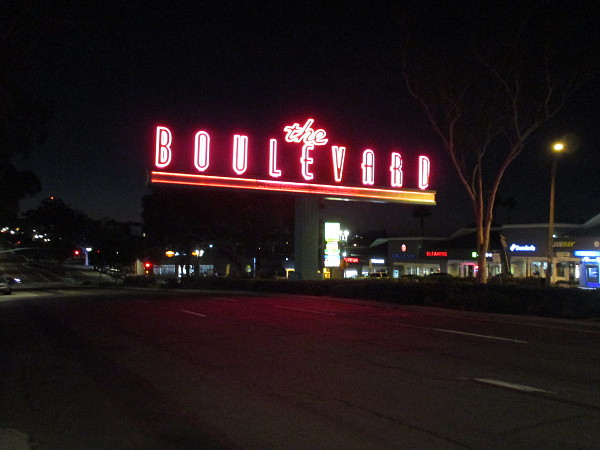
Lights brighten the night on The Boulevard.

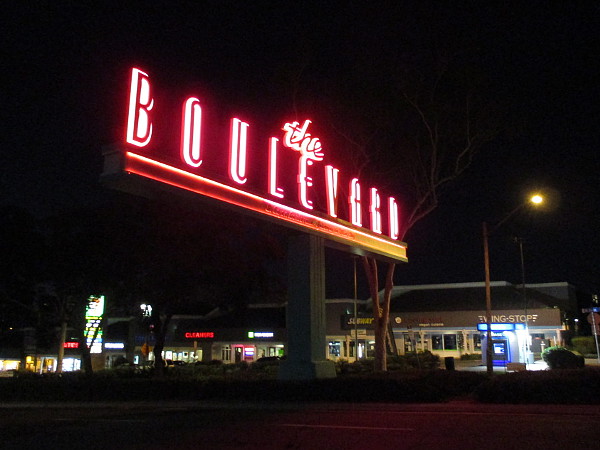
Last night, very early in the morning, I took photographs of interesting “lights” in the vicinity of the iconic “The Boulevard” landmark sign, near the west end of historic El Cajon Boulevard.

The next photo is of an illuminated mural that depicts ostriches, which are symbols of the University Heights community. Many years ago University Heights was home to an ostrich farm! This fun mural can be found at the corner of Park Boulevard and Howard Avenue.

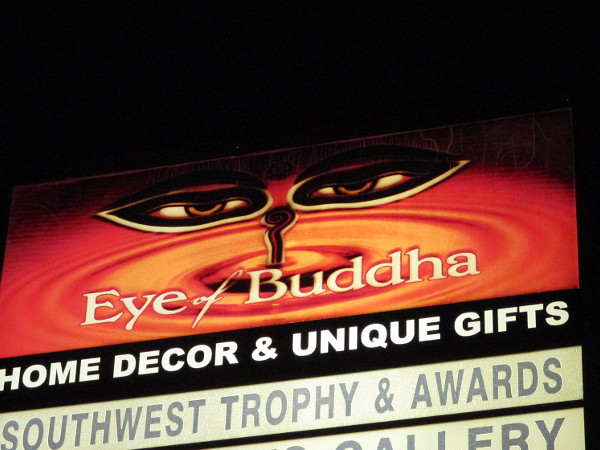
As I headed north up the sidewalk, a glowing Eye of Buddha gazed mysteriously down upon me! The sign hovers above a small strip mall at the corner of Park Boulevard and El Cajon Boulevard.
I then crossed El Cajon Boulevard and Park Boulevard to take a good photo of an absolutely extraordinary sign.

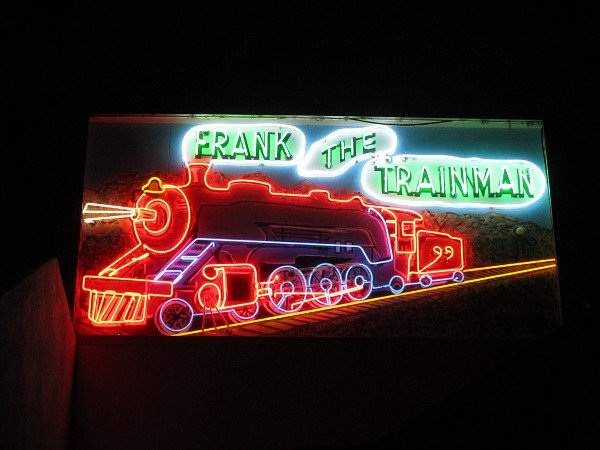
The wonderful Frank the Trainman neon sign is an iconic sight in itself, a beloved little landmark that San Diego residents treasure.

It can be seen at the south end of a building that features another amazing work of art. At its back, on a large wall that very few people see, is a mural painted by internationally recognized Chicano artist Mario Torero.

Photos of the mural, called Cosmic Train of Wisdom, can be seen here! (You can also see a photo I once took of the Frank the Trainman neon sign during the daytime.)
I then started east down El Cajon Boulevard. My walk was quite early in the morning with few cars and people about.

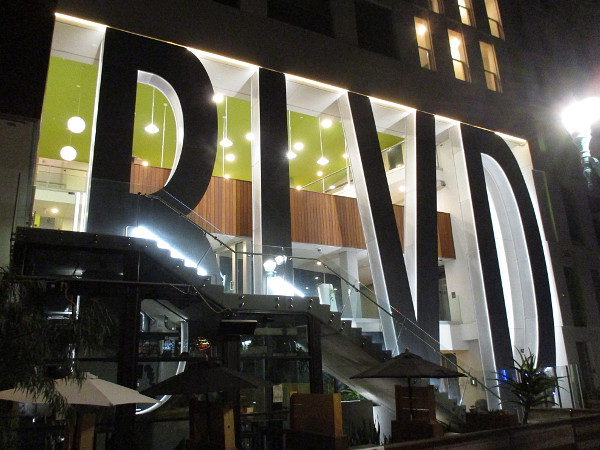
Mysterious globes of light seem suspended in a window ahead…

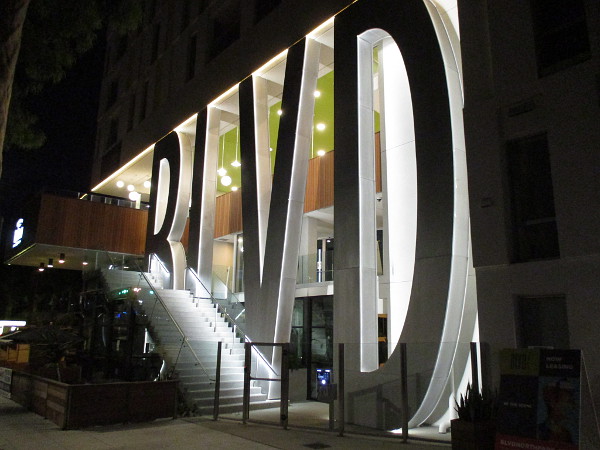
It’s the very cool BLVD North Park Apartments building. Light coming through an interesting structure at the front entrance spells out one gigantic BLVD!
I live in downtown San Diego and love to walk around with my camera! You can follow Cool San Diego Sights via Facebook or Twitter!

You can easily explore Cool San Diego Sights by using the search box on my blog’s sidebar. Or click a tag! There are thousands upon thousands of photos for you to enjoy!
Starlight Bowl in Balboa Park unveils new plan!

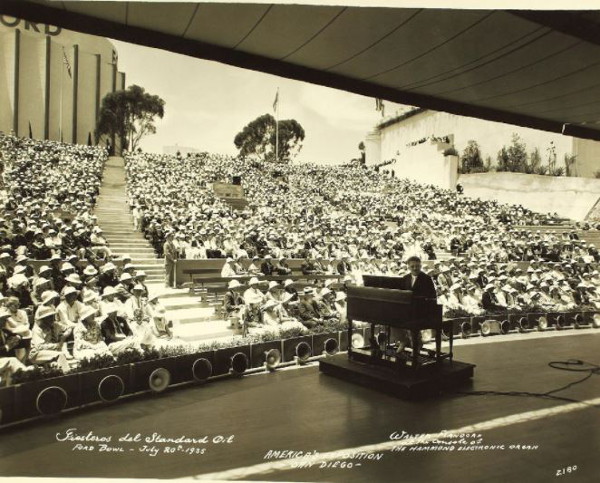
A performance in the Ford Bowl (now the Starlight Bowl) during the 1935 California Pacific International Exposition in Balboa Park. No known copyright restrictions image from Flickr.
A performance in the Ford Bowl (now the Starlight Bowl) during the 1935 California Pacific International Exposition in Balboa Park.

I just learned that the Starlight Bowl in Balboa Park has announced big plans for their future!

The long-hoped-for renovation of Starlight is now moving ahead! You can see the phased plan, including several renderings, by visiting their website page concerning the project here.

The visionary plan includes multiple stages, enhanced seating, a concession stand with healthier food offerings, and a digital media center that will be used by students across the county. As they explain: “Our goal is to empower students with an interest in the creative arts. Through seminars and a hands-on experience with state-of-the-art technology, students gain the tools they need to pursue a future utilizing multimedia arts, and have the opportunity to connect with Balboa Park.”

I personally have very fond memories of the Starlight Bowl, which I’ve mentioned in the past. I remember that as a young man my family and I watched performances under the San Diego stars of several plays, including Kiss Me, Kate and The Pirates of Penzance. But that was decades ago, long before the San Diego Civic Light Opera went belly up in 2011.

For many years this large historic amphitheater in the Palisades area of Balboa Park has gone unused. Occasionally groups of volunteers have assembled to pull weeds between rows of seats.

Not only is the entire South Palisades area presently receiving a major upgrade (a new pedestrian plaza, the coming Comic-Con Museum and a beautified Automotive Museum with fantastic murals), but it appears that the Starlight Bowl is now set to enjoy a very bright and vibrant future!

Check out their amazing plans and perhaps become involved here!

I live in downtown San Diego and love to walk around with my camera! You can follow Cool San Diego Sights via Facebook or Twitter!

Walking by the Miramar College Vernal Pools.

Today I walked through a small section of Mira Mesa. I was on a mission to check out a cool sculpture I’d read about that stands in front of a fire station.

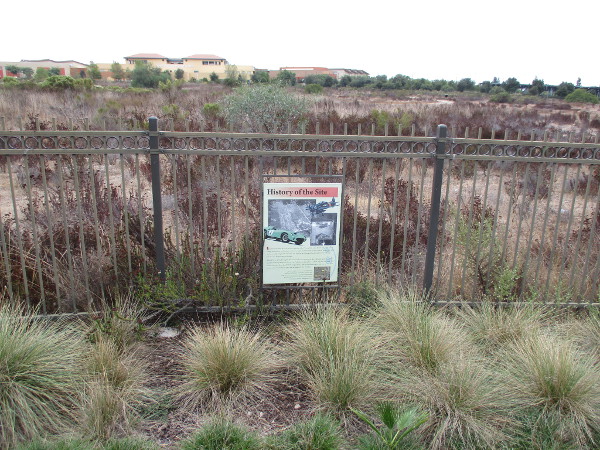
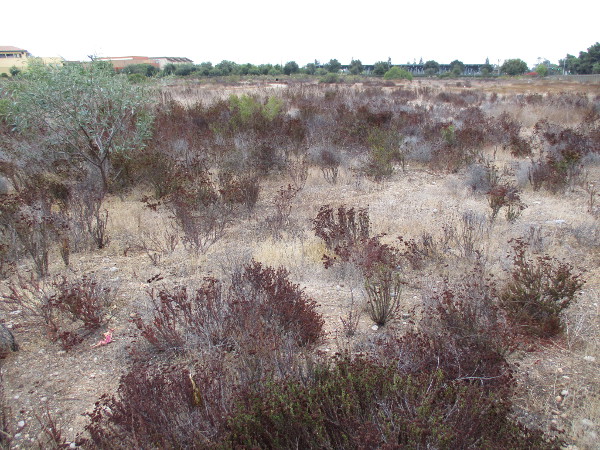
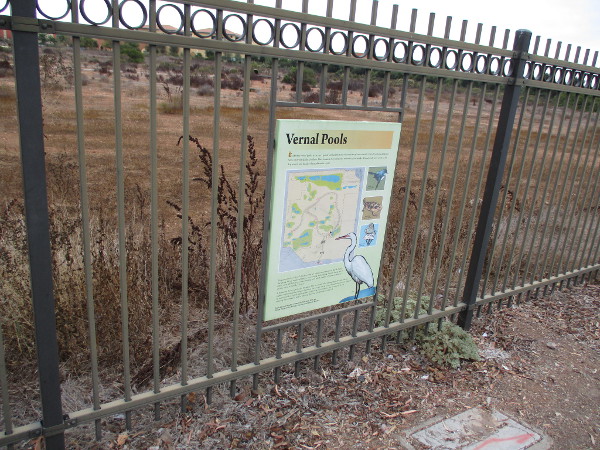
As I walked west along Hillery Drive from the Miramar College Transit Station, I observed what at first glance appeared like a scrubby vacant lot behind a fence. When I came to the corner of Hillery Drive and Black Mountain Road, a sign on the fence informed me that I was looking at an area of special environmental importance–a unique nature preserve!

I was walking right next to the Miramar College Vernal Pools.

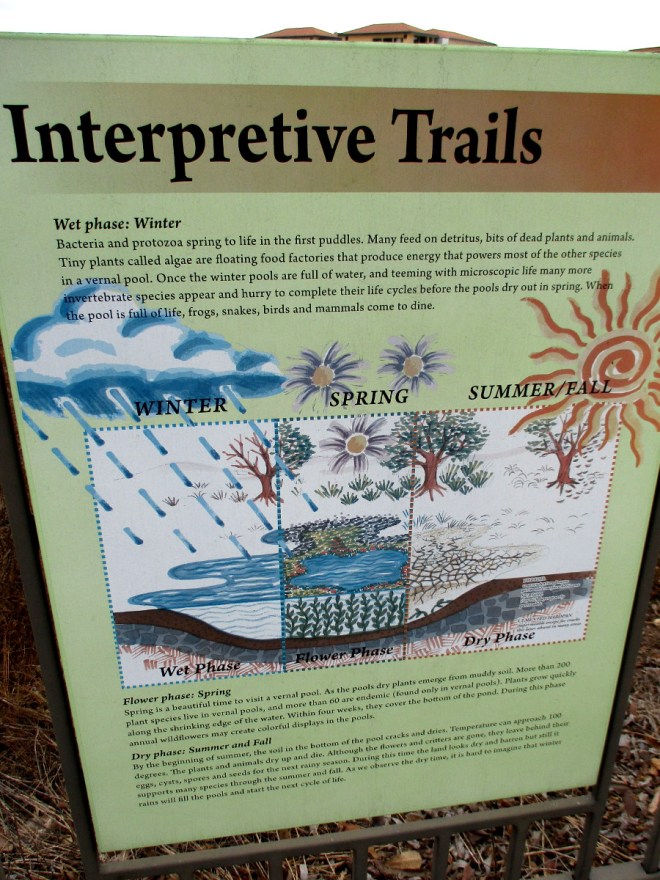
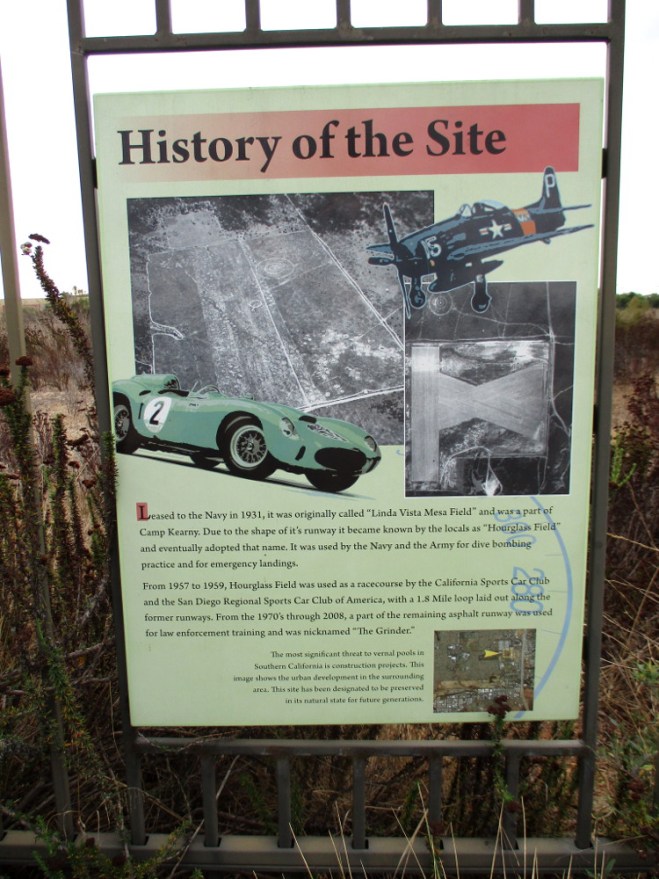
Here’s a little information provided by three signs that I read:

This plot of land was originally leased to the Navy in 1931 and called Linda Vista Mesa Field, or Hourglass Field because of its distinctive shape. It was part of Camp Kearny, which was located on the site of the current Marine Corps Air Station Miramar. This field was used by the Army and Navy for dive bombing practice and emergency landings.

From 1957 to 1959, the field was used as a sports car racecourse, and from the 1970’s to 2008 what remained of the old runway was used for law enforcement training and nicknamed The Grinder.

The protected field now contains many seasonal vernal pools–a very rare type of wetland. Shallow vernal pools are wet during the rainy season–particularly in spring–then quickly turn to mud and dry out. Because of this unusual environment, a number of rare and endemic species live in vernal pool areas. In addition to teeming microscopic life and small crustaceans like the fairy shrimp, there are frogs, snakes, birds and mammals. More than 200 plant species thrive in and around vernal pools, including annual wildflowers.

One sign indicates the Miramar College Vernal Pools’ interpretive trails are open Monday through Friday from 7 am to 10:30 pm. Unfortunately, I walked by on a Saturday and had to observe this natural area from behind the surrounding fence.

If you want to read the signs, click my photos and they will enlarge.

I live in downtown San Diego and love to walk around with my camera! You can follow Cool San Diego Sights via Facebook or Twitter!

Monument in Otay Mesa to aviation pioneer Montgomery.

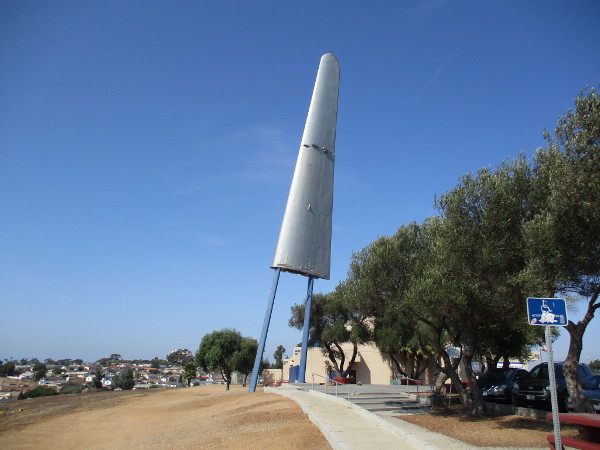
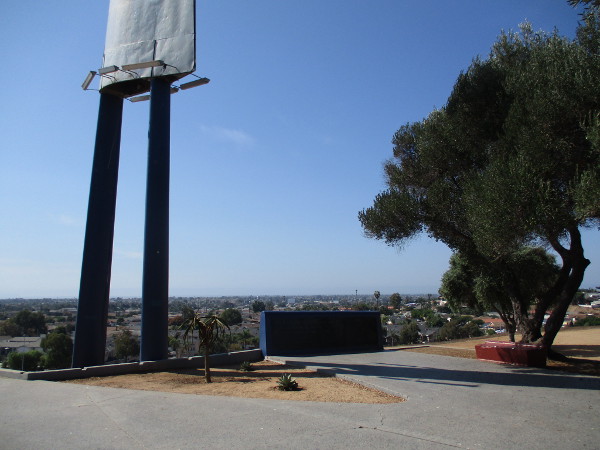
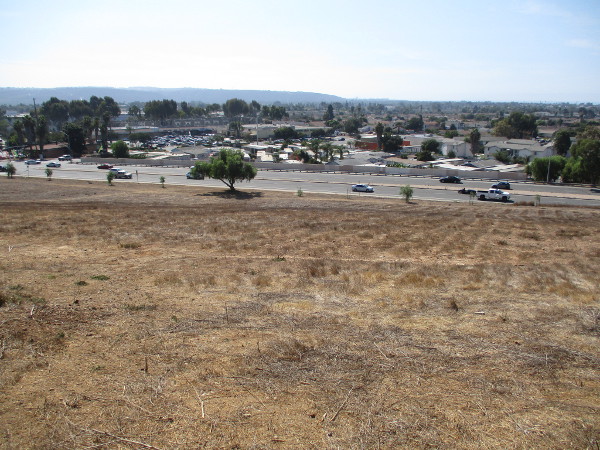
It seems few in San Diego know of the historically important hill in Otay Mesa West. From the top of this hill, which overlooks San Diego’s South Bay cities, aviation pioneer John J. Montgomery made the world’s first “controlled” winged glider flights in the late 19th century.

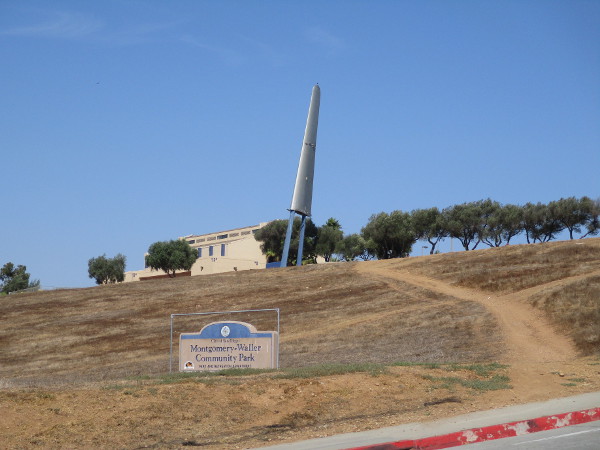
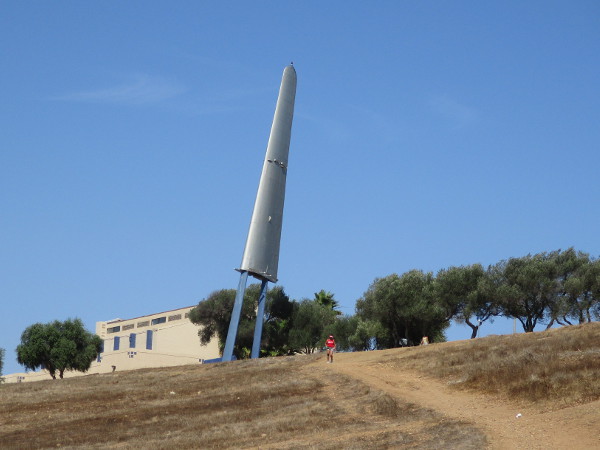
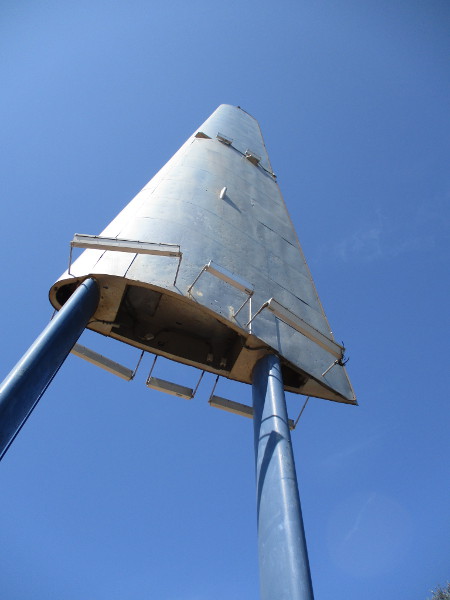
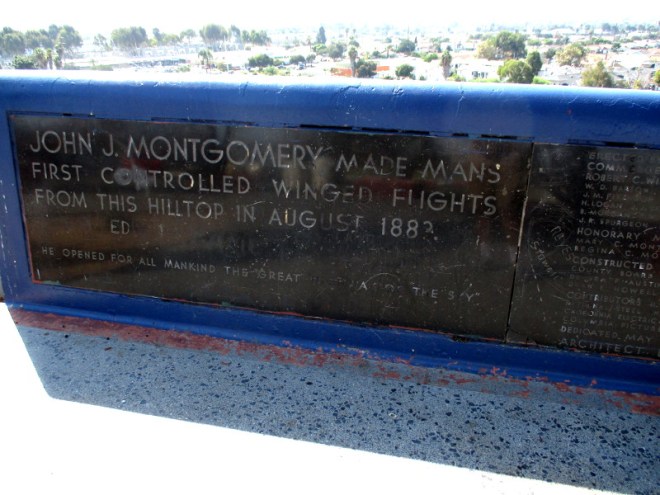
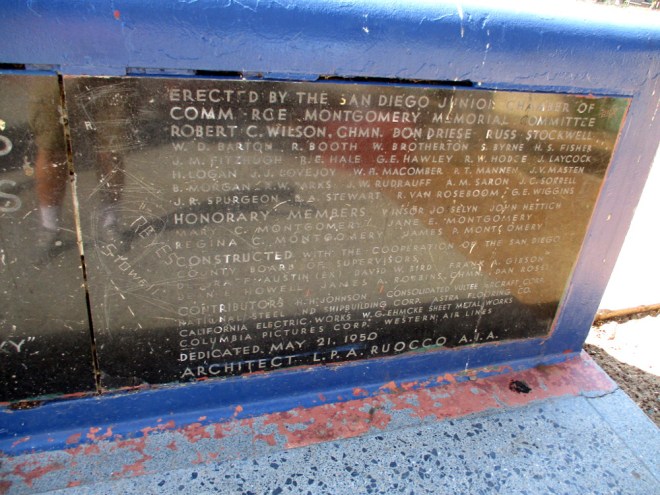
A monument to Montgomery’s achievements stands on the hilltop in the form of a vertical aircraft wing, erected in 1950. Words engraved on a black marble tablet near the wing include:

JOHN J. MONTGOMERY MADE MAN’S FIRST CONTROLLED WINGED FLIGHTS FROM THIS HILLTOP IN AUGUST 1883

HE OPENED FOR ALL MANKIND THE GREAT HIGHWAY OF THE SKY

Erected by the San Diego Junior Chamber of Commerce Montgomery Memorial Committee. Dedicated May 21, 1950

When I researched the early heavier-than-air flights of Montgomery, I noticed there’s a lot of debate about who in the world actually achieved various flying firsts. Some historians assert he made the world’s first “controlled” glider flights. Such as here. “Montgomery should be credited for the invention and demonstration of the 1st controlled glider flight, and patented hinged surfaces at the rear of the wing and a patent for the parabolic wing…

According to Wikipedia: “In the early 1880s Montgomery began studying the anatomy of a variety of large soaring birds to determine their basic characteristics, like wing area, total weight and curved surfaces. He made detailed observations of birds in flight, especially large soaring birds such as eagles, hawks, vultures and pelicans which soared on thermals near San Diego Bay…In the 1880s Montgomery…made manned flight experiments in a series of gliders in the United States in Otay Mesa near San Diego, California. Although not publicized in the 1880s, these early flights were first described by Montgomery as part of a lecture delivered at the International Conference on Aerial Navigation at Chicago, 1893. These independent advances came after gliding flights by European pioneers such as George Cayley’s coachman in England (1853) and Jean-Marie Le Bris in France (1856). Although Montgomery never claimed firsts, his gliding experiments of the 1880s are considered by some historians and organizations to have been the first controlled flights of a heavier-than-air flying machine in America or in the Western Hemisphere, depending on source.

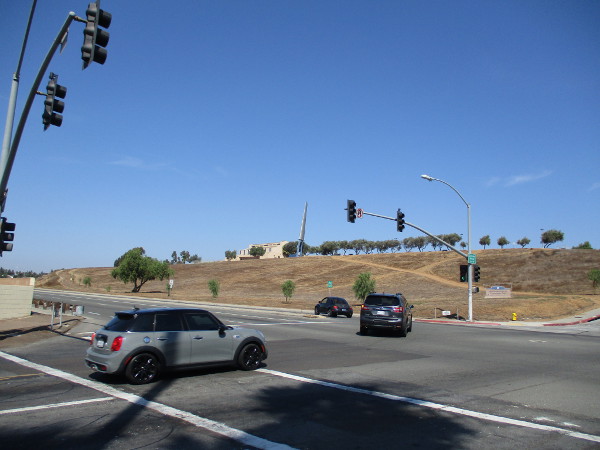
Today, the Montgomery Memorial‘s 93-foot airplane wing juts vertically into the sky at Montgomery-Waller Community Park, which is located at the northeast corner of Coronado Avenue and Beyer Boulevard in Otay Mesa West. The silver wing is from a World War II Consolidated Aircraft B-32 Dominator heavy bomber. It’s an impressive albeit somewhat peculiar reminder of how aviation technology continues to progress.

Montgomery-Gibbs Executive Airport in San Diego, one of the busiest airports in the United States for small aircraft, was once called Montgomery Field, named after the aviation pioneer.

When humans eventually land on Mars, and spread outward into the Solar System, it should be remembered that we made one of our first flights from a hilltop in San Diego.

This blog now features thousands of photos around San Diego! Are you curious? There’s lots of cool stuff to check out!

Here’s the Cool San Diego Sights main page, where you can read the most current blog posts.  If you’re using a phone or small mobile device, click those three parallel lines up at the top–that opens up my website’s sidebar, where you’ll see the most popular posts, a search box, and more!

To enjoy future posts, you can also “like” Cool San Diego Sights on Facebook or follow me on Twitter.

Riding the world’s first outdoor glass elevator!

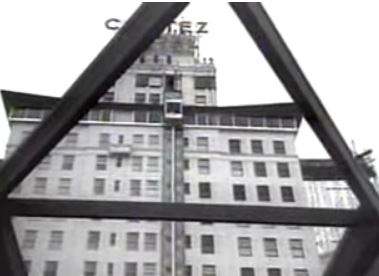
If you’re familiar with the history of the El Cortez in downtown San Diego, you probably know it featured the world’s very first outdoor glass elevator. (Although I’ve also seen information that says it was the first such elevator in the United States, second in the world.)

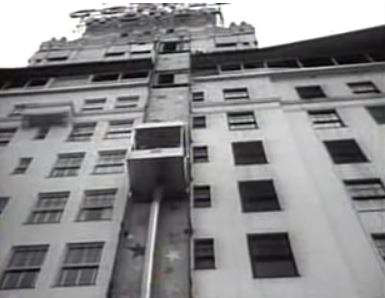
Based on an idea suggested by a hotel bellboy, an outdoor glass elevator, called the Starlight Express, was installed in 1956 on the side of the El Cortez Hotel, then the highest building in San Diego. People from all around Southern California would converge on the elegant hotel to be swept dizzily skyward to the chic Starlight Room restaurant on the twelfth floor.

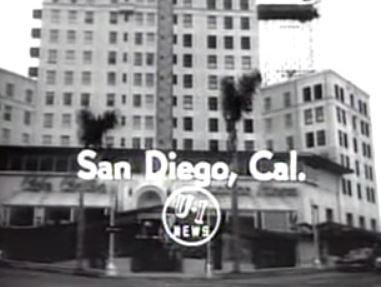
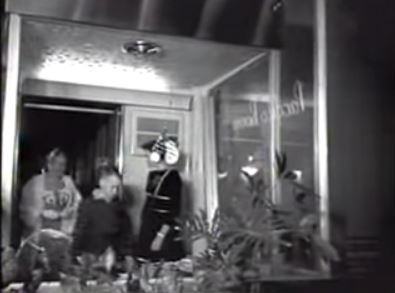
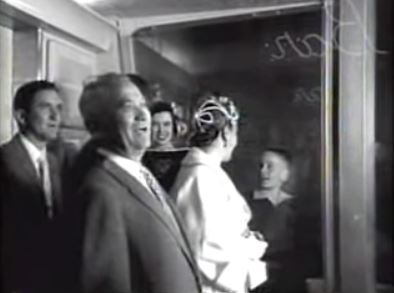
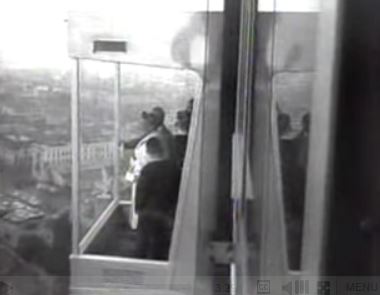
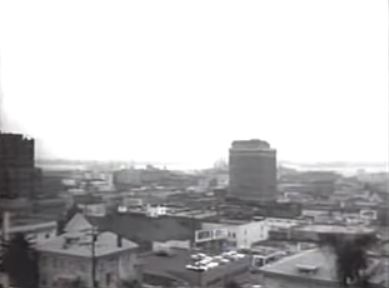
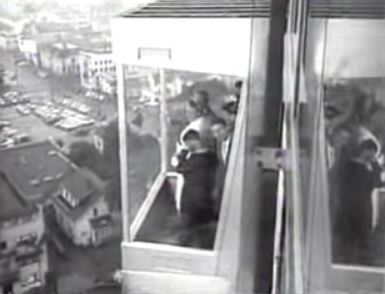
Today I came across a black and white 1956 newsreel that has been released by Universal City Studios into the public domain. It shows thrilled passengers going up and down what was then the brand new, incredible, jaw-dropping Starlight Express!

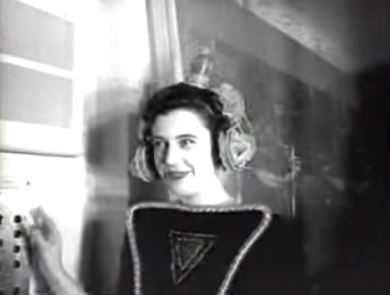
Check out the “futuristic” costume (uniform?) of the smiling elevator operator! And check out how downtown San Diego appeared in the 1950s. A bit different than today, right?

I snipped sequential images from the old newsreel so you can enjoy a fun look!

By the way, the El Cortez Hotel also featured the world’s first moving sidewalk! You know–the sort of thing you might stand on in an airport terminal or at an amusement park. It was called the Travolator. Both the Starlight Express and Travolator were removed many years ago.

Read much more about the El Cortez and its extraordinary history in this detailed Wikipedia article. Among other things, you’ll learn how this Spanish Colonial Revival architectural style landmark was built on property once owned by a son of President Ulysses S. Grant, how a third of San Diego’s population showed up for the hotel’s opening day, and how it had an anti-aircraft battery on its roof during World War II!

I live in downtown San Diego and love to walk around with my camera! You can follow Cool San Diego Sights via Facebook or Twitter!

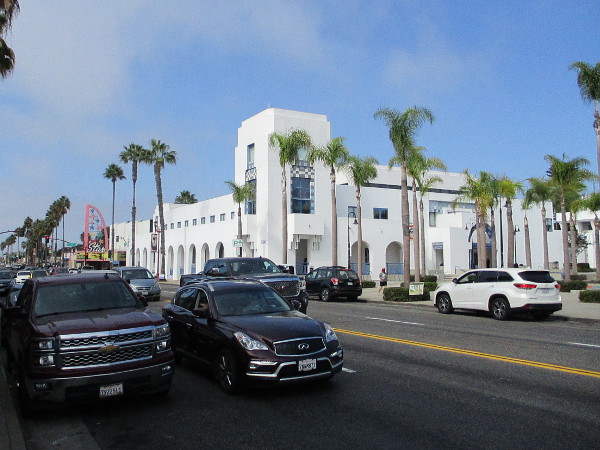
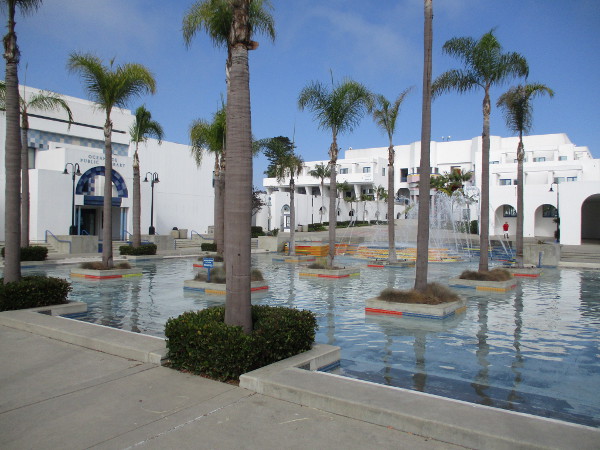
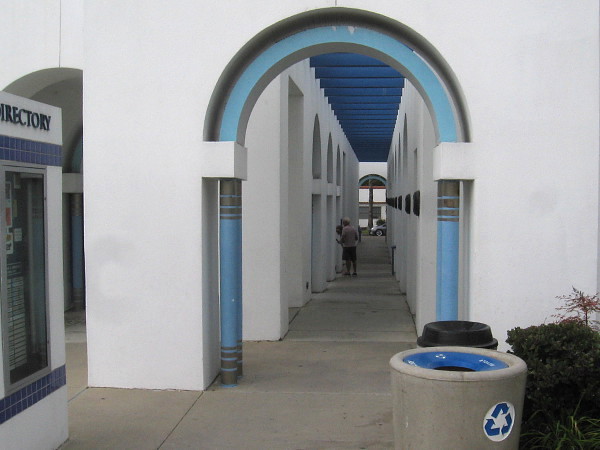
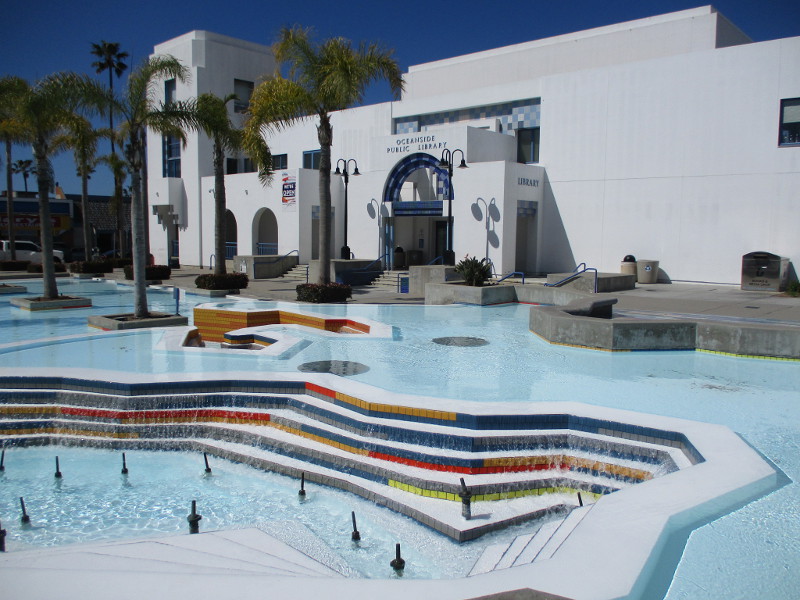
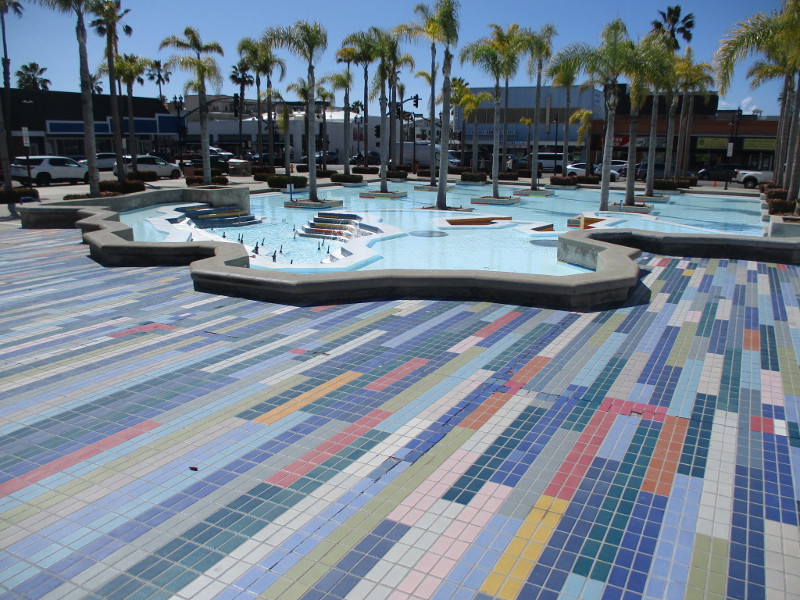
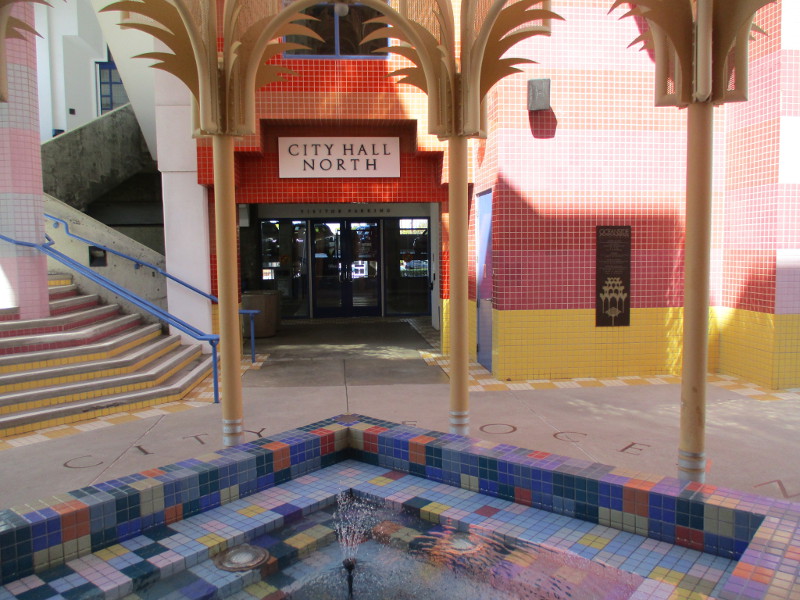
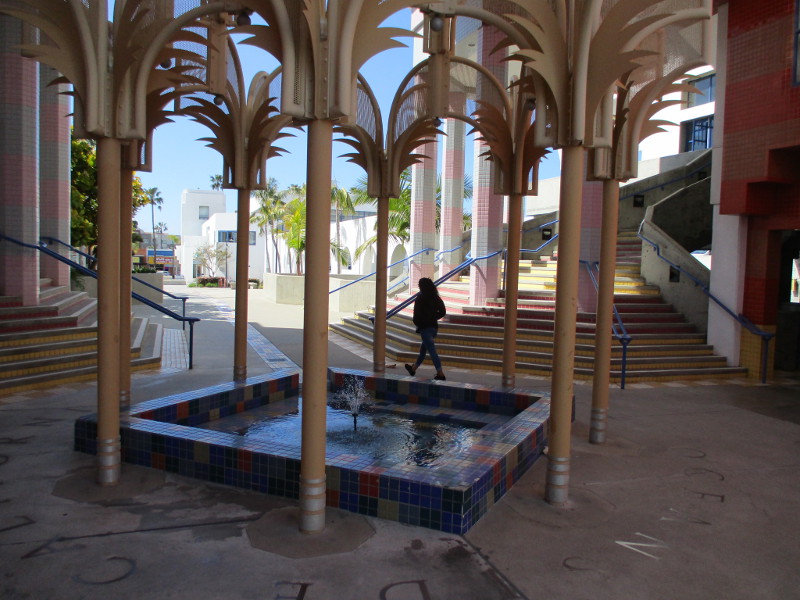
Fantastic architecture at Oceanside Civic Center.

Uniquely beautiful civic centers can be found all around San Diego County. I’ve photographed many of them. But the Oceanside Civic Center might be my favorite.

I walked randomly about the Oceanside Civic Center complex last weekend and was amazed by everything I saw.

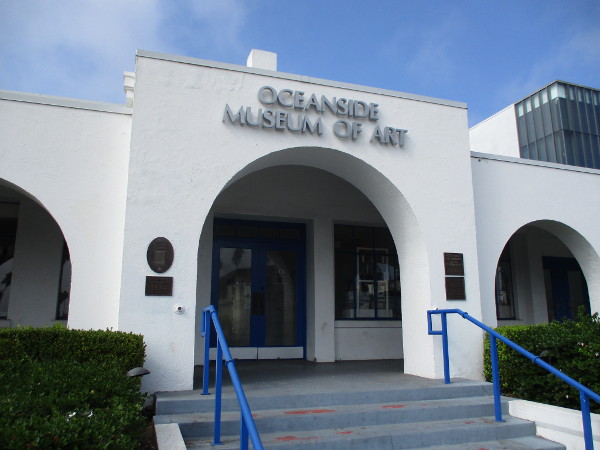
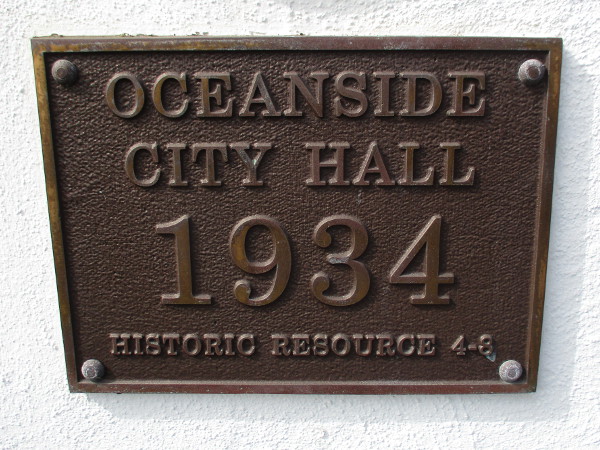
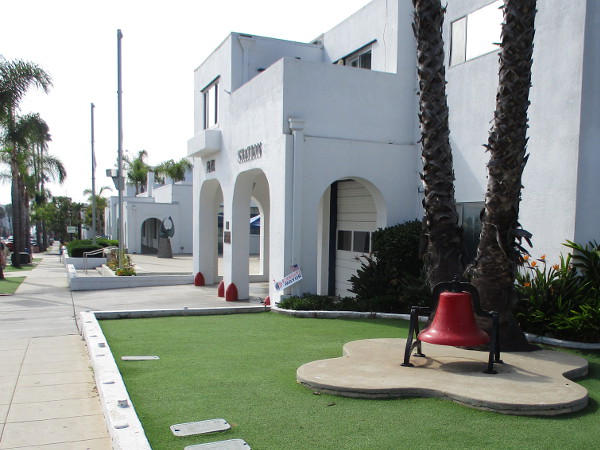
As you can see from various plaques I photographed, the original Oceanside Fire Station (also called Oceanside Engine House and Police Station) was built in 1929/1930, and the original City Hall and Library were completed in 1934. They were designed by Irving Gill, a renowned San Diego architect who is now a recognized major figure in the modern movement. His welcoming simplicity, unadorned classic lines and graceful arches have appeared in various places on my blog. His style has been described as cubist. You can see that signature style in these photographs as well. Designing buildings for the City of Oceanside was the final monumental project of his career.

As you can see on another plaque, a City Hall renovation was completed in 1957, and as you can read in this article, a large new Oceanside Civic Center and Public Library were completed in 1990. The large complex “designed by Charles Moore emulated the styling of Irving Gill (with) the white arches and simple architecture…Moore remarked about Gill’s legacy: “We use his plain white walls, his unadorned concrete arcades, disciplined fenestration and flat roofs as our architectural vocabulary, and then allow ourselves the exuberance of bright colors with tiles in niches at the entrances, in the jambs and soffits of deep set openings, and through the contrast of palms and broad-leafed plants surrounding our structure.”

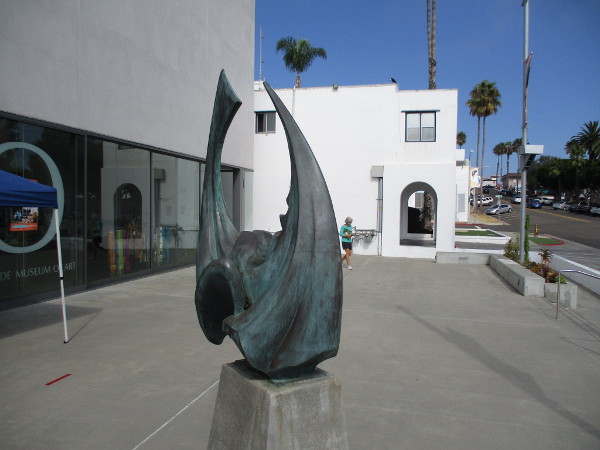
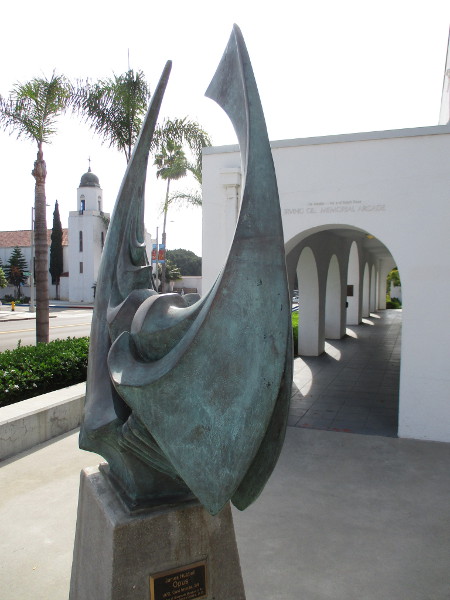
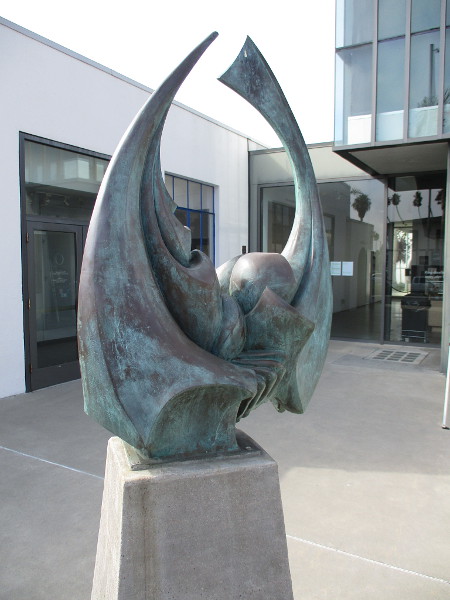
The Oceanside Museum of Art, with its exquisite 1972 Opus sculpture by James Hubbell situated near the entrance, is another beautiful part of the large civic center complex. It occupies the original City Hall.

In the same article, you can read that “After renovation of the interior of building, the Museum of Art opened to the public on October 6, 1997. In 2008, a new addition to the Oceanside Museum of Art was dedicated in 2008. The contemporary, three-level 15,000 square foot addition designed by architect Fredrick Fisher sits alongside the historic building designed by architect Irving Gill, who redefined the architectural landscape of Southern California.”

Should you ever visit Oceanside, California, look for the big colorful fountain at the corner of North Coast Highway and Pier View Way. Then take a stroll through one of the most fantastic civic centers you’re likely to ever see!

UPDATE!

During a later visit I took even more photos. The big fountain near the library was off at the time…

This blog now features thousands of photos around San Diego! Are you curious? There’s lots of cool stuff to check out!

Here’s the Cool San Diego Sights main page, where you can read the most current blog posts.  If you’re using a phone or small mobile device, click those three parallel lines up at the top–that opens up my website’s sidebar, where you’ll see the most popular posts, a search box, and more!

To enjoy future posts, you can also “like” Cool San Diego Sights on Facebook or follow me on Twitter.

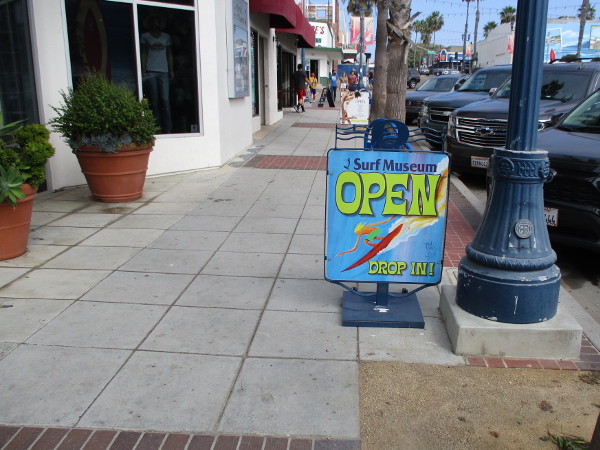
A visit to the California Surf Museum!

On Saturday I enjoyed my first ever visit to the California Surf Museum in Oceanside.

This one-of-a-kind museum might be small, but WOW! Every inch of it is packed with cool exhibits that celebrate the history, art and technology of surfing!

I found myself deeply fascinated by everything I saw. Even though I’m not a surfer!

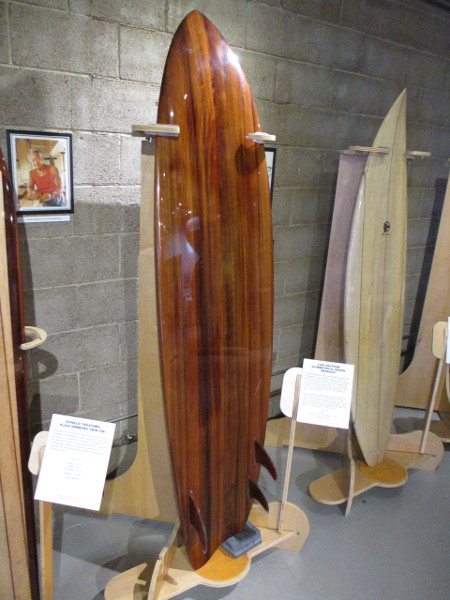
Most notable was the museum’s incredible array of historic surfboards, many of which are true works of art.

I could easily see why so many people love surf culture. I could see the poetry and the physical joy of surfing and its spiritual quality. I asked the friendly docent what he liked most about surfing, and he said it was being in the moment. Forgetting unimportant things, riding a wave, feeling alive.

If you are the least bit fascinated by this sport or the Southern California beach scene, definitely visit the California Surf Museum. To give you an idea of what you might see, check out my photographs, and read the captions!

Numerous exhibits fill the small but very cool California Surf Museum in Oceanside.
One exhibit details the Anatomy of a Wave.
A gun surfboard made of layered agave wood, created by local surfing and shaping legend Gary Linden.
Asymmetrical redwood surfboard made from the wood of a large wine barrel, created by Carl Ekstrom.
Display case holds 1946 California Surfriders book by Doc Ball, his wood waterbox camera for surf photography, and the 1928 Tom Blake Perpetual Trophy.
Another exhibit celebrates the boogie board, invented by Tom Morey in 1971, and explores its history.
Plastic Fantastic rounded pin surfboard, with cool artwork by Randall Kraemer.
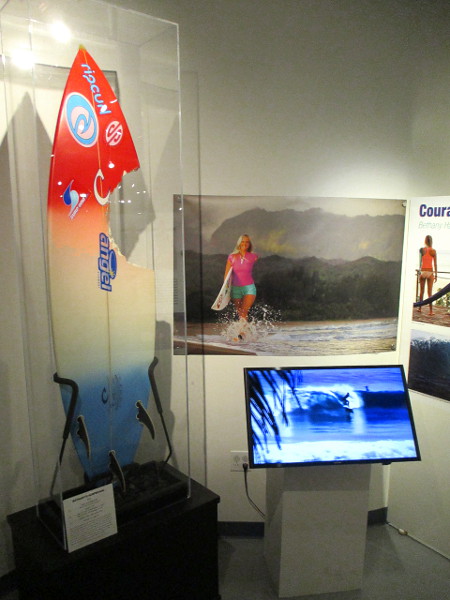
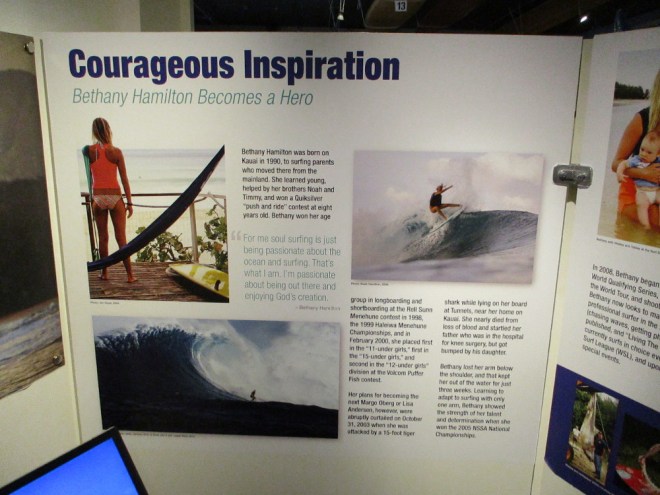
A special, inspirational exhibit celebrates Bethany Hamilton, champion surfer who lost her arm in a shark attack.
A special, inspirational exhibit celebrates Bethany Hamilton, champion surfer who lost her arm in a shark attack. You can see her surfboard with a chunk missing.
Bethany Hamilton's inspiring story was told in the movie Soul Surfer. She has won multiple competitions after losing her left arm in a 2003 shark attack.
Bethany Hamilton’s inspiring story was told in the movie Soul Surfer. She has won multiple competitions after losing her left arm in a 2003 shark attack.
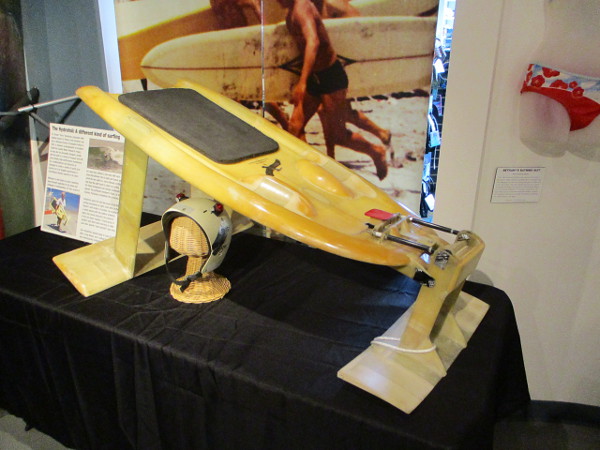
A very unique hydrofoil for kneeboard surfing, designed by oceanographer Dr. Tareah "Terry" Hendricks. A plaque in his honor can be found at Swami's in Encinitas.
A very unique hydrofoil for kneeboard surfing, designed by oceanographer Dr. Tareah “Terry” Hendricks. A plaque in his honor can be found at Swami’s in Encinitas.
Circa 1910 early California alaia made of Sugar Pine, built by Ralph Noisat. One of the oldest documented boards in the mainland United States.
Surfing toys, games and pop culture imagery in a display case at the California Surf Museum.
Toys, games, comic books and pop culture artifacts celebrate surfing in a display case at the California Surf Museum.
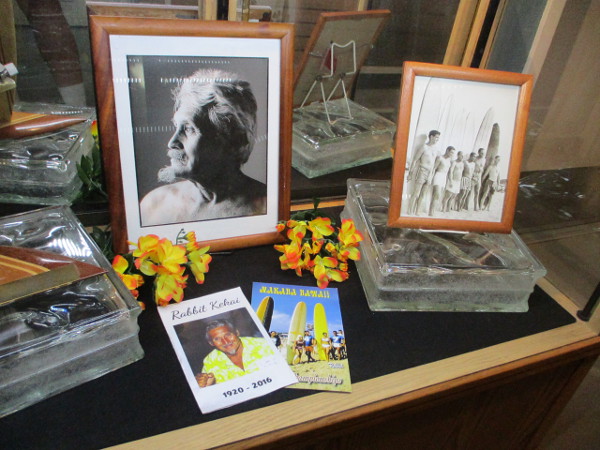
A museum display memorializes local surfers who've passed on.
A museum display memorializes local surfers who’ve passed on.
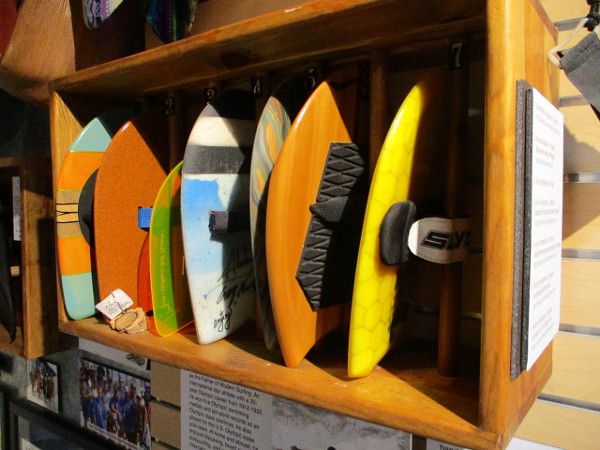
Various bodysurfing handplanes.
A cool art exhibit titled Abstractions in Symmetry by Russell Spencer features photographs created using light and rotating surfboard fins.
A cool surf art exhibit titled Abstractions in Symmetry by Russell Spencer features photographs created using light and rotating surfboard fins.
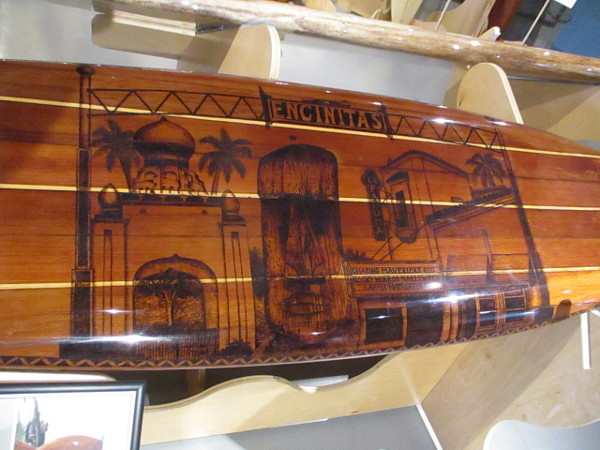
A redwood surfboard by Francis Todd II and Mary Krahn pays tribute to popular Southern California surfing destination Encinitas.
A small slice of heaven for surfing enthusiasts!

I live in downtown San Diego and love to walk around with my camera! You can follow Cool San Diego Sights via Facebook or Twitter!

You can easily explore Cool San Diego Sights by using the search box on my blog’s sidebar. Or click a tag! There are thousands upon thousands of photos for you to enjoy!
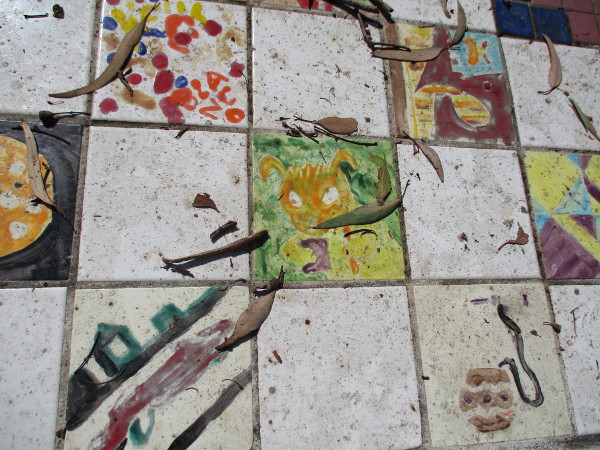
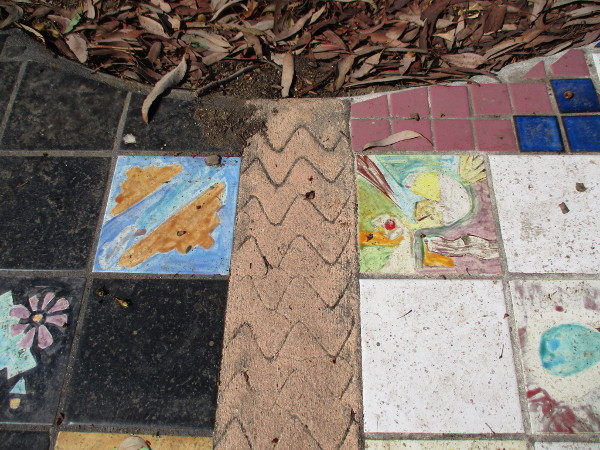
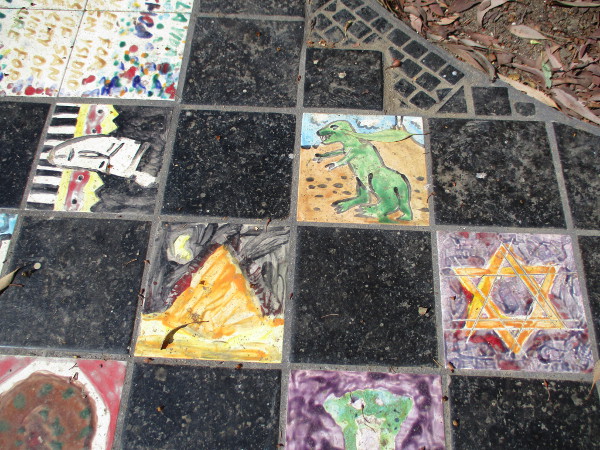
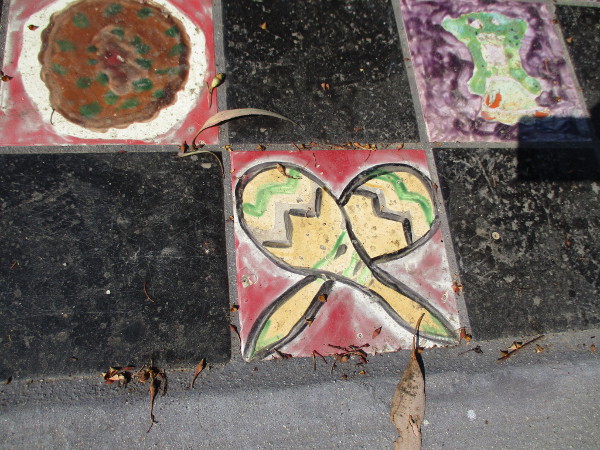
The forgotten public art of a famous artist.

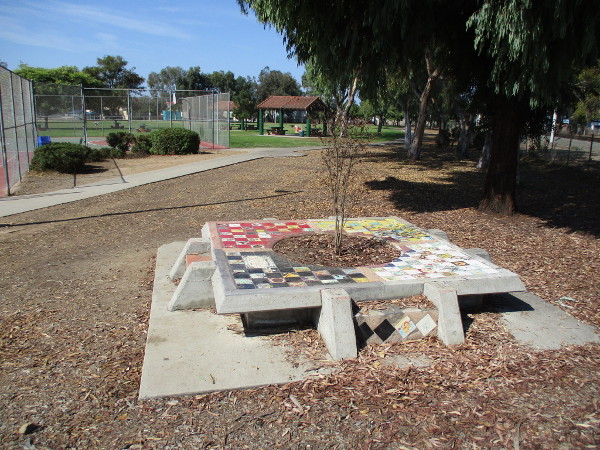
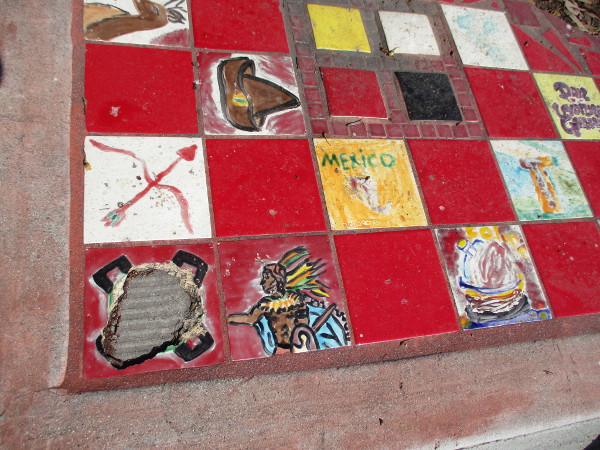
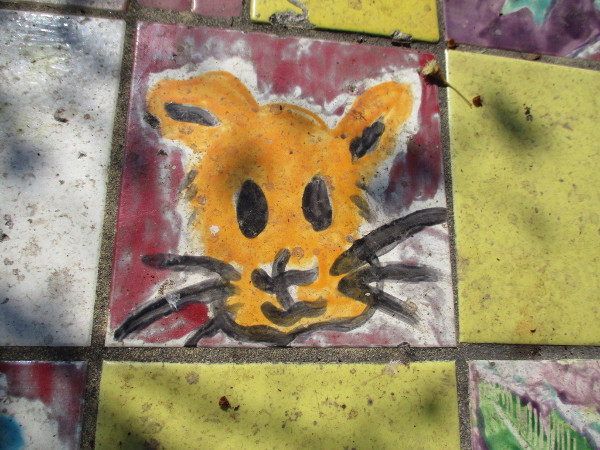
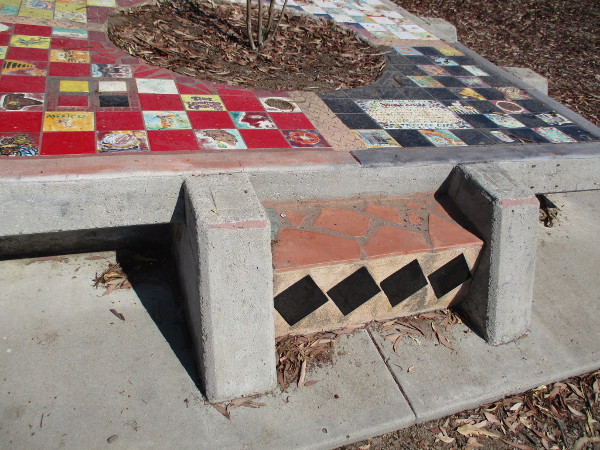
I received a comment this weekend on a past blog post that concerns public art at San Ysidro Park. The Tree of Life is a tile mosaic planter and bench near the center San Ysidro Park, created by internationally renowned artist Victor Ochoa (with the help of some kids, I believe). I posted photos here, where you can also read the comment.

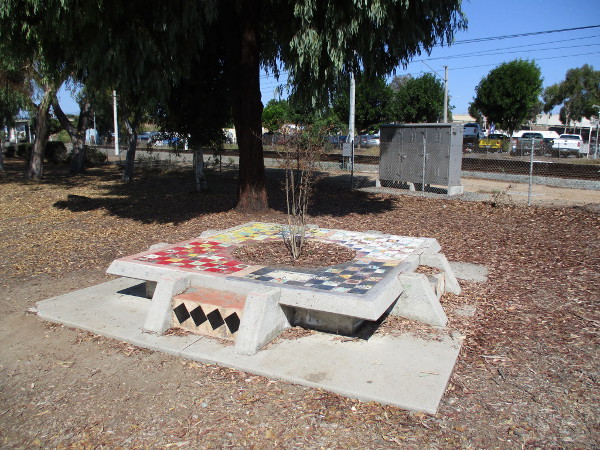
I was informed that a second Tree of Life by Victor Ochoa can be found at Howard Lane Park off Dairy Mart Road, and that the City of San Diego lists neither works on its civic art collection website here.

The reader commented the tree planted in this second Tree of Life planter is dead. Which is quite sad, seeing how Victor Ochoa is an artist who is celebrated around the world, particularly for his murals in historic Chicano Park.

Today I decided to go down to Howard Lane Neighborhood Park in the northwest corner of San Ysidro to check it out.

This is what I discovered…

I live in downtown San Diego and love to walk around with my camera! You can follow Cool San Diego Sights via Facebook or Twitter!

You can easily explore Cool San Diego Sights by using the search box on my blog’s sidebar. Or click a tag! There are thousands upon thousands of photos for you to enjoy!
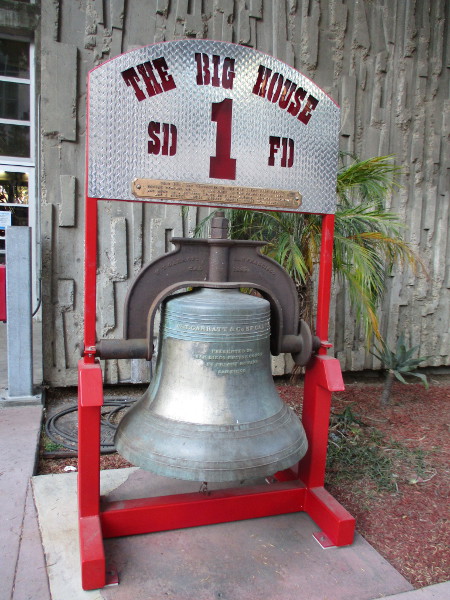
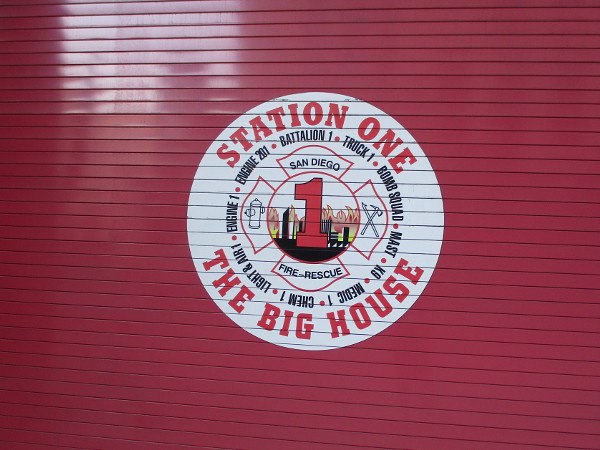
Huge bell at The Big House fire station!

Have you ever walked or driven past Fire Station 1 near the center of downtown San Diego and seen a gigantic bell out front? Have you wondered about it?

A few days ago I walked down the sidewalk past “The Big House” fire station and paused to snap some photos!

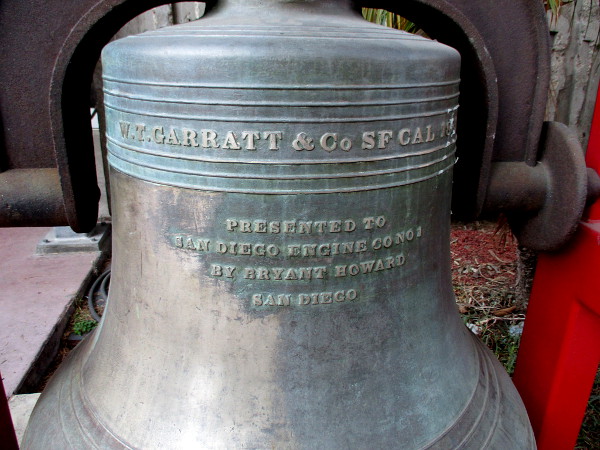
Words on the bell read:

W.T.GARRATT & Co SF CAL 1885
PRESENTED TO
SAN DIEGO ENGINE CO NO 1
BY BRYANT HOWARD
SAN DIEGO

A plaque above the huge bell reads:

THIS BELL WAS PRESENTED TO THE SAN DIEGO FIRE DEPT. ENGINE COMPANY NO. 1. IT WAS CAST IN SAN FRANCISCO IN 1885 AND HUNG IN A 50 FOOT TOWER ON FIFTH AVENUE, BETWEEN BROADWAY AND C STREET, WHERE JESSOPS JEWELRY STORE NOW STANDS.

(Jessops moved from that location many, many years ago.)

According to the City of San Diego website: Fire Station 1 was originally opened at 865 Second Avenue in 1904. That station was closed and relocated to the current building (at 1222 First Avenue) in January 1971.

I’d love to hear that bell ring! (Without a fire, of course.)

Thank you to all firefighter heroes!

I live in downtown San Diego and love to walk around with my camera! You can follow Cool San Diego Sights via Facebook or Twitter!

You can easily explore Cool San Diego Sights by using the search box on my blog’s sidebar. Or click a tag! There are thousands upon thousands of photos for you to enjoy!
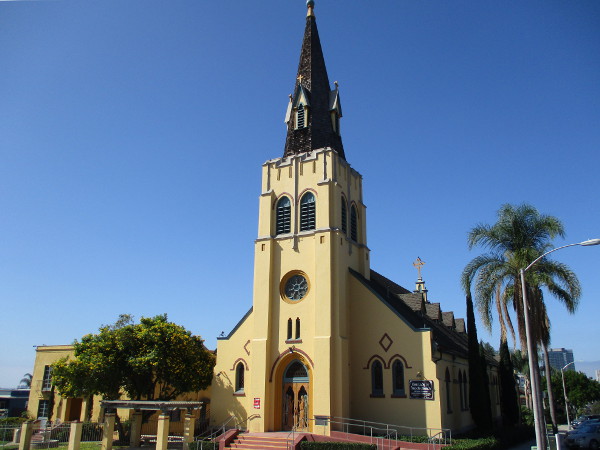
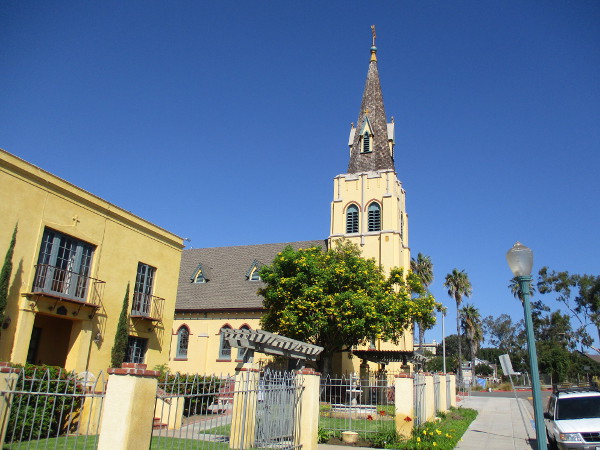
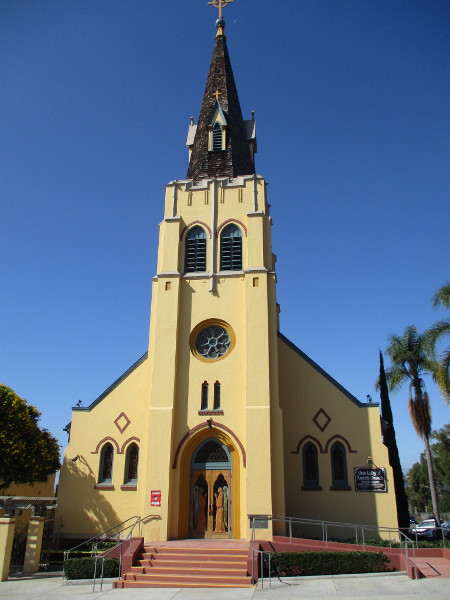
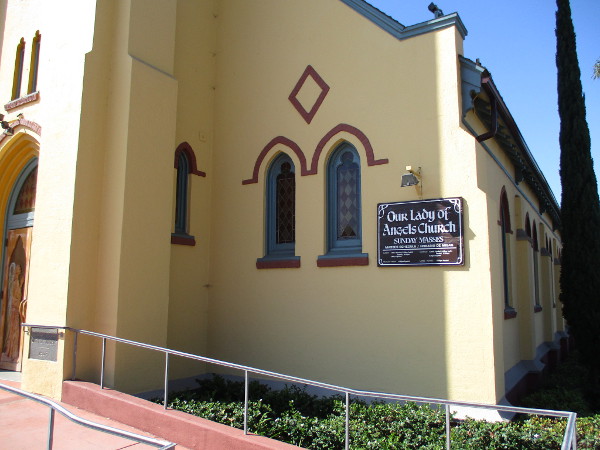
A look at Our Lady of Angels in Sherman Heights.

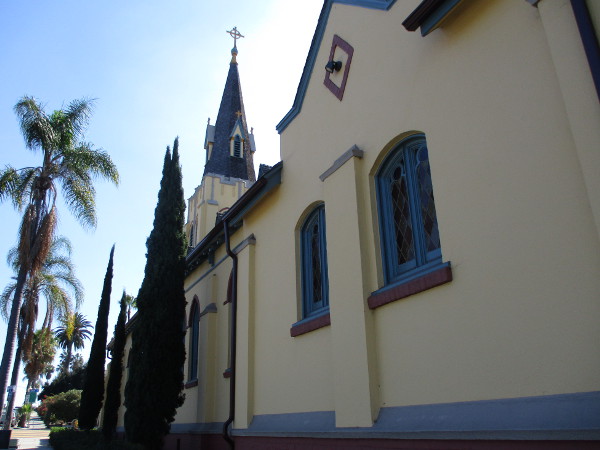
Whenever I drive along California State Route 94, just east of downtown San Diego, I can’t help noticing a yellow church with a tall, old-fashioned steeple rising south of the highway. So I finally decided to take a walk through Sherman Heights to have a better look.

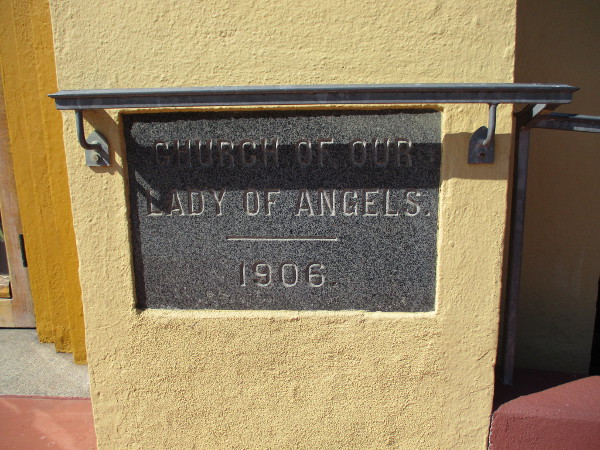
According to this, the Our Lady of Angels Catholic Church originated in 1905. A plaque by the front entrance reads: Church of Our Lady of Angels 1906. I suppose that’s the year of the building’s dedication. I tried to do a little online research, but I can’t find much about the building’s history.

As you can see, the church has a quaint but very distinctive appearance. It is said to be one of San Diego’s best examples of Gothic Revival architecture. (To me, seen from its front, the church appears like an angular yellow rocket!)

Our Lady of Angels stands in the historic old neighborhood of Sherman Heights, which today is filled with numerous picturesque Victorian houses, many of which exist in a state of semi-decay. Our Lady of Angels was San Diego’s second Catholic parish.

I didn’t venture beyond the angelic front doors of the church. The colorful building appeared to be closed the day I walked around it.

Enjoy some photos!

UPDATE!
Here are two better photos of the beautiful doors taken during a later walk…

I live in downtown San Diego and love to walk around with my camera! You can follow Cool San Diego Sights via Facebook or Twitter!

You can easily explore Cool San Diego Sights by using the search box on my blog’s sidebar. Or click a tag! There are thousands upon thousands of photos for you to enjoy!