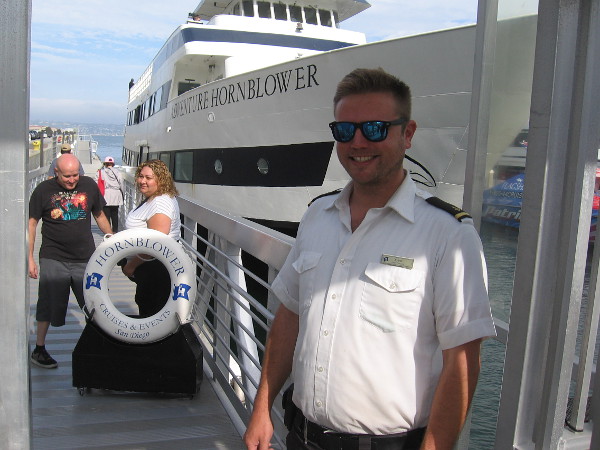
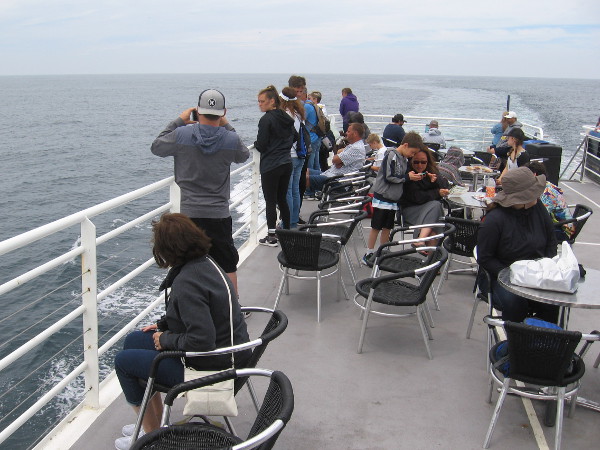
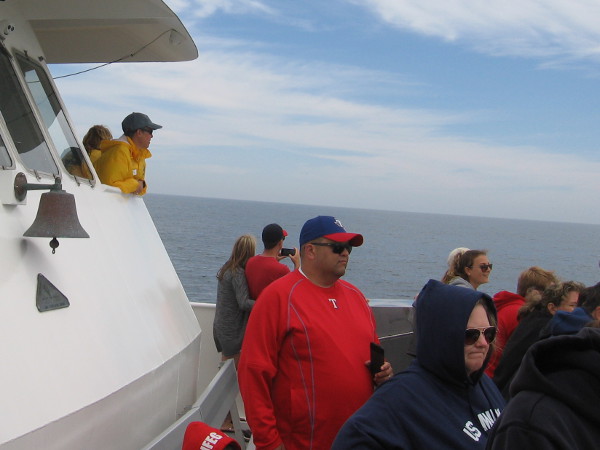
Wow! Talk about a fun summer adventure! Today, thanks to Hornblower Cruises and Events, I enjoyed a summer whale watching trip out in the beautiful Pacific Ocean off San Diego!
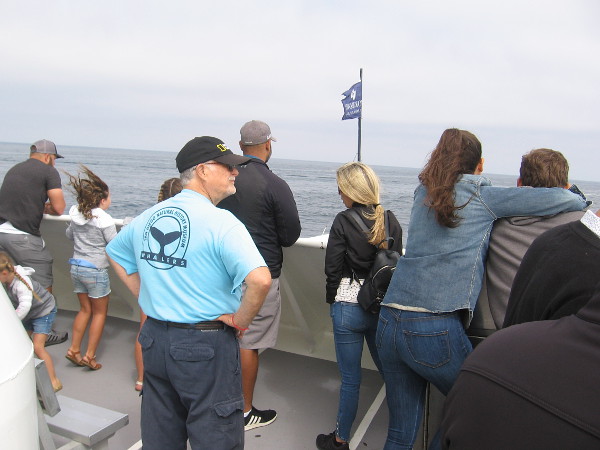
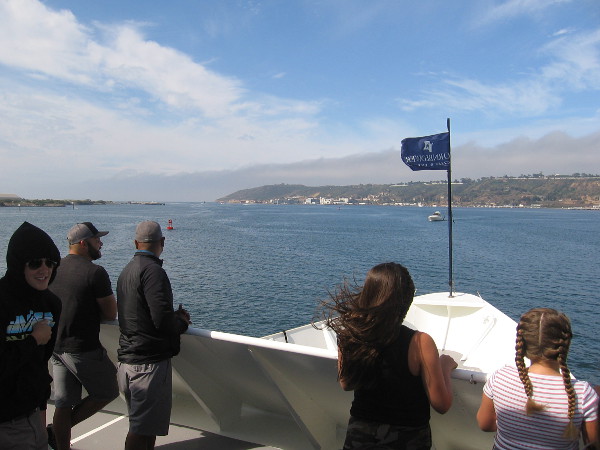
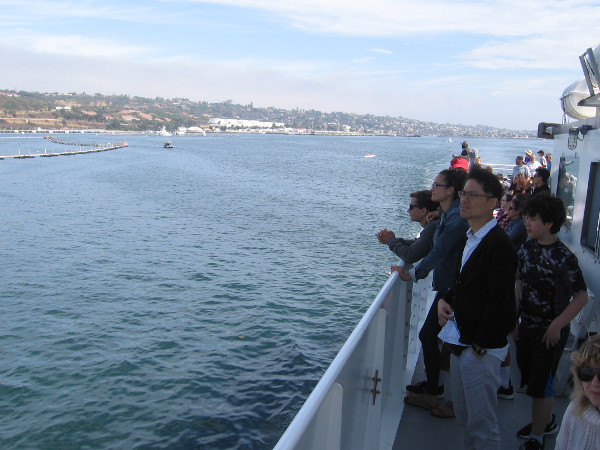
I and other passengers aboard the Adventure Hornblower cruised out of San Diego Bay and continued many miles west of Point Loma in search of blue whales, the largest animal on planet Earth.
Spotting these enormous mammals, which move through the oceans in a constant pursuit of food, can be a hit or miss proposition, but it was such a sunny, perfect day and the wide ocean was so calm and blue, I didn’t really care what we might happen to discover!
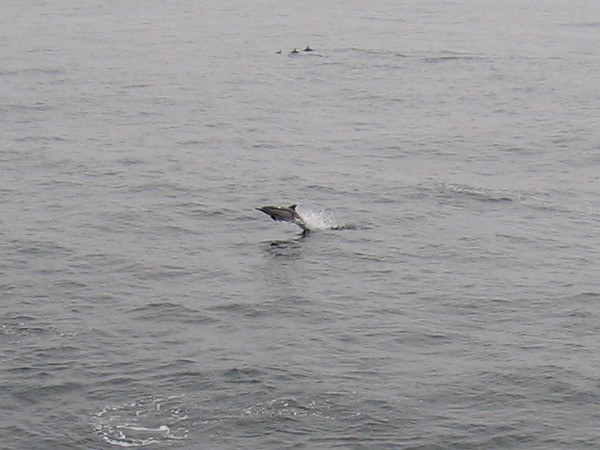
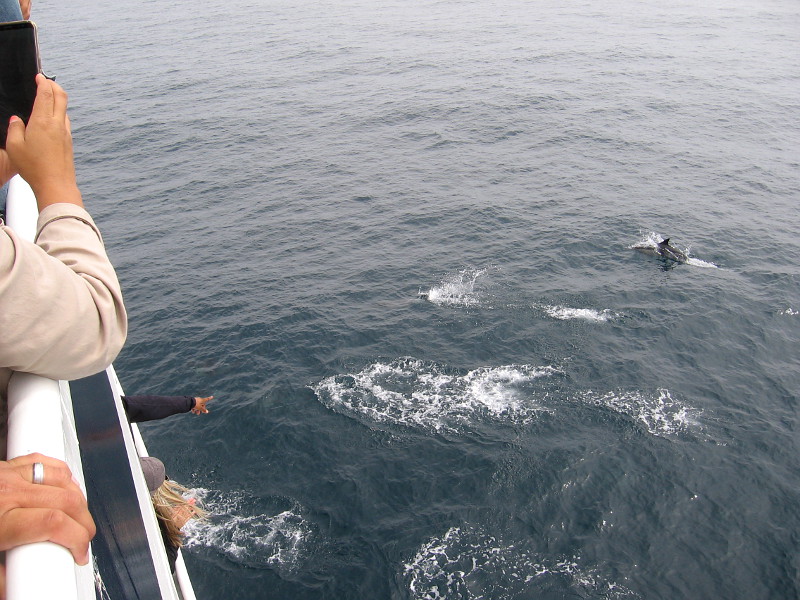
We did see numerous pods of dolphins almost everywhere we turned. They fed and played in the gentle swells nearby, and didn’t seem to mind the big ship full of pointing humans passing overhead.
I took lots of photos, but dolphins break the surface unexpectedly then quickly melt back into the water, so my small camera just managed to get a few decent pics. You have to be there to feel the excitement, not to mention the fresh wind and bright sunshine. It’s an incredible, magical experience!
Had this been a winter whale watching trip, we would likely have seen gray whales as they migrate along the California coast to and from Mexico. During the summer it’s possible to spot a variety of other whales, including blue whales and humpback whales, but these species don’t follow a predictable route of migration.
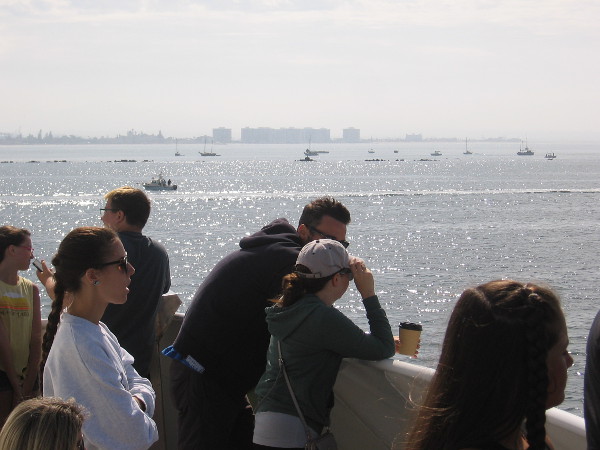
Our captain took us a good distance out into the open ocean. All hands searched the horizon when we reached the Nine Mile Bank–an underwater mountain range teeming with sea life where blue whales often feed. On our way out we spotted the distant spout of a Fin Whale–the second-largest species on Earth–but were unable to successfully see it up close.
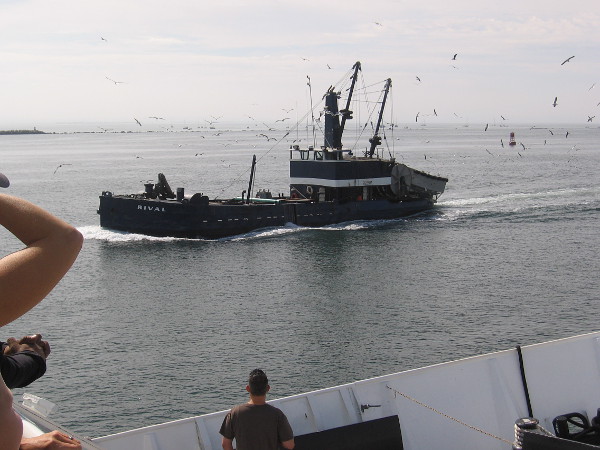
On our way back to San Diego we approached another boat that might have sighted a whale. We turned off our motor and silently drifted in, watching carefully, but we saw only dolphins and a group of feeding gulls and pelicans. The other boat had a drone hovering over the water, but it didn’t seem to find what it was looking for.
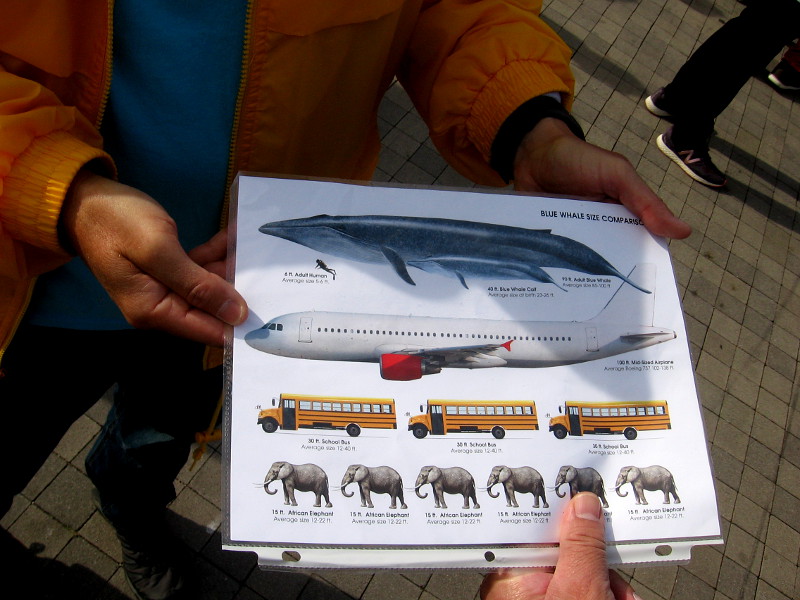
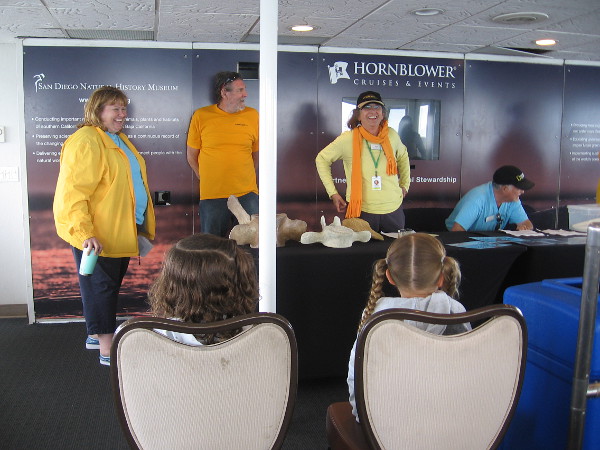
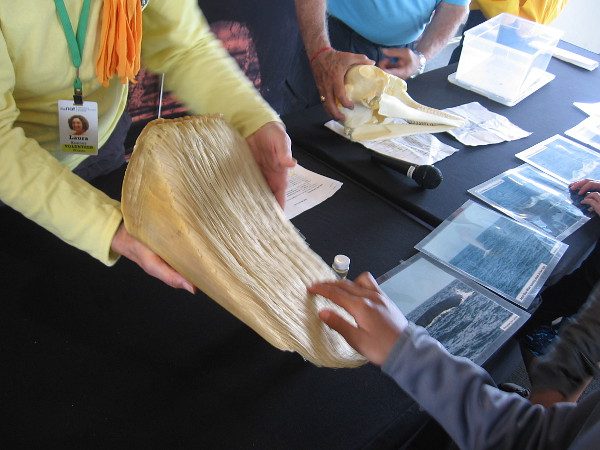
As we neared the channel into San Diego Bay, friendly people from the San Diego Natural History Museum in Balboa Park gave a short educational presentation, complete with close up photos of blue whales, an example of the filter-like baleen that these huge whales use to collect four tons of tiny krill per day, and a toothy dolphin skull. Kids enjoyed learning about all the cool marine life and had many questions!
I should mention, the summer whale watching trip included a narrated tour of the north part of San Diego Bay, where you always see something new. Including sea lions! It’s just as fun and interesting as a regular harbor cruise.
Because we didn’t spot a whale today, every passenger got a voucher for another free whale watching trip, or a harbor cruise on San Diego Bay. You can bet I’ll use mine!
Find out more about this awesome four hour summer whale watching adventure by visiting Hornblower’s San Diego website here!
…
I live in downtown San Diego and love to walk around with my camera! You can follow Cool San Diego Sights via Facebook or Twitter!
You can easily explore Cool San Diego Sights by using the search box on my blog’s sidebar. Or click a tag! There are thousands upon thousands of photos for you to enjoy!
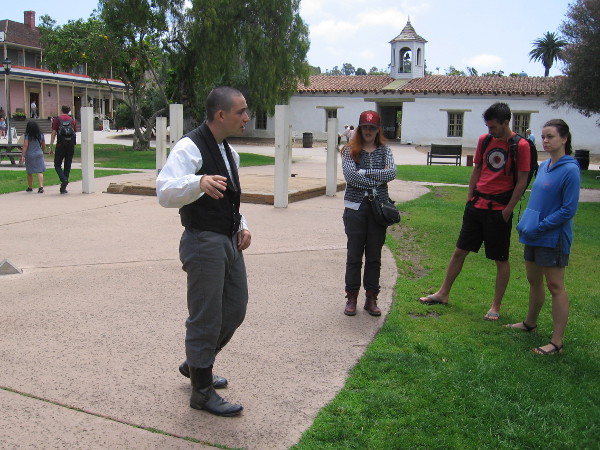
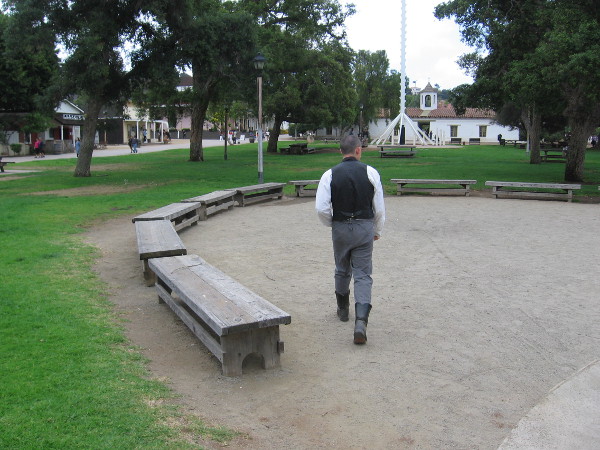
A small group on a free walking tour learns about the history of Old Town San Diego.
A free walking tour of Old Town San Diego State Historic Park is available every day at 11 am and 2 pm. The tours meet in front of the Robinson-Rose House Visitor Center, at the northwest end of Old Town’s large grassy plaza. (UPDATE! In late 2022, post-COVID, the tours were being offered Thursday and Friday at 11 am. Times are subject to change!)
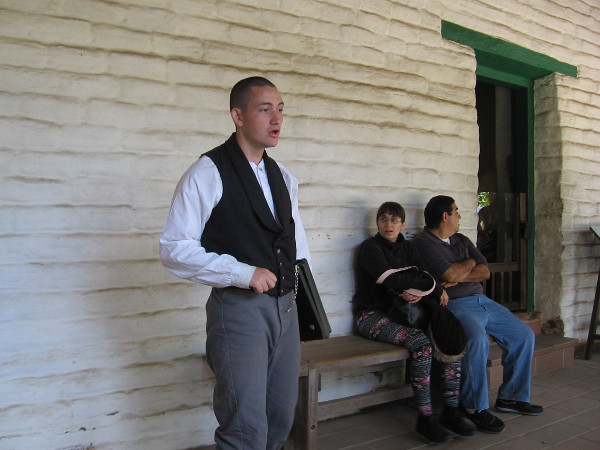
When I visit Old Town San Diego, I’ll sometimes join the walking tour while it’s in progress. Last weekend I happened to be in front of the Robinson-Rose House right at eleven o’clock, so I decided to enjoy the full one hour tour!
During this easy walk a guide in period costume provides fascinating information about San Diego’s early history. Several different periods are covered, from the Spanish mission period, to the Mexican rancho period, to the early American period. The main interpretive period is 1821 to 1872.
Among the following photos are a few interesting bits of history…
Free walking tours begin daily at 11 and 2 in front of the Robinson-Rose House Visitor Center at Old Town San Diego State Historic Park.Inside the Robinson-Rose House visitors can view a large model behind glass. It shows what Old Town San Diego looked like in 1872.The tour guide leads our group out into Old Town’s historic Plaza de las Armas.We learn that the Native American Kumeyaay village of Cosoy was located right here, long before Old Town was established.
The Native American Kumeyaay village of Cosoy was located where Old Town San Diego’s plaza was established. Before the San Diego River was diverted in 1877, its water ran very close to Old Town and was an integral part of the life of early people in our desert-like Southern California coastal region.
Our tour now heads toward restored buildings that stand on the southwest side of the plaza.We enter Casa de Machado y Silvas, where today visitors can view the small Commercial Restaurant museum.Our tour guide talks about tiny San Diego during the Mexican rancho period. Trade goods were acquired from merchant ships in exchange for cattle hides, which were called California Banknotes.
When Mexico won its independence from Spain in 1821, the Spanish soldiers of the nearby San Diego Presidio switched their allegiance to Mexico, which couldn’t afford to pay them. For their service, they were given land at the foot of Presidio Hill, where many soldiers and their families built houses. That is how Old Town started.
You can learn more about La Casa de Machado y Silvas and the fascinating Commercial Restaurant museum here.
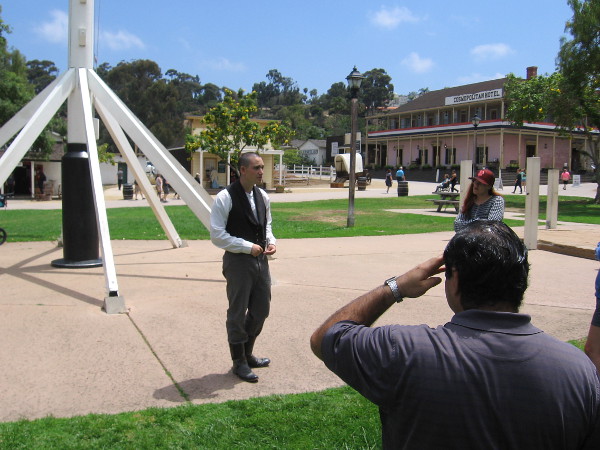
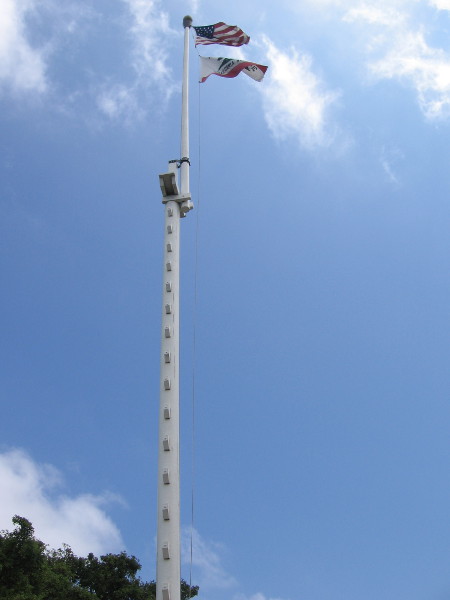
We head back outside into the plaza.We learn more about the history of Old Town by the unusual, tall flagpole.Old Town’s flagpole resembles a ship’s mast!
You might notice the flagpole at the center of Old Town’s Plaza looks a lot like a ship’s mast. Because originally it was!
When an American force under Captain Samuel F. DuPont sailed into San Diego Bay in 1846 to take control of Old Town unopposed, the plaza had no flagpole, because most of the independent-minded Californios who lived here didn’t feel a strong attachment to Mexico. So a ship’s mast was used to raise the flag of the United States.
You can see a bronze plaque commemorating the event here.
You can learn more about the old Spanish cannon that sits in the middle of Old Town’s plaza near the flagpole here.
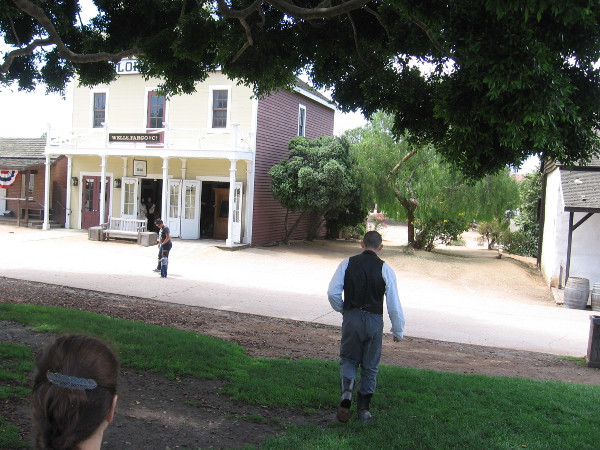
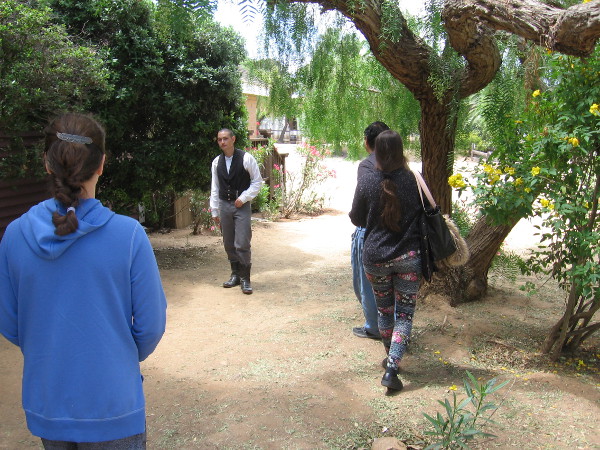
We head toward a tree that stands near the Colorado House.This is where the Franklin House hotel once stood.
A vacant area of ground beside the Colorado House (now home of the Wells Fargo Museum) is where the Franklin House hotel used to stand. It was Old Town’s only three story building, notable for its relative elegance and its baths.
The Franklin House was destroyed during the great fire of 1872 along with several adjacent buildings including Old Town’s courthouse, ensuring that San Diego’s future would be located in Alonzo Horton’s New Town, which was then called Horton’s Addition.
To learn more about San Diego’s first courthouse, click here.
To learn more about Colorado House and the Wells Fargo Museum, click here.
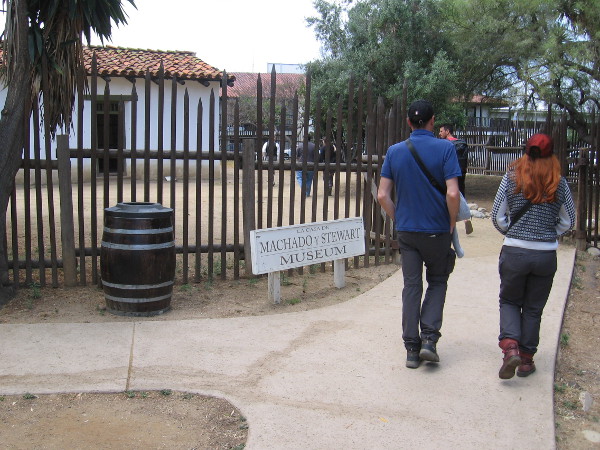
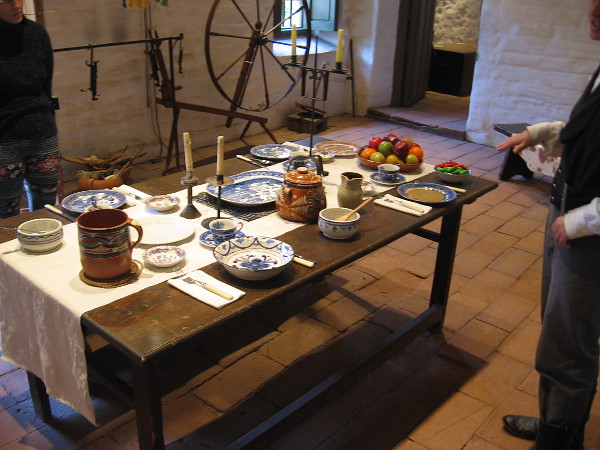
We head toward a beautifully restored adobe house that stands alone behind the plaza buildings.Entering the grounds of La Casa de Machado y Stewart Museum.Many artifacts are displayed in the main living room of La Casa de Machado y Stewart. An adjacent bedroom is where parents and daughters slept. The sons slept outside in San Diego’s temperate climate.
Our tour group then walked over to Casa de Machado y Stewart. We learned many things, including the fact that the fancier china seen on the dining table came by merchant ships that crossed the Pacific from Asia.
The more simple items like candlesticks were made by local blacksmiths. Because iron was rare in San Diego, harpoons from a brief period of whaling in San Diego Bay were used to make a variety of furnishings and household utensils.
You can learn more about the Casa de Machado y Stewart here.
You can learn about Old Town’s blacksmith shop here.
We also learned that the art of brick-making was introduced to Old Town by members of the Mormon Battalion, whose arrival in San Diego you can learn about here.
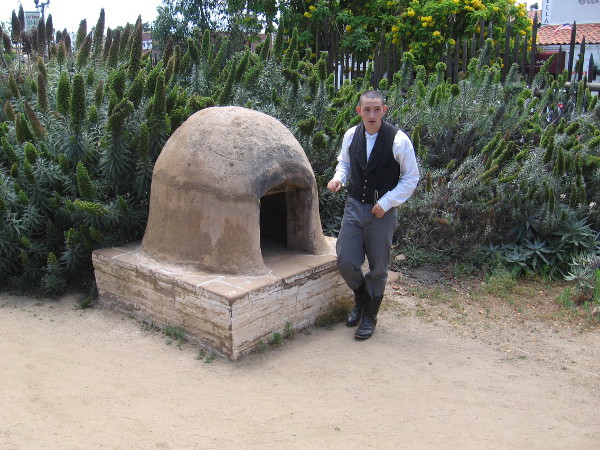
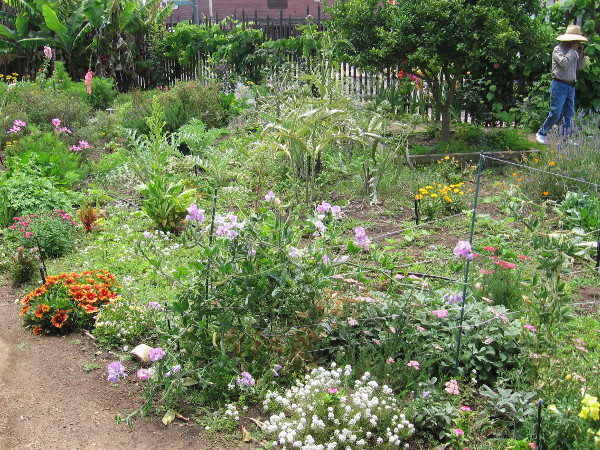
The outdoor oven was made of clay and adobe bricks. Cow manure provided fuel!The garden outside La Casa de Machado y Stewart not only provided vegetables for eating, but native herbs used for medicine.Our tour guide explains the uses of prickly pear. The cochineal beetle found on prickly pears is used to make red dye. That plant you see is about 150 years old!Finally, we head over to the beautiful, iconic Casa de Estudillo.The courtyard of the U-shaped Casa de Estudillo includes a simple fountain at the center.Sitting on wooden benches, learning more about San Diego’s unique early history.
The walking tour concluded inside the courtyard of La Casa de Estudillo. In many respects, this beautiful house is the centerpiece of Old Town San Diego. Two past blog posts provide a great deal of information about La Casa de Estudillo.
You can peer into the house’s restored rooms and learn about their history here.
You can learn how a wildly popular novel saved this historic building from destruction here!
The walking tour is over. Now visitors to Old Town San Diego can roam wherever they fancy, and visit numerous free museums scattered around the plaza.
Finally, to enjoy a good overview of San Diego’s early history, I recommend a visit to Old Town’s excellent McCoy House Museum. You can check out my blog post featuring its many exhibits by clicking here!
UPDATE!
It’s not free anymore! I learned in December of 2025 that the same walking tour costs $10 for adults and $5 for children. I was told the change was made about a month ago.
The tour times have changed, too. They now start at 10 and 11:30 am and 2 and 3:30 pm.
You still meet at the Robinson-Rose Visitor Center.
…
I live in downtown San Diego and love to walk around with my camera! You can follow Cool San Diego Sights via Facebook or Twitter!
You can easily explore Cool San Diego Sights by using the search box on my blog’s sidebar. Or click a tag! There are thousands upon thousands of photos for you to enjoy!
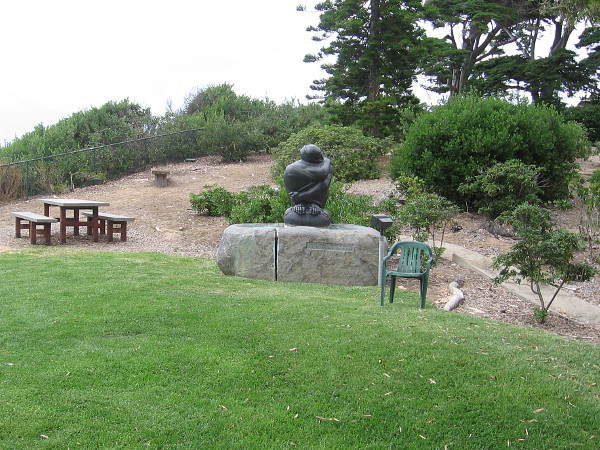
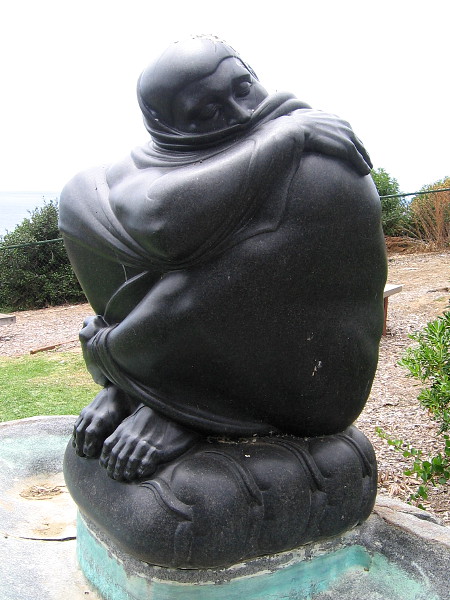
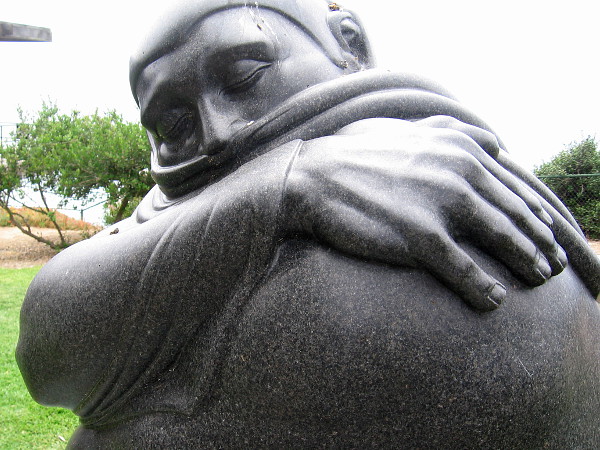
During my walk through the Scripps Institute of Oceanography on Saturday, I paused in the grassy area just north of the Judith and Walter Institute of Geophysics and Planetary Physics Munk Laboratory to admire an amazing sculpture by Donal Hord.
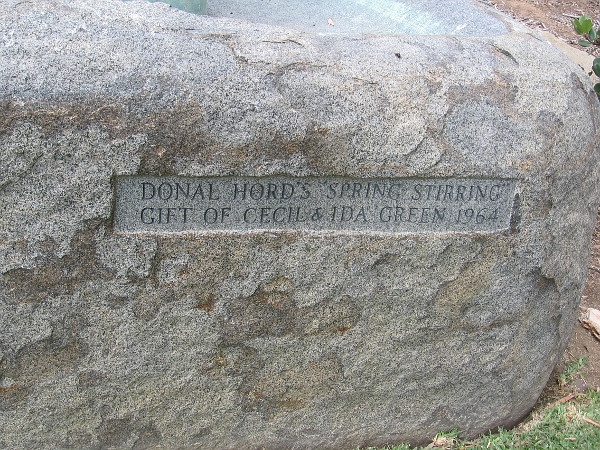
Spring Stirring, 1947-1948, was carved from black diorite and stands 46 inches tall. It was exhibited in 1949 at the Philadelphia Museum of Art’s Third Sculpture International. In 1964, Spring Stirring was given to the University of California’s Scripps Institute of Oceanography by Cecil and Ida Green.
Donal Hord, who achieved worldwide fame for his fine sculptures, developed a deep love for San Diego. He lived most of his life here. Today some of his most important pieces endure as public art around San Diego.
To see the sculpture for yourself (and some fantastic coastal scenery in La Jolla) follow in my footsteps and take a short walk here.
You can find many photographs of Donal Hord’s public sculptures and reliefs by putting his name in the search box on this blog.
…
I live in downtown San Diego and love to walk around with my camera! You can follow Cool San Diego Sights via Facebook or Twitter!
You can easily explore Cool San Diego Sights by using the search box on my blog’s sidebar. Or click a tag! There are thousands upon thousands of photos for you to enjoy!
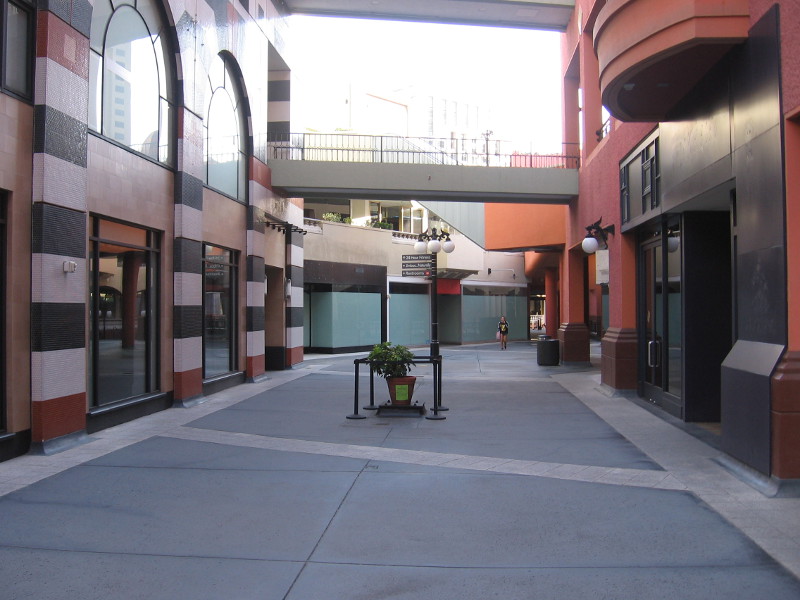
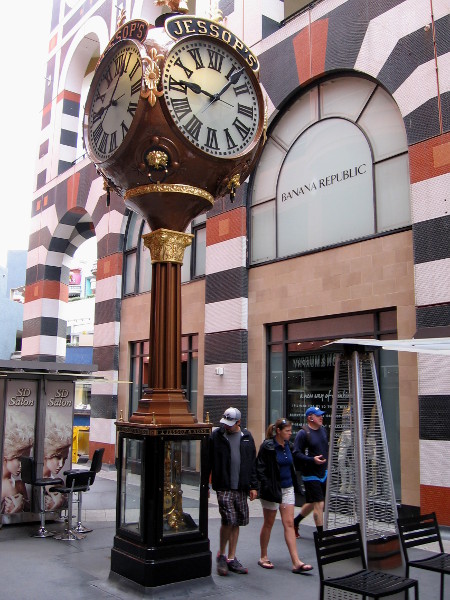
The historic 1907 Jessop’s Street Clock, San Diego’s biggest tourist attraction over a century ago, has been removed from Horton Plaza. I made the discovery after work today as I walked through downtown’s once popular but now almost vacant shopping mall.
Horton Plaza is to undergo redevelopment. The one-of-a-kind, gold-plated, precious gem-filled, award-winning Jessop’s Clock has been moved to a warehouse for refurbishment. According to a posted notice of application, the amazing street clock will be reinstalled at a new location.
To learn more about the history of the Jessop’s Street Clock, and see many more photographs, you can check out an old blog post of mine here.
…
I live in downtown San Diego and love to walk around with my camera! You can follow Cool San Diego Sights via Facebook or Twitter!
A restful day. I spent some time at the Maritime Museum of San Diego.
I sat on the indescribably beautiful passenger deck of the steam ferry Berkeley, reading and writing.
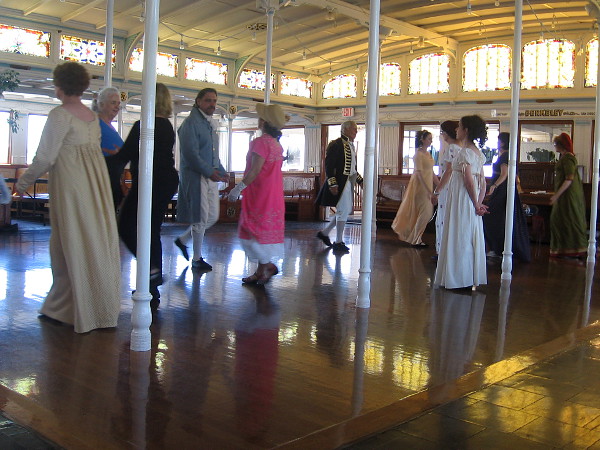
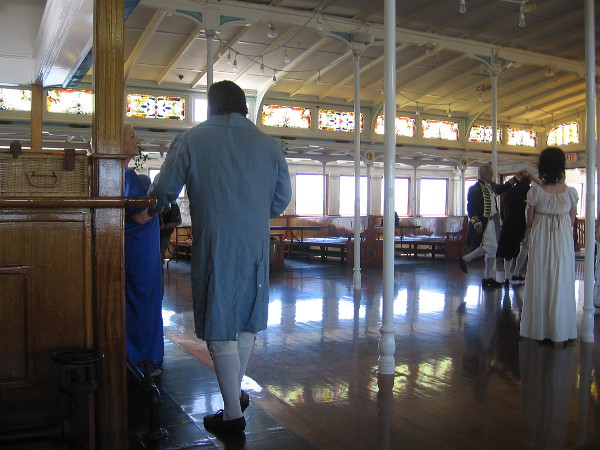
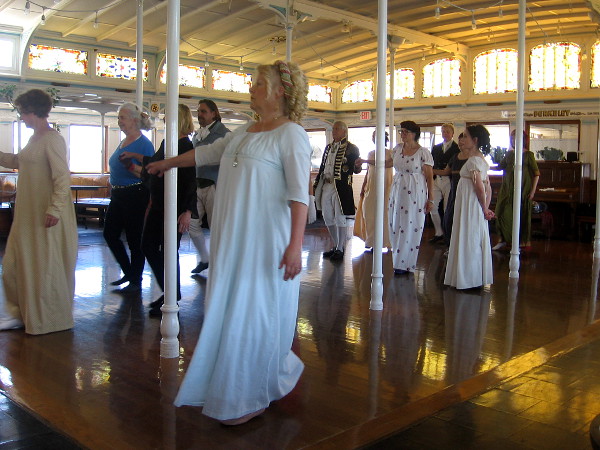
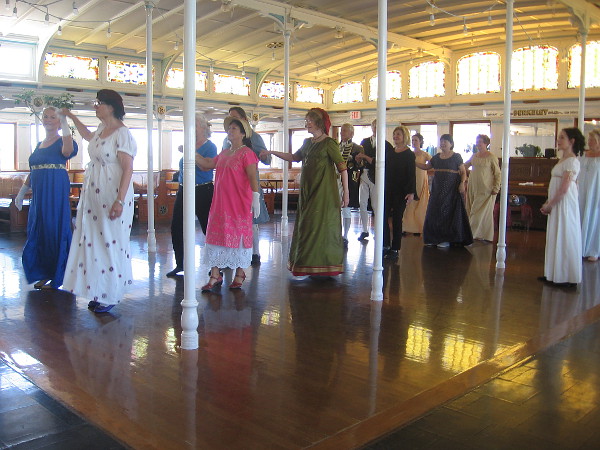
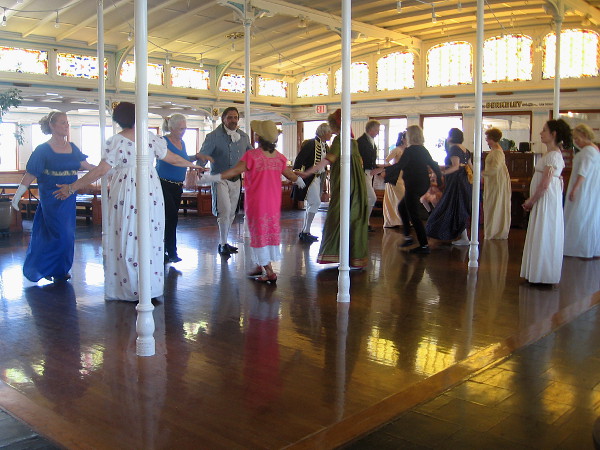
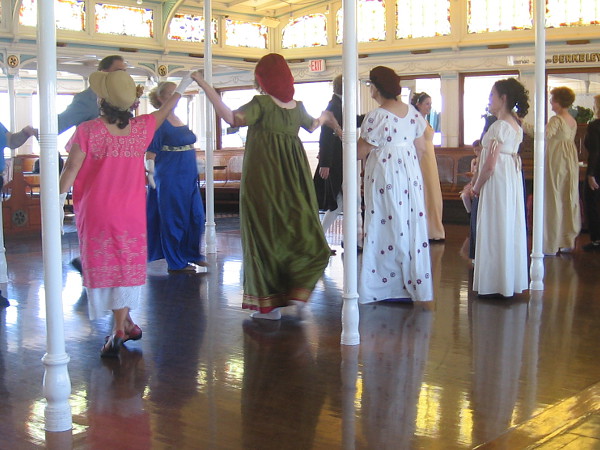
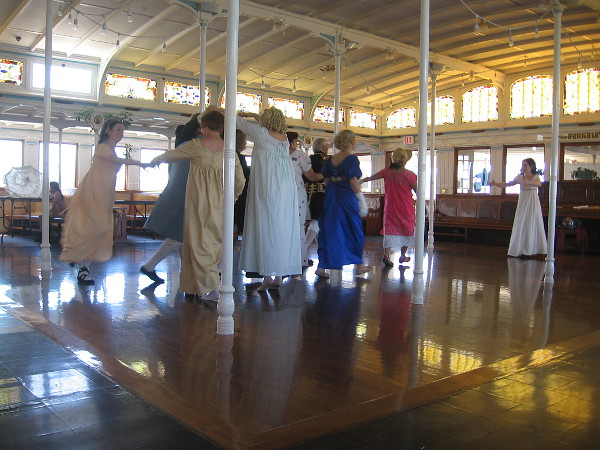
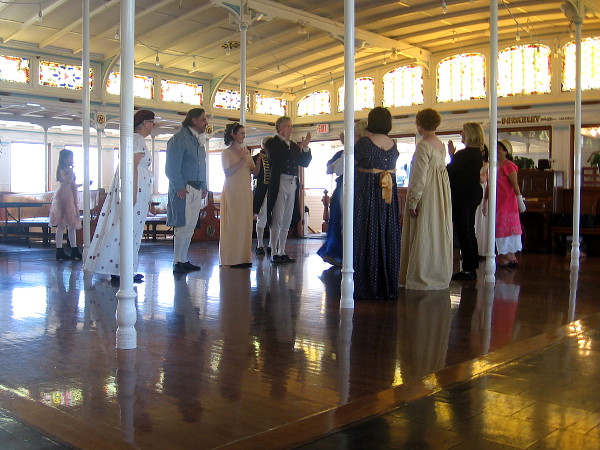
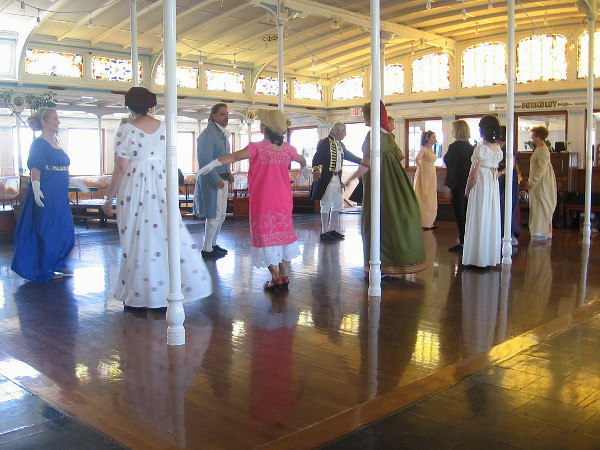
For a while I watched as elegantly dressed folk moved upon the historic ferryboat’s wooden dance floor. In time with sprightly music, they danced on reflected, golden light. The dancers weaved, promenaded, whirled, and gracefully bowed to one another.
After the event had ended, I learned that the Maritime Museum Dancers had been joined by the San Diego Regency Dancers, who are members of the Jane Austen Society.
With great big smiles they were learning a few new steps.
…
I live in downtown San Diego and love to walk around with my camera! You can follow Cool San Diego Sights via Facebook or Twitter!
You can easily explore Cool San Diego Sights by using the search box on my blog’s sidebar. Or click a tag! There are thousands upon thousands of photos for you to enjoy!
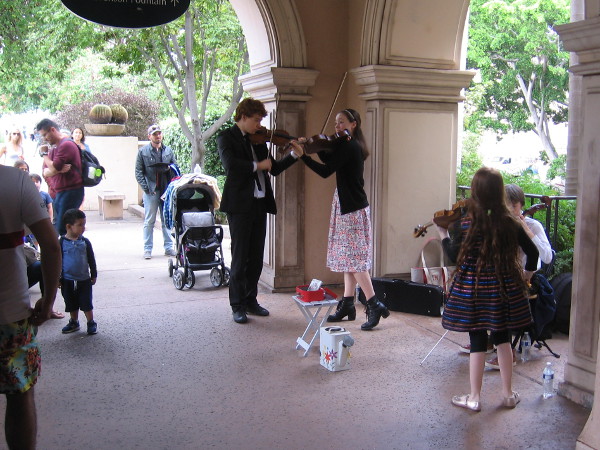
Young members of the De La Motte Strings have a bright musical future.
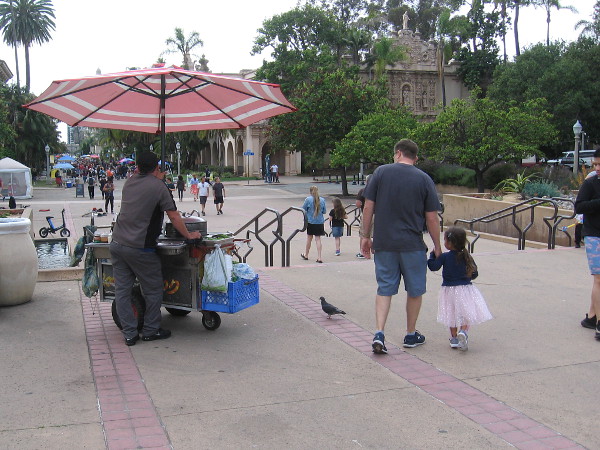
Please enjoy these photographs of life in Balboa Park. I took them today.
Is Balboa Park in your future?
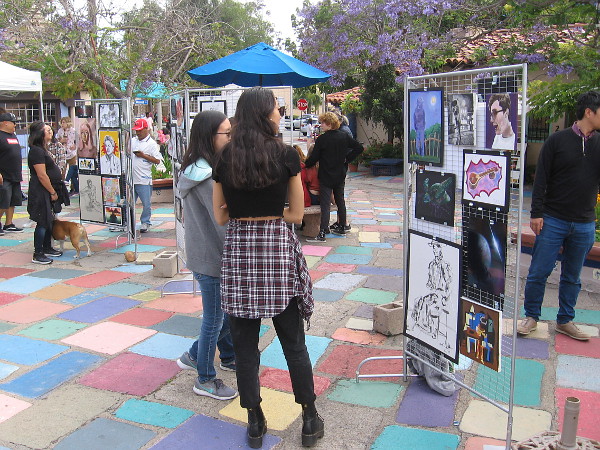
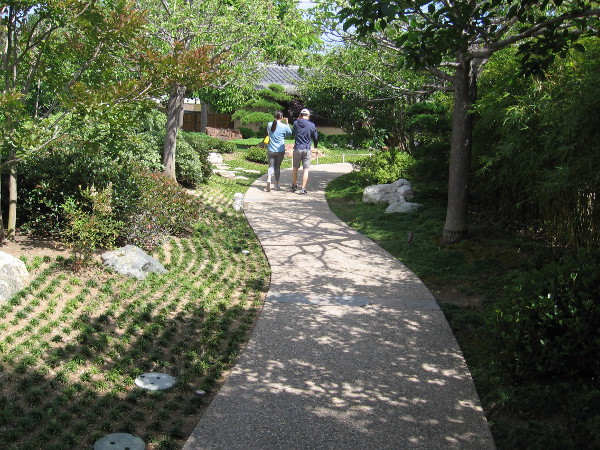
Manifest Your Future in Balboa Park!Beautiful music beckons.Art students from Canyon Crest Academy show their art in Spanish Village. Each student has an amazing future.Savera Soin’s future will be filled with color.Moving ahead to find new wonders.Perhaps a cactus from a San Diego Cactus and Succulent Society show and sale is in your future.A couple moves forward down a winding path through the Japanese Friendship Garden.For the foreseeable future (until July 21, 2019) visitors to the Japanese Friendship Garden can enjoy an exhibition of art by Kathleen Kane-Murrell.Magic might suddenly appear in your future.Yummy samples of Cheez-It Snap’d treats were in my future. I couldn’t avoid them! At present they are in my stomach.These mysterious eyes peer from the future of a few. It all depends where feet turn.Enjoy every day. That future is now.
…
I live in downtown San Diego and love to walk around with my camera! You can follow Cool San Diego Sights via Facebook or Twitter!
People keep asking me if I’m on Instagram. Until now I’ve replied no.
For over five years I’ve posted tens of thousands of unique photographs here on Cool San Diego Sights, and to my other blog, Beautiful Balboa Park. So I figured it’s time to get in gear and start posting photos to Instagram, too!
This morning I added several dozen photographs that I took in the past month to my Instagram page. From this point forward, I’ll post select photos as I continue to walk about San Diego!
I’ve also added an Instagram icon to my website’s sidebar. Do you see it under the word FOLLOW? Click it if you’d like! (Those other icons help you to follow me on Facebook, Twitter, Pinterest and Tumblr.)
Cool San Diego Sights will continue to be my main blog and center of activity. It’s where all of my photographs appear, and where readers can enjoy descriptions of random walks and discoveries.
If you do choose to follow my Instagram, thank you!
Have you ever wondered what it was like to live as a mountain man? Trekking through the wilderness as a trapper or frontier explorer? Journeying through the untamed American West as a trader, prospector, scout or pioneer?
What would it be like to leave the comforts and routine obligations of a civilized life behind? To go where few had gone before, finding your own way over rugged mountains, across uncharted rivers, living on the land, camping beneath the stars?
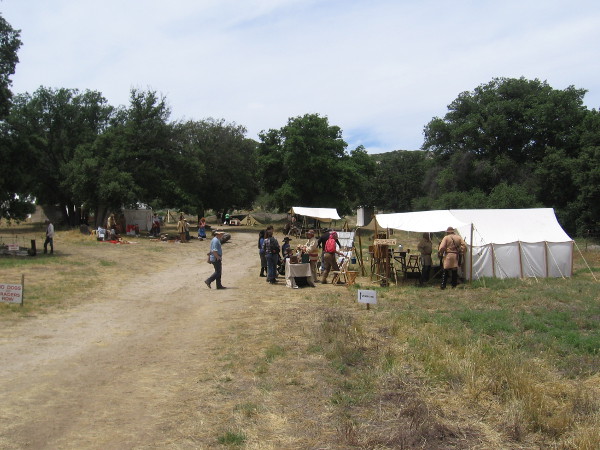
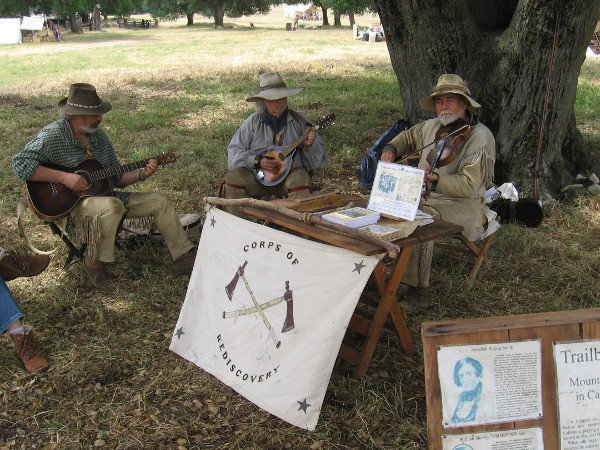
Today I learned a little of what that was like. I drove an hour east of San Diego to Northcote Ranch to enjoy the 26th Annual Manzanita High Mountain Rendezvous!
This modern reenactment of an historic Rocky Mountain rendezvous takes place in the beautiful countryside near Lake Morena. It attracts reenactors and visiting history buffs, school students and families from all around the Southwest. Every single participant I met was extremely friendly. They showed me and other visitors around with enthusiasm.
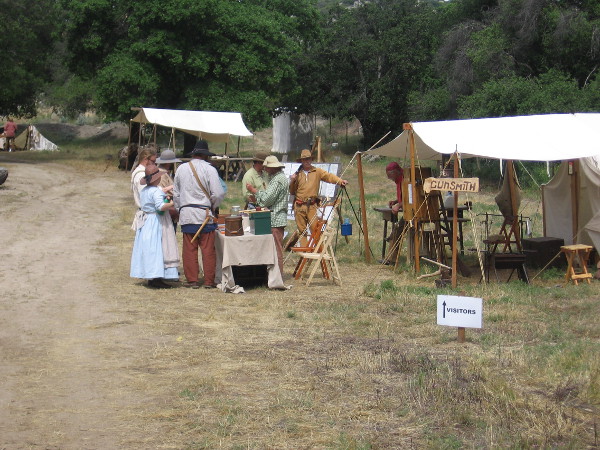
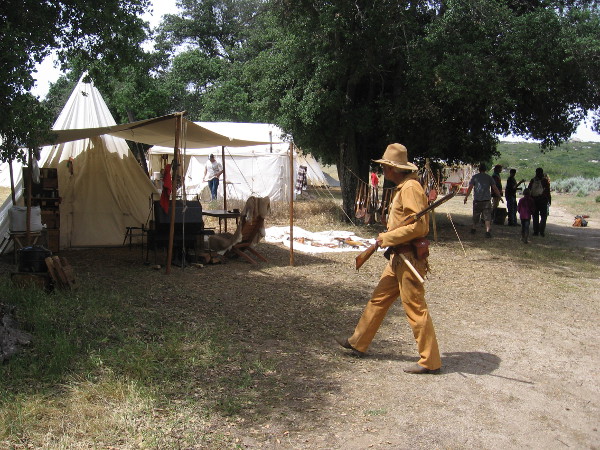
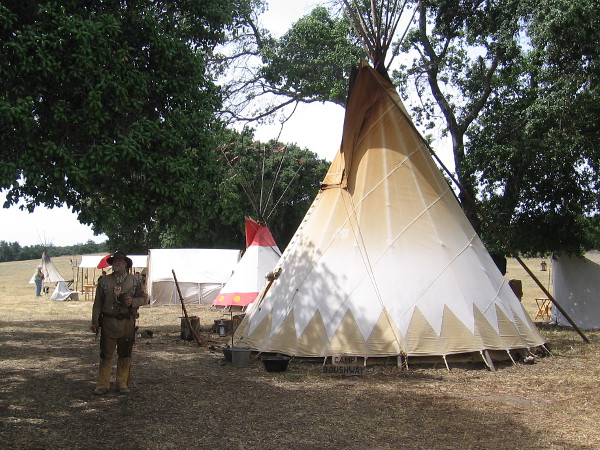
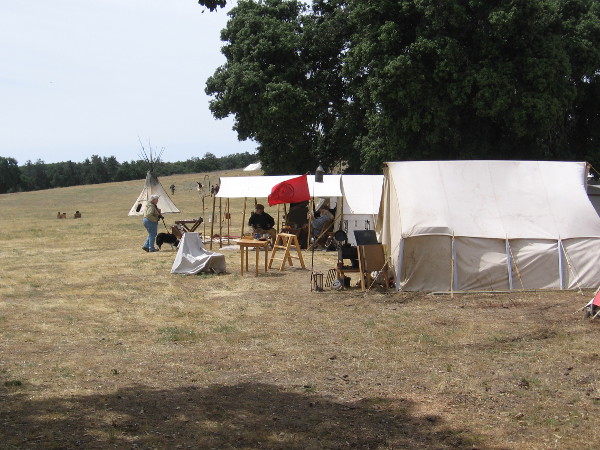
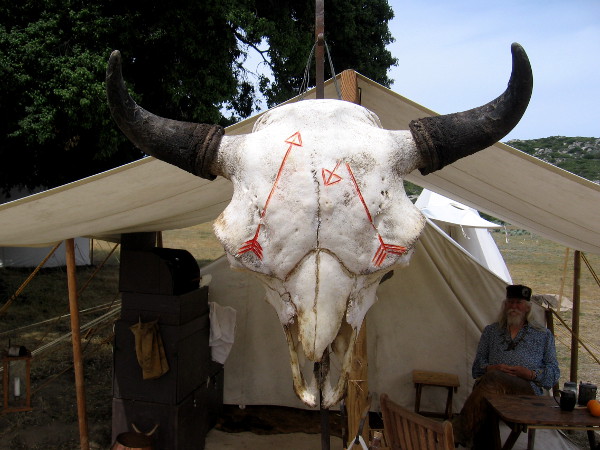
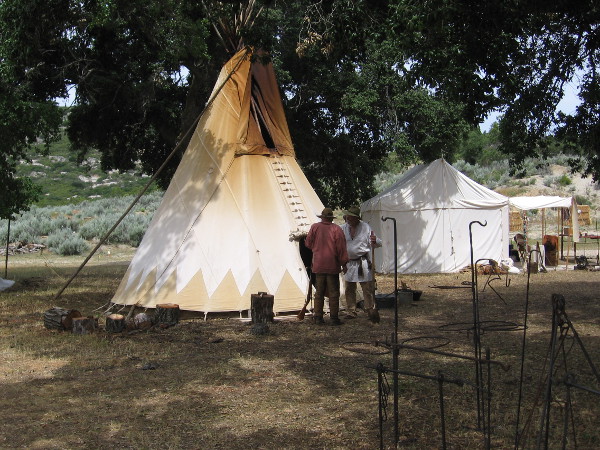
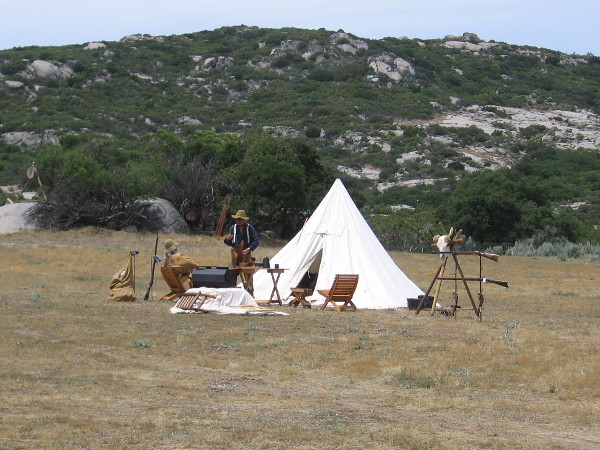
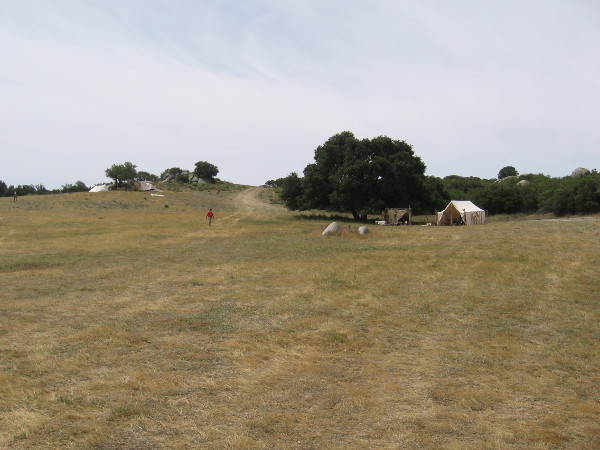
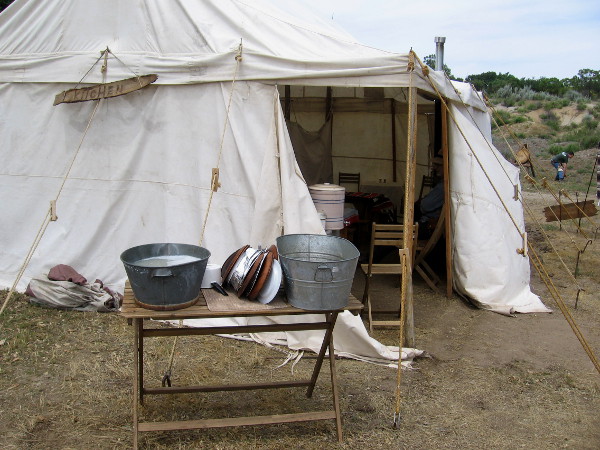
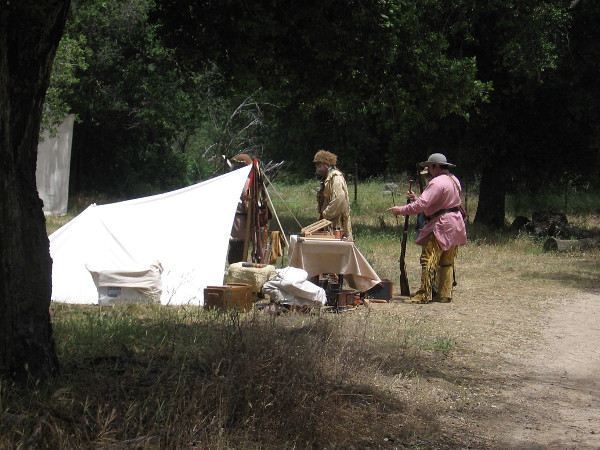
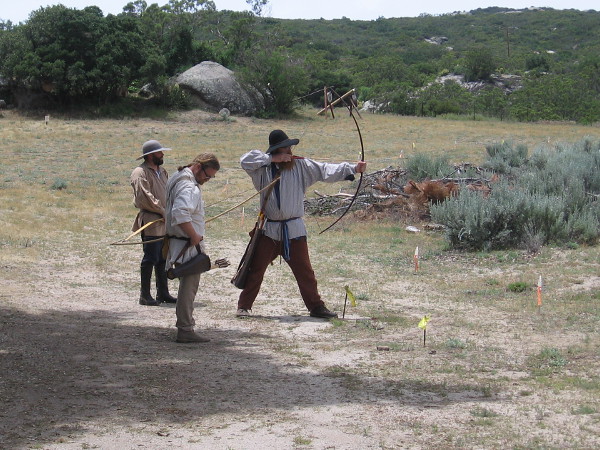
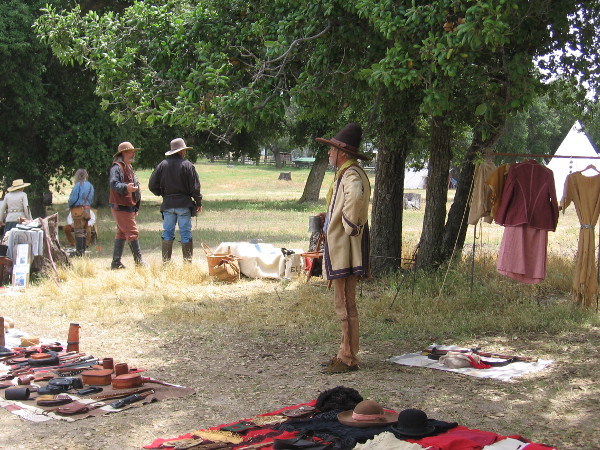
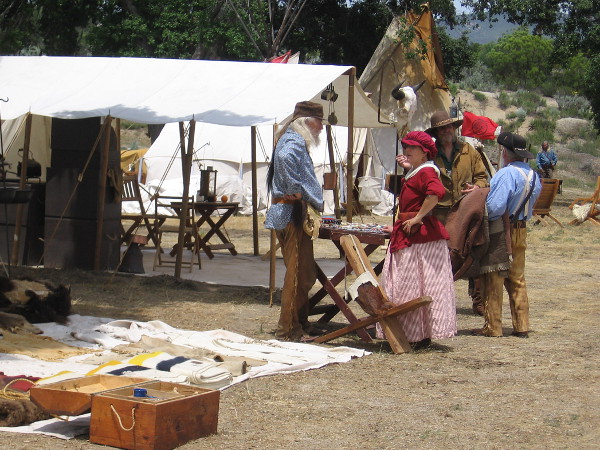
I observed many participants in period costumes camping in canvas tents and tepees across a broad field and among shady trees. Many of the campers create their own leather goods, jewelry and other Old West artifacts.
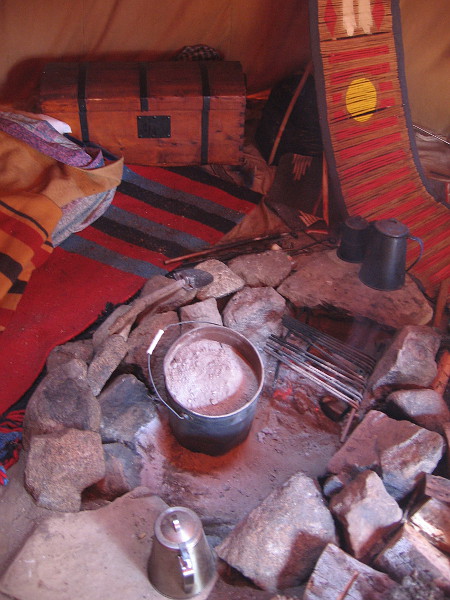
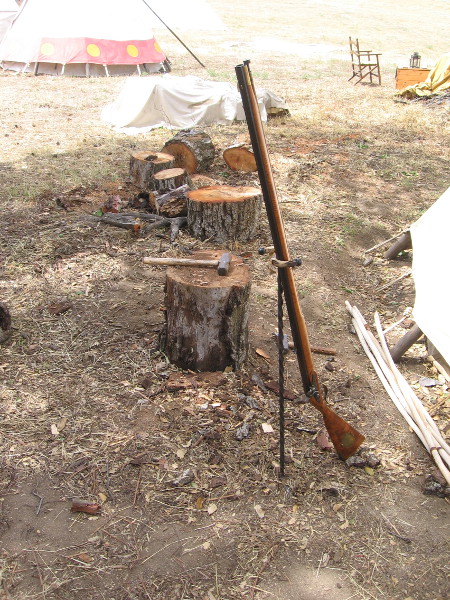
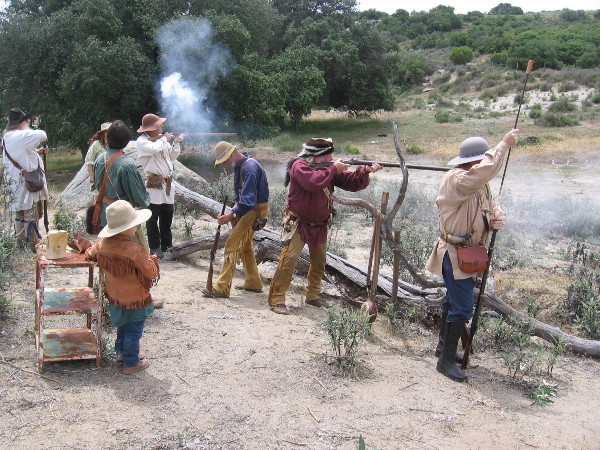
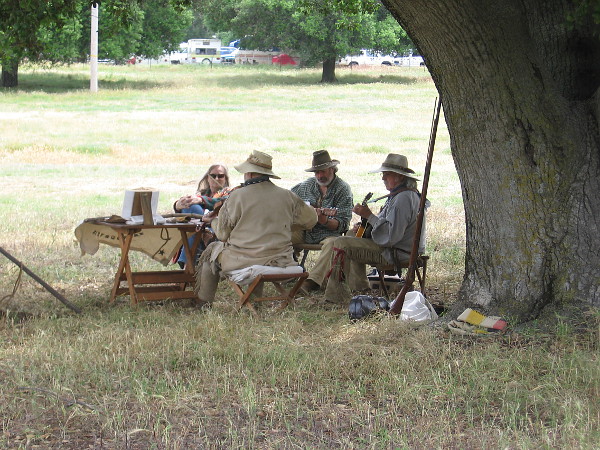
As I walked about, I listened to frontier music, visited a gunsmith, looked at the wares of different traders, and stepped inside a couple of the largest tepees. On several outdoor ranges I observed people throwing tomahawks, shooting arrows, even shooting authentic black powder muskets. I even enjoyed a good old hamburger and tater tots at The Hungry Dowg restaurant tent!
Other rendezvous activities, which happened to be idle during my visit today, include blacksmithing, candle making and woodworking. There is something intriguing everywhere one turns!
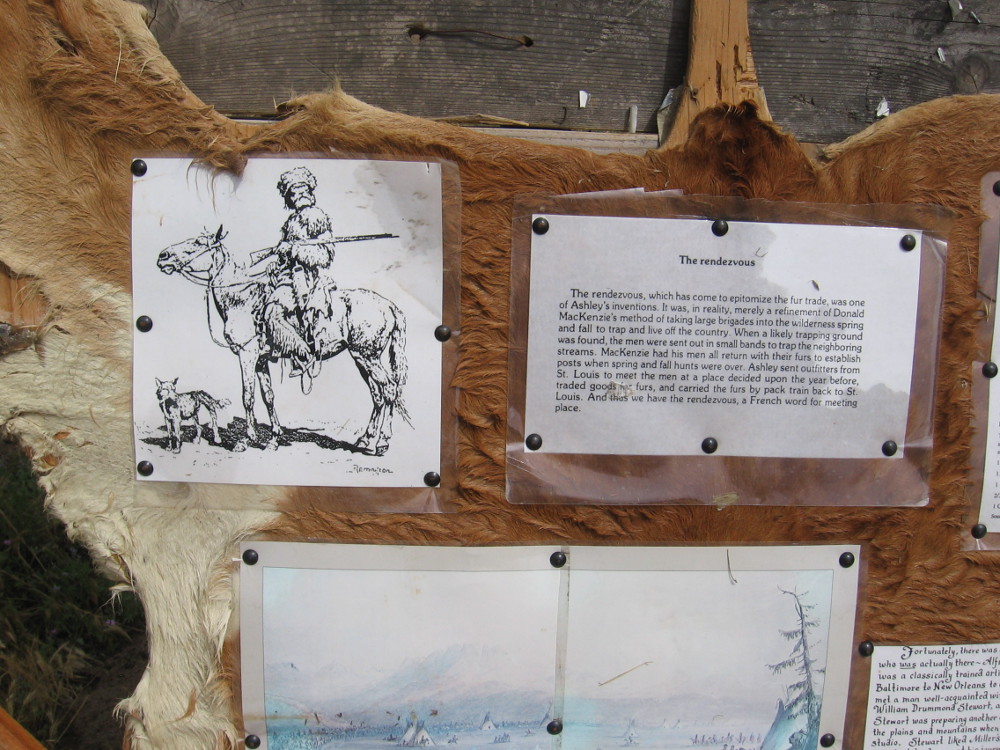
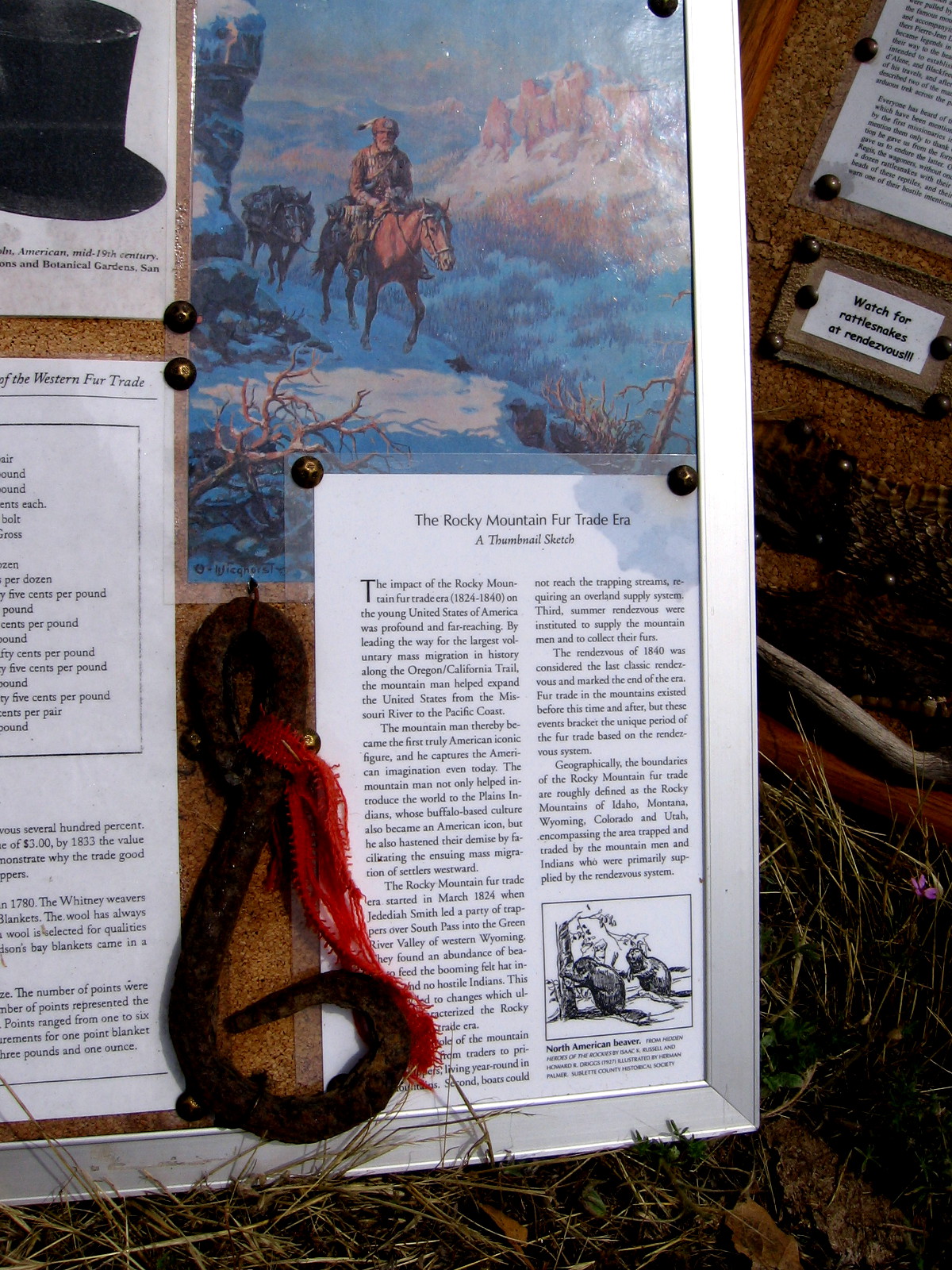
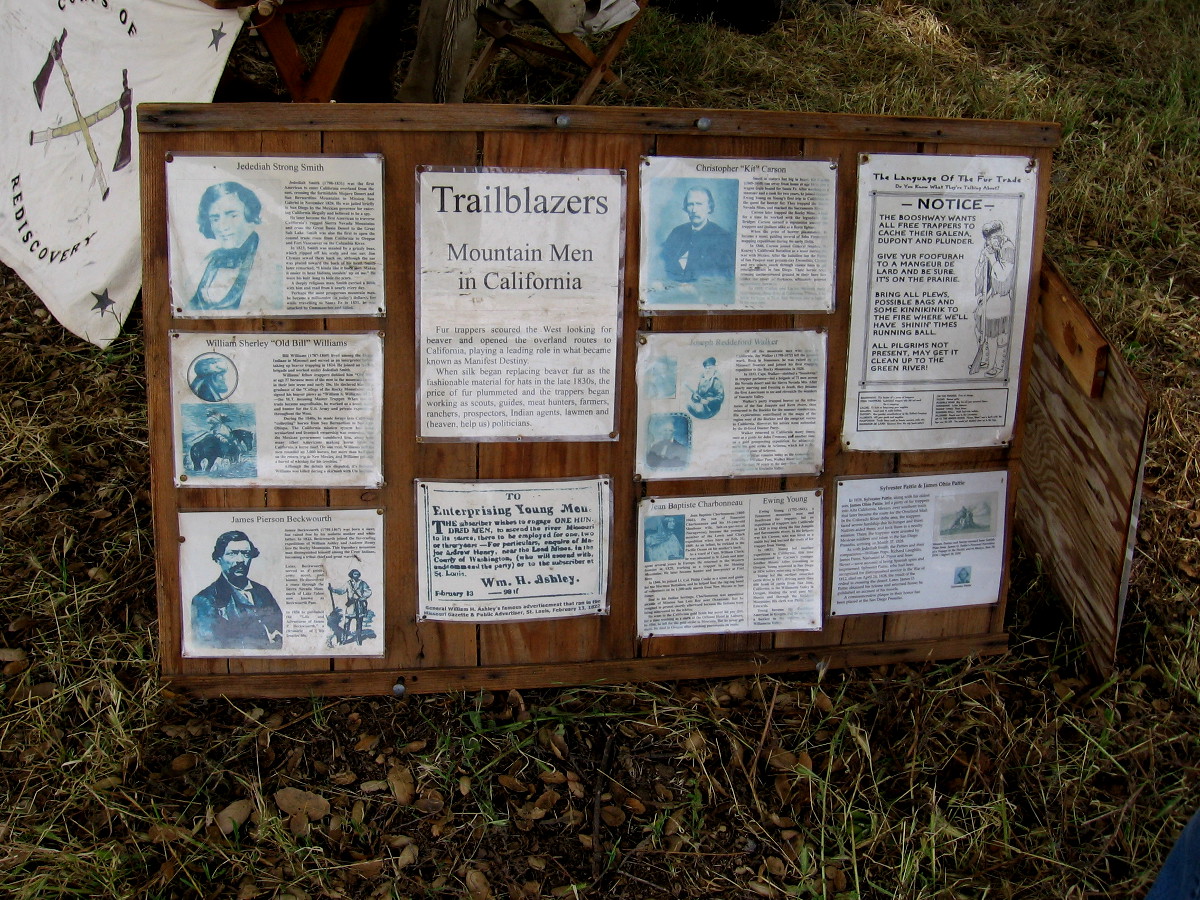
I photographed some of the informative signs, including one that concerns San Diego’s early history–particularly the 1820s to 1840s, when Fur Trade goods were sold to merchant ships that traveled around Cape Horn. Back then a wandering trapper would occasionally come into Old Town. Click those photos and they’ll enlarge for easy reading!
If you’ve never been to a mountain man rendezvous, make sure to put the Manzanita High Mountain Rendezvous on your calendar for next year. Kids absolutely love it.
This fantastic event is open to the general public and admission is free!
…
I live in downtown San Diego and love to walk around with my camera! You can follow Cool San Diego Sights via Facebook or Twitter!
You can easily explore Cool San Diego Sights by using the search box on my blog’s sidebar. Or click a tag! There are thousands upon thousands of photos for you to enjoy!
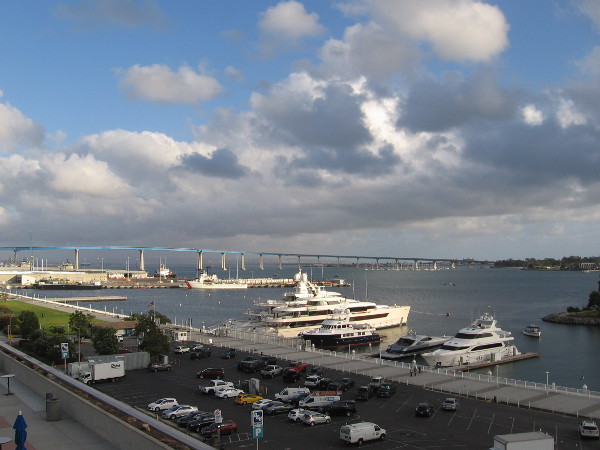
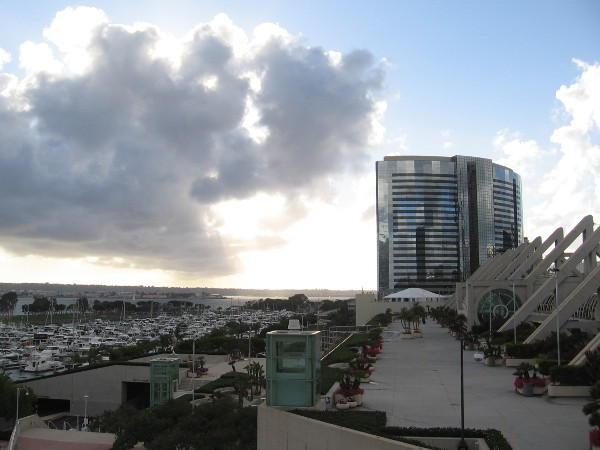
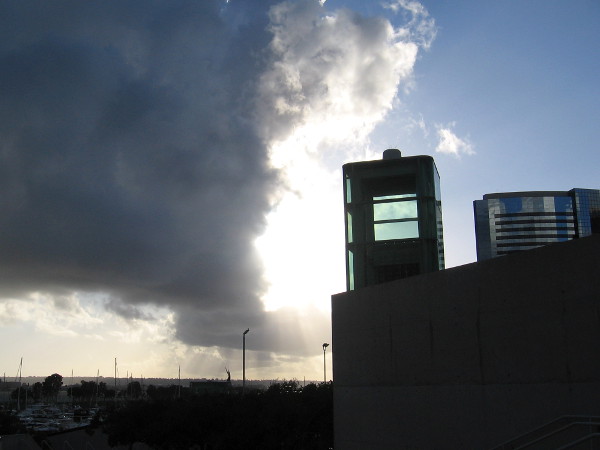
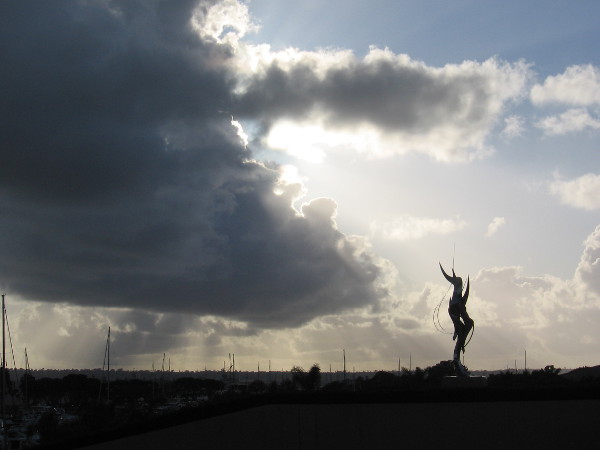
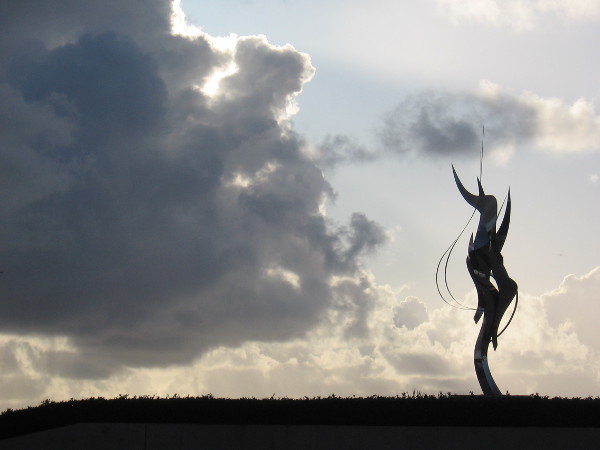
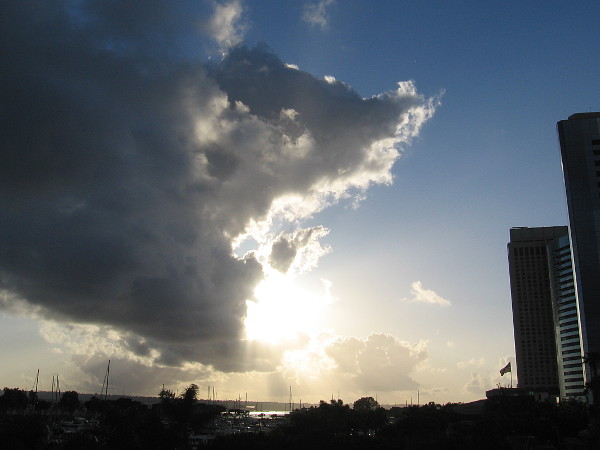
A stormy day today. Dramatic clouds marched across the sky.
After work I climbed to the top of the San Diego Convention Center for a sweeping view.
To the south, the Coronado Bay Bridge and Hilton caught a few late rays from the sun. To the north, magnificent clouds glowed above the Flame of Friendship sculpture and Marriott. In the distance, beams of light touched the bay, making the water shimmer.
…
I live in downtown San Diego and love to walk around with my camera! You can follow Cool San Diego Sights via Facebook or Twitter!
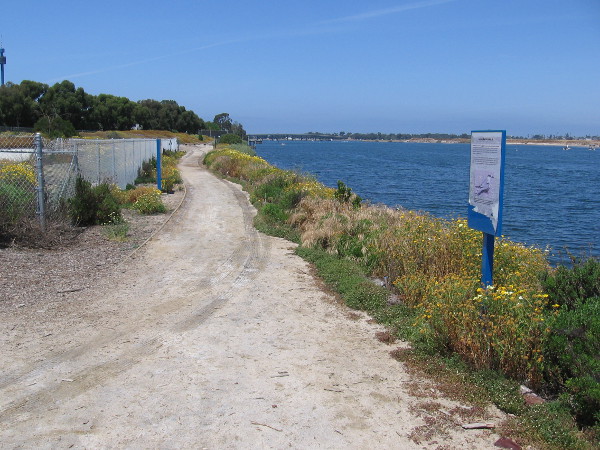
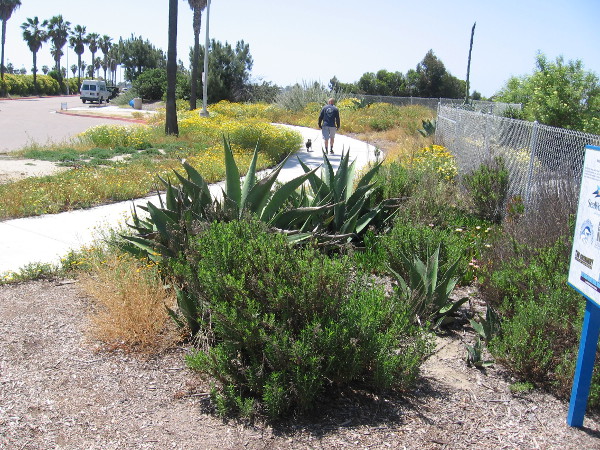
A few people walk down a dirt path next to SeaWorld. Coastal plants provide habitat for birds and wildlife.
There’s a quiet, seldom visited area adjacent to SeaWorld that provides valuable habitat for both local and migratory birds. You can find this narrow strip of land directly northeast of SeaWorld, on the edge of Mission Bay, just west of South Shores Park.
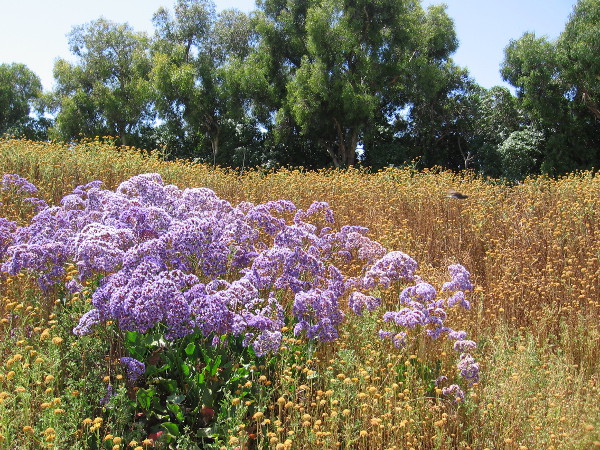
Walk down the dirt path by the water and you’ll discover native plants, beautiful views, a few park benches, and a sense of wonder. This bit of land was set aside as natural coastal habitat with the help of the Audubon Society, SeaWorld San Diego, and a several other organizations who care about protecting the environment.
I walked down the path during the weekend and read a number of interesting signs. Few other people were around. I shared the warm sunshine with birds that took flight over land and water.
Click the photos of signs if you’d like to read them.
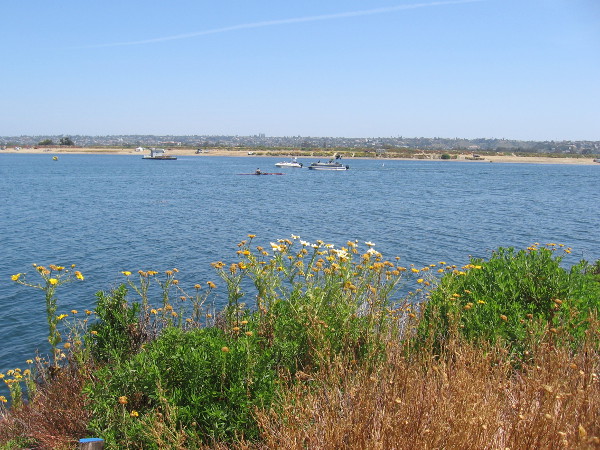
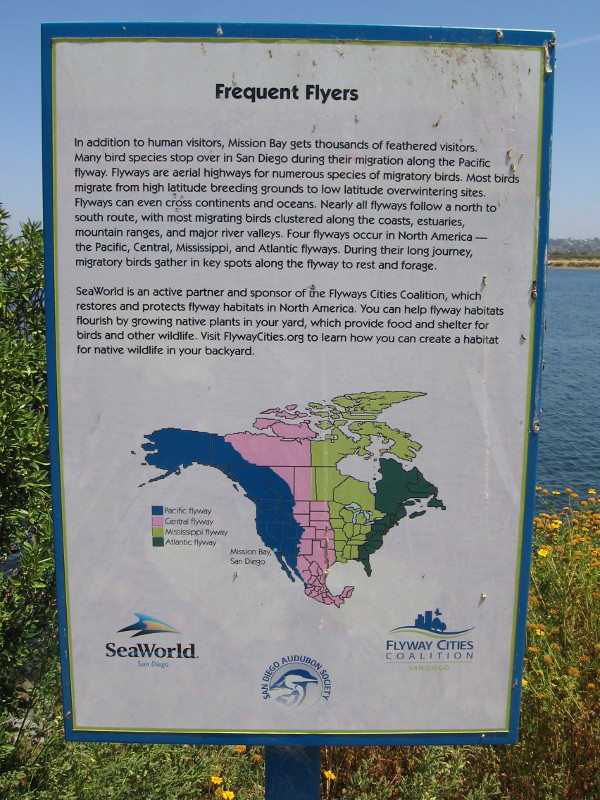
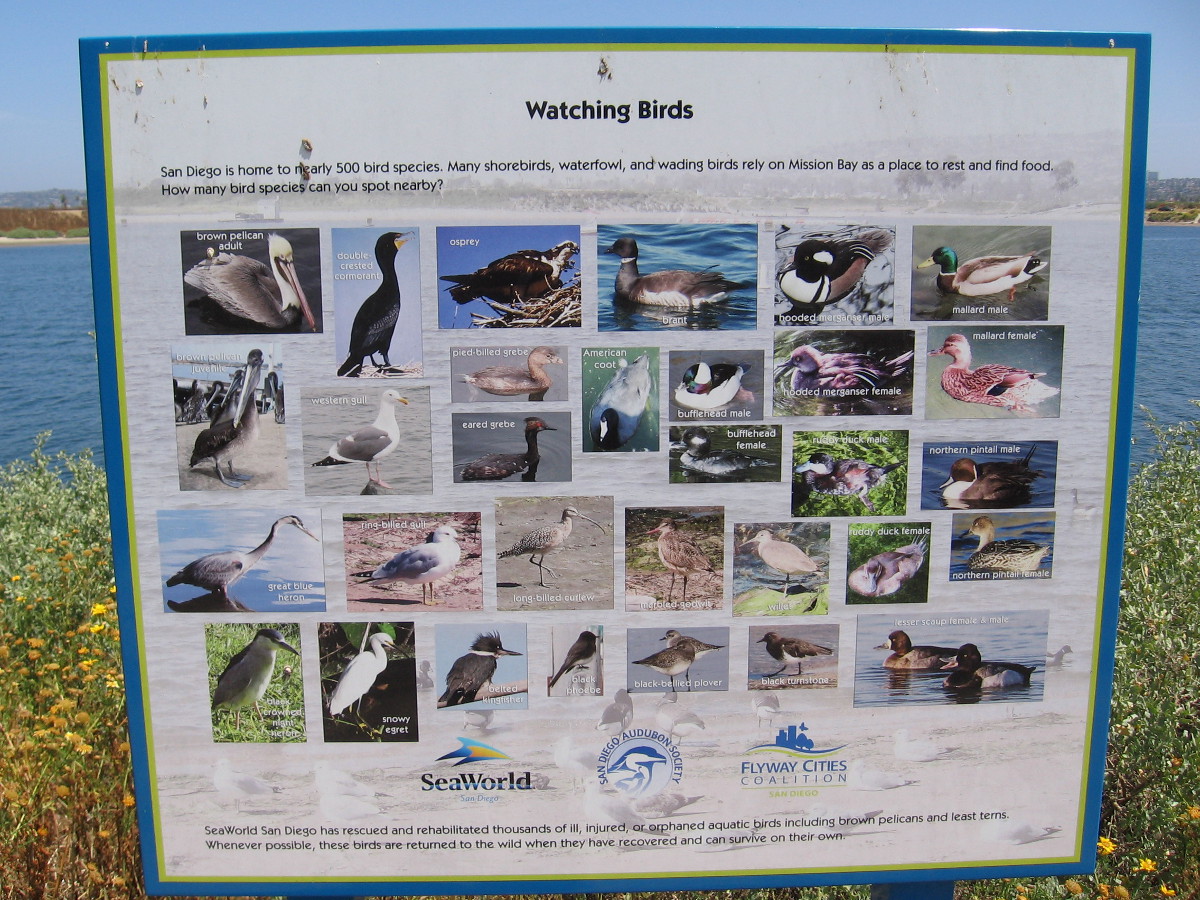
One sign displays plants that provide food and shelter for the birds and insects of Mission Bay.Heading west down the rough path, along the south shore of Mission Bay.Looking north across the water at boats, kayaks and Fiesta Island.Audubon’s Important Bird Areas (IBA) Program identifies and conserves a network of sites essential for wild bird populations. Mission Bay is one of seven IBAs in San Diego County.A patch of what I believe is Ceanothus, or California Lilac. A bird perched on some dry yellow flowers is a blur in this photograph.Mission Bay sustains thousands of birds, as many species stop over in San Diego during their migration along the Pacific flyway.Looks like a heron flying overhead, scanning the water.Sign identifies birds that might be seen here. San Diego is home to nearly 500 bird species.Some shelter by the water for birds and other small animals.More natural habitat that contains much hidden life.Another sign with more California natives, including plants and birds.Someone walks on a path that winds near the entrance to this small park-like space.
…
I live in downtown San Diego and love to walk around with my camera! You can follow Cool San Diego Sights via Facebook or Twitter!
You can easily explore Cool San Diego Sights by using the search box on my blog’s sidebar. Or click a tag! There are thousands upon thousands of photos for you to enjoy!




















































 Cool San Diego Sights!