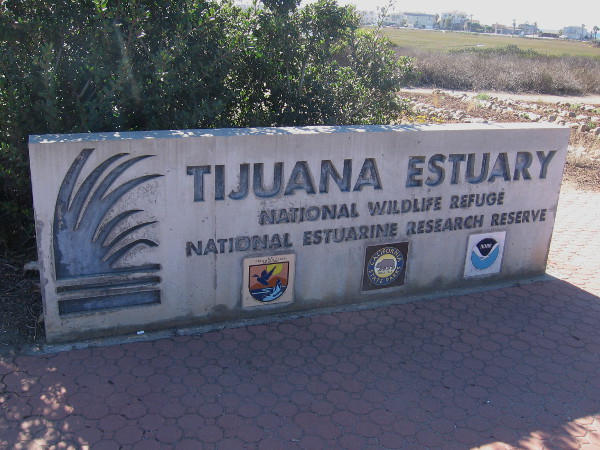
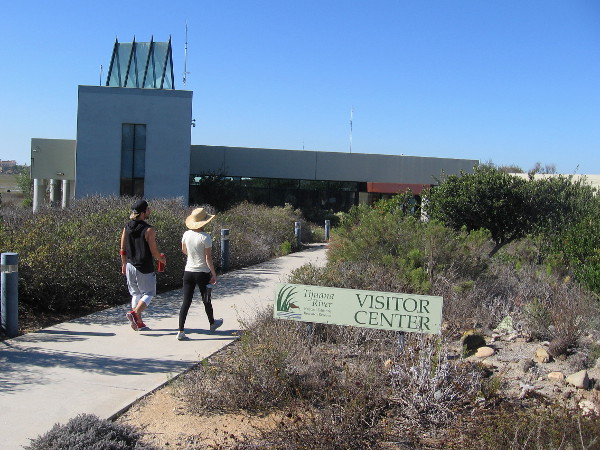
Sign near the entrance to Visitor Center of Tijuana Estuary, home of a National Wildlife Refuge and National Estuarine Research Reserve.
What place in North America officially contains the most plant and animal species? You don’t know? San Diego and the Northern Baja California region!
Yesterday I took a nature walk around and through the northern section of the Tijuana River Estuary. The large estuary, which is located at the extreme southwest corner of the continental United States, where the Tijuana River empties into the Pacific Ocean, contains abundant life which reflects San Diego’s amazing biodiversity and range of habitats.
The Tijuana Estuary is not only a place of tranquil beauty, but it’s a scientific laboratory, protective refuge, and outdoor classroom where the public can learn about our natural environment. It’s managed by several agencies, including the NOAA National Estuarine Research Reserve System, the California Department of Parks and Recreation, and the National Wildlife Refuge System under the U.S. Fish and Wildlife Service.
I absorbed so much information while walking about, reading signs, and listening to a volunteer guide during a short nature walk near the Visitor Center, that I couldn’t possibly convey it all on my blog. So I’ve selected some photos and have captioned them so you’ll get the gist of what I saw and learned. And hopefully you’ll want to visit, too!
Relatively few people partake of the scheduled weekend nature walks at the Tijuana Estuary Visitor Center. Joan, the plant expert, said that some days nobody shows up. What a shame. Because there’s so much beauty, so much to see.
I strongly encourage anyone who lives in the San Diego area to head down to Imperial Beach and take a long, leisurely walk where life thrives!
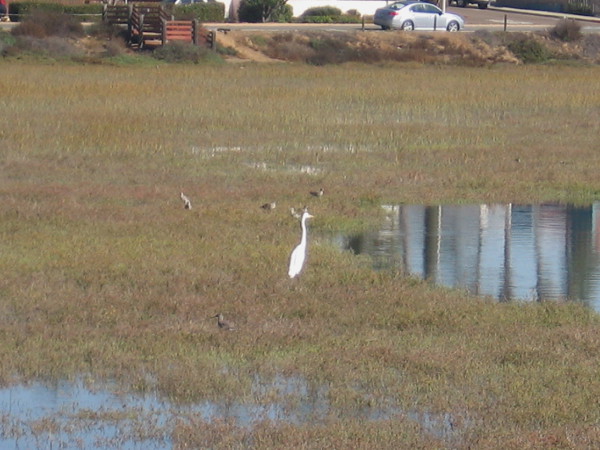
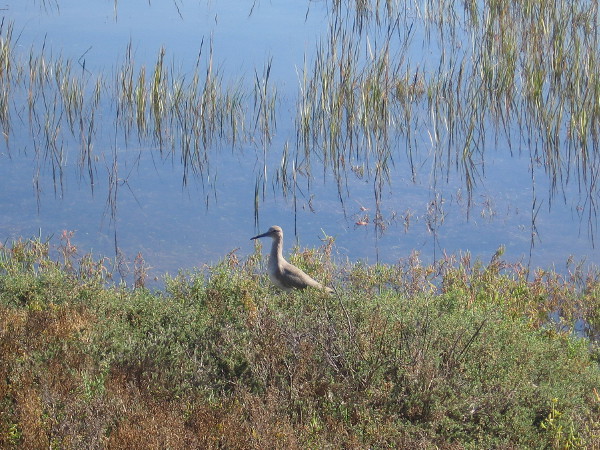
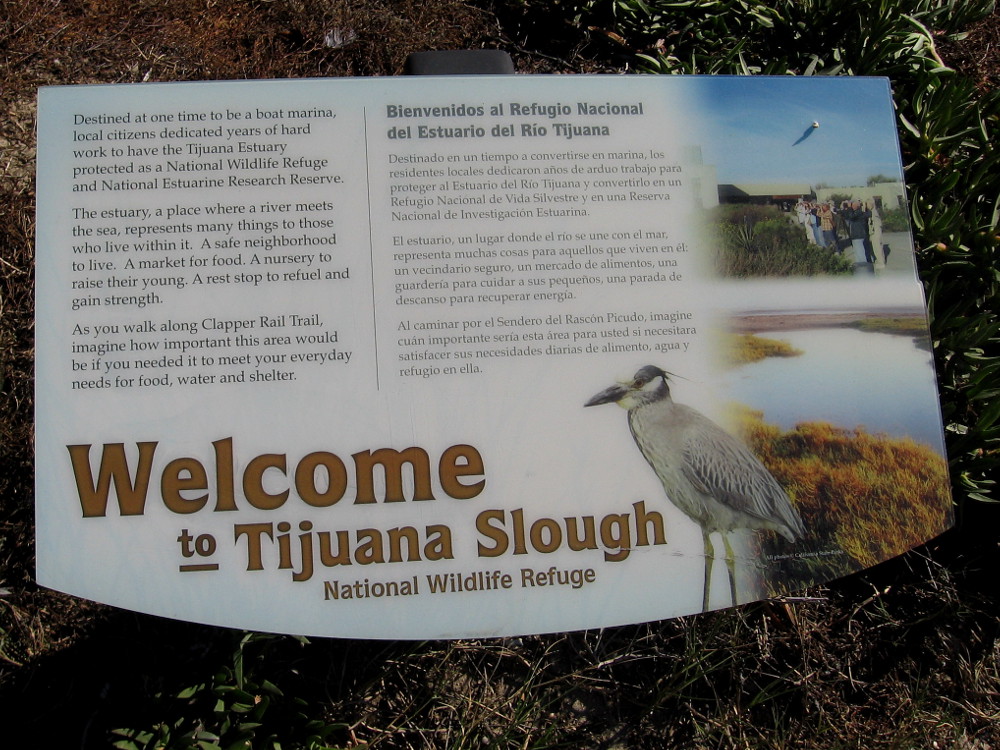
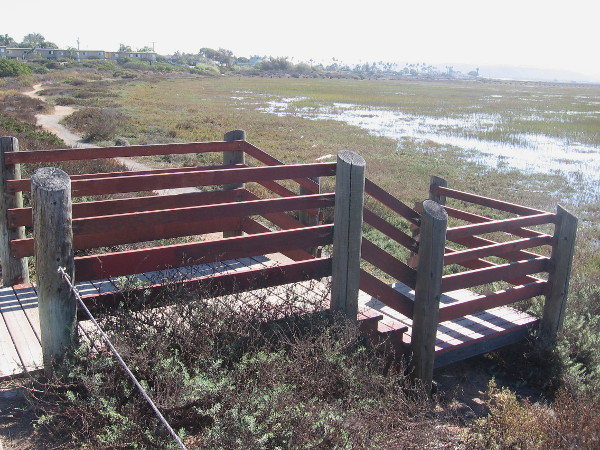
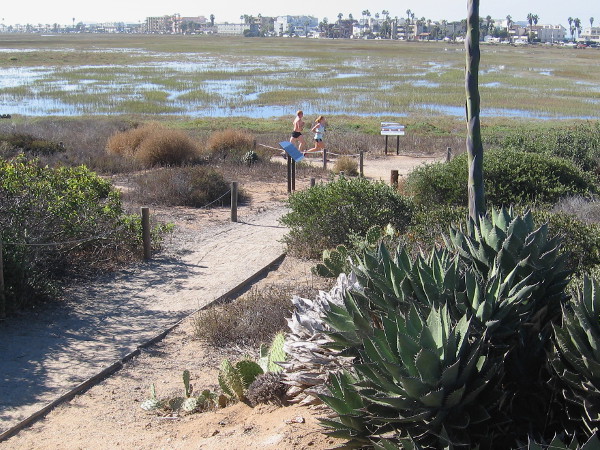
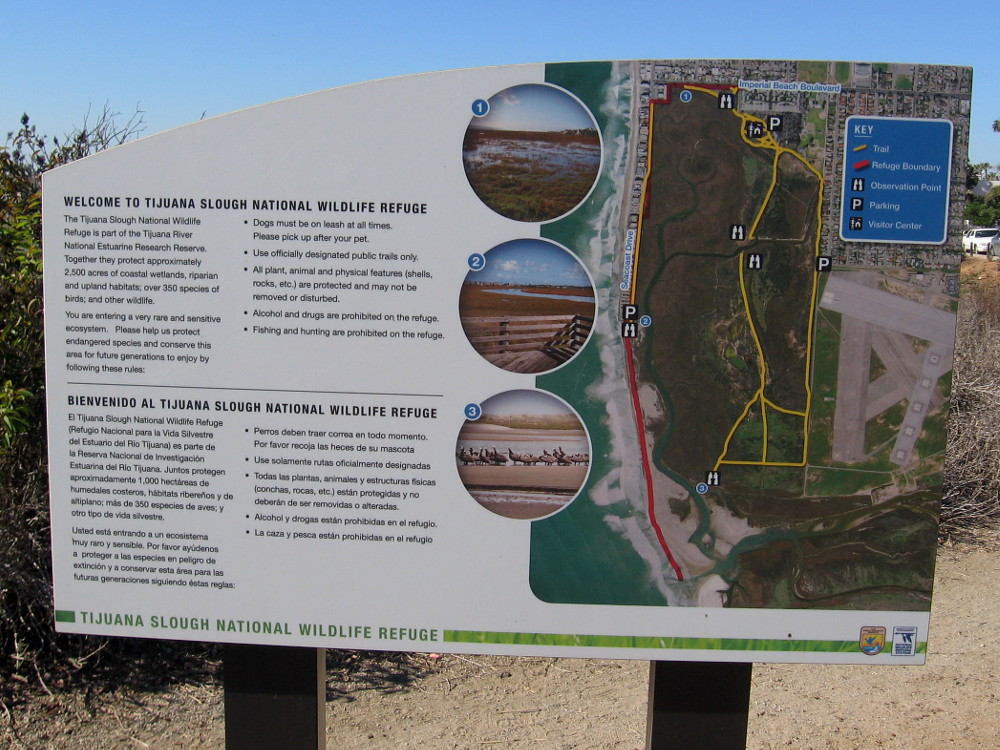
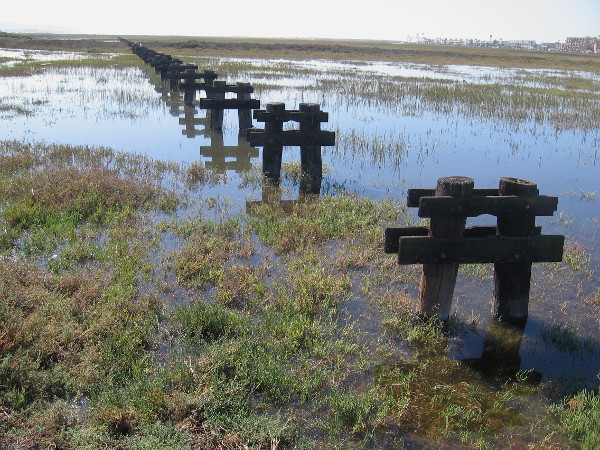
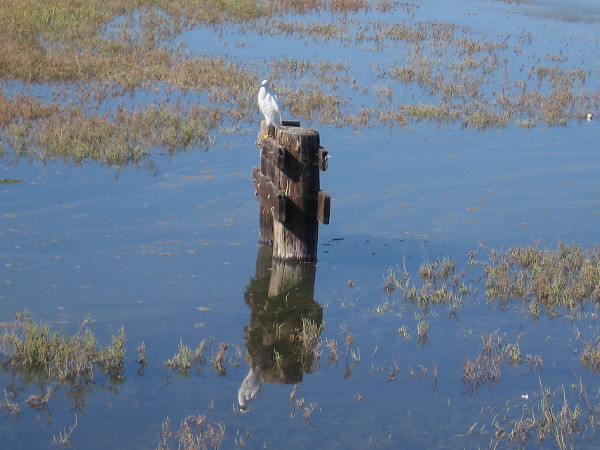
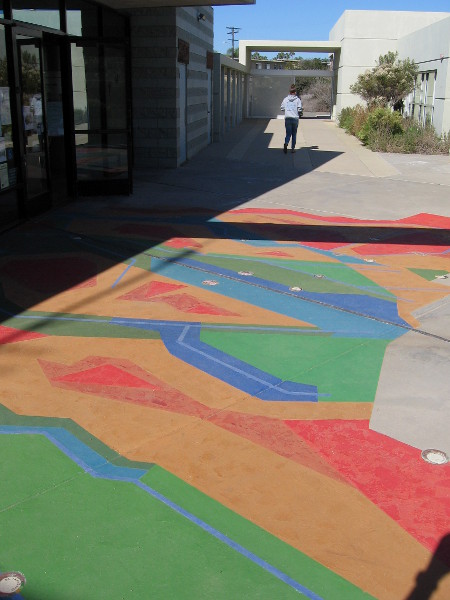
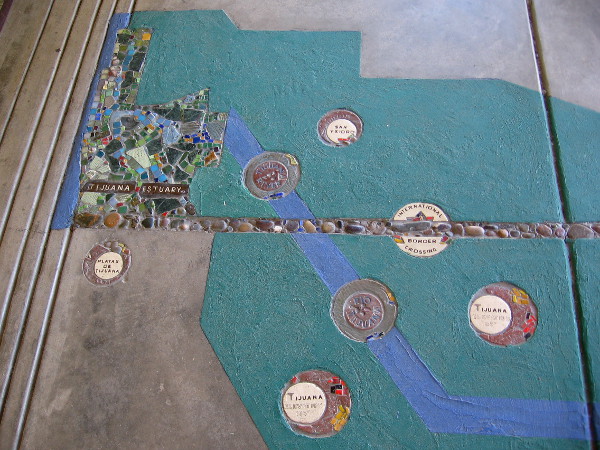
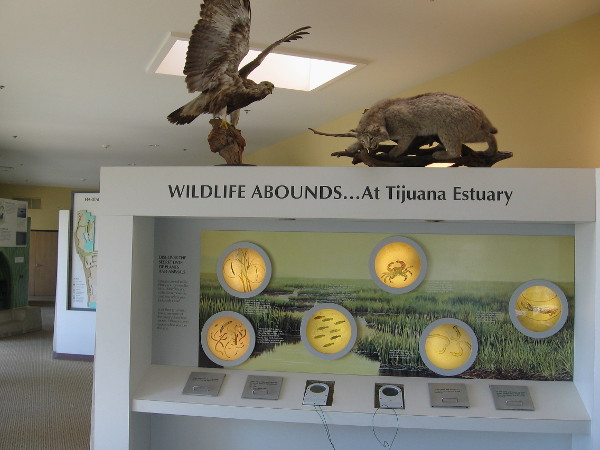
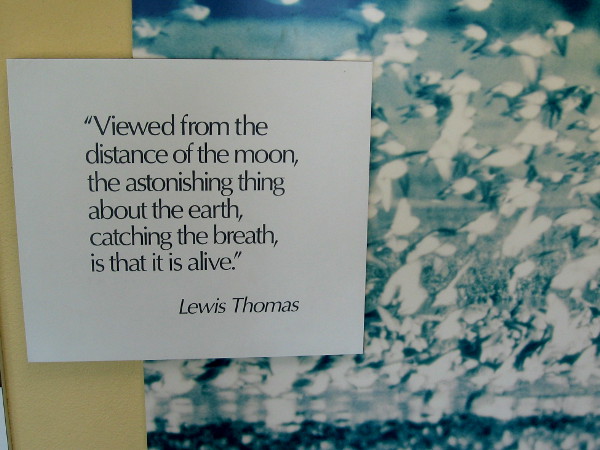
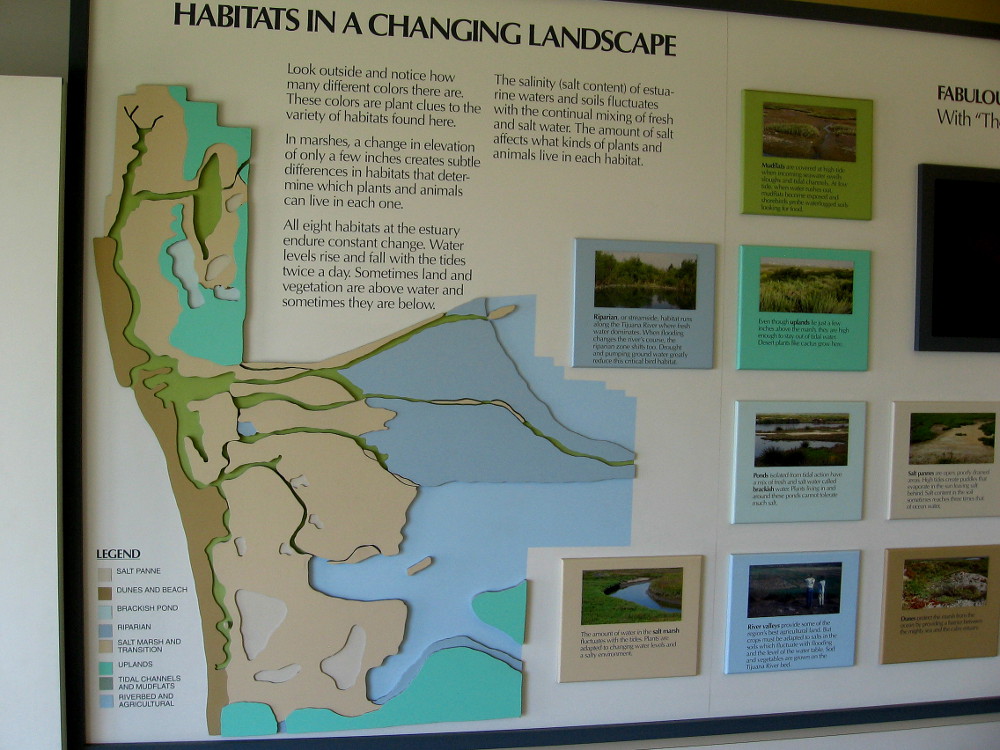
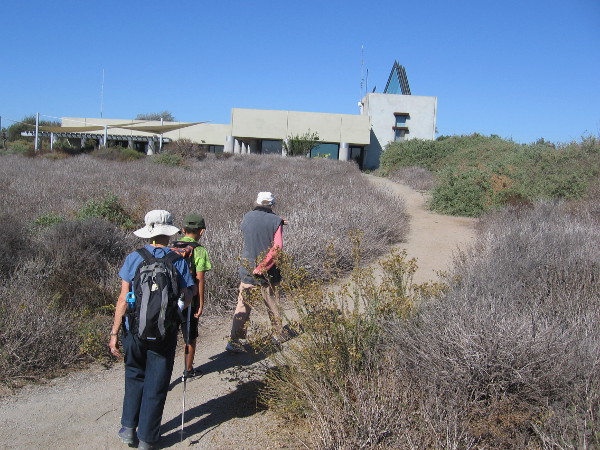
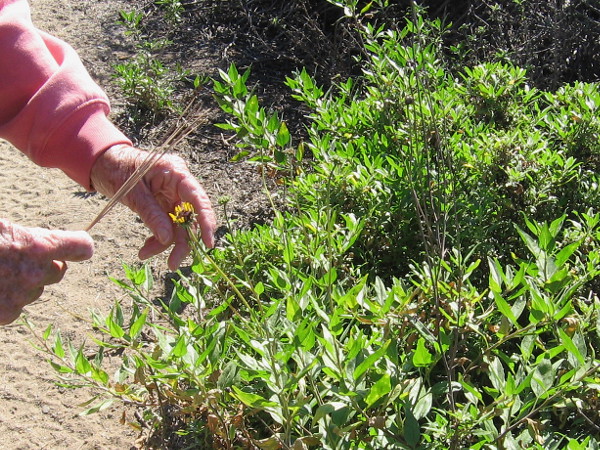
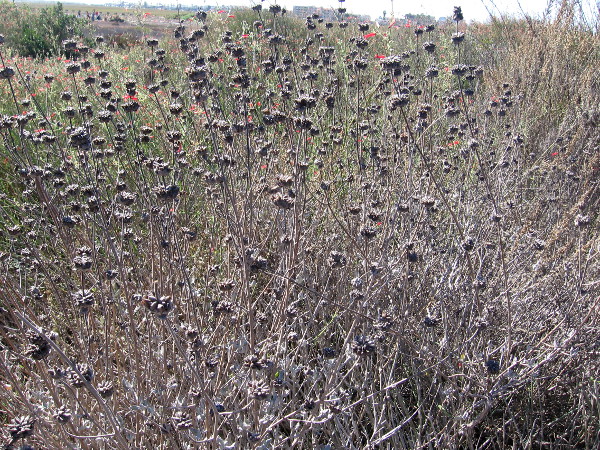
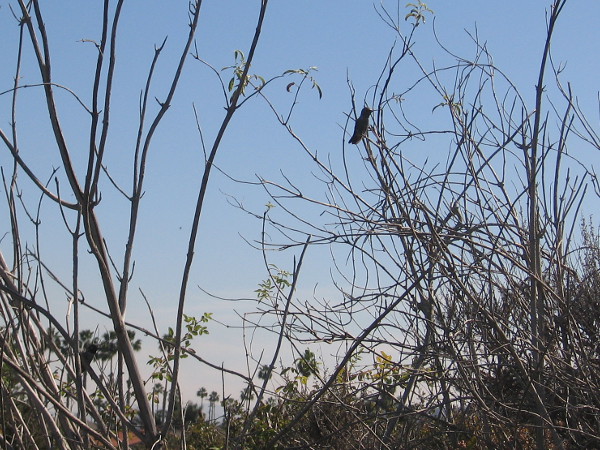
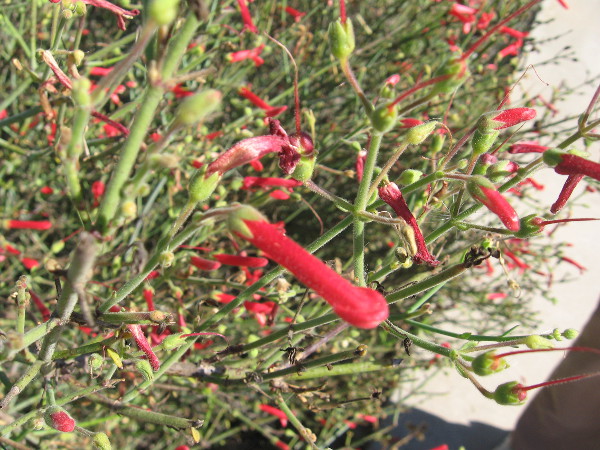
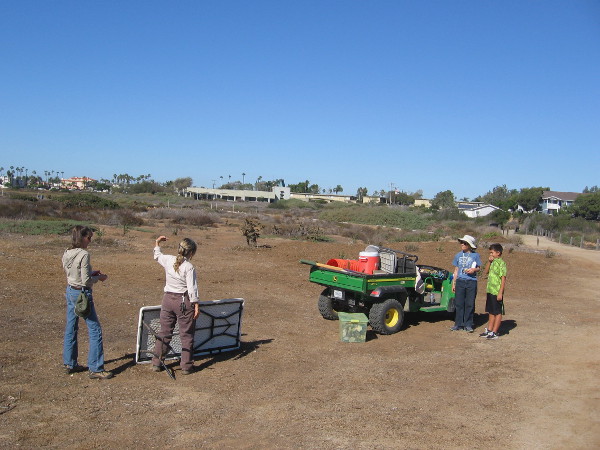
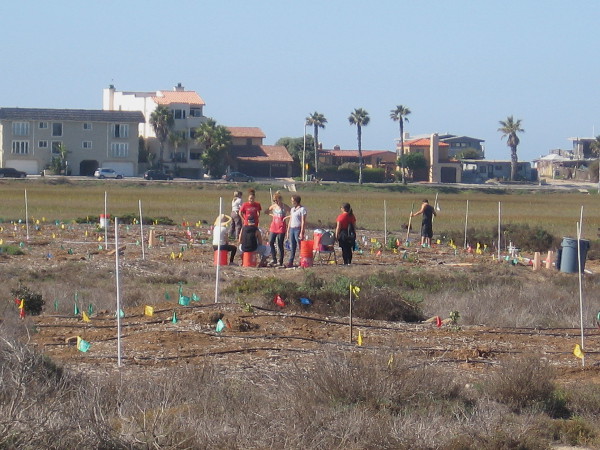
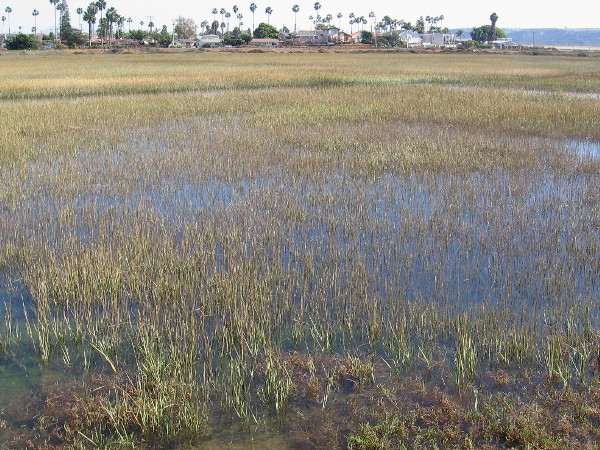
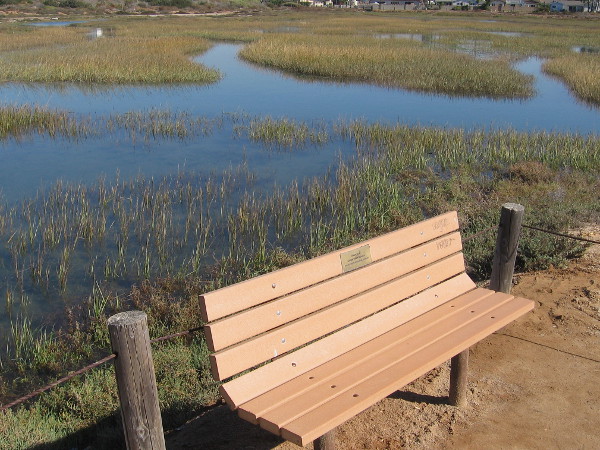
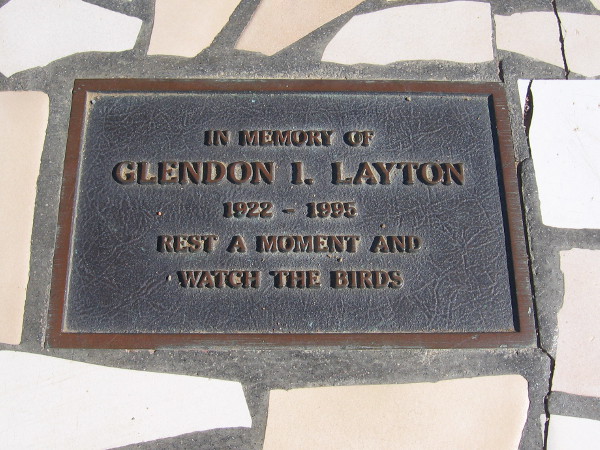
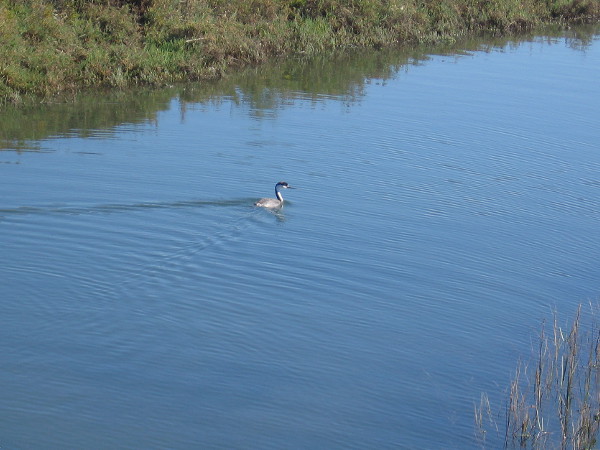
Ecoroute Bikeway and sidewalk along Seacoast Drive in Imperial Beach offers views of the north section of 2,500 acre Tijuana River Estuary.A white egret and other small birds enjoy the fertile, nutrient-rich environment created by this important coastal wetland.A shorebird equipped with a long bill, used to poke into sand and mudflats for food. Over 370 species of birds have been sighted in the wildlife reserve.Once a dump, and destined to be a boat marina, local citizens fought to have the Tijuana Estuary protected as a National Wildlife Refuge and National Estuarine Research Reserve.Steps lead down from Imperial Beach Boulevard to one of many trails in the fascinating, life-filled estuary.There are many habitats in the estuary including dune, salt panne, salt marsh, mudflat, brackish pond, riparian, coastal sage scrub, and vernal pool.Sign welcomes visitors to Tijuana Slough National Wildlife Refuge. Five endangered and two threatened species of birds are protected here in their natural habitat.I was told these old wooden pilings used to support a storm drain which ran out to the ocean.A Snowy Egret perches atop a post, perhaps watching the water for prey. Small fish, frogs, reptiles and insects are part of the food chain in a shallow river estuary.The path to the Tijuana Estuary Visitor Center passes through a garden of native plants often found along the coast of Southern California.This colorful abstract map at the Visitor Center entrance represents the 1,735 square mile watershed of the Tijuana River, reaching deep into Mexico.The edge of the map, inside the Visitor Center’s door, shows a part of San Diego and Tijuana. As it nears the Pacific Ocean, the Tijuana River crosses into the United States.One of many educational exhibits inside the cool Visitor Center. Wildlife abounds . . . at Tijuana Estuary!Viewed from the distance of the moon, the astonishing thing about the earth, catching the breath, is that it is alive.Habitats in a changing landscape. All eight habitats in the estuary endure constant change. Water levels rise and fall with the tides. Salinity of the water fluctuates.Visitors can jot notable sighting of birds on a board inside the Visitor Center. Buds and blooms are also listed.A few people out on a nature walk on a pleasant Saturday in November. The estuary is full of blooms, birds, and animal activity, even as winter approaches.Joan, a super nice park volunteer who is a plant expert (and author of a fun native plant book), shows us the yellow bloom of California bush sunflower.Even though the blue blooms of this pleasantly aromatic Cleveland Sage have dried, the seeds pods have a bluish tint.A tiny hummingbird is perched on the branch of a shrub.The Galvezia, or bush snapdragon, is common in Baja California. It has green stems, bright red tube flowers, and attracts hummingbirds.Hiking south down the North McCoy Trail in the Tijuana Estuary. Rising on the left horizon is Mexico. On the right horizon are the Coronado Islands in the Pacific Ocean.Ranger Debbie Good is super friendly. She answered a bunch of questions with a big smile. Here’s she’s putting away a table used to welcome volunteer workers.These volunteer students from SDSU are helping to plant native vegetation. Efforts to return the estuary to a natural state are ongoing. This area several decades ago was a dump.Looking across cordgrass and a beautiful wetland at the extreme southwest corner of the continental United States.A quiet bench on the North McCoy Trail invites walkers to relax and take in the sunshine and surrounding tranquility.Plaque on another bench at the south end of the trail. In memory of Glendon I. Layton. Rest a moment and watch the birds.The Tijuana River National Estuarine Research Reserve and Tijuana Slough National Wildlife Refuge is a place where amazing biodiversity and nature’s beauty thrive.
…
Follow this blog for more photos of cool stuff! Join me on Facebook or Twitter.
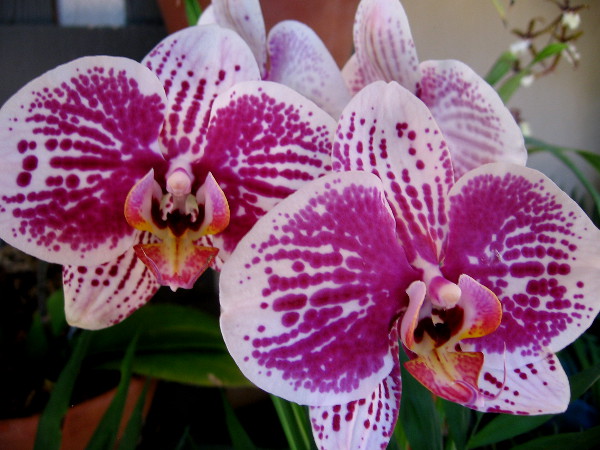
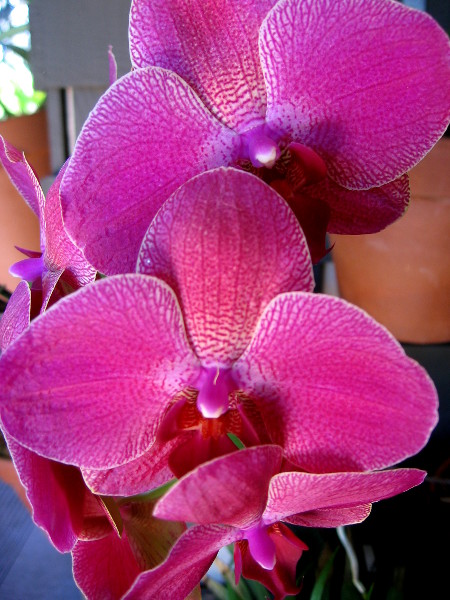
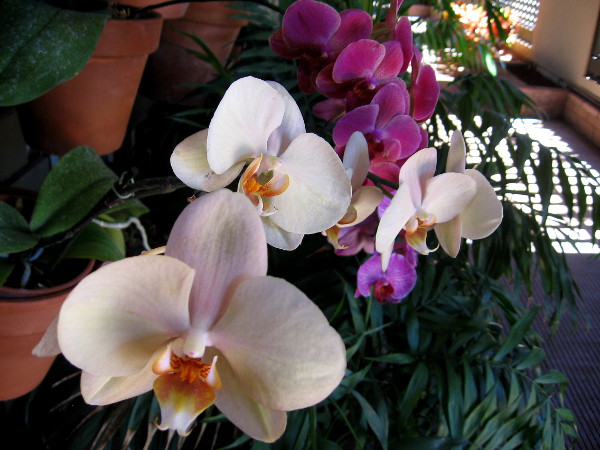
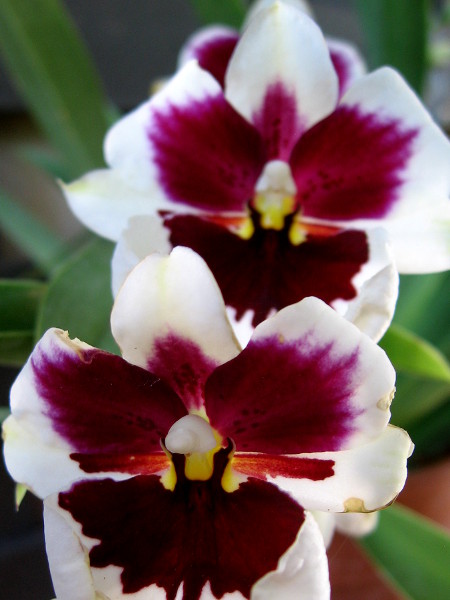
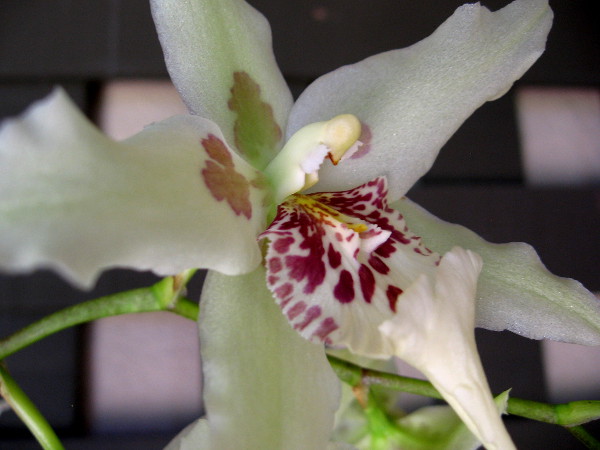
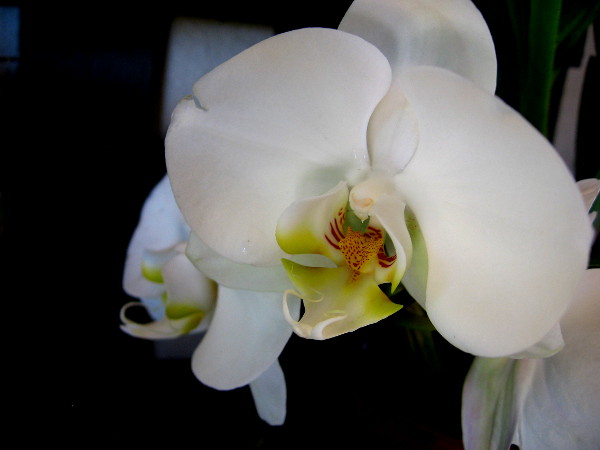
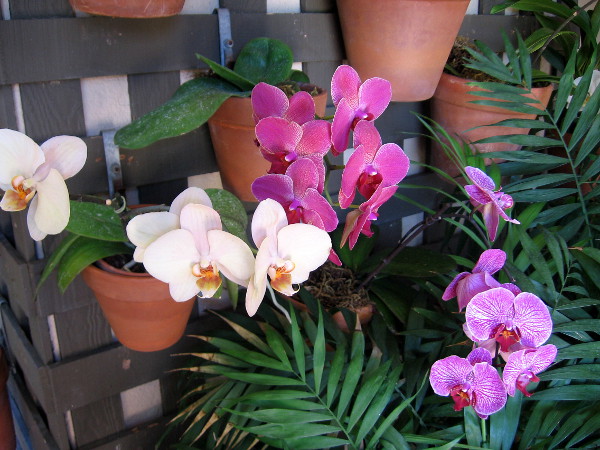
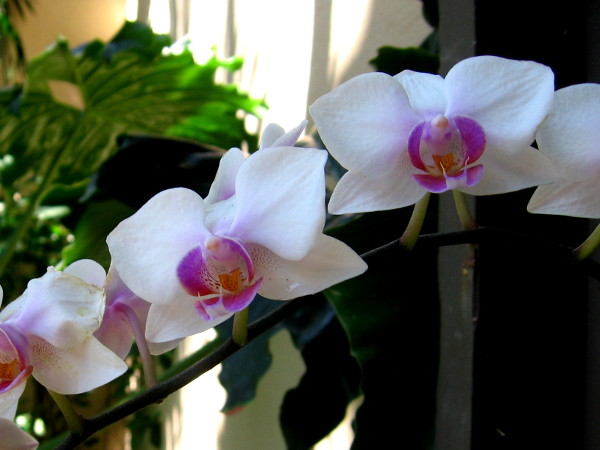
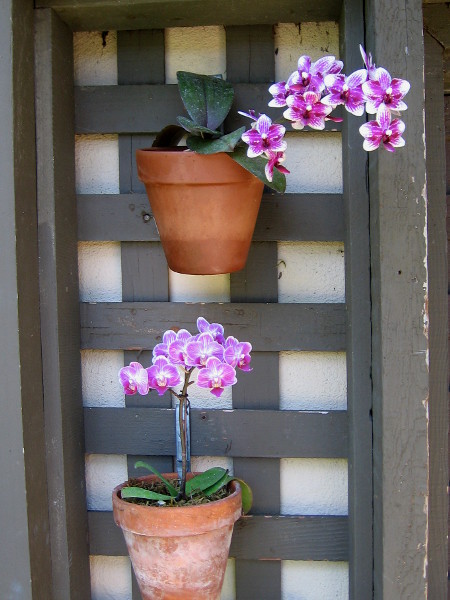
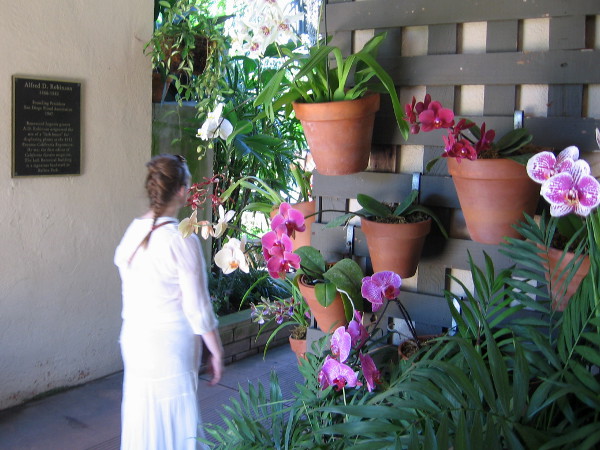
I believe all these beautiful images are of orchids! I apologize if I’m mistaken. Most photos were taken just inside the left door to the Botanical Building in Balboa Park.
I believe all these photos are of orchids. Unfortunately, I’m not an expert when it comes to plants or flowers. Heck, I hardly even rank as an amateur. But I do recognize exquisite beauty. And you’ll find it just inside the left door of Balboa Park’s amazing Botanical Building!
I don’t know the types or names of these orchids. I looked for signs, but saw none. If you recognize anything, leave a comment!
Velvet beauty for everyone to enjoy.So much to absorb in the amazing Botanical Building–one’s eyes leap from bloom to bloom.Nature’s masterpieces are often small and fragile.Should you ever visit Balboa Park in San Diego, don’t miss the Botanical Building. The enormous lath building stands behind the reflecting pool near El Prado.White angel-like flower seems to signal that the world is just fine.Many orchids in clay pots hanging from a wall trellis.A long strand of gems.Everywhere you turn in the Botanical Building you’ll discover lush plants and natural wonders.A lady glides into heaven on Earth.
…
Follow this blog for more photos of beautiful things! Join me on Facebook or Twitter.
Visitors stroll through endless natural beauty at the Japanese Friendship Garden in Balboa Park.
Please enjoy the following photographs. They were taken today at the Japanese Friendship Garden in San Diego’s wonderful Balboa Park. As you can plainly see, natural beauty is abundant in this amazing garden. I hope you have a chance to visit.
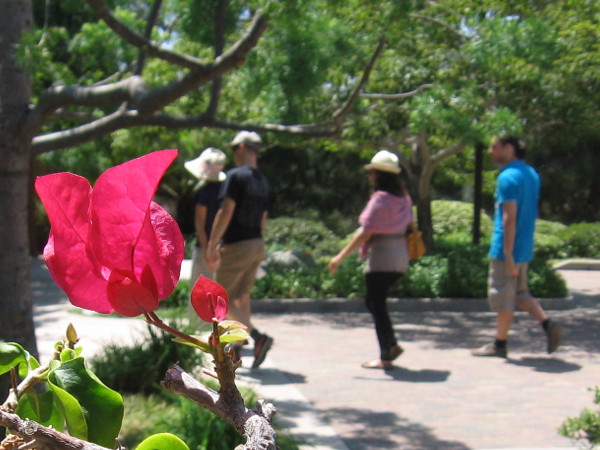
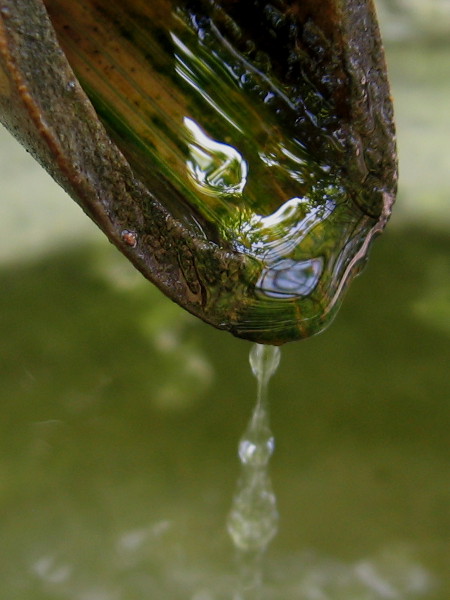
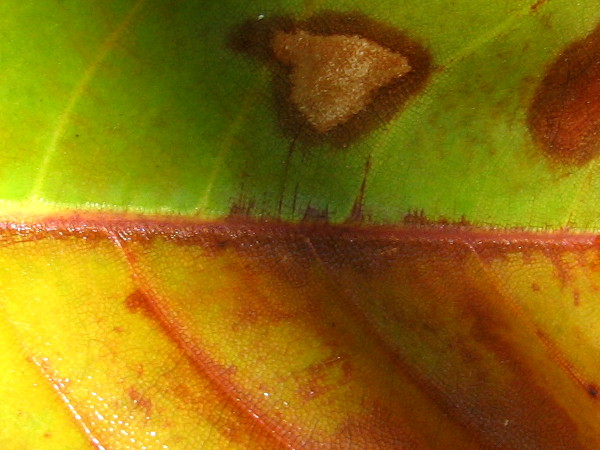
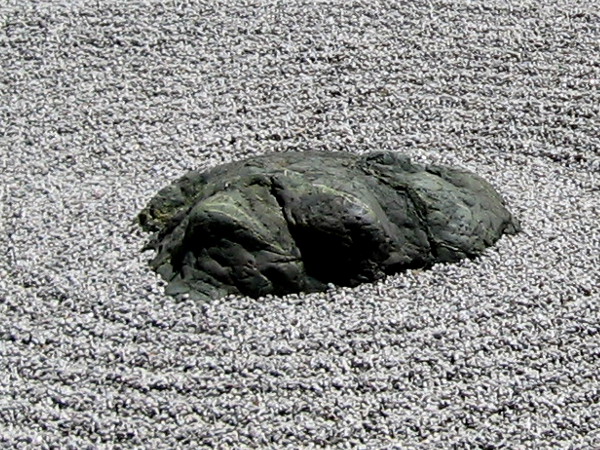
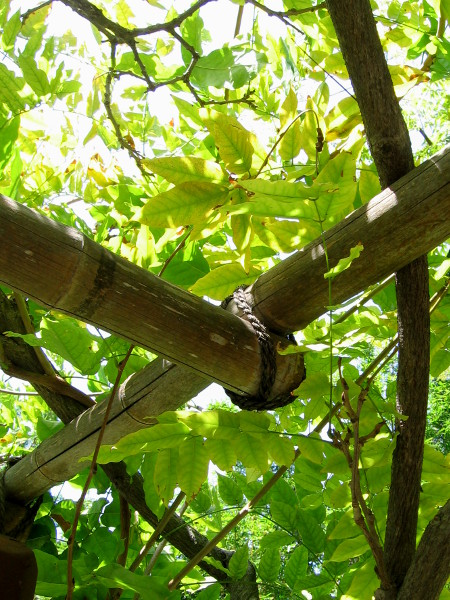
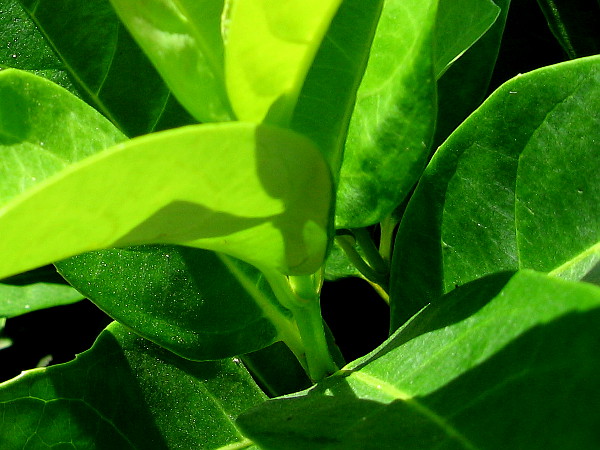
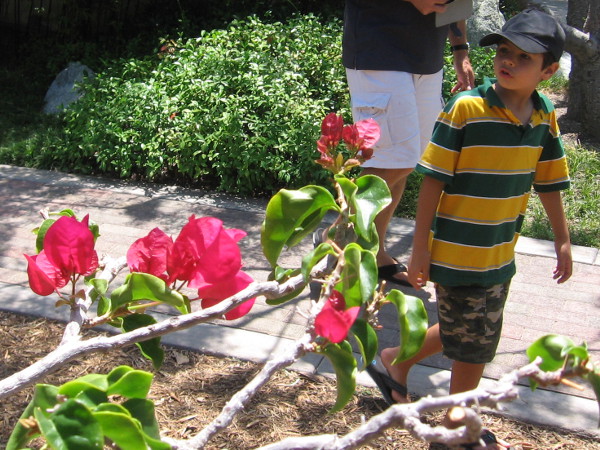
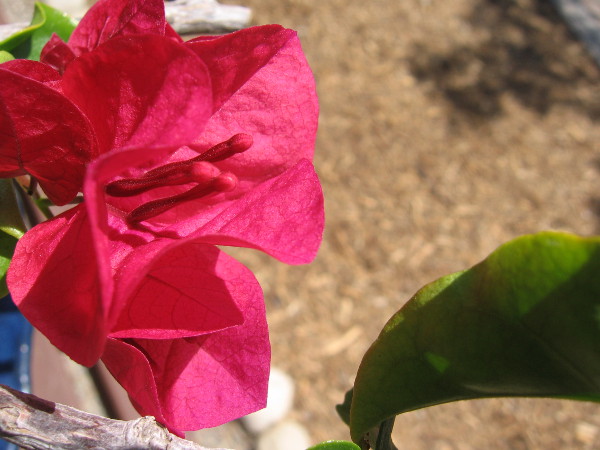
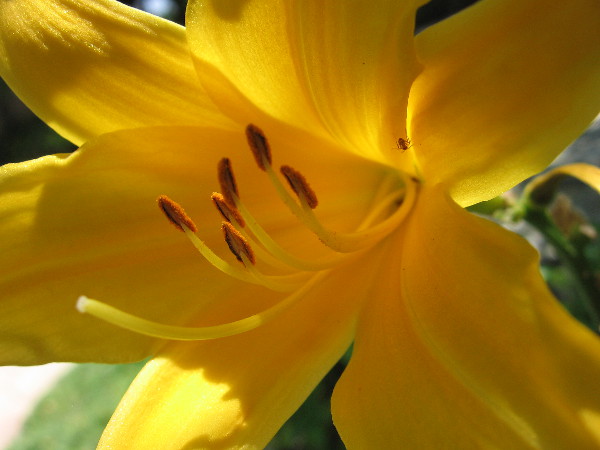
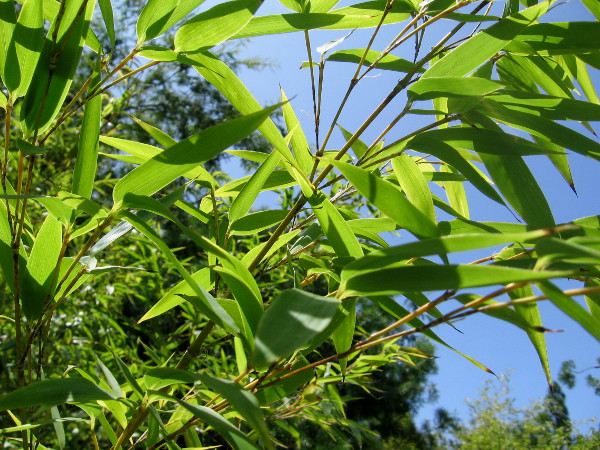
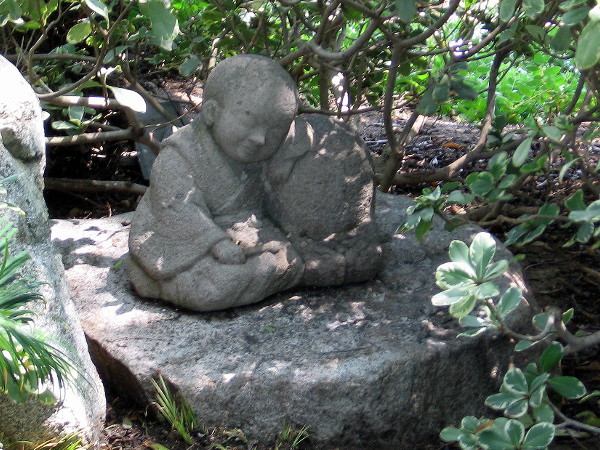
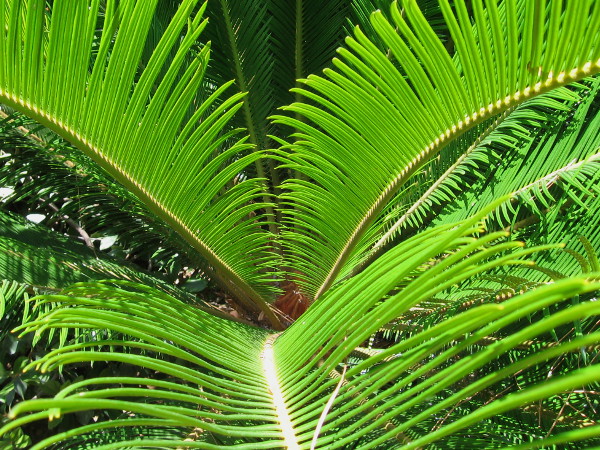
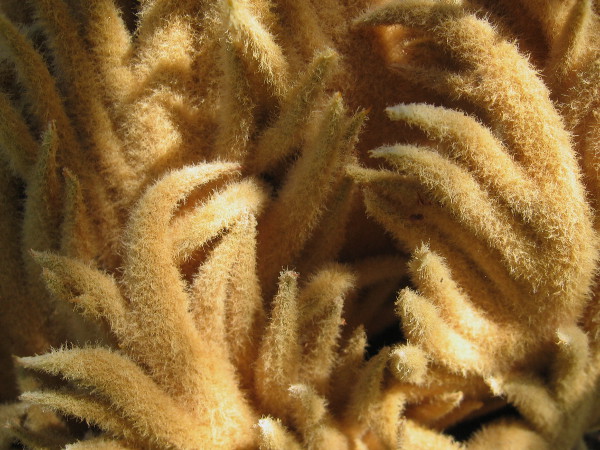
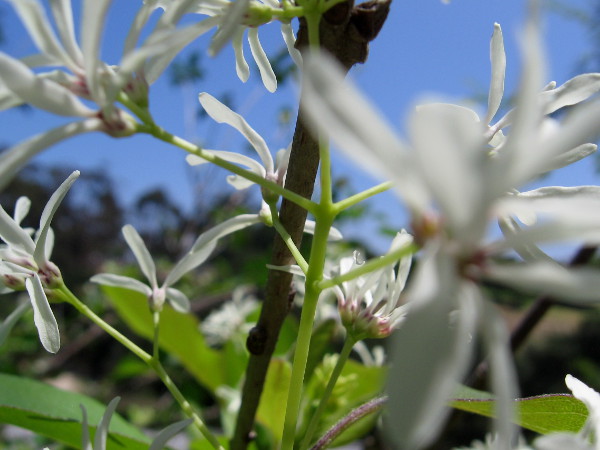
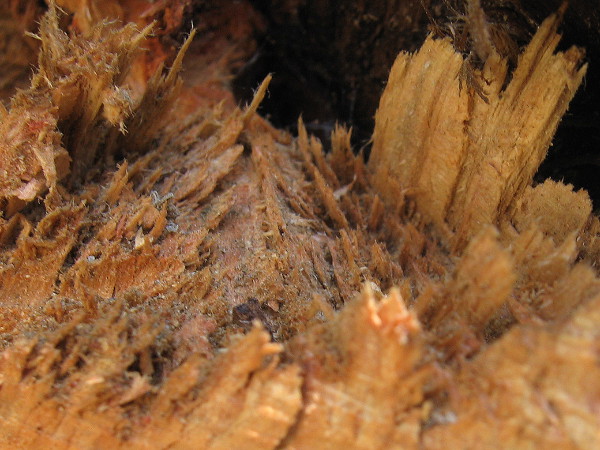
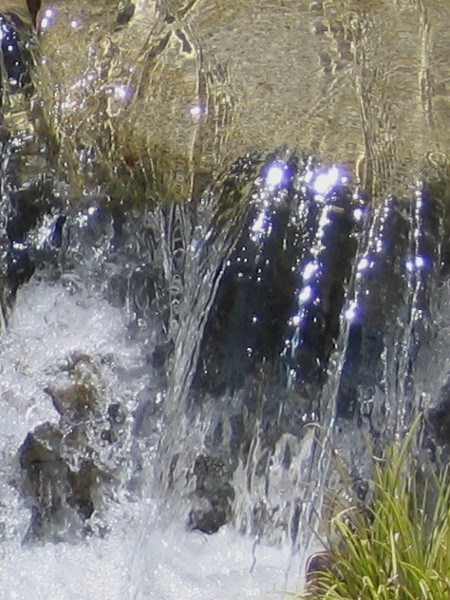
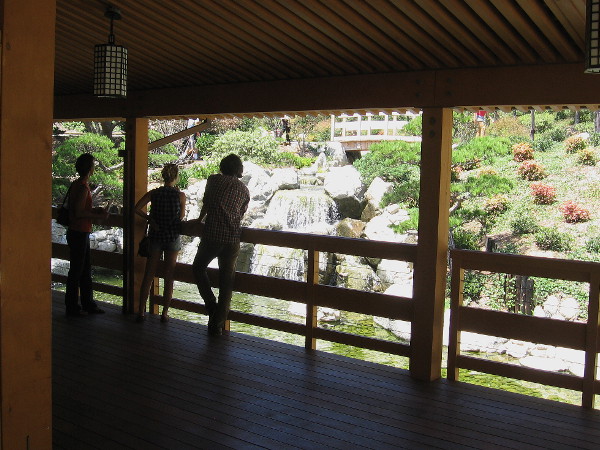
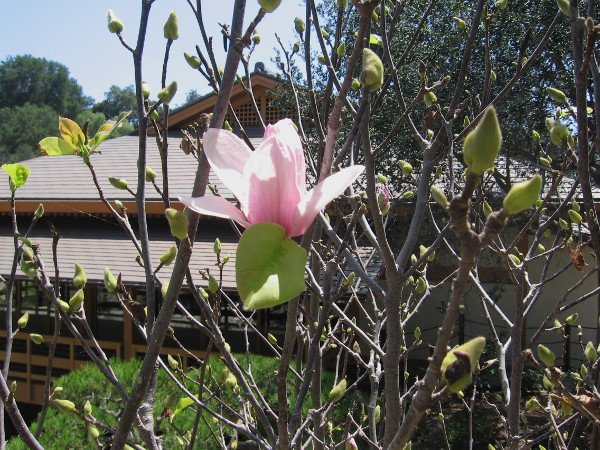
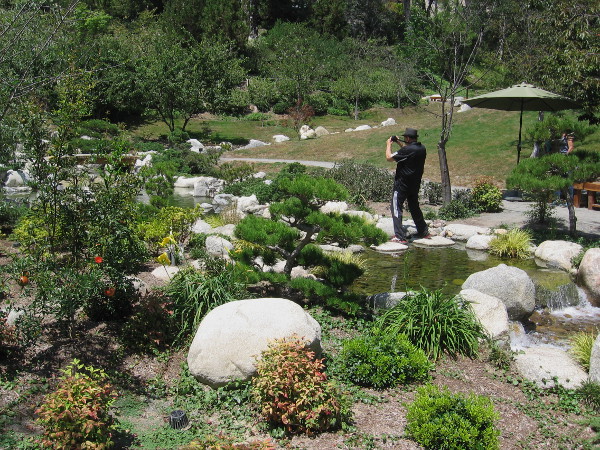
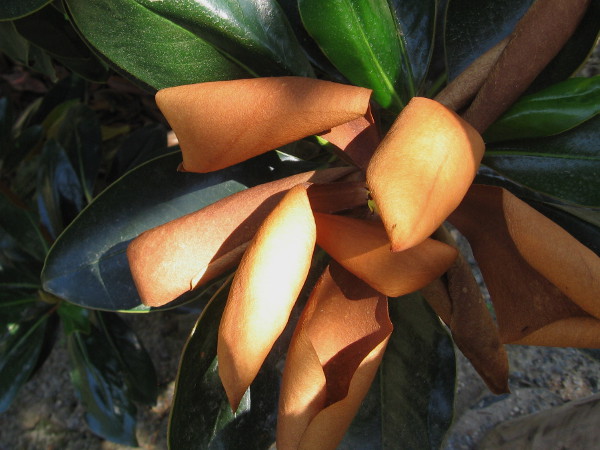
Gleaming droplets of water descend from a hollow bamboo kakei into the tranquil, cleansing tsukubai basin.Even age and imperfections in this fallen leaf are beautiful beyond description.A rocky island, seemingly, in the Karesansui Dry Stone Garden, with carefully raked gravel inviting meditation.Looking upward into the sunlit leafy canopy near the koi pond.The day’s light makes striking patterns of living green.Bright red bougainvillea bracts catch the eye of a young person walking through the Japanese Friendship Garden in San Diego.Bougainvillea red is an especially beautiful sight in the bonsai garden.A yellow day-lily which is growing near the Charles C. Dail Memorial Gate.Bamboo leaves flutter in the gentle San Diego breeze.This small sculpture is a mystery according to one of the groundskeepers. It was placed in the garden by someone unseen. The sculpture might be a young Buddha. It might have been placed here by someone who lost a child. No one seems to know its history.Bright green palm fronds produce instant human delight.Close-up photograph of the amazing, strange seed pod of a sago palm.Delicate white flowers of the star jasmine seem to have descended into this world from a heavenly place.Close-up photo of torn wood fibers where a dead tree limb finally separated from the trunk.Water cascading over stone shines in the sunlight. A small gentle river flows through the bottom of the spacious garden canyon.Looking down through magical, jewel-like water.Jumbled leaves have turned many colors.Nature’s fantastic patterns are evident everywhere you turn in the amazing Japanese Friendship Garden.After being corrected by a great reader, this appears to be a gardenia. I first thought it might be a white azalea! That shows you how much I know!Visitors at the Japanese Friendship Garden stand in the shade of the Inamori Pavilion looking down at a pleasant waterfall.A pink saucer magnolia bloom and buds. In the background you can see the new Inamori Pavilion, which opened this year.Another photographer was recording the carefully arranged natural beauty at the Japanese Friendship Garden.Even dry brown curled leaves can take one’s breath away.Leaves and shadows of leaves.If one small place can contain such abundant wonder, imagine what the vast universe holds.Natural beauty at the amazing Japanese Friendship Garden
…
Follow this blog for more photos of amazing and beautiful things! Join me on Facebook or Twitter.
Sea lions sun on a large rock in the Pacific Ocean off Point La Jolla.
This blog post resumes my walk from the prior post. Here I head south down a truly amazing stretch of coastline, from Point La Jolla at the edge of La Jolla Cove to Cuvier Park. A good argument can be made that this is the absolutely most beautiful spot in all of San Diego. I’ll let you decide…
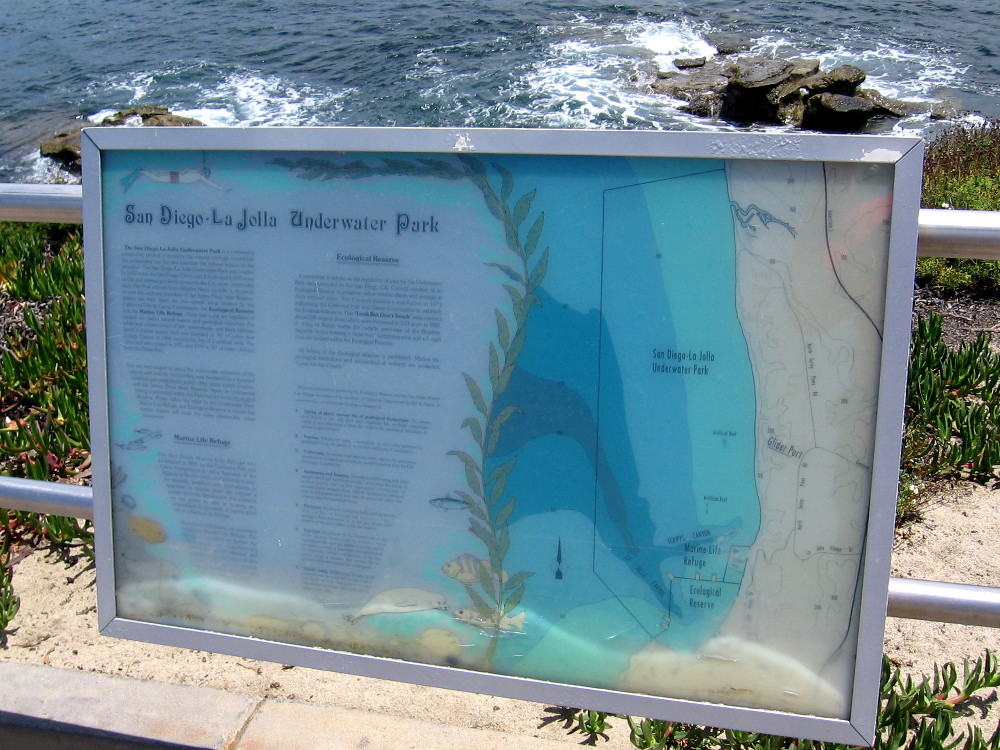
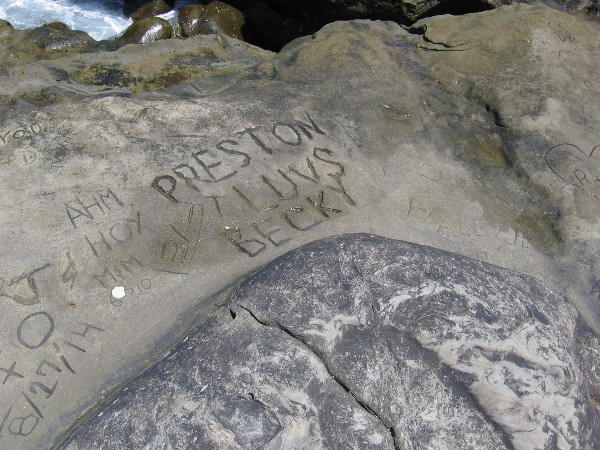
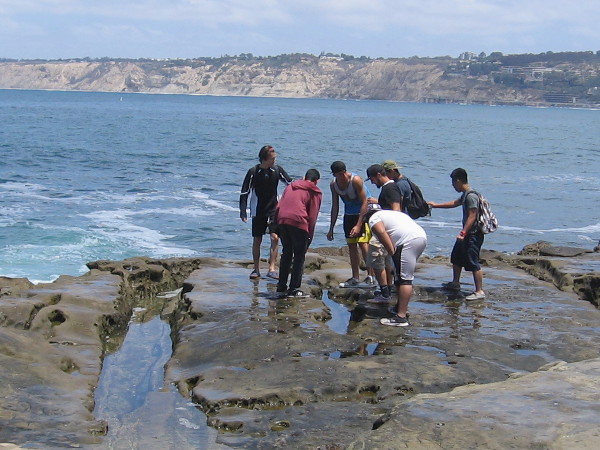
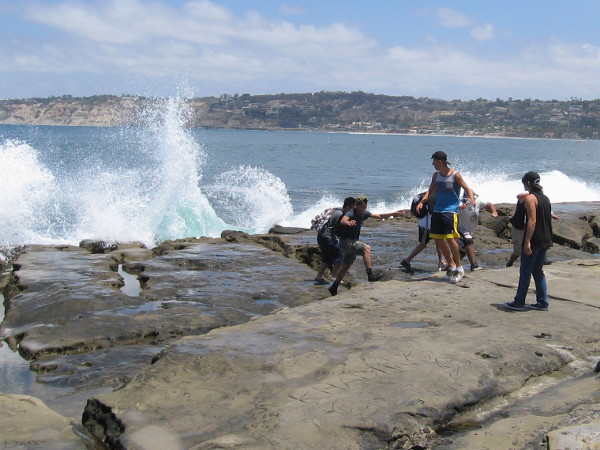
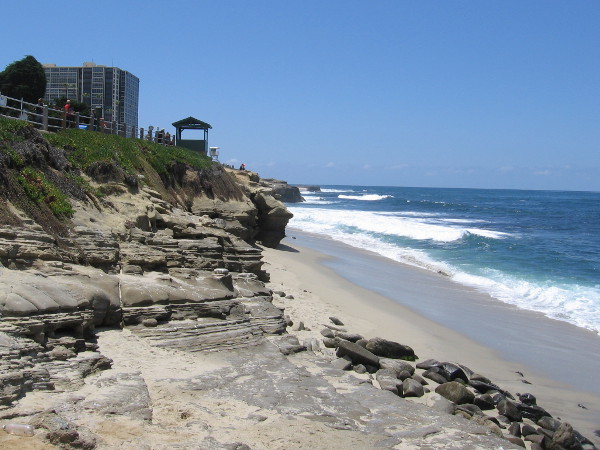
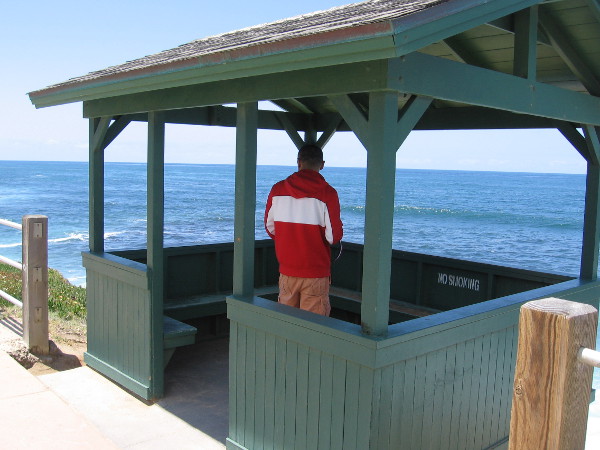
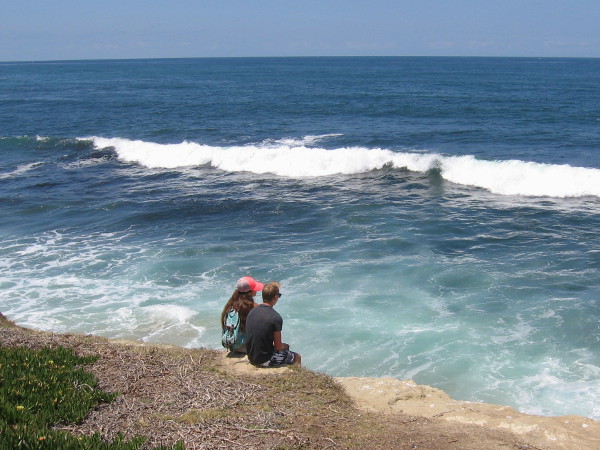
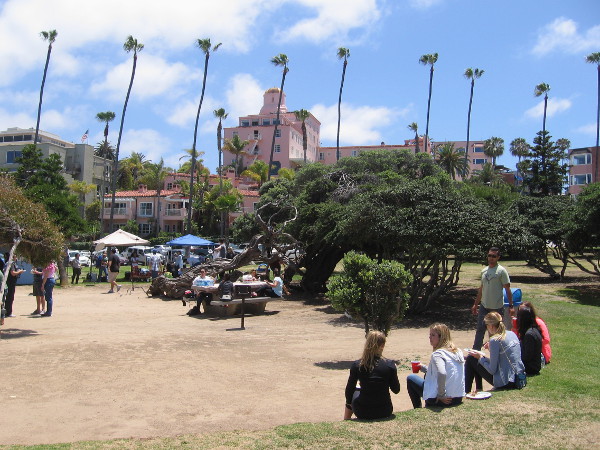
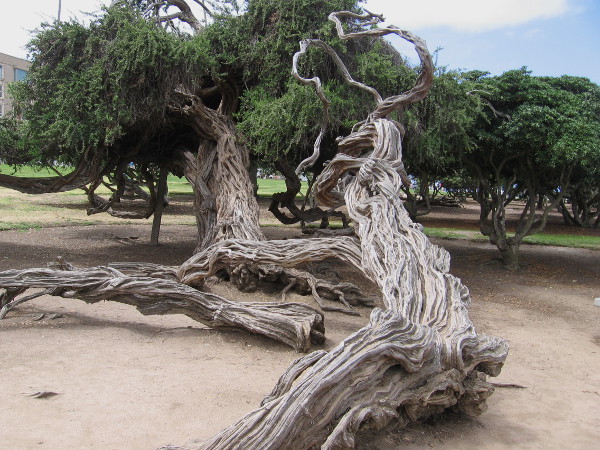
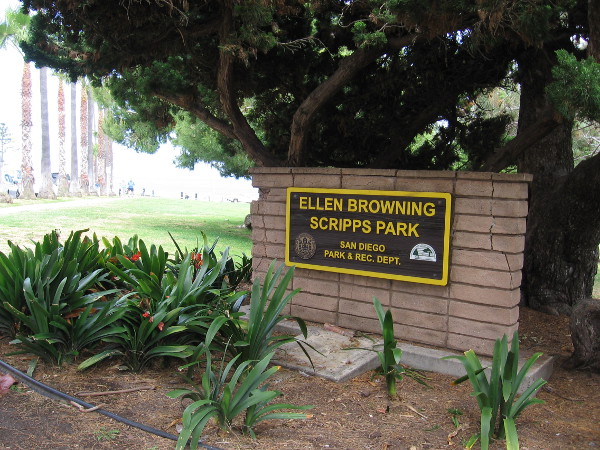
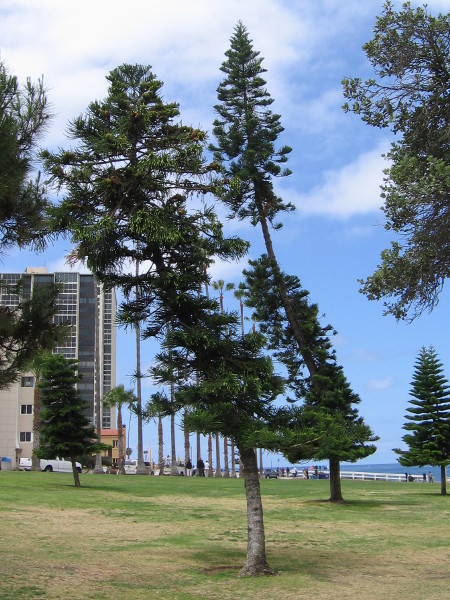
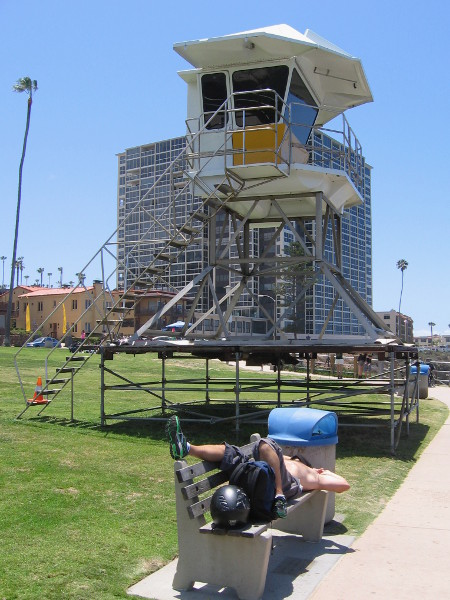
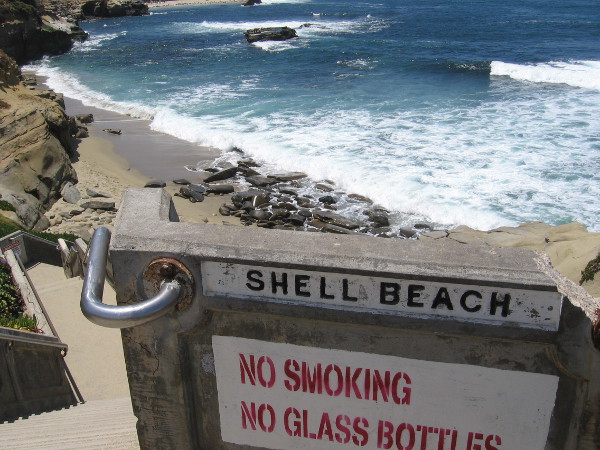
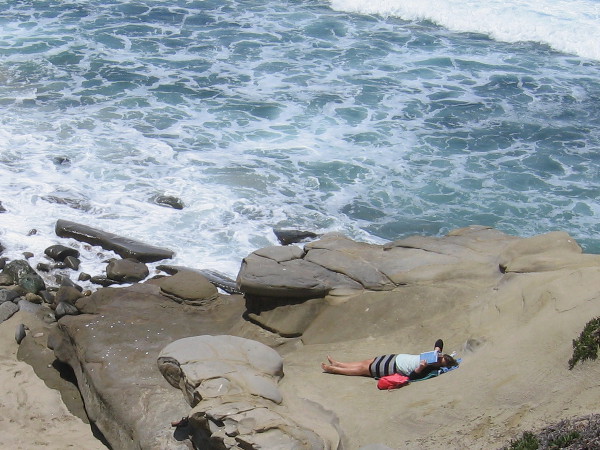
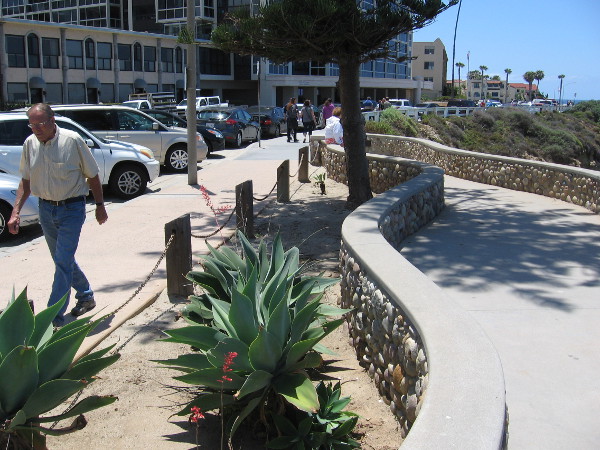
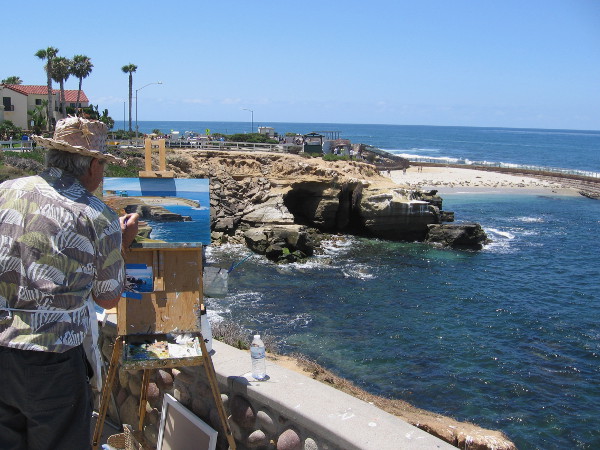
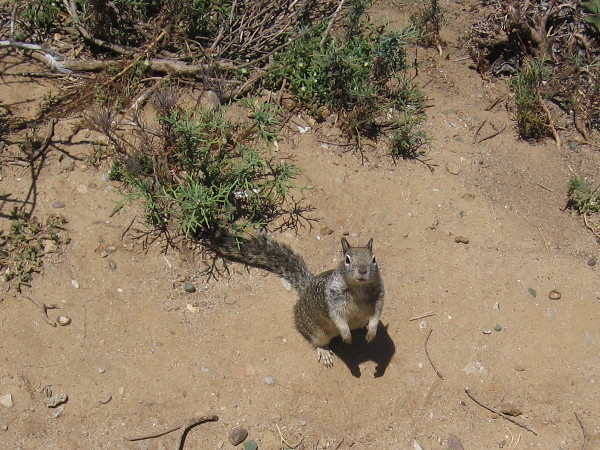
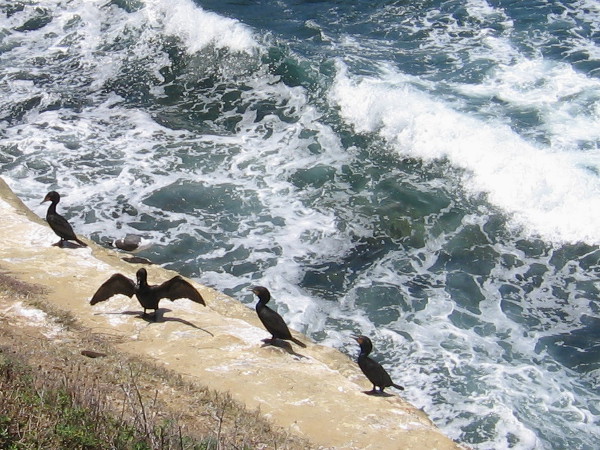
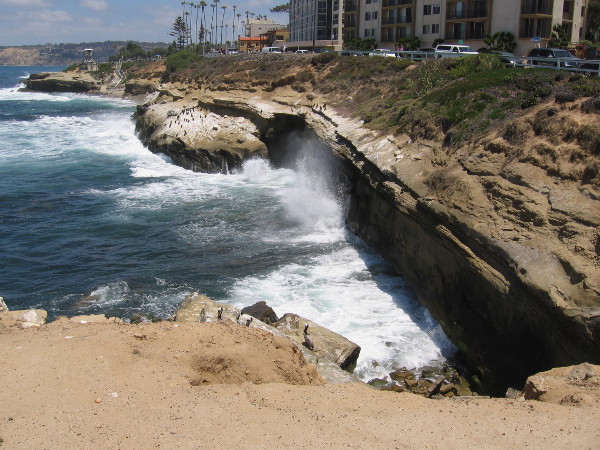
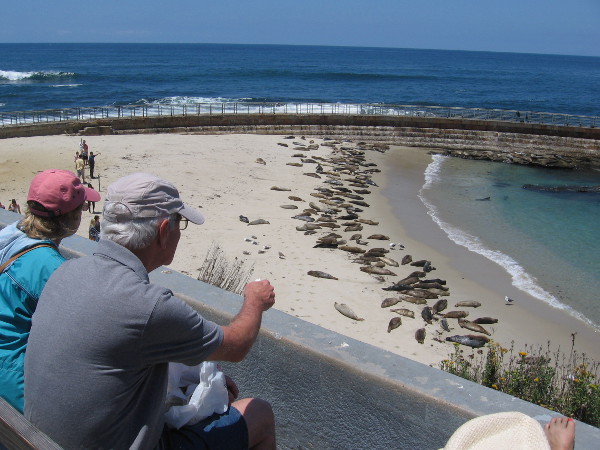
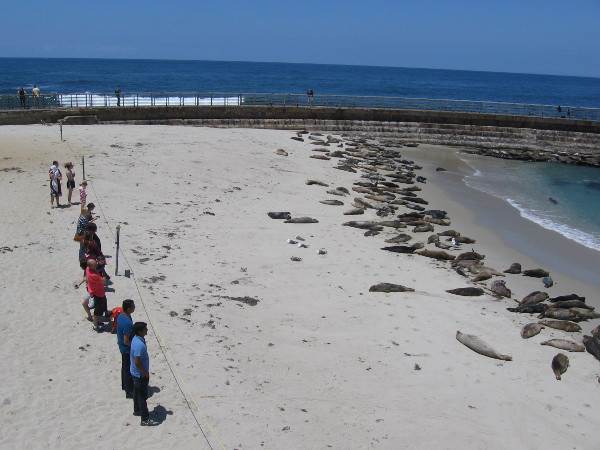
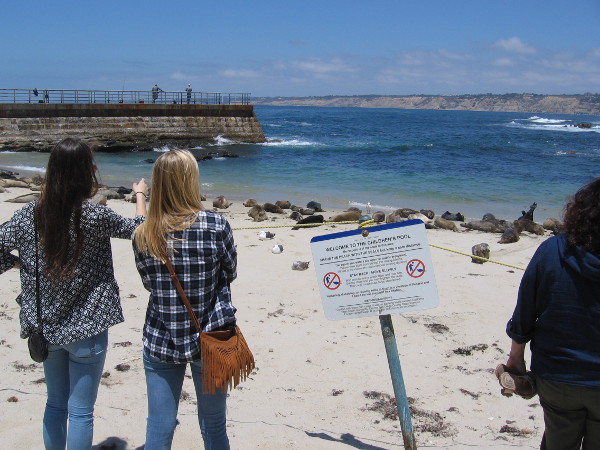
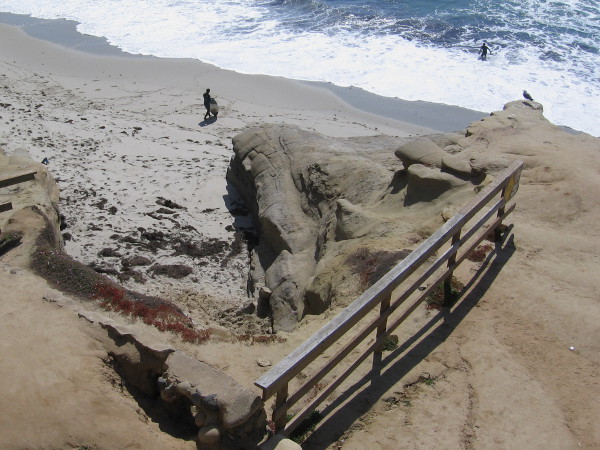
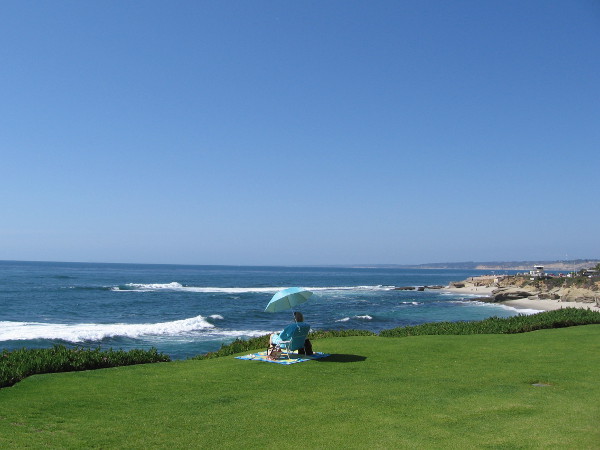
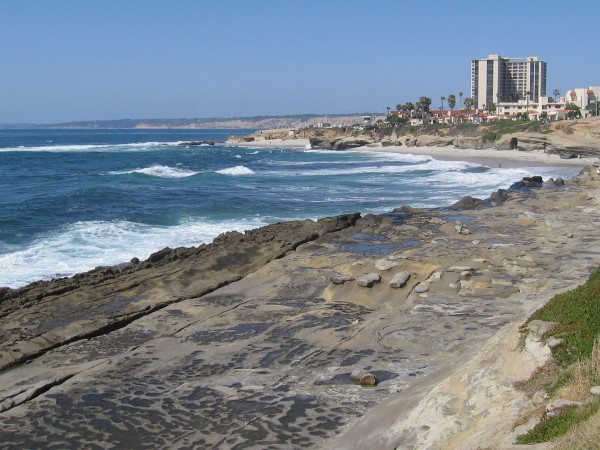
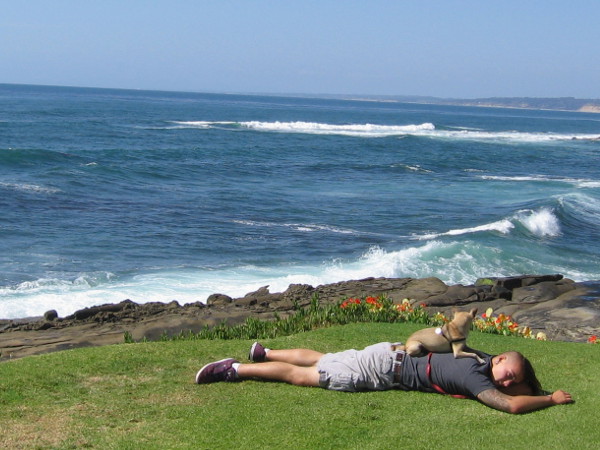
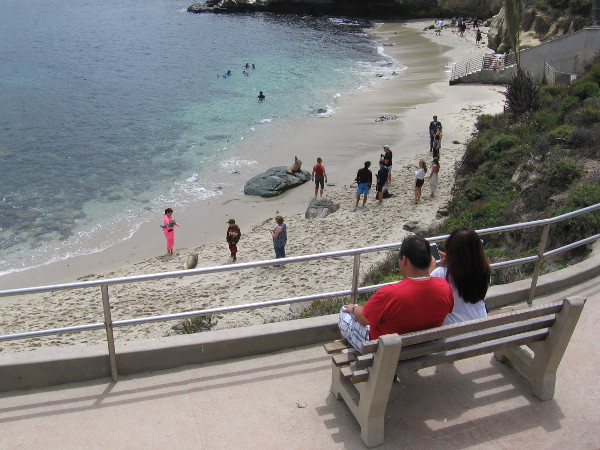
The 6,000 acre San Diego-La Jolla Underwater Park off the coast includes an Ecological Reserve and the Marine Life Refuge.Numerous seals and sea lions live on the rocks and beaches of La Jolla.People love to walk across this water-sculpted landscape right up to the sea cliffs to watch the surf.Over the years many have carved names and messages in the soft sandstone.Sea lions enjoy La Jolla just as much as human visitors!Some of those curious humans are grouped around a small tide pool in the rock looking for sea life.An unexpected wave crashes in. Run! Scatter!Looking south along the narrow beach from Point La Jolla. One of many lookout structures is visible up on the cliff.This lifeguard box features many barnacle-like beach-related words. The box is titled the David C. Freeman Memorial, by artist Paul Sibel. It marks the location of Boomer Beach.These simple, open gazebo-like structures along the walking path are fine places to gaze out at the broad ocean.Or you can just relax on an outdoor seat provided by nature.A major attraction along Coast Boulevard is spacious, grassy Scripps Park.Gnarled old trees dot the picturesque park, which contains many picnic areas and places to recreate on the grass.Ellen Browning Scripps Park is reported to be the most photographed spot in San Diego.More trees growing slantwise, blown by the prevailing sea breeze over the course of many years.Scripps Park contains the Abraham Lincoln Centennial Memorial plaque dedicated in 1909.Continuing south, more views looking back north of a truly spectacular coastline.Guy takes a nap on bench beneath a lifeguard tower.Shell Beach is one of many tiny sandy nooks that can be found among the rocky cliffs.A lady lies on a flat rock reading a book, as waves crash nearby.A beautiful walkway runs down from the Cave Store along Coast Boulevard for about a mile along the ocean.An artist paints a beautiful scene from a view point not far from Children’s Pool.I peer over the low wall and am greeted by a funny squirrel!One of these cormorants on a rock has its sun-drying wings spread dramatically.Getting very close to Children’s Pool, where many seals lie side by side on its wide, sunny beach.A quick turn back northward shows waves breaking against a vertical sandstone face!Legal disputes have entangled Children’s Pool over the years. The facility was created in 1931 by benefactor Ellen Browning Scripps as a safe spot for children to swim.People head down to see the colony of seals on the warm sand.At Children’s Pool Beach, a rope now keeps people from disturbing the protected marine mammals.Fisherman on the far sea wall have cast their lines into the blue Pacific Ocean.Continuing to walk south along more amazing coastline in La Jolla.Some surfers on a beach and in the foaming water below.Unusual sculpture at the rear of La Jolla’s Museum of Contemporary Art San Diego called Pleasure Point, by artist Nancy Rubins. It’s made of rowboats, canoes, jet skies, kayaks, surfboards…A stretch of green grass at Cuvier Park is the perfect place to sit or lie on a glorious Southern California day.Tide pools become visible at low tide along this easily accessible stretch of La Jolla.A dog takes a happy rest by some flowers as the surf rolls in.
…
To enjoy future posts, you can “like” Cool San Diego Sights on Facebook or follow me on Twitter.
Taking an easy stroll above the wide, blue ocean in beautiful La Jolla.
My day in La Jolla yesterday was so wonderful I had to do it again!
A second walk today has my computer bursting with photos. So I’d better share some!
I’m going to create two blog posts. This first one involves a walk down the short but breathtaking Coast Walk Trail, then down Coast Boulevard from the Cave Store to La Jolla Cove Beach. Where the ocean meets land here is one of the most amazing, magical places a person might ever visit. A few photos hardly do the experience justice.
Be forewarned, this post starts with great natural beauty, but ends with sudden ugliness. You’ll see why I became a bit angry during my otherwise glorious adventure.
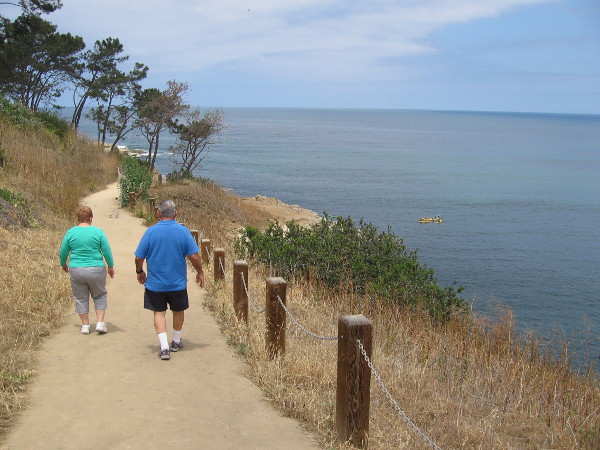
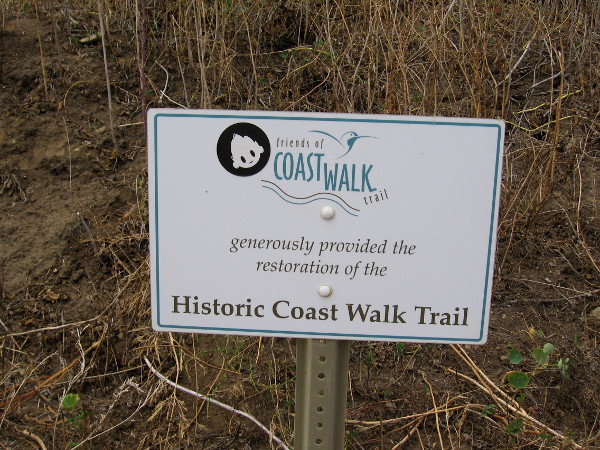
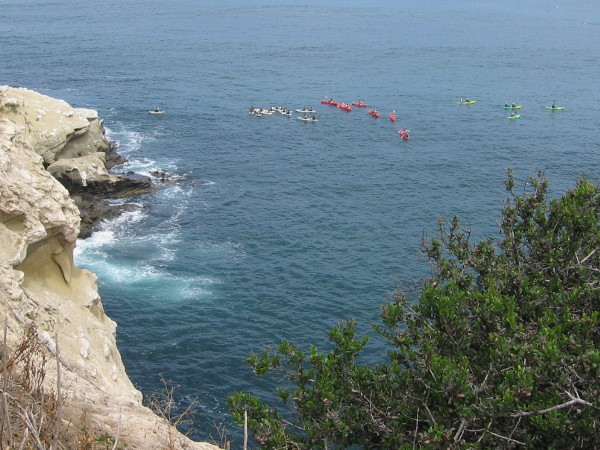
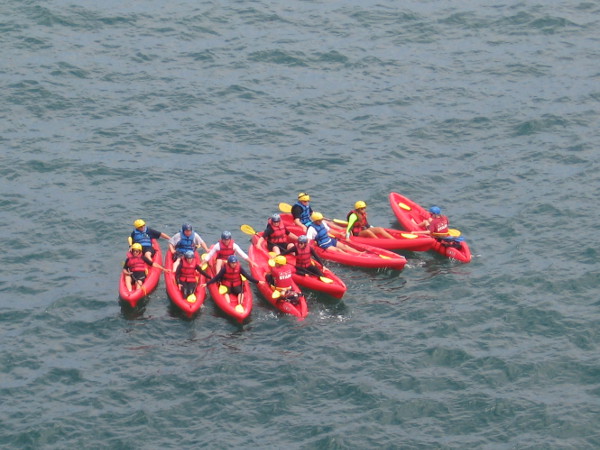
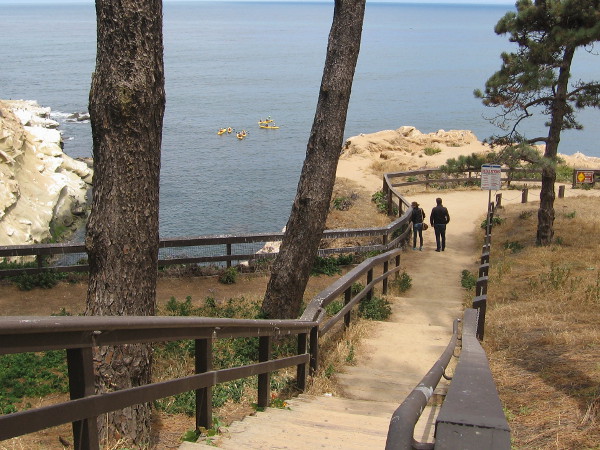
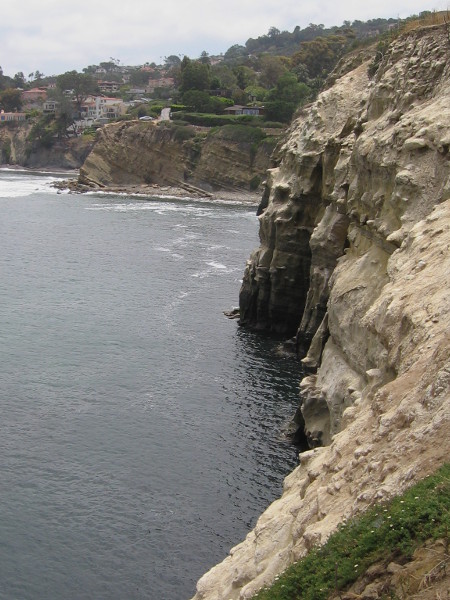
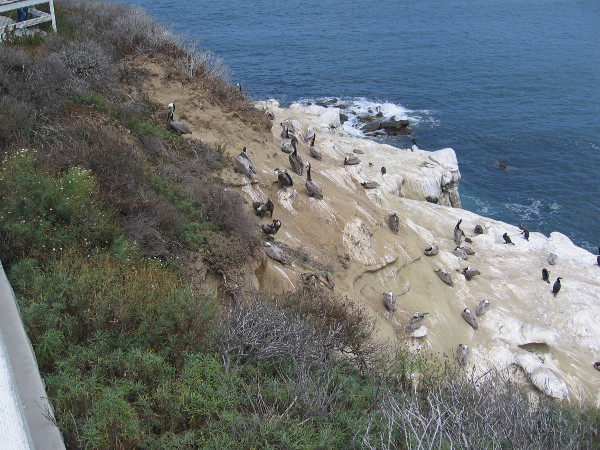
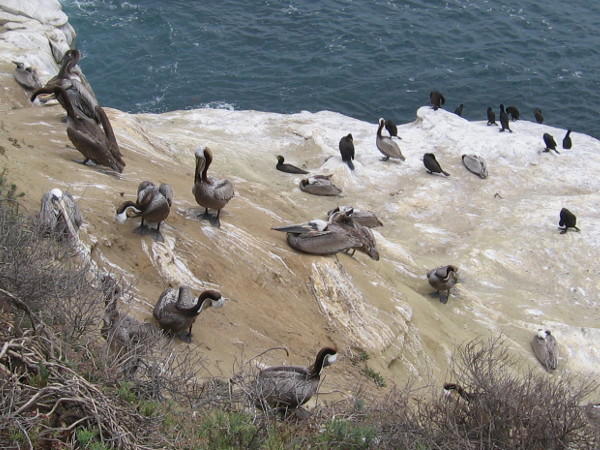
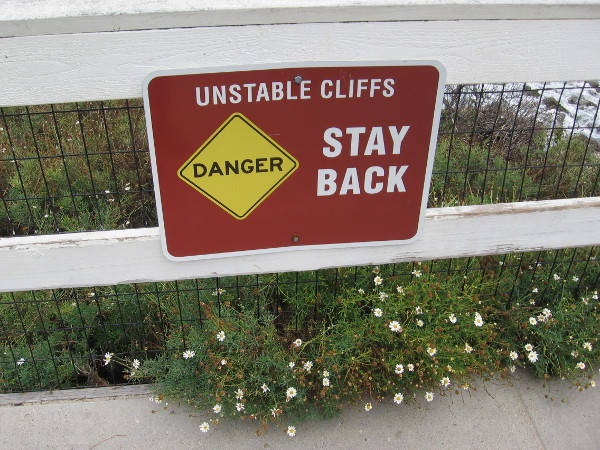
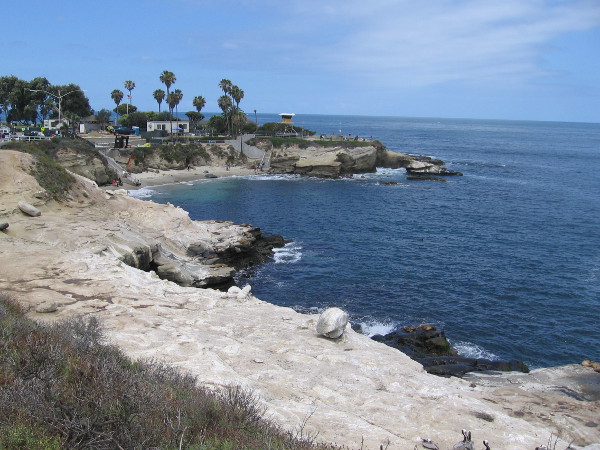
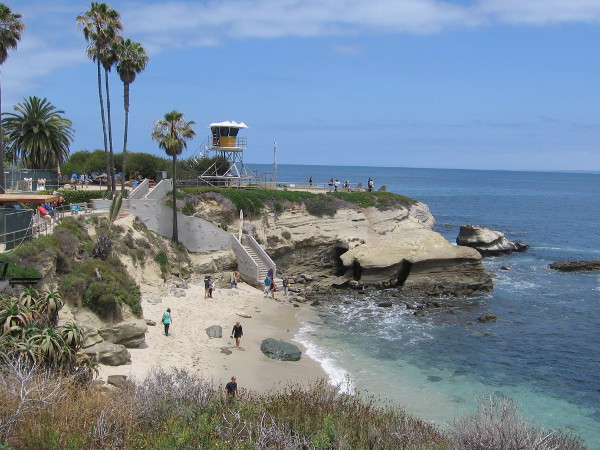
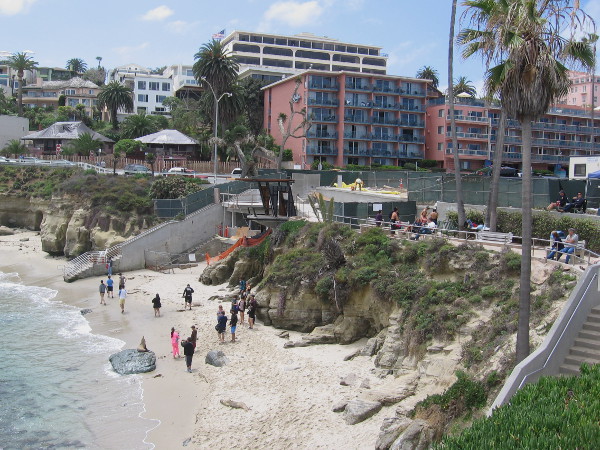
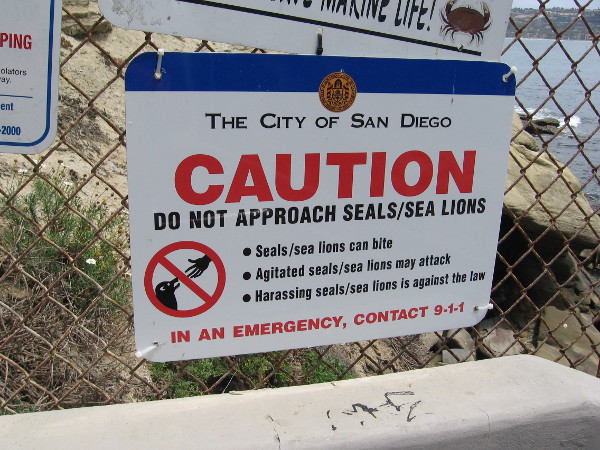
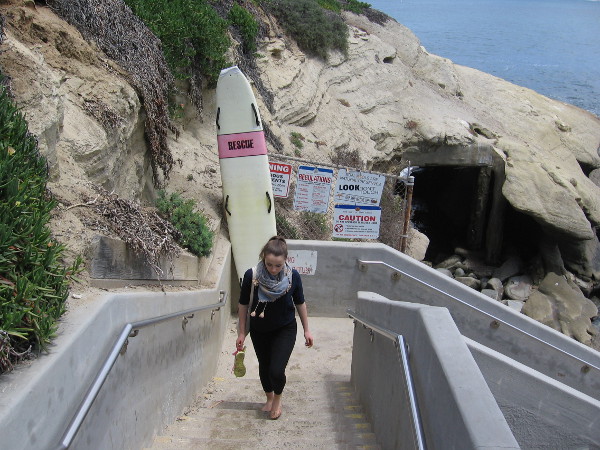
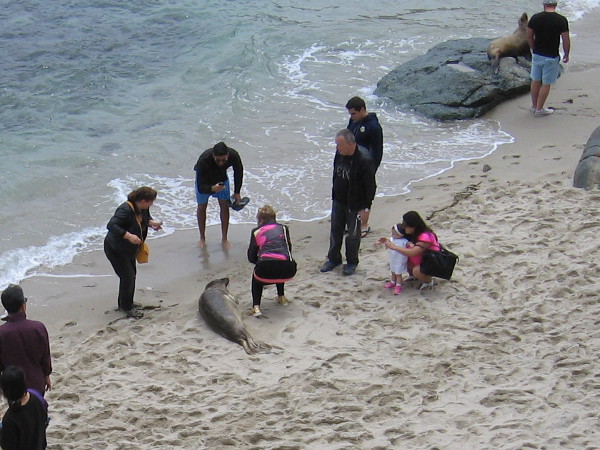
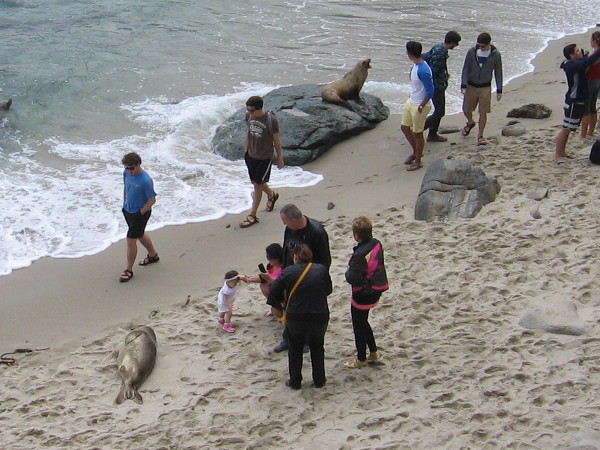
The Historic Coast Walk Trail begins near Torrey Pines Road and ends at the Cave Store on Coast Boulevard.Dozens of kayakers were out on the water as I walked west down the trail enjoying magnificent views.Red kayaks bunched close together below, east of Goldfish Point.Rounding a corner, shops and restaurants on Coast Boulevard come into view.Wooden steps plunge down to a scenic view point atop amazing sandstone cliffs. In the narrow cove on the left is an entrance to a sea cave.Nature’s beauty takes many forms, including a golden flower.From the view point I look east along eroded cliffs toward La Jolla homes.Heading back up to the Coast Walk Trail, which ends nearby at the Cave Store.A man-made tunnel inside the Cave Store leads from the gift shop to the Sunny Jim Sea Cave.About to turn north, beginning down Coast Boulevard, toward La Jolla Cove.The amazing Coast Boulevard passes La Jolla Cove, Scripps Park, Children’s Pool and the La Jolla tide pools!A message on the sidewalk caught my eye. Your troubles will cease and fortune will smile upon you.It’s possible to see into this sea cave.The rocky cliffs along Coast Boulevard are the home of pelicans, sea gulls and cormorants.Long-beaked pelicans and black cormorants have a rest in the warm sun between diving and hunting for fish.The cliffs of La Jolla are made of unstable sandstone, which occasionally crumbles into the Pacific Ocean.A gorgeous view of La Jolla Cove on a perfect spring day.A lifeguard tower rises above La Jolla Cove Beach. To the right of the tower is Point La Jolla.Looking down at La Jolla Cove Beach from the north. Buildings along Coast Boulevard are surmounted by those on Prospect Street.City of San Diego sign provides a warning. Caution, do not approach seals or sea lions! Harassing these marine mammals is against the law.A lady climbs stairs up from the beach, past a lifeguard rescue board.Some benches allow people to enjoy the view. Scuba divers in the cove swim with the sea life.Several thoughtless, self-centered people almost stepped on a seal as they crowded in to get a photograph.Agitated sea lion on a rock angrily confronts pestering people who don’t seem to care.
…
To enjoy future posts, you can “like” Cool San Diego Sights on Facebook or follow me on Twitter.
Looking down from the high viewing area at picturesque Bird Rock below.
Please enjoy some photographs!
Yesterday I took a long walk through La Jolla. Before leaving home, I checked the tide chart. My intention was to photograph the tide pools at beautiful Bird Rock. I’ve read you can actually walk out to this spectacular rock in the ocean at low tide. Unfortunately, as it turned out, yesterday the tide wasn’t low enough!
But I did get my fill of natural beauty. Will you please join me as I walk from La Jolla Boulevard a couple blocks down Bird Rock Avenue, and then down to the water?
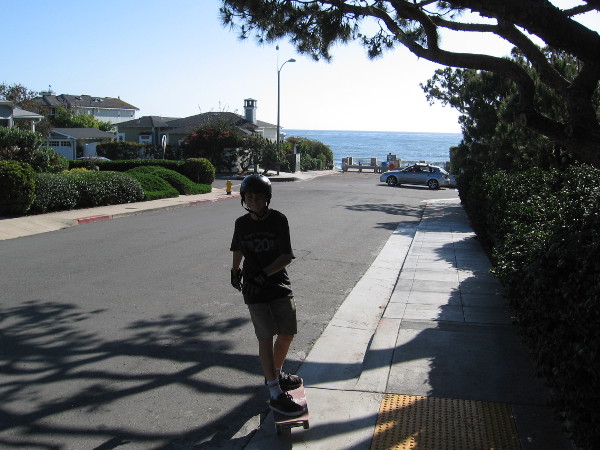
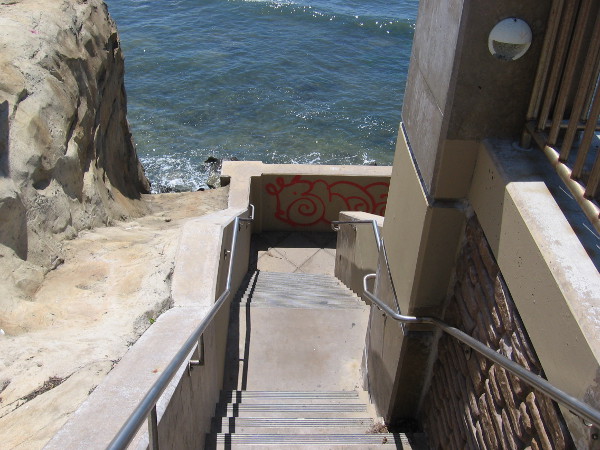
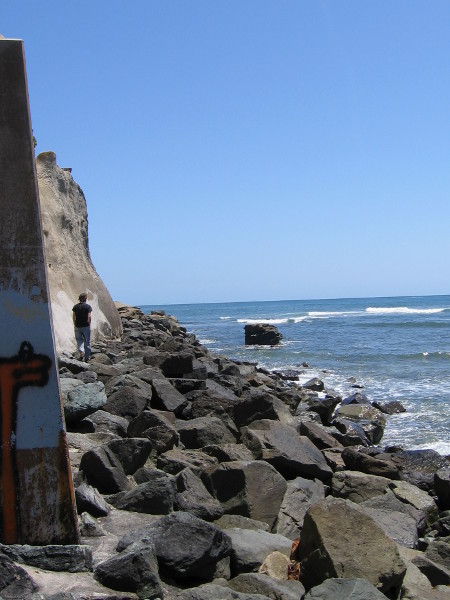
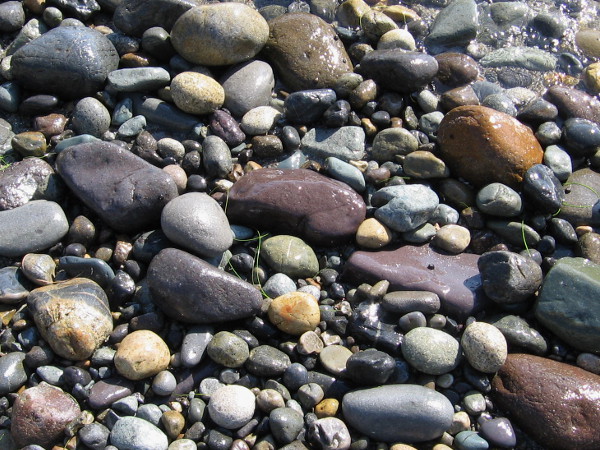
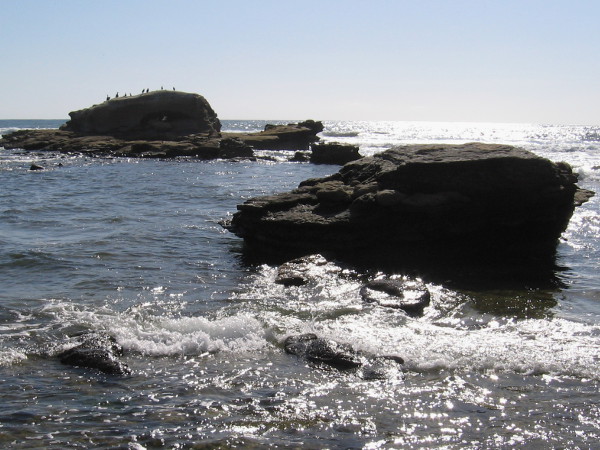
Bench on La Jolla Boulevard sidewalk spells out Bird Rock with colorful tiles.This bench features sea shells. Let’s begin our walk down Bird Rock Avenue, a few steps away.Kid skateboards down hilly Bird Rock Avenue toward the small lookout point.Local guy is already here enjoying the beautiful view and ocean tranquility. Few tourists come here.Gazing north along the rocky shore. La Jolla Cove is on the other side of that distant jutting land.Looking down over the view point rail at rugged rocks at the edge of the shining Pacific Ocean.Here’s where we’re going to descend to the water.Heading down the short staircase to get a closer look at the beauty of Bird Rock.We quickly glance up at the viewing area, where we were a moment ago.Gazing south as we stand on large jagged boulders. Someone is walking along the base of the cliff.We carefully head a bit south, too. Watch your step! The tide is fairly low and we get close to the splashing water.These stones were made smooth and rounded by that great Earth-encompassing rock tumbler, the mighty ocean!Look out! A foamy wave is crashing in!Finally, we turn westward to look at Bird Rock. At a distance, the birds are just visible in this photo!
…
To enjoy future posts, you can “like” Cool San Diego Sights on Facebook, or follow me on Twitter.
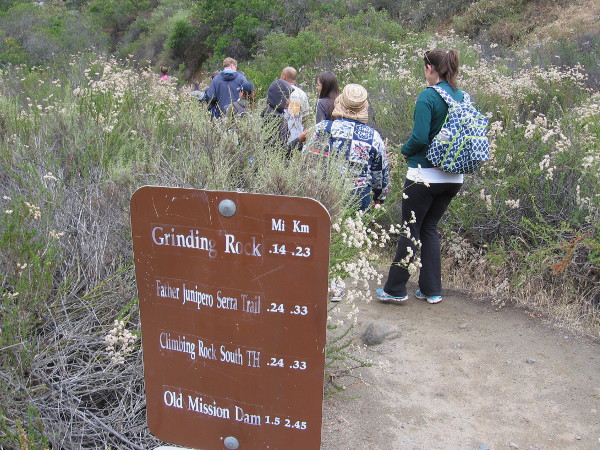
Visitors enjoying Explore Mission Trails Day head down Grinding Rock Trail.
About 60 miles of hiking trails through a wilderness environment can be found just 8 miles from downtown San Diego. Seriously!
This morning I enjoyed a very short walk (about a mile) at Mission Trails Regional Park. I went on the occasion of Explore Mission Trails Day, an annual event that showcases this amazing, enormous urban park.
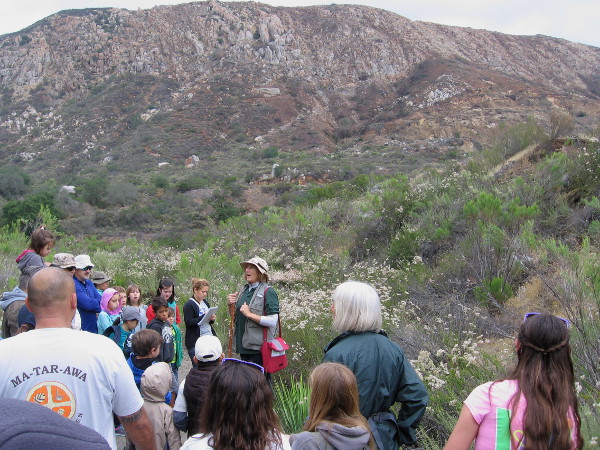
The relatively easy hike was from the Visitor and Interpretive Center to some grinding rocks on the banks of the San Diego River, then back. Led by our guide, Linda, a small group learned what life was like for the ancient Kumeyaay people, who’ve lived in this dry, rugged area of Southern California for thousands of years, long before Europeans arrived. The Kumeyaay lived off the land. The very land where we walked.
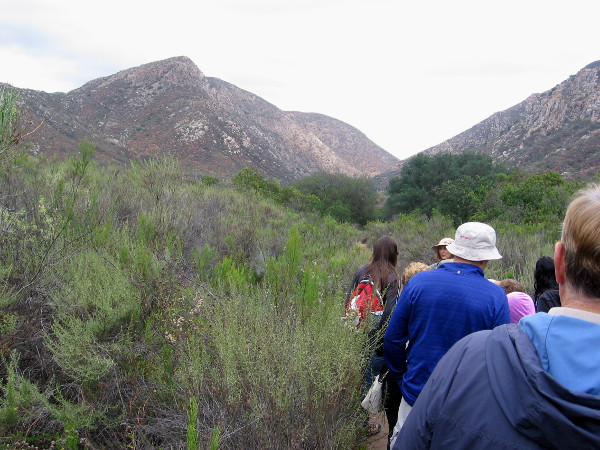
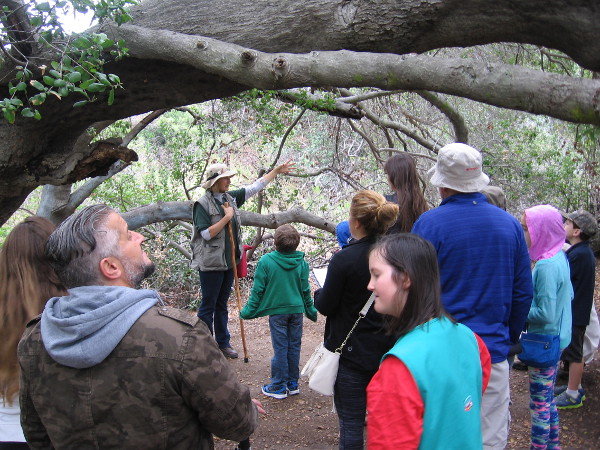
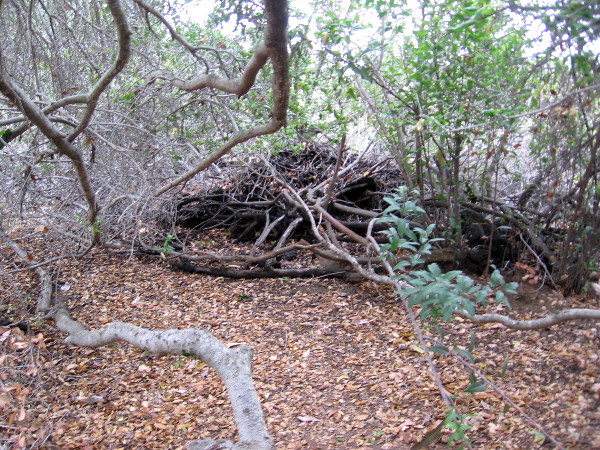
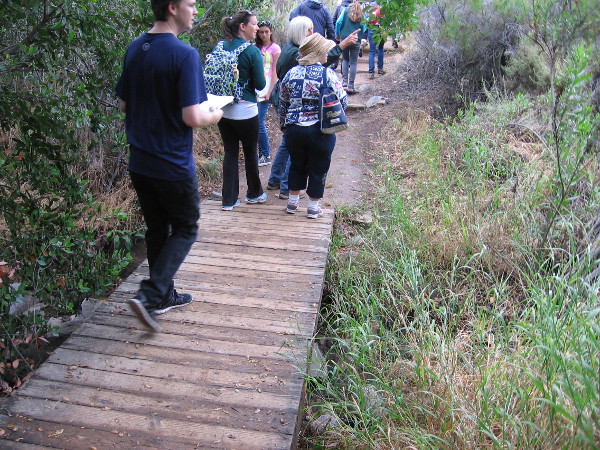
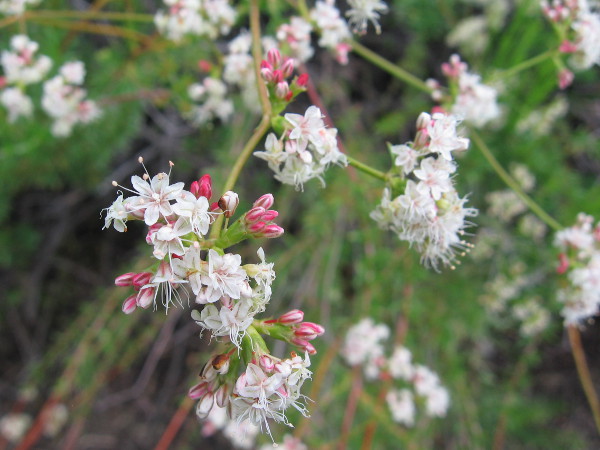
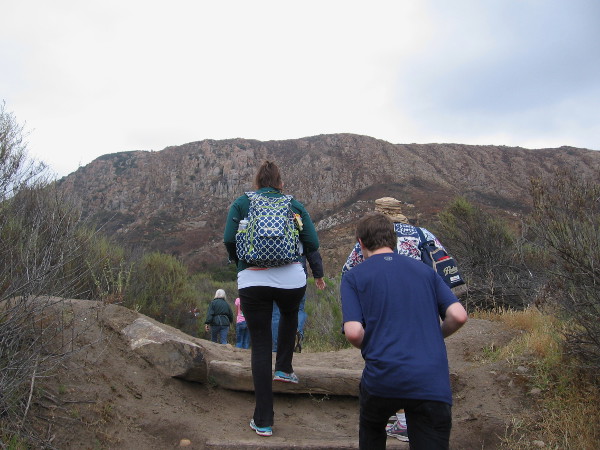
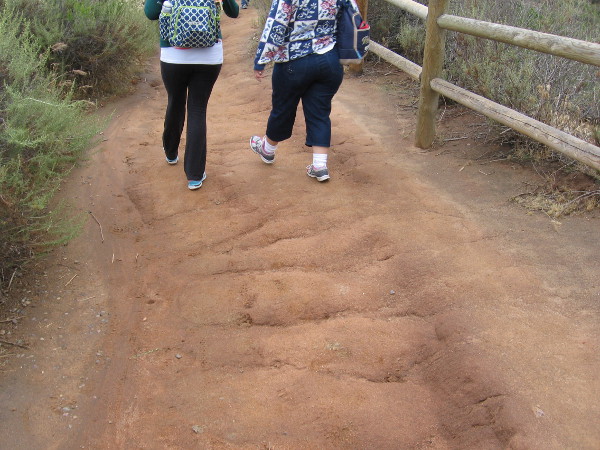
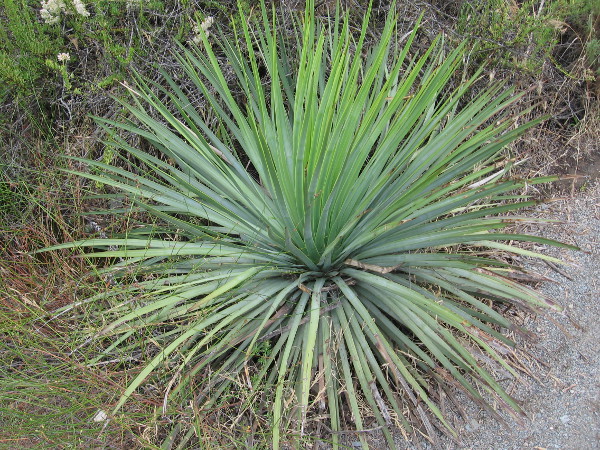
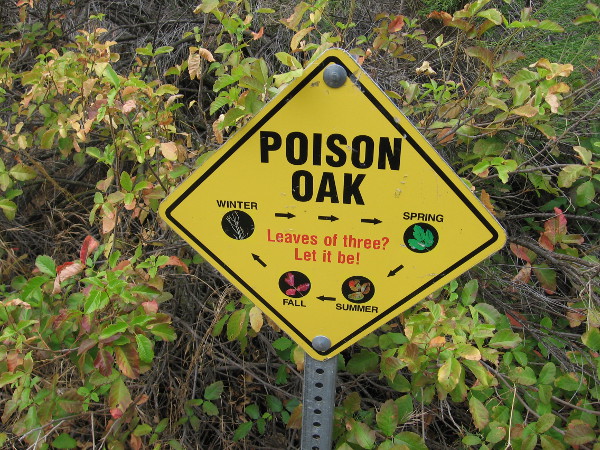
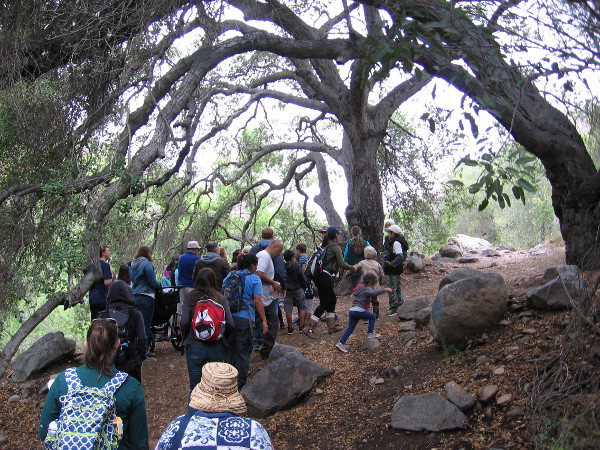
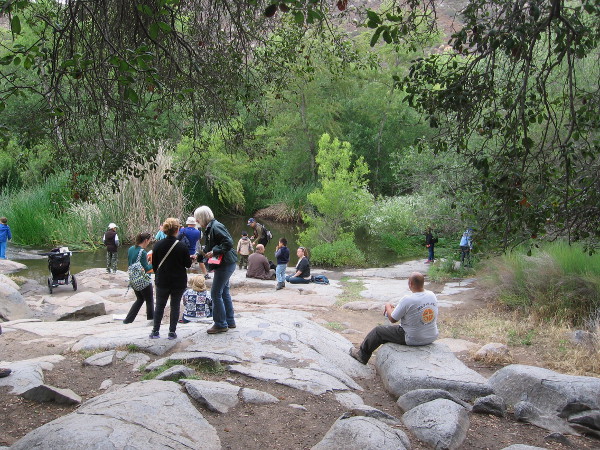
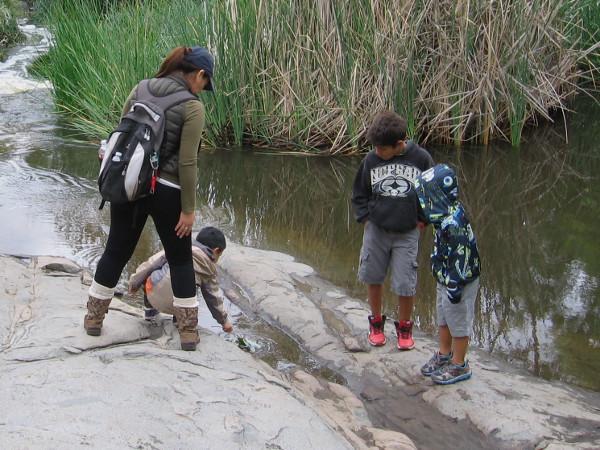
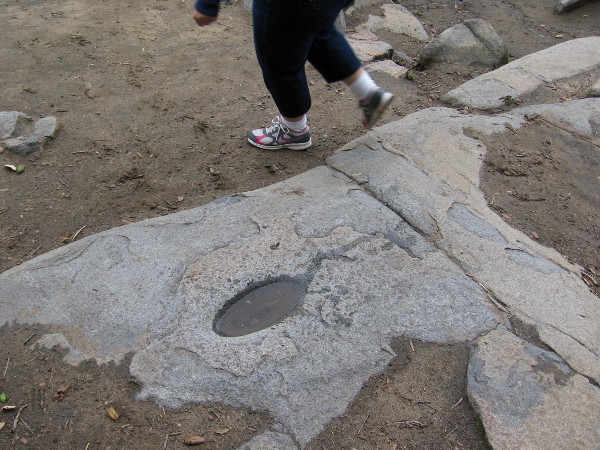
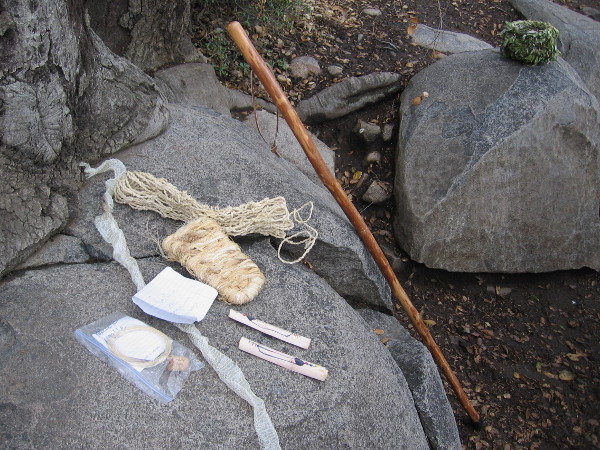
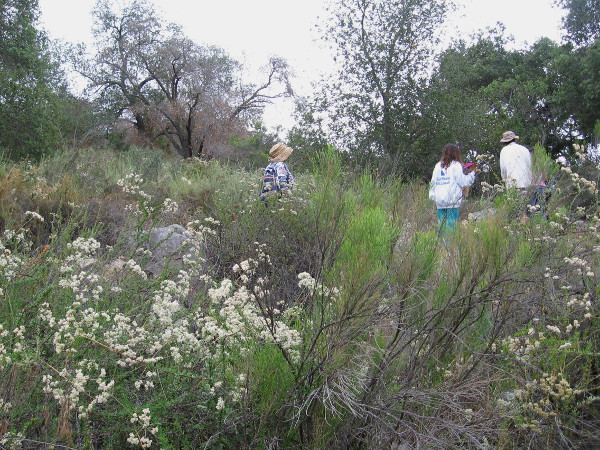
We gathered at the kiosk near the parking lot for an easy morning nature walk.Hiking through common, aromatic Southern California sagebrush toward a distinctive mountain, South Fortuna.We pause under a coast live oak, which produces acorns and shade valued by the native Kumeyaay.Large nest created by a woodrat (also known as pack rat). The Kumeyaay would bang a nest with a stick and hope to capture a snake, to eat.We cross a small wooden footbridge and take in nature’s sights and smells on a beautiful day.These tiny pinkish white flowers are flat-top buckwheat. Their tiny seeds are edible. The blooms attract butterflies.It’s easy to forget you are in the San Diego city limits in this open wilderness.Water erosion visible in the gradually descending dirt trail. As the morning was overcast and cool, no snakes were out sunning.Yucca fibers were used by the Kumeyaay to make nets, sandles, baskets and other useful things.Linda, our tour guide, talks about the ancient history of this region and its indigenous peoples. The Kumeyaay moved about depending on the season and availability of resources.Dodder is an orange colored parasitic plant. According to Kumeyaay legend, a woman who failed to guard a camp against invaders ran away, and some of her hair snagged in the bushes!A patch of poison oak! Leaves of three, let it be!We approach the San Diego River, but first pass beneath a large arching tree. If you see a native tree in San Diego, there’s probably water nearby!Smooth boulders on a bank of the San Diego River in Mission Trails Regional Park.Family investigates the life-giving water. The Kumeyaay at times would follow the river all the way to the coast, where some witnessed the landing of explorer Cabrillo.Many mortar-like holes in the nearby boulders are where Kumeyaay ground acorns, seeds, roots, herbs and other edible resources found in this arid environment.Walking stick leans up near some Yucca fiber creations brought by our guide. The basket on the right was made with willow branches. Natural salicylic acid found in willows kept out insects!Starting back up toward the Visitor Center during a very cool hike in San Diego! If you go for a hike, bring water and sturdy shoes!
…
To enjoy future posts, you can “like” Cool San Diego Sights on Facebook or follow me on Twitter.
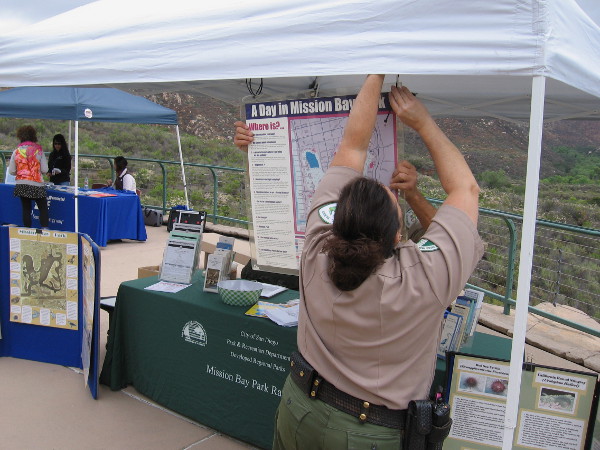
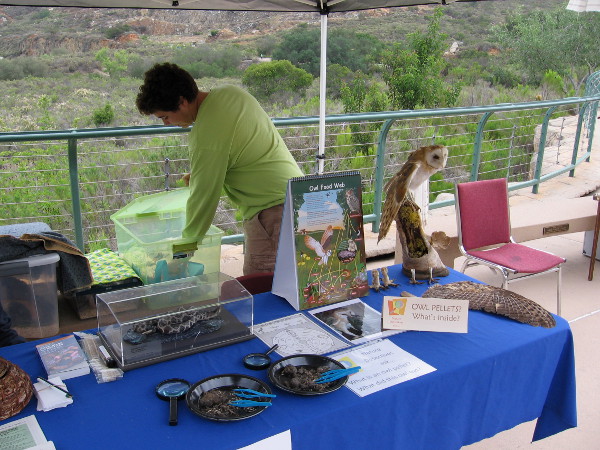
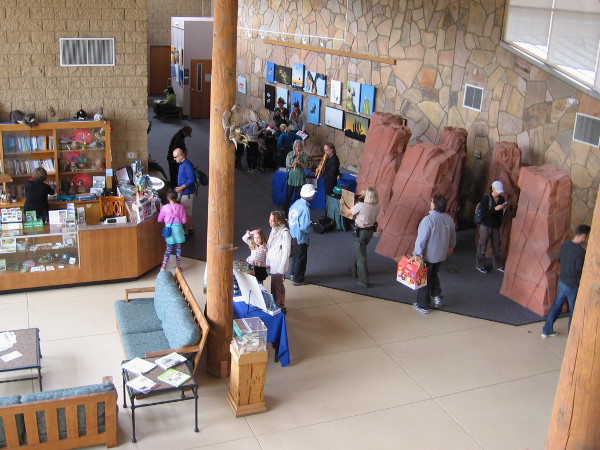
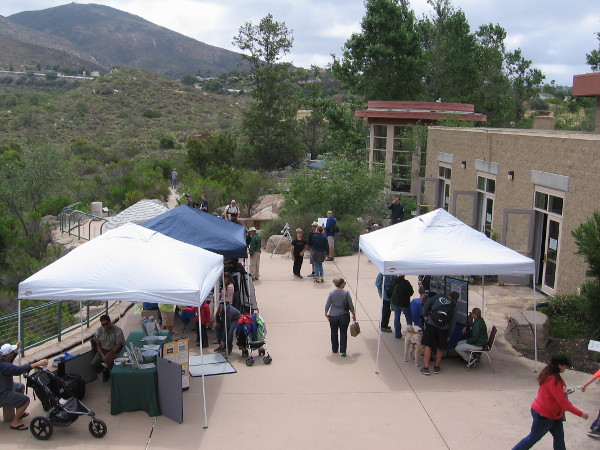
Park rangers and community organizations set up displays on the Visitor Center patio.
This morning I headed up Mission Gorge Road to check out the big annual Explore Mission Trails Day event!
Mission Trails Regional Park is a 6000-acre nature reserve located in San Diego’s East County. It’s one of the largest urban parks in the United States–basically a wide stretch of rugged, rocky wilderness within our large modern city! The San Diego River runs through the very heart of the park as it makes its way from higher inland elevations to the Pacific Ocean. I often drive past and gaze at the low chaparral-covered mountains and hills, and twice I’ve climbed Cowles Mountain, but this was the first time I’ve actually set foot inside the Visitor Center.
What an awesome place! How did I miss it all of these years?
Today I limited myself to the south end of the park, including a short but super cool hike from the Visitor Center to the Grinding Rocks. (That will be my next blog post!) There were additional Explore Mission Trails Day activities up by the Old Mission Dam and Kumeyaay Lake Campground, and by Mast Boulevard and Highway 52. I suppose I’ll have to go again next year!
My photos tell the story of what I saw…
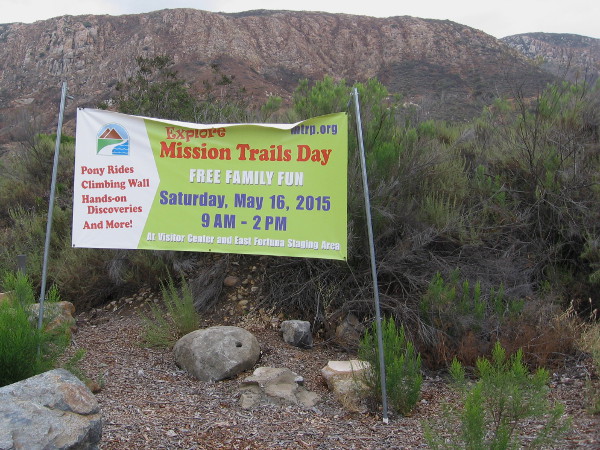
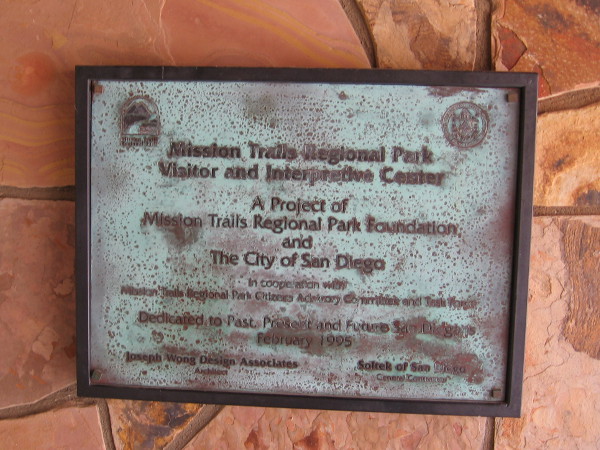
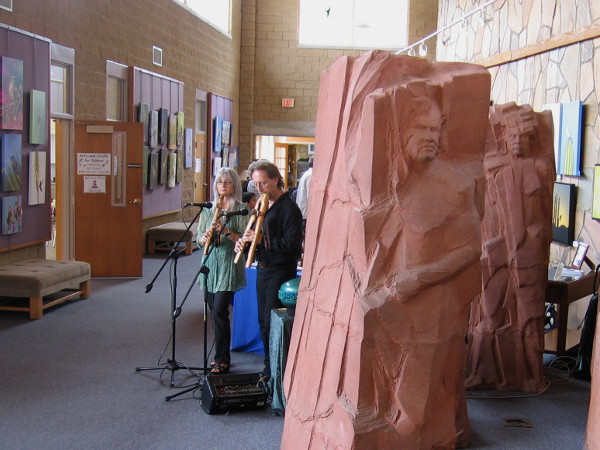
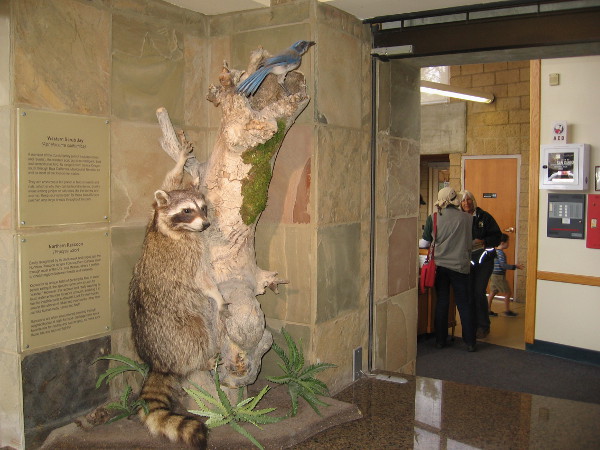
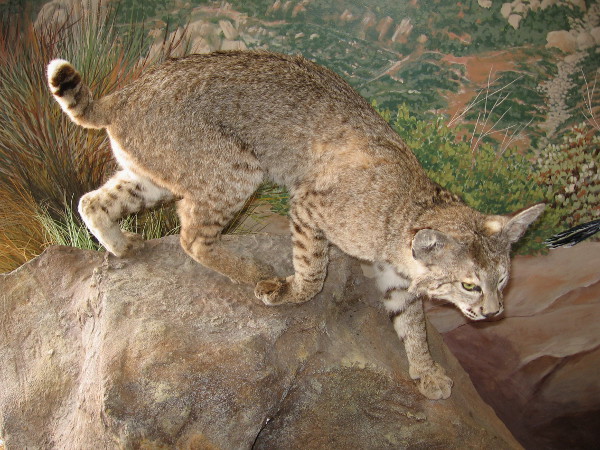
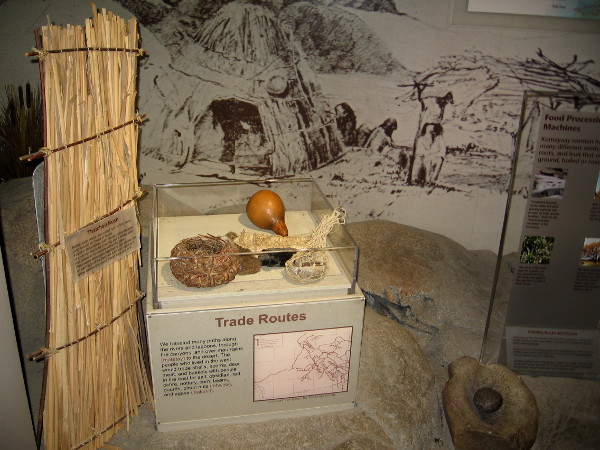
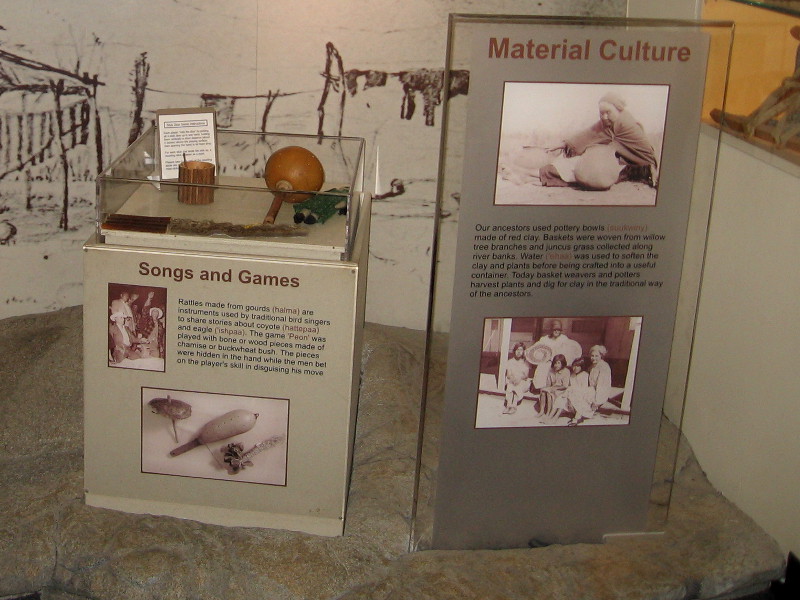
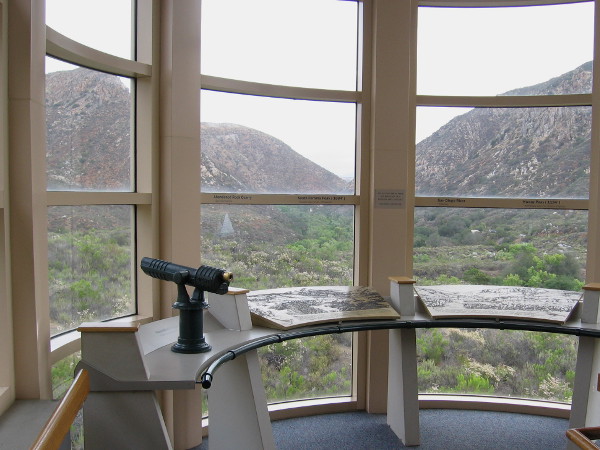
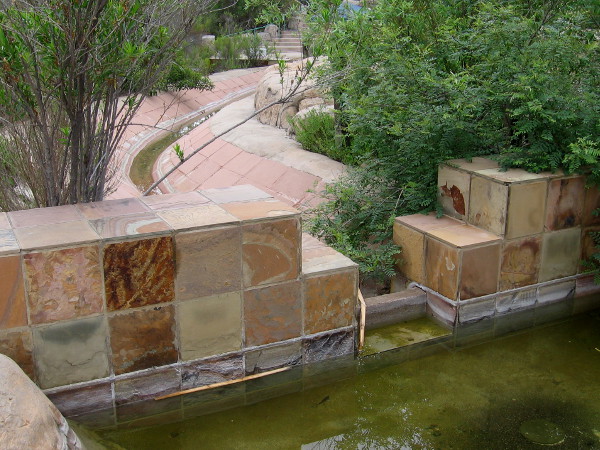
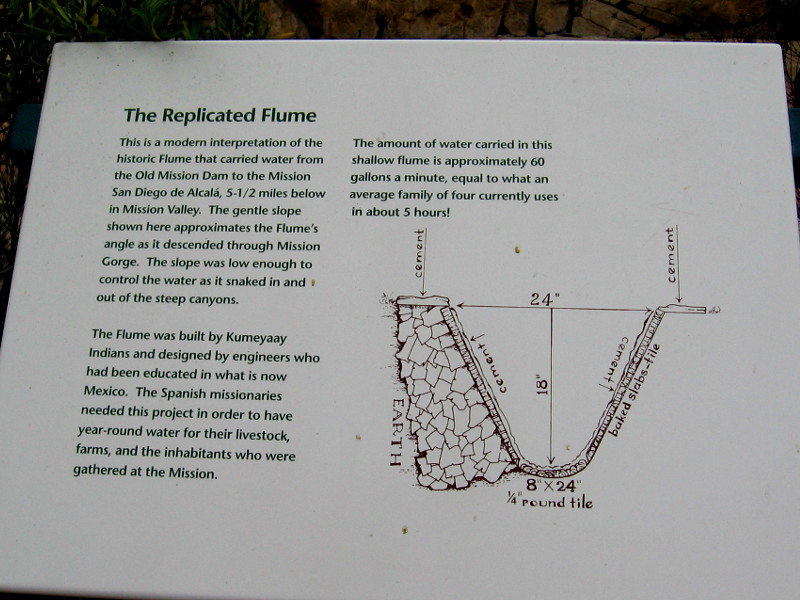
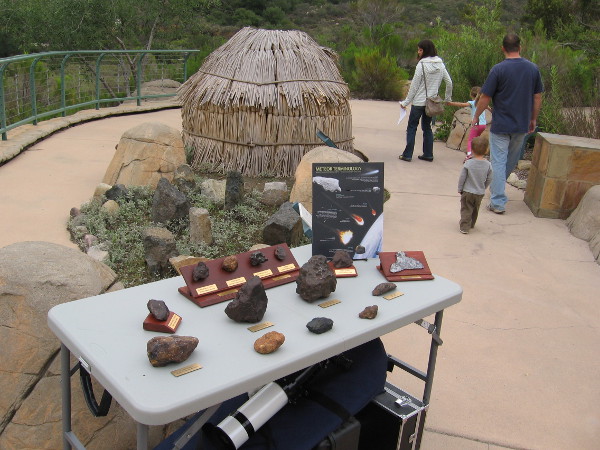
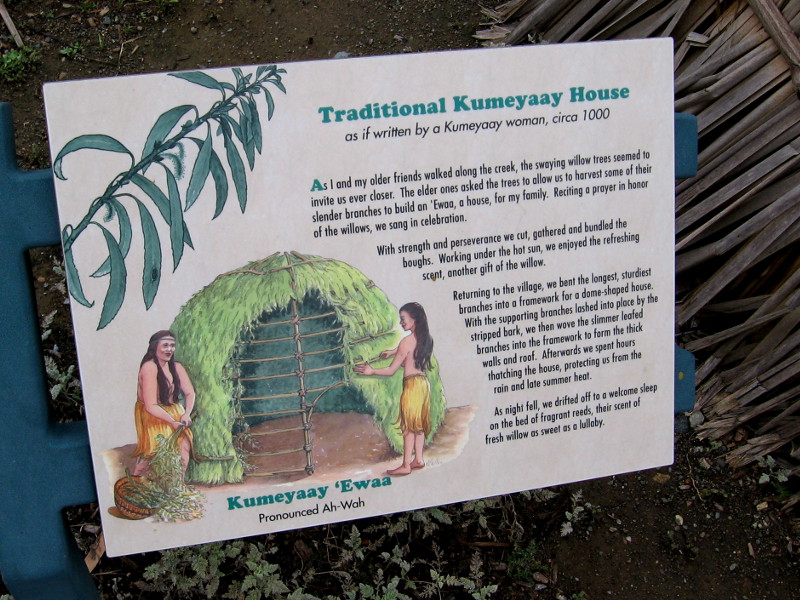
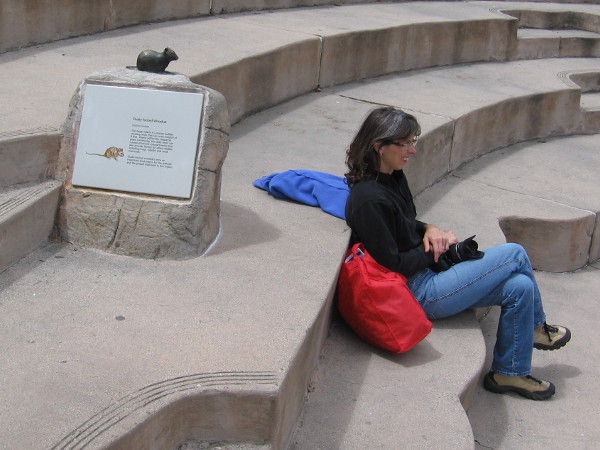
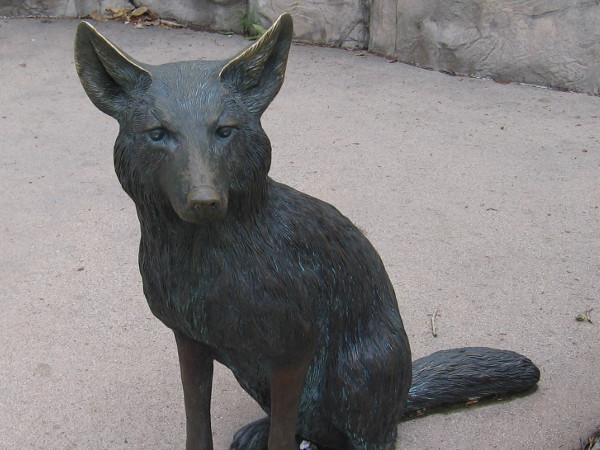
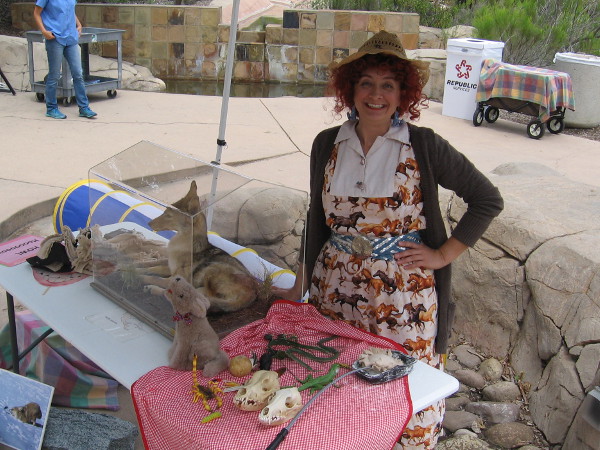
Banner beside Father Junipero Serra Trail announces Explore Mission Trails Day!There were opportunities to learn about nature, wildlife, science, history and the environment.Some folks near the main entrance of the Mission Trails Regional Park Visitor Center.Bronze sculpture of a golden eagle is perched above path near the Visitor Center entrance.Plaque by door dedicates the large open space park to past, present and future San Diegans.View inside the Mission Trails Visitor and Interpretive Center from second floor balcony.Flutists play near “Heritage” sculpture depicting native Kumeyaay elders. Amazing monumental artwork is by T.J. Dixon and James Nelson.The Art of Bird Photography is a special exhibition featuring the work of Blake Shaw.Roberta Labastida is the author of My Ancestors’ Village, which tells about the life of the Kumeyaay people who were here long before the arrival of Europeans.Numerous exhibits and activities could be found inside the Mission Trails Visitor and Interpretive Center.Western Scrub Jay and Northern Racoon are animals one might see in this very large San Diego urban park.Cleaning some chalk off where kids have been identifying animal tracks.The bobcat is often encountered in the hills and mountains of San Diego County. I once saw one while hiking around Mount Laguna!Historically, the Kumeyaay lived in large family groups, and moved about depending on the season and the availability of nature’s bounty.Exhibits in Visitor Center’s museum show different aspects of Kumeyaay culture, including songs, games and crafts.Very cool observation window allows visitors to look out upon South Fortuna and Kwaay Paay Peak.With the majestic chaparral-covered Fortuna Mountains as its backdrop, the coastal sage scrub habitat is highly adapted to our long hot summers.Looking back out at the rear patio. More people have arrived in the past few minutes while I explored inside.Now I’m outside again, coming down some steps. Another cloudy day, following San Diego’s latest storm!Replicated flume near Visitor Center is a modern interpretation of the man-made channel that carried water from the Old Mission Dam (a couple miles upriver) to Mission San Diego de Alcala.Sign by replicated flume details how it was engineered over two centuries ago. Water was used at the old historic Mission for livestock, farms and inhabitants.Cool table full of meteorites next to traditional Kumeyaay house made of willow branches.This sign tells the story of a fictional Kumeyaay woman, circa the year 1000. This primitive house was called an Ewaa.Large boulder moved to Visitor Center due to construction contains a mortar-like hole used by Kumeyaay to grind acorns, seeds, roots, herbs and other natural foods.A replicated solar calendar made of stones, used by Native Americans to mark the Winter Solstice. Only a couple have been found in San Diego County.This pink beauty is a California Wild Rose, found beside the patio. They’re more often found along streams.Lady rests in Visitor Center amphitheater by small bronze sculpture of a Dusky-footed Woodrat. This wild rodent can create a nest up to 8 feet high!Sculpture of a coyote, one the top predators of Mission Trails Regional Park. Even with human encroachment, they remain numerous today.Family checks out a very cool, life-size sculpture of a mountain lion at the amphitheater. This secretive animal is rarely seen around here.Ms. Frizzle was present at Explore Mission Trails Day! The event was an educational treat for both kids and adults!
…
To enjoy future posts, you can “like” Cool San Diego Sights on Facebook or follow me on Twitter.
The roots were almost completely torn out of the ground, but the stubborn tree in spring has green leaves!
Perhaps you read my blog post about the violent microburst that tore through San Diego’s Mission Valley on September 16, 2014. Along with photos of the aftermath, I described the tornado-like winds of the freak weather phenomenon.
A microburst is a localized downdraft of wind that can occur under unstable weather conditions. Several areas around San Diego were struck by a microburst that day, and the resulting damage was stunning. Small airplanes at an airport were tossed through the air. Along the banks of the San Diego River, hundreds of trees were torn to shreds and uprooted.
This morning, 7 months later, I walked along the river path where I had scrambled over thickly fallen trees right after the natural disaster.
Many of the uprooted trees were removed by crews with chainsaws in the days that followed the microburst. But some were not. Check out a few pics from my walk this spring morning! Like the famous quote from the movie Jurassic Park, life finds a way!
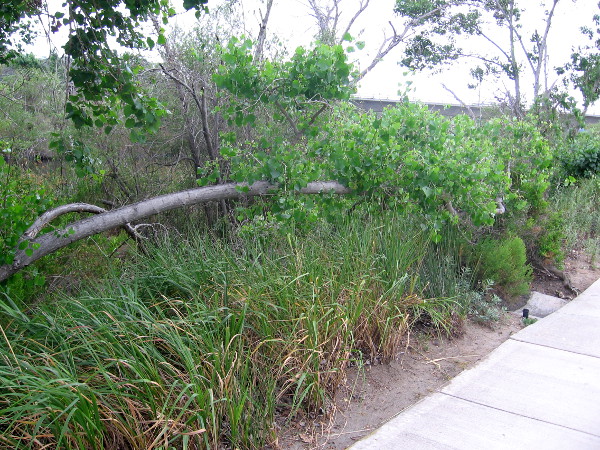
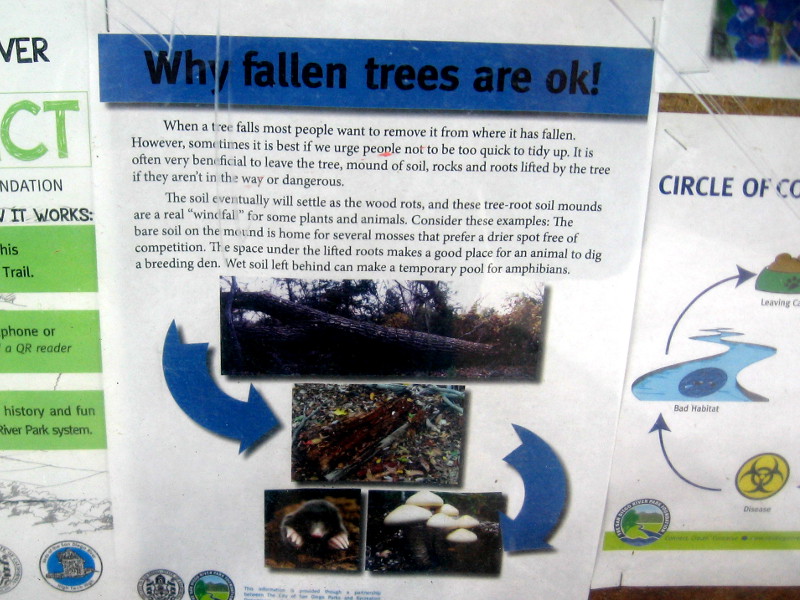
One of hundreds of trees that were uprooted during the super violent microburst last September. Amazingly, this one still flourishes!This fallen tree is now growing horizontally like a hedge along a Mission Valley sidewalk!Sign beside the San Diego River Trail. Why fallen trees are okay! There are important benefits to the soil, flora and fauna.
The sign reads:
When a tree falls most people want to remove it from where it has fallen. However, sometimes it is best if we urge people not to be too quick to tidy up. It is often very beneficial to leave the tree, mound of soil, rocks and roots lifted by the tree if they aren’t in the way or dangerous.
The soil eventually will settle as the wood rots, and these tree-root soil mounds are the real “windfall” for some plants and animals. Consider these examples: The bare soil on the mound is home for several mosses that prefer a drier spot free of competition. The space under the lifted roots makes a good place for an animal to dig a breeding den. Wet soil left behind can make a temporary pool for amphibians.
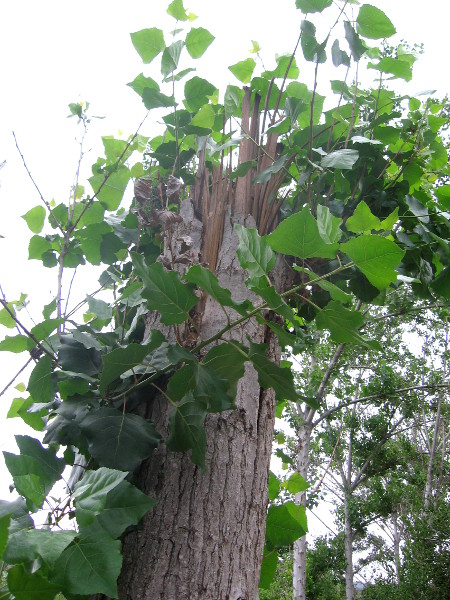
Green shoots look unusual on this violently torn tree trunk. I believe this is a Fremont Cottonwood.Life springs forth from a broken stump months after a devastating natural disaster.
…
To enjoy future posts, you can “like” Cool San Diego Sights on Facebook or follow me on Twitter.








































 Cool San Diego Sights!