A human heart hovers above the Serra Museum atop nearby Presidio Hill in this extremely unique ceramic artwork.
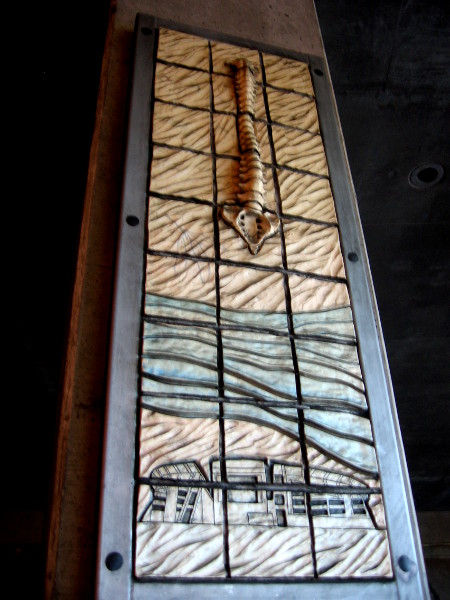
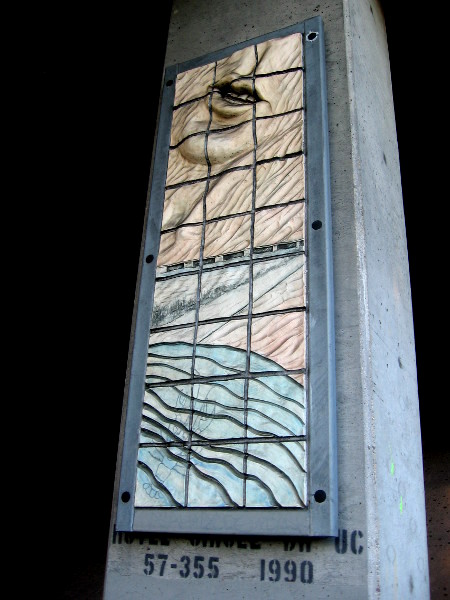
There’s some fascinating public art in Mission Valley that few people see. It’s located in the deep shadows beneath Interstate 8 where the freeway passes over Hotel Circle. Eyes are adjusting to darkness as motorists, turning a corner, quickly pass five ceramic panels high on drab concrete pillars. The one sidewalk is located on the opposite side of the street. To really appreciate the artwork, you have to cross traffic dangerously and stand in a narrow band of dirt right up close.
Today I walked to work past the darkly obscured art and decided to finally get a closer look.
Vital Parts, installed in 1999, was created by local San Diego artist Joanne Hayakawa. The pieces seem to be stratified, crumbling and sculpted by time and memory. They seem to blend with the dirt beneath the bare bridge.
The very dark Interstate 8 underpass at Hotel Circle features seldom appreciated public art.Vital Parts, by artist Joanne Hayakawa, was installed on five pillars of a Mission Valley freeway bridge in 1999.Mysterious fossil-like hand hovers above nearby San Diego River and what I believe are Native American structures.Human brain, made golden by underpass light, crowns image of old Mission San Diego and the ever-present blue river.Spine rises over what I believe is modern Qualcomm Stadium. This earthy art is very unusual and evocative.Chin and silent mouth seem like a timeless clay mask beside the eternally flowing river.
…
To enjoy future posts, you can “like” Cool San Diego Sights on Facebook. or follow me on Twitter.
The Casa del Rey Moro garden is a small gem in Balboa Park.
In the 1920s, prominent San Diego architect Richard Requa visited Europe. During his extensive tour, he carefully observed a Moorish king’s garden in Ronda, Spain. A book that he later authored stated: “In my travels about the world, I had found three gardens of outstanding interest and beauty… The finest of these is in a small town in southern Spain called Ronda. Viewing it for the first time, there came instantly to mind the spontaneous exclamation, ‘I hope to die before I see anything more lovely.'”
Inspired by what he’d seen, Requa designed the Casa del Rey Moro garden (House of the Moorish King) for the 1935 California Pacific International Exposition in San Diego’s Balboa Park. In 1997 the garden and adjacent House of Hospitality were rededicated after a major renovation. The garden, today a popular wedding spot, includes a replica of the wishing well in the Guadalajara Museum of Gardens.
Balboa Park is an enormous place full of competing attractions. It’s strange how I always feel compelled to walk through the Casa del Rey Moro garden!
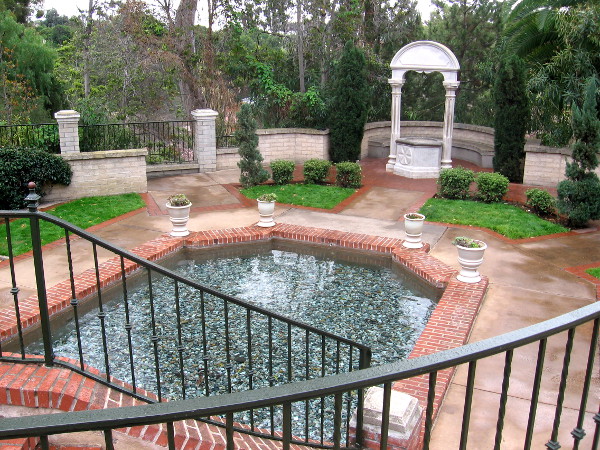
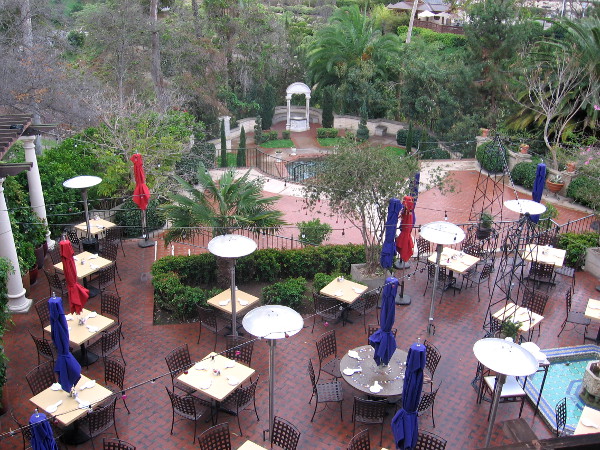
View from a House of Hospitality balcony of The Prado restaurant’s outdoor seating near the garden.A wishing well frames two elegant, classic fountains.Beautiful elements are reproduced from a Moorish garden in Ronda, Spain.A close up photo of one picturesque fountain.Visitors read about the interesting history of the Casa del Rey Moro garden.“In my travels about the world, I have found three gardens of outstanding interest and beauty…”One can see why this venue is extremely popular for weddings.
…
To enjoy future posts, you can “like” Cool San Diego Sights on Facebook or follow me on Twitter.
Tinted morning sky above Mt. Soledad National Veterans Memorial.
Early this morning, just as the sun was beginning to rise, I arrived at the top of a mountain. It had been a long while since I visited the Mt. Soledad National Veterans Memorial.
Located in La Jolla, north of downtown San Diego, Mount Soledad is a place of stunning views and great natural beauty. And a place filled with memory and feeling. Thousands are honored here for unselfishly serving their country.
Plaques on six concentric walls each remember an American hero, some who are living, many who’ve passed away into history. At the center rises a tall white memorial cross, erected in 1954 to honor Korean War veterans. The subject of controversy over many years, the cross will soon stand protected on private land. The National Defense Authorization Act for 2015 contains a provision that will convey the cross to the Mount Soledad Veterans Memorial Association.
Like a mosaic, eternally shining black granite plaques cover the low, curving walls; they tell the diverse stories of uniformed members of the Army, Navy, Marine Corps, Air Force and Coast Guard, plus those who served in the Merchant Marine during World War II. The walls will ultimately hold 3,200 names.
If you have a loved one who is serving, or who has served, you can purchase a plaque. Here is the memorial’s website.
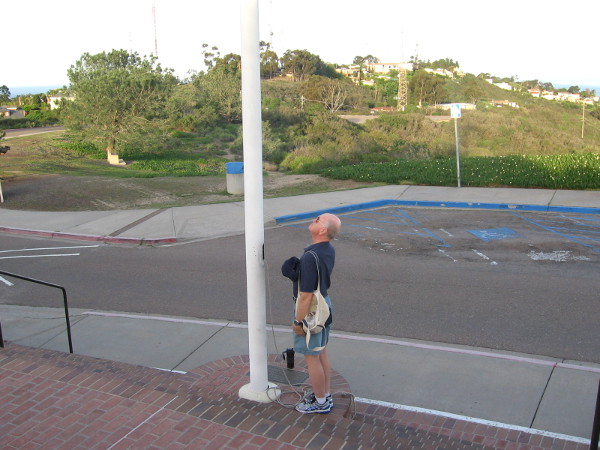
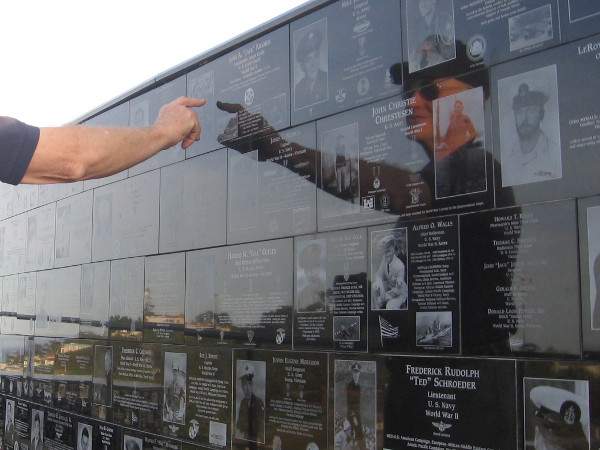
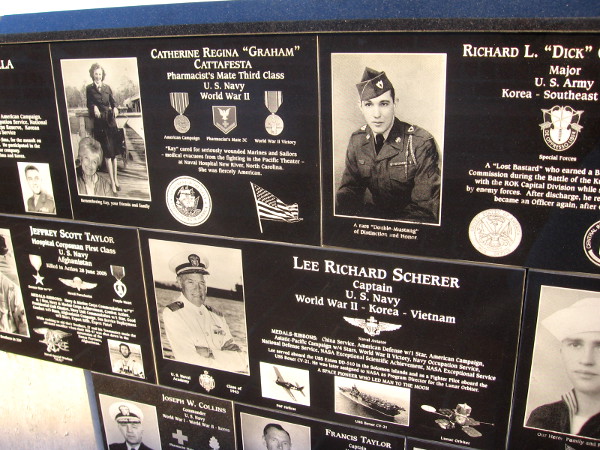
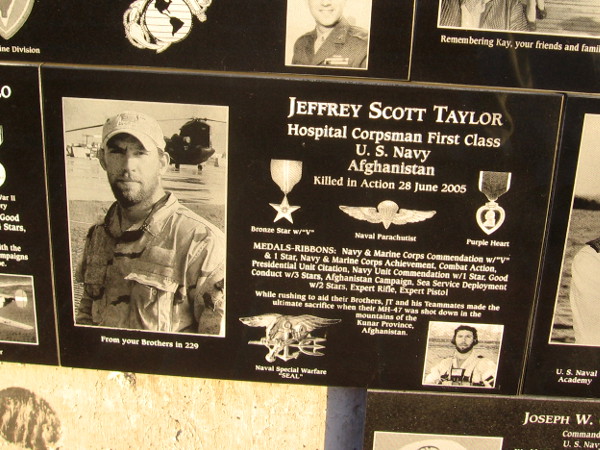
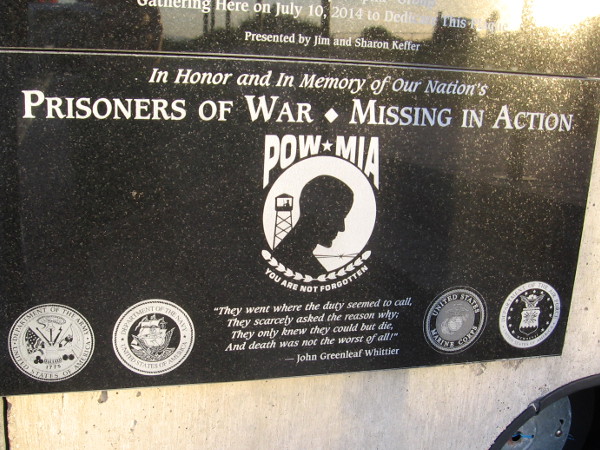
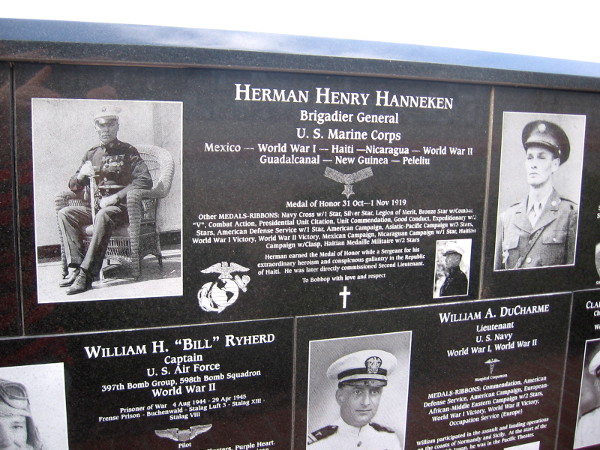
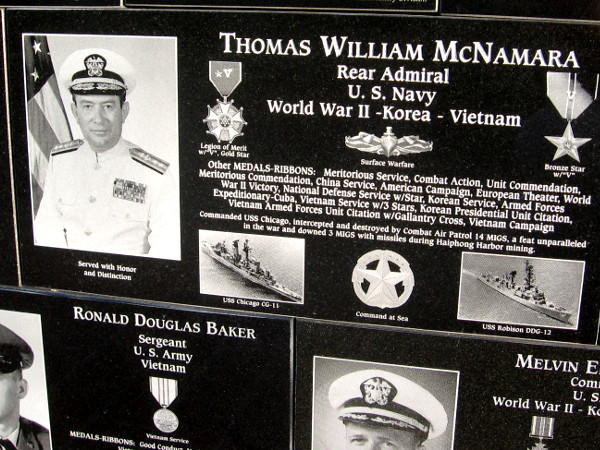
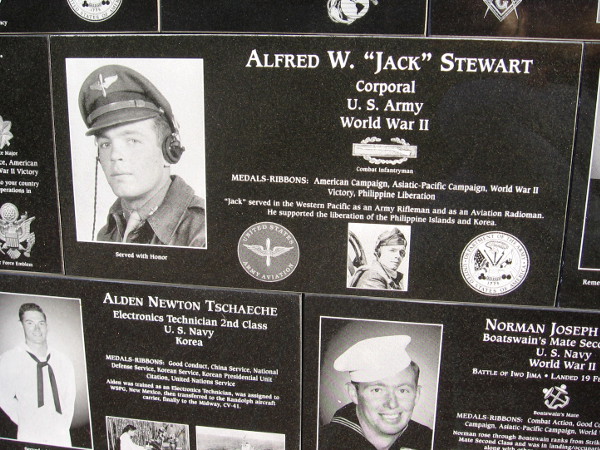
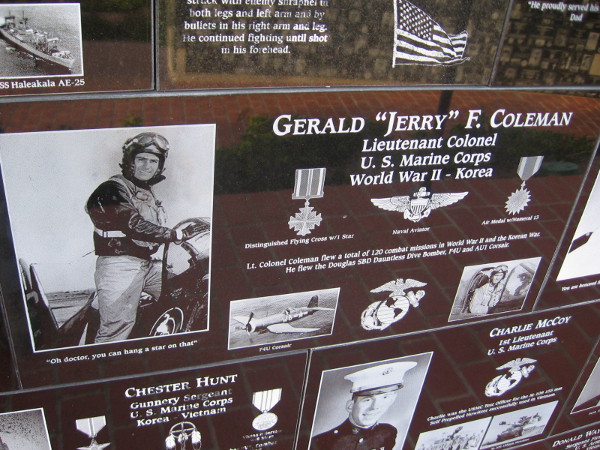
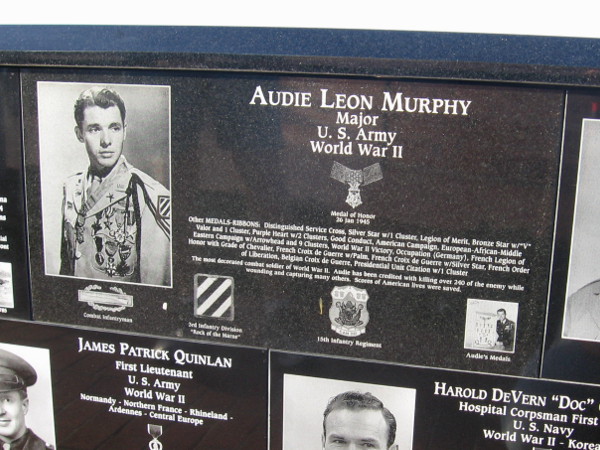
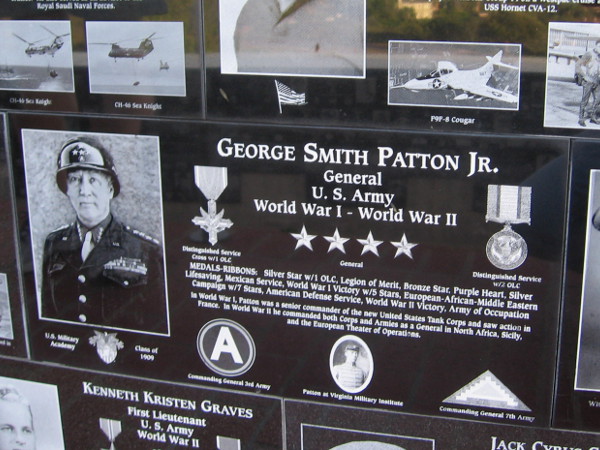
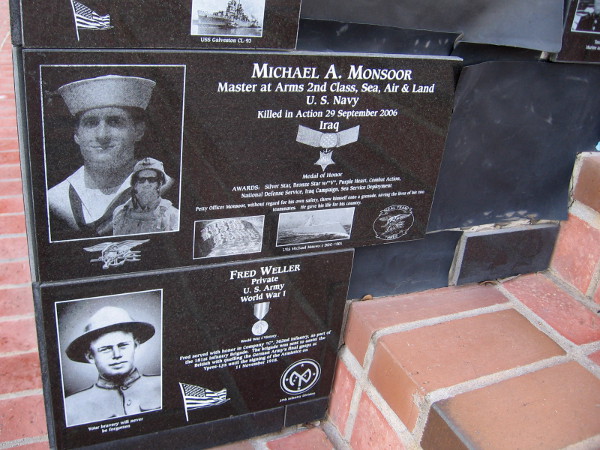
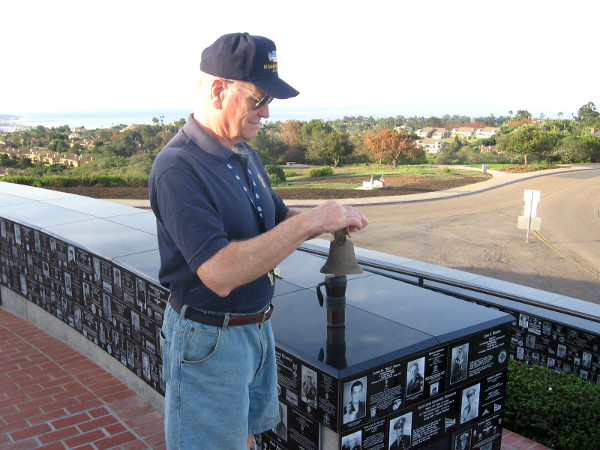
Sun rising on eastern horizon illuminates top of concentric walls of the memorial.The cross is a landmark that can be seen for many miles in every direction. The flagpole is bare at this early hour.Early morning visitors to Mount Soledad take photos of the 29 foot high cross.Looking south over part of La Jolla toward Mission Bay and Point Loma. Downtown San Diego is visible on the far left.Beautiful yellow flowers, grass and benches are found about this mountaintop monument to all veterans.Gazing over curved walls containing memorial plaques toward the Pacific Ocean in morning light.Friendly gentleman keeping the Mt. Soledad Park clean is grateful to work up here surrounded by so much beauty.Photograph of the historic, controversial cross taken from its base.Plaque states the Mt. Soledad Veterans Memorial Cross was dedicated in 1954 as a tribute to those who’ve served in all branches of the U.S. Armed Forces.Veteran volunteer prepares to proudly raise the American flag.The Stars and Stripes is carefully attached, ready to be lifted into the wide, blue sky.The volunteer momentarily lowered the flag to half-mast, to honor the fallen. He then raised it to the top and showed his respect.Plaque at base of flagpole.The friendly volunteer was happy to show me around the memorial.Names of donors on special bricks.Pointing out notable names and heroic exploits that shine on the walls.Photo plaques honor both living and deceased members of United States uniformed services.These memorialized vets served honorably in eras and conflicts throughout our nation’s history.Jeffrey Scott Taylor of U.S. Navy killed in action in Afghanistan in 2005.Plaque on Mt. Soledad honors and remembers prisoners of war, and those missing in action.Herman Henry Hanneken, Brigadier General of U.S. Marine Corps, served in many wars long ago.Famed band director Glenn Miller was a great morale builder during World War II.General “Black Jack” Pershing fought victoriously, from the late 19th century through World War I.Rear Admiral Thomas William McNamara has a plaque on Mount Soledad.U.S. Army Corporal Alfred W. Stewart helped liberate the Philippine Islands during WWII.Pharmacist’s Mate Third Class Howard Manuel Gonzalez of the U.S. Navy is honored.Harry Herman Heimple was a highly decorated U.S. Air Force Colonel during the Vietnam War and Desert Storm.San Diego local hero Jerry Coleman, a baseball legend who served with great patriotism in two wars.Audie Murphy, one of the most decorated American combat soldiers of World War II.General and President Dwight D. Eisenhower’s plaque is added to a host of other plaques representing those who served with equal honor.Commander in Chief Harry S. Truman began his military career during World War I.Jack Kramer served in the U.S. Coast Guard during the Second World War. He helped create modern professional tennis.The four Nicosia brothers fought in different military branches in several theaters of war.Famed Army General George S. Patton is remembered for his storied service to our country.Legendary movie actor James Stewart was promoted to Brigadier General after 27 years of military service.Pappy Boyington was a scrappy fighter pilot ace of the U.S. Marines during World War II.Dedicated to Jewish Chaplains who perished while in service to their country.Sir Winston Churchill, who defended Britain from the Nazis, was made an honorary American citizen.Patrol Bombing Squadron Eighteen. To men like them we owe our freedom.The brave, meritorious Tuskegee Airmen of the U.S. Army Air Corps during World War II.Michael A. Monsoor, a Navy Seal and Medal of Honor recipient who sacrificed his own life to save his comrades in Iraq.I’m shown an often updated book that lists the positions of every plaque by name.The volunteer at the memorial dutifully rings eight bells.The Mt. Soledad National Veterans Memorial is a place of moving stories, and many heroes.
…
To enjoy future posts, you can “like” Cool San Diego Sights on Facebook or follow me on Twitter.
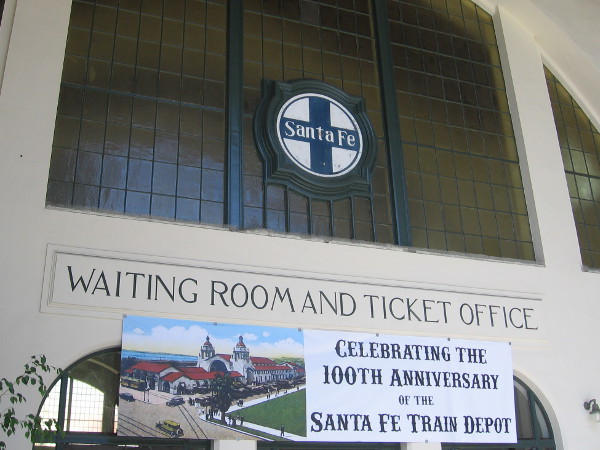
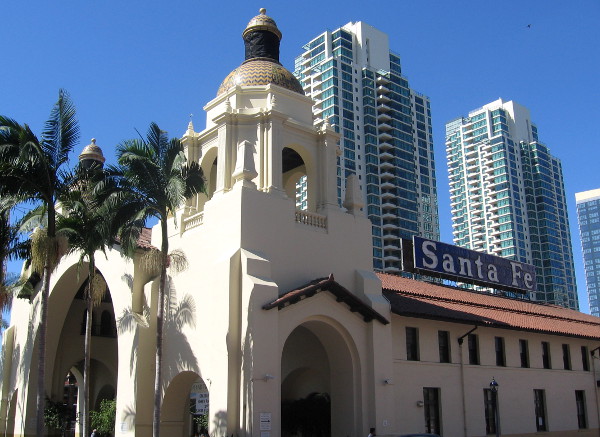
Celebrating the 100th Anniversary of San Diego’s Santa Fe train depot!
I was walking around today when I noticed a large banner hanging above the entrance of downtown’s Santa Fe Depot. This year the historic train station and San Diego landmark turns one hundred years old!
A friendly gentleman inside the waiting room at the information booth gave me a flyer about a special event tomorrow. The public is invited to attend a celebration of the historic depot’s centennial! The festivities take place between 11 am and 1 pm. The address of the Santa Fe Depot Union Station is 1050 Kettner Boulevard, just north of Broadway in downtown San Diego. I will be working, so I’ll probably miss it.
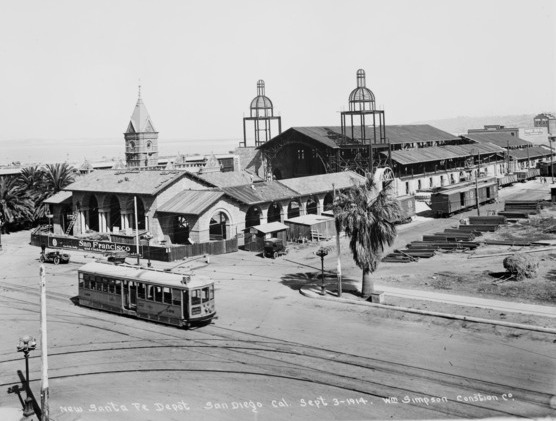
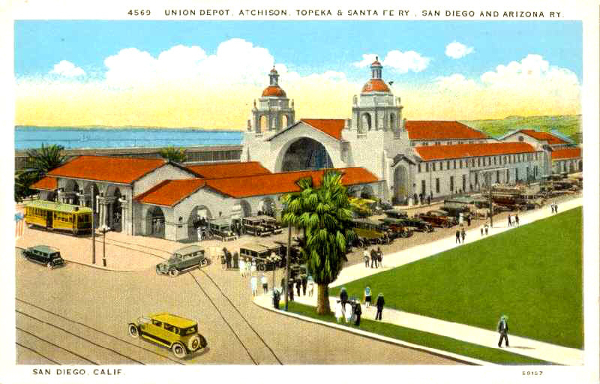
In the past I’d thought about posting cool old photos of the depot, but now seems the appropriate time! Check out the following photographs that I found on Wikimedia Commons.
First, a little background on the depot, with a few details taken from an informative handout…
A fine example of the classic Spanish Mission-Colonial Revival style of architecture, including Moorish influences, the Santa Fe Depot is on the National Register of Historic Places. Today it lies at the southern terminus of the nation’s second-busiest Amtrak rail corridor. In addition to the Pacific Surfliner trains, it also serves as an important station for Coaster commuter trains and the San Diego Trolley.
Built by the Atchison, Topeka and Santa Fe Railway, it opened on March 7, 1915. It replaced the California Southern Railway’s smaller 1887 Victorian depot. The beautiful new depot was designed to welcome rail travelers visiting the 1915 Panama-California International Exposition, which was staged in expansive Balboa Park, just northeast of downtown. You can see dozens of fantastic photos of Balboa Park from a century ago here.
The huge Santa Fe Depot waiting room is 170 feet long and 55 feet wide. The varnished oak benches are lit by 16 bronze and glass chandeliers. You can see pics of today’s interior here.
Old photo on today’s information booth shows large waiting room as it was once configured, with ticket counters, checkroom and shops in wooden structures on the west side.Historical photograph of Santa Fe Depot’s steel construction, dated August 17, 1914.Santa Fe Railroad Station under construction beside the old 1887 Victorian depot, which stood on the other side of the tracks. Photo dated September 3, 1914.Photo of the Victorian depot tower being demolished in 1915. A locomotive pulled the old tower over to great public fanfare.Color postcard circa 1920 features inviting image of San Diego Union Depot.The handsome Santa Fe Depot as it appears today, with modern high-rise buildings nearby.
…
To enjoy future posts, you can “like” Cool San Diego Sights on Facebook, or follow me on Twitter.
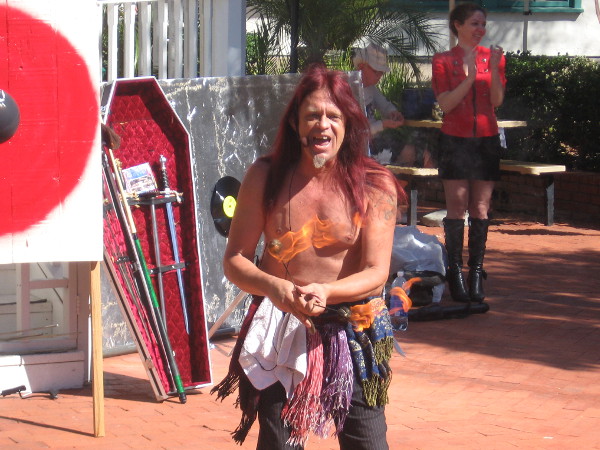
Murrugun the Mystic from AMC television hit Freakshow begins his busker festival danger act with fire eating.
Today I witnessed the grittiest performance I’ve ever seen. And I’ve seen a few.
I went to the Seaport Village Spring Busker Festival today and enjoyed a number of excellent, very entertaining acts. But the one that really stood out was performed by Murrugun the Mystic. He’s one of the stars of the AMC television reality show Freakshow.
While in a great deal of pain, Murrugun was first in the world to shoot a flaming arrow out of his throat! Let me describe his entire act…
Unfortunately, I filled up my camera’s memory card midway through his fire eating, just before he got to the really big stuff. At the end of some more conventional (but great) fire eating tricks, he really wowed the crowd. He filled his throat with a large quantity of kerosene combined with light gasoline, then produced two MASSIVE fireballs from his mouth. You had to see it to believe it! These balls of flame must’ve measured 6 feet in diameter. Oh, man! It was a bummer my camera ran out of memory! Afterward, he promptly rinsed his throat out with mouthwash and then water, because the flammable mixture is highly carcinogenic.
Next Murrugun balanced his entire body weight on a demonstrably sharp samurai sword. He leaned over the horizontal blade and supported himself on his stomach, lifting arms and legs from the ground.
Next came the bed of nails. I was volunteered, along with five other guys in the crowd, to help Murrugun wow the gathered audience. Each of us tested the nails, and while they weren’t sharp as pins, they were definitely pointed. Murrugun lay on the bed of nails, placed a board over his torso, and four of the guys, weighing a total of about 910 pounds, stepped up onto the board! I and another fellow helped to balance the four. Ouch! While this sort of thing has been performed for thousands of years, and the many nails effectively support a whole lot of weight, I wouldn’t want to be sandwiched between them and the combined mass of four guys!
Now the show got interesting in an alarming way. Murrugun used a very long pole to support “The Knives of Death”. I believe that’s what he called them. These five long knives faced downward from a ring, and should they topple down from the top of the pole, they’d probably impale poor Murrugun. I’m not sure how his act was supposed to proceed. The knives were balanced atop the pole. Suddenly down came the knives from on high and Murrugun lay flat on his back. The knives mostly missed him. But one sliced his leg. A good three inch gash was visible, and blood. He seemed stunned. He very gingerly hobbled to the back of the stage area, checked himself, and it looked to me like he then decided to tough it out. The audience didn’t seem to know how to react. Like them I just watched, astonished.
He was obviously hesitant and in pain. He told us he’d now perform a world’s first. He’d shoot a flaming arrow from his throat.
I could see his hands visibly trembling while he tried for a few seconds to piece two slender hollow rods together, which formed the shaft of the arrow. He gradually composed himself. He lubricated the long shaft, which was possibly two to three feet long, lit the pointed end, then proceeded to swallow the unique arrow. He bent over, and after attaching the arrow end to a slingshot-like device, shot the arrow out of his throat and through the air! He missed the balloon in the bullseye, perhaps 10 or 15 feet away, but not by much!
I know that street performers–and circus and carnival sideshow performers–have a difficult profession and can endure a lot of hardship. But what I witnessed this afternoon was truly heart-rending and impressive. It seemed no amount of pain could slow down Murrugun’s showmanship and passion for his art.
Murrugun the Mystic noted that because Ringling Bros. and Barnum & Bailey Circus have decided to eliminate elephants from their show (the news just out), perhaps there’s a chance the circus sideshow will make a comeback. That is Murrugun’s wish and personal mission. Can you help make that happen? Here’s his Facebook page.
Thanks, Murrugun, for privileging me to be a tiny part of busker history! Good luck!
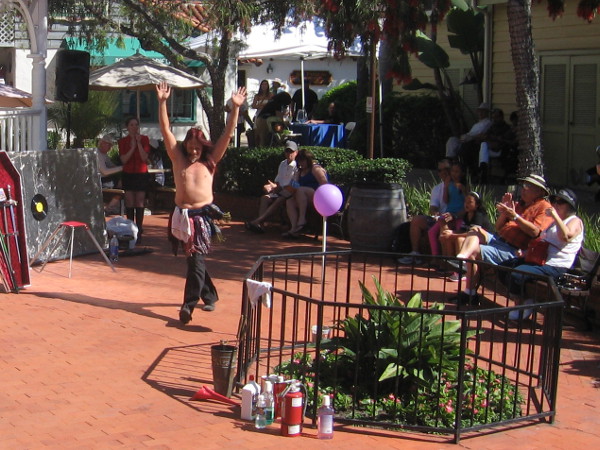
Murrugun the Mystic makes his grand entrance near Seaport Village’s gazebo in the Plaza East.Fire eating preceded balancing on a sword, being crushed on a bed of nails, enduring knives of death, and shooting a flaming arrow from his throat!
…
To enjoy future posts, you can “like” Cool San Diego Sights on Facebook or follow me on Twitter.
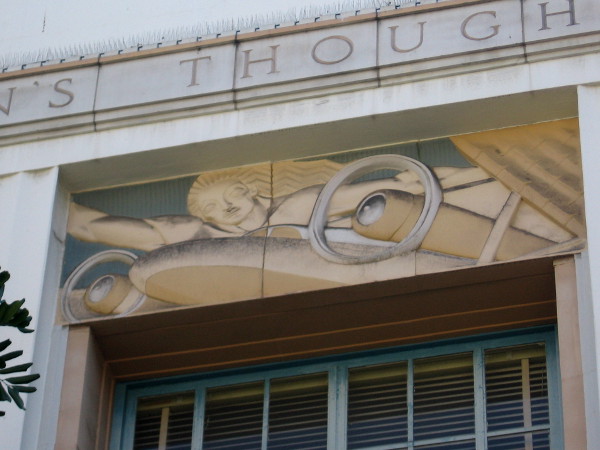
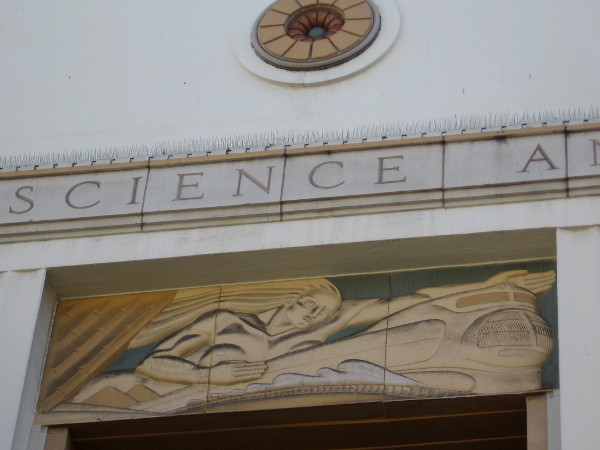
Art Deco relief work shows female flying above propellers of airplane.
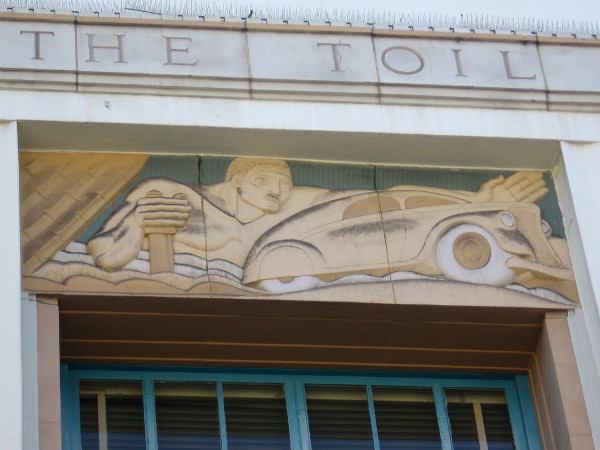
“Through science and the toil of patient men, the nation’s thought traverses land and air and sea.” Those are the words inscribed along the top of downtown San Diego’s Post Office, on E Street between 8th and 9th Avenue. Beneath the words are nine terra-cotta panels created by Archibald Garner in 1937. The Art Deco images include a car, train, ship and airplane, the means by which mail has been delivered over many decades, transmitting the written word across the nation and around the world.
Titled “Transportation of the Mail,” Garner’s handsome panels were the result of a Department of Treasury competition. Like most Post Office public art created during the New Deal, the work was funded through the Treasury Department’s Section of Painting and Sculpture, also known as The Section of Fine Arts. The post office itself was built by the Works Progress Administration (WPA) and stands across the street from the now closed old Central Library. You can see a few interesting photos of the library here.
View of San Diego’s downtown Post Office from Ninth Avenue.Steamship cuts through ocean waves on its way to deliver the mail.Distinctive Art Deco train can be seen near roof of San Diego’s old Post Office.Historically interesting panels, which appear at the top of high windows.Classic automobile in Art Deco public artwork in downtown San Diego.
…
To enjoy future posts, you can “like” Cool San Diego Sights on Facebook. or follow me on Twitter.
Photo of American who fought in World War II, helping achieve a victory for liberty.
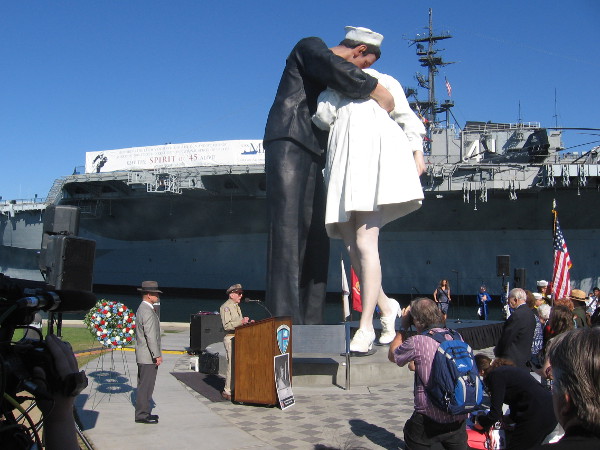
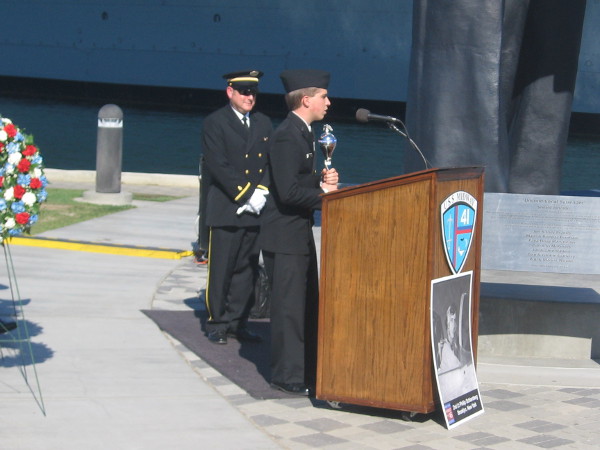
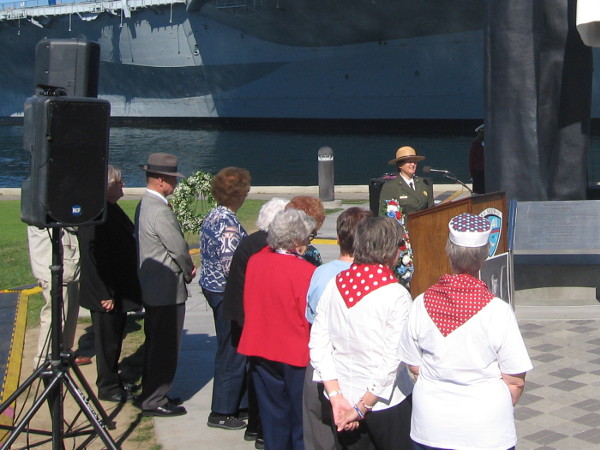
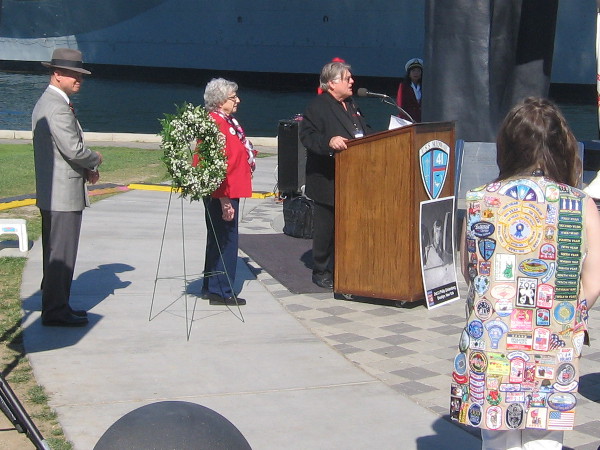
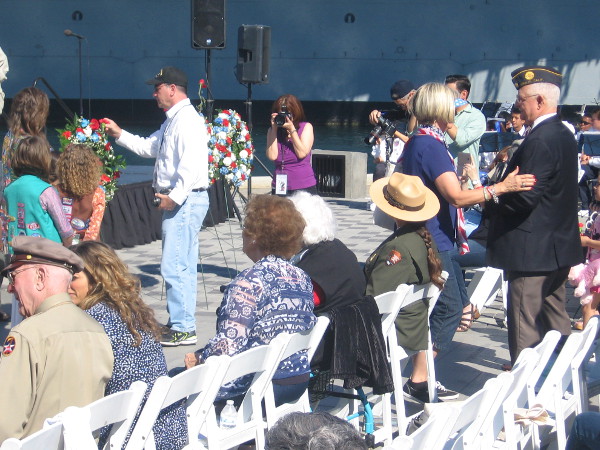
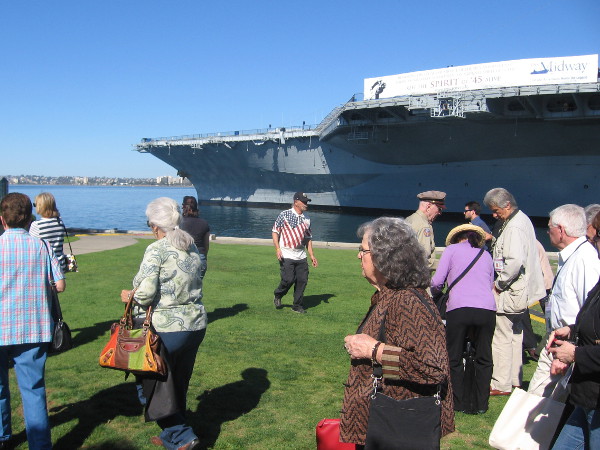
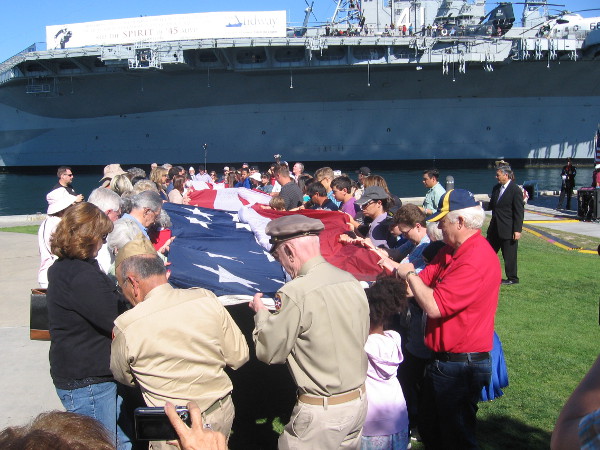
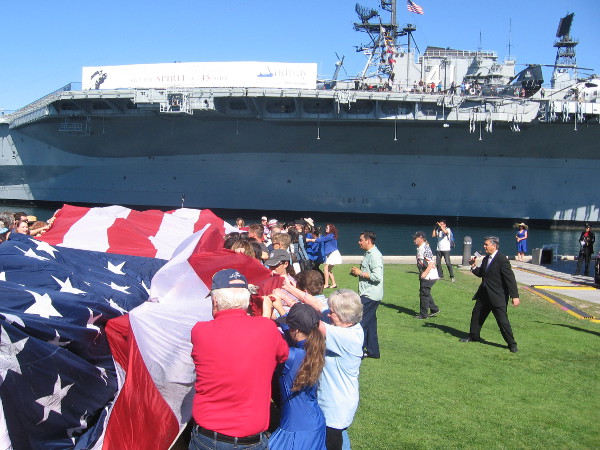
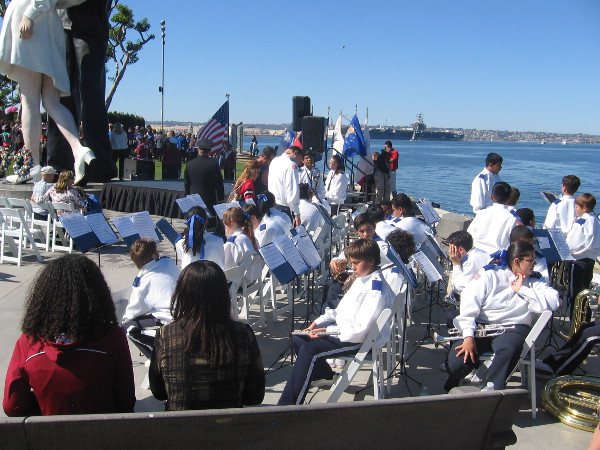
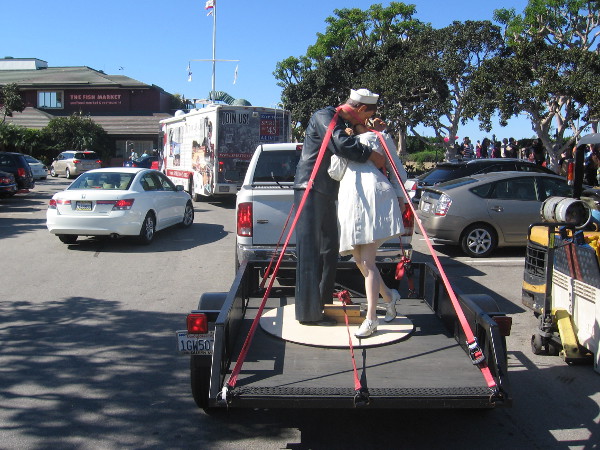
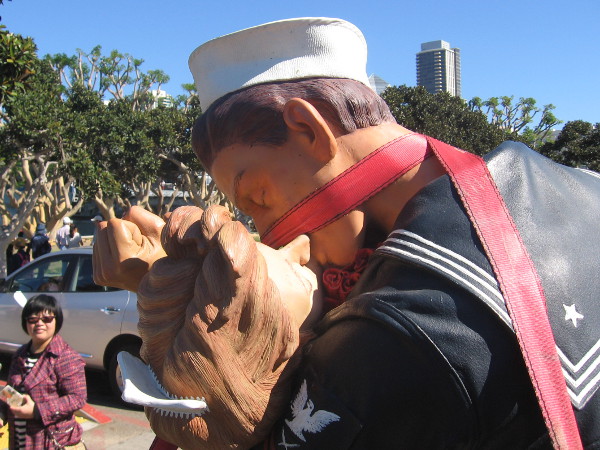
This morning a special Spirit of ’45 wreath laying ceremony was held on San Diego’s Embarcadero, right next to the USS Midway Museum. The area is known as the Greatest Generation Walk, and is dotted with monuments and memorials remembering those who fought in World War II. Today’s event took place at the heels of the large Unconditional Surrender statue, created by artist Seward Johnson. The sculpture was modeled after the iconic photograph of a sailor spontaneously kissing a nurse in New York City’s Times Square upon learning the war was over. How appropriate!
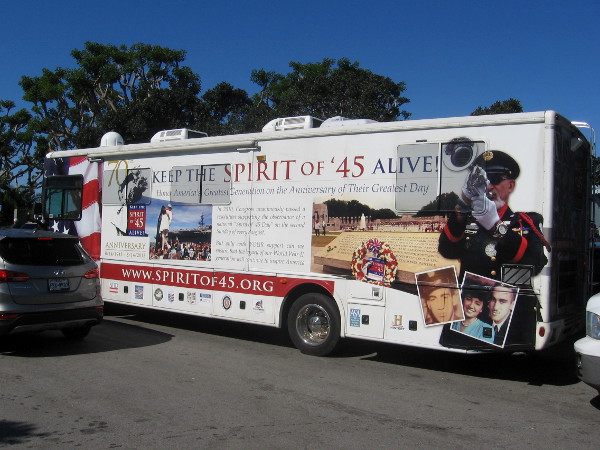
The Spirit of ’45 is an organization and series of events around the country that honors Americans who served in the Second World War. Most of these local tributes are held on or around the happy day the war finally ended, V-J Day, but today’s February ceremony was held in conjunction with a national conference. It kicks off the historic 70th anniversary year of commemorative events.
I got lots of pics!
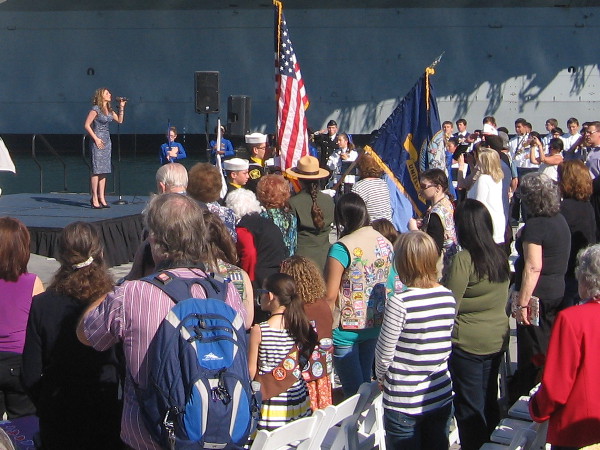
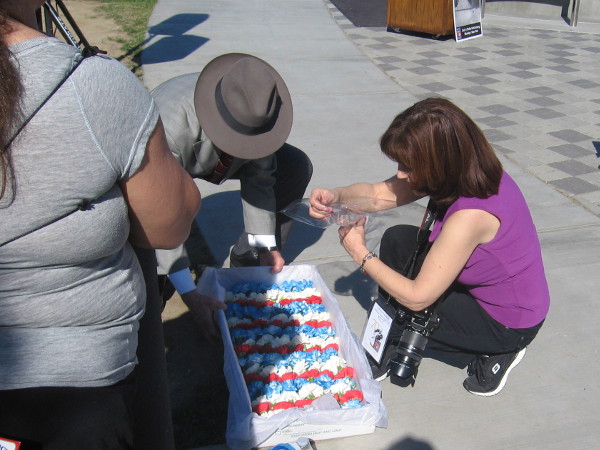
Color guard is ready prior to Spirit of ’45 kick off event by USS Midway Museum.Only 5 percent of those who fought in World War II remain alive today. Those who participated in the war effort were honored and remembered with gratitude.The Star Spangled Banner is sung as audience listens on San Diego’s Embarcadero.Thanking a genuine hero. Gratitude was expressed during the special ceremony.Young man in Junior ROTC speaks about family members who defended freedom and others who serve today.Dignitaries, veterans and military people on stage for presentation of first wreath.After presenting the first wreath, photo of Philip Schlamberg, last American killed during World War II, is carried by a hero.Rosie the Riveters are thanked for their service. They presented the second wreath.Introducing a British war bride, who thanked Americans for saving Great Britain and freeing Europe from the Nazis.About to bring red, white and blue carnations over to the third, final wreath.Everybody attending is invited to insert a flower, to honor those who served their country in World War II.A special flag awaits nearby on the grass.People from the audience make their way to participate in a patriotic spectacle.Many hands get ready to unfurl the huge flag on the grassy area between the Unconditional Surrender statue and Bob Hope Tribute.The giant billowing flag is unfurled by citizens proud and happy to be free.People carefully hold up American flag in a tribute to fallen heroes.The Stars and Stripes is displayed on the Greatest Generation Walk.Photo of three wreaths and flags after the crowd has dispersed.Young band members relax in the San Diego sunshine.Singers perform nostalgic Boogie Woogie Bugle Boy after ceremony.Small model of Seward Johnson’s Unconditional Surrender sculpture is on display.The iconic kiss is planted right in front of my camera lens!Keep the Spirit of ’45 Alive!
…
To enjoy future posts, you can “like” Cool San Diego Sights on Facebook or follow me on Twitter.
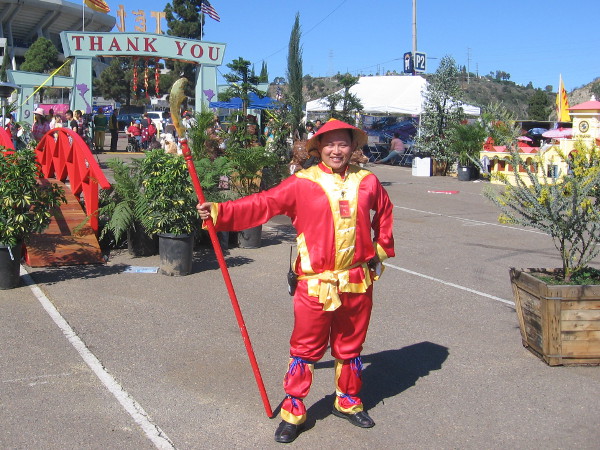
One of several friendly guys in a traditional costume worn by ancient warriors.
Here are pics of the 2015 Lunar New Year Tết Festival. The annual event is put on by San Diego’s Little Saigon, and is being held this weekend in a large section of the Qualcomm Stadium parking lot. These photos were taken shortly after the gates opened, and workers were applying some final touches in preparation for later crowds. Because I was so early, I missed afternoon attractions like the traditional Lion Dances and firecrackers. But there was plenty of cool stuff to see!
Tết, or Vietnamese New Year, is celebrated at the same time as Chinese New Year. The event marks the arrival of spring based on the Vietnamese variation of the Chinese lunisolar calendar.
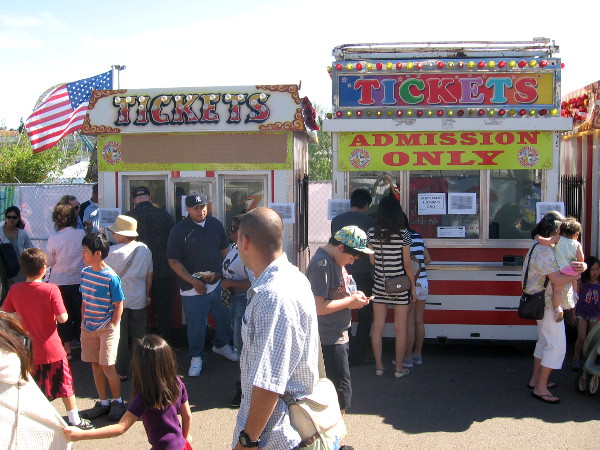
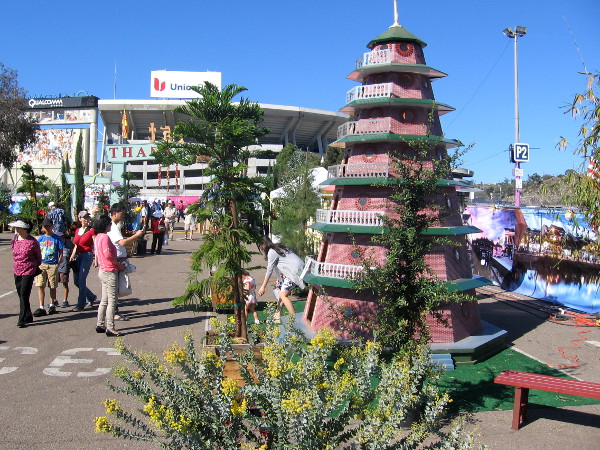
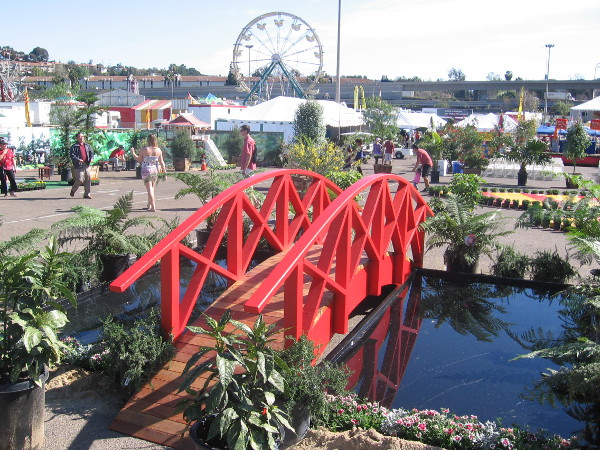
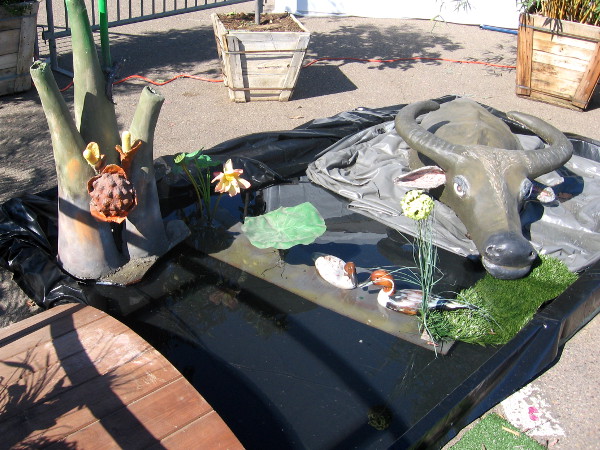
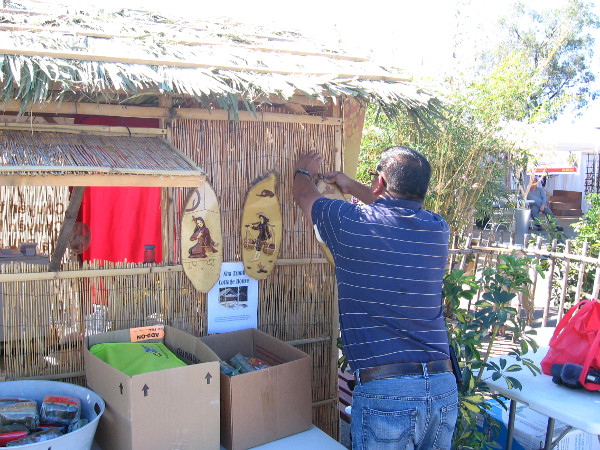
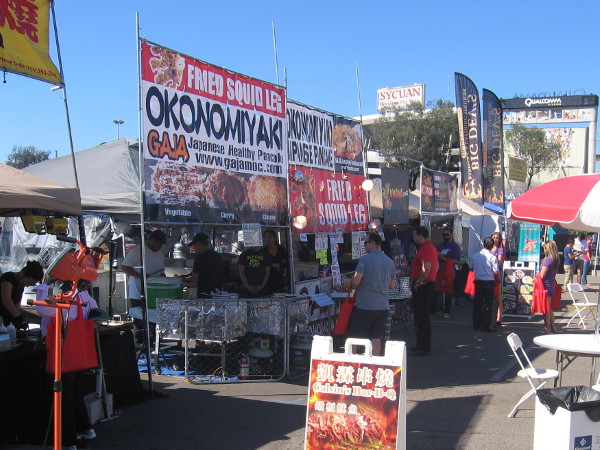
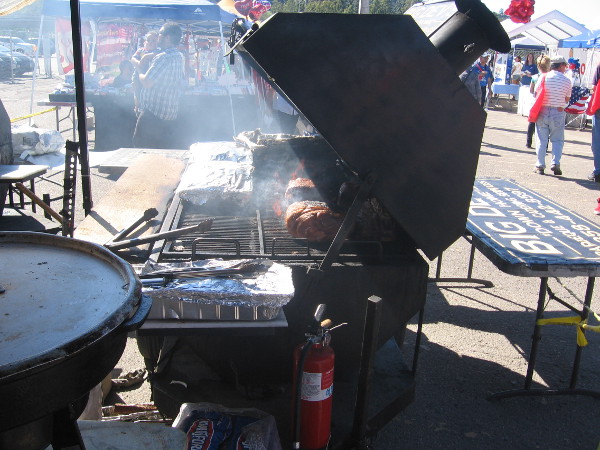
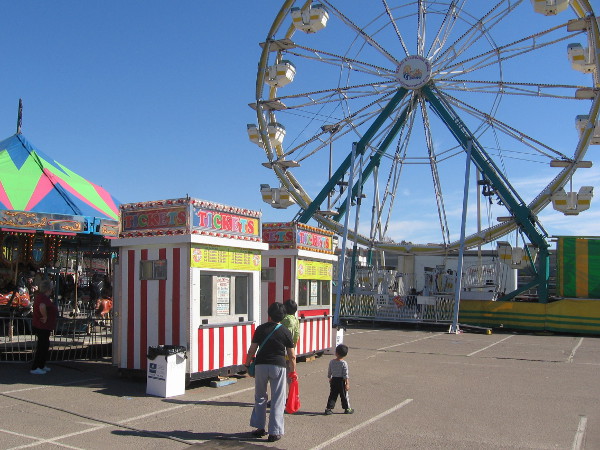
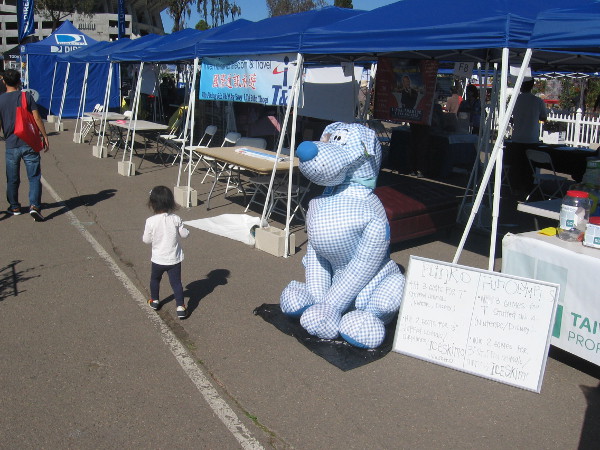
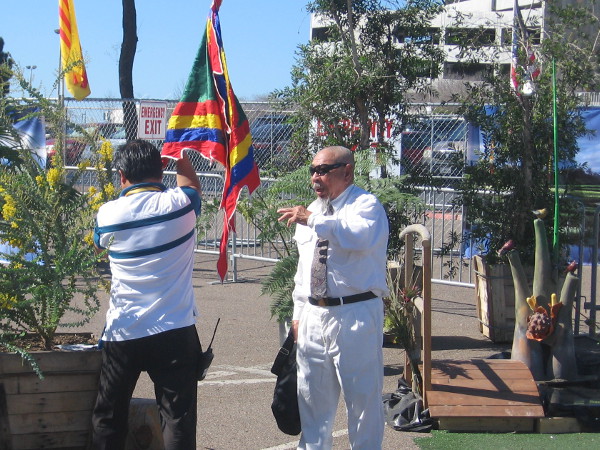
Ticket booths at Lunar New Year Festival in Qualcomm Stadium parking lot.People check out colorful displays after entering the annual festival on a sunny weekend.In 2015 the Chinese New Year begins the latest Year of the Goat.Model of Chua Mot Cot, or the One Pillar Pagoda, symbol of Vietnam’s rich culture and history. It was built in the reign of king Ly Thai Tong almost a thousand years ago.Model of Bến Thành Market, which was established by French colonial powers in 1859, and developed from early 17th century street vendors near Saigon River.Bridge over pond at Little Saigon’s Tết Festival.Models of two thatch-roofed houses elevated on wood columns at Mai Chau. These are excellent examples of highland village house construction.Art on display near entrance includes water buffalo and flowers.Getting a bamboo cottage house ready for a throng of festival visitors.Decoration near a stage at the Lunar New Year Tết Festival.Guys work to get everything ready shortly after the gates open on Saturday.One of many interesting booths. This one encourages hosting exchange students.There were delectable edibles of all types in a huge food court area.Young man selling treats pumps up a balloon.Lots of tasty barbeque was getting ready on this big grill.Lady demonstrates Chi Gong stretches on a large stage.Many colorful tables contained delights of every sort.A big carnival area includes a Ferris wheel.Just walking along in the morning as the fun event begins.These guys are doing their best to promote the event on Instagram.Adjusting a flag, one final touch at the 2015 Lunar New Year Festival in San Diego.
…
To enjoy future posts, you can “like” Cool San Diego Sights on Facebook or follow me on Twitter.
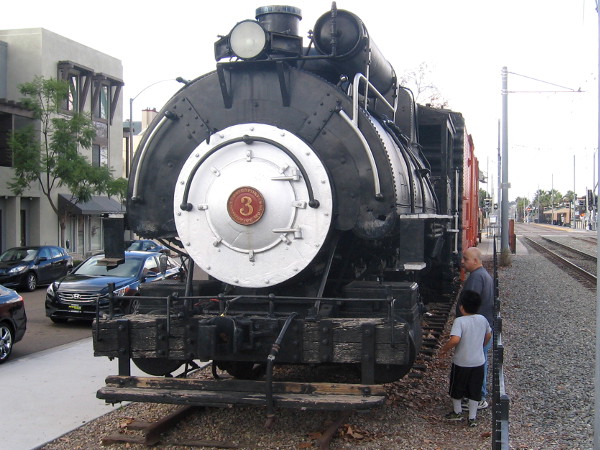
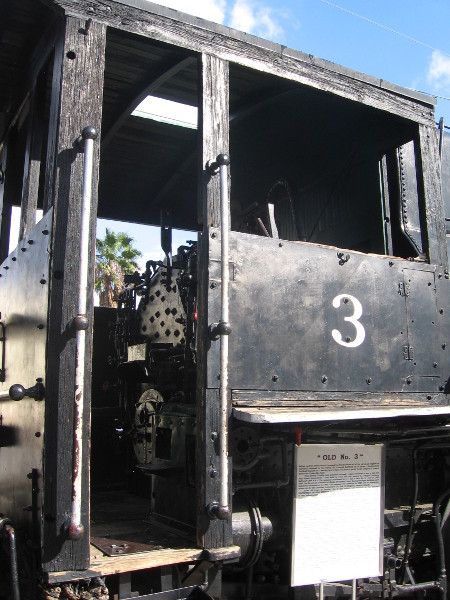
Dad and son check out old steam locomotive on display at La Mesa Depot Museum.
I’ve driven past the La Mesa Depot Museum many times over the years, but have never stopped to check it out. Today I remedied that very unfortunate situation!
Here’s a ton of cool pics. The small display train and historic railroad depot are found along Spring Street near the center of La Mesa, in San Diego’s sunny East County. I walked from south to north with my camera.
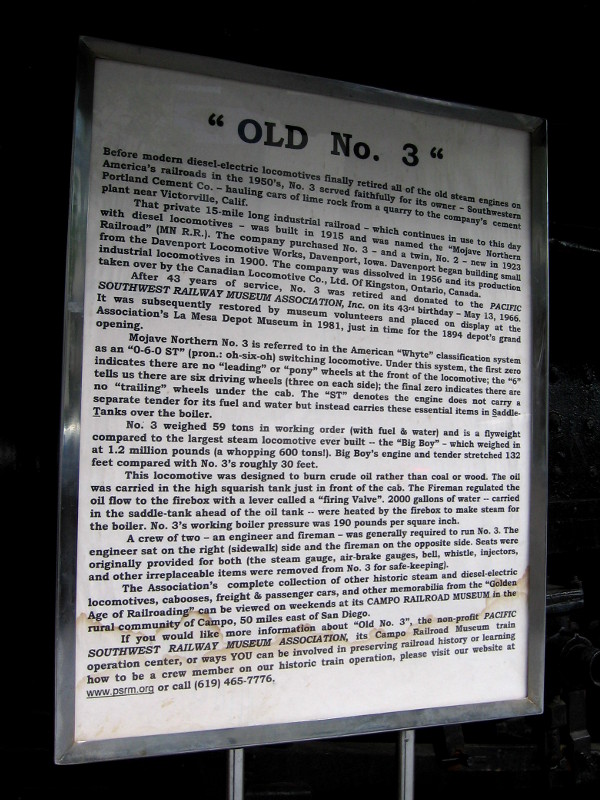
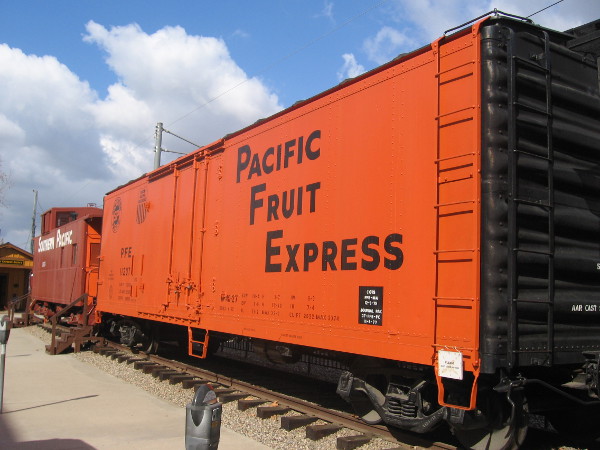
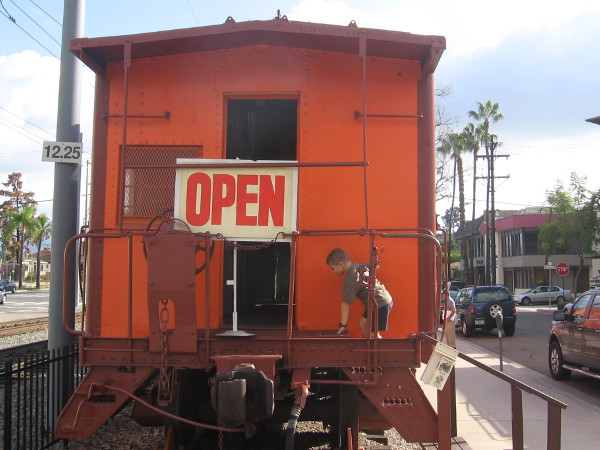
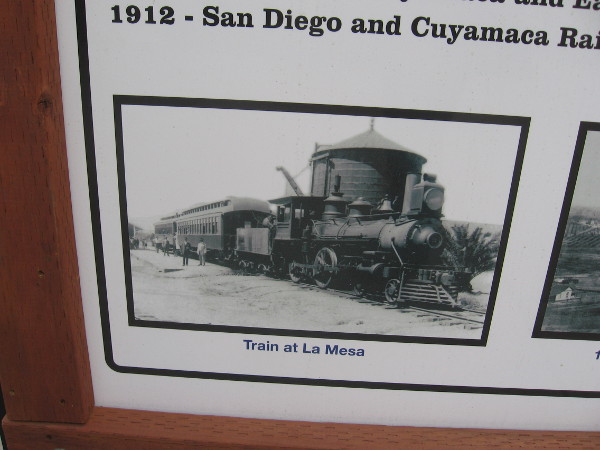
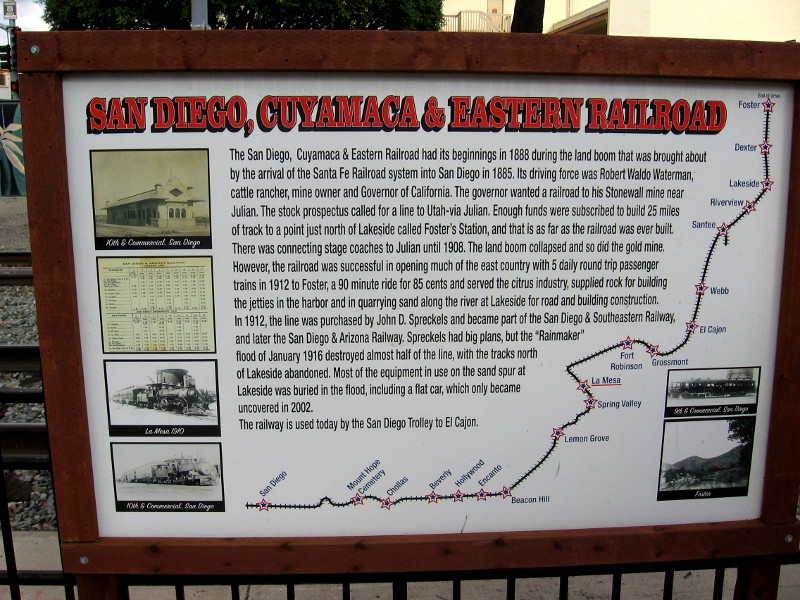
A friendly volunteer told me a little bit about the locomotive, reefer (refrigerator) car and caboose on exhibit, plus facts about the old La Mesa depot and San Diego and Cuyamaca Eastern Railway line. The depot is La Mesa’s oldest building and the only surviving San Diego and Cuyamaca Railway Station. Over the years it has experienced a colorful history, serving as an antique store and a worm farm! Please refer to the interesting signs, and my captions. Hopefully you get an idea of how awesome this place is!
The La Mesa Depot Museum is operated by the Pacific Southwest Railway Museum, which displays many old trains in Campo, an hour’s drive east of San Diego near Mexico. I went there with my family when I was very young and took a fun train ride. I plan on going again one day!
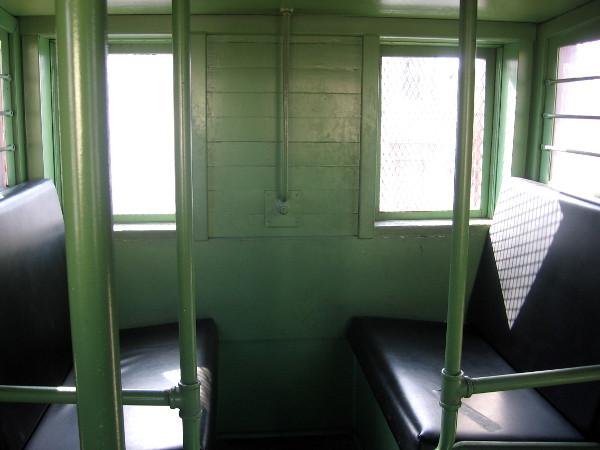
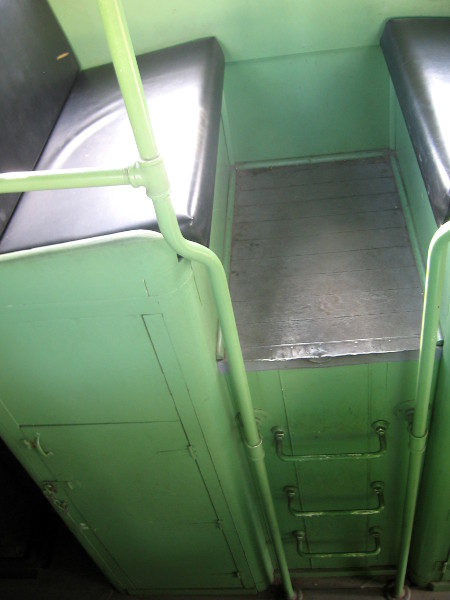
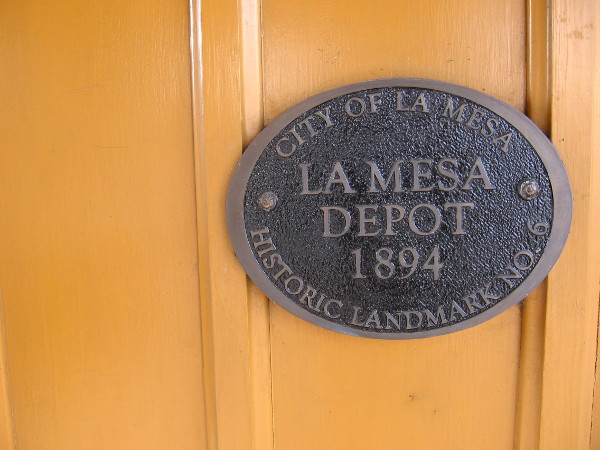
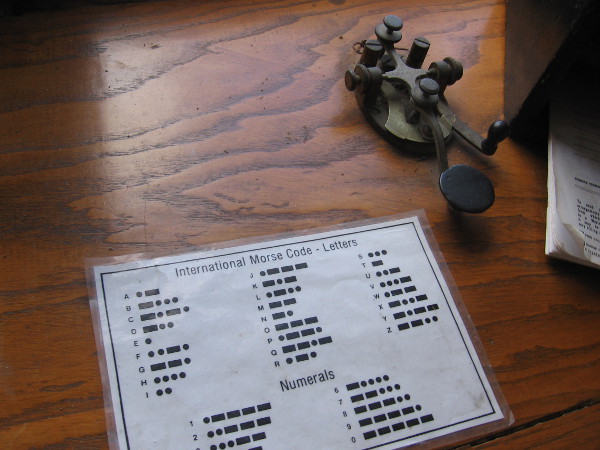
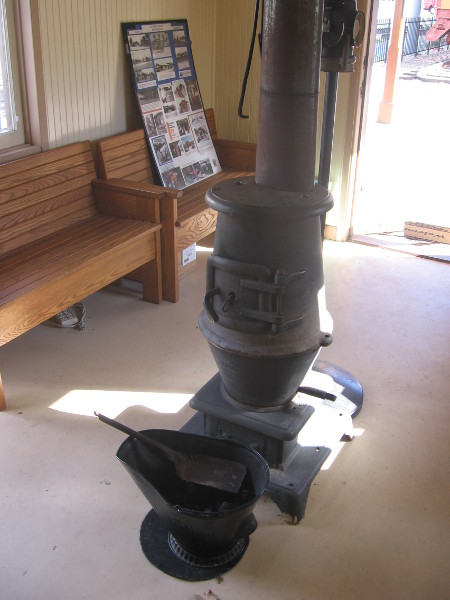
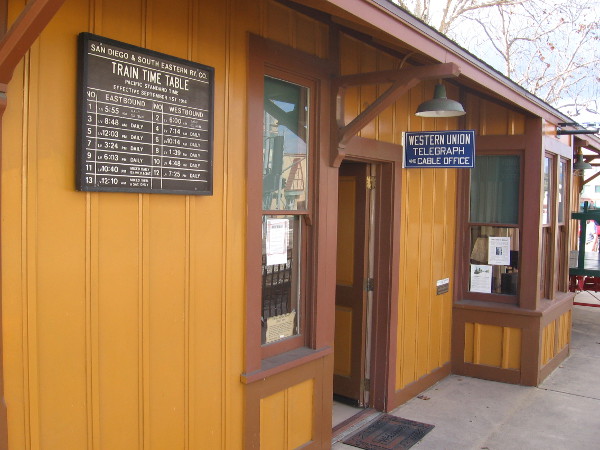
Locomotive was donated after 43 years of service to the Pacific Southwest Railway Museum Association.Looking up into door of steam locomotive Mojave Northern Railroad #3.Old No. 3 originally hauled lime from a quarry near Victorville, California.Part of the complex machinery and controls in the steam locomotive’s cab.Pacific Fruit Express reefer car on display at old train depot in La Mesa, California.Southern Pacific Railroad caboose can be boarded free by visitors on Saturdays, 1-4 pm.I saw a bunch of people during my short visit. There were many excited kids!Entering the caboose, to check out what life was like working on the railroad.The conductor had high windows to see around the train during operation.A freight train’s conductor or crew could sit up here to see in every direction.That’s quite a climb, even for a tall guy like me!The small La Mesa depot sits near tracks now used by the San Diego Trolley Orange Line.The depot opened in 1894, and this 44-star flag would’ve flown above it.Information sign outlines the early history of La Mesa’s train depot.Historical photograph of a train stopping at La Mesa.In the early 20th century the depot was sold and moved on various occasions.McKeen Car at the La Mesa Depot.This very small building contains lots of cool stuff!City of La Mesa Historic Landmark No. 6 on side of 1894 train depot.Ticket office in depot contains various old telephones and a telegraph.The telegraph key still works!Telegraphic messages were received here!Looking out through ticket window at the tiny train depot waiting room.In one corner of the office is an old-fashioned manual typewriter.This old wood stove still works and provides a lot of heat!Signs bring to life the old train time table and Western Union office.An old railway hand cart for hauling freight or luggage.Sign tells complex story of the San Diego, Cuyamaca and Eastern Railroad.Here comes the San Diego Trolley, approaching the nearby La Mesa Boulevard station.The La Mesa Depot Museum is a fun place to visit on a Saturday afternoon!
…
To enjoy future posts, you can “like” Cool San Diego Sights on Facebook or follow me on Twitter.
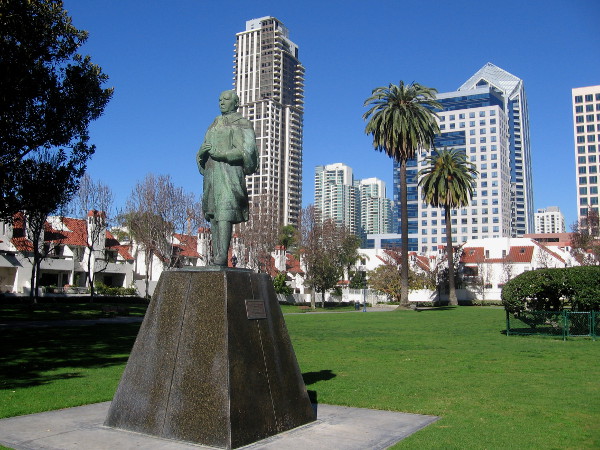
View of skyscrapers from Pantoja Park in San Diego’s Marina District.
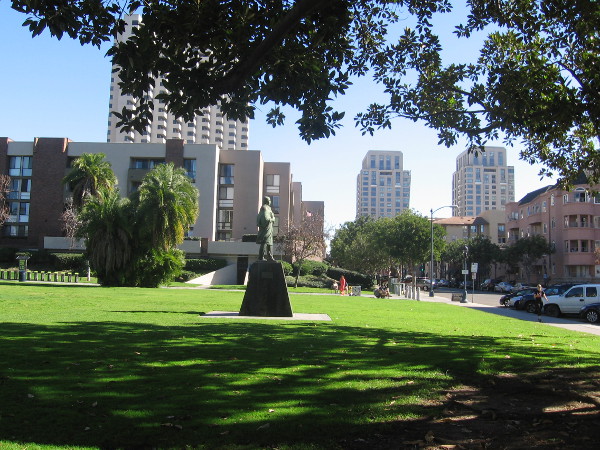
Downtown San Diego might be a bit more laid back than other big cities, but it’s still a bustling place. And so it feels good once in a while to just sit in a quiet, green place to relax.
Pantoja Park is a welcome patch of tranquility in the Marina District of downtown San Diego. Registered as a San Diego Historic Landmark, it was created in 1850 and is the city’s oldest park. The park was named after Don Juan Pantoja y Arriola, a Spanish navigator who drew the first map of San Diego Bay in 1782. A couple centuries ago ships would periodically enter the bay to supply the old Spanish presidio.
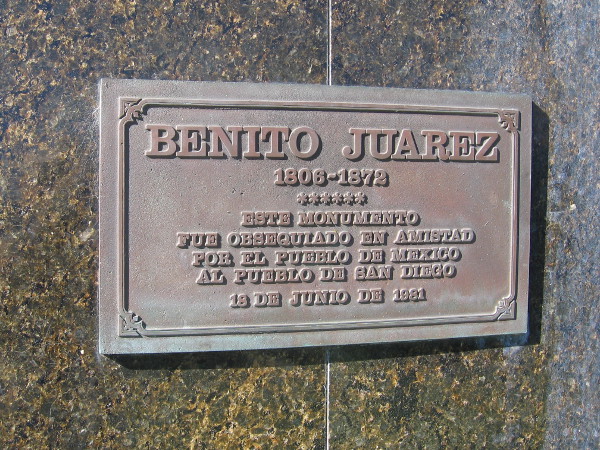
Fringed with gleaming skyscrapers, Pantoja Park today contains one notable sight: a statue of Benito Juarez, by Mexican artist Ernesto Tamariz, which was a gift to San Diego from the Mexican government in 1981.
I happened to walk through recently, so I took several pics…
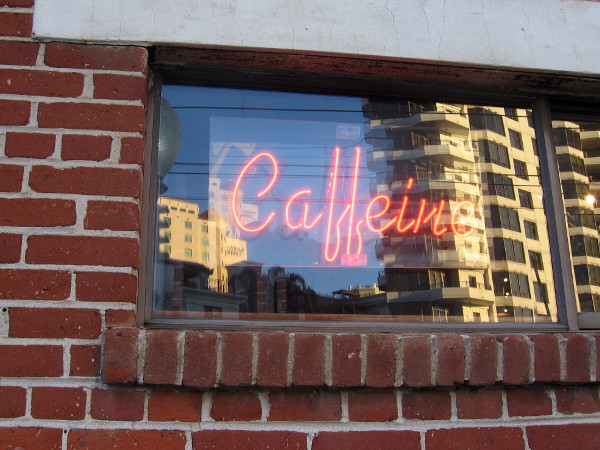
Statue of Benito Juarez, a friendly gift from the Mexican government.Plaque on bronze statue of Benito Juarez, who served as the president of Mexico for five terms.Some cool public art on a trash can in Pantoja Park.Caffeine can be found across the street near the Seaport Village trolley station.Pantoja Park is a welcome, quiet grassy area in the midst of downtown San Diego’s bustle.
UPDATE!
Here’s a better pic of the statue I took on a later date…
…
To enjoy future posts, you can “like” Cool San Diego Sights on Facebook or follow me on Twitter.
































































 Cool San Diego Sights!