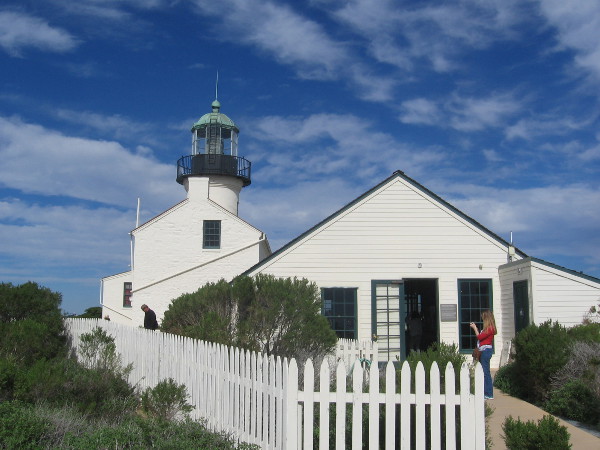
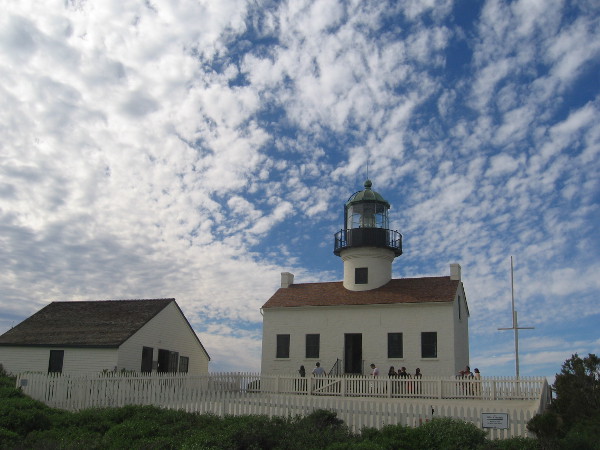
Looking up at the Old Point Loma Lighthouse in Cabrillo National Monument.
Everyone likes to explore the Old Point Loma Lighthouse. You can climb up the winding staircase and peer into several interesting rooms where the lighthouse keeper and his family lived. But the small museum in the nearby assistant keeper’s quarters contains the true marvels of science and art. Come inside and let us have a quick look!
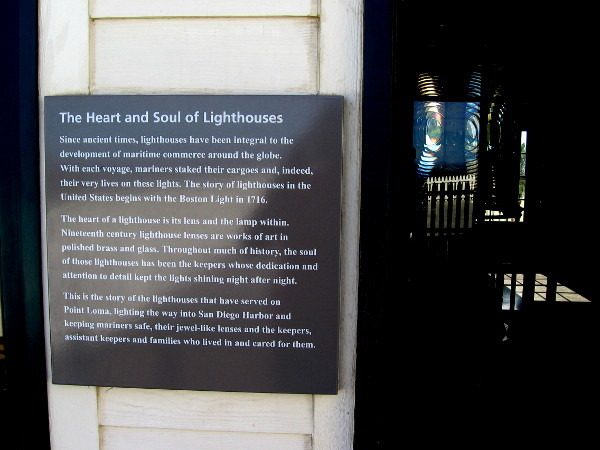
The assistant keeper’s quarters next to the lighthouse today contains a small museum.Sign outside lighthouse shows huge Fresnel lens which guided ships with focused light 400 feet above sea level.Sign at entrance to museum. The heart of a lighthouse is the lens and lamp. 19th century lenses are works of art made of polished brass and glass.
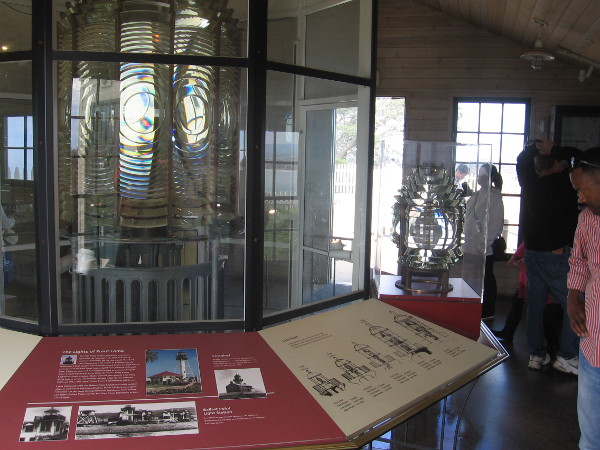
The highly polished Fresnel lenses utilized by lighthouses are beautiful objects. They refract and reflect light, creating prismatic colors when viewed from certain angles. It’s almost a miracle that a small flame in a lamp can be magnified to the extent that ships far out at sea can easily see it and be guided to safety. Light intensified by lenses in this museum could be seen 18 to 24 miles away!
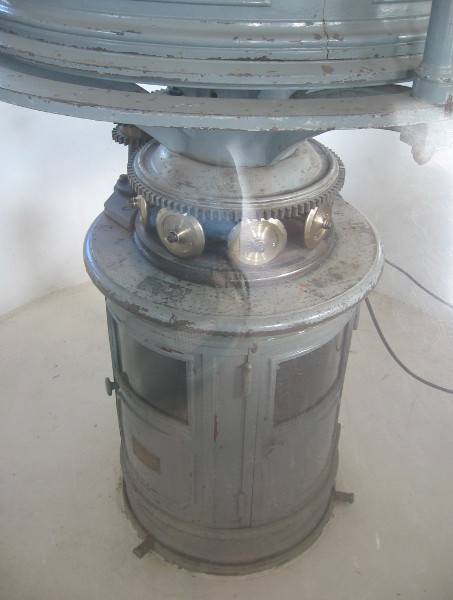
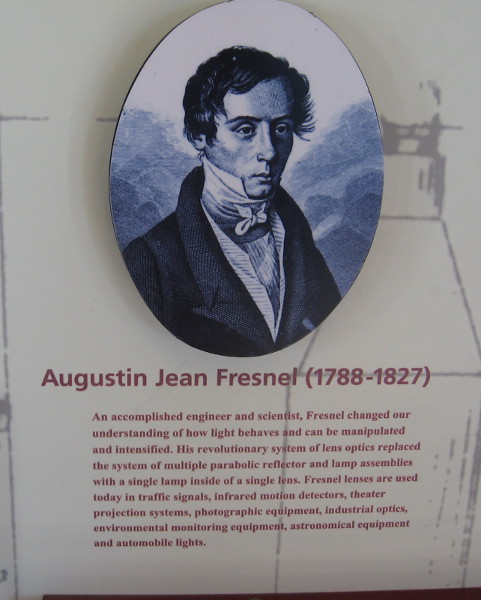
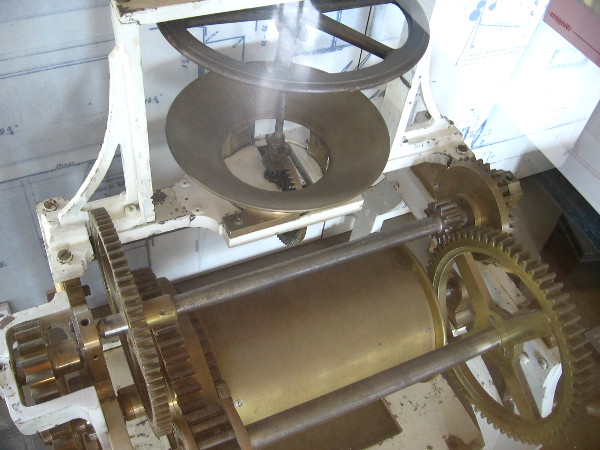
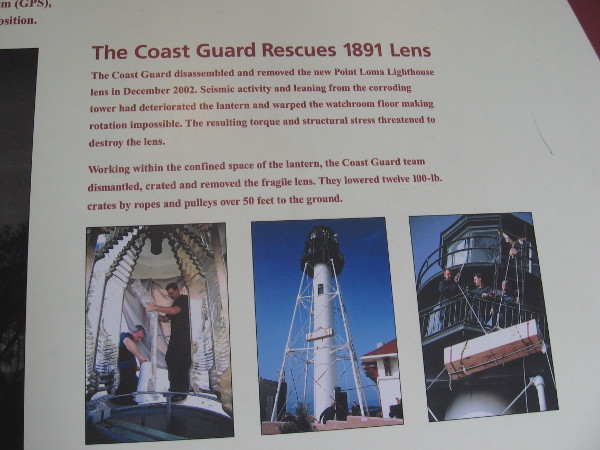
This 3rd Order Fresnel lens was used by the New Point Loma Lighthouse, built in 1891 down by the water.An optical wonder, this huge lens is an amazing, highly polished light bender.Diagram shows how a complex Fresnel lens functions.The base of the heavy Fresnel lens with chariot wheels visible.There are different orders of size, as illustrated in this display.Augustin Jean Fresnel (1788-1827) was an accomplished engineer and scientist. Fresnel lenses are used in many modern applications today.Small museum by Old Point Loma Lighthouse contains various very cool exhibits.This small 5th Order lens lighted the Ballast Point Lighthouse from 1890 to 1960.Log book of daily expenditures for oil, wicks and chimneys.This clockwork of gears slowly turned the light above.The keeper’s service box contained cleaning supplies and delicate tools for maintaining the lamp.The Coast Guard removed this large Fresnel lens from the New Point Loma Lighthouse in 2002.Looking at the iconic Old Point Loma Lighthouse and small museum beside it.
…
To enjoy future posts, you can “like” Cool San Diego Sights on Facebook or follow me on Twitter.
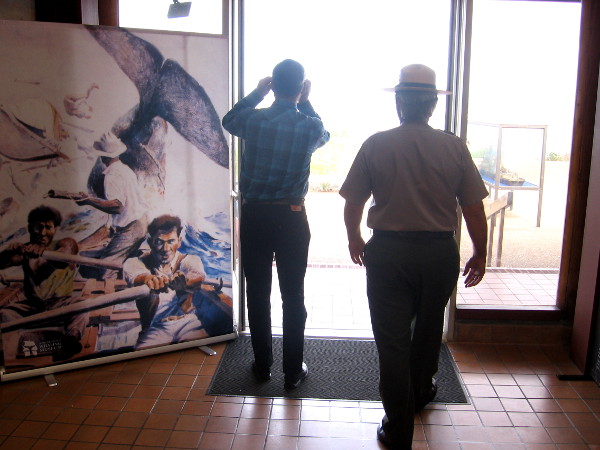
Looking out the rear of the Cabrillo National Monument Visitor Center on a beautiful day.
I saw on the morning news that an important exhibit was opening today in the Cabrillo National Monument Visitor Center. I haven’t been up that way since I blogged about the park’s centennial, so I figured I’d go check things out!
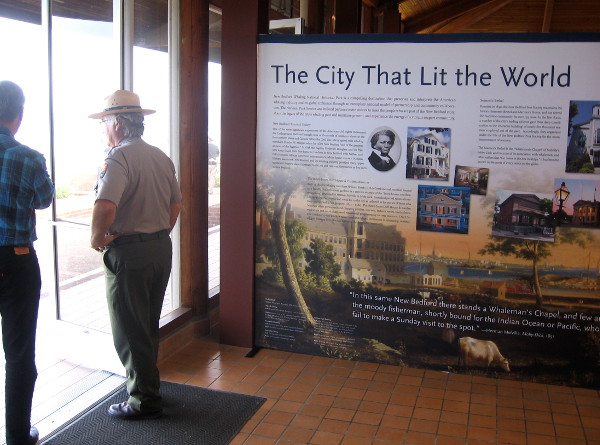
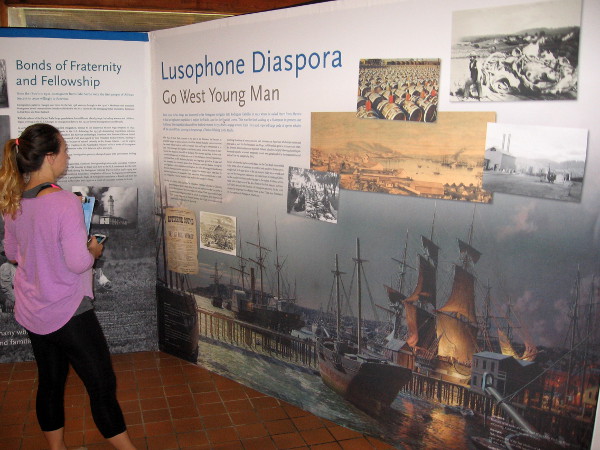
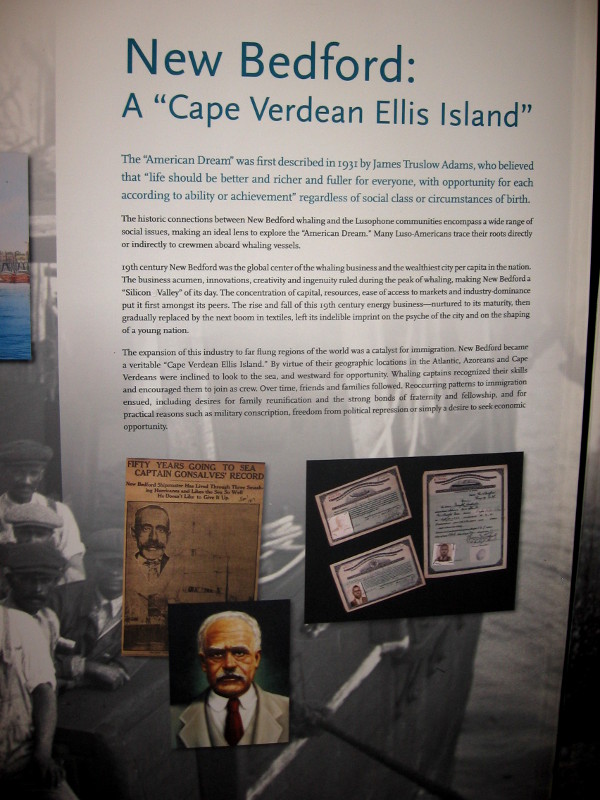
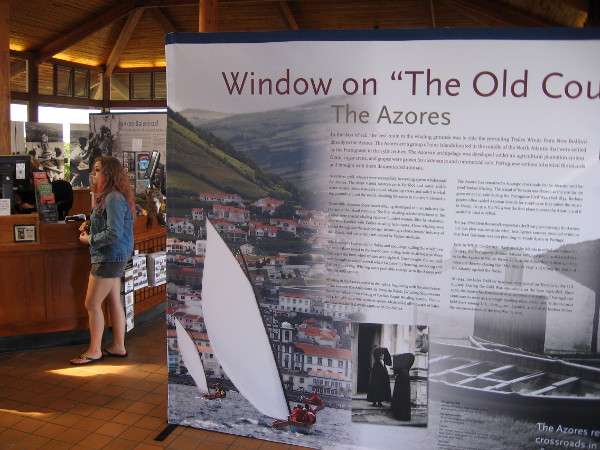
The traveling exhibition is called Yankee Baleeiros! The Shared Legacies of Luso and Yankee Whalers. That’s quite a long title, but it’s fitting for the epic displays that occupy about half of the sizable visitor center. Developed by the New Bedford Whaling Museum, the exhibit “celebrates the interwoven Luso-American stories of the Azorean, Cape Verdean, and Brazilian communities in the United States from early immigration in the 18th century through the latter half of the 20th century.” Sounds like a long and tedious thesis! But it’s actually fascinating! Basically, it shows the rich history of Portuguese speaking whalers in the Northeast, primarily New Bedford, and how they interacted with Yankee whalers.
As San Diego is one of the world’s best places to encounter a large variety of whale species, and as this is the season for migrating gray whales, the exhibit is more than appropriate. The displays also address how whaling techniques evolved over the years, the success of modern conservation efforts, and how whale-watching is now a much larger industy than whaling.
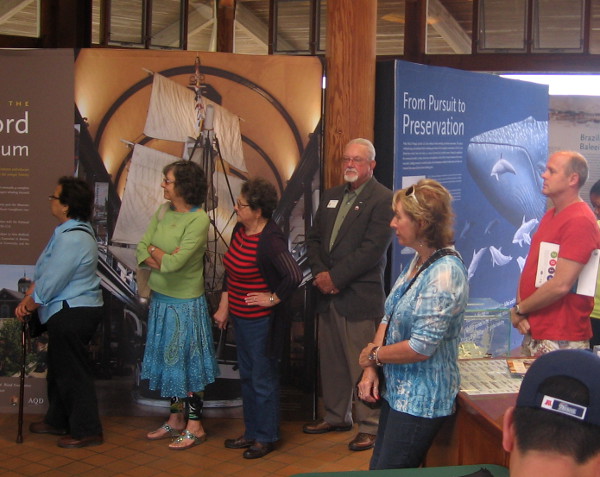
After listening to a short opening presentation by Park Superintendent Tom Workman and Christina Connett, PhD, Curator of Collections and Exhibitions at the New Bedford Whaling Museum, I headed out to Cabrillo’s excellent Pacific Ocean viewing areas to scan the horizon for spouts. I didn’t see any, but there were a bunch of boats off Point Loma whale-watching on this sunny Sunday afternoon. I got more pics from my visit coming, so stay tuned!
If you haven’t been to Cabrillo National Monument in a while (or ever), head on over! The special exhibit will be on display through April 12, 2015.
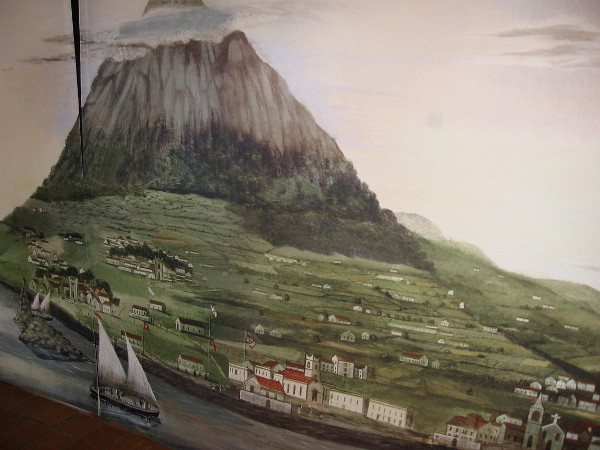
Park Superintendent Tom Workman talks while Christina Connett of the New Bedford Whaling Museum listens.People listen to presentation at opening of Yankee Baleeiros whaling exhibit.Displays recount the history of Lusophone (Portuguese-speaking) whalers in America.New Bedford was the major port for whalers in the Northeast.Inside the visitor center is a section of the 1848 Grand Panorama of a Whaling Voyage ‘Round the World by Benjamin Russell and Caleb Purrington.
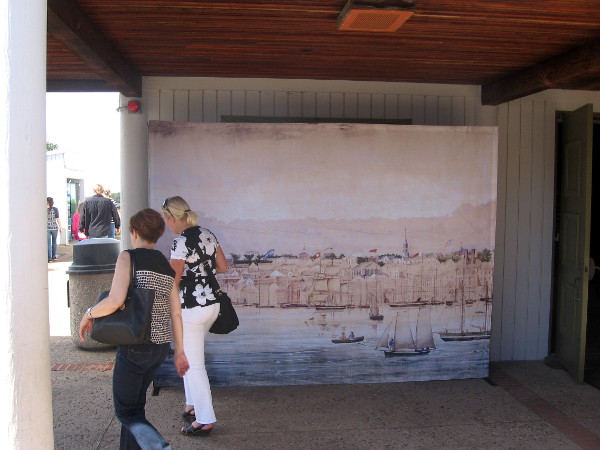
Portions of the 1848 Grand Panorama of a Whaling Voyage ‘Round the World by Benjamin Russell and Caleb Purrington were on display inside and outside the visitor center. The complete work is 1,275 feet long and eight and a half feet tall! It’s believed to be the longest painting in the world! The piece went on a national tour shortly after completion, and appeared at the 1964 New York World’s Fair! Cool!
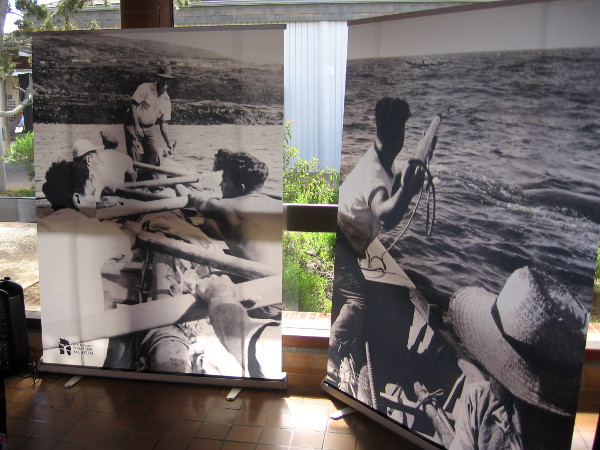
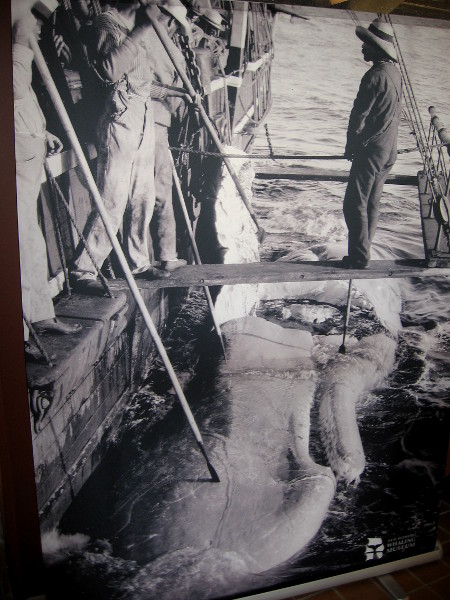
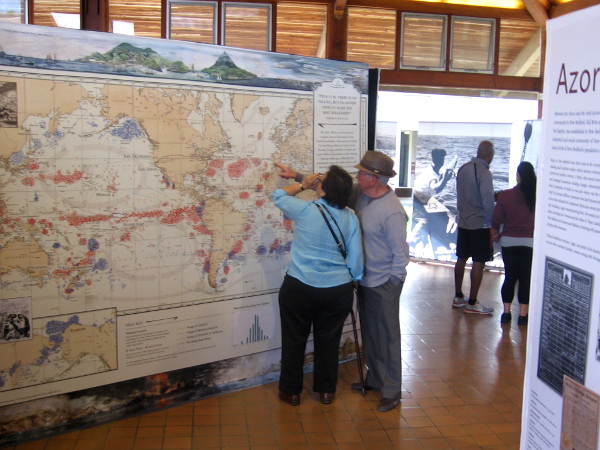
The fantastic displays are museum quality and extremely informative.Photos of sailors rowing out to hunt whales, and a harpooner at the ready.A dead whale is hauled to the ship’s side and stripped of blubber by many hands.People point out spots on a map of historical whaling grounds.The opening presentation is over and folks head out to take in the many sights around Cabrillo.Is there a whale out there? Probably not. This back door faces San Diego Bay!
…
To enjoy future posts, you can “like” Cool San Diego Sights on Facebook or follow me on Twitter.
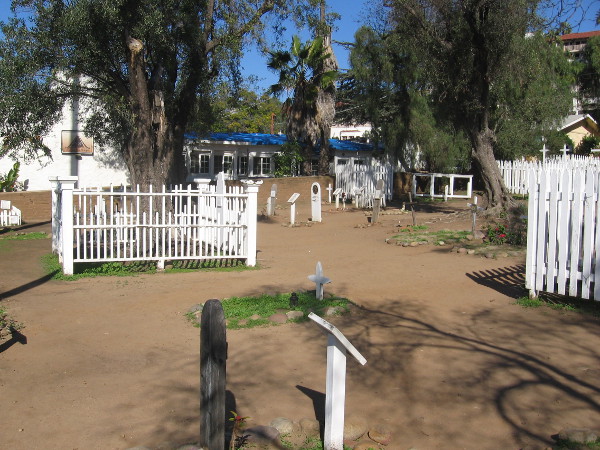
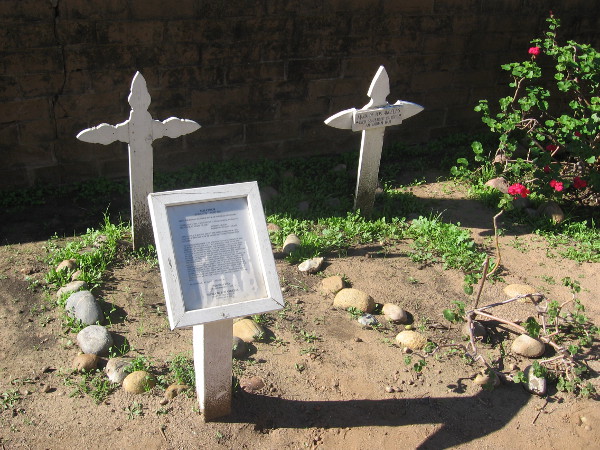
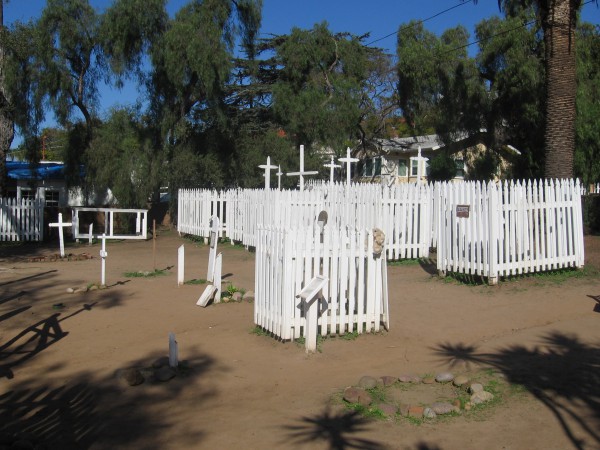
El Campo Santo cemetery in Old Town San Diego contains much history.
El Campo Santo, a cemetery located in Old Town, contains many of San Diego’s earliest residents. By walking respectfully among the gravestones, one can learn much about the city’s interesting history and what life was like for its diverse people. Real-life characters buried here include ranchers, gold miners, sailors, Californios, Native Americans, soldiers, politicians, merchants, actors, children and outlaws.
Established in 1849, the graveyard is the final resting place of nearly five hundred souls. Just a handful are shown in this blog post.
I took photographs of grave sites, headstones and many small signs in the “Holy Field” that describe what is known about the deceased. With a little editing, I’ve provided information here from many of those signs, and from a few other online sources.
Melchior was a Native American who lived to be 97 years old.
Melchior, born 1770, died 1867, age 97 years. Very little is known about the Indian Melchior. He was born a year after the arrival of Junipero Serra in San Diego. He was baptized by the missionaries and became a Roman Catholic Christian. During his long life, he saw San Diego grow from a small pueblo to a city.
Thomas W. Tanner ran an acting troupe that performed at the Whaley House.
Thomas W. Tanner was buried December 22, 1868, age 55 years. He ran an acting troupe that performed on the second floor of the Whaley House in December 1868. Tanner’s troupe offered moral, chaste and versatile entertainment consisting of drama, farce, comedy, singing and dancing. Unfortunately, Tanner died 17 days after his troupe opened. He was married to Policarpia de la Rosa and was a native of Baltimore, Maryland.
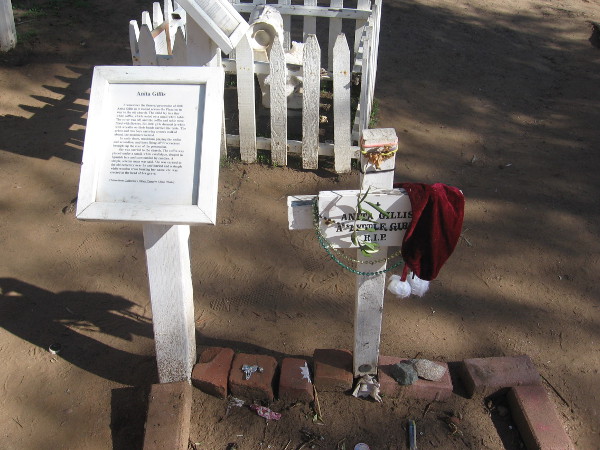
Anita Gillis was a young child.
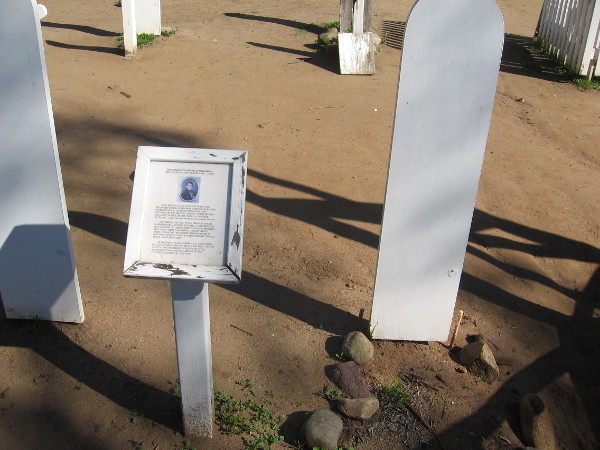
Anita Gillis was a child when she died. Her funeral is remembered as follows on a plaque by the grave. A funeral procession wound across the Plaza and ended at the old church. The child lay in a tiny white coffin, which rested on a small white table. The cover was off, and the coffin and table were filled with flowers. Six little girls dressed in white with wreaths on their heads carried the table. The priest and two boys carrying crosses walked ahead, the mourners behind. Musicians played the violin and accordion, and boys firing off firecrackers brought up the rear of the procession. She was carried to the church, and the coffin placed under a small white catafalque, draped in Spanish lace and surrounded by candles. A simple, solemn mass was said. She was then carried to the old cemetery and buried with a simple white wooden cross bearing her name erected at the head of her grave.
Juan Mendoza worked on a ranch and was shot in the back.
Juan Mendoza died February 6, 1865. He was the victim of a fatal shotgun blast to the back. The assailant was Cave Johnson Couts, a local landowner and prominent San Diegan born in Tennessee. As the story goes, Mendoza worked as majordomo, or chief steward, on one of Cave Couts’ ranches. Couts claimed that Mendoza had threatened his life and in a hasty act of revenge killed Mendoza in broad daylight. The action violated the legendary “Code of the West” which prohibited “shooting an unarmed man” and “shooting a man in the back”. Couts was tried by jury for his crime and found not guilty. This was received “with much applause” from local citizens since threatening the life of a man, as Mendoza allegedly did, gave Couts the right to stand his ground and kill him.
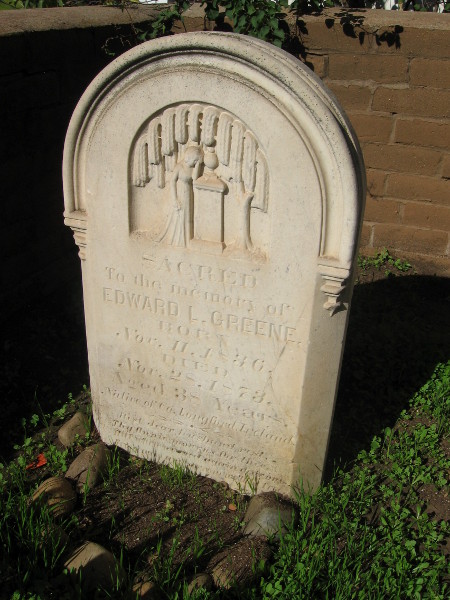
Edward Lynch Greene was a gold miner who became member of the state legislature.
Honorable Edward Lynch Greene died November 28, 1872, age 38 years. He was a native of Ireland who came to California in 1852 and was a miner for gold. He was naturalized in 1861. He became a member of the state legislature when he was elected to the Assembly from Calaveras County in 1869. He was staying in San Diego at the Era House when he died of consumption. He’d been ill for the past eighteen months. He left behind a young wife, Ann Greene.
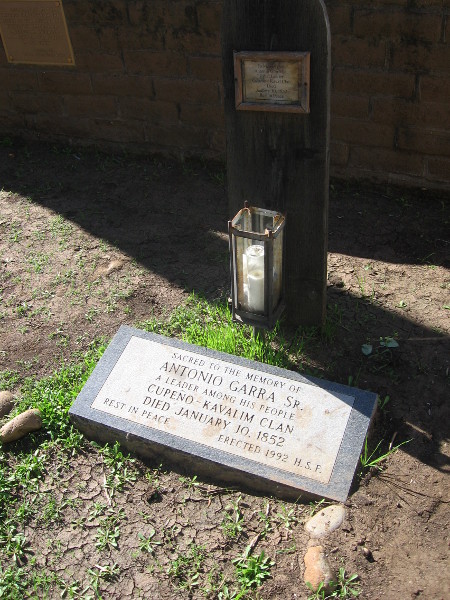
Antonio Garra Sr. was a Native American who rebelled against taxation.
Antonio Garra Sr. died January 10, 1852. He was a leader among his people, the Cupeno-Kavalim Clan. He was educated at Mission San Luis Rey and spoke as many as five Indian dialects, as well as Latin. He was one of the foremost chiefs with great power and influence among his people. The Cupeno were considered mission Indians and were subject to pay taxes in San Diego County. Garra, upset by the taxation of his people, helped to organize a resistance movement, comprised of attacks on Santa Barbara, Los Angeles and San Diego. Against his wishes, a fatal attack was made on Warner’s Ranch. He was soon thereafter captured. On January 10, 1852 Garra was found guilty of murder and theft, but not treason, as he had never taken an oath of allegiance to the United States. Before being executed by firing squad, Garra said in his last words: “Gentlemen, I ask your pardon for all my offenses, and expect yours in return.” Antonio Garra, Sr. is believed to be buried underneath what is now San Diego Avenue.
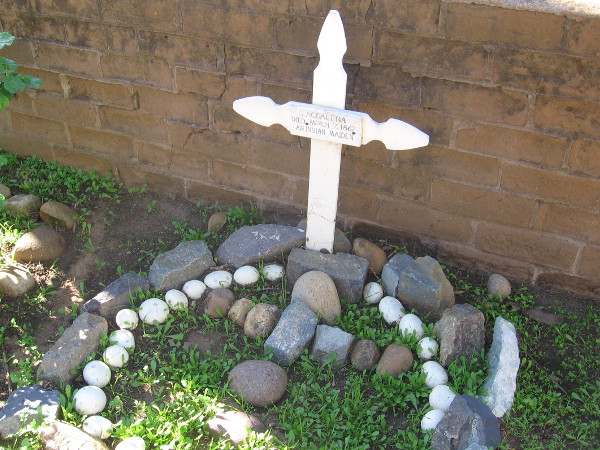
Magdalena was a Native American young lady.
Magdalena was an Indian maiden who died on March 7, 1867 at age 21.
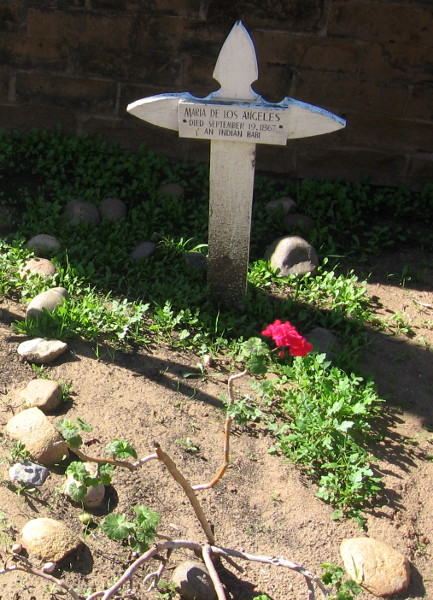
Maria de los Angeles was a Native American infant.
Maria de los Angeles was an Indian infant who died September 19, 1867.
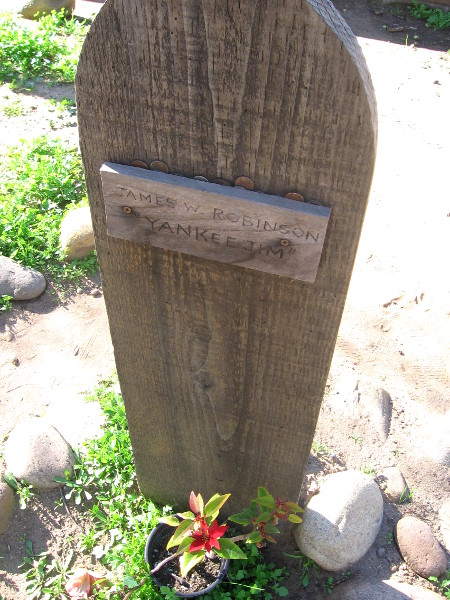
Yankee Jim was hung for stealing the only rowboat in San Diego Bay.
James W. Robinson was known as Yankee Jim. He suffered an extreme penalty for stealing the only rowboat in San Diego Bay. He was sentenced to be hanged. He couldn’t believe that he would be hanged until the very last moment. He appeared to think it was all a grim joke, or at worst, a serious effort to impress him with the enormity of his evil ways. He was still talking when the deputy sheriff gave the signal. Yankee Jim converted to the Roman Catholic Church prior to his death, and so was given the baptismal name of Santiago (Spanish for James). His godfather was Philip Crosthwaite, the deputy sheriff who gave the signal for his execution.
Rosa Serrano de Cassidy and her husband owned a rancho in Pauma.
Rosa Serrano de Cassidy died February 10, 1869, age 21 years. She was the first wife of Andrew Cassidy (a native of County Cavan, Ireland) who helped establish and operate the U.S. tidal gauge in La Playa (in present day Point Loma). Rosa was the daughter of Jose Antonio Serrano who served under Pio Pico in the Mexican War and was in the battle of San Pasqual. Rosa and her husband owned a rancho in Pauma. Her headstone is one of the few remaining originals in the cemetery. After cracking during an earlier restoration, it was placed flat on the ground in order to preserve it.
Don Miguel was a native of Spain, and one of the founding fathers of California.
Don Miguel Telesforo de Pedrorena died March 21, 1850. Don Miguel was a native of Spain, belonging to one of the best families of Madrid. After receiving an education in his own country, he was sent to London, where he was educated in English. In 1845 he settled in San Diego. He married Maria Antonia Estudillo, daughter of Jose Antonio Estudillo, and the two had four children. They built their casa behind the Estudillo home. It was one of the first framed houses in Old Town, and still stands beside the San Diego Union print shop. Don Miguel became a leading merchant and citizen of old San Diego. He served as a delegate to the State’s Constituional Convention at Monterey in 1849 and became one of the founding fathers of California.
Juan Maria Marron was a ship’s captain who became prominent politically.
Juan Maria Marron, born 1808, died at the age of 45. He was a ship’s captain before coming to San Diego in the early 1820’s. He was the owner of 13,311 acres called Rancho Agua Hedionda, which extends from modern day Vista to Carlsbad. He became prominent politically when he married Dona Felipa Osuna in 1834. She was the daughter of Juan Maria Osuna, who was the first alcalde of San Diego and the owner of Rancho San Dieguito. During the Mexican-American War, Marron supported the Americans against many of his Mexican friends. He was captured by Californios who threatened to execute him, but he was released, and his rancho was stripped of horses and cattle.
Jayme Lyons was the son of a carpenter, merchant, blacksmith and sheriff.
Buried November 28, 1859, age 4 years, Jayme was one of probably thirteen children of George and Bernarda Lyons. Jayme’s father was a native of Donegal, Ireland, who came to San Diego in 1847. He had been a carpenter on a ship that came around Cape Horn from New Bedford, Massachusetts. He kept a store in Old Town, owned a blacksmith shop, and was sheriff for two terms. Jayme’s mother was Bernarda de Villar, the daughter of Lieutenant de Villar, who at one time was the Commandant of the San Diego Presidio.
Bill Marshall and Juan Verdugo were hanged nearby.
Bill Marshall and Juan Verdugo were hanged on December 13, 1851. Bill Marshall was an American married to the daughter of a local Indian chieftain. He was a renegade sailor from Providence, Rhode Island, who’d deserted from a whaling ship at San Diego in 1844. After taking up habitation with the Indians, he took an active part in the Garra Indian uprisings in 1851. He and the Indian Juan Verdugo were caught and brought back to San Diego to be promptly tried by court martial. Both were found guilty. The Indian acknowledged his guilt, but Marshall insisted he was innocent. At two o’clock in the afternoon, a scaffold was erected near the old Catholic cemetery, the men placed in a wagon, the ropes adjusted about their necks, and the wagon moved on, leaving them to strangle to death.
Rafael Mamudes worked at chopping wood and digging wells. He dug the graves for the people of Old Town
Rafael Mamudes was a Native American born in Hermosillo, Mexico. He was a baker in Monterey, a miner in Calaveras County, and made a sea voyage to Guaymas. He owned a little plot of land in San Diego where the old jail stands. Legend has it he made a murderous attack upon his wife. To do penance, the priest gave Rafael the task of ringing the church bells when the occasion demanded. Rafael worked at chopping wood and digging wells. He dug the graves for the people of Old Town. He never missed a church service.
Jesus was a Native American who died of a blow to the head while drunk.
Jesus, an Indian, passed away December 15, 1879, age 25 years. He died of a blow to the head without receiving sacraments. According to the priest Juan Pujol, he was said to be drunk, so he was buried near the gate of the cemetery.
Hundreds of varied, rich life stories were concluded here in this early San Diego cemetery.
…
To enjoy future posts, you can “like” Cool San Diego Sights on Facebook or follow me on Twitter.
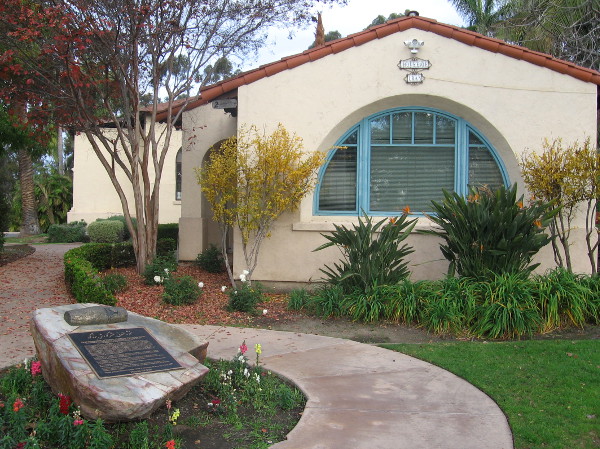
House of Iran at Balboa Park’s International Cottages and a proclamation supporting human liberty.
When I go for a pleasant stroll I’m often lazy. I’ll note interesting things from afar, but fail to walk up for a closer look.
Recently I took a good close look at a large plaque located conspicuously near the House of Iran in Balboa Park. The House of Iran is one of the couple dozen cottages built for the 1935 California Pacific International Exposition. The furnishings in the colorful little buildings exemplify life in their respective countries. Many members of each “house” trace their ancestry to the old country.
The shining plaque lies in a bed of flowers. I approached it and paused to read. It’s dedicated to the First Declaration of Human Rights by Cyrus the Great.
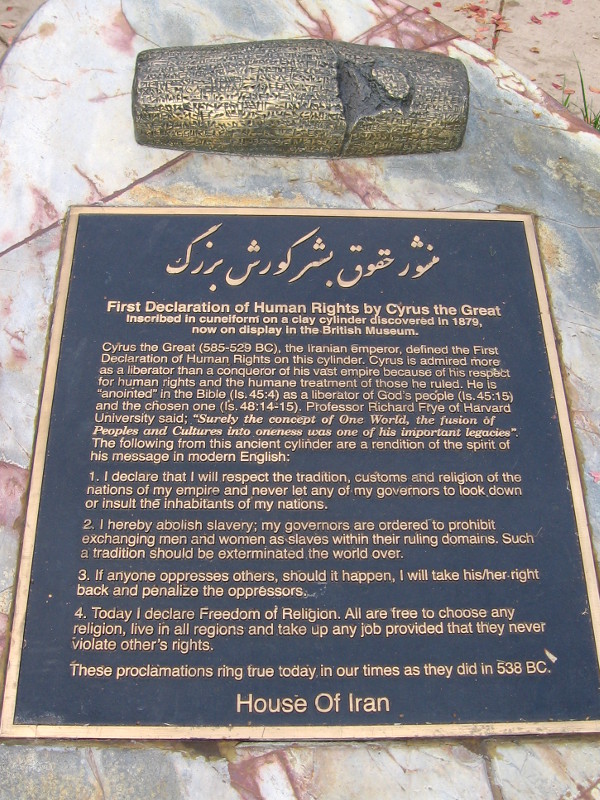
According to the plaque Cyrus the Great (585-529 BC) was an enlightened Iranian emperor. Unlike many rulers of old, he upheld human dignity throughout his vast empire and treated his subjects humanely. He opposed slavery and supported the freedom of religion.
This ancient declaration of human rights was inscribed in cuneiform on a clay cylinder, which is now on display in the British Museum.
Plaque with translation of the First Declaration of Human Rights by Cyrus the Great.
…
To enjoy future posts, you can “like” Cool San Diego Sights on Facebook or follow me on Twitter.
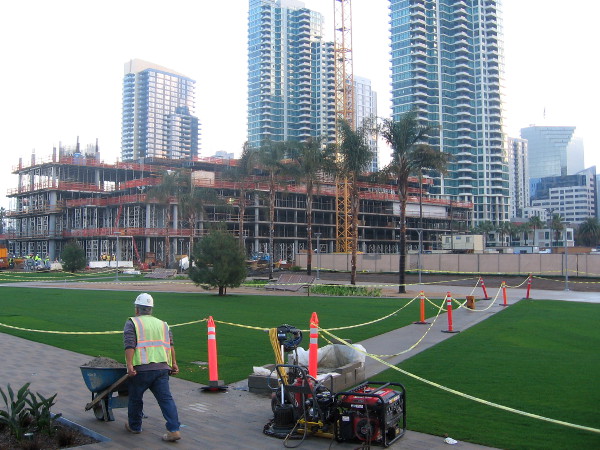
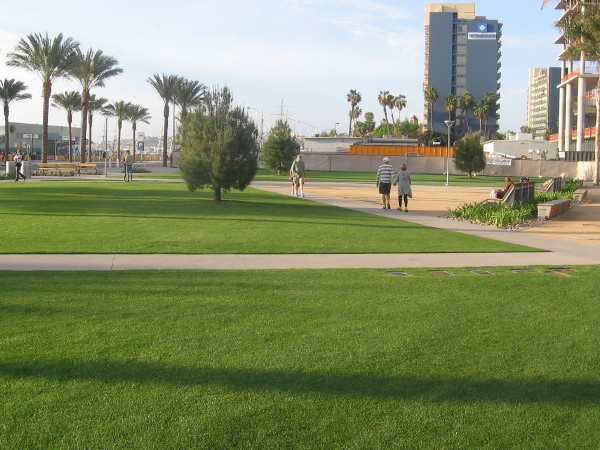
Lanefield Park under construction at corner of Broadway and Harbor Drive.
This morning I walked past a huge project under construction at the corner of Broadway and Harbor Drive. I’m a tall guy, so I could easily peer over the surrounding fence.
The site of historic Lane Field is green with beautiful new grass!
It’s been many years since this hallowed spot in downtown San Diego needed a periodic mowing. I don’t recall ever seeing anything here but a large ugly asphalt parking lot. But once upon a time, half a century ago, this corner on San Diego’s waterfront featured a ballpark where the Pacific Coast League Padres played to large, enthusiastic crowds.
In 1925 the site was established as a Navy athletic field; it was also used for motorcycle and auto races. In 1936 the Works Progress Administration rebuilt the field to accommodate baseball. On March 31 of that year the first game was played, and the Padres beat Seattle 6-2. Lane Field would remain open for 22 exciting seasons.
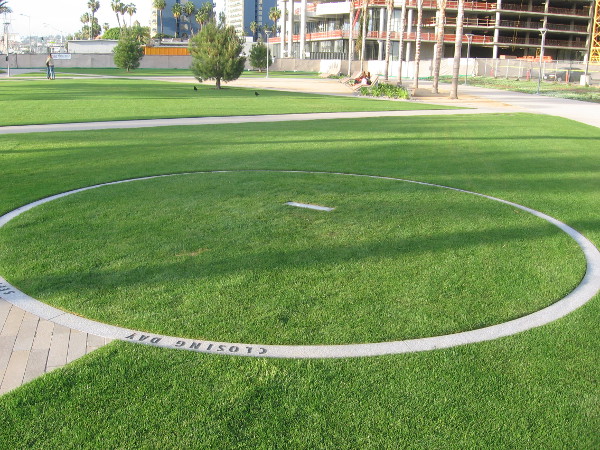
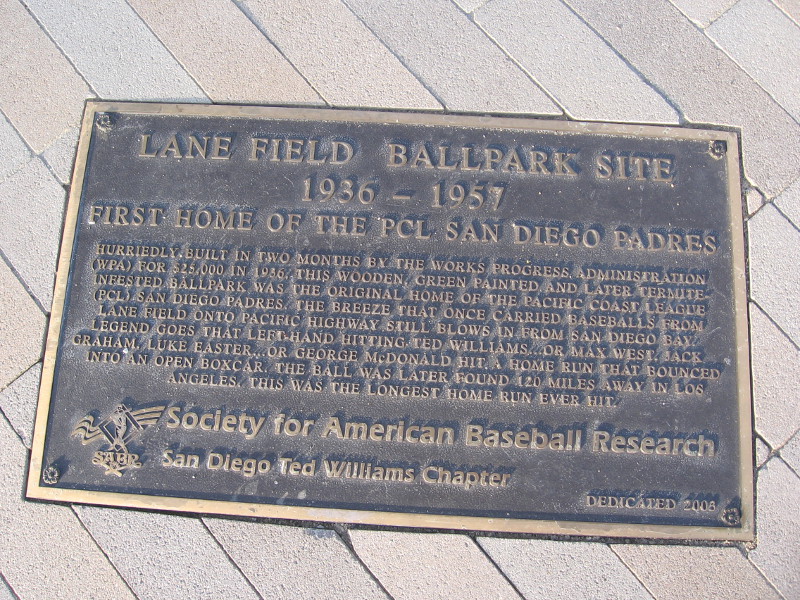
Today, the old location of Lane Field is undergoing another transformation. It soon will feature a new hotel and public park. The 2-acre Lanefield Park includes a small grassy area shaped like a baseball diamond. As I gazed and took photos over the fence, I also noted a monument at home plate and a nearby plaque. Check out the above pic!
Here are two more pics I snapped early this morning…
New grassy park at site of Lane Field, where Pacific Coast League baseball Padres played.Hotel being built next to Lanefield Park on San Diego’s Embarcadero.
Lastly, here’s a pic of a cool mural on 11th Avenue not far from Petco Park, the present home of the Padres. The photo mural shows the construction of Lane Field in 1936. As you can see, the ballfield was located right next to the bay!
East Village street mural shows photo of Lane Field under construction in 1936.
UPDATE! The park, which now seems to be officially called Lane Field Park, is open! Here are some pics…
Lane Field Park is now open on San Diego’s Embarcadero.A small part of the park resembles a baseball diamond with flat pitcher’s mound.Monument and plaque commemorate original Lane Field in downtown San Diego.Legendary player Ted Williams of the Padres advises hitters to get mad.Lane Field Ballpark Site 1936-1957. First home of the PCL San Diego Padres.
…
To enjoy future posts, you can “like” Cool San Diego Sights on Facebook or follow me on Twitter.
Kid checks engine of vintage car at Balboa Park show commemorating 1915 race.
One hundred years ago a famous road race took place in San Diego. Many of the world’s greatest race drivers took part. The 1915 San Diego Exposition Road Race was a thrilling, dangerous 300 mile race around the streets of Point Loma. Those streets still exist today.
This morning, dozens of vintage cars took part in a rally along the old race route. The event was part of Balboa Park’s Centennial celebration, which is being held all year long to remember the 1915 Panama-California Exposition.
Before the rally, the participating cars gathered in Balboa Park in front of the San Diego Automotive Museum for a special car show. I walked up to the park this morning to check things out.
Wow! Double wow!
Please enjoy these photos. While I love looking at classic cars, I’m very far from being an expert. If you detect an error in the captions, or have something interesting to add, please leave a comment!
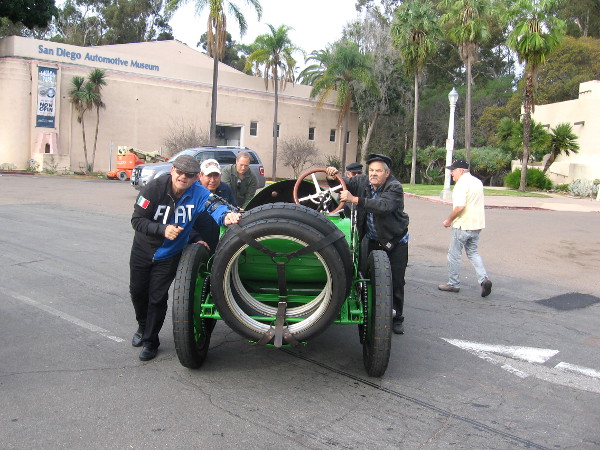
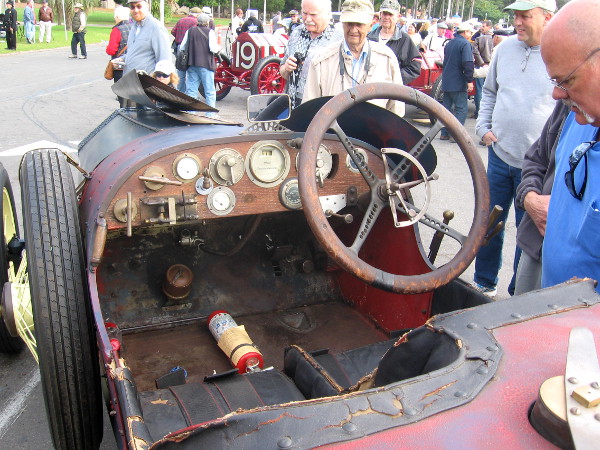
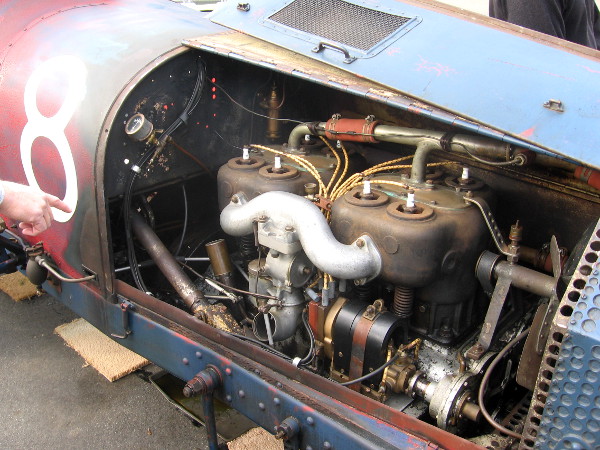
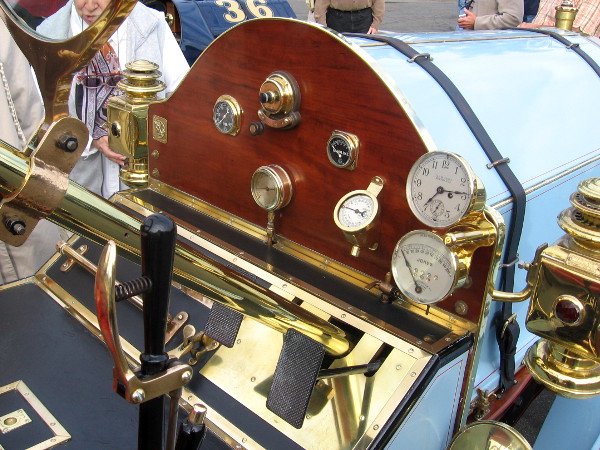
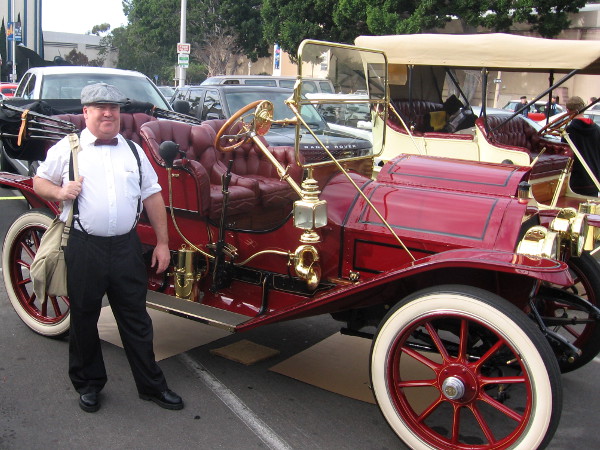
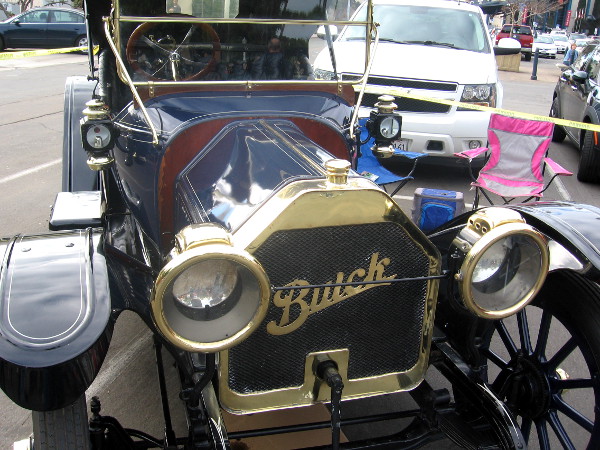
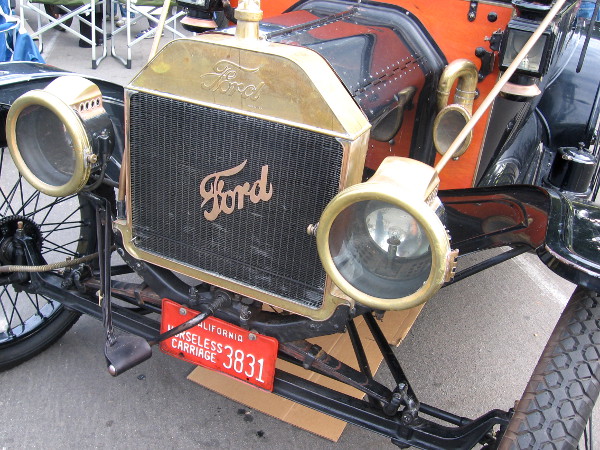
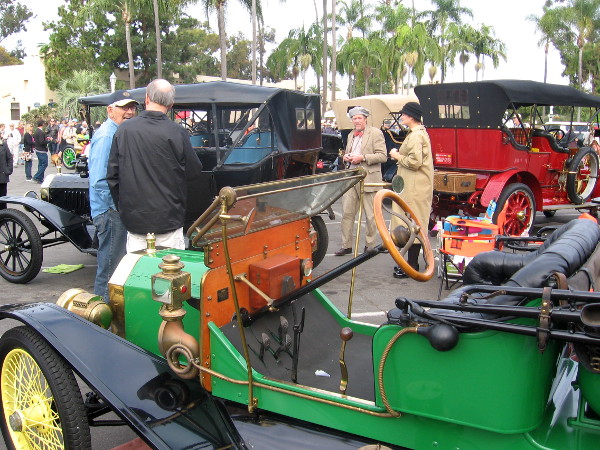
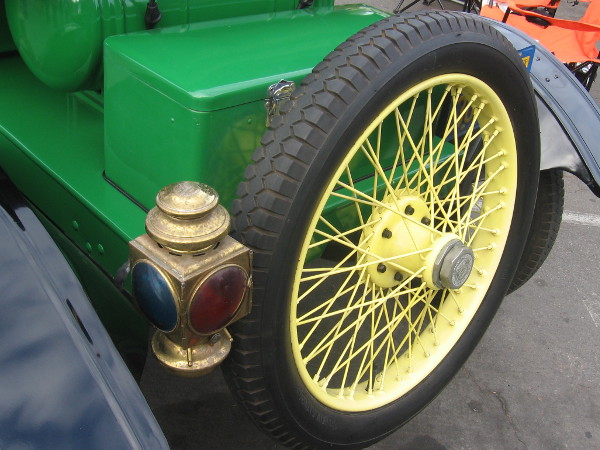
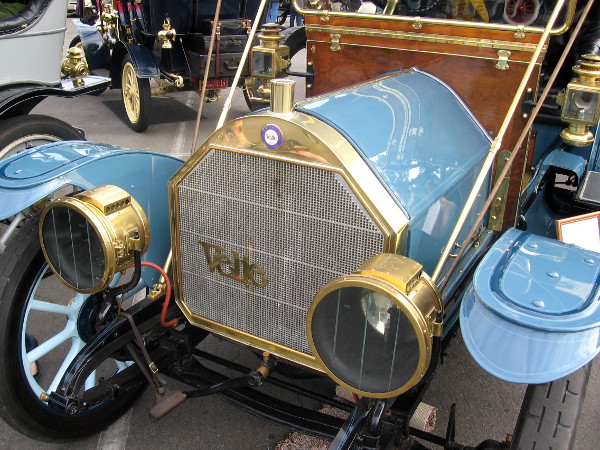
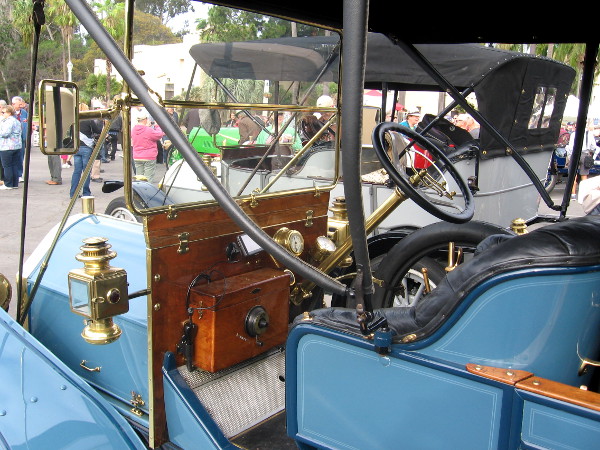
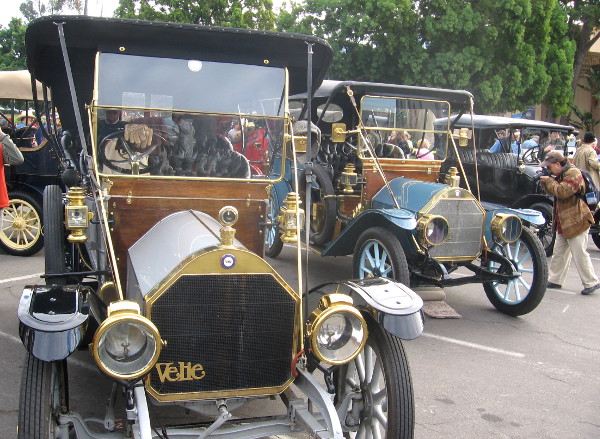
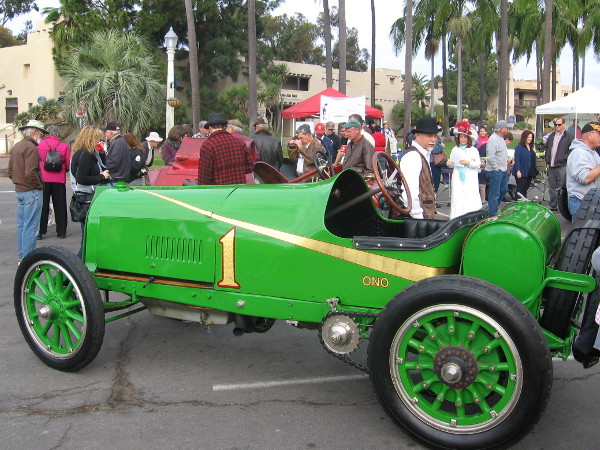
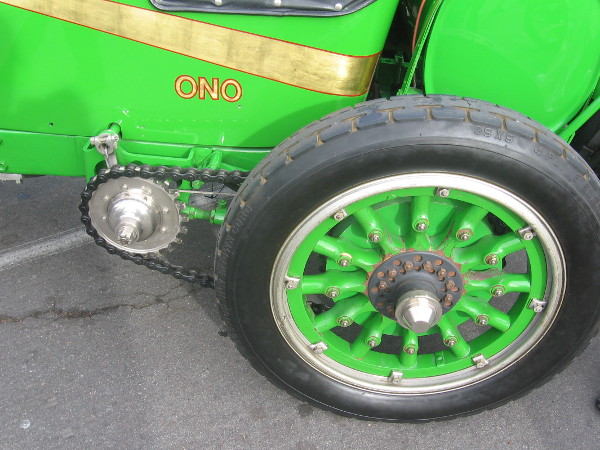
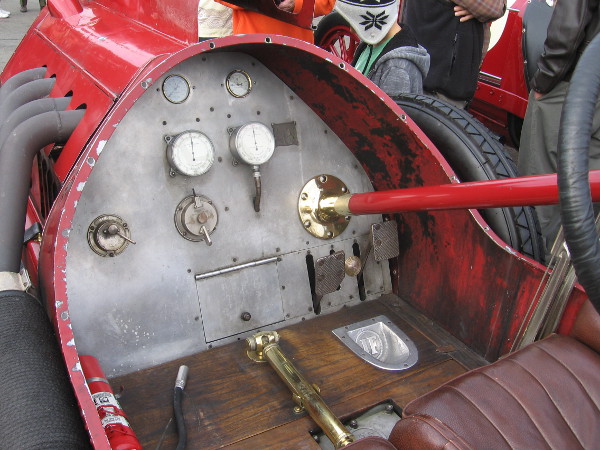
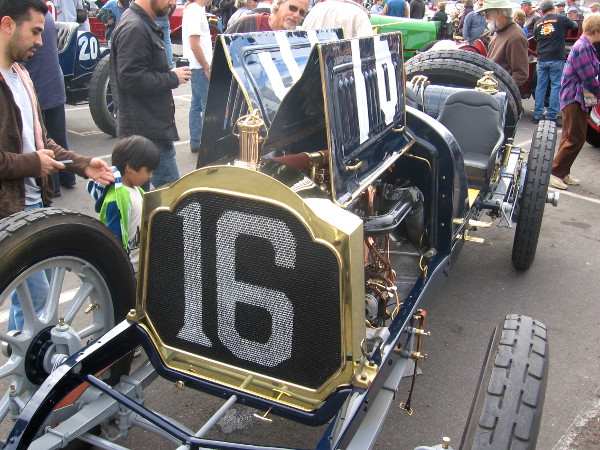
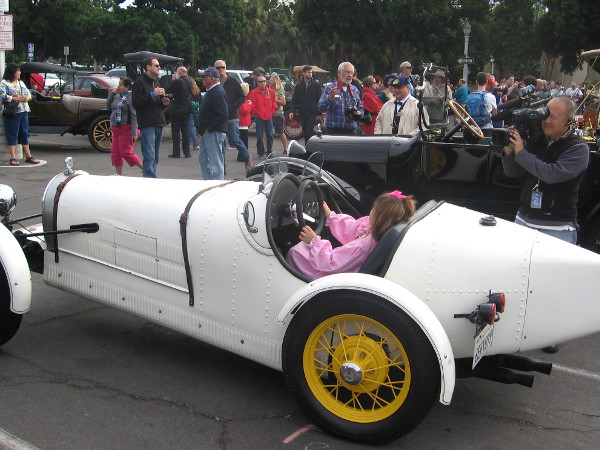
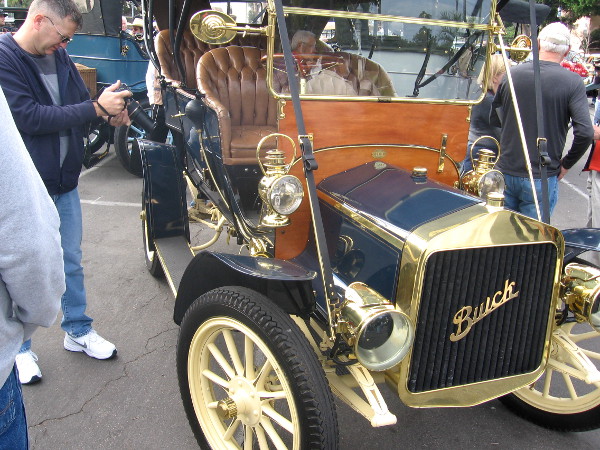
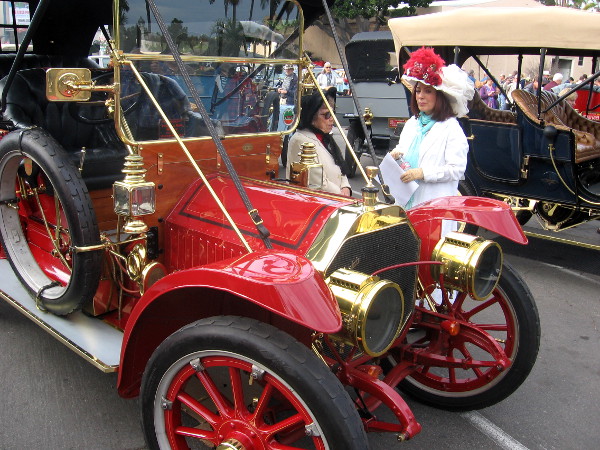
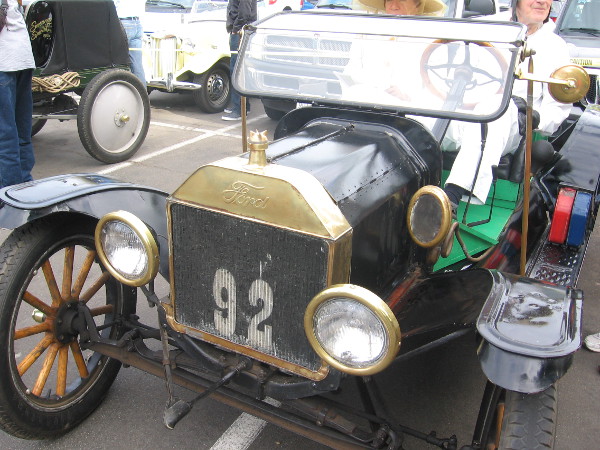
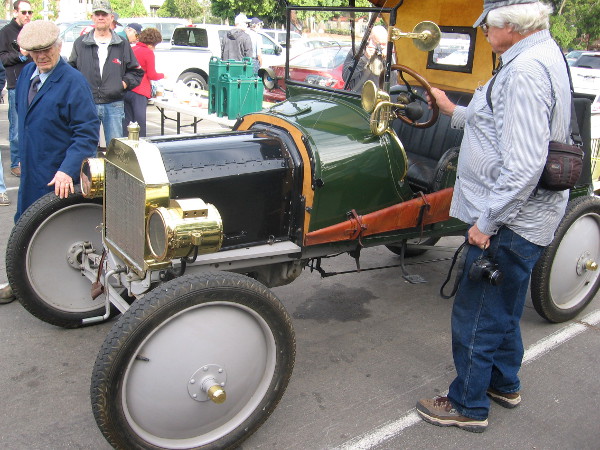
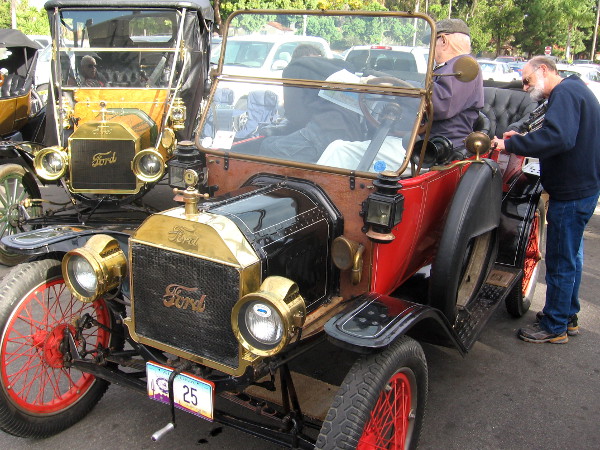
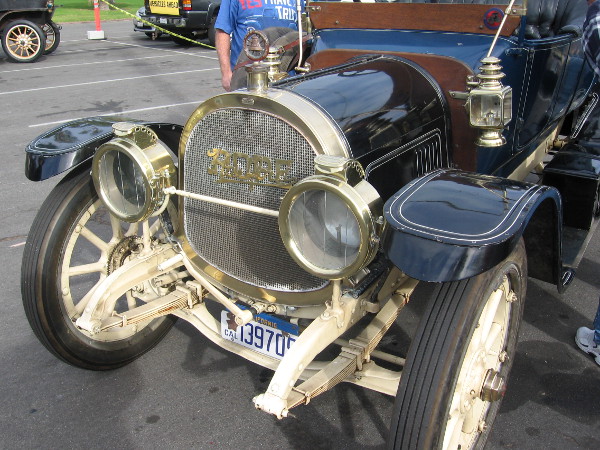
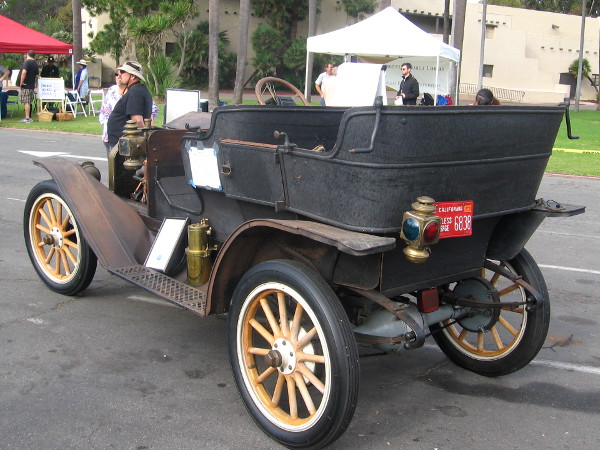
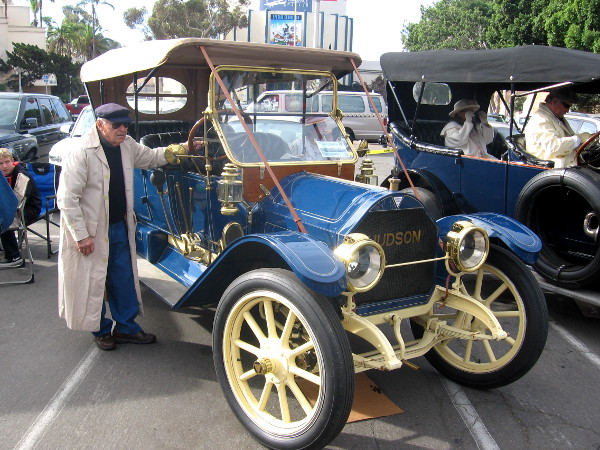
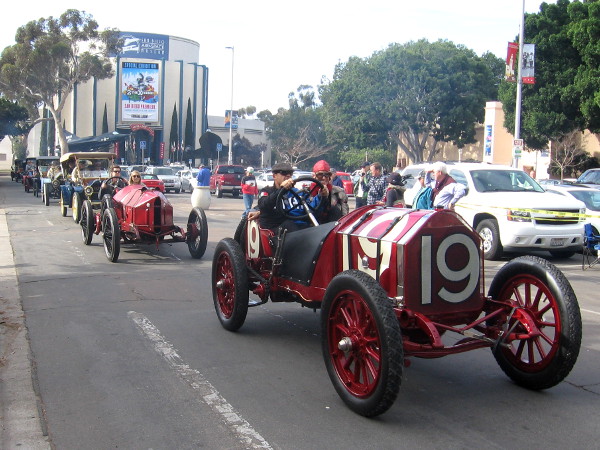
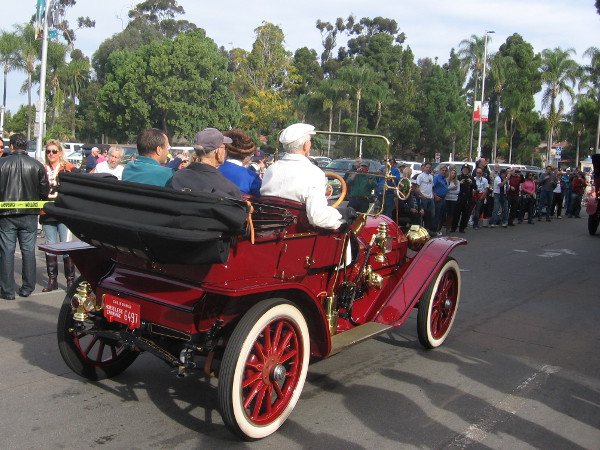
Guy drives his classic automobile through Balboa Park, heading to a special car show.Old race car is pushed into position. San Diego Automotive Museum is in the background.Vintage cars from era of Point Loma road race that began 1915 Panama-California Exposition.Someone checks out Fiat racing car at special Balboa Park Centennial event.Wooden dashboard full of knobs looks almost prehistoric compared to modern cars!Engine of 1914 Tahis Special that competed in many races!Collectibles from 1915 road race in Point Loma that kicked off Panama-California Exposition!People can still ride in style in this elegant Pierce-Arrow.Pierce-Arrow luxury automobiles in early 1900s were owned by many movie stars and tycoons.So many amazing cars were lined up in the parking lot it was hard to take it all in!1910 REO Model D Touring car has a very classic look.Check out this awesome vintage Cadillac!1909 Pope Hartford on display at Balboa Park Centennial special car show.This isn’t your father’s Buick. But it might have been driven by your grandparents!Walking around, I felt like I’d stepped back in time one hundred years!Here’s the grill of a cool Ford. License plate is for a Horseless Carriage.Colorful Ford is painted orange and green. Awesome!Red and green signal light near spare tire on back.1910 Velie Model D Touring cars were popular. Velie race cars were also successful.Many of these beautiful old cars contain lots of wood, brass and leather.Dozens of classic cars were out on public display!Inspecting another Velie, made early last century in Moline, Illinois.Very cool 1911 Ono, a vintage chain-driven race car.Someone nearby joked: It’s a motorcycle chain!And here’s a guy checking out the engine of an Italian Isotta Fraschini.Makes my own extremely modest car look downright futuristic!Chests full of tools that car mechanics would use back in the old days.Kid checks out a 1912 Packard race car in Balboa Park.Many refurbished motors were open for people to investigate.A large crowd enjoys many super cool cars in front of San Diego Automotive Museum.News cameraman gets a shot of young girl in pink pretending to race a vintage car.Racing goggles lie ready on leather seat. The road rally will begin in a few minutes!I’ve never seen so many cameras taking so many photographs in one place!Fun historical costumes were everywhere you turned.This fellow is ready to go! It’s a perfect Saturday morning for a road trip!It might have a dent or two, but it still runs!One guy checks out the steering wheel, another the unusual wheels on the asphalt!Getting the engine started with the old hand crank!Gentlemen, take your seats! We’re about to get started!Don’t touch this fancy car unless you are nude! (And showered, presumably.)I love this shiny oval grill on a Pope-Hartford.Not sure how this old horseless carriage would fare in a race.That’s as primitive a motorcar as you’re likely to ever see.Folks are shooting the breeze and having a whole lot of fun!This guy is getting ready to climb aboard a gorgeous classic Hudson.Car show disbands and crowds have scattered to make way.Here they come! That’s the San Diego Air and Space Museum in the background.Many drivers and onlookers wore fashion styles from early 20th century.A long line of beautifully restored hundred-year-old autos rumbles past.Heading out of Balboa Park for Point Loma, where historic 1915 race will be commemorated.
…
To enjoy future posts, you can “like” Cool San Diego Sights on Facebook or follow me on Twitter.
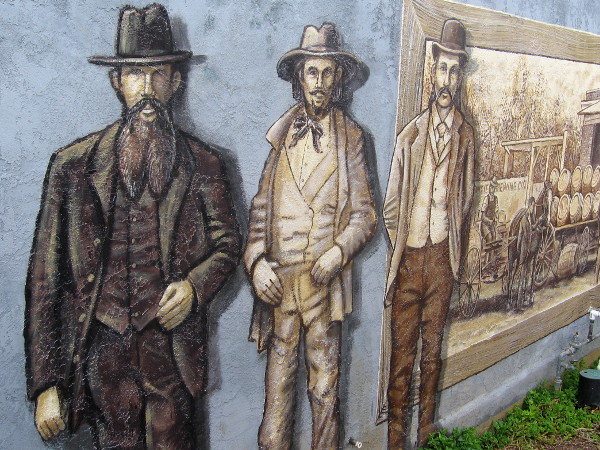
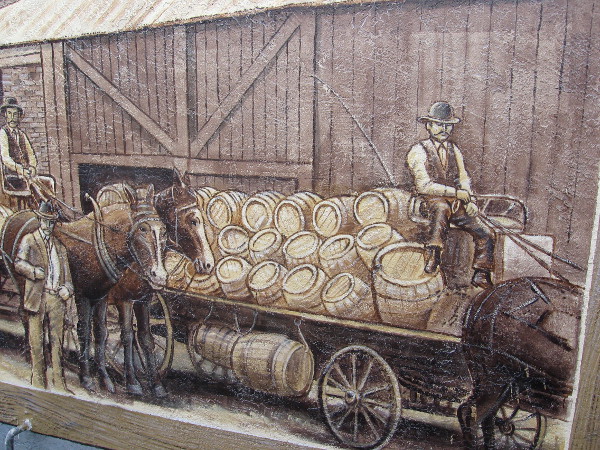
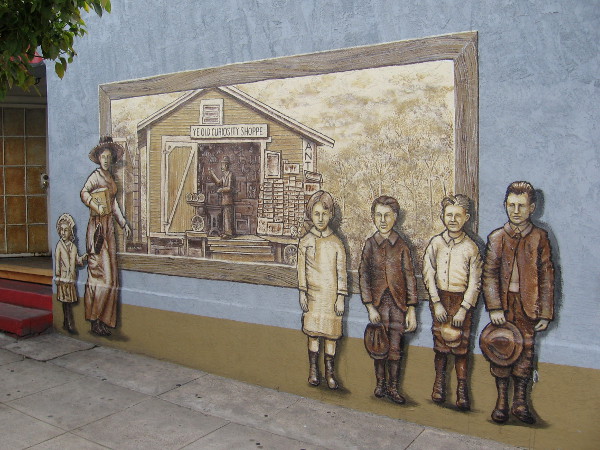
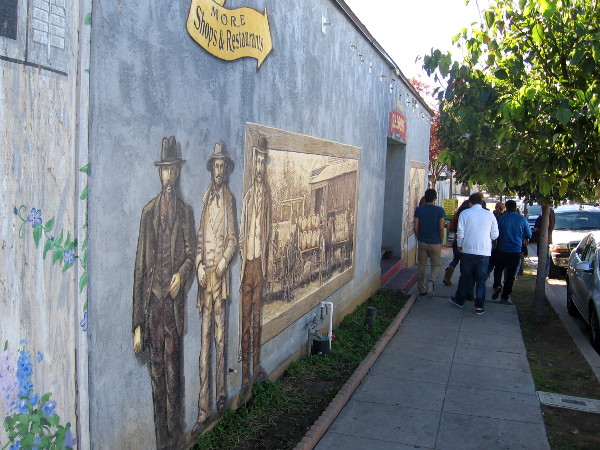
Several whiskered Western characters pose in a mural on Harney Street in Old Town.
There’s a fairly new street mural in Old Town that I really like. Every time I see it, my imagination travels back in time. Back to the first half of the 19th century.
San Diego for many decades was a tiny town seemingly in the middle of nowhere. Whether it belonged to Spain, or Mexico, or the United States, Old Town San Diego was a place of dusty roads and modest, sun-baked adobe houses, horses and wagons, rugged settlers and ranchers. Characters from that era seem to live again in this mural.
Artist Frank Mando painted this artwork in 2013. I couldn’t capture the entire piece in one shot. Enlivening a building at the corner of San Diego Avenue and Harney Street, the mural is divided in two by a door of the Old Town Saloon. Standing inside that door, as you’ll see, there seems to be a well-known movie star!
Freight wagon hauls a load of barrels in fun art that recalls early San Diego history.John Wayne seems to be coming through a door of the Old Town Saloon.Elegant lady and girl from long ago stroll past Ye Old Curiosity Shoppe.Old Town mural on building wall was painted in 2013 by artist Frank Mando.Kids standing along sidewalk seem to have materialized from San Diego’s past.People walk past nostalgic street mural near side entrance to Old Town Saloon.
…
To enjoy future posts, you can “like” Cool San Diego Sights on Facebook or follow me on Twitter.
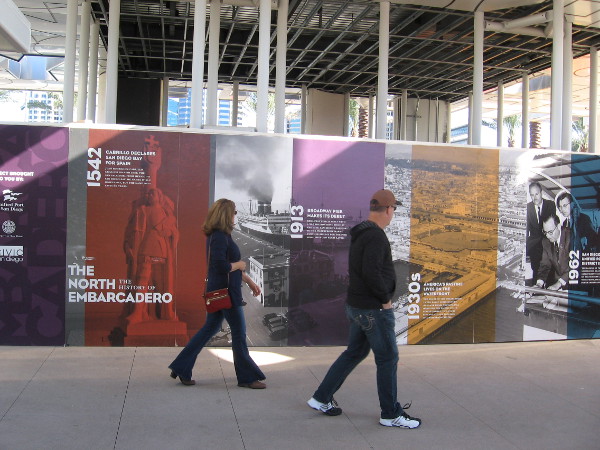
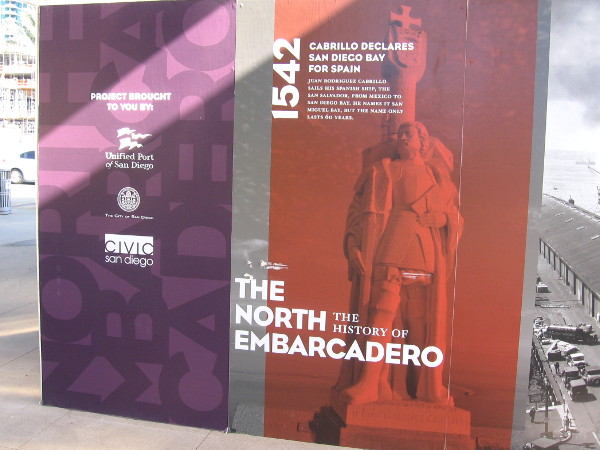
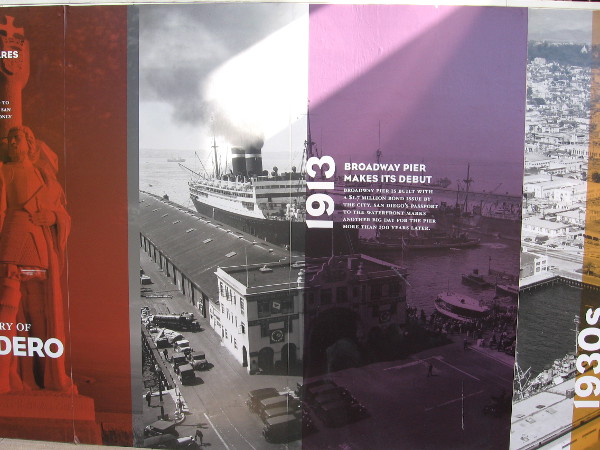
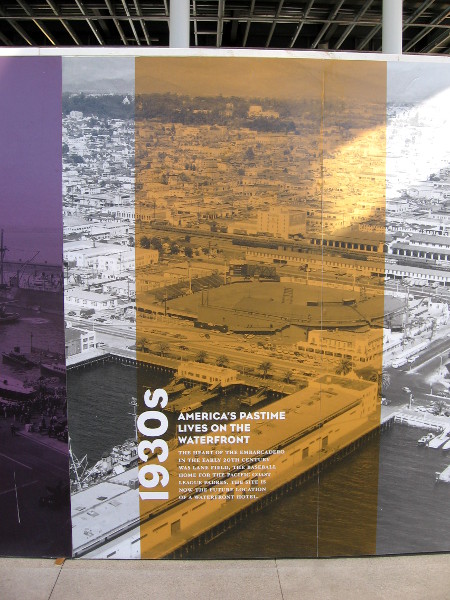
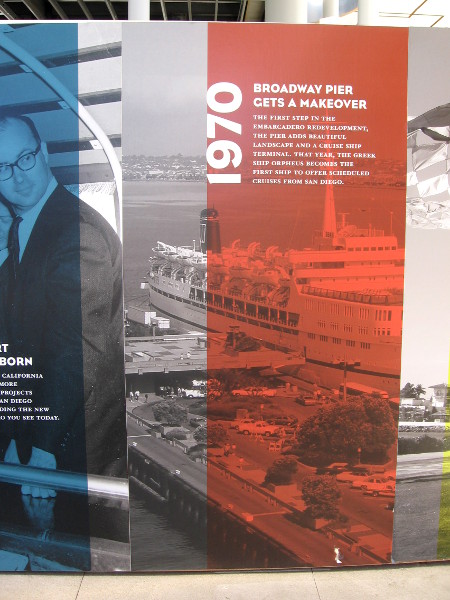
Images around a new pavilion near Broadway Pier show history of the Embarcadero.
San Diego’s Embarcadero has undergone some major renovations. One of the new pavilions still under construction near the Broadway Pier features a large display that provides a timeline of the area’s history. Notable developments along the waterfront through the passing years are documented with historical photographs.
While many of these images concern more recent events, it still makes a fascinating visual time capsule. Here are some pics that I took!
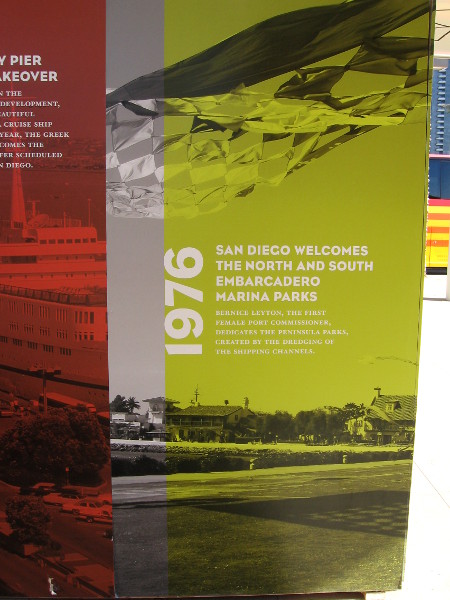
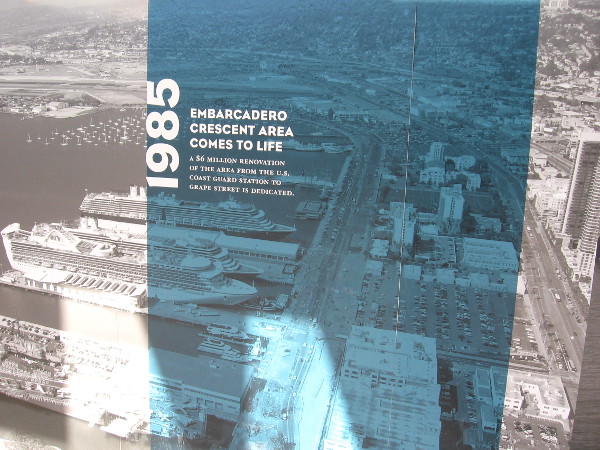
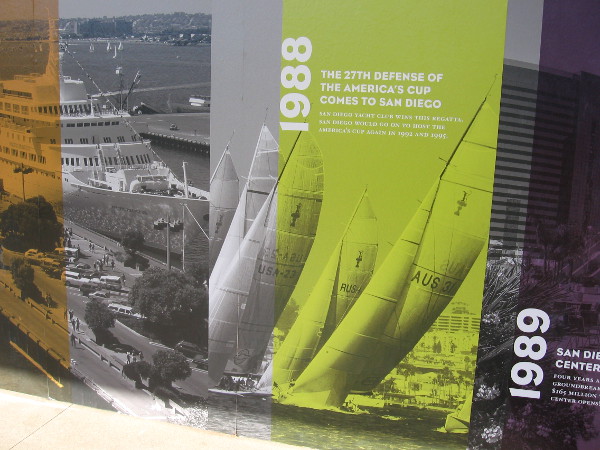
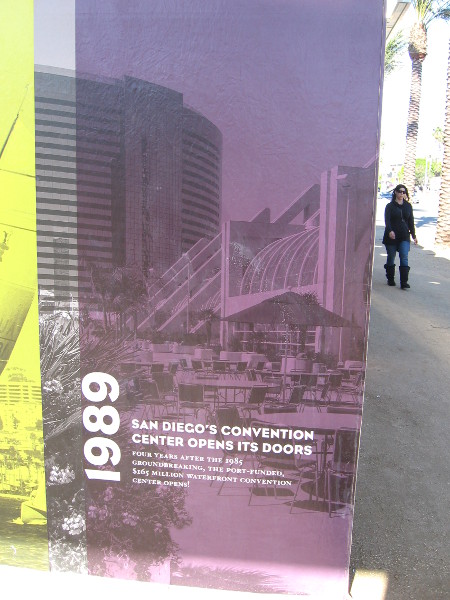
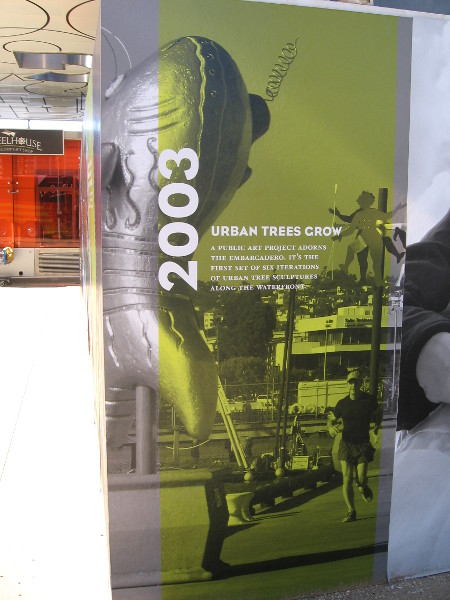
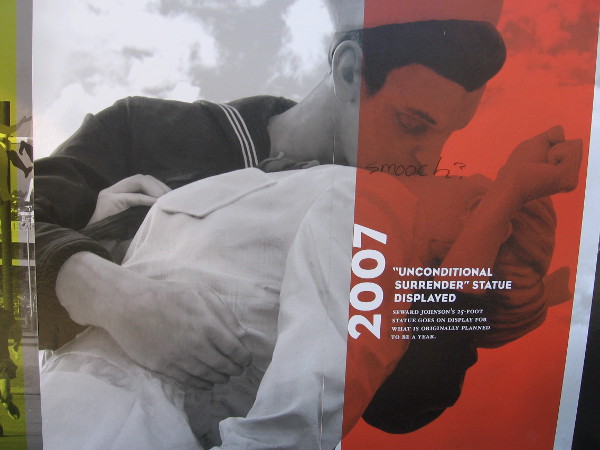
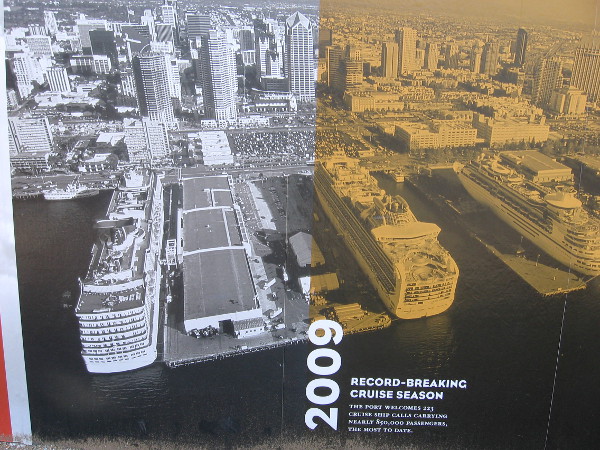
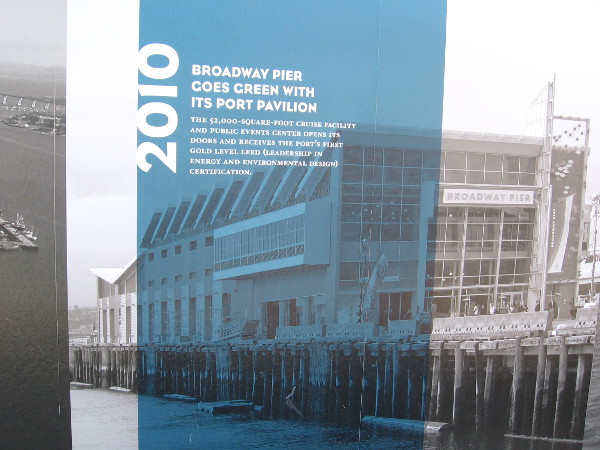
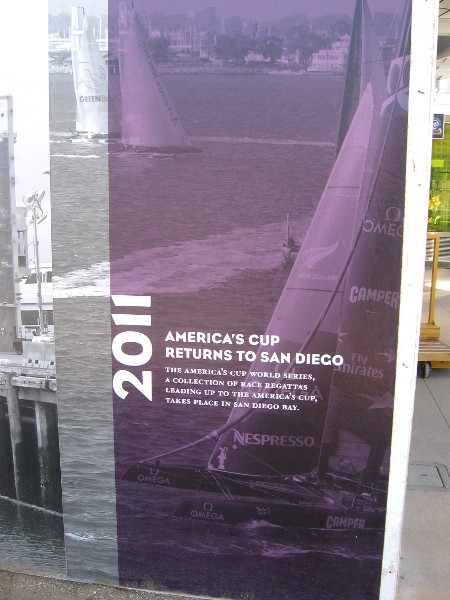
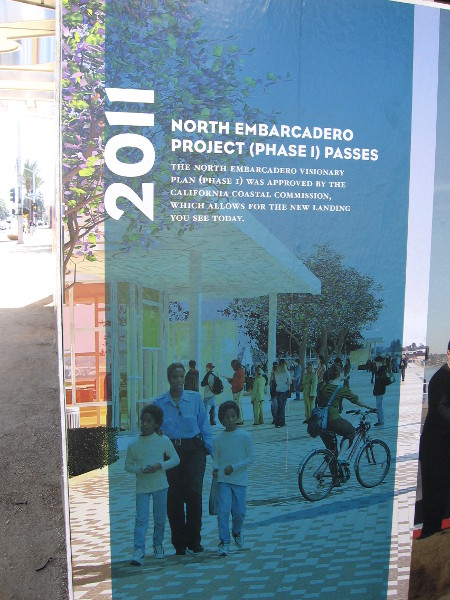
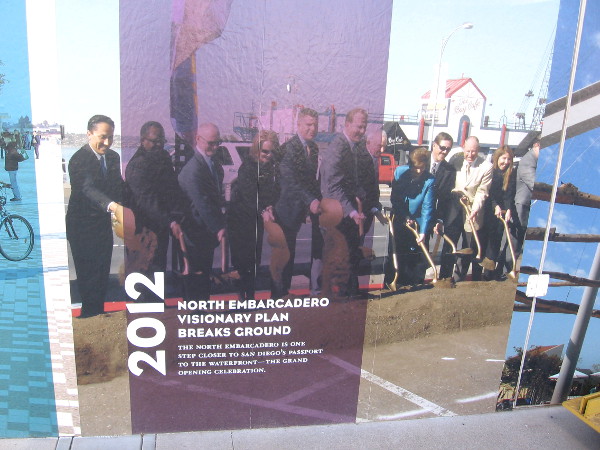
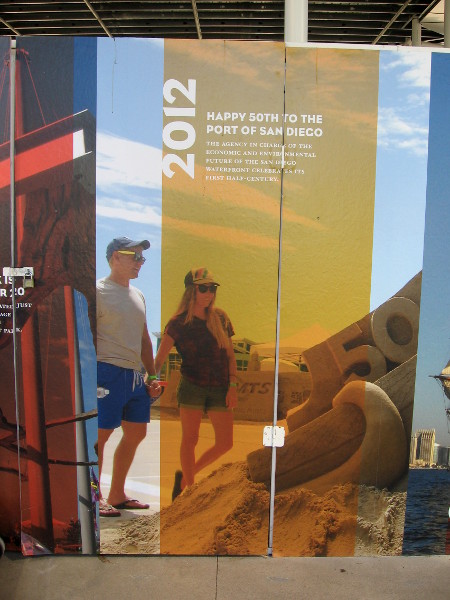
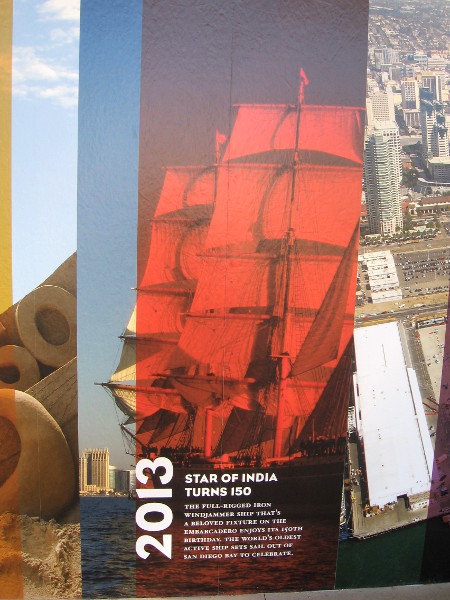
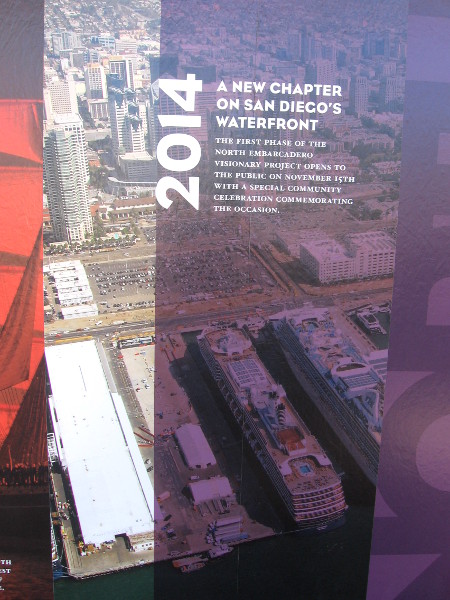
1542: Juan Rodriguez Cabrillo claims San Diego Bay for Spain. He named it San Miguel Bay.1913: San Diego’s Broadway Pier makes its debut. It certainly looks different today!1930s: Baseball played across street. Lane Field was home of Pacific Coast League Padres.1962: San Diego Unified Port District is established.1970: Broadway Pier gets a makeover. A cruise ship terminal is added.1976: North and South Embarcadero Marina Parks are dedicated.1980: Seaport Village becomes the newest San Diego attraction.1985: North Embarcadero’s Crescent area renovated.1985: Princess Cruises bases its “Love Boat” in San Diego.1988: San Diego Yacht Club successfully defends America’s Cup.1989: San Diego Convention Center opens.2003: First of six Urban Trees art exhibits along the Embarcadero.2007: Seward Johnson’s Unconditional Surrender statue goes on display near USS Midway.2009: A record-breaking cruise ship season!2010: Port Pavilion opens on Broadway Pier. It’s been over four years already? Time flies!2011: America’s Cup World Series regatta takes place on San Diego Bay.2011: North Embarcadero Project (Phase 1) passes.2012: North Embarcadero Visionary Plan breaks ground nearby.2012: Ruocco Park immediately north of Seaport Village is dedicated.2012: Port of San Diego is 50 years old.2013: San Diego’s historic Star of India tall ship turns 150 years old.2014: Lots of cool waterfront improvements opened, including this pavilion!
…
To enjoy future posts, you can “like” Cool San Diego Sights on Facebook, or follow me on Twitter.
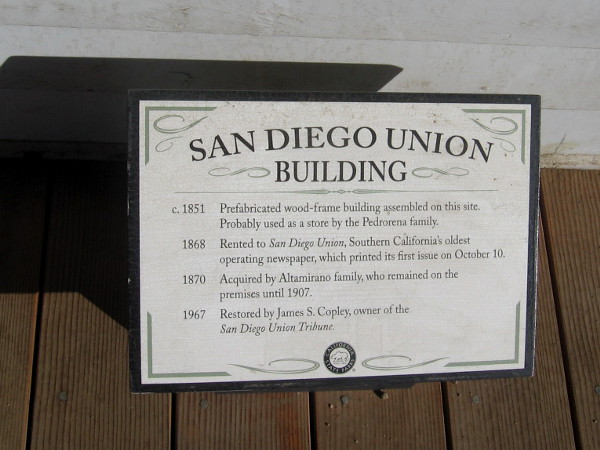
Plaque marks the birthplace of the San Diego Union newspaper in 1868.
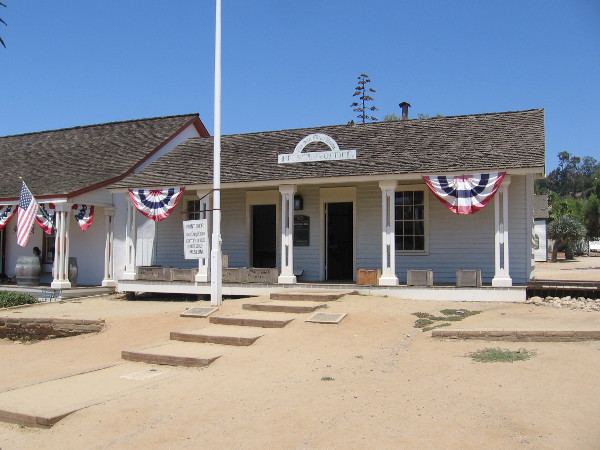
There are many interesting houses and buildings within Old Town San Diego State Historic Park. One of the most fascinating is the San Diego Union Building. Take a step inside and you’ll see the carefully restored birthplace of a present-day major newspaper: the San Diego Union Tribune.
The framework of the building, erected around 1851, is believed to have been originally fabricated in Maine, then shipped to San Diego around Cape Horn. The San Diego Union was first published on October 10, 1868. The newspaper’s editor at that time was Edward “Ned” Wilkerson Bushyhead, a Cherokee Indian with a Scottish ancestor.
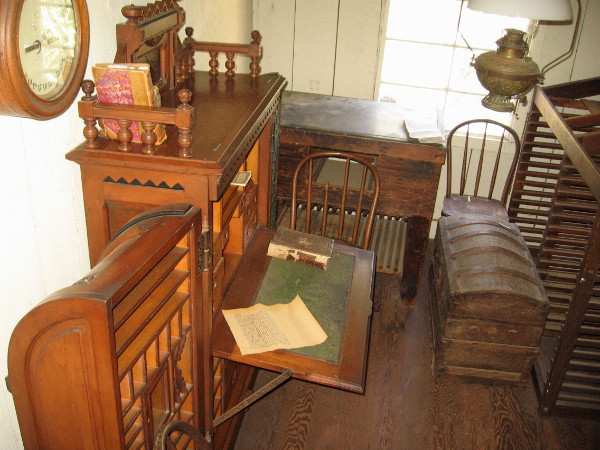
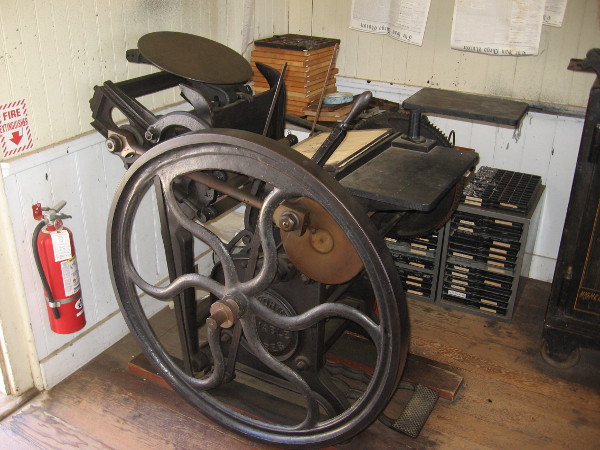
The newspaper began as a modest four page weekly, and was produced on a massive wrought iron Washington hand press. In the museum one can also see an authentic 1860’s recreation of the editor’s room, which contains a desk once owned by the son of Ulysses S. Grant!
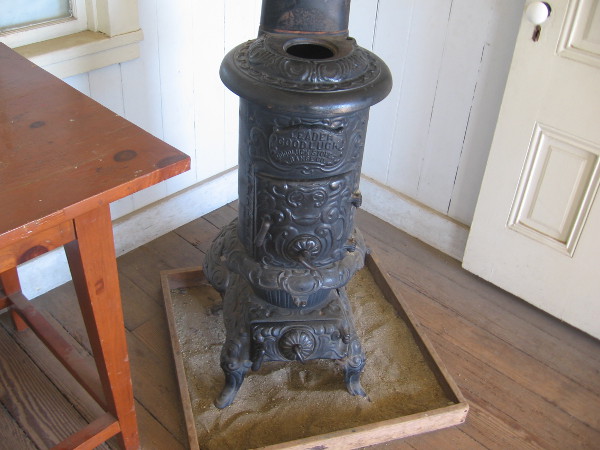
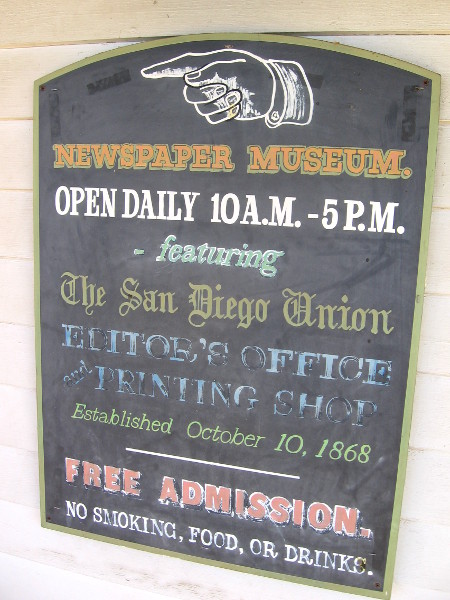
The San Diego Union Building in Old Town San Diego State Historic Park contains a print shop and editor’s office.The prefabricated wood-frame building was erected circa 1851. In 1967 the building was restored by James S. Copley, who at the time was owner of the San Diego Union Tribune.Old wood stove just inside the front entrance of accurately restored newspaper office.Drawers hold hand-set type that used to be assembled in a press for newspaper printing.A massive Washington hand press can be glimpsed to the right in the small printing shop.The small editor’s office contains a desk once owned by the son of President Ulysses S. Grant. In 1910 Ulysses S. Grant, Jr. built a grand hotel in San Diego’s New Town. (I took this photo in August 2017.)The Newspaper Museum is open daily from 10 to 5.
UPDATE!
In August 2017, during Stagecoach Days in Old Town, I was able to actually enter the print shop and take better photos of the presses and other objects inside. (Usually visitors must peer or take photographs from a greater distance.)
Washington hand presses were common on the frontier because of their relative light weight. They required two people for efficient operation.Fresh paper was laid on inked type and an impression made. Setting the type for new articles on just one page could take hours. Fortunately, many advertisements on a page didn’t change.A jobber printing press like this would have been used for small jobs such as stationery and handbills.This safe is the only original object displayed inside the restored San Diego Union Building in Old Town.A type case full of large cast metal sorts. Individual letters were combined into words, sentences and paragraphs. UPDATE! Big mistake by the caption writer: me! The largest letters you see in the above photo are actually made of hard wood. I was corrected by a member of the 919 Gang blog, who’s far more knowledgeable than me. I returned to the museum to confirm this. I learned very large metal sorts would be very heavy!Manual typesetting for old presses, as one might imagine, took lots of patience and a good eye.Gazing from the print shop toward the small building’s entrance area.According to one sign, the San Diego Union Building was erected around 1850 by Miguel Pedrorena. The Washington Press, type and printing supplies arrived by steamship from Northern California.A knowledgeable lady in period attire explains how the San Diego Union newspaper was composed and printed a century and a half ago, long before the digital age.
…
To enjoy future posts, you can “like” Cool San Diego Sights on Facebook or follow me on Twitter.
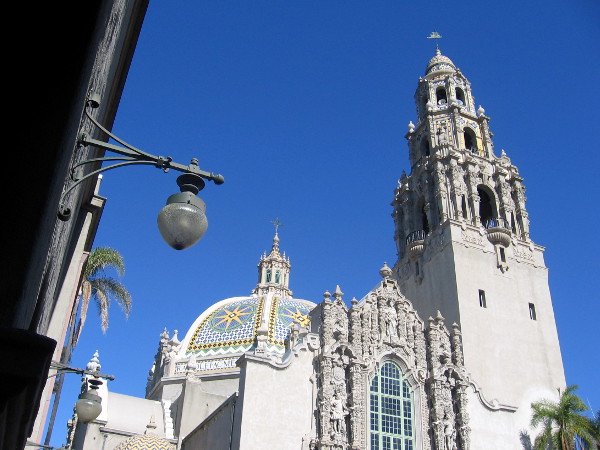
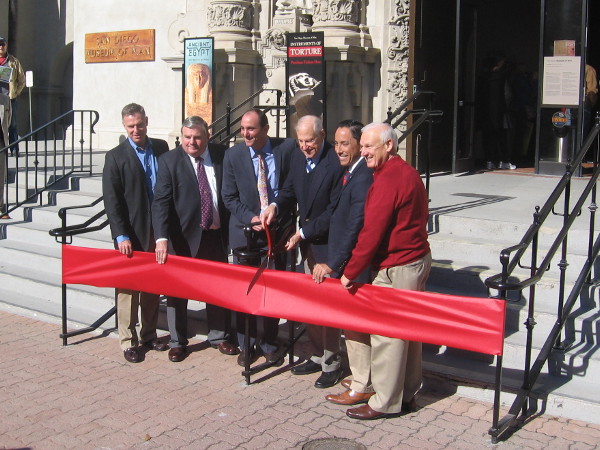
Dignitaries cut symbolic ribbon officially opening California Tower on New Year’s Day.
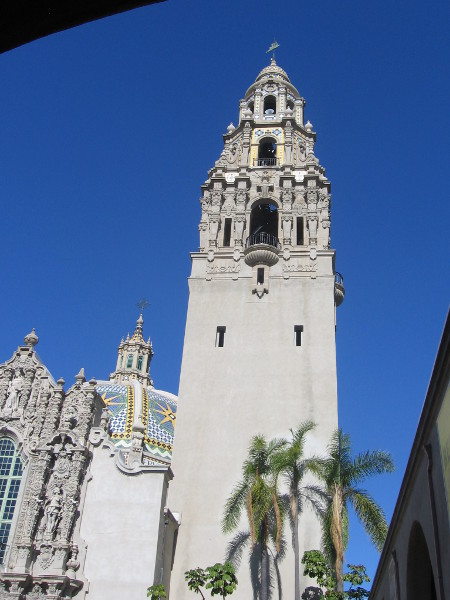
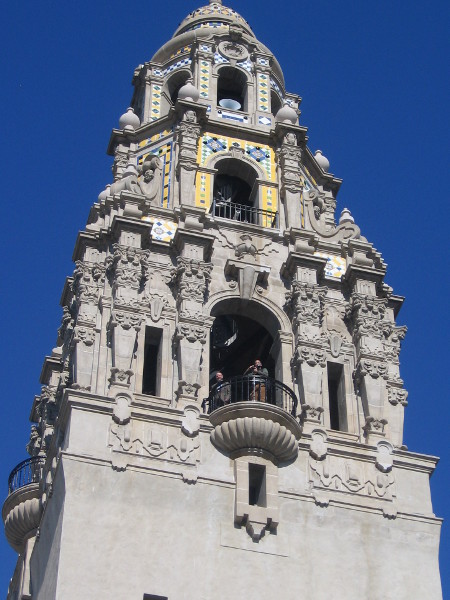
New Year’s Day in San Diego’s beautiful Balboa Park was marked by a historic event. Today, after 80 years, the California Tower reopened to the general public!
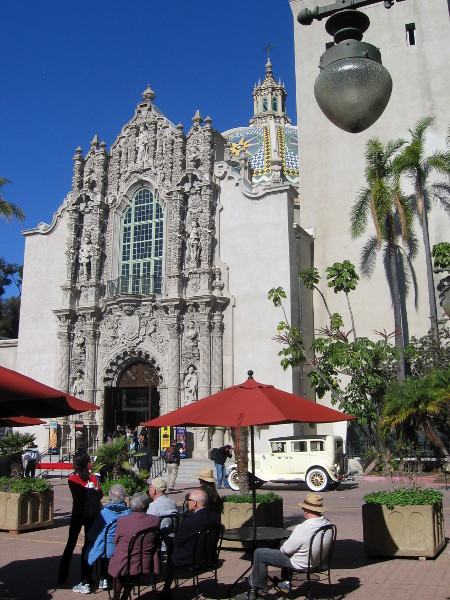
The California Tower is one of the most iconic sights in San Diego. Like many of the ornate Spanish Colonial Revival-style buildings in today’s Balboa Park, it was built for the 1915 Panama-California Exposition, which celebrated the opening of the Panama Canal. The tower was originally accessible to visitors, but in 1935 that changed. One of the most important developments during the Balboa Park Centennial Celebration this year is the long-awaited reopening of the amazing tower!
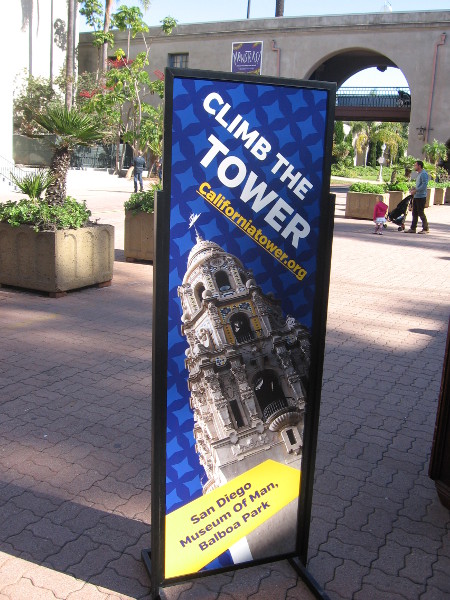
With the purchase of a special ticket, anyone can now join a small tour that climbs up 125 steps to an observation deck high above the park. Views are said to be breathtaking in all four directions. One day (when it’s not sold out) I’ll check the tour out and post some pics!
Dignitaries at the noon ribbon-cutting ceremony included U.S. Congressman Scott Peters, San Diego County Supervisor Ron Roberts, and San Diego City Councilman Todd Gloria.
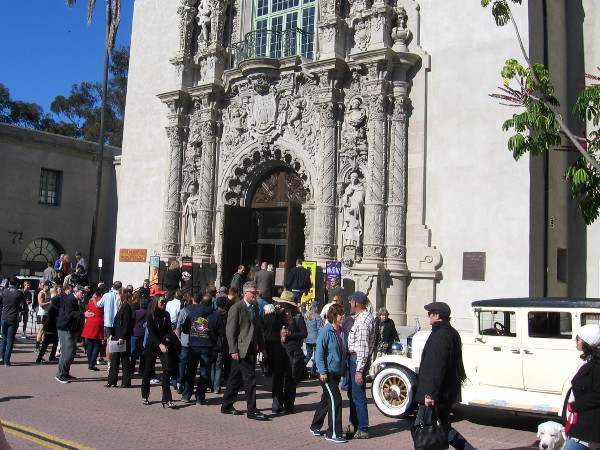
You might recognize the California Tower and other portions of the California Building, which now houses the San Diego Museum of Man, from the movie Citizen Kane. Shots of Balboa Park’s architectural wonder were said to be Charles Foster Kane’s Xanadu Mansion in Orson Welles’ classic film.
The tower, reopened today to the general public, rises above tiled dome of California Building.Museum visitors can now climb the California Tower for amazing panoramic views.Audience gathers for ceremony on the tower’s 100 year anniversary.Several cool bicyclists happened to ride down El Prado in front of the Museum of Man.News cameras wait for speeches, and so do the assembled dignitaries nearby.Micah D. Parzen of the San Diego Museum of Man begins by thanking many people.California Tower first opened in 1915 for Panama-California Exposition in Balboa Park.Photographers up on the observation deck, where the public can now go!Local politicians, museum head and donor, poised ready to cut the big red ribbon!Feeling great about historic event, taking place during Balboa Park’s Centennial Celebration.Crowd disperses from ribbon cutting ceremony on another beautiful San Diego day!
…
To enjoy future posts, you can “like” Cool San Diego Sights on Facebook or follow me on Twitter.


























































 Cool San Diego Sights!