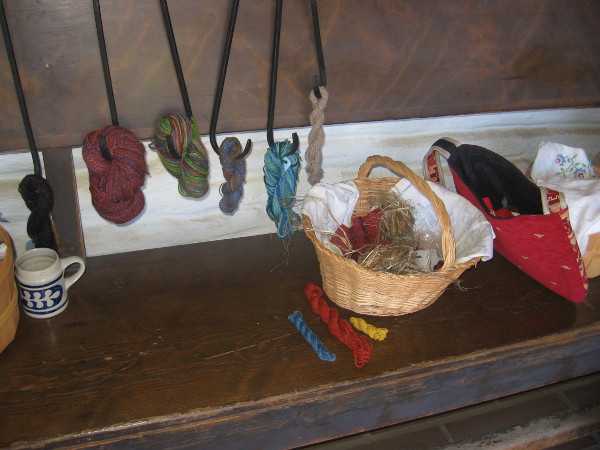
Yarns dyed many different colors out on display in San Diego’s Old Town.
One more quick post from today’s stroll through Old Town San Diego State Historic Park. After going on the free walking tour, which I do every few years to jiggle my memory, I observed that a couple of unique exhibits were out on public display. One concerned yarn, the other twine. A “string” of coincidence too good not to blog about!
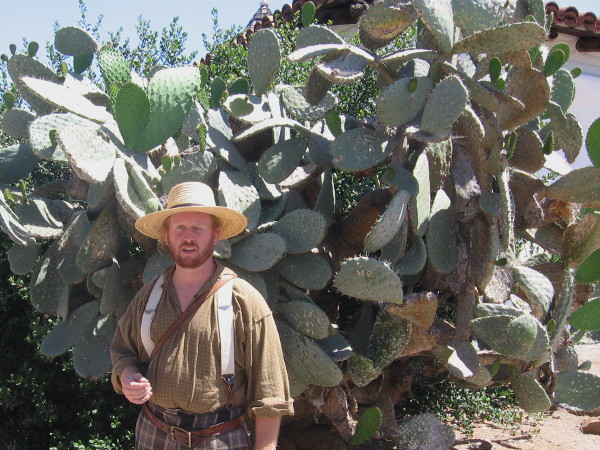
During the tour, our knowledgeable guide explained how red dye in the olden days was derived from a particular insect–the cochineal. The cochineal is a beetle that can be found on prickly pears, a cactus which grows abundantly in arid San Diego. While we watched, the guide plucked one from a prickly pear next to the Casa de Estudillo, then crushed it. His fingers turned bright purple from the beetle juice! (He explained the British Red Coats dyed their uniforms with cochineal, but Purple Coats didn’t sound quite so fierce.)
Tour guide ready to produce some reddish dye.
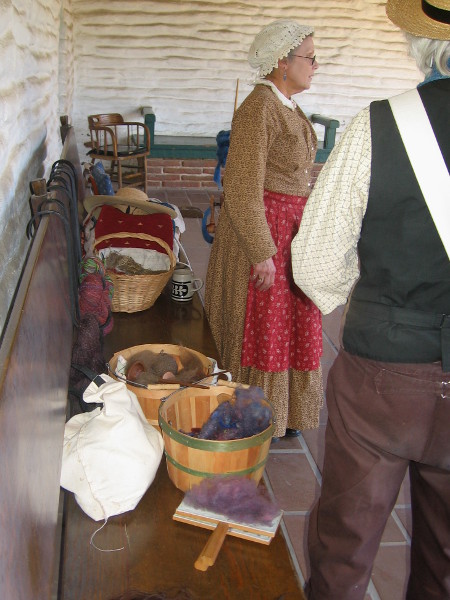
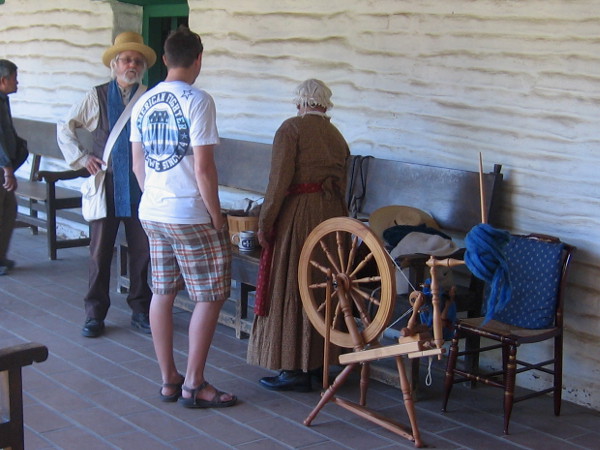
After the tour ended, two volunteers inside the Casa de Estudillo were demonstrating how yarn used to be made. To dye the fibers, both cochineal and indigo dye were commonly used. A spinning wheel served to demonstrate the hard work required to live comfortably before our more modern conveniences.
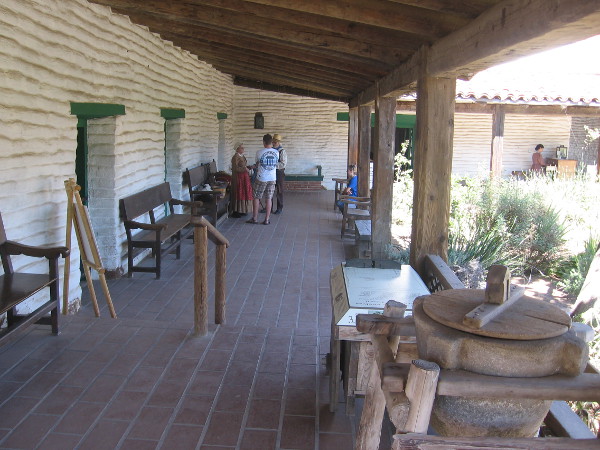
La Casa de Estudillo, an elegant adobe house built in 1827 by a wealthy Californio family that owned several large ranchos in Southern California.Volunteers in costume with baskets of color. They told me some yarns concerning San Diego’s complex, fascinating history.State Park volunteers describe life in early San Diego, when spinning wheels were common household objects.
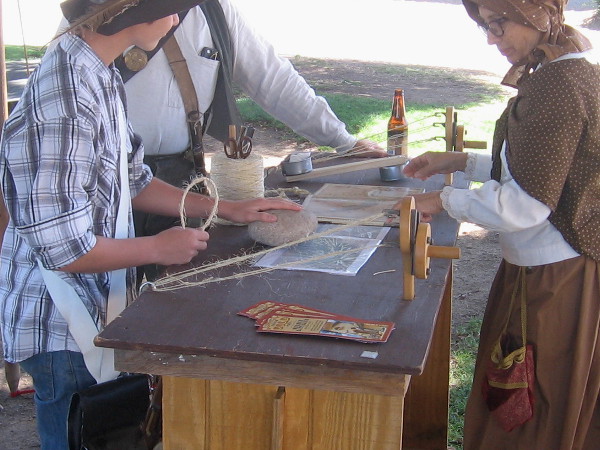
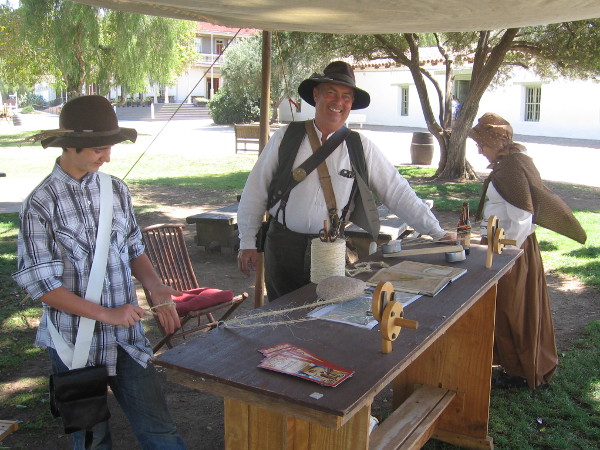
Out in one corner of Old Town’s big central plaza, some friendly Mormons were demonstrating the making of twine. Like the native prickly pear, yucca plants have always been plentiful in San Diego’s desert-like environment. The tough fibers in the leaves, once extracted, are dried and then twisted using a simple mechanism to create primitive but very practical twine or rope.
Making twine involved twisting fibers found in native yucca plants.Mormon guy smiles as he exhibits rope-making in Old Town. The Mormon Battalion was one of many diverse participants in San Diego’s early history.
Someday I’ll probably blog about the amazing, hour-long Old Town walking tour. I need some more photos and many more notes before I undertake that, however!
…
To enjoy future posts, you can “like” Cool San Diego Sights on Facebook or follow me on Twitter.
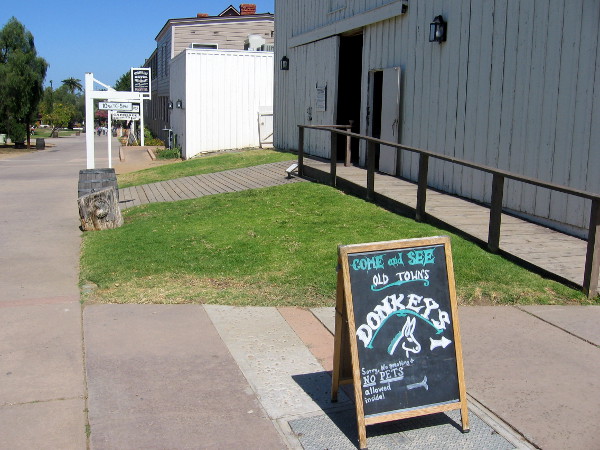
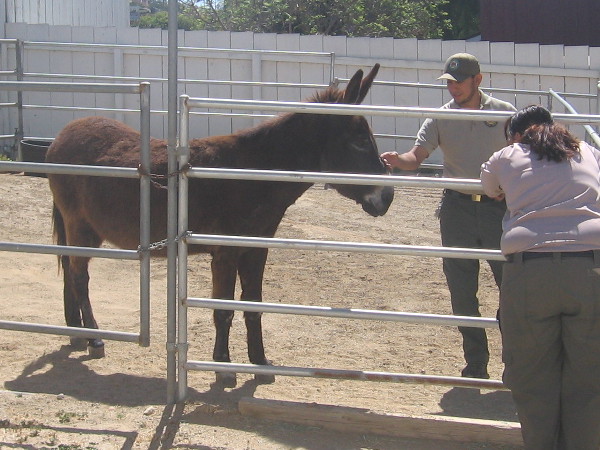
Walking through Old Town San Diego State Historic Park we see a sign beside Seeley Stable Museum. Let’s go see the donkeys!Is this one of the donkeys? Nope. Visitors and kids from local schools can ride this docile wooden critter, because touching the live donkeys is not allowed.Look! We found some horned cattle corralled in a corner! Nope. Wrong again.California State Park Rangers ahead! I think something cool is up this way!It’s 30 year old donkey Don. This guy can be grumpy, I’m told. I saw some evidence of that!Over here we meet 28 year old Dulce, which in Spanish means sweet, or candy. She (I think it’s a she–I didn’t ask) is the friendlier donkey.But the rangers here seem the friendliest of all!
Visiting school kids, with the help of Don and Dulce, can learn what life was like (particularly for a donkey) in the very early days of San Diego.
Four things I learned during my brief visit:
Donkeys were a preferred draft and pack animal because of their spine, which pound for pound is much stronger than a horse. A donkey can pull half its weight.
Donkeys are closely related to the zebra.
Don and Dulce are rescue animals.
Old Town has fun surprises around every corner!
…
To enjoy future posts, you can “like” Cool San Diego Sights on Facebook, or follow me on Twitter.
A tiny barn and rabbits in a narrow garden, located between the sidewalk and a local acupuncture and wellness center.
I recently walked through Bankers Hill, a historic neighborhood just north of downtown San Diego. During my small adventure I got a few interesting photos on and around Olive Street. Like the sights in any city, they form a mixture. Here’s a flavor of Olive in the San Diego cocktail!
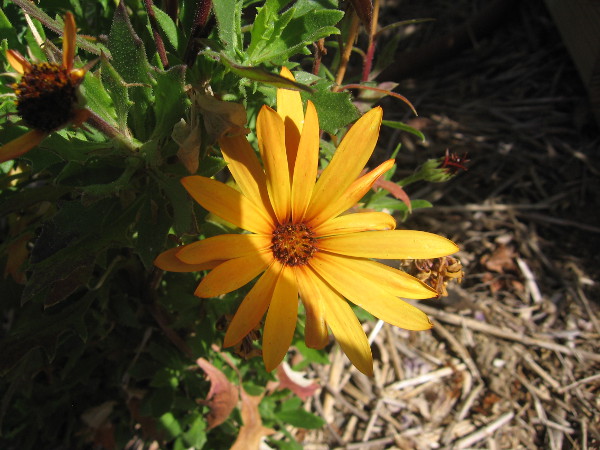
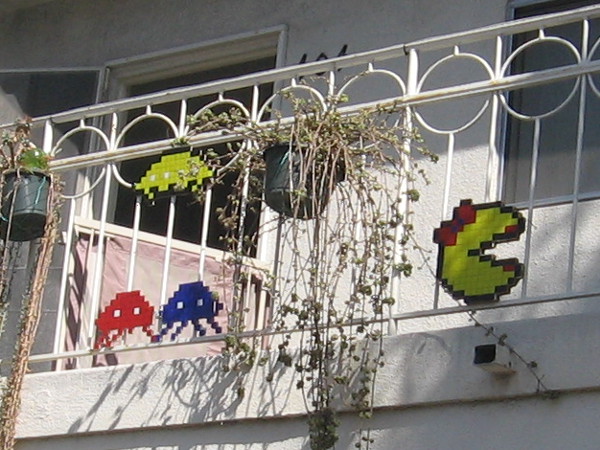
Flower at the HERBIN Community Garden Project, among plots where many herbs are grown.Ms. Pacman, Space Invaders and other video game legends hang out on a porch railing.The Amy Strong House, built in 1906 on Olive Street by an enterprising San Diego dressmaker, or couturier.Amy Strong lived here until 1912. The house is in the early 20th century Craftsman architectural style.A few unusual features anticipated the highly eccentric Amy Strong Castle at Mt. Woodson, which she built years later.Future site of Olive Street Park. This small plot of land for years has been the object of contention, as you might have seen on KUSI News’ Turko Files.Huge medical office building between Fifth and Sixth Avenue just north of Olive being demolished.Cool art hangs on residential building at corner of Fourth and Olive.
…
To enjoy future posts, you can “like” Cool San Diego Sights on Facebook or follow me on Twitter.
Table includes an Exposition Cook Book, letters, activity books, and other DAR documents.
When I was in middle school, I won a medal from the Daughters of the American Revolution for an essay I wrote about Francis Scott Key. I’d forgotten all about it until yesterday.
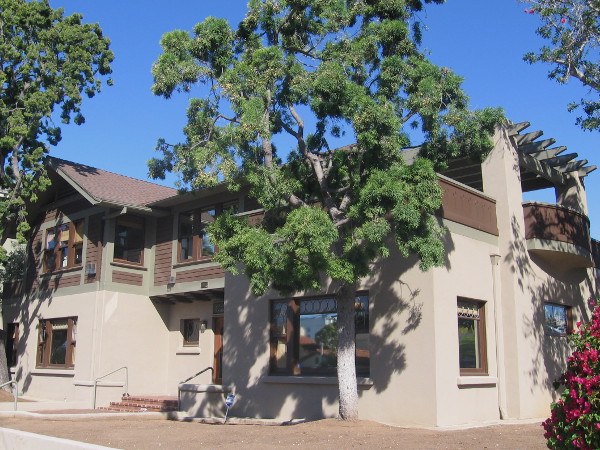
After checking out the English Village Fete at the International Cottages, I moseyed across Pan American Road to see if anything was going on in the Balboa Park Club building (which used to be the New Mexico state building during the 1915 Panama-California Exposition).
In the big Balboa Park Club Ballroom, San Diegans young and old were having a blast dancing. In the smaller Santa Fe Room, as a part of Balboa Park’s centennial events, a few smiling people were showcasing elaborate historical displays.
I was welcomed enthusiastically. The Daughters of the American Revolution San Diego Chapter was holding this event to commemorate our country’s founding and the long, interesting history of the DAR.
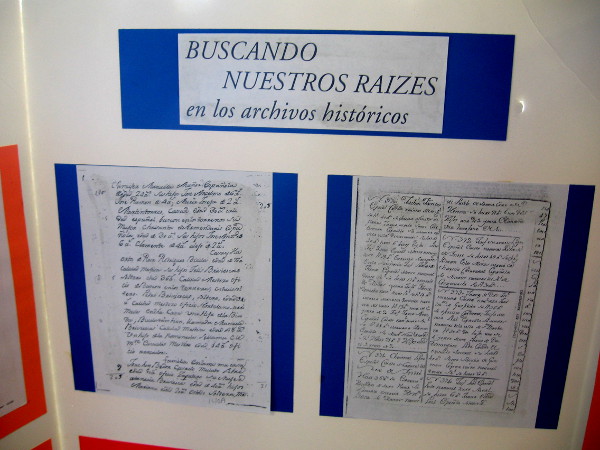
Fascinating material covered two rows of tables. Many displays concerned tracing one’s ancestry and how to search historical archives. To be a member of the lineage-based organization your family tree must include a participant in the American Revolution.
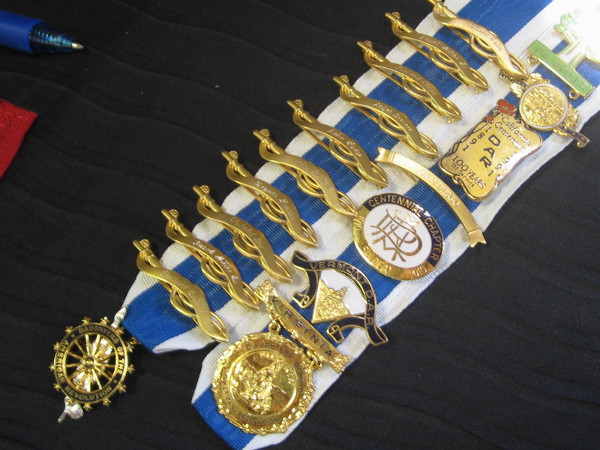
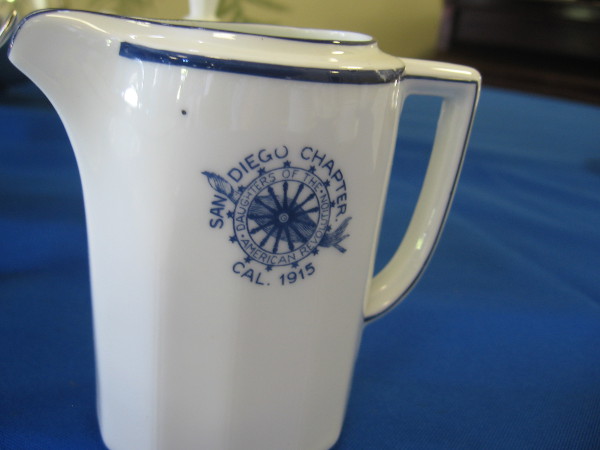
The Balboa Park Club building was designed to appear like an adobe in America’s Southwest.Daughters of the American Revolution memorabilia exhibited in Balboa Park.A Daughters of the American Revolution magazine from 1916.Interesting graphic shows first 12 Regents of San Diego DAR.Arrival in San Diego of President General of the National Society was big news in 1915.A cool exhibit by an African American lady shows her rich family history.Pins and medals of all sorts. Some contain the names of patriotic relations.One poster encourages and assists Hispanic Americans searching for their ancestors.Some beautiful quilts were out for visitors to admire.Example of china produced by the San Diego Chapter in 1915.
…
To enjoy future posts, you can “like” Cool San Diego Sights on Facebook, or follow me on Twitter.
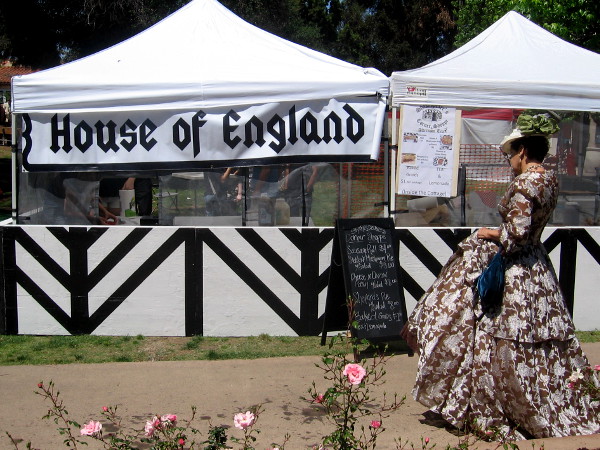
House of England tent featured British food in San Diego, a distant corner of America.
As you might have read in my last post, lots of folks converged upon Balboa Park today in a variety of historical costumes. They were celebrating the beautiful park’s one hundred year anniversary.
Most of these participants headed to the International Cottages area in the early afternoon, where a costume parade, chivalry event, dramatic performance from Shakespeare, and other activities took place. The House of England held an English Village Fete on the lawn.
I missed most events but did capture some fun pics…
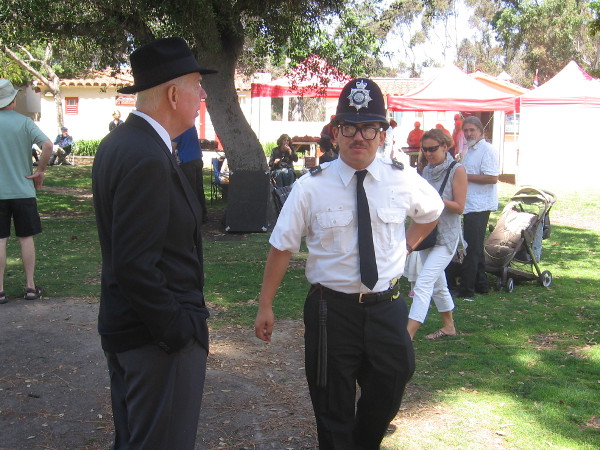
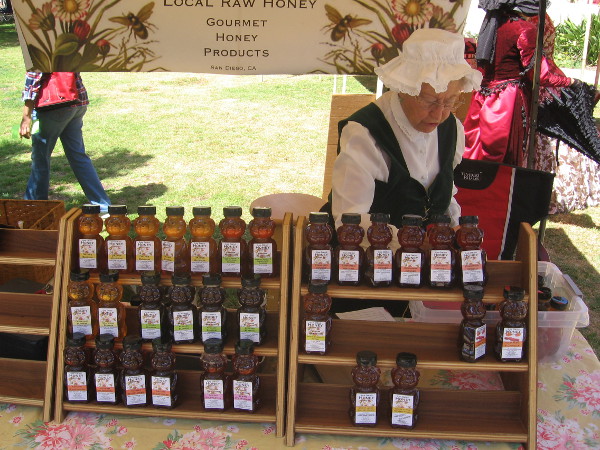
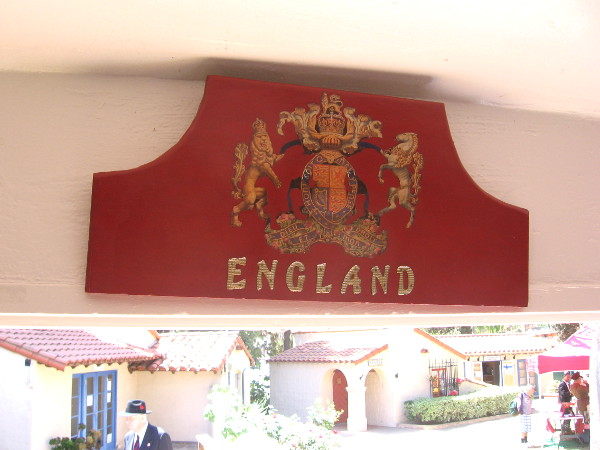
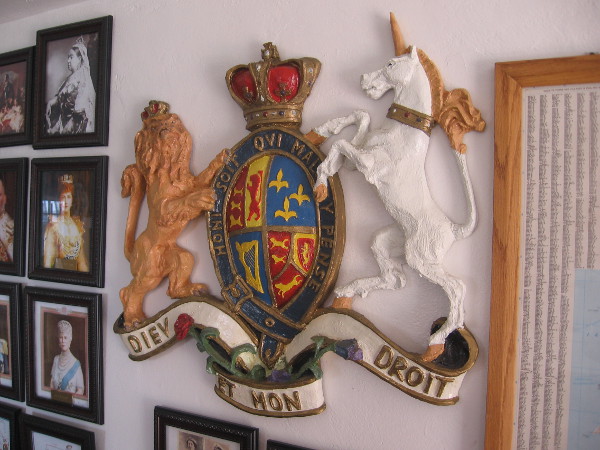
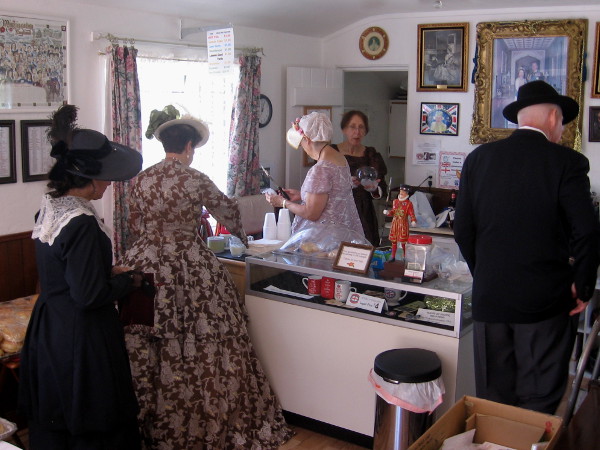
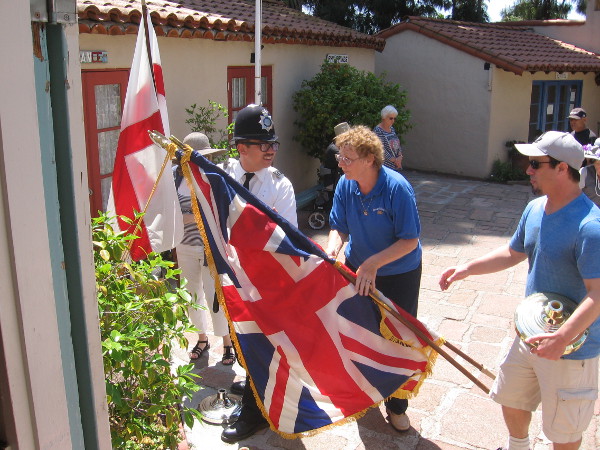
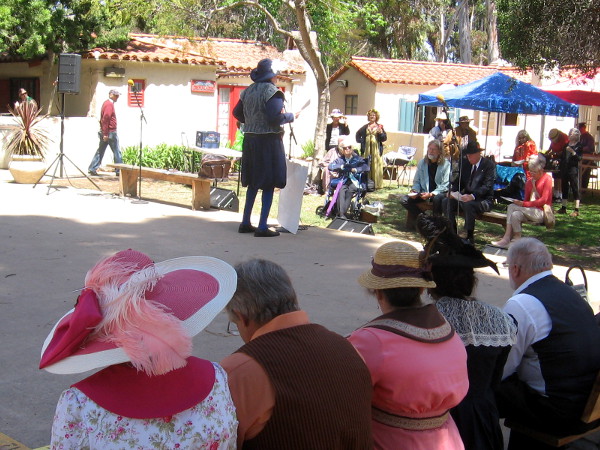
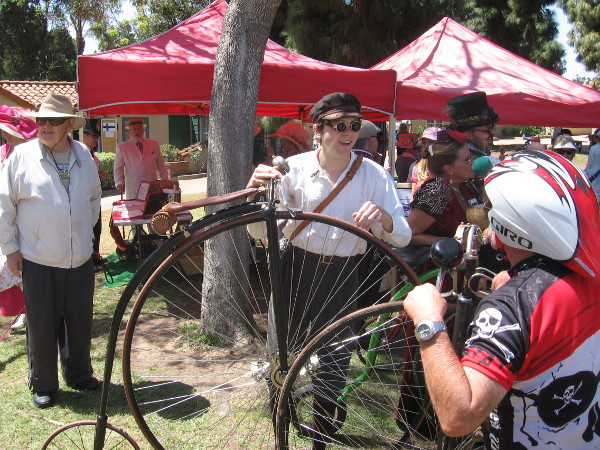
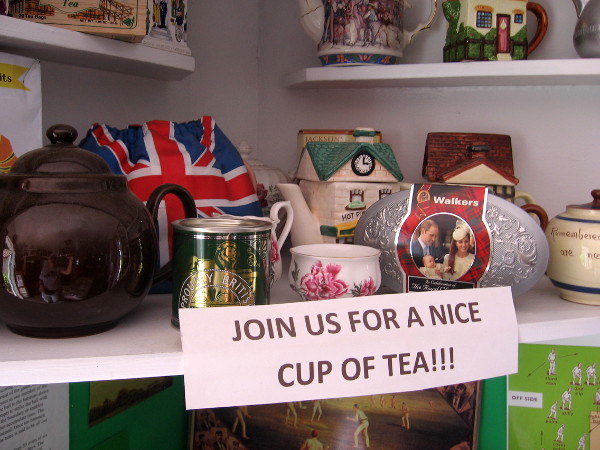
Buckingham Palace Queen’s Guard in front of the House of England cottage.British bobby on patrol talks to a gentleman at unique Balboa Park event.Attire from different periods of history were seen at the English Village Fete.Lots of Union Jacks and gifts celebrating England were for sale.This nice lady in a bonnet was selling honey produced in San Diego.There was even a model train display on the lawn during the fun event.England is a member of the House of Pacific Relations International Cottages.Royal coat of arms of the United Kingdom inside the House of England cottage.People in period costumes enjoy some treats inside the small cottage.Beatles display on a wall inside the House of England cottage.A cool Alice in Wonderland exhibit features the Mad Hatter.Some guys are re-positioning the Union Jack at cottage door.Sherlock Holmes tries to unravel a mystery. Who’s that scruffy, suspicious-looking guy walking around taking pictures?Local Shakespeare expert talks about the Bard and his contributions to literature and our everyday language.Event attendees listen intently to a talk about the Elizabethan era.Many penny-farthing bicycles could be spied around Balboa Park today.Join us for a nice cup of tea!
…
To enjoy future posts, you can “like” Cool San Diego Sights on Facebook or follow me on Twitter.
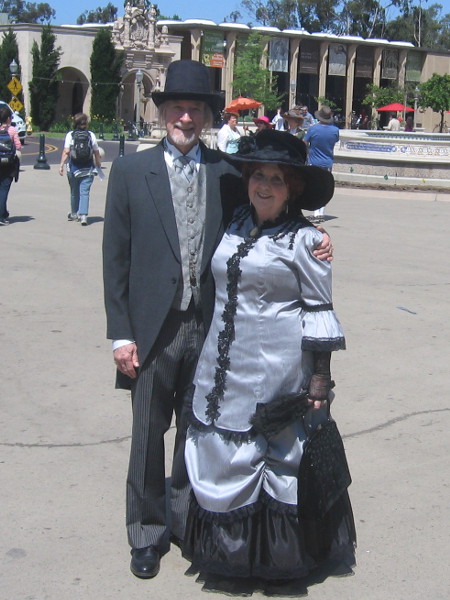
San Diego Costume Guild members help Balboa Park celebrate its centennial.
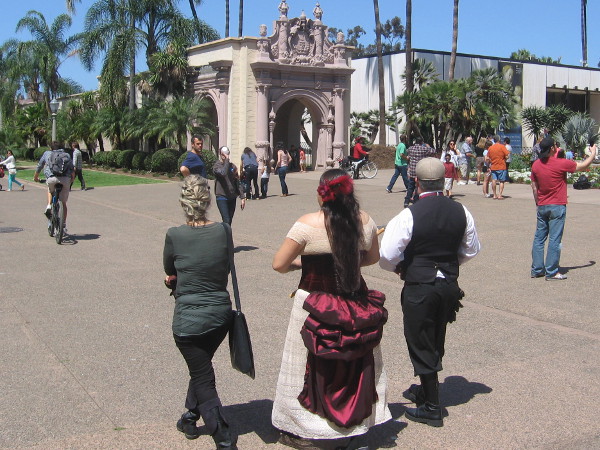
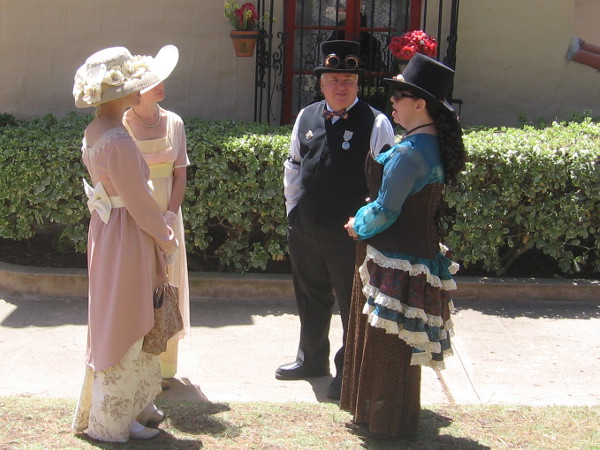
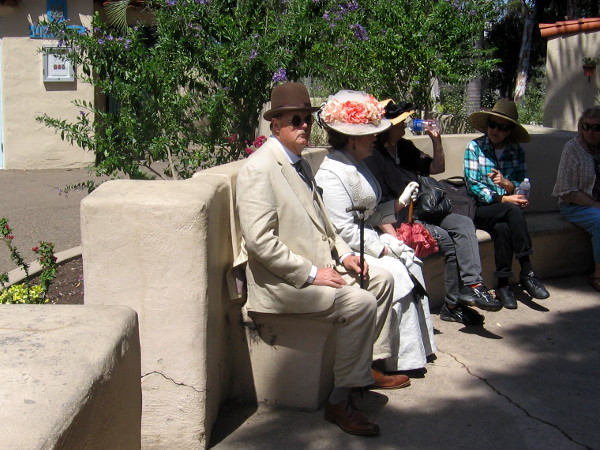
Today a really cool event was held in San Diego called the Balboa Park Centennial Informal Gathering. A bunch of history lovers, park supporters, assorted clubs and organizations (including the San Diego Costume Guild) gathered together in Balboa Park and everyone wore period attire. The idea was to recreate what Balboa Park might have looked like one hundred years ago, when the 1915 Panama-California Exposition opened.
During my walk through the park, I saw folks everywhere wearing fancy dresses and hats . . . carrying parasols . . . sporting old-fashioned police and military uniforms . . . wearing suffragette sashes or steampunk goggles . . . riding high-wheeled penny-farthing bicycles . . . and lots of puzzled tourists looking about in complete astonishment. It was great!
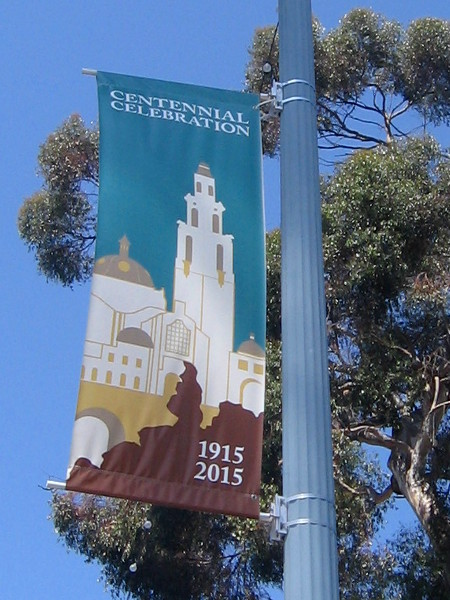
Balboa Park Centennial Celebration marks the 100 year anniversary of an amazing place.Folks in old-fashioned dresses and nostalgic garb were walking up and down El Prado.This 19th century fashion predates 1915, the year of the Panama-California Exposition in Balboa Park,Two elegant ladies paused to smile for my camera in the park’s big central plaza.Some people dressed for the occasion were enjoying the warm San Diego sunshine.Lots of very fancy hats could be seen everywhere I turned.Later in the afternoon, folks wearing historical costumes would reenact a political march supporting Votes For Women.Two suffragettes with Votes For Women sashes follow a guy dressed in World War I era military uniform.Back in 1915, the right for women to vote was an important issue and movement.A display in the Balboa Park Club building included Women’s Rights memorabilia from a hundred years ago.A few people sported steampunk goggles. Event participants converged on the International Cottages lawn area.Visitors from Balboa Park’s past seem to come to life before my very eyes.A bustle of Victorian activity in front of the House of England cottage.
…
To enjoy future posts, you can “like” Cool San Diego Sights on Facebook or follow me on Twitter.
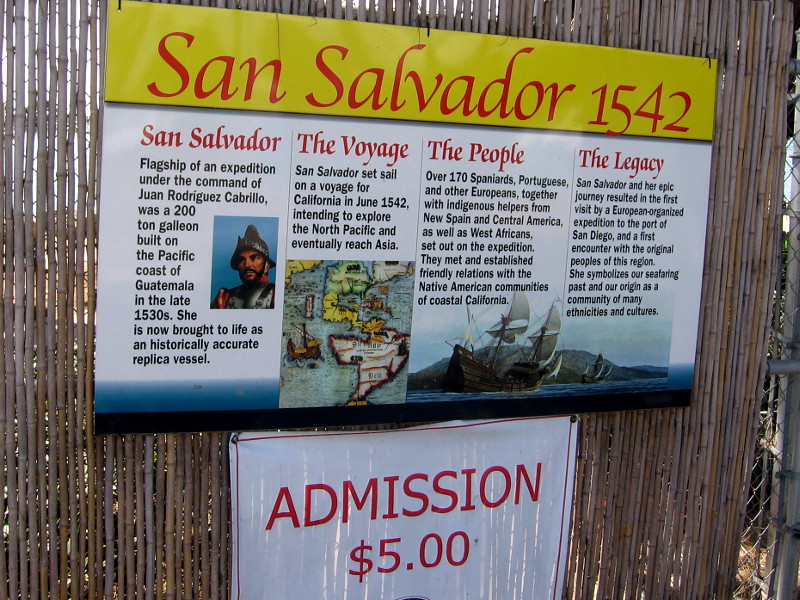
Sign at entrance to San Salvador build site. You have a couple more weeks to visit before the replica galleon’s historic launch into San Diego Bay.
Yesterday I enjoyed a tour of something so unbelievably cool it almost defies description. Along with my photographs I took some notes, but what I’m about to write might not be perfectly accurate. I’m relying to an extent on memory, which with my advancing age isn’t quite what it used to be. So if anyone reading my captions spots an error, PLEASE write a comment at the bottom of this blog post!
Later this month, the Maritime Museum of San Diego will be launching its absolutely fantastic, historically accurate, seaworthy replica of the galleon San Salvador. The original San Salvador was the ship that Portuguese explorer Juan Rodriguez Cabrillo sailed in during his voyage of discovery up the California coast on behalf of Spain. The famous galleon entered San Diego Bay in 1542, making Cabrillo the first European to visit the large, natural harbor. What we call San Diego today he named San Miguel.
Today, the full-size working replica of Cabrillo’s ship is being built at the west end of Spanish Landing, in an area called San Salvador Village, between Harbor Island and San Diego International Airport. The finished ship will be 92 feet long with a beam of 24 feet. As I understand it, construction has been underway for about four years, and for a variety of reasons has taken a couple years longer than originally projected. But once the decks are re-caulked, the shrouds tarred, and a few other things finished, the ship’s exterior will finally be ready for its imminent introduction into San Diego Bay!
The galleon, which without ballast weighs about 130 tons, will be slowly towed to the Broadway Pier downtown, then lifted by a huge crane into the bay. While docked beside the other ships of the Maritime Museum, the interior will be finished, about 60 more tons of lead ballast added, and the vessel’s ability to remain upright thoroughly tested by the Coast Guard.
(Don’t quote me on the 130 tons and 60 tons. Those figures came entirely from my leaky memory.)
There’s simply too much awesome stuff to describe in a few paragraphs, so let me now show you my photographs and I’ll include in the captions some of the cool stuff I learned or observed…
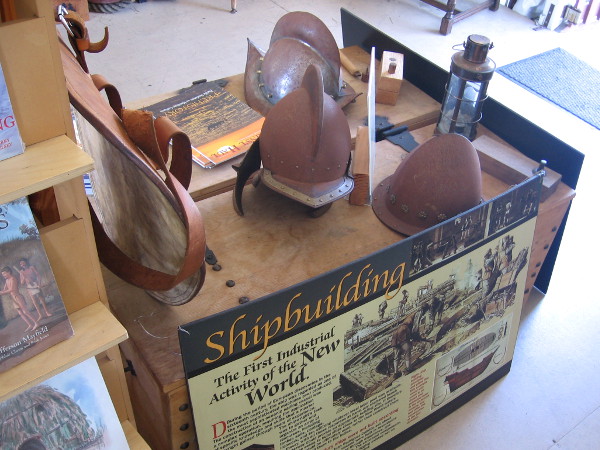
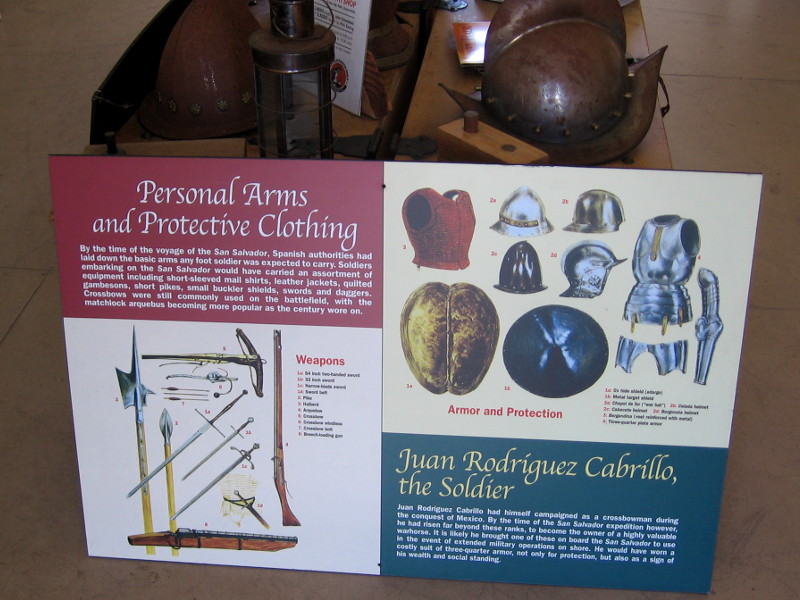
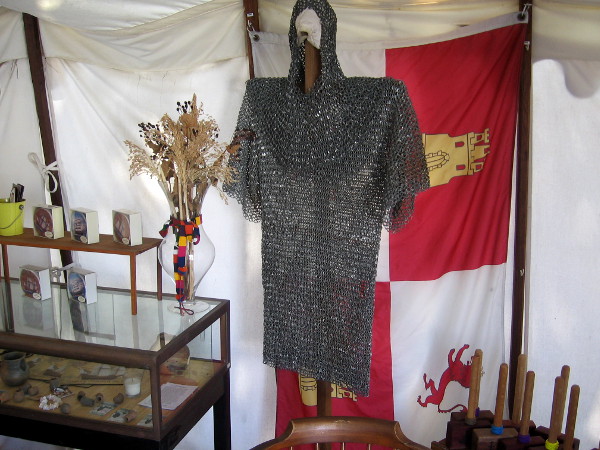
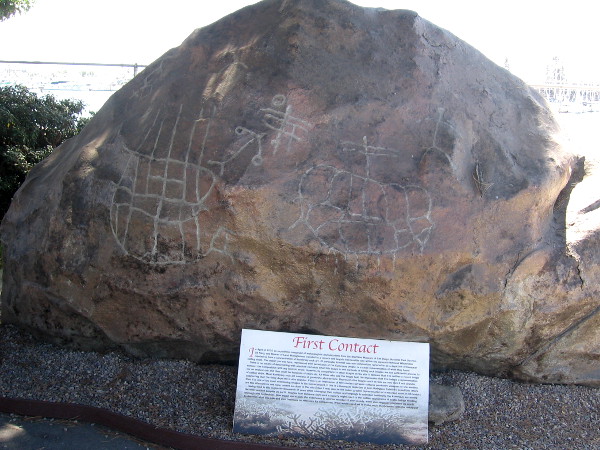
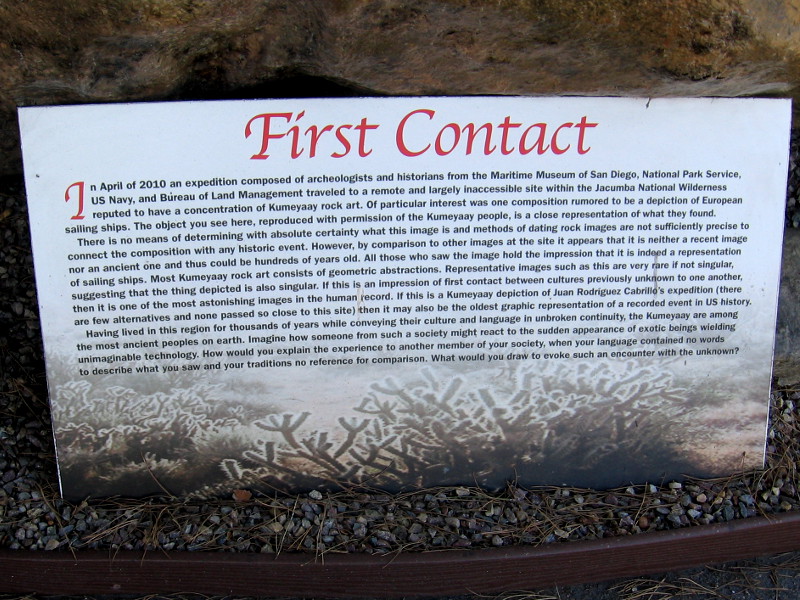
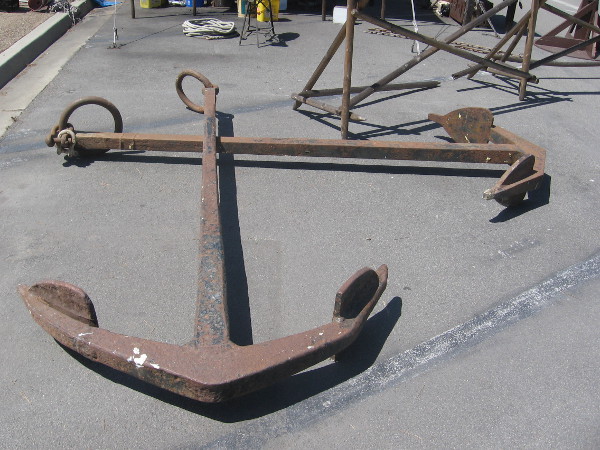
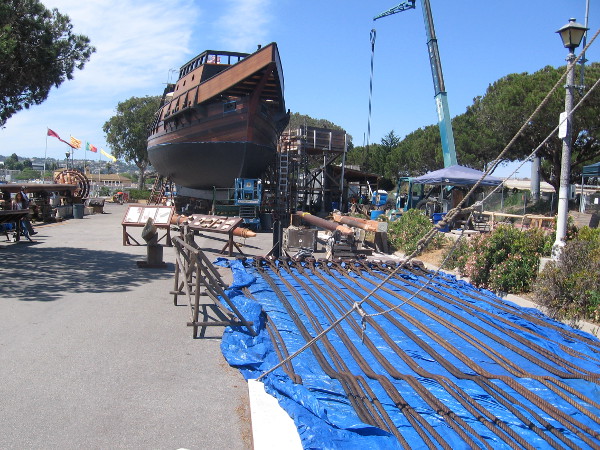
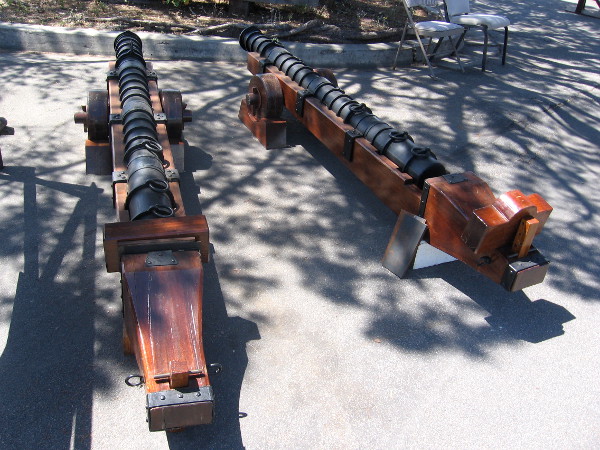
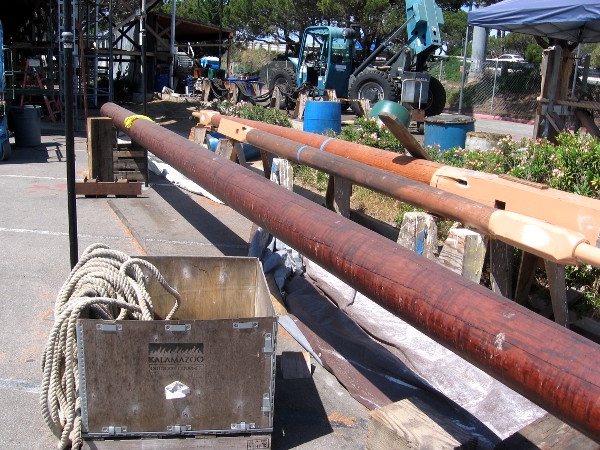
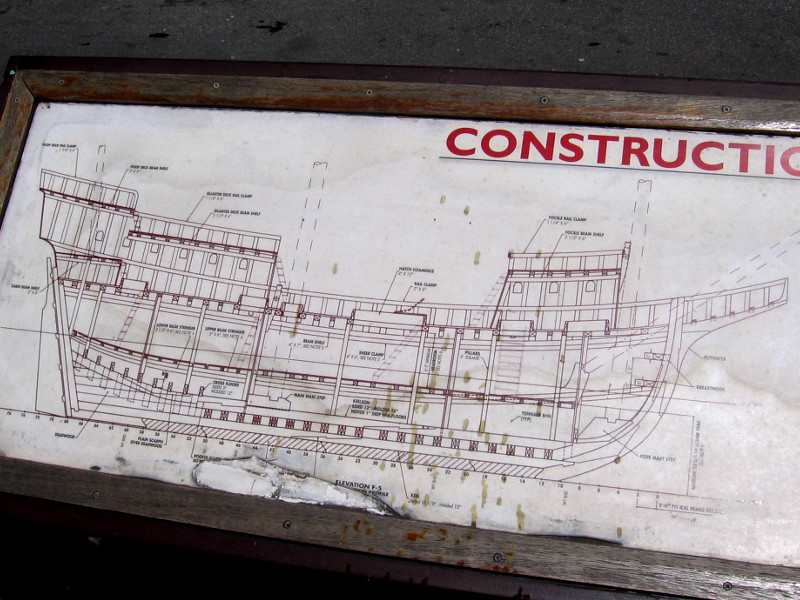
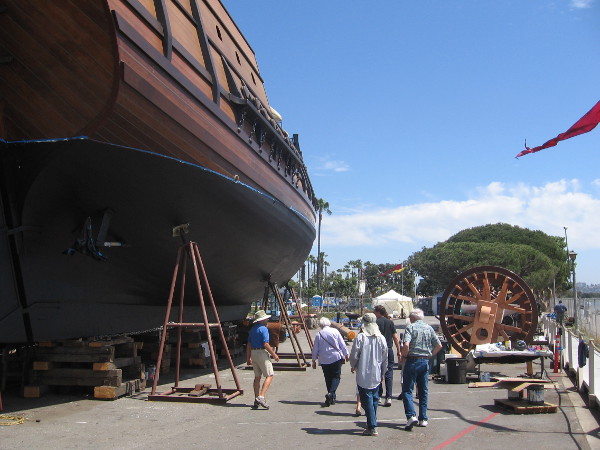
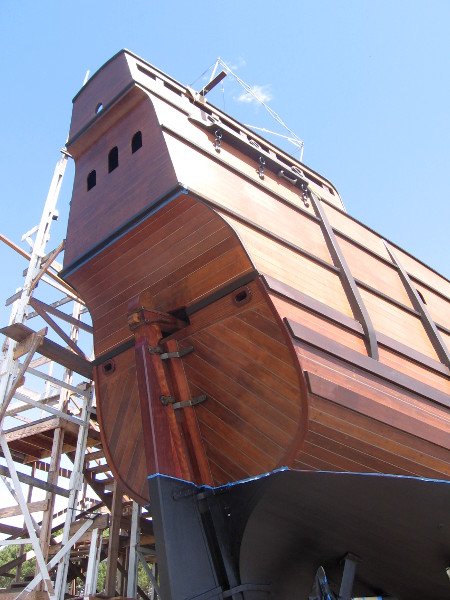
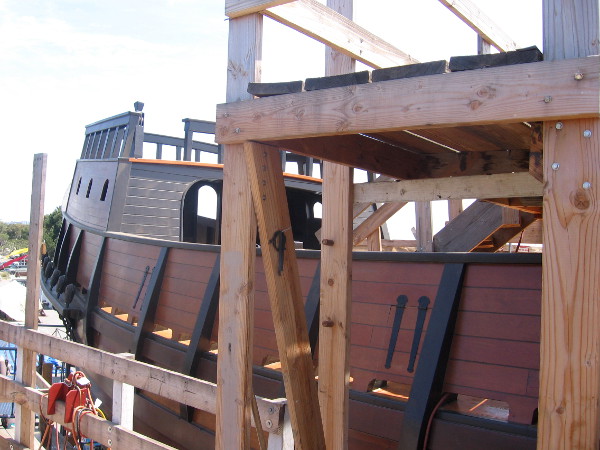
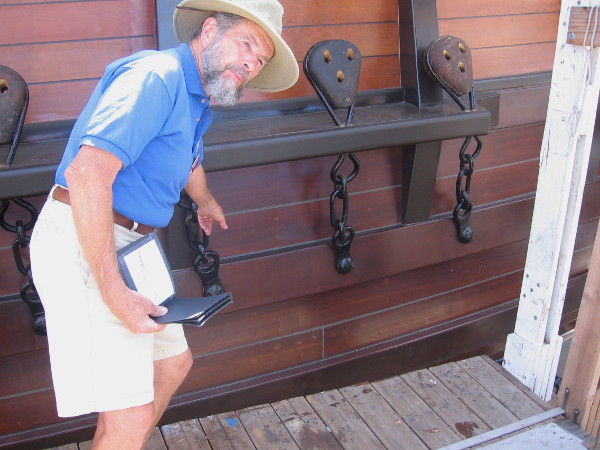
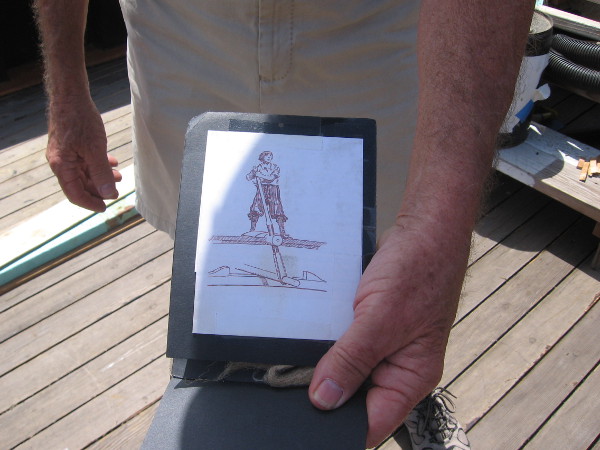
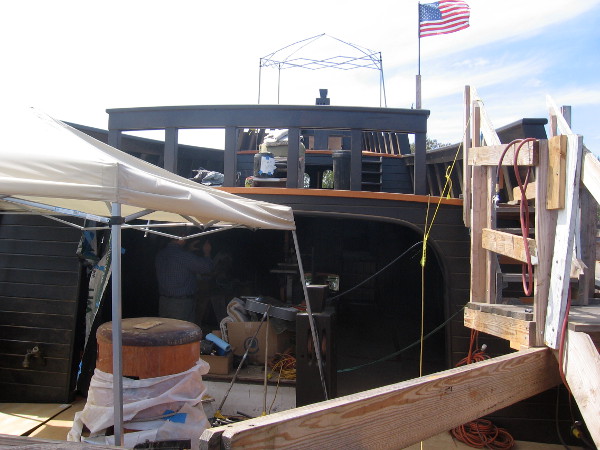
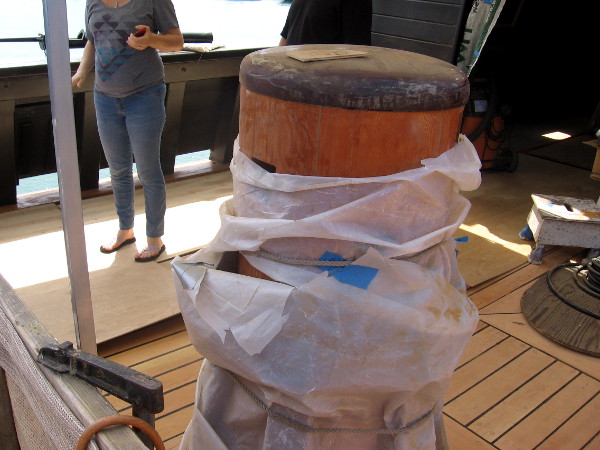
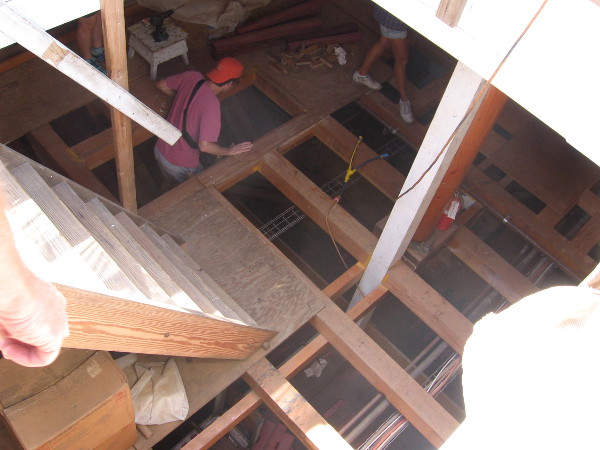
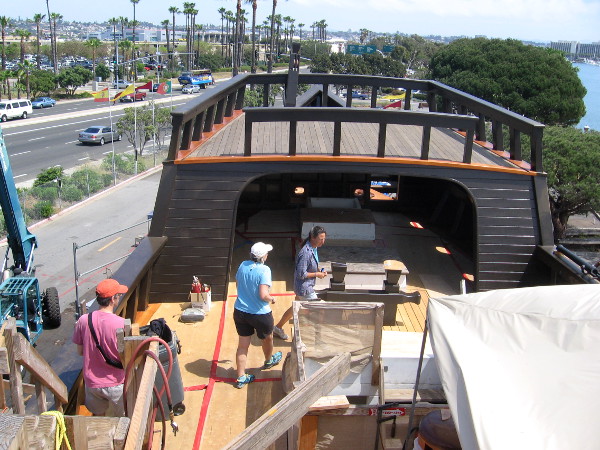
Shipbuilding was the first industrial activity of the New World. Gift shop at site entrance includes Spanish conquistador helmets and breastplate.Poster shows personal arms and protective clothing used by the men who sailed with Juan Rodriguez Cabrillo five centuries ago.A small museum and gift shop includes many interesting sights, including a shirt of chain mail and flag of the Spanish Empire.Diagram shows the sail plan for historic galleon San Salvador.Various items on display include lantern, candle, bottle, ship’s food and native Kumeyaay artifacts.Outside, at the build site, there are many more exhibits. This reproduction of found rock art seems to show sailing ships. The native Kumeyaay people often visited San Diego Bay.First Contact. If this rock art is a Kumeyaay depiction of Cabrillo’s expedition, it might be the oldest graphic representation of a recorded event in American history.Here’s a huge anchor! I didn’t ask, but I assume it will be used by the San Salvador.San Salvador carries six sails totaling a little less than 5000 square feet. The sails are not only used to propel the ship, but exert a larger influence on steering than the rudder.View of a small sail suspended from a yard, with Harbor Drive in the background north of the build site.Suspended from a crane is a shroud (rigging that helps hold a mast) that’s being tarred. The bow of the galleon comes to a sharp point at its beak.Iron in an undeveloped region of the New World was a precious commodity. Imported ingots were often used to forge various fittings and hardware.Hooks, chain links and other iron instruments were crucial to sail and maintain a large ship.The San Salvador carried armament to defend the expedition from potential threats. The cannon-like bombard and swivel gun could be fired from the deck.Two bombards on display at the San Salvador build site. They could fire shot about five pounds in weight and were mounted on wheels.Detailed map of Cabrillo’s route up the California coast. He found neither treasure, nor a passage to the Atlantic.There are no blueprints for the galleon San Salvador. To reconstruct the 16th century ship, the Maritime Museum of San Diego used scarce historical clues.It was difficult to find the right kinds of wood for different parts of the vessel. Both old and modern shipbuilding techniques were used.Wood mast segments and yards are coasted with linseed oil, I believe. They’ll be installed once the ship is afloat in San Diego Bay.Approaching the impressive reproduction of the historic galleon. Just imagine going for an ocean sail in this!Detailed schematic shows framework and beams that support decking and hull.The master builder sets up keel, stem, sternpost and deadwood, locked together with long iron drifts. The master frame is then built.I believe these are the lower halves of two masts (main and fore), each ending in a crow’s nest.A look at the super hard wood hull of the galleon San Salvador at Spanish Landing.Volunteer tour guide shows how six segments of heavy lead are attached to the keel.Each piece of lead weighs over 6000 pounds. The lead was originally used for the drop hammers of Rohr Industries in Chula Vista to form aircraft parts.A small tour group investigates the amazing galleon on a sunny San Diego day!The high stern of San Salvador. The rudder is attached to a tiller. That propeller below (and an eventual engine) is a modern convenience unknown by Cabrillo!Our group climbed the steps of scaffolding to check out the hull, upper deck and aftcastle.We’re shown where a shroud connects to the ship’s side. The darker looking lower portion of the hull is made of hard wood, which is heavier than water.We’re almost on top!View of the San Salvador galleon while standing atop the aftcastle. Work to finish the vessel’s deck and interior is underway.This deck will be re-caulked soon using cotton, hemp rope and synthetic tar. Earlier caulking with less modern materials was unsuccessful, if I recall correctly.Sketch of helmsman steering the galleon with a vertical lever attached to the rudder’s tiller. He had a window to look through in the aftcastle.Looking back at the aftcastle and rearmost poop deck from the center of the upper deck. You can see the window through which the helmsman peered.Capstan is a revolving vertical timber that projects through the deck. Bars will be inserted and used by sailors to turn the capstan, hauling ropes or chains.This is one of five separate water-tight compartments being worked on below. Bunks will be contained here, for journeys out to the Channel Islands eventually.Under the forecastle, looking toward the bow’s beak. The two holes beside the rectangular chain locker are hawseholes, through which the anchor chain is lifted or lowered.Looking straight down here you can see where the foremast and bowsprit are seated.Wow! Is this cool! How often does one get to walk around an actual honest-to-goodness working galleon!
…
To enjoy future posts, you can “like” Cool San Diego Sights on Facebook or follow me on Twitter.
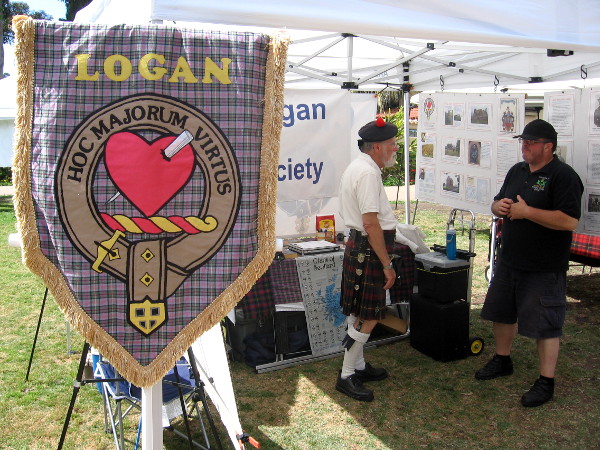
Clan Logan’s crest is a pierced human heart. HOC MAJORUM VIRTUS, translated from Latin is Valor of My Ancestors.
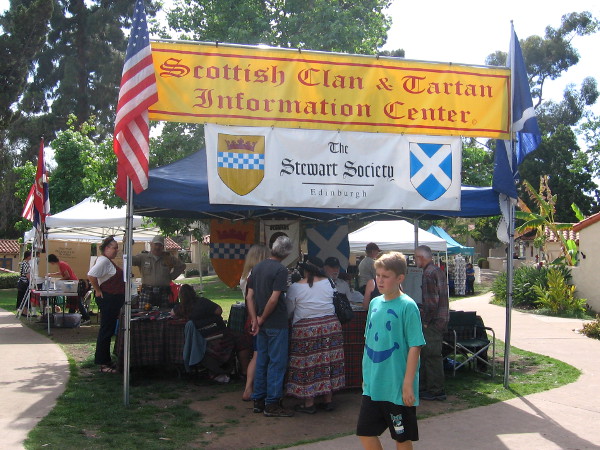
I’d read that the 12th Annual San Diego Tartan Day being held in Balboa Park would end at four o’clock this afternoon. So I arrived during my walk with a good hour to spare. Or so I thought! At three o’clock, the event was already drawing to a close!
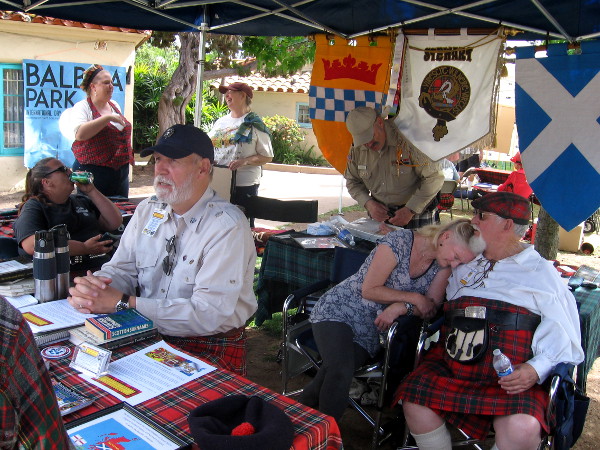
I did manage to get some interesting photos. A number of tents and folks in costume were scattered about the lawn of the House of Pacific Relations International Cottages. Unfortunately, I missed the dancing and music. Maybe next year…
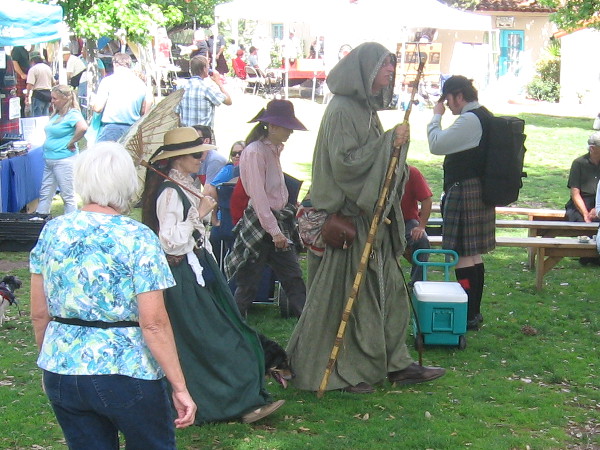
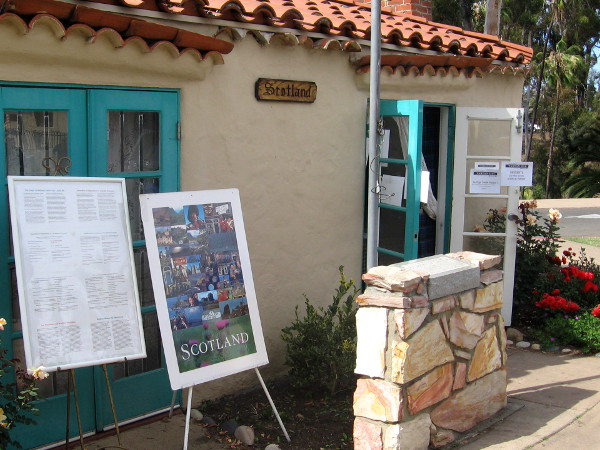
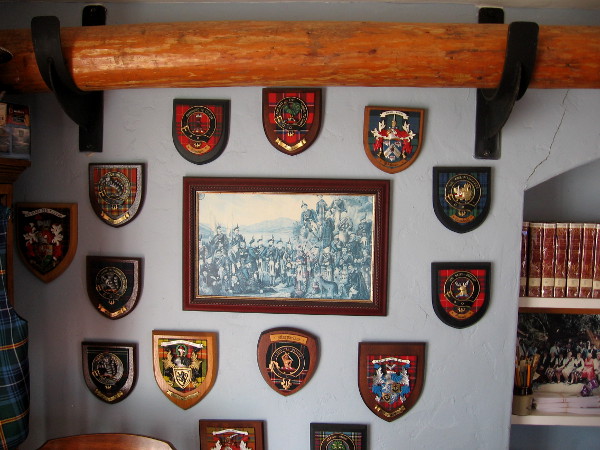
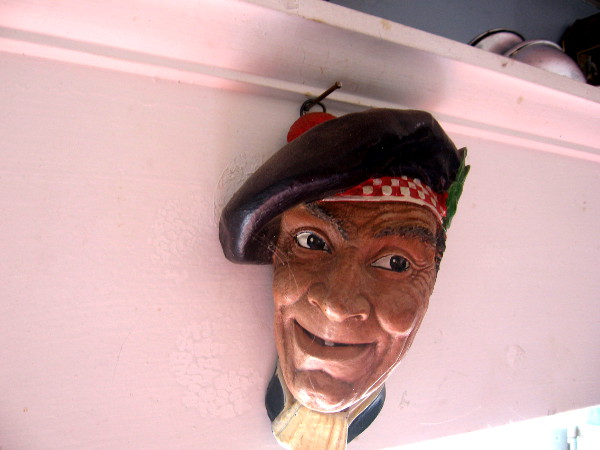
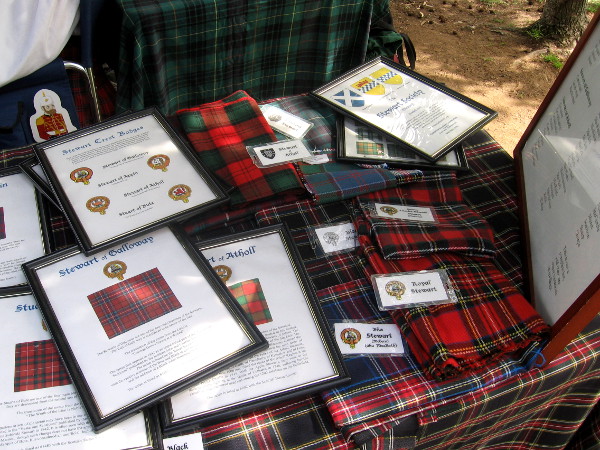
A robed Highlander with walking stick strides across the lawn at Balboa Park’s International Cottages. Historical dresses, kilts and distinctive tartans were abundant.The House of Scotland in Balboa Park was the center of today’s 12th Annual San Diego Tartan Day.Some leftover treats in the House of Scotland cottage as the event draws to a close.Displays in Scotland’s small cottage celebrate rich history, art and culture.The crests of many diverse clans hang on one wall.This merry fellow was looking down at cottage visitors from a spot near the ceiling.The Scottish Clan and Tartan Information Center was attracting a great deal of interest.Exhibit on one outdoor table helps identify many differently patterned tartans.Participants from The Stewart Society of Edinburgh celebrate Scotland’s rich heritage.
…
To enjoy future posts, you can “like” Cool San Diego Sights on Facebook or follow me on Twitter.
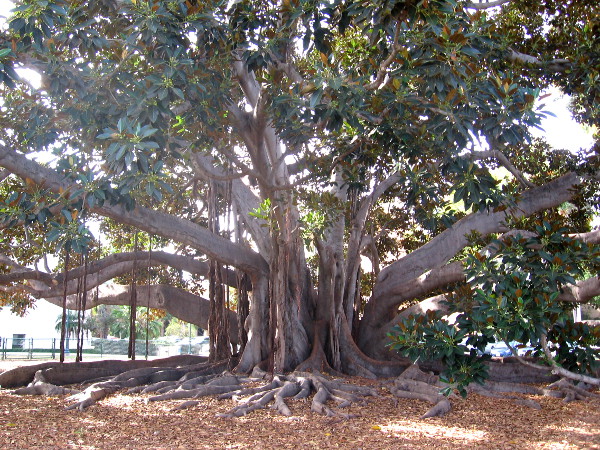
This is one of the most amazing trees you’re likely to ever see.
Have you visited Balboa Park? Perhaps you’ve seen an incredibly enormous tree standing between the San Diego Natural History Museum and Spanish Village. It’s impossible to miss! That’s the over 100 year old Moreton Bay Fig!
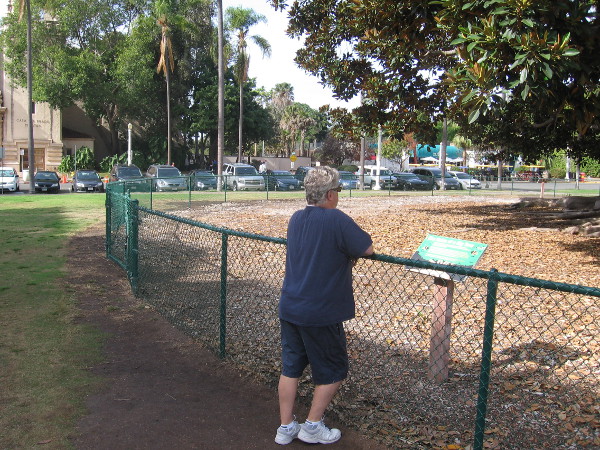
Sign in Balboa Park describes Ficus macrophylla, the Moreton Bay Fig.
Ficus macrophylla
“Moreton Bay Fig”
Native to East Australia
This tree was planted prior to the 1915 Panama-California International Exposition and was the focus of a Formal Garden located at this site. Because of its large size, it is listed as a co-champion with the Santa Barbara Fig in the California Dept. of Forestry Registry of Big Trees.
Age: over 100 years (now)
Height: 80 feet
Trunk Girth: 42 feet
Canopy width: 145 feet
Trunk and roots of a tree once climbed by kids, but now fenced off for its protection.Huge Moreton Bay Fig tree and the San Diego Natural History Museum.A big tree is a rare and valuable part of the ecosystem.
The Value of a Big Tree
Trees contribute to our environment by producing oxygen; reducing temperature, carbon-dioxide and stormwater runoff; improving property value and providing wildlife habitat.
Scientists have developed a value formula to determine the cost benefit of trees. The Center for Urban Forest Research states that trees over 50 feet tall contribute about $65.00/year back to the environment. Smaller trees contribute $18-36.00/year. There are about 20,000 trees in Balboa Park which contribute a value of one million dollars per year back to our environment.
Beyond dollars, Big Trees like the Moreton Bay Fig enhance the park, provide a sense of history to our community and a legacy for our children.
Someone gazes at the hundred year old leafy giant in Balboa Park.
…
To enjoy future posts, you can “like” Cool San Diego Sights on Facebook, or follow me on Twitter.
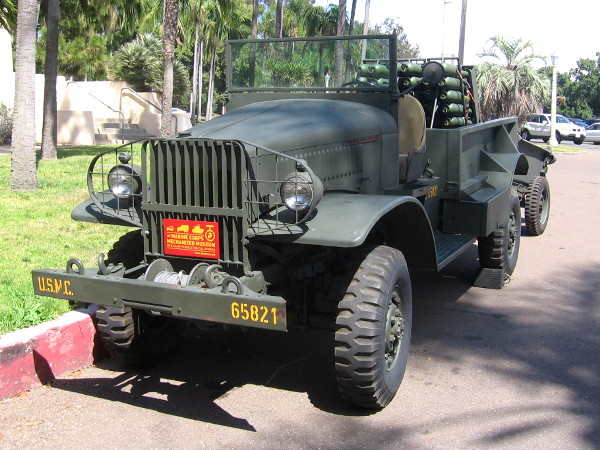
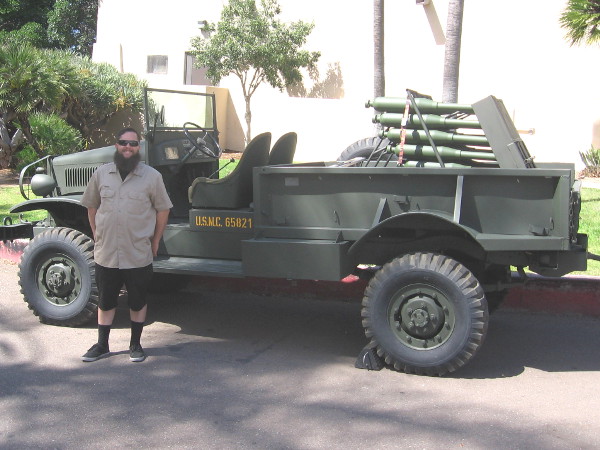
International M-2-4 Rocket Truck used in the Pacific during World War II.
An interesting new exhibit will open this coming Friday, April 3 at the San Diego Automotive Museum. Part of this year’s Centennial Celebration, the new exhibit is called Balboa Park: The War Years. According to one website: “The (auto museum) floor will be transformed into a USO show venue to tell the story of the impact that war had on San Diego and the entire West Coast.” As part of the museum’s general admission, visitors will be able to check out a dozen-or-so 1940s period vehicles used by the American military during the Second World War.
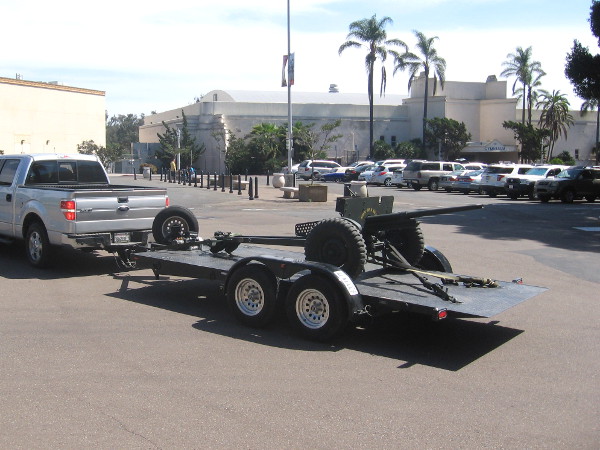
I was lucky to experience a small taste of the exhibit this afternoon. A rocket launching truck and anti-tank gun were waiting to be rolled from the outside parking lot into the museum during my Sunday walk through Balboa Park.
Here are several pics…
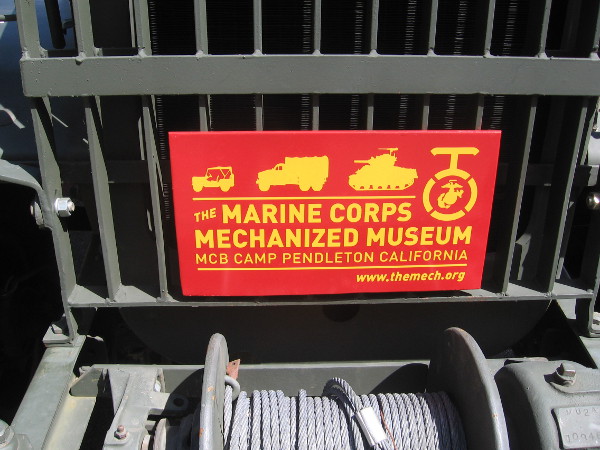
This historical military vehicle comes from the Marine Corps Mechanized Museum at Camp Pendleton north of San Diego.One of many interesting vehicles arriving for the upcoming Balboa Park: The War Years exhibit at the San Diego Automotive Museum.US WW2 37mm M3 Anti-Tank Gun backing up to the museum’s big side door!
(After doing some searching on the internet, I’m pretty sure I have the above caption correct. If I don’t, leave a comment!)
Cool guy from San Diego Automotive Museum smiles for the camera!
…
To enjoy future posts, you can “like” Cool San Diego Sights on Facebook or follow me on Twitter.












































 Cool San Diego Sights!