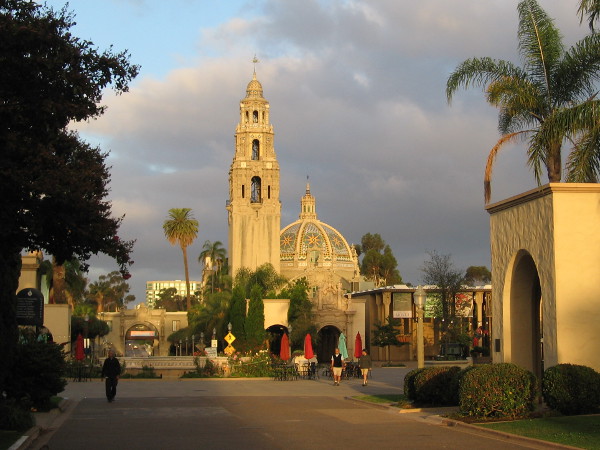
A rare look at Balboa Park’s historic Pratt Loggia.

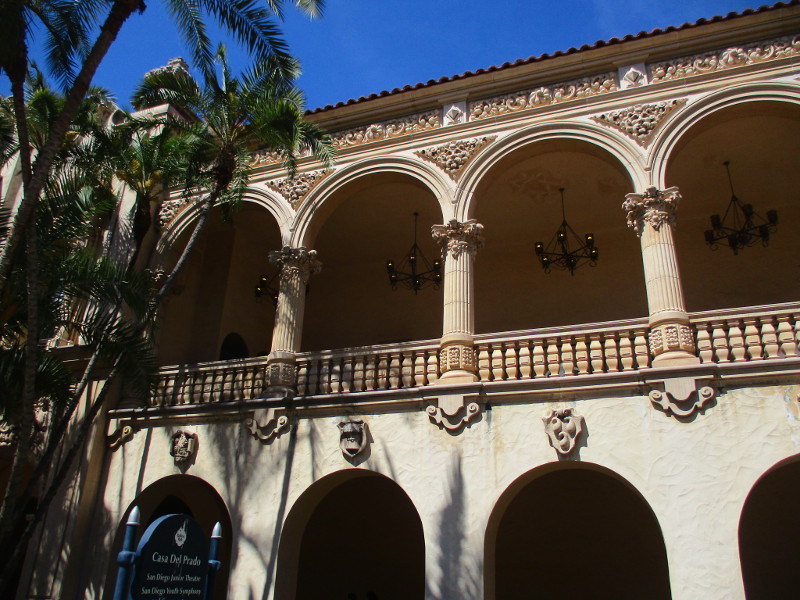
The public seldom gets to step into Balboa Park’s historic Pratt Loggia. The columned, balcony-like loggia is easily seen when gazing up from El Prado at the Casa del Prado. You can see it in my next photograph:

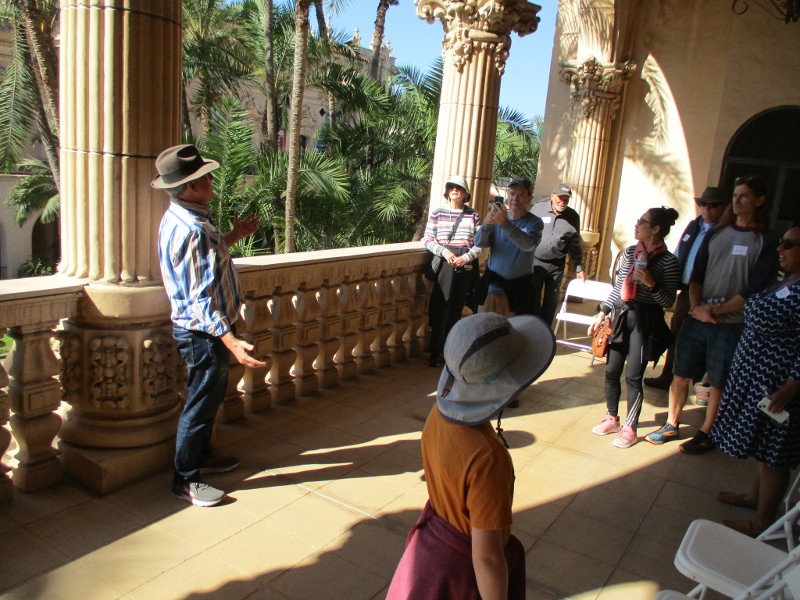
During a recent tour of Balboa Park conducted by the Committee of 100, an organization working to preserve Balboa Park’s historic architecture, gardens and public spaces, I was fortunate to step foot into the Pratt Loggia and discover something wonderful.

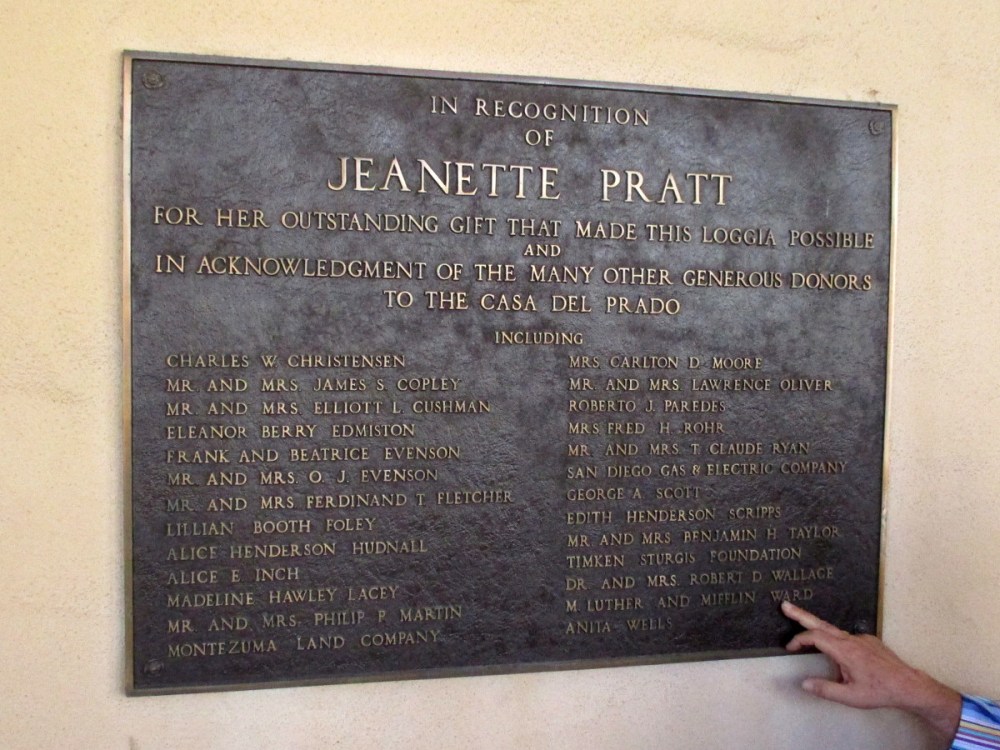
Before our special tour entered the loggia, we were shown a plaque. It lists the people instrumental in funding the loggia’s creation back in 1971, during the Casa del Prado’s reconstruction.

According to this San Diego History Center webpage: During the course of reconstruction it was discovered that the bond issue did not allow for an expenditure of $70,000 to rebuild the second-level fluted, striated columns with capitals of cupids and the ornate balustrade on the outside loggia of the south building. The Committee of 100 raised the needed money with $50,000 coming from Mrs. Jeannette Pratt, in whose honor the reconstructed gallery was named the “Jeannette Pratt Loggia.”

Our group observed how the plaque contains a Who’s Who of leading San Diego citizens back in 1970s, including the Copleys, Cushmans, Fletchers, Rohr, Ryans, Scripps, and many others. Bea Evenson led the creation of the loggia.

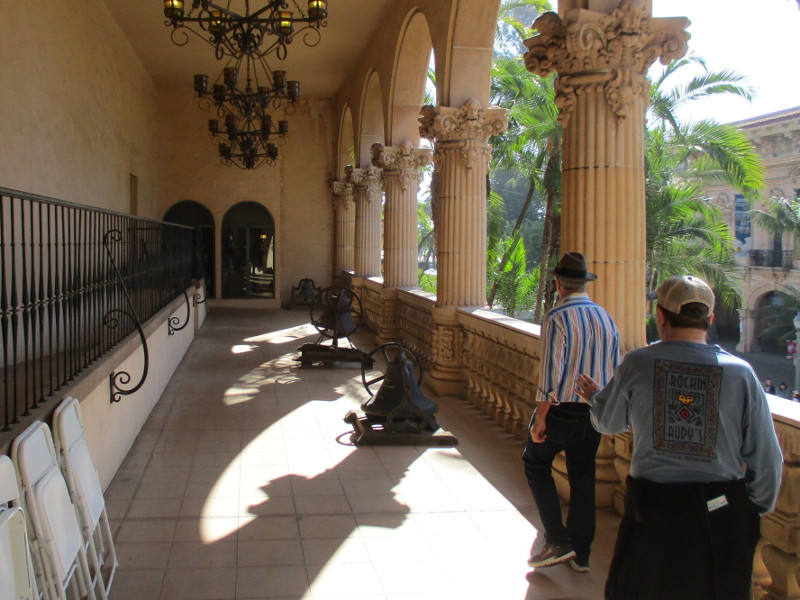
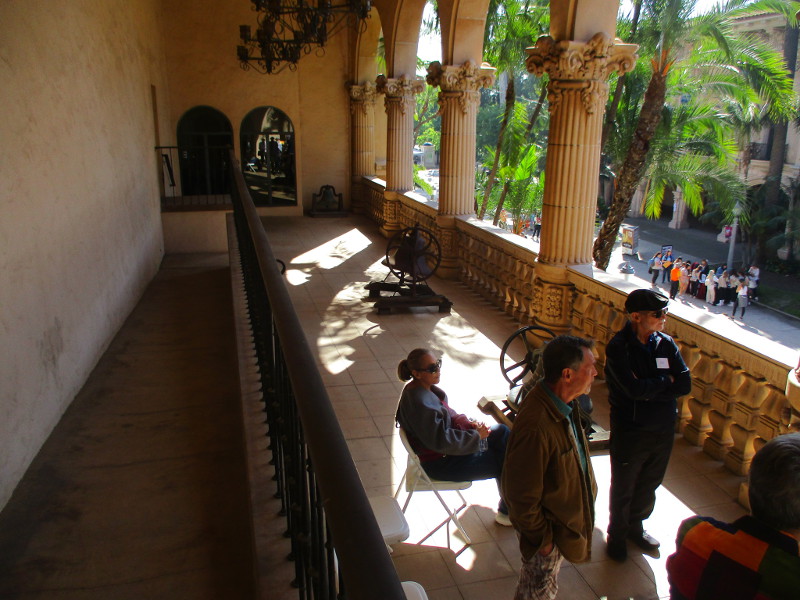
And now here is the beautiful loggia!

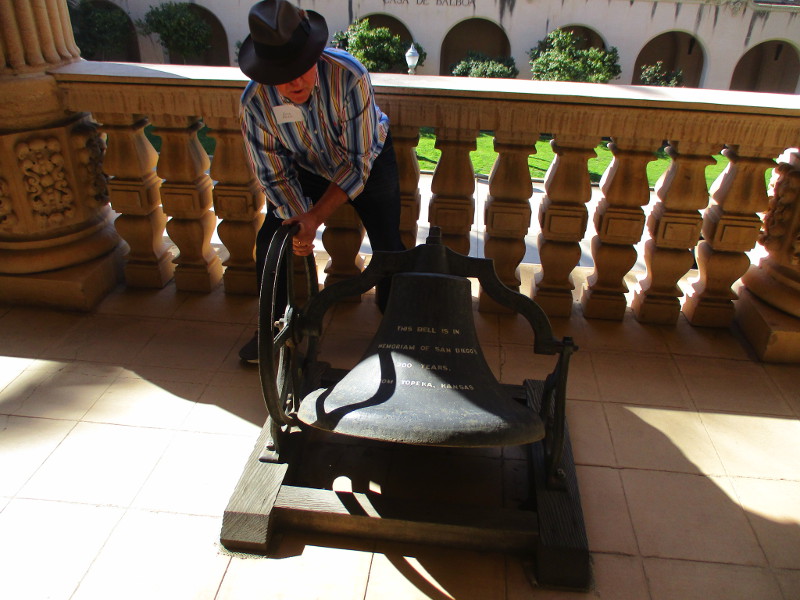
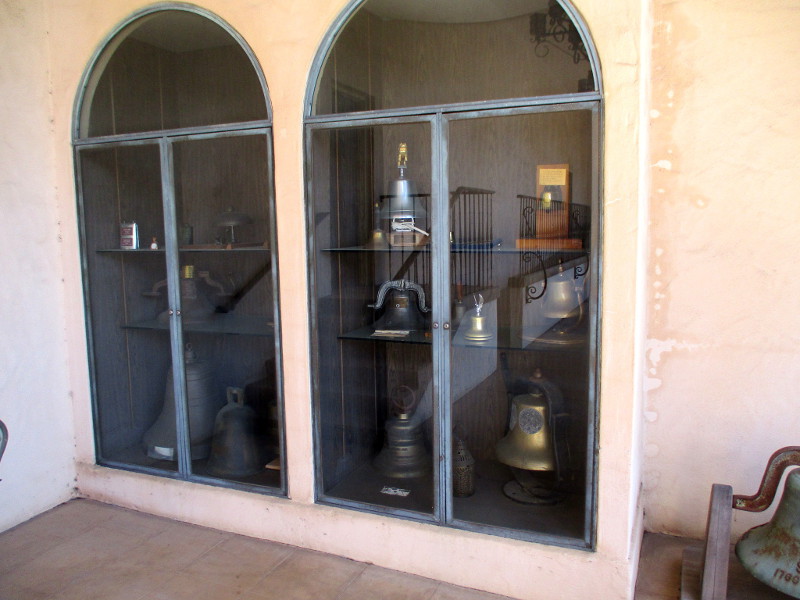
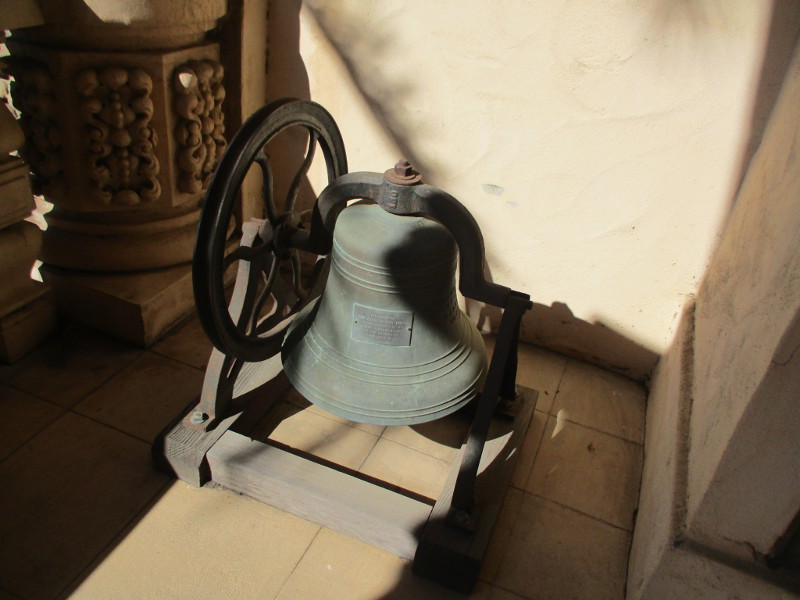
We were surprised to see numerous bells in the Pratt Loggia: a few along the balustrade and many others contained in large display cases at either end.

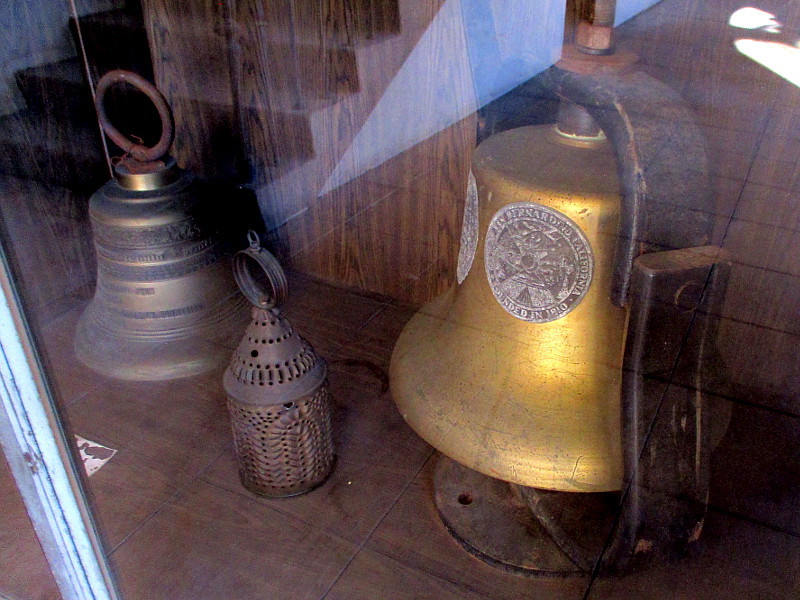
These bells were sent to San Diego from cities around the nation during our city’s bicentennial back in 1969! To mark the 200 year anniversary celebration, San Diego wrote to these cities asking for a donated bell.

What was received? There are fire bells, school bells, bells of all sizes and kinds!

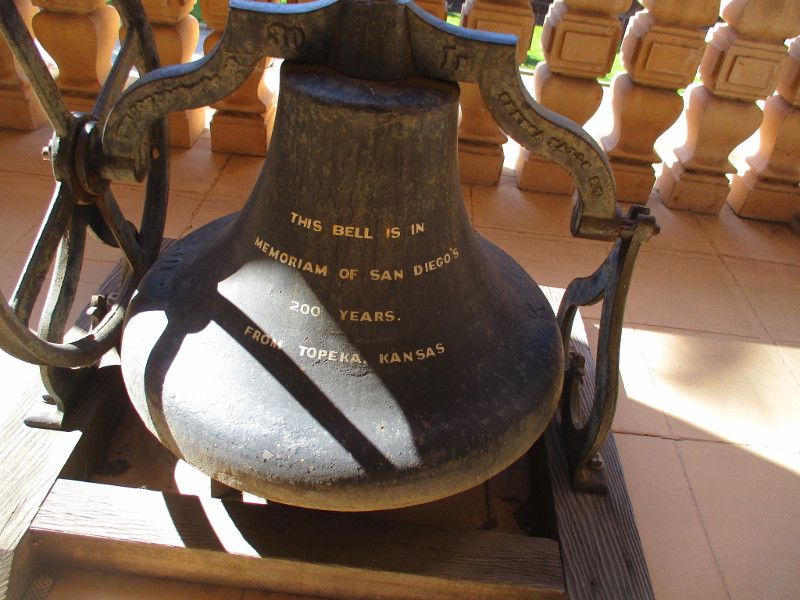
This big one rang loudly and deeply!

THIS BELL IS IN MEMORIAM OF SAN DIEGO’S 200 YEARS. FROM TOPEKA, KANSAS
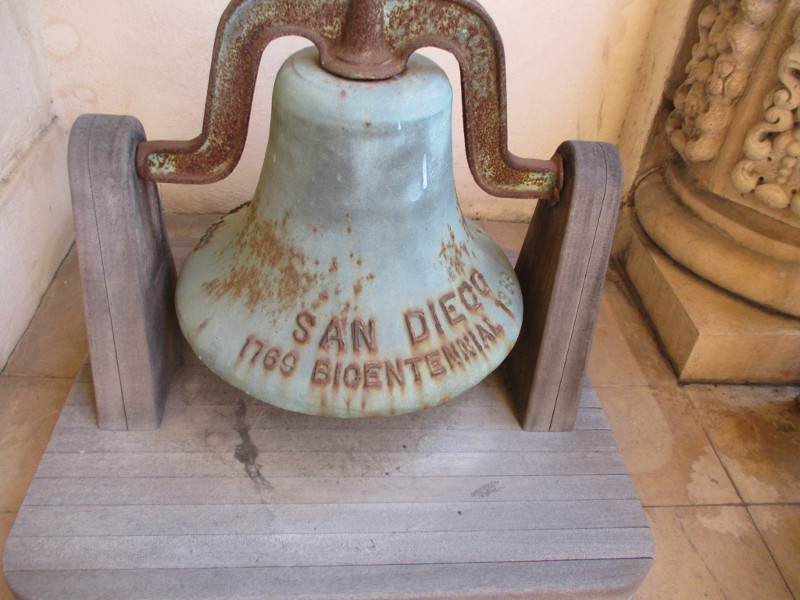
SAN DIEGO 1769 BICENTENNIAL
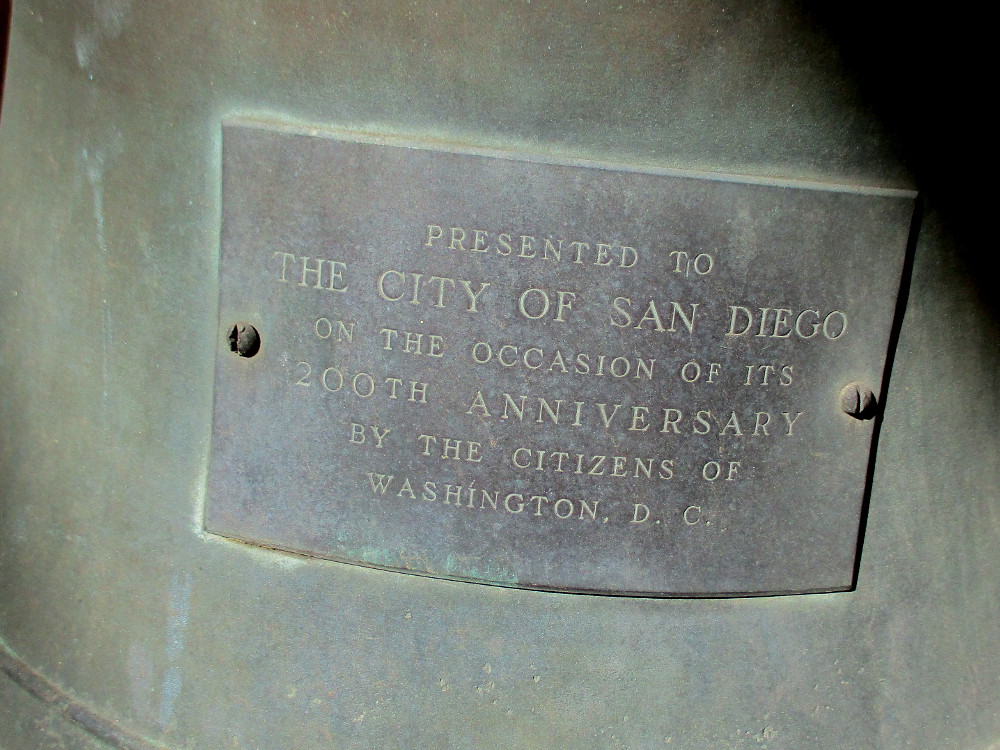
PRESENTED TO THE CITY OF SAN DIEGO ON THE OCCASION OF ITS 200TH ANNIVERSARY BY THE CITIZENS OF WASHINGTON, D. C.

Another wonderful surprise in San Diego’s ever-amazing Balboa Park!

I post new blogs pretty often. If you like discovering new things, bookmark coolsandiegosights.com and swing on by occasionally!

I live in downtown San Diego and love to walk around with my camera! You can follow Cool San Diego Sights via Facebook or X.

Feel free to share!
La Jolla church used to be a train station!

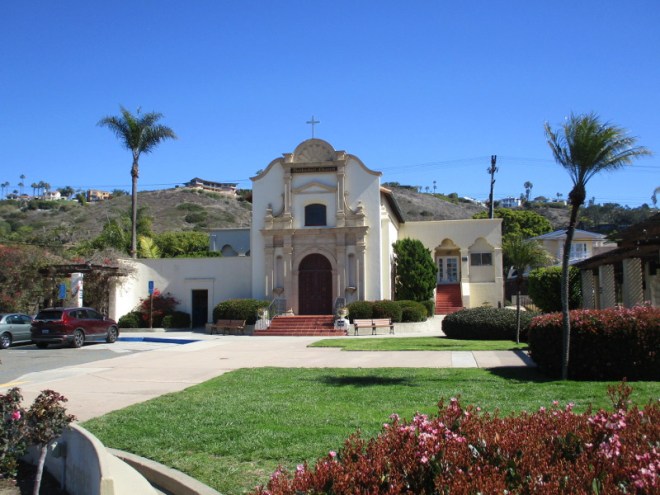
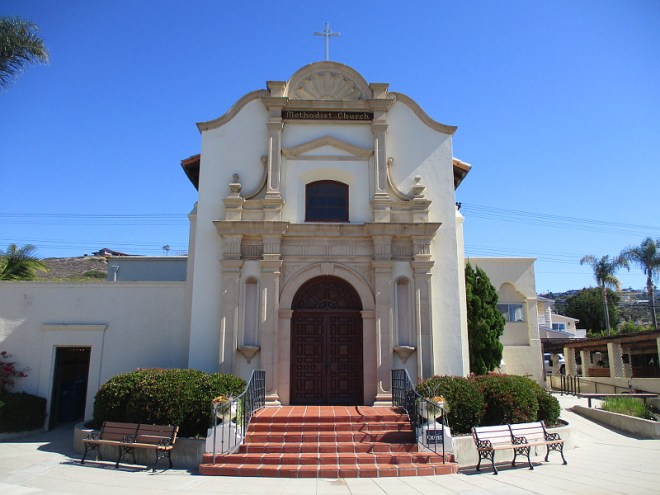
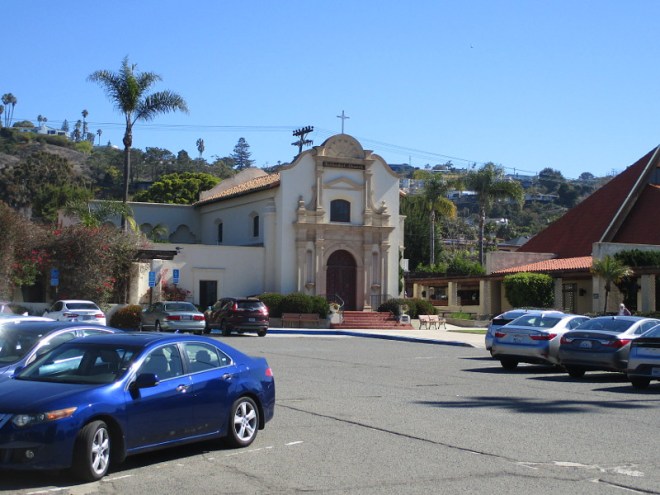
If you drive up La Jolla Boulevard, just north of Bird Rock, you might see the impressive building in these photographs.

When I visited the La Jolla Historical Society a while back, I learned something very surprising. This ornate building–the main chapel for the La Jolla United Methodist Church–was once a railroad station and power substation for San Diego Electric Railway, the San Diego streetcar line established by John D. Spreckels!

I’ve found several great articles concerning this history. Here and here and here.

The 1924 Spanish Colonial architectural style San Carlos Train Station served streetcar Route 16, which ran from San Diego to La Jolla. Route 16 was the San Diego Electric Railway’s last major rail line expansion. In addition to downtown San Diego and La Jolla, the route included stops in Mission Beach and Pacific Beach. The streetcars ran through 1940.

The San Carlos terminal building would then be used for several years as an art school. In 1954, the La Jolla United Methodist Church bought the building.

Check out the first and third links above for a few old photographs. You’ll see how the train station and substation stood alone in undeveloped land a century ago.

I post new blogs pretty often. If you like discovering new things, bookmark coolsandiegosights.com and swing on by occasionally!

I live in downtown San Diego and love to walk around with my camera! You can follow Cool San Diego Sights via Facebook or X.

Feel free to share this!

Hidden balcony offers views of Balboa Park!

People who enter Balboa Park through its grand west entrance pass a “hidden” balcony that few observe or know about!

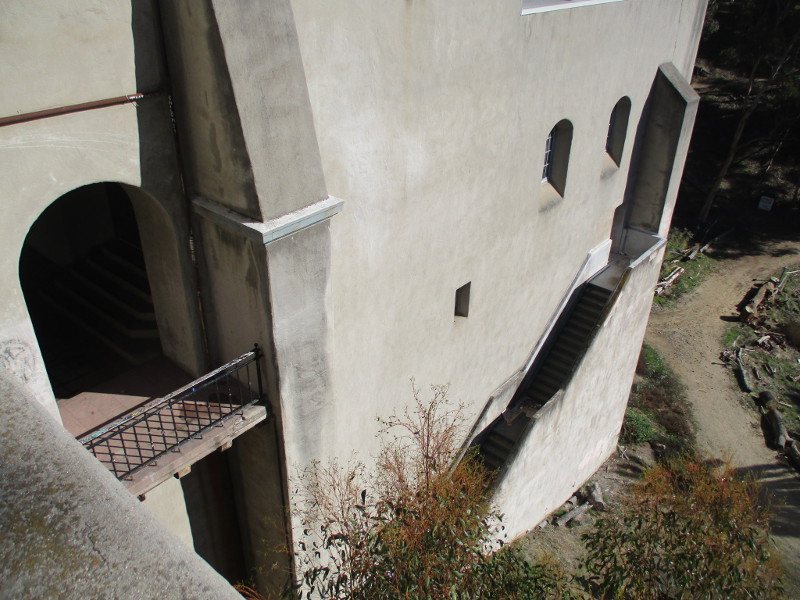
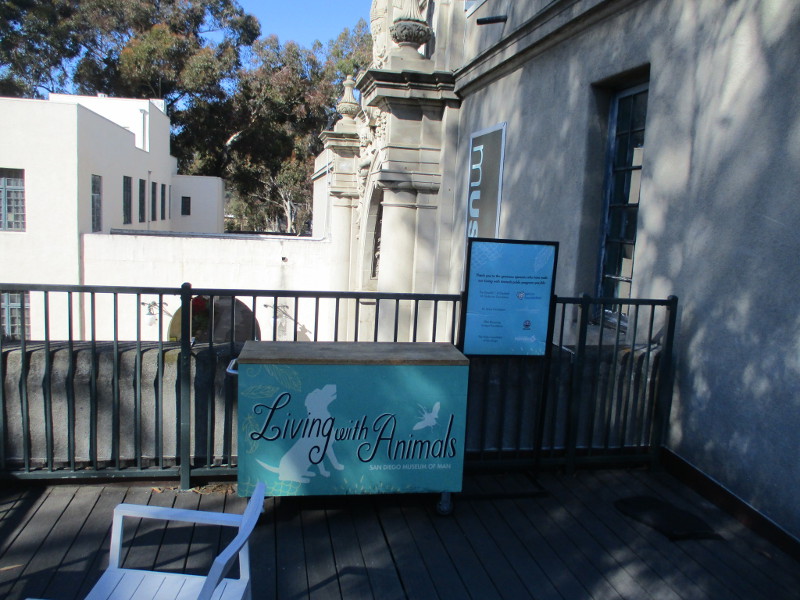
The second floor balcony at the Museum of Us is accessible to museum visitors through the Living with Animals exhibit. The patio-like balcony, with its welcoming chairs and tables, offers views from the southwest corner of the California Quadrangle.

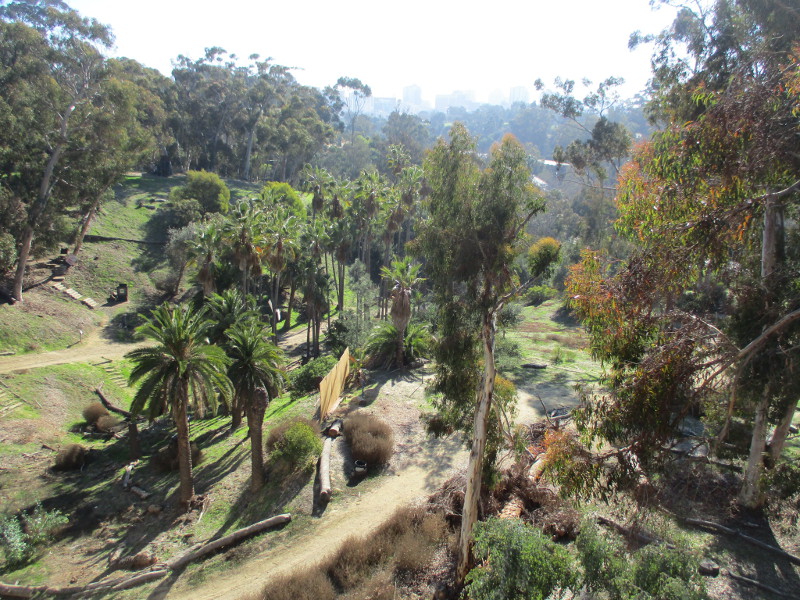
Visitors enjoy views over the Rube Powell Archery Range toward downtown San Diego, and of the Cabrillo Bridge to the west. There’s a fantastic view of the historic Balboa Park Administration Building across El Prado.

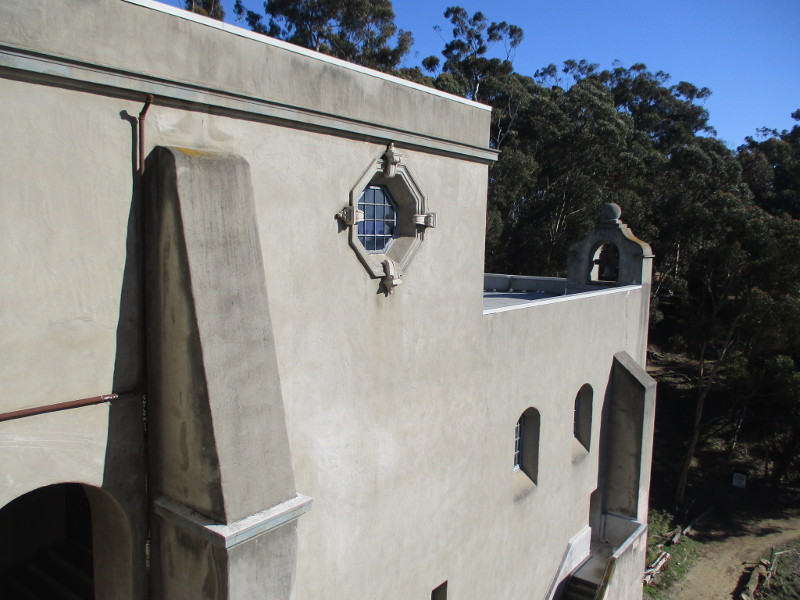
The next two photographs show the exterior of the Saint Francis Chapel at the southwest corner of the California Quadrangle.

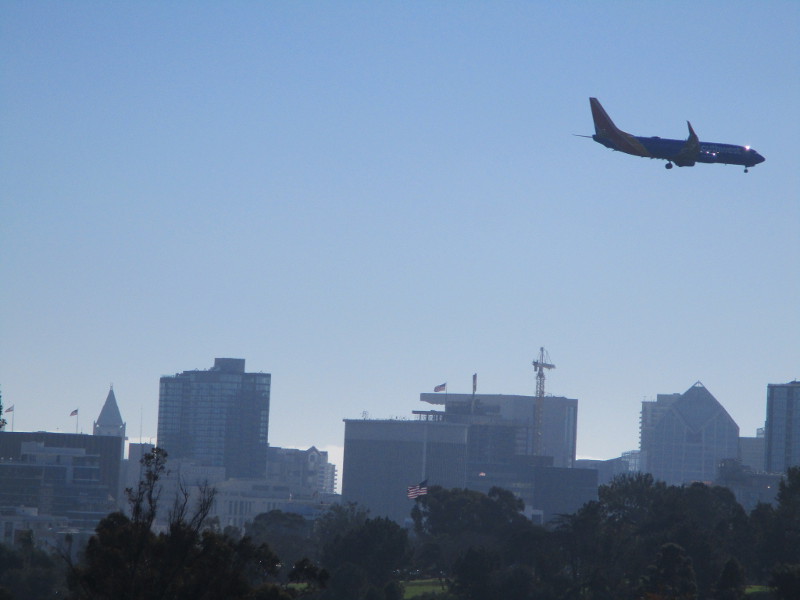
Looking over the Rube Powell Archery Range toward State Route 163 and hazy downtown San Diego…

Now we’re looking west along El Prado toward the Cabrillo Bridge. Few people entering Balboa Park will notice the little known balcony as they approach the park’s grand west entrance…

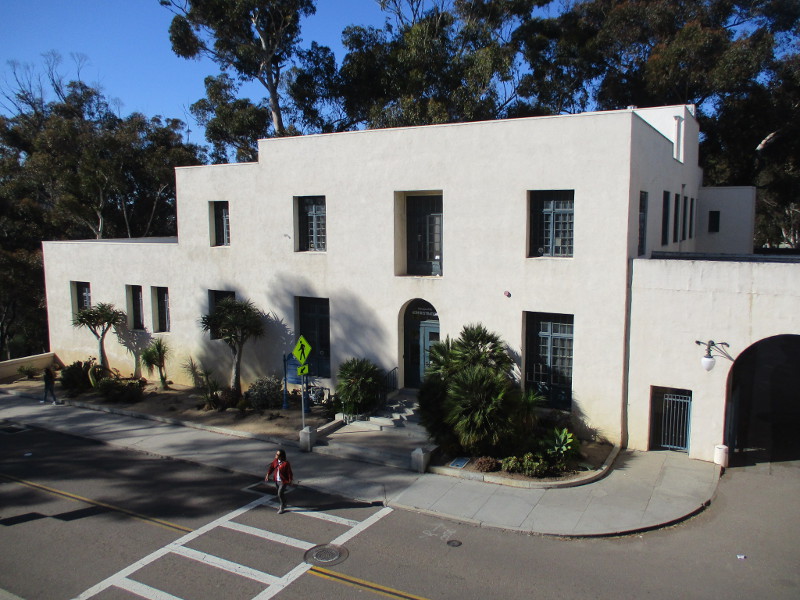
The Administration Building, seen fully in the next photo, was the first building constructed (1911-1912) in Balboa Park for the Panama-California Exposition.

Final architectural plans for the Administration Building were developed by Carlton Winslow under the direction of lead exposition architect Bertram Goodhue.

(If it appears the building was designed by Irving Gill, here’s an article that casts doubt on this and discusses the issue.)

I post new blogs pretty often. If you like discovering new things, bookmark coolsandiegosights.com and swing on by occasionally!

I live in downtown San Diego and love to walk around with my camera! You can follow Cool San Diego Sights via Facebook or X.

Feel free to share this!

History at Carlsbad by the Sea Retirement Community.

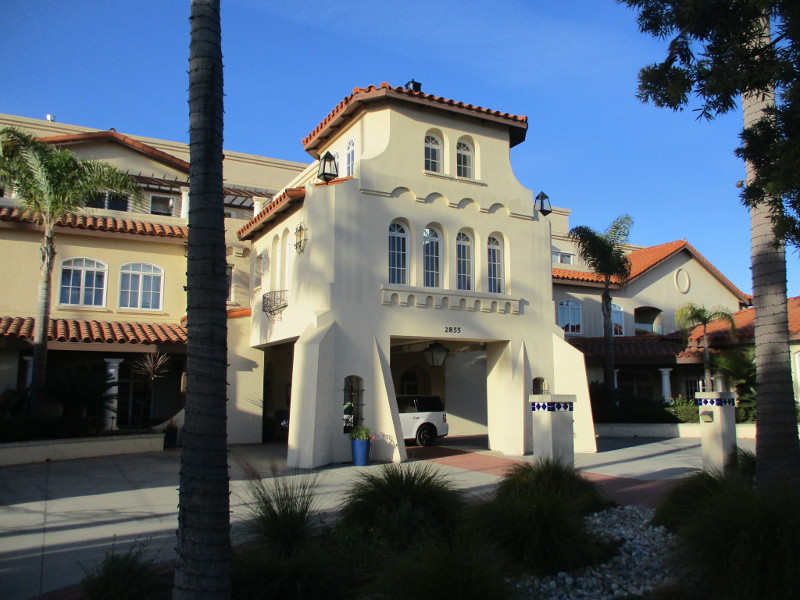
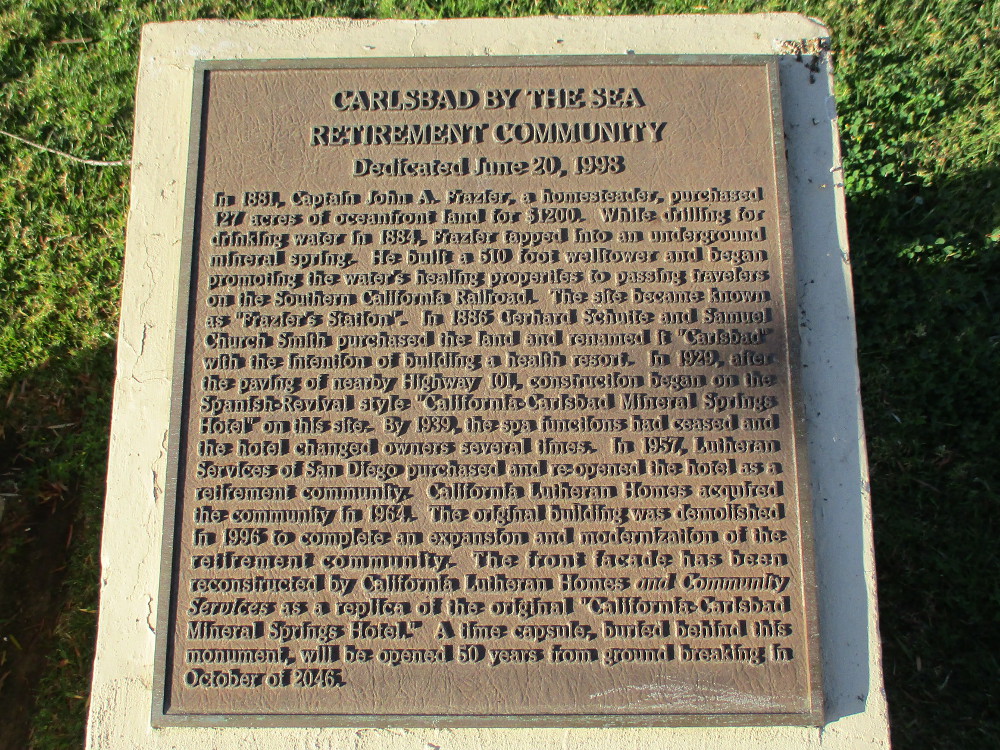
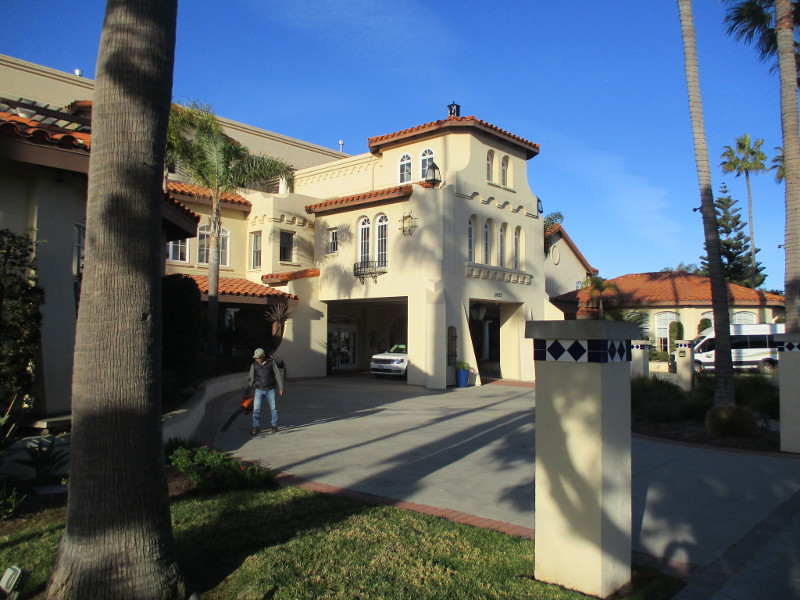
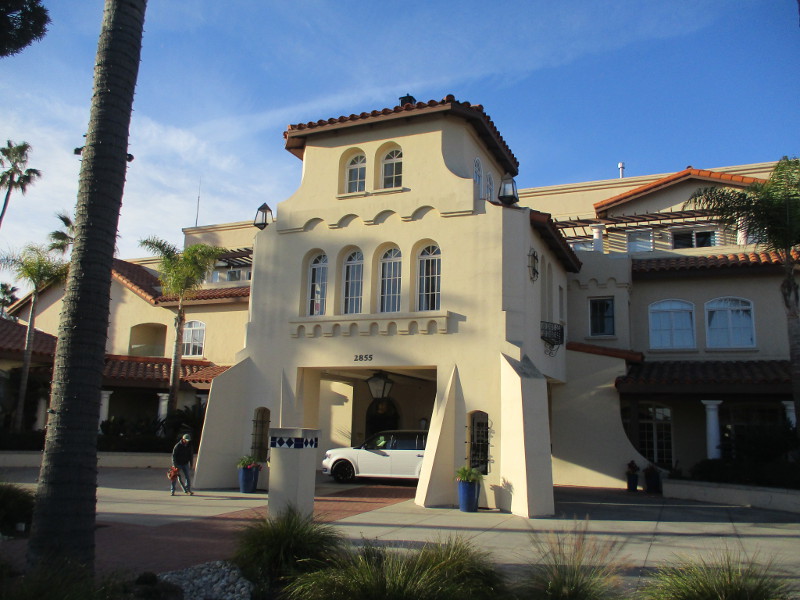
A historical plaque can be found in front of the Carlsbad by the Sea Retirement Community. I noticed it during my last walk up Carlsbad Boulevard.

Here’s a photo:

The plaque reads:

CARLSBAD BY THE SEA RETIREMENT COMMUNITY

Dedicated June 20, 1998

In 1881, Captain John A. Frazier, a homesteader, purchased 127 acres of oceanfront land for $1200. While drilling for drinking water in 1884, Frazier tapped into an underground mineral spring. He built a 510 foot welltower and began promoting the water’s healing properties to passing travelers on the Southern California Railroad. The site became known as “Frazier’s Station”. In 1886 Gerhard Schutte and Samuel Church Smith purchased the land and renamed it “Carlsbad” with the intention of building a health resort. In 1929, after the paving of nearby Highway 101, construction began on the Spanish-Revival style “California-Carlsbad Mineral Springs Hotel” on this site. By 1939, the spa functions had ceased and the hotel changed owners several times. In 1957, Lutheran Services of San Diego purchased and re-opened the hotel as a retirement community. California Lutheran Homes acquired the community in 1964. The original building was demolished in 1996 to complete an expansion and modernization of the retirement community. The front facade has been reconstructed by California Lutheran Homes and Community Services as a replica of the original “California Carlsbad Mineral Springs Hotel.” A time capsule, buried behind this monument, will be opened 50 years from the ground breaking in October of 2046.

I post new blogs pretty often. If you like discovering new things, bookmark coolsandiegosights.com and swing on by occasionally!

I live in downtown San Diego and love to walk around with my camera! You can follow Cool San Diego Sights via Facebook or X.

Thank you for sharing!

Library exhibit celebrates Hubbell art in Mexico.

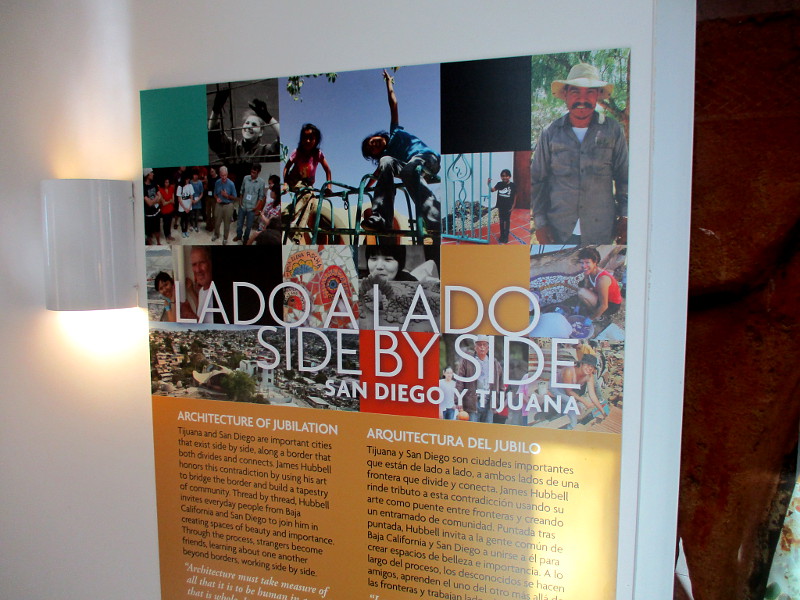
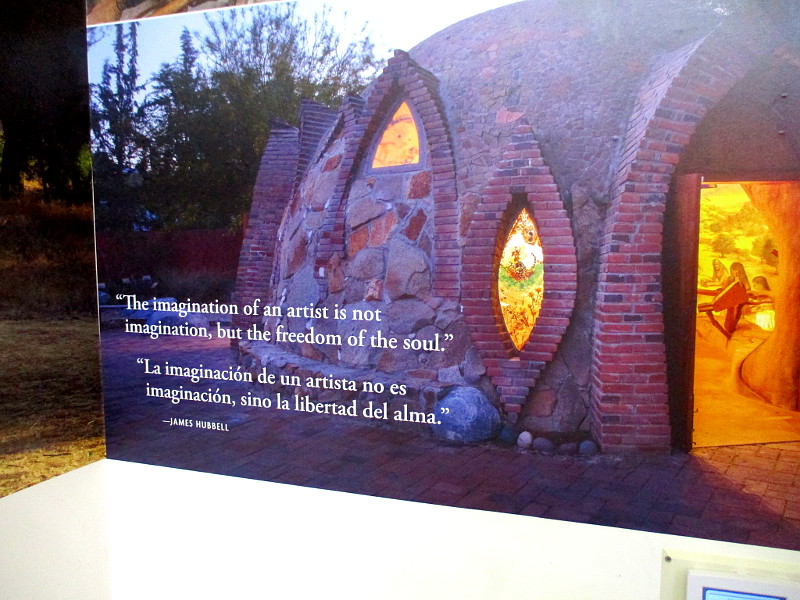
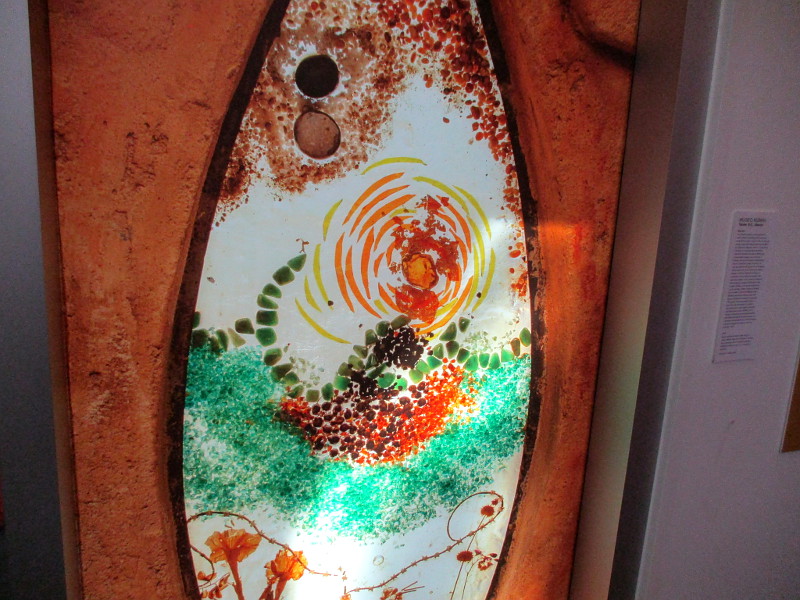
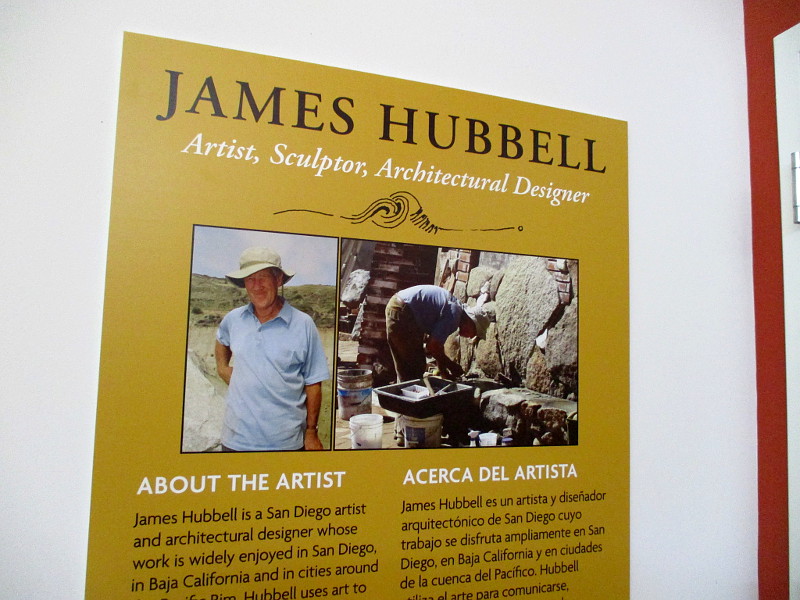
The Otay Mesa-Nestor Library currently has a great exhibit in their community room. Informative displays concern the work of renowned San Diego artist, architectural designer and sculptor James Hubbell in Mexico.

The exhibition, Architecture of Jubilation: Lado a Lado, was supposed to conclude in 2024, but has been extended. A librarian told me they’re hanging onto the exhibit as long as they can!

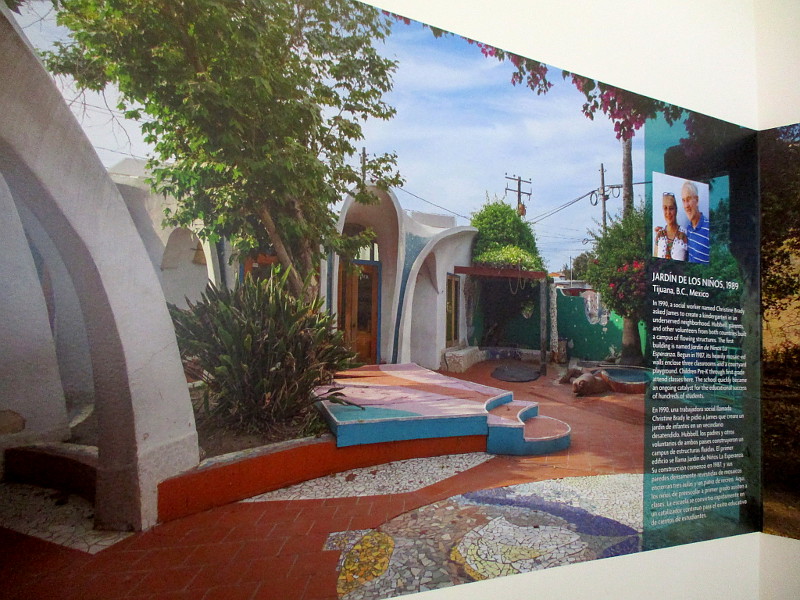
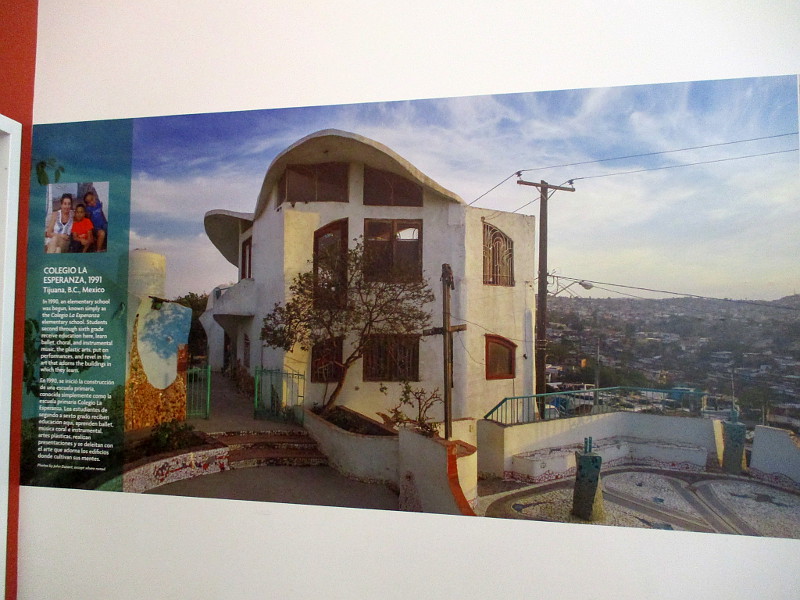
This afternoon I visited the library and gazed at photographs and descriptions of Hubbell’s amazing, organic architectural work in Mexico, including the elementary school Colegio La Esperanza in Tijuana, which he and thousands of community volunteers built.

Another display concerns his Kuchumaa Passage art park, which honors our region’s native Kumeyaay people. Hubbell, with artist Milenko Matanovic, assisted by more volunteers, created beauty on the grounds of Rancho La Puerta fitness spa and resort in Tecate, Mexico. The community-built art park would lead to the creation of Hubbell’s later Pacific Rim Park projects. (The one on Shelter Island–Pearl of the Pacific–can be seen here.)

Other Hubbell projects covered by the Architecture of Jubilation: Lado a Lado exhibit include the Museo Kumiai in Tecate, and Jardín de los Niños in Tijuana.

As one poster explains: Tijuana and San Diego are important cities that exist side by side, along a border that both divides and connects. James Hubbell honors this contradiction by using his art to bridge the border and build a tapestry of community. Thread by thread, Hubbell invites everyday people from Baja California and San Diego to join him in creating spaces of beauty and importance…

James Hubbell passed away last year, but his work will inspire many people and brighten our world far into the future.

I post new blogs pretty often. If you like discovering new things, bookmark coolsandiegosights.com and swing on by occasionally!

I live in downtown San Diego and love to walk around with my camera! You can follow Cool San Diego Sights via Facebook or X.

Thank you for sharing!

YMCA thrives inside historic La Jolla fire station!

The Shepherd YMCA Firehouse in La Jolla looks a lot like an old fire station. That’s because the historic building at 7877 Herschel Avenue once housed Fire Station Engine Company 13 . . . and City Hall, and a police station, a hospital room, and water department!

San Diego Architect Harold Abrams designed the 1937 building in the Spanish-Mission Revival style for the Works Progress Administration. In 1976, the fire and police stations relocated, and the building was used by City Lifeguards for a decade. It was later used by the Library Department for storage during branch renovations.

In 1988 the building opened as a Teen/Senior Community Center, then became a performing arts center in the early 2000s, then a gymnastics program center.

A renovation in 2015 led to the building’s reopening as the Shepherd YMCA Firehouse, which today is available as a very cool community space.

I learned all this several days ago during a walk in La Jolla. I was invited inside, where I could see how the historic firehouse has evolved into a thriving center for classes, meetings, programs and events. The old jail cell from its days as police station still exists, too!

What an attractive interior, and amazing wood beam ceiling!

I post new blogs pretty often. If you like discovering new things, bookmark coolsandiegosights.com and swing on by occasionally!

I live in downtown San Diego and love to walk around with my camera! You can follow Cool San Diego Sights via Facebook or X.

Thank you for sharing!

An amazing transformation at San Diego High School!

An amazing transformation is now underway at San Diego High School!

The school’s once drab appearance as seen from Park Boulevard is being radically altered. As you can see from these photographs taken today, a very cool new entrance is being built. San Diego’s oldest high school is being modernized!

The San Diego High School Administration & Classroom Building (Building 100) was an addition completed in 1976, and had all the stark aesthetics of many buildings designed in that era. The building serves as entrance to the campus.

Take a look at what’s coming!

You can see how the new glassy entrance with its cantilevered, sleekly projecting roof will make San Diego High School a new downtown landmark at the south end of Balboa Park! (Yes, the school is actually located inside Balboa Park.)

To learn about all the changes that are being made, and to view a flyover video of the project, check out the design team’s website here.

I post new blogs pretty often. If you like discovering new things, bookmark coolsandiegosights.com and swing on by occasionally!

I live in downtown San Diego and love to walk around with my camera! You can follow Cool San Diego Sights via Facebook or X.

Thank you for sharing!

One home is a castle in Serra Mesa!

“One’s home is one’s castle” is a literal reality in San Diego’s Serra Mesa neighborhood!

I’d heard this castle-house was under construction earlier this year, so today I took a walk in Serra Mesa to see it. It’s on a residential street among more ordinary looking homes. Can you imagine living here? How cool would that be!
It’s a private residence, so I’ll not provide an address. Just keep your eyes peeled if you happen to be driving in Serra Mesa. Out of the blue you might stumble upon a medieval castle!
Thanks for visiting Cool San Diego Sights!

I post new blogs pretty often. If you like discovering new things, bookmark coolsandiegosights.com and swing on by occasionally!

I live in downtown San Diego and love to walk around with my camera! You can follow Cool San Diego Sights via Facebook or X.

Famous architect Irving Gill’s final design.

Irving Gill was an American architect who did most of his work in Southern California, especially in San Diego and Los Angeles. He is considered a pioneer of the modern movement in architecture.

I’ve posted many photos of Irving Gill buildings, including Granger Hall in National City, the Old Spaghetti Factory’s home in the Gaslamp Quarter, the original Fire Station, City Hall and Library in Oceanside, the First Church of Christ, Scientist building in Bankers Hill, the George Marston House in Balboa Park, the Old Scripps Building in La Jolla, and others. You might recall he also designed San Diego’s famous 1910 Broadway Fountain.

When I visited Oceanside a little over a month ago, I photographed Irving Gill’s final project: the 1936 Blade Tribune building. Let me share those photos now!

If you’d like to read a great article concerning the history of the now defunct Oceanside Blade-Tribune newspaper, click here.

The 1936 Irving Gill building you see in these photos, at 401 Seagaze Drive, was built to accommodate a newly created Oceanside Daily Blade Tribune and News. The unique building with an Art Deco façade was restored in 2019 and today is home to the Blade 1936 Italian restaurant!

Thanks for visiting Cool San Diego Sights!

I post new blogs pretty often. If you like discovering new things, bookmark coolsandiegosights.com and swing on by occasionally!

I live in downtown San Diego and love to walk around with my camera! You can follow Cool San Diego Sights via Facebook or X.

Own a genuine, historical Balboa Park artifact!

Would you like to own a genuine historical artifact from Balboa Park that dates back to just before 1915, when the park debuted for the Panama-California Exposition? You can!

The original light bulb sockets have all been replaced on the façade of the Spreckels Organ Pavilion building and colonnades. If you’ve been to a concert after dark, you know the beautiful lights that add magic to the night.

The Spreckels Organ Pavilion was one of only four structures in Balboa Park meant to remain permanently after the 1915 exposition. Well, these decorative sockets and their hidden wiring deteriorated after a century of use and constant exposure to outdoor elements.

I learned today that for a twenty dollar donation, one socket (with light bulb) will be yours! Simply attend a two o’clock free Sunday organ concert and look for them on tables as you enter the pavilion.

Get them while they last and own a genuine piece of San Diego history! And you’ll help support the Spreckels Organ Society, too!

Thanks for visiting Cool San Diego Sights!

I post new blogs pretty often. If you like discovering new things, bookmark coolsandiegosights.com and swing on by occasionally!

I live in downtown San Diego and love to walk around with my camera! You can follow Cool San Diego Sights via Facebook or X.