We all have deep-seated desires that can never be fulfilled. It’s an essential part of being human.
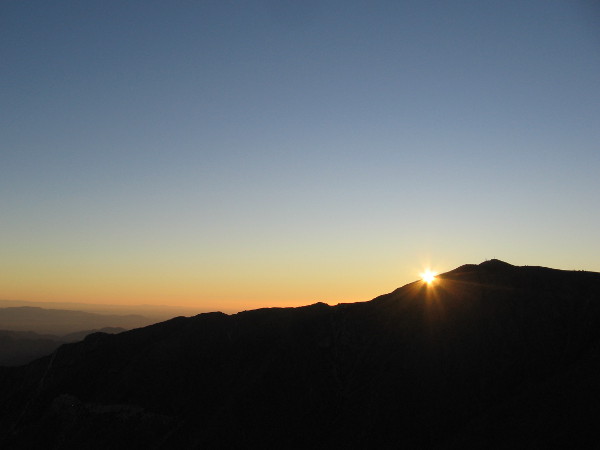
There are horizons that cannot be reached, dreams that cannot be realized. But we keep moving forward through life, in that place where we find ourselves, and we never stop hoping.
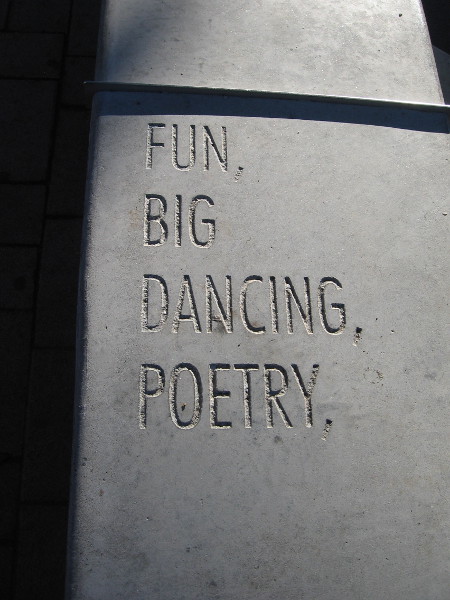
Write Out Loud in San Diego offers several great educational programs that encourage students to thoughtfully read, write, speak and listen!
Yesterday, at the Arts in the Park event in Chula Vista, I learned how students can experience the transformative power of poetry!
Let Your Voice Be Heard is a program of Write Out Loud that provides free poetry writing workshops in schools. Students K-12 are inspired to reach within themselves and express their thoughts and emotions with a poem. Selected works are then displayed in libraries and retail businesses!
Poetry Out Loud is a poetry recitation competition for high school students. This educational program encourages the study of great poetry by offering free educational materials and a dynamic recitation competition for high school students across the country…students master public speaking skills, build self-confidence, and learn about literary history and contemporary life.
I was told that some teachers, like many students, are bewildered and a bit intimidated by the very idea of poetry. But why? Poetry is simply words flowing from our inner selves. There’s no right or wrong. There’s no need to be exalted or profound. Just be yourself. And, possibly, learn a little more about yourself in the process!
Teachers, please explore all the educational programs offered by Write Out Loud by visiting their website here!
…
I live in downtown San Diego and love to walk around with my camera! You can follow Cool San Diego Sights via Facebook or Twitter!
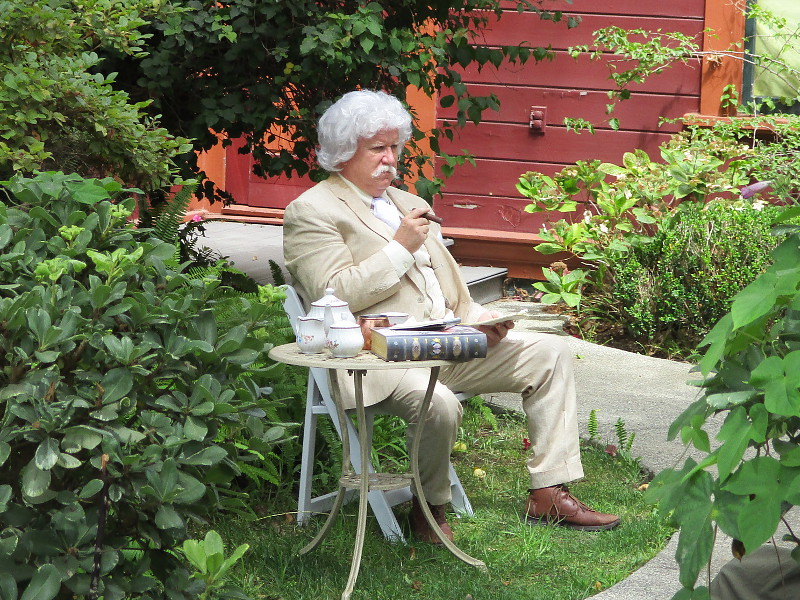
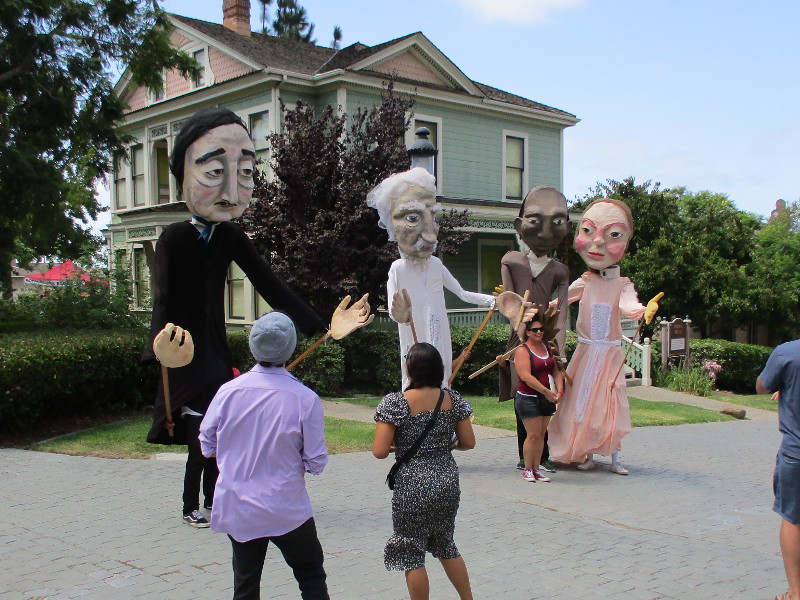
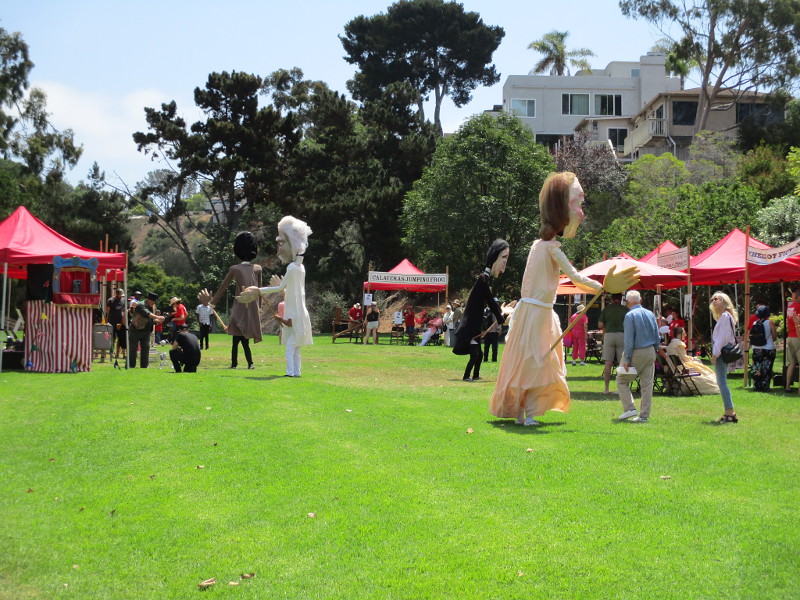
Famous author Mark Twain and several literary friends visited San Diego today. They arrived at Heritage County Park for a very special event.
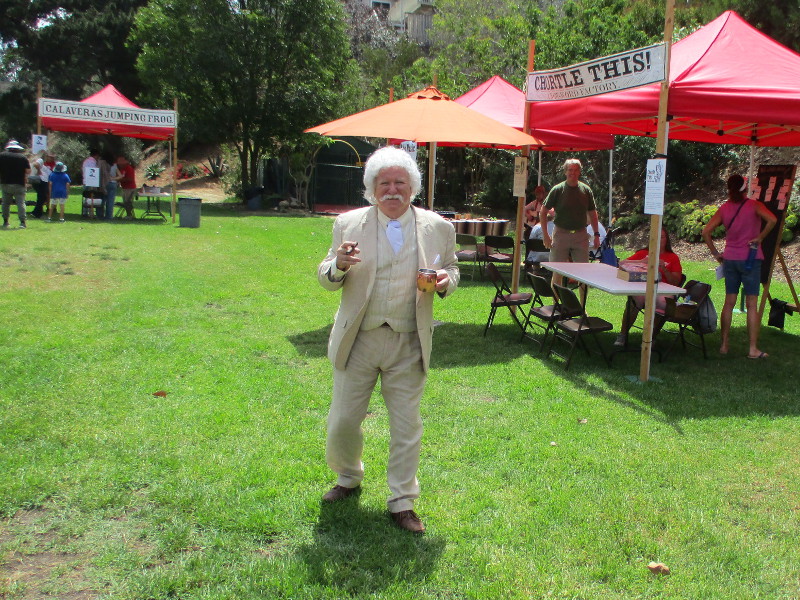
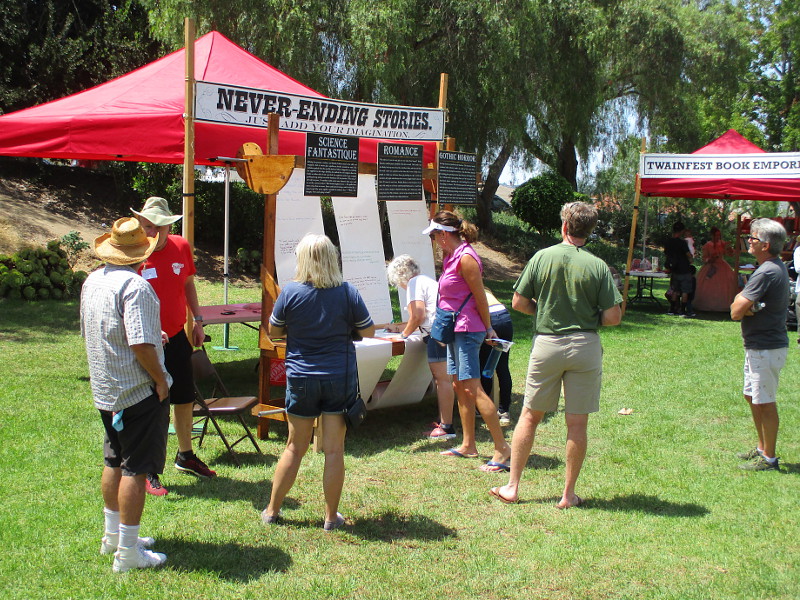
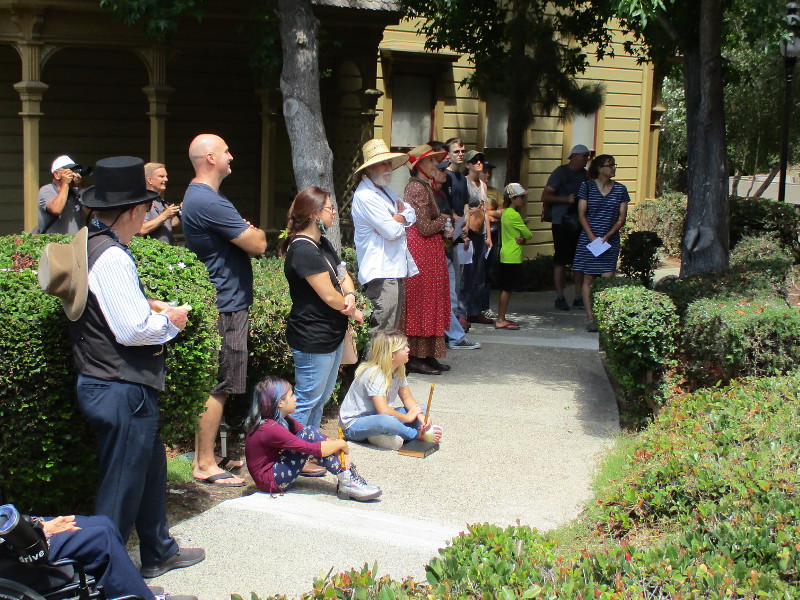
TwainFest 2022 welcomed some of the world’s most celebrated writers, delighting everyone who attended the outdoor festival. The free, family-friendly event is put on every year by Write Out Loud.
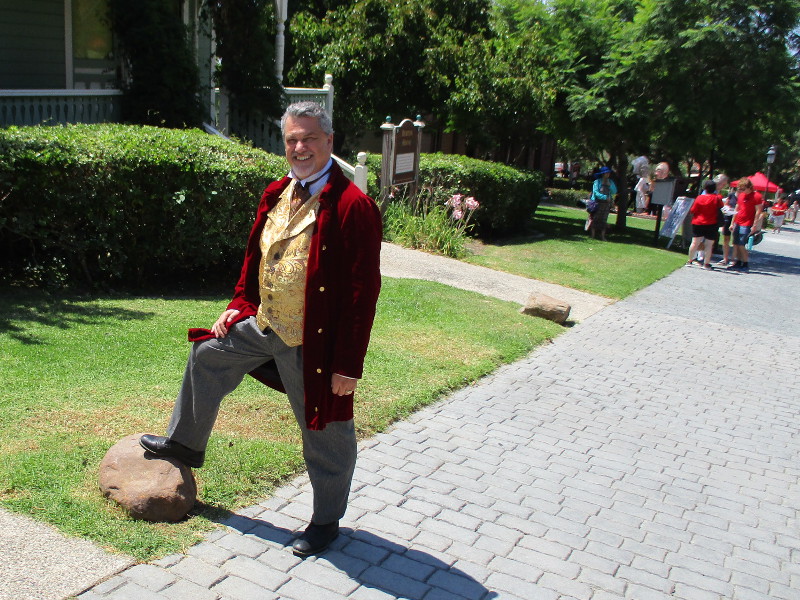
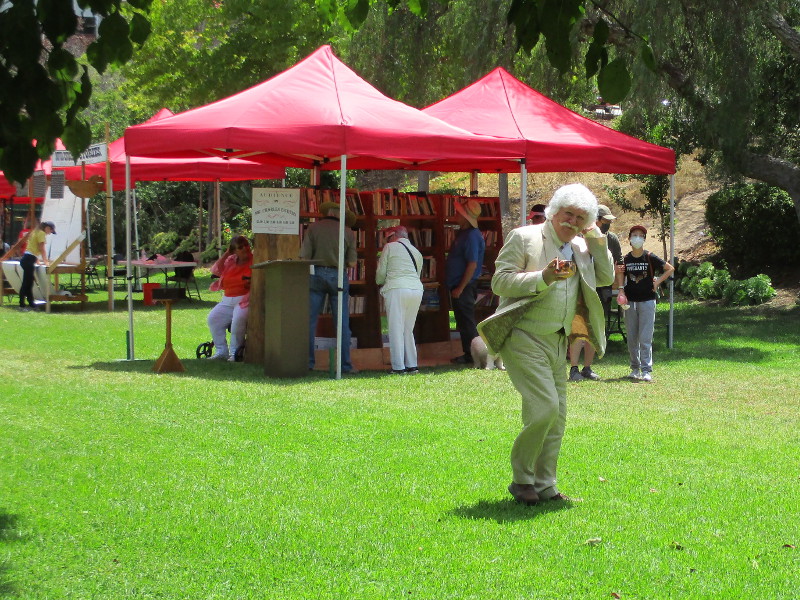
Mark Twain himself greeted visitors who wandered about…
When I asked him, Mark Twain wouldn’t clearly acknowledge that he was inspired by Squibob. Historians say he probably was.
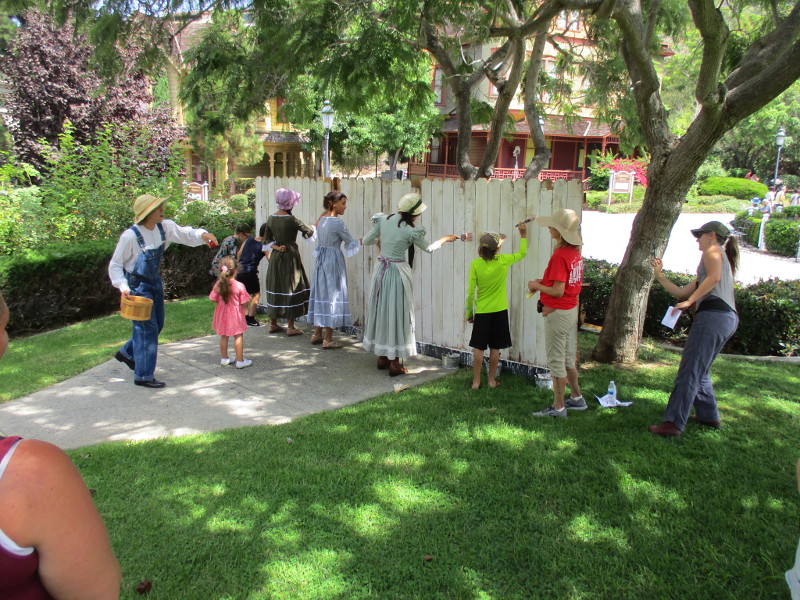
But we can all agree Twain’s novel The Adventures of Tom Sawyer is a classic of American Literature. The esteemed author must’ve been pleased when TwainFest visitors cheerfully whitewashed a fence, much to the consternation of Aunt Polly.
Soon Twain was joined by three other notable writers. Edgar Allan Poe, Paul Laurence Dunbar, and Emily Dickinson.
Yes, a fine summer day filled with imagination–another chapter in our own never-ending stories…
Out of the blue, a friendly Charles Dickens came strolling along through Heritage Park. The author confessed that one of his favorite works was A Christmas Carol.
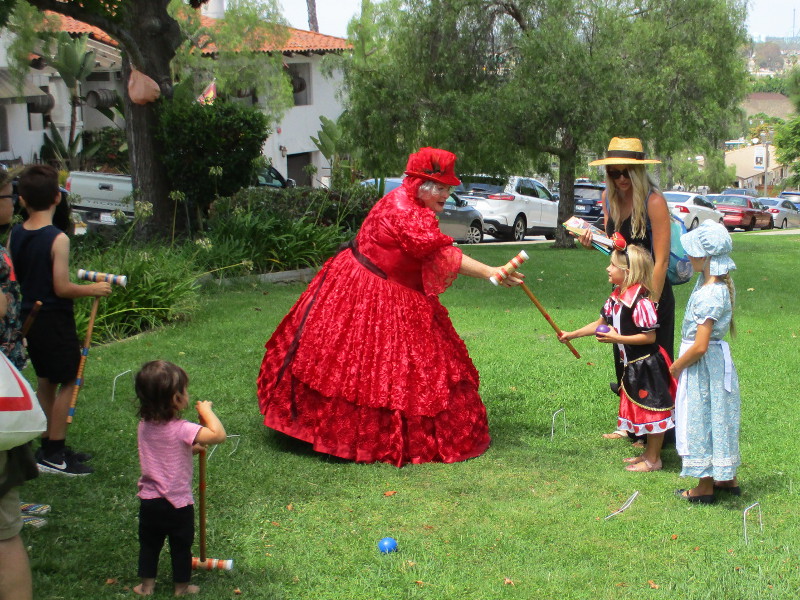
In another area of the park, the Red Queen of Alice’s Adventures in Wonderland was playing croquet. I didn’t see Lewis Carroll, but he must’ve been nearby.
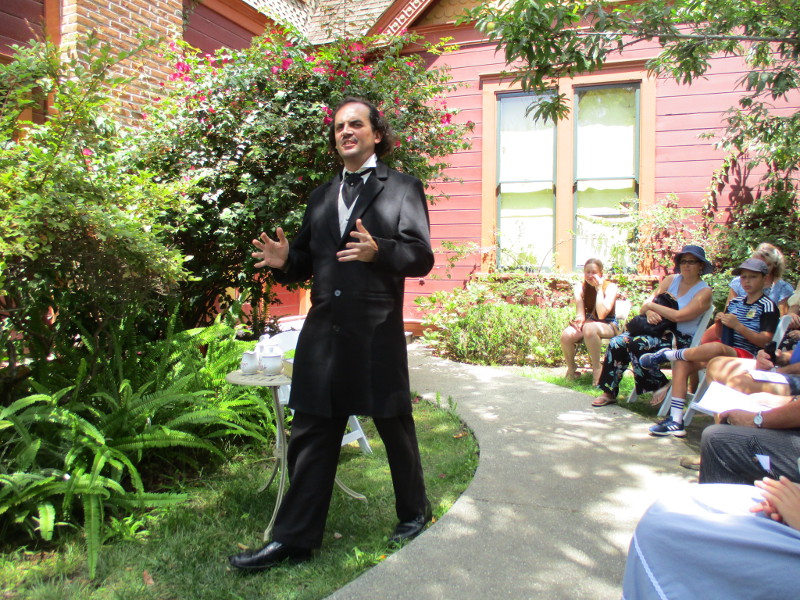
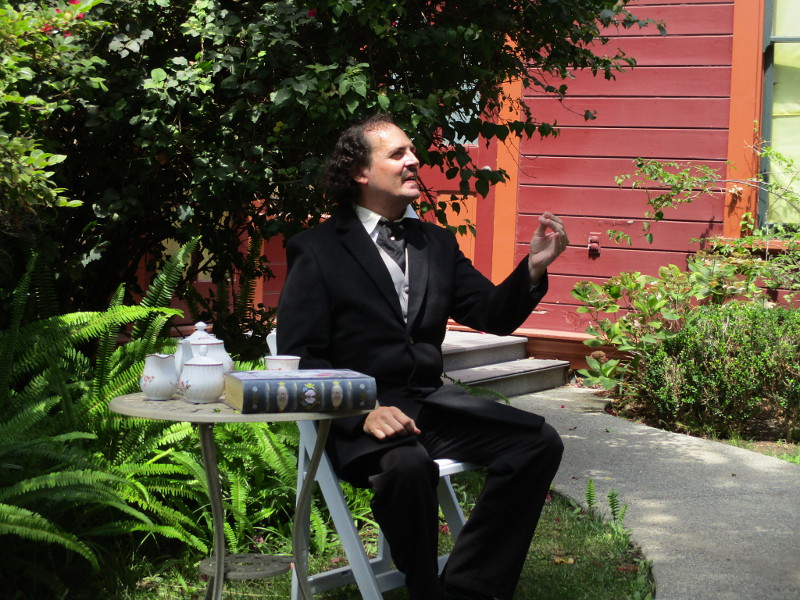
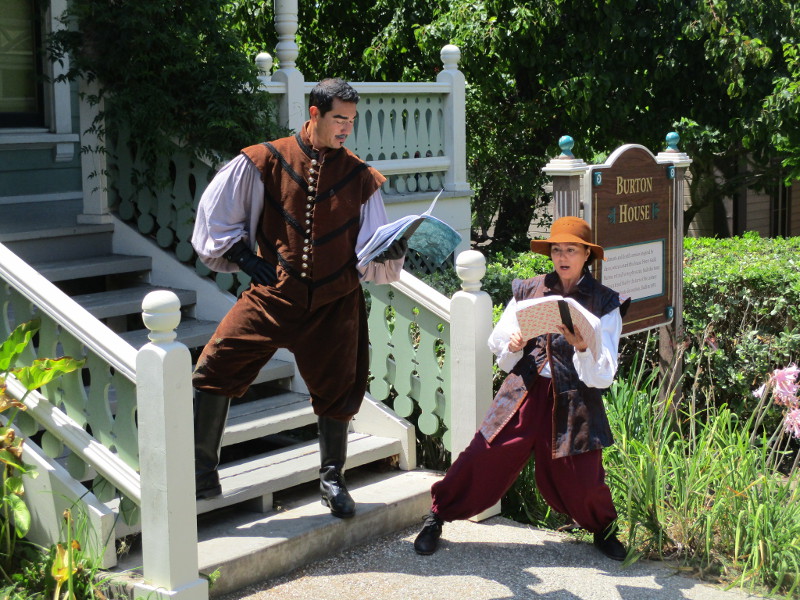
In the sunny Author’s Salon, Edgar Allan Poe was talking about his life–what he remembered of it.
Then Poe began his emotional recital of The Raven.
A few steps away, what were these smiling TwainFest visitors observing?
Tinker Bell and Peter Pan!
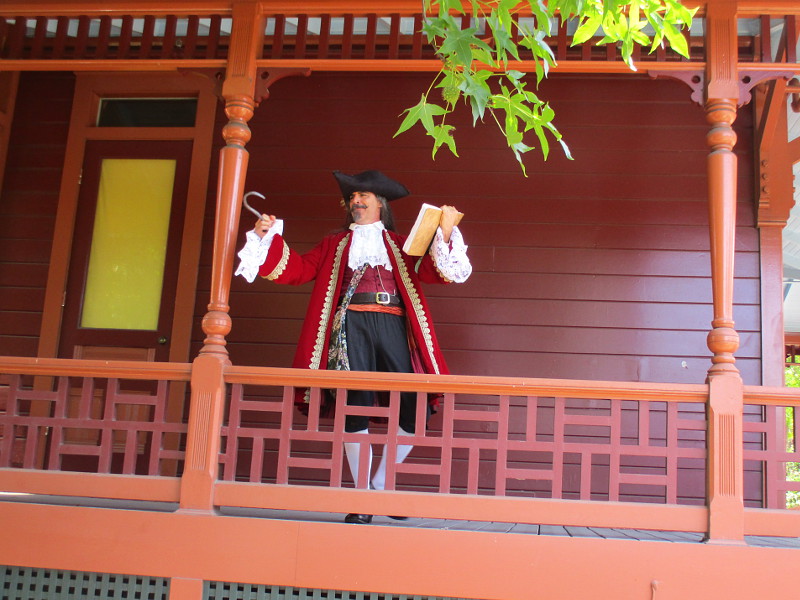
And that scoundrel, Captain Hook!
And what was going on over here?
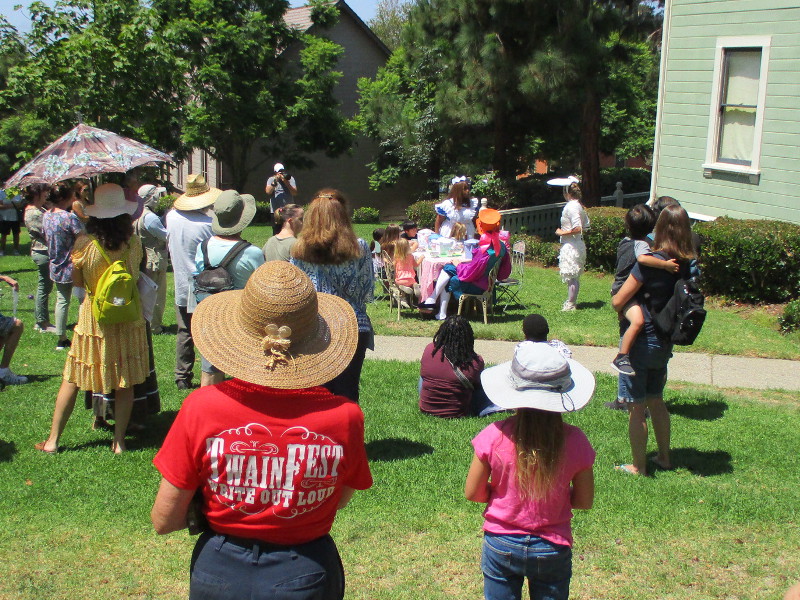
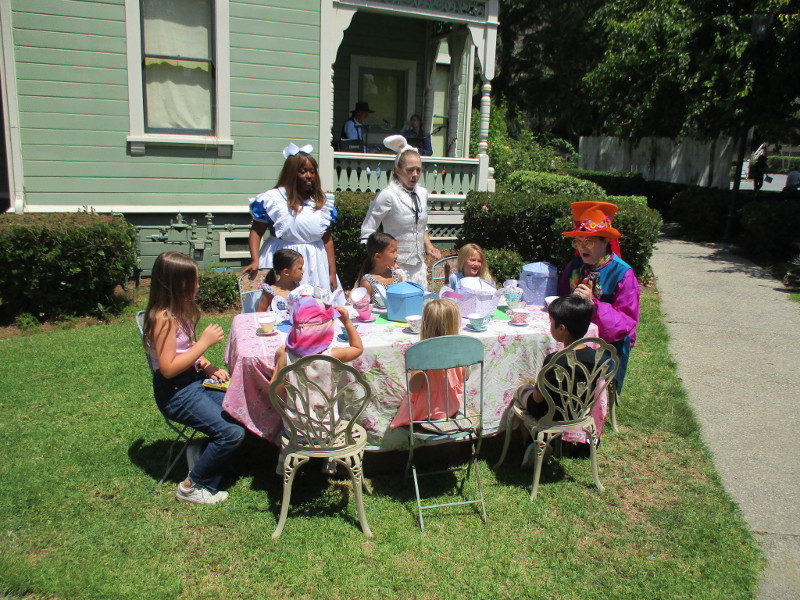
Alice, the White Rabbit, the (Mad) Hatter and smiling guests had assembled for a quite unique tea party!
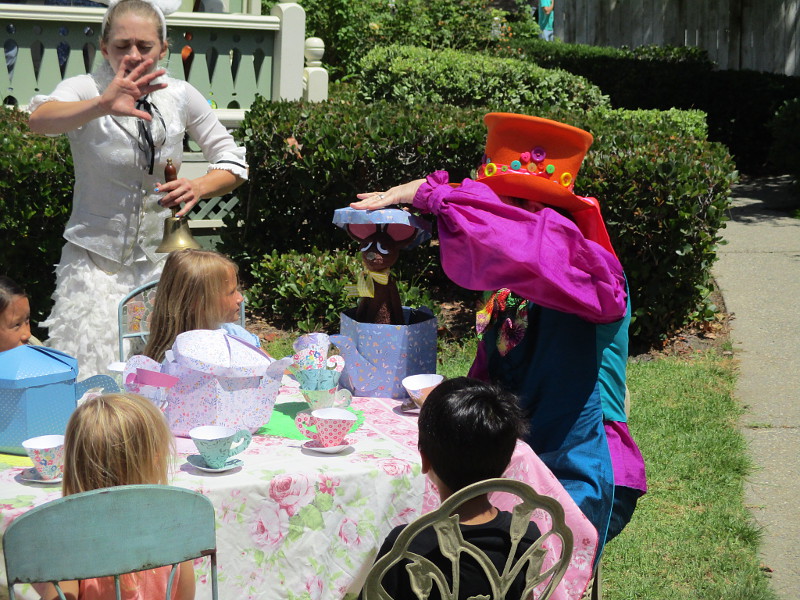
The Dormouse made a surprise appearance at the Mad Tea-Party as well!
And who is this fine fellow over here reading a story about gallant knights and noble acts of chivalry?
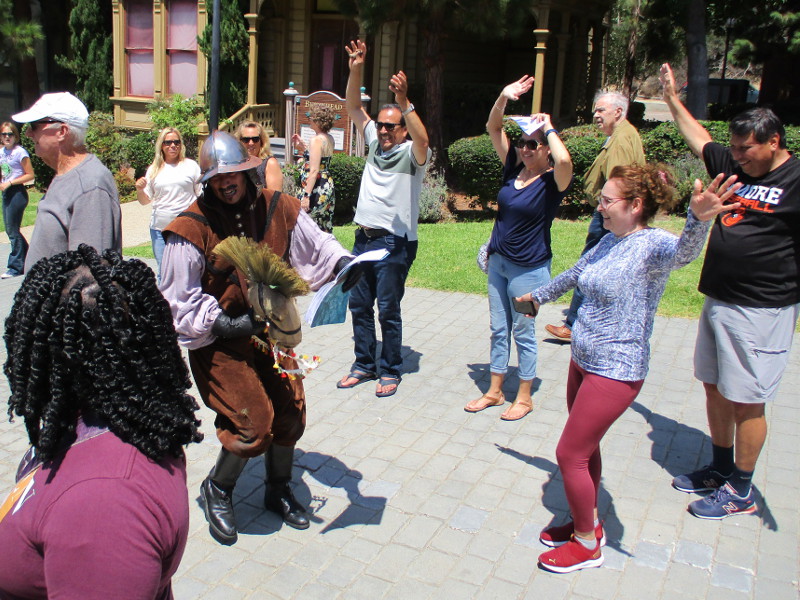
Don Quixote! (And his squire Sancho Panza.)
For his first big adventure, Don Quixote encountered a terrifying number of large fearsome giants who looked strangely like windmills…
Thank you, Mr. Twain, for the twinkle in your eye and your timeless humor.
And for bringing so many literary friends to San Diego!
…
I live in downtown San Diego and love to walk around with my camera! You can follow Cool San Diego Sights via Facebook or Twitter!
Back in Middle School, a bunch of classmates and I spent a summer weekend camping on Catalina Island. At the Parsons Landing primitive campground to be exact.
We hiked all over the north part of Catalina and saw bison, cliff dived into the ocean, sat around a campfire, and even went on an afternoon snipe hunt. (We saw bison? That’s correct! A small herd of bison was transported to this Southern California island by Hollywood for the filming of The Thundering Herd, a 1925 silent movie.)
The snipe hunt fascinated me. We headed up one of the trails above the campground searching right and left and occasionally beating a bush with a stick. Everyone knew from the start that the snipes weren’t real, but we all had fun “hunting” them anyway. At least for a little while. I think what made the snipe hunt fun was the shared joke, and the fact that we were heading up a trail that was new to us.
An idea for a short story came to me some time ago, based loosely on that snipe hunt experience. Of course, I changed many elements for my fictional story. It was necessary that I make the setting of the story a dark night.
You’ll see why when you read my new story, The Snipe Hunt, by clicking here!
…
I live in downtown San Diego and love to walk around with my camera! You can follow Cool San Diego Sights via Facebook or Twitter!
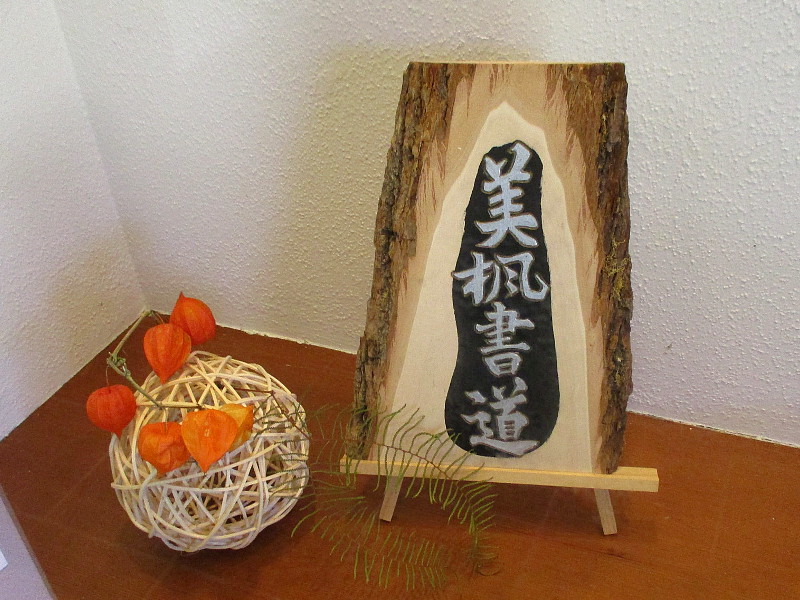
The works on display are curated by Befu Osawa, a Master Calligrapher based in San Diego. The history of Chinese and Japanese scripts is shown, along with Kanji letters that are very seldom seen.
The exquisite art of calligraphy has always fascinated me. Particularly when it’s applied to logograms that visually represent words. With careful applications of ink, the meanings of words and written stories are made visible, and imbued with additional dimension.
As a writer whose alphabetical pen strokes are careless scratches, that skillfully added depth makes me jealous!
If you love calligraphy, head over to the Exhibit Hall at the beautiful Japanese Friendship Garden. This exhibition continues through July 23, 2022.
…
I live in downtown San Diego and love to walk around with my camera! You can follow Cool San Diego Sights via Facebook or Twitter!
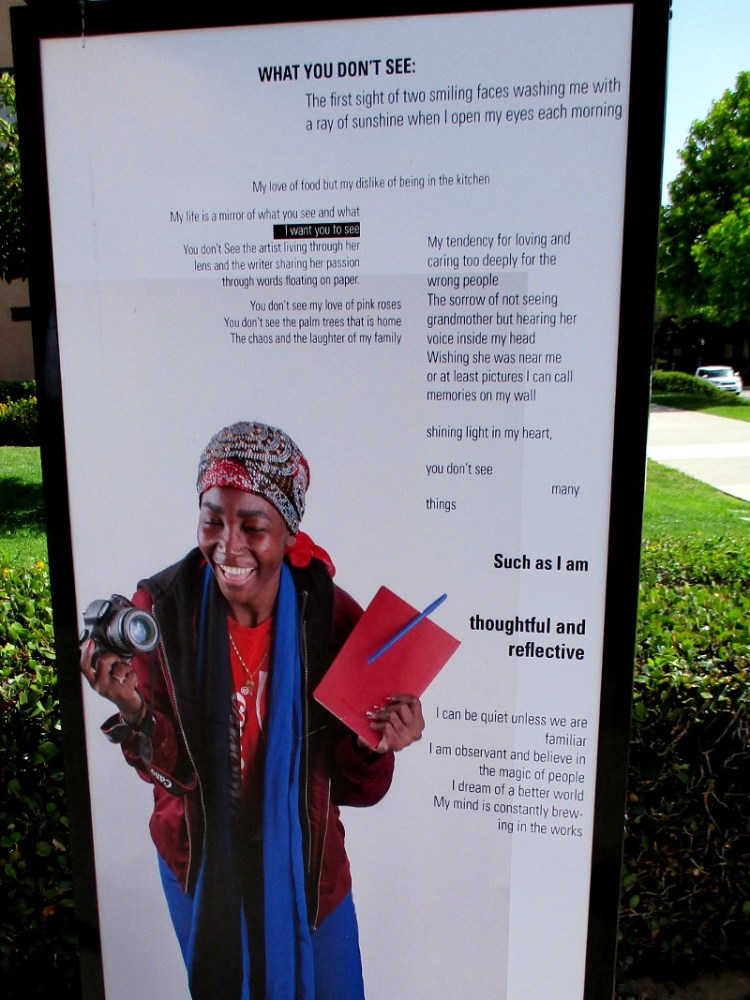
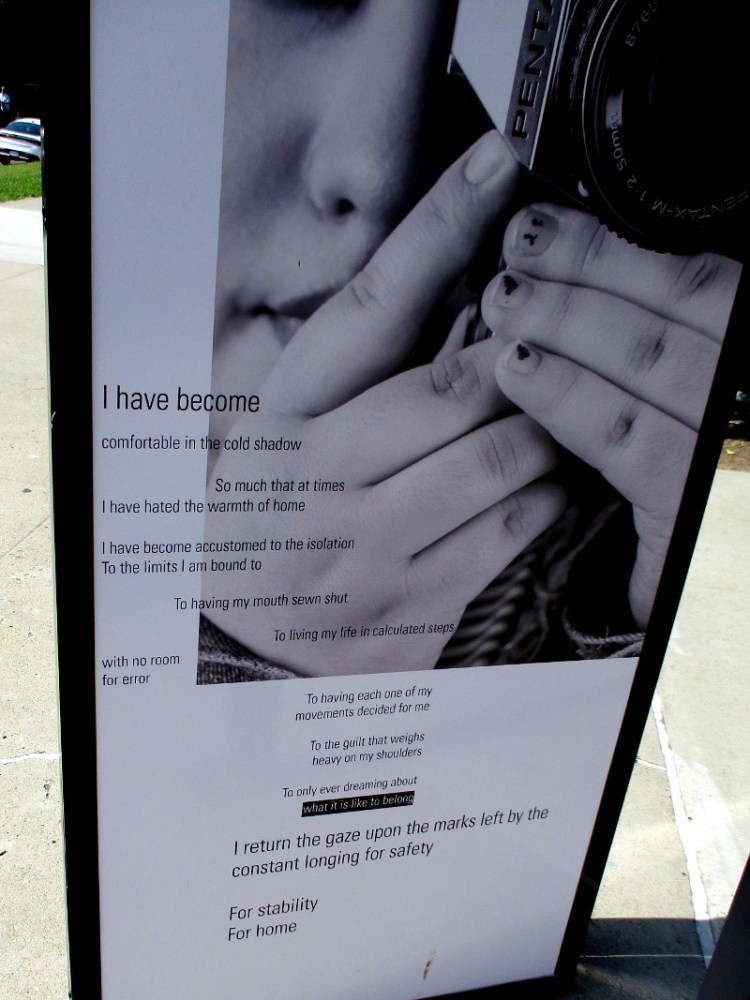
One seldom observes public art that features poetry. It’s even more rare when the poems are composed by people who are frequently ignored.
Transcending Perception is public art that debuted in Liberty Station back in October, 2020. I hadn’t seen this installation until last weekend, when I walked down a pathway on the east side of THE LOT movie theater.
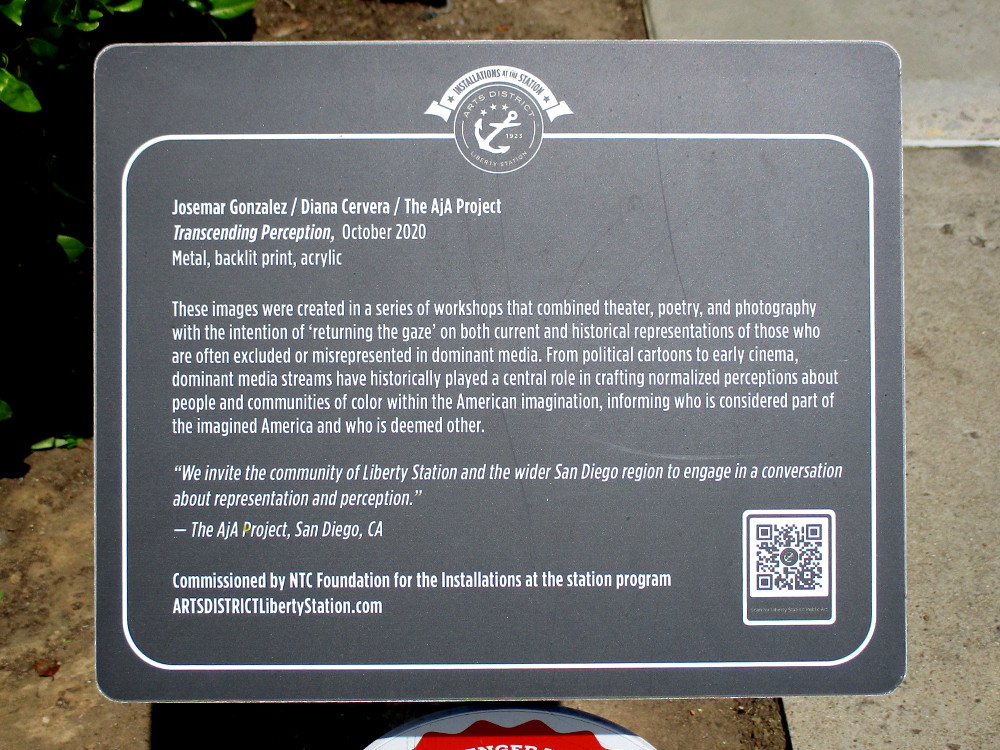
The images of Transcending Perception, according to the nearby information sign, “were created in a series of workshops that combined theater, poetry, and photography with the intention of ‘returning the gaze’ on both current and historical representations of those who are often excluded or misrepresented in the dominant media…”
This artwork was created by Josemar Gonzalez/Diana Cervera/The AjA Project.
Should you visit Liberty Station in Point Loma, you might want to read these potent words and consider what they mean and why they were written.
We all lead unique lives, with our own experiences and assumptions. It’s enlightening to put yourself in another’s shoes.
…
I live in downtown San Diego and love to walk around with my camera! You can follow Cool San Diego Sights via Facebook or Twitter!
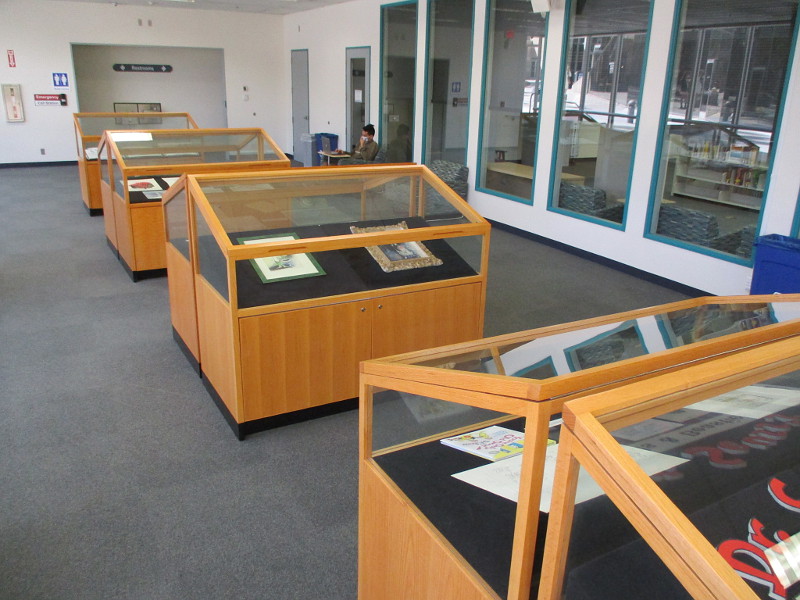
There’s a fun exhibit just inside the entrance of the Geisel Library at UC San Diego. It’s titled Dr. Seuss’s Boids & Beasties!
I stumbled upon these displays of original Dr. Seuss drawings, sketches and writings during my visit to UCSD in La Jolla today. The artwork and documents come from the university’s large Seuss collection. La Jolla is where Theodor Seuss Geisel, the legendary children’s book author, lived for much of his life.
I asked about the exhibition at the library’s nearby front desk, and was told it’s semi-permanent. So next time you’re on or near the campus, you might want to check out these fantastical Boids and Beasties!
Just a sample…
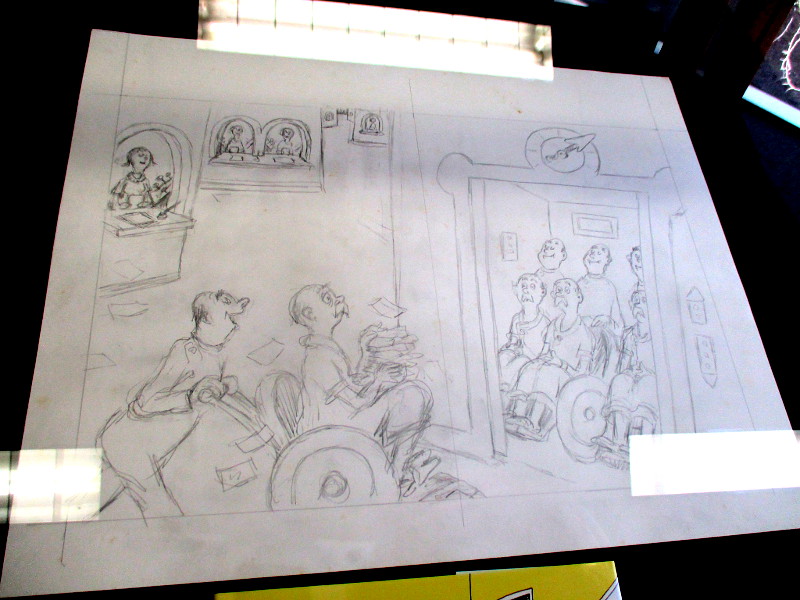
Dr. Seuss is known and beloved worldwide. The exhibit includes some of Theodor Seuss Geisel’s early work as an advertising and commercial artist.Dragon sketch, circa 1915, one of the earlies known Geisel drawings.Geisel artwork used for advertising Flit bug spray.Letter by Dr. Seuss describes how listening to a ship’s engine inspired the rhymes in his first published children’s book And to Think That I Saw It on Mulberry Street.Pencil sketch for You’re Only Old Once!Rough sketch for two pages of The Sneetches.
…
I live in downtown San Diego and love to walk around with my camera! You can follow Cool San Diego Sights via Facebook or Twitter!
Comic books and graphic novels can be used in schools to stir excitement for reading, and to explore and teach a variety of subjects.
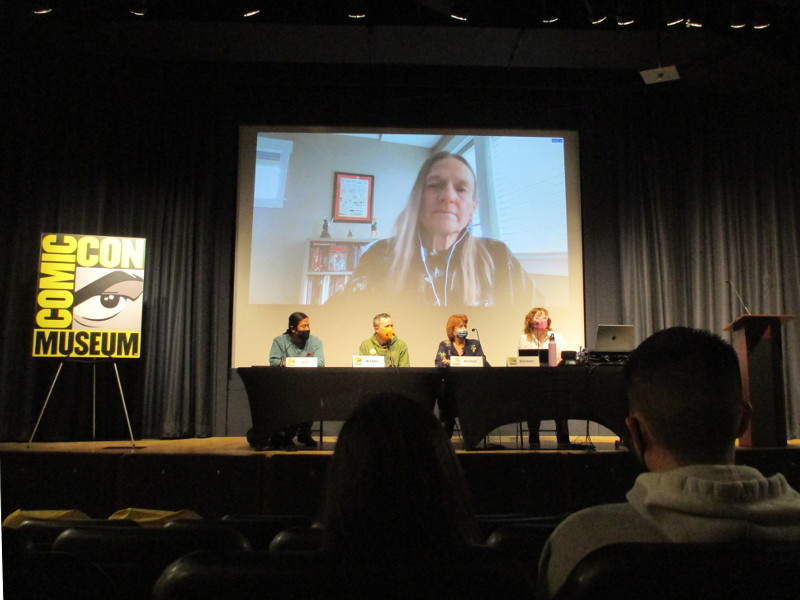
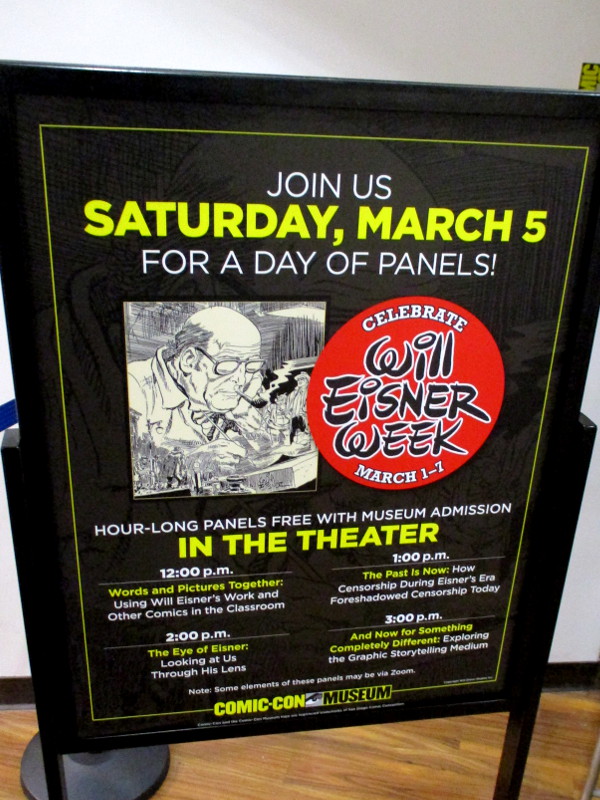
Today a panel of educators shared their thoughts about Words and Pictures Together. The hour-long panel was part of a Will Eisner Week event at the San Diego Comic-Con Museum.
Will Eisner was a pioneering cartoonist and writer whose work both inspired and influenced almost every comic artist that followed him. He practically invented the graphic novel. His amazing artwork is legendary. His stories are often complex, surprising, challenging and philosophical. Not unlike great literature.
The panelists at the Comic-Con Museum yesterday discussed how they have used Eisner’s work and other comics in the classroom.
As I sat in the audience listening, I learned there are many benefits to using certain comic books or graphic novels as educational tools.
Perhaps most importantly, they are accessible to young people. Particularly kids who struggle with reading. Those who resist reading or have limited language skills will often turn the pages of a comic, greedily devouring both words and pictures. After all, most comic books and graphic novels are written to engage and excite.
Another benefit can be the development of critical thinking. There are plots to analyze and characters to understand. Allusions and themes can provide subject matter for discussion. Stories that involve historical events or contemporary issues can open a young mind to interesting ideas and questions.
And there is the graphic art itself. Why did the artist make certain choices? The page layout, typography, style, visual point of view . . .
What I found most inspiring was that students can be encouraged to make their own comic art. To tell their own stories. Express their own thoughts and feelings. When you’re a young person, secretly unsure of many things and trying to figure out life, personal expression can help you grow.
By producing their own comic or graphic novel, students also learn how to plan a creative project and execute it. And they write!
What’s more, the opportunity to show their finished art provides a sense of accomplishment!
The panelists mentioned a few works and web pages that you can use or peruse:
Years ago I described how high school students in San Diego were creating their own graphic novel. Their amazing Jasper and the Spirit Skies was launched last year at Comic-Con@Home! You can revisit that past blog post here.
There’s another reason why I found this panel of educators so interesting. Classrooms around the world are reading my short story One Thousand Likes. This small work of fiction (no pictures!) concerns the use of social media and human isolation. Read the story here.
…
I live in downtown San Diego and love to walk around with my camera (and write)! You can follow Cool San Diego Sights via Facebook or Twitter!













 Cool San Diego Sights!