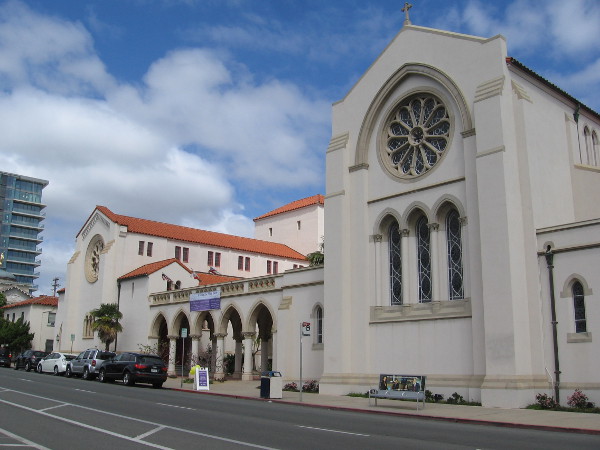
View of St. Paul’s Episcopal Cathedral from across Fifth Avenue.
I swung by St. Paul’s Cathedral in Bankers Hill a couple weekends ago during the San Diego Architectural Foundation 2018 OPEN HOUSE event. A friendly gentleman named Bob who belongs to this Episcopal church showed me the original Great Hall which was completed in 1929, then the impressive interior of the cathedral, or “big house” as he called it, which was finally completed in 1951.
St. Paul’s Cathedral was designed by architect Philip Frohman, who is best remembered as the designer of the National Cathedral in Washington, D.C. The building contains elements of both Gothic and Romanesque architecture. The original pipes of the historic church organ date from 1887. They were brought by ship around Cape Horn, to serve as the first organ in Old Town San Diego.
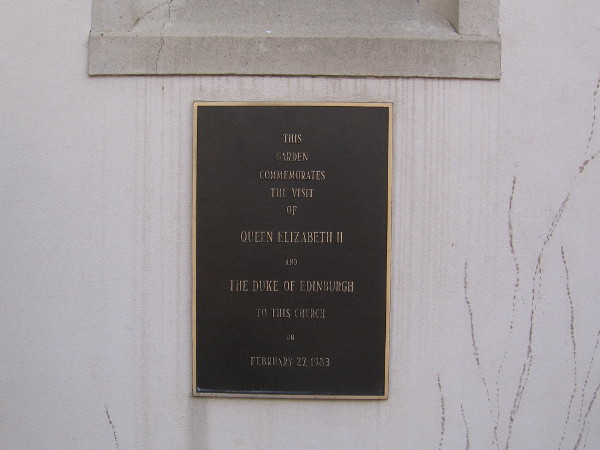
The cathedral was visited by Queen Elizabeth II in 1983 during her trip to San Diego aboard Her Majesty’s Yacht Britannia. I was told that she spoke to the congregation and enjoyed listening to Evensong.
I gleaned a few odd bits of information during the informal tour and have included them in my photo captions.
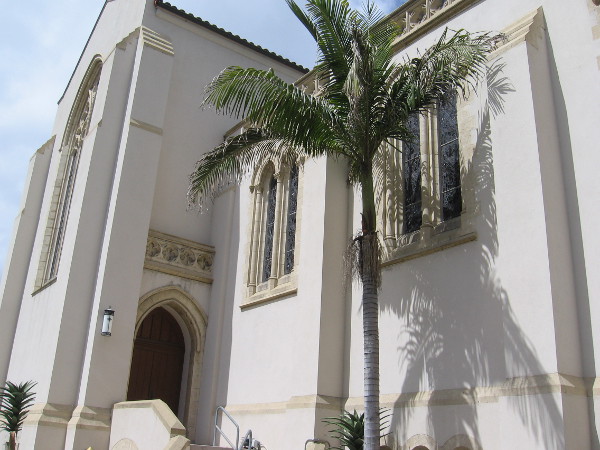
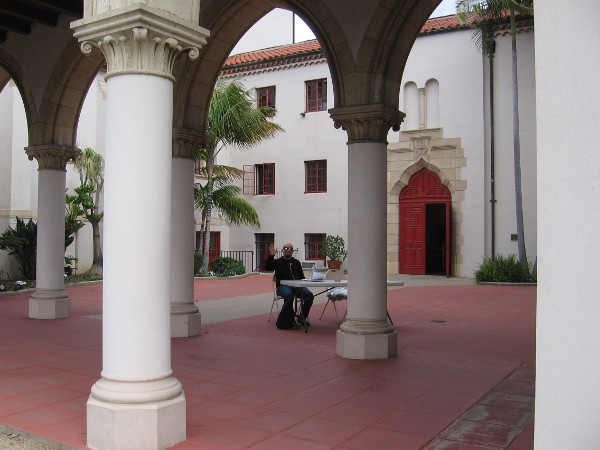
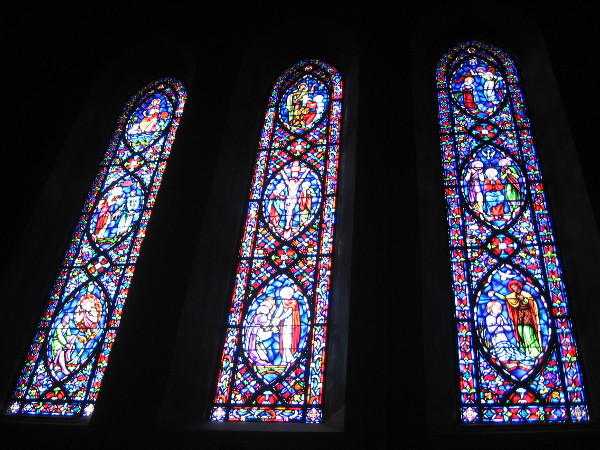
Looking north at the impressive cathedral and its many stained glass windows from Nutmeg Street.St. Paul’s Cathedral in San Diego was designed by famed architect Philip Frohman.Ladies exit through an arcade of elegant columns.A gentleman in the church’s courtyard greeted visitors during the weekend architectural event.Construction of St. Paul’s parish house or Great Hall began in 1928.The most notable thing I saw in the Great Hall is the incredible original wooden beamed ceiling, which is showing signs of age.Turning my camera for another shot of this amazing ceiling.Sunlight enters through a rose window.A plaque in the courtyard area between the Great Hall and cathedral. This garden commemorates the visit of Queen Elizabeth II and the Duke of Edinburgh to this church on February 27, 1983.Inside the beautiful cathedral, looking east from the nave toward the chancel and historic Great Organ.People have quietly entered the sacred place. The gray interior walls allow light from the stained glass lancet windows, created by Judson Studios in Pasadena, to fill the eyes of worshipers.This small Lady Chapel to the east was built in 1975. It’s used for weddings and other celebrations. It contains a smaller organ.The cathedra, or bishop’s seat, off to one side.More resplendent stained glass, like celestial visions shining through darkness.
…
I live in downtown San Diego and love to walk around with my camera! You can follow Cool San Diego Sights via Facebook or Twitter!
You can easily explore Cool San Diego Sights by using the search box on my blog’s sidebar. Or click a tag! There are thousands upon thousands of photos for you to enjoy!
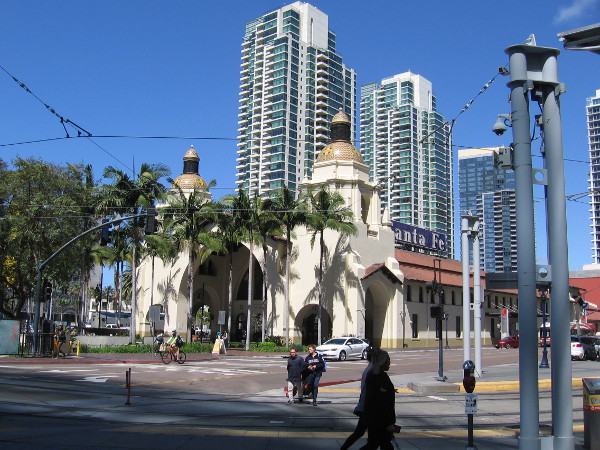
Photo of Santa Fe Depot as it appears today. Some changes to the historic building are possibly in its future.
I went on a short tour of the Santa Fe Depot last week during the San Diego Architectural Foundation 2018 OPEN HOUSE event.
I’ve posted about the depot several times in the past. One fact-filled post concerned an historical exhibit inside the waiting room; another shared hundred year old photos of the building. During our tour I learned even more and enjoyed looking at additional old images.
This downtown San Diego landmark was designed by Bakewell and Brown to welcome the many anticipated visitors to the 1915 Panama-California Exposition in Balboa Park. The depot’s construction began on May 28, 1914. The building officially opened on March 7, 1915. Materials that were used include a steel frame with wood trusses, concrete slabs, brick arcades and hollow clay tile infill walls. The architects Bakewell and Brown also designed San Francisco City Hall, the Coit Tower and Pasadena City Hall.
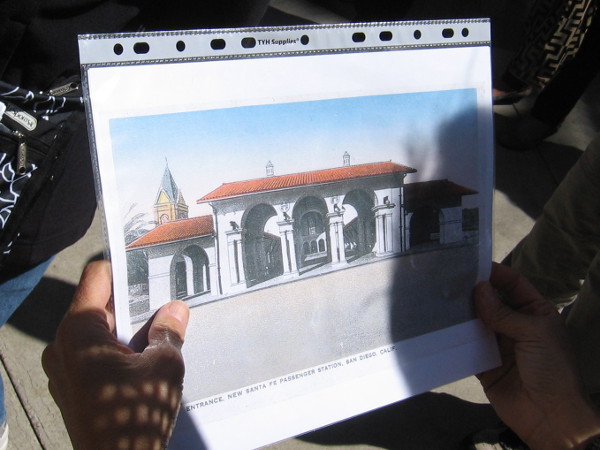
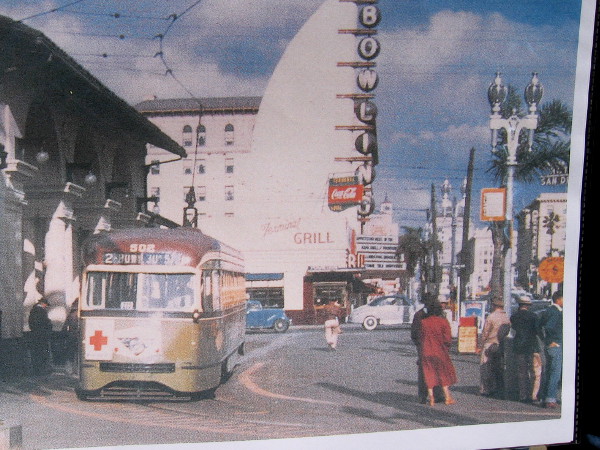
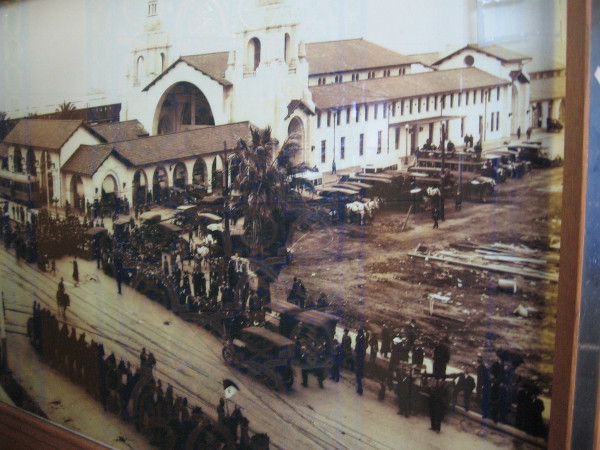
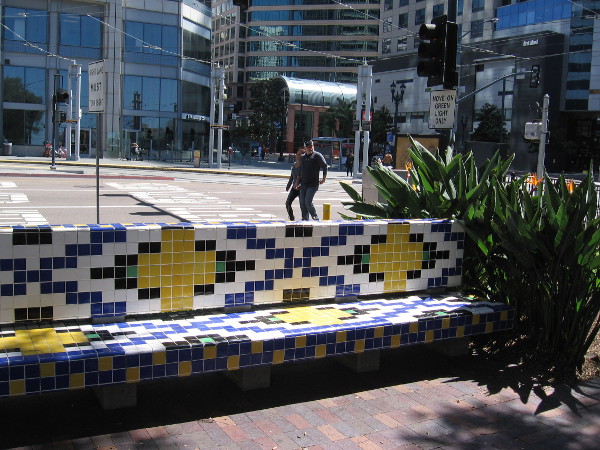
During the course of its history, there have been various changes to the building and its forecourt. The original arched forecourt, pictured in some of the following photos, was demolished in 1954 to make way for a parking lot. The current outdoor plaza featuring a fountain and colorful tiled benches replaced the parking lot in the 1980s.
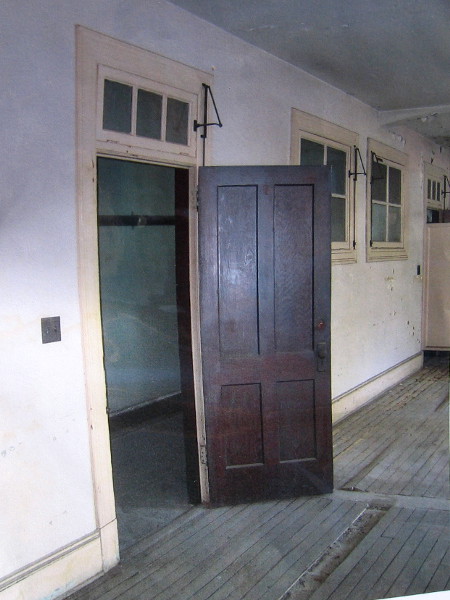
The gentleman providing the tour indicated that recent new ownership of the Santa Fe Depot has opened up the possibility of future development. I learned an unused second story of the depot, once containing a manager’s apartment, telegraph room and railroad worker bedrooms, might be converted into office spaces, but an elevator, heating and electricity are now lacking.
I learned that the fountain in the forecourt’s plaza is leaking and permanently turned off. This valuable property between the main depot building and Broadway might be developed into a space for downtown eateries.
I also learned the large iconic Santa Fe sign atop the depot dates from the mid 50’s, and that there are plans to light it up at night using LED lighting.
Read the captions for some additional fascinating facts about this architectural marvel!
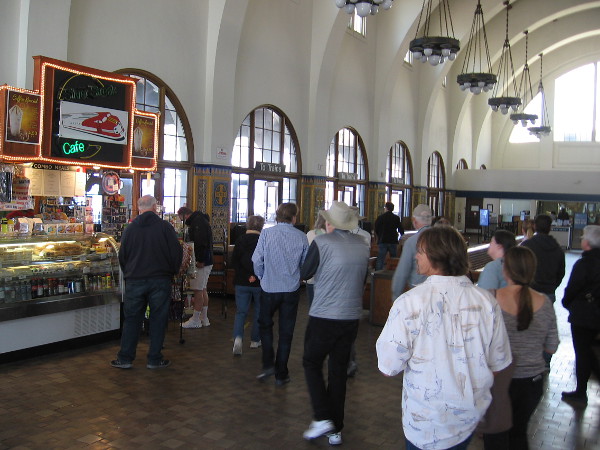
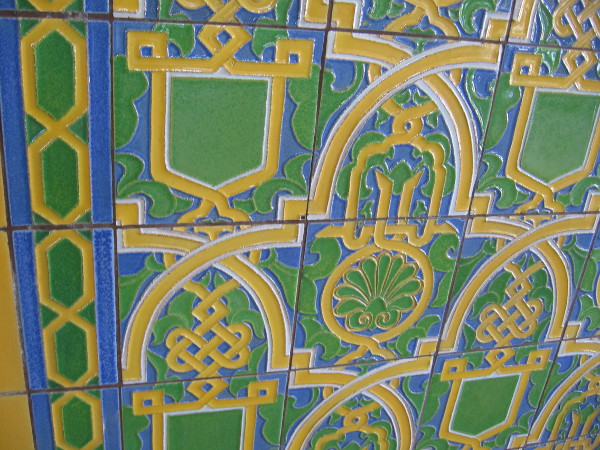
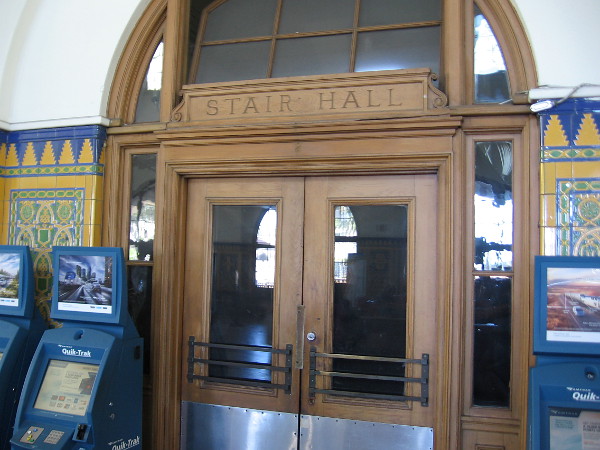
Looking up at one tile-domed tower. The black material is holding together cracked terracotta columns on chicken wire. The 1915 depot was built for the Panama-California Exposition in Balboa Park.Our tour group and a few Amtrak passengers move through the Santa Fe Depot’s large waiting room. The building’s architecture is in the Mission Revival style with Spanish Colonial Revival influences.We learn about the beautiful tilework throughout the depot.The depot’s glazed Kaospar tiling was created by California China Products Co. of National City, the same company that produced all of the tile for Balboa Park’s 1915 exposition.Raised levels of these gorgeous tiles each feature a different color!We’re shown an old postcard image of the original Main Waiting Room. Ticket and vending kiosks lined the west side of the depot’s interior. There used to be a Fred Harvey lunch room near the current ticket area at the building’s north end.Looking up at the amazing ceiling. Most of the woodwork has never been painted. The original bronze light fixtures have an appearance that is masculine and sturdy.More handsome woodwork around a door that leads to an old Stair Hall on the waiting room’s east side.Our group heads outside to the forecourt’s sunny plaza.Looking at the south side of the depot. Sadly, the fountain leaks and is turned off.We are shown more old images. This is an illustration of the original arched forecourt structure on Broadway. I also see the tower of the original 1887 Victorian station to the west (the other side of the tracks) before it was demolished.Here’s the old parking lot. (I see the distinctive County Administration Building to the left.)Streetcars used to run along Broadway right up to the old forecourt!A photo of the now unused second floor of the Santa Fe Depot.Another historical photo. This can be found on one side of the information kiosk presently inside the depot.Our tour guide collects old postcards. Here’s another that shows the arched west side of the depot, beside the railroad tracks.Information sheet shows map of the Santa Fe System and the San Diego Depot. Today the depot is the 3rd-busiest train station in California and 13th-busiest in the Amtrak system. (Click image to enlarge it.)Gazing from the forecourt’s plaza over a tiled bench toward America Plaza and buildings along Broadway. This area might soon undergo changes!
…
I live in downtown San Diego and love to walk around with my camera! You can follow Cool San Diego Sights via Facebook or Twitter!
You can easily explore Cool San Diego Sights by using the search box on my blog’s sidebar. Or click a tag! There are thousands upon thousands of photos for you to enjoy!
Magic in this world is abundant. I sensed some of it this evening during my walk home.
As I headed west along Broadway, slanting sunlight touched downtown buildings in unexpected ways, as if cast by a wizard with a flashing wand. The sun rolled away and the moon brightened. And then a few city lights blinked on.
The magic was plainly visible to anyone with lifted eyes.
…
I live in downtown San Diego and love to walk around with my camera! You can follow Cool San Diego Sights via Facebook or Twitter!
A tour group has entered the Spreckels Theatre from the Grand Lobby of the Spreckels Theater Building in downtown San Diego.
Several years ago I wrote a short blog about the Spreckels Theater Building on Broadway. I took a few photos of the six-story office building’s exterior and Grand Lobby. You can see those here.
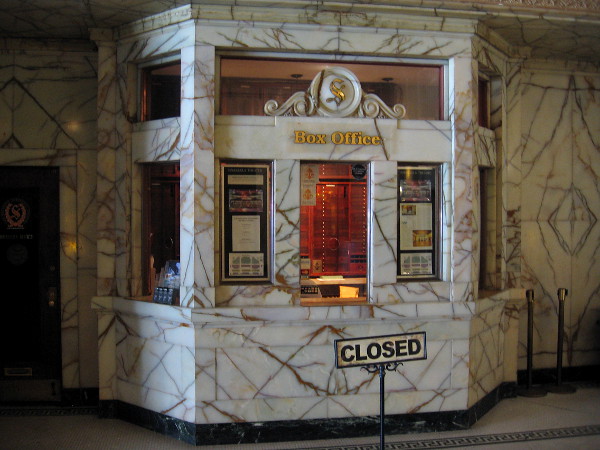
During the San Diego Architectural Foundation 2018 OPEN HOUSE event last weekend, I enjoyed a tour of the Spreckels Theatre, which is found inside the large mixed-use building. Our group met in the building’s Grand Lobby near the original old box office, which for many years had been hidden and forgotten behind a wall. We then ventured into the theatre’s smaller elegant Baroque lobby.
After learning some fascinating history, we headed down an aisle through the theatre, up over the orchestra pit and right up onto the stage! By tilting our heads back we could gaze six floors straight up at the stage’s complex workings, and by walking a few steps off the stage, we could poke our noses into the three “Star” dressing suites.
Our group was provided with all sorts of cool information, but sadly I didn’t write it all down. We did learn that the Spreckels Theatre and the building that it’s housed in was built by San Diego entrepreneur and philanthropist John D. Spreckels, and was designed by Harrison Albight. The structure is built of concrete and steel–it actually contains more steel than nearby modern high-rises. The Grand Lobby outside the theatre entrance contains a vast quantity of beautiful onyx that was shipped in from Mexico.
When the theatre opened in 1912 it was the largest theatre of its kind west of New York City. The theatre originally had 1915 seats, to celebrate the 1915 Panama-California Exposition which would be held in Balboa Park. The theatre has been operating continuously for its entire existence–well over a hundred years. To this day, the theatre has one of the best acoustic ratings anywhere in the world.
Everyone in our tour group smiled when we heard about a 1923 production of Ben Hur, which included horse-drawn chariots actually racing across the Spreckel Theatre’s stage! Apparently the chariots raced in a circle through the lot behind the building, and would periodically come into the building to thunder across the stage!
The interior of the theatre was fairly dark during our tour, so many of my photographs didn’t come out very good. Please read the captions to learn some more about this very cool old theatre.
One additional thing! When questions were posed to the theatre’s manager, I asked whether Conan O’Brien would be returning to the Spreckels Theatre for 2018 San Diego Comic-Con. The answer was he almost certainly will!
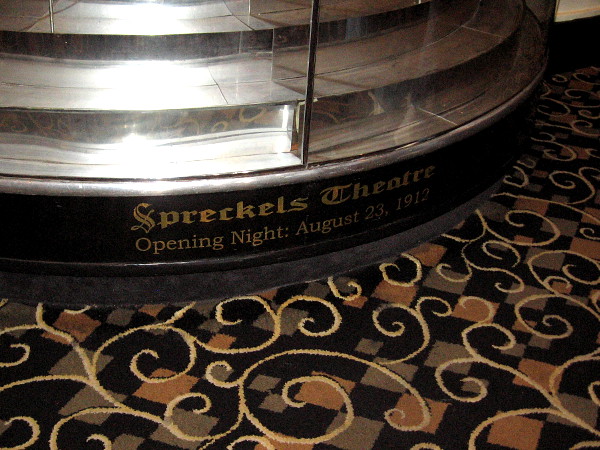
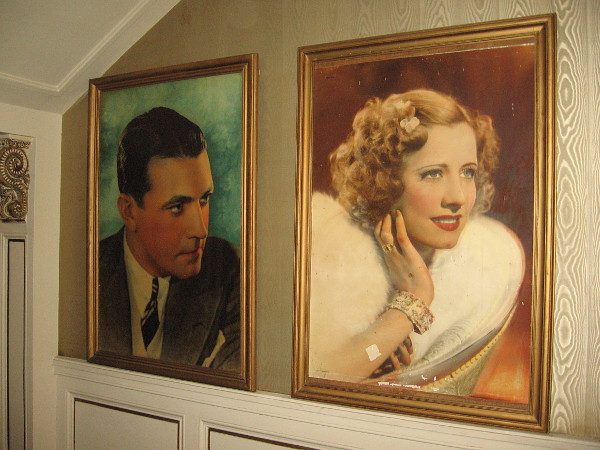
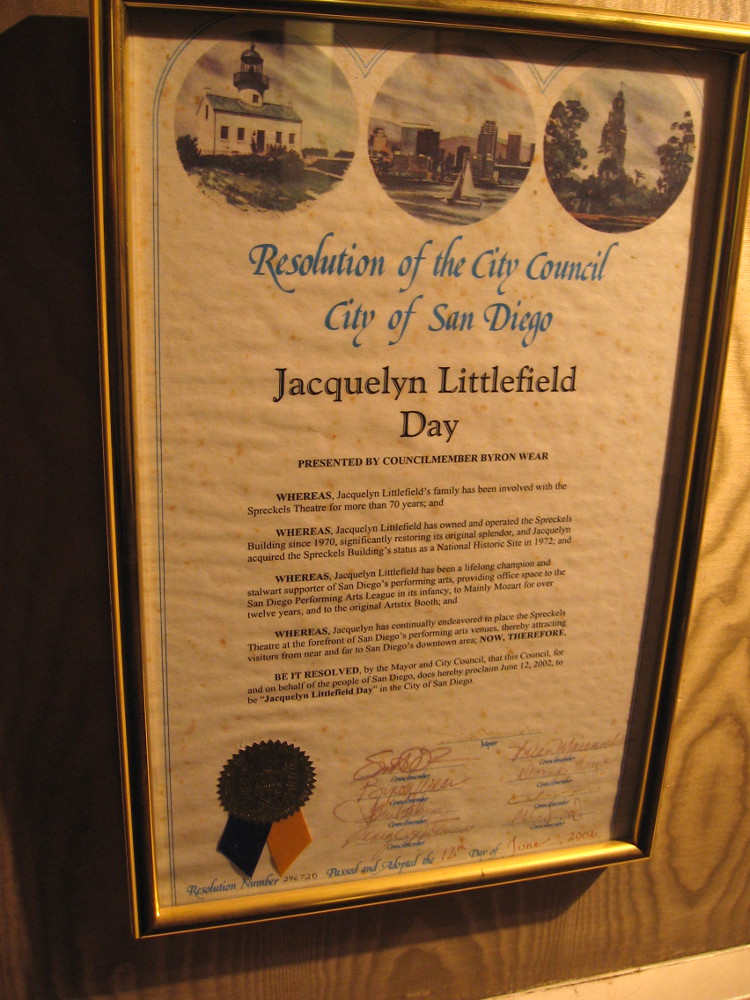
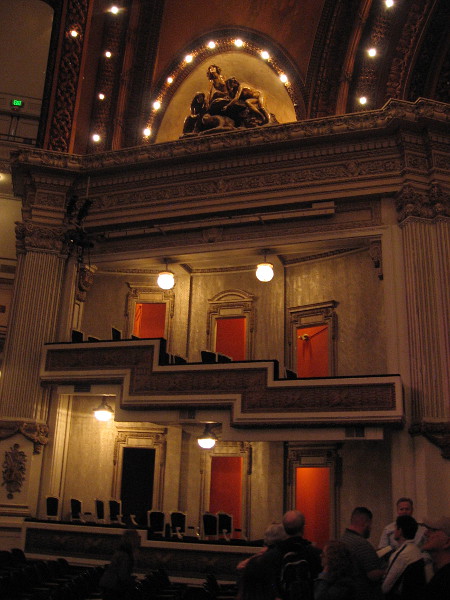
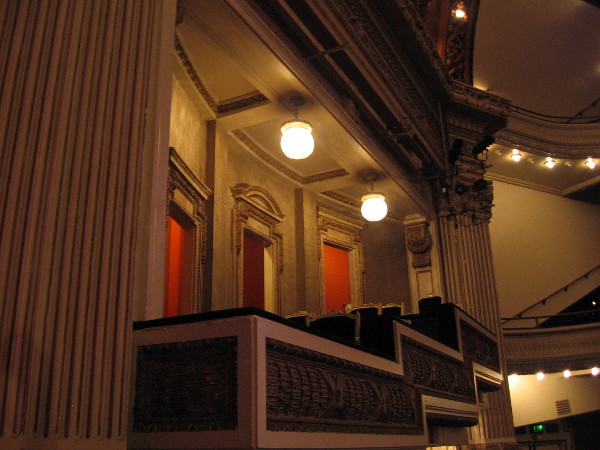
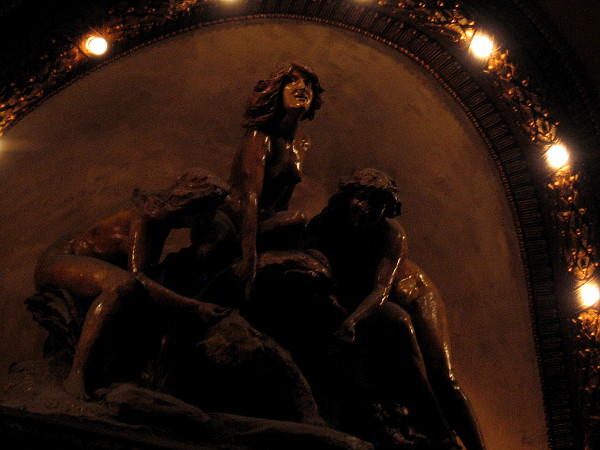
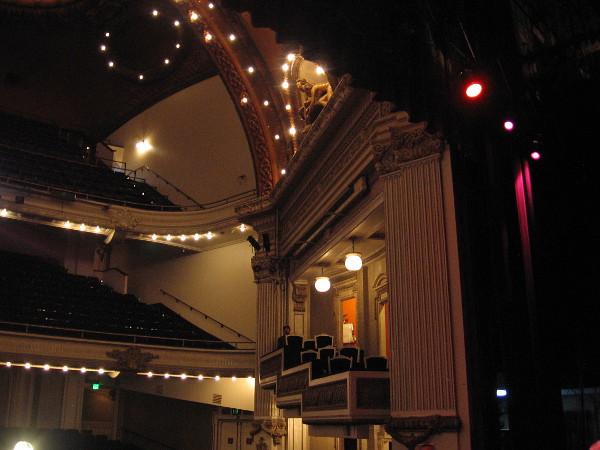
The Grand Lobby shines with onyx brought in from Mexico. I learned this original box office was hidden for many years behind a wall and forgotten.A sign describes the Spreckels Theatre story. In the 1920’s, it was transformed into a grand movie house, hosting Hollywood premieres and the leading stars of the day.We’ve stepped into the lobby of the theatre. The amazing glass artwork above the entrance was created in 1983 by Yaakov Agam, commissioned by theatre President, Jacquelyn Littlefield. Check out its very different reflection in the mirror!The very elegant concession counter in the theatre, still in use today.Old photos in glass displays behind the lobby’s counter show the historic building, past movie stars and John D. Spreckels.Spreckels Theatre. Opening Night: August 23, 1912.Looking up at light fixtures, one at the theatre lobby and one up some stairs at the Mezzanine.Portraits of Hollywood stars left of the front counter.Early movie stars on the right side.Resolution by San Diego City Council honoring Jacqelyn Littlefield Day, owner and operator of the beautiful Spreckels Theatre since 1970.Cool poster from Conan O’Brien’s appearance at the Spreckels Theatre during 2015 San Diego Comic-Con.Now we’ve entered the dark theatre where my old camera struggles. Here’s an idea of what you will see.Balcony seats surrounded by fantastic Baroque elegance.One of two plaster sculptures by Charles C. Cristadoro, who would go on to work for Walt Disney.Looking out toward some seats from the theatre’s stage.The distinctive Spreckels Theatre design at the end of every seat row.A quick peek into a modest suite to the side of the stage. A mirror, sink and restroom are reserved for the biggest stars.Our tour group learns some of the fascinating history of one of San Diego’s most treasured places.
…
I live in downtown San Diego and love to walk around with my camera! You can follow Cool San Diego Sights via Facebook or Twitter!
You can easily explore Cool San Diego Sights by using the search box on my blog’s sidebar. Or click a tag! There are thousands upon thousands of photos for you to enjoy!
The Timken Museum of Art in Balboa Park is designed to be filled with natural light.
Would you like to enter a truly magical place? Step into the Timken Museum of Art. Walls disappear, and suddenly you are surrounded by fine art masterpieces, natural light, and the greenery and open space of beautiful Balboa Park.
I took a special tour of the building during the San Diego Architectural Foundation’s 2018 OPEN HOUSE event. I jotted a few notes and will now try to describe my experience.
According to our tour guide, David Kinney, a Balboa Park Conservancy Board Member, the building housing the Timken Museum of Art is disimilar in many respects to the extremely ornate Spanish Colonial buildings lining El Prado, which were designed for the 1915 Panama-California Exposition. The Timken has clean, symmetric, simple lines. It is the only building in Balboa Park specifically designed for people to walk around. The museum was built in 1965 and incorporates many facets of modern architecture. It was designed by San Diego architect John Mock, who intended it to be a “see-through” museum, where boundaries are blurred and gardens and sky are visible from many points inside.
When built, the Timken was the most expensive building ever constructed in San Diego. The building is widely considered to be one of the finest examples of mid-century Southern California Modernism and the International Style in the nation.
The abundant travertine, bronze and glass create a magical effect. Visitors to the museum feel surrounded by San Diego’s native sunshine. There are views of small gardens, the Plaza de Panama, the Lily Pond and families enjoying picnics on nearby grass.
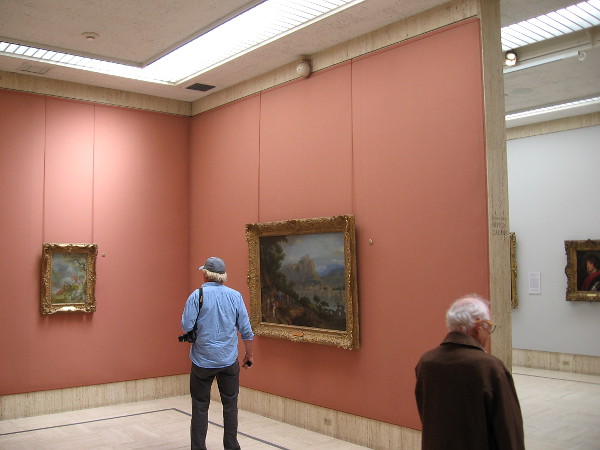
By taking a few steps into the museum’s intimate galleries, visitors can view one of the most amazing small collections of fine art in the world. There are 60 major works, paintings by the likes of Copley, Johnson, Bierstadt, Veronese, Guercino, Clouet, Claude, David, Brueghel, Rubens, van Dyck, Zurbarán and Murillo. The Timken owns the only Rembrandt to be found in Southern California. Every work is partially bathed in indirect natural light, from hidden skylights along the walls in each gallery. During our tour, as we gazed at the Rembrandt, a cloud passed over the sun, and the light in the gallery dimmed. It was an extraordinary experience that infused additional life into the moody masterpiece.
Come along with me as I show you a few photos. Read the captions for more info!
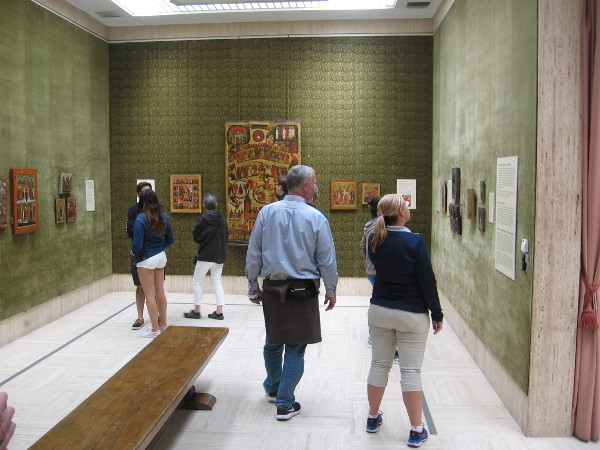
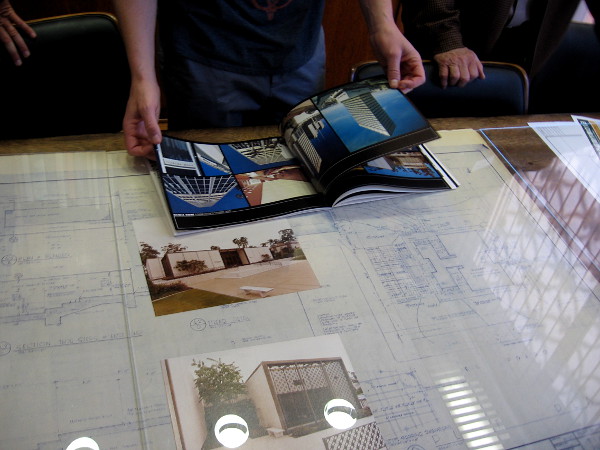
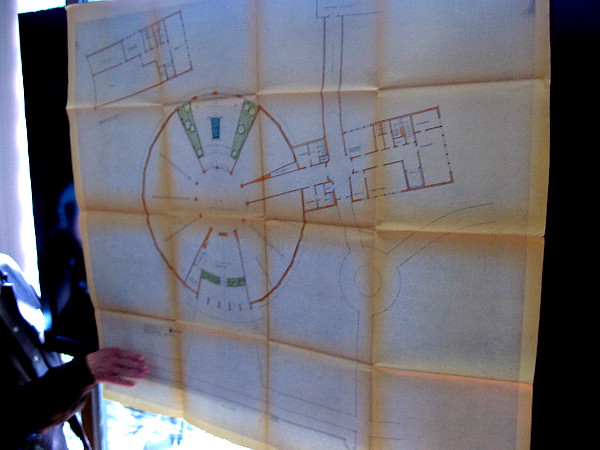
Fences enclosing a small garden and sections of the museum seem like airy lacework. The building’s white travertine reflects San Diego’s sunlight.Turning west, we can see the California Tower across the Plaza de Panama.Our tour guide describes an architectural marvel.This small garden by one large museum window was created in 1983 by a Japanese master designer.Inside the central lobby of the museum. The seats are Italian made. Another large window allows light in from Balboa Park’s beautiful Lily Pond.Inside one of the galleries. The small fine art museum is free to the public and a popular destination in Balboa Park.Lights along the ceiling’s perimeter include hidden skylights, admitting natural indirect sunlight.Saint Bartholomew, Rembrandt van Rijn, oil on canvas, 1657.The Timken’s collection was begun by the Putnam sisters, who had a passion for fine art. They also loved Russian Orthodox religious icons, a few of which are housed in one gallery.Our tour ventured into the Timken Museum’s employee lounge and meeting room, where we saw the original blueprints of this iconic building.Also displayed was one early Timken Museum architectural design concept, where the building would have been circular.A very cool free museum in San Diego, the Timken combines the magic of sunlight, a happy, carefree day in Balboa Park and fine art.
…
I live in downtown San Diego and love to walk around with my camera! You can follow Cool San Diego Sights via Facebook or Twitter!
You can easily explore Cool San Diego Sights by using the search box on my blog’s sidebar. Or click a tag! There are thousands upon thousands of photos for you to enjoy!
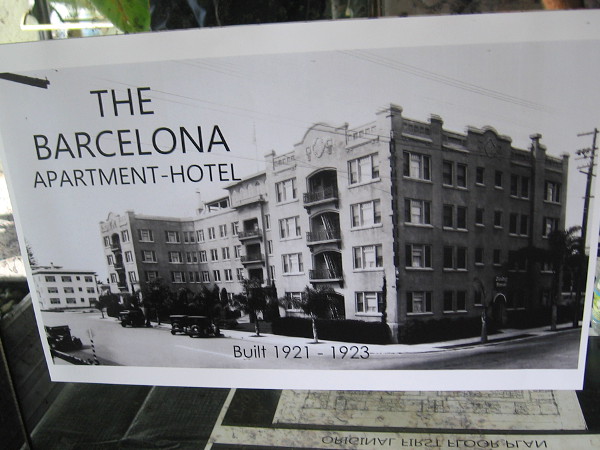
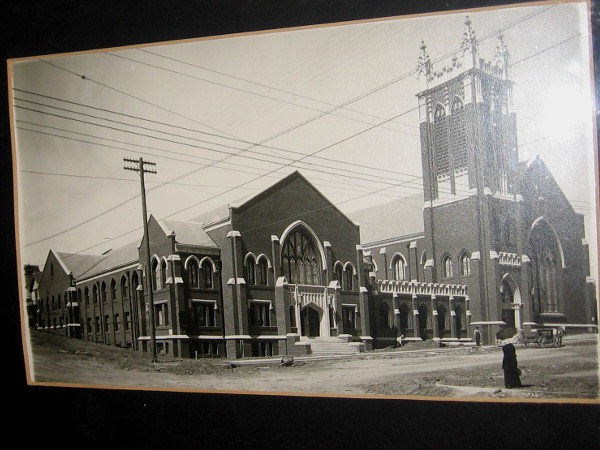
Old photo of The Barcelona Apartment-Hotel in Bankers Hill, built 1921-1923.
I hadn’t planned to visit The Barcelona yesterday during the San Diego Architectural Foundation’s 2018 OPEN HOUSE event. But as I walked up Bankers Hill from one site to another, I spotted the old building and decided to venture inside. I’m so happy I did!
The almost century-old structure originally featured both a hotel and apartments, complete with solarium, ballroom, restaurant and golf course. Today it has been converted into an apartment building with amazing views of nearby downtown San Diego.
My favorite part of the short tour was visiting the sky deck up on the rooftop. Check out my photos and you’ll see why! Make sure to read the captions for more info about this historical building.
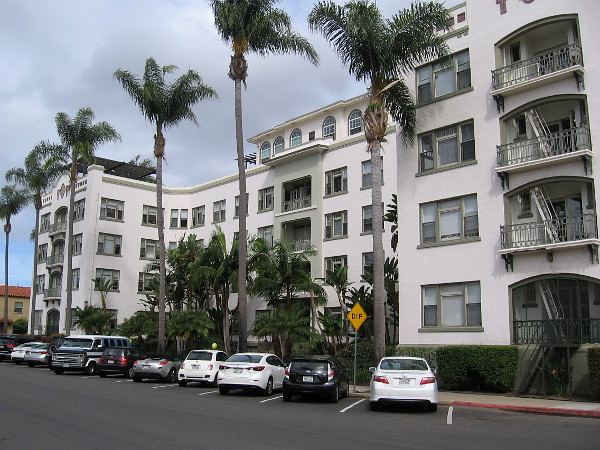
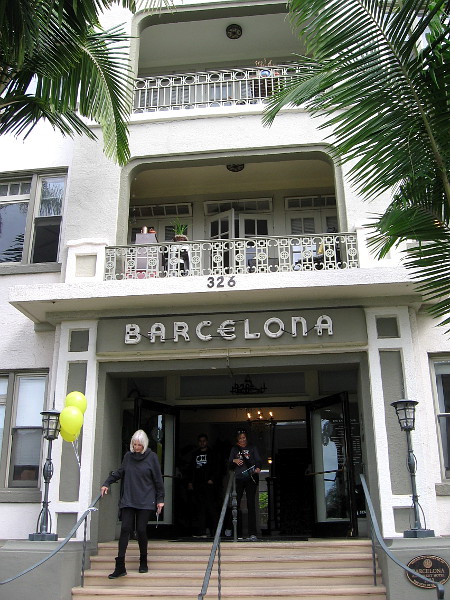
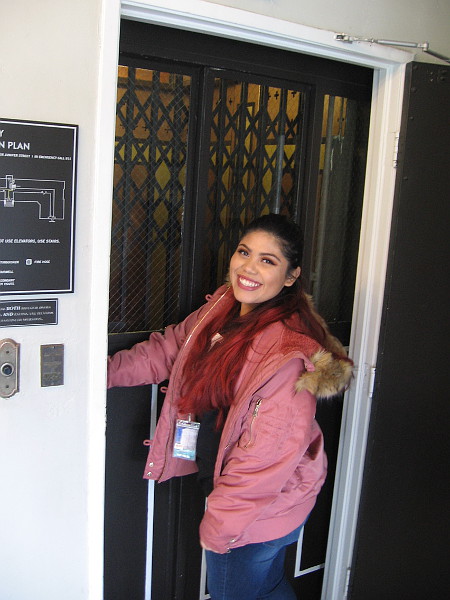
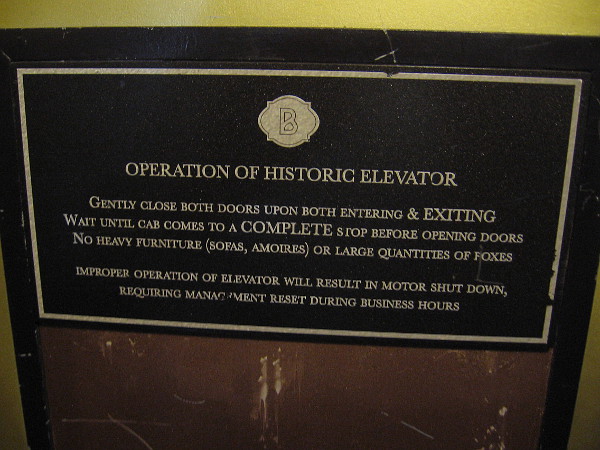
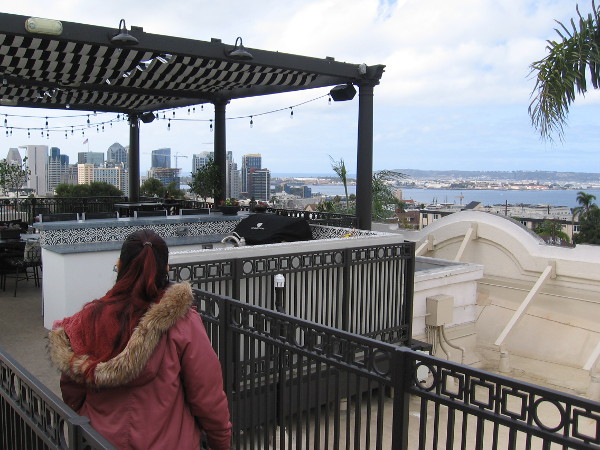
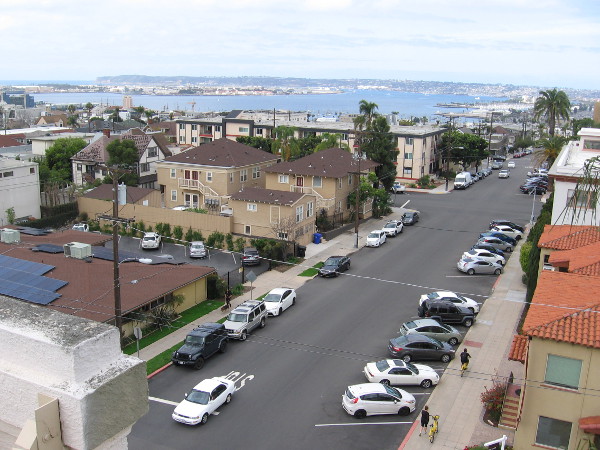
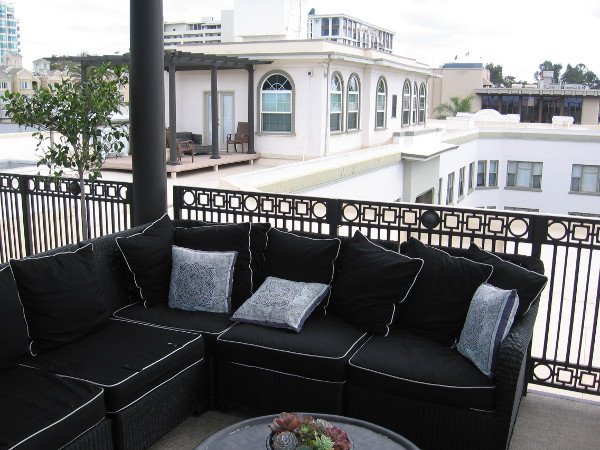
The Barcelona’s apartments today, photographed from Juniper Street.The Barcelona is a featured location during the San Diego Architectural Foundation’s 2018 OPEN HOUSE event.City of San Diego historical landmark plaque near entrance to The Barcelona.The Barcelona was built in the Spanish Colonial/Spanish Eclectic style. It was designed by architect Eugene Hoffman.Excavation of the site took 6 months. The current penthouse units on the 5th floor roof originally formed a solarium.Historic postcards of The Barcelona in San Diego.A volunteer for the OPEN HOUSE architectural event took me up the historic elevator!The cool old elevator reminded me of my childhood, when I dreamed of becoming an elevator operator!The volunteer guide quickly showed me one of the sunlight-filled apartments. The view of downtown is incredible.But the sky deck will take your breath away!Incredible view of Bankers Hill and San Diego Bay from the sky deck of The Barcelona!The building’s penthouse apartments are beyond this comfy outdoor sofa.Looking down on the many colorful rooftops of Bankers Hill!An incredible view of the downtown San Diego skyline from the sky deck of The Barcelona!
…
I live in downtown San Diego and love to walk around with my camera! You can follow Cool San Diego Sights via Facebook or Twitter!
You can easily explore Cool San Diego Sights by using the search box on my blog’s sidebar. Or click a tag! There are thousands upon thousands of photos for you to enjoy!
Today I visited six truly amazing buildings in Bankers Hill and Balboa Park. All six are featured locations in the San Diego Architectural Foundation’s 2018 OPEN HOUSE event.
I enjoyed fascinating looks inside architectural gems–special looks the public seldom experiences. I took lots of photos and intend to tour a few more iconic locations tomorrow. So I have a lot of blogging to do the next week or two!
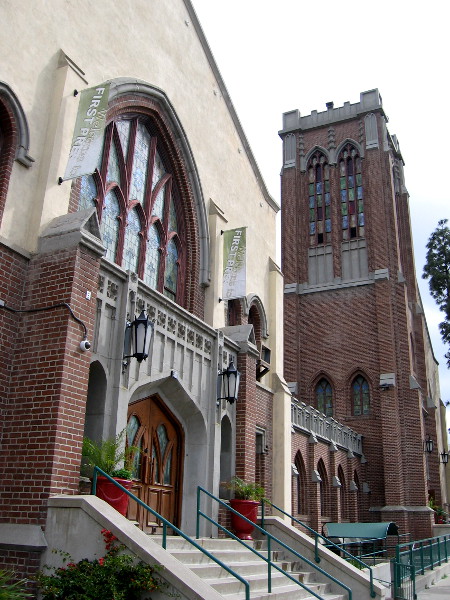
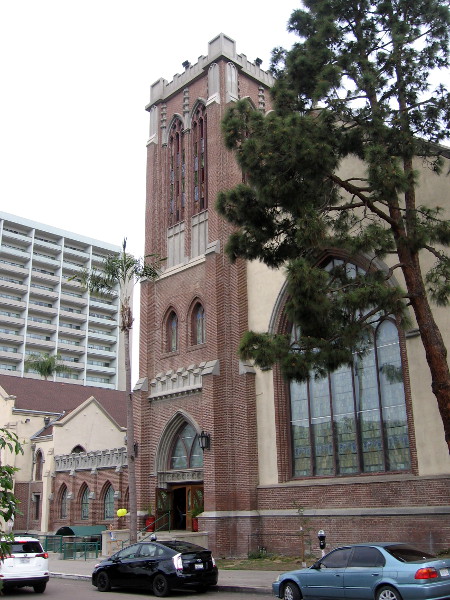
My very first stop this morning was the First Presbyterian Church of San Diego, located in Bankers Hill on Date Street, between Third and Fourth Avenue. The friendly church manager greeted visitors at the front door, and he was very nice to give me a short tour inside the building.
The first thing I learned was that this is actually the First Presbyterian Church’s third structure in San Diego. The initial congregation came together in 1869 in what was then called New Town–now downtown San Diego. The first church structure was built at Eighth and D Streets on land donated by Alonzo Horton. As the membership grew, a second church building was begun in 1887, on property adjacent to the first. Unfortunately the land boom of that time soon came to an end. Somehow that building was completed in spite of financial difficulties.
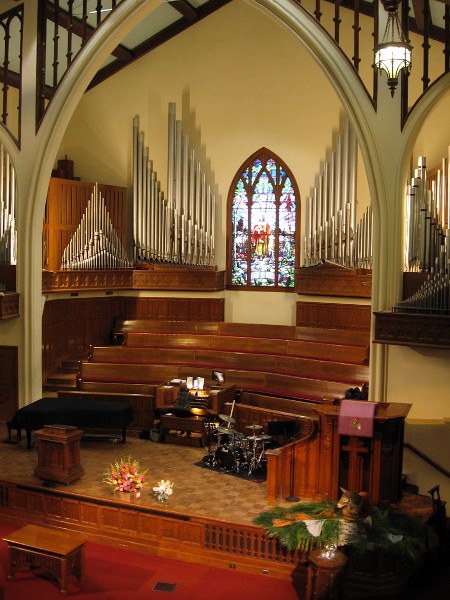
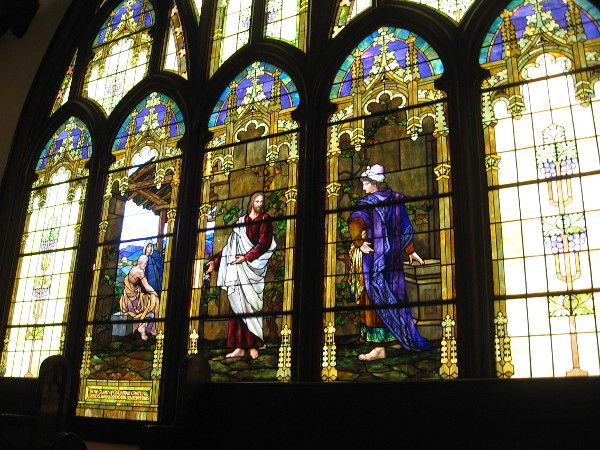
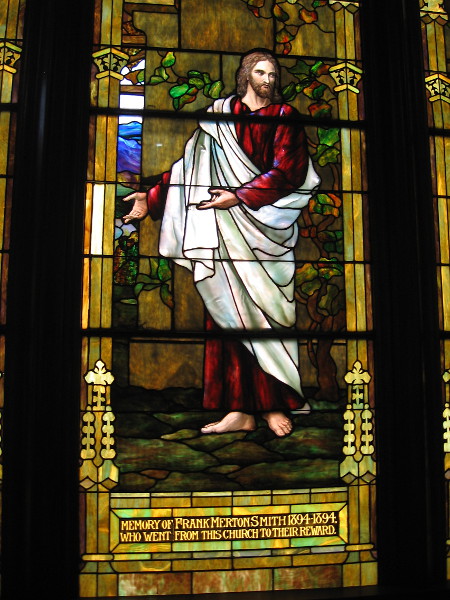
The present building, the focus of this tour, had its first service in 1913 in the Assembly Room, about a year before the amazing sanctuary was finally completed and this third church was dedicated. Located near the base of Bankers Hill overlooking downtown, the imposing cathedral-like structure incorporates huge stained glass windows that were preserved from the previous building, including the exquisite central panels Christ the Sower.
Sowing seeds of compassion in our community, the First Presbyterian Church of San Diego makes it a point to feed many of the homeless downtown–almost 250 souls every Sunday. These good folks practice what they preach.
Like many grand old churches, the exterior of the present-day building might appear a bit worn by time and weather, but the interior, with its warm wood and glowing stained glass at every turn, seems like a tiny glimpse of heaven.
I must say I was really impressed by the grace, grandeur and beauty of the sanctuary. And the kind smile of my tour guide.
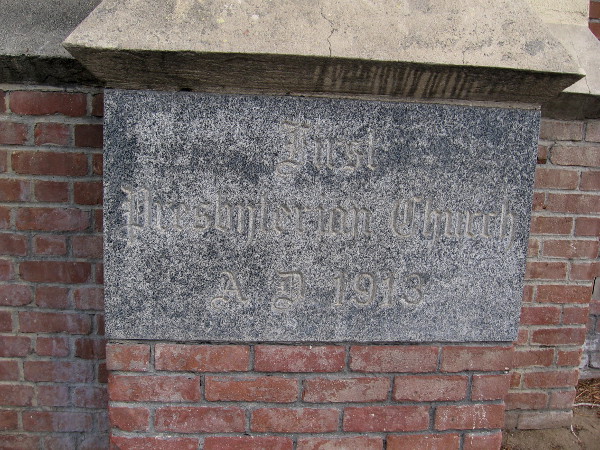
View of the First Presbyterian Church of San Diego from Fourth Avenue. A large, historic stained glass window shines its light into a very beautiful sanctuary.Partial view of the church’s south side along Date Street.Plaque on building indicates the First Presbyterian Church was erected in 1913.Historical photo near the church office shows the First Presbyterian Church of San Diego about a hundred years ago, in what was then considered the outskirts of town.Entering doors that lead to the magnificent sanctuary.
The church’s nearly 6,000 pipe Casavant organ rises like rays of silvery light crowning the chancel.Heading up some stairs near colorful stained glass. We will emerge on the sanctuary’s balcony.
One of the finest examples of stained glass in San Diego shines light into the historic church.A scene from the Bible, to the glory of God.The likeness of Christ, in memory of one of the faithful.A place for religious faith and worship. Amazing beauty inside the First Presbyterian Church of San Diego.
…
I live in downtown San Diego and love to walk around with my camera! You can follow Cool San Diego Sights via Facebook or Twitter!
You can easily explore Cool San Diego Sights by using the search box on my blog’s sidebar. Or click a tag! There are thousands upon thousands of photos for you to enjoy!
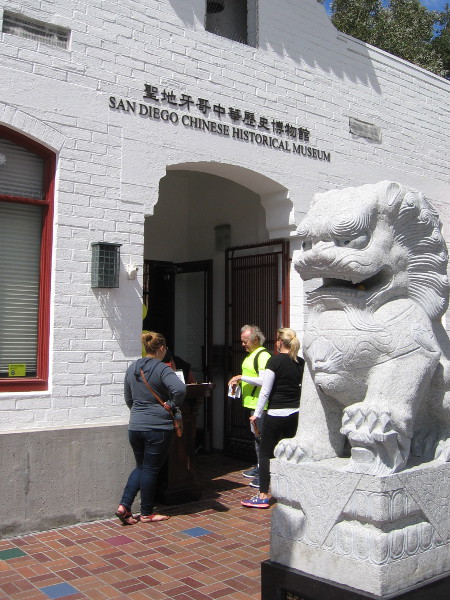
Visitors enter the San Diego Chinese Historical Museum during the San Diego Architectural Foundation’s OPEN HOUSE 2017.
This weekend the San Diego Architectural Foundation is having their big annual Open House event!
For 2018, an amazing 84 locations will participate, each building or urban site recognized for its unique contribution to San Diego’s architectural history. Many different architectural styles will be highlighted, at locations in Balboa Park, Bankers Hill, downtown, the Gaslamp, East Village, Barrio Logan and Point Loma. Some locations will offer guided tours or special talks; at many others the public is invited to take a self-guided tour.
To find out more, including days and times of tours this Saturday and Sunday, check out the SDAF website here.
In 2017 I took full advantage of this event and visited a range of interesting places. The following are links to photographs that I took:
Paintings in Balboa Park Conservancy Board Room. (I took these photos during a 2017 Open House tour of the House of Hospitality. Unfortunately I joined the group midstream and took few useful notes.)
I live in downtown San Diego and love to walk around with my camera! You can follow Cool San Diego Sights via Facebook or Twitter!
You can easily explore Cool San Diego Sights by using the search box on my blog’s sidebar. Or click a tag! There are thousands upon thousands of photos for you to enjoy!
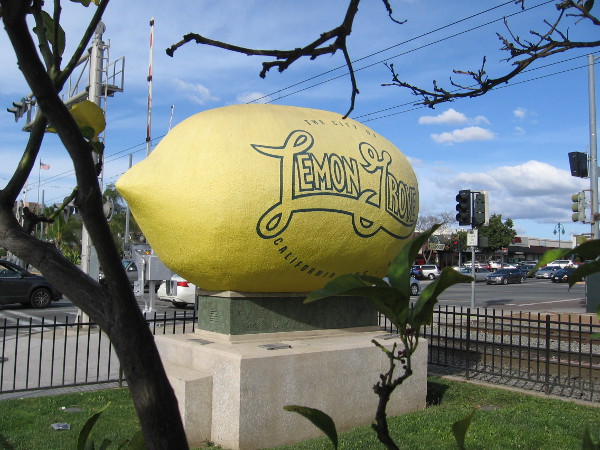
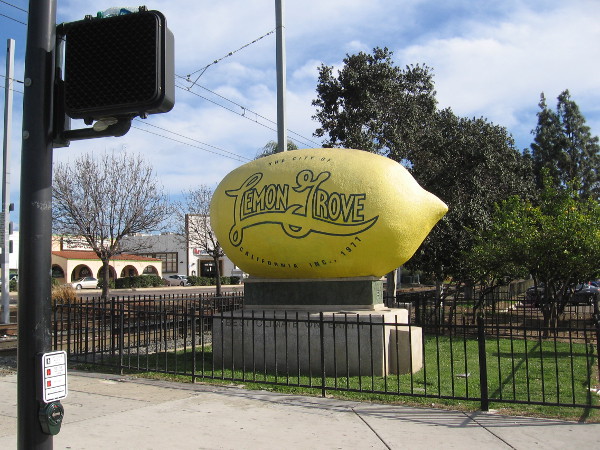
An enormous yellow lemon welcomes travelers passing through the heart of Lemon Grove, a community east of downtown San Diego.
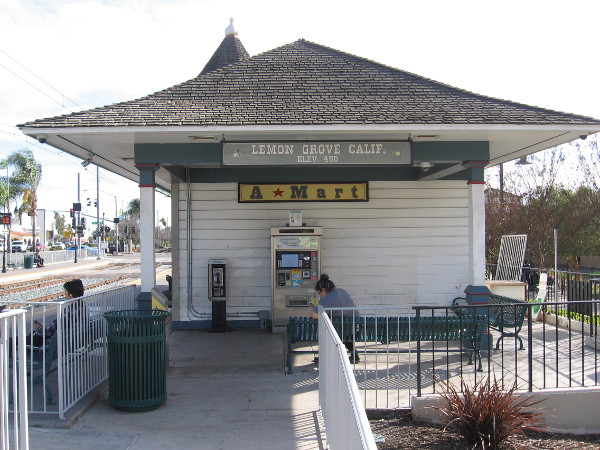
Step off an Orange Line trolley at the Lemon Grove Trolley Depot and you’re in for a surprise! On either side of the trolley station are several fun installations of public art. Signs also describe the unique agricultural history of Lemon Grove, which today is a sunny suburban community east of downtown San Diego.
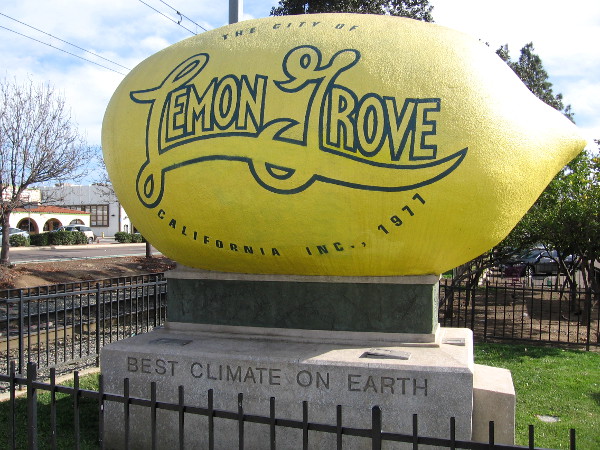
I cruised into the trolley station last weekend to explore the immediate area. Of course, I had to direct my feet toward the big iconic lemon, which stands directly across the street from the depot, at the intersection of Broadway and Lemon Grove Avenue. The 3000 pound lemon was originally created in 1928 as a proud civic float for San Diego’s big Fourth of July parade. It was afterward turned into a permanent monument with a generous application of plaster!
Read the photo captions to learn a little bit more about fascinating Lemon Grove!
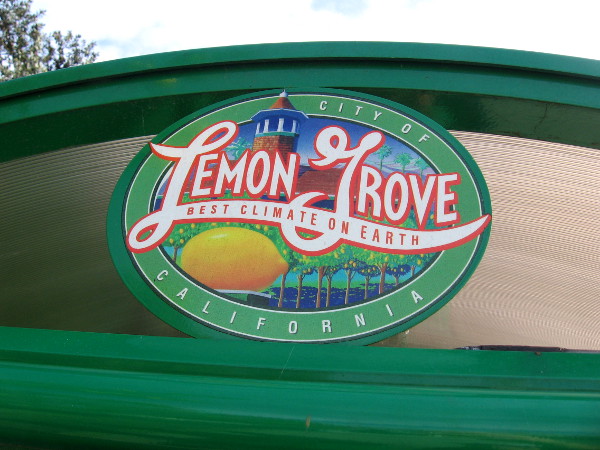
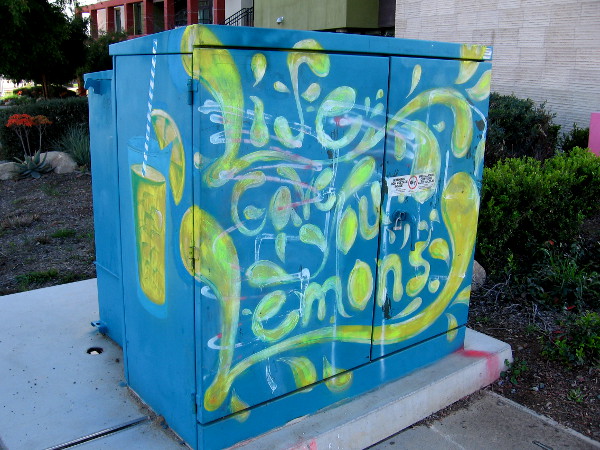
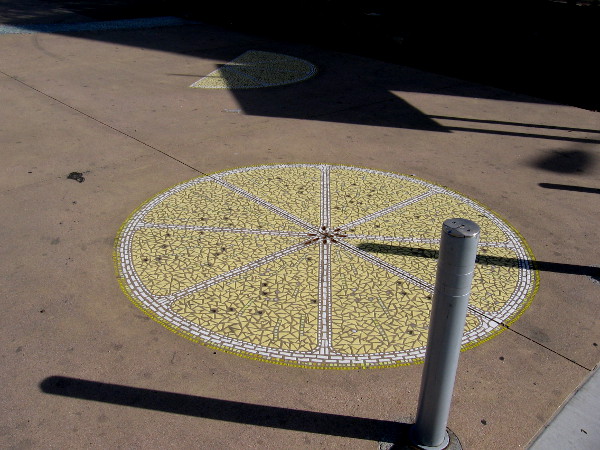
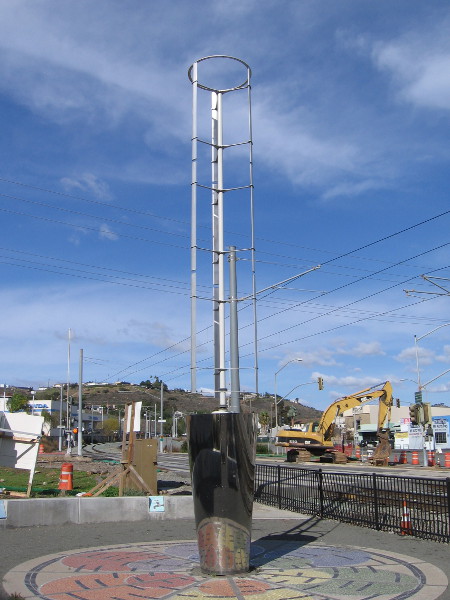
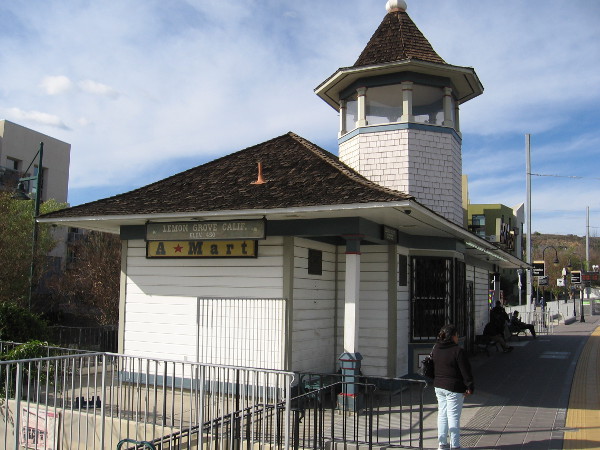
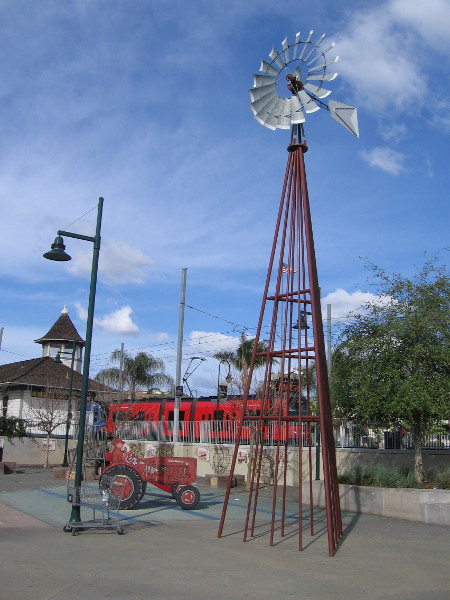
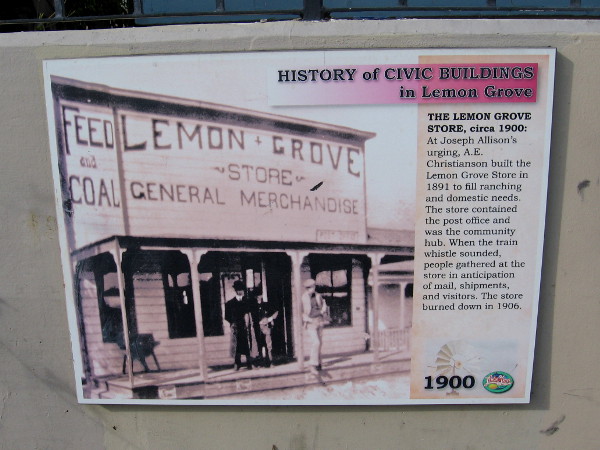
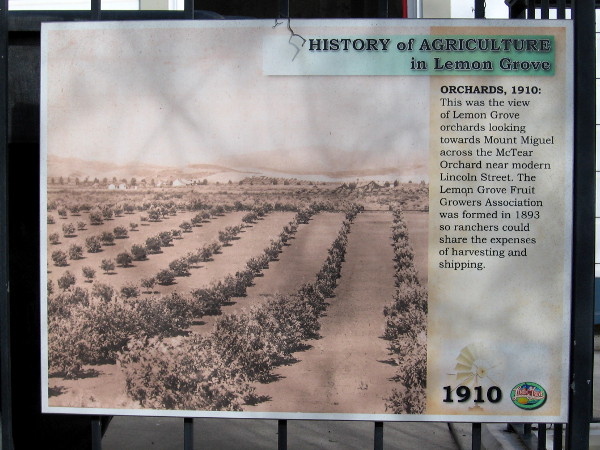
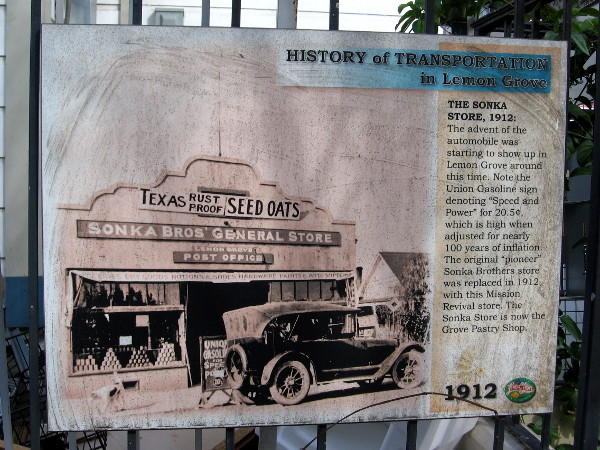
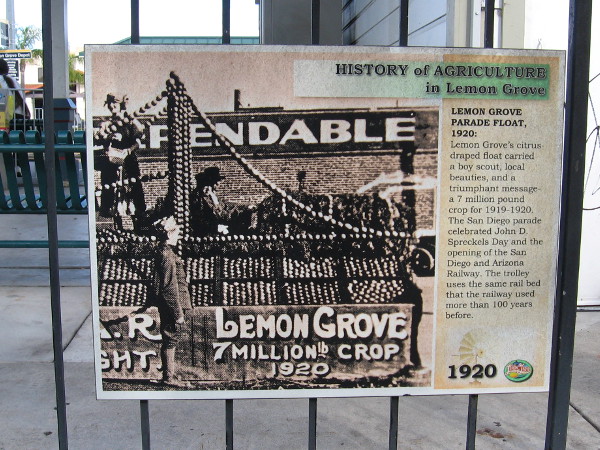
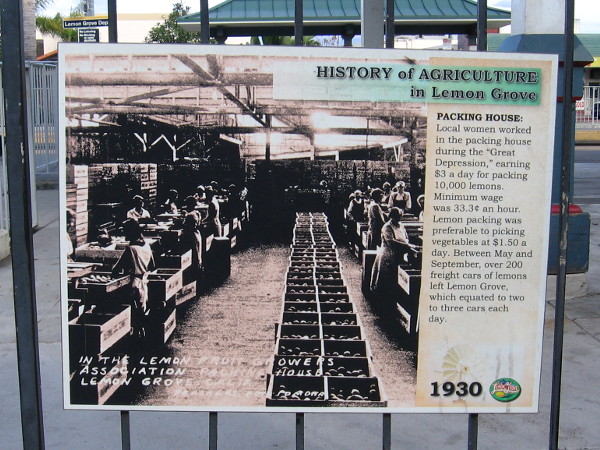
The Lemon Grove Trolley Depot is a 1986 replica of the original 1895 train depot, which stood near the Lemon Grove Store and a fruit-packing shed.The city of Lemon Grove boasts the Best Climate on Earth! I spotted this sign at a nearby bus stop.Fun street art near the Lemon Grove Trolley Depot provides tasty advice for those times when life gives you lemons……make lemonade!Or a lemon cupcake!A walkway between the Celsius residential building and the Lemon Grove Trolley Depot contains tile mosaic lemon slices!What appears to be a tall, shiny sculpture near Celsius and the trolley station rotates in the wind and generates electricity.Colorful tiles radiate at the base of the rotating windmill.People wait for an Orange Line trolley at the Lemon Grove station. The original structure had an open cupola so the depot agent could wave signal flags at oncoming trains.A farm’s windmill and tractor are artistic reminders of an agricultural past. They stand in the promenade beside the Lemon Grove Trolley Depot.Both sides of this fun public art tractor are composed of small tiles.A creative bench in the public promenade. It appears like crates that were used by the Lemon Grove Fruit Growers Association!A sign near the depot shows the old Lemon Grove Store, circa 1900. The store provided supplies for nearby ranches, contained the post office, and was a community gathering place.Another sign contains a view of Lemon Grove orchards looking towards Mount Miguel across the McTear Orchard in 1910.Old photo of the Sonka Store in 1912. The building eventually became the Grove Pastry Shop.Old photo shows the Lemon Grove float during the San Diego parade in 1920. The parade celebrated the opening of John D. Spreckels’ railway, which existed where the trolley runs today.Another sign features a photo of local women working in the packing house during the Great Depression. During peak season, two or three railroad cars would be loaded full of lemons per day.The historical legacy of Lemon Grove is remembered around the site of the old train depot, which is now a stop of the San Diego Trolley.Lemons have a history of thriving in Lemon Grove, a community that claims to have the Best Climate on Earth!
UPDATE!
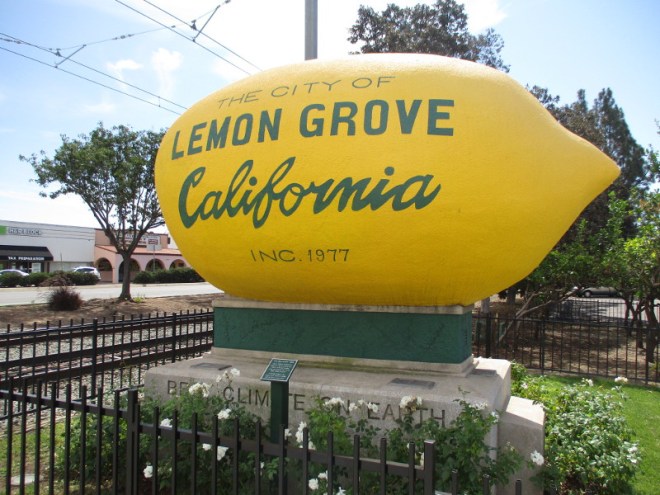
I took the following photos several years later, after the lemon had been repainted and a plaque had been installed in front of it.
The plaque reads: The Big Lemon 1928. Alberto Treganza designed the Lemon as a July 4th parade float. Today it is the City’s symbol of its noble agrarian past and its “Best Climate on Earth.” A Heritage Project of the Lemon Grove Historical Society and the City of Lemon Grove.
…
I live in downtown San Diego and love to walk around with my camera! You can follow Cool San Diego Sights via Facebook or Twitter!
You can easily explore Cool San Diego Sights by using the search box on my blog’s sidebar. Or click a tag! There are thousands upon thousands of photos for you to enjoy!
My home internet is being changed, so I probably won’t blog for a few days. This weekend I might simply relax and read.
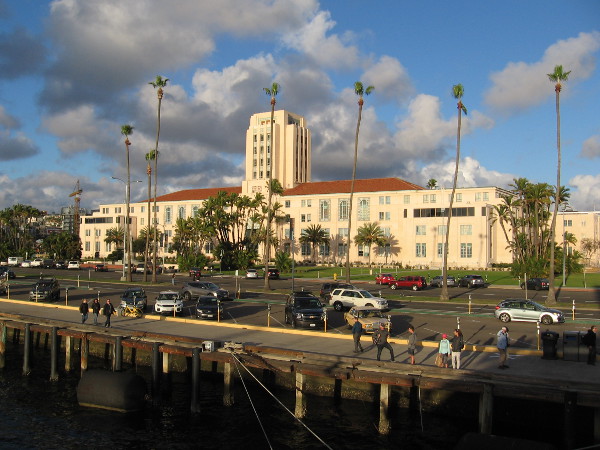
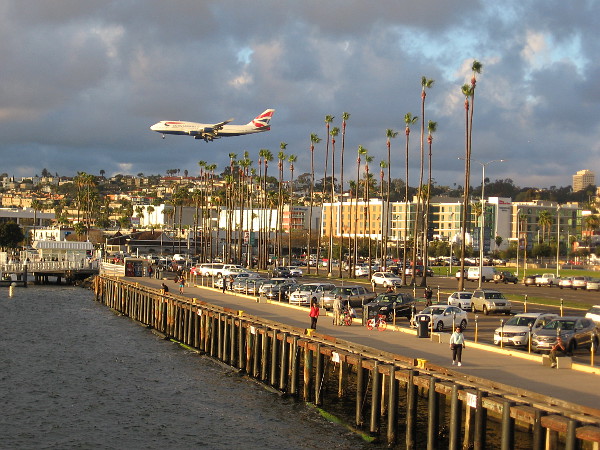
Meanwhile, here are three cool photos that I took yesterday before sunset from the passenger deck of the steam ferry Berkeley at the Maritime Museum of San Diego!
Enjoy!
…
Thank you to all of my readers! Enjoy the rest of your week! Take care!















































 Cool San Diego Sights!