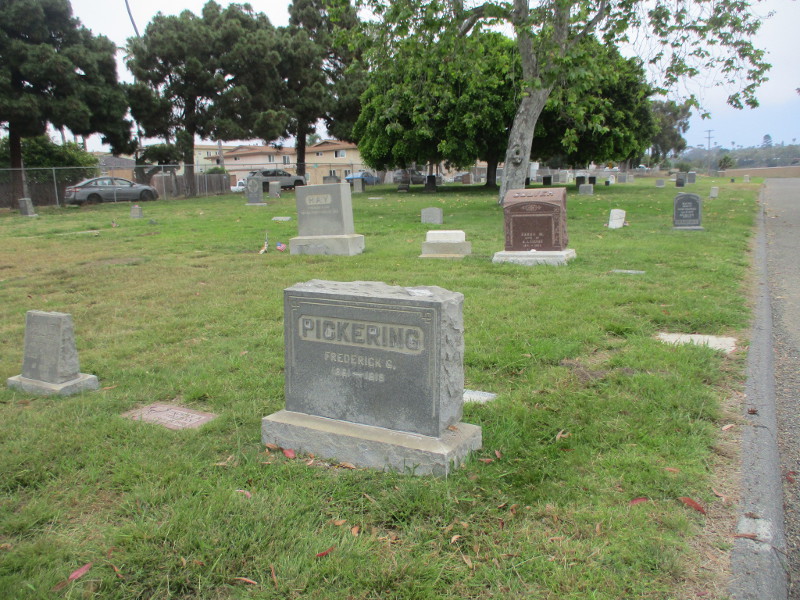
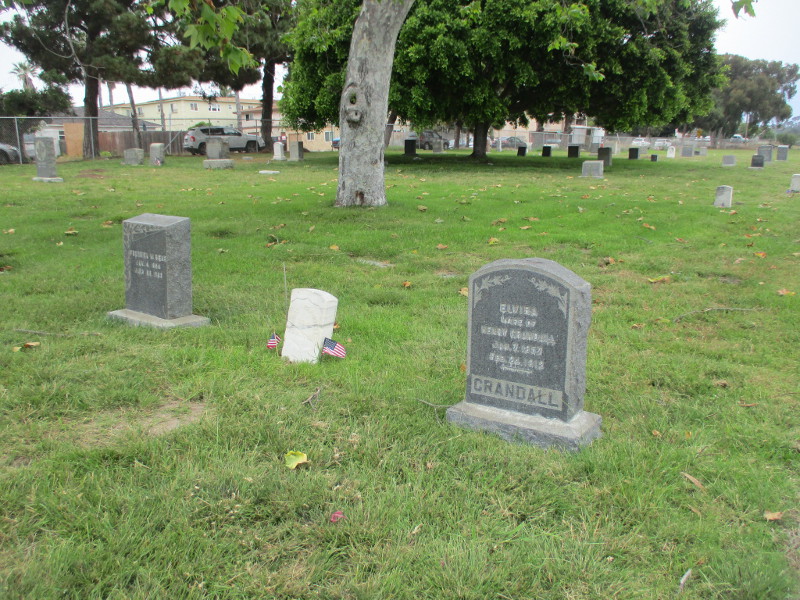
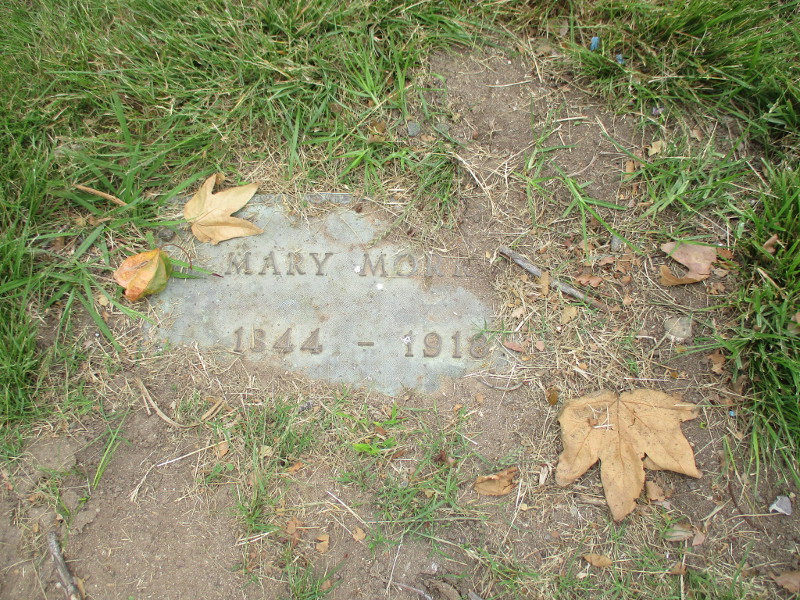
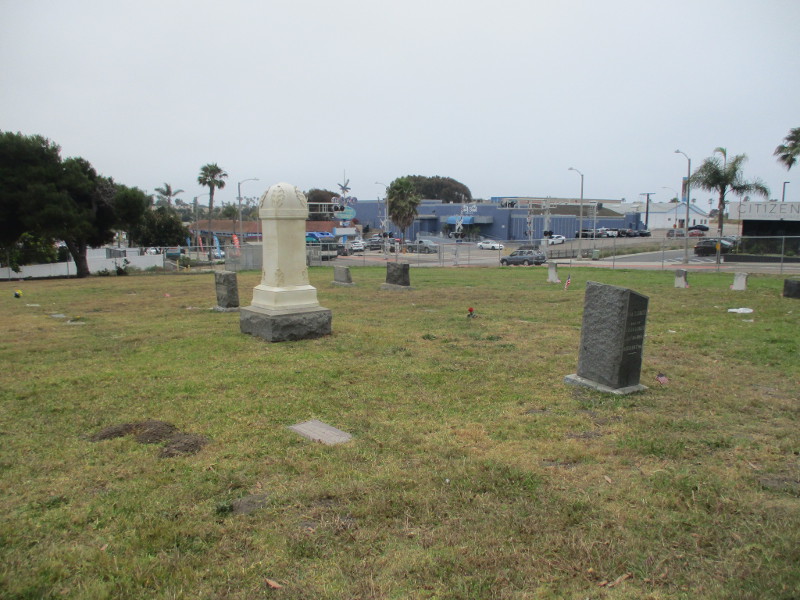
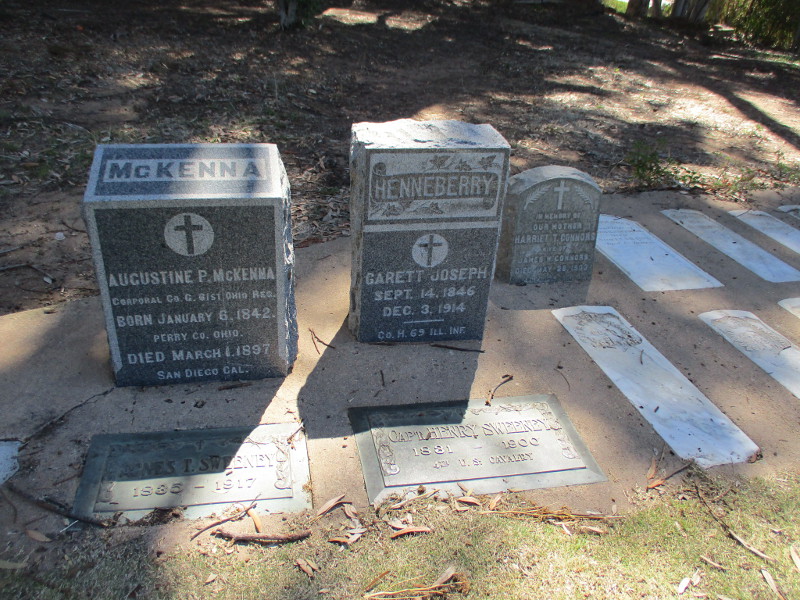
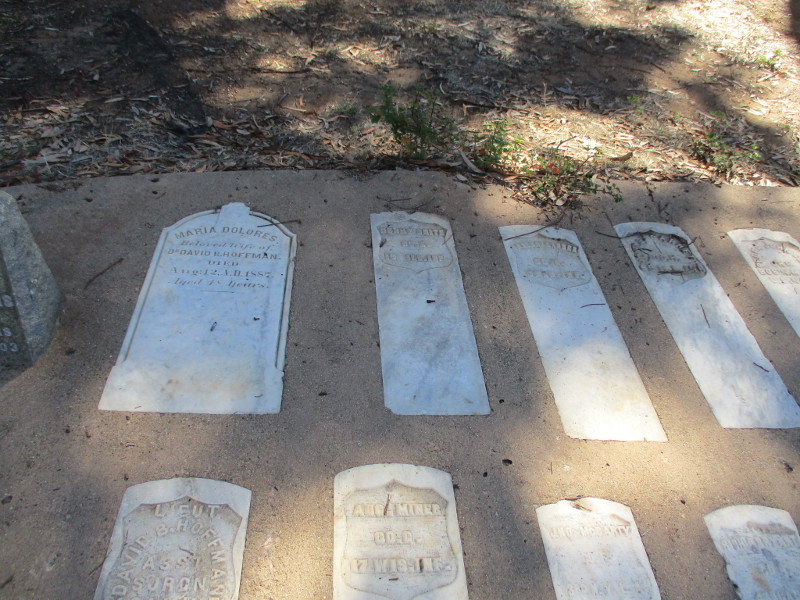
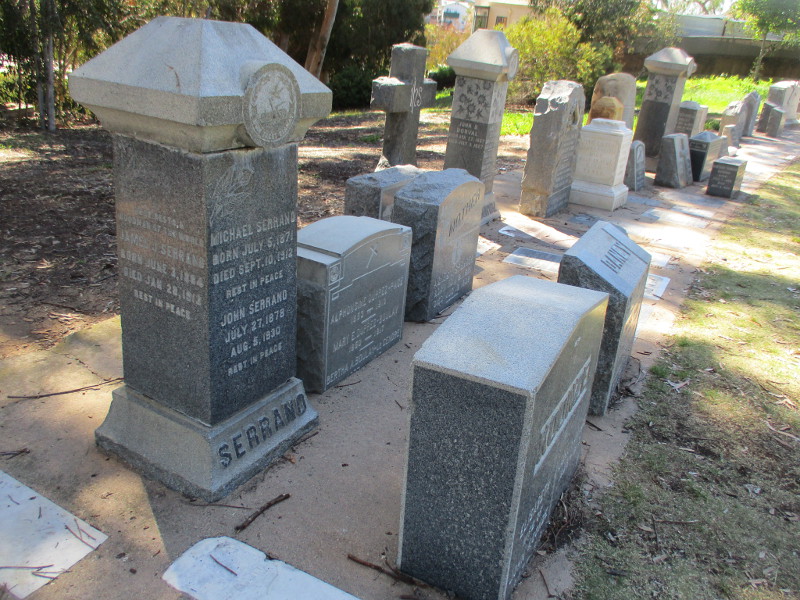
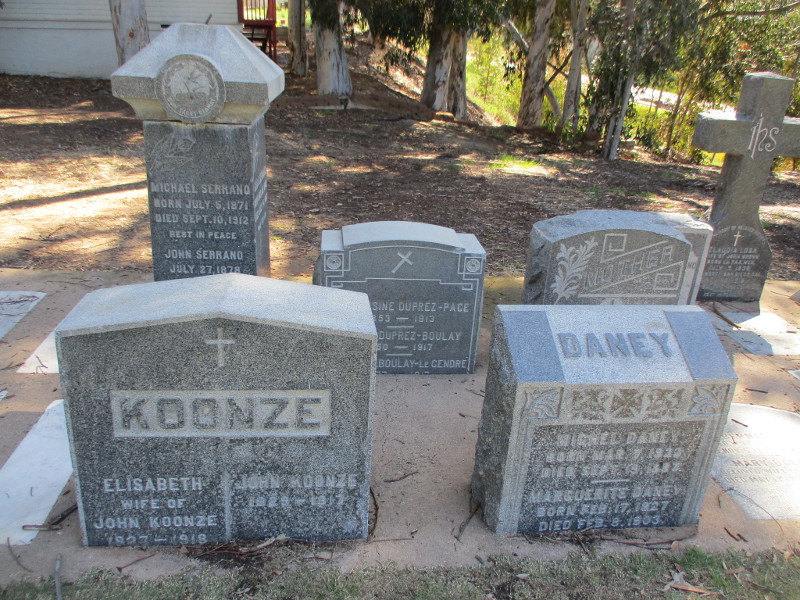
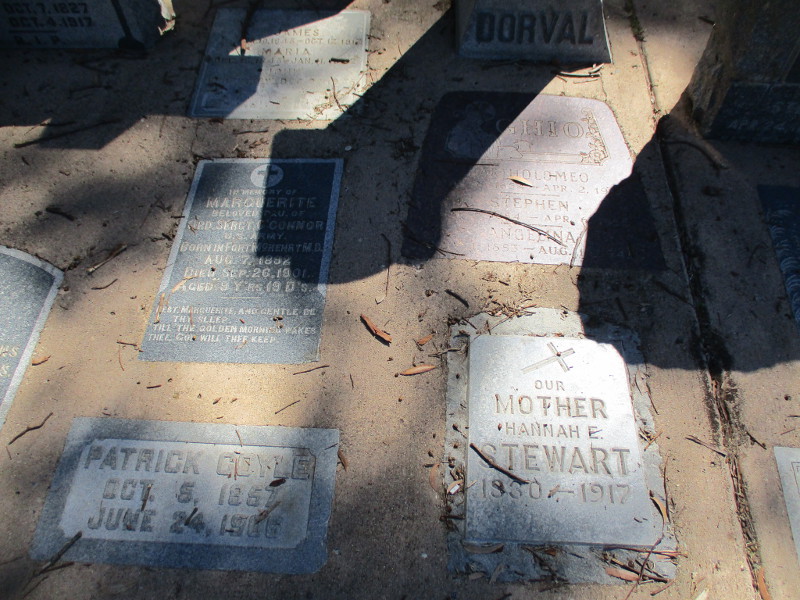
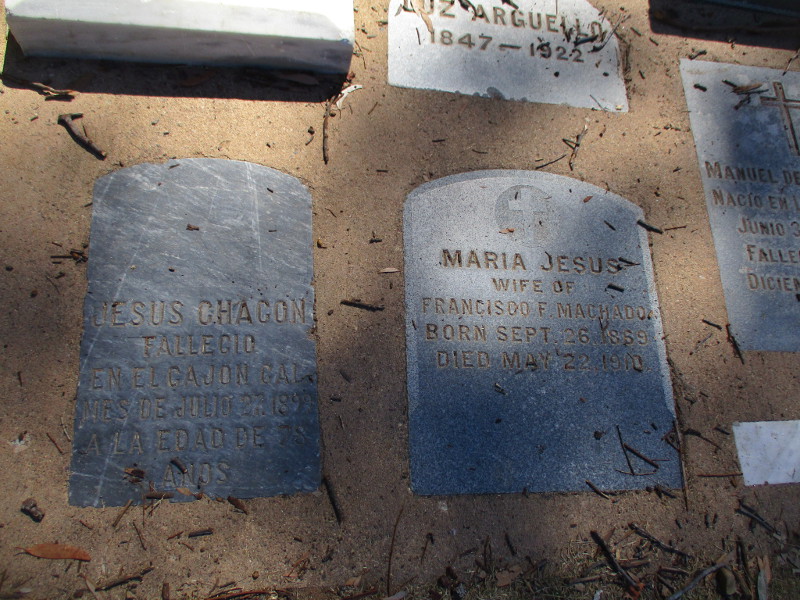
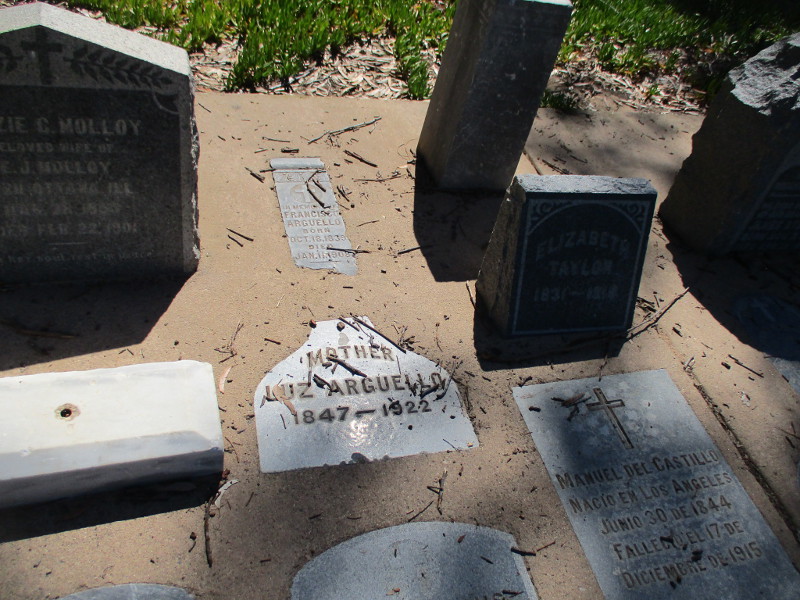
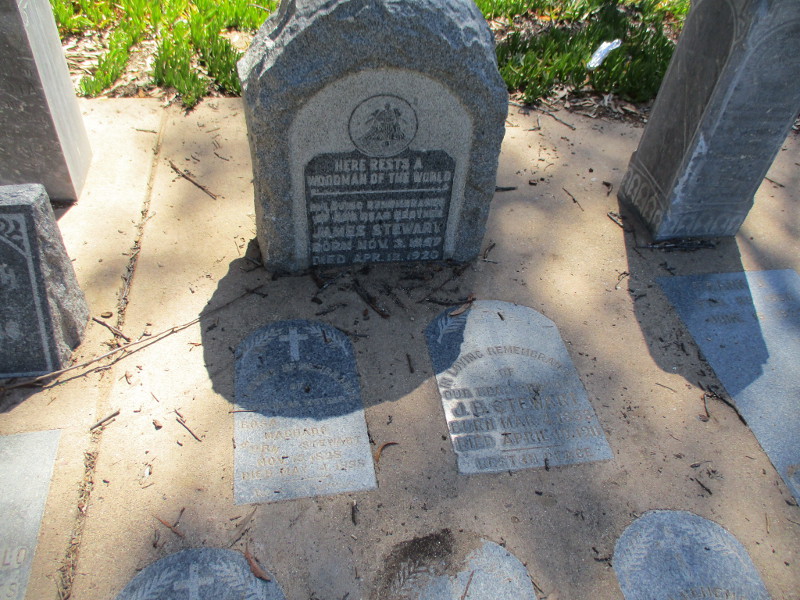
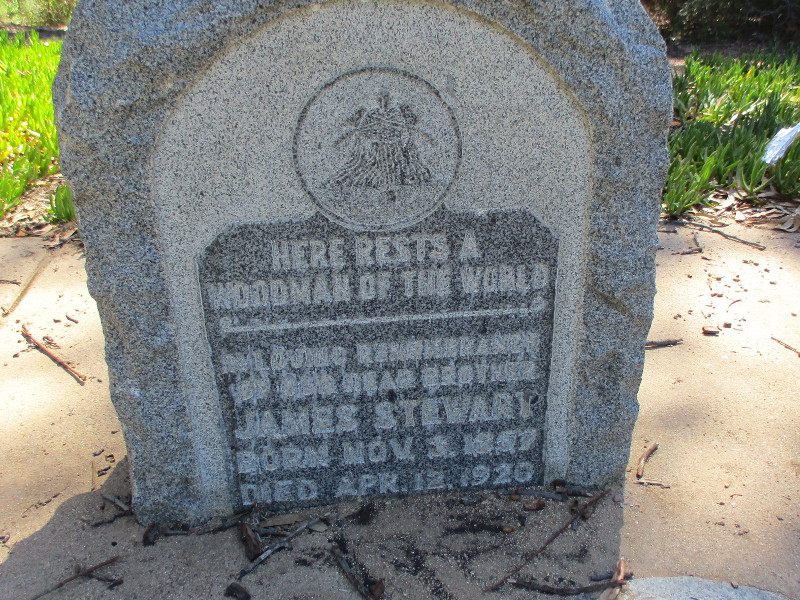
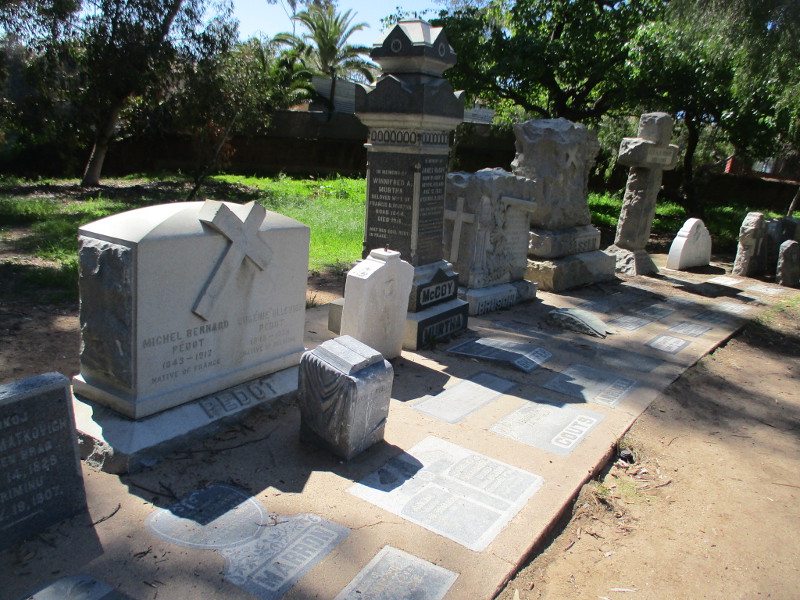
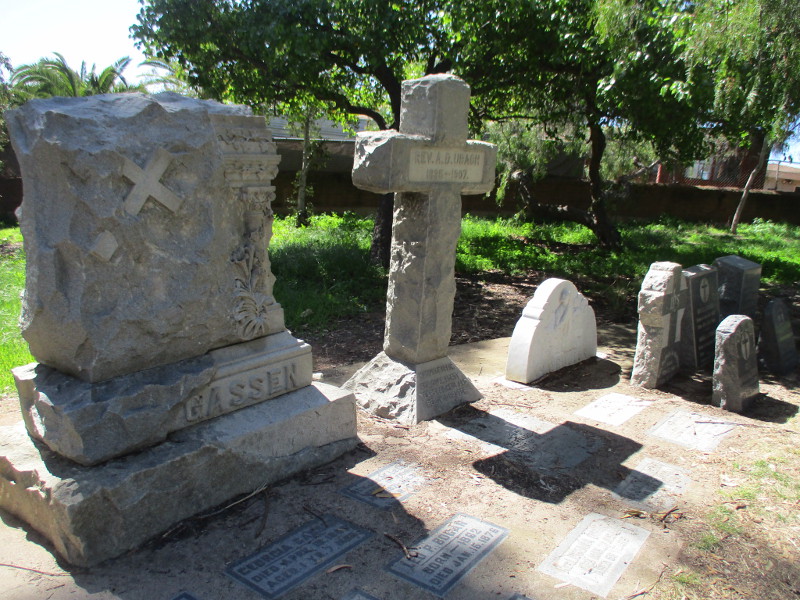
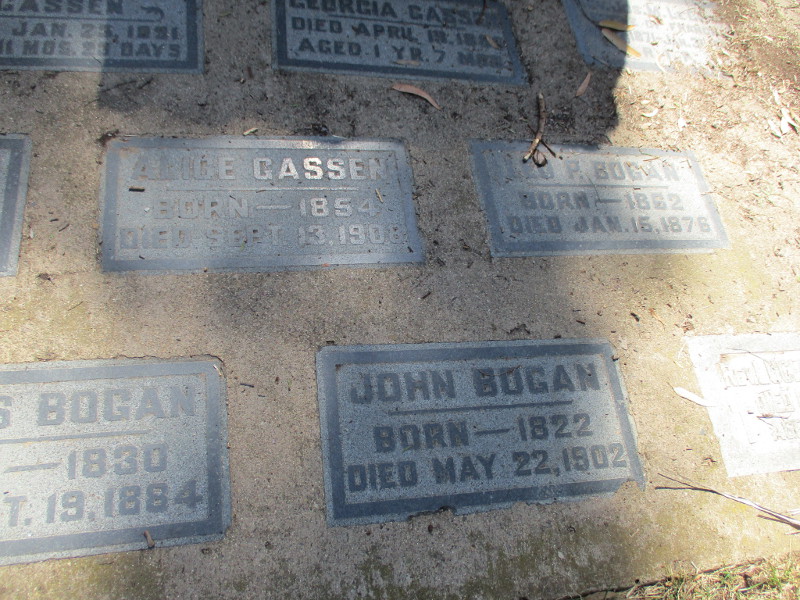
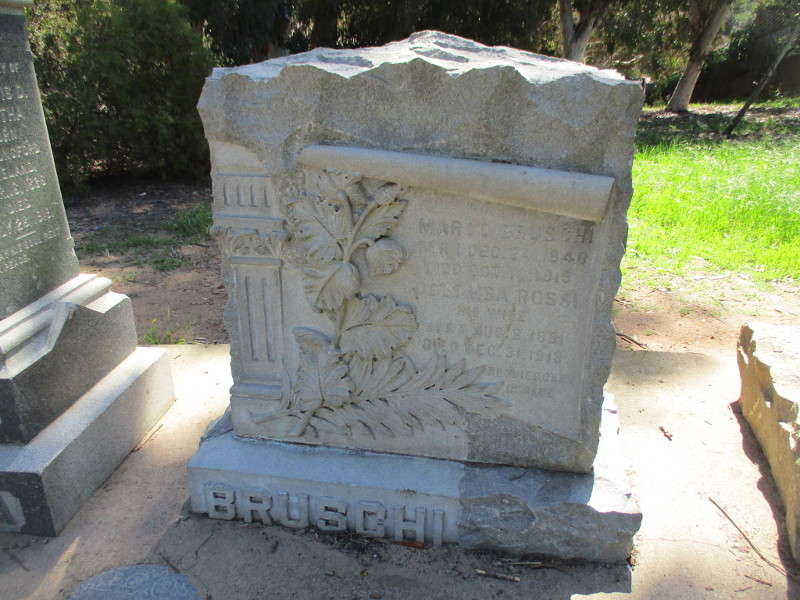
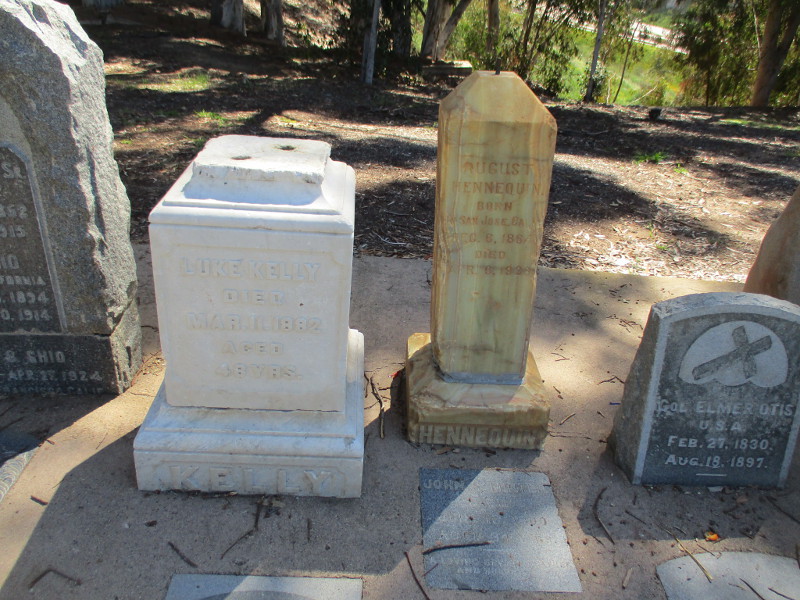
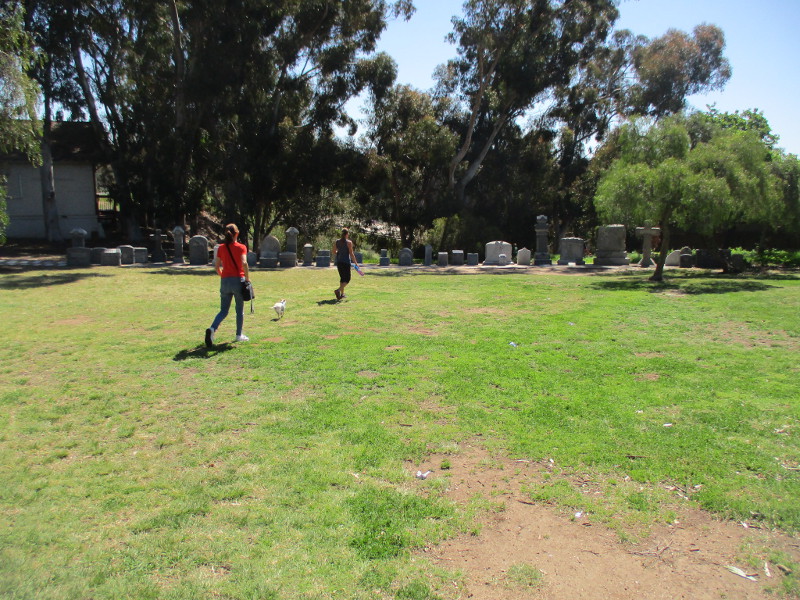
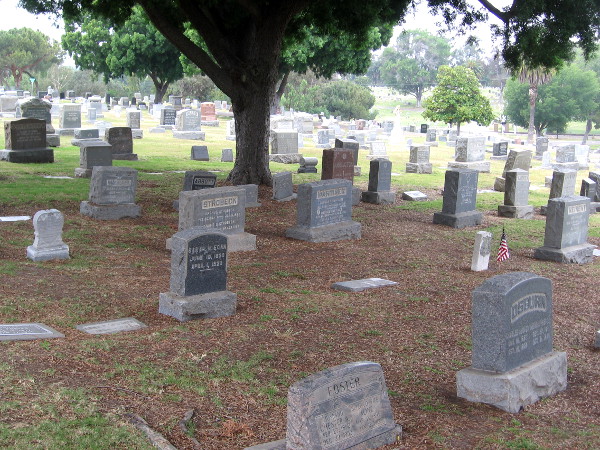
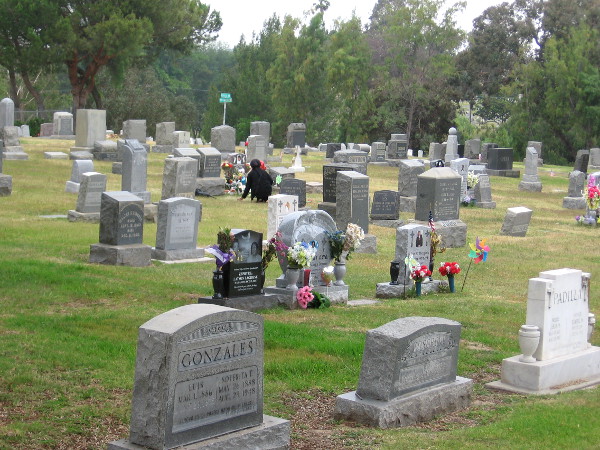
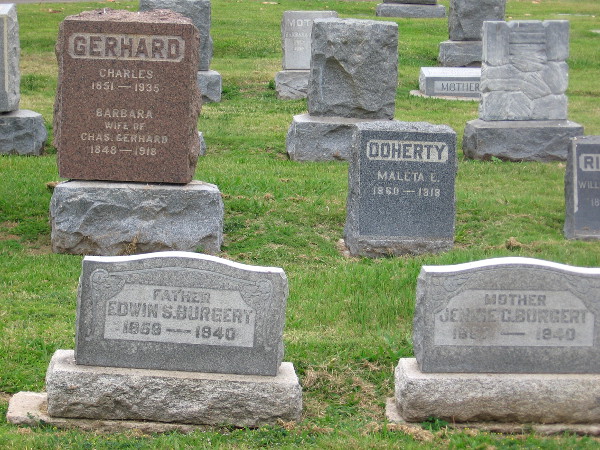
These are a few of the loving inscriptions on stone that linger in Oceanside’s old Oceanview Cemetery.
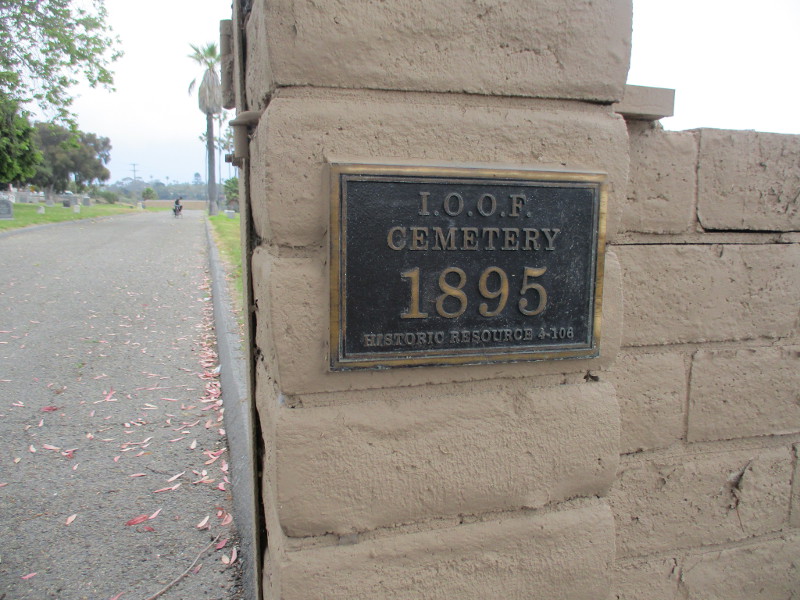
During a recent walk down South Coast Highway, I redirected my feet and wandered through the 3-acre resting place, originally called the I.O.O.F. Cemetery, established in 1895.
As a blogger who’s always searching for interesting sights, I was wondering if some “famous” person might be buried here.
Shame on me for thinking that way. I had missed the central message of a cemetery. It’s that we all might be mortal, but loves lives on.
From its inception in 1895 until about 1950, when Eternal Hills Memorial Park opened in Oceanside, Oceanview was the primary non-denominational cemetery in Oceanside. During its heyday in the 1920s, 30s and 40s there were well over 1000 burials at Oceanview… over 1100 obituaries have been compiled, by the Oceanside Historical Society, of people interred at Oceanview… Oceanview contains the remains of veterans involved in every war or conflict from the Civil War to World War II, inclusive. Those interred at Oceanview range in age from just a few hours old to Agapita Soliz whose family claimed she was 110 years old at the time of her death in 1941. Many of Oceanside’s pioneers and merchants, dating back to the 1880s, are interred at Oceanview.
…
To follow my blog, find the “Follow” box in this website’s sidebar. Or bookmark coolsandiegosights.com and swing on by occasionally!
(If you’re viewing this on a phone, open my website’s sidebar by tapping those three parallel lines at the top of the page.)
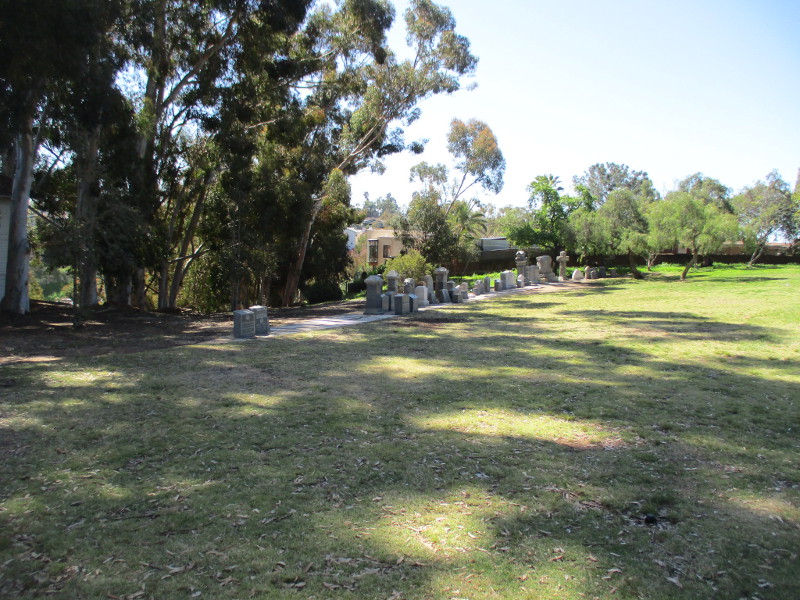
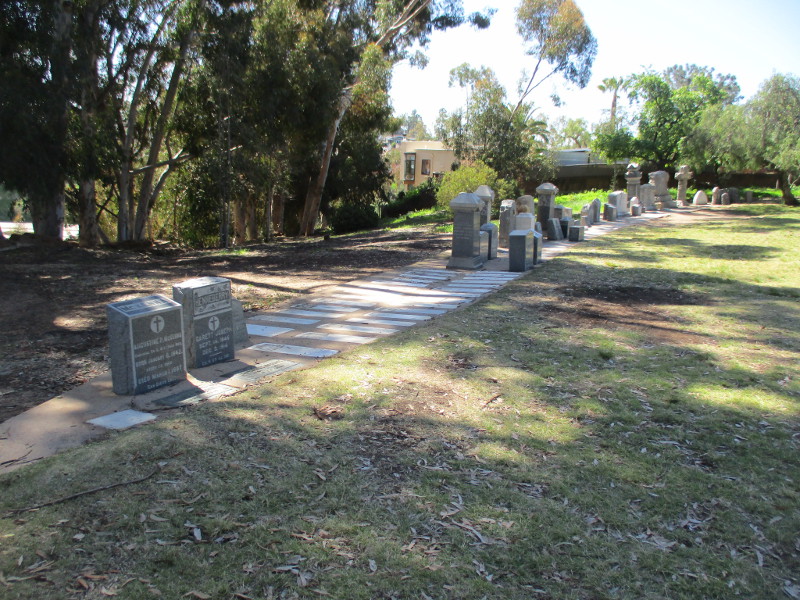
Ride the San Diego Trolley’s Orange Line through Mt. Hope Cemetery and you might observe something strange. A group of collected headstones is set in concrete just south of the tracks.
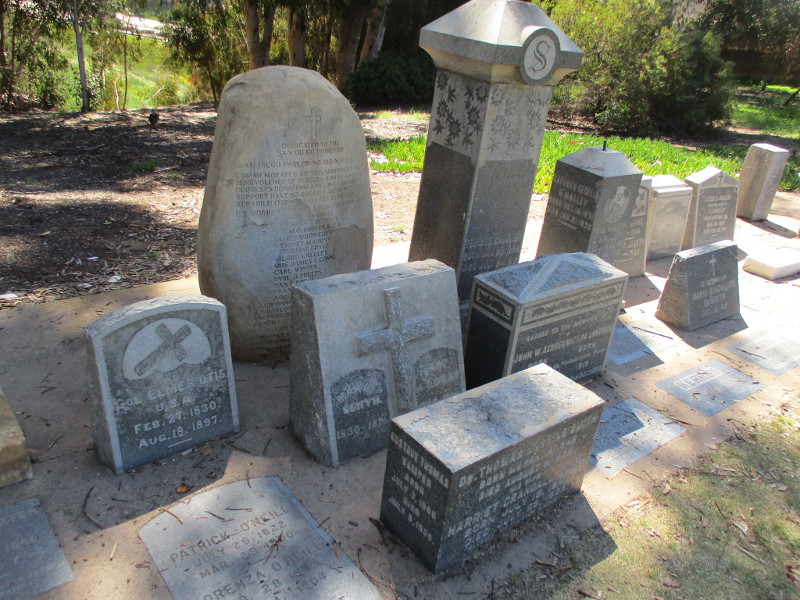
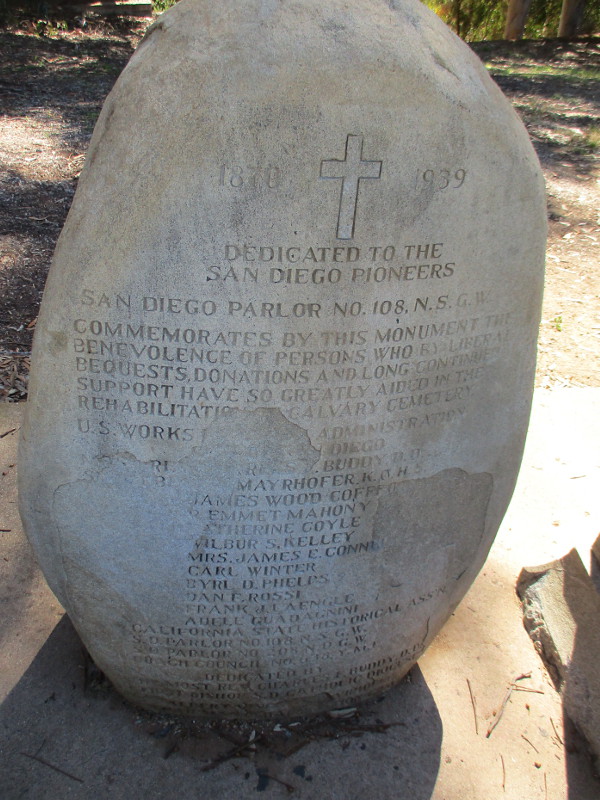
This very unusual memorial is the site of a mass grave–a “grave” filled with discarded gravestones!
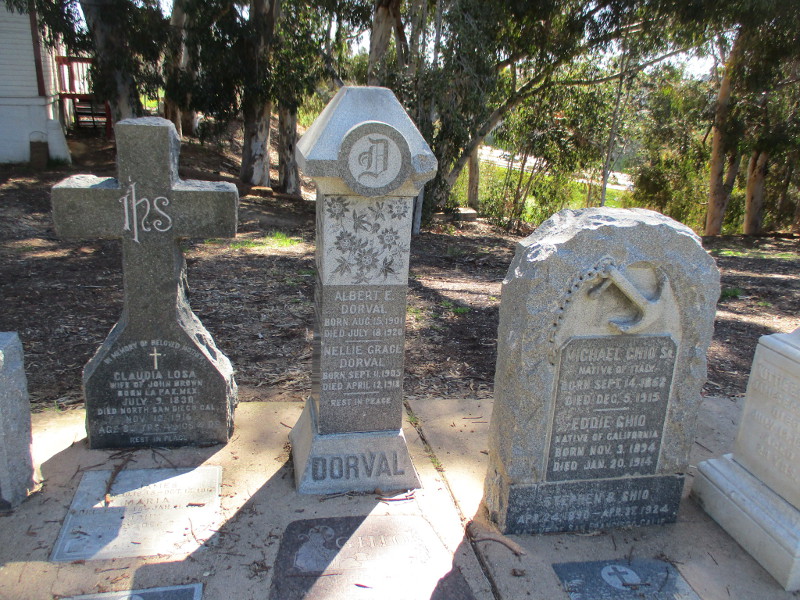
Earlier, in the 1970s, the City of San Diego had removed about 800 tombstones from old Calvary Cemetery in Mission Hills and callously thrown them into this ravine. Unbelievable, right?
Today the peculiar memorial you see in the above photograph recalls an infamous moment in our city’s history.
You can learn more about how old Calvary Cemetery was converted into today’s Pioneer Park in Mission Hills by clicking here.
…
I live in downtown San Diego and love to walk around with my camera! You can follow Cool San Diego Sights via Facebook or Twitter!
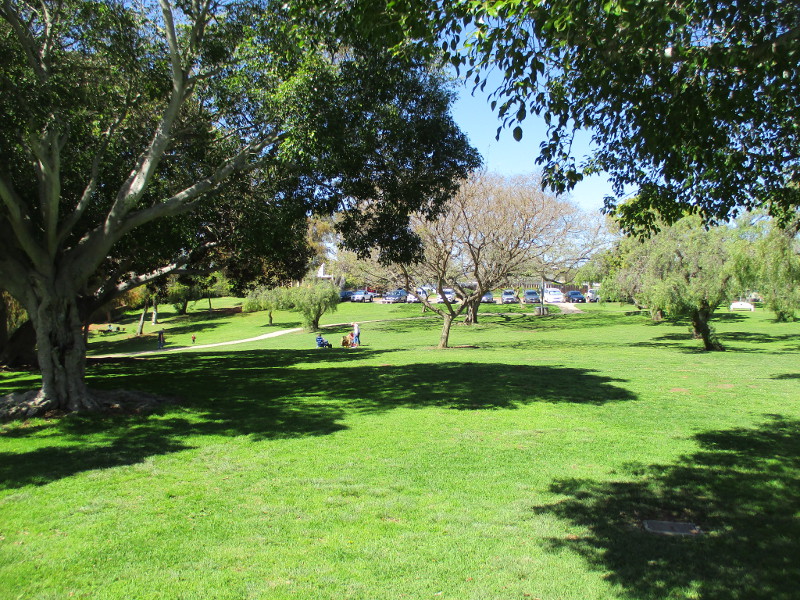
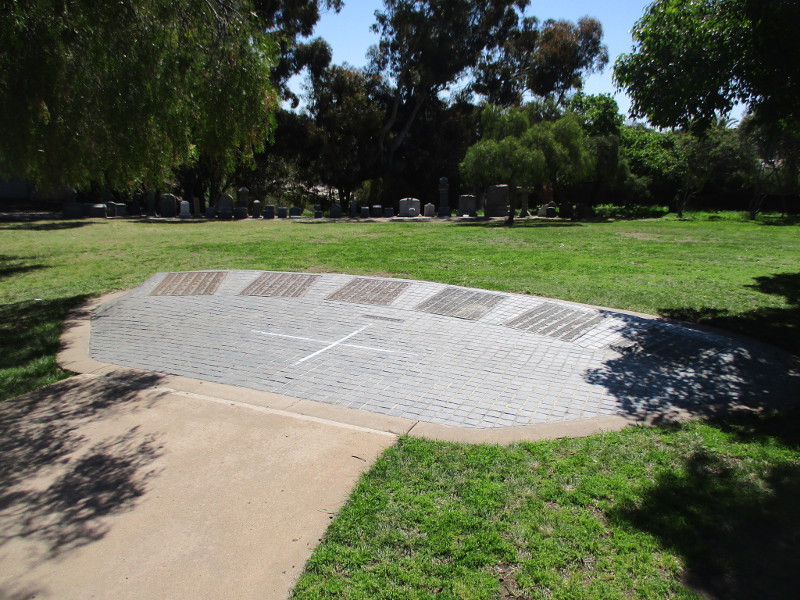
Pioneer Park is a city park in Mission Hills that’s popular with neighborhood families and children. It features a playground, green grass, many shady trees . . . and well over a thousand unseen graves. If you don’t wander into the southeast corner of the park, you might never know it’s also a cemetery.
Pioneer Park was originally Calvary Cemetery. The Catholic cemetery was established in the 1870s, then converted a century later into a Mission Hills community park. According to this article: “All the 800-odd memorial markers were taken away in the 1970s except for a line of tombstones left on the park’s edge. Left as a memorial, they’re still there…” Sadly, the gravestones that had been removed were callously dumped by those then living into a ravine at distant Mt. Hope Cemetery.
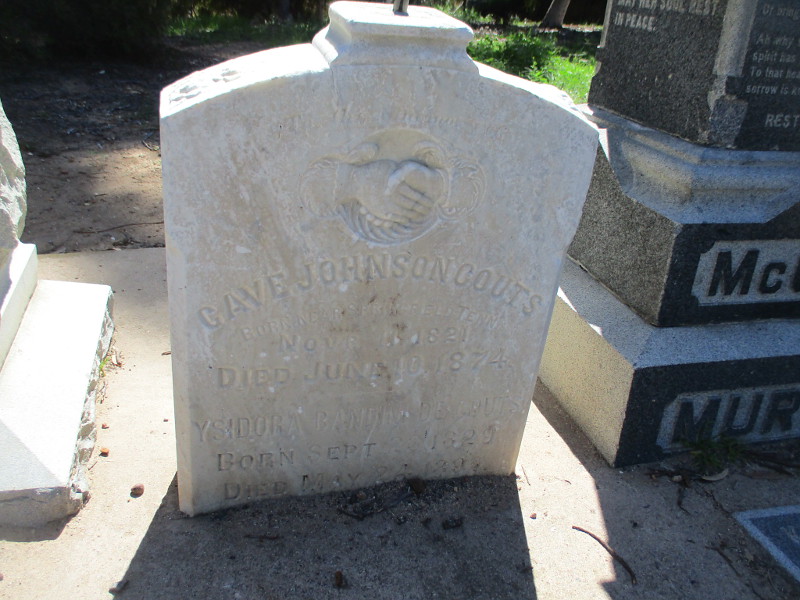
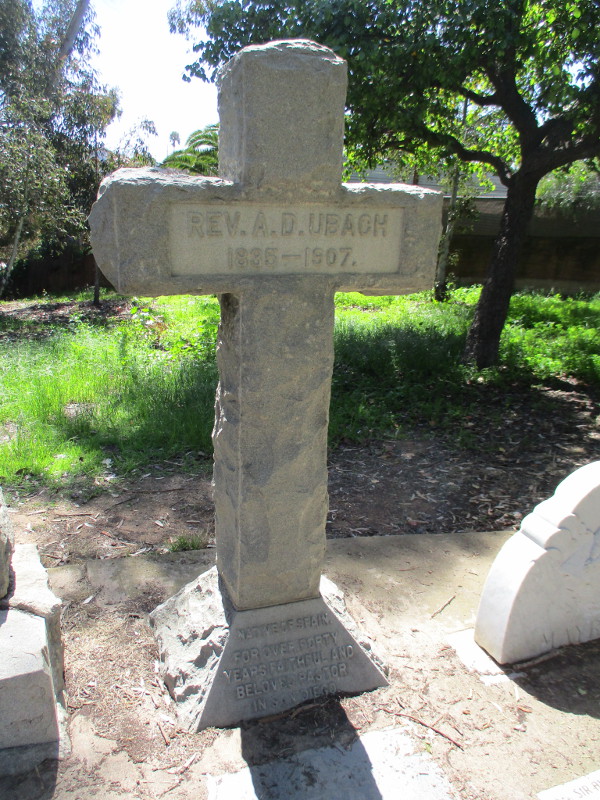
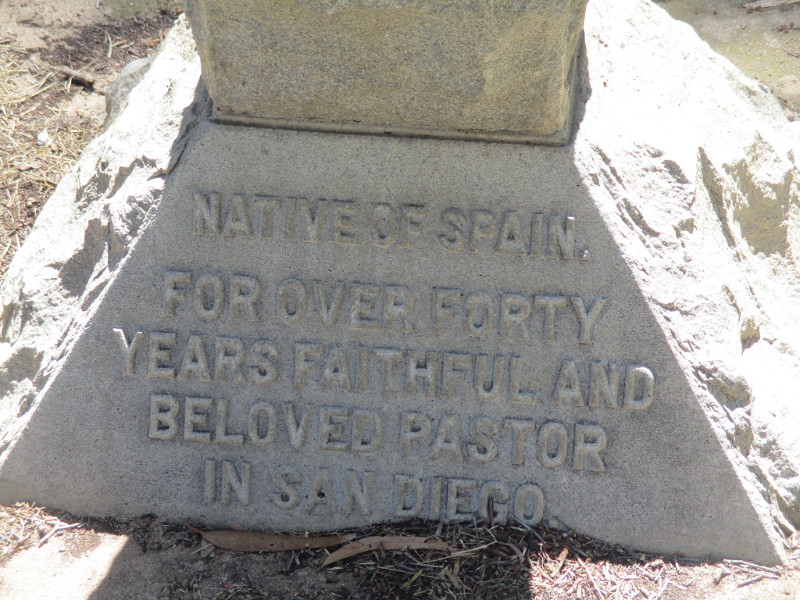
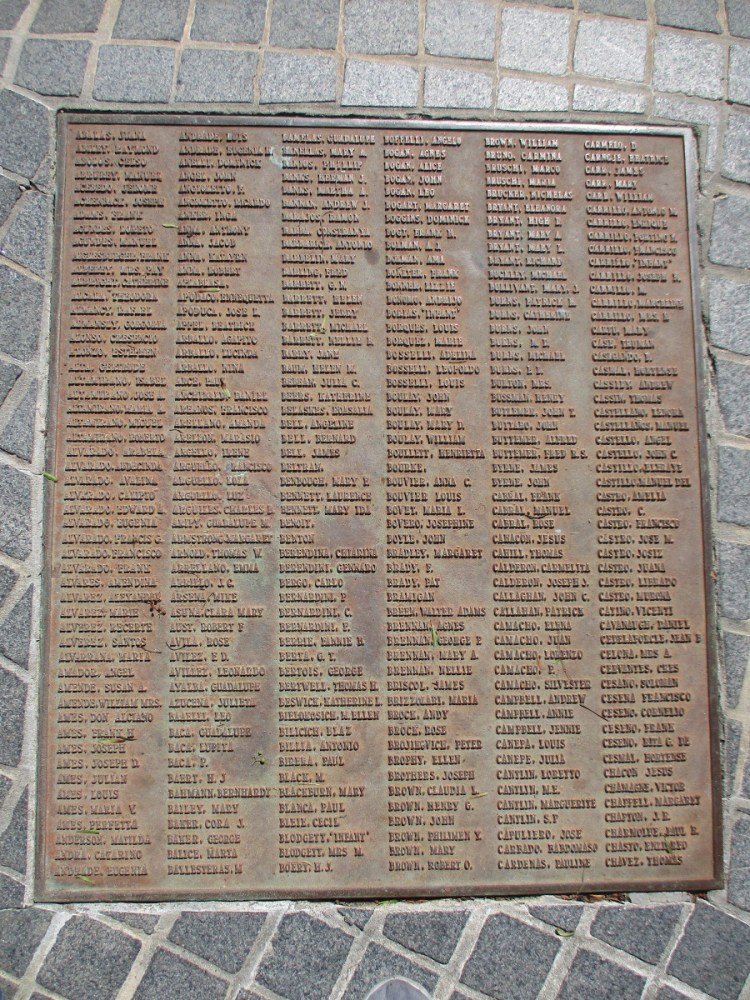
Many of San Diego’s earliest residents remain buried under the grass at Pioneer Park. Even after the passage of many years, surviving gravestones show historically important names like Cave Johnson Couts and Father Antonio Ubach. But all of the names are gradually fading away. Time does that.
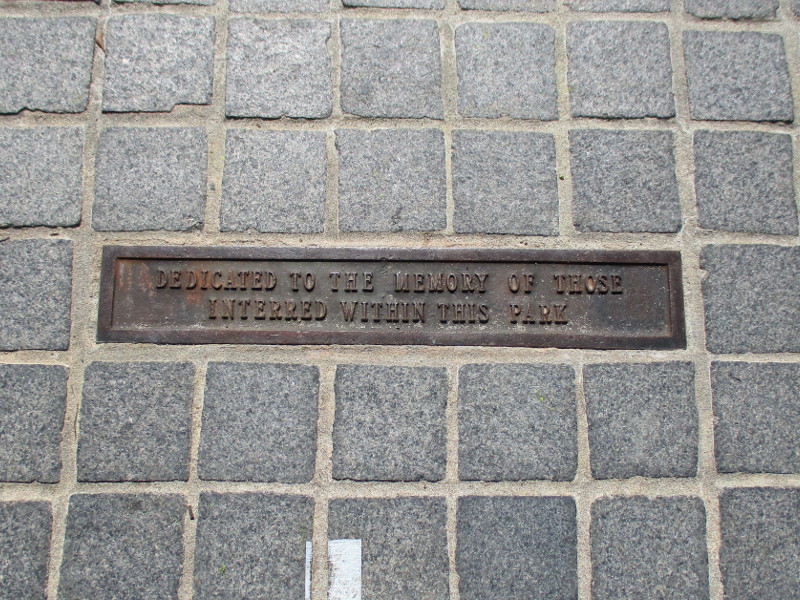
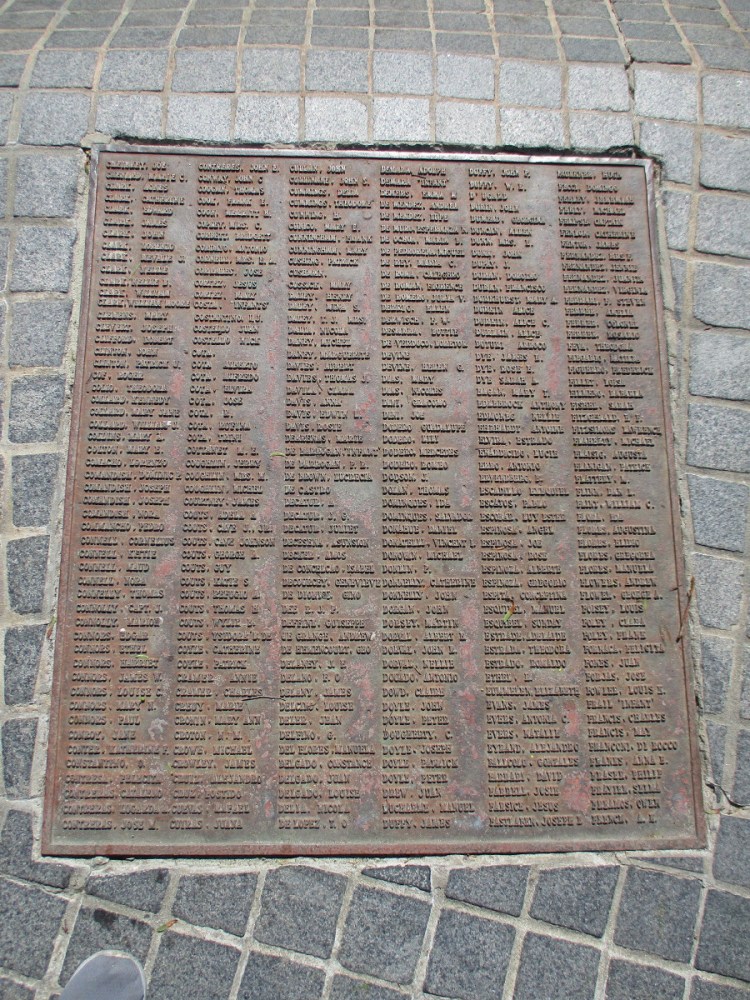
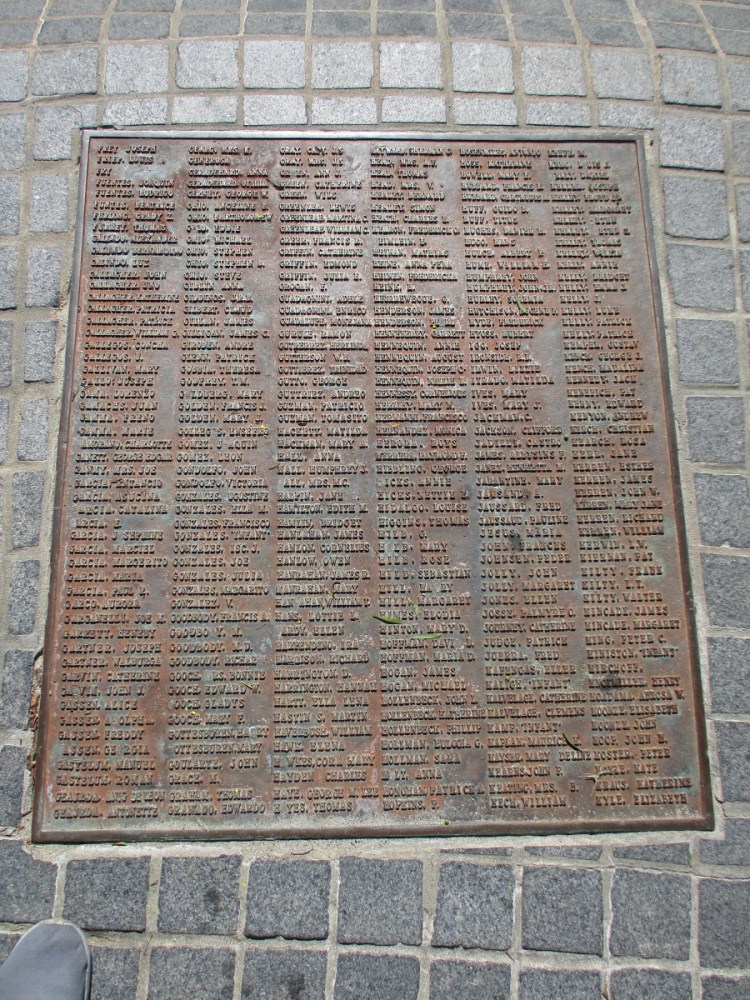
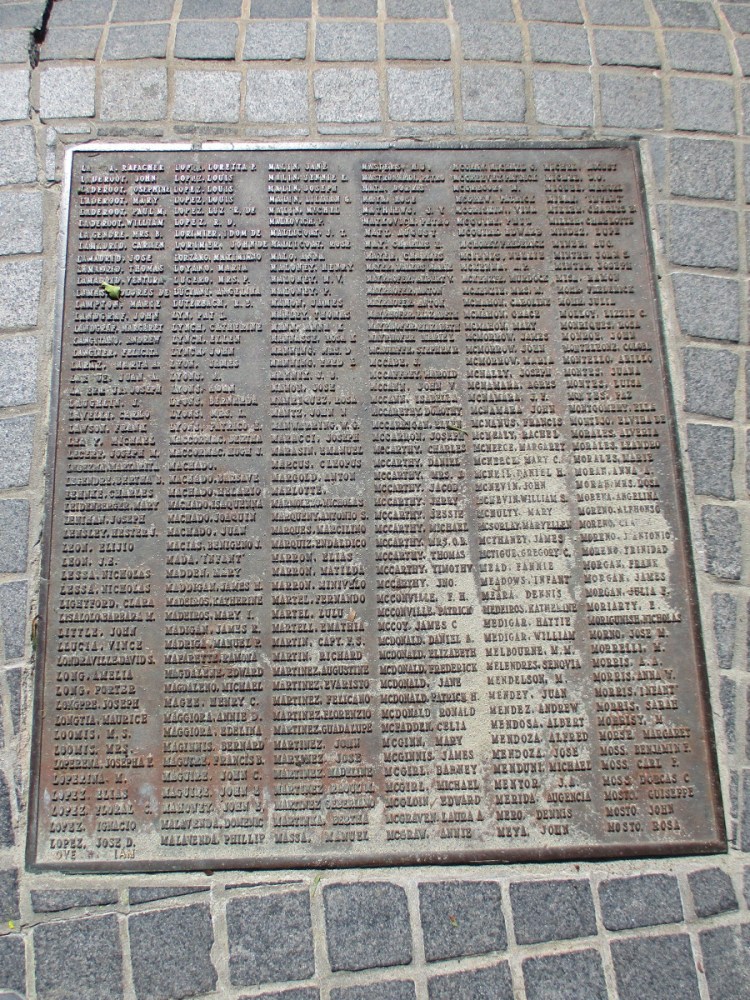
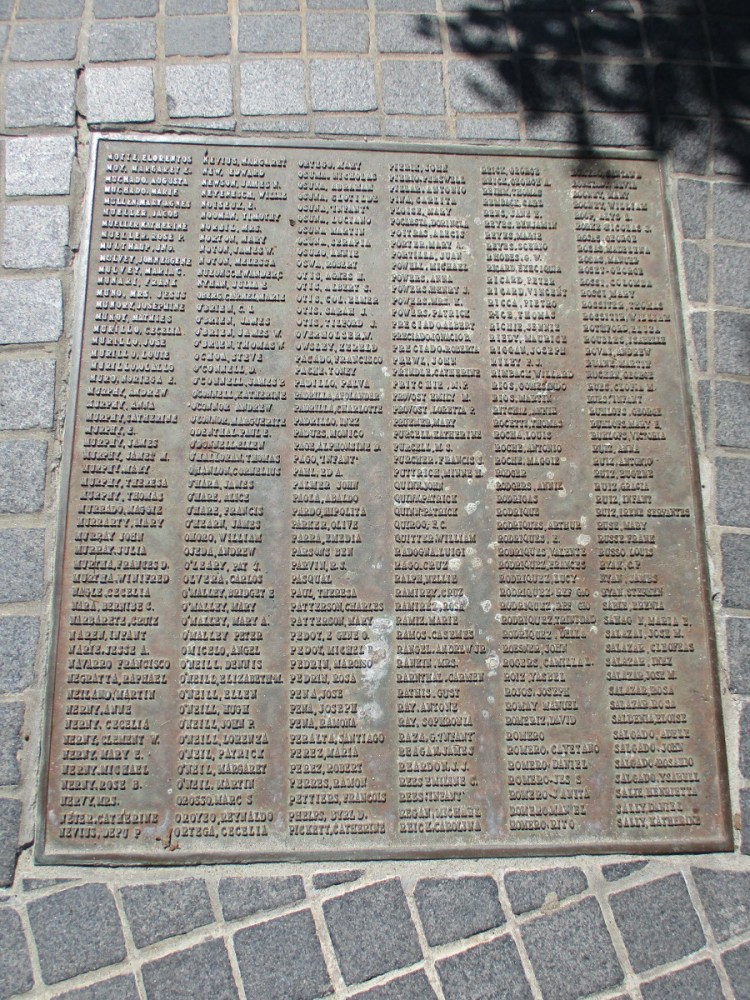
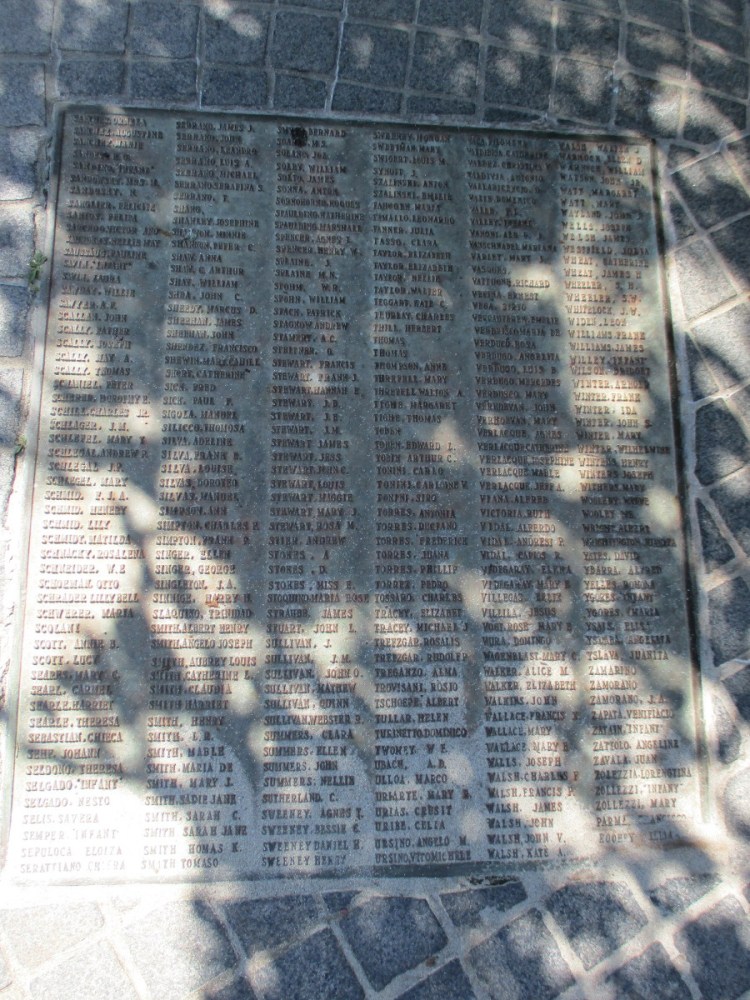
Six nearby plaques list the names of those who are interred in the park, and it is said there might be many more.
On any given day, life goes on cheerfully above the grass. And beneath it lie the remains of those who once lived, dreamed, toiled and loved exactly like you and me.
Here are some photographs, to provoke thought, and to help preserve a little history…
…
I live in downtown San Diego and love to walk around with my camera! You can follow Cool San Diego Sights via Facebook or Twitter!
You can easily explore Cool San Diego Sights by using the search box on my blog’s sidebar. Or click a tag! There are thousands upon thousands of photos for you to enjoy!
Armchair detectives and San Diego history buffs, here’s a possible mystery to solve!
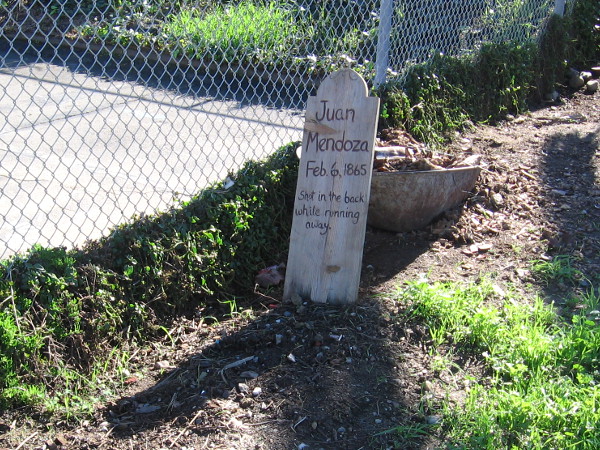
In January of 2017 I was walking by the west side of a long parking lot along Anna Avenue near the old location of the San Diego Humane Society, when I spotted a wooden tombstone. On it were the words: “Juan Mendoza. Feb. 6, 1865. Shot in the back while running away.”
Here’s my photo from back then…
Mysterious wooden tombstone with name of Juan Mendoza, who was shot by Cave Couts in the back with a double-barreled shotgun in Old Town San Diego, February 6, 1865.
Juan Mendoza was a person who figured in the early history of Old Town, which is located just south of this spot across the San Diego River.
At the time I couldn’t help but wonder about the mysterious wooden grave marker. Was it real? A prop? A prank? You can read about my strange discovery several years ago by checking out my old blog post here.
As I wrote in that original post: “Cave Couts built the wood-frame hotel called the Colorado House in 1851 and became an influential resident of early San Diego. But by some accounts he was a sketchy character. On February 6, 1865 he shot a disgruntled former employee (who worked on one of Cave Couts’ ranches) in the back with a shotgun. This violated the unspoken “Code of the West”. The unfortunate victim who died was Juan Mendoza.”
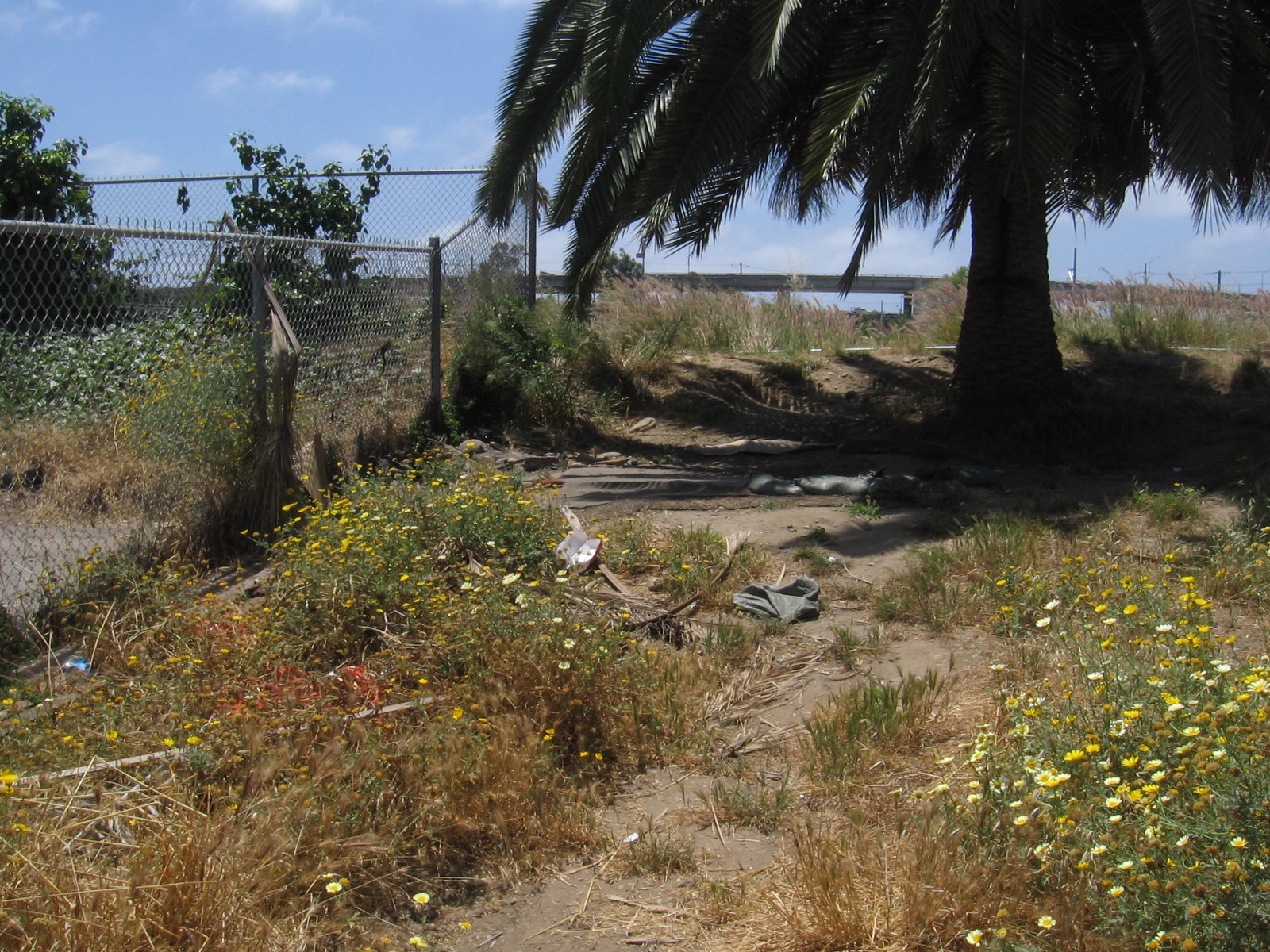
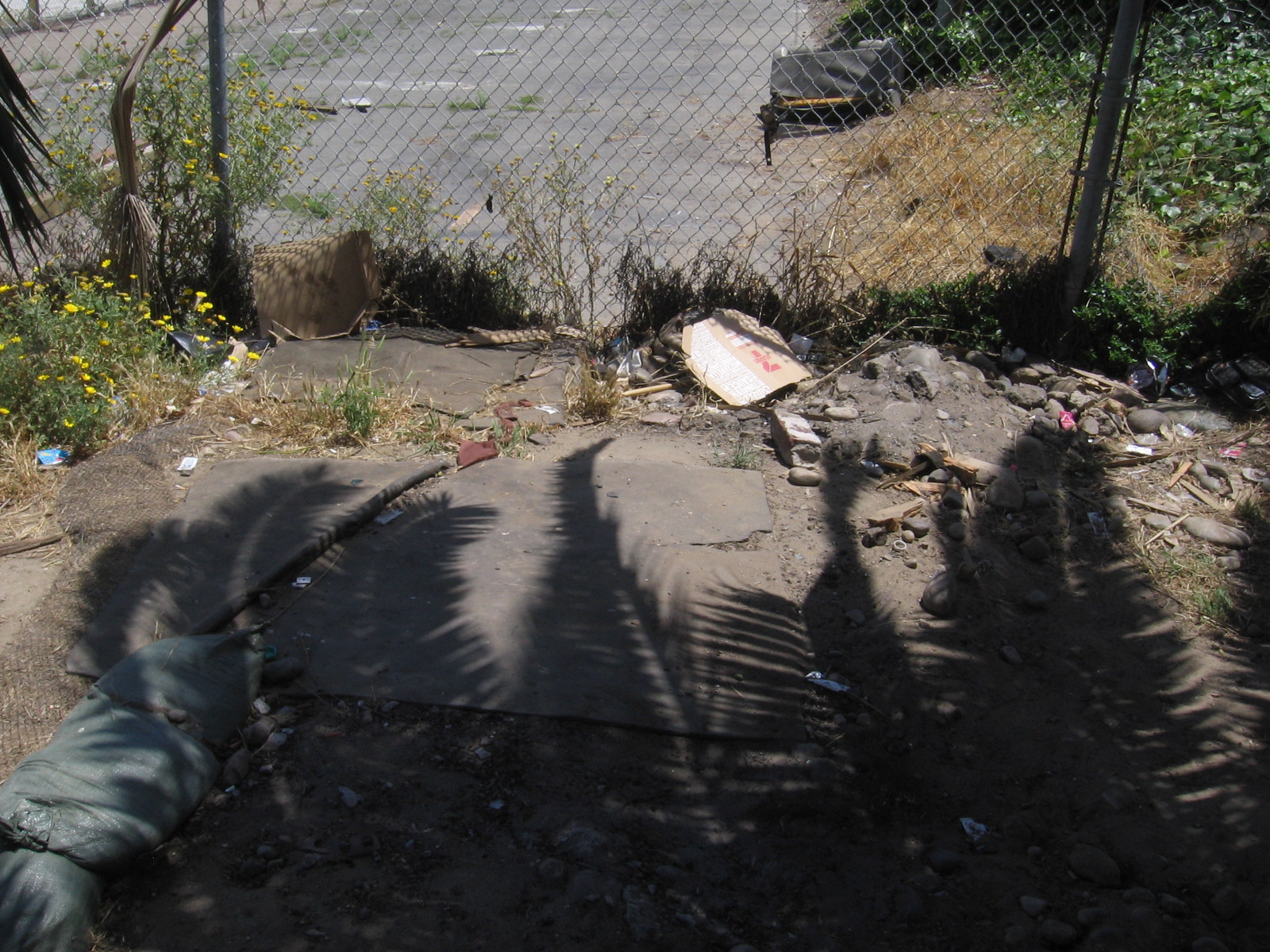
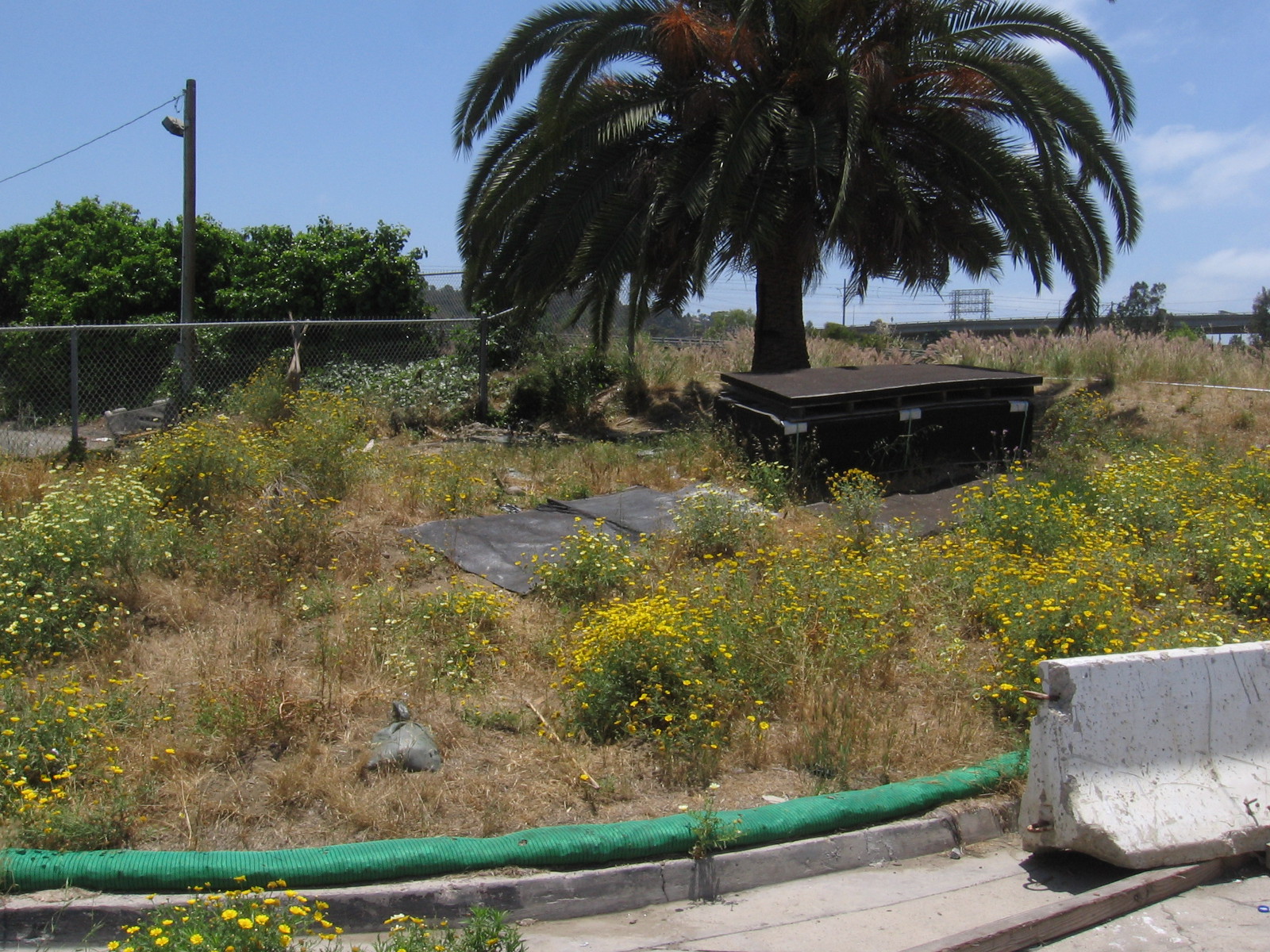
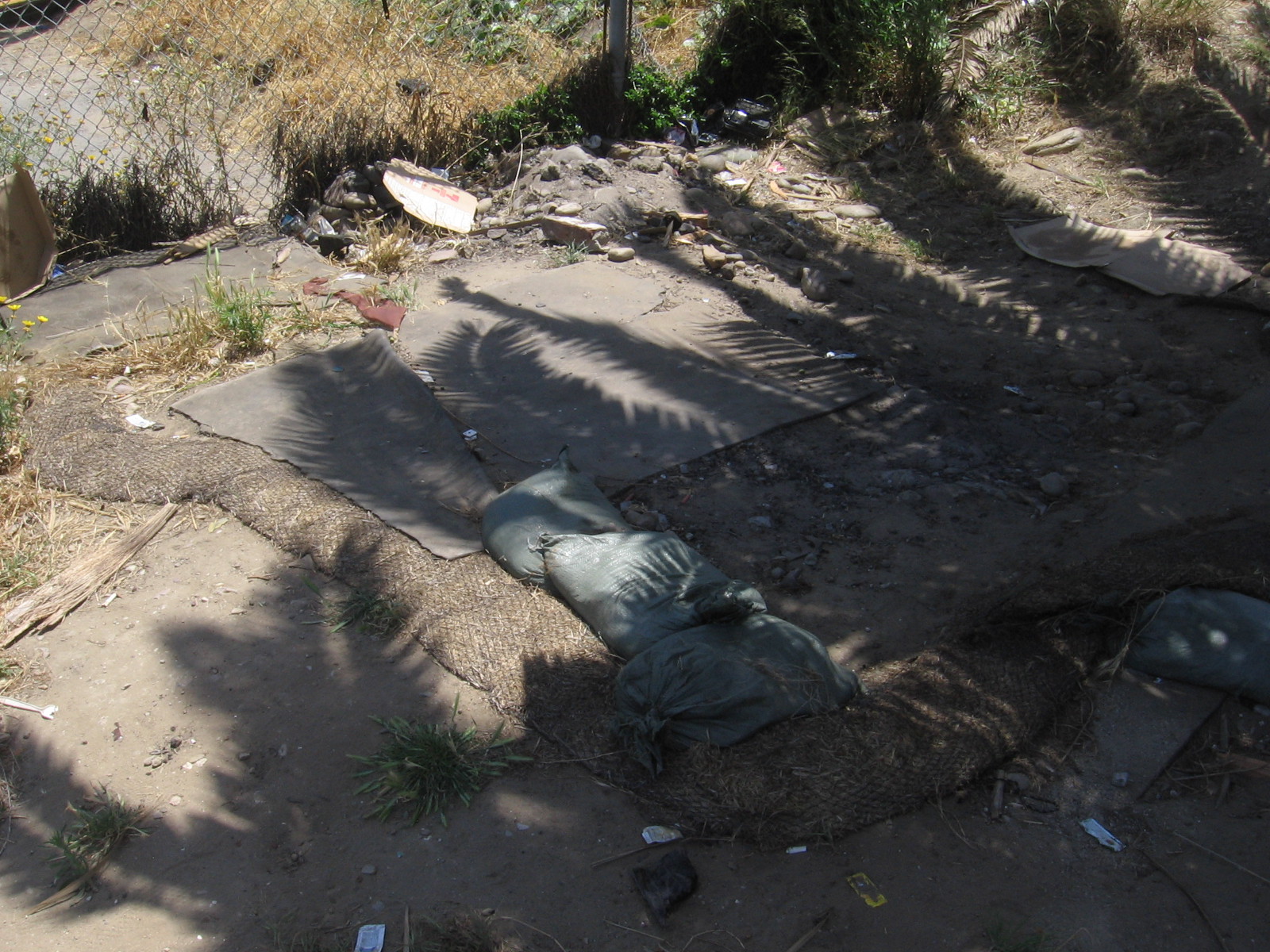
Well, look what I saw today. The wooden tombstone is gone. There’s some sort of covering and efforts at erosion control around the place where it stood. Was there a grave? Nearby I also observed objects that might be related to the Mid-Coast Trolley extension construction over Friars Road, and possible homeless activity.
Okay, maybe it’s nothing. I see nothing on the internet. I don’t claim to be an expert when it comes to our city’s history. But I do know there are readers following this blog who are far more informed than me.
Is there an explanation?
…
I live in downtown San Diego and love to walk around with my camera! You can follow Cool San Diego Sights via Facebook or Twitter!
Sometimes I make seemingly mysterious discoveries!
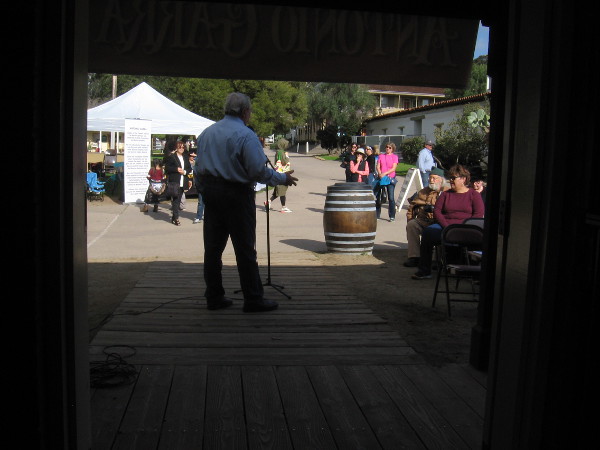
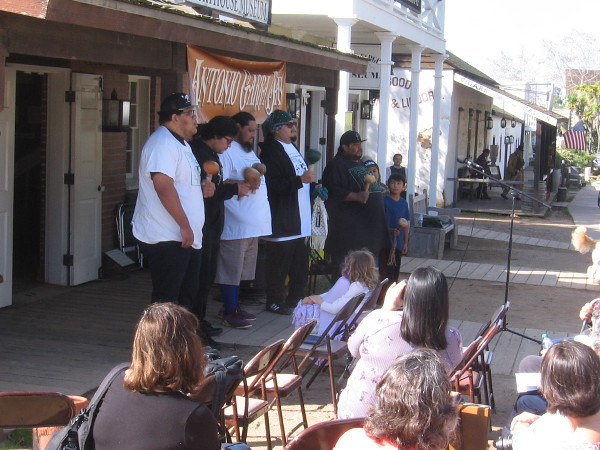
This afternoon I attended Antonio Garra Day in Old Town San Diego State Historic Park. The event, which comes on the anniversary of Garra’s death, was organized by the Pala Band of Mission Indians. I listened to several speakers, including authors and historians, talk about Garra and historical events in the mid-1800s, and I watched different groups perform traditional Bird Songs and Dances.
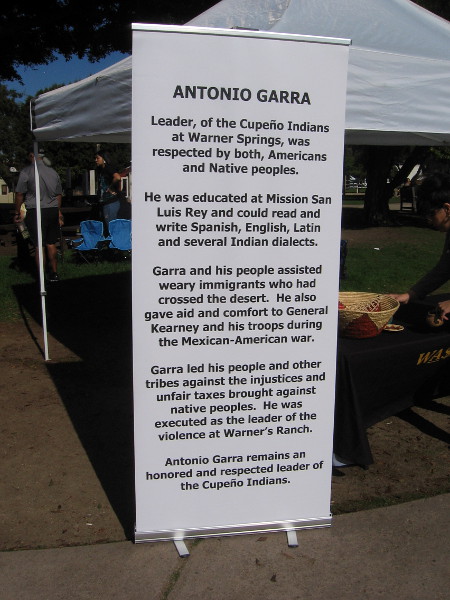
Antonio Garra was a leader of the Cupeño people in Southern California who sought to organize tribes of our region to resist unfair taxation. Even though Native Americans were not citizens of the United States, a tax was levied upon their animals, property and agriculture. This taxation without representation was considered by many fair-minded people to be illegal and unjust.
Garra was educated at Mission San Luis Rey and could speak English, Spanish and Latin. He was an influential leader who opposed the ill-treatment of indigenous people. According to Wikipedia: “In 1851, because of several issues of conflict, Antonio Garra, a Cupeño from Warner’s Ranch, tried to organize a coalition of various Southern California Indian tribes to drive out all of the European Americans. His Garra Revolt failed, and settlers executed Garra. The Cupeño had attacked Warner and his ranch, burning some buildings.”
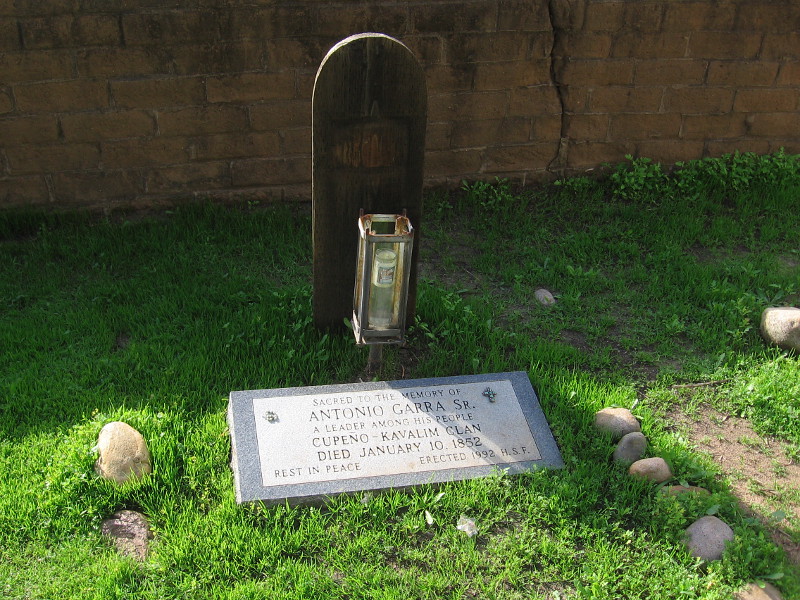
Garra was blamed for the murder of four people at Colonel Warner’s Rancho on November 22, 1850, and he was sentenced to be executed. On January 12, 1852, he was brought to the El Campo Santo cemetery in Old Town and told to kneel down beside a ready grave in front of a firing squad. He last words were: “Gentlemen, I ask your pardon for all my offenses and expect yours in return.”
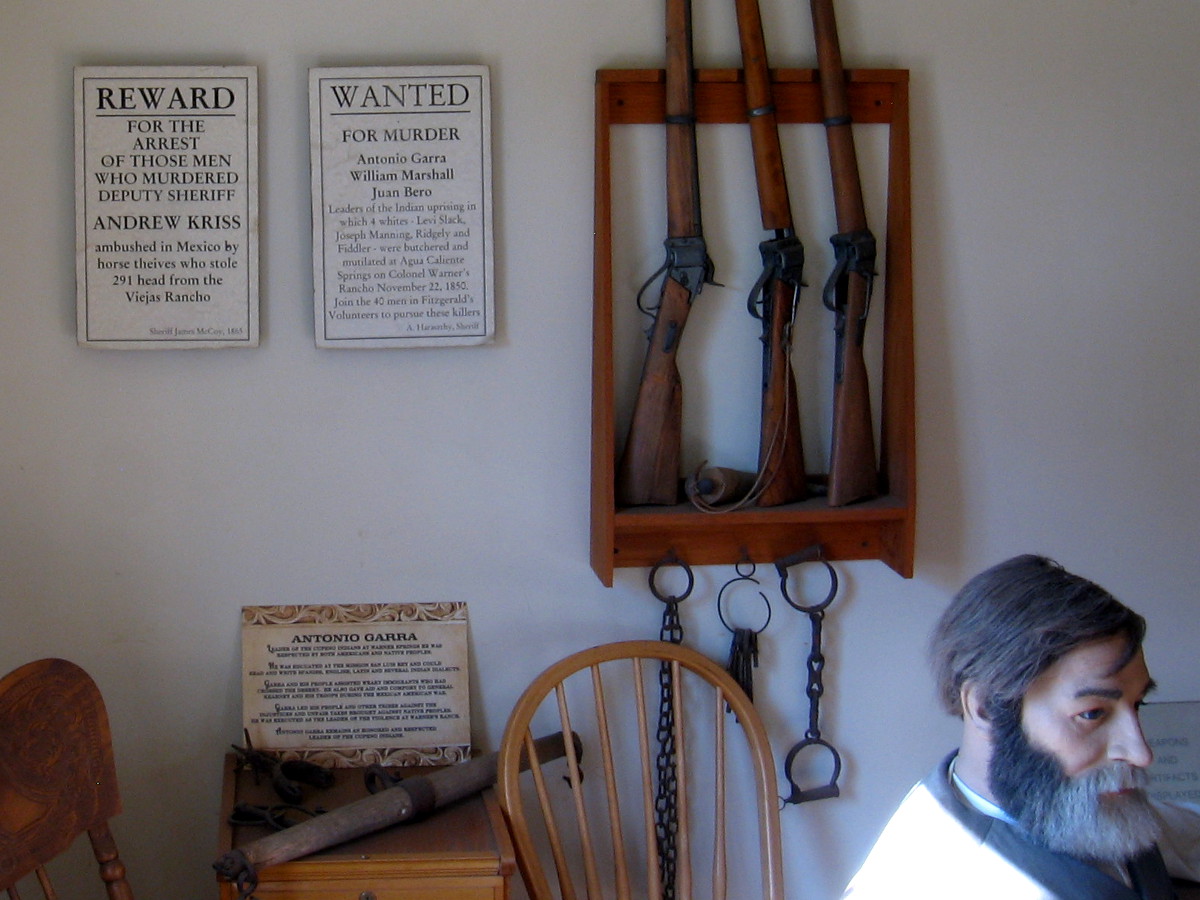
Antonio Garra Day arose because of a Wanted poster that has long been displayed in the First San Diego Courthouse museum. The poster does not provide the full story of the Garra Uprising and the suffering of indigenous people. Today, a plaque beneath the poster provides more historical context.
Between performances of Bird Songs, which honored Native American ancestors, elders and Garra, I listened to the words of Patricia Nelson. She is a descendant of Antonio Garra. As a youth she was incensed by the cruel treatment of her people. Today, she works to honor and proudly remember those people, their culture, their lives and humanity.
Antonio Garra Day has grown over the past 4 or 5 years, and next year it will be a much larger event, filling the plaza of Old Town San Diego State Historic Park, with many Native American participants from all around our region.
A display of Luiseño artifacts at the event, by the Wa$xayam Pomki Museum on the Rincon Reservation.
Garra and his people assisted weary immigrants who had crossed the desert. He also gave aid and comfort to General Kearney and his troops during the Mexican-American war.
Bird Singers tell of the world’s creation and the first people.
A crowd observes Antonio Garra Day at Old Town San Diego State Historic Park.
Wanted posters in the First San Diego Courthouse museum include one concerning Antonio Garra.
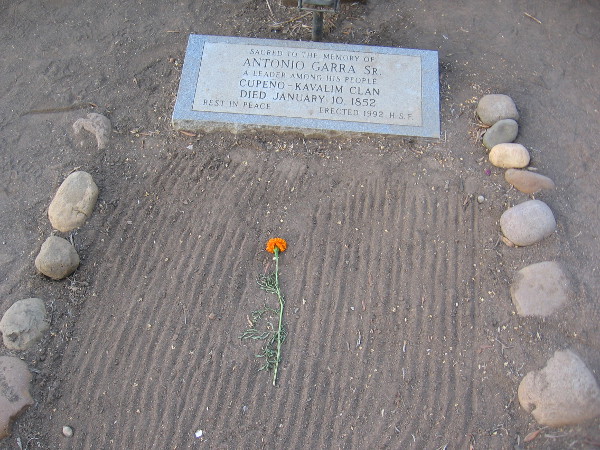
The grave of Antonio Garra in Old Town San Diego’s El Campo Santo cemetery.
A horse came to Old Town for the event. Its rider (not visible) represented Juan Verdugo, who participated in the Garra Uprising and was executed. He is also buried at El Campo Santo cemetery.
Patricia Nelson, a descendant of Antonio Garra, talks about her memories, many generations of her people, and their lives.
Bird Song and Dance honor a people who lived in our region many thousands of years before the arrival in 1769 of Spanish missionaries and soldiers.
…
I live in downtown San Diego and love to walk around with my camera! You can follow Cool San Diego Sights via Facebook or Twitter!
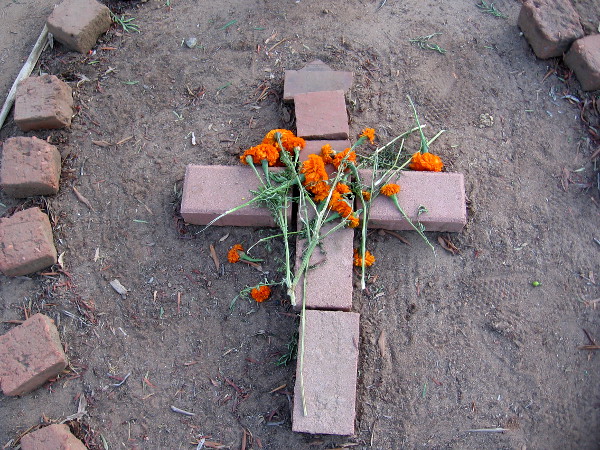
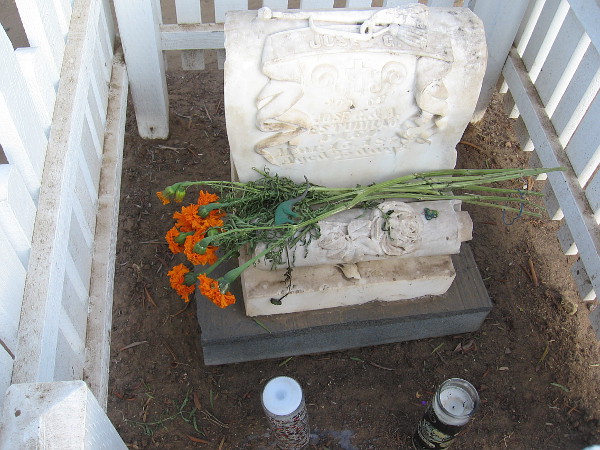
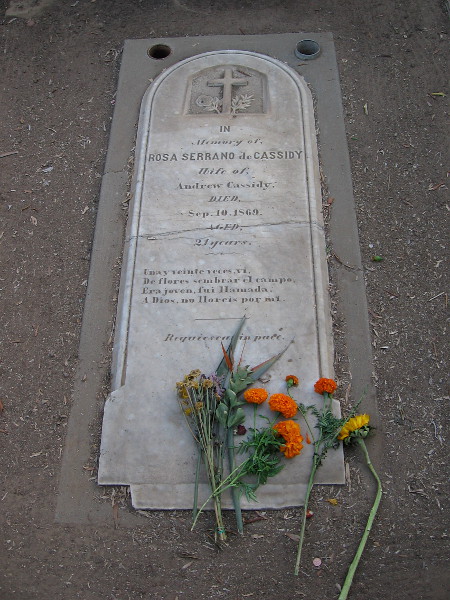
Most of the traditional Día de los Muertos decorations have been put away.
In the small El Campo Santo cemetery, marigolds are all that remain.
According to Mexican tradition, marigolds, with their color and scent, guide spirits back to the living.
El Campo Santo (The Holy Field) is where many of San Diego’s earliest residents were buried. Marigolds on graves remind the living that those who founded our city are still with us.
To learn more about some of the people laid to rest in Old Town’s historic El Campo Santo cemetery, click here.
…
I live in downtown San Diego and love to walk around with my camera! You can follow Cool San Diego Sights via Facebook or Twitter!
I happened upon a few notable names during a walk through Mount Hope Cemetery. I had over an hour before the Memorial Day ceremony would begin, so I just wandered down winding roads through fields of headstones.
Many early residents of San Diego are buried at Mount Hope. Among the jumble of names engraved in stone, one can find some of the city’s most influential citizens. Like Alonzo Horton, Kate Sessions, George Marston, Thomas Whaley, Ah Quin, E. S. Babcock, and Robert Waterman. (Not to mention the famous author Raymond Chandler!) But I didn’t have a map. So I just meandered through the hilly cemetery and gazed.
Thousands of gravestones.
Every life different. Every life important in its own way.
Some of the dates indicate long lives, others short. But isn’t it true that all of our lives are short?
Someone asked about my visit–if the cemetery felt spooky. No. The best word that comes to mind is bittersweet. A feeling of both joy and sadness.
Every single name has become a part of San Diego history.
(I did a bit of research for this blog post. Hopefully I got the following information right. If not, leave a comment!)
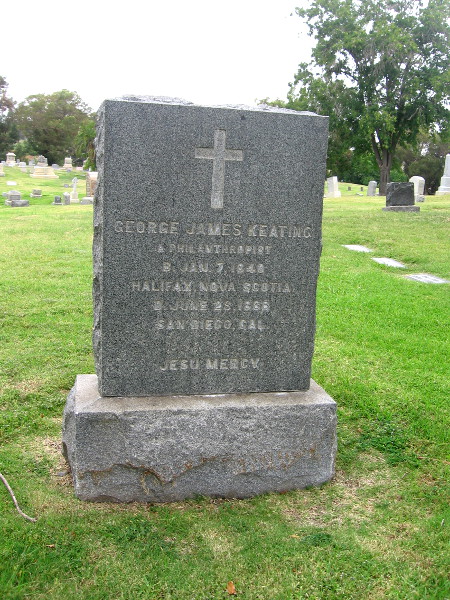
George James Keating
George James Keating was born in Halifax, Nova Scotia in 1840. He and his wife Fannie, owners of a farming company, eventually moved to San Diego in 1886. Keating made large investments in the city’s booming real estate market. After his death, Fannie oversaw the construction of the five-story Keating Building, which I blogged about several years ago here.
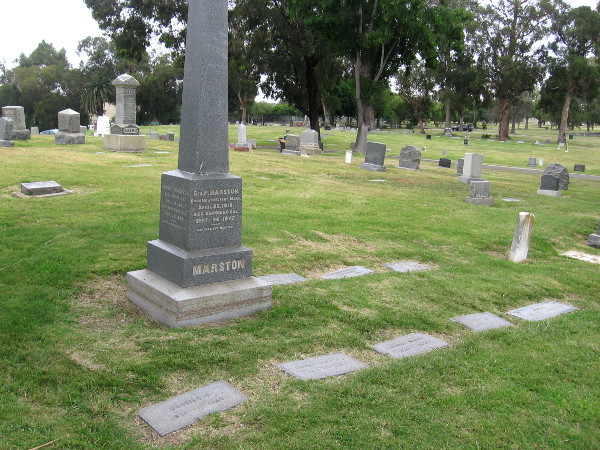
Graves of the Marston family.
George White Marston
George W. Marston was often referred to as “San Diego’s First Citizen.”
A successful department store owner, he founded the San Diego Historical Society and was a prominent advocate for and planner of Balboa Park. He was a critical force in the establishment of the San Diego Public Library System and Presidio Park.
You can see a sculpture of George Marston on my blog here, and the garden of his beautiful, historic house, which is located in the northwest corner of Balboa Park, here.
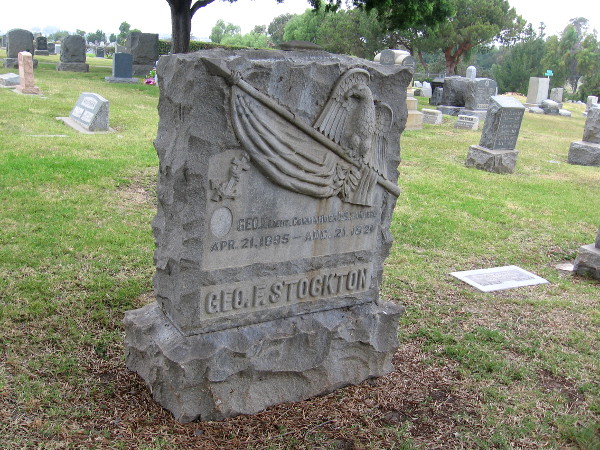
George F. Stockton
Lt. George F. Stockton’s tragic drowning on August 21, 1921 prompted the creation of the City of Oceanside Lifeguard Service. He was pulled out to sea by a rip current. He had served on the World War I ship USS San Diego.
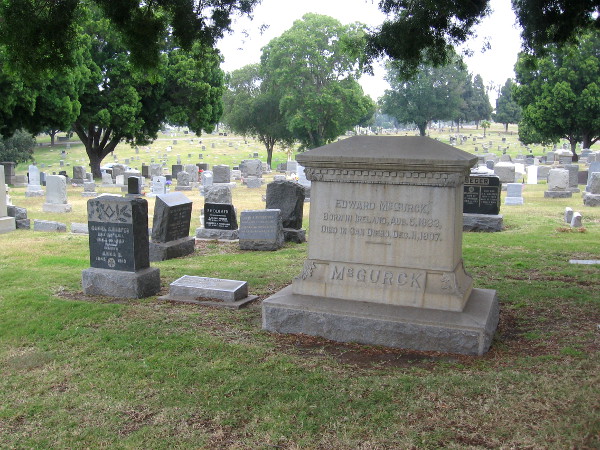
Edward McGurck
Col. Edward McGurck was born in Ireland. He purchased property on the northeast corner of Fifth Avenue and Market Street in 1876 for $50. In 1887 he developed the McGurck Block Building at that location.
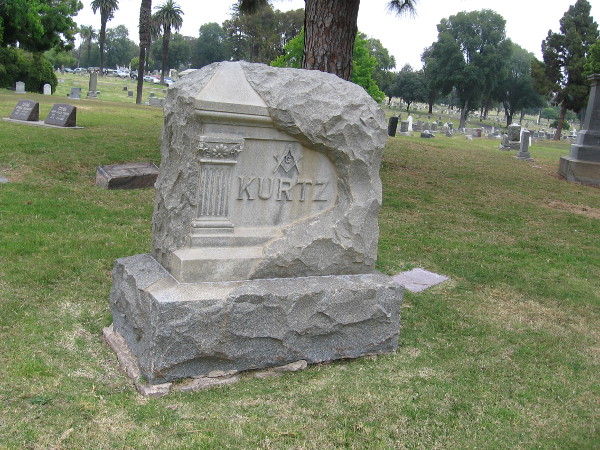
Monument to the Kurtz family.
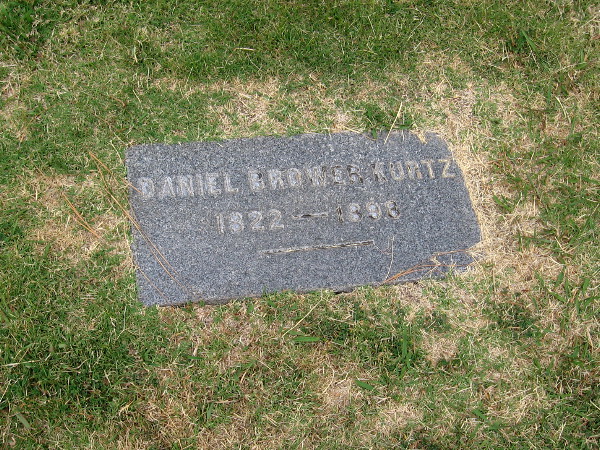
Daniel Brower Kurtz
Daniel Brower Kurtz has an important San Diego street named after him. He arrived in San Diego in 1850 and was elected second city mayor in 1851. He also served as a state senator, county judge, and assemblyman.
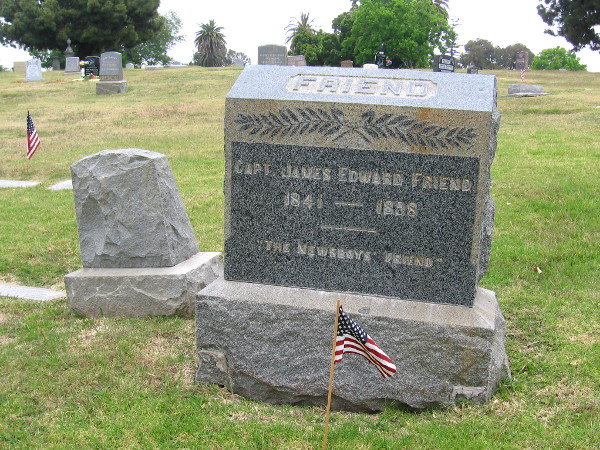
James Edward Friend
James Edward Friend was an enterprising reporter and newspaper publisher in the early days of San Diego.
Seeing his name brought a smile to my face. He was a good friend of Bum, San Diego’s Town Dog, and figured prominently in the wonderful book titled The Dog That Belonged to No One. Any young person living in San Diego should read this short book. It’s quite enjoyable, full of history and good humor.
Captain James Friend was also known as a friend and benefactor to San Diego’s newsboys.
You can read about Bum, San Diego’s lovable Town Dog, and see his sculpture in my blog post here.
…
I live in downtown San Diego and love to walk around with my camera! You can follow Cool San Diego Sights via Facebook or Twitter!
You can easily explore Cool San Diego Sights by using the search box on my blog’s sidebar. Or click a tag! There are thousands upon thousands of photos for you to share and enjoy!
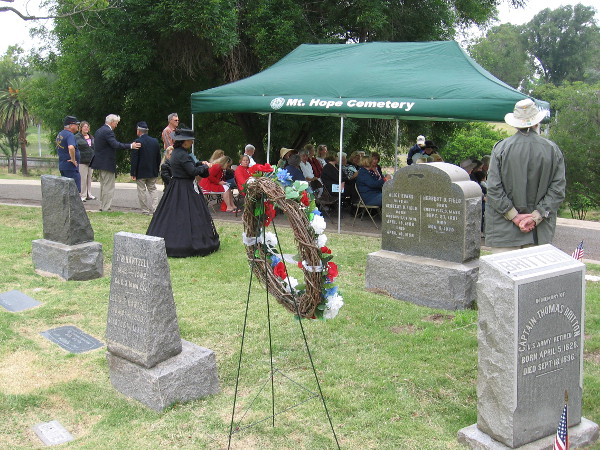
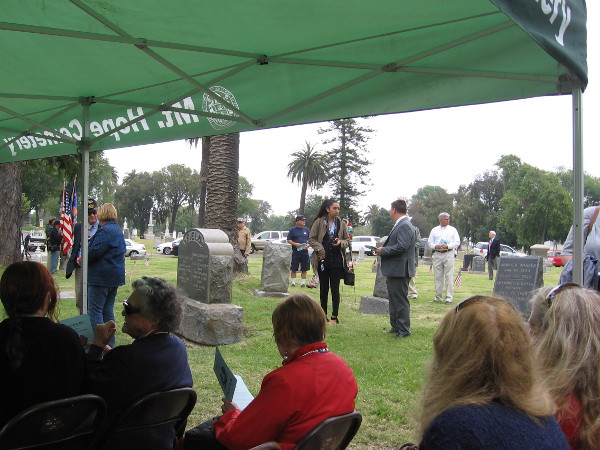
San Diegans gather for a Memorial Day ceremony at Mount Hope Cemetery.
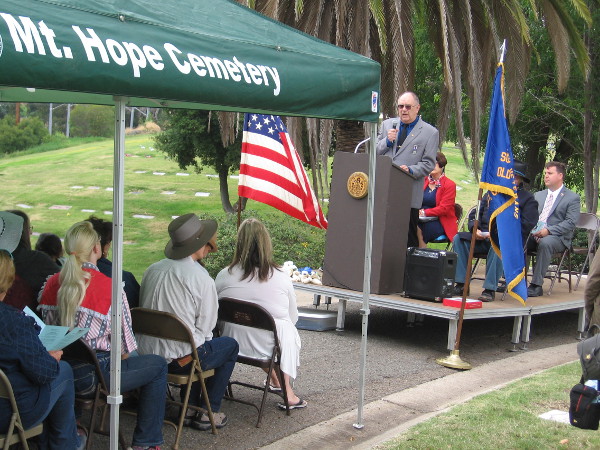
The second Memorial Day event that I attended yesterday took place at Mount Hope Cemetery. I had never before visited this history-filled municipal cemetery.
Mount Hope is where many of San Diego’s early residents are buried. It’s hilly and sprawling, with thousands of scattered headstones and monuments. Thousands of names are eternally engraved.
The dignified Memorial Day ceremony was held atop GAR Hill. I learned that G.A.R. stands for Grand Army of the Republic. The fraternal organization is composed of veterans who fought on the Union side during the American Civil War. On grassy GAR Hill rest many Union soldiers who fought bravely.
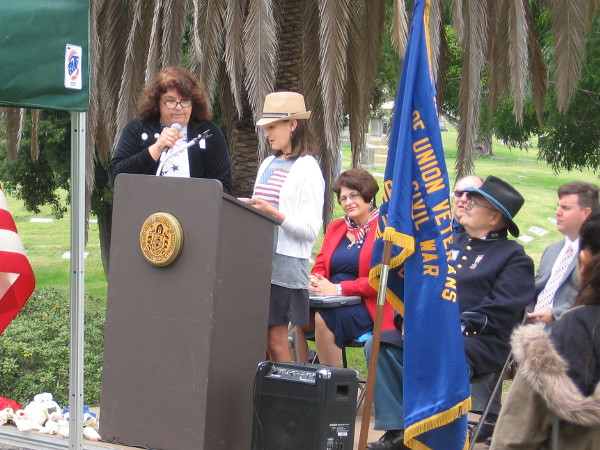
The annual event, I also learned, is organized by both the Sons and Daughters of Union Veterans, and Sons and Daughters of the Confederacy. Over a thousand Civil War veterans are buried at Mount Hope Cemetery.
Yesterday afternoon I stood and watched a moving tribute to those who had fought in the war that ended slavery. Some of the participants wore Civil War uniforms and period dress. History came to life with eloquent words of remembrance, and the singing of The Battle Hymn of the Republic and Amazing Grace. Several speakers recalled the men who fought, their sacrifices, and the triumph of liberty. Our current times were also addressed. It is necessary to stay firm in the defense of freedom.
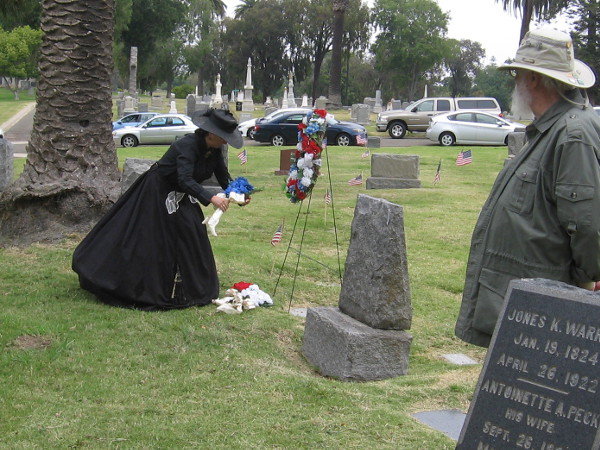
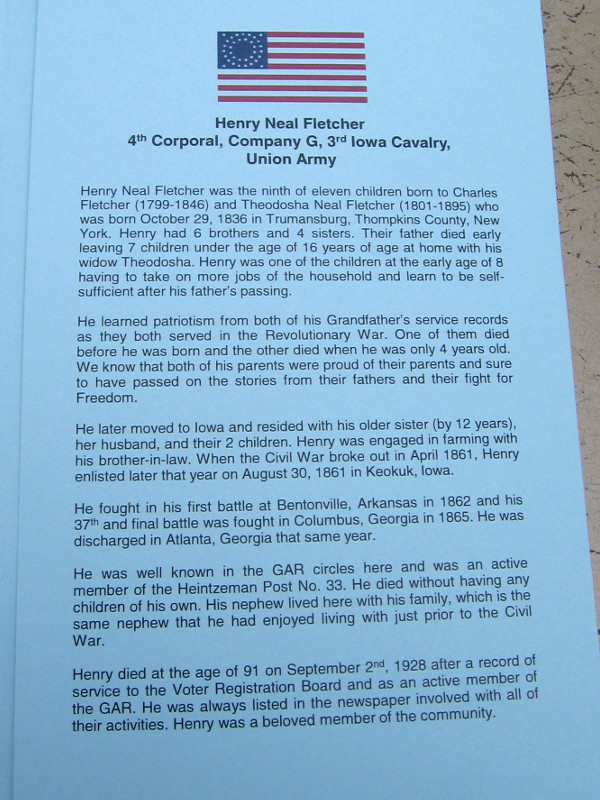
This year the ceremony honored one Civil War soldier in particular: Henry Neal Fletcher, 4th Corporal, Company G, 3rd Iowa Cavalry. He fought for the Union. Both of his grandfathers fought in the Revolutionary War. From them he learned how freedom was won. He died a beloved member of the San Diego community.
The idea for Memorial Day is thought to have come from the tradition of decorating soldier’s graves in late spring with flowers, a custom that predated the Civil War. During the war, with so many dead, the practice became very common. The tradition finally became formalized, and known as Decoration Day.
On this Memorial Day, atop a quiet hill, I saw many flags decorating the graves of soldiers.
While some prepare for the ceremony, others read the nearby gravestones and wonder at the sacrifices made long ago.
American flags decorate the graves of fallen soldiers.
This grave marker design was established by the Grand Army of the Republic. Here lies a Union soldier. Sergeant Francis E. Webster, 10th U.S. Infantry.
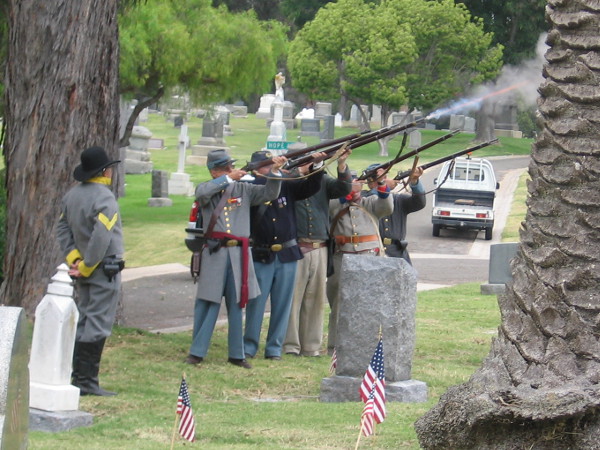
Some participants wore Civil War uniforms–both blue and gray. They posted the flags and provided a musket salute.
This restored mortar dates from the American Civil War. It stands on GAR Hill at Mount Hope Cemetery.
One of many old gravestones. Here lies P.W. Bradbury, a scout under General Fremont.
Honor guards perform March On The Colors.
Thoughtful speeches follow an Invocation and Pledge of Allegiance.
Holly Kirkman of John Muir School reads her inspirational, award-winning essay “What Memorial Day Means to Me.”
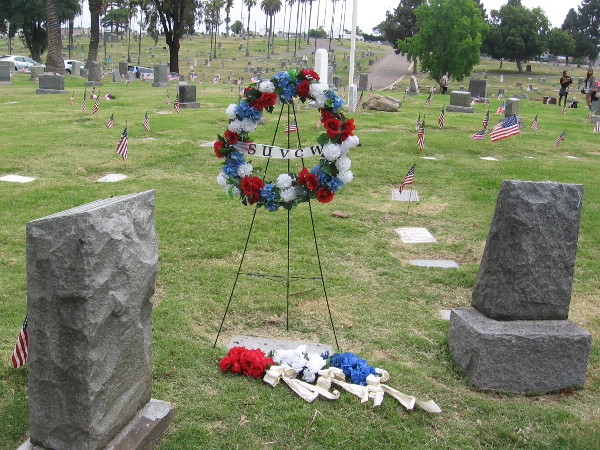
Dedication Of Flowers. Red, then white, then blue flowers are placed by the grave marker of Henry Neal Fletcher.
The program included a short biography of Henry Neal Fletcher, who fought in the Union Army. (Click image to read.)
Musket Salute.
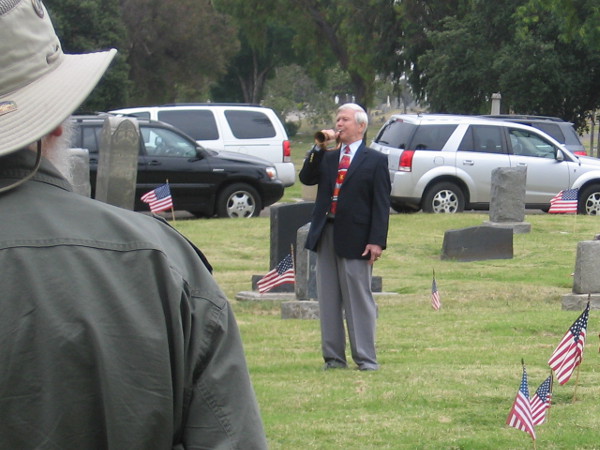
Taps.
Remembering the fallen on Memorial Day, at Mount Hope Cemetery in San Diego.
…
I live in downtown San Diego and love to walk around with my camera! You can follow Cool San Diego Sights via Facebook or Twitter!
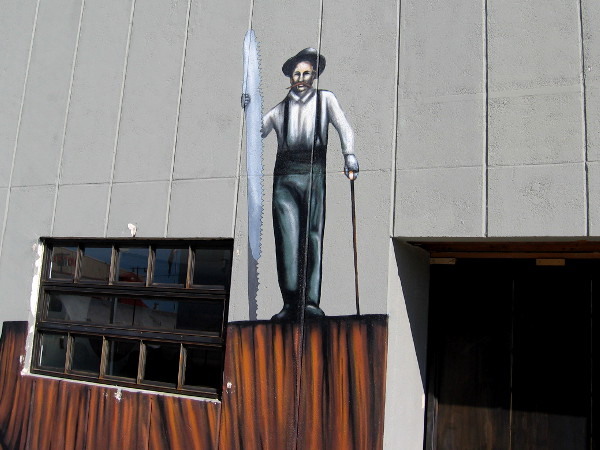
Mural depicting three lumberjacks and one enormous tree on the wall of Made Lumber Supply in San Diego.
After snapping some photos of this morning’s San Diego River Estuary cleanup (which I’ll blog about tonight), I decided to take a short stroll through a small part of the city that I’ve never thoroughly explored: the few blocks around Sherman Street, near Morena Boulevard.
When I ride to work on the trolley’s Green Line, I often gaze out at a mural of lumberjacks near the old location of the San Diego Humane Society. This morning, as I investigated the mural and surrounding area, look what else I discovered!
Underneath the trolley bridge over Friars Road. Images of animals used to be on the side of this building, Perhaps they were removed when the San Diego Humane Society moved to nearby Gaines Street.
Another photo of the lumberjack mural, just beyond some real lumber!
A fourth lumberjack holds a long saw on the side of Made Lumber Supply.
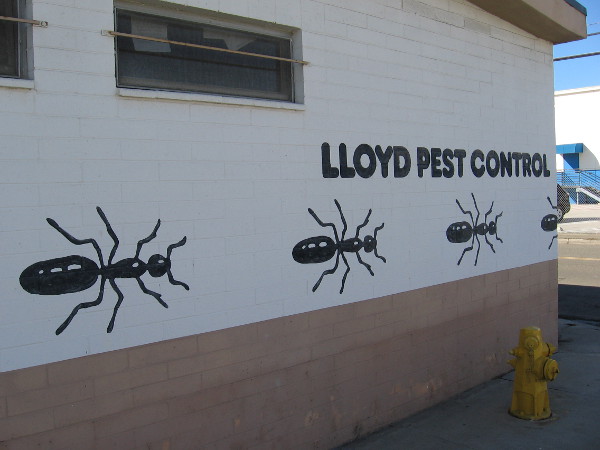
Gigantic ants crawl in a line along the wall of Lloyd Pest Control.
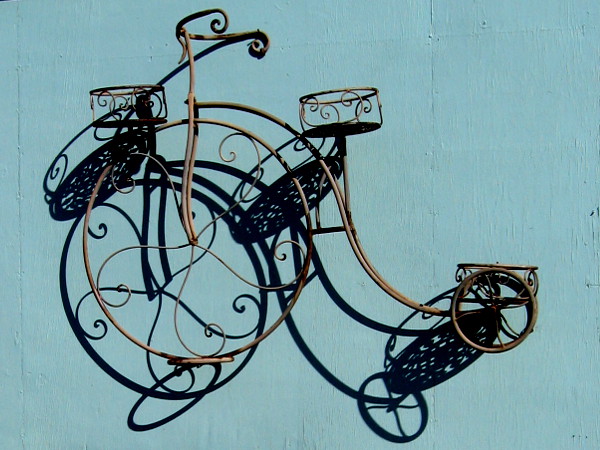
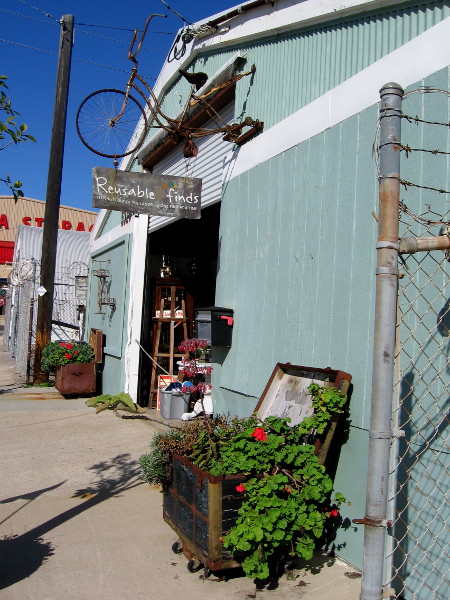
A cool decorative bicycle suspended from a wall. I spotted this at the Reusable Finds resale and repurpose store, near their entrance.
Another old bike hanging above a trunk full of flowers.
Mural of a fashionable lady on the wall behind the Leatherock leather goods store.
Mysterious wooden tombstone with name of Juan Mendoza, who was shot by Cave Couts in the back with a double-barreled shotgun in Old Town San Diego, February 6, 1865.
Look what I stumbled upon at the west end of the old San Diego Humane Society’s parking lot! What appears to be a historic wooden grave marker! Is it real? Why is it here?
You might remember my recent blog post about the Wells Fargo Museum in Old Town. Cave Couts built the wood-frame hotel called the Colorado House in 1851 and became an influential resident of early San Diego. But by some accounts he was a sketchy character. On February 6, 1865 he shot a disgruntled former employee (who worked on one of Cave Couts’ ranches) in the back with a shotgun. This violated the unspoken “Code of the West”. The unfortunate victim who died was Juan Mendoza.
A couple years ago I photographed a cross with Juan Mendoza’s name on it at the El Campo Santo cemetery located in Old Town, and I blogged about that here.
So why is there a mysterious wooden tombstone at this location? This marker doesn’t appear a century and a half old. Was it a prop? Is it a prank? Is Mendoza actually buried here? The spot isn’t far from Old Town. Perhaps someone knows the full story about this completely unexpected discovery. If you do, leave a comment!
…
I live in downtown San Diego and love to walk around with my camera! You can follow Cool San Diego Sights via Facebook or Twitter!






















 Cool San Diego Sights!