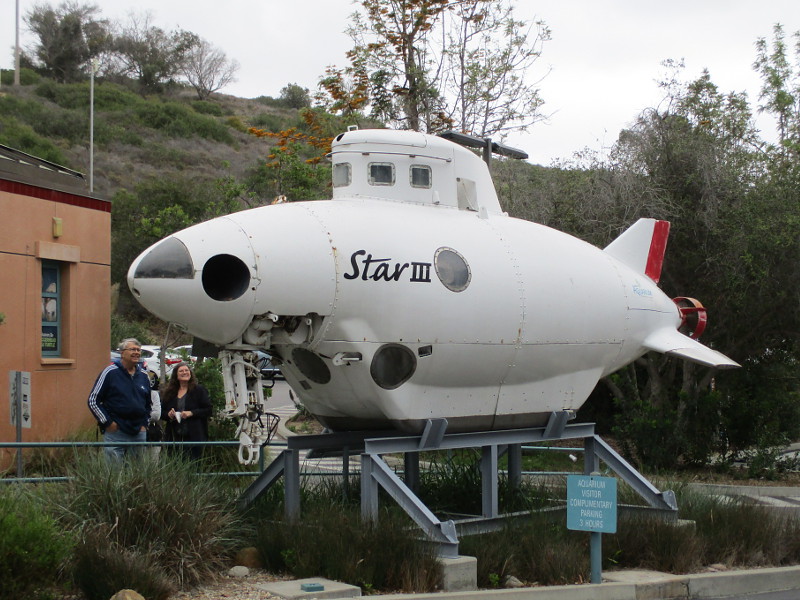
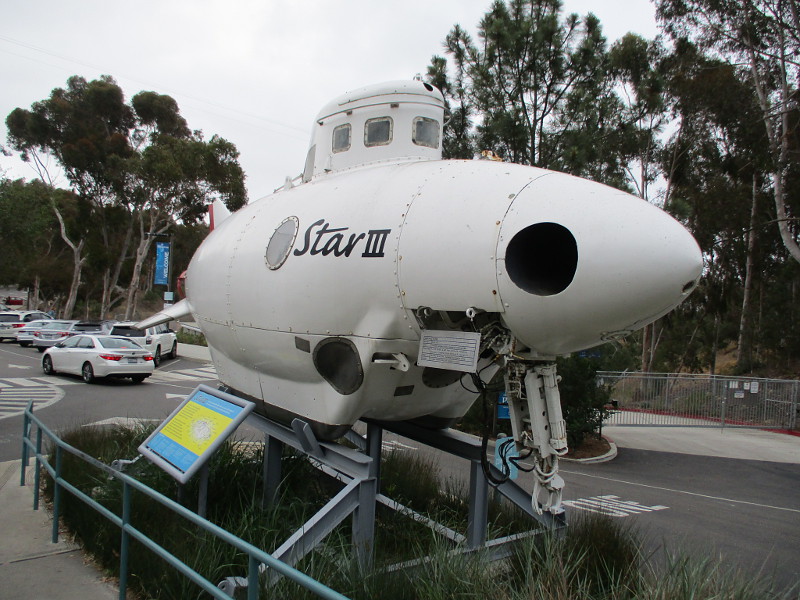
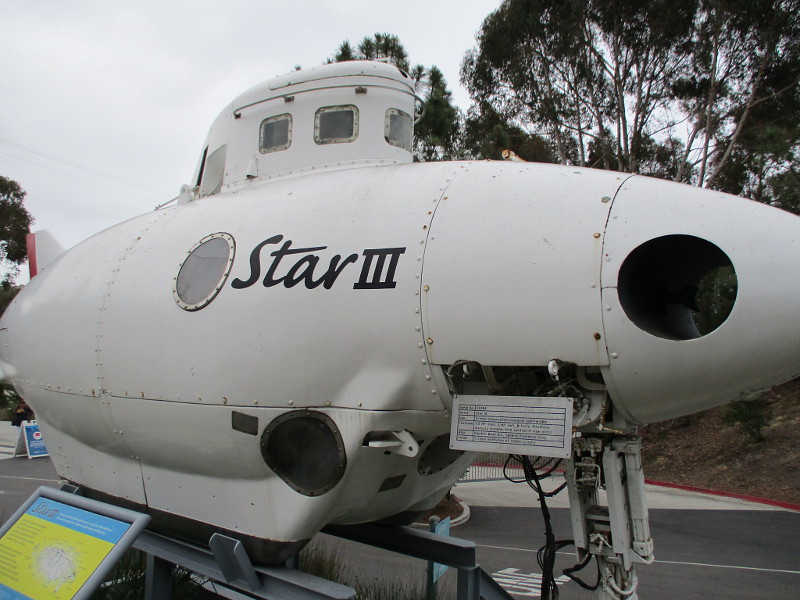
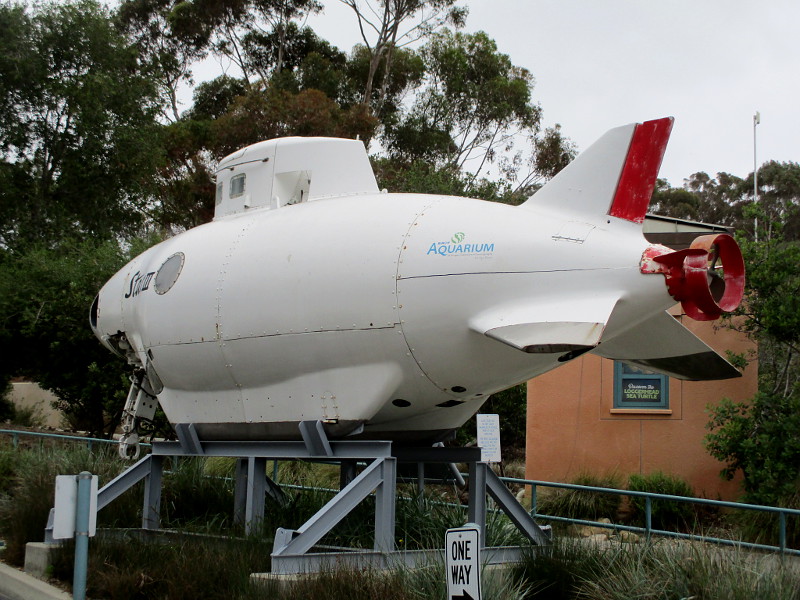
Should you walk from the parking lot by Birch Aquarium at Scripps Institution of Oceanography to the popular attraction’s entrance, you’ll see what looks like a small submarine. On its side is written Star III.
Star III is actually a submersible that was used for undersea studies back in the mid-20th century.
I looked at the cool little marvel of technology and wondered about its history.
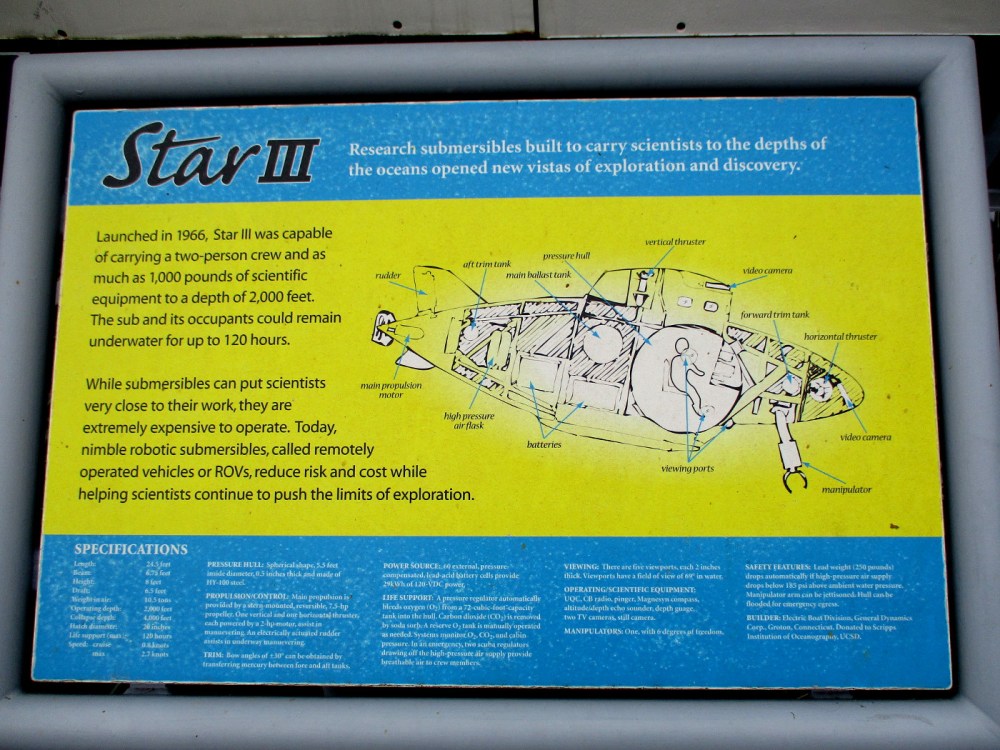
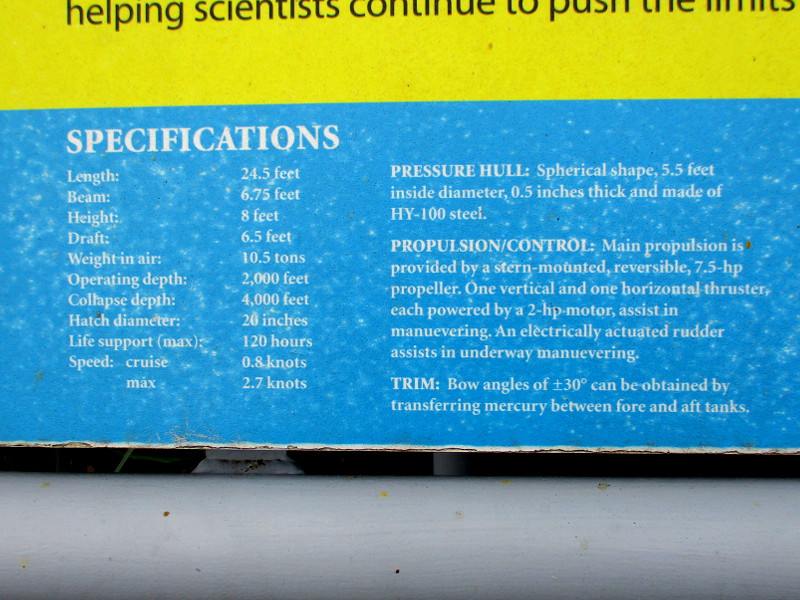
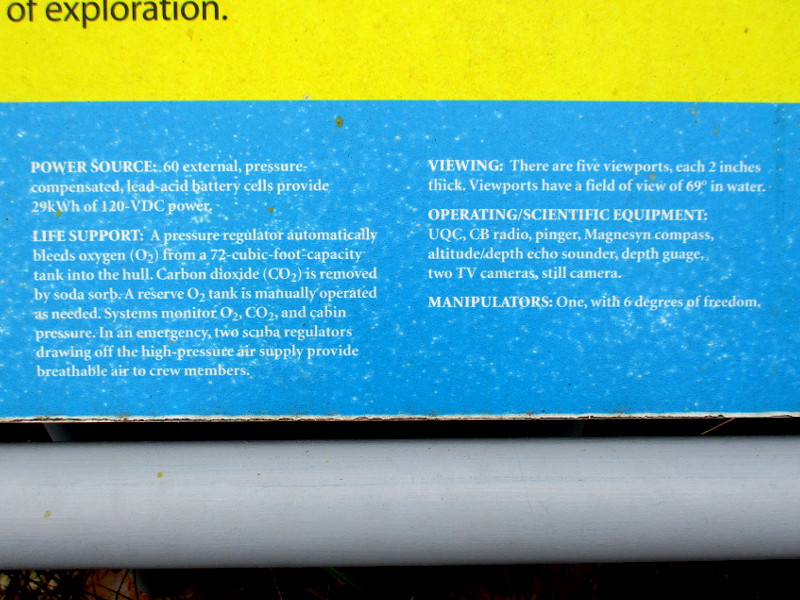
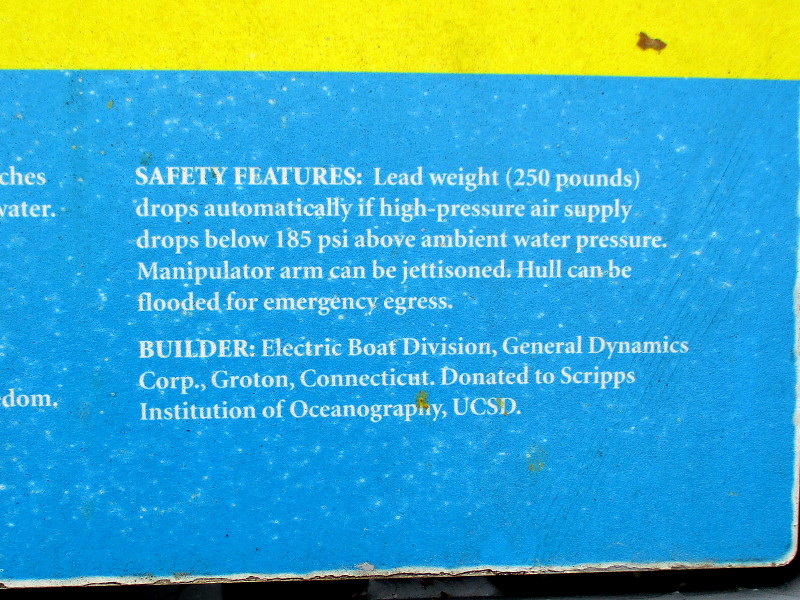
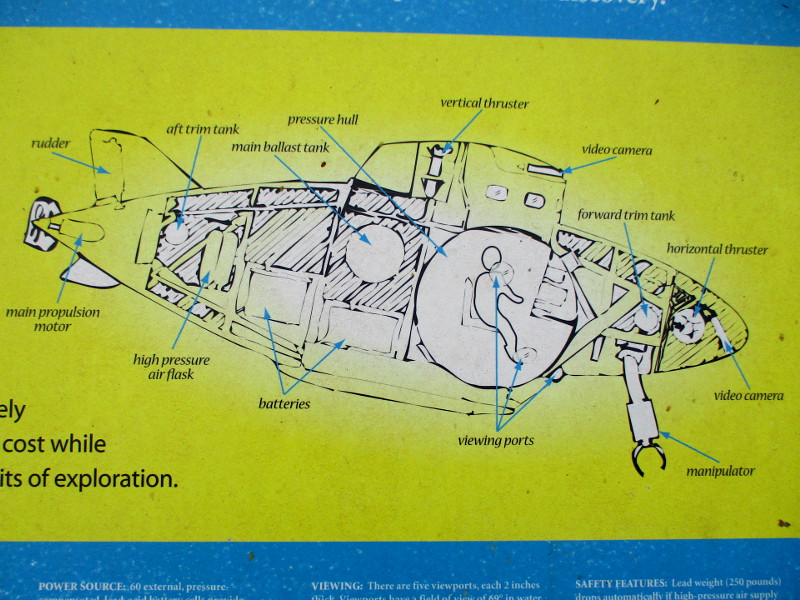
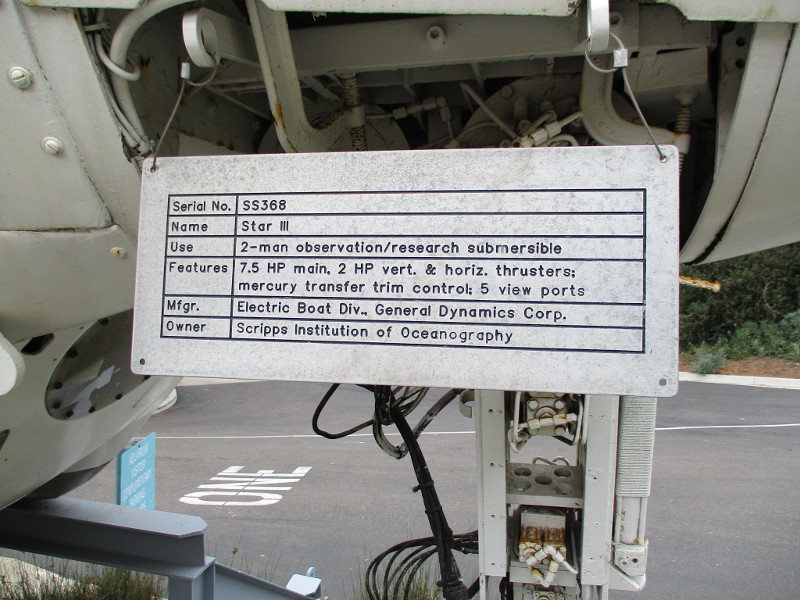
A nearby sign provides interesting information concerning the submersible, which was built by General Dynamics.
When I got home, I found a book published in 1968 by the Naval Oceanographic Office titled Undersea Studies With the Deep Research Vehicle Star III which you can preview here. It concerns a series of 21 dives off Key West Florida in March 1967…to evaluate the Star III system as a platform from which to conduct underwater photogrammetric and various surveying tasks.
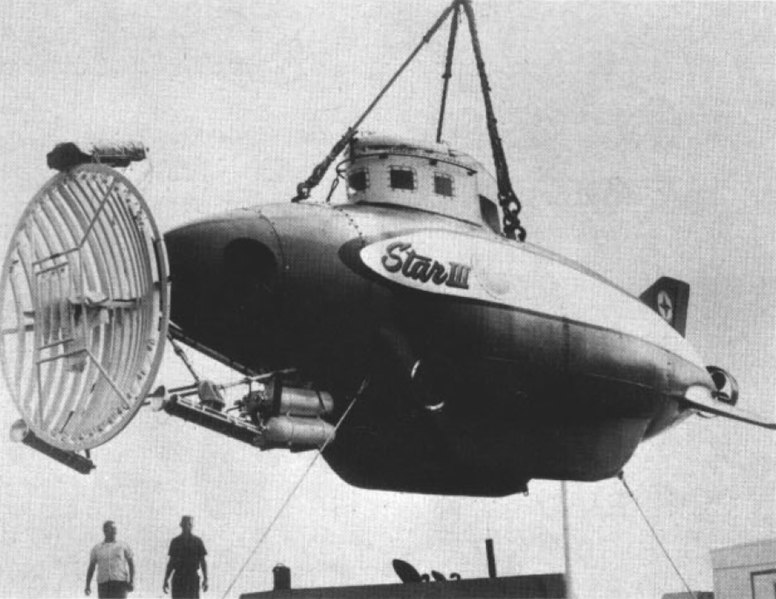
I also found the following old public domain photograph of Star III suspended above the water from a seagoing vessel.
Launched in 1966, Star III was capable of carrying a two-person crew and as much as 1,000 pounds of scientific equipment to a depth of 2,000 feet. The sub and its occupants could remain underwater for up to 120 hours…
…
I live in downtown San Diego and love to walk around with my camera! You can follow Cool San Diego Sights via Facebook or Twitter!
Well, back in the mid-19th century, in early San Diego, doing the laundry was a very big pain!
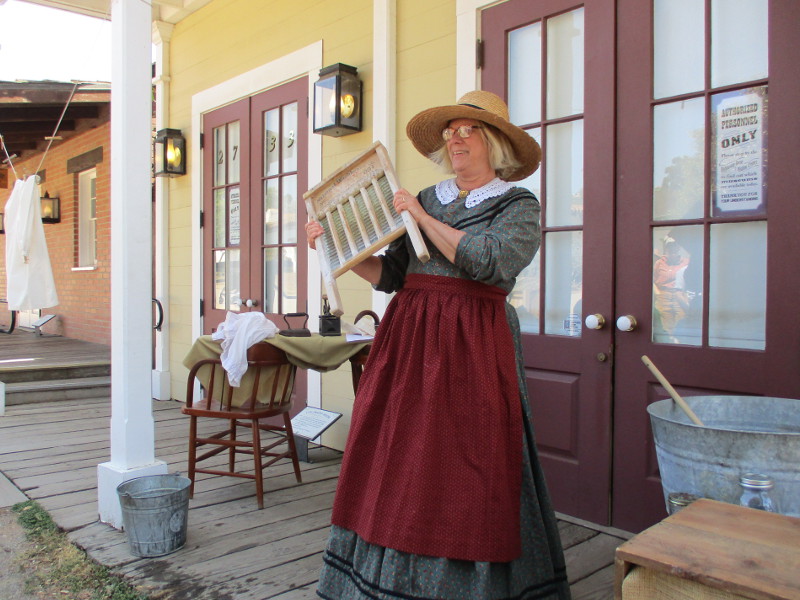
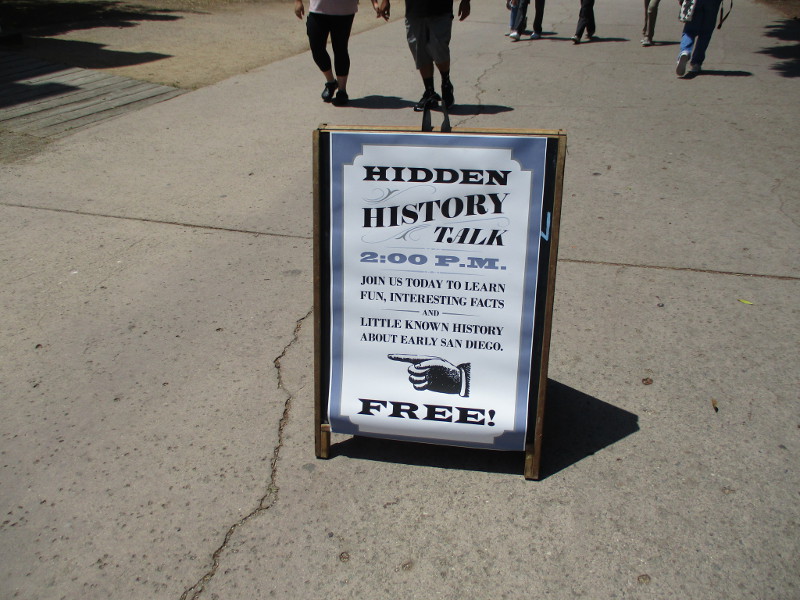
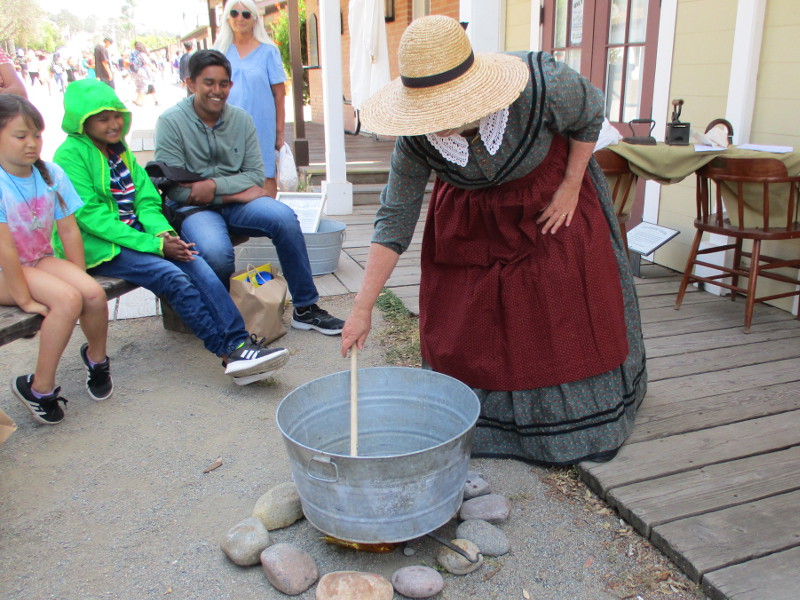
Last weekend I enjoyed listening to a Hidden History talk in Old Town San Diego State Historic Park about the difficulty of cleaning clothes before the advent of handy-dandy push-button washing machines.
Wash day was actually a three day project that began with walking down to the San Diego River multiple times while carrying a bucket. About 50 gallons would be required.
In dusty Old Town, with livestock running around, clothes would get really filthy. The sorting process included the consideration of material–often cotton or wool–and filthiness. After sorting came spot cleaning with lye soap (made by boiling wood ash) and borax (brought in from the desert).
Then clothes and under garments would be generally cleaned with boiling hot water in a big tub using a wooden paddle (for stirring) and washboard (possibly imported to the isolated, undeveloped town by ship) for scrubbing. (My arms are sore just thinking about it!)
Yes, then the hanging out to dry–fortunately San Diego has a warm, dry climate.
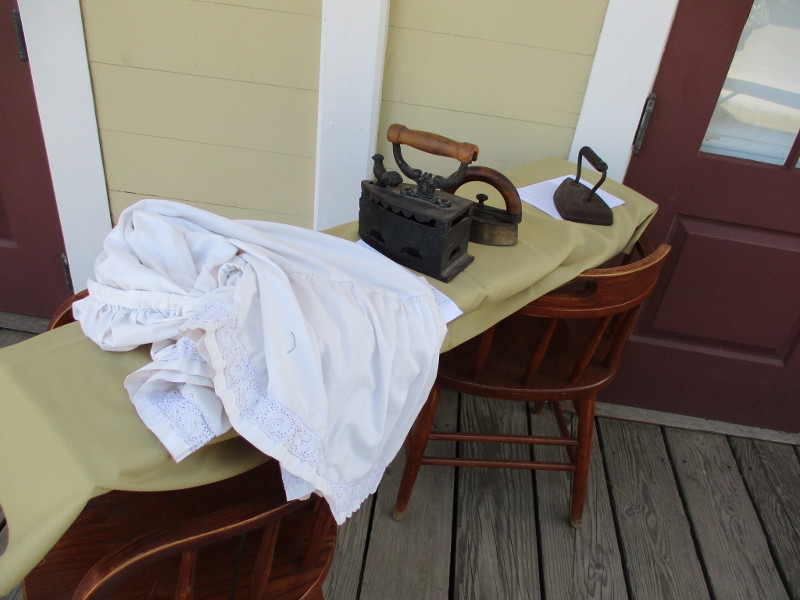
And then the ironing.
You had to prep the iron by scraping the bottom, put it on a stove and heat it to just the right temperature so you don’t burn yourself or the clothes, then more arm work. Later irons were more fancy–you could put coals in them. Just don’t get the ash from the coals on the clothes!
In those days, doing the laundry was a job designated for women. The process was so long and involved, they usually wouldn’t cook on wash days. Food for the family would be prepared in advance.
In 1860 San Diego had 4 dedicated laundresses–indigenous and Irish women. In 1870, when San Diego’s population had grown to 2300, there were 32, including Chinese immigrants who were then arriving in California.
That’s a hasty summary of the Hidden History talk, which everyone enjoyed as we sat on a pleasant Saturday in front of the State Park’s historic Colorado House.
On Sunday I threw my dirty clothes into a washing machine, added detergent from a plastic bottle and pressed a button. Transferring my clothes to the drier was oh-so difficult!
I tried to take good notes, but don’t rely on what I’ve written here as 100% accurate. If you’re doing research and came upon this blog post, make sure to read other sources!
…
I live in downtown San Diego and love to walk around with my camera! You can follow Cool San Diego Sights via Facebook or Twitter!
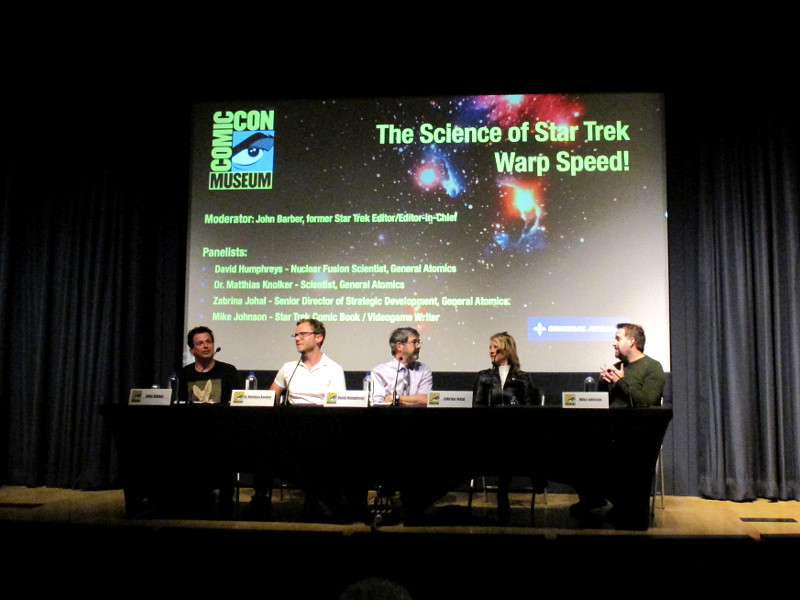
A fascinating panel convened yesterday at San Diego’s Comic-Con Museum in Balboa Park. The Science of Star Trek – Travel at Warp Speed featured a Star Trek editor, a Star Trek writer, and three scientists from General Atomics, which is headquartered here in San Diego.
The event coincided with the Comic-Con Museum’s current exhibition honoring Gene Roddenberry, the creator of Star Trek.
Five panelists focused primarily on the technology of nuclear fusion, which has been pioneered at General Atomics for many decades. Fusion powers the fictional impulse engines of Star Trek’s starships.
It was fun to learn that Star Trek was a major inspiration of David Humphreys, a nuclear fusion scientist who has worked at General Atomics for 40 years! (Incidentally, his favorite captain is Kirk.)
All sorts of different Star Trek technology, like the matter/anti-matter warp drive, tricorders and communicators, were touched upon. The panelists loved that much of Star Trek’s speculative tech has been based on real physics and scientific possibility. Remember how Kirk would sit in the captain’s chair and sign off on a device that looked like a tablet? Some of that once-fictional tech exists today!
Other not-so-realistic Star Trek technology would be used merely as a plot device. The transporters allowed a story (and Dr. McCoy’s scrambled molecules) to quickly transition from scene to scene. Human scale teleportation remains a somewhat unlikely dream. (But who knows?)
The most exciting part of the discussion concerned the imminent emergence of sustained nuclear fusion as a potentially limitless source of cheap, clean energy. Unlike nuclear fission, with its dangerous radioactive waste and chain reaction, the technology that produces fusion is inherently safe. And its “fuel” is hydrogen, which is practically limitless. The trick is energizing and concentrating hydrogen atoms so that they fuse and become helium, as they do inside the very, very hot sun. No easy task!
Fusion has made such tremendous advances that the world now stands at the brink of major breakthroughs, due primarily to the ITER project–one of the largest scientific programs in human history–where 35 nations from around the world hope to perfect and share practical working technology. General Atomics produced the super powerful magnets utilized by ITER.
Another thing the panelists addressed is how young people today can take part in this exciting future. Diverse, good-paying jobs connected to fusion technology are going to be plentiful. General Atomics is looking for interns! Can you imagine a more interesting place to work and learn?
It was great to see how San Diego’s own General Atomics is helping to lead the way to a world that will be completely transformed in a positive way by nuclear fusion. And it was inspiring to see scientists from General Atomics out in the community. They also participated in the Barrio Logan STEAM Block Party, which I blogged about last weekend.
When I was in middle school, many moons ago, we went on a field trip to General Atomics. I remember how the scientists briefly fired their fusion reactor under a huge protective pool of water. Now, almost half a century later, we are at the cusp of something so huge, the world might be transformed beyond anything that even the creators of Star Trek envisioned!
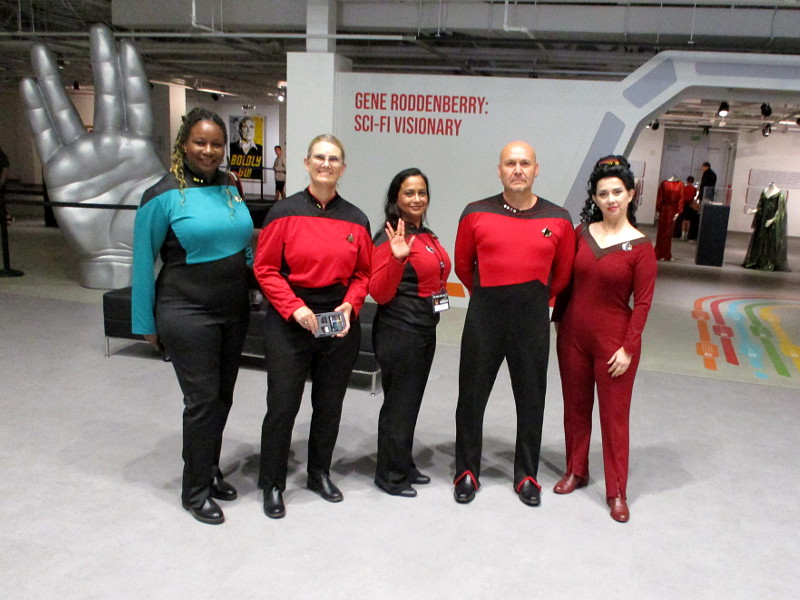
Oh–the next photo, taken on the main floor of the Comic-Con Museum, is of Star Trek cosplayers belonging to the Science Fiction Coalition. Live long and prosper!
…
I live in downtown San Diego and love to walk around with my camera! You can follow Cool San Diego Sights via Facebook or Twitter!
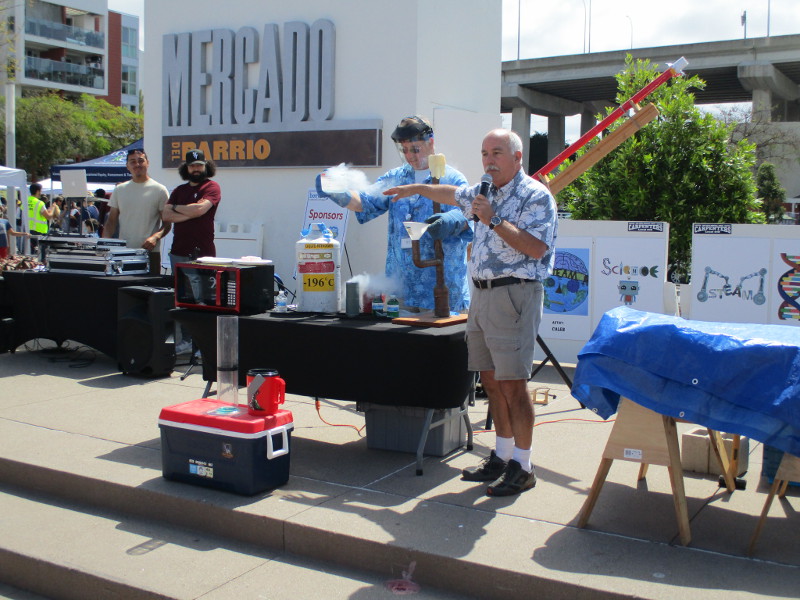
Explosive reactions! A gigantic walking virus! Snakes, molecules, robots and rockets!
Oh, wow! Check out the fun that families and kids enjoyed today during the Barrio Logan STEAM Block Party, part of this year’s very cool San Diego Festival of Science and Engineering!
There was much to see, do and learn in the outdoor plaza of Mercado del Barrio!
The event featured immensely entertaining live science demonstrations, creative kids activities, and even a bunch of awesome lowriders on display! I was personally pleased to see the substantial community involvement by UC San Diego.
Look at the great event attendance!There’s plenty of science and technology to learn from lowriders–especially the hydraulics!Check out this awesome lowrider!Everywhere I turned, people were engaged in hands-on learning at this Barrio Logan Science and Art Expo! Young Women in Bio.
I saw a demo of the above very cool science video game Microscopya, designed by Dr. Beata Mierzwa, an artist and UCSD molecular biologist! Students learn about cells and human biology while having tons of adventurous fun! Check out the web page here!
Friendly folks from the San Diego Public Library!The ladies of Mad Science make a memorable demonstration using carbon dioxide.That is planet Earth’s size relative to Jupiter!Free Trees for your neighborhood!
If you live in San Diego, and want to plant a free street tree where you live, check this out!
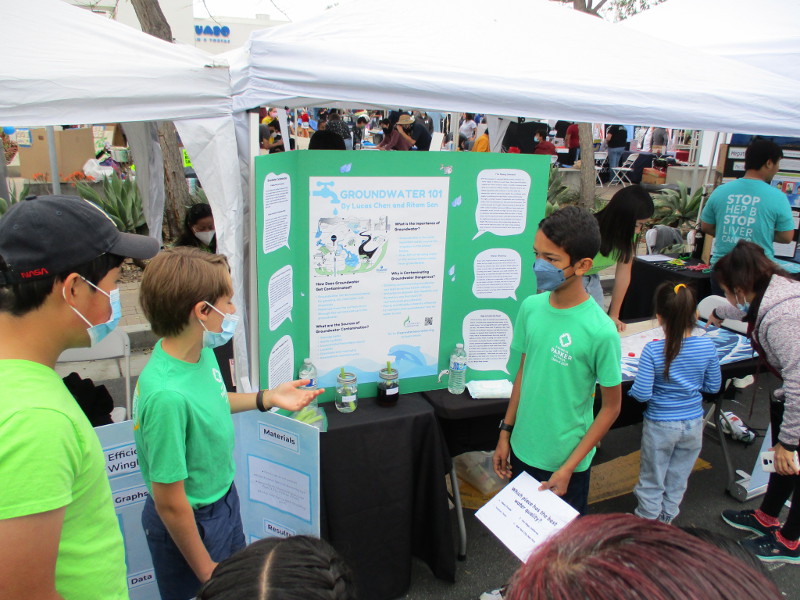
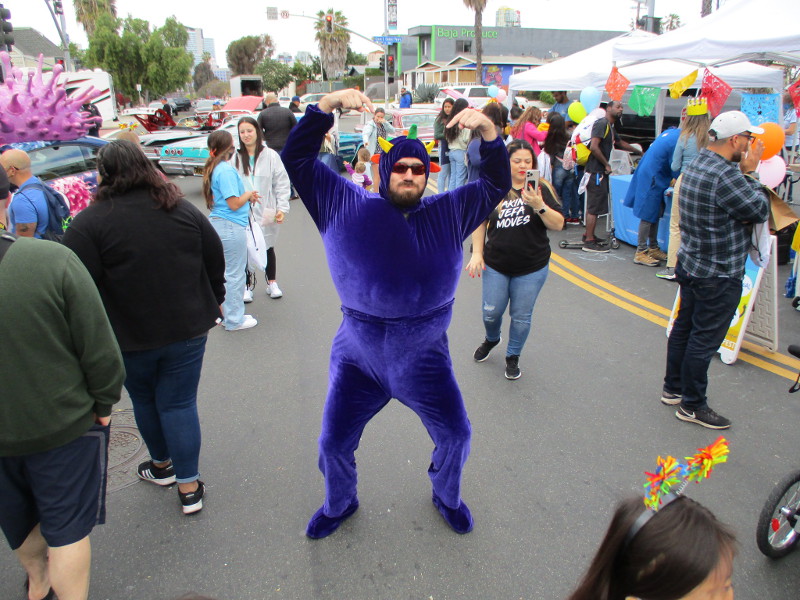
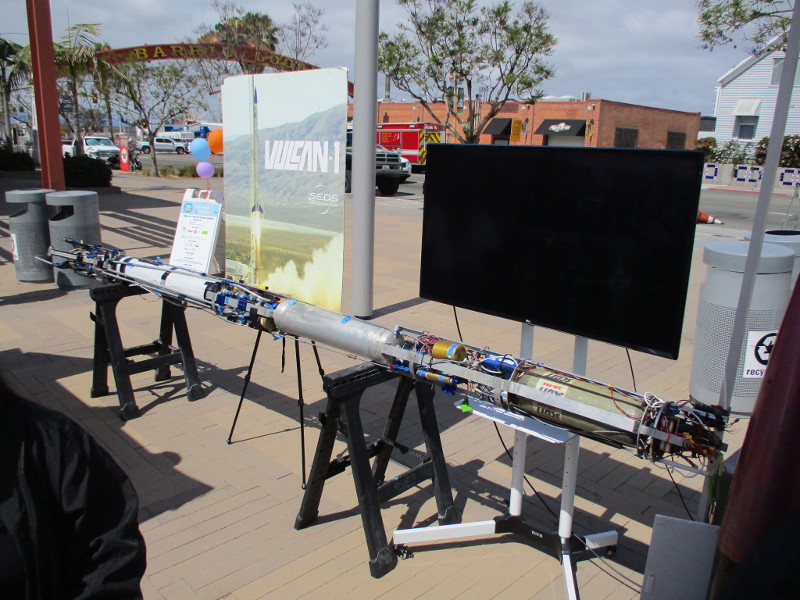
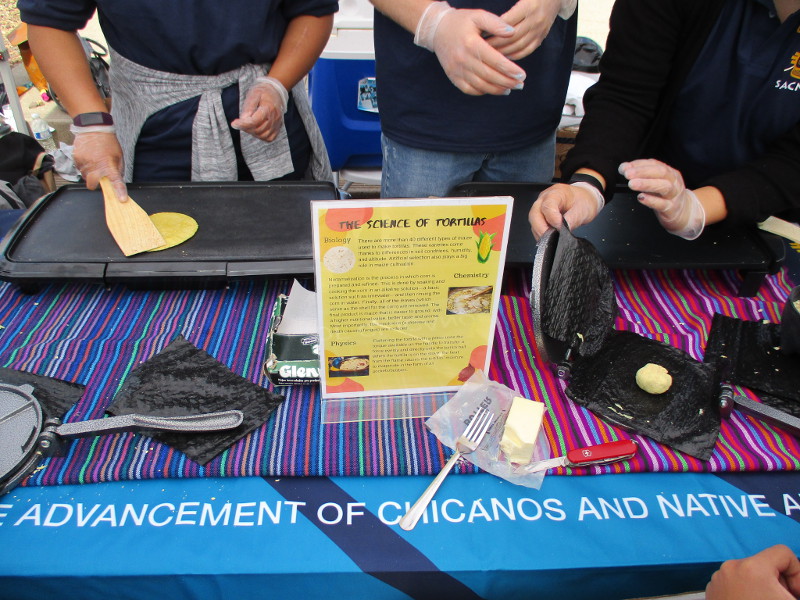
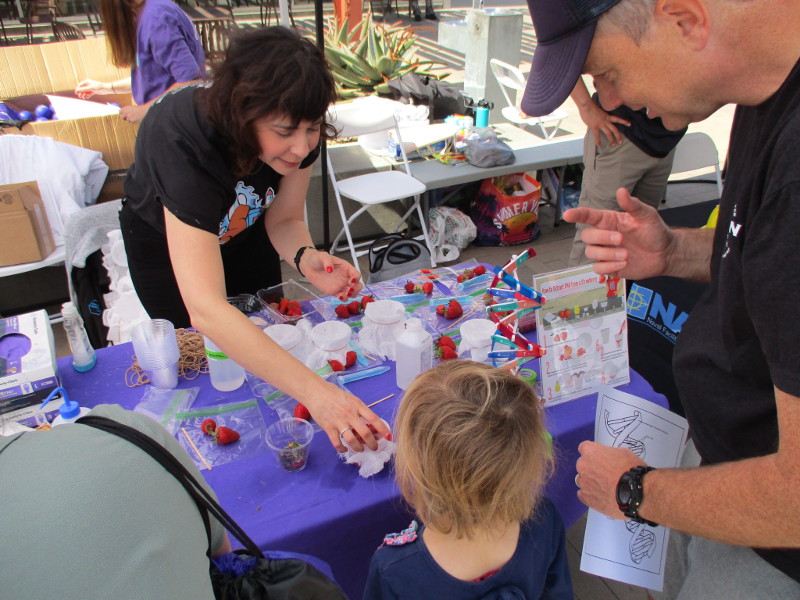
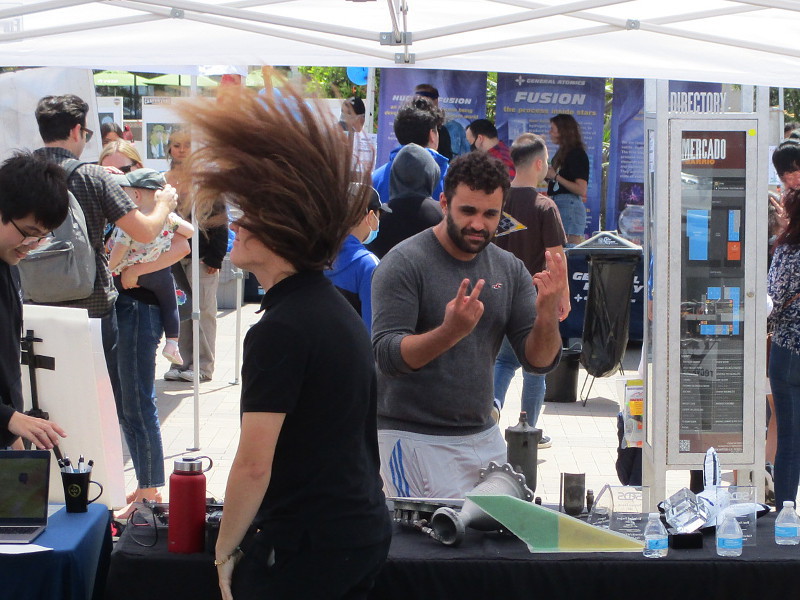
EcoVivarium brought snakes, tortoises and other critters for the educational event.A scientific experiment in progress.Concentrating on science.Two very impressive young men give a presentation concerning groundwater.Look at all the drones!That’s the biggest virus I’ve ever seen! I didn’t bring enough hand sanitizer.That’s either goop or slime.A smile!The Vulcan-1 rocket, built by students at UC San Diego. It’s the world’s first undergraduate rocket powered by a 3D printed engine!What’s the space weather today?The science of tortillas!Even very young kids were interested and excited!STEAM related artwork by local students decorates the event stage.A hand crank powers different light bulbs.A fun demonstration of various physics principles by folks from General Atomics.Yes, the boiling point of liquid nitrogen is -196 degrees celsius! Brrr!What happened?Hair-raising fun!
…
I live in downtown San Diego and love to walk around with my camera! You can follow Cool San Diego Sights via Facebook or Twitter!
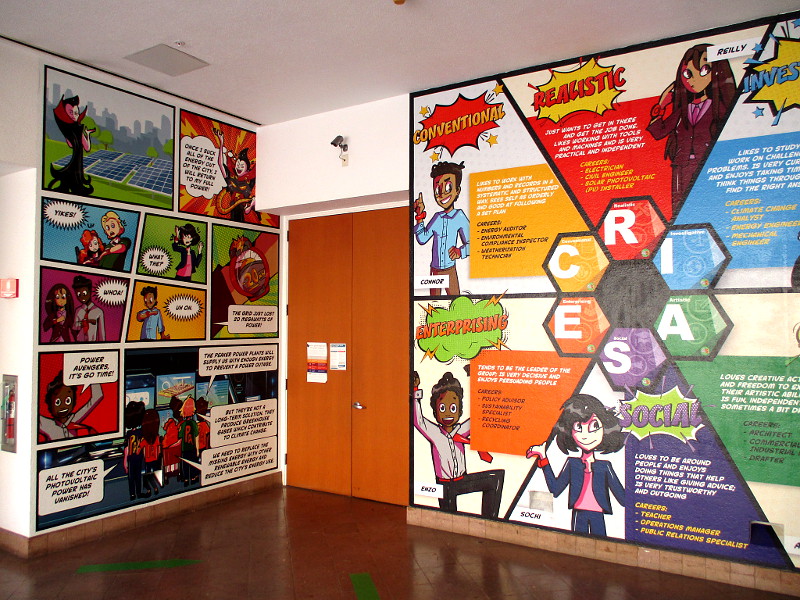
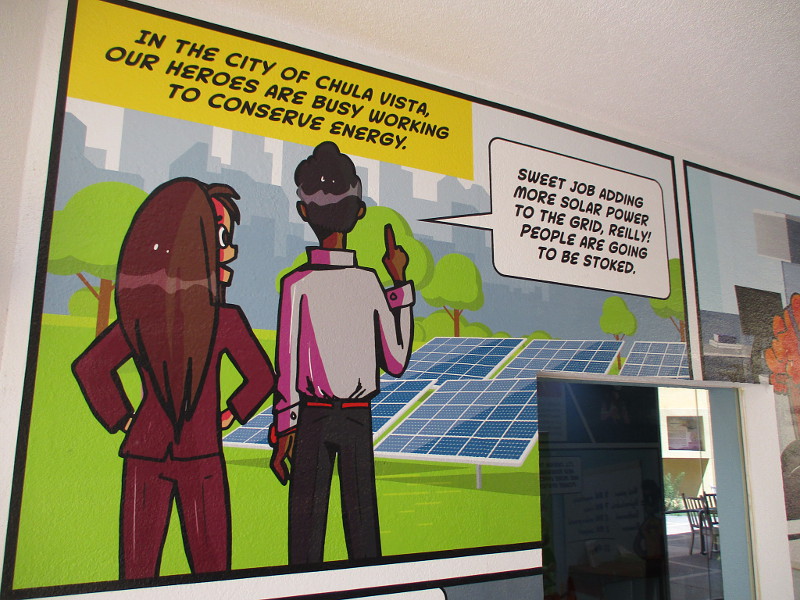
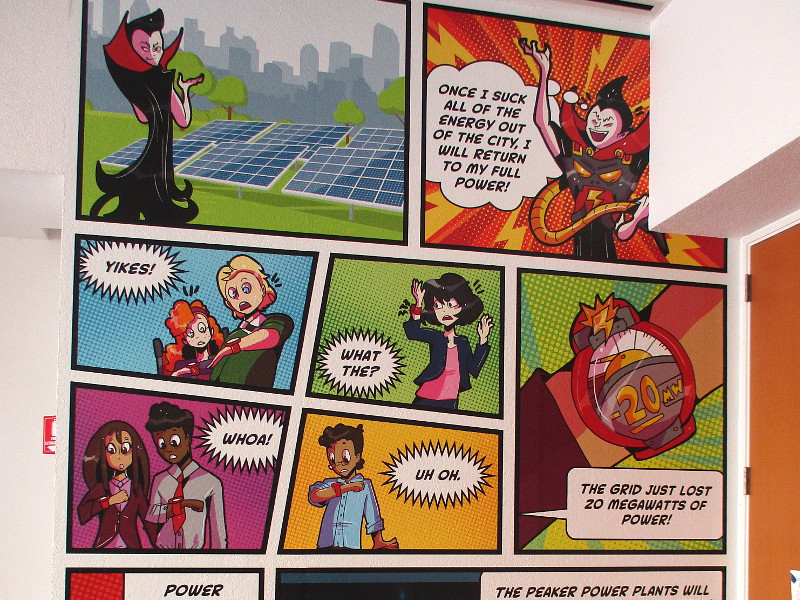
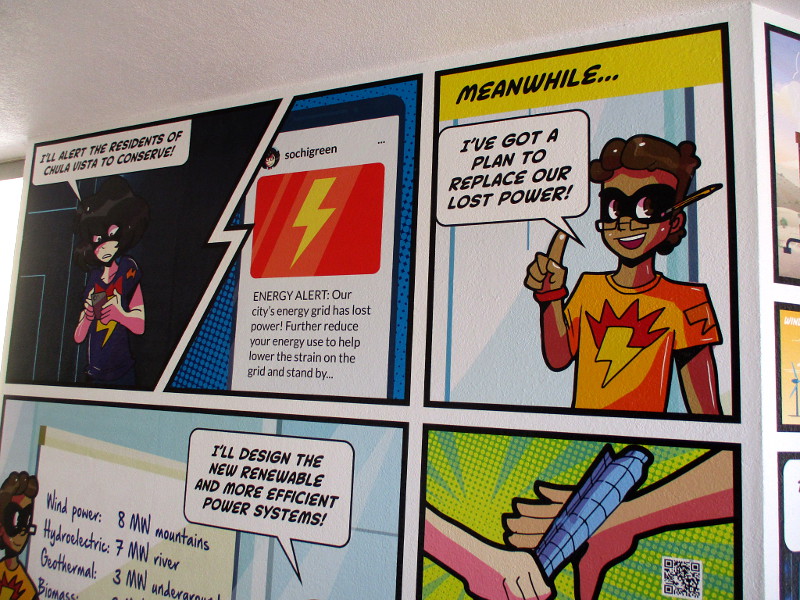
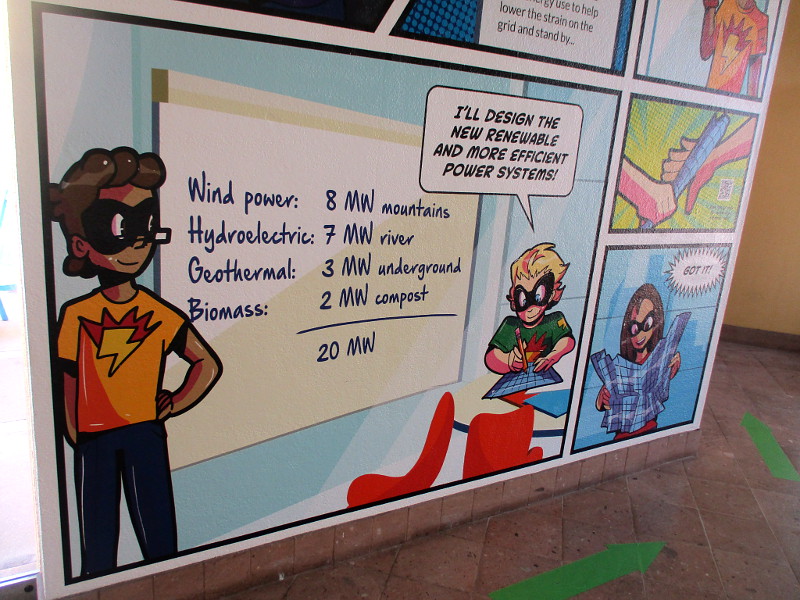
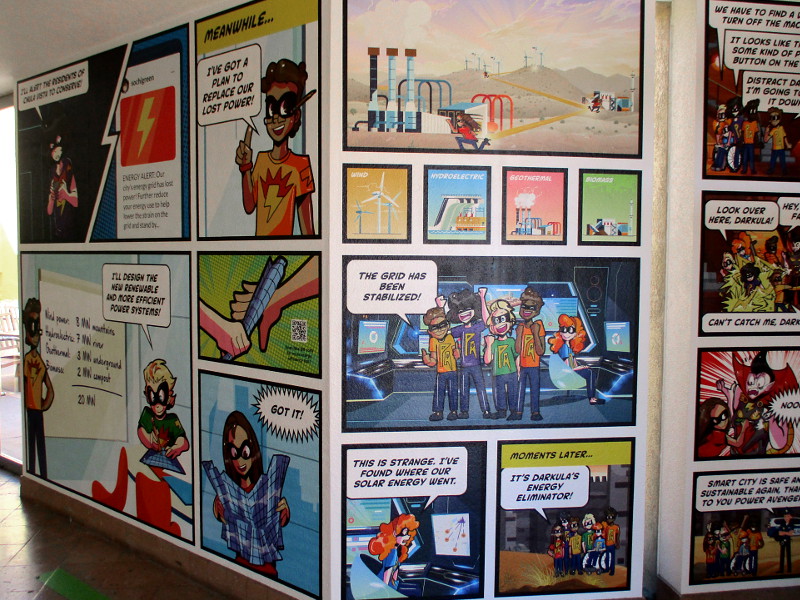
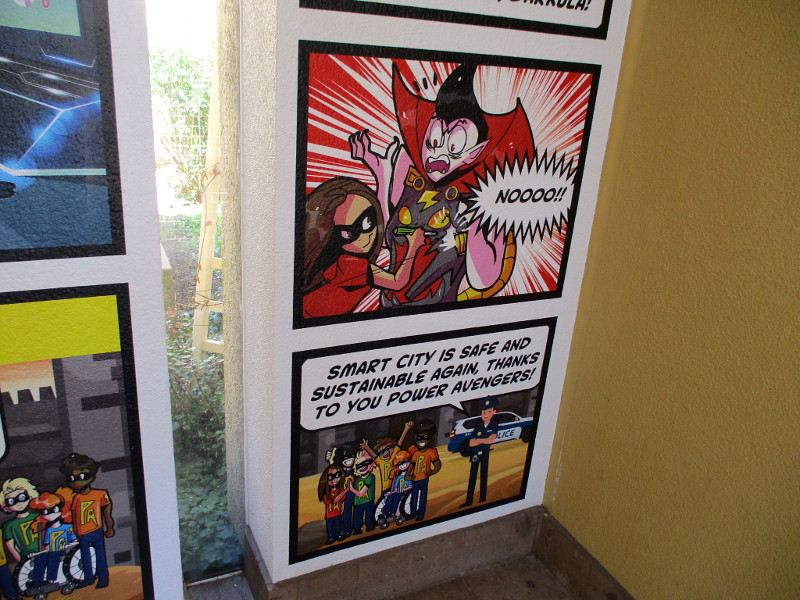
In Chula Vista, the dastardly supervillain Darkula has been defeated, thanks to the superhero Power Avengers!
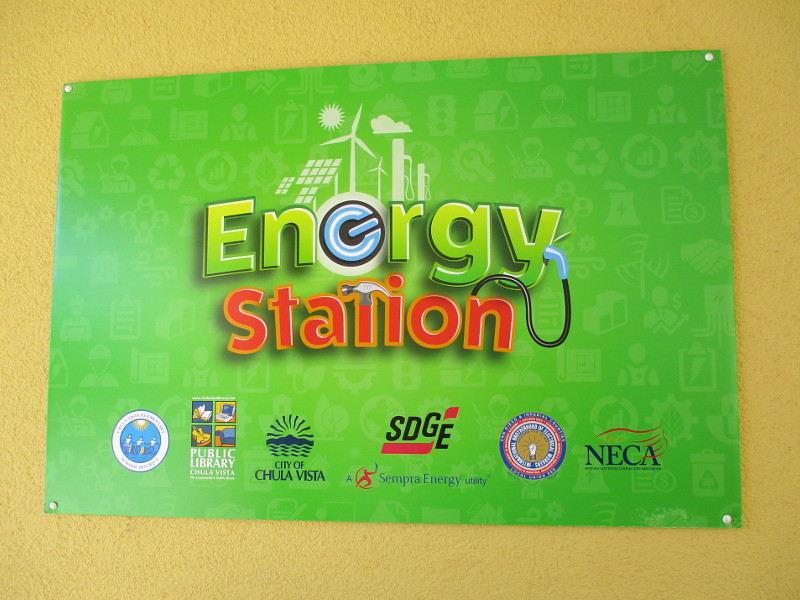
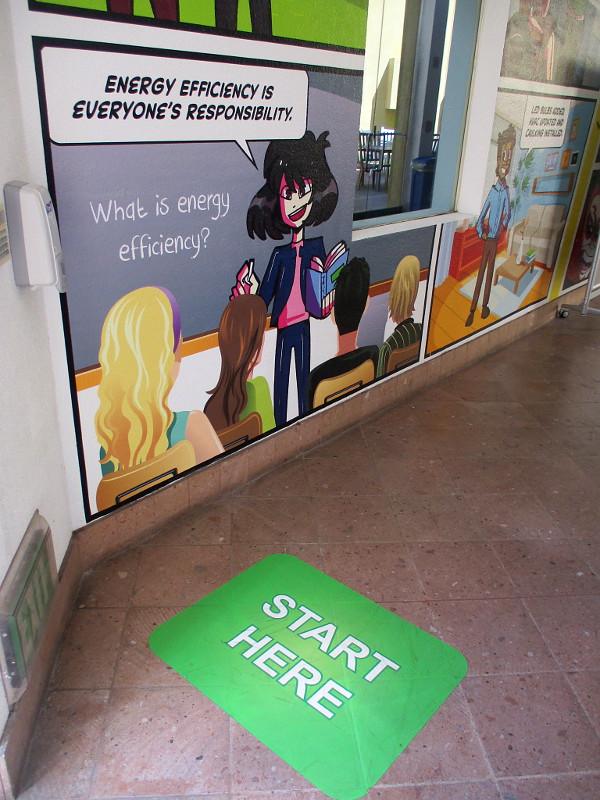
Don’t believe me? The exciting comic book story fills the walls of the Energy Station at the South Chula Vista Library!
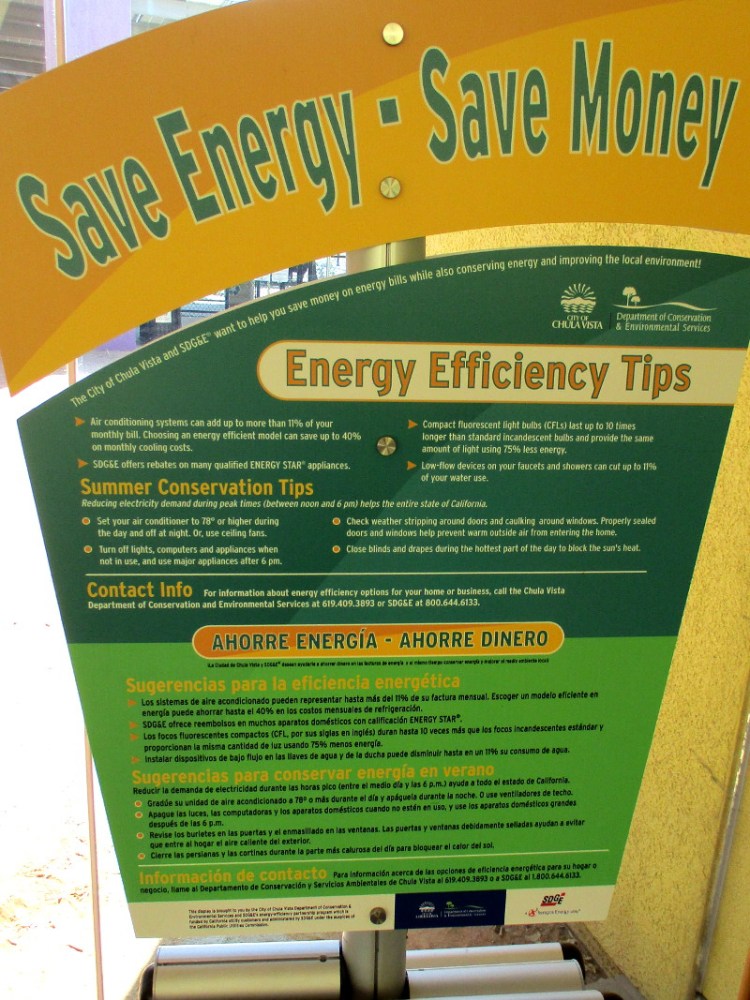
When local sixth grade school students enter the Energy Station, with its action-packed walls, they might be inspired to become real life heroes. At the Energy Station makerspace they learn about energy conservation and sources of renewable energy, such as solar or wind power.
This unique City of Chula Vista project, created several years ago in partnership with San Diego Gas and Electric, aims to inspire the next generation to pursue careers in science, technology, engineering and mathematics or STEM. Having a pipeline of future STEM workers is essential to the health and growth of our regional innovation economy, which depends on technical expertise in fields such as electrical engineering, biomedical research, and wireless communications…
No matter what a kid’s talents or interests might be, at the South Chula Vista Library they can learn how to create a brighter future and thwart the menace of Darkula . . . as members of the Power Avengers!
…
I live in downtown San Diego and love to walk around with my camera! You can follow Cool San Diego Sights via Facebook or Twitter!
The world’s longest running IMAX film projector is on display in San Diego’s Balboa Park. That’s because this venerable old projector operated for 48 years at the Reuben H. Fleet Science Center!
Tonight I headed over to the Fleet Science Center to watch The Sky Tonight, a once-a-month astronomy presentation on the giant space-like IMAX dome. As I waited in the theater lobby for the show to begin seating, I noticed the historic projector on display to one side, behind an open curtain.
A gentleman briefly explained the projector’s history. The very durable, then state-of-the-art projector was originally installed in 1973. It was the second IMAX projector made. Apparently nobody knows what became of the first!
When I got home, I found this link to a great article concerning the projector, and its replacement last year with a new, improved IMAX Laser digital video projector.
…
I live in downtown San Diego and love to walk around with my camera! You can follow Cool San Diego Sights via Facebook or Twitter!
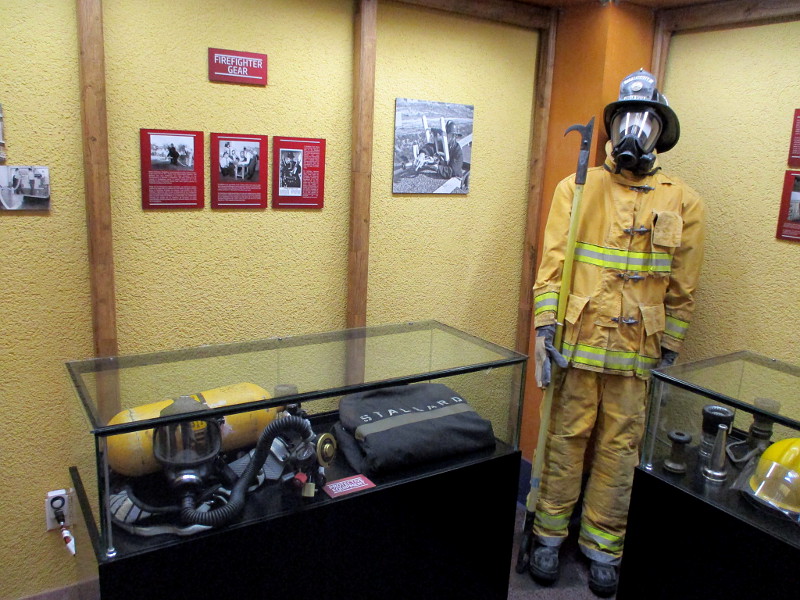
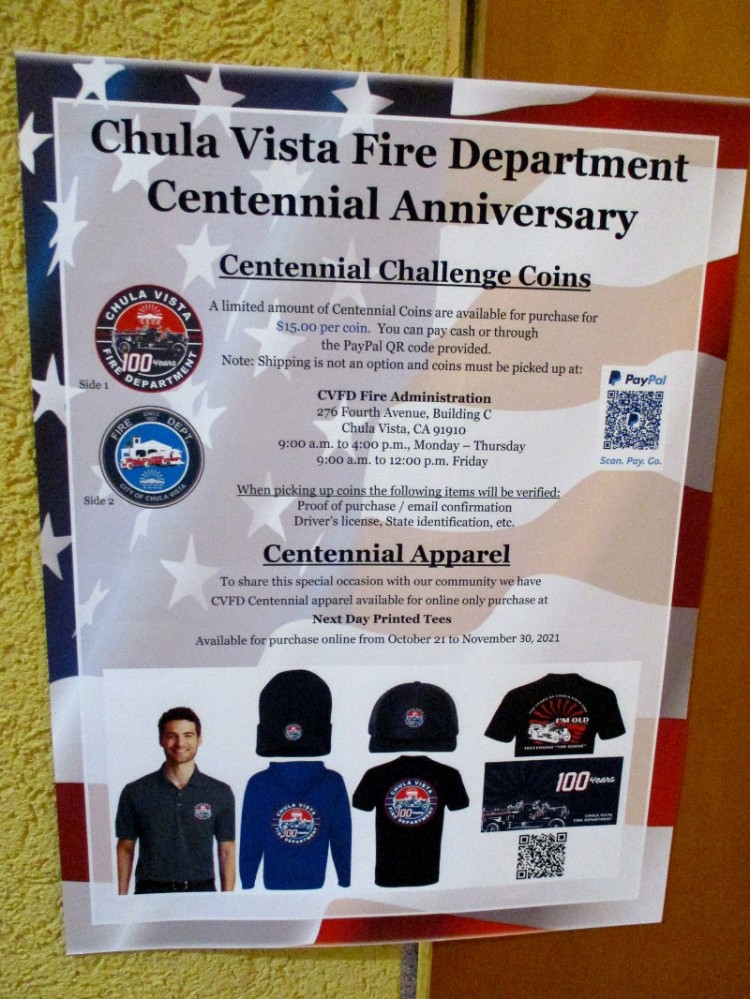
An ongoing exhibit at the South Chula Vista Library celebrates the centennial of the Chula Vista Fire Department.
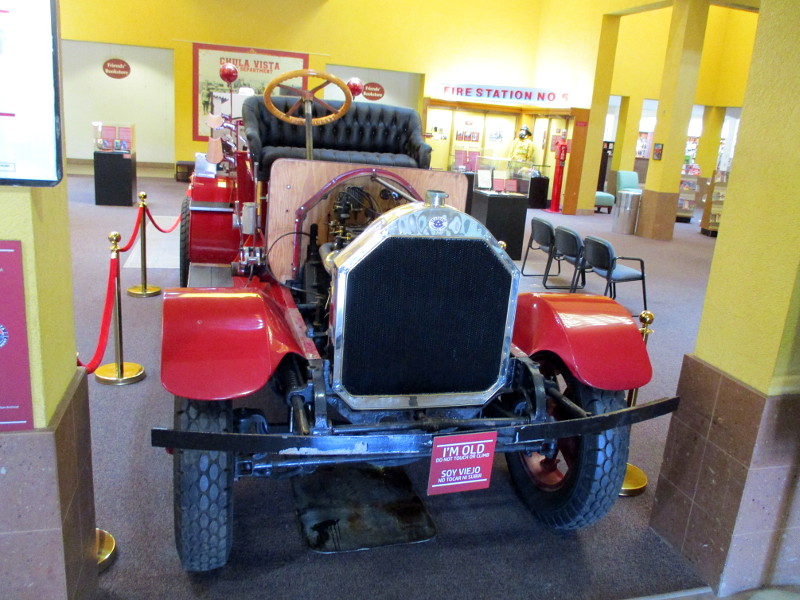
Today I visited this library for the very first time, knowing that a vintage fire engine would be on display.
I was excited to discover a large, museum quality exhibit just inside the library entrance!
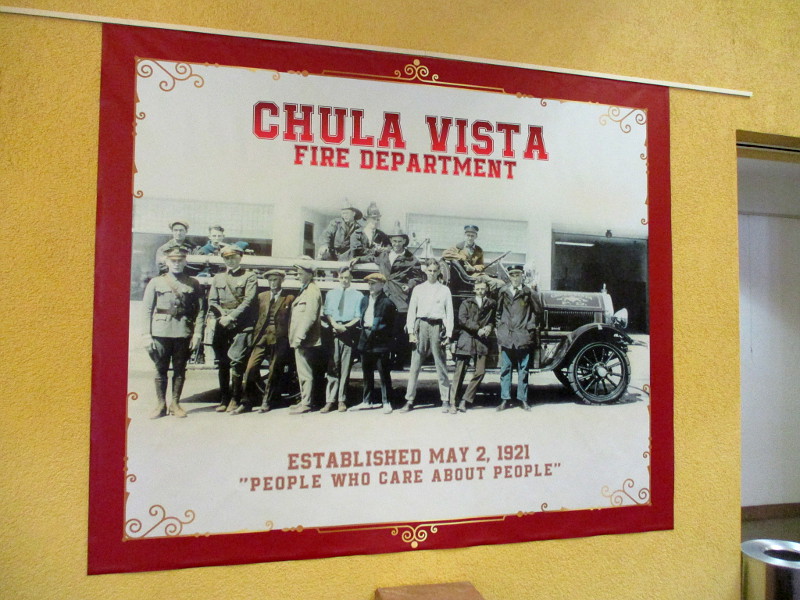
The Chula Vista Fire Department originated in 1921. For over a century now, they’ve saved many lives and been an integral part of this South Bay community.
The displays I looked at concerning dedication and heroism impressed me the most.
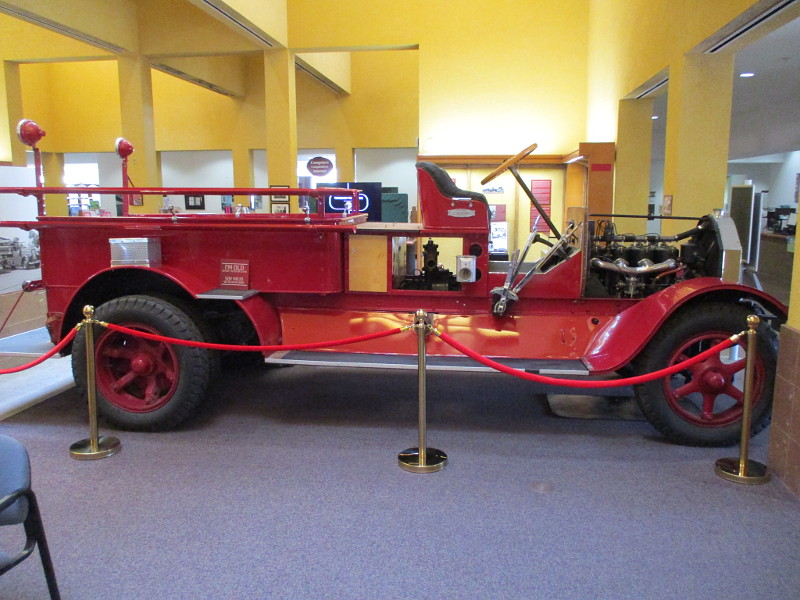
Not only do library visitors see historical photographs, artifacts, and firefighting equipment, but at the center of the exhibit stands the Chula Vista Fire Department’s original fire engine, The Gallopin’ Goose!
I’ve added captions with some additional fascinating info. If you have a chance, I definitely recommend a visit!
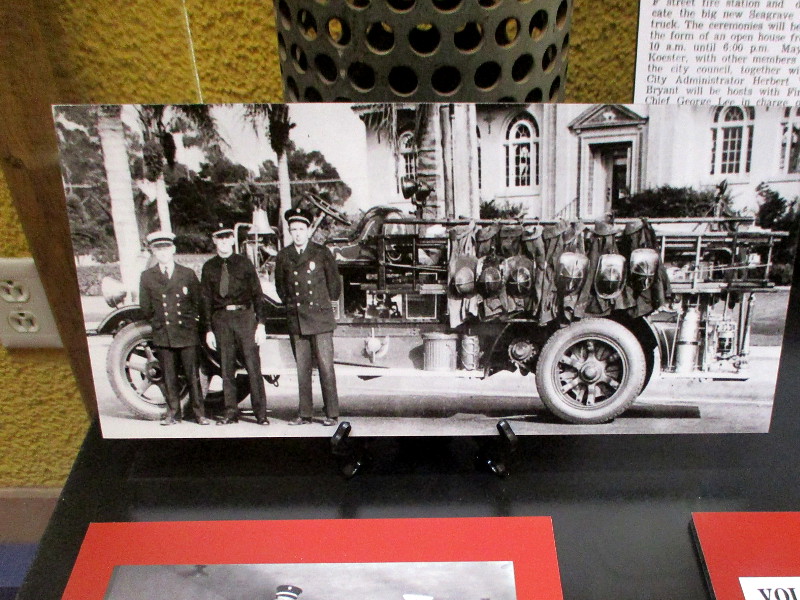
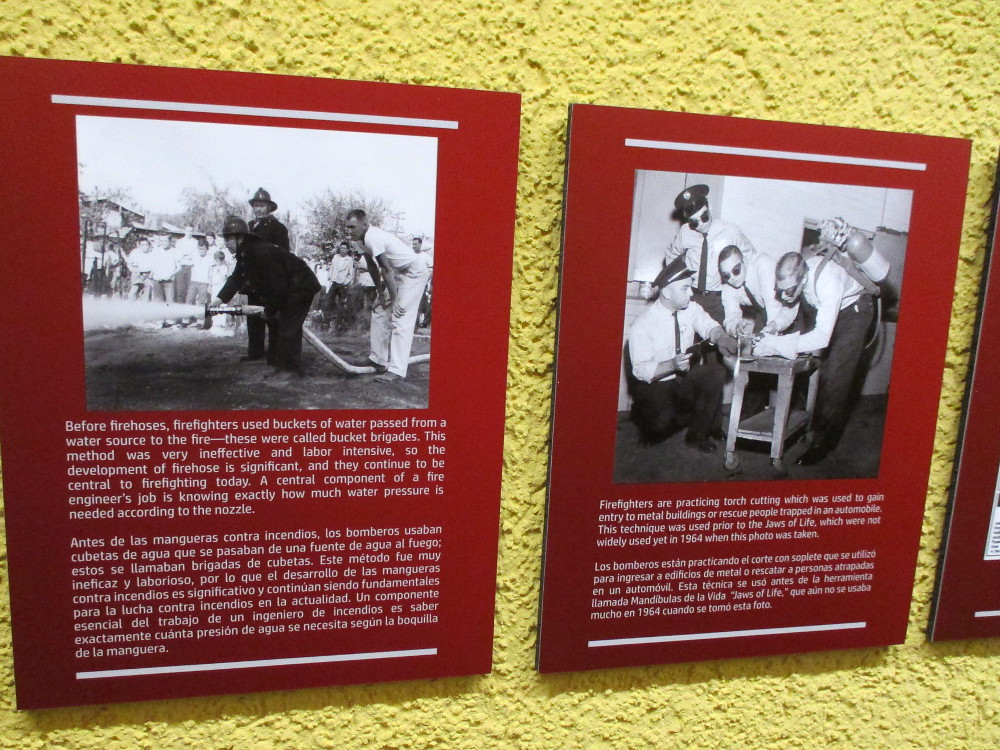
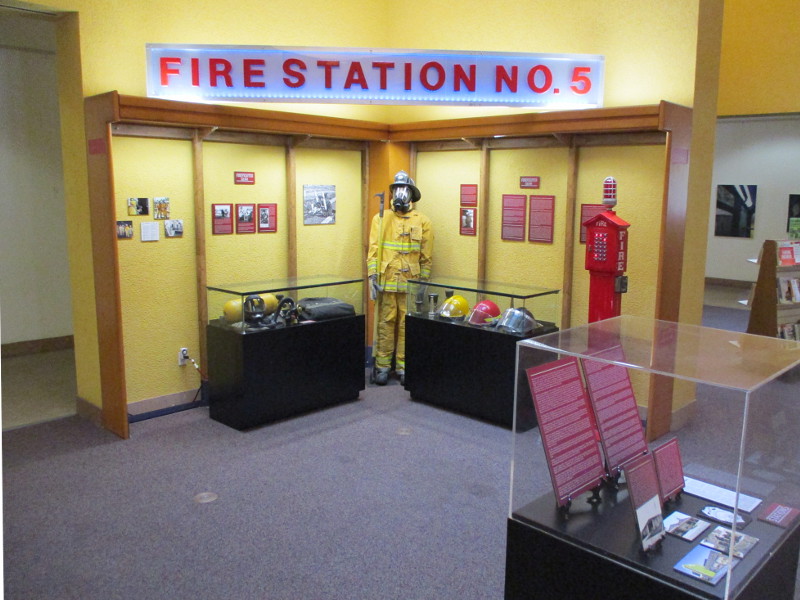
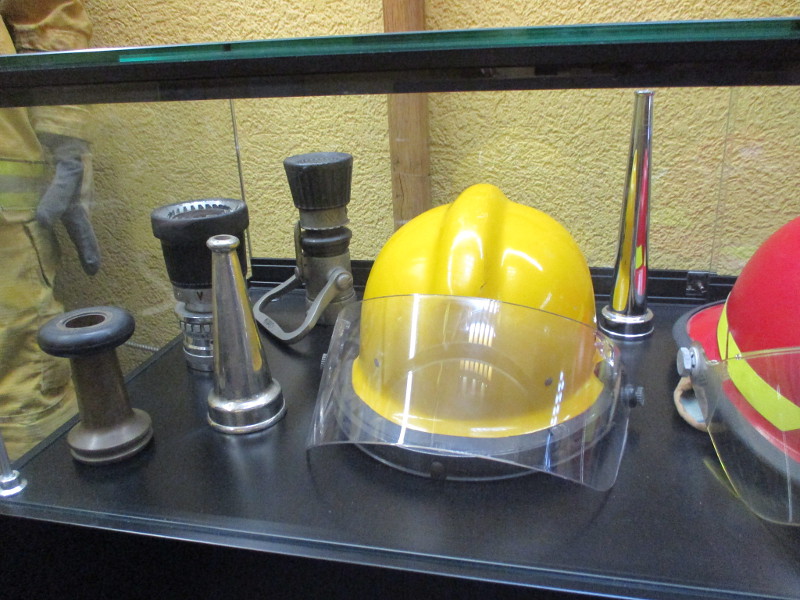
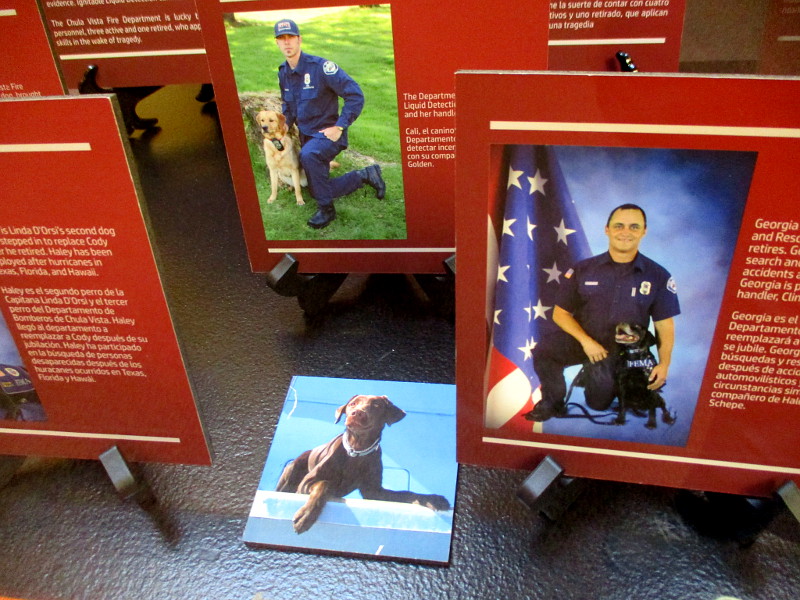
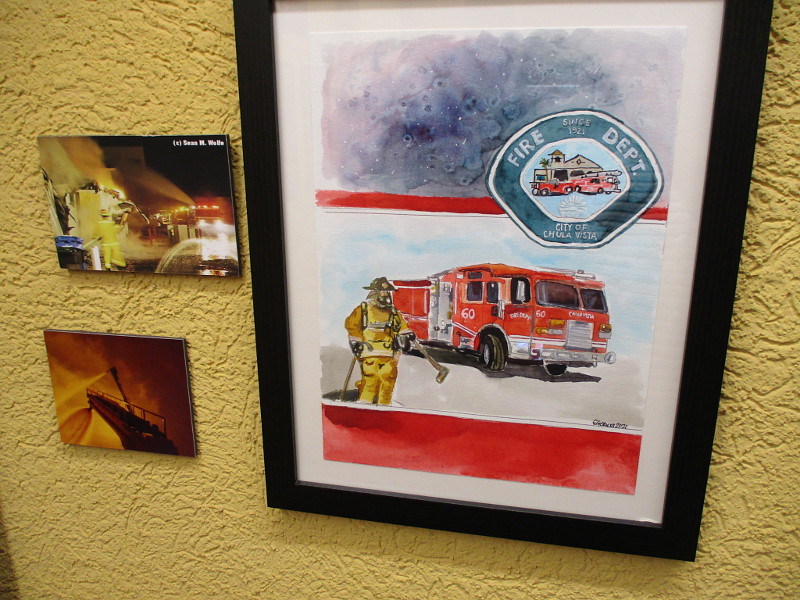
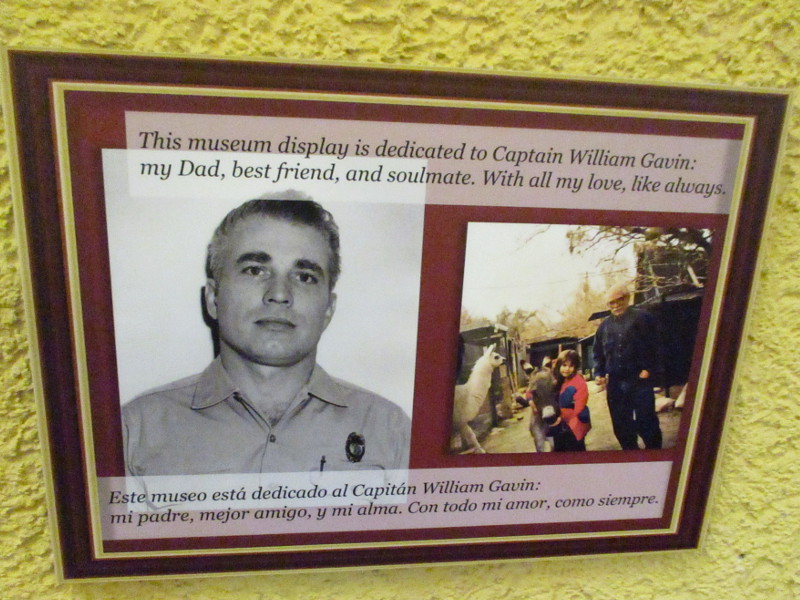
Chula Vista Fire Department. Established May 2, 1921. People who care about people.The Chula Vista Fire Department’s original Seagrave fire truck, on display at South Chula Vista Library. “The Gallopin’ Goose” was purchased in 1923, the same year City Hall was built at 294 Third Avenue. The new City Hall was also a fire and police station.Artifacts from the very early days of the Chula Vista Fire Department.The Firemen’s Ball was an annual dance that began in 1922. It raised funds for the Firemen’s Benefit Fund. Children were also helped in the community during Christmas.Originally, firefighters used buckets of water passed from hand to hand. But the “bucket brigade” method wasn’t very effective. The development of the firehose was of critical importance.One display in the exhibit concerns training.Photos, descriptions and firefighting equipment in one corner of the extensive centennial exhibit. Fire Station No. 5 is located directly next to the South Chula Vista Library.Firefighting equipment includes breathing apparatus, turnouts (protective clothing) and helmets.Dogs heroes help with ignitable liquid detection, and urban search and rescue.Six Chula Vista firefighters traveled to New York City after the attacks of September 11, 2001. They worked the night shift at Ground Zero for ten days.Artwork celebrates the firefighting heroes of Chula Vista.The museum display is dedicated to Captain William Gavin.If you’d like to show your support for the Chula Vista Fire Department, read the above sign!
…
I live in downtown San Diego and love to walk around with my camera! You can follow Cool San Diego Sights via Facebook or Twitter!
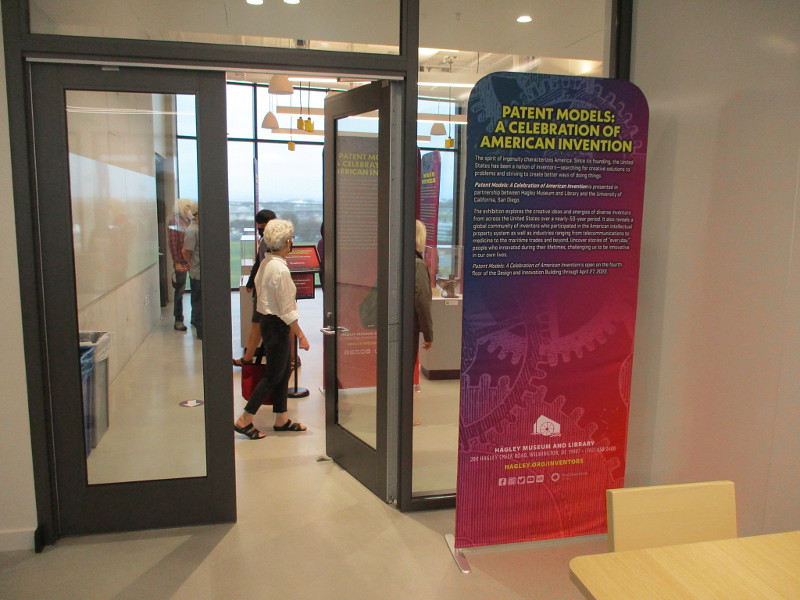
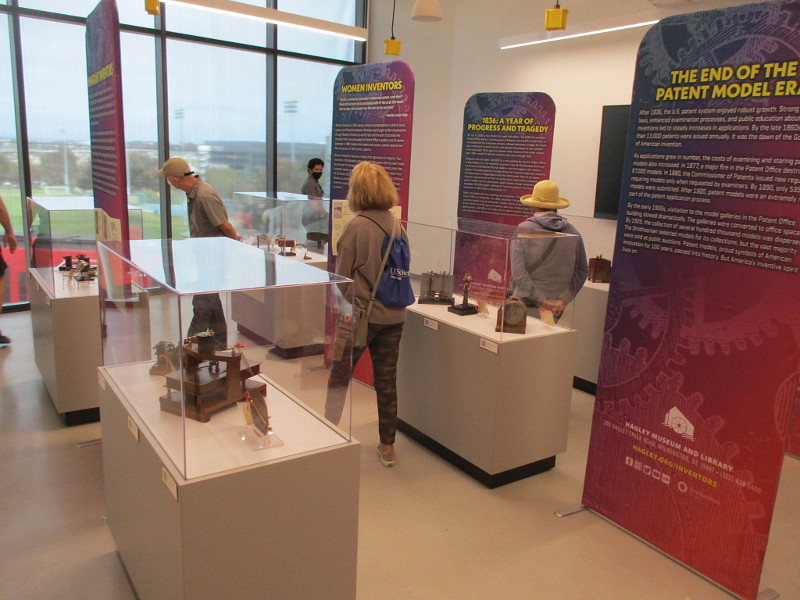
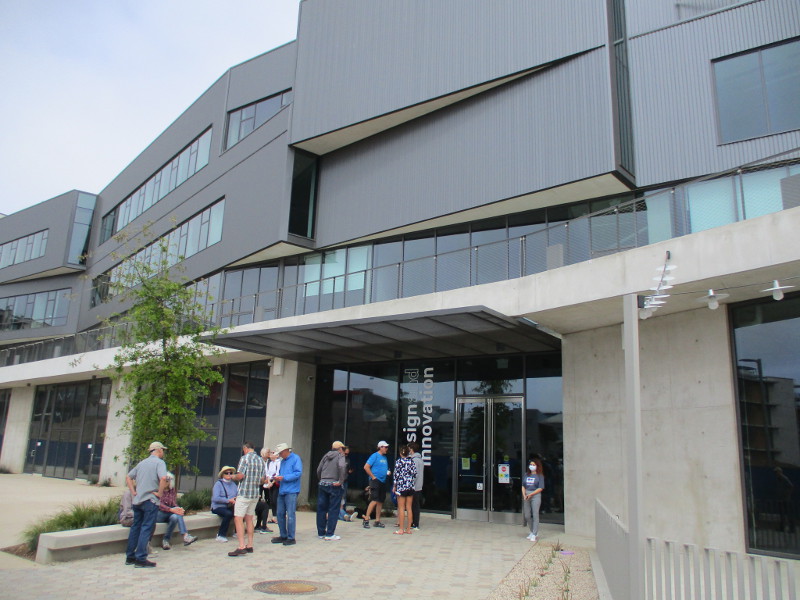
Anyone interested in inventions, technology and history would love an exhibit now on display at UC San Diego. The fourth floor of the Design and Innovation Building is where you’ll find Patent Models: A Celebration of American Invention.
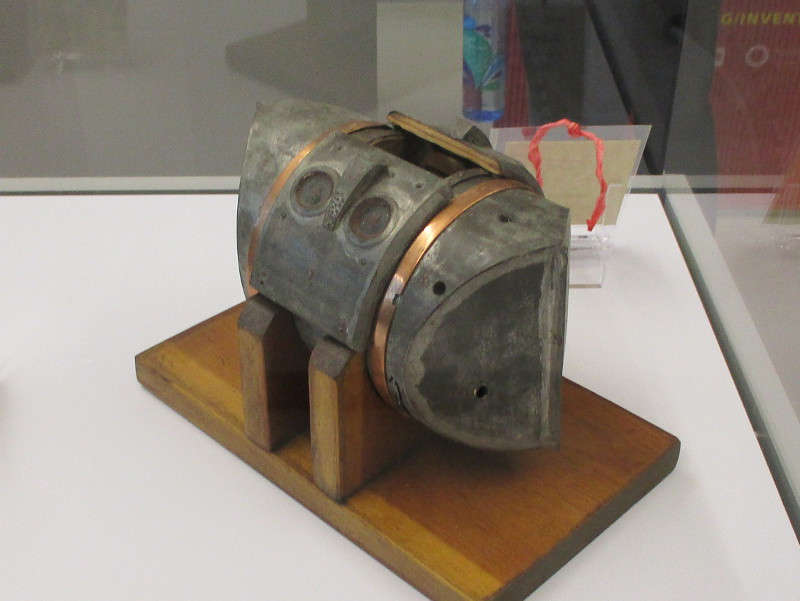
The exhibit features 19th century patent models from the collection of the Hagley Museum and Library in Wilmington, Delaware.
Some of the artifacts might appear primitive and quaint to those who live in the 21st century, but they’re a reminder that unlimited human imagination and generations of visionaries, experimenters and builders have produced the complex technology that we take for granted today.
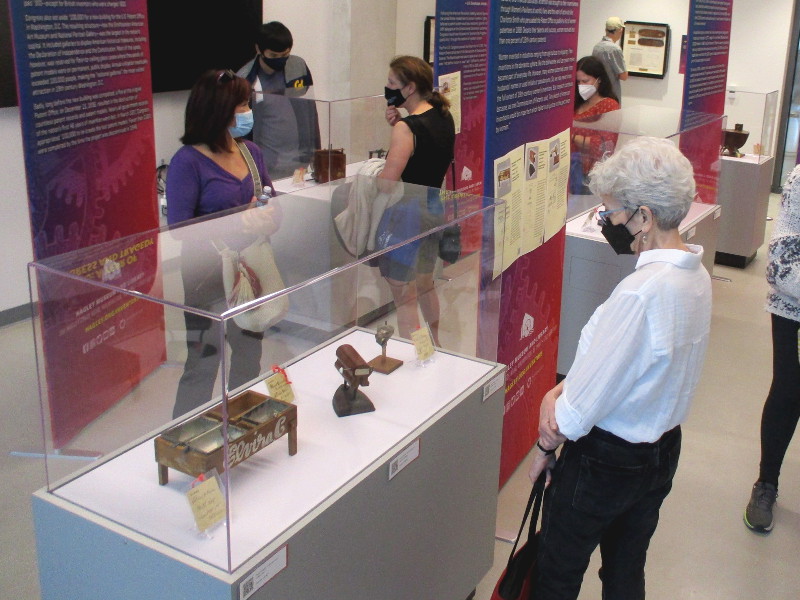
I walked around the exhibit last Saturday, peering into various glass display cases and reading signs that detail the history and progress of American invention.
I learned that by the late 1860’s, during the golden age of American invention, more than 13,000 patents were issued every year. But as applications continued to increase in number, the resulting deluge of patent models became difficult to cope with. After a change in regulations by the Commissioner of Patents in 1880, models eventually became a rare part of the patent application process.
Inventors highlighted in the exhibit include women, immigrants and people of color, and there are descriptions of struggles through the years for equal recognition and opportunity. Many of the inventors were “everyday” people inspired by a really good idea.
Patent Models: A Celebration of American Invention is open through November 6, 2022. Reservations are required. You can reserve a tour by visiting this page.
I took a few photos…
The spirit of ingenuity characterizes America…Patent Model – Life-preserving state room for navigable vessels. Patent #20,426.Patent Model – Improvement in electro-magnetic induction-coils. Patent #138,316.Women invented in industries ranging from agriculture to shipping…Patent models by 19th century women inventors.
…
I live in downtown San Diego and love to walk around with my camera! You can follow Cool San Diego Sights via Facebook or Twitter!
Last Saturday I enjoyed a tour inside the new Design and Innovation Building at UC San Diego. The special tour, part of the San Diego Architectural Foundation’s annual Open House event, was one of many opportunities for the public to go “behind the scenes” at fascinating places around the city.
The Design and Innovation Building opened late last year. This great article describes the building as “A place where disruptive ideas come together to spark learning, technology, collaboration and new ventures.”
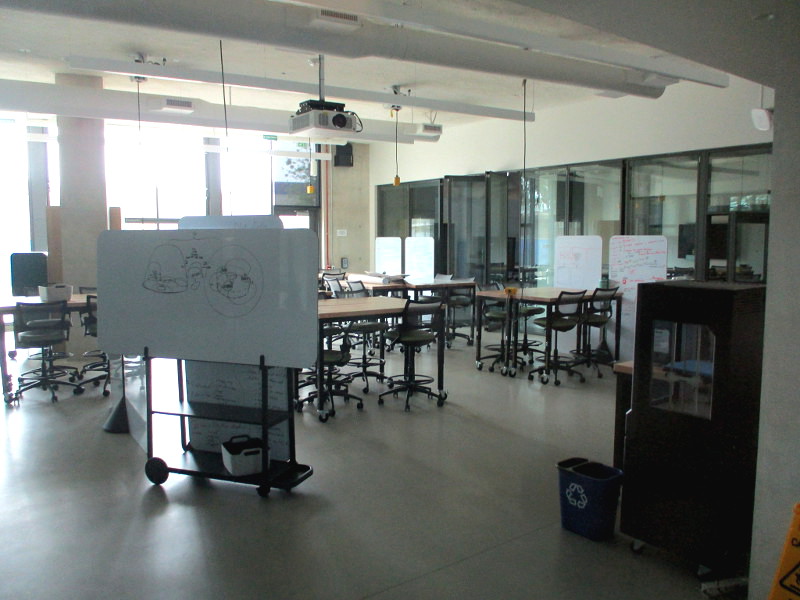
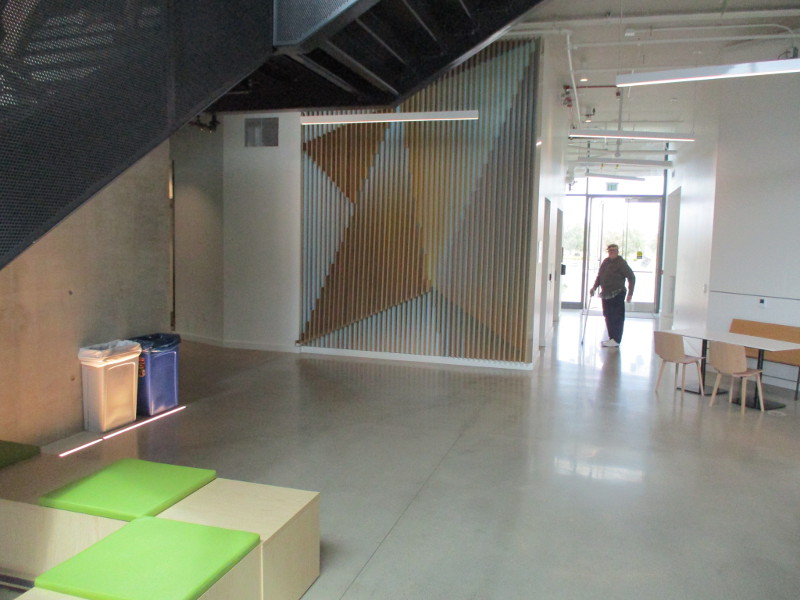
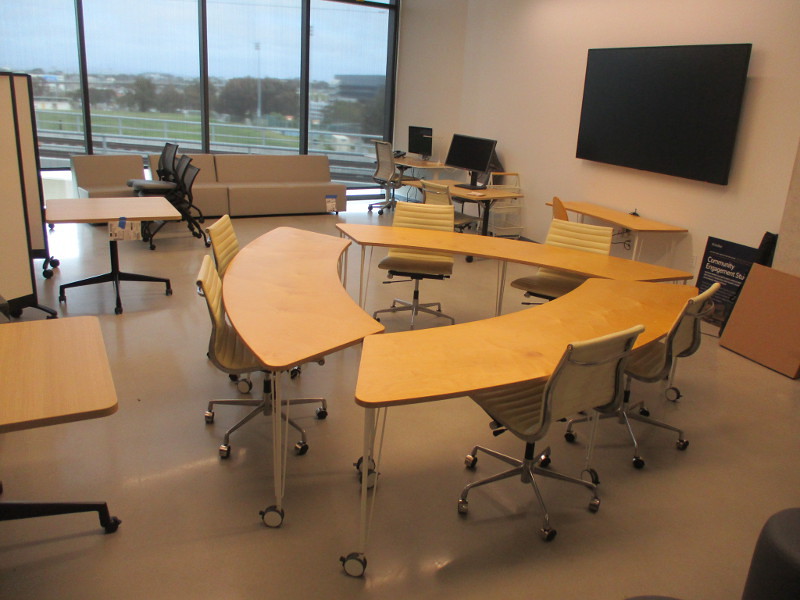
Inside the building it feels very spacious. Hallways are lined with large inside windows, allowing one to see activity in classrooms and labs and practically everywhere you turn. From the third floor you can look up through part of the ceiling to see the fourth floor. Even during the tour when the building was quiet, I had the feeling that I was moving freely through an incredible, connected, creative space.
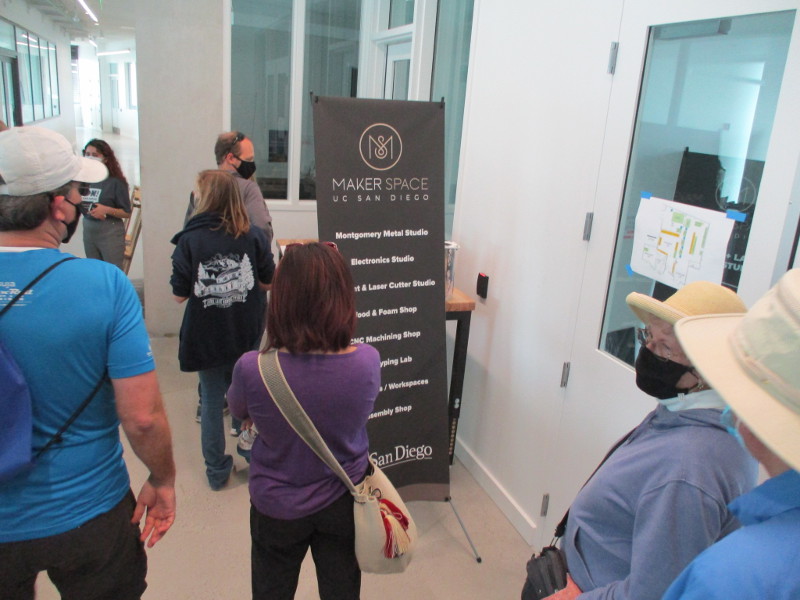
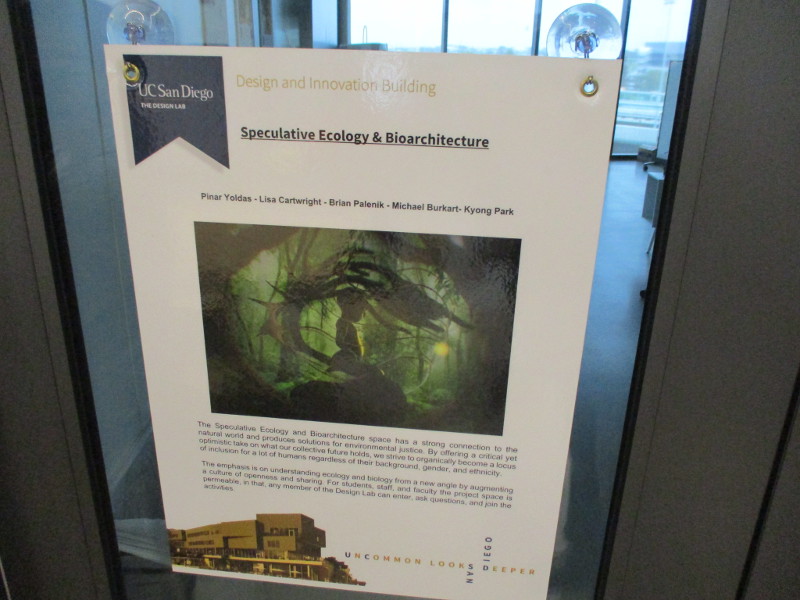
The floors, from first to fourth, are called: The Basement, Maker Space, The Design Lab and the Entrepreneurship Center. Our student tour guide described how ideas proceed upward through the building, forming in The Basement, undergoing design and testing in the Maker Space, then rising to the Entrepreneurship Center where products can be brought to market. The Design Lab is where “faculty from the arts, humanities, engineering and the sciences join forces to solve complex issues related to education, health, mobility, communication and urban planning.”
The building will eventually include a good old restaurant on the first floor, but above all it was designed to inspire innovation.
I was excited to discover a museum-like room on the fourth floor of the building, with a gallery full of inventions! The exhibit is titled Patent Models: A Celebration of American Invention. It was so cool, I think I’ll post a separate blog concerning it!
Now, to give you a taste of what our tour group saw, on with the photos…
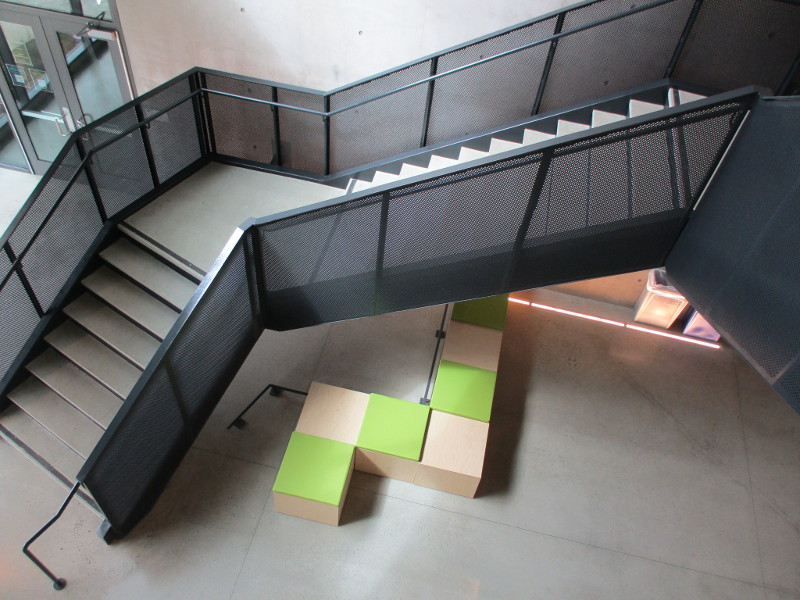
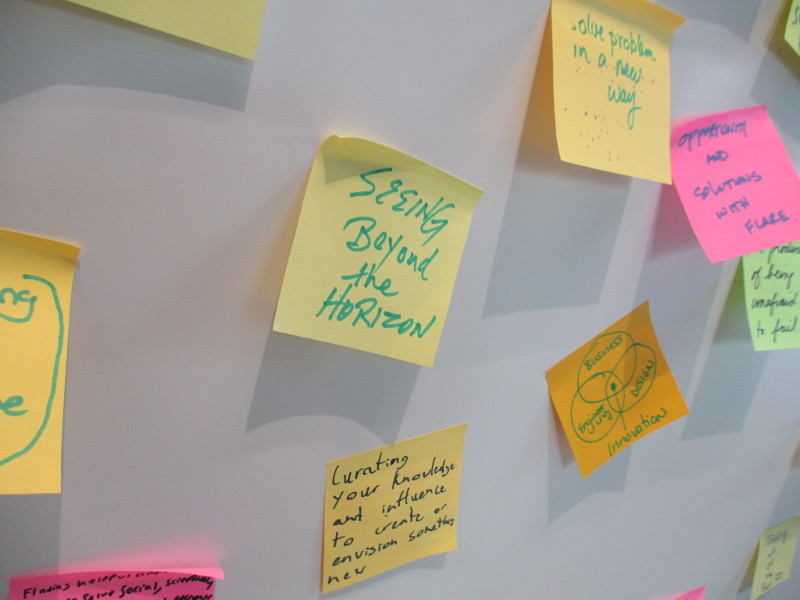
Looking into a classroom on the first floor of the Design and Innovation Building.Bits of stimulating art on the first floor.Looking down from the second floor.A room where there are seminars open to the public. At the conclusion of the building tour, our group heard a talk here about the selection of San Diego-Tijuana as 2024 World Design Capital.We walk out onto the second floor terrace, with great views across UCSD, including the nearby trolley station.Walking through the Maker Space on the second floor.Display includes rapid prototyping.I took this quick pic as we moved along.Windows into the future.A metalworking shop, if I recall correctly.Tables where people with unique ideas can freely interact.Gazing up from the third to the fourth floor.One fascinating room at the Design Lab: Speculative Ecology and Bioarchitecture.A room on the fourth floor where students can speak to entrepreneurs.Social Contract on a fourth floor wall. I am joining an inclusive, collaborative community of partners. Together we will extend and expand the innovation economy in San Diego…Nearby post-it dreams. Seeing beyond the horizon…Curating your knowledge and influence to create or envision something new…Solve problem in a new way…Opportunity and solutions with flare…
…
I live in downtown San Diego and love to walk around with my camera! You can follow Cool San Diego Sights via Facebook or Twitter!
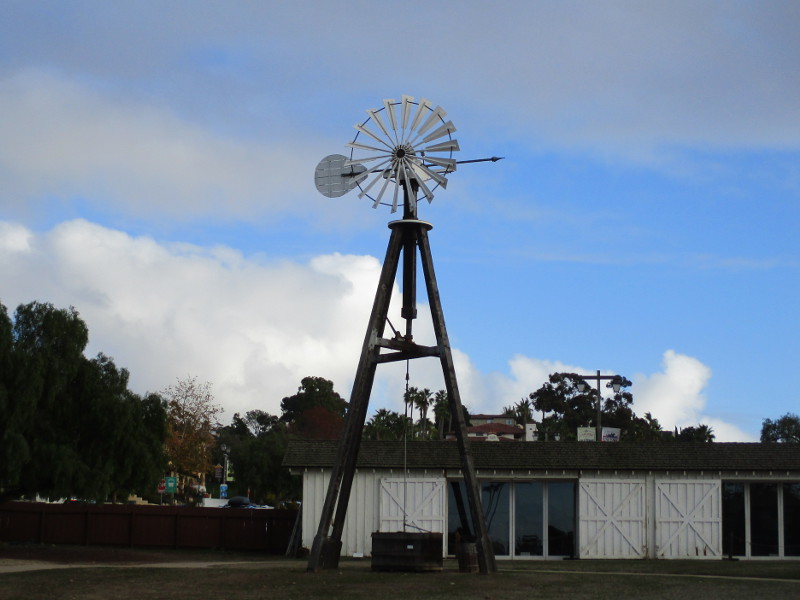
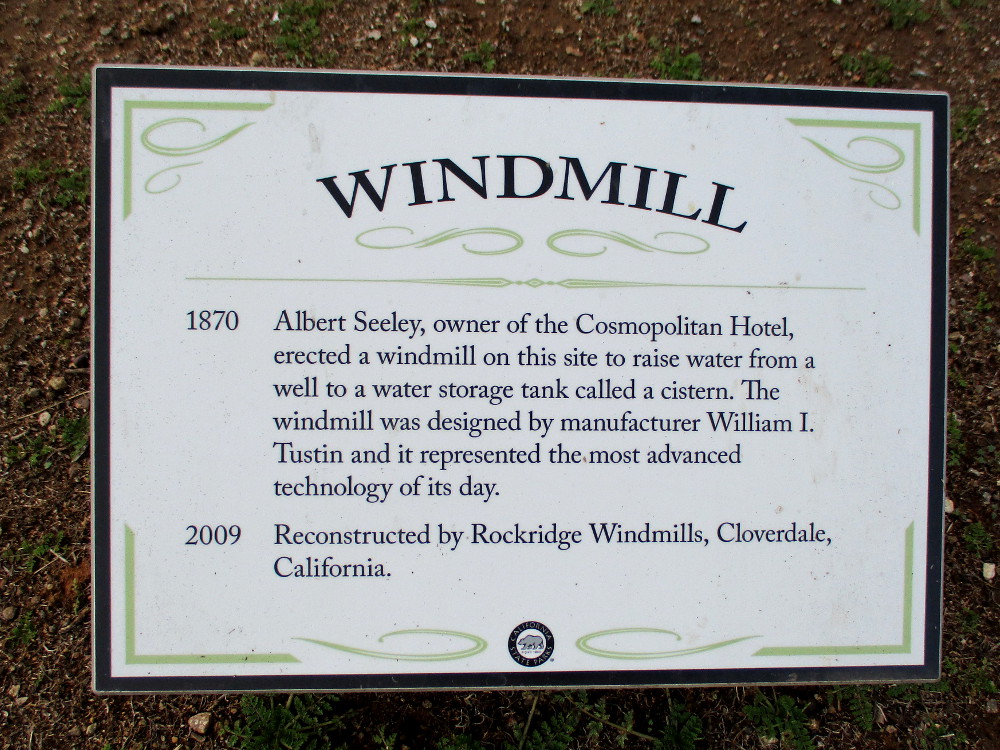
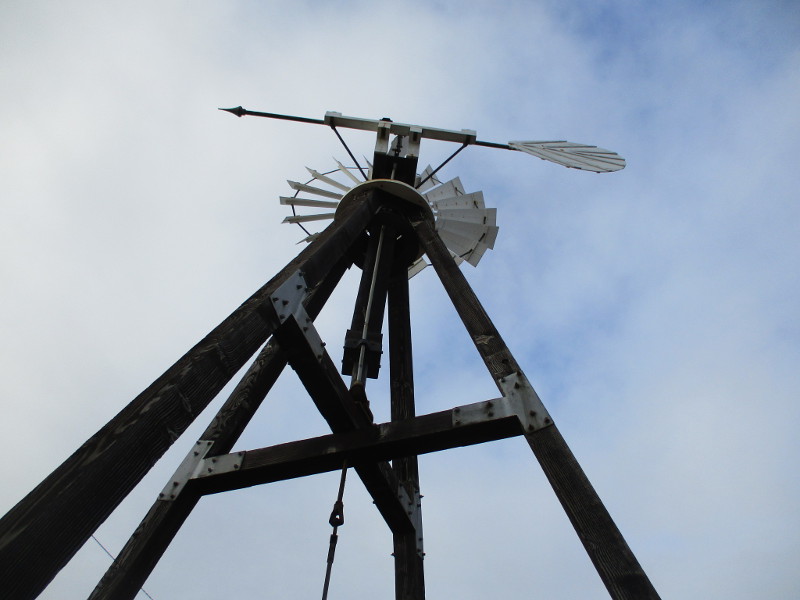
This might surprise you, but the windmill that stands in Old Town San Diego State Historic Park is the only windmill of its kind in the entire world!
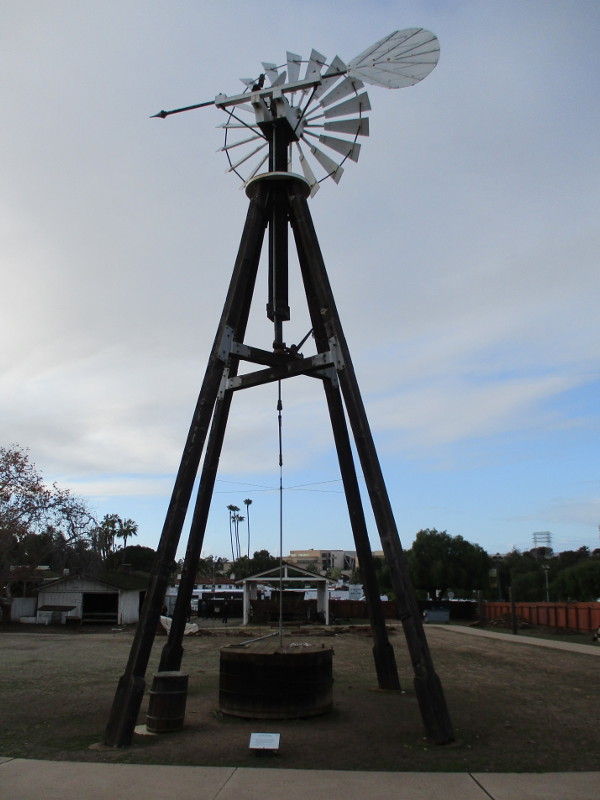
The tall Tustin style windmill located in the yard behind Seeley Stable is an accurate 2009 reconstruction of the one built in 1870 for Albert Seeley’s Cosmopolitan Hotel. Back then, its design represented the latest in windmill technology.
The Tustin style windmill was invented by pioneering manufacturer William Isaac Tustin, who came to California in a wagon train in 1845. His first job was working for John A. Sutter before the discovery of gold several years later at Sutter’s Mill.
Tustin claimed that he built California’s very first windmill, in Benica in 1849.
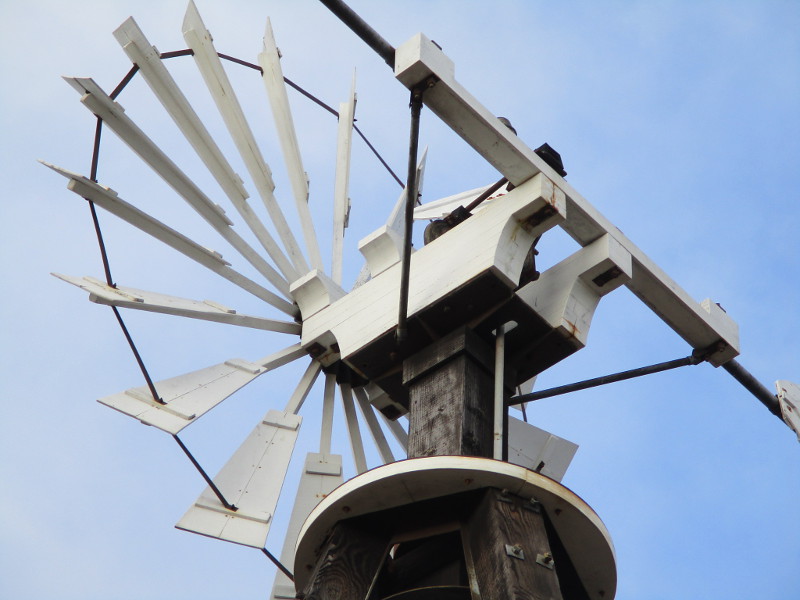
The unique Tustin style windmill is self-regulating, with a wheel that turns to face the wind at variable angles, controlling the speed of the blades’ rotation.
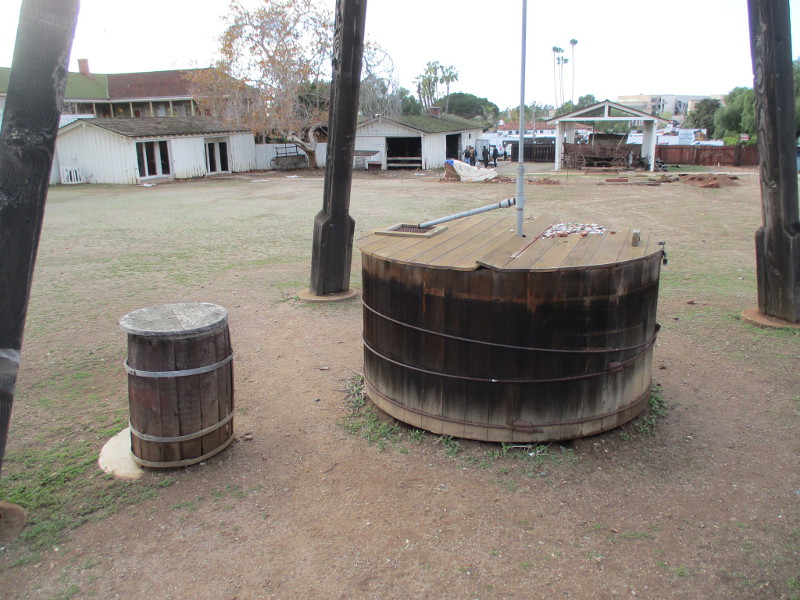
Originally, this windmill was erected to raise water from a well and store it in a wooden cistern, which you can see in my photos.
And it still works today!
Old Town’s one-of-a-kind, historic windmill is usually disabled, however, because the noise it makes when operating is quite loud!
…
I live in downtown San Diego and love to walk around with my camera! You can follow Cool San Diego Sights via Facebook or Twitter!
























 Cool San Diego Sights!