Inside the world record deepest diving submarine!

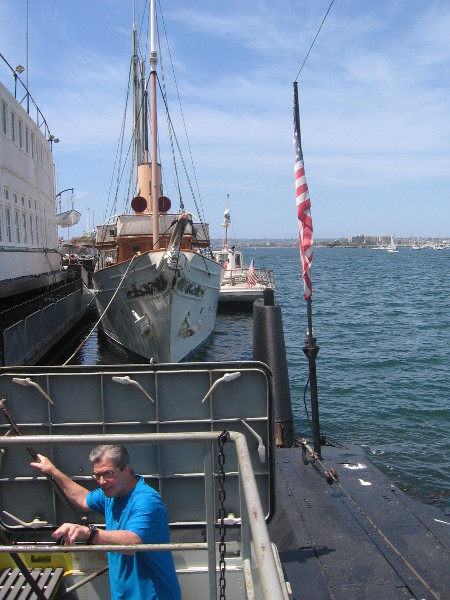
The black sail of submarine USS Dolphin (AGSS-555). The retired research sub is docked next to steam ferry Berkeley of the Maritime Museum of San Diego.

Here come some photographs taken inside the USS Dolphin, the world record deepest diving submarine!

Anyone can tour the Dolphin when visiting the Maritime Museum of San Diego. The museum, located downtown on the waterfront, is home to a world-class collection of unique and historic ships.

I personally know very little about submarines. My descriptions come from various signs and a little searching performed on the internet. If you spot an error or would like to provide some info, please leave a comment at the bottom of this post!

The Maritime Museum of San Diego boasts two submarines in its world-class collection of ships. The USS Dolphin holds the world record for deep diving.
Display inside the Berkeley, next to doorway which leads museum visitors outside to the Dolphin.

The above Maritime Museum display includes the following information:

On November 24, 1968, barely two months after commissioning, the USS Dolphin dove to a depth in excess of three thousand feet to become the world’s deepest diving submarine…this record still stands today. The following year, in August 1969, the Dolphin achieved another world record by launching a torpedo from a depth never equaled by another submarine.

Built exclusively for research, Dolphin is responsible for many achievements. Most significant among these is her unique deep diving capability… Employed by both Navy and civilian researchers, she is equipped with an impressive array of instruments that can support multiple missions…. She is currently configured to conduct extensive deep water acoustic research, oceanic survey work, sensor trials, and engineering evaluations.

…With her decommissioning on January 15, 2007, the United States retired its last active diesel-electric submarine.

Second display contains info about the sub's design and it's numerous historic achievements.
Second display contains info about the sub’s design and it’s numerous historic achievements.

This second sign inside the Berkeley indicates:

SPECIFICATIONS

Length: 165 feet
Beam: 18 feet
Surface displacement: 860 tons
Submerged displacement: 950 tons

Propulsion: Diesel-electric
2 x GM V71 12-cylinder diesel engines, 425 hp
2 x electric main motors
2 x 126-cell main storage batteries

Submerged speed: 10 knots (short duration), 2-4 knots (sustained)

Scientific payload: 12 tons+

External mounting pads: 6 port, 6 starboard, forward and aft of sail

Crew compliment: 3 officers, 18 enlisted, 4 scientists (46 crew, all are not deployed)

Operational endurance: Over 15 days (for long deployments, Dolphin can be towed at 9-10 knots)

ACHIEVEMENTS AND CONTRIBUTIONS

First successful submarine-to-aircraft optical communication

Development of a Laser Imaging system of photographic clarity

Development of an Extreme Low Frequency (ELF) antenna

Evaluation of various non-acoustic Anti-Submarine Warfare techniques

Evaluation of various “low probability of interception” active sonars

First submarine launch of a mobile submarine simulator (MOSS) system

First successful submarine test of BQS-15 sonar system

Development of a highly accurate towed body position monitoring system

Development of a highly accurate target management system

Evaluation of a possible “fifth force of nature”

First successful submarine-to-aircraft two-way laser communication
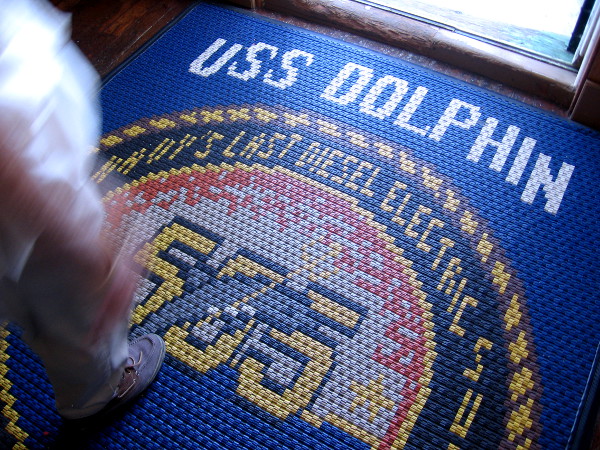
A museum visitor gets ready to walk out to a very cool submarine.
A museum visitor gets ready to walk outside to a very cool submarine.
Walking along the deck to forward end of the submarine. The tower-like sail contains the bridge, periscope and communications masts.
This forward hatch (and the rear one) were cut into the hull so museum visitors could easily walk through the sub's length. Originally there was one hatch, at the sail.
This forward hatch (and the rear one) were cut into the hull so museum visitors could easily walk through the sub’s length. Originally there was one hatch, at the sail.
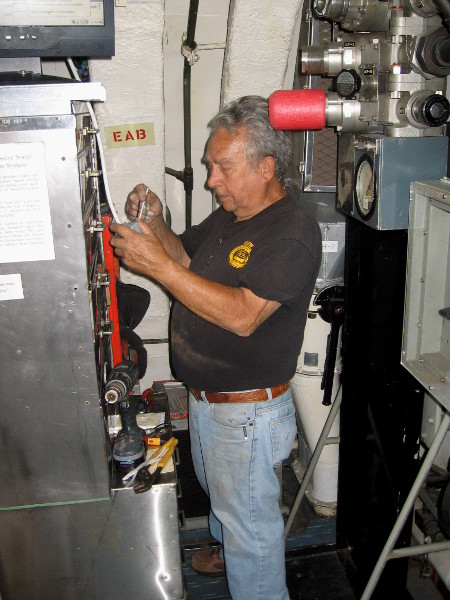
An electrician volunteer, Ed, at work just inside the USS Dolphin. He told me several stories from his days serving on submarines.
A sign inside the underwater research vessel provides answers to a few common questions.

This sign inside the submarine answers some common questions and includes the following fascinating facts:

Dolphin’s hull material is HY-80 steel…her hull is a ring-stiffened cylinder without pressure bulkheads (if she has a leak the whole boat will flood)…

When she had her torpedo tube installed, Dolphin could carry four torpedoes… After initial tests and the launch of a torpedo in 1969 from the deepest depth ever recorded, Dolphin was refitted for other research purposes, and never carried torpedoes again.

There are no visual viewing ports in this submarine…. Dolphin did carry imaging electronics for observing the bottom.

Dolphin did not have any claws for picking items off the seafloor as she was restricted to a minimum altitude of fifty feet above the bottom. One experiment launched an ROV (remote operated vehicle) with power and communication cable attached to Dolphin while submerged…

Starting along the very narrow main hallway. This unusual sub contains no compartments. To the left one can see a reverse osmosis water filtration system.
Red pyro locker used to safely house signal flares.
Those crew bunks on the left don't look terribly spacious or comfortable.
Those crew bunks on the left don’t look terribly spacious or comfortable.
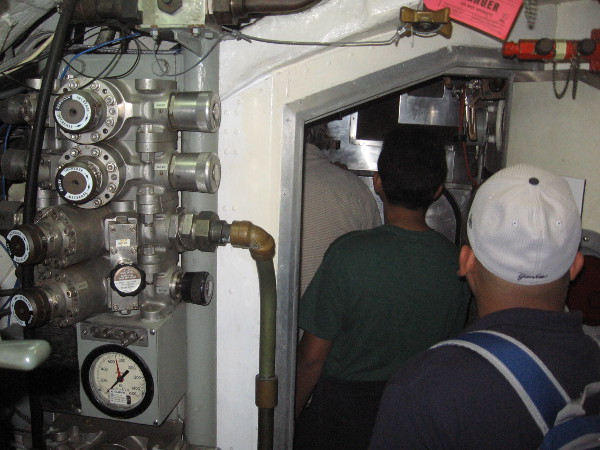
There are more pipes, wires, gauges, valves and gizmos than you can shake a stick at.
A group of visitors is entering the amazing Control Room, near the center of the USS Dolphin.
A group of curious visitors is entering the amazing Control Room, near the center of the USS Dolphin.
The periscope works and you can view San Diego Bay and downtown skyscrapers with perfect clarity.
The periscope works and tourists can view San Diego Bay and downtown buildings with perfect clarity.
Folks peer down through floor at Pump Room below the Control Room, where a hero defied death to save his crewmates.

On May 21, 2002, the room below was the center of heroic action to save the submarine and crew. On that day, Dolphin was conducting training exercises about 100 miles off the San Diego coastline when a torpedo shield door gasket failed, and water began to flood the submarine…

Chief Machinist’s Mate (SW) John D. Wise Jr., realizing what needed to be done, dove into the 57 degree water of the flooded pump room…with less than a foot of breathable space…he aligned the seawater valves and then remained in the pump room for more than 90 minutes…

For his courageous efforts, Chief Wise was awarded the Navy and Marine Corps Medal.

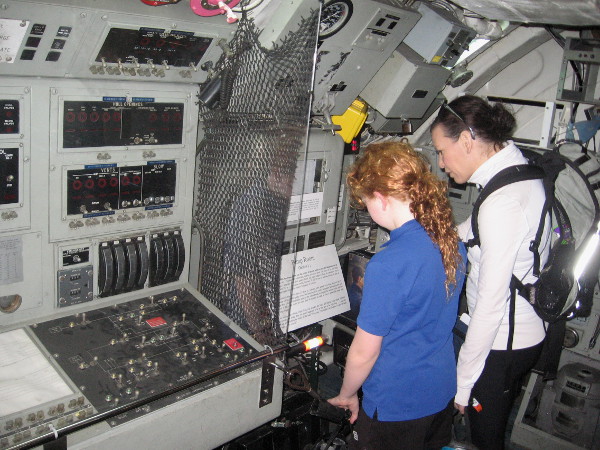
A panel with many complicated switches. In the Control Room, one can monitor the main storage batteries, generators and propulsion system.
The wheel used to pilot the Dolphin. One drove using only instruments, including gauges that display rise/dive, ordered depth, system depth, cavitation, turns, dummy log, depth to keel.
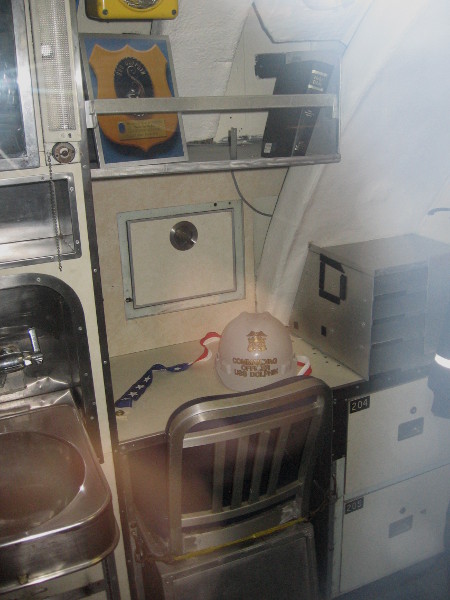
Photo of tiny Officers' Quarters was through glass, producing some glare.
Photo of tiny Officers’ Quarters was through glass, which produced some glare.
This is the first toilet I've photographed for my blog. Hopefully the last!
This is the first toilet I’ve photographed for my blog. Hopefully the last!
Photos on wall of tiny mess area show what life was like aboard Dolphin.
This is where food was prepared.
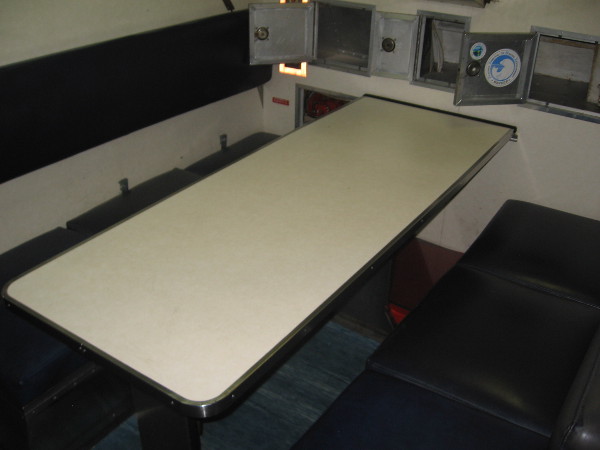
This dining table was constantly in use. Not much to see in the way of decor.
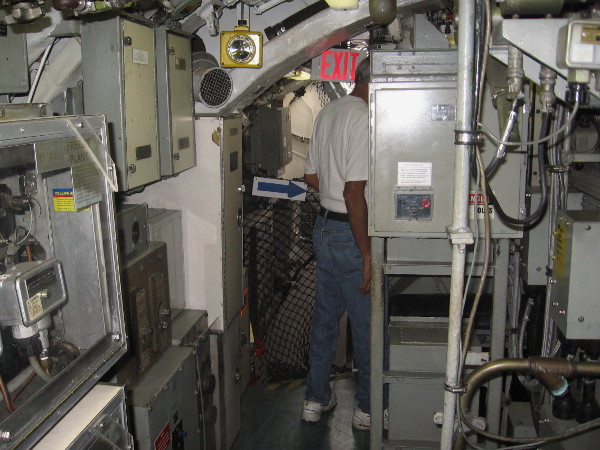
Continuing down the main hallway toward the rear of the submarine. Don't ask me what all this stuff is.
Continuing down the main hallway toward the rear of the submarine. Don’t ask me what all this stuff is.
Apparently this is some sort of freezer.
You get an idea of what it's like to carefully walk through the narrow submarine.
You get an idea of what it’s like to carefully walk through the narrow submarine.
High-Pressure Air Compressor Controllers among a jumble of pipes and valves.
Up a ladder and back outside into the bright San Diego sunshine!

To enjoy future posts, you can “like” Cool San Diego Sights on Facebook, or follow me on Twitter.
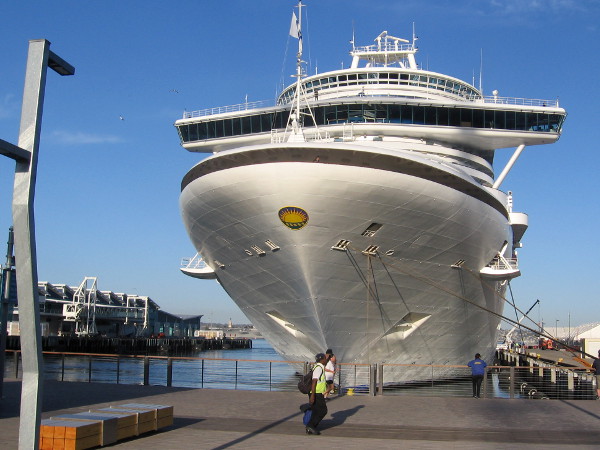
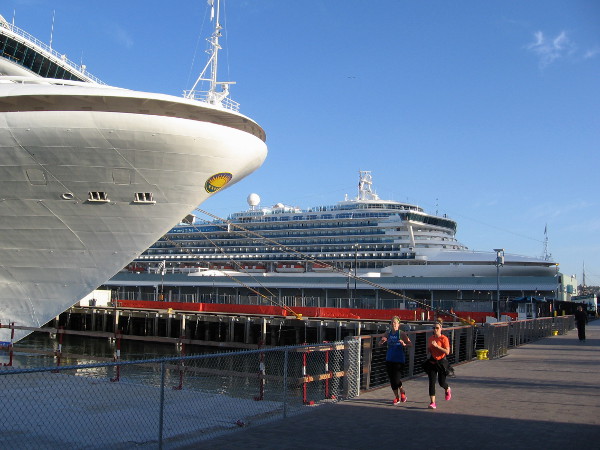
Two beautiful princesses cruise into San Diego.

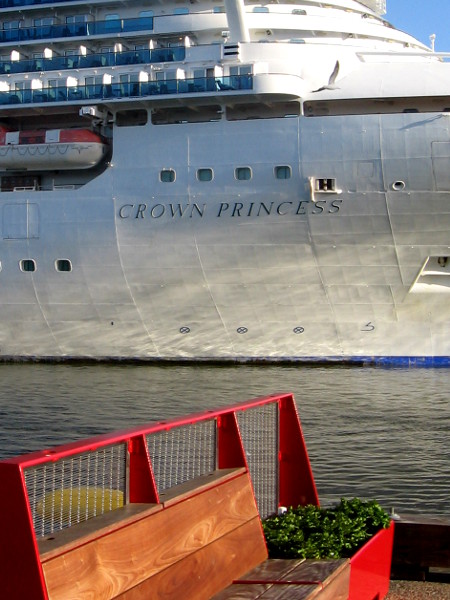
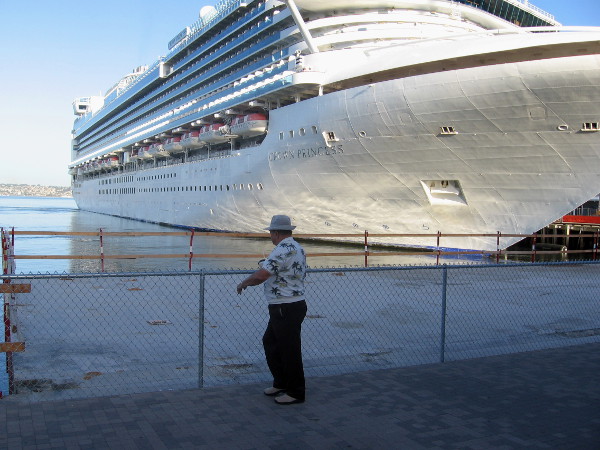
The huge Crown Princess cruise ship docked on San Diego's Embarcadero.
The huge Crown Princess cruise ship is docked on San Diego’s Embarcadero.

Everyone has seen photos of cruise ships, but two beauties were docked on San Diego’s waterfront this morning and gleaming in the sunshine, so I had to whip out my camera!

Once in a while, two or three cruise ships visit downtown at the same time. Some of these vessels are so huge that stood on end they’d dwarf many nearby skyscrapers. The two ships I saw in port today are operated by Princess Cruise Line. Both are classified as Grand-class cruise ships and have nearly identical lengths. Even after seeing them in person, it’s hard for me to grasp that these ships are 950 feet long! The Crown Princess can carry 3,080 passengers with a crew of 1,201. The Star Princess accommodates 2,590 passengers and a crew of 1,150. Incredible!

Two luxurious Grand-class cruise ships gleam on either side of the Cruise Ship Terminal.
Gull checks out an amazing morning sight. Photo taken from the Broadway Pier.
Man gazes at the sunlit bay near what soon will be an observation platform.
Man gazes at the sunlit bay.  The fenced area is where the Bay Cafe used to stand.  It soon will be an observation platform.

To enjoy future posts, you can “like” Cool San Diego Sights on Facebook. or follow me on Twitter.

Photos: amazing tour of Spanish galleon build site!

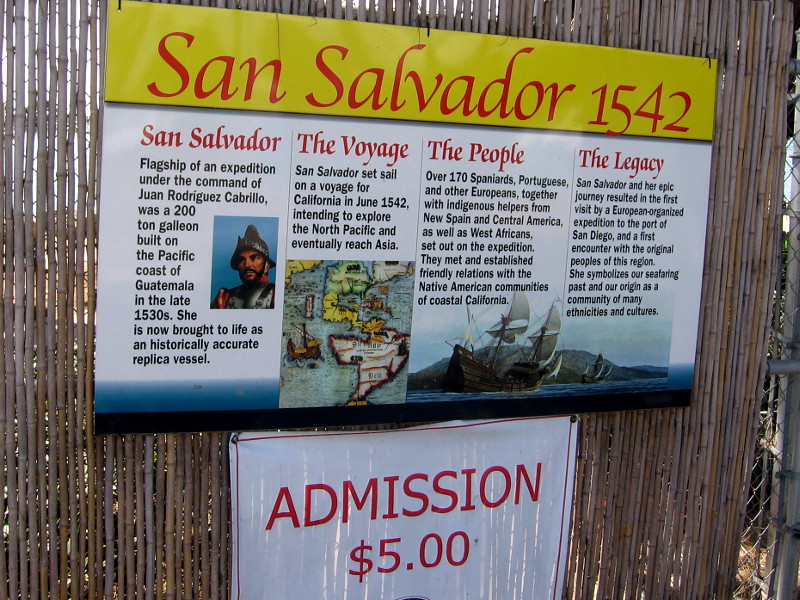
Sign at entrance to San Salvador build site. You have a couple more weeks to visit before the replica galleon's historic launch into San Diego Bay.
Sign at entrance to San Salvador build site. You have a couple more weeks to visit before the replica galleon’s historic launch into San Diego Bay.

Yesterday I enjoyed a tour of something so unbelievably cool it almost defies description. Along with my photographs I took some notes, but what I’m about to write might not be perfectly accurate. I’m relying to an extent on memory, which with my advancing age isn’t quite what it used to be. So if anyone reading my captions spots an error, PLEASE write a comment at the bottom of this blog post!

Later this month, the Maritime Museum of San Diego will be launching its absolutely fantastic, historically accurate, seaworthy replica of the galleon San Salvador. The original San Salvador was the ship that Portuguese explorer Juan Rodriguez Cabrillo sailed in during his voyage of discovery up the California coast on behalf of Spain. The famous galleon entered San Diego Bay in 1542, making Cabrillo the first European to visit the large, natural harbor. What we call San Diego today he named San Miguel.

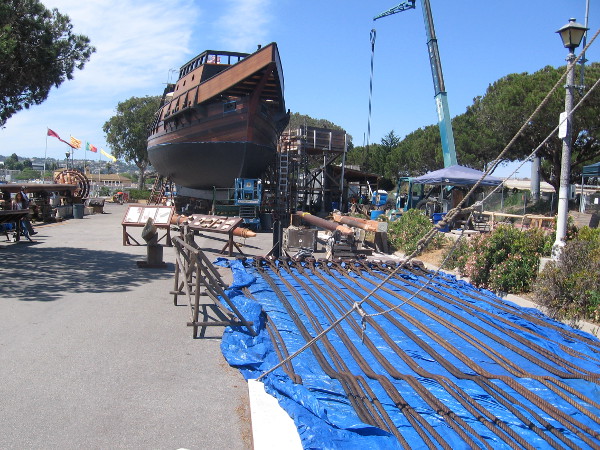
Today, the full-size working replica of Cabrillo’s ship is being built at the west end of Spanish Landing, in an area called San Salvador Village, between Harbor Island and San Diego International Airport. The finished ship will be 92 feet long with a beam of 24 feet. As I understand it, construction has been underway for about four years, and for a variety of reasons has taken a couple years longer than originally projected. But once the decks are re-caulked, the shrouds tarred, and a few other things finished, the ship’s exterior will finally be ready for its imminent introduction into San Diego Bay!

The galleon, which without ballast weighs about 130 tons, will be slowly towed to the Broadway Pier downtown, then lifted by a huge crane into the bay. While docked beside the other ships of the Maritime Museum, the interior will be finished, about 60 more tons of lead ballast added, and the vessel’s ability to remain upright thoroughly tested by the Coast Guard.

(Don’t quote me on the 130 tons and 60 tons. Those figures came entirely from my leaky memory.)

There’s simply too much awesome stuff to describe in a few paragraphs, so let me now show you my photographs and I’ll include in the captions some of the cool stuff I learned or observed…

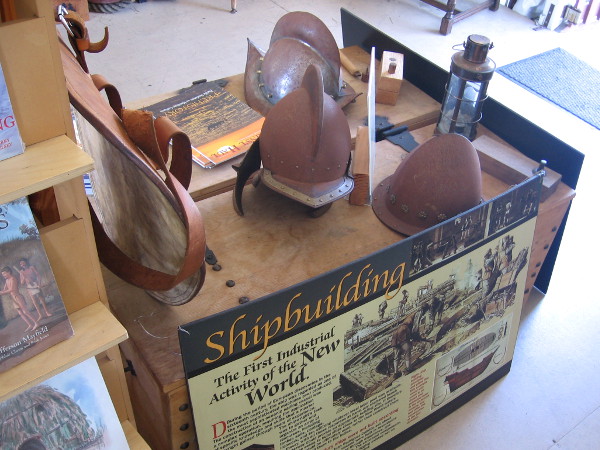
Shipbuilding was the first industrial activity of the New World. Gift shop at site entrance includes Spanish conquistador helmets and breastplate.
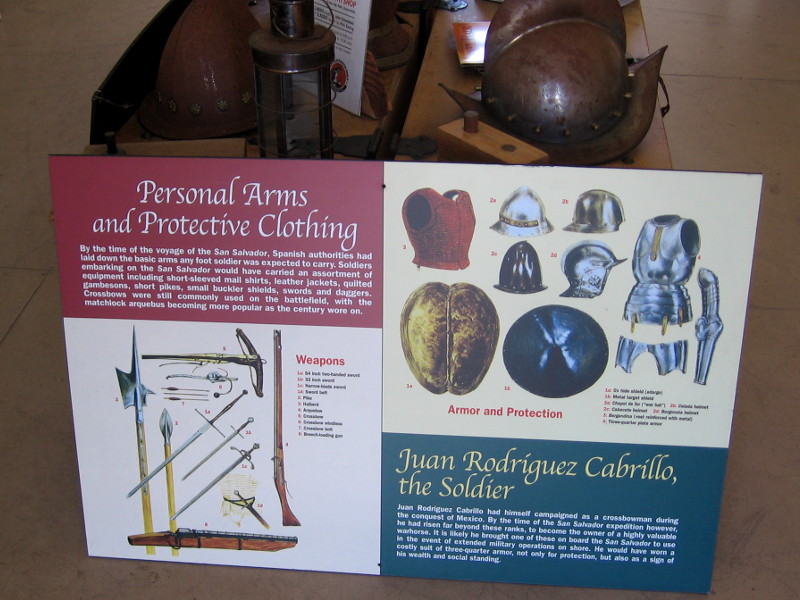
Poster shows personal arms and protective clothing used by the men who sailed with Juan Rodriguez Cabrillo five centuries ago.
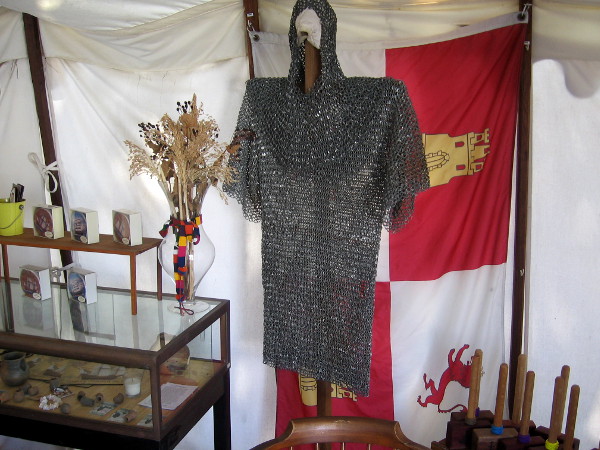
A small museum and gift shop includes many interesting sights, including a shirt of chainmail and flag of the Spanish Empire.
A small museum and gift shop includes many interesting sights, including a shirt of chain mail and flag of the Spanish Empire.
Diagram shows the sail plan for historic galleon San Salvador.
Various items on display include lantern, candle, bottle, ship's food and native Kumeyaay artifacts.
Various items on display include lantern, candle, bottle, ship’s food and native Kumeyaay artifacts.
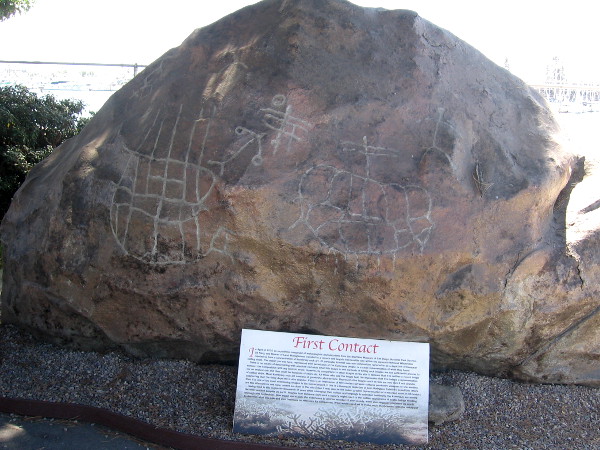
Outside, at the build site, there are many more exhibits. This reproduction of found rock art seems to be of sailing ships. The native Kumeyaay people often visited San Diego Bay.
Outside, at the build site, there are many more exhibits. This reproduction of found rock art seems to show sailing ships. The native Kumeyaay people often visited San Diego Bay.
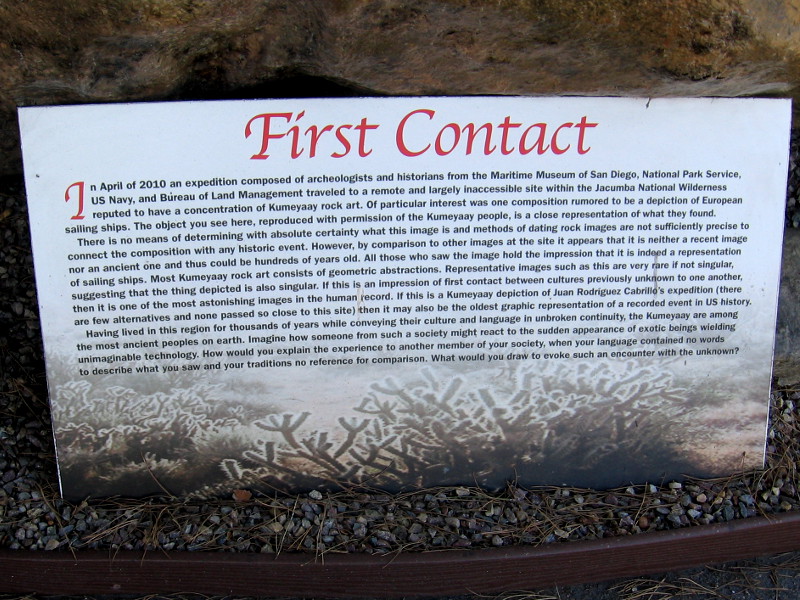
First Contact. If this rock art is a Kumeyaay depiction of Cabrillo's expedition, it might be the oldest graphic representation of a recorded event in American history.
First Contact. If this rock art is a Kumeyaay depiction of Cabrillo’s expedition, it might be the oldest graphic representation of a recorded event in American history.
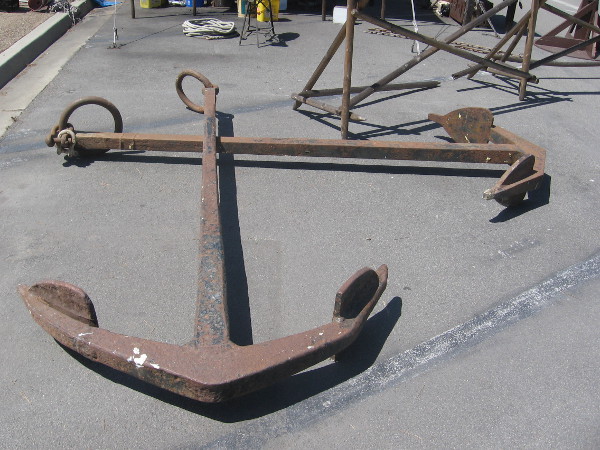
Here's a huge anchor! I didn't ask, but I assume it will be used by the San Salvador.
Here’s a huge anchor! I didn’t ask, but I assume it will be used by the San Salvador.
San Salvador carries six sails totaling a little less than 5000 square feet. The sails are not only used to propel the ship, but exert a larger influence on steering than the rudder.
View of a small sail suspended from a yard, with Harbor Drive in background beyond the build site.
View of a small sail suspended from a yard, with Harbor Drive in the background north of the build site.
Suspended from a crane is a shroud (rigging that helps hold a mast) that's being tarred. The bow of the galleon comes to a sharp point at its beak.
Suspended from a crane is a shroud (rigging that helps hold a mast) that’s being tarred. The bow of the galleon comes to a sharp point at its beak.
Iron in an undeveloped region of the New World was a precious commodity. Imported ingots were often used to forge various fittings and hardware.
Hooks, chain links and other iron instruments were crucial to sail and maintain a large ship.
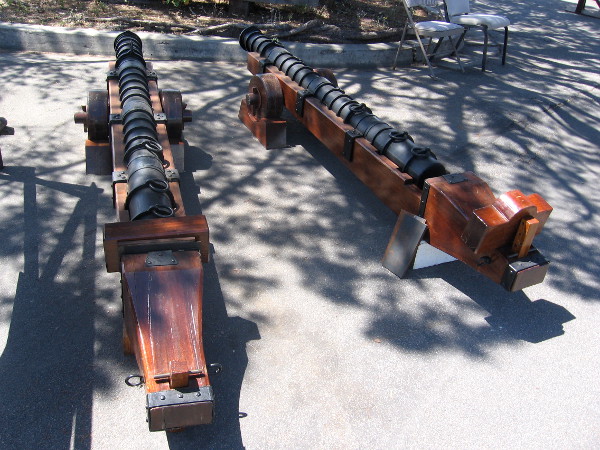
The San Salvador carried armament to defend the expedition from potential threats. The cannon-like bombard and swivel gun could be fired from the deck.
Two bombards on display at the San Salvador build site. They could fire shot about five pounds in weight and were mounted on wheels.
Detailed map of Cabrillo's route up the California coast. He found neither treasure, nor a passage to the Atlantic.
Detailed map of Cabrillo’s route up the California coast. He found neither treasure, nor a passage to the Atlantic.
There are no blueprints for the galleon San Salvador. To reconstruct the 16th century ship, the Maritime Museum of San Diego used scarce historical clues.
It was difficult to find the right kinds of wood for different parts of the vessel. Both old and modern shipbuilding techniques were used.
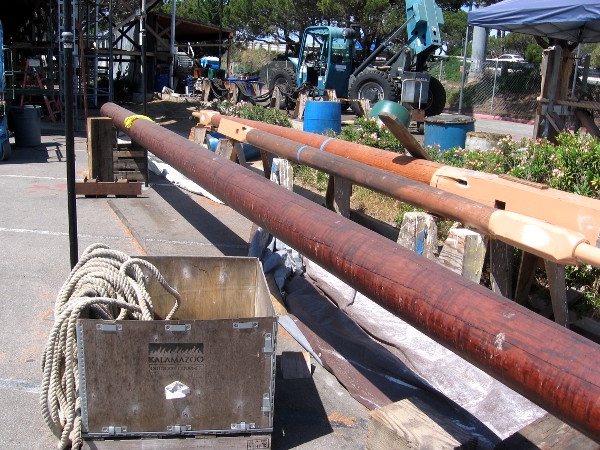
Wood mast segments and yards are coasted with linseed oil, I believe. They'll be installed once the ship is afloat in San Diego Bay.
Wood mast segments and yards are coasted with linseed oil, I believe. They’ll be installed once the ship is afloat in San Diego Bay.
Approaching the impressive reproduction of the historic galleon. Just imagine going for an ocean sail in this!
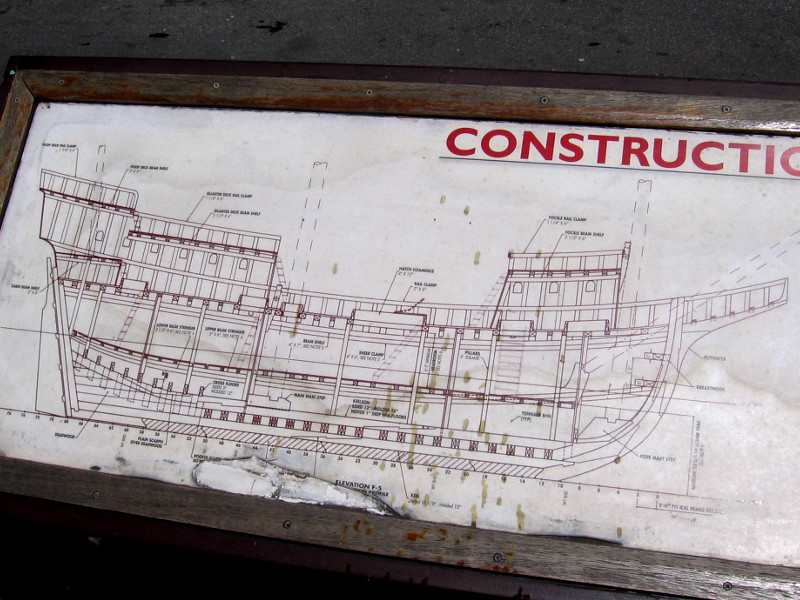
Detailed schematic shows framework and beams that support decking and hull.
The master builder sets up keel, stem, sternpost and deadwood, locked together with long iron drifts. The master frame is then built.
I believe these are the lower halves of two masts (main and fore), each ending in a crow's nest.
I believe these are the lower halves of two masts (main and fore), each ending in a crow’s nest.
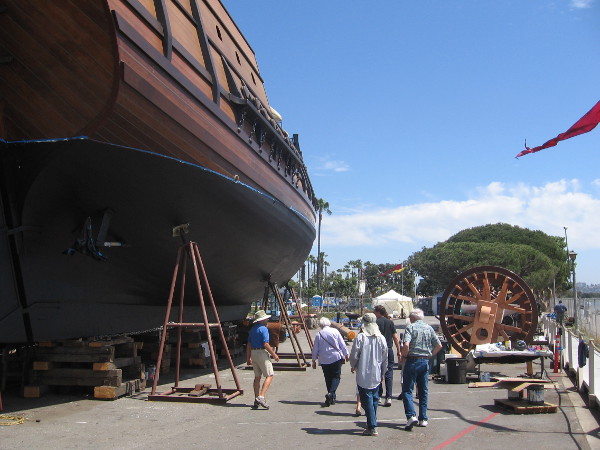
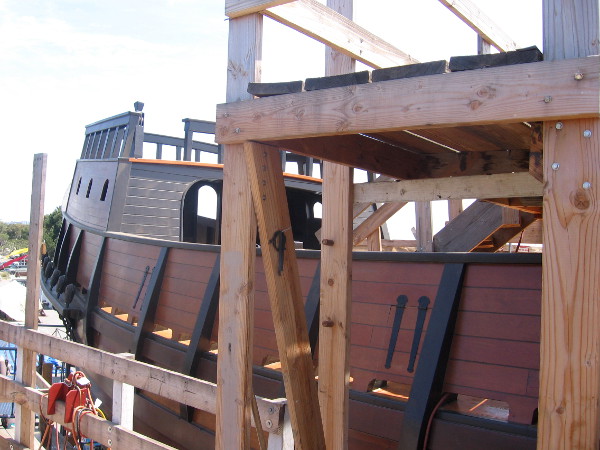
A look at the hard wood hull of the galleon San Salvador at Spanish Landing.
A look at the super hard wood hull of the galleon San Salvador at Spanish Landing.
Volunteer tour guide shows how six segments of heavy lead are attached to the keel.
Each piece of lead weighs over 6000 pounds. The lead was originally used for the drop hammers of Rohr Industries in Chula Vista to form aircraft parts.
A small tour group investigates the amazing galleon on a sunny San Diego day!
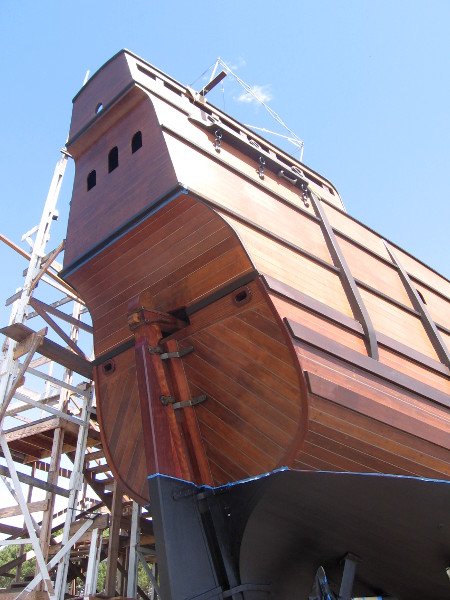
The high stern of San Salvador. The rudder is attached to a tiller. That propeller below (and eventual engine) is a modern convenience, unknown by Cabrillo!
The high stern of San Salvador. The rudder is attached to a tiller. That propeller below (and an eventual engine) is a modern convenience unknown by Cabrillo!
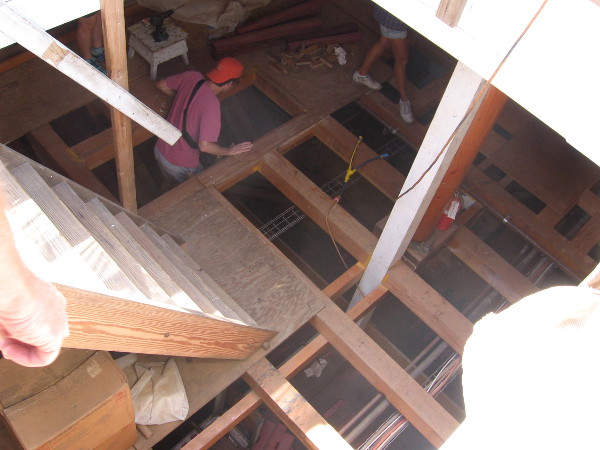
Our group climbed the steps of scaffolding to check out the hull, upper deck and aftcastle.
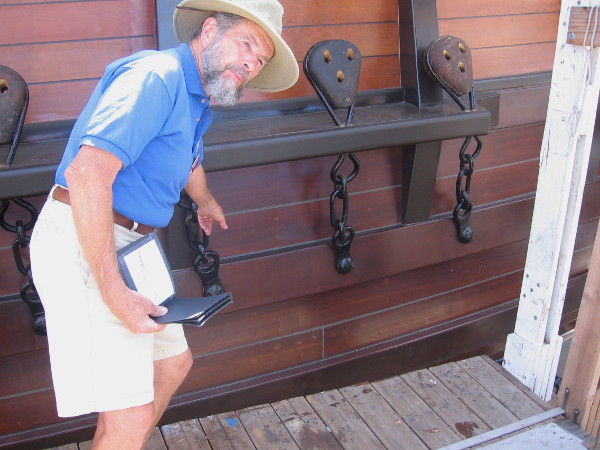
We're shown where the shrouds connect to the ship's side. The darker looking lower portion of the hull is made of hard wood, which is heavier than water.
We’re shown where a shroud connects to the ship’s side. The darker looking lower portion of the hull is made of hard wood, which is heavier than water.
We're almost on top!
We’re almost on top!
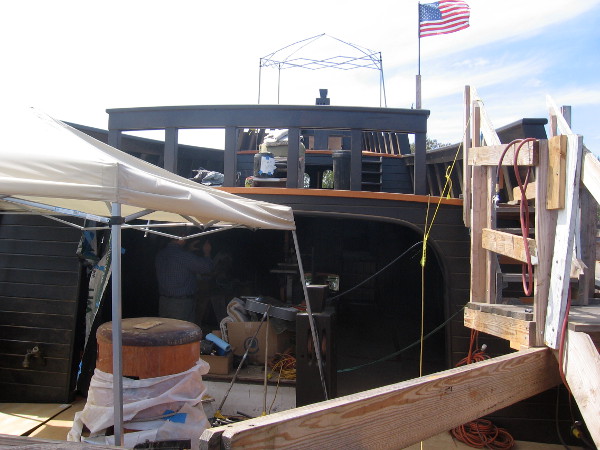
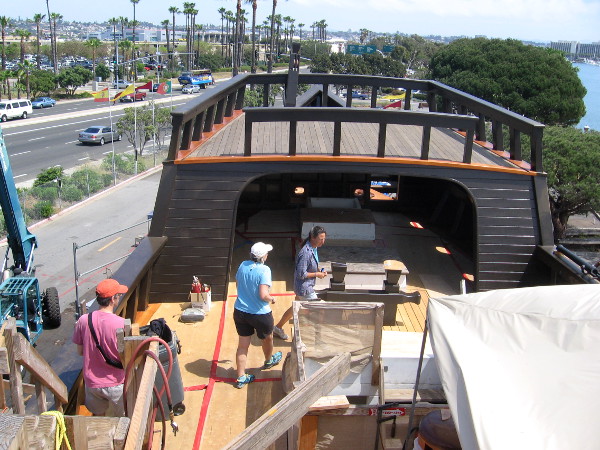
View of the San Salvador galleon while standing atop the aftcastle. Work to finish the vessel's deck and interior is underway.
View of the San Salvador galleon while standing atop the aftcastle. Work to finish the vessel’s deck and interior is underway.
This deck will be re-caulked this week using cotton, hemp rope and synthetic tar. Earlier caulking with less modern materials was unsuccessful, if I recall correctly.
This deck will be re-caulked soon using cotton, hemp rope and synthetic tar. Earlier caulking with less modern materials was unsuccessful, if I recall correctly.
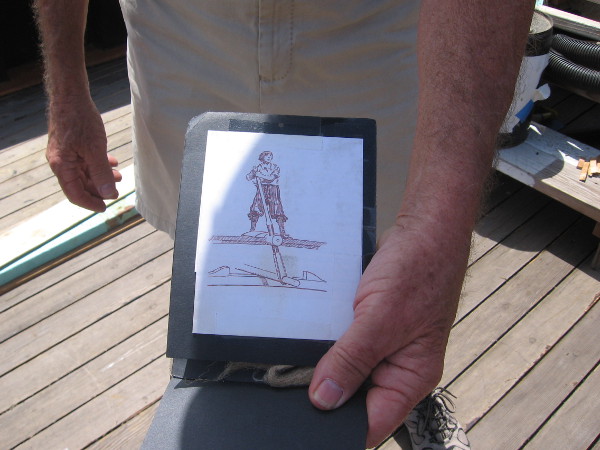
Sketch of helmsman steering the galleon with a vertical lever attached to the rudder's tiller. He had a window to look through in the aftcastle.
Sketch of helmsman steering the galleon with a vertical lever attached to the rudder’s tiller. He had a window to look through in the aftcastle.
Looking back at the aftcastle and rearmost poop deck from the center of the upper deck. You can see the window through which the helmsman peered.
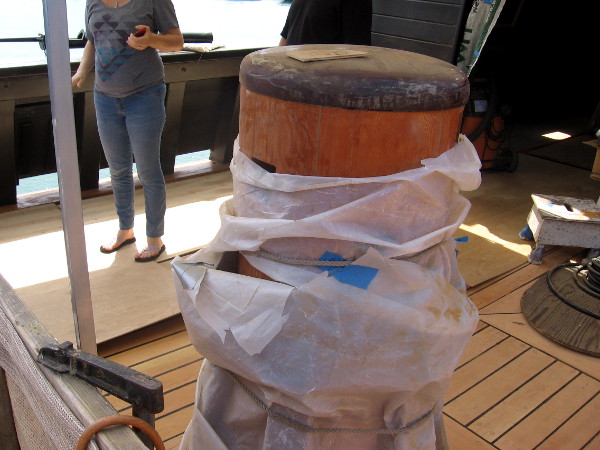
Capstan is a vertical timber that projects through the deck. Bars will be inserted and used by sailors to turn the capstan, hauling ropes or chains.
Capstan is a revolving vertical timber that projects through the deck. Bars will be inserted and used by sailors to turn the capstan, hauling ropes or chains.
This is one of five separate water-tight compartments being worked on below. Bunks will be contained here, for journeys out to the Channel Islands eventually.
Under the forecastle, looking toward the bow's beak. The two holes beside the rectangular chain locker are hawseholes, through which the anchor chain is lifted or lowered.
Under the forecastle, looking toward the bow’s beak. The two holes beside the rectangular chain locker are hawseholes, through which the anchor chain is lifted or lowered.
Looking straight down here you can see where the foremast and bowsprit are seated.
Wow! Is this cool! How often does one get to walk around an actual honest-to-goodness working galleon!

To enjoy future posts, you can “like” Cool San Diego Sights on Facebook or follow me on Twitter.
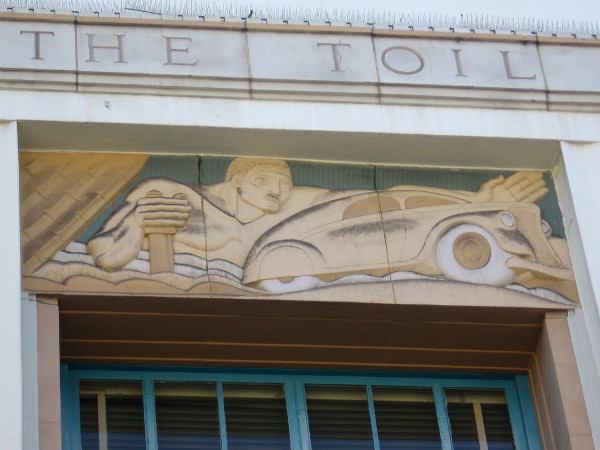
Art Deco car, train, ship and plane on Post Office.

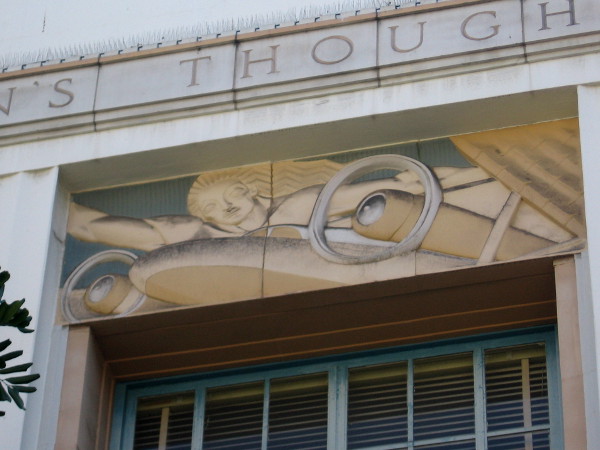
Art Deco relief work shows female above propellers of airplane.
Art Deco relief work shows female flying above propellers of airplane.

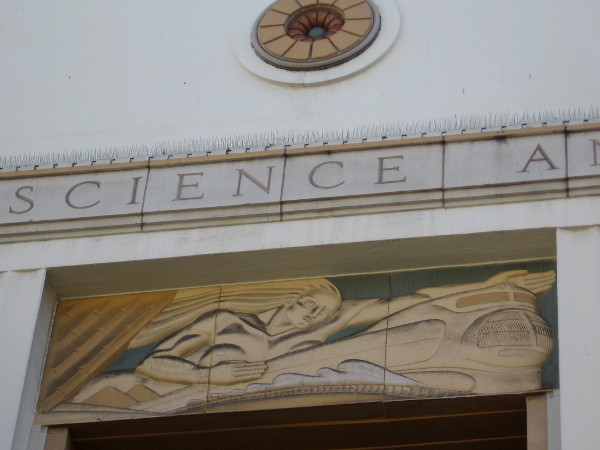
“Through science and the toil of patient men, the nation’s thought traverses land and air and sea.” Those are the words inscribed along the top of downtown San Diego’s Post Office, on E Street between 8th and 9th Avenue. Beneath the words are nine terra-cotta panels created by Archibald Garner in 1937. The Art Deco images include a car, train, ship and airplane, the means by which mail has been delivered over many decades, transmitting the written word across the nation and around the world.

Titled “Transportation of the Mail,” Garner’s handsome panels were the result of a Department of Treasury competition. Like most Post Office public art created during the New Deal, the work was funded through the Treasury Department’s Section of Painting and Sculpture, also known as The Section of Fine Arts. The post office itself was built by the Works Progress Administration (WPA) and stands across the street from the now closed old Central Library. You can see a few interesting photos of the library here.

View of San Diego's downtown Post Office from Ninth Avenue.
View of San Diego’s downtown Post Office from Ninth Avenue.
Ship cuts through ocean waves on its way to deliver the mail.
Steamship cuts through ocean waves on its way to deliver the mail.
Distinctive Art Deco train can be seen near roof of San Diego's old Post Office.
Distinctive Art Deco train can be seen near roof of San Diego’s old Post Office.
Historically interesting panels, which appear at the top of high windows.
Classic automobile in Art Deco artwork in downtown San Diego.
Classic automobile in Art Deco public artwork in downtown San Diego.

To enjoy future posts, you can “like” Cool San Diego Sights on Facebook. or follow me on Twitter.

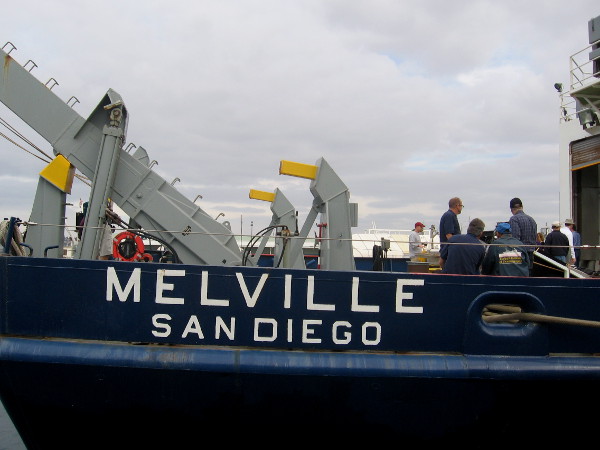
Photos aboard Scripps research vessel Melville!

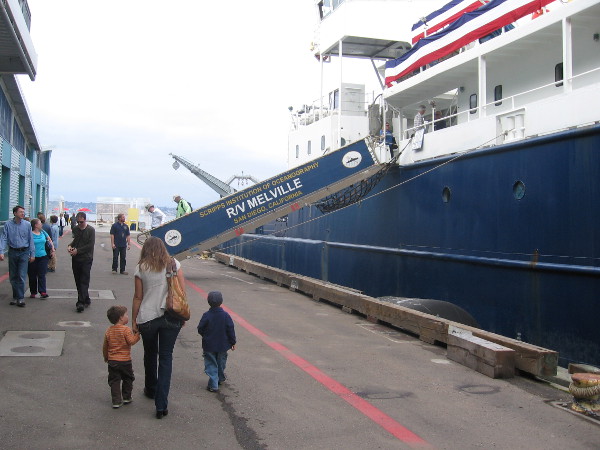
Ready to board R/V Melville from San Diego's Broadway Pier before the research ship is retired.
Ready to board R/V Melville from San Diego’s Broadway Pier before the research ship is retired.

The research ship Melville retired today. For five decades scientists aboard the ship helped to expand our understanding of the oceans, marine biology and planet Earth. I headed down to the Broadway Pier on San Diego’s Embarcadero this morning, because for one rare and final time the general public was invited to tour this legendary ship!

The R/V Melville, the oldest active ship in the University-National Oceanographic Laboratory System fleet of marine research ships, was launched by the Navy in 1969. Operated by the world-famous Scripps Institution of Oceanography in La Jolla, the vessel has undertaken 391 research cruises and steamed a total of 1,547,080 nautical miles. A fact sheet distributed to today’s visitors also notes that the Melville logged over 90 equator crossings and has hosted around 7,116 scientists from 237 institutions. That amounts to a lot of knowledge gained!

The amazing oceanographic research ship was named after George Melville, an arctic explorer and Rear Admiral in the United States Navy. One interesting fact: the ship was used in the filming of the 1976 movie King Kong!

I took these photos as I enjoyed this fascinating final tour of the ship. I hope my captions accurately describe what I saw. (If they don’t, please leave a comment!) Some of the interior shots are a bit blurry. I apologize.

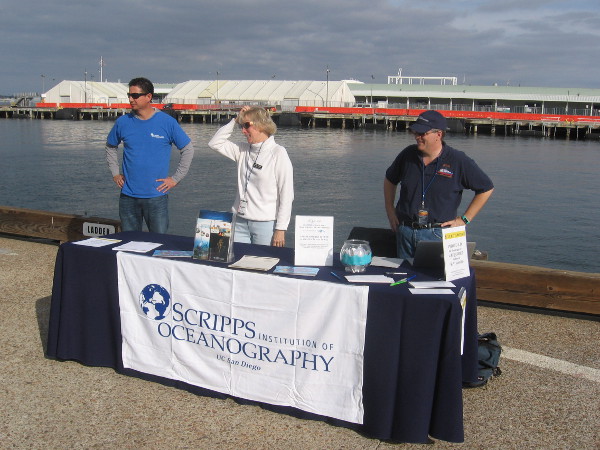
The Melville is operated by the Scripps Institution of Oceanography, part of UCSD in La Jolla.
One of many friendly, helpful people who've served on the history-making ship.
One of many friendly, helpful people who’ve served on the history-making ship.
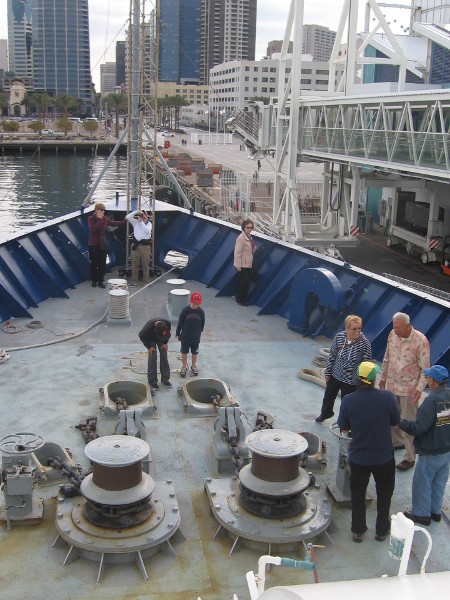
The tour started at the bow. Downtown San Diego skyline in background.
The tour started at the bow. Downtown San Diego skyline rises in the background.
Excited people climb up toward the pilot house of Melville.
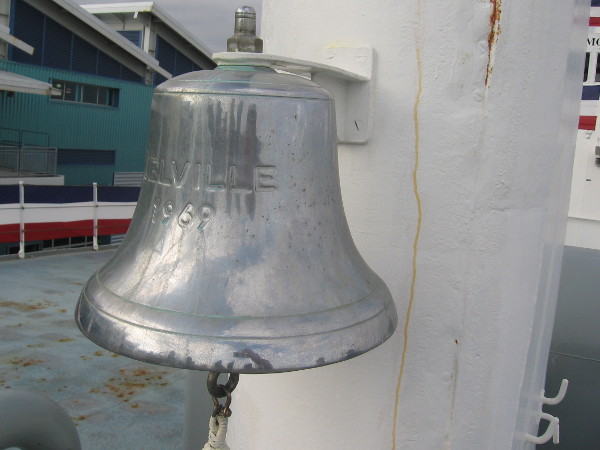
The shiny ship's bell!
The shiny ship’s bell!
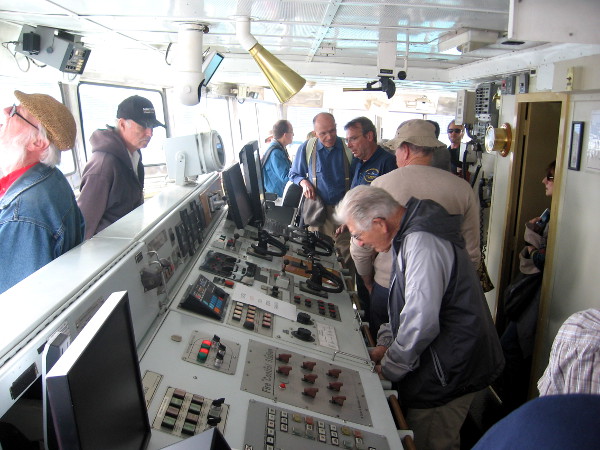
Huge number of buttons, knobs, switches and dials in the pilot house of Melville.
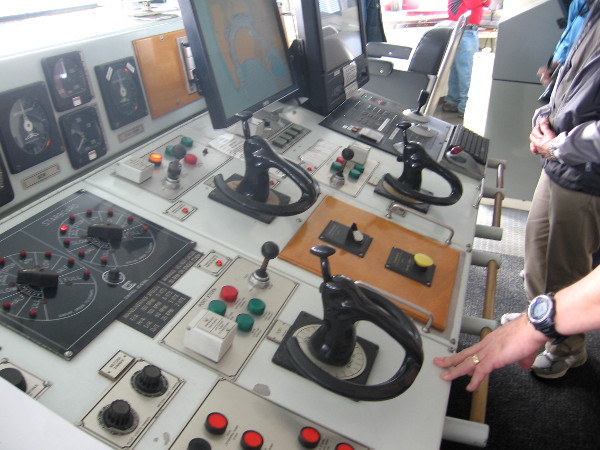
A second photo of the complicated ship control console.
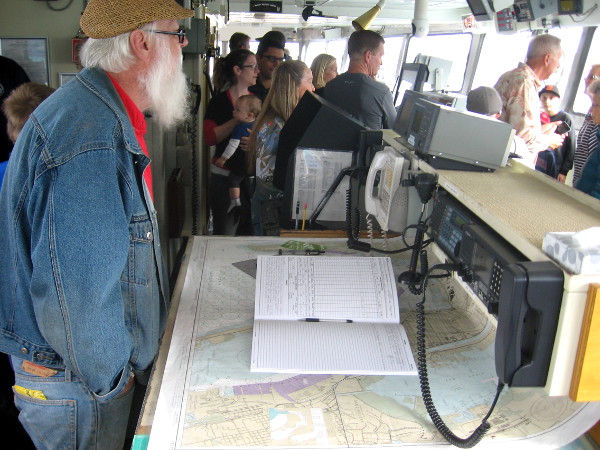
The ship's log is open on some navigational charts.
The ship’s log is open on some navigational charts.
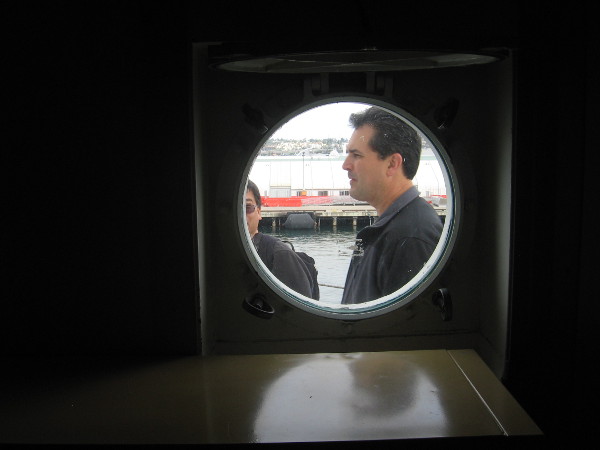
Looking out porthole from the chief scientist's quarters below deck.
Looking out porthole from the chief scientist’s quarters below deck.
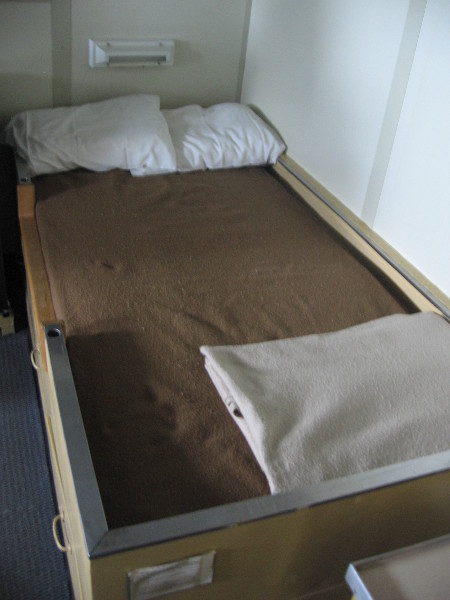
The chief scientist during research cruises slept here.
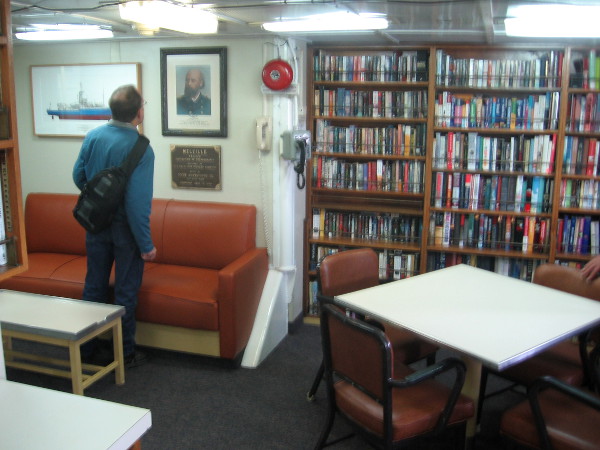
The library, lounge and study contain shelves of books and several interesting displays.
The library, lounge and study contains many shelves of books and several interesting displays.
Graphic in library depicts the R/V Melville.
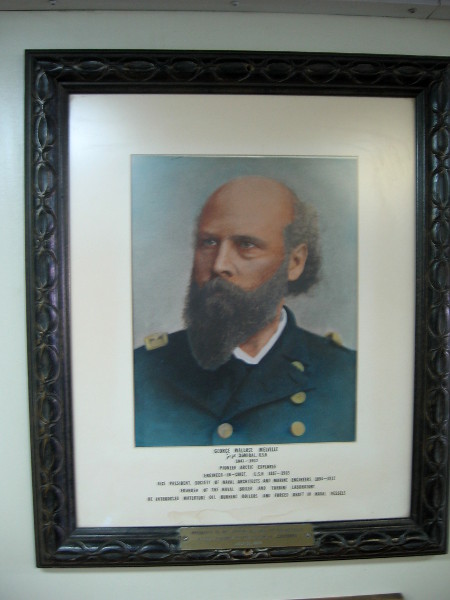
Portrait of George Wallace Melville, the ship's namesake.
Portrait of George Wallace Melville, the ship’s namesake.
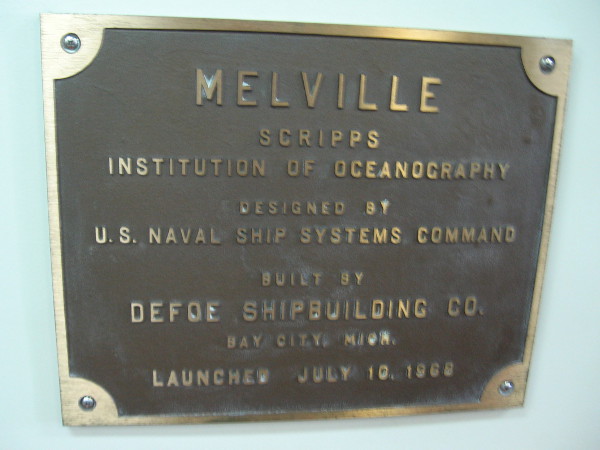
Bronze plaque commemorates the Melville's launch date in 1968.
Bronze plaque commemorates the Melville’s launch date in 1968.
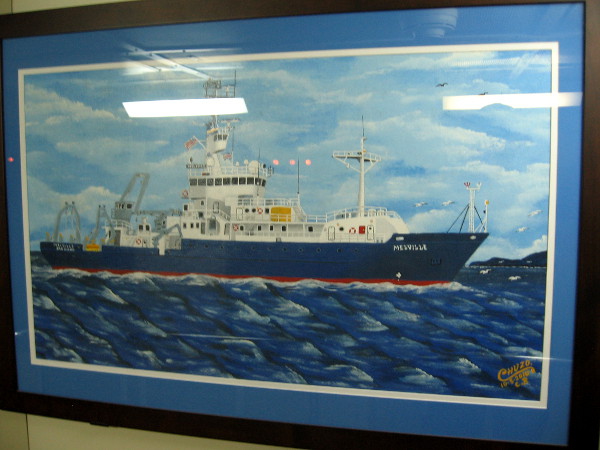
Painting by artist Chuzo of the Melville hangs in a corridor near some stairs below deck.
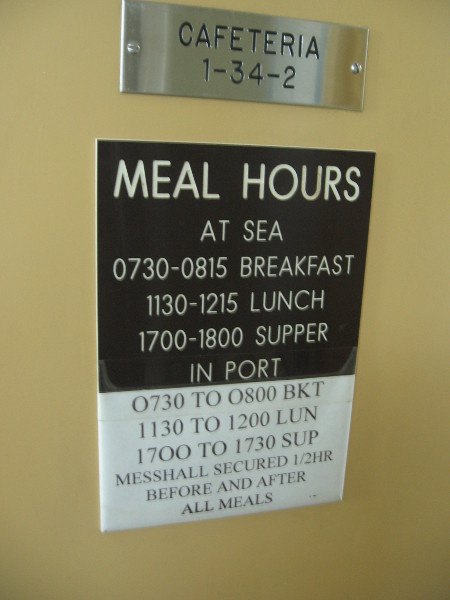
Meal hours are posted on door leading to the cafeteria.
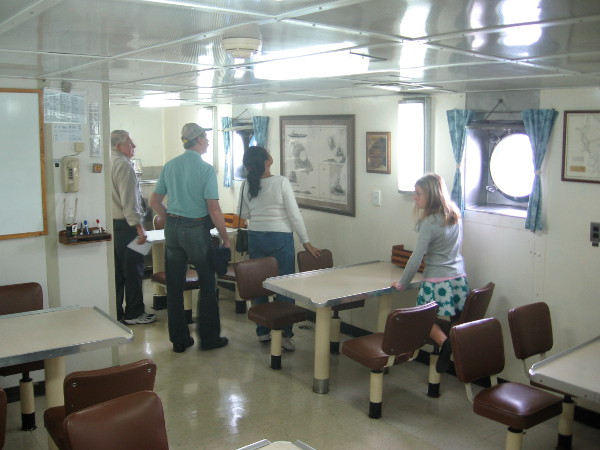
Visitors check out the mess hall where crew and research scientists enjoyed a break, to eat, talk and share knowledge.
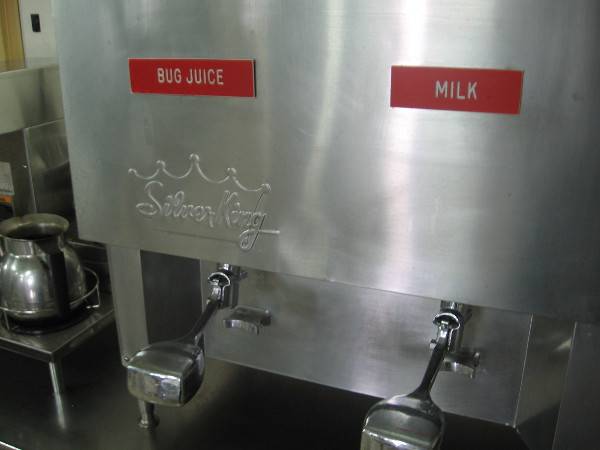
One can choose bug juice or milk. I'll take milk, please!
Hungry folks can choose bug juice or milk. I’ll take milk, please!
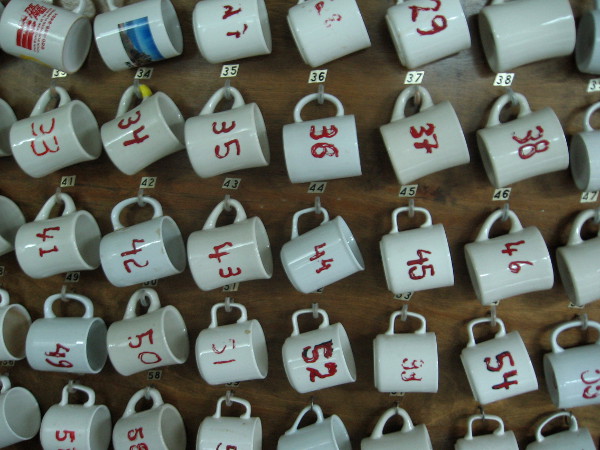
Numbered mugs on the mess hall wall. Number 1 belongs to the captain.
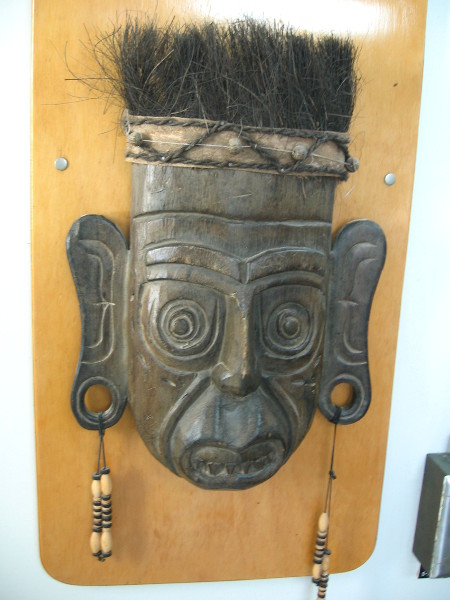
Several masks, ethnic artifacts and marine objects decorate the walls of the cafeteria.
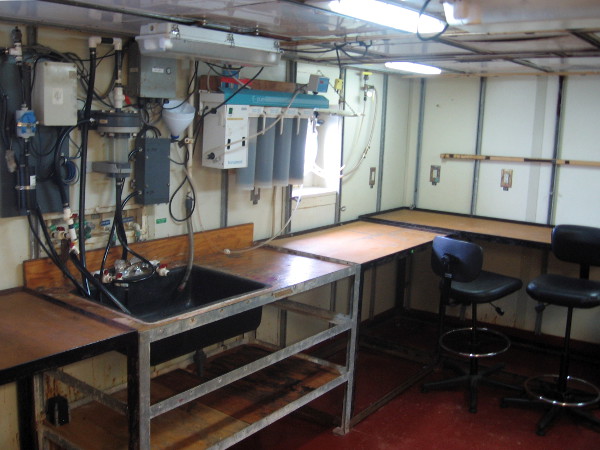
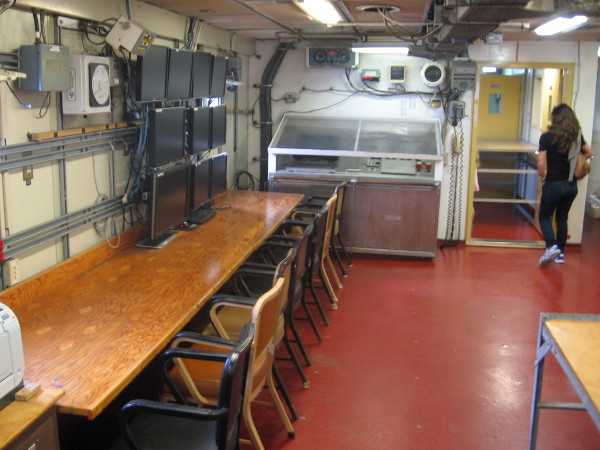
A look at a shipboard laboratory where various materials could be analyzed.
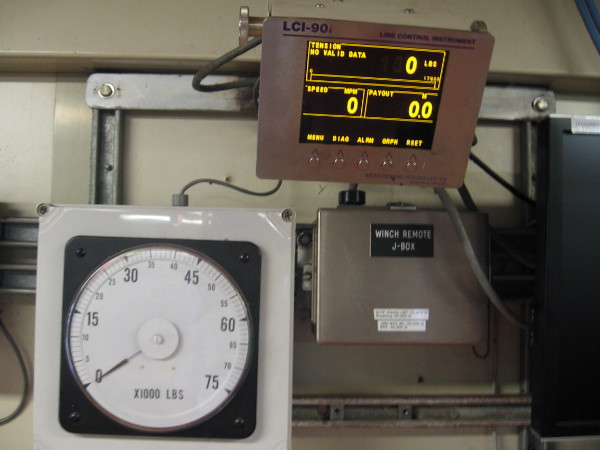
At the photo's center is a winch control. Video monitors help scientists visualize their work underwater.
At the photo’s center is a winch control. Video monitors help scientists visualize their work underwater.
Gauge registers up to 75,000 pounds of tension!
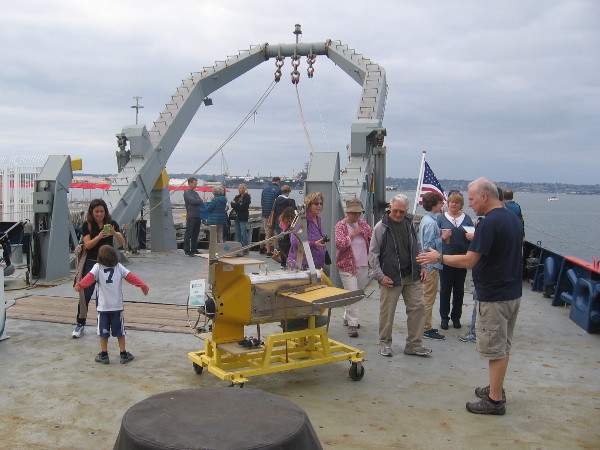
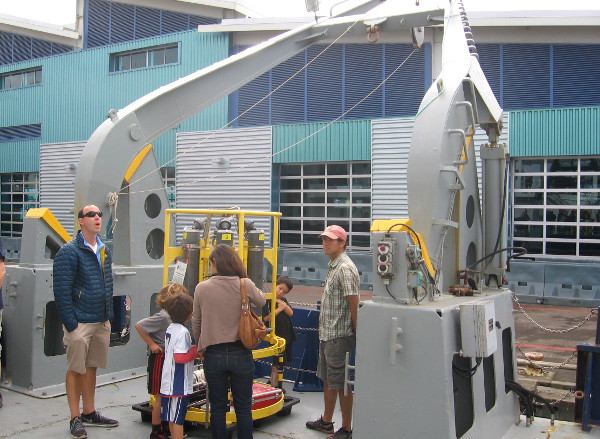
Massive A-frame at stern of Melville. The working deck contains exhibits for people to check out.
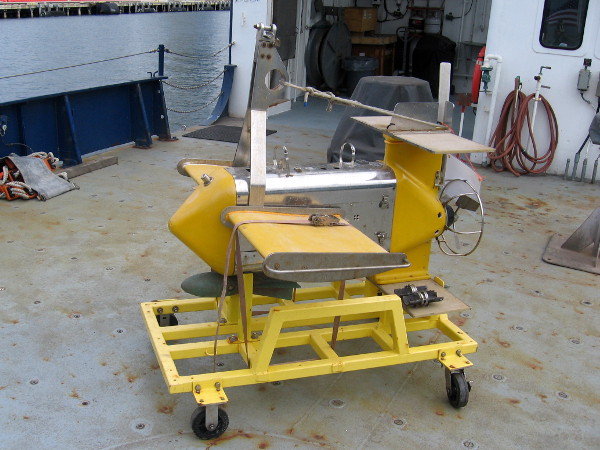
Sea Soar is an undulating towed vehicle used to collect real-time information, from the sea surface to a depth of 400 meters.
This outdoor area can be closed off during rough weather so that work can be performed when conditions are poor.
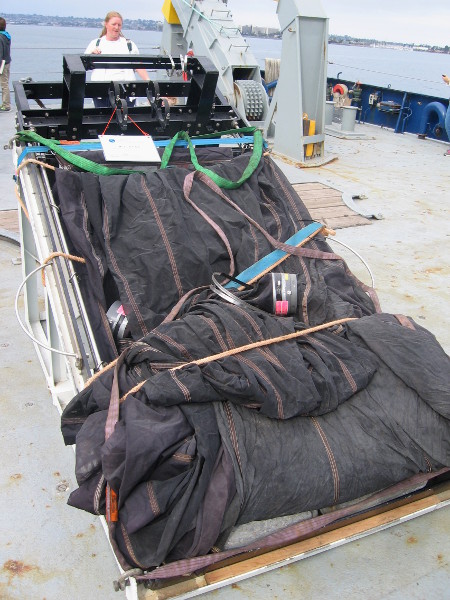
M.O.C.N.E.S.S. Multiple Opening/Closing Net and Environmental Sensing System allows oceanographers to catch zooplankton and measure environmental properties like salinity and temperature
M.O.C.N.E.S.S. Multiple Opening/Closing Net and Environmental Sensing System allows oceanographers to catch zooplankton and measure environmental properties like salinity and temperature.
Kids examine a rock dredge, used for the recovery of heavy material on the ocean floor.
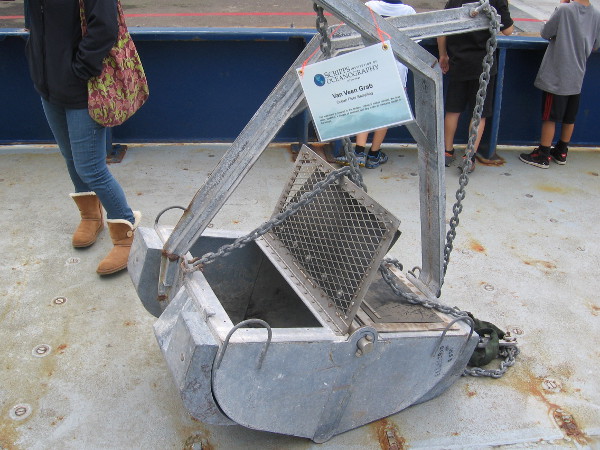
Van Veen Grab for ocean floor sampling. When it hits bottom, the jaws close and grab a sample of sediment, rocks and creatures.
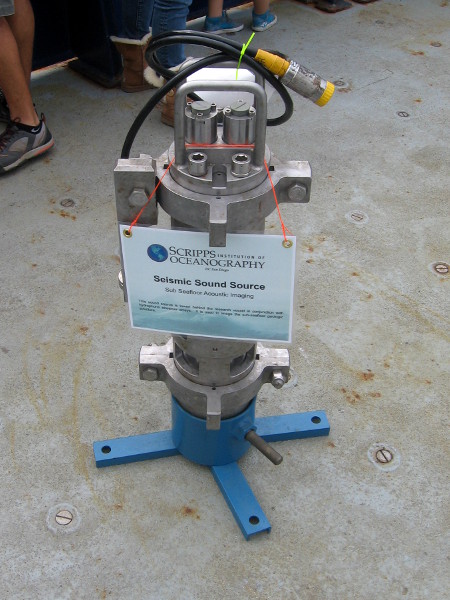
Seismic Sound Source for sub seafloor acoustic imaging. Towed behind research vessel in conjunction with hydrophone streamer arrays to image the sub-seafloor geologic structure.
Heavy machinery available on the complex ship includes multiple winches, cables, cranes.
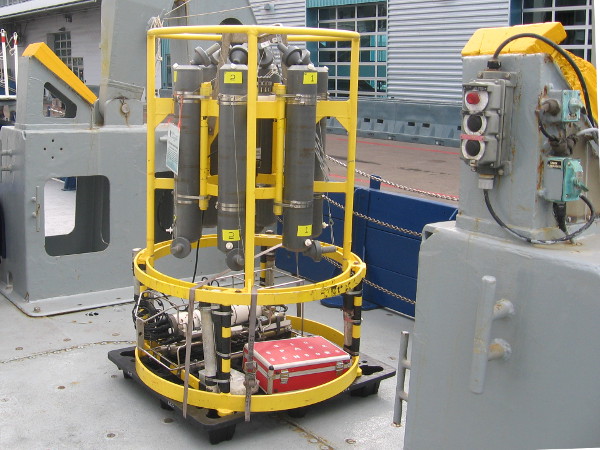
Ocean probe with multiple sensors near an A-frame at ship's side, where it might be lowered by cable into the water.
Ocean probe with multiple sensors near an A-frame at ship’s side, where it might be lowered by cable into the water.
CTD and Water Sampling Rosette measures conductivity, temperature and depth with a variety of sensors. Other chemical and biological parameters can also be measured.
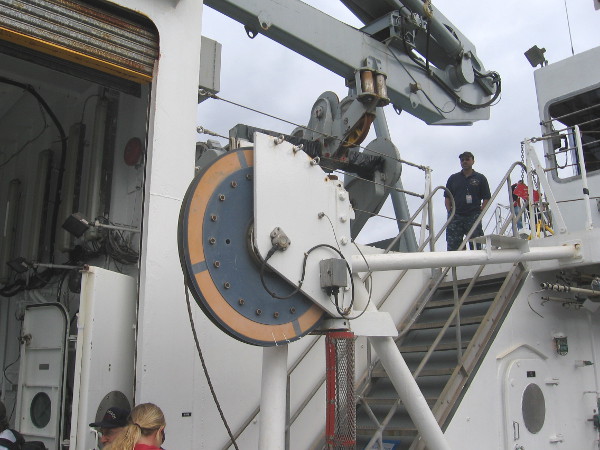
The super strong cable runs from here to one of two A-frames, where equipment can be towed or lowered.
One of many powerful winches on the research vessel Melville.
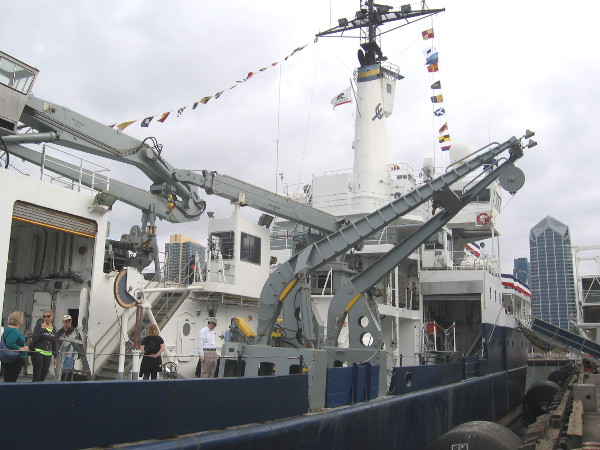
View from Broadway Pier of A-frame jutting from the Melville's side.
View from Broadway Pier of A-frame jutting from the Melville’s side.
Farewell RV Melville. The human race learned much during your decades of service!
Farewell R/V Melville. The human race learned much during your many decades of service!

To enjoy future posts, you can “like” Cool San Diego Sights on Facebook or follow me on Twitter.

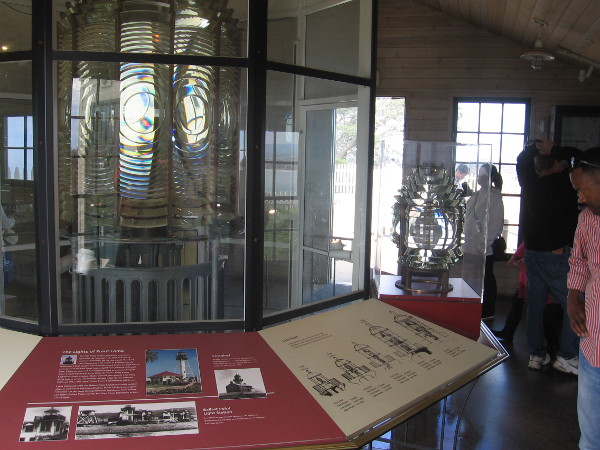
Fresnel lens in Old Point Loma Lighthouse museum.

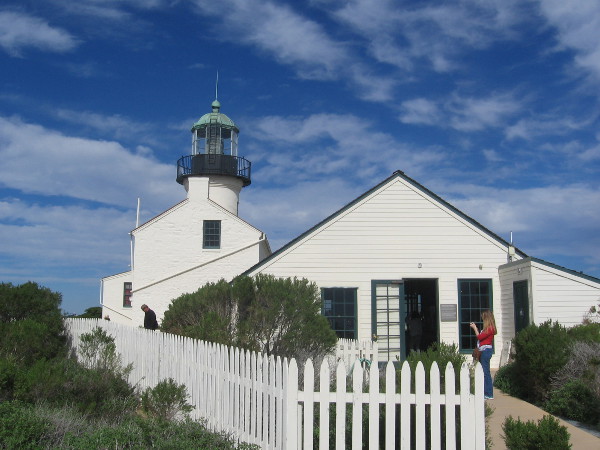
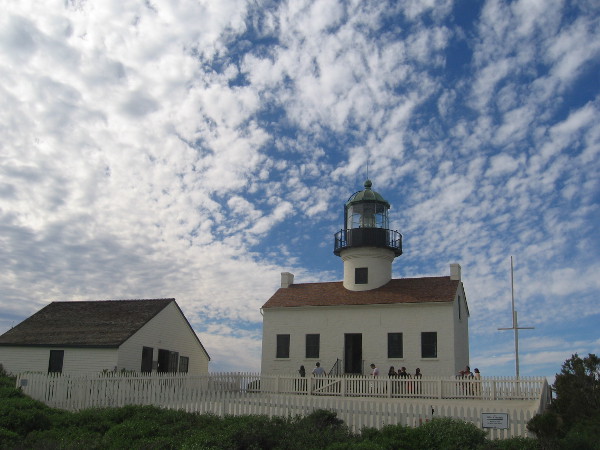
Looking up at the Old Point Loma Lighthouse in Cabrillo National Monument.

Everyone likes to explore the Old Point Loma Lighthouse. You can climb up the winding staircase and peer into several interesting rooms where the lighthouse keeper and his family lived. But the small museum in the nearby assistant keeper’s quarters contains the true marvels of science and art. Come inside and let us have a quick look!

The assistant keeper's quarters next to the lighthouse today contains a small museum.
The assistant keeper’s quarters next to the lighthouse today contains a small museum.
Sign outside lighthouse shows huge Fresnel lens which guided ships with focused light 400 feet above sea level.
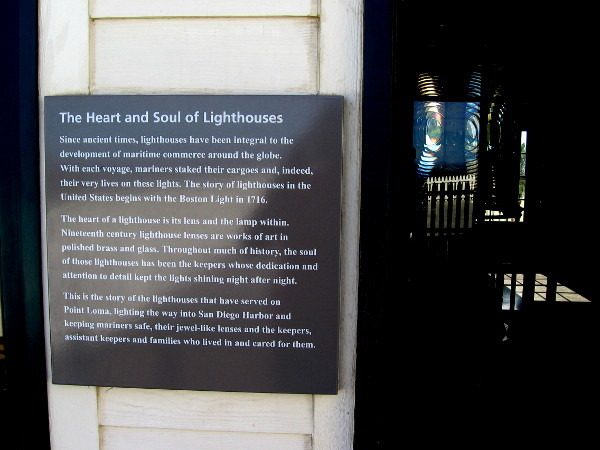
The heart of a lighthouse is the lens and lamp. 19th century lenses are works of art made of polished brass and glass.
Sign at entrance to museum.  The heart of a lighthouse is the lens and lamp. 19th century lenses are works of art made of polished brass and glass.

The highly polished Fresnel lenses utilized by lighthouses are beautiful objects. They refract and reflect light, creating prismatic colors when viewed from certain angles. It’s almost a miracle that a small flame in a lamp can be magnified to the extent that ships far out at sea can easily see it and be guided to safety. Light intensified by lenses in this museum could be seen 18 to 24 miles away!

This 3rd Order Fresnel lens was used by the New Point Loma Lighthouse, built in 1891 down by the water.
An optical wonder, this huge lens is an amazing, highly polished light bender.
Diagram shows how a complex Fresnel lens functions.
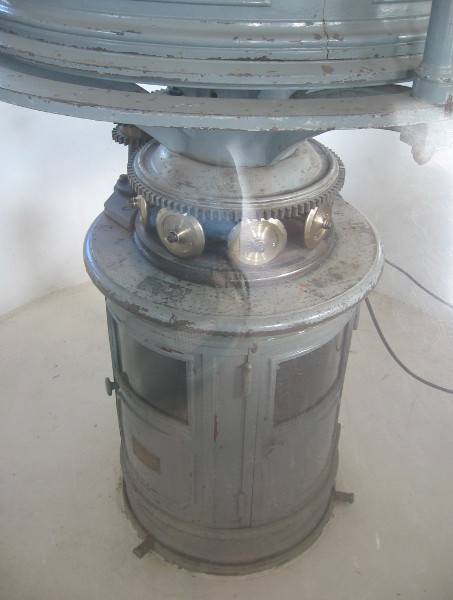
The base of the heavy Fresnel lens with chariot wheels visible.
There are different orders of size, as illustrated in this display.
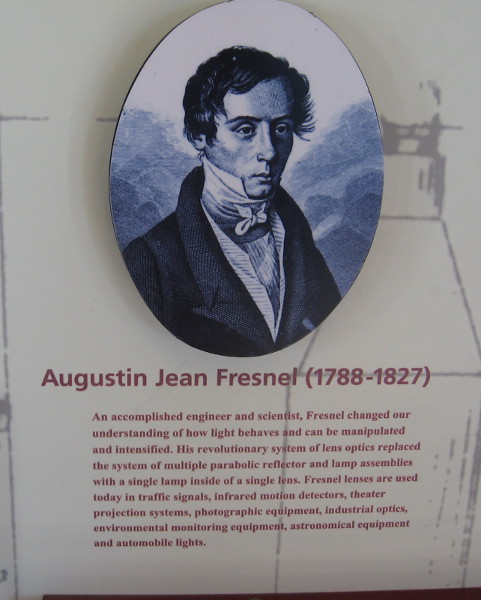
Augustin Jean Fresnel (1788-1827) was an accomplished engineer and scientist. Fresnel lenses are used in many modern applications today.
Small museum by Old Point Loma Lighthouse contains various very cool exhibits.
This small 5th Order lens lighted the Ballast Point Lighthouse from 1890 to 1960.
Log book of daily expenditures for oil, wicks and chimneys.
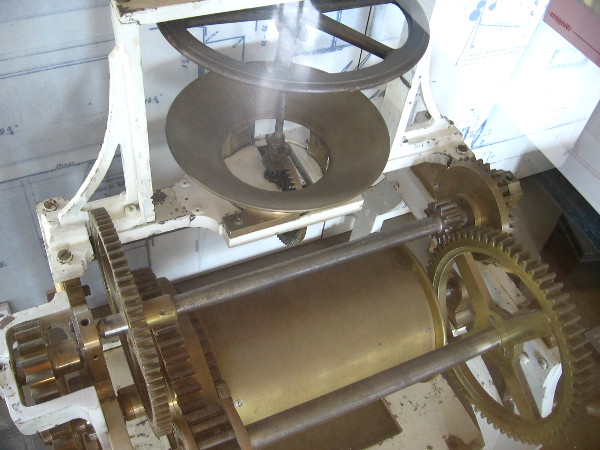
This clockwork of gears slowly turned the light above.
The keeper's service box contained cleaning supplies and delicate tools for maintaining the lamp.
The keeper’s service box contained cleaning supplies and delicate tools for maintaining the lamp.
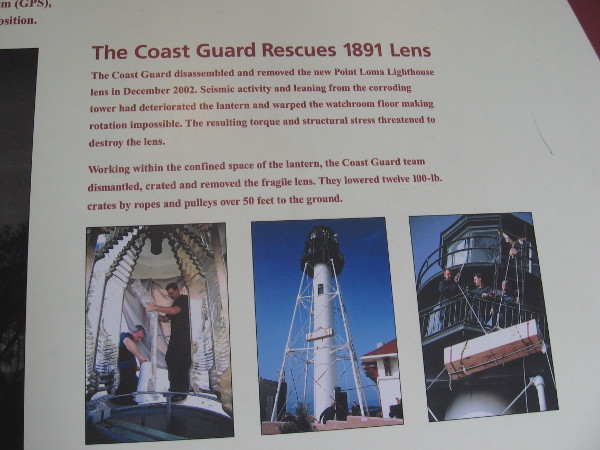
The Coast Guard removed this large Fresnel lens from the New Point Loma Lighthouse in 2002.
Looking at the iconic Old Point Loma Lighthouse and small museum beside it.

To enjoy future posts, you can “like” Cool San Diego Sights on Facebook or follow me on Twitter.

Yankee Baleeiros whaling exhibit opens at Cabrillo.

Looking out the rear of the Cabrillo National Monument Visitor Center on a beautiful day.

I saw on the morning news that an important exhibit was opening today in the Cabrillo National Monument Visitor Center. I haven’t been up that way since I blogged about the park’s centennial, so I figured I’d go check things out!

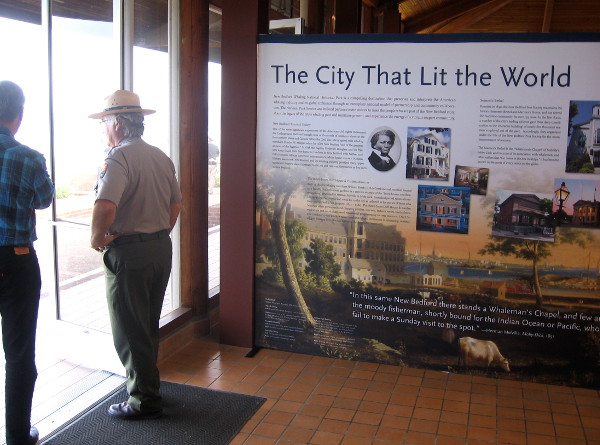
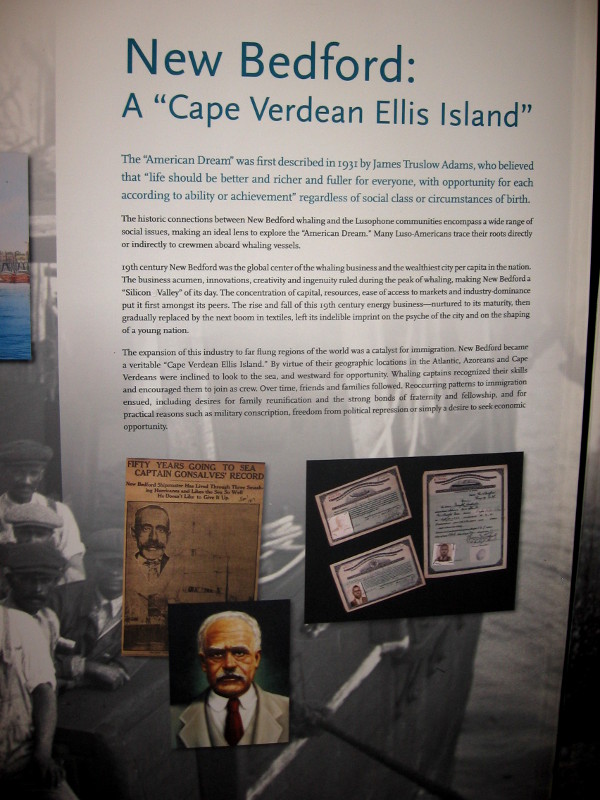
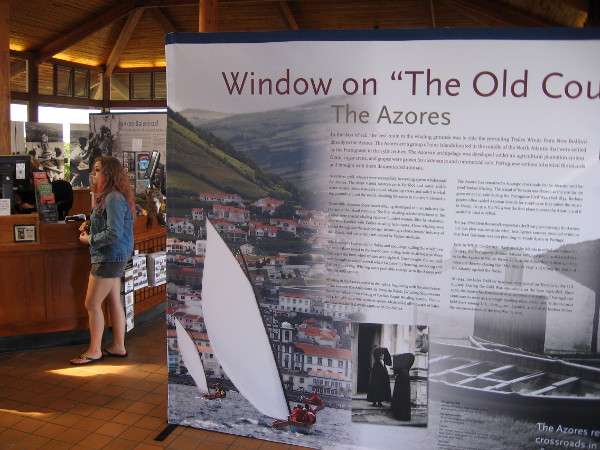
The traveling exhibition is called Yankee Baleeiros! The Shared Legacies of Luso and Yankee Whalers. That’s quite a long title, but it’s fitting for the epic displays that occupy about half of the sizable visitor center. Developed by the New Bedford Whaling Museum, the exhibit “celebrates the interwoven Luso-American stories of the Azorean, Cape Verdean, and Brazilian communities in the United States from early immigration in the 18th century through the latter half of the 20th century.” Sounds like a long and tedious thesis! But it’s actually fascinating! Basically, it shows the rich history of Portuguese speaking whalers in the Northeast, primarily New Bedford, and how they interacted with Yankee whalers.

As San Diego is one of the world’s best places to encounter a large variety of whale species, and as this is the season for migrating gray whales, the exhibit is more than appropriate. The displays also address how whaling techniques evolved over the years, the success of modern conservation efforts, and how whale-watching is now a much larger industy than whaling.

After listening to a short opening presentation by Park Superintendent Tom Workman and Christina Connett, PhD, Curator of Collections and Exhibitions at the New Bedford Whaling Museum, I headed out to Cabrillo’s excellent Pacific Ocean viewing areas to scan the horizon for spouts. I didn’t see any, but there were a bunch of boats off Point Loma whale-watching on this sunny Sunday afternoon. I got more pics from my visit coming, so stay tuned!

If you haven’t been to Cabrillo National Monument in a while (or ever), head on over! The special exhibit will be on display through April 12, 2015.

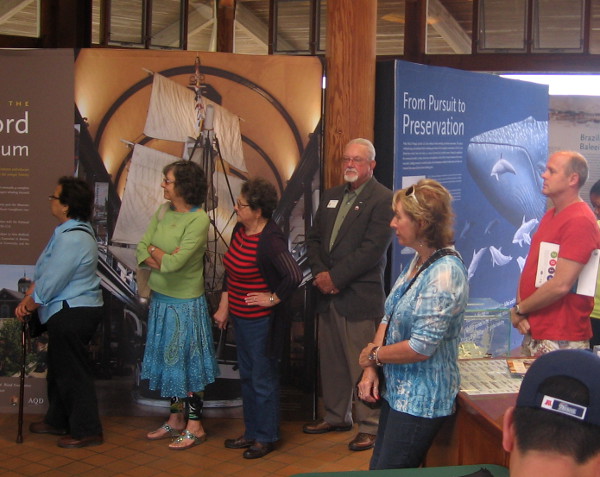
Park Superintendent Tom Workman talks while Christina Connett of the New Bedford Whaling Museum listens.
People listen to presentation at opening of Yankee Baleeiros whaling exhibit.
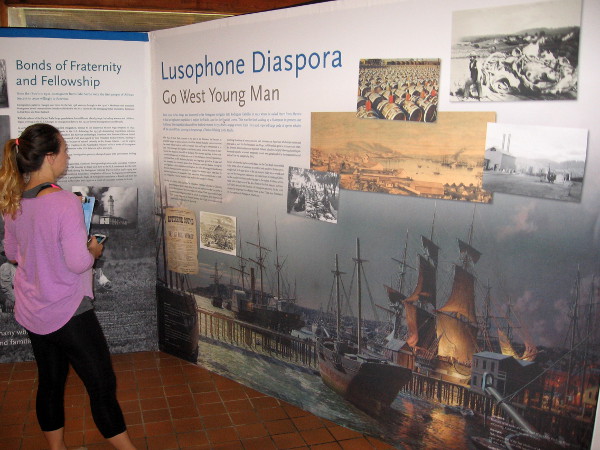
Displays recount the history of Lusophone (Portuguese-speaking) whalers in America.
New Bedford was the major port for whalers in the Northeast.
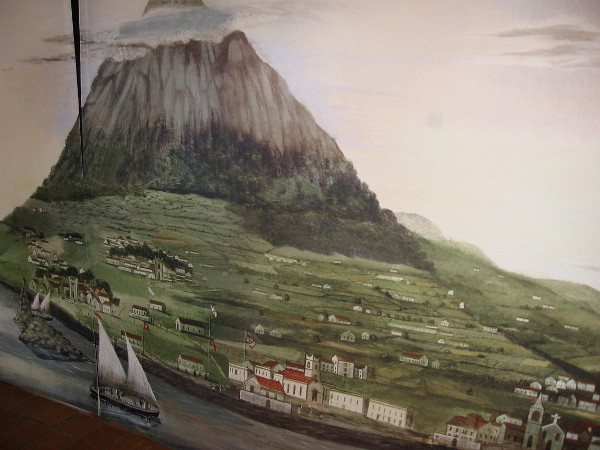
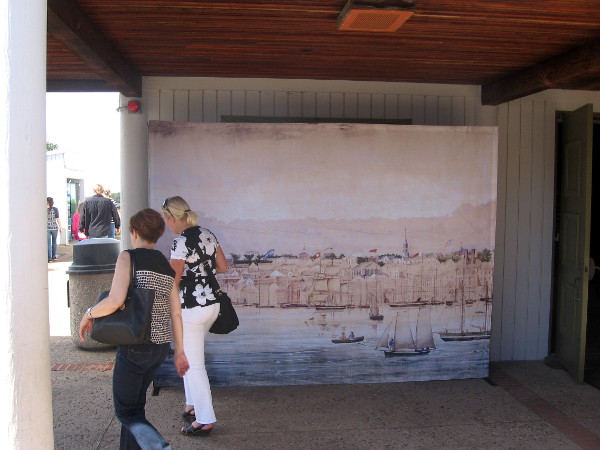
Inside the visitor center is a section of the 1848 Grand Panorama of a Whaling Voyage ‘Round the World by Benjamin Russell and Caleb Purrington.

Portions of the 1848 Grand Panorama of a Whaling Voyage ‘Round the World by Benjamin Russell and Caleb Purrington were on display inside and outside the visitor center. The complete work is 1,275 feet long and eight and a half feet tall! It’s believed to be the longest painting in the world! The piece went on a national tour shortly after completion, and appeared at the 1964 New York World’s Fair! Cool!

The fantastic displays are museum quality and extremely informative.
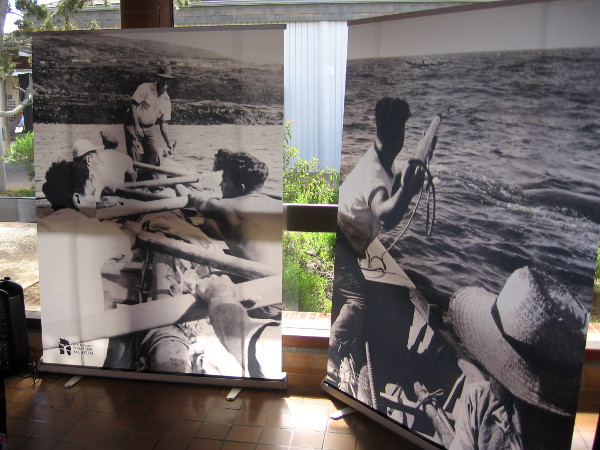
Photos of sailors rowing out to hunt whales, and a harpooner at the ready.
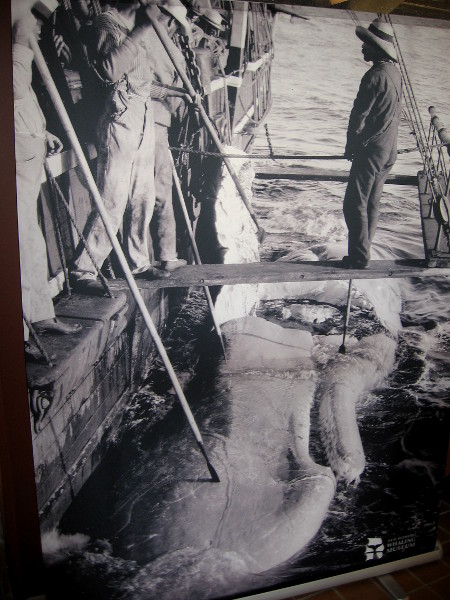
A dead whale is hauled to the ship's side and stripped of blubber by many hands.
A dead whale is hauled to the ship’s side and stripped of blubber by many hands.
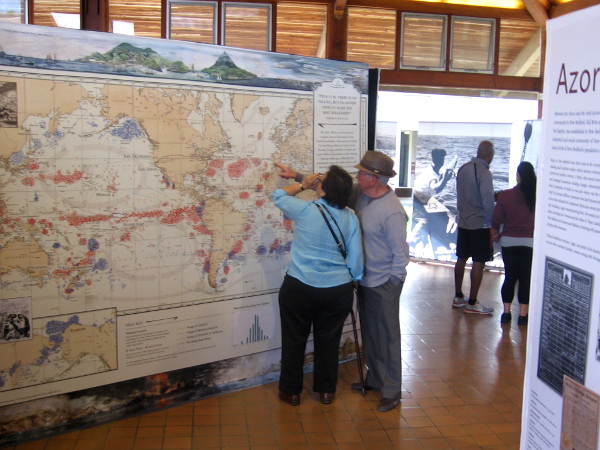
People point out spots on a map of historical whaling grounds.
The opening presentation is over and folks head out to take in the many sights around Cabrillo.
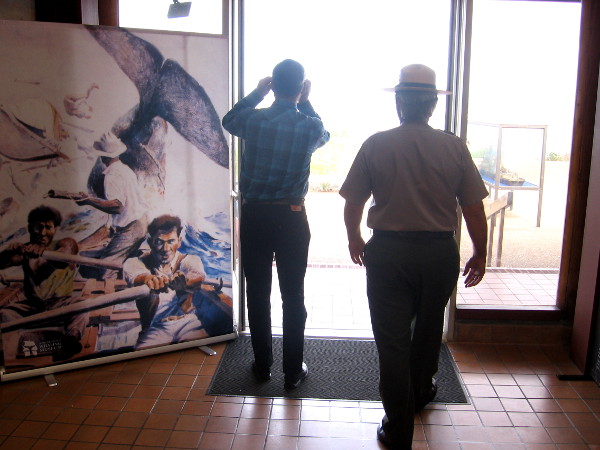
Is there a whale out there? Probably not. This back door faces San Diego Bay!

To enjoy future posts, you can “like” Cool San Diego Sights on Facebook or follow me on Twitter.
Float your boat on San Diego Bay!

Fishermen enjoy a day on San Diego Bay with downtown skyline in background.

I made a discovery last weekend as I searched through hundreds of old pics on my computer. It seems I really like to photograph anything that floats in San Diego Bay! There’s just something very striking about purposeful objects that move across the sparkling water. Here’s a variety of photos…

Ferry approaches Coronado while navigating past other ships and boats.
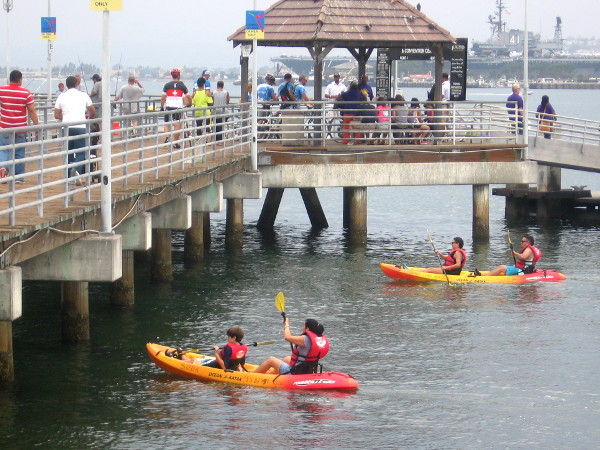
Kayakers paddle under the Coronado Ferry Landing pier.
Kayaker checks out the water underneath Joe's Crab Shack.
Kayaker checks out the water underneath Joe’s Crab Shack.
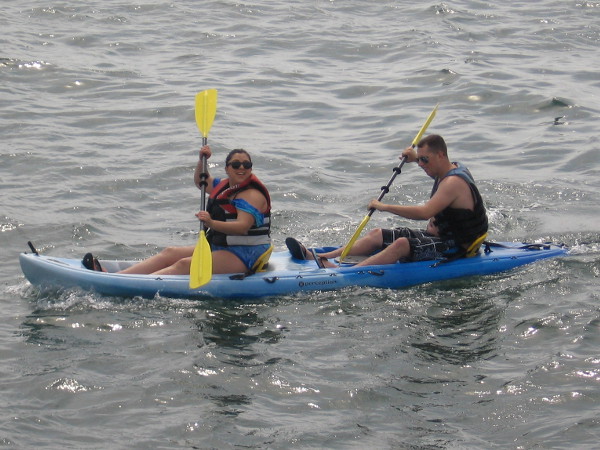
Paddling away on San Diego Bay. Looks like a fun adventure!
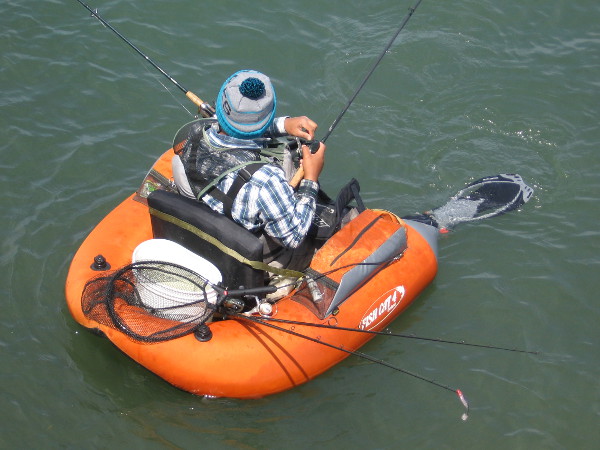
Guy in small inflatable with bucket, net and fishing rods hopes to catch something.
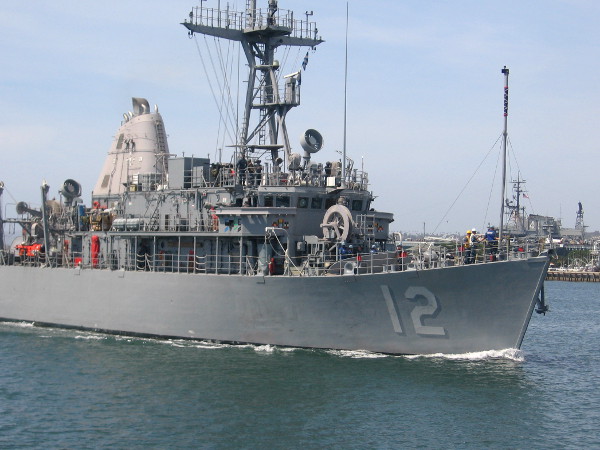
USS Ardent (MCM-12) mine countermeasures Navy ship cruises along the bay.
Huge Dole cargo ship brings in millions of bananas from Central America.
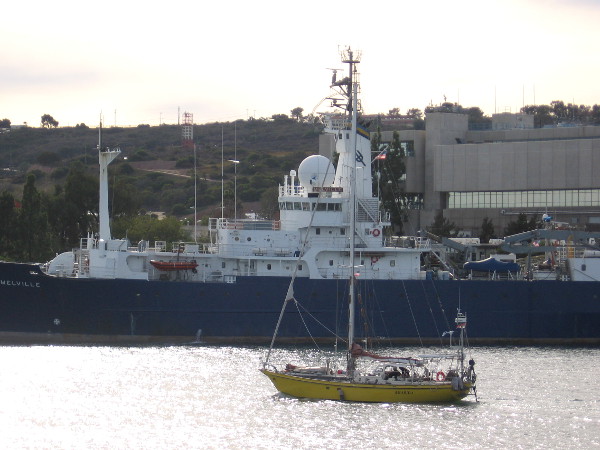
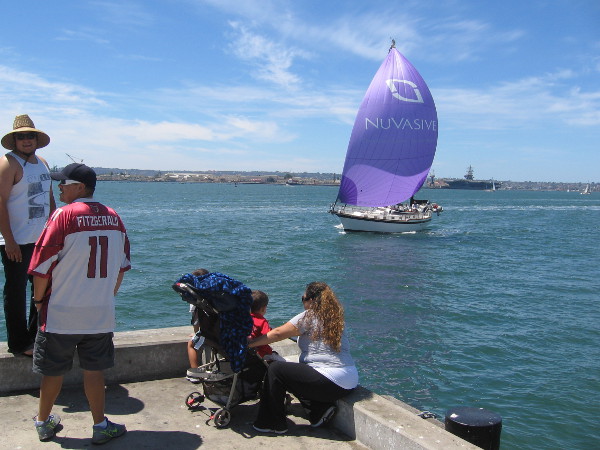
Sailboat heads out from Shelter Island Yacht Basin past Scripps research ship Melville.
Billowing sail is colorful under San Diego blue sky.
Man casts from shore of Shelter Island, hangars on North Island in the background.
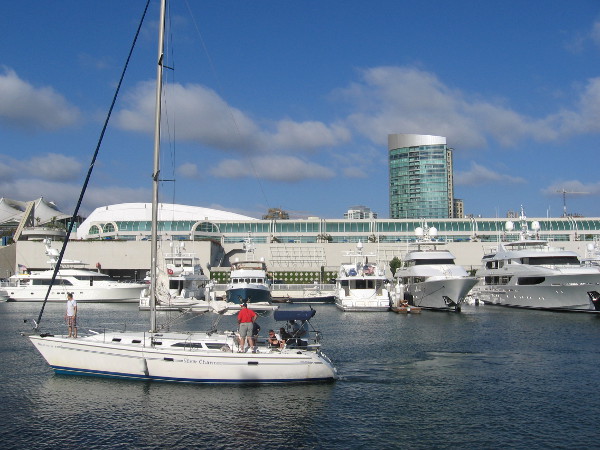
A bunch of beautiful yachts in a row behind the San Diego Convention Center.
Boats docked in large marina between Harbor Island and Spanish Landing.
Maritime Museum of San Diego's Swift Boat, PCF-816, returns from a harbor cruise.
Maritime Museum of San Diego’s Swift Boat, PCF-816, returns from a harbor cruise.
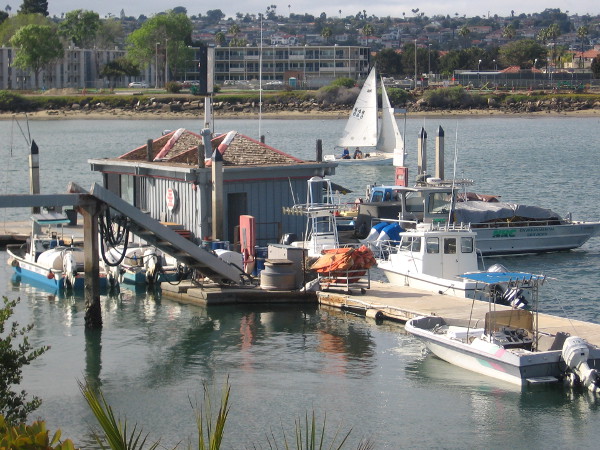
The Harbor Island Fuel Dock is always a hub of boating activity.
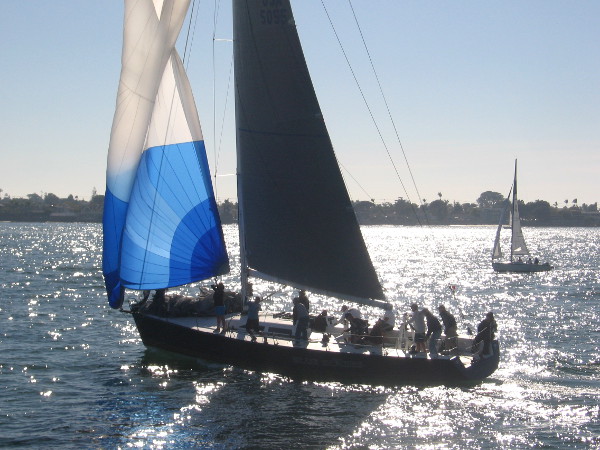
Sailboat leans on sparkling water of our endlessly fascinating big bay.
Sailboat leans on the sparkling water of our endlessly fascinating Big Bay.

To enjoy future posts, you can “like” Cool San Diego Sights on Facebook. or follow me on Twitter.

Aircraft Carrier Memorial on San Diego Bay.

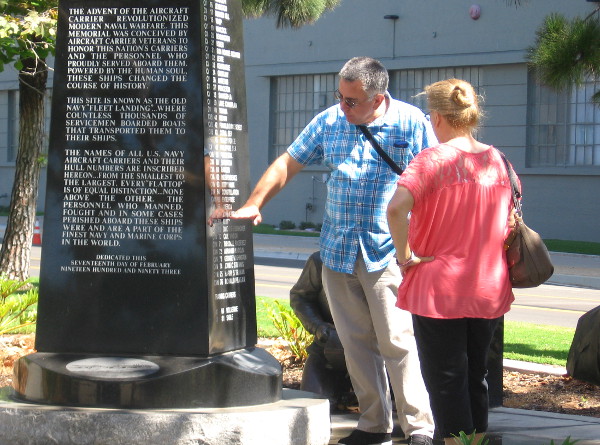
Man points out a recent fleet carrier name on the Aircraft Carrier Memorial.

Take a stroll down the Greatest Generation Walk on San Diego’s Embarcadero and you’re likely to see people standing beside the Aircraft Carrier Memorial, just gazing at the long list of historic Navy ships. Many will run their hand along the black marble obelisk as they search for the ship on which they or a loved one served.

The listed names include every fleet carrier, training carrier, light carrier, escort carrier, and amphibious assault ship from American history. Well, almost. I’ve noticed the fleet carrier section has run out of space, and the last ship named is the Ronald Reagan (CVN-76). No room remains to engrave the more recent USS George H.W. Bush (CVN-77).

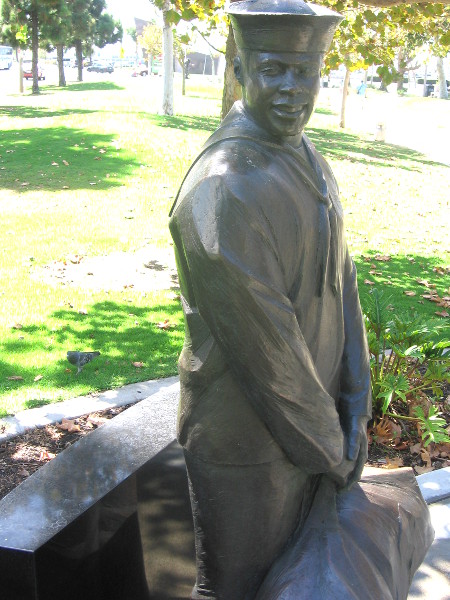
Sculpture of a sailor who served aboard a flattop.
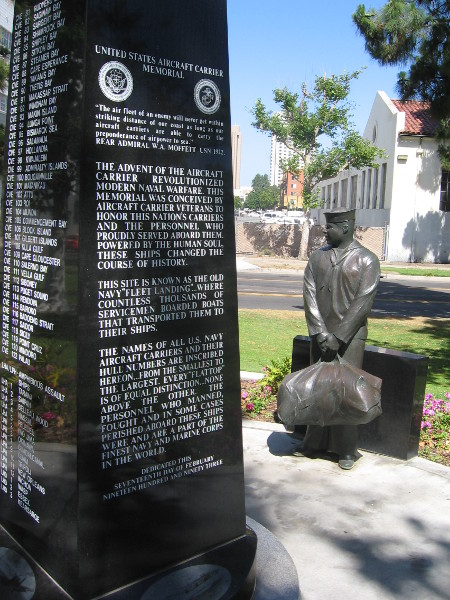
Obelisk of Aircraft Carrier Memorial remembers past ships from history.
Obelisk of Aircraft Carrier Memorial remembers past ships from naval history.

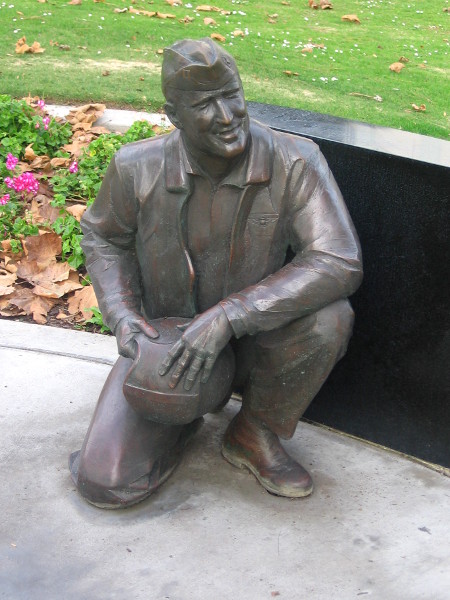
The memorial, whose bronze figures were sculpted by artists T.J. Dixon and James Nelson, contains the following words:

The advent of the aircraft carrier revolutionized modern naval warfare. This memorial was conceived by aircraft carrier veterans to honor this nation’s carriers and the personnel who proudly served aboard them. Powered by the human soul, these ships changed the course of history.

This site is known as the old navy “fleet landing”…where countless thousands of servicemen boarded boats that transported them to their ships.

The names of all U.S. Navy aircraft carriers and their hull numbers are inscribed hereon…from the smallest to the largest. Every “flattop” is of equal distinction…none above the other. The personnel who manned, fought and in some cases perished aboard these ships were and are a part of the finest Navy and Marine Corps in the world.

Sculpture of a naval aviator who flew from a carrier.
The Aircraft Carrier Memorial can be found on San Diego's Greatest Generation Walk.
The Aircraft Carrier Memorial can be found on San Diego’s Greatest Generation Walk.

The Greatest Generation Walk is located on San Diego Bay, just south of the USS Midway Museum.

To enjoy future posts, you can “like” Cool San Diego Sights on Facebook or follow me on Twitter.

World’s largest single-masted yacht in San Diego!

Mirabella V is the largest single-masted yacht in the world! It's gigantic!
Mirabella V is the largest single-masted yacht in the world! It’s gigantic!

I had to blink my eyes a couple times during my walk today. I was behind the San Diego Convention Center, where lots of visiting super yachts are docked, and I couldn’t believe what I was seeing.

That huge ship in front of me looked like the largest sailboat on planet Earth!

As it turned out, my first impression wasn’t far from the truth!

A little searching on the internet proved that I had spotted the Mirabella V (today more commonly called M5), a sloop-rigged super yacht launched in 2003. Registered in the Isle of Man, it’s the largest single-masted yacht ever built. It’s 292 feet high! That’s almost the height of a 30-story skyscraper! It’s so tall, it won’t fit under any bridge accessible from the ocean. Not even the Golden Gate Bridge!

It’s hard to appreciate the mind-boggling immensity of this amazing vessel with these quick pics, but I thought they were worth sharing anyway.

You never know what extraordinary thing you’ll encounter during an ordinary stroll!

People walk past huge boat docked behind convention center.
A cool, unexpected sight. Mirabella V is visiting San Diego on this sunny October day.
An unexpected sight. Mirabella V is visiting San Diego on a sunny October day.

Here are a couple more pics I snapped on October 19…

People walk toward Hilton hotel and giant mast of a world-record super yacht.
Mirabella V has a mast that is higher than nearby San Diego buildings!

Here’s another pic I took in March 2015…

People enjoying a day on San Diego Bay return to sailing super-yacht M5.

Check out what I saw on April 12, as I was walking along!

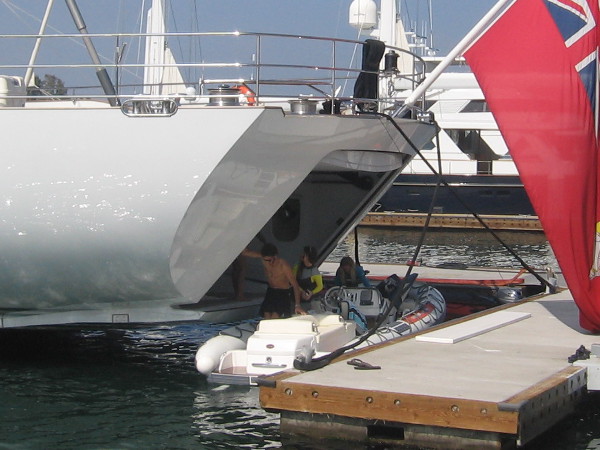
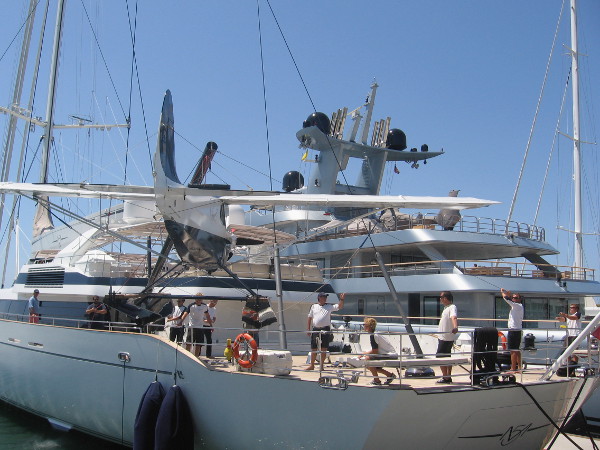
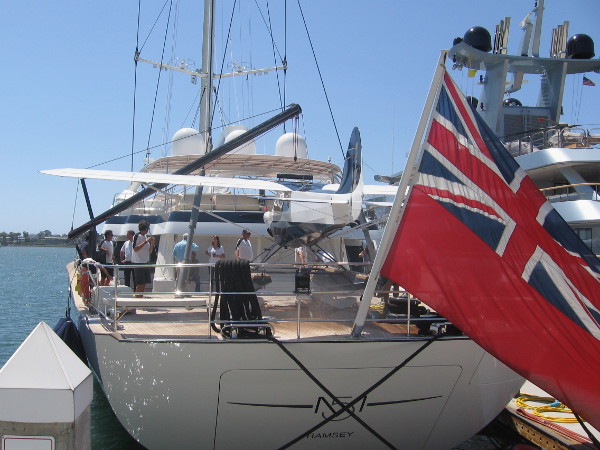
During another walk I noticed an airplane in the water beside M5.
The super-yacht's crane lifts the small seaplane from San Diego Bay into the air!
The super-yacht’s crane lifts the small seaplane from San Diego Bay into the air!
Crew members pull on ropes to swing the airplane toward the ship's deck.
Crew members pull on ropes to swing the airplane toward the ship’s deck.
This tiny seaplane is about to be set on a super gigantic sailing ship!
This tiny seaplane is about to be set on a super gigantic single-masted sailing yacht!
The plane is secured to the rear deck of the amazing M5 yacht.

This blog now features thousands of photos around San Diego!  Are you curious?  There’s lots of cool stuff to check out!

Here’s the Cool San Diego Sights main page, where you can read the most current blog posts.  If you’re using a small mobile device, click those three parallel lines up at the top–that opens up my website’s sidebar, where you’ll see the most popular posts, a search box, and more!

To enjoy future posts, you can also “like” Cool San Diego Sights on Facebook or follow me on Twitter.