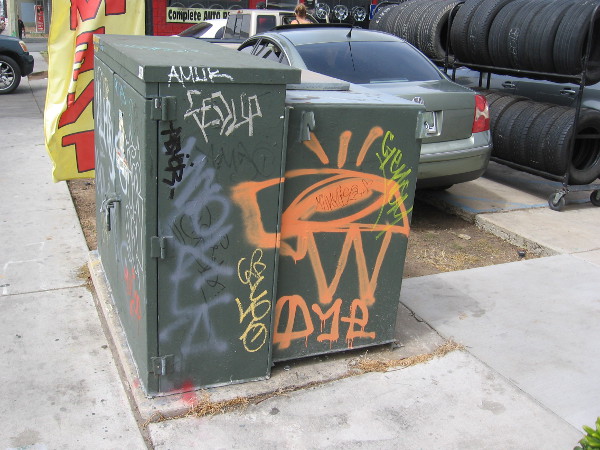
Some cool street art near the corner of E Street and Woodlawn Avenue in Chula Vista.
Late this morning I took a walk through one section of Chula Vista. I headed east on E Street from the trolley station, south on Broadway, then back west on H Street. I drive through this commercial area once in a while and haven’t noticed much in the way of street art, but I hoped I’d find some fun examples during my walk.
I found almost none.
Chula Vista is the second largest city in the San Diego metropolitan area, with many neighborhoods that are beautiful. The section I walked through is bit more on the gritty side. The streets are lined with auto repair shops, tire stores, old strip malls, motels and trailer parks. Many utility boxes–and building walls–are spray painted not with murals but gang graffiti.
I did meet some very nice people during my walk. Others looked at me a bit strangely as I carried my camera down the sidewalk.
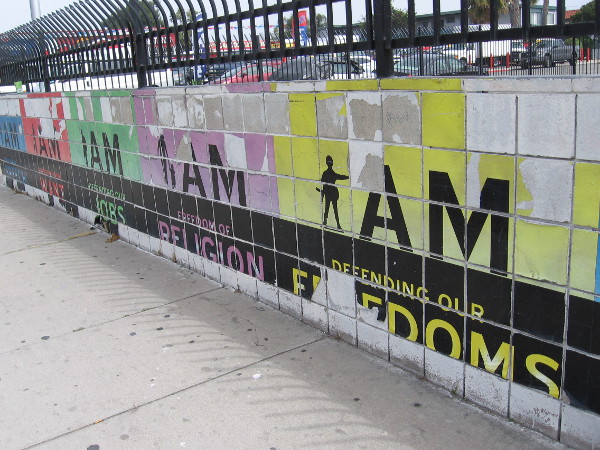
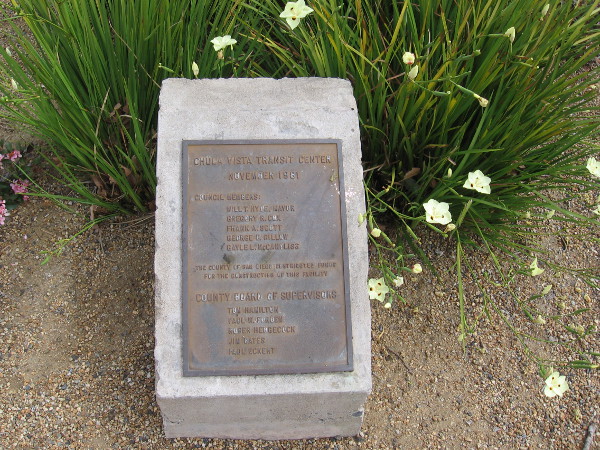
Another side of the same box, one block from the E Street station of the San Diego Trolley.Hastily scrawled graffiti is more common on the electrical boxes in this part of Chula Vista.Fading art on base of wall on Broadway, around the International Association of Machinists and Aerospace Workers IAM Local 755 parking lot. I am defending our freedoms.An unusual rusted metal sculpture near the front of Fiesta Hall Chula Vista on H Street.This walk is just about completed. I’ve arrived near the H Street station of the San Diego Trolley.A small plaque among some flowers. Chula Vista Transit Center. November 1981.A nearby utility box is painted with colorful designs.
…
I live in downtown San Diego and love to walk around with my camera! You can follow Cool San Diego Sights via Facebook or Twitter!
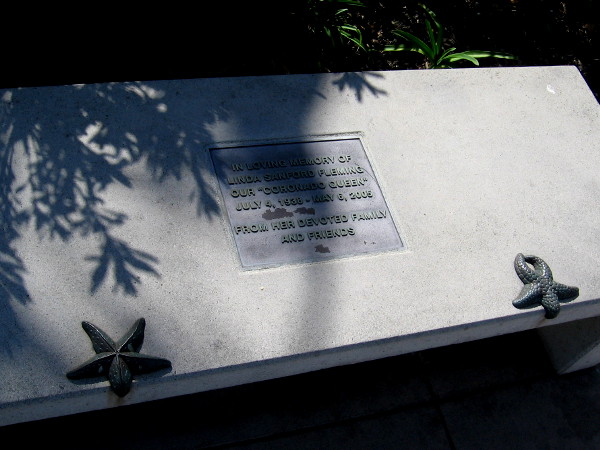
Plaque on a bench. In loving memory of Linda Sanford Fleming our Coronado Queen. July 4, 1938 – May 6, 2005. From her devoted family and friends.
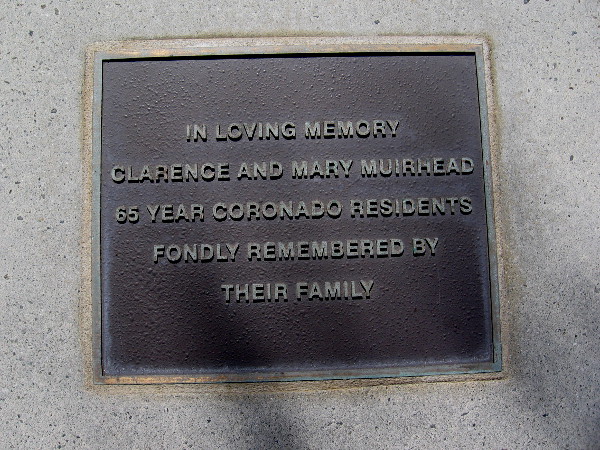
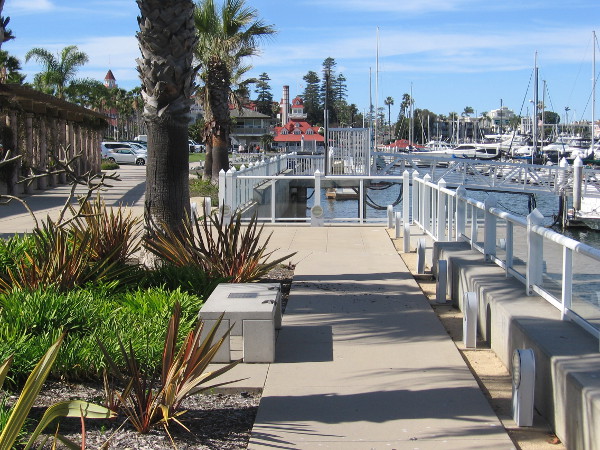
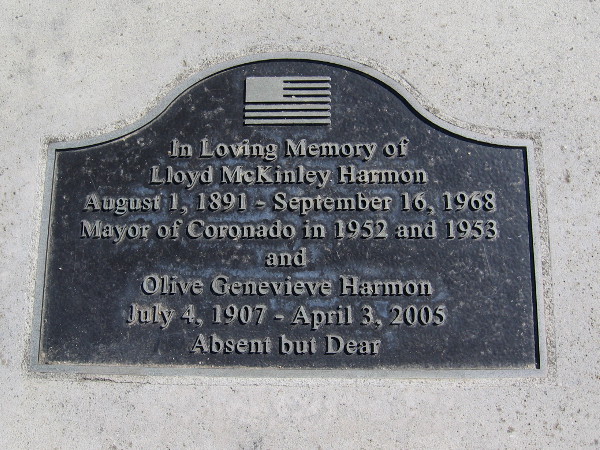
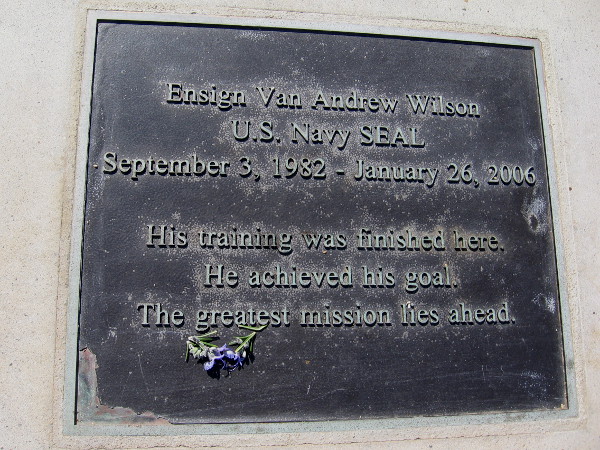
During my walk last Saturday I rested for a bit on a bench near Coronado’s City Hall. After looking about the beautiful place, I noticed most of the nearby benches featured memorial plaques. I read a few and was touched by words of love and optimism.
Perhaps you’d enjoy seeing a few of these plaques…
A few tranquil paths near Coronado’s City Hall feature benches where one can rest and enjoy the day’s sunshine.A plaque on another bench. In loving memory – Clarence and Mary Muirhead – 65 year Coronado residents fondly remembered by their family.Bicyclist rides past City of Coronado City Hall, next to San Diego Bay. Coronado Shores buildings, near the Pacific Ocean, rise in the background.In memory of June Lenz, founder of Crown Garden Club, whose legacy was to encourage the love of flowers and the beautification of Coronado.In honor of Sue and Bill Williams. Look at the sunny side and make your optimism come true.More benches offer a view of boats in the nearby Glorietta Bay Marina.In memory of Kathy Griffin, beloved daughter and sister. July 25, 1959 – July 28, 2006. What we have lost Heaven has gained. Love family and friends.In loving memory of Lloyd McKinley Harmon. August 1, 1891 – September 16, 1968. Mayor of Coronado in 1952 and 1953 … and Olive Genevieve Harmon. July 4, 1907 – April 3, 2005. Absent but Dear.A sailboat out on the wide blue water.Ensign Van Andrew Wilson, U.S. Navy SEAL. September 3, 1982 – January 26, 2006. His training was finished here. He achieved his goal. The greatest mission lies ahead.
…
I live in downtown San Diego and love to walk around with my camera! You can follow Cool San Diego Sights via Facebook or Twitter!
You can easily explore Cool San Diego Sights by using the search box on my blog’s sidebar. Or click a tag! There are thousands upon thousands of photos for you to enjoy!
San Diego’s historic Navy Bicentennial Commemorative Plaque has been cleaned!
Look what I spotted recently during a walk along the Embarcadero. The historic Navy Bicentennial Commemorative Plaque, part of the Greatest Generation Walk near the USS Midway Museum, has been beautifully cleaned. The corrosion is gone!
Whoever is responsible–it looks great!
The fascinating origin of this once mysterious Navy plaque, forged in 1975 on fleet repair ship USS Ajax, was revealed here.
In that blog post you can see a photo of the old corrosion, which has now been removed!
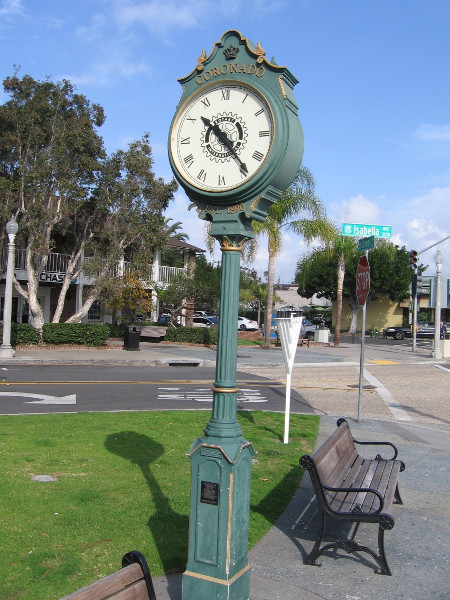
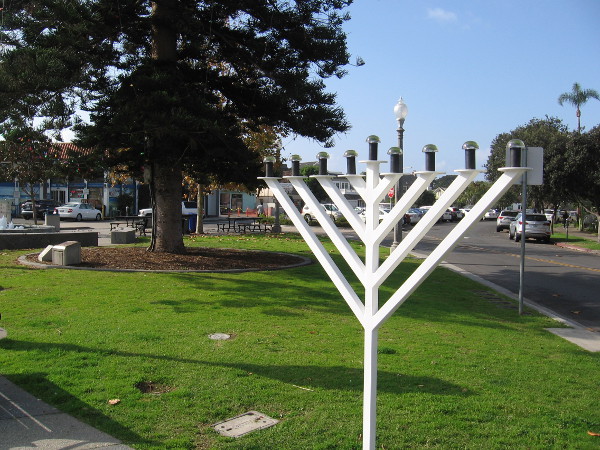
Rotary Plaza in Coronado includes several interesting features, including a clock, fountain and community Christmas tree.
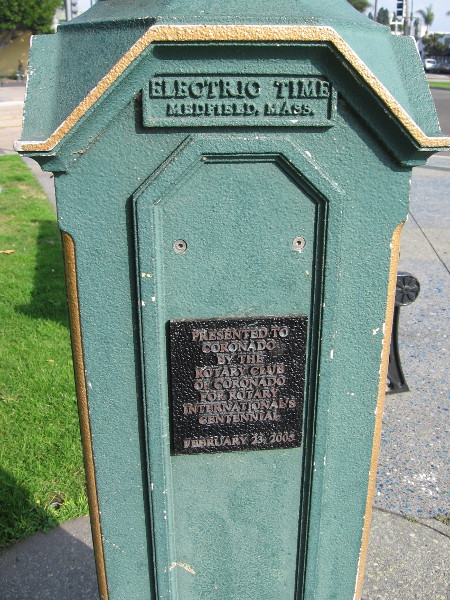
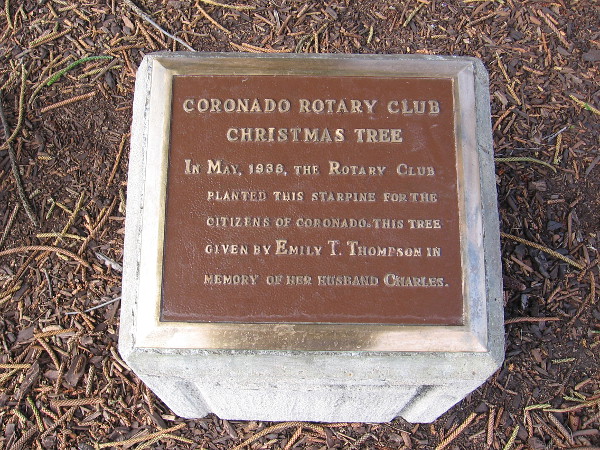
During my recent walk through Coronado, I paused for a bit at Rotary Plaza to check out the old clock, pleasant fountain and community Christmas tree. I read a few plaques near each of these features and learned a little about the history of the place. I’ve never seen the very tall star pine lit at night during the holidays, but I bet it’s quite a sight!
Coronado Rotary Plaza (sometimes called Rotary Park) is located on Orange Avenue at Isabella Avenue.
A handsome Rotary International clock and peaceful bench await passersby in Coronado Rotary Park.Plaque on the Electric Time clock reads Presented to Coronado by the Rotary Club of Coronado for Rotary International’s Centennial, February 23, 2005.The bubbling Jim Vernetti Fountain in Coronado’s Rotary Plaza, dedicated 2009.A Hanukkah menorah stands in Rotary Plaza during the holiday season. (The trunk of the large Coronado star pine Christmas tree is in the background.)Walking along Orange Avenue toward Rotary Plaza and the high Coronado Rotary Club Christmas Tree, which is lit at night.In May, 1936, the Rotary Club planted this starpine for the citizens of Coronado. This tree given by Emily T. Thompson in memory of her husband Charles.
…
I live in downtown San Diego and love to walk around with my camera! You can follow Cool San Diego Sights via Facebook or Twitter!
You can easily explore Cool San Diego Sights by using the search box on my blog’s sidebar. Or click a tag! There are thousands upon thousands of photos for you to enjoy!
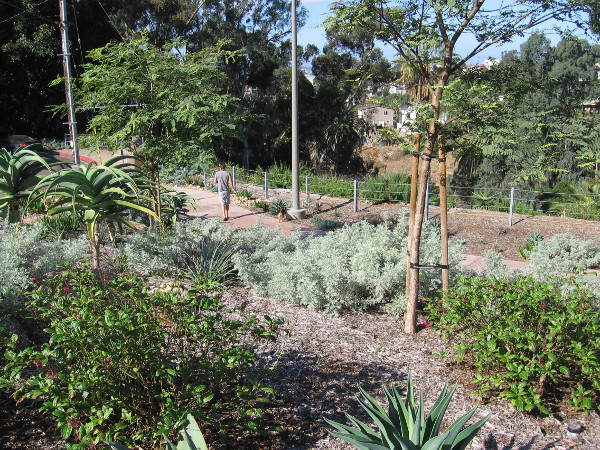
A small public park, recently created in Bankers Hill, is named for San Diego aviation pioneer Waldo Dean Waterman.
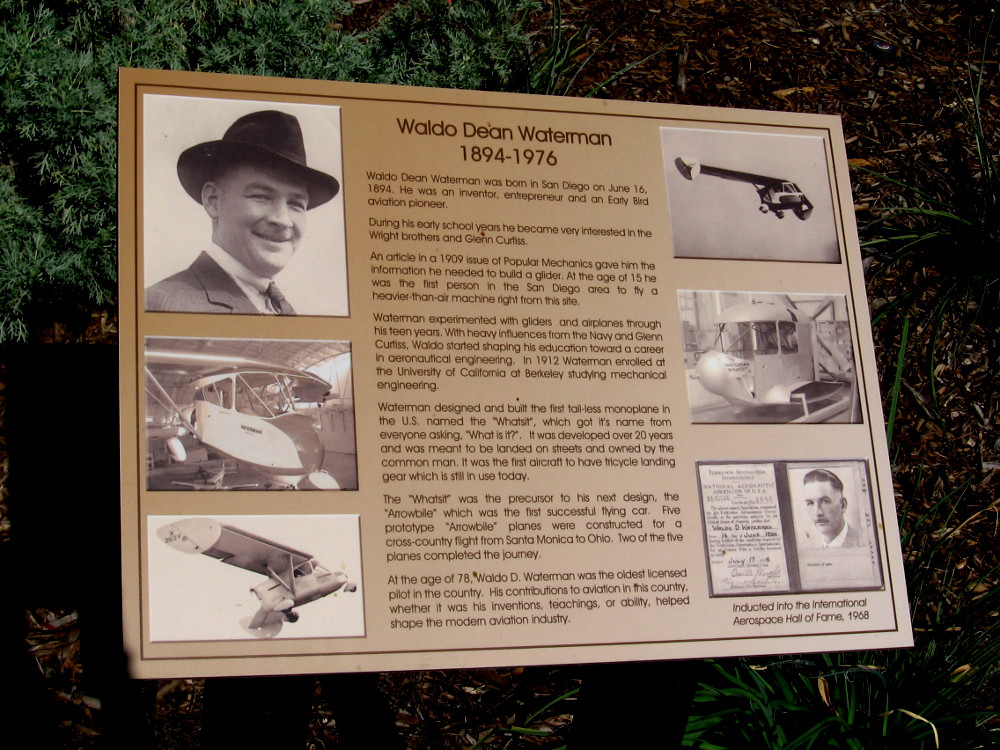
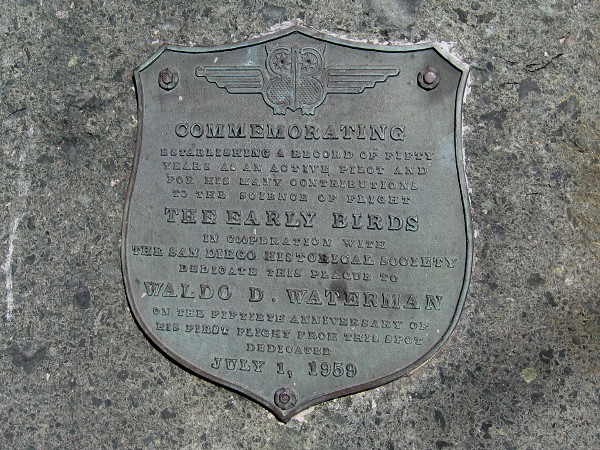
Last month a small public park opened in Bankers Hill at the edge of narrow Maple Canyon. The park is named after Waldo Dean Waterman, an inventor and early aviation pioneer who was one of the first in San Diego to fly a heavier-than-air machine. He made that flight into Maple Canyon in 1909, at the age of fifteen!
Waterman experimented with unique aeronautical designs for most of his life. He invented the first tail-less monoplane in the United States, called the Whatsit, which was the very first aircraft in history to use now standard tricycle landing gear. He then designed the Arrowbile, which was the first successful flying car!
Waldo Dean Waterman Park is a beautiful and inspiring addition to our city. For generations to come, the park will remain a living monument to a visionary man who made several important contributions to aviation history!
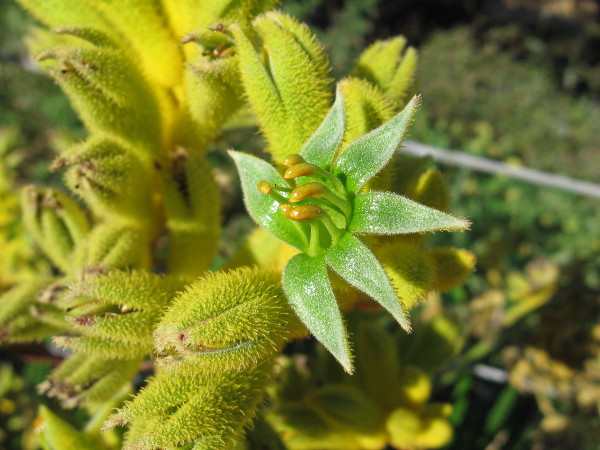
A resident of Bankers Hill walks his dog through the beautiful park. Local aviation history was made here in 1909.Beautiful blooms at Waldo Dean Waterman Park in Bankers Hill.Sign summarizes the life and accomplishments of Early Bird aviation pioneer Waldo Dean Waterman, a resident of San Diego. He flew a glider at the age of 15 from this site into Maple Canyon below. (Click image to enlarge.)Plaque dated July 1, 1959 commemorates Waldo D. Waterman for his many contributions to the science of flight.
…
I live in downtown San Diego and love to walk around with my camera! You can follow Cool San Diego Sights via Facebook or Twitter!
You can easily explore Cool San Diego Sights by using the search box on my blog’s sidebar. Or click a tag! There are thousands upon thousands of fun photos for you to share and enjoy!
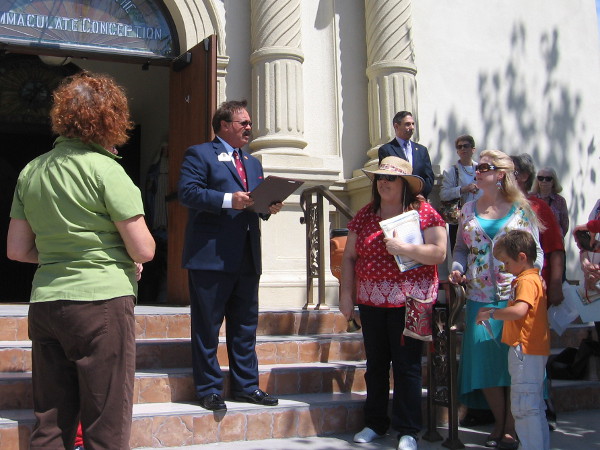
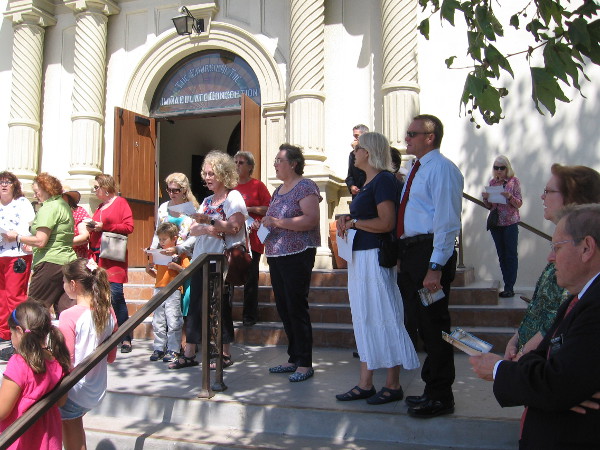
Fred Grand, President of the Old Town Chamber of Commerce, reads a proclamation during a special Constitution Day ceremony.
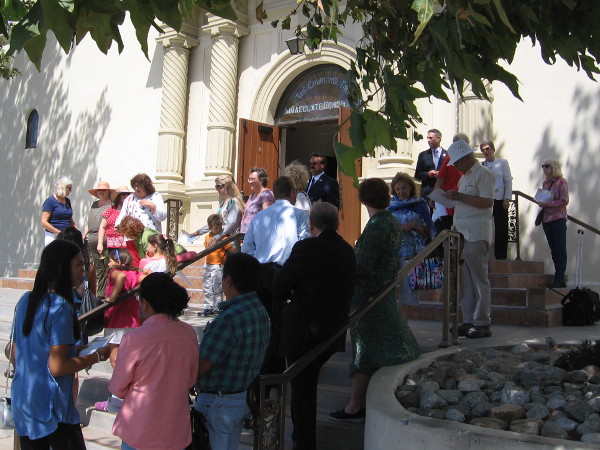
Bells rang in San Diego at exactly one o’clock this Sunday afternoon to celebrate Constitution Day. A special ceremony took place on the steps of the Immaculate Conception Catholic Church in Old Town, where a gathering of people rang bells they had brought for the occasion.
The patriotic ceremony was organized by the San Diego Chapter of the Daughters of the American Revolution and featured a proclamation by Fred Grand, President of the Old Town Chamber of Commerce. Attendees also sang the Star-Spangled Banner, America (My Country ‘Tis of Thee), America the Beautiful, and God Bless America.
To celebrate the United States Constitution and the freedoms the document guarantees all citizens, many bells rang today simultaneously all across America. Bells pealed in Pennsylvania, where the United States Constitution was signed by delegates to the Constitutional Convention on September 17, 1787.
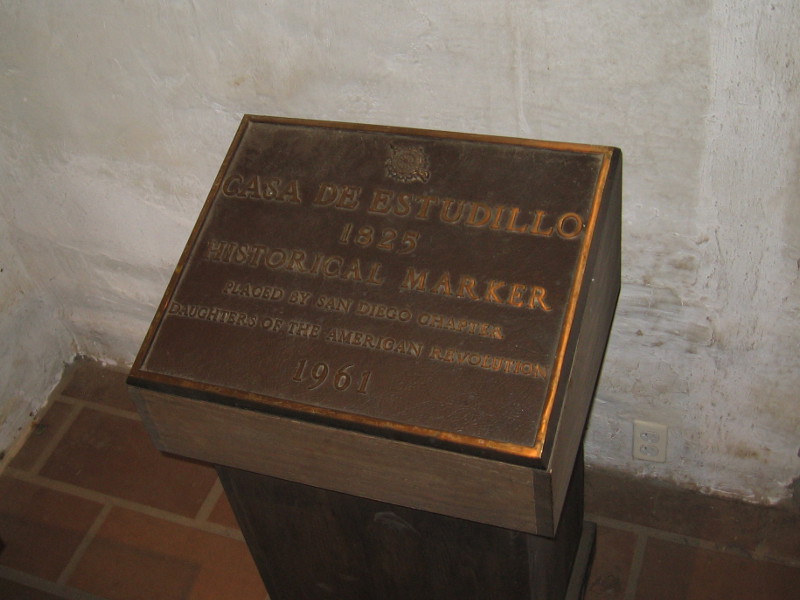
The Daughters of the American Revolution supports Old Town and have for almost 100 years. You can see their historical markers on the big rock in the southeast corner of the grassy Plaza de las Armas, at the Casa de Estudillo, the Cosmopolitan Hotel, the San Diego Union print shop, the Rockin Baja restaurant (over their front doorway), and another on Taylor Street near Presidio Drive. The DAR will soon be placing another marker at the site of the First San Diego Courthouse.
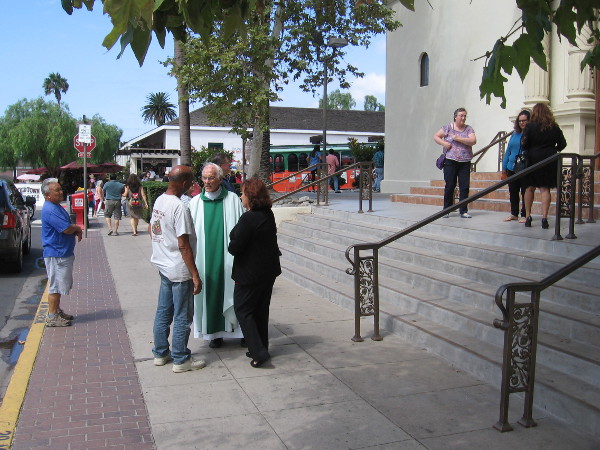
Priest of the Immaculate Conception Catholic Church in Old Town talks to people in front of the historic church after Sunday Mass.At one o’clock, people of many backgrounds and beliefs gather on the church steps to celebrate the United States Constitution, which enshrines individual human liberty.This old bell of the Daughters of the American Revolution features an inscription from the United States Declaration of Independence: We hold these truths to be self-evident, that all men are created equal, that they are endowed by their Creator with certain unalienable Rights, that among these are Life, Liberty and the pursuit of Happiness.One historical plaque, which marks the end of the Kearney Trail in Old Town San Diego, was placed by the Daughters of the American Revolution in 1920.Another historical marker placed by the DAR can be found inside Old Town’s Casa de Estudillo.Kathleen Winchester, historian of the San Diego Chapter of the Daughters of the American Revolution, is presented with an official proclamation on Constitution Day.The patriotic gathering sings The Star-Spangled Banner.
…
I live in downtown San Diego and love to walk around with my camera! You can follow Cool San Diego Sights via Facebook or Twitter!
You can easily explore Cool San Diego Sights by using the search box on my blog’s sidebar. Or click a tag! There are thousands upon thousands of fun photos for you to share and enjoy!
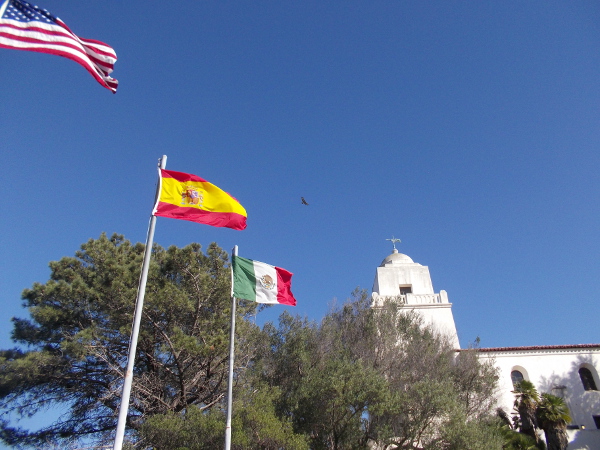
View of the Serra Museum through trees atop Presidio Hill, near the spot where European civilization first took root in California in 1769.
A few years ago I walked from Old Town San Diego up to the top of Presidio Hill and wrote a simple blog about what I saw. You can revisit that post here.
What I failed to do at the time was photograph many of the historically important plaques that can be found around various sites and monuments, so I thought it would be proper to finally correct that omission.
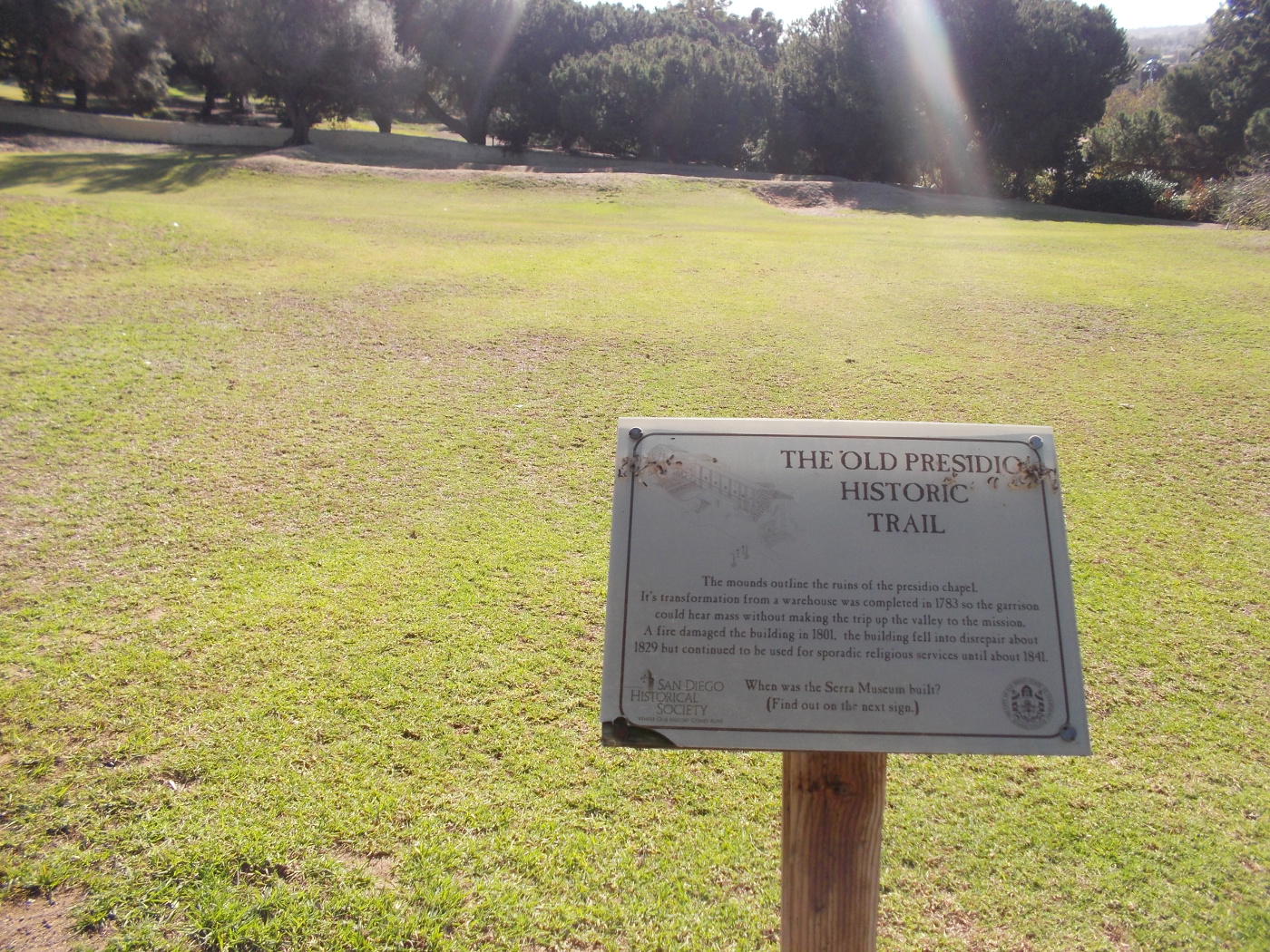
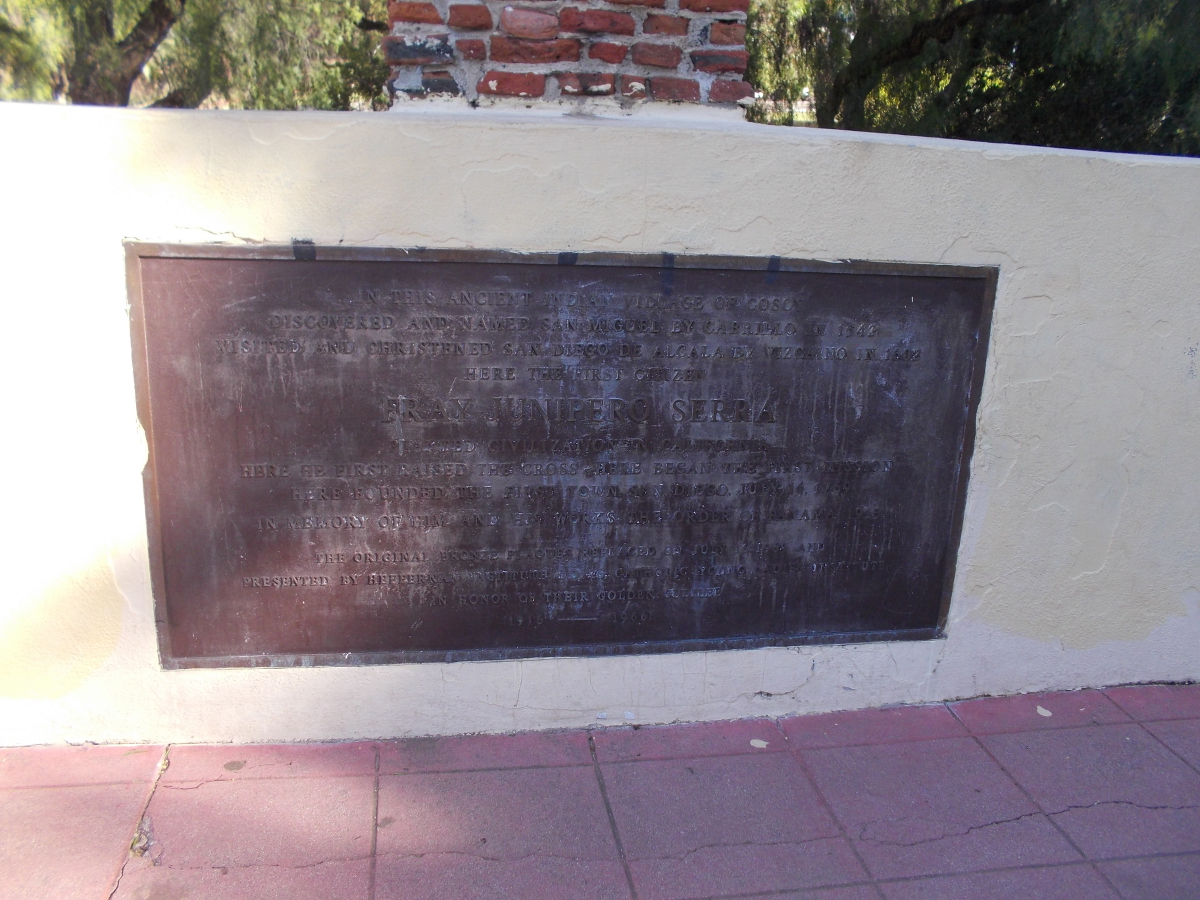
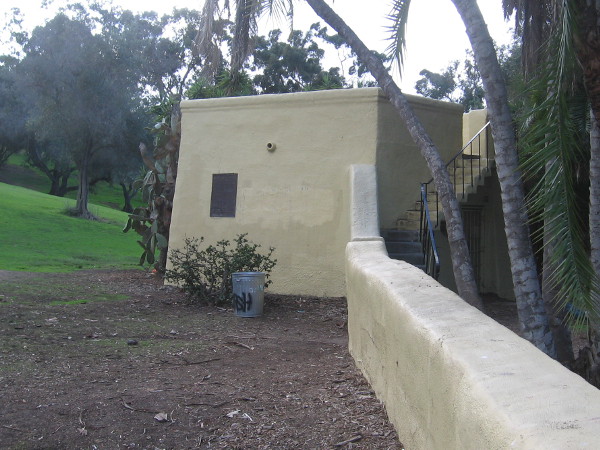
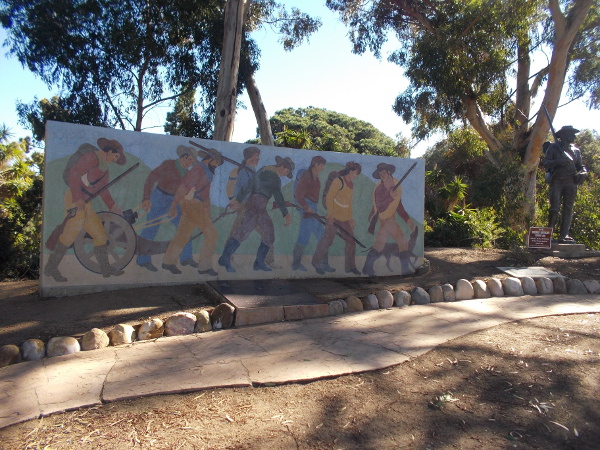
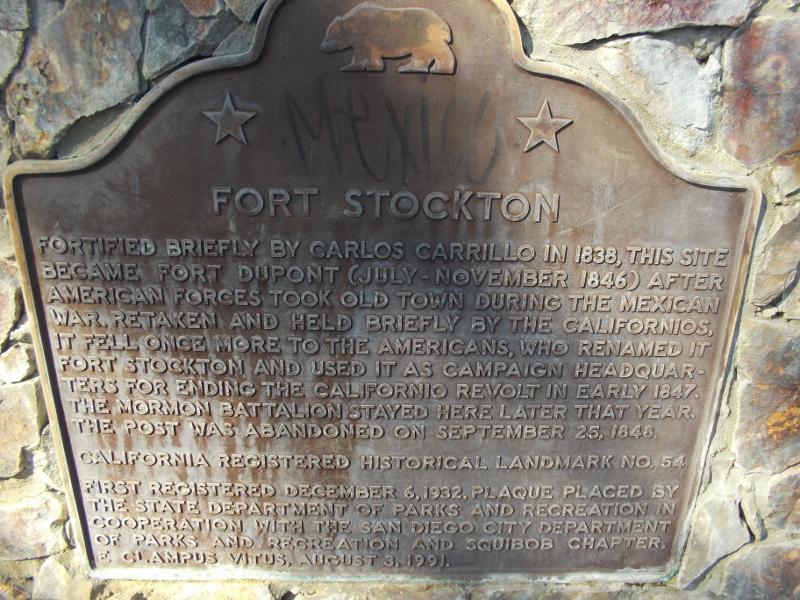
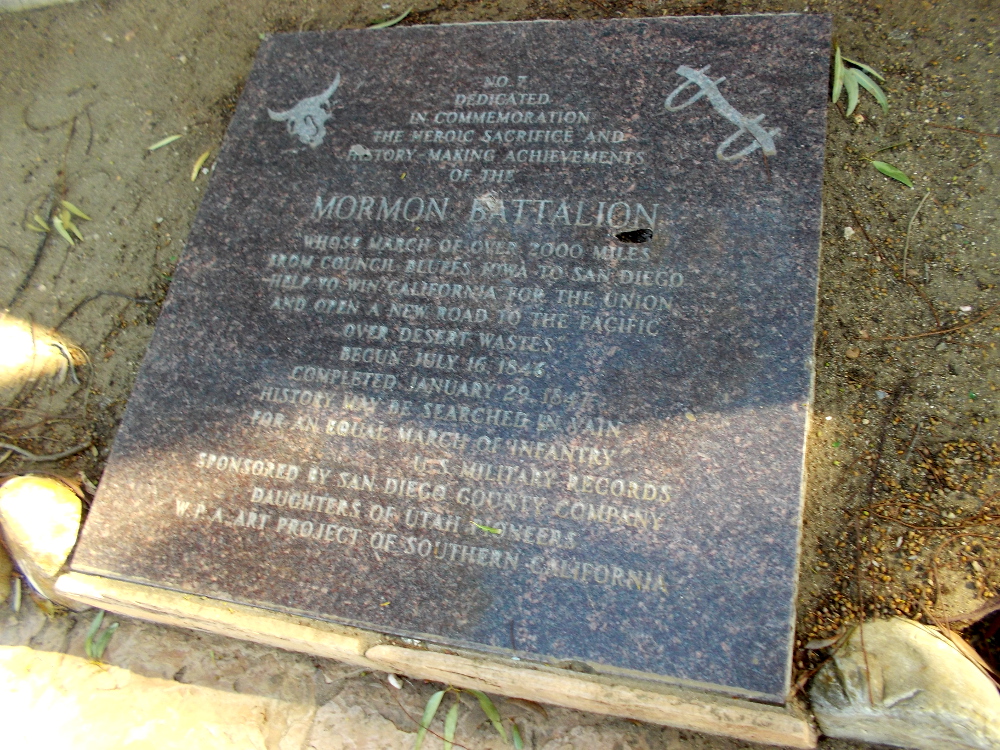
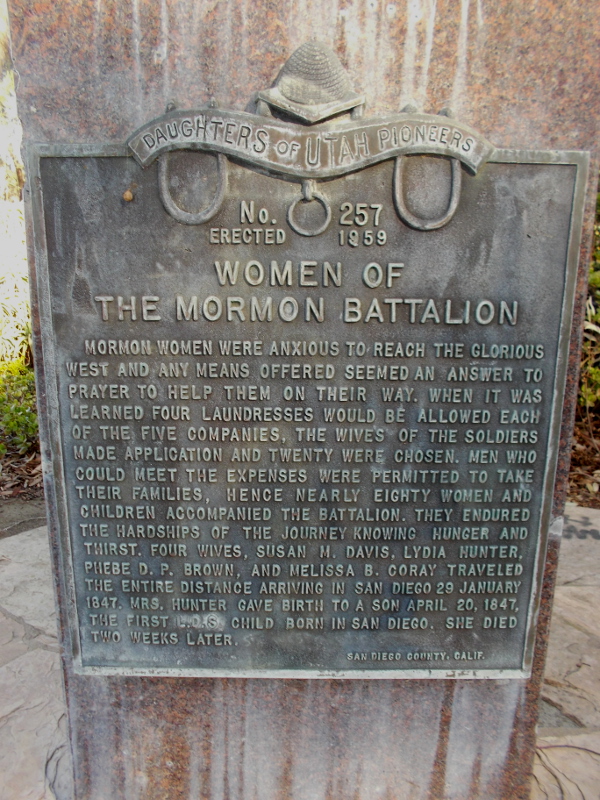
I’ve included one informative sign which stands near the ruins of the old Spanish presidio’s chapel, and a variety of plaques. One of the plaques is at the base of the Padre Cross; two are near The Padre sculpture; one is on an observation structure near the Junipero Serra Museum parking lot; and several others are found at Fort Stockton, where the Mormon Battalion camped after their 2000-mile march from Iowa to San Diego.
Click the photos and they will enlarge for easier reading.
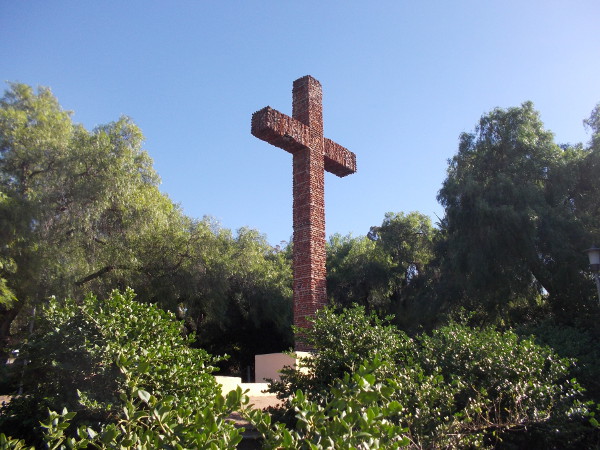
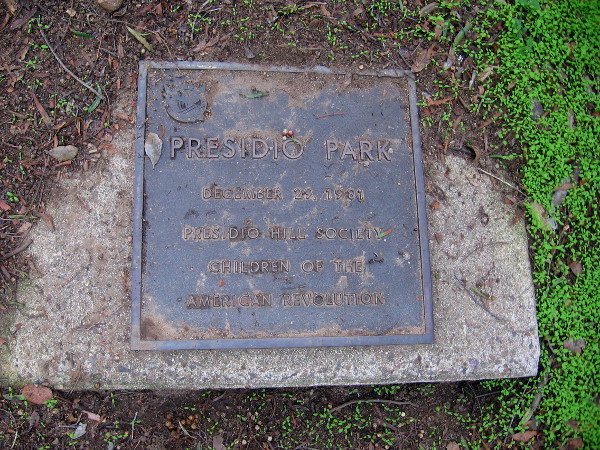
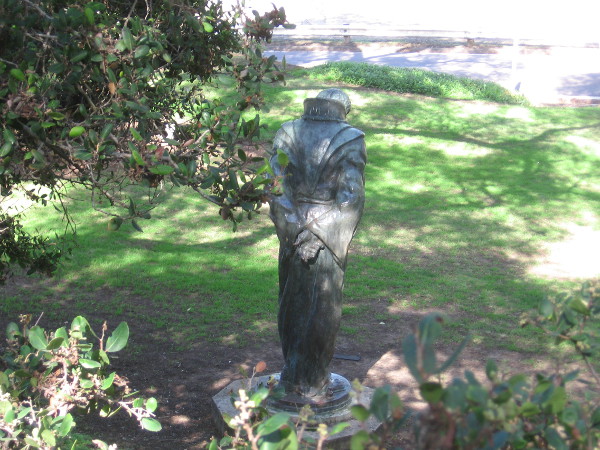
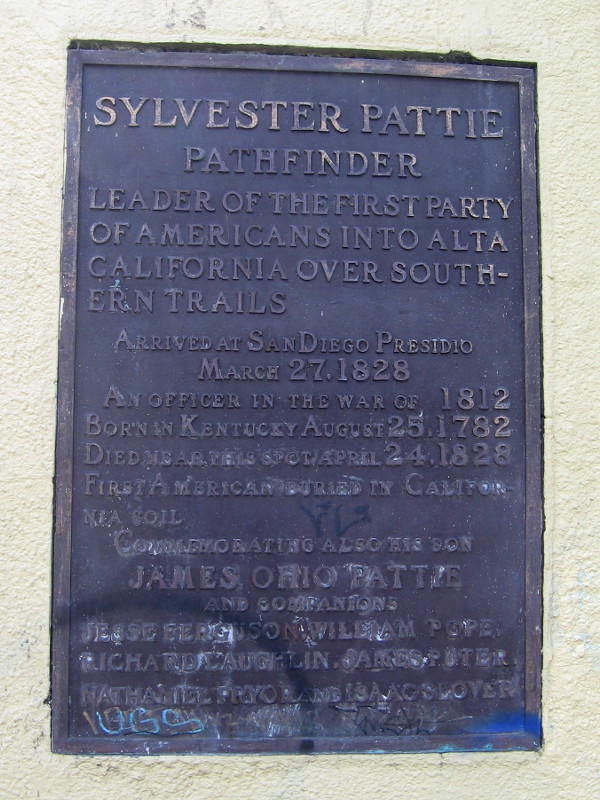
Sign marks the Old Presidio Historic Trail. Grassy mounds on the hill below the Serra Museum are the ruins of the old presidio chapel. It was built for the garrison’s soldiers after the original Spanish mission was relocated up the valley.The large Padre Cross, made in 1913 of tiles from the Presidio ruins, marks the location of the first Spanish mission in Alta California, established in 1769 by Junipero Serra.Plaque at base of the Padre Cross remembers the Indian village of Cosoy, named San Miguel by Cabrillo in 1542, then San Diego de Alcala by Vizcaino in 1602.Between the Padre Cross and The Padre sculpture, a plaque covers a time capsule that was created two centuries after the establishment of Mission San Diego de Alcala. It is to be opened on July 16, 2069.A plaque in the ground behind The Padre sculpture, placed on December 29, 1981 by the Presidio Hill Society Children of the American Revolution.Photo taken behind The Padre on Presidio Hill. The 1908 bronze sculpture is by Arthur Putnam.A plaque can be seen on the observation structure near one corner of the Serra Museum parking lot.The plaque begins: Sylvester Pattie, pathfinder, leader of the first party of Americans into Alta California over Southern trails. Arrived at San Diego Presidio March 27, 1828.Mural at Fort Stockton depicts the long march of the Mormon Battalion.California Historical Landmark plaque at Fort Stockton. The top of Presidio Hill was first fortified by Carlos Carrillo in 1838. From July to November 1846 the site was called Fort Dupont when American forces temporarily held Old Town.
Plaque by mural, commemorating the heroic sacrifice and history-making achievements of the Mormon Battalion.More plaques nearby explain the history of the Mormon Battalion, which blazed the first wagon trail to the Pacific over the southern route.Members of the Mormon Battalion worked to improve San Diego by making the first kiln in California, the first pumps to draw water, and the first blacksmith shop and bakery.The two plaques described above can be found near the Mormon Battalion Monument, a bronze sculpture created by Edward J. Fraughton.Another nearby plaque explains the history of the statue. It was a gift to the City of San Diego in 1969 by the National Society of the Sons of Utah Pioneers.A plaque by the Daughters of Utah Pioneers also stands at the site of old Fort Stockton.Women of the Mormon Battalion. Almost eighty women and children accompanied the soldiers during the long march. Four wives traveled the entire distance to San Diego.Flags of the United States, Spain and Mexico fly atop Presidio Hill, birthplace of California. Here many chapters of history are remembered.
…
This blog now features thousands of photos around San Diego! Are you curious? There’s lots of cool stuff to check out!
Here’s the Cool San Diego Sights main page, where you can read the most current blog posts. If you’re using a small mobile device, click those three parallel lines up at the top–that opens up my website’s sidebar, where you’ll see the most popular posts, a search box, and more!
To enjoy future posts, you can also “like” Cool San Diego Sights on Facebook or follow me on Twitter.
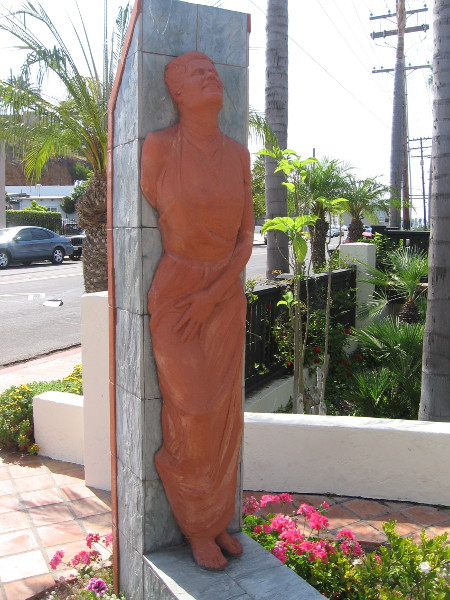
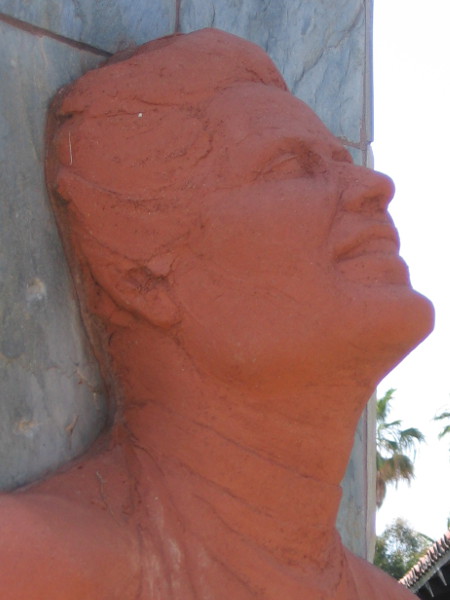
Two terracotta female figures stand at Heritage Plaza, near the intersection of San Diego Avenue and Hortensia Street.
A number of fine sculptures by artists T.J. Dixon and James Nelson can be spotted around San Diego. During a walk down San Diego Avenue in Old Town, I paused to photograph their 1995 sculpture of two life size female figures in terracotta. If you drive down the street past Heritage Plaza, it can be easy to miss them. Here’s a look…
Plaque reads Sculpture by T.J. Dixon and James Nelson. Tile by Mark Emery.Graceful female figure sculpted with lifted head and smile.The second terracotta figure.Art can represent essential human truth.
…
I live in downtown San Diego and love to walk around with my camera! You can follow Cool San Diego Sights via Facebook or Twitter!
You can easily explore Cool San Diego Sights by using the search box on my blog’s sidebar. Or click a tag! There are thousands upon thousands of fun photos for you to share and enjoy!
Image on tiles indicates Portuguese American Social and Civic Club.
The history of the Portuguese community in Point Loma is fascinating. During a walk along a block of Avenida de Portugal, I got just a small glimpse of it.
Many have heard of Little Italy in San Diego, but I suspect few have heard of a neighborhood that some call Little Portugal. It can be found near the entrance to Shelter Island, an area settled by many families of Portuguese fishermen when the tuna industry flourished in our city. The neighborhood was once called Tunaville. Two landmarks that were built by the Portuguese almost a century ago still exist today: the United Portuguese S.E.S. Hall where the community gathers and a small Catholic chapel beside it.
I spotted some round plaques in the sidewalk and images on tile on the hall’s exterior during my walk beside these two buildings. They provide a small taste of Little Portugal’s history. I thought you might enjoy taking a look at a few of them.
Small Catholic chapel in Point Loma, in a neighborhood sometimes referred to as Little Portugal.Front of the United Portuguese S.E.S. Hall on a sunny San Diego day.Plaque in the sidewalk is a Tribute to our Immigrants. Determination, hard work and strength of character are only a few of the gifts you have given us.In admiration of their loyalty and commitment to the Fishing Industry and never ending support of our Portuguese Community.Age of Exploration. In thoughtful memory of God and our parents who so successfully contributed to our Festas do Espirito Santo, the tuna industry and our lives in America.The flag of Portugal flies proudly in San Diego near Shelter Island.Map of the island of Madeira and image of Santo Amaro.Image of Juan Rodriguez Cabrillo’s galleon San Salvador and his statue at Cabrillo National Monument, a gift from the government of Portugal. Exploring on behalf of Spain, Cabrillo was Portuguese.
…
I live in downtown San Diego and love to walk around with my camera! You can follow Cool San Diego Sights via Facebook or Twitter!
You can easily explore Cool San Diego Sights by using the search box on my blog’s sidebar. Or click a tag! There are thousands upon thousands of fun photos for you to share and enjoy!
Photo taken from the intersection of La Mesa Boulevard and Spring Street shows a small stretch of The Village.
On Sunday morning I took a short walk in the heart of La Mesa. The most fascinating stretch was through the historic area of the city known as The Village. I walked up La Mesa Boulevard from Spring Street to Legacy Park, then back down along the opposite sidewalk.
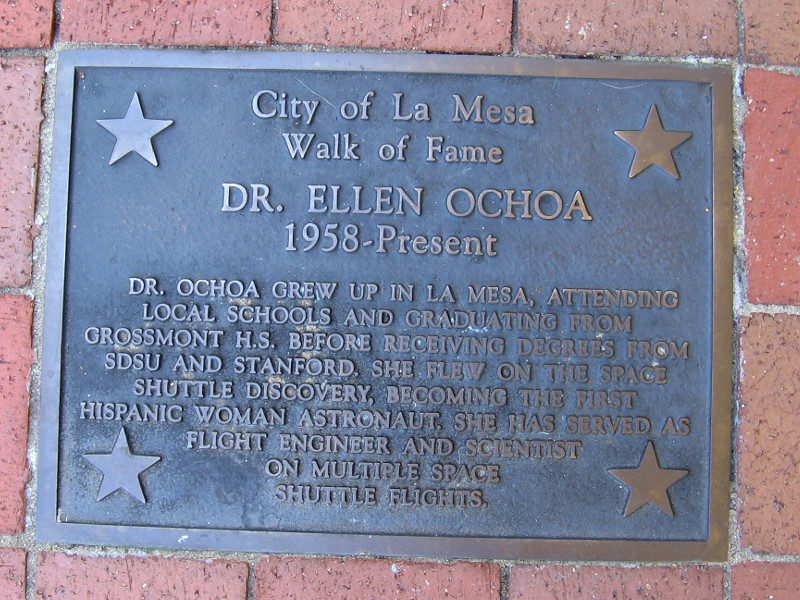
Not only is this stretch full of local history, but it’s home to the La Mesa Walk of Fame, which honors individual contributions to the city by accomplished and generous residents. In my photos I’ve included a few notable plaques.
The Village on a Sunday morning was very quiet, with a smattering of locals eating breakfast or an early lunch in the small eateries that I passed. The Village, with its plain, practical buildings from a bygone era, feels very modest. It doesn’t strike me as a place that attracts hipsters–more a cherished place for families and ordinary folk and people like me who enjoy a slow Sunday stroll.
I took photos. Please read the captions for a few explanations of what I saw.
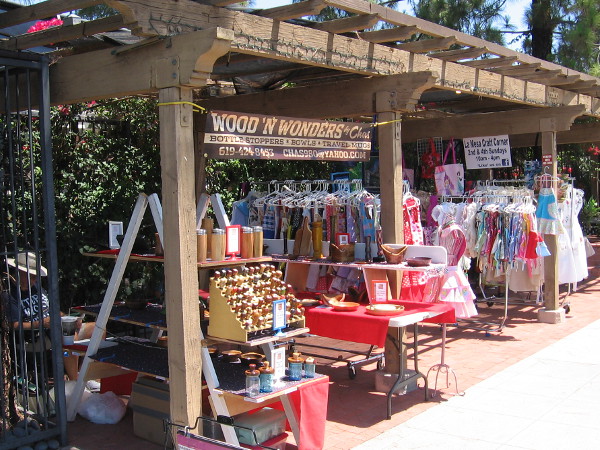
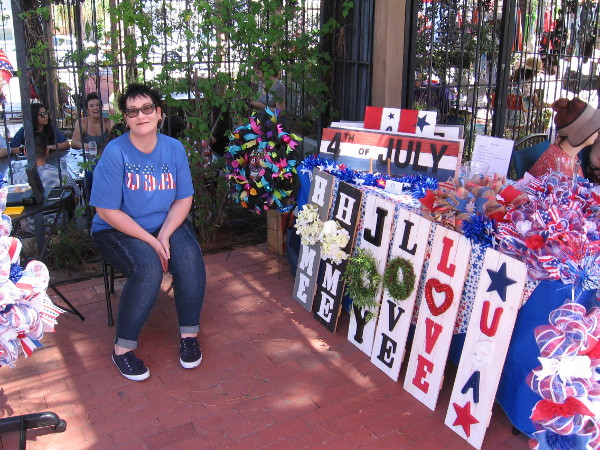
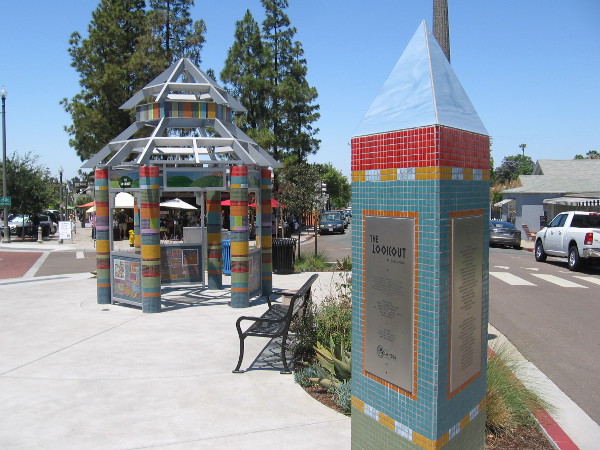
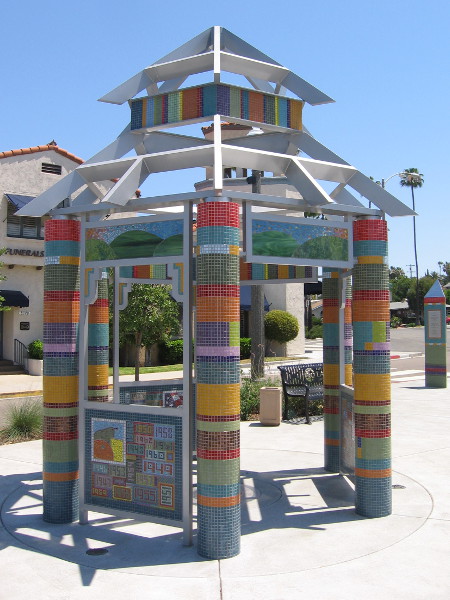
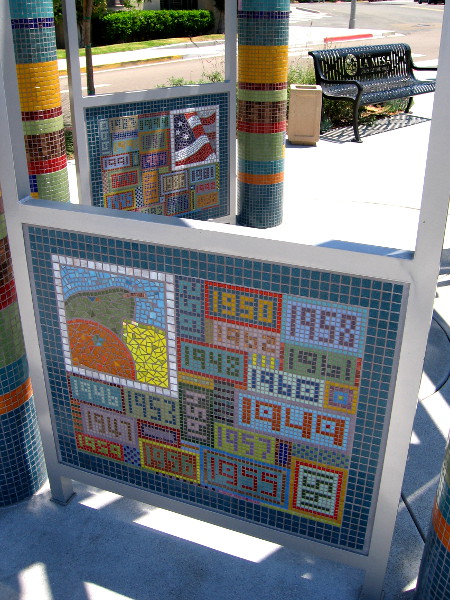
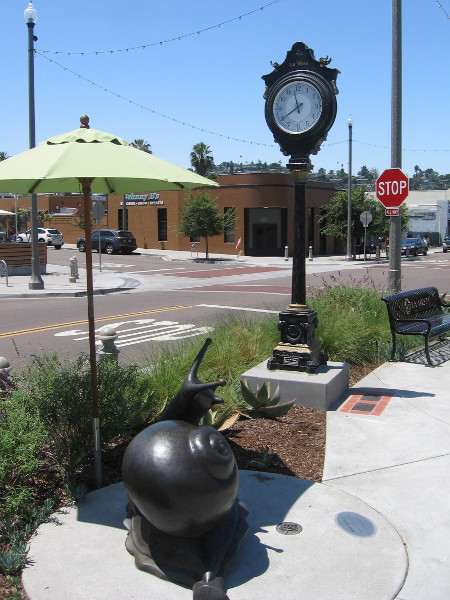
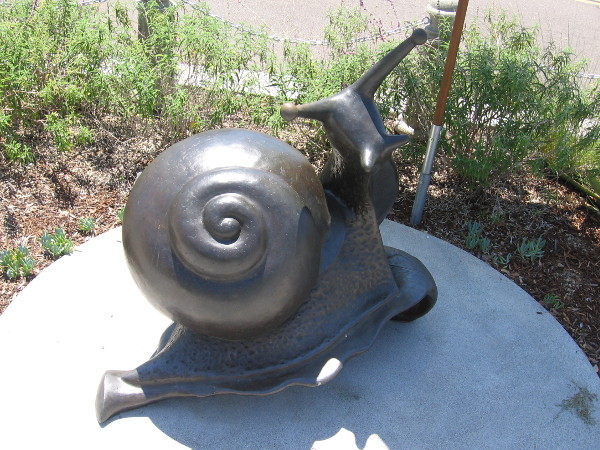
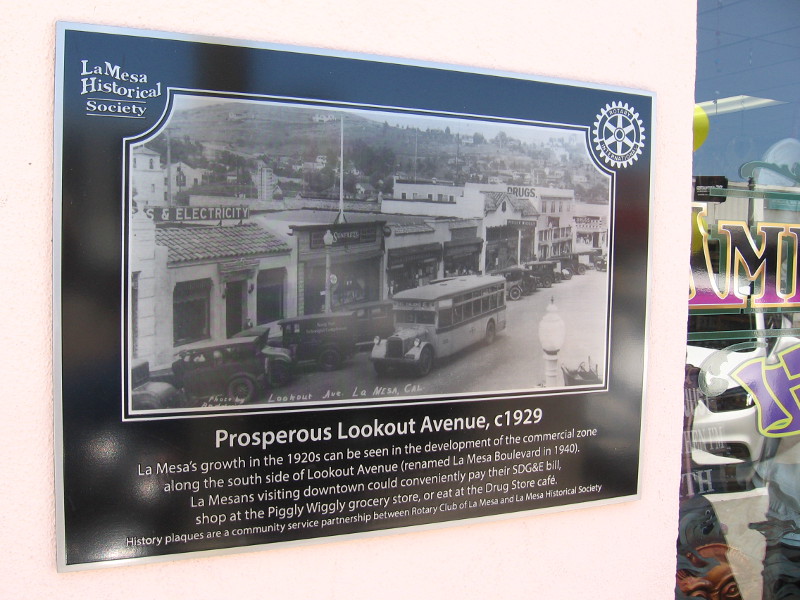
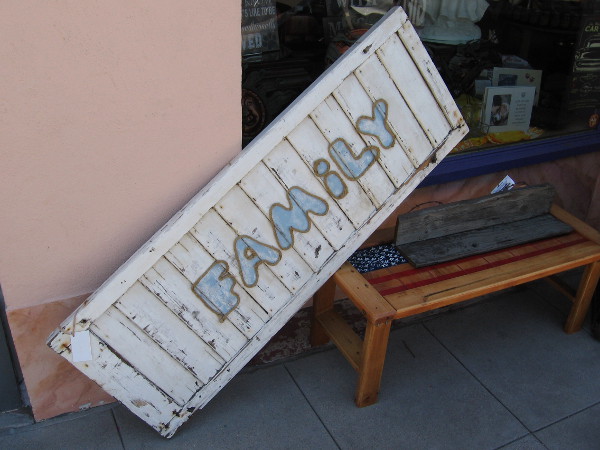
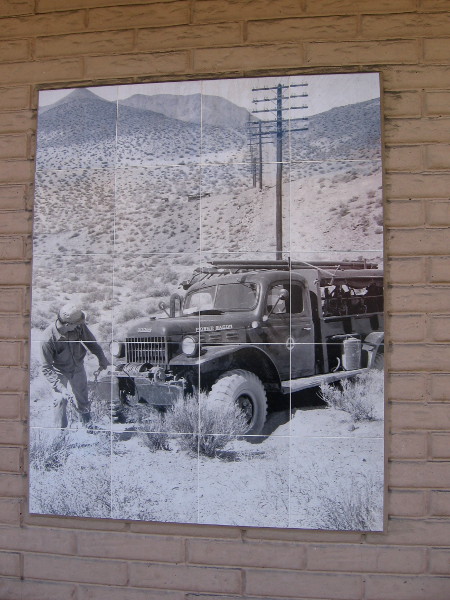
The City of La Mesa Walk of Fame can be experienced on both sidewalks along La Mesa Boulevard, between Spring Street and 4th Street.Bill Walton graduated from La Mesa’s Helix High School. He was inducted into the NBA basketball Hall of Fame as one of the greatest players of all time.Walking through the Village up La Mesa Boulevard. The buildings are modest but retain local history and many memories.The La Mesa Craft Corner on a quiet Sunday morning.A nice lady with some Fourth of July crafts smiles for my blog about San Diego.The Lookout is public art project in Legacy Park, the small triangle where La Mesa Boulevard, 4th Street and Allison Avenue meet.The Lookout was created by a family of artists–Jesus Dominguez, Mary Lynn Dominguez and Amy Dominguez. It depicts the colorful history of La Mesa.Closer photo of The Lookout at Legacy Park. Eight mosaic panels made of tile show historical events in La Mesa from 1912 to 2012.At the center of The Lookout is the John B. Reed Centennial Time Capsule, to be opened in 2062.Legacy Park also includes a memorial clock and a bronze sculpture of the Helix snail. The 1939 U.S. Post Office Building is seen in the background.Children are encouraged to ride this fun bronze snail!Felix the Helix. The story goes that Rufus King Porter named Mount Helix after the Helix aspersa, a European garden snail that was discovered locally.Now I’m walking back down La Mesa Boulevard on the other side of the street. A small slice of Americana. The modest shops and buildings recall a simpler time.La Mesa Historical Society plaque shows a prosperous Lookout Avenue circa 1929. The street was renamed La Mesa Boulevard in 1940.Family and a flag bench in front of Amethyst Moon, a specialty gift shop in The Village of La Mesa.The are many plaques in the City of La Mesa Walk of Fame. This one celebrates James Culbert, inductee into the National Sprint Car Racing Hall of Fame.Another plaque celebrates Dr. Ellen Ochoa, graduate of La Mesa’s Grossmont High School and the first Hispanic woman astronaut.A photo of the Heller Building, now home of an escrow company.La Mesa Historical Society photo of the Heller Building in the 1940s. It has housed many businesses including Gilbert’s five and dime and Culver’s drugstore.Maxwell’s House of Books adds life to The Village.It is a tie between men to have read the same book. Ralph Waldo EmersonOld photo on AT&T building appears to show telephone company worker in the undeveloped hills of La Mesa many years ago.The Village is a modest few blocks in the city. Full of history and memory, it provides a taste of days when La Mesa was a small American town.
…
I live in downtown San Diego and love to walk around with my camera! You can follow Cool San Diego Sights via Facebook or Twitter!
You can easily explore Cool San Diego Sights by using the search box on my blog’s sidebar. Or click a tag! There are thousands upon thousands of fun photos for you to share and enjoy!


































 Cool San Diego Sights!