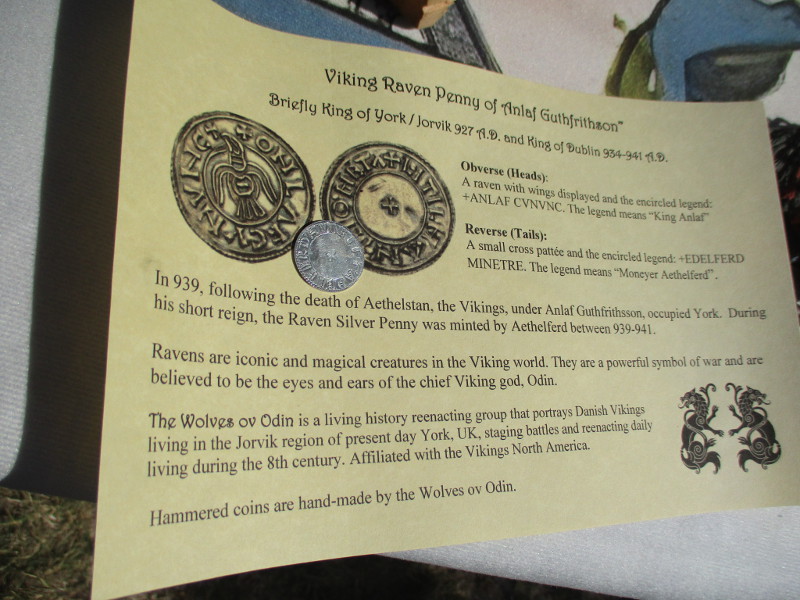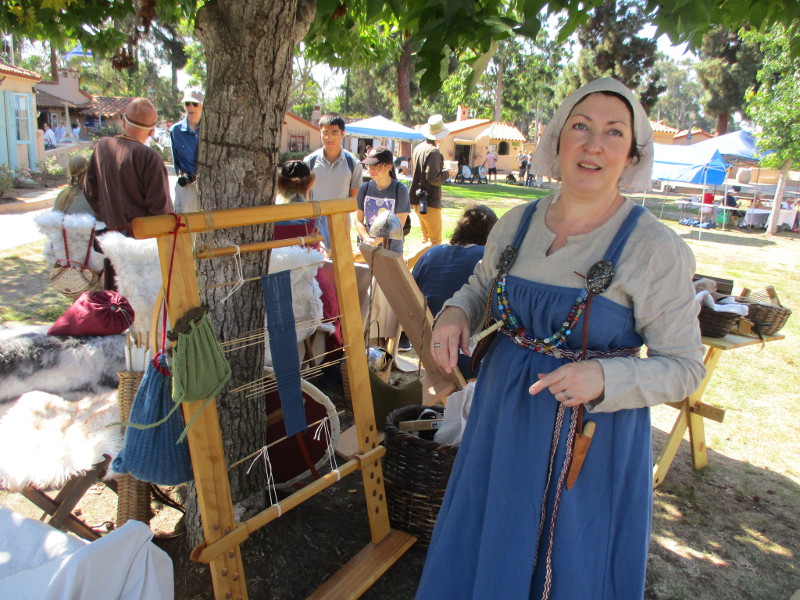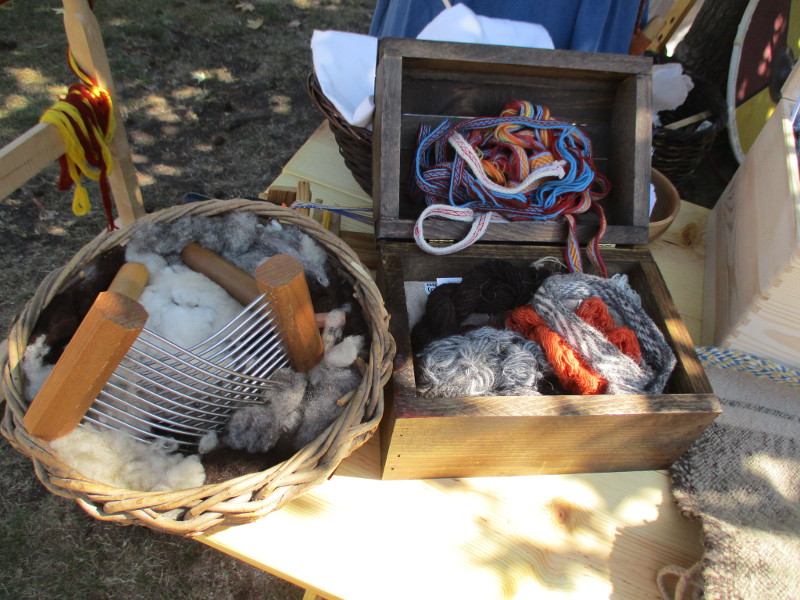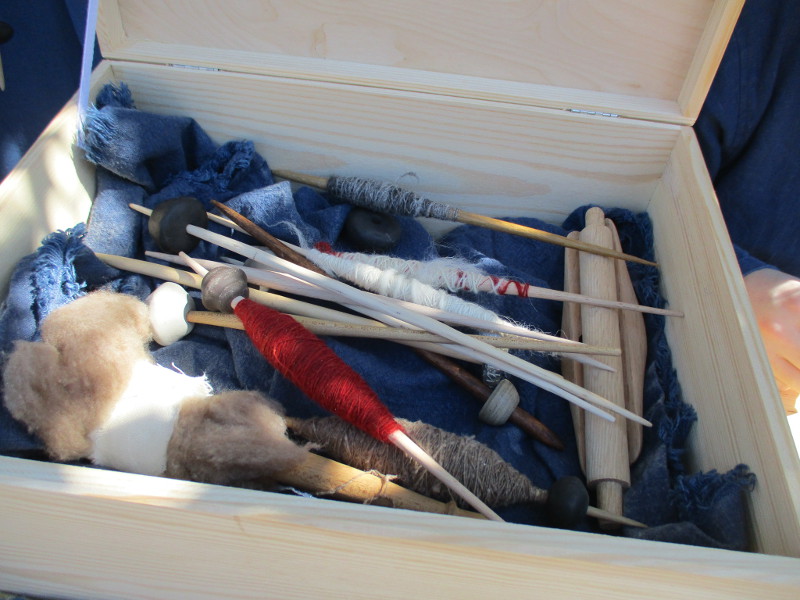
A lawn program at Balboa Park’s International Cottages today celebrated Norse history and culture. The House of Norway provided food and entertainment, and a visit from Viking explorer Leif Erikson (an actor)!
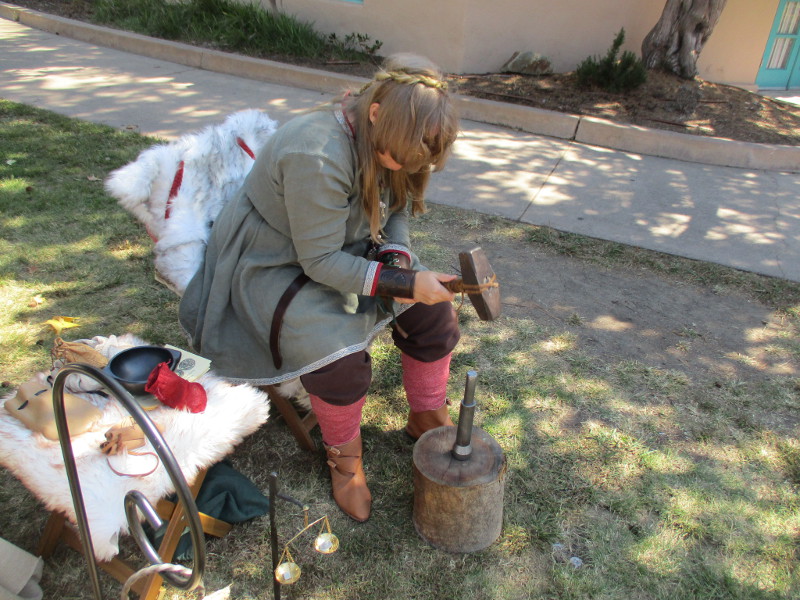
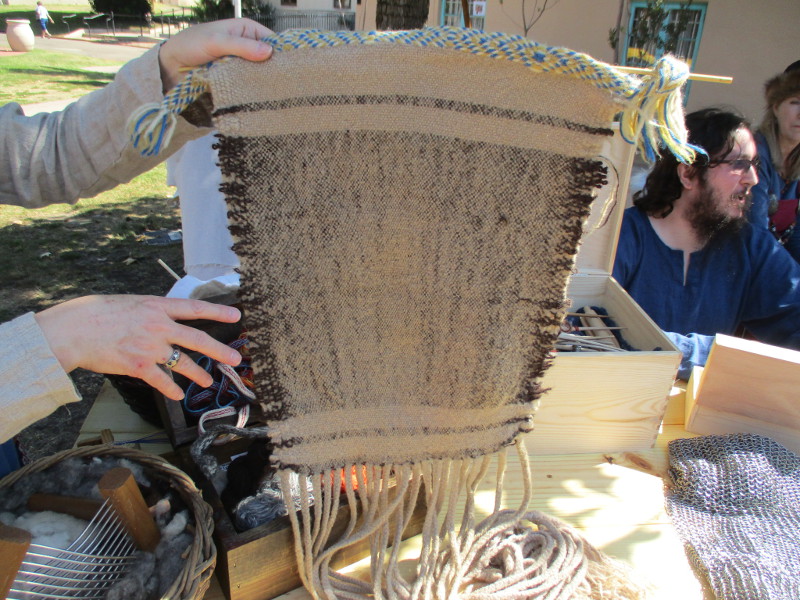
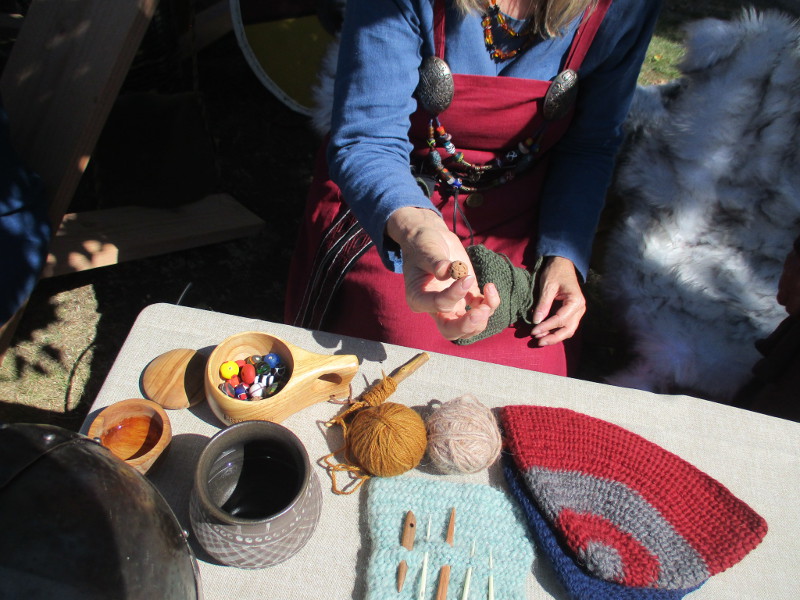
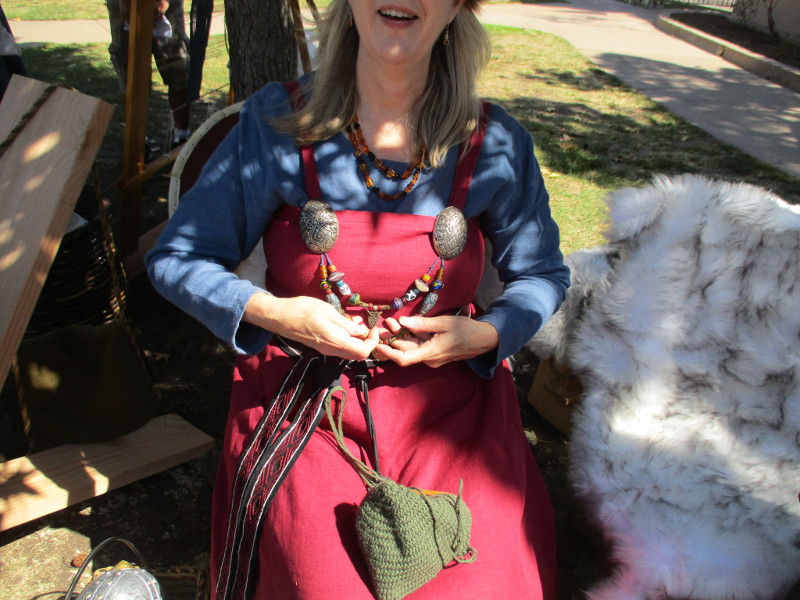
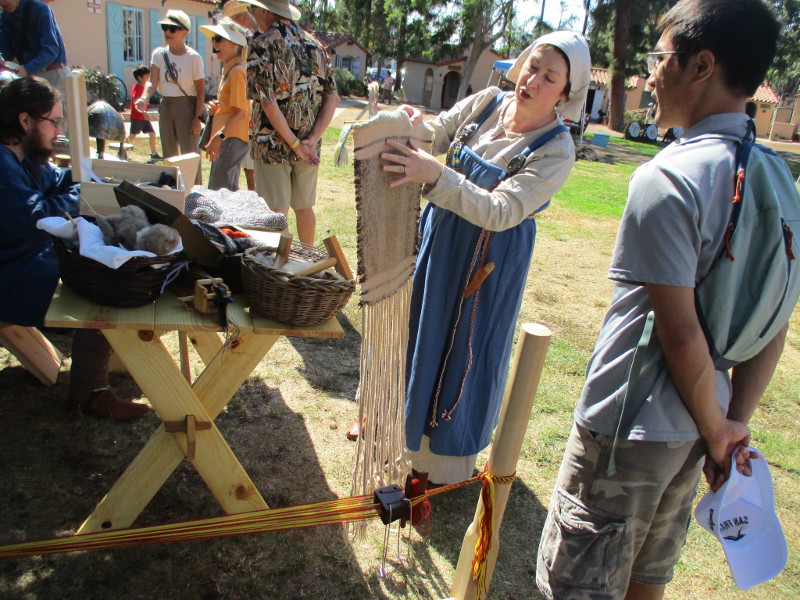
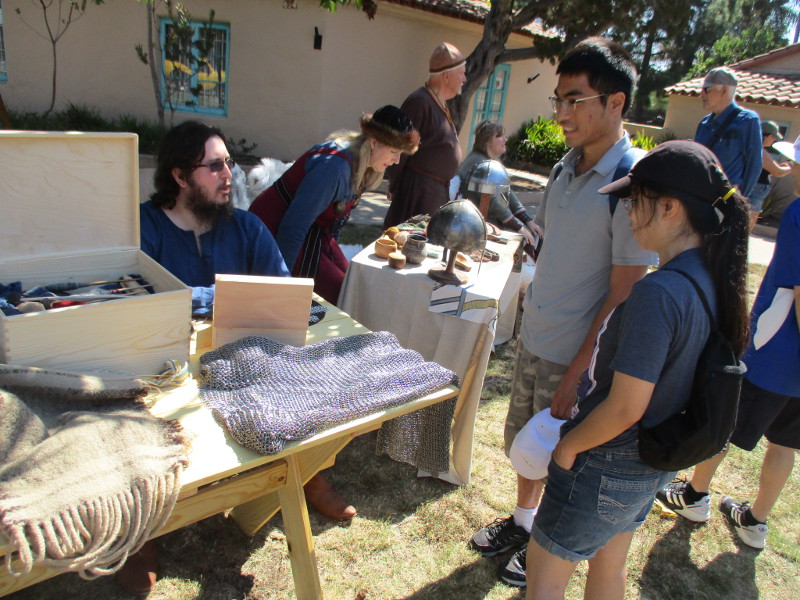
What I found most interesting, however, was a living history “encampment” on the International Cottages lawn. Costumed members of Wolves ov Odin were showing what Norse life was like in the 8th century!
Perhaps you’ve seen Wolves ov Odin at the annual Viking Festival in Vista, California. They are a group that portrays Danish Vikings that lived in the Jorvik region of present day York, UK.
As you can see, curious people converged on several tables to see and touch history.
Read the photo captions for a bit of what I learned…
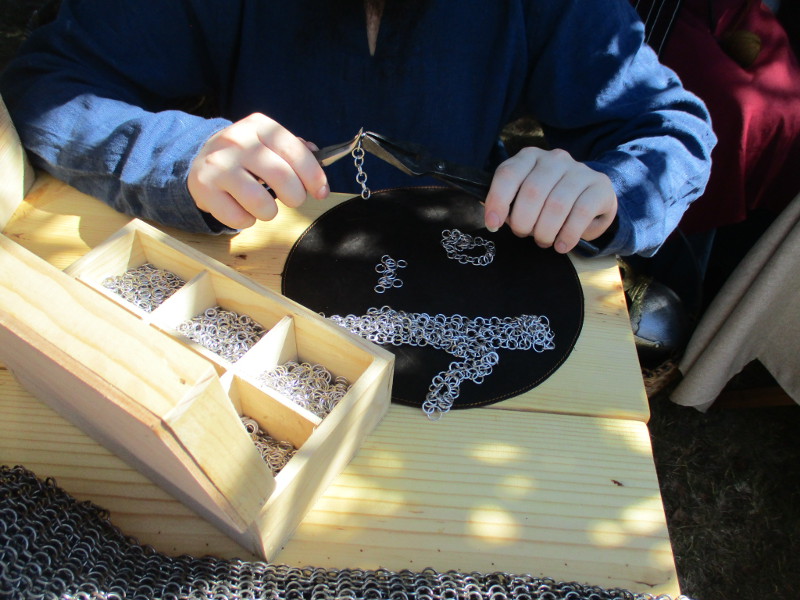
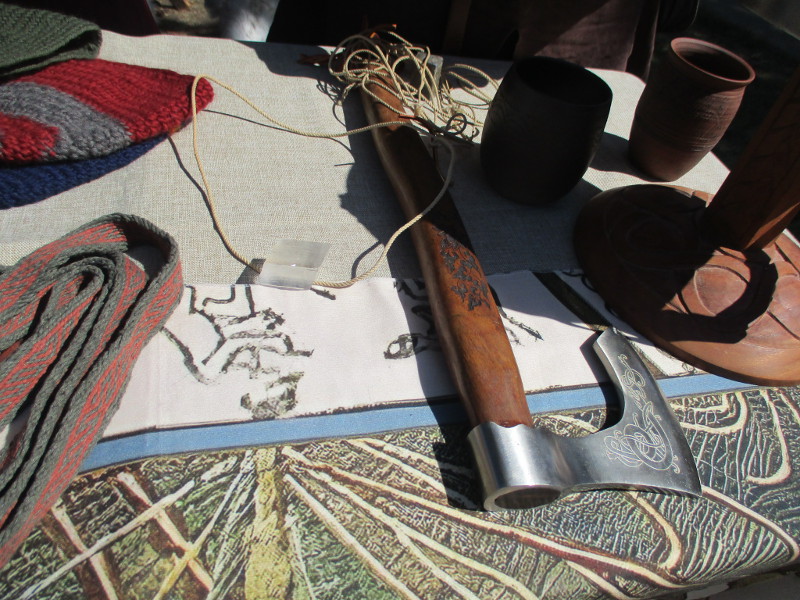
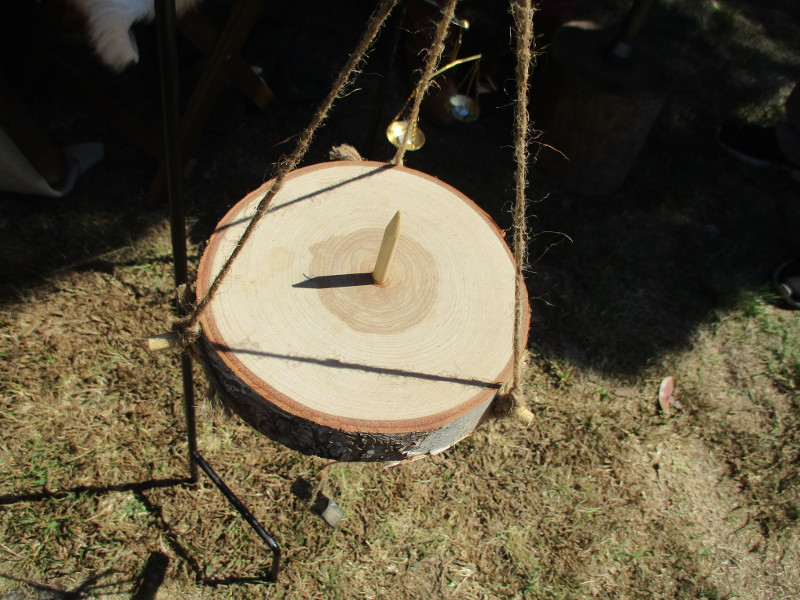
Viking chain mail armor on display. I lifted one end and it was heavy! Those steel helmets in the background were heavy, too! Better a sore neck than a hole in the head!Creating chain mail by interlocking iron rings was a long process undertaken by Viking smiths. Iron was rare and chain mail shirts were relatively rare.A beautifully engraved but deadly Viking axe. I wish I had learned more about it.A simple sundial made of wood, which could double as a compass to aid in Viking ocean navigation. An X marks noon–I took this photo a few minutes before the shadow lined up with it!Making a replica Viking coin, using a length of modern steel tubing for hammering safety.I got my own, freshly minted pewter Viking Raven Penny of Anlaf Guthfrithson!Demonstrating a replica Oseberg Sprang Weaving Loom, a loom from the Oseberg ship, a well-preserved Viking ship discovered in 1904 in Norway.Combing and spinning wool with a hand spindle preceded tablet weaving and making Viking clothing and ship sails!The spindles were very simple.It never occurred to me that Viking sails were made by weaving!Beads were a sign of wealth among Vikings.A smile and sample of Viking life.
…
Thanks for visiting Cool San Diego Sights!
I post new blogs pretty often. If you like discovering new things, bookmark coolsandiegosights.com and swing on by occasionally!
I live in downtown San Diego and love to walk around with my camera! You can follow Cool San Diego Sights via Facebook or X.
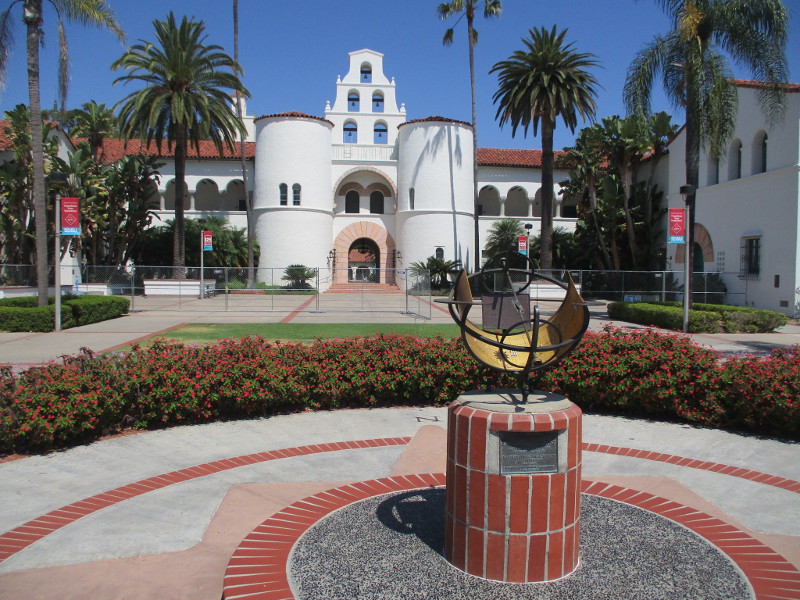
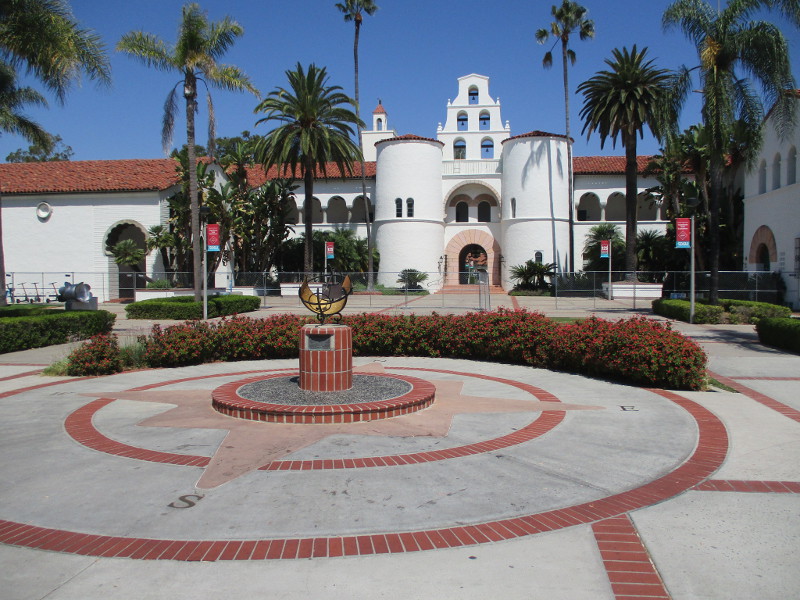
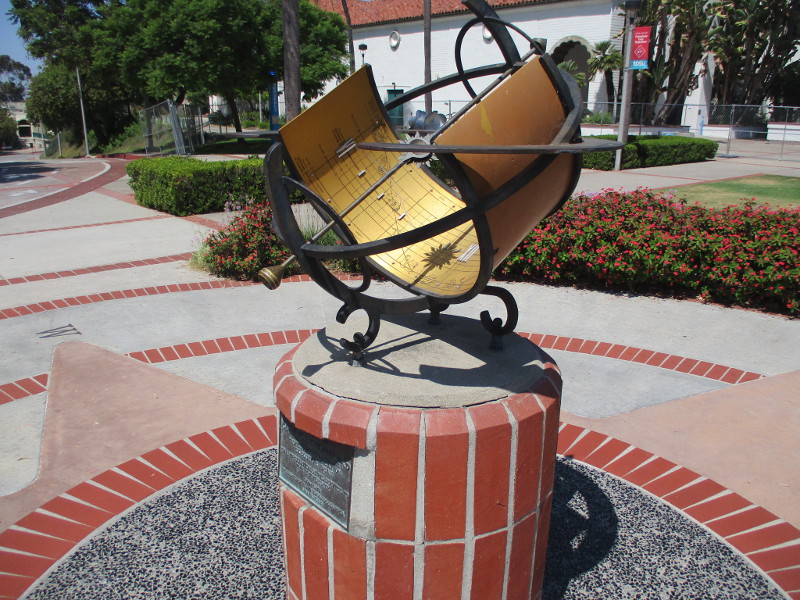
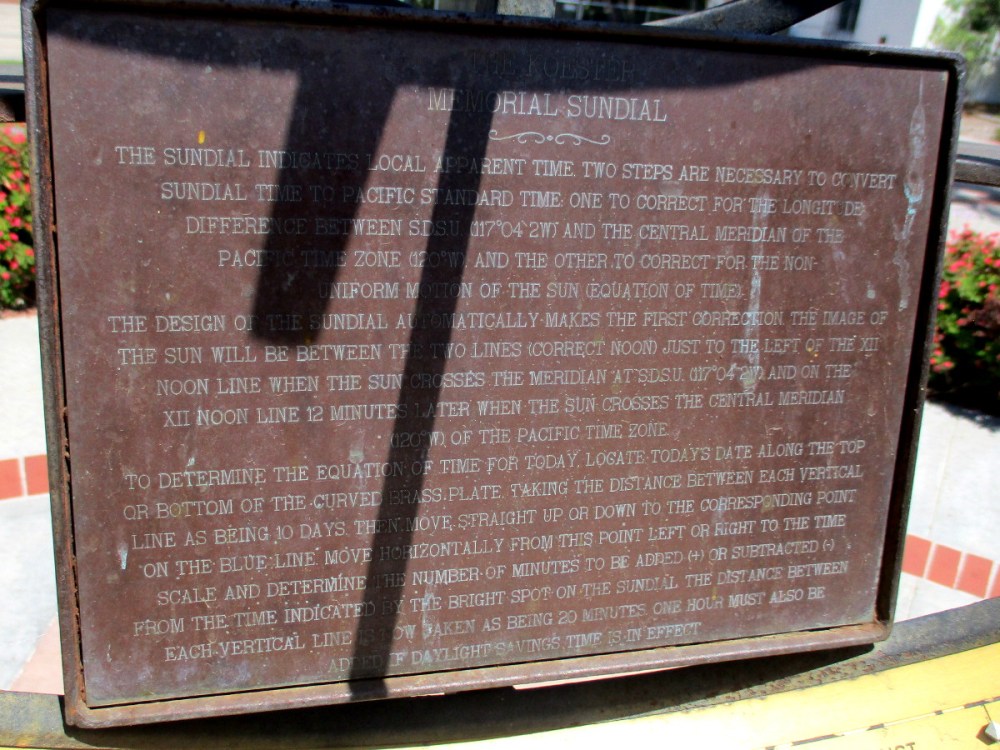
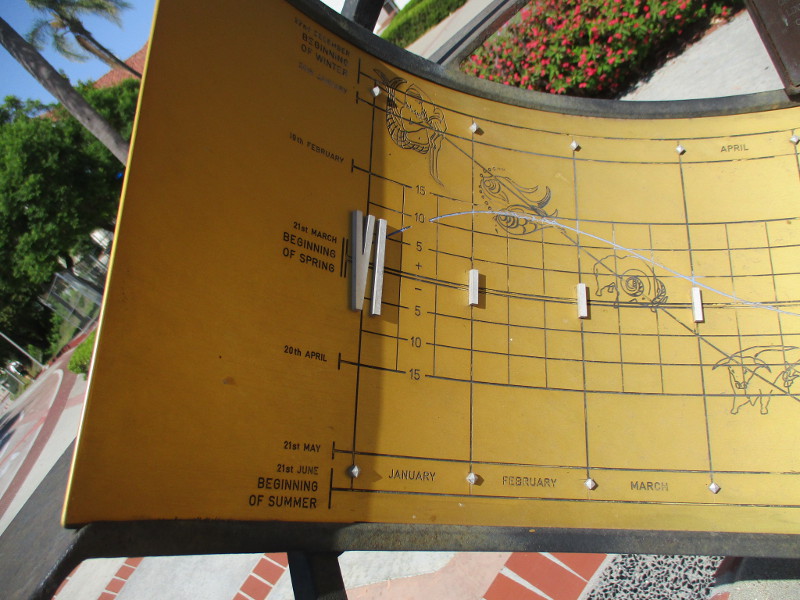
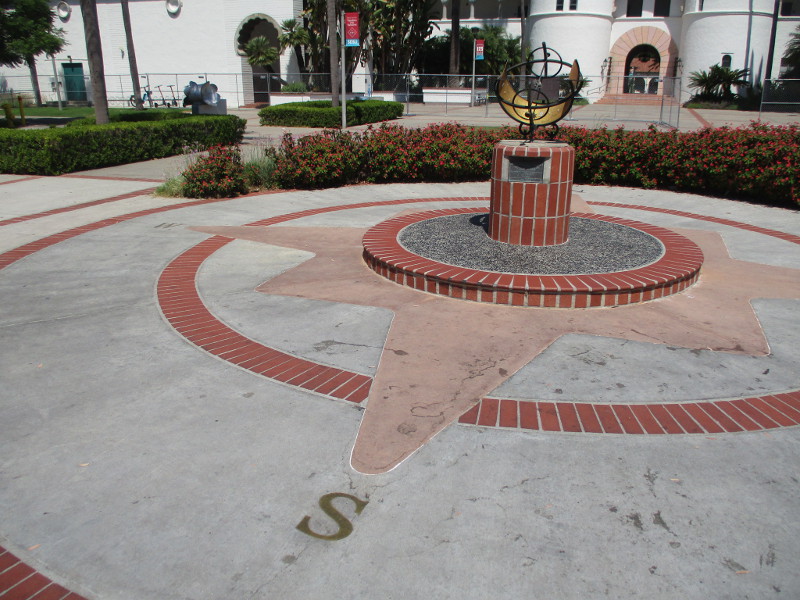
The Koester Memorial Sundial stands prominently in San Diego State University’s Campanile Mall, directly in front of the iconic Hepner Hall. I took photographs of the sundial when I walked through the SDSU campus a few days ago. A couple of corroded plaques invite a closer look.
According to this article, dedicated on November 4, 1978, the Gübelin Equatorial Sundial [is] in memory of the late George A. Koester…
Koester began his career at San Diego State in 1950 and went on to complete 14 years as a professor of education and 10 years as executive dean. During his time on Montezuma Mesa, Koester played a prominent role in building the campus, working on the creation of Love Library, the music and drama buildings, Aztec Center, Zura Hall, student health services, and multiple parking structures…
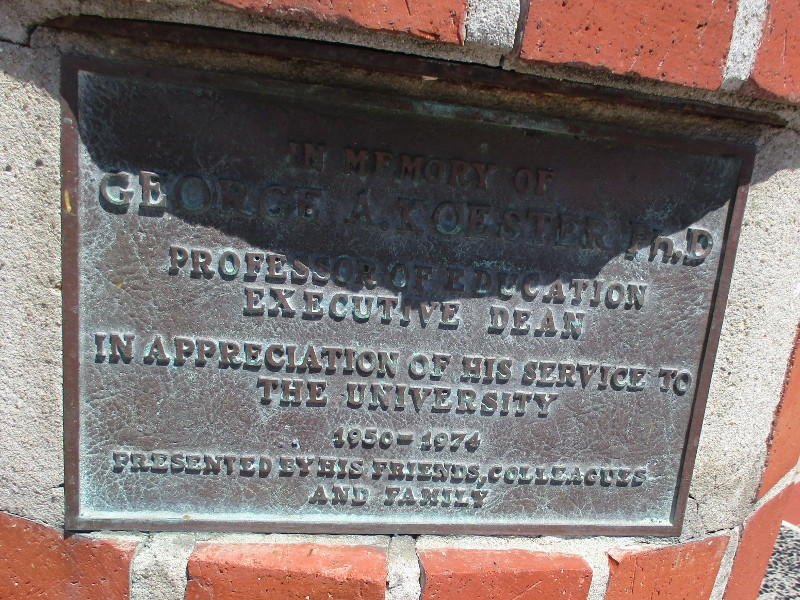
A plaque embedded in the brick pedestal states:
IN MEMORY OF GEORGE A. KOESTER Ph.D – PROFESSOR OF EDUCATION – EXECUTIVE DEAN – IN APPRECIATION OF HIS SERVICE TO THE UNIVERSITY 1950 – 1974 – PRESENTED BY HIS FRIENDS, COLLEAGUES AND FAMILY
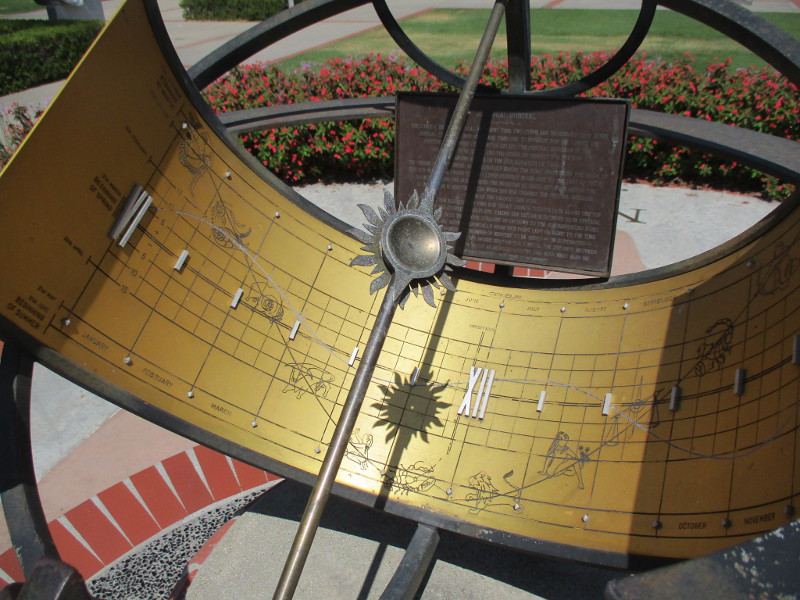
Within the sundial, a faded plaque (I increased the image contrast) describes how the beautiful and fascinating device works. I transcribed as best I could, without every word in caps:
THE KOESTER MEMORIAL SUNDIAL
The sundial indicates local apparent time. Two steps are necessary to convert sundial time to Pacific Standard Time: one to correct for the longitude difference between SDSU (117°04`2W) and the central meridian of the Pacific Time Zone (120°W), and the other to correct for the non-uniform motion of the sun (equation of time).
The design of the sundial automatically makes the first correction. The image of the sun will be between the two lines (correct noon) just to the left of the XII noon line when the sun crosses the meridian at SDSU (117°04`2W) and on the XII noon line 12 minutes later when the sun crosses the central meridian (120°W) of the Pacific Time Zone.
To determine the equation of time for today, locate today’s date along the top or bottom the curved brass plate. Taking the distance between each vertical line as being 10 days, then move straight up or down to the corresponding point on the blue line. Move horizontally from this point left or right to the time scale and determine the number of minutes to be added (+) or subtracted (-) from the time indicated by the bright spot on the sundial. The distance between each vertical line is now taken as being 20 minutes. One hour must also be added if Daylight Savings Time is in effect.
Whew! Got that?
I think I’ll stick to my wristwatch or phone!
…
Thanks for visiting Cool San Diego Sights!
I post new blogs pretty often. If you like discovering new things, bookmark coolsandiegosights.com and swing on by occasionally!
I live in downtown San Diego and love to walk around with my camera! You can follow Cool San Diego Sights via Facebook or X.
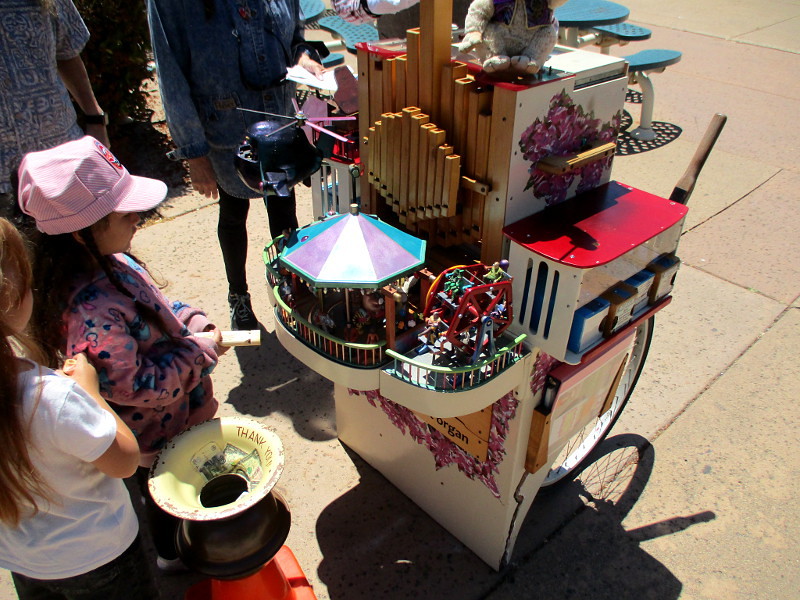
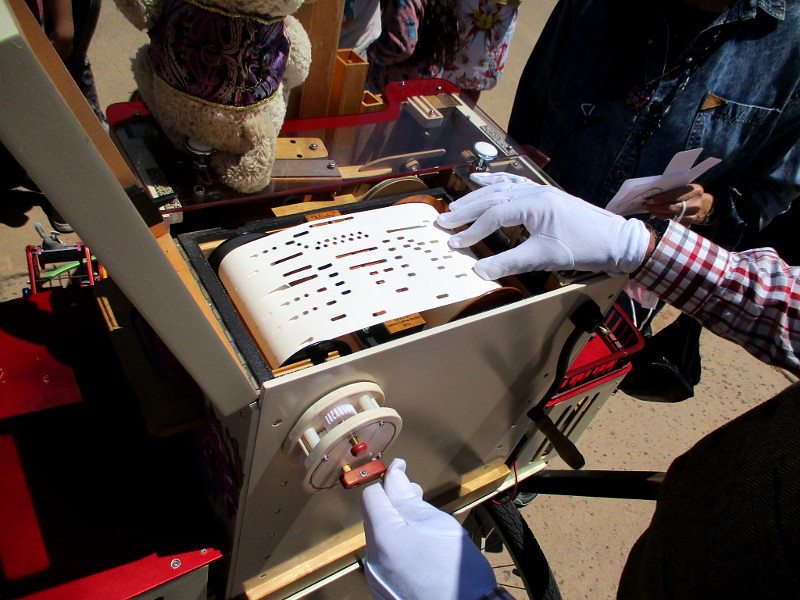
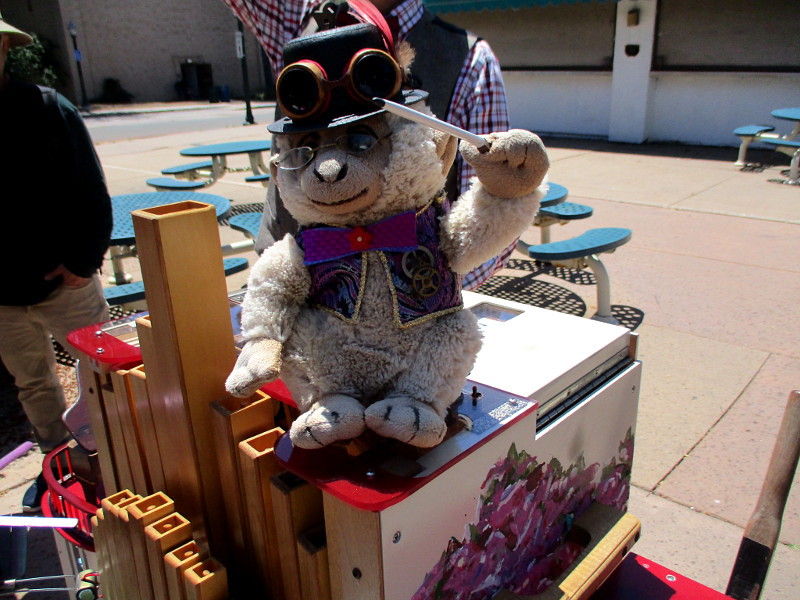
In Balboa Park last weekend, a large group of families and children gathered around Jim Coffee and his extraordinary street organ. I joined them.
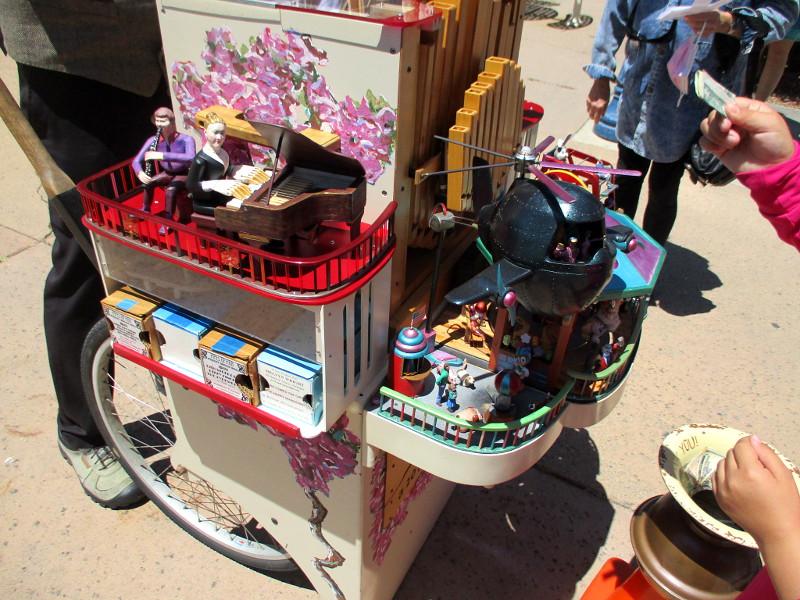
As Jim turned a crank to produce cheerful organ music, we all watched as automata brought small magical scenes to life in front of the organ. The street organ and its lively automata were all hand made!
I first met Jim in Balboa Park seven years ago. See those photos on my dormant Beautiful Balboa Park blog by clicking here. Back then he entertained passersby simply with the music of his 20 pipe “Misty” street organ. Today eight motors activate incredible small scenes mounted to the same organ–a carnival with turning Ferris wheel and merry-go-round, a flying helicopter with waving people, musicians playing instruments, and more!
With the addition of this fun automata, everyone who gathers around to listen and watch is even more enchanted!
If you want to learn more about Jim and his wonderful creations, visit his website here!
…
Thanks for visiting Cool San Diego Sights!
I post new blogs pretty often. If you like discovering new things, bookmark coolsandiegosights.com and swing on by occasionally!
I live in downtown San Diego and love to walk around with my camera! You can follow Cool San Diego Sights via Facebook or X (formerly known as Twitter)!
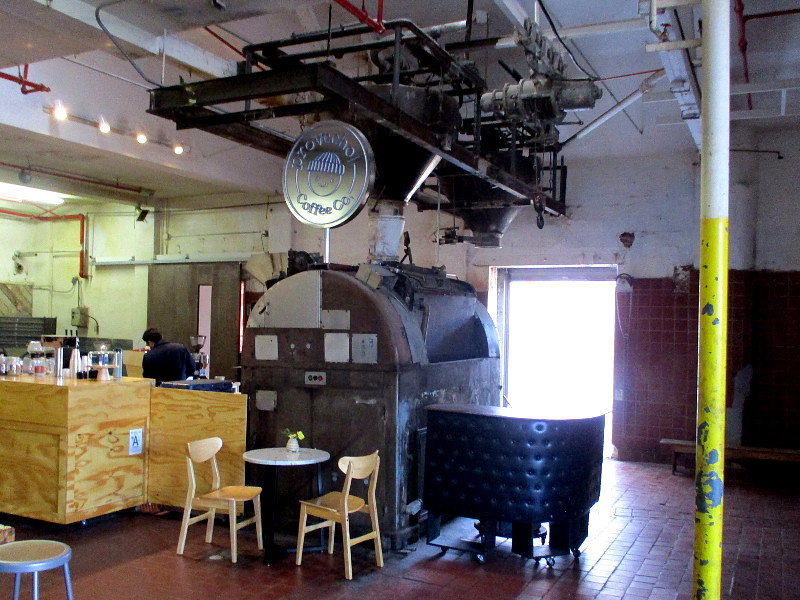
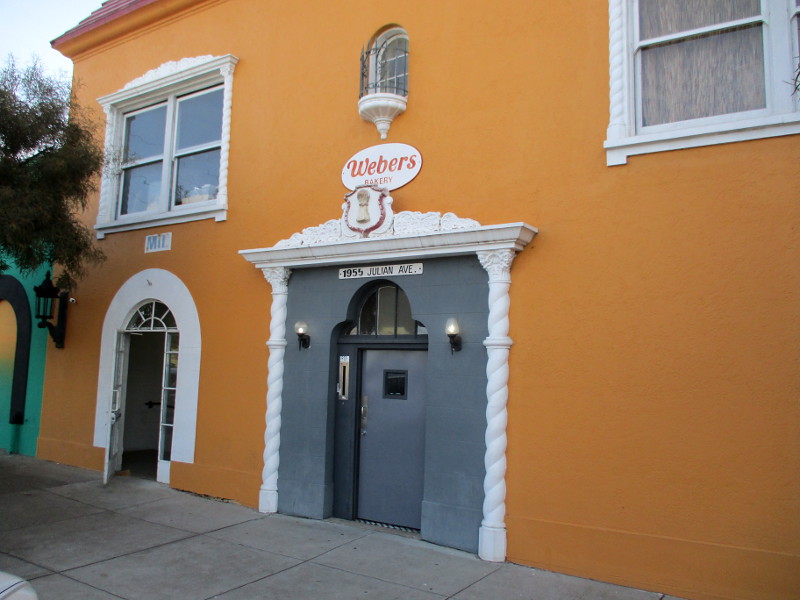
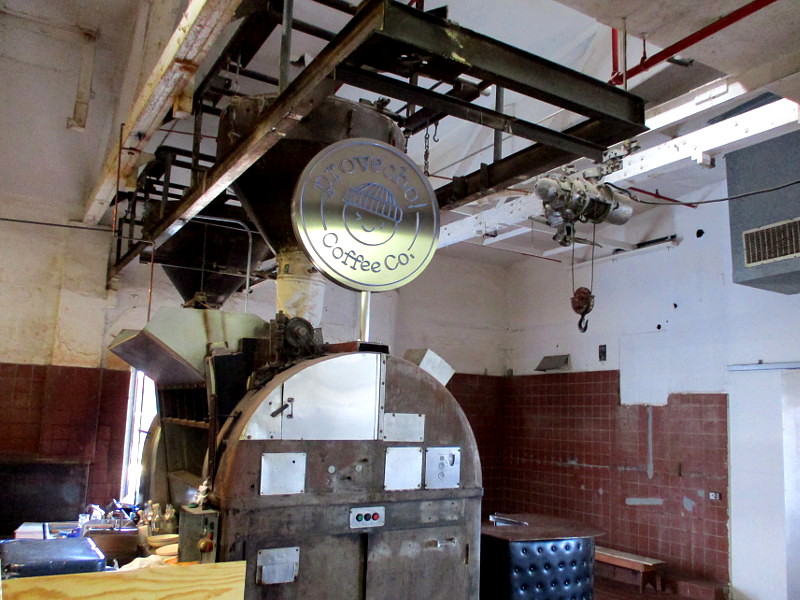
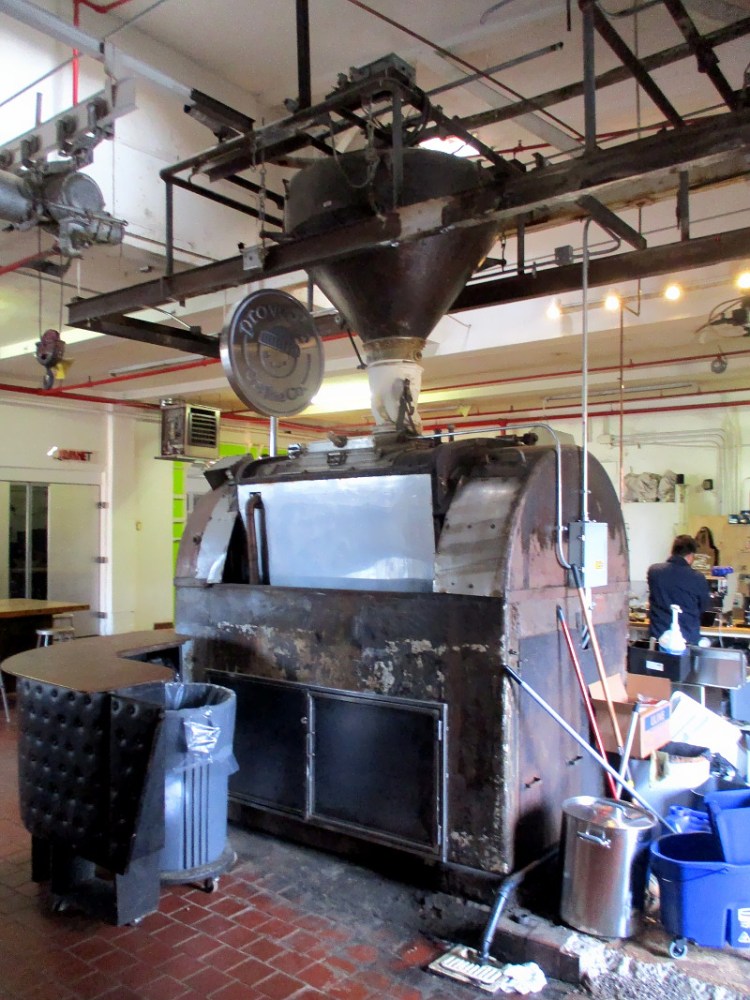
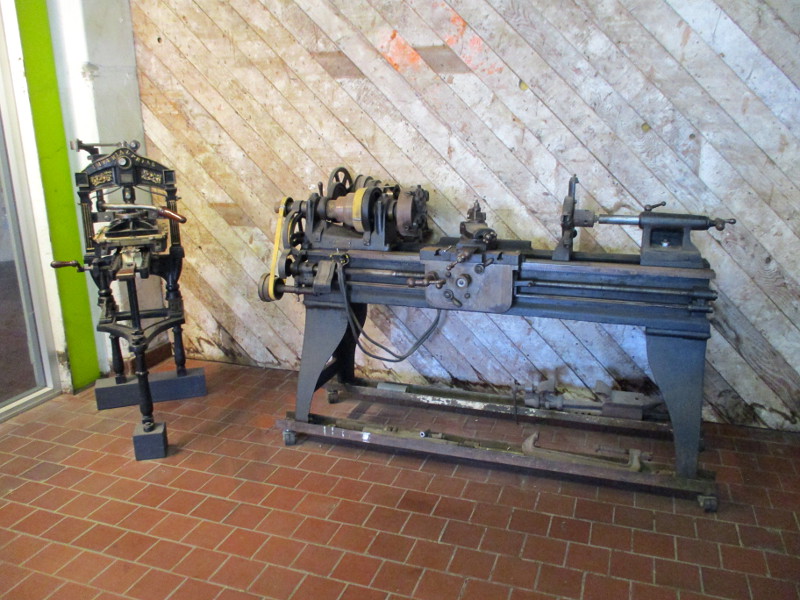
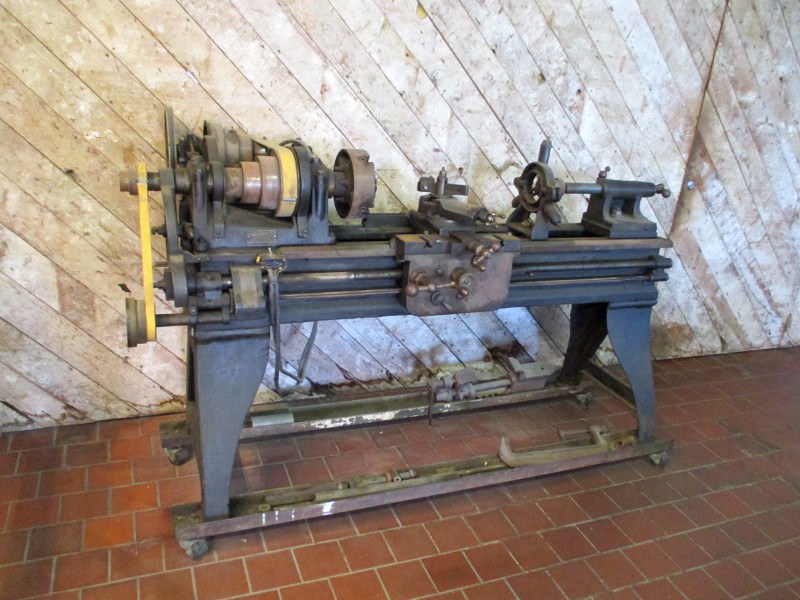
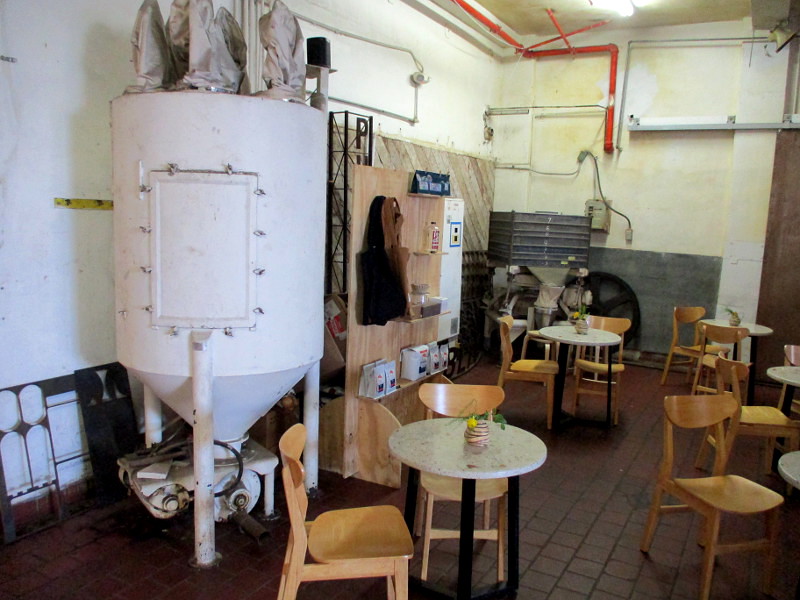
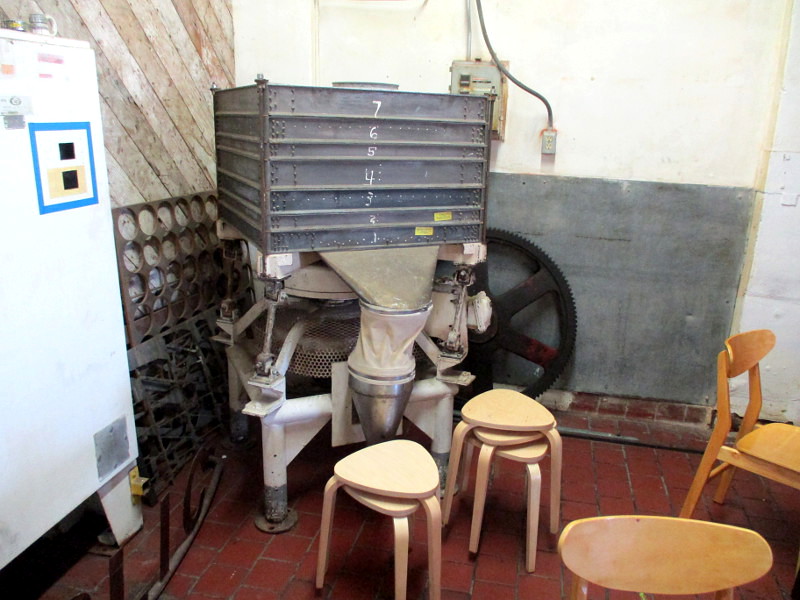
Industrial baking equipment can be viewed inside the building in Logan Heights that once housed a San Diego bread factory. The old building, at 1955 Julian Avenue, is now home to Bread & Salt, a cultural hub that features multiple art galleries, plus a brewery and coffee shop.
Today’s coffee shop–which occupies the oldest part of the building–is where Cramer’s Bakery operated a century ago. Read its history here.
The bakery expanded over time and eventually produced Weber’s bread, as you can see in my photograph of the building’s front entrance.
I stepped into Bread & Salt today because the public was invited to tour the historic building during this weekend’s San Diego Architectural Foundation Open House event. While I enjoyed viewing artwork in the various galleries, I was most intrigued by the remaining old baking equipment.
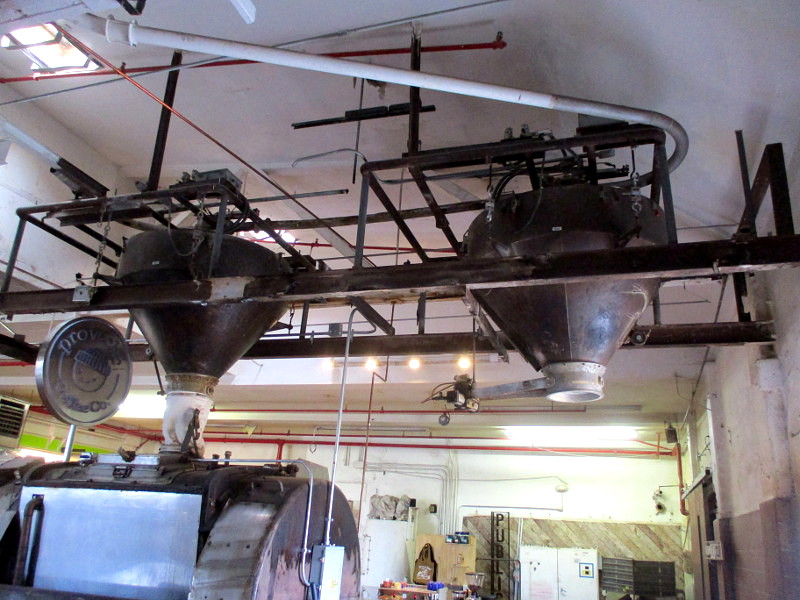
I’m no expert, so I can’t explain all that I saw. No information was available. Perhaps knowledgeable readers can leave a comment.
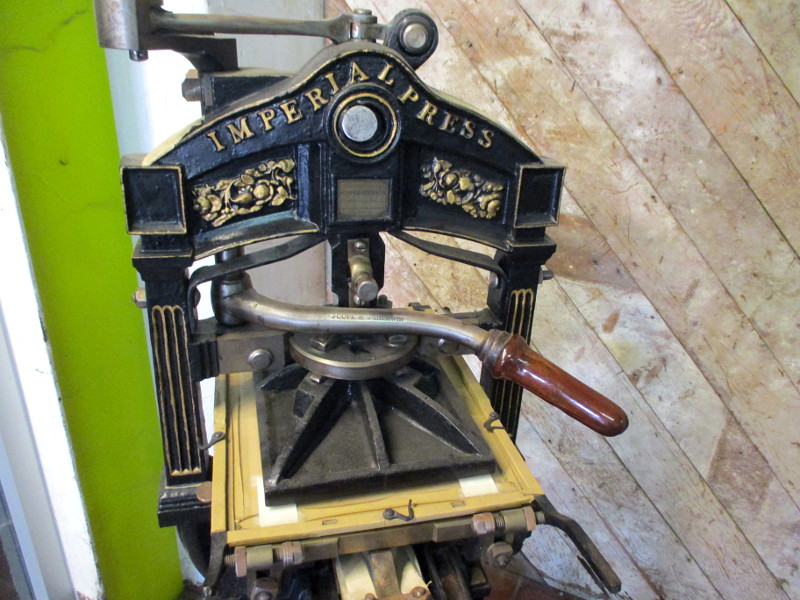
I did observe how bread dough would be sent from large steel “funnels” hanging from the ceiling into large bread-making ovens (one oven remains behind the coffee shop counter). A machine against a nearby wall appears to have been used for making or mixing dough. I also recognized an old-fashioned printing press. I don’t know if it was utilized in the factory–perhaps for advertising.
Step through the following door to make your own discoveries:
…
Thanks for visiting Cool San Diego Sights!
I post new blogs pretty often. If you like discovering new things, bookmark coolsandiegosights.com and swing on by occasionally!
I live in downtown San Diego and love to walk around with my camera! You can follow Cool San Diego Sights via Facebook or X (formerly known as Twitter)!
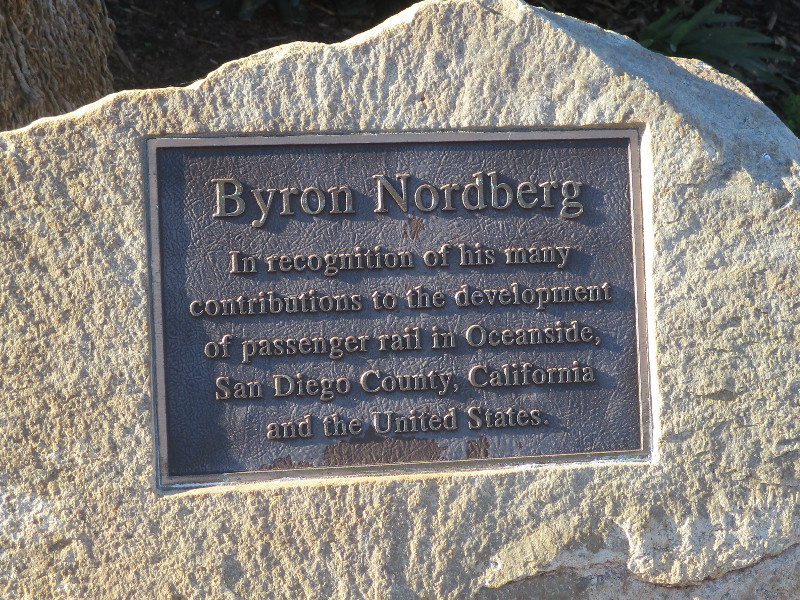
Byron Nordberg — In recognition of his many contributions to the development of passenger rail in Oceanside, San Diego County, California and the United States.
A plaque honoring Byron Nordberg is embedded in a boulder near the train platforms at the Oceanside Transit Center. It recognizes a visionary mover and shaker, who is largely responsible for the creation of this regional transportation center, where Amtrak, Metrolink, the Coaster, the Sprinter, plus Greyhound buses and several North County Transit District bus routes conveniently come together.
Here’s a great article that concerns the work of Byron Nordberg. And here’s a press release regarding his death in 1997. If you ride the San Diego trolley or the aforementioned trains, you might appreciate his early advocacy of rail in Southern California, as well as innovations that allow passengers to easily board trains without stepping up, safe tunnels and overpasses under and over tracks, and double tracks at stations that prevent unnecessary delays in the system.
From his childhood he was a lover a trains. I am, too. So I thank him.
…
Thanks for visiting Cool San Diego Sights!
I post new blogs pretty often. If you like discovering new things, bookmark coolsandiegosights.com and swing on by occasionally!
I live in downtown San Diego and love to walk around with my camera! You can follow Cool San Diego Sights via Facebook or X (formerly known as Twitter)!
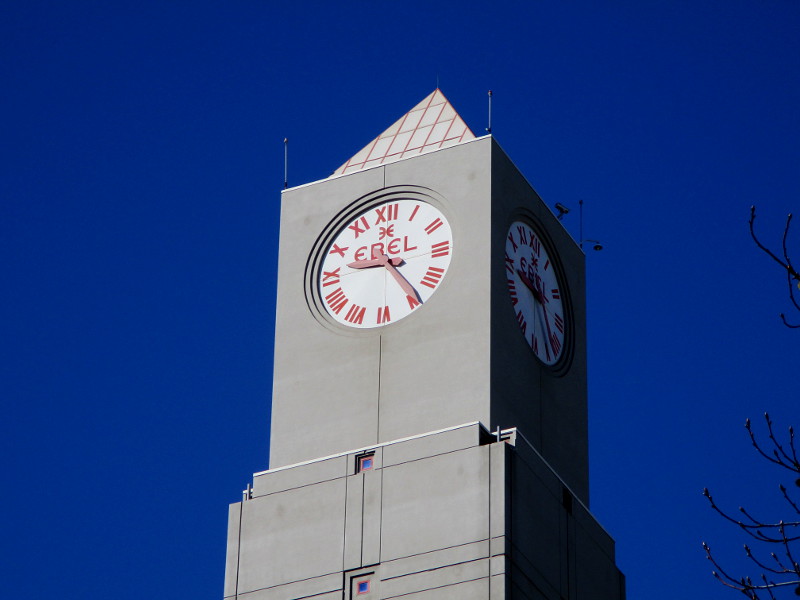
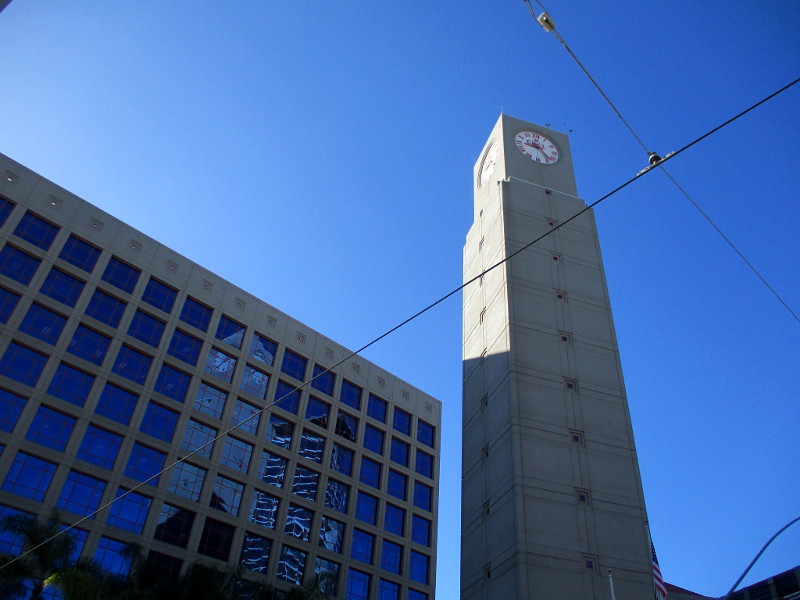
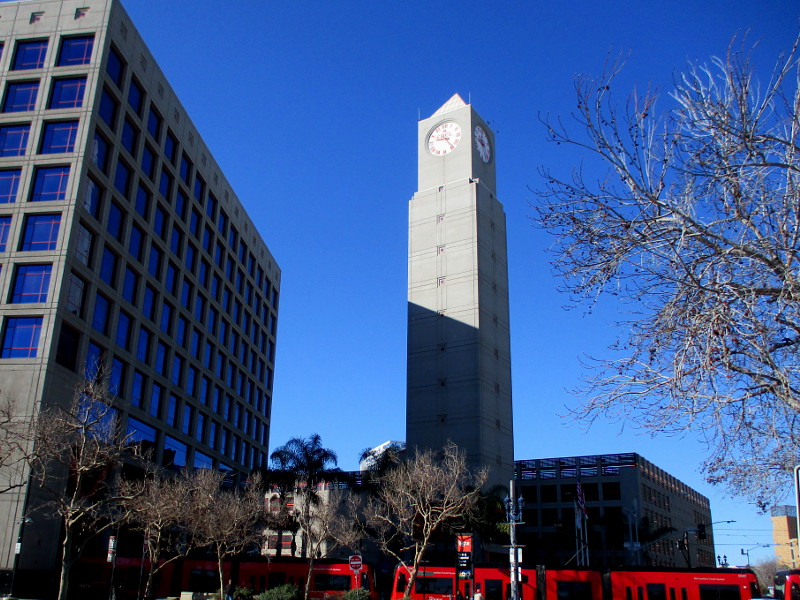
This might surprise you, but the high clock tower that rises above San Diego’s downtown 12th and Imperial Transit Center came from Switzerland!
A detailed explanation of the 233 feet high tower clock and its history can be found here. This is part of the description:
The Swiss Bank corporation which worked with the County of San Diego and the Metropolitan Transit Development Board, arranged for the donation of the clock from “Ebel Watchmaker Co.” of Switzerland… The tower was built in 1988 and the clock installed later that year. The clock has four dials, with red Roman numerals, a white face and 6-foot long red hands. The mechanism was shipped unassembled to San Diego from Switzerland in a jumbo jet. It took 12 days for Swiss technicians to put the system together…
There’s no elevator in the tower, so assembly of the clock was a difficult task that required manually carrying boxes full of mechanism parts up the equivalent of fifteen stories!
I believe the impressive clock still operates. The clock was installed with electronic speakers for chimes–but I don’t believe I’ve ever heard them.
…
Thanks for visiting Cool San Diego Sights!
I post new blogs pretty often. If you like discovering new things, bookmark coolsandiegosights.com and swing on by occasionally!
I live in downtown San Diego and love to walk around with my camera! You can follow Cool San Diego Sights via Facebook or X (formerly known as Twitter)!
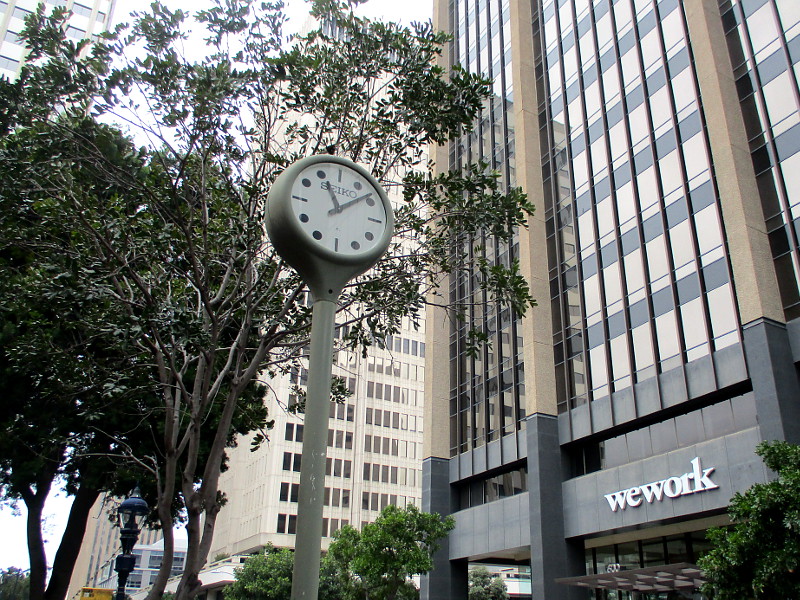
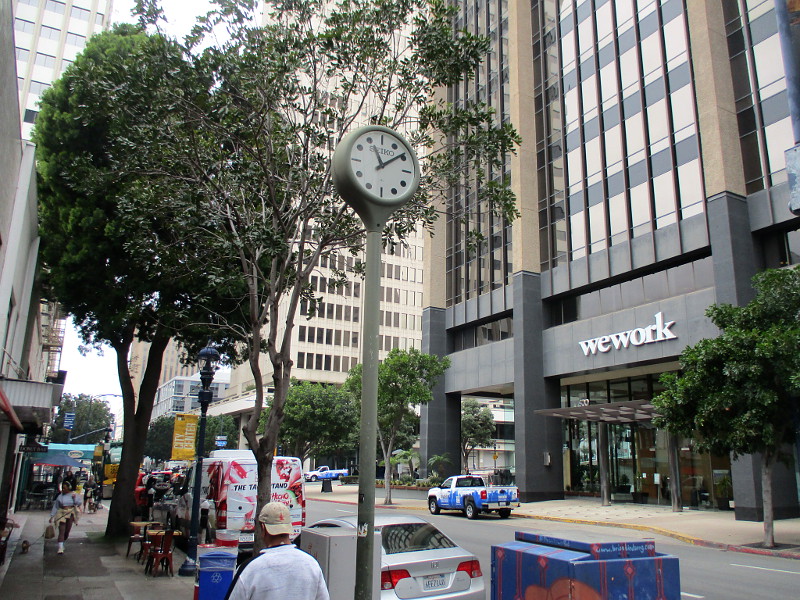
There’s a street clock in downtown San Diego that few seem to know about. It rises at the southwest corner of 7th Avenue and B Street. Perhaps you’ve seen it. Many of the people I’ve questioned over the years haven’t.
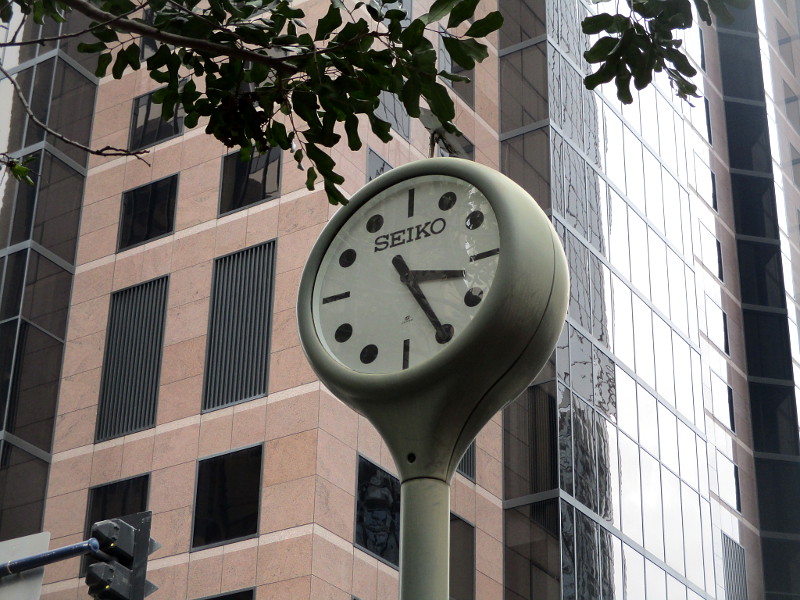
The clock is slender and about 20 feet tall, and appears a bit like a sleek, elevated wristwatch–indeed, the word SEIKO appears on the clock’s face.
I did a little research and discovered this “Solar Post Clock” was a gift in 1983 from Seiko to Jacobs & Sons Jewelers, a family business that used to be located on this city corner.
According to an interesting National Association of Watch and Clock Collectors web page, this Seiko street clock is an unusual and novel device that was supposedly the first solar powered clock to be installed in San Diego…. It has a very accurate time only quartz movement and runs on a solar powered battery system that theoretically can run for 90 days without sunshine.
The clock’s hands no longer move. While our San Diego sunshine continues, it seems time eventually ran out for this unique street clock.
…
Thanks for visiting Cool San Diego Sights!
I post new blogs pretty often. If you like discovering new things, bookmark coolsandiegosights.com and swing on by occasionally!
I live in downtown San Diego and love to walk around with my camera! You can follow Cool San Diego Sights via Facebook or X (formerly known as Twitter)!
Visitors to the San Diego Air & Space Museum’s Gillespie Field Annex in El Cajon yesterday were in for an extraordinary, one-of-a-kind treat!
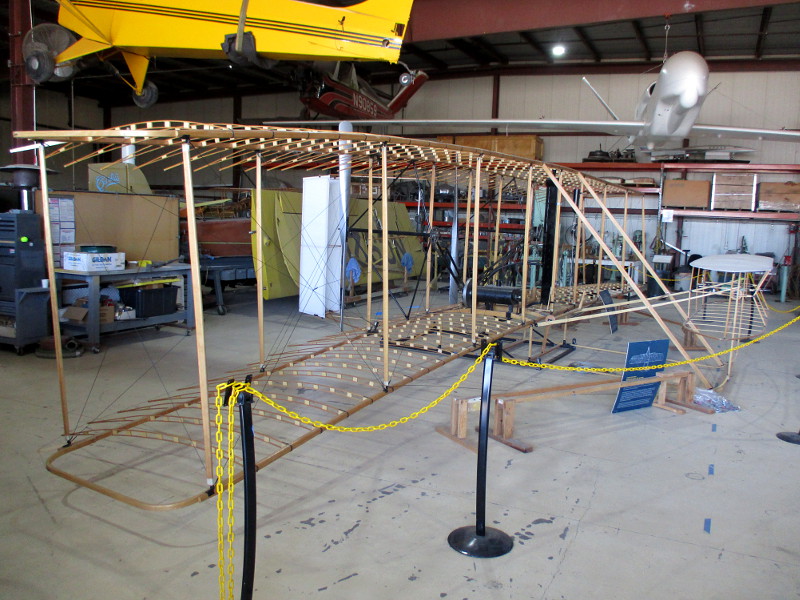
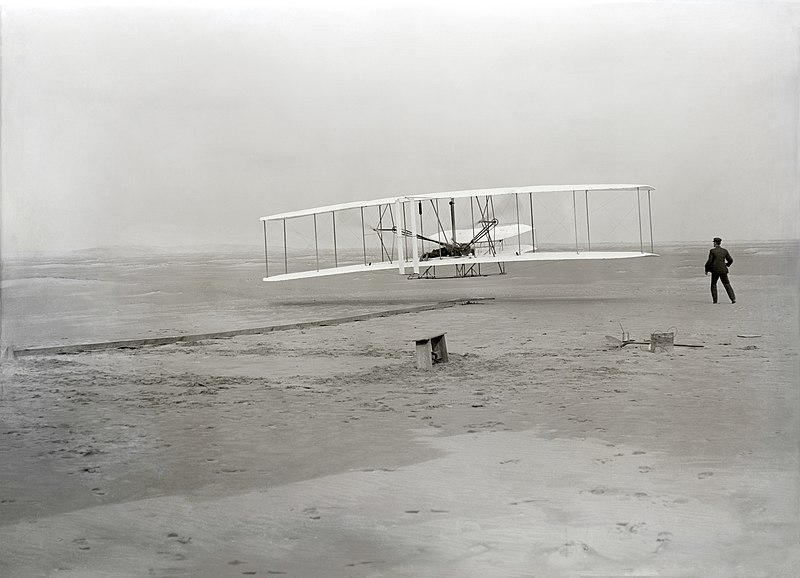
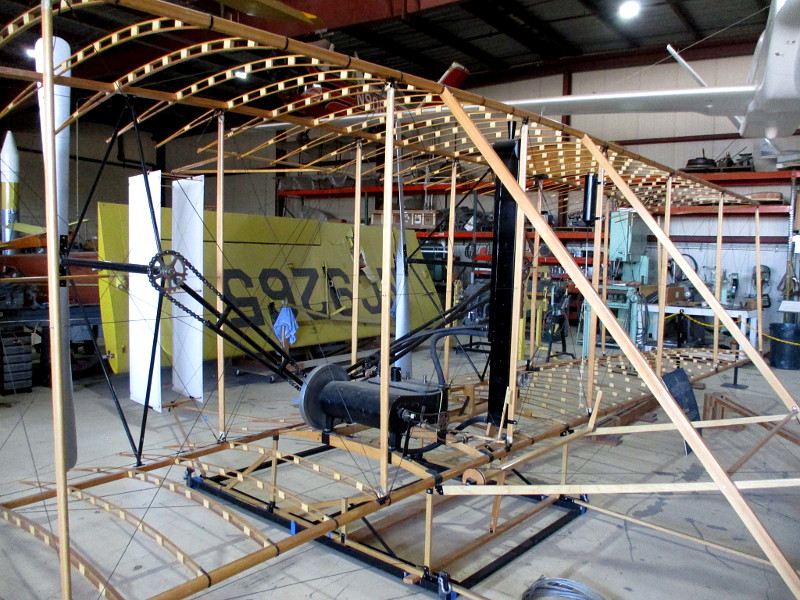
An amazing, full-size replica of the Wright Flyer, invented and flown by Orville And Wilbur Wright in 1903, was on view as it is being restored. The famous Wright Flyer, (also known as the Kitty Hawk, Flyer I, or the 1903 Flyer) was the world’s first successfully powered and controlled aircraft.
The careful restoration has been ongoing inside one of the hangars at the Gillespie Field Annex. Right now the aircraft’s fragile wooden framework is laid bare, as the outer fabric has yet to be replaced.
A sign by the aircraft details its history, dimensions and construction. This particular Wright Flyer reproduction was obtained from Valentine Aero in 1979. When various repairs are completed, it will be proudly displayed at the Air & Space Museum in Balboa Park.
To read the sign, enlarge my photograph.
I took these photos of the Wright Flyer replica during my visit to Aerofest yesterday. The annual event allowed visitors to peer into this hangar, plus purchase all sorts of aviation collectibles in support of the museum.
I first visited the Gillespie Field Annex in early 2019 and blogged about what I saw. See that post here. (Please note that entry is no longer free–it’s $7, but well worth it!)
The first powered, controlled, sustained airplane flight in history. Orville Wright, age 32, is at the controls of the machine, lying prone on the lower wing with hips in the cradle which operated the wing-warping mechanism. His brother, Wilbur Wright, age 36, ran alongside to help balance the machine, having just released his hold on the forward upright of the right wing. The starting rail, the wing-rest, a coil box, and other items needed for flight preparation are visible behind the machine. Public domain image courtesy Wikimedia Commons.
…
Thanks for visiting Cool San Diego Sights!
I post new blogs pretty often. If you like discovering new things, bookmark coolsandiegosights.com and swing on by occasionally!
I live in downtown San Diego and love to walk around with my camera! You can follow Cool San Diego Sights via Facebook or X (formerly known as Twitter)!
Brilliant! That’s what I thought when I met artist Jeff Daymont and observed his uniquely designed playing cards and original games!
I was walking through the Seaside Pavilion at the San Diego County Fair–you know, where vendors sell unique wares, demonstrating salad choppers and knives that will cut through a brick–when my eyes fell upon an unusual table. That’s a lot of playing cards, I thought. Then I looked more closely…
Jeff has created playing cards that are truly unique. The Kings and Queens illustrated on cards depict actual monarchs, rulers and royalty from world history. Many of the playing cards are also designed to support all sorts of original games, such as Rock, Paper, Scissors, Water and Lizard!
You can see a bunch of games invented so far for the versatile King’s Keys deck by clicking here. If you think up a new game, submit it!
Not only are these playing cards works of art, but I absolutely love the concept that inspired players can dream up new games!
Do you want to check out Jeff Daymont’s very cool playing cards?
A similar game I wrote for the Commodore 64 was titled Super Clue. It can be played freely on your computer right now by visiting the Internet Archive here!
Here’s a screenshot of a new game beginning:
Hints: the characters in Super Clue move about randomly, randomly drop and pick up objects, and can randomly leave clues at each location. There are several possible murder weapons. You can search characters and locations and interrogate the roaming characters. Use objects that you pick up like a magnifier, rope and flashlight. The initial character positions are randomly generated. To make a new move, type in a simple two or three word command. Enter “help” to see which words are recognized. One character is initially designated the murderer. Deduce who it is and make an arrest before midnight, or before there are more victims! I’m very proud of the sound effects I created. Be patient! As the ancient program runs on a computer emulator, every move’s resulting text can be a bit slow to appear, so wait a few seconds. Map out the mansion as you move about. Have fun!
…
Thanks for visiting Cool San Diego Sights!
I post new blogs pretty often. If you like discovering new things, bookmark coolsandiegosights.com and swing on by occasionally!
I live in downtown San Diego and love to walk around with my camera! You can follow Cool San Diego Sights via Facebook or Twitter!
Unique, classic and amazing one-of-a-kind vehicles dazzle visitors to the San Diego Automotive Museum. Lovers of nostalgia and the history of invention have can have a field day by simply wandering about the museum floor.
During my last visit to the Automotive Museum I noticed a bunch of old antique gas pumps displayed here and there.
Perhaps you’re old enough to remember the days when pumps similar to these were the norm. And a friendly gas station worker would pump your fuel and wash your windows with a smile. And you might receive some trading stamps, too.
I vaguely remember. But I’m getting old and that was long ago.
…
Thanks for visiting Cool San Diego Sights!
I post new blogs pretty often. If you like discovering new things, bookmark coolsandiegosights.com and swing on by occasionally!
I live in downtown San Diego and love to walk around with my camera! You can follow Cool San Diego Sights via Facebook or Twitter!