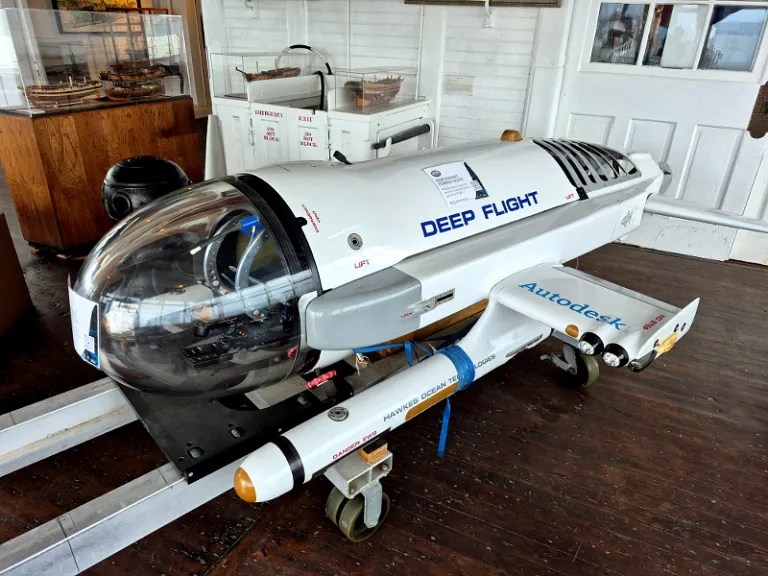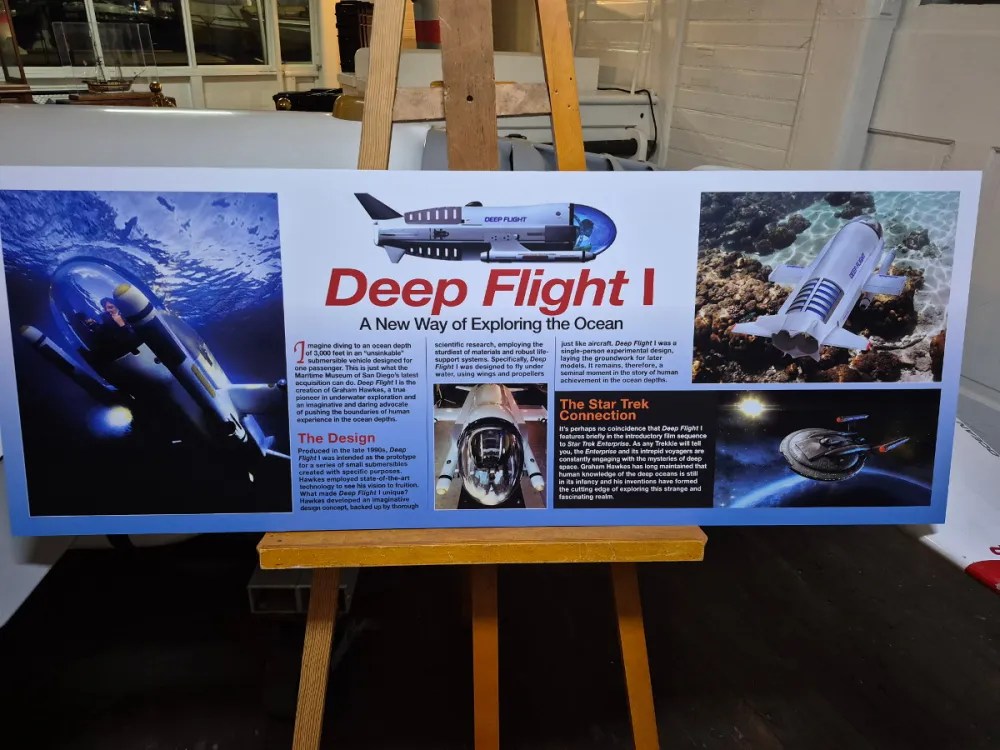
The Maritime Museum of San Diego recently acquired DeepFlight I, a unique “flying” underwater submersible developed in the late 1990s. You can read more about this amazing, advanced submersible here.
Visitors to the San Diego museum might be astonished to learn that this one-of-a-kind prototype appears in every episode of Star Trek: Enterprise!
DeepFlight I can be seen momentarily in the Star Trek: Enterprise introductory sequence, which begins every episode. The sequence depicts the evolution of human technology and exploration. DeepFlight I appears at the 34 second mark here!
Super cool!
…
I post new blogs pretty often. If you like discovering new things, bookmark coolsandiegosights.com and swing on by occasionally!
I live in downtown San Diego and love to walk around with my camera! You can follow Cool San Diego Sights via Facebook or X.
Whenever I walk through downtown El Cajon, I make sure to pass by the Unarius Academy of Science. I peer through the front windows, wondering what weird new thing I might see.
Yesterday, I did find something new.
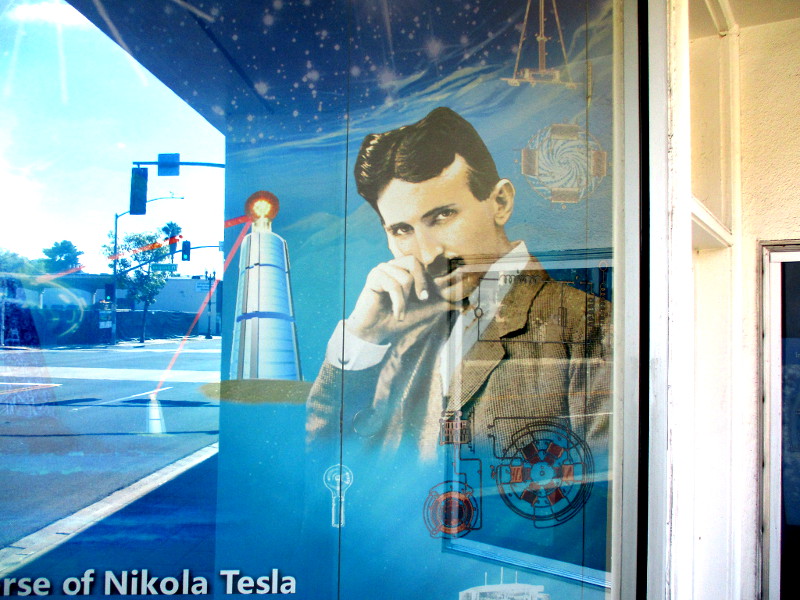
Yes, there were still displays concerning lost Atlantis, the future arrival of the Space Brothers, a Map of the Interplanetary Confederation, and students engaging in psychodrama as they reenact past-life experiences. But, lo and behold, there’s now a display that celebrates Nikola Tesla!
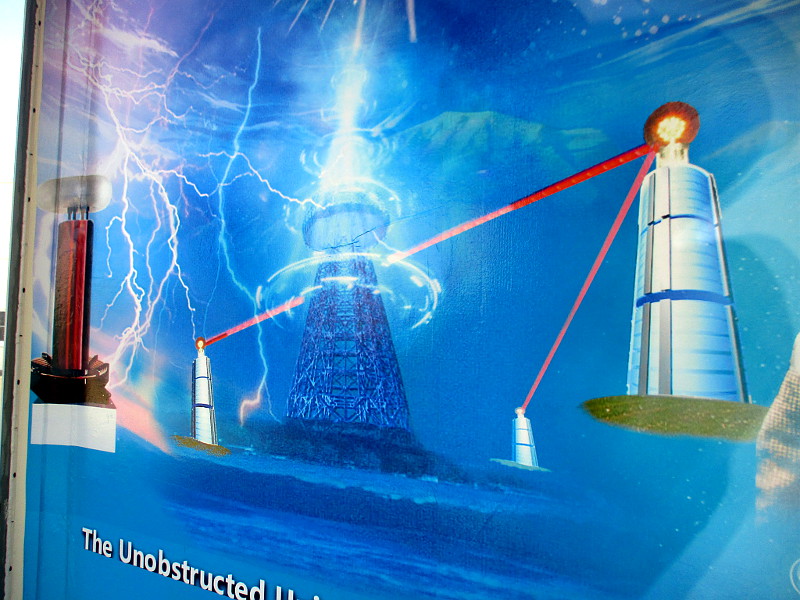
It’s titled The Unobstructed Universe of Nikola Tesla.
Taking photos through the windows of the building is very difficult due to strong reflections from the street. But here we go.
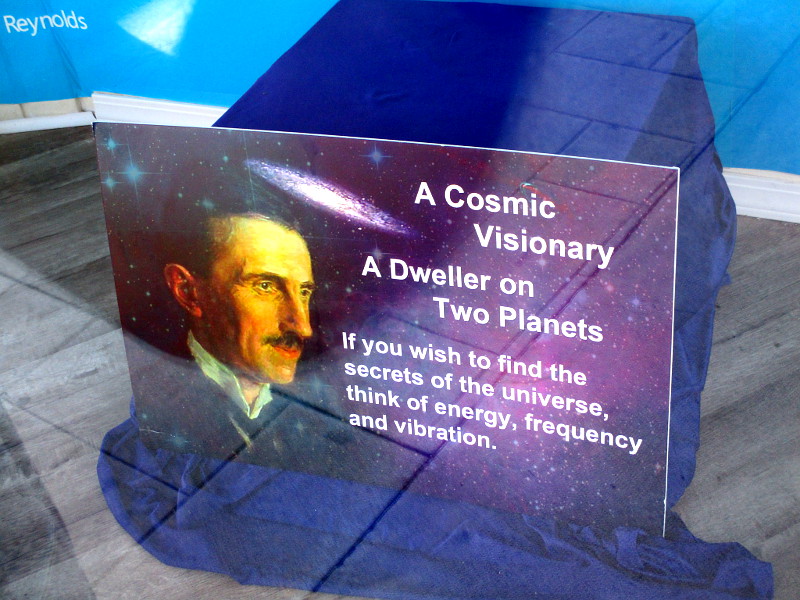
One sign calls Nikola Tesla a cosmic visionary and a dweller on two planets, and “If you wish to find the secrets of the universe, think of energy, frequency and vibration.”
This display seems apropos, as their website states how Unarius offers “…a course in self-mastery, based on the interdimensional understanding of energy–the joining of science and spirit.“
I don’t get the dweller on two planets, however. Tesla actually journeyed to Mars?
One of the Unarius webpages explains how Tesla thought we could communicate with beings from other planets. In 1899, he believed he had received a message likely from Mars.
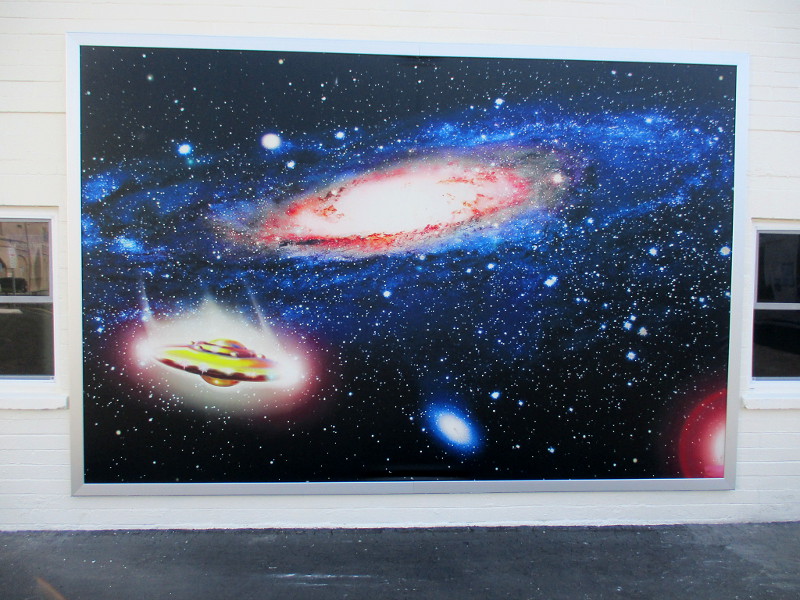
Yesterday I also noticed the parking lot near the Unarius Academy of Science has a new mural. Here it is:
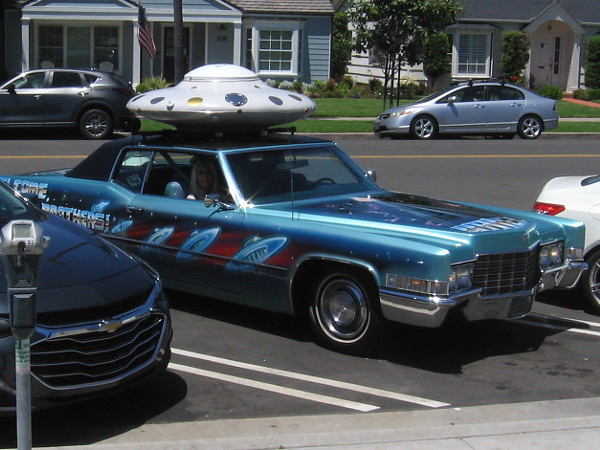
Have you seen their cool flying saucer car? I spotted it once during a walk through Coronado.
Just for fun, here it is again!
…
I post new blogs pretty often. If you like discovering new things, bookmark coolsandiegosights.com and swing on by occasionally!
I live in downtown San Diego and love to walk around with my camera! You can follow Cool San Diego Sights via Facebook or X.
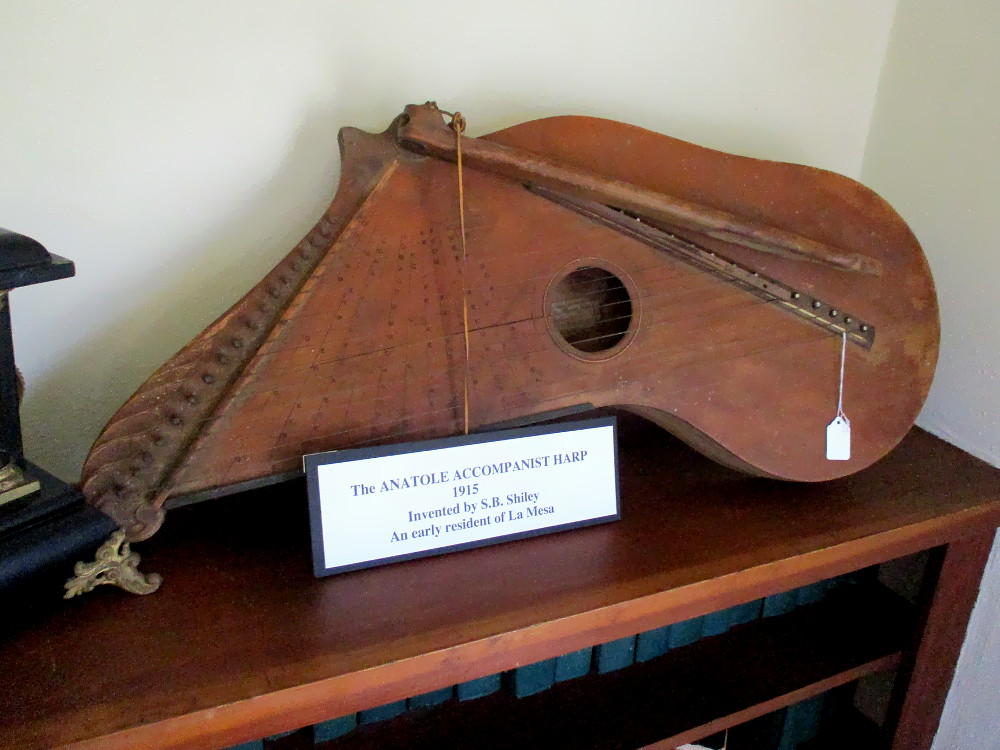
Does anybody out there know the history of the Anatole Accompanist Harp? An internet search provides no information whatsoever.
On display inside the La Mesa History Center‘s McKinney House museum is an unusual musical instrument. It is labeled: The ANATOLE ACCOMPANIST HARP – 1915 – Invented by S.B. Shiley – An early resident of La Mesa
I toured the museum yesterday and failed to learn more about this unique harp. Perhaps I should have asked around some more.
Presumably, S.B. Shiley is the artist Sylvester Benjamin Shiley, who passed away in San Diego in 1924.
I know some of my readers are very knowledgeable about local history and culture. If you can add any information about this mysterious Anatole Accompanist Harp or its inventor, please leave a comment below!
…
I post new blogs pretty often. If you like discovering new things, bookmark coolsandiegosights.com and swing on by occasionally!
I live in downtown San Diego and love to walk around with my camera! You can follow Cool San Diego Sights via Facebook or X.
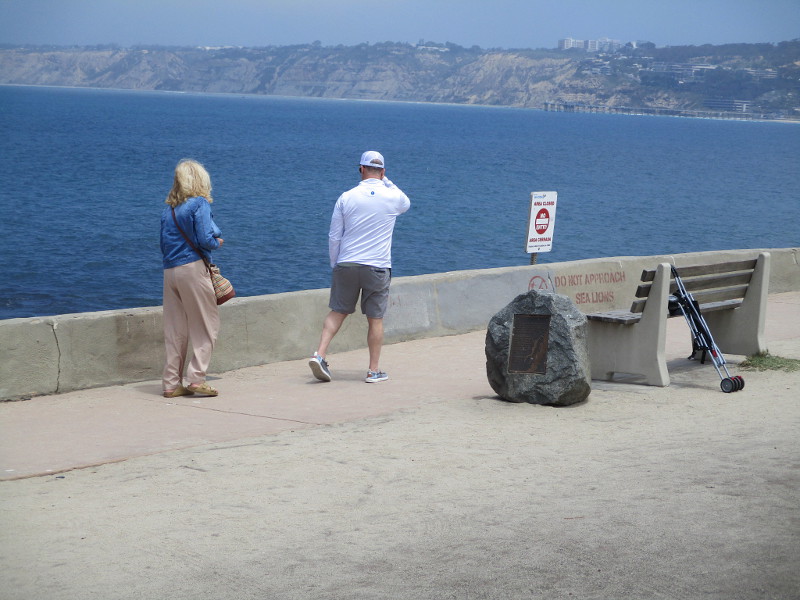
A plaque honoring San Diego’s underwater pioneers is embedded in a boulder a short distance west of La Jolla Cove. It was placed above Boomer Beach next to Ellen Browning Scripps Park last year.
People walking beside the ocean on the scenic boardwalk might see the bronze plaque near a bench.
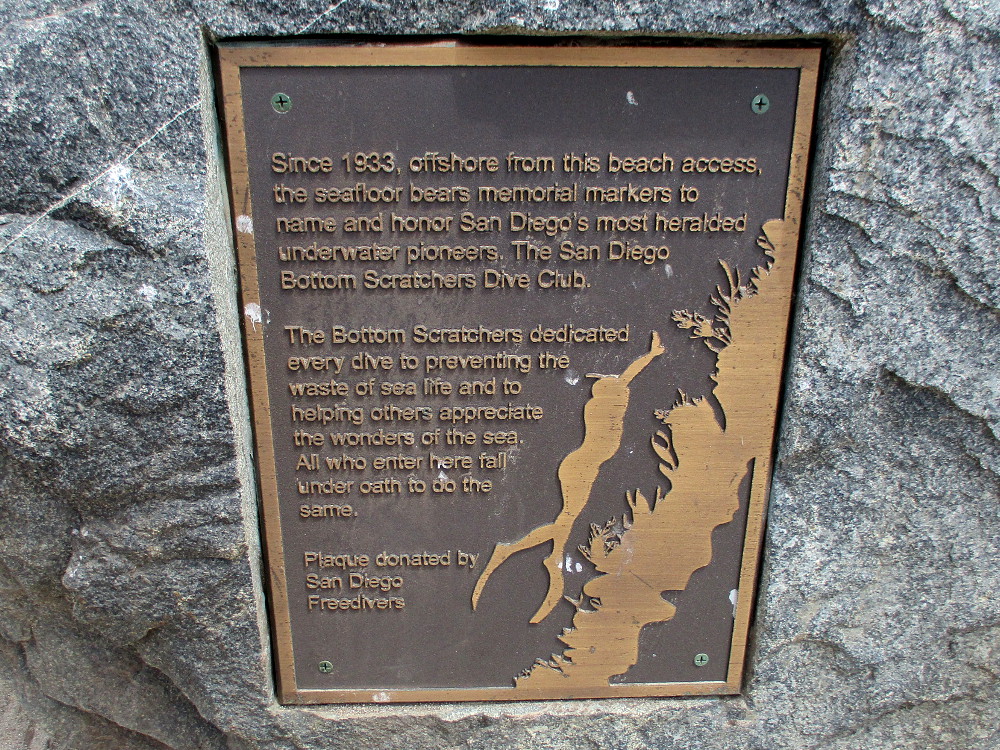
The plaque reads:
Since 1933, offshore from this beach access, the seafloor bears memorial markers to name and honor San Diego’s most heralded underwater pioneers. The San Diego Bottom Scratchers Dive Club.
The Bottom Scratchers dedicated every dive to preventing the waste of sea life and to helping others appreciate the wonders of the sea. All who enter here fall under oath to do the same.
Plaque donated by San Diego Freedivers.
Here’s a great article about the Bottom Scratchers Dive Club, which began almost a century ago. It explains: The name “Scratchers” came from the members’ habit of scouring the ocean bottom for food… The Bottom Scratchers either invented or were the first to use the basic freediving spearfishing gear still employed today… Soon club members became local legends… Everything the explorers experienced was new…
There are some great old photographs in the article, too.
…
I post new blogs pretty often. If you like discovering new things, bookmark coolsandiegosights.com and swing on by occasionally!
I live in downtown San Diego and love to walk around with my camera! You can follow Cool San Diego Sights via Facebook or X.
What is the smallest operating railroad car you’ve ever seen? Have you ever seen a moving train so small that bits of dust on the track can stop it?
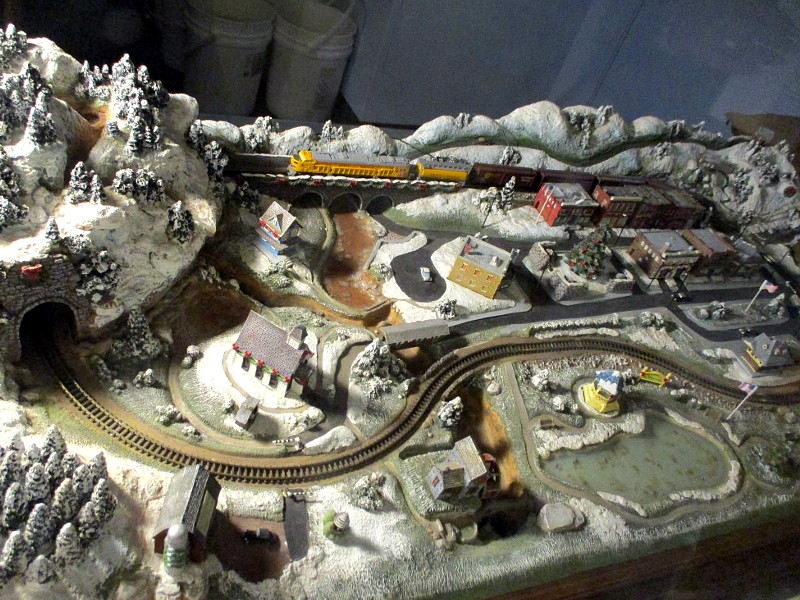
Incredibly diminutive trains are coming to the San Diego Model Railroad Museum in Balboa Park! Each car is about two inches long–the size of your finger!
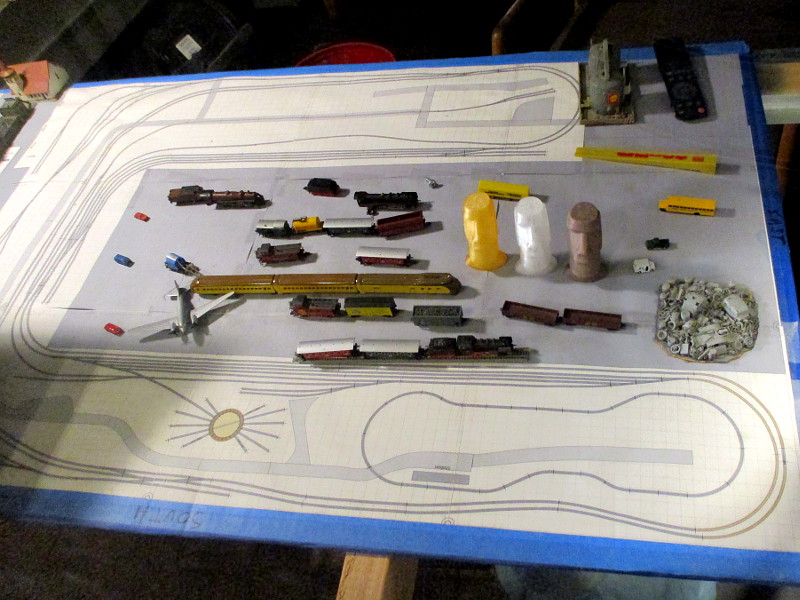
A new Z scale permanent exhibit is being built in the museum and should be completed later his year. As a sign in the museum explains, this cool project is being supported by a grant from The Norris Foundation.
Z scale model trains are so tiny a complete oval layout can fit inside a briefcase. They have a scale ratio of 1:220. They’re even smaller than the N scale trains one can see in the museum’s incredible Pacific Desert Lines layout, which is operated by the San Diego Society of N Scale.
A sample Z scale layout is already on display (above photo). Plans for the not-yet-built layout can also be viewed…
…
I post new blogs pretty often. If you like discovering new things, bookmark coolsandiegosights.com and swing on by occasionally!
I live in downtown San Diego and love to walk around with my camera! You can follow Cool San Diego Sights via Facebook or X.
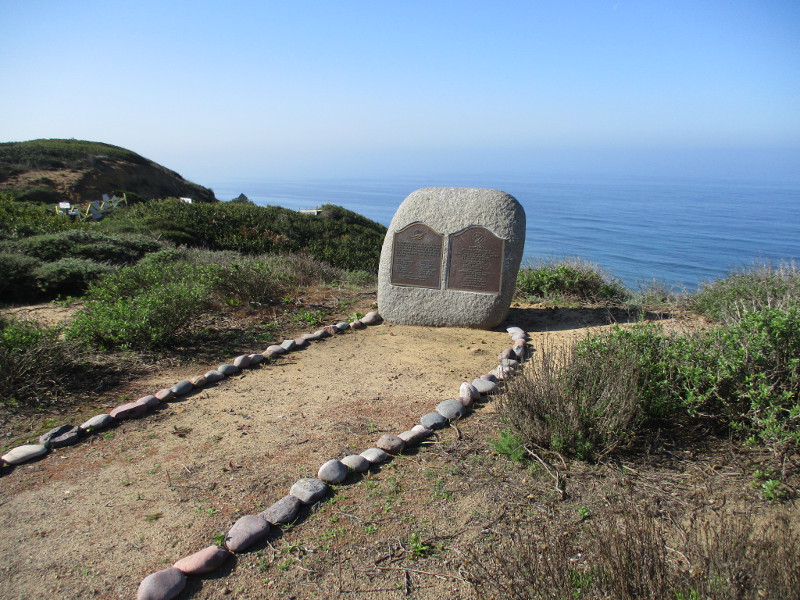
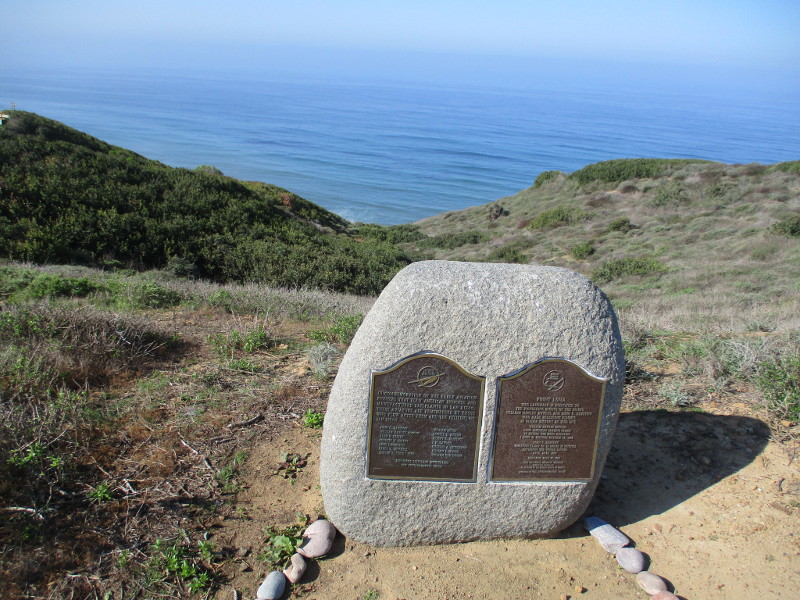
Did you know that glider history was made above the bluffs of Point Loma in San Diego?
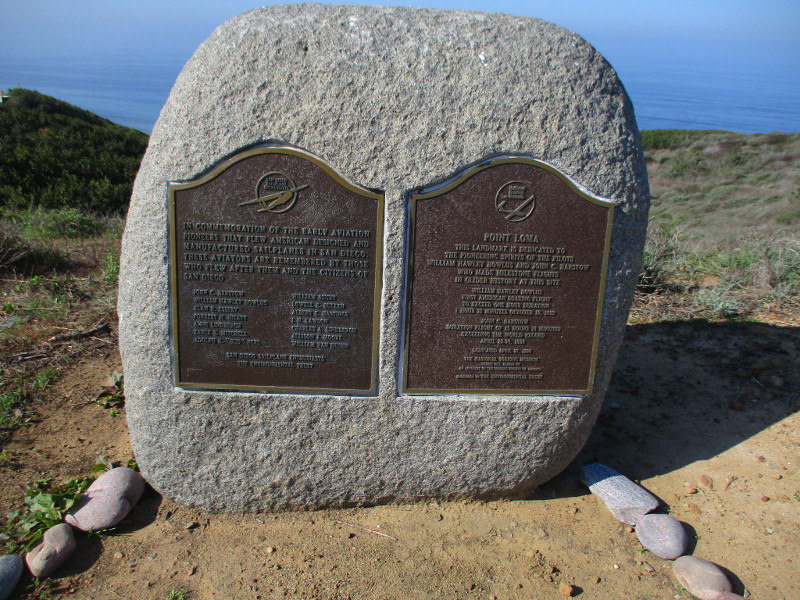
Two landmark plaques that commemorate this history (which includes the breaking of a sailplane flight duration world record) are located just inside the entrance gate of Cabrillo National Monument. A small dirt footpath leads up to the boulder upon which they are mounted. Beyond, a slope descends steeply to the Pacific Ocean.
I recently walked from the Cabrillo National Monument’s visitor center down to the plaques to have a close look…
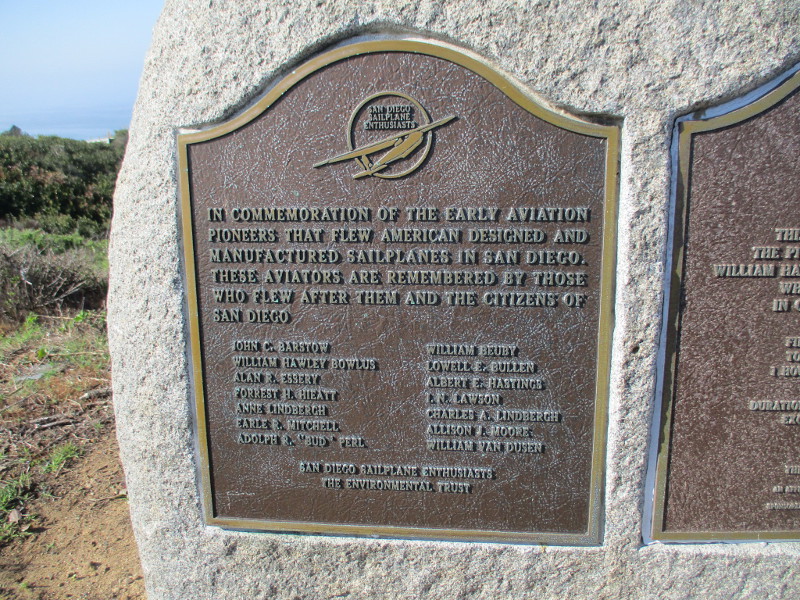
The plaque on the left states:
IN COMMEMORATION OF THE EARLY AVIATION PIONEERS THAT FLEW AMERICAN DESIGNED AND MANUFACTURED SAILPLANES IN SAN DIEGO. THESE AVIATORS ARE REMEMBERED BY THOSE WHO FLEW AFTER THEM AND THE CITIZENS OF SAN DIEGO
John C. Barstow – William Hawley Bowlus – Alan R. Essery – Forrest H. Hieatt – Anne Lindbergh – Earle R. Mitchell – Adolph R. “Bud” Perl – William Beuby – Lowell E. Bullen – Albert E. Hastings – I. N. Lawson – Charles A. Lindbergh – Allison J. Moore – William Van Dusen
SAN DIEGO SAILPLANE ENTHUSIASTS – THE ENVIRONMENTAL TRUST
(Yes, the names include Anne and Charles A. Lindbergh!)
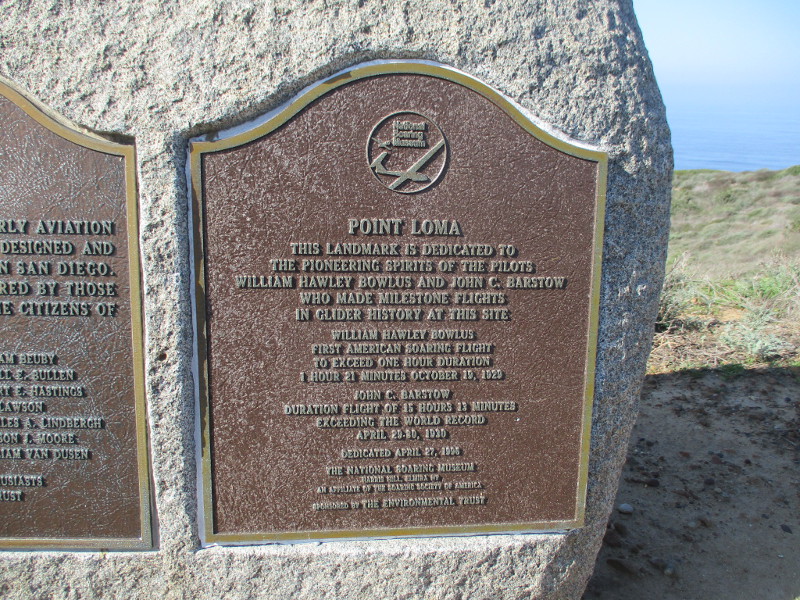
The plaque on the right states:
POINT LOMA
THIS LANDMARK IS DEDICATED TO THE PIONEERING SPIRITS OF THE PILOTS WILLIAM HAWLEY BOWLUS AND JOHN C. BARSTOW WHO MADE MILESTONE FLIGHTS IN GLIDER HISTORY AT THIS SITE
WILLIAM HAWLEY BOWLUS – FIRST AMERICAN SOARING FLIGHT TO EXCEED ONE HOUR DURATION – 1 HOUR 21 MINUTES OCTOBER 19, 1929
JOHN C. BARSTOW – DURATION FLIGHT OF 15 HOURS 13 MINUTES EXCEEDING THE WORLD RECORD – APRIL 29-30, 1930
DEDICATED APRIL 27, 1996
THE NATIONAL SOARING MUSEUM – HARRIS HILL, ELMIRA NY – AN AFFILIATE OF THE SOARING SOCIETY OF AMERICA
SPONSORED BY THE ENVIRONMENTAL TRUST
…
I post new blogs pretty often. If you like discovering new things, bookmark coolsandiegosights.com and swing on by occasionally!
I live in downtown San Diego and love to walk around with my camera! You can follow Cool San Diego Sights via Facebook or X.
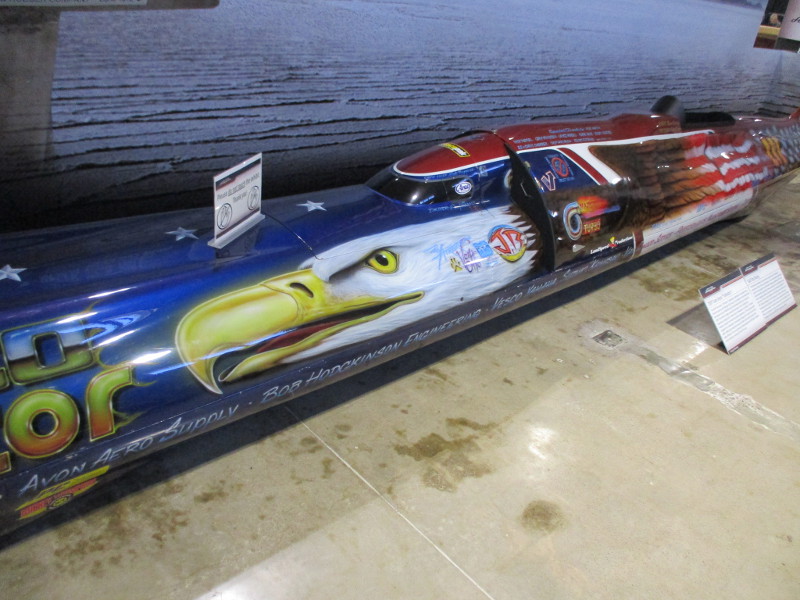
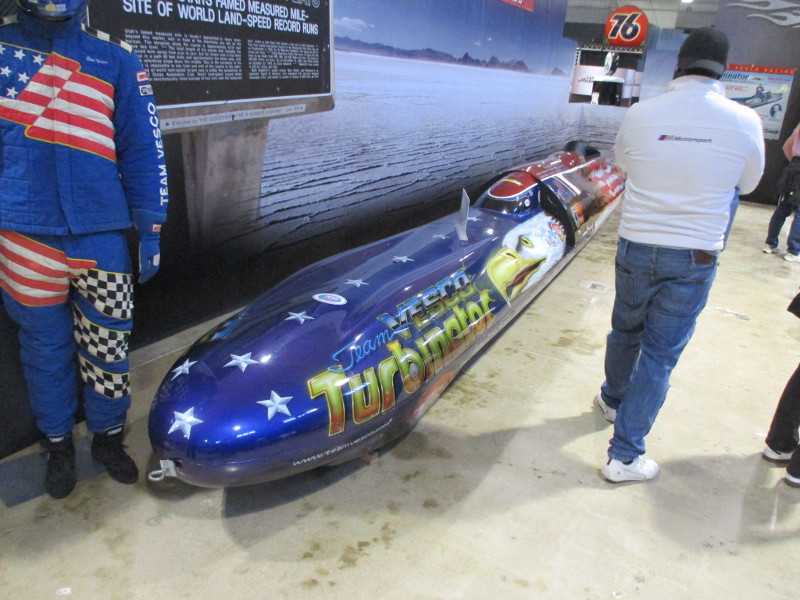
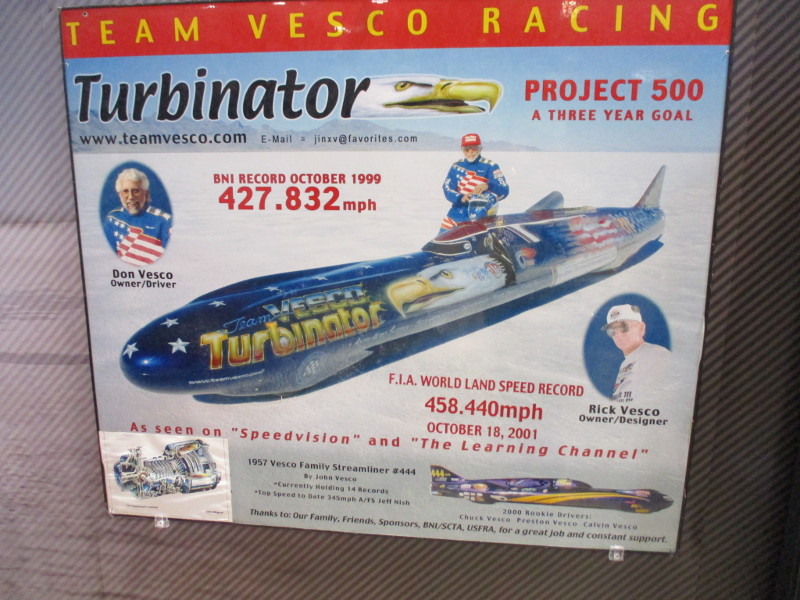
The absolutely fantastic 2001 Team Vesco “Turbinator” is now on display at the San Diego Automotive Museum in Balboa Park!
This amazing 30-foot-long streamliner set the wheel-driven land speed record of 458.440 miles per hour at the Bonneville Salt Flats on October 18, 2001.
Anyone interested in cars, racing, engineering or technology would love to look at this one-of-a-kind speedster. It has a unique four-wheel drive system powered by a 3,750 horsepower engine from a helicopter! Can you imagine sitting in this slender vehicle flying in a blur across the salt flats? It seems a driver would need nerves of steel!
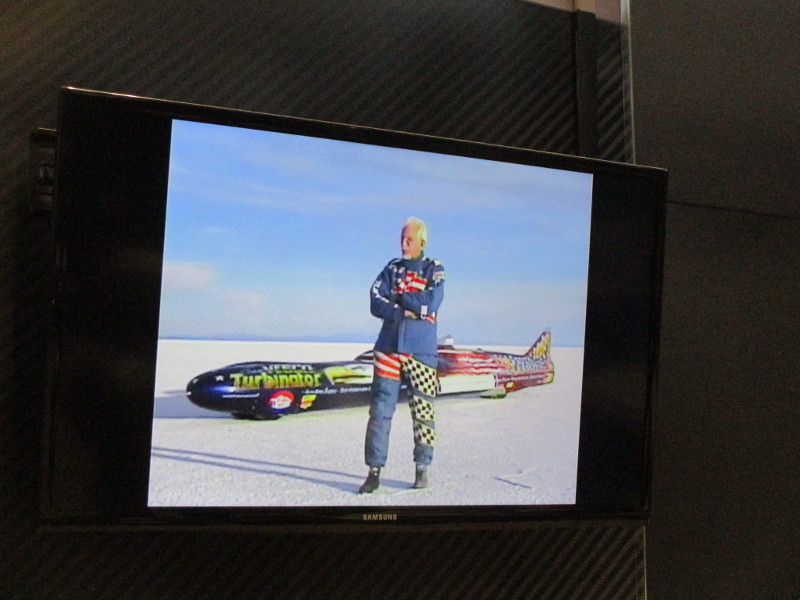
Check out the exhibit at the San Diego Automotive Museum and you can also see owner/driver Don Vesco’s NHRA Lifetime Achievement Award (presented in 2002) and a great video showing his incredible Turbinator in action!
Visit the Team Vesco Racing website by clicking here!
…
I post new blogs pretty often. If you like discovering new things, bookmark coolsandiegosights.com and swing on by occasionally!
I live in downtown San Diego and love to walk around with my camera! You can follow Cool San Diego Sights via Facebook or X.
In the past few days, I’ve spotted autonomous Waymo cars navigating streets in San Diego. Bankers Hill is where I saw two of the cars, to be exact. Both had drivers behind the steering wheel. I had my camera at the ready this afternoon to capture the above photo. Yes, there is a driver in there.
Waymo is the company that has those driverless autonomous taxis operating up in San Francisco. You hail them with your phone and input the destination.
Here in San Diego, and other test cities, Waymo cars are being driven through certain neighborhoods in order to gather data, refine maps, and learn about the peculiarities of different places. Here’s an article that thoroughly describes the Waymo tests in San Diego. They began very recently.
I can see how many people are wary of driverless cars. The concept is revolutionary and still pretty new. One hears of glitches.
I suppose, however, that at some point in the future, driverless cars will be ubiquitous in every city around the world and taken for granted, just as other groundbreaking technologies eventually become the norm. I grew up with a rotary dial telephone . . . and an astounding invention: the electronic push button calculator!
We live in exciting, uncertain times when technology is taking gigantic leaps forward. Artificial intelligence, chips in heads, advancing robotics, virtual reality worlds… Where will all of this take us? How will this change us?
I wonder. Will the automation of practically everything make life more fulfilling?
I guess humanity will take the journey and find out…
…
I post new blogs pretty often. If you like discovering new things, bookmark coolsandiegosights.com and swing on by occasionally!
I live in downtown San Diego and love to walk around with my camera! You can follow Cool San Diego Sights via Facebook or X.
The exhibition is described as a retrospective about the work of husband-and-wife team of Helen Mayer and Newton Harrison, who were among the earliest and most notable ecological artists. Founding members of the Visual Arts Department at UC San Diego, Helen and Newton were local San Diego artists for nearly four decades, where they developed their pioneering concepts of Ecological Art.
Would I see paintings? What exactly was this ecological art?
What I discovered was unexpected and thoroughly thought-provoking!
The walls of the La Jolla Historical Society’s museum–the Wisteria Cottage–were covered primarily with technical drawings, maps and designs that conveyed innovative environmental ideas the couple developed over many years of working together.
If you love invention and human creativity, you’ll want to view this exhibition. You’ll see how human genius can create previously unthought-of technology that can benefit both people and the planet. You’ll observe how our understanding of nature and the ecosystems we all live in might conceivably be improved.
There were dozens of surprising ideas. I saw a proposal to create flood-reducing canals around downtown San Diego, practical Survival Pieces intended to create self-sustaining ecosystems (including a portable fish farm), and even a huge, Earth-orbiting sky mirror!
The Harrisons’ work is so expansive and full of variety that it’s hard to describe it all. So you’d better check it out yourself!
Helen and Newton Harrison: California Work is actually a multi-museum exhibition in San Diego County. The La Jolla Historical Society’s part of this exhibition is sub-titled Urban Ecologies, and traces the Harrisons’ collaborative practice during the late 1960s-1990s.
Additional parts of this exhibition can be viewed at the California Center for the Arts Escondido, and at the San Diego Public Library Gallery. Helen and Newton Harrison: California Work continues at all three locations through January 19, 2025.
If that’s not enough, this exhibition is part of a much larger Southern California event now underway: the Getty’s 70+ institution PST: Art and Science Collide!
…
I post new blogs pretty often. If you like discovering new things, bookmark coolsandiegosights.com and swing on by occasionally!
I live in downtown San Diego and love to walk around with my camera! You can follow Cool San Diego Sights via Facebook or X.
What you see above is very rare. It’s a bronze and wood, 57 inch diameter ship’s wheel. It dates from the Age of Steel Riveted Hull and Steam, 1912 to 1930s. There’s photographic evidence that it might very well have been used in a navy’s super-dreadnought warship!
Joe Frangiosa was super excited to find this rare wheel. His amazing Nautical History Gallery and Museum inside Liberty Station’s Command Center building now features ship’s wheels from five different eras in maritime history. The huge wheel made its first appearance in his museum just a week ago!
Joe confided that this addition has been enormously satisfying. He installed the huge wheel in such a way that people can turn it and pretend to command the high seas. Kids love it!
Joe suggested you all visit his Instagram page here.
Check out my photos of the other four wheels. You might note that rope is tied around one spoke–the king spoke. When that bit of rope is located at the top of a wheel, that means the rudder of the ship is centered. A sailor can steer by feel in dark, stormy or foggy conditions.
The next wheel is made entirely of wood, with wood peg construction. It dates from the Age of Wooden Hull and Sail, 1775 to 1840.
The next wheel is made of iron. It dates from the Age of Wooden and Iron Hull, Sail and Steam, 1840 to 1887.
This next ship’s wheel is polished bronze and shines brightly! It dates from the Age of Steel Riveted Hull, Sail and Steam, 1887 to 1912.
Finally, this ship’s wheel without spokes is also bronze, but unpolished. It dates from the Age of Steel Welded Plate Hull, 1930s to 1945.
…
Thanks for visiting Cool San Diego Sights!
I post new blogs pretty often. If you like discovering new things, bookmark coolsandiegosights.com and swing on by occasionally!
I live in downtown San Diego and love to walk around with my camera! You can follow Cool San Diego Sights via Facebook or X.