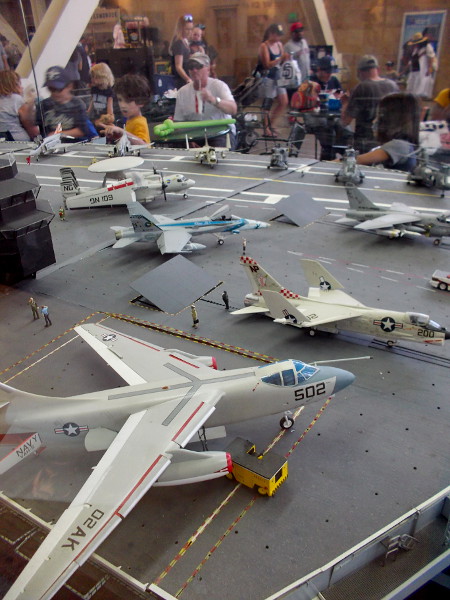
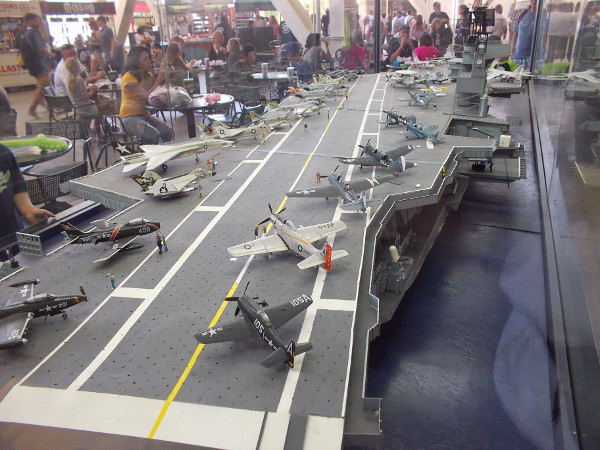
Kids check out the large USS Midway model inside the Power Alley at Petco Park during a Padres game.
I remember first seeing this impressive model of the USS Midway aircraft carrier many, many years ago. It was located inside the enormous passenger waiting room of the Santa Fe Depot, which is downtown San Diego’s historic train station. I’m not sure exactly when the model was moved into Petco Park’s Power Alley. It has been many years.
I like to check out this cool sight whenever I’m at a Padres baseball game or some other event at Petco Park. (It reminds me of when I was a kid, assembling a variety of small airplane models, gluing together the plastic pieces, carefully applying daubs of paint.) Young people today who wander through the stadium’s Power Alley can test their arm at a fast pitch game, enjoy a hot dog, then perhaps peer through the glass at the many aircraft arranged on the Midway’s flight deck.
In case you don’t have a chance to see this fantastic USS Midway model for yourself, here are a few photos.
Along the wall behind the large model you’ll find a moving tribute to our country’s military heroes, including the many professional baseball players who have served. I’ll blog about that one day, too!
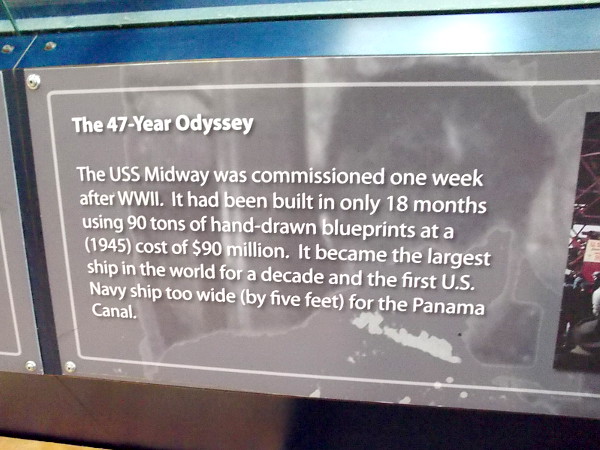
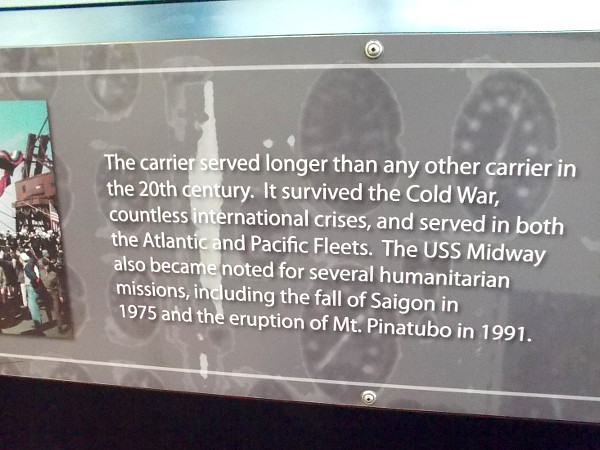
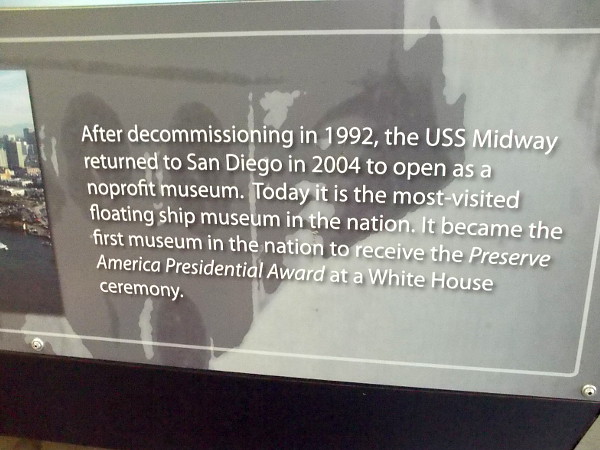
The USS Midway was commissioned one week after World War II. It became the largest ship in the world for a decade and the first U.S. Navy ship too wide for the Panama Canal.Many different model aircraft are parked on the flight deck of the small scale aircraft carrier.The USS Midway was active longer than any other carrier in the 20th century. It served during the Cold War, international crises and humanitarian missions…in both the Atlantic and Pacific Fleets.A closer photo of the USS Midway model which is displayed inside Petco Park’s Power Alley. I even see some tiny sailors!After decommissioning in 1992, the USS Midway returned to San Diego in 2004 to open as a nonprofit museum. It is now the most visited floating ship museum in the nation.Padres fans eat at tables near an impressive model of the USS Midway, a cool sight inside San Diego’s Petco Park.
…
I live in downtown San Diego and love to walk! You can follow Cool San Diego Sights via Facebook or Twitter!
You can easily explore Cool San Diego Sights by using the search box on my blog’s sidebar. Or click a tag! There are thousands upon thousands of unique photos for you to enjoy!
The historic 1915 Spreckels Organ in Balboa Park has regained the title of largest outdoor pipe organ in the world!
There’s a special concert going on right now in San Diego, celebrating the breaking of a world record. The Spreckels Organ in Balboa Park, after a drive to 5000 pipes, has regained the title of largest outdoor pipe organ in the world! (For several years, the Heroes’ Organ at Kufstein Fortress in Austria held the record.)
Here are some photos from about an hour before the celebration concert. Congrats to the Spreckels Organ Society for their fine achievement!
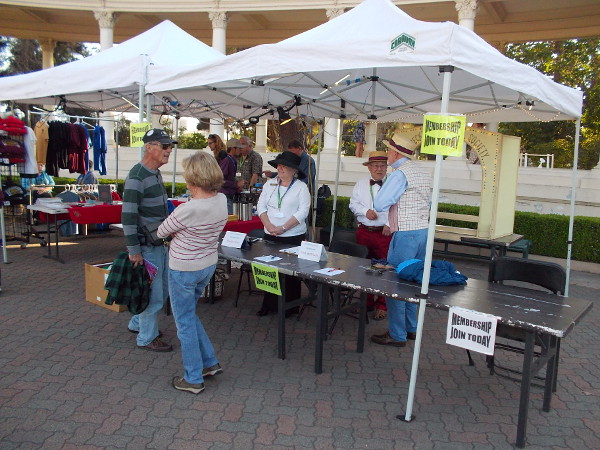
Before the celebration concert, a photographer gets ready and organ enthusiasts have a special dinner in the Spreckels Organ Pavilion.A special program! Taking the Title: The Celebration Concert for the World’s Largest Outdoor Pipe Organ. Sponsored by Point Loma Nazarene University.Friendly Spreckels Organ Society volunteer confirms that Balboa Park’s amazing outdoor organ has regained the world record with 5017 pipes!Spreckels Organ Society tent welcomes new members at the very special event.Getting the famous Spreckels Organ ready. San Diego Civic Organist Dr. Carol Williams looks on.A crowd slowly gathers. About an hour to go before the evening concert!The House of Scotland Pipe Band will take part in a grand procession into the Spreckels Organ Pavilion as the evening concert begins. They wear the official San Diego tartan!I paused to listen for a few minutes as concert organist Dr. Carol Williams and singer Diane Alexander, a soprano, practiced. It was beautiful music. Congratulations to the world-record Spreckels Organ!
…
I live in downtown San Diego and love to walk! You can follow Cool San Diego Sights via Facebook or Twitter!
You can easily explore Cool San Diego Sights by using the search box on my blog’s sidebar. Or click a tag! There are thousands upon thousands of fun (and sometimes historic) photos for you to enjoy!
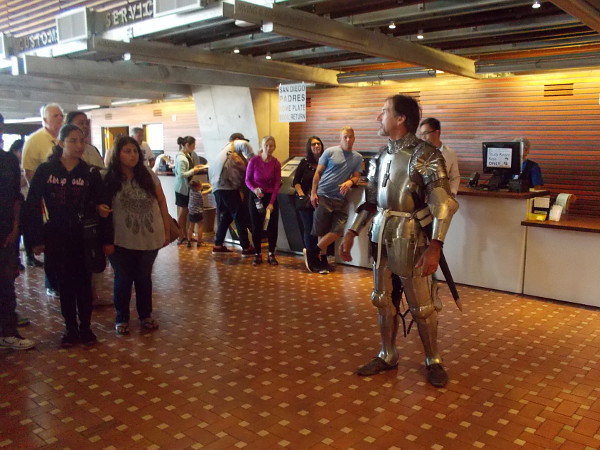
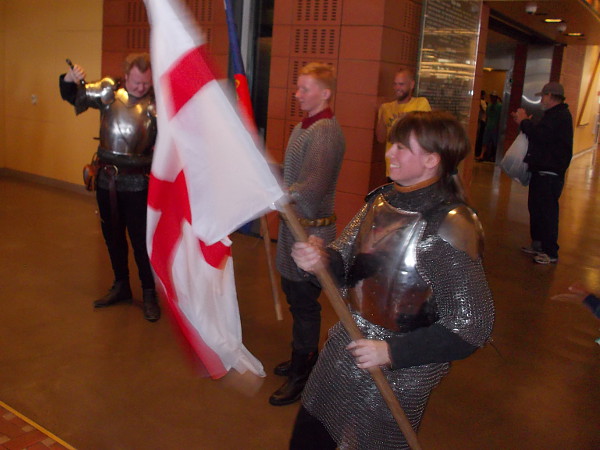
Performers in medieval chain mail and shining breastplate armor pose inside the main entrance of the San Diego Central Library downtown!
Check out a few pics of a certifiably cool event I witnessed at noon today! There was a pop-up performance of the St. Crispin’s Day speech from Shakespeare’s play Henry V! Complete with medieval costumes and shining armor!
The short performance honored the birthday (and death day) of Shakespeare, and was put on in the Central Library’s lobby as part of the San Diego Public Library’s First Folio multi-month extravaganza. Shakespeare’s rousing fictional speech by King Henry V–meant to inspire his English army in 1415 before the Battle of Agincourt, where he faced a vastly larger French army–was recited at several libraries around San Diego.
The enthusiastic performers were all great! And super friendly! I spoke to them and learned about their love for the Age of Chivalry. They make their own armor and other items associated with medieval life. They are deeply interested in the history of the Middle Ages and learning how to craft objects with historical authenticity. According to their website, Chivalry Today, they offer a variety of presentations, workshops and activities to introduce chivalry into your education, business and life. They provide quality historical interpretive programs for schools studying Medieval and Renaissance history. Click on the above link to check these guys out!
(If I may provide some constructive criticism of the library, which I otherwise love. I arrived early because I wasn’t sure where exactly in downtown’s large Central Library the performance would take place. I asked five different library employees. Not one of them knew. One severe lady at the reference desk after searching for about five minutes on her computer told me there was no such event. Ouch. Worse, it appeared I was the only person to intentionally show up for the performance. The others in the small audience arrived after an announcement over the library public address system. Isn’t a library essentially about maximizing communication? Hello! We live in the age of the internet! Okay, my rant is over. I love you guys.)
Reciting Shakespeare’s rousing speech by King Henry V, urging his English army to bravely fight the French at the Battle of Agincourt in 1415.At the end of the short pop-up performance, banners are raised by the small troupe in the lobby of the San Diego Central Library.Henry V inspires his troops in the Age of Chivalry, while historical commentary is provided in a modern library. The performance was part of an ongoing summer-long First Folio celebration of Shakespeare.
…
I live in downtown San Diego and love to walk! You can follow Cool San Diego Sights via Facebook or Twitter!
Do you like to read short pieces of thought-provoking fiction? You might enjoy checking out Short Stories by Richard.
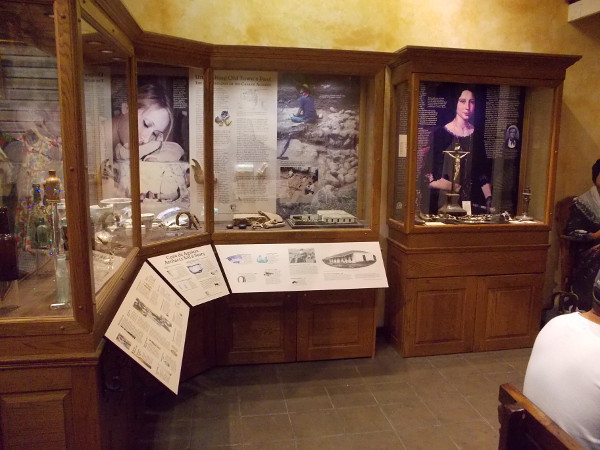
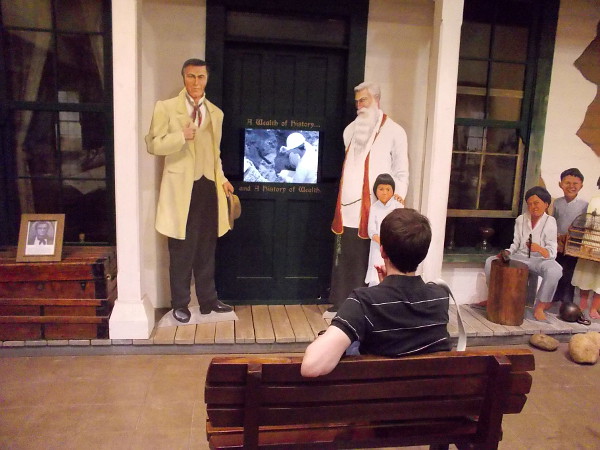
Fascinating exhibits inside the Casa de Aguirre Museum in Old Town San Diego State Historic Park.
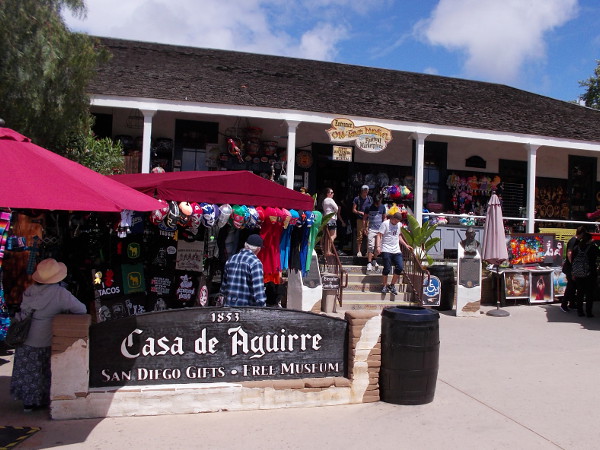
Many visitors to Old Town San Diego State Historic Park might think the Casa de Aguirre is just a shop brimming with colorful crafts and wares. But a closer look reveals that a small museum is located inside.
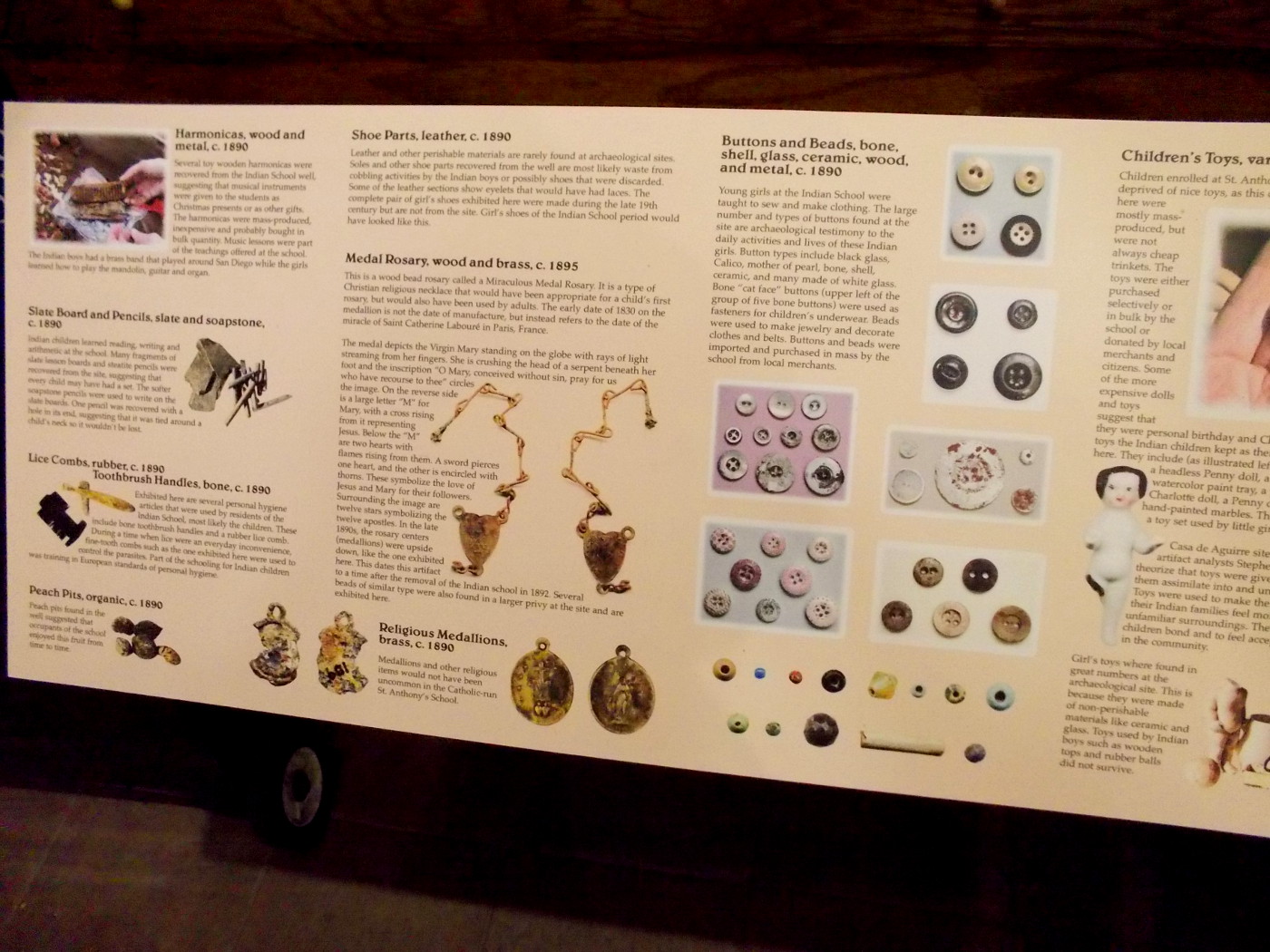
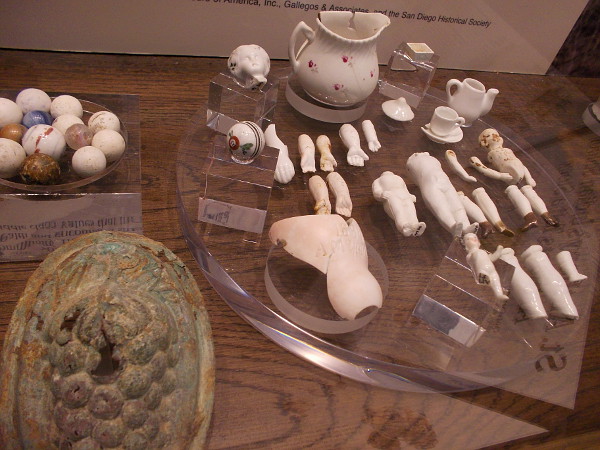
Here are some photos which provide a glimpse of what you’ll discover should you step into the museum. Read the captions, and you’ll learn how Casa de Aguirre is one of the most important sites in Old Town, and how its occupants shaped San Diego’s early history.
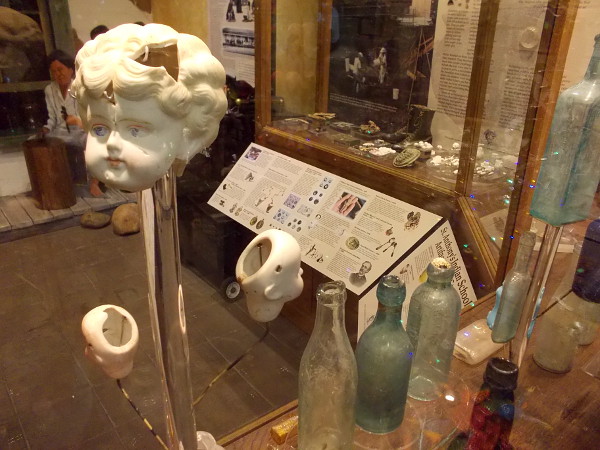
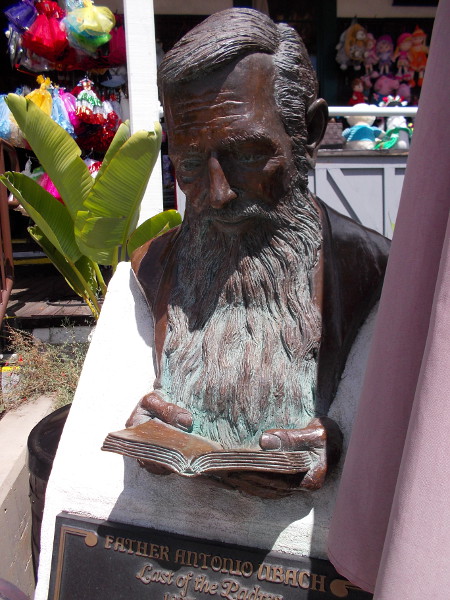
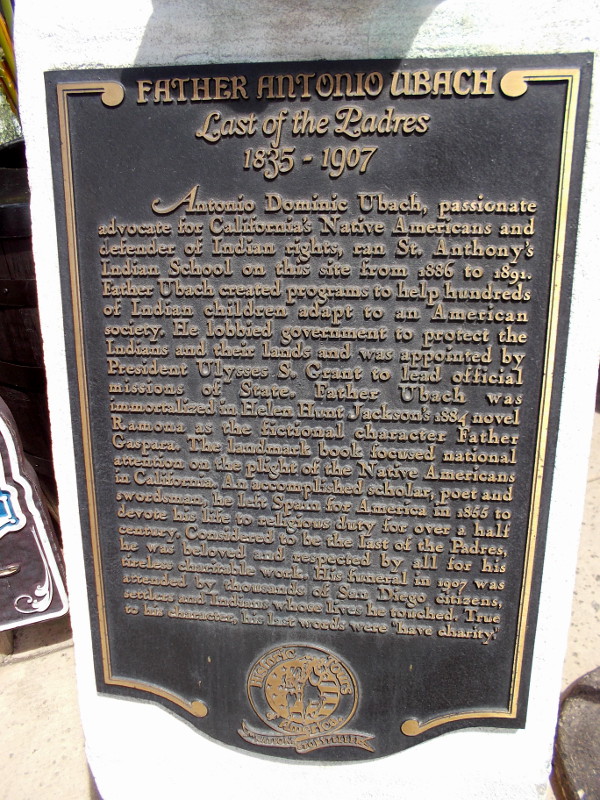
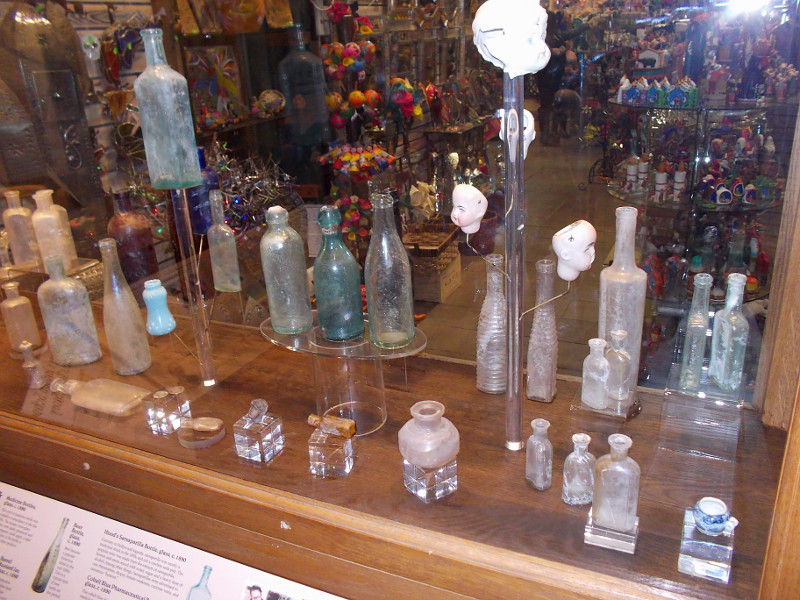
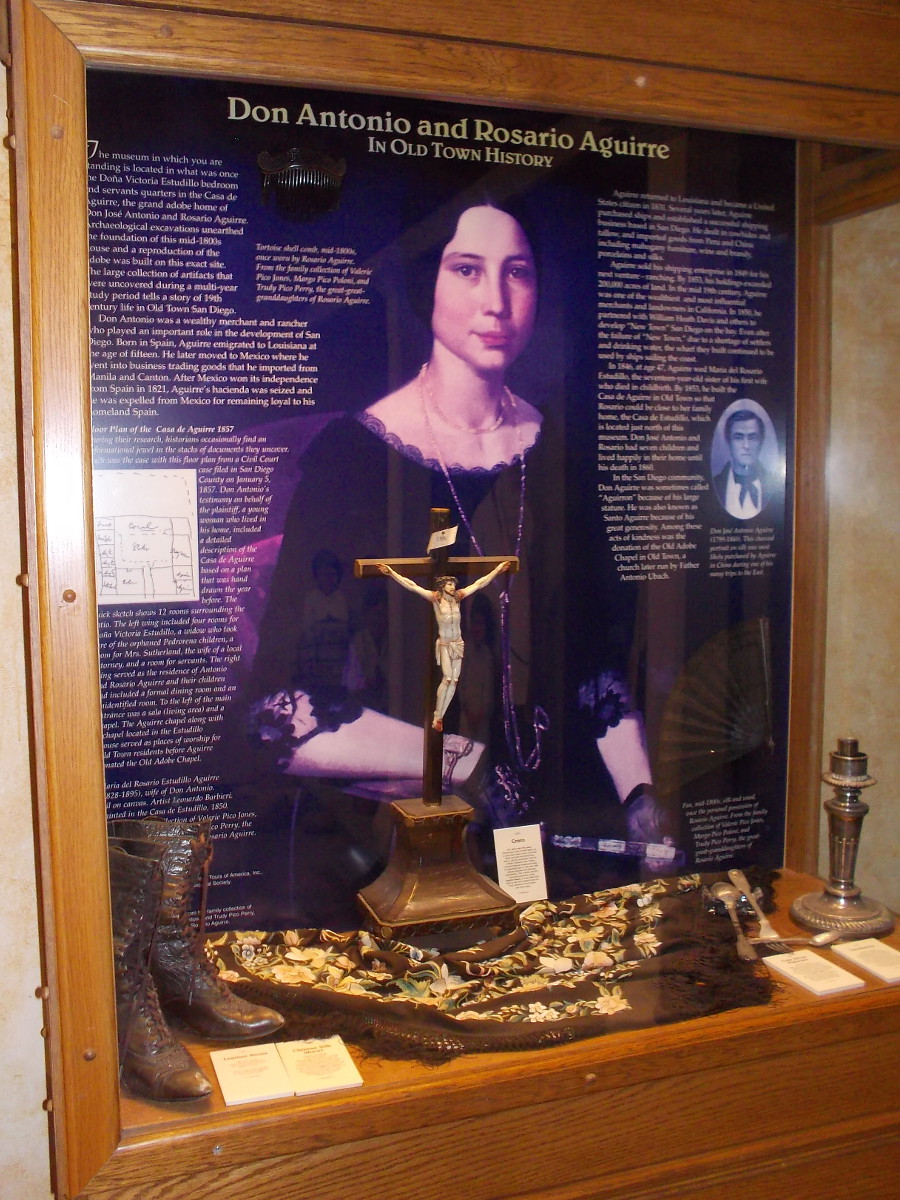
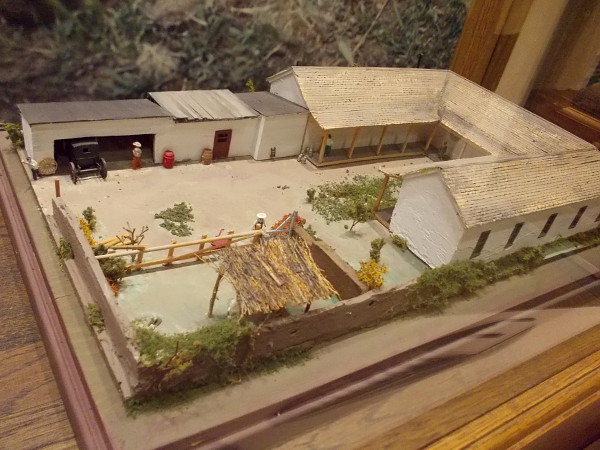
Casa de Aguirre in Old Town was originally built around 1853. The adobe mansion was one of the first houses in San Diego, owned by Don Jose Antonio Aguirre, a prosperous merchant and rancher. The present building is a reproduction.Bronze bust of Don Jose Antonio Aguirre, near entrance to Casa de Aguirre. Born in Spain, he owned several ships and warehouses and imported goods from Peru and China to trade for cowhides and tallow.Don Jose Antonio Aguirre was known for his charity and funded many projects in early San Diego. He, his wife and children are considered to be one of our city’s founding families.Bust of Father Antonio Ubach, Last of the Padres, 1835-1907. Antonio Dominic Ubach ran St. Anthony’s Indian School on this site from 1886 to 1891.Plaque describes how Father Ubach advocated for California’s Native Americans and lobbied government to protect the Indians and their lands. He was loved by many. His last words were: “Have charity.”Casa de Aguirre in Old Town San Diego today contains a shop visited by many tourists and a small museum in back.One side of El Museo Casa de Aguirre. Excavated artifacts are on display, recalling what life was like here in the mid to late 19th century.Visitor to the small museum watches a video which includes information about archaeological discoveries, the history of the casa and the lives of those who were sheltered here.St. Anthony’s Indian School Artifacts Tell a Story. Many objects on display include porcelain cups, goblets, bottles, a saltshaker and beer mug.Sign describes additional historical finds, including buttons, toys, harmonicas, slate board and pencils, lice combs, toothbrush handles, shoe parts, medal rosary and religious medallions.Marbles, doll parts and tiny children’s tea sets, recovered from San Diego’s past.Dozens of buttons on display. They were fastened by living fingers, now long gone.Two old pipes.Numerous bottles and jars are exhibited in the Casa de Aguirre Museum. They were used for medicine, mustard, chemicals, perfume, whiskey, beer, sarsaparilla…People interested in collecting antique bottles would be mesmerized by the large assortment on display.Don Antonio and Rosario Aguirre in Old Town History. The museum is located in what was once the bedroom and servants quarters in the Casa de Aguirre. The present-day adobe is a reproduction.Don Antonio Aguirre, 1799-1860, was one of San Diego’s most important figures back when our burgeoning Southern California city was just a very, very small town.A model of how the Casa de Aguirre appeared a century and a half ago.
…
I live in downtown San Diego and love to walk! You can follow Cool San Diego Sights via Facebook or Twitter!
You can easily explore Cool San Diego Sights by using the search box on my blog’s sidebar. Or click a tag! There are thousands upon thousands of fascinating photos for you to enjoy!
Kids play by fountain in San Diego’s crown jewel, Balboa Park, one of the world’s great cultural treasures.
Hey you guys! Please, please, please–can you all do a super easy favor? You know how awesome Balboa Park is? One of our local casinos (Harrah’s) is giving away $100,000 to non-profit organizations that make our community a better place. The Friends of Balboa Park–the organization that oversees the park’s improvements, coordinates volunteers, supports educational programs and historical preservation and other vital projects–needs our online votes!
All you have to do is visit this webpage, then scroll down to Friends of Balboa Park and cast a vote using your email! I just did it a couple minutes ago! I don’t know if Harrah’s will email you stuff, but under the law there should be a one click unsubscribe option should that happen. That’s all you gotta do! It would be really, really awesome to help out Balboa Park, which provides joy to millions of people!
Many of you know that Balboa Park needs additional funds very badly. So please share this info with other people who have a soft spot for Balboa Park! Let’s get his ball rolling. Let’s try to get thousands of votes!
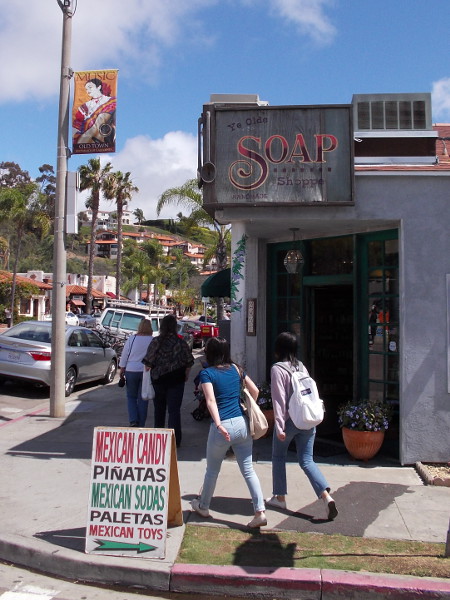
Making fresh tortillas for people walking down the sidewalk. Eat these hot with melted butter and you’re in heaven.
I enjoyed an exhilarating walk through Old Town today.
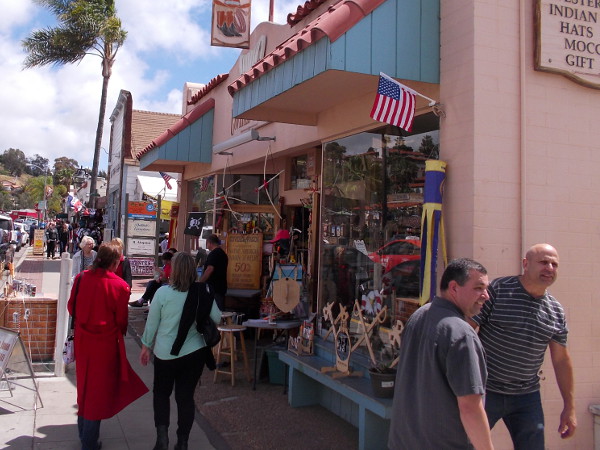
Here are some colorful photos of what you might discover while strolling down San Diego Avenue, just south of Old Town San Diego State Historic Park.
You’ll find all sorts of shops, Mexican restaurants and cantinas, a few historical sights, and sidewalks full of smiling tourists and locals enjoying one of San Diego’s favorite destinations.
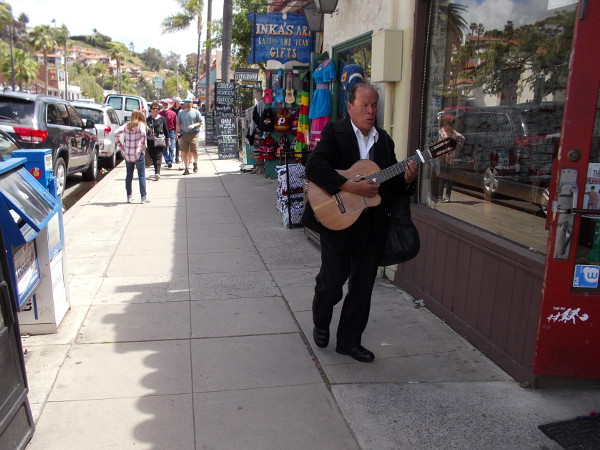
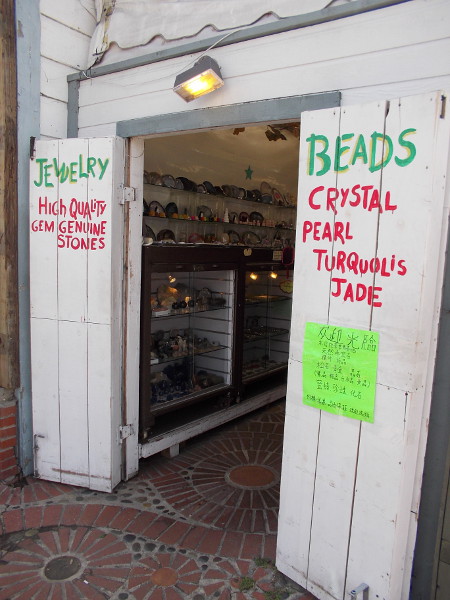
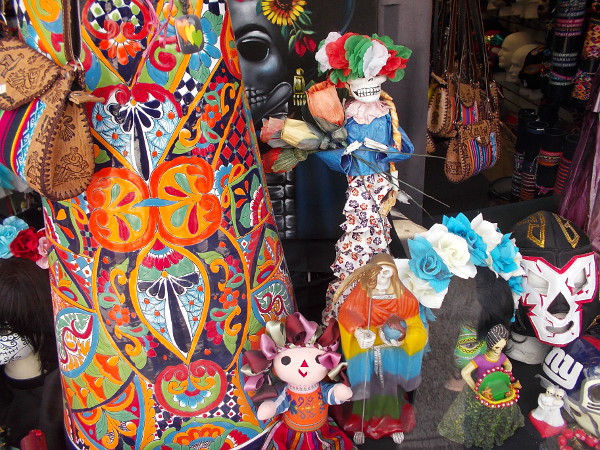
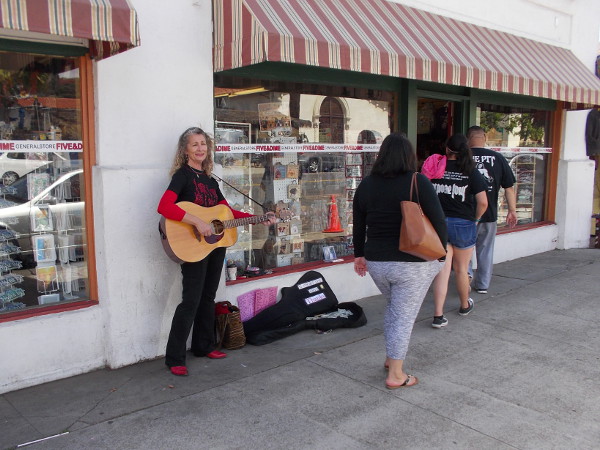
A guitarist walks down a sidewalk in Old Town. You’ll find plenty of music and energy up and down San Diego Avenue.There are tantalizing sights everywhere you turn. The commercial part of Old Town is a popular destination for tourists visiting San Diego.Many colorful items for sale at shops up and down San Diego Avenue are from Mexico, or have a Mexican theme.I love rocks and minerals, so of course I had to poke my nose in here.Just a riot of color in one window! Mexican culture adds a great deal of life to San Diego and this region.I blogged about this public art a while back. Beyond the crazy cowboy shootout is the entrance to the Old Town Chamber of Commerce.
I stepped inside the Old Town Chamber of Commerce Information Center and checked out a few cool exhibits. In the event you ever visit Old Town, make sure to stop here to grab a map, brochures, and a bunch of valuable coupons for nearby restaurants and businesses!
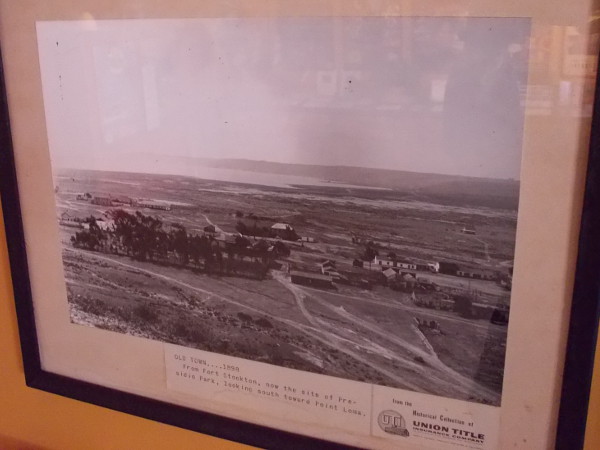
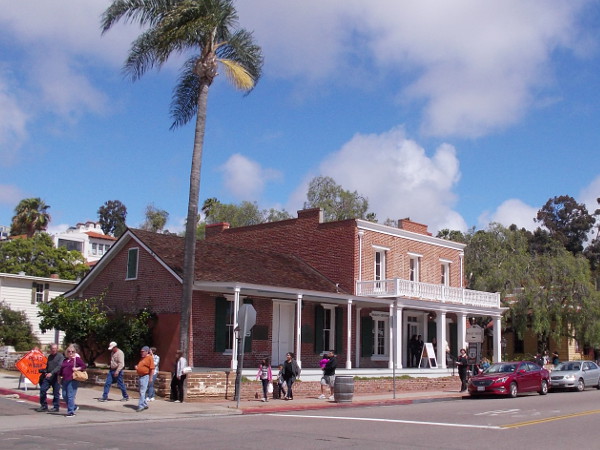
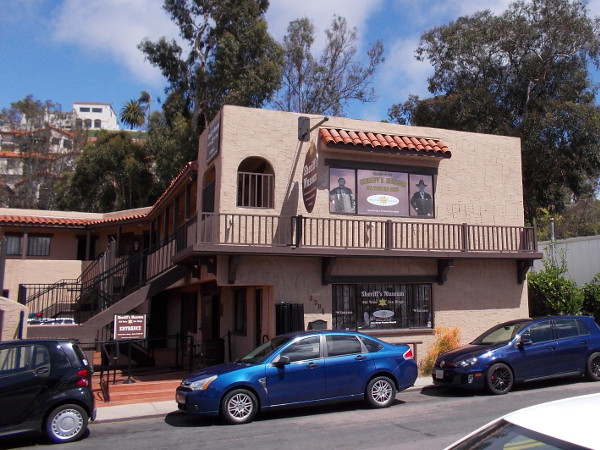
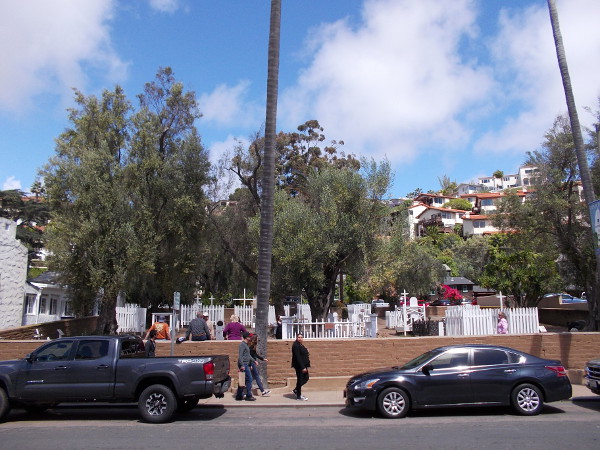
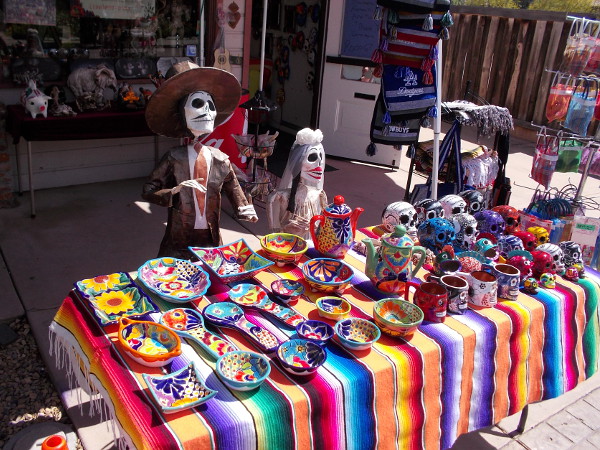
A cool model of a Spanish galleon (I believe) and some useful free literature inside the Visitor Information center.Several interesting historical photographs can be found inside the Old Town Chamber of Commerce. This one from 1898 shows tiny Old Town San Diego at the base of Presidio Hill.Vintage photo of the famous Whaley House, the oldest brick house in California, built in 1854. (That’s what it reads. Every source I’ve seen says the house was actually built in 1857.)The Whaley House as it appears today on San Diego Avenue. It’s reputed to be the most haunted place in America! (Just to be careful, I stayed across the street. Those spooks didn’t have a ghost of a chance!)The Sheriff’s Museum on San Diego Avenue. I’ve yet to visit this place! So much still to do!The El Campo Santo Cemetery in Old Town is where many of San Diego’s earliest residents are buried.Many curios and crafts for sale in Old Town shops are related to Mexico’s traditional Día de Muertos, or Day of the Dead.A festive banner in a perfect San Diego sky.Rounding a corner, searching for more unique discoveries!This shop contains all sorts of Old West-themed stuff for sale. There’s so much on display, it boggled my mind!A walk down San Diego Avenue in Old Town San Diego is never dull!
…
I live in downtown San Diego and love to walk! You can follow Cool San Diego Sights via Facebook or Twitter!
You can easily explore Cool San Diego Sights by using the search box on my blog’s sidebar. Or click a tag! There are thousands upon thousands of fun photos for you to enjoy!
From June 4 to July 7, free to the public, an authentic First Folio of William Shakespeare will be on display at the San Diego Central Library downtown, in their 9th floor art gallery!
Here’s a once-in-a-lifetime opportunity to see a very rare First Folio, containing some the most important works of English and World Literature ever penned! The book will be opened at Hamlet’s famous line “To be or not to be” — and unquestionably many eyes will read it! In addition, the exhibition will include other material concerning Shakespeare, his history and his work. There will also be interesting items from the world-famous Old Globe Theatre in Balboa Park, including Shakespearean props, costumes and photographs of past theatrical productions.
The First Folio is on tour from the Folger Shakespeare Library in Washington, D.C. The special exhibition is in honor of the 400th anniversary of Shakespeare’s death.
But that’s not all! Throughout this spring and summer, over the course of several months, the Old Globe Theatre and the San Diego Public Library will be teaming up with various schools and organizations to bring our city a whole slew of exciting activities celebrating William Shakespeare. There are plays, recitations, lectures, reenactments, games, film screenings, teas and a whole bunch more. Many of the activities will be held at different libraries around the city. It’s all too much to detail here. So check out the official website!
This is going to be great fun!
…
I live in downtown San Diego and love to walk! You can follow Cool San Diego Sights via Facebook or Twitter!
Do you like to read short pieces of thought-provoking fiction? You might enjoy checking out Short Stories by Richard.
San Diego’s famous Star of India–the oldest active sailing ship in the world–is having its decks replaced. First up is the poop deck. Work has just begun.
Today I boarded the Maritime Museum of San Diego’s world-famous Star of India. The lady in the ticket booth informed me that the deck replacement began about a week or so ago!
You might remember I blogged about the Star of India’s deck replacement effort here. Click the link to check out that post, and you can see how the poop deck appeared before work began.
A nice docent allowed me to walk up the steps almost to the poop deck so I could get a good photograph. As you can see, the first section of the deck has been removed. I also noted that the saloon underneath has been carefully converted into a work area.
Do you love history or San Diego? Please click here to help with this very important project!
The historic ship’s elegant saloon has become a work area during the deck replacement.Gazing up through a big hole in the ceiling! The new, stronger deck will be built using sophisticated techniques and modern materials, but it will visually appear like the original.
…
I live in downtown San Diego and love to walk! You can follow Cool San Diego Sights via Facebook or Twitter!
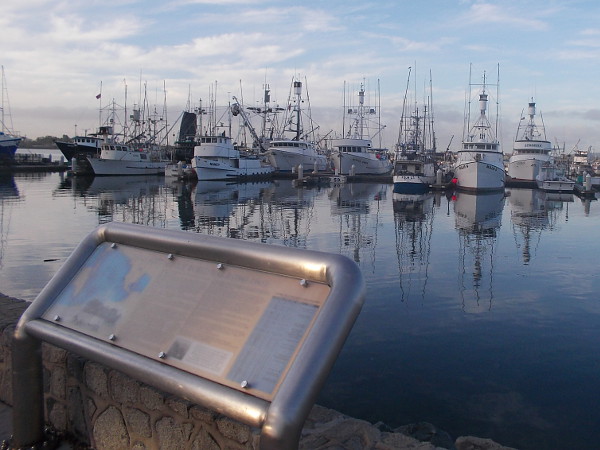
Information sign beside Tuna Harbor, in downtown San Diego, describes how local tuna boats were utilized in the Pacific Ocean theater of World War II.
Some fascinating historical information can be found on San Diego’s Embarcadero, right next to Tuna Harbor where many commercial fishing boats dock downtown. The sign, erected by the San Diego Port Commission in 2008, is titled Tuna Fleet Service World War II (1941-1945). It provides a glimpse of how dozens of San Diego-based Tuna Clippers joined the American war effort during the Second World War.
Here is the text on the sign:
During World War II, 600 fishing vessels were taken by the Navy, Army, and Coast Guard, including 52 “Tuna Clippers”.
On Pearl Harbor Day, the U.S. canned tuna industry was located almost exclusively in Southern California, and canners received most of their tunas from “baitboats”. Fishermen on these boats chum live bait (sardines, anchovies) to attract the tunas into a feeding frenzy and then use rigged bamboo poles to pull the hooked tunas aboard. Dating from 1924, a fleet of large “baitboats” was developed and became know as “Tuna Clippers”. These large ships, equipped with powerful diesel engines and newly developed brine refrigeration, fished for tunas found migrating thousands of miles from San Diego on trips of 90 days or more. During the 1930s, this San Diego high seas fleet was studies by the U.S. Navy, resulting in wartime plans that included the conversion of Tuna Clippers to minesweepers.
At the time Pearl Harbor was attacked, there were 90 vessels in the California baitboat fleet, including 76 Tuna Clippers plus 3 under construction. The 49 Tuna Clippers taken by the Navy and 3 by the Army represented about 55% of the fish carrying capacity of the entire baitboat fleet.
After war was declared, the Government ordered the Tuna Fleet to make port in California or Panama. Ten of the Tuna Clippers entering the Canal Zone in December 1941, were immediately taken for temporary patrol duty. The U.S. Army took three Clippers for use in the Panama Sea region, the SHASTA and CAPE HORN as tugs and the INVADER as a supply ship.
On February 16, 1942, tuna fishermen attended a meeting conducted by Commander W. J. Morcott, USN (Ret.) at the Naval Reserve Armory. 600 tuna fishermen signed up, with Skippers and Engineers receiving warrant ratings, and others given petty officer ratings according to age and experience. Within 10 days, a fleet of 16 Tuna Clippers, painted gray and marked with YP number designations as Yard Patrol vessels, left San Diego harbor on February 25, 1942. Their destination was the “Panama Sea Frontier” for picket duty to protect the Canal.
In May 1942, a convoy of six YP Clippers left San Diego for the “Hawaiian Sea Frontier”. These YPs transported supplies to French Frigate Shoals, the islands of Midway, Johnston, Fanning, Christmas, Palmyra, and Canton. In June 1942, seven YP Clippers left San Diego, for service at Efate Island or Samoa, or Auckland, New Zealand. In November 1942, another group of five headed for the U.S. Naval base at Tutuilla, Samoa. As the conflict moved towards Japan, YP Tuna Clippers were sent on missions to other Islands and Atolls of the Western Pacific.
The Navy discovered that “Yippies” were able to transport troops, gasoline, ammunition, and refrigerated cargoes and capable of navigation within shallow atolls and over minefields, of towing damaged warships, and rescuing downed pilots. This is why “Yippies” were also called the “Pork Chop Express” or “Errand Boys of the Pacific” or the “Solomon Island Ferry”. During the Solomon Island Campaign in 1942, the PARAMOUNT (YP 289) and the PICOROTO (YP 290) delivered frozen turkeys and all the fixings for a traditional holiday feast at Guadalcanal Island. In 1943, frozen turkeys were also delivered to the Marines fighting on Bougainville in time for Thanksgiving by the AMERICAN BEAUTY (YP-514).
“Yippies” were equipped with CW radios, fathometers, Navy radar and Navy sonar. Armament included machineguns, and other gun gear to fire Depth charges. The YP crew of tuna fishermen and regular Navy ran from 4 to 20 men.
Two YPs were destroyed in the Solomon Islands campaign by enemy surface ships: On 9 September 1942, off Tulagi Island, the PROSPECT (YP-346), and on 25 October 1942, off Guadalcanal Island, the ENDEAVOR (YP-284). The number of casualties sustained is unknown.
Two YPs were lost in the Midway region: On 23 May 1942, the TRIUNFO (YP 277) was destroyed by fire and explosions enroute to French Frigate Shoals (North of Hawaii), and then scuttled to avoid enemy capture. Only two crewmembers survived. During October 1942, the YANKEE (YP-345), with 17 crewmembers, on a voyage from Pearl Harbor to Midway Island via French Frigate Shoals, was “lost without a trace from causes unknown”.
Four YPs were lost at sea: CALIFORNIA (YP-235) on 1 April 1943, after fire and beaching in the Gulf of Mexico from an explosion of undetermined origin; NAVIGATOR (YP-279), 5 September 1943, foundered in heavy weather enroute to Townsville, Australia; CAPE SAN VINCENT (YP-280), on 24 April 1946, sank near Saipan Island; SAN SALVADOR (YP-281) on 9 January 1944, was destroyed after the foundering in Force 9 storm, with crew of 19 and one dog rescued, near Wallis Island, South Pacific. After transfer to the U.S. Army in July, 1943 the SEA TERN (ex YP-269) was lost at sea off Baja California.
Three YPs were destroyed during October 1945, because of a typhoon off Okinawa: PARAMOUNT (YP-289); CONTE GRANDE (YP-520) and CHALLENGER (YP-239).
The Navy destroyed 7 YPs after the War during 1946 and 1947: AMERICAN VOYAGER (YP-287), CIPANGO (YP-504), EUROPA (YP-236), FALCOM (YP-515), QUEEN AMELIA (YP-516), QUEEN ELIZABETH (YP-519), and YVONNE LOUISE (YP-282).
The successful wartime experience of the “Yippies” caused the Navy to build 30 wood-hull vessels patterned on the Tuna Clipper design. Each of 30 newly constructed wood hull Navy YPs was of 128 in length, of 14 feet draft, and powered with a 500 H.P. diesel main engine. They were built during 1945, two each by 15 different shipyards located in California, Oregon, and Washington.
Commencing in 1947, 24 of these YPs were added to the U.S. Tuna Fleet.
After the war, the Navy and Army transferred 33 surviving former Tuna Clippers to the War Shipping Administration (WSA) for buy-back by the previous owners. Three of these surviving vessels never returned to the U.S. tuna fishery: CABRILLO, FISHERMAN II, AND THEODORE FOSS.
Additional information on the sign:
Tuna clippers joined the navy too and were painted a dull slate grey, while the stalwart Portuguese descendants learned to fire the guns that were mounted upon the deck. Equipped with the finest refrigeration systems, these trim craft became “errand boys” of the Pacific, delivering food and fuel to the fronts. One day these tunaboats will be convoying a fleet of small ships to Panama. Next month, perhaps, they’ll be off to Midway Island with gasoline for navy PBYs. Two months later, they’ll be down in the Solomons running the “milk route” between Guadalcanal and Tulagi with supplies – part of the saga of men and boats.
excerpt from San Diego Union
July 23, 1943
Scores of converted tuna clippers slipped out of San Diego bay on their way to do valiant work in Pacific battle areas. First boats sailed from here Feb. 25, 1942. These small, sturdy diesel-powered boats are ideal for convoying and patrolling as well as for transporting needed war supplies to defeat the Japanese.
excerpt from San Diego Union
July 23, 1943
Today’s commercial fishing fleet in San Diego includes picturesque boats that provide fresh seafood for restaurants and a Saturday dockside market. (The USS Midway aircraft carrier, now a popular museum) is visible in the background of this photograph.)Someone walking down the Embarcadero near Tuna Harbor pauses to read a bit of fascinating information concerning the Second World War.Left part of the sign depicts map of the Pacific theater of World War II in relation to San Diego. Pictured are some vessels that participated.A detailed description of how the local Tuna Fleet served in various capacities during World War II.California Tuna Clippers: Military Service World War II. (Click the image to enlarge.)Commercial fishing vessel Dalena in San Diego’s present-day Tuna Harbor.
…
I live in downtown San Diego and love to walk! You can follow Cool San Diego Sights via Facebook or Twitter!
You can easily explore Cool San Diego Sights by using the search box on my blog’s sidebar. Or click a tag! There are thousands upon thousands of unique photos for you to enjoy!
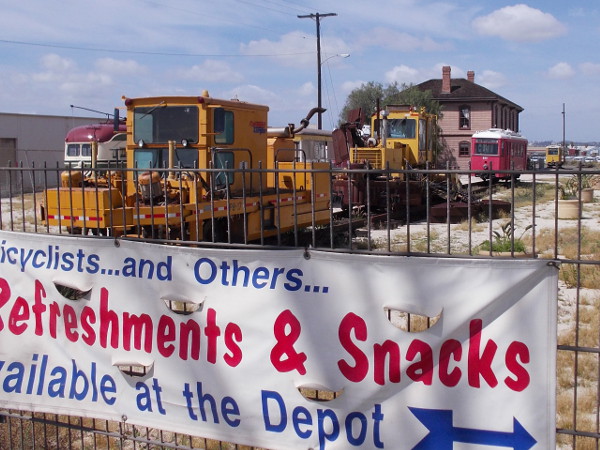
There’s more than refreshments and snacks at the National City Depot. There’s a huge, cool collection of local railroad and trolley history!
If you’re a train or streetcar lover, prepare to go nuts! The friendly guys at the National City Depot, which is home to the Trolley and Railroad Museum operated by the San Diego Electric Railway Association, allowed me to take loads of photographs a couple weekends ago! The place is so crammed with cool stuff, I hardly know where to start!
(Before I get started, however, I learned the National City Depot is in desperate need of volunteer docents and cashiers. So if you live around San Diego and have some free time, please consider this opportunity. Railroading enthusiasts would be in heaven. If you’d like, you might actually roll up your sleeves and help work to revitalize several vintage streetcars. You can have a great time preserving and enlivening our local history of trolleys by explaining exhibits and sharing knowledge with curious visitors, tourists and school students. SDERA’s stated mission is to restore and preserve the history of electric railways and trolleys in the San Diego region. Click here for more info.)
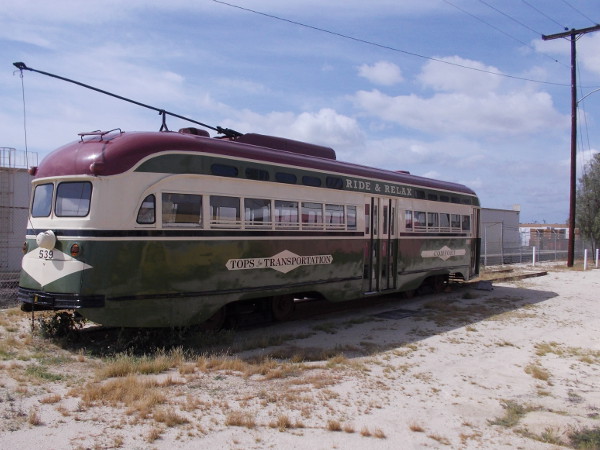
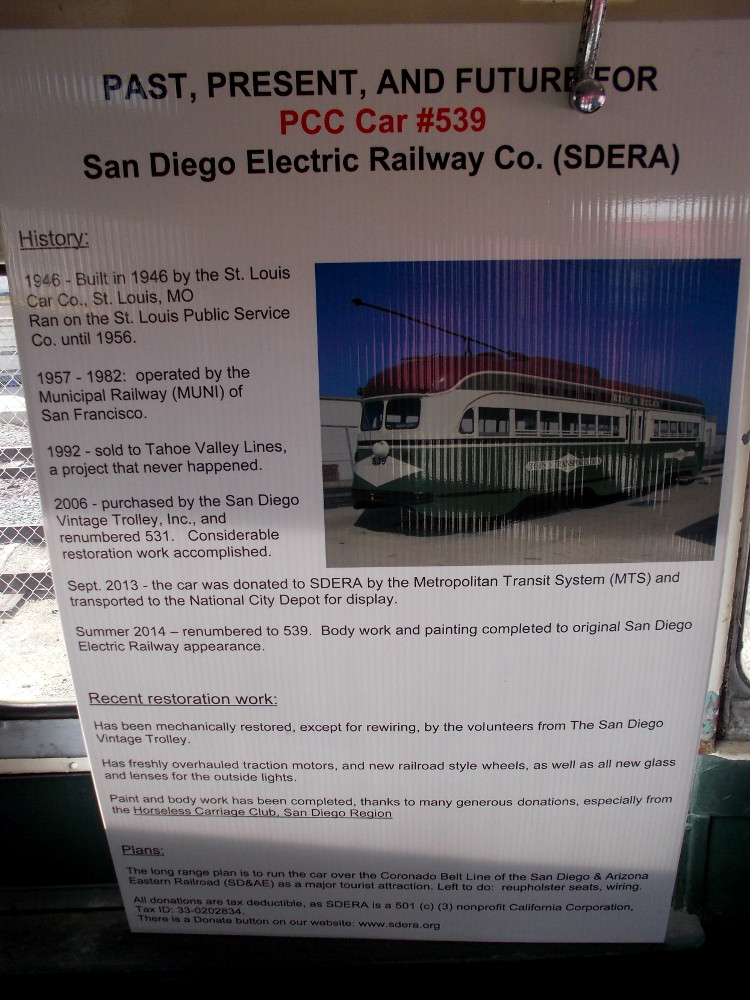
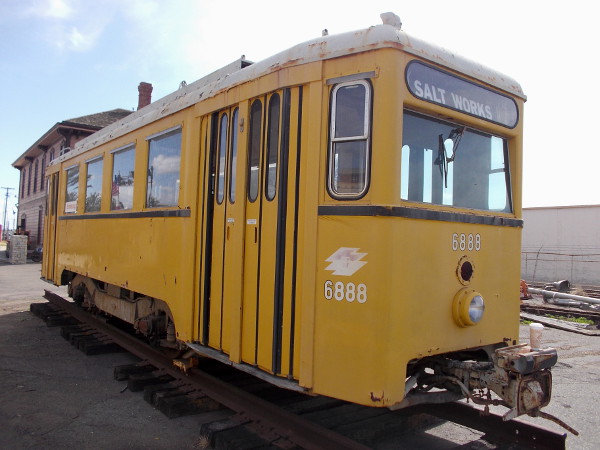
As you can see from the first photo, the depot has a number of old railroad cars and streetcars sitting outside on either side of it. The San Diego Metropolitan Transit System, MTS, has provided the private association with three old Vienna streetcars and one Presidents Conference Committee (PCC) streetcar. The latter is undergoing restoration, and will eventually be used as a cool tourist attraction, running over the Coronado Belt Line of the San Diego and Arizona Eastern Railroad!
You might recognize the name San Diego Electric Railway. It was the mass transit system built by locally famous “sugar heir” and entrepreneur John D. Spreckels. His network of railroads was established in 1892, and active streetcars served a large area of the city for many decades. The San Diego Electric Railway Association proudly displays some examples of the rolling stock that were utilized in those glory years of electric streetcars.
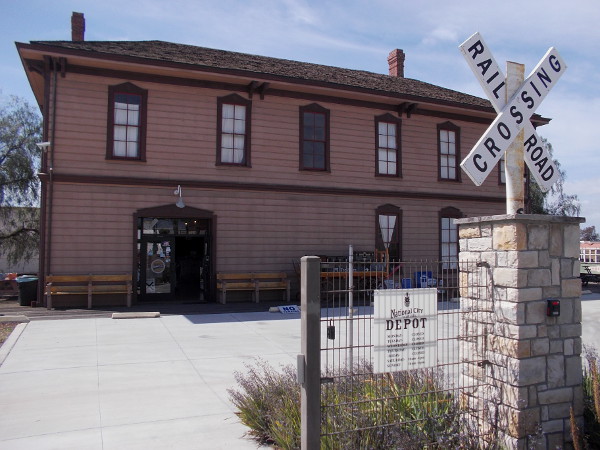
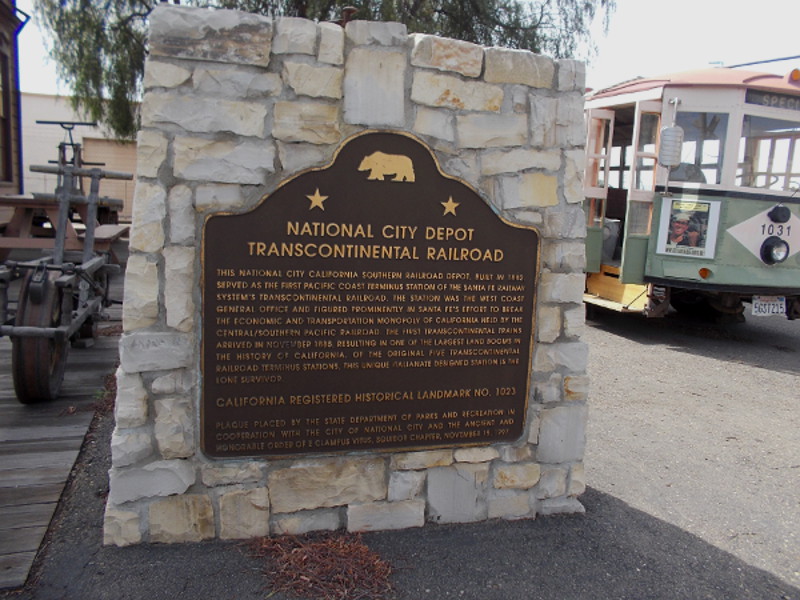
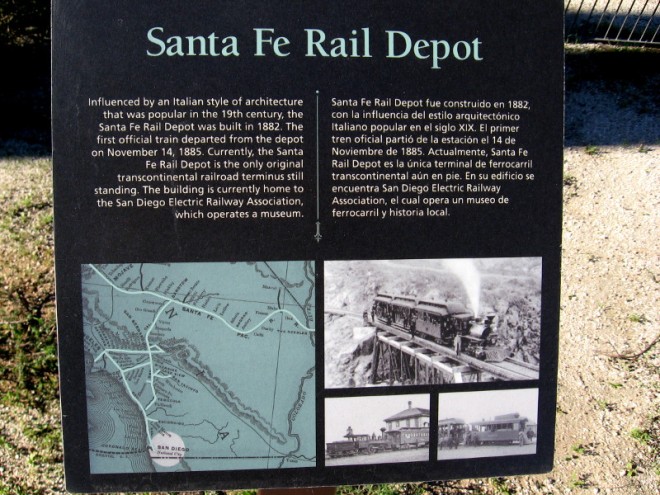
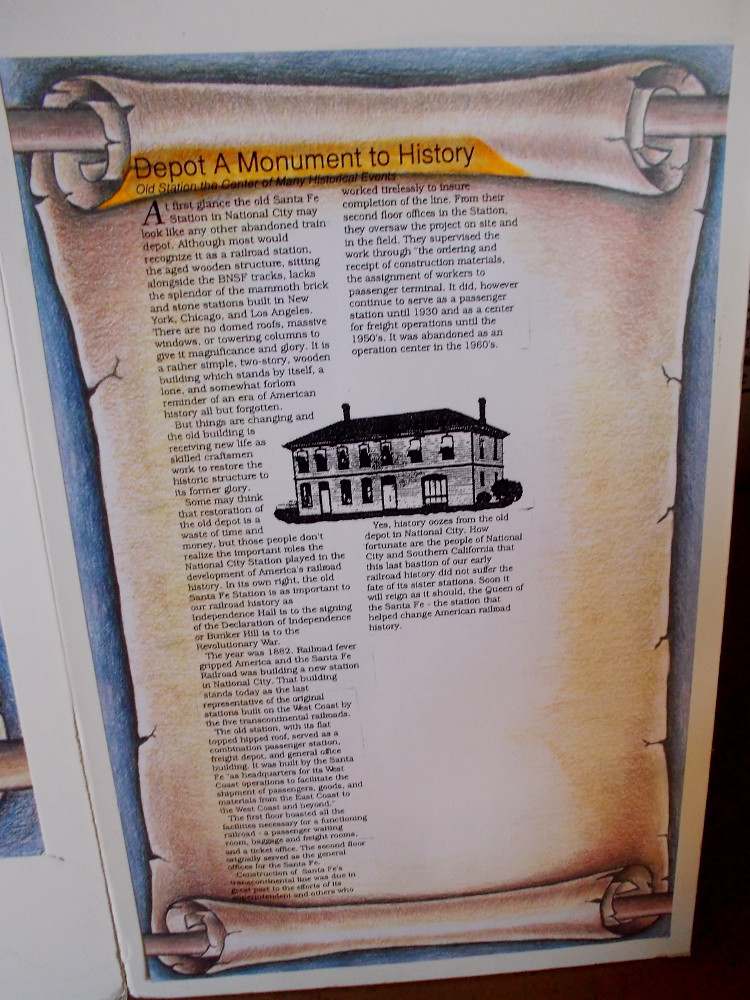
The National City Depot has its own fascinating history. It was built in 1882 by the Santa Fe Railroad, and became the first Pacific Coast terminus station of their transcontinental line. Today, it’s the last representative of the original stations built on the West Coast by the five different transcontinental railroads. After various changes in its operations over the decades, the depot was abandoned in the 1960s and suffered severe neglect. Before finally reopening as a museum, it was also used as a unique building for a couple of restaurants. It’s now owned by the city of National City.
I learned so much during my visit, my brain is still whirling. If I’ve captioned the photos incorrectly, or have made some sort of factual error, please leave a comment!
Here come the photos, just a taste of what you might see should you swing on by. Enjoy!
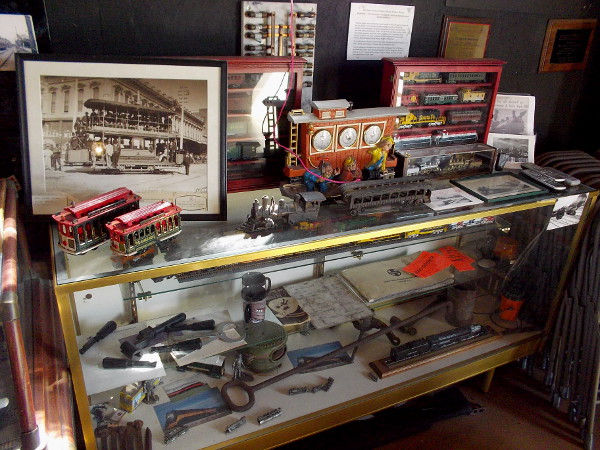
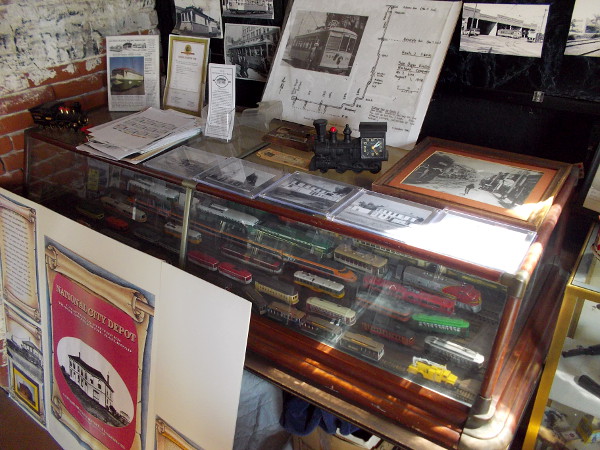
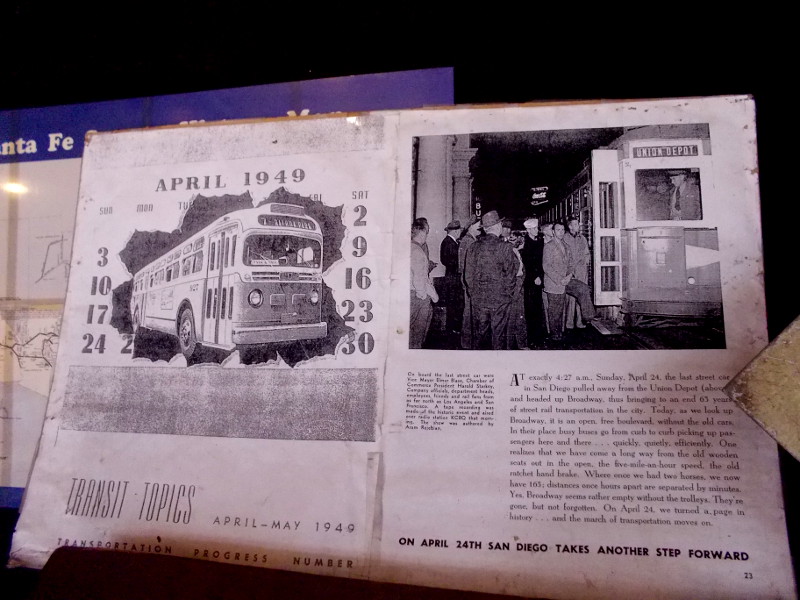
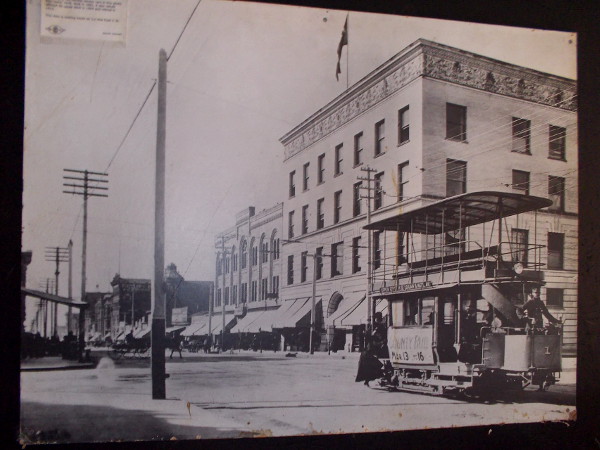
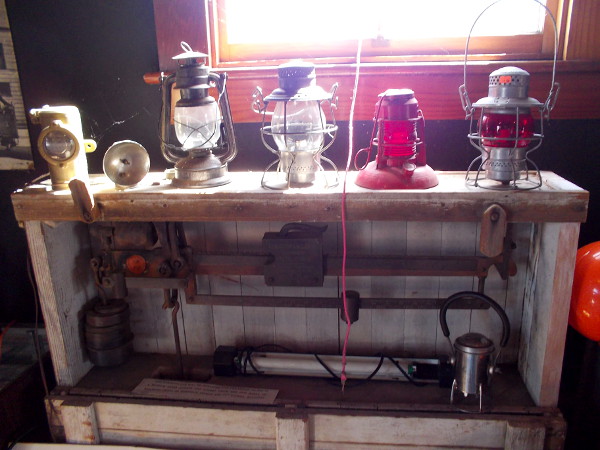
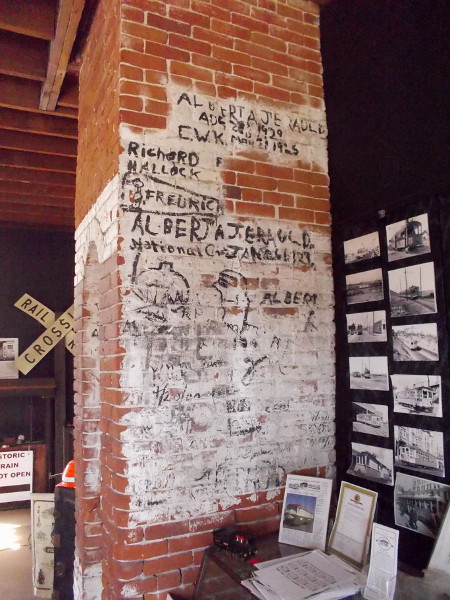
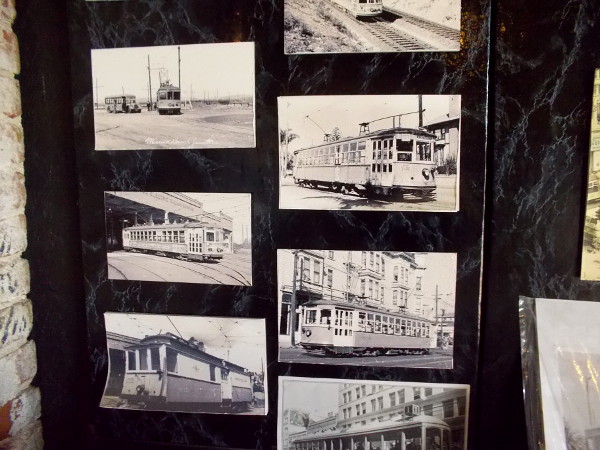
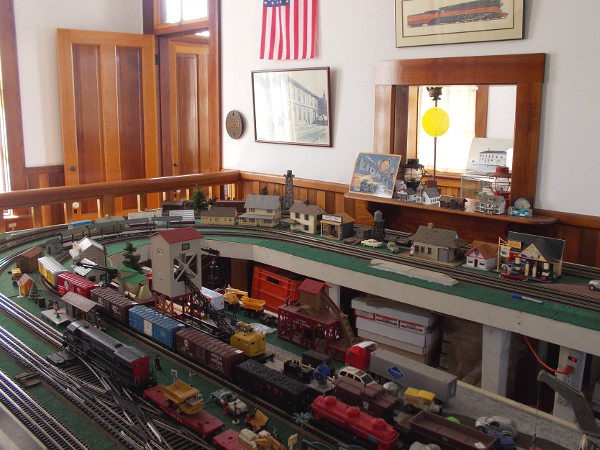
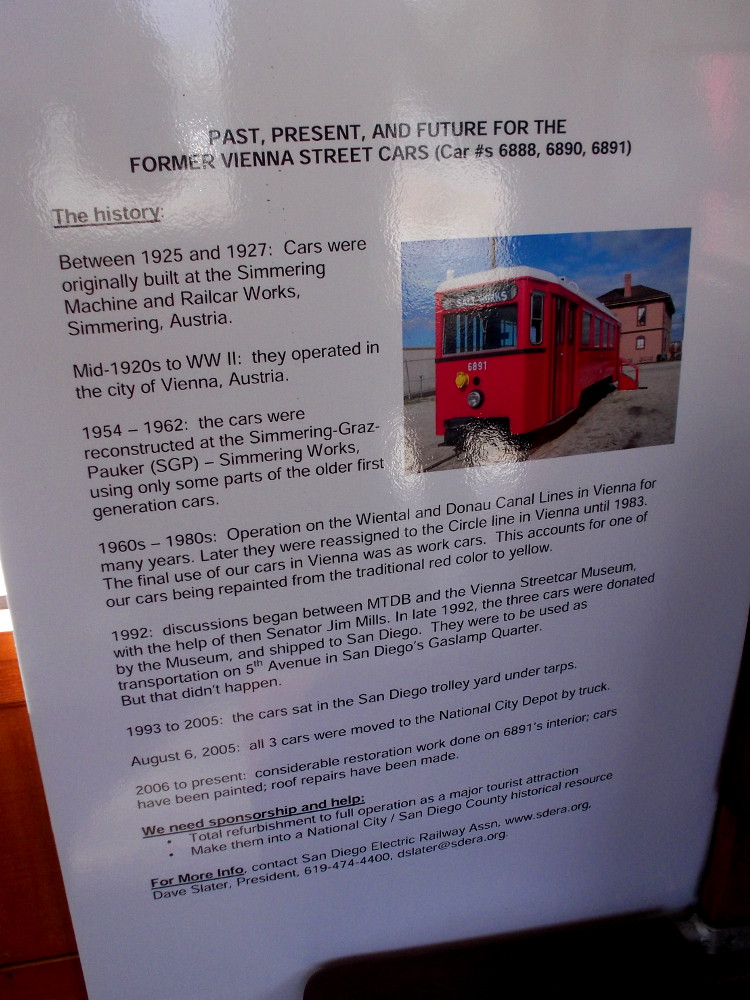
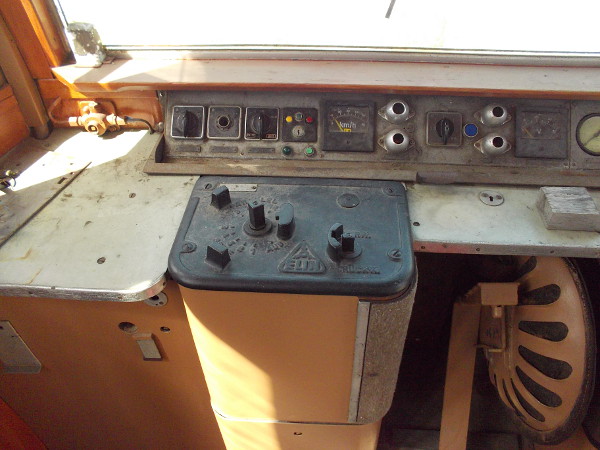
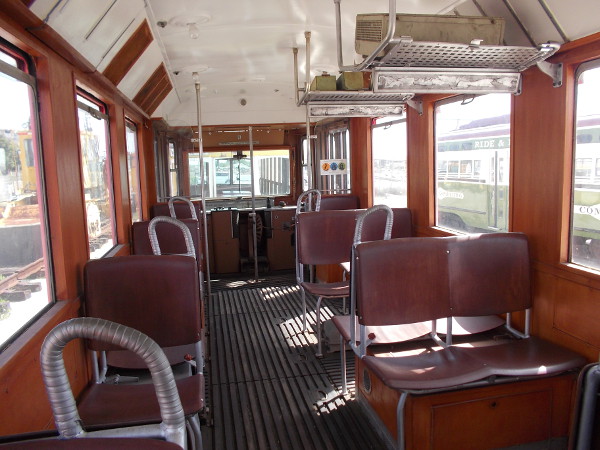
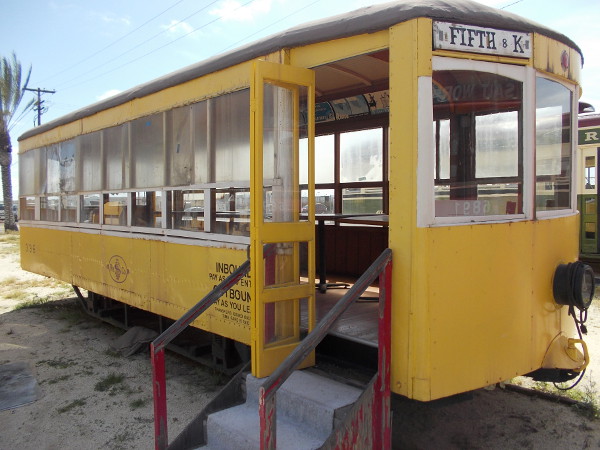
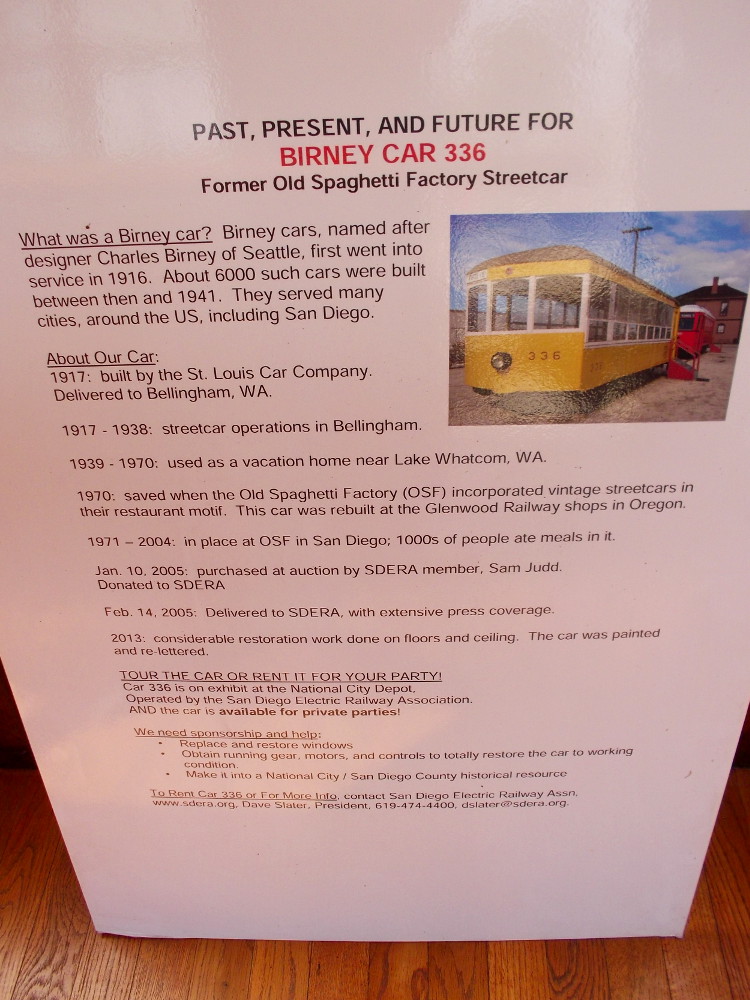
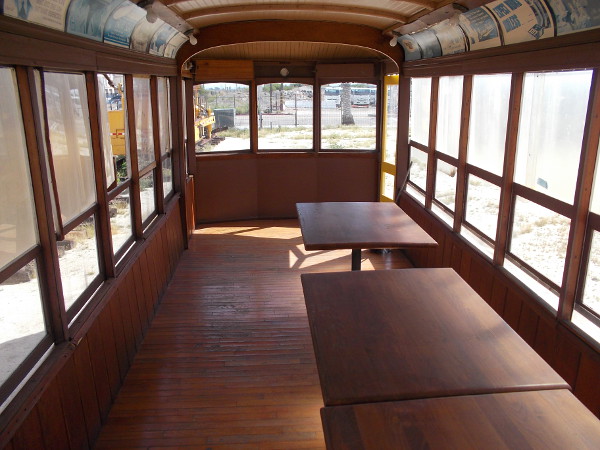
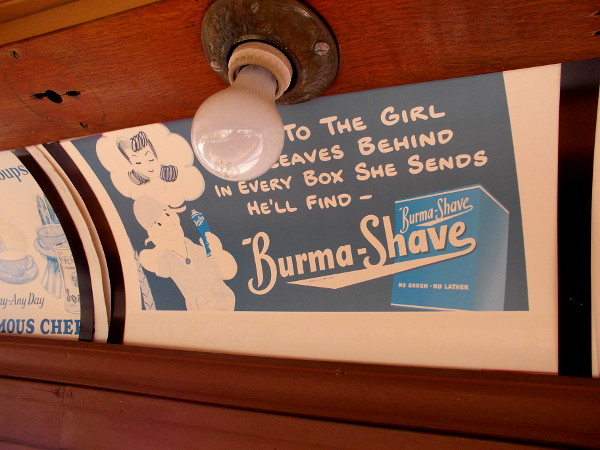
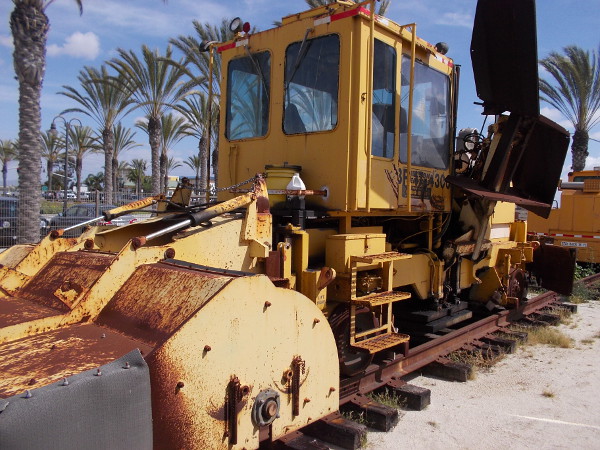
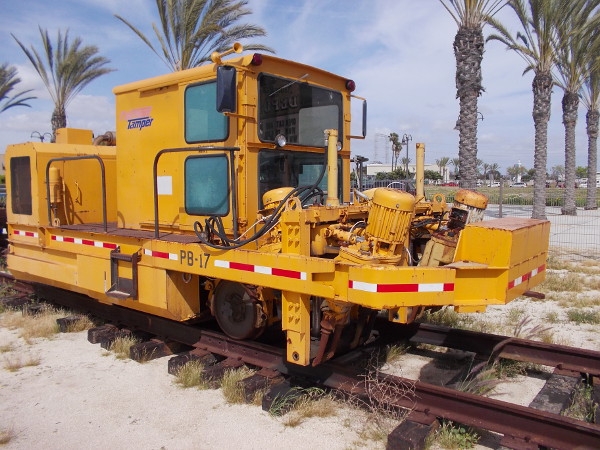
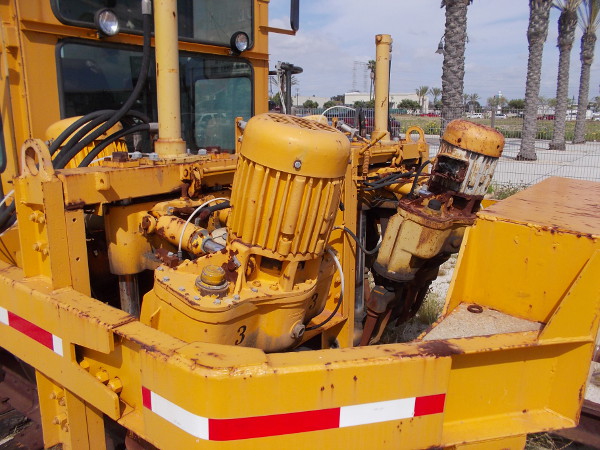
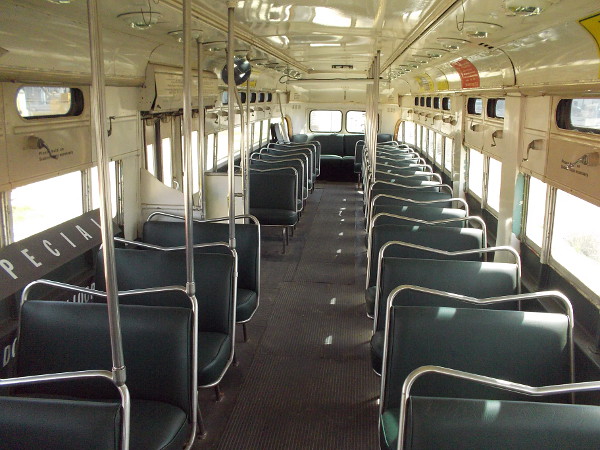
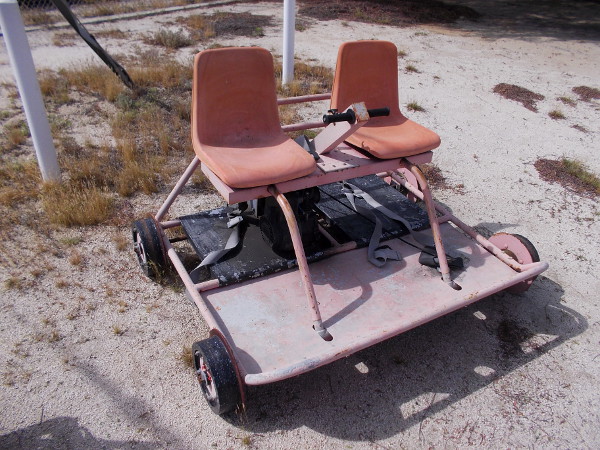
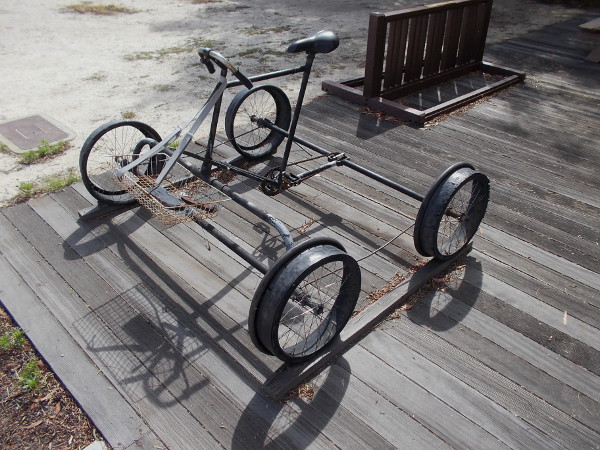
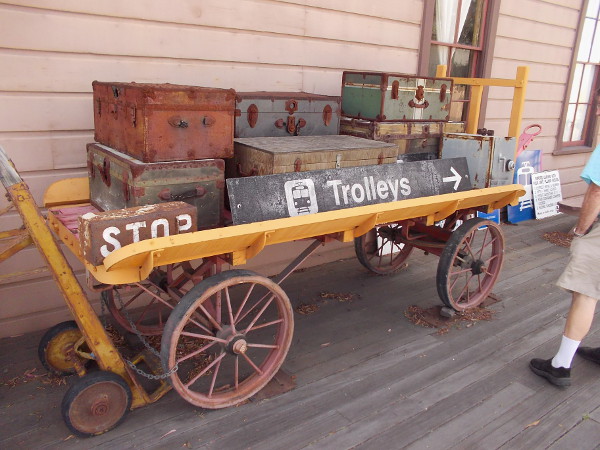
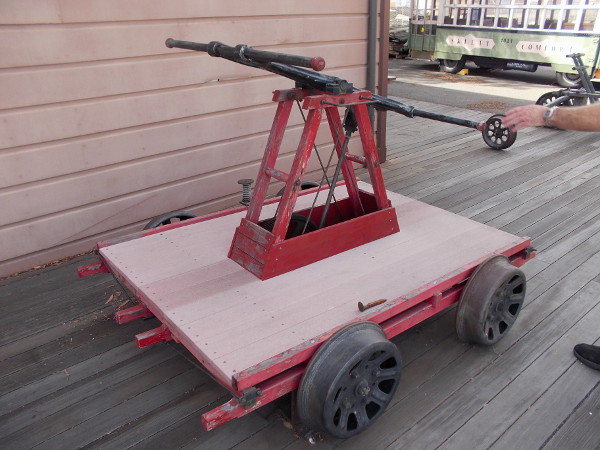
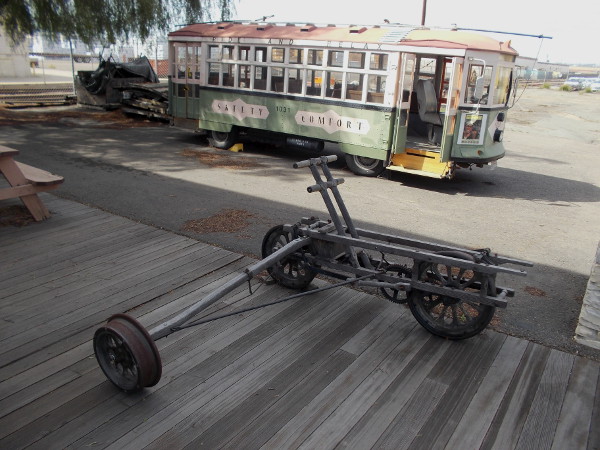
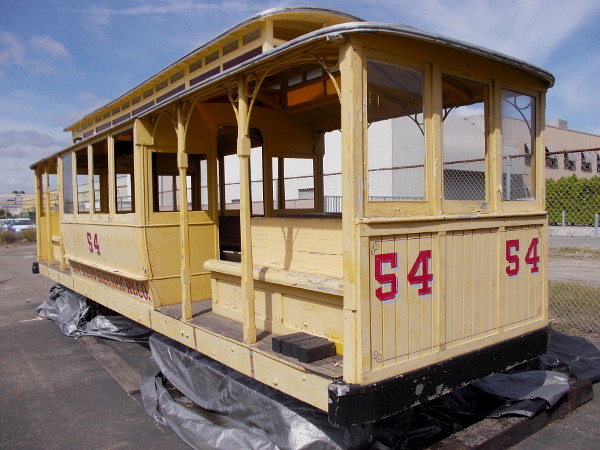
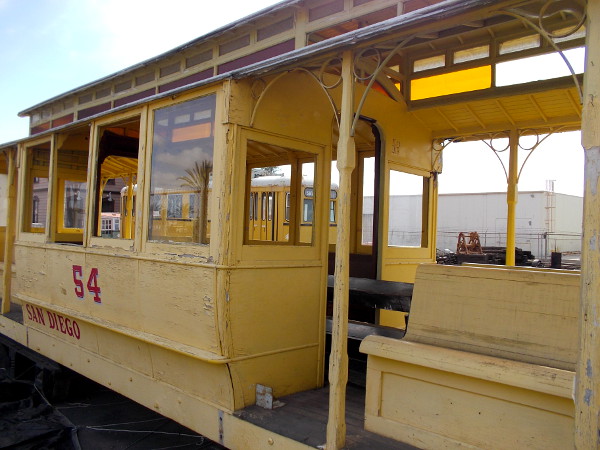
The National City Depot was built in 1882. It was the first Pacific Coast terminus station of the Santa Fe Railroad’s transcontinental line.Plaque in front of National City Depot, the first Pacific Coast terminus station of Santa Fe’s transcontinental railroad. California Registered Historical Landmark No. 1023.Sign describes Santa Fe Rail Depot in National City. It’s the only original transcontinental railroad terminus still standing.Inside the small depot are display cases full of model trains and streetcars, plus artifacts and memorabilia. The walls are covered with old photos and historical information.The famous old train station sits alongside BNSF tracks which are still active. The National City Depot played in instrumental role in American railroad history.There’s so much cool stuff crammed inside the museum, a railfan could spend hours closely examining all of it!A magazine article on display for train buffs and history enthusiasts to check out. Buses finally replaced the old network of San Diego trolleys in 1949.One of many old photos in the museum depicting San Diego’s very rich electric streetcar history.A collection of old lanterns. Everything imaginable concerning San Diego railroads and trolleys can be found inside the National City Depot.Faded writing on the brick fireplace recalls when the eventually abandoned depot was used as a restaurant. Black panels on the walls cover graffiti.One section of a wall has lots of photos of vintage streetcars and trolleys.A second room inside the National City Depot contains a huge model train layout! The exhibit is run when the depot is open Thursdays to Sundays from 9am to 5pm. It appears that SDERA members have a lot of fun!The best photo I could get of a big antique Raymond and Wilshire safe in the historic transcontinental depot. I had to squeeze up against the model train layout.Now we’re outside beside the depot at a picnic bench! I like these two planters in the shape of steam locomotives!Two of National City Depot’s three old Austrian streetcars. These were going to be used by MTS for the San Diego Trolley in the Gaslamp Quarter, but couldn’t meet ADA standards, as I understand it.Sign inside one Vienna street car details the history. They were originally built at the Simmering Machine and Railcar Works, Simmering, Austria.Now we’re stepping like a passenger into one of the old Austrian streetcars!The controls used by this electric streetcar’s operator. Notice a seat that folds under the dashboard.Looking back where passengers would sit. There didn’t seem to be much capacity in the small cars.Now we’re checking out Birney Car 336, out in the open lot beside the National City Depot. This is one type of streetcar that transported people in San Diego decades ago.Birney Car 336 was built by the St. Louis Car Company in 1917, and first served in Bellingham, WA. It later was used for dining inside the Old Spaghetti Factory in San Diego, from 1971 to 2004!Inside the old Birney Car. I’m hungry for some spaghetti! Where are the chairs?Cool vintage advertisements along the car’s ceiling include this one for Burma-Shave.A big, heavy tamping machine used for maintaining railroad tracks and placing them more firmly onto packed ballast.A second ballast tamper outside the National City Depot. I always wondered what these unusual machines that you see on train tracks are for.Part of the machinery that pushes down on the steel rails and ties. This makes sure train tracks are solidly in place and level.Gazing back north past various rail exhibits outside the National City Depot. Isn’t this fun?Now we’ll check out PCC Car 539, which was donated to SDERA by the Metropolitan Transit System.PCC Car 539 was built in 1946 by the St. Louis Car Company. It served as a streetcar in St. Louis until 1956. Restoration is underway. One day it might run nearby as a tourist attraction.Inside the fabulous PCC car. The San Diego Trolley now has two completely restored cars of this type, running in a downtown loop called the Silver Line.I believe this is a Fairmont Speeder Car. Tiny crew cars were used to transport a few individual workers up and down tracks. I’d love to ride one!Oh, man! I bet you’d love to sit in one of these seats and ride the rails! Just turn the throttle to go!Seriously? This one is basically a bicycle for train tracks! Except it has four wheels! And a bike chain, of course!This luggage cart near the entrance to the National City Depot was donated by the Maritime Museum of San Diego–it evidently was aboard the steam ferry Berkeley at one time.One of several cool vintage handcars. Just like you see in those old Western movies.This unusual three-wheeled handcar reminds me of a canoe outrigger!San Diego Electric Railway Association’s fun Herbie is a Brill streetcar replica. A parade and car show’s popular Streetcar on Wheels!An antique open air streetcar at the National City Depot. This a grip car, like the cable cars in San Francisco. Few people realize that San Diego had a cable car line that briefly ran from the Gaslamp to University Heights in the early 1890s!Elegant number 54 is a unique composite, built using two different San Diego Cable Railway cars. I see panes of stained glass. The yellow paint is peeling.The third Vienna streetcar in the National City Depot’s collection, number 6888, is yellow.There’s a ton of very cool stuff to see at the National City Depot, in San Diego’s South Bay!
…
I live in downtown San Diego and walk all over the place! You can follow Cool San Diego Sights via Facebook or Twitter!
You can easily explore Cool San Diego Sights by using the search box on my blog’s sidebar. Or click a tag. There are thousands upon thousands of fun images (including lots of model and historical train photographs) for you to enjoy! Feel free to share! Have some fun!

































 Cool San Diego Sights!