Western Flyer, the world’s most famous fishing boat, will be visiting San Diego on March 26, 2025, and you have the opportunity to tour it!
If you’ve read John Steinbeck‘s famous book Sea of Cortez, you’ll recognize the name of this fishing boat. In 1940, Steinbeck and his friend Ed Ricketts explored the Gulf of California in this very boat.
For decades the boat was lost, then it was found and restored by the Western Flyer Foundation. It now operates as a floating classroom, educating youth about the intersection of science and literature.
With a General Admission ticket, visitors to the Maritime Museum of San Diego will be able to step aboard and tour the legendary fishing boat as it makes its visit to our city!
…
I post new blogs pretty often. If you like discovering new things, bookmark coolsandiegosights.com and swing on by occasionally!
I live in downtown San Diego and love to walk around with my camera! You can follow Cool San Diego Sights via Facebook or X.
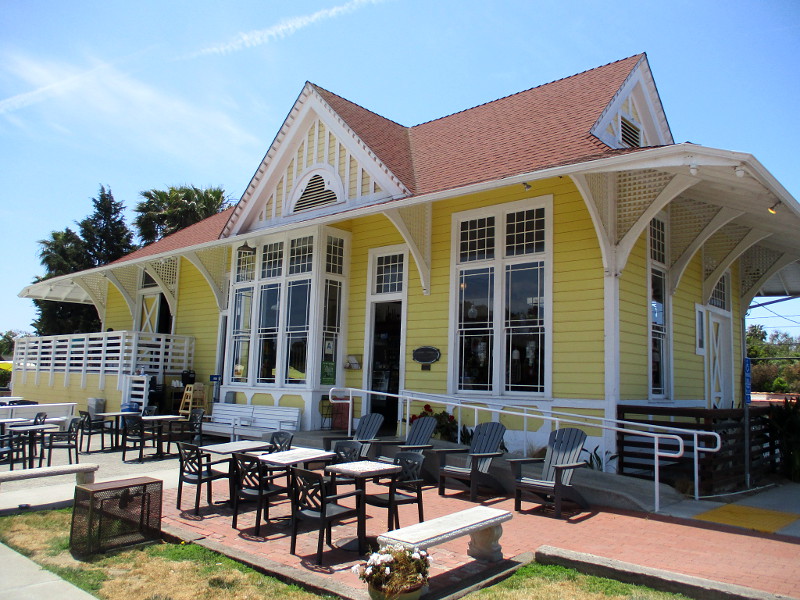
If you drive up La Jolla Boulevard, just north of Bird Rock, you might see the impressive building in these photographs.
When I visited the La Jolla Historical Society a while back, I learned something very surprising. This ornate building–the main chapel for the La Jolla United Methodist Church–was once a railroad station and power substation for San Diego Electric Railway, the San Diego streetcar line established by John D. Spreckels!
I’ve found several great articles concerning this history. Here and here and here.
The 1924 Spanish Colonial architectural style San Carlos Train Station served streetcar Route 16, which ran from San Diego to La Jolla. Route 16 was the San Diego Electric Railway’s last major rail line expansion. In addition to downtown San Diego and La Jolla, the route included stops in Mission Beach and Pacific Beach. The streetcars ran through 1940.
The San Carlos terminal building would then be used for several years as an art school. In 1954, the La Jolla United Methodist Church bought the building.
Check out the first and third links above for a few old photographs. You’ll see how the train station and substation stood alone in undeveloped land a century ago.
…
I post new blogs pretty often. If you like discovering new things, bookmark coolsandiegosights.com and swing on by occasionally!
I live in downtown San Diego and love to walk around with my camera! You can follow Cool San Diego Sights via Facebook or X.
Today, inside Balboa Park’s Museum of Us (formerly called the Museum of Man), visitors can view reproductions of four murals.
The Museum of Us is housed in the historic California Building. In 1915 the building was home to the San Diego Museum. “The Story of Man Through the Ages” was the San Diego Museum’s exhibit during the Panama-California Exposition, and featured the six original Vierra murals.
Should you step into the Museum of Us, you can find two of the reproduced murals on the ground floor, in the large central atrium, hung on the wall on either side of the main entrance. Two additional murals can be viewed in a gallery on the second floor directly above.
The two ground floor murals depict the ruins of prehistoric Chichén Itzá in Yucatán, Mexico.
My first pair of photographs (above) show one mural on the ground floor. As a sign explains: Central to this painting is the round building, known as the Caracol, which functioned as an observatory. Behind it lies the ballcourt, the largest such ritual playing field in Mesoamerica. To the right is the sacred cenote, the well of sacrifice.
The second pair of photographs (below) show the mural to the right of it. These murals depict the Maya architectural style known as Puuc, that prevailed from about 600 AD to 900 AD.
Decorating a gallery wall on the second floor, the two additional Vierra murals illustrate the ancient cities of Palenque and Tikal…
UPDATE!
I’ve since learned two more Vierra murals can be viewed in the museum. I’ll go in search of them next time I visit the Museum of Us, and post those photos in an update!
ANOTHER UPDATE!
Here they are…
…
I post new blogs pretty often. If you like discovering new things, bookmark coolsandiegosights.com and swing on by occasionally!
I live in downtown San Diego and love to walk around with my camera! You can follow Cool San Diego Sights via Facebook or X.
A super cool exhibition recently opened in the La Jolla Historical Society‘s free Wisteria Cottage museum. The exhibition is titled La Jolla Surf: Culture, Art, Craft. As the name suggests, surf culture is explored in La Jolla and nearby communities, from the earliest days right up to the present.
There are all sorts of different surfboards on display. Each is cleverly designed and artistically unique. Local designers, shapers and surfers used these boards to conquer the world-famous surf found off La Jolla and other nearby Southern California beaches.
Subjects explored include the iconic Windansea Shack, which dates back to 1947 and has been featured in dozens of movies. Legendary surfboard makers and surfers, like Bob Simmons, are also celebrated. One of the notable board shapers honored is Rusty Preisendorfer, who, at the age of 16, began a factory in a garage a short distance from La Jolla Shores.
I was surprised to learn pop art icon Andy Warhol filmed the movie ‘San Diego Surf’ in 1968 in La Jolla.
As you might expect, the exhibit includes dozens of excellent surfing photographs, and examples of cool artwork, too.
I really enjoyed viewing a short film. It featured a variety of important personalities. Their words about surfing were often poetic or philosophical.
One interviewee called surfing spiritual. Another called it a beautiful dance. Another explained that surfing brings you to close to yourself. It’s peaceful and calming, said another. The experience is deep and powerful, another voice affirmed. Skip Frye, world-famous surfer, surfboard designer, shaper and environmental advocate, likened surfing to being in close touch with God’s creation.
La Jolla Surf: Culture, Art, Craft will be open to the public through May 25, 2025. Learn more about it here!
A small taste of this awesome exhibit…
…
I post new blogs pretty often. If you like discovering new things, bookmark coolsandiegosights.com and swing on by occasionally!
I live in downtown San Diego and love to walk around with my camera! You can follow Cool San Diego Sights via Facebook or X.
When I think of railroad workers manually driving spikes with hammers, I think of black-and-white photographs of workers laying tracks across deserts and mountains in the 19th century. I imagine the hammering of that Golden Spike, joining the rails of the first transcontinental railroad.
Well, here in downtown San Diego, in this high technology 21st century, a group of railroad workers were using spike mauls today to hammer (you guessed it) good, dependable spikes!
Tracks that support the Amtrak Surfliner, North County Transit District’s Coaster, and freight trains are undergoing maintenance this weekend. (I saw a big tamping machine in the distance, which is used to pack ballast under the tracks.)
The last time I saw a person swinging a spike maul, a John D. Spreckels impersonator was hammering a Gold Spike at the 100th Anniversary of the San Diego and Arizona Railway event in Campo. See those fun photos by clicking here!
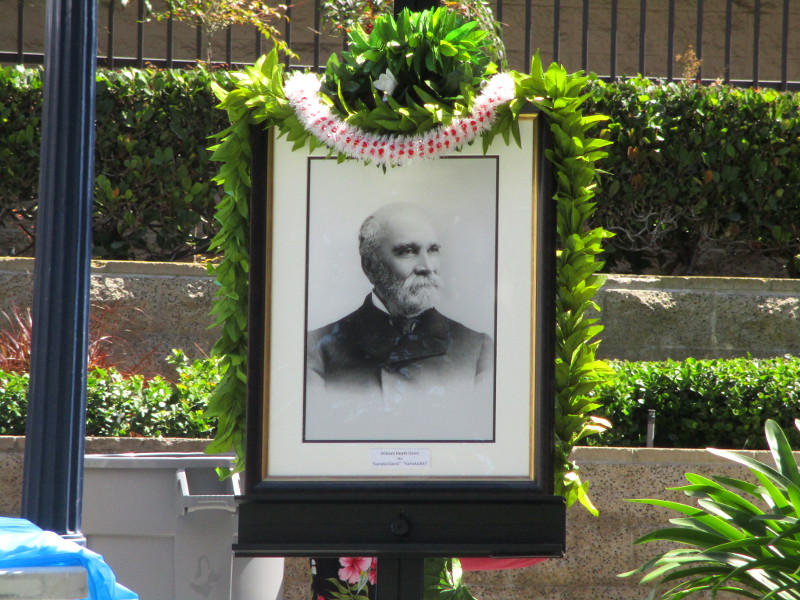
…
I post new blogs pretty often. If you like discovering new things, bookmark coolsandiegosights.com and swing on by occasionally!
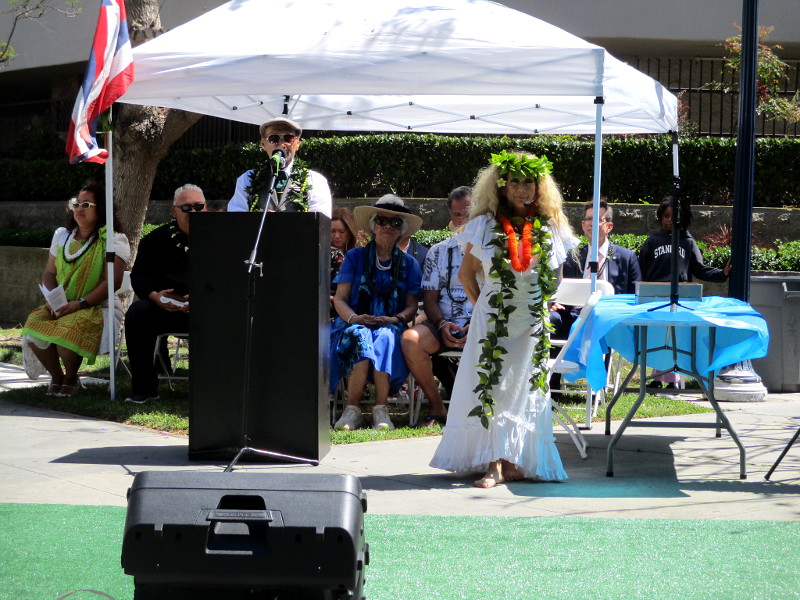
I live in downtown San Diego and love to walk around with my camera! You can follow Cool San Diego Sights via Facebook or X.
Very unusual public art stands near the center of the UC San Diego’s large La Jolla campus. While this surprising work of art might splash your nose, it’s not in your face. What I mean by that is: while you’re bent over enjoying a cool drink, you might not know that the fountain is a work of fine art by an important artist. There’s no sign or plaque indicating such.
This untitled work of public art—an exact replica in granite of commercial metal fountains typically found in schools, business offices and government buildings–is part of UC San Diego’s Stuart Collection of art. It was created in 1991 by internationally recognized conceptual artist Michael Asher.
Michael Asher believed that an artwork’s encompassing environment determines how we perceive it. As his Wikipedia biography explains: Asher’s work takes the form of “subtle yet deliberate interventions – additions, subtractions or alterations – in particular environments.” His pieces were always site-specific; they were always temporary, and whatever was made or moved for them was destroyed or put back after the exhibitions. This untitled work at UC San Diego is his first permanent public outdoor work in the United States.
I took a refreshing sip from the fountain during my last visit to UCSD. To my right stood a flagpole, and beyond that a historical marker indicating the campus is located on the old site of Camp Calvin B. Matthews, a rifle and artillery training base of the United States Marine Corps. (See my blog post concerning the historical marker by clicking here.) Asher placed the drinking fountain at this precise spot, directly opposite the historical monument, after a lot of deliberation.
There’s more to this “mysterious” work of art than you might suppose. Please read all about it by visiting the Stuart Collection website here.
This very special drinking fountain can be found south of the Price Center, in grassy, park-like UCSD Town Square.
…
I post new blogs pretty often. If you like discovering new things, bookmark coolsandiegosights.com and swing on by occasionally!
I live in downtown San Diego and love to walk around with my camera! You can follow Cool San Diego Sights via Facebook or X.
The San Diego Sheriff’s Museum once made its home in Old Town. Sadly, COVID-19 adversely affected its operation, and the museum closed its doors in 2020. Several times I had walked past the museum when it was still open, intending to pay a visit one day. I missed my opportunity.
Should you walk past the old location today (just south of the El Campo Santo cemetery on San Diego Avenue) you’ll find a few remnants of the San Diego Sheriff’s Museum still visible. I took these photographs from the sidewalk a couple weekends ago.
Fortunately, the San Diego Sheriff’s Museum maintains on online presence! Check out a virtual exhibit and more information on their website by clicking here.
The museum is working to find a new physical location. Their search for a new home is described here. If you’d like to help them out, you can provide a donation.
By the way, did you know there’s a San Diego Police Museum full of amazing exhibits? I visited it a couple years ago and posted photographs and descriptions here!
…
I post new blogs pretty often. If you like discovering new things, bookmark coolsandiegosights.com and swing on by occasionally!
I live in downtown San Diego and love to walk around with my camera! You can follow Cool San Diego Sights via Facebook or X.
This wonderful Air Mail mural inside Oceanside’s historic post office was painted in 1937 during the New Deal. The public art was commissioned by the Treasury Section of Fine Arts. It was painted by Elise Seeds.
Many might not realize it, but the artist, Elise Seeds, was also a Hollywood actress!
As the Living New Deal website explains: Elise Seeds, also known as Alyse Cavanna, was a film actress, dancer, comedienne, and vegetarian as well as a painter. She was a well known artist back in the day. Here’s her bio on the askART website.
Elise Cavanna (her acting name) was W.C. Fields’ comic partner in the Ziegfield Follies. She’s mostly remembered for her role as a patient in the 1932 W.C. Fields slapstick comedy The Dentist. This website explains: As Fields attempts to pull her tooth, she recoils in pain and wraps her legs around Fields, getting her feet stuck in his pockets as he pulls her around the room. You can watch the movie on YouTube here. She appears around the 12 minute mark in a hilarious but ultimately suggestive scene that ended up being censored.
Elise Seeds led a full life and pursued many eclectic interests. She was certainly a genius. Simply take a look at her amazing Oceanside mural!
…
I post new blogs pretty often. If you like discovering new things, bookmark coolsandiegosights.com and swing on by occasionally!
I live in downtown San Diego and love to walk around with my camera! You can follow Cool San Diego Sights via Facebook or X.
A historical plaque can be found in front of the Carlsbad by the Sea Retirement Community. I noticed it during my last walk up Carlsbad Boulevard.
Here’s a photo:
The plaque reads:
CARLSBAD BY THE SEA RETIREMENT COMMUNITY
Dedicated June 20, 1998
In 1881, Captain John A. Frazier, a homesteader, purchased 127 acres of oceanfront land for $1200. While drilling for drinking water in 1884, Frazier tapped into an underground mineral spring. He built a 510 foot welltower and began promoting the water’s healing properties to passing travelers on the Southern California Railroad. The site became known as “Frazier’s Station”. In 1886 Gerhard Schutte and Samuel Church Smith purchased the land and renamed it “Carlsbad” with the intention of building a health resort. In 1929, after the paving of nearby Highway 101, construction began on the Spanish-Revival style “California-Carlsbad Mineral Springs Hotel” on this site. By 1939, the spa functions had ceased and the hotel changed owners several times. In 1957, Lutheran Services of San Diego purchased and re-opened the hotel as a retirement community. California Lutheran Homes acquired the community in 1964. The original building was demolished in 1996 to complete an expansion and modernization of the retirement community. The front facade has been reconstructed by California Lutheran Homes and Community Services as a replica of the original “California Carlsbad Mineral Springs Hotel.” A time capsule, buried behind this monument, will be opened 50 years from the ground breaking in October of 2046.
…
I post new blogs pretty often. If you like discovering new things, bookmark coolsandiegosights.com and swing on by occasionally!
I live in downtown San Diego and love to walk around with my camera! You can follow Cool San Diego Sights via Facebook or X.
Until I read a plaque attached to the Carlsbad archway sign, I hadn’t realized the “new” sign was already ten years old.
Starting in the 1930s, people have passed under a Carlsbad sign while traveling through this coastal city. In 2015 the original sign was replaced with a replica–the one you see in my photographs.
The landmark sign straddles Carlsbad Boulevard at Carlsbad Village Drive.
During previous walks, I hadn’t noticed two bronze plaques describing the sign. The plaques are identical. They’re attached to the posts that support the sign on either side of Carlsbad Boulevard.
These photos were taken a week ago.
This sign is a gift from TaylorMade and the Carlsbad Chamber of Commerce to celebrate the important role business has played in the City of Carlsbad’s success. It is a replica of the iconic Carlsbad sign installed in the ’30s.
DEDICATED ON JANUARY 8, 2015
(Leading sports equipment manufacturer TaylorMade has its corporate headquarters in Carlsbad.)
…
I post new blogs pretty often. If you like discovering new things, bookmark coolsandiegosights.com and swing on by occasionally!
I live in downtown San Diego and love to walk around with my camera! You can follow Cool San Diego Sights via Facebook or X.