Visiting the Kumeyaay-Ipai Interpretive Center in Poway.

Once a month, every third Saturday, the Kumeyaay-Ipai Interpretive Center in Poway opens to the public.

Today I enjoyed a tour of the archaeological site and its educational visitor center. I was surprised to find so much history preserved in this small island of natural beauty just off Poway Road.

Poway is derived from the Native American Kumeyaay word Pauwai, which means the shape of an arrowhead or the merging of two creeks. A short distance to the south is Poway Creek.

As you will see in the following photographs, a small Kumeyaay village of approximately 20 families once lived on the hill that I and my docent tour guide, Heidi, explored.

The Kumeyaay people have lived in this region for at least 10,000 years. These first people had their lives severely disrupted with the arrival of Europeans in 1769. Today, descendants of those who lived in Pauwai are members of the San Pasqual Band of Mission Indians.

Please enjoy the following photos to get a taste of what you might discover when you visit. Read the captions for a few of the things I learned.

Are you a local history or anthropology enthusiast? Or a community-minded person who loves the outdoors? The Kumeyaay-Ipai Interpretive Center is always looking for volunteers!

Check out their Facebook page and learn about the special days and hours when you can visit here.
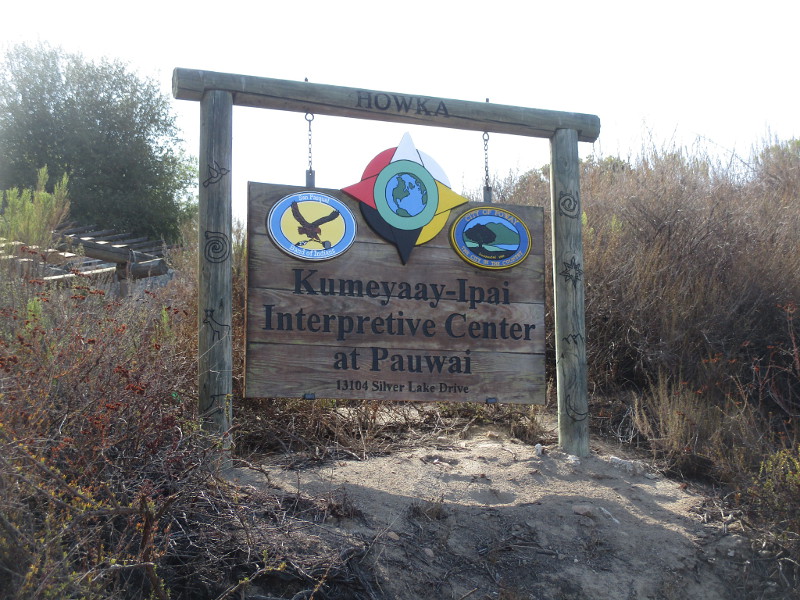
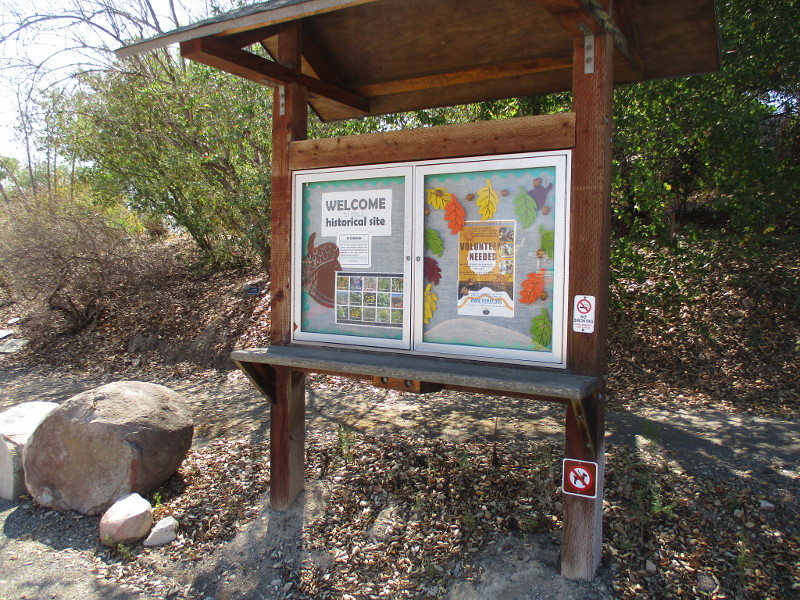
Sign at the end of Ipai Waaypuk Trail, south of Poway Road, where there is parking.
Kiosk welcomes visitors to an important historical site.
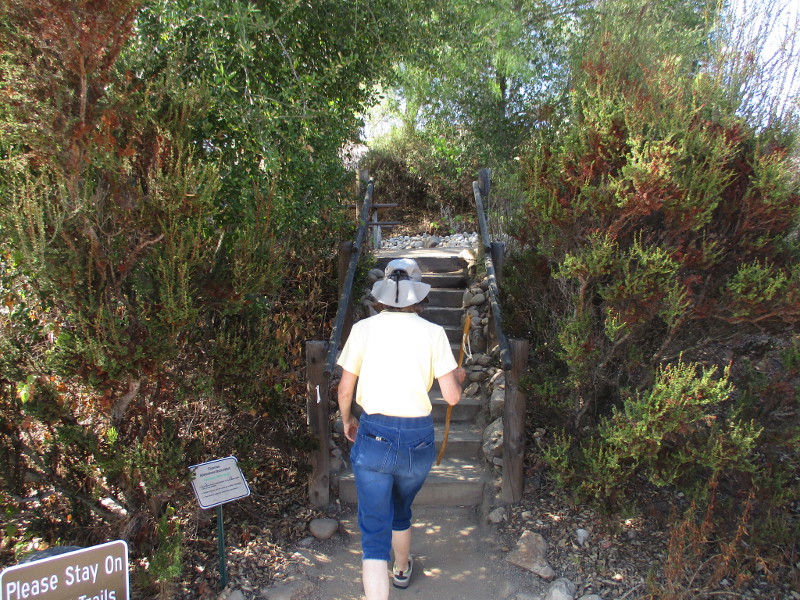
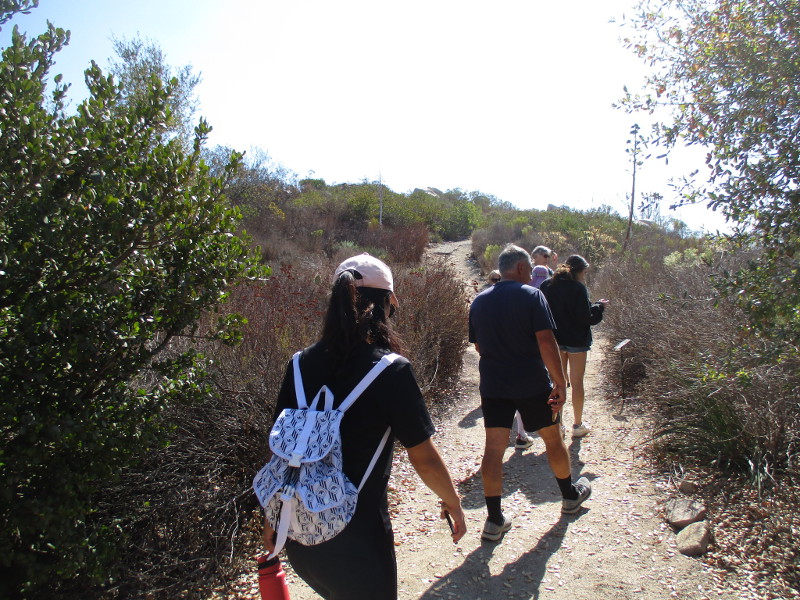
My tour guide Heidi starts up stairs that lead to short looping trails.
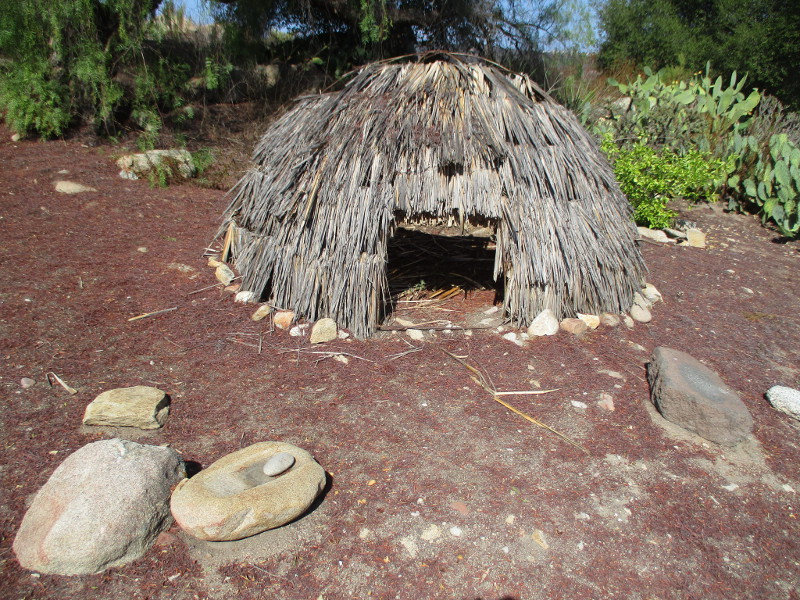
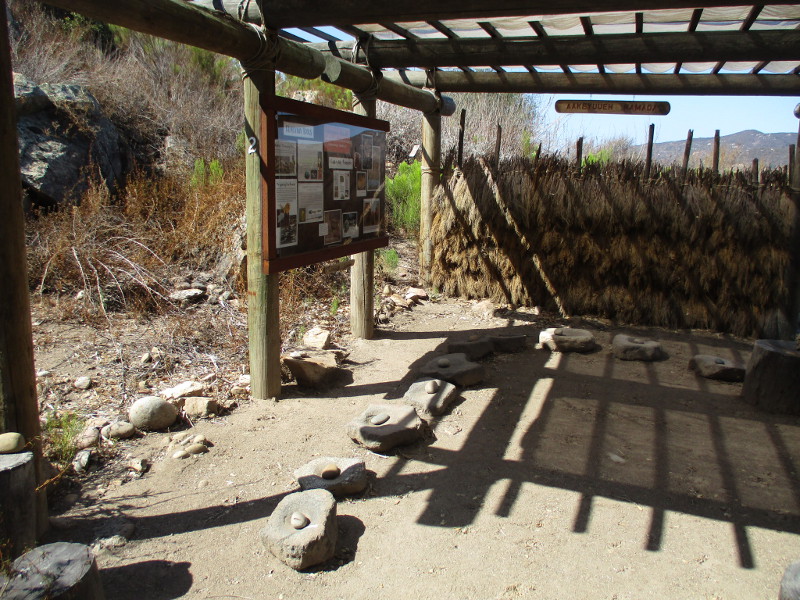
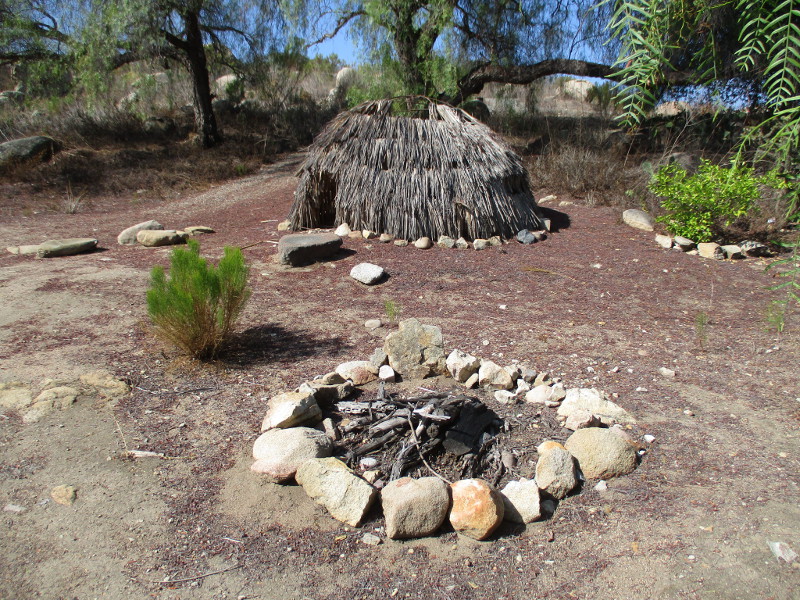
At the Replica Village in a clearing stand several recreated Kumeyaay ewaas. These are shelters made of sycamore or willow tree branches, covered with cattails or baccharis, and tied with yucca or agave fiber string. These replica ewaas are old and need to be refurbished. The Kumeyaay would refresh their watertight ewaas regularly. A grinding stone, or metate, lies nearby.
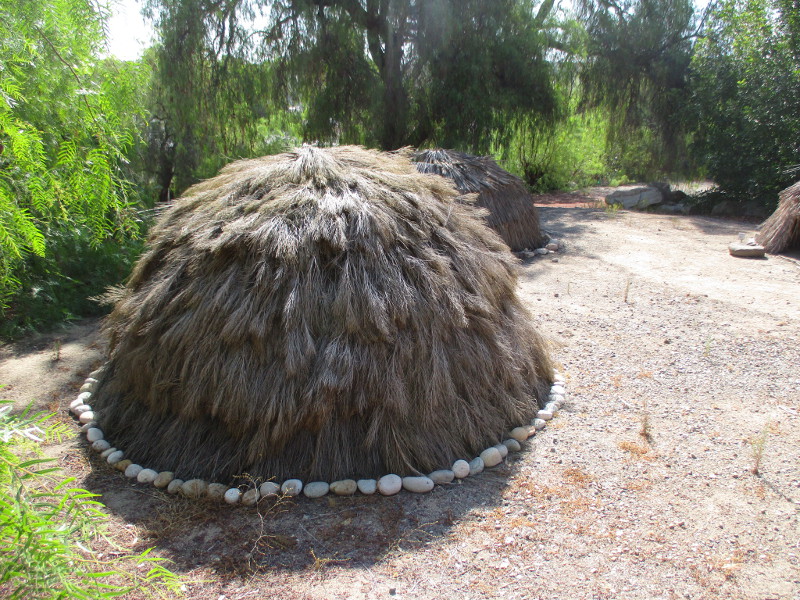
This nearest ewaa was recently reconstructed. Volunteers who’d like to maintain this special place are welcome!
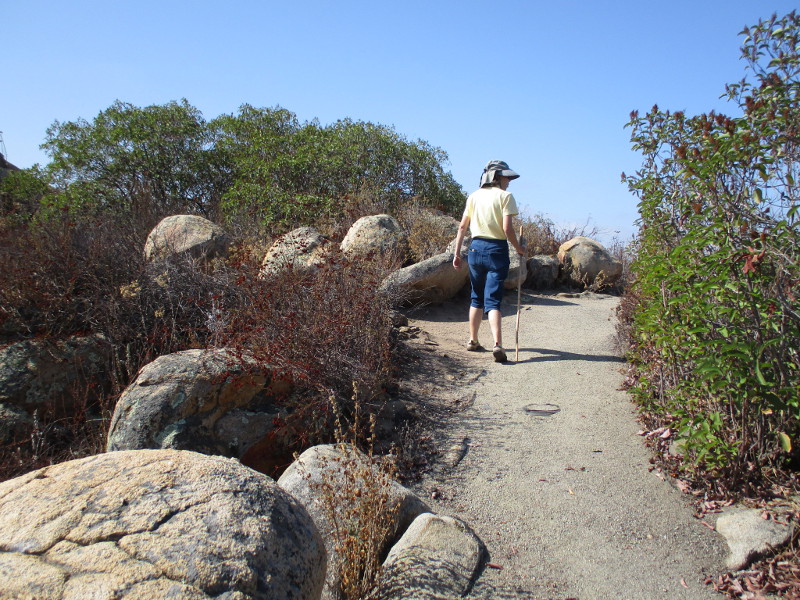
Heading up to the top of the hill along a very short, moderately steep section of trail.
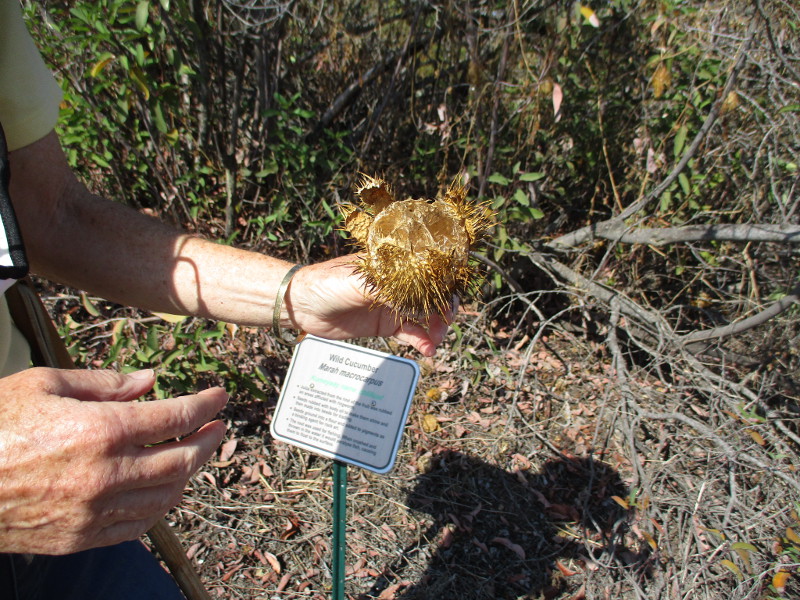
I’m shown Wild Cucumber. Like many native plants, it had various practical uses. Seeds ground into a powder by the Kumeyaay were added to pigments to create rock art. The crushed roots, when tossed into water, would paralyze fish!
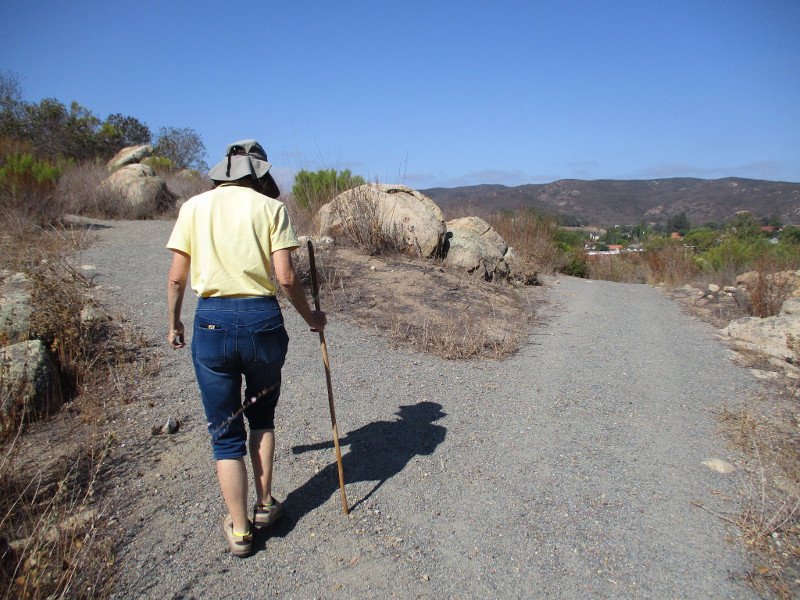
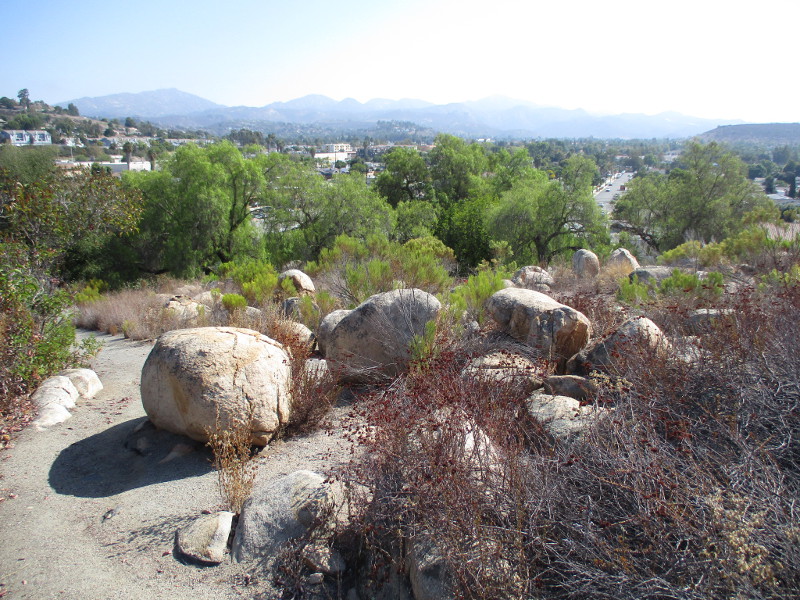
In the distance we could see Mt. Woodson, Iron Mountain, and Cuyamaca Peak. Depending on the season, the Kumeyaay would migrate east to the mountains or west to the Pacific Ocean coast.
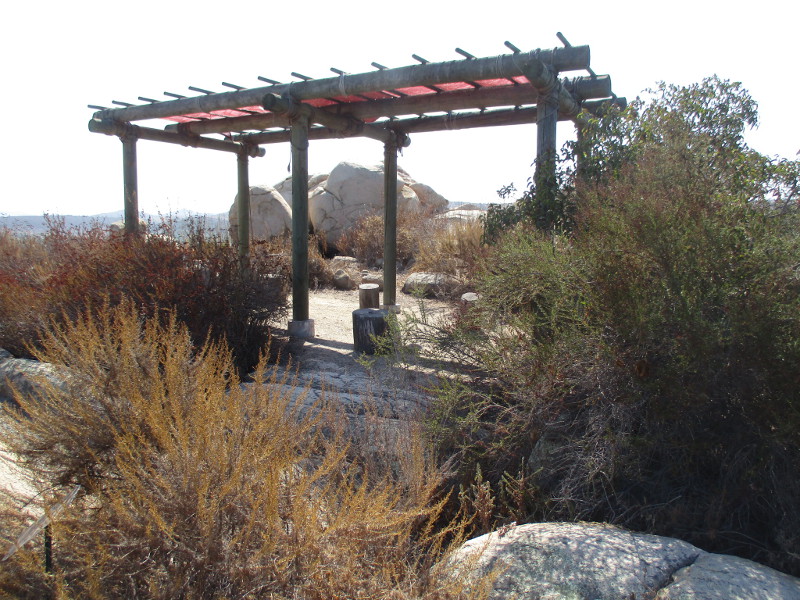
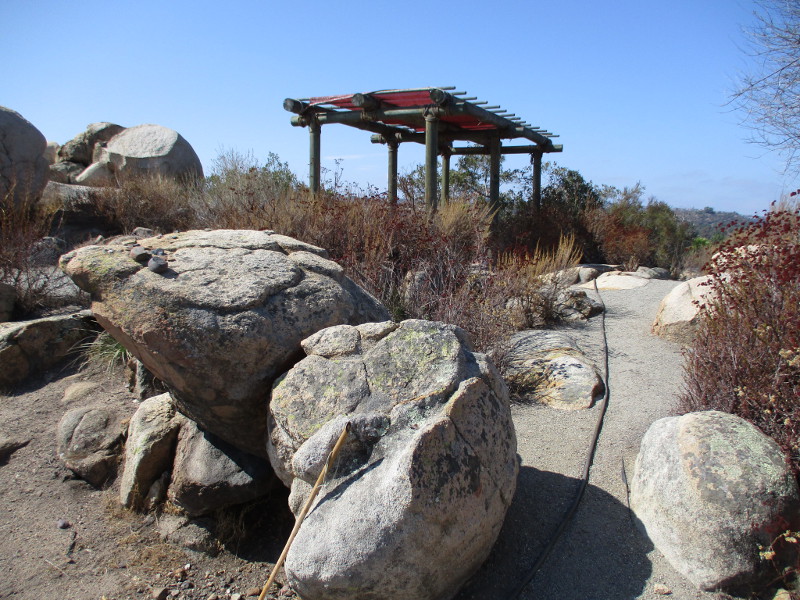
One of several outdoor ramadas built for visitors to the Interpretive Center. Historical ramadas erected by the Kumeyaay were shady places for village activities and ceremonies.
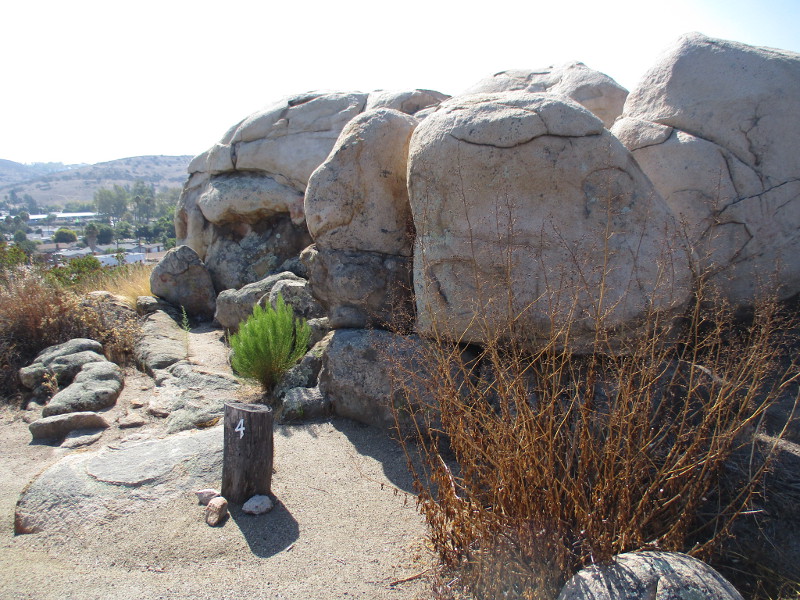
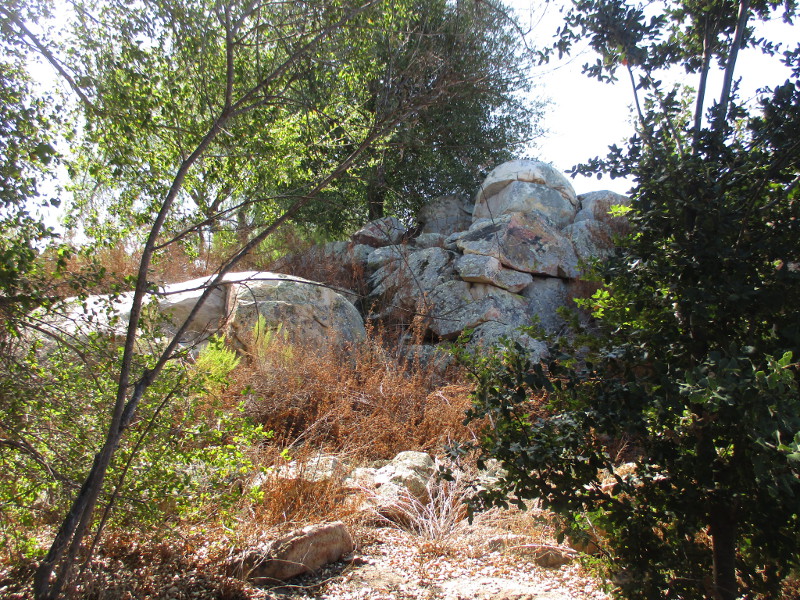
It was thought that rock art might be found on these monumental boulders crowning the hilltop, but a thorough study using modern technology detected no traces.
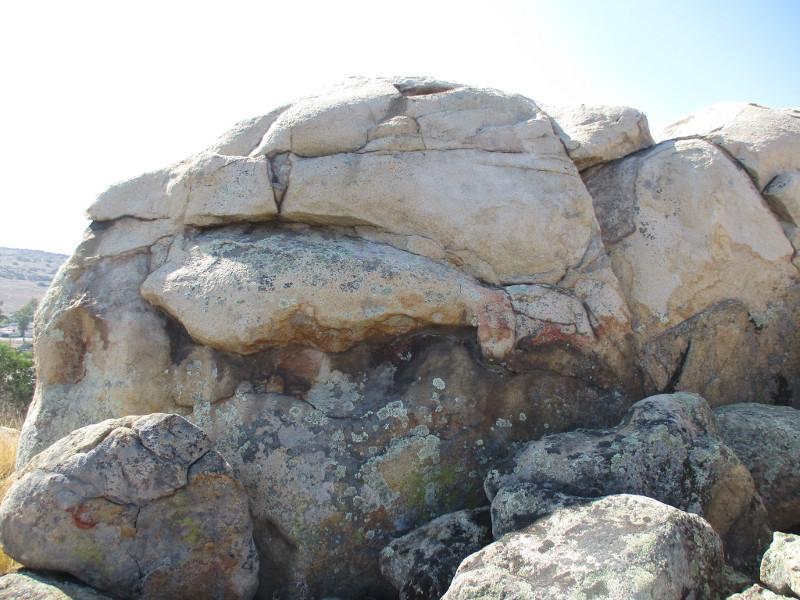
A wise Kumeyaay observer found in this rock formation a whale, a turtle, and the head of a dolphin. Do you see them?
A nearby fire pit once used by the Kumeyaay villagers.
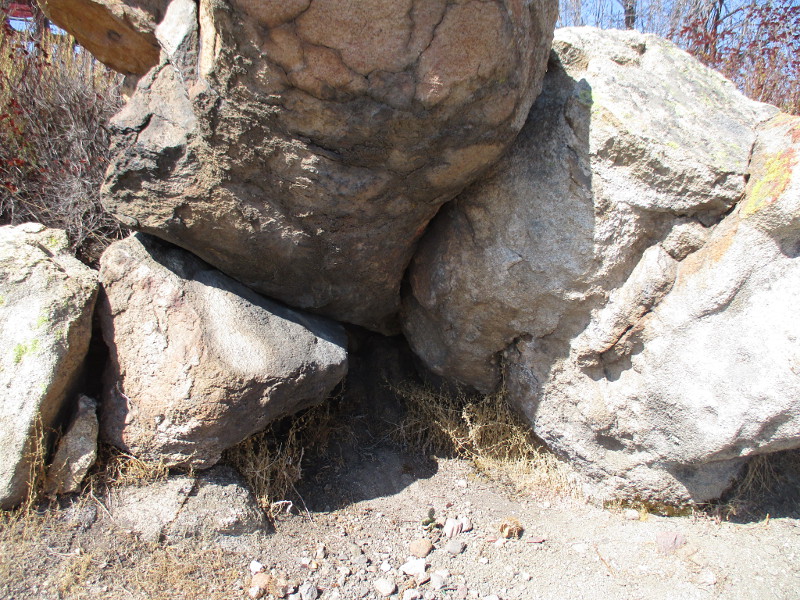
Soot remains in this natural rocky oven. A crack in the rear conveniently served as a flue for smoke.
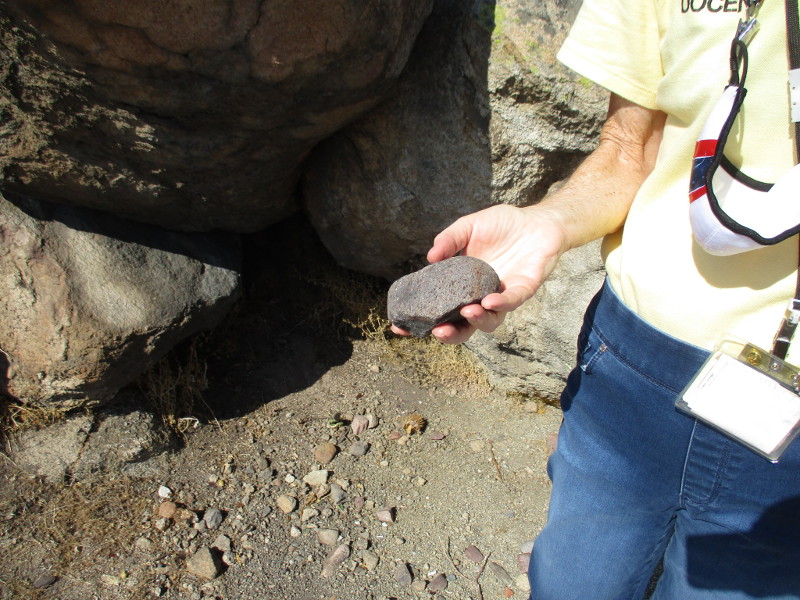
Cooking stones would be heated in the fire, then placed in baskets to prepare food.
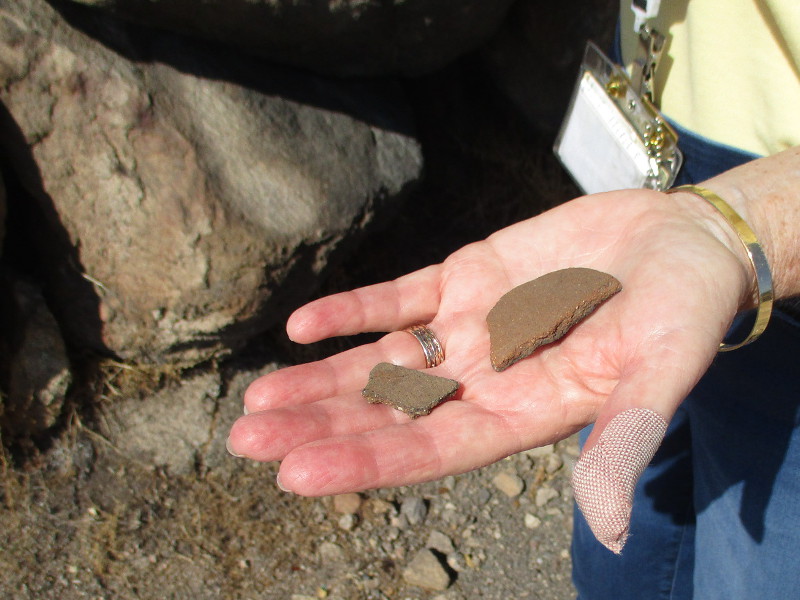
Many small broken pottery sherds have been found near this primitive kitchen.
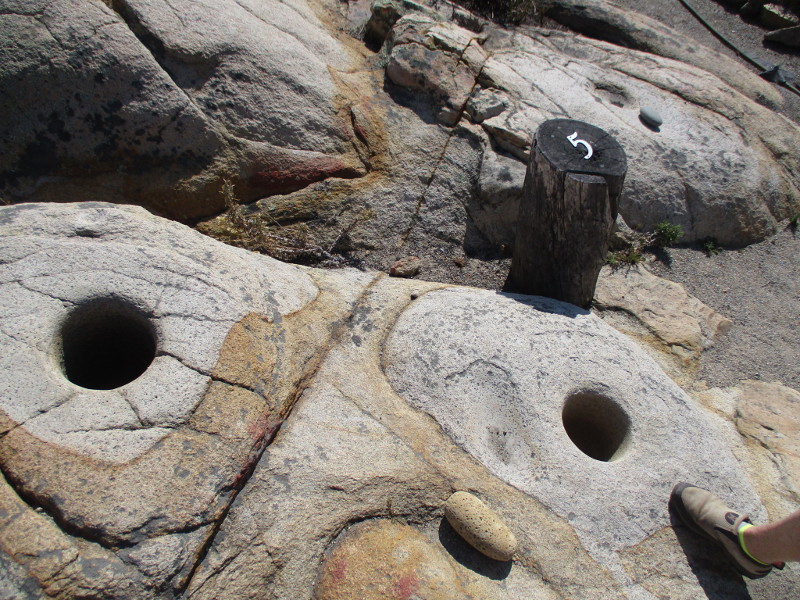
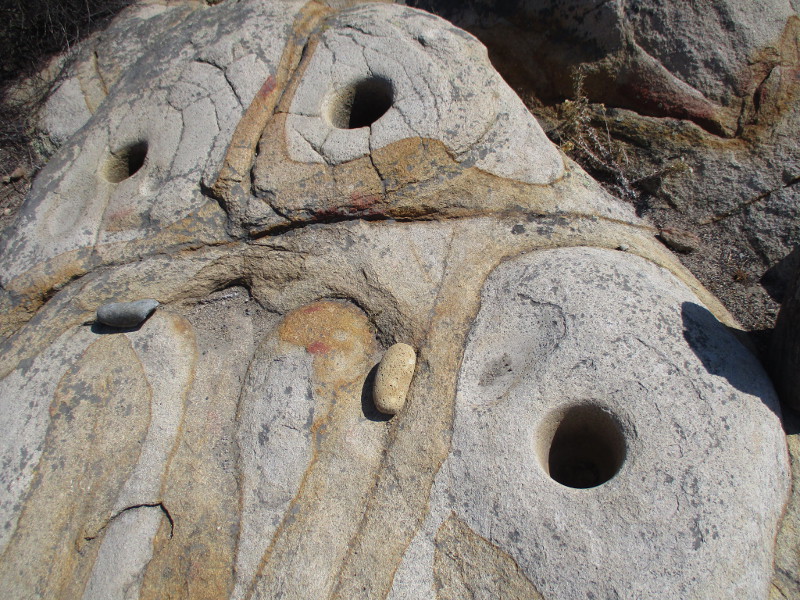
At the top of the hill are very deep grinding holes, or morteros, where acorns were ground for thousands of years. After being reduced to powder, the acorns would be leached of tannic acid and cooked into a mush called shawii.
A important cultural site representing thousands of years of indigenous history in Poway.
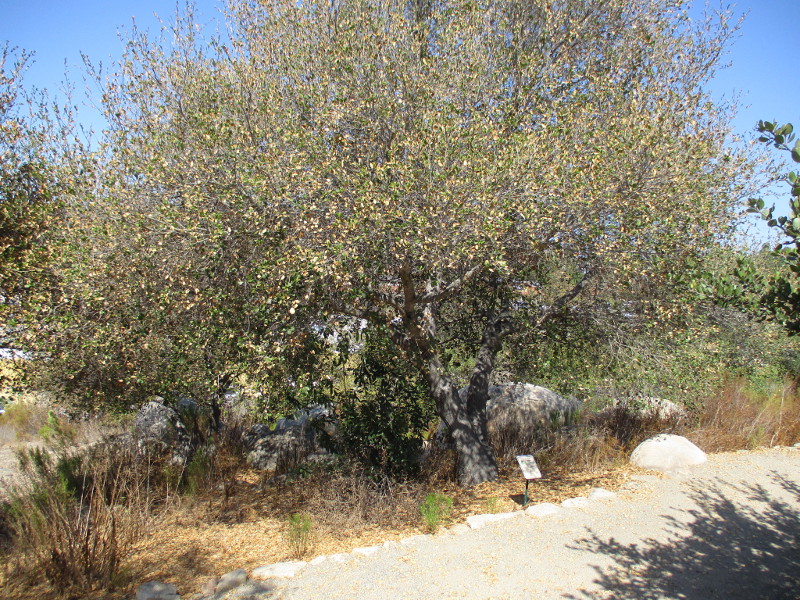
A Coast Live Oak beside the trail. One of several types of oak trees in the San Diego region. Acorns were a staple of the Kumeyaay diet.
As I and my tour guide walk back down the trail, another group heads up toward the hilltop.
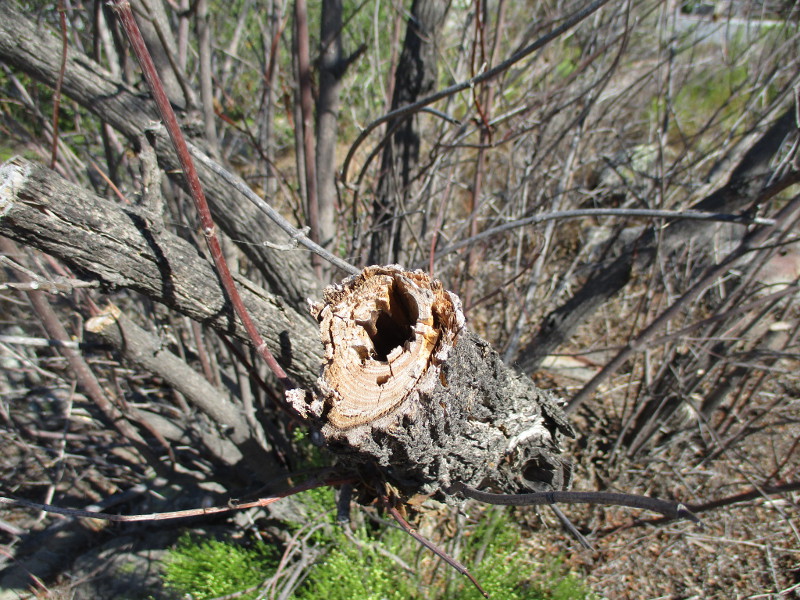
A hollow Elderberry branch. Not surprisingly, these were used to make musical instruments such as flutes.
Some of the rugged natural beauty that we enjoyed.
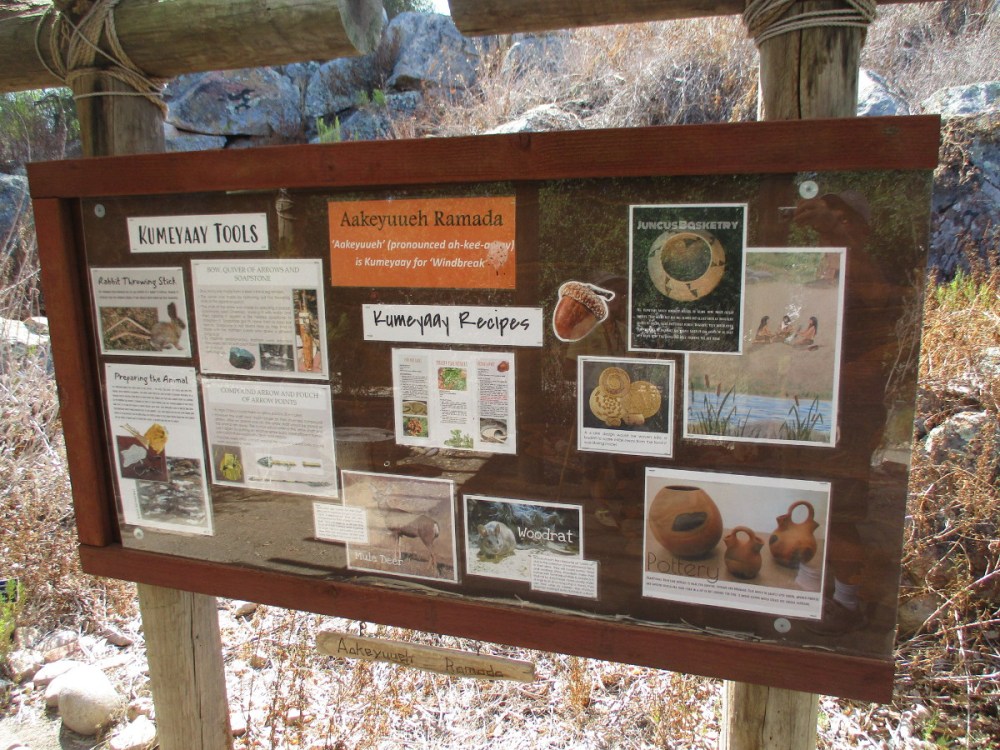
At another ramada replica, we saw a series of genuine metates that Third Grade students can use during educational field trips! These metates were rescued during road construction many years ago and were donated to the Interpretive Center.
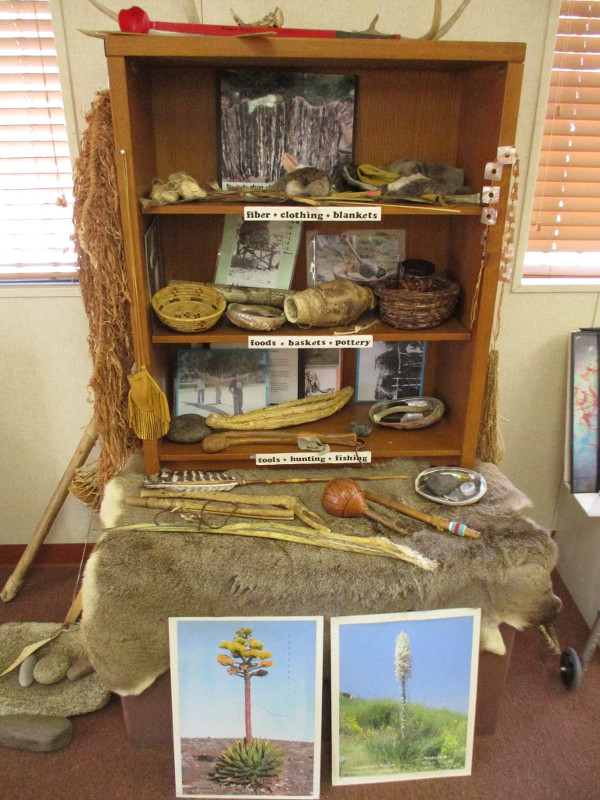
There is much to learn about Kumeyaay tools, food, basket weaving, pottery and more!
Third Grade students use these small stones to paint their own rock art!
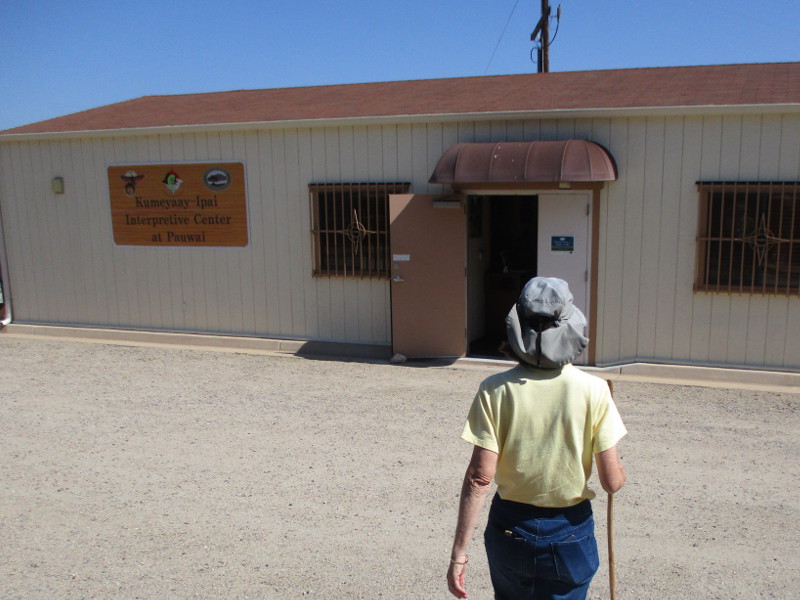
We head into the building at the Kumeyaay-Ipai Interpretive Center to learn even more!
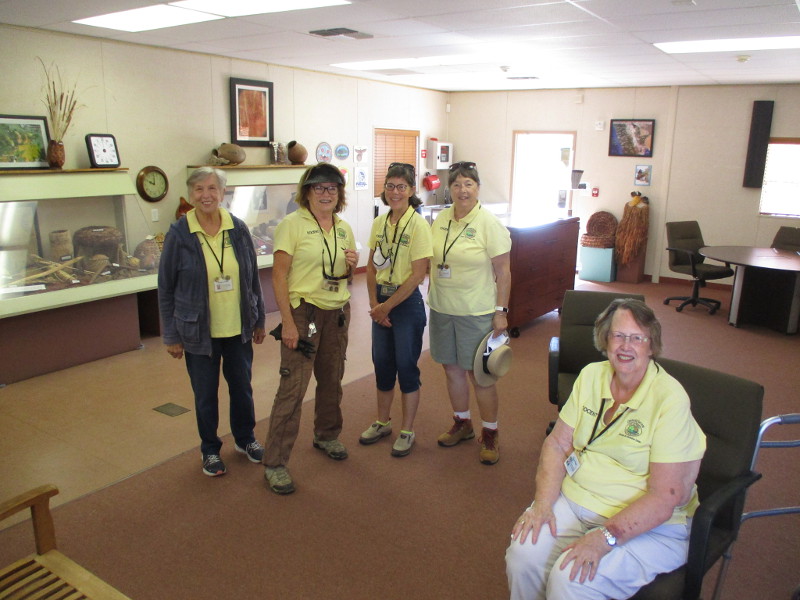
Look at all the smiling docents!
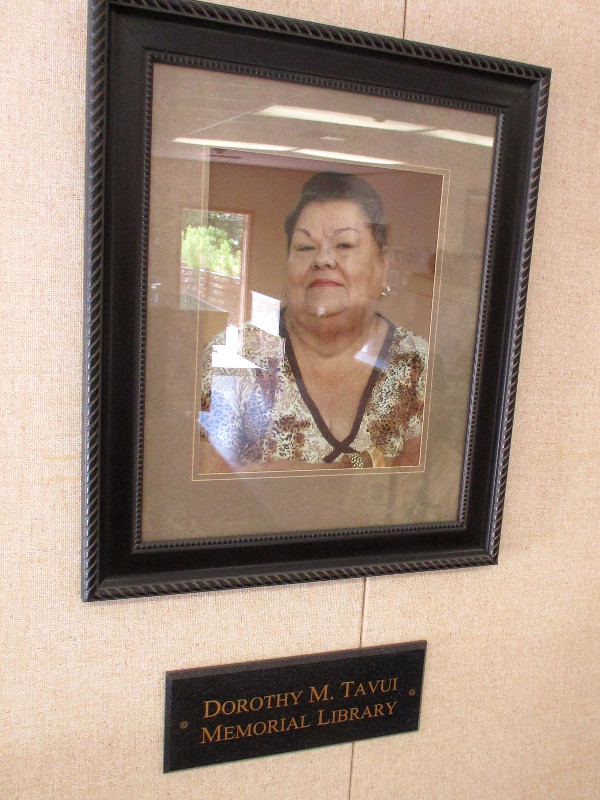
Dorothy M. Tavui was a Kumeyaay friend who helped to establish the Interpretive Center in Poway.
Shelves full of artifacts that kids can explore and handle to learn about Kumeyaay life.
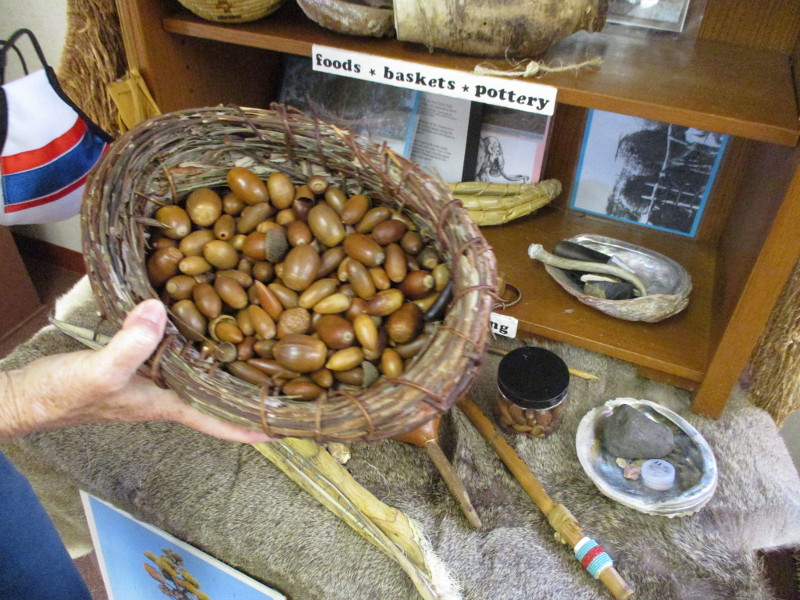
A willow basket full of acorns. The long conical acorns are from Coast Live Oaks. The big acorns are from Black Oaks in the Cuyamaca Mountains. They were the largest and tastiest! The abalone shells you also see were obtained from the coast and often used as trade items.
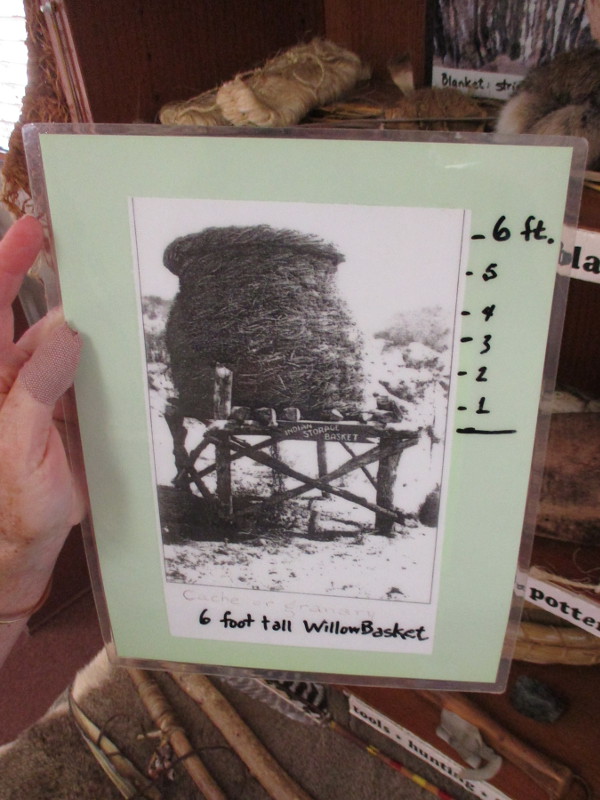
Old photo of a 6 foot tall willow basket! Acorns would be gathered in season to last the entire year.
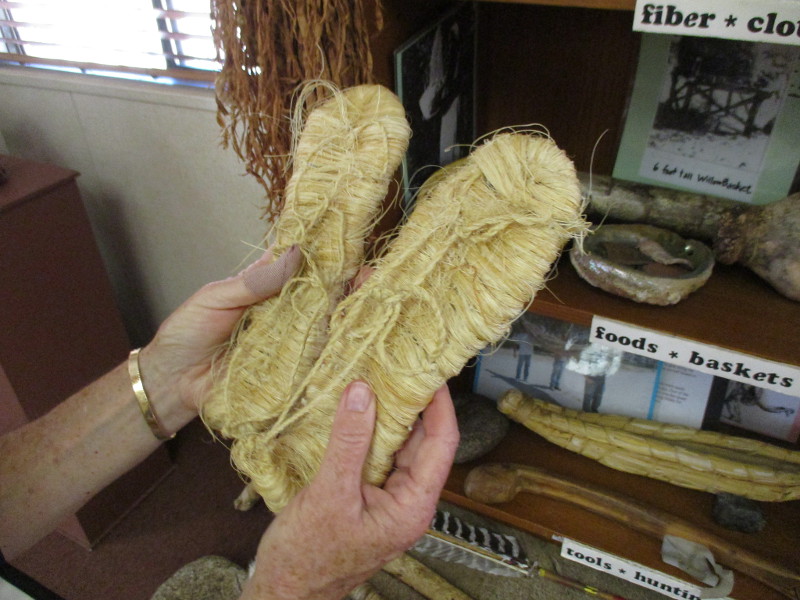
Sandals made of natural plant fibers.
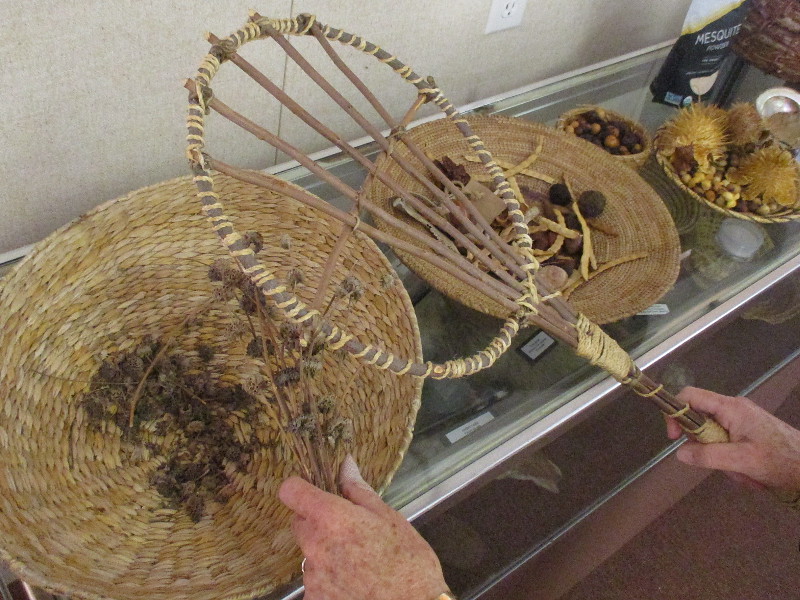
I learned this is a seed beater! It’s being demonstrated on dried blooms of sage.
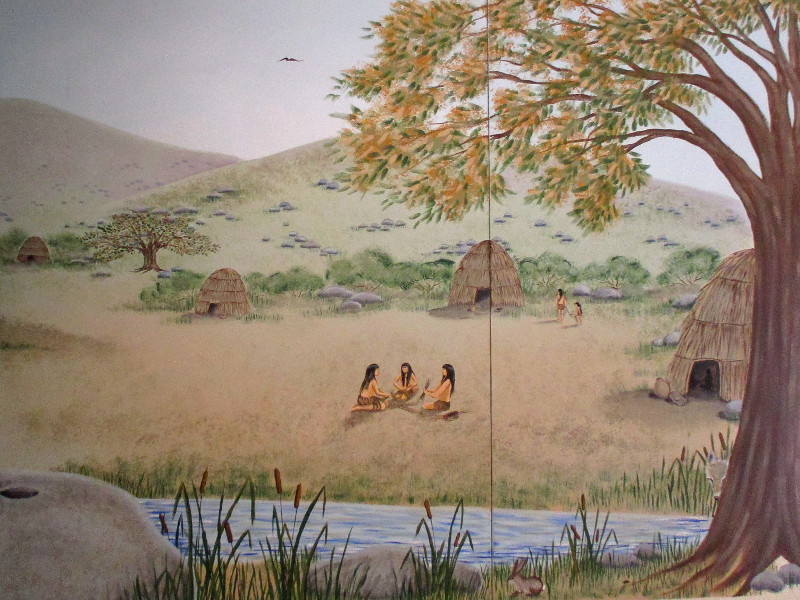
A beautiful mural inside the Kumeyaay-Ipai Interpretive Center in Poway shows what village life was like here for many thousands of years. By artist Brigitte Lopez, 2012.

I live in downtown San Diego and love to walk around with my camera! You can follow Cool San Diego Sights via Facebook or Twitter!

Life and history at the Oceanside Pier.

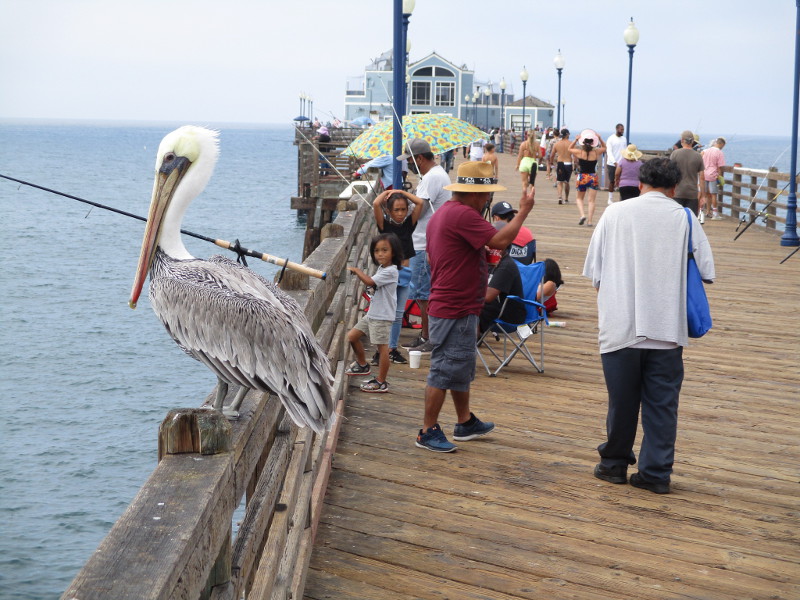
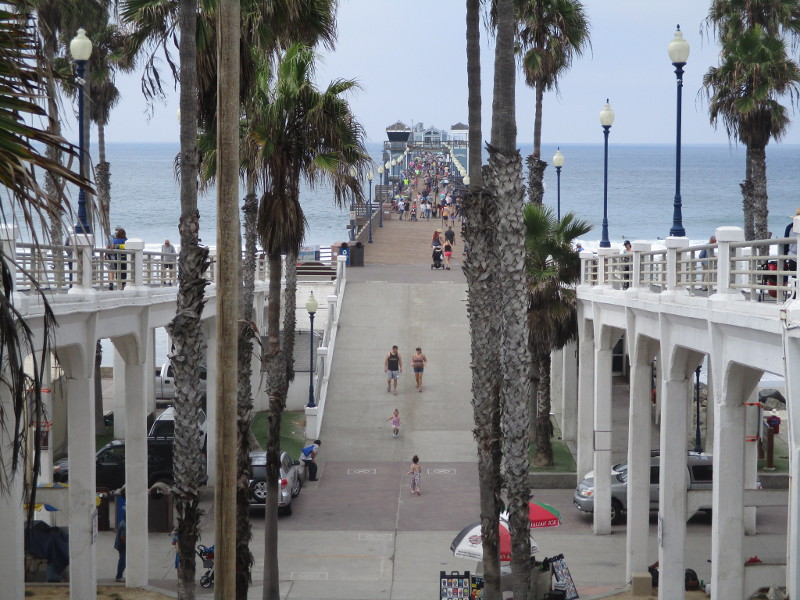
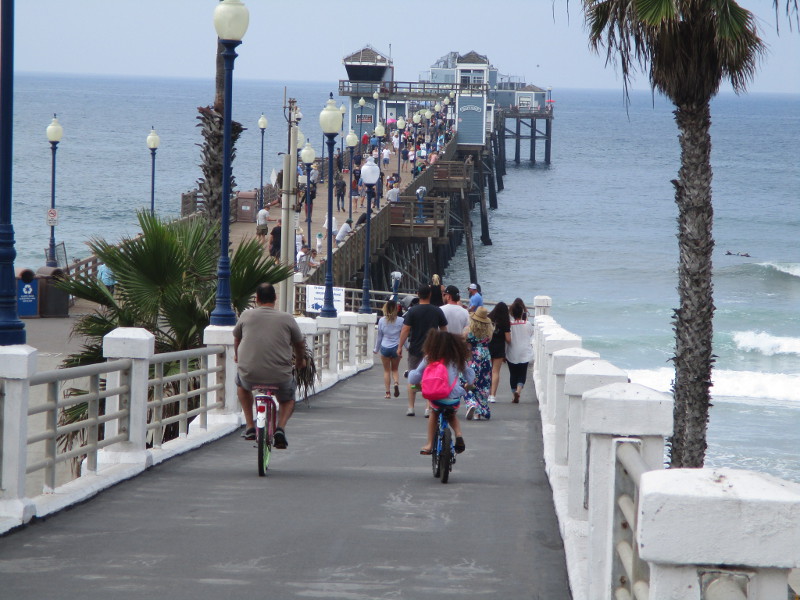
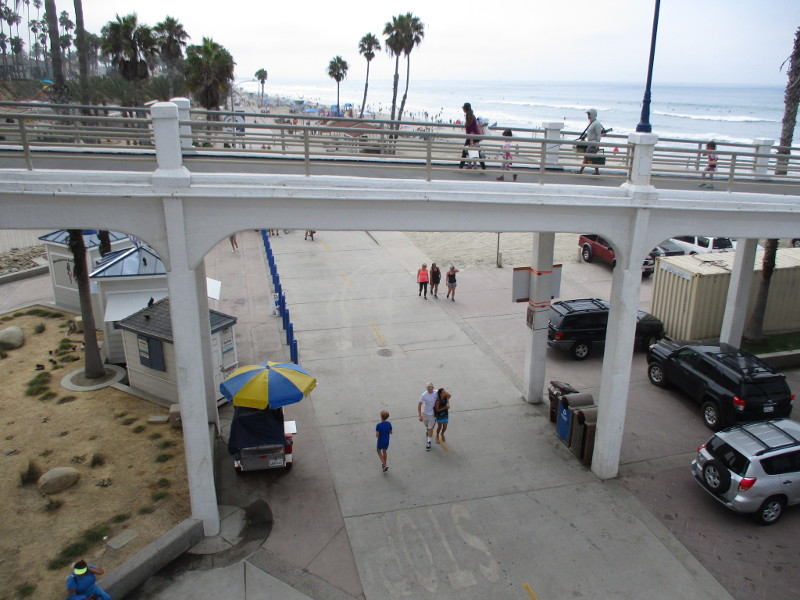
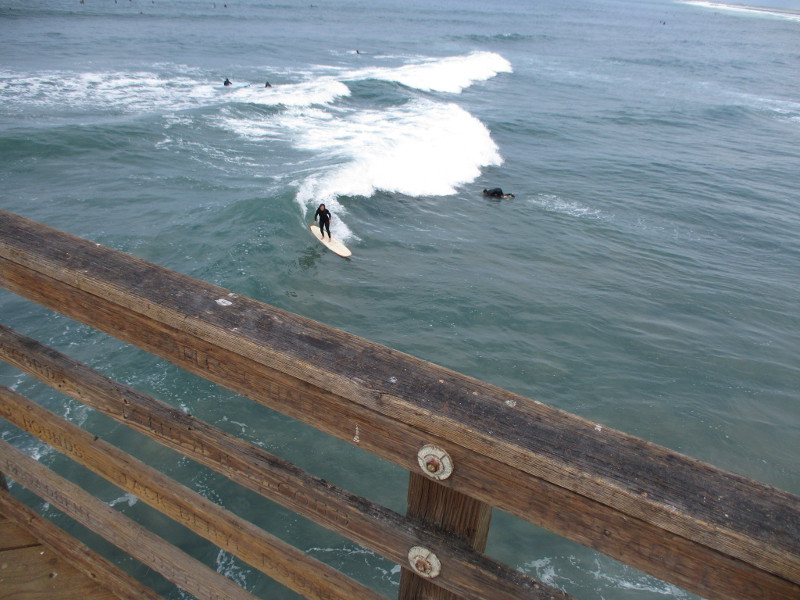
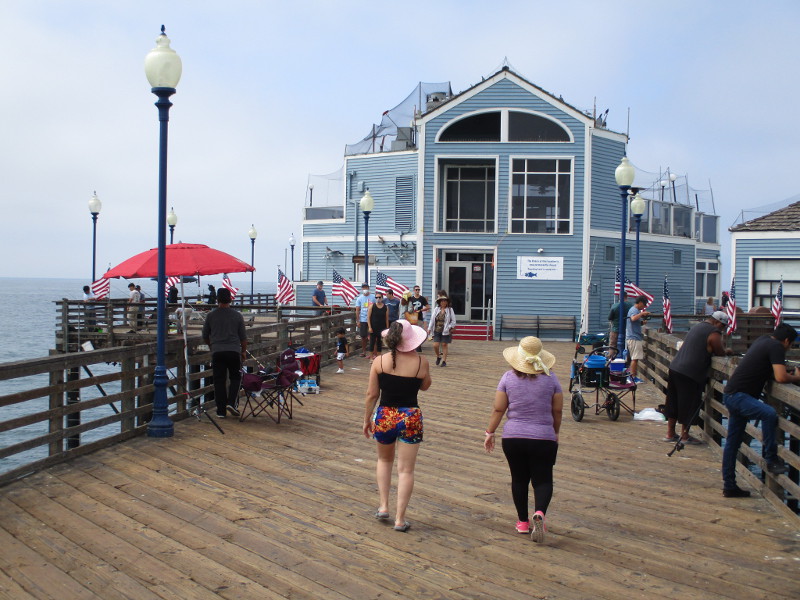
Walk along the Oceanside Pier and you’ll encounter life. You’ll see walkers, bicyclists, people gazing across the water, talking, fishing, and beachgoers and surfers down below. If you have a curious mind and observant eyes, you’ll also discover history.

I walked along the popular pier on Labor Day and took these photos.

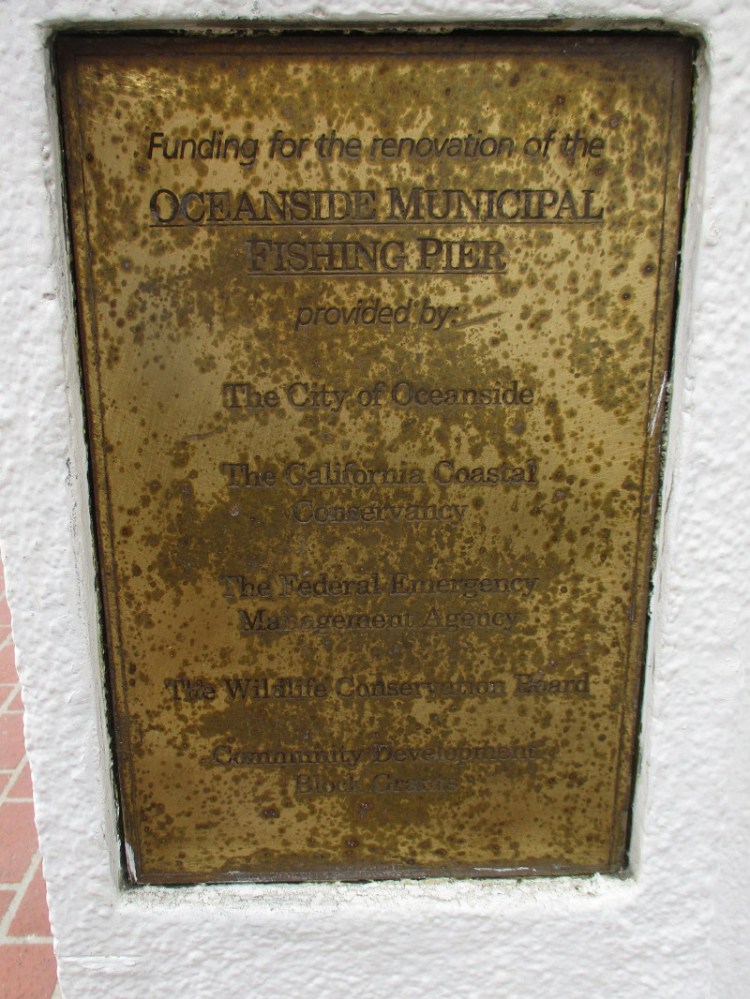
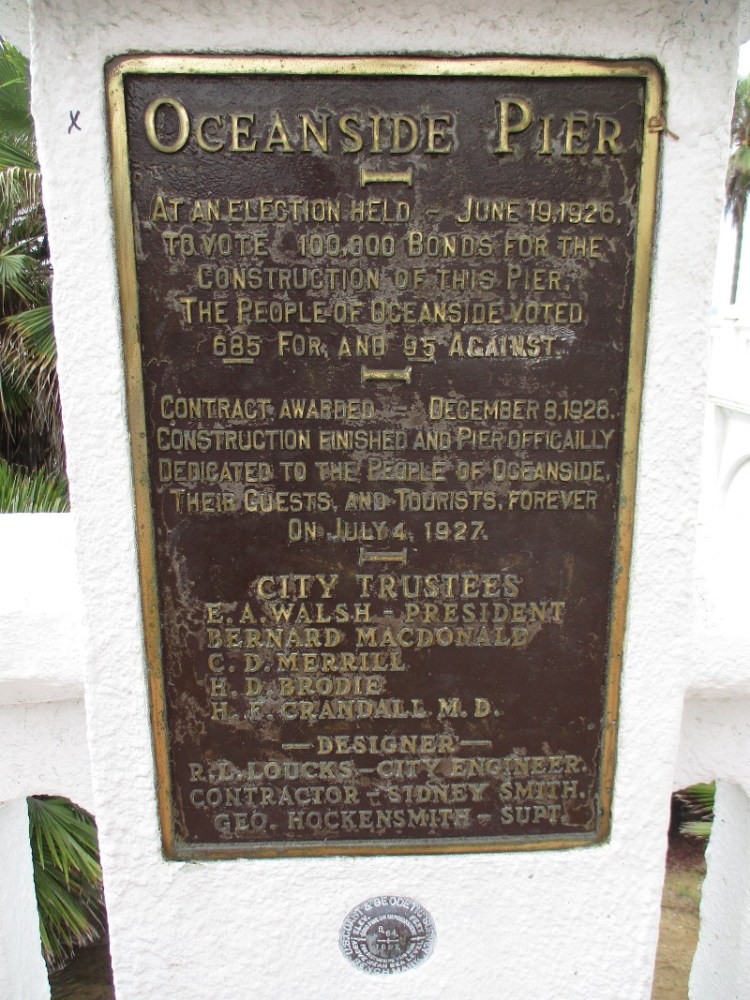
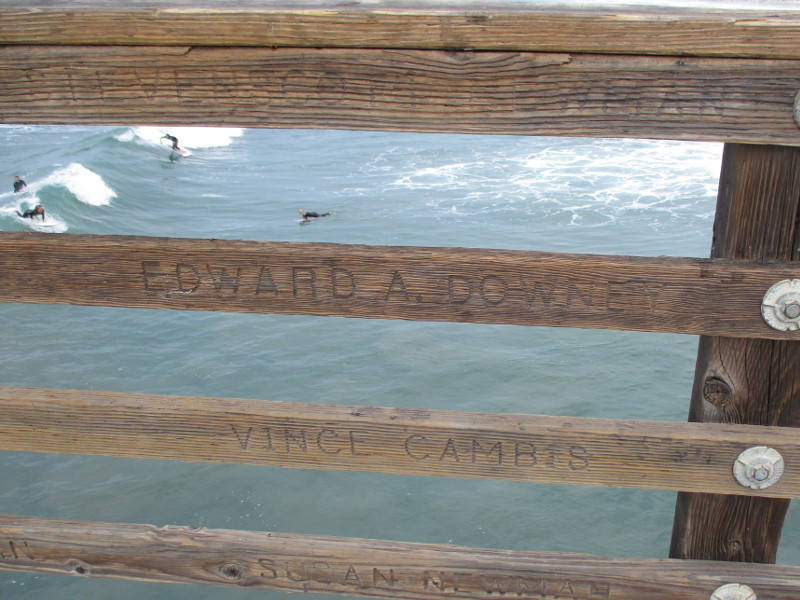
You can read the following historical plaques, if you’d like. Those many names carved into the wood railing were from a community fundraiser, whose proceeds were used to rebuild the pier in 1988, the year of its centennial.

The Oceanside Pier was originally built in 1888 and destroyed two years later by winter storms. Over the years, there have been six different incarnations. Today the pier is 1,942 feet long. You can learn more about its history here.

Oceanside Municipal Fishing Pier. Reconstruction 1987.
Oceanside Pier. 1925. Historic Resource 4-204.

Check out this very cool fish-shaped bike rack! I saw it down by the beachside boardwalk.

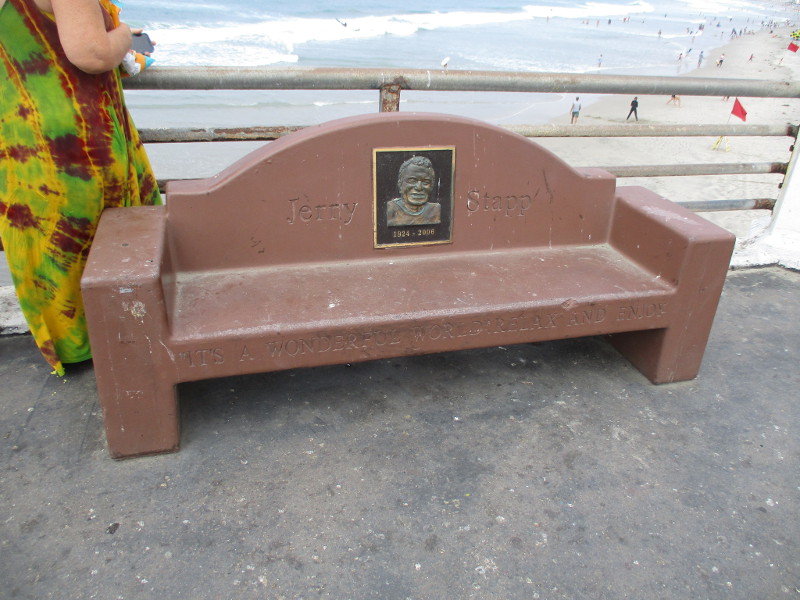
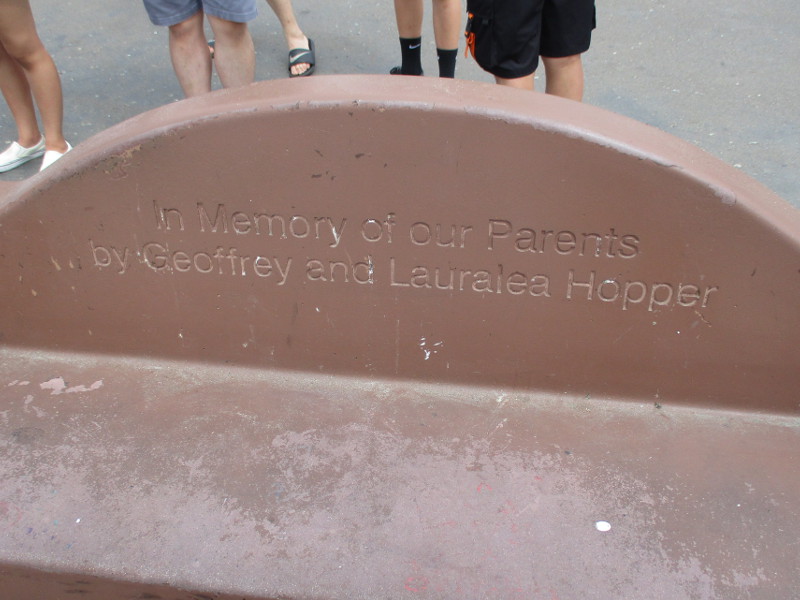
Some benches near the foot of the pier memorialize loved ones…

Just a few of the many names on the weathered wood rails along the length of the pier…

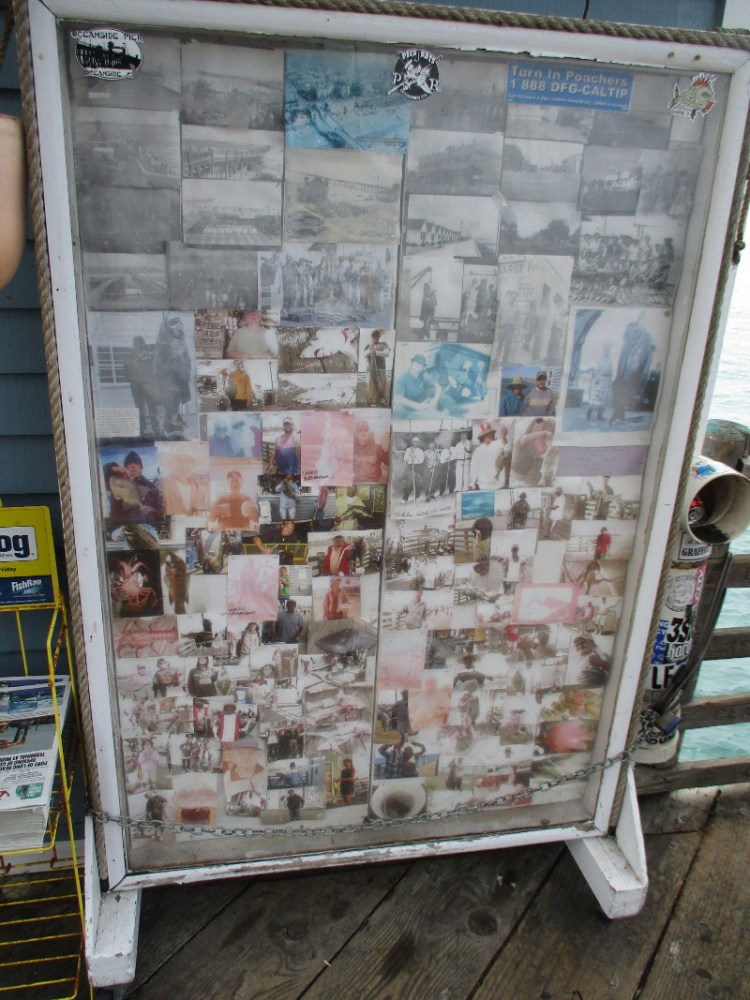
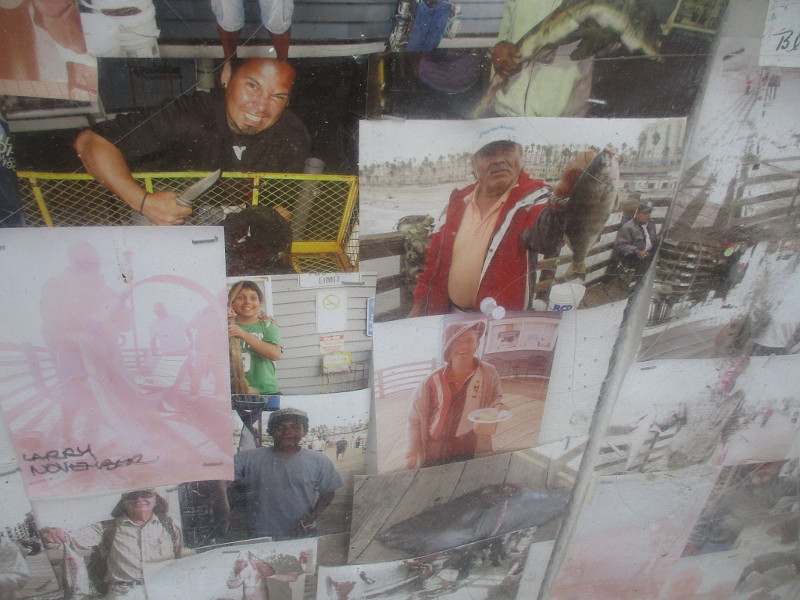
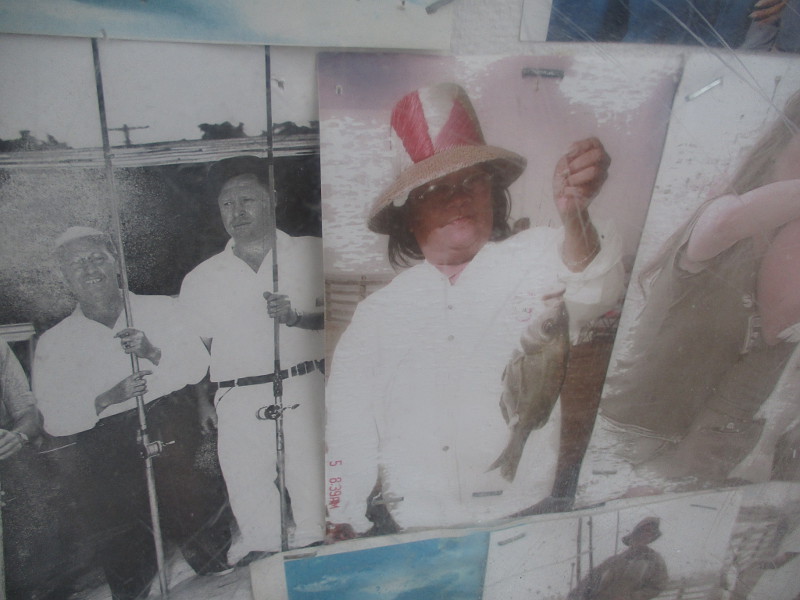
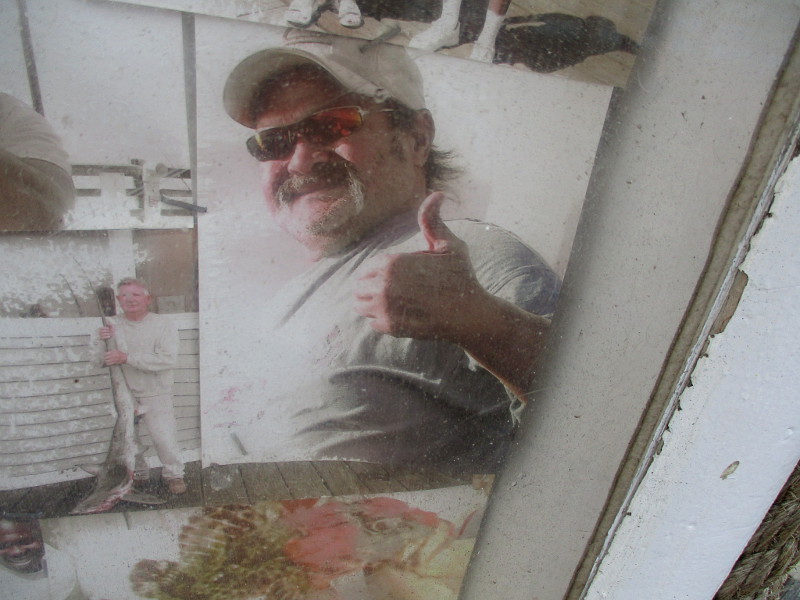
Across from the concession shack, with its souvenirs, snacks and bait, you’ll find a collage of faded photographs.

Cherished memories over the years. Happy days fishing…

Ruby’s Diner at the end of the pier permanently closed early this year after three decades of operation. A sign indicated the building will return to life in the future.

History goes on.

Why the many flags nearby? It’s Labor Day, 2021.

Another fine day passes by. Time to head back…

I live in downtown San Diego and love to walk around with my camera! You can follow Cool San Diego Sights via Facebook or Twitter!

Old farming street art in Nestor.

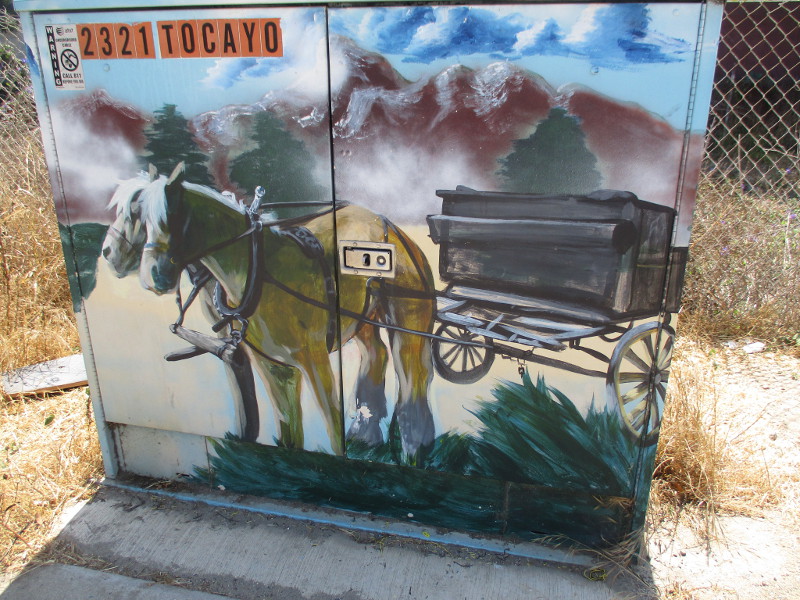
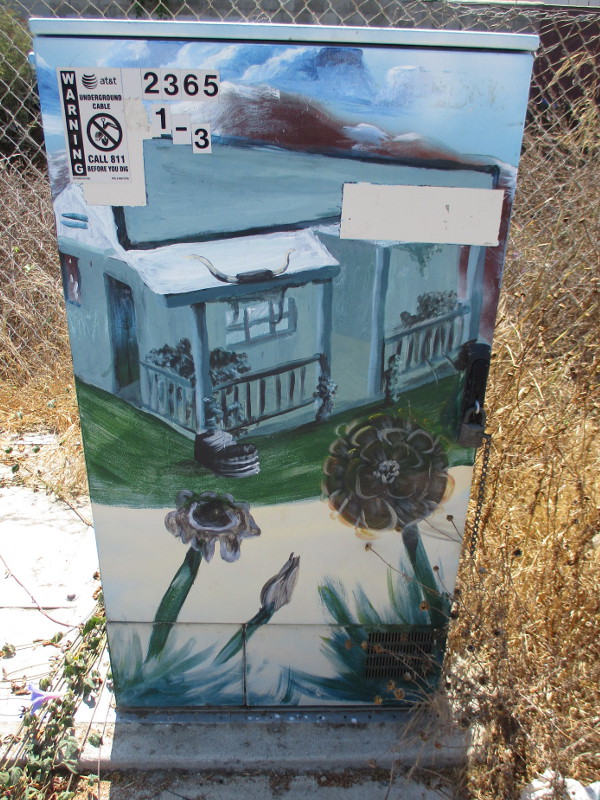
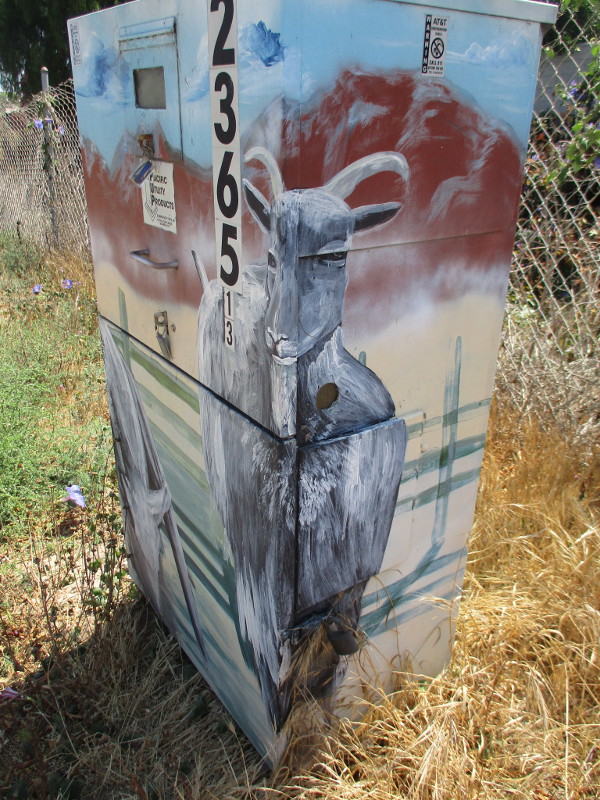
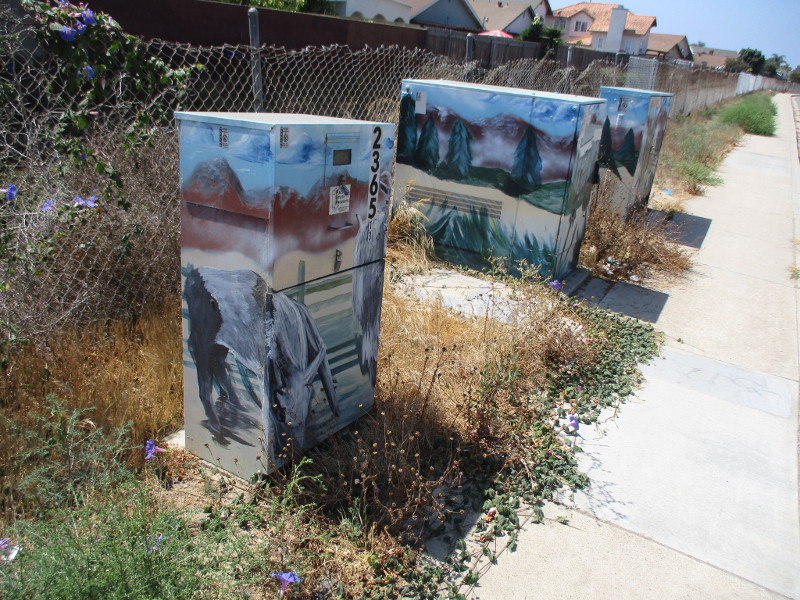
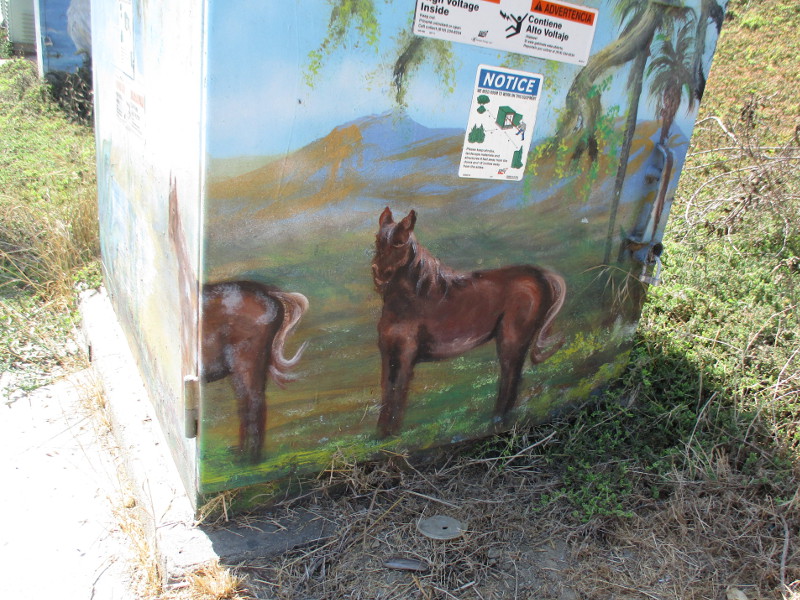
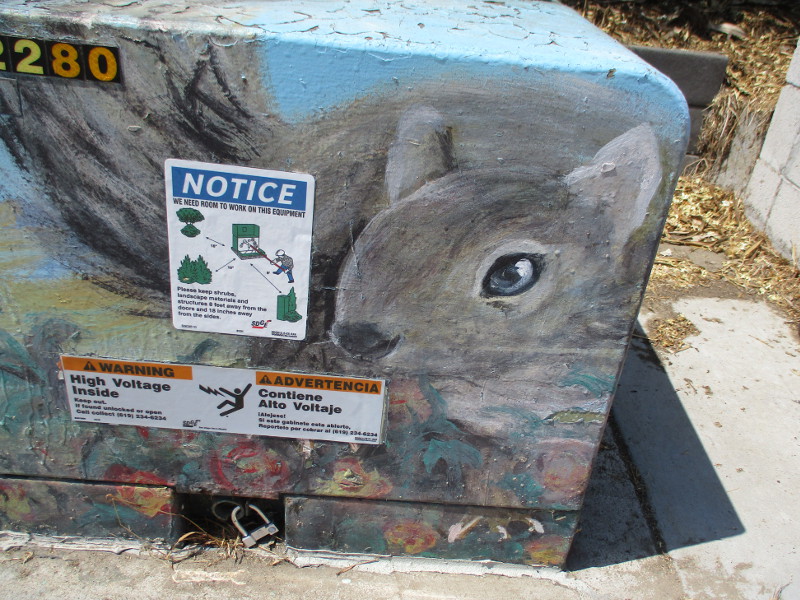
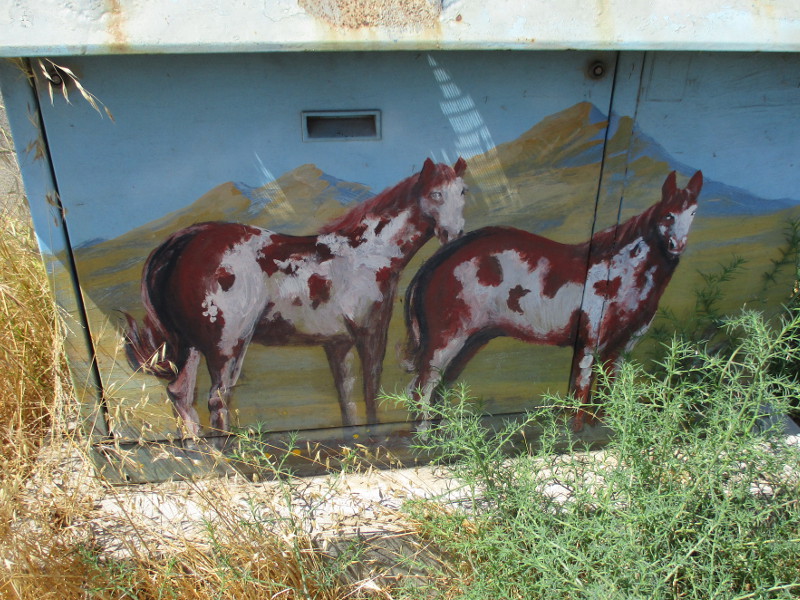
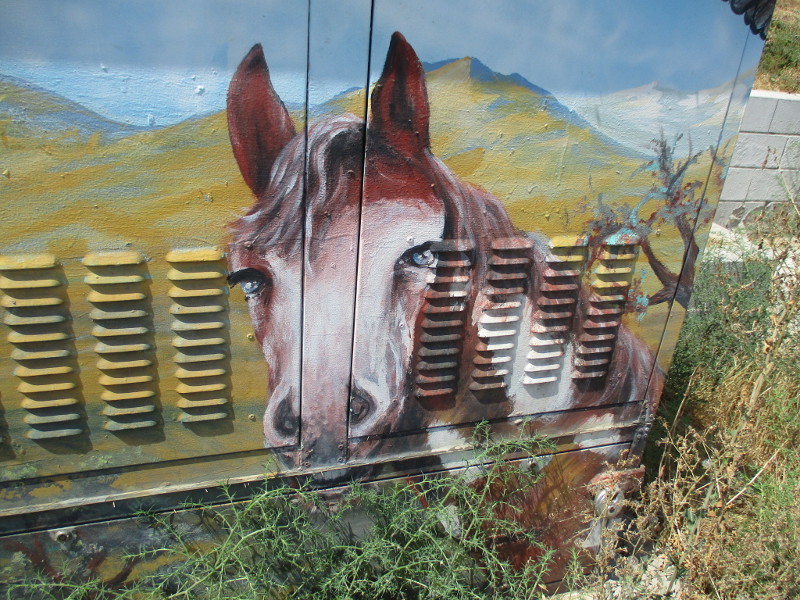
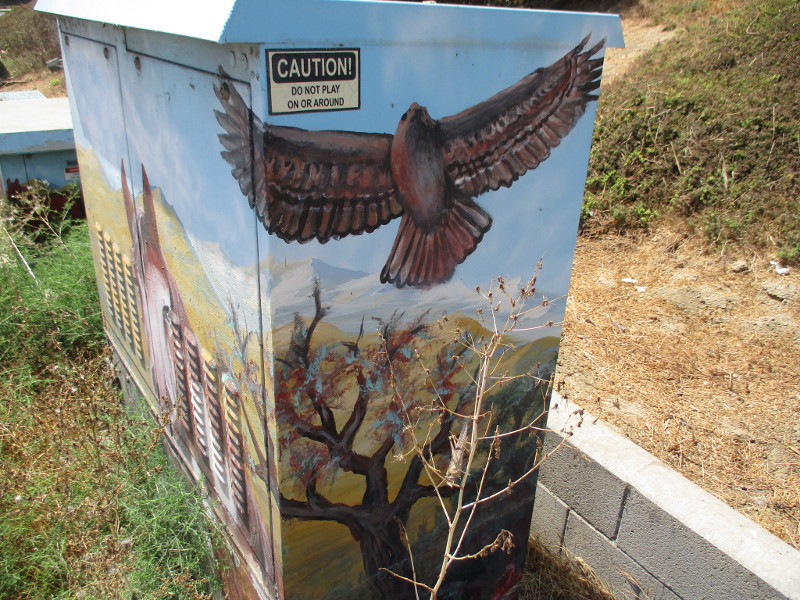
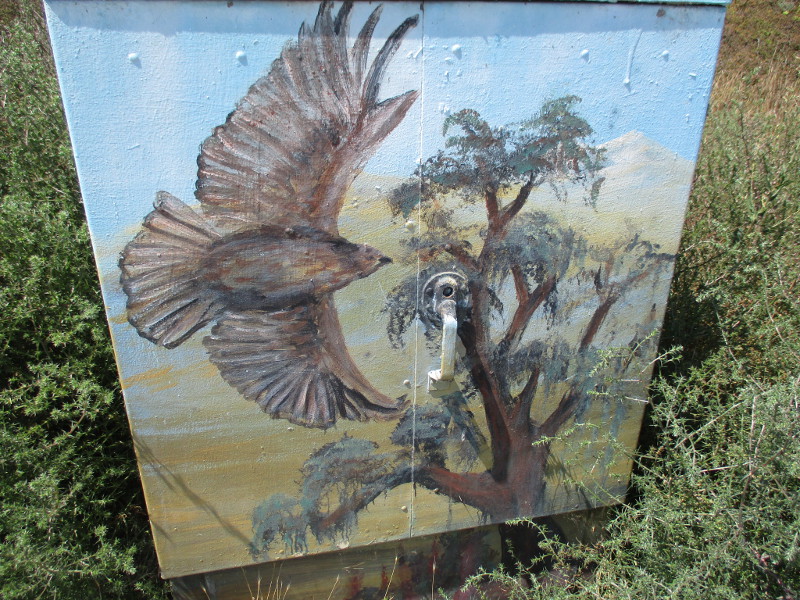
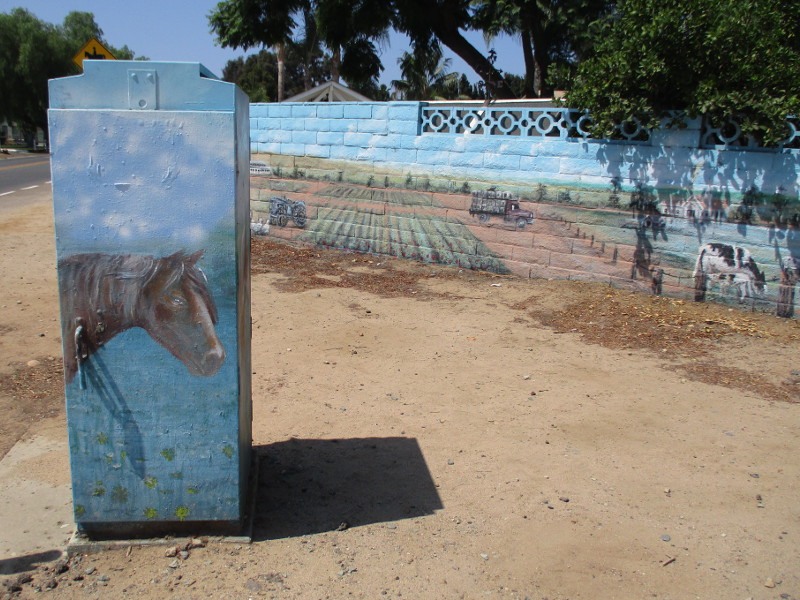
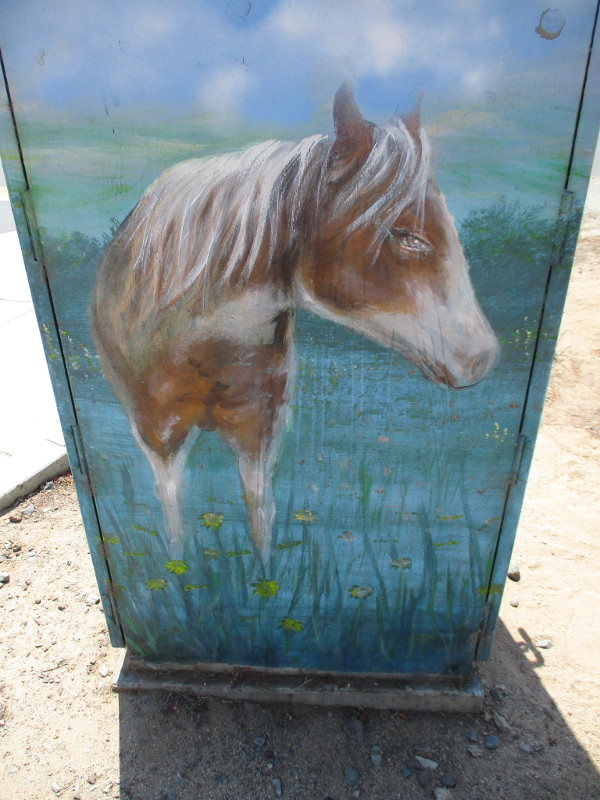
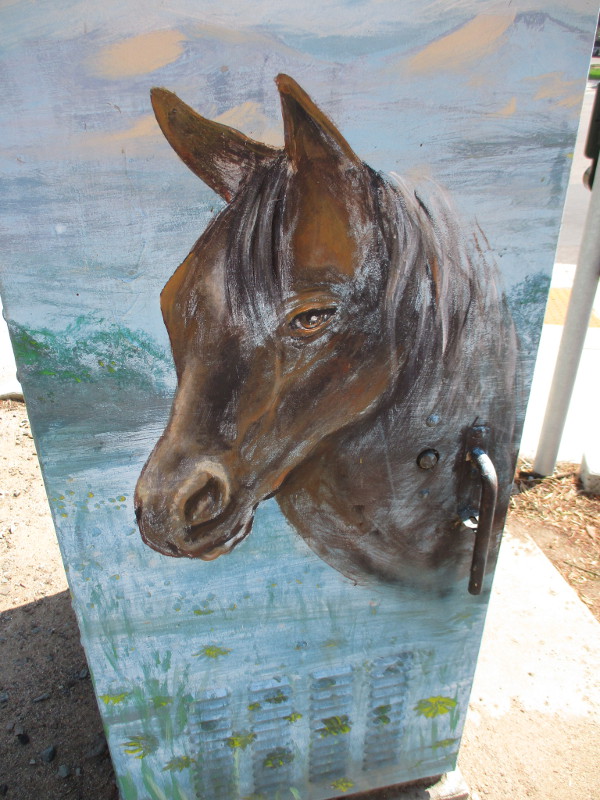
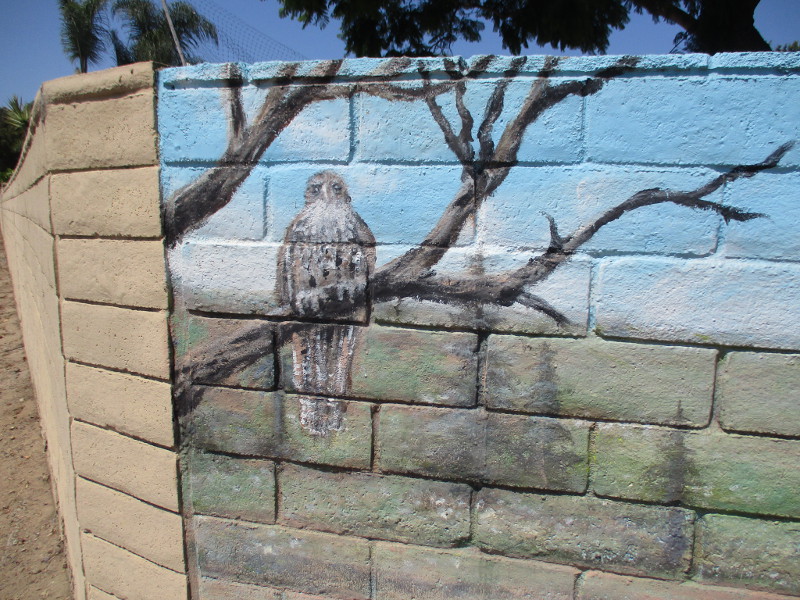
During my recent adventure in Nestor I was surprised to find an abundance of street art. As I walked west along Tocayo Avenue and north up Hollister Street to Leon Avenue, I kept spotting electrical boxes painted with farm imagery.

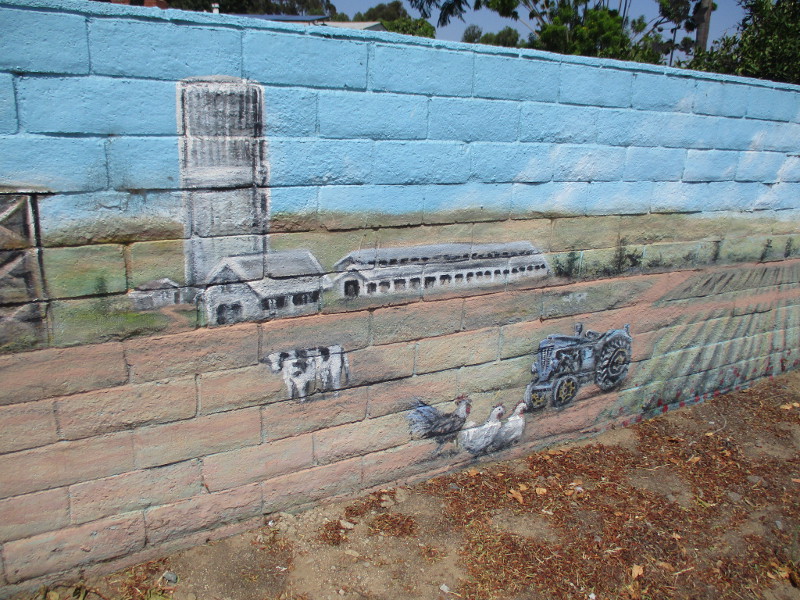
Nestor is a quiet residential community in San Diego’s South Bay. Before urban development covered the landscape with asphalt streets lined with houses, Nestor was mostly farmland. I believe this street art is a tribute to those olden days.

As I walked along, it seemed that goats, cows and horses, and wildlife in wide open spaces, had emerged from the brush by the sidewalk.

The only artist signature I could find appears to indicate David Williams, 2009. It was painted on the wall mural at the corner of Hollister and Leon that features a wide view of an old farm.

I live in downtown San Diego and love to walk around with my camera! You can follow Cool San Diego Sights via Facebook or Twitter!

You can easily explore Cool San Diego Sights by using the search box on my blog’s sidebar. Or click a tag! There are thousands upon thousands of photos for you to enjoy!

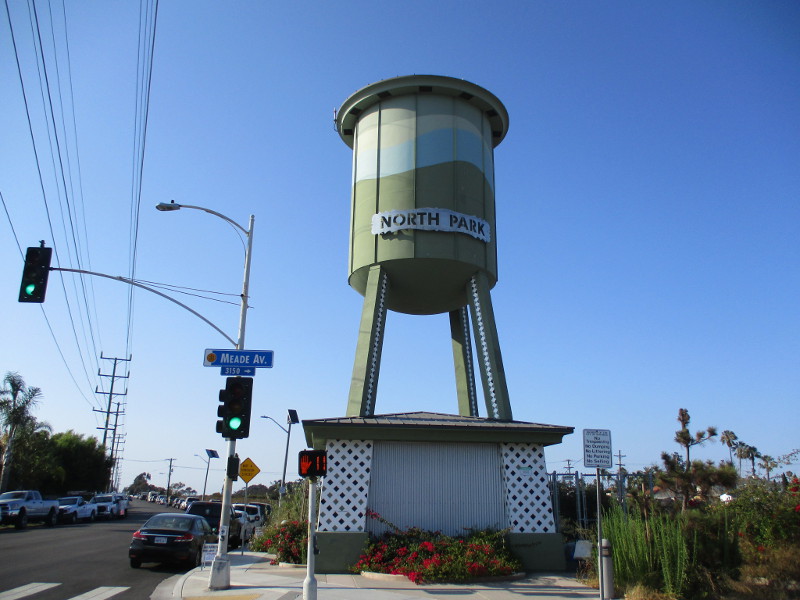
Two unusual water towers in North Park!

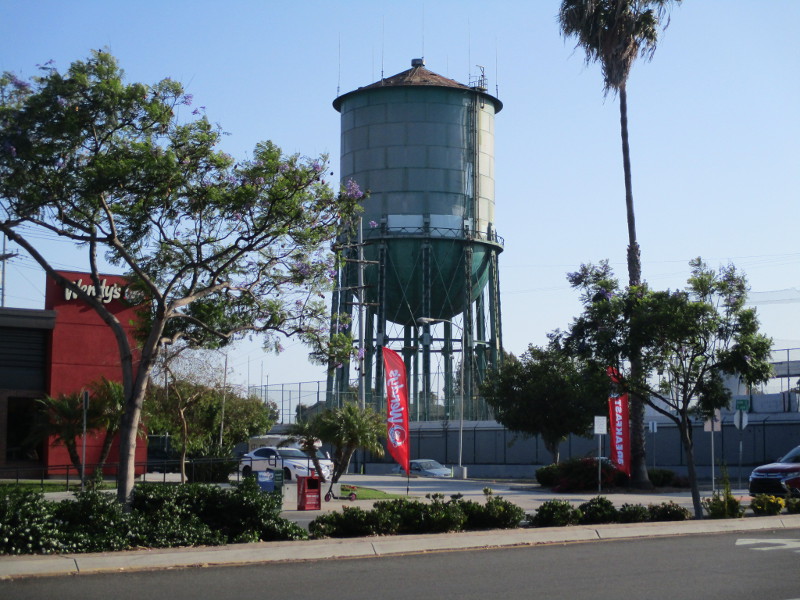
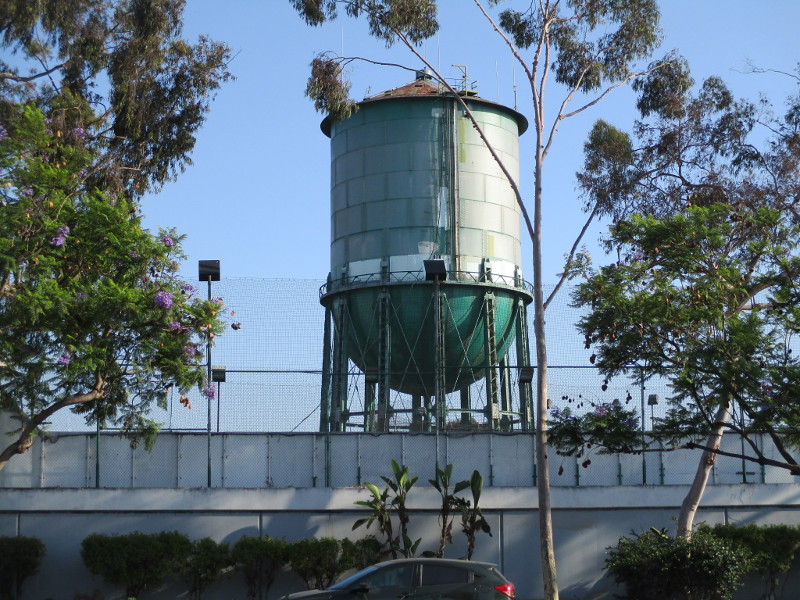
Strange to say, but one of the most iconic landmarks in San Diego’s North Park neighborhood is a gigantic water tower.

Even stranger, should you wander around North Park, you’ll discover not one water tower, but two! The one is absolutely enormous, but the other is much smaller–and in fact isn’t a genuine water tower at all!

I took photos of the mini-water tower several weeks back. Drivers coming down Interstate 805 might glimpse it by looking up as they pass north of El Cajon Boulevard. It’s located at the intersection of Meade Avenue and Boundary Street.

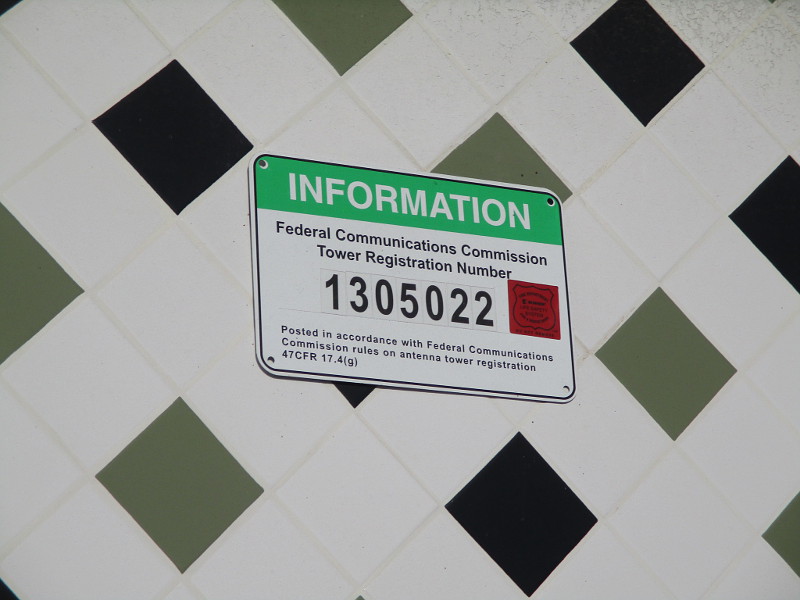
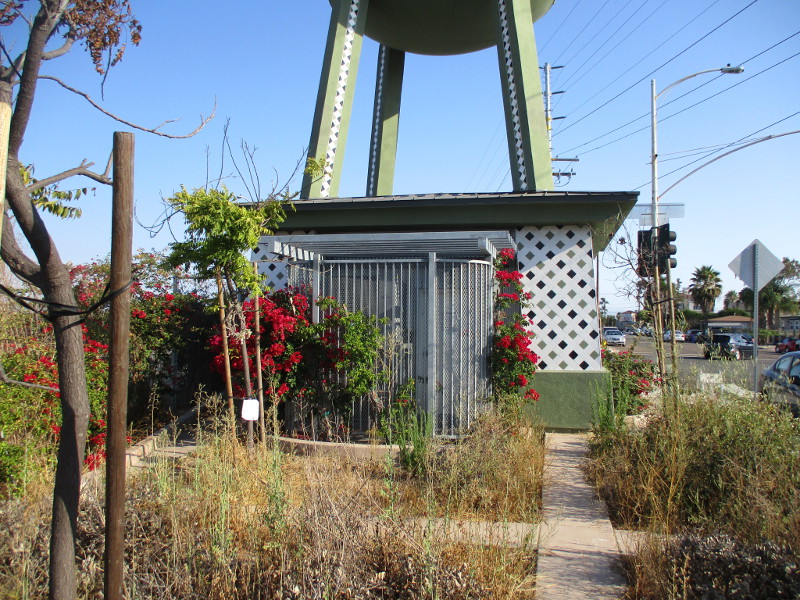
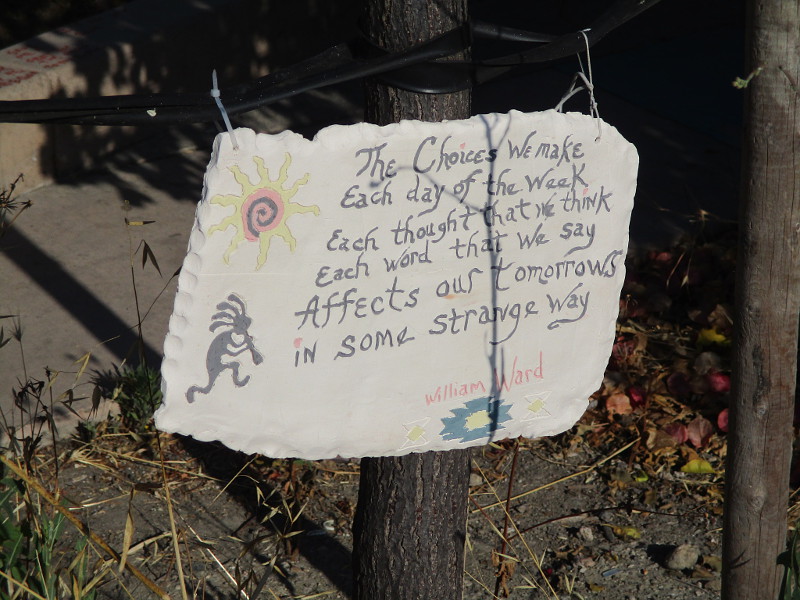
The smaller tower is actually an AT&T cell tower that was erected several years ago. North Park signs on the disguised antenna greet alert travelers coming in either direction down the freeway. I was surprised to find a small, somewhat neglected garden beside the unique cell tower.

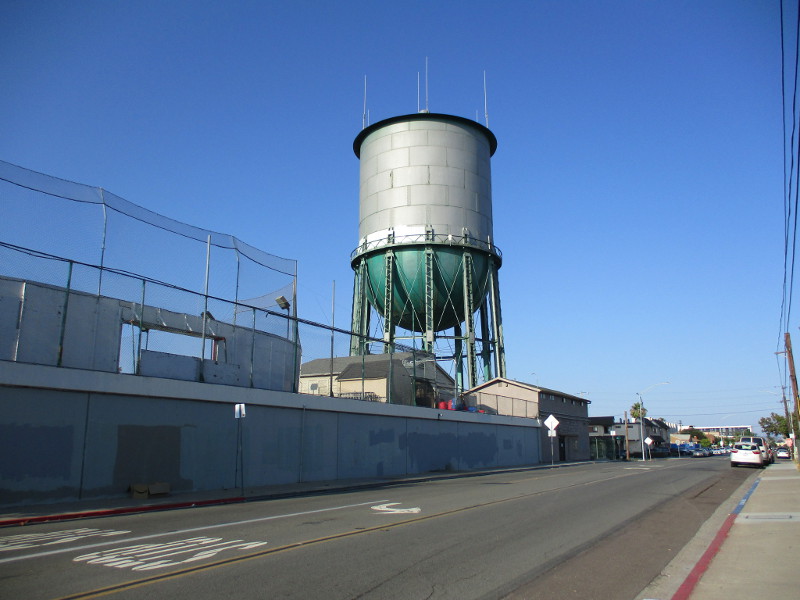
The genuine, gigantic, historic North Park Water Tower is over 140 feet tall. It stands near North Park Community Park just south of El Cajon Boulevard and was built in 1924.

According to this article, there were claims that it was “largest elevated tank in the world” when constructed, and held more than one million gallons of water but now is decommissioned and empty since the 1990s.

Today the tall North Park Water Tower is an iconic landmark that can be seen from many city blocks in every direction. Its unique design and historical importance has been recognized by the American Society of Civil Engineers.

I live in downtown San Diego and love to walk around with my camera! You can follow Cool San Diego Sights via Facebook or Twitter!

You can easily explore Cool San Diego Sights by using the search box on my blog’s sidebar. Or click a tag! There are thousands upon thousands of photos for you to enjoy!

Cool photo memories from September 2016.

I can’t believe it. A couple days ago WordPress notified me that this Cool San Diego Sights blog is now eight years old. Time flies.

I see that five years ago, in September 2016, there were many interesting events going on in San Diego, particularly during the Labor Day weekend.

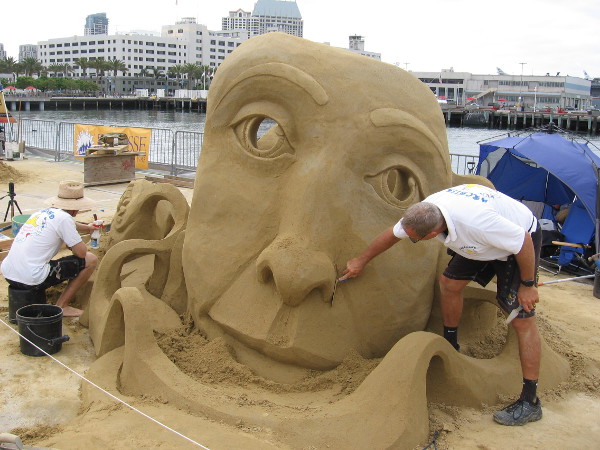
Among other things, I took photos at the Festival of Sail, the U.S. Sand Sculpting Challenge and Fleet Week. Later in the month I also documented the departure of a popular Civic Organist and a beloved Padres broadcaster.

Check out the upcoming links and you’ll see my camera was very busy back then!

Click the following links for lots of photographs…

Amazing, beautiful tall ships visit San Diego!

Cool California Carvers create sand sculpture art!

The most amazing sand sculptures in the world!

Photos from 2016 Fleet Week in San Diego.

A wonderful Chinese Moon Festival in Balboa Park!

Roald Dahl celebrated in San Diego’s Balboa Park!

Fun photos of Trolley Dances at Fault Line Park!

San Diego says goodbye to popular Civic Organist.

Celebrating Dick Enberg at his final Padres home game.

This blog now features thousands of photos around San Diego! Are you curious? There’s lots of cool stuff to check out!

Here’s the Cool San Diego Sights main page, where you can read the most current blog posts.  If you’re using a phone or small mobile device, click those three parallel lines up at the top–that opens up my website’s sidebar, where you’ll see the most popular posts, a search box, and more!

To enjoy future posts, you can also “like” Cool San Diego Sights on Facebook or follow me on Twitter.

Historic opening of new cottages in Balboa Park!

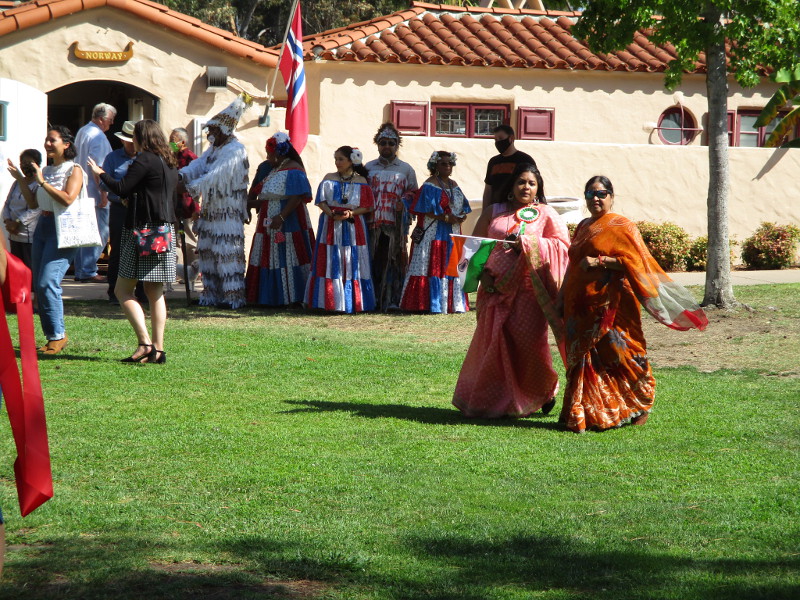
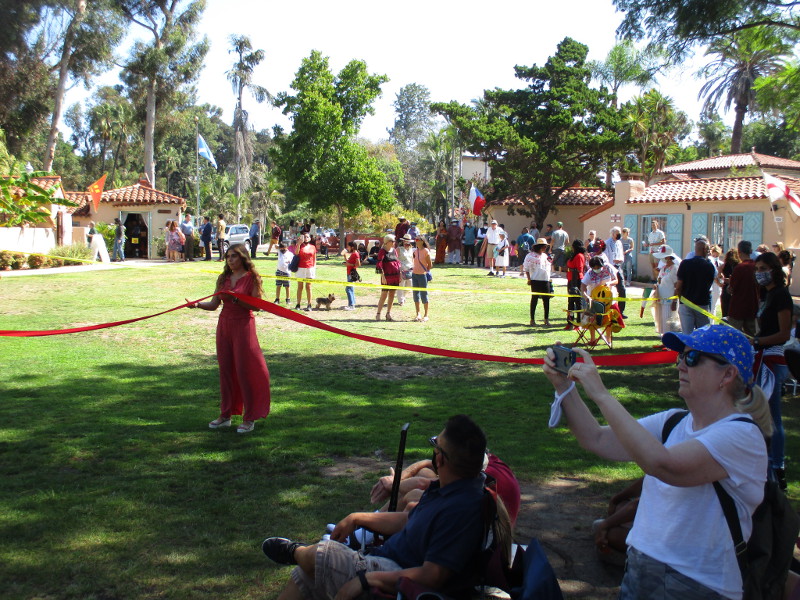
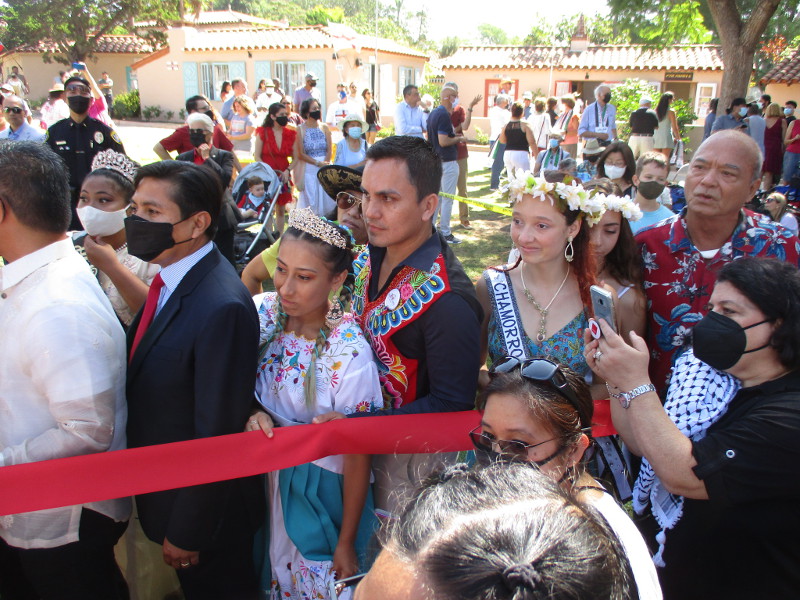
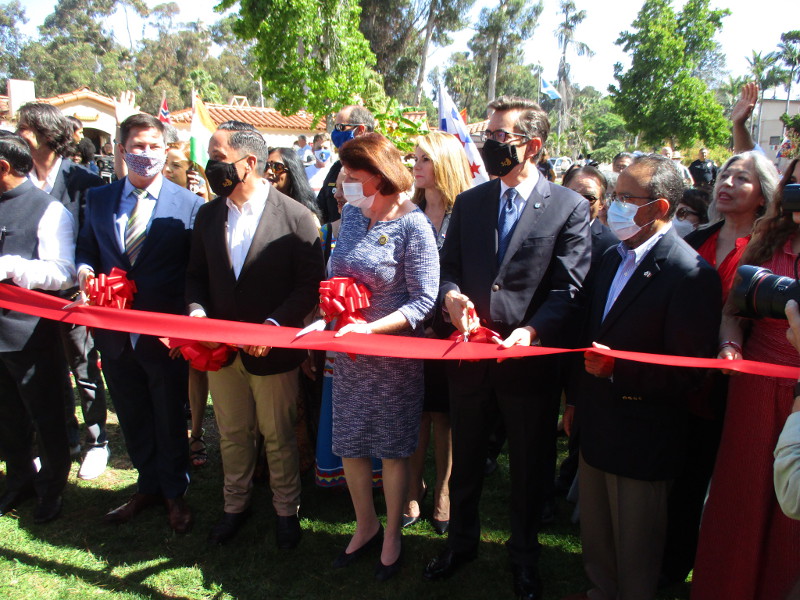
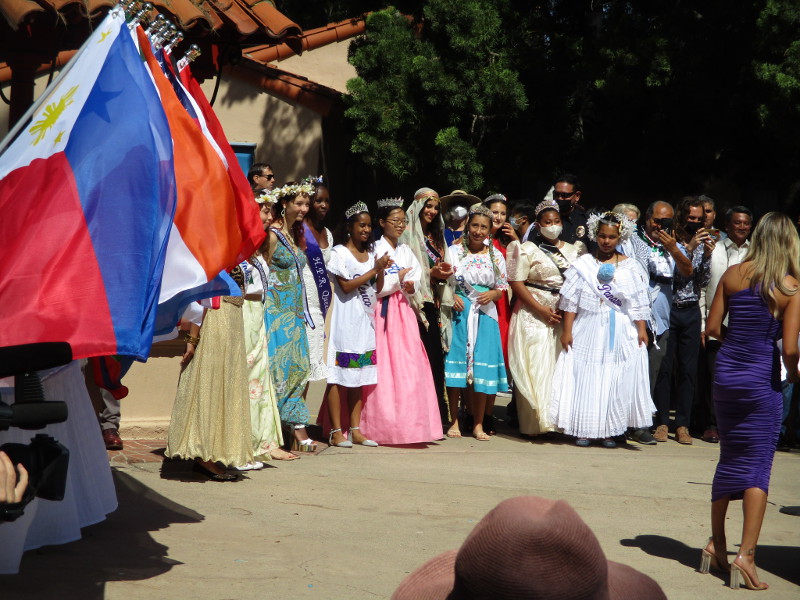
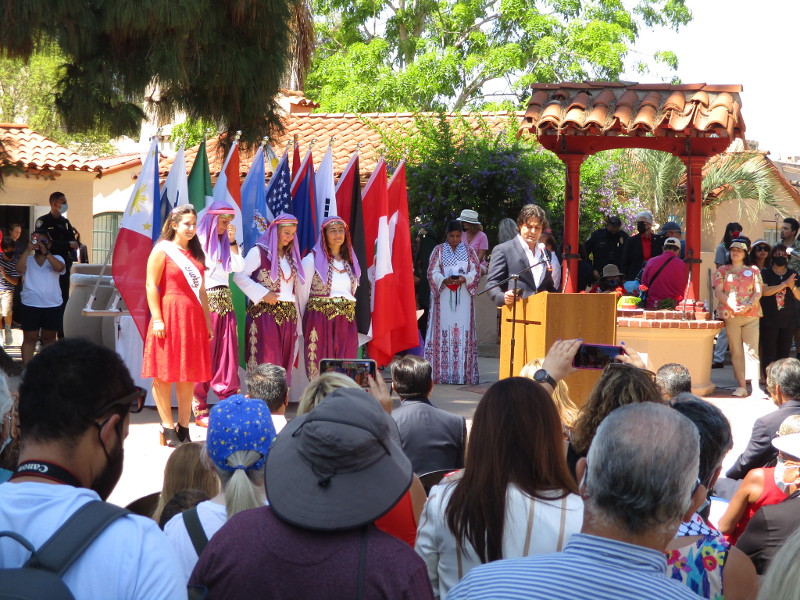
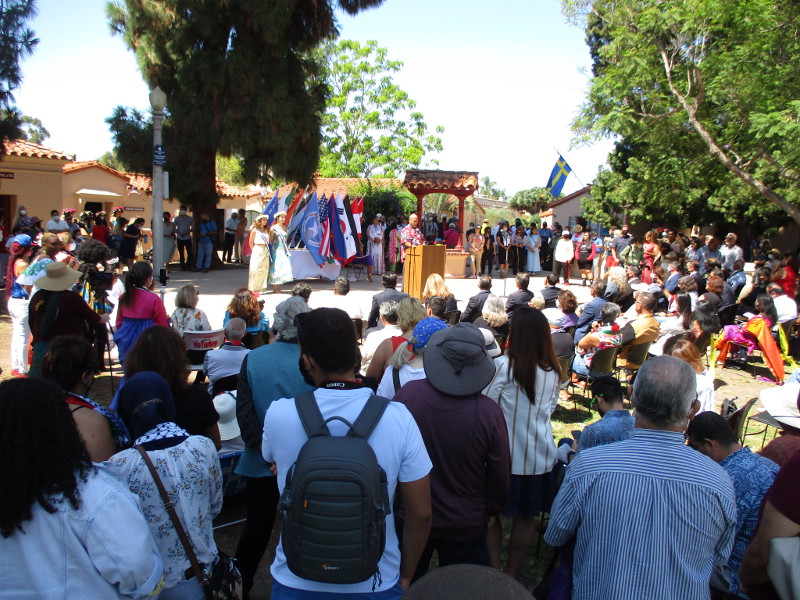
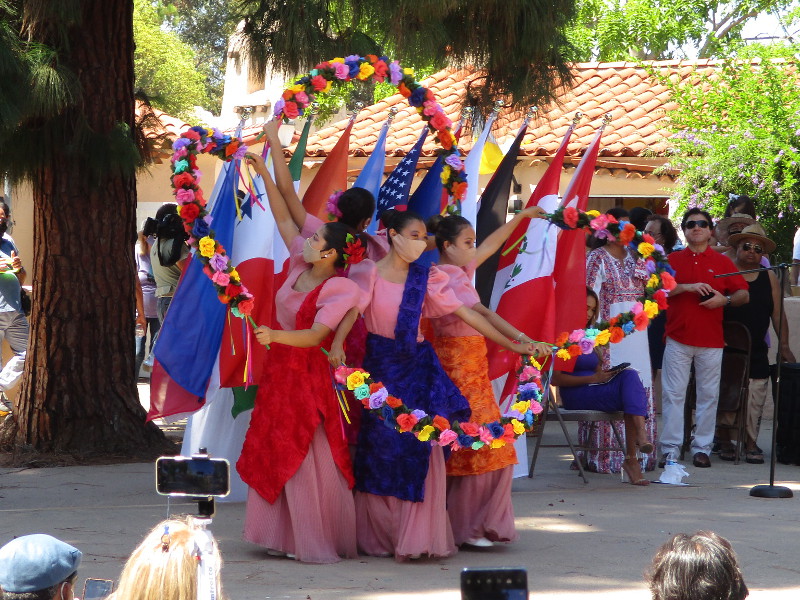
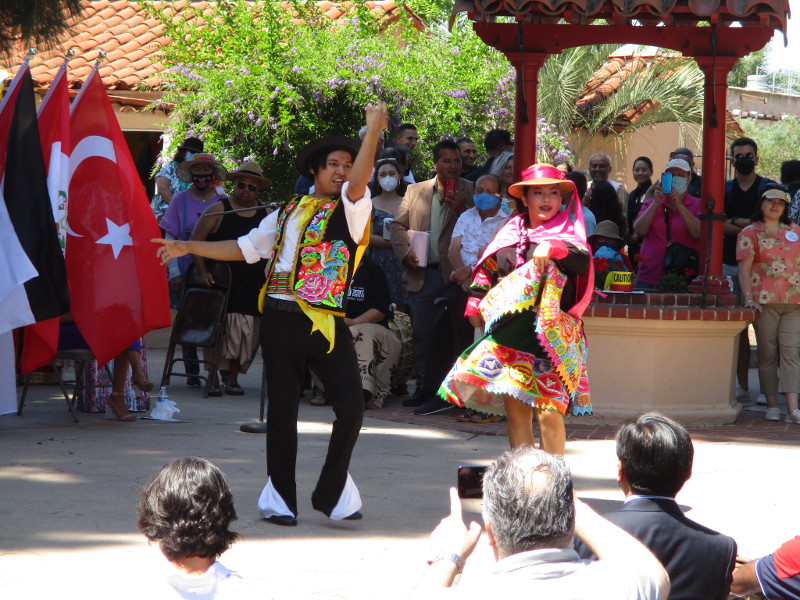
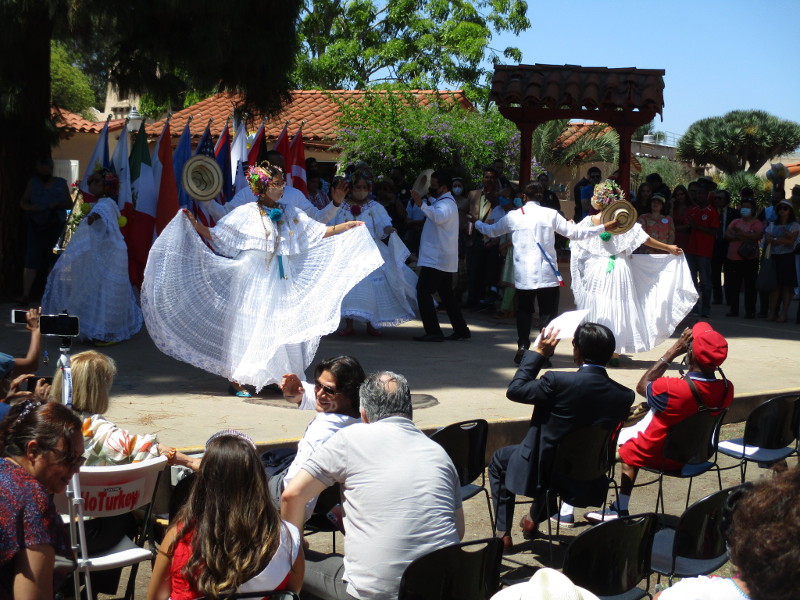
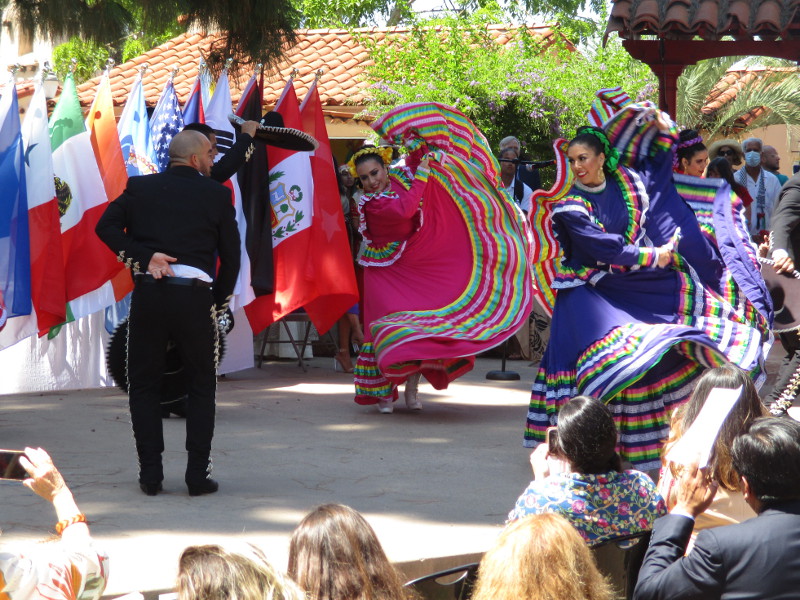
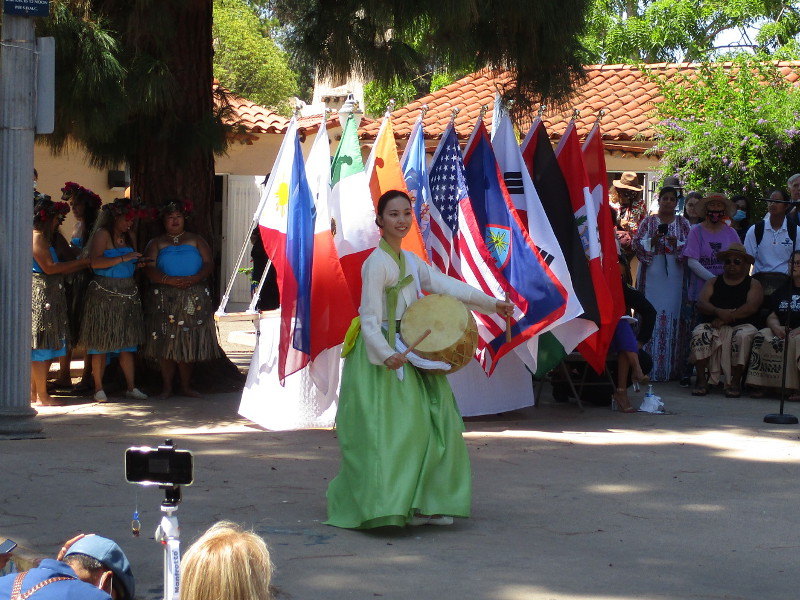
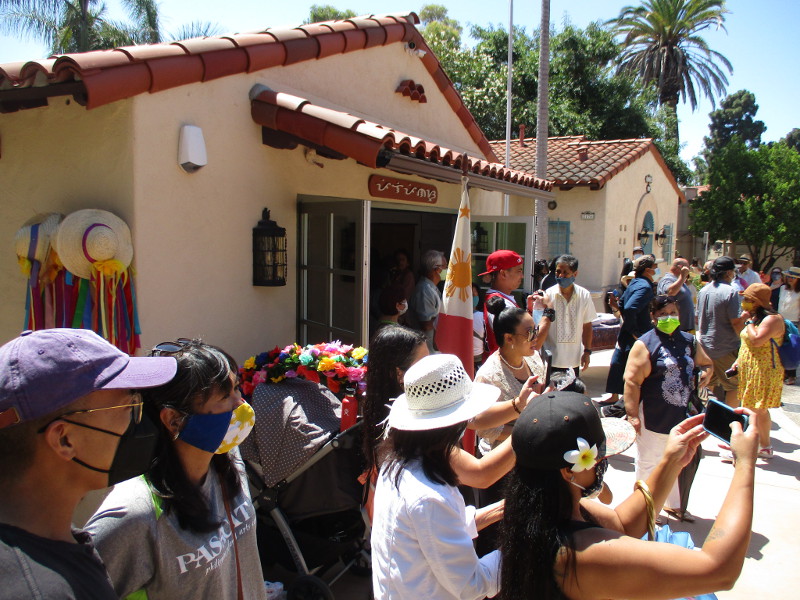
History was made today in San Diego’s always amazing Balboa Park. Nine beautiful new International Cottages finally opened to the public!

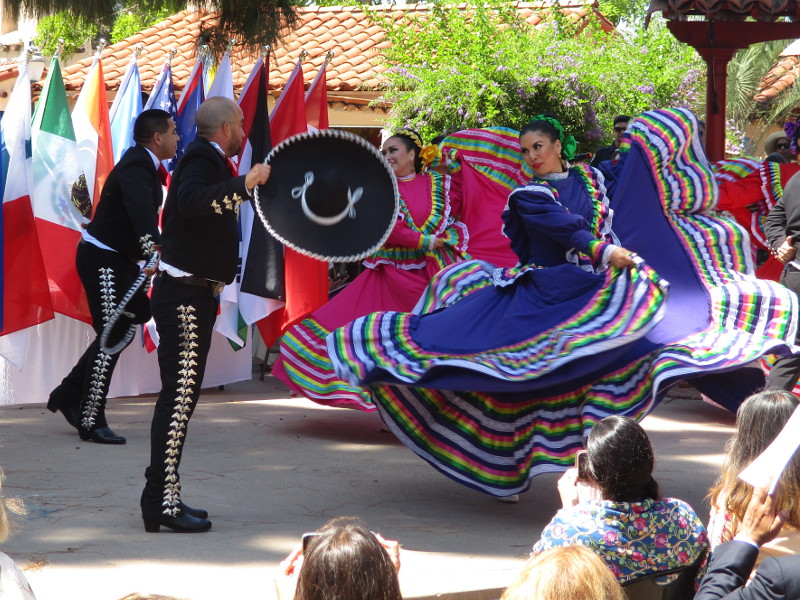
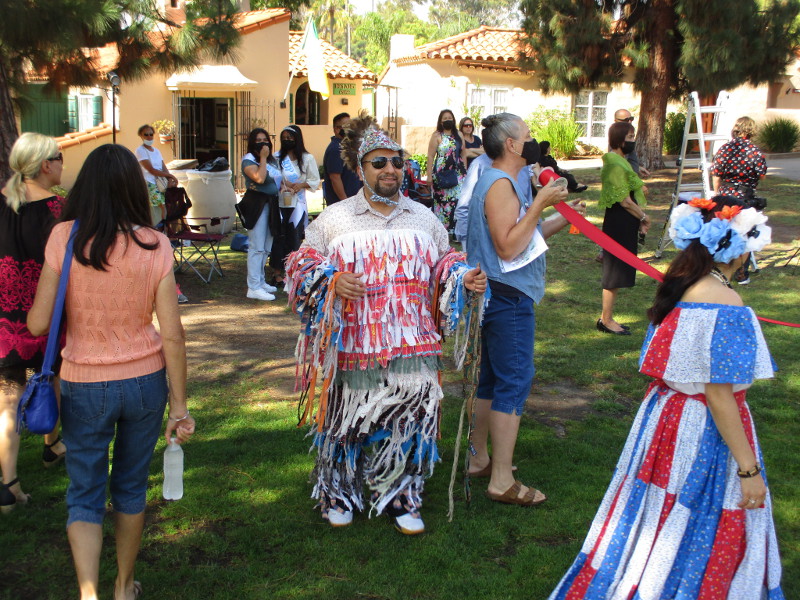
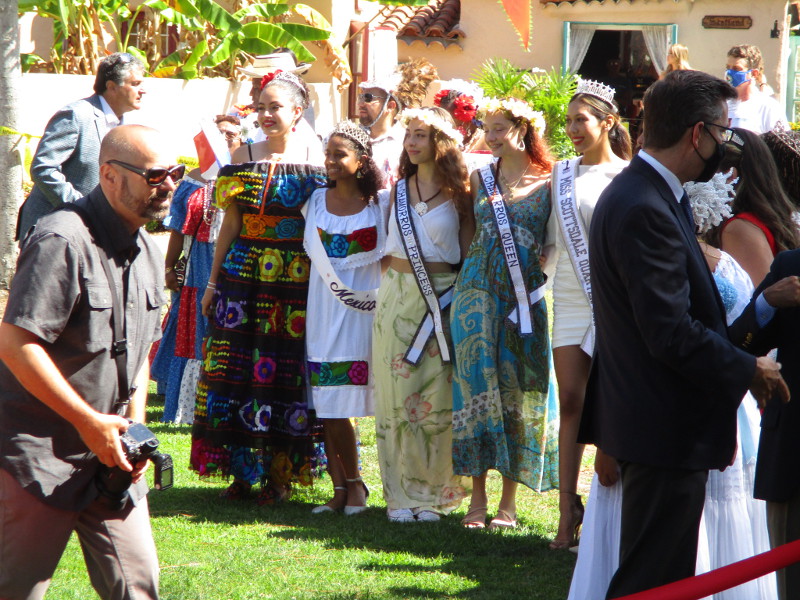
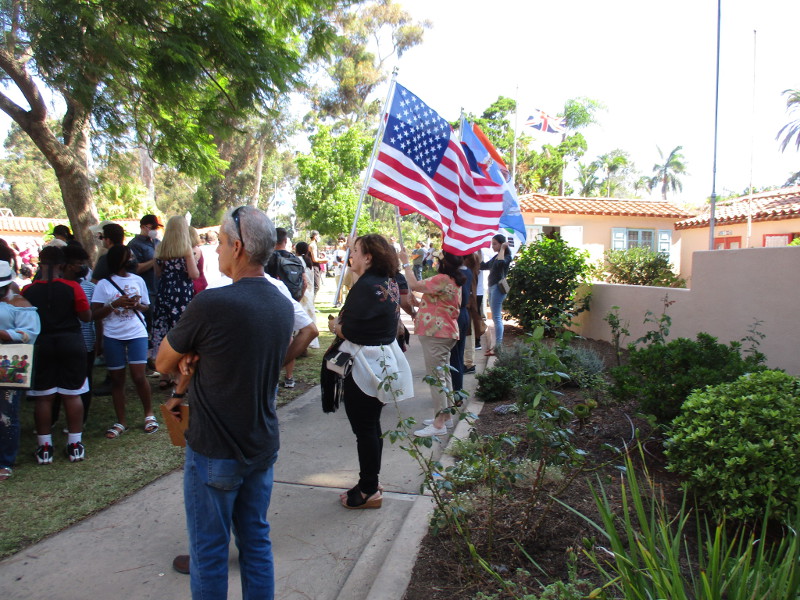
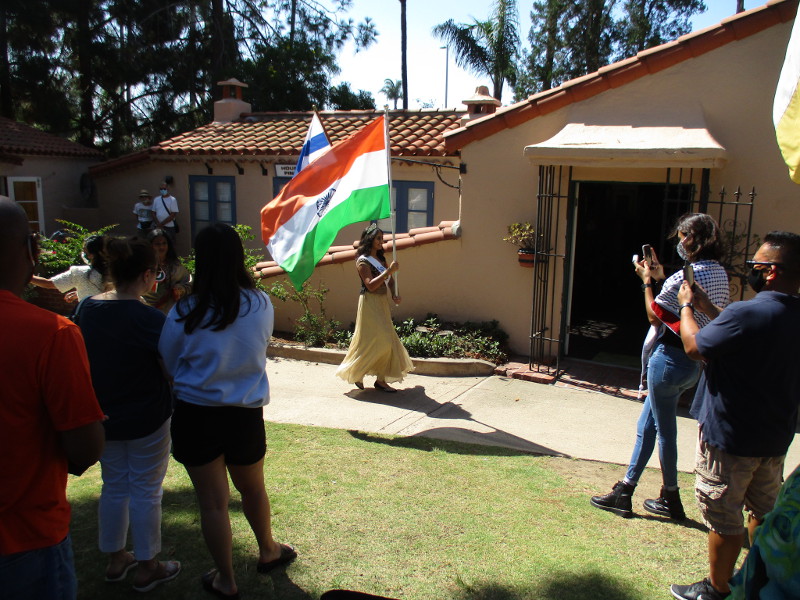
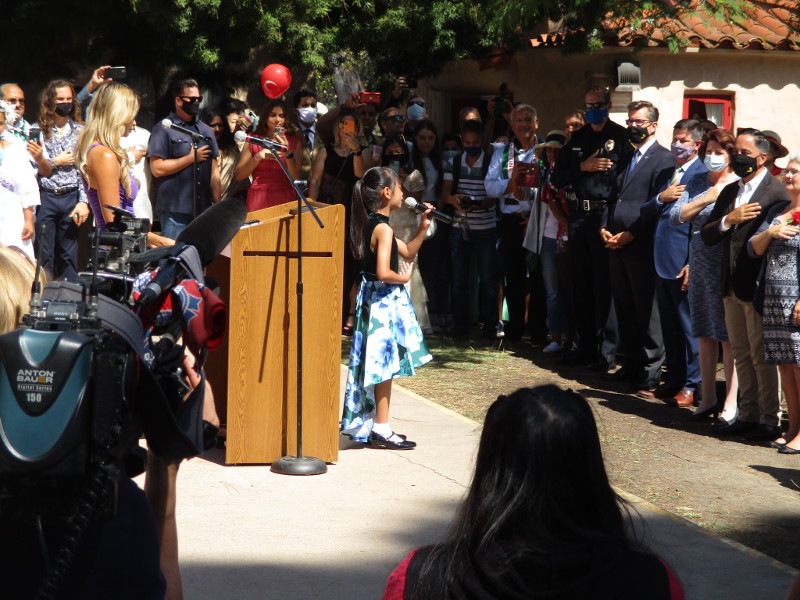
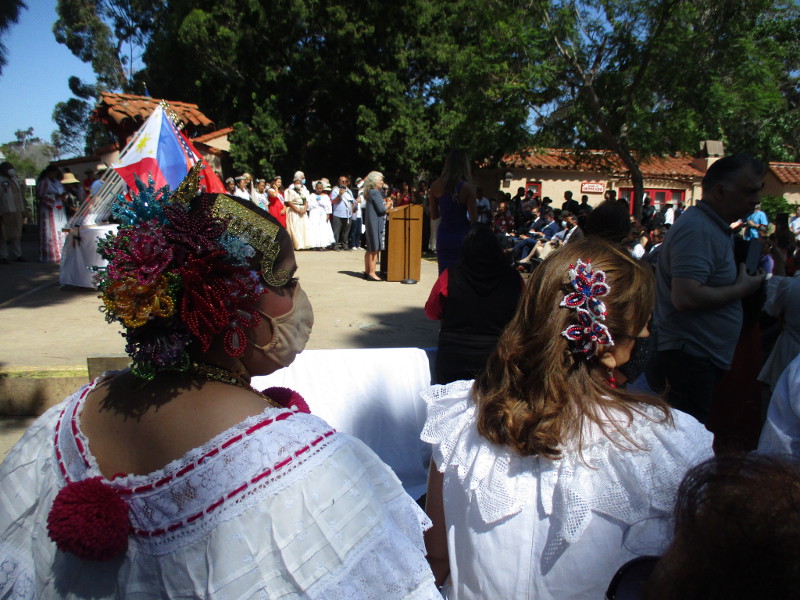
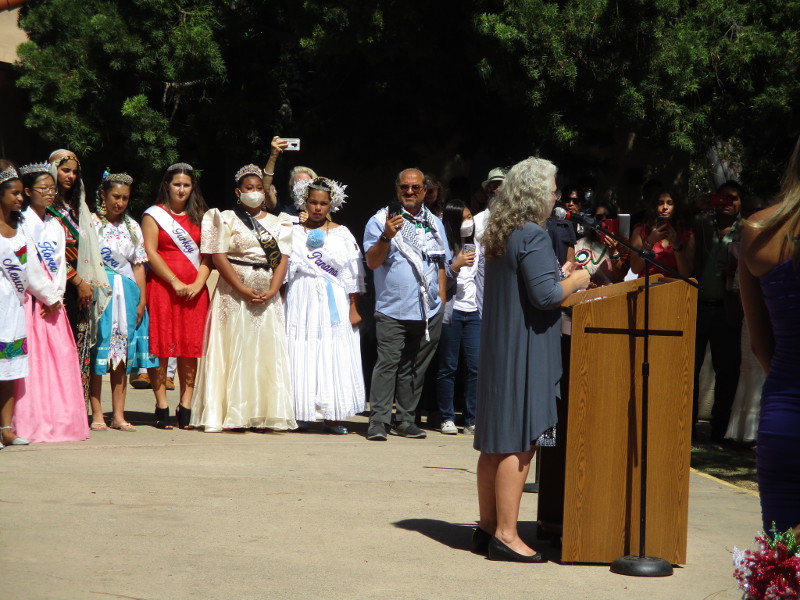
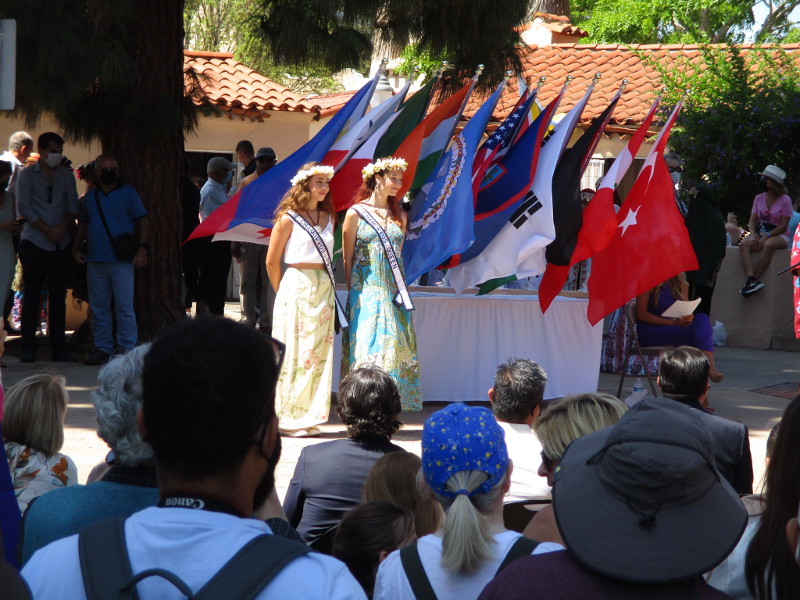
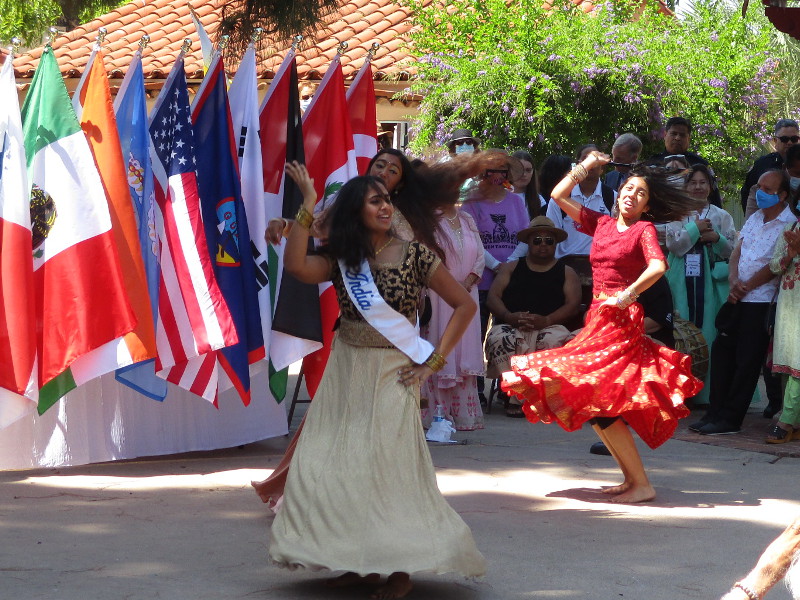
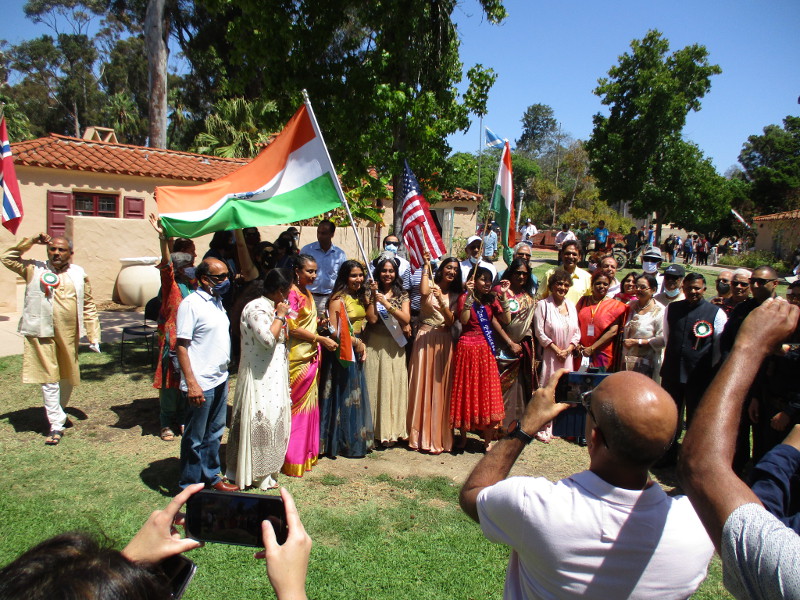
A ribbon cutting ceremony late in the morning was followed by a procession of flags and youthful House of Pacific Relations Queens. Inspirational and congratulatory speeches were then made, including words from San Diego Mayor Todd Gloria.

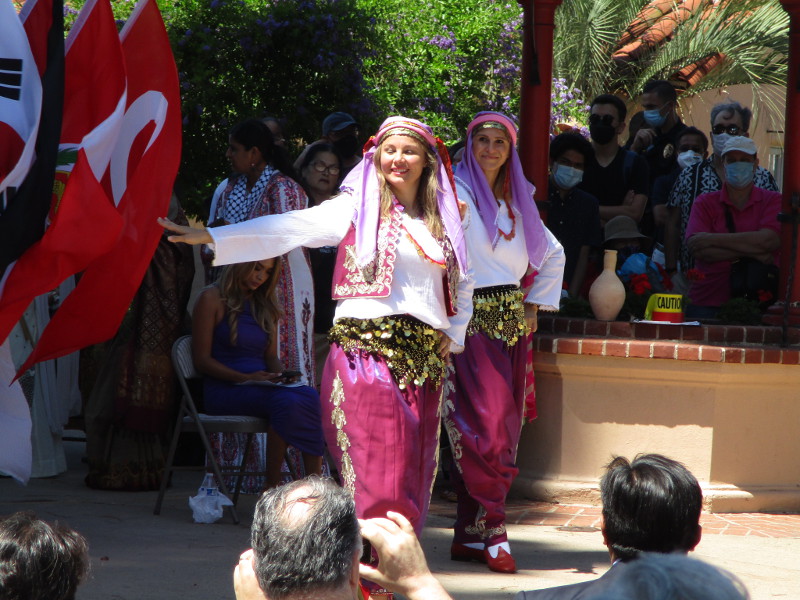
After various dignitaries and consulate representatives spoke, a happy crowd watched cultural performances by each of the nations with new cottages!

Those nations or cultural units are: Mexico, Panama, the Philippines, Korea, India, Peru, Palestine, Chamorro and Turkey.

Everyone received great applause. Smiles like sunshine radiated from every face. The audience and participants formed one big very colorful family. History was made.

If only this troubled world could take notice.

I took photographs before, during, and after the ceremony…

I live in downtown San Diego and love to walk around with my camera! You can follow Cool San Diego Sights via Facebook or Twitter!

You can easily explore Cool San Diego Sights by using the search box on my blog’s sidebar. Or click a tag! There are thousands upon thousands of photos for you to enjoy!

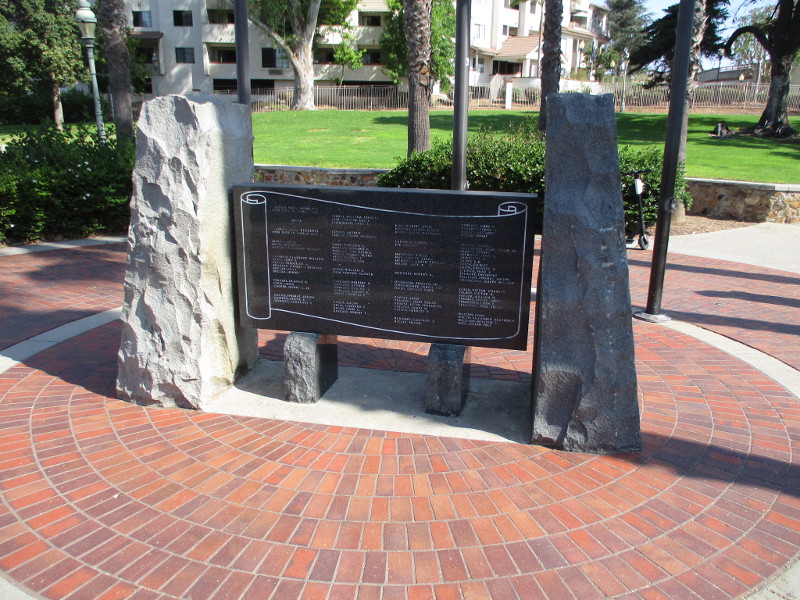
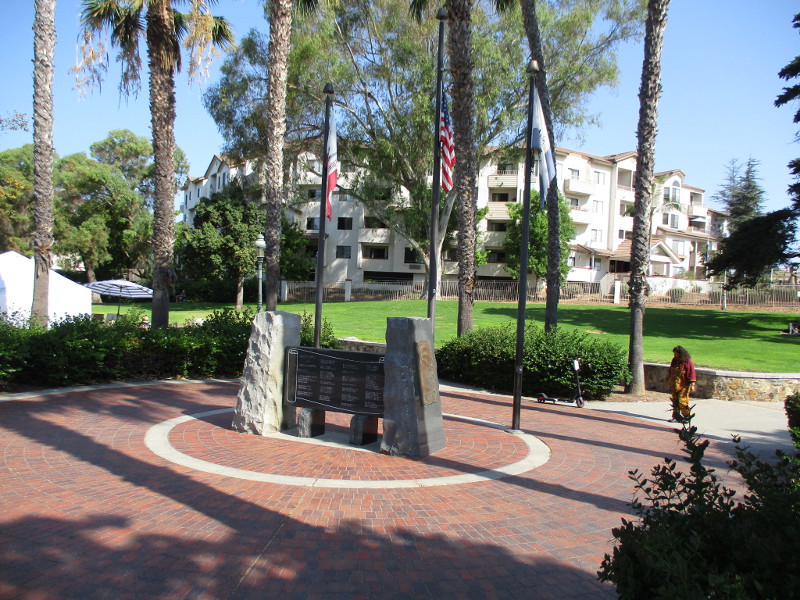
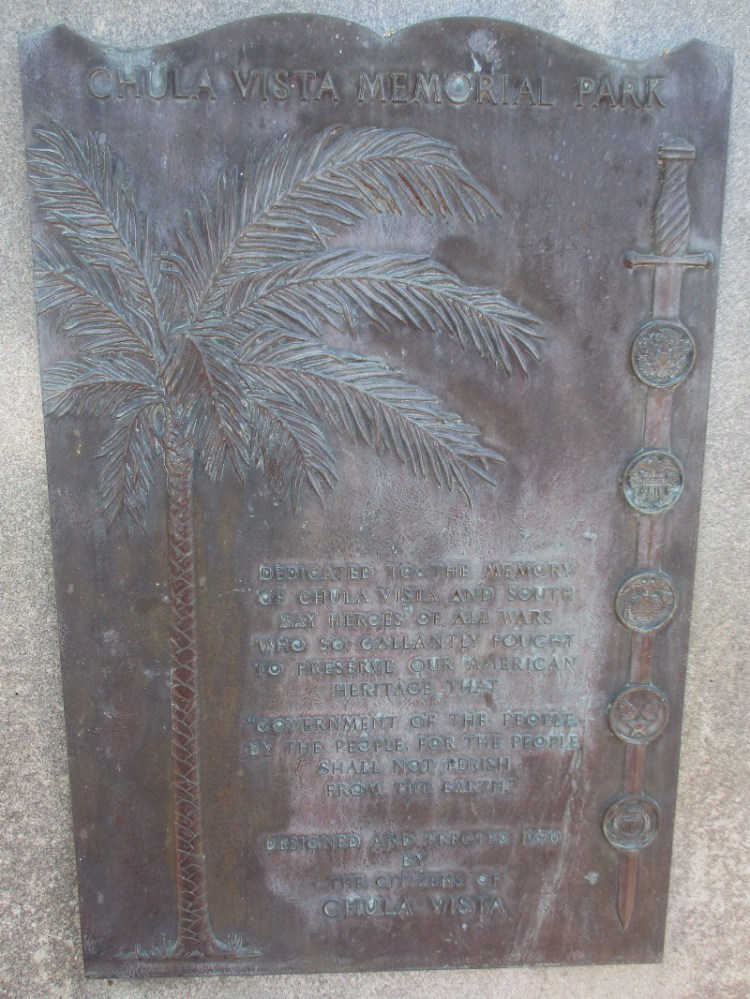
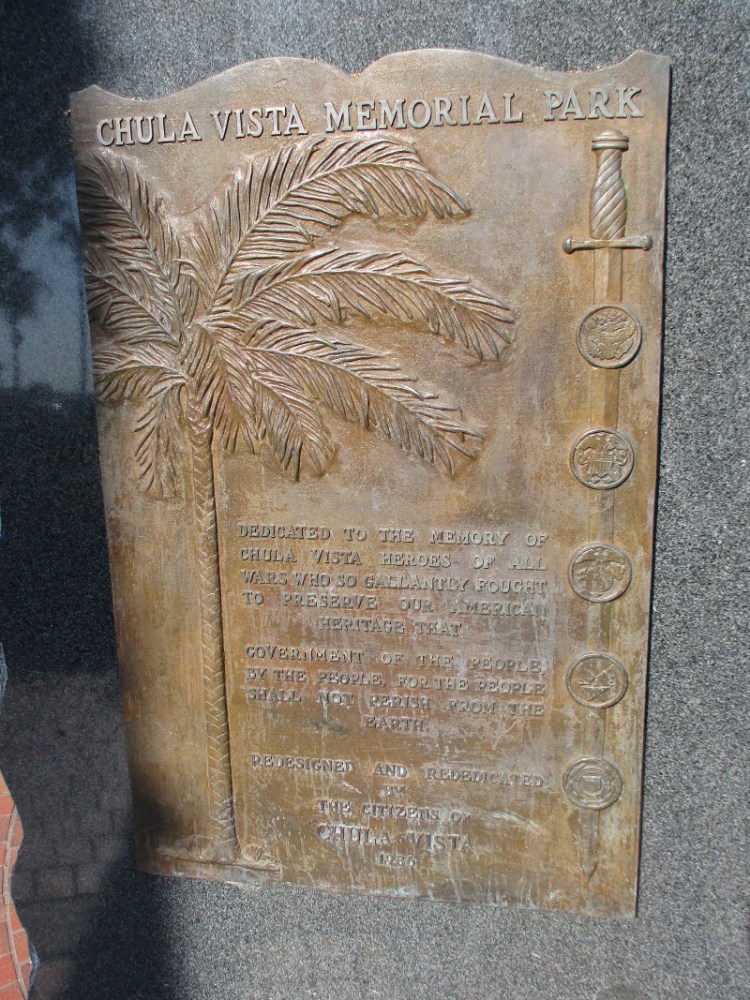
Heroes honored at Chula Vista’s Memorial Monument.

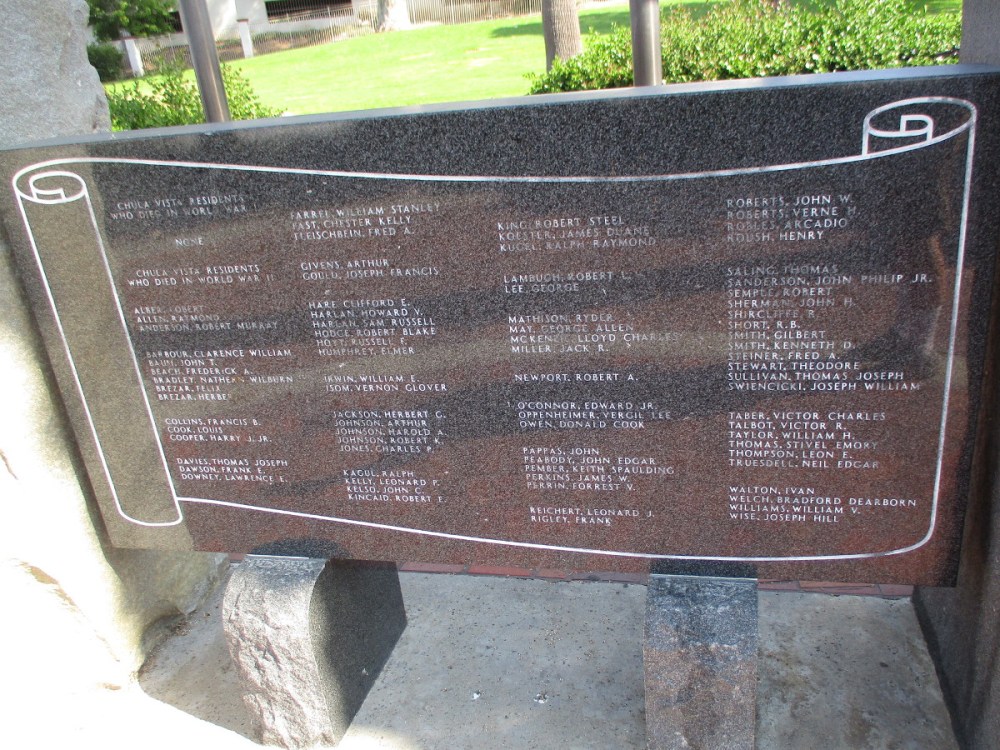
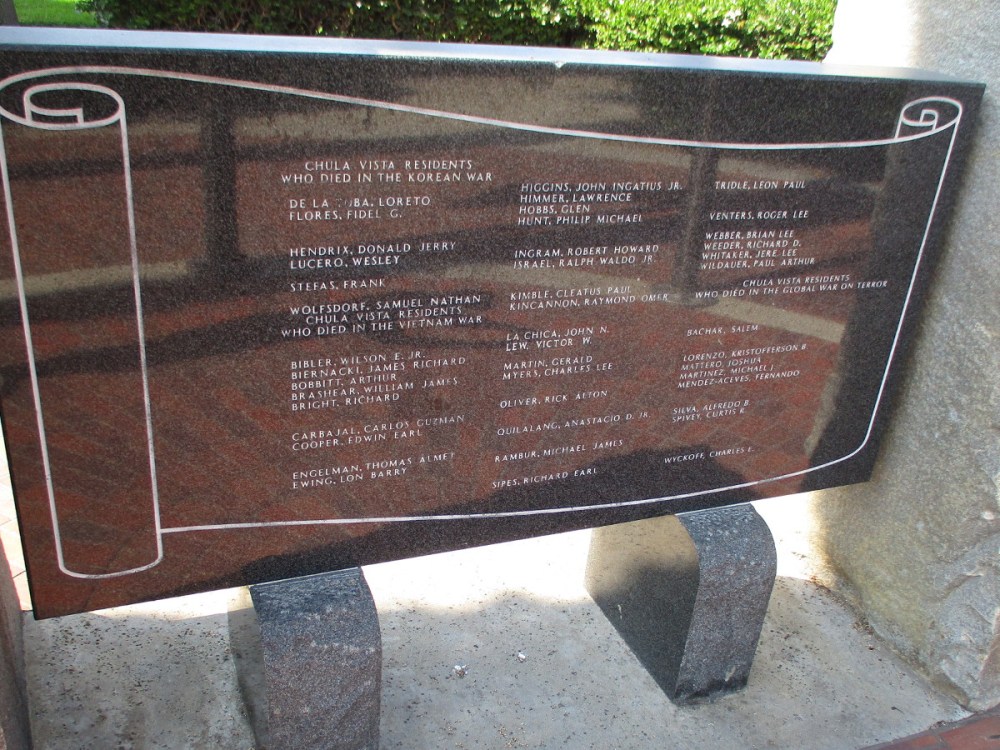
The Memorial Monument stands near the center of Chula Vista’s Memorial Park. It lists the names of honored heroes.

According to bronze plaques, bookending names engraved in marble, the monument is…

DEDICATED TO THE MEMORY OF CHULA VISTA (AND SOUTH BAY) HEROES OF ALL WARS WHO SO GALLANTLY FOUGHT TO PRESERVE OUR AMERICAN HERITAGE THAT

GOVERNMENT OF THE PEOPLE BY THE PEOPLE FOR THE PEOPLE SHALL NOT PERISH FROM THE EARTH

I live in downtown San Diego and love to walk around with my camera! You can follow Cool San Diego Sights via Facebook or Twitter!

Building a cannon carriage and adobe walls in Old Town.

Saturday, on my way to TwainFest, I walked a little around Old Town San Diego State Historic Park to see what I might see.

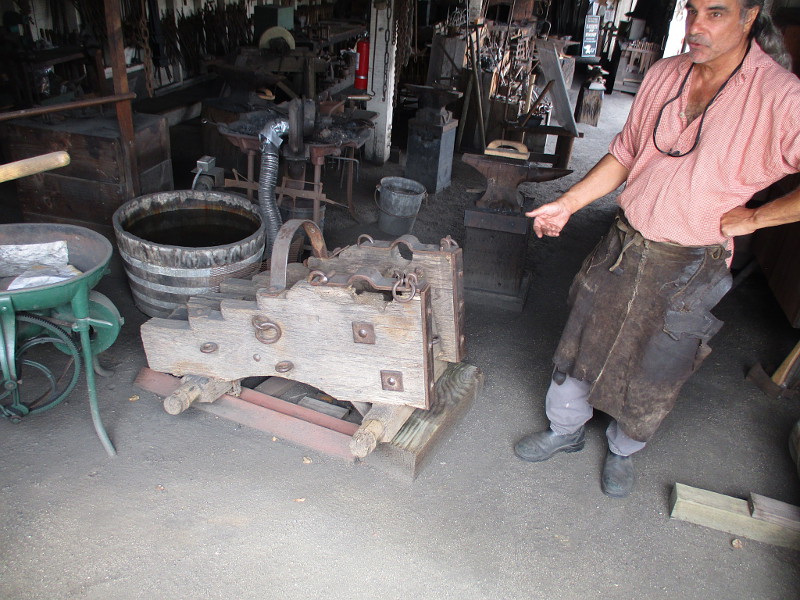
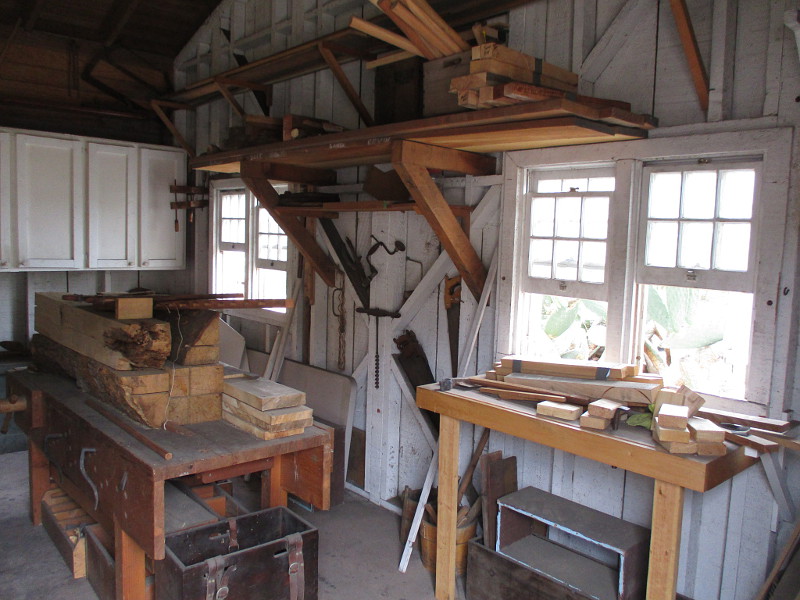
At the blacksmith shop, wood shop and nearby grounds, I observed some interesting activity!

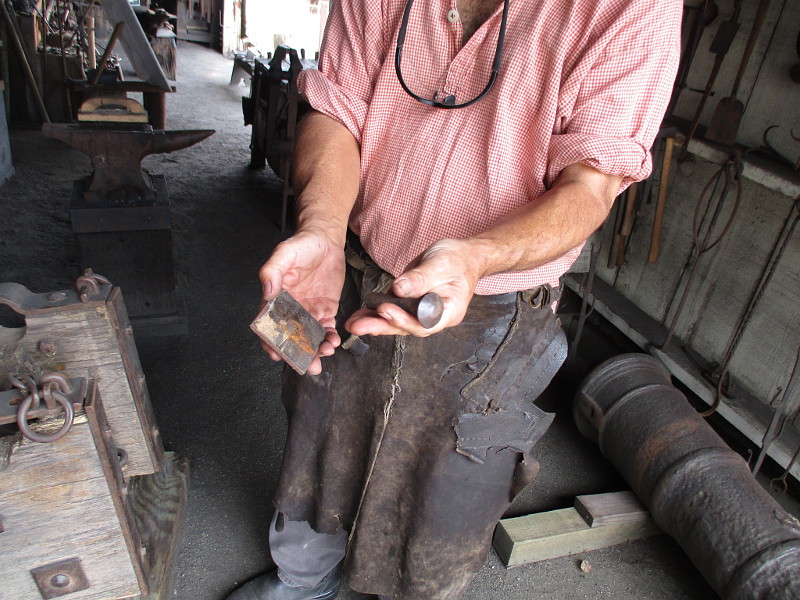
First, I learned from Todd in the blacksmith shop that a new carriage for Old Town plaza’s historic cannon will soon be built! I blogged about this project back in April here. I detail a little about the cannon’s history in that blog post.

Todd showed me how he had removed some of the original iron fittings from the wooden carriage. All of the iron will be saved, then refitted to a brand new carriage once it’s built. Welds will be hidden to preserve the original appearance.

The carriage will be constructed in the wood shop, a small work room attached to the blacksmith shop.

Here are a few photos of the wood shop…

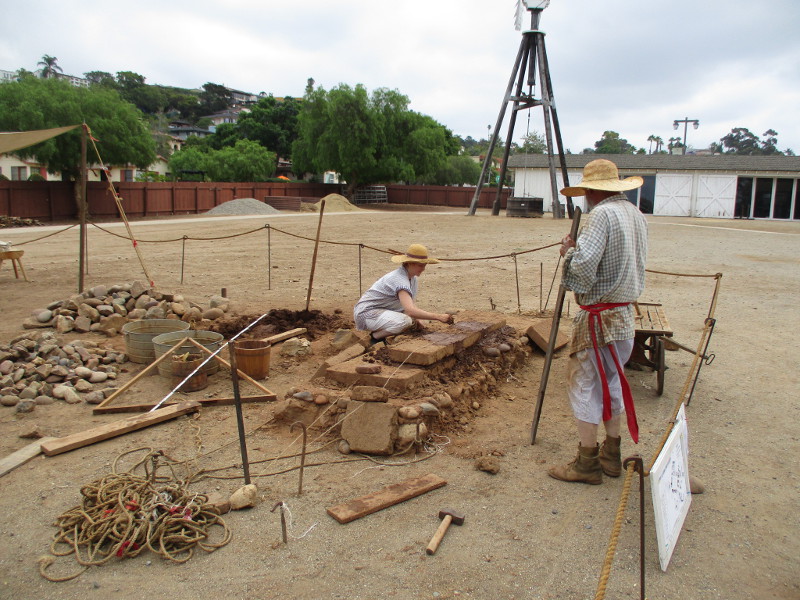
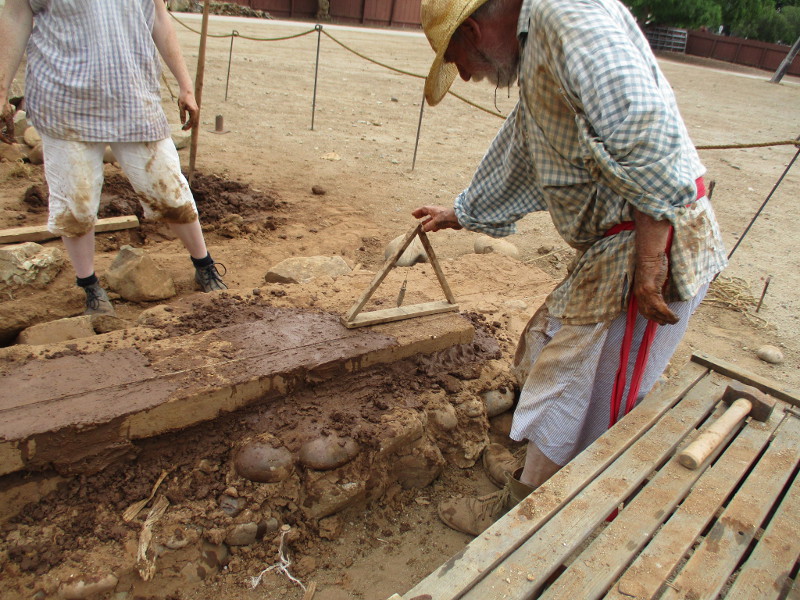
Then I noticed two people working in the dirt area outside the blacksmith shop, behind Seeley Stable. This is the new spot in the State Park where adobe wall-making is demonstrated.

I’ve been told the old adobe demonstration area, which I blogged about here, will be used in the future for a Kumeyaay interpretive display.

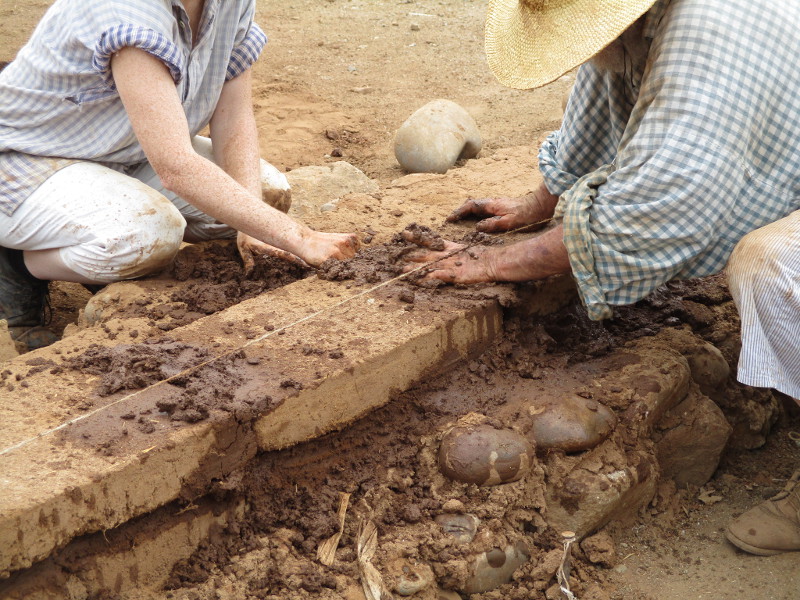
As I watched slimy fingers jam mud mortar between large sun-dried adobe blocks, I took a look at information concerning which structures in Old Town are original adobes, and which ones are reconstructed.

Six original adobe buildings shown are: Casa de Machado y Silvas, c. 1843; Casa de Machado y Stewart, c. 1830; Casa de Estudillo, c. 1827; Casa de Bandini/Cosmopolitan Hotel, c. 1829; Altamirano-Perdrorena House, c. 1869; and the oldest structure in San Diego, Casa de Carrillo (between Old Town San Diego State Historic Park and the Presidio), c. 1817.

Reconstructed adobe buildings are: Robinson-Rose Building, c. 1853; Casa de Wrightington, c. 1804; San Diego House, c. 1841; Casa de Rodriguez, c. 1830; Colorado House (Adobe Annex), c. 1854; Casa de Alvarado, c. 1830; and Alvarado Saloon, c. 1830.

Typical adobe wall construction involved a foundation and a layer of small stones and shards topped by adobe bricks, which are cemented with lime and sand or mud plaster.

I live in downtown San Diego and love to walk around with my camera! You can follow Cool San Diego Sights via Facebook or Twitter!

The historic William Clayton House in Bankers Hill.

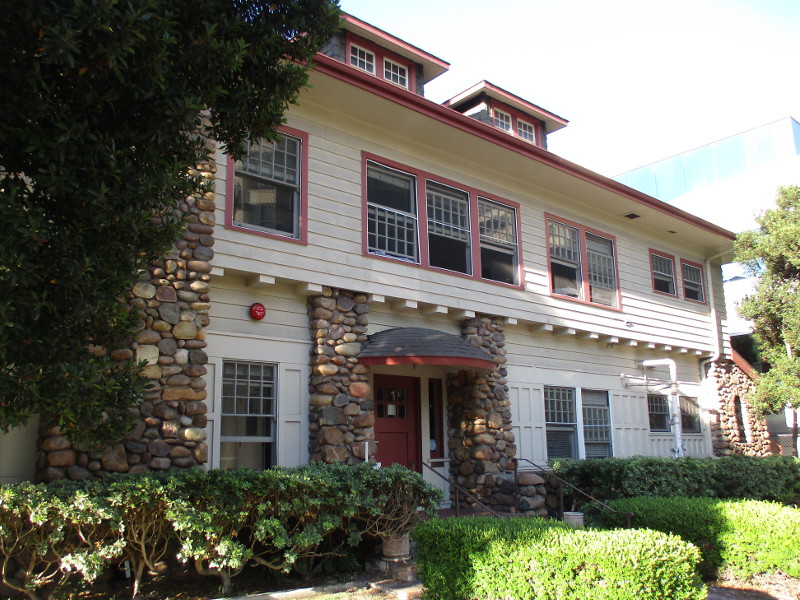
Those entering Balboa Park from Bankers Hill might notice this beautiful old house at the corner of Sixth Avenue and Laurel Street. During my walks I’ve often wondered about it.

After doing a little research, I discovered it’s called the William Clayton House. It was designed in 1907 by San Diego’s first female architect, Hazel Wood Waterman.

Hazel Wood Waterman got her start as one of renowned architect Irving J. Gill’s two chief draftspeople. With a particular love for the Arts and Crafts style, she would eventually design a number of houses and buildings around San Diego. Her most famous work was the 1910 restoration of the Casa de Estudillo in Old Town, a commission that came from John D. Spreckels.

You can learn more about Hazel Wood Waterman here.

The William Clayton House barely avoided demolition almost thirty years ago. You can read about that here. Today it is San Diego Historic Landmark #270 and location of the Vista Balboa Crisis Center.
I live in downtown San Diego and love to walk around with my camera! You can follow Cool San Diego Sights via Facebook or Twitter!

You can easily explore Cool San Diego Sights by using the search box on my blog’s sidebar. Or click a tag! There are thousands upon thousands of photos for you to enjoy!

Hotel San Diego sign at Liberty Station.

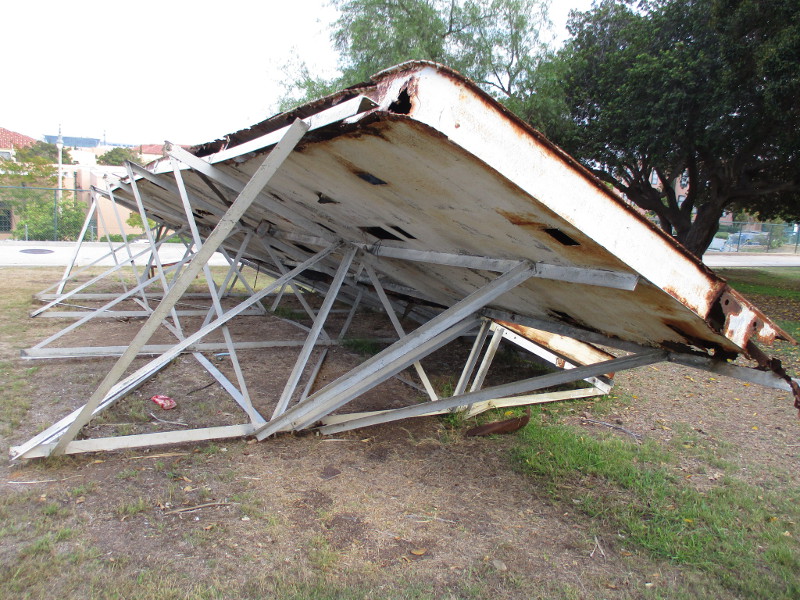
If you’ve ever entered Liberty Station by turning down Dewey Road from Rosecrans Street, you might’ve glimpsed a very unusual sight. On the left, beyond some trees, an enormous sign is lying on the ground!

Last weekend I walked down a footpath behind Officer’s Quarters D of the old Naval Training Center San Diego for a better look. Quarters D until recently was the home of SCOUT. It is now home of Banyan Tree Educational Services.

The huge sign lying strangely on the ground once belonged to the Hotel San Diego. For many decades the neon sign was an iconic sight on Broadway in downtown San Diego. The large hotel was demolished in 2006 to make way for a new federal courthouse.

I myself stayed in the hotel a little over twenty years ago, when I moved to San Diego, and I remember seeing this landmark sign on the historic building.

The Hotel San Diego was built in 1914 by John D. Spreckels to accommodate visitors arriving for the 1915 Panama-California Exposition in Balboa Park. Learn more about it and see historical photos here.
Why is this large, rusting sign now lying on some grass at Liberty Station? It was preserved with the intention of restoring it for display in the garden behind Officer’s Quarters D. Read more about that here.

I live in downtown San Diego and love to walk around with my camera! You can follow Cool San Diego Sights via Facebook or Twitter!