Huge hole in Balboa Park’s Botanical Building!

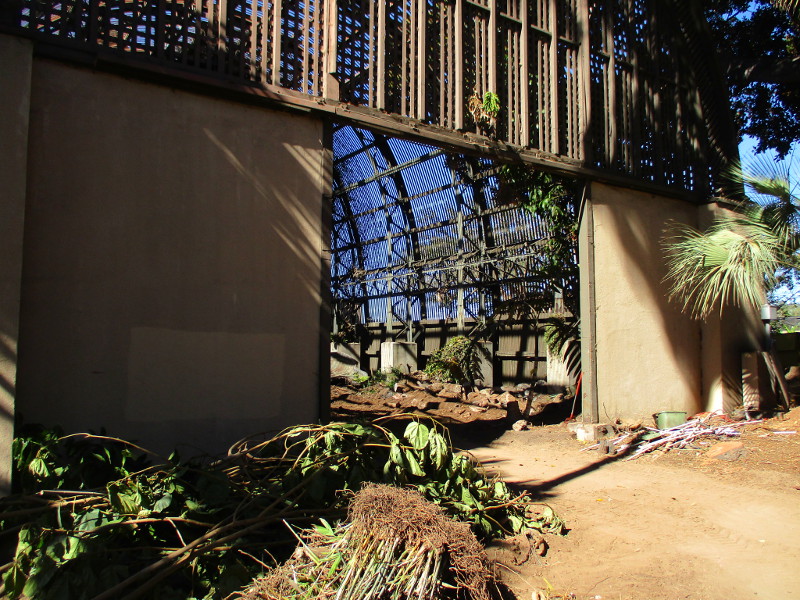
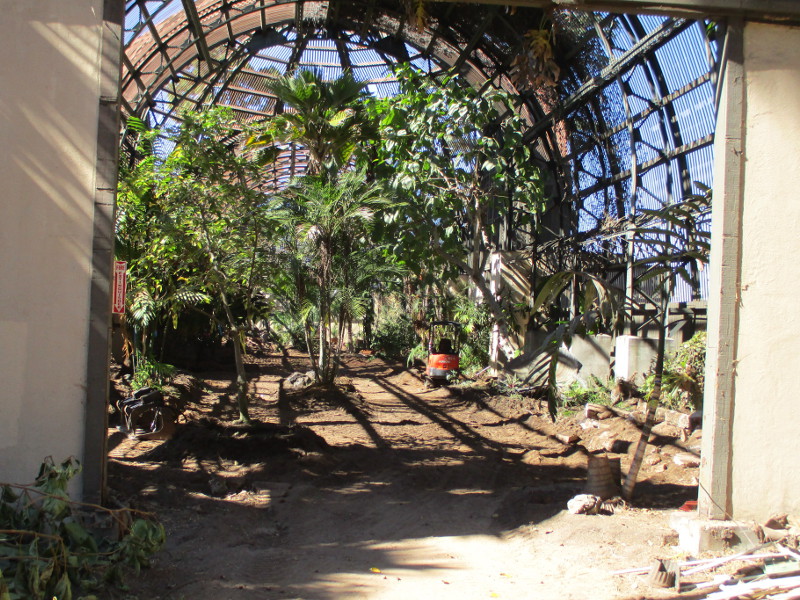
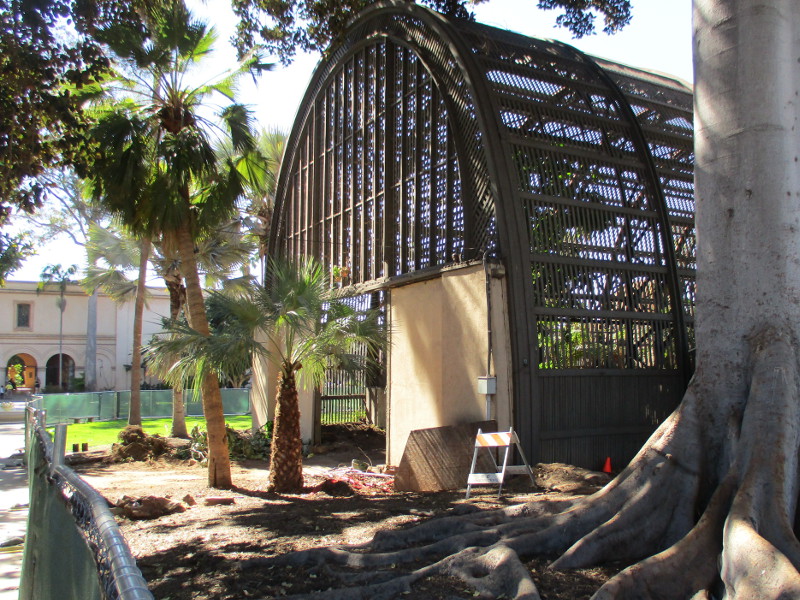
Walk around the Balboa Park’s historic Botanical Building and you might do a double take. Because a huge hole is now open at the east end, allowing people to look into the monumental building’s interior!

I paused for a moment and took these photos over the construction fence. You can see how the old garden walkways have vanished, leaving the trees and plants rising from bare soil.

If you’d like to read about the Botanical Building and Gardens Restoration and Enhancement Project, and see artist renderings and historical photographs, click here.

Much of the work will repair damage “due to termite damage, rust and deferred maintenance.” The iconic Botanical Building will be restored to its original 1915 appearance. Amenities will also be added, like new restrooms, and a historically recreated pergola near its west end.

The Botanical Building is one of four structures built for the 1915 Panama California Exposition that were meant to be permanent. But after more than a century, a little tender loving care for one of the largest wood lath structures in the world is required!
I live in downtown San Diego and love to walk around with my camera! You can follow Cool San Diego Sights via Facebook or Twitter!

Memory Traces: art inspired by La Jolla history.

There’s a fascinating exhibition now showing at the La Jolla Historical Society’s Wisteria Cottage Gallery. San Diego artists, after viewing artifacts in the La Jolla Historical Society’s archives, have created pieces that are inspired and informed by the past. The exhibition is titled Memory Traces: Artists Transform the Archive.

I visited the gallery inside the historic Wisteria Cottage yesterday. It’s free to the public and worth the time if you’re curious about local history or the creative process–or philosophy.

According to the La Jolla Historical Society’s description here: The exhibition draws its title from a 1925 essay by Sigmund Freud, in which he explored the way remembrance functions . . . The exhibition proposes that the archives’ contemporary value may, in fact, lie in its malleability . . . for critique, for expanding understandings of experience and of history, for transformation, and the creation of new narratives…

As I walked about looking at the pieces, I could see how this world we live in is a continuum, where past, present and future are entangled and inseparable, not unlike all the moments in our own lives.

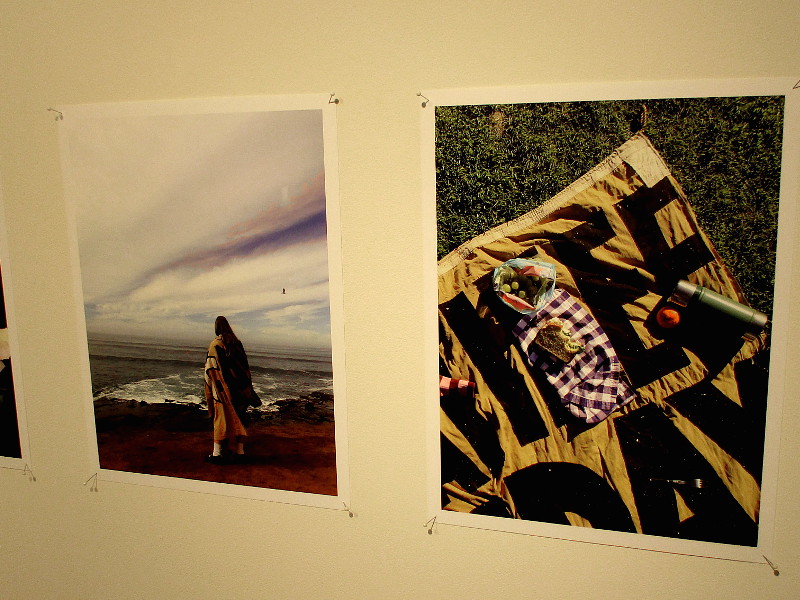
I took photos of two examples of the artwork…

Historical photo of Spanish artist Eduardo Chillida’s sculpture Our Father’s House, installed in La Jolla Village in 1989 as part of an outdoor art exhibition. A study for a larger work later installed in Guernica, Spain, honoring lives lost during the Spanish Civil War.
their father’s house, by artist Joe Yorty, 2022. A wood replica with photos and newspaper clippings concerning the building, movement and destruction of local buildings. An homage to past lives, including the artist’s own father.
Cloth banner with words Matinee Today that was once used at La Jolla’s historic Granada Theatre.
Matinee Today, by artist Allison Wiese, 2021. Photos of material from the past being used in present life in many different ways. The past persists. Nothing ever truly goes away.

I live in downtown San Diego and love to walk around with my camera! You can follow Cool San Diego Sights via Facebook or Twitter!

San Diego buses reserve a seat for Rosa Parks!

Today was a special day on San Diego’s MTS buses. A front seat was reserved on every bus in honor of Rosa Parks! Today, February 4, is her birthday!

I happened to see the above “reserved seat” sign as I boarded the 120 bus this evening at Fashion Valley. The driver admired the sign again and straightened it after I took my photo. As I rode toward home, I remembered there’s a special bus stop dedicated to Rosa Parks on the 44 route, at San Diego Mesa College.

Rosa Parks was largely responsible for starting the civil rights movement in the United States, when she refused to give up her front seat on a segregated Montgomery, Alabama city bus in 1955. Later in life she visited San Diego Mesa College and received an award for her legendary courage and activism.

I took photos of that special bus stop, its historical displays and a nearby bench with the inscription Quiet Strength, a year ago. See those photographs here!

I live in downtown San Diego and love to walk around with my camera! You can follow Cool San Diego Sights via Facebook or Twitter!

You can easily explore Cool San Diego Sights by using the search box on my blog’s sidebar. Or click a tag! There are thousands upon thousands of photos for you to enjoy!

Old Town’s windmill–the only one of its kind in the world!

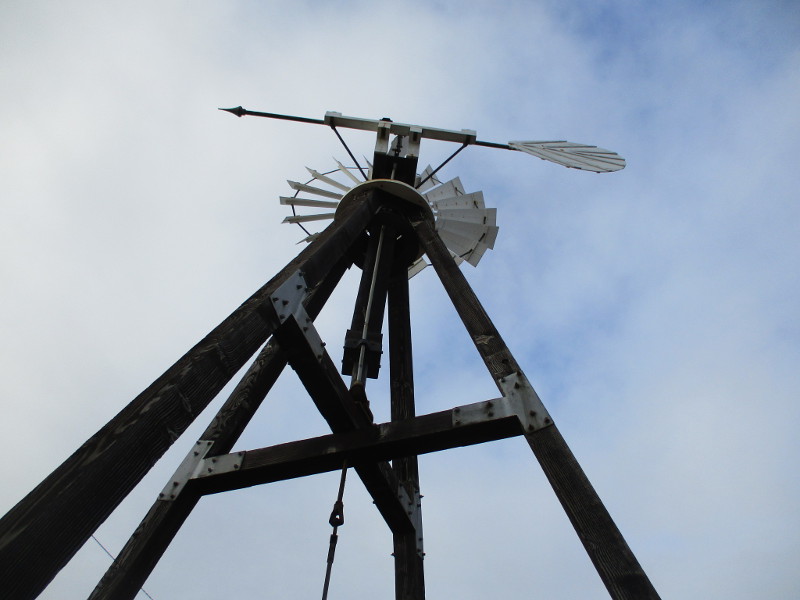
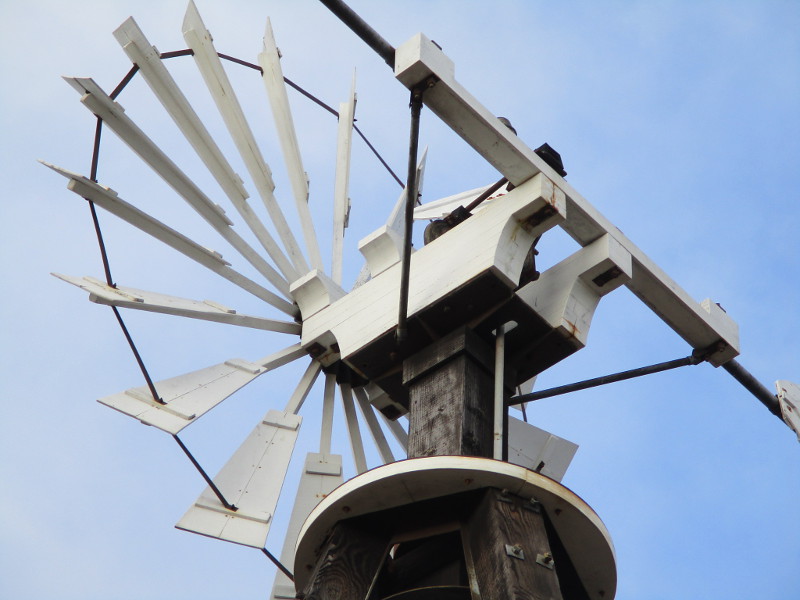
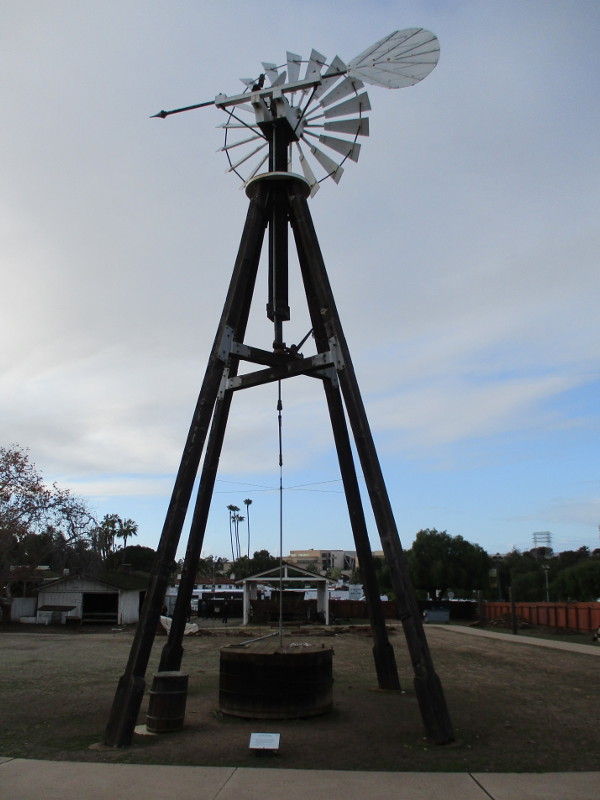
This might surprise you, but the windmill that stands in Old Town San Diego State Historic Park is the only windmill of its kind in the entire world!

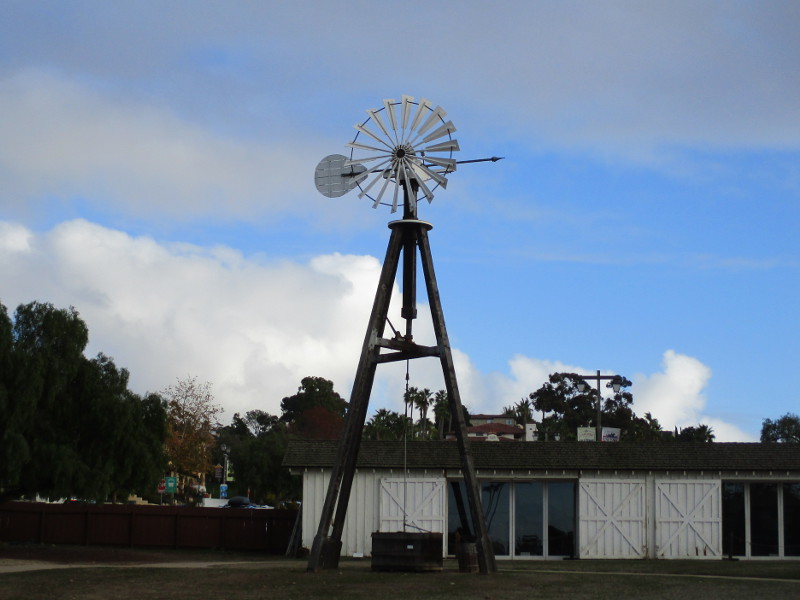
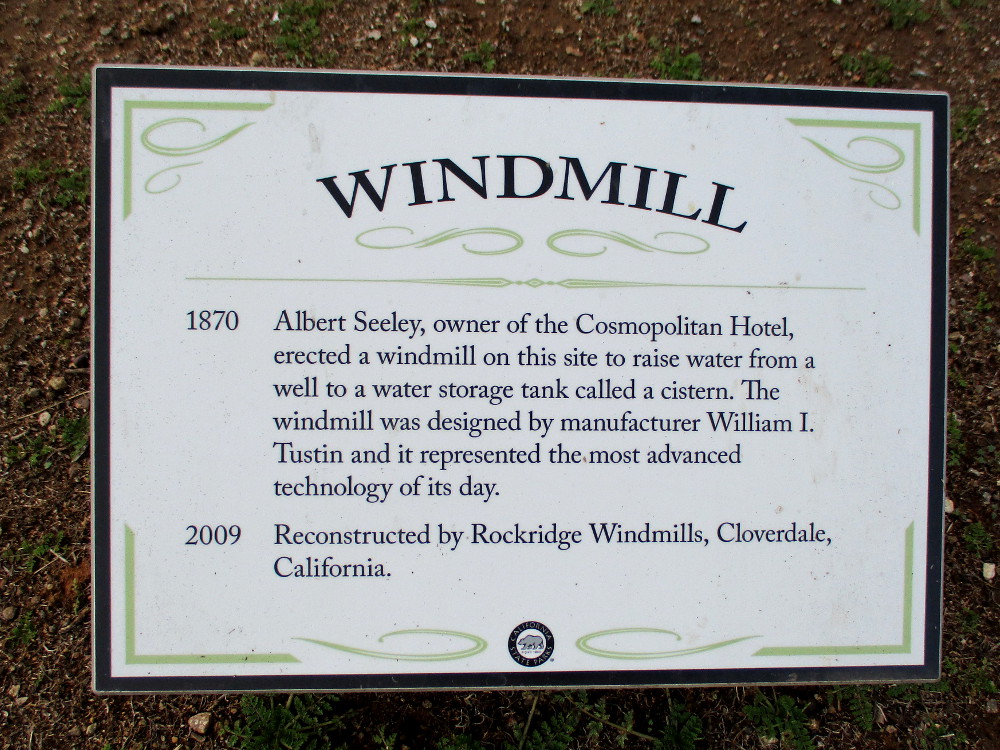
The tall Tustin style windmill located in the yard behind Seeley Stable is an accurate 2009 reconstruction of the one built in 1870 for Albert Seeley’s Cosmopolitan Hotel. Back then, its design represented the latest in windmill technology.

The Tustin style windmill was invented by pioneering manufacturer William Isaac Tustin, who came to California in a wagon train in 1845. His first job was working for John A. Sutter before the discovery of gold several years later at Sutter’s Mill.

Tustin claimed that he built California’s very first windmill, in Benica in 1849.

The unique Tustin style windmill is self-regulating, with a wheel that turns to face the wind at variable angles, controlling the speed of the blades’ rotation.

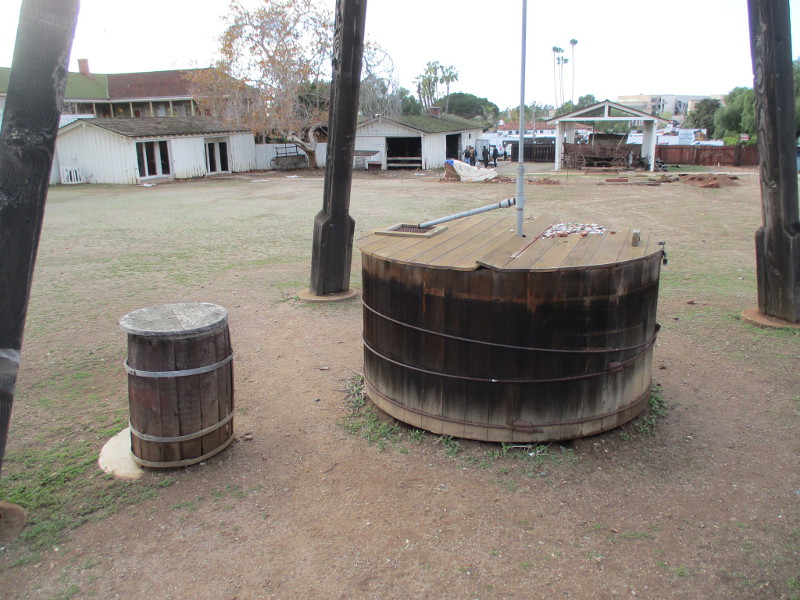
Originally, this windmill was erected to raise water from a well and store it in a wooden cistern, which you can see in my photos.

And it still works today!

Old Town’s one-of-a-kind, historic windmill is usually disabled, however, because the noise it makes when operating is quite loud!

I live in downtown San Diego and love to walk around with my camera! You can follow Cool San Diego Sights via Facebook or Twitter!
Sparks, scrapes and chisels at the Maritime Museum!

Lots of fascinating activity today at the Maritime Museum of San Diego!

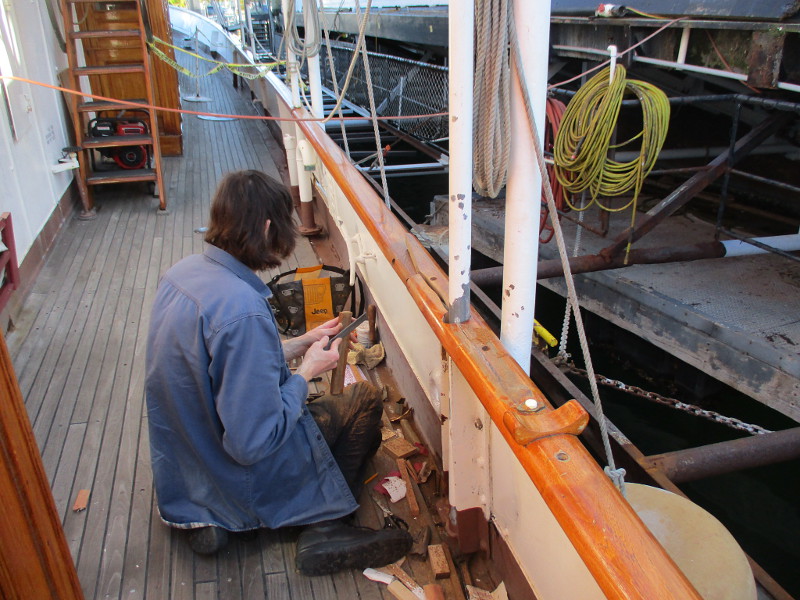
As I walked about, I noticed volunteers and sail crew members were working on several very different vessels in the museum’s world-famous collection.

Sparks were flying from the black sail of the B-39 Soviet-era Russian submarine. Its life, sadly, has come to an end. Preparations are underway to tow the badly rusted Foxtrot-class diesel electric submarine to Mexico where it will be scrapped.

After watching guys using a torch on the sub’s outer hull, I walked to the far end of the Maritime Museum’s barge where the Robert Sharp’s stern was being restored. A friendly worker with a heat gun was crackling old varnish, which was then scraped off.

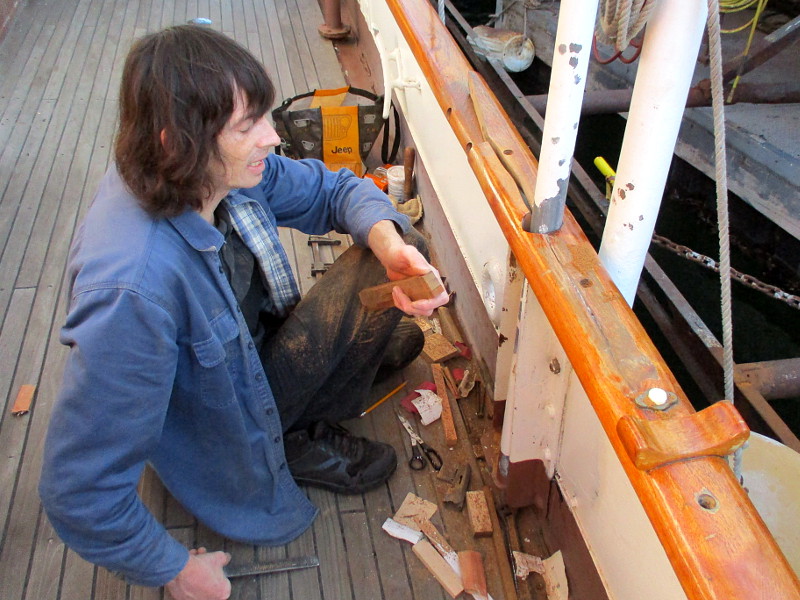
When I stepped onto the deck of the historic steam yacht Medea, I noticed a woodworker carefully repairing the boat’s wooden rail where it had split.

The elegant Medea has a fascinating history.

Did you know that, in addition to Medea being a pleasure yacht that cruised the isles and lochs of Scotland, it was used by France during World War I, and by the British Royal Navy and Norwegian Navy during World War II?

Learn much more here!

I live in downtown San Diego and love to walk around with my camera! You can follow Cool San Diego Sights via Facebook or Twitter!

Minding your p’s and q’s in the Old Town print shop!

Upper case and lower case.

Mind your p’s and q’s.

The wrong sort.

Out of sorts.

I learned yesterday during a visit to the San Diego Union Building in Old Town San Diego State Historic Park that these expressions are believed to come from days long past.

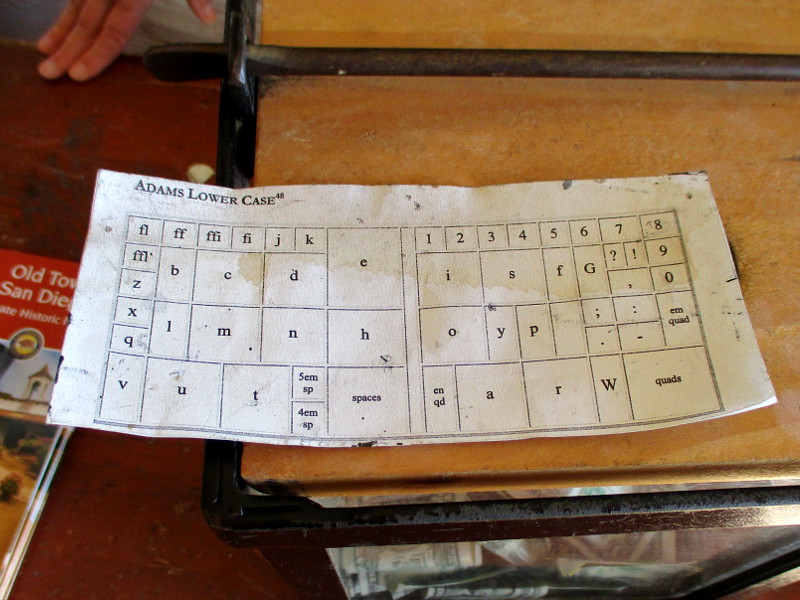
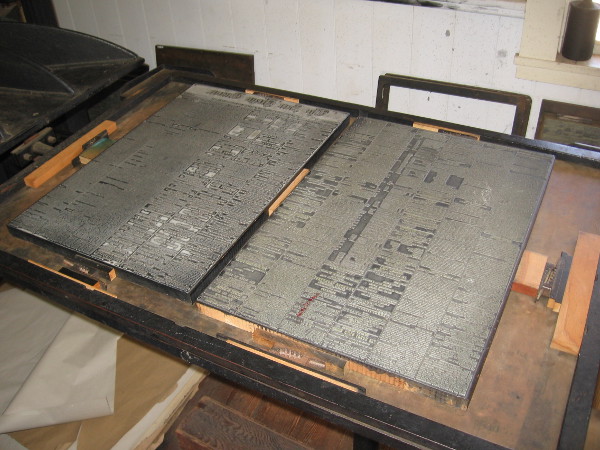
There was a period in history when printing was a tedious operation requiring a hand operated press. To print pages, small cast metal blocks that imprint individual characters were manually assembled into words and sentences. These physical types were set into printable forms by the skilled, quick fingers of print shop compositors.

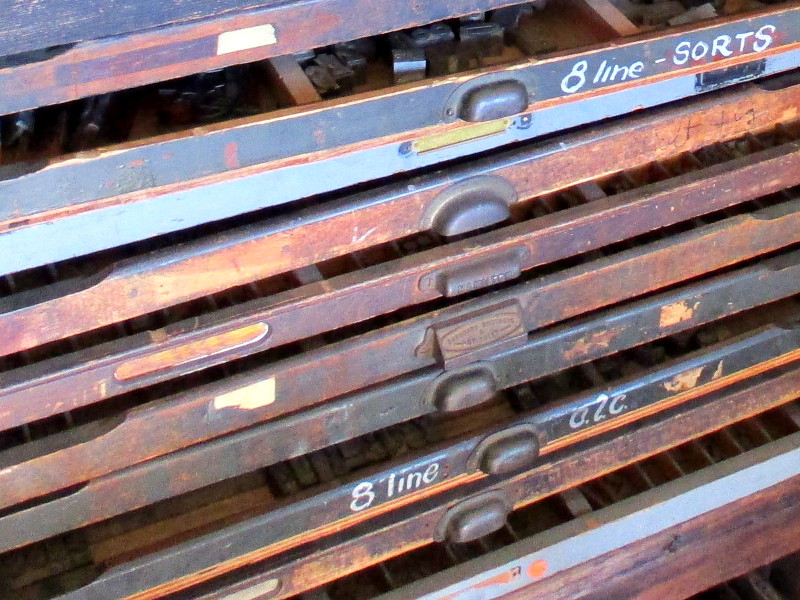
See all those drawers in the above photo? Each drawer is a type case containing sorts, the particular letters and other characters that are “sorted” into the forms.

Somewhere along the line, capital letters were arranged in an upper drawer: the upper case. Compositors rushing to print a newspaper would sometimes confuse the similar appearing p’s and q’s. Or accidentally choose the wrong sort. Or become disconcerted when they ran out of sorts.

And that how these peculiar expressions are said to have originated!

I live in downtown San Diego and love to walk around with my camera! You can follow Cool San Diego Sights via Facebook or Twitter!
You can easily explore Cool San Diego Sights by using the search box on my blog’s sidebar. Or click a tag! There are thousands upon thousands of photos for you to enjoy!

To read a few stories I’ve written, click Short Stories by Richard.

Free “Hidden History Talks” in Old Town!

During the ups and downs of this long COVID-19 pandemic, Old Town San Diego State Historic Park’s indoor museums have been mostly closed. But I learned today that outdoor “Hidden History Talks” are now being held free to the public on Fridays, Saturdays and Sundays at 2 pm.

There are several interesting locations in the State Park where the talks might be held, including the courtyard of the Casa de Estudillo and the donkey pen behind Seeley Stable. Visitors to the park should watch for signs indicating where that day’s free history talk will be.

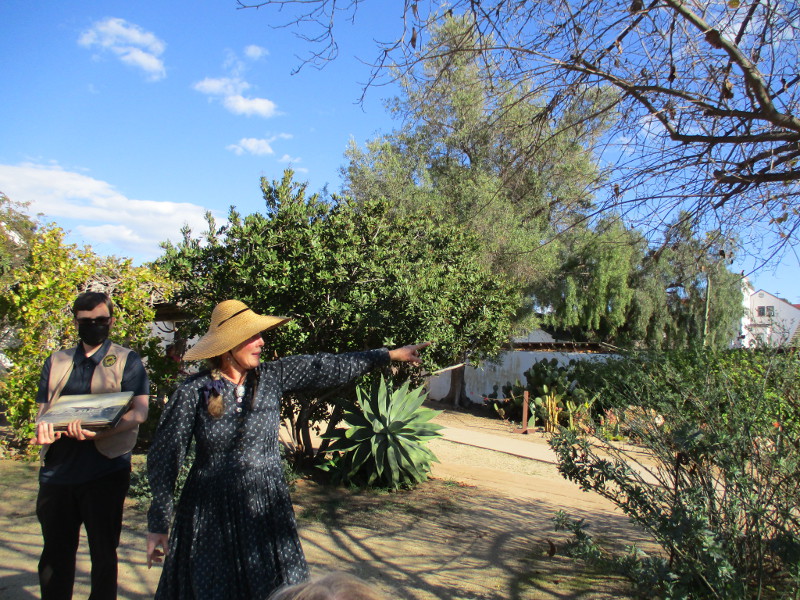
Today I sat on a bench in the beautiful Casa de Estudillo garden and listened to a California State Parks employee talk about the remarkable biodiversity in San Diego, which is partly attributed to the importation of plants and trees by Spanish missionaries, settlers, traders, and early civic visionaries like Kate Sessions.

The garden at the Casa de Estudillo is a sort of microcosm of this biodiversity.

Trees and shrubs were pointed out on all sides, and explanations were made of why they had been planted here–many a century and a half ago. Curious eyes turned this way and that at the mention of pepper and olive trees, pomegranates, and loquat, mulberry, pecan and walnut trees. And many others!

Among the things we learned was that small pepper trees from Spain, newly planted around Old Town’s plaza, had to be protected from roaming cattle. A century and a half later those pepper trees are huge and beautiful!

Everything we learned was fascinating.

I was told that eventually the normal walking tours should return to Old Town San Diego State Historic Park, but it all depends on the COVID-19 pandemic’s trajectory and public health orders.

If you’d like an idea of what the regular one hour walking tours are like, click here!

I live in downtown San Diego and love to walk around with my camera! You can follow Cool San Diego Sights via Facebook or Twitter!
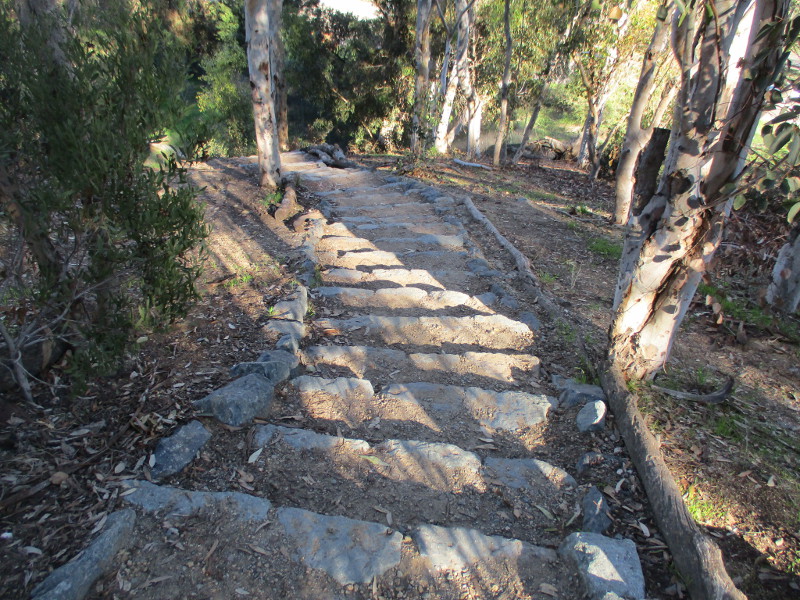
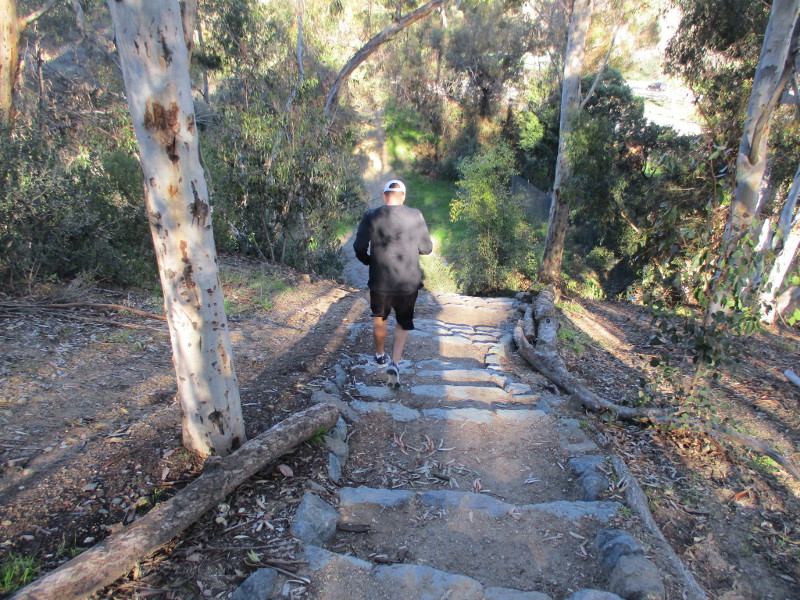
Walking down the Juniper Staircase in Balboa Park.

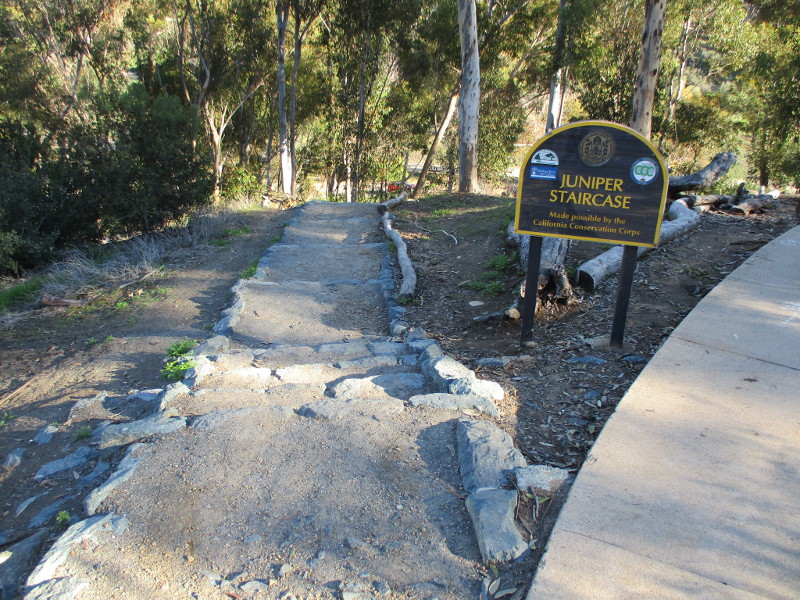
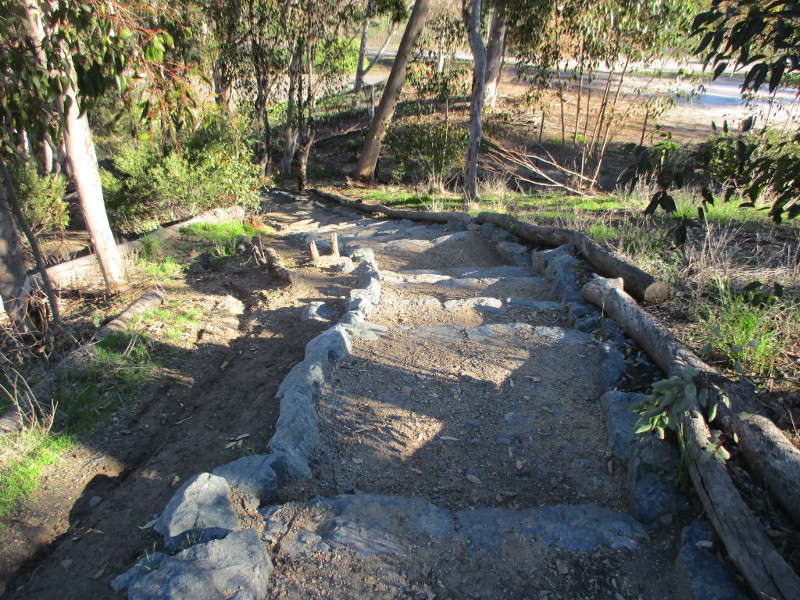
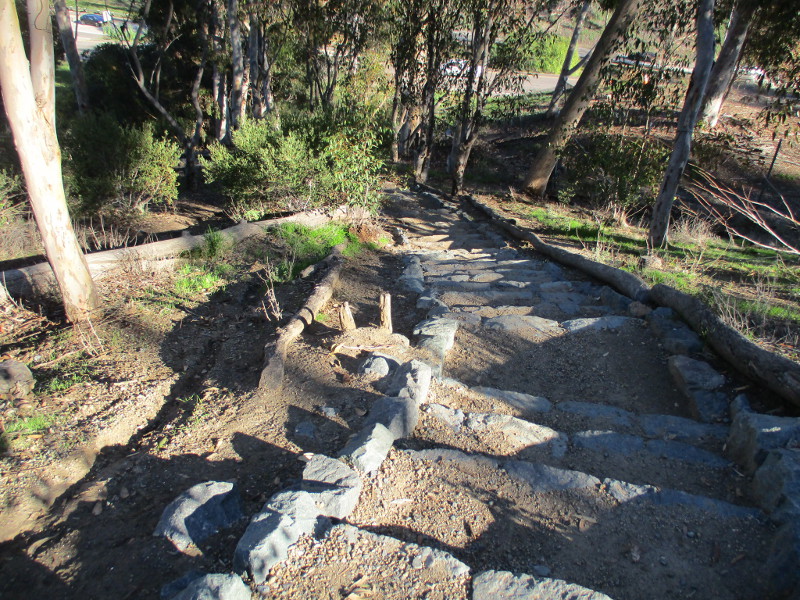
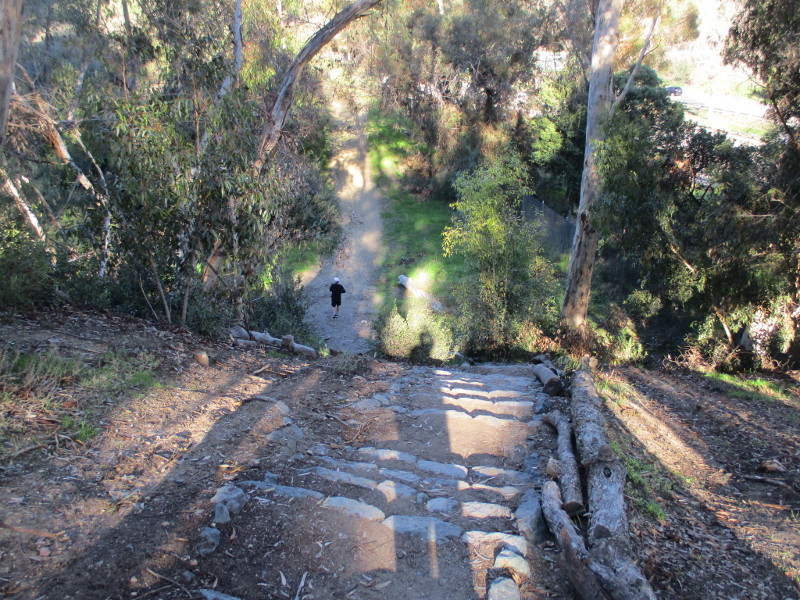
The Juniper Staircase is located near the southwest corner of Balboa Park, just north of Marston Point. The rugged “staircase” descends toward a dirt trail that runs through Cabrillo Canyon along the west side of State Route 163.

Ninety eight stone steps that were built by the California Conservation Corps descend from a paved pathway that winds through trees on Balboa Park’s West Mesa. Google Maps refers to the several paths in Cabrillo Canyon as Bridle Trail.

You can locate the curving stairs on a map if you follow the line of Juniper Street east past the intersection of Balboa Drive and 8th Avenue.

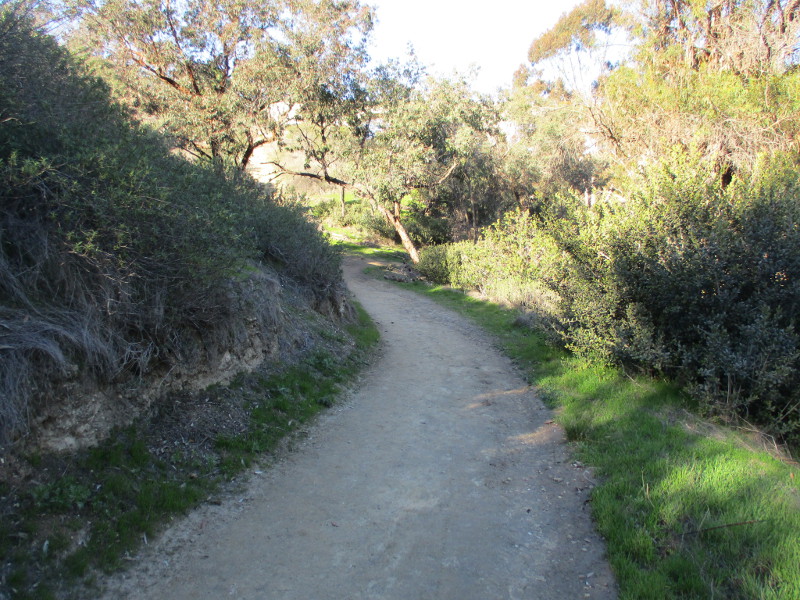
I took these photographs walking down the rocky steps. I continued north along the dirt trail by the freeway and passed the place where one can turn to walk under the historic Cabrillo Bridge. I then completed this relatively short and easy hike at Nate’s Point Dog Park, on El Prado, just west of the bridge.

If you’re curious to see what it looks like standing directly under the Cabrillo Bridge, I took some really interesting photographs one day and posted them here!

Be sure to watch your step! The loose dirt and leaves can be slippery.

The Juniper Staircase is a destination for local joggers and runners seeking a workout.

A very peaceful spot, if it weren’t for the noise of nearby freeway traffic.

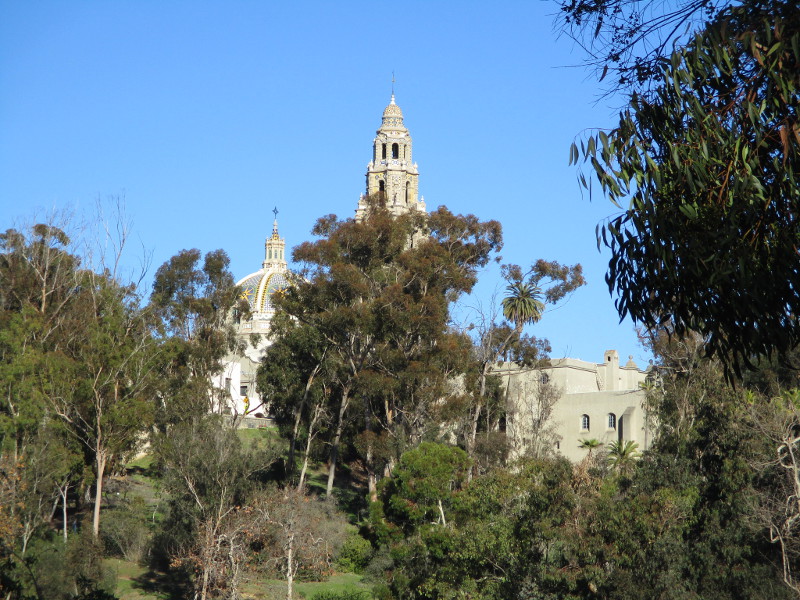
Looking northeast across Cabrillo Canyon, one can see Balboa Park’s iconic California Tower!

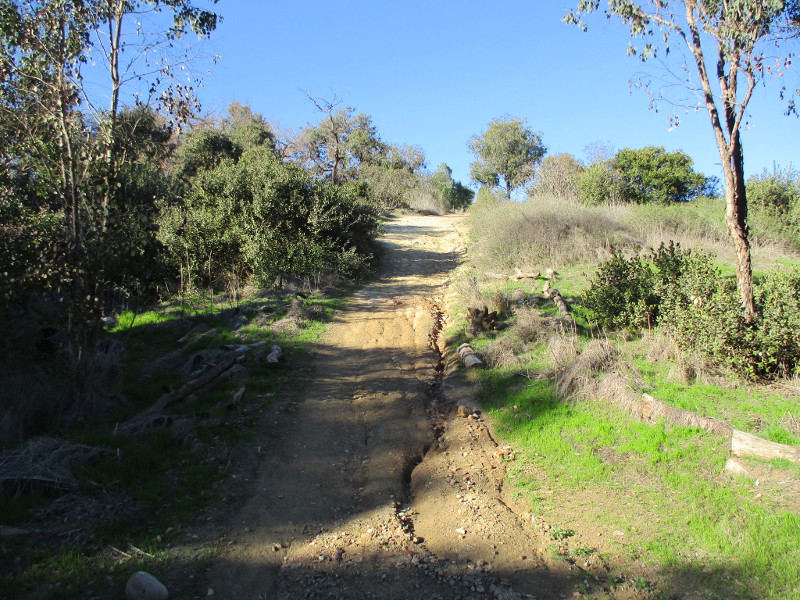
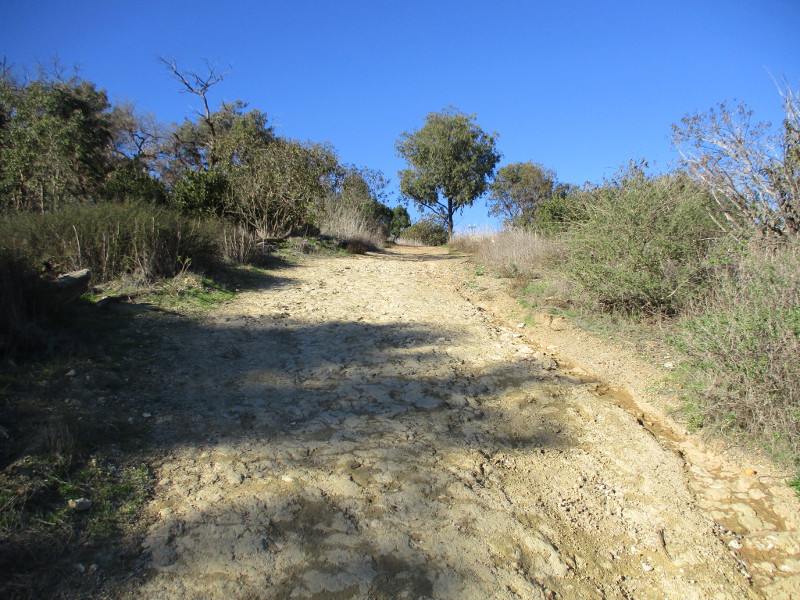
Make sure to wear good shoes. The trail is rough and eroded in spots.

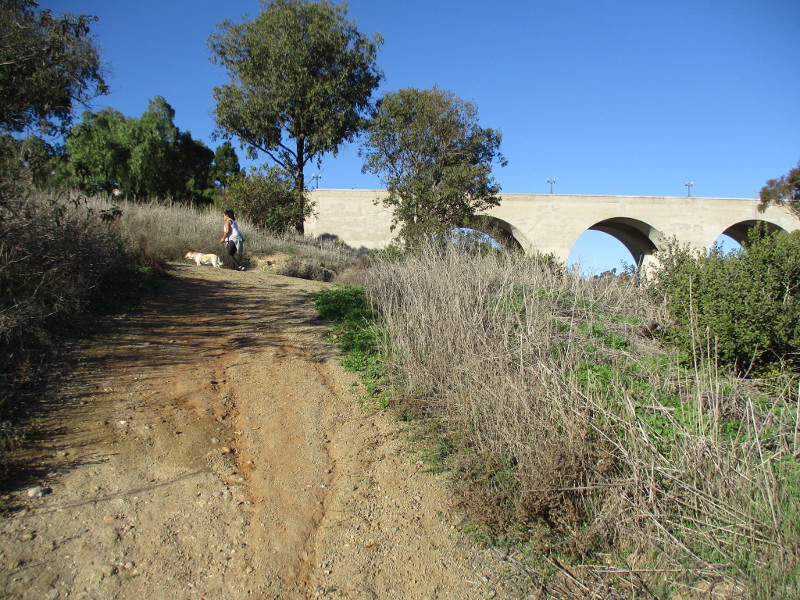
Approaching a split in the trail, where one can walk down under the Cabrillo Bridge.

I was tempted to walk under the bridge again, but decided against it the particular day I took these photos.

Soon arriving at the fence around Nate’s Point Dog Park where happy dog’s can run freely off leash.

El Prado, the road that crosses the Cabrillo Bridge into Balboa Park, is to the right, just a short distance up the hill!

I live in downtown San Diego and love to walk around with my camera! You can follow Cool San Diego Sights via Facebook or Twitter!
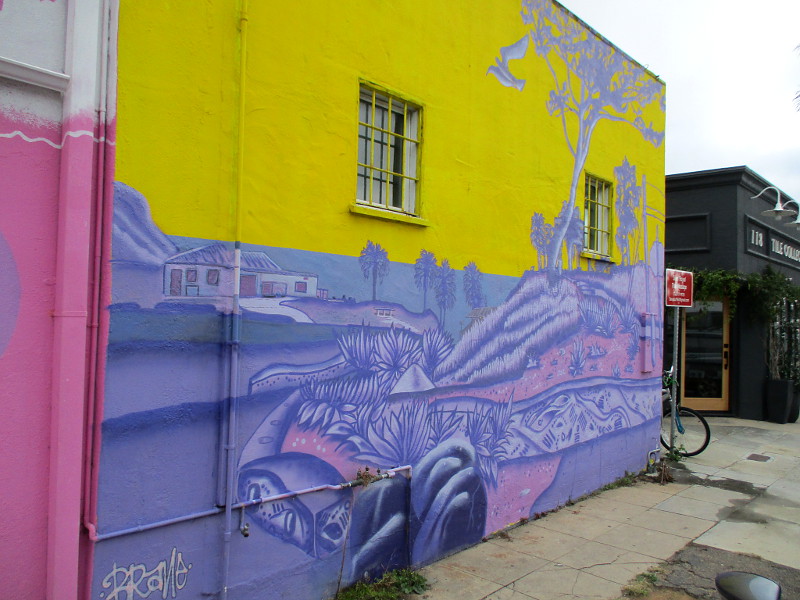
Mural on historical building celebrates Solana Beach!

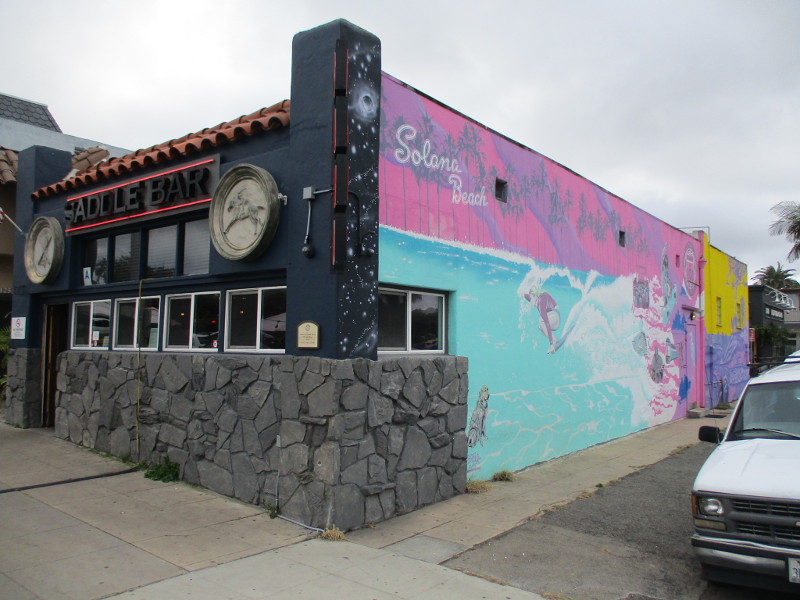
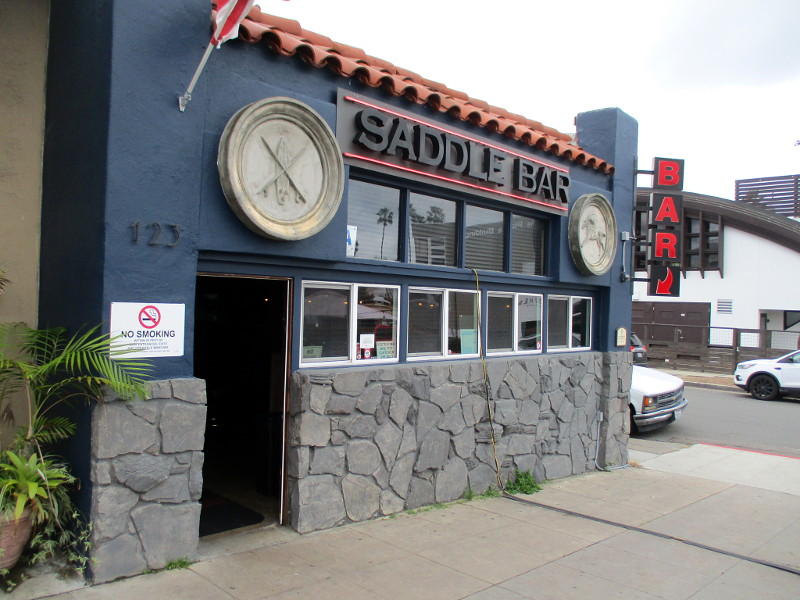
If you’ve ever walked from Fletcher Cove in Solana Beach toward Highway 101, you’ve probably noticed a large, super colorful mural. The artwork is painted on the west side of the Saddle Bar, on Acacia Avenue.

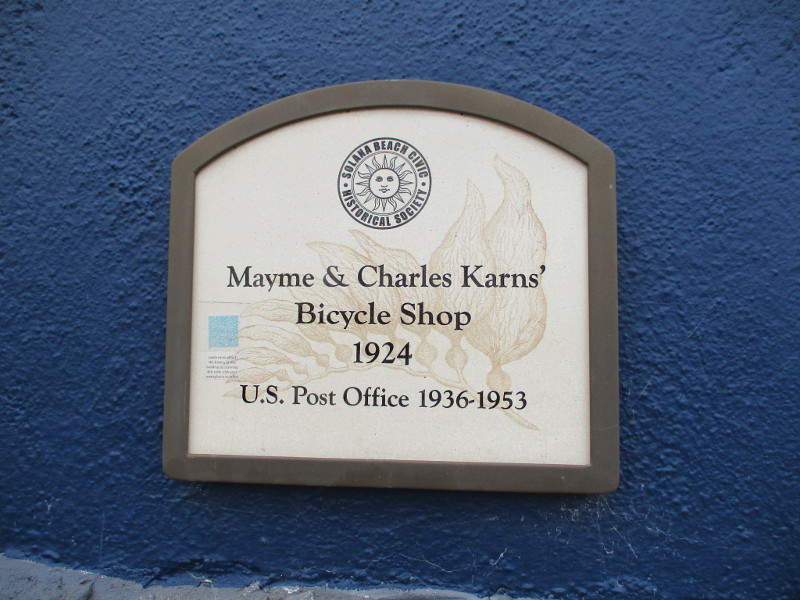
During my most recent visit to Solana Beach, I ambled up to the mural and discovered the old building it decorates has a Solana Beach Civic Historical Society plaque.

The building was originally the Mayme and Charles Karn’s Bicycle Shop back in 1924. It served as a United States Post Office from 1936 to 1953.

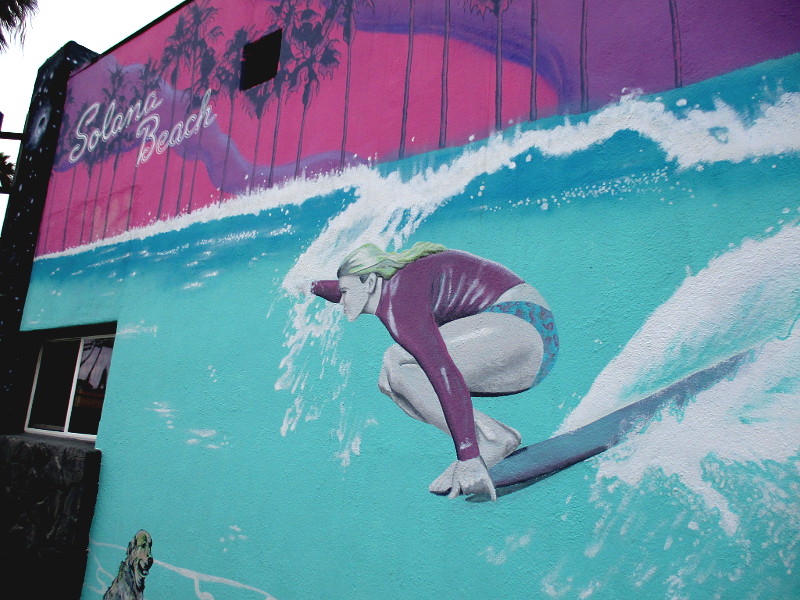
The mural was painted in 2019 by Cardiff-by-the-Sea artist Dustin (Brane) Hull.

Images in the artwork include: a friendly dog; a woman surfing; carrying surfboards on the beach; a kid skateboarding; a musician performing at the famous Belly Up Tavern; a Coaster train and the Solana Beach station; and Fiesta Del Sol, an annual festival held on the nearby streets.

I love this mural. It really captures the happy vibe of this beach community.

I took these photos!

I live in downtown San Diego and love to walk around with my camera! You can follow Cool San Diego Sights via Facebook or Twitter!
You can easily explore Cool San Diego Sights by using the search box on my blog’s sidebar. Or click a tag! There are thousands upon thousands of photos for you to enjoy!

Historical marker at UC San Diego.

On the campus of UC San Diego in La Jolla, an historical marker stands on a patch of grass among some trees.

A bronze plaque embedded in a boulder explains how, for half a century, this area was the site of Camp Calvin B. Matthews, of the United States Marine Corps.

The bronze plaque is located south of the Price Center and Triton Fountain, in UCSD Town Square.

THE UNITED STATES MARINE CORPS

OCCUPIED THIS SITE KNOWN AS

CAMP CALVIN B. MATTHEWS

FROM 1917 TO 1964, OVER A MILLION MARINES AND OTHER SHOOTERS RECEIVED THEIR RIFLE MARKSMANSHIP TRAINING HERE. THIS SITE WAS DEEDED TO THE UNIVERSITY OF CALIFORNIA AT SAN DIEGO ON 6 OCTOBER, 1964 FOR THE PURSUIT OF HIGHER EDUCATION.

Prior to World War II, the military base was simply called Marine Corps Rifle Range, La Jolla.

To learn more about the history of Camp Calvin B. Matthews, you can check out a Wikipedia entry concerning it here.

This blog now features thousands of photos around San Diego! Are you curious? There’s lots of cool stuff to check out!

Here’s the Cool San Diego Sights main page, where you can read the most current blog posts.  If you’re using a phone or small mobile device, click those three parallel lines up at the top–that opens up my website’s sidebar, where you’ll see the most popular posts, a search box, and more!

To enjoy future posts, you can also “like” Cool San Diego Sights on Facebook or follow me on Twitter.