Open House tour of San Diego’s Waterfront Park.

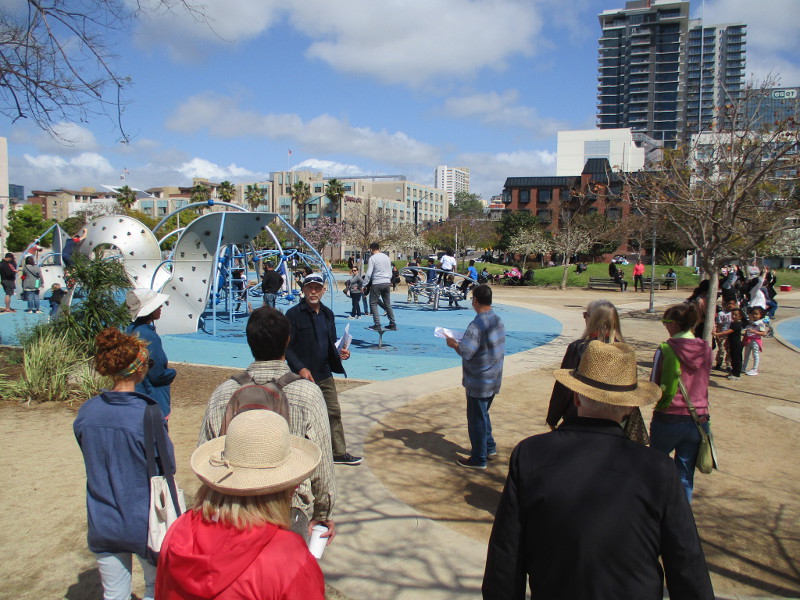
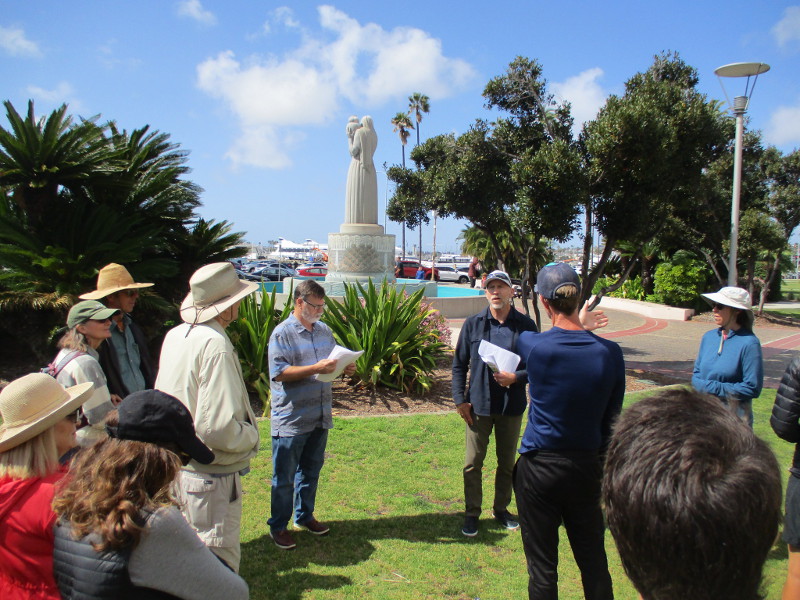
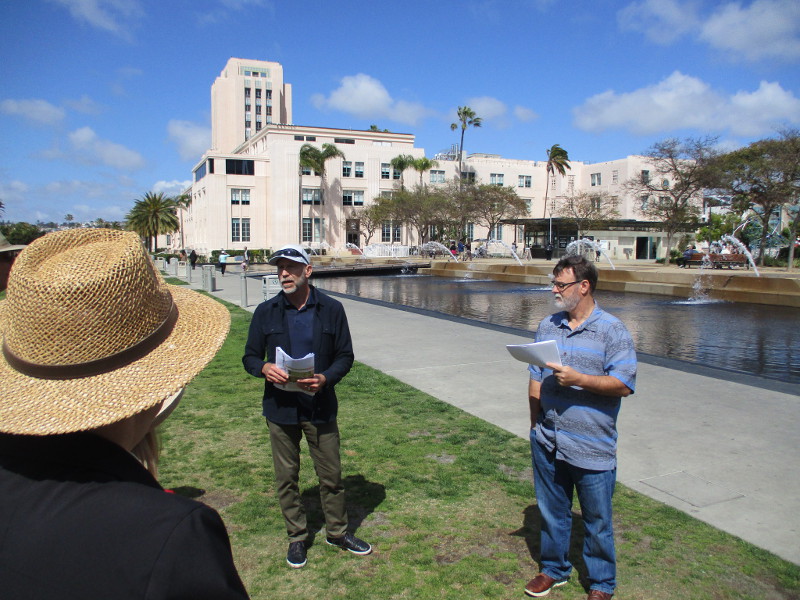
Last Sunday I enjoyed a fascinating tour of Waterfront Park in San Diego. The special public tour was part of the 2022 San Diego Architectural Foundation’s Open House event.

Our small group was guided by Glen and Jeff of Schmidt Design Group, landscape architects who worked on the Waterfront Park project almost ten years ago. The park opened to the public in 2014. (I was there for the big grand opening! You can see many photographs taken during that historic day by clicking here!)

As we walked around the beautiful park, where two large parking lots originally existed, we learned so many facts I failed to jot many down!

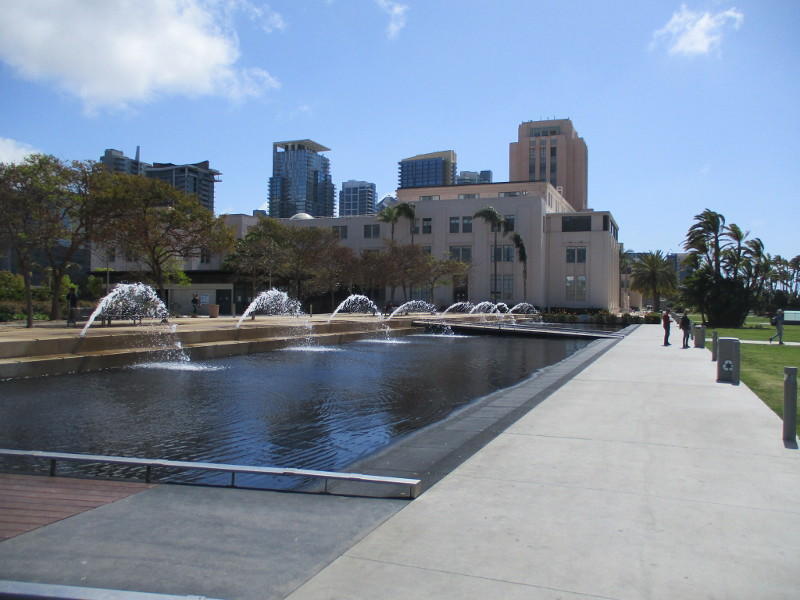
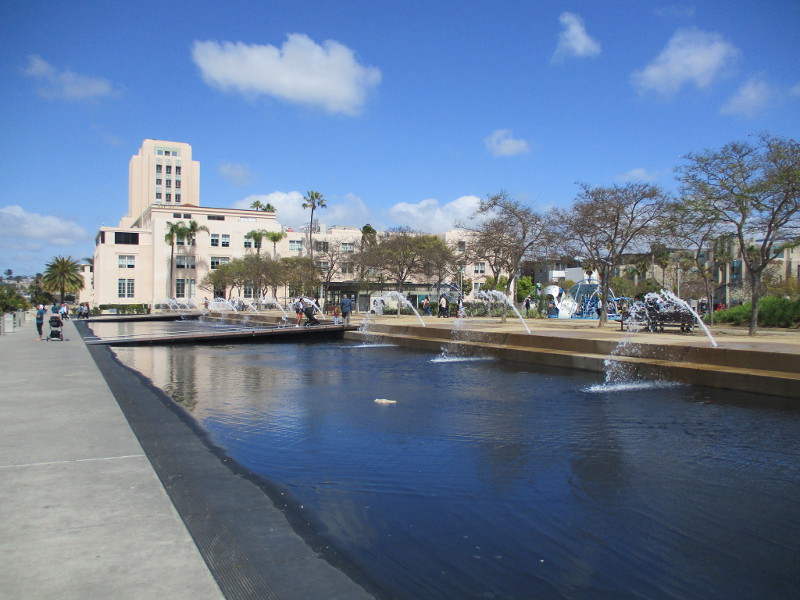
I did note that the two stretches of fountains on either side of the County Administration Building together are 830 feet long. The fountain design was tricky, because the water in the basin where children jump and play could be only one inch deep, due to safety concerns. The fountains utilize an 80,000 gallon water tank, and the 31 jets spray water 12 to 14 feet high.

The fountains were to be set in marble, but to save tens of millions of dollars, specially applied concrete made to look like marble was utilized instead.

The parking garage under the south end of Waterfront Park is below the water table (San Diego Bay is a block to the west), and consequently various innovative measures were taken to keep water from seeping in. I was surprised that, like the nearby County Administration Building, piles were driven 100 feet deep into bedrock to support and stabilize the structure!

The “hill” with a slide in the wonderful, very popular playground was built up with high density foams blocks. (The same hill referred to as Tony Gwynn’s opposing “pitching mound” when the park’s sculptures by Niki de Saint Phalle debuted back in 2015. See those fun photos here!)

One bit of information really surprised me. There had initially been plans to install Dr. Seuss sculptures around the playground! The Grinch and his dog Max were to stand atop the hill. The Cat in the Hat would welcome kids near the fountain area. Our group didn’t hear why that plan fell through.

We did learn how, during Waterfront Park’s construction, large old palm trees and the San Diego County Law Enforcement Memorial were moved. We saw the bits of shining, sparkling mica that were placed in the concrete around the memorial.

We learned how the large garden at the north end of the park was designed to be a beautiful, contemplative area. And, indeed, it is.

The garden is divided into three sections. The north “grass” or “meadow” garden with 15 varieties of grass; the middle Mediterranean garden with sages, rosemary, lavender and Torrey pines; and the south “tropical” or “diversity” garden, with plumeria, bird of paradise and many other lush plants.

Irrigation for the park requires 8 million gallons per year! But this free, very popular “water park” serves hundreds of thousands of San Diego residents every year, many arriving by trolley from less affluent neighborhoods.

Lastly, we learned how the County of San Diego will soon be removing the garden, and replacing it with a dog park, basketball and pickleball courts, and other recreational amenities. I suppose the change is both sad and exciting. As they say, there are two sides to every coin.

I’ll be watching the progress of that project and will probably be taking photos in the future!
This is where the proposed Cat in the Hat sculpture would have stood!
Donal Hord’s iconic Guardian of Water sculpture stands in the background. Learn a little more about it here.
The present location of the San Diego County Law Enforcement Memorial.
Part of the Waterfront Park garden. The large garden will be removed to make way for sports facilities.

I live in downtown San Diego and love to walk around with my camera! You can follow Cool San Diego Sights via Facebook or Twitter!

Dr. Seuss’s fun Boids and Beasties exhibit!

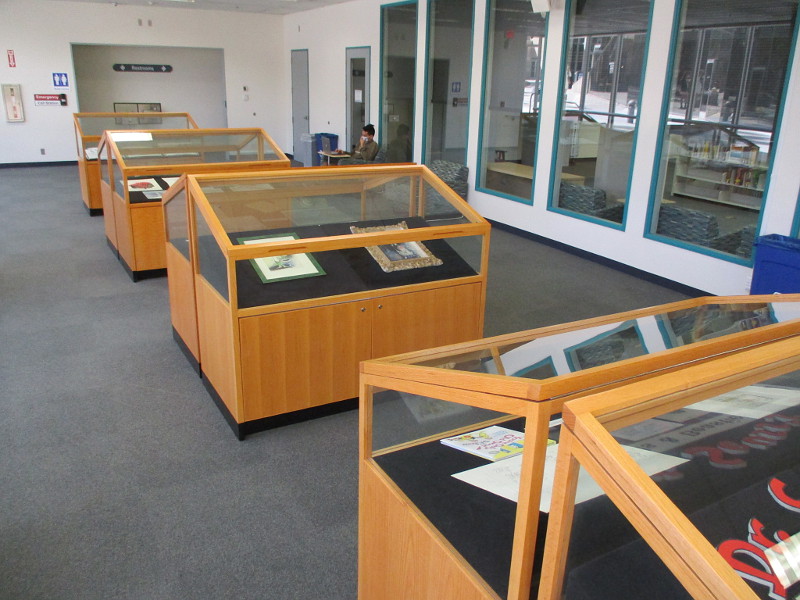
There’s a fun exhibit just inside the entrance of the Geisel Library at UC San Diego. It’s titled Dr. Seuss’s Boids & Beasties!

I stumbled upon these displays of original Dr. Seuss drawings, sketches and writings during my visit to UCSD in La Jolla today. The artwork and documents come from the university’s large Seuss collection. La Jolla is where Theodor Seuss Geisel, the legendary children’s book author, lived for much of his life.

I asked about the exhibition at the library’s nearby front desk, and was told it’s semi-permanent. So next time you’re on or near the campus, you might want to check out these fantastical Boids and Beasties!

Just a sample…

Dr. Seuss is known and beloved worldwide. The exhibit includes some of Theodor Seuss Geisel’s early work as an advertising and commercial artist.
Dragon sketch, circa 1915, one of the earlies known Geisel drawings.
Geisel artwork used for advertising Flit bug spray.
Letter by Dr. Seuss describes how listening to a ship’s engine inspired the rhymes in his first published children’s book And to Think That I Saw It on Mulberry Street.
Pencil sketch for You’re Only Old Once!
Rough sketch for two pages of The Sneetches.

I live in downtown San Diego and love to walk around with my camera! You can follow Cool San Diego Sights via Facebook or Twitter!

Hidden historical markers around San Diego.

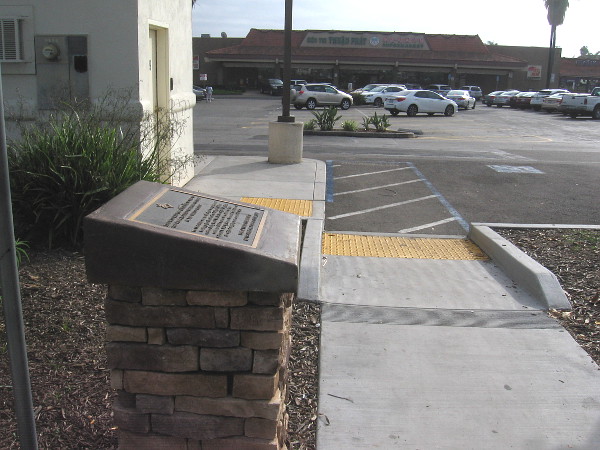
Walk around the city and you’ll discover surprising things. Once in a while, if you’re lucky, you might stumble upon an historical marker in a hidden or unexpected place!

Over the years I’ve happened upon a number of these historical plaques and markers. I’ve seen them by shopping centers, by apartment buildings, on hilltops, beside trails, and tucked away in odd places off the beaten track.

I thought that perhaps you’d enjoy reading a few of them.

Here are a few of the more interesting markers I’ve found….

To read a plaque in Linda Vista about one of the first planned shopping centers in the United States, click here.

To read a plaque in National City about a “miraculous” well dug for Mount Paradise Sanitarium, click here.

To read numerous historical plaques on the top of Presidio Hill, where Fort Stockton once was, click here.

To read an historical marker in the middle of UC San Diego in La Jolla, click here.

To read a plaque marking the location of Kate Sessions’ nursery in Pacific Beach, click here.

To read a plaque near old Mission San Diego de Alcalá, marking the location of Padre Luis Jayme’s death during a Native American uprising, click here.

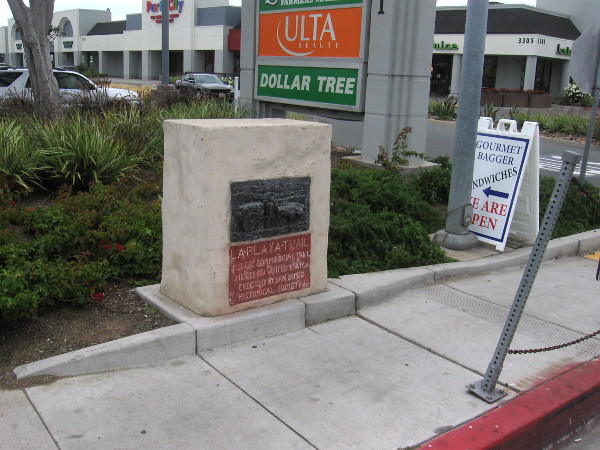
To see a fascinating marker recalling the historic La Playa Trail which passed through present-day Point Loma, near Midway and Rosecrans, click here.

To read several historical markers that are easily overlooked near an entrance to Presidio Park, click here.

To read a plaque in Coronado that concerns the birthplace of naval aviation, click here.

To read a marker that recalls a long vanished Chinese shipbuilding site in Point Loma, click here.

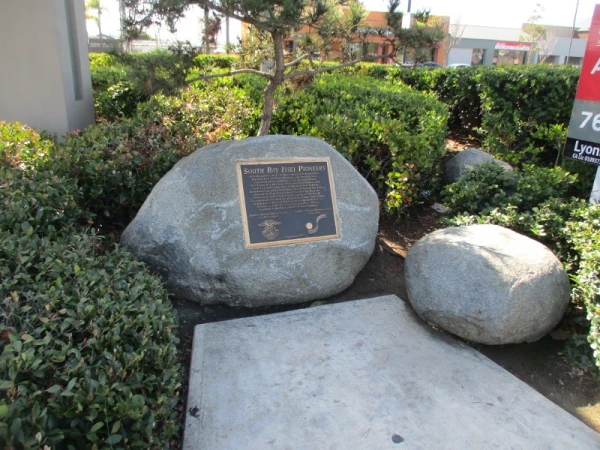
To read a marker in Chula Vista that commemorates Japanese immigrant farmers in the South Bay, click here.

To read plaques and inscriptions near the Old Mission Dam in Mission Trails Regional Park, click here.

Finally, to read a marker at the edge of a golf course near Old Town, detailing the history of San Diego’s oldest surviving structure, click here.

This blog now features thousands of photos around San Diego! Are you curious? There’s lots of cool stuff to check out!

Here’s the Cool San Diego Sights main page, where you can read the most current blog posts.  If you’re using a phone or small mobile device, click those three parallel lines up at the top–that opens up my website’s sidebar, where you’ll see the most popular posts, a search box, and more!

To enjoy future posts, you can also “like” Cool San Diego Sights on Facebook or follow me on Twitter.

Amazing “hidden” history exhibit about Balboa Park!

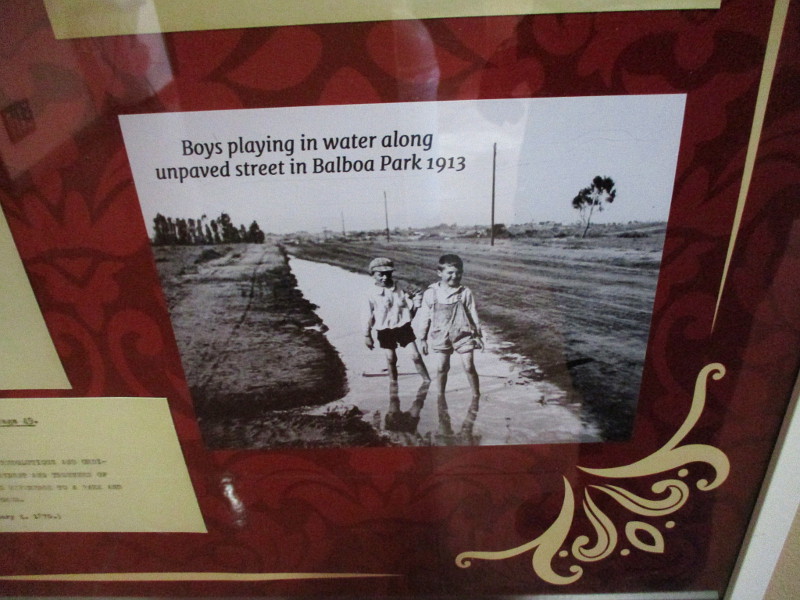
There’s an extremely important exhibit in Balboa Park that very few people see. The San Diego City Clerk Archives and Parks and Recreation Department have created a fascinating display of original historical documents concerning the creation and development of San Diego’s world-famous park.

Last weekend, I was poking my nose into the Balboa Park Club building to see if there might be folk dancing in the ballroom, when I spied old letters, maps, petitions, resolutions and photographs on a wall of the grand foyer. I almost missed them in the dimly lit corner!

The exhibit is titled 1,400 Acre City Park – The Journey to Balboa Park.

There are seven parts to the exhibit: Park Idea, 1868; Founding of City Park, 1868; Uses of City Park, 1868-1900; Plantings, 1893-1904; Park Designs, 1891-1905; 1400-Acre City Park Name Change, 1910-1913; and Park Activities Since 1915.

Among the many historical documents, I observed the original 1868 citizens petition for a public park; correspondence to Balboa Park visionaries George Marston and Kate Sessions; a letter from mayor Douglas Gunn to the Common Council; and the Board of Park Commissioners’ 1913 petition to give City Park the name of Balboa Park.

If you’re a San Diego history buff, this extraordinary “hidden” exhibit is a positively must see!

This blog now features thousands of photos around San Diego! Are you curious? There’s lots of cool stuff to check out!

Here’s the Cool San Diego Sights main page, where you can read the most current blog posts.  If you’re using a phone or small mobile device, click those three parallel lines up at the top–that opens up my website’s sidebar, where you’ll see the most popular posts, a search box, and more!

To enjoy future posts, you can also “like” Cool San Diego Sights on Facebook or follow me on Twitter.

Original streetcars from Balboa Park’s 1915 exposition!

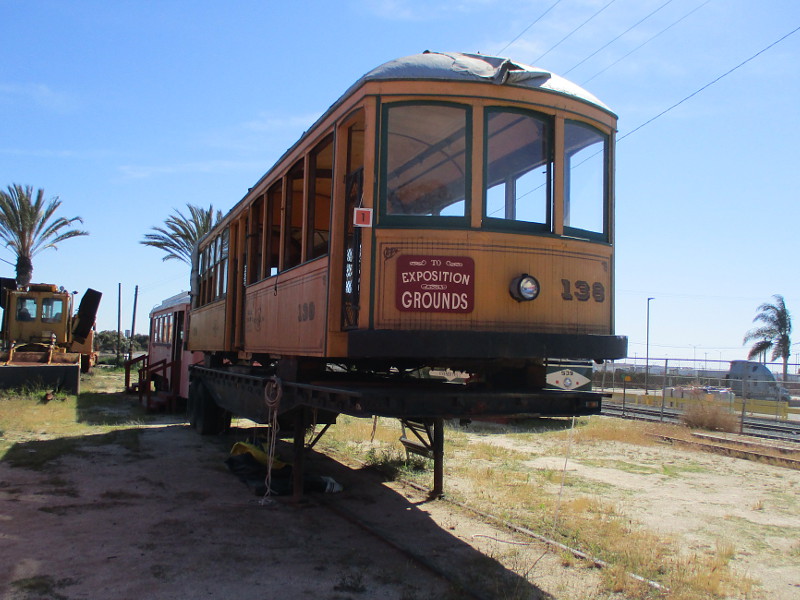
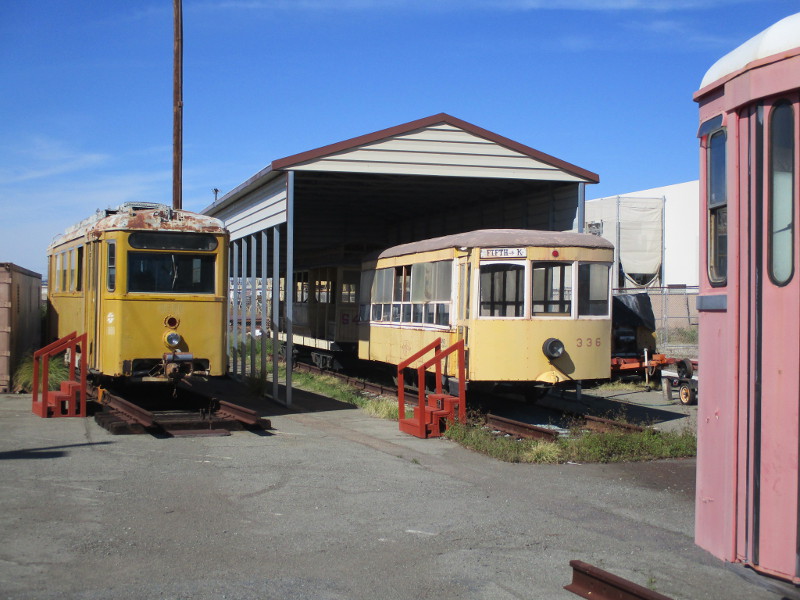
Do you want to see an incredible, important part of San Diego history? Then head over to the National City Depot Museum, which is operated by the San Diego Electric Railway Association. Last year they obtained the three only remaining streetcars that operated in the 1915 Panama-California Exposition in Balboa Park!

As you step into the depot museum, you’ll see a sign that describes the history of these historic cars. To summarize:

In 1910 the Class 1 streetcars were designed in San Diego and ordered from the St. Louis Car Company. Twenty four cars were built, and they began operations in San Diego in 1912. These cars would operate on various streetcar lines until 1939.

In 1939, a couple residing in El Cajon bought three streetcars that weren’t scrapped; in 1996 they were acquired by a local antique dealer and moved to storage on Adams Avenue; and in 1997 the cars were designated San Diego Historical Landmark #339.

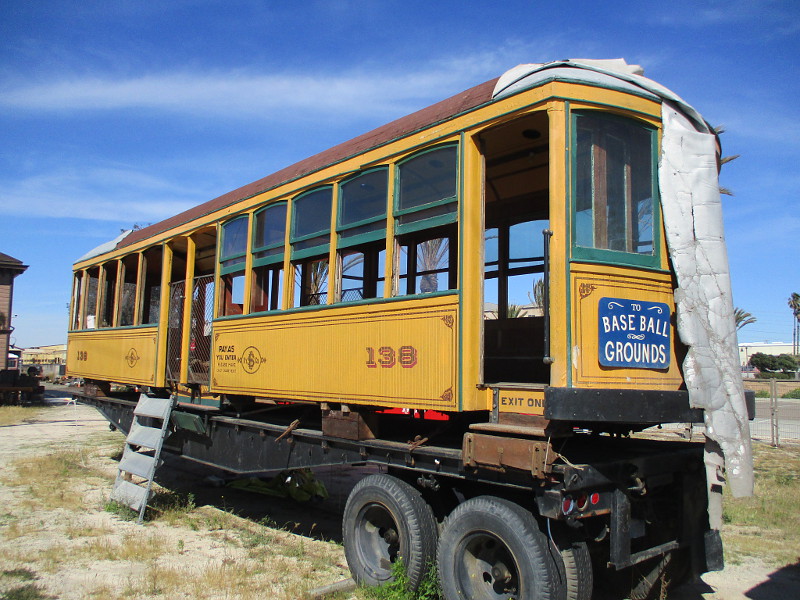
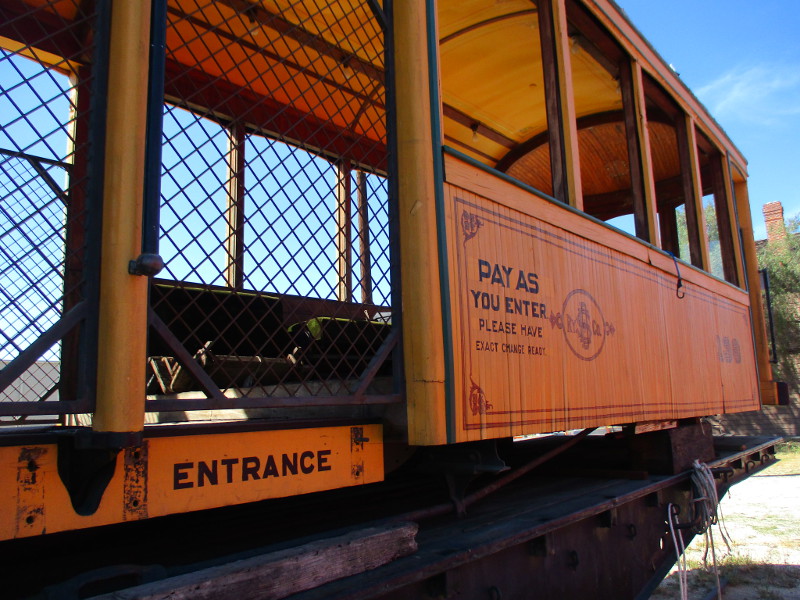
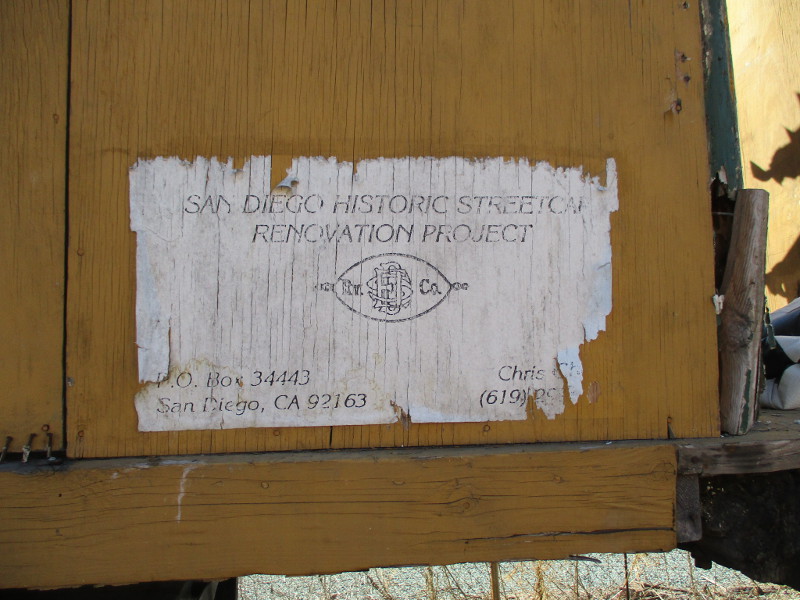
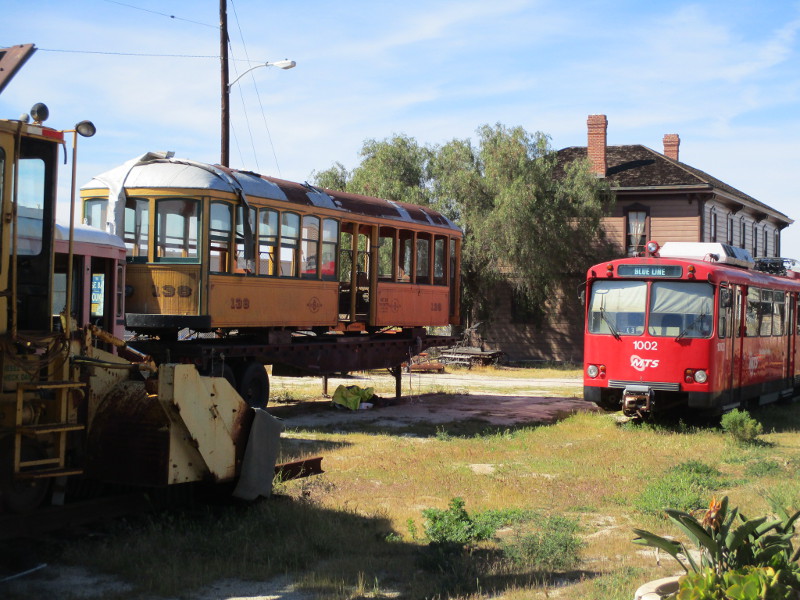
Between 1997 and 2013 extensive restoration work was performed on car 138 by San Diego Historic Streetcars, as you can see in my photographs. There had been a plan to operate the cars during Balboa Park’s 2015 Exposition Centennial.

Finally, in 2021, the three historic streetcars were donated to the San Diego Electric Railway Association in National City, where the public, on open weekends, can freely observe them up close!

The plan now is to obtain wheels for car 138, and to fully restore the car so that it will endure for future generations.

Anyone who is intrigued by San Diego’s history, and what life might have been like around the time of the 1915 Panama-California Exposition, must see these three original streetcars!

With a little imagination, one can picture the colorful cars running up rails that once existed near today’s Park Boulevard, transporting crowds of excited visitors to the exposition grounds!

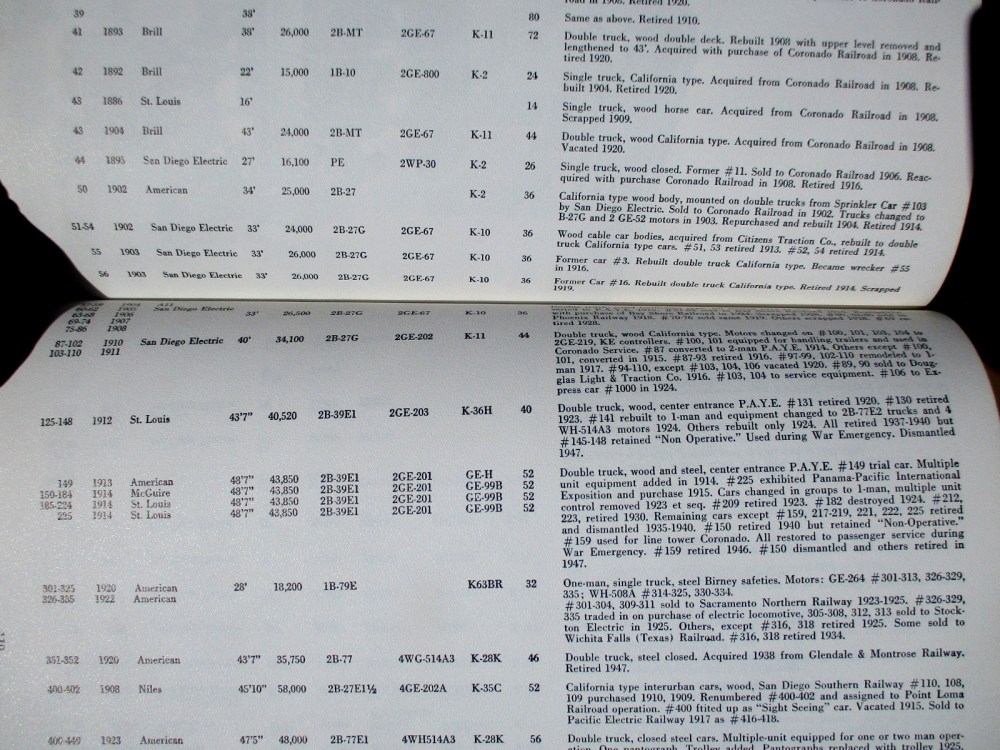
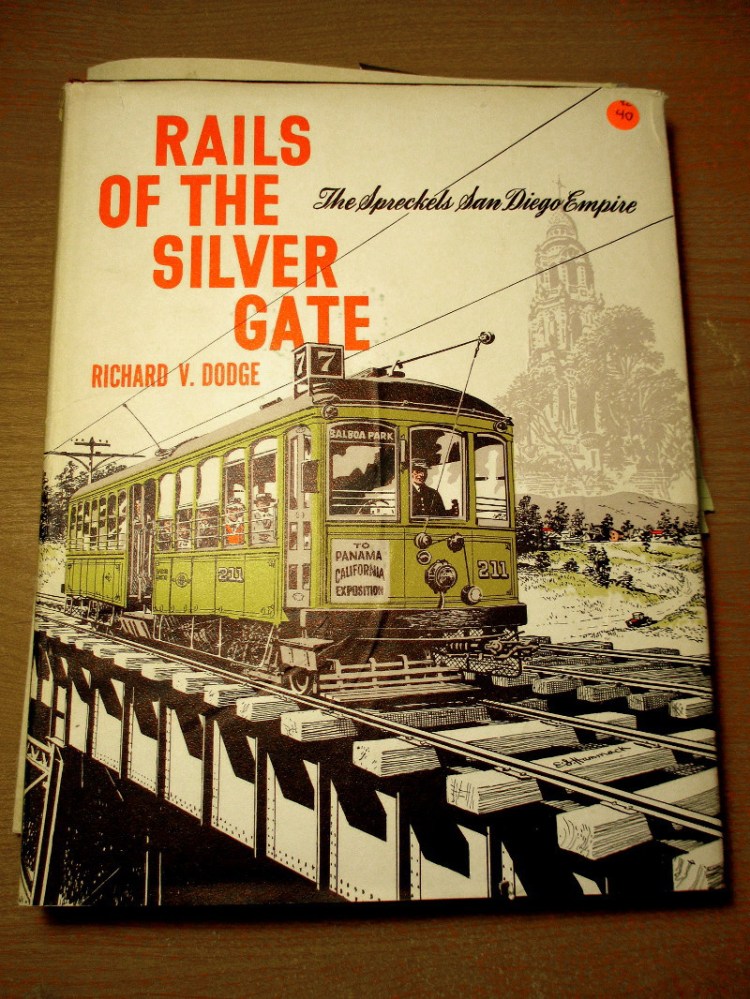
The book Rails of the Silver Gate by San Diego railroad historian Richard V. Dodge provides a description of cars 125-148.

At the other end of the National City Depot Museum’s large outdoor yard stand the two unrestored streetcars, numbers 126 and 128.

I live in downtown San Diego and love to walk around with my camera! You can follow Cool San Diego Sights via Facebook or Twitter!

You can easily explore Cool San Diego Sights by using the search box on my blog’s sidebar. Or click a tag! There are thousands upon thousands of photos for you to enjoy!

Lawyers Club of San Diego at the History Center.

A new exhibit opens in March at the San Diego History Center in Balboa Park. It’s titled To Advance the Status of Women in Law and Society: Lawyers Club of San Diego at 50 Years.

Yesterday, during a visit to the History Center, I enjoyed a preview of the exhibit, which then was almost complete.

Displays filled with photographs and detailed descriptions explain how over the years women have fought for equal rights and opportunity in California, and San Diego in particular.

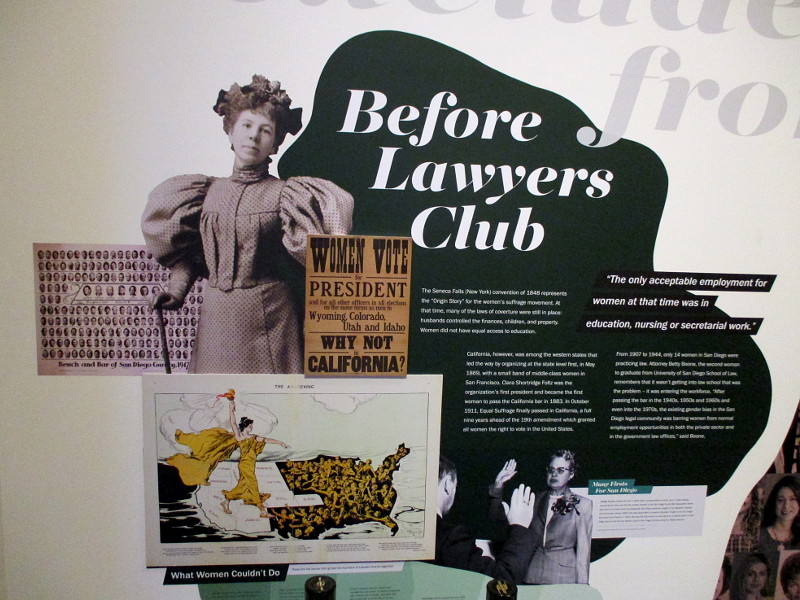
I learned how Clara Shortridge Foltz, the first woman to pass the California bar in 1883, helped lead the fight for the women’s right to vote in California.

I learned how gender bias in the San Diego legal community, right up into the 1970s, made it hard for women attorneys to gain employment.

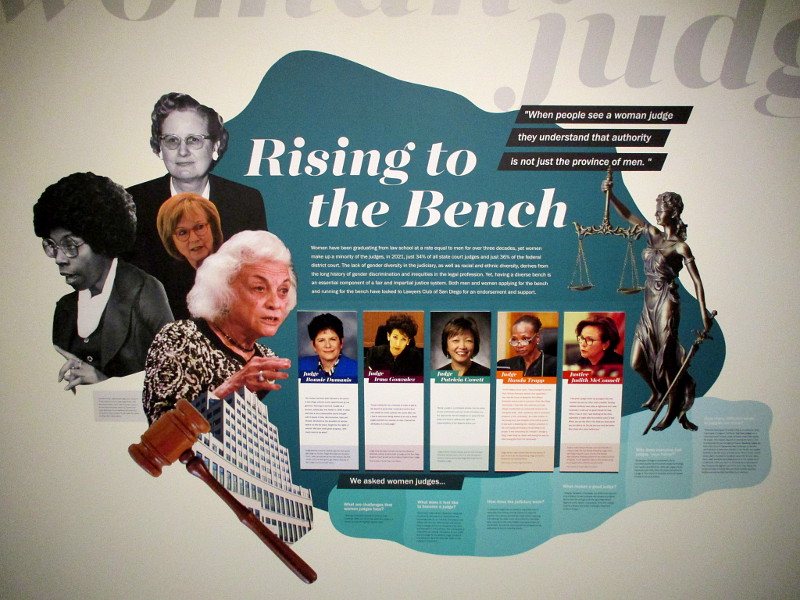
I also learned how one woman achieved unique success. Madge Bradley, who was appointed to the San Diego Municipal Court bench in 1953, was the first woman to serve on a judicial bench in San Diego County.

When Madge Bradley retired, there again were no women on the bench, and only 24 women practicing law in all of San Diego County. So six female lawyers, who sought to challenge gender bias in their profession and elevate the status of women, started the Lawyers Club in 1972.

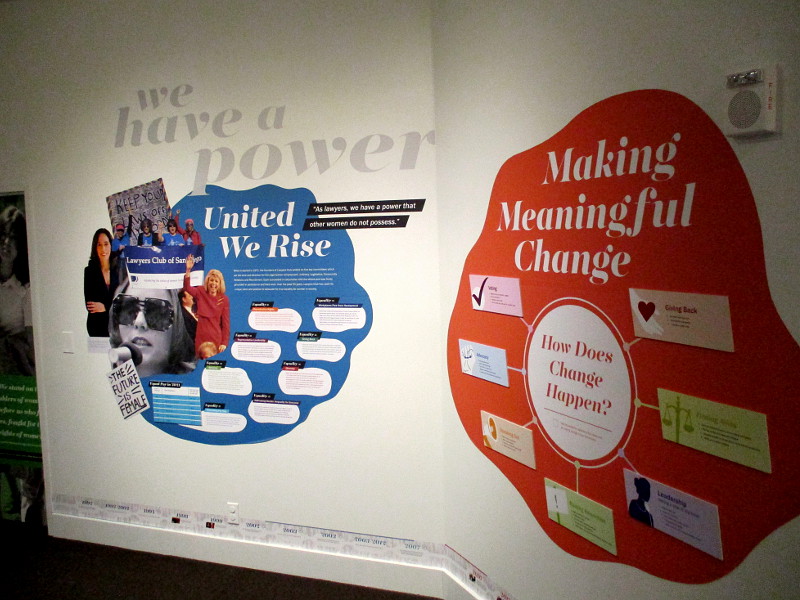
Over the decades, the Lawyers Club of San Diego has helped to greatly advance the cause of women, and equal rights, not only in the legal profession, but throughout society.

But there is still work to do. For several decades women have graduated from law school at the same rate as men, but they still make up a minority of judges.

One display explains how to make change happen: by voting, advocacy, speaking out, raising awareness, leadership, finding allies, and giving back.

In 2022, the Lawyers Club is celebrating their 50th Anniversary!

I live in downtown San Diego and love to walk around with my camera! You can follow Cool San Diego Sights via Facebook or Twitter!

An amazing San Diego museum few know about!

One of San Diego’s most amazing museums is little known to the public. But if you are interested in our city’s history, it’s a place you absolutely must visit!

The San Diego Electric Railway Association’s historic National City Depot museum is positively jam packed with fascinating exhibits. I last visited the old train depot six years ago, and I posted this blog with lots of photos and interesting information. On a whim I swung by the museum yesterday–and was wowed once again!

Display cases are filled with artifacts and ephemera from a century ago when a growing San Diego was crisscrossed with streetcars. And, of course, there are the many outdoor exhibits, including old trolleys, streetcars and railway equipment.

As I entered the depot, my eyes immediately fixed upon something astonishing. A sign described how three of San Diego’s original streetcars were added to the museum last year! I’ll be blogging about that shortly!

If you have kids and need something to do on a weekend, they’ll love the museum. I bet you will, too! And it’s free!

Take a look at just a tiny bit of the San Diego history you’ll see…

There are important out of print reference books available at the museum, too, including one titled Rails of the Silver Gate that I purchased. Published in 1960, it provides a complete detailed history of entrepreneur John D. Spreckels and his creation of the San Diego Electric Railway. The incredible book includes many photos, plus descriptions of every car that ever operated, and route maps that became increasingly extensive over the years!

I live in downtown San Diego and love to walk around with my camera! You can follow Cool San Diego Sights via Facebook or Twitter!

Souvenir programs from San Diego’s old Star-Light Opera.

Surprising discoveries are often made by those who visit the San Diego History Center in Balboa Park.

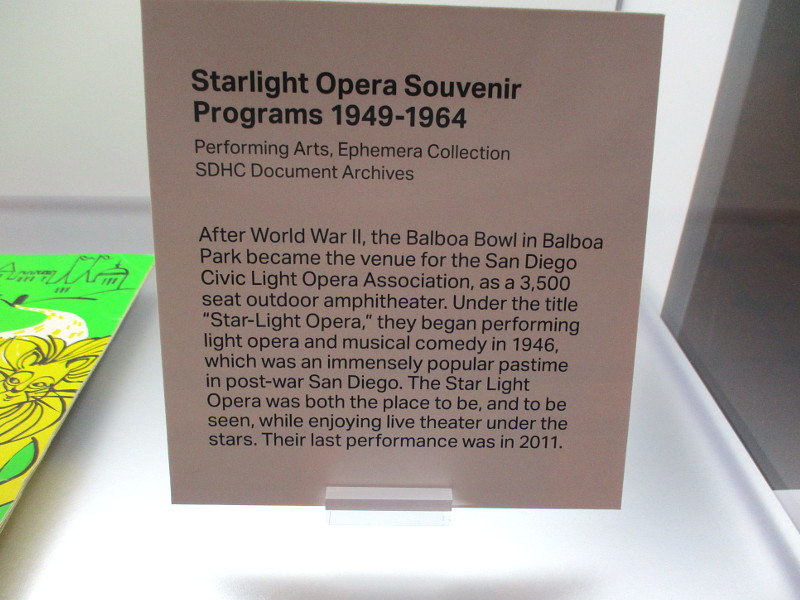
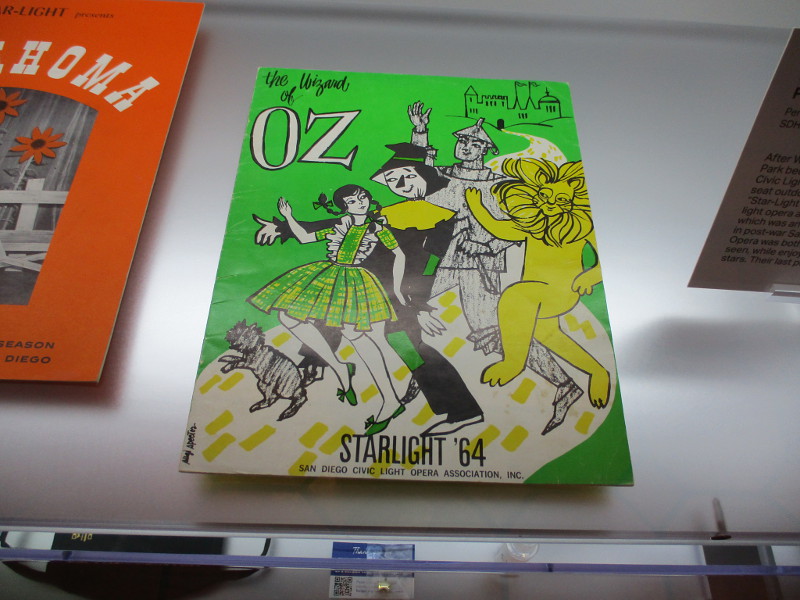
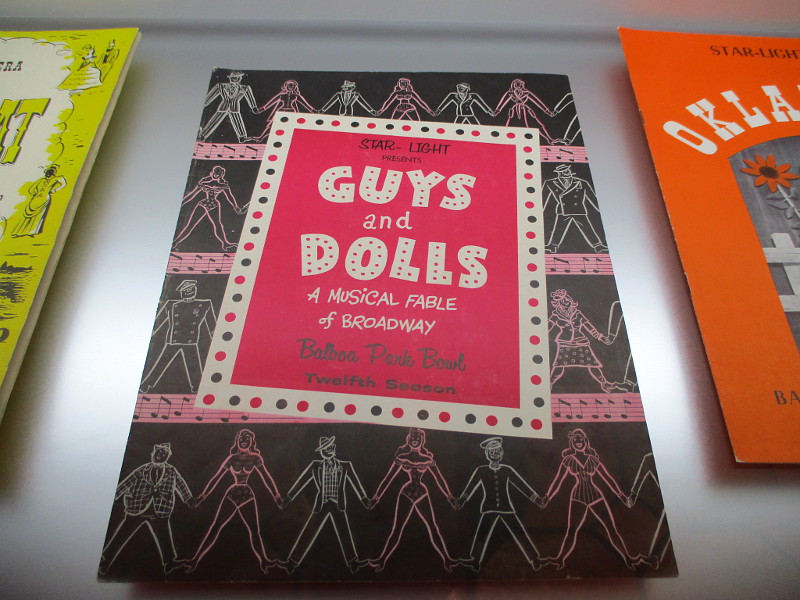
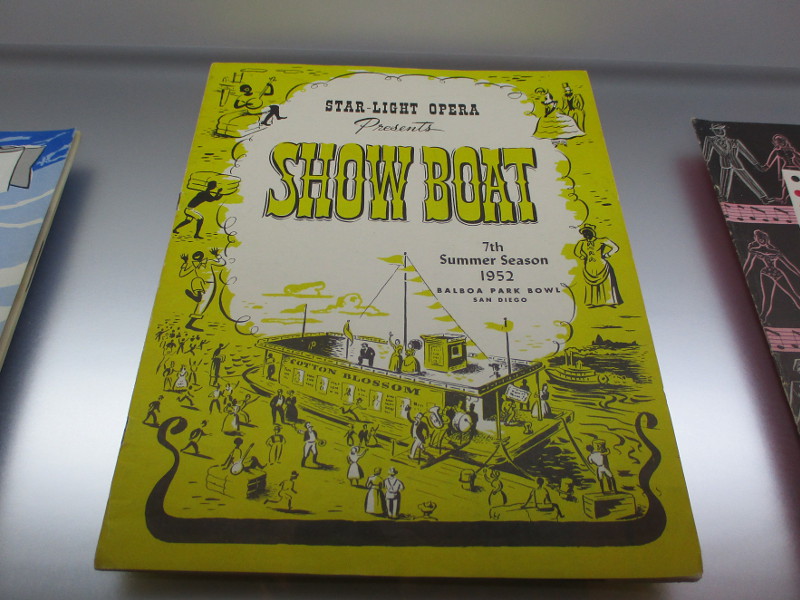
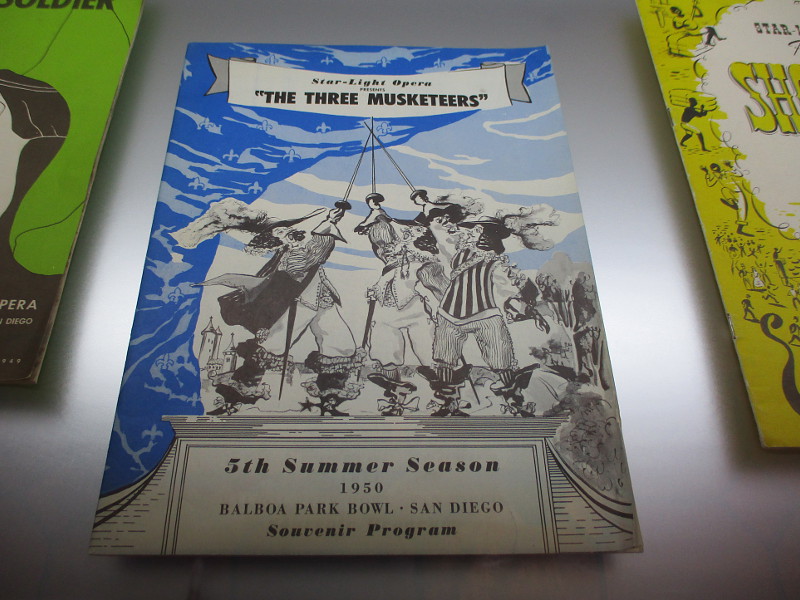
A display case in the museum now includes colorful old souvenir programs. They are for plays performed in the Balboa Bowl (later renamed Starlight Bowl) by the San Diego Civic Light Opera Association’s once popular Star-Light Opera. The half dozen productions represented were from 1949 to 1964.

I recall seeing Kiss Me, Kate and The Pirates of Penzance with my family at the Starlight Bowl. When noisy airplanes landing at Lindbergh Field (now San Diego International Airport) approached overhead, a light came on by the stage and the actors would all freeze. Once the plane had passed, the play would resume.

Alas, the planes became more and more frequent, and the Star-Light Opera’s last performance was in 2011.

Efforts are now underway to revive the Starlight Bowl. Read about the ambitious plan here!

The Wizard of Oz.
Oklahoma.
Guys and Dolls.
Show Boat.
The Three Musketeers.
The Chocolate Soldier.

I live in downtown San Diego and love to walk around with my camera! You can follow Cool San Diego Sights via Facebook or Twitter!
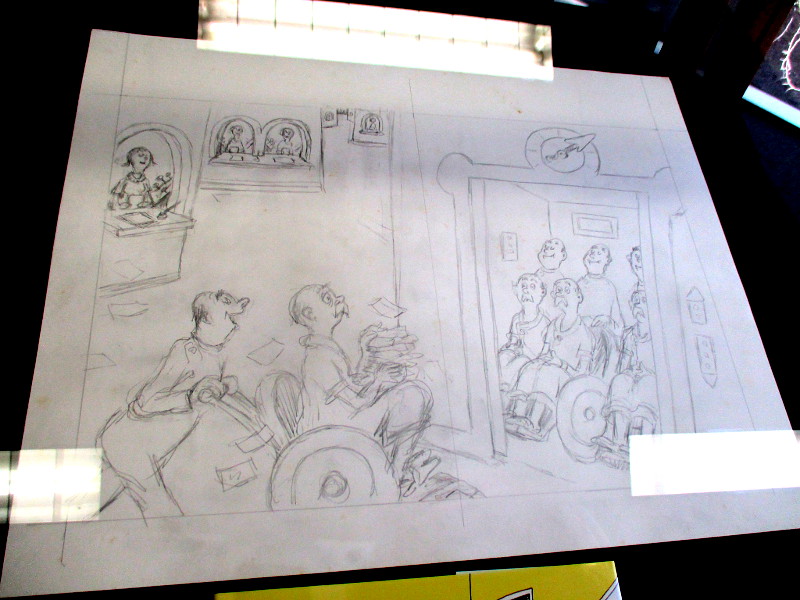
Californian’s cannon salute to Star of India.

If you’ve ever heard two very loud booms in downtown San Diego on a Sunday afternoon, chances are you’ve heard cannons on San Diego Bay.

Around 3:30 pm, when the tall ship Californian returns from a four-hour sail and approaches its Maritime Museum of San Diego home, it fires two cannons to salute world-famous museum ship Star of India.

I was out on the deck of the Maritime Museum’s steam ferry Berkeley when a docent advised everyone there would soon be a very loud noise! I got my camera ready, aimed it at Californian, and snapped photos at the first sign of smoke.

Startling booms followed shortly thereafter, echoing off nearby downtown skyscrapers!

The two cannon salute to Star of India, oldest active sailing ship in the world, is now a San Diego tradition. The booms have been echoing downtown for as long as I can remember.

The handsome schooner Californian, built in San Diego in 1984, is the official tall ship of the State of California.

I live in downtown San Diego and love to walk around with my camera! You can follow Cool San Diego Sights via Facebook or Twitter!

Lakeside history on signs at Lindo Lake.

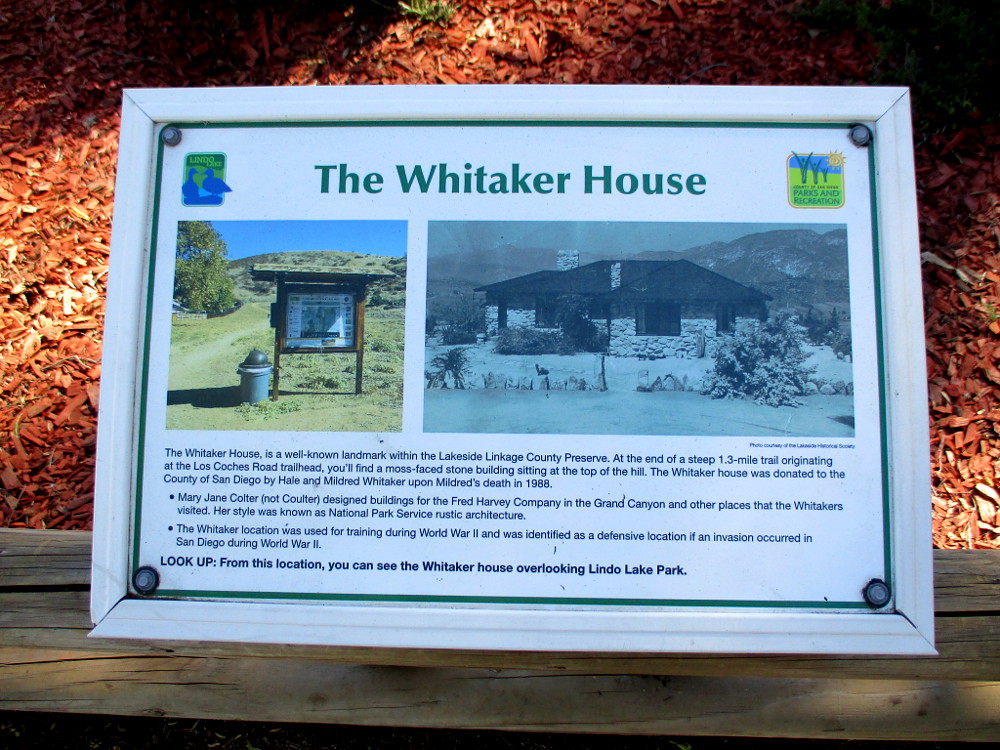
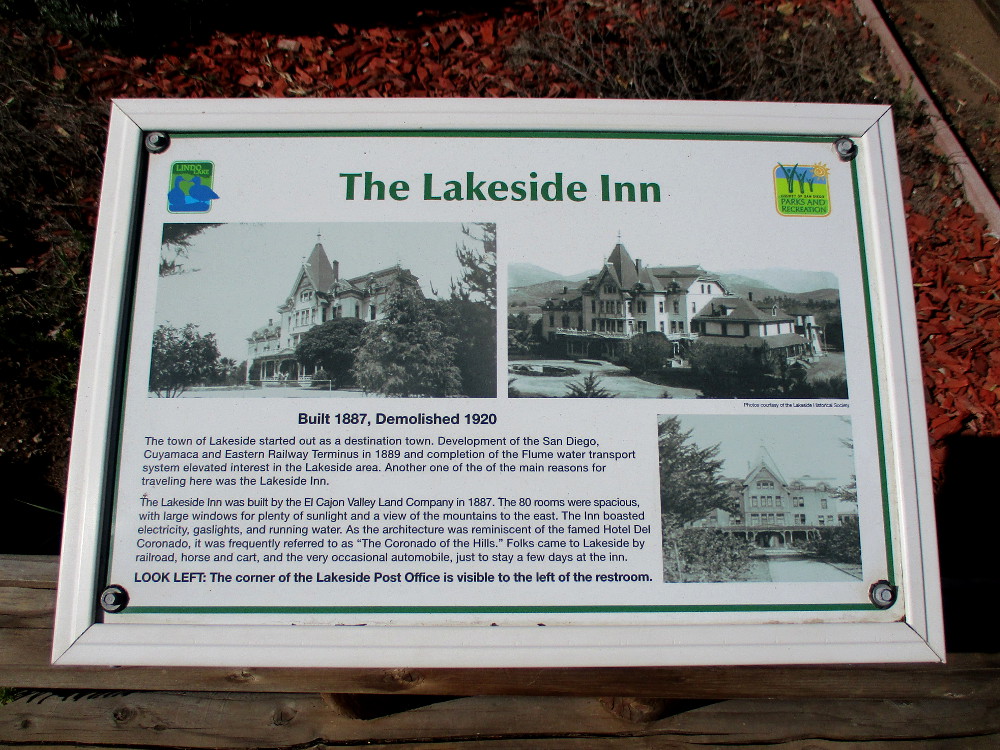
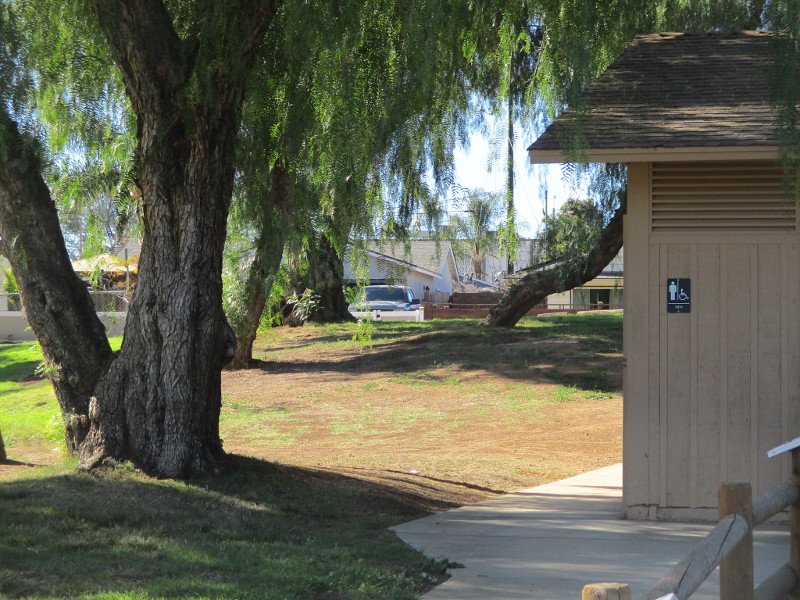
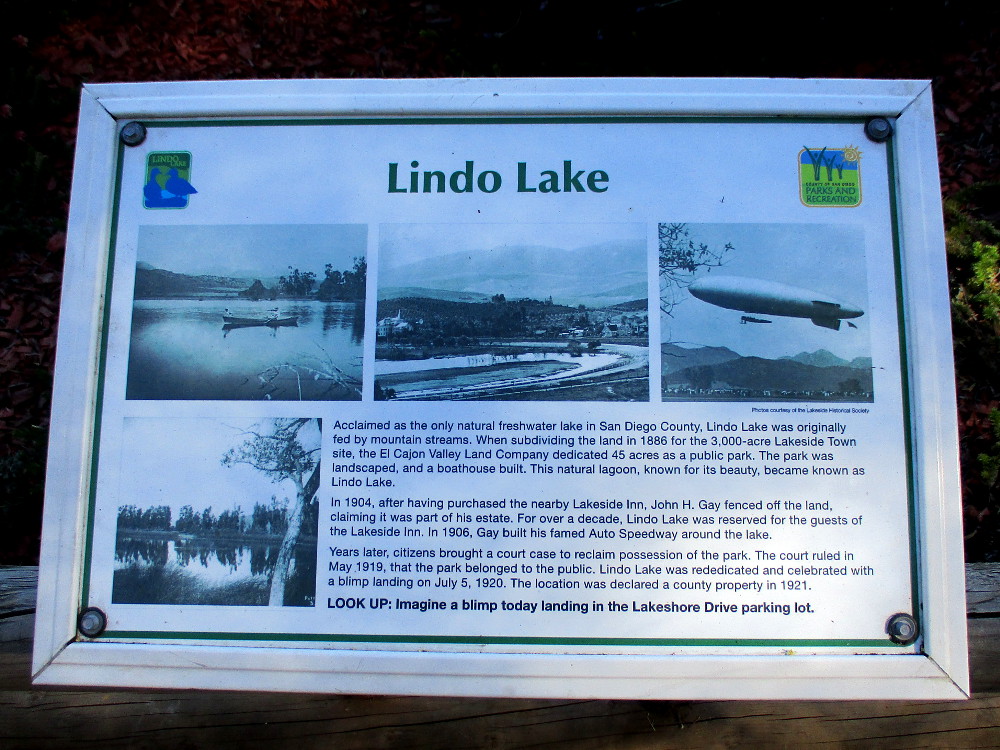
Lindo Lake in Lakeside has been the center of much interesting history. Should you walk past the restrooms near the southwest corner of Lindo Lake County Park, by the intersection of Woodside Avenue and Chestnut Street, you’ll likely notice information signs describing historical locations that are visible to curious eyes.

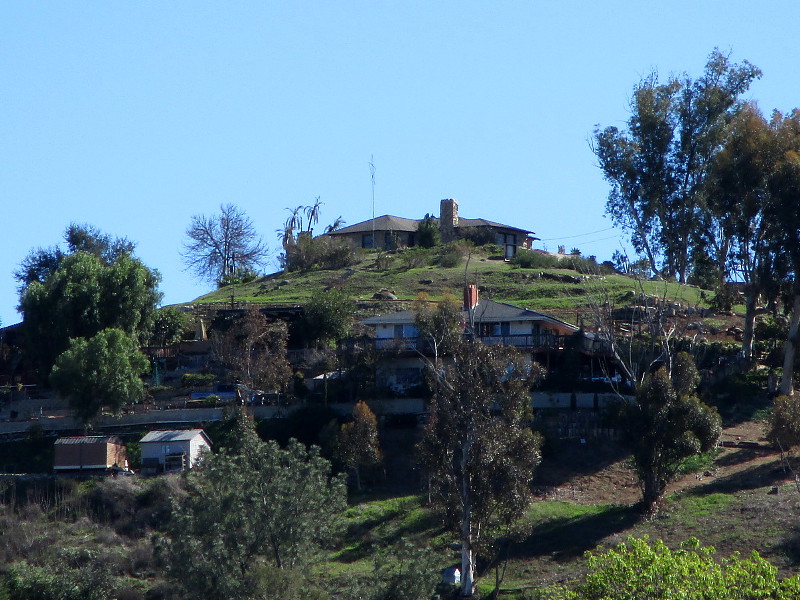
I paused to read each sign during my last Lakeside visit, then turned my camera in the direction indicated to capture a little of the history.

The Whitaker House is a stone building at the top of a prominent hill within the Lakeside Linkage County Preserve. Its design was inspired by architect Mary Jane Colter, whose buildings in the Grand Canyon include the Desert View Watchtower and the Hopi House. The style is known as National Park Service rustic architecture.

The Lakeside Inn, built by the El Cajon Valley Land Company in 1887 and demolished in 1920, was located near today’s post office building. This “Coronado of the Hills” boasted grand Victorian architecture, electricity, gaslights and running water.

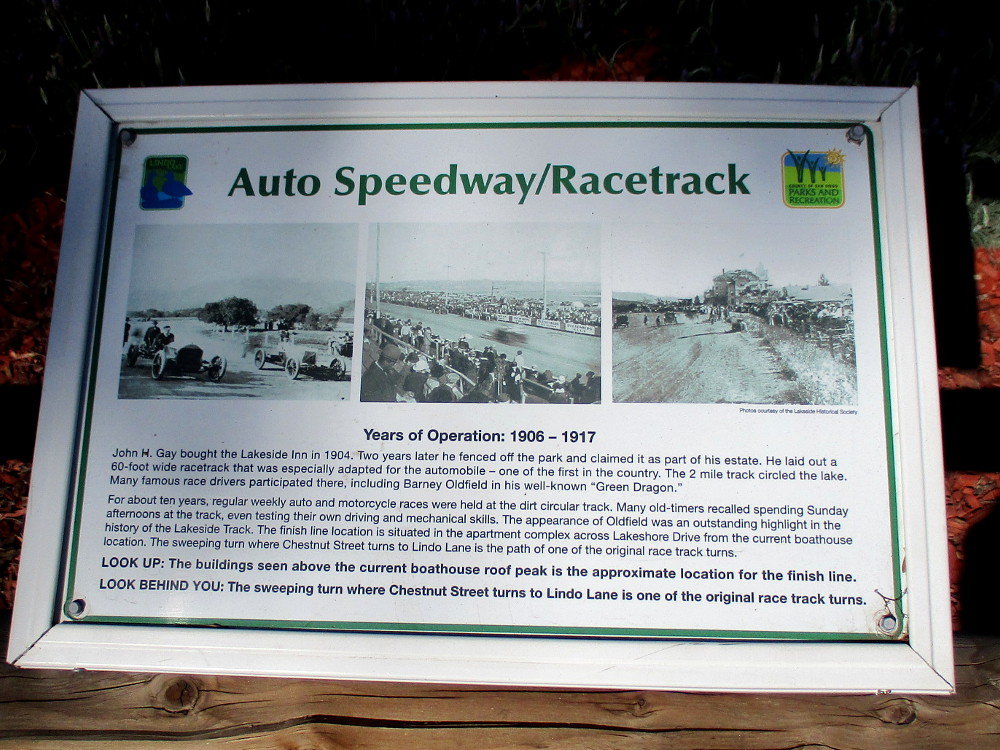
Between 1906 and 1917, a 60 foot wide, 2 mile racetrack circled Lindo Lake. It was built by John H. Gay, who purchased the Lakeside Inn in 1904.

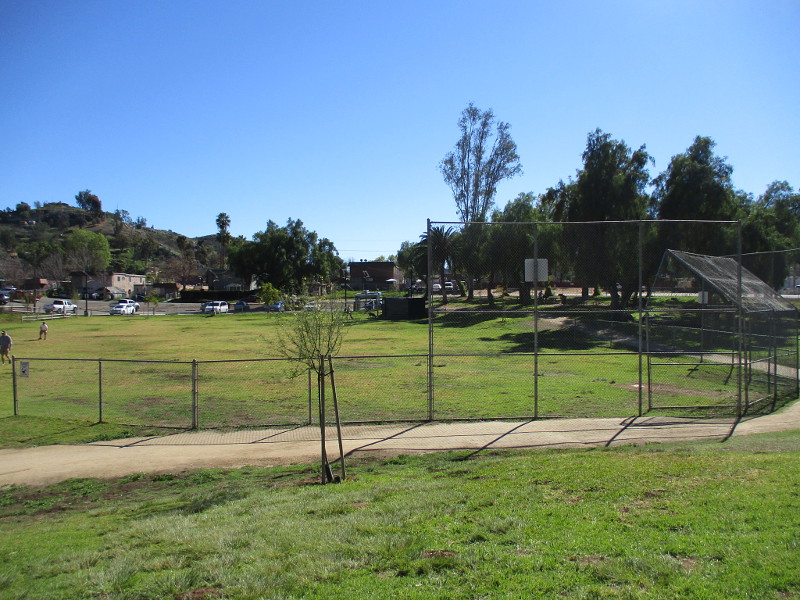
Famous drivers who raced on this historic track included legendary Barney Oldfield. One of the racetrack’s turns can be seen beyond the baseball field, where Chestnut Street turns to Lindo Lane.

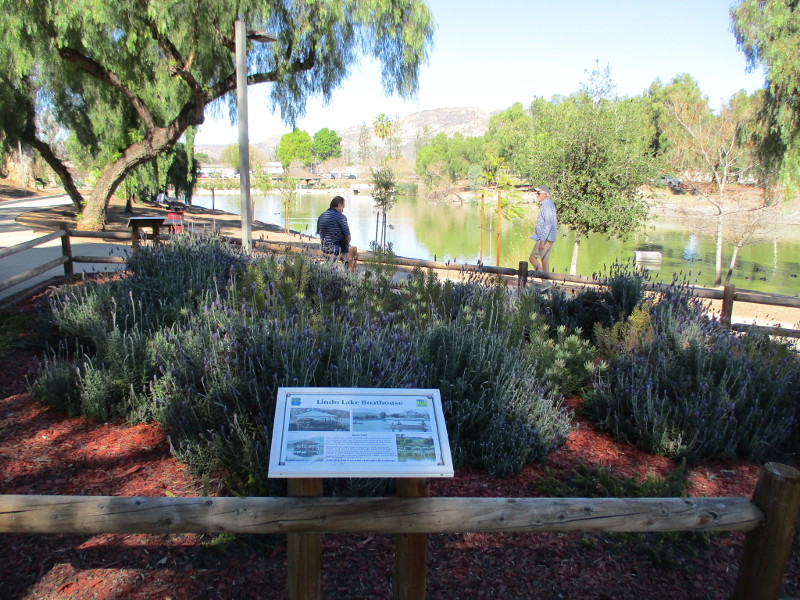
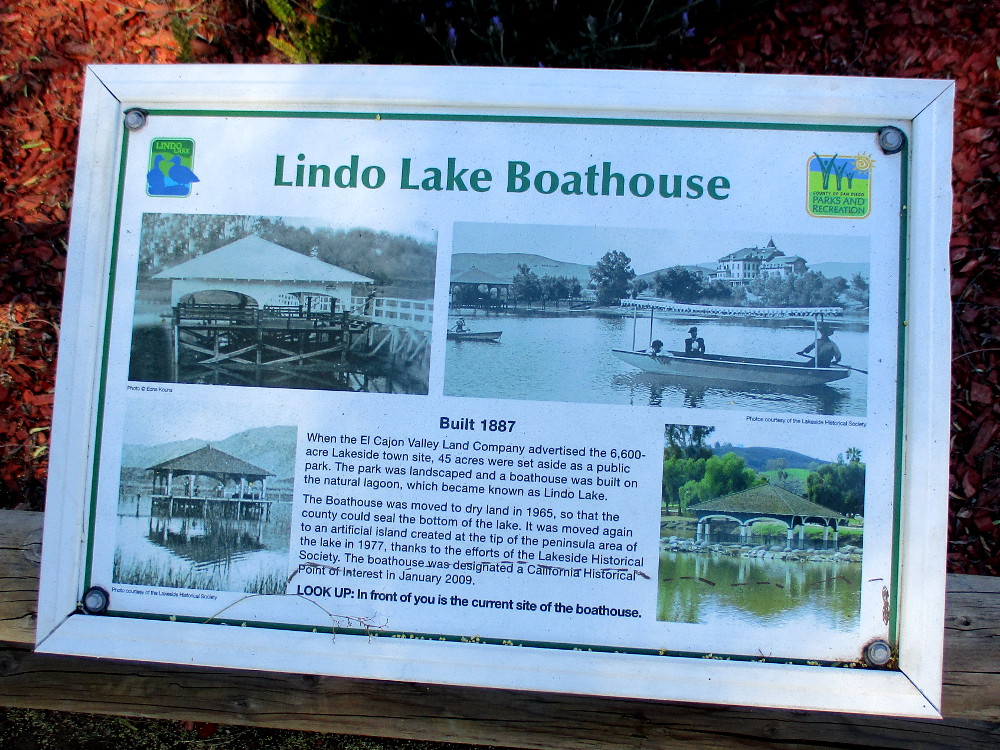
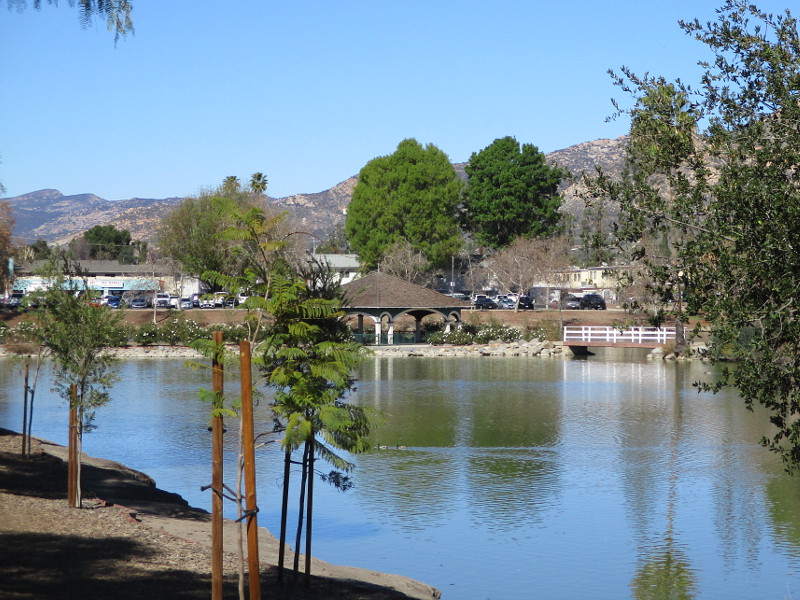
The Lindo Lake Boathouse was built in 1887 on what was then a lagoon–the only natural lake in all of San Diego County. It has been moved several times and now sits on an artificial island.

Lindo Lake was originally fed by mountain streams. When subdividing their 3000-acre Lakeside Town site, the El Cajon Valley Land Company designated the lake and surrounding area as a public park.

In 1919 a court ruled the park, that had been claimed by Lakeside Inn owner John H. Gay, in fact belonged to the public. To celebrate, a blimp landed by the lake on July 5, 1920.

I live in downtown San Diego and love to walk around with my camera! You can follow Cool San Diego Sights via Facebook or Twitter!
You can easily explore Cool San Diego Sights by using the search box on my blog’s sidebar. Or click a tag! There are thousands upon thousands of photos for you to enjoy!