Hotel del Coronado’s Ice House Museum.

Last summer a new museum opened at the world-famous Hotel del Coronado.

Located in the hotel’s historic ice house, between the old power plant and laundry building, the Ice House Museum tells the story of the world-famous Victorian beach resort.

Fascinating displays filling several walls pay tribute to those who’ve worked at the Hotel del Coronado over the decades, and the numerous celebrities who’ve visited.

I headed to the museum a couple weekends ago to check it out!

It was an overcast day–not the ideal weather for sunbathing on the nearby beach–so quite a few hotel guests were enjoying this free museum, too!
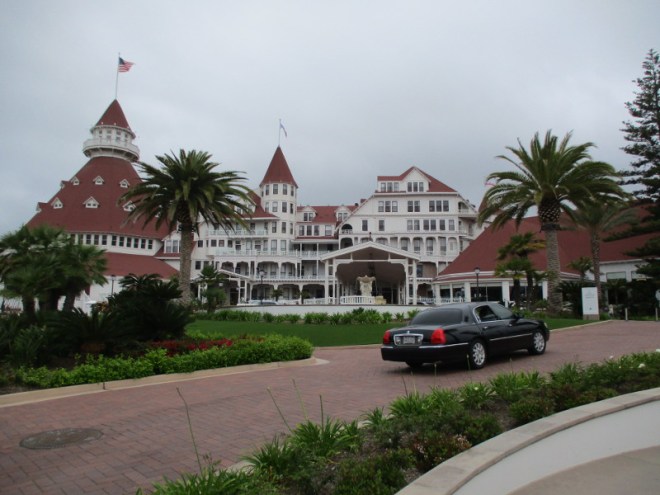
The grand entrance to the iconic Hotel del Coronado can be viewed north of the Ice House Museum. The late 19th century beach resort is in the Queen Anne architectural style.
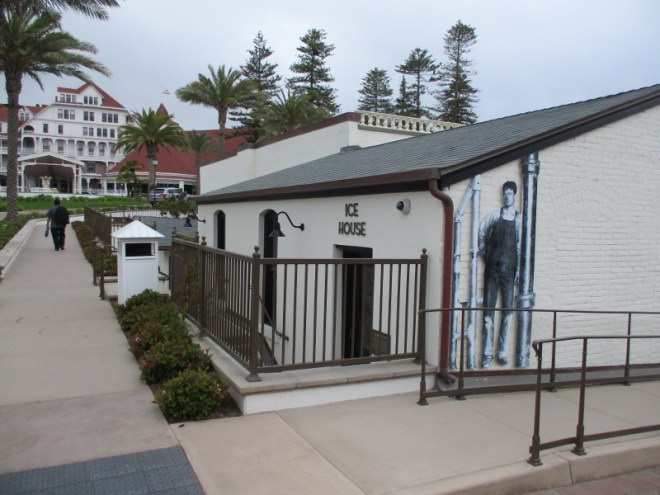
The old ice house was built for hotel founders Babcock and Story’s Coronado Ice Company. The enterprise provided ice to the entire island. The ice house now contains a fascinating historical museum.
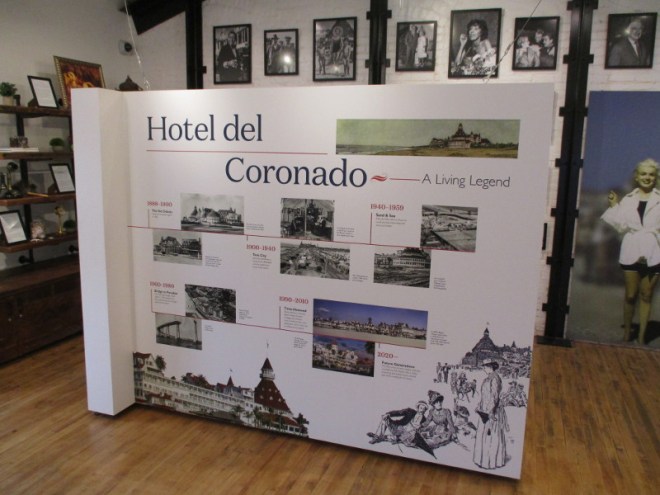
Prominent display inside the museum shows timeline of the Hotel del Coronado’s history. Elisha Babcock, Jr. and Hampton L. Story, founders of the Coronado Beach Company and developers of Coronado, built the hotel in 1888. The hotel was purchased by San Diego entrepreneur John D. Spreckels about a year later.
One wall features photos of many celebrities who’ve stayed at the famous hotel.
Legendary guests are remembered. Names I saw include American presidents Harrison, Taft, Carter, Reagan, Clinton and Bush. Sports and entertainment celebrities include Frank Sinatra, Walt Disney, Carol Burnett, Cary Grant, Milton Berle, John Wayne, Peter O’Toole, Esther Williams, Babe Ruth, Kirk Douglas, Charlie Chaplin, Mickey Rooney, Tony Curtis, Marilyn Monroe…
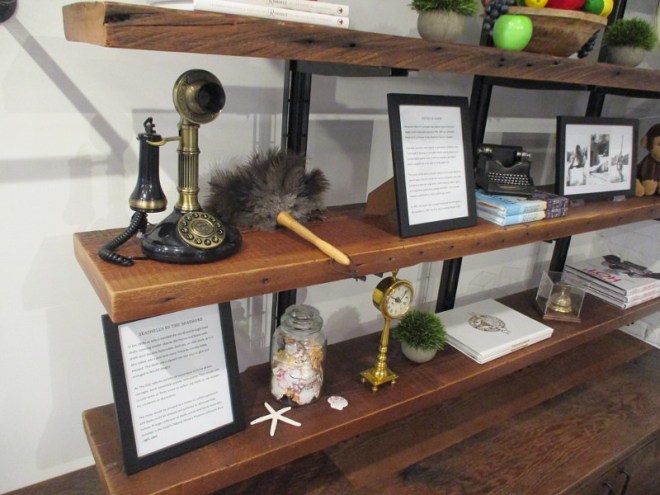
Artifacts recall unique aspects of the hotel’s rich history.
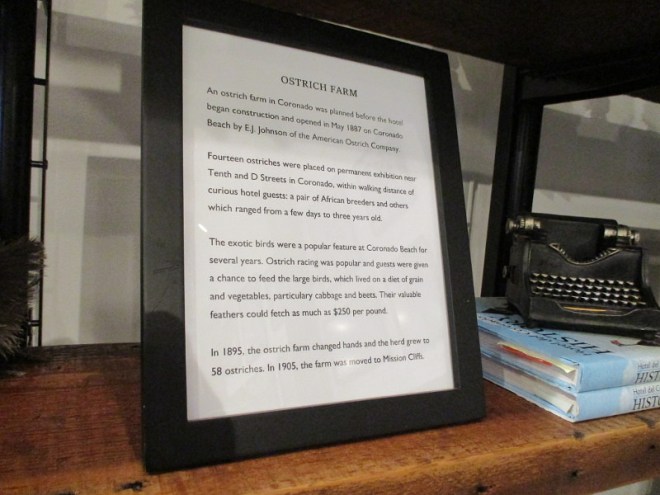
The beach near the hotel once featured an ostrich farm! A year before the Hotel del Coronado opened, fourteen ostriches were on permanent exhibition near Tenth and D Streets. In 1905, the greatly expanded ostrich farm moved to Mission Cliffs.
Six copies of this Orientalist style painting, titled On the March, by Germain artist Adolf Schreyer, were ordered in 1905 to decorate the elegant hotel’s walls.
Commemorative dinnerware. Bone china with a gold-embossed rim made for the Hotel del Coronado’s centennial celebration in 1988.
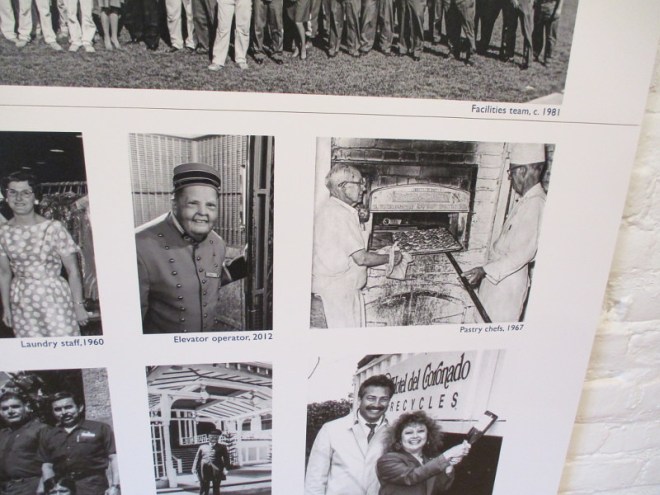
Some of the faces of dedicated hotel employees over the decades. Heart of the House. People who deliver the Del experience.
Just south of the Ice House Museum is the Hotel del Coronado Laundry building.
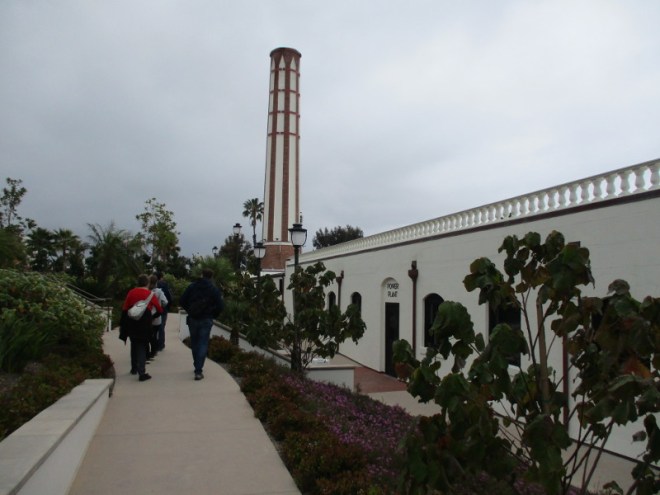
One walking path, leading back to the Hotel del Coronado’s main entrance, passes near the old power plant, with its prominent smokestack.

This blog now features thousands of photos around San Diego! Are you curious? There’s lots of cool stuff to check out!

Here’s the Cool San Diego Sights main page, where you can read the most current blog posts.  If you’re using a phone or small mobile device, click those three parallel lines up at the top–that opens up my website’s sidebar, where you’ll see the most popular posts, a search box, and more!

To enjoy future posts, you can also “like” Cool San Diego Sights on Facebook or follow me on Twitter.

World’s longest running IMAX film projector!

The world’s longest running IMAX film projector is on display in San Diego’s Balboa Park. That’s because this venerable old projector operated for 48 years at the Reuben H. Fleet Science Center!

Tonight I headed over to the Fleet Science Center to watch The Sky Tonight, a once-a-month astronomy presentation on the giant space-like IMAX dome. As I waited in the theater lobby for the show to begin seating, I noticed the historic projector on display to one side, behind an open curtain.

A gentleman briefly explained the projector’s history. The very durable, then state-of-the-art projector was originally installed in 1973. It was the second IMAX projector made. Apparently nobody knows what became of the first!

When I got home, I found this link to a great article concerning the projector, and its replacement last year with a new, improved IMAX Laser digital video projector.

I live in downtown San Diego and love to walk around with my camera! You can follow Cool San Diego Sights via Facebook or Twitter!

A secret place for High Flight in Coronado.

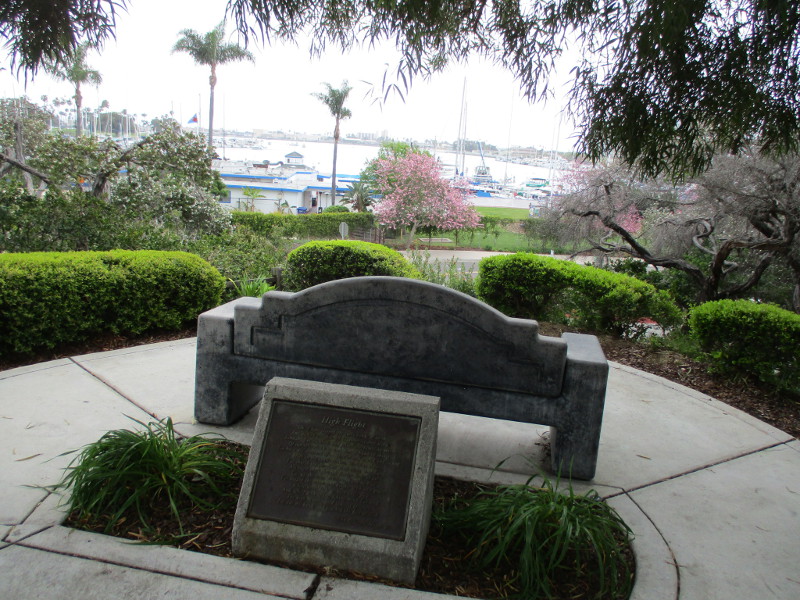
In Coronado, in a secret place overlooking the Coronado Yacht Club, there’s a shady nook where the human spirit can find High Flight.

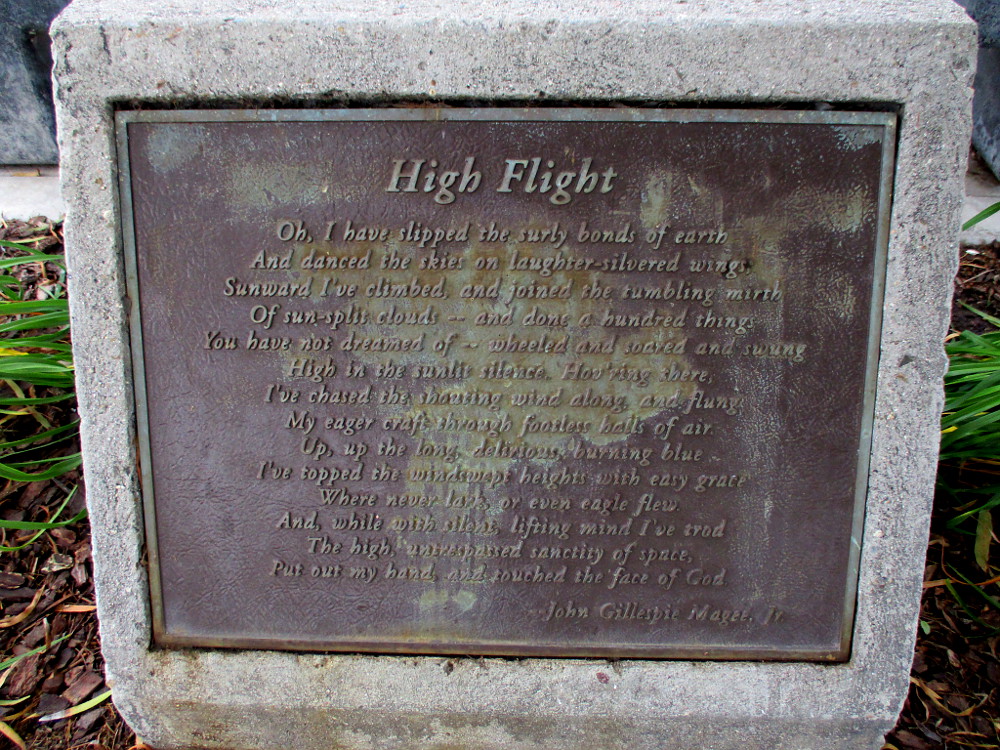
High Flight

Oh, I have slipped the surly bonds of earth
And danced the skies on laughter-silvered wings;
Sunward I’ve climbed, and joined the tumbling mirth
Of sun-split clouds — and done a hundred things
You have not dreamed of — wheeled and soared and swung
High in the sunlit silence. Hov’ring there,
I’ve chased the shouting wind along and flung
My eager craft through footless halls of air.
Up, up the long delirious burning blue
I’ve topped the wind-swept heights with easy grace
Where never lark, or even eagle flew.
And, while with silent, lifting mind I’ve trod
The high, untrespassed sanctity of space,
Put out my hand, and touched the face of God.

–John Gillespie Magee, Jr.

John Gillespie Magee, Jr. was an American serving with the Royal Canadian Air Force in England during World War II. On December 11, 1941, at the age of 19, his Spitfire accidentally collided with another plane and he crashed to his death. Learn more about him here.

If you’d like to sit on this special bench in Coronado, and gaze quietly out at the world’s beauty, make your way to the corner of Glorietta Boulevard and Ynez Place.

I live in downtown San Diego and love to walk around with my camera! You can follow Cool San Diego Sights via Facebook or Twitter!

Exhibit shows history of Japanese Americans in Coronado.

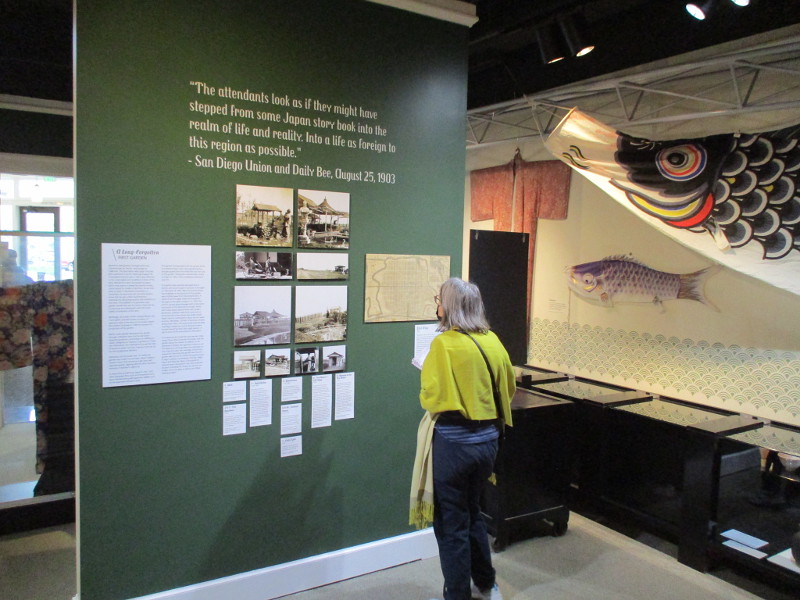
The Coronado Historical Association’s Museum of History and Art presently features an exhibit titled Uprooted: The Story of the Japanese Americans of Coronado.

I visited the museum yesterday. The kind lady at the entrance allowed me to take a few photos when she learned I’m a blogger.
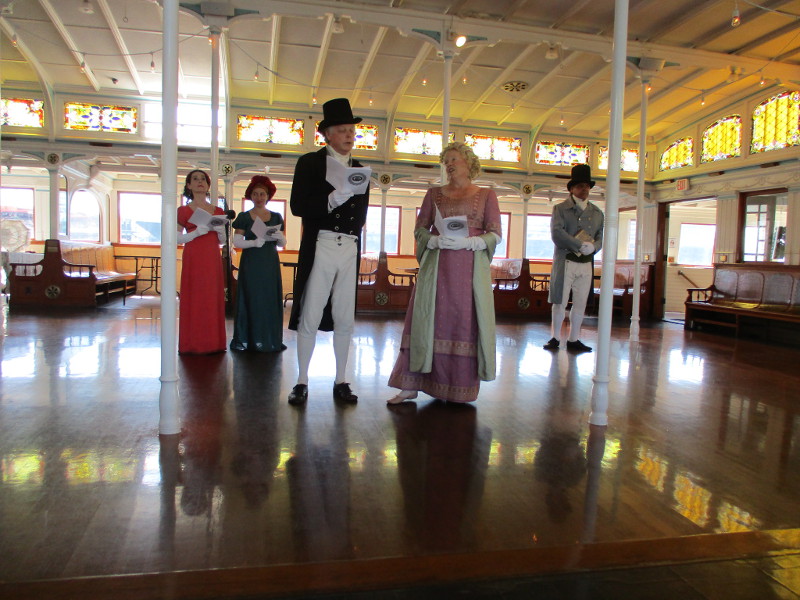
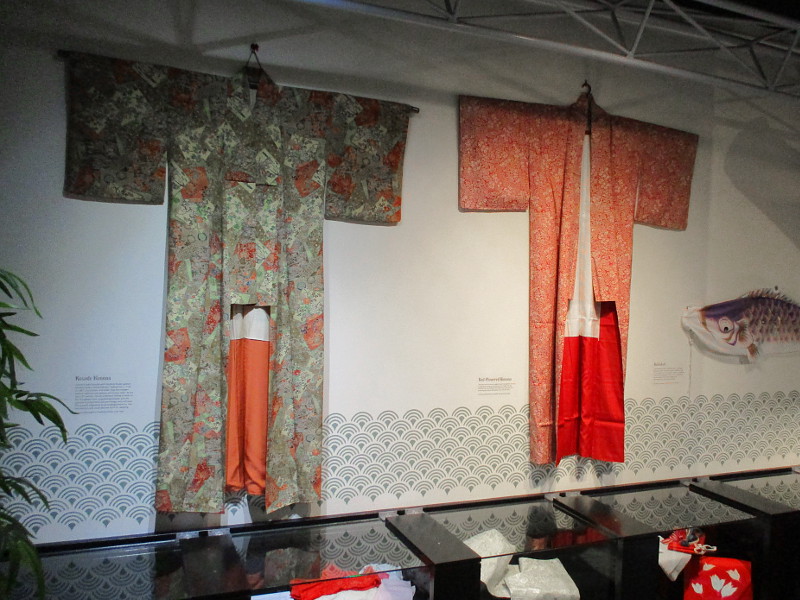
As I stepped into the first gallery, I was immediately pleased to see that the Japanese Friendship Garden in Balboa Park had contributed objects for display, including beautiful kimonos. I’m a member of the garden.

Then, as I looked at old photographs and read descriptions, I was stunned to learn that Coronado once had its own Japanese garden! Actually two tea gardens! And the second would be the setting for four motion pictures from 1913 to 1919!

Looking at the exhibit’s many historical photographs, I tried to imagine what life on the island might have been like years ago, particularly for Japanese Americans. The years covered are from the mid-1800’s when immigrants came to California seeking opportunity, to the forced detention of Japanese American citizens during World War II, to more recent and optimistic times.

Many of the displays are made possible by the Japanese American Historical Society of San Diego.

Anyone interested in local history absolutely should visit this exhibit. I was surprised to learn so much!

More information can be found on the Coronado Historical Association website here.

I live in downtown San Diego and love to walk around with my camera! You can follow Cool San Diego Sights via Facebook or Twitter!

Photos of the historic Old Scripps Building.

Enjoy a few photographs of the historic Old Scripps Building, at the Scripps Institution of Oceanography in La Jolla.

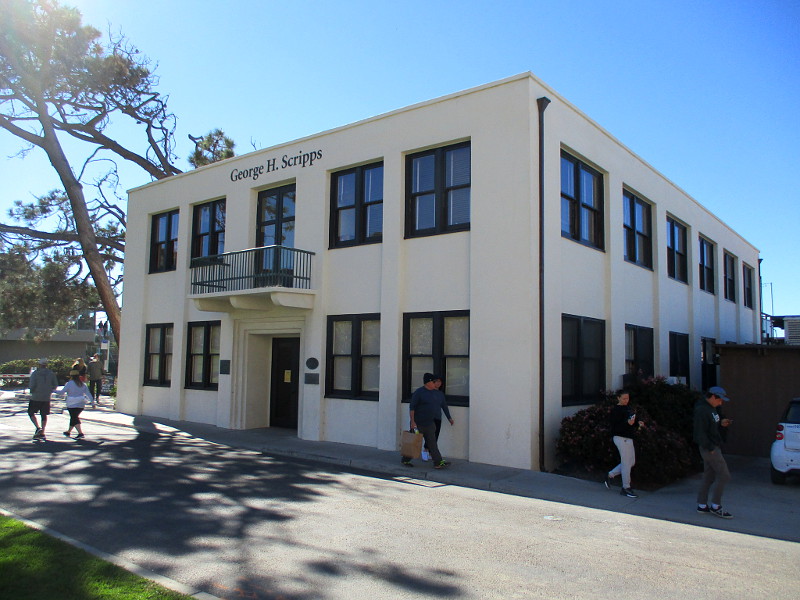
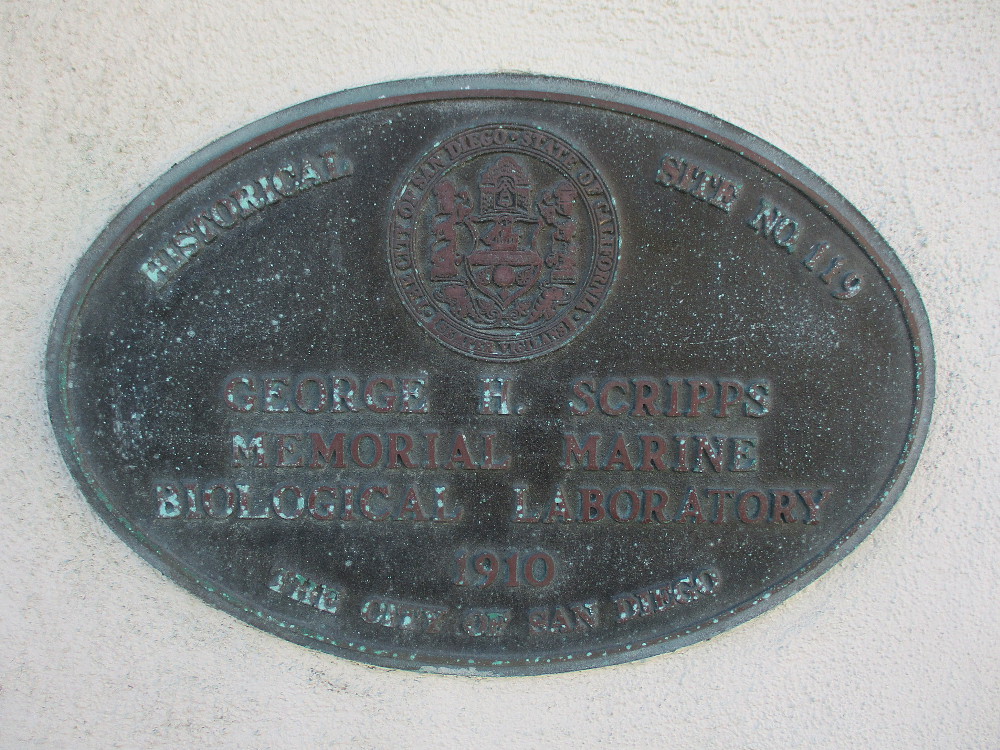
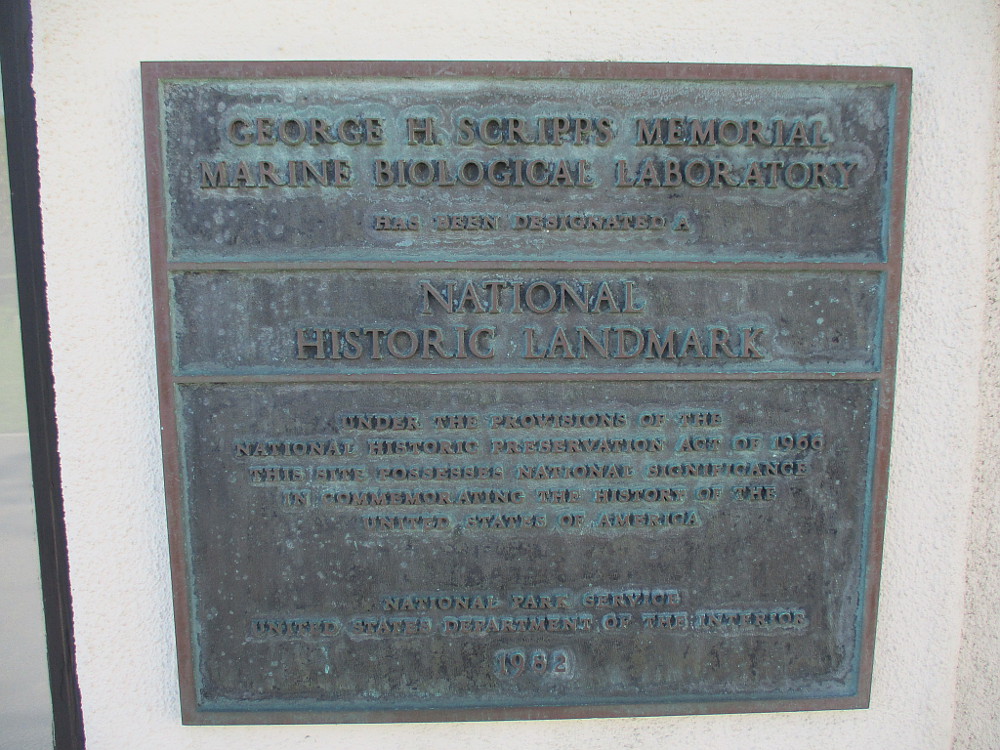
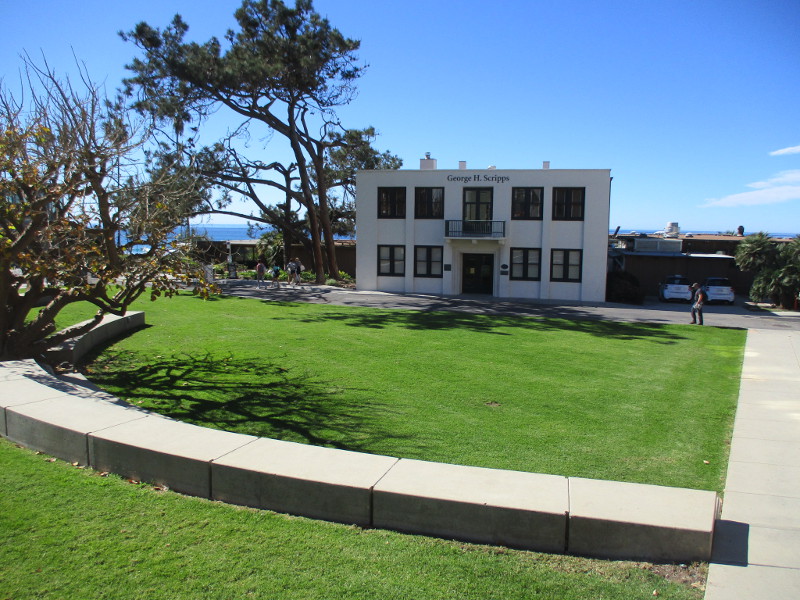
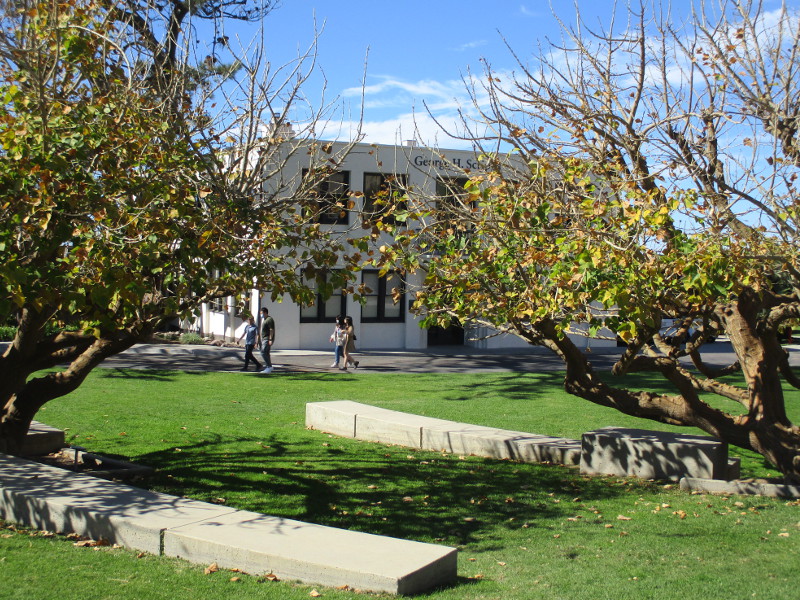
Today the building is referred to as the George H. Scripps Memorial Marine Biological Laboratory. Located on the oceanfront campus a short distance south of the Ellen Browning Scripps Memorial Pier, it stands next to a grassy area called Pawka Green.

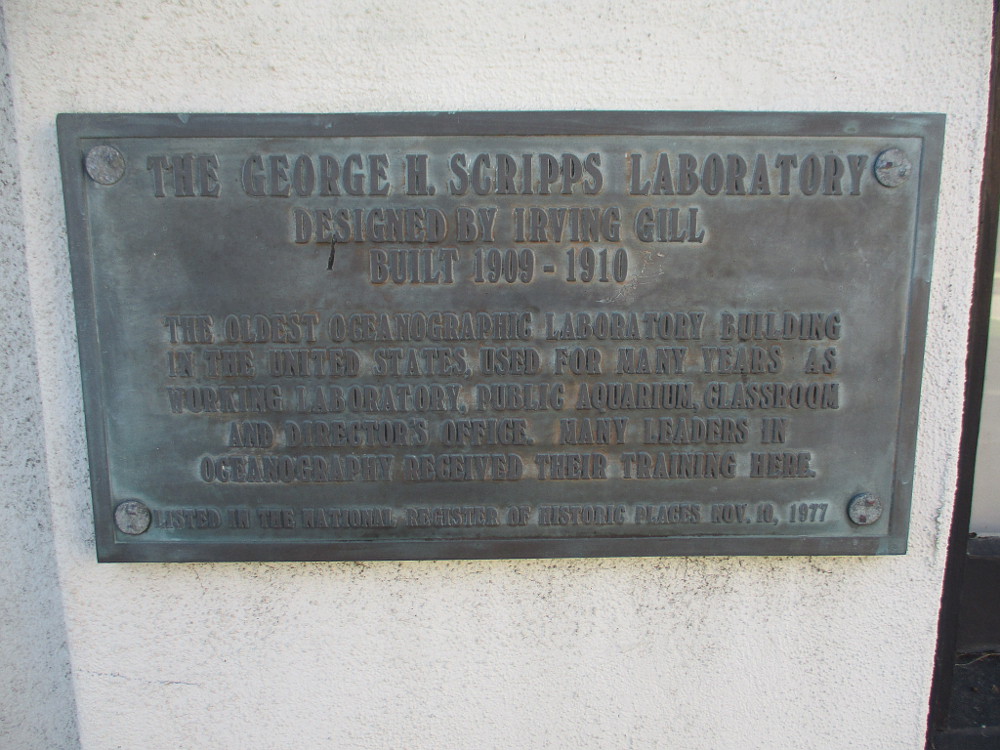
Built 1909-1910, the Old Scripps Building was the original home of the Scripps Institution of Oceanography, which back then was called the Marine Biological Laboratory. The rather modest building (in which founder and director William Emerson Ritter and his wife also lived) contained research laboratories, offices, and even a public aquarium.

Today, the Scripps Institution of Oceanography has grown into a world-famous campus overlooking the Pacific Ocean, and is part of the University of California, San Diego.

The two-story Old Scripps Building might appear plain at first glance, but look again. The simple, elegant building was designed by none other than renowned architect Irving Gill. His pioneering Modernist designs often integrated simple lines and pure forms. In Southern California’s brilliant sunshine, his spaces are light-filled and welcoming. He also pioneered the use of reinforced concrete. This building is one such example.

In 1982 the Old Scripps Building, due to its historical importance, was designated a National Historic Landmark.

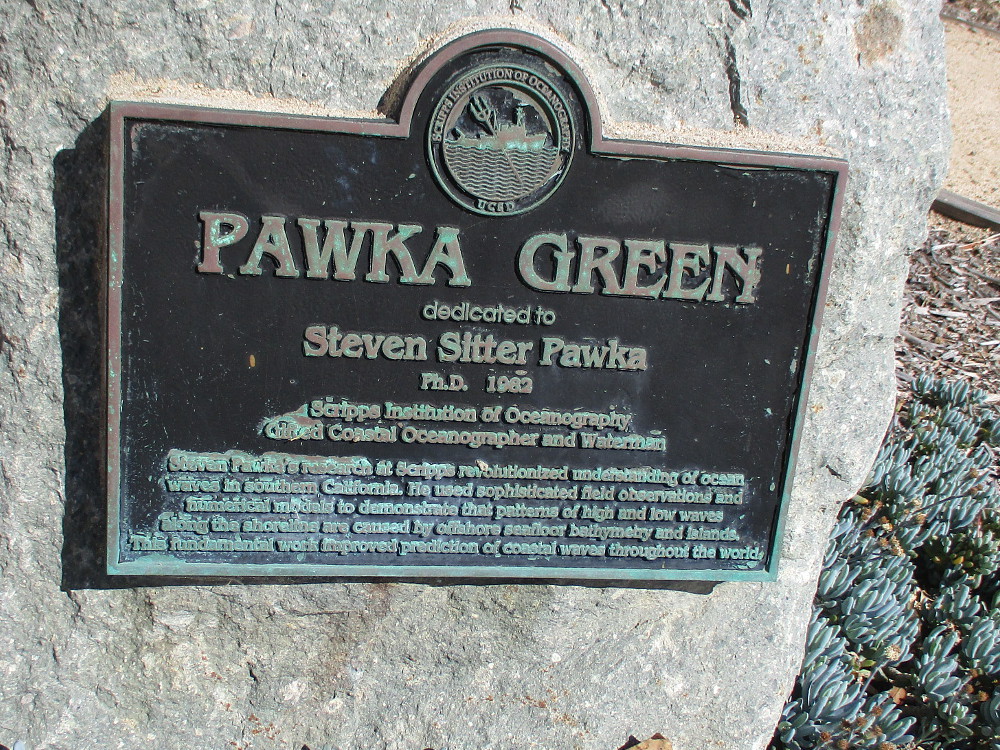
The adjacent Pawka green is dedicated to Steven Sitter Pawka, Ph.D., Scripps Institution of Oceanography coastal oceanographer and waterman. His sophisticated observations and numerical models improved prediction of coastal waves throughout the world.

I live in downtown San Diego and love to walk around with my camera! You can follow Cool San Diego Sights via Facebook or Twitter!

You can easily explore Cool San Diego Sights by using the search box on my blog’s sidebar. Or click a tag! There are thousands upon thousands of photos for you to enjoy!
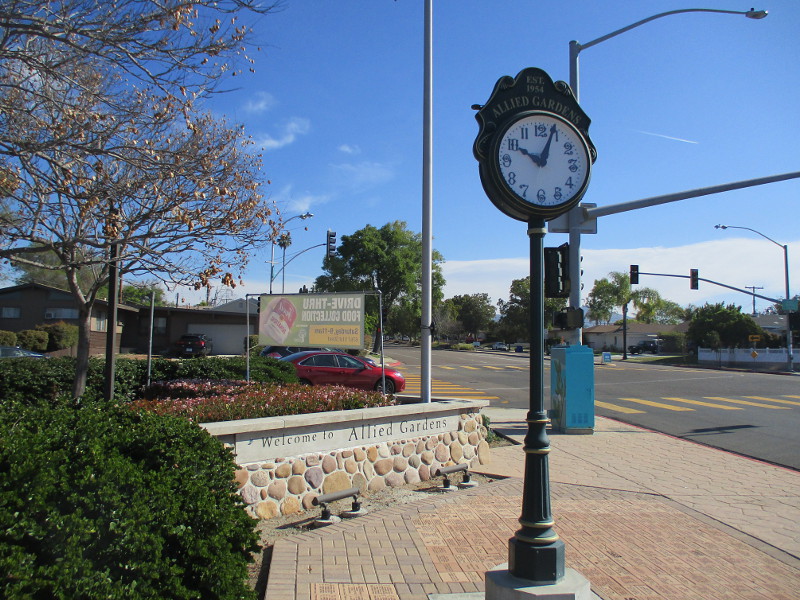
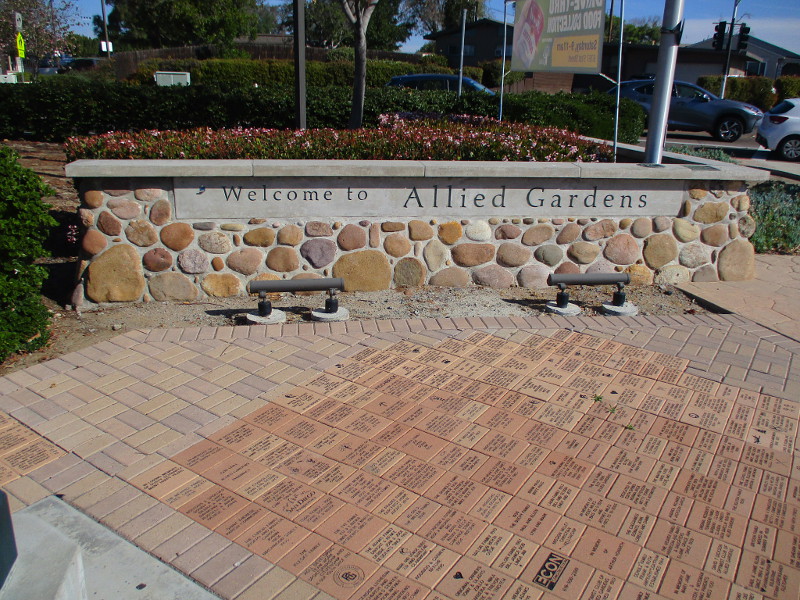
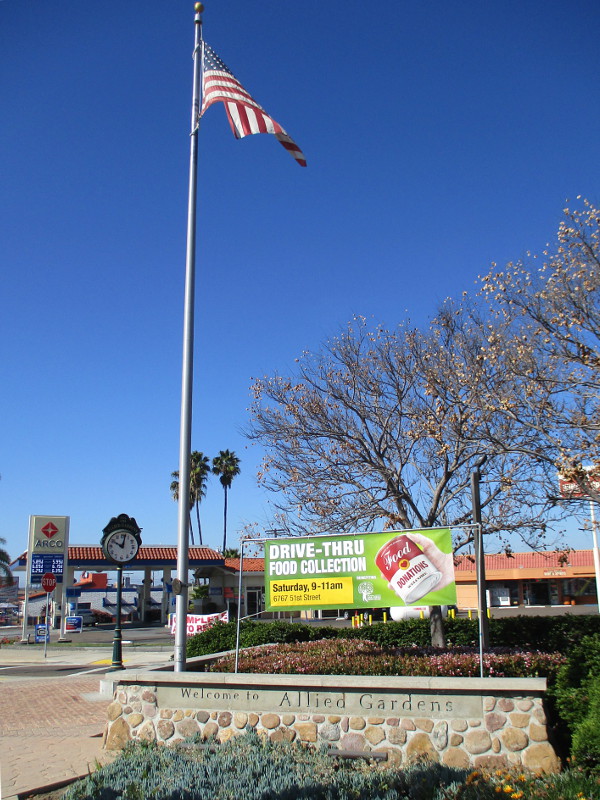
Clock and flag Welcome to Allied Gardens.
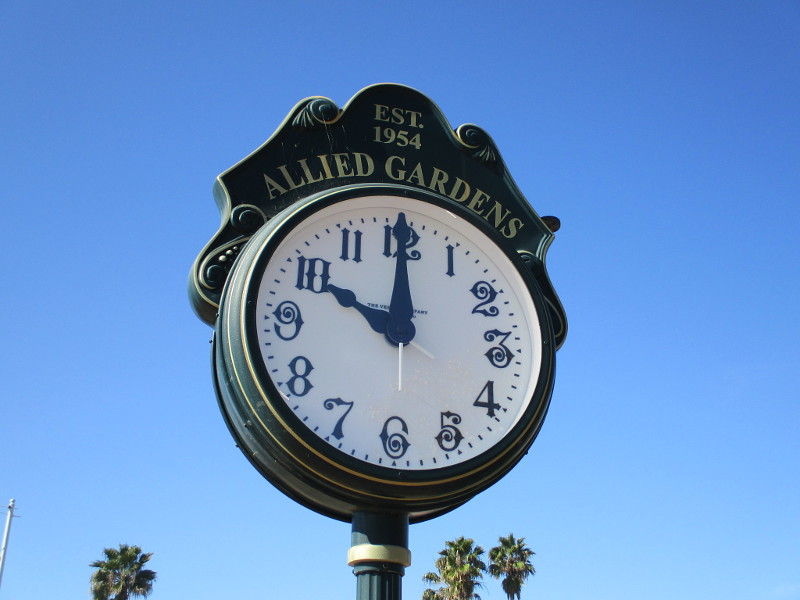
There’s a street clock and flag in Allied Gardens at the corner of Waring Road and Zion Avenue.

According to this page, during our nation’s bicentennial in 1976, the Grantville-Allied Gardens Kiwanis Club sponsored a parade, and later installed a permanent flagpole in the small park-like space now called The Triangle. Today, those passing through the community are greeted with a friendly Welcome to Allied Gardens.

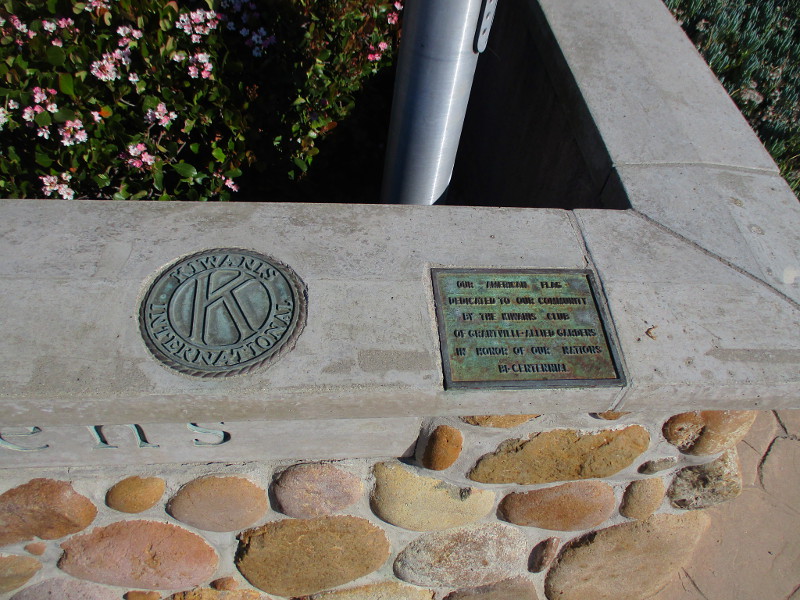
I walked past the clock and flag a few weekends ago and took these photographs. I also discovered a couple of plaques by the flag. Many of the engraved pavers around the clock’s base have more recent dates.

Welcome to Allied Gardens.
A community service project sponsored by Kiwanis.
Allied Gardens established 1954.
Our American flag dedicated to our community by the Kiwanis Club of Grantville-Allied Gardens in honor of our nations bi-centennial.

I live in downtown San Diego and love to walk around with my camera! You can follow Cool San Diego Sights via Facebook or Twitter!

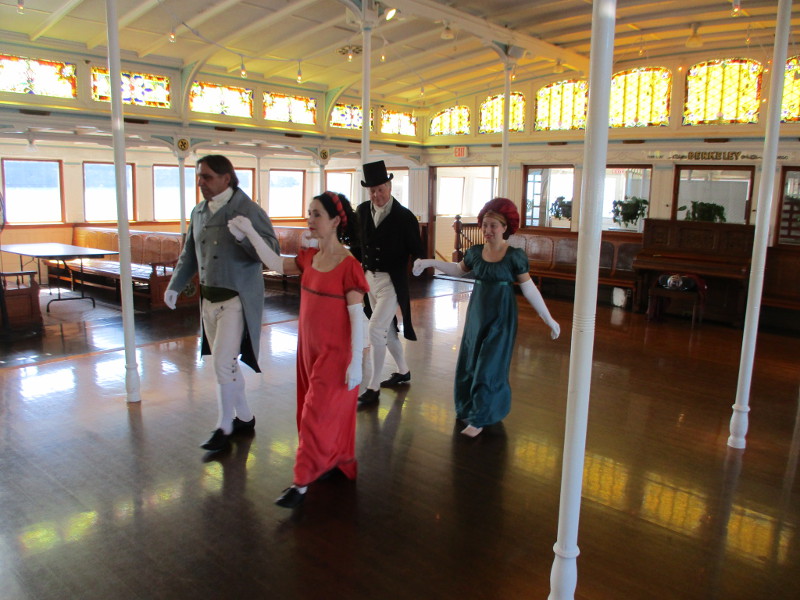
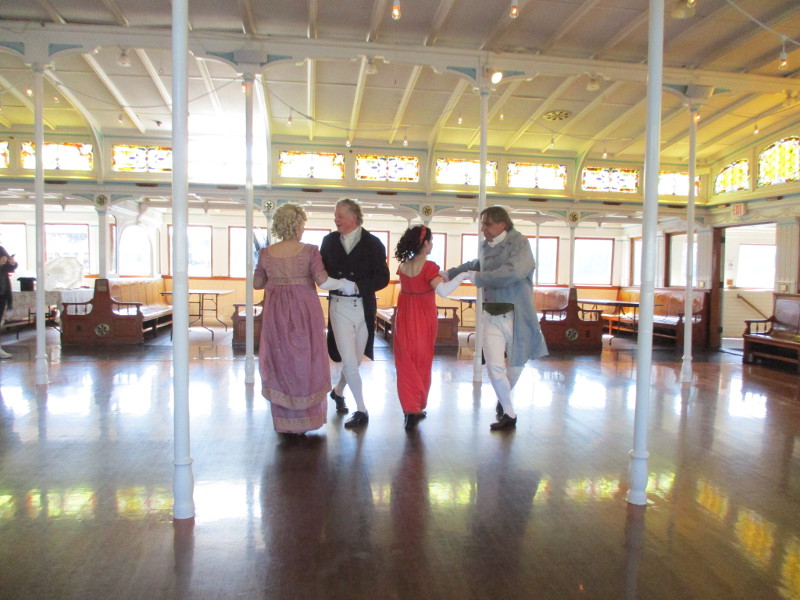
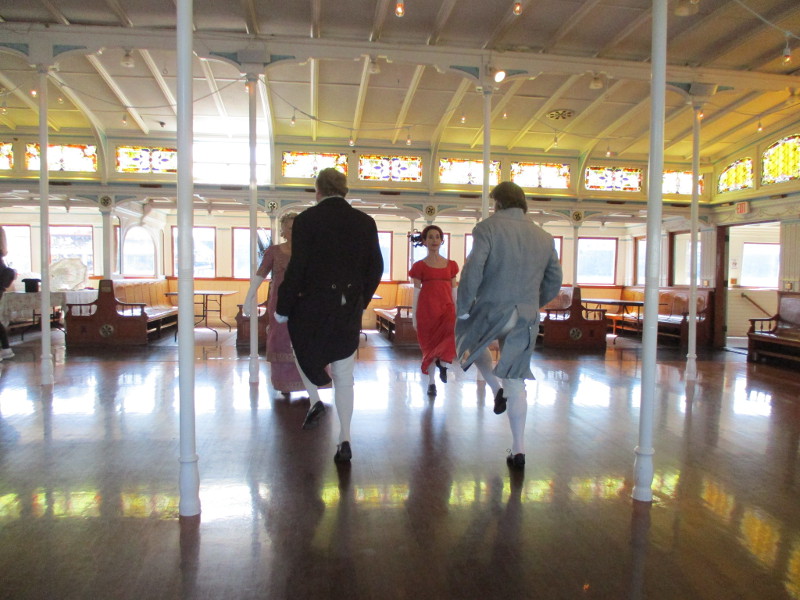
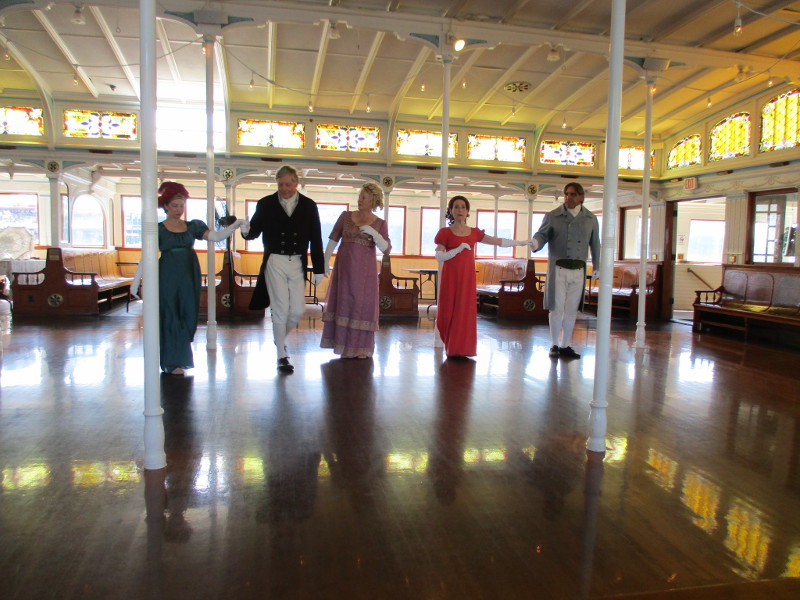
San Diego’s elegant Maritime Museum Dancers!

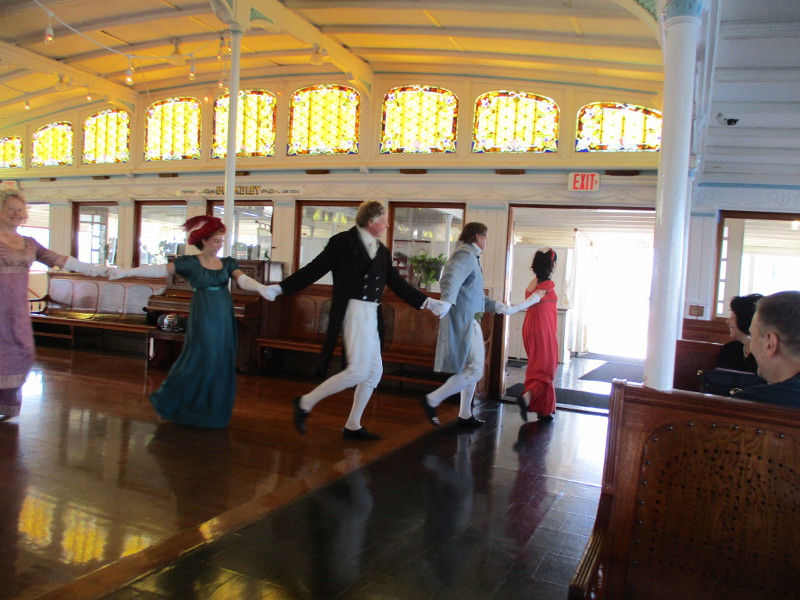
The Maritime Museum Dancers performed today. They graced the dance floor of the Maritime Museum of San Diego’s historic steam ferry Berkeley!

In addition to elegant, spritely dancing, the performers sang both together and individually, and one even read poetry!

These particular costumes and entertainments would have been enjoyed over two hundred years ago in England, in the early 19th century, around the time of the Regency Period.

The Maritime Museum Dancers often perform on another museum ship, HMS Surprise, the replica British Royal Navy ship used in the filming of Master and Commander.

Lucky museum visitors were enraptured by today’s performance, which included line dancing, a quadrille, and a duet. Near the conclusion of their performance, the group sang a gently stirring rendition of Greensleeves.

Alas my love you do me wrong
To cast me off discourteously;
And I have loved you oh so long
Delighting in your company…

I live in downtown San Diego and love to walk around with my camera! You can follow Cool San Diego Sights via Facebook or Twitter!

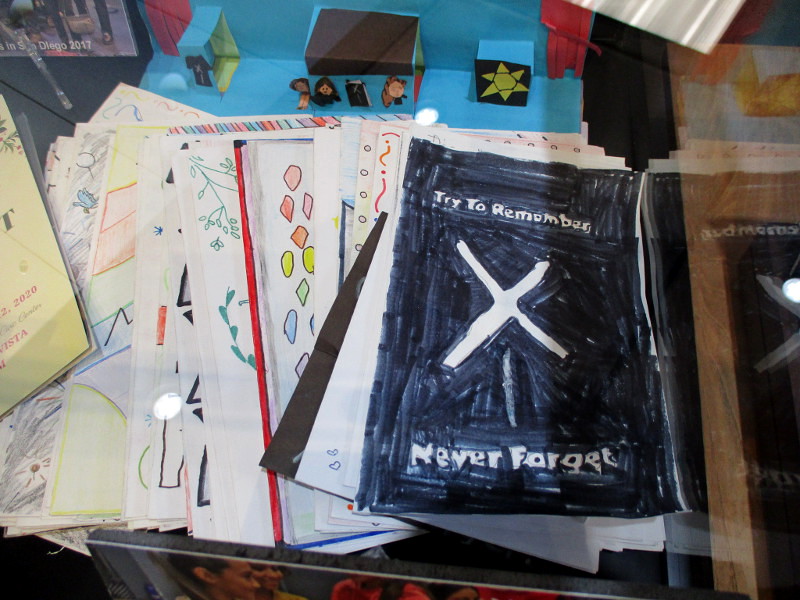
The powerful Holocaust exhibit in Chula Vista.

It is essential, to maintain our humanity, that we remember the Holocaust, and the terrifying inhumanity of a time and place when six million ordinary people were systematically murdered.

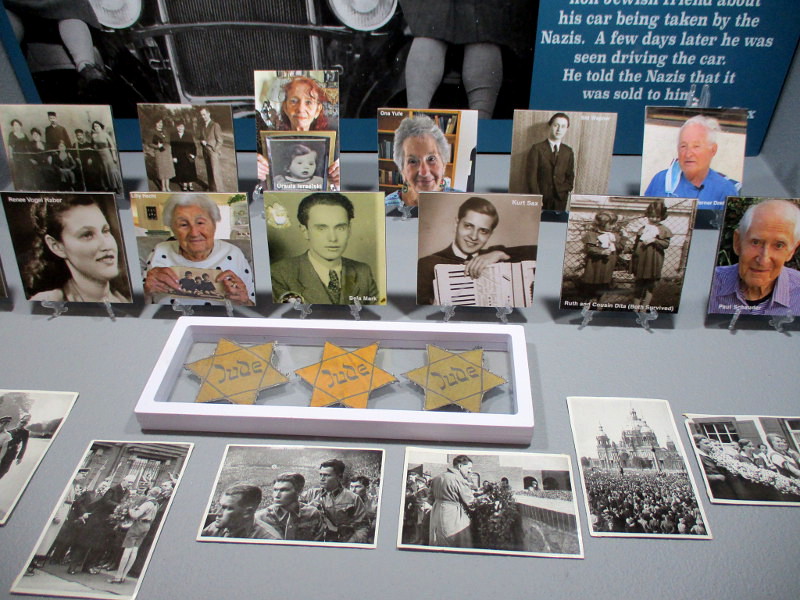
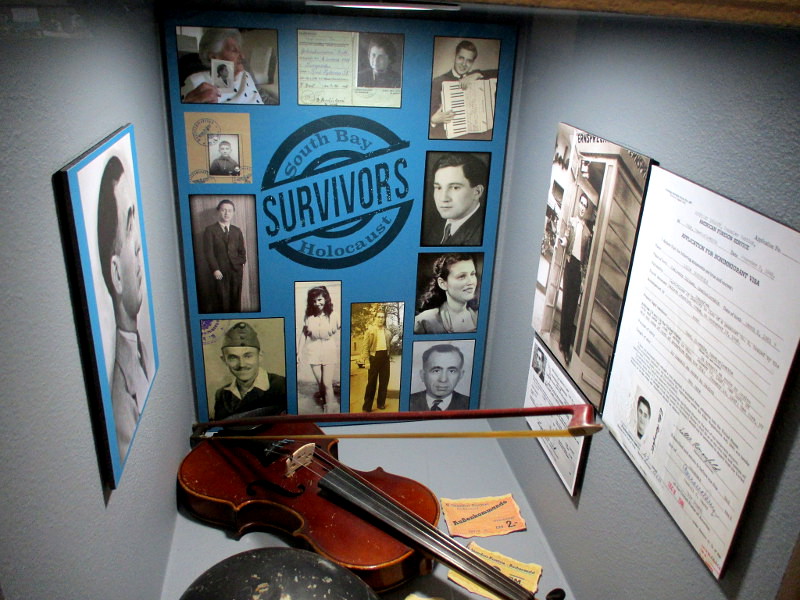
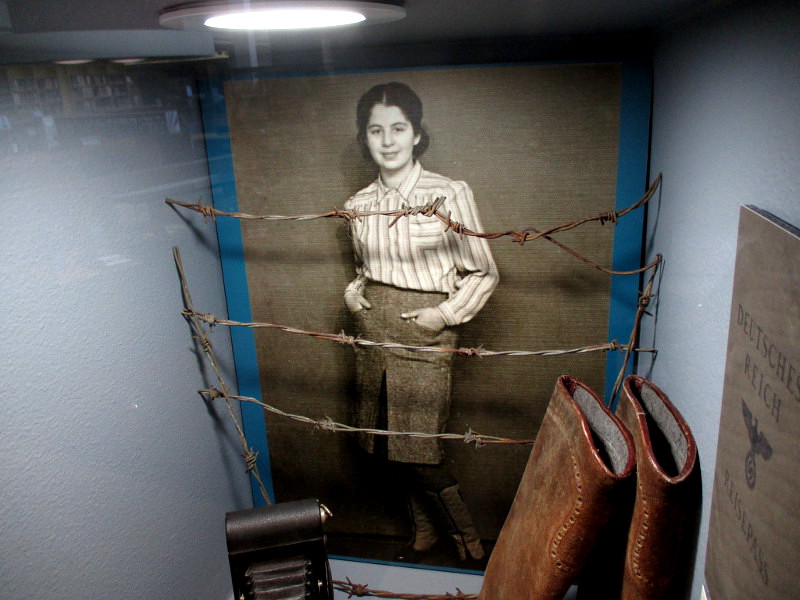
RUTH Remember Us The Holocaust is an extremely powerful exhibit now on display in Chula Vista. It occupies a corner of the Chula Vista Civic Center Library–a quiet, thoughtful space set aside for the Chula Vista Heritage Museum.

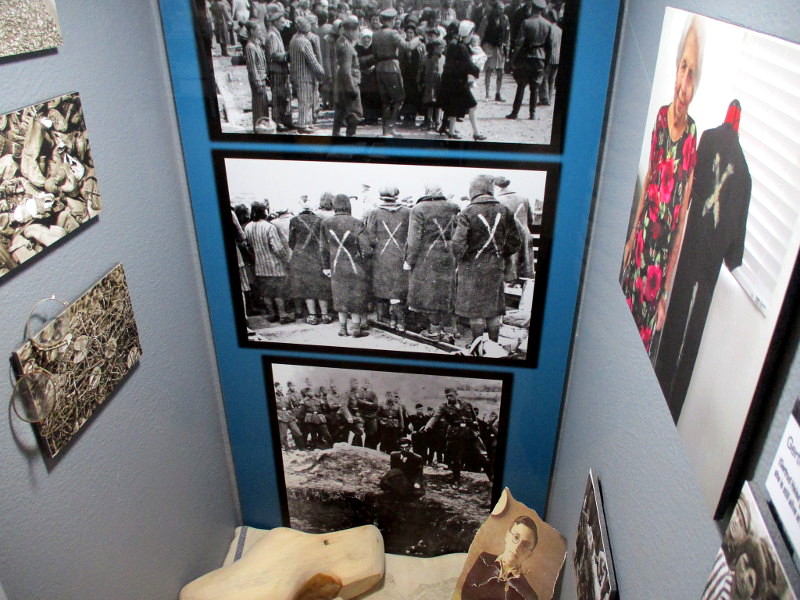
Display cases filled with photographs remember the experiences of Holocaust survivors who arrived in the South Bay with important stories to tell and broken lives to renew. One survivor, in particular, is highlighted: Ruth Sax. As a girl, she lived the horror of Jewish persecution by the Nazis. Ruth would end up in three different concentration camps including Auschwitz.

Those who wish to learn from history will see how Nazis in pre-World War II Germany began with anti-Jewish propaganda and discrimination, and ended with ghettos, concentration camps and extermination centers.

“The smell, deaths, lice, beatings, isolation, tattoos, gassings, cremations, humiliations . . . and the starving, shaving, hiding, markings, threats . . . this was the Holocaust. I felt dead inside . . .” These words were written by Ursula Israelski.

Many of the Holocaust survivors who arrived in San Diego’s South Bay brought with them similar memories. And many, appreciative to be in a free country, were able to live normal lives again–to the extent normal is possible after such life changing experiences.

According to one graphic in a display case, the mission of this exhibit is to shine “a light on the darkness of the Holocaust by creating awareness so that we are guided by leadership, respect, hope and that our history teaches love is stronger than hate and kindness is stronger than power.”

Come and see it with your own eyes.

I live in downtown San Diego and love to walk around with my camera! You can follow Cool San Diego Sights via Facebook or Twitter!

Chula Vista Fire Department’s Centennial exhibit!

An ongoing exhibit at the South Chula Vista Library celebrates the centennial of the Chula Vista Fire Department.

Today I visited this library for the very first time, knowing that a vintage fire engine would be on display.

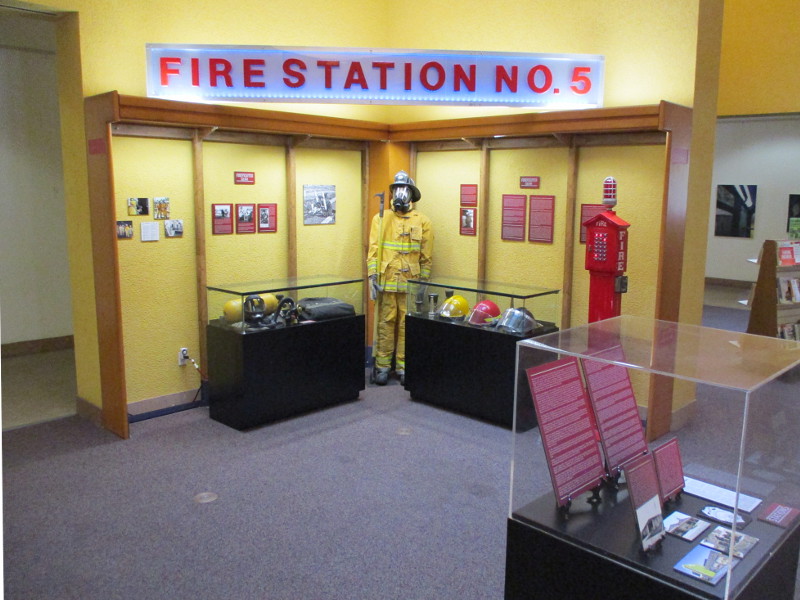
I was excited to discover a large, museum quality exhibit just inside the library entrance!

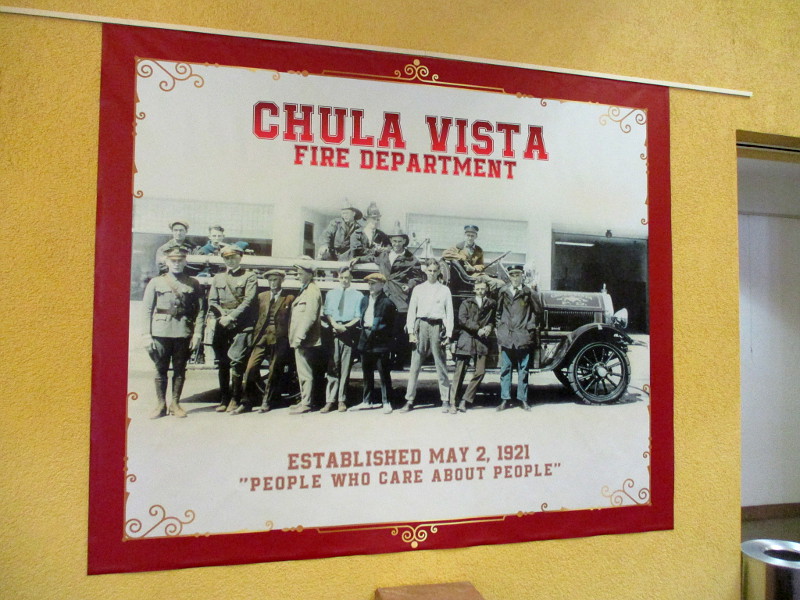
The Chula Vista Fire Department originated in 1921. For over a century now, they’ve saved many lives and been an integral part of this South Bay community.

The displays I looked at concerning dedication and heroism impressed me the most.

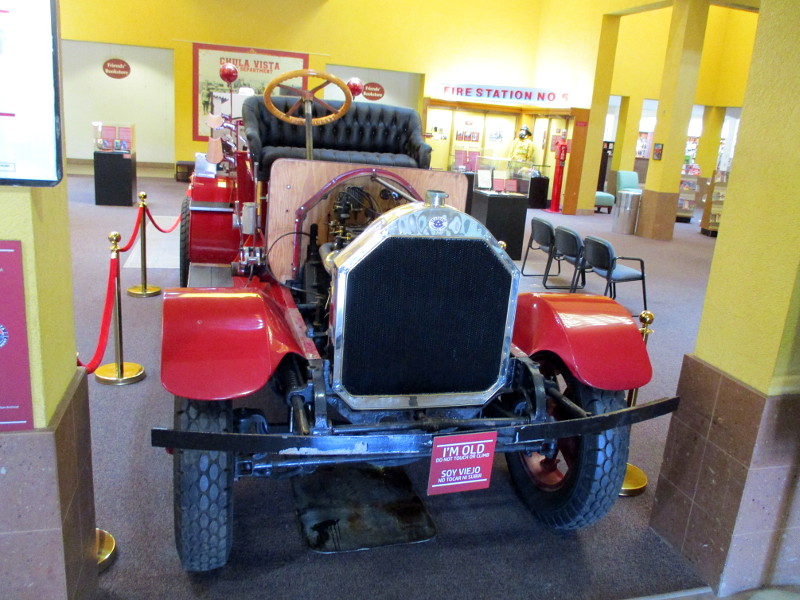
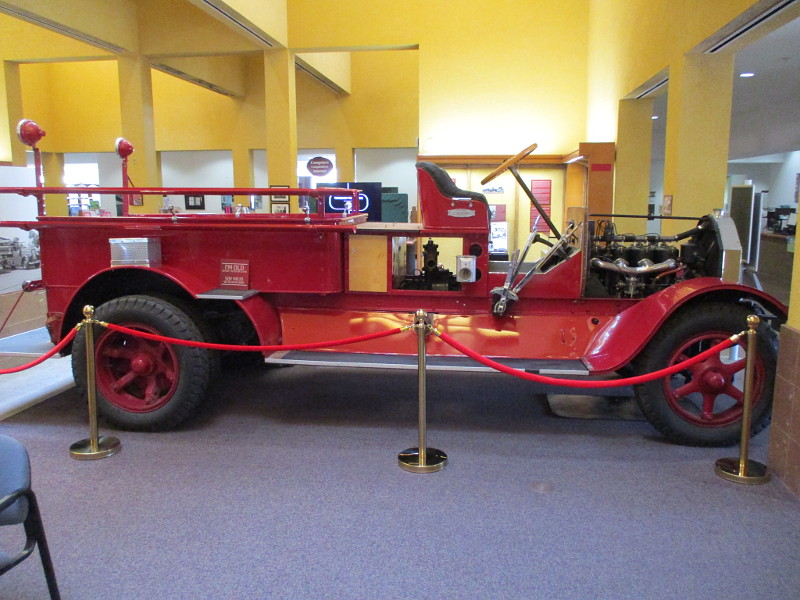
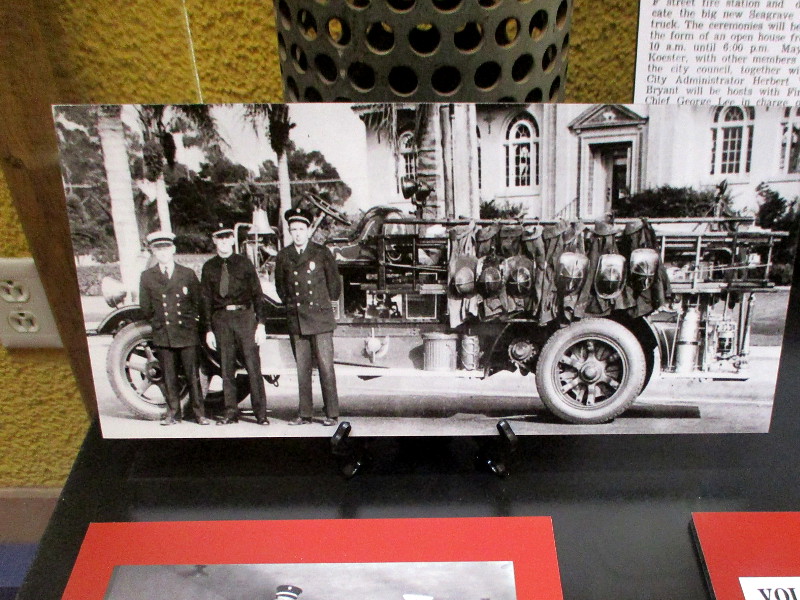
Not only do library visitors see historical photographs, artifacts, and firefighting equipment, but at the center of the exhibit stands the Chula Vista Fire Department’s original fire engine, The Gallopin’ Goose!

I’ve added captions with some additional fascinating info. If you have a chance, I definitely recommend a visit!

Chula Vista Fire Department. Established May 2, 1921. People who care about people.
The Chula Vista Fire Department’s original Seagrave fire truck, on display at South Chula Vista Library. “The Gallopin’ Goose” was purchased in 1923, the same year City Hall was built at 294 Third Avenue. The new City Hall was also a fire and police station.
Artifacts from the very early days of the Chula Vista Fire Department.
The Firemen’s Ball was an annual dance that began in 1922. It raised funds for the Firemen’s Benefit Fund. Children were also helped in the community during Christmas.
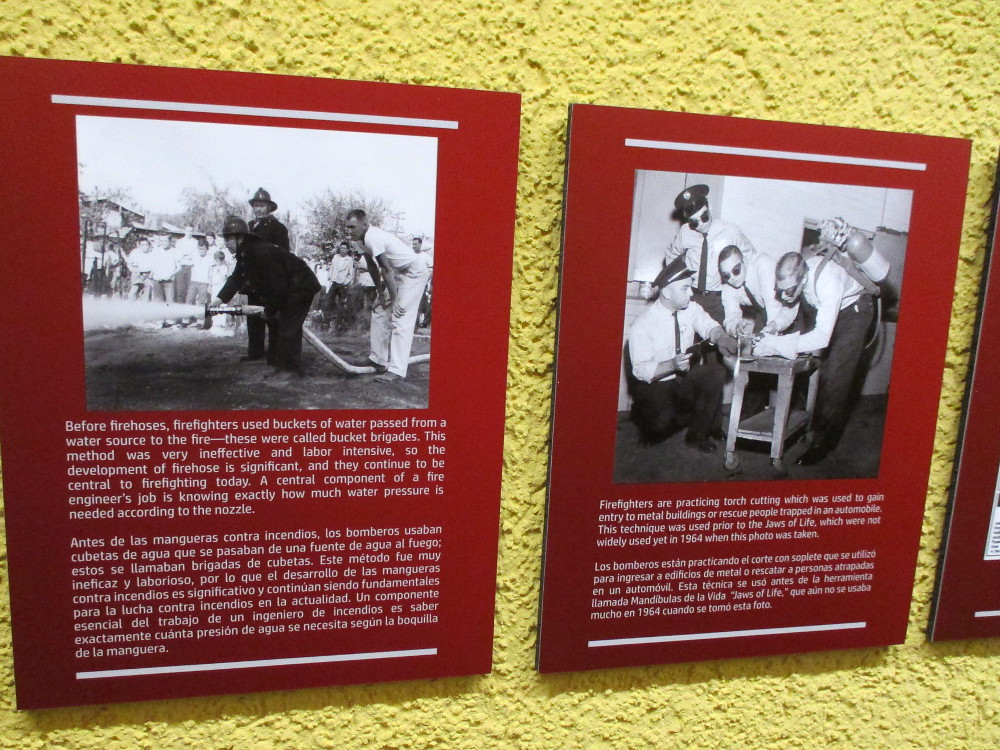
Originally, firefighters used buckets of water passed from hand to hand. But the “bucket brigade” method wasn’t very effective. The development of the firehose was of critical importance.
One display in the exhibit concerns training.
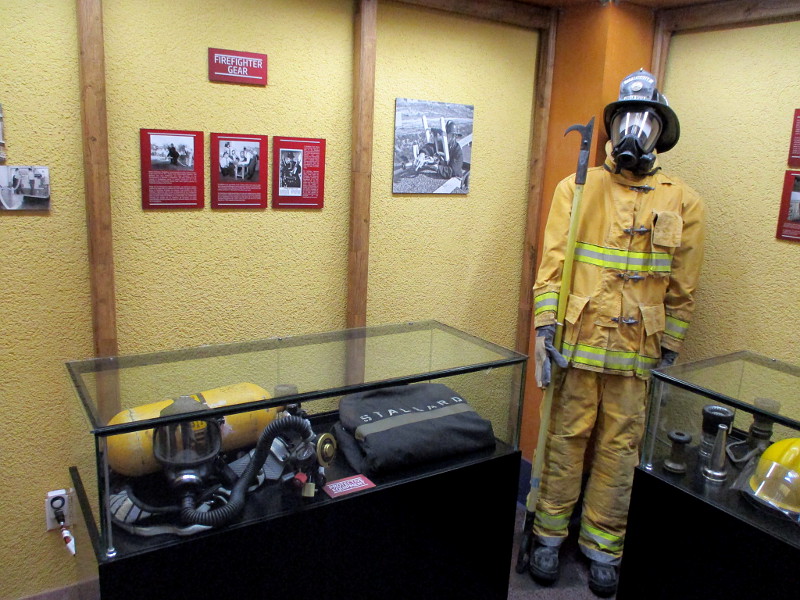
Photos, descriptions and firefighting equipment in one corner of the extensive centennial exhibit. Fire Station No. 5 is located directly next to the South Chula Vista Library.
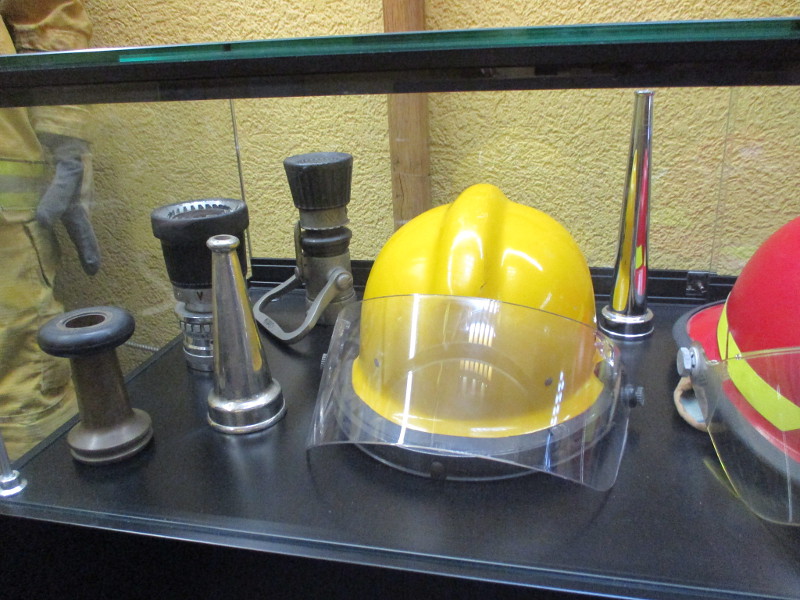
Firefighting equipment includes breathing apparatus, turnouts (protective clothing) and helmets.
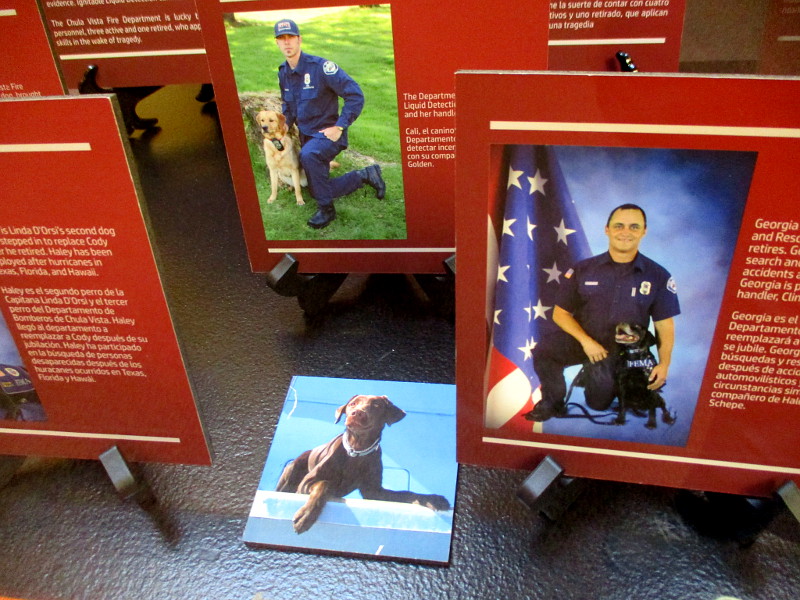
Dogs heroes help with ignitable liquid detection, and urban search and rescue.
Six Chula Vista firefighters traveled to New York City after the attacks of September 11, 2001. They worked the night shift at Ground Zero for ten days.
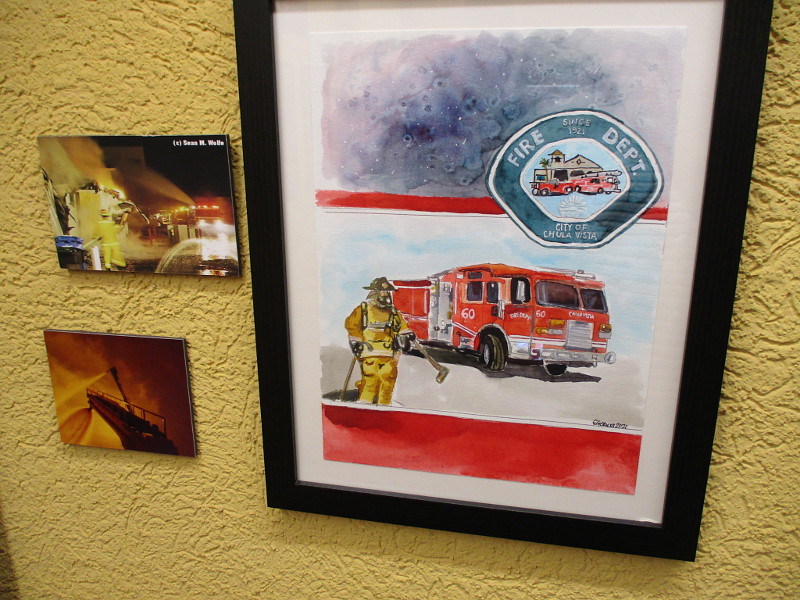
Artwork celebrates the firefighting heroes of Chula Vista.
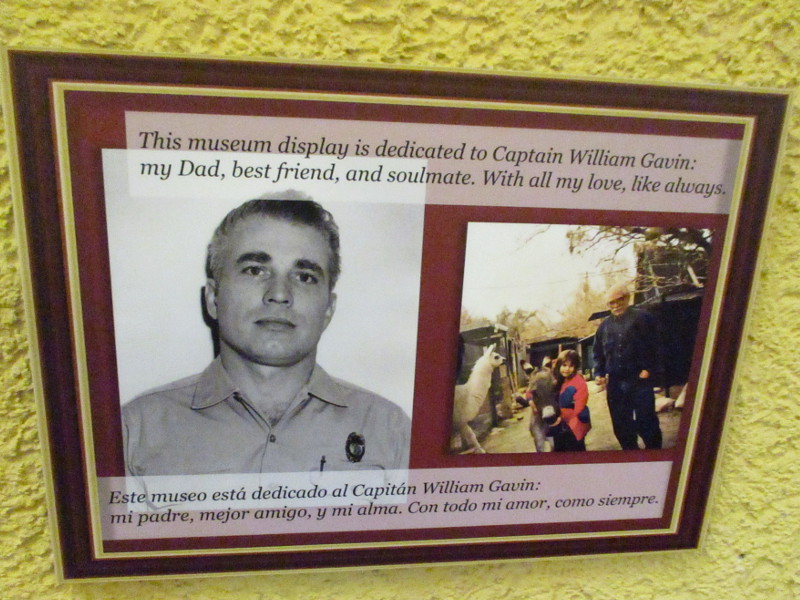
The museum display is dedicated to Captain William Gavin.
If you’d like to show your support for the Chula Vista Fire Department, read the above sign!

I live in downtown San Diego and love to walk around with my camera! You can follow Cool San Diego Sights via Facebook or Twitter!

Exhibit of 19th century patent models at UCSD.

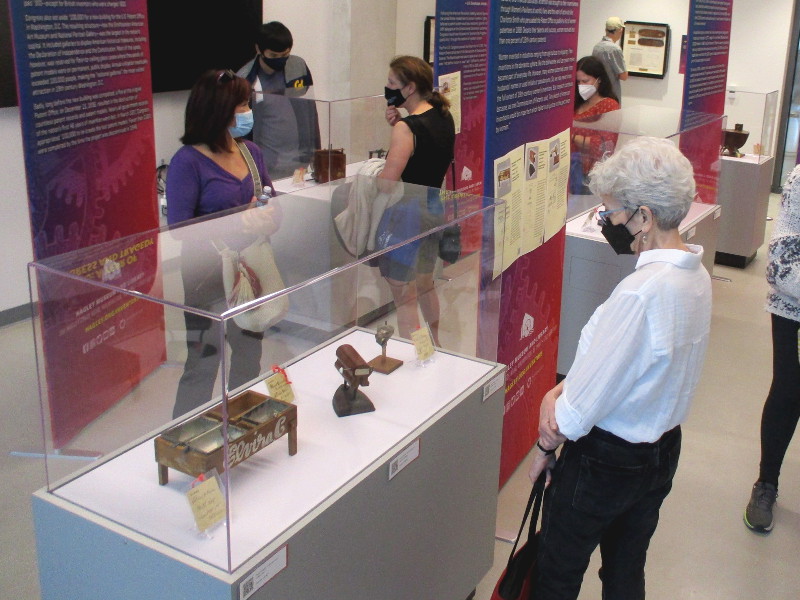
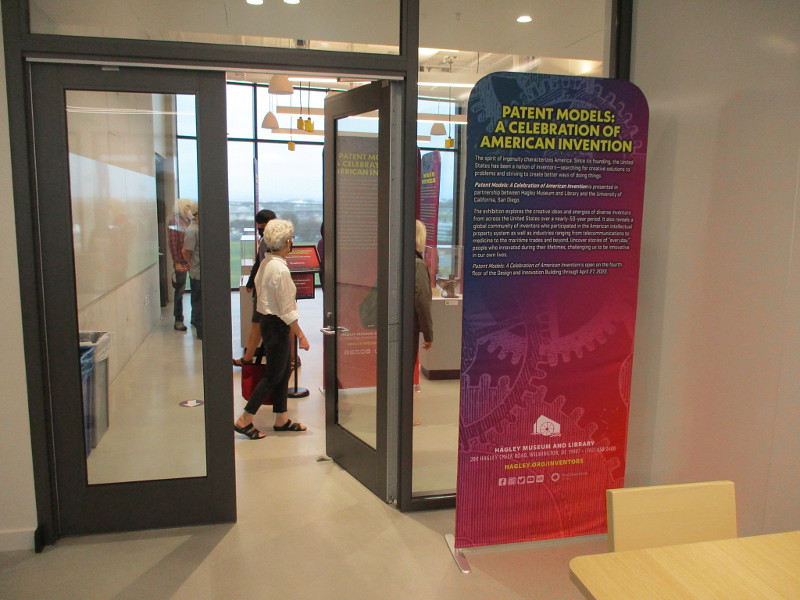
Anyone interested in inventions, technology and history would love an exhibit now on display at UC San Diego. The fourth floor of the Design and Innovation Building is where you’ll find Patent Models: A Celebration of American Invention.

The exhibit features 19th century patent models from the collection of the Hagley Museum and Library in Wilmington, Delaware.

Some of the artifacts might appear primitive and quaint to those who live in the 21st century, but they’re a reminder that unlimited human imagination and generations of visionaries, experimenters and builders have produced the complex technology that we take for granted today.

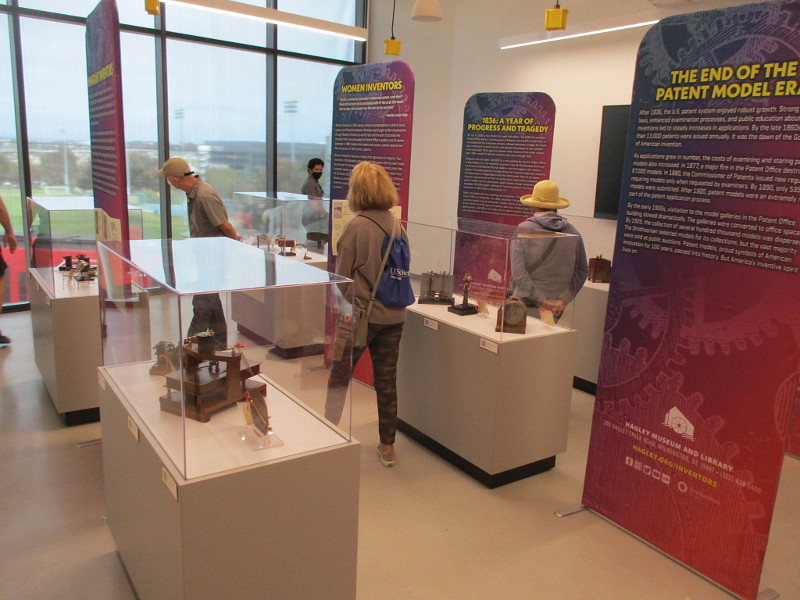
I walked around the exhibit last Saturday, peering into various glass display cases and reading signs that detail the history and progress of American invention.

I learned that by the late 1860’s, during the golden age of American invention, more than 13,000 patents were issued every year. But as applications continued to increase in number, the resulting deluge of patent models became difficult to cope with. After a change in regulations by the Commissioner of Patents in 1880, models eventually became a rare part of the patent application process.

Inventors highlighted in the exhibit include women, immigrants and people of color, and there are descriptions of struggles through the years for equal recognition and opportunity. Many of the inventors were “everyday” people inspired by a really good idea.

Patent Models: A Celebration of American Invention is open through November 6, 2022. Reservations are required. You can reserve a tour by visiting this page.

I took a few photos…

The spirit of ingenuity characterizes America…
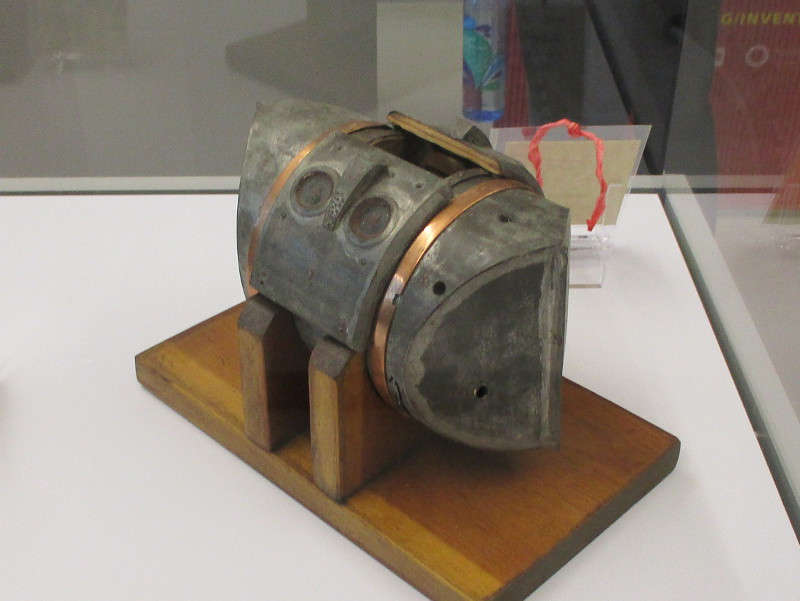
Patent Model – Life-preserving state room for navigable vessels. Patent #20,426.
Patent Model – Improvement in electro-magnetic induction-coils. Patent #138,316.
Women invented in industries ranging from agriculture to shipping…
Patent models by 19th century women inventors.

I live in downtown San Diego and love to walk around with my camera! You can follow Cool San Diego Sights via Facebook or Twitter!