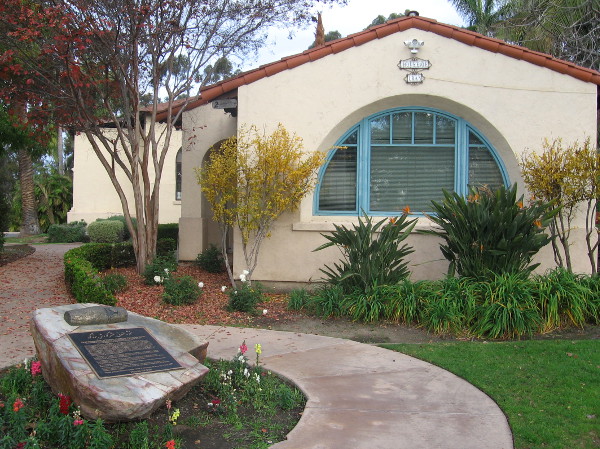
House of Iran at Balboa Park’s International Cottages and a proclamation supporting human liberty.
When I go for a pleasant stroll I’m often lazy. I’ll note interesting things from afar, but fail to walk up for a closer look.
Recently I took a good close look at a large plaque located conspicuously near the House of Iran in Balboa Park. The House of Iran is one of the couple dozen cottages built for the 1935 California Pacific International Exposition. The furnishings in the colorful little buildings exemplify life in their respective countries. Many members of each “house” trace their ancestry to the old country.
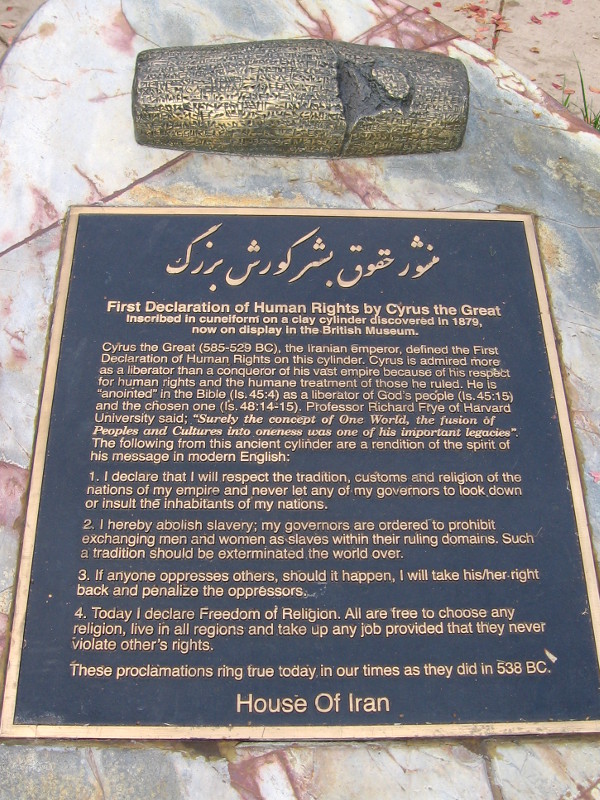
The shining plaque lies in a bed of flowers. I approached it and paused to read. It’s dedicated to the First Declaration of Human Rights by Cyrus the Great.
According to the plaque Cyrus the Great (585-529 BC) was an enlightened Iranian emperor. Unlike many rulers of old, he upheld human dignity throughout his vast empire and treated his subjects humanely. He opposed slavery and supported the freedom of religion.
This ancient declaration of human rights was inscribed in cuneiform on a clay cylinder, which is now on display in the British Museum.
Plaque with translation of the First Declaration of Human Rights by Cyrus the Great.
…
To enjoy future posts, you can “like” Cool San Diego Sights on Facebook or follow me on Twitter.
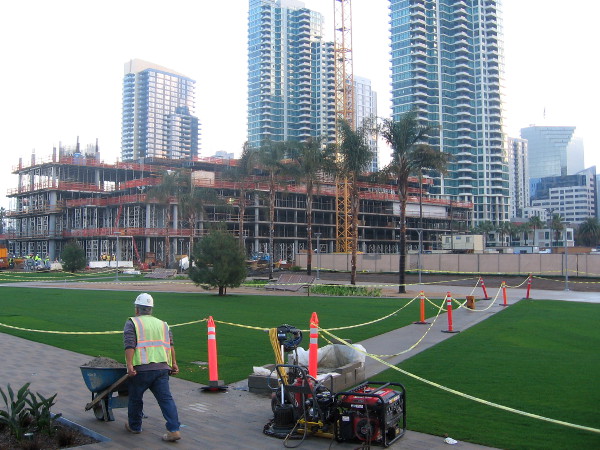
Lanefield Park under construction at corner of Broadway and Harbor Drive.
This morning I walked past a huge project under construction at the corner of Broadway and Harbor Drive. I’m a tall guy, so I could easily peer over the surrounding fence.
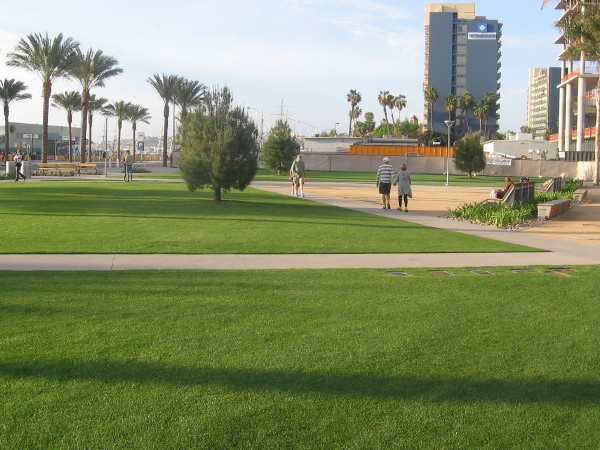
The site of historic Lane Field is green with beautiful new grass!
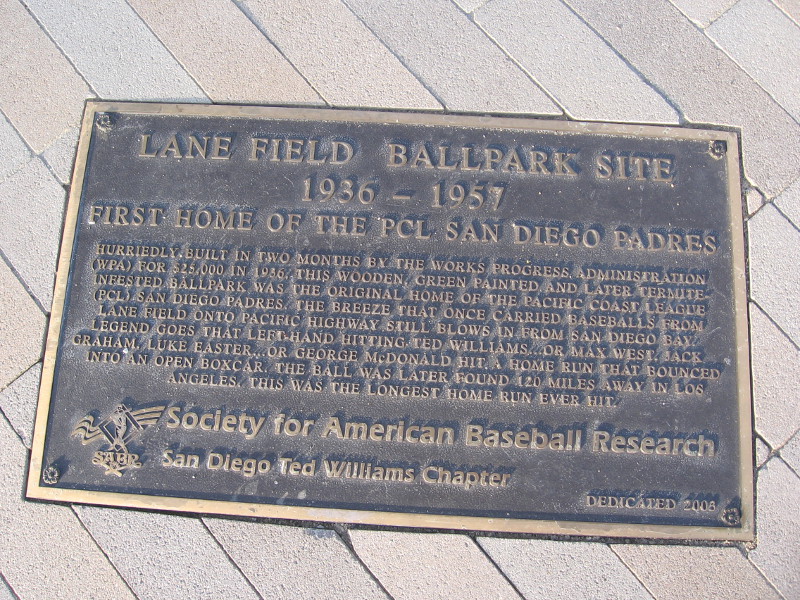
It’s been many years since this hallowed spot in downtown San Diego needed a periodic mowing. I don’t recall ever seeing anything here but a large ugly asphalt parking lot. But once upon a time, half a century ago, this corner on San Diego’s waterfront featured a ballpark where the Pacific Coast League Padres played to large, enthusiastic crowds.
In 1925 the site was established as a Navy athletic field; it was also used for motorcycle and auto races. In 1936 the Works Progress Administration rebuilt the field to accommodate baseball. On March 31 of that year the first game was played, and the Padres beat Seattle 6-2. Lane Field would remain open for 22 exciting seasons.
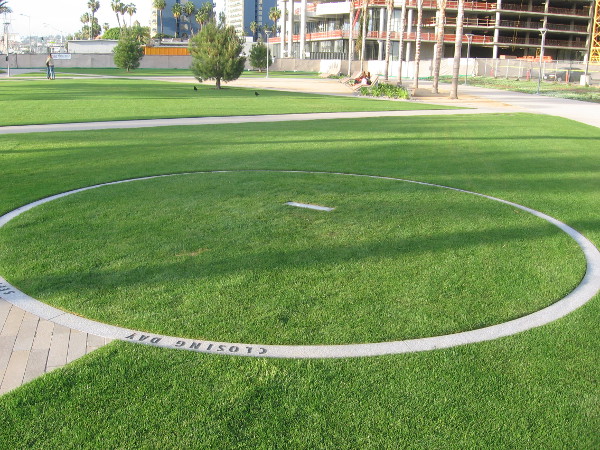
Today, the old location of Lane Field is undergoing another transformation. It soon will feature a new hotel and public park. The 2-acre Lanefield Park includes a small grassy area shaped like a baseball diamond. As I gazed and took photos over the fence, I also noted a monument at home plate and a nearby plaque. Check out the above pic!
Here are two more pics I snapped early this morning…
New grassy park at site of Lane Field, where Pacific Coast League baseball Padres played.Hotel being built next to Lanefield Park on San Diego’s Embarcadero.
Lastly, here’s a pic of a cool mural on 11th Avenue not far from Petco Park, the present home of the Padres. The photo mural shows the construction of Lane Field in 1936. As you can see, the ballfield was located right next to the bay!
East Village street mural shows photo of Lane Field under construction in 1936.
UPDATE! The park, which now seems to be officially called Lane Field Park, is open! Here are some pics…
Lane Field Park is now open on San Diego’s Embarcadero.A small part of the park resembles a baseball diamond with flat pitcher’s mound.Monument and plaque commemorate original Lane Field in downtown San Diego.Legendary player Ted Williams of the Padres advises hitters to get mad.Lane Field Ballpark Site 1936-1957. First home of the PCL San Diego Padres.
…
To enjoy future posts, you can “like” Cool San Diego Sights on Facebook or follow me on Twitter.
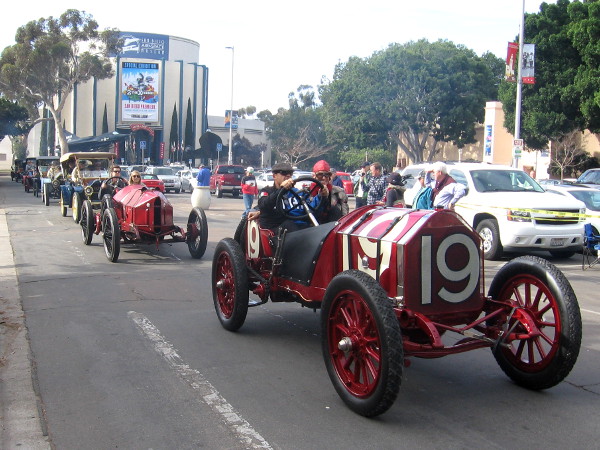
Kid checks engine of vintage car at Balboa Park show commemorating 1915 race.
One hundred years ago a famous road race took place in San Diego. Many of the world’s greatest race drivers took part. The 1915 San Diego Exposition Road Race was a thrilling, dangerous 300 mile race around the streets of Point Loma. Those streets still exist today.
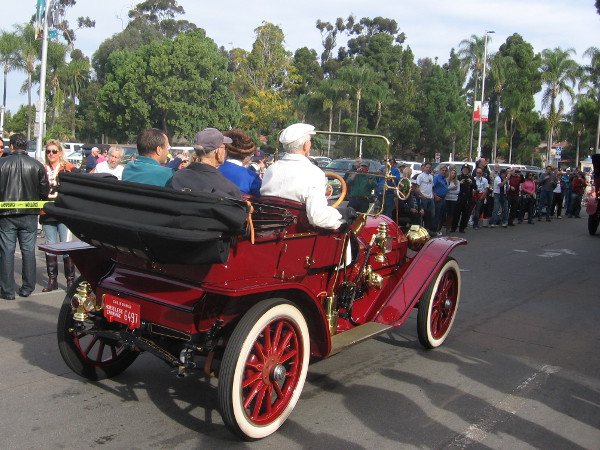
This morning, dozens of vintage cars took part in a rally along the old race route. The event was part of Balboa Park’s Centennial celebration, which is being held all year long to remember the 1915 Panama-California Exposition.
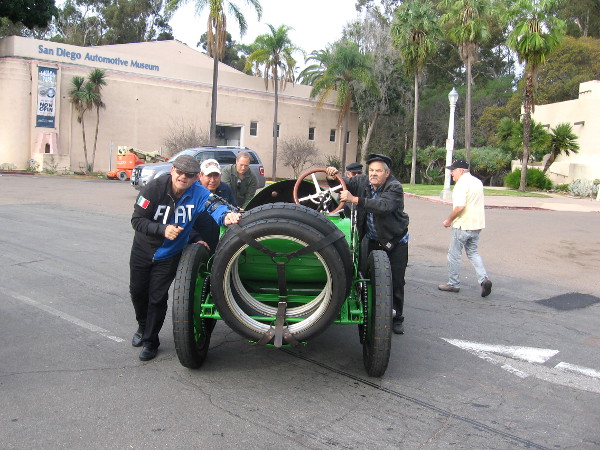
Before the rally, the participating cars gathered in Balboa Park in front of the San Diego Automotive Museum for a special car show. I walked up to the park this morning to check things out.
Wow! Double wow!
Please enjoy these photos. While I love looking at classic cars, I’m very far from being an expert. If you detect an error in the captions, or have something interesting to add, please leave a comment!
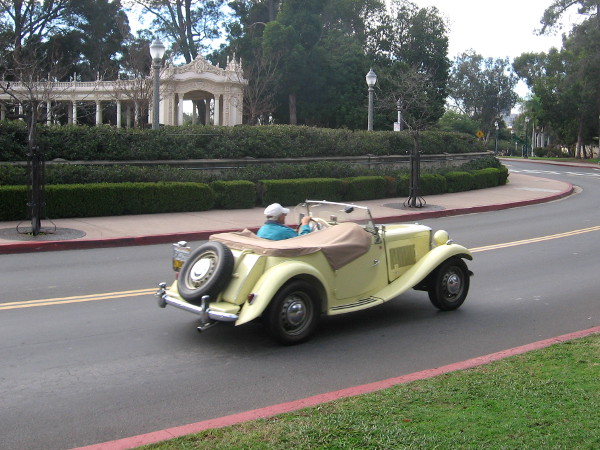
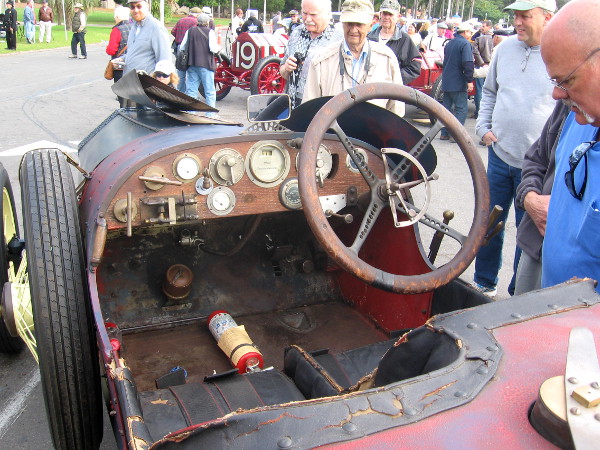
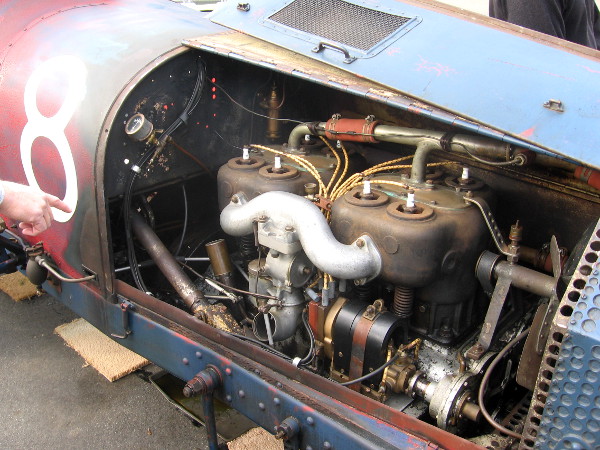
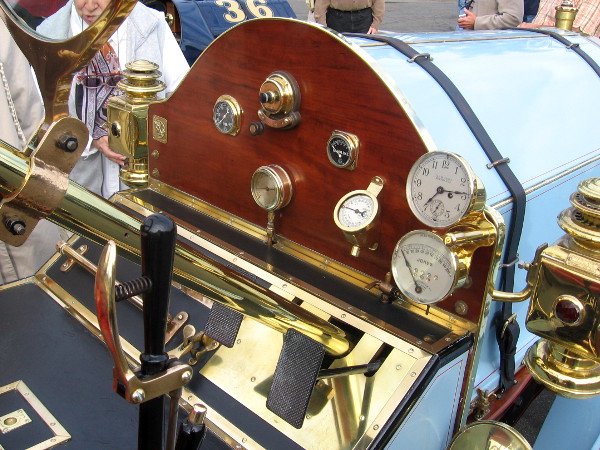
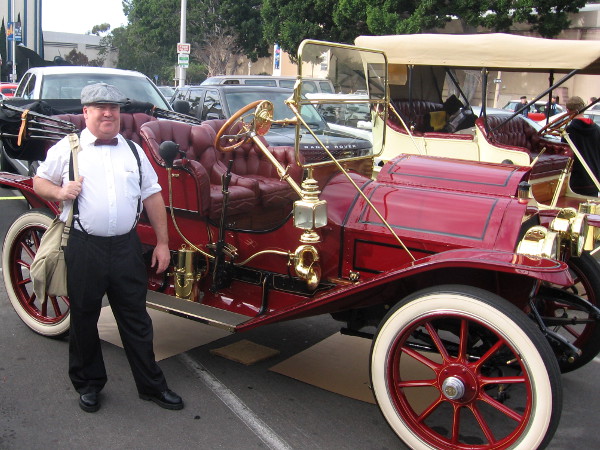
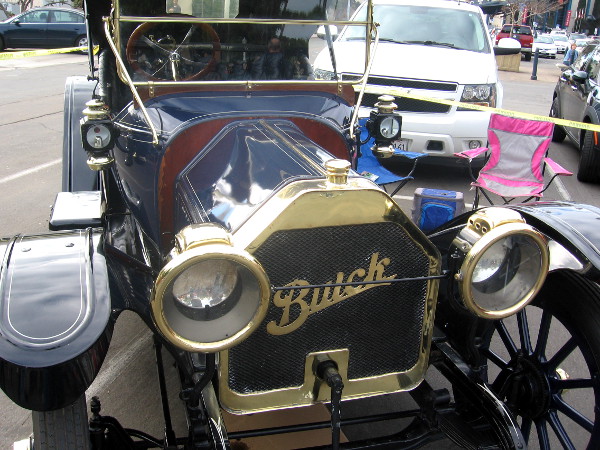
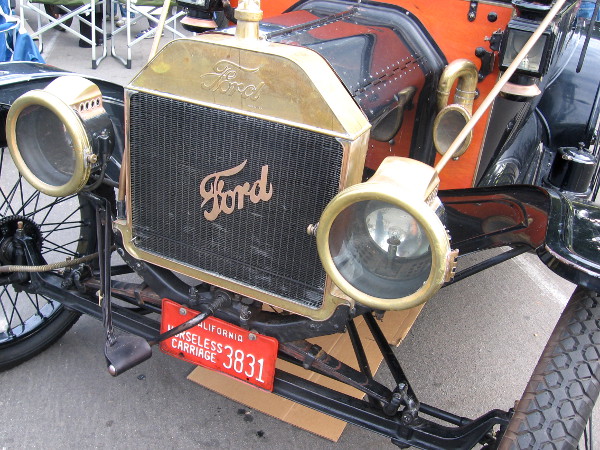
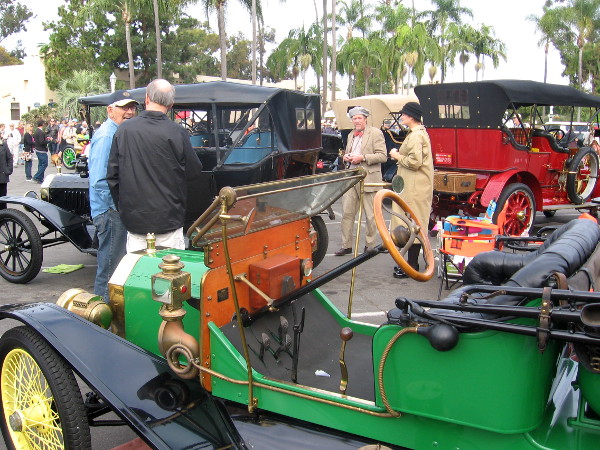
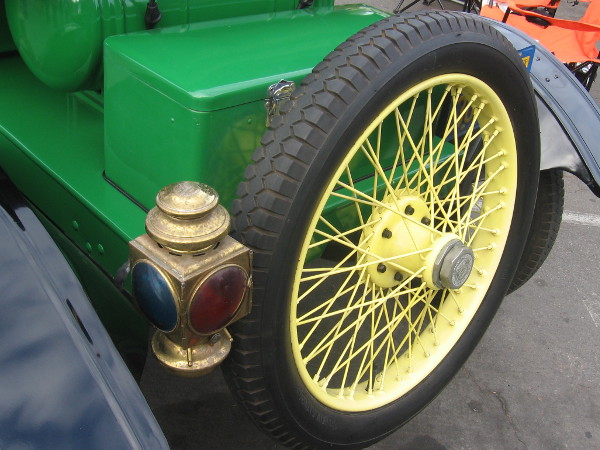
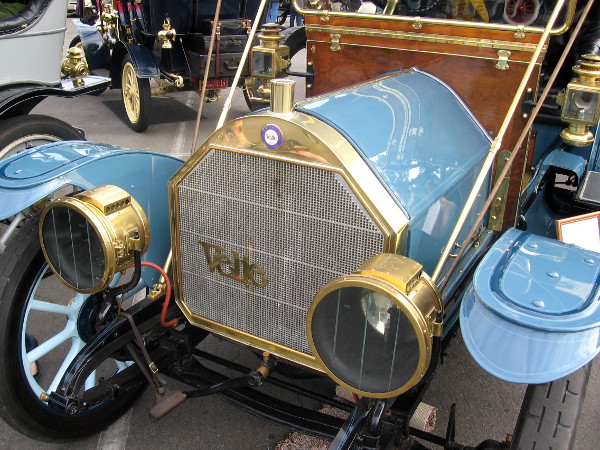
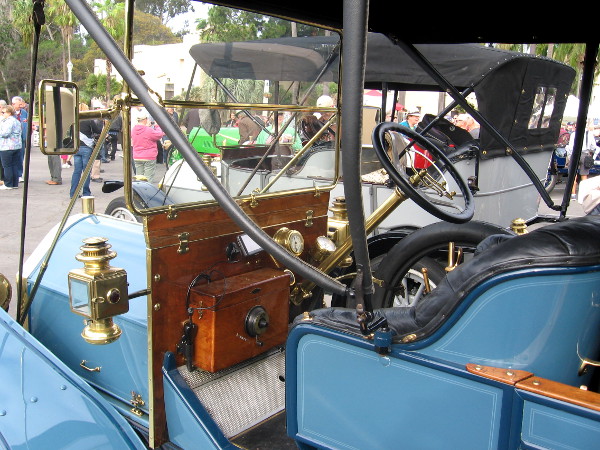
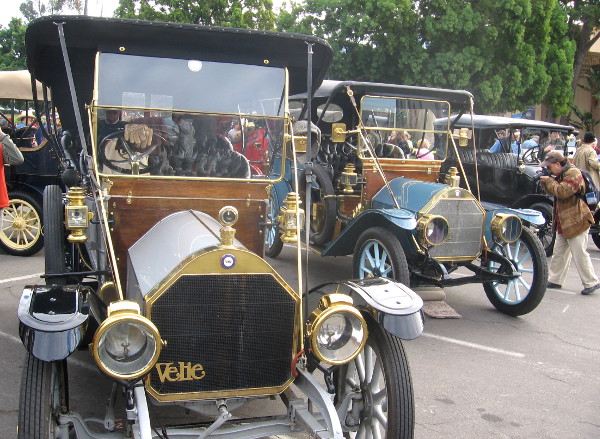
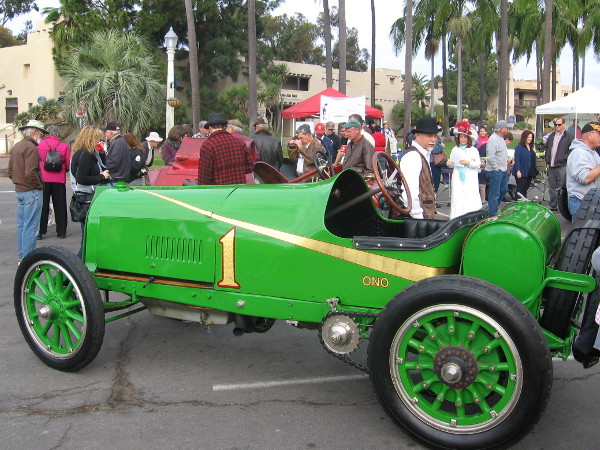
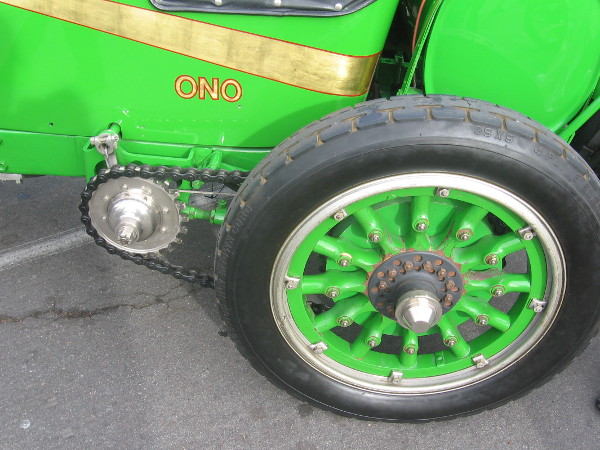
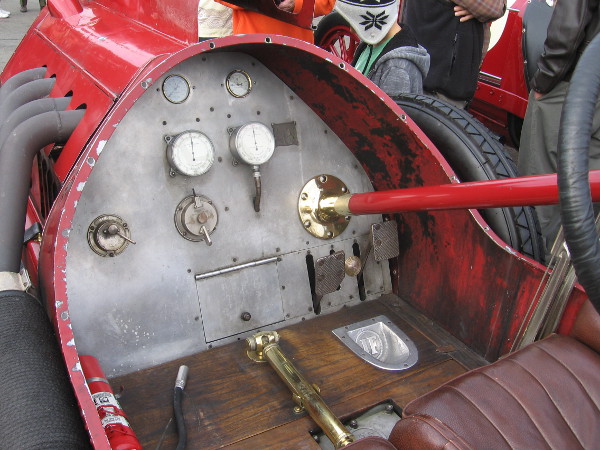
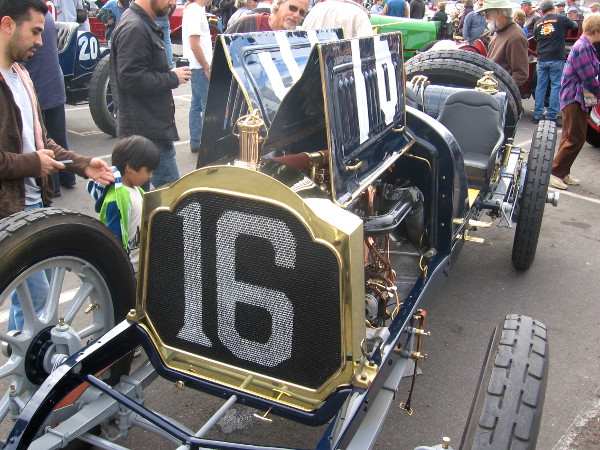
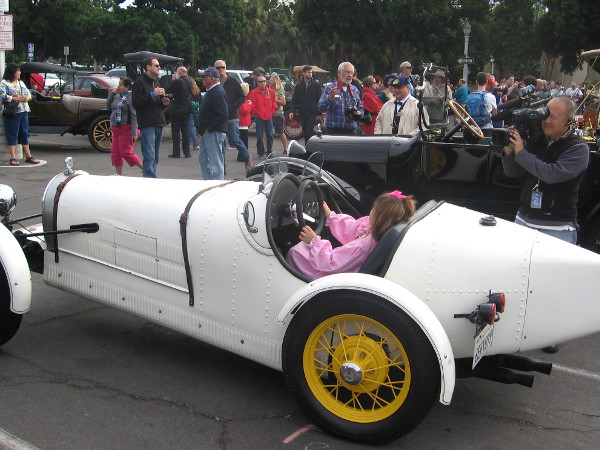
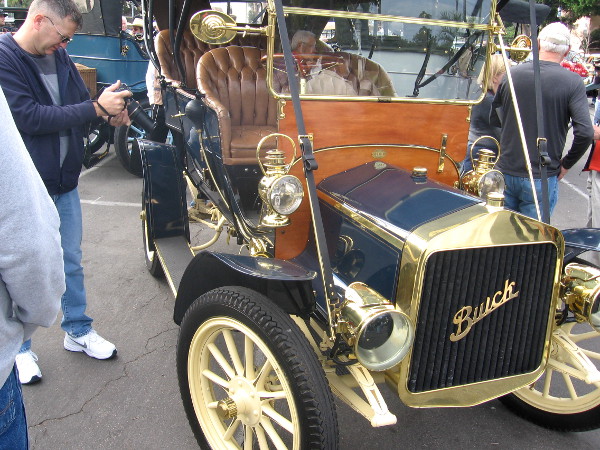
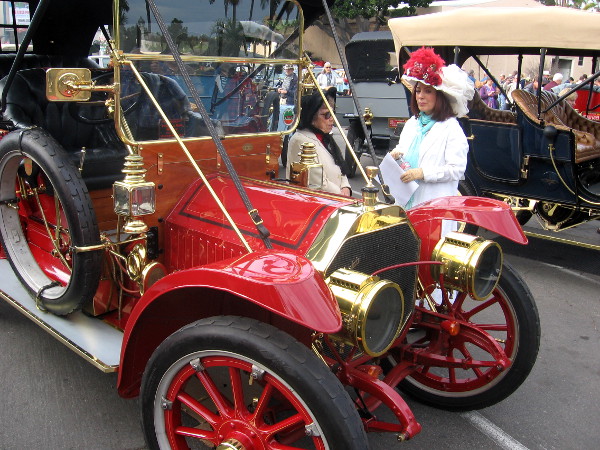
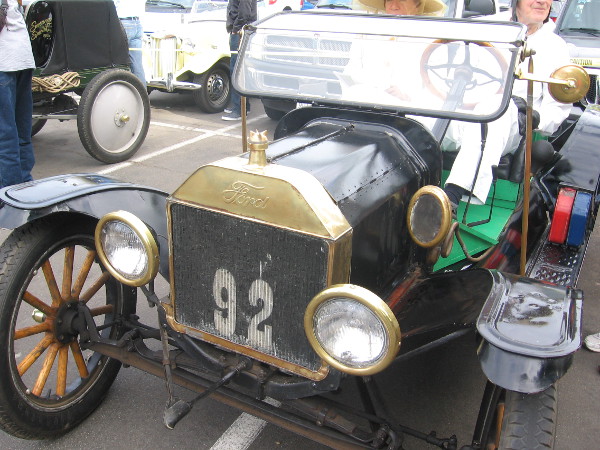
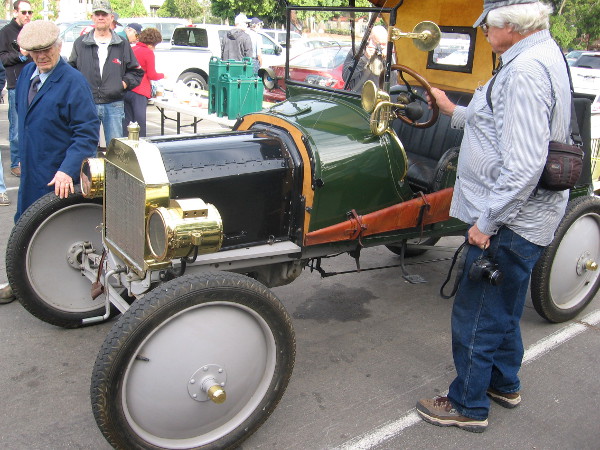
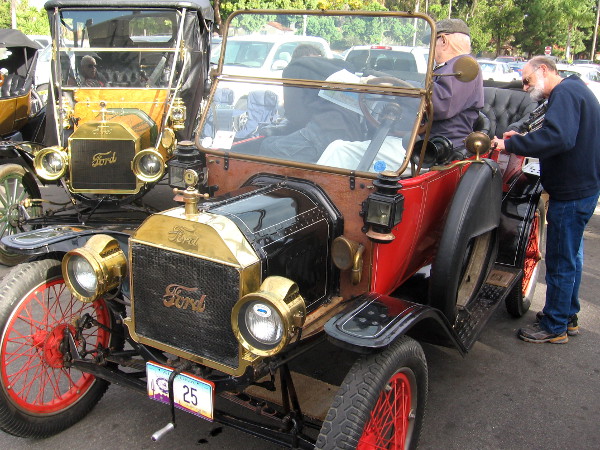
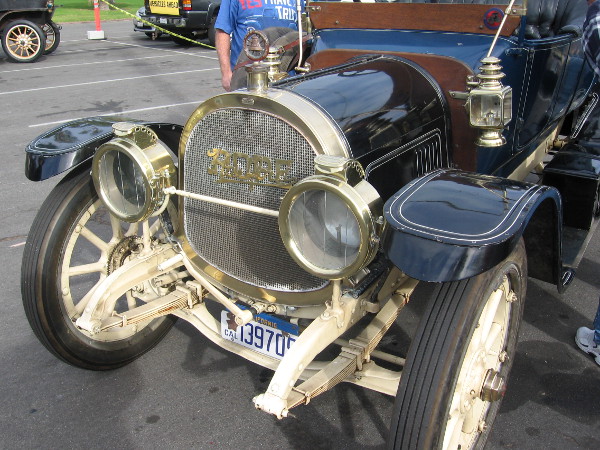
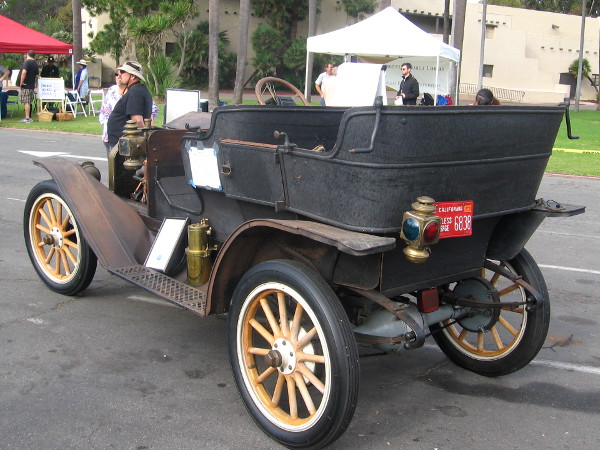
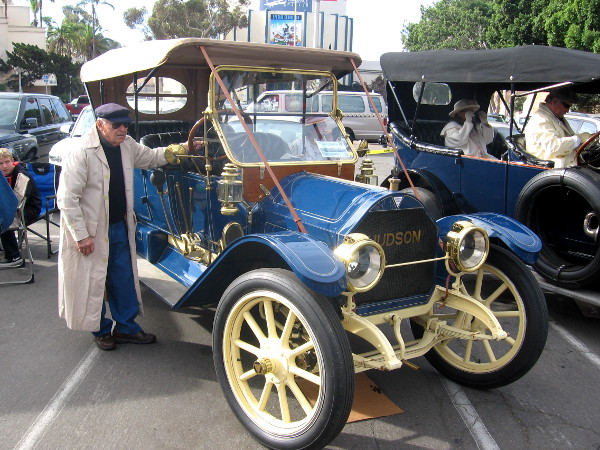
Guy drives his classic automobile through Balboa Park, heading to a special car show.Old race car is pushed into position. San Diego Automotive Museum is in the background.Vintage cars from era of Point Loma road race that began 1915 Panama-California Exposition.Someone checks out Fiat racing car at special Balboa Park Centennial event.Wooden dashboard full of knobs looks almost prehistoric compared to modern cars!Engine of 1914 Tahis Special that competed in many races!Collectibles from 1915 road race in Point Loma that kicked off Panama-California Exposition!People can still ride in style in this elegant Pierce-Arrow.Pierce-Arrow luxury automobiles in early 1900s were owned by many movie stars and tycoons.So many amazing cars were lined up in the parking lot it was hard to take it all in!1910 REO Model D Touring car has a very classic look.Check out this awesome vintage Cadillac!1909 Pope Hartford on display at Balboa Park Centennial special car show.This isn’t your father’s Buick. But it might have been driven by your grandparents!Walking around, I felt like I’d stepped back in time one hundred years!Here’s the grill of a cool Ford. License plate is for a Horseless Carriage.Colorful Ford is painted orange and green. Awesome!Red and green signal light near spare tire on back.1910 Velie Model D Touring cars were popular. Velie race cars were also successful.Many of these beautiful old cars contain lots of wood, brass and leather.Dozens of classic cars were out on public display!Inspecting another Velie, made early last century in Moline, Illinois.Very cool 1911 Ono, a vintage chain-driven race car.Someone nearby joked: It’s a motorcycle chain!And here’s a guy checking out the engine of an Italian Isotta Fraschini.Makes my own extremely modest car look downright futuristic!Chests full of tools that car mechanics would use back in the old days.Kid checks out a 1912 Packard race car in Balboa Park.Many refurbished motors were open for people to investigate.A large crowd enjoys many super cool cars in front of San Diego Automotive Museum.News cameraman gets a shot of young girl in pink pretending to race a vintage car.Racing goggles lie ready on leather seat. The road rally will begin in a few minutes!I’ve never seen so many cameras taking so many photographs in one place!Fun historical costumes were everywhere you turned.This fellow is ready to go! It’s a perfect Saturday morning for a road trip!It might have a dent or two, but it still runs!One guy checks out the steering wheel, another the unusual wheels on the asphalt!Getting the engine started with the old hand crank!Gentlemen, take your seats! We’re about to get started!Don’t touch this fancy car unless you are nude! (And showered, presumably.)I love this shiny oval grill on a Pope-Hartford.Not sure how this old horseless carriage would fare in a race.That’s as primitive a motorcar as you’re likely to ever see.Folks are shooting the breeze and having a whole lot of fun!This guy is getting ready to climb aboard a gorgeous classic Hudson.Car show disbands and crowds have scattered to make way.Here they come! That’s the San Diego Air and Space Museum in the background.Many drivers and onlookers wore fashion styles from early 20th century.A long line of beautifully restored hundred-year-old autos rumbles past.Heading out of Balboa Park for Point Loma, where historic 1915 race will be commemorated.
…
To enjoy future posts, you can “like” Cool San Diego Sights on Facebook or follow me on Twitter.
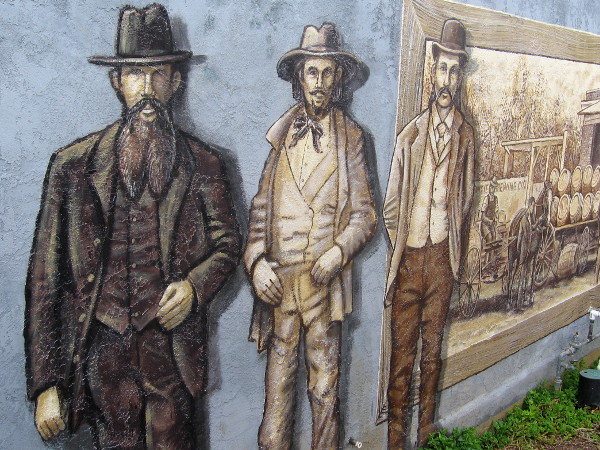
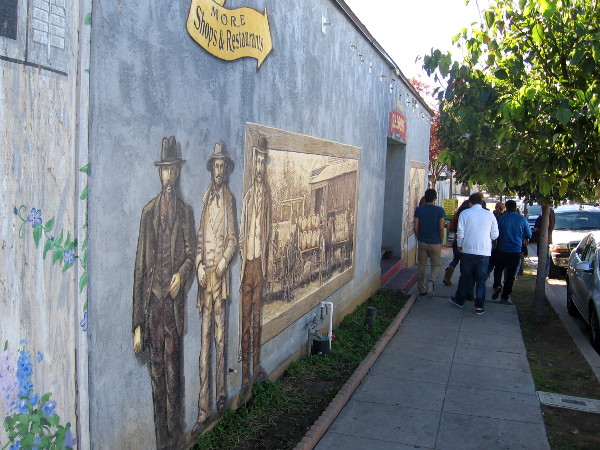
Several whiskered Western characters pose in a mural on Harney Street in Old Town.
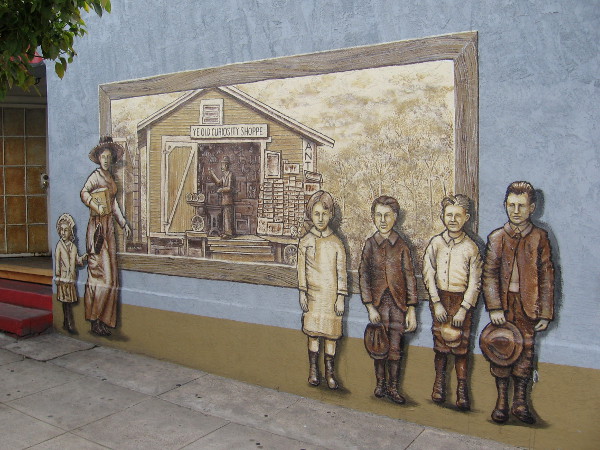
There’s a fairly new street mural in Old Town that I really like. Every time I see it, my imagination travels back in time. Back to the first half of the 19th century.
San Diego for many decades was a tiny town seemingly in the middle of nowhere. Whether it belonged to Spain, or Mexico, or the United States, Old Town San Diego was a place of dusty roads and modest, sun-baked adobe houses, horses and wagons, rugged settlers and ranchers. Characters from that era seem to live again in this mural.
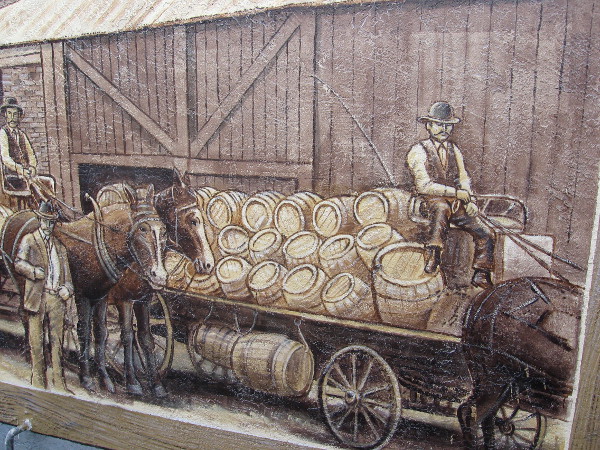
Artist Frank Mando painted this artwork in 2013. I couldn’t capture the entire piece in one shot. Enlivening a building at the corner of San Diego Avenue and Harney Street, the mural is divided in two by a door of the Old Town Saloon. Standing inside that door, as you’ll see, there seems to be a well-known movie star!
Freight wagon hauls a load of barrels in fun art that recalls early San Diego history.John Wayne seems to be coming through a door of the Old Town Saloon.Elegant lady and girl from long ago stroll past Ye Old Curiosity Shoppe.Old Town mural on building wall was painted in 2013 by artist Frank Mando.Kids standing along sidewalk seem to have materialized from San Diego’s past.People walk past nostalgic street mural near side entrance to Old Town Saloon.
…
To enjoy future posts, you can “like” Cool San Diego Sights on Facebook or follow me on Twitter.
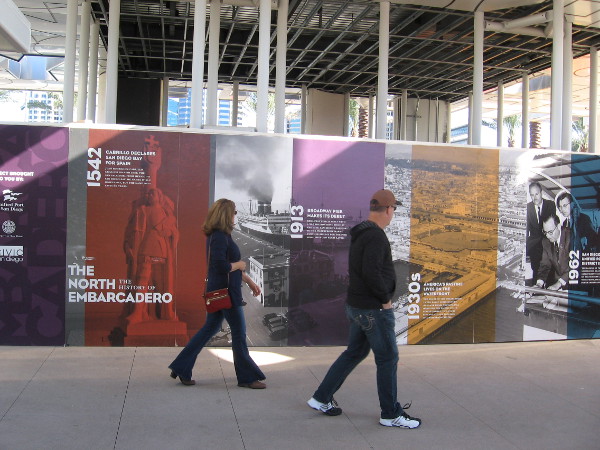
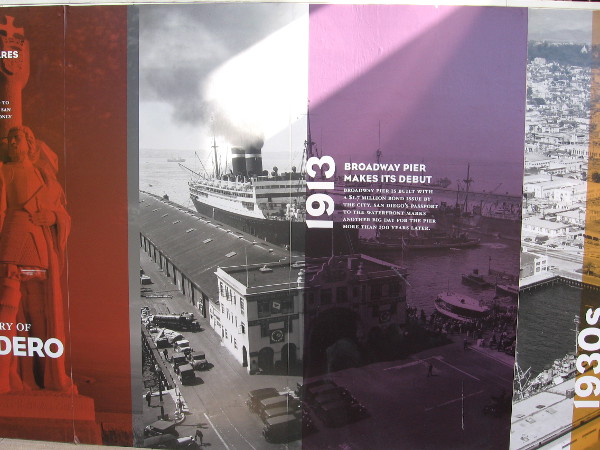
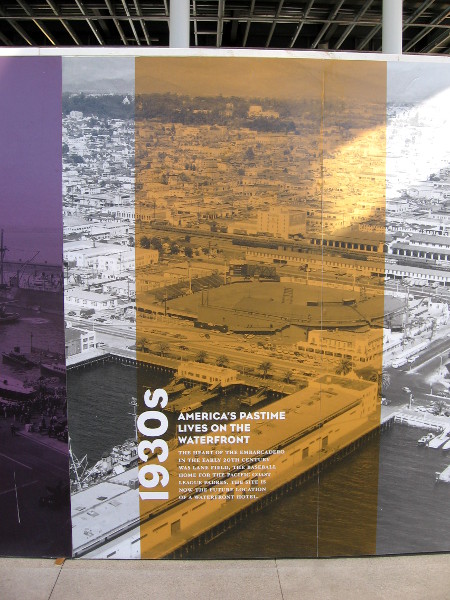
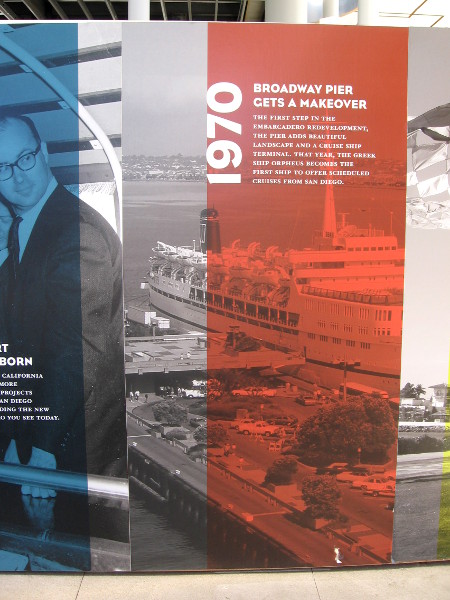
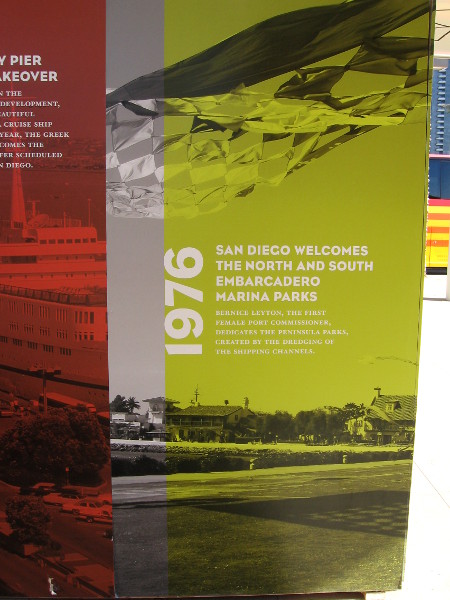
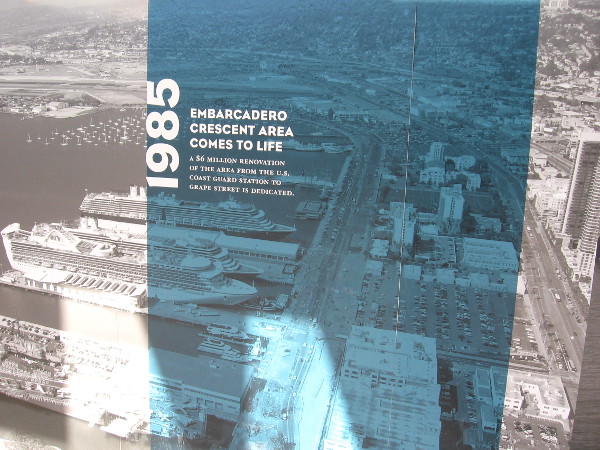
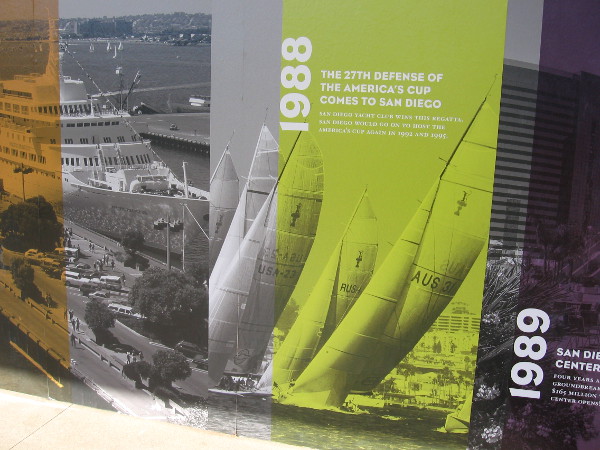
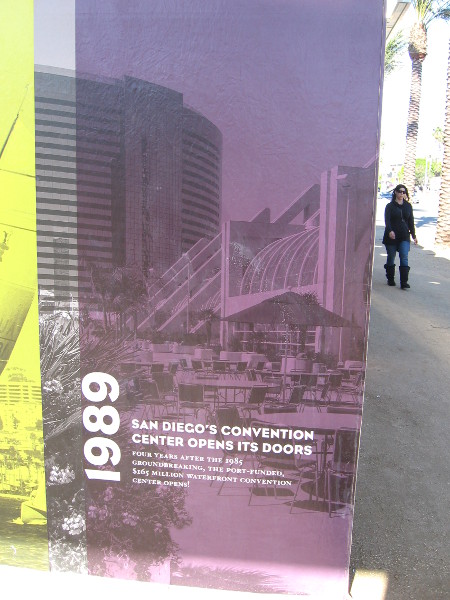
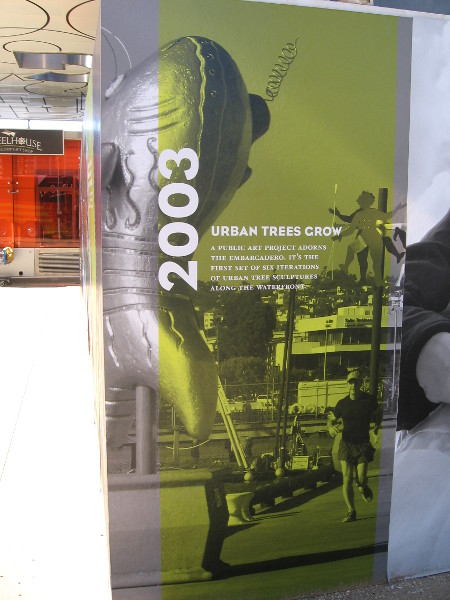
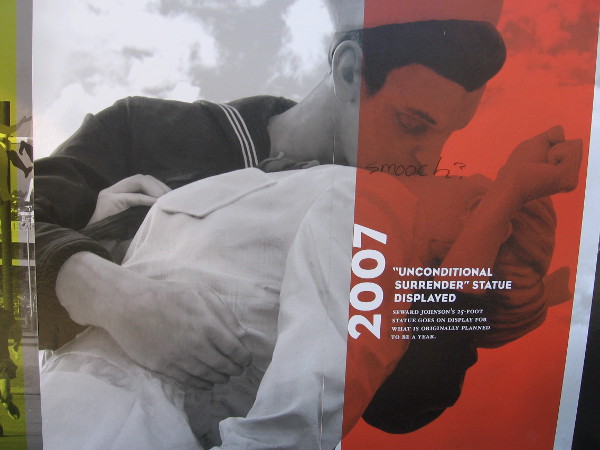
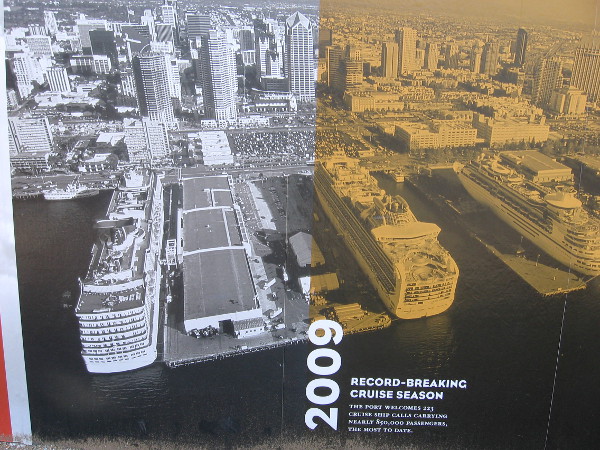
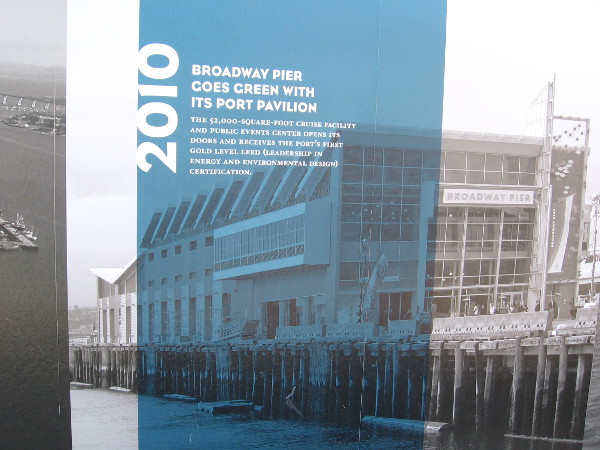
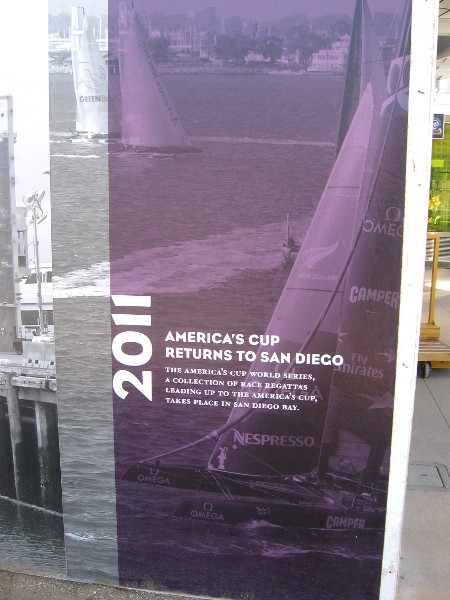
Images around a new pavilion near Broadway Pier show history of the Embarcadero.
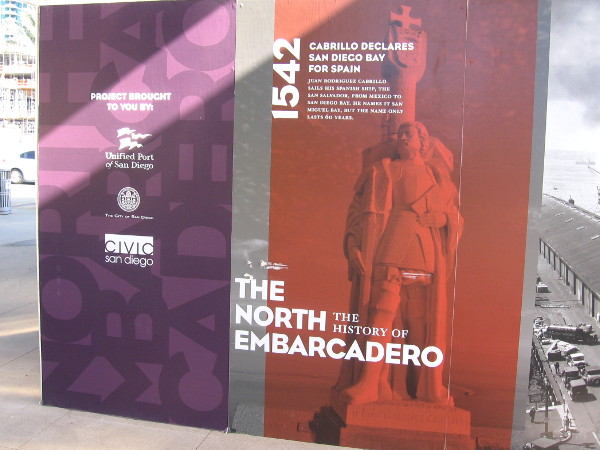
San Diego’s Embarcadero has undergone some major renovations. One of the new pavilions still under construction near the Broadway Pier features a large display that provides a timeline of the area’s history. Notable developments along the waterfront through the passing years are documented with historical photographs.
While many of these images concern more recent events, it still makes a fascinating visual time capsule. Here are some pics that I took!
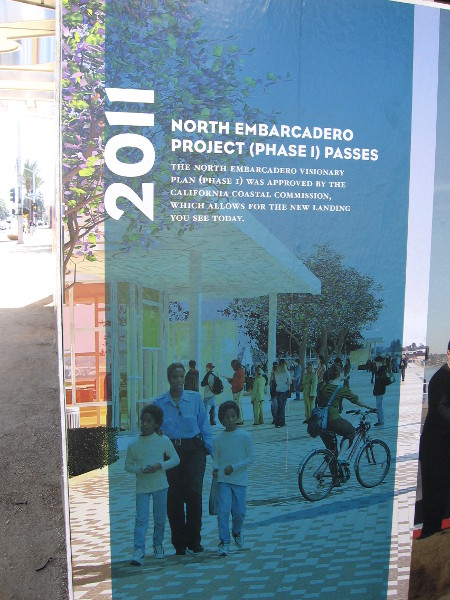
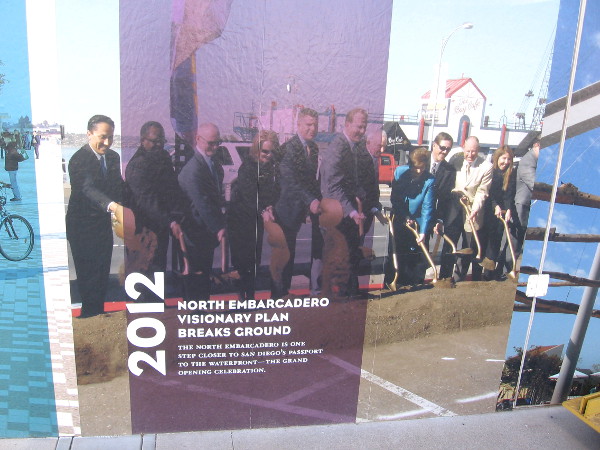
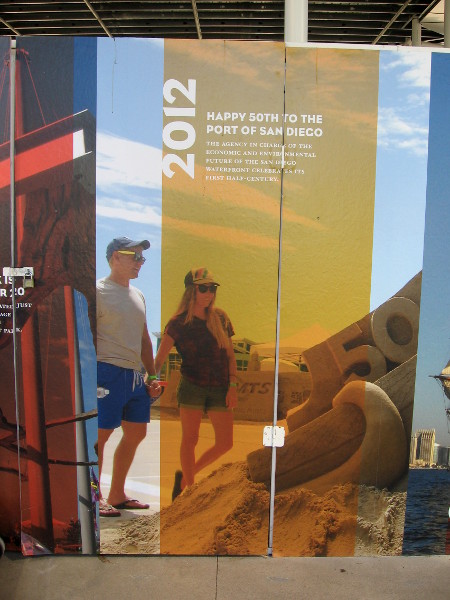
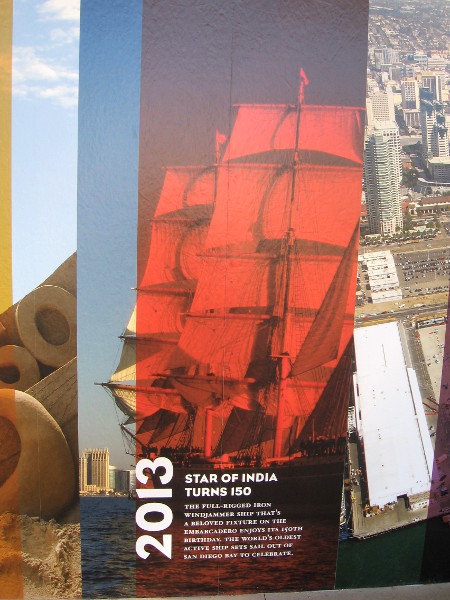
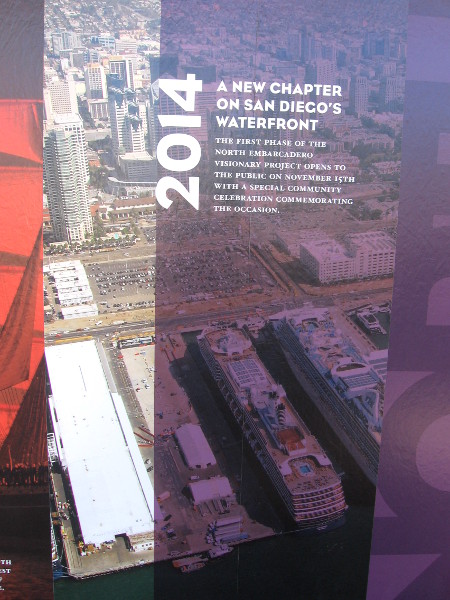
1542: Juan Rodriguez Cabrillo claims San Diego Bay for Spain. He named it San Miguel Bay.1913: San Diego’s Broadway Pier makes its debut. It certainly looks different today!1930s: Baseball played across street. Lane Field was home of Pacific Coast League Padres.1962: San Diego Unified Port District is established.1970: Broadway Pier gets a makeover. A cruise ship terminal is added.1976: North and South Embarcadero Marina Parks are dedicated.1980: Seaport Village becomes the newest San Diego attraction.1985: North Embarcadero’s Crescent area renovated.1985: Princess Cruises bases its “Love Boat” in San Diego.1988: San Diego Yacht Club successfully defends America’s Cup.1989: San Diego Convention Center opens.2003: First of six Urban Trees art exhibits along the Embarcadero.2007: Seward Johnson’s Unconditional Surrender statue goes on display near USS Midway.2009: A record-breaking cruise ship season!2010: Port Pavilion opens on Broadway Pier. It’s been over four years already? Time flies!2011: America’s Cup World Series regatta takes place on San Diego Bay.2011: North Embarcadero Project (Phase 1) passes.2012: North Embarcadero Visionary Plan breaks ground nearby.2012: Ruocco Park immediately north of Seaport Village is dedicated.2012: Port of San Diego is 50 years old.2013: San Diego’s historic Star of India tall ship turns 150 years old.2014: Lots of cool waterfront improvements opened, including this pavilion!
…
To enjoy future posts, you can “like” Cool San Diego Sights on Facebook, or follow me on Twitter.
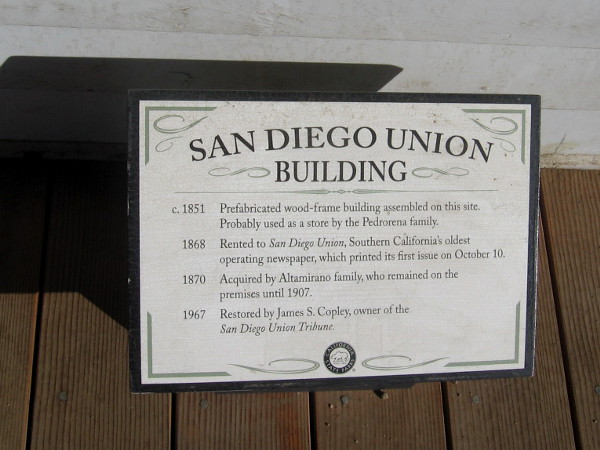
Plaque marks the birthplace of the San Diego Union newspaper in 1868.
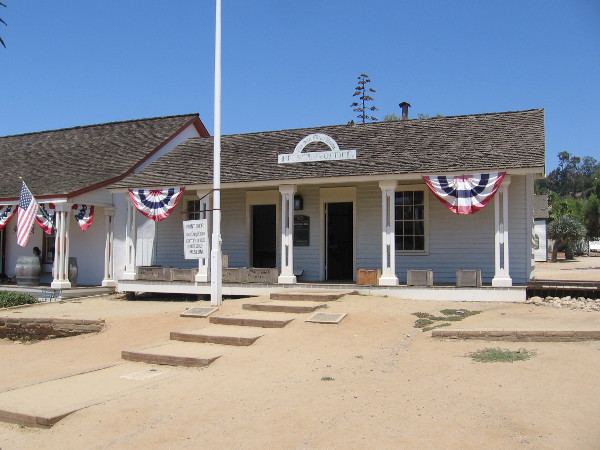
There are many interesting houses and buildings within Old Town San Diego State Historic Park. One of the most fascinating is the San Diego Union Building. Take a step inside and you’ll see the carefully restored birthplace of a present-day major newspaper: the San Diego Union Tribune.
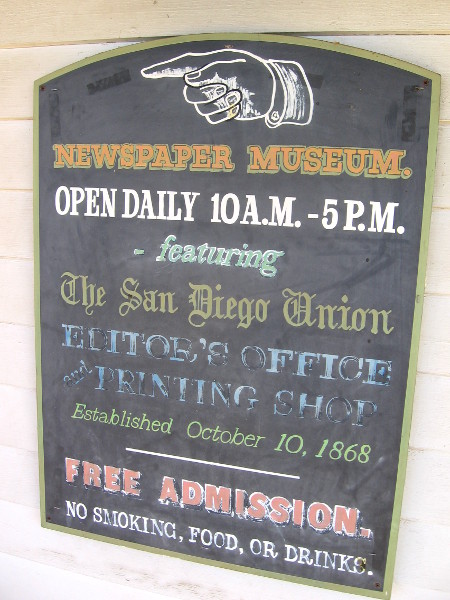
The framework of the building, erected around 1851, is believed to have been originally fabricated in Maine, then shipped to San Diego around Cape Horn. The San Diego Union was first published on October 10, 1868. The newspaper’s editor at that time was Edward “Ned” Wilkerson Bushyhead, a Cherokee Indian with a Scottish ancestor.
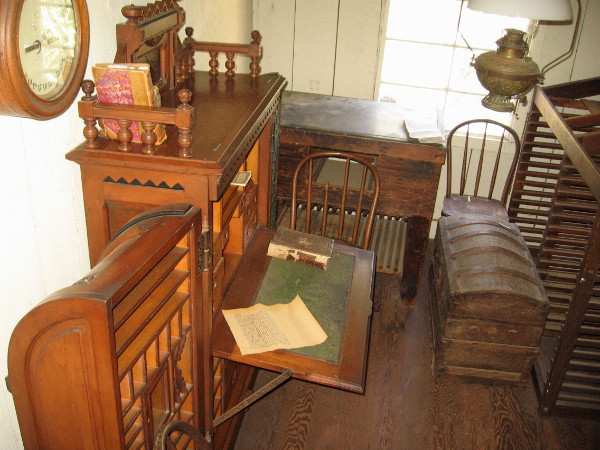
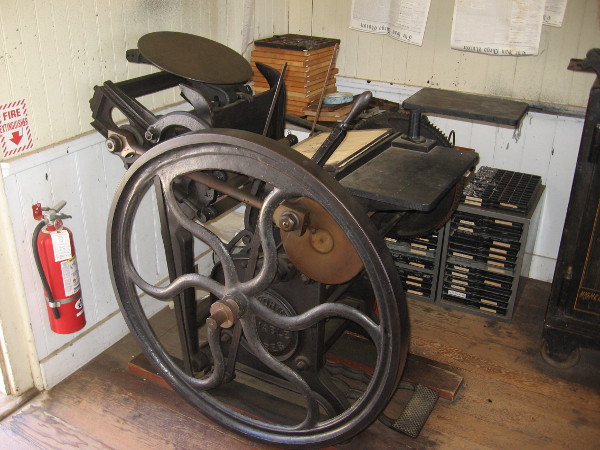
The newspaper began as a modest four page weekly, and was produced on a massive wrought iron Washington hand press. In the museum one can also see an authentic 1860’s recreation of the editor’s room, which contains a desk once owned by the son of Ulysses S. Grant!
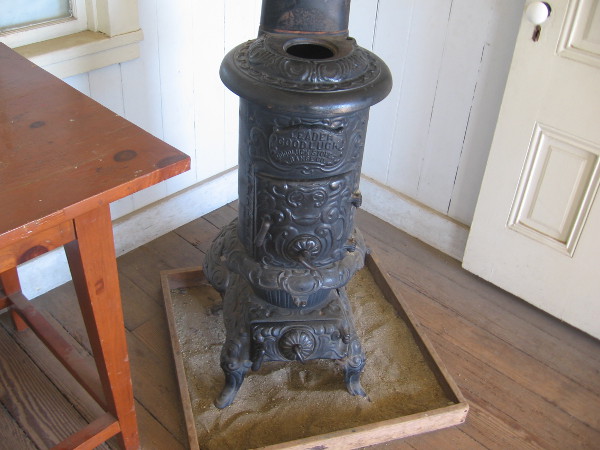
The San Diego Union Building in Old Town San Diego State Historic Park contains a print shop and editor’s office.The prefabricated wood-frame building was erected circa 1851. In 1967 the building was restored by James S. Copley, who at the time was owner of the San Diego Union Tribune.Old wood stove just inside the front entrance of accurately restored newspaper office.Drawers hold hand-set type that used to be assembled in a press for newspaper printing.A massive Washington hand press can be glimpsed to the right in the small printing shop.The small editor’s office contains a desk once owned by the son of President Ulysses S. Grant. In 1910 Ulysses S. Grant, Jr. built a grand hotel in San Diego’s New Town. (I took this photo in August 2017.)The Newspaper Museum is open daily from 10 to 5.
UPDATE!
In August 2017, during Stagecoach Days in Old Town, I was able to actually enter the print shop and take better photos of the presses and other objects inside. (Usually visitors must peer or take photographs from a greater distance.)
Washington hand presses were common on the frontier because of their relative light weight. They required two people for efficient operation.Fresh paper was laid on inked type and an impression made. Setting the type for new articles on just one page could take hours. Fortunately, many advertisements on a page didn’t change.A jobber printing press like this would have been used for small jobs such as stationery and handbills.This safe is the only original object displayed inside the restored San Diego Union Building in Old Town.A type case full of large cast metal sorts. Individual letters were combined into words, sentences and paragraphs. UPDATE! Big mistake by the caption writer: me! The largest letters you see in the above photo are actually made of hard wood. I was corrected by a member of the 919 Gang blog, who’s far more knowledgeable than me. I returned to the museum to confirm this. I learned very large metal sorts would be very heavy!Manual typesetting for old presses, as one might imagine, took lots of patience and a good eye.Gazing from the print shop toward the small building’s entrance area.According to one sign, the San Diego Union Building was erected around 1850 by Miguel Pedrorena. The Washington Press, type and printing supplies arrived by steamship from Northern California.A knowledgeable lady in period attire explains how the San Diego Union newspaper was composed and printed a century and a half ago, long before the digital age.
…
To enjoy future posts, you can “like” Cool San Diego Sights on Facebook or follow me on Twitter.
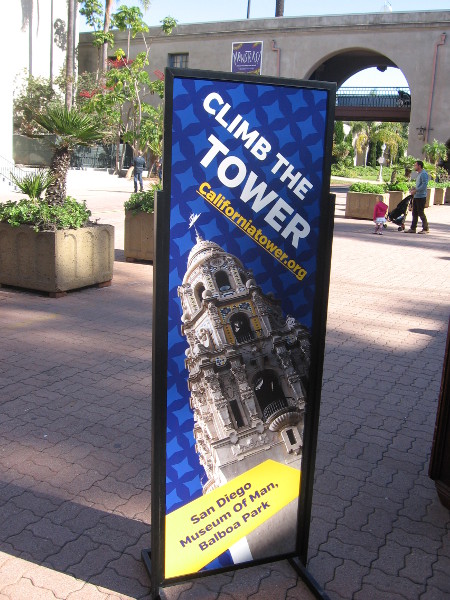
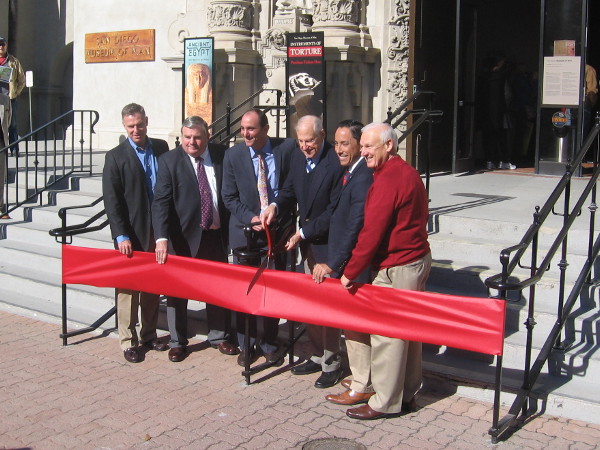
Dignitaries cut symbolic ribbon officially opening California Tower on New Year’s Day.
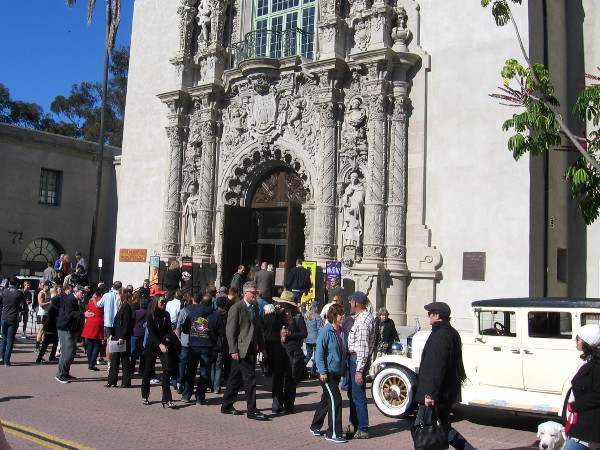
New Year’s Day in San Diego’s beautiful Balboa Park was marked by a historic event. Today, after 80 years, the California Tower reopened to the general public!
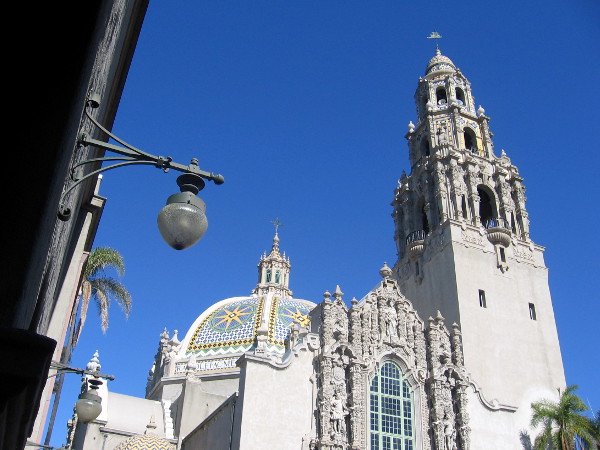
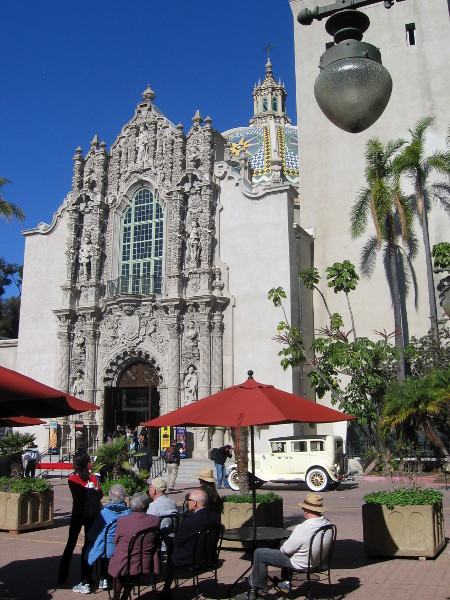
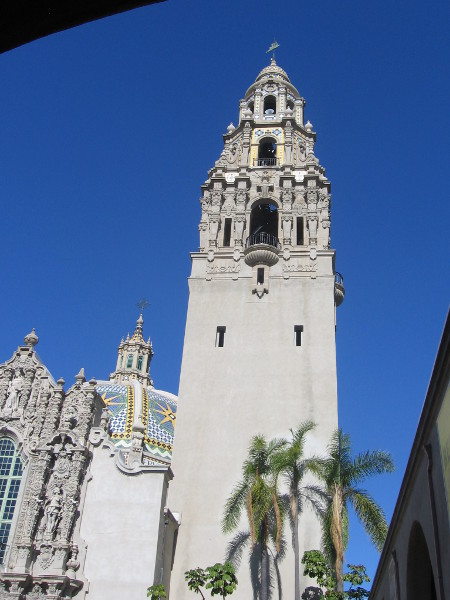
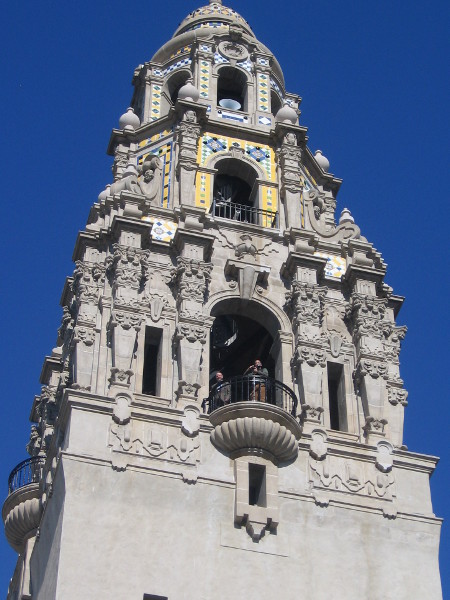
The California Tower is one of the most iconic sights in San Diego. Like many of the ornate Spanish Colonial Revival-style buildings in today’s Balboa Park, it was built for the 1915 Panama-California Exposition, which celebrated the opening of the Panama Canal. The tower was originally accessible to visitors, but in 1935 that changed. One of the most important developments during the Balboa Park Centennial Celebration this year is the long-awaited reopening of the amazing tower!
With the purchase of a special ticket, anyone can now join a small tour that climbs up 125 steps to an observation deck high above the park. Views are said to be breathtaking in all four directions. One day (when it’s not sold out) I’ll check the tour out and post some pics!
Dignitaries at the noon ribbon-cutting ceremony included U.S. Congressman Scott Peters, San Diego County Supervisor Ron Roberts, and San Diego City Councilman Todd Gloria.
You might recognize the California Tower and other portions of the California Building, which now houses the San Diego Museum of Man, from the movie Citizen Kane. Shots of Balboa Park’s architectural wonder were said to be Charles Foster Kane’s Xanadu Mansion in Orson Welles’ classic film.
The tower, reopened today to the general public, rises above tiled dome of California Building.Museum visitors can now climb the California Tower for amazing panoramic views.Audience gathers for ceremony on the tower’s 100 year anniversary.Several cool bicyclists happened to ride down El Prado in front of the Museum of Man.News cameras wait for speeches, and so do the assembled dignitaries nearby.Micah D. Parzen of the San Diego Museum of Man begins by thanking many people.California Tower first opened in 1915 for Panama-California Exposition in Balboa Park.Photographers up on the observation deck, where the public can now go!Local politicians, museum head and donor, poised ready to cut the big red ribbon!Feeling great about historic event, taking place during Balboa Park’s Centennial Celebration.Crowd disperses from ribbon cutting ceremony on another beautiful San Diego day!
…
To enjoy future posts, you can “like” Cool San Diego Sights on Facebook or follow me on Twitter.
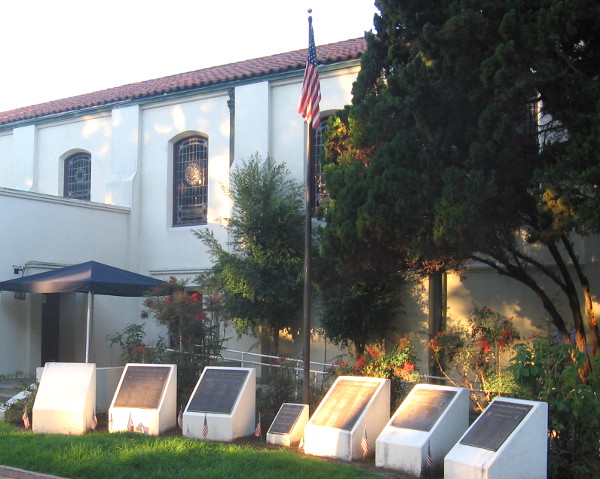
Morning light shines on monument originally called the San Diego Peace Memorial.
A fervent wish for this New Year: May There Be Peace on Earth.
Perhaps it’s futile to expect peaceful human coexistence on this crazy, mixed up planet. It often seems that way. That’s unfortunate. But it would be even more tragic to completely lose hope.
The creators of one poignant local memorial certainly yearned for the end of war. Because they understood war is brutal.
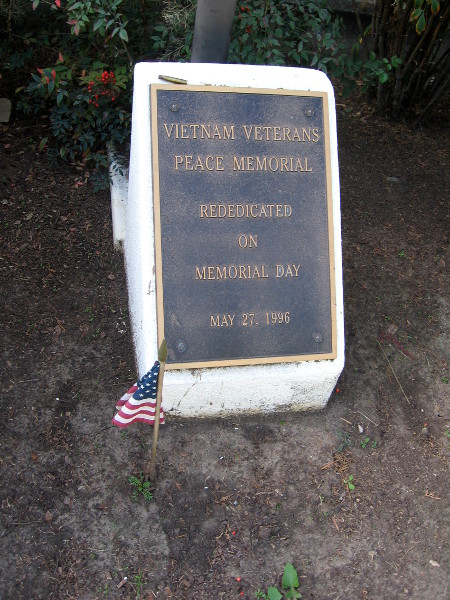
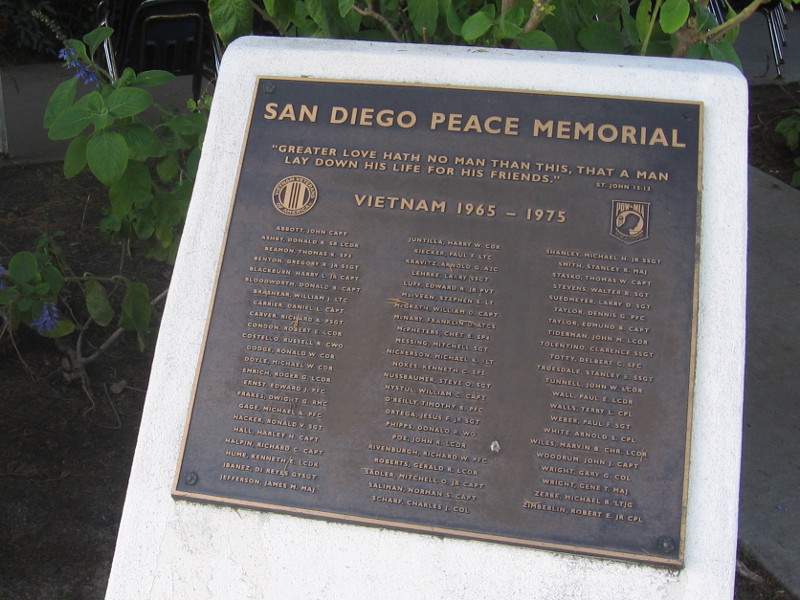
A row of plaques stand on the east side of the Veterans Museum and Memorial Center in Balboa Park. Originally called the San Diego Peace Memorial and installed in Old Town in 1969, the silent monument was renamed the Vietnam Veterans Peace Memorial in 1996 and moved to this location. It lists all San Diegans who were killed or designated missing in action during the Vietnam War.
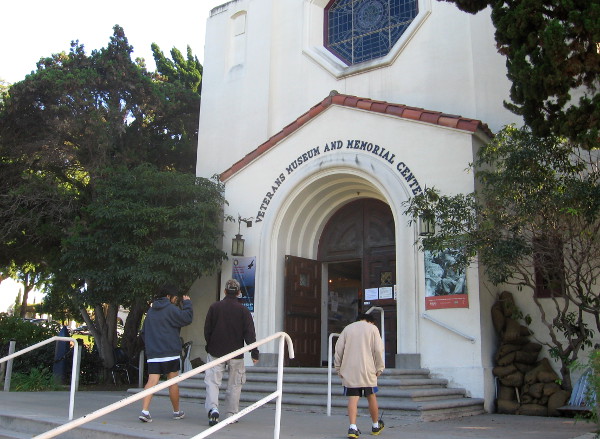
Today’s Veterans Museum and Memorial Center is housed in the former chapel of the old San Diego Naval Hospital, which was built during World War II. Throughout the history of mankind, wars have invariably reminded us of the sanctity of peace.
In 2015, May There Be Peace on Earth.
People head into the Veterans Museum and Memorial Center in Balboa Park.Vietnam Veterans Peace Memorial was originally located in Old Town.Small American flags remember those who sacrificed in a difficult, controversial war.Names of San Diegans who lost their lives fighting in the Vietnam War, 1965-1975.Flag flies above Veterans Museum, formerly the San Diego Naval Hospital Chapel.
…
To enjoy future posts, you can “like” Cool San Diego Sights on Facebook or follow me on Twitter.
The colorful new Barrio Logan gateway sign arches over Cesar Chavez Parkway.
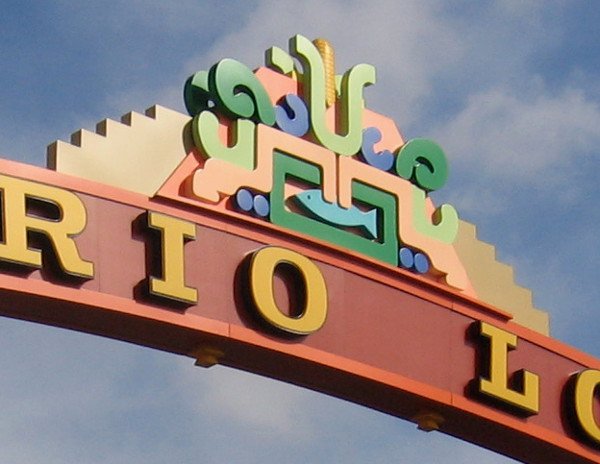
A little over a week ago, the new Barrio Logan gateway sign had a dedication ceremony. The welcoming sign, arching over Cesar Chavez Parkway between Harbor Drive and Interstate 5, is similar to others that can be spotted in various communities around San Diego. Its design, however, is notably different. The cornice contains a variety of symbolic elements inspired by this neighborhood’s complex history.
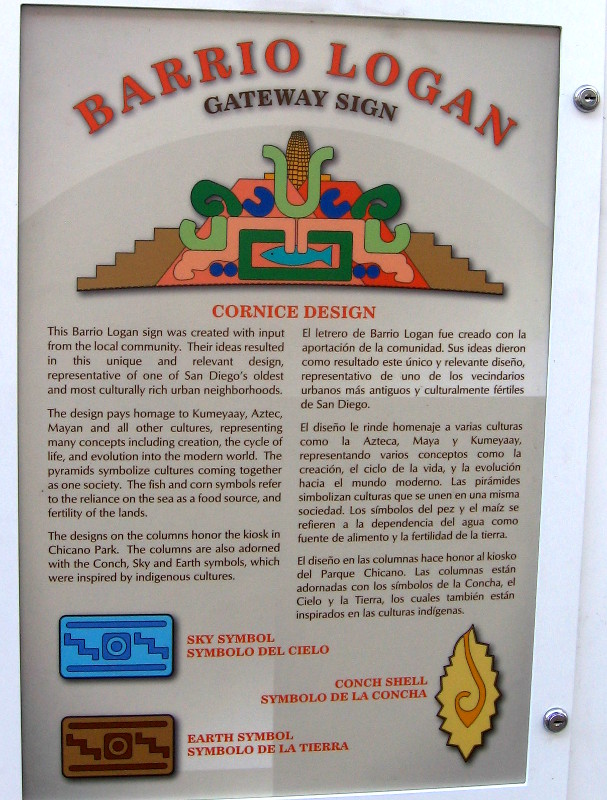
The cornice contains a variety of combined symbols that represent the community.One of two displays on either column that explains the design.
Small displays near the base of each column can be read from either sidewalk. They explain the significance of the cornice design:
“This Barrio Logan sign was created with input from the local community. Their ideas resulted in this unique and relevant design, representative of one of San Diego’s oldest and most culturally rich urban neighborhoods.
The design pays homage to Kumeyaay, Aztec, Mayan and all other cultures, representing many concepts including creation, the cycle of life, and evolution into the modern world. The pyramids symbolize cultures coming together as one society. The fish and corn symbols refer to the reliance on the sea as a food source, and fertility of the lands.
The designs on the columns honor the kiosk in Chicano Park. The columns are also adorned with the Conch, Sky and Earth symbols, which were inspired by indigenous cultures.”
View of the gateway sign as one approaches from the Barrio Logan trolley station.
…
To enjoy future posts, you can “like” Cool San Diego Sights on Facebook, or follow me on Twitter.
Abraham Lincoln, slavery, the Constitution, dissent, the Civil War, and lingering questions.
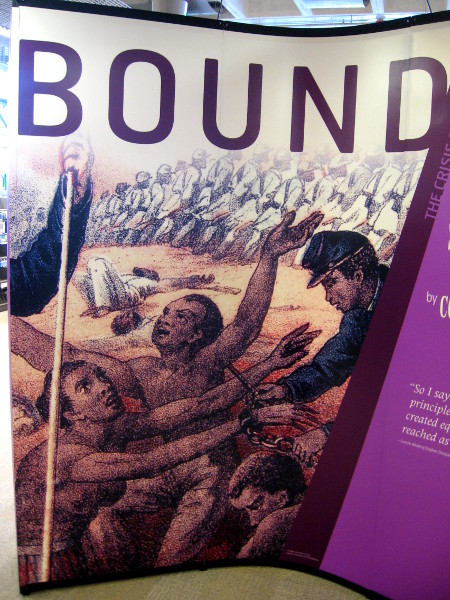
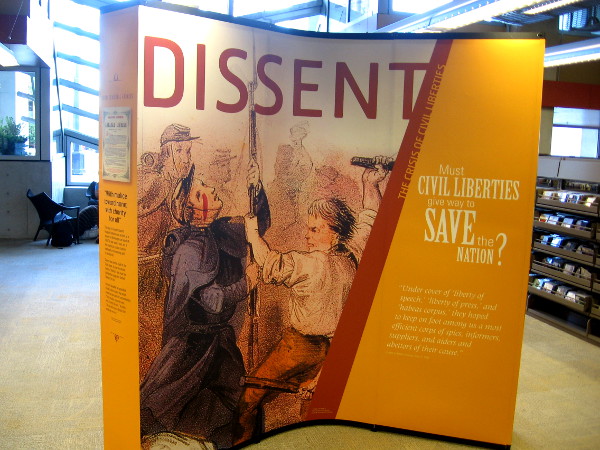
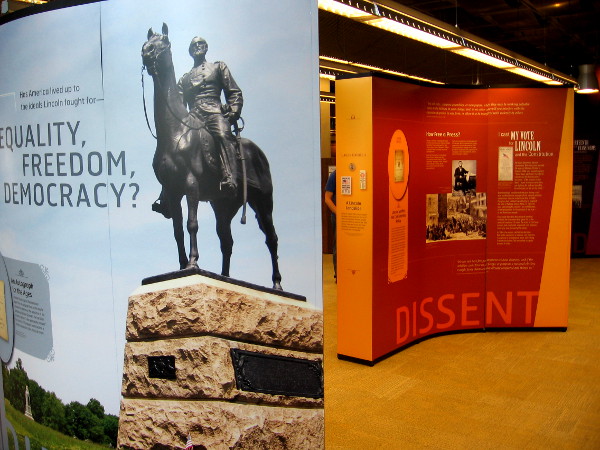
A thought-provoking historical exhibit is currently on display in downtown San Diego’s Central Library. Titled “Lincoln: The Constitution and the Civil War,” the large multi-paneled exhibit outlines and discusses a number of controversial issues that arose during the time of America’s Civil War. The exhibit, which has visited a number of different libraries, was created by the American Library Association and the National Constitution Center.
Old photos and texts help visitors to understand the election of Abraham Lincoln, the secession of the southern states, and the Civil War itself; complex topics that are explored include slavery and the plight of African Americans, the Constitution and state sovereignty, and civil liberties.
If you happen to find yourself in East Village, pop into the library. The large display is on the ground floor and very difficult to miss. The traveling exhibit will remain at this location through January 9, 2015.
Lincoln: the Constitution and the Civil War is on display in San Diego’s Central Library.Meet Mr. Lincoln. The new American president was viewed by some with uncertainty or distrust.People at San Diego’s new downtown public library check out a provocative historical exhibit.The Confederacy attacked Fort Sumter after Lincoln decided to resupply the fortification.Old envelope depicts a boxing match between Lincoln and Jefferson Davis.The Civil War, fought for complex reasons, effectively ended slavery in America.The original Constitution didn’t abolish slavery. It left the matter to the states.Exhibit examines dissent, and Lincoln’s choice to suspend the writ of habeas corpus.Traveling library exhibit asks about the state of equality, freedom and democracy today.It is for us the living…to be dedicated here to the unfinished work.
…
To enjoy future posts, you can “like” Cool San Diego Sights on Facebook. or follow me on Twitter.



















































 Cool San Diego Sights!