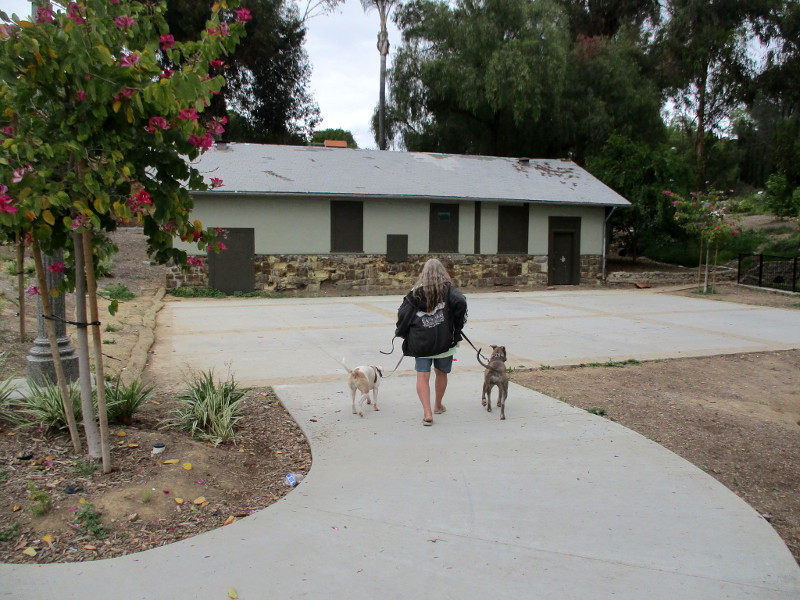
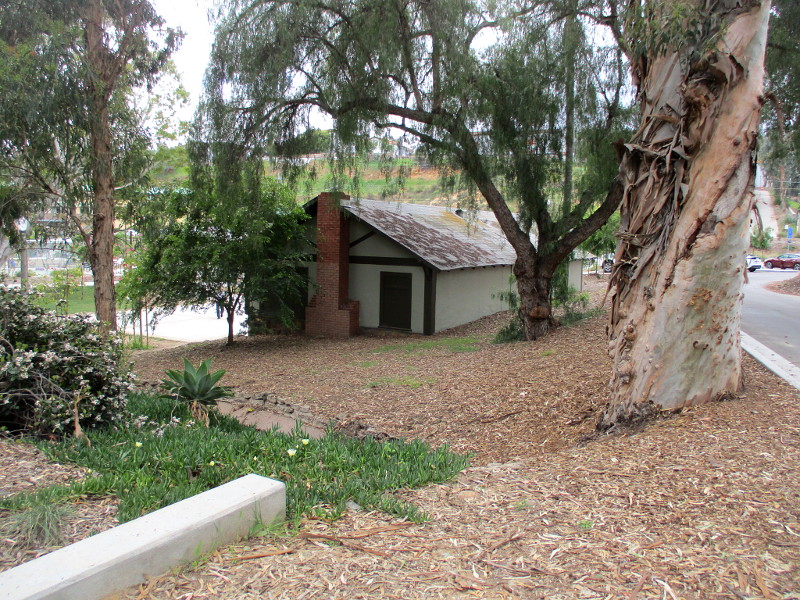
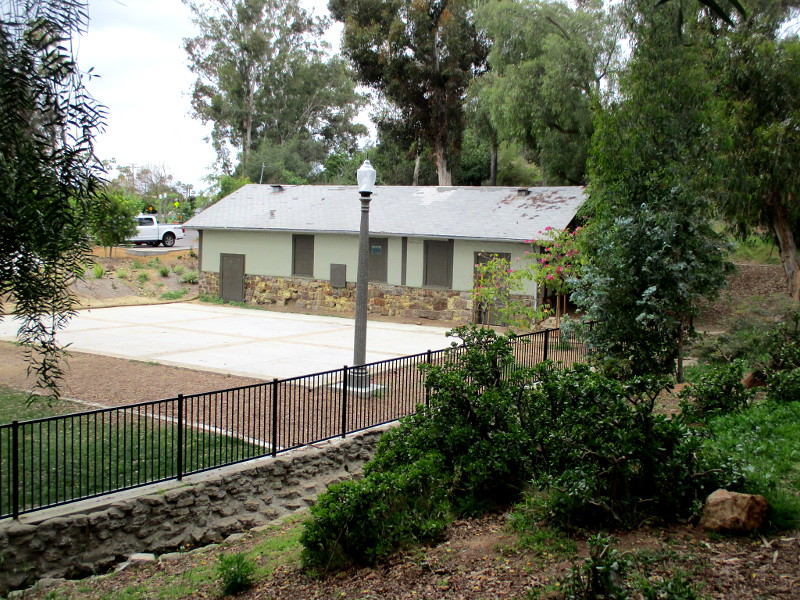
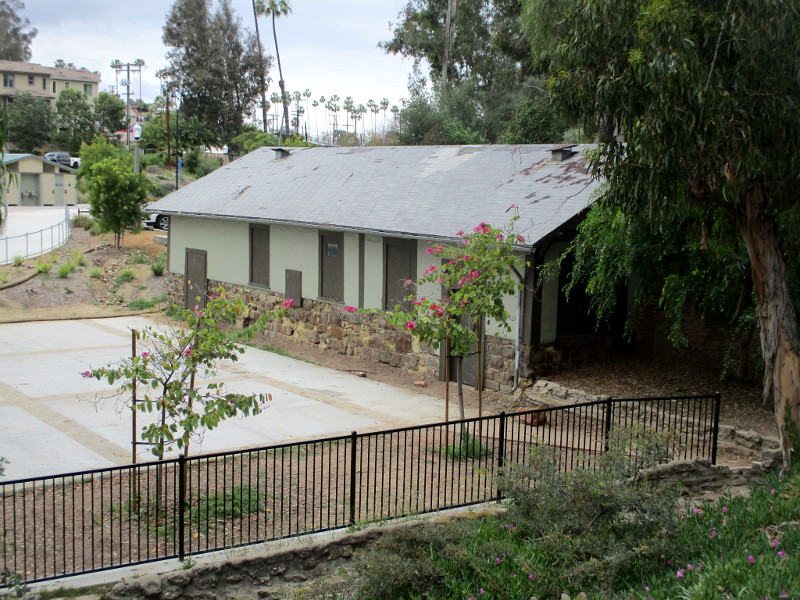
I asked a gentleman at the La Mesa Community Center if there were interesting places to visit in the neighborhood, and was told about Collier Park and its Spring House. He told me the historical house was undergoing restoration. Curious, I headed over to investigate.
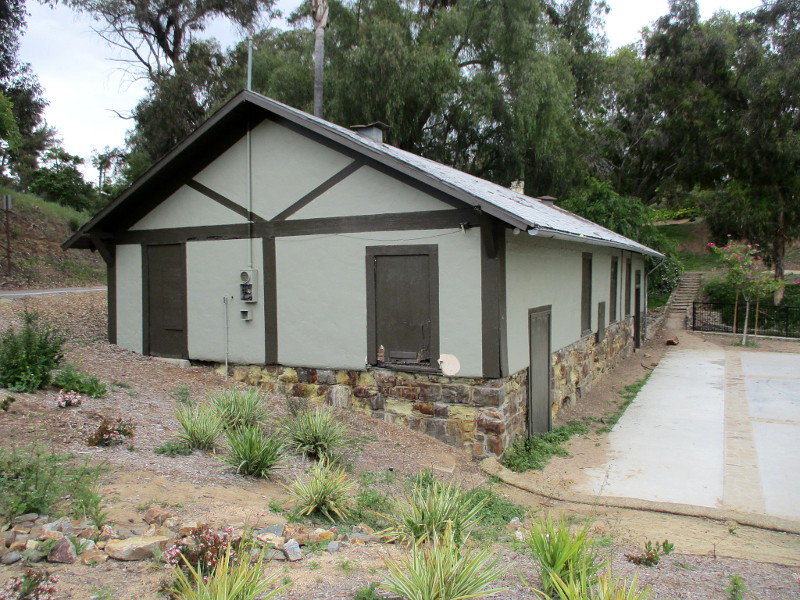
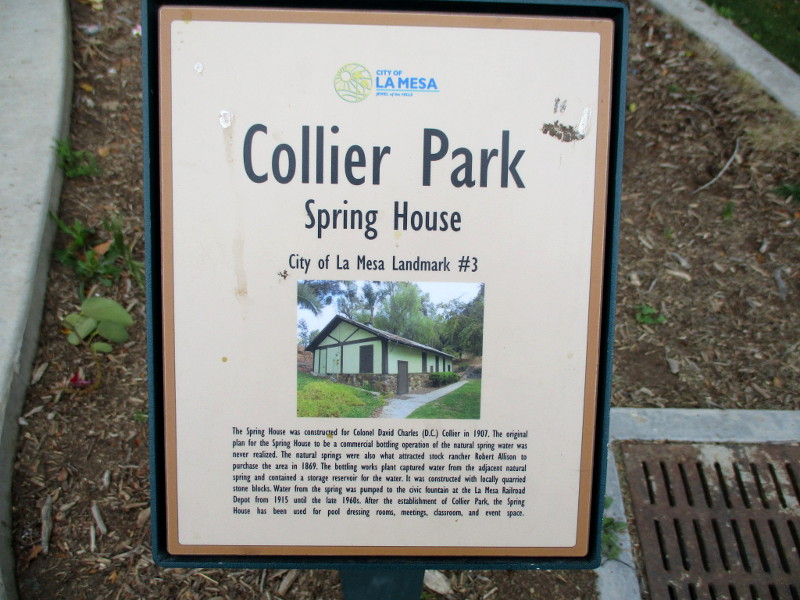
I walked around the somewhat dilapidated old Spring House and found a sign that describes its history. I was surprised to learn about the origin of the name Spring Street–an important nearby street that runs through downtown La Mesa.
Collier Park – Spring House – City of La Mesa Landmark #3
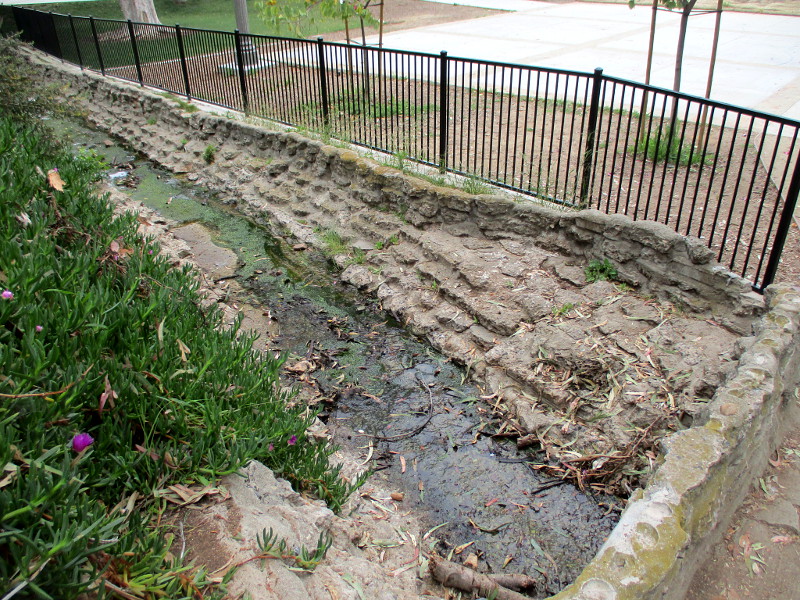
The Spring House was constructed for Colonel David Charles (D.C.) Collier in 1907. The original plan for the Spring House to be a commercial bottling operation of the natural spring water was never realized. The natural springs were also what attracted stock rancher Robert Allison to purchase the area in 1869. The bottling works plant captured water from the adjacent natural spring and contained a storage reservoir for the water. It was constructed with locally quarried stone blocks. Water from the spring was pumped to the civic fountain at the La Mesa Railroad Depot from 1915 until the late 1960s. After the establishment of Collier Park, the Spring House has been used for pool dressing rooms, meetings, classroom and event space.
…
I post new blogs pretty often. If you like discovering new things, bookmark coolsandiegosights.com and swing on by occasionally!
I live in downtown San Diego and love to walk around with my camera! You can follow Cool San Diego Sights via Facebook or X.
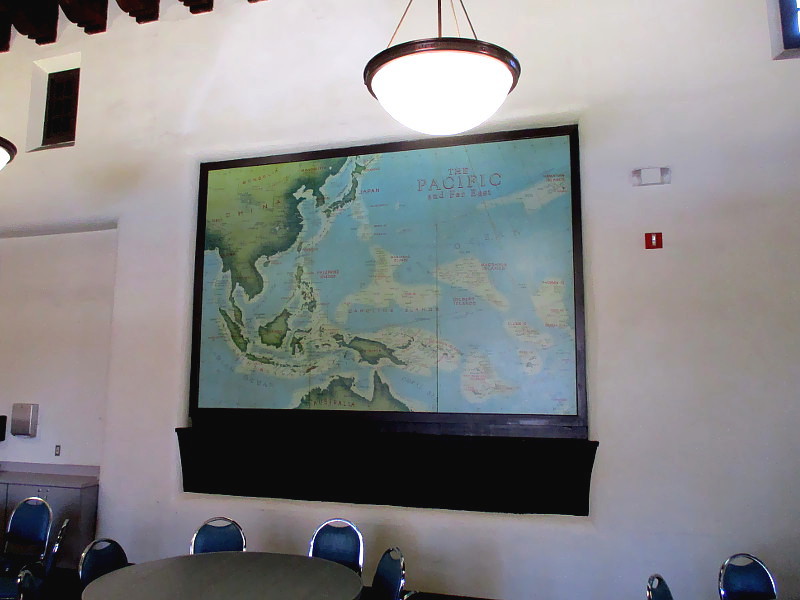
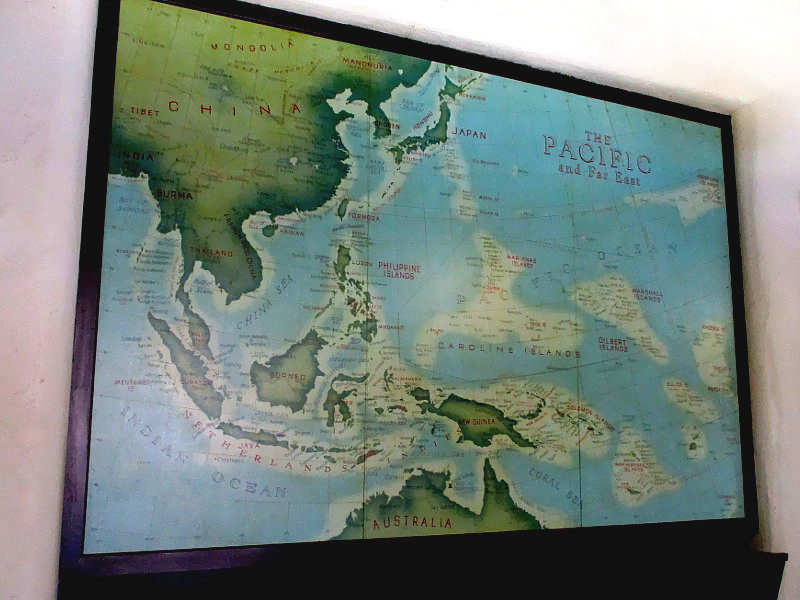
If poke your nose inside the Santa Fe Room of the Balboa Park Club building, you’ll find a large map on one wall. The old map is a remnant of the park’s fascinating history.
During World War II, the Palisades part of Balboa Park was turned into Camp Kidd Naval Training Station, a U.S. Navy facility that included hospital wards, training facilities and barracks.
The Balboa Park Club building, which had been the Palace of Education for the 1935-36 California Pacific International Exposition, was converted into a temporary annex to the naval hospital with a dispensary and mess hall. Here’s an interesting web page about Camp Kidd.
The building’s Santa Fe Room, with its map of The Pacific and Far East, became the Camp Kidd Officers’ Club. Visitors to the park today can view that same map–provided the room is open and not being used for a special event.
I had to increase the contrast quite a bit for my two photographs, to bring out more detail.
…
I post new blogs pretty often. If you like discovering new things, bookmark coolsandiegosights.com and swing on by occasionally!
I live in downtown San Diego and love to walk around with my camera! You can follow Cool San Diego Sights via Facebook or X.
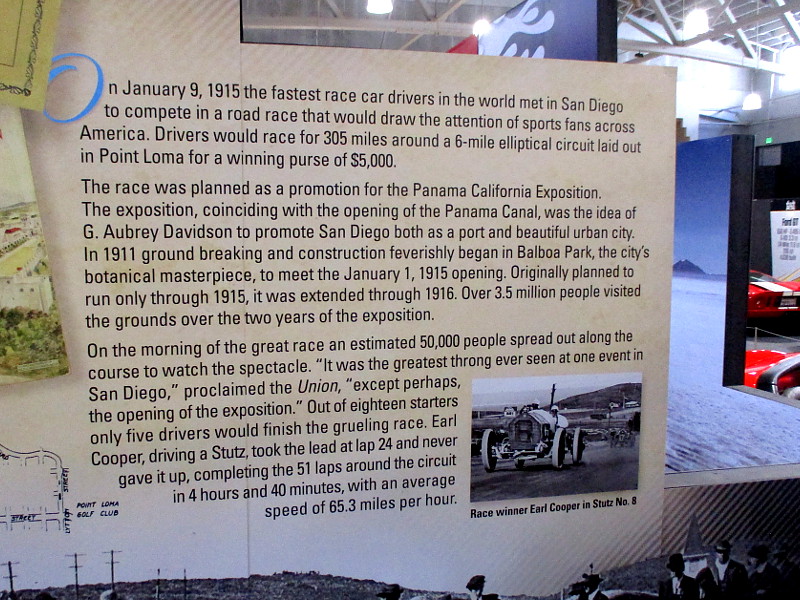
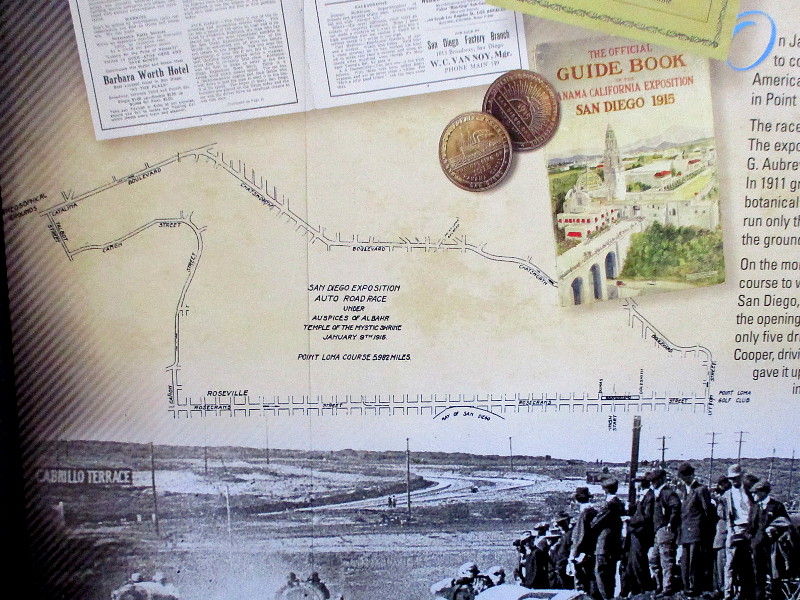
A famous car race was held in Point Loma in 1915. A historical display at the San Diego Automotive Museum recalls how the San Diego Exposition Auto Road Race involved many famous race car drivers of the era and received nationwide attention.
The race promoted the Panama-California Exposition in Balboa Park. It is estimated 50,000 people watched the 305 mile race as it looped through Point Loma’s rather rough-appearing streets. The winning purse was a whopping (for 1915) $5,000. Only five of the eighteen drivers would finish the race.
The race winner would be Earl Cooper in Stutz No. 8. His average speed was a nail-biting 65.3 miles per hour!
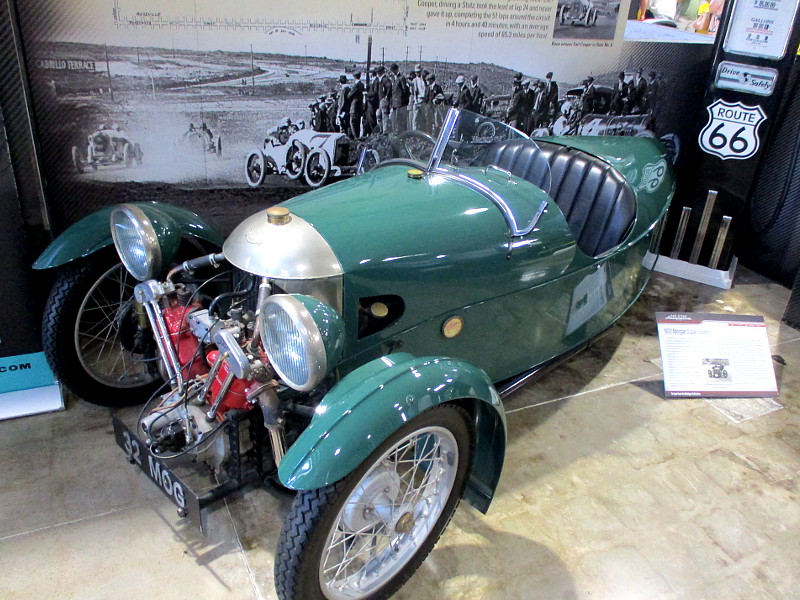
A vintage car accompanies the museum display. The 1932 Morgan Super Sports, as much as it resembles some of the earlier race cars, debuted 17 years after the San Diego Exposition Auto Road Race was held. It can go 100 miles per hour–much faster.
When I saw this historical display, I immediately remembered my experience of the 1915 Road Race vintage car show. That amazing event was held in the parking lot by the San Diego Automotive Museum during Balboa Park’s centennial in 2015. See those photos here.
…
I post new blogs pretty often. If you like discovering new things, bookmark coolsandiegosights.com and swing on by occasionally!
I live in downtown San Diego and love to walk around with my camera! You can follow Cool San Diego Sights via Facebook or X.
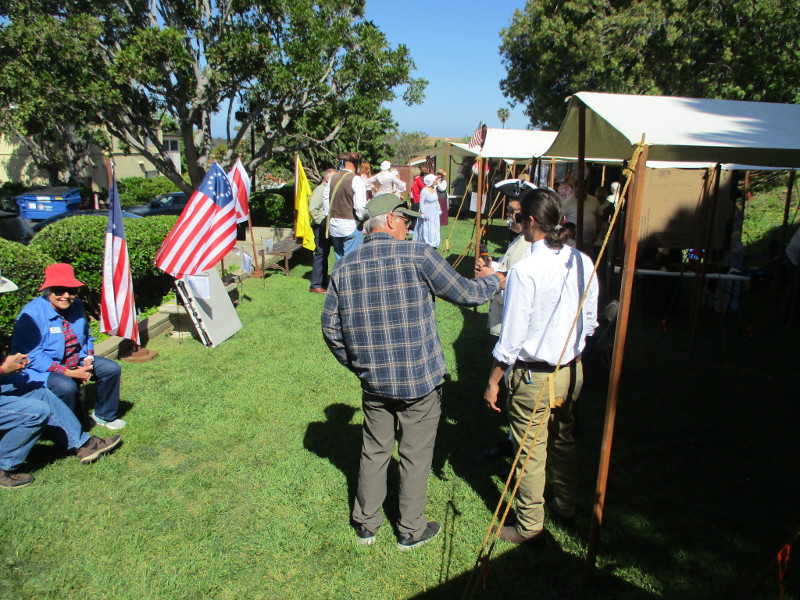
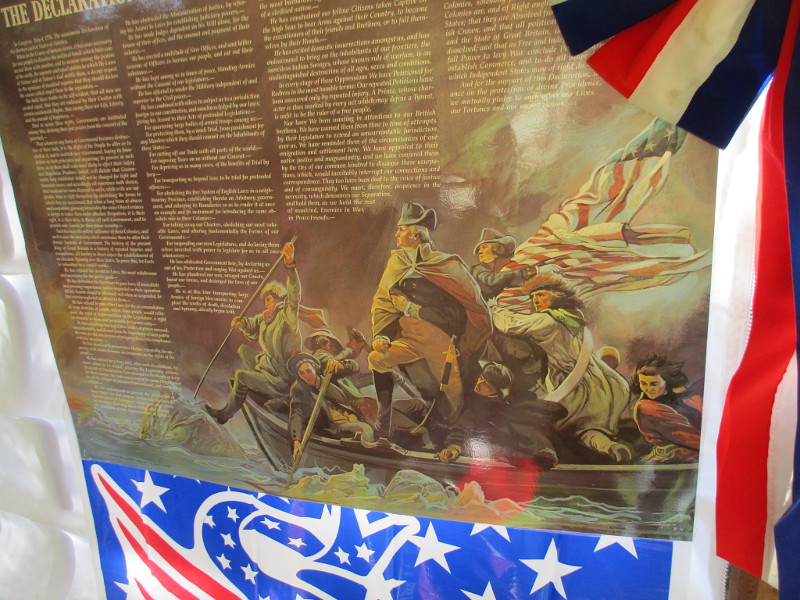
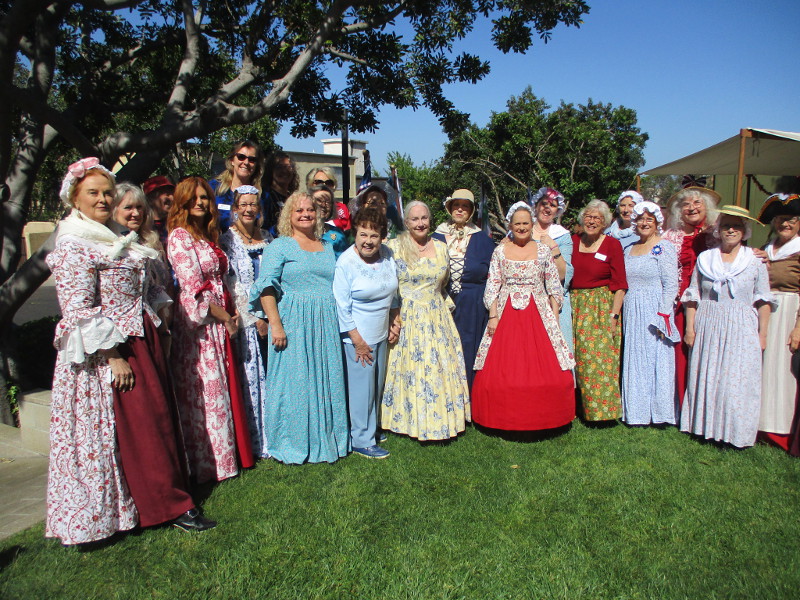
April 19, 2025 is the 250th Anniversary of the Battles of Lexington and Concord, which marked the beginning of the American Revolutionary War. A special event celebrating that first victory of patriotic Minutemen over the redcoats of the Kingdom of Great Britain was held today in San Diego!
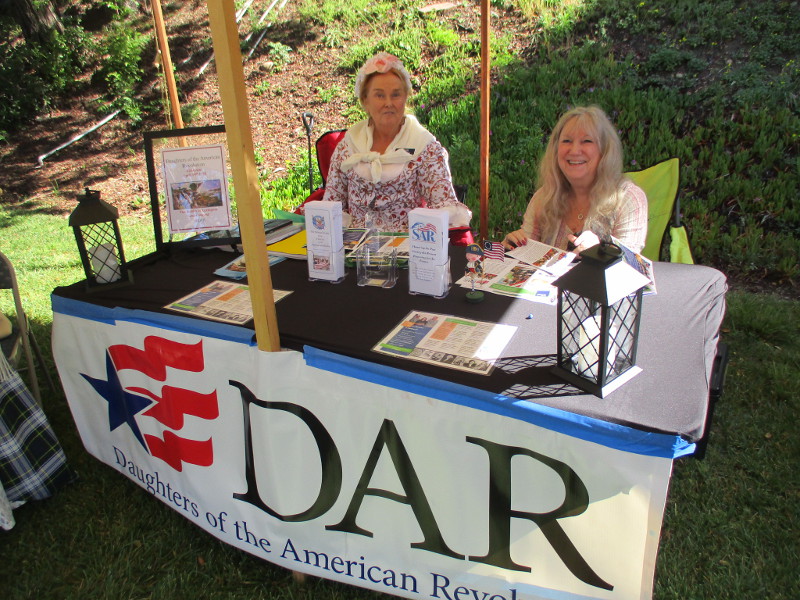
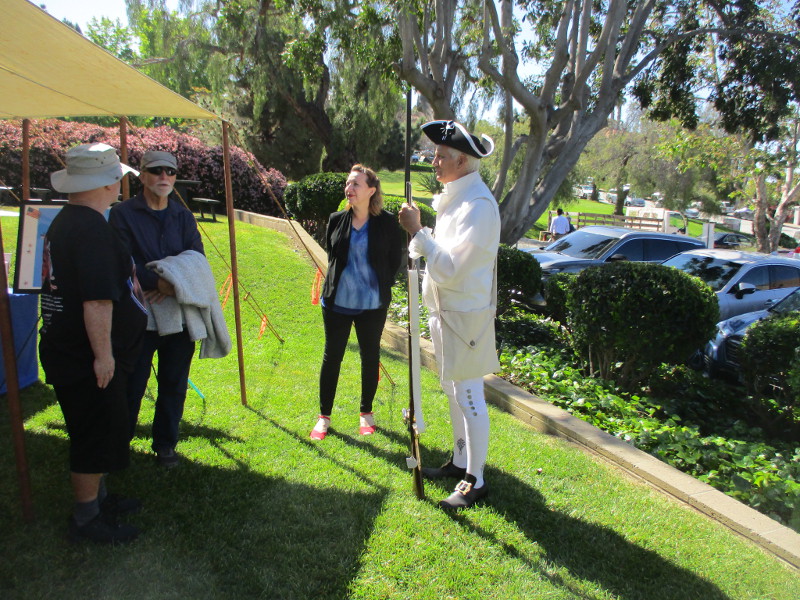
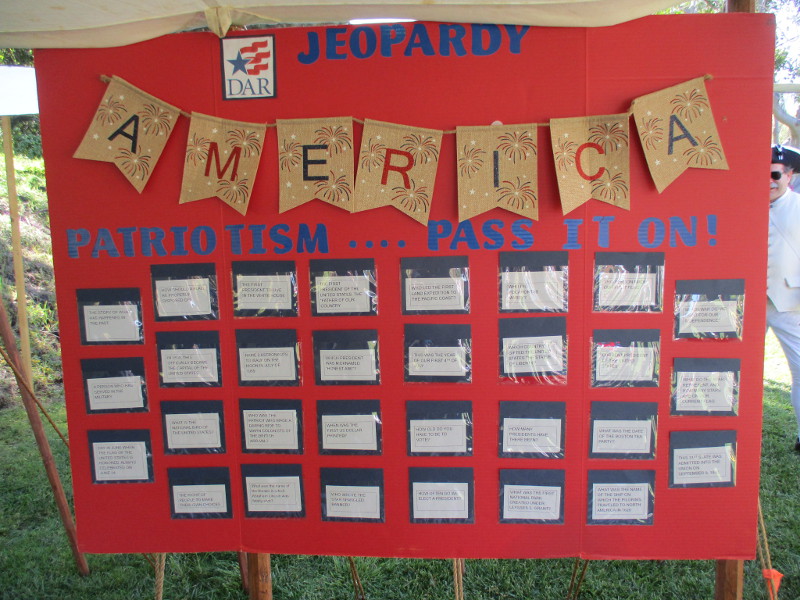
At Mormon Battalion Historic Site in Old Town, local chapters of the Daughters of the American Revolution and Sons of the American Revolution welcomed the public to the colorful and educational event.
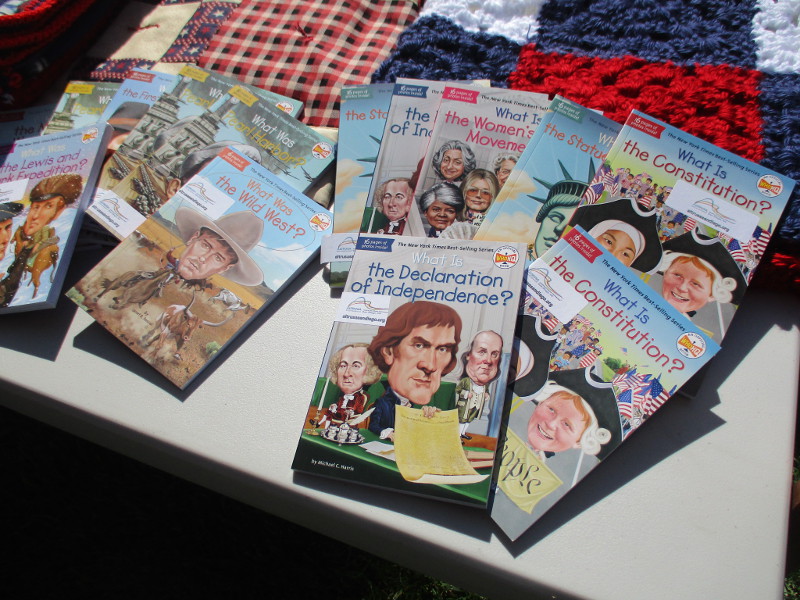
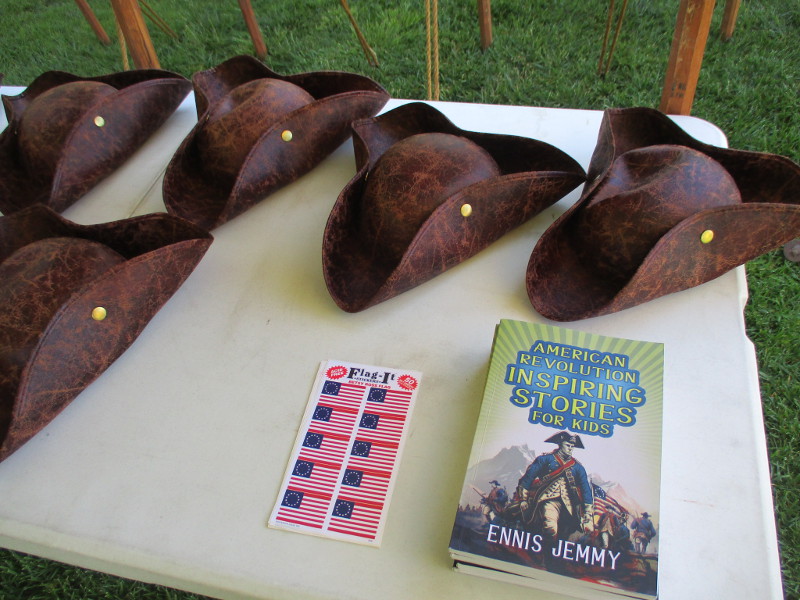
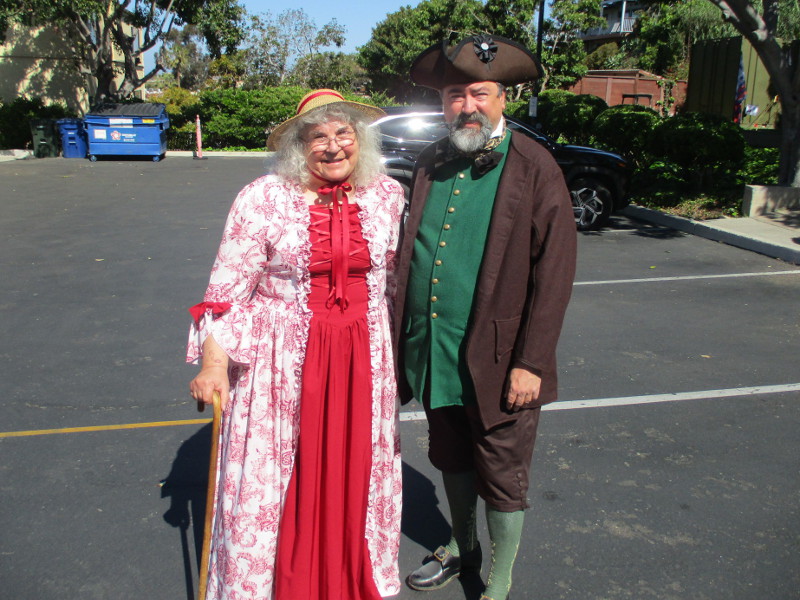
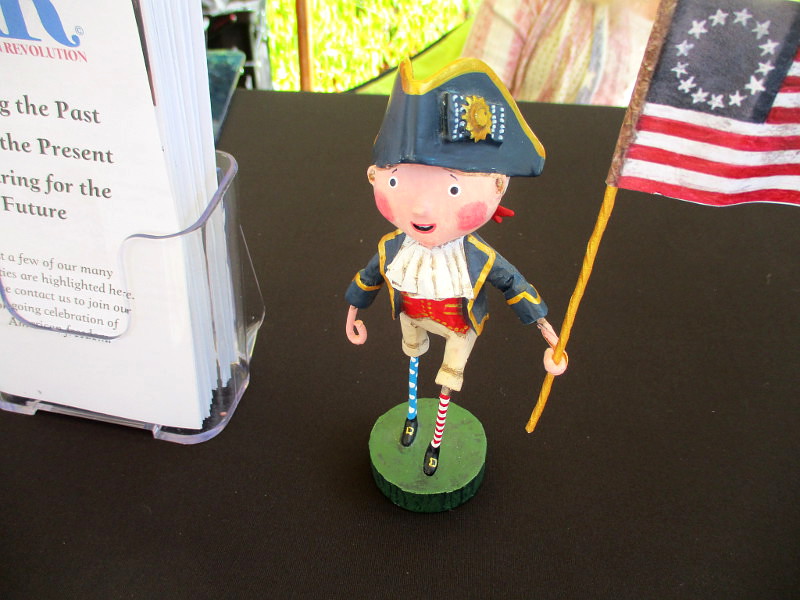
DAR and SAR members, who are descended from patriots of the American Revolutionary War, were dressed in colonial garb. Historical information was available at a number of tables.
I was met by many smiles!
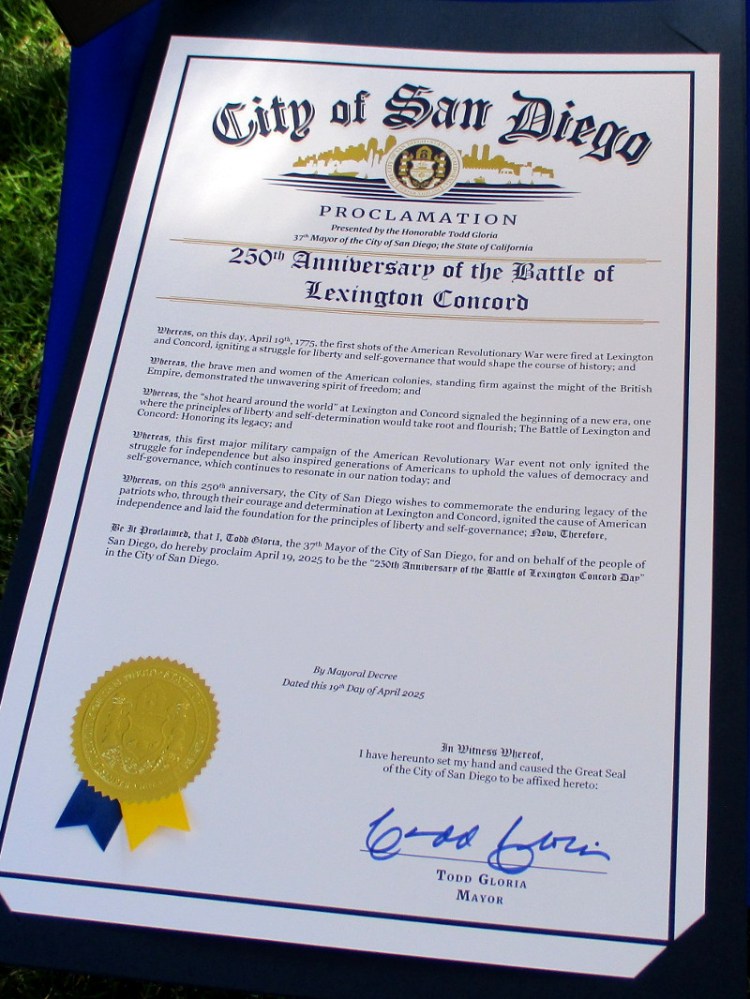
Above is the City of San Diego Proclamation concerning the 250th Anniversary of the Battle of Lexington Concord.
Whereas, on this day…the first shots of the American Revolutionary War were fired at Lexington and Concord, igniting a struggle for liberty and self-government that would shape the course of history…
…
I post new blogs pretty often. If you like discovering new things, bookmark coolsandiegosights.com and swing on by occasionally!
I live in downtown San Diego and love to walk around with my camera! You can follow Cool San Diego Sights via Facebook or X.
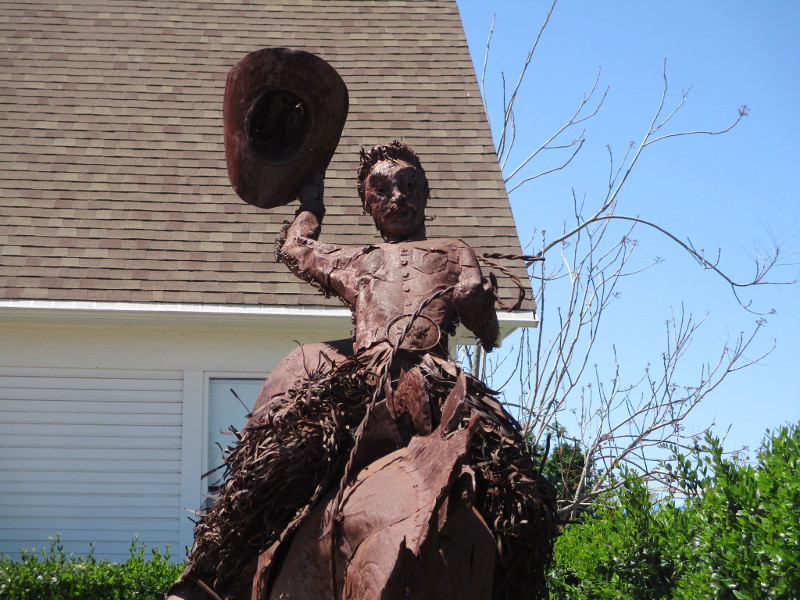
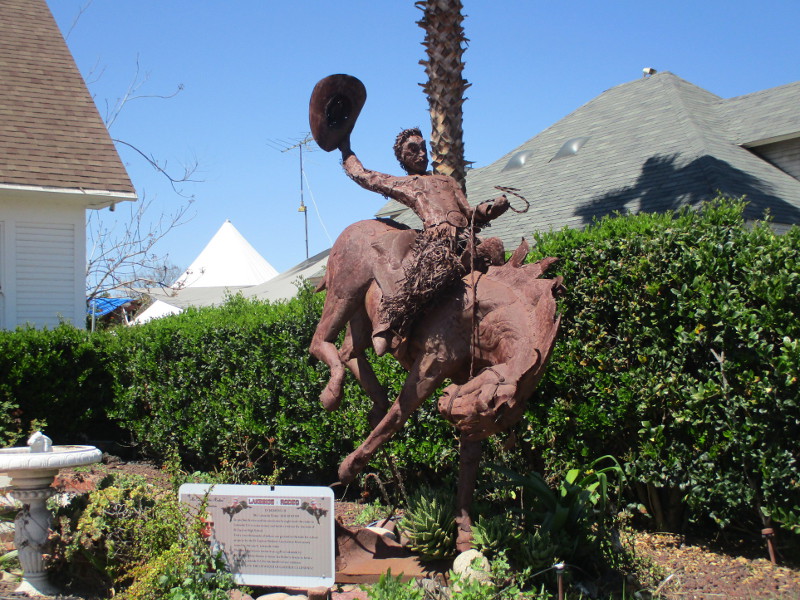
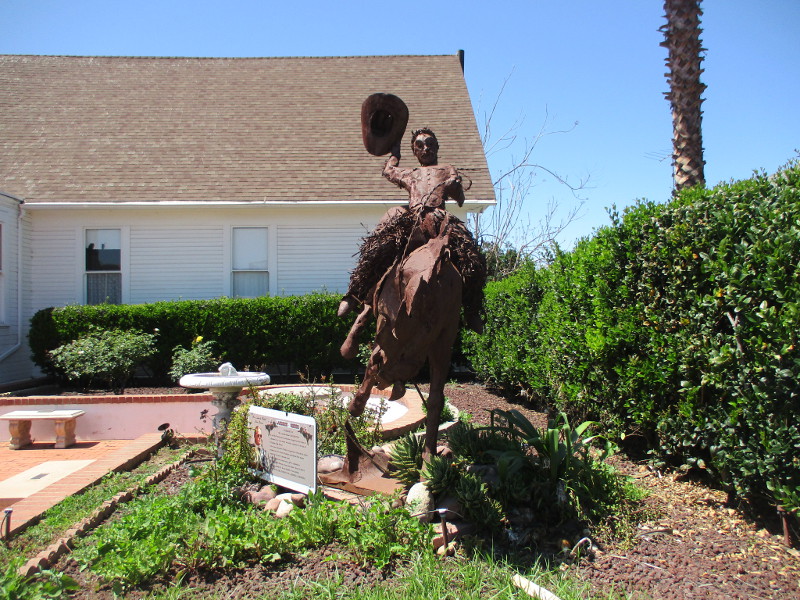
Perhaps you’ve seen this sculpture in front Lakeside’s Olde Community Church, home of the Lakeside Historical Society. It depicts a cowboy on a bucking bronco.
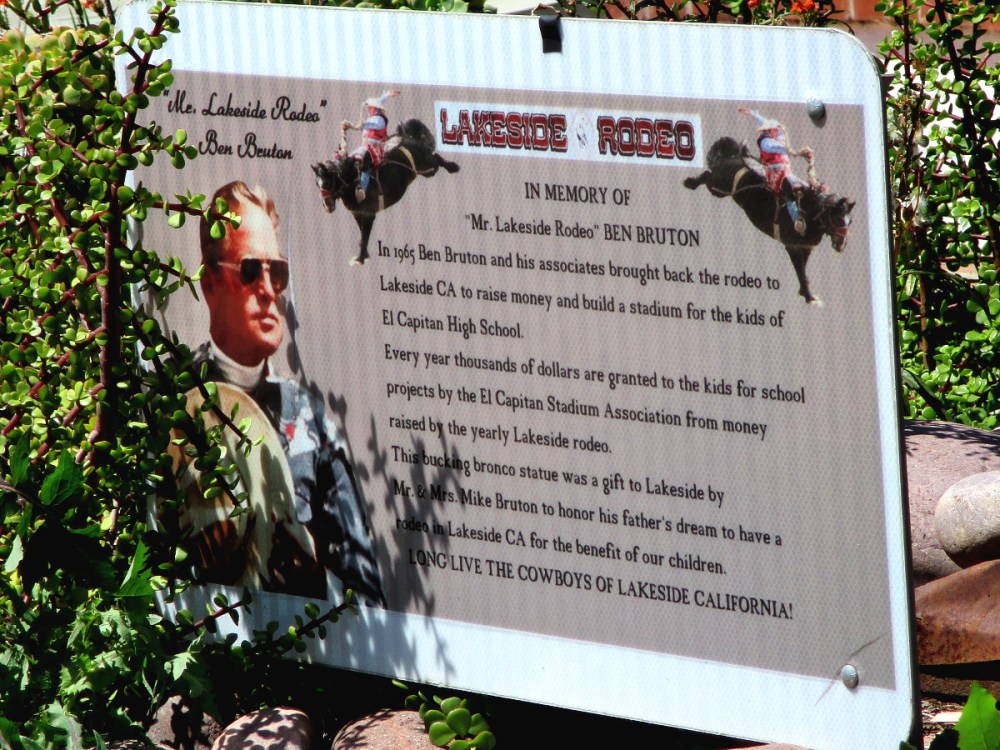
The sculpture is in memory of “Mr. Lakeside Rodeo” Ben Bruton. A nearby sign explains: In 1965 Ben Bruton and his associates brought back the rodeo to Lakeside CA to raise money and build a stadium for the kids of El Capitan High School… This bucking bronco statue was a gift to Lakeside by Mr. & Mrs. Mike Bruton to honor his father’s dream to have a rodeo in Lakeside CA for the benefit of our children…
According to this informative Facebook post from 2014: Mike Bruton, Son of Ben Bruton, acquired this statue of a bronc busting cowboy from Bobby Unser Jr. The post goes on to describe the Lakeside Rodeo, and how it went on to become an annual event.
This great article elaborates further on the history of past rodeos in Lakeside.
So far I haven’t ascertained who created the sculpture. If you know the artist, please leave a comment below!
…
I post new blogs pretty often. If you like discovering new things, bookmark coolsandiegosights.com and swing on by occasionally!
I live in downtown San Diego and love to walk around with my camera! You can follow Cool San Diego Sights via Facebook or X.
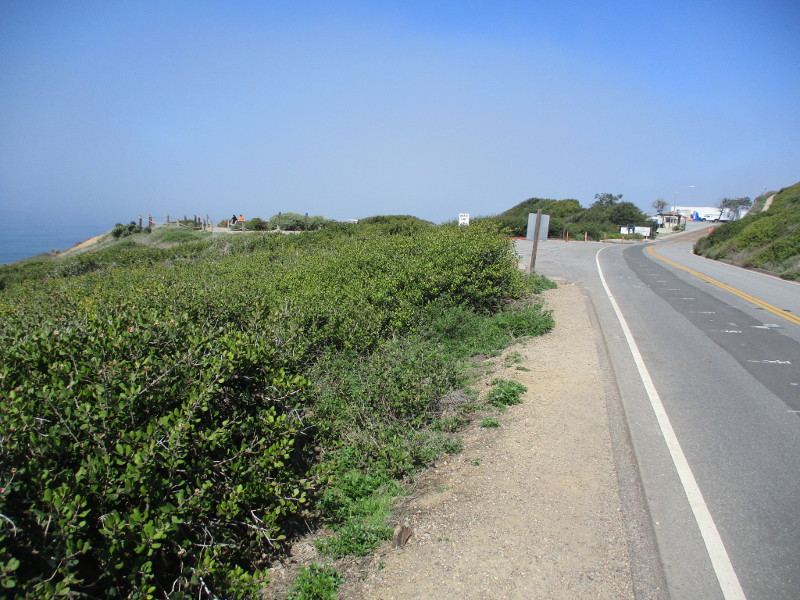
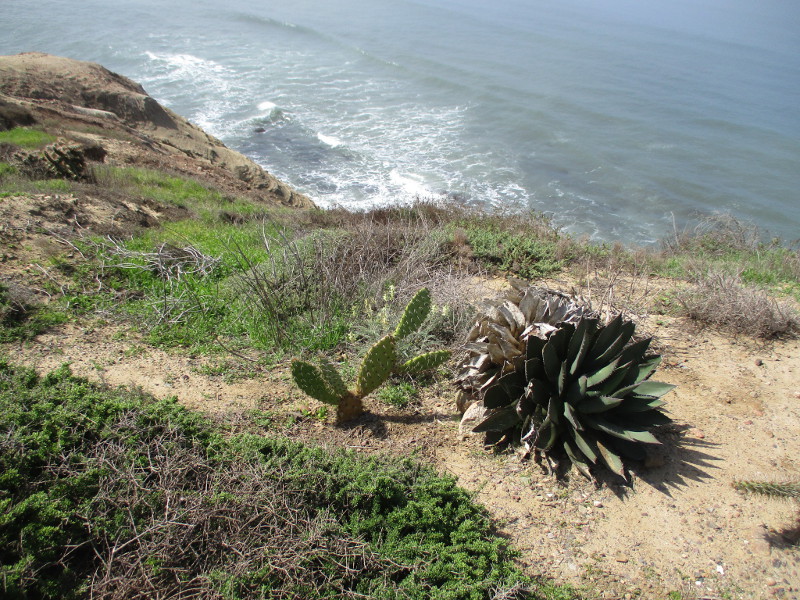
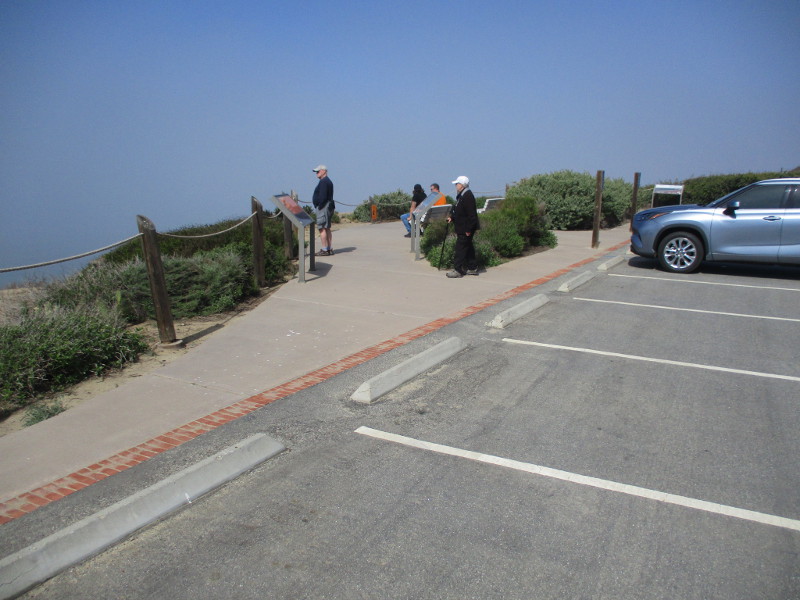
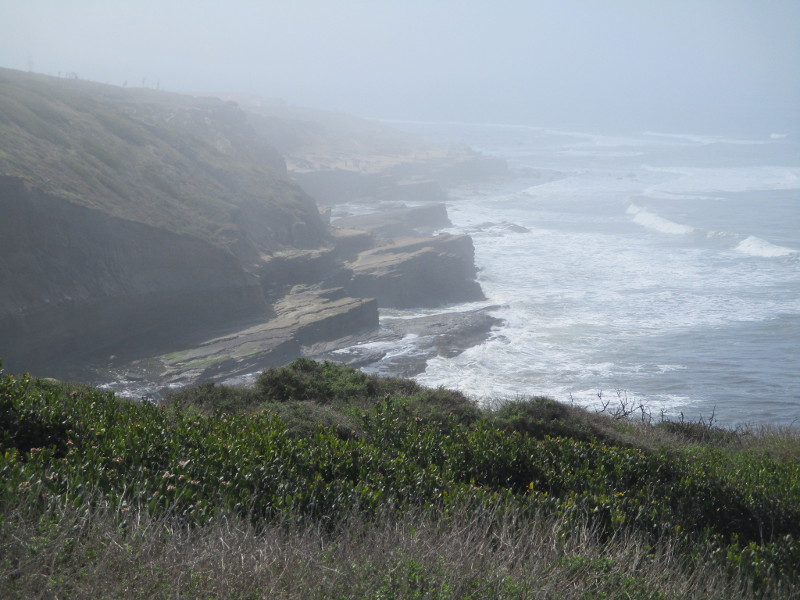
Few people enjoy the scenic view in the above photograph. That’s because the remote Coast View parking lot is seldom visited at Cabrillo National Monument.
The small parking lot can be found at the end of Cabrillo Road, just before the gate to the Point Loma Wastewater Treatment Plant. Most park visitors who drive down Cabrillo Road stop at Tidepools Parking and go no farther.
I recently posted a blog about my amazing hike up the Coastal Trail. I began from a spot near Tidepools Parking and walked north to Sea Cove Parking, where the trail ends. I didn’t mention that from the latter parking lot, I continued north a short distance along the side of Cabrillo Road, in order to reach Coast View Parking. That’s where these photographs were taken.
An overlook at the Coast View parking lot not only offers scenic views of the Pacific Ocean and sandstone bluffs, but there are information signs well worth reading.
Here I am carefully walking north along the side of Cabrillo Road…
I’ve arrived at Coast View Parking. There are benches where people can relax and gaze out toward the ocean.
A sign contains a poem…
“…The great rhythms of nature…have here their spacious and primeval liberty…”
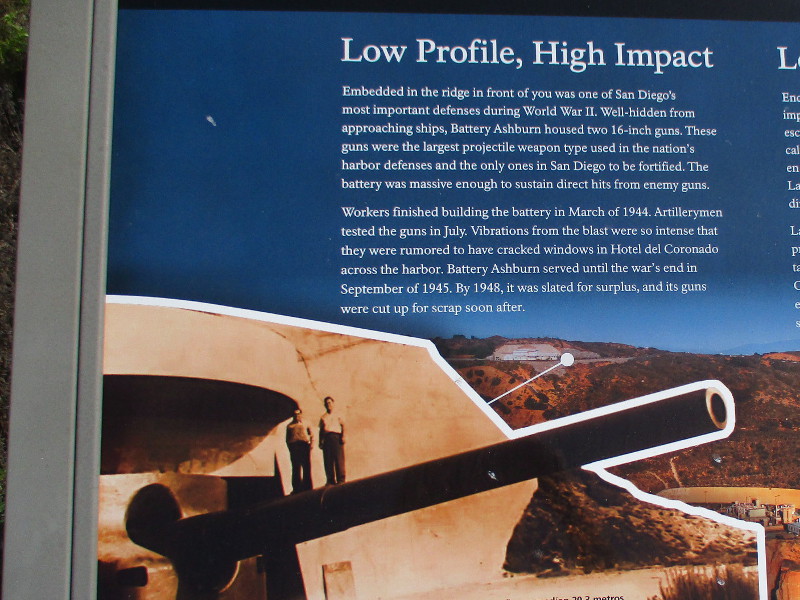
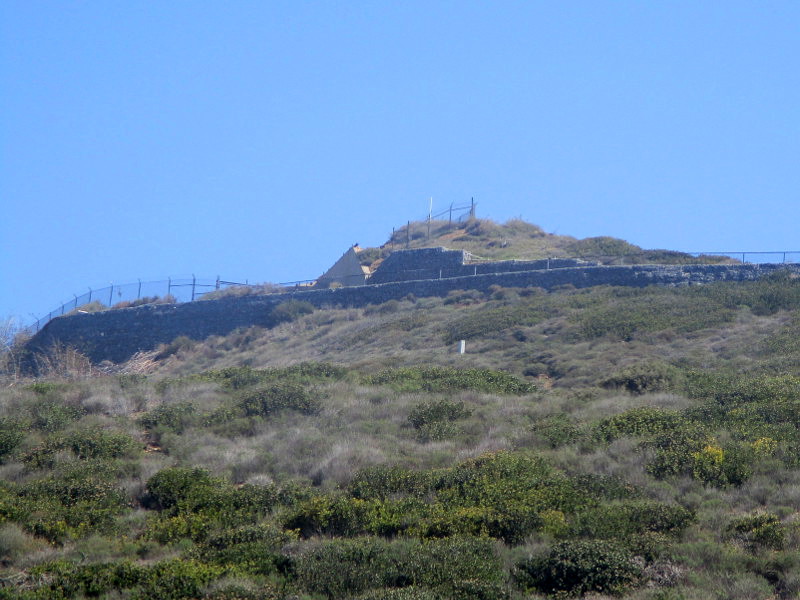
Above the parking lot, up atop the Point Loma peninsula, one can see Battery Ashburn…
Embedded in the ridge in front of you was one of San Diego’s most important defenses during World War II. Well-hidden from approaching ships, Battery Ashburn housed two 16-inch guns…
Workers finished building the battery in March of 1944… Vibrations from the blast were so intense that they were rumored to have cracked windows in Hotel del Coronado across the harbor…
Turning east, I lifted my camera and took this photo of historic Battery Ashburn:
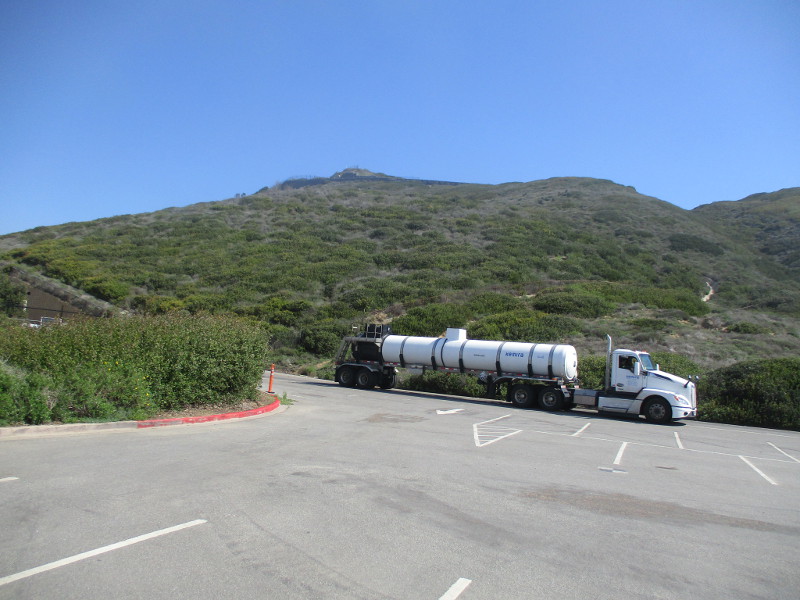
I then noticed a truck leaving the Point Loma Wastewater Treatment Plant, which handles sewage and gray water created by more then 2.2 million people who live nearby!
A beautiful day at Cabrillo National Monument, and a parking lot that few people visit…
…
I post new blogs pretty often. If you like discovering new things, bookmark coolsandiegosights.com and swing on by occasionally!
I live in downtown San Diego and love to walk around with my camera! You can follow Cool San Diego Sights via Facebook or X.
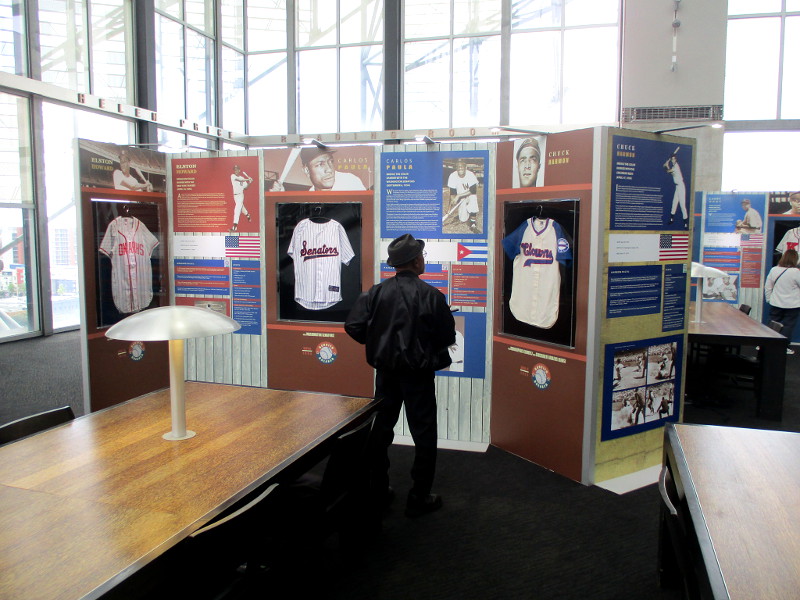
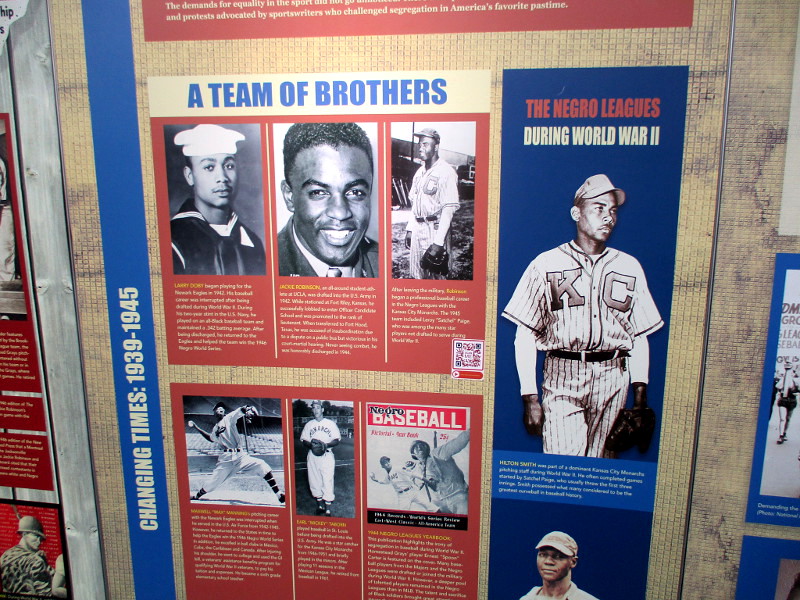
An extraordinary exhibit concerning the history of baseball’s Negro Leagues officially opens tomorrow, April 15, 2025, in San Diego!
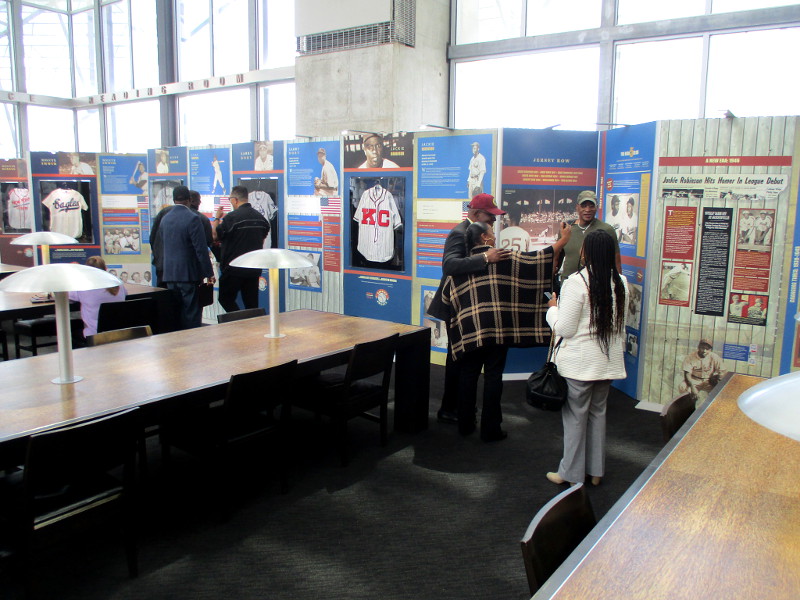
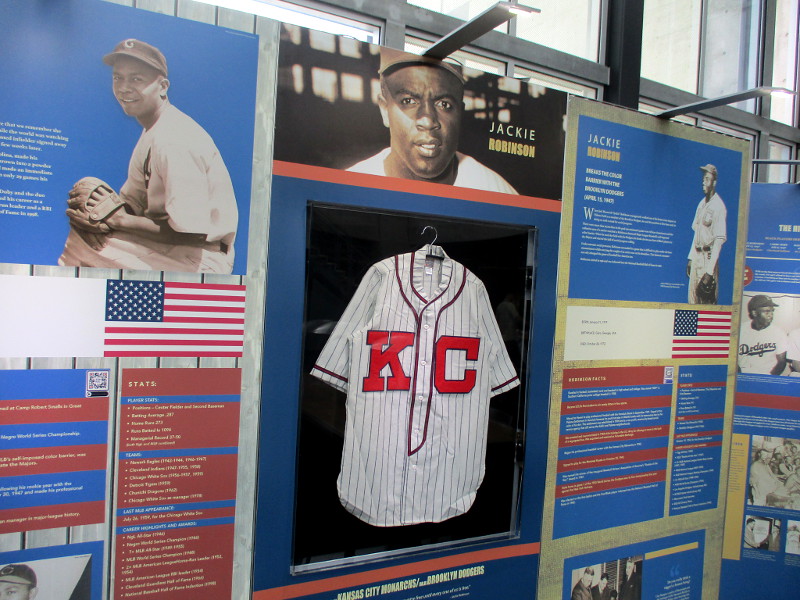
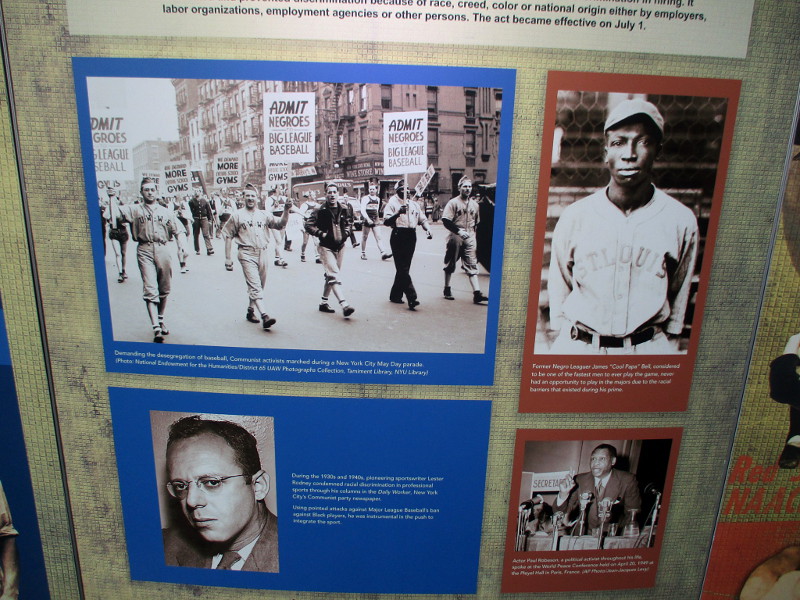
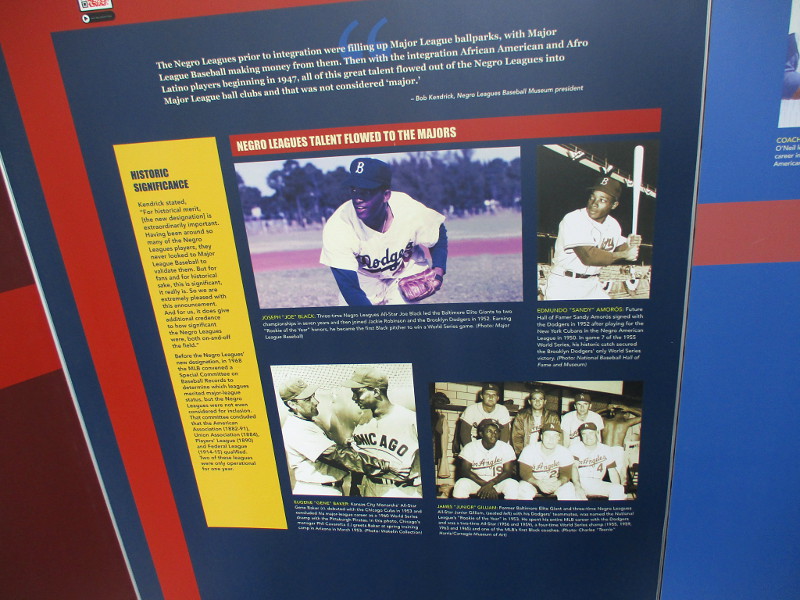
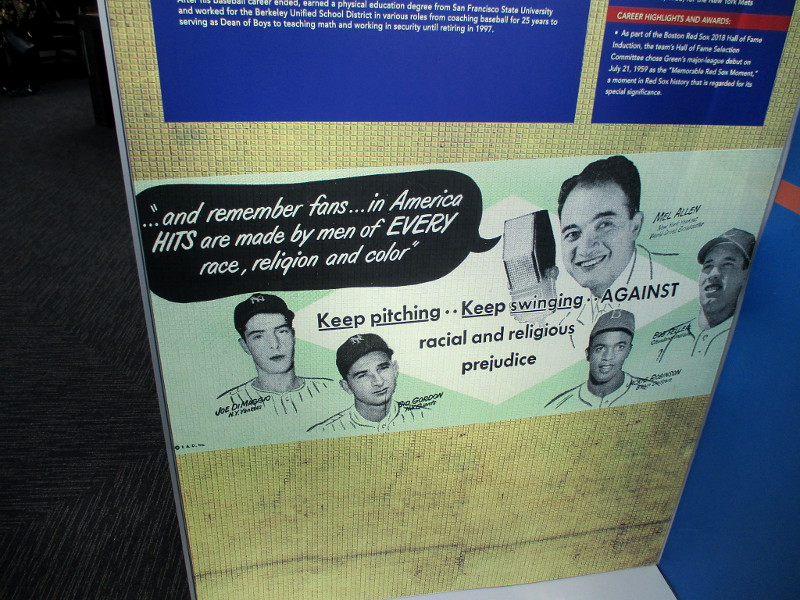
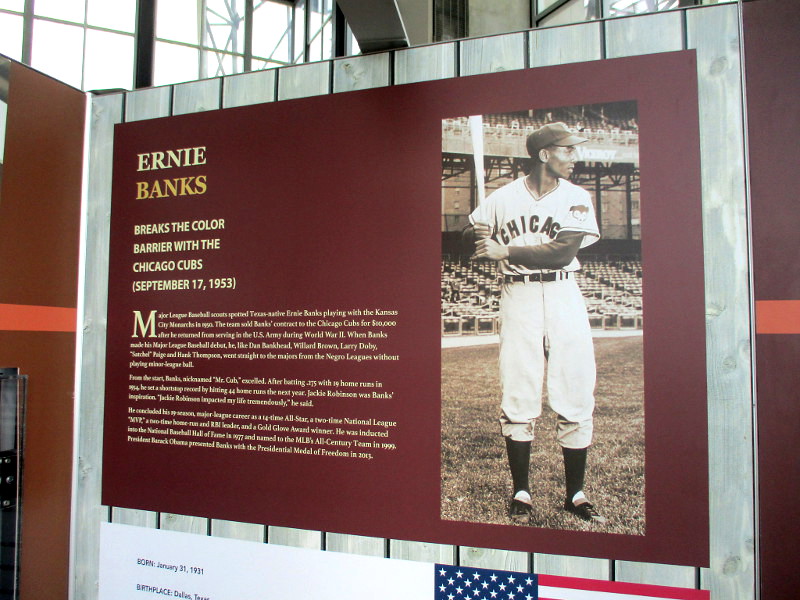
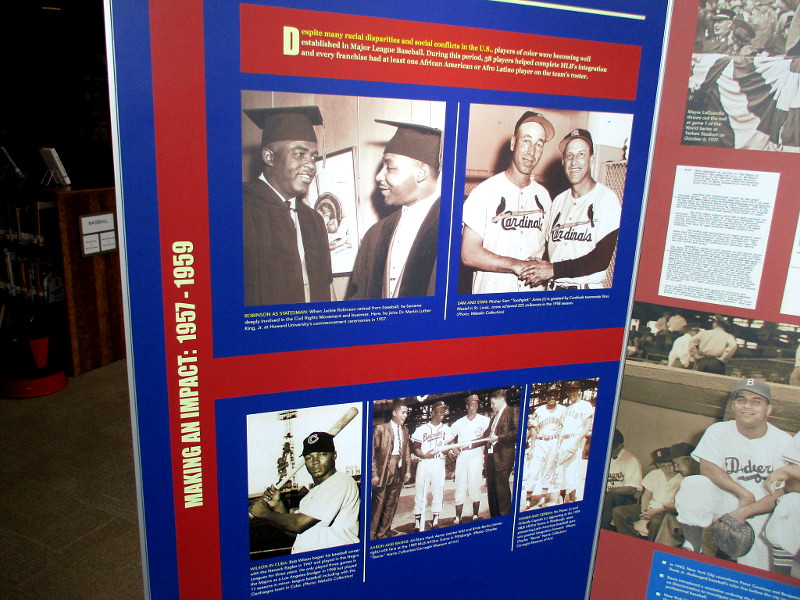
Extensive displays celebrating African-American baseball players who helped lead the way to a more integrated and tolerant society can now be enjoyed on the 8th Floor Reading Room of the Central Library. The exhibit is titled Barrier Breakers.
Visitors to the Central Library are in for a treat. The epic exhibition is brought to our city by the San Diego Padres and the Negro Leagues Baseball Museum in Kansas City, Missouri.
There are biographies of athletes who competed in the Negro Leagues–complete with stats, accomplishments, photographs and memories. There are stories of how trailblazing players were eventually accepted by Major League Baseball. Different eras are represented, and key moments are remembered.
As one might expect, Jackie Robinson, the first African-American to play in Major League Baseball, has a special place in the exhibit. It’s no coincidence that tomorrow, the day Breaking Barriers opens, is Jackie Robinson Day. Jackie made history by starting at first base for the Brooklyn Dodgers on April 15, 1947.
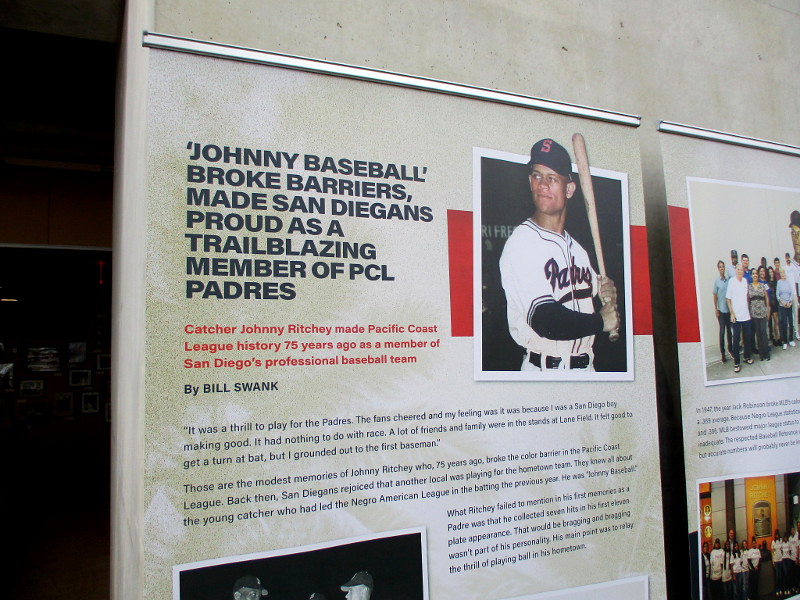
Another display celebrates the San Diego Padres’ own trailblazer, hometown hero catcher Johnny Ritchey. He made Pacific Coast League history when he joined the team in 1948. (He had seven hits in his first eleven plate appearances!)
Anyone who is a baseball, sports or history buff needs to check out Barrier Breakers. I just happened to swing by the Central Library today, and was super fortunate to observe a special preview presentation.
If you can’t make it to San Diego’s downtown Central Library, you can view an online virtual exhibit by clicking here.
Just a few photos…
During today’s special presentation, Bob Kendrick, President of the Negro Leagues Baseball Museum, presented The Home Run for Humanity Award to worthy recipients in San Diego. Congrats to all!
…
I post new blogs pretty often. If you like discovering new things, bookmark coolsandiegosights.com and swing on by occasionally!
I live in downtown San Diego and love to walk around with my camera! You can follow Cool San Diego Sights via Facebook or X.
On May 10, 2025, a monument will be unveiled in the northeast corner of Pantoja Park. The bust of William Heath Davis Jr. will debut, commemorating the founder of downtown San Diego!
The public event will take place between 10:30 am and 2 pm. There will be speeches, informational booths, a blessing by Kumeyaay Bird Singers, and Pacific Islander traditions. William Heath Davis “Kanaka Bill” was born in Hawaii.
Many associate Alonzo Horton with the founding of downtown San Diego. Horton’s ultimately successful New Town, however, came after an attempt by William Heath Davisto build a new community closer to San Diego Bay than the original Old Town San Diego… His New Town was located west of today’s Gaslamp Quarter. The venture did not do well due to a lack of fresh water and hostility from the established settlements at Old Town and La Playa…
Pantoja Park, at 500 West G Street, was established in 1850. It was created at the center of William Heath Davis’ 160-acre subdivision and is San Diego’s oldest city park. Originally it was known as New Town Park. Appropriately, it will be home to the soon-to-be-unveiled bust.
The William Heath Davis Monument and the Monument Unveiling Ceremony are the work of the Gaslamp Quarter Historical Foundation and The Kanaka Davis Trust Group.
(I saw a preview of the monument a couple years ago. See that blog post here.)
…
I post new blogs pretty often. If you like discovering new things, bookmark coolsandiegosights.com and swing on by occasionally!
I live in downtown San Diego and love to walk around with my camera! You can follow Cool San Diego Sights via Facebook or X.
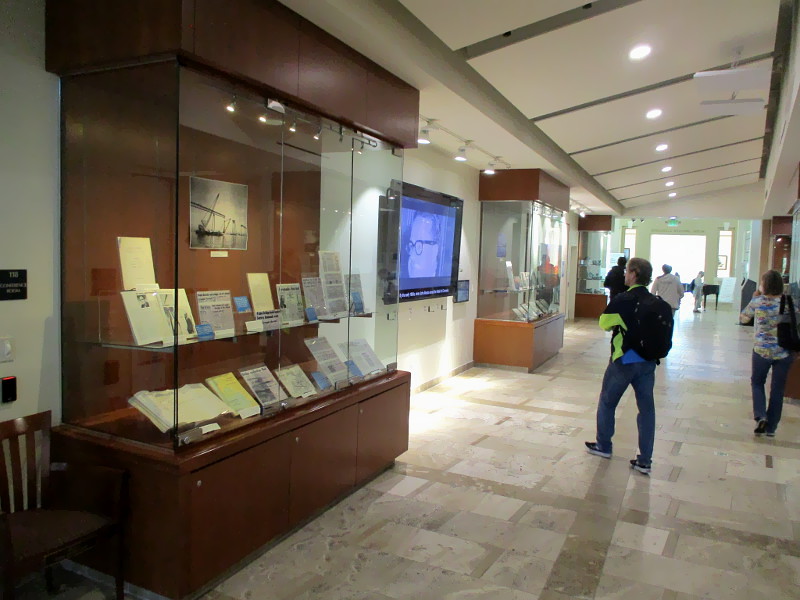
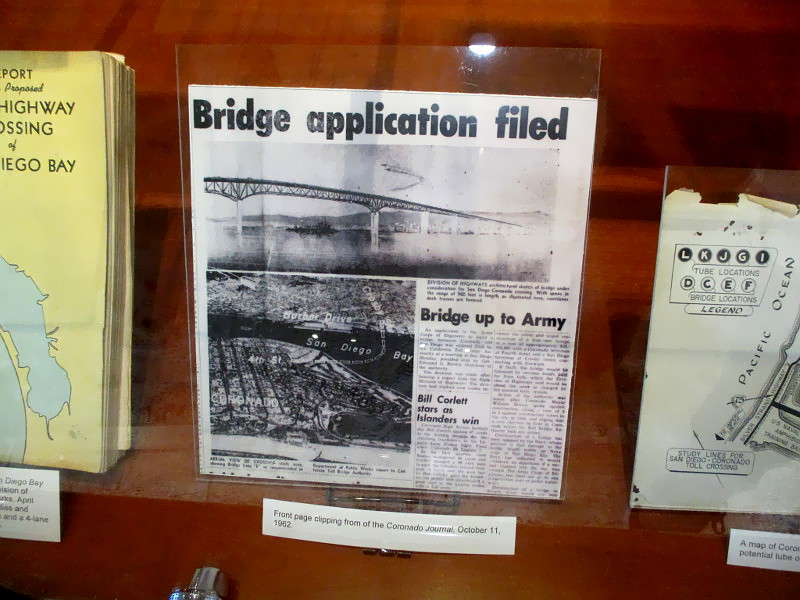
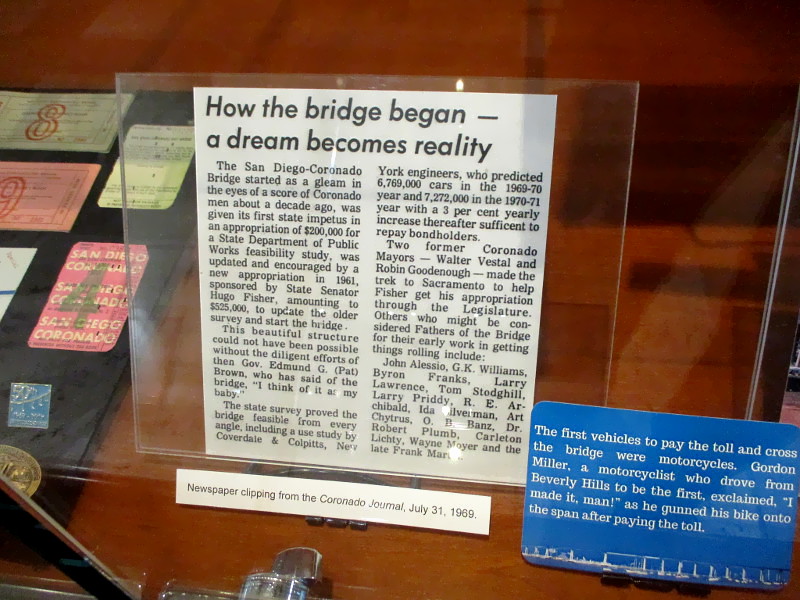
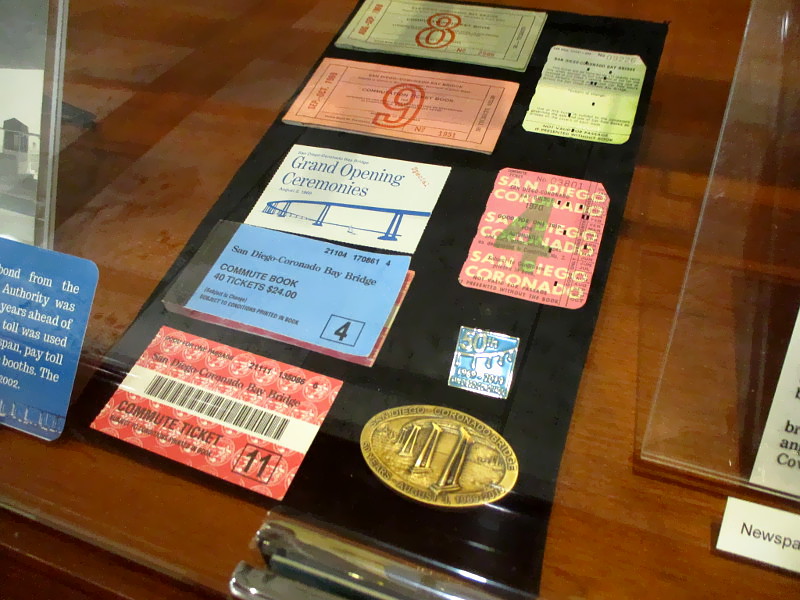
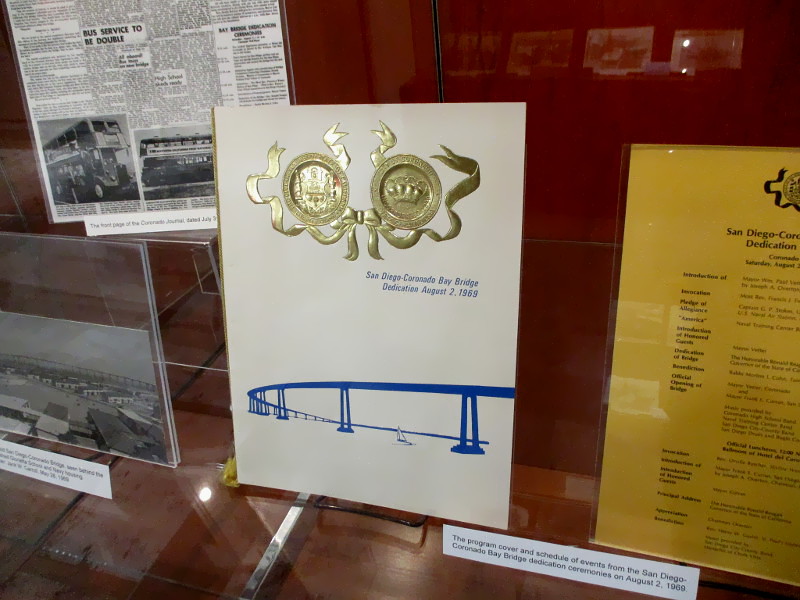
Large display cases contain old photographs, newspaper articles, documents and preserved artifacts representing the bridge’s complex history–from initial proposals to its construction to its grand opening and beyond.
Peering into the displays, reading descriptions, I learned interesting facts about the Coronado Bridge, including:
In 1926, the Spreckels Companies announced bold plans to construct a steel bridge linking Coronado to San Diego, envisioning an engineering marvel with arched spans and a lift section for maritime traffic. This news thrilled many residents eager for a fast connection to the mainland. Advocating for a tunnel instead, the Navy raised concerns about navigation and national defense. Despite initial optimism and plans for completion by 1928, the project became embroiled in decades of debate, delays, and revisions.
Mosher’s design was initially rejected by the state’s civil engineers for being too expensive. They proposed a more traditional trestle bridge, suggesting it be painted rust red or pink. Ultimately, Mosher’s design was accepted.
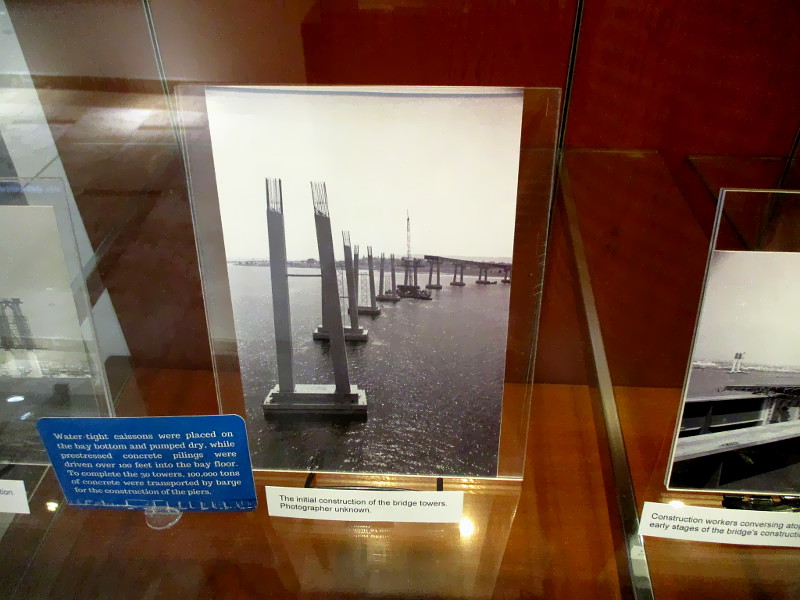
Water-tight caissons were placed on the bay bottom and pumped dry, while prestressed concrete pilings were driven over 100 feet into the bay floor. To complete the 30 towers, 100,000 tons of concrete were transported by barge for the construction of the piers.
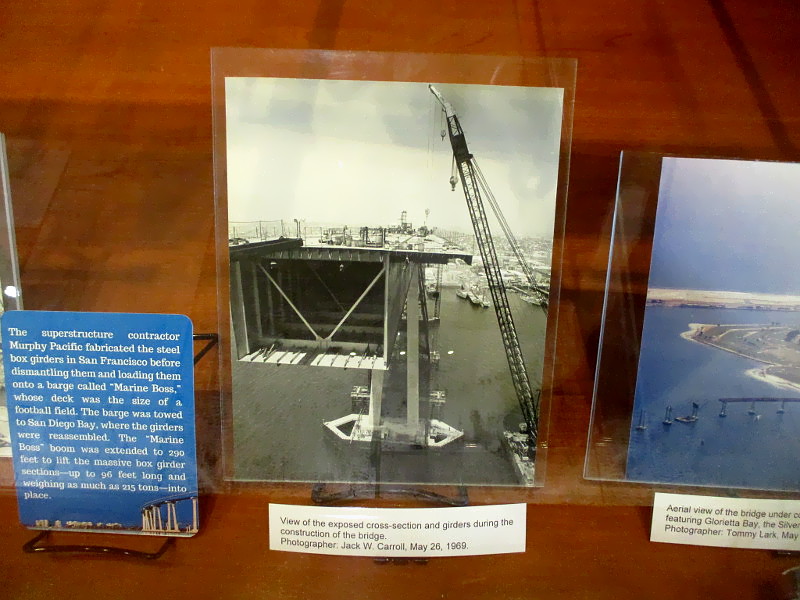
The superstructure contractor Murphy Pacific fabricated the steel box girders in San Francisco before dismantling them and loading them onto a barge called “Marine Boss,” whose deck was the size of a football field. The barge was towed to San Diego Bay, where the girders were reassembled. The “Marine Boss” boom was extended to 290 feet to lift the massive box girder sections–up to 96 feet long and weighing as much as 215 tons–into place.
The final span, one of 27 girders, was placed on May 28, 1969. Coronado Mayor Paul Vetter participating in the informal ceremony, signing his name on the metal plate at the edge of the girder.
Mosher’s original design included lights on the low side of the railing, but they were cut to reduce costs… Coronado resident Carol Cahill…flew to Sacramento, successfully petitioned officials, and secured their installation. The lights were added in April 1970.
In 1970, the bridge received the National Award of Merit for Most Beautiful Bridge from the American Institute of Steel Construction.
The bridge’s 90-degree curve allows it to reach a height of 200 feet, tall enough for an empty aircraft carrier to pass underneath, while also providing the necessary length to ramp down to the Coronado side, which is significantly lower than the San Diego side that connects to Interstate 5.
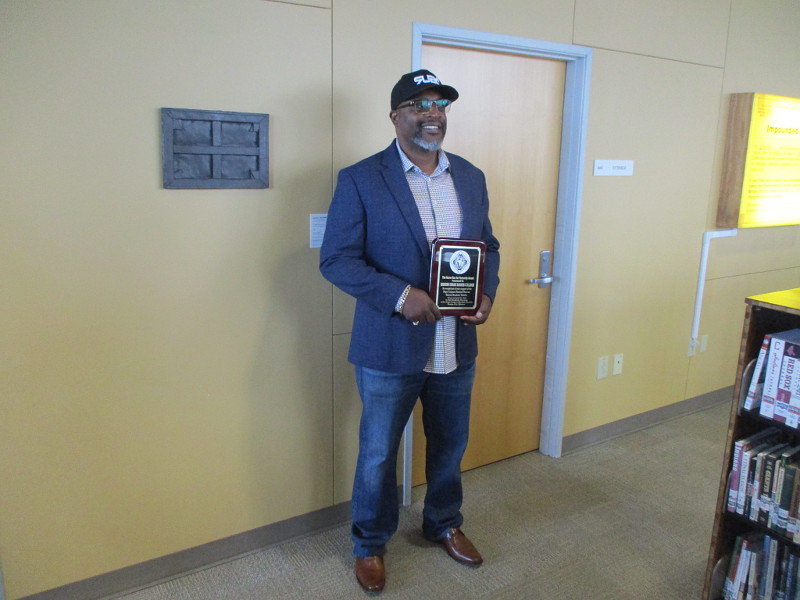
I was told by a library employee that this fascinating exhibit will be on view through early May, 2025. Go check it out!
…
I post new blogs pretty often. If you like discovering new things, bookmark coolsandiegosights.com and swing on by occasionally!
I live in downtown San Diego and love to walk around with my camera! You can follow Cool San Diego Sights via Facebook or X.
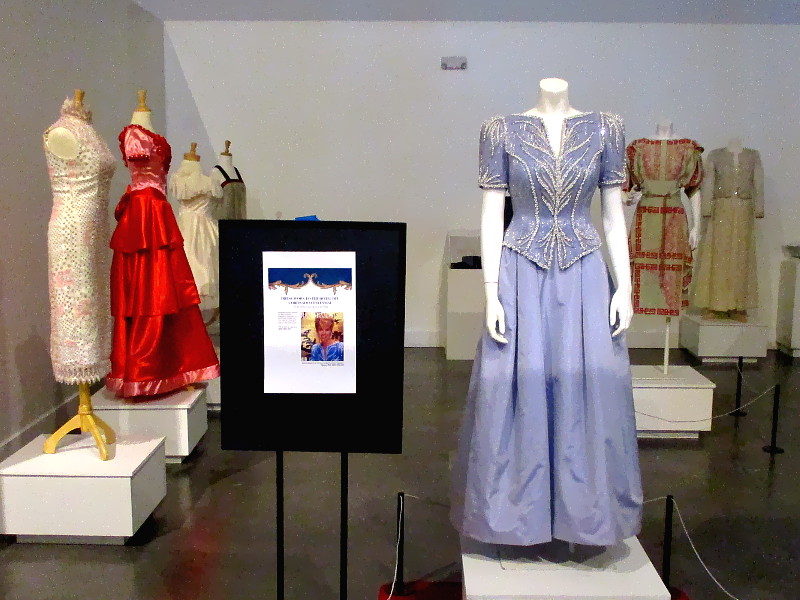
Fashion Redux 2025 will soon be opening at the San Diego History Center in Balboa Park!
The extraordinary exhibition will include opulent garments created by renowned designers (including Hollywood’s legendary Irene Sharaff) worn between 1940 and 1988 during iconic San Diego events. They will be displayed along with unique creations by San Diego Mesa College students, who were inspired by the past styles and elegance.
I was wandering through the History Center yesterday when I noticed the exhibition is being set up in one gallery. I snapped the above photo.
Fashion Redux 2025 will be ready to go on April 10th–that’s this coming Thursday!
If you’ve never been to the San Diego History Center, located near the center of beautiful Balboa Park, why not go check it out? It’s a museum full of history, culture and amazing, important works of art!
…
I post new blogs pretty often. If you like discovering new things, bookmark coolsandiegosights.com and swing on by occasionally!
I live in downtown San Diego and love to walk around with my camera! You can follow Cool San Diego Sights via Facebook or X.







 Cool San Diego Sights!