A small public park, recently created in Bankers Hill, is named for San Diego aviation pioneer Waldo Dean Waterman.
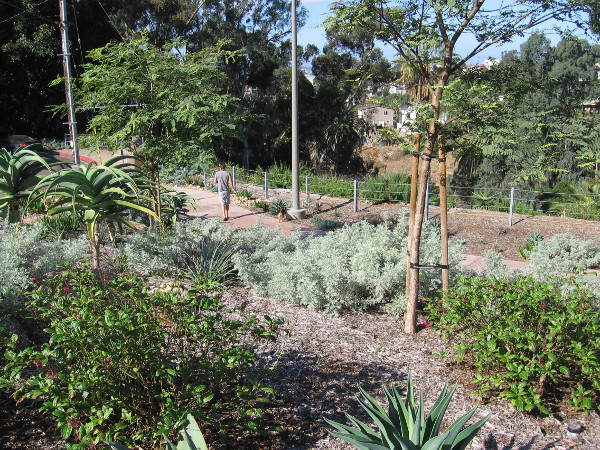
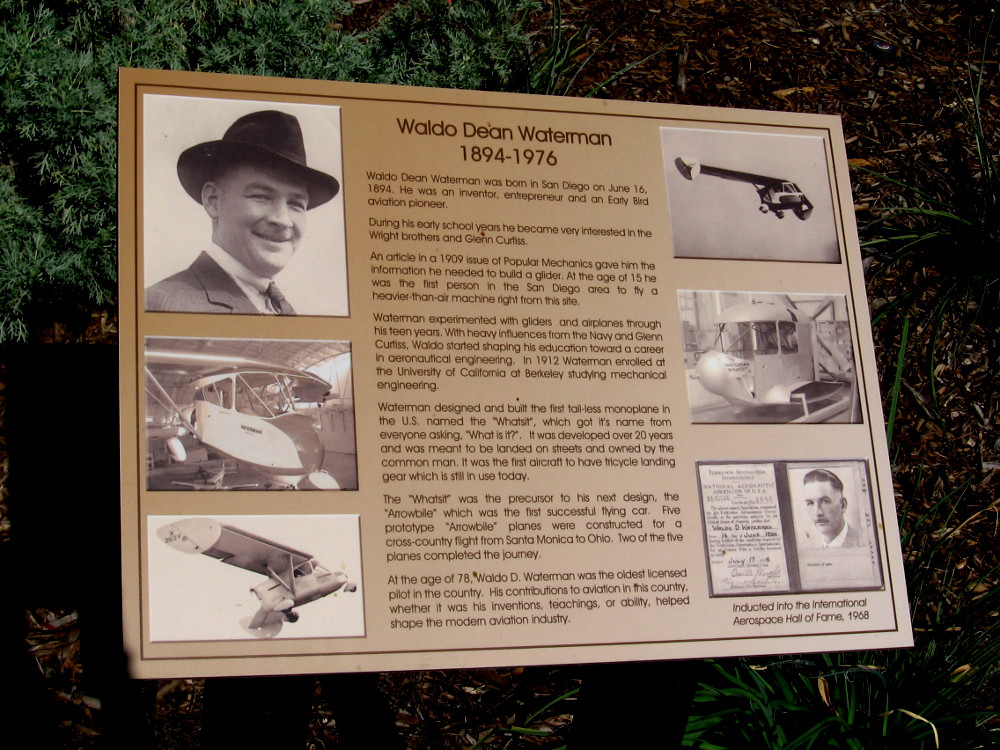
Last month a small public park opened in Bankers Hill at the edge of narrow Maple Canyon. The park is named after Waldo Dean Waterman, an inventor and early aviation pioneer who was one of the first in San Diego to fly a heavier-than-air machine. He made that flight into Maple Canyon in 1909, at the age of fifteen!
Waterman experimented with unique aeronautical designs for most of his life. He invented the first tail-less monoplane in the United States, called the Whatsit, which was the very first aircraft in history to use now standard tricycle landing gear. He then designed the Arrowbile, which was the first successful flying car!
Waldo Dean Waterman Park is a beautiful and inspiring addition to our city. For generations to come, the park will remain a living monument to a visionary man who made several important contributions to aviation history!
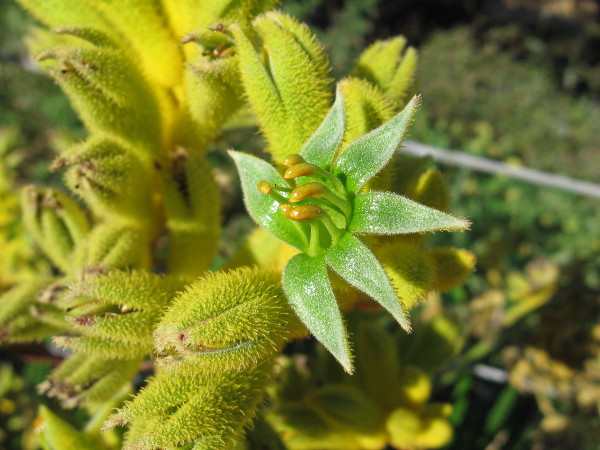
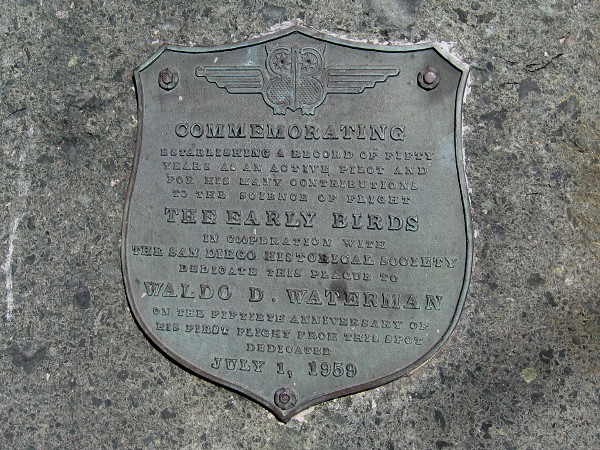
A resident of Bankers Hill walks his dog through the beautiful park. Local aviation history was made here in 1909.Beautiful blooms at Waldo Dean Waterman Park in Bankers Hill.Sign summarizes the life and accomplishments of Early Bird aviation pioneer Waldo Dean Waterman, a resident of San Diego. He flew a glider at the age of 15 from this site into Maple Canyon below. (Click image to enlarge.)Plaque dated July 1, 1959 commemorates Waldo D. Waterman for his many contributions to the science of flight.
…
I live in downtown San Diego and love to walk around with my camera! You can follow Cool San Diego Sights via Facebook or Twitter!
You can easily explore Cool San Diego Sights by using the search box on my blog’s sidebar. Or click a tag! There are thousands upon thousands of fun photos for you to share and enjoy!
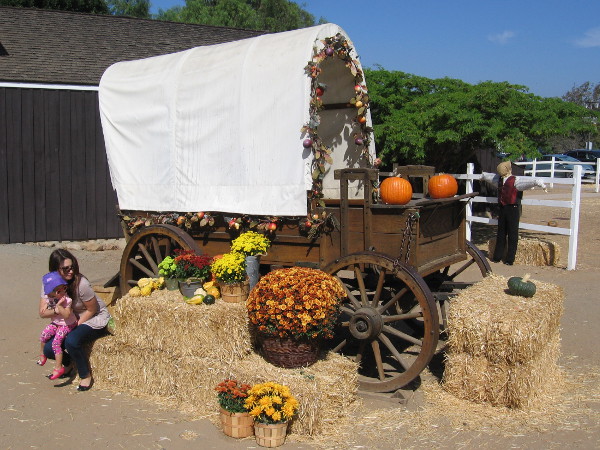
A covered wagon in Old Town San Diego State Historic Park is decorated with autumn colors.
After walking a bit downtown, I took the trolley up to Old Town to enjoy the colorful Fall Festival!
I never tire of the wonderful events that can be found almost every weekend at Old Town San Diego State Historic Park!
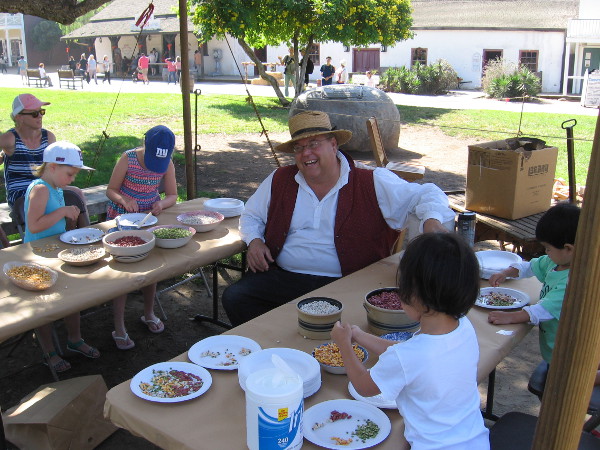
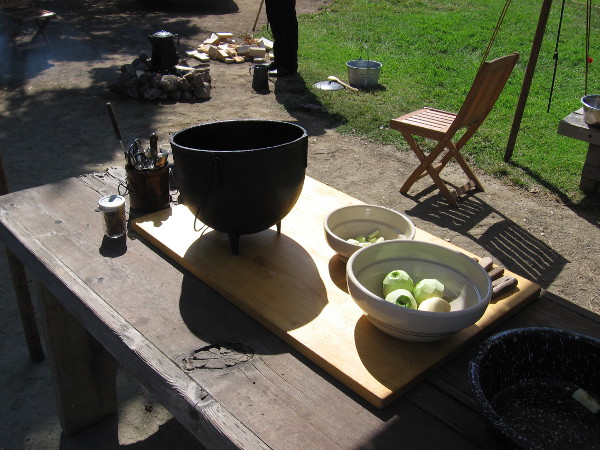
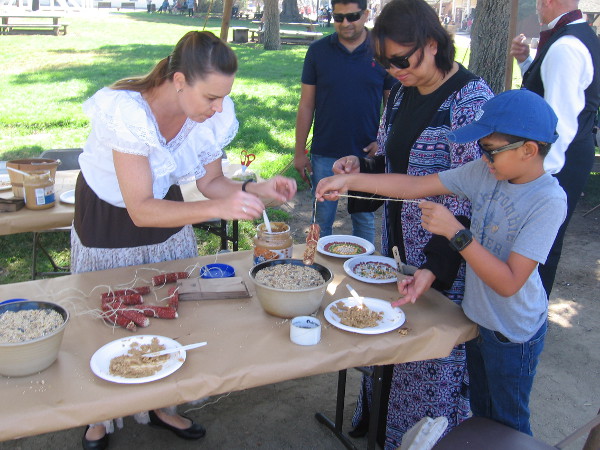
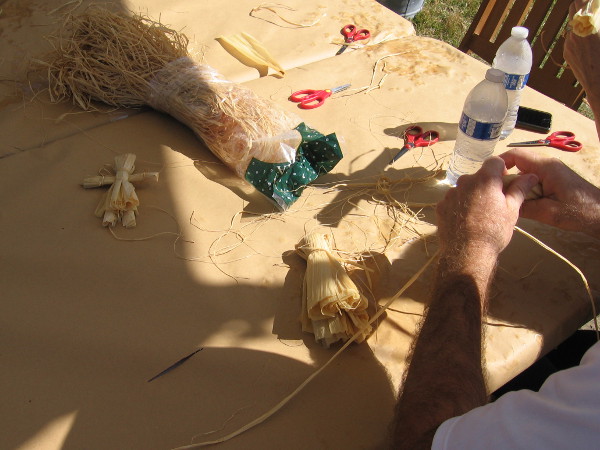
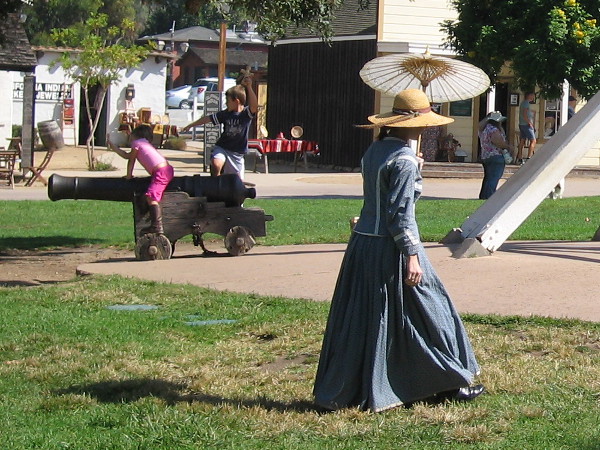
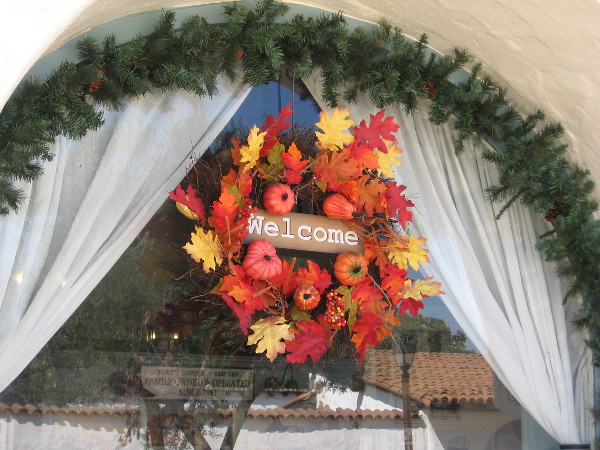
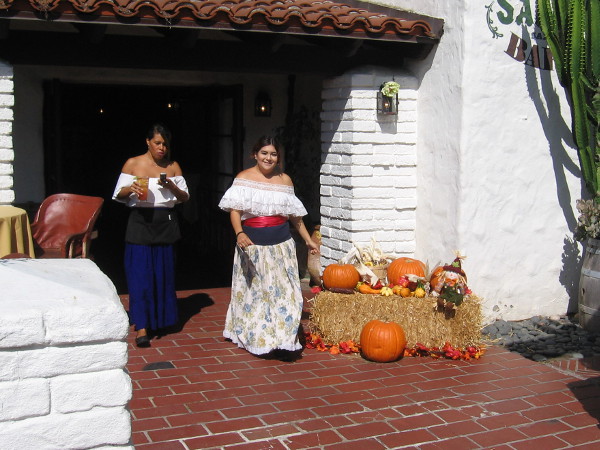
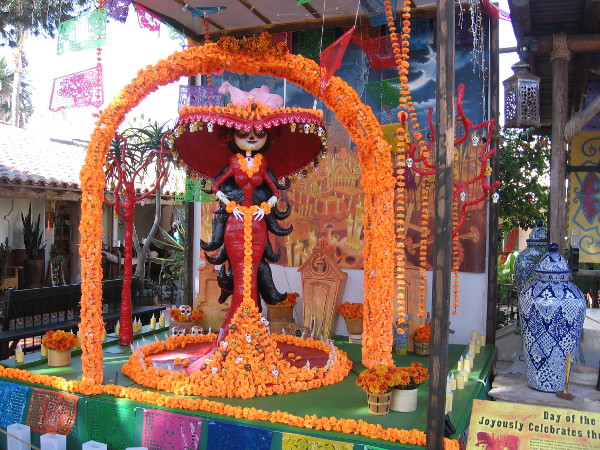
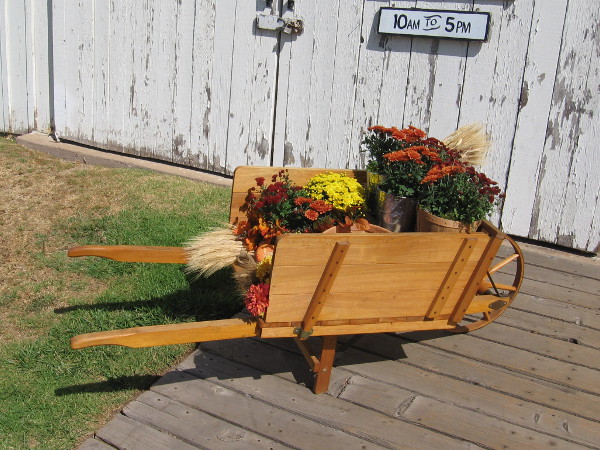
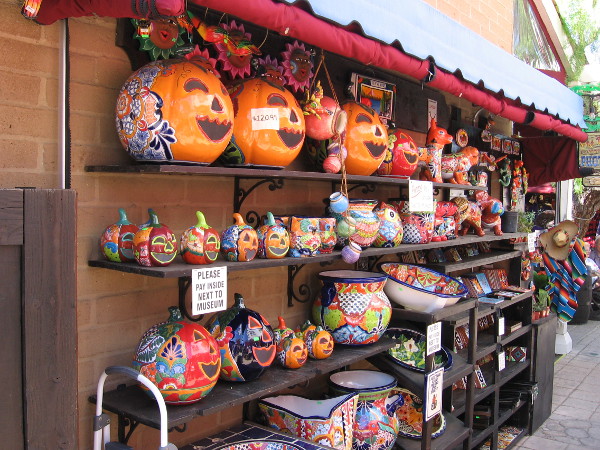
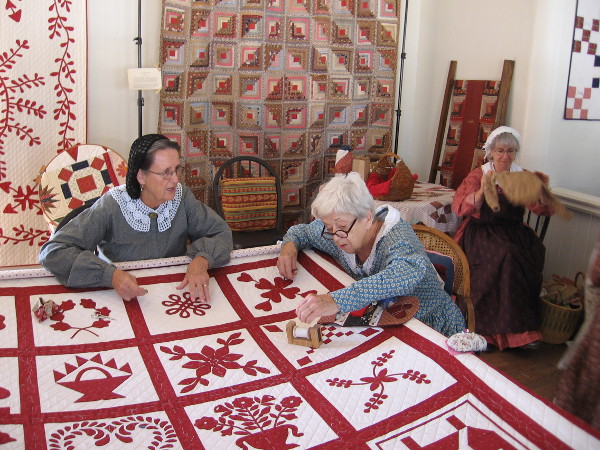
Kids at the Old Town Fall Festival learn to make art with colored beans!Later in the day folks at this table would demonstrate how to make applesauce.Making environmentally friendly bird feeders using corn cobs, peanut butter and seeds.Folks young and old were trying their hand at making corn husk dolls.Lady with old-fashioned parasol walks through Old Town San Diego State Historic Park’s central Plaza de las Armas.Colorful leaves and a bountiful harvest frame the Welcome in an Old Town shop window.A smiling señorita walks near some pumpkins.An elaborate Día de los Muertos decoration standing beside the Fiesta de Reyes stage is bright with fall colors.A flower-filled wheelbarrow in front of Seeley Stable.Ceramic pumpkins line shelves at an outdoor Old Town marketplace.Ladies work on a quilt inside the Threads of the Past Living History Activity Center.Kid learns how to plant seeds in front of the Wells Fargo History Museum.A Wells Fargo chest full of golden treasure!
…
I live in downtown San Diego and love to walk around with my camera! You can follow Cool San Diego Sights via Facebook or Twitter!
You can easily explore Cool San Diego Sights by using the search box on my blog’s sidebar. Or click a tag! There are thousands upon thousands of fun photos for you to share and enjoy!
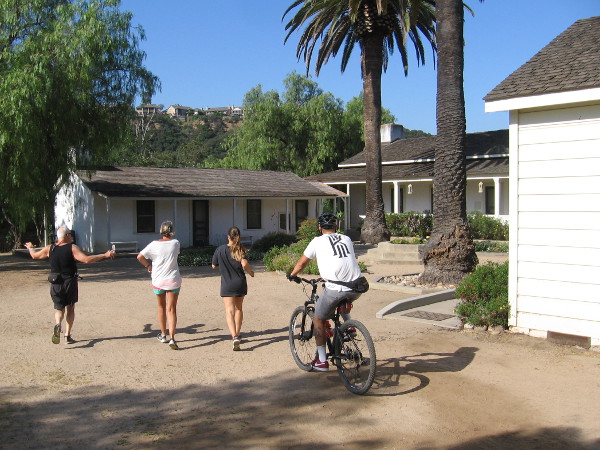
Jogging and biking past the historic adobe ranch house in Los Peñasquitos Canyon Preserve.
The second oldest residence in San Diego County can be found inside Los Peñasquitos Canyon Preserve. The adobe ranch house was built in 1824 by Captain Francisco María Ruiz, who was Commandante of San Diego’s presidio. He built two small adobe buildings on Rancho Santa Maria de Los Peñasquitos, his large 8,486-acre Mexican land grant north of the Presidio and Mission San Diego de Alcalá. It was the first land grant by the Mexican government in this area. The grant was made in 1823, just two years after Mexico became independent from Spain.
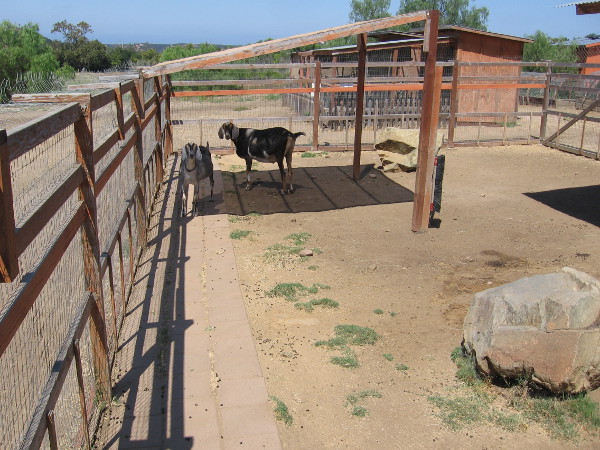
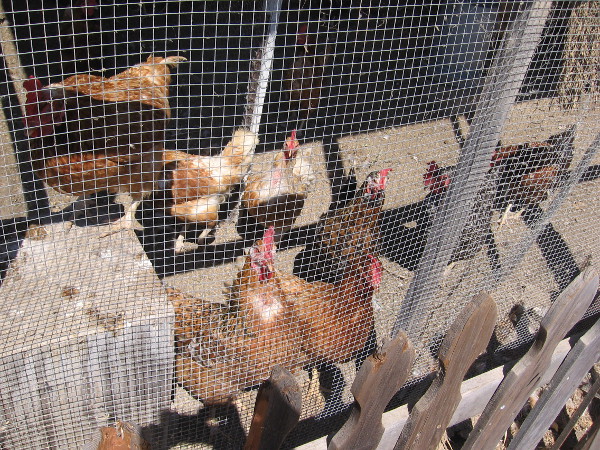
The historic adobe ranch house has been modified, enlarged and restored by various owners over the years, and today is a popular destination for visitors to Los Peñasquitos Canyon Preserve. People often bike or hike through the picturesque ranch, and motorists can park in a nearby lot. Picnic tables are plentiful; there are goats and chickens to captivate children; and guided tours are available on weekends.
I toured the ranch recently and took photos of its various features. There are a variety of interpretive exhibits within the adobe house. Please read these informative displays (click to enlarge the images) to learn more about this fascinating place’s long and colorful history.
(What is the oldest structure in San Diego County? You’ll be completely surprised! I blogged about that here.)
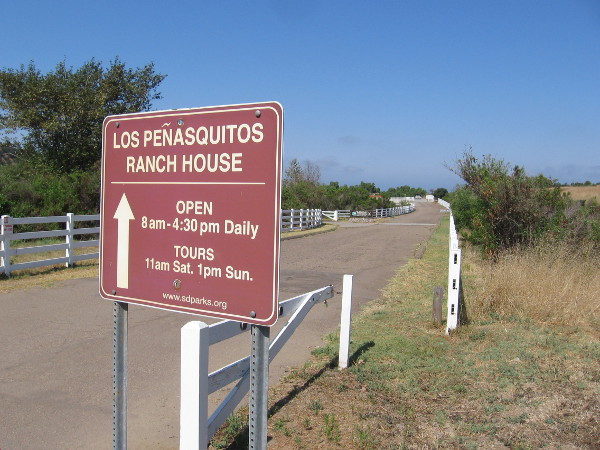
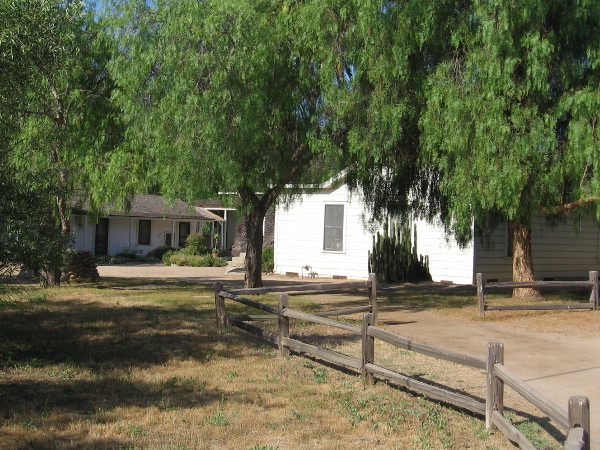
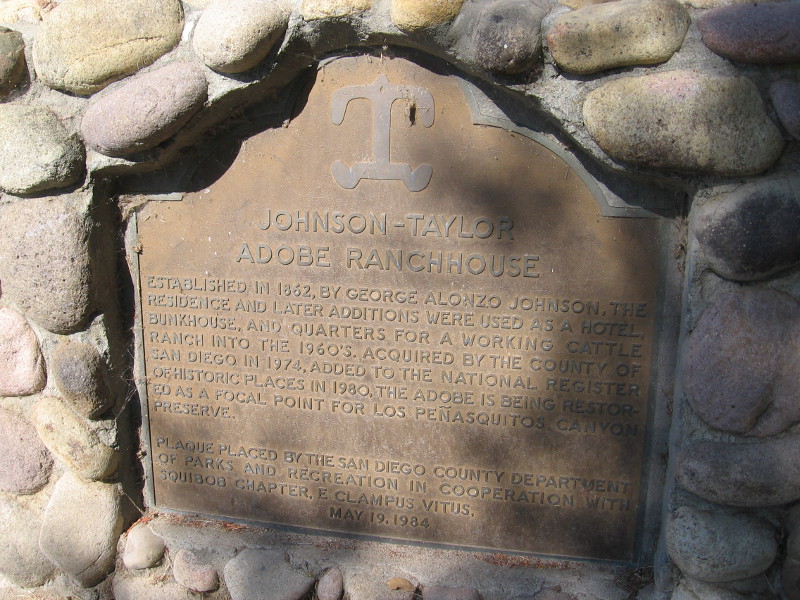
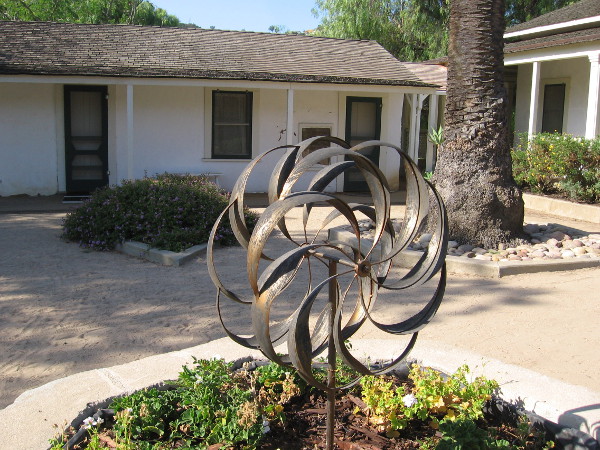
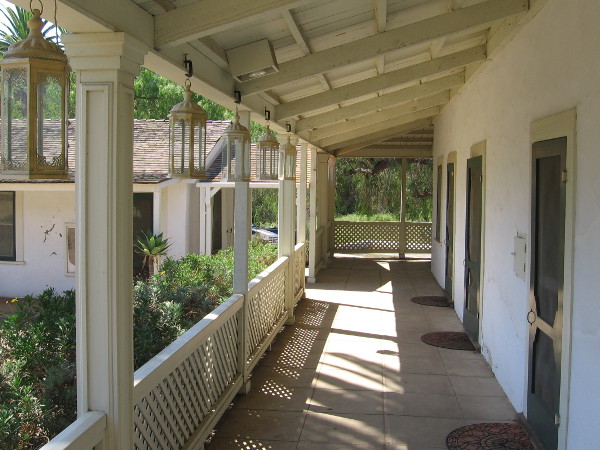
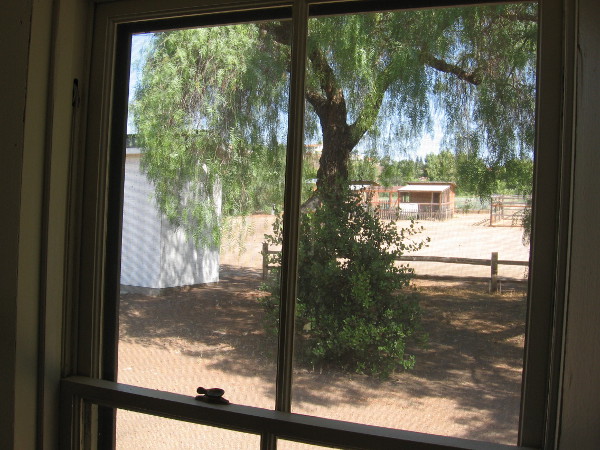
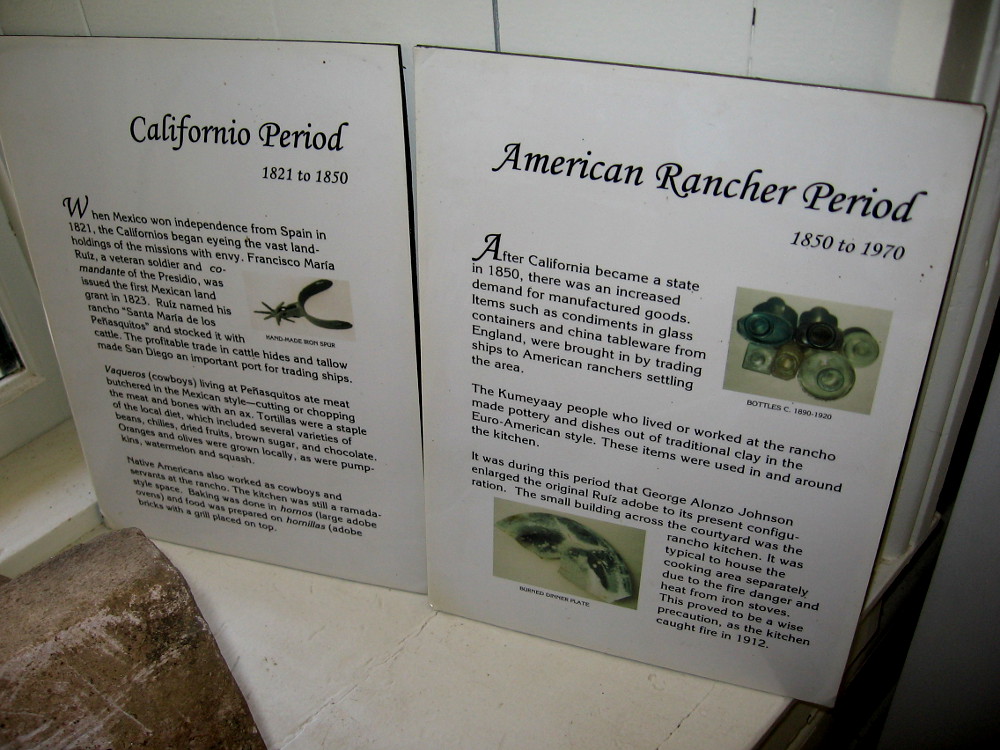
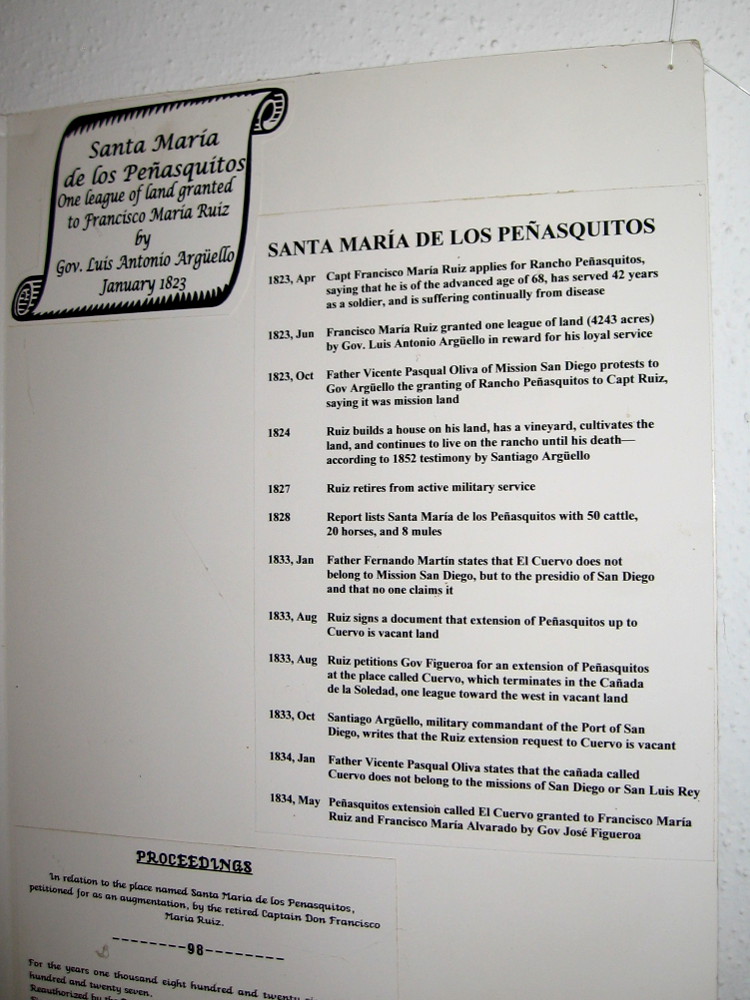
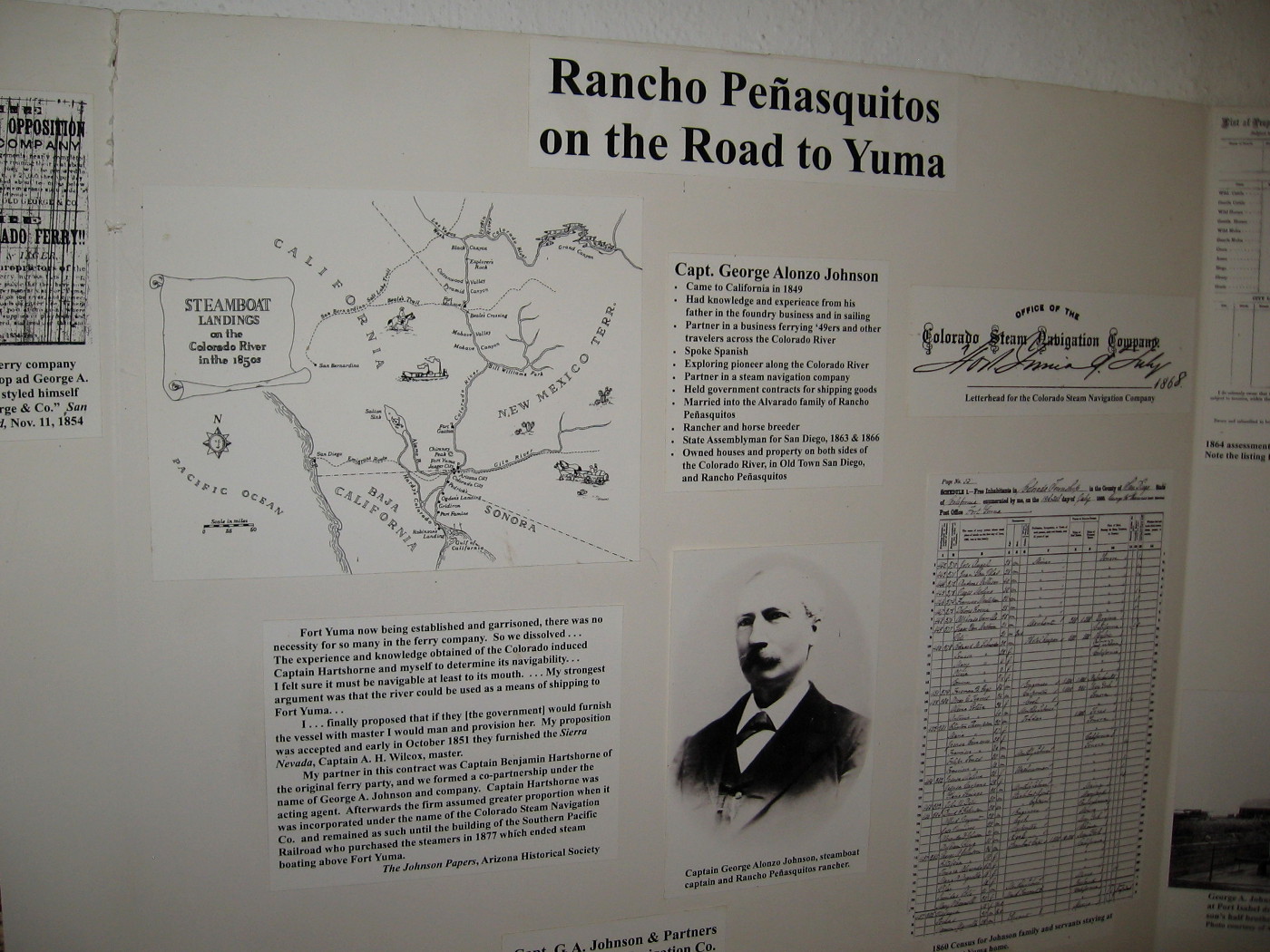
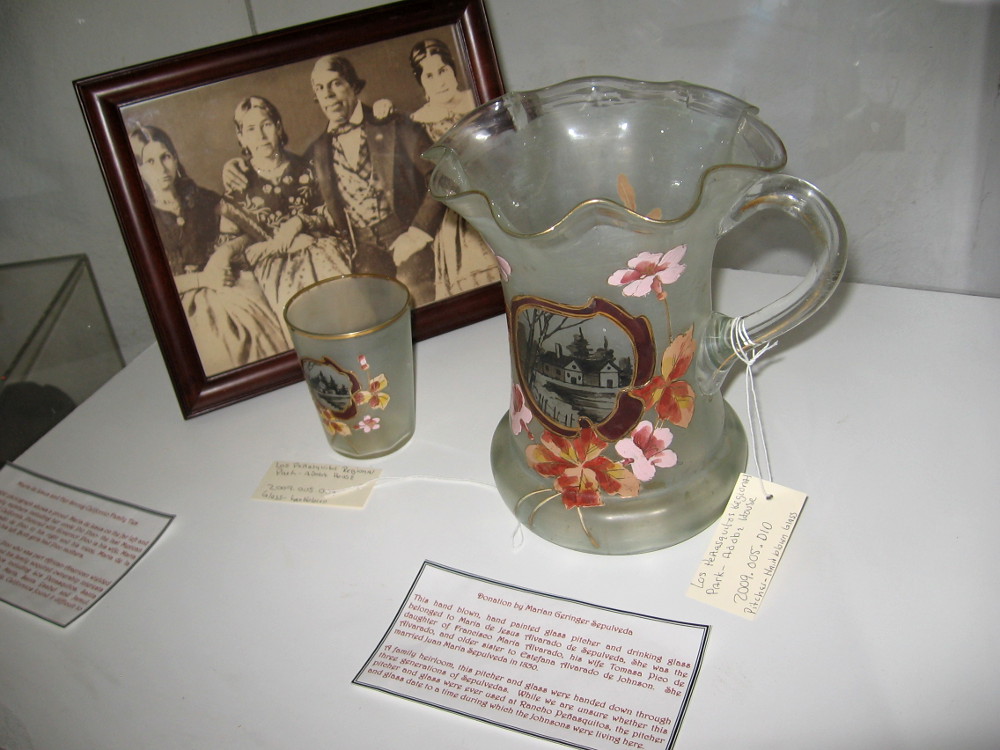
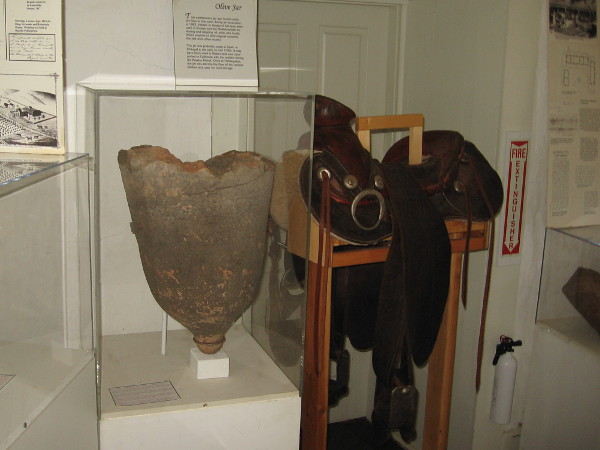
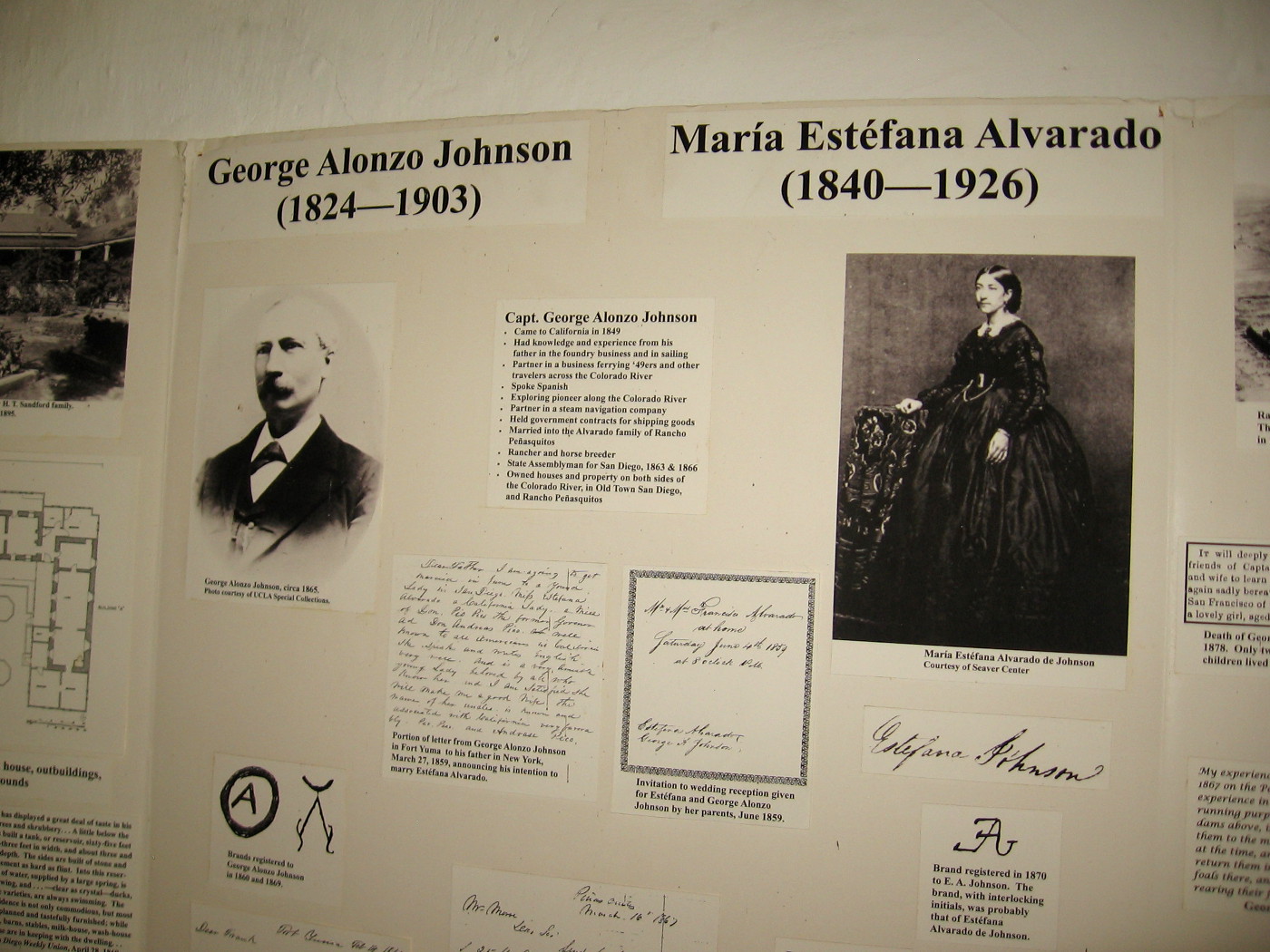
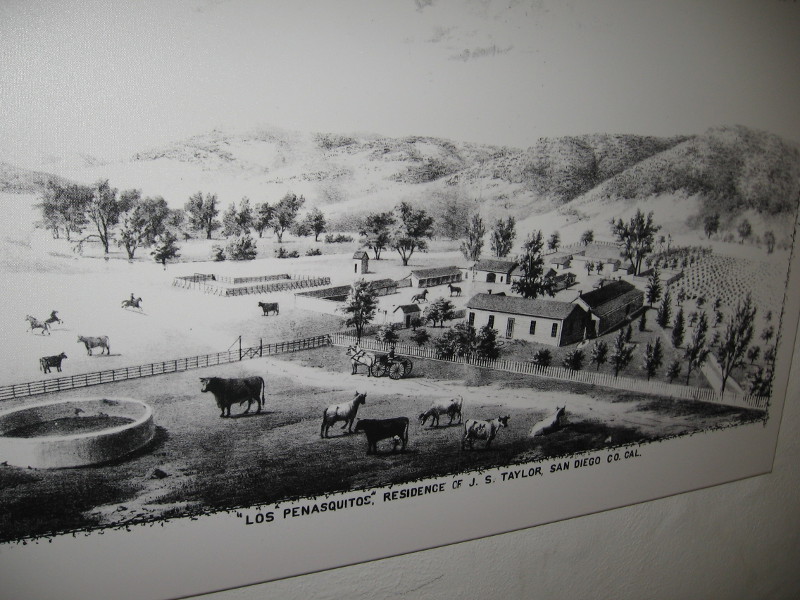
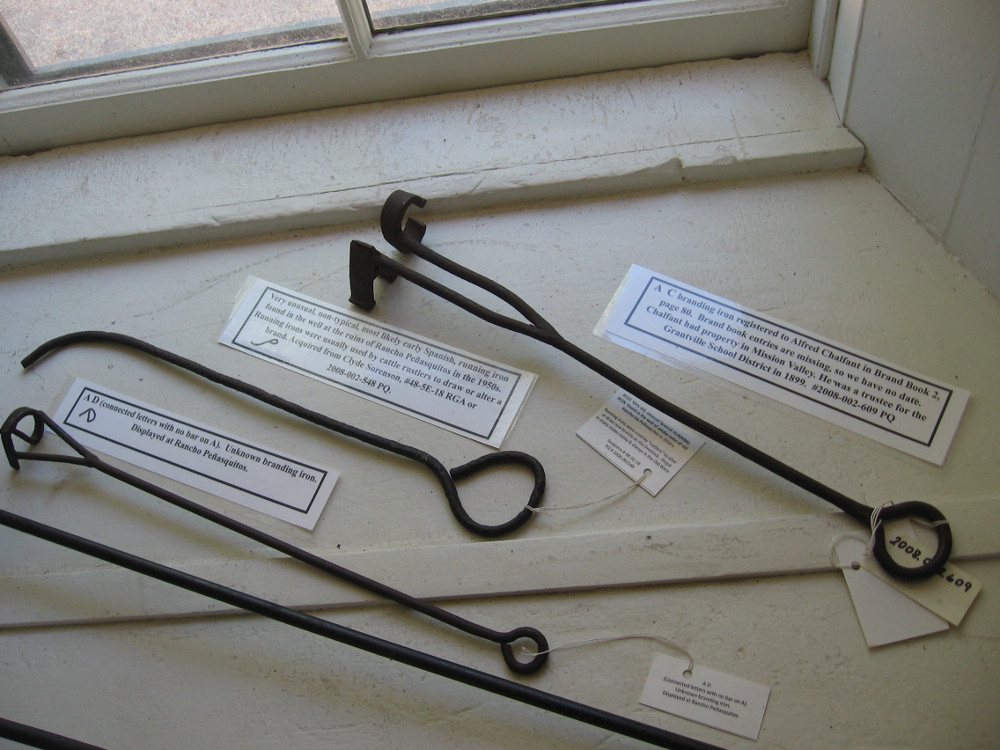
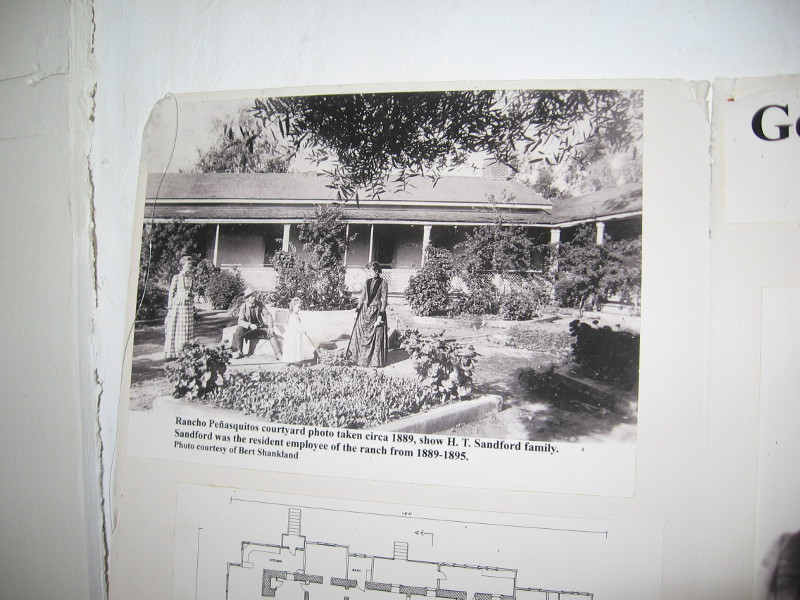
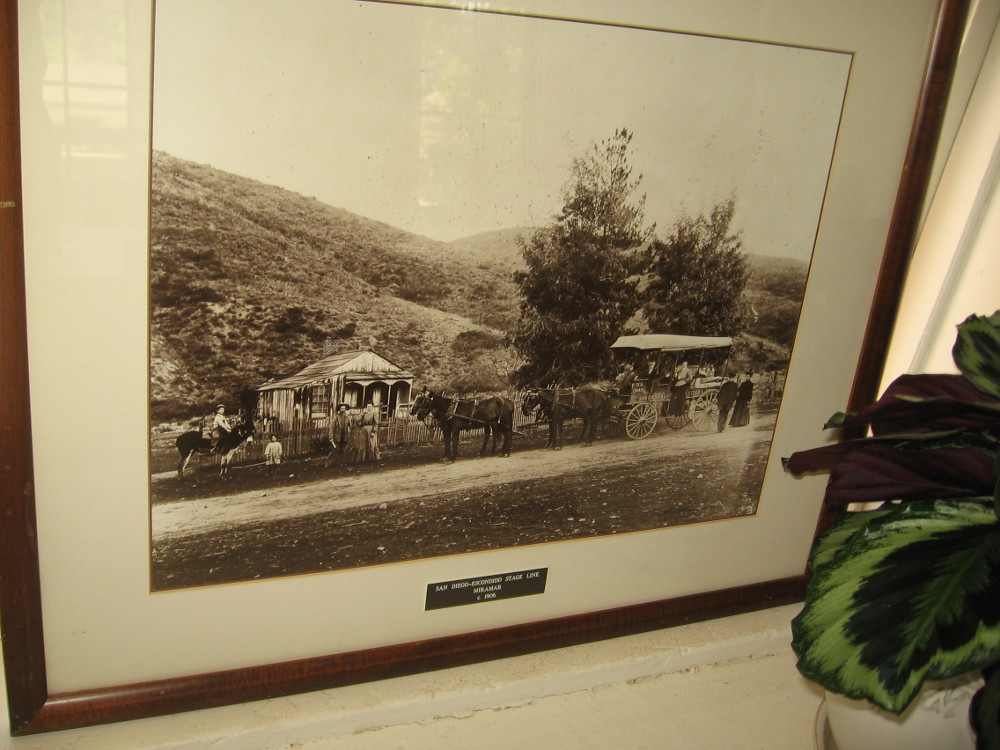
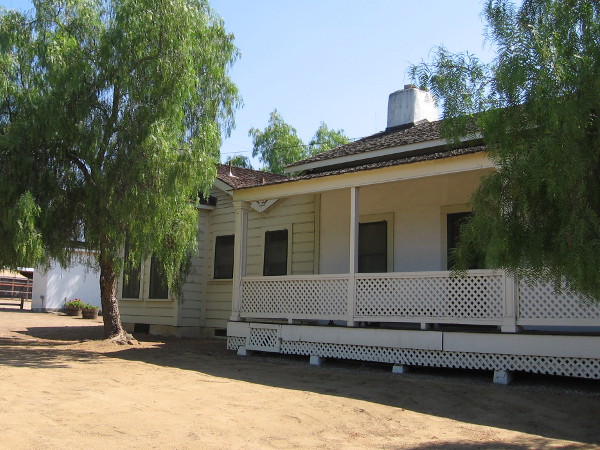
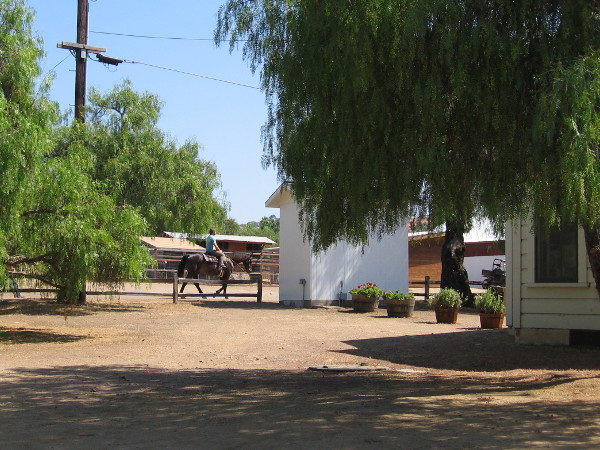
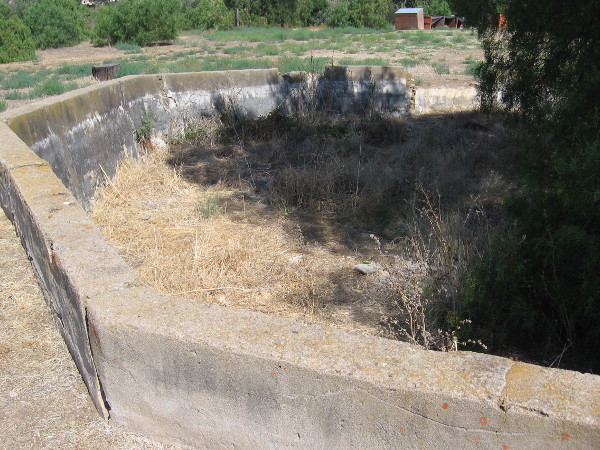
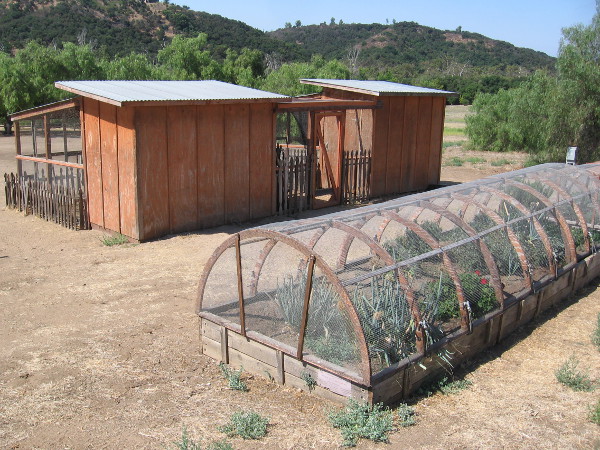
The Los Peñasquitos Ranch House is open daily from 8:00 am to 4:30 pm. Guided tours are at 11:00 am on Saturday and 1:00 pm on Sunday.The ranch house is nestled among some shady trees. Two small adobe buildings were originally built in 1824. The house was enlarged by Captain George Alonzo Johnson in 1862.Plaque describes the establishment of the Johnson-Taylor Adobe Ranchhouse in 1862. The residence and later additions were used as a hotel, bunkhouse, and quarters for a working cattle ranch into the 1960s.A sculpture inside the courtyard, located on the east side (rear) of the ranch house. The planters were probably used by the residents to grow herbs and flowers.Part of the ranch house’s long porch beside the courtyard.Inside a living room that today contains museum-like exhibits, looking north out a window at various small structures on the ranch, including a chicken coop and goat pen.The Californio Period, 1821 to 1850, included vaqueros (cowboys) living at Peñasquitos. The American Rancher Period, 1850-1970, began after California became a state.1823-1834 timeline of the Mexican land grant of Santa Maria de Los Peñasquitos, that was made to Captain Francisco María Ruiz.In 1859 Captain George Alonzo Johnson married Maria Estéfana Alvarado, daughter of Francisco María Alvarado, who bought the ranch from Ruiz in 1837.A hand blown and painted glass pitcher and drinking glass that belonged to Maria de Jesus Alvarado de Sepulveda, daughter of Francisco María Alvarado.The large earthenware olive jar was found under the ranch house floor during an excavation in 1983. Used for food storage, it was probably made in Spain or Portugal in the early to mid 1700s.Captain George Alonzo Johnson, a pioneer and businessman, came to California in 1849 during the Gold Rush. He became a rancher and horse breeder.Historical newspaper articles describe the ranch house, outbuildings and grounds of George Alonzo Johnson’s ranch.Floor plan of Rancho Peñasquitos from 1975 HABS survey.A drawing of the Los Peñasquitos residence of Colonel Jacob Shell Taylor, who purchased the property in 1882. He raised Durham cattle and thoroughbred horses and would found Del Mar.Various branding irons on display in the adobe house that were discovered around the ranch. Included are early Spanish irons used by rustlers.Rancho Peñasquitos courtyard photo taken circa 1889, showing ranch employee H. T. Sandford and his family.Photo of the San Diego-Escondido Stage Line circa 1906. In the mid-1800s, Peñasquitos was a way station on the wagon road between San Diego and Warner’s Ranch.Porch along the front (or west) side of the adobe ranch house, which faced the so-called Road to Yuma.I spotted someone riding a horse past the ranch house. Los Peñasquitos Canyon Preserve is an ideal place for those who love to ride down peaceful trails.Looking west at a meadow north of Peñasquitos Creek. I posted photos of those sycamores in the distance a few weeks ago.An artificial pond south of the ranch house was filled with water from the adjacent spring house for irrigation of a nearby citrus grove.The rock Spring House was constructed around an artesian spring. Water from the spring was used by the Native American Kumeyaay for as many as 12,000 years!The Mohnike Barn was constructed in 1912 of adobe and wood. Charles Mohnike, a rancher who purchased the property in 1910, was the builder.The Mohnike Barn is now listed on the National Register of Historic Places along with other ranch structures.An octagonal concrete reservoir to the north, uphill from the ranch house. Photographic evidence shows water might have been pumped up here by windmill.More ranch structures just west of the barn.These friendly Nubian goats like to greet hikers and those on bicycles.These chickens were wondering what I was up to.The southeast corner of the adobe ranch house.One last photo of the courtyard, a focal point of the ranch house, which has seen many lives, much history.
…
I live in downtown San Diego and love to walk around with my camera! You can follow Cool San Diego Sights via Facebook or Twitter!
You can easily explore Cool San Diego Sights by using the search box on my blog’s sidebar. Or click a tag! There are thousands upon thousands of fun photos for you to share and enjoy!
Likeness of Agoston Haraszthy, first Sheriff of the County of San Diego. He was elected in 1850 and served one term. He was a pioneer when it came to growing grapes and became known as the Father of California Wine.
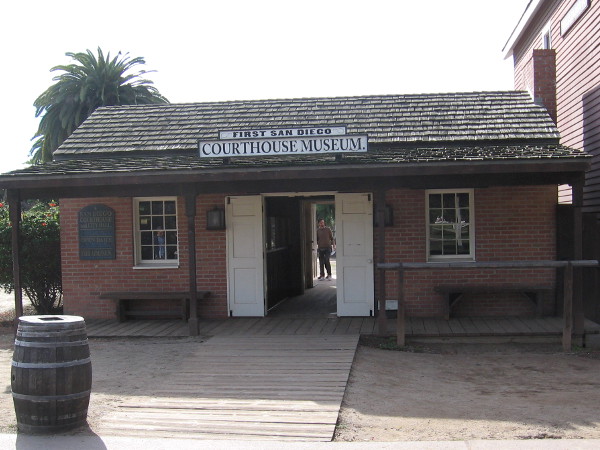
Visitors to Old Town San Diego State Historic Park can get a taste of the city’s early history when they step into the First San Diego Courthouse Museum.
One of many free attractions that can be found around Old Town’s central Plaza de Las Armas, the First San Diego Courthouse Museum is a recreation of our city’s first fired-brick structure, built in 1847 by members of the Mormon Battalion.
From 1847 to 1850 the original building served as the office of el Alcalde (Mexican mayor) of San Diego. Beginning in 1850 it contained the office of San Diego Mayor and City Clerk, and was used for meetings of the San Diego Common Council. The building was also used as a city and county courthouse and First District Court beginning in 1850.
Other uses for the building would include a meeting place for Masonic Lodge No. 35, headquarters of the U.S. Boundary Commission, office of the San Diego County Board of Supervisors, and a place of worship for San Diego’s first Protestant church.
Come with me inside the museum. Let’s have a peek at a few very small rooms and their fascinating exhibits.
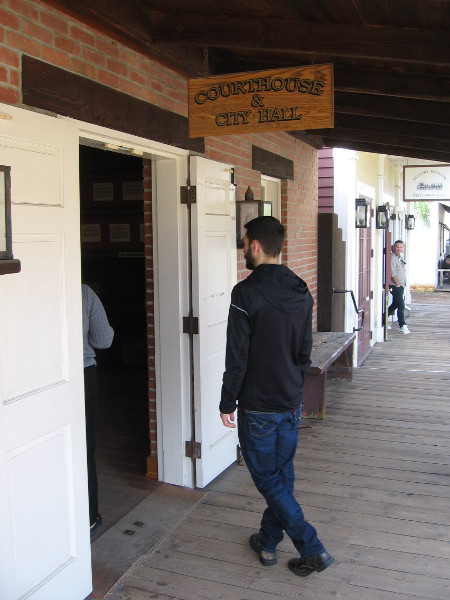
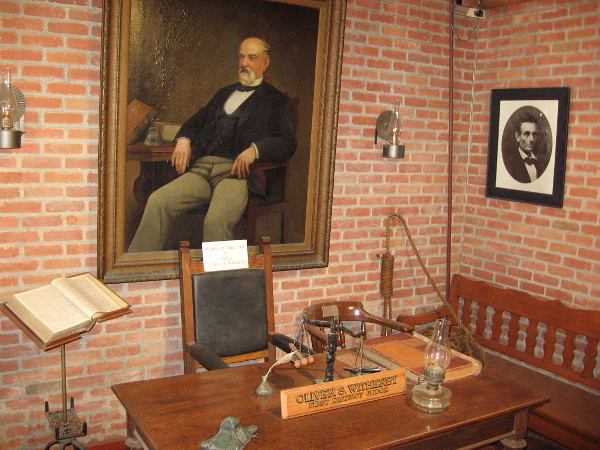
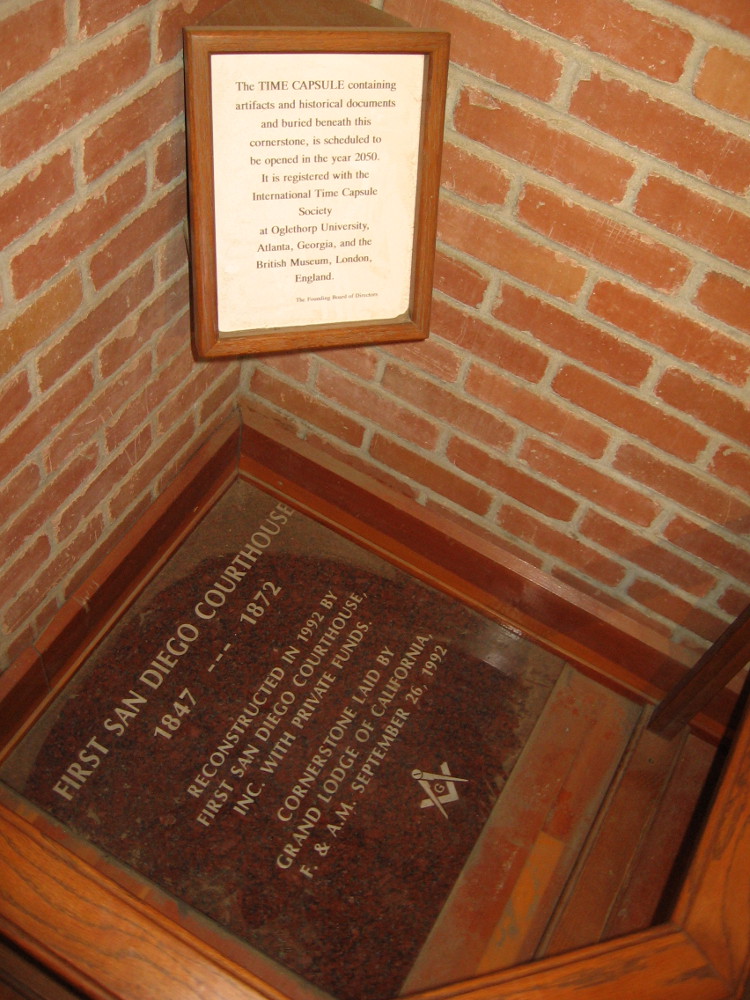
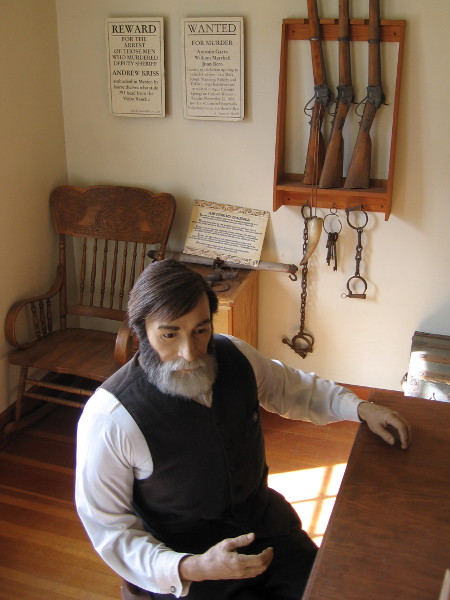
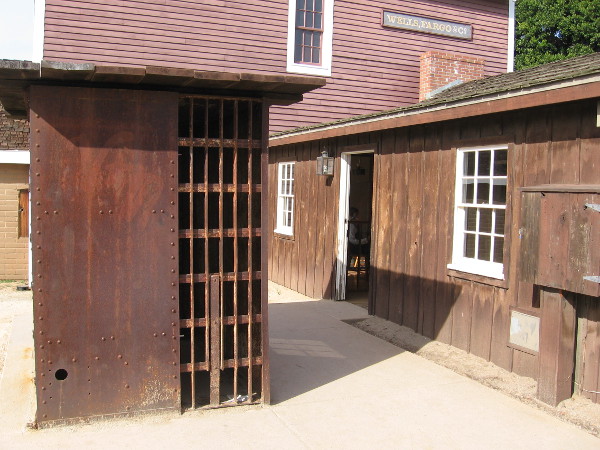
Photo of the modest brick First San Diego Courthouse Museum in Old Town, a recreation of San Diego’s first courthouse and city hall.In 1847, the Mormon Battalion built the first fired-brick structure in San Diego. For over two decades it would serve as courthouse.Visitor to Old Town San Diego State Historic Park enters a fascinating recreation of the city’s first courthouse and city hall.The portrait is of Oliver S. Witherby, He was appointed First District Judge in 1850. He served for 3 years. He is considered the Father of San Diego Jurisprudence.A time capsule lies under this cornerstone of the first San Diego courthouse. It is scheduled to be opened in 2050.A display case in San Diego’s first courthouse contains artifacts from the 19th century, including old pipe bowls and an antique lawyer’s briefcase.In 1872 a fire destroyed the San Diego courthouse. The fire burned a large part of Old Town’s business section.Sign explains the first California courts. The district court convened here, and acted as the highest court in the state.This room in the small building was the mayor’s office. Portraits of some early San Diego mayors are on the wall. Joshua H. Bean was San Diego’s first mayor, elected in 1850.A peek into the adjacent sheriff’s office. I see rifles, handcuffs and keys to the outdoor jail cell.This iron jail cell was the size and construction of the original courthouse jail from 1850.Break the law, and you might end up in here!A small museum depicting the first San Diego Courthouse and City Hall in Old Town is open free to the public every day.
…
I live in downtown San Diego and love to walk around with my camera! You can follow Cool San Diego Sights via Facebook or Twitter!
You can easily explore Cool San Diego Sights by using the search box on my blog’s sidebar. Or click a tag! There are thousands upon thousands of fun photos for you to share and enjoy!
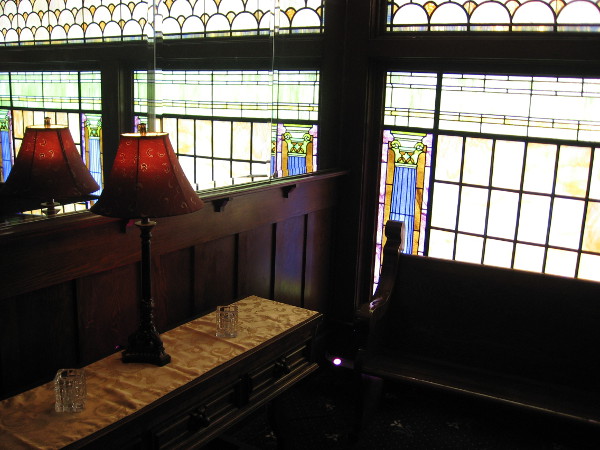
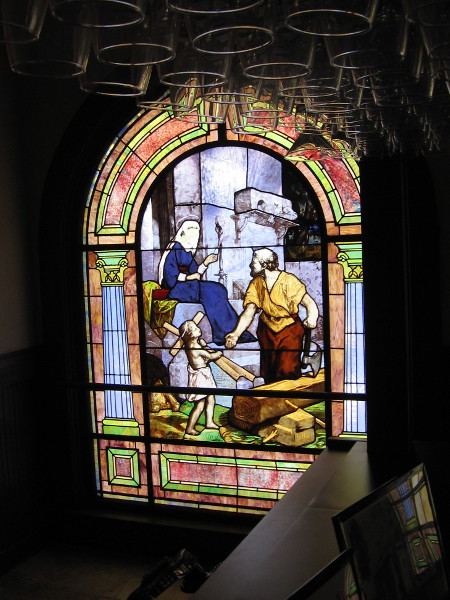
Stained glass window, and its reflection in a mirror, inside The Abbey on Fifth Avenue. The building was originally the Park Place Methodist Episcopal Church.
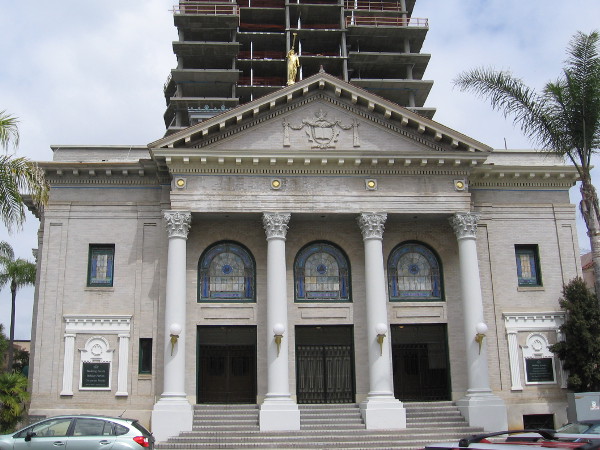
I’ve walked past The Abbey on Fifth Avenue many times over the years. I often pause to admire the monumental building’s Classical Revival style exterior and take a photo or two. But last weekend I finally ventured inside.
That’s because The Abbey was open to the public during the San Diego Architectural Foundation’s OPEN HOUSE 2017. It was one of several fascinating places that I visited!
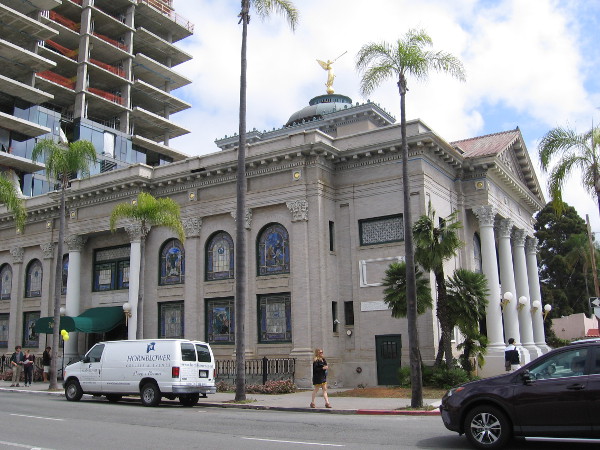
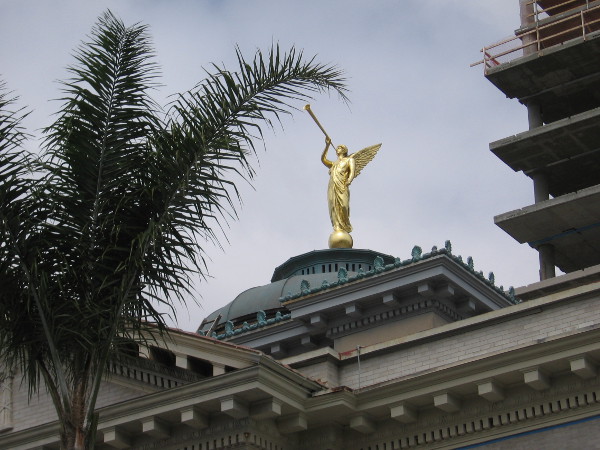
The Abbey on Fifth Avenue is utilized by Hornblower Cruises in San Diego for private parties, weddings and corporate events. In 1910, however, when its doors were first opened to welcome the people of San Diego, the building was a place of worship: the Park Place Methodist Episcopal Church. A gleaming gold leaf statue of the angel Gabriel stands atop the roof, blowing his horn, summoning eyes around Bankers Hill. Approach the building and one sees its dozen stained glass windows illustrating figures from the Bible.
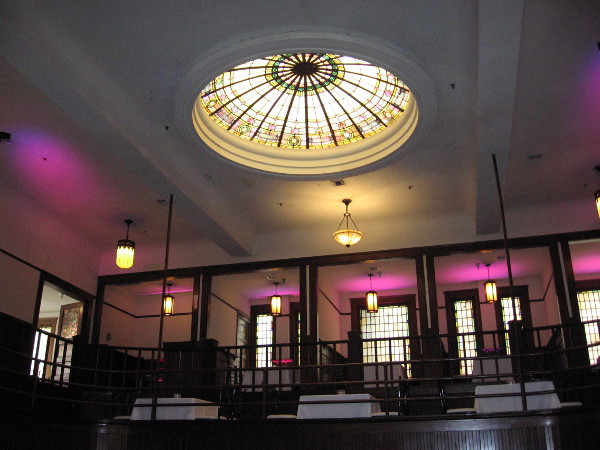
Stained glass when viewed from outside a building can often appear a bit dull and unremarkable. When seen from inside, however . . . words can barely express the feeling. It’s like finding the end of a rainbow. It’s like stepping into a light-filled heaven.
Please enjoy some photos of The Abbey’s exterior and interior.
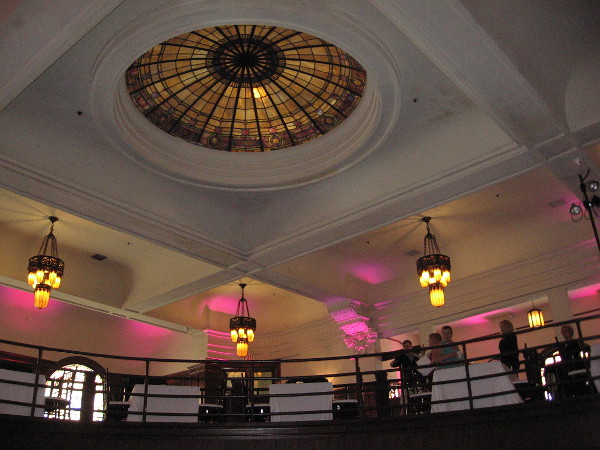
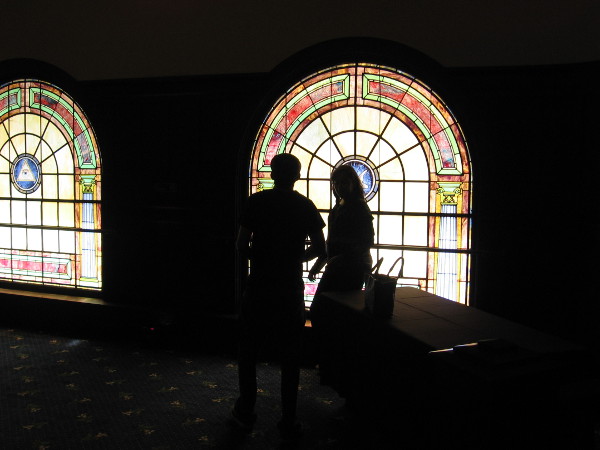
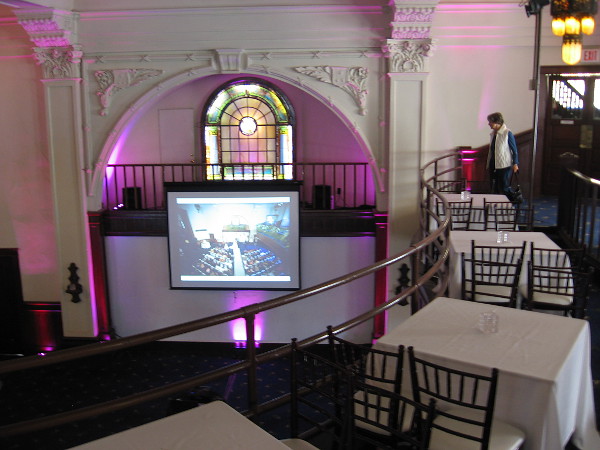
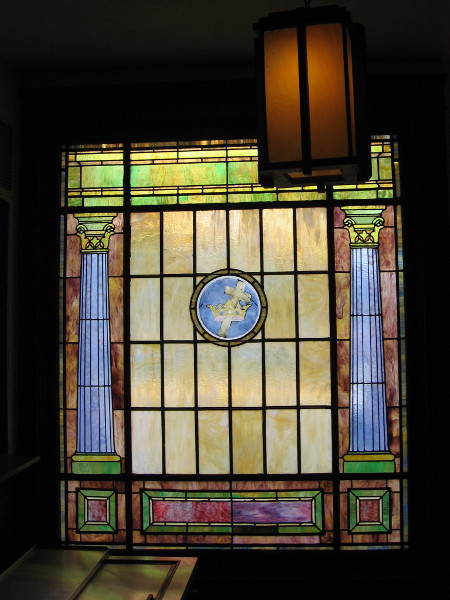
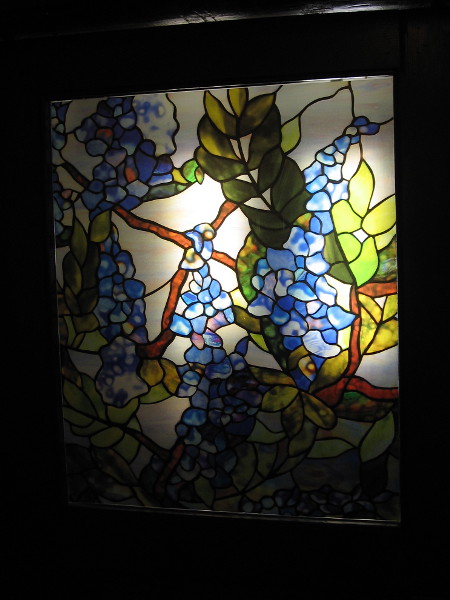
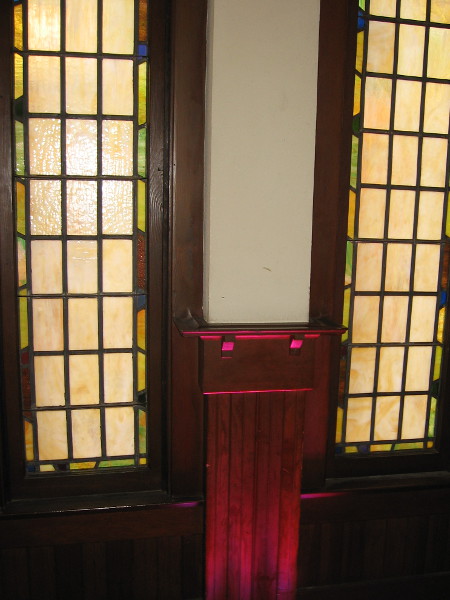
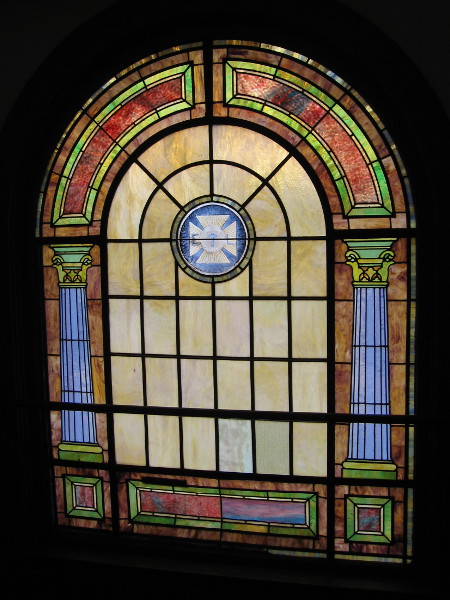
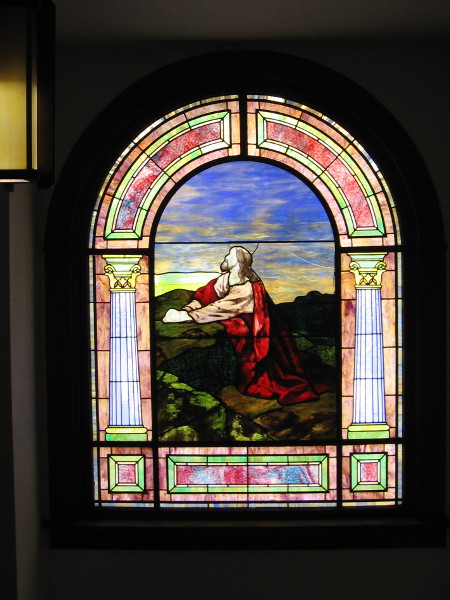
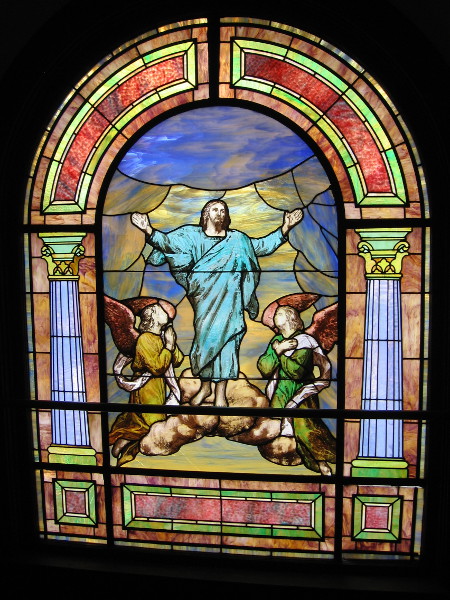
Today the Abbey on Fifth Avenue is operated by Hornblower Cruises and Events. Built as a church in 1910, the building has undergone various changes over the years. In 1984 it became a restaurant.Photo of The Abbey taken from the intersection of Olive Street and Fifth Avenue in the Bankers Hill neighborhood. A new building is under construction on the north side.Stained glass windows seen from the street outside.The 1910 Park Place Methodist Episcopal Church was built in the Classical Revival style, which is quite unusual in San Diego.Gabriel blows his horn. Light reflecting from the gold leaf shines brightly like the sun.This gorgeous stained glass skylight and purple floor lights tinting the walls make a memorable dining experience at these tables on the second floor of The Abbey.Another dome of stained glass in the ceiling.These doors on the second floor have beautiful floral stained glass panels.The interior of The Abbey on Fifth Avenue is a wonderland of colorful light.People pause by one of the south-facing stained glass windows.These tables along the second floor overlook a large space where people might dance or mingle during a special event.Stained glass shows classical columns and a cross in a crown.If I recall, this stained glass panel was in a door on the second floor. Those appear to be grapes.More stained glass behind dining tables on the north side of the second floor.The many stained glass windows seem to fill the historic building with magic.Close look at one window.Christ portrayed in one radiant window.Religious figures near wine glasses hanging in a bar on the second floor. An interesting juxtaposition.The beautiful stained glass is both mysterious and penetrating.Another vibrant stained glass window portrays a risen Christ in heaven.A scene from the Bible. One of many stained glass windows that fill The Abbey on Fifth Avenue with color and life.
…
I live in downtown San Diego and love to walk around with my camera! You can follow Cool San Diego Sights via Facebook or Twitter!
You can easily explore Cool San Diego Sights by using the search box on my blog’s sidebar. Or click a tag! There are thousands upon thousands of fun photos for you to share and enjoy!
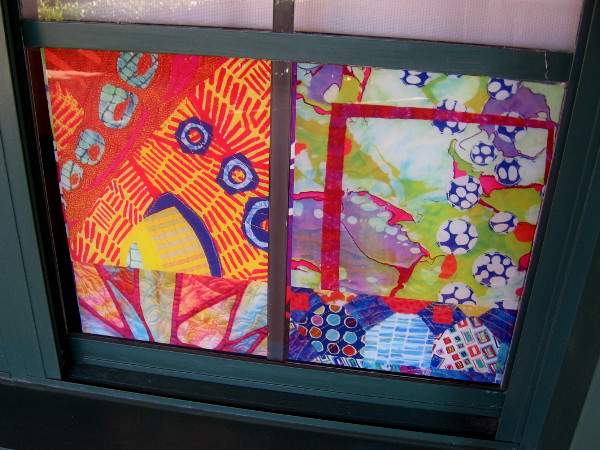
Colorful quilting artwork in a window of the Visions Art Museum at Liberty Station.
I’ve blogged many times about Liberty Station. But there’s always more to discover.
Yesterday I walked around the historic old Navy base, and was pleased to take a few photographs that you might enjoy. I spotted some artwork and framed some of the place’s beauty.
These few moments in time and space might seem random, but it was all new to me. That’s why I like to walk.
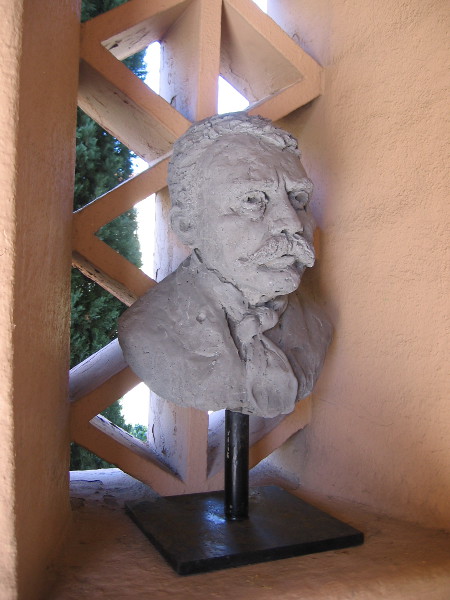
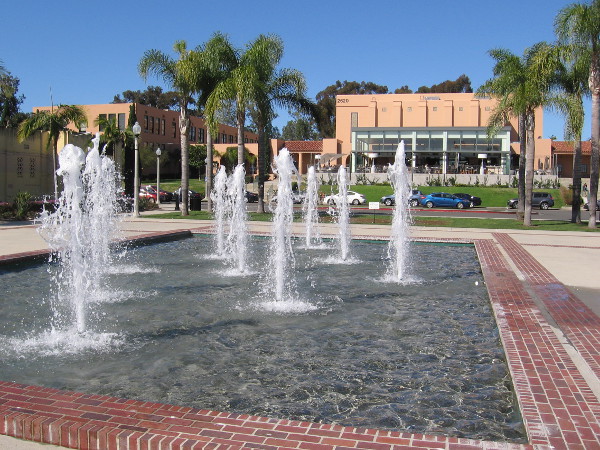
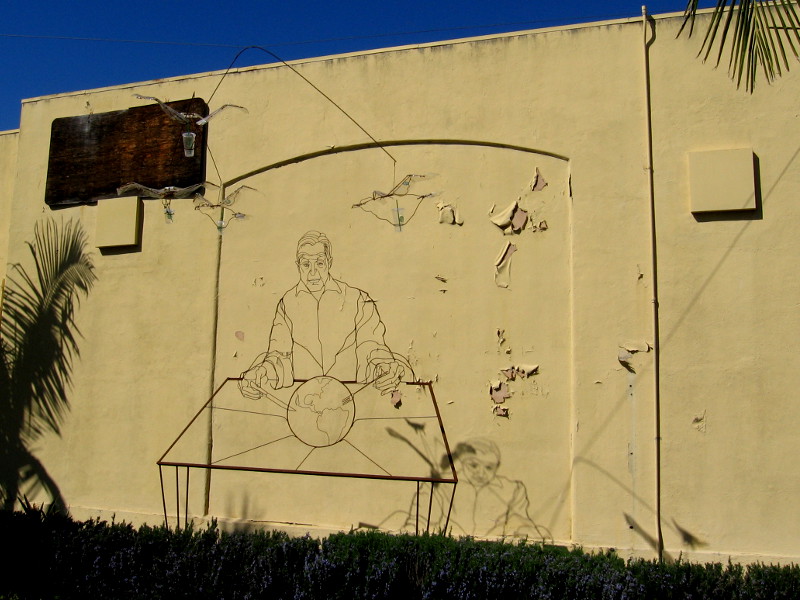
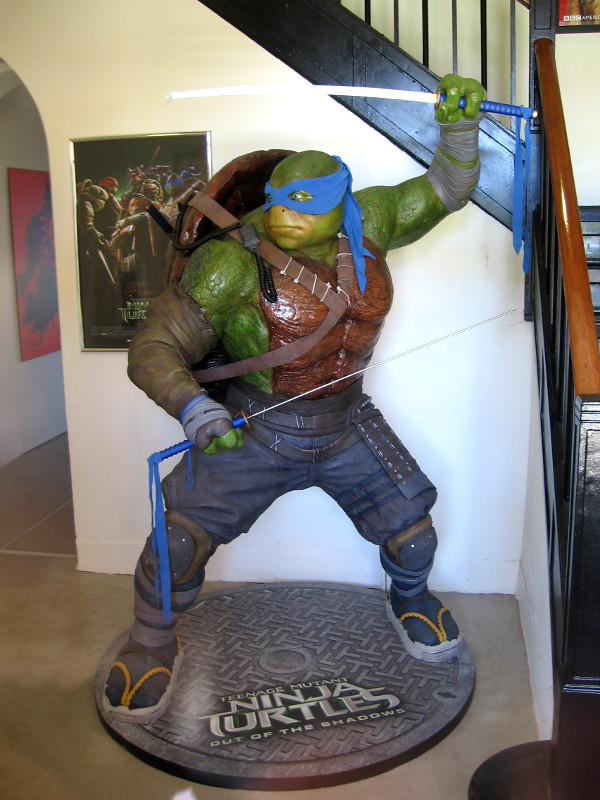
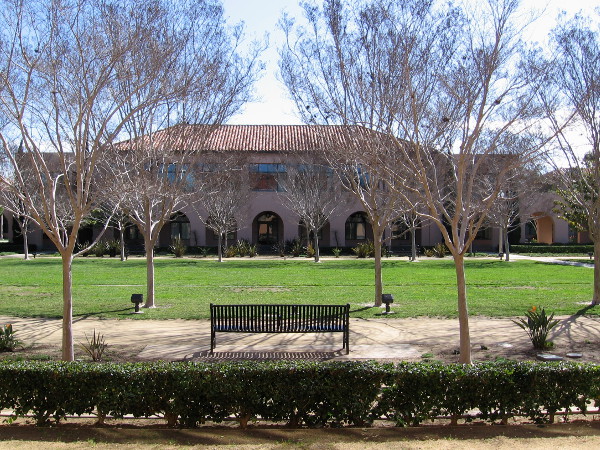
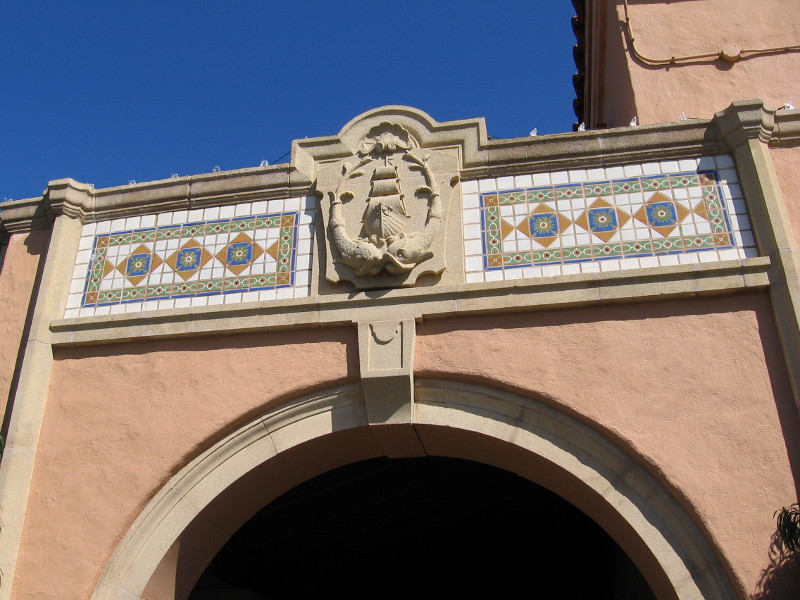
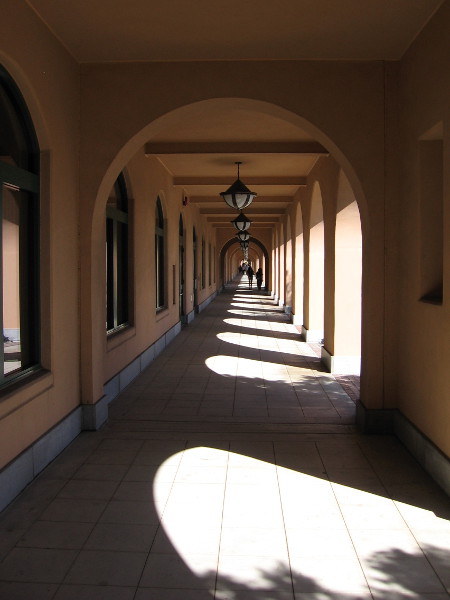
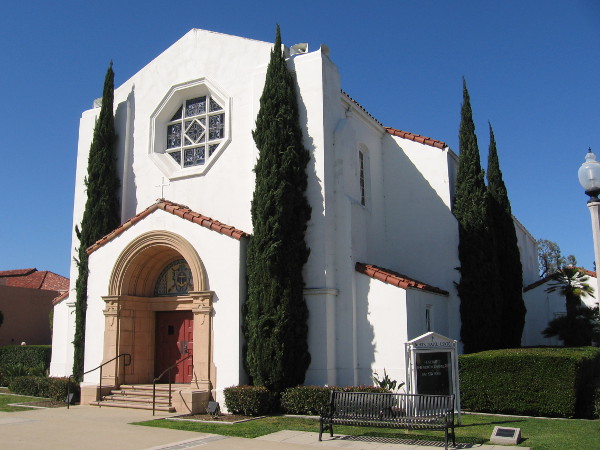
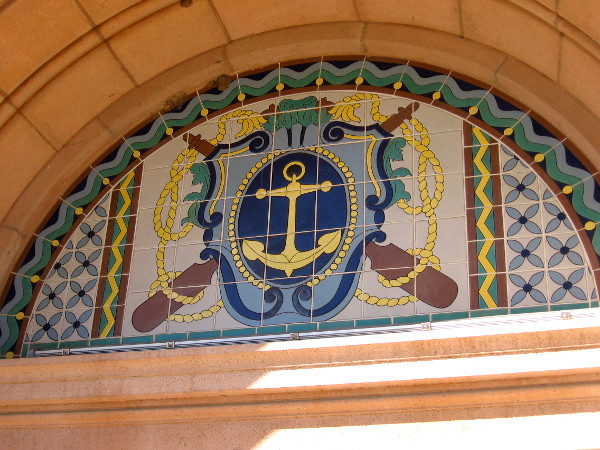
I spotted this bust in a nook while walking along the North Promenade. It was probably created in a nearby art studio. I could find no information.The beautiful Galinson Family Fountain at NTC Liberty Station.I spotted this cool metal wire sculpture of a man dining on the planet Earth near an old, peeling Naval Training Center wall. Plastic Dinner, by Spenser Little. The art includes a dangling mobile and casts a thin, weird shadow.Peer into one window at IDW Publishing, headquartered at Liberty Station, and you’ll see a huge statue of Leonardo, of the Teenage Mutant Ninja Turtles!A peaceful place of natural and man-made beauty, perfect for a slow thoughtful walk.Decoration above an arch. I believe that is explorer Cabrillo’s ship San Salvador. He entered San Diego Bay not far from here.Looking down a long colonnade where U.S. Navy sailor recruits once walked.Photo of the eye-pleasing USNTC North Chapel, reflecting the Point Loma sunshine one Sunday.Nautical symbols above the front entrance to the Navy’s old North Chapel at Liberty Station.
…
I live in downtown San Diego and love to walk around with my camera! You can follow Cool San Diego Sights via Facebook or Twitter!
You can easily explore Cool San Diego Sights by using the search box on my blog’s sidebar. Or click a tag! There are thousands upon thousands of fun photos for you to share and enjoy!
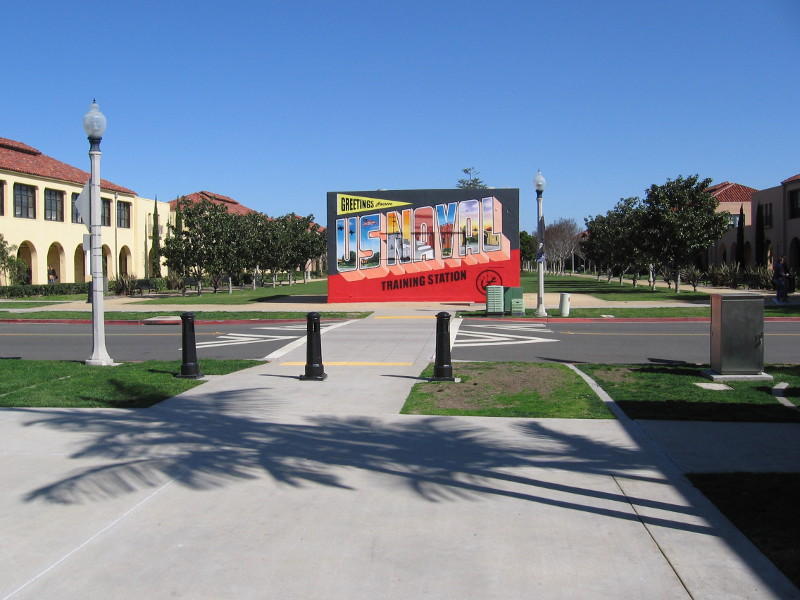
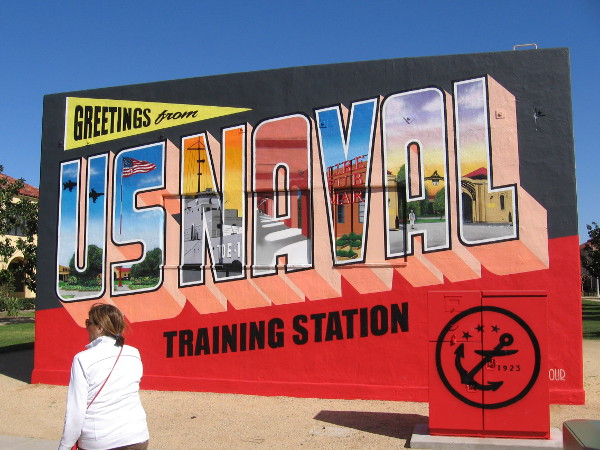
A huge postcard has appeared on Dewey Road in Point Loma, at the southwest end of Liberty Station’s Arts District!
I walked around Liberty Station today before sitting down by the boat channel to write another short story. And look what I discovered! It’s the first time I’ve seen this cool mural!
This new public art resembles a gigantic postcard, which reads: Greetings from U.S. Naval Training Station. It was created by the two artists who painted the postcard-like Greetings from San Diego mural, which I photographed a month ago in North Park. Victor Ving and Lisa Beggs are travelling around the country in an RV and creating a whole bunch of these huge colorful postcard murals!
Painted inside the letters I see scenes from Ingram Plaza, the Barracks Arcade, Liberty Public Market and the USS Recruit!
As you might know, the U.S. Naval Training Station, or Naval Training Center San Diego, was a military base where thousands of sailor recruits learned the ropes upon enlisting in the U.S. Navy. It closed in 1997 and has been redeveloped into a mixed cultural, recreational, shopping, business and residential complex in Point Loma. It’s like a spacious park with lots of grass, arched walkways and fountains–a perfect place to relax!
During my stroll today though Liberty Station, I discovered even more public art, which I’ll blog about shortly. And please watch for my new work of fiction at Short Stories by Richard. I think it’s almost done!
Greetings from U.S. Naval Training Center. A cool new mural at Liberty Station by artists Victor Ving and Lisa Beggs.
…
I live in downtown San Diego and love to walk around with my camera! You can follow Cool San Diego Sights via Facebook or Twitter!
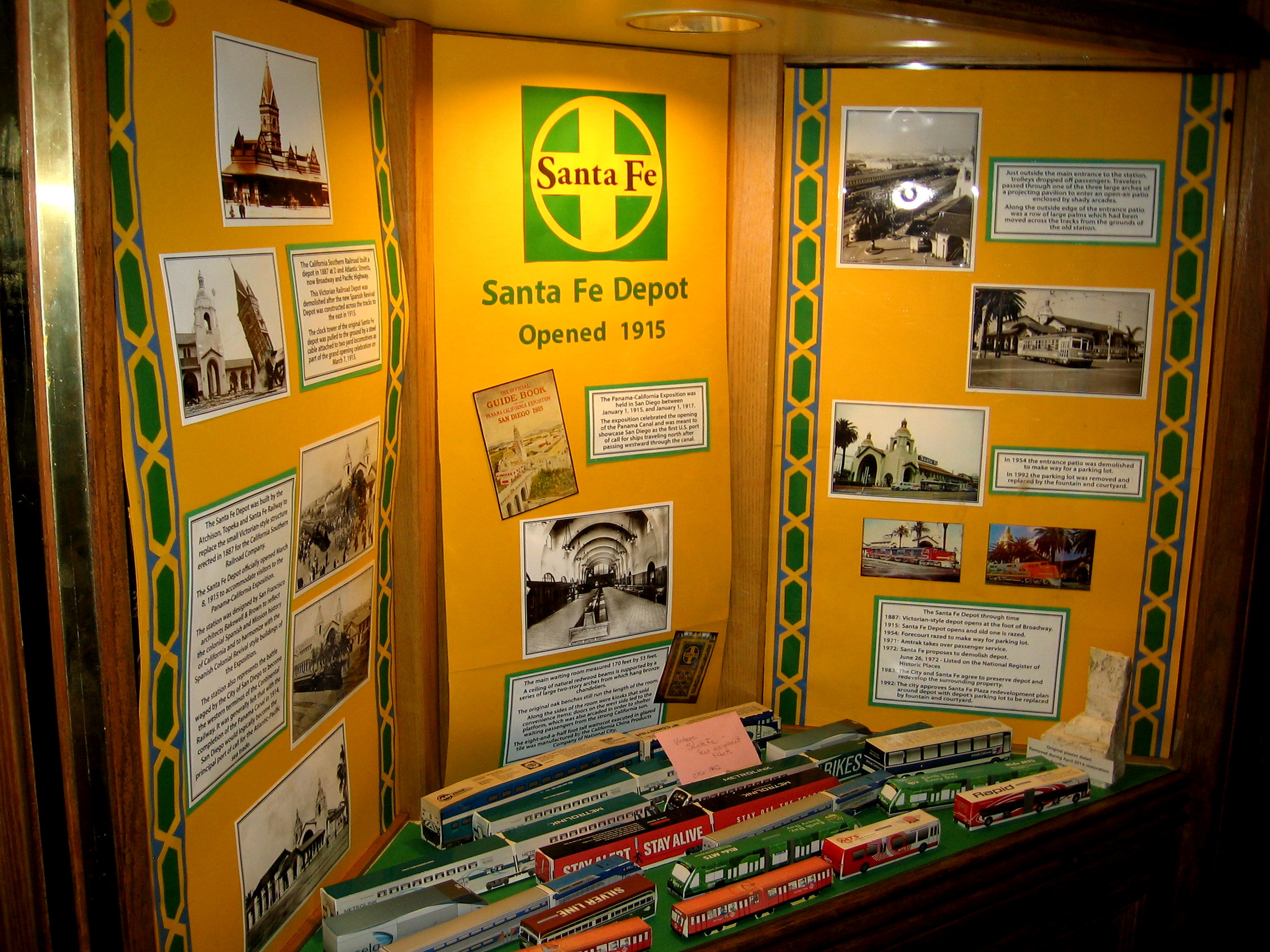
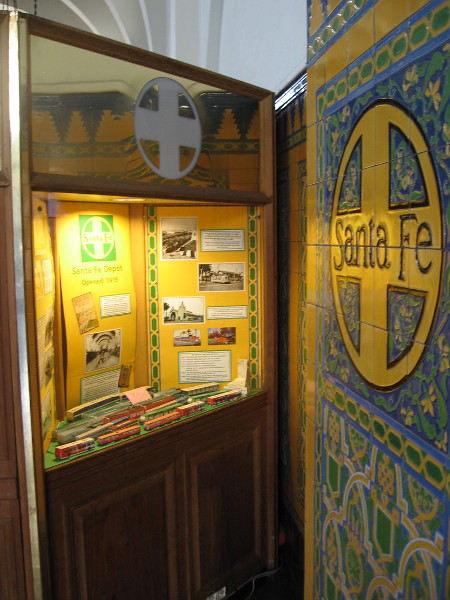
Display inside San Diego’s 1915 Santa Fe Depot. Photos and words provide a glimpse of the train station’s history.
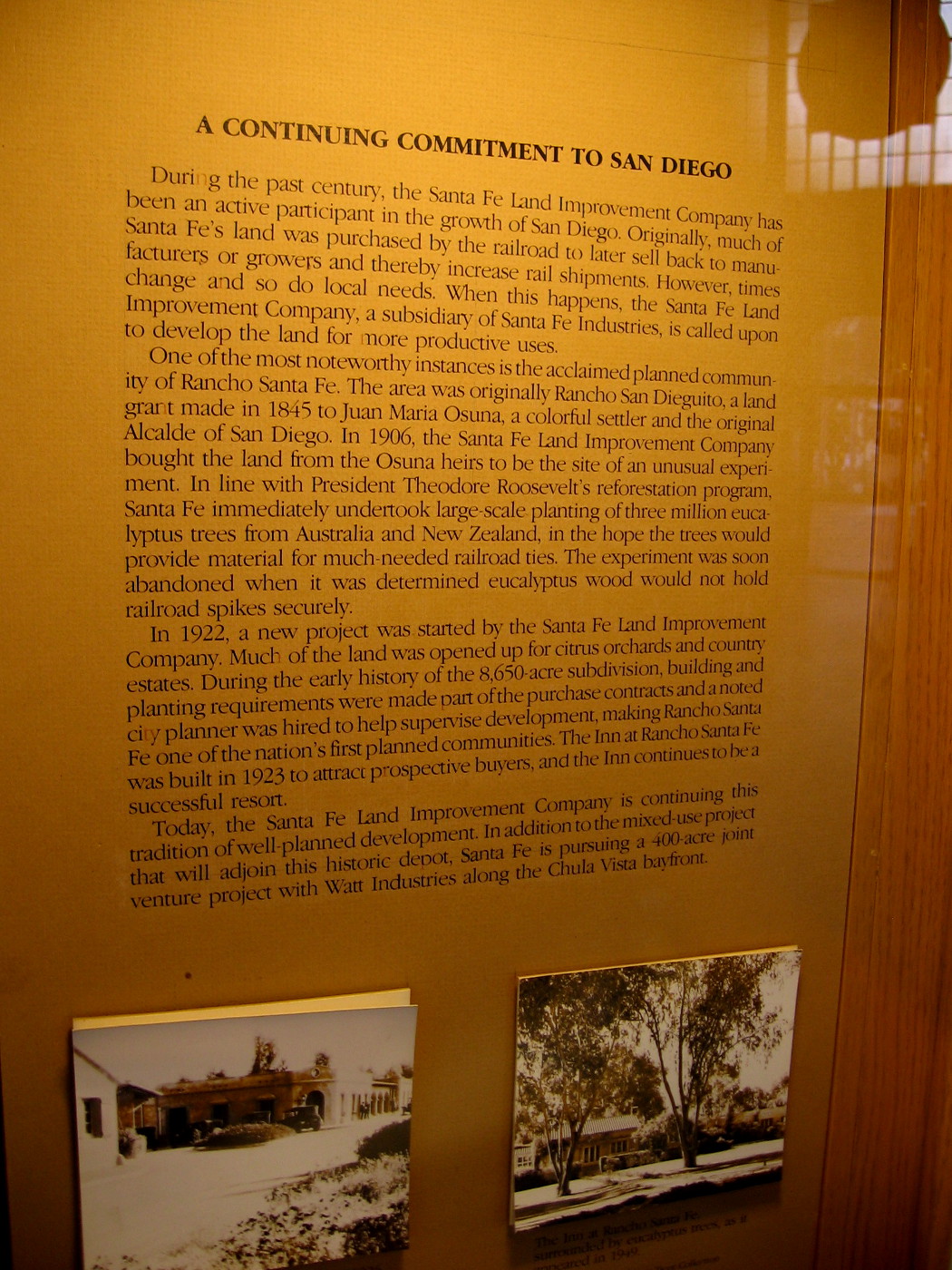
Should you ever step inside downtown San Diego’s handsome Santa Fe Depot, there’s a small exhibit at the information booth worth checking out. Two glass display cases provide a glimpse of the train station’s fascinating history.
To read the signs, click the images and they will enlarge.
Last year the Santa Fe Depot celebrated its centennial. I blogged about that here!
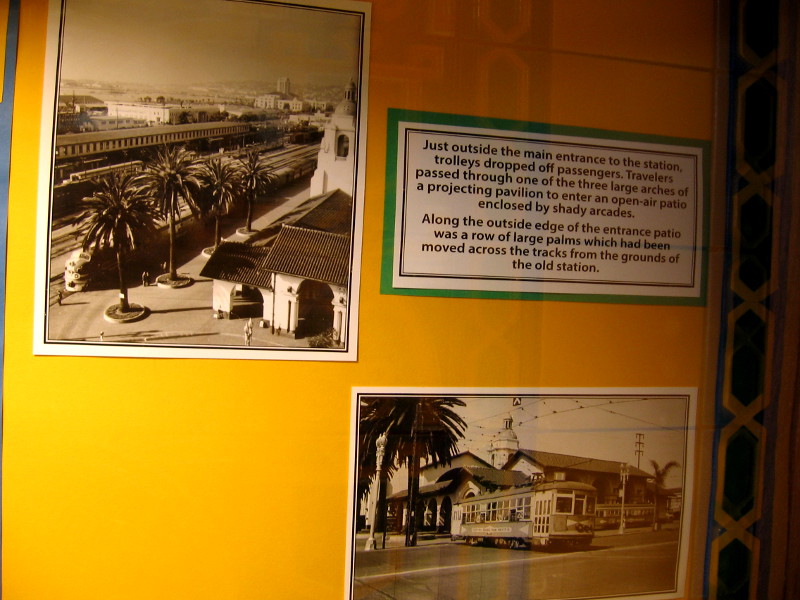
If you ever visit the Santa Fe Depot in downtown San Diego, swing by this information booth to check out the historical exhibit.Several paragraphs recount the history of the Santa Fe Land Improvement Company and the unique origin of North County community Rancho Santa Fe. Eucalyptus trees make poor railroad ties!In a nook right next to the depot’s wall, beside colorful Santa Fe tilework, one can discover more fascinating information.Graphic shows important dates concerning the Santa Fe Depot. The 1887 Victorian-style depot was razed in 1915 after the new depot opened in time for the Panama-California Exposition in Balboa Park.The train station’s architecture reflects colonial Spanish and Mission history in California; it was designed to harmonize with the Spanish Colonial Revival-style buildings of the 1915 Panama-California Exposition in Balboa Park. A century ago San Diego strove to become the western terminus of the Continental Railway.More fascinating old photos of the Santa Fe Depot, today a San Diego transportation hub serving Amtrak, the Coaster, and the Orange and Green Lines of the San Diego Trolley.Original plaster detail removed during the April 2014 restoration of the southeast tower.
…
I live in downtown San Diego and love to walk around with my camera! You can follow Cool San Diego Sights via Facebook or Twitter!
You can easily explore Cool San Diego Sights by using the search box on my blog’s sidebar. Or click a tag! There are thousands upon thousands of unique photos for you to enjoy!
Old tin shop sign still visible on the historic 1882 Independent Order of Odd Fellows Building in San Diego’s Gaslamp Quarter. A remnant of a past era.
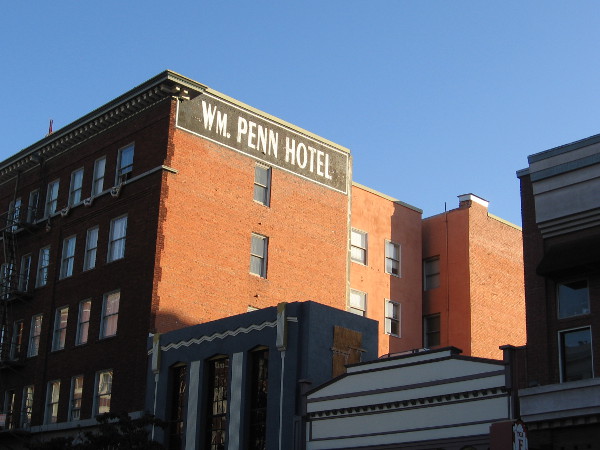
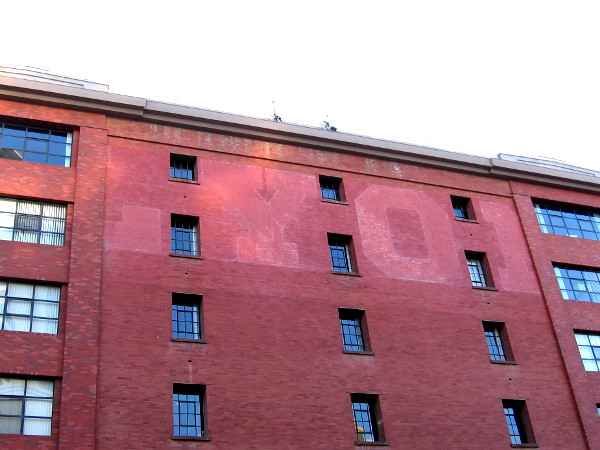
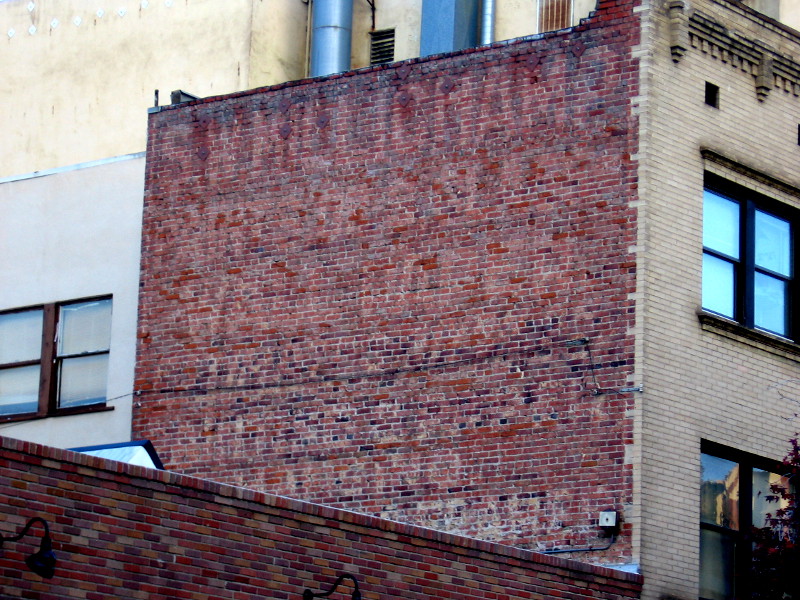
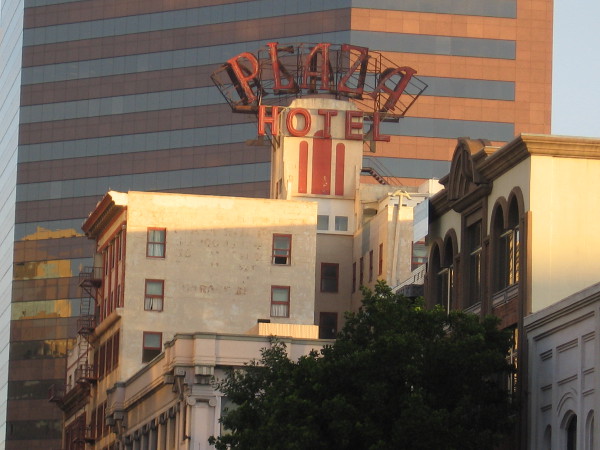
While walking around downtown San Diego, I’m always pleased to make unexpected discoveries. Once in a while I’ll spot faded signs and advertisements that were painted years ago on historic old buildings. Unfortunately, many of those old signs are vanishing and will eventually be lost to time. Some of those walls will be painted, or new buildings will sprout up . . . That’s progress, I suppose.
I did some searching on the internet looking for information about the more mysterious signs, but with very little success. I increased the contrast of many photos to try to make out the faded words. If you know anything, leave a comment!
Most of these photos were taken in the morning, the last three or four days…
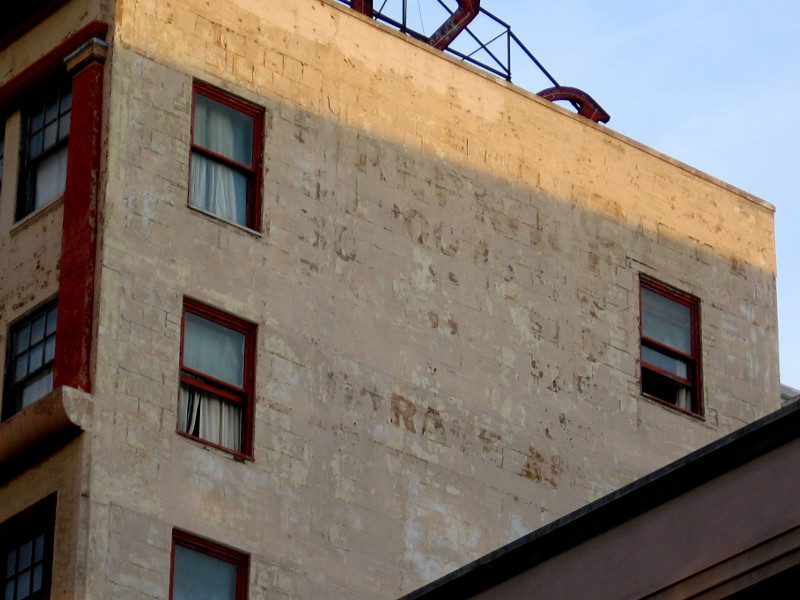
A faded sign is painted high on the 1888 Nesmith-Greely Building on Fifth Avenue. It is just visible from the street.One can barely make out the words HOTEL . . . ROOMS 50c to $1.00Old brick building at Seventh Avenue and G Street has words so obliterated I can’t decipher anything.The William Penn Hotel building at Fourth Avenue and F Street opened in 1913 as the elegant Oxford Hotel.Painted words from San Diego’s past. The Windsor Hotel on Fourth Avenue was built in 1887. The first floor was once a pool hall; in the 1960s it contained cardrooms and nightclubs with go-go dancers.The 1910 Western Metal Supply Company Building is now an iconic part of Petco Park in San Diego, home of the baseball Padres.The faded word LYON on a building at the corner of K Street and Fourth Avenue.From a distance, a square space on the side of the Simmons Hotel on Sixth Avenue appears to be blank reddish bricks.But a closer look reveals old words from many years ago. Perhaps you can figure out what they say.Faded words can also be spotted high on the Plaza Hotel building on Fourth Avenue.I can barely discern a few letters.The building on the right is The McGurck Block, built in 1887. A drug store was located in it from 1903 to 1984. Actor Gregory Peck’s father worked there as the night druggist.High up, painted on the old brick building’s side is a fading advertisement. A glimpse of San Diego’s past.
Here’s another pic I snapped on Fifth Avenue just south of Broadway:
Faded sign on side of a building on the 900 block of Fifth Avenue.
I’ve blogged in the past about a variety of cool old painted signs and images in downtown San Diego. Here they are:
Here’s a pic I took several years later, as I sat waiting for a bus at the City College trolley station, looking west…
…
I live in downtown San Diego and love to walk around with my camera! You can follow Cool San Diego Sights via Facebook or Twitter!
You can easily explore Cool San Diego Sights by using the search box on my blog’s sidebar. Or click a tag! There are thousands upon thousands of fun photos for you to enjoy!
Hikers head from the Kumeyaay Campground at Mission Trails Regional Park toward a shady nature trail that runs beside Kumeyaay Lake.
I enjoyed an amazing walk last weekend at Mission Trails Regional Park. The guided hike met under the flagpoles of the Kumeyaay Campground, and started down a pleasant nature trail at nearby Kumeyaay Lake. The hike then proceeded at a leisurely, easy pace along several trails by the San Diego River, ending up at the Old Mission Dam.
Every month, anyone can go on a variety of free interpretative nature walks at Mission Trails Regional Park. The walks are led by experienced trail guides, who point out the native flora and fauna, and relate the fascinating history of this mountainous wilderness in the city. To learn more check out the park’s website.
Please enjoy my photos and read the descriptive captions to join me on a virtual hike. Not only will you experience natural beauty, but you’ll learn a bit about early San Diego history!
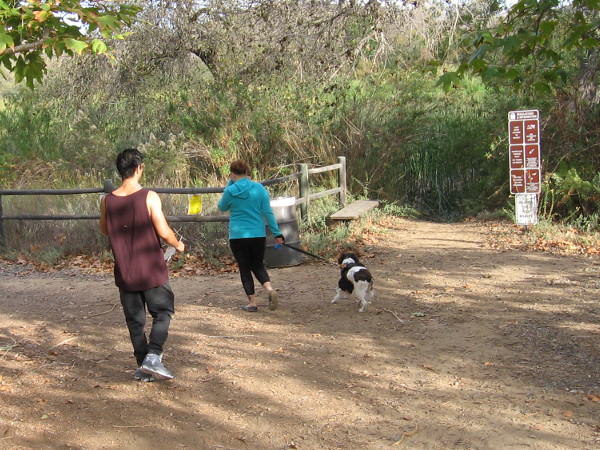
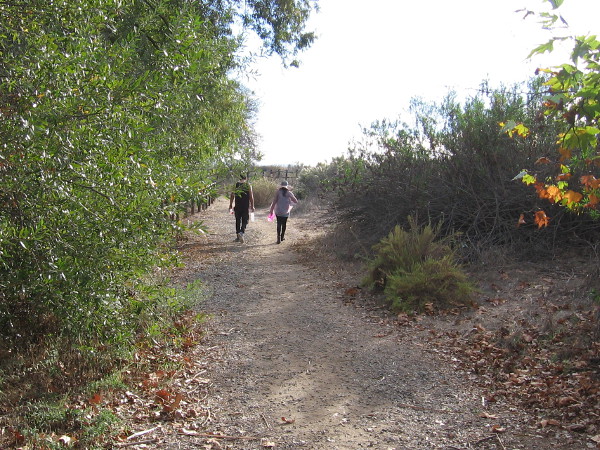
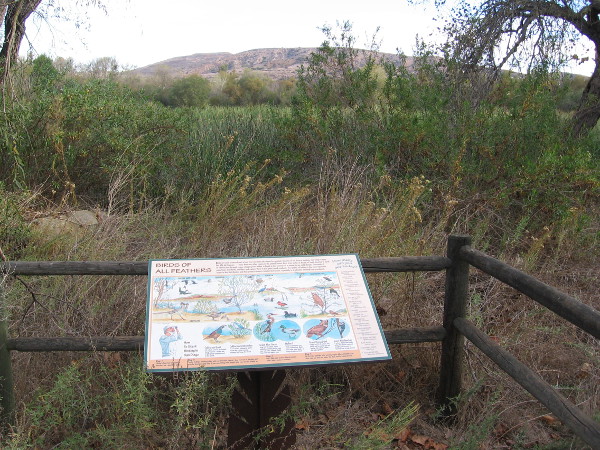
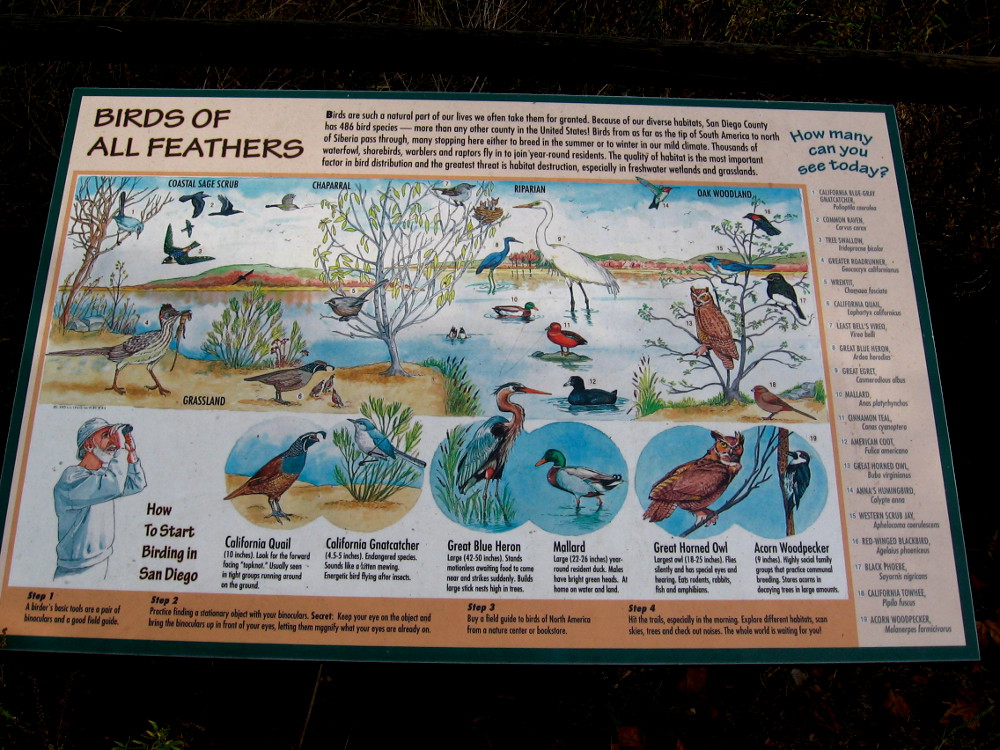
A couple walks slowly along the Kumeyaay Nature Trail, enjoying a beautiful November day.Signs along the nature trail include descriptions of wildlife that can be found around Kumeyaay Lake (once called Hollins Lake). Open water can be glimpsed beyond cattails.At Mission Trails Regional Park, birds of all feathers include quail, gnatcatchers, herons, egrets, ducks, woodpeckers, scrub jays, owls, and the endangered least Bell’s vireo!
The sign includes the following: “Because of our diverse habitats, San Diego County has 486 bird species–more than any other county in the United States! Birds from as far as the tip of South America to north of Siberia pass through, many stopping here either to breed in the summer or to winter in our mild climate.”
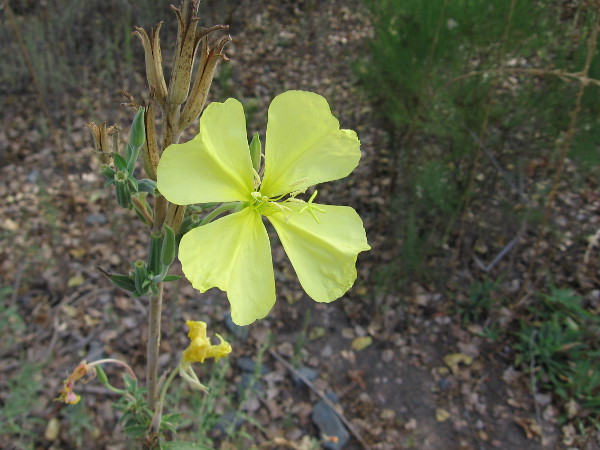
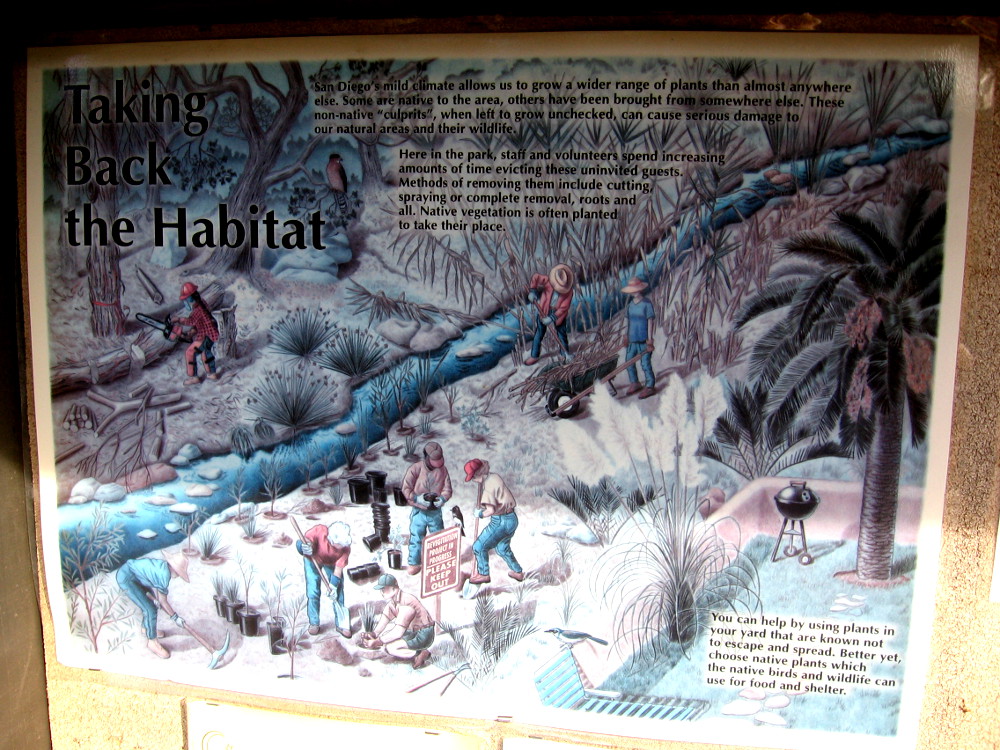
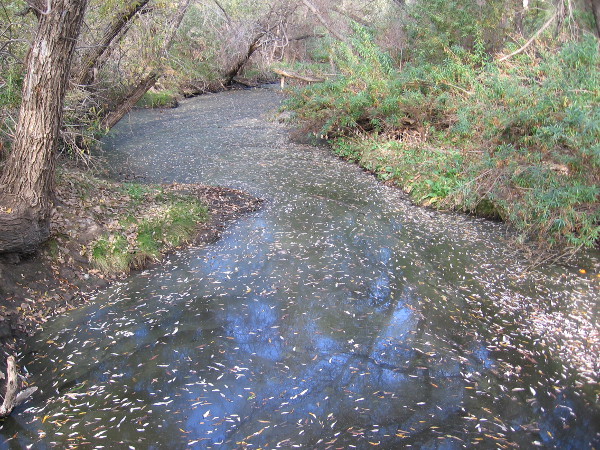
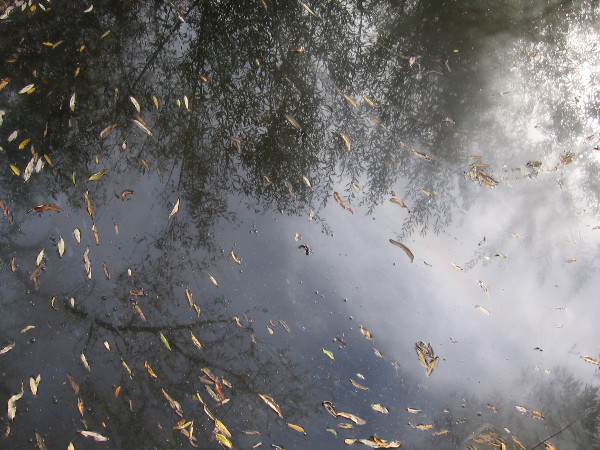
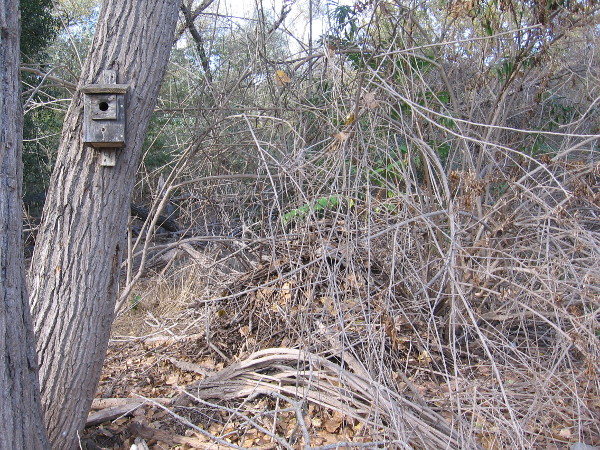
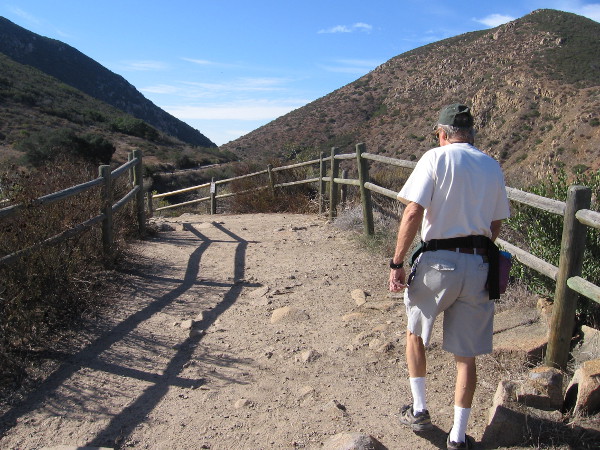
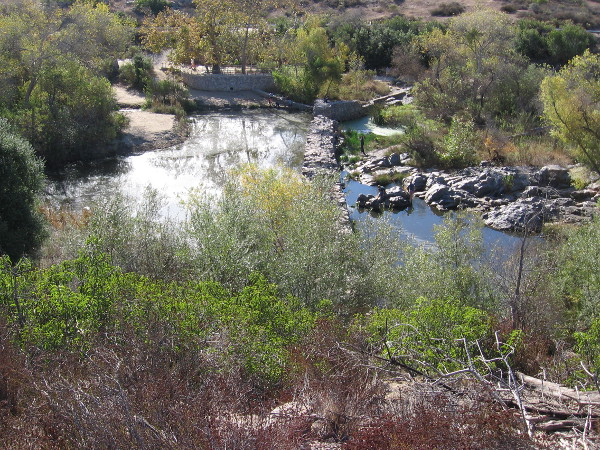
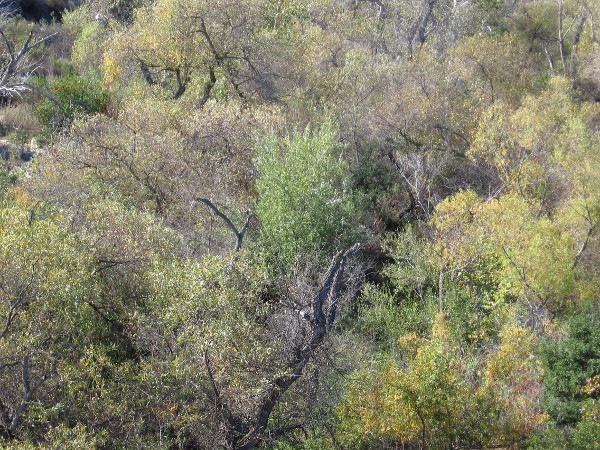
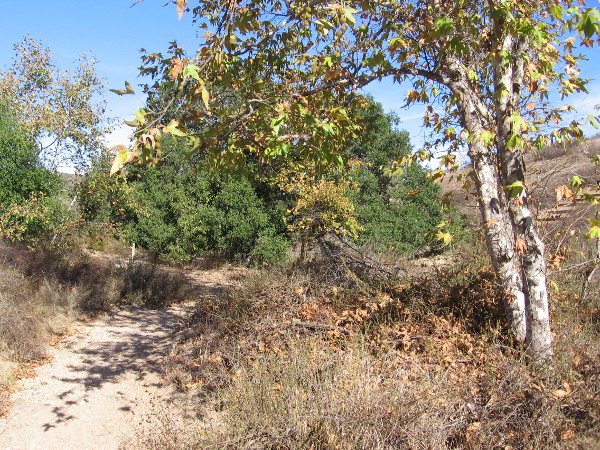
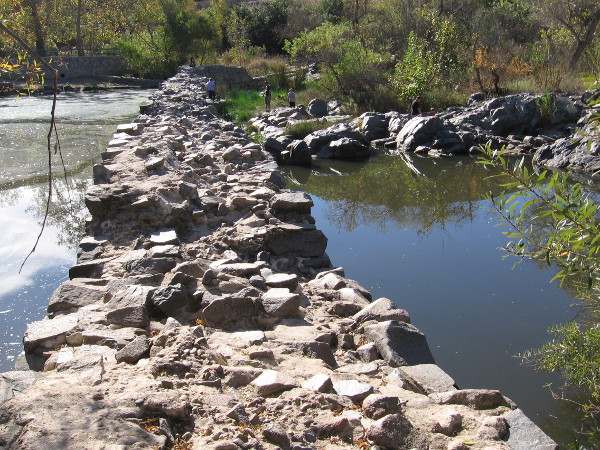
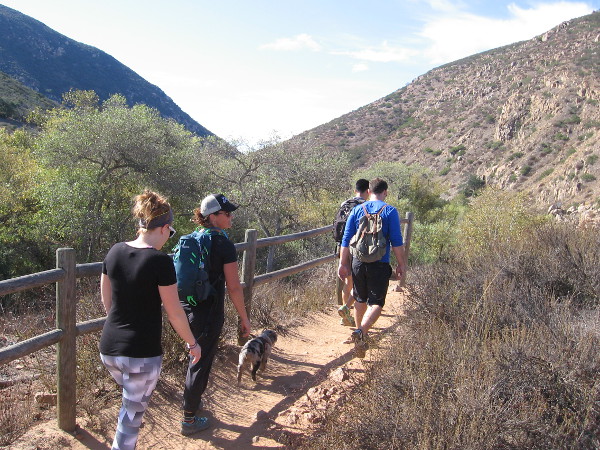
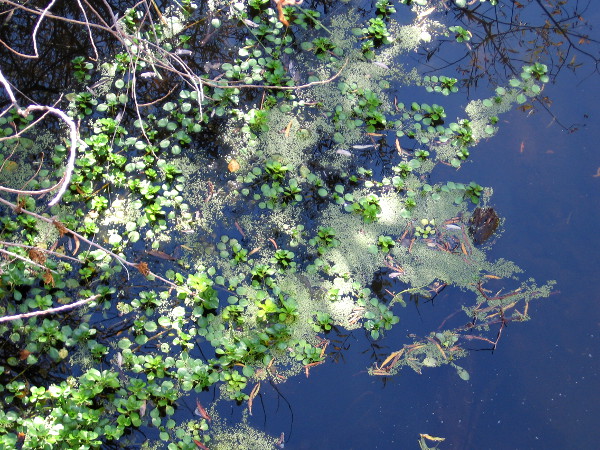
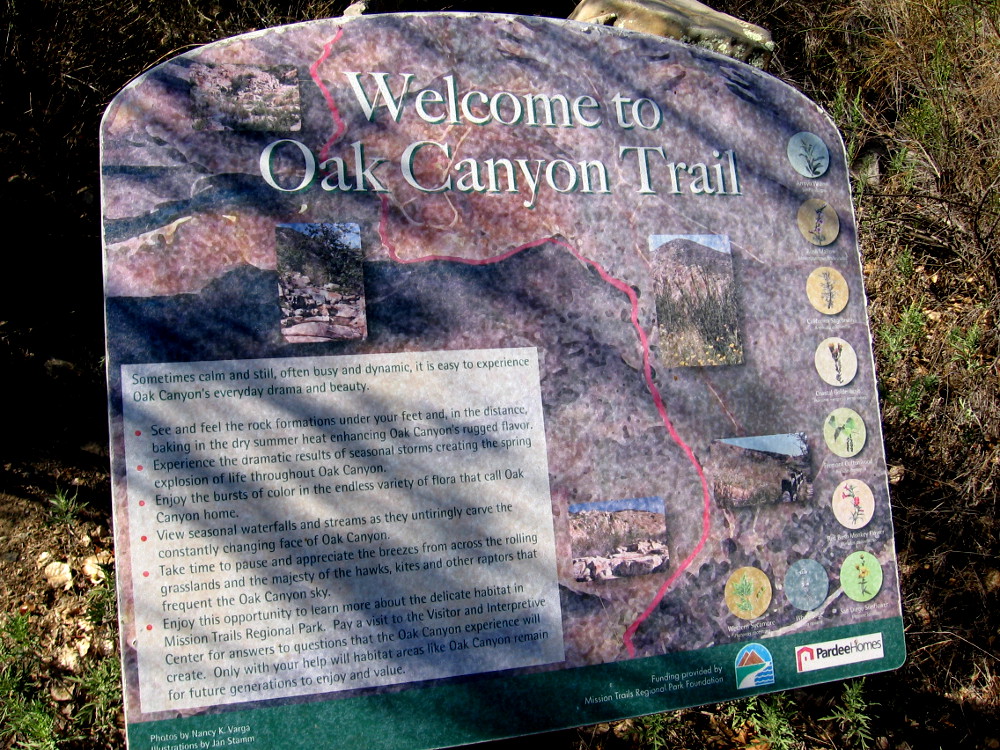
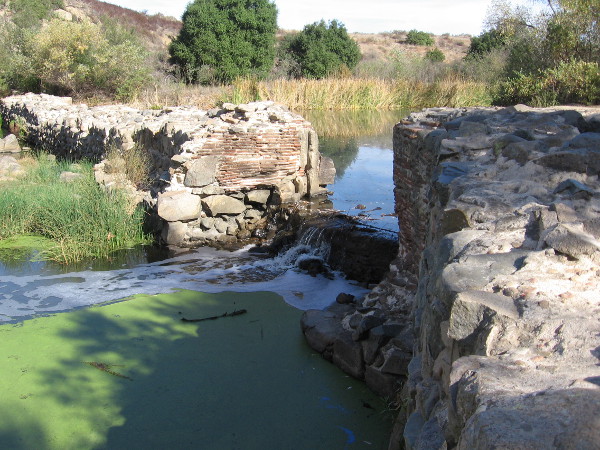
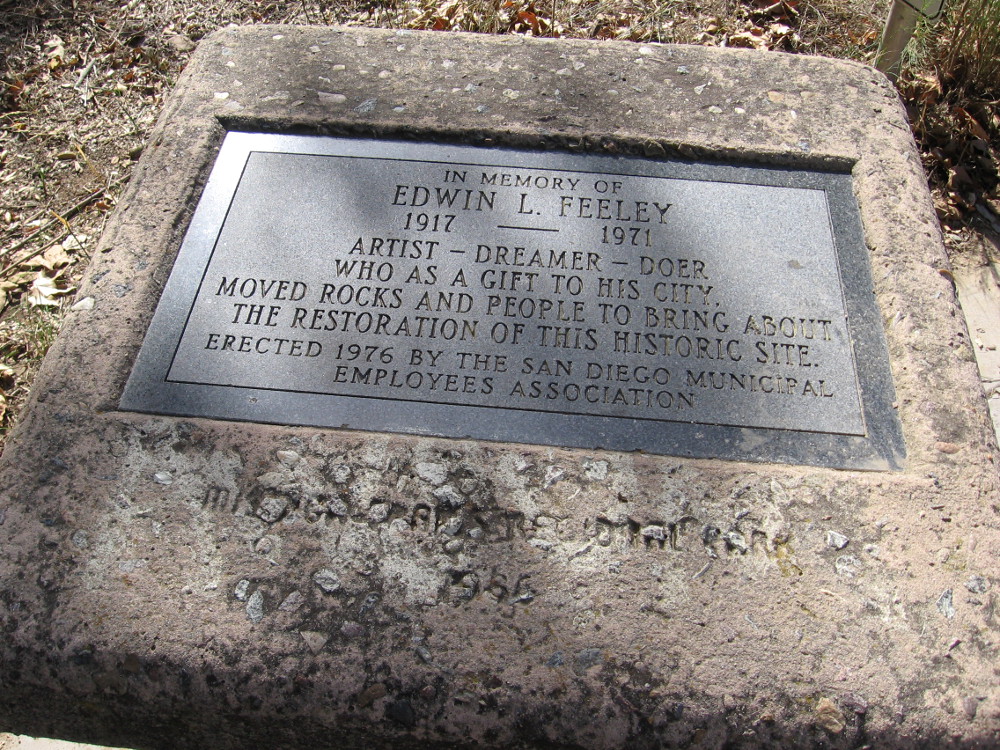
Photo of the San Diego River emerging from Kumeyaay Lake. This is near an outdoor amphitheater and fire pit. The park is a perfect place to learn about nature from rangers, and for stargazing at night!An Autumn wildflower at Mission Trails Regional Park.We head from the lake back toward the campground. Our pleasant hike has just begun.Non-native plants can cause serious damage to natural areas and wildlife. Park staff and volunteers work to protect the natural ecosystems.Hiking down the Grasslands Crossing Trail, my guide and I pass over the San Diego River. It has been a typically dry summer, and the pooled water here is still.Leaves and reflections of trees in the quiet water.We spied a wood rat’s nest of twigs and branches near the hiking trail. I learned these nests contain several rooms with different functions, not unlike a human home.Larry the trail guide showed me a photo of a wood rat.Now we are heading along the easy Grasslands Loop Trail, following the north bank of the San Diego River. Riparian trees such as willows, sycamores and cottonwoods thrive along the river.Mountain bikers enjoy a warm, sunny morning at Mission Trails Regional Park.Approaching an overlook of the Old Mission Dam.Photo of the Old Mission Dam from the north. The dam was built around 1813 and powered a water wheel that drove a grist mill. A tiled flume brought water to Mission San Diego de Alcala, about five miles away.Families play on the rocks near the Old Mission Dam at Mission Trails Regional Park.Lush trees along the San Diego River. Autumn leaves have yellowed a bit.We have descended onto Oak Canyon Trail, and are working our way down to the river and the historic dam.Standing on the north end of the Old Mission Dam. Materials used in constructing the dam include abundant volcanic rock found in this area.A slot in the dam wall where a water wheel was located. The river water, after driving the wheel, flowed along a tile-lined aqueduct south to the mission, where it was used to grow crops.Walking along the Oak Canyon Trail. Mission Trails Regional Park is like a small wilderness inside the city of San Diego. At 5,800 acres, it’s the largest city park in California.Riparian plants recover quickly after a fire because all are vigorous resprouters as long as they have a steady water supply.Granitic rocks seen along the trail.South Fortuna Mountain, elevation 1094 feet, rises to the south. Its sides are covered with native chaparral and sage scrub.Crossing the San Diego River via a steel footbridge.Looking down at the San Diego River. During rains, the river swells. The water runs down into Mission Valley and finally to the Pacific Ocean, sustaining an estuary near Mission Bay.Larry, my knowledgeable trail guide, informed me that the tiny green vegetation is duckweed, an aquatic plant that floats on the water’s surface.Sign at one end of the Oak Canyon Trail, near the Old Mission Dam.A cool 3-D model of the Old Mission Dam beside the trail. The dam was constructed from granite boulders and limestone mortar. At the gap there was a 12-foot wide floodgate.It’s possible to walk out onto the old dam, but one must be careful!A vertical groove in the dam wall shows where the floodgate used to exist. The dam was completed around 1813, and the long flume to Mission San Diego was completed several years later.Inscription in a boulder dated 1941, by the Daughters of the American Revolution. OLD MISSION DAM. Built 1813-1816. A part of the first permanent irrigation project by Padres and Indians in California.A plaque by the old dam. In memory of Edwin L. Feeley. 1917 – 1971. Artist – Dreamer – Doer who as a gift to his city, moved rocks and people to bring about the restoration of this historic site.Bright fluttering leaves of a river tree growing beside the Father Junipero Serra Trail, a road that leads past the Old Mission Dam.Walking to the parking lot by the Old Mission Dam, also called the Padre Dam.The site is a California historical landmark. A dam and flume system was finished between 1813 and 1816 by Indian laborers and Franciscan missionaries. It provided a reliable source of water for crops and livestock for Mission San Diego de Alcala. The system continued until 1831 when it fell into final disrepair.Beautiful hiking trails, and a fascinating look back at early San Diego and California history await at Mission Trails Regional Park.
…
I live in downtown San Diego and love to walk! You can follow Cool San Diego Sights via Facebook or Twitter!
You can easily explore Cool San Diego Sights by using the search box on my blog’s sidebar. Or click a tag! There are thousands upon thousands of fun photos for you to enjoy!








































 Cool San Diego Sights!