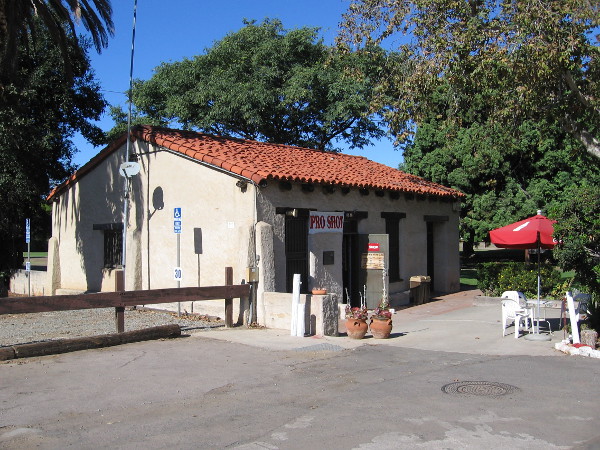
The Presidio Hills Golf Course Pro Shop can be found inside San Diego’s oldest building, La Casa de Carrillo.
Believe it or not, the oldest structure that still exists in San Diego (outside of the walls of the Mission Basilica San Diego de Alcalá) contains a golf Pro Shop!
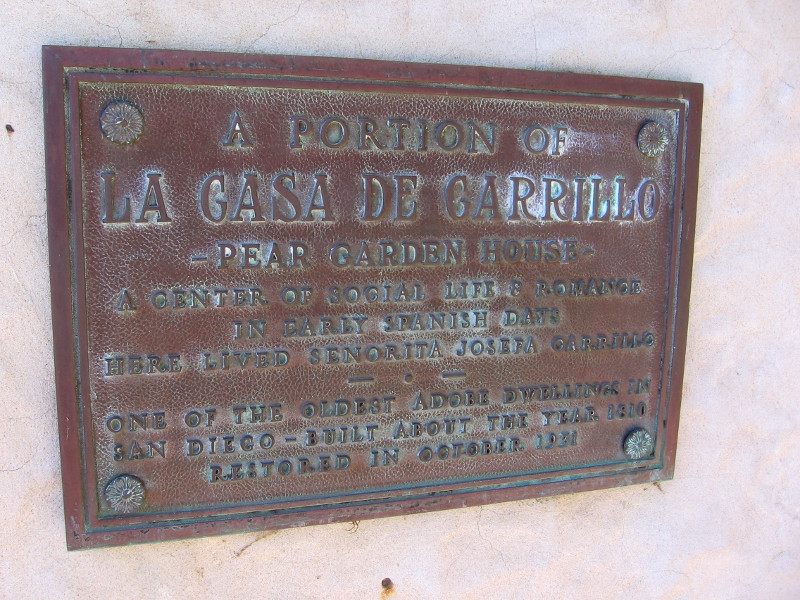
The two-century-old Casa de Carrillo, located near the base of historic Presidio Hill, was built in 1817, according to the Save Our Heritage Organisation. (Plaques at the location provide two different years.) It was built by the Spanish presidio’s commander, Francisco Maria Ruiz, for Joaquin Carrillo, a relative and fellow soldier stationed in San Diego. The adobe house stood beside the Comandante’s pear garden. Today the rather simple building, which was restored in 1931, is the home of the Presidio Hills Golf Course Pro Shop!
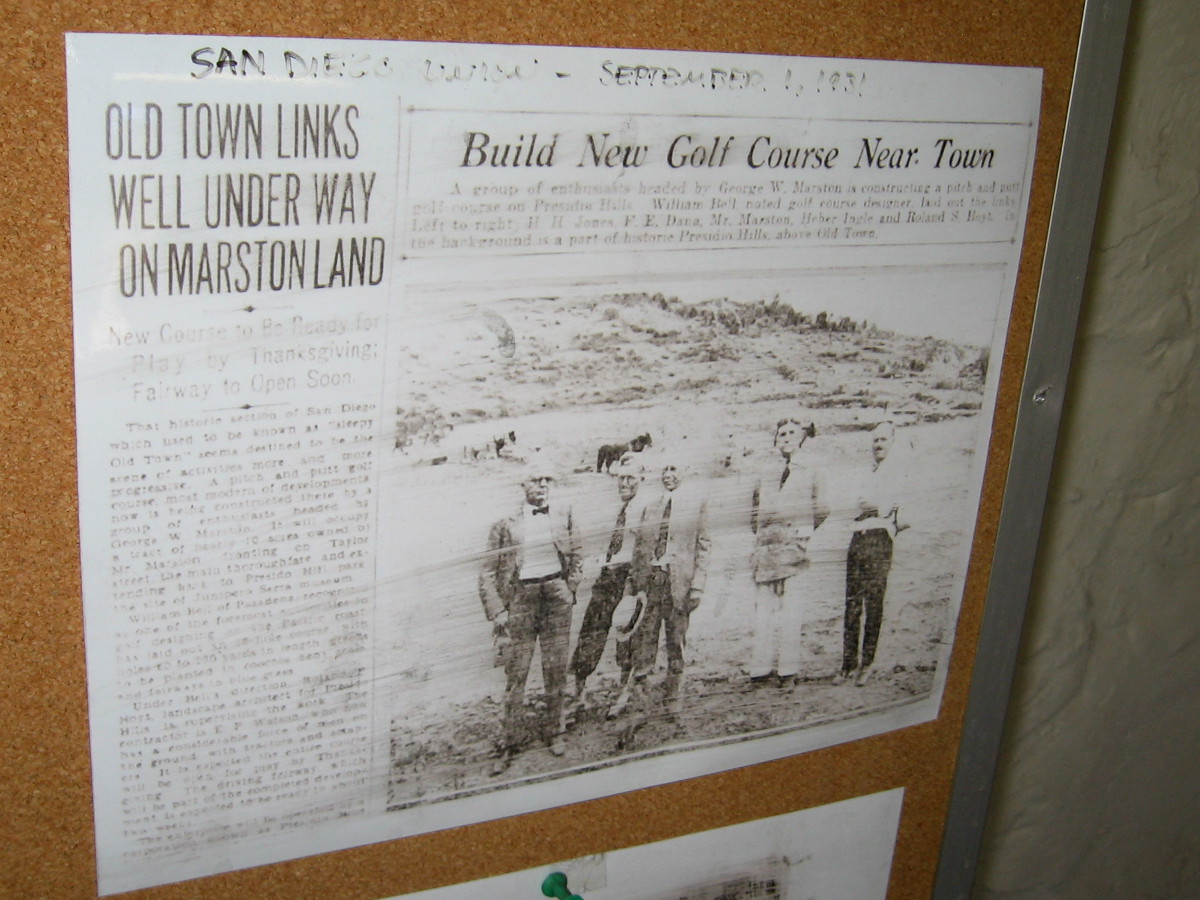
The small Presidio Hills Golf Course has its own unique history. Occupying what was once a scrubby plot of land at the foot of Presidio Hill, just east of Old Town, the pitch-and-putt golf course was developed in the early 1930s by George Marston, a visionary San Diego businessman and philanthropist who also worked to develop Balboa Park, the San Diego Public Library, and the San Diego Historical Society. Marston created the Junipero Serra Museum which rises today just above the site of the original 1769 Spanish presidio, so-called birthplace of California.
Over the years, the Presidio Hills Golf Course has hosted several world famous golfers, most notably Phil Mickelson, a resident of San Diego. When they were kids, Phil and his sister Tina would play all day at the small golf course. I was told by the super friendly young gentleman working in the pro shop that Phil Mickelson returns to visit every few years, just for old time’s sake.
A young Tiger Woods also won two Junior World trophies at Presidio Hills Golf Course!
Read the photo captions for a bit more information . . .
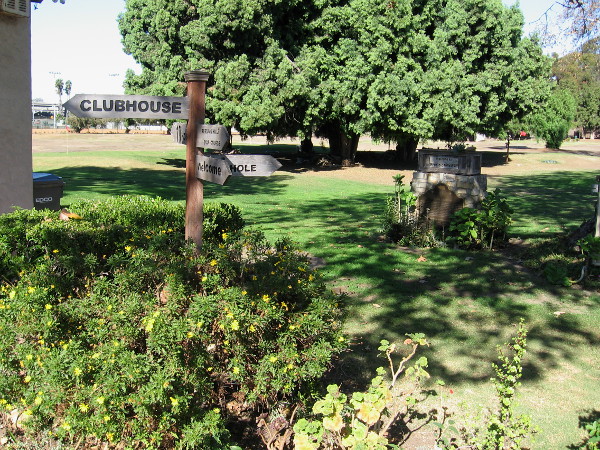
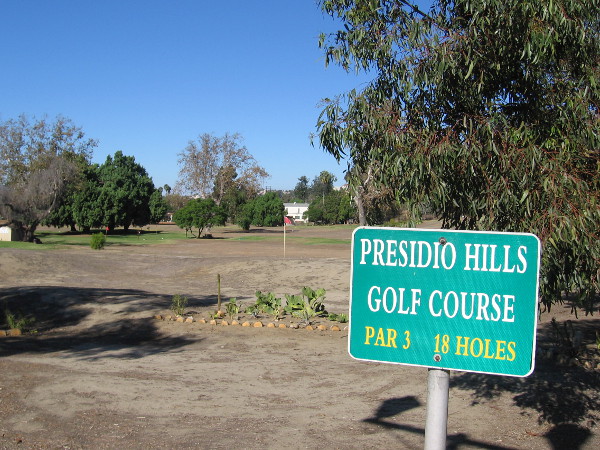
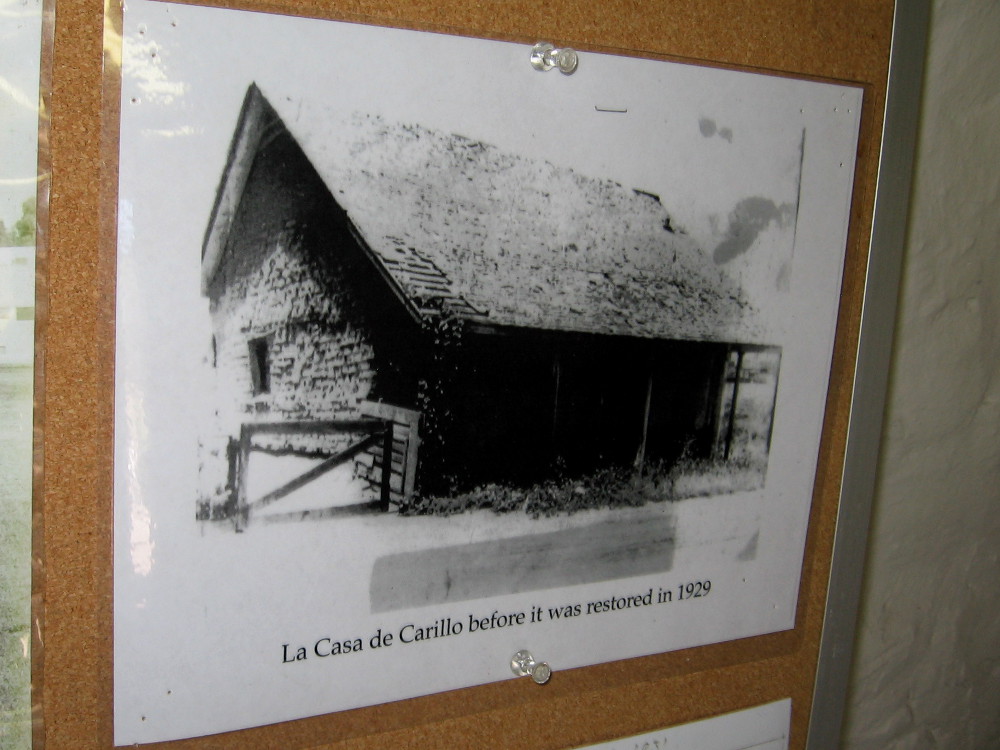
A photo of the small, historic adobe taken from the parking lot of the Presidio Hills Golf Course. Casa de Carrillo is the oldest structure that is still standing in San Diego.Bronze plaque near the front door reads: A portion of La Casa De Carrillo – Pear Garden House. A center of social life and romance in early Spanish days. Here lived Senorita Josefa Carrillo. One of the oldest adobe dwellings in San Diego. Built about the year 1810. Restored in October 1931.Photo of La Casa de Carrillo taken from a golf green just east of the structure.Sign near historical marker for Casa de Carrillo points to the golf course clubhouse and first hole.Presidio Comandante Francisco Maria Ruiz built this house next to his 1808 pear garden late in 1821 for his close relative and fellow soldier, Joaquin Carrillo, and his large family.Enter the old adobe and you will find the Pro Shop. The easy Presidio Hills Golf Course is a great place to learn golf–ideal for families and kids. And one gets a history lesson, too!Another look inside the restored adobe. I’m not sure which parts of the historically important building are original.An old newspaper article displayed in the pro shop includes a photo of 8-year-old Tiger Woods. He is showing off a Junior World trophy captured at Presidio Hills, where he won two titles.San Diego Union September 1, 1931. Old Town Links Well Under Way On Marston Land.Various photos of Presidio Hills Golf Course history inside the Pro Shop. Phil Mickelson and Craig Stadler are two notable golfers from San Diego.Another photo shows Don and Al Abrego Presidio Hills Tiny Tots Golf School. The defunct school has faded into history.The modest Presidio Hills Golf Course is Par 3, 18 Holes. It’s located at the east edge of San Diego’s Old Town.Another look across the small, easy golf course. It appears to be a bit neglected. Regrettably, I saw no players out on a Sunday afternoon.Old black-and-white photograph inside the Presidio Hills Golf Course Pro Shop shows La Casa de Carillo (note the different spelling) before it was restored in 1929.
…
I live in downtown San Diego and love to walk! I also love history! You can follow Cool San Diego Sights via Facebook or Twitter!
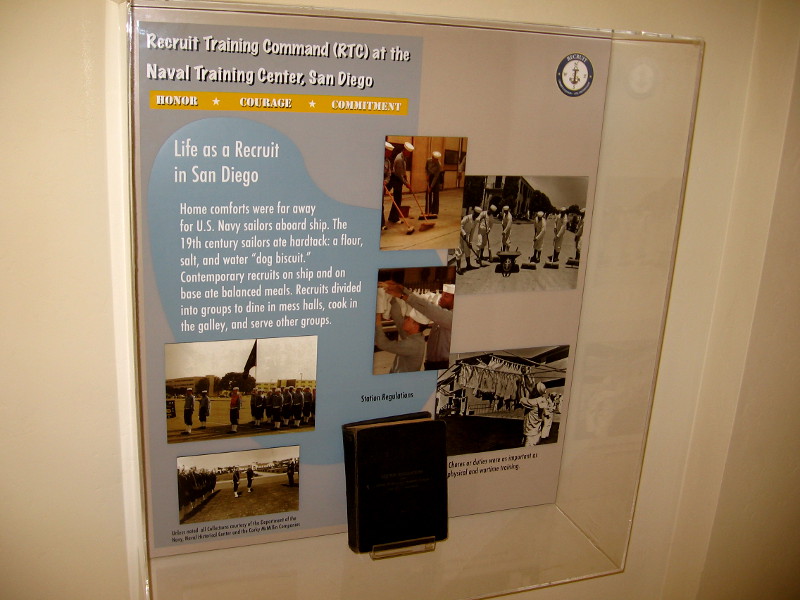
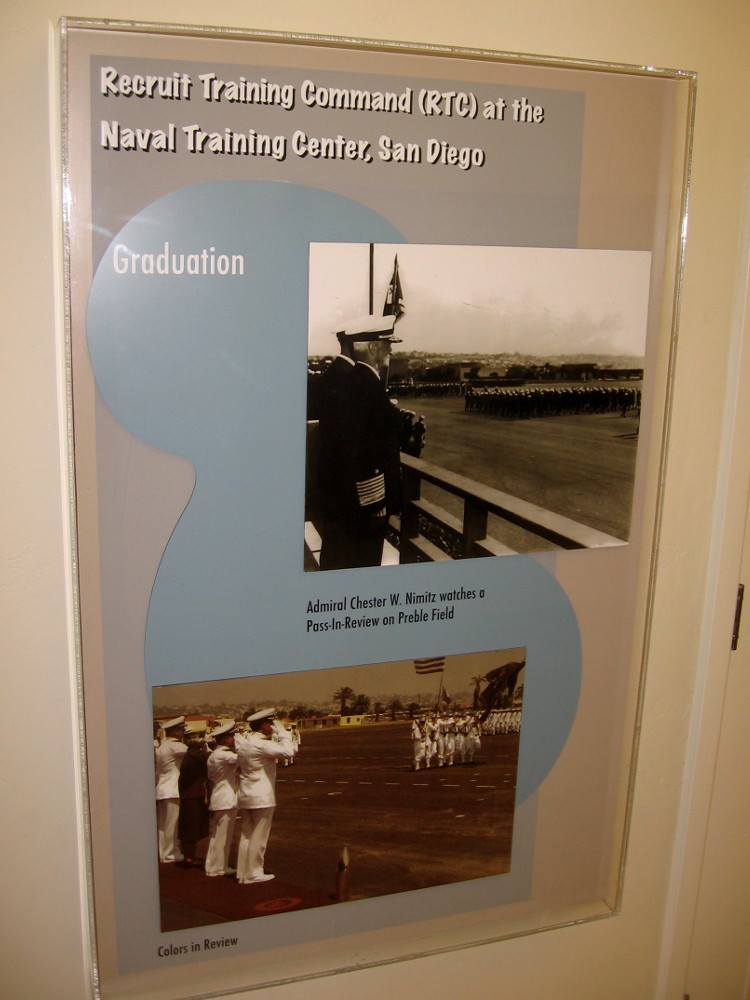
The Recruit story is one of personal transformation and maturity. A display explains how sailors were made at Naval Training Center San Diego.
Over a span of 74 years, Naval Training Center San Diego in Point Loma graduated over 2 million recruits. Most went on to serve as sailors in the United States Navy.
A fascinating historical exhibit in the NTC Command Center at Liberty Station provides visitors with a glimpse of what life was like as a naval recruit. Photographs recall how young men were transformed at Naval Training Center San Diego and prepared for service on a ship at sea, far from home.
If you’d like to read some of these displays, click the photos and they will enlarge.
To those of you leaving comments concerning memories–thank you for your service!
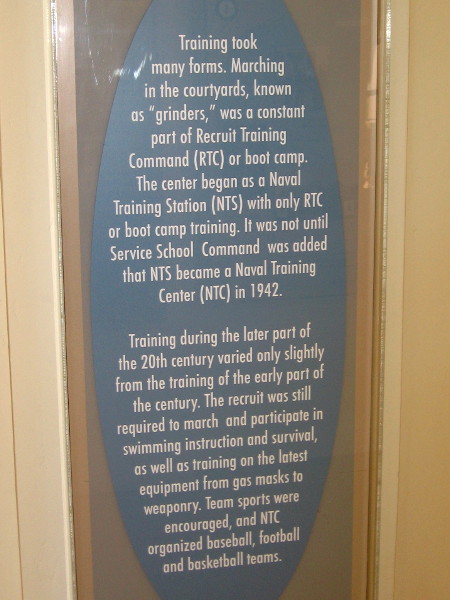
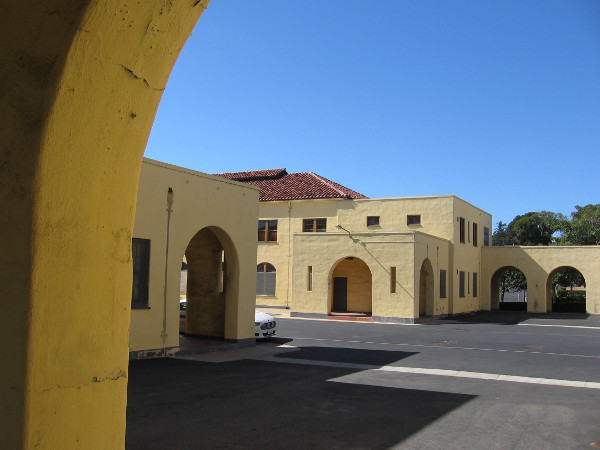
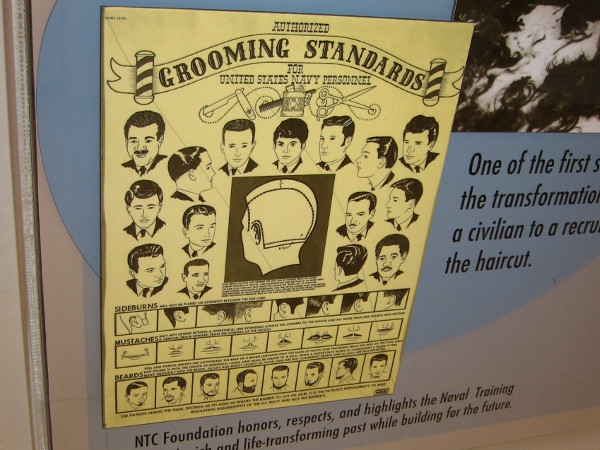
The Dick Laub NTC Command Center at Liberty Station has a fascinating exhibit about the training of naval recruits at this location years ago.The Admiral Stockdale Wing of the NTC Command Center has a corridor lined with historical photos, Navy artifacts and interesting information.Marching in the courtyards, known as grinders, was a constant part of Recruit Training Command or boot camp.Home comforts were far away for U.S. Navy sailors aboard ship. A display shows sailors training in San Diego.The USS Recruit–a model Training Destroyer Escort–is where most men experienced their first duty aboard ship.The USS Recruit is landlocked permanently at Liberty Station. Fondly called the USS Neversail, this ship set in concrete was used for training new Navy sailors.Graduation at Naval Training Center San Diego. One photo shows Admiral Nimitz watching a Pass-In-Review at Preble Field.A large map of the old Naval Training Center San Diego, which today has been transformed into Liberty Station, featuring shopping, parks, museums and more.Photo of vacant old Naval Training Center buildings waiting to be restored and put to use commercially at Liberty Station.During training, recruits were divided into companies of 100 men. Teamwork was promoted.Homecooked meals were prepared by NTC’s Chef and Mess School, which was one of the best in the country.NTC grew in size over the years, expanding across the boat channel. A march over Nimitz Bridge was a rite of passage. (I blogged recently that a new public park will be opening east of the channel.)An old poster depicts authorized grooming standards for United States Navy Personnel.Photos of graduation from San Diego’s NTC include the final 1993 ceremony before the base closed.The official program for the 2082nd and Final Recruit Pass-In-Review, Friday, November 19, 1993.NTC San Diego graduated over 2 million recruits over its 74 year history!Welcome aboard!
…
I live in downtown San Diego and love to walk! You can follow Cool San Diego Sights via Facebook or Twitter!
You can easily explore Cool San Diego Sights by using the search box on my blog’s sidebar. Or click a tag! There are thousands upon thousands of fun photos for you to enjoy!
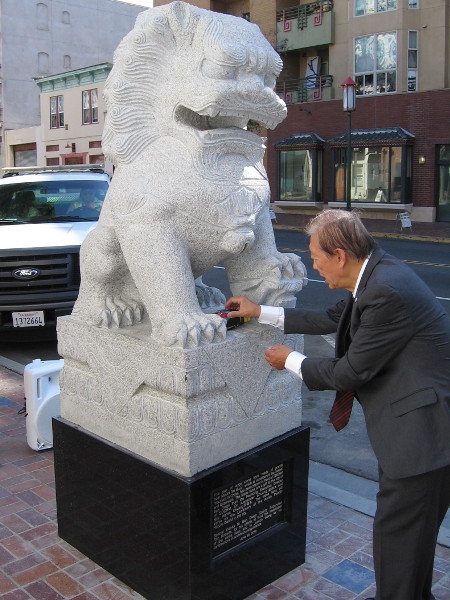
Founder of the San Diego Chinese Historical Museum, Dr. Alexander Chuang, prepares one of two stone lions for their unveiling ceremony.
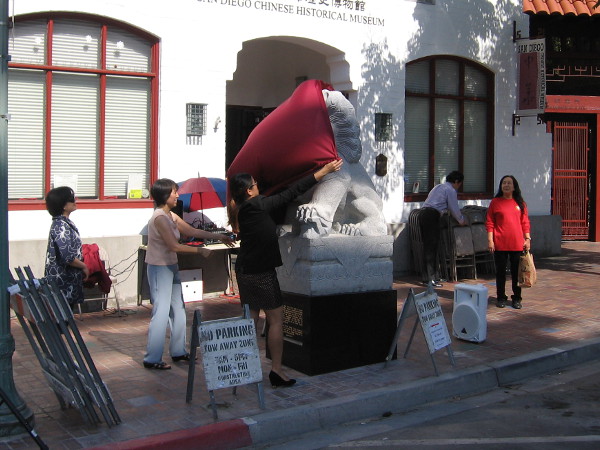
This morning a ceremony was held in front of the San Diego Chinese Historical Museum. Two large stone lions were unveiled at the intersection of J Street and Third Avenue. That’s in the very heart of downtown’s Asian Pacific Historic District.
I missed the unveiling, because I had a long-reserved ticket for another nearby event which took place at the exact same time. But I did get photos of the two amazing sculptures being prepared!
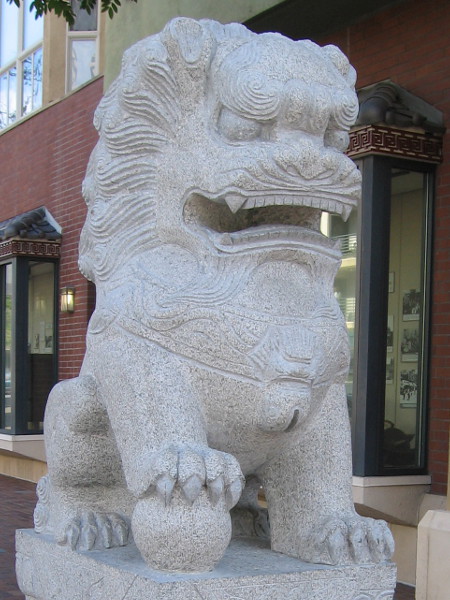
The founder of the Chinese Historical Museum, Dr. Alexander Chuang, had the two beautiful lions made in China then brought to the City of San Diego. It was a generous gift and a wonderful addition to our diverse city. I was told Dr. Chuang spent 7 or 8 years on this project. The lions are carved from stone taken from Mount Tai, which is said to be the holiest mountain in China. Now I have yet another reason to look forward to walks through this fascinating part of downtown San Diego!
I briefly spoke to Dr. Alexander Chuang while he prepared the statues, and to other members of the museum. They were so very gracious! One day I’ll venture into the museum–it’s on my list of things to do. When I do, I’ll definitely share the experience.
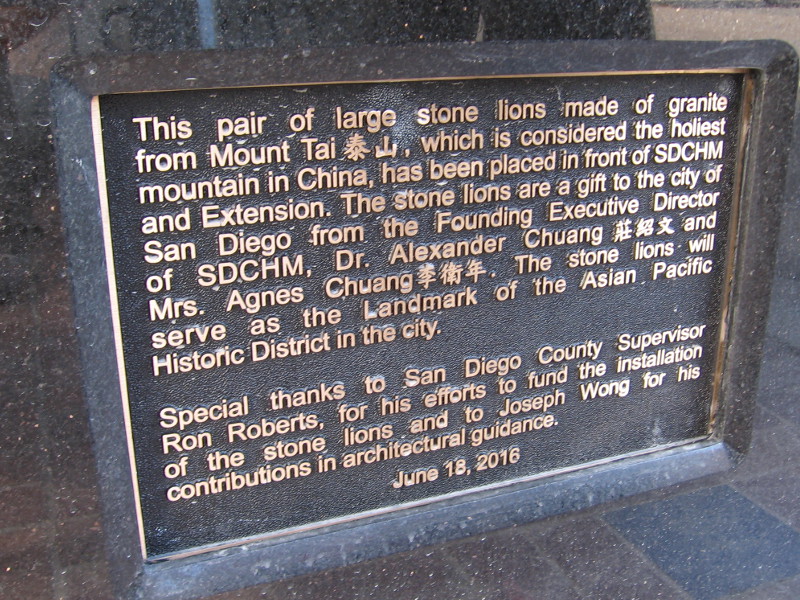
Plaque describes pair of large stone lions made of granite from Mount Tai, considered the holiest mountain in China. They will be a landmark of the Asian Pacific Historic District of San Diego.Final preparations are made about an hour before the unveiling. I got a sneak peek just by walking around with my camera!Members of the San Diego Chinese Historical Museum drape one of the two stone lions. I got my early photos just in time!On the opposite side of Third Avenue, the second lion stands guard. Another very cool sight has been added to the city of San Diego!
…
I live in downtown San Diego and love to walk! You can follow Cool San Diego Sights via Facebook or Twitter!
You can easily explore Cool San Diego Sights by using the search box on my blog’s sidebar. Or click a tag! There are thousands upon thousands of fun photos for you to enjoy!
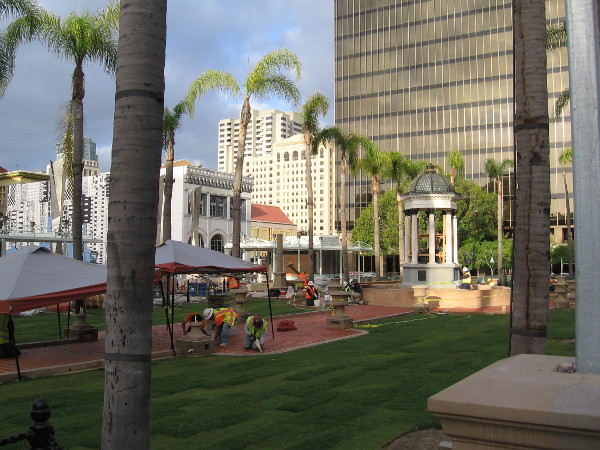
The new Horton Plaza Park in downtown San Diego makes history in 2016, just over a century after this important civic gathering place originated.
Early this morning I enjoyed a bit of history. During my walk, I paused to check out downtown San Diego’s brand new Horton Plaza Park!
The new park, located in the heart of our city, is just as fantastic as I anticipated. It contains cool public artwork, garden-like beauty, and loads of great modern features. But what I appreciated most, as I strolled through the park this morning, was its tangible sense of history.
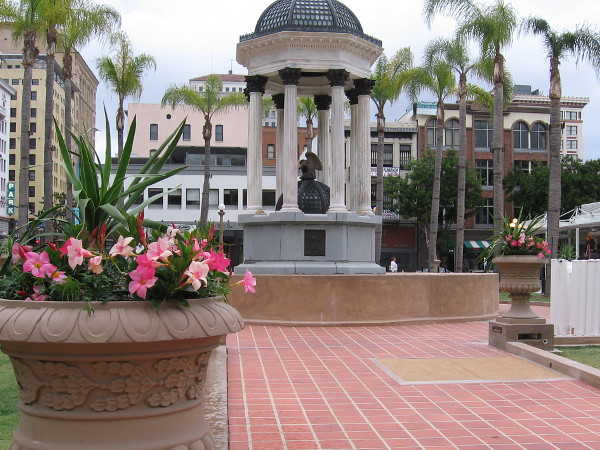
Horton Plaza Park not only highlights the iconic Broadway Fountain, a true San Diego landmark, but preserves a number of fascinating historical markers and plaques that remember aspects of our city’s unique history.
Please read the photo captions, where I provide more information. I’ve also included three photographs taken about a week before the park opened, as last-minute preparations were being made.
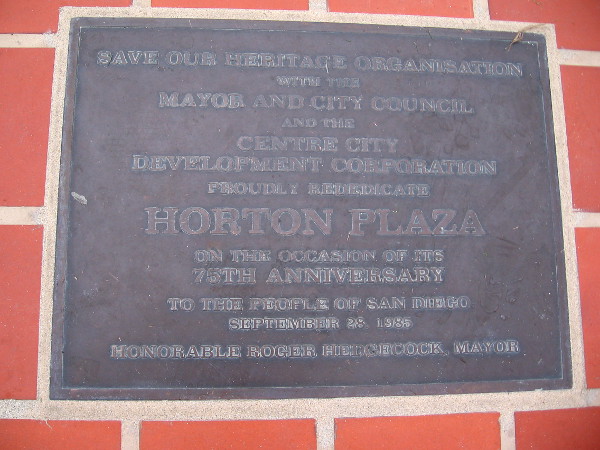
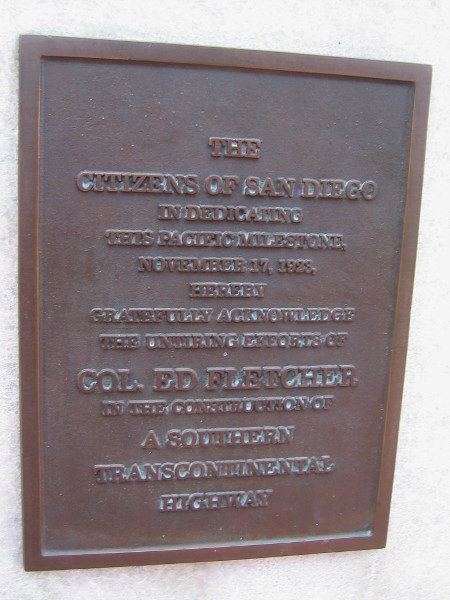
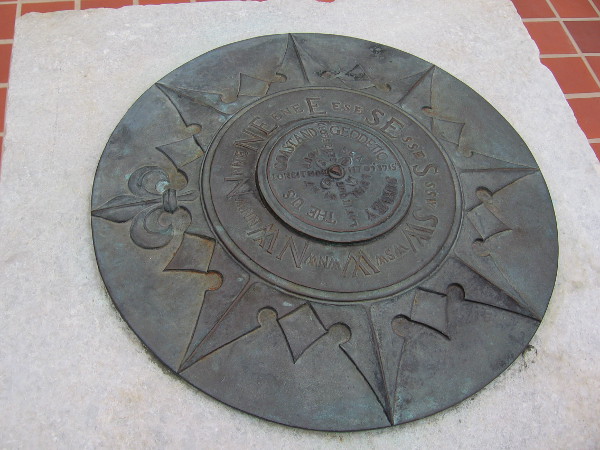
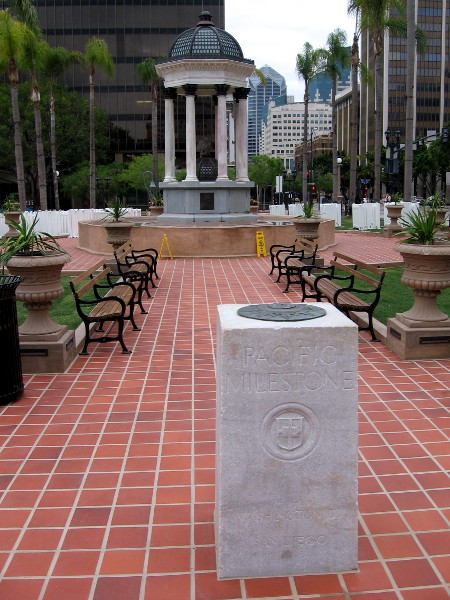
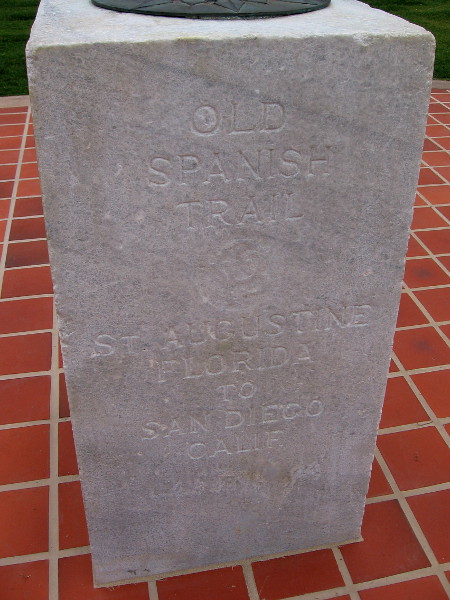
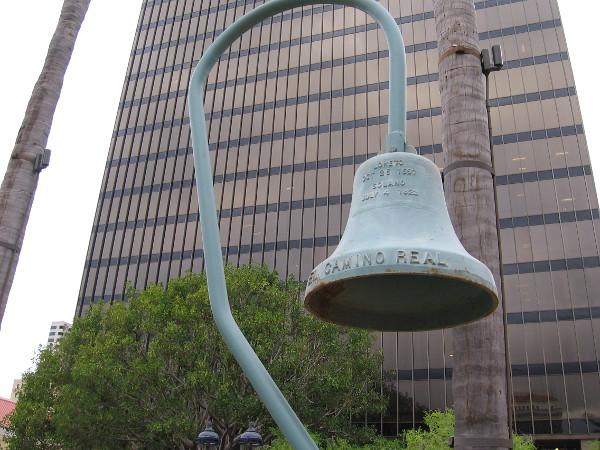
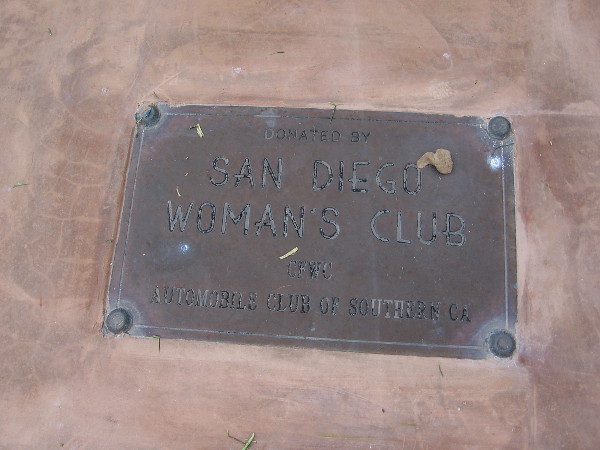
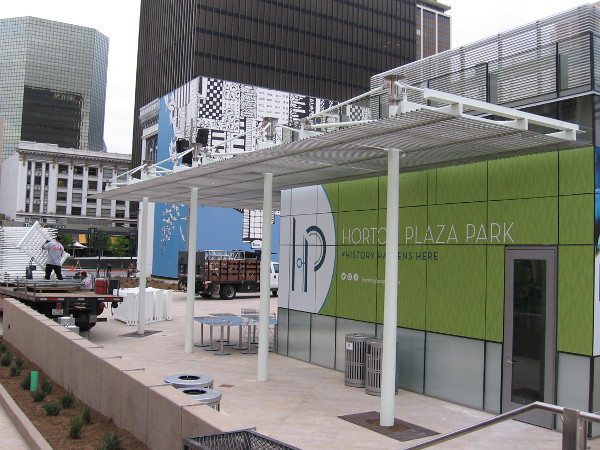
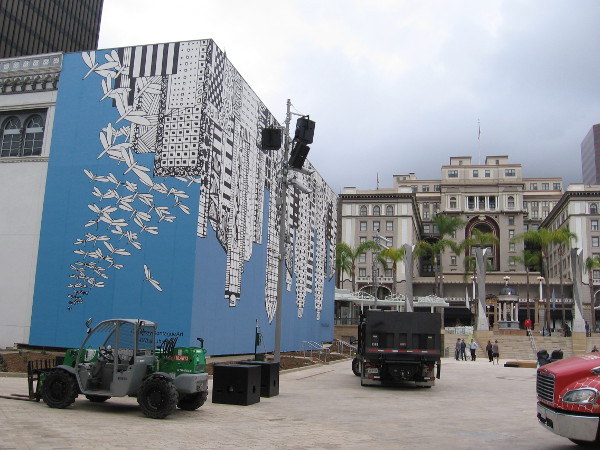
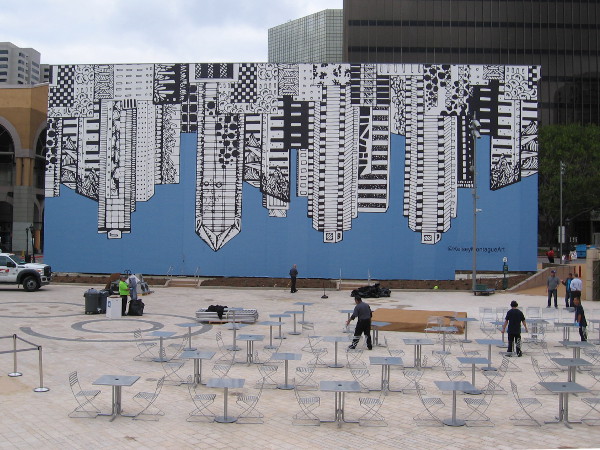
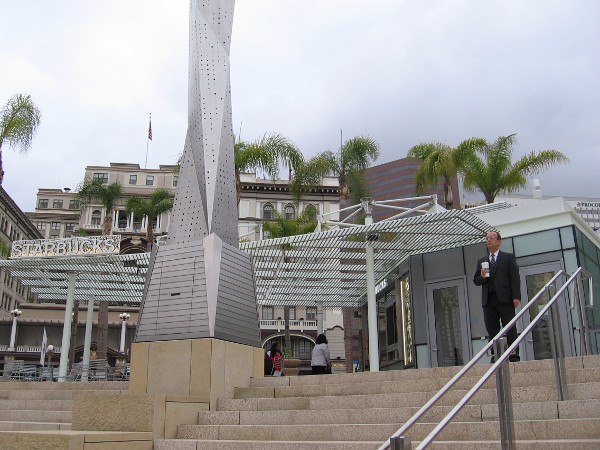
People walk near west entrance of a greatly enlarged Horton Plaza Park the morning after its grand opening celebration. Historically the small city park was simply called Horton Plaza. (When people say “Horton Plaza” today, they are usually referring to the popular shopping mall located directly to the south.)About a week before the grand opening of the new Horton Plaza Park, many workers were applying the final touches.The historic 1910 Broadway Fountain, designed by Irving Gill, is being renovated about a week before the amazing new Horton Plaza Park’s grand opening.The modern, expansive Horton Plaza Park is a fantastic addition to downtown San Diego, but its creation took many years of planning and hard work. One last photo that was taken about a week prior to the grand opening.The morning after the park’s grand opening. A tile walkway along the north edge of Horton Plaza Park preserves a century of history in San Diego.One plaque, dated 1985, in the walkway at the north entrance to the park. It was laid down to mark Horton Plaza’s 75th anniversary.San Diego’s iconic Broadway Fountain, with the equally famous U.S. Grant Hotel in the background. The hotel was built by the son of President Ulysses S. Grant and opened in 1910.One of four plaques near base of the Broadway Fountain. It reads Presented to The City of San Diego by Louis J. Wilde, 1909 A.D. Wilde was a banker, businessman and San Diego mayor.Plaque near base of Broadway Fountain depicts Father Junipero Serra, founder of the first Spanish missions in California, including Mission Basilica San Diego de Alcalá.Plaque near base of Broadway Fountain depicts Juan Rodriguez Cabrillo, who discovered San Diego Bay during an expedition for Spain in 1542.Plaque near base of Broadway Fountain depicts Alonzo E. Horton. He created and promoted New Town, where downtown San Diego exists today. Before being sold to the city in 1895, the Horton Plaza park was originally used by guests staying at his Horton House Hotel.A proud eagle perched within the elegant columns of San Diego’s Broadway Fountain.Looking east from the Broadway Fountain toward an historical marker: The Pacific Milestone.The citizens of San Diego in dedicating this Pacific Milestone, November 17, 1923, hereby gratefully acknowledge the untiring efforts of Col. Ed Fletcher in the construction of a Southern Transcontinental Highway.Points of the compass cap the Pacific Milestone.Pacific Milestone dedicated by our beloved President Calvin Coolidge November 17, 1923.The Pacific Milestone in today’s Horton Plaza Park marks the western terminus of The Old Spanish Trail, which traversed the American continent and ended in St. Augustine, Florida.Old Spanish Trail. St. Augustine, Florida to San Diego, California.A familiar El Camino Real bell in Horton Plaza Park. It was donated by the San Diego Woman’s Club.Small plaque beneath the El Camino Real bell in Horton Plaza Park.Another historical plaque in the tile walkway. First Pacific Terminal Jefferson Davis Highway. Presented to the City of San Diego May 12, 1926…Starbucks occupies one of three food pavilions at the new Horton Plaza Park. The morning after the park’s grand opening, this Starbucks is already busy.People who enjoy a morning coffee can sit at tables above Horton Plaza Park’s outdoor amphitheater. A cool new mural serves as a distinctive urban backdrop.A better look at the central part of the park. This broad, shallow amphitheater will be the site of many concerts and civic events in downtown San Diego. It also contains an interactive fountain (off at the moment).Walking along Fourth Avenue, viewing the new park through several 23-foot high metal sculptures. These luminaries have lights that change colors at night.Rounding a corner, I see some workers are removing fencing and tables that were used for the park’s big grand opening yesterday evening.South side of the huge public art mural in Horton Plaza Park.A cool public space that is sure to become one of San Diego’s most popular gathering places.The morning after San Diego’s amazing new Horton Plaza Park has opened. History is being made, and one gentleman takes it all in.
…
I live in downtown San Diego and love to walk! You can follow Cool San Diego Sights via Facebook or Twitter!
You can easily explore Cool San Diego Sights by using the search box on my blog’s sidebar. Or click a tag! There are thousands upon thousands of fun photos for you to enjoy!
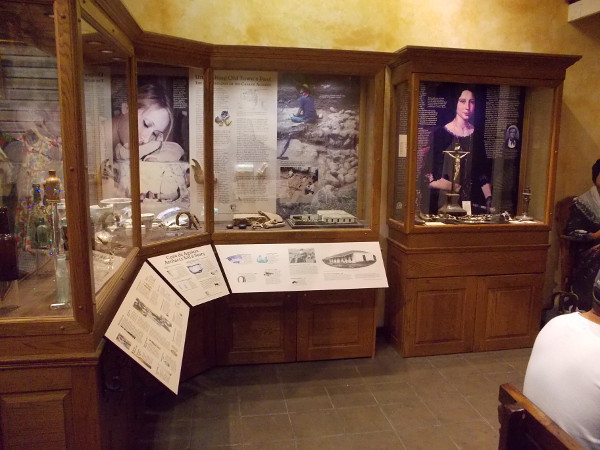
Fascinating exhibits inside the Casa de Aguirre Museum in Old Town San Diego State Historic Park.
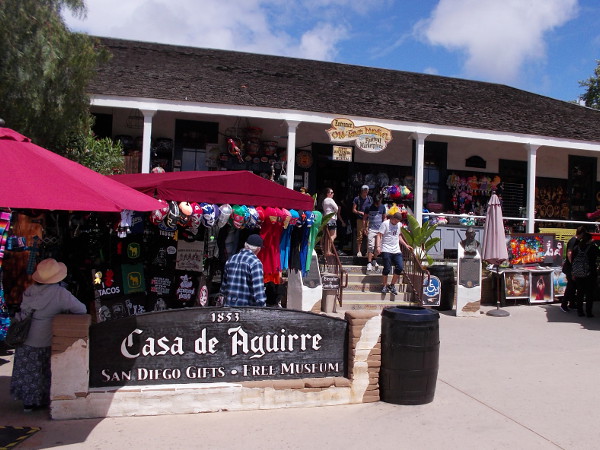
Many visitors to Old Town San Diego State Historic Park might think the Casa de Aguirre is just a shop brimming with colorful crafts and wares. But a closer look reveals that a small museum is located inside.
Here are some photos which provide a glimpse of what you’ll discover should you step into the museum. Read the captions, and you’ll learn how Casa de Aguirre is one of the most important sites in Old Town, and how its occupants shaped San Diego’s early history.
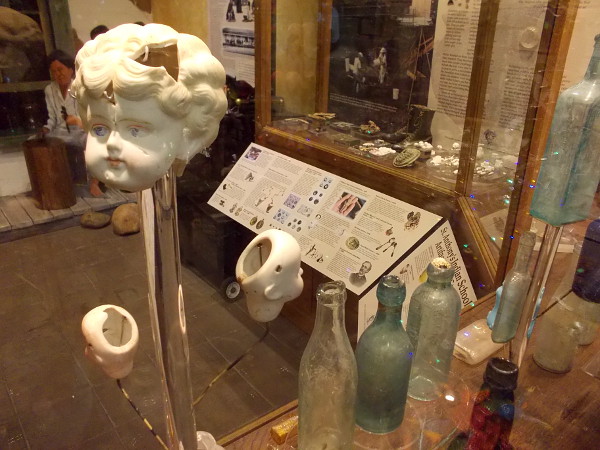
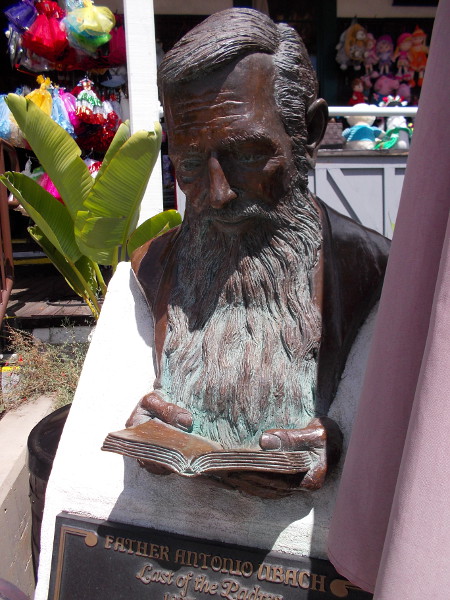
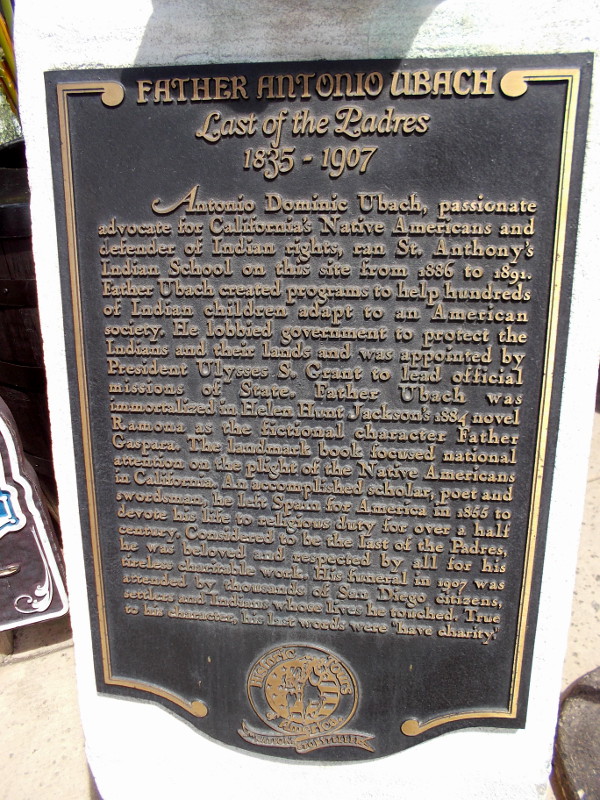
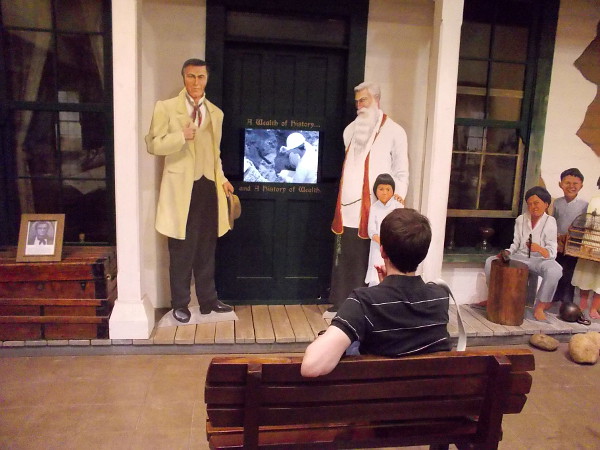
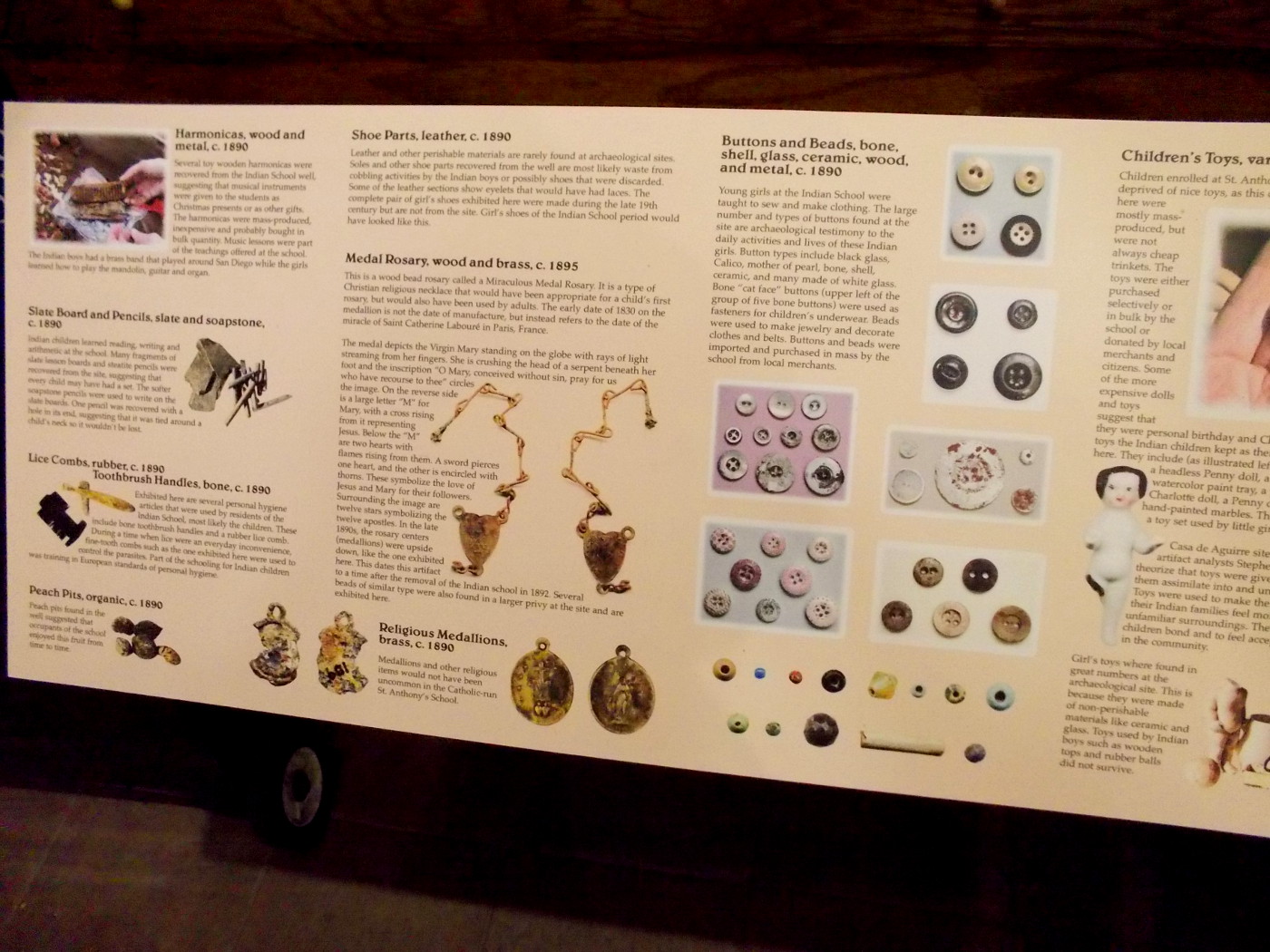
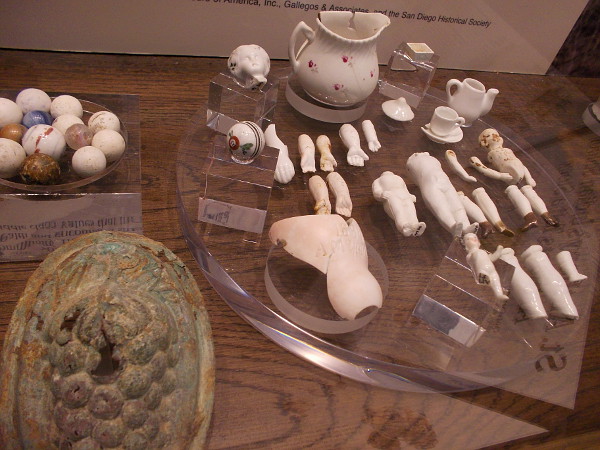
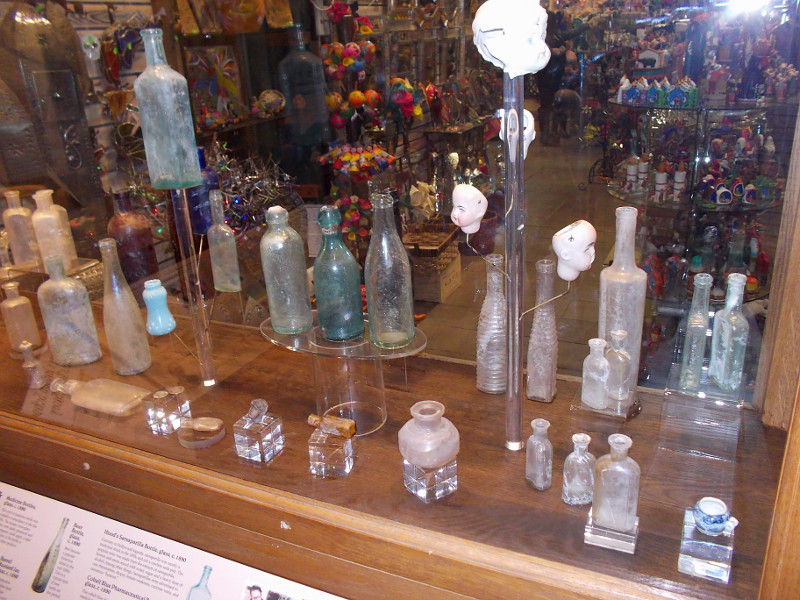
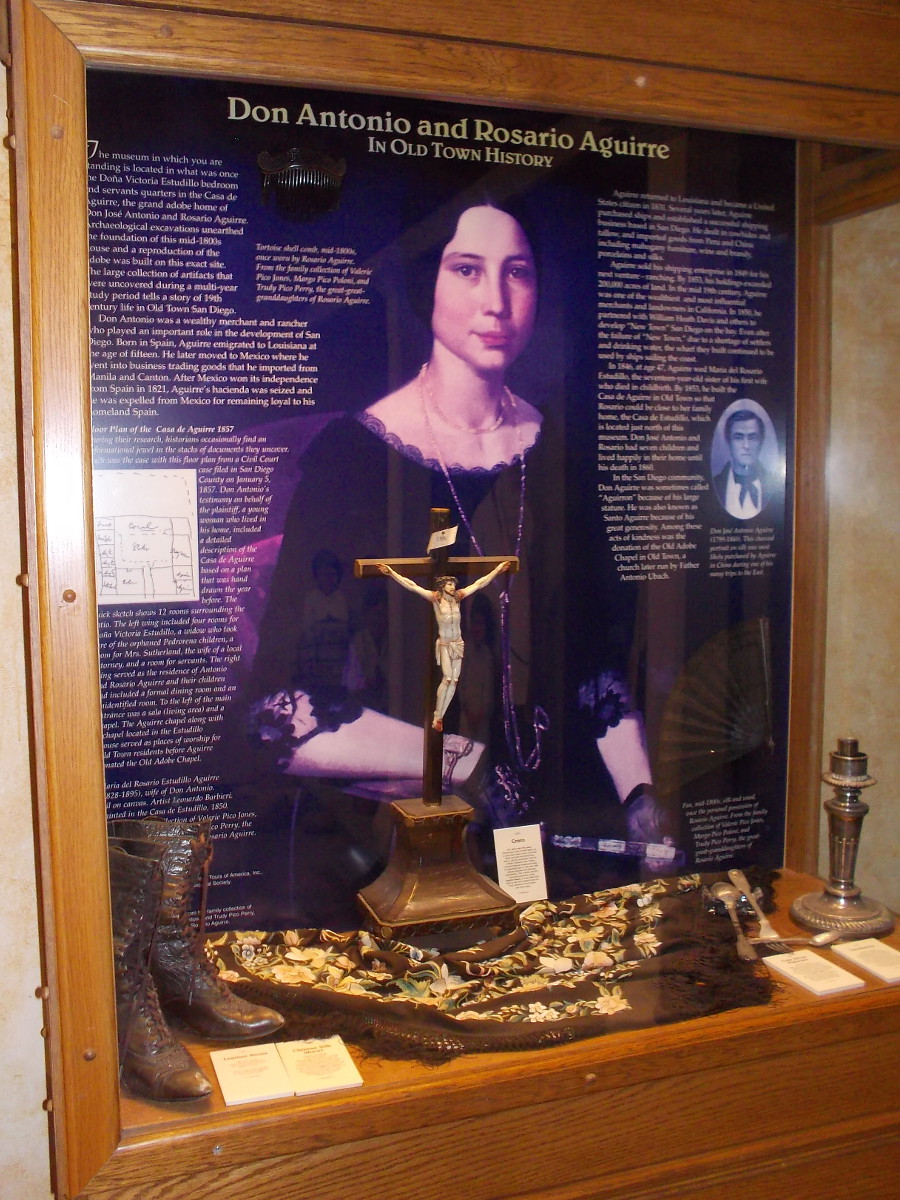
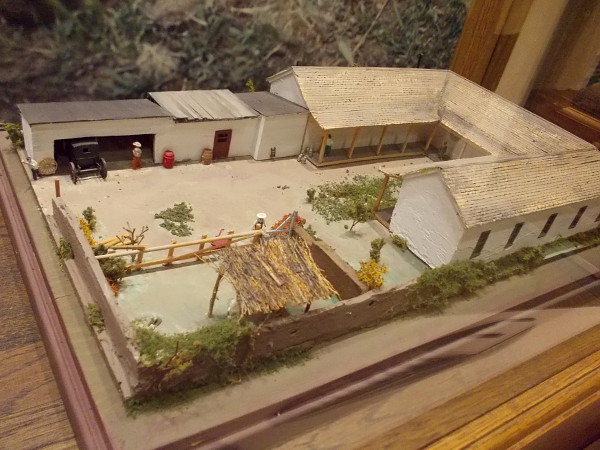
Casa de Aguirre in Old Town was originally built around 1853. The adobe mansion was one of the first houses in San Diego, owned by Don Jose Antonio Aguirre, a prosperous merchant and rancher. The present building is a reproduction.Bronze bust of Don Jose Antonio Aguirre, near entrance to Casa de Aguirre. Born in Spain, he owned several ships and warehouses and imported goods from Peru and China to trade for cowhides and tallow.Don Jose Antonio Aguirre was known for his charity and funded many projects in early San Diego. He, his wife and children are considered to be one of our city’s founding families.Bust of Father Antonio Ubach, Last of the Padres, 1835-1907. Antonio Dominic Ubach ran St. Anthony’s Indian School on this site from 1886 to 1891.Plaque describes how Father Ubach advocated for California’s Native Americans and lobbied government to protect the Indians and their lands. He was loved by many. His last words were: “Have charity.”Casa de Aguirre in Old Town San Diego today contains a shop visited by many tourists and a small museum in back.One side of El Museo Casa de Aguirre. Excavated artifacts are on display, recalling what life was like here in the mid to late 19th century.Visitor to the small museum watches a video which includes information about archaeological discoveries, the history of the casa and the lives of those who were sheltered here.St. Anthony’s Indian School Artifacts Tell a Story. Many objects on display include porcelain cups, goblets, bottles, a saltshaker and beer mug.Sign describes additional historical finds, including buttons, toys, harmonicas, slate board and pencils, lice combs, toothbrush handles, shoe parts, medal rosary and religious medallions.Marbles, doll parts and tiny children’s tea sets, recovered from San Diego’s past.Dozens of buttons on display. They were fastened by living fingers, now long gone.Two old pipes.Numerous bottles and jars are exhibited in the Casa de Aguirre Museum. They were used for medicine, mustard, chemicals, perfume, whiskey, beer, sarsaparilla…People interested in collecting antique bottles would be mesmerized by the large assortment on display.Don Antonio and Rosario Aguirre in Old Town History. The museum is located in what was once the bedroom and servants quarters in the Casa de Aguirre. The present-day adobe is a reproduction.Don Antonio Aguirre, 1799-1860, was one of San Diego’s most important figures back when our burgeoning Southern California city was just a very, very small town.A model of how the Casa de Aguirre appeared a century and a half ago.
…
I live in downtown San Diego and love to walk! You can follow Cool San Diego Sights via Facebook or Twitter!
You can easily explore Cool San Diego Sights by using the search box on my blog’s sidebar. Or click a tag! There are thousands upon thousands of fascinating photos for you to enjoy!
One of San Diego’s oldest surviving landmarks, the 1910 Broadway Fountain, designed by Irving Gill, will be an iconic part of the new Horton Plaza Park.
I walked by the Horton Plaza Park construction site this morning. The huge project appears to be almost finished!
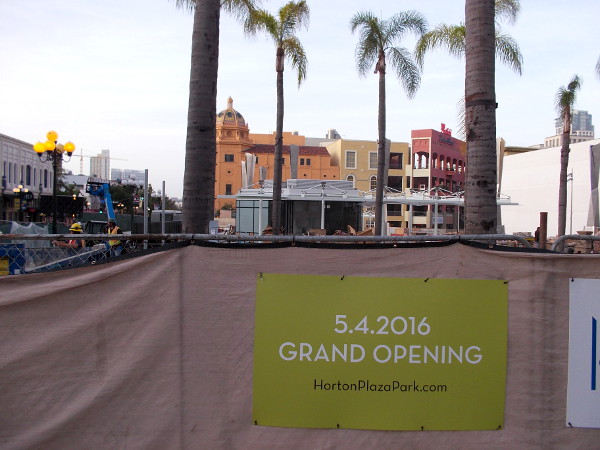
Horton Plaza Park’s Grand Opening Celebration will be held on May 4, 2016, from 6:30pm to 10:00pm. Located at the center of downtown San Diego, on the south side of Broadway between the historic U.S. Grant Hotel and the popular Westfield Horton Plaza shopping mall, the park will surely be jammed that evening with people wanting to check things out!
Cool features of the new urban park include a large amphitheater, three pavilions featuring food and beverages, an interactive fountain that folks are welcome to splash in, and some very unique 23-foot high luminaries–cool metal sculptures with lights that change colors!
There are plans to host hundreds of events at this large outdoor venue every year, including concerts, civic celebrations and gatherings, and even special movie screenings.
As a downtown resident, I can’t wait!
The elaborate Horton Plaza Park will celebrate its Grand Opening on the evening of May 4, 2016.Construction of this new downtown San Diego park has been ongoing for a couple years. The original public plaza on this city block dates from 1895.The cool 23-foot tall luminary sculptures are visible rising behind the construction fence. The NBC building reflects the morning sun in the background.Workers are getting the new park ready for its early May opening. There will be an amphitheater, food pavilions and an interactive water fountain that people can splash in!The walkway next to the Balboa Theatre leading from Fourth Avenue to the Westfield Horton Plaza shopping mall is also being improved, with many new trees and benches.Horton Plaza Park in downtown San Diego promises to be a fun and spectacular urban gathering place!
…
I live in downtown San Diego and love to walk! You can follow Cool San Diego Sights via Facebook or Twitter!
You can easily explore Cool San Diego Sights by using the search box on my blog’s sidebar. Or click a tag! There are thousands upon thousands of unique photos for you to enjoy!
Two rugged mountain men, one with a fiddle, hang out behind Seeley Stable in Old Town San Diego State Historic Park.
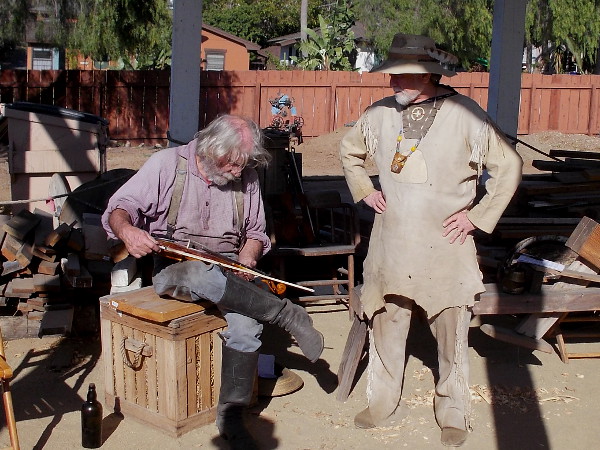
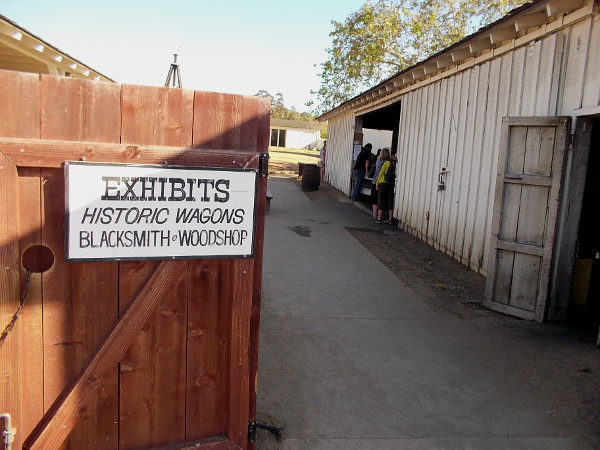
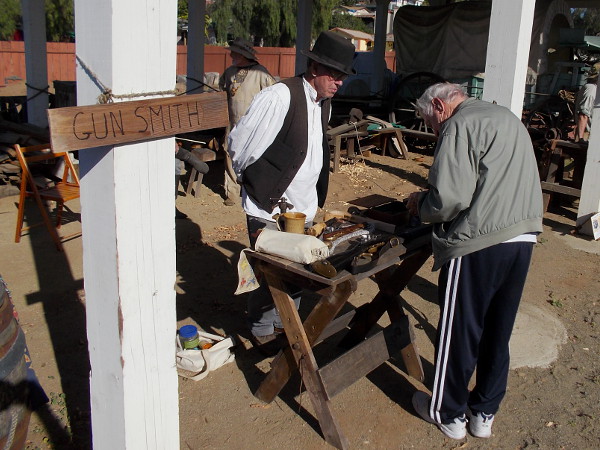
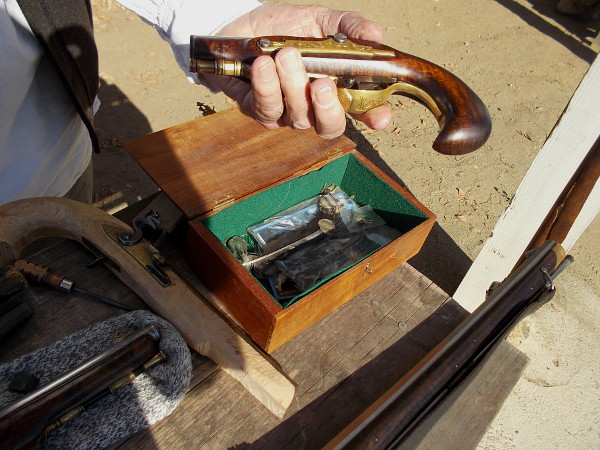
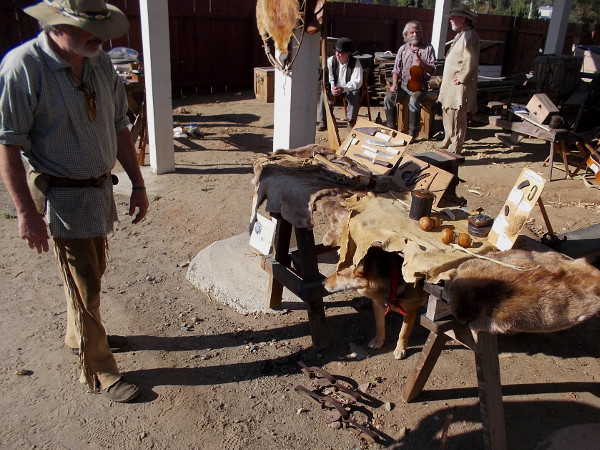
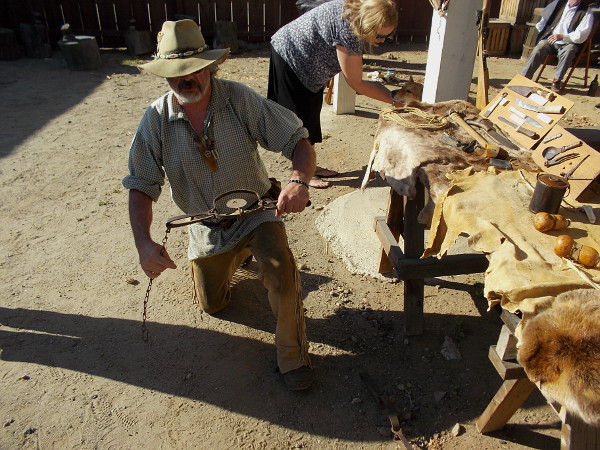
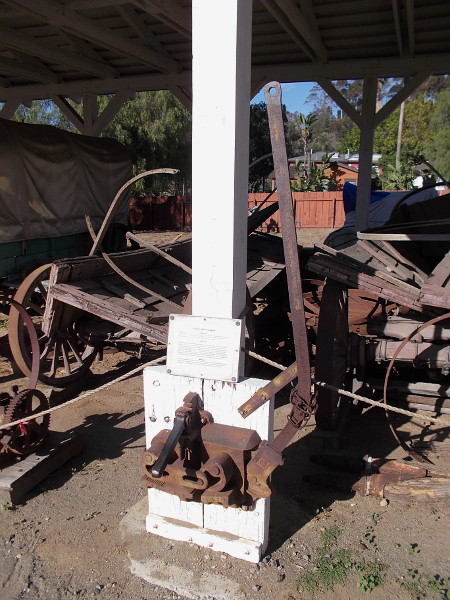
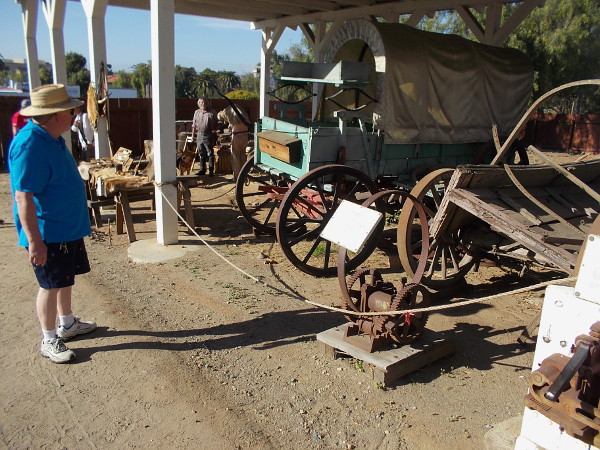
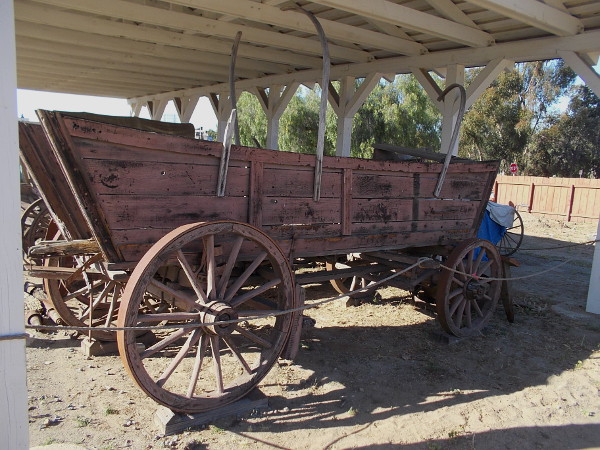
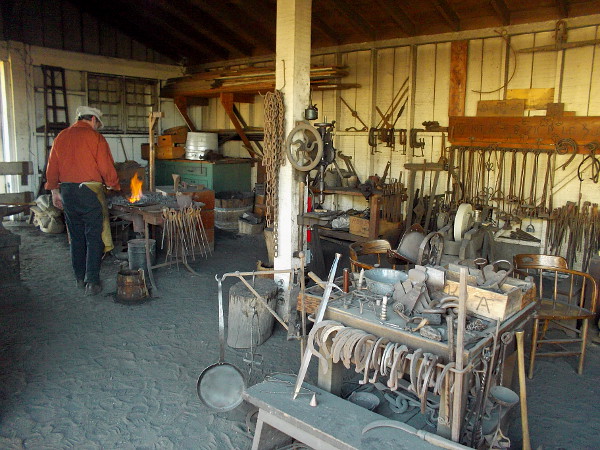
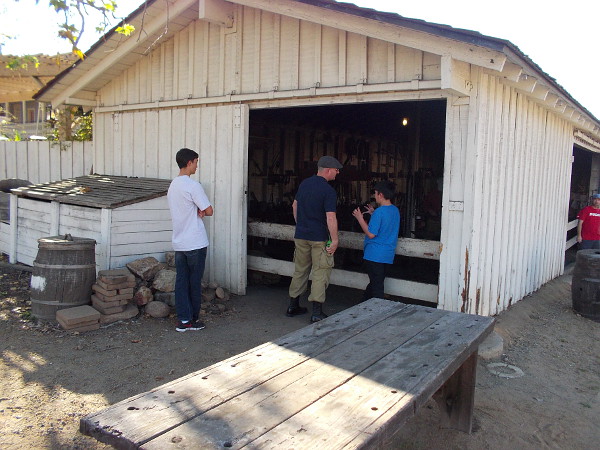
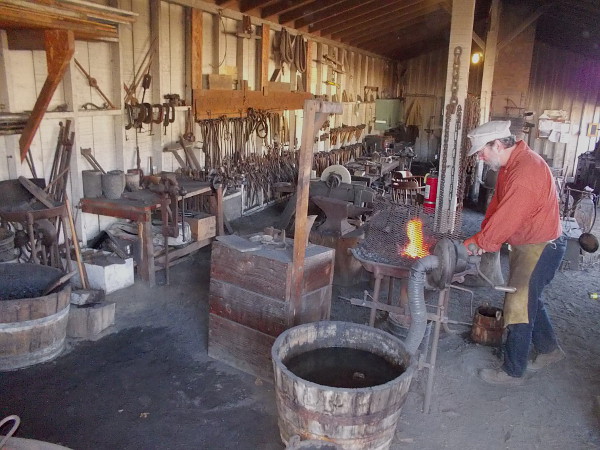
Here are some cool photos of what life was like back in the Old West. I snapped these last weekend behind Seeley Stable at Old Town San Diego State Historic Park. Some mountain men, a gunsmith and blacksmith were showing visitors a few aspects of frontier life long ago.
Beyond this gate just off La Plaza de Las Armas is the yard behind Seeley Stable. Here you’ll find outdoor exhibits, including old wagons and a blacksmith and woodshop.A gunsmith who assembles his own old-fashioned rifles and firearms shows a visitor some examples in San Diego’s historic Old Town.This antique flintlock pistol would have been used in past centuries for personal protection at close range.A friendly mountain man had a table full of skins, knives and other objects associated with frontier life in the Old West.A demonstration of how trappers in the Old West would set a beaver trap by a river and anchor it to a strong stick in the mud.This rusty tool with a long handle is a tyre shrinker. It was used for routine maintenance in the olden days–reducing the diameter of the iron tyres found on wooden wagon, cart and buggy wheels.Someone reads a sign near a tyre bender. This device was used to send long, flat bars of iron or steel into a smooth circle that would become an iron tyre.An old covered wagon on display behind Seeley Stable. They were typically sturdy farm wagons with a canvas top. Covered wagons were used on trail drives and cross-country treks.Photo inside the well-equipped blacksmith shop. It’s located behind Seeley Stable in Old Town San Diego State Historic Park.Some park visitors look into the small blacksmith building.A blacksmith removes red hot iron from the fire. He was demonstrating how to make hinges today!
…
I live in downtown San Diego and love to walk! You can enjoy more Cool San Diego Sights via Facebook or Twitter!
Do you like to read short pieces of thought-provoking fiction? Please click Short Stories by Richard.
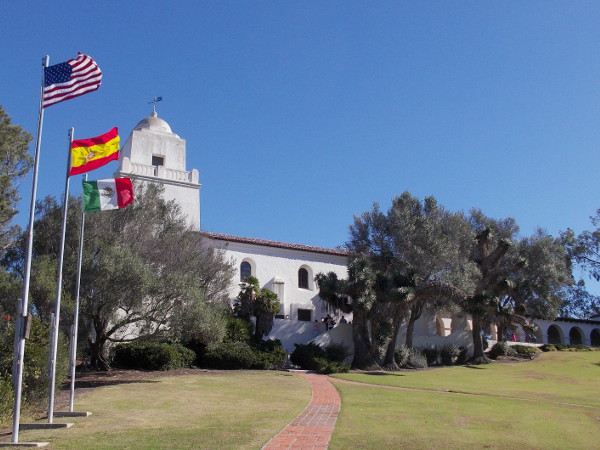
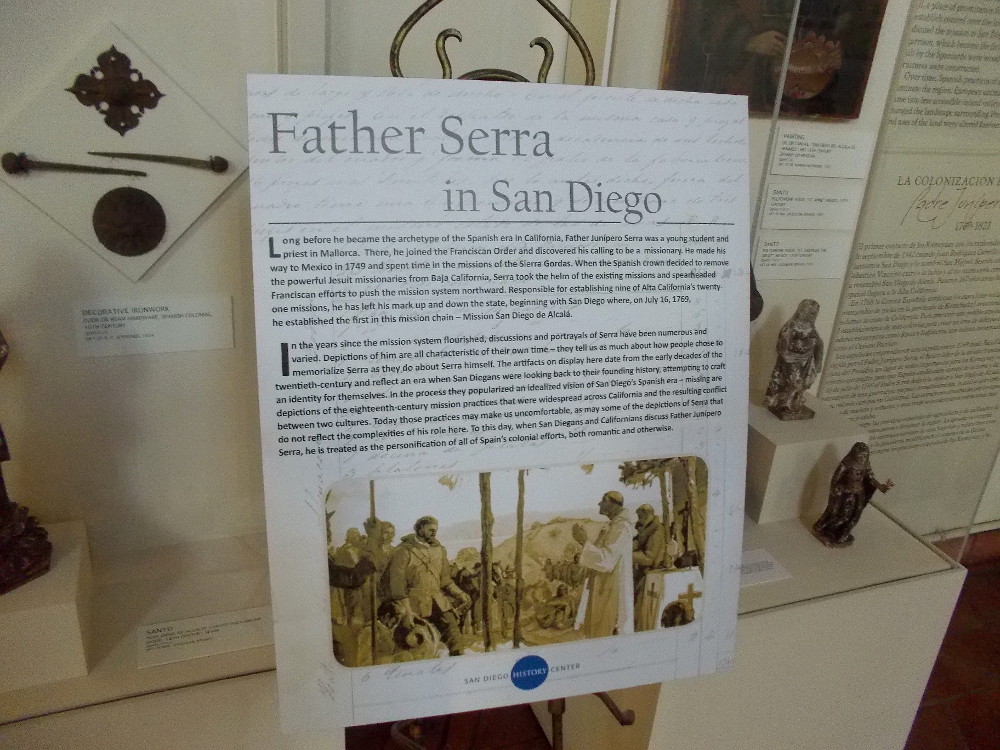
The Junipero Serra Museum of the San Diego History Center was built in 1928 on Presidio Hill, where European civilization was established in Alta California.
I recently visited one of San Diego’s most fascinating museums. The Junipero Serra Museum is located atop Presidio Hill, in a distinctive Mission Revival architectural style building overlooking San Diego Bay and the San Diego River, just east of Old Town. It stands near the site of San Diego’s historic Spanish presidio, built in 1769. The presidio was the birthplace of European civilization in Alta California.
The Serra Museum is operated by the San Diego History Center, which is headquartered today in Balboa Park. Back in 1929, when the building was dedicated, it became home of what was then called the San Diego Historical Society. The important San Diego institution was established by civic leader George W. Marston.
Can you believe it? I’ve lived in San Diego for 15 years . . . and this was the very first time I ventured into the Serra Museum. (I can thank my blog for that!)
What I discovered was an absolutely amazing place that both residents and visitors to San Diego should definitely not miss.
Here’s a sample of what you’ll see…
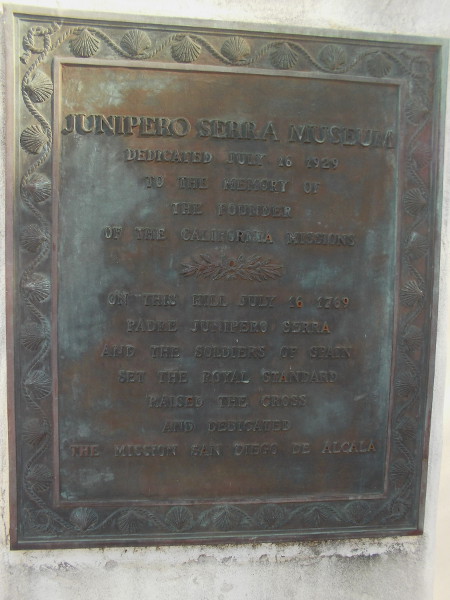
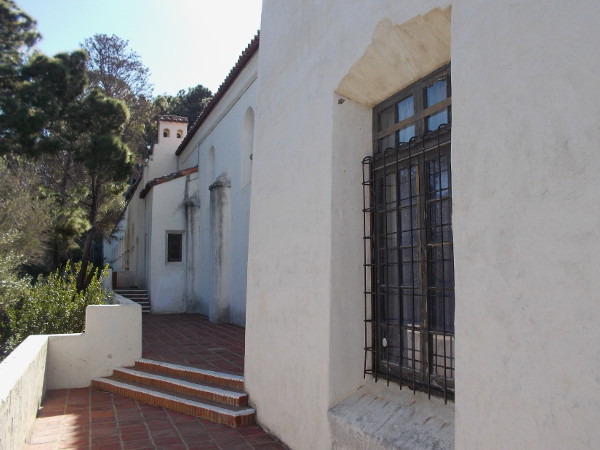
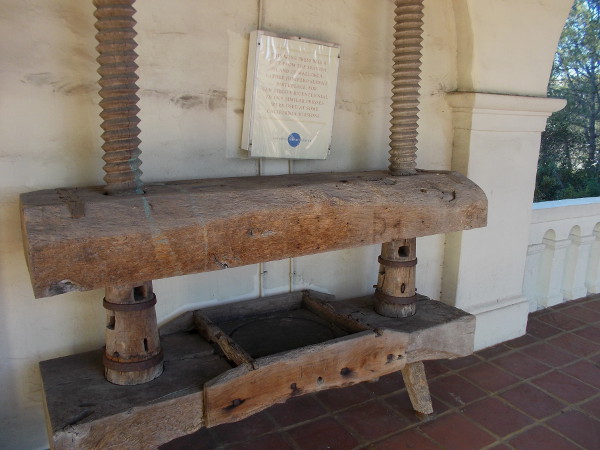
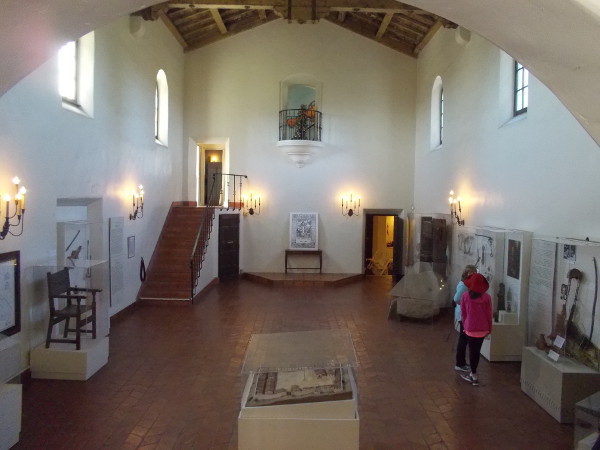
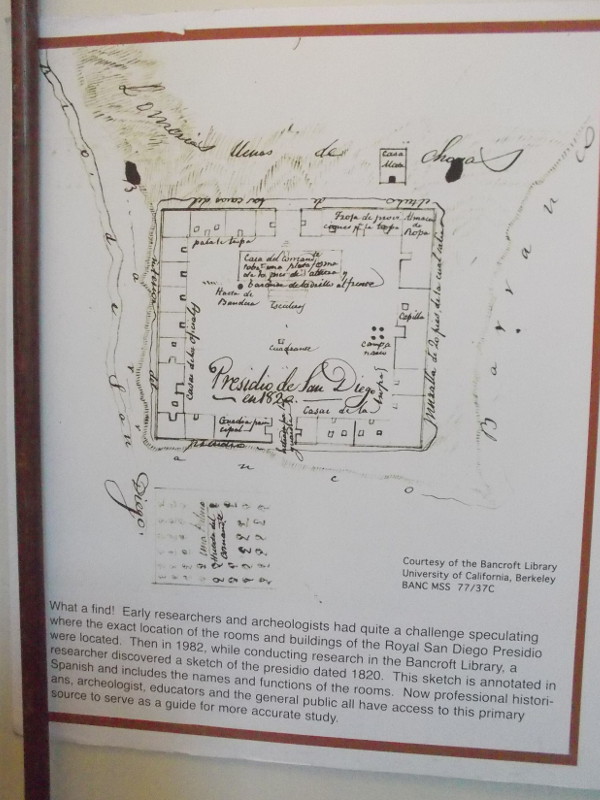
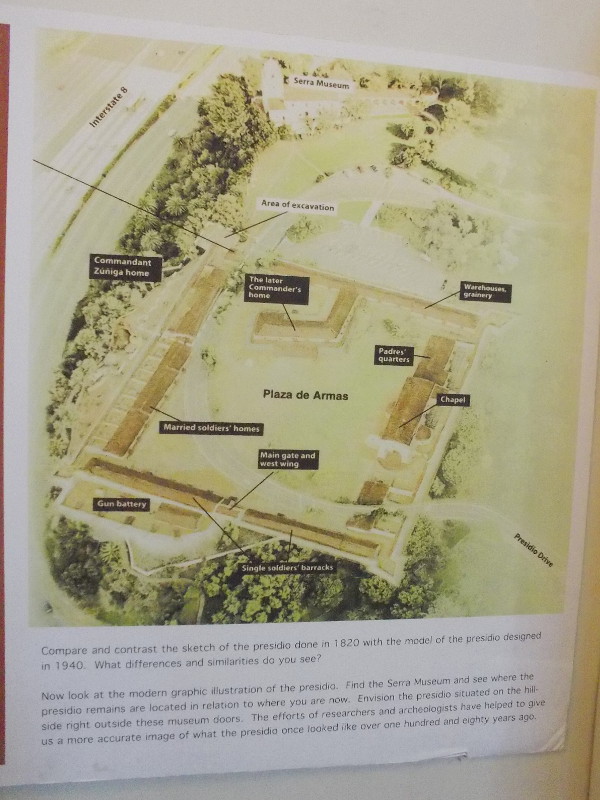
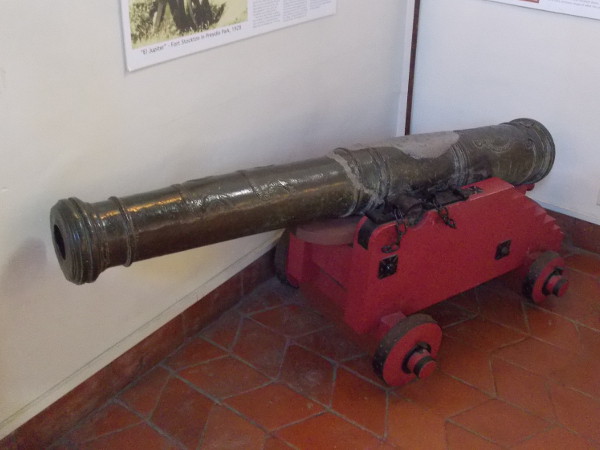
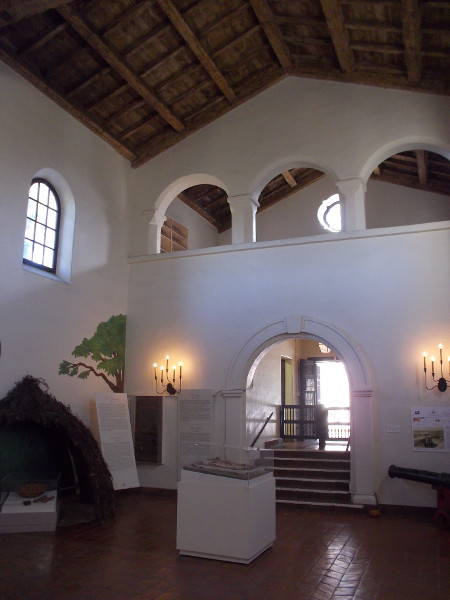
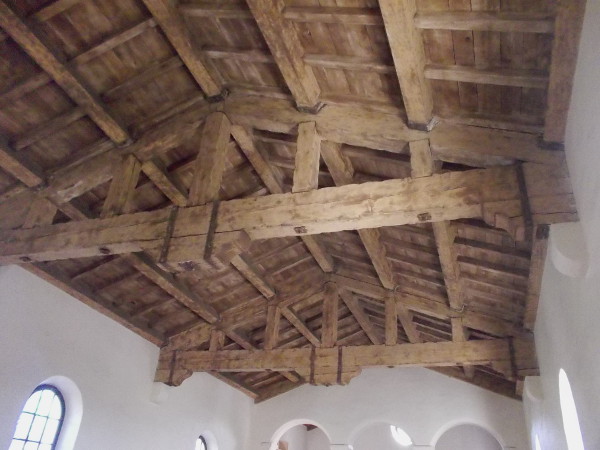
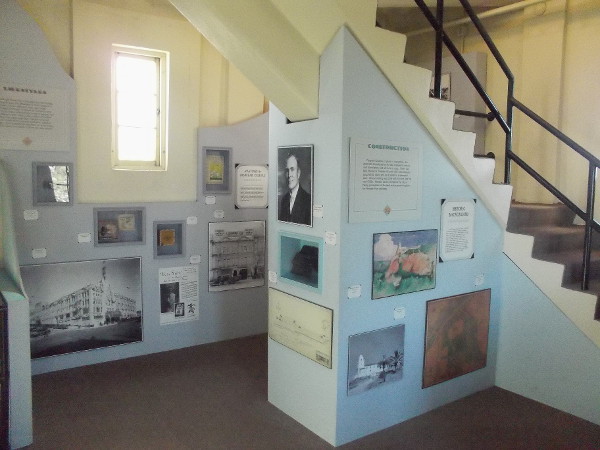
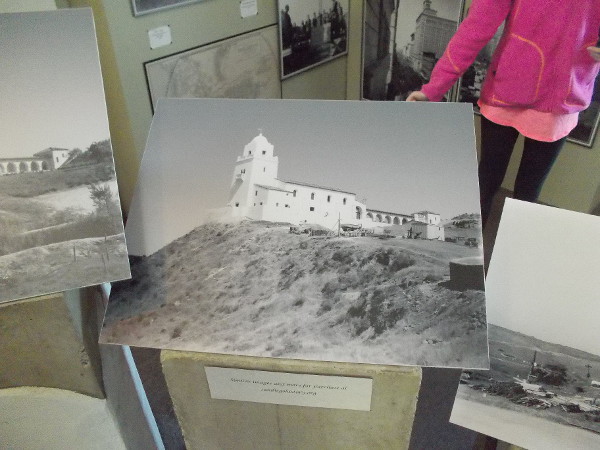
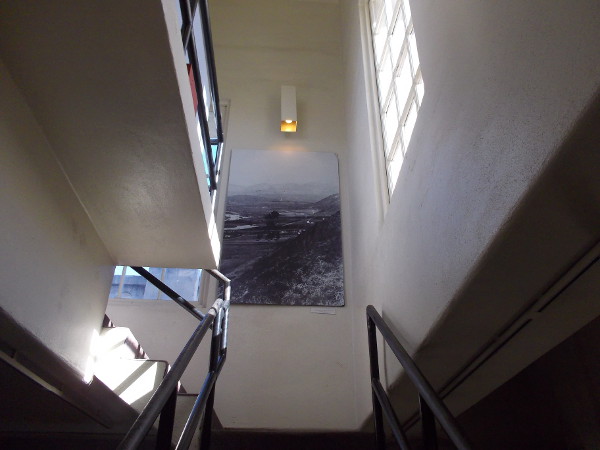
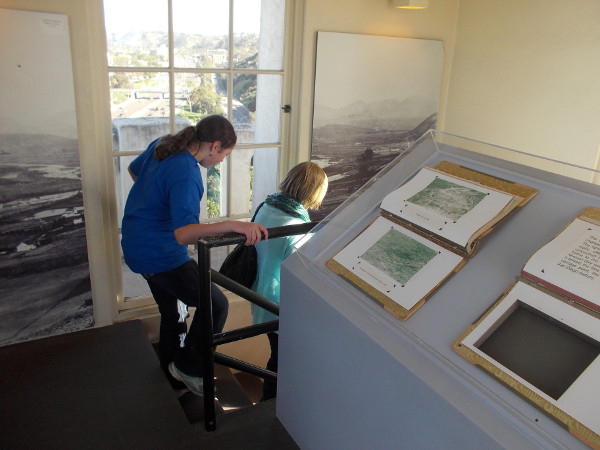
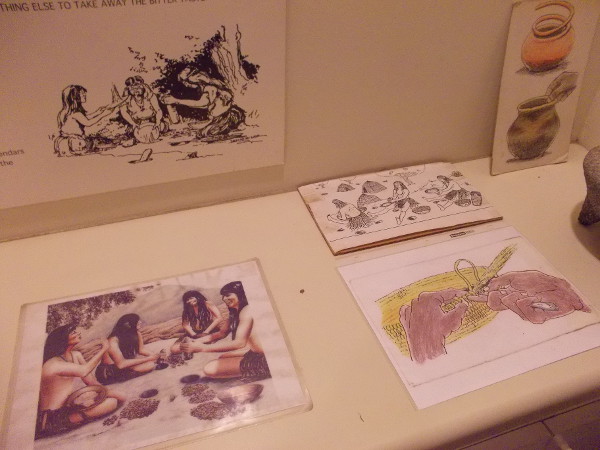
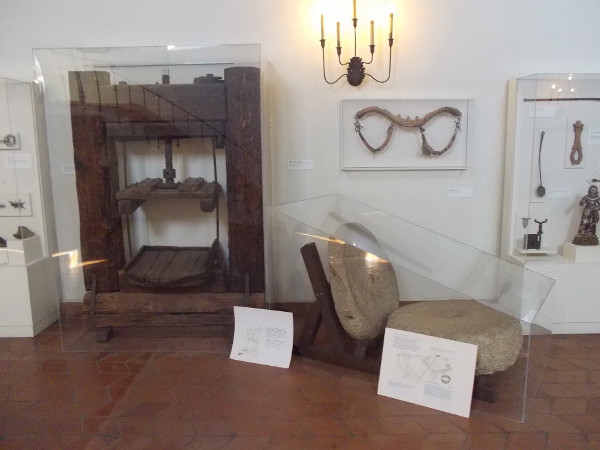
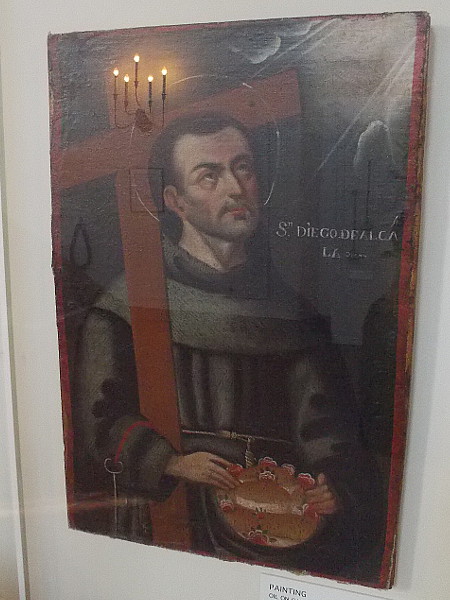
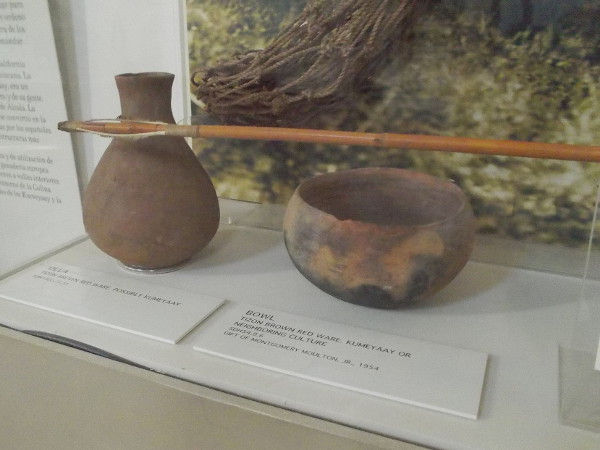
People arrive at the Serra Museum, where San Diego’s early Spanish history comes alive.Junipero Serra Museum dedicated July 16, 1929 to the memory of the founder of the California missions. The original Mission San Diego de Alcalá was established nearby in 1769.A quick look at the rear of the museum.The Serra Museum building was designed by noted architect William Templeton Johnson. It reflects Mission Revival style architecture.Large wine press in front of the museum was a gift from the Spanish island of Mallorca, Father Junipero Serra’s birthplace.Plaque near entrance reads George White Marston 1850-1946. FRIEND OF HIS FELLOW MEN – LOVER OF ALL GROWING THINGS. Piece by piece through many years he acquired these acres…Elegant interior of the Serra Museum contains many exhibits pertaining to San Diego’s early Spanish history.Researchers discovered this sketch of the Royal San Diego Presidio dated 1820. It shows the layout of the old buildings which no longer exist.Modern graphic illustration of the fortified presidio, which was located a short distance below the Serra Museum’s front entrance.Old Spanish cannon named El Jupiter, cast in Manila in the 18th century. El Jupiter stood in Fort Guijarros at Ballast Point, the first defensive fortifications for San Diego Bay.Leather armchair made in Catalan, Spain in the 17th century. This “friar’s chair” was part of the original Serra Museum’s furnishings.Old violin with bow, a branding iron used by rancheros to identify cattle, and iron spurs are among the many historical objects on display.Another look at the beautiful interior of the Serra Museum in San Diego.Large wooden beams in a truly amazing ceiling.Stairs lead up to the Serra Museum’s tower. Painted on the wall is a map showing the sea journey of the Spanish expedition which founded San Diego in 1769.March 9-20, 1769. Desperate to replace drinking water which leaked from the ship’s casks, Captain Vicente Vila commands the tacking Spanish galleon San Carlos near Isla de Cedros.A room halfway up the tower. Numerous displays recall San Diego’s history, most notably around the time when the Serra Museum was dedicated in 1929.Old photo of the crowd attending the Serra Museum’s dedication ceremony on July 16, 1929.A fascinating look at Presidio Hill almost a century ago.A lovely watercolor sketch of the Junipero Serra Museum atop Presidio Hill.On the wall are many historical photos and artifacts, including an image from around 1930 of a cigar factory on 4th Street in San Diego.A reproduction of the west elevation drawing of the Serra Museum by architect William Templeton Johnson.Now we’re heading up to the very top of the tower.Looking west from the Serra Museum tower along Interstate 8. Point Loma is on the left and Mission Bay is to the right.Looking east into Mission Valley.Visitors at the Serra Museum head back down from the tower, after looking at old photos which show a much less-developed surrounding landscape.A small theater in the Serra Museum contains additional exhibits about life in and around the old Presidio.Examples of what life was like for the Native American Kumeyaay, who occupied this region long before it was discovered by the Spanish.Stories of two people who lived on a local Rancho. Click the image to enlarge, if you’d like to read it.Map of the old Presidio’s archaeological site. You can see where the fort was located in relation to the Serra Museum.Explanation of the excavation process utilized by researchers. Some artifacts that were unearthed are on display in the museum.Artistic rendition of a Mexican presidio soldier circa 1830, and a horse bit.An olive press, granite mill stones, and an ox yoke.Small artifacts include this carved polychrome wood San Diego de Alcala Santo from 18th century Spain.Sign describes the life of Franciscan missionary Father Junipero Serra, and his work to establish the California Missions under the flag of Spain. He was recently made a Catholic Saint.Painting. Oil on canvas. San Diego del Alcala de Henares. Mid 18th century, Spanish or Mexican.Olla and bowl. Kumeyaay or neighboring culture.The Junipero Serra Museum in San Diego provides a fascinating look at our culturally diverse city’s very early history.
In the newsletter, they are calling for donations to the Friends of Balboa Park Endowment Fund. One generous donor has offered to match gifts made to the endowment during 2015, up to $500,000. That means every dollar you give before the end of this year will likely be doubled.
If you’ve ever been to Balboa Park, you know how special it is. Please consider giving a donation. To do so, click here.
Over the past hundred years, countless millions of people from around the world have enjoyed visiting the park. They have experienced so much joy. Let’s make sure the next hundred years are just as wonderful.
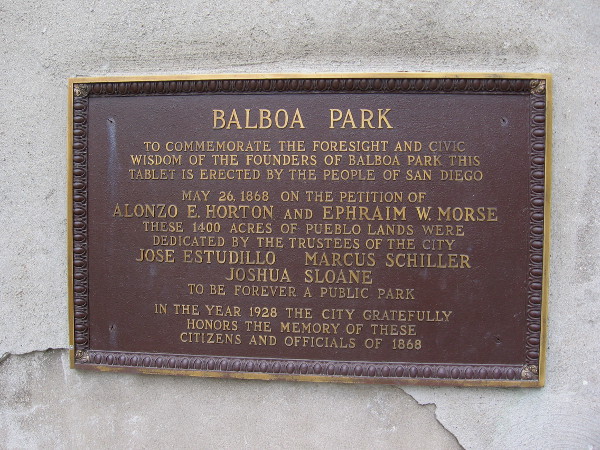
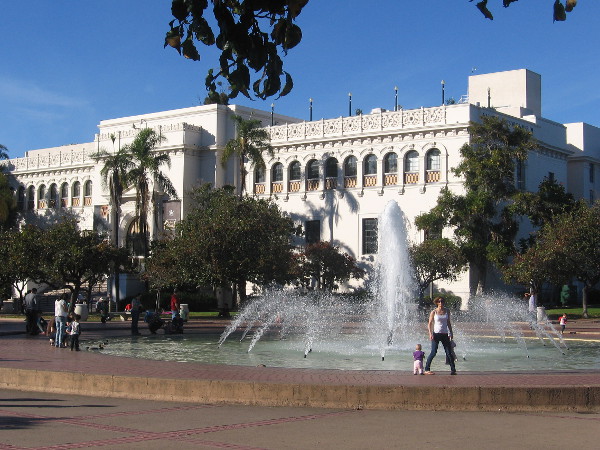
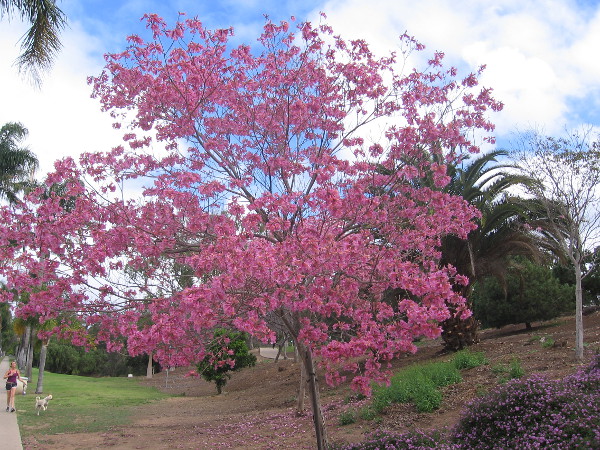
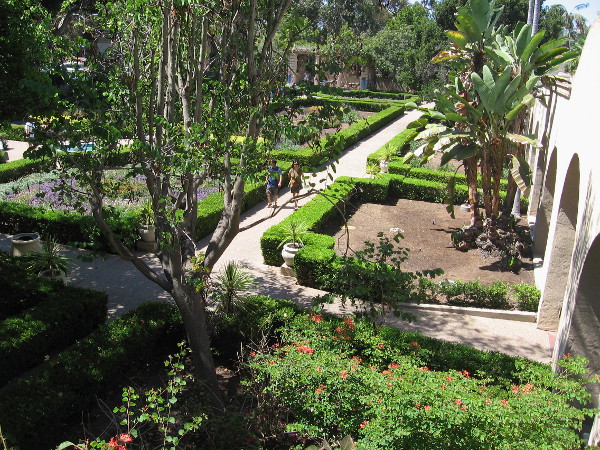
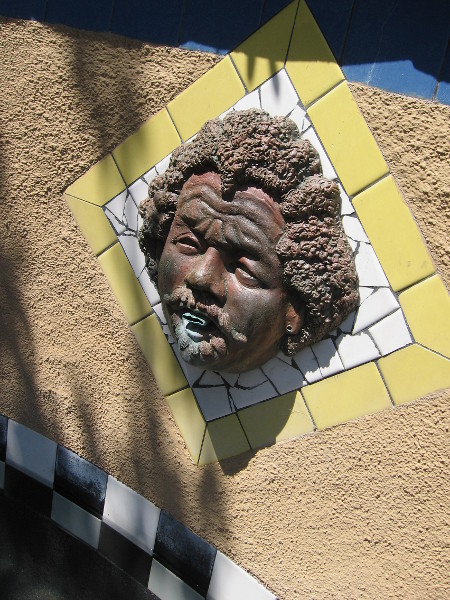
Plaque at east end of Cabrillo Bridge. To commemorate the foresight and civic wisdom of the founders of Balboa Park this tablet is erected by the people of San Diego.View of the Natural History Museum from a point near the Reuben H. Fleet Science Center.History comes alive in one small section of the Casa del Prado’s fantastic facade.People enjoy the grass near the Botanical Building.Exploring life and beauty in Balboa Park’s reflecting pool.More natural beauty along Sixth Avenue, the west edge of immense Balboa Park.A view of the Alcazar Garden from above.An artistic face in a fountain by the Old Globe Theatre.The House of Charm and California Tower in silhouette as day ends.It’s the holiday season. Make a donation to the Friends of Balboa Park, and it will be an enduring gift to the entire world.
…
Join me for more cool photos and discoveries on Facebook and Twitter!
A group of old-fashioned Christmas carolers in Victorian costumes brings holiday cheer to Old Town San Diego State Historic Park.
Look what I stumbled upon yesterday during an afternoon walk through San Diego’s history-filled Old Town. Folks in Victorian costumes were roaming about, singing Christmas carols!
I learned this group is composed of Old Town San Diego State Historic Park staff and volunteers. They were having a great time spreading Christmas cheer, pausing to sing at the various museums, restaurants and shops around old San Diego’s picturesque central plaza.
I was even given a cool little book filled with Christmas carol lyrics. Thank you guys!
Merry Christmas!
Carolers smile, laugh and enjoy the day in front of a reconstructed building at Old Town San Diego’s central plaza.I was given this Caroling Lyrics Booklet. Songs include Jingle Bells, The First Noel, We Three Kings, The 12 Days of Christmas, Deck the Halls and Silent Night.The colorful group of Old Town roving carolers heads to the Cosmopolitan Hotel, which is decked out with festive wreaths.After entertaining some surprised diners, the group heads through the Cosmopolitan Hotel, much to the delight of one server!Singing traditional Christmas carols around the old fountain in the outdoor courtyard of Casa de Estudillo.Now the Christmas carolers are in the Wells Fargo History Museum next to the original 1867 Concord stagecoach! Several people listened outside the nearby door and applauded.A crowd gathered as Christmas carols were heard outside the Threads of the Past Living History Activity Center. One quilter joined in the public singing!Joyful, uplifting Christmas carols are sung as customers leave Toby’s Candle and Soap Shop.
























































 Cool San Diego Sights!