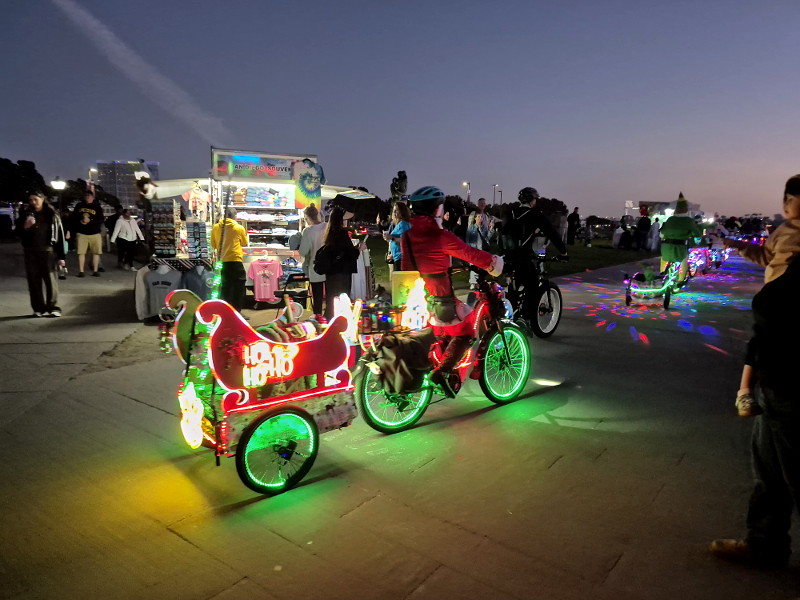
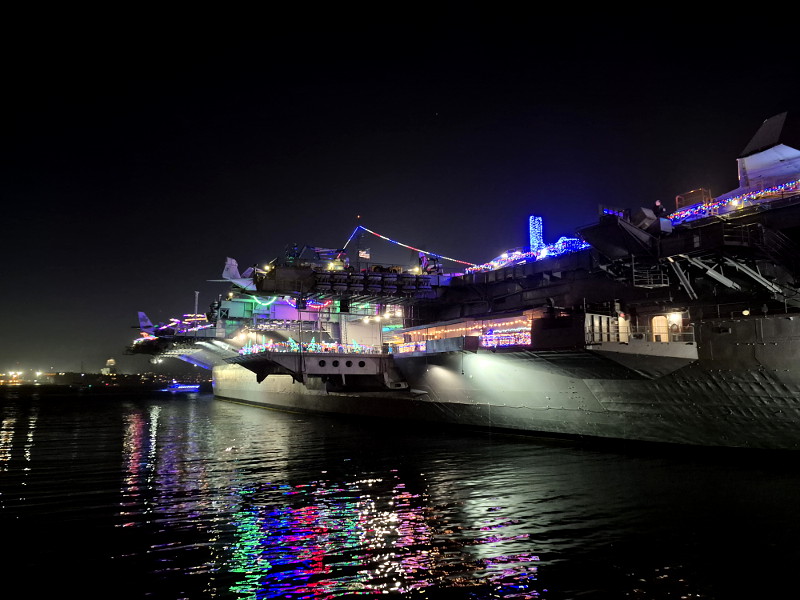
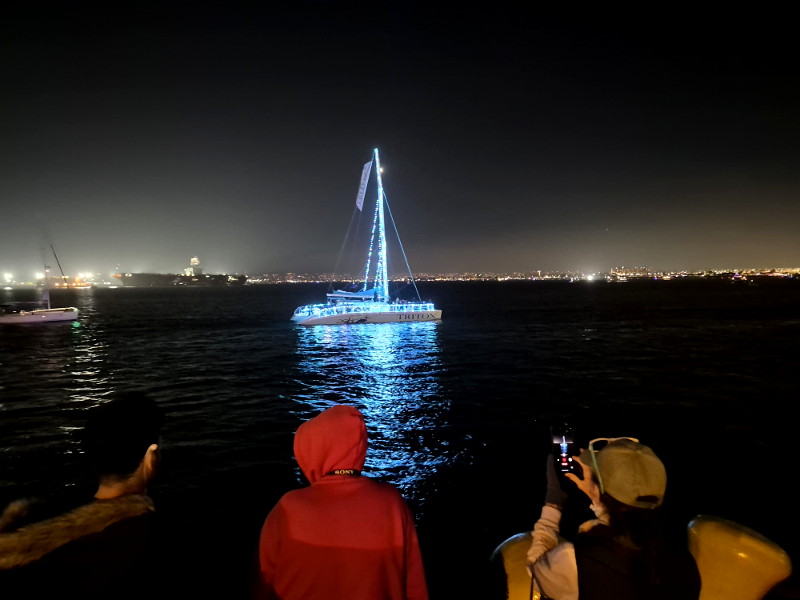
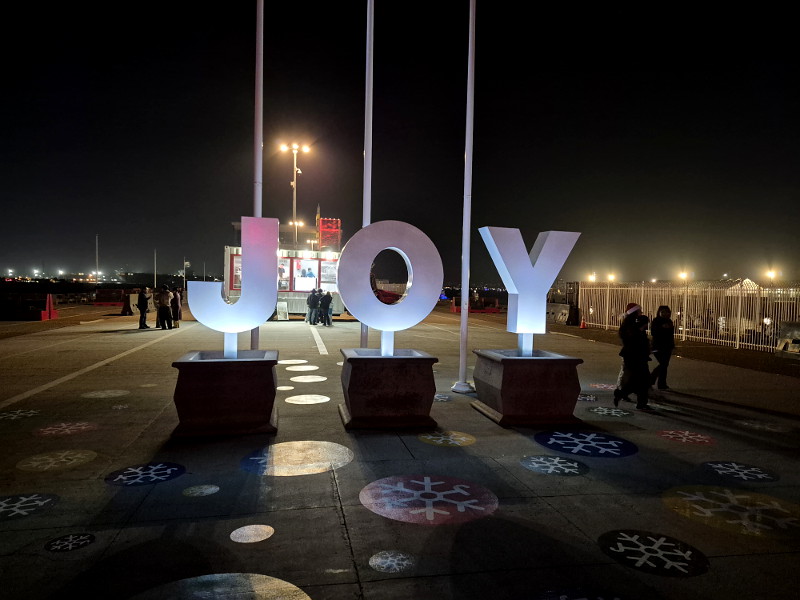
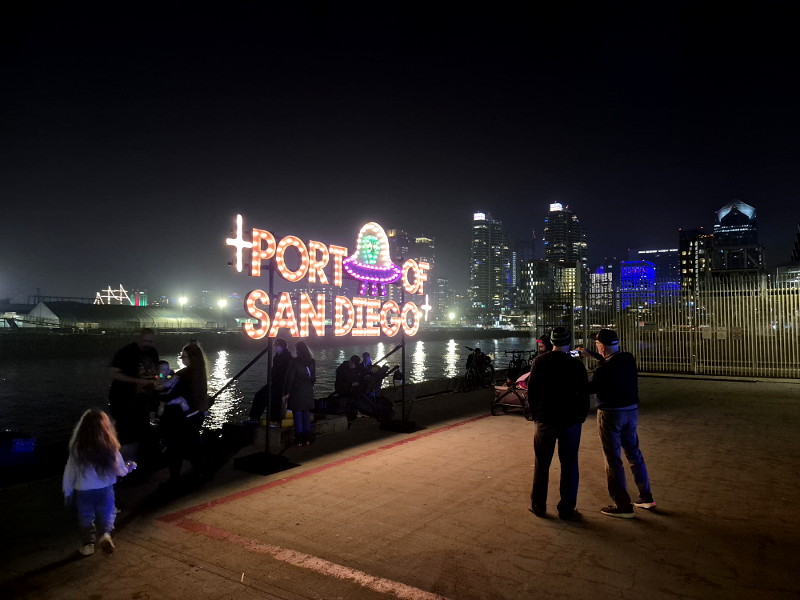
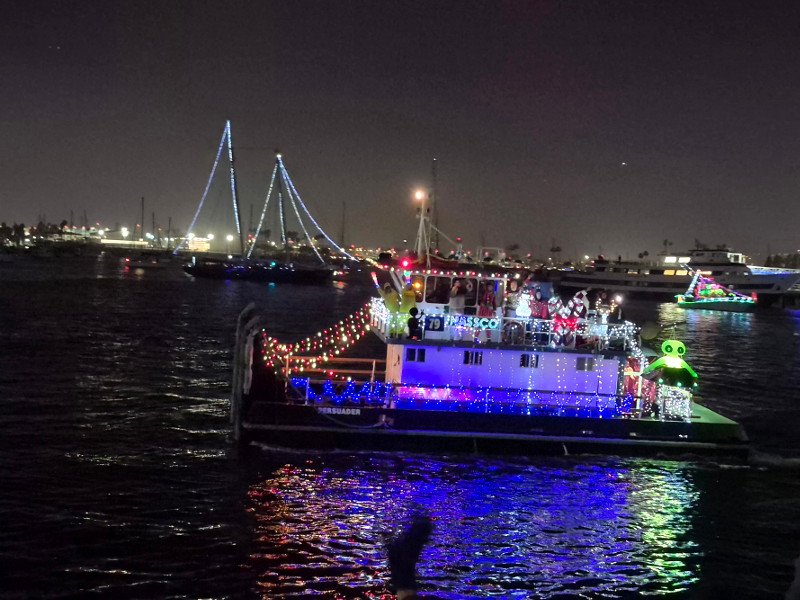
Enjoy a collection of fun photographs taken this evening before and during the 55th Annual San Diego Bay Parade of Lights!
Thousands lined San Diego Bay as boats strung with lights and decorations for the holidays floated by in a festive procession. The theme for 2025 was An “Out of this World” Christmas!
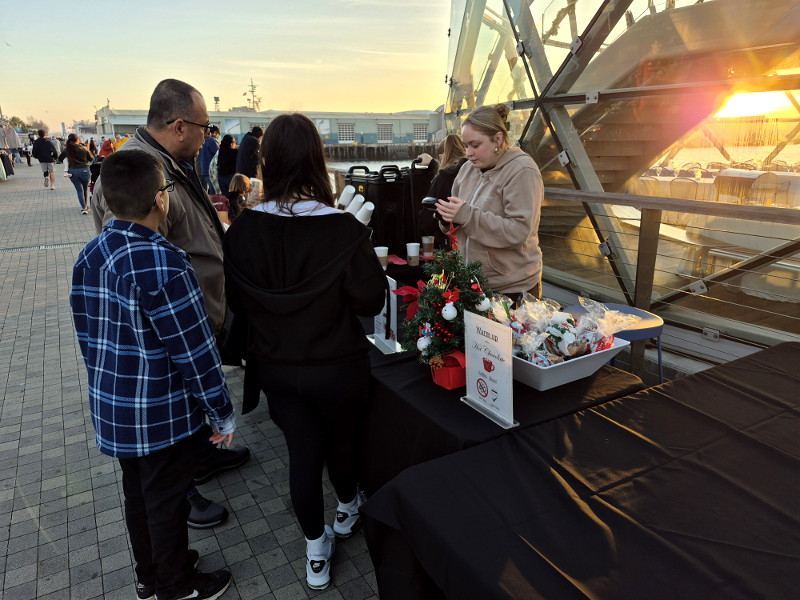
I took photos before the boat parade began while I walked along the Embarcadero. I started near the Maritime Museum of San Diego, headed south past the USS Midway Museum and Seaport Village, then back, with a brief stop at the end of Broadway Pier. As I walked along the sun set and the evening grew darker.
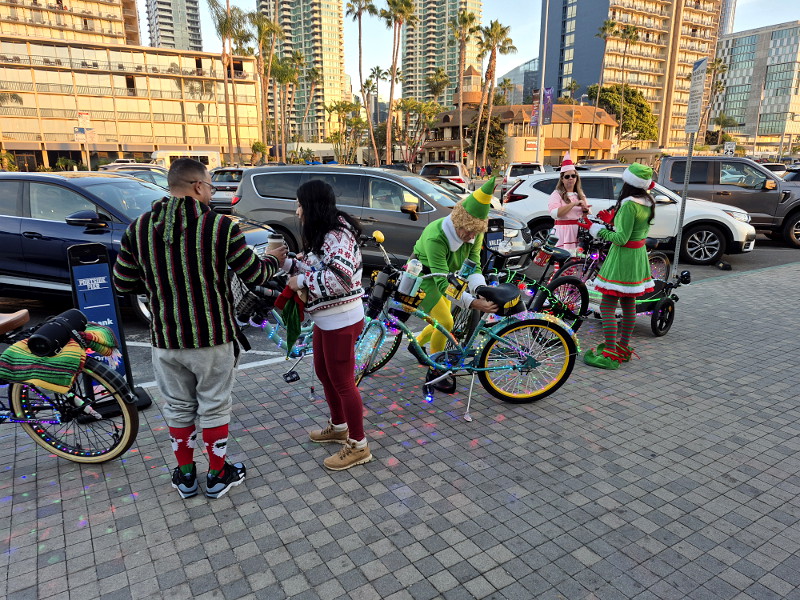
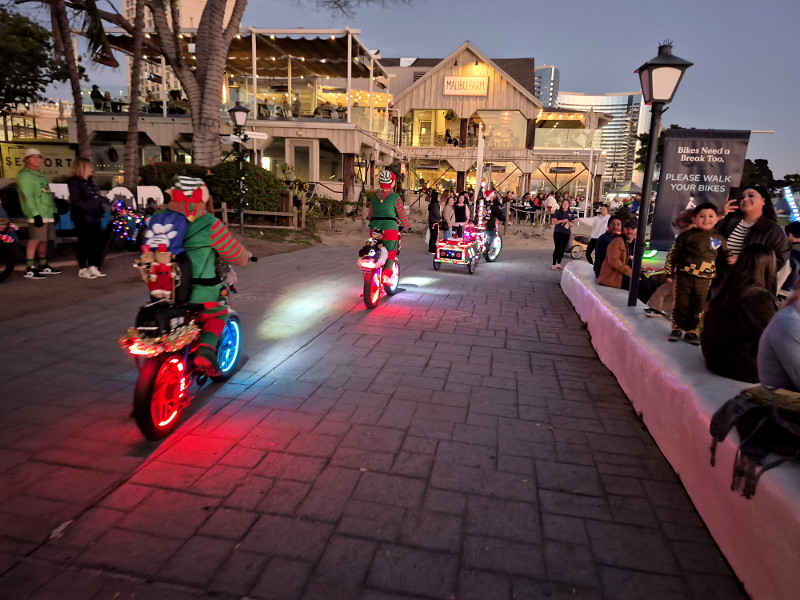
Parents were buying lighted bubble balloons and whirly wands for their excited kids from boardwalk vendors. A bunch of lighted bicycles went by! Out on the pier food trucks were parked behind a small grandstand from which the crowd could watch the parade.
By the time I returned to the Maritime Museum it was night. The brightly lit parade boats, after coming down from Shelter and Harbor Islands, were beginning to pass by!
The USS Midway and its aircraft were illuminated colorfully, as was the exterior of the County Administration Building and other bayside landmarks.
Christmas is now only four days away!
…
If you’d like to see San Diego through my lens, find the “Follow” box in the sidebar to receive new posts in your email, or bookmark coolsandiegosights.com and swing on by occasionally!
(If you’re viewing Cool San Diego Sights on a phone, you can open my website’s sidebar by tapping those three parallel lines at the top of the page.)
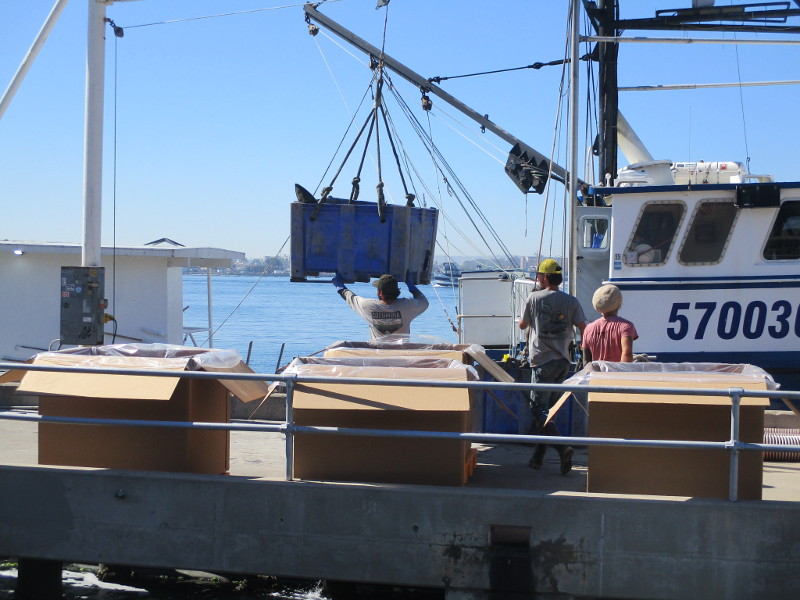
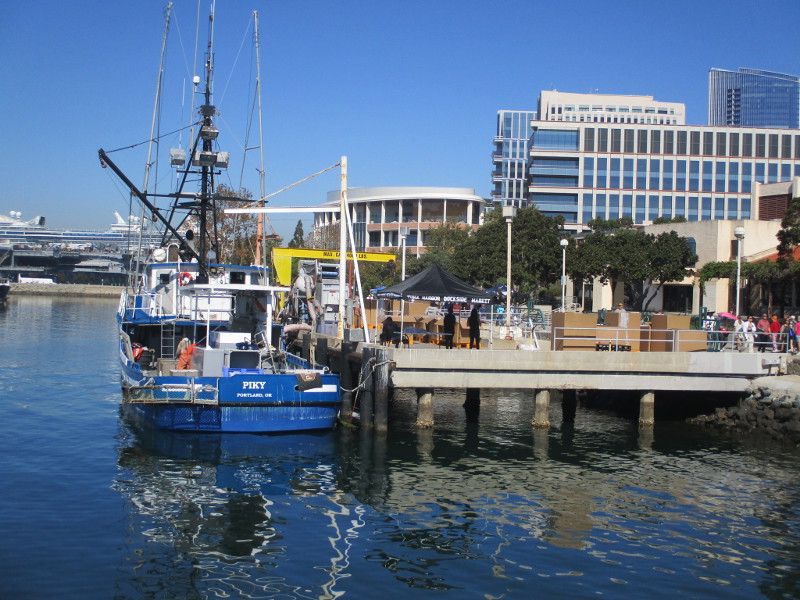
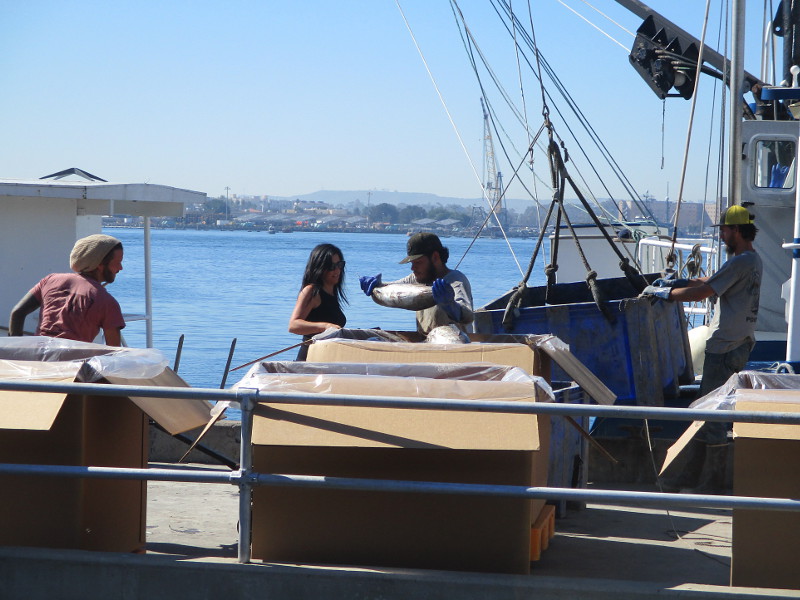
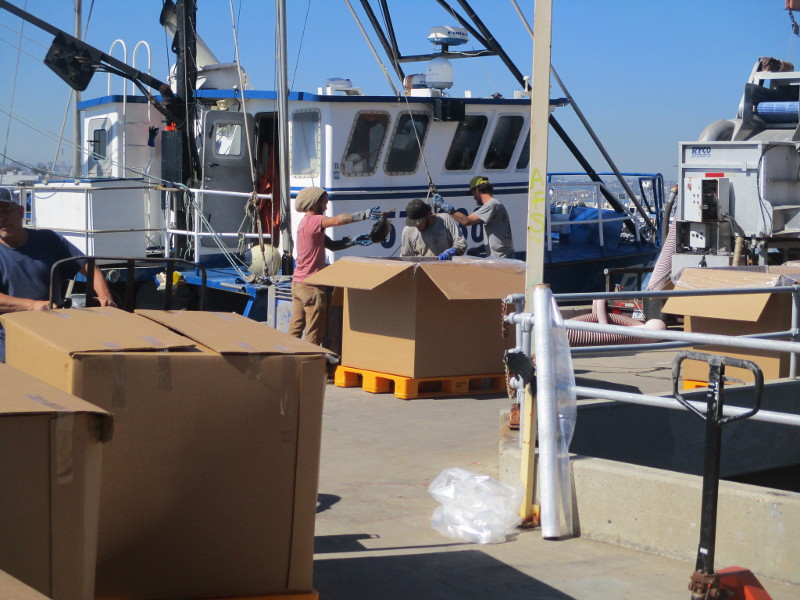
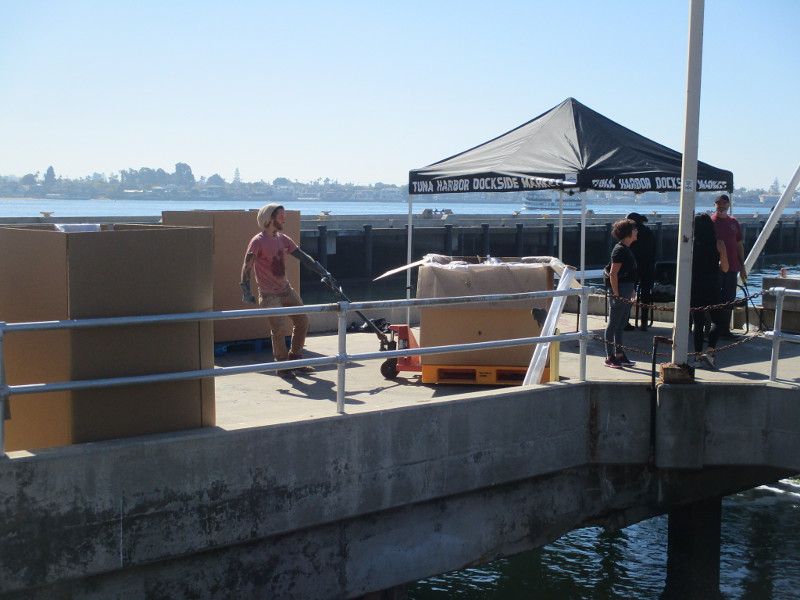
A big haul of albacore tuna was being unloaded today in San Diego’s Tuna Harbor. Huge boxes were being filled with albacore from the fishing vessel Piky, to be promptly shipped to Oregon for canning.
As their website states: This is small-batch seafood in its purest form. Every fish is sustainably caught by pole and line, one at a time, by people who know the sea and respect its rhythms. No factory fleets. No shortcuts. Just honest fish, responsibly harvested by our own hands.
Also: Our albacore is wild-caught exclusively in U.S. waters by a U.S.-flagged vessel using pole-and-line fishing, a highly selective and sustainable method that eliminates bycatch.
Very cool!
Considering all those huge boxes, that was a whole lot of fishing!
I see you can purchase the canned, high-quality albacore tuna on their website. Click here!
…
I post new blogs pretty often. If you like discovering new things, bookmark coolsandiegosights.com and swing on by occasionally!
I live in downtown San Diego and love to walk around with my camera! You can follow Cool San Diego Sights via Facebook or X.
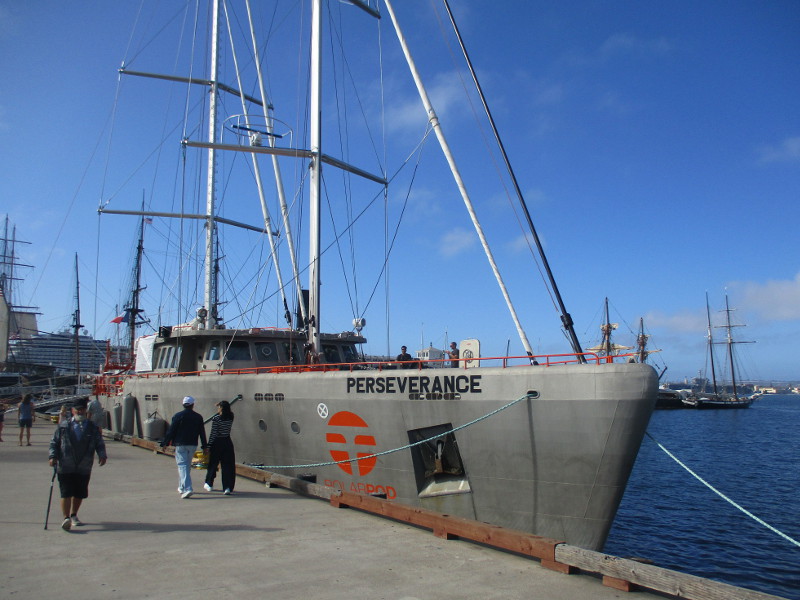
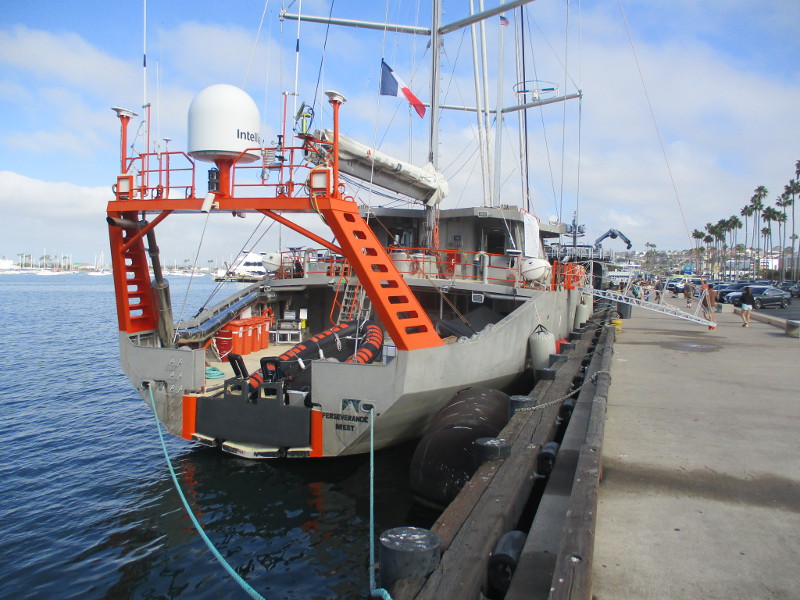
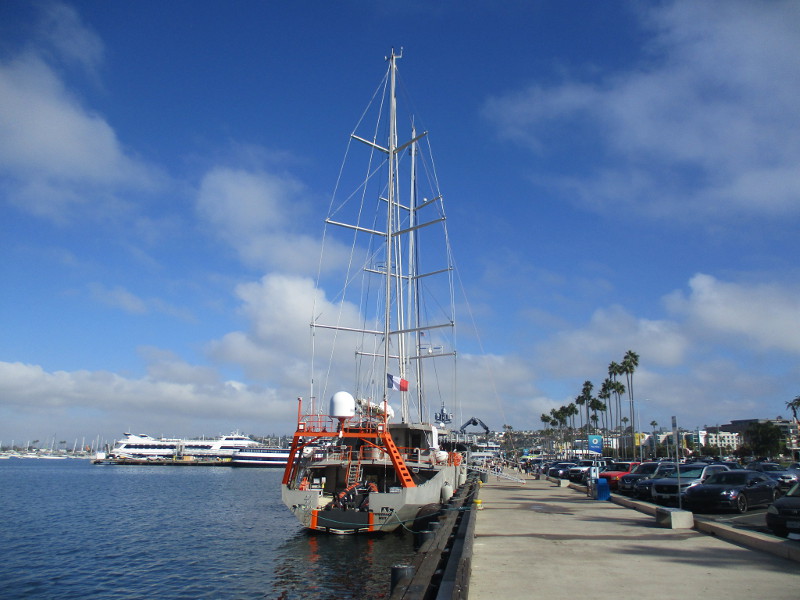
Have you seen the enormous sailboat Persévérance docked in San Diego?
I saw the amazing boat this morning. It was a little north of the Maritime Museum of San Diego. I was told it has been in San Diego the past few days.
The Persévérance is a research vessel operated by world-renowned French explorer and polar expedition pioneer Jean-Louis Étienne.
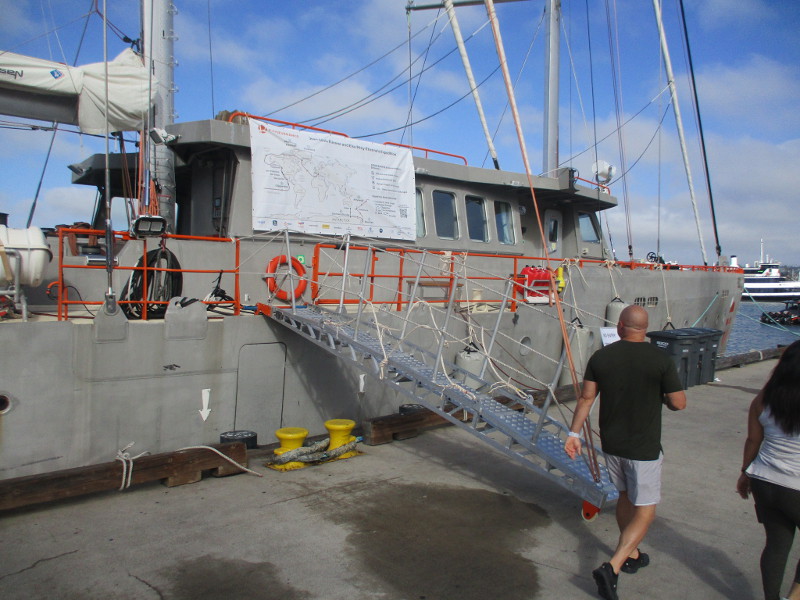
According to a map displayed on the boat, the 2025-2026 Jean-Louis Étienne and Elsa Pény-Étienne’s Expedition has has already visited Greenland and the Arctic region via the Northwest Passage. After leaving the West Coast it will cross the Pacific Ocean and head south to study Antarctica!
The unique oceanographic schooner gathers data on climate and ocean currents, visits Marine Protected Areas, and seeks to analyze human impact on the oceans. Marine Protected Areas on the itinerary include Clipperton, French Polynesia, Ross Sea, and the proposed Dumon d’Urville MPA in East Antarctica.
I asked whether there will be public tours of this remarkable sailboat, but was told, unfortunately, no.
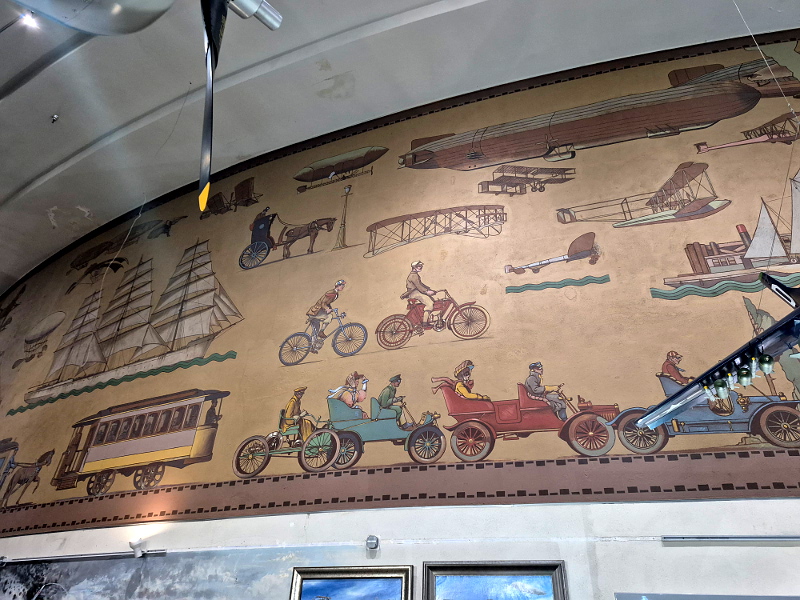
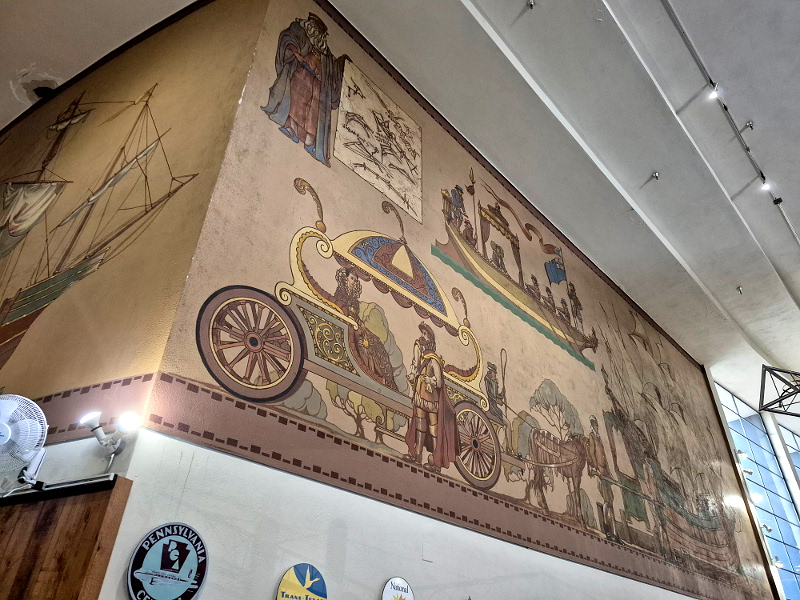
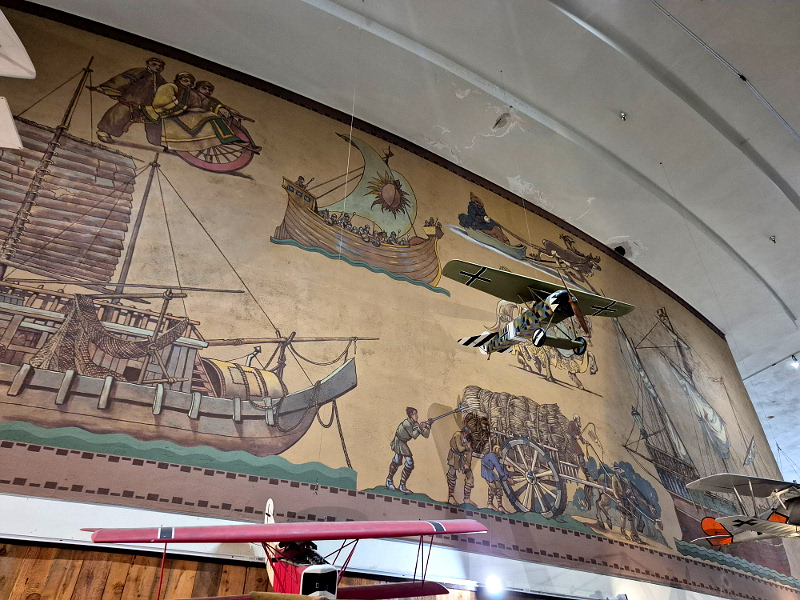
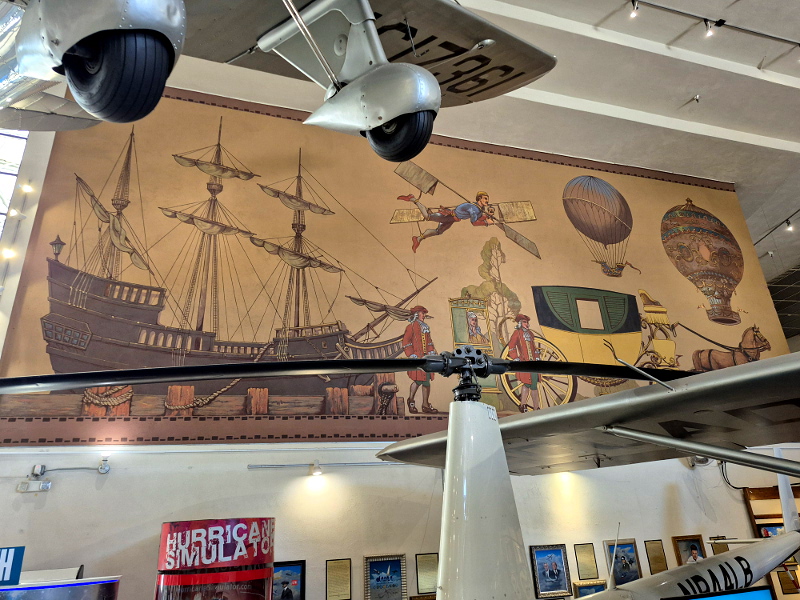
Visitors inside the world-famous San Diego Air & Space Museum in Balboa Park should look up. Not only will they see amazing aircraft exhibits suspended from the ceiling, but they might notice a very long mural painted along the museum’s circular inner wall.
The March of Transportation mural was created in 1936 for the California Pacific International Exposition. At over 9,300 square feet, it’s the largest mural of its kind found in North and South America.
Because so many cool aviation displays are jammed into the museum, I found it difficult to photograph large segments of the mural. But I’ve captured several glimpses, so you can get the idea of how the art appears.
A couple years ago I photographed the very end of the mural, which depicts futuristic forms of transportation (as conceived almost a hundred years ago). You can see those photos here.
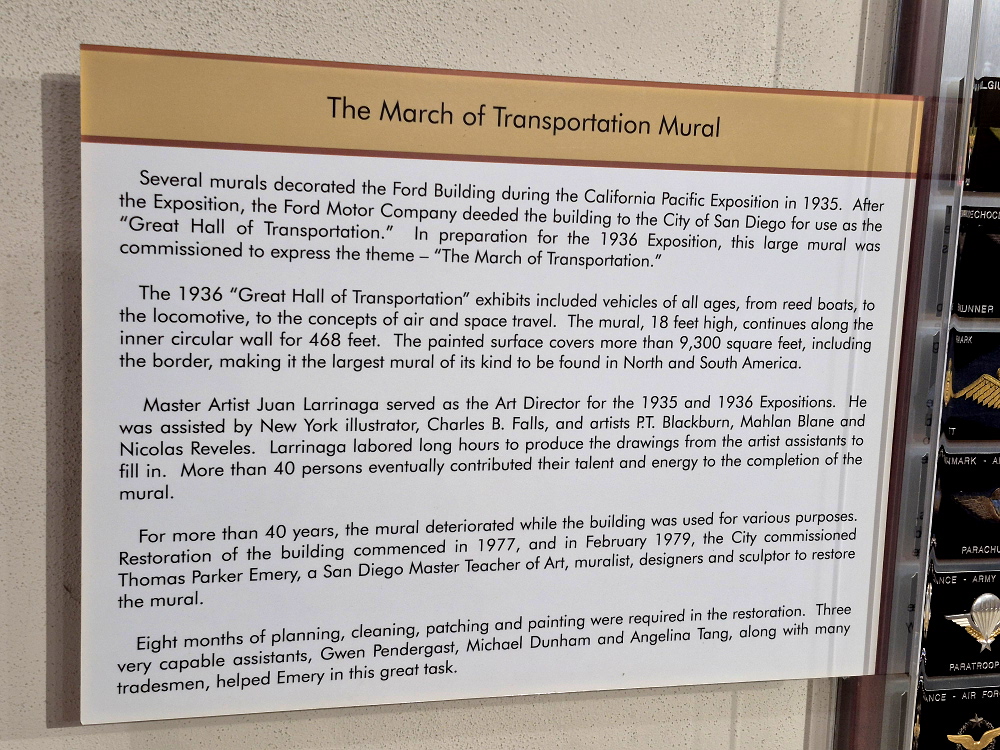
Several murals decorated the Ford Building during the California Pacific Exposition in 1935. After the Exposition, the Ford Motor Company deeded the building to the City of San Diego for use as the “Great Hall of Transportation.” In preparation for the 1936 Exposition, this large mural was commissioned to express the theme–“The March of Transportation.”
The 1936 “Great Hall of Transportation” exhibits included vehicles of all ages, from reed boats, to the locomotive, to the concepts of air and space travel. The mural, 18 feet high, continues along the inner circular wall for 468 feet…
Master Artist Juan Larrinaga served as the Art Director for the 1935 and 1936 Expositions. He was assisted by New York illustrator, Charles B. Falls, and artists P.T. Blackburn, Mahlan Blane and Nicolas Reveles. Larrinaga labored long hours to produced the drawings from the artist assistants to fill in. More than 40 persons eventually contributed their talent and energy to the completion of the mural.
After years of deterioration, the building began a restoration in 1977. In 1979 the mural, too, was restored.
While this artwork depicts world history, it is also an important part of San Diego’s uniquely rich history.
Anyone walking the length of San Diego’s Embarcadero might have observed three very unusual sights today!
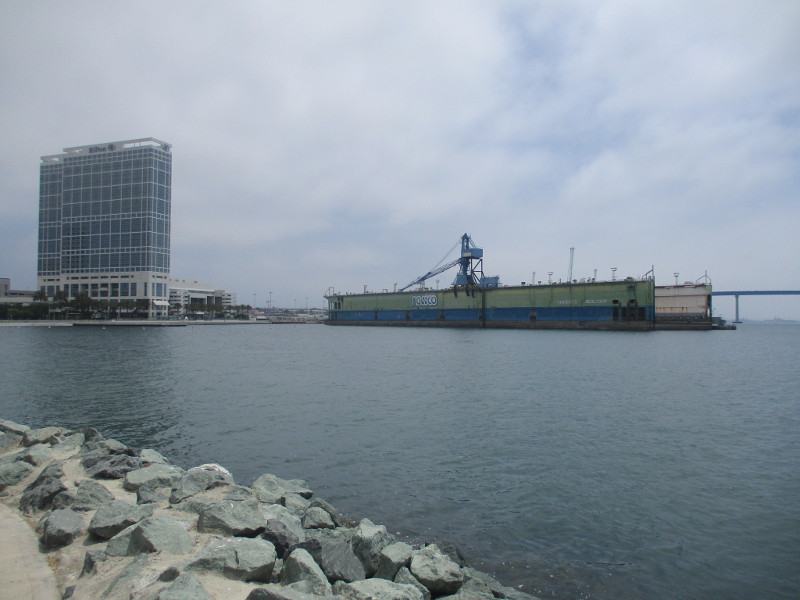
First, starting at the south end of the Embarcadero, very close to the Hilton San Diego Bayfront hotel, an immense NASSCO drydock has appeared!
This floating drydock, the NASSCO Builder, is usually stationed down at the NASSCO shipyard well south of here, in the vicinity of the Coronado Bay Bridge. It’s capable of containing very large ships. The public typically can’t get a close view of its immensity.
Today the NASSCO Builder was docked strangely at the Tenth Avenue Marine Terminal, where the Dole banana boats usually unload! Someone with the Coronado Ferry said the gigantic drydock appeared there yesterday.
The next photo was taken from Embarcadero Marina Park South…
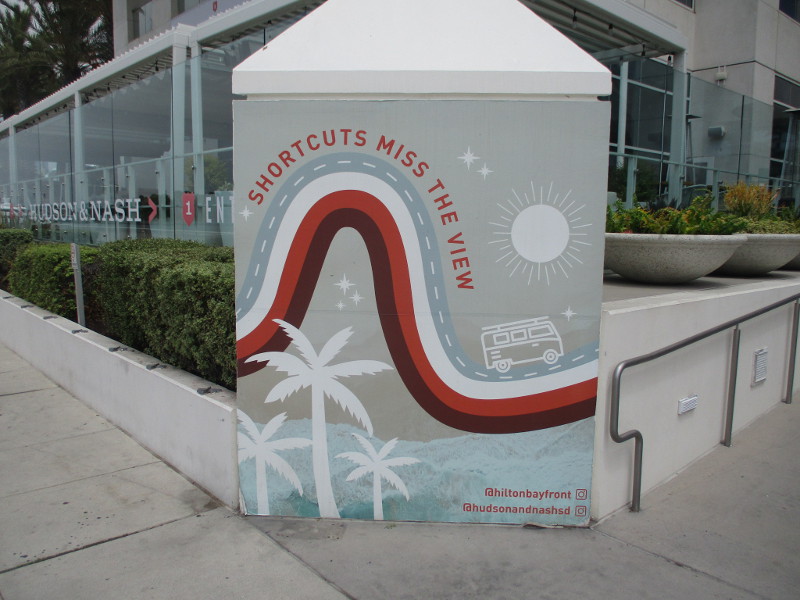
Nearby, at the Hilton, some wise words…
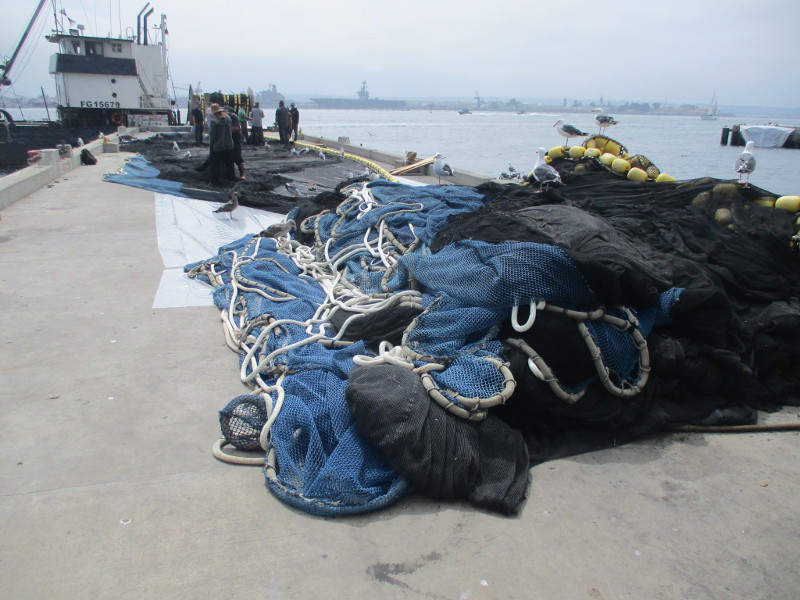
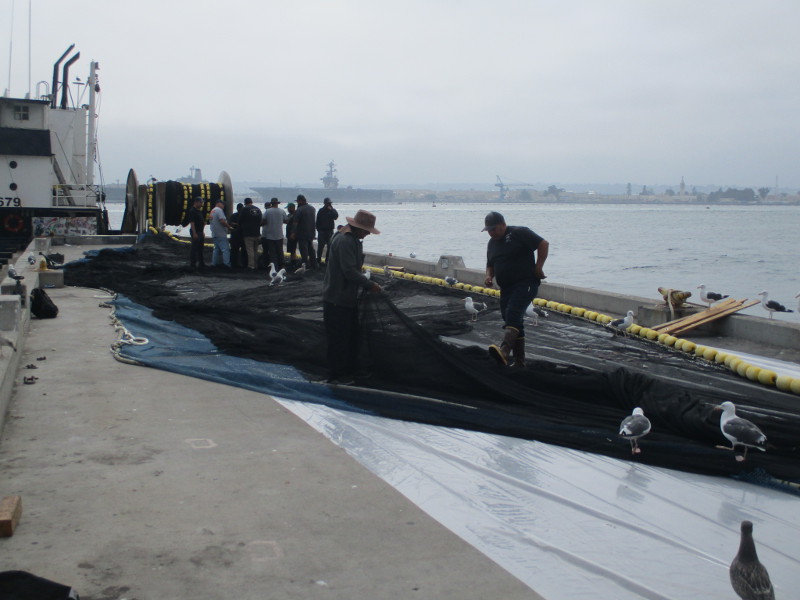
Next, I noticed some guys were repairing a purse seiner net on the pier adjacent to Seaport Village. This is seldom seen. More often, these large nets are repaired across Tuna Harbor at the longer G Street Pier.
These nets are unspooled into the ocean from purse seiners in order to catch bait fish, which are in turn used for sportfishing.
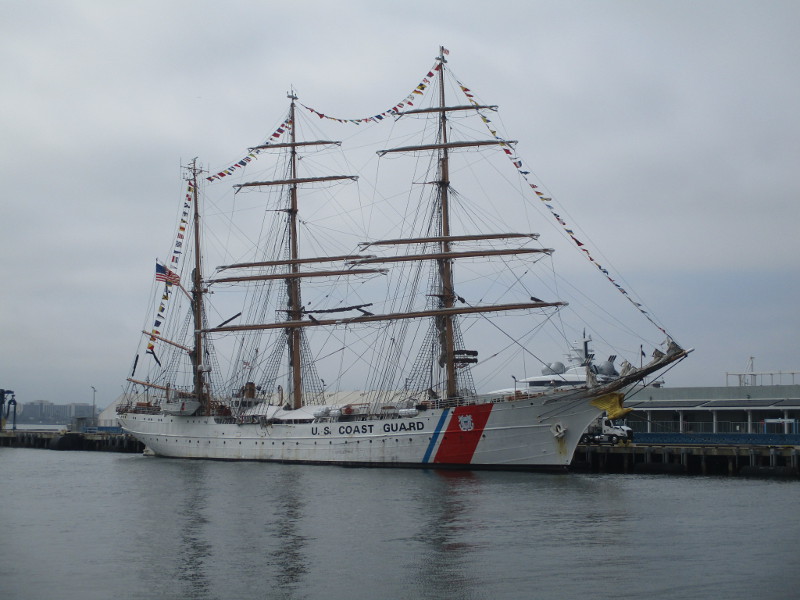
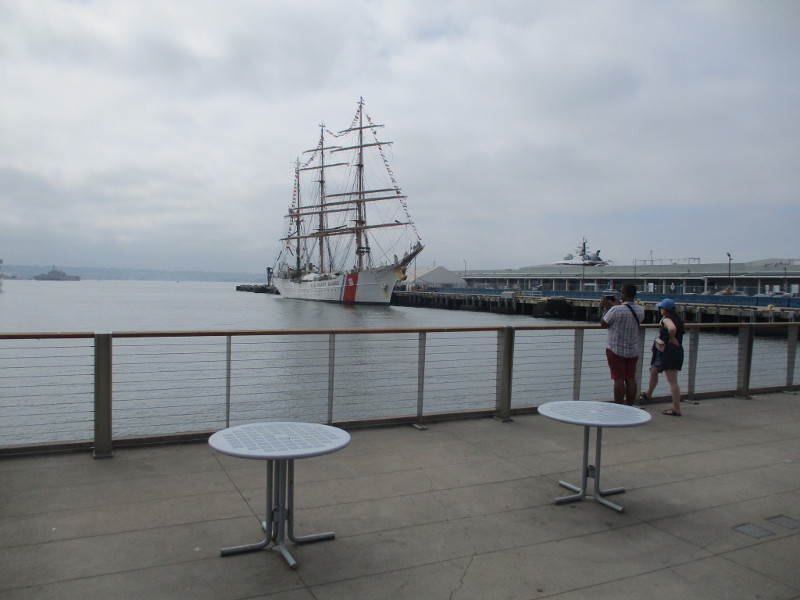
Finally, I noticed that America’s Tall Ship, the United States Coast Guard training ship USCGC Eagle, has returned to San Diego! It was out on the ocean the last few days, with future Coast Guard officers aboard, transforming themselves from young “swabs” to cadets!
I went aboard the amazing Eagle last weekend and took these photos!
…
I post new blogs pretty often. If you like discovering new things, bookmark coolsandiegosights.com and swing on by occasionally!
I live in downtown San Diego and love to walk around with my camera! You can follow Cool San Diego Sights via Facebook or X.
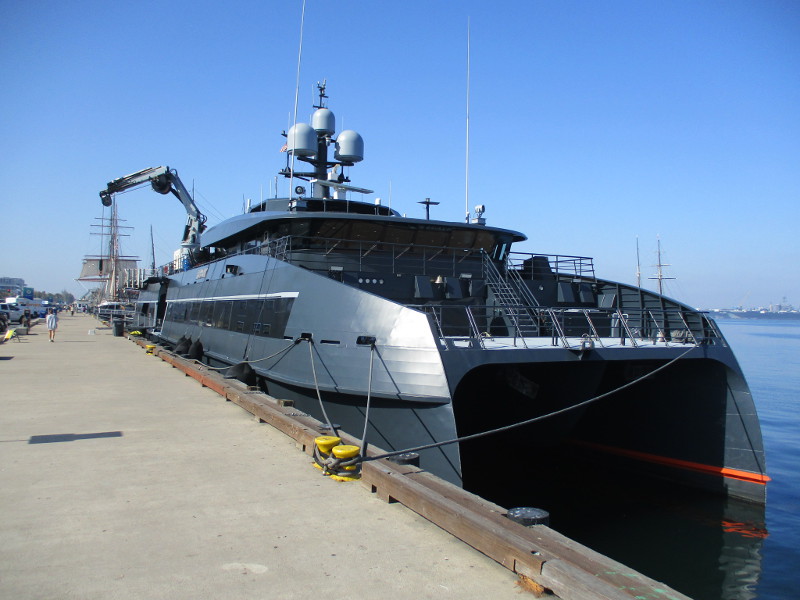
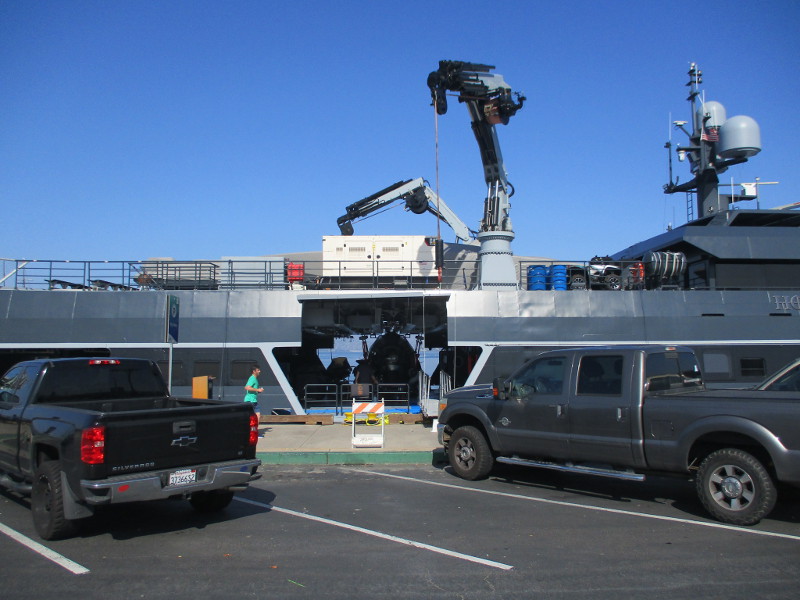
An impressive yacht has been docked on San Diego’s Embarcadero for weeks now. Perhaps you’ve seen it, just north of the Maritime Museum of San Diego.
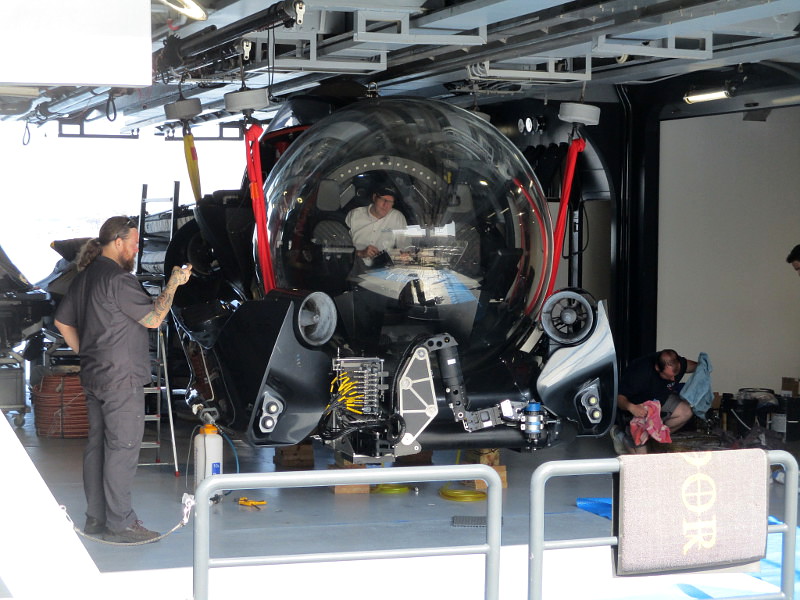
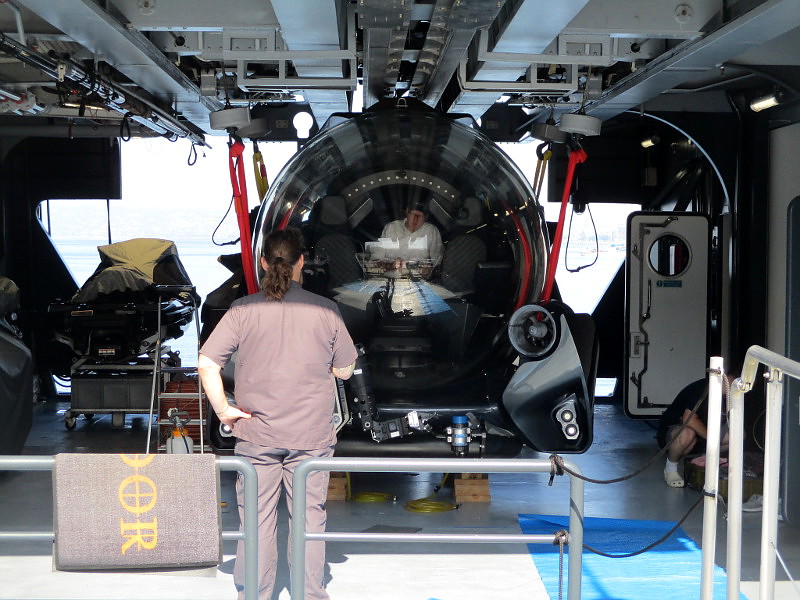
As I walked past the yacht this morning, I was surprised to see its side open and gentlemen working on a super cool, bubble-like submersible. For a moment I thought I had wandered into a documentary about ocean exploration–or a science fiction movie!
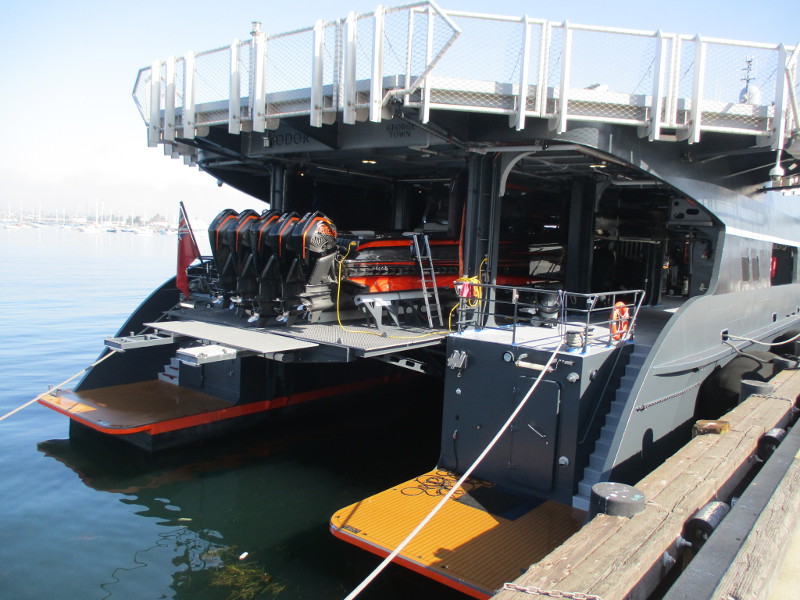
In fact, I was looking inside the Hodor, a 66-meter catamaran that this article describes as the world’s largest floating toy box! Among the toys it holds is the three-person Seamagine Aurora-3 submersible, which I spotted in its open “submarine garage” while walking down the boardwalk. Other toys include a helicopter, motorcycles, and ATVs!
Hodor is support vessel of larger privately owned superyacht Lonian, which is also docked in San Diego.
You never know what cool thing you might discover during a morning walk!
…
I post new blogs pretty often. If you like discovering new things, bookmark coolsandiegosights.com and swing on by occasionally!
I live in downtown San Diego and love to walk around with my camera! You can follow Cool San Diego Sights via Facebook or X.
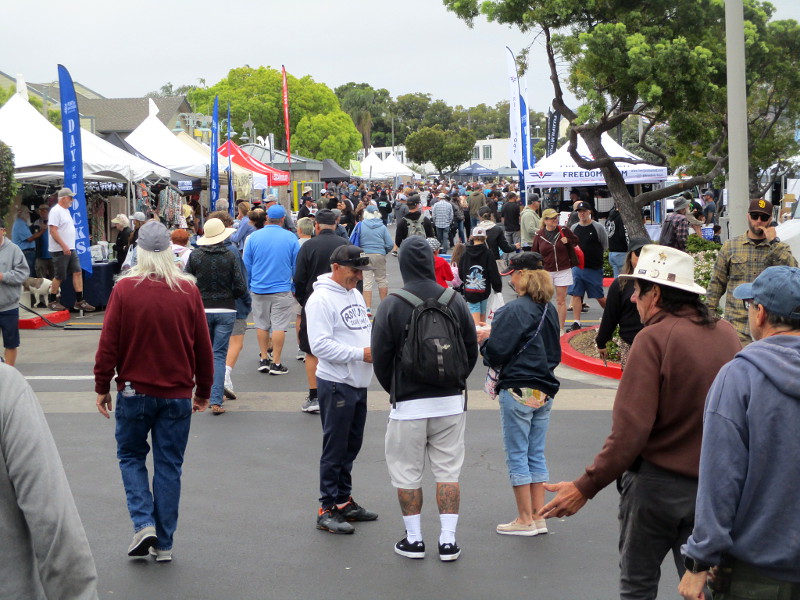
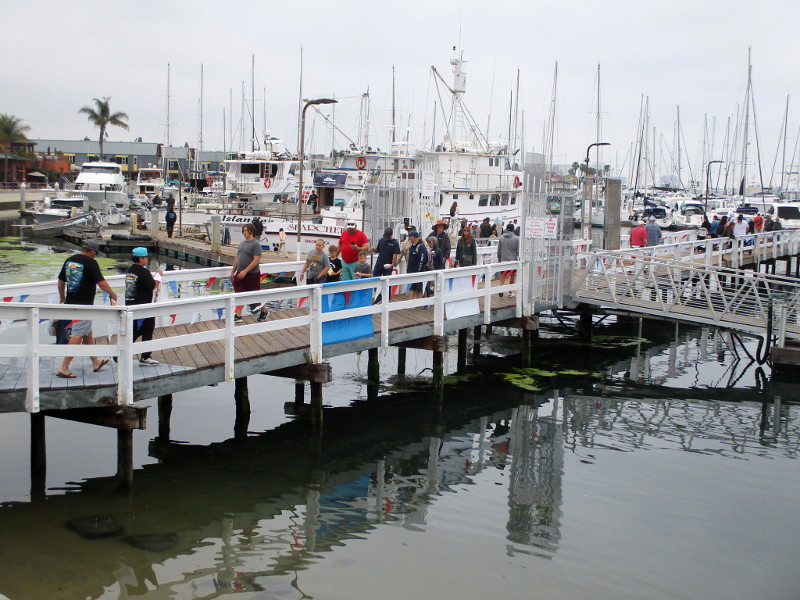
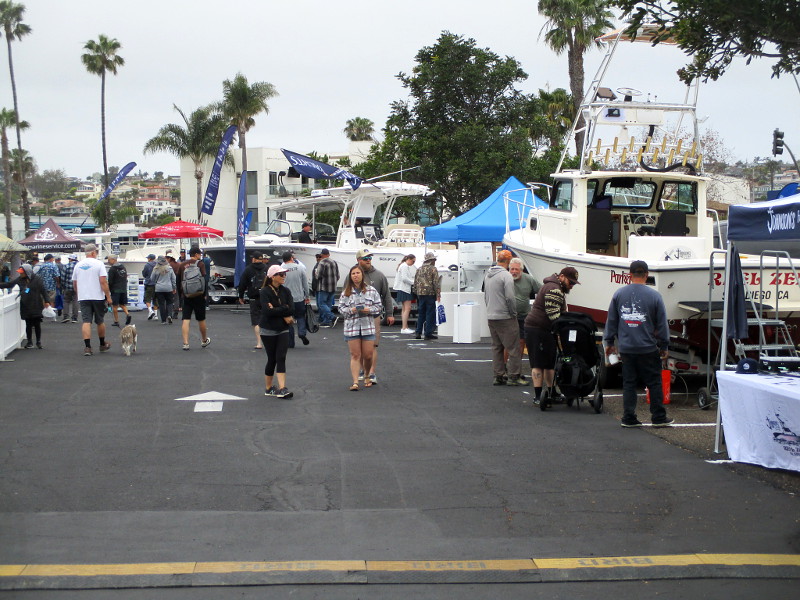
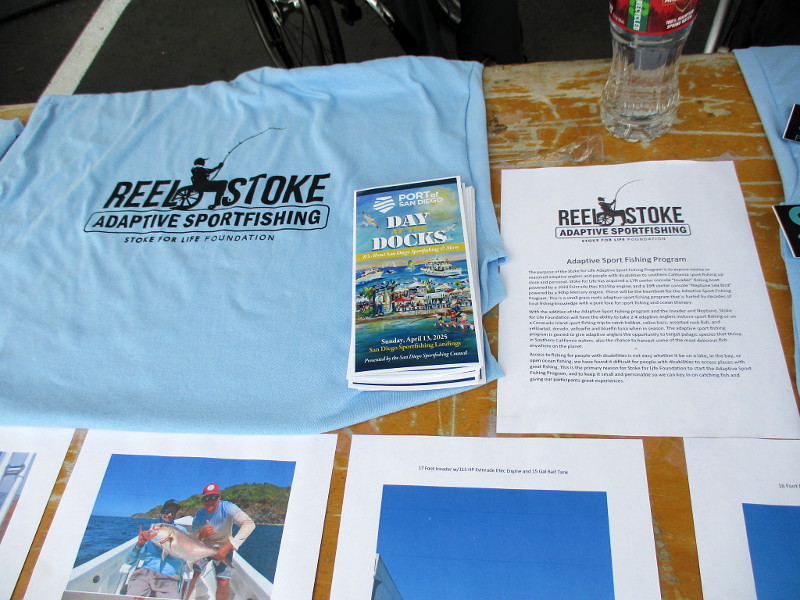
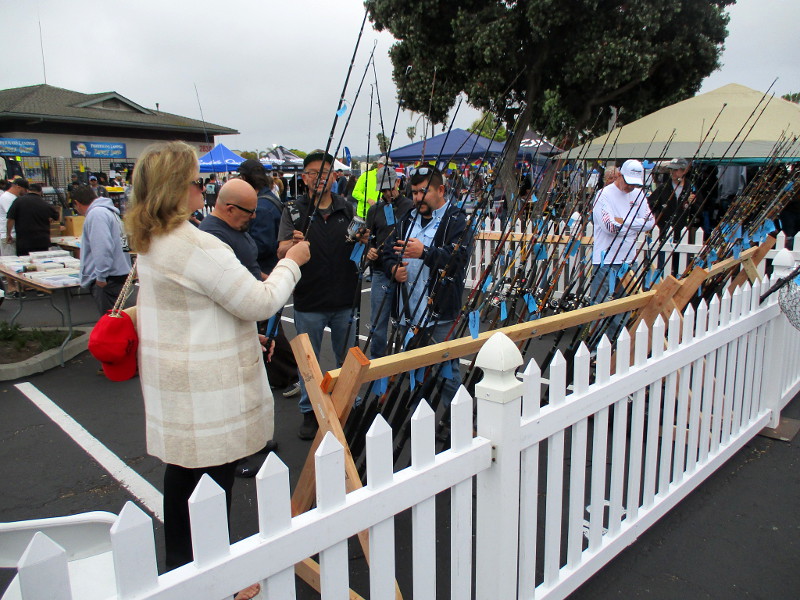
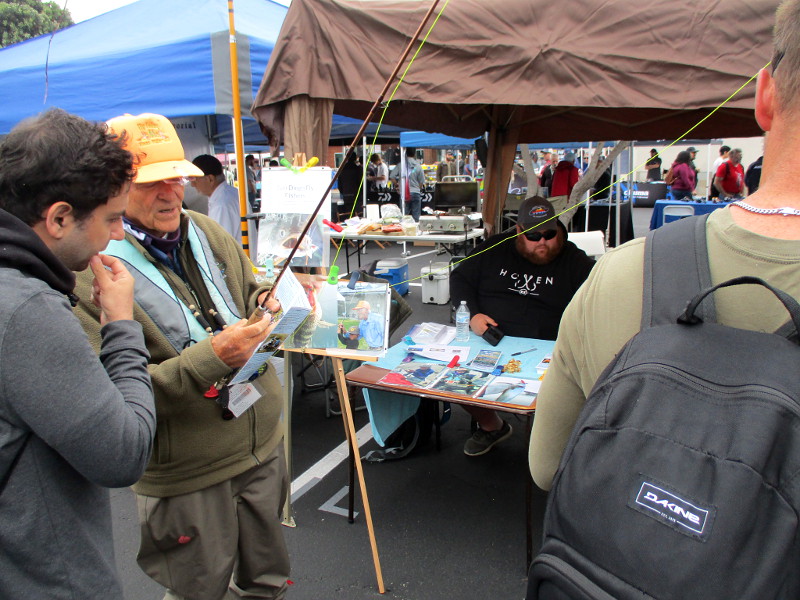
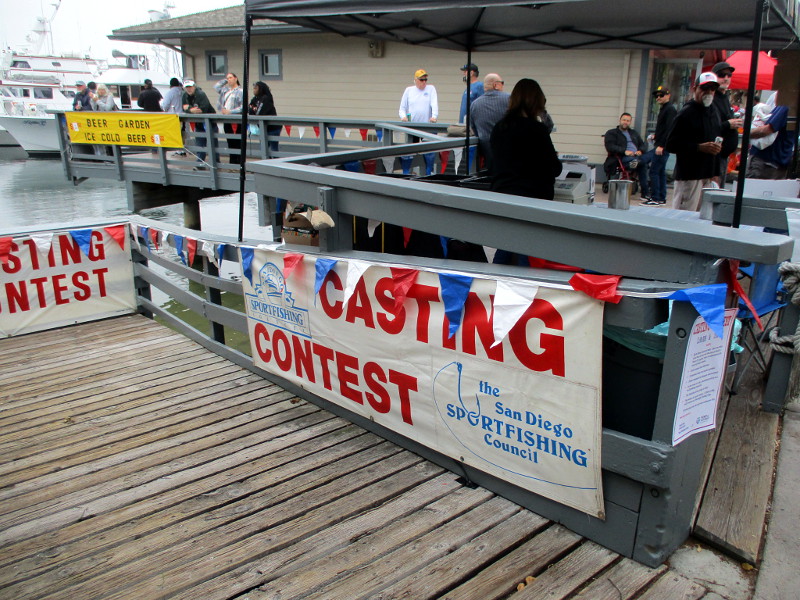
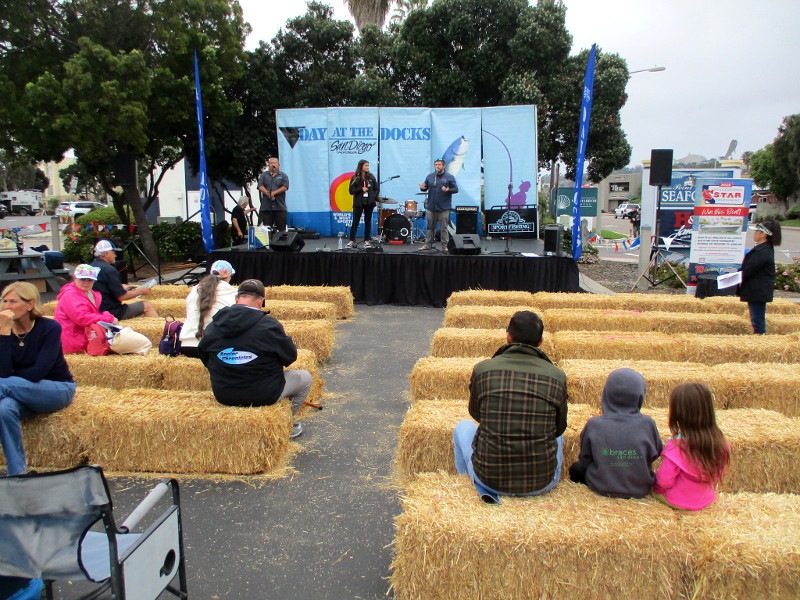
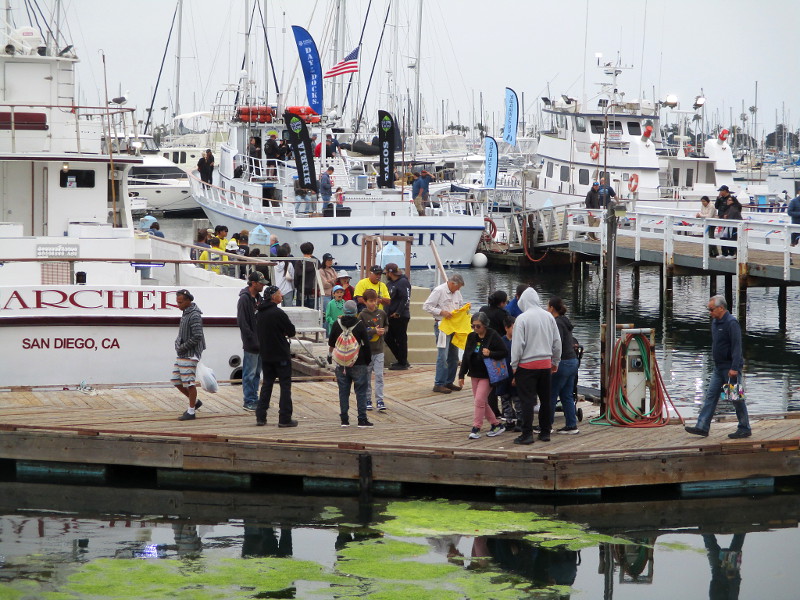
It seems everybody in San Diego who loves fishing showed up today for Day at the Docks!
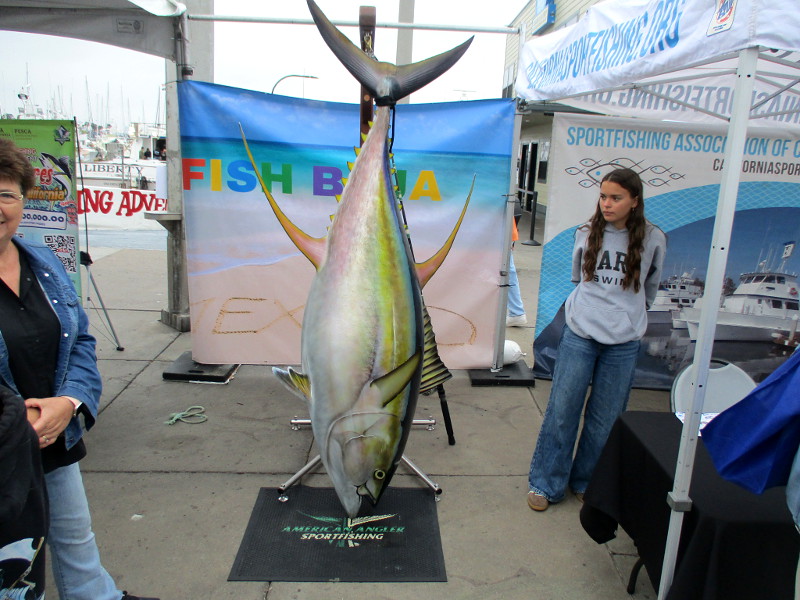
The big annual event, which takes place at San Diego’s sportfishing landings in Point Loma, attracts those who have an interest in the world-class saltwater fishing that can be experienced off our coast.
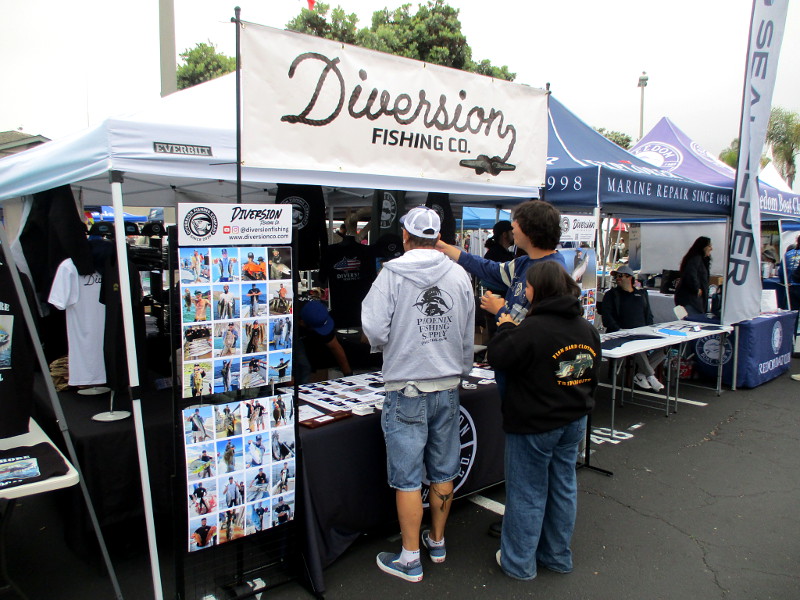
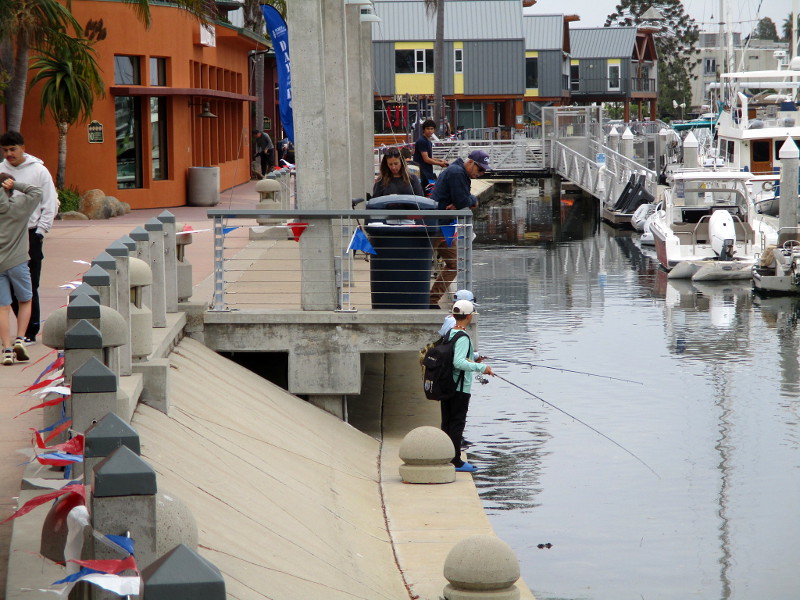
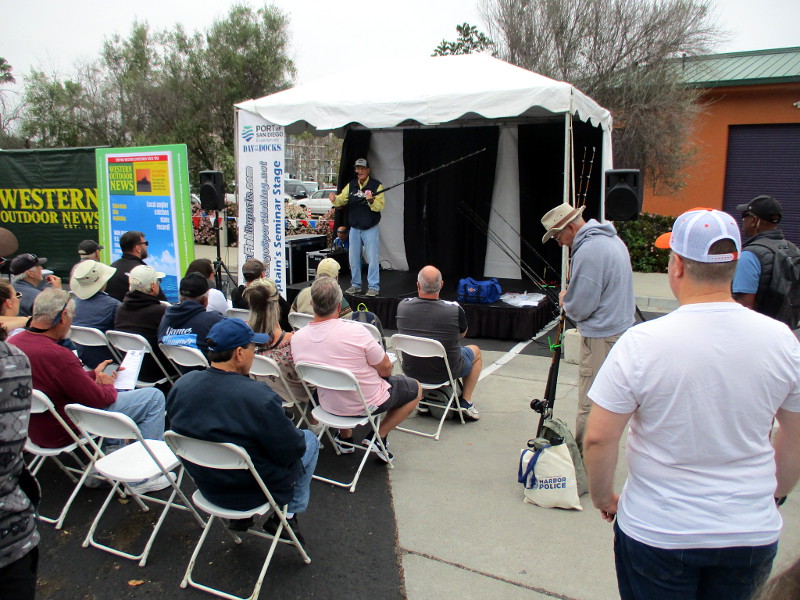
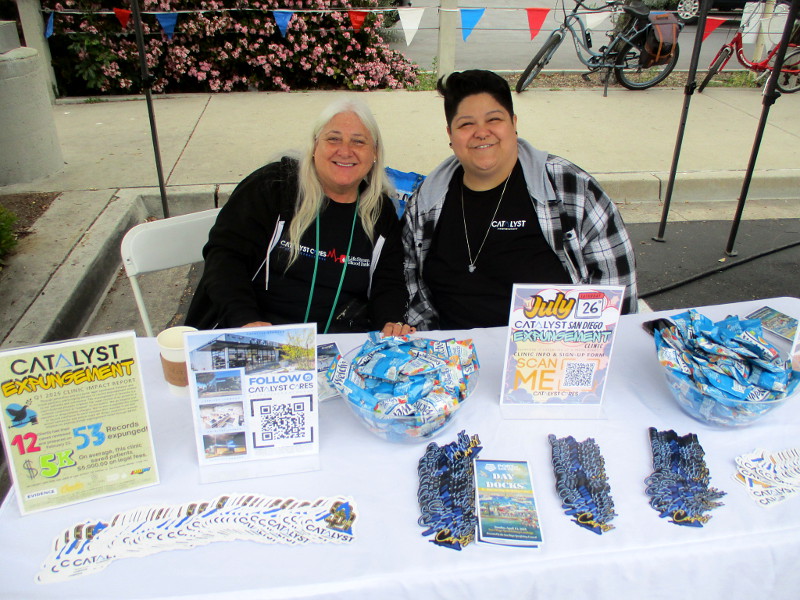
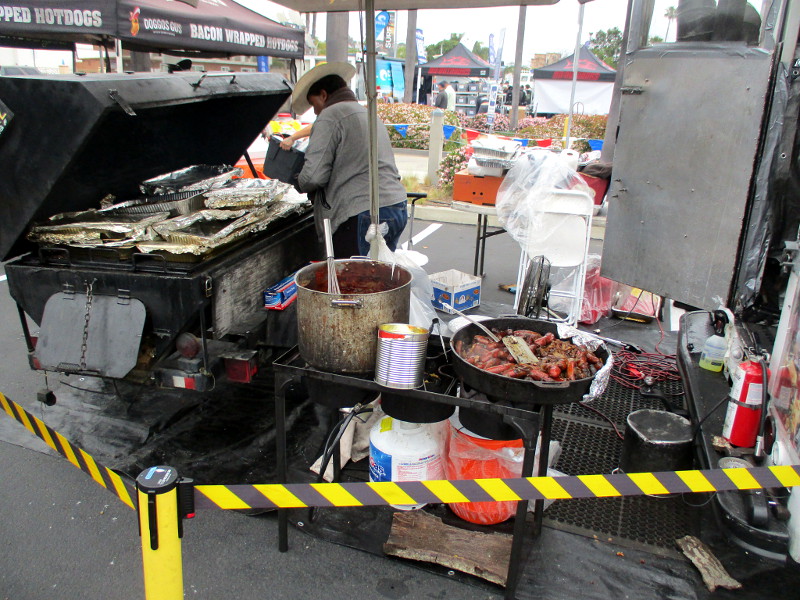
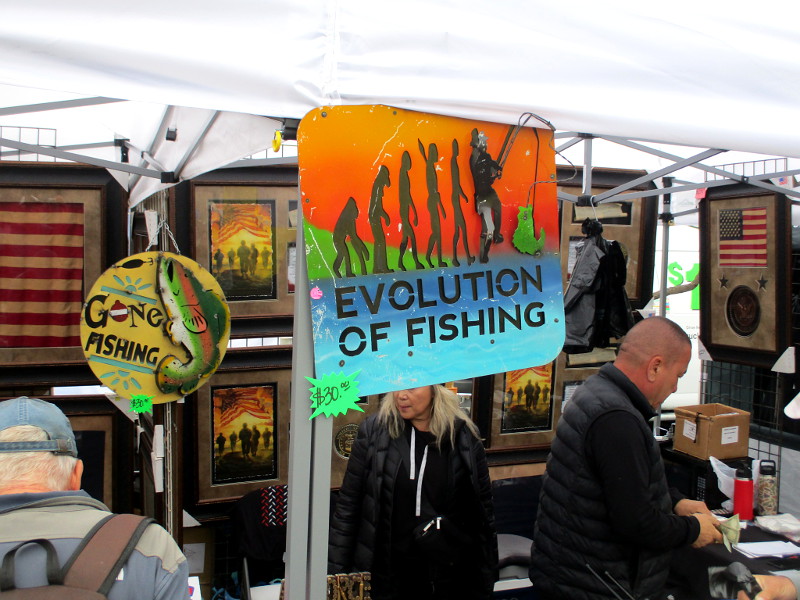
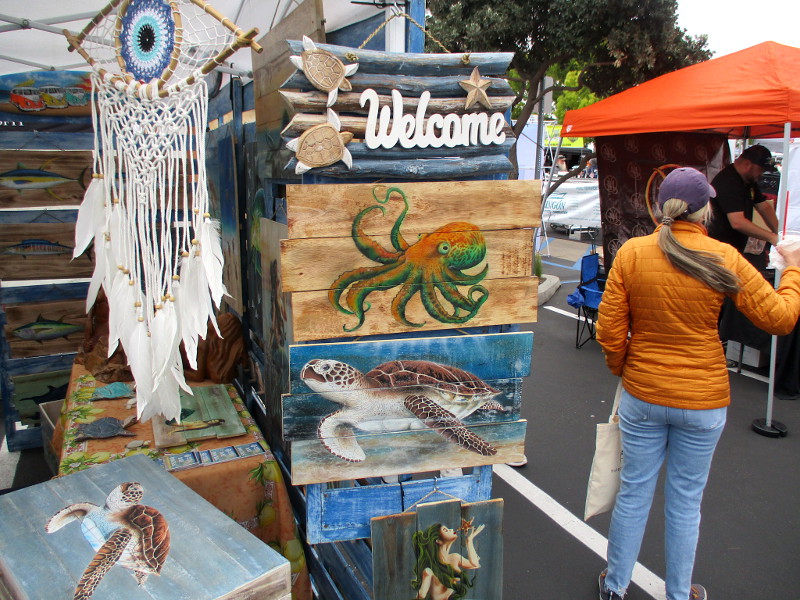
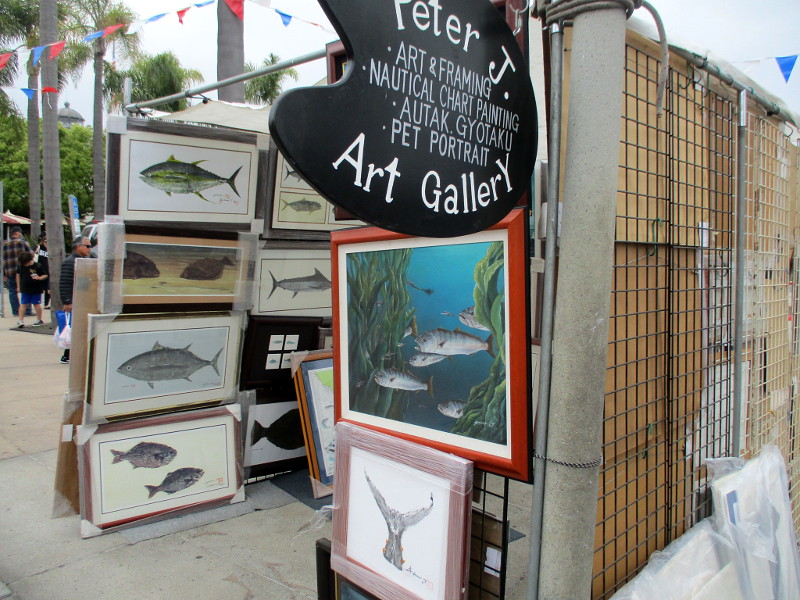
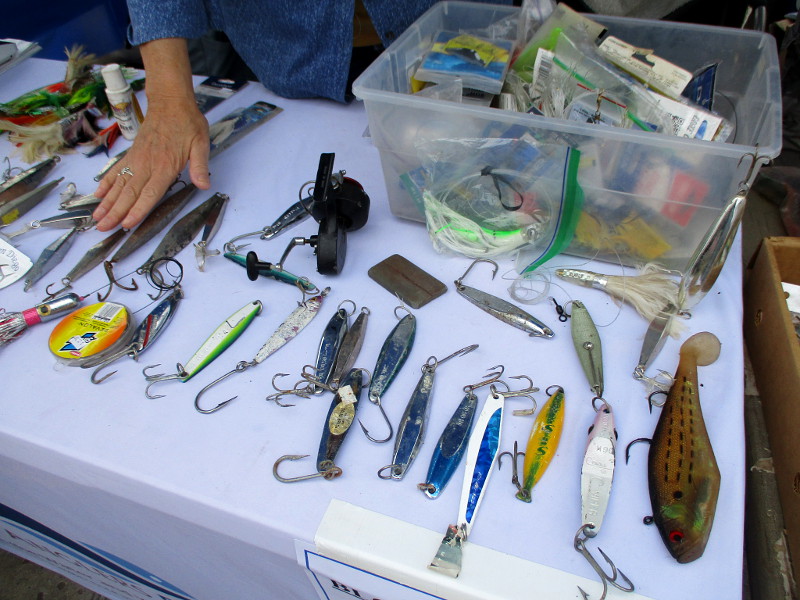
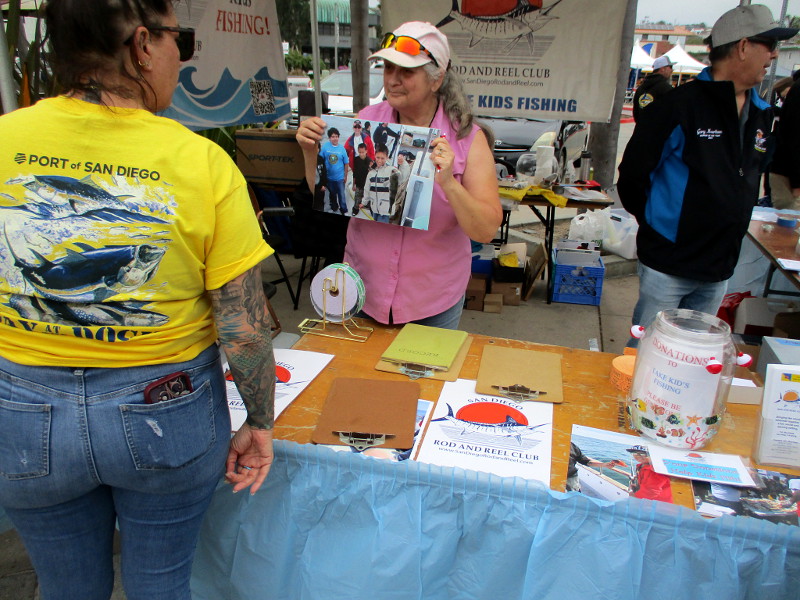
This morning I saw a big crowd at Day at the Docks, including many kids. Every sort of organization and business with a tie to sportfishing was on hand. There were how-to-talks, a kids fishing adventure, a casting tournament, a knot tying competition, harbor boat rides, a sportfishing fleet open house, gear for sale, clubs to join, unique gifts, art, fresh seafood…
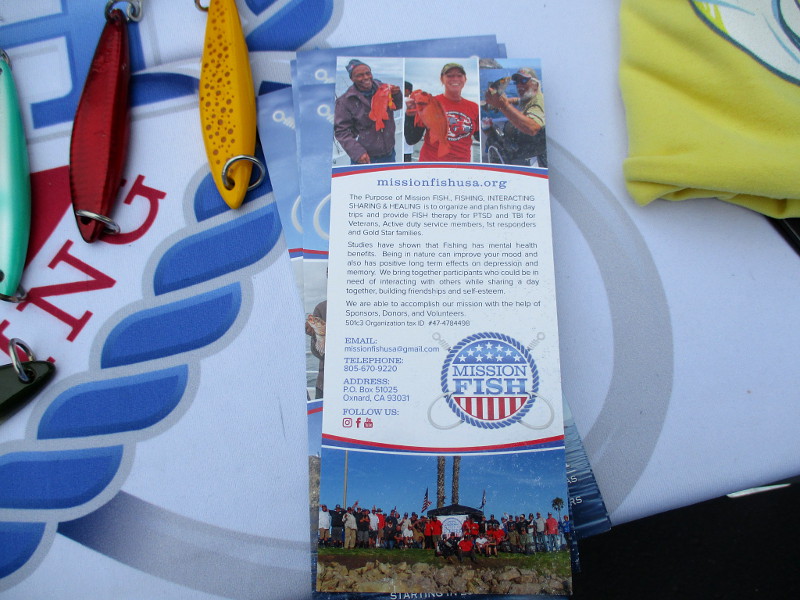
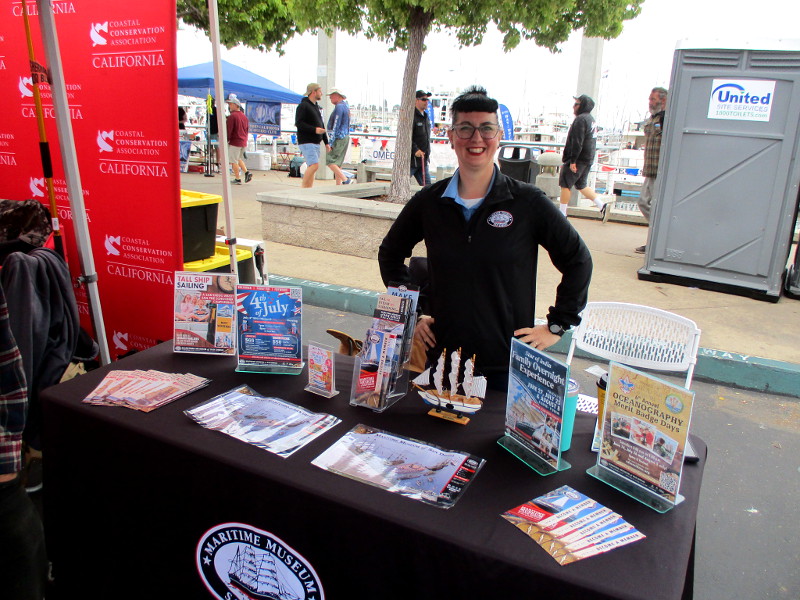
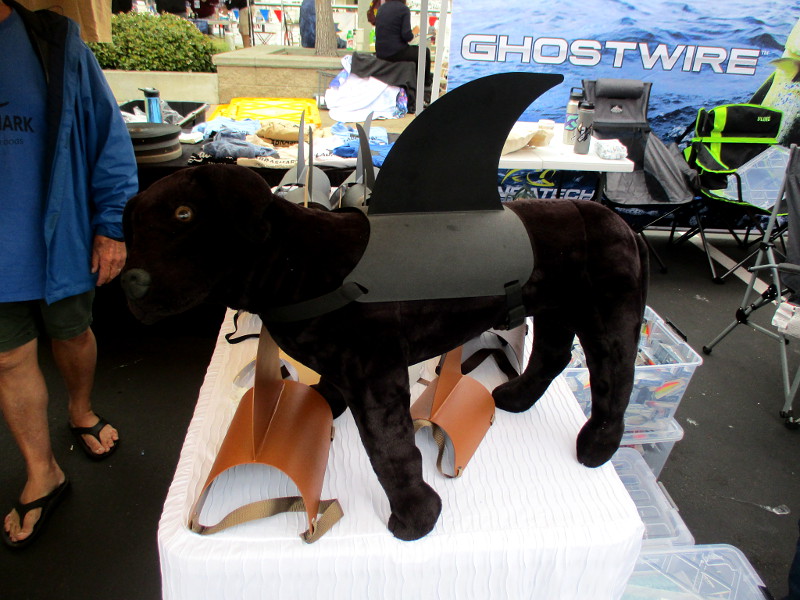
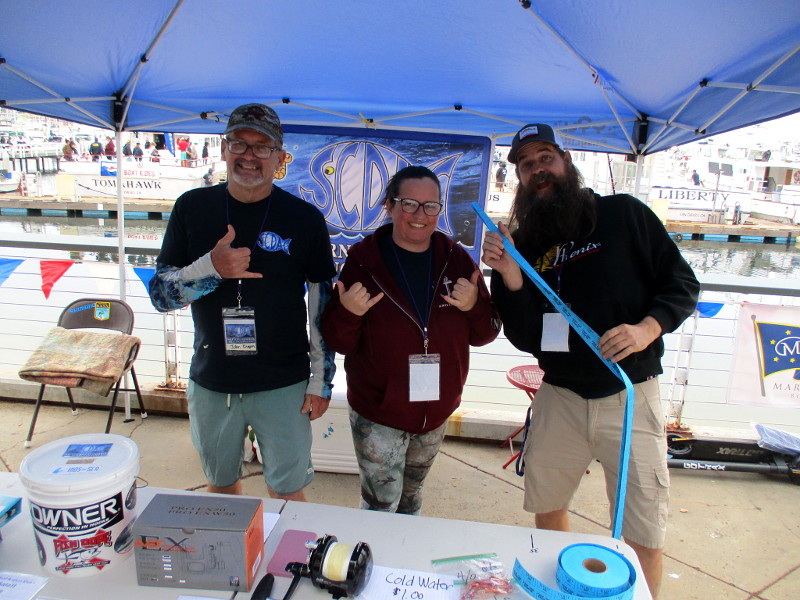
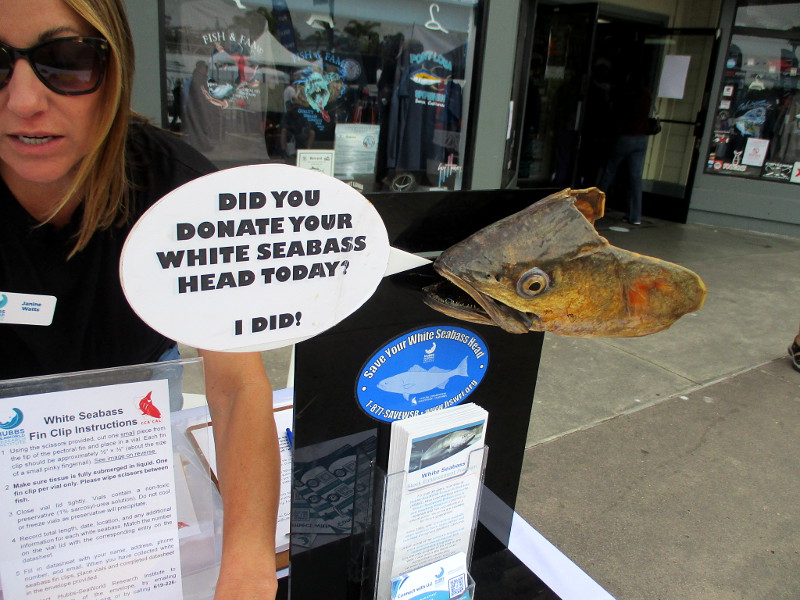
I was interested to see many charitable organizations. Please read my photo captions.
It had been years since I’ve headed down to Day at the Docks. I’m glad I went!
Reel Stoke Adaptive Sportfishing is a new program of Oceanside-based non-profit Stoke For Life Foundation. The program’s purpose is to expose novice or seasoned adaptive anglers and people with disabilities to southern California sport fishing up close and personal. Don’t let any obstacle stand in the way of your dreams!Catalyst Cares does many things. They organize community cleanups, provide assistance to veterans and those who have a criminal record, and disaster relief.Mission Fish organizes and plans fishing day trips and provides FISH therapy for PTSD and TBI for Veterans, Active duty service members, 1st responders and Gold Star families.Southern California Deaf Anglers Club (SCDAC) was founded in 1973. Its main purpose is to promote and educate deaf and hard of hearing people in fishing. That’s awesome!HUBBS-SeaWorld Research Institute was on hand. They are a non-profit scientific research organization committed to conserving and renewing marine life, which includes working to maintain healthy white seabass populations.
…
I post new blogs pretty often. If you like discovering new things, bookmark coolsandiegosights.com and swing on by occasionally!
I live in downtown San Diego and love to walk around with my camera! You can follow Cool San Diego Sights via Facebook or X.
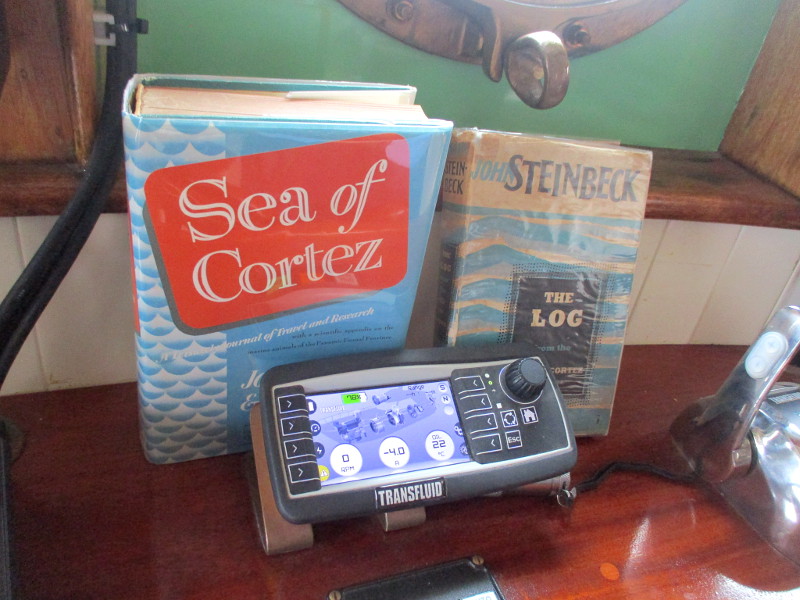
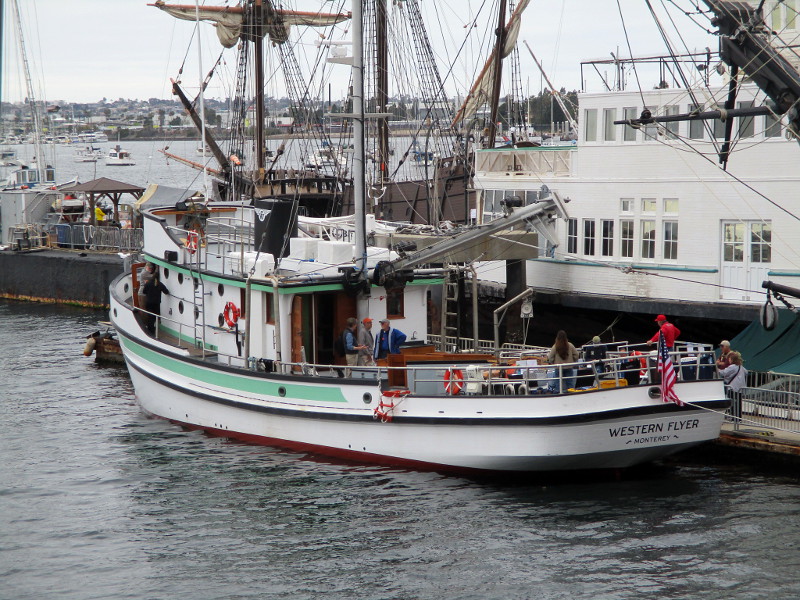
In 1940, a year after publishing his masterpiece The Grapes of Wrath, John Steinbeck went on a scientific expedition to the Sea of Cortez with marine biologist Ed Ricketts. The 4000 mile, six week journey, made famous in Steinbeck’s books Sea of Cortez and The Log from the Sea of Cortez, utilized the Monterey fishing boat Western Flyer, a 77-foot purse seiner that had been used in the sardine fishery.
On their way to Baja California, Steinbeck, Ricketts and the small crew of the Western Flyer visited San Diego. Eighty five years later, the storied fishing boat returned!
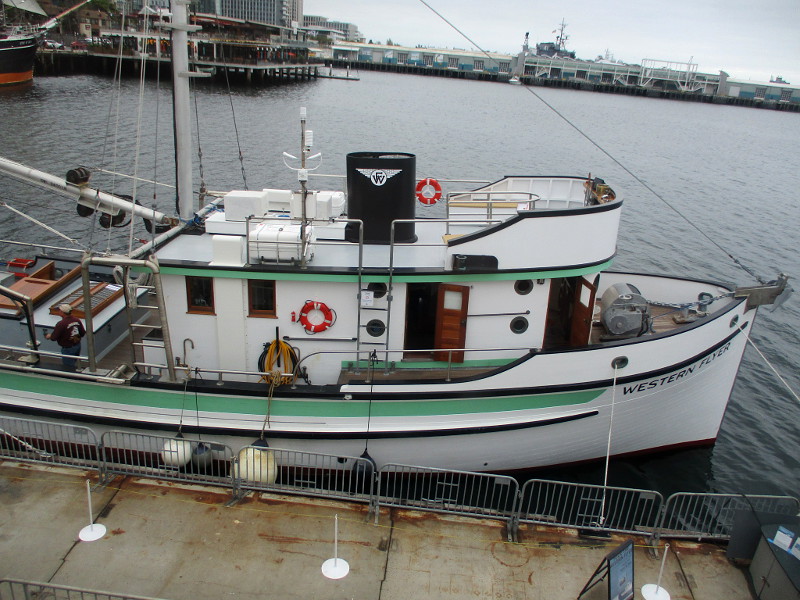
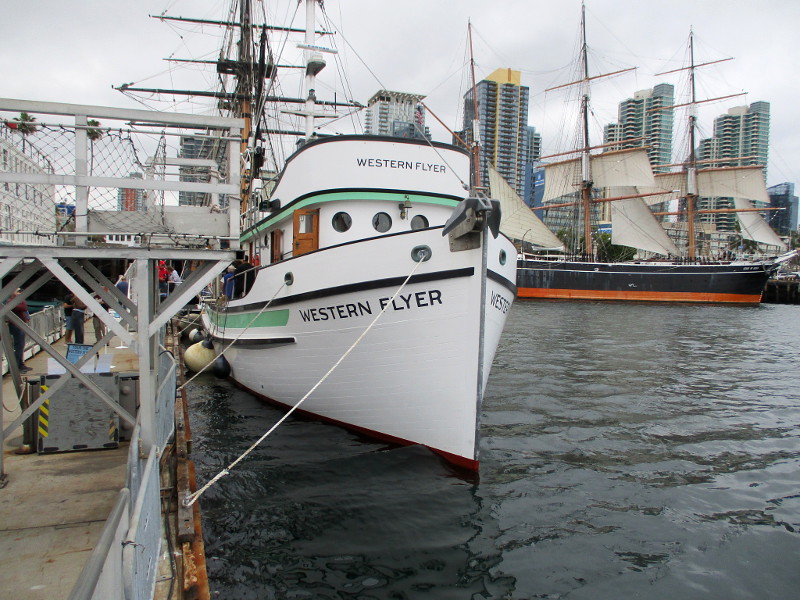
Yesterday the Western Flyer was docked at the Maritime Museum of San Diego and museum visitors had the opportunity to tour her!
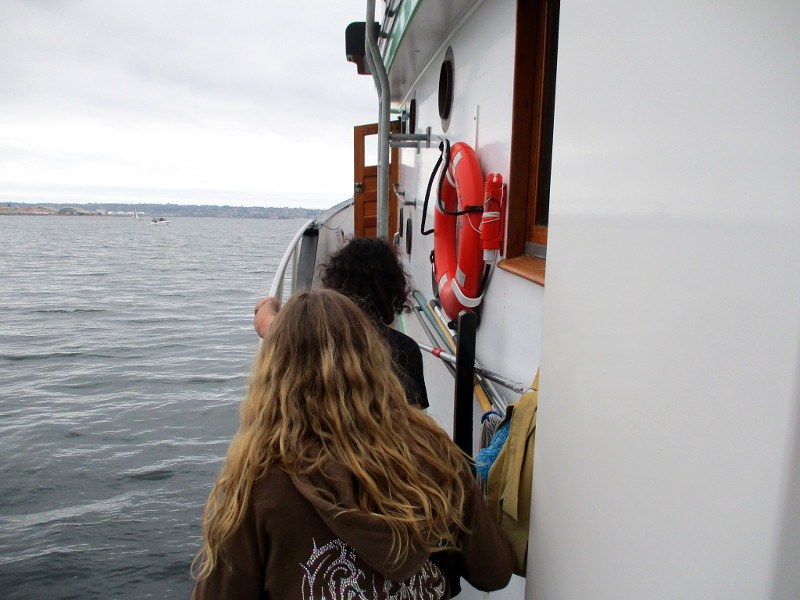
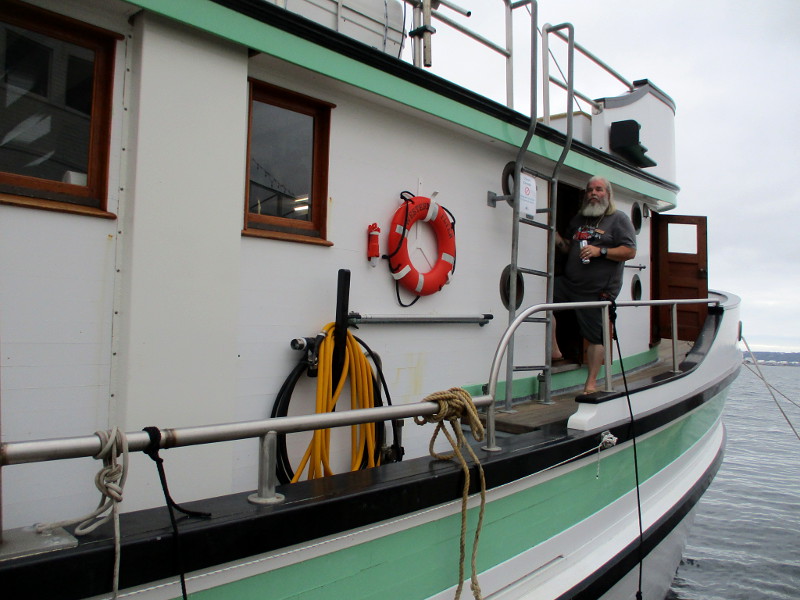
I was one of many who stepped aboard the historic vessel that is called the most famous fishing boat in the world. I took photographs, of course!
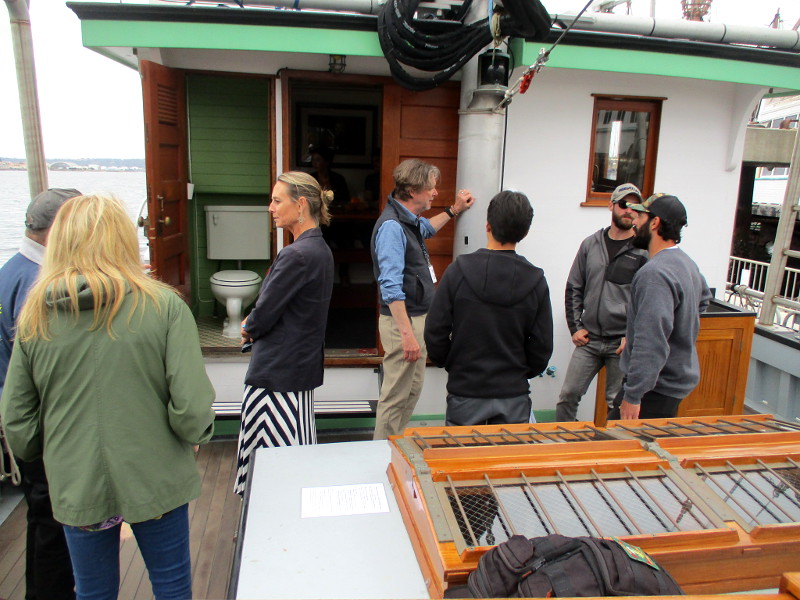
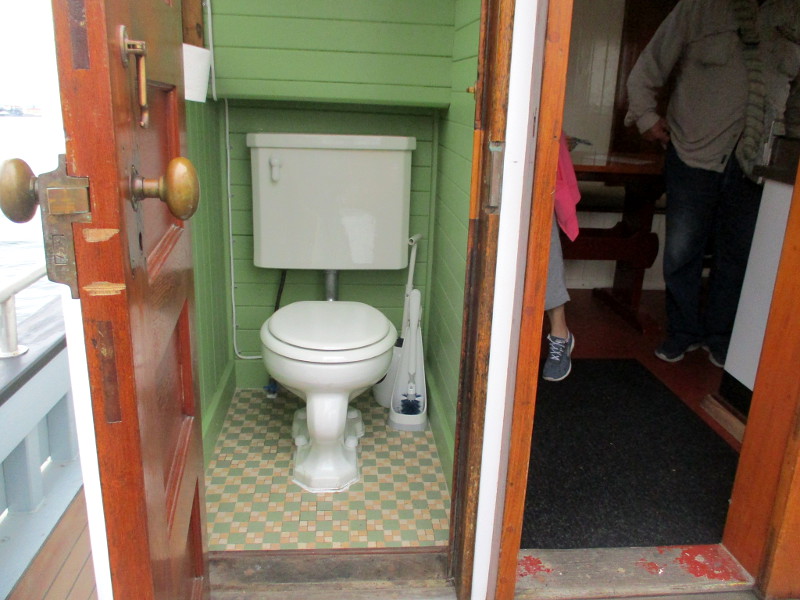
The first thing we were shown was the head! Yes, what you see in the next photograph is where John Steinbeck himself sat! During the Sea of Cortez expedition, he developed the idea for his future novels Cannery Row and The Pearl. Perhaps he did some brainstorming here…
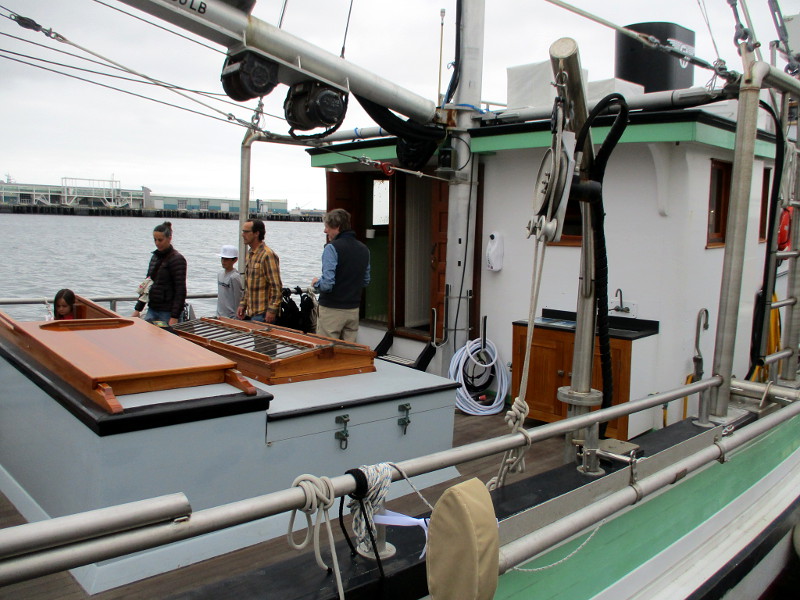
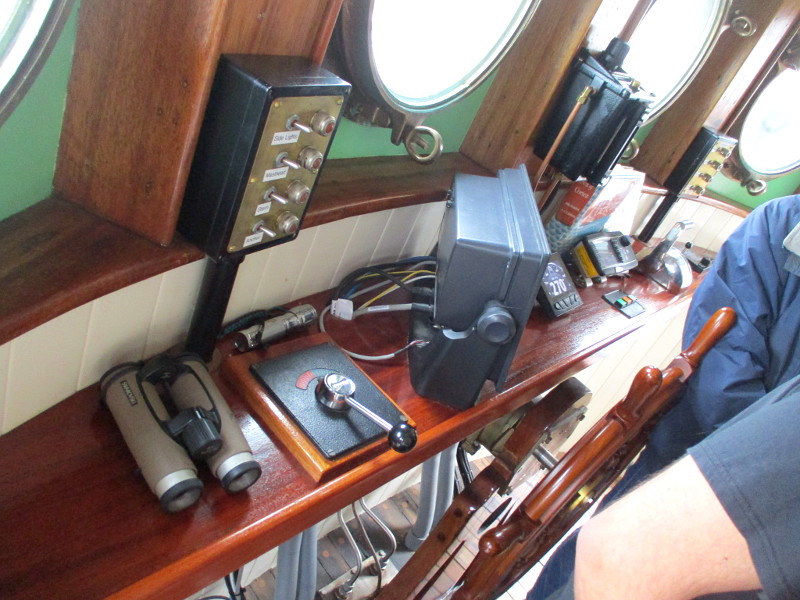
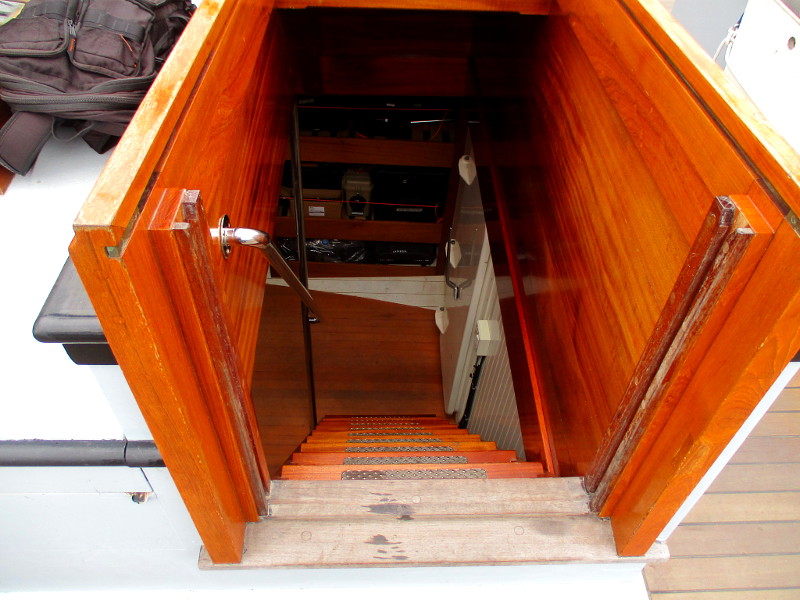
We then went forward to the pilot house…
All the instruments are modern–the Western Flyer during its long complex history sank and was submerged for six months. The boat was restored to look and feel as it did originally. Ninety percent of the hull and ten percent of the wheelhouse was replaced.
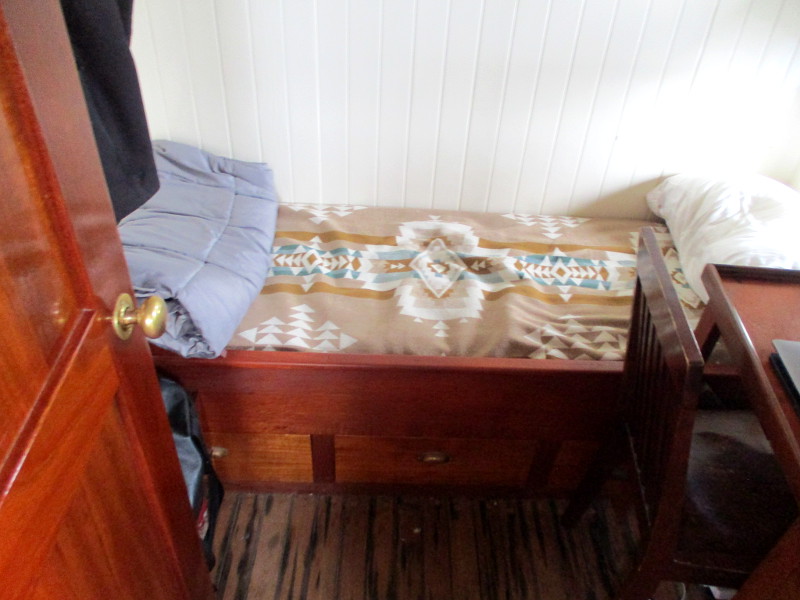
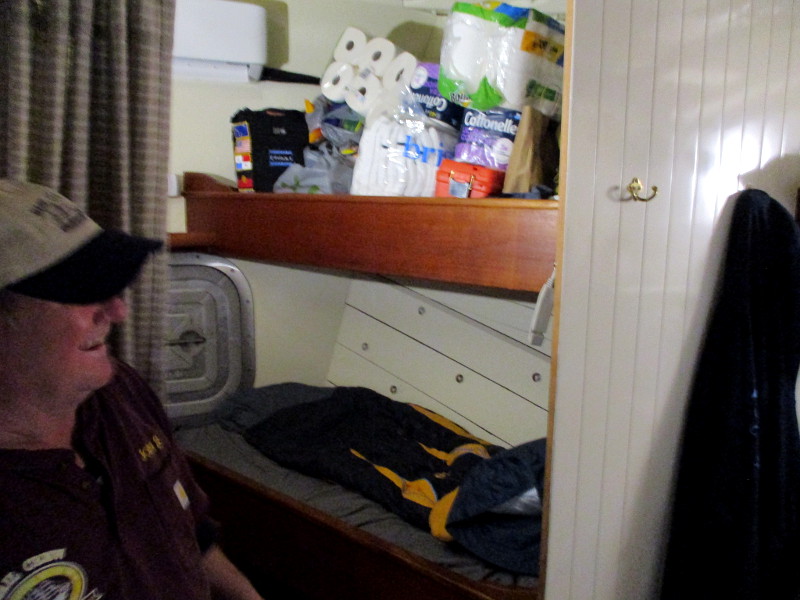
When we turned around, we discovered a small room with a single bed. This is where Steinbeck’s wife, Carol, slept. Even though she was part of the marine specimen collecting expedition, she was never mentioned in Steinbeck’s books concerning it.
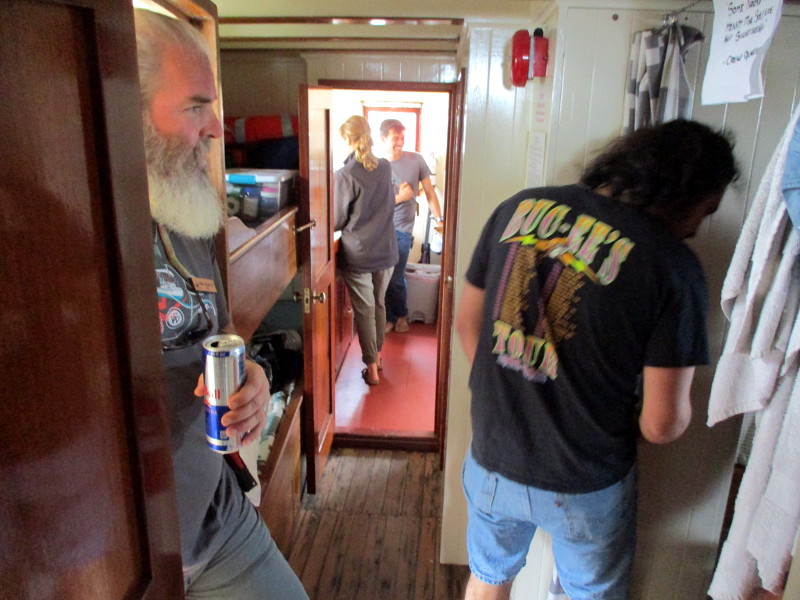
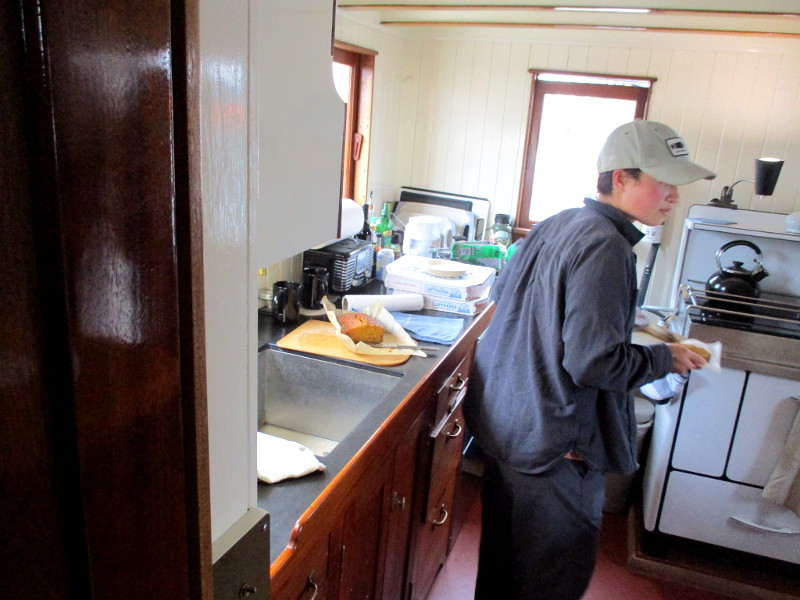
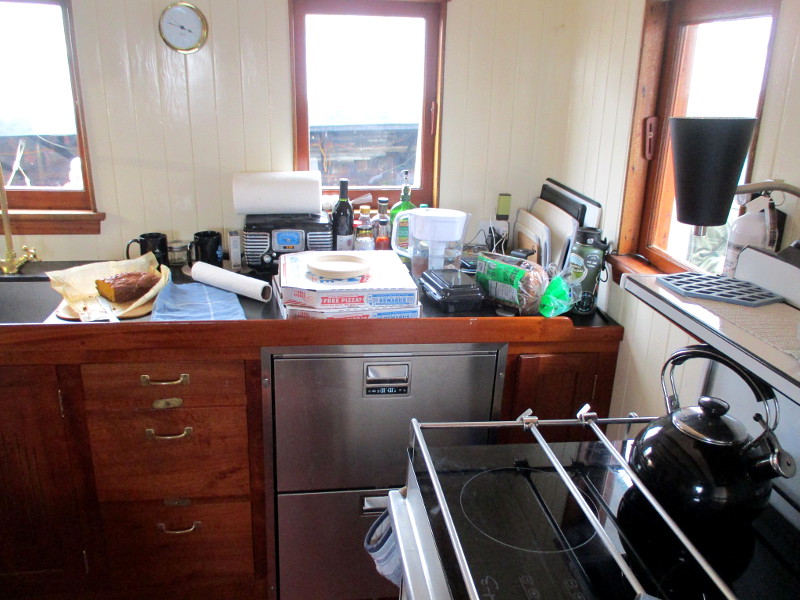
We then proceeded down through the deckhouse past more equipment and bunks and entered the galley. The Western Flyer Foundation takes students out on educational trips, performing ocean research. The young people are privileged to gather around a table where Steinbeck and his friends sat…
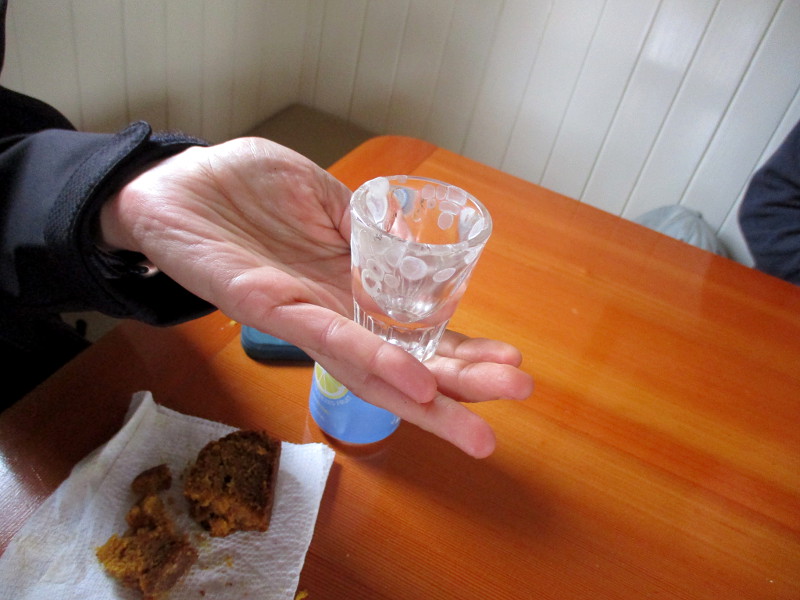
At the table, I was shown a remarkable shot glass. It retains marking from barnacles that attached to it while the boat was submerged. The shot glass is dated from the 1930s. It’s quite likely that John Steinbeck drank from it!
Back out on the boat’s weather deck, we descended into what originally had been the vessel’s fish hold. It was converted for the Sea of Cortez expedition into a laboratory, where small marine specimens–urchins, crabs, chitons, snails, clams, starfish and more, gathered mostly from the intertidal zone–were preserved using formaldehyde and other chemicals. Steinbeck and Ricketts discovered that the old fish hold was so damp that it quickly corroded much of their equipment.
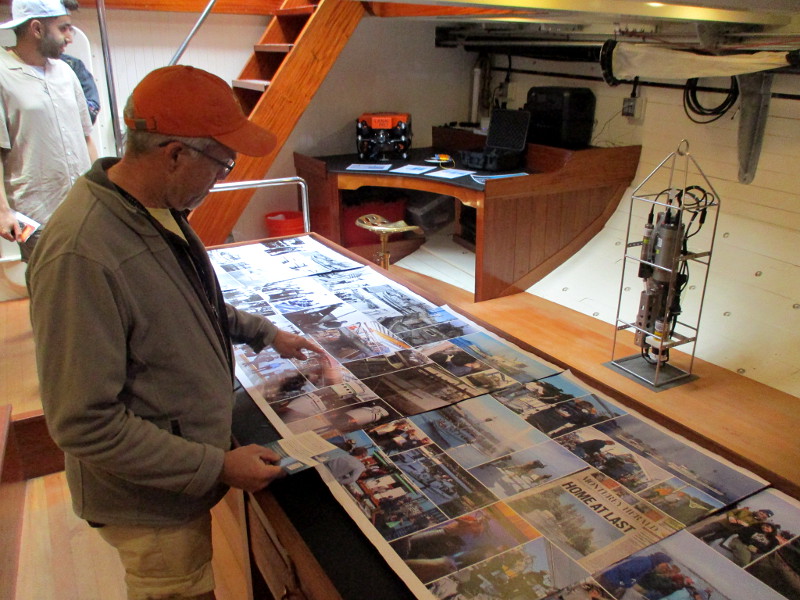
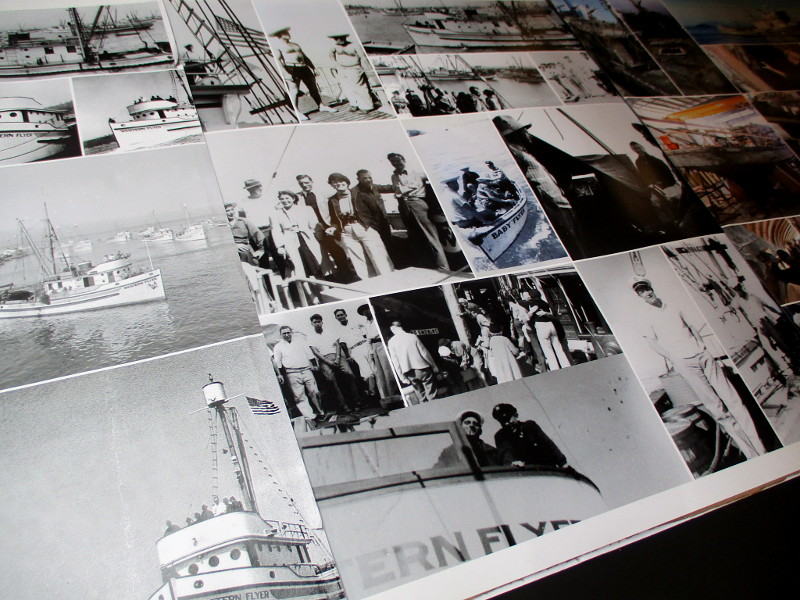
Historical photographs of Western Flyer, and from the Sea of Cortez expedition, cover the large table for our tour. You can see in the next photo some of the modern research equipment used by ocean-going college students today…
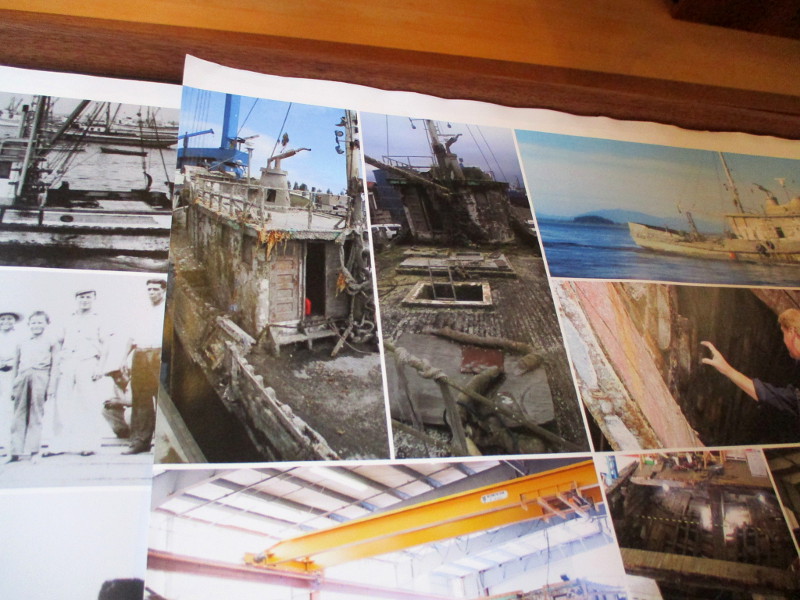
This is how Western Flyer looked before its 7 million dollar restoration by Port Townsend Shipwrights Co-Op…
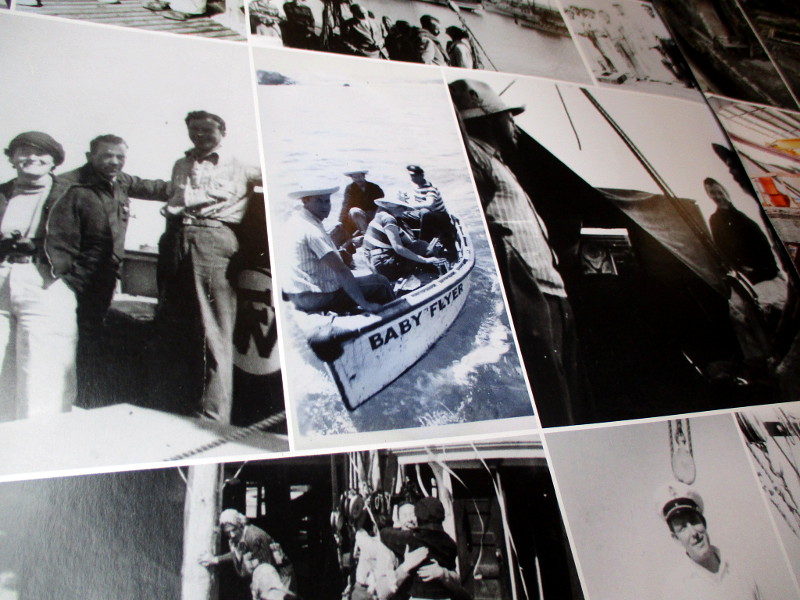
The image of the Baby Flyer is one of only two known photographs showing Steinbeck and Ricketts together. John Steinbeck is in the striped shirt, and Ed Ricketts is sitting next to him…
We then proceeded through the crowded engine room. You can learn about the Western Flyer’s original Atlas-Imperial diesel engine here. Today’s diesel/electric engine is quite useful for scientific research, allowing the boat to maneuver silently. I took no photographs of it–sorry.
We then peeked into the boat’s forepeak, where there are more bunks. John Steinbeck and the Western Flyer’s engineer Tex slept here and certainly held many interesting conversations.
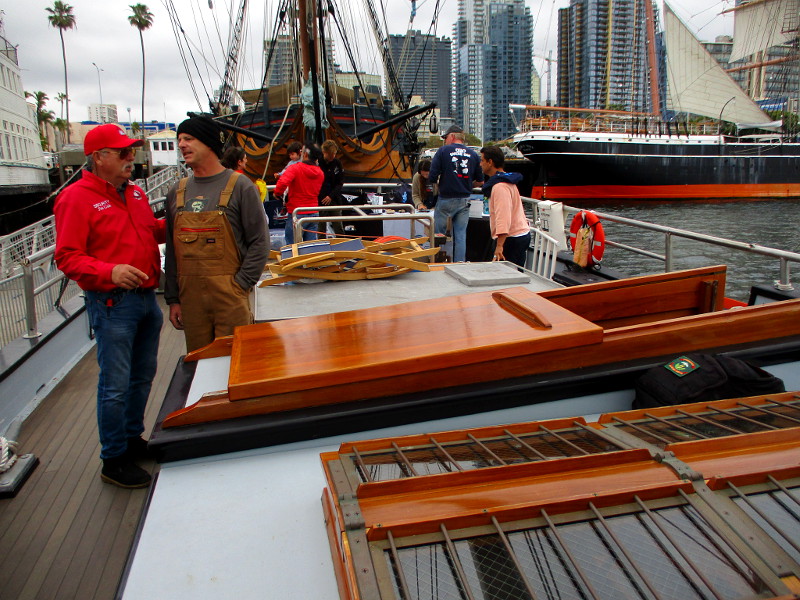
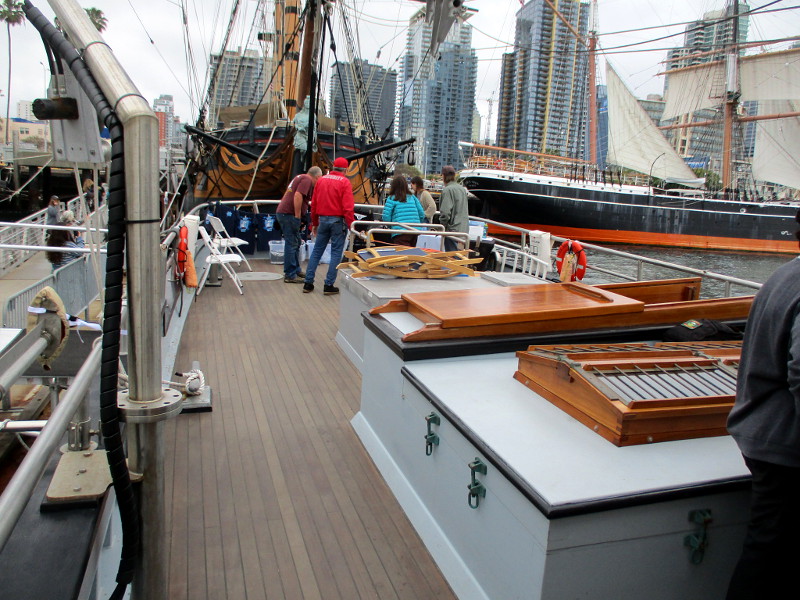
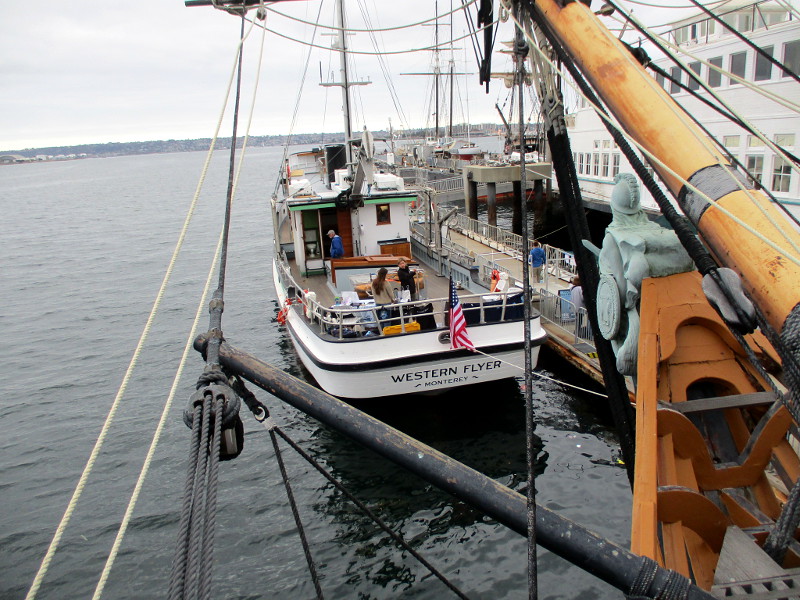
Up some steep steps and we’re back out on the main deck. That is HMS Surprise of the Maritime Museum of San Diego straight ahead, and their iconic Star of India–oldest active sailing ship in the world–to the right.
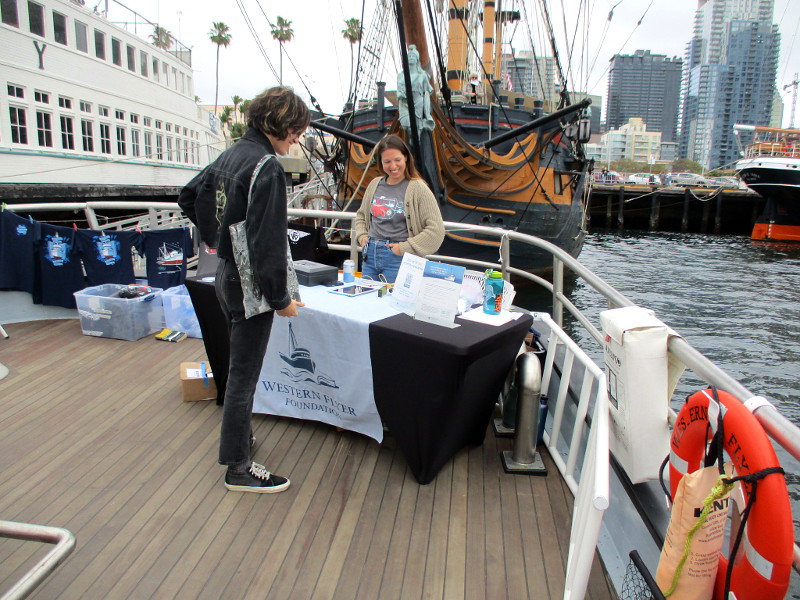
The Western Flyer Foundation had hats, shirts and stickers available for purchase. They are a nonprofit and would appreciate your donation!
Some more looks…
After departing the Maritime Museum of San Diego, the restored Western Flyer heads south to Ensenada, Mexico. They’re embarking on a recreation of the historic Sea of Cortez expedition. Instead of collecting marine specimens, however, they will be making new friends and educating the curious.
Follow the Western Flyer’s journey online! Experience it all virtually on the Western Flyer Foundation’s Facebook page here, and their Instagram page here!
…
I post new blogs pretty often. If you like discovering new things, bookmark coolsandiegosights.com and swing on by occasionally!
I live in downtown San Diego and love to walk around with my camera! You can follow Cool San Diego Sights via Facebook or X.
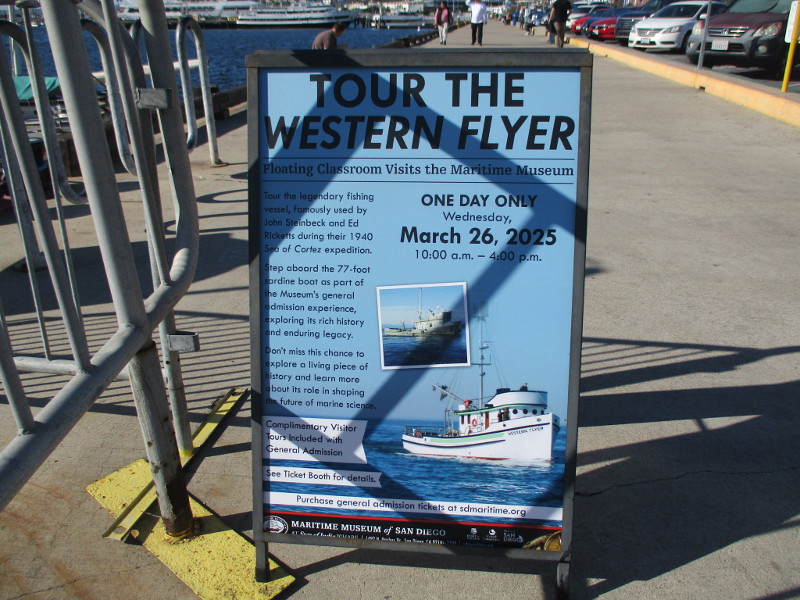
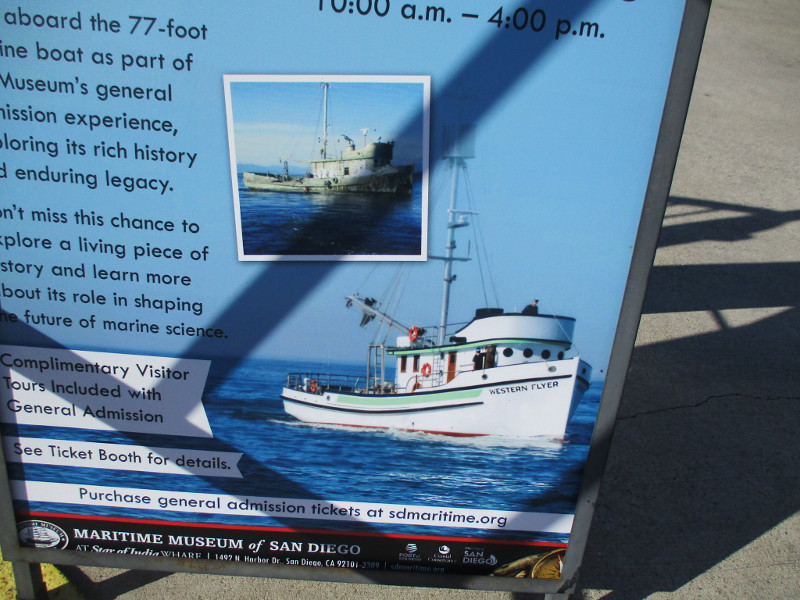
Western Flyer, the world’s most famous fishing boat, will be visiting San Diego on March 26, 2025, and you have the opportunity to tour it!
If you’ve read John Steinbeck‘s famous book Sea of Cortez, you’ll recognize the name of this fishing boat. In 1940, Steinbeck and his friend Ed Ricketts explored the Gulf of California in this very boat.
For decades the boat was lost, then it was found and restored by the Western Flyer Foundation. It now operates as a floating classroom, educating youth about the intersection of science and literature.
With a General Admission ticket, visitors to the Maritime Museum of San Diego will be able to step aboard and tour the legendary fishing boat as it makes its visit to our city!
…
I post new blogs pretty often. If you like discovering new things, bookmark coolsandiegosights.com and swing on by occasionally!
I live in downtown San Diego and love to walk around with my camera! You can follow Cool San Diego Sights via Facebook or X.
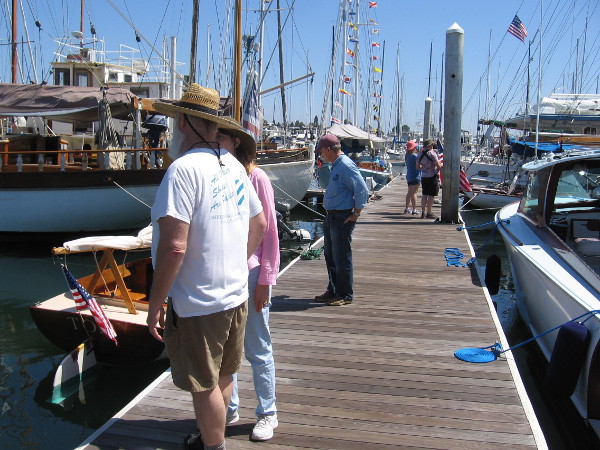
Looking for something great to do this coming Father’s Day weekend? The 33rd Annual Wooden Boat Festival is taking place next Saturday and Sunday on Shelter Island!
Sons, daughters and fathers will enjoy exploring dozens of beautiful wooden vessels, large and small, docked at the Koehler Kraft boat building company. There will be a wide array of incredible vintage wooden boats that have been beautifully maintained and restored.
It’s the premier event of its kind in Southern California. Visitors will be able to board many of the wooden craft and be awed by the fine craftsmanship.
Tickets are very affordable and kids are about half price, so you can bring the whole family. There will be artists, live music, food and raffles, and all proceeds from the event go to benefit the Sea Scouts.
Visit the Wooden Boat Festival website here to learn more!
…
Thanks for visiting Cool San Diego Sights!
I post new blogs pretty often. If you like discovering new things, bookmark coolsandiegosights.com and swing on by occasionally!
I live in downtown San Diego and love to walk around with my camera! You can follow Cool San Diego Sights via Facebook or X.






 Cool San Diego Sights!