I’ve published another very short story. It can be read in just a few minutes. It’s titled One Strange, Shimmering Dream.
Would you like to be inspired? You might enjoy reading it. Click here.
What is your dream?
I’ve published another very short story. It can be read in just a few minutes. It’s titled One Strange, Shimmering Dream.
Would you like to be inspired? You might enjoy reading it. Click here.
What is your dream?

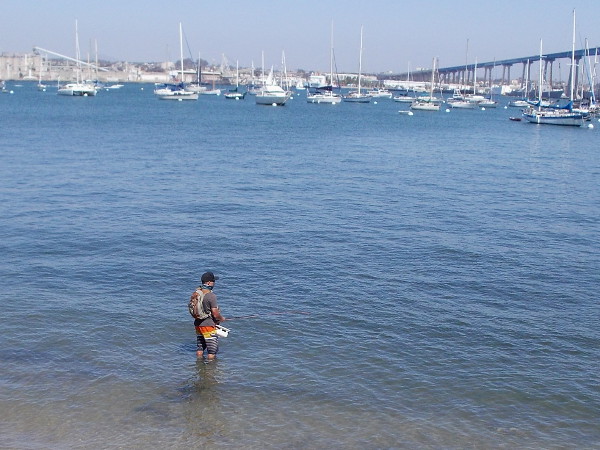
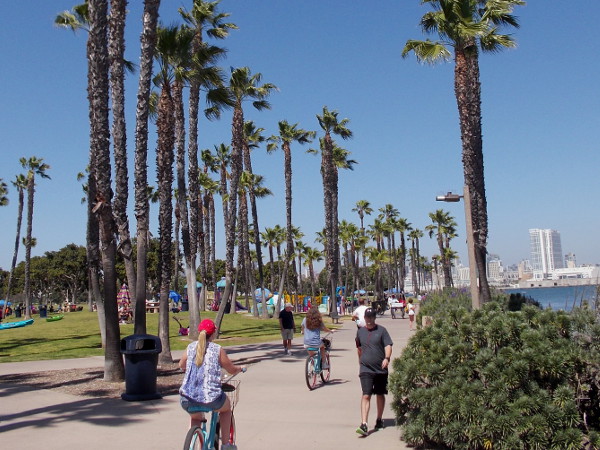
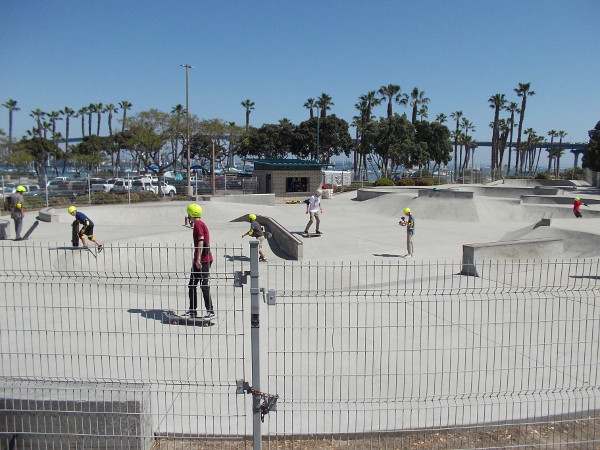
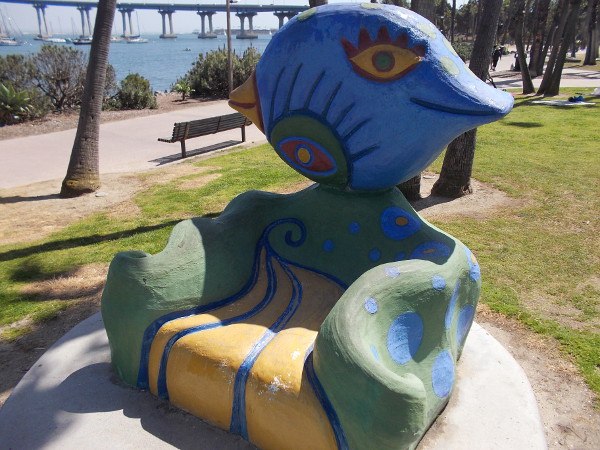
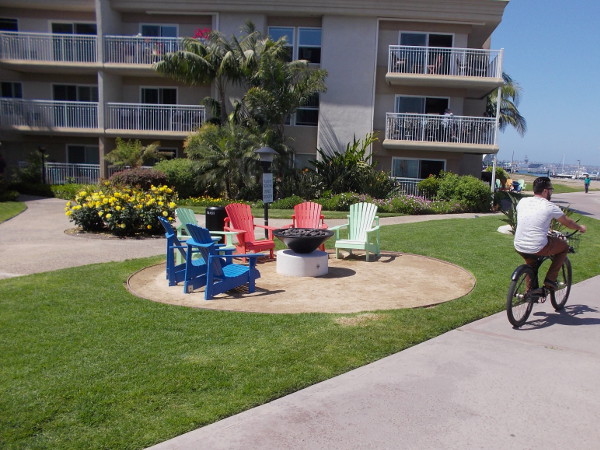
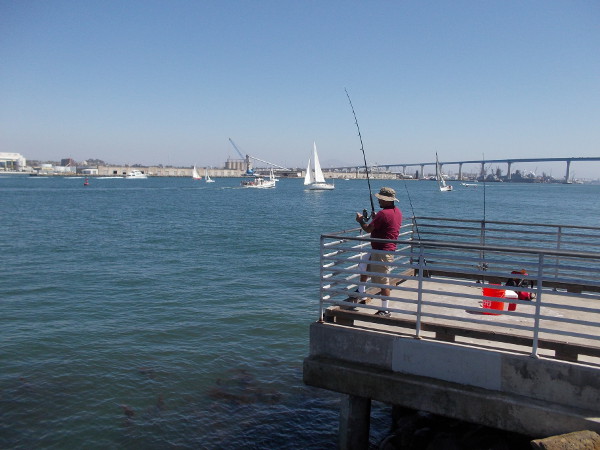
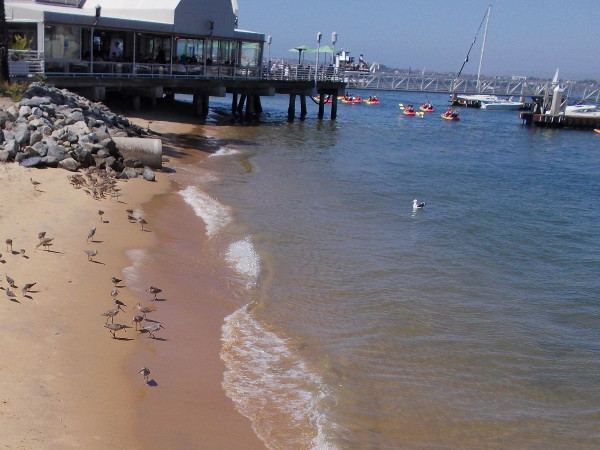
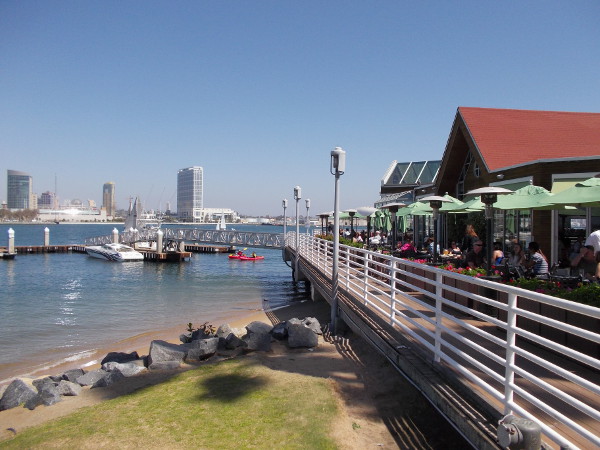
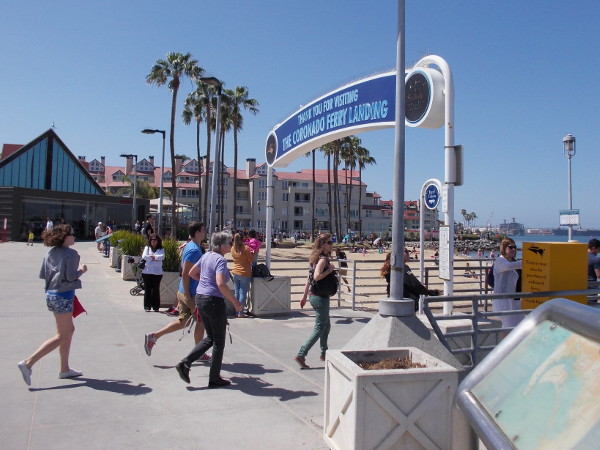
Yesterday I took another fun, leisurely walk! I went from the Coronado Bay Bridge end of Tidelands Park up the sunny Bayshore Bikeway to the Coronado Ferry Landing. And I took lots of pics, naturally!
Perhaps you can see why Coronado is one of my favorite places.
I feel very fortunate to live in San Diego. There are so many cool and beautiful sights. And I swear every day is amazing.






…
I live in downtown San Diego and love to walk! You can follow Cool San Diego Sights via Facebook or Twitter!
Do you like to read short pieces of thought-provoking fiction? You might enjoy checking out Short Stories by Richard.

Today I boarded the Maritime Museum of San Diego’s world-famous Star of India. The lady in the ticket booth informed me that the deck replacement began about a week or so ago!
You might remember I blogged about the Star of India’s deck replacement effort here. Click the link to check out that post, and you can see how the poop deck appeared before work began.
A nice docent allowed me to walk up the steps almost to the poop deck so I could get a good photograph. As you can see, the first section of the deck has been removed. I also noted that the saloon underneath has been carefully converted into a work area.
Do you love history or San Diego? Please click here to help with this very important project!


…
I live in downtown San Diego and love to walk! You can follow Cool San Diego Sights via Facebook or Twitter!
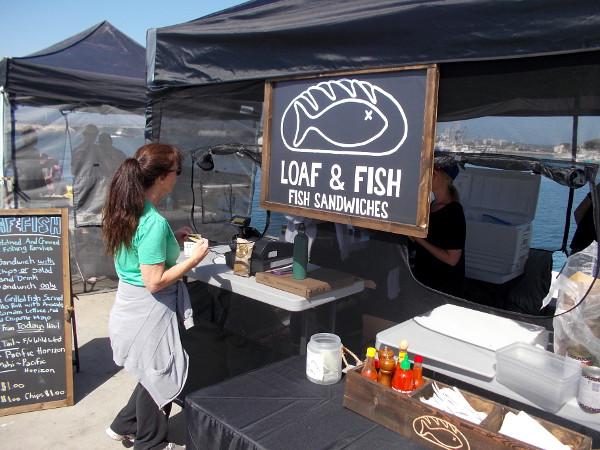
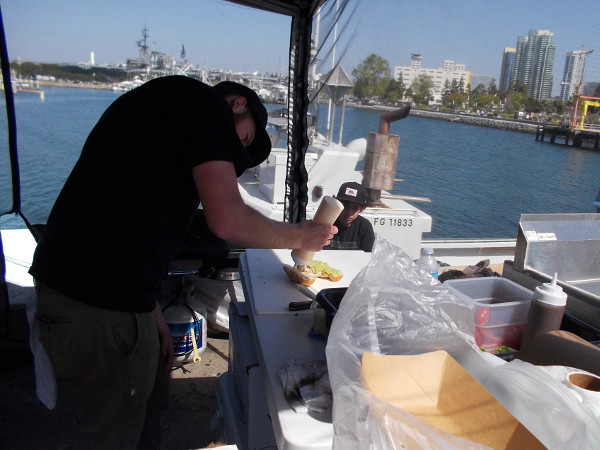
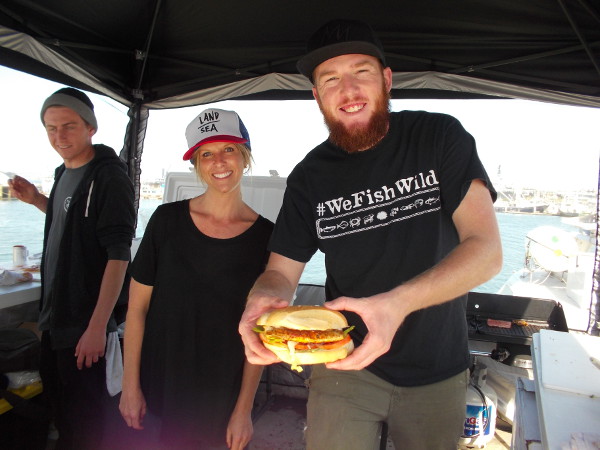
I’m not really a food blogger, but I have a terrible weakness for fish sandwiches, fish tacos and fish burritos. So when I saw a new food vendor was selling fresh fish sandwiches this weekend at the Tuna Harbor Dockside Market, of course I had to try one!
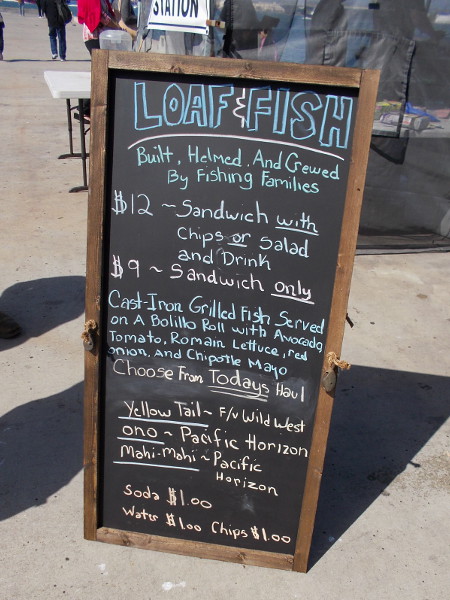
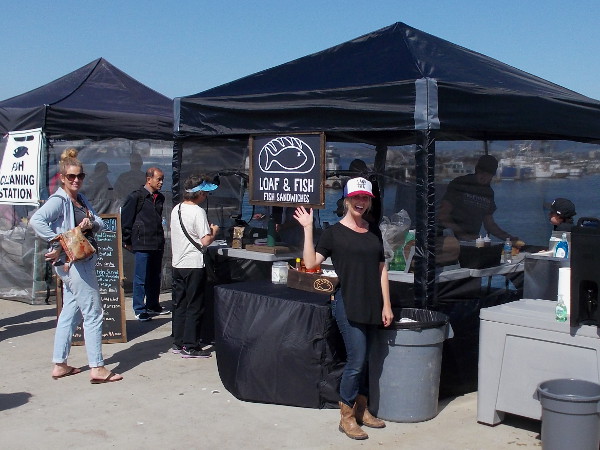
A bit down the pier you’ll find the sign that reads Loaf and Fish. Those are the nice folks you need to see. My grilled fish sandwich was really good! I was told they don’t have a website yet, but they’ll be there on the pier every Saturday morning, a tasty addition to the constantly growing Dockside Market!
(You can visit San Diego’s new outdoor fish market every Saturday morning on the pier just north of Seaport Village, next to Tuna Harbor.)
UPDATE!
Loaf and Fish has added a couple of items to their menu. You can now enjoy fish tacos and tasty fish soup!
The fish tacos are just as yummy as any you’ll find in San Diego. And keep in mind our city has the best fish tacos in the entire world.
I’ve also tried the fish soup and it’s really tasty! In addition to big chunks of freshly caught fish, there are fresh vegetables and slices of avocado floating on top! On chilly mornings this hot soup really hits the spot!
To top it all off, eating on the pier by the water–with the bustle of activity all around, including friendly fishermen and local fishing boats and the seagulls and playful sea lions barking nearby–it’s a feast for the senses that can’t be beat!
…
I live in downtown San Diego and love to walk! My blog covers anything that catches my fancy!
You can follow Cool San Diego Sights via Facebook or Twitter!
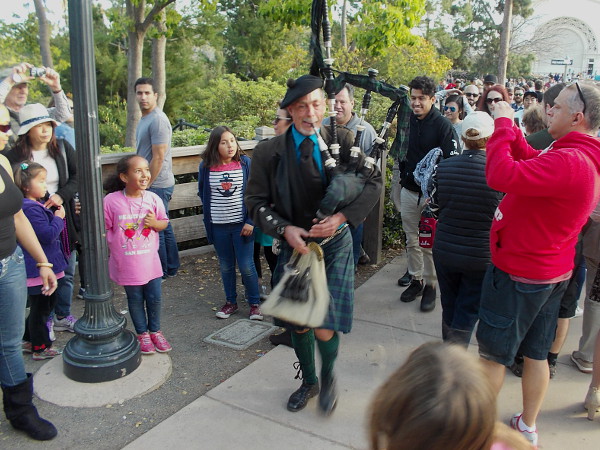
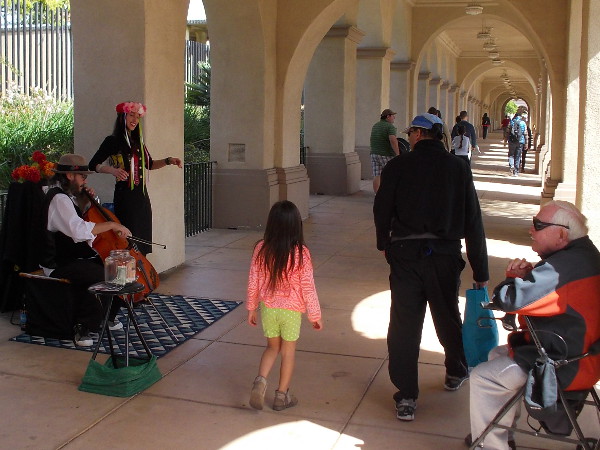
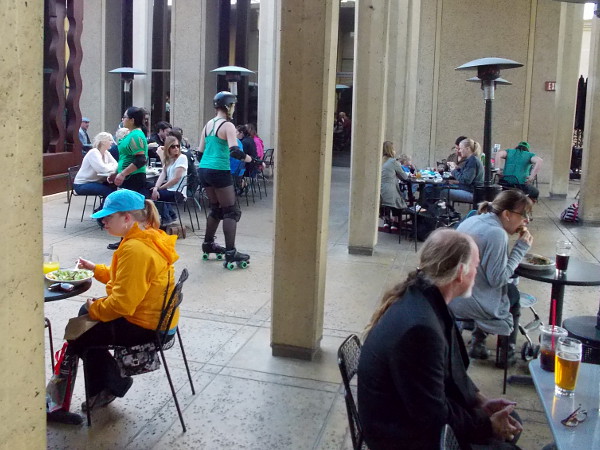
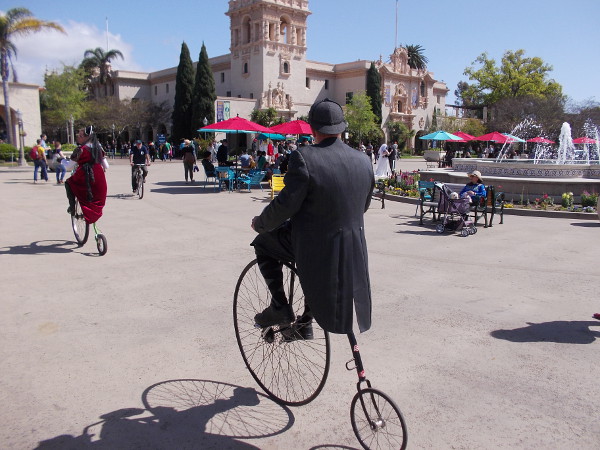
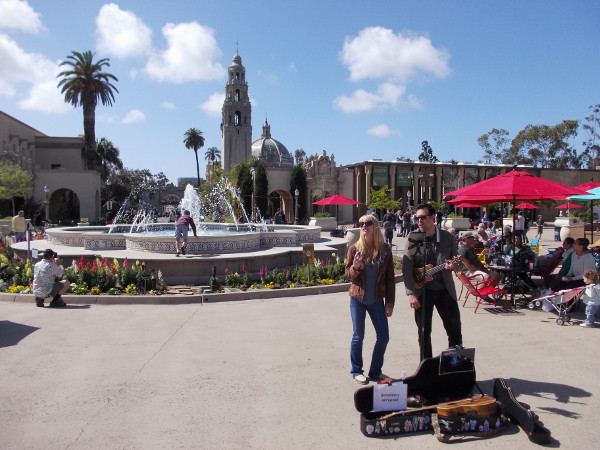
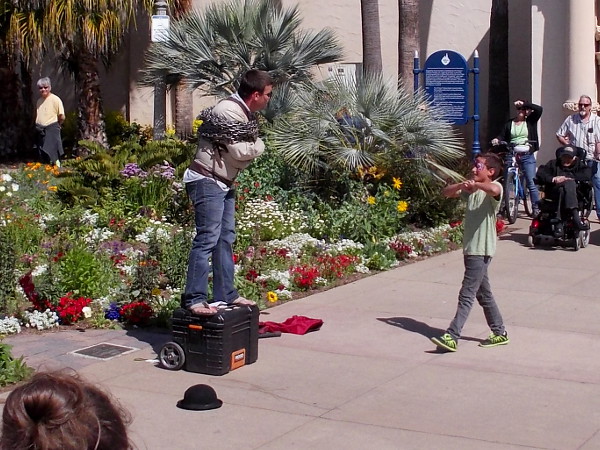
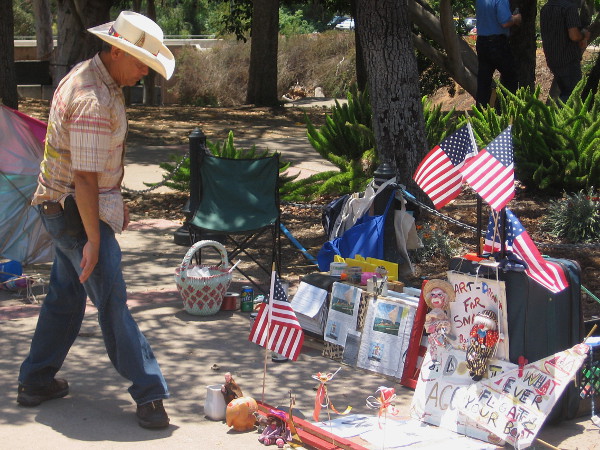
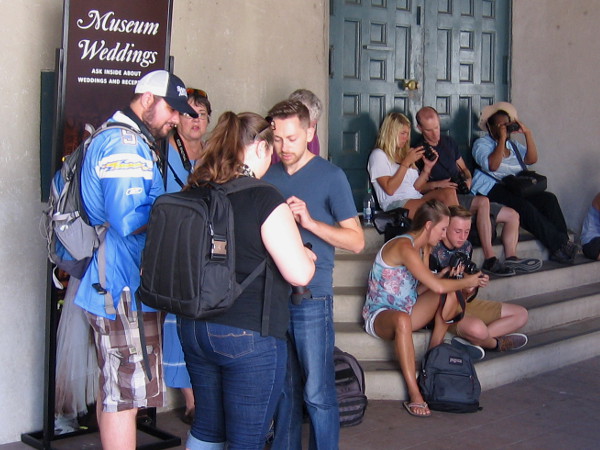
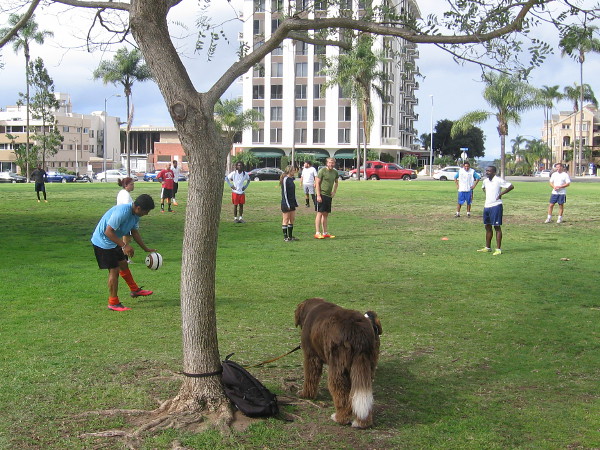
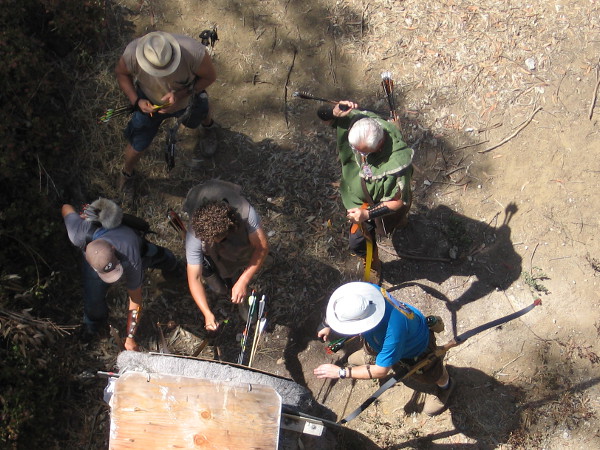
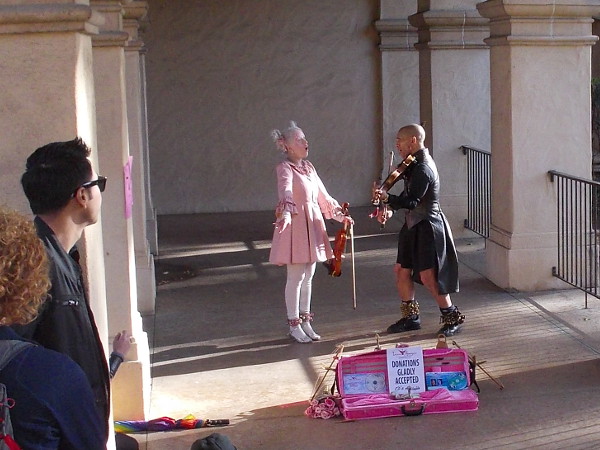
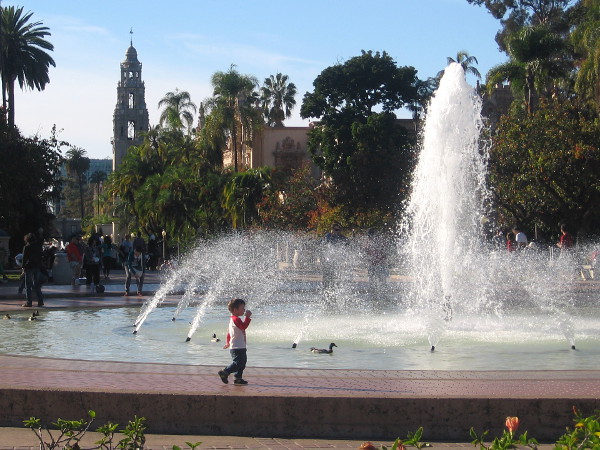
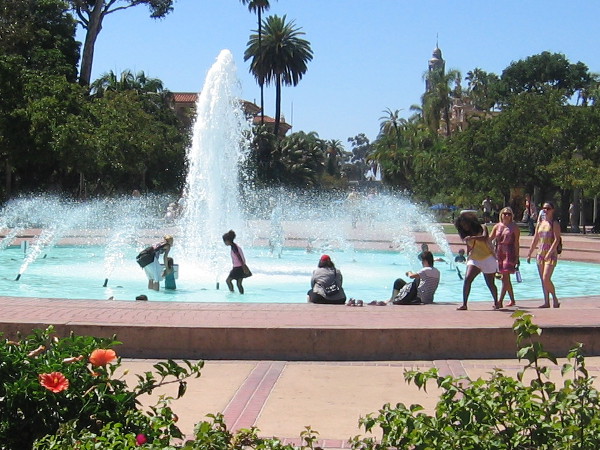
Real magic can be found in Balboa Park. Simply enter the place with wide eyes and an open heart.
You’ll find beauty, wonder, warmth, laughter, inspiration, and life as it should be.
All of it is magic.
A few photos…





…
I live in downtown San Diego and love to walk! You can follow Cool San Diego Sights via Facebook or Twitter!
Do you love Balboa Park? Follow my special new blog which I call Beautiful Balboa Park! It’s just getting started!

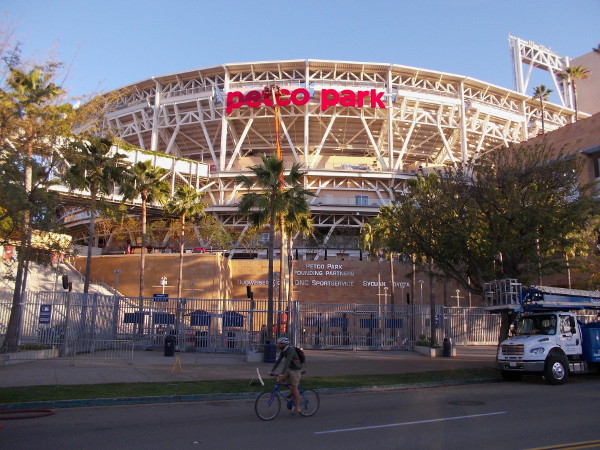
Just a quick couple pics. During my walk this morning, I happened to notice a big new Petco Park sign is being installed on the San Diego Padres’ downtown stadium. The new sign is a bright, cheerful red, and I’m sure it’s no coincidence that the lettering closely resembles the Petco logo. Workers are installing it from a crane just in time for Opening Day, which is a home game–April 4th against the Los Angeles Dodgers. Of course, the new sign will also be seen by millions of television viewers during the upcoming MLB All-Star game this summer. Go Pads!
…
I live in downtown San Diego and love to walk! You can follow Cool San Diego Sights via Facebook or Twitter!
You can easily explore Cool San Diego Sights by using the search box on my blog’s sidebar. Or click a tag! There are thousands upon thousands of surprising photos for you to enjoy!
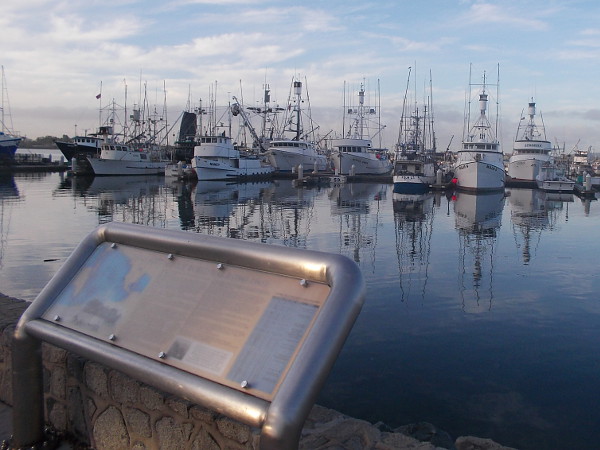
Some fascinating historical information can be found on San Diego’s Embarcadero, right next to Tuna Harbor where many commercial fishing boats dock downtown. The sign, erected by the San Diego Port Commission in 2008, is titled Tuna Fleet Service World War II (1941-1945). It provides a glimpse of how dozens of San Diego-based Tuna Clippers joined the American war effort during the Second World War.
Here is the text on the sign:
During World War II, 600 fishing vessels were taken by the Navy, Army, and Coast Guard, including 52 “Tuna Clippers”.
On Pearl Harbor Day, the U.S. canned tuna industry was located almost exclusively in Southern California, and canners received most of their tunas from “baitboats”. Fishermen on these boats chum live bait (sardines, anchovies) to attract the tunas into a feeding frenzy and then use rigged bamboo poles to pull the hooked tunas aboard. Dating from 1924, a fleet of large “baitboats” was developed and became know as “Tuna Clippers”. These large ships, equipped with powerful diesel engines and newly developed brine refrigeration, fished for tunas found migrating thousands of miles from San Diego on trips of 90 days or more. During the 1930s, this San Diego high seas fleet was studies by the U.S. Navy, resulting in wartime plans that included the conversion of Tuna Clippers to minesweepers.
At the time Pearl Harbor was attacked, there were 90 vessels in the California baitboat fleet, including 76 Tuna Clippers plus 3 under construction. The 49 Tuna Clippers taken by the Navy and 3 by the Army represented about 55% of the fish carrying capacity of the entire baitboat fleet.
After war was declared, the Government ordered the Tuna Fleet to make port in California or Panama. Ten of the Tuna Clippers entering the Canal Zone in December 1941, were immediately taken for temporary patrol duty. The U.S. Army took three Clippers for use in the Panama Sea region, the SHASTA and CAPE HORN as tugs and the INVADER as a supply ship.
On February 16, 1942, tuna fishermen attended a meeting conducted by Commander W. J. Morcott, USN (Ret.) at the Naval Reserve Armory. 600 tuna fishermen signed up, with Skippers and Engineers receiving warrant ratings, and others given petty officer ratings according to age and experience. Within 10 days, a fleet of 16 Tuna Clippers, painted gray and marked with YP number designations as Yard Patrol vessels, left San Diego harbor on February 25, 1942. Their destination was the “Panama Sea Frontier” for picket duty to protect the Canal.
In May 1942, a convoy of six YP Clippers left San Diego for the “Hawaiian Sea Frontier”. These YPs transported supplies to French Frigate Shoals, the islands of Midway, Johnston, Fanning, Christmas, Palmyra, and Canton. In June 1942, seven YP Clippers left San Diego, for service at Efate Island or Samoa, or Auckland, New Zealand. In November 1942, another group of five headed for the U.S. Naval base at Tutuilla, Samoa. As the conflict moved towards Japan, YP Tuna Clippers were sent on missions to other Islands and Atolls of the Western Pacific.
The Navy discovered that “Yippies” were able to transport troops, gasoline, ammunition, and refrigerated cargoes and capable of navigation within shallow atolls and over minefields, of towing damaged warships, and rescuing downed pilots. This is why “Yippies” were also called the “Pork Chop Express” or “Errand Boys of the Pacific” or the “Solomon Island Ferry”. During the Solomon Island Campaign in 1942, the PARAMOUNT (YP 289) and the PICOROTO (YP 290) delivered frozen turkeys and all the fixings for a traditional holiday feast at Guadalcanal Island. In 1943, frozen turkeys were also delivered to the Marines fighting on Bougainville in time for Thanksgiving by the AMERICAN BEAUTY (YP-514).
“Yippies” were equipped with CW radios, fathometers, Navy radar and Navy sonar. Armament included machineguns, and other gun gear to fire Depth charges. The YP crew of tuna fishermen and regular Navy ran from 4 to 20 men.
Two YPs were destroyed in the Solomon Islands campaign by enemy surface ships: On 9 September 1942, off Tulagi Island, the PROSPECT (YP-346), and on 25 October 1942, off Guadalcanal Island, the ENDEAVOR (YP-284). The number of casualties sustained is unknown.
Two YPs were lost in the Midway region: On 23 May 1942, the TRIUNFO (YP 277) was destroyed by fire and explosions enroute to French Frigate Shoals (North of Hawaii), and then scuttled to avoid enemy capture. Only two crewmembers survived. During October 1942, the YANKEE (YP-345), with 17 crewmembers, on a voyage from Pearl Harbor to Midway Island via French Frigate Shoals, was “lost without a trace from causes unknown”.
Four YPs were lost at sea: CALIFORNIA (YP-235) on 1 April 1943, after fire and beaching in the Gulf of Mexico from an explosion of undetermined origin; NAVIGATOR (YP-279), 5 September 1943, foundered in heavy weather enroute to Townsville, Australia; CAPE SAN VINCENT (YP-280), on 24 April 1946, sank near Saipan Island; SAN SALVADOR (YP-281) on 9 January 1944, was destroyed after the foundering in Force 9 storm, with crew of 19 and one dog rescued, near Wallis Island, South Pacific. After transfer to the U.S. Army in July, 1943 the SEA TERN (ex YP-269) was lost at sea off Baja California.
Three YPs were destroyed during October 1945, because of a typhoon off Okinawa: PARAMOUNT (YP-289); CONTE GRANDE (YP-520) and CHALLENGER (YP-239).
The Navy destroyed 7 YPs after the War during 1946 and 1947: AMERICAN VOYAGER (YP-287), CIPANGO (YP-504), EUROPA (YP-236), FALCOM (YP-515), QUEEN AMELIA (YP-516), QUEEN ELIZABETH (YP-519), and YVONNE LOUISE (YP-282).
The successful wartime experience of the “Yippies” caused the Navy to build 30 wood-hull vessels patterned on the Tuna Clipper design. Each of 30 newly constructed wood hull Navy YPs was of 128 in length, of 14 feet draft, and powered with a 500 H.P. diesel main engine. They were built during 1945, two each by 15 different shipyards located in California, Oregon, and Washington.
Commencing in 1947, 24 of these YPs were added to the U.S. Tuna Fleet.
After the war, the Navy and Army transferred 33 surviving former Tuna Clippers to the War Shipping Administration (WSA) for buy-back by the previous owners. Three of these surviving vessels never returned to the U.S. tuna fishery: CABRILLO, FISHERMAN II, AND THEODORE FOSS.
Additional information on the sign:
Tuna clippers joined the navy too and were painted a dull slate grey, while the stalwart Portuguese descendants learned to fire the guns that were mounted upon the deck. Equipped with the finest refrigeration systems, these trim craft became “errand boys” of the Pacific, delivering food and fuel to the fronts. One day these tunaboats will be convoying a fleet of small ships to Panama. Next month, perhaps, they’ll be off to Midway Island with gasoline for navy PBYs. Two months later, they’ll be down in the Solomons running the “milk route” between Guadalcanal and Tulagi with supplies – part of the saga of men and boats.
excerpt from San Diego Union
July 23, 1943
Scores of converted tuna clippers slipped out of San Diego bay on their way to do valiant work in Pacific battle areas. First boats sailed from here Feb. 25, 1942. These small, sturdy diesel-powered boats are ideal for convoying and patrolling as well as for transporting needed war supplies to defeat the Japanese.
excerpt from San Diego Union
July 23, 1943


…
I live in downtown San Diego and love to walk! You can follow Cool San Diego Sights via Facebook or Twitter!
You can easily explore Cool San Diego Sights by using the search box on my blog’s sidebar. Or click a tag! There are thousands upon thousands of unique photos for you to enjoy!
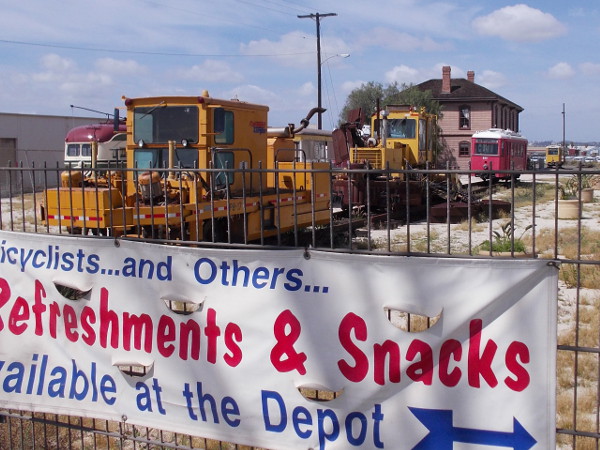
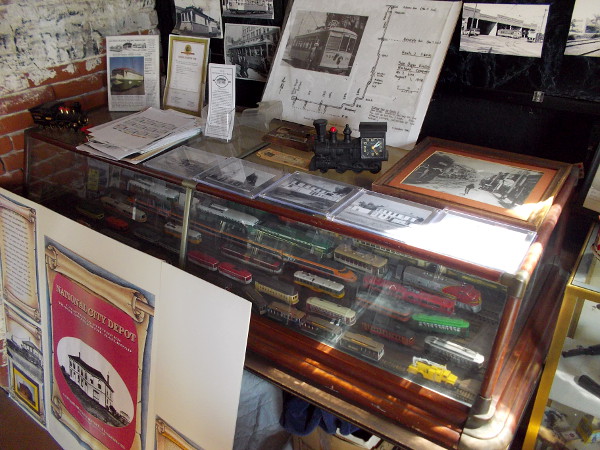
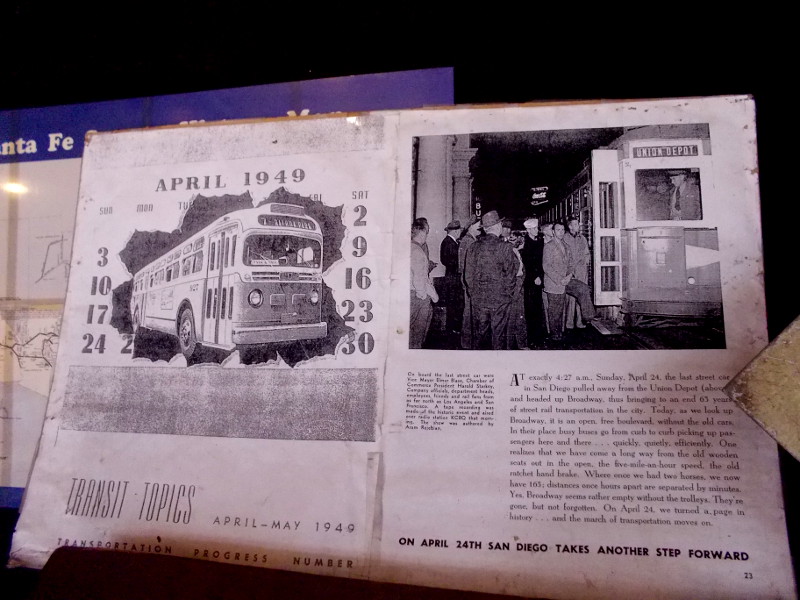
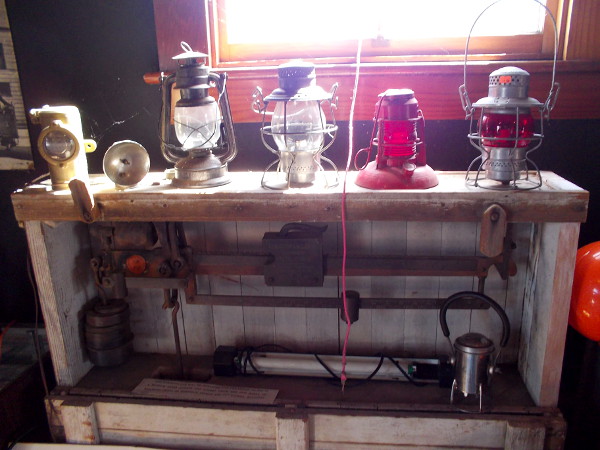
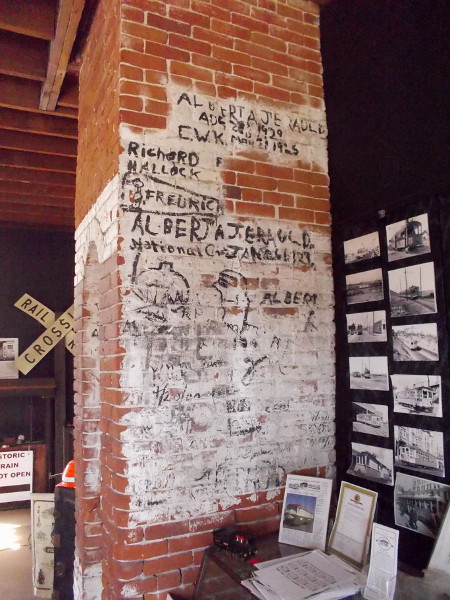
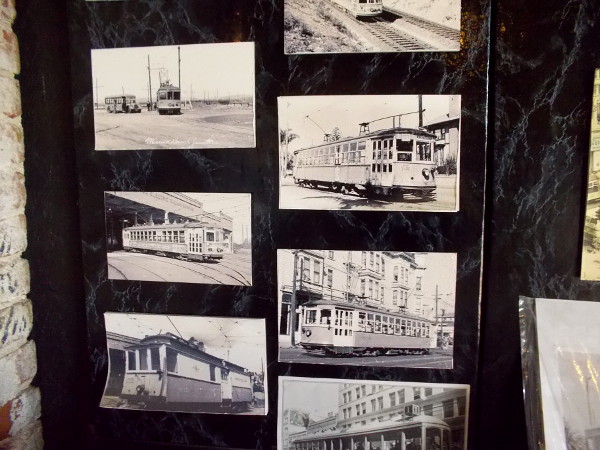
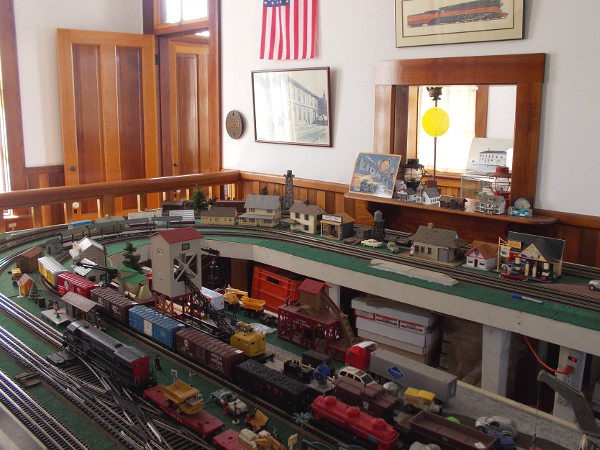
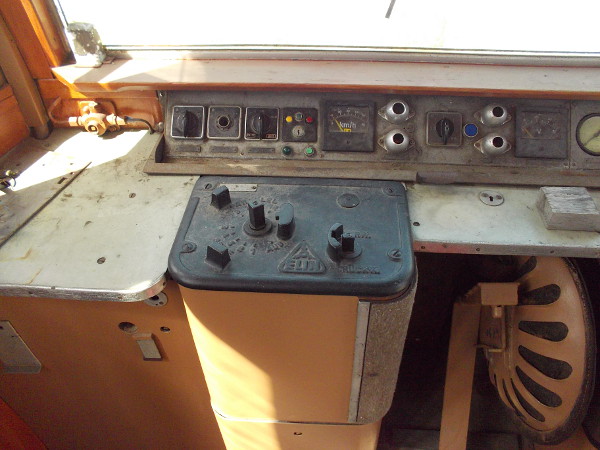
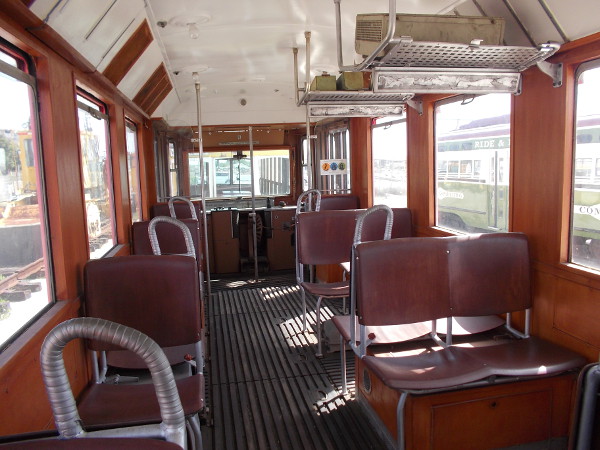
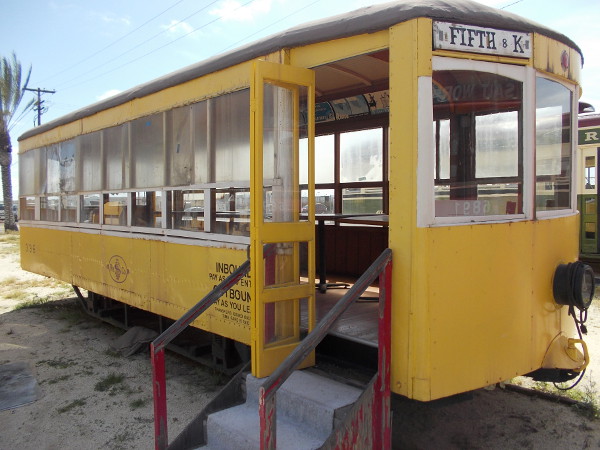
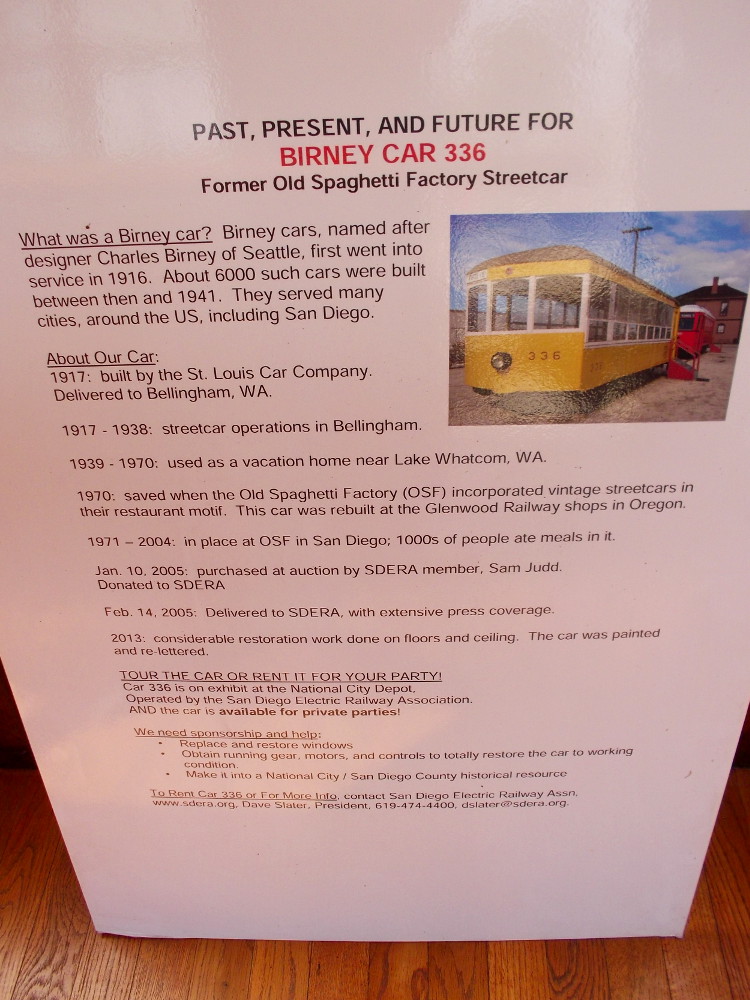
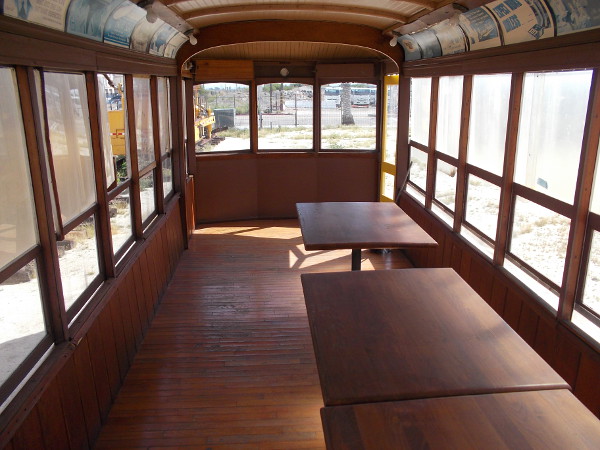
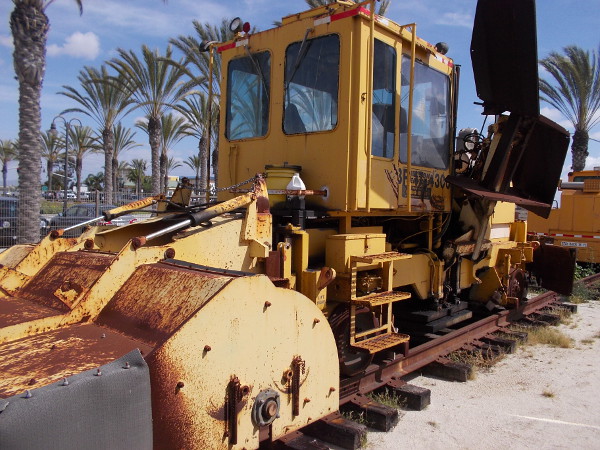
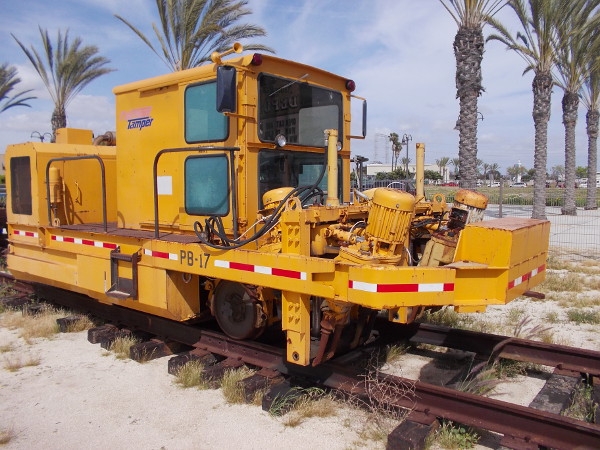
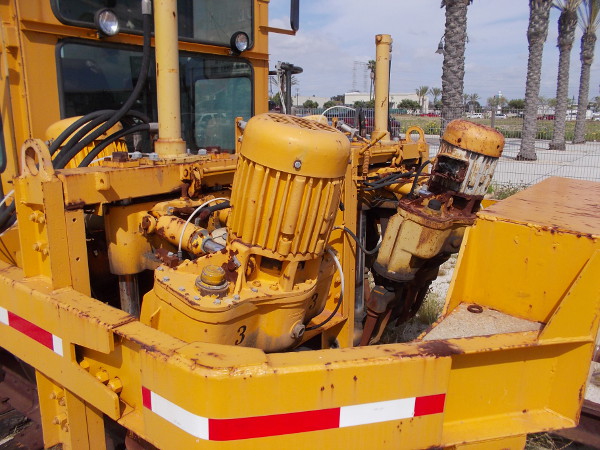
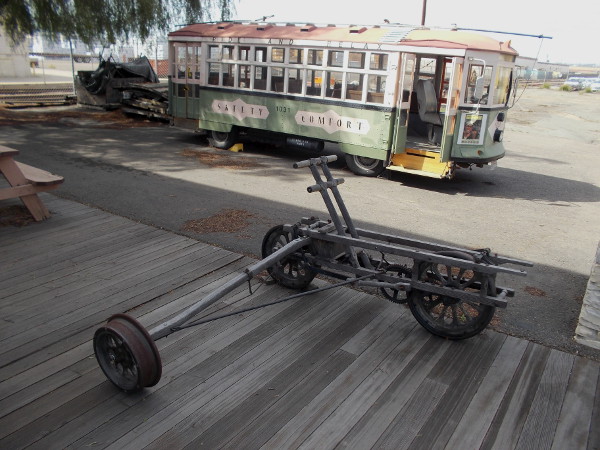
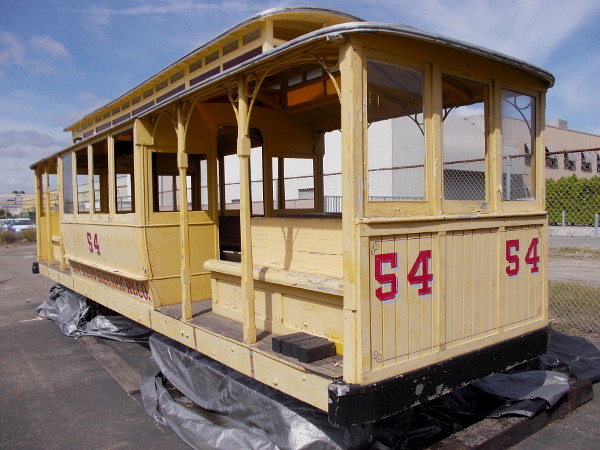
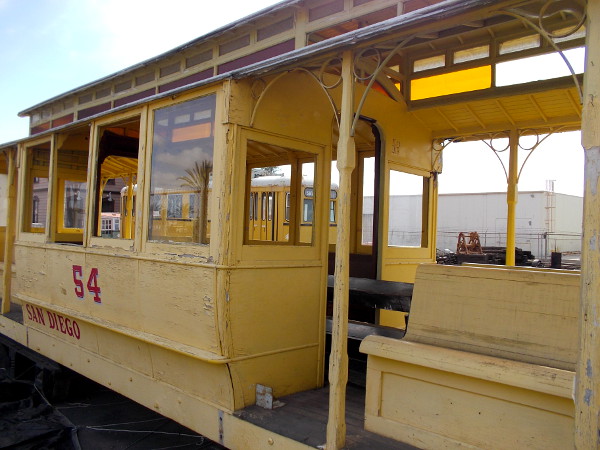
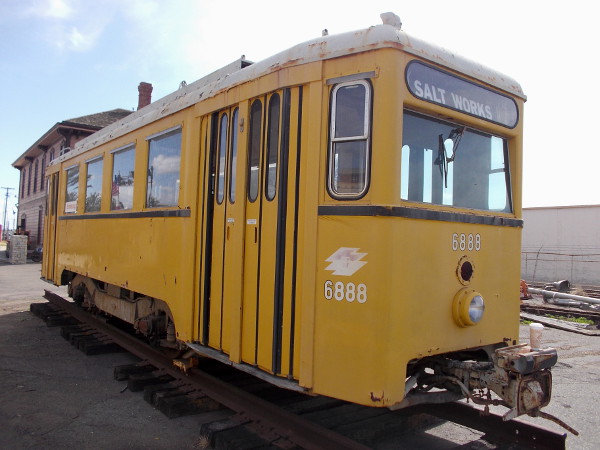
If you’re a train or streetcar lover, prepare to go nuts! The friendly guys at the National City Depot, which is home to the Trolley and Railroad Museum operated by the San Diego Electric Railway Association, allowed me to take loads of photographs a couple weekends ago! The place is so crammed with cool stuff, I hardly know where to start!
(Before I get started, however, I learned the National City Depot is in desperate need of volunteer docents and cashiers. So if you live around San Diego and have some free time, please consider this opportunity. Railroading enthusiasts would be in heaven. If you’d like, you might actually roll up your sleeves and help work to revitalize several vintage streetcars. You can have a great time preserving and enlivening our local history of trolleys by explaining exhibits and sharing knowledge with curious visitors, tourists and school students. SDERA’s stated mission is to restore and preserve the history of electric railways and trolleys in the San Diego region. Click here for more info.)
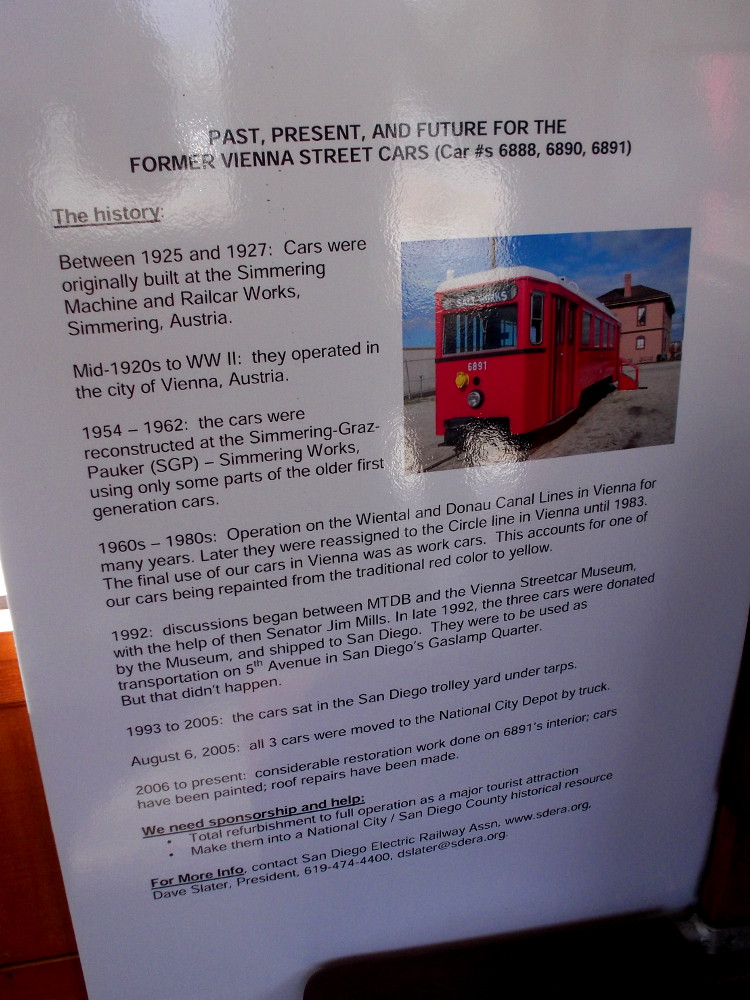
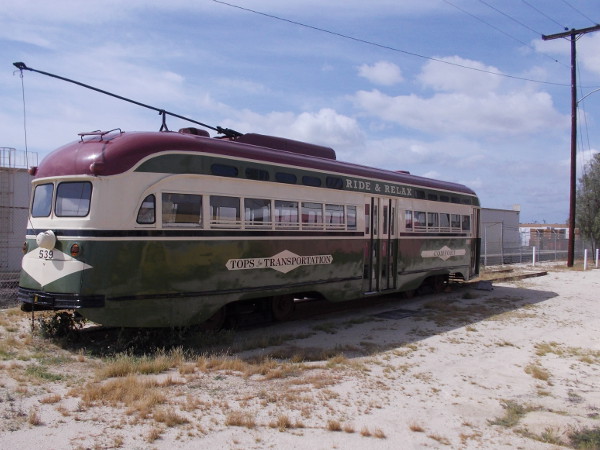
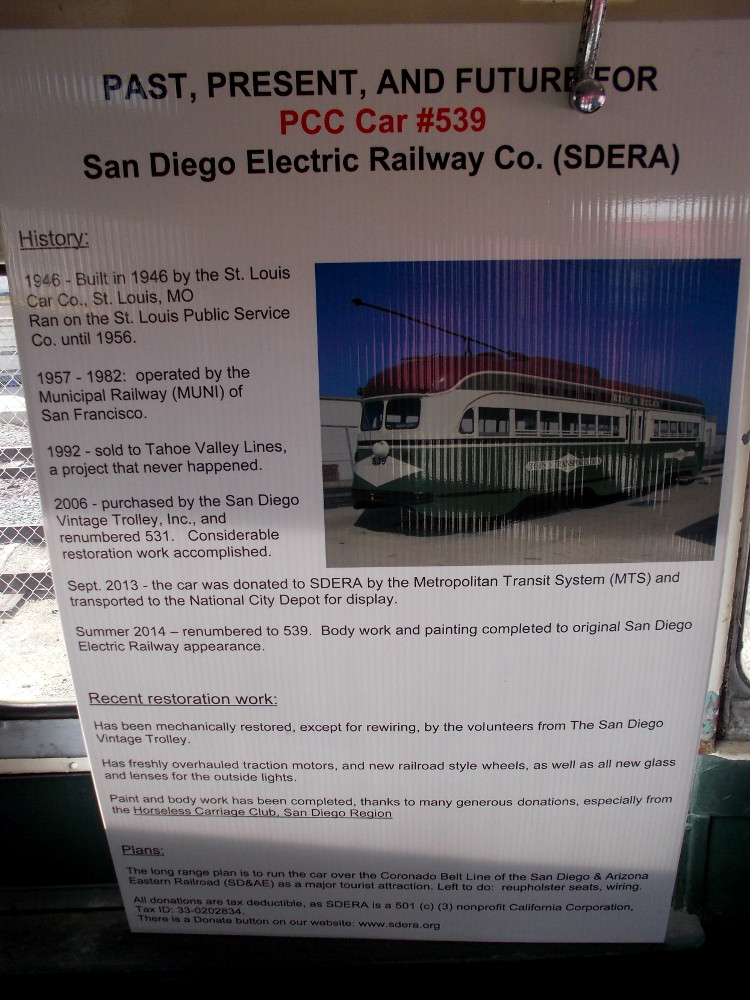
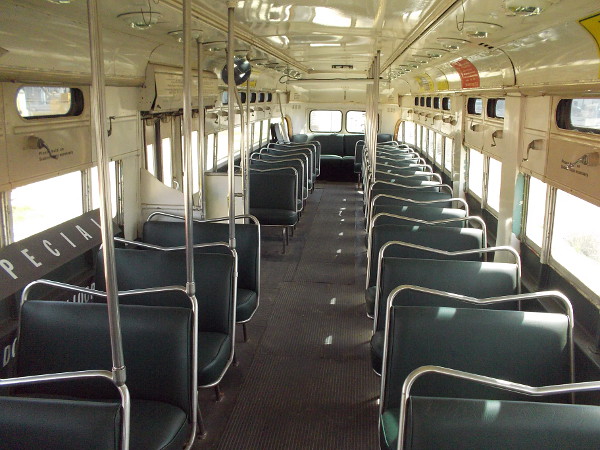
As you can see from the first photo, the depot has a number of old railroad cars and streetcars sitting outside on either side of it. The San Diego Metropolitan Transit System, MTS, has provided the private association with three old Vienna streetcars and one Presidents Conference Committee (PCC) streetcar. The latter is undergoing restoration, and will eventually be used as a cool tourist attraction, running over the Coronado Belt Line of the San Diego and Arizona Eastern Railroad!
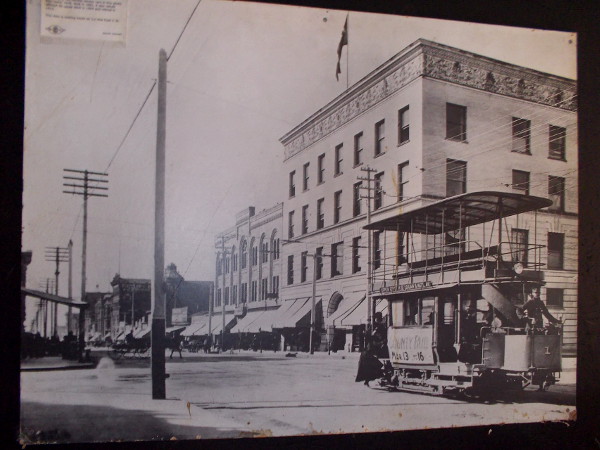
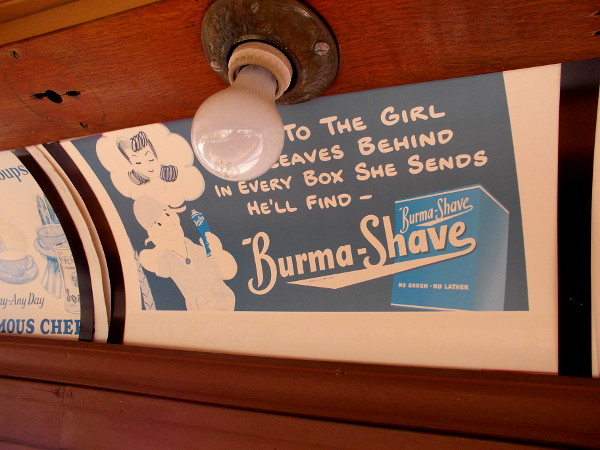
You might recognize the name San Diego Electric Railway. It was the mass transit system built by locally famous “sugar heir” and entrepreneur John D. Spreckels. His network of railroads was established in 1892, and active streetcars served a large area of the city for many decades. The San Diego Electric Railway Association proudly displays some examples of the rolling stock that were utilized in those glory years of electric streetcars.
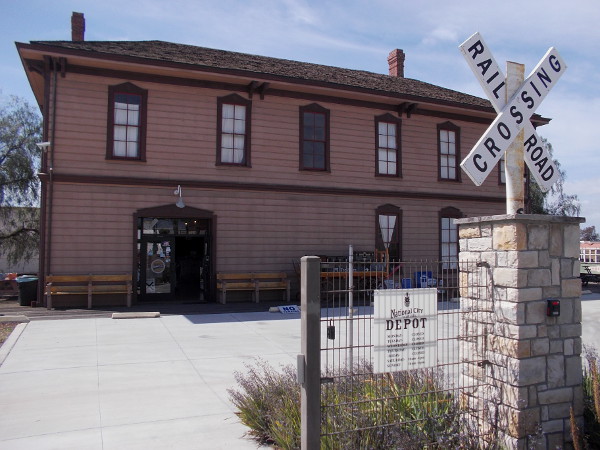
The National City Depot has its own fascinating history. It was built in 1882 by the Santa Fe Railroad, and became the first Pacific Coast terminus station of their transcontinental line. Today, it’s the last representative of the original stations built on the West Coast by the five different transcontinental railroads. After various changes in its operations over the decades, the depot was abandoned in the 1960s and suffered severe neglect. Before finally reopening as a museum, it was also used as a unique building for a couple of restaurants. It’s now owned by the city of National City.
I learned so much during my visit, my brain is still whirling. If I’ve captioned the photos incorrectly, or have made some sort of factual error, please leave a comment!
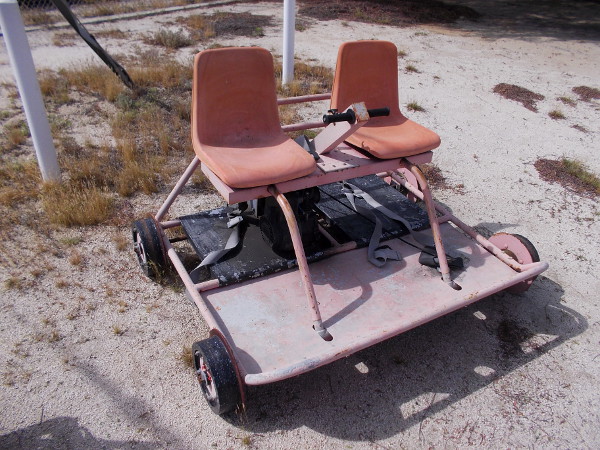
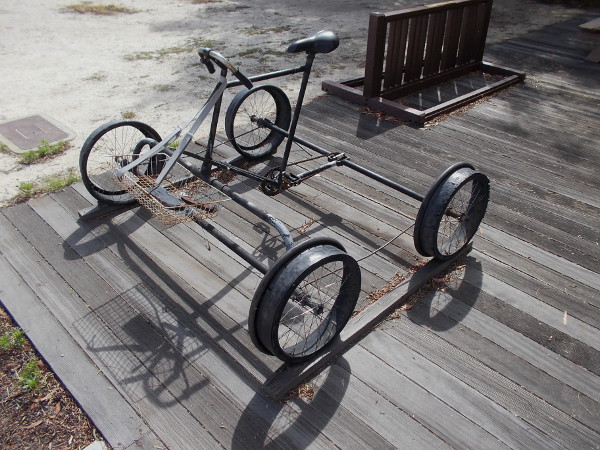
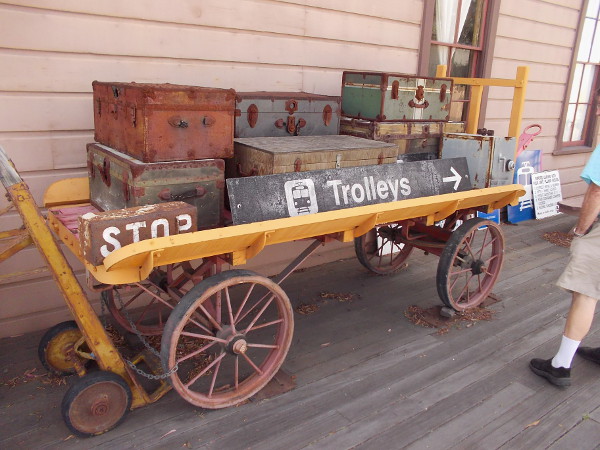
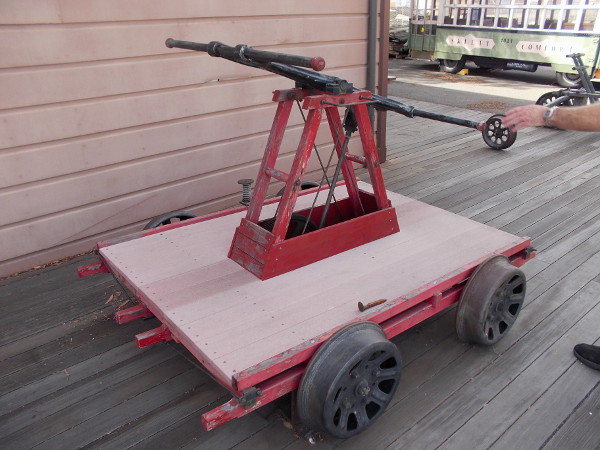
Here come the photos, just a taste of what you might see should you swing on by. Enjoy!
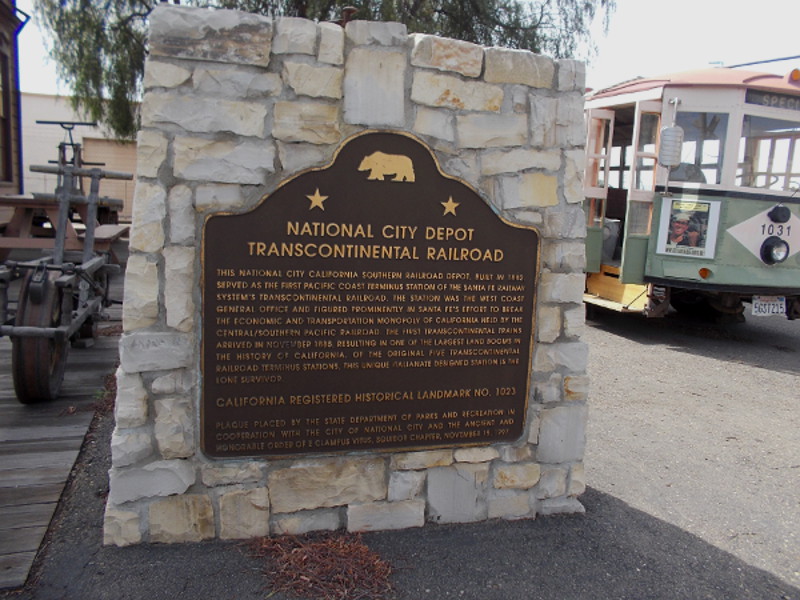
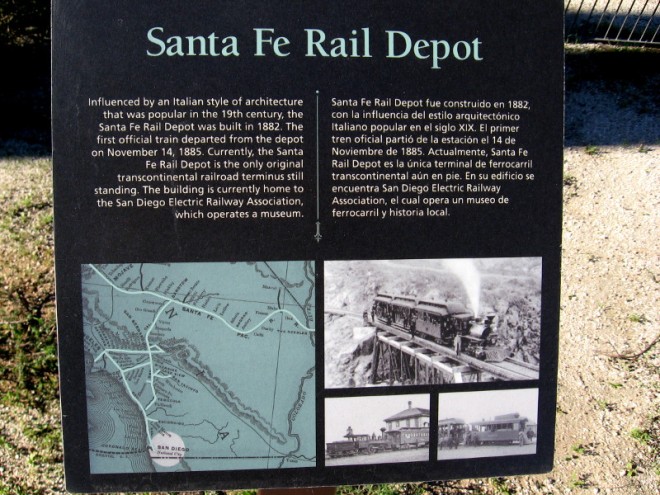
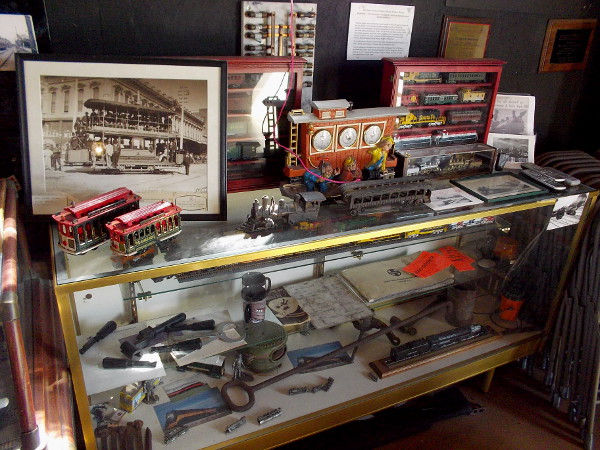
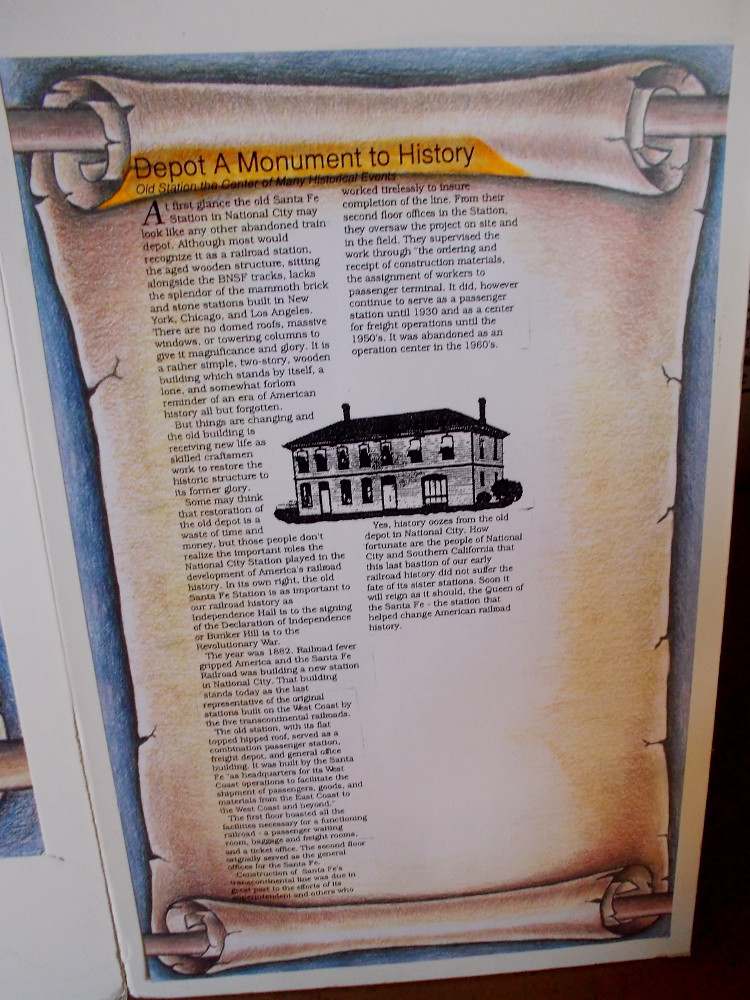







…
I live in downtown San Diego and walk all over the place! You can follow Cool San Diego Sights via Facebook or Twitter!
You can easily explore Cool San Diego Sights by using the search box on my blog’s sidebar. Or click a tag. There are thousands upon thousands of fun images (including lots of model and historical train photographs) for you to enjoy! Feel free to share! Have some fun!
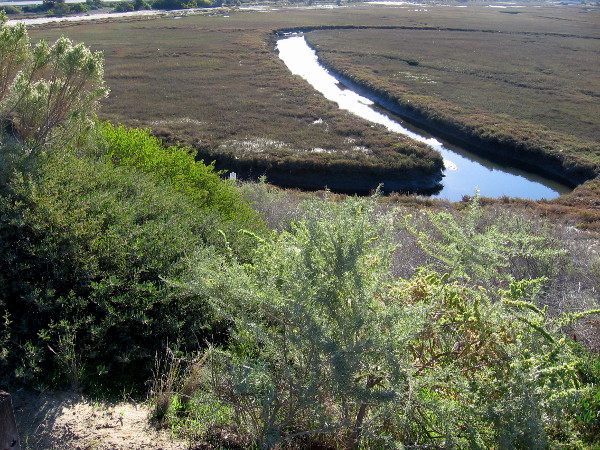
I made a cool discovery the other day. A little-known hiking path in San Diego’s South Bay provides a view of a beautiful natural wetland.
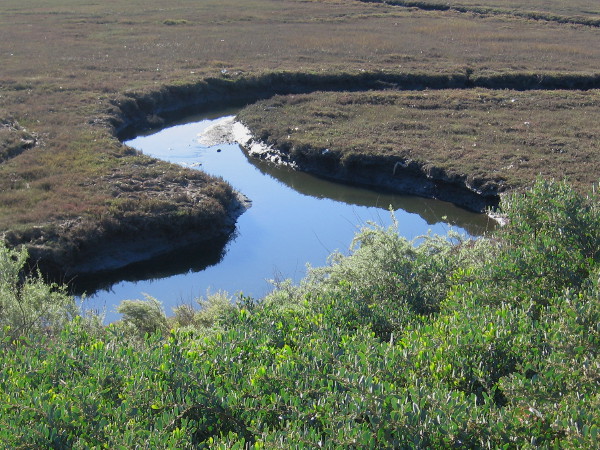
According to signs that I saw, the small estuary between Bay Marina Drive, Marina Way, Interstate 5 and the Sweetwater River is a protected wildlife refuge. I believe, after looking at Google Maps, that the water flows from Paradise Creek. But I’m not certain. Perhaps someone reading this knows.
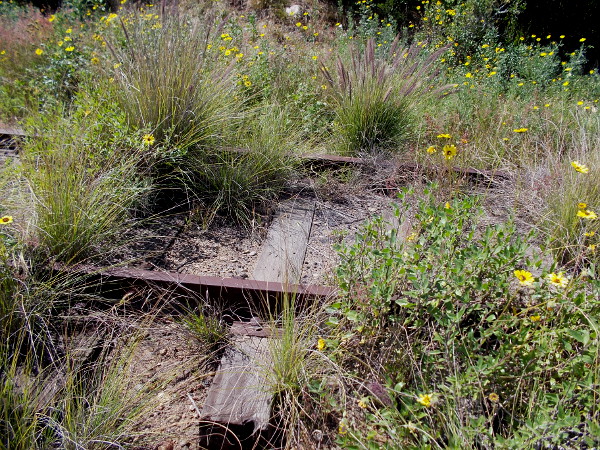
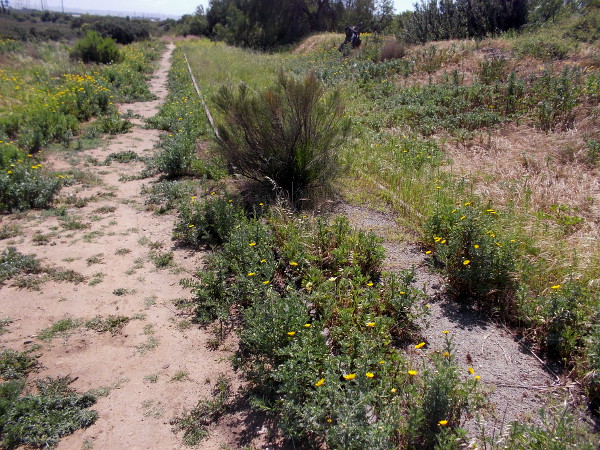
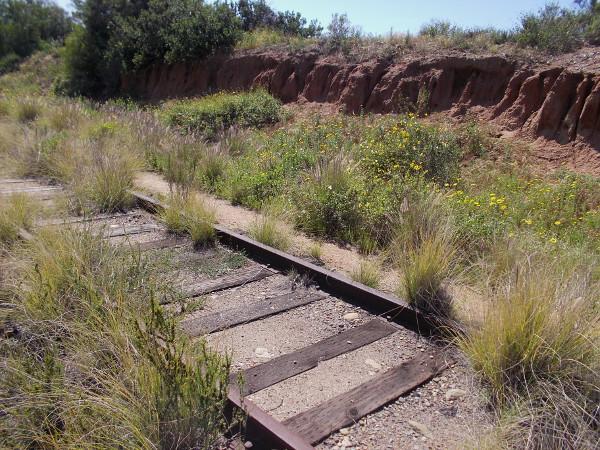
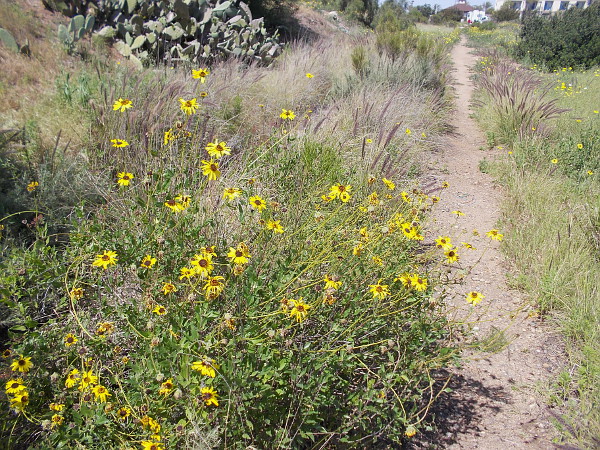
Long-unused train tracks that are partially concealed by vegetation run along the edge of the wetland, and so does a narrow footpath. I didn’t see any signs naming the trail, or any that prohibited a short hike. So I walked down it a bit, enjoying the fresh air and peaceful surroundings.



UPDATE!
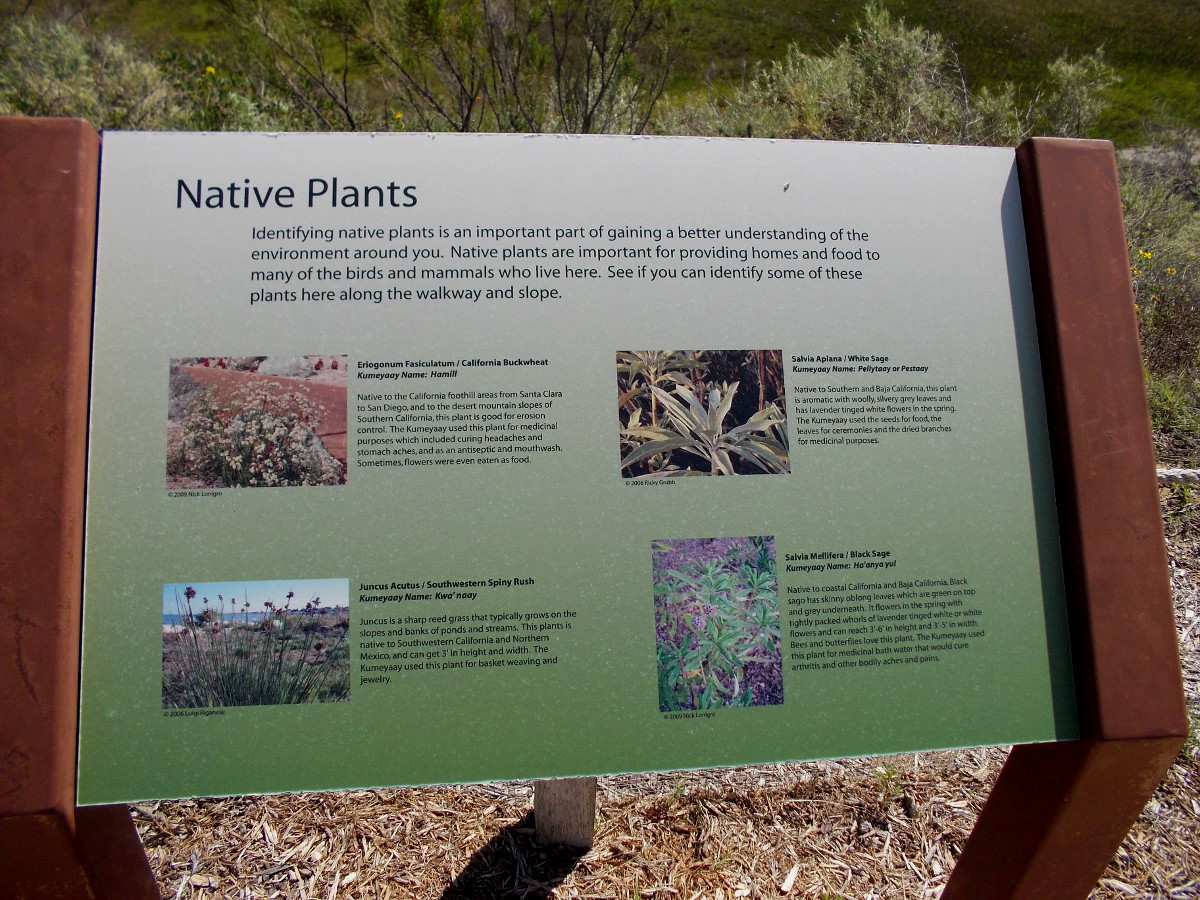
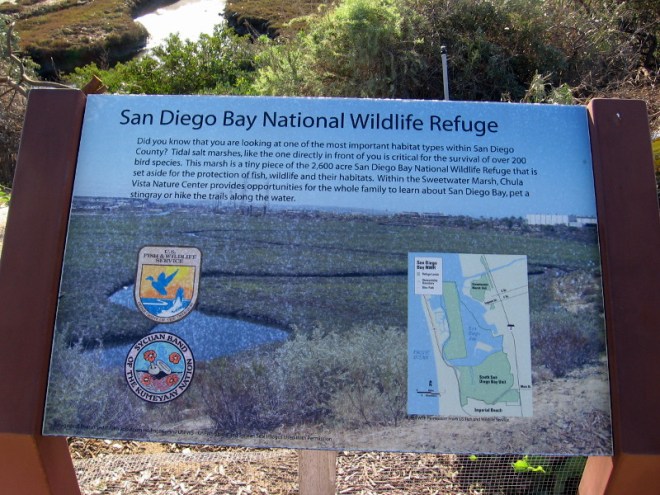
On a later visit I discovered additional signs beside the hotel parking lot. They contain more interesting information.
I learned this wetland is called Paradise Marsh. It’s an environmentally important tidal salt marsh that’s part of the much larger San Diego Bay National Wildlife Refuge.


…
I live in downtown San Diego and love to walk! You can follow Cool San Diego Sights via Facebook or Twitter!
Do you enjoy beautiful things? Visit my photography blog which I call A Small World Full of Beauty.

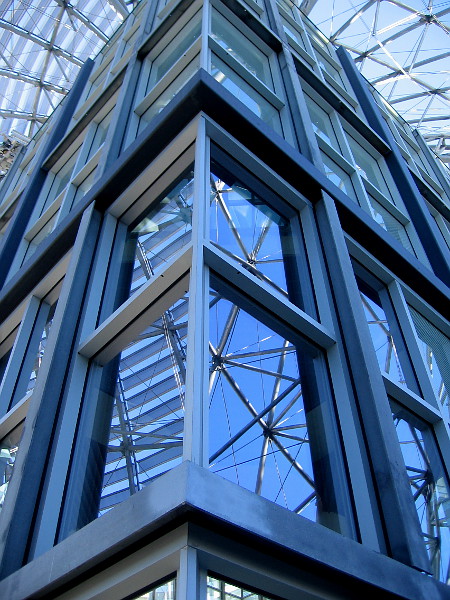
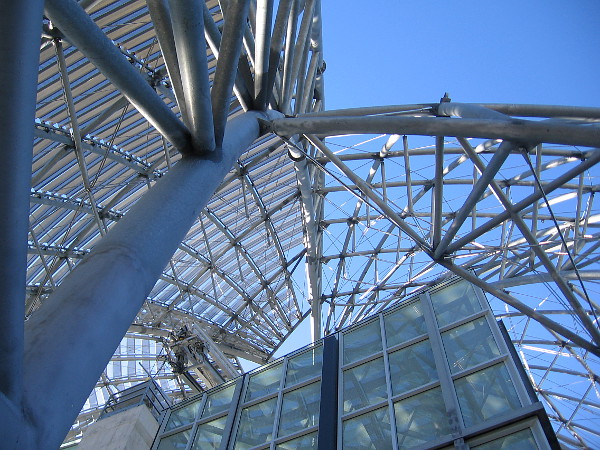
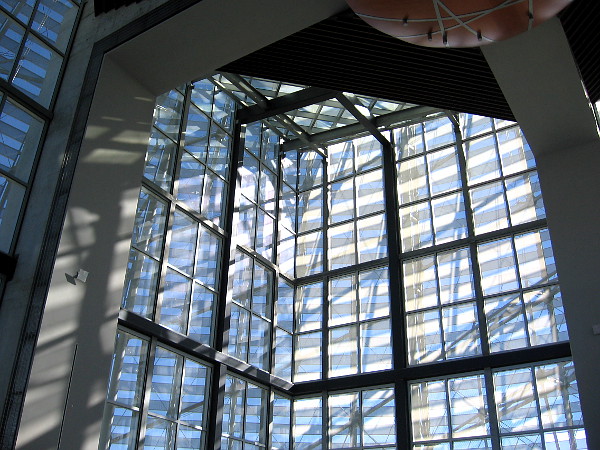
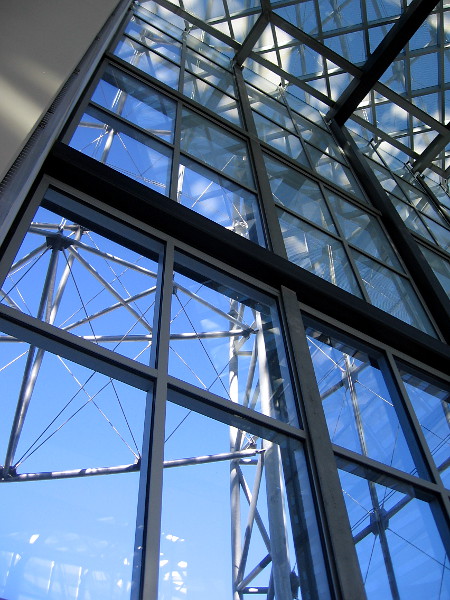
Many old redundant photos are being purged from my computer this weekend. But I had to definitely share these!
I’ve blogged about San Diego’s relatively new downtown library several times. I’ve posted more than a few pics of its unique lattice dome. You might recall some weirdly halo-like photos I took in the darkness early one night last year.
Well, check these out! The curving lines of steel reflected in the building’s windows look like a lesson in complex geometry. You know, in a strange way the dome reminds me of a graph or diagram demonstrating how time and space can be warped by gravity! Am I crazy? What does it look like to you?





…
I live in downtown San Diego and love to walk! You can follow Cool San Diego Sights via Facebook or Twitter!
Do you like to read short pieces of thought-provoking fiction? You might enjoy checking out Short Stories by Richard.
 Cool San Diego Sights!