San Diego’s famous Star of India–the oldest active sailing ship in the world–is having its decks replaced. First up is the poop deck. Work has just begun.
Today I boarded the Maritime Museum of San Diego’s world-famous Star of India. The lady in the ticket booth informed me that the deck replacement began about a week or so ago!
You might remember I blogged about the Star of India’s deck replacement effort here. Click the link to check out that post, and you can see how the poop deck appeared before work began.
A nice docent allowed me to walk up the steps almost to the poop deck so I could get a good photograph. As you can see, the first section of the deck has been removed. I also noted that the saloon underneath has been carefully converted into a work area.
Do you love history or San Diego? Please click here to help with this very important project!
The historic ship’s elegant saloon has become a work area during the deck replacement.Gazing up through a big hole in the ceiling! The new, stronger deck will be built using sophisticated techniques and modern materials, but it will visually appear like the original.
…
I live in downtown San Diego and love to walk! You can follow Cool San Diego Sights via Facebook or Twitter!
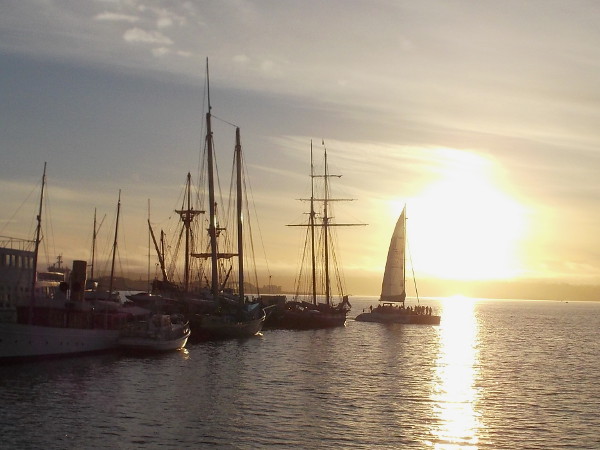
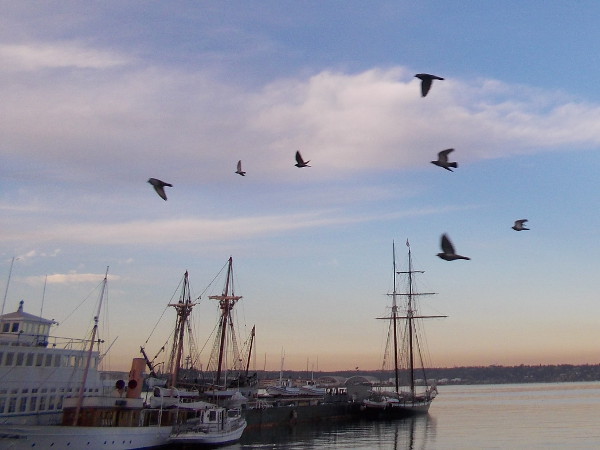
The catamaran Aolani sails behind the Maritime Museum of San Diego just before sunset.
A few photos from my short walk after work. I strolled along the Embarcadero and visited the Maritime Museum of San Diego, one of my favorite places. The sun was setting…
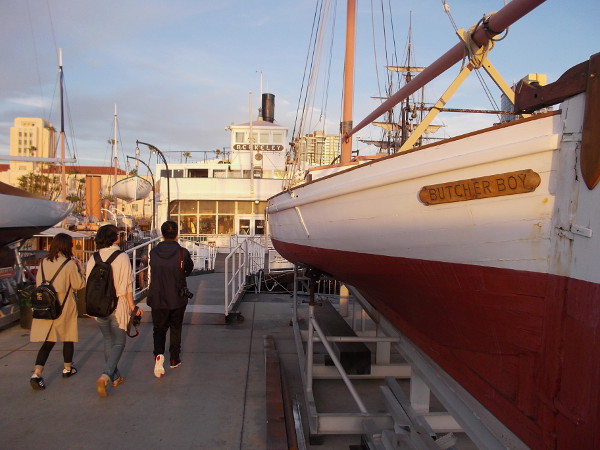
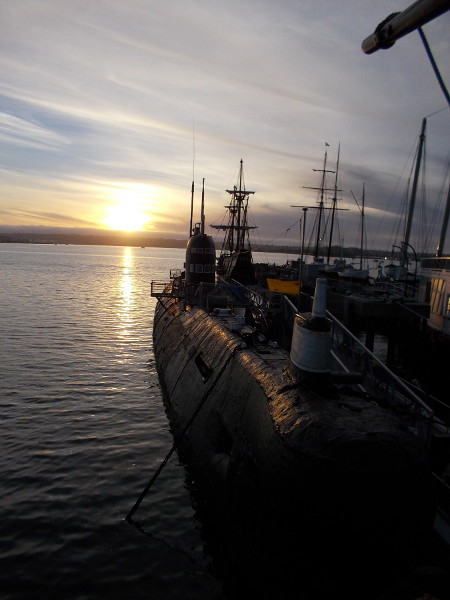
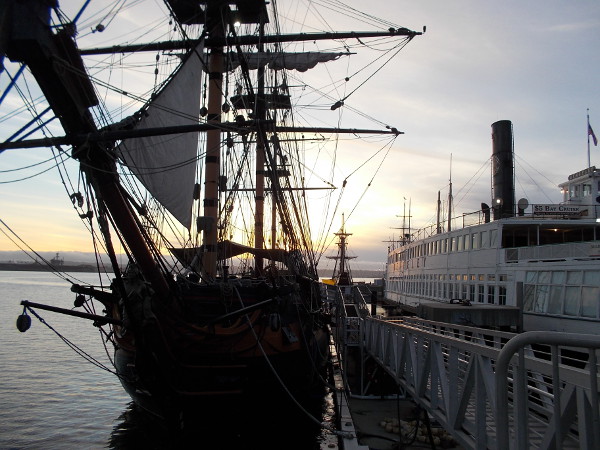
Tourists walk among many historic boats and ships behind the steam ferry Berkeley. The racing sloop Butcher Boy is over a hundred years old. It sailed rapidly out on the bay, always first to provide fresh provisions to visiting ships.School students learn how to handle an oar, before heading out on San Diego Bay in a museum longboat.Sun gently falls behind the picturesque deck and rigging of HMS Surprise.A winter sunset paints the sky behind the B-39 Soviet submarine and the masts of several ships, including Californian, San Salvador and America.HMS Surprise, steam ferry Berkeley, and a beautiful sky.A soft sunset and still water. Nightfall on San Diego Bay.
…
I live in downtown San Diego and love to walk! You can follow Cool San Diego Sights via Facebook or Twitter!
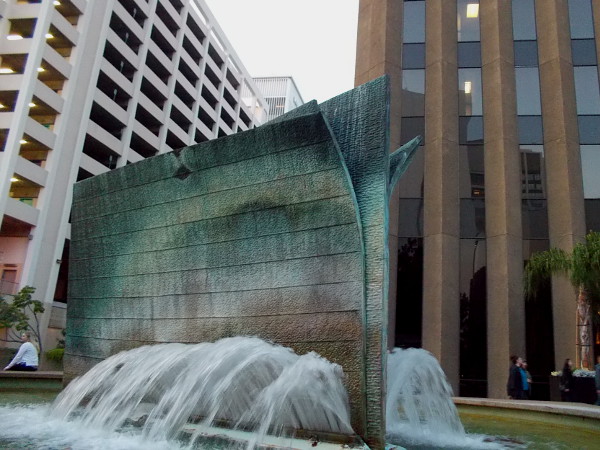
A ship’s bow splashes water into downtown San Diego’s Civic Center Plaza!
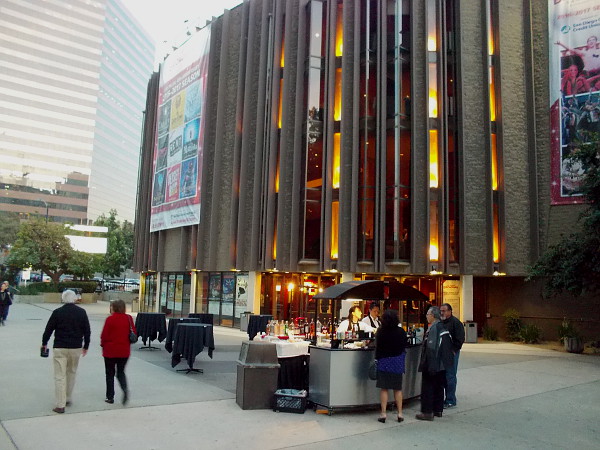
This evening my route home included a meandering stroll through downtown San Diego’s Civic Center Plaza, which is home to the City Administration Building, the San Diego Community Concourse and the San Diego Civic Theater. I observed that the extremely popular musical comedy The Book of Mormon is playing at the theater tonight. I hope the arriving theatergoers watched their step. Because I also noted a large ship’s bow was splashing water right into the center of the plaza!
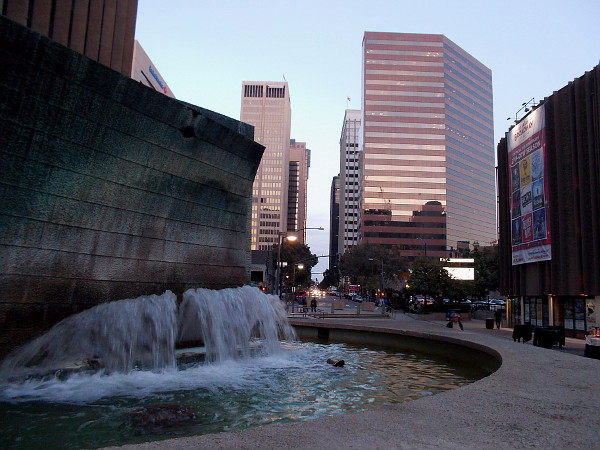
But seriously, the iconic bronze water fountain called Bow Wave, created by Malcolm Leland in 1972, was looking beautiful as dusk fell and the lights of surrounding buildings began to glow. It seemed the mysterious ship was arriving just in time for the performance!
The unique water fountain Bow Wave, by Malcolm Leland, 1972. Outward splashing water tricks the eye and the bronze sculpture seems to move forward!A strange, dark ship seems to pull into a downtown plaza, to dock beside the San Diego Civic Theater!People arrive to watch The Book of Mormon as night approaches and lights come on in downtown San Diego.An iconic water fountain in the heart of San Diego is yet another cool sight!
…
I live in downtown San Diego and love to walk! You can follow Cool San Diego Sights via Facebook or Twitter!
Do you like to read short pieces of thought-provoking fiction? Please click Short Stories by Richard.
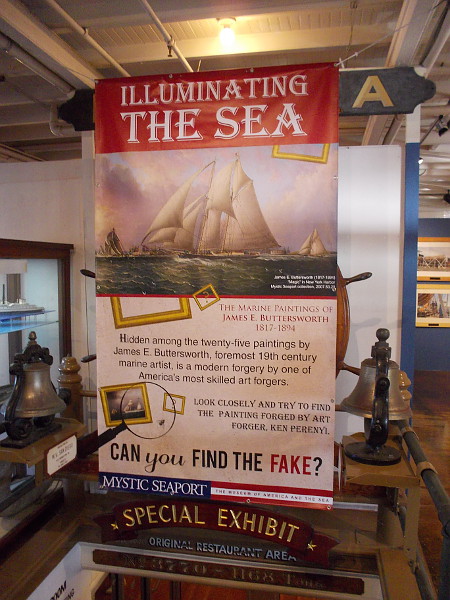
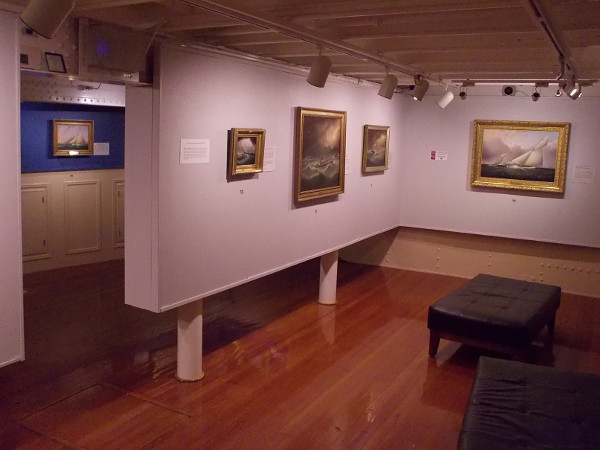
Illuminating the Sea: The Marine Paintings of James E. Buttersworth, 1817-1894. This very special exhibit can be seen at the Maritime Museum of San Diego!
Do you love breathtaking works of fine art? Are you fascinated by 19th century history? Do you like to feast your eyes on beautiful tall ships, sailing yachts and ocean scenery? There’s a special exhibit in San Diego that you positively must see!
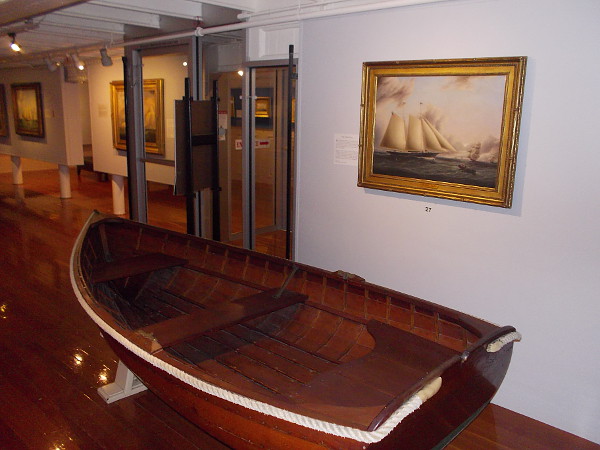
I was surprised to discover that the Maritime Museum of San Diego, located downtown on the Embarcadero, is featuring a fantastic exhibit of marine art masterpieces by the famous painter James Edward Buttersworth. Buttersworth is considered to be one of the most important painters of the nineteenth century. His portraits of tall ships, racing yachts, steamships and other vessels from that era are beautiful works of genius, resplendent with light, energy and grace. About 600 of his classic paintings exist today, and the Maritime Museum has 24 amazing examples on display!
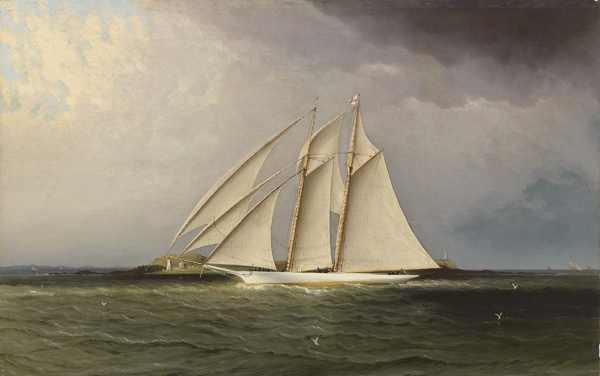
The exhibition is titled “Illuminating the Sea: The Marine Paintings of James E. Buttersworth, 1817-1894.” The collected paintings, on loan from Mystic Seaport until May 31, 2016, are so dynamic, detailed and glowing with beauty, they’ll make a permanent impression in your mind. His images of sky and sea are realistic and alive. Colors are rich and subtle; stormy waters seem to spray off a painted canvas; white sails shine. Several paintings depict yachts racing together, engaged in historic competitions that include the America’s Cup, an event that became important in San Diego’s more recent past.
Another interesting aspect of the exhibition is the inclusion of a modern Buttersworth forgery by Ken Perenyi. Visitors to the museum can become a detective, and do their best to uncover the cleverly made fake!
Go enjoy this exhibit of rare, fantastic paintings, then prepare to spend a good hour or two exploring the many historic ships owned by the Maritime Museum of San Diego. You’ll find yourself within a magical world. A world that gently floats upon shining water, alive with history, adventure, beauty and wonder!
Among the classic maritime paintings of world-famous artist James E. Butterworth is a forgery. Visitors to the museum are challenged to spot it!Truly stunning works of art on display inside the steam ferryboat Berkeley, hub of the Maritime Museum of San Diego.Illuminating the Sea, James E. Butterworth, oil on canvas. Magic, schooner of New York Yacht Club, winner of the America’s Cup in 1870. Photo credit: Wikimedia Commons.In addition to this world-class art, the Maritime Museum of San Diego contains a vast collection of nautical objects. It is a must-see destination for those interested in our city’s rich history.
Here are a couple bonus photographs! I took them this morning during a short walk before heading to work!
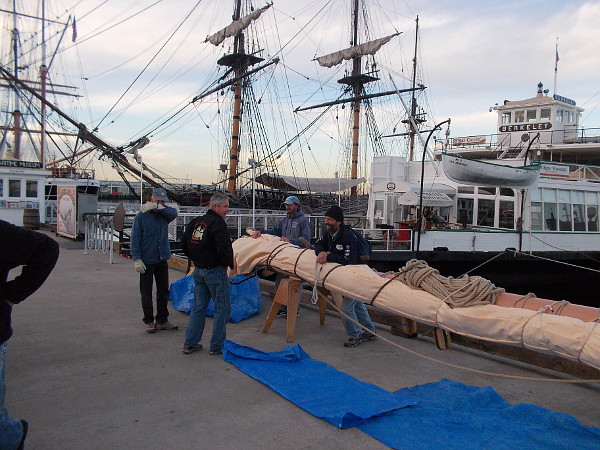
Museum volunteers gather around a ship’s yard. It would soon be lifted by crane onto the nearly-completed Spanish galleon replica San Salvador.Tall ships San Salvador and Californian docked behind the Berkeley. Just a few of the fascinating ships you can visit at the Maritime Museum of San Diego.
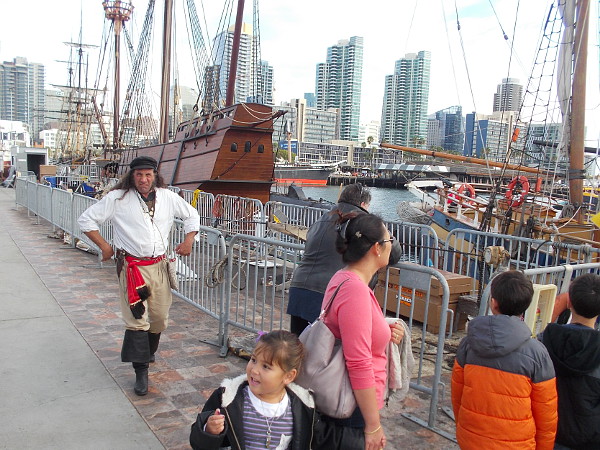
A smiling, innocent-looking pirate just walks along. People suspect nothing.
Did I actually see what I thought I saw?
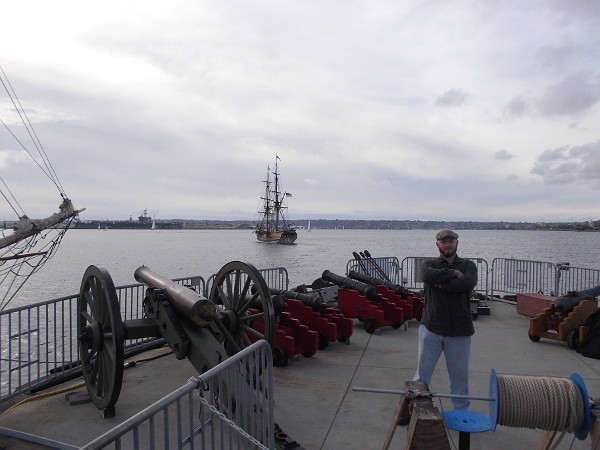
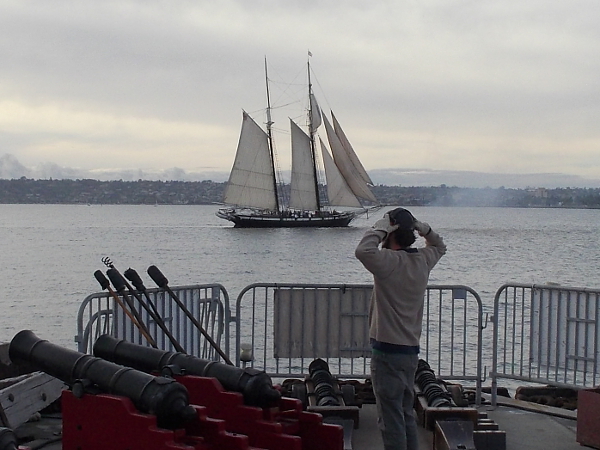
Two tall ships were scheduled to have a mock cannon battle today on San Diego Bay. The reenactment was to be between the Maritime Museum of San Diego’s replica Revenue Cutter Californian (the official tall ship of the State of California) and the Lady Washington, a tall ship visiting from the Grays Harbor Historical Seaport Authority.
What happened?
Pirates!
Two very rascally pirates!
Read the photo captions and tell me where I am wrong!
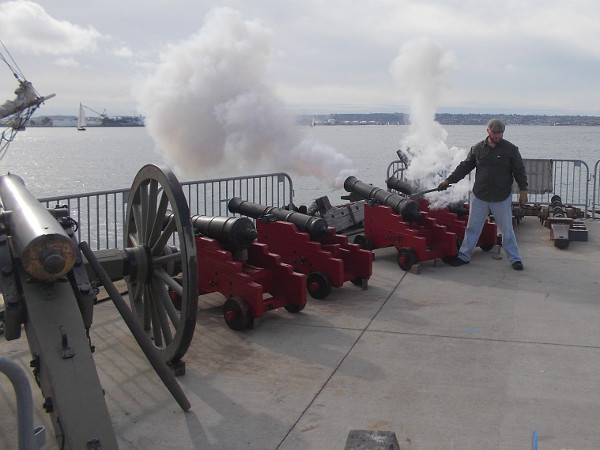
Visitors to the Maritime Museum of San Diego have boarded the tall ship Californian, to engage in a mock cannon battle with visiting tall ship Lady Washington.In case you want to learn a bit more about Californian’s sails and rigging, click this photo. Unfortunately, pirates know all about this stuff.Notorious Captain Swordfish, that pirate who makes Blackbeard look perfectly civilized, comes striding along. He must have another evil scheme in mind.Captain Swordfish makes a crazy scene, distracting those who are boarding the Lady Washington. Nobody notices what that first innocent-looking pirate is up to.That first pirate has taken control of Californian! It’s heading out into San Diego Bay while a museum employee’s back is turned!Turn around! Turn around! That rascal is stealing your ship!The Californian comes about and launches an attack on the Maritime Museum! The insolence! Deadly cannons thunder and echo throughout downtown San Diego!Oh, dear! Oh, dear!The Maritime Museum employee quickly loads one of the land battery cannons, and gets ready to fire! That pirate won’t get away so easily!An epic battle begins!
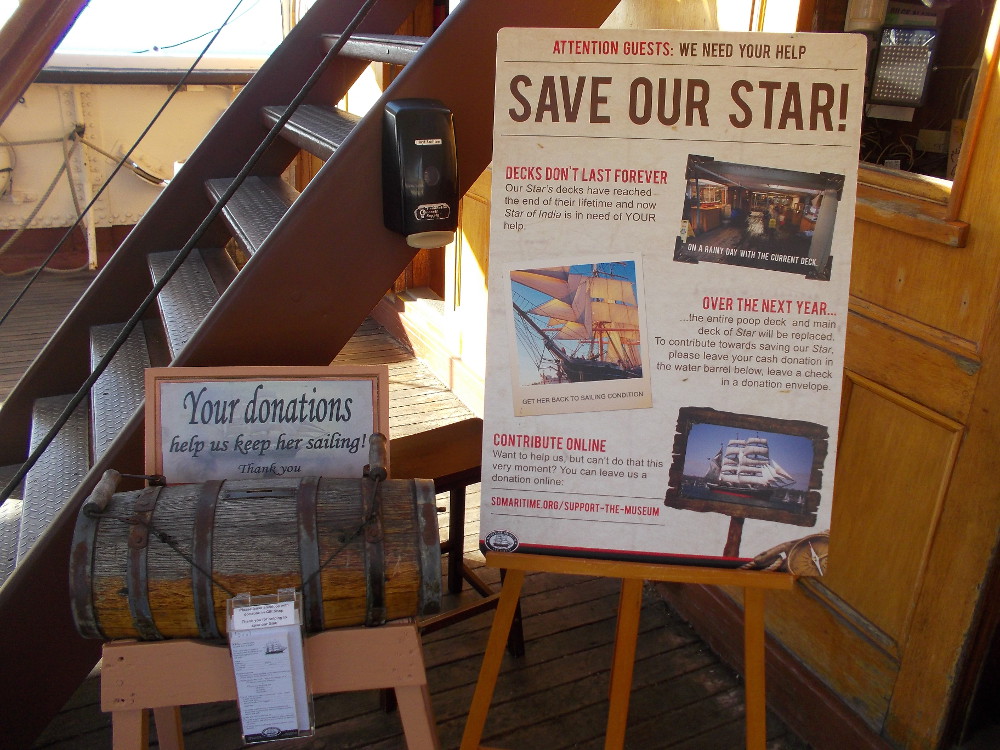
Decks don’t last forever. Our Star’s decks have reached the end of their lifetime and now Star of India is in need of YOUR help.
The Star of India is one of the most famous and important historic ships afloat. Built in 1863, she’s the oldest active sailing vessel in the world and the oldest iron-hulled merchant ship still on the water. She has sailed twenty-one times around the world, surviving the tempests of Cape Horn. She has been caught in a devastating cyclone, trapped in Alaskan ice, and even went aground in Hawaii. She still plies the Pacific Ocean with a volunteer crew. And her hull, cabins and equipment are almost completely original.
So it isn’t surprising the deck needs a bit of help.
“…Our museum is working as part of an international effort to see Star of India inscribed, along with other great historic ships, by UNESCO as a multi-national world heritage site. Like the Parthenon, the Pyramids, and the Great Wall of China, such a distinction would…see that she lives forever.”
Wow!
Right now, the main deck and poop deck need replacing. The wooden decks have come to the end of their lifetime. The Star of India “was recently awarded a $192,000 National Parks Service Maritime Heritage Grant, one of very few such awards and a testimony to both her historical significance and to the viability of the project for extending her life. However, these funds are available to Star of India only if they are matched by an equal amount contributed by those who love her and want to see her sail for generations to come.”
With YOUR contribution, you can become part of an eternal legacy and help to preserve an important part of world (and San Diego) history. That’s big, very important stuff!
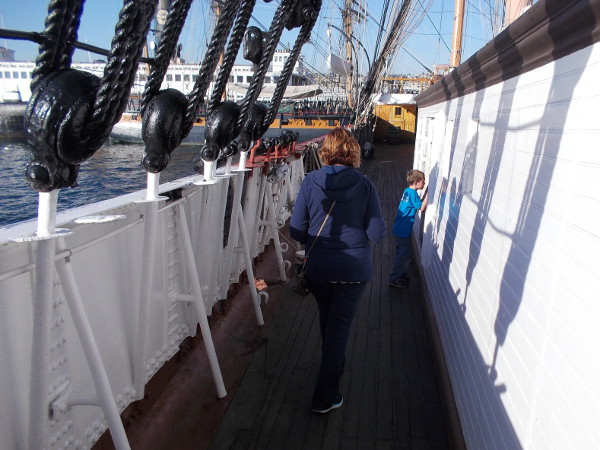
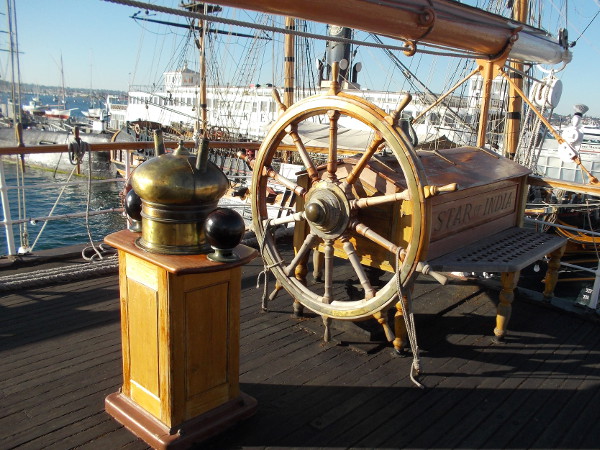
Looking along the length of the main deck of Star of India. Deck replacement is needed and so is the generous help of the public.Parts of the wooden deck are in pretty bad shape. Feet, salt, sun and rain have taken their toll.The Star of India is a National Historic Landmark. The oldest active sailing ship in the world, it’s a treasured part of San Diego and world history.Visitors descend from the poop deck. Beautiful woodwork is found all about the ship. But the elements can be harsh.A very old photo of Star of India’s launching day in 1863. Originally it was named Euterpe.Photo of Euterpe, later renamed Star of India, docked at Port Chalmers, Otago, New Zealand in 1883.Exquisite section of the stained glass skylight in the teak and oak paneled saloon of the Star of India.Peeking into Star of India’s forward house, which contains ropes, tools and instruments which were necessary to maintain and operate the tall ship.I believe that long timber supported by the forward house and forecastle is the top section of the foremast, which is being refurbished. But I might be mistaken.The Star of India’s steering wheel and binnacle on the poop deck.The Star of India needs YOUR help! Donate today to help replace the deck, and to preserve this amazing ship for generations to come.
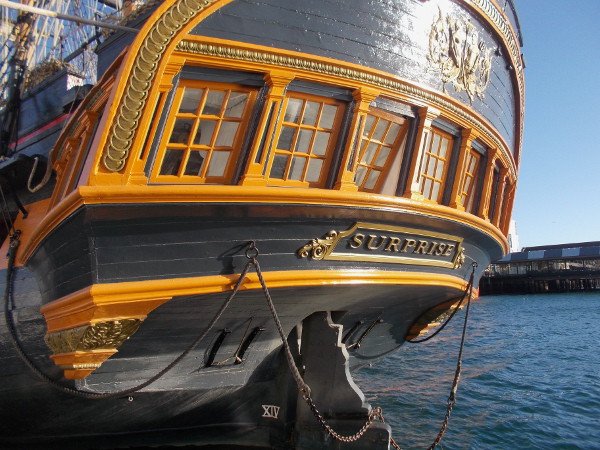
Elegant stern of HMS Surprise, one of many fascinating ships owned by the Maritime Museum of San Diego.
It’s Christmas. I wasn’t planning to blog today. But this afternoon I became a new member of the Maritime Museum of San Diego! (Having lived for 15 years just a short walk from the museum, it’s about time!)
Naturally, I couldn’t wait to visit several of the amazing ships. The Maritime Museum of San Diego has one of the finest and largest collections of historical ships in the world!
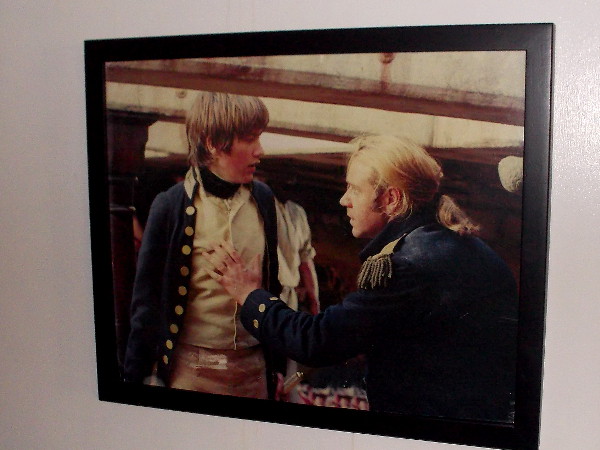
If you’ve ever watched the movie Master and Commander: The Far Side of the World, then you’ll probably recognize the HMS Surprise. The beautiful tall ship, upon which many scenes were filmed, is in the museum’s collection. And I took a bunch of photos today!
Becoming a member of the Maritime Museum of San Diego is going to be awesome. Among other great perks, I can visit any of the ships free for an entire year. I can sit in the elegant enclosed passenger deck of the Steam Ferry Berkeley and read and write whenever I please! Right out on beautiful San Diego Bay! How cool is that?
I bet some of you might really enjoy membership, too! I’m told they are looking for volunteers to help sail their new Spanish galleon replica San Salvador!
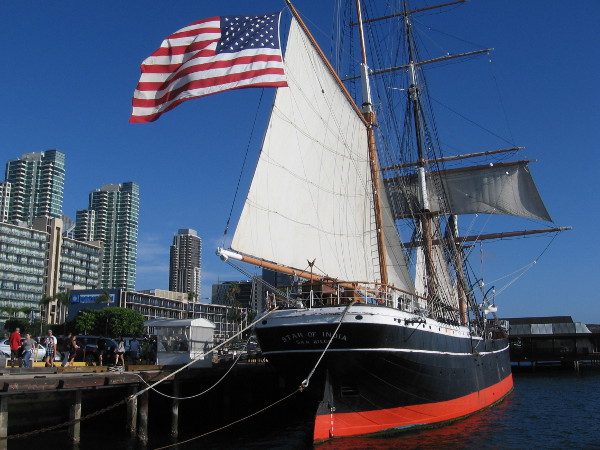
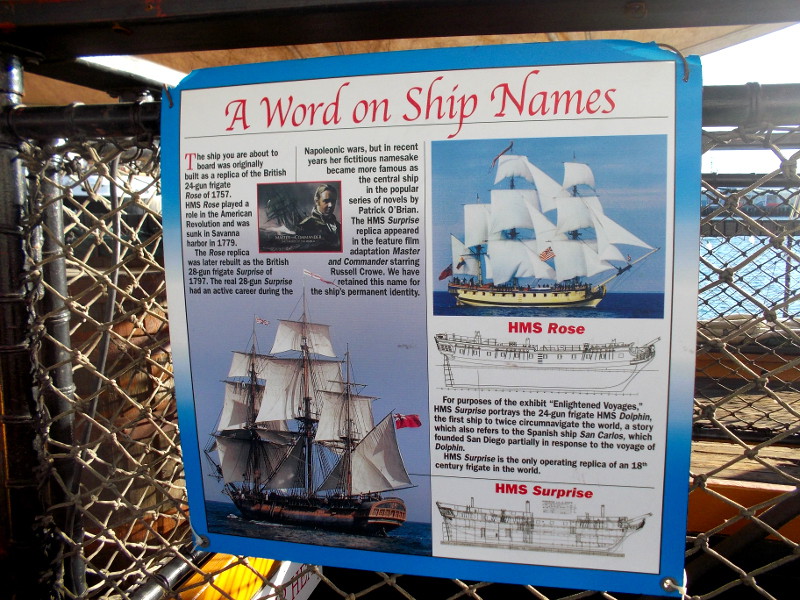
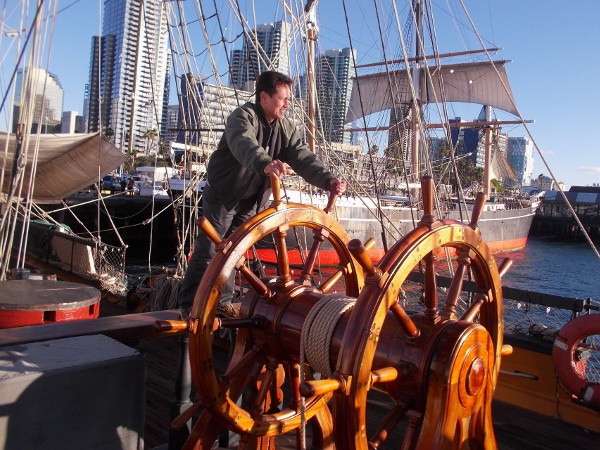
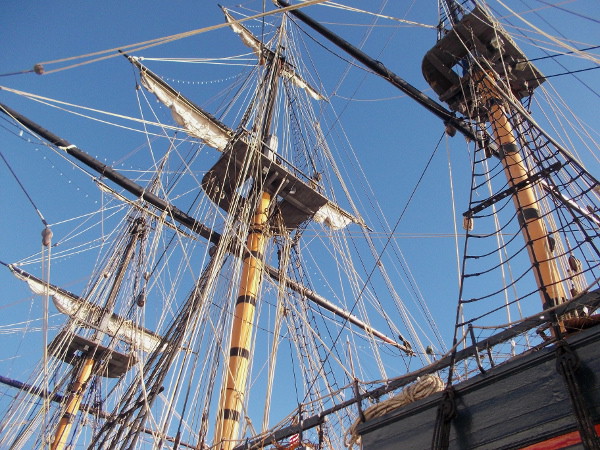
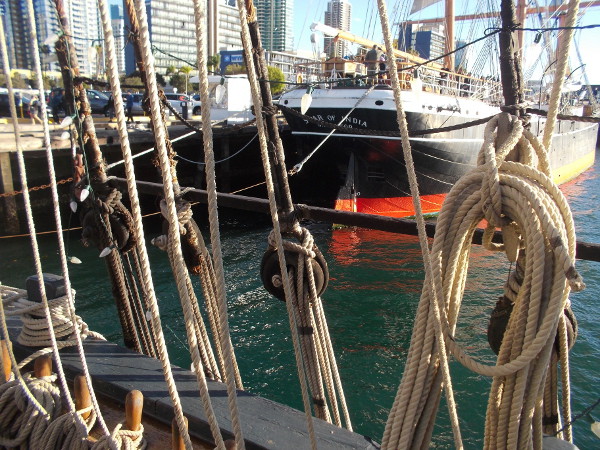
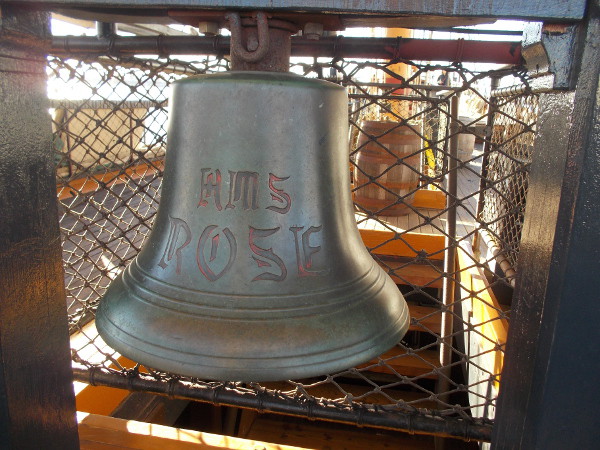
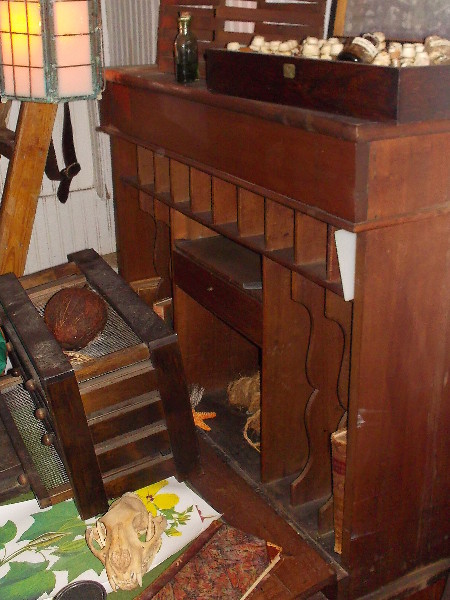
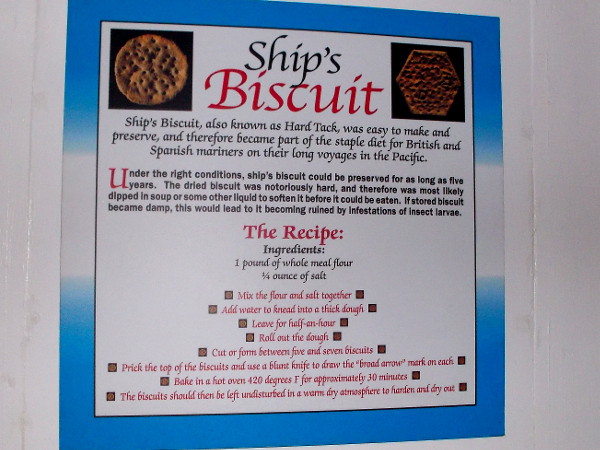
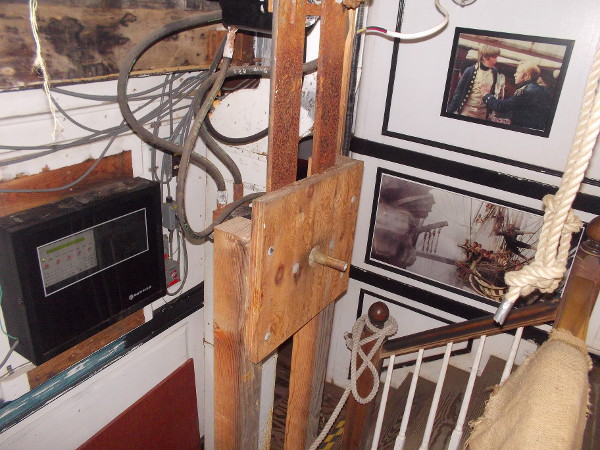
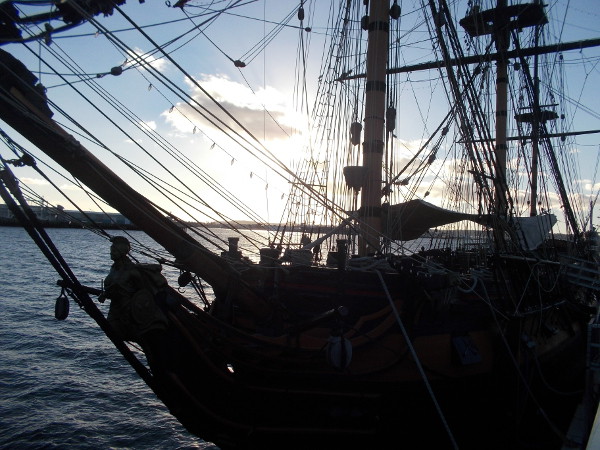
HMS Surprise in some morning sunlight.The ship you are about to board was originally built as a replica of the British 24-gun frigate Rose of 1757. HMS Rose played a role in the American Revolution and was sunk in Savanna harbor in 1779.Detailed model of the HMS Surprise, which is the only operating replica of an 18th century frigate in the world. The ship was used in the filming of Master and Commander, starring Russell Crowe.Visitor to the San Diego Maritime Museum pretends to steer the tall ship HMS Surprise, which is docked on the Embarcadero near the historic Star of India, in the background.View of the ship’s main deck and lower rigging from the quarterdeck. A portion of San Diego’s skyline and the County Administration Building are visible.Cannon projects from hull of HMS Surprise, which is a replica of a 24-gun frigate of the Royal Navy, based on 18th century British Admiralty drawings.Looking upward at the three masts, furled sails and other complicated rigging.Photo through ropes of the nearby Star of India, the world’s oldest active sailing ship, also part of the Maritime Museum of San Diego.The ship’s bell. Originally named the HMS Rose, the ship was re-registered as HMS Surprise because of her starring role in the film Master and Commander.Below deck there are many fascinating exhibits, which show what life was like aboard a frigate. Other displays recall the filming of Master and Commander.Pick the right kind of shot. The Surprise carried a variety of projectiles, each suited for different purposes.Artistic depiction of activity below deck during an engagement with the enemy. Operating the cannons was a complicated, dangerous duty.Feeling seasick? Visit the surgeon. Getting sick at sea was very serious not only for the ill sailor, but also for the entire crew.Exhibit inside HMS Surprise recalls the ship’s doctor in the movie Master and Commander: The Far Side of the World. The fictional Dr. Stephen Maturin was also a scientist and naturalist.Most of the crew slept below the gun deck in hammocks. Tightly-packed swinging hammocks figured memorably in the visuals of the movie Master and Commander.Ship’s Biscuit, also known as Hard Tack, was easy to make and preserve, and became part of the staple diet for British and Spanish mariners on their long voyages in the Pacific.Chickens, geese and ducks were carried on board as live food. Officers enjoyed eggs. Fresh meat was reserved for the officers and those sick with scurvy.A remote station used for steering the ship when she is propelled by her twin diesel engines. In 2007, HMS Surprise was restored to sailing condition.One of several photos on display from the movie Master and Commander: The Far Side of the World. Famous actor Russell Crowe played the role of Captain Jack Aubrey.Distinctive figurehead representing the Greek goddess Athena often seen in the popular movie. It now graces San Diego’s waterfront. UPDATE! I’ve been told it actually represents Boadicea, queen of the British Celtic Iceni tribe who led an uprising against the conquering forces of the Roman Empire.Photograph of the HMS Surprise as evening approaches. One of many wonderful ships that visitors can board at the Maritime Museum of San Diego.
UPDATE!
A new exhibit called Man-of-War opened on HMS Surprise in May, 2018. There are many new signs around the ship, and the captain’s great cabin is now open to the public. (I intend to blog about the great cabin separately.)
Here are additional photos. Read the captions for explanations about life aboard British fighting ships from that fascinating era.
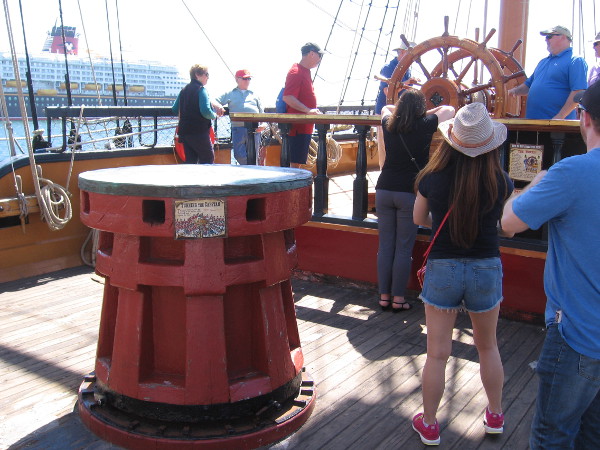
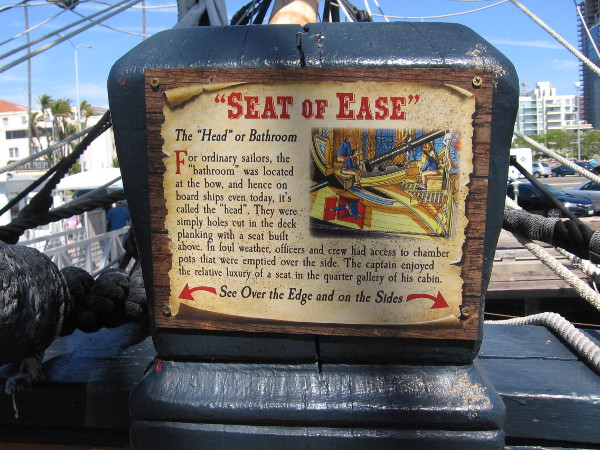
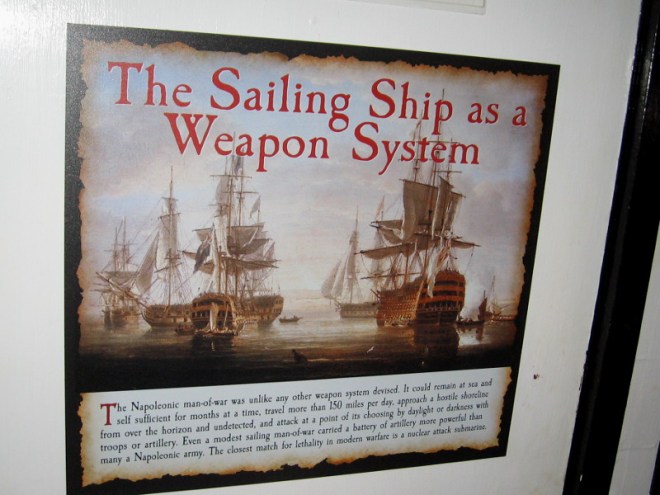
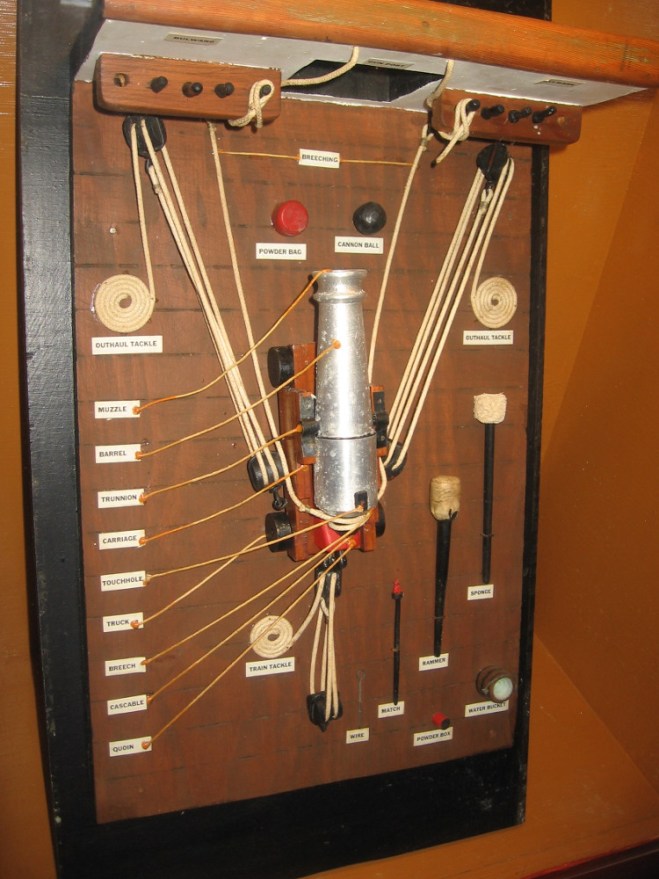
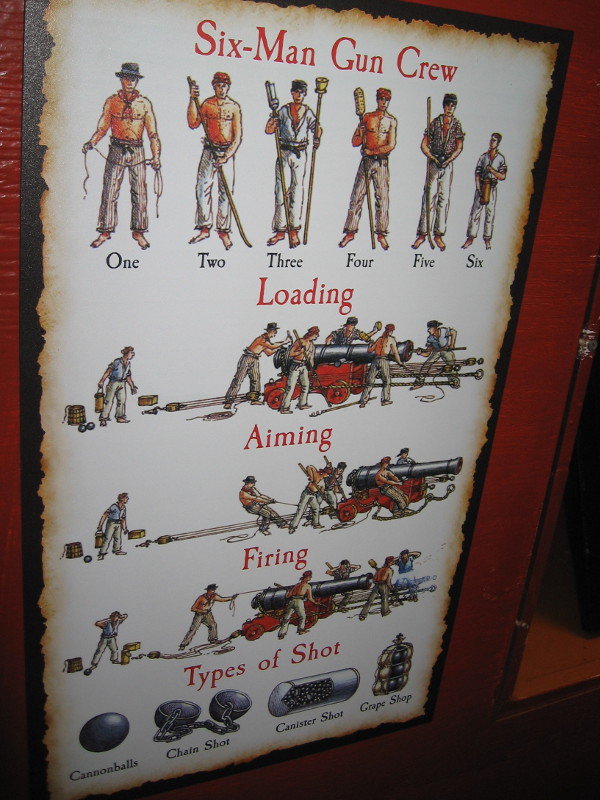
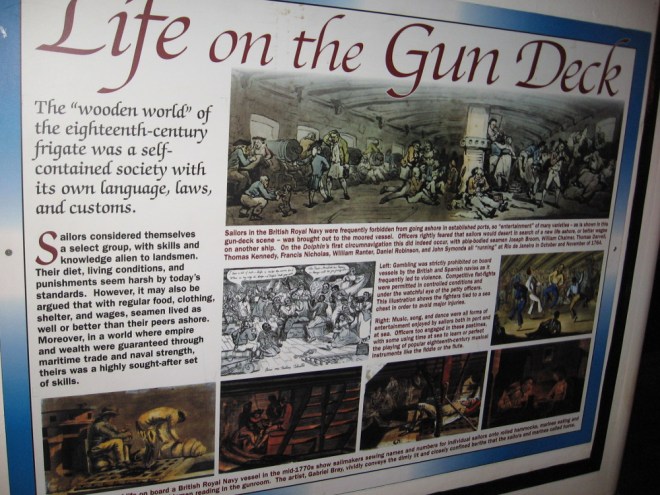
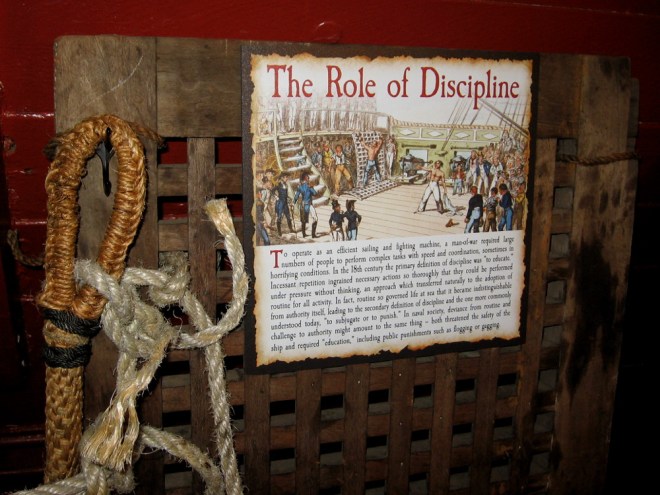
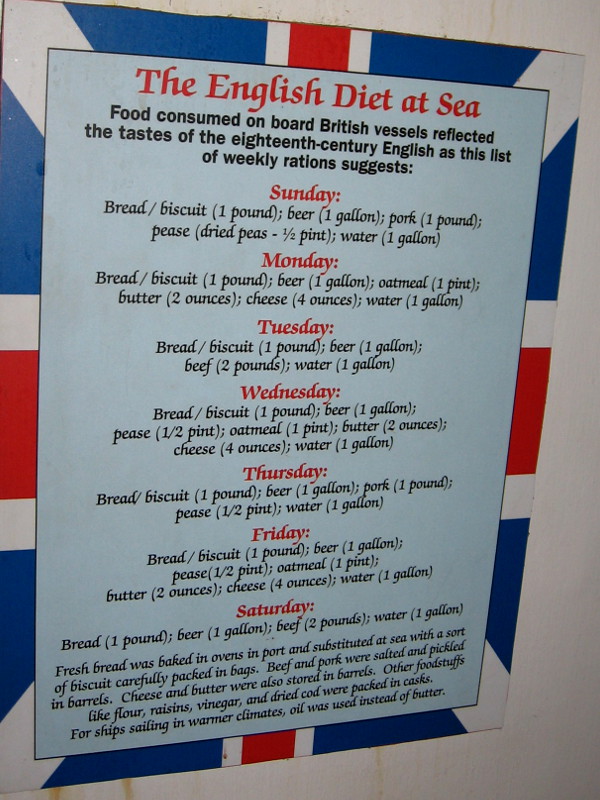
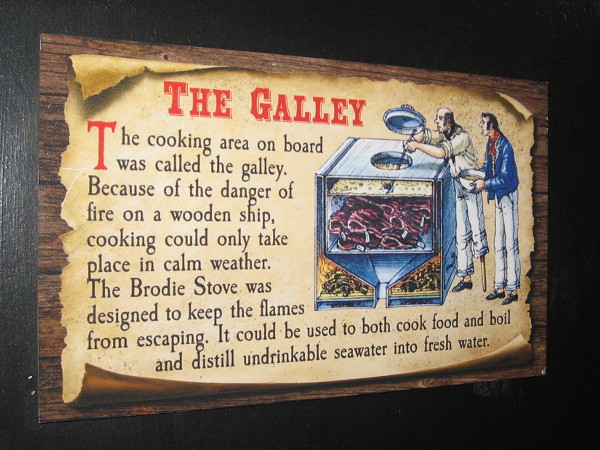
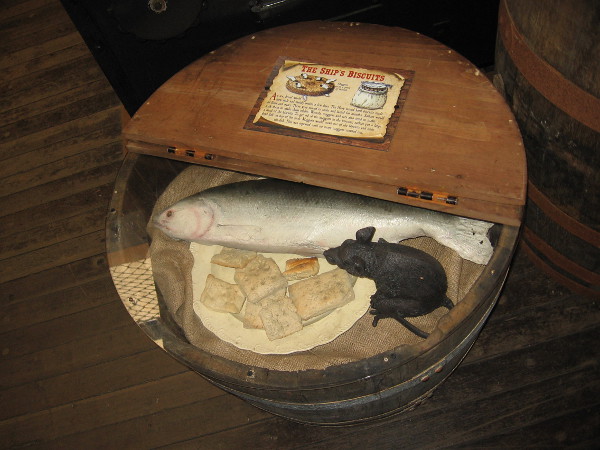
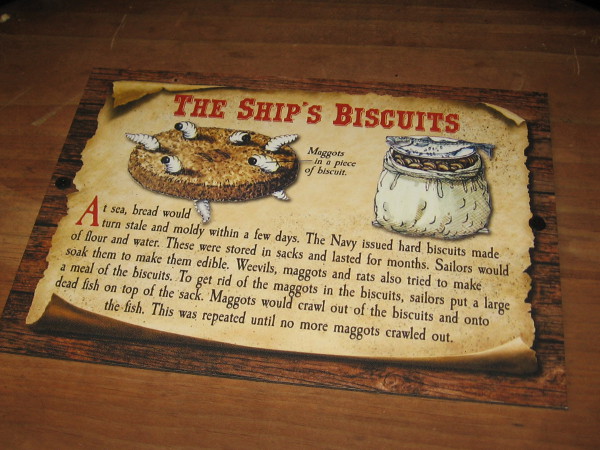
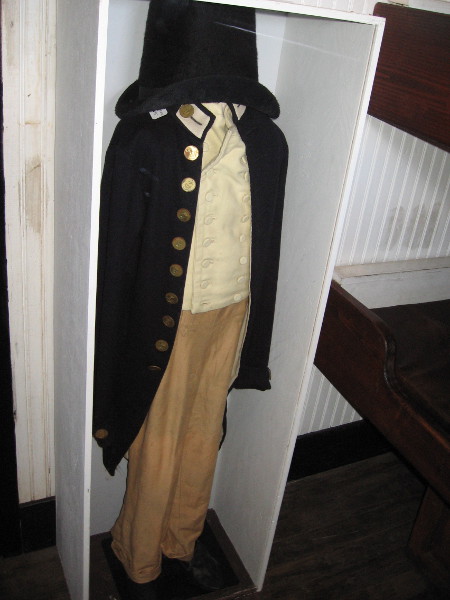
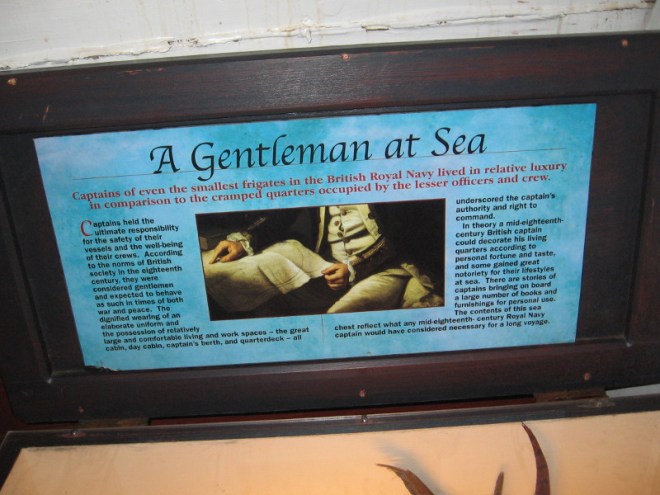
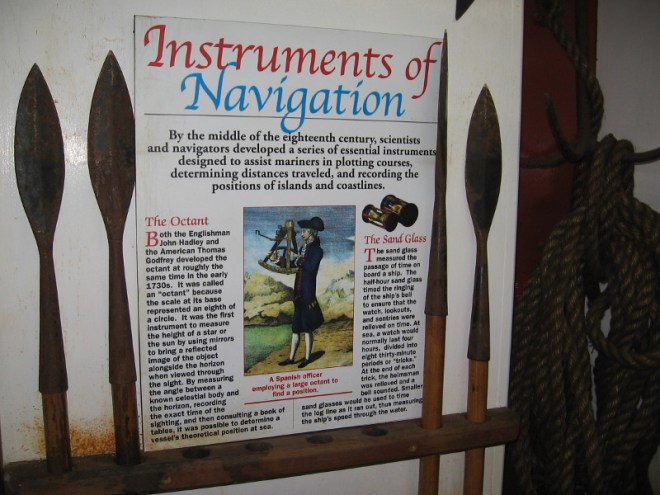
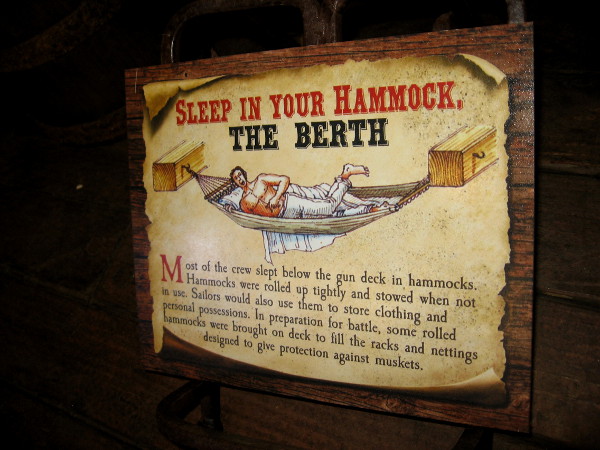
A new exhibit called Man-of-War aboard the HMS Surprise features new signs describing life aboard an 18th century British frigate. Prepare for Battle!The ship was built as replica of the HMS Rose in 1970. It was purchased by Twentieth Century Fox to be used in the movie Master and Commander, starring Russell Crowe, and was subsequently renamed HMS Surprise.Following maritime tradition, the ship has retained its original bell.Looking at the newly redecked quarterdeck of the HMS Surprise. The rest of the main deck will be restored as well.An officer on the quarterdeck would issue commands to the sailor manning the wheel, which controlled the rudder at the ship’s stern.The Disney Wonder cruise ship is seen docked in San Diego beyond the capstan. HMS Surprise was used in the filming of Disney’s movie Pirates of the Caribbean: On Stranger Tides.Many hands turned the capstan to raise or lower the anchor.Ordinary sailors relieved themselves at the ship’s bow. Hence the name head.This was a sailor’s bathroom!A man-of-war could remain at sea for many months and travel more than 150 miles per day.On the gun deck of HMS Surprise, replica twenty-four-pound cannons have names like Spit Fire, Beelzebub and Bulldog. Larger than what a frigate would carry, these were used for dramatic effect in the movie.A display demonstrates aspects of a warship’s gun and its operation.Diagram depicts how a six-man gun crew would load, aim and fire different types of shot.Sailors lived in their own specialized world, with familiar customs, rules, routines and expectations.The complex often stressful operation of a man-of-war required strict discipline. Punishments included flogging and gagging.The English diet at sea was rather simple and predictable. Lots of biscuit, beer, pease, oatmeal and butter. Pork and cheese, too.Cooking in the galley was done in calm weather. The Brodie Stove was designed for use on crowded wooden ships where dangerous fire must be avoided at all costs.A rat has found its way into a ship’s food barrel.The Royal Navy issued hard biscuits made of flour and water that were stored in sacks for months at a time. Weevils and maggots were a constant problem.Costume worn by character Midshipman Lord William Blakeney in the movie Master and Commander.Unlike the captain who in his great cabin as a gentleman lived in comparative luxury, lesser officers, like the crew, made due with cramped quarters.Midshipmen who sought to become officers learned seamanship and navigation. They had to master many skills required to operate and command a ship.Instruments used to navigate a ship included the octant and sand glass.The doctor’s quarters on the HMS Surprise. A photo shows actor Paul Bettany as the film’s character Dr. Stephen Maturin.Hammocks were often used by sailors to store clothing and personal items.A suspended mess table where sailors would eat together next to a hammock on the gun deck of museum ship HMS Surprise.
Molten bronze is poured in the foundry of the USS Ajax. Historical photograph of the Navy Bicentennial Commemorative Plaque being created. Photo credit: United States Navy.
A few days ago I received new information about an important bronze plaque, which was created in 1975 to commemorate the United States Navy’s 200 year anniversary. The historic Navy Bicentennial Commemorative Plaque stands today on San Diego’s Embarcadero, on the Greatest Generation Walk next to the USS Midway Museum. Thousands of people breeze past it every day.
People pass the Navy Bicentennial Commemorative Plaque, displayed on the Greatest Generation Walk near the USS Midway Museum. Photo taken October 17, 2015.Photo of Navy 200 year commemoration plaque courtesy the Port of San Diego.
When I first saw the old plaque, I could find absolutely nothing about it on the internet. So I originally posted this blog. As new information trickled in–sometimes out of the blue–I posted this and this.
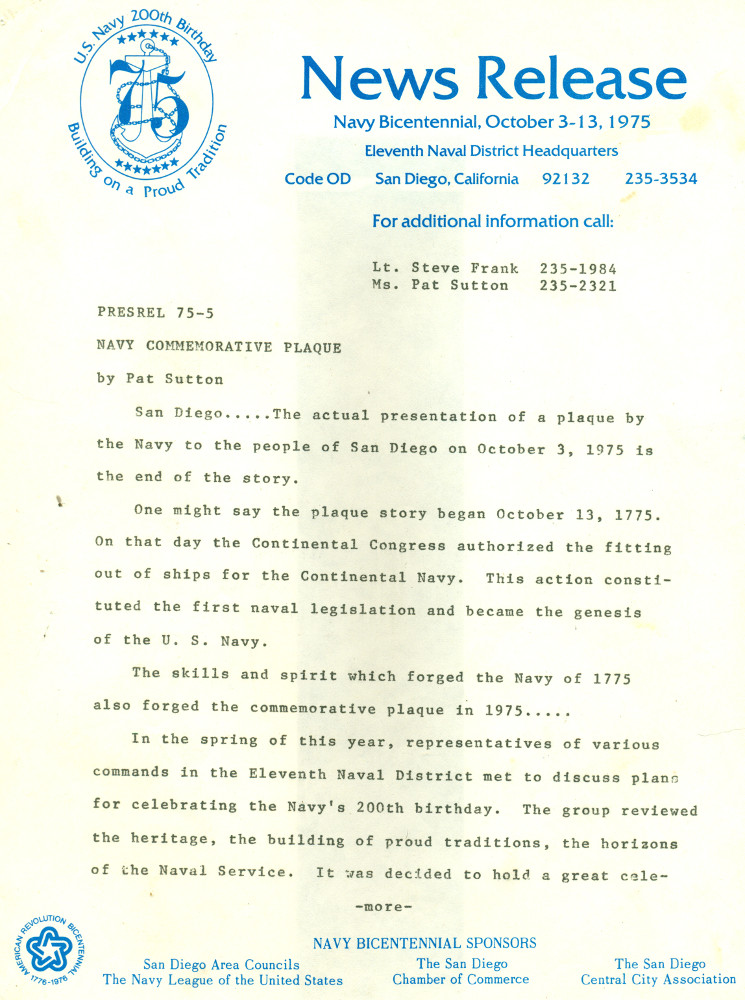
I was recently contacted by one of the plaque’s creators. He has provided detailed information about its history, including three amazing photographs and nine scans of a typed News Release from 40 years ago. The text of the News Release does not appear online, so I carefully transcribed the words. That way a very important bit of San Diego and Navy history won’t be lost.
(I tried to transcribe exactly, including possible misspellings. I’m not certain about the spelling of some names in the photo captions.)
If you know more about this plaque and would like to add some information, please leave a comment below. If you’d like to contact me, but don’t want to have your comment published, then please tell me that and I’ll email you.
Navy Commemorative Plaque News Release. Navy Bicentennial, October 3-13, 1975. Page 1.
NAVY COMMEMORATIVE PLAQUE
by Pat Sutton
San Diego . . . . . The actual presentation of a plaque by the Navy to the people of San Diego on October 3, 1975 is the end of the story.
One might say the plaque story began October 13, 1775. On that day the Continental Congress authorized the fitting out of ships for the Continental Navy. This action constituted the first naval legislation and became the genesis of the U. S. Navy.
The skills and spirit which forged the Navy of 1775 also forged the commemorative plaque in 1975 . . . . .
In the spring of this year, representatives of various commands in the Eleventh Naval District met to discuss plans for celebrating the Navy’s 200th birthday. The group reviewed the heritage, the building of proud traditions, the horizons of the Naval Service. It was decided to hold a great celebration
Navy Commemorative Plaque News Release. Navy Bicentennial, October 3-13, 1975. Page 2.
to honor the Navy, its members past and present, the nation and San Diego – so long a part of the life, the heritage and tradition of the Navy.
The plaque story developed in an uniquely traditional Navy way. The Navy’s microcosmic capabilities began to surface and swing into action.
Civilian Mrs. Jo Palm is the Visual Information Specialist for the Commander Naval Surface Force, Pacific. She also chaired the Navy Bicentennial exhibits committee. Jo conceived the idea that there should be some lasting remembrance of the occasion for the people of San Diego – perhaps a commemorative plaque would be appropriate.
Civilian Francisco (Cisco) Lopez is a designer with the General Atomic Company of San Diego. He is also a First Class Draftsman in the Navy Reserve. Tall, 28-years-old, Cisco is a 12-year Navyman, combining four years active duty with eight years in the Reserve. Last June he served his annual two weeks active duty in the Naval Surface Force Public Affairs graphics shop, reporting from his Reserve Unit with the Fleet Intelligence Center, Pacific.
“Jo told me her idea and we decided I should design something depicting 200 years of Navy history – along the lines of a plaque, but not like the usual plaque.”
Navy Commemorative Plaque News Release. Navy Bicentennial, October 3-13, 1975. Page 3.
Cisco was raised in San Francisco and has lived in San Diego the past five years. He graduated from San Francisco State and hopes eventually to be a research historian or teacher.
“I have almost a passion for history. I’m taking a month off work in June ’76, I’ll be in Philadelphia on the Fourth of July. As an armchair military historian I really relished the opportunity to be a part of today’s history by designing a representation of our Navy over a span of 200 years”.
At the suggestion of her student husband, Mel, Jo Palm went aboard Mel’s former ship, USS Ajax (AR-6), with Cisco’s drawing and the question, “Can you make it a reality?”
For a fleet repair ship like Ajax, “can” is a reality because she is designed for heavy duty hull repair; to provide a full range of repair services to Navy units in remote areas.
On her way to see the Repair Officer, Lieutenant Commander Harley M. Oien, Jo Palm passed through the Patternmaker/Carpenter Shop, remarkably clean despite the several huge saws rasping, whining and spewing sawdust. She was escorted through the Heavy Machine and Shipfitter’s shops where expert Navy operators can literally rebuild a whole ship.
Navy Commemorative Plaque News Release. Navy Bicentennial, October 3-13, 1975. Page 4.
Twelve-year Navy veteran, Chief Molder Marvin E. (Tex) Feasell of Baytown, TX, is in charge of the Ajax foundry. He recounts the meeting below decks in Mr. Oien’s office where he and a few key men, including Patternmaker First Class Ronald Gray, held a conference with Jo.
“We hashed, squabbled, explained our methods, discussed time frames, costs to the Bicentennial Birthday Fund, and most of all, the making of the pattern. That’s the critical area. That’s the make or break of the job”.
Tex Feazell learned his profession when he was sent to the Moulder “A” school right out of Boot Camp in 1963. He reported aboard Ajax in May 1974. He has a keen appreciation of the expertise of the Ajax crew, and a keen pride in its performance.
“We have one of the most hard charging crews in the fleet. The people are hard charging – hit it! Hit it! We wanted to show our skills. We wanted to make that plaque for the Navy and for San Diego. We didn’t know for over a week if we would get the job. It made us feel proud when we heard we were going to do it”.
And so the “make or break” responsibility of the Navy’s bicentennial birthday memento to San Diego was enthusiastically assumed by Patternmaker Ronald Gray, who applied his
Navy Commemorative Plaque News Release. Navy Bicentennial, October 3-13, 1975. Page 5.
Navy-learned skills to transform from drawing to working pattern the impression of 200 years of the United States Navy.
Ron has not always served in the time honored rate of Patternmaker. He joined the Navy shortly after he graduated from high school in Olympia, WA, and served his first hitch as a Commissaryman. A friend, appreciative of his carving hobby, suggested Ron reenlist under the Navy’s SCORE (Selective Conversion) program and be schooled as a Patternmaker.
Now, after 7 1/2 years in the Navy, 2 1/2 aboard Ajax, this craftsman laid the historical design out, carved his first figures in bas relief, glued them on board, then build up the other details. The pattern for the 30″ x 24″, 150 pound metal plaque would end up basically wood and plaster, however, the rope detail was real rope!
The Spirit of ’75, the hallmark of the Navy, nowhere better manifested itself than aboard the USS Ajax as the work progressed.
Patternmaker Third Class Roger Richie of Denver, CO, was a millman in civilian life and when he joined the Navy he wanted to be a carpenter. But at the time, there was no billet open at the carpenter school.
Navy Commemorative Plaque News Release. Navy Bicentennial, October 3-13, 1975. Page 6.
“Now I think I got lucky, because I was sent to Patternmaker’s School. There’s not too many of us in the Navy, or in the country, for that matter. So by what you might call a ‘freak accident’ I was here to help Ron on the plaque. There’s pride in this job”.
The Ajax Dental Department loaned Ron Gray tools for working on the intricate wax carvings, and a dental drill for final sanding. The ship’s Dental Officer, Commander Roger E. Bisson of Helena, MT, enjoys woodworking and asked to carve the plaque’s Navy aircraft with his precision instruments.
“We all want to contribute. Gray is so willing to share the glory with the team, even though he has done most of the work”, Bisson said.
Below the gleaming metal decks, at the very keel of Ajax on the concrete deck of the foundry, Molder First Class William McCoy of Coshocton, OH, and his men were ready. McCoy spent his first four years in the Navy as a destroyer torpedoman. Then for ten years he was a civilian molder. Unable to wash the salt from his veins, he returned to the Navy a year and a half ago.
McCoy described his work, “The molding art is fairly unchanged since the middle ages. We use primitive tools, primitive casting methods. A person with an understanding of the primitive makes an excellent molder”.
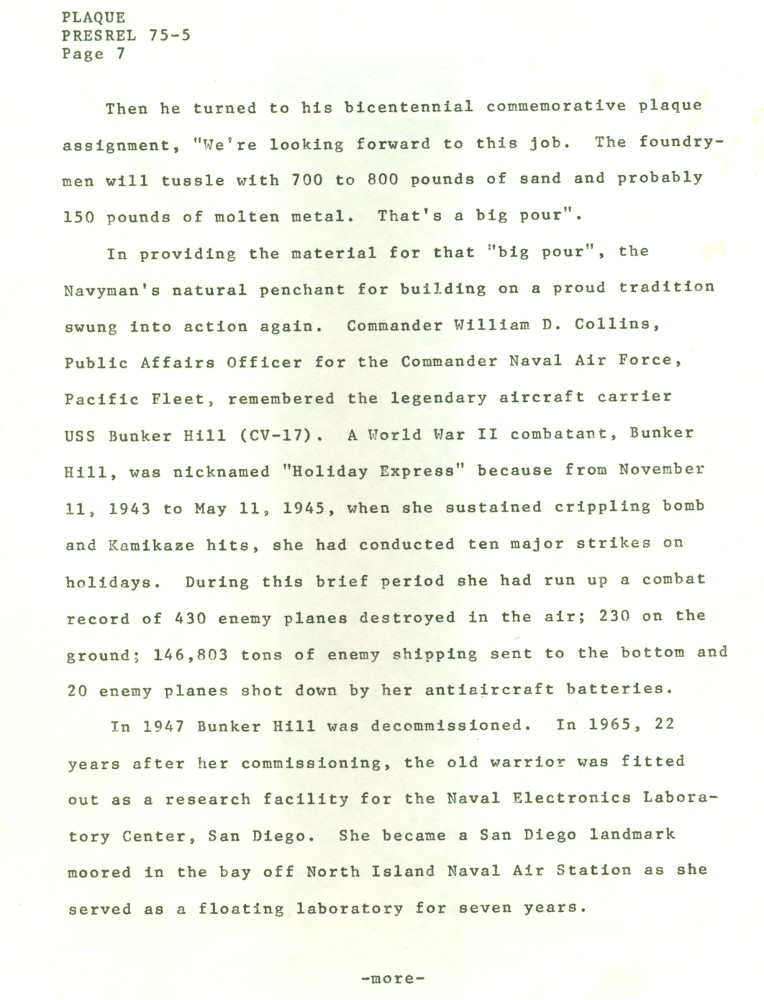
Navy Commemorative Plaque News Release. Navy Bicentennial, October 3-13, 1975. Page 7.
Then he turned to his bicentennial commemorative plaque assignment, “We’re looking forward to this job. The foundrymen will tussle with 700 to 800 pounds of sand and probably 150 pounds of molten metal. That’s a big pour”.
In providing the material for that “big pour”, the Navyman’s natural penchant for building on a proud tradition swung into action again. Commander William D. Collins, Public Affairs Officer for the Commander Naval Air Force, Pacific Fleet, remembered the legendary aircraft carrier USS Bunker Hill (CV-17). A World War II combatant, Bunker Hill, was nicknamed “Holiday Express” because from November 11, 1943 to May 11, 1945, when she sustained crippling bomb and Kamikaze hits, she had conducted ten major strikes on holidays. During this brief period she had run up a combat record of 430 enemy planes destroyed in the air; 230 on the ground; 146,803 tons of enemy shipping sent to the bottom and 20 enemy planes shot down by her antiaircraft batteries.
In 1947 Bunker Hill was decommissioned. In 1965, 22 years after her commissioning, the old warrior was fitted out as a research facility for the Naval Electronics Laboratory Center, San Diego. She became a San Diego landmark moored in the bay off North Island Naval Air Station as she served as a floating laboratory for seven years.
Navy Commemorative Plaque News Release. Navy Bicentennial, October 3-13, 1975. Page 8.
“The Bunker Hill was stripped of her brass and bronze fittings prior to her scraping in late 1972”, Commander Collins reported at a Bicentennial Committee meeting, “this was molded into ingots. Some of the ingots still remain and are stored at the Naval Station in Honolulu. We would be honored to have Bunker Hill permanently a part of San Diego. The Pacific Naval Air Force will provide her brass and bronze for the plaque”.
And so it was done.
In August Jo Palm called Cisco Lopez with the news that the plaque was to become a reality. Cisco told Jo of an uniquely Navy coincidence. “For my 1975 active duty tour I was stationed on Ajax! I designed ducting for ventilation of a spray booth. Great crew! I never expected to work with them again”.
On September tenth, after the sand had been rammed around the pattern and the pattern removed, leaving its historic impression (the negative), the excitement of expectancy on the Ajax foundry deck rose even as the metal of old Bunker Hill rose toward the proper temperature to pour.
Participants, both active and anticipating, ranged from Jo Palm and Cisco Lopez; Navy combat cameramen and photographers; to the molders, firemen, and as from the beginning,
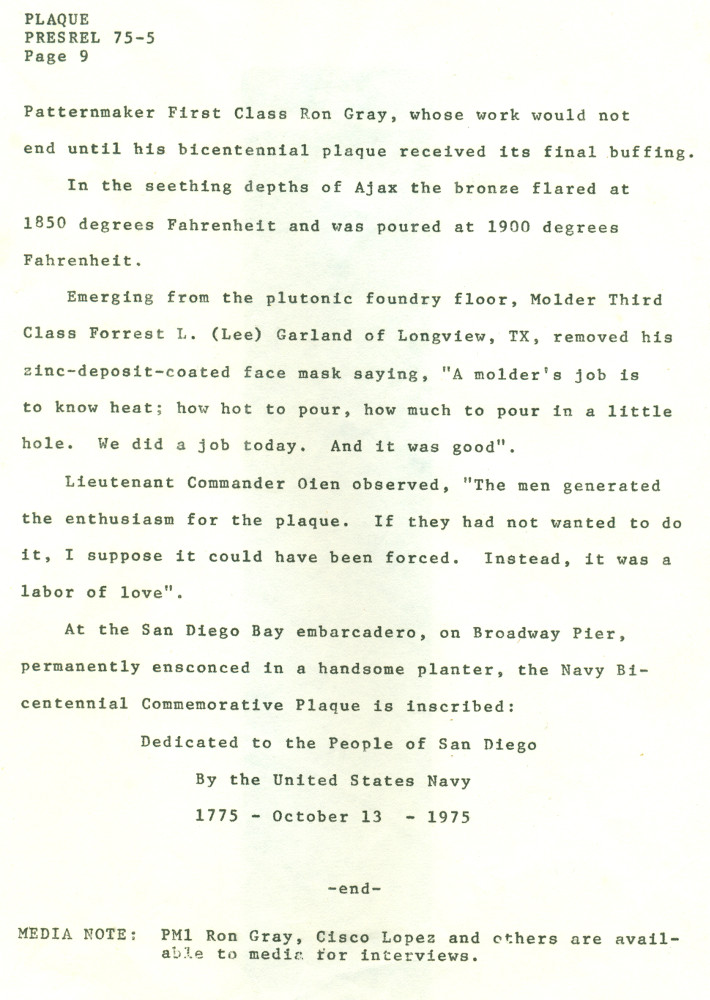
Navy Commemorative Plaque News Release. Navy Bicentennial, October 3-13, 1975. Page 9.
Patternmaker First Class Ron Gray, whose work would not end until his bicentennial plaque received its final buffing.
In the seething depths of Ajax the bronze flared at 1850 degrees Fahrenheit and was poured at 1900 degrees Fahrenheit.
Emerging from the plutonic foundry floor, Molder Third Class Forrest L. (Lee) Garland of Longview, TX, removed his zinc-deposit-coated face mask saying, “A molder’s job is to know hear; how hot to pour, how much to pour in a little hole. We did a job today. And it was good.”
Lieutenant Commander Oien observed, “The men generated the enthusiasm for the plaque. If they had not wanted to do it, I suppose it could have been forced. Instead, it was a labor of love”.
At the San Diego Bay embarcadero, on Broadway Pier, permanently ensconced in a handsome planter, the Navy Bicentennial Commemorative Plaque is inscribed:
Dedicated to the People of San Diego
By the United States Navy
1775 – October 13 – 1975
Tex Feazell and Ron Gray with the first wood carving and the original drawing. Photo credit: United States Navy.Patternmaker Kevin O’Connor, Molder Jessie Lopez, Molder Lee Garland, Patternmaker Roger Richie, two unidentified Molders, Bill McCoy and Ron Gray. Photo credit: United States Navy.
…
Follow this blog for more amazing, unexpected discoveries! Join me on Facebook or Twitter.
A beautiful live oak grove in Balboa Park honors men who died tragically on the USS Bennington in 1905.
Balboa Park is without a doubt one of America’s national treasures. Located just north of downtown San Diego, its 1,200 acres is the home of magnificent museums, gardens, architectural marvels, many recreational facilities and perhaps the world’s most famous zoo. The amazing urban park is so gigantic most visitors see only a small fraction of it. Some out-of-the-way corners of Balboa Park are enjoyed by locals who live nearby; other overlooked areas seem almost forgotten.
The USS Bennington Memorial Oak Grove is one such area. While many drive by it on any given day, as they travel along 26th Street just before it turns into Florida Drive, and a few joggers pass through the shady grove, I’d wager only a handful of San Diegans know of the oak grove’s existence or historical significance.
There are 66 live oak trees in this grove. They were planted to memorialize 66 men killed on the USS Bennington on the morning of July 21, 1905, when the gunboat’s boiler suddenly exploded and the ship nearly sank in San Diego’s harbor. No markers in the grove indicate the significance of the large gnarled oaks. (A 60 foot high granite obelisk stands at Fort Rosecrans National Cemetery in Point Loma, a memorial to those sailors who died on the USS Bennington. Most of the dead are buried there.)
The USS Bennington was a warship with a long and proud history. Commissioned in 1891, she was the ship that claimed Wake Island for the United States. After the boiler explosion in San Diego Bay, eleven men were awarded the Medal of Honor for extraordinary heroism.
Earlier this year, when I visited an exhibit in Balboa Park created by The Daughters of the American Revolution San Diego Chapter, I learned the local DAR would like to place plaques in the grove to memorialize the USS Bennington and the men who tragically died. If you, your business or organization would like information about the project, or to help, you might contact them from their page. Should this project come to fruition, I’ll be very pleased to blog about it!
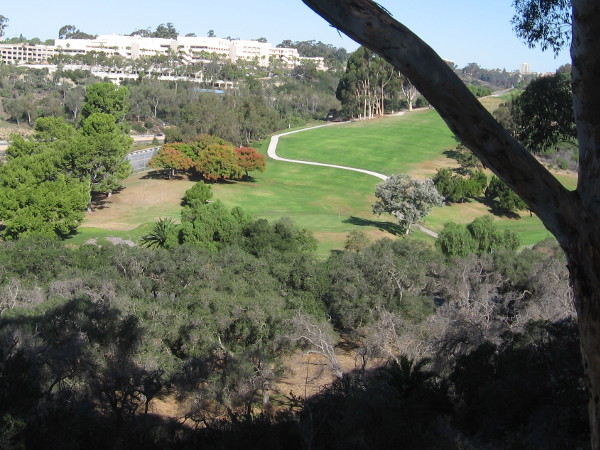
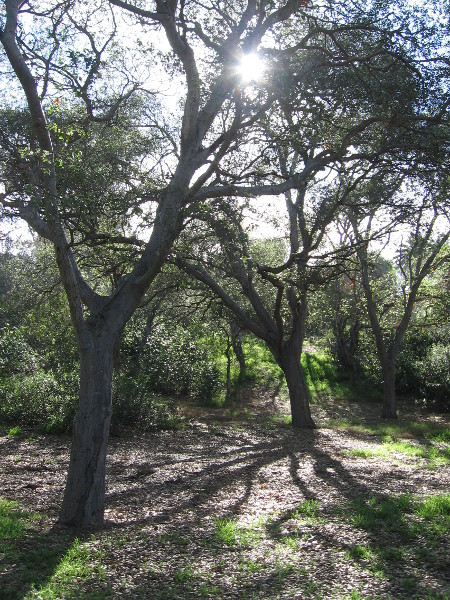
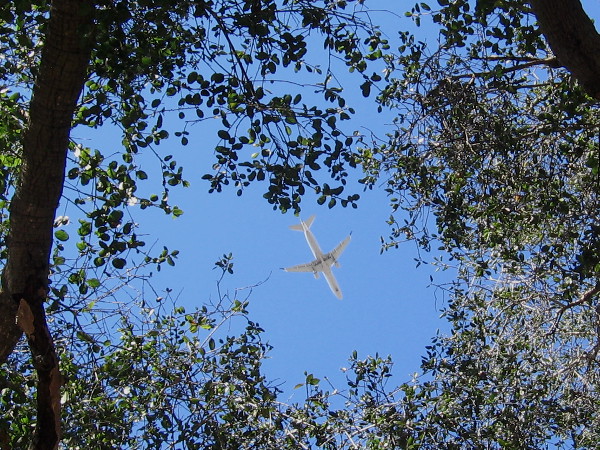
View of the Bennington Memorial Oak Grove from Golden Hill Park, located near Balboa Park’s southeast corner. Balboa Park’s public golf course and Naval Medical Center San Diego are also visible.Wooden footbridge along 26th Street leads to a little-used trail through USS Bennington Memorial Oak Grove in Balboa Park.Beautiful old oak trees memorialize 66 sailors killed in 1905 when the USS Bennington’s boiler exploded in San Diego’s nearby harbor.Looking up through the leaves of the live oak trees at blue sky and clouds.These trees, honoring fallen men, remind us of a sudden tragic moment in San Diego’s military history.A commercial airplane flies overhead as it crosses Balboa Park heading in toward Lindbergh Field.A jogger enjoys the shady old trees on a warm day in early October.
…
Follow this blog for more unique discoveries in San Diego! Join me on Facebook or Twitter.
Masts of a few visiting tall ships during 2015 Festival of Sail, at the Maritime Museum of San Diego.
The 2015 Festival of Sail is underway! The cool event runs through Labor Day and takes place on the Embarcadero at the Maritime Museum of San Diego. This morning I got some photos!
The popular festival, which is held every year in late summer, features a large gathering of beautiful tall ships. A few belong to the museum; others are visiting San Diego for this very special occasion.
Last year I wrote several detailed blogs and covered many of the tall ships which I saw again today. So this year I figured I’d just mosey from ship to ship, taking random photos, not worrying too much about jotting down gobs of information. Here’s the result…
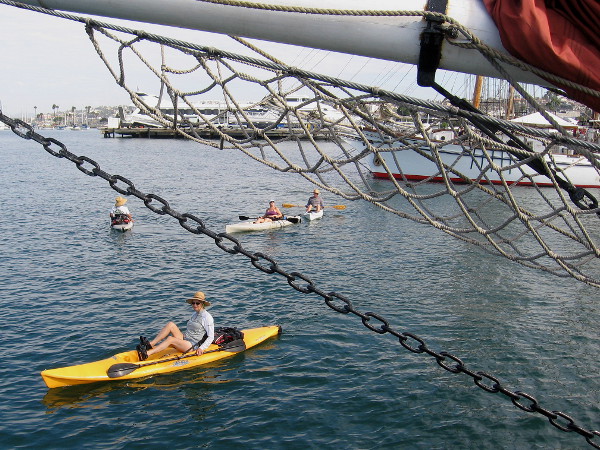
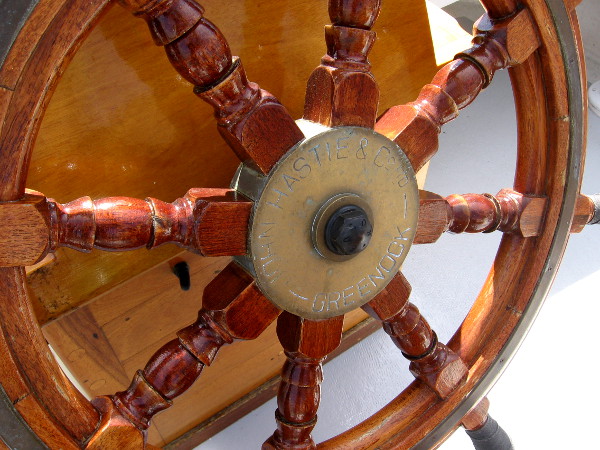
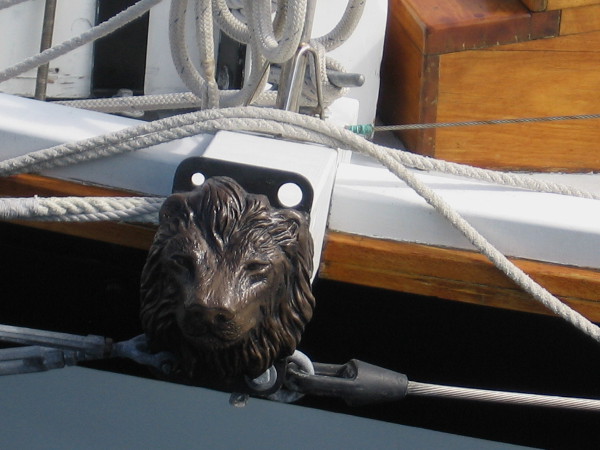
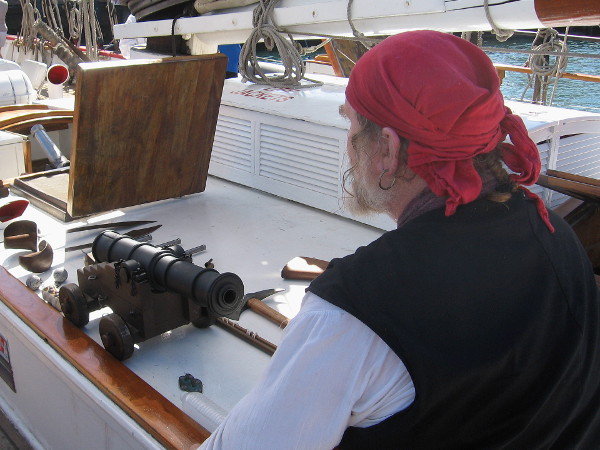
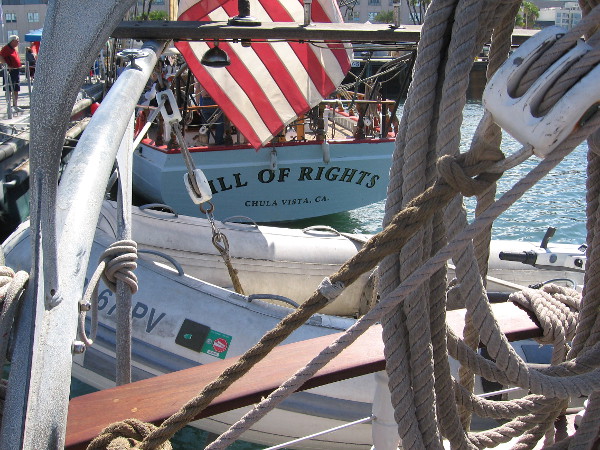
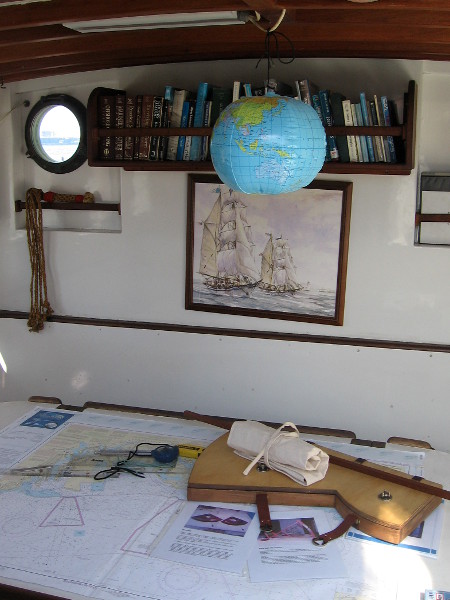
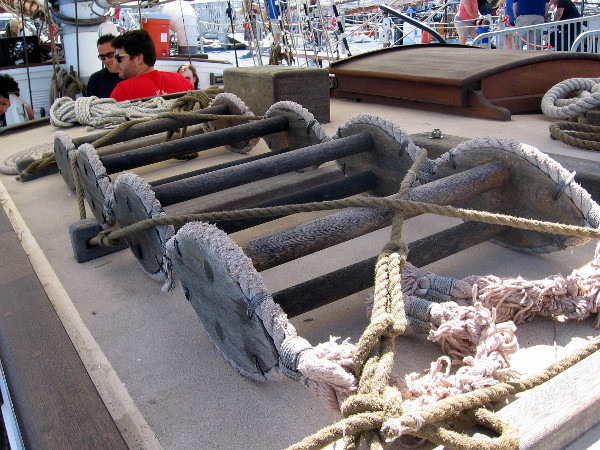
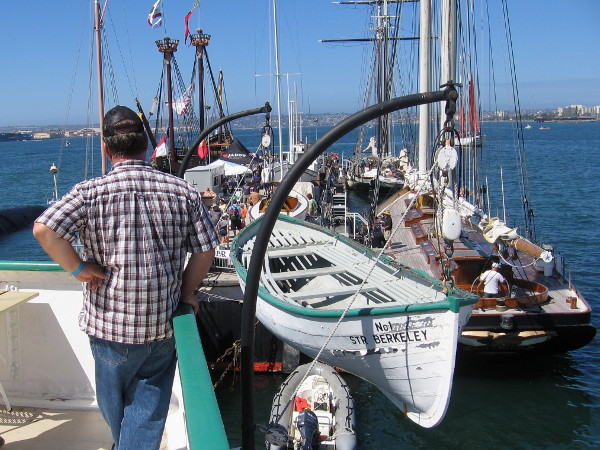
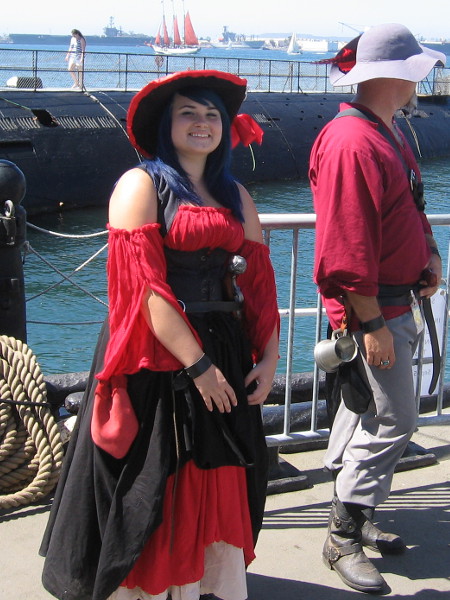
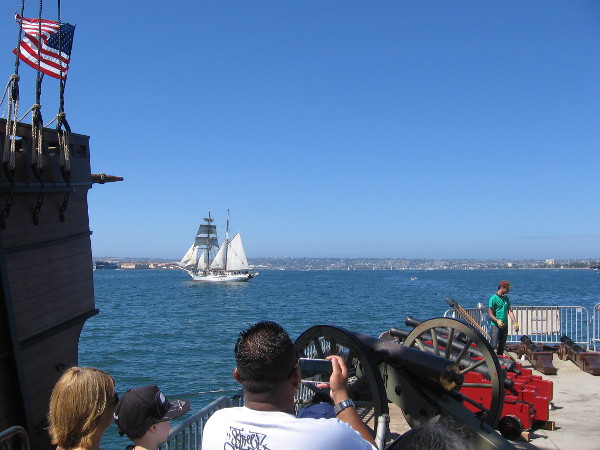
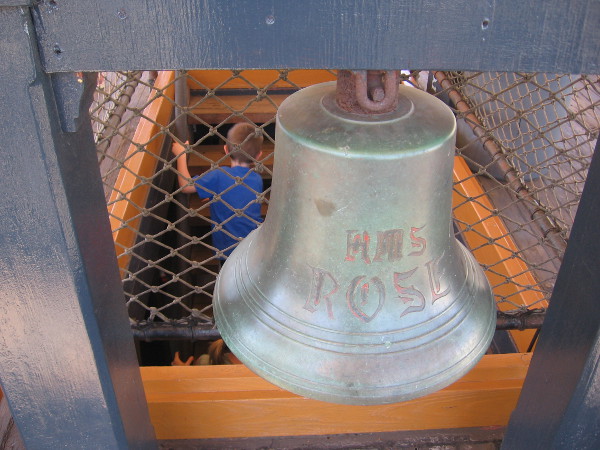
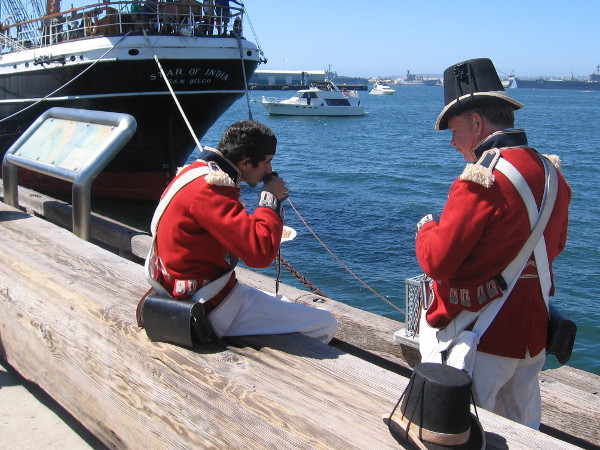
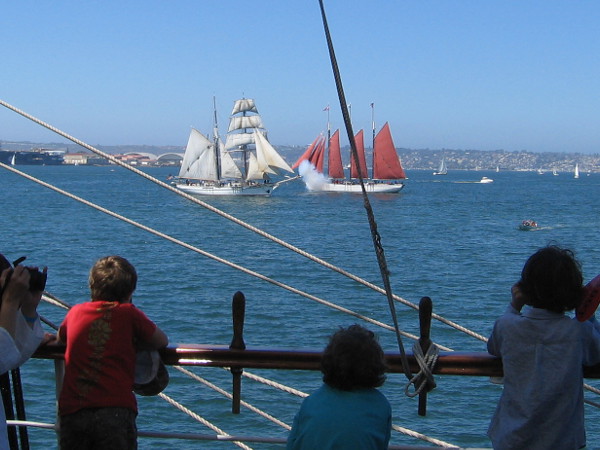
The brig Pilgrim, approximate replica of the historic ship Richard Henry Dana sailed in, is visiting San Diego again for the annual tall ship festival.Visitors enjoy touring the deck of the Pilgrim on Sunday morning. It’s another sunny summer day on blue San Diego Bay!Ship’s navigation light and galley. Signs on the Pilgrim describe life on the sea a couple centuries ago, when Two Years Before the Mast was written by Dana.Kayaks on the smooth water cruise past a collection of very cool tall ships.Plaque on tall ship American Pride indicates that down below is the Captain’s Quarters.Close look at wooden steering wheel of the American Pride.Volunteer crew members of American Pride assembled on deck as their fine ship visits San Diego.Lion’s head decorates spar projecting from hull of topsail schooner Amazing Grace.A visitor at 2015 Festival of Sail in San Diego looks down into the cabin of Amazing Grace.A second floating dock and even more cool tall ships can be seen beyond Amazing Grace.Curious eyes peer below deck of the Bill of Rights, perhaps wondering what it would be like to live in very close quarters while at sea.Bill of Rights tall ship crew members were dressed in seafaring garb. This pirate had a collection of pistols and a small cannon on display.Star motif on a block used by a single rope in some complicated rigging. Masts of another nearby tall ship rise in the background.To step off the Bill of Rights one must walk the plank!Stern of Bill of Rights seen from rear deck of the brigantine Irving Johnson.Photo of ship’s cabin containing shelves of books, a globe and navigational charts.Friendly crew member on the Exy Johnson was playing familiar seagoing tunes on a concertina.It appears this ladder has seen a great deal of usage and weather.Festival of Sail visitors check out many cool sights! I see someone climbing one of the Irving Johnson’s shrouds!Watch out! This wild-eyed pirate has two wicked swords! Run for it!Looking at more ships docked behind the Maritime Museum’s historic Steam Ferry Berkeley. I see masts of the San Salvador, Californian and America.American flag in deep blue sky curls in the pleasant sea breeze.I saw various folks in period costumes. This lady had a nice smile!Another photo of the ships behind the Berkeley. The red star is on the museum’s B-39 Soviet diesel submarine which operated during the Cold War.A land battery took part during the festival’s cannon battles. A beautiful tall ship heads across the bay.View of historic bark Star of India from deck of HMS Surprise.Someone checks out the high masts of HMS Surprise, the ship used in the filming of Master and Commander starring Russell Crowe.Written on the ship’s bell is HMS Rose, the original name of the Surprise.Two members of the Royal Guard enjoy a drink and snack on San Diego’s Embarcadero during the Festival of Sail. They must be on shore leave.White sails, wooden ships, blue sky and living visions of a rich maritime history.Kids on deck of Star of India watch a cannon battle on San Diego Bay.
A special thank you to everyone following Cool San Diego Sights. You all are the greatest! I just wanted to say that.
Where will we go next? I don’t know! Life is an adventure!



























































 Cool San Diego Sights!