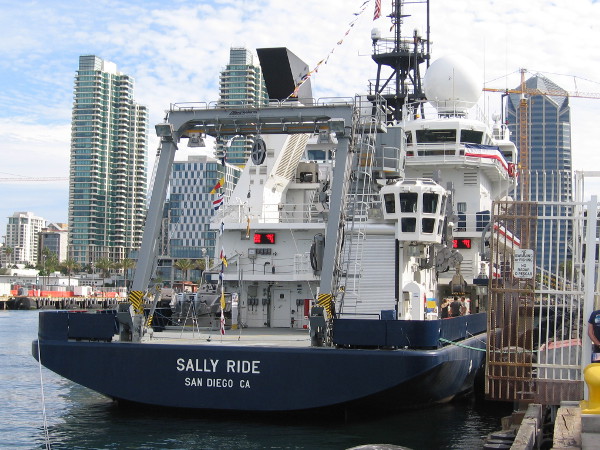
Scripps Institution of Oceanography’s new Research Vessel Sally Ride welcomes the public at San Diego’s Broadway Pier.
If you love science, technology and the study of our planet’s oceans, please enjoy the following photo tour of a very special ship. In this blog post we will visit the newest, most highly advanced oceanographic research ship in the world!
The world-famous Scripps Institution of Oceanography, a part of UC San Diego located in La Jolla, debuted their new research vessel Sally Ride this weekend at the Broadway Pier. Today the public was invited to come aboard and learn about the future work of scientists at sea.
The R/V Sally Ride is equipped with technologically advanced equipment, sensors, labs and computer systems. In the years ahead, it will be tasked with learning about and preserving the oceans, studying and protecting the environment, and inspiring the next generation. Using satellite communication and the scientists aboard, students and teachers throughout the world will actively participate in ocean exploration.
Except in documentary films, the public seldom sees the interior of an ocean-going research vessel. So today was an opportunity not to be missed!
Please read the photo captions where I’ve tried, to the best of my knowledge, to provide accurate details. But I’m no expert. If you’d like to leave a correction or useful information in a comment, please do!
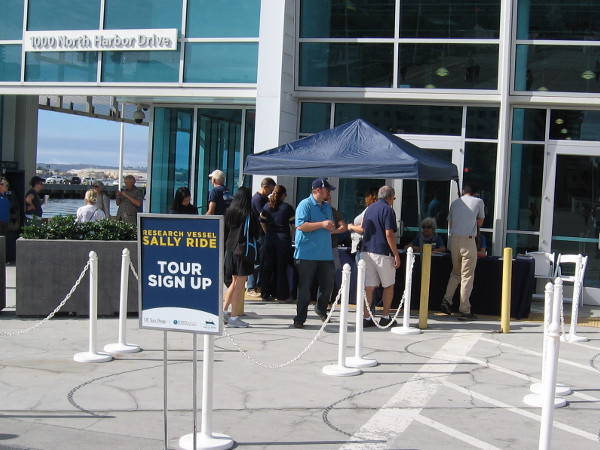
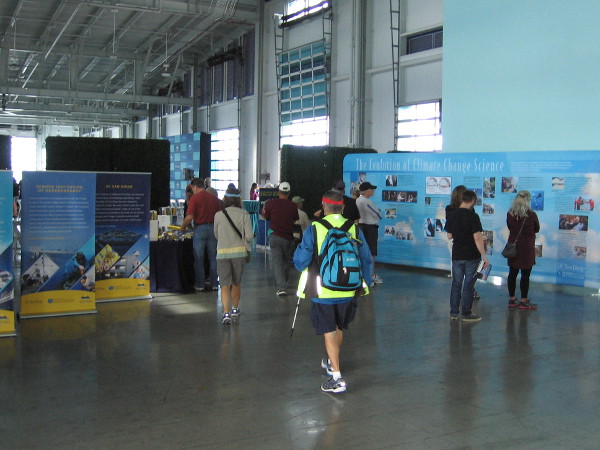
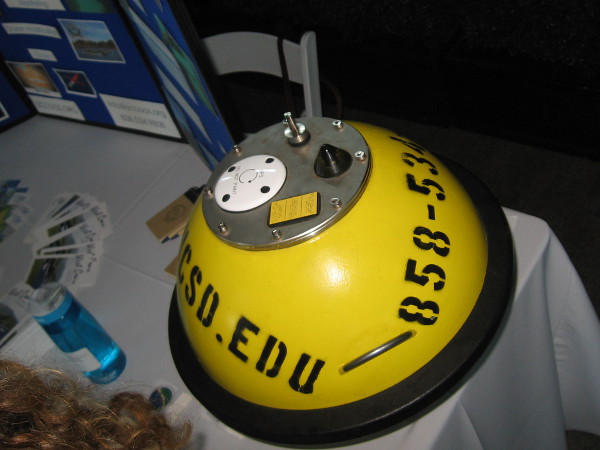
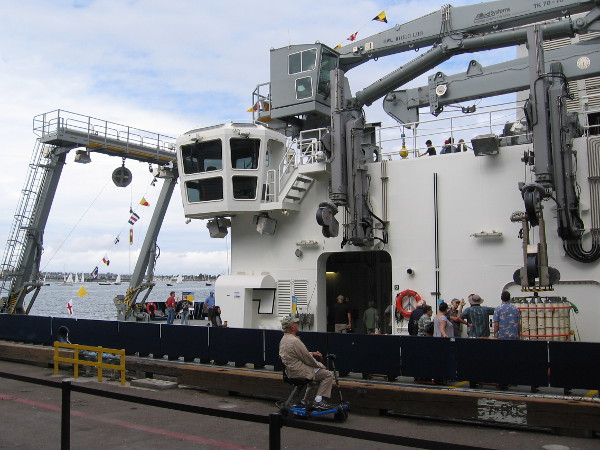
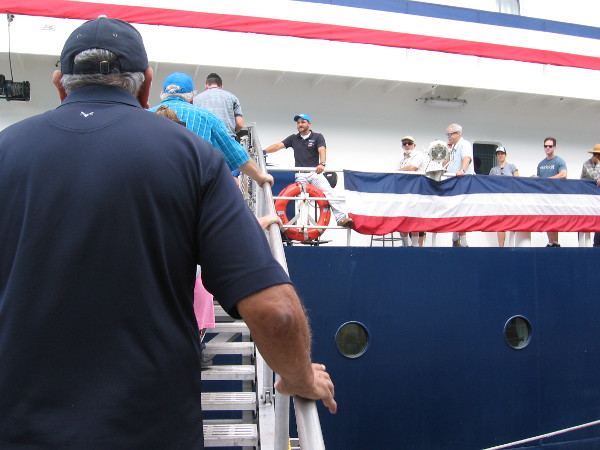
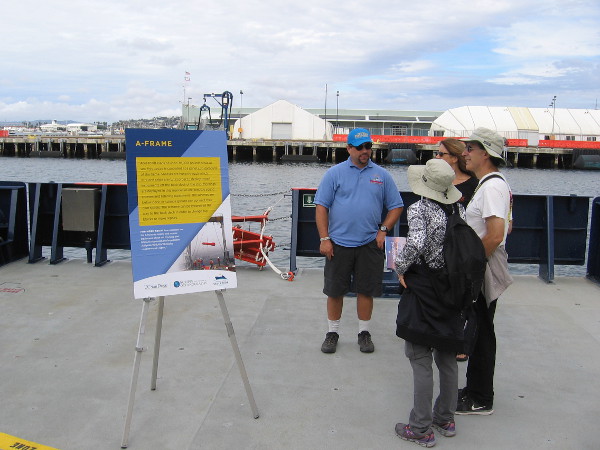
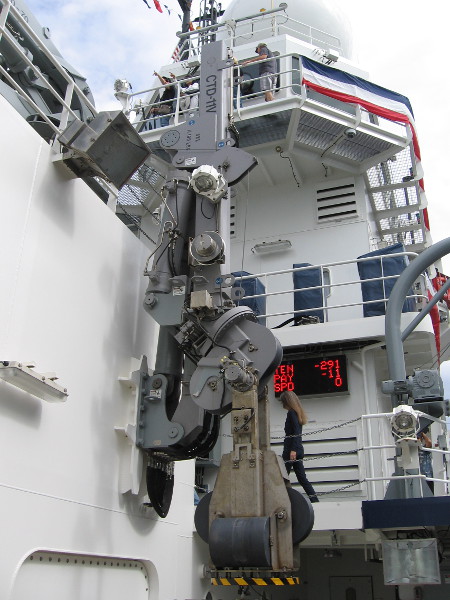
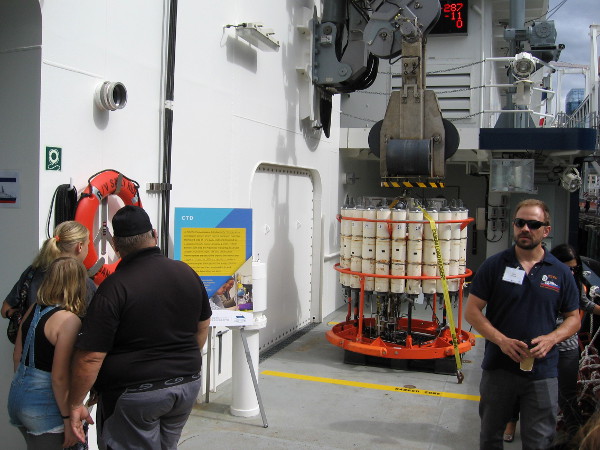
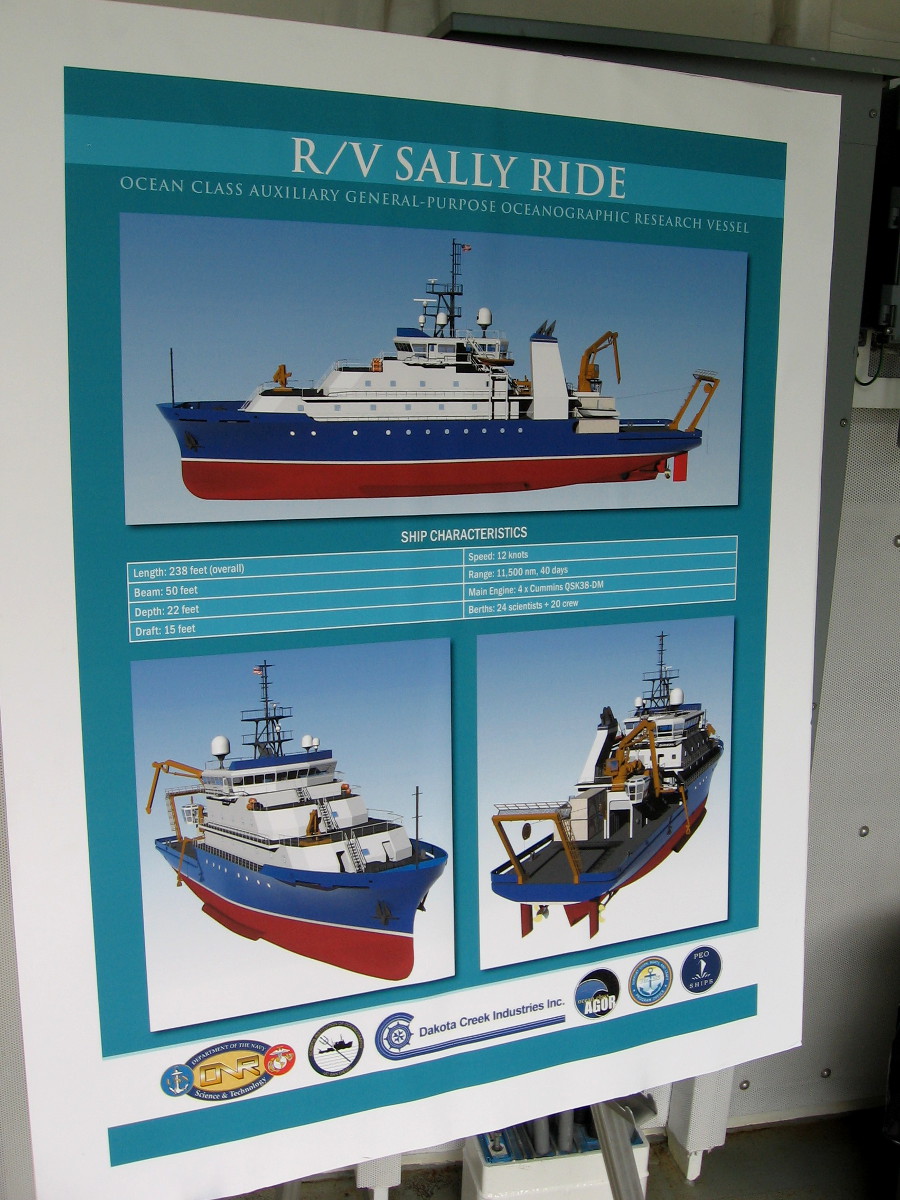
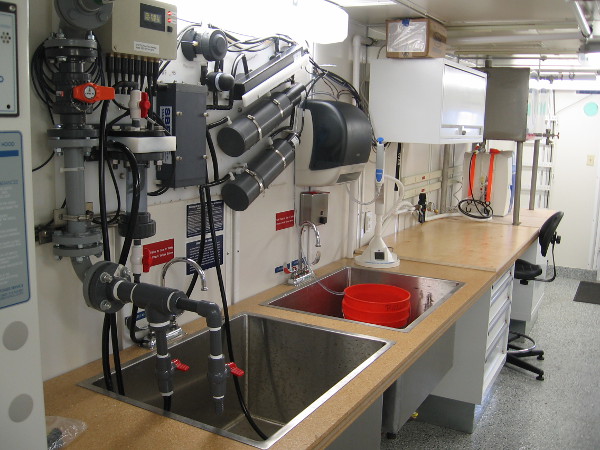
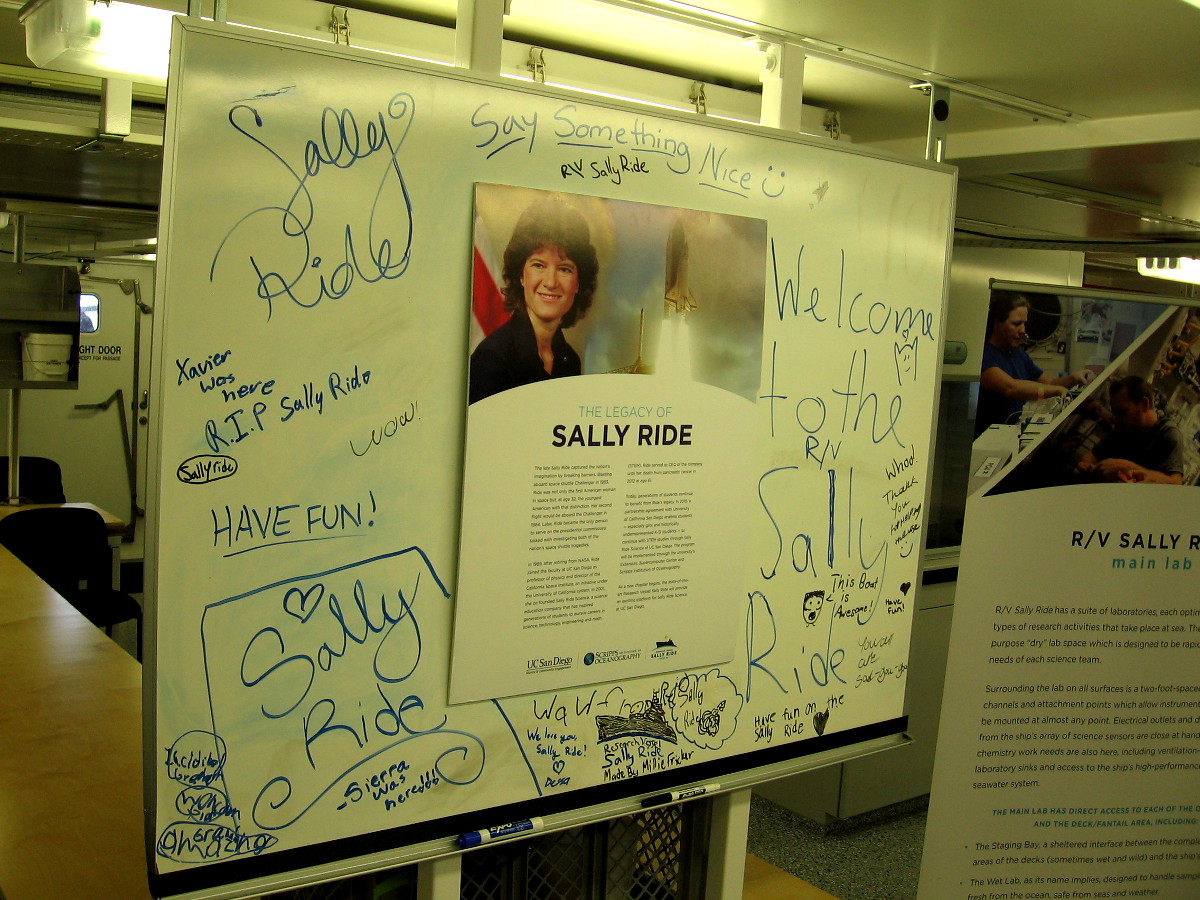
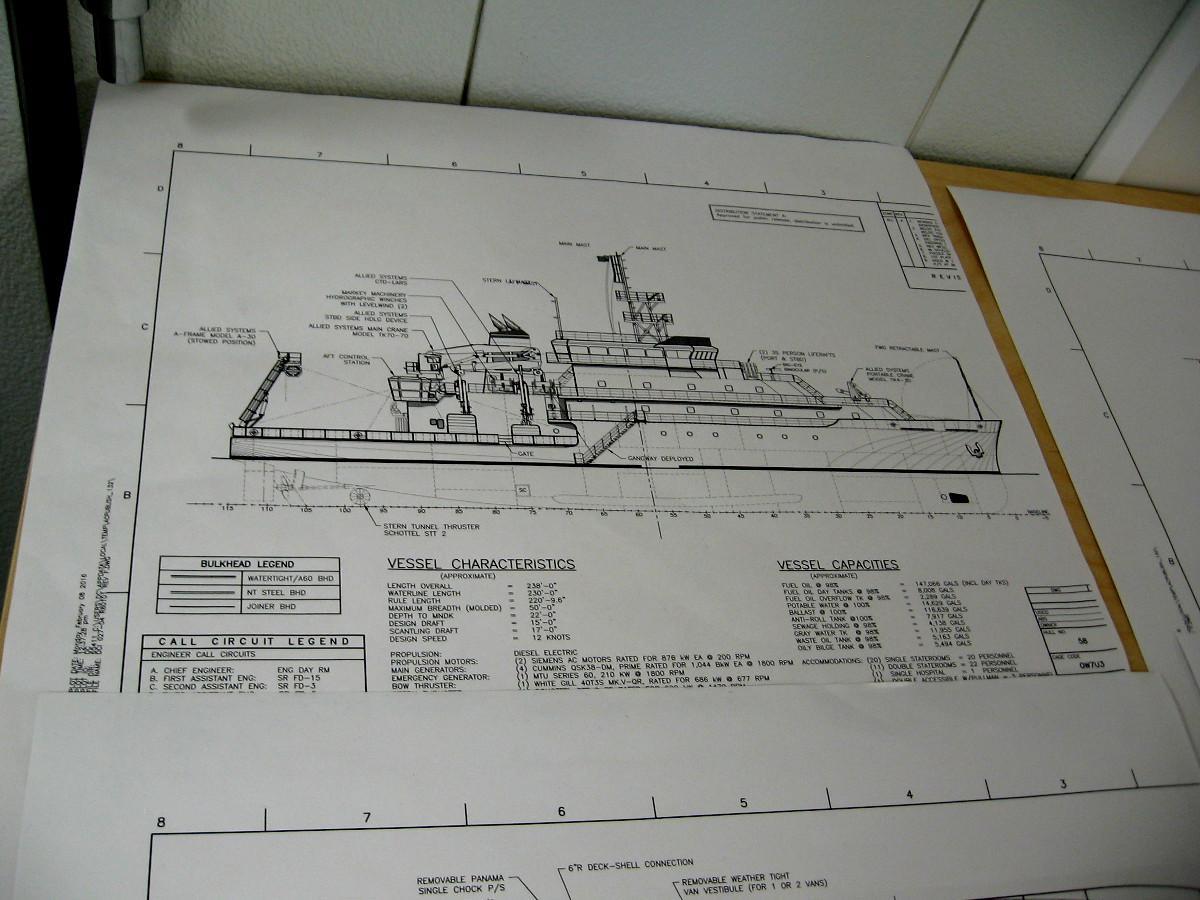
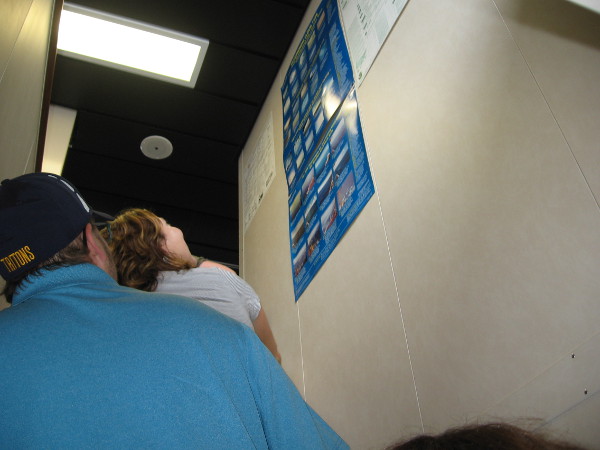
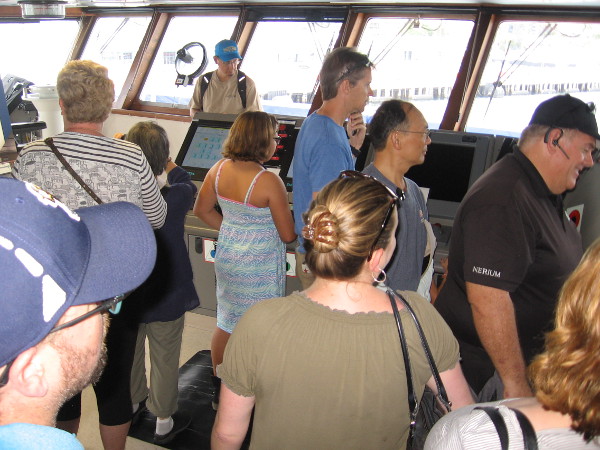
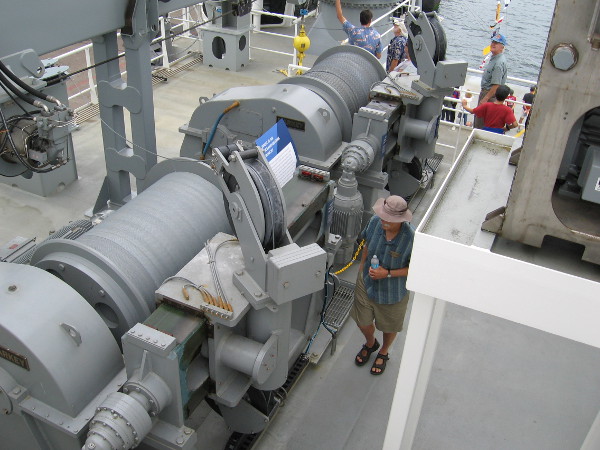
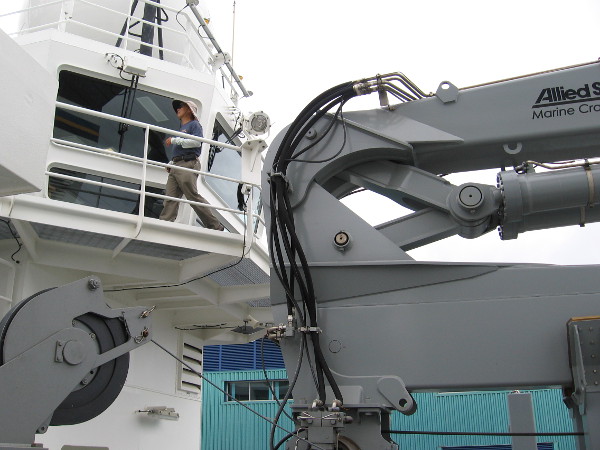
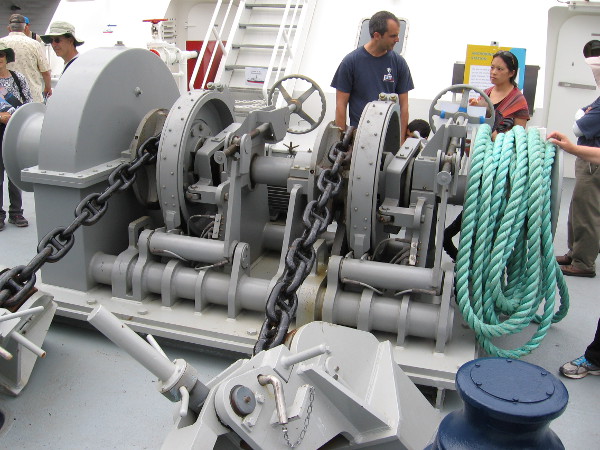
The public was invited to tour the new research ship Sally Ride. It was a rare opportunity to see how high tech exploration is carried out by UCSD Scripps scientists and oceanographers.The free public tours of R/V Sally Ride drew a good crowd on a Sunday in October, 2016. These people smartly arrived an hour early to reserve a time slot.The tour began inside the Port Pavilion on Broadway Pier. Many displays highlighted the work of UCSD’s Scripps Institution of Oceanography.UC San Diego embarks upon a new journey of exploration and boundary breaking with America’s newest research vessel R/V Sally Ride. Sally Ride was the first American woman in space.A large display goes over the history of The Evolution of Climate Change Science. UCSD scientists have made important contributions in this field.People inside the Port Pavilion learn about science and technology related to the understanding of planet Earth’s oceans.These examples of what is found when taking sediment cores on the ocean floor include tiny elegant Radiolaria.The Autonomously Deployed Deep-Ocean Seismic System’s Wave Glider is powered by solar and wave energy. It links with satellites and ocean bottom seismometers to help predict earthquakes and tsunamis.Some advanced visual equipment on display during the public debut of Research Vessel Sally Ride in San Diego. Multiple underwater photos can be taken in quick succession to form a 3-D model.Scripps Institution of Oceanography in La Jolla monitors climate variability and change, coastal hazards, marine operations, and ecosystems, fisheries and water quality.Floating device used to measure ocean wave characteristics.Peering out of the Port Pavilion at the R/V Sally Ride, docked at San Diego’s Broadway Pier.Photo aiming toward the stern of R/V Sally Ride. The big A frame, winch shack, extending crane, and two retractable arms on the starboard side of the ship are visible.Visitors eagerly head up the gangplank to explore America’s newest, most advanced research ship.Here we go!Looking down to our left.This rosette frame can be lowered into the water with a variety of mounted sensors. We’ll see it again in a bit.Heading down steep steps to the research ship’s fantail and work deck.We are halfway down. Many distant sailboats can be seen on San Diego Bay this beautiful but mostly overcast Sunday.R/V Sally Ride is equipped with shops, labs, winches, launch frames, booms and the newest scientific instruments and communication gear. The busy fantail and work deck are where science meets the sea.The gigantic A-Frame at the stern of RV Sally Ride can lift loads up to 30,000 pounds! Wire and cable deploy towed instruments. Moorings and acoustic equipment are also deployed in this manner.Visitors on the rear deck of R/V Sally Ride learn about science on the sea from a crewmember.Looking forward and up, we see several levels to the ship. If I understand correctly, the electronic display indicates a cable’s tension, payout and speed.Turning a bit to the right, we see the big crane atop a staging bay that is sheltered from the weather. Inside, equipment can be carefully prepared before deployment out in the elements.Now we are heading toward the windowed winch shack, along the starboard side of the ship toward the two retractable arms.One of two mechanical arms used to lower sensors, nets, and other oceanographic equipment into the water. They are called LARS, which stands for launch and recovery systems.A member of the public reads a sign explaining that the LARS are controlled from the winch shack. Wire or cable is used to lower equipment overboard.This rosette frame is holding a CTD, or conductivity, temperature and depth sensor. It can be lowered to a depth of nearly 4 miles! Niskin bottles attached to the frame can capture samples to be analyzed on the ship or at a later time.A poster inside the R/V Sally Ride’s staging bay details the ship’s main characteristics.Heading through a watertight door into the Wet Lab. Water samples are brought here for storage and analysis. There are drains in the floor!Another poster contains photos taken during RV Sally Ride’s construction. (Click image to enlarge.)A look inside the Wet Lab.R/V Sally Ride is the newest member of the Office of Naval Research’s fleet. These ships are owned by the U.S. Navy, but operated by university employees and professional mariners. Science teams rotate on a regular basis every two or three weeks.Heading from the Wet Lab into the Main Lab.Lab stations on the R/V Sally Ride are optimized for the different types of research activities that take place at sea.Visitors have written comments near a sign that describes the legacy of Sally Ride, our country’s first female astronaut. Sally was on the faculty of UC San Diego.A diagram of R/V Sally Ride with detailed information about the ship.Now we’ve arrived at the ship’s nerve center, the control station for CTD operations. Here scientists monitor ship location, sensor readouts, and trip bottles to collect samples.After quickly passing the no-nonsense mess deck and through two rather bare state rooms, visitors head up stairs to check out the pilot house.The high tech pilot house, or bridge, attracted a big crowd of curious visitors!One of the seats where the ship’s captain can place himself. When at sea or holding station, a deck officer is present on the bridge at all times.The huge computerized control console looks like it belongs on a spaceship!Aft of the starboard side of the bridge is the chart room, where navigational plans are made for each expedition. Old-fashioned maps are still used as an emergency backup!Heading around the pilot house, back toward the stern of R/V Sally Ride.Looking down at the telescoping knuckleboom crane and other outdoor machinery used to carry out research on the often stormy ocean.People examine an oceanographic winch. Drums can have upwards of 10,000 meters of wire or cable spooled on them.As I understand it, this sturdy telescoping knuckleboom crane can be extended in all directions for multiple purposes, including lifting the gangplank!Two impressive winches aboard R/V Sally Ride.Looking back up toward the rear of the pilot house.One last look at the aft deck and impressive A-Frame of the amazing new Research Vessel Sally Ride.I’m not the only one who is impressed.Heading forward along the ship’s port side. Downtown San Diego buildings rise across the water.We’ve arrived at the ship’s bow, just below the pilot house, where we find the anchoring station. The big windlass mechanism lowers and raises an anchor.R/V Sally Ride has three anchors, each weighing 5,000 pounds. Two are on either side of the bow and the third is a spare. Each anchor is connected to 720 feet of chain, which is stored below decks.An orange life ring reads R/V Sally Ride, San Diego.One last photo of R/V Sally ride during her debut at San Diego’s Broadway Pier. She begins her first research expedition in a matter of days!
…
I live in downtown San Diego and love to walk! You can follow Cool San Diego Sights via Facebook or Twitter!
You can easily explore Cool San Diego Sights by using the search box on my blog’s sidebar. Or click a tag! There are thousands upon thousands of fun photos for you to enjoy!
Naturalist Mike Kelly leads a small group of hikers into Los Peñasquitos Canyon Preserve from the Del Mar Mesa trailhead.
Free guided nature walks in the Los Peñasquitos Canyon Preserve introduce the public to unexpected wild beauty in the heart of San Diego. Yesterday I went on one of these easy walks.
Our guide, naturalist Mike Kelly, longtime member of the Friends of Los Peñasquitos Canyon Preserve, has been an advocate working to safeguard this beautiful and historic San Diego canyon for over three decades. He’s a friendly fellow whose knowledge of the canyon’s flora, fauna and fascinating history made for an extremely enjoyable hike.
Years ago, Mike and others fought to save Los Peñasquitos Canyon from development. Their efforts resulted in about half of the canyon being protected. Fortunately, the preserve is connected to other similar natural areas in San Diego through various corridors, allowing wildlife to move about and thrive. Owls, woodpeckers, hawks, raccoons, bobcats, coyotes, mule deer, even an occasional mountain lion make the canyon their home. Native trees, chaparral, grass and spring flowers are abundant and the source of endless enjoyment.
I learned there are also wildlife tracking hikes, plus night walks, when deer are frequently seen. There are also free guided tours of San Diego’s second oldest residence, which stands near the east end of the preserve, the Rancho Santa Maria de Los Peñasquitos adobe. To learn about all these wonderful adventures, which are ideal for families, click here.
To learn more about the Friends of Los Peñasquitos Canyon Preserve, click here! Perhaps you’d like to become a member!
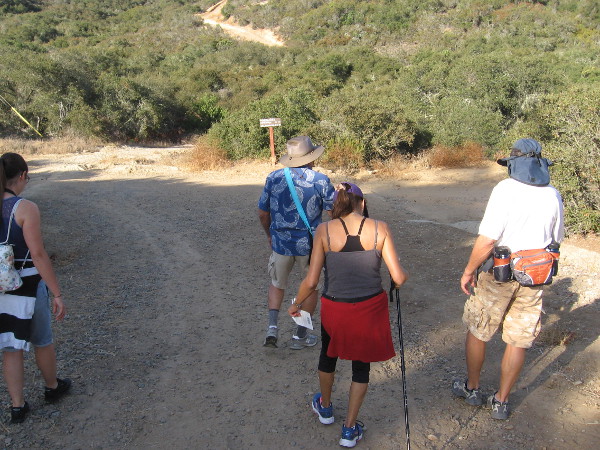
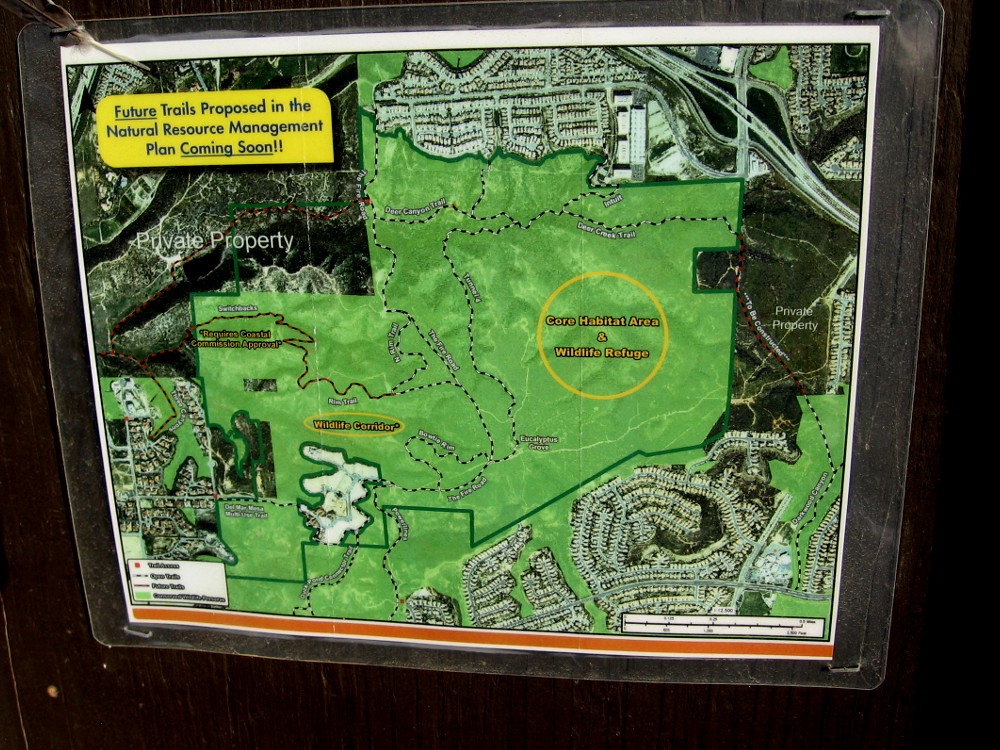
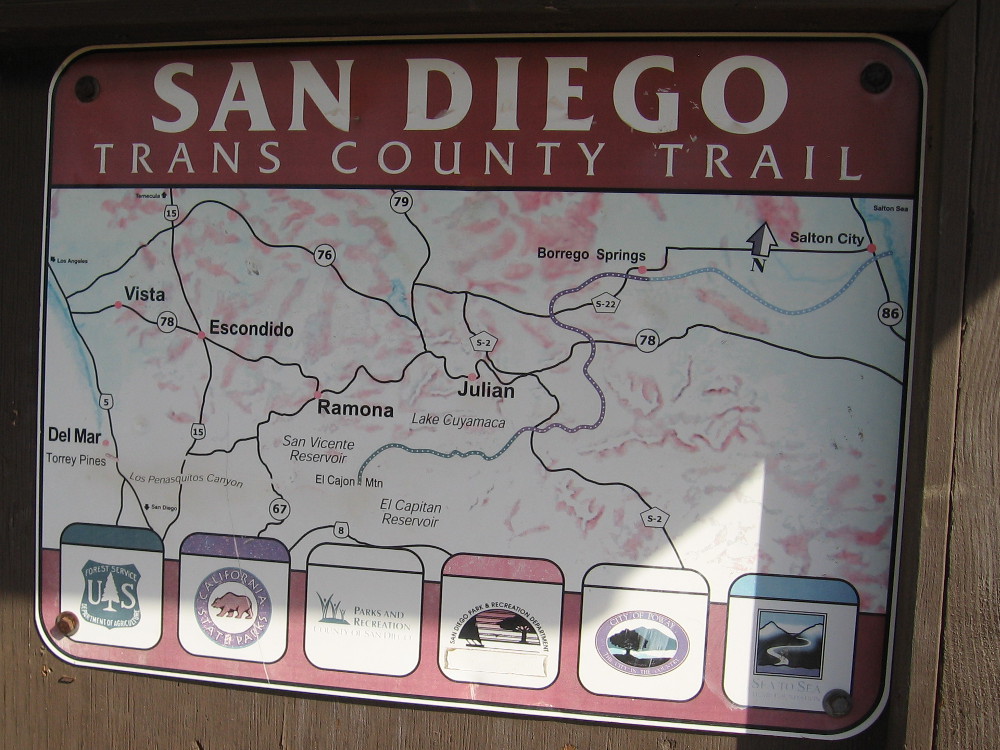
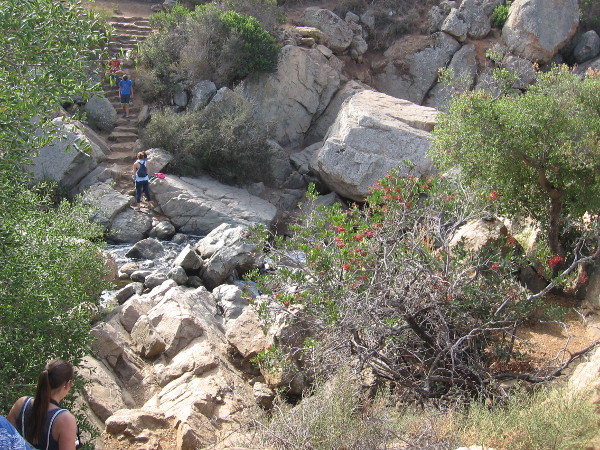
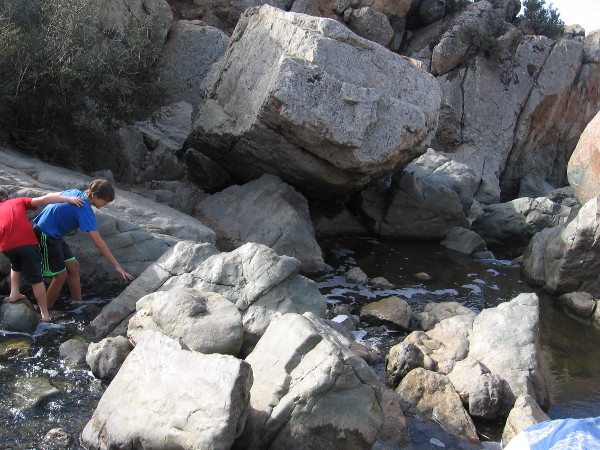
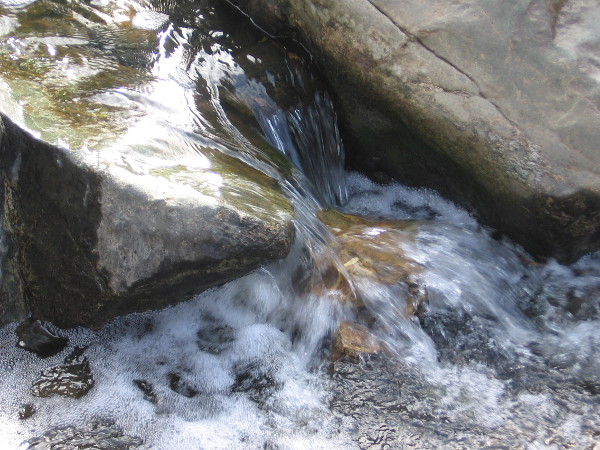
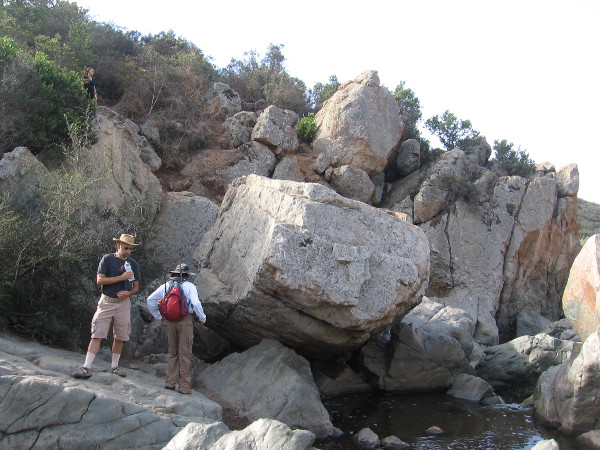
The Del Mar Mesa trailhead is located near suburban homes at the north edge of Los Peñasquitos Canyon.A sign posted at the trailhead shows future trails proposed in the Natural Resources Management Plan.Our small group of hikers heads down into the canyon through Coastal Sage Scrub habitat. We are passing California scrub oaks.We headed to Carson’s Crossing before checking out the popular waterfall.Approaching the central part of the long, narrow canyon, which runs from Poway west to Del Mar and the Pacific Ocean. Peñasquitos Creek lies beyond those coast live oaks in the distance.Carson’s Crossing is an historically important spot in Peñasquitos Canyon. Kit Carson crossed the creek here during the Mexican-American War. General Kearny’s US Army of the West was faced with formidable Californio lancers in San Pasqual, and the legendary frontiersman Kit Carson snuck away in the middle of the night to summon reinforcements from San Diego. He knew to come this way. The later 1857 Jackass Mail stagecoach line also ran through the canyon here enroute to San Diego.Heading west through the beautiful canyon in the shade of oaks, sycamores and willows. It’s an easy, pleasant hike.Looking north across a field in Los Peñasquitos Canyon Preserve in late October. Summers are very dry. Many leaves and flowers are now brown, awaiting winter rains.Walking slowly, senses alert. I smell the nearby sagebrush. I hear acorn woodpeckers and quail. I see beautiful clouds.Mike Kelly is a guide and activist whose knowledge of Peñasquitos is deep. Here he shows us some poison oak which is growing a short distance off the trail.A peaceful walk through nature. Over several decades, activists like Mike have worked hard to preserve the canyon and protect it from development. Today it is maintained by volunteers and both the City and County of San Diego.Mike Kelly shows us some California broom. Native American Kumeyaay and pioneers used the plant like a broom for sweeping.Los Peñasquitos Canyon Preserve is a very popular place for jogging, hiking and mountain biking. Even marathoners use it for training.Now we’re approaching a trail sign and a large rock outcropping, which I learned is volcanic.Sign shows proposed San Diego Trans County Trail, which when completed would run from the Pacific Ocean over the mountains east of San Diego and out to the Salton Sea in the desert.I see lots of prickly pear cacti. Now we are getting close to the popular waterfall!Approaching the Peñasquitos Creek waterfall from the east.Descending rough stone steps to the waterfall. I learned the steps were a project of an Eagle Boy Scout.The small waterfall and its rocky pools are located near the center of Los Peñasquitos Canyon. It is the destination of many hikes. A great place to relax, cool off, and listen to the soothing water.Water spills over rocks. It isn’t Niagara Falls, but it’s wonderful nonetheless.Hikers pause above a pool of water which is captured by large blocks of volcanic rock. When the creek crests, it can rise many feet and submerge this area.A hiker up above seems to walk in the sky.Families wander down a pleasant trail in Los Peñasquitos Canyon Preserve. There is much here to see and appreciate. So much to learn.Naturalist Mike Kelly shows us a poisonous flower of Datura. In nature, beauty and danger are often found together. One should be thoughtful when hiking, and be careful to wear sturdy footwear and bring water. We didn’t see any rattlesnakes or mountain lions!
…
This blog now features thousands of photos around San Diego! Are you curious? There’s lots of cool stuff to check out!
Here’s the Cool San Diego Sights main page, where you can read the most current blog posts. If you’re using a small mobile device, click those three parallel lines up at the top–that opens up my website’s sidebar, where you’ll see the most popular posts, a search box, and more!
To enjoy future posts, you can also “like” Cool San Diego Sights on Facebook or follow me on Twitter.
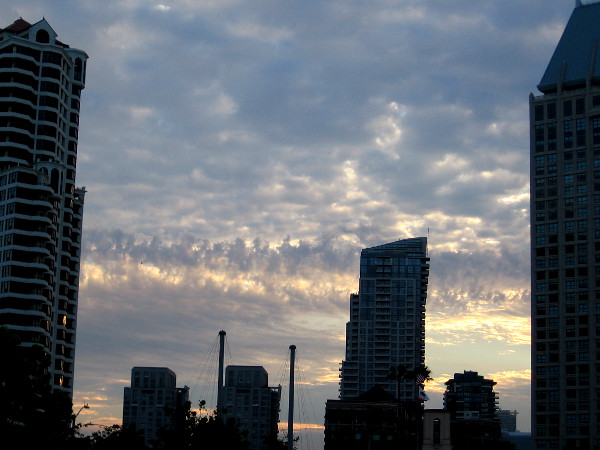
New light. Eyes reopen. The sky regains depth. Wings stretch.
In downtown San Diego, along the Embarcadero, morning light reflects from both clouds and water.
The first smile of the day.
Life is wonderful, and good.
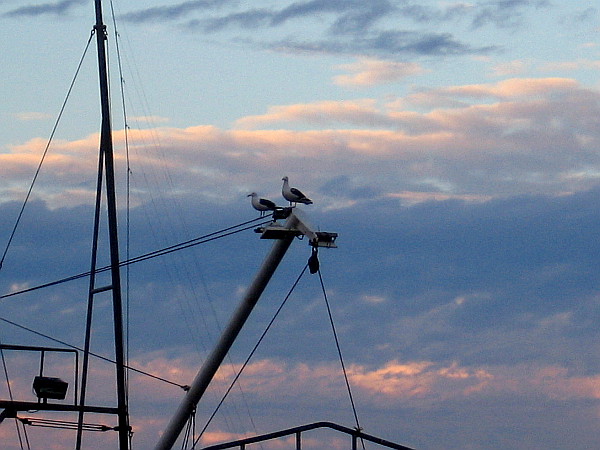
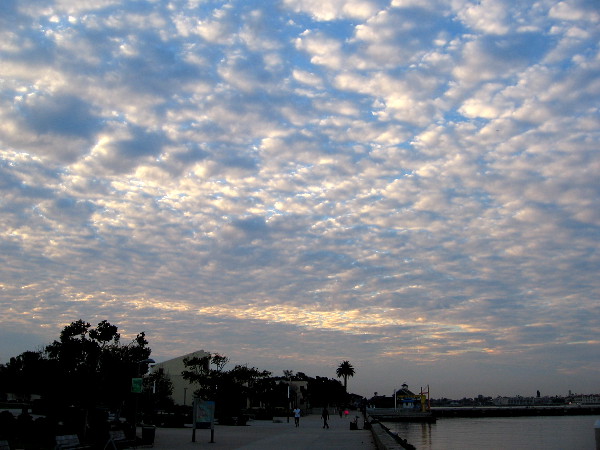
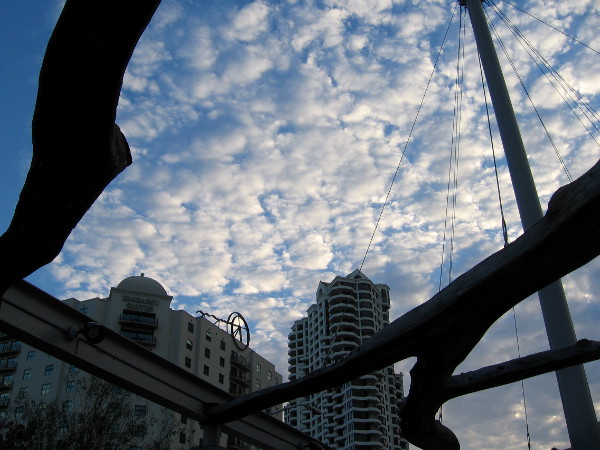
A beautiful sky one October morning above Tuna Harbor in San Diego.Seagulls perched on a boat await the morning activity of fishermen.A seagull circles far away like a dream.Fishing boats and tinted clouds, reflected in the gentle water.A boat’s mysterious reflection in the rippled water.A sky full of fantastic clouds. Early morning above the Embarcadero near Ruocco Park.Magical light infiltrates clouds above San Diego.Clouds that seem like cotton in the blue sky.Morning birds take flight like windblown seeds in the air.Clouds are framed by The Riparium, public art created in 2012 by Roman de Salvo. The sinuous structure rises in one corner of San Diego’s Ruocco Park.Gazing skyward through The Riparium. A fine day has dawned in downtown San Diego.
I live in downtown San Diego and love to walk! You can follow Cool San Diego Sights via Facebook or Twitter!
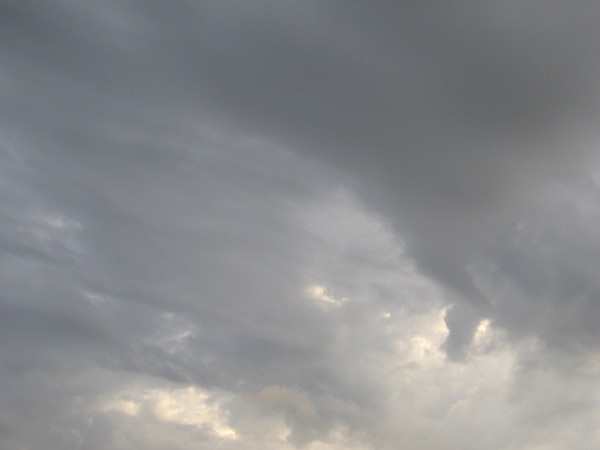
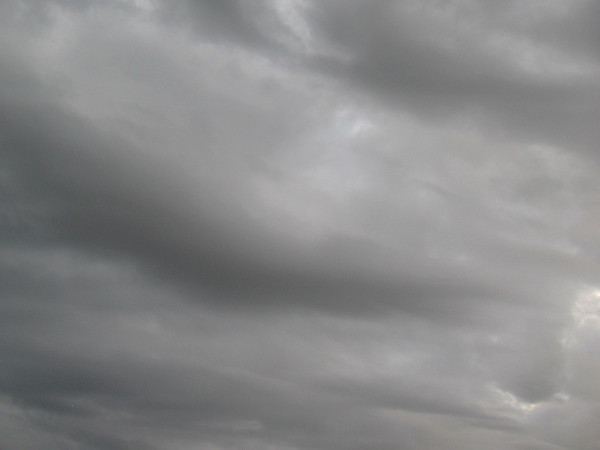
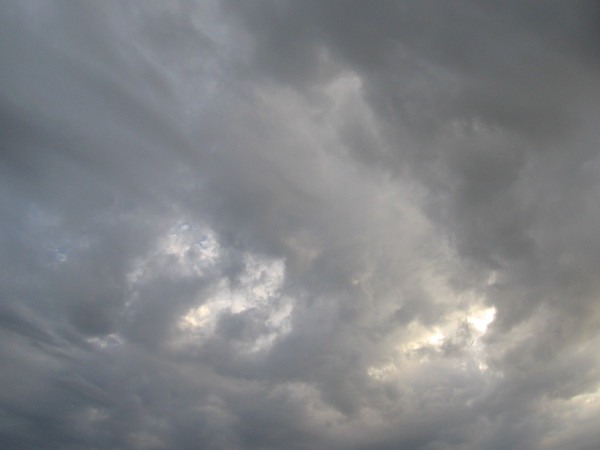
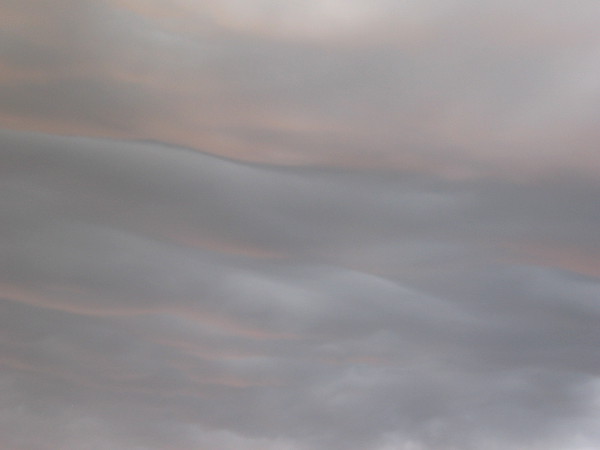
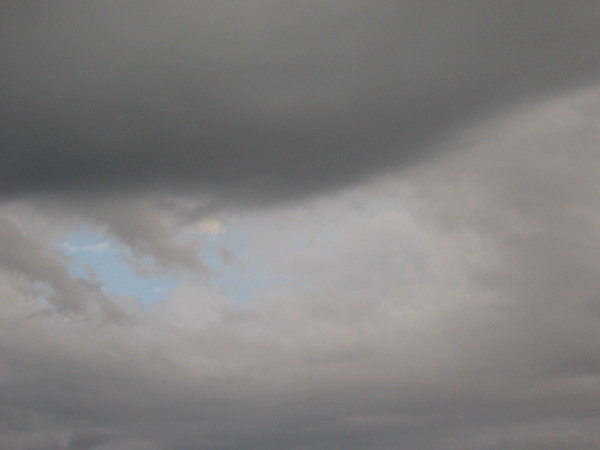
I was going to post these beautiful photographs on one of my other blogs, A Small World Full of Beauty, but decided to feature them here! As I walked to the trolley station after work, the ominous, complex, wind-sculpted gray clouds above Mission Valley were so unusual and eye-catching that I had to pull out my camera. A few drops of sporadic rain couldn’t bow my head. There was so much beauty above in every direction!
Here are some photos.
…
I live in downtown San Diego and love to walk! You can follow Cool San Diego Sights via Facebook or Twitter!
Pottery pumpkins smile outside a gift shop in San Diego’s festive Old Town.
I see pumpkins! Everywhere! It must be mid-October in San Diego!
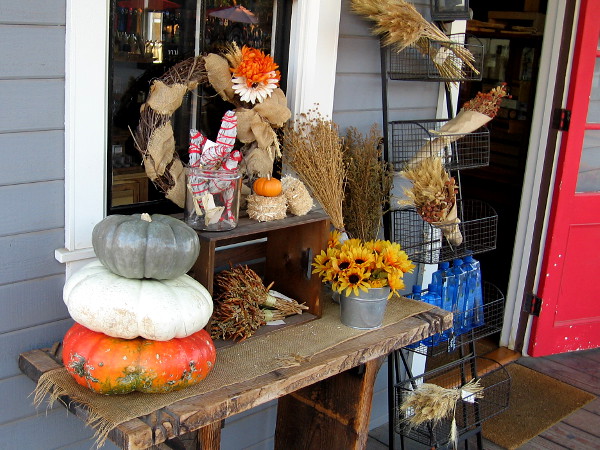
Pumpkins, pumpkins everywhere! Big ones and little ones! Grocery stores are overflowing. It must be mid-October.A fun display of pumpkins and Autumn characters on a street corner in Little Italy. Halloween is on the way! Boo!A beautiful arrangement of flowers, pumpkins and gourds graces a rustic Old Town boardwalk.More golden Autumn colors suggest it’s time to harvest the good things in life.A pumpkin and warm flowers on an antique cart in Old Town San Diego.
…
I live in downtown San Diego and love to walk! You can follow Cool San Diego Sights via Facebook or Twitter!
A walk through Liberty Station in Point Loma is always pleasurable. A photographer can find scenes of art, fun and life!
My walk yesterday took me to one of my favorite places in San Diego . . . Liberty Station! The historic old Naval Training Center San Diego in Point Loma has been converted into beautiful courtyards, shops, museums, art studios and more. It’s a lively but leisurely place where one can simply sit on a bench in a park and enjoy people, fountains, flowers and sunshine. It’s also a perfect place to walk randomly about to make new discoveries.
Here are a few fun photos my camera captured!
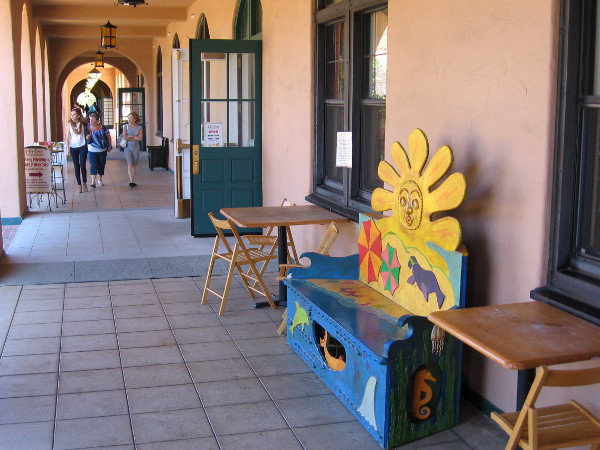
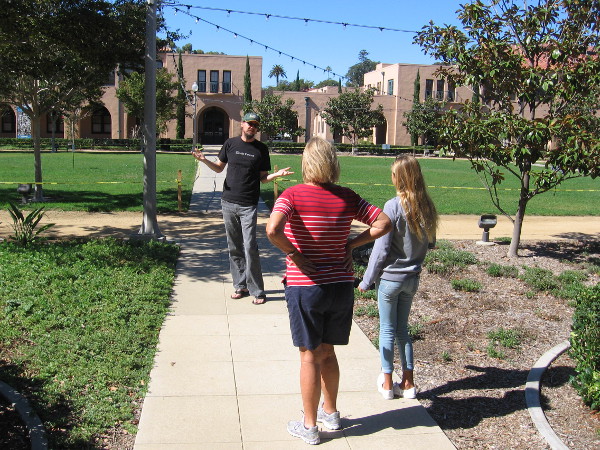
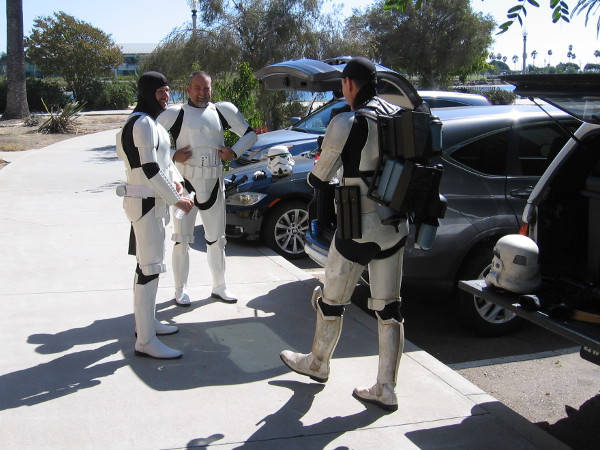
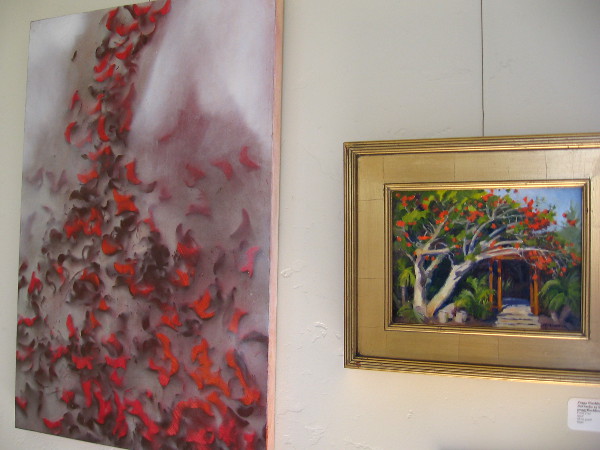
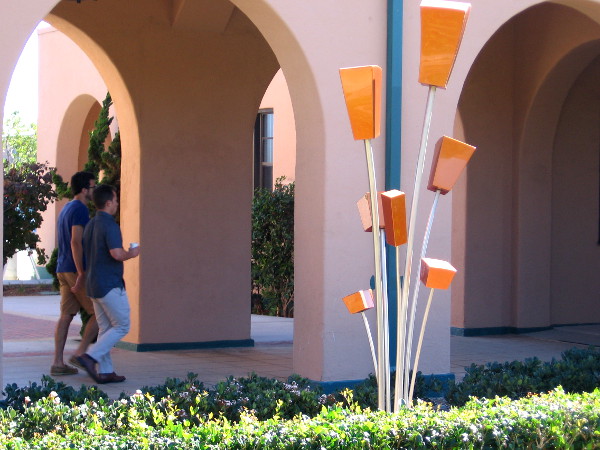
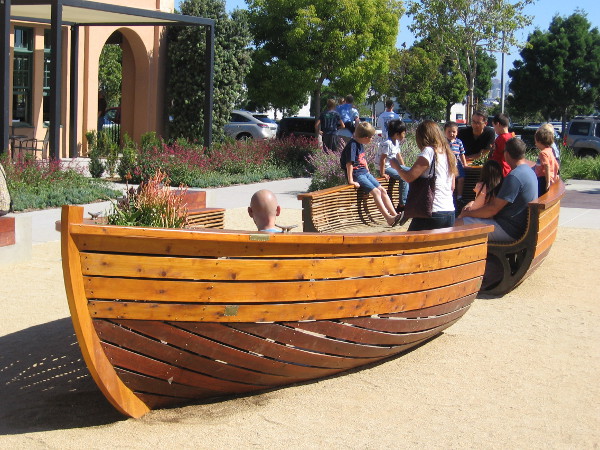
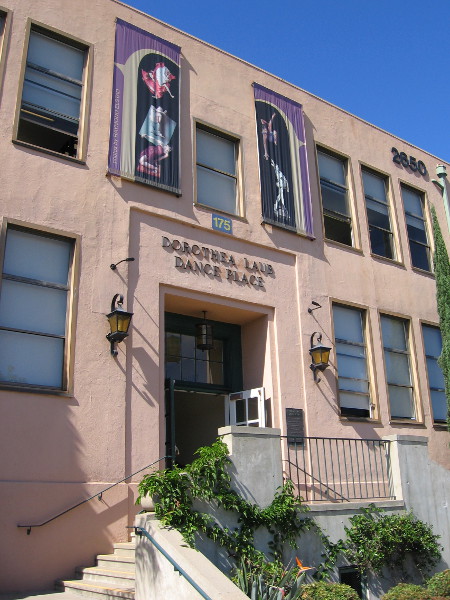
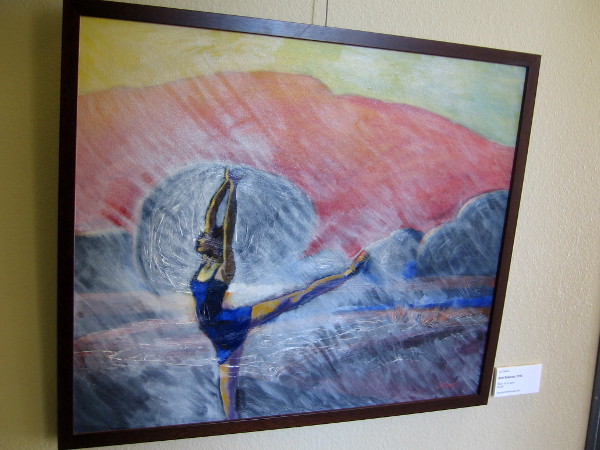
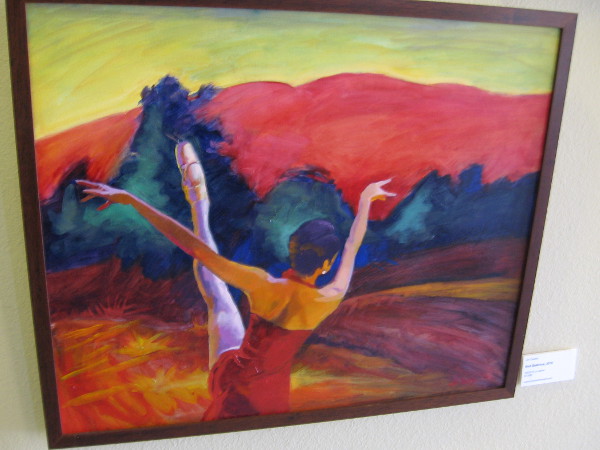
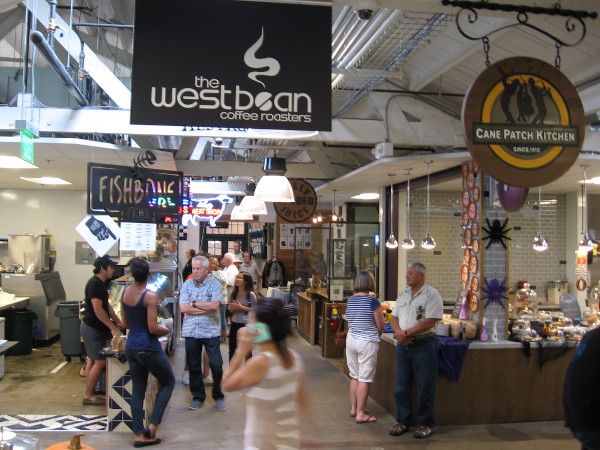
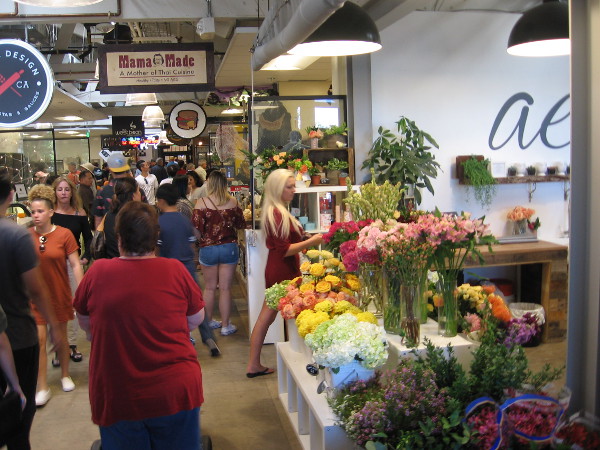
Two people on the North Promenade in the middle of the Arts District at Liberty Station learn how to take great photos from a personal instructor.These Star Wars stormtroopers were caught near a parking lot without their helmets. They appear to be quite human and friendly! I believe they were getting ready to provide entertainment for a special event in the big grassy NTC Park.Colorful banner outside the San Diego Watercolor Society Gallery. Their amazing International Exhibition is underway and will be open to the public through October 31.A small collection of paintings can be enjoyed inside the entrance to the old Naval Training Center San Diego’s command building.Art displayed in the NTC Command Center was created by artists who have studios inside several old barracks at Liberty Station.Window into one artist’s studio. Artists, museums and cultural attractions now occupy many of the historic Navy barracks at Liberty Station.A fun sculpture graces the North Promenade at Liberty Station. Flowers, by John Dupree.Families and kids love the small USS Brave boat bench at Liberty Station. Wood art by Jonathan Allen.Photo of entrance to the Dorothea Laub Dance Place building in Liberty Station.Lavendar Ballerina by Jori Owens, one of many paintings on display in the main hallway of the Dance Place San Diego at Liberty Station.Blue Ballerina, a painting by Jori Owens.Red Ballerina, a painting by Jori Owens.A busy Saturday at the new and very popular indoor Liberty Public Market.Flowers add color and life to Liberty Public Market, one of many places to visit at Liberty Station.
…
I live in downtown San Diego and love to walk! You can follow Cool San Diego Sights via Facebook or Twitter!
You can easily explore Cool San Diego Sights by using the search box on my blog’s sidebar. Or click a tag! There are thousands upon thousands of fun photos for you to enjoy!
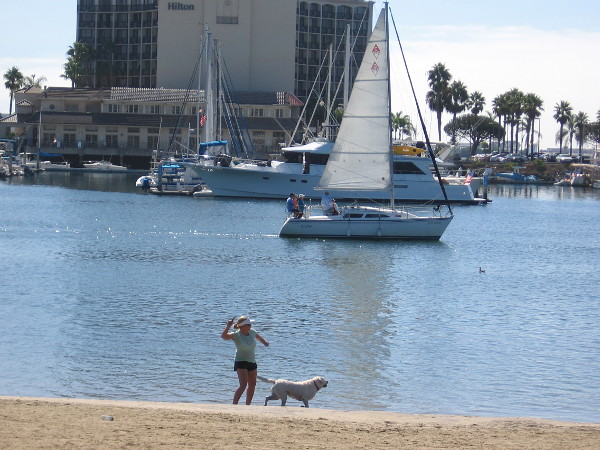
Playing catch with a dog on the small beach at Spanish Landing Park. A sailboat moves through Harbor Island’s West Basin, heading out to San Diego Bay.
A wide path for walkers and bicyclists runs from San Diego’s Embarcadero to Spanish Landing. While the portion between the Coast Guard station and Harbor Island Drive isn’t terribly scenic (it’s located right next to Harbor Drive and a lot of airport traffic), the section that meanders through Spanish Landing Park provides a peaceful, pleasant stroll. And a chance to learn a bit about San Diego’s history!
Today I took a long walk up the sunny path. Here are some photos. I pulled out my camera near Lindbergh Field and kept snapping pics all the way to the west end of Spanish Landing Park. (And beyond, as you’ll see in coming blog posts!)
As usual, please refer to the captions. You might note that Spanish Landing received its name because the 1769 expedition by Spanish explorer Gaspar de Portolá anchored in San Diego Bay near this place. The bay was much different back then–in modern times it has been extensively dredged and expanded. Indeed, Harbor Island, which you see in some photos, was originally a sandbank! Harbor Island today is composed of dredge spoils.
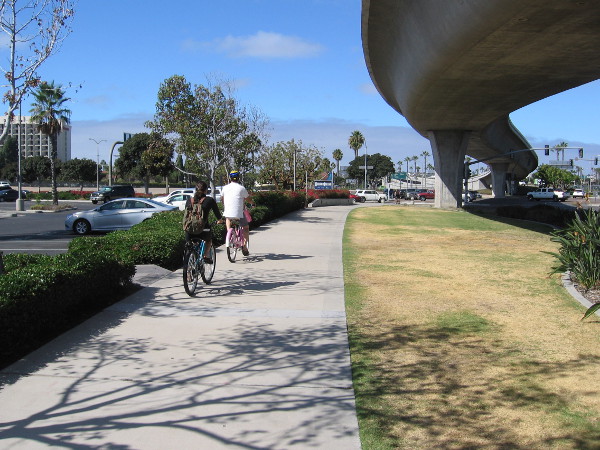
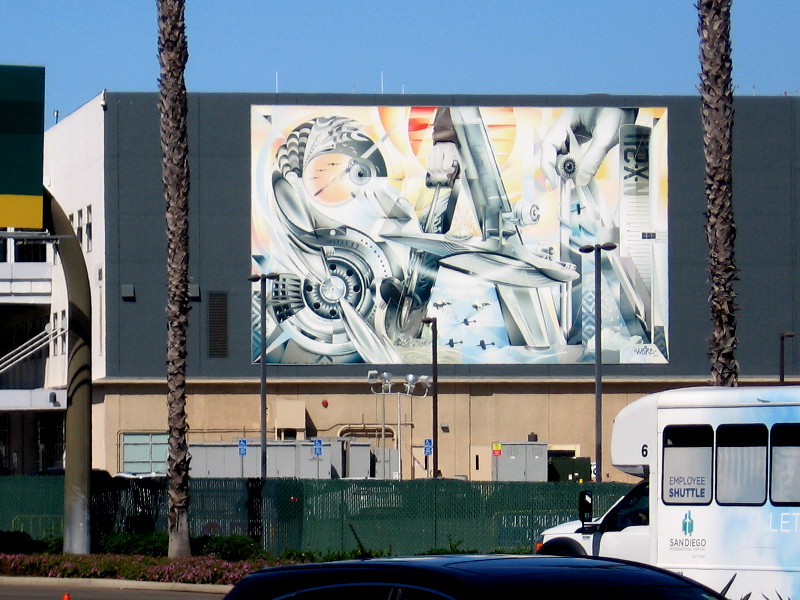
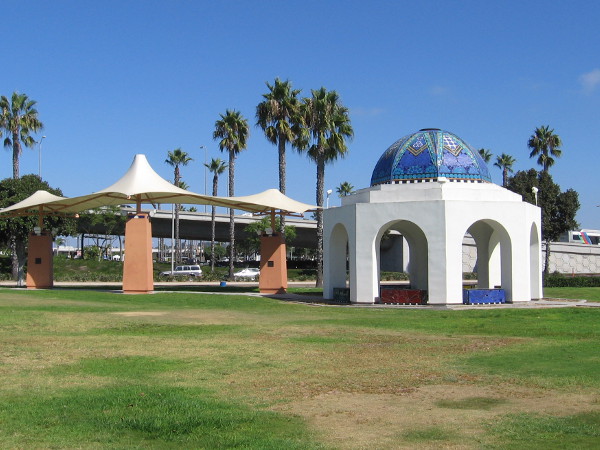
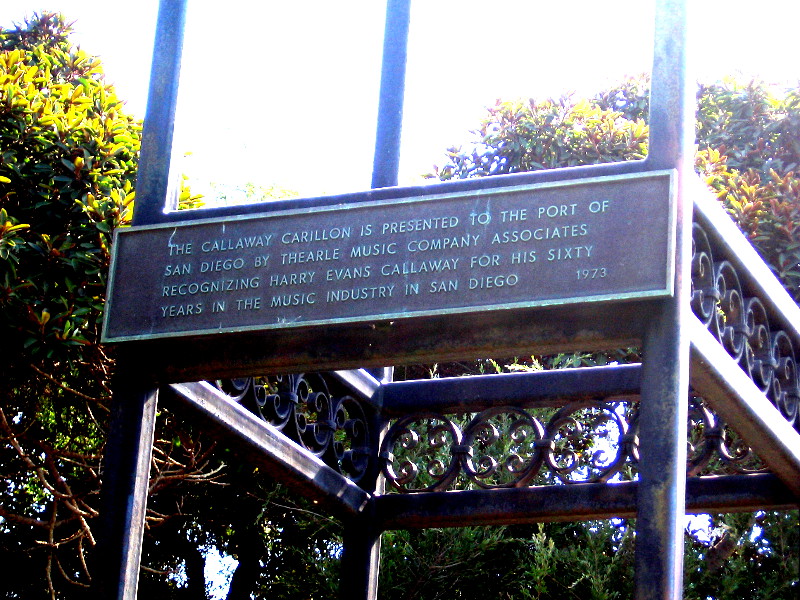
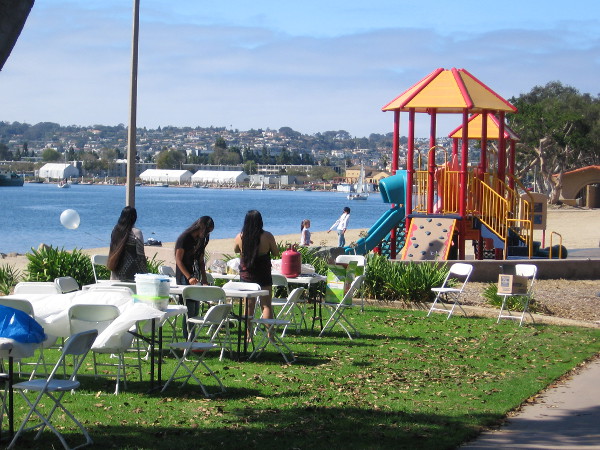
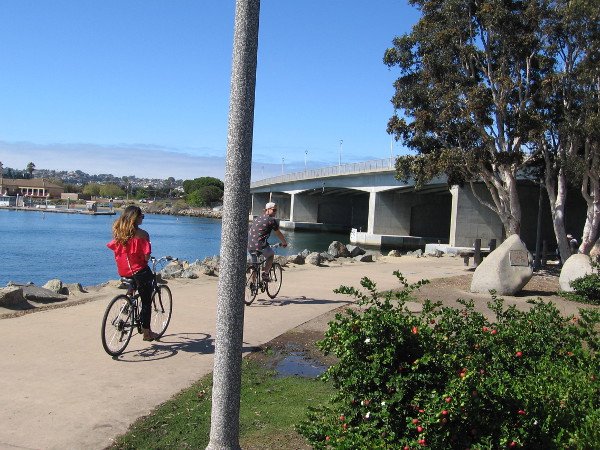
A long path along Harbor Drive runs from the Embarcadero in downtown San Diego to Spanish Landing. Bicyclists head up the path on a sunny weekend.This mural can be spotted across Harbor Drive as one approaches Lindbergh Field. Painted on the commuter terminal by Jari “Werc” Alvarez, it spells SAN, the code for San Diego International Airport.The path, near the edge of San Diego Bay, is part of the California Coastal Trail. It’s ideal for walking or biking from downtown to Spanish Landing Park, and beyond.A photo with my camera lifted toward the sky on a fine Saturday in mid-October.A quick photo of Cancer Survivors Park, on the east end of Spanish Landing Park. I’ve blogged about this special place a couple of times.Kayak heads across the water toward boats docked at a Harbor Island marina. Hotels on Harbor Island are resting on soil dredged up from the bay.I remember hearing the Callaway Carillon bell tower near the center of Spanish Landing Park when I was a child. I believe it no longer works. I hope I’m wrong.Plaque near base of the electronic bell tower. The Callaway Carillon is presented to the Port of San Diego by Thearle Music Company Associates . . . 1973Walkers pause on the path through Spanish Landing to read a California Historical Landmark plaque near the water.Spanish Landing. Near this point, sea and land parties of the Portola-Serra Expedition met. Two ships, the San Antonio and San Carlos, anchored on May 4-5, 1769.A bit further up the path is a playground and a popular spot for parties and celebrations on the nearby grass.Bronze artwork near the path through Spanish Landing honors those who lost their lives, during the sea journey by Gaspar de Portolá up the coast, two and a half centuries ago.Dedicated to the heroic Spaniards who gave their lives and were buried near this site in 1769-70, after accompanying Gaspar de Portolá, the first Governor of California, in the exploration of California from San Diego to San Francisco.Many benches along Spanish Landing Park provide views of the peaceful water and nearby Harbor Island.Bicyclists near the west end of Spanish Landing Park. By crossing the North Harbor Drive Bridge, one can enter Point Loma.The North Harbor Drive Bridge was dedicated in June 1980.Paddleboarders float down the boat channel, between North Harbor Drive Bridge and the adjacent Nimitz Bridge, which is now used by pedestrians. The grass in the distance is part of the Liberty Station Esplanade.People rest on a bench at the west end of Spanish Landing Park, gazing out at a beautiful scene.Sailboats, paddleboards and boats of every type out on blue San Diego Bay. The Pacific Ocean lies just beyond the peninsula of Point Loma, in the distance.
…
I live in downtown San Diego and love to walk! You can follow Cool San Diego Sights via Facebook or Twitter!
You can easily explore Cool San Diego Sights by using the search box on my blog’s sidebar. Or click a tag! There are thousands upon thousands of fun photos for you to enjoy!
“Old La Jolla” hand drawn fire engine dating from 1886, on display at The San Diego Firehouse Museum.
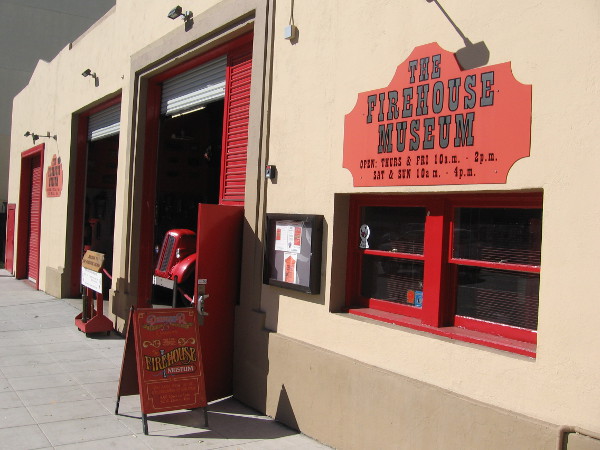
A simple but elegant old firehouse stands in downtown San Diego at the corner of Columbia Street and Cedar Street. Those who step inside are in for a very big surprise.
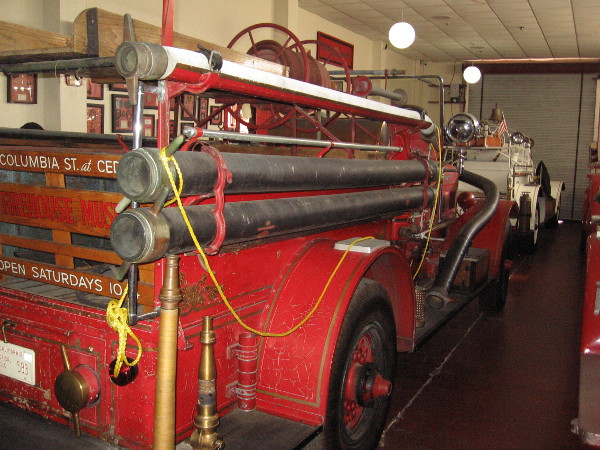
The San Diego Firehouse Museum today occupies what was once an active fire station–San Diego Fire Station No. 6. Located in Little Italy, this unique museum isn’t large, but it’s crammed with so much cool stuff and so much fascinating history, you could easily spend an hour enjoying the many exhibits. There are shiny red vintage fire engines, a steamer equipped with a huge boiler, antique hand pumpers, firefighting apparatus of every sort, helmets, badges, a big display of model vehicles, historical photographs . . . and just lots and lots of firefighting artifacts, dating as far back as the mid 1800s. Much of what you’ll see represents the history of firefighting in San Diego; other objects in the museum come from fire departments around the United States.
Here are some photos which I took during a recent visit. The volunteer on duty was very friendly and provided some interesting historical information. I learned that private events can be held in the old firehouse, and that kids love having birthday parties among all the fire engines. Museum admission is only 3 dollars for adults and 2 dollars for children and seniors. Quite a bargain!
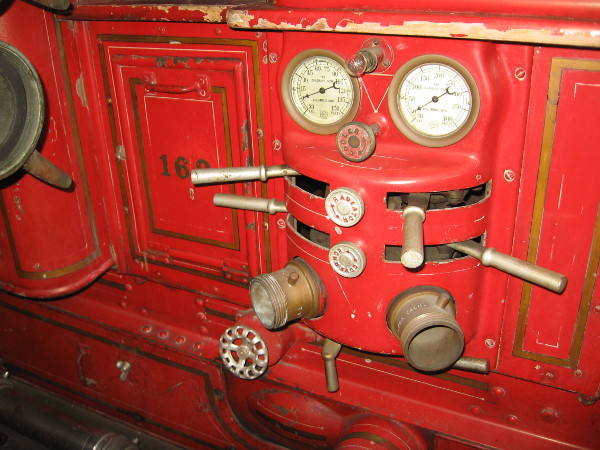
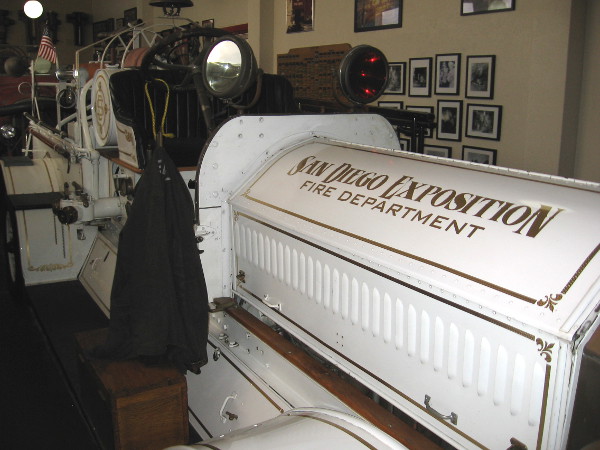
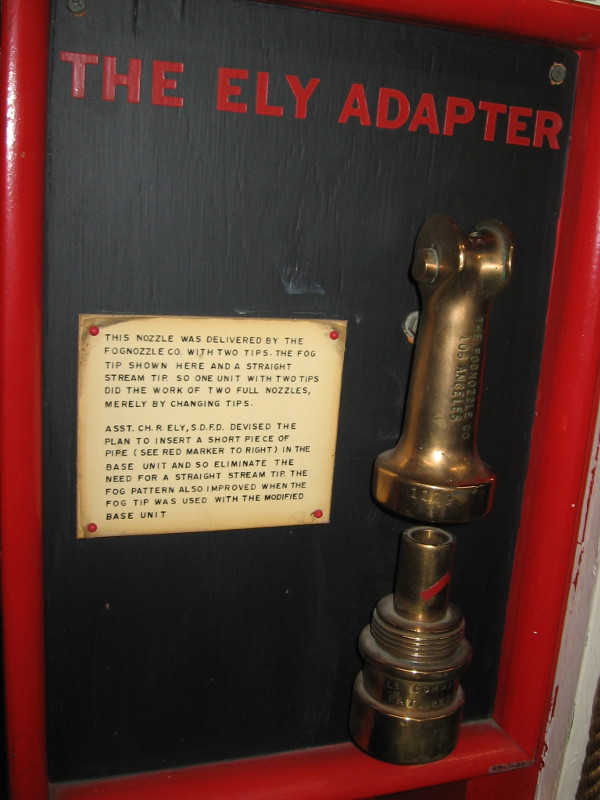
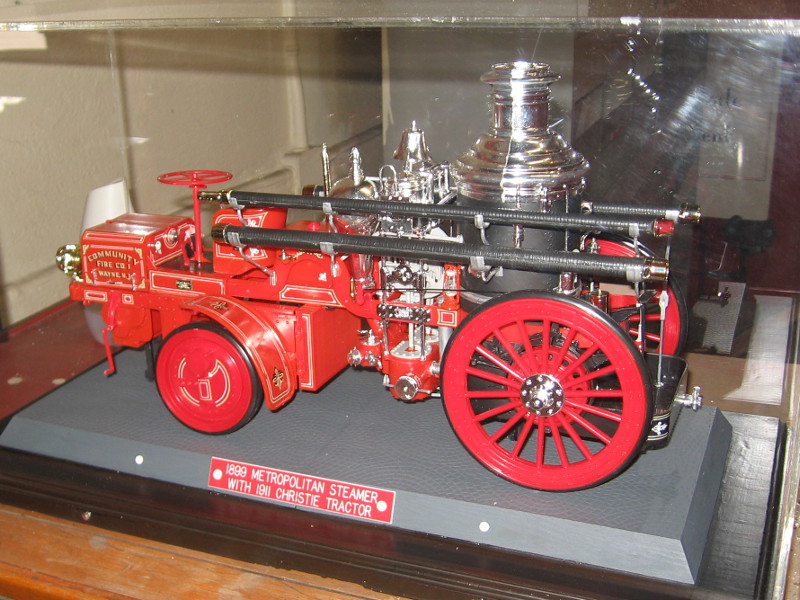
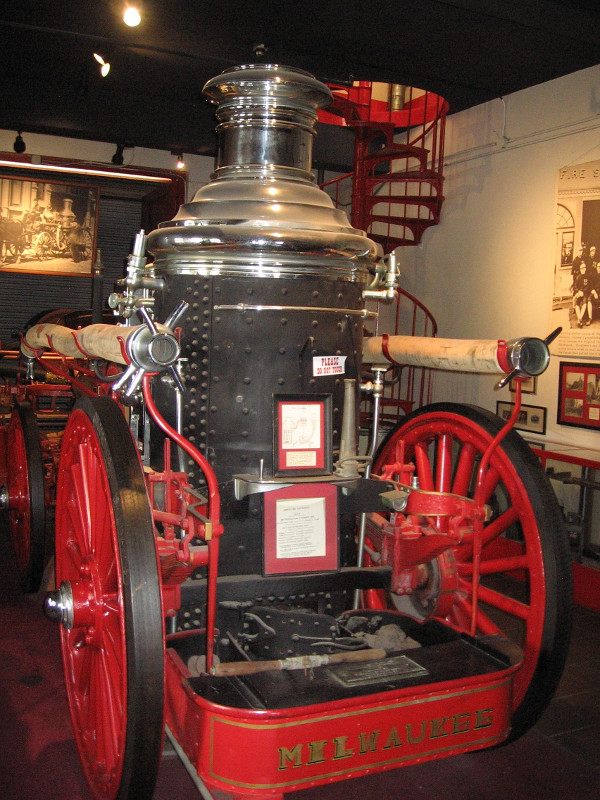
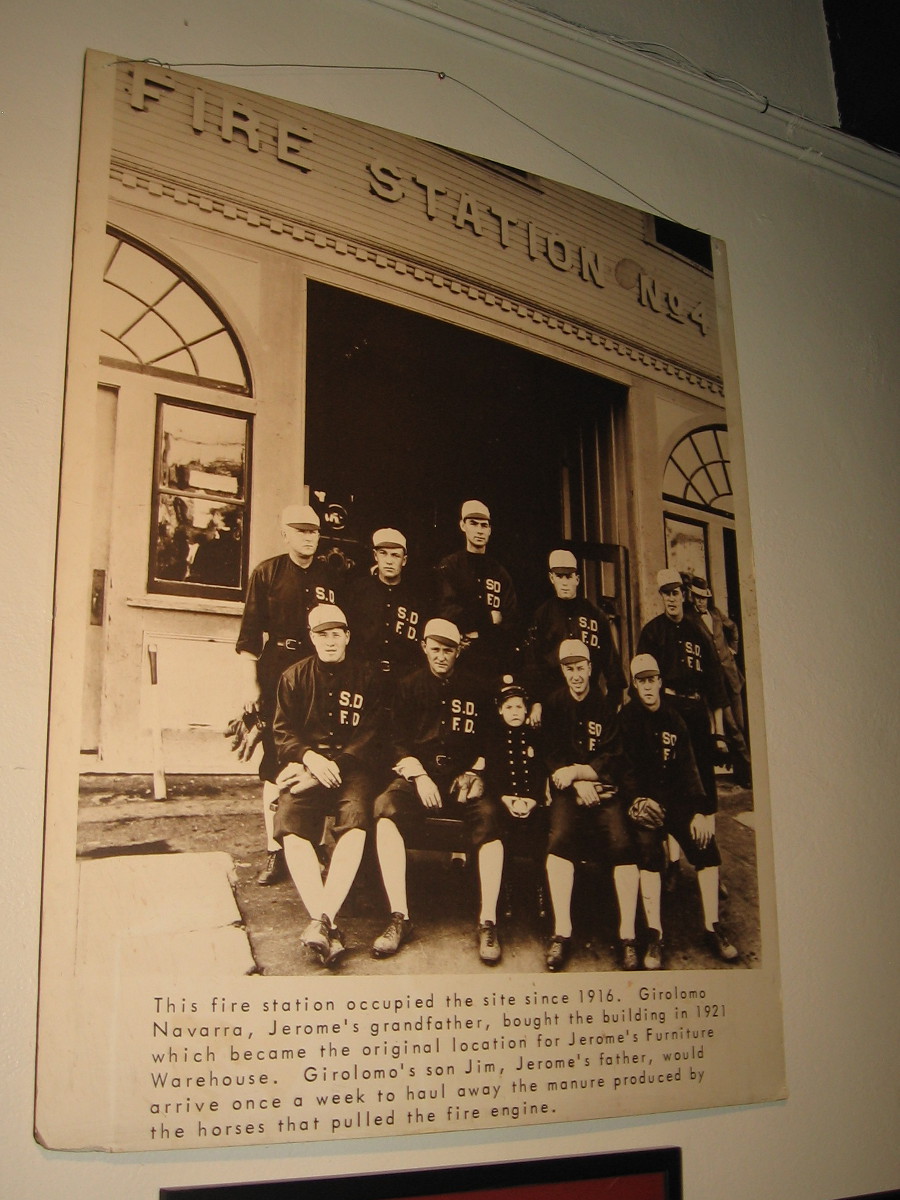
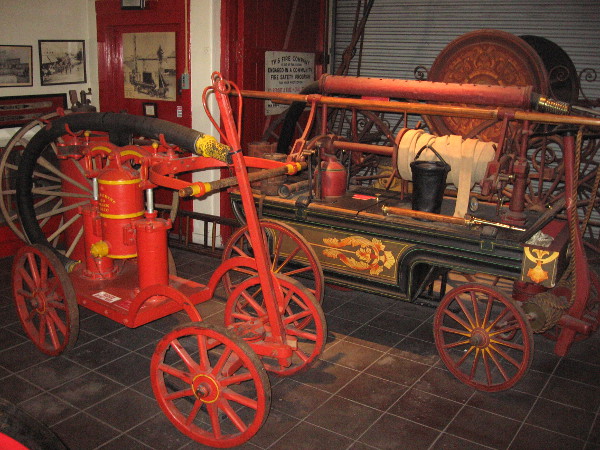
The San Diego Firehouse Museum is manned by friendly firefighter volunteers. It’s located in old Fire Station No. 6 at 1572 Columbia Street in Little Italy.A look inside the Firehouse Museum, which is absolutely jam-packed with cool historical exhibits. Kids love this place.Two of the many vintage fire engines in the old firehouse. The museum’s walls are lined with interesting objects that tell the story of firefighting since the mid-1800s.The San Diego Firehouse Museum was founded in 1962 and is operated by the nonprofit Pioneer Hook and Ladder Company.A closer look at a 1914 Seagrave Pumper. During my visit, I learned that fire engines are also called pumpers.Even more old fire engines can be seen in a second room inside old Fire Station No. 6.Water pressure controls on the side of one pumper.This white fire engine was stationed at the 1915 Panama-California Exposition in Balboa Park. It can be seen in old photographs and postcards.Another look at the historic 1915 Panama-California Exposition fire engine. This section of the Firehouse Museum is a bit dark and close, which makes it hard to take a good wide photo.This glass display case in the museum contains all sorts of old fire fighter helmets and protective headgear.One corner of the Firehouse Museum showcases many old fire insurance marks which were affixed to buildings. One of these marks dates back to 1714.Smokey Bear welcomes visitors to The San Diego Firehouse Museum.One wall features a collection of old fire extinguishers.The Ely Adapter was invented by San Diego Fire Department’s Assistant Chief Robert Ely.Felt and paper stovepipe hats once worn by firefighters during parades.Model of 1899 Metropolitan Steamer with 1911 Christie tractor.Another display case at The San Diego Firehouse Museum contains all sorts of interesting old artifacts.A third room in the Firehouse Museum contains this 1903 coal burning steamer. Fire heats the boiler water, making steam, which activates a piston that pumps water.Stairs once used by scrambling firefighters when old Fire Station No. 6 was operational.An old photo of San Diego Fire Station No. 4 and its personnel.Photos of the San Diego Fire Department testing their new Ahrens Steamer at the courthouse on Broadway and Front Street in 1906.A collection of colorful antique hand pumpers at The San Diego Firehouse Museum.The San Diego Firehouse Museum is fantastic place to learn a bit about San Diego and the history of firefighting.
…
I live in downtown San Diego and love to walk! You can follow Cool San Diego Sights via Facebook or Twitter!
You can easily explore Cool San Diego Sights by using the search box on my blog’s sidebar. Or click a tag! There are thousands upon thousands of interesting photos for you to enjoy!
As a nearly full moon rises above downtown San Diego, light from the falling sun reflects from windows and two beautiful Maritime Museum of San Diego tall ships.
As the sun slowly set, a nearly full moon rose. Both cast their magic this evening over San Diego. I took some photos during a quiet walk along the Embarcadero, which included a visit to the Maritime Museum of San Diego. I then turned east on Broadway and made my way into downtown as night overtook another day.
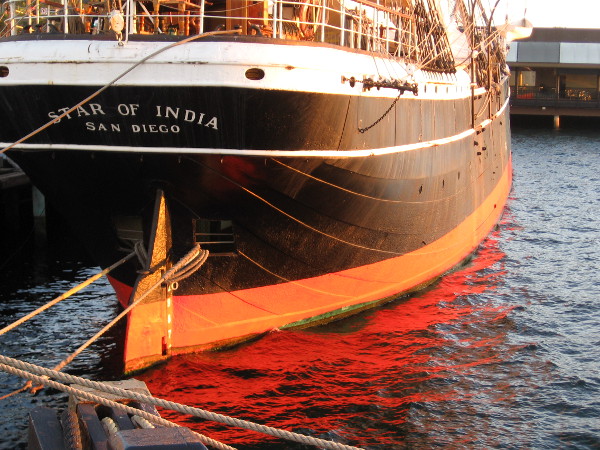
The moon rises behind a large American flag at the stern of the Star of India.Photo of a magical moment. Rippling water glows red. Light reflects from the hull of the Star of India just as the sun is about to set.The sun is ready to set behind Point Loma. Photo taken through the rigging of HMS Surprise, one of several amazing tall ships at the Maritime Museum of San Diego.Sunset across San Diego Bay.A helicopter flies over San Diego Bay just moments after the sun has set.A nearly full moon rises slowly above downtown San Diego a few minutes before darkness falls.Early evening magic touches the San Diego skyline.
…
I live in downtown San Diego and love to walk! You can follow Cool San Diego Sights via Facebook or Twitter!
A traditional Sicilian cart on display at 2016 Festa in San Diego’s Little Italy.
Festa is a celebration of Italian culture and history. Every year it’s held along several blocks of India Street, in the heart of San Diego’s historic Little Italy neighborhood. Thousands turn out to enjoy music, food, and all things Italian.
Here are a few photos I snapped yesterday. They provide a taste of what Festa is all about. Read the captions for explanations, and click the images of signs in the cultural pavilion if you’d like to read them. By the way, the food and music were great. I wish this blog could convey the deliciousness of my slice of Filippi’s pizza!
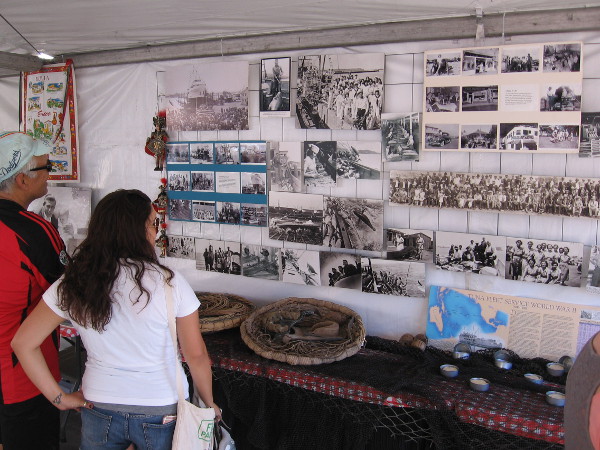
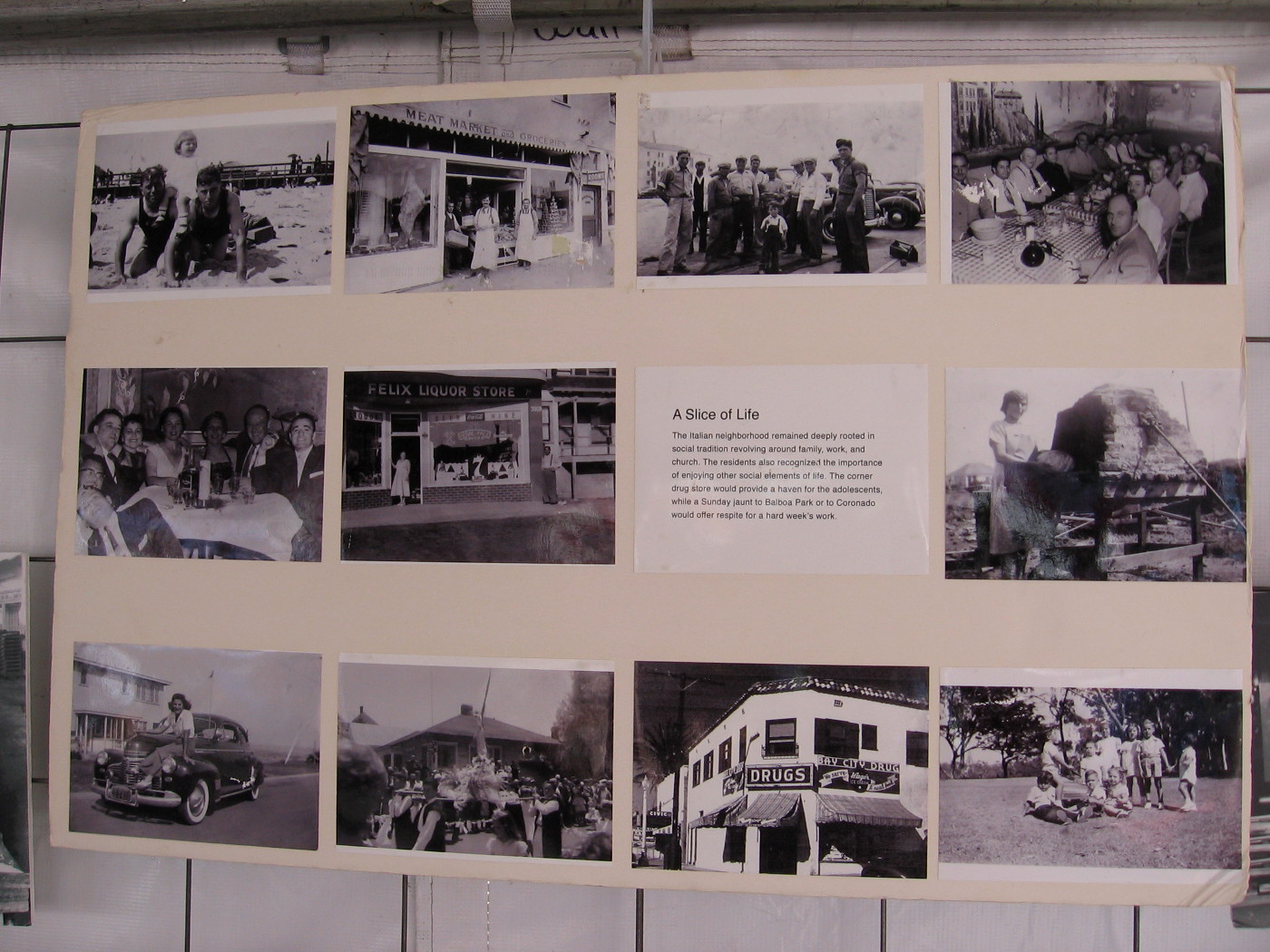
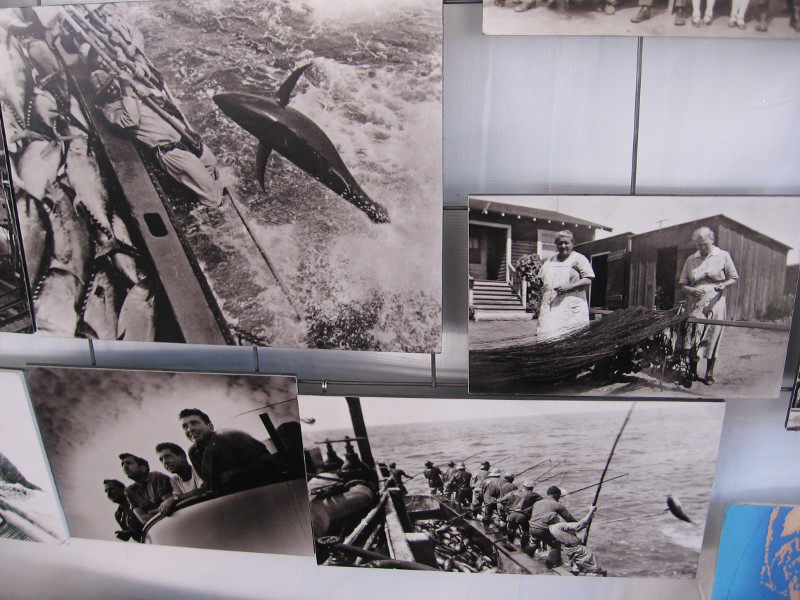
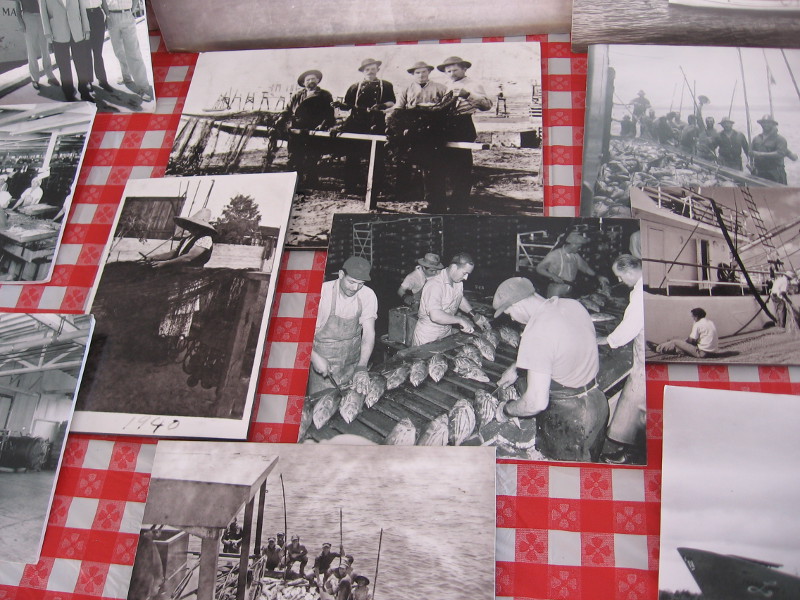
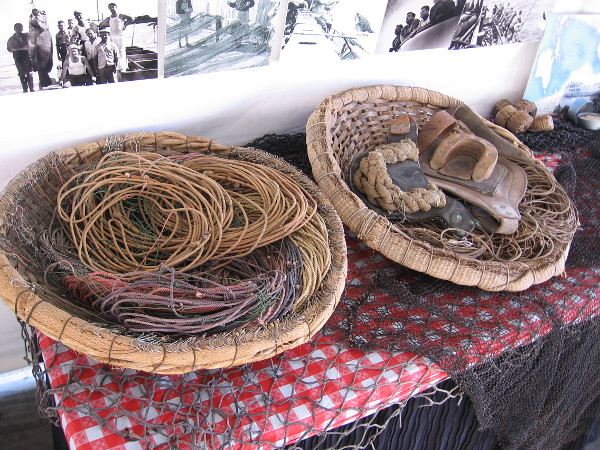
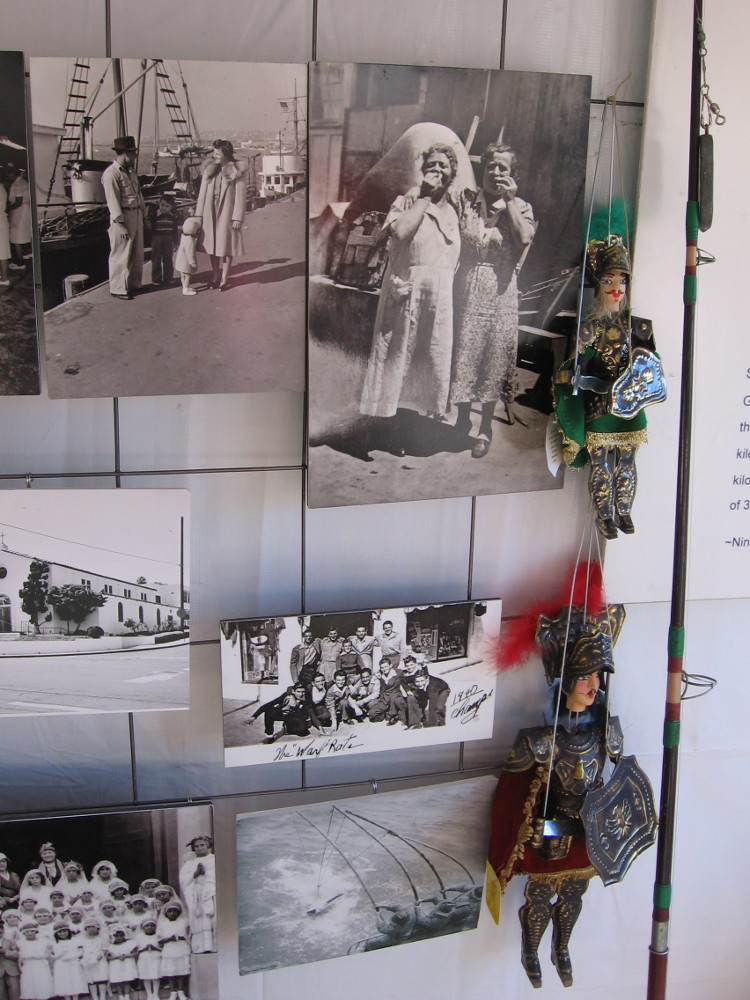
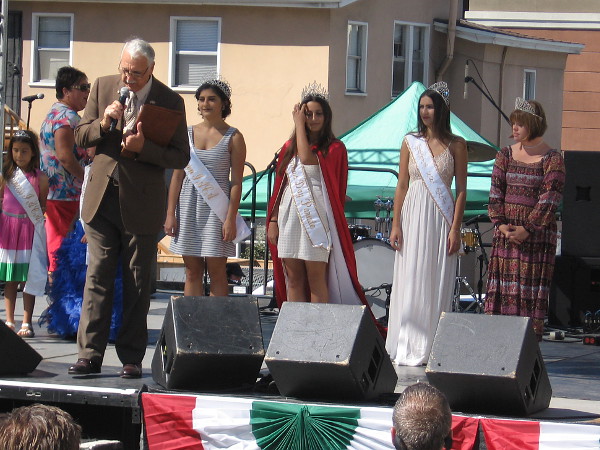
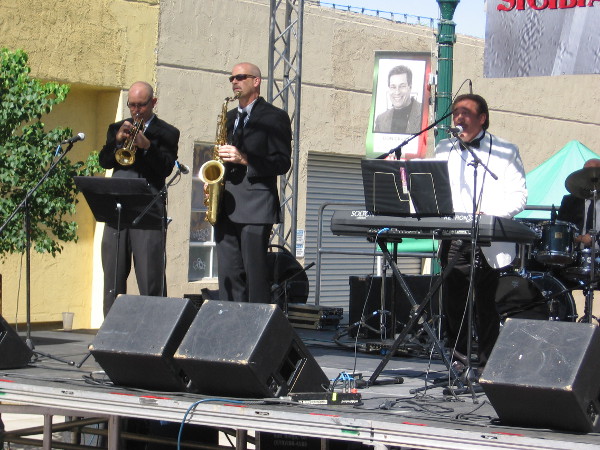
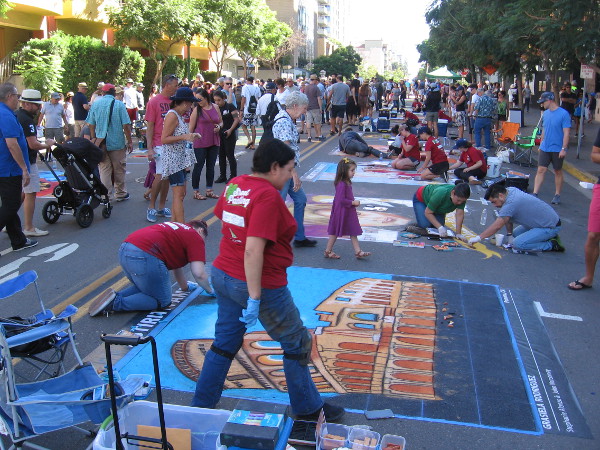
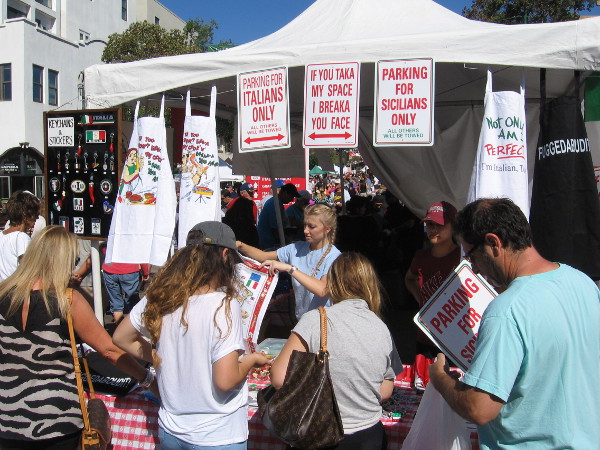
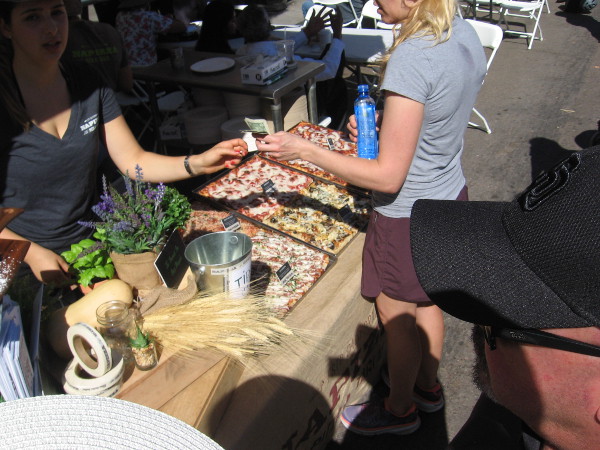
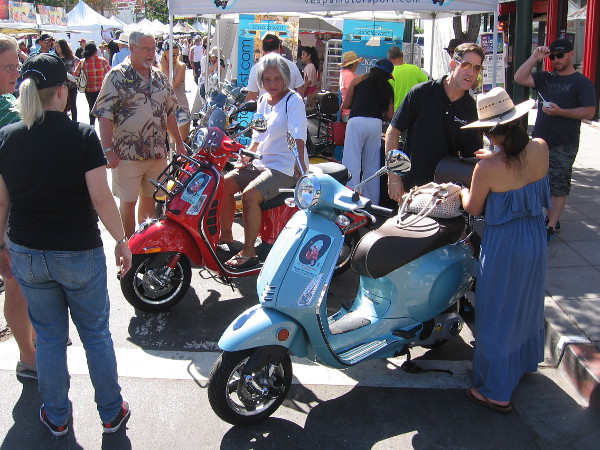
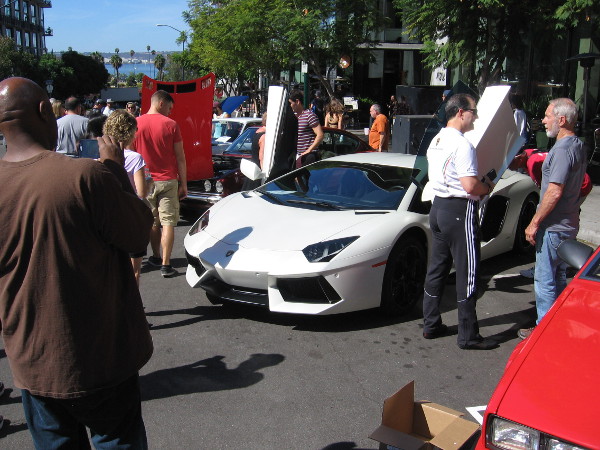
Thousands turned out along several blocks of India Street for the annual celebration of Festa.A cultural pavilion at Festa attracted people who were interested in Little Italy’s rich culture and history.An exhibit in the cultural pavilion included old photos of life in Little Italy, a neighborhood in San Diego once associated with fishing.The Italian neighborhood remained deeply rooted in social tradition revolving around family, work and church.The fishing industry defined the residents’ lives and included labor in boat building, net mending, and tuna and sardine canning.Historical photos of Little Italy fishermen at work off the coast of San Diego.Photo of young man on a boat with a very large catch.Old photos of life in Little Italy include workers at a cannery and fishermen mending nets.A display at Festa includes nets and old commercial fishing gear.A pillar for San Diego’s Italian community, Our Lady of the Rosary Parish has endured for more than 80 years.Photographs and puppets provide a glimpse of San Diego’s past.The Columbus Day Queens are presented on stage during 2016 Festa in Little Italy.The Sicilian Band performs during Festa in San Diego.A crowd admires chalk art, or Gesso Italiano, during Festa. The amazing artwork celebrates Italy’s history and culture.A vendor at Festa sells funny signs and aprons to Italy lovers.Of course, lots of pizza, pasta and other Italian food could be found up and down India Street.Chef Boyardee (Ettore Boiardi) appears on a street lamp banner in Little Italy.People at Festa check out some shiny new Vespas.An exhibition of Italian sports cars included Maseratis and Lamborghinis.A kid and gondoliers at Festa. Anyone can ride elegant gondolas in San Diego at the Coronado Cays.
…
I live in downtown San Diego and love to walk! You can follow Cool San Diego Sights via Facebook or Twitter!




































































 Cool San Diego Sights!