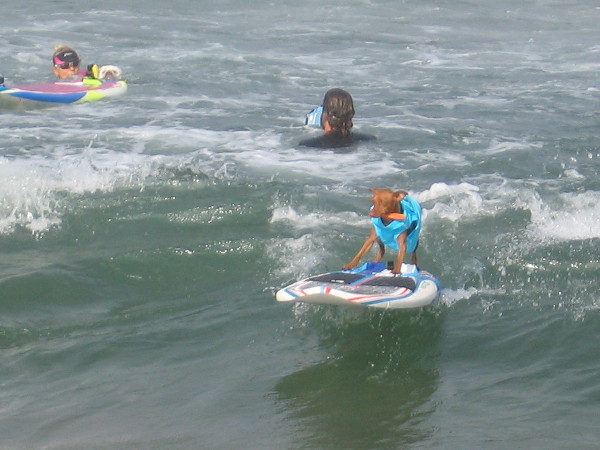
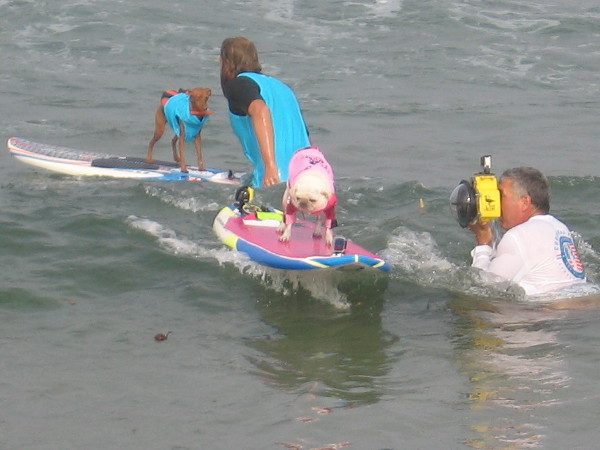
Tiny dogs surf mighty waves in Imperial Beach during the 11th Annual Unleashed by Petco Surf Dog Competition!
And now for something on the light side. Surfing dogs!
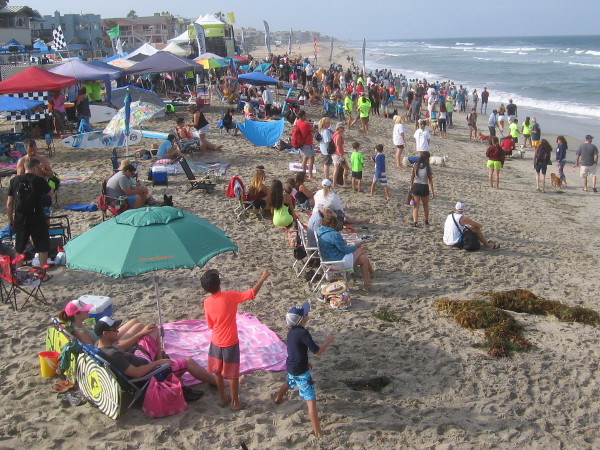
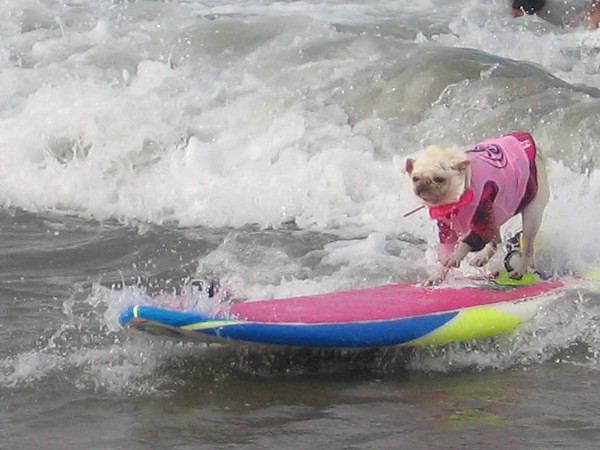
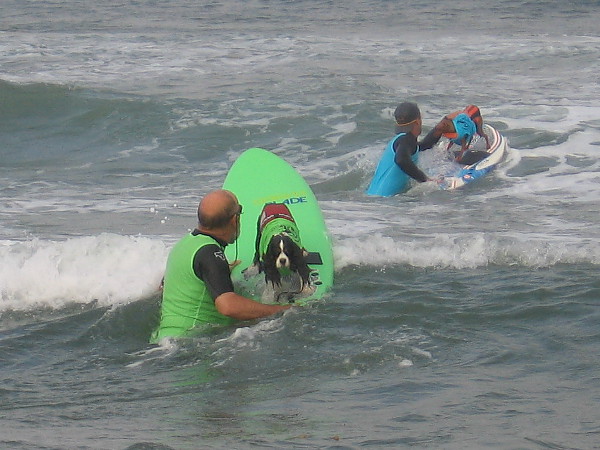
Enjoy these funny photos of tiny dogs riding “huge” ocean waves near the pier at Imperial Beach! This morning I swung by the 11th Annual Unleashed by Petco Surf Dog Competition, just to check out the action. The first 10-minute heat featured smaller breeds. These dogs are some of the most talented surfing athletes you’re likely to ever see! Well . . . maybe. But they definitely appeared to be having fun!
All you non-dog athletes, take note! No aspiration is too lofty! No wave is too large!
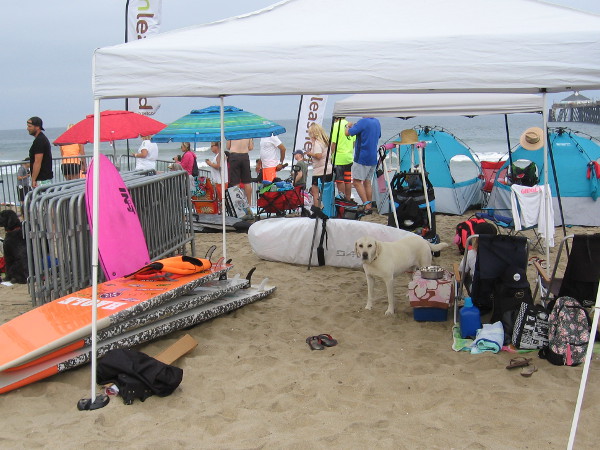
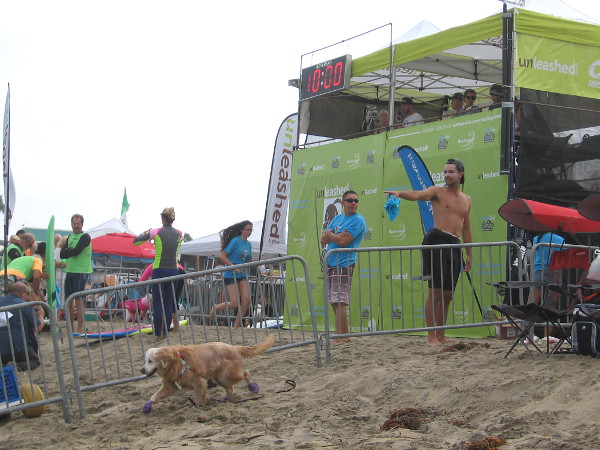
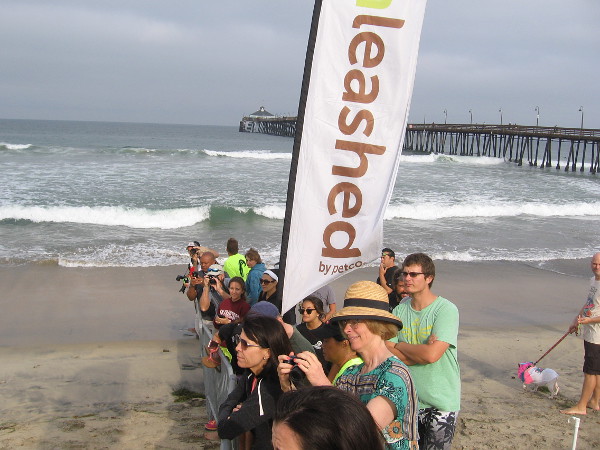
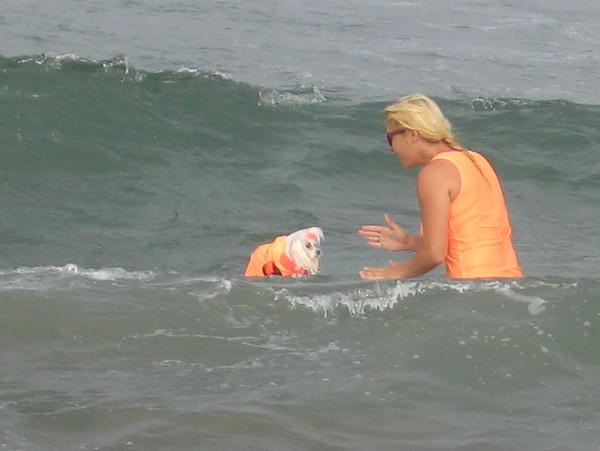
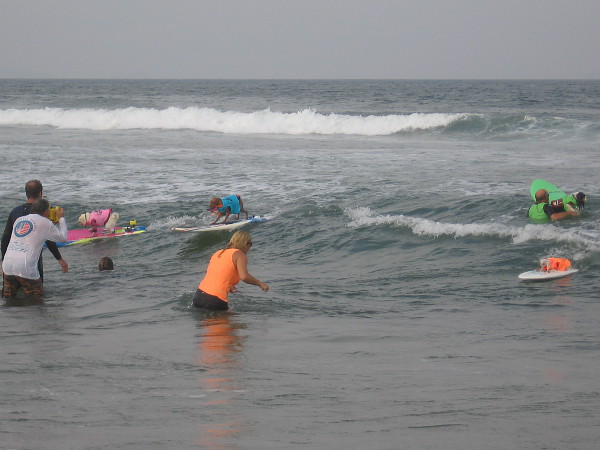
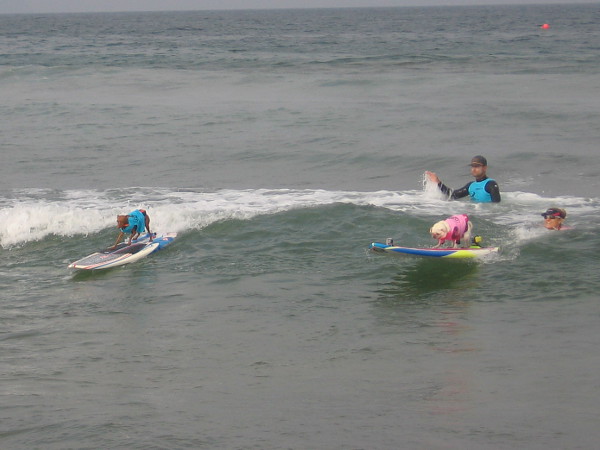
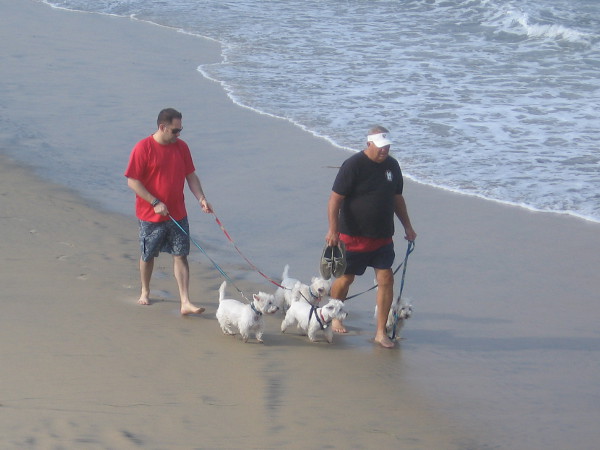
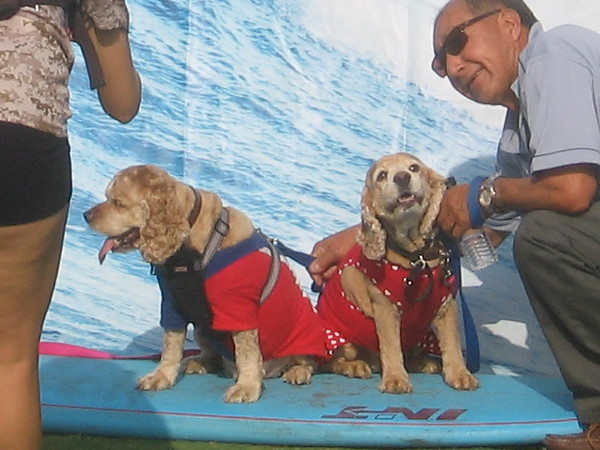
A crowd gathers on the beach in the morning, as the very popular Surf Dog Competition is almost ready to begin!A pooch says “Hi” while hanging out with a few buddies. It’s going to be another great day in San Diego!This thoughtful dog is checking out the perimeter of the surf competition starting area, which is fenced off from those often interfering human types.We’re almost ready for the first heat! These small dogs pose atop their surfboards for photos and make the most of their superstar status.A line of people awaits the start of the Unleashed by Petco Surf Dog Competition’s first 10-minute heat of the day!And these small surf dogs are off, making toward the Pacific Ocean with the help of a few human assistants!The excitement has built to a doggone unbelievable level. Which four-legged contestant will catch the best waves and impress the judges?The crowd watches these talented canine athletes as they take to the thundering waves!Those are awfully big breakers! Only the most skillful and fearless dogs will master this tough surfing competition.An amazing dog athlete has successfully caught the first wave! Here he comes! Great form!A tiny canine contestant receives encouragement as this year’s surf dog competition in IB gets underway.This innovative dog–I believe his name is Samson–doesn’t adhere to those old surfing traditions. He rides his surfboard backwards.Oh my goodness! Three dogs on one wave! Remember this moment, because you’ll probably never see it again!Two furry athletes vie for surfing supremacy!I’m thinking of submitting this amazing photograph to SURFER Magazine. I wonder if it might make the cover. (Just kidding!)Samson seems to have finally straightened himself out. Maybe he just wants to leap back onto dry land.These best buddy pals are happy just to walk along the beach. No need to show off their mad surfing skills.And these two sneaky dogs want to pretend they’re honest-to-goodness surfers. Can’t fool me!Tiny surfing dogs have mastered the mighty waves at Imperial Beach during the Unleashed by Petco Surf Dog Competition. They are superstars, indeed!
…
This blog now features thousands of photos around San Diego! Are you curious? There’s lots of cool stuff to check out!
Here’s the Cool San Diego Sights main page, where you can read the most current blog posts. If you’re using a small mobile device, click those three parallel lines up at the top–that opens up my website’s sidebar, where you’ll see the most popular posts, a search box, and more!
To enjoy future posts, you can also “like” Cool San Diego Sights on Facebook or follow me on Twitter.
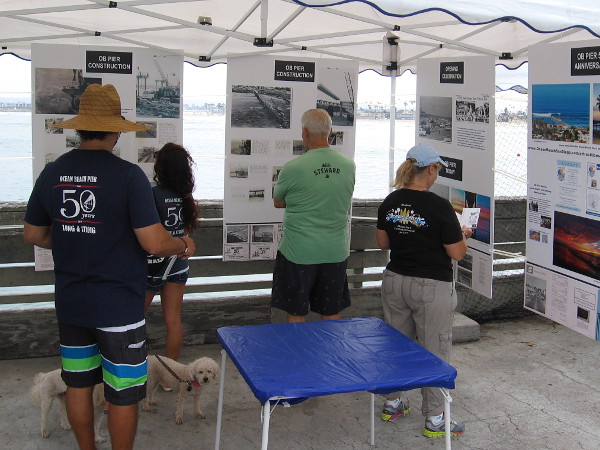
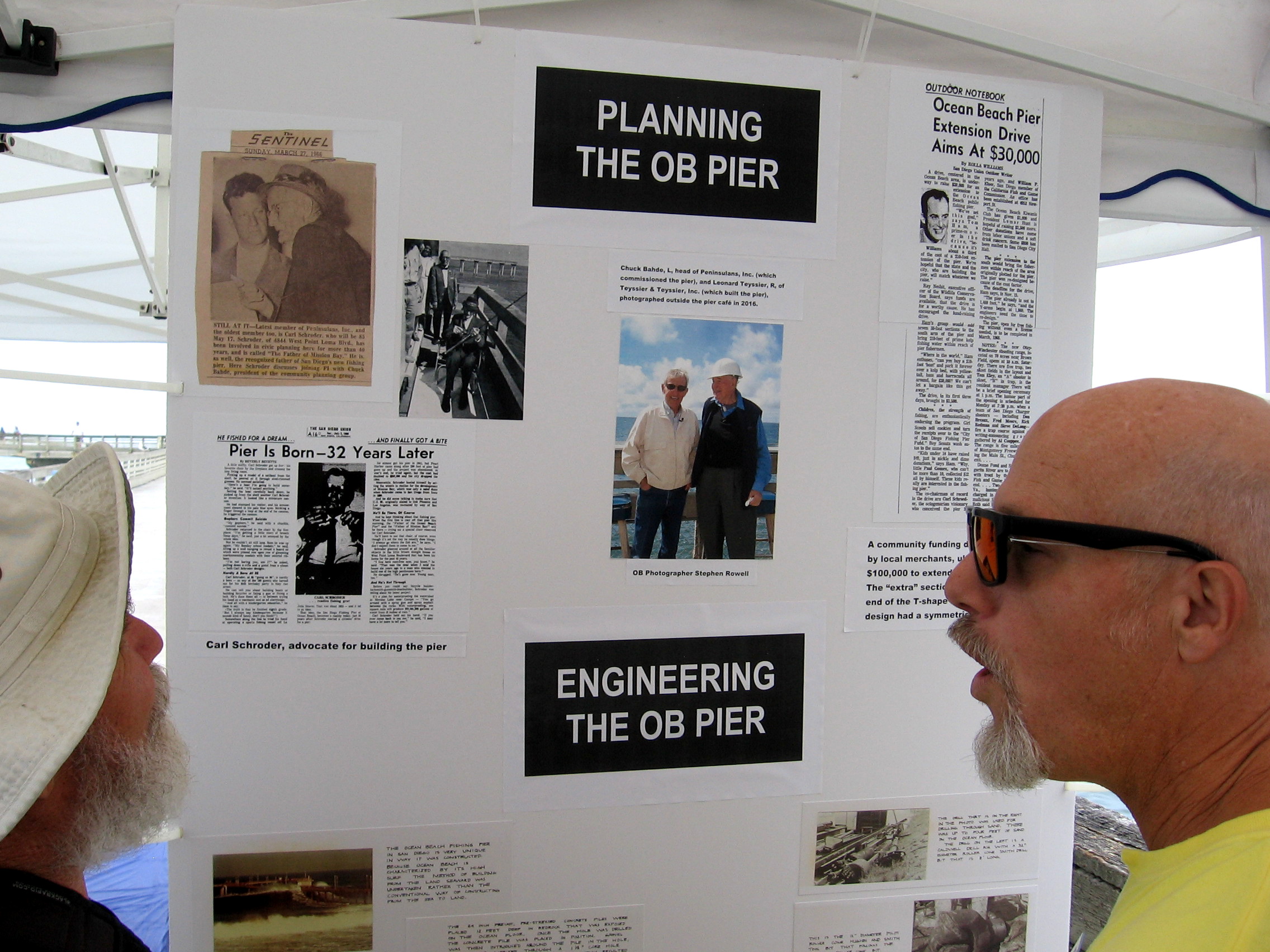
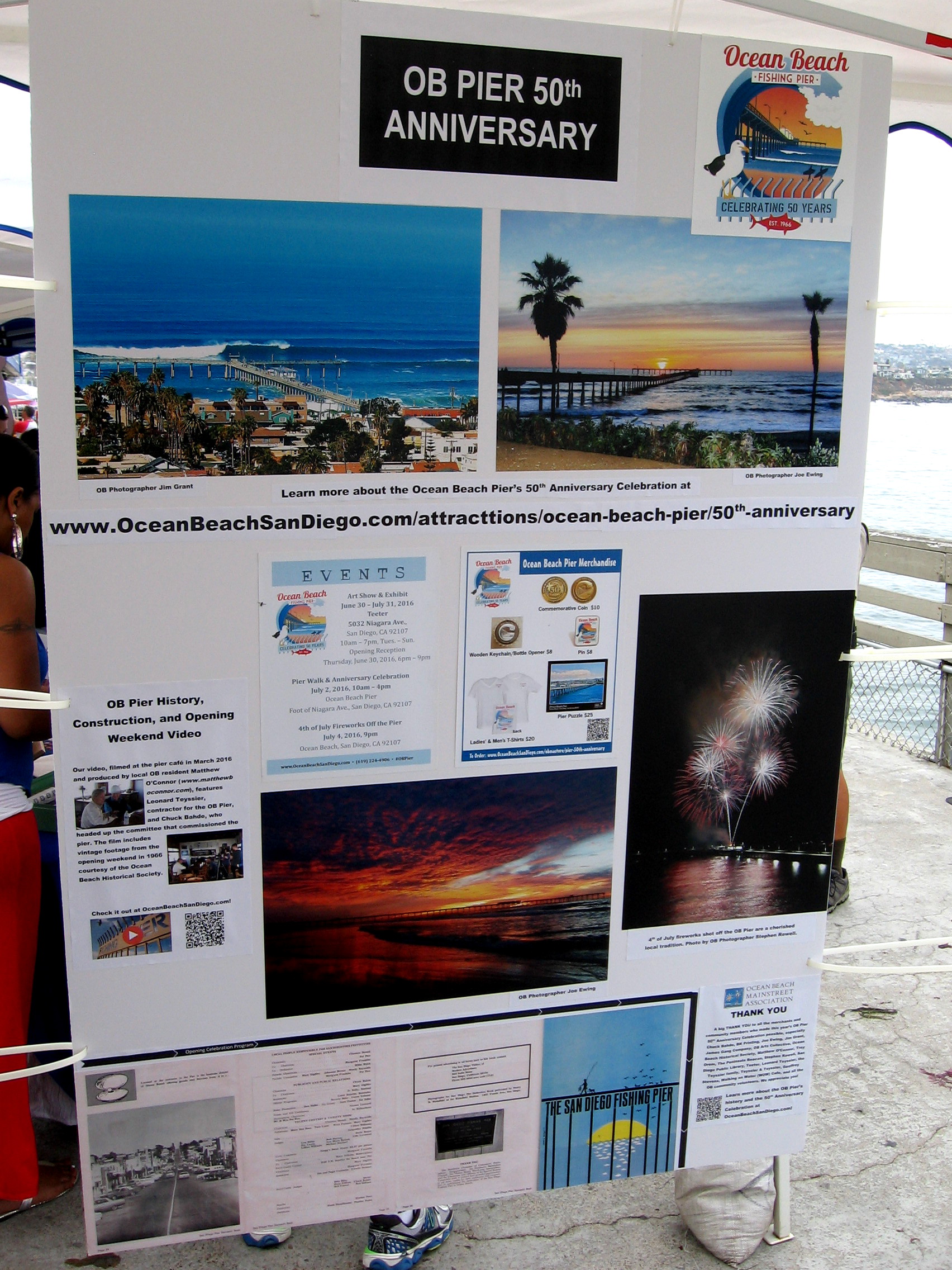
Visitors to the Ocean Beach Pier during its 50th anniversary celebration look at posters containing information about the amazing concrete pier’s construction and history.
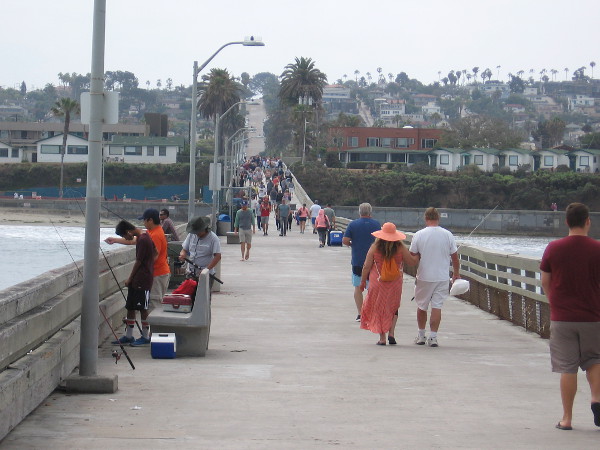
I enjoyed a walk along the Ocean Beach Municipal Pier this morning around 10 o’clock, just as the pier’s 50th anniversary celebration got underway! One of my favorite places in San Diego, the OB Pier has a fascinating history.
Here are some cool photos of what I saw and learned! To enlarge the posters containing historical information, click the images!
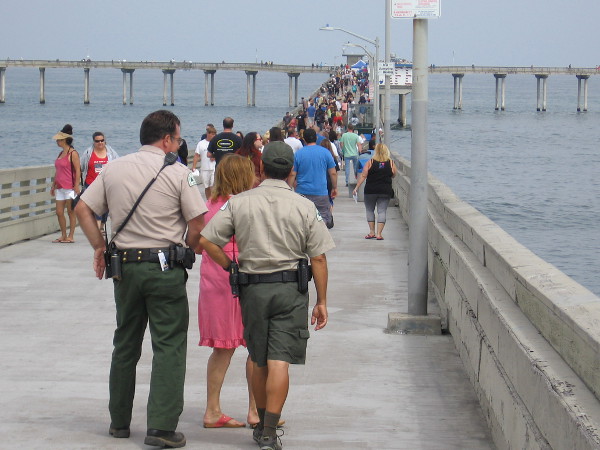
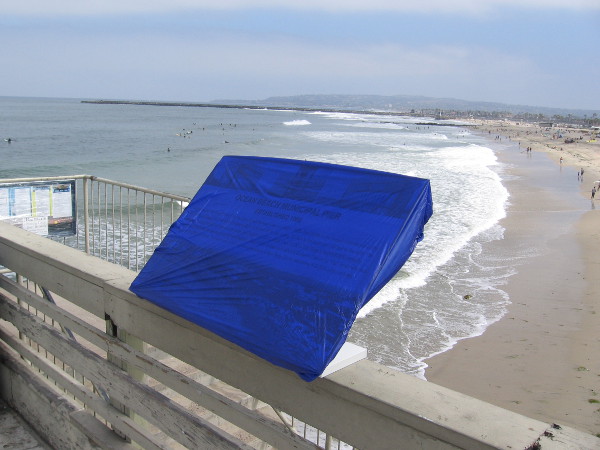
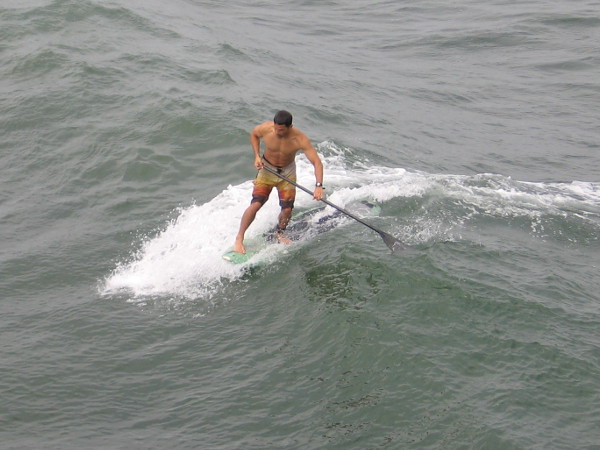
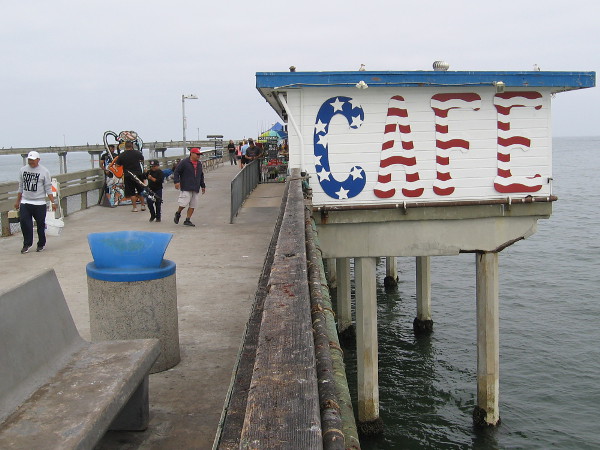
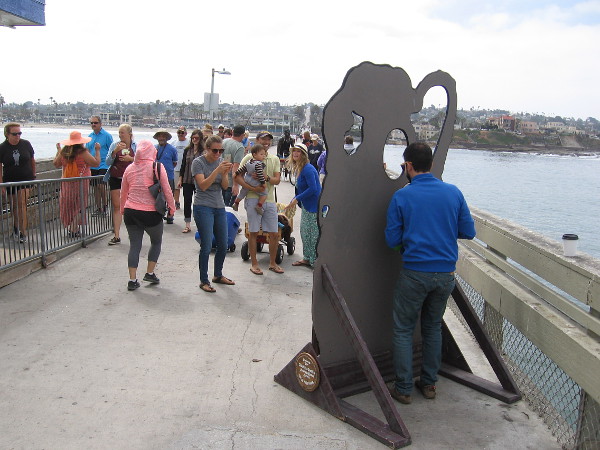
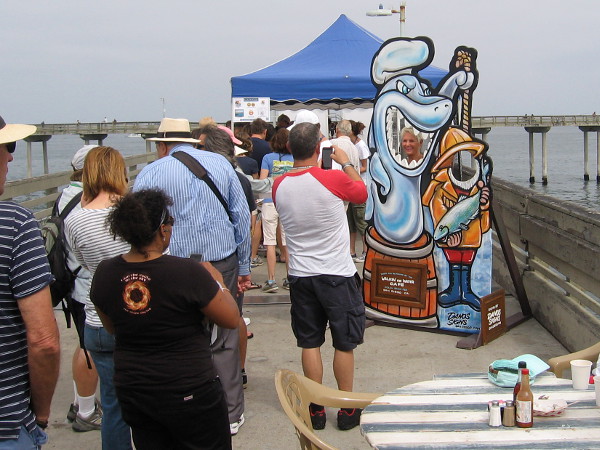
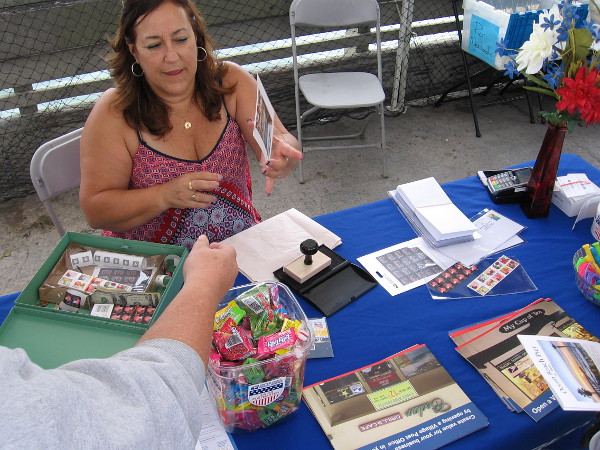
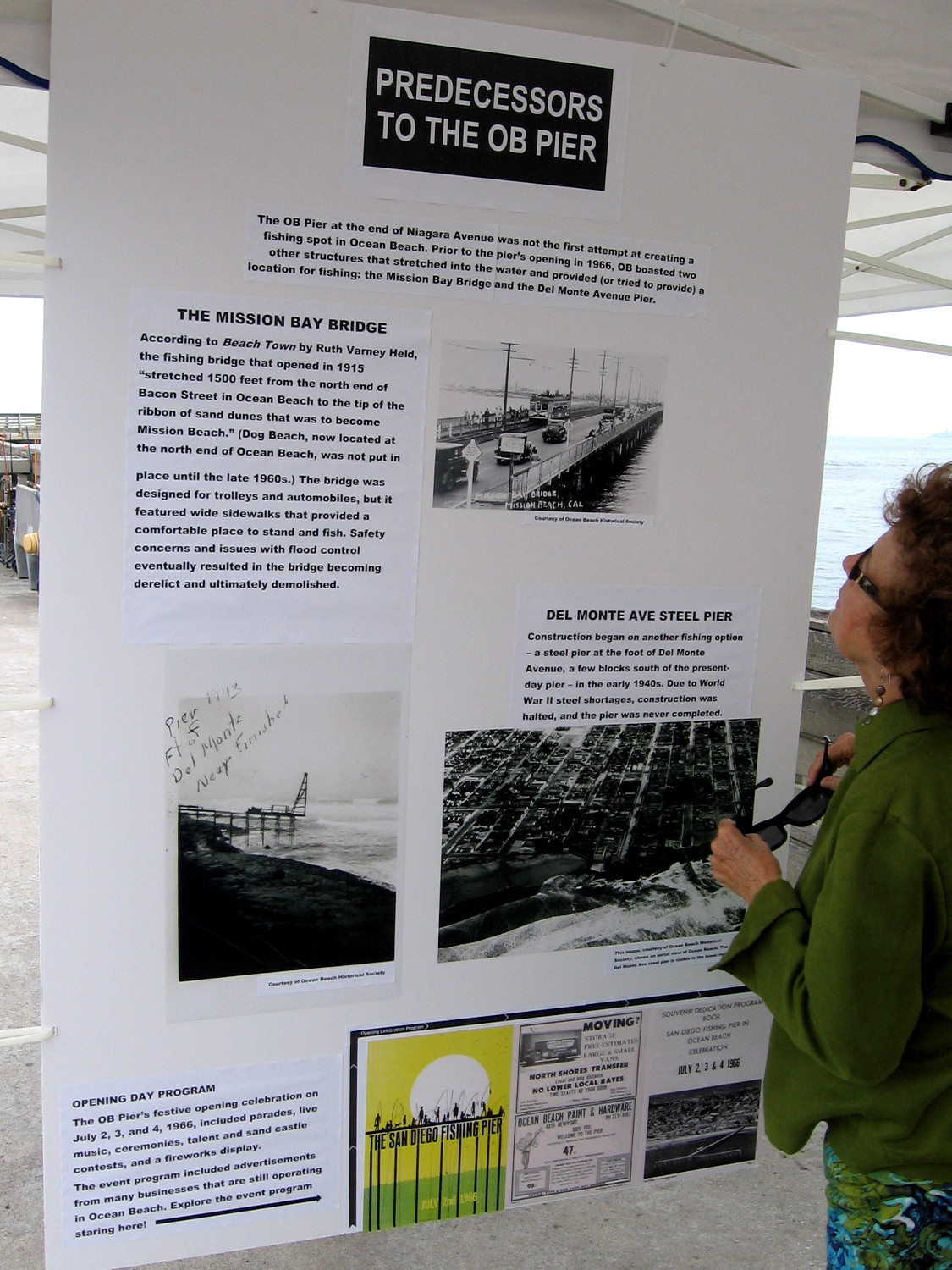
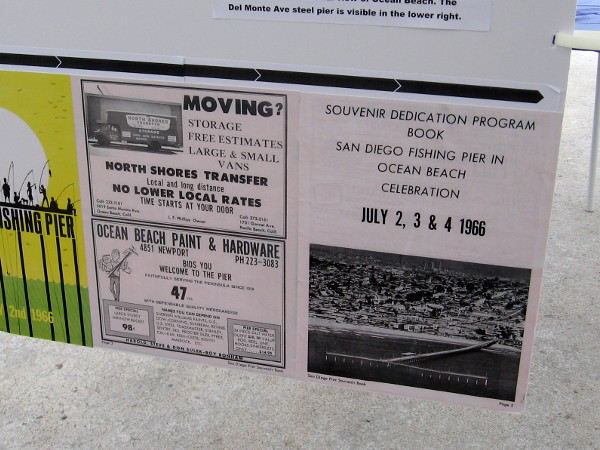
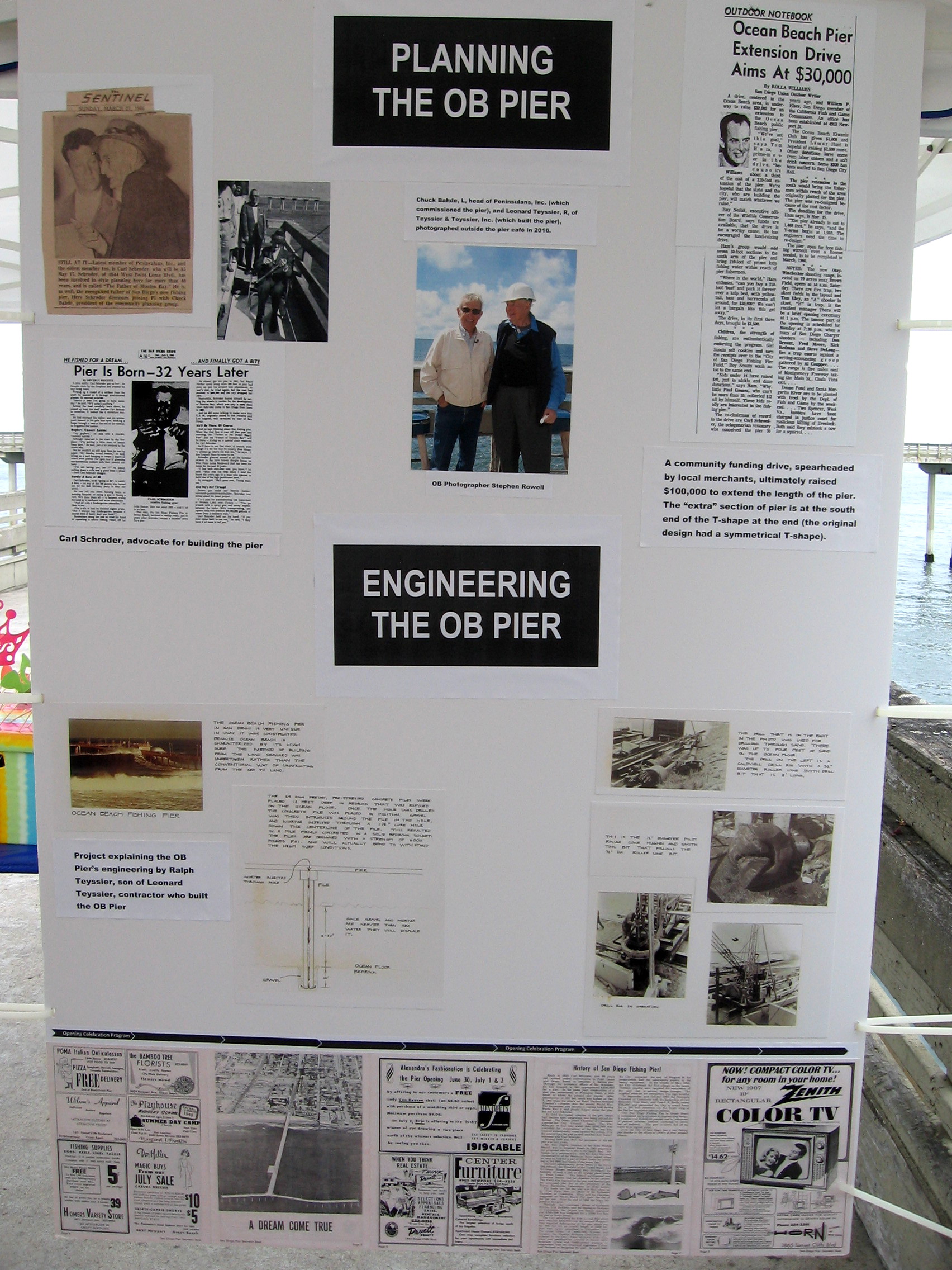
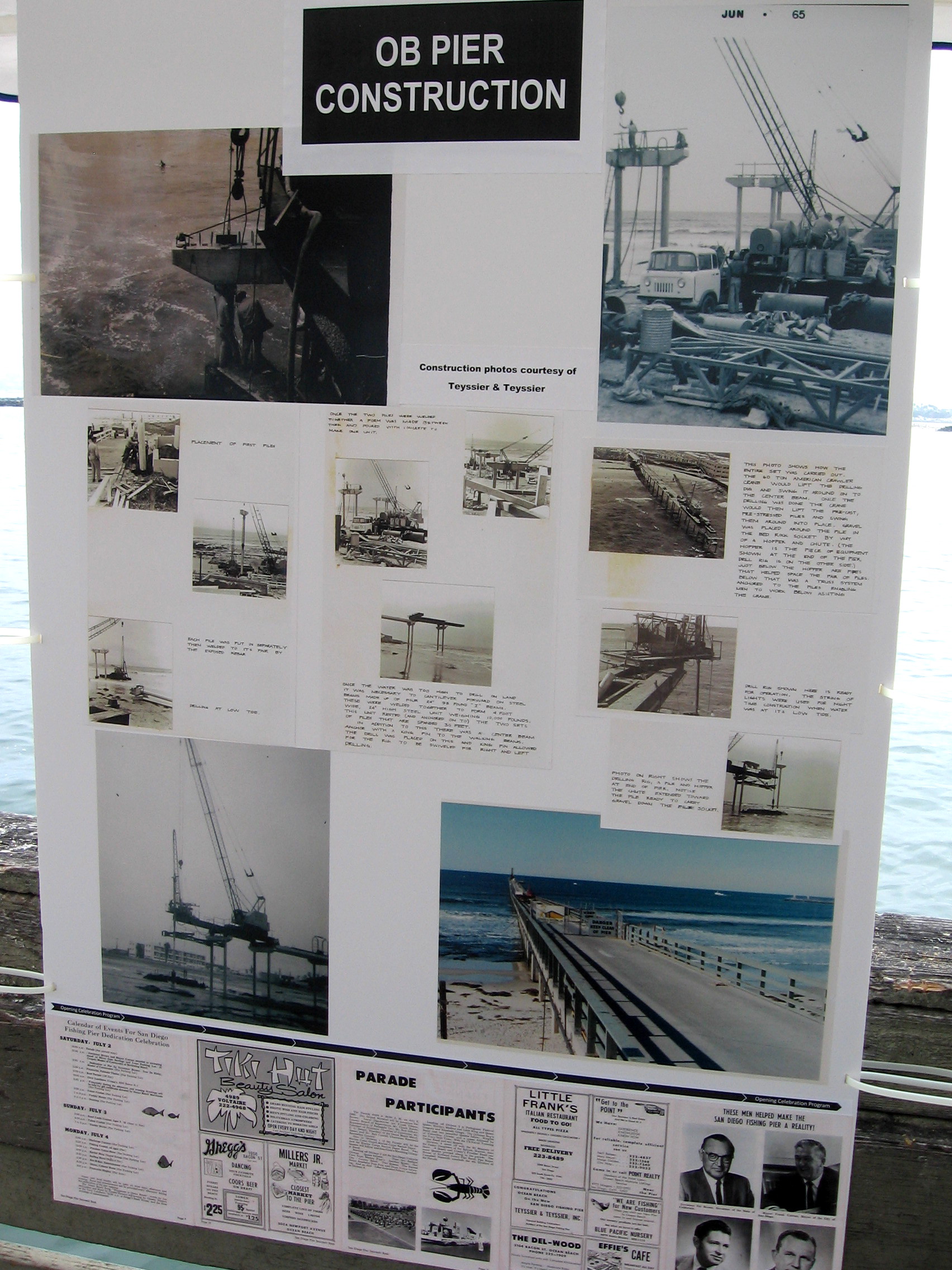
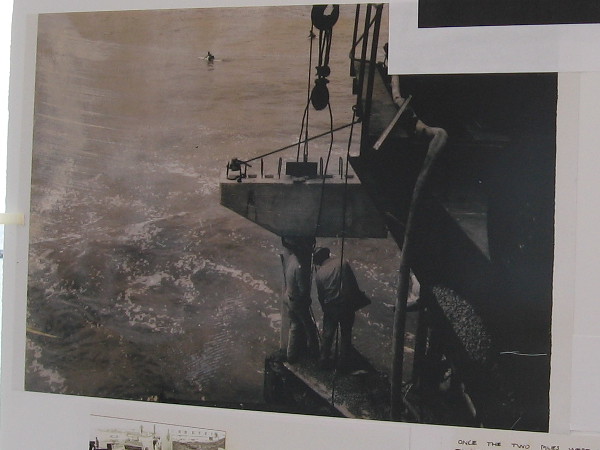
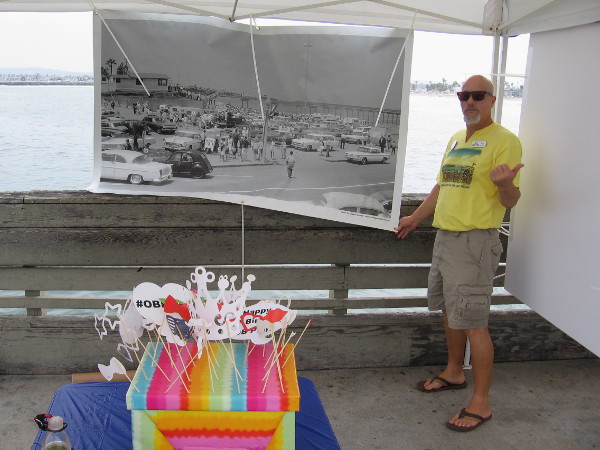
A table near the OB Pier gate welcomes people to the 50th anniversary celebration with flyers and event info.This San Diego Fishing Pier plaque was unveiled on July 2, 1966, 50 years ago when the engineering marvel known today as the Ocean Beach Municipal Pier first opened to the public.A good crowd turned out for the beloved pier’s big day! Here we are looking west toward the Pacific Ocean.Later in the day, a new plaque would be unveiled near the stairs down to the beach.Turning for a moment back east toward Ocean Beach. It’s a pleasant if somewhat overcast morning in early July.A stand up paddle surfer next to the OB Pier. It’s possible to watch a lot of surfing action from the top of the pier on almost any given day.The familiar old Pier Cafe has a brand new red, white and blue paint job!People were poking their heads through a couple of fun photo props, set up just for the special occasion.As we approach the hub of the anniversary event, just past the Walking on Water Cafe, a lady peers through the jaws of a shark!The United States Postal Service had a temporary philatelic station out on the OB Pier! Anyone could have a special pier postcard stamped with a custom-designed postmark!Before the OB Pier was built, the Mission Bay Bridge across the San Diego River was used by trolleys, cars and fishermen. It no longer exists. The Del Monte Avenue Steel Pier’s construction was halted due to WWII.The Souvenir Dedication Program Book dated July 2, 3, and 4, 1966. The original opening celebration was also around the Fourth of July!Planning the pier. Historical photos of the people who commissioned and built the truly amazing 1971 feet long pier–the longest concrete pier on the West Coast. Its original purpose was simply for fishing, out beyond rock and kelp beds!Engineering the OB Pier was no small feat. Thirteen months were required for the pier’s completion because of various design changes.Poster shows photos of the OB Pier construction back in the 1960s. The 2 foot diameter piles were place 12 feet deep into bedrock. Slabs were placed on top and everything was welded securely.I couldn’t help but notice a surfer in this old photograph! No obstacle can deter a good ride on the mighty ocean, even half a century ago!Photo shows concrete pilings and steel. The pier has survived countless huge storms over the decades.A poster highlights events at today’s Ocean Beach Pier 50th anniversary. There will be spectacular fireworks this Fourth of July!Photos of the opening celebration weekend in 1966. California Governor Edmund Brown cut the ribbon and cast the first fishing line . . . but gave up after 5 minutes! Festivities included parades, a surfing and variety show, and a sandcastle contest.This cool dude gave me the thumbs up while hanging a display for the Ocean Beach Pier’s 50th anniversary. That’s OB style!Generations of San Diegans have been fishing here for half a century. I wonder . . . how many fish have been caught over the years?A gull and the OB Pier hover over the restless ocean. This 180 feet extension of the south arm at the pier’s end was added at a later time, and remains a favorite spot for fishing way out where the water is around 30 feet deep.
…
I live in downtown San Diego and love to walk! You can follow Cool San Diego Sights via Facebook or Twitter!
You can easily explore Cool San Diego Sights by using the search box on my blog’s sidebar. Or click a tag! There are thousands upon thousands of fun photos for you to enjoy!
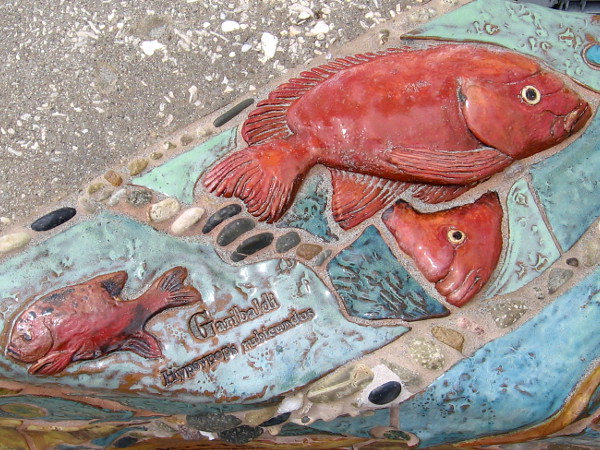
Beautiful ceramic mosaic artwork at Fletcher Cove Park in Solana Beach. The orange Garibaldi. By artist Betsy Schulz.
During my walk last weekend I headed from the Solana Beach Coaster station west a couple of blocks to Fletcher Cove Park. It was my intention to walk north along the ocean, then back east to Pacific Coast Highway. What I discovered as I neared the beach was incredibly cool.
The ceramic sea-themed mosaics you see in my photos were created by artist Betsy Schulz. I’ve documented another installation of her public art near the Santa Fe Depot. To see that, click here.
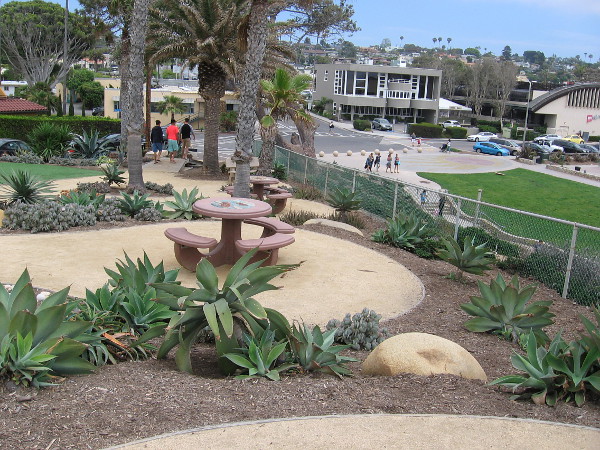
From the bluff at Overlook Park there’s a good view of Fletcher Cove and the blue Pacific Ocean. There are also four tables with more cool tile artwork by Betsy Schulz. The beautiful mosaics below in Fletcher Cove Park are found along the walkway that leads down to the beach.
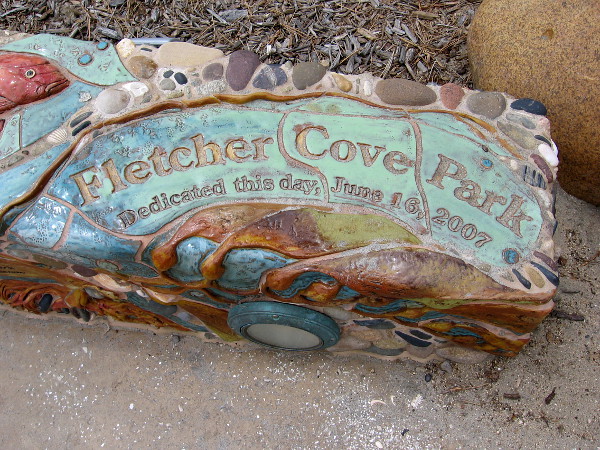
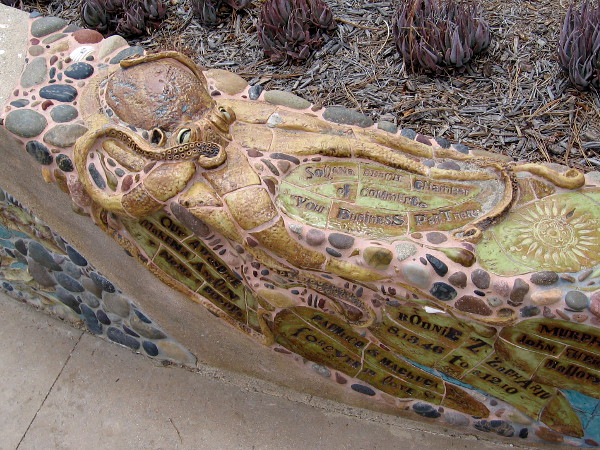
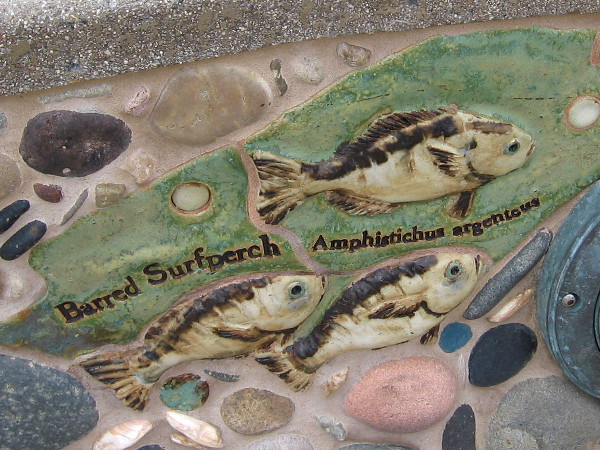
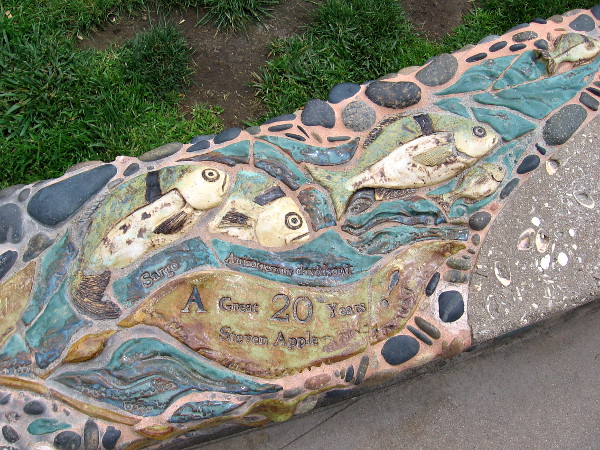
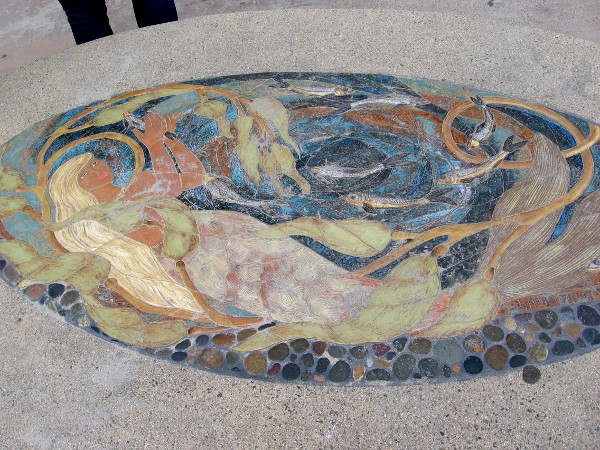
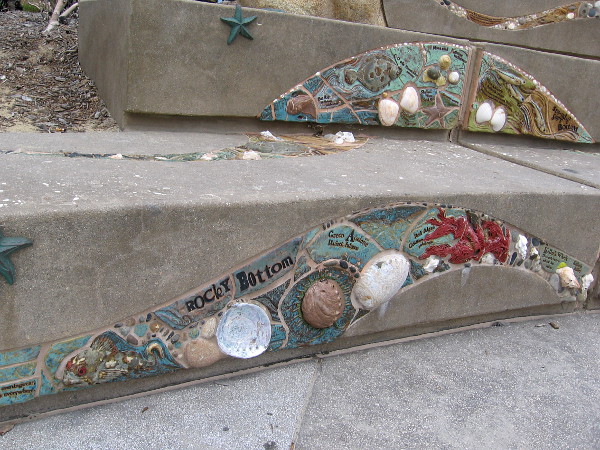
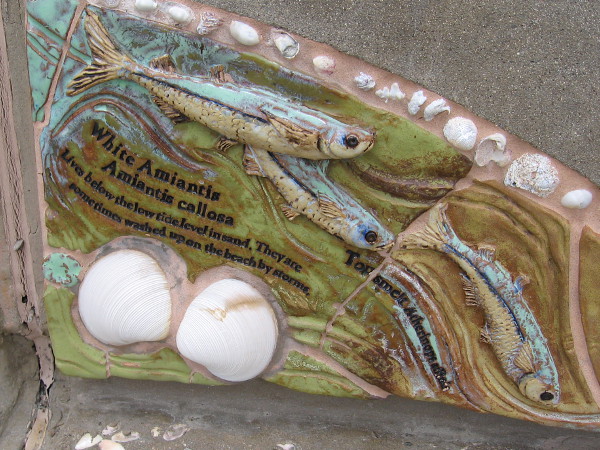
Picnic tables along a path leading up through Overlook Park in Solana Beach feature more beautiful, sea-themed tile mosaics.A spiny lobster embedded in a picnic table at Overlook Park.Two beautiful fish are part of some sea-themed art in Solana Beach, created by artist Betsy Schulz.A crab is featured in this colorful mosaic of small ceramic tiles.Sculpture of a seagull near entrance to Fletcher Cove Park. According to one article I read, the sculpture was created in the 1940s, and the artist doesn’t seem to be known.Fletcher Cove Park, dedicated this day, June 16, 2007.An octopus on a low wall embraces citizens and businesses in Solana Beach who are part of this coastal community.Wonderful tile artwork includes shells, stones and a school of small silvery fish.Barred Surfperch.More ceramic fish along the public walkway that heads down through Fletcher Cove Park to the small beach.Red Octopus.A work of art depicting a few of nature’s wonders and human creativity.This oval seat is right next to the beach. We know a mermaid who lives here in the sea…And here is the mermaid. The stunning mosaic artwork has been worn by sand, wind and time.In a tide pool one might discover a Brittle Star.Upon the rocky ocean bottom, one might find Green Abalone.Brown Tube Snail and California Spiny Lobster.Shore birds one might see nearby include the Whimbrel and Marbled Godwit.Thousands of shells, waves rush to our shore, Search high and low tides, you’re bound to find more.White Amiantis.Many small sea creatures appear in amazing tile artwork in Solana Beach’s Fletcher Cove Park.This lifelike Cabezon seems to be looking directly at you!
…
I live in downtown San Diego and love to walk! You can follow Cool San Diego Sights via Facebook or Twitter!
You can easily explore Cool San Diego Sights by using the search box on my blog’s sidebar. Or click a tag! There are thousands upon thousands of fun photos for you to enjoy!
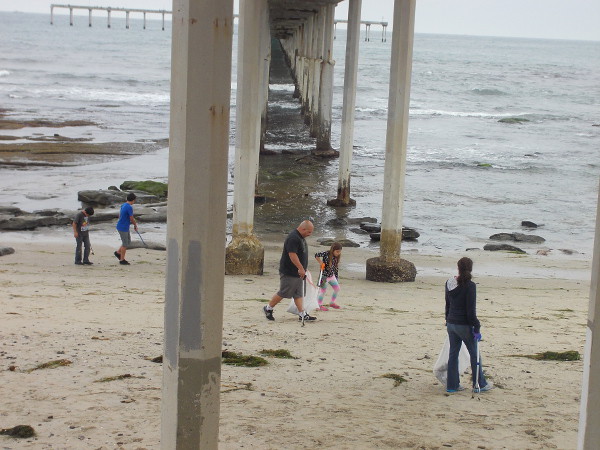
Cool people search under the Ocean Beach Municipal Pier for litter. I love a clean San Diego!
This morning I headed to the OB pier to take a bunch of photos. Some of them might end up being used in a book about the piers of California! (I’ll blog more about that later as events unfold.)
I was pleasantly surprised to see my visit to Ocean Beach happened to coincide with the Ocean Beach Pier Cleanup Day, which is organized by San Diego Coastkeeper and the Surfrider Foundation. I took some pics of awesome volunteers combing the sand for all sorts of nasty litter. Once again, I learned cigarette butts are a huge problem. One small team I spoke to collected literally hundreds of them from the beach.
Do you live in San Diego? Let’s help to keep our city clean and beautiful!
Many residents of Ocean Beach help to keep their community clean, collecting trash that damages the coastal environment.These guys using a metal detector were sifting the sand for precious treasure! In their own way, I suppose, they were helping to keep the beach clean, too!Plastic bags fill up with garbage as volunteers make Ocean Beach that more beautiful and inviting.These friendly volunteers found over 300 cigarette butts. Yikes. If only some people could be a little more thoughtful…Collected trash is recorded at the San Diego Coastkeeper station not far from the OB pier.Volunteers search the beach near the OB pier for litter during a cleanup day.
…
I live in downtown San Diego and love to walk! You can follow Cool San Diego Sights via Facebook or Twitter!
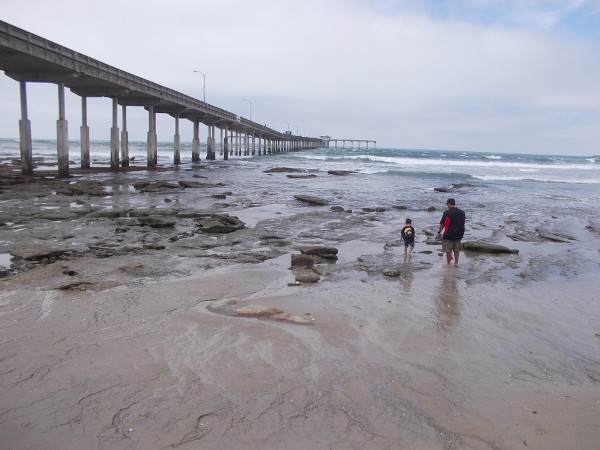
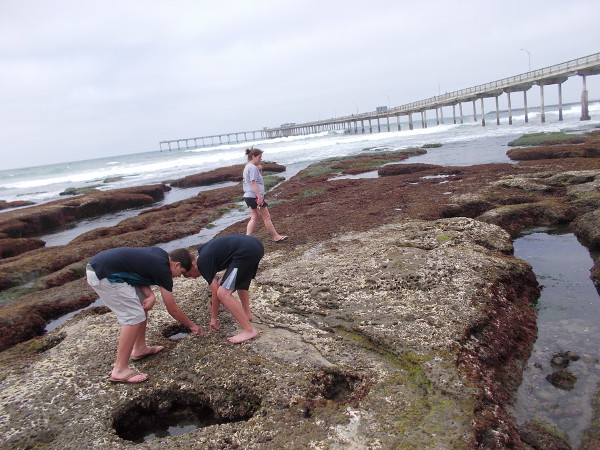
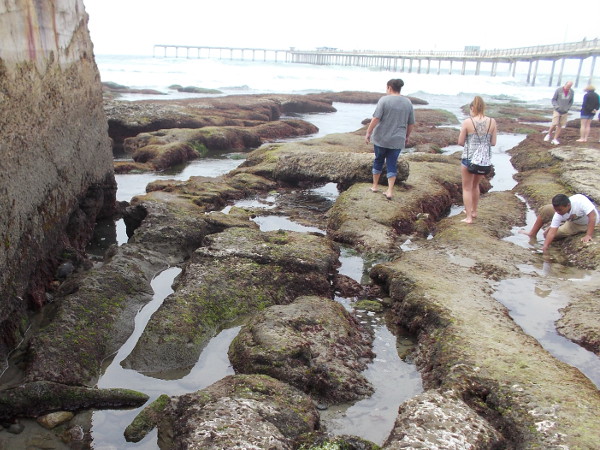
Carefree kids jump while exploring the tide pools just south of the Ocean Beach Pier.
On Sunday I headed to Ocean Beach, for no particular reason. I like to walk out on the pier.
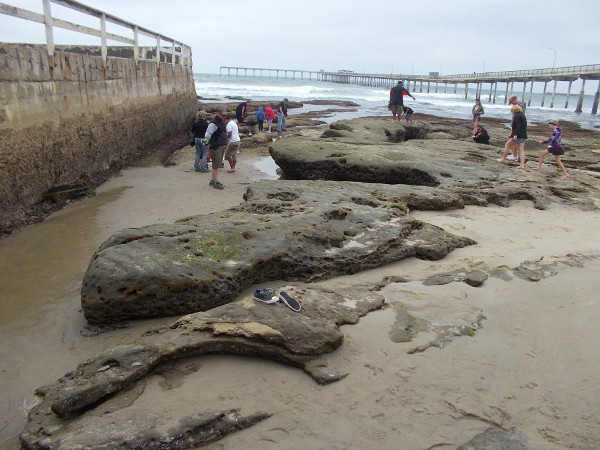
My visit happened to coincide with low tide, so I took advantage of an opportunity to explore the tide pools near the base of the pier. What did I see? Amazing life. Amazing beauty.
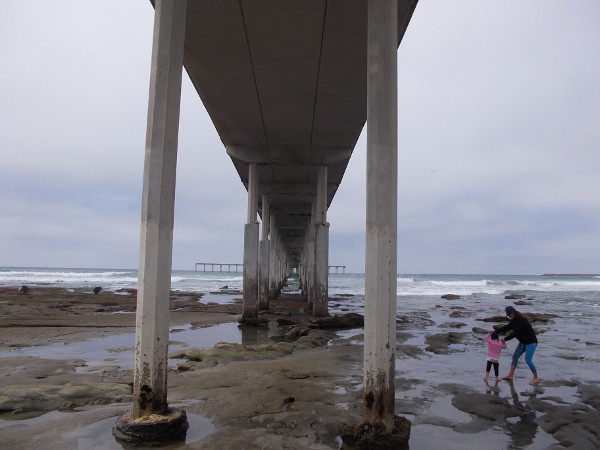
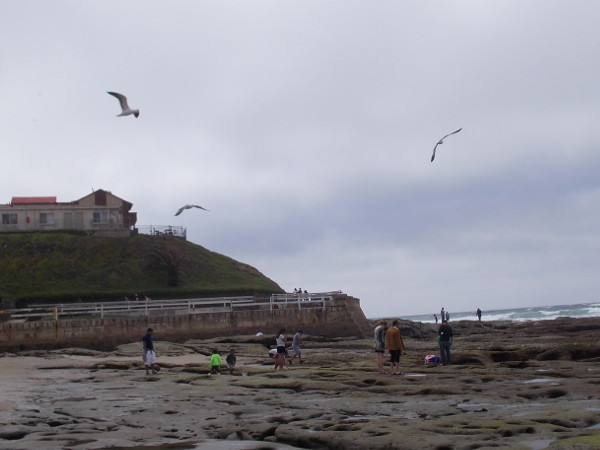
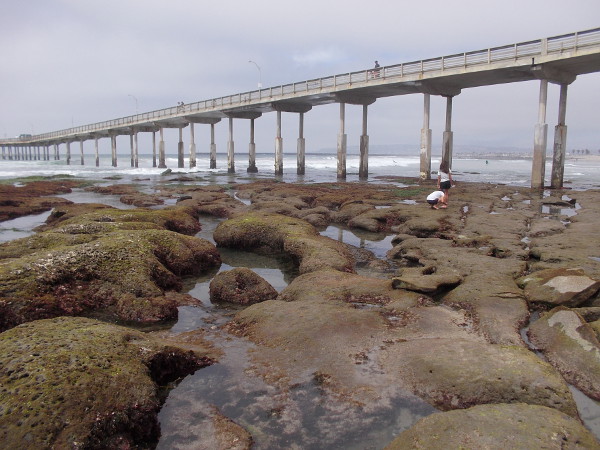
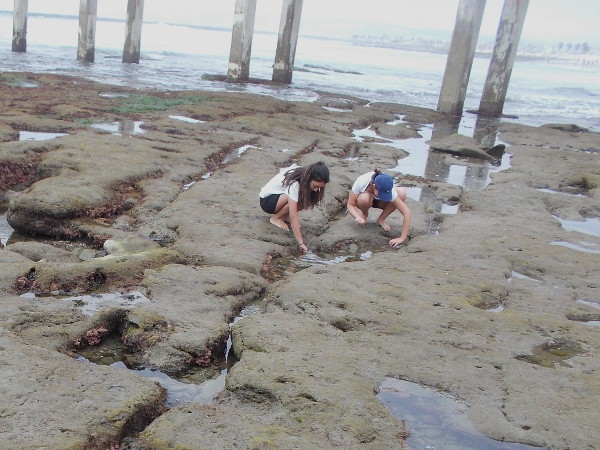
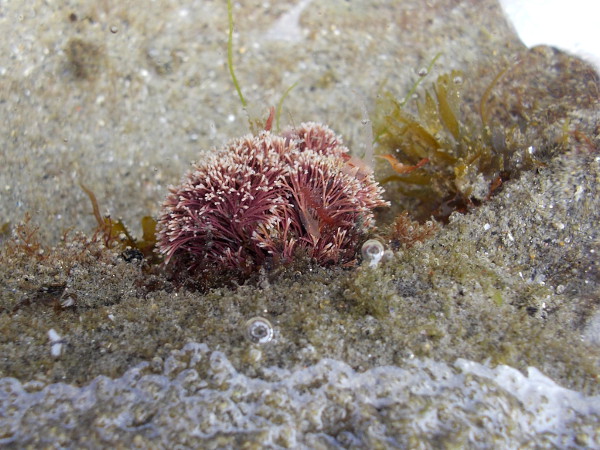
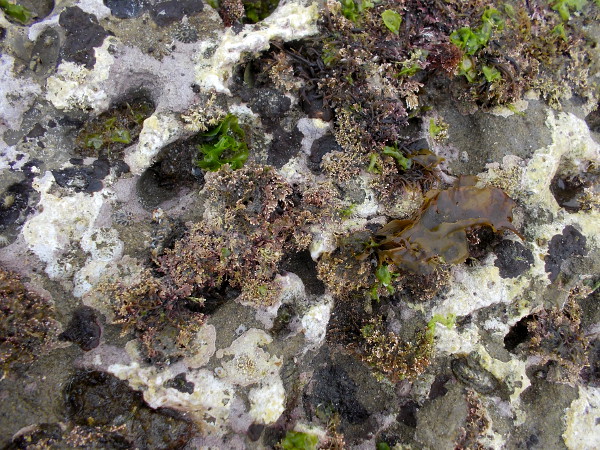
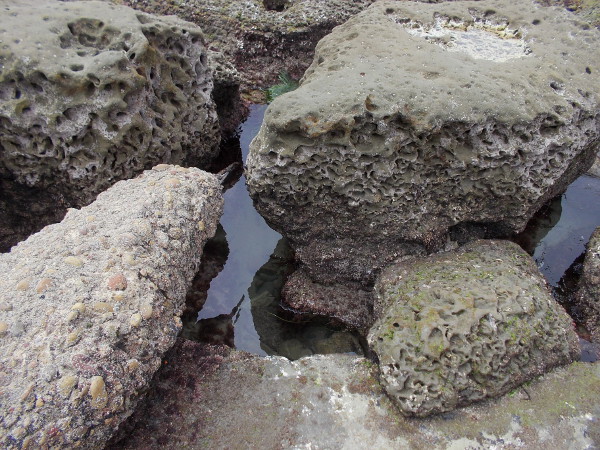
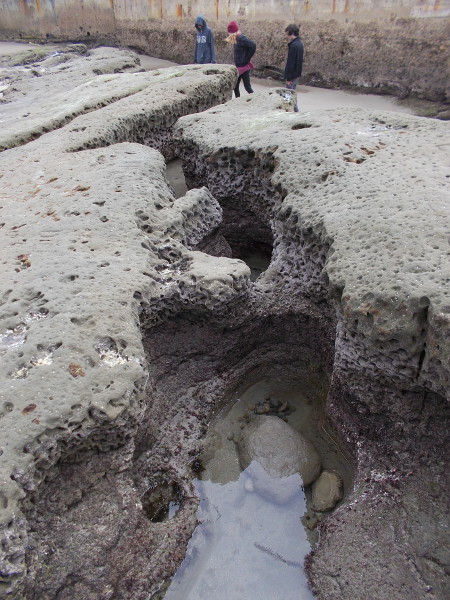
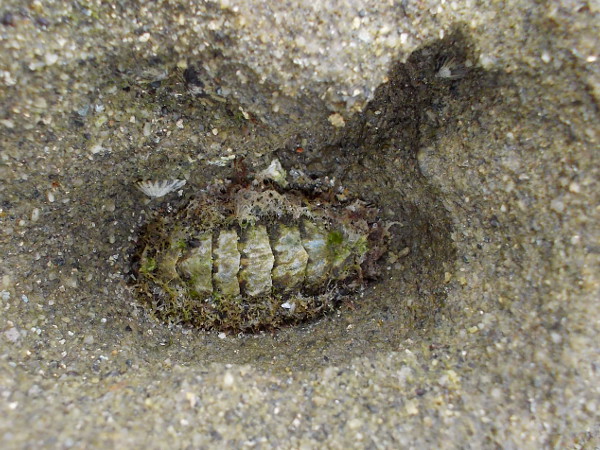
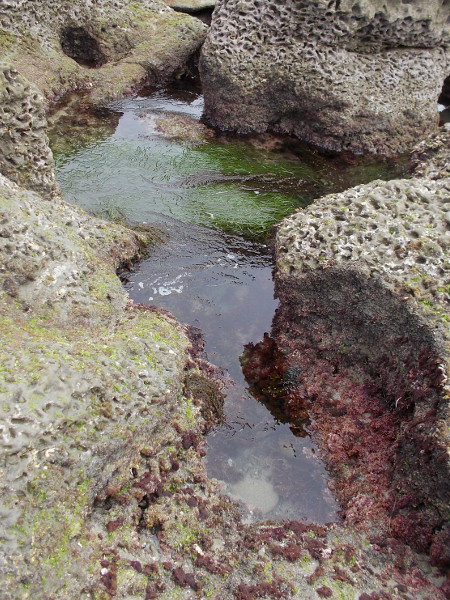
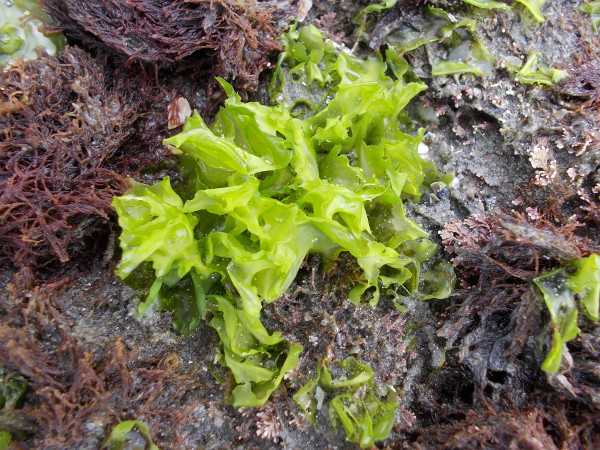
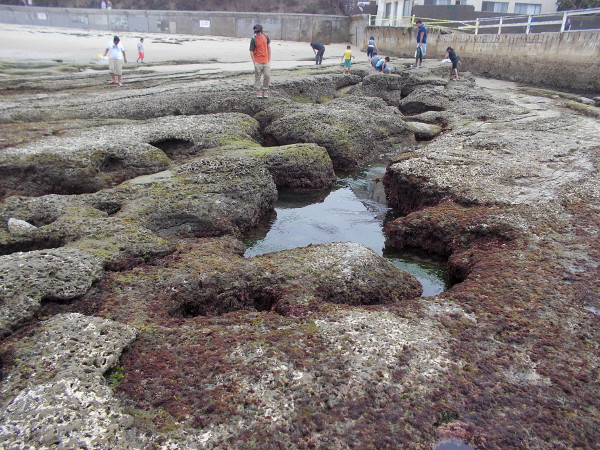
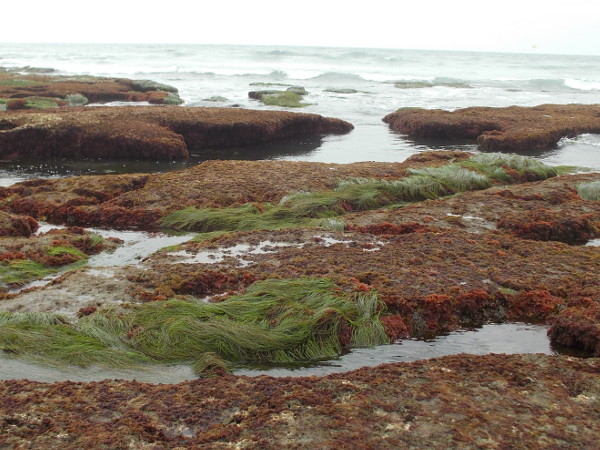
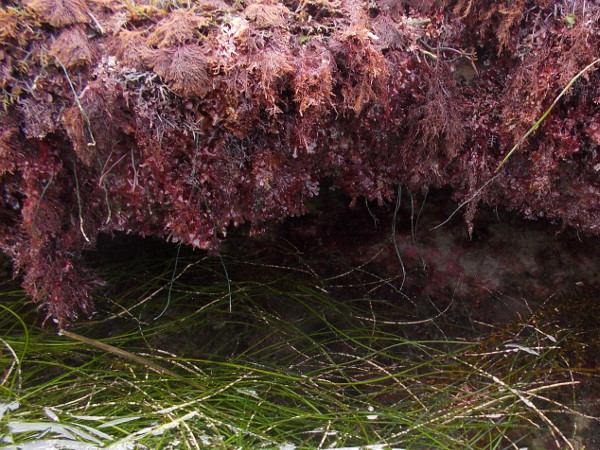
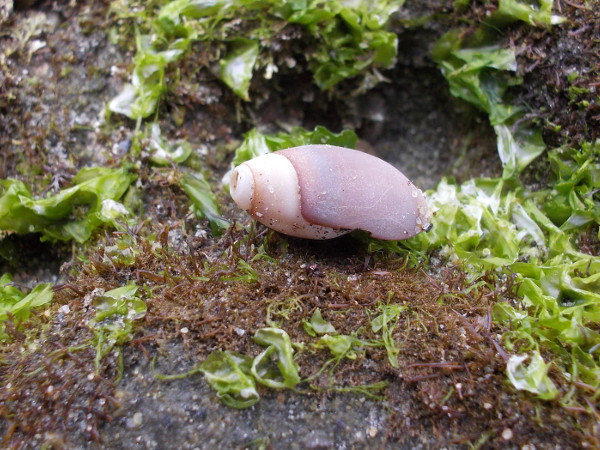
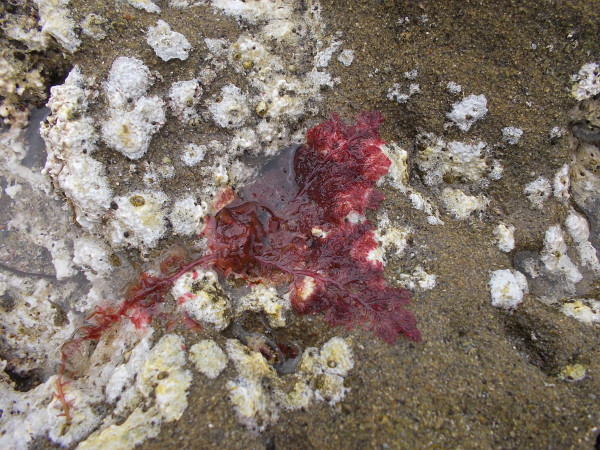
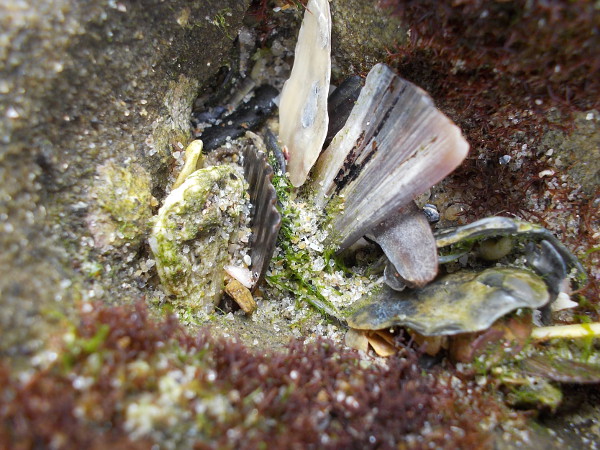
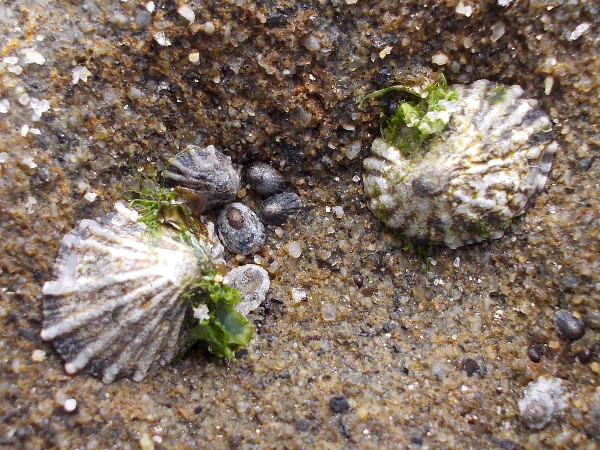
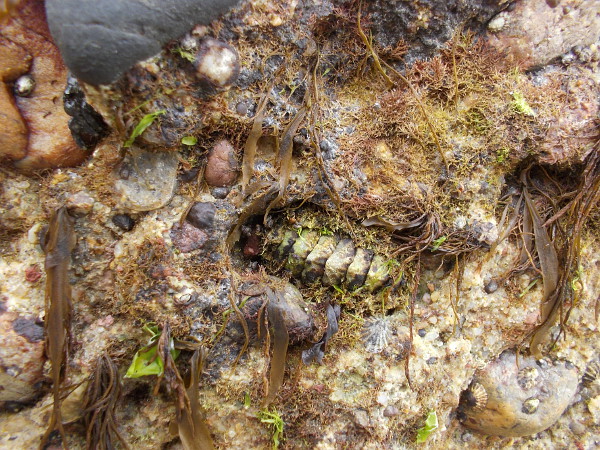
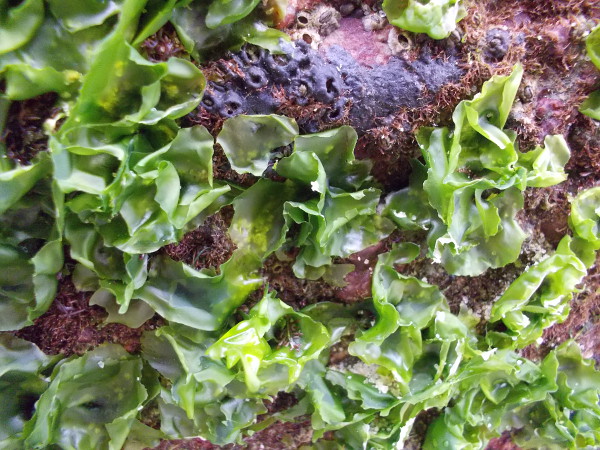
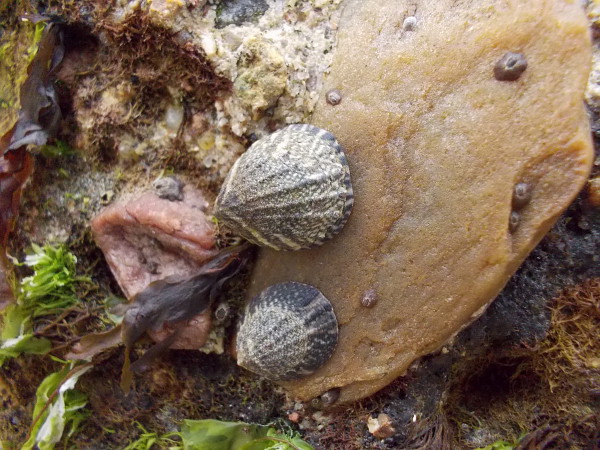
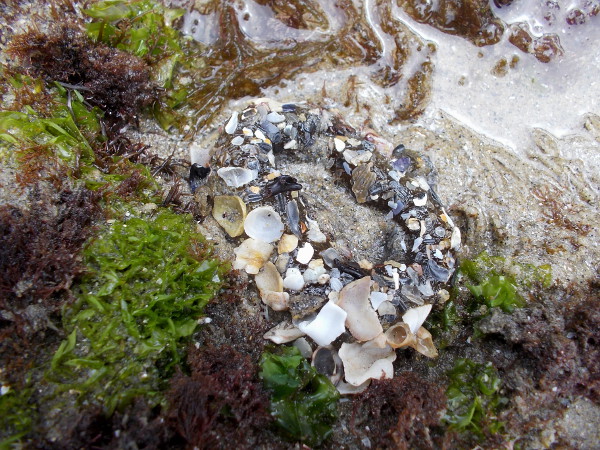
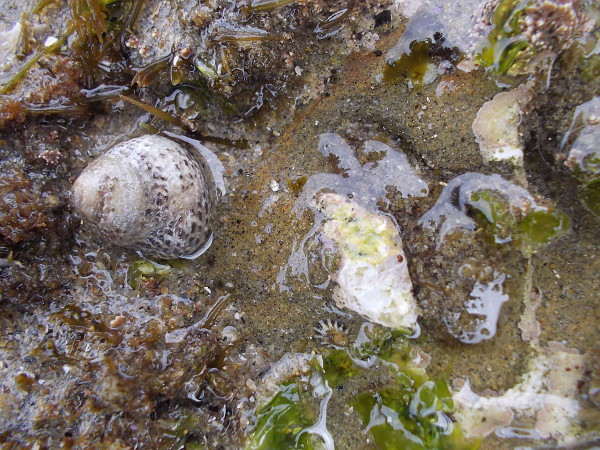
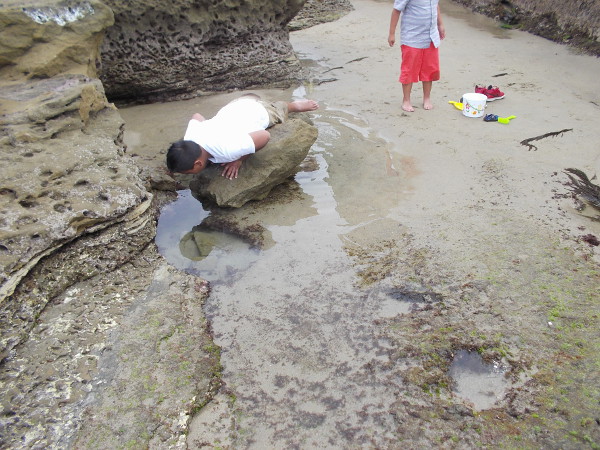
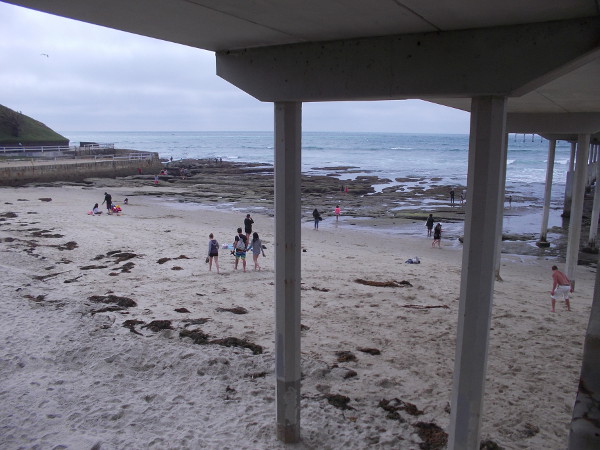
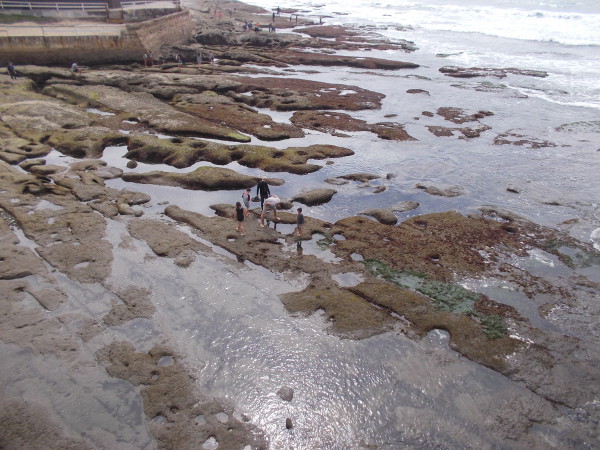
North of the Ocean Beach Pier there is a beautiful, very popular beach. Some rocks are exposed at low tide.Under the Ocean Beach Municipal Pier, which is the second longest pier on the West Coast.Seagulls circle above people who are searching for natural wonders in the intertidal zone.A view of the Ocean Beach Pier and nearby tide pools. An easily accessible place to explore the seashore and make small discoveries.People explore fascinating tide pools near the foot of the OB pier during low tide. The rocks can be very slippery.At low tide, the exposed sandstone rocks south of the pier contain many depressions, the home of algae and small sea creatures.There are many interesting photo opportunities at the tide pools. Down on hands and knees, you’re going to get a little slimy and wet!A complex, natural mosaic in the rock.Hidden channels and eroded surfaces in the irregular, pitted sandstone.Kids stand near the sea wall at the end of one water-sculpted, crevice-like channel.I believe this little guy is a troglodyte chiton. Thousands can be seen in their own tiny sandstone burrows in the intertidal rocks. They can live 20 years in the same spot!Lots of amazing discoveries to be made!One can see pink encrusting coralline algae and surfgrass in this saltwater-filled channel.I can see why this is called sea lettuce! It’s actually a type of green algae.Another view of the tide pools immediately south of the OB pier.Bright green surfgrass, reddish algae and blue ripples of incoming ocean surf make a strangely beautiful photograph.More pink coralline algae and surfgrass at the OB tidepools.A small empty shell among some sea lettuce.An unusual photo at the tide pools. Nature is an infinitely prolific artist.A cool photo composed of accumulated shell pieces.Limpets large and small on one rock form a beautiful pattern.Adventures in progress.Tiny miracles of nature in the soft sandstone.A sample of the surprising beauty you might encounter at these tide pools.A periwinkle, or sea snail.More beautifully patterned limpets, and I think I might see a few barnacles.Right up next to the sea wall. The tide pools continue a good distance to the south.A sea anemone covered with shell fragments, among sand and algae in one tide pool.An aggragating anemone, safely closed up at low tide so that it doesn’t dry out. Many small stones and shell bits have collected upon it.Another watery scene in a life-filled Ocean Beach tide pool.There’s a lot of exploring to do!Looking under the OB pier as I climb up its stairs for an overhead view of the tide pools.Looking down from atop Ocean Beach Pier at the nearby tide pools. People out on the rocks search for wonders in the intertidal zone.
…
I live in San Diego and love to walk all over the place! You can follow Cool San Diego Sights via Facebook or Twitter!
Do you like to read short pieces of thought-provoking fiction? You might enjoy checking out Short Stories by Richard.
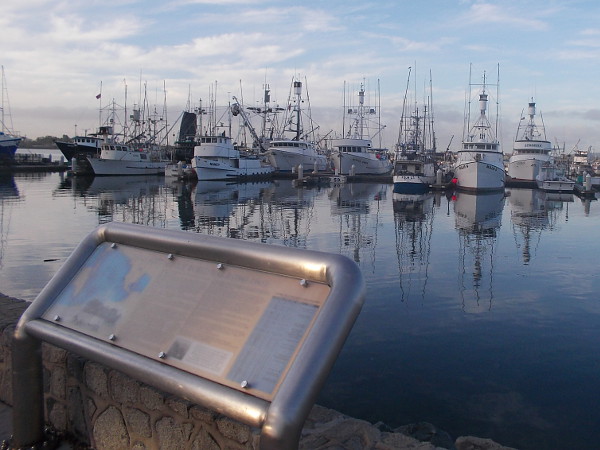
Information sign beside Tuna Harbor, in downtown San Diego, describes how local tuna boats were utilized in the Pacific Ocean theater of World War II.
Some fascinating historical information can be found on San Diego’s Embarcadero, right next to Tuna Harbor where many commercial fishing boats dock downtown. The sign, erected by the San Diego Port Commission in 2008, is titled Tuna Fleet Service World War II (1941-1945). It provides a glimpse of how dozens of San Diego-based Tuna Clippers joined the American war effort during the Second World War.
Here is the text on the sign:
During World War II, 600 fishing vessels were taken by the Navy, Army, and Coast Guard, including 52 “Tuna Clippers”.
On Pearl Harbor Day, the U.S. canned tuna industry was located almost exclusively in Southern California, and canners received most of their tunas from “baitboats”. Fishermen on these boats chum live bait (sardines, anchovies) to attract the tunas into a feeding frenzy and then use rigged bamboo poles to pull the hooked tunas aboard. Dating from 1924, a fleet of large “baitboats” was developed and became know as “Tuna Clippers”. These large ships, equipped with powerful diesel engines and newly developed brine refrigeration, fished for tunas found migrating thousands of miles from San Diego on trips of 90 days or more. During the 1930s, this San Diego high seas fleet was studies by the U.S. Navy, resulting in wartime plans that included the conversion of Tuna Clippers to minesweepers.
At the time Pearl Harbor was attacked, there were 90 vessels in the California baitboat fleet, including 76 Tuna Clippers plus 3 under construction. The 49 Tuna Clippers taken by the Navy and 3 by the Army represented about 55% of the fish carrying capacity of the entire baitboat fleet.
After war was declared, the Government ordered the Tuna Fleet to make port in California or Panama. Ten of the Tuna Clippers entering the Canal Zone in December 1941, were immediately taken for temporary patrol duty. The U.S. Army took three Clippers for use in the Panama Sea region, the SHASTA and CAPE HORN as tugs and the INVADER as a supply ship.
On February 16, 1942, tuna fishermen attended a meeting conducted by Commander W. J. Morcott, USN (Ret.) at the Naval Reserve Armory. 600 tuna fishermen signed up, with Skippers and Engineers receiving warrant ratings, and others given petty officer ratings according to age and experience. Within 10 days, a fleet of 16 Tuna Clippers, painted gray and marked with YP number designations as Yard Patrol vessels, left San Diego harbor on February 25, 1942. Their destination was the “Panama Sea Frontier” for picket duty to protect the Canal.
In May 1942, a convoy of six YP Clippers left San Diego for the “Hawaiian Sea Frontier”. These YPs transported supplies to French Frigate Shoals, the islands of Midway, Johnston, Fanning, Christmas, Palmyra, and Canton. In June 1942, seven YP Clippers left San Diego, for service at Efate Island or Samoa, or Auckland, New Zealand. In November 1942, another group of five headed for the U.S. Naval base at Tutuilla, Samoa. As the conflict moved towards Japan, YP Tuna Clippers were sent on missions to other Islands and Atolls of the Western Pacific.
The Navy discovered that “Yippies” were able to transport troops, gasoline, ammunition, and refrigerated cargoes and capable of navigation within shallow atolls and over minefields, of towing damaged warships, and rescuing downed pilots. This is why “Yippies” were also called the “Pork Chop Express” or “Errand Boys of the Pacific” or the “Solomon Island Ferry”. During the Solomon Island Campaign in 1942, the PARAMOUNT (YP 289) and the PICOROTO (YP 290) delivered frozen turkeys and all the fixings for a traditional holiday feast at Guadalcanal Island. In 1943, frozen turkeys were also delivered to the Marines fighting on Bougainville in time for Thanksgiving by the AMERICAN BEAUTY (YP-514).
“Yippies” were equipped with CW radios, fathometers, Navy radar and Navy sonar. Armament included machineguns, and other gun gear to fire Depth charges. The YP crew of tuna fishermen and regular Navy ran from 4 to 20 men.
Two YPs were destroyed in the Solomon Islands campaign by enemy surface ships: On 9 September 1942, off Tulagi Island, the PROSPECT (YP-346), and on 25 October 1942, off Guadalcanal Island, the ENDEAVOR (YP-284). The number of casualties sustained is unknown.
Two YPs were lost in the Midway region: On 23 May 1942, the TRIUNFO (YP 277) was destroyed by fire and explosions enroute to French Frigate Shoals (North of Hawaii), and then scuttled to avoid enemy capture. Only two crewmembers survived. During October 1942, the YANKEE (YP-345), with 17 crewmembers, on a voyage from Pearl Harbor to Midway Island via French Frigate Shoals, was “lost without a trace from causes unknown”.
Four YPs were lost at sea: CALIFORNIA (YP-235) on 1 April 1943, after fire and beaching in the Gulf of Mexico from an explosion of undetermined origin; NAVIGATOR (YP-279), 5 September 1943, foundered in heavy weather enroute to Townsville, Australia; CAPE SAN VINCENT (YP-280), on 24 April 1946, sank near Saipan Island; SAN SALVADOR (YP-281) on 9 January 1944, was destroyed after the foundering in Force 9 storm, with crew of 19 and one dog rescued, near Wallis Island, South Pacific. After transfer to the U.S. Army in July, 1943 the SEA TERN (ex YP-269) was lost at sea off Baja California.
Three YPs were destroyed during October 1945, because of a typhoon off Okinawa: PARAMOUNT (YP-289); CONTE GRANDE (YP-520) and CHALLENGER (YP-239).
The Navy destroyed 7 YPs after the War during 1946 and 1947: AMERICAN VOYAGER (YP-287), CIPANGO (YP-504), EUROPA (YP-236), FALCOM (YP-515), QUEEN AMELIA (YP-516), QUEEN ELIZABETH (YP-519), and YVONNE LOUISE (YP-282).
The successful wartime experience of the “Yippies” caused the Navy to build 30 wood-hull vessels patterned on the Tuna Clipper design. Each of 30 newly constructed wood hull Navy YPs was of 128 in length, of 14 feet draft, and powered with a 500 H.P. diesel main engine. They were built during 1945, two each by 15 different shipyards located in California, Oregon, and Washington.
Commencing in 1947, 24 of these YPs were added to the U.S. Tuna Fleet.
After the war, the Navy and Army transferred 33 surviving former Tuna Clippers to the War Shipping Administration (WSA) for buy-back by the previous owners. Three of these surviving vessels never returned to the U.S. tuna fishery: CABRILLO, FISHERMAN II, AND THEODORE FOSS.
Additional information on the sign:
Tuna clippers joined the navy too and were painted a dull slate grey, while the stalwart Portuguese descendants learned to fire the guns that were mounted upon the deck. Equipped with the finest refrigeration systems, these trim craft became “errand boys” of the Pacific, delivering food and fuel to the fronts. One day these tunaboats will be convoying a fleet of small ships to Panama. Next month, perhaps, they’ll be off to Midway Island with gasoline for navy PBYs. Two months later, they’ll be down in the Solomons running the “milk route” between Guadalcanal and Tulagi with supplies – part of the saga of men and boats.
excerpt from San Diego Union
July 23, 1943
Scores of converted tuna clippers slipped out of San Diego bay on their way to do valiant work in Pacific battle areas. First boats sailed from here Feb. 25, 1942. These small, sturdy diesel-powered boats are ideal for convoying and patrolling as well as for transporting needed war supplies to defeat the Japanese.
excerpt from San Diego Union
July 23, 1943
Today’s commercial fishing fleet in San Diego includes picturesque boats that provide fresh seafood for restaurants and a Saturday dockside market. (The USS Midway aircraft carrier, now a popular museum) is visible in the background of this photograph.)Someone walking down the Embarcadero near Tuna Harbor pauses to read a bit of fascinating information concerning the Second World War.Left part of the sign depicts map of the Pacific theater of World War II in relation to San Diego. Pictured are some vessels that participated.A detailed description of how the local Tuna Fleet served in various capacities during World War II.California Tuna Clippers: Military Service World War II. (Click the image to enlarge.)Commercial fishing vessel Dalena in San Diego’s present-day Tuna Harbor.
…
I live in downtown San Diego and love to walk! You can follow Cool San Diego Sights via Facebook or Twitter!
You can easily explore Cool San Diego Sights by using the search box on my blog’s sidebar. Or click a tag! There are thousands upon thousands of unique photos for you to enjoy!
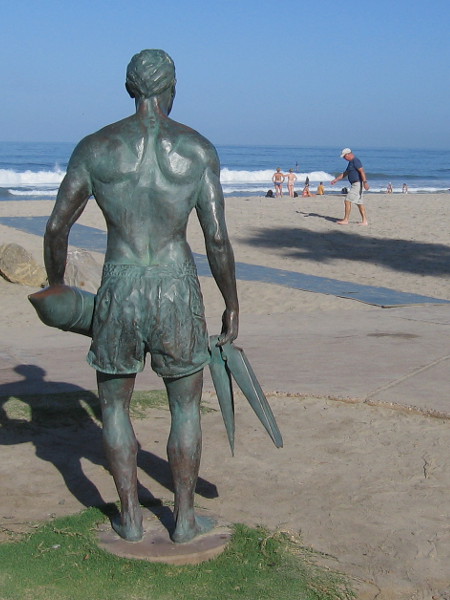
A bronze hero stands guard on the sand in Ocean Beach. The long OB pier stretches out into the Pacific Ocean in the background of this photo.
Not far from Ocean Beach’s main lifeguard station, a hero stands day and night with unblinking eyes focused on the nearby water. This noble hero is made of bronze.
The bronze lifeguard statue, created by artist Richard Arnold, was installed in 2013. It commemorates the creation of the San Diego Lifeguard Service after 13 people tragically drowned in dangerous rip currents off Ocean Beach in 1918.
The sculpture represents a typical lifeguard, with head up scanning the Pacific Ocean surf. It’s a very fine addition to a very cool beach neighborhood.
Colorado sculptor Richard Arnold, who grew up in OB, at one time was a junior lifeguard.
The muscular bronze lifeguard statue holds a rescue tube and a pair of swim finsColorado artist Richard Arnold created this bronze sculpture. It memorializes 13 tragic drownings in 1918, and the subsequent creation of San Diego’s lifeguard service.Beachgoer with two boogie boards passes between the bronze sculpture and the main Ocean Beach lifeguard station.A couple of surfer dudes carrying surfboards approach the memorial plaque, a few feet from the lifeguard tribute statue.Today, lifeguards in San Diego rescue between 4000 and 6000 people every year. They are real-life heroes.
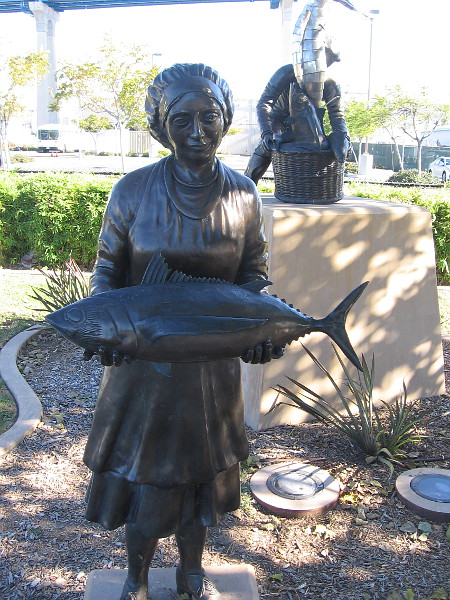
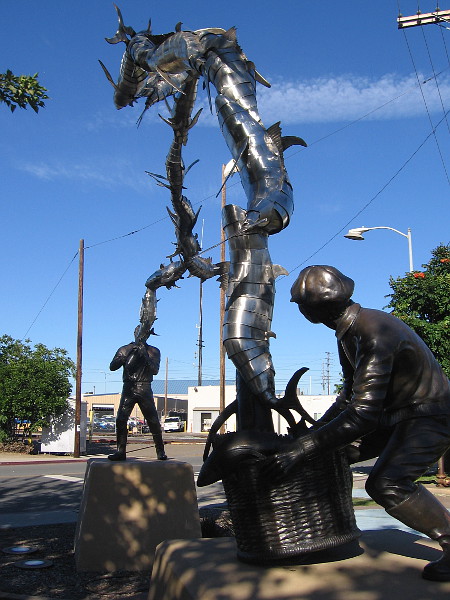
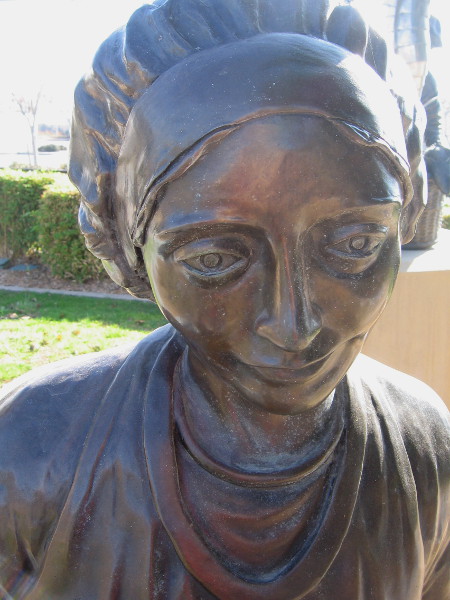
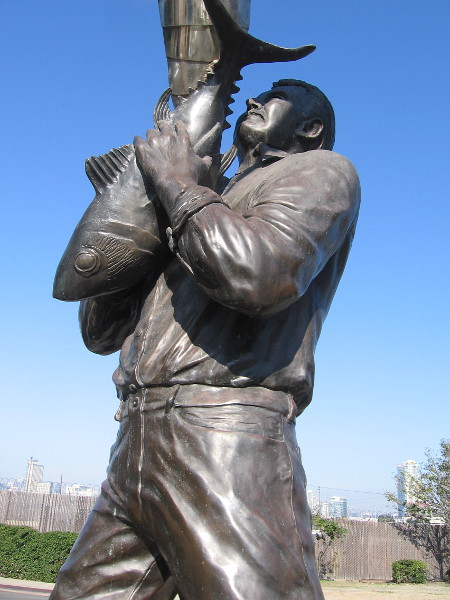
Sculpture of woman fish processor holding a large tuna. This area south of downtown was once the home of many San Diego canneries.
A month or two ago, during a leisurely walk from downtown to the pier at Cesar Chavez Park, I was thrilled to discover some truly amazing public artwork!
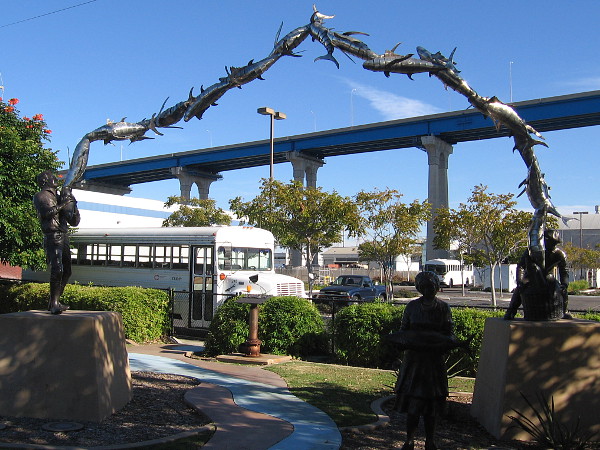
The Cannery Workers Tribute at Parque del Sol is tucked away in a place where very few people go. You’ll find it just a bit north of the Coronado Bay Bridge (which you can see in some of my photographs), near the entrance to Cesar Chavez Park.
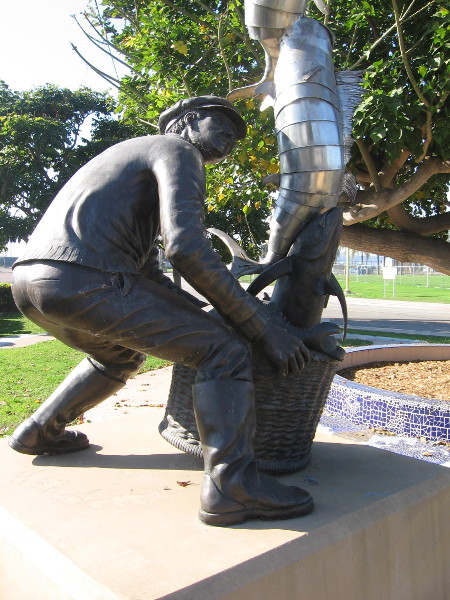
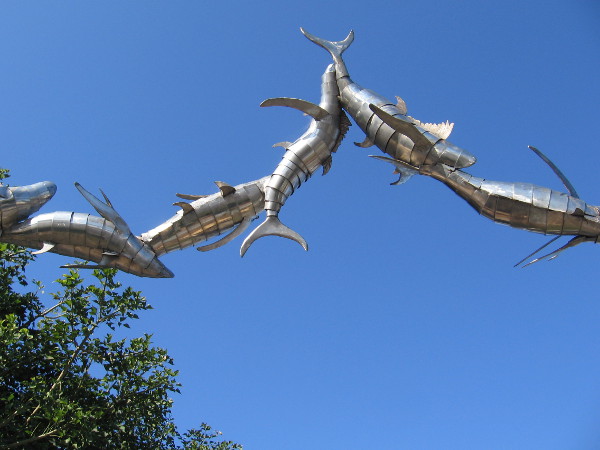
The large gleaming sculpture honors thousands of hard-working people who were employed by San Diego’s tuna canneries decades ago. I’ve blogged about our city’s once-thriving tuna industry on several occasions. Not only was San Diego home to the world’s largest tuna fishing fleet during much of the 20th century, but numerous canneries dotted our bayside. In the 1950s, the tuna industry provided more than 17,000 local workers with a living. Many of the jobs involved cleaning and packing fish that would be shipped around the world.
According to the Port of San Diego website, this public artwork is situated in a spot where workers at a nearby cannery would take their break. “During the 1970s, former cannery maintenance worker Roberto Carrero and co-workers dug a hole and planted a small tree. This, now large, coral tree was incorporated into the artwork.”
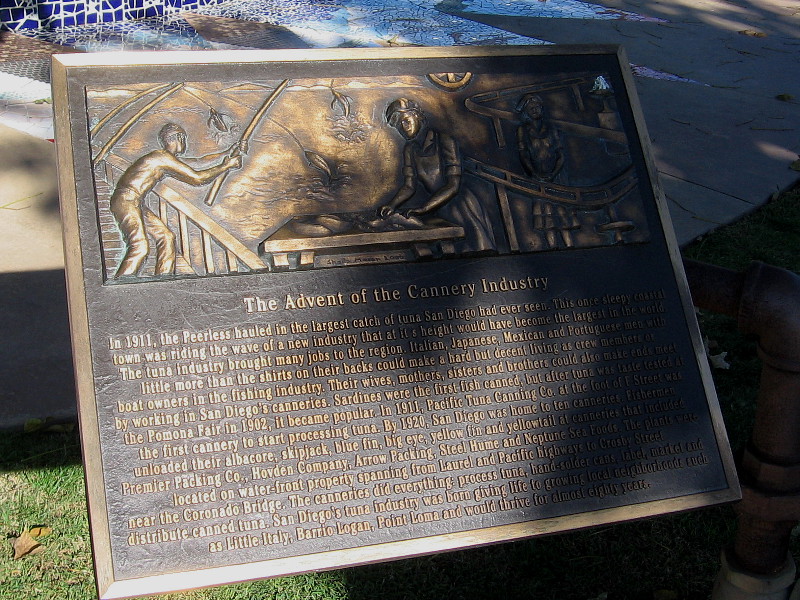
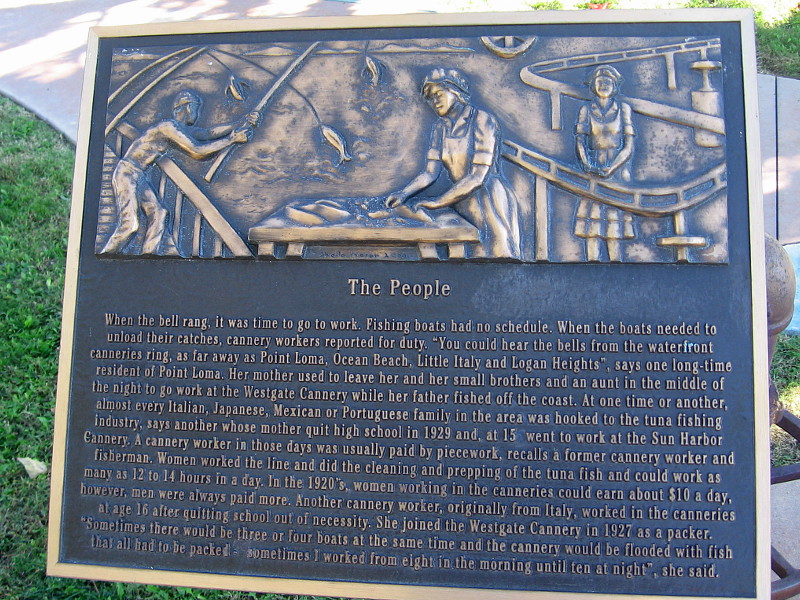
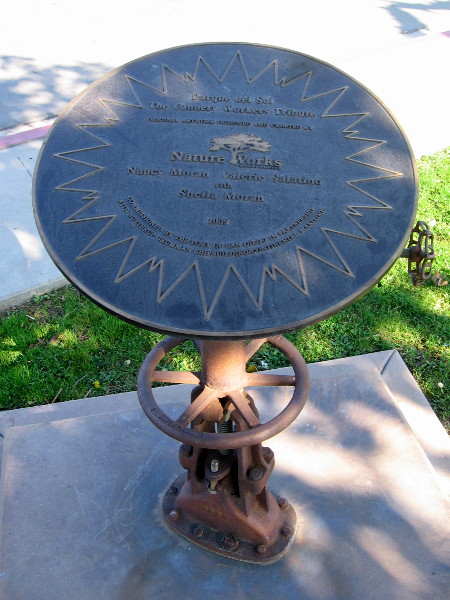
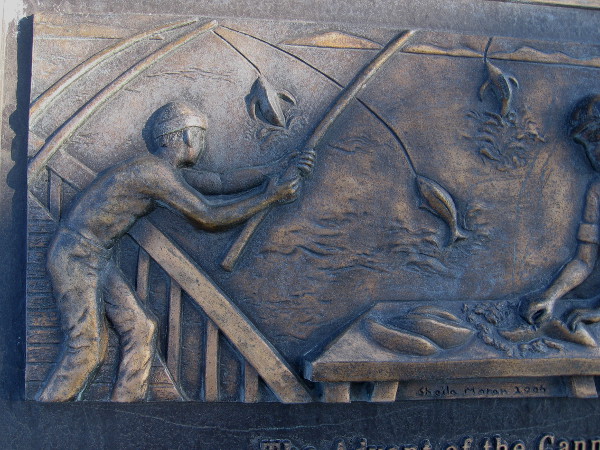
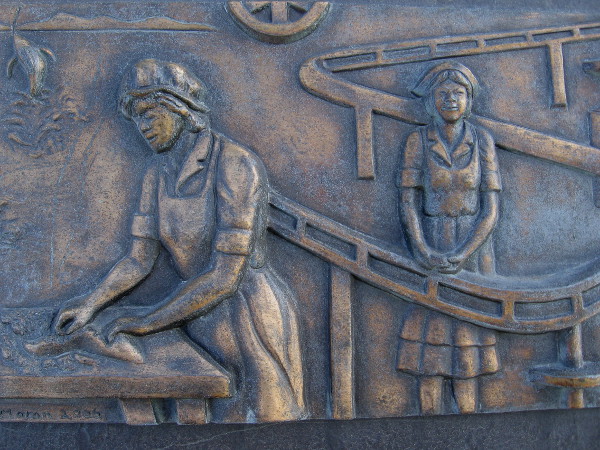
Four bronze plaques mounted on bits of old machinery recall the history of this area and the once-thriving tuna industry. Click the plaque photos to read them.
The Cannery Workers Tribute sculpture was created in 2009 by Valerie Salatino and Nancy Moran, with assistance from Sheila Moran. It is indeed a very cool sight!
Coral tree planted by a cannery maintenance man decades ago is an important feature of the Cannery Workers Tribute at Parque del Sol.A high arch of gleaming fish seems to rise above the nearby Coronado Bay Bridge. This public art is located in Barrio Logan, near the entrance to Cesar Chavez Park.Few people pass this way. This public art is definitely a hidden San Diego gem.A large catch of ocean tuna seems to burst from a basket!The advent of the cannery industry in the early 1900s. For most of the 20th century, San Diego was the tuna fishing capital of the world.The people included Italian, Japanese, Mexican and Portuguese fishermen, and many cannery workers. Fishing boats have no schedule. When the cannery bell rang, it was time to go to work.The process was smelly and messy! For tuna to go into a sandwich or salad bowl, it often traveled up to 7000 miles!The end of the San Diego tuna fishing era came in the 1980s, due to foreign competition, high expenses and other factors.Another photograph that you might enjoy.An arch of abundant fish above tuna cannery workers. Public artwork that honors an important chapter in San Diego’s history.
UPDATE!
I took additional photos on a later walk past the park…
…
Join me for more cool San Diego discoveries on Facebook and Twitter!
Do you like to read original, thought-provoking fiction? Visit my Short Stories by Richard writing blog!
A beautiful live oak grove in Balboa Park honors men who died tragically on the USS Bennington in 1905.
Balboa Park is without a doubt one of America’s national treasures. Located just north of downtown San Diego, its 1,200 acres is the home of magnificent museums, gardens, architectural marvels, many recreational facilities and perhaps the world’s most famous zoo. The amazing urban park is so gigantic most visitors see only a small fraction of it. Some out-of-the-way corners of Balboa Park are enjoyed by locals who live nearby; other overlooked areas seem almost forgotten.
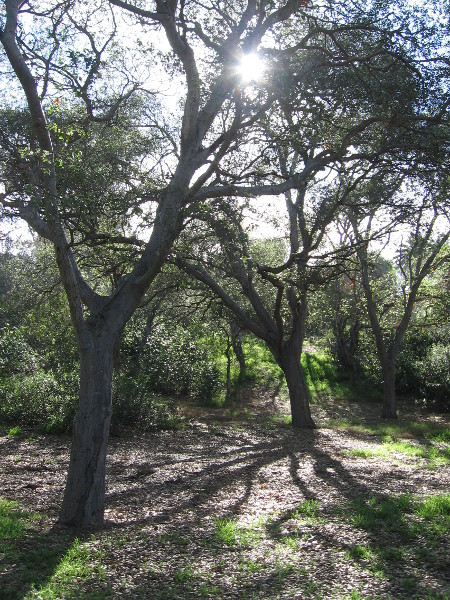
The USS Bennington Memorial Oak Grove is one such area. While many drive by it on any given day, as they travel along 26th Street just before it turns into Florida Drive, and a few joggers pass through the shady grove, I’d wager only a handful of San Diegans know of the oak grove’s existence or historical significance.
There are 66 live oak trees in this grove. They were planted to memorialize 66 men killed on the USS Bennington on the morning of July 21, 1905, when the gunboat’s boiler suddenly exploded and the ship nearly sank in San Diego’s harbor. No markers in the grove indicate the significance of the large gnarled oaks. (A 60 foot high granite obelisk stands at Fort Rosecrans National Cemetery in Point Loma, a memorial to those sailors who died on the USS Bennington. Most of the dead are buried there.)
The USS Bennington was a warship with a long and proud history. Commissioned in 1891, she was the ship that claimed Wake Island for the United States. After the boiler explosion in San Diego Bay, eleven men were awarded the Medal of Honor for extraordinary heroism.
Earlier this year, when I visited an exhibit in Balboa Park created by The Daughters of the American Revolution San Diego Chapter, I learned the local DAR would like to place plaques in the grove to memorialize the USS Bennington and the men who tragically died. If you, your business or organization would like information about the project, or to help, you might contact them from their page. Should this project come to fruition, I’ll be very pleased to blog about it!
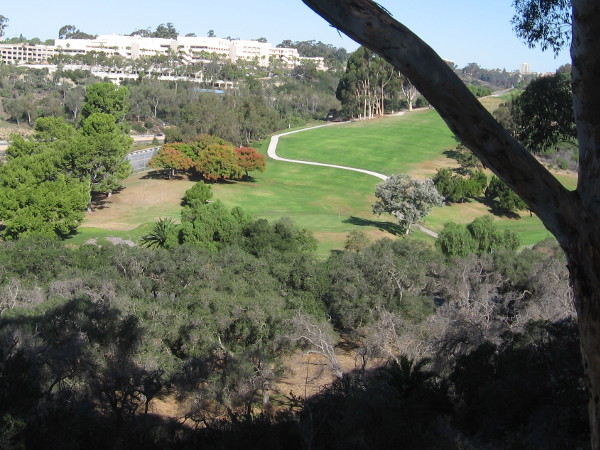
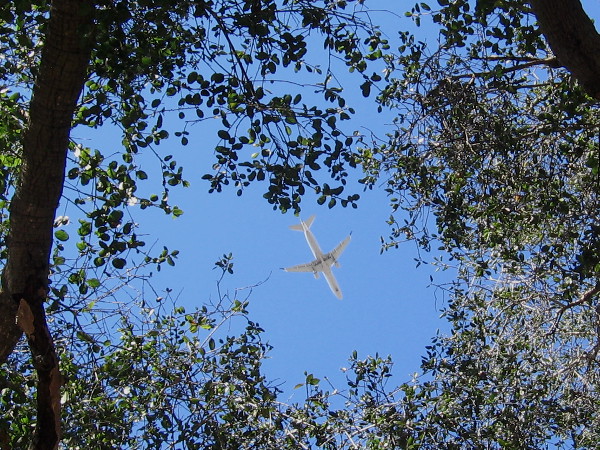
View of the Bennington Memorial Oak Grove from Golden Hill Park, located near Balboa Park’s southeast corner. Balboa Park’s public golf course and Naval Medical Center San Diego are also visible.Wooden footbridge along 26th Street leads to a little-used trail through USS Bennington Memorial Oak Grove in Balboa Park.Beautiful old oak trees memorialize 66 sailors killed in 1905 when the USS Bennington’s boiler exploded in San Diego’s nearby harbor.Looking up through the leaves of the live oak trees at blue sky and clouds.These trees, honoring fallen men, remind us of a sudden tragic moment in San Diego’s military history.A commercial airplane flies overhead as it crosses Balboa Park heading in toward Lindbergh Field.A jogger enjoys the shady old trees on a warm day in early October.
…
Follow this blog for more unique discoveries in San Diego! Join me on Facebook or Twitter.
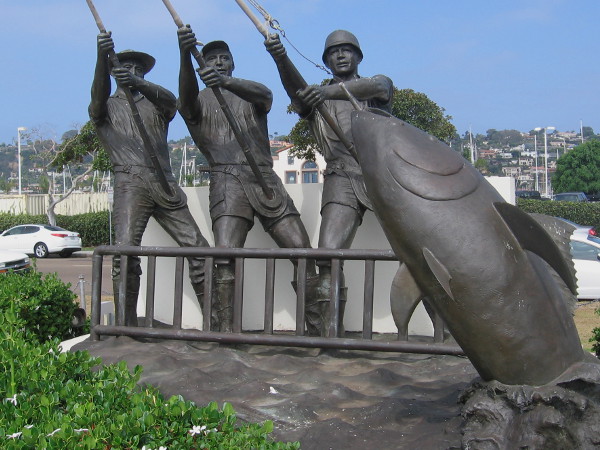
Three bronze fishermen on Shelter Island together reel in a large tuna.
A monumental bronze sculpture in Shoreline Park on Shelter Island has become an iconic image. The Tunaman’s Memorial, by artist Franco Vianello, dedicated in 1988, honors the courage and hard work of generations of tuna fishermen in San Diego. The 9,000 pound sculpture depicts three individuals pole fishing from a boat of the once-large tuna fleet out on the Pacific Ocean. The history of San Diego’s tuna fishing industry contains generations of life stories. These unwritten stories involve fishermen who immigrated from many different nations, including Italy, Portugal and Japan.
One polished side of the sculpture contains names of fishermen who were pioneers in our region, and those who were lost at sea. An inscription reads: Tunaman’s Memorial honoring those that built an industry and remembering those that departed this harbor in the sun and did not return. Anthony Mascarenhas.
The Tunaman’s Memorial on Shelter Island is a 9,000 pound bronze sculpture honoring generations of diverse fishermen.Tuna fishing in local waters was once a major industry in San Diego.Polished side of Tunaman’s Memorial contains names of San Diego fishing pioneers, and those who were lost at sea.This iconic sight on Shelter Island provides a glimpse back in history, at those in our community who worked the sea.
…
Follow this blog for more photos of cool stuff! Join me on Facebook or Twitter.











































 Cool San Diego Sights!