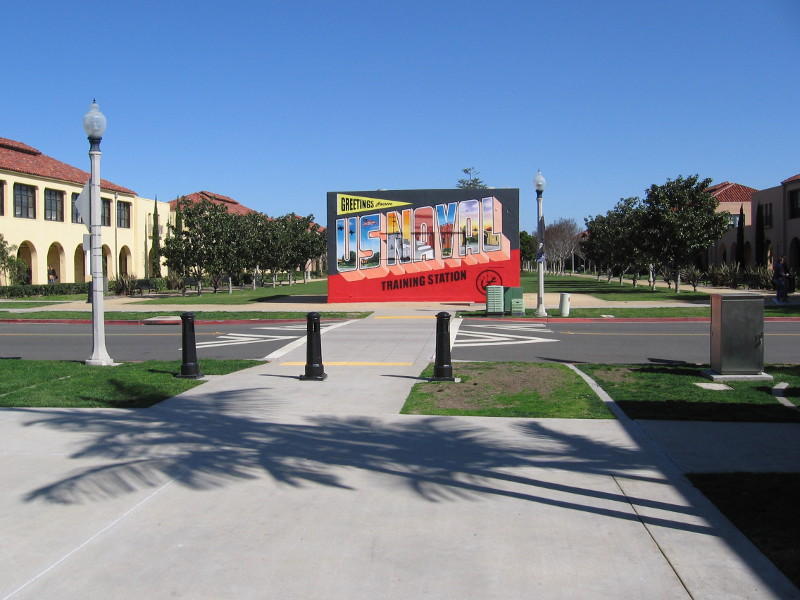
A huge postcard has appeared on Dewey Road in Point Loma, at the southwest end of Liberty Station’s Arts District!
I walked around Liberty Station today before sitting down by the boat channel to write another short story. And look what I discovered! It’s the first time I’ve seen this cool mural!
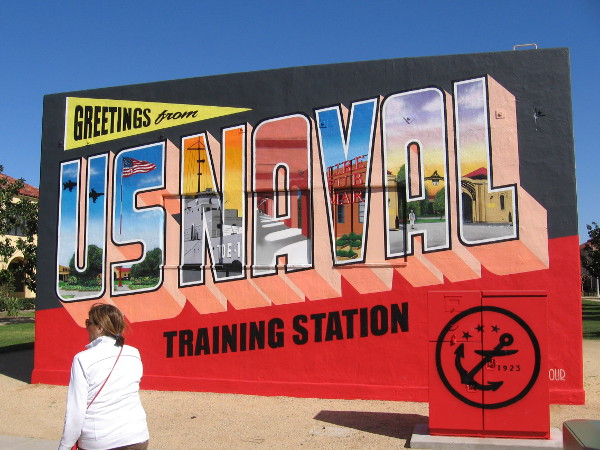
This new public art resembles a gigantic postcard, which reads: Greetings from U.S. Naval Training Station. It was created by the two artists who painted the postcard-like Greetings from San Diego mural, which I photographed a month ago in North Park. Victor Ving and Lisa Beggs are travelling around the country in an RV and creating a whole bunch of these huge colorful postcard murals!
Painted inside the letters I see scenes from Ingram Plaza, the Barracks Arcade, Liberty Public Market and the USS Recruit!
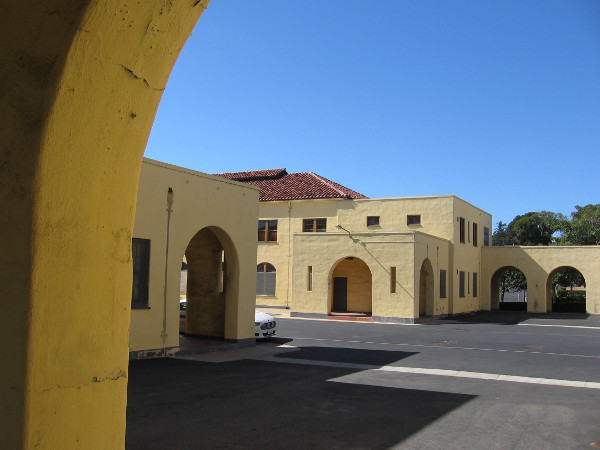
As you might know, the U.S. Naval Training Station, or Naval Training Center San Diego, was a military base where thousands of sailor recruits learned the ropes upon enlisting in the U.S. Navy. It closed in 1997 and has been redeveloped into a mixed cultural, recreational, shopping, business and residential complex in Point Loma. It’s like a spacious park with lots of grass, arched walkways and fountains–a perfect place to relax!
During my stroll today though Liberty Station, I discovered even more public art, which I’ll blog about shortly. And please watch for my new work of fiction at Short Stories by Richard. I think it’s almost done!
Greetings from U.S. Naval Training Center. A cool new mural at Liberty Station by artists Victor Ving and Lisa Beggs.
…
I live in downtown San Diego and love to walk around with my camera! You can follow Cool San Diego Sights via Facebook or Twitter!
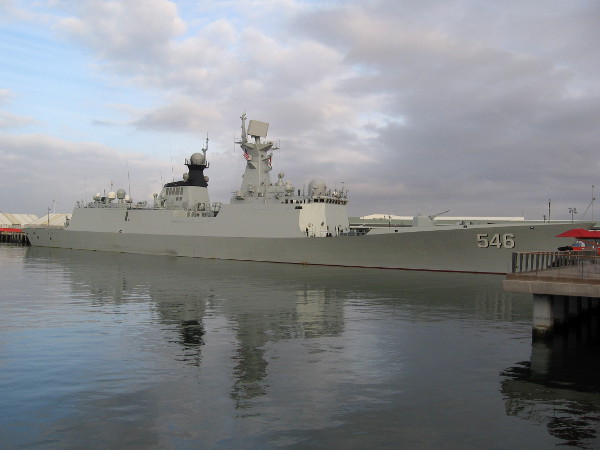
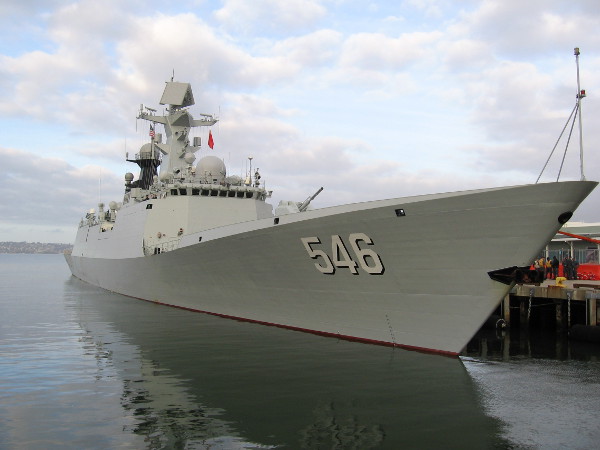
The Chinese frigate Yancheng, docked in San Diego at the Cruise Ship Terminal. It is part of a four day visit by ships of the People’s Liberation Army Navy.
This morning I got a few photos of a Chinese Navy warship that will be visiting San Diego for four days. The ship I saw docked at the Cruise Ship Terminal is the frigate Yancheng, which is part of the People’s Liberation Army Navy Surface Force. Two additional Chinese Navy ships arrived during the day. I saw them in the darkness after work during an evening walk along the Embarcadero. Those two other ships are the frigate Daqing and the oiler Tai Hu.
The intent of the visit is to foster trust and mutual understanding between two military powers–the United States and China. In addition to cultural exchanges, visiting Chinese and local American sailors will enjoy playing games of table tennis and basketball together. In a small, sometimes turbulent world, perhaps it is good to make friendships.
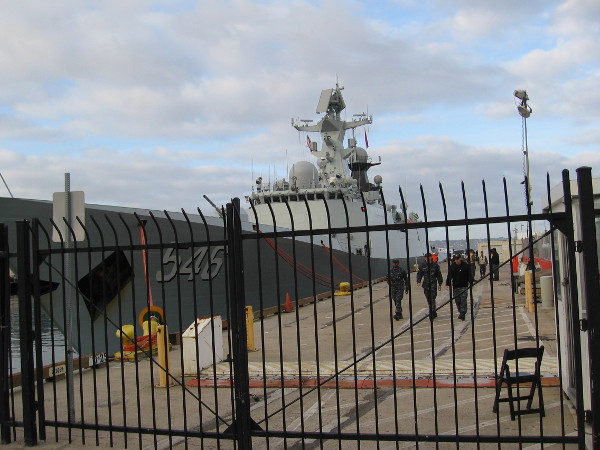
United States military personnel walk along the B Street Pier during a visit of the Chinese Navy to San Diego.Another photo of the Chinese frigate Yancheng, docked in San Diego Bay on December 6, 2016.
…
The once-mysterious origin of a U. S. Navy bronze plaque on display in San Diego has come to light. Learn more about this fascinating bit of San Diego and Navy history by checking out my blog post Creating a plaque: Navy history in San Diego revealed!
A sailor and a sweetheart have a special date ahead. I discovered plenty of life on San Diego’s Embarcadero late this afternoon.
My walk late this afternoon along the Embarcadero was as wonderful as ever. The weather was mild, everyone was enjoying life, and I was fortunate to make a cool discovery or two. As you can see in these photos, romance was in the air. And adventure beckoned. Or at least, it felt that way.
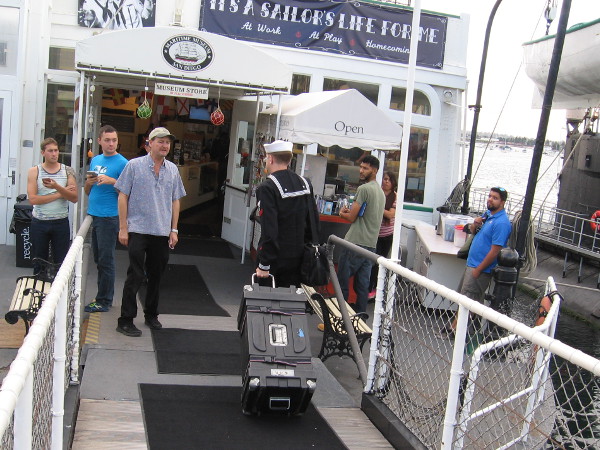
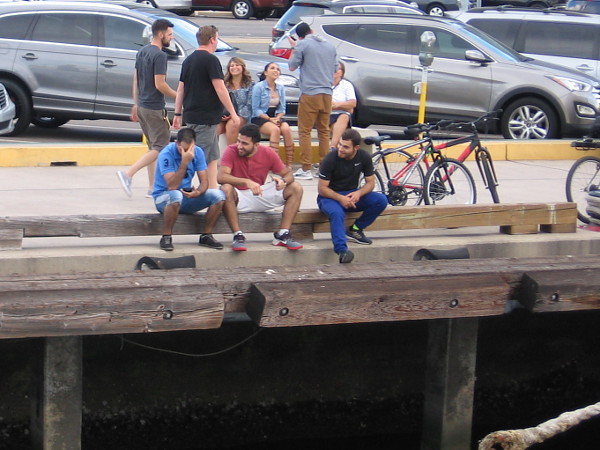
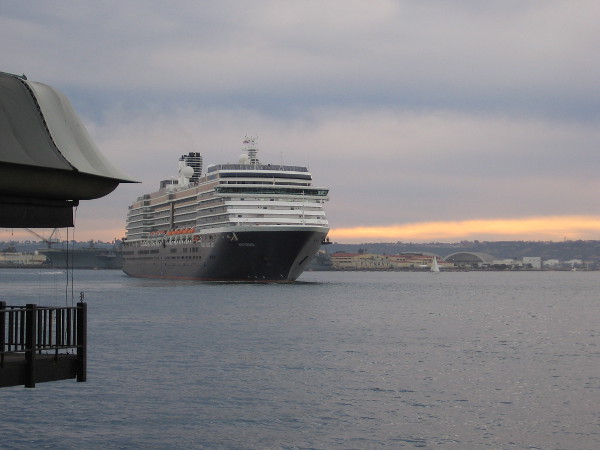
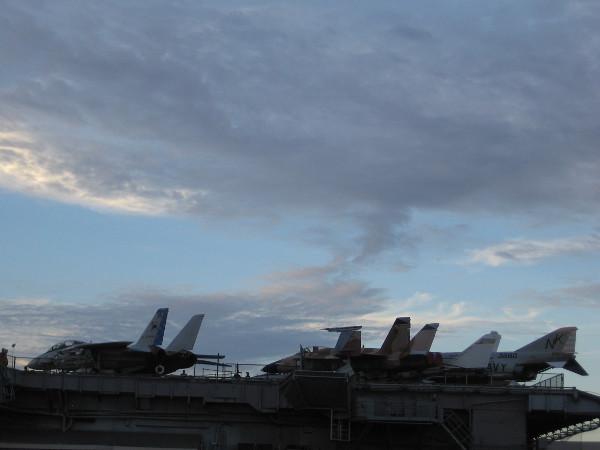
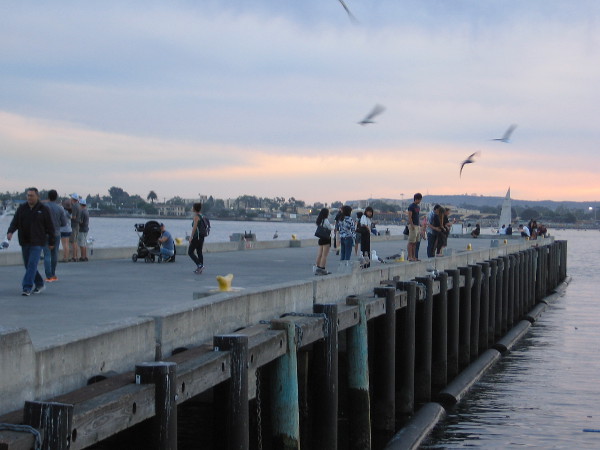
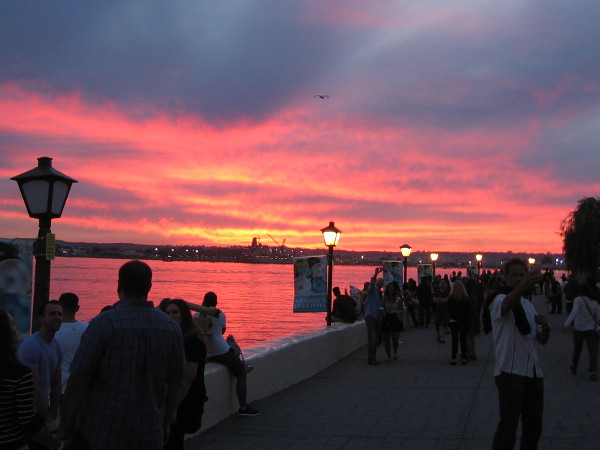
Pedestrians and a flag-draped pedicab approach the famous tall ship Star of India docked at the Maritime Museum of San Diego.A member of the Navy Band enters the Berkeley steam ferry for a special Saturday evening performance at the Maritime Museum.A new exhibit by renowned photographer Kathryn Mussallem opened today at the Maritime Museum of San Diego. It’s a Sailor’s Life for Me – At work, play and homecoming.Visitor atop the Star of India’s forecastle has his picture taken among sails.People enjoy a late afternoon laugh while sitting above the water, feeling free, at the very edge.A group waits for sunset above San Diego Bay. They have gathered on the deck of Anthony’s Fish Grotto.A cruise ship slowly turns, preparing to depart San Diego.Tourists walk along the slowly darkening Embarcadero while a cruise ship moves across the bay, heading into night on the Pacific Ocean.Jet aircraft high up on the flight deck of the USS Midway Museum, shortly before dark.Day nears an end. The fishing boats at Tuna Harbor quietly float beneath a painted sky.People stroll out on the pier near Seaport Village while gulls circle overhead and the western sky changes color.Silhouetted diners enjoy early evening at the Pier Cafe.A glorious, glowing sunset turns the clouds orange and red. Visitors linger near the water at Seaport Village in San Diego.
…
I live in downtown San Diego and love to walk! You can follow Cool San Diego Sights via Facebook or Twitter!
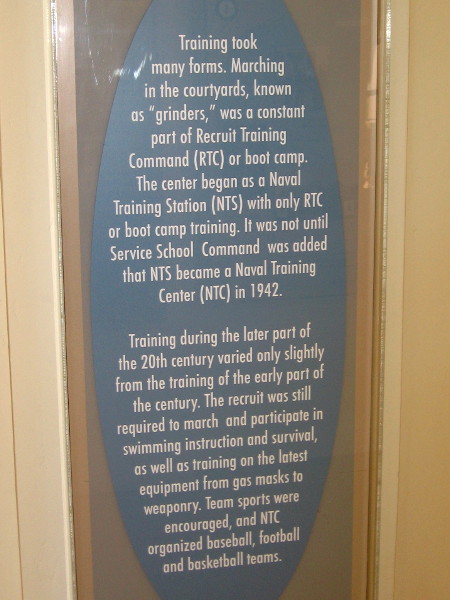
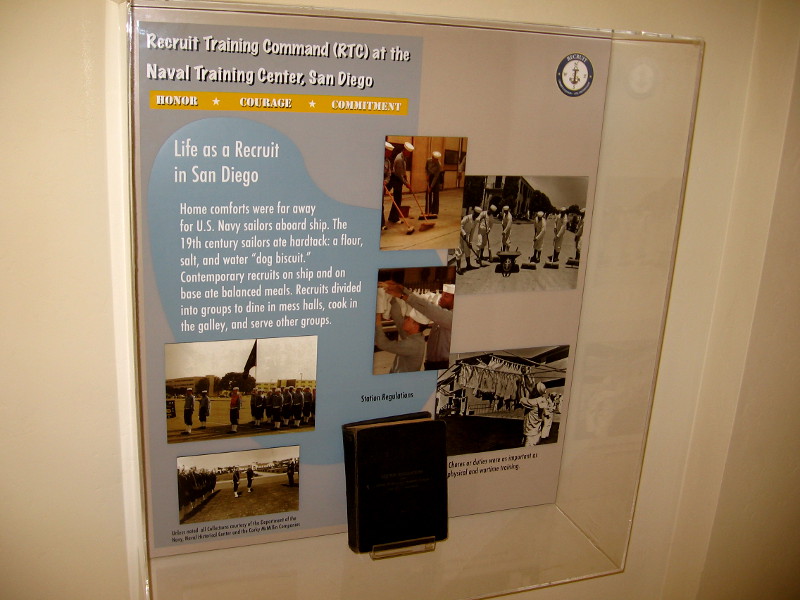
The Recruit story is one of personal transformation and maturity. A display explains how sailors were made at Naval Training Center San Diego.
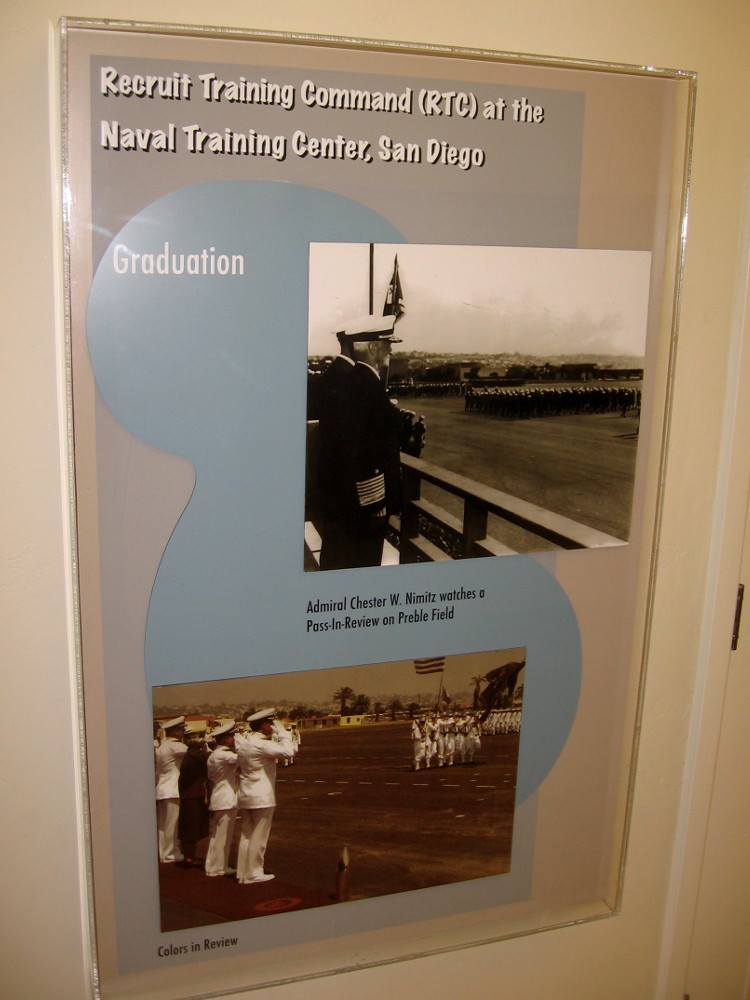
Over a span of 74 years, Naval Training Center San Diego in Point Loma graduated over 2 million recruits. Most went on to serve as sailors in the United States Navy.
A fascinating historical exhibit in the NTC Command Center at Liberty Station provides visitors with a glimpse of what life was like as a naval recruit. Photographs recall how young men were transformed at Naval Training Center San Diego and prepared for service on a ship at sea, far from home.
If you’d like to read some of these displays, click the photos and they will enlarge.
To those of you leaving comments concerning memories–thank you for your service!
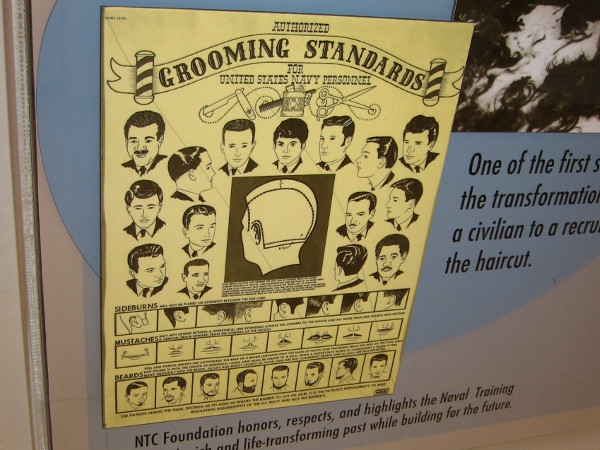
The Dick Laub NTC Command Center at Liberty Station has a fascinating exhibit about the training of naval recruits at this location years ago.The Admiral Stockdale Wing of the NTC Command Center has a corridor lined with historical photos, Navy artifacts and interesting information.Marching in the courtyards, known as grinders, was a constant part of Recruit Training Command or boot camp.Home comforts were far away for U.S. Navy sailors aboard ship. A display shows sailors training in San Diego.The USS Recruit–a model Training Destroyer Escort–is where most men experienced their first duty aboard ship.The USS Recruit is landlocked permanently at Liberty Station. Fondly called the USS Neversail, this ship set in concrete was used for training new Navy sailors.Graduation at Naval Training Center San Diego. One photo shows Admiral Nimitz watching a Pass-In-Review at Preble Field.A large map of the old Naval Training Center San Diego, which today has been transformed into Liberty Station, featuring shopping, parks, museums and more.Photo of vacant old Naval Training Center buildings waiting to be restored and put to use commercially at Liberty Station.During training, recruits were divided into companies of 100 men. Teamwork was promoted.Homecooked meals were prepared by NTC’s Chef and Mess School, which was one of the best in the country.NTC grew in size over the years, expanding across the boat channel. A march over Nimitz Bridge was a rite of passage. (I blogged recently that a new public park will be opening east of the channel.)An old poster depicts authorized grooming standards for United States Navy Personnel.Photos of graduation from San Diego’s NTC include the final 1993 ceremony before the base closed.The official program for the 2082nd and Final Recruit Pass-In-Review, Friday, November 19, 1993.NTC San Diego graduated over 2 million recruits over its 74 year history!Welcome aboard!
…
I live in downtown San Diego and love to walk! You can follow Cool San Diego Sights via Facebook or Twitter!
You can easily explore Cool San Diego Sights by using the search box on my blog’s sidebar. Or click a tag! There are thousands upon thousands of fun photos for you to enjoy!
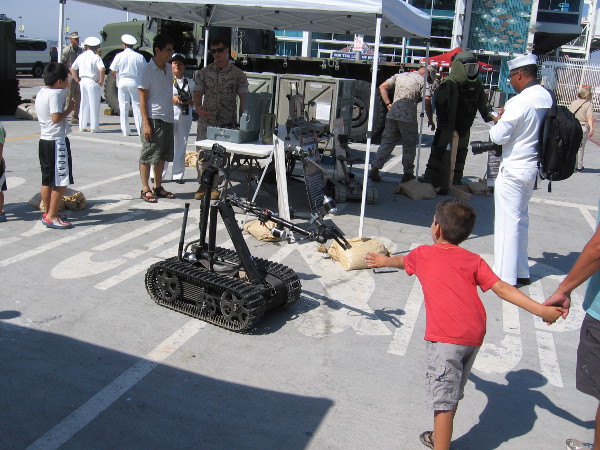
Kid checks out a military robot at the STEM fair on the Broadway Pier during San Diego’s 2016 Fleet Week.
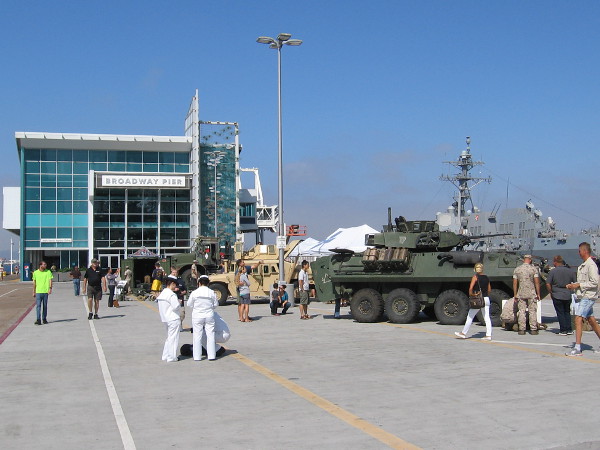
2016 Fleet Week is a big deal in San Diego. Our city is the home port of much of the United States Navy’s Pacific Fleet. Today, Saturday, I walked down to the Embarcadero to see a little of what is going on during the event this year. I visited the Broadway Pier and the military STEM fair, then headed over to the USS Midway Museum. The flight deck of the USS Midway was by far the best vantage point to watch today’s Sea and Air Parade, which I learned has returned to San Diego after an eight years’ absence.
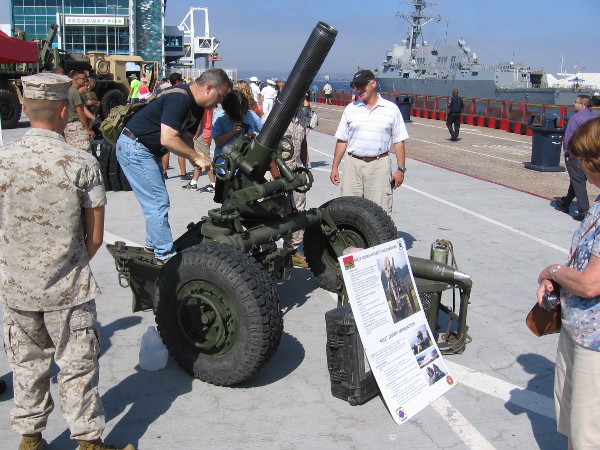
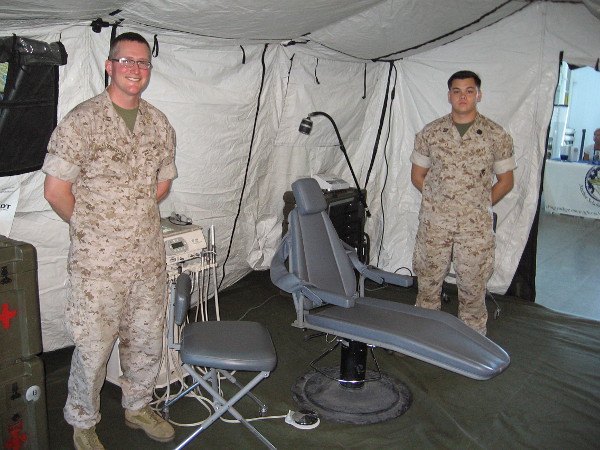
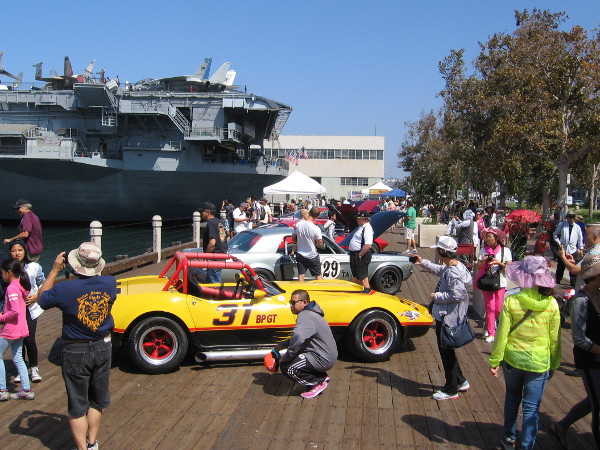
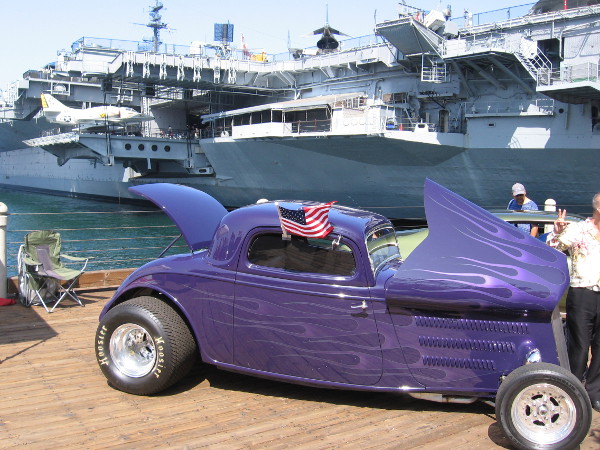
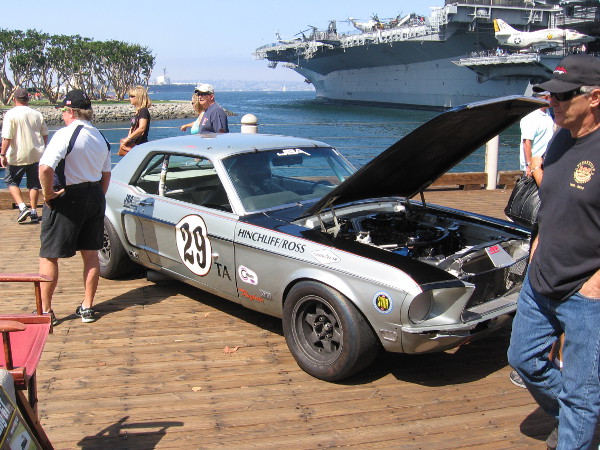
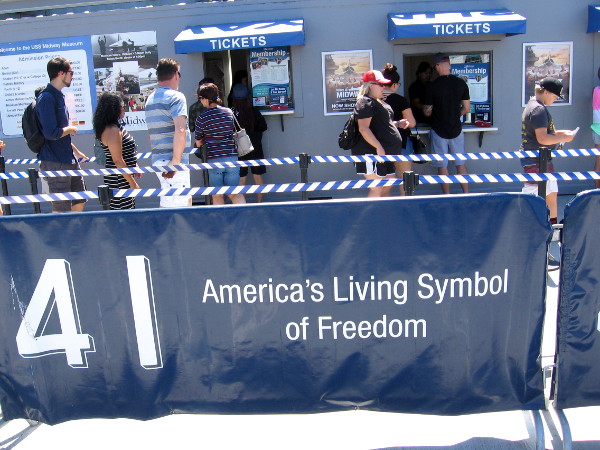
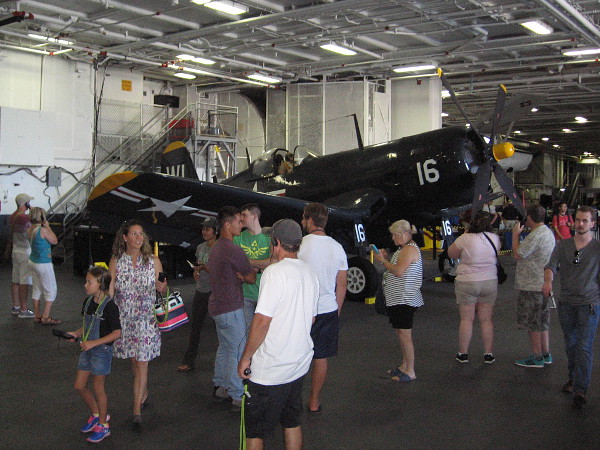
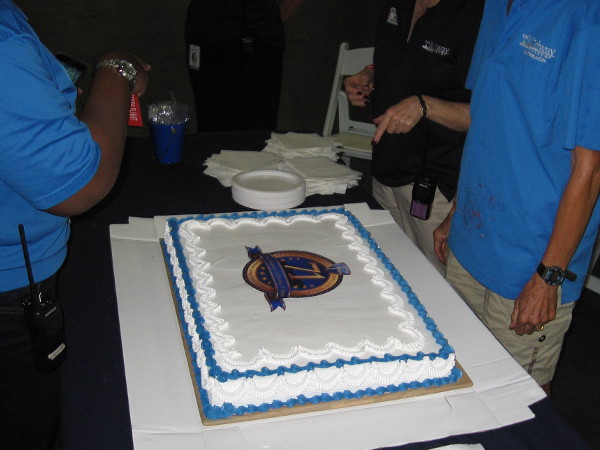
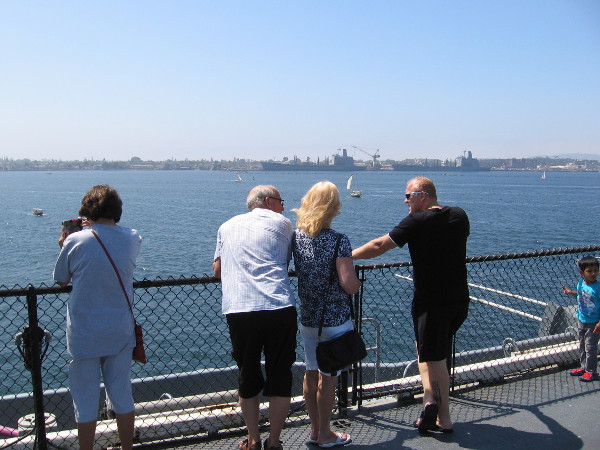
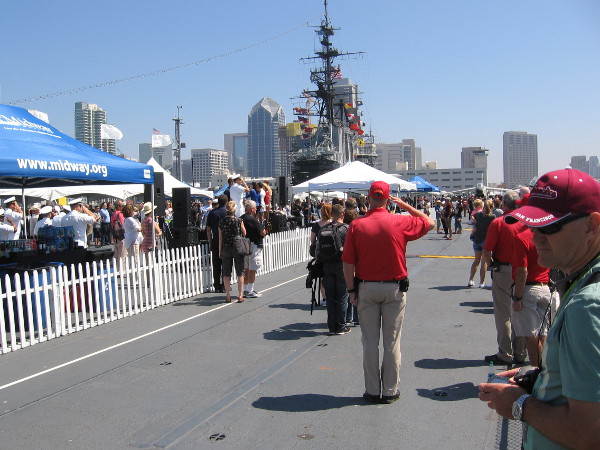
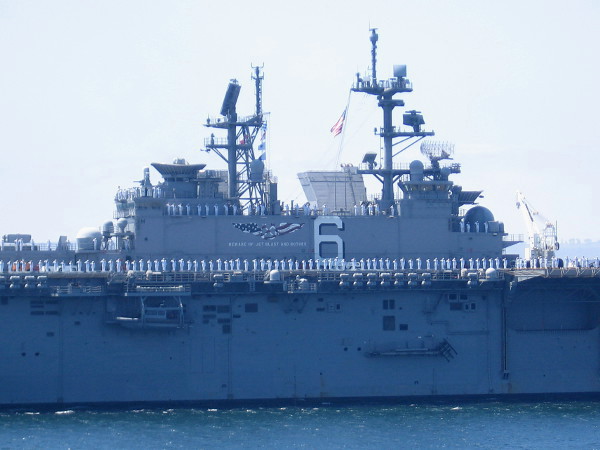
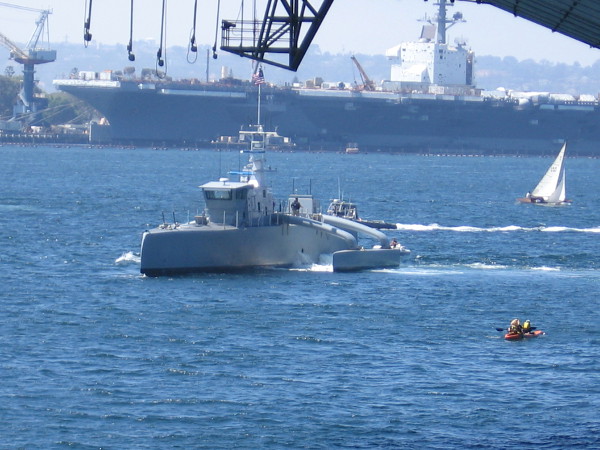
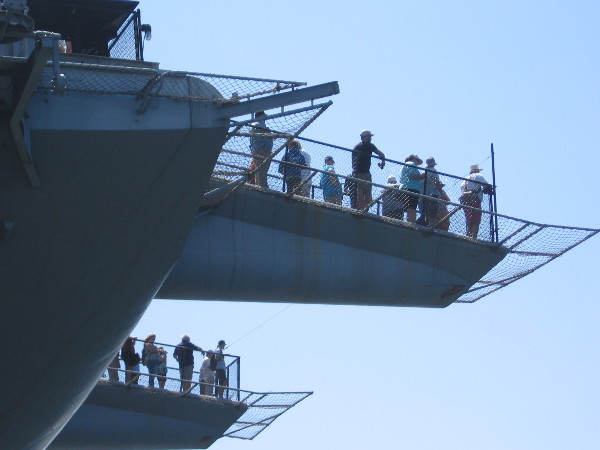
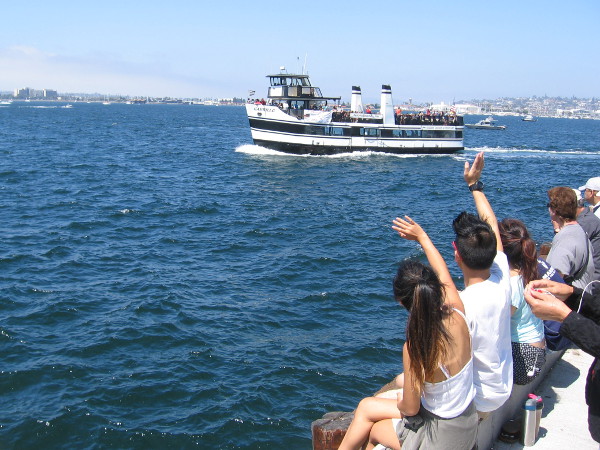
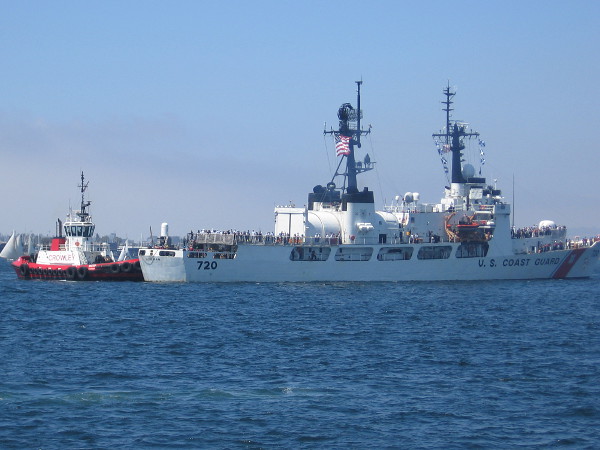
As usual, many events are being held during Fleet Week in San Diego. On the Broadway Pier and the B Street Pier, exhibits demonstrate various technologies utilized by the military.Visitors at 2016 Fleet Week on the Broadway Pier peer inside an LAV-25A2 Light Armored Vehicle.A water filtration system that uses reverse osmosis in the field, often far from reliable water sources, on display for curious STEM fair visitors.This enormous gun on San Diego’s Embarcadero during 2016 Fleet Week is an M777A2 155MM Howitzer.And this is an M327 120MM Rifled Towed Mortar.Inside the Port Pavilion, an extensive exhibit demonstrates medical facilities that would be set up near an area of combat. This is a surgical tent.This is a dental chair! Even the toughest warriors occasionally need to have cavities filled.Out on the boardwalk near the USS Midway, cool cars are on display for 2016 Fleet Week in San Diego.One of many cars that visitors to the Embarcadero can check out. They are on display to promote the speed festival at North Island next weekend. Races are held every year during Fleet Week on the Navy air base’s huge runway!This car, I was told, would actually race in the Fleet Week Coronado Speed Festival. The public can watch auto races next weekend at Naval Air Station North Island, situated across San Diego Bay.People buy tickets to board the USS Midway Museum. The aircraft carrier turned 71 years old today. It has become one of San Diego’s top attractions.Inside the hangar deck of the USS Midway during 2016 Fleet Week. The aircraft carrier has been voted best museum ship in the United States.The USS Midway aircraft carrier celebrated its 71st anniversary today. She was commissioned just as World War II came to an end.A cake to celebrate 71 years of history on the USS Midway!Up on the Midway’s flight deck, people head toward viewpoints overlooking San Diego Bay. Fleet Week’s Sea and Air Parade is about to begin!At the rail of the USS Midway. There are beautiful views in every direction. Any day is a great day to visit.Navy officers and VIPs listen to some short speeches just before the Sea and Air Parade begins.USS Midway Museum volunteer salutes the American flag while the Star Spangled Banner is sung.Here comes USS America, the flagship of 2016 Fleet Week in San Diego. She is only the fourth American warship to ever be given the very special name.Sailors in white line the deck of USS America as she passes through San Diego Bay during Fleet Week’s Sea and Air Parade.Next comes the USS Champion, an Avenger class ship that can seek out and destroy mines.According to my Fleet Week program book, I believe this is an ACTUV, or Anti-Submarine Continuous Trail Unmanned Vehicle. Correct me if I’m wrong!People watch the Sea and Air Parade from launch ramps at the bow of the USS Midway.Folks gathered on Navy Pier wave to tourists and others crossing the bay on the Coronado Ferry.The Coast Guard’s USCGC Sherman endurance cutter is given an assist by a tug boat as it comes into dock during the Sea and Air Parade.Lots of people watch the action on San Diego Bay from the end of the Broadway Pier. USS Kidd is in the background, hosting public tours from the B Street Pier.A pair of jets pass overhead during the 2016 San Diego Fleet Week Sea and Air Parade.People on the flight deck of USS Midway take in sunshine and military pageantry during 2016 Fleet Week in San Diego.
…
I live in downtown San Diego and love to walk! You can follow Cool San Diego Sights via Facebook or Twitter!
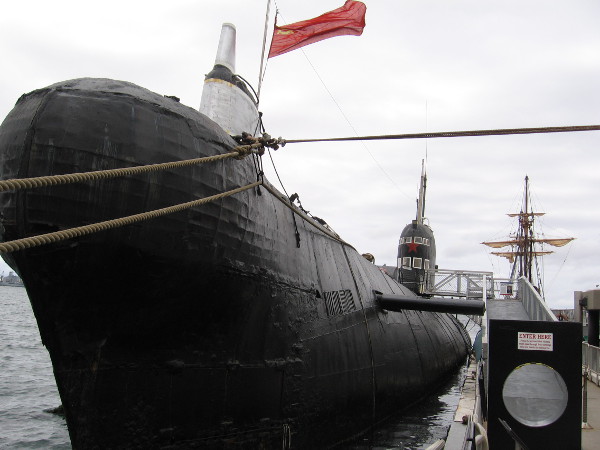
To the Brink of WAR. A sound and light exhibit at the Maritime Museum of San Diego based on a true Cold War event during the Cuban Missile Crisis.
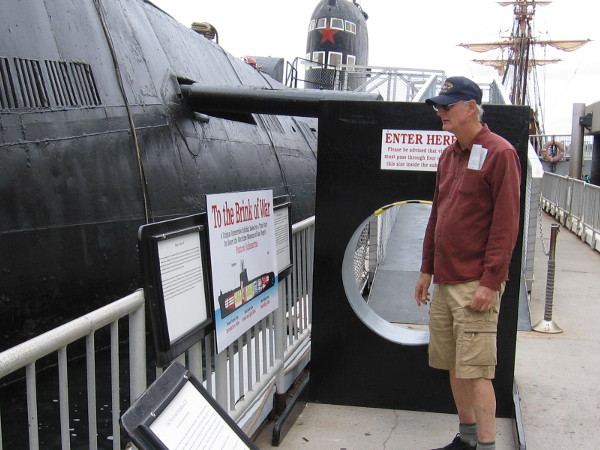
A fantastic exhibit recently opened at the Maritime Museum of San Diego. You’ll find it aboard their B-39 Foxtrot-class Soviet submarine. The exhibit, using videos, a light show and other exciting effects, tells the story of how one man likely saved the world.
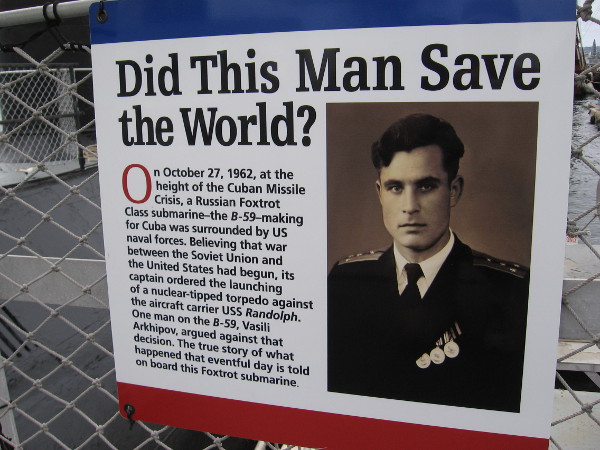
At the height of the Cold War, during the Cuban Missile Crisis in 1962, a Soviet commander on the B-59, another Foxtrot-class submarine, spoke a few cautious words. Those words might have averted World War III and worldwide nuclear destruction.
The B-59 was one of four Soviet submarines that were sent to the Caribbean Sea to support ships delivering arms to Cuba. In October of 1962 the B-59 was detected by the United States, and Navy destroyers began dropping the sort of depth charges that are used for training–practice depth charges with very little explosive impact. It was the US Navy’s intention to have the sub surface in order to gain positive identification.
Aboard the B-59, however, batteries were running critically low, the air-conditioning had ceased working, and if the submarine didn’t surface eventually the crew would perish. They hadn’t had radio communication with Moscow for several days. The captain of the submarine, Valentin Grigorievitch Savitsky, believed that war had probably begun. He wanted to launch their T-5 nuclear torpedo at the USS Randolph aircraft carrier.
The exhibit inside the Maritime Museum of San Diego’s Foxtrot-class Soviet submarine allows visitors to relive those tense moments. They’ll hear how sub-flotilla commander Vasili Arkhipov, also on the B-59, reasoned that a conflict might not have started, and that firing their “Special Weapon” nuclear torpedo would certainly result in World War III. His calm words of council prevailed, the sub surfaced peacefully, and today visitors to the museum can appreciate his level-headed wisdom, and the extreme pressure that the crew of the B-59 felt on that fateful day.
Anyone visiting the exhibit should be prepared for very close quarters. Ducking and engaging in a variety of pretzel-like contortions while moving along the length of the submarine, one can appreciate how life must have been as a crewmember, even under normal circumstances. It’s definitely not a place for those who have claustrophobia!
Here are a few photos that give you a taste of what you’ll experience. Of course, enjoying the exhibit in person is a thousand times more interesting!
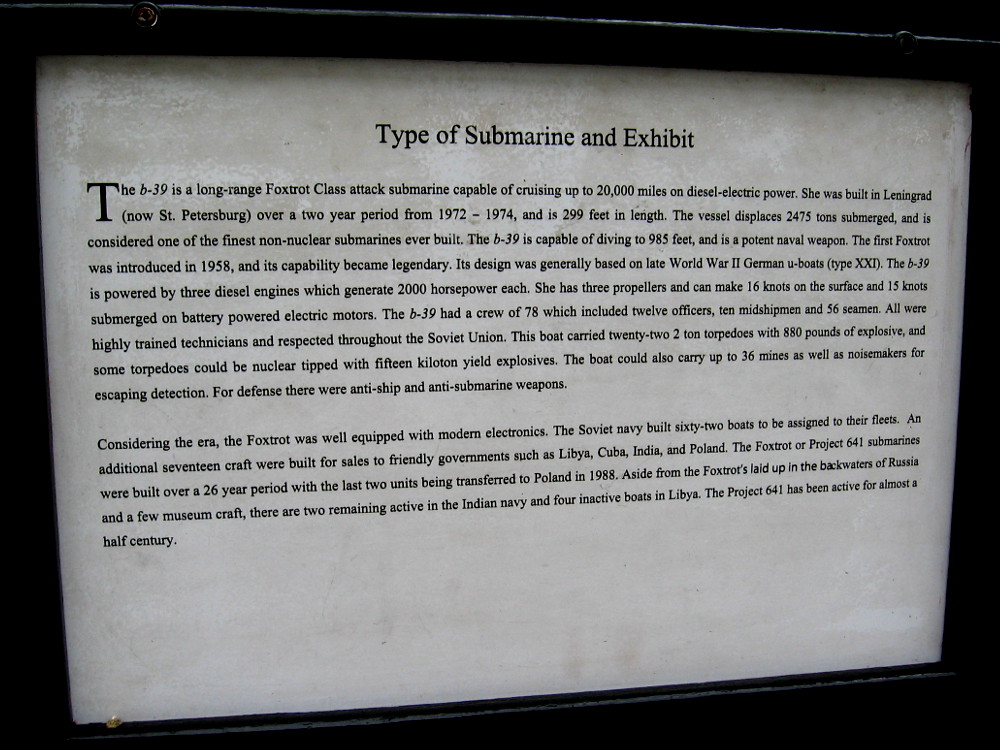
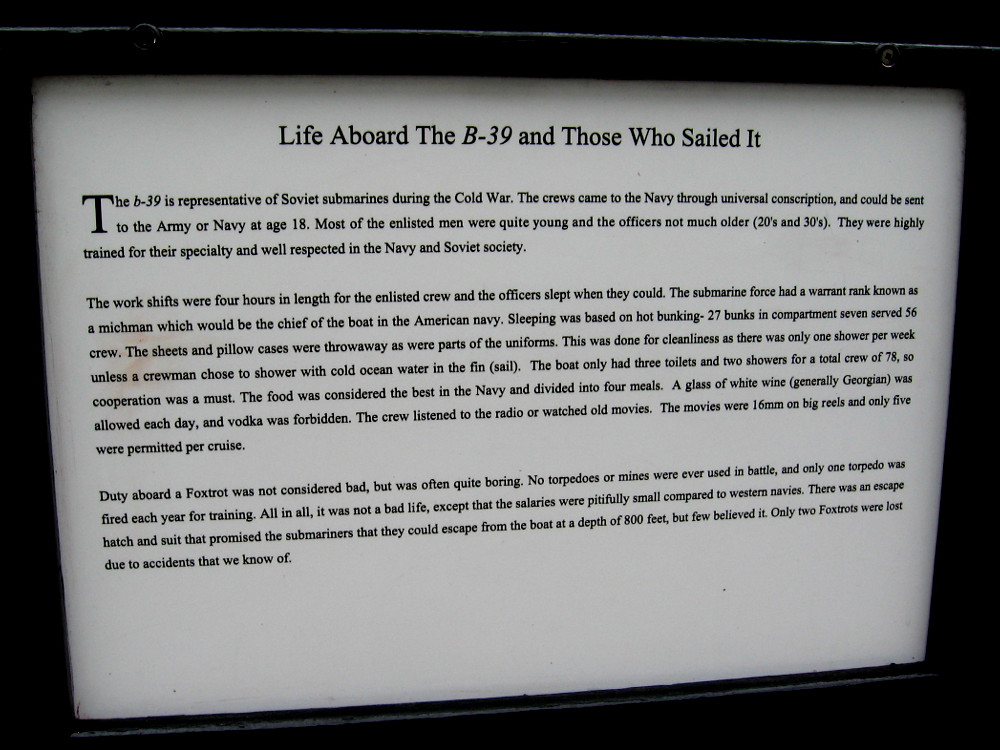
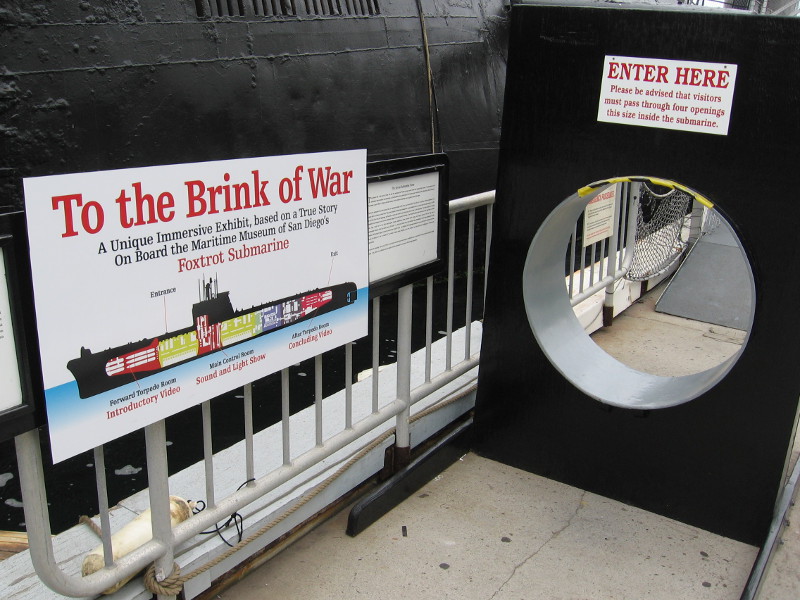
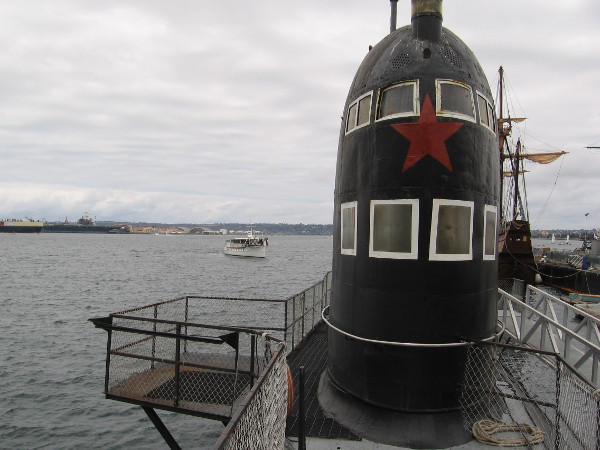
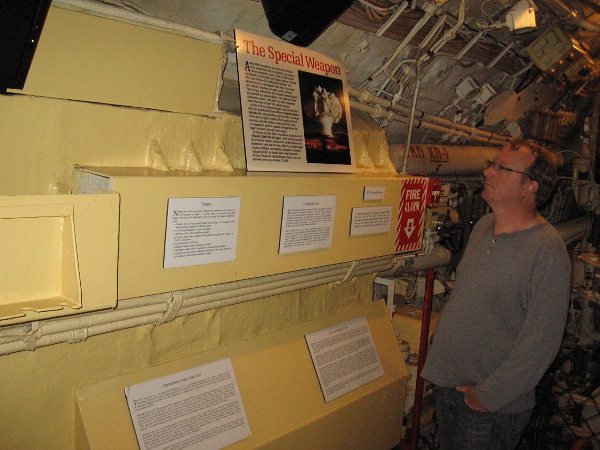
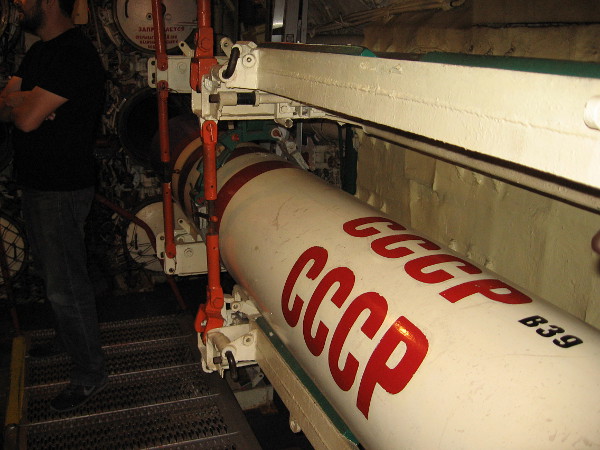
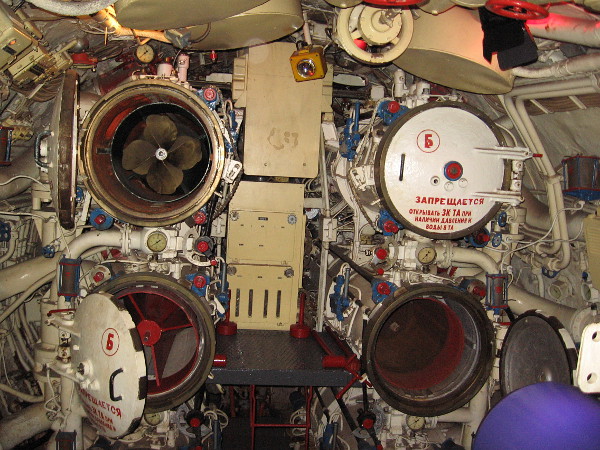
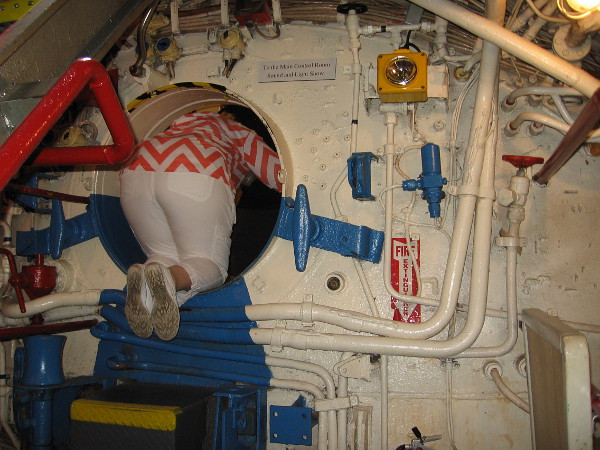
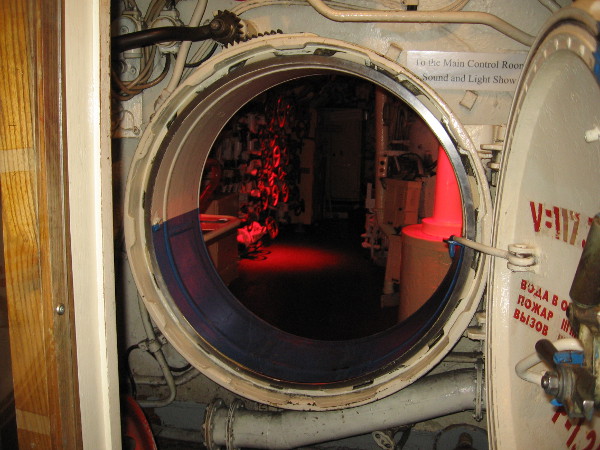
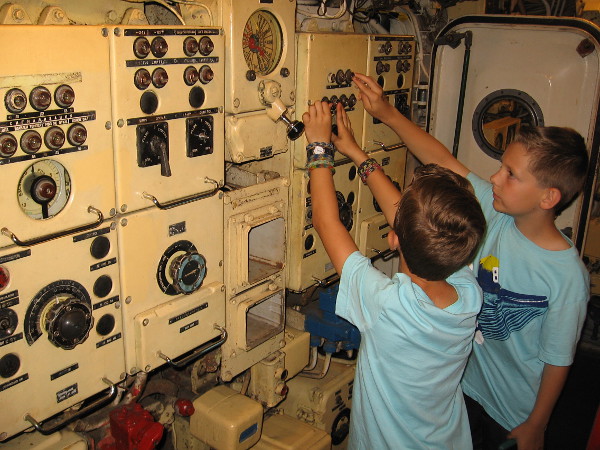
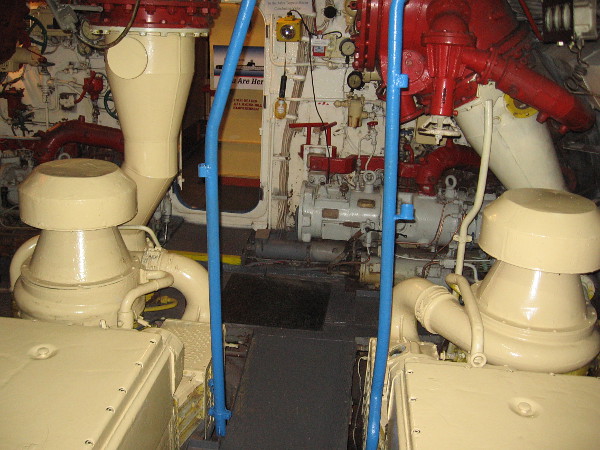
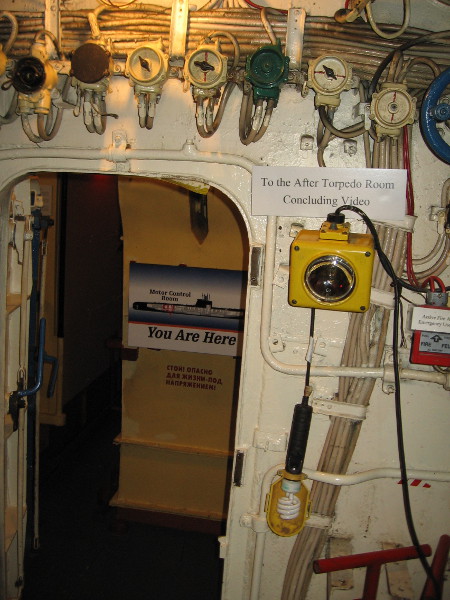
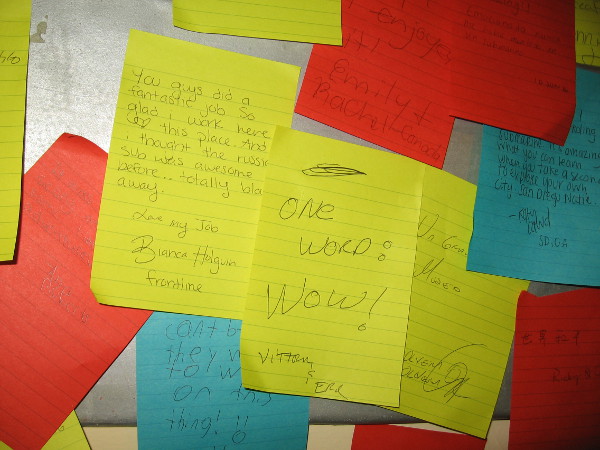
This man might have literally saved the world. Vasili Arkhipov argued against the B-59 captain’s determination to fire a nuclear torpedo against the U.S. aircraft carrier USS Randolph.Today, the Maritime Museum of San Diego’s B-39 Foxtrot-class Soviet submarine allows visitors to see what sub warfare was like during the Cold War, and to relive the crisis.Many signs containing interesting info can be read before boarding the B-39.Sign provides some details about the B-39. It could cruise 20,000 miles on diesel-electric power. It was built in Leningrad. It’s design was generally based on late World War II German u-boats.Life aboard a Foxtrot-class Soviet submarine is briefly described. Duty aboard a Foxtrot was not considered bad, but was often quite boring.Sign shows main parts of the museum’s current Cuban Missile Crisis exhibit. Inside the sub, one must nimbly climb through rather small circular openings!I’ve ascended the gangway and I’m standing forward of the submarine’s sail (or fin). I’ll enter the forward torpedo room via some steps behind me.Enter Here! And prepare to relive a tense moment in history, when the future of humankind teetered on the brink.Just inside the old Soviet sub. There’s a video explaining the Cold War and beginning of the Cuban Missile Crisis, and many signs nearby. The B-59 was armed with a Special Weapon: one nuclear torpedo.This museum torpedo represents what the B-59 Foxtrot carried back in 1962. A purple tip meant a particular torpedo had a nuclear warhead.You might note this torpedo has a purple tip! To fire a nuclear weapon during the Cuban Missile Crisis would have certainly resulted in World War III.A Hair’s Breadth from Nuclear War. President John F. Kennedy dealt with an extremely difficult crisis. Common sense, decisive action–and possibly some luck–helped the world avoid catastrophe.It’s no easy feat going from one section of the sub to another! A visitor is about to head into a narrow corridor en route to the Control Room.Heading through the Foxtrot-class Soviet submarine. Tiny rooms on either side include the Captain’s Cabin, the Officer’s Wardroom, and Medical Exam Room.A look into the Electronic Officer Cabin.The sonar room was critical to the safety of the submarine. Without sonar, the underwater vessel had no eyes.A photo of equipment in one corner of the sonar room.Into the Main Control Room we go, the scene of a sound and light show reenacting those tense minutes before the B-59 chose to surface peacefully without firing their nuclear torpedo.Signs throughout the Maritime Museum of San Diego’s Cuban Missile Crisis exhibit help visitors understand their position in the Foxtrot submarine.Photo includes the Foxtrot’s helm, where a Soviet sailor steered the submarine by moving a lever left and right.Visitor inside the Maritime Museum of San Diego’s B-39 submarine looks through the periscope. Red lights come on as depth charges are heard. A fateful decision must be quickly made.Voices from nearby speakers reenact tense discussions, then orders to the crew. The submarine captain wished to fire a nuclear torpedo; the level-headed flotilla commander convinced him not to.We’ve left the Control Room and are continuing along the center of the submarine. Here’s part of the galley. The crew ate well by Soviet standards–better than most ordinary citizens.More knobs, switches, levers, buttons, dials, gauges and whatnot on the way to the Engine Room.The engine room contains three turbo diesel engines that each put out 2000 horsepower. They drove three shafts connected to six-blade propellers.Another photo inside the museum’s B-39 engine room. During the 1962 events, the B-59’s batteries were low and the air conditioning had failed. Their hot engine room must have been intolerable.Now we’re heading to the Motor Control Room.Bunks for Enlisted Ratings line the corridor. These were shared by the crew and in constant use. No room to spare!A very tight squeeze!And finally we’ve made our way into the After Torpedo Room, where visitors can watch a concluding video documentary. After surfacing peacefully, the B-59 eventually re-submerged and vanished.School students left notes. It seems most really liked the tour! It’s not every day one can see the interior of a Cold War Soviet submarine!Climbing back out of the B-39 Foxtrot-class Soviet submarine, one of many historic vessels that are part of the Maritime Museum of San Diego.
…
I live in downtown San Diego and love to walk! You can follow Cool San Diego Sights via Facebook or Twitter!
You can easily explore Cool San Diego Sights by using the search box on my blog’s sidebar. Or click a tag! There are thousands upon thousands of fun photos for you to enjoy!
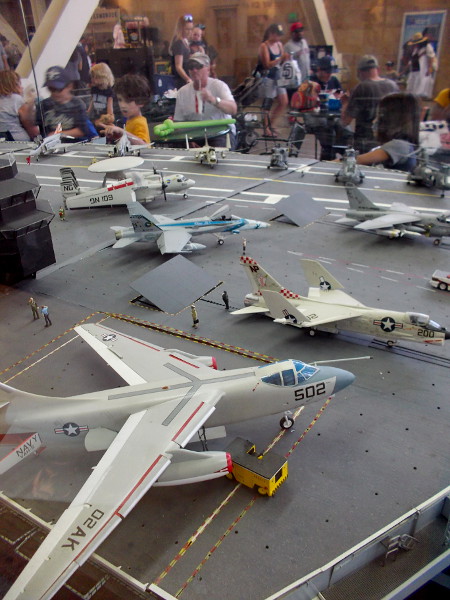
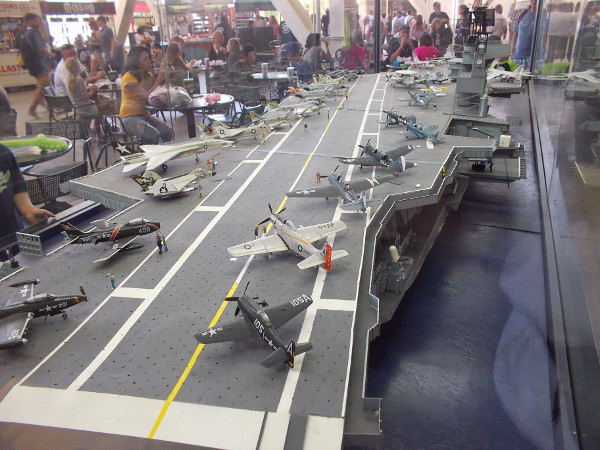
Kids check out the large USS Midway model inside the Power Alley at Petco Park during a Padres game.
I remember first seeing this impressive model of the USS Midway aircraft carrier many, many years ago. It was located inside the enormous passenger waiting room of the Santa Fe Depot, which is downtown San Diego’s historic train station. I’m not sure exactly when the model was moved into Petco Park’s Power Alley. It has been many years.
I like to check out this cool sight whenever I’m at a Padres baseball game or some other event at Petco Park. (It reminds me of when I was a kid, assembling a variety of small airplane models, gluing together the plastic pieces, carefully applying daubs of paint.) Young people today who wander through the stadium’s Power Alley can test their arm at a fast pitch game, enjoy a hot dog, then perhaps peer through the glass at the many aircraft arranged on the Midway’s flight deck.
In case you don’t have a chance to see this fantastic USS Midway model for yourself, here are a few photos.
Along the wall behind the large model you’ll find a moving tribute to our country’s military heroes, including the many professional baseball players who have served. I’ll blog about that one day, too!
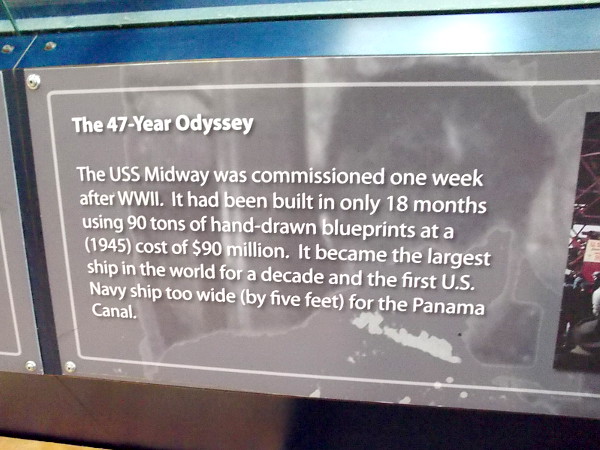
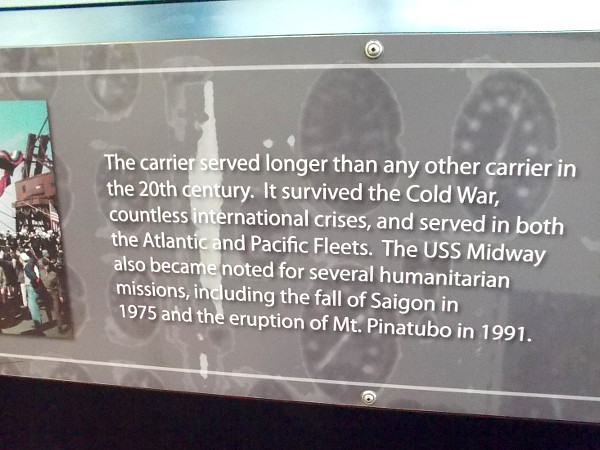
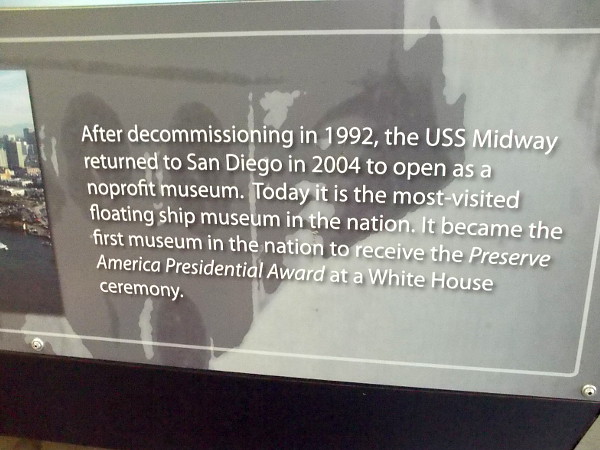
The USS Midway was commissioned one week after World War II. It became the largest ship in the world for a decade and the first U.S. Navy ship too wide for the Panama Canal.Many different model aircraft are parked on the flight deck of the small scale aircraft carrier.The USS Midway was active longer than any other carrier in the 20th century. It served during the Cold War, international crises and humanitarian missions…in both the Atlantic and Pacific Fleets.A closer photo of the USS Midway model which is displayed inside Petco Park’s Power Alley. I even see some tiny sailors!After decommissioning in 1992, the USS Midway returned to San Diego in 2004 to open as a nonprofit museum. It is now the most visited floating ship museum in the nation.Padres fans eat at tables near an impressive model of the USS Midway, a cool sight inside San Diego’s Petco Park.
…
I live in downtown San Diego and love to walk! You can follow Cool San Diego Sights via Facebook or Twitter!
You can easily explore Cool San Diego Sights by using the search box on my blog’s sidebar. Or click a tag! There are thousands upon thousands of unique photos for you to enjoy!
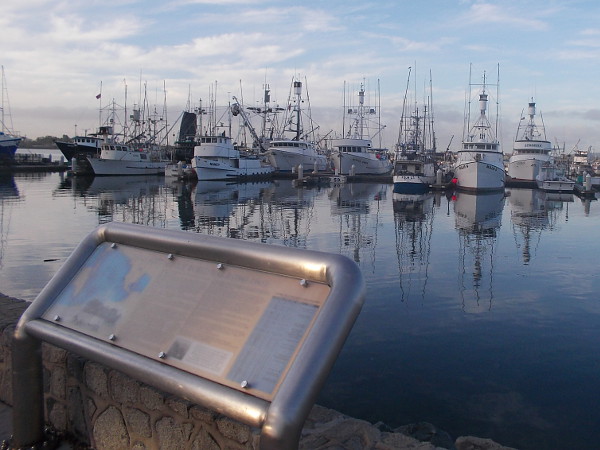
Information sign beside Tuna Harbor, in downtown San Diego, describes how local tuna boats were utilized in the Pacific Ocean theater of World War II.
Some fascinating historical information can be found on San Diego’s Embarcadero, right next to Tuna Harbor where many commercial fishing boats dock downtown. The sign, erected by the San Diego Port Commission in 2008, is titled Tuna Fleet Service World War II (1941-1945). It provides a glimpse of how dozens of San Diego-based Tuna Clippers joined the American war effort during the Second World War.
Here is the text on the sign:
During World War II, 600 fishing vessels were taken by the Navy, Army, and Coast Guard, including 52 “Tuna Clippers”.
On Pearl Harbor Day, the U.S. canned tuna industry was located almost exclusively in Southern California, and canners received most of their tunas from “baitboats”. Fishermen on these boats chum live bait (sardines, anchovies) to attract the tunas into a feeding frenzy and then use rigged bamboo poles to pull the hooked tunas aboard. Dating from 1924, a fleet of large “baitboats” was developed and became know as “Tuna Clippers”. These large ships, equipped with powerful diesel engines and newly developed brine refrigeration, fished for tunas found migrating thousands of miles from San Diego on trips of 90 days or more. During the 1930s, this San Diego high seas fleet was studies by the U.S. Navy, resulting in wartime plans that included the conversion of Tuna Clippers to minesweepers.
At the time Pearl Harbor was attacked, there were 90 vessels in the California baitboat fleet, including 76 Tuna Clippers plus 3 under construction. The 49 Tuna Clippers taken by the Navy and 3 by the Army represented about 55% of the fish carrying capacity of the entire baitboat fleet.
After war was declared, the Government ordered the Tuna Fleet to make port in California or Panama. Ten of the Tuna Clippers entering the Canal Zone in December 1941, were immediately taken for temporary patrol duty. The U.S. Army took three Clippers for use in the Panama Sea region, the SHASTA and CAPE HORN as tugs and the INVADER as a supply ship.
On February 16, 1942, tuna fishermen attended a meeting conducted by Commander W. J. Morcott, USN (Ret.) at the Naval Reserve Armory. 600 tuna fishermen signed up, with Skippers and Engineers receiving warrant ratings, and others given petty officer ratings according to age and experience. Within 10 days, a fleet of 16 Tuna Clippers, painted gray and marked with YP number designations as Yard Patrol vessels, left San Diego harbor on February 25, 1942. Their destination was the “Panama Sea Frontier” for picket duty to protect the Canal.
In May 1942, a convoy of six YP Clippers left San Diego for the “Hawaiian Sea Frontier”. These YPs transported supplies to French Frigate Shoals, the islands of Midway, Johnston, Fanning, Christmas, Palmyra, and Canton. In June 1942, seven YP Clippers left San Diego, for service at Efate Island or Samoa, or Auckland, New Zealand. In November 1942, another group of five headed for the U.S. Naval base at Tutuilla, Samoa. As the conflict moved towards Japan, YP Tuna Clippers were sent on missions to other Islands and Atolls of the Western Pacific.
The Navy discovered that “Yippies” were able to transport troops, gasoline, ammunition, and refrigerated cargoes and capable of navigation within shallow atolls and over minefields, of towing damaged warships, and rescuing downed pilots. This is why “Yippies” were also called the “Pork Chop Express” or “Errand Boys of the Pacific” or the “Solomon Island Ferry”. During the Solomon Island Campaign in 1942, the PARAMOUNT (YP 289) and the PICOROTO (YP 290) delivered frozen turkeys and all the fixings for a traditional holiday feast at Guadalcanal Island. In 1943, frozen turkeys were also delivered to the Marines fighting on Bougainville in time for Thanksgiving by the AMERICAN BEAUTY (YP-514).
“Yippies” were equipped with CW radios, fathometers, Navy radar and Navy sonar. Armament included machineguns, and other gun gear to fire Depth charges. The YP crew of tuna fishermen and regular Navy ran from 4 to 20 men.
Two YPs were destroyed in the Solomon Islands campaign by enemy surface ships: On 9 September 1942, off Tulagi Island, the PROSPECT (YP-346), and on 25 October 1942, off Guadalcanal Island, the ENDEAVOR (YP-284). The number of casualties sustained is unknown.
Two YPs were lost in the Midway region: On 23 May 1942, the TRIUNFO (YP 277) was destroyed by fire and explosions enroute to French Frigate Shoals (North of Hawaii), and then scuttled to avoid enemy capture. Only two crewmembers survived. During October 1942, the YANKEE (YP-345), with 17 crewmembers, on a voyage from Pearl Harbor to Midway Island via French Frigate Shoals, was “lost without a trace from causes unknown”.
Four YPs were lost at sea: CALIFORNIA (YP-235) on 1 April 1943, after fire and beaching in the Gulf of Mexico from an explosion of undetermined origin; NAVIGATOR (YP-279), 5 September 1943, foundered in heavy weather enroute to Townsville, Australia; CAPE SAN VINCENT (YP-280), on 24 April 1946, sank near Saipan Island; SAN SALVADOR (YP-281) on 9 January 1944, was destroyed after the foundering in Force 9 storm, with crew of 19 and one dog rescued, near Wallis Island, South Pacific. After transfer to the U.S. Army in July, 1943 the SEA TERN (ex YP-269) was lost at sea off Baja California.
Three YPs were destroyed during October 1945, because of a typhoon off Okinawa: PARAMOUNT (YP-289); CONTE GRANDE (YP-520) and CHALLENGER (YP-239).
The Navy destroyed 7 YPs after the War during 1946 and 1947: AMERICAN VOYAGER (YP-287), CIPANGO (YP-504), EUROPA (YP-236), FALCOM (YP-515), QUEEN AMELIA (YP-516), QUEEN ELIZABETH (YP-519), and YVONNE LOUISE (YP-282).
The successful wartime experience of the “Yippies” caused the Navy to build 30 wood-hull vessels patterned on the Tuna Clipper design. Each of 30 newly constructed wood hull Navy YPs was of 128 in length, of 14 feet draft, and powered with a 500 H.P. diesel main engine. They were built during 1945, two each by 15 different shipyards located in California, Oregon, and Washington.
Commencing in 1947, 24 of these YPs were added to the U.S. Tuna Fleet.
After the war, the Navy and Army transferred 33 surviving former Tuna Clippers to the War Shipping Administration (WSA) for buy-back by the previous owners. Three of these surviving vessels never returned to the U.S. tuna fishery: CABRILLO, FISHERMAN II, AND THEODORE FOSS.
Additional information on the sign:
Tuna clippers joined the navy too and were painted a dull slate grey, while the stalwart Portuguese descendants learned to fire the guns that were mounted upon the deck. Equipped with the finest refrigeration systems, these trim craft became “errand boys” of the Pacific, delivering food and fuel to the fronts. One day these tunaboats will be convoying a fleet of small ships to Panama. Next month, perhaps, they’ll be off to Midway Island with gasoline for navy PBYs. Two months later, they’ll be down in the Solomons running the “milk route” between Guadalcanal and Tulagi with supplies – part of the saga of men and boats.
excerpt from San Diego Union
July 23, 1943
Scores of converted tuna clippers slipped out of San Diego bay on their way to do valiant work in Pacific battle areas. First boats sailed from here Feb. 25, 1942. These small, sturdy diesel-powered boats are ideal for convoying and patrolling as well as for transporting needed war supplies to defeat the Japanese.
excerpt from San Diego Union
July 23, 1943
Today’s commercial fishing fleet in San Diego includes picturesque boats that provide fresh seafood for restaurants and a Saturday dockside market. (The USS Midway aircraft carrier, now a popular museum) is visible in the background of this photograph.)Someone walking down the Embarcadero near Tuna Harbor pauses to read a bit of fascinating information concerning the Second World War.Left part of the sign depicts map of the Pacific theater of World War II in relation to San Diego. Pictured are some vessels that participated.A detailed description of how the local Tuna Fleet served in various capacities during World War II.California Tuna Clippers: Military Service World War II. (Click the image to enlarge.)Commercial fishing vessel Dalena in San Diego’s present-day Tuna Harbor.
…
I live in downtown San Diego and love to walk! You can follow Cool San Diego Sights via Facebook or Twitter!
You can easily explore Cool San Diego Sights by using the search box on my blog’s sidebar. Or click a tag! There are thousands upon thousands of unique photos for you to enjoy!
Molten bronze is poured in the foundry of the USS Ajax. Historical photograph of the Navy Bicentennial Commemorative Plaque being created. Photo credit: United States Navy.
A few days ago I received new information about an important bronze plaque, which was created in 1975 to commemorate the United States Navy’s 200 year anniversary. The historic Navy Bicentennial Commemorative Plaque stands today on San Diego’s Embarcadero, on the Greatest Generation Walk next to the USS Midway Museum. Thousands of people breeze past it every day.
People pass the Navy Bicentennial Commemorative Plaque, displayed on the Greatest Generation Walk near the USS Midway Museum. Photo taken October 17, 2015.Photo of Navy 200 year commemoration plaque courtesy the Port of San Diego.
When I first saw the old plaque, I could find absolutely nothing about it on the internet. So I originally posted this blog. As new information trickled in–sometimes out of the blue–I posted this and this.
I was recently contacted by one of the plaque’s creators. He has provided detailed information about its history, including three amazing photographs and nine scans of a typed News Release from 40 years ago. The text of the News Release does not appear online, so I carefully transcribed the words. That way a very important bit of San Diego and Navy history won’t be lost.
(I tried to transcribe exactly, including possible misspellings. I’m not certain about the spelling of some names in the photo captions.)
If you know more about this plaque and would like to add some information, please leave a comment below. If you’d like to contact me, but don’t want to have your comment published, then please tell me that and I’ll email you.
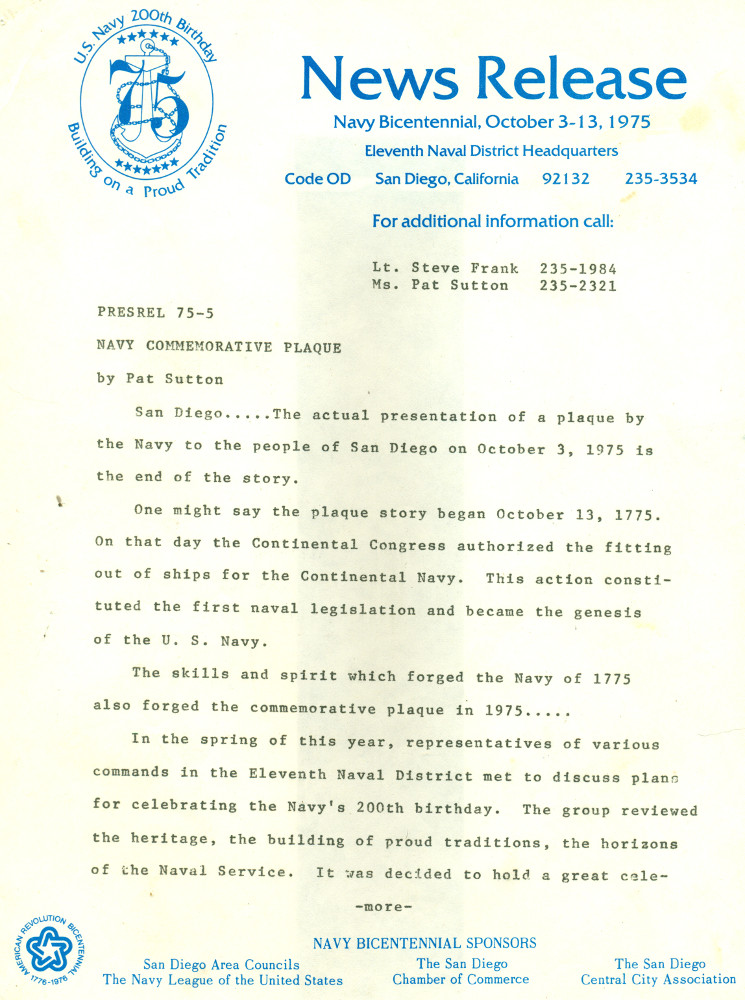
Navy Commemorative Plaque News Release. Navy Bicentennial, October 3-13, 1975. Page 1.
NAVY COMMEMORATIVE PLAQUE
by Pat Sutton
San Diego . . . . . The actual presentation of a plaque by the Navy to the people of San Diego on October 3, 1975 is the end of the story.
One might say the plaque story began October 13, 1775. On that day the Continental Congress authorized the fitting out of ships for the Continental Navy. This action constituted the first naval legislation and became the genesis of the U. S. Navy.
The skills and spirit which forged the Navy of 1775 also forged the commemorative plaque in 1975 . . . . .
In the spring of this year, representatives of various commands in the Eleventh Naval District met to discuss plans for celebrating the Navy’s 200th birthday. The group reviewed the heritage, the building of proud traditions, the horizons of the Naval Service. It was decided to hold a great celebration
Navy Commemorative Plaque News Release. Navy Bicentennial, October 3-13, 1975. Page 2.
to honor the Navy, its members past and present, the nation and San Diego – so long a part of the life, the heritage and tradition of the Navy.
The plaque story developed in an uniquely traditional Navy way. The Navy’s microcosmic capabilities began to surface and swing into action.
Civilian Mrs. Jo Palm is the Visual Information Specialist for the Commander Naval Surface Force, Pacific. She also chaired the Navy Bicentennial exhibits committee. Jo conceived the idea that there should be some lasting remembrance of the occasion for the people of San Diego – perhaps a commemorative plaque would be appropriate.
Civilian Francisco (Cisco) Lopez is a designer with the General Atomic Company of San Diego. He is also a First Class Draftsman in the Navy Reserve. Tall, 28-years-old, Cisco is a 12-year Navyman, combining four years active duty with eight years in the Reserve. Last June he served his annual two weeks active duty in the Naval Surface Force Public Affairs graphics shop, reporting from his Reserve Unit with the Fleet Intelligence Center, Pacific.
“Jo told me her idea and we decided I should design something depicting 200 years of Navy history – along the lines of a plaque, but not like the usual plaque.”
Navy Commemorative Plaque News Release. Navy Bicentennial, October 3-13, 1975. Page 3.
Cisco was raised in San Francisco and has lived in San Diego the past five years. He graduated from San Francisco State and hopes eventually to be a research historian or teacher.
“I have almost a passion for history. I’m taking a month off work in June ’76, I’ll be in Philadelphia on the Fourth of July. As an armchair military historian I really relished the opportunity to be a part of today’s history by designing a representation of our Navy over a span of 200 years”.
At the suggestion of her student husband, Mel, Jo Palm went aboard Mel’s former ship, USS Ajax (AR-6), with Cisco’s drawing and the question, “Can you make it a reality?”
For a fleet repair ship like Ajax, “can” is a reality because she is designed for heavy duty hull repair; to provide a full range of repair services to Navy units in remote areas.
On her way to see the Repair Officer, Lieutenant Commander Harley M. Oien, Jo Palm passed through the Patternmaker/Carpenter Shop, remarkably clean despite the several huge saws rasping, whining and spewing sawdust. She was escorted through the Heavy Machine and Shipfitter’s shops where expert Navy operators can literally rebuild a whole ship.
Navy Commemorative Plaque News Release. Navy Bicentennial, October 3-13, 1975. Page 4.
Twelve-year Navy veteran, Chief Molder Marvin E. (Tex) Feasell of Baytown, TX, is in charge of the Ajax foundry. He recounts the meeting below decks in Mr. Oien’s office where he and a few key men, including Patternmaker First Class Ronald Gray, held a conference with Jo.
“We hashed, squabbled, explained our methods, discussed time frames, costs to the Bicentennial Birthday Fund, and most of all, the making of the pattern. That’s the critical area. That’s the make or break of the job”.
Tex Feazell learned his profession when he was sent to the Moulder “A” school right out of Boot Camp in 1963. He reported aboard Ajax in May 1974. He has a keen appreciation of the expertise of the Ajax crew, and a keen pride in its performance.
“We have one of the most hard charging crews in the fleet. The people are hard charging – hit it! Hit it! We wanted to show our skills. We wanted to make that plaque for the Navy and for San Diego. We didn’t know for over a week if we would get the job. It made us feel proud when we heard we were going to do it”.
And so the “make or break” responsibility of the Navy’s bicentennial birthday memento to San Diego was enthusiastically assumed by Patternmaker Ronald Gray, who applied his
Navy Commemorative Plaque News Release. Navy Bicentennial, October 3-13, 1975. Page 5.
Navy-learned skills to transform from drawing to working pattern the impression of 200 years of the United States Navy.
Ron has not always served in the time honored rate of Patternmaker. He joined the Navy shortly after he graduated from high school in Olympia, WA, and served his first hitch as a Commissaryman. A friend, appreciative of his carving hobby, suggested Ron reenlist under the Navy’s SCORE (Selective Conversion) program and be schooled as a Patternmaker.
Now, after 7 1/2 years in the Navy, 2 1/2 aboard Ajax, this craftsman laid the historical design out, carved his first figures in bas relief, glued them on board, then build up the other details. The pattern for the 30″ x 24″, 150 pound metal plaque would end up basically wood and plaster, however, the rope detail was real rope!
The Spirit of ’75, the hallmark of the Navy, nowhere better manifested itself than aboard the USS Ajax as the work progressed.
Patternmaker Third Class Roger Richie of Denver, CO, was a millman in civilian life and when he joined the Navy he wanted to be a carpenter. But at the time, there was no billet open at the carpenter school.
Navy Commemorative Plaque News Release. Navy Bicentennial, October 3-13, 1975. Page 6.
“Now I think I got lucky, because I was sent to Patternmaker’s School. There’s not too many of us in the Navy, or in the country, for that matter. So by what you might call a ‘freak accident’ I was here to help Ron on the plaque. There’s pride in this job”.
The Ajax Dental Department loaned Ron Gray tools for working on the intricate wax carvings, and a dental drill for final sanding. The ship’s Dental Officer, Commander Roger E. Bisson of Helena, MT, enjoys woodworking and asked to carve the plaque’s Navy aircraft with his precision instruments.
“We all want to contribute. Gray is so willing to share the glory with the team, even though he has done most of the work”, Bisson said.
Below the gleaming metal decks, at the very keel of Ajax on the concrete deck of the foundry, Molder First Class William McCoy of Coshocton, OH, and his men were ready. McCoy spent his first four years in the Navy as a destroyer torpedoman. Then for ten years he was a civilian molder. Unable to wash the salt from his veins, he returned to the Navy a year and a half ago.
McCoy described his work, “The molding art is fairly unchanged since the middle ages. We use primitive tools, primitive casting methods. A person with an understanding of the primitive makes an excellent molder”.
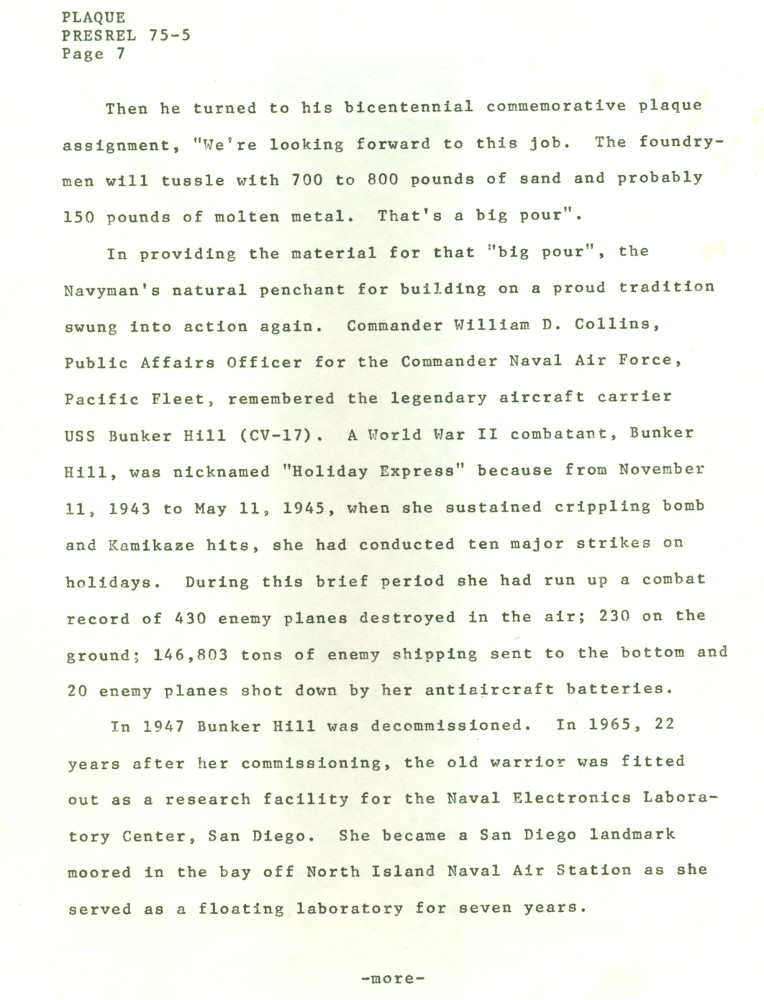
Navy Commemorative Plaque News Release. Navy Bicentennial, October 3-13, 1975. Page 7.
Then he turned to his bicentennial commemorative plaque assignment, “We’re looking forward to this job. The foundrymen will tussle with 700 to 800 pounds of sand and probably 150 pounds of molten metal. That’s a big pour”.
In providing the material for that “big pour”, the Navyman’s natural penchant for building on a proud tradition swung into action again. Commander William D. Collins, Public Affairs Officer for the Commander Naval Air Force, Pacific Fleet, remembered the legendary aircraft carrier USS Bunker Hill (CV-17). A World War II combatant, Bunker Hill, was nicknamed “Holiday Express” because from November 11, 1943 to May 11, 1945, when she sustained crippling bomb and Kamikaze hits, she had conducted ten major strikes on holidays. During this brief period she had run up a combat record of 430 enemy planes destroyed in the air; 230 on the ground; 146,803 tons of enemy shipping sent to the bottom and 20 enemy planes shot down by her antiaircraft batteries.
In 1947 Bunker Hill was decommissioned. In 1965, 22 years after her commissioning, the old warrior was fitted out as a research facility for the Naval Electronics Laboratory Center, San Diego. She became a San Diego landmark moored in the bay off North Island Naval Air Station as she served as a floating laboratory for seven years.
Navy Commemorative Plaque News Release. Navy Bicentennial, October 3-13, 1975. Page 8.
“The Bunker Hill was stripped of her brass and bronze fittings prior to her scraping in late 1972”, Commander Collins reported at a Bicentennial Committee meeting, “this was molded into ingots. Some of the ingots still remain and are stored at the Naval Station in Honolulu. We would be honored to have Bunker Hill permanently a part of San Diego. The Pacific Naval Air Force will provide her brass and bronze for the plaque”.
And so it was done.
In August Jo Palm called Cisco Lopez with the news that the plaque was to become a reality. Cisco told Jo of an uniquely Navy coincidence. “For my 1975 active duty tour I was stationed on Ajax! I designed ducting for ventilation of a spray booth. Great crew! I never expected to work with them again”.
On September tenth, after the sand had been rammed around the pattern and the pattern removed, leaving its historic impression (the negative), the excitement of expectancy on the Ajax foundry deck rose even as the metal of old Bunker Hill rose toward the proper temperature to pour.
Participants, both active and anticipating, ranged from Jo Palm and Cisco Lopez; Navy combat cameramen and photographers; to the molders, firemen, and as from the beginning,
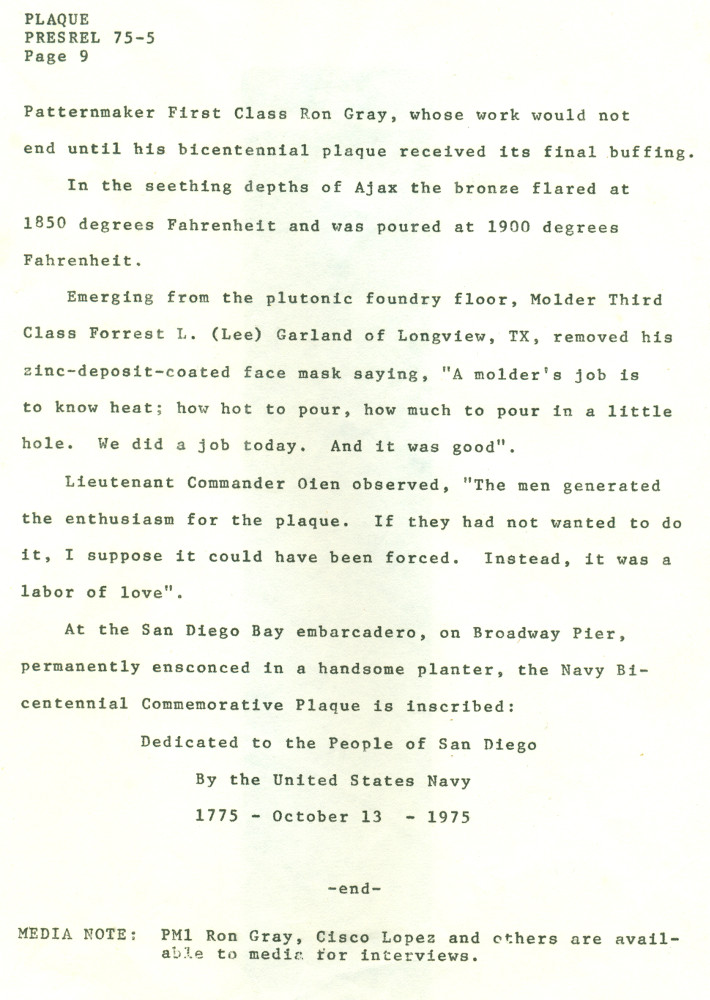
Navy Commemorative Plaque News Release. Navy Bicentennial, October 3-13, 1975. Page 9.
Patternmaker First Class Ron Gray, whose work would not end until his bicentennial plaque received its final buffing.
In the seething depths of Ajax the bronze flared at 1850 degrees Fahrenheit and was poured at 1900 degrees Fahrenheit.
Emerging from the plutonic foundry floor, Molder Third Class Forrest L. (Lee) Garland of Longview, TX, removed his zinc-deposit-coated face mask saying, “A molder’s job is to know hear; how hot to pour, how much to pour in a little hole. We did a job today. And it was good.”
Lieutenant Commander Oien observed, “The men generated the enthusiasm for the plaque. If they had not wanted to do it, I suppose it could have been forced. Instead, it was a labor of love”.
At the San Diego Bay embarcadero, on Broadway Pier, permanently ensconced in a handsome planter, the Navy Bicentennial Commemorative Plaque is inscribed:
Dedicated to the People of San Diego
By the United States Navy
1775 – October 13 – 1975
Tex Feazell and Ron Gray with the first wood carving and the original drawing. Photo credit: United States Navy.Patternmaker Kevin O’Connor, Molder Jessie Lopez, Molder Lee Garland, Patternmaker Roger Richie, two unidentified Molders, Bill McCoy and Ron Gray. Photo credit: United States Navy.
…
Follow this blog for more amazing, unexpected discoveries! Join me on Facebook or Twitter.
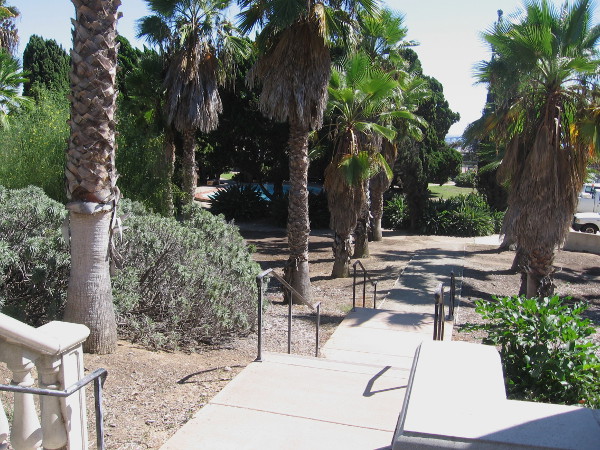
Looking north at steps that lead down from the quiet, stately Balboa Park Administrative Courtyard.
A few weeks ago I meandered about Inspiration Point in Balboa Park. Walking slowly, pausing often, going nowhere in particular. Just seeing what I might see.
At the south edge of the Balboa Park Administrative Courtyard, I stood and gazed down the hill toward a corner of downtown San Diego. You might remember my blog about the courtyard. It’s a place that very few people know about. It’s peaceful, green, a bit of heaven. A place of solitude.
As I stood, I glanced down some steps leading toward a seemingly unremarkable patch of trees. A dusty lot next to the trees contained dozens of parked city Park and Recreation trucks. I wondered to myself if the public was permitted to walk down those steps, into what appeared to be a city work area.
This mysterious path seems to lead to a jumble of trees and a dusty parking lot full of city Park and Recreation trucks.
Then I saw the blue among the trees. Was that water?
No sign indicated I couldn’t investigate. So I did.
And what I found took my breath away.
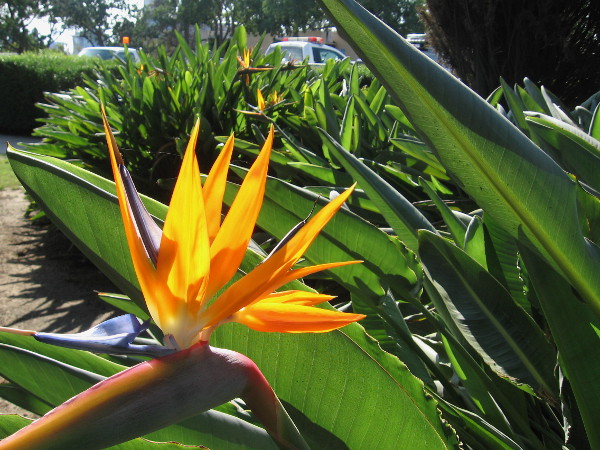
Beautiful Bird of Paradise in a section of Balboa Park where the public almost never goes.Entering a magical hollow in the trees, where a shining blue pool and small fountain await.
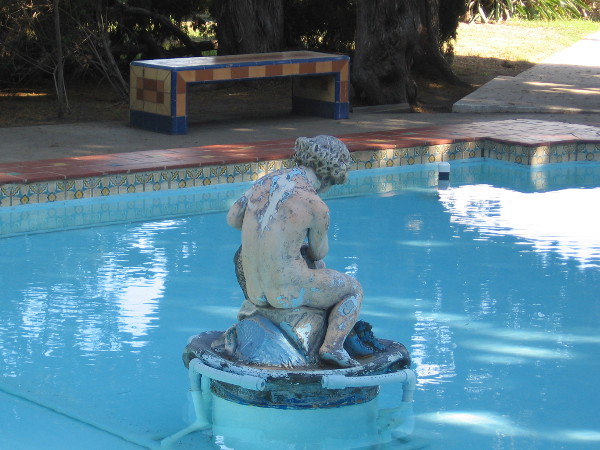
The trees seemed a forgotten oasis. At their center shined a lonely pool and a small fountain in the form of a child. The cherub seemed to be holding open the mouth of a carp, or perhaps reading a book–I don’t know.
The strange fountain appeared to occupy a magical place, entirely removed from the surrounding world.
What was it?
An email to the Friends of Balboa Park, an organization whose office is in the nearby Balboa Park Administration Building, provided a bit of information.
The person who replied parks her car in the lot not far from the pool and fountain, and she was completely amazed. She’d didn’t know of its existence.
Ranger Kim, who also works in the building, and who knows volumes about the history of Balboa Park, indicated that the fountain was left over from the 1920’s when the U.S. Navy built a large hospital campus in the immediate area.
In the 1980’s, the land was given to the city in exchange for acreage in Florida Canyon, where the new Naval Medical Center San Diego was built. The buildings from the 1920’s were eventually demolished, except for a Navy chapel, the administration building and its stately courtyard, and a nearby medical library and auditorium building. Today the chapel contains the Veterans Museum and Memorial Center; the administration building contains Balboa Park’s headquarters.
And, of course, magic remains where very few people go: a small fountain that healed spirits at the old Navy complex. A beautiful, hidden fountain forgotten by time.
The lonely fountain is in the form of a child. A few empty benches surround the tiled pool.This fountain is left over from the Navy hospital campus built in this area in the 1920’s.The figure seems to be holding open the jaws of a fish, or perhaps reading a book.A beautiful, hidden fountain forgotten by time.
…
Follow this blog for more amazing discoveries! Join me on Facebook or Twitter.


















































 Cool San Diego Sights!