To the Brink of WAR. A sound and light exhibit at the Maritime Museum of San Diego based on a true Cold War event during the Cuban Missile Crisis.
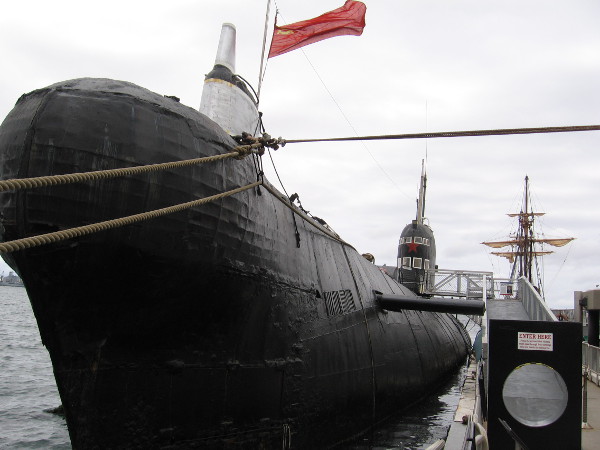
A fantastic exhibit recently opened at the Maritime Museum of San Diego. You’ll find it aboard their B-39 Foxtrot-class Soviet submarine. The exhibit, using videos, a light show and other exciting effects, tells the story of how one man likely saved the world.
At the height of the Cold War, during the Cuban Missile Crisis in 1962, a Soviet commander on the B-59, another Foxtrot-class submarine, spoke a few cautious words. Those words might have averted World War III and worldwide nuclear destruction.
The B-59 was one of four Soviet submarines that were sent to the Caribbean Sea to support ships delivering arms to Cuba. In October of 1962 the B-59 was detected by the United States, and Navy destroyers began dropping the sort of depth charges that are used for training–practice depth charges with very little explosive impact. It was the US Navy’s intention to have the sub surface in order to gain positive identification.
Aboard the B-59, however, batteries were running critically low, the air-conditioning had ceased working, and if the submarine didn’t surface eventually the crew would perish. They hadn’t had radio communication with Moscow for several days. The captain of the submarine, Valentin Grigorievitch Savitsky, believed that war had probably begun. He wanted to launch their T-5 nuclear torpedo at the USS Randolph aircraft carrier.
The exhibit inside the Maritime Museum of San Diego’s Foxtrot-class Soviet submarine allows visitors to relive those tense moments. They’ll hear how sub-flotilla commander Vasili Arkhipov, also on the B-59, reasoned that a conflict might not have started, and that firing their “Special Weapon” nuclear torpedo would certainly result in World War III. His calm words of council prevailed, the sub surfaced peacefully, and today visitors to the museum can appreciate his level-headed wisdom, and the extreme pressure that the crew of the B-59 felt on that fateful day.
Anyone visiting the exhibit should be prepared for very close quarters. Ducking and engaging in a variety of pretzel-like contortions while moving along the length of the submarine, one can appreciate how life must have been as a crewmember, even under normal circumstances. It’s definitely not a place for those who have claustrophobia!
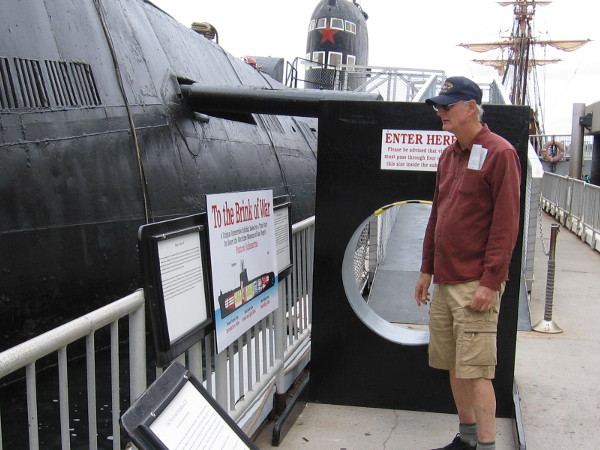
Here are a few photos that give you a taste of what you’ll experience. Of course, enjoying the exhibit in person is a thousand times more interesting!
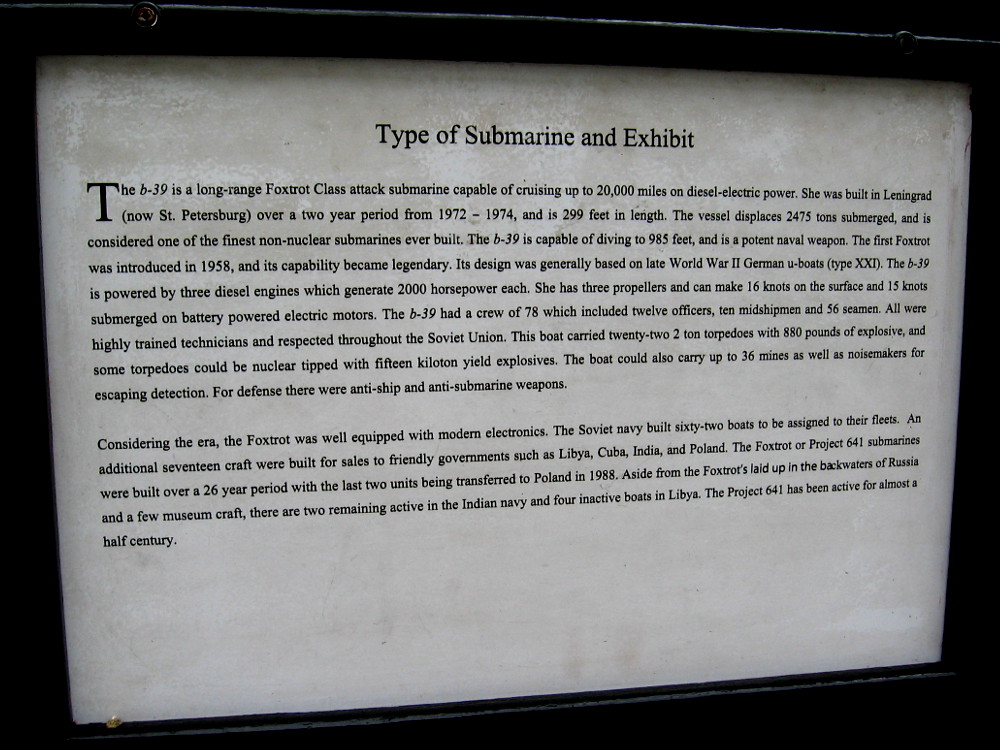
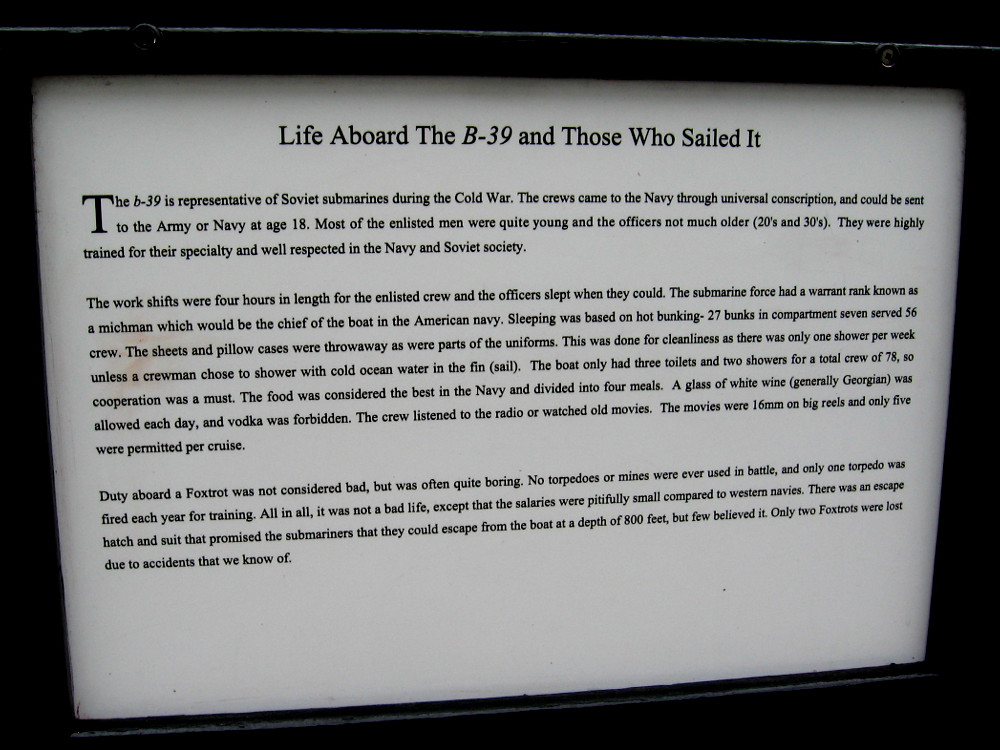
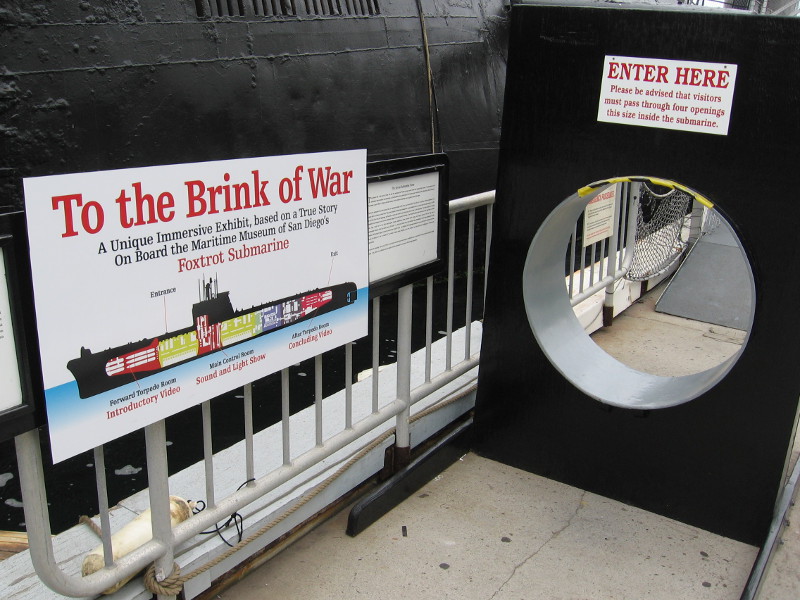
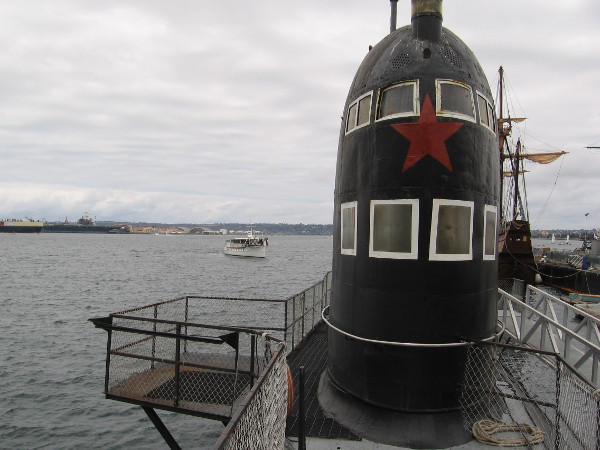
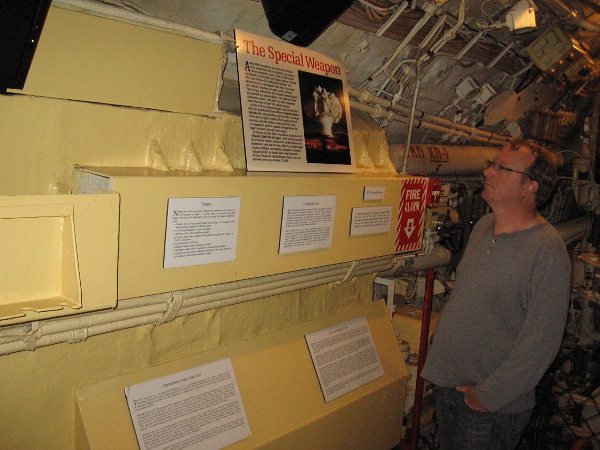
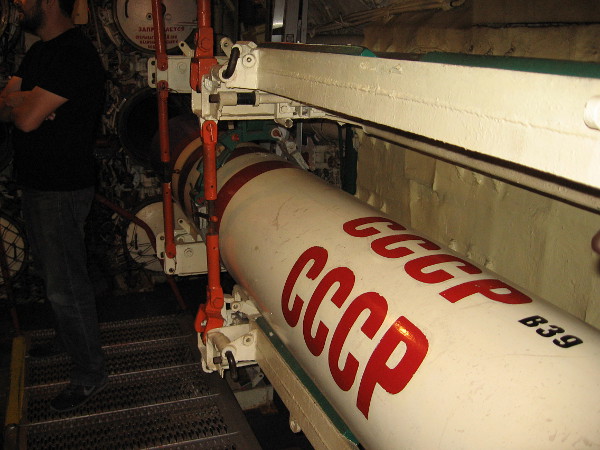
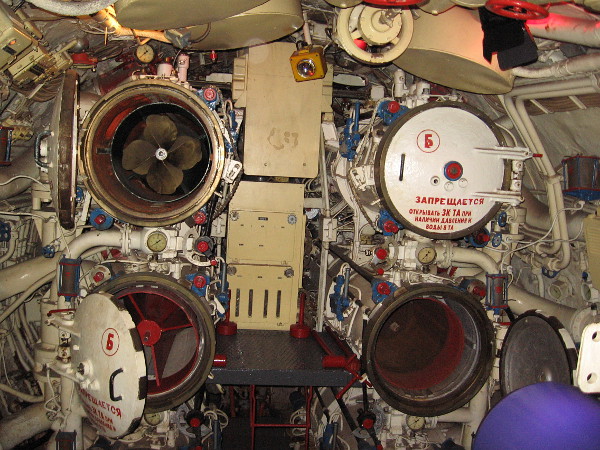
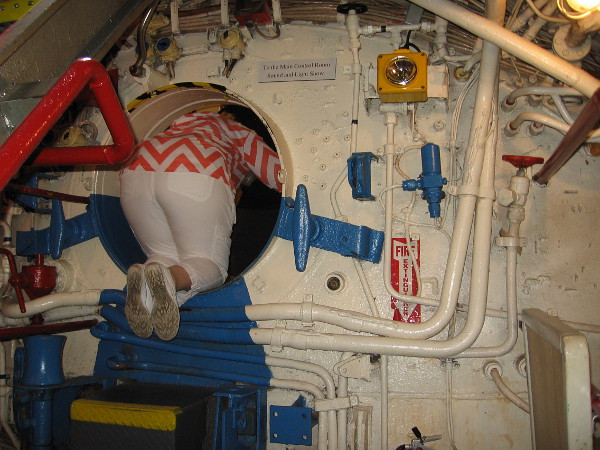
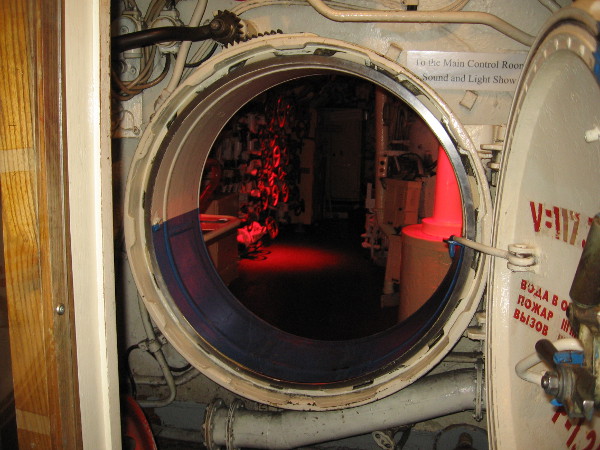
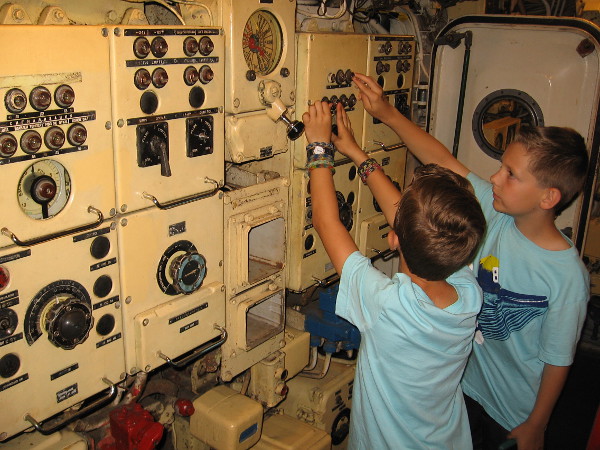
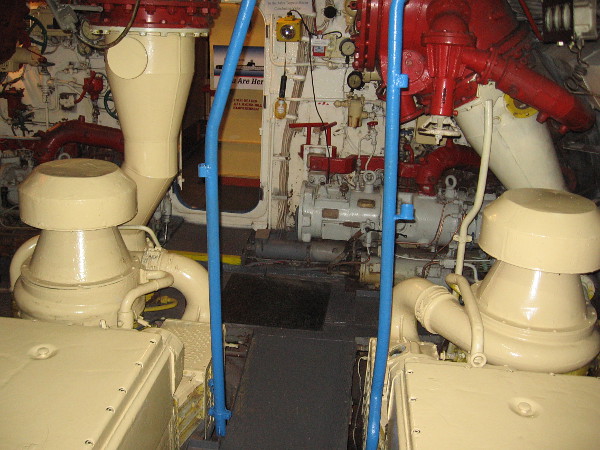
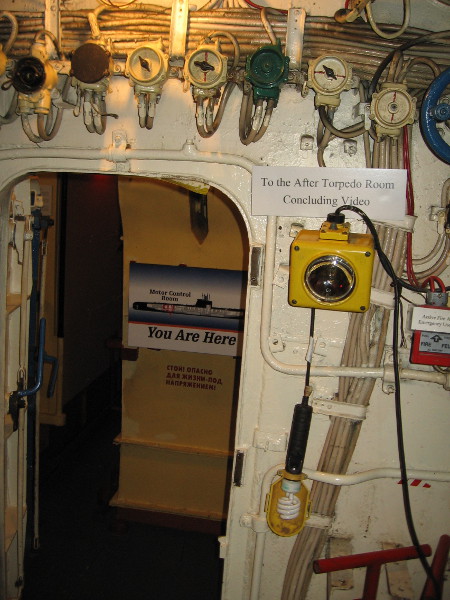
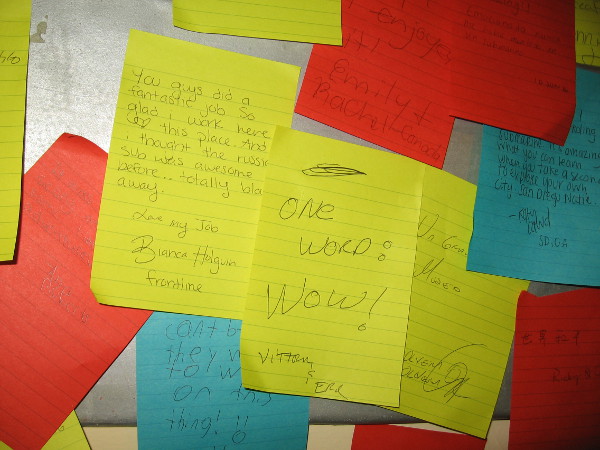
This man might have literally saved the world. Vasili Arkhipov argued against the B-59 captain’s determination to fire a nuclear torpedo against the U.S. aircraft carrier USS Randolph.Today, the Maritime Museum of San Diego’s B-39 Foxtrot-class Soviet submarine allows visitors to see what sub warfare was like during the Cold War, and to relive the crisis.Many signs containing interesting info can be read before boarding the B-39.Sign provides some details about the B-39. It could cruise 20,000 miles on diesel-electric power. It was built in Leningrad. It’s design was generally based on late World War II German u-boats.Life aboard a Foxtrot-class Soviet submarine is briefly described. Duty aboard a Foxtrot was not considered bad, but was often quite boring.Sign shows main parts of the museum’s current Cuban Missile Crisis exhibit. Inside the sub, one must nimbly climb through rather small circular openings!I’ve ascended the gangway and I’m standing forward of the submarine’s sail (or fin). I’ll enter the forward torpedo room via some steps behind me.Enter Here! And prepare to relive a tense moment in history, when the future of humankind teetered on the brink.Just inside the old Soviet sub. There’s a video explaining the Cold War and beginning of the Cuban Missile Crisis, and many signs nearby. The B-59 was armed with a Special Weapon: one nuclear torpedo.This museum torpedo represents what the B-59 Foxtrot carried back in 1962. A purple tip meant a particular torpedo had a nuclear warhead.You might note this torpedo has a purple tip! To fire a nuclear weapon during the Cuban Missile Crisis would have certainly resulted in World War III.A Hair’s Breadth from Nuclear War. President John F. Kennedy dealt with an extremely difficult crisis. Common sense, decisive action–and possibly some luck–helped the world avoid catastrophe.It’s no easy feat going from one section of the sub to another! A visitor is about to head into a narrow corridor en route to the Control Room.Heading through the Foxtrot-class Soviet submarine. Tiny rooms on either side include the Captain’s Cabin, the Officer’s Wardroom, and Medical Exam Room.A look into the Electronic Officer Cabin.The sonar room was critical to the safety of the submarine. Without sonar, the underwater vessel had no eyes.A photo of equipment in one corner of the sonar room.Into the Main Control Room we go, the scene of a sound and light show reenacting those tense minutes before the B-59 chose to surface peacefully without firing their nuclear torpedo.Signs throughout the Maritime Museum of San Diego’s Cuban Missile Crisis exhibit help visitors understand their position in the Foxtrot submarine.Photo includes the Foxtrot’s helm, where a Soviet sailor steered the submarine by moving a lever left and right.Visitor inside the Maritime Museum of San Diego’s B-39 submarine looks through the periscope. Red lights come on as depth charges are heard. A fateful decision must be quickly made.Voices from nearby speakers reenact tense discussions, then orders to the crew. The submarine captain wished to fire a nuclear torpedo; the level-headed flotilla commander convinced him not to.We’ve left the Control Room and are continuing along the center of the submarine. Here’s part of the galley. The crew ate well by Soviet standards–better than most ordinary citizens.More knobs, switches, levers, buttons, dials, gauges and whatnot on the way to the Engine Room.The engine room contains three turbo diesel engines that each put out 2000 horsepower. They drove three shafts connected to six-blade propellers.Another photo inside the museum’s B-39 engine room. During the 1962 events, the B-59’s batteries were low and the air conditioning had failed. Their hot engine room must have been intolerable.Now we’re heading to the Motor Control Room.Bunks for Enlisted Ratings line the corridor. These were shared by the crew and in constant use. No room to spare!A very tight squeeze!And finally we’ve made our way into the After Torpedo Room, where visitors can watch a concluding video documentary. After surfacing peacefully, the B-59 eventually re-submerged and vanished.School students left notes. It seems most really liked the tour! It’s not every day one can see the interior of a Cold War Soviet submarine!Climbing back out of the B-39 Foxtrot-class Soviet submarine, one of many historic vessels that are part of the Maritime Museum of San Diego.
…
I live in downtown San Diego and love to walk! You can follow Cool San Diego Sights via Facebook or Twitter!
You can easily explore Cool San Diego Sights by using the search box on my blog’s sidebar. Or click a tag! There are thousands upon thousands of fun photos for you to enjoy!
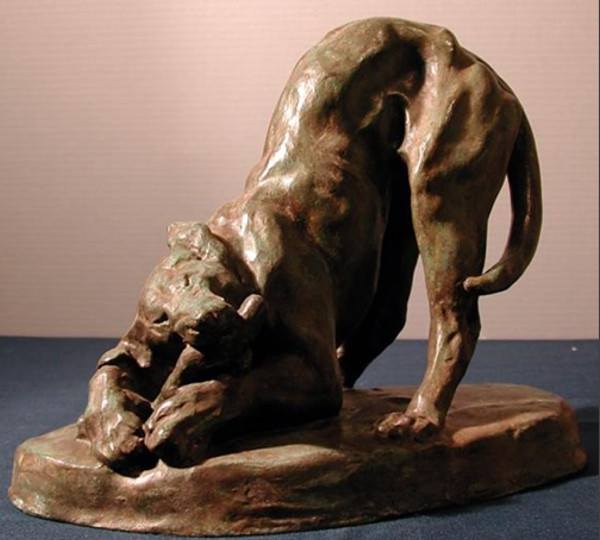
Dog Gnawing Bone, Arthur Putnam, 1904. Photo courtesy San Diego Museum of Art.
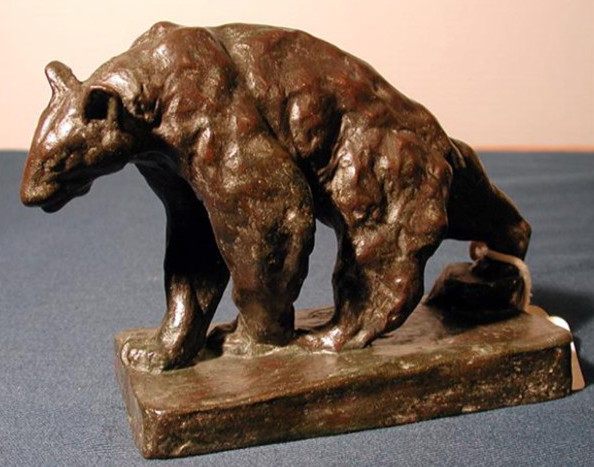
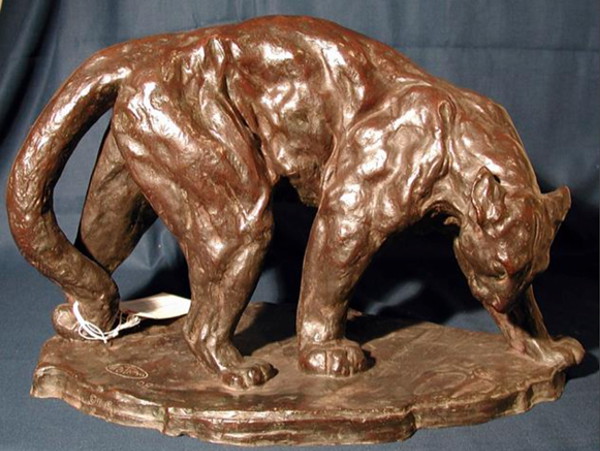
Wow! I enjoyed another awesome visit to the San Diego Museum of Art last weekend, courtesy of my docent friend Catherine! She provided a spellbinding tour of several exhibits! The one I liked most–possibly because I love animals and because the artist has a San Diego connection–concerned the bronze sculptures of Arthur Putnam.
The exhibition, titled Ferocious Bronze, features artwork so utterly amazing that Arthur Putnam has been called the American Rodin. He was such a gifted sculptor that his pieces have sometimes been mistaken for those of Frederic Remington. Most of his bronzes depict animals in the wild: hunting, in mortal combat, at play or at rest.
Arthur Putnam lived from 1873–1930 and was considered one of the greatest sculptors of his era. At the 1915 Panama-Pacific International Exposition in San Francisco he won a coveted Gold Medal. During his lifetime his work was exhibited in major cities, including New York, Chicago, Paris and Rome. Many of his monumental public sculptures still stand in San Francisco, Monterey and San Diego.
Check out these photos! They provide a small taste of what you’ll experience should you visit Ferocious Bronze. You can get an idea of Putnam’s tremendous artistry. The superb realism is partly due to the fact that he personally loved the outdoors, and spent many days observing animals in the wild and at zoos. A mostly self-taught artist, Putnam even worked for a brief time at a slaughterhouse. (Yuck!)
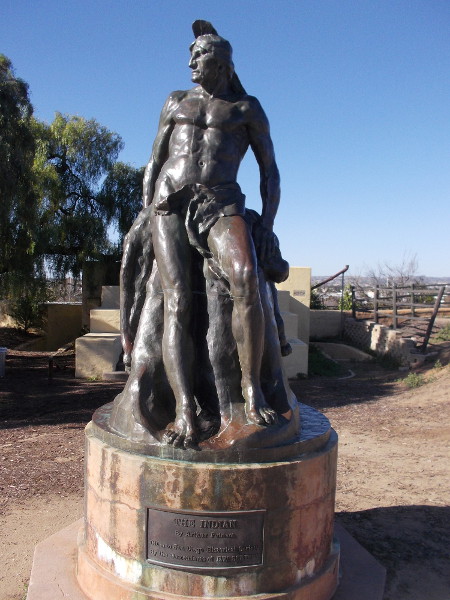
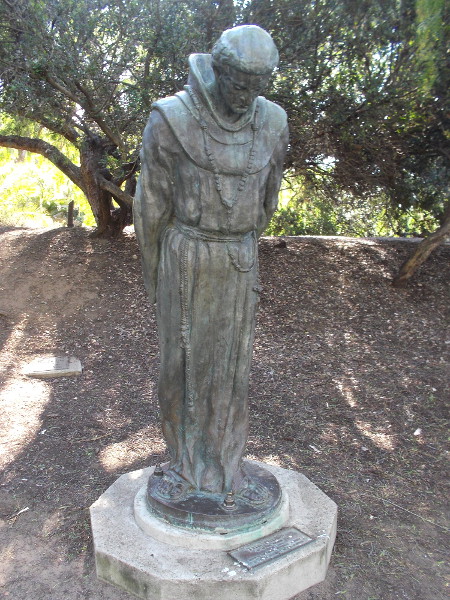
Did I mention Arthur Putnam’s unique San Diego connection? His very first commission was from newspaper magnate E. W. Scripps, which he received at the Scripps Ranch located in Miramar. In addition, two of Putnam’s monumental works stand today near the spot where San Diego was founded–the very place where European civilization took root in California.
(I’ve included my own photos of the two large bronze sculptures that stand on San Diego’s Presidio Hill. I wrote a blog several years ago that concerned an interesting walk past these sculptures.)
Ferocious Bronze, curated by Dr. James Grebl, showcases 28 of Putnam’s amazing animal pieces. They were selected from the over 100 pieces that the San Diego Museum of Art has in their collection. This special exhibit was inspired by another Balboa Park institution: the world famous San Diego Zoo! They are now celebrating their centennial year!
If you happen to be in San Diego, and if you love fine art or have a special place in your heart for wild animals, I recommend that you head over to see Ferocious Bronze at the San Diego Museum of Art in Balboa Park! This very cool exhibition runs through October 11, 2016.
Big Combat, Arthur Putnam, undated. Photo courtesy San Diego Museum of Art.Ambling Bear, Arthur Putnam, 1910. Photo courtesy San Diego Museum of Art.Fighting Buffalo, Arthur Putnam, 1900. Photo courtesy San Diego Museum of Art.Lynx Ready to Spring, Arthur Putnam, 1909. Photo courtesy San Diego Museum of Art.The Indian, Arthur Putnam, 1905. This amazing sculpture stands on San Diego’s Presidio Hill beneath the Serra Museum.The Padre, Arthur Putnam, 1908. This sculpture stands among some trees on San Diego’s Presidio Hill beneath the Serra Museum.Wild Cat, Arthur Putnam, 1908. Photo courtesy San Diego Museum of Art.
…
I live in downtown San Diego and love to walk! You can follow Cool San Diego Sights via Facebook or Twitter!
You can easily explore Cool San Diego Sights by using the search box on my blog’s sidebar. Or click a tag! There are thousands upon thousands of fun photos for you to enjoy!
Do you like to read short pieces of thought-provoking fiction? You might enjoy checking out Short Stories by Richard.
Fascinating exhibits inside the Casa de Aguirre Museum in Old Town San Diego State Historic Park.
Many visitors to Old Town San Diego State Historic Park might think the Casa de Aguirre is just a shop brimming with colorful crafts and wares. But a closer look reveals that a small museum is located inside.
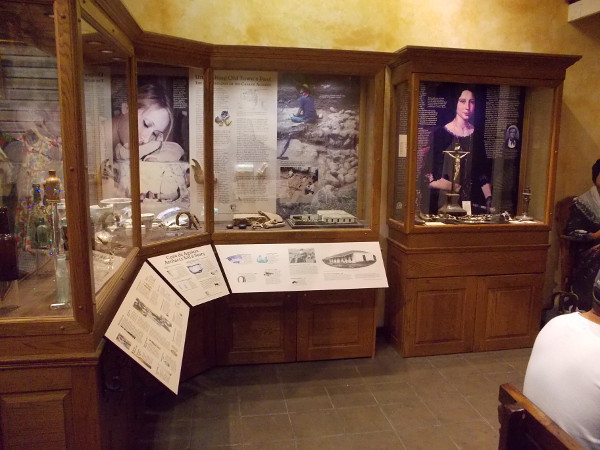
Here are some photos which provide a glimpse of what you’ll discover should you step into the museum. Read the captions, and you’ll learn how Casa de Aguirre is one of the most important sites in Old Town, and how its occupants shaped San Diego’s early history.
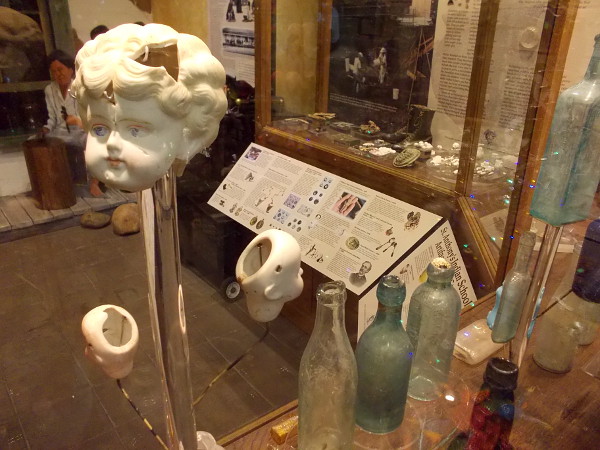
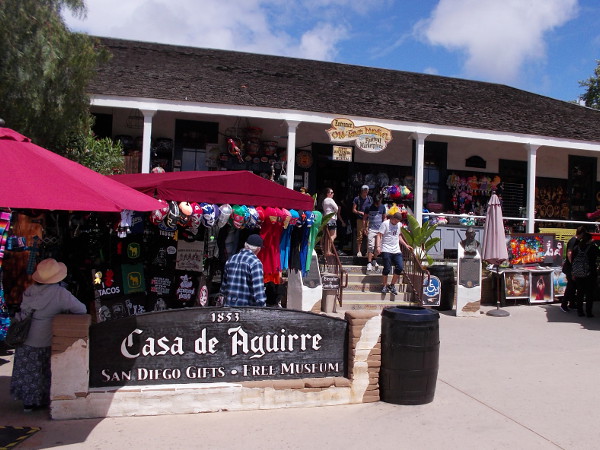
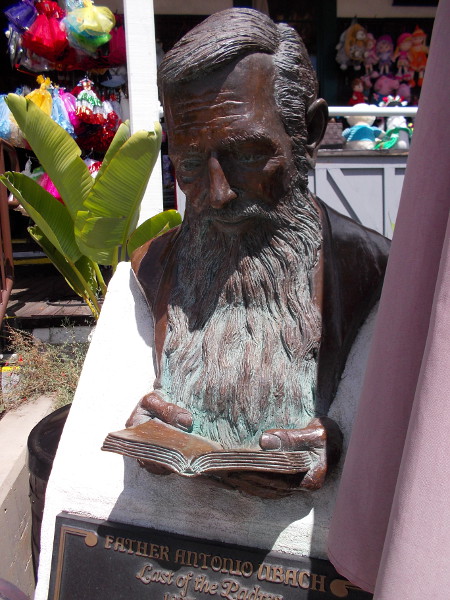
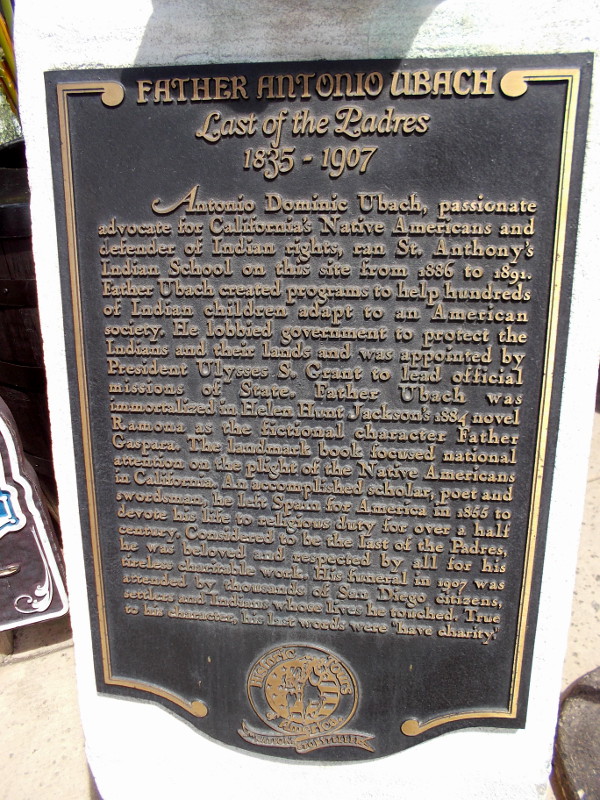
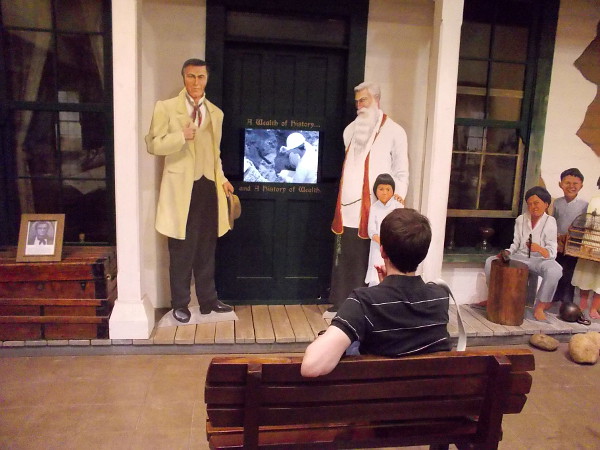
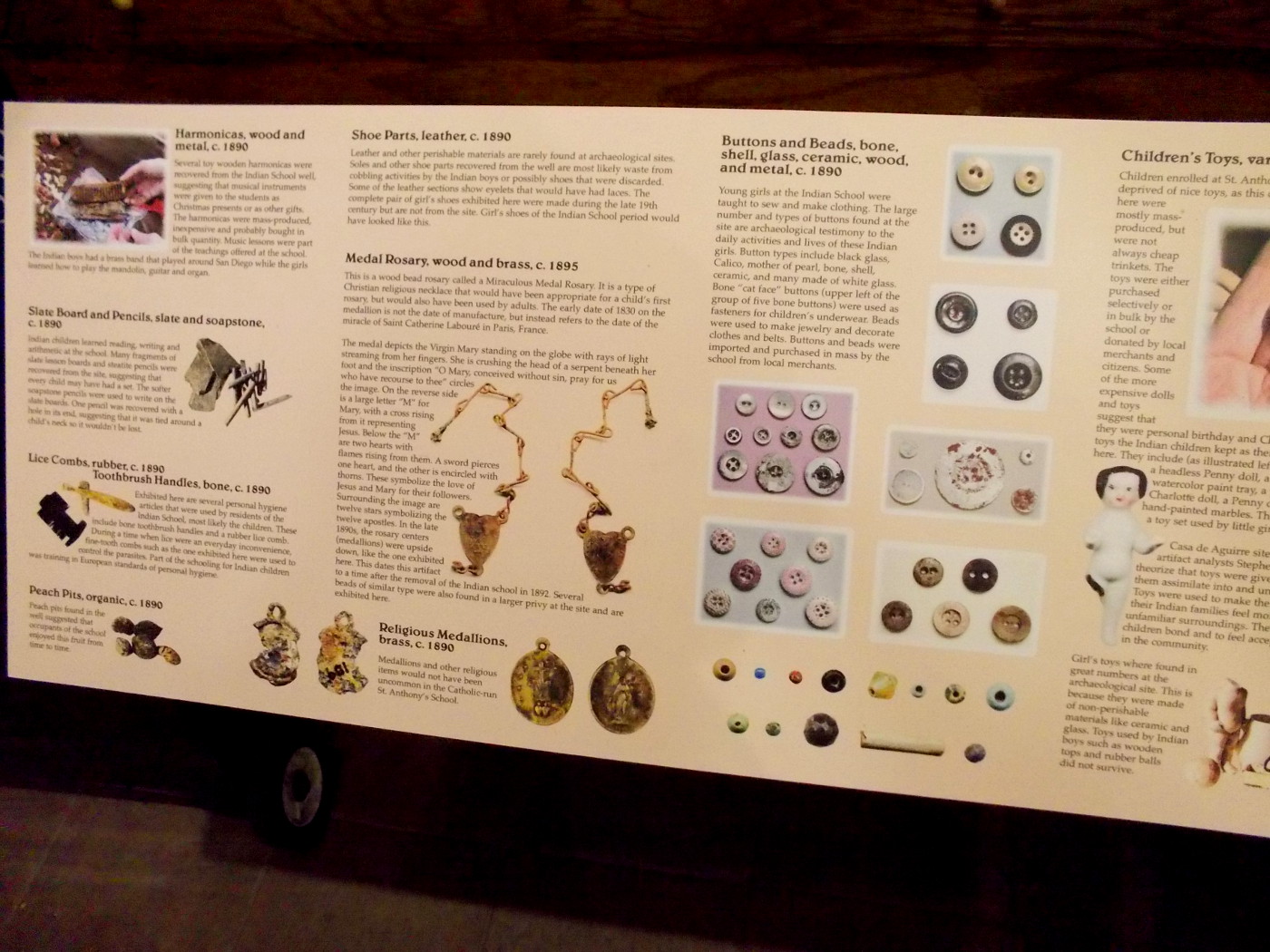
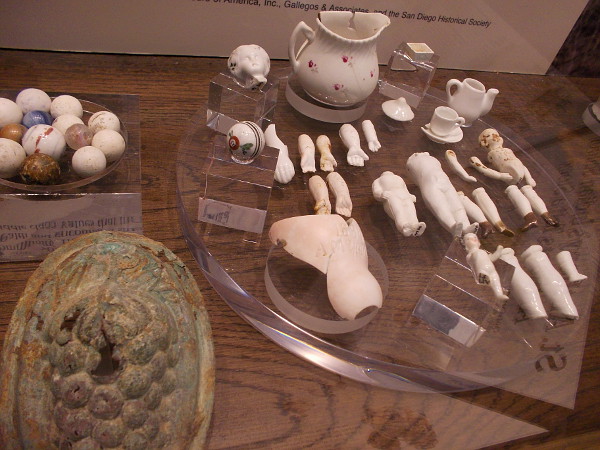
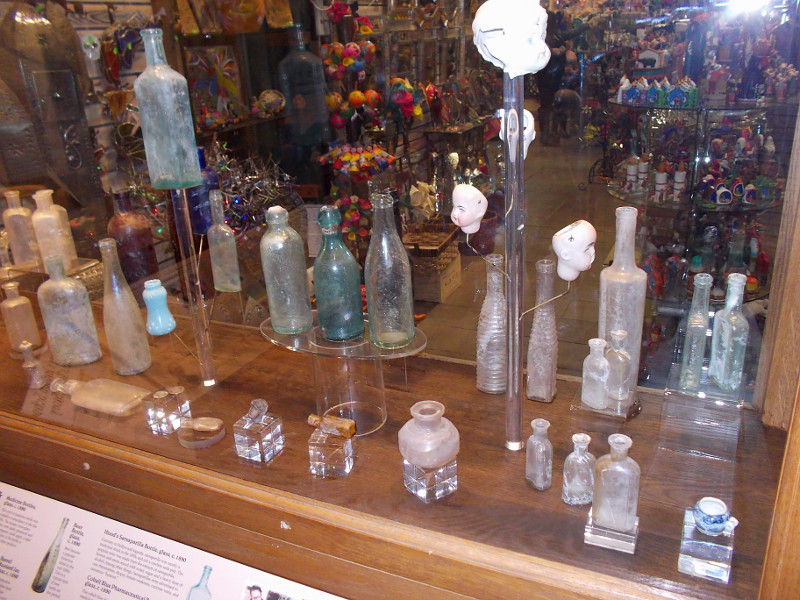
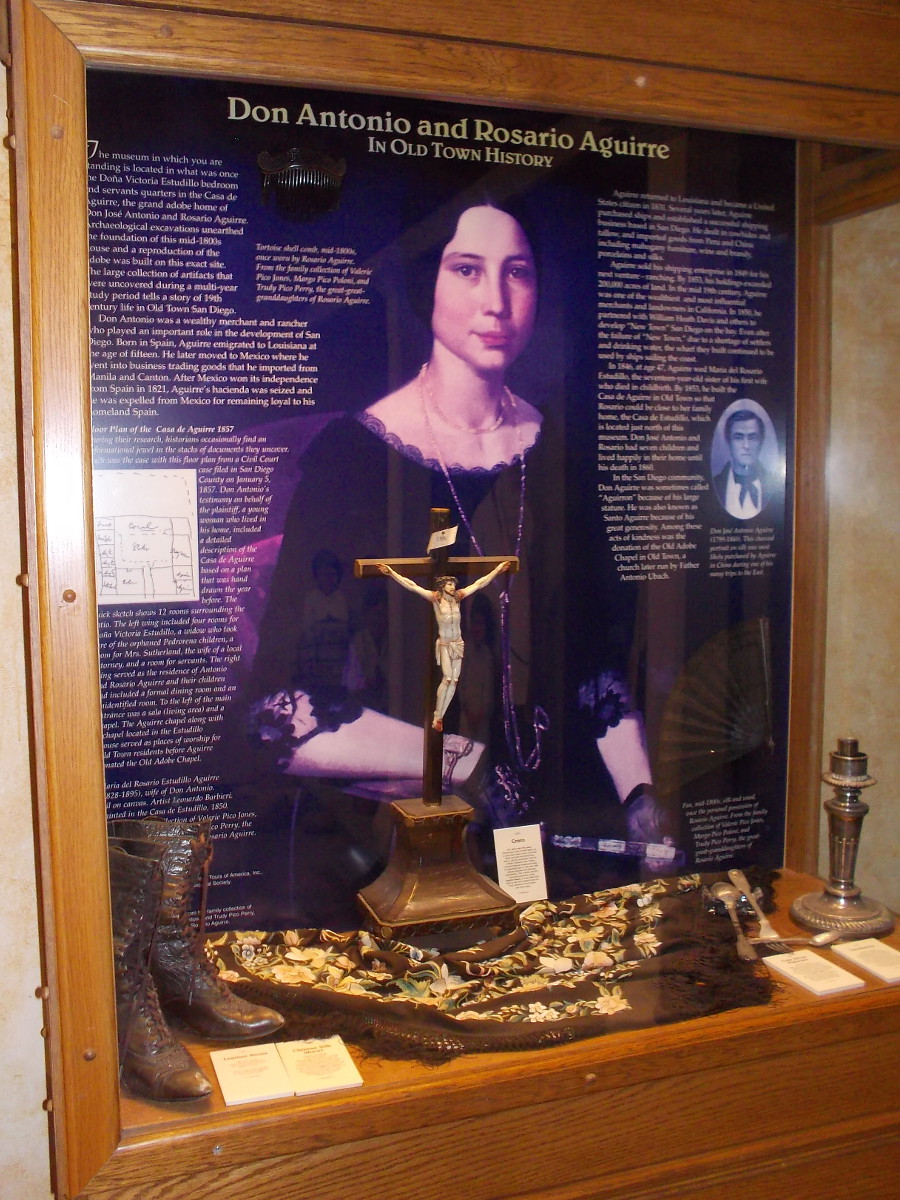
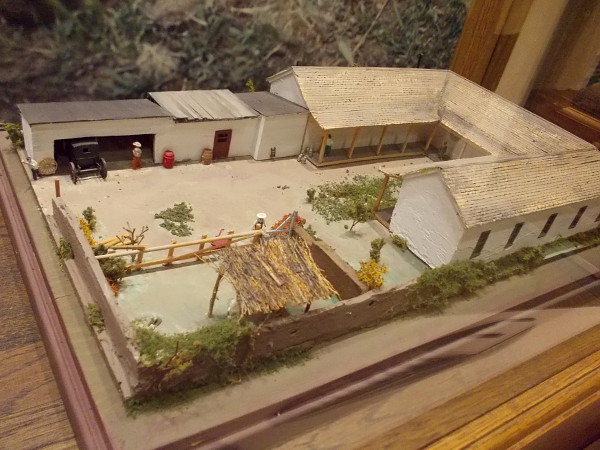
Casa de Aguirre in Old Town was originally built around 1853. The adobe mansion was one of the first houses in San Diego, owned by Don Jose Antonio Aguirre, a prosperous merchant and rancher. The present building is a reproduction.Bronze bust of Don Jose Antonio Aguirre, near entrance to Casa de Aguirre. Born in Spain, he owned several ships and warehouses and imported goods from Peru and China to trade for cowhides and tallow.Don Jose Antonio Aguirre was known for his charity and funded many projects in early San Diego. He, his wife and children are considered to be one of our city’s founding families.Bust of Father Antonio Ubach, Last of the Padres, 1835-1907. Antonio Dominic Ubach ran St. Anthony’s Indian School on this site from 1886 to 1891.Plaque describes how Father Ubach advocated for California’s Native Americans and lobbied government to protect the Indians and their lands. He was loved by many. His last words were: “Have charity.”Casa de Aguirre in Old Town San Diego today contains a shop visited by many tourists and a small museum in back.One side of El Museo Casa de Aguirre. Excavated artifacts are on display, recalling what life was like here in the mid to late 19th century.Visitor to the small museum watches a video which includes information about archaeological discoveries, the history of the casa and the lives of those who were sheltered here.St. Anthony’s Indian School Artifacts Tell a Story. Many objects on display include porcelain cups, goblets, bottles, a saltshaker and beer mug.Sign describes additional historical finds, including buttons, toys, harmonicas, slate board and pencils, lice combs, toothbrush handles, shoe parts, medal rosary and religious medallions.Marbles, doll parts and tiny children’s tea sets, recovered from San Diego’s past.Dozens of buttons on display. They were fastened by living fingers, now long gone.Two old pipes.Numerous bottles and jars are exhibited in the Casa de Aguirre Museum. They were used for medicine, mustard, chemicals, perfume, whiskey, beer, sarsaparilla…People interested in collecting antique bottles would be mesmerized by the large assortment on display.Don Antonio and Rosario Aguirre in Old Town History. The museum is located in what was once the bedroom and servants quarters in the Casa de Aguirre. The present-day adobe is a reproduction.Don Antonio Aguirre, 1799-1860, was one of San Diego’s most important figures back when our burgeoning Southern California city was just a very, very small town.A model of how the Casa de Aguirre appeared a century and a half ago.
…
I live in downtown San Diego and love to walk! You can follow Cool San Diego Sights via Facebook or Twitter!
You can easily explore Cool San Diego Sights by using the search box on my blog’s sidebar. Or click a tag! There are thousands upon thousands of fascinating photos for you to enjoy!
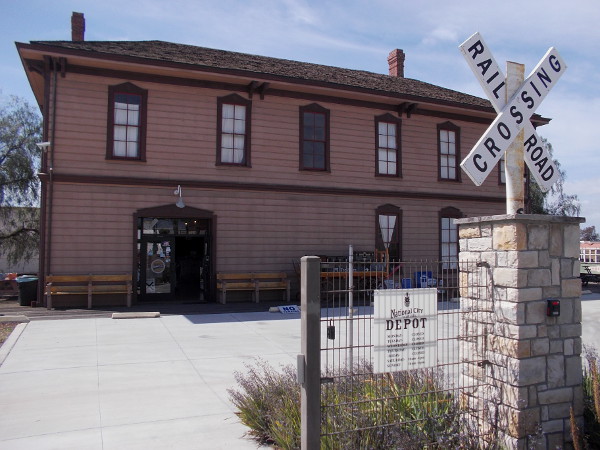
There’s more than refreshments and snacks at the National City Depot. There’s a huge, cool collection of local railroad and trolley history!
If you’re a train or streetcar lover, prepare to go nuts! The friendly guys at the National City Depot, which is home to the Trolley and Railroad Museum operated by the San Diego Electric Railway Association, allowed me to take loads of photographs a couple weekends ago! The place is so crammed with cool stuff, I hardly know where to start!
(Before I get started, however, I learned the National City Depot is in desperate need of volunteer docents and cashiers. So if you live around San Diego and have some free time, please consider this opportunity. Railroading enthusiasts would be in heaven. If you’d like, you might actually roll up your sleeves and help work to revitalize several vintage streetcars. You can have a great time preserving and enlivening our local history of trolleys by explaining exhibits and sharing knowledge with curious visitors, tourists and school students. SDERA’s stated mission is to restore and preserve the history of electric railways and trolleys in the San Diego region. Click here for more info.)
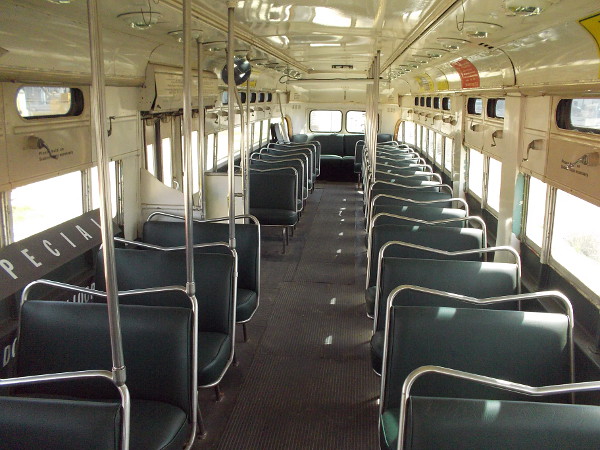
As you can see from the first photo, the depot has a number of old railroad cars and streetcars sitting outside on either side of it. The San Diego Metropolitan Transit System, MTS, has provided the private association with three old Vienna streetcars and one Presidents Conference Committee (PCC) streetcar. The latter is undergoing restoration, and will eventually be used as a cool tourist attraction, running over the Coronado Belt Line of the San Diego and Arizona Eastern Railroad!
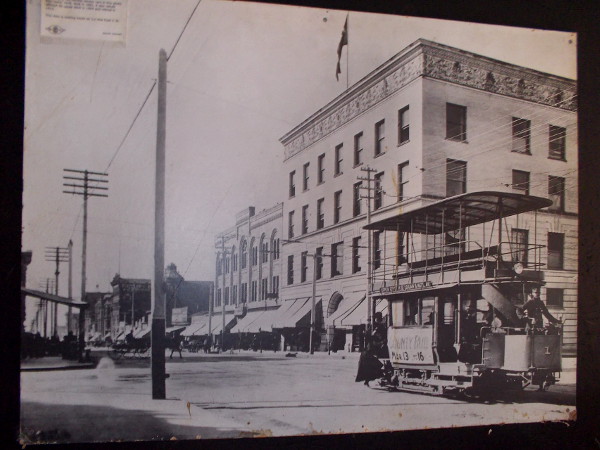
You might recognize the name San Diego Electric Railway. It was the mass transit system built by locally famous “sugar heir” and entrepreneur John D. Spreckels. His network of railroads was established in 1892, and active streetcars served a large area of the city for many decades. The San Diego Electric Railway Association proudly displays some examples of the rolling stock that were utilized in those glory years of electric streetcars.
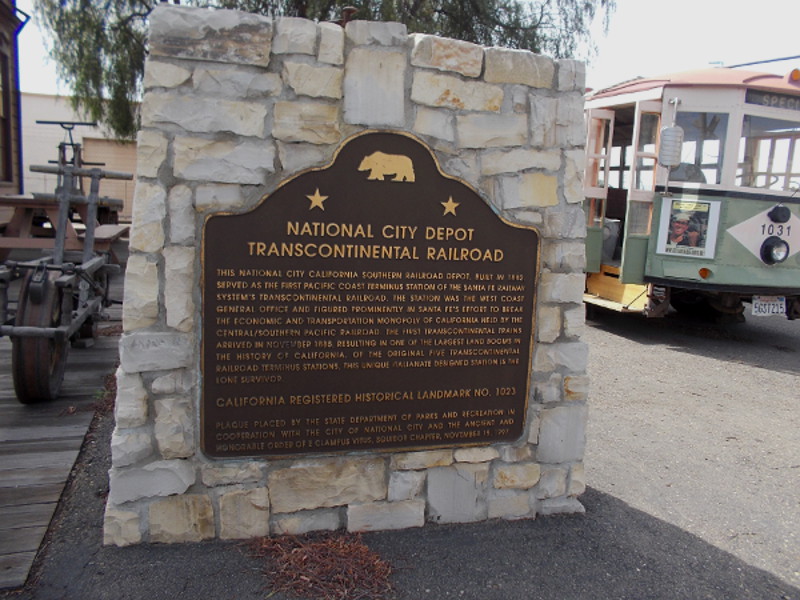
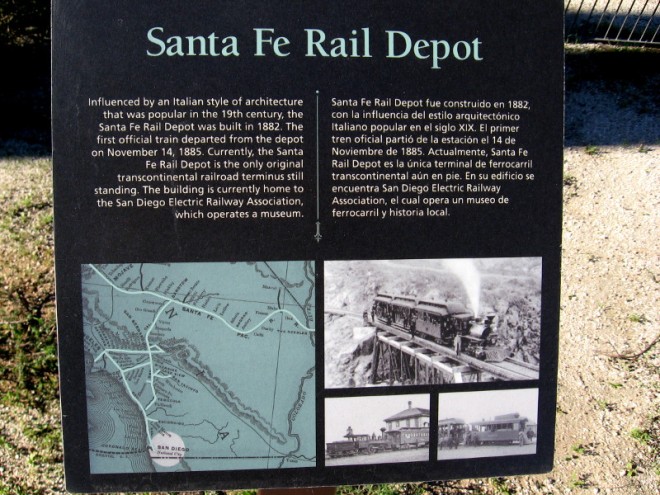
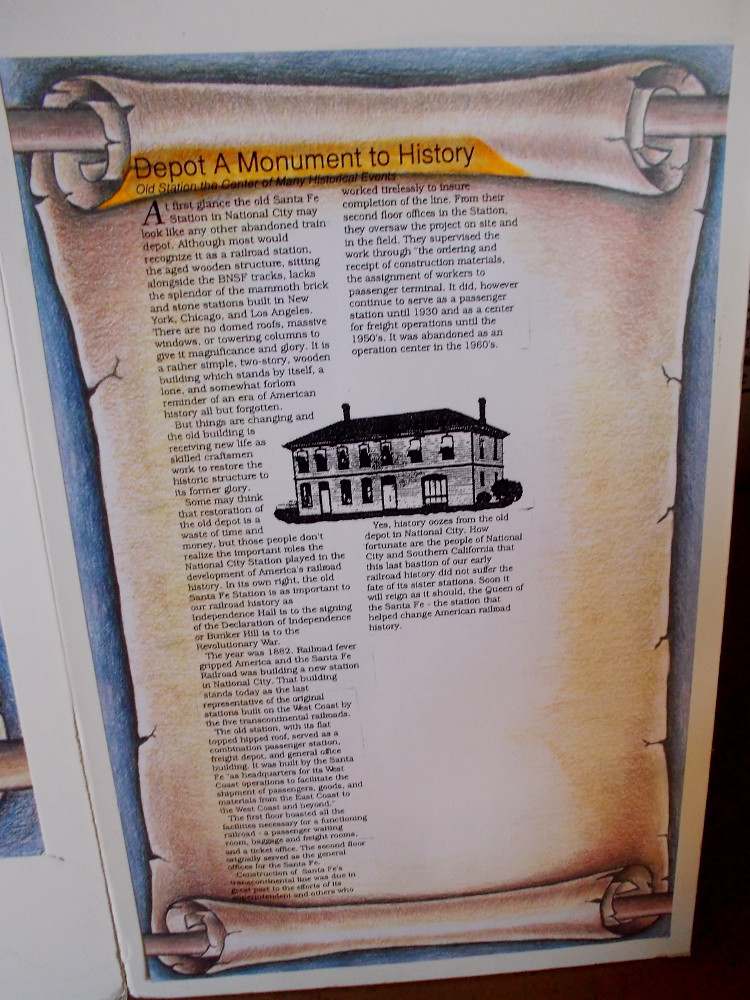
The National City Depot has its own fascinating history. It was built in 1882 by the Santa Fe Railroad, and became the first Pacific Coast terminus station of their transcontinental line. Today, it’s the last representative of the original stations built on the West Coast by the five different transcontinental railroads. After various changes in its operations over the decades, the depot was abandoned in the 1960s and suffered severe neglect. Before finally reopening as a museum, it was also used as a unique building for a couple of restaurants. It’s now owned by the city of National City.
I learned so much during my visit, my brain is still whirling. If I’ve captioned the photos incorrectly, or have made some sort of factual error, please leave a comment!
Here come the photos, just a taste of what you might see should you swing on by. Enjoy!
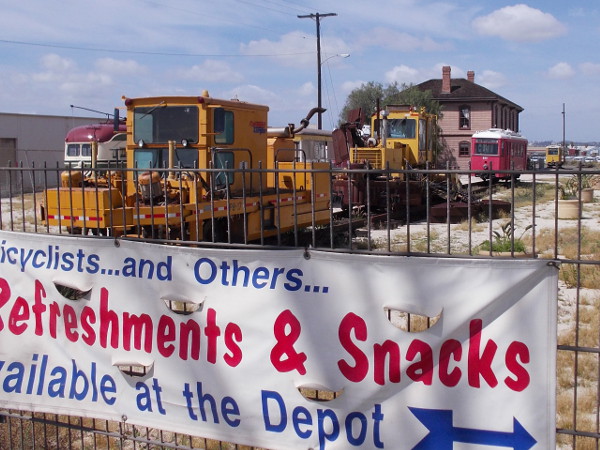
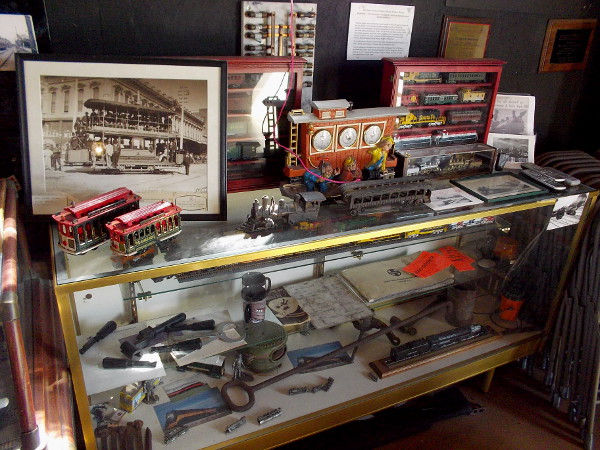
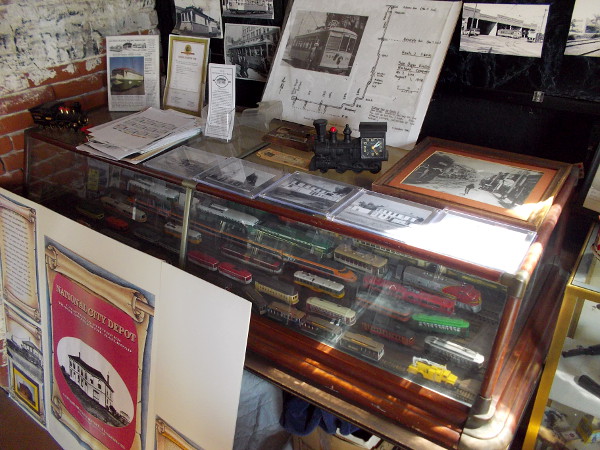
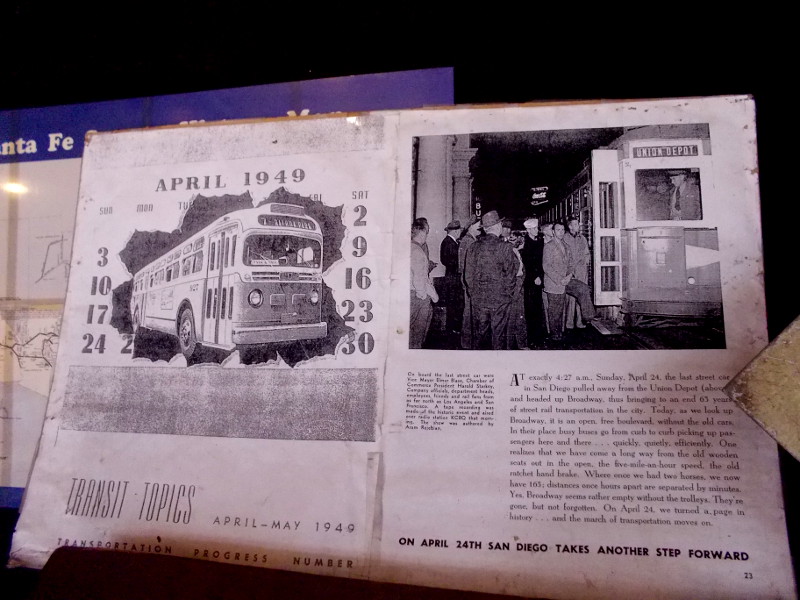
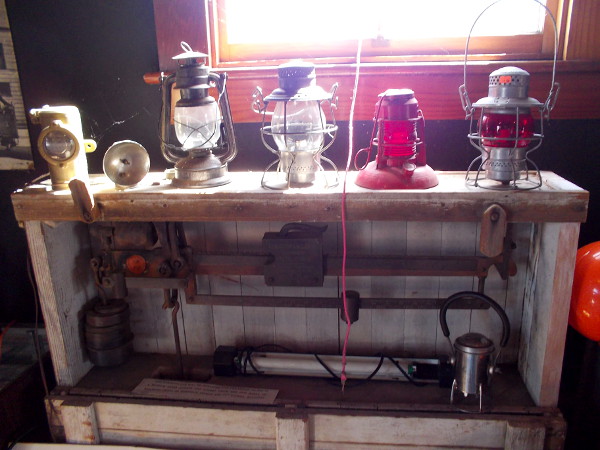
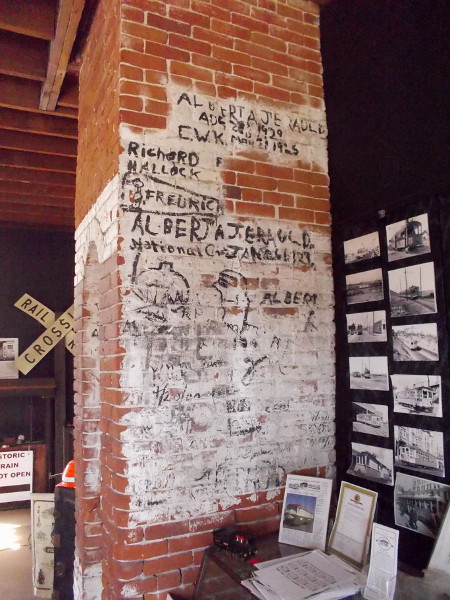
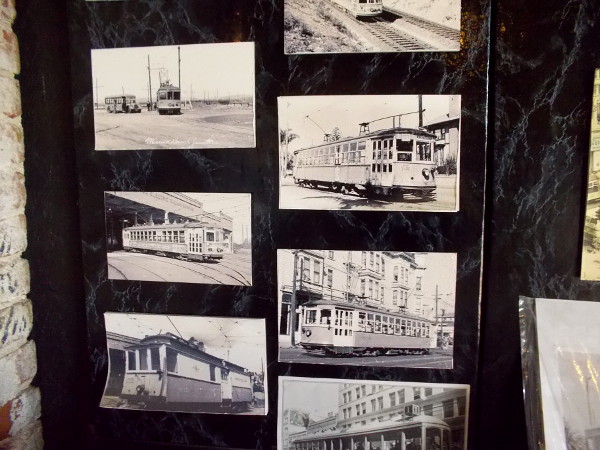
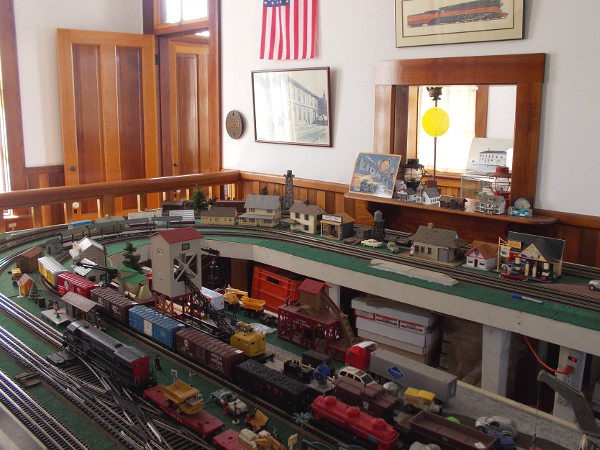
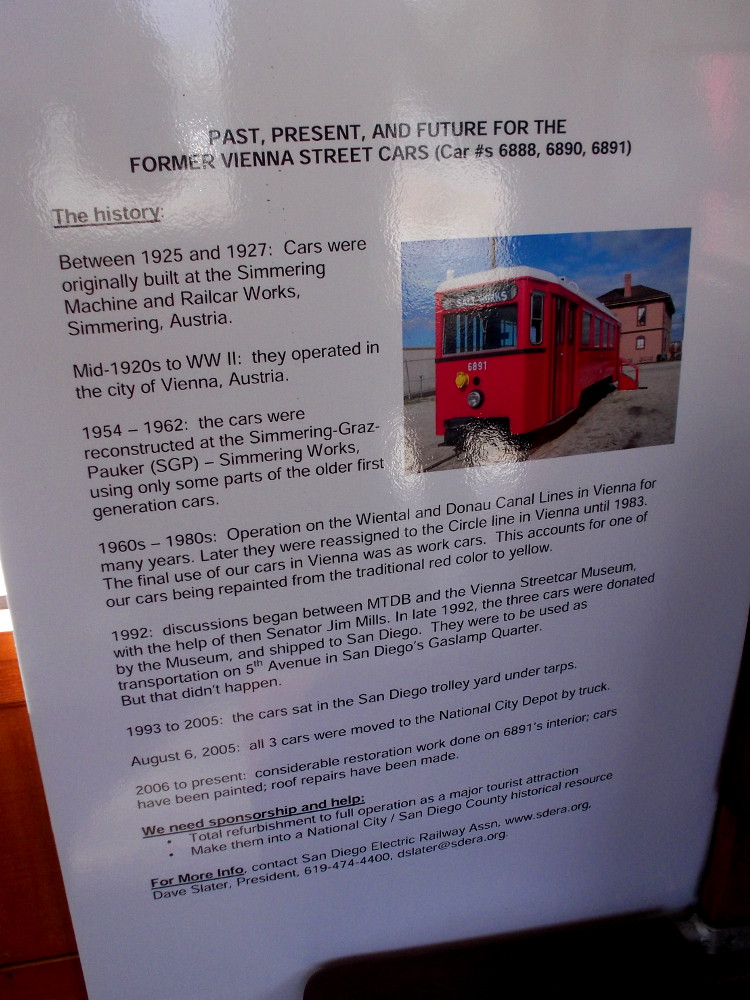
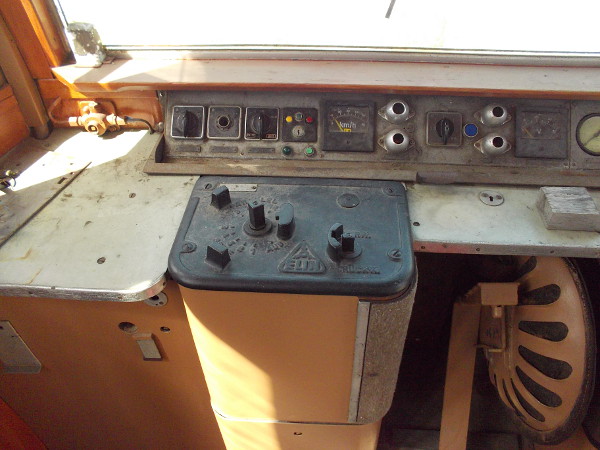
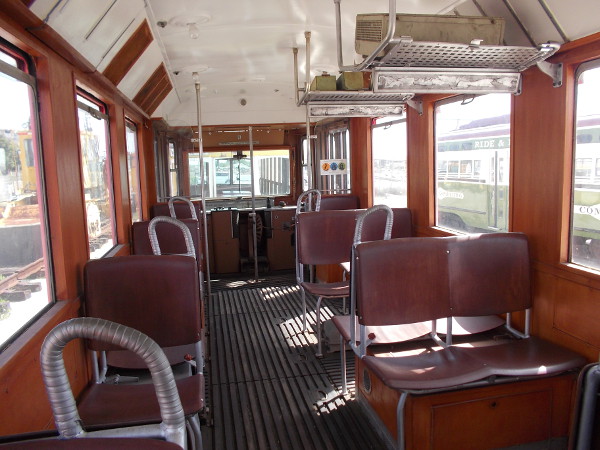
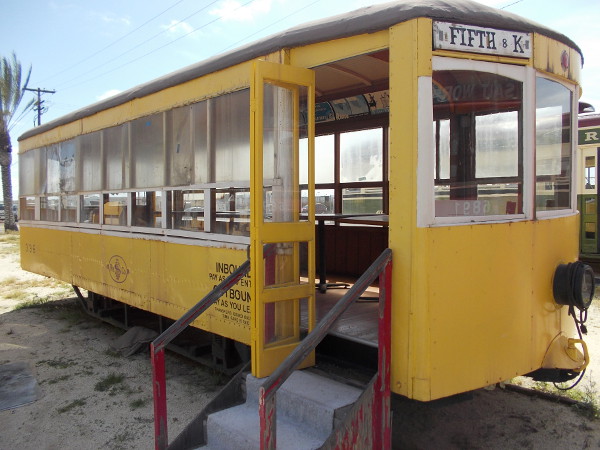
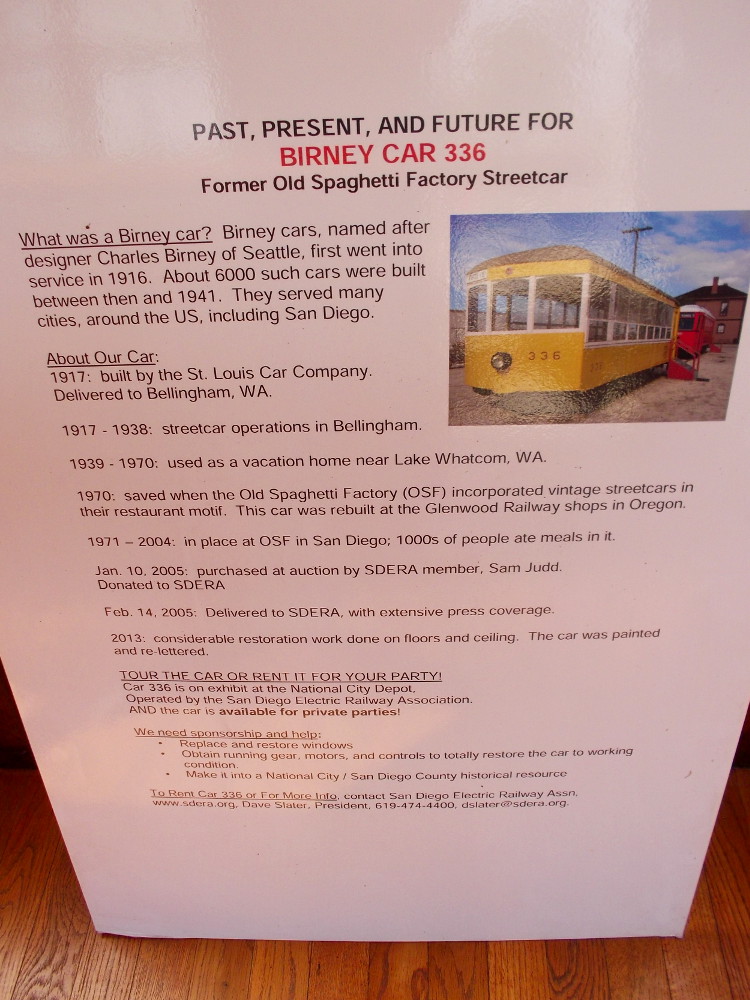
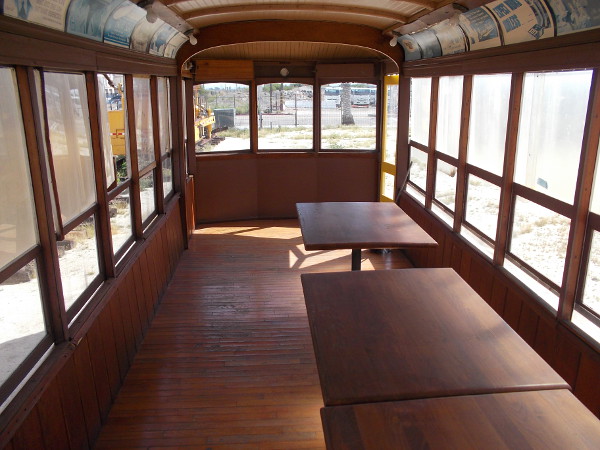
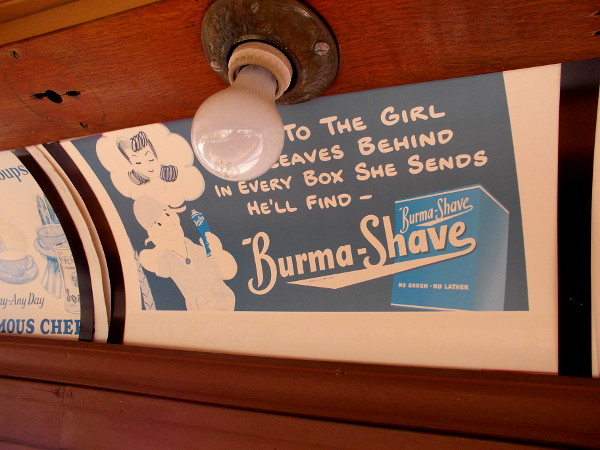
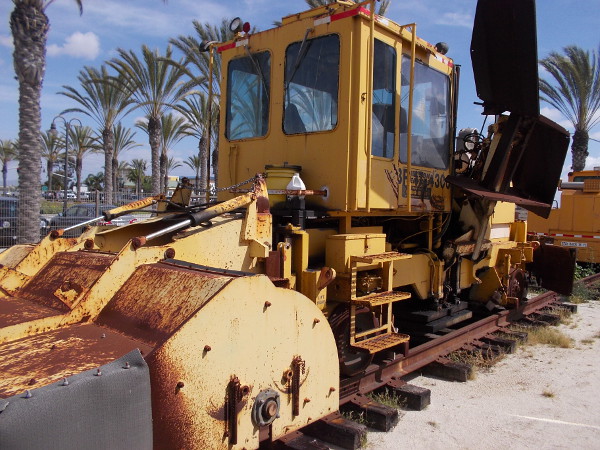
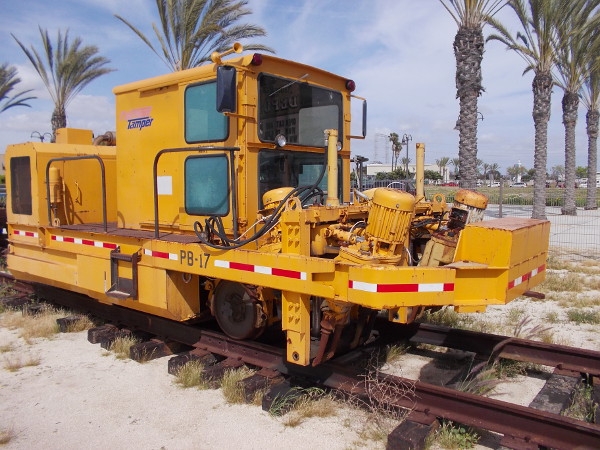
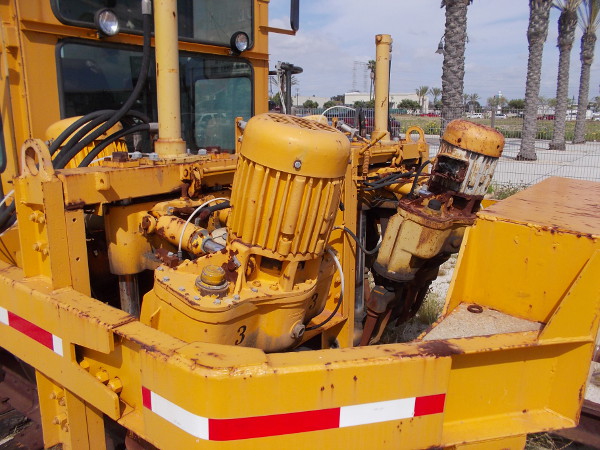
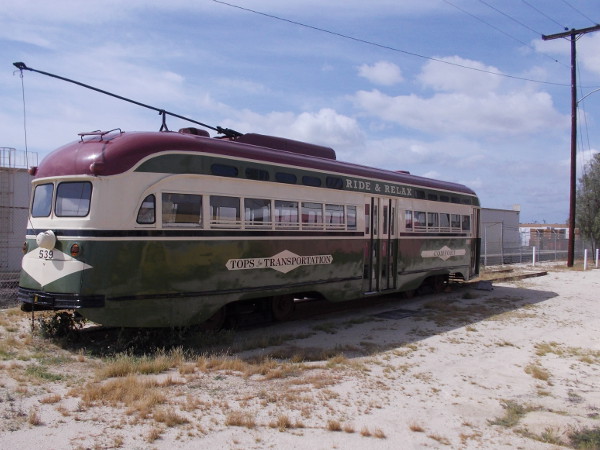
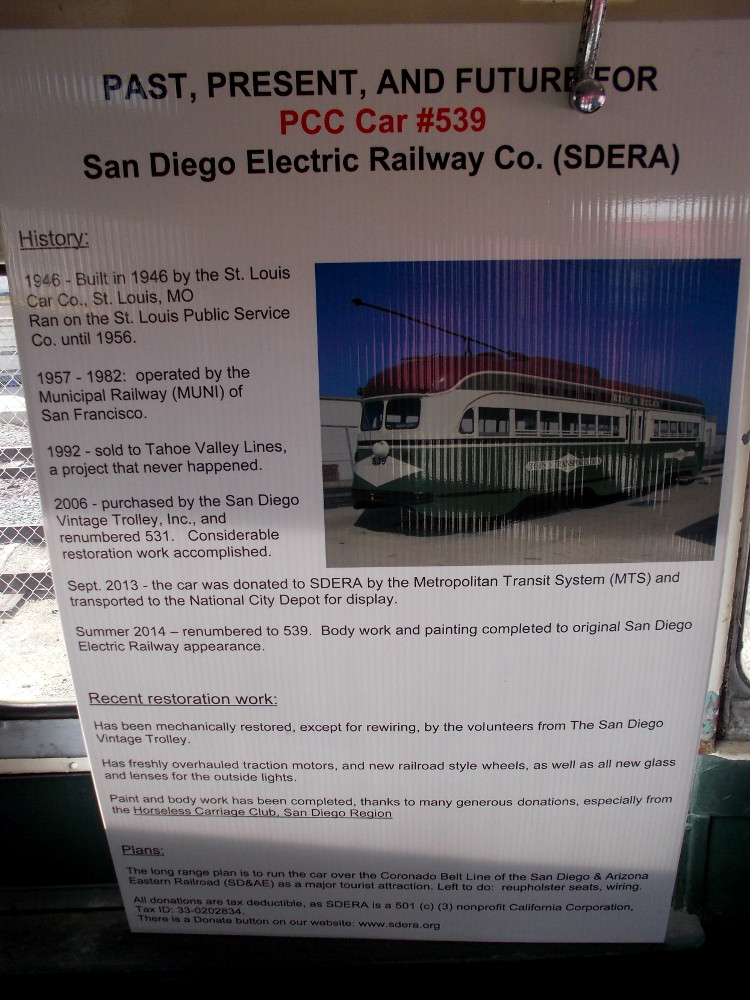
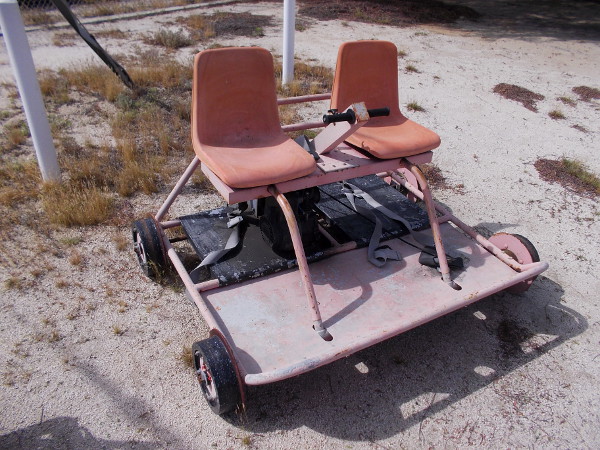
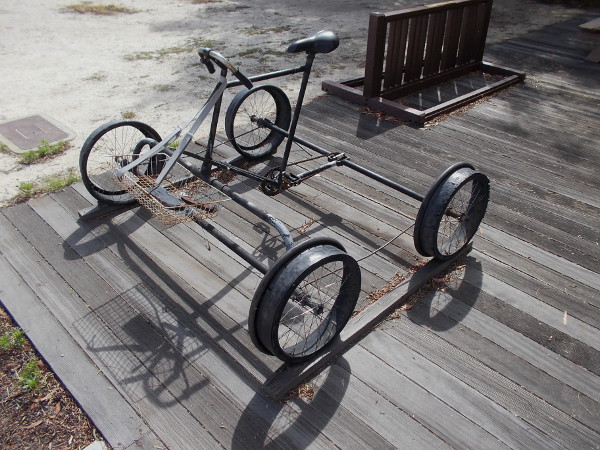
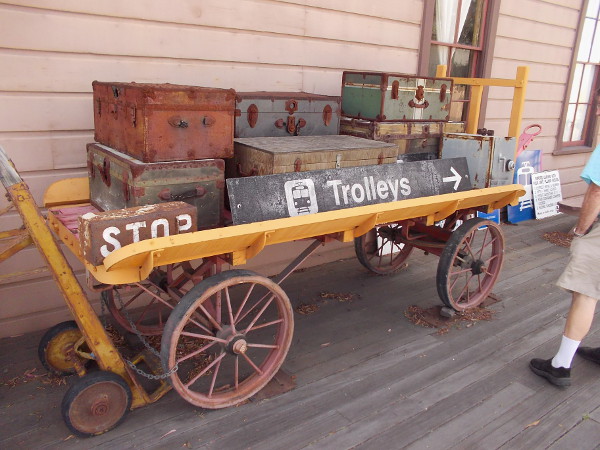
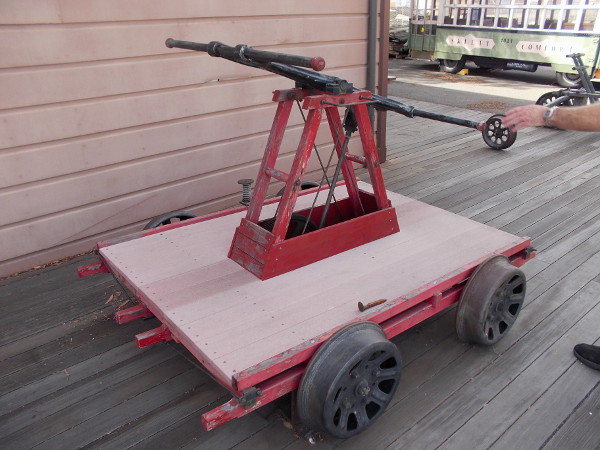
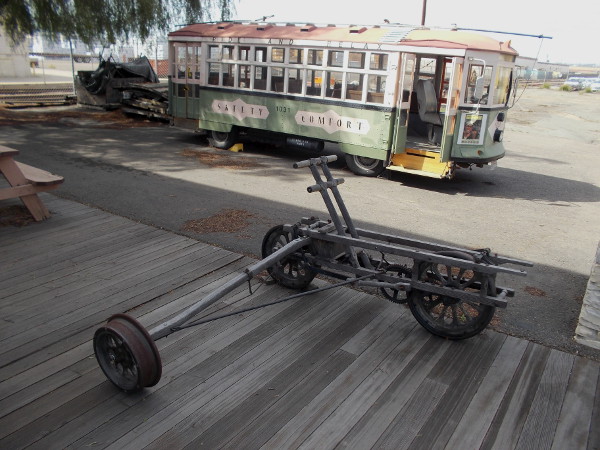
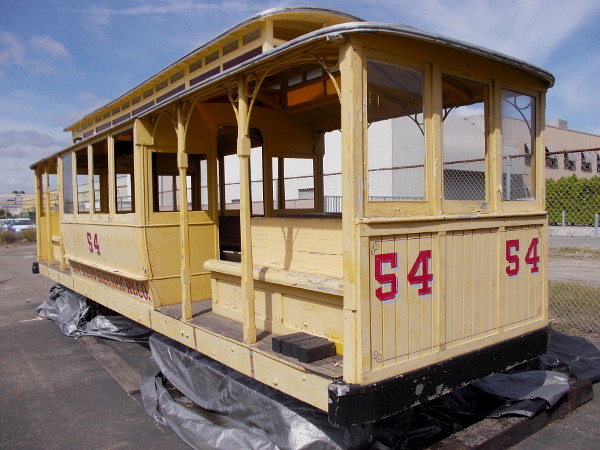
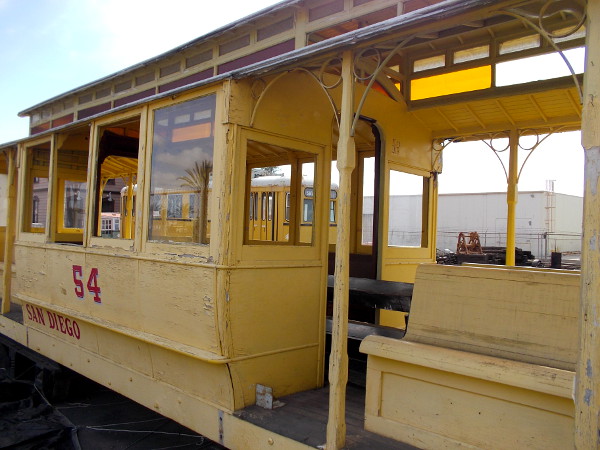
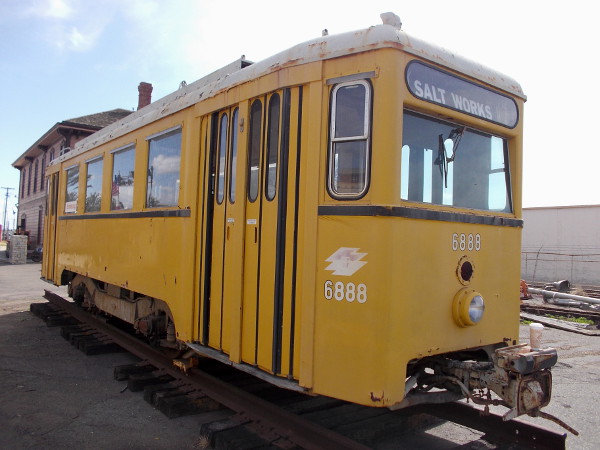
The National City Depot was built in 1882. It was the first Pacific Coast terminus station of the Santa Fe Railroad’s transcontinental line.Plaque in front of National City Depot, the first Pacific Coast terminus station of Santa Fe’s transcontinental railroad. California Registered Historical Landmark No. 1023.Sign describes Santa Fe Rail Depot in National City. It’s the only original transcontinental railroad terminus still standing.Inside the small depot are display cases full of model trains and streetcars, plus artifacts and memorabilia. The walls are covered with old photos and historical information.The famous old train station sits alongside BNSF tracks which are still active. The National City Depot played in instrumental role in American railroad history.There’s so much cool stuff crammed inside the museum, a railfan could spend hours closely examining all of it!A magazine article on display for train buffs and history enthusiasts to check out. Buses finally replaced the old network of San Diego trolleys in 1949.One of many old photos in the museum depicting San Diego’s very rich electric streetcar history.A collection of old lanterns. Everything imaginable concerning San Diego railroads and trolleys can be found inside the National City Depot.Faded writing on the brick fireplace recalls when the eventually abandoned depot was used as a restaurant. Black panels on the walls cover graffiti.One section of a wall has lots of photos of vintage streetcars and trolleys.A second room inside the National City Depot contains a huge model train layout! The exhibit is run when the depot is open Thursdays to Sundays from 9am to 5pm. It appears that SDERA members have a lot of fun!The best photo I could get of a big antique Raymond and Wilshire safe in the historic transcontinental depot. I had to squeeze up against the model train layout.Now we’re outside beside the depot at a picnic bench! I like these two planters in the shape of steam locomotives!Two of National City Depot’s three old Austrian streetcars. These were going to be used by MTS for the San Diego Trolley in the Gaslamp Quarter, but couldn’t meet ADA standards, as I understand it.Sign inside one Vienna street car details the history. They were originally built at the Simmering Machine and Railcar Works, Simmering, Austria.Now we’re stepping like a passenger into one of the old Austrian streetcars!The controls used by this electric streetcar’s operator. Notice a seat that folds under the dashboard.Looking back where passengers would sit. There didn’t seem to be much capacity in the small cars.Now we’re checking out Birney Car 336, out in the open lot beside the National City Depot. This is one type of streetcar that transported people in San Diego decades ago.Birney Car 336 was built by the St. Louis Car Company in 1917, and first served in Bellingham, WA. It later was used for dining inside the Old Spaghetti Factory in San Diego, from 1971 to 2004!Inside the old Birney Car. I’m hungry for some spaghetti! Where are the chairs?Cool vintage advertisements along the car’s ceiling include this one for Burma-Shave.A big, heavy tamping machine used for maintaining railroad tracks and placing them more firmly onto packed ballast.A second ballast tamper outside the National City Depot. I always wondered what these unusual machines that you see on train tracks are for.Part of the machinery that pushes down on the steel rails and ties. This makes sure train tracks are solidly in place and level.Gazing back north past various rail exhibits outside the National City Depot. Isn’t this fun?Now we’ll check out PCC Car 539, which was donated to SDERA by the Metropolitan Transit System.PCC Car 539 was built in 1946 by the St. Louis Car Company. It served as a streetcar in St. Louis until 1956. Restoration is underway. One day it might run nearby as a tourist attraction.Inside the fabulous PCC car. The San Diego Trolley now has two completely restored cars of this type, running in a downtown loop called the Silver Line.I believe this is a Fairmont Speeder Car. Tiny crew cars were used to transport a few individual workers up and down tracks. I’d love to ride one!Oh, man! I bet you’d love to sit in one of these seats and ride the rails! Just turn the throttle to go!Seriously? This one is basically a bicycle for train tracks! Except it has four wheels! And a bike chain, of course!This luggage cart near the entrance to the National City Depot was donated by the Maritime Museum of San Diego–it evidently was aboard the steam ferry Berkeley at one time.One of several cool vintage handcars. Just like you see in those old Western movies.This unusual three-wheeled handcar reminds me of a canoe outrigger!San Diego Electric Railway Association’s fun Herbie is a Brill streetcar replica. A parade and car show’s popular Streetcar on Wheels!An antique open air streetcar at the National City Depot. This a grip car, like the cable cars in San Francisco. Few people realize that San Diego had a cable car line that briefly ran from the Gaslamp to University Heights in the early 1890s!Elegant number 54 is a unique composite, built using two different San Diego Cable Railway cars. I see panes of stained glass. The yellow paint is peeling.The third Vienna streetcar in the National City Depot’s collection, number 6888, is yellow.There’s a ton of very cool stuff to see at the National City Depot, in San Diego’s South Bay!
…
I live in downtown San Diego and walk all over the place! You can follow Cool San Diego Sights via Facebook or Twitter!
You can easily explore Cool San Diego Sights by using the search box on my blog’s sidebar. Or click a tag. There are thousands upon thousands of fun images (including lots of model and historical train photographs) for you to enjoy! Feel free to share! Have some fun!
National City’s unique Historic Railcar Plaza. One can peek inside the barn and see a few exhibits that recall 19th century rail service in San Diego’s South Bay.
During my excursion last weekend to National City, I saw several very cool sights. Here’s one!
Those interested in San Diego’s rich history of trains and streetcars should visit the Historic Railcar Plaza, which is located at the intersection of Bay Marina Boulevard and Harrison Avenue. (It’s right across from National City’s awesome Old Depot museum, which I’ll blog about as soon as my photos are ready!)
In addition to several displays dedicated to past railroads that serviced San Diego’s South Bay, the Historic Railcar Plaza features the fantastic, restored Passenger Coach No. 1. The old coach can be rolled outside of a small train barn on special occasions. Passenger Coach No. 1 was originally built in 1887 and carried passengers up and down the National City and Otay Railway (NC&O) until 1914. The beautiful open railcar used to seat up to 58 passengers in varnished redwood splendor.
The Historic Railcar Plaza’s small barn was built in 2000. The day I peeked through the windows it was padlocked shut. The windows were rather dirty and a few of the displays within had toppled over, which seems to indicate a degree of neglect. Apparently the cool car is rolled outside on the short track from time to time. I hope to see that one day!
Many of my photos were through those dirty windows. I did my best to adjust the images for clarity.
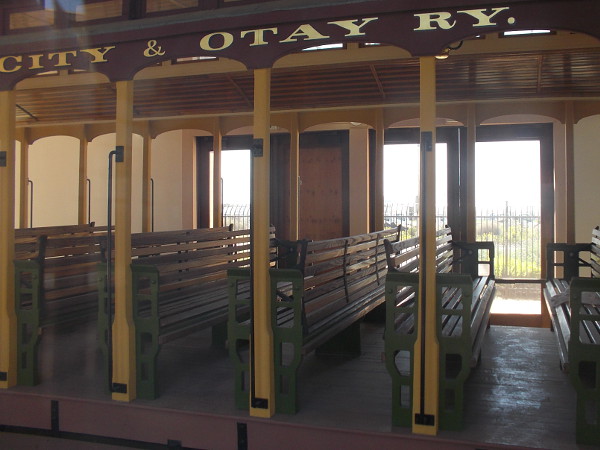
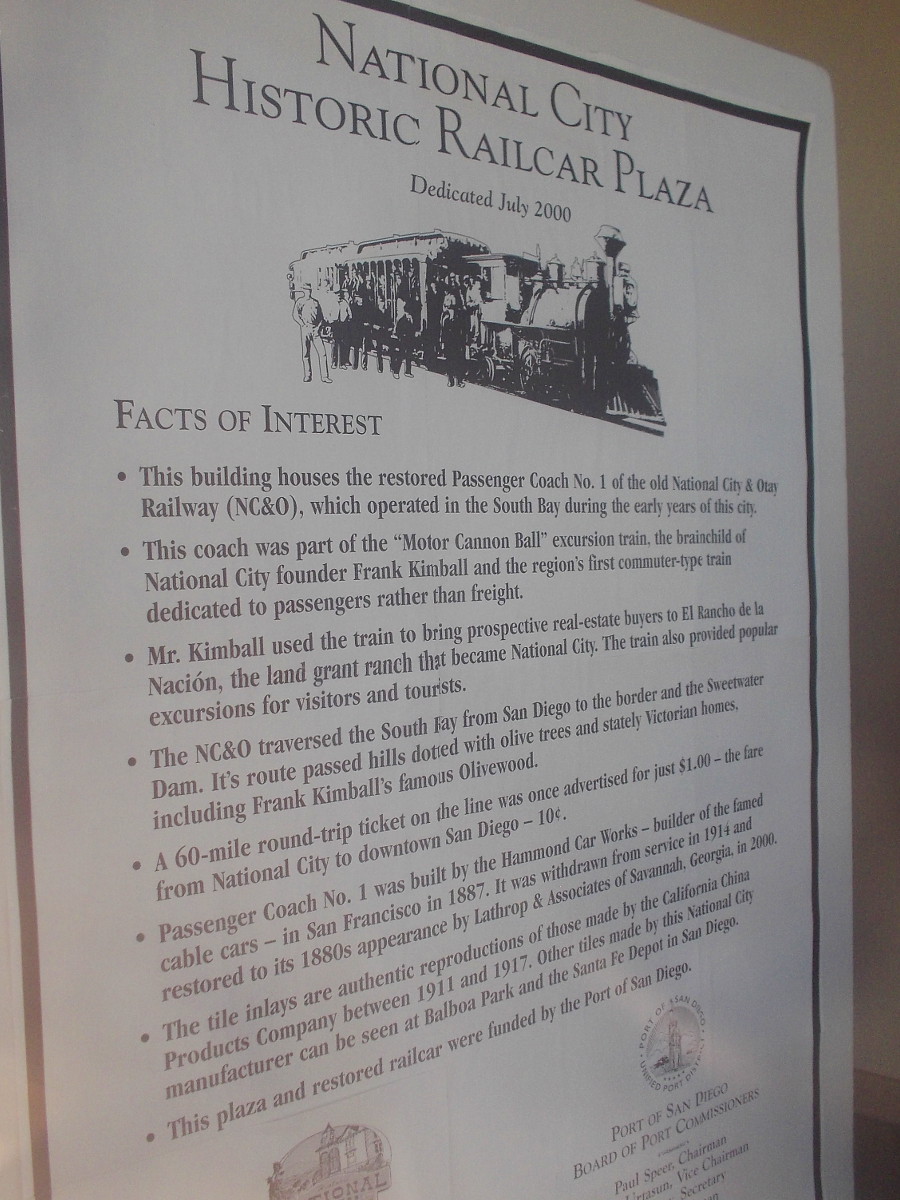
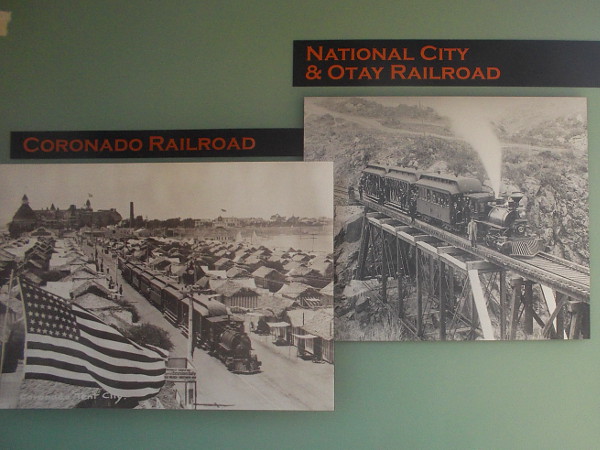
Mysterious stretch of train track emerges from the barn’s door. A very cool bit of history can be rolled outdoors during special occasions.That bit of history is the restored Passenger Coach No. 1, of the long-defunct National City and Otay Railway.The restored coach features outdoor bench seating and beautiful woodwork. Passengers could ride this car from San Diego through National City and Chula Vista to the Mexican border.A mannequin inside the Historic Railcar Plaza depicts the legendary Millionaire Hobo, J.B. King, Esq. His one burning ambition was to write his name on every car of every train in the country!A century ago, a ticket for the sixty mile round trip on the National City and Otay Railway could be purchased for just one dollar.Two old photographs. On the left, the old Coronado Railroad traveled through Imperial Beach and up the Silver Strand to Tent City in Coronado. One can see the splendid Hotel del Coronado in the distance!Map inside the Historic Railcar Plaza shows the various railways that once serviced San Diego, when transportation by train was extremely popular.Key to the above map includes the region’s evolving railroads: the California Southern, the National City and Otay, the Coronado, the San Diego Southern, the San Diego and Southeastern. and the San Diego and Arizona.
I live in downtown San Diego and love to walk! You can follow Cool San Diego Sights via Facebook or Twitter!
You can easily explore Cool San Diego Sights by using the search box on my blog’s sidebar. Or click on a tag! There are thousands upon thousands of fun photos for you to enjoy!
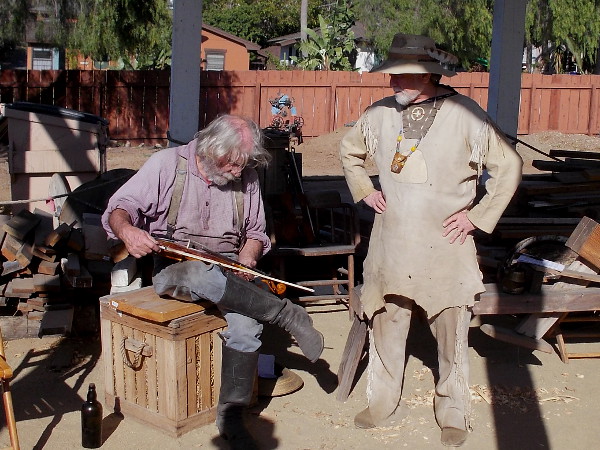
Two rugged mountain men, one with a fiddle, hang out behind Seeley Stable in Old Town San Diego State Historic Park.
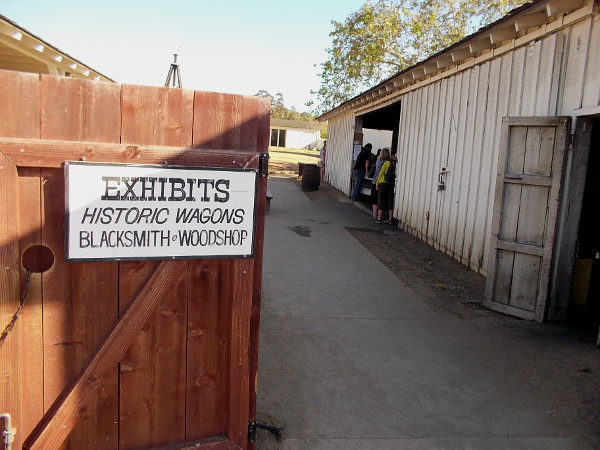
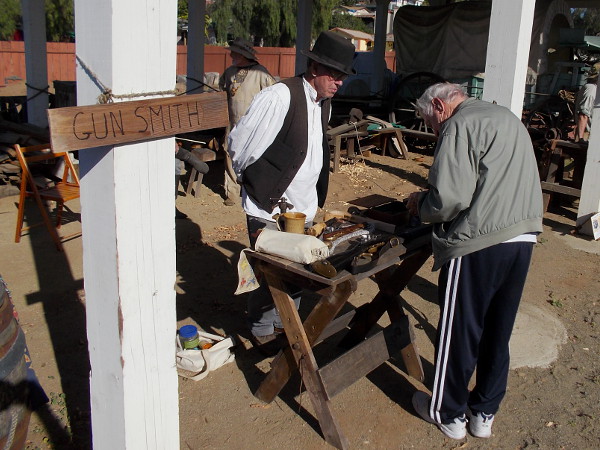
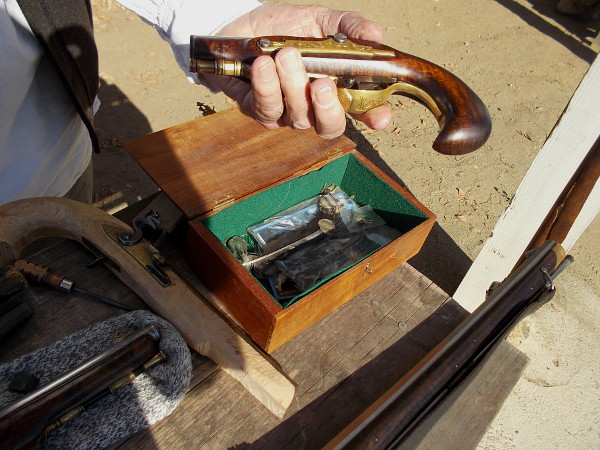
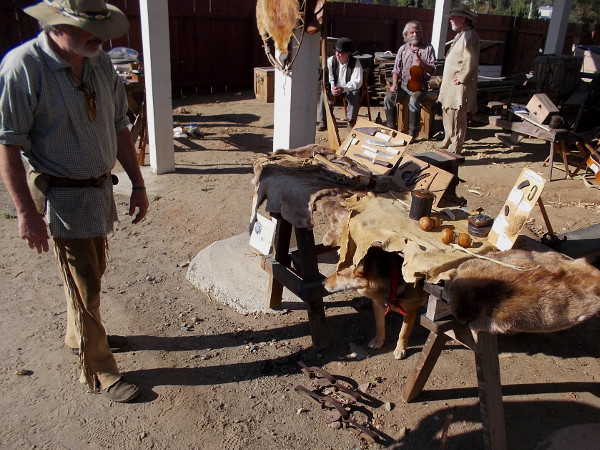
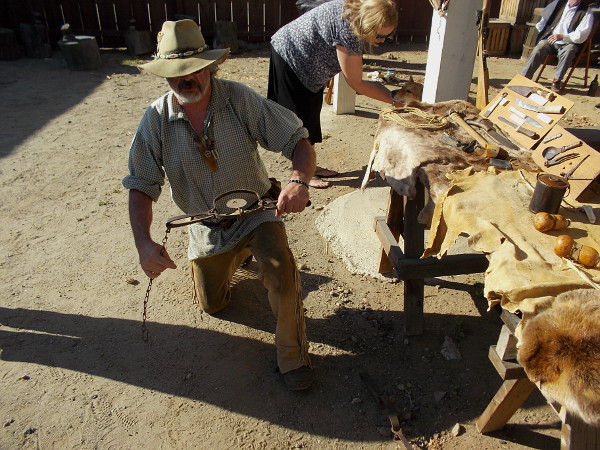
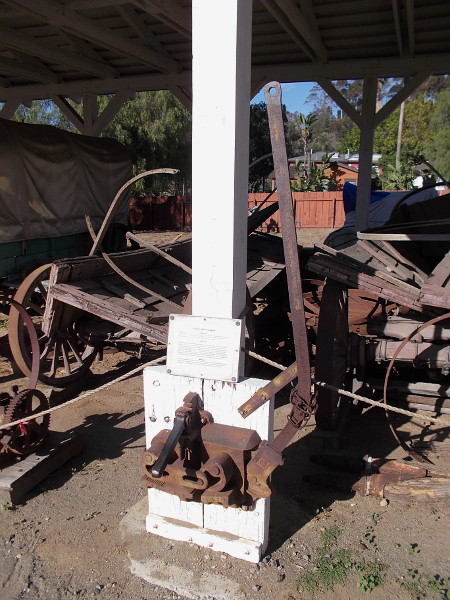
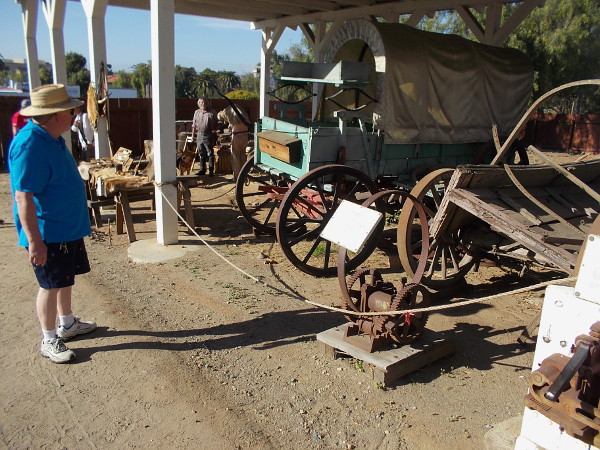
Here are some cool photos of what life was like back in the Old West. I snapped these last weekend behind Seeley Stable at Old Town San Diego State Historic Park. Some mountain men, a gunsmith and blacksmith were showing visitors a few aspects of frontier life long ago.
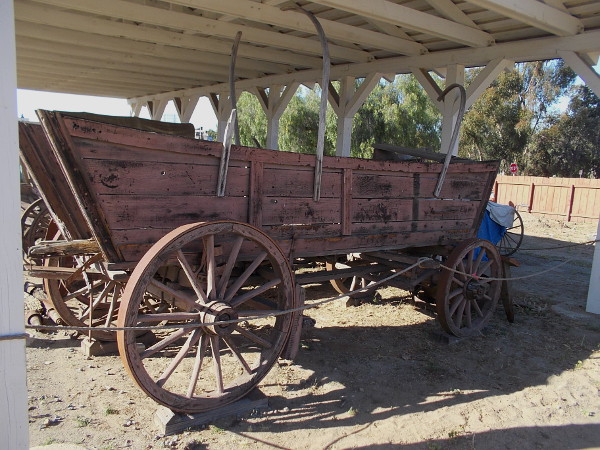
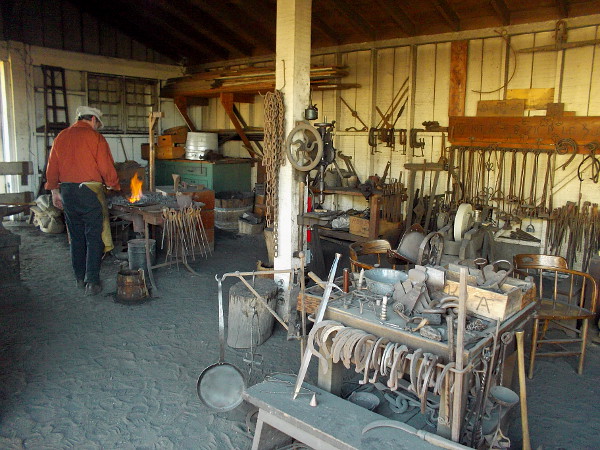
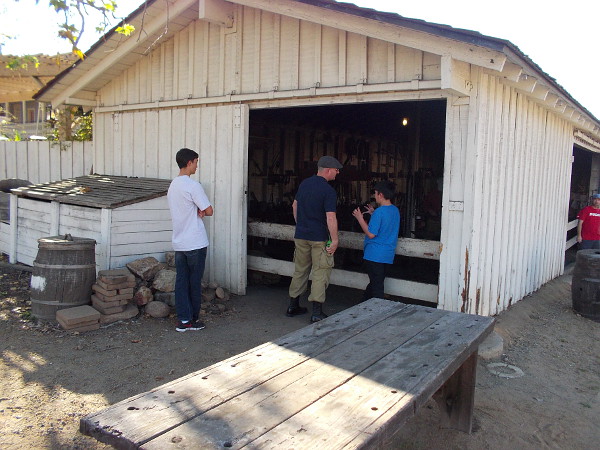
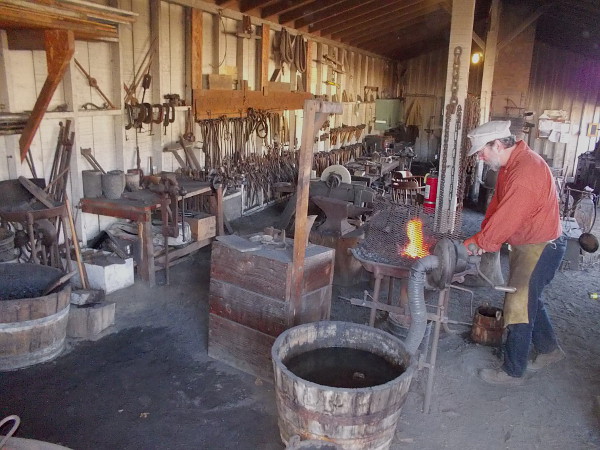
Beyond this gate just off La Plaza de Las Armas is the yard behind Seeley Stable. Here you’ll find outdoor exhibits, including old wagons and a blacksmith and woodshop.A gunsmith who assembles his own old-fashioned rifles and firearms shows a visitor some examples in San Diego’s historic Old Town.This antique flintlock pistol would have been used in past centuries for personal protection at close range.A friendly mountain man had a table full of skins, knives and other objects associated with frontier life in the Old West.A demonstration of how trappers in the Old West would set a beaver trap by a river and anchor it to a strong stick in the mud.This rusty tool with a long handle is a tyre shrinker. It was used for routine maintenance in the olden days–reducing the diameter of the iron tyres found on wooden wagon, cart and buggy wheels.Someone reads a sign near a tyre bender. This device was used to send long, flat bars of iron or steel into a smooth circle that would become an iron tyre.An old covered wagon on display behind Seeley Stable. They were typically sturdy farm wagons with a canvas top. Covered wagons were used on trail drives and cross-country treks.Photo inside the well-equipped blacksmith shop. It’s located behind Seeley Stable in Old Town San Diego State Historic Park.Some park visitors look into the small blacksmith building.A blacksmith removes red hot iron from the fire. He was demonstrating how to make hinges today!
…
I live in downtown San Diego and love to walk! You can enjoy more Cool San Diego Sights via Facebook or Twitter!
Do you like to read short pieces of thought-provoking fiction? Please click Short Stories by Richard.
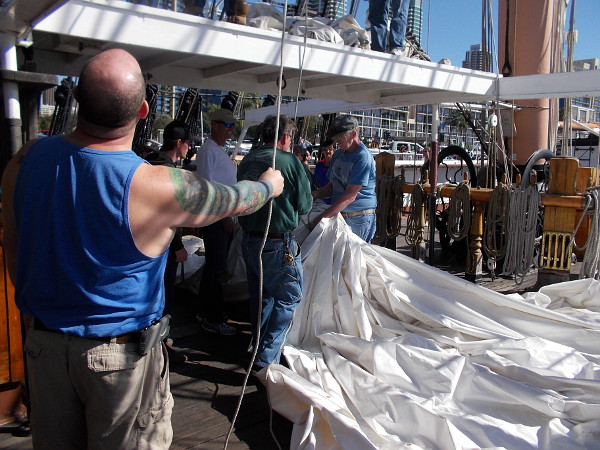
Volunteers at the Maritime Museum of San Diego haul a rope on the deck of Star of India to help raise a protective tarp above the historic ship.
Sunday is volunteer work day at the Maritime Museum of San Diego. Anyone walking along the Embarcadero or visiting the museum can watch history being preserved by energetic volunteers. You can see them pulling ropes, painting masts, scraping, polishing, sweeping and just generally doing all those things necessary to maintain historic old ships.
The Maritime Museum of San Diego could always use new volunteers! No experience required! You mostly work out on the sparkling water, in the sunshine, with senses full of invigorating smells, sights and sounds. And know what? You become a part of history!
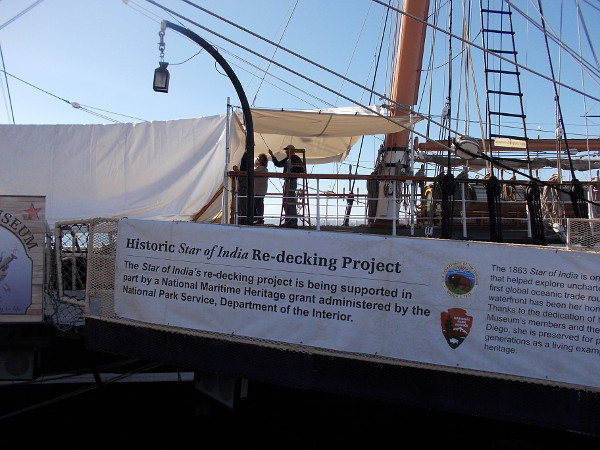
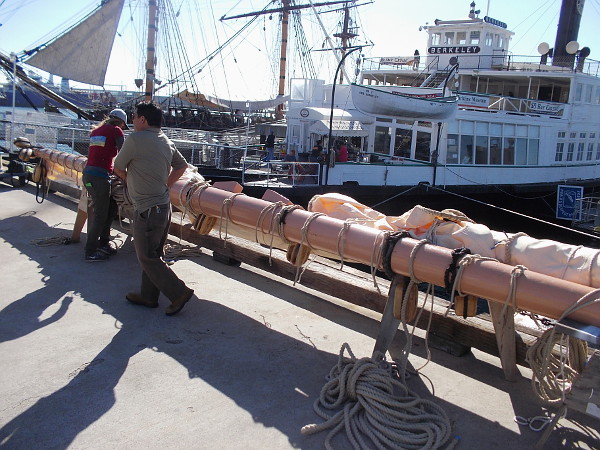
Large plastic canopies are being installed on the Star of India to protect her from rain during the upcoming deck restoration.The Star of India’s re-decking project is being supported in part by a National Maritime Heritage grant administered by the National Park Service, Department of the Interior.Another volunteer works near the bow of the historic tall ship. Downtown San Diego’s skyline provides a gleaming backdrop.These guys are working above the forward house near the foremast.A mast of the HMS Surprise has been scraped and coated with primer. Now some paint will preserve this amazing tall ship used in the movie Master and Commander.Another yard to be installed on the San Salvador by crane awaits on the Embarcadero. This heavy yard with sails furled will be supported by the replica Spanish galleon’s foremast.Volunteering for the Maritime Museum of San Diego can be very satisfying. Are you free on Sundays?
…
I live in downtown San Diego and love to walk! You can enjoy more Cool San Diego Sights via Facebook or Twitter!
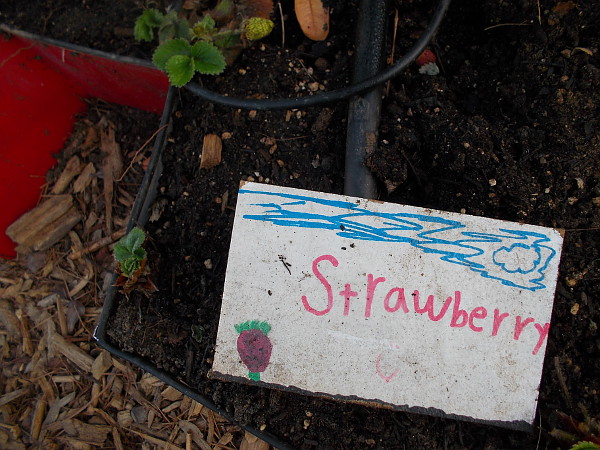
Art is alive (with growing strawberry plants) at The Garden Project!
Whenever I mosey down the Martin Luther King Jr. Promenade, I spy something new.
This morning I noticed that some fun art has sprung up near the New Children’s Museum, in both The Garden Project and the playground. Someone created beautiful chalk artwork on the playground’s concrete wall, and strawberries have been planted art-fully in the public garden! It reminds me that spring is coming!
(I increased the contrast of my third photograph so the chalk artwork could be more easily seen.)
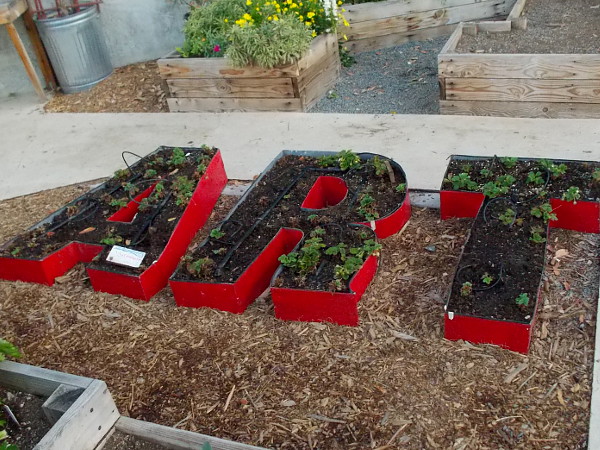
Kids created this fun strawberry art.And young people created this chalk drawing on a playground wall. A heart encompasses the Earth and a puppy dog. Love is powerful.
…
I live in downtown San Diego and love to walk! You can enjoy more Cool San Diego Sights via Facebook or Twitter!
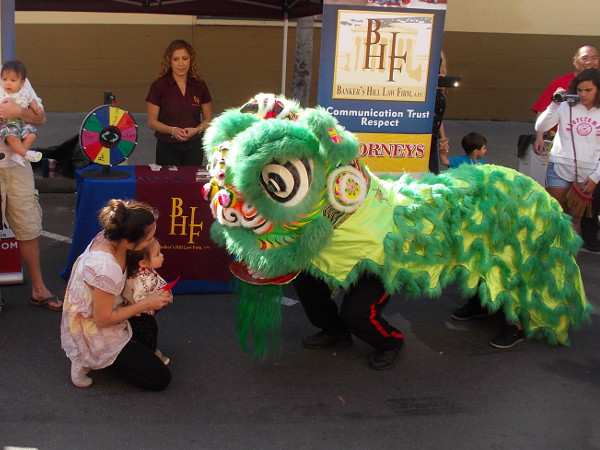
Lion dancer meets small visitor to the 34th Annual 2016 San Diego Chinese New Year Food and Cultural Fair.
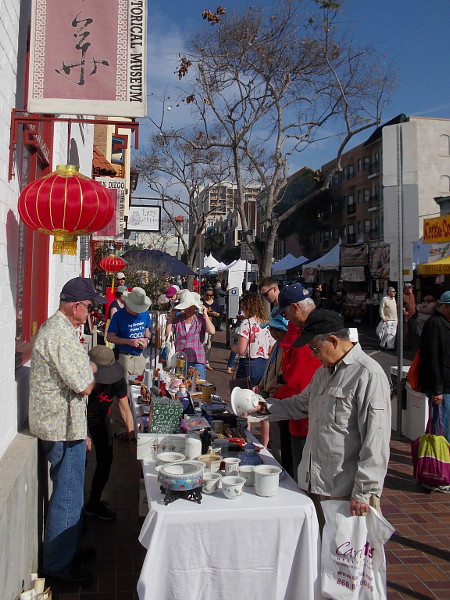
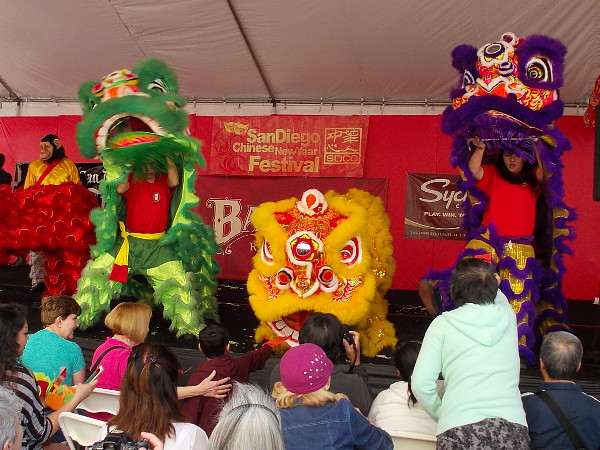
To celebrate the Chinese New Year, a special festival is being held this weekend in downtown San Diego, in the historic old Chinatown section, now known as the Asian Thematic District. The event is called the 34th Annual 2016 San Diego Chinese New Year Food and Cultural Fair, and it’s being put on by the San Diego Chinese Center (SDCC). You can find the fun on two blocks adjacent to the San Diego Chinese Historical Museum. There are lion dances, drummers, temple dancers, story telling, a kung fu demonstration, and just lots and lots of cool sights.
I walked through the festival this morning around 10 o’clock and observed the opening ceremonies. Here are some colorful pics!
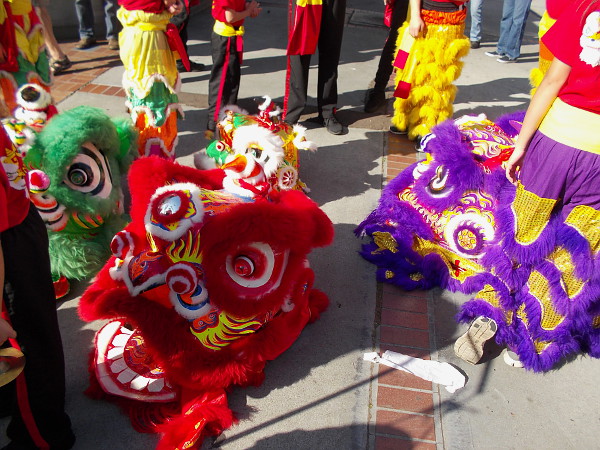
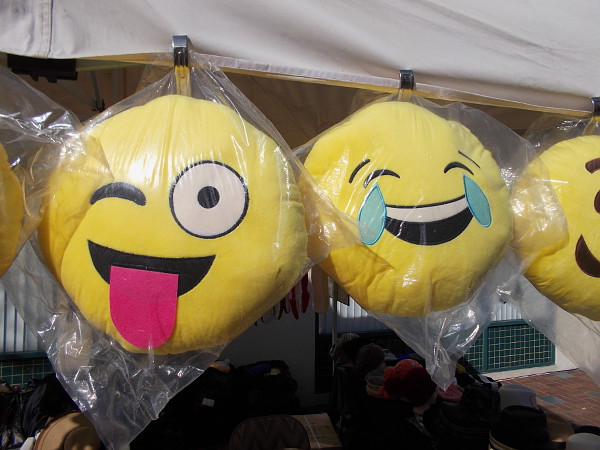
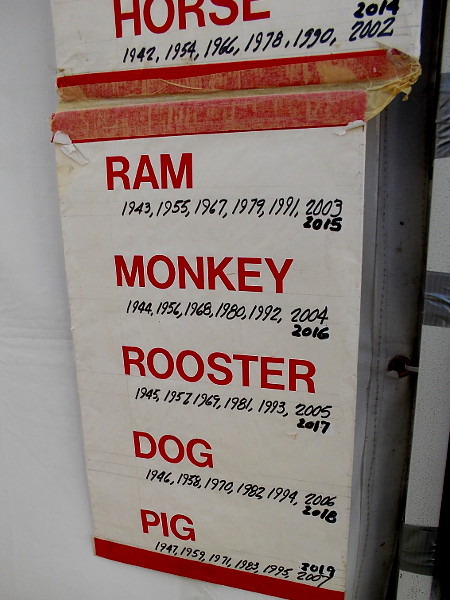
The CCBA Lucky Lion Dancers would soon be heading down the street through the crowd.Tables in front of the San Diego Chinese Historical Museum contain arts, crafts and many unique cultural objects.These funny faces were for sale in a vendor’s booth. There was a lot of Asian food and a variety of colorful wares for visitors to purchase.Uniquely beautiful art could be seen up and down the street during the San Diego Chinese New Year Food and Cultural Fair.Anyone could have their name written in Chinese!2016 is the Year of the Golden Monkey. Monkey is the ninth zodiac animal in the twelve year cycle of the Chinese calendar.The opening ceremony included an elaborate lion dance on stage, then the display of this banner by San Diego dignitaries.The energetic, exciting lion dance resumed, and people fed the lions red envelopes full of money for good luck!An explosion of lettuce from the hungry lions during the dance was cleaned up on the stage afterward! Lettuce symbolizes a fresh start in a new year.A drummer helps spur the dancing lions, a Laughing Buddha and a monkey into action!A long Chinese dragon on display. I believe a dragon dance would take place later. One of many cool sights at the annual San Diego festival!
…
If you enjoy my blog, you can follow Cool San Diego Sights on Facebook and Twitter!
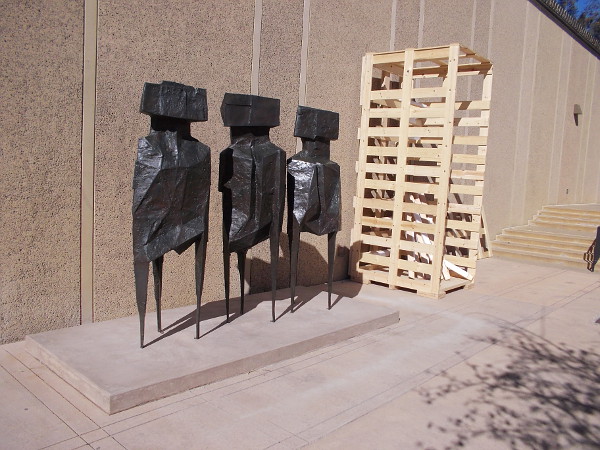
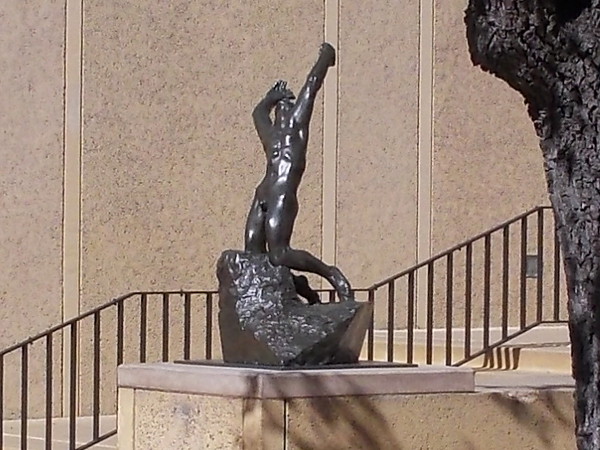
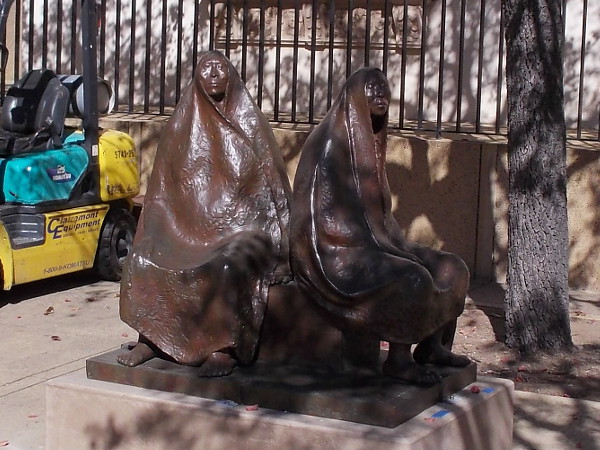
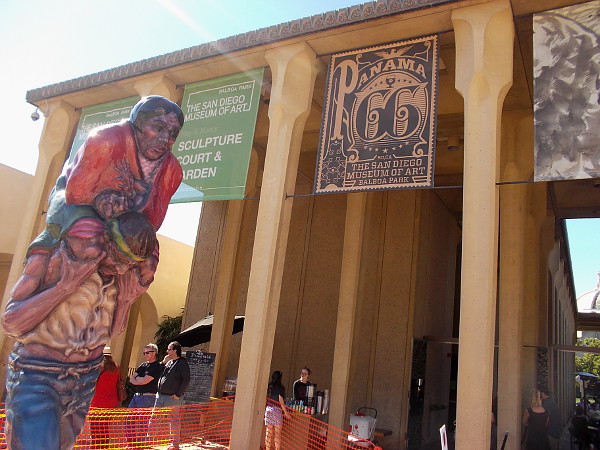
Many outdoor sculptures are being introduced into Balboa Park. The exhibit is titled Art of the Open Air. It’s a unique project of the San Diego Museum of Art.
During the past week, a number of sculptures in the San Diego Museum of Art’s collection have been carefully moved into the Plaza de Panama, a large outdoor gathering place in Balboa Park. For the next two years, anyone in San Diego will be able to freely enjoy the sculptures, and see them in changing light, beneath different skies. Moving such large pieces has taken a lot of work, but I noticed today that the installation, titled Art of the Open Air, is approaching completion.
Included in the unique outdoor exhibition are works by world-famous artists Joan Miró, Auguste Rodin and Tony Rosenthal. I wasn’t able to approach the artwork too closely–right now, while the sculptures are being readied, they’re still roped off. The same goes for a new piece in the museum’s May S. Marcy Sculpture Garden, which I also photographed from a bit of a distance. I put some identifying information in the photo captions.
Art of the Open Air is set to run from February 11, 2016 through February 13, 2018. I can already see that Balboa Park is going to be more lively and interesting than ever!
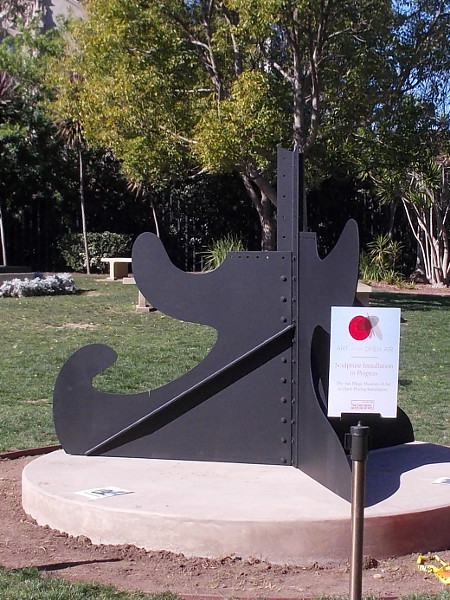
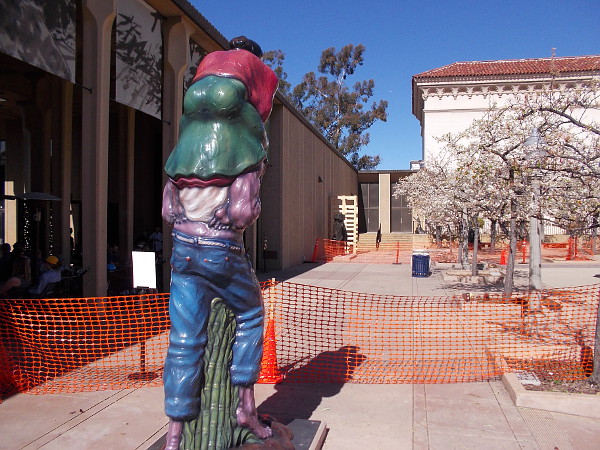
Alexander Calder. Spinal Column, 1968. Steel. A sculpture being installed in the San Diego Museum of Art’s outdoor May S. Marcy Sculpture Garden.Lynn Russell Chadwick. The Watchers, 1960. Bronze. Now stands in Balboa Park’s beautiful Plaza de Panama, part of the Art of the Open Air exhibition.Auguste Rodin. The Prodigal Son, 1905. Bronze. Installed in the northwest corner of the Plaza de Panama, where the sculpture Youth Taming the Wild (Horse Trainer) used to stand.I can’t find anything about this piece, but it seems strangely familiar. If you know what it is, leave a comment! UPDATE: I learned the bronze sculpture is called Mother and Daughter Seated, by Francisco Zuniga, 1971Two very fine sculptures that will soon will be approachable in Balboa Park’s Plaza de Panama.Joan Miró. Solar Bird, 1966. Bronze. Standing guard near the entrance to the San Diego Museum of Art.Tony Rosenthal. Odyssey III, 1967. Aluminum.Photo across front of the San Diego Museum of Art, the north end of Balboa Park’s Plaza de Panama. Outdoor art is being installed.Luis Jiménez. Border Crossing/Cruzando el Rio Bravo, 1989. Fiberglass with acrylic urethane finish. Stands outside the May S. Marcy Sculpture Court and Panama 66.Monumental totem-like sculpture depicts artist’s immigrant grandfather carrying wife and son, crossing the Rio Grande from Mexico.A large sculpture seems to stride into the life-filled Plaza de Panama in San Diego’s historic Balboa Park.















































 Cool San Diego Sights!