Gaslamp Museum at the William Heath Davis House and Park, 1850. Home of the Gaslamp Quarter Historical Foundation.
These photos inside the historic William Heath Davis House Museum were taken a few months ago. I toured the fascinating house during the Fall Back Festival, which is held every year in San Diego’s Gaslamp Quarter.
Dated 1850, the William Heath Davis House, like a number of other structures in early San Diego, was built on the East Coast and shipped around Cape Horn. At the time San Diego simply didn’t have the resources and tools required to build a fine wooden house. Various rooms inside the museum show what life was like in New Town a century and a half ago. It was a much simpler time. The small museum now sits in the middle of a gigantic, bustling metropolis.
Please read the photo captions for more info, and click the signs to read them.
Photo of the William Heath Davis House Museum taken from across Island Avenue.Tours of the historic house are available. A museum store contains fascinating gifts.The William Heath Davis House, built in 1850, is the oldest surviving structure from San Diego’s New Town. It is a prefabricated “salt-box” style home, shipped from Portland, Maine around Cape Horn.The 1850 Davis-Horton House was used as a military barracks, county hospital, and was home to New Town’s founder Alonzo Horton and several other families over the years.Looking down the stairs from the second floor. A lady in Victorian attire welcomes visitors to the museum during the Fall Back Festival in November.A look at the first floor living room where family and guests would gather.A small piano, sheet music, teacup and candle. Entertainment in the olden days was simple.The dining table is set for a grand meal in what was then a sparsely populated New Town San Diego.An old sewing machine can be found by a window upstairs.The nursery, with crib, chest and small bed.Three beds for the children have colorful quilts.A desk in the study, framed photos, and a cabinet full of books. No internet back then!An old-fashioned penny-farthing bicycle reminds visitors to the William Heath Davis House Museum of what life was like a century and a half ago in San Diego.
…
I live in downtown San Diego and love to walk around with my camera! You can follow Cool San Diego Sights via Facebook or Twitter!
You can easily explore Cool San Diego Sights by using the search box on my blog’s sidebar. Or click a tag! There are thousands upon thousands of fun photos for you to share and enjoy!
Folks enjoy taking a ride in an old-fashioned covered wagon in Old Town San Diego during 2017 Mormon Battalion Commemoration Day.
I’ve got lots of colorful photos! The annual Mormon Battalion Commemoration Day was held today in Old Town San Diego State Historic Park. I covered this event last year, but I love history and scenes from the Old West so much that I swung by again!
San Diego’s history is remarkably diverse, considering our city is relatively new, and that it is situated in what for a long time was a thinly populated, desert-like wilderness. Many peoples and cultures have converged to help shape our dynamic city, including the original Native American Kumeyaay, missionaries from Spain, Mexicans who have called San Diego home, immigrants from Asia, an influx of Italian and Portuguese fishermen, and among many others, the Mormons.
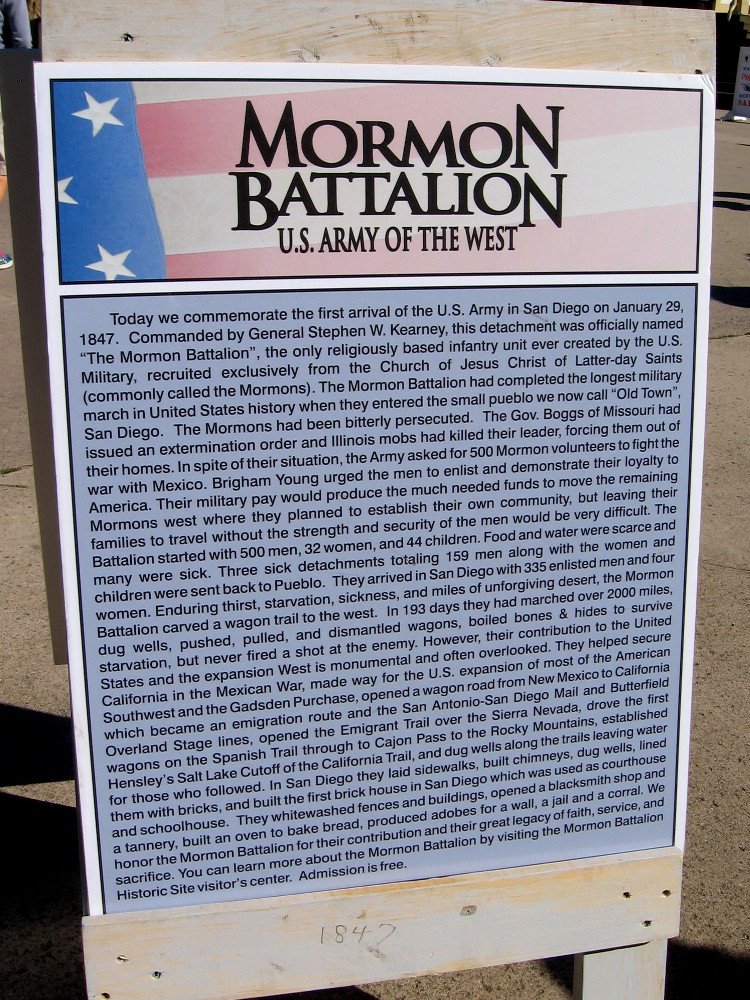
Please enjoy these photos and click the big sign that provides a little more background about the event and the historical importance of the Mormon Battalion in San Diego. More information can also be found on my previous blog post concerning the event last year. Check the related links below!
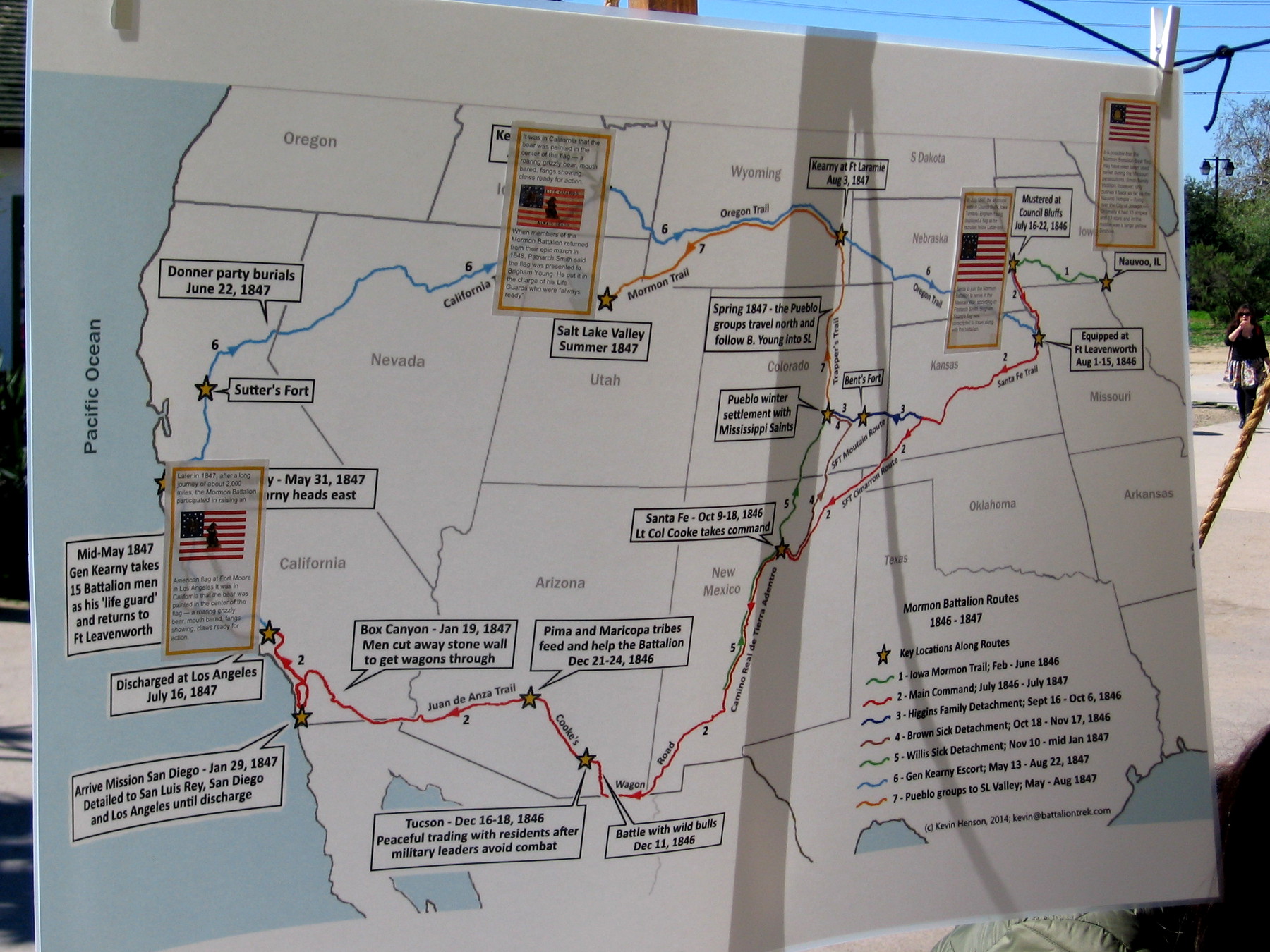
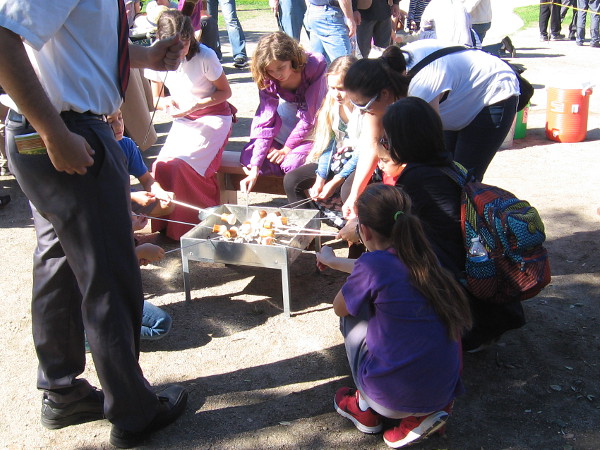
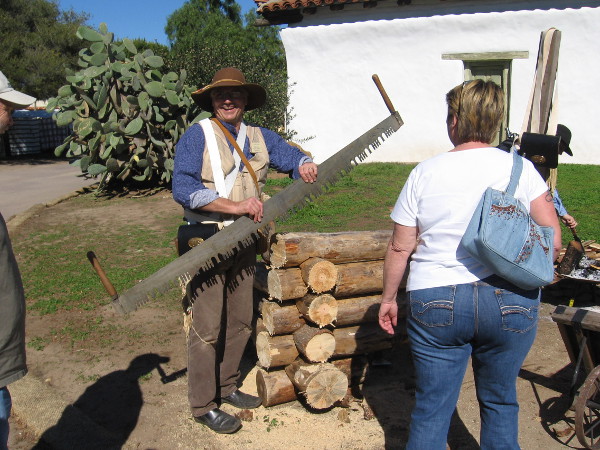
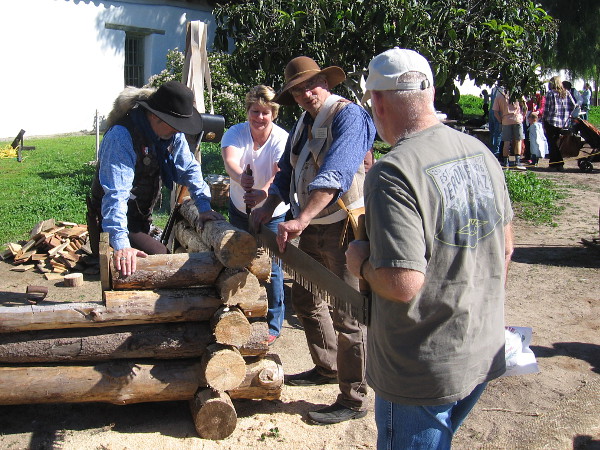
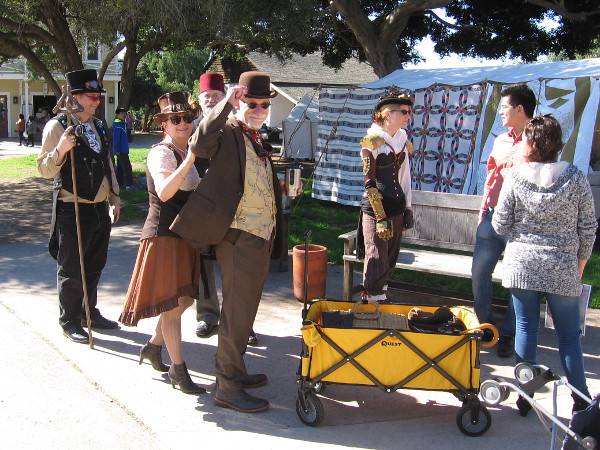
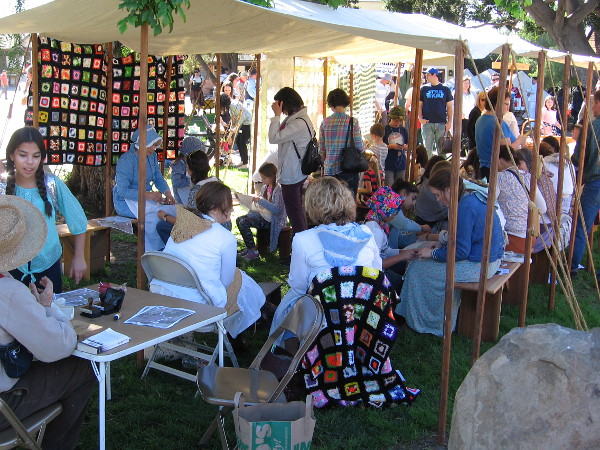
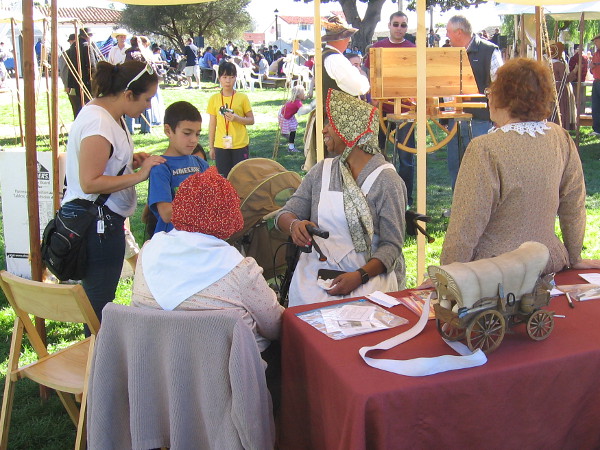
The public was welcome to swing by the annual Mormon Battalion Commemoration in Old Town. There were many historical reenactments and costumes to see.One tent concerned letters home, featuring historical journals, maps and genealogy.Today we commemorate the first arrival of the U.S. Army in San Diego on January 29, 1847. This detachment was called The Mormon Battalion, recruited from the Church of Jesus Christ of Latter-day Saints. (Click image to enlarge the sign if you’d like to read it.)Lots of interesting historical activities were being enjoyed by a large, enthusiastic crowd.Map shows Mormon Battalion Routes 1846 – 1847. The soldiers, recruited by the U.S. Army to fight in the Mexican-American War, undertook the longest military march in United States history. After arriving, they helped to build early San Diego.People draw the star and bear symbols of the California Republic.I believe these families were making biscuits, a staple of the Old West.Guys in pioneer clothing just kick back by plastic chairs and watch some dancing and musical entertainment during the event.Some colorful, joyful Mexican folklorico dancing on stage in Old Town San Diego!This guy with the huge saw was demonstrating another aspect of life in old San Diego.Visitors to Mormon Battalion Commemoration Day try their hand at sawing a thick log!A bunch of steampunk enthusiasts were attending the historical event!A fez and a golden arm. These guys should be in some sort of cool adventure movie! Perhaps they belong in a blimp!Like last year, a tent showed people how bricks were once made in San Diego.These assembled bigwigs were judging a Dutch Oven Bake-off!Scouts and other youth learn how rope was once made, using twisted fibers from native Yucca cacti.Lots of folks, old and young, were in one tent learning about and making frontier dolls.Some mountain men were camped at the Black Hawk Livery Stable, near the Old Town blacksmith shop.A sign tells about various Western trailblazers, including Jedediah Smith, Kit Carson and Jean Baptiste Charbonneau.Five anvils!Shaping red hot iron in the old blacksmith shop.These guys are keeping the ancient art of blacksmithing alive in a high tech world.Running out onto the wide grassy area behind Seeley Stable. Like travelling back in time.Some beautiful quilts on display during Mormon Battalion Commemoration Day in Old Town San Diego.Kids were learning how acorns were mashed by the Kumeyaay and others in San Diego’s early history.Someone poses for a photo with an old rifle.History, culture, bonnets and period dress. I saw many smiles in Old Town.People in nostalgic frontier garb and a modern t-shirt with a jolting urban message pose together for an unusual photo.Playing lively old frontier music.Kids playing simple, old-fashioned games.Another unique and memorable scene from Mormon Battalion Commemoration Day in Old Town San Diego!
…
This blog now features thousands of photos around San Diego! Are you curious? There’s lots of unique stuff to check out!
Here’s the Cool San Diego Sights main page, where you can read the most current blog posts. If you’re using a small mobile device, click those three parallel lines up at the top–that opens up my website’s sidebar, where you’ll see the most popular posts, a search box, and more!
To enjoy future posts, you can also “like” Cool San Diego Sights on Facebook or follow me on Twitter.
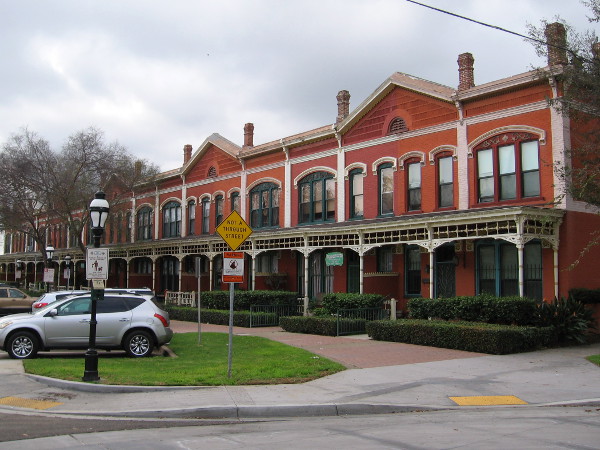
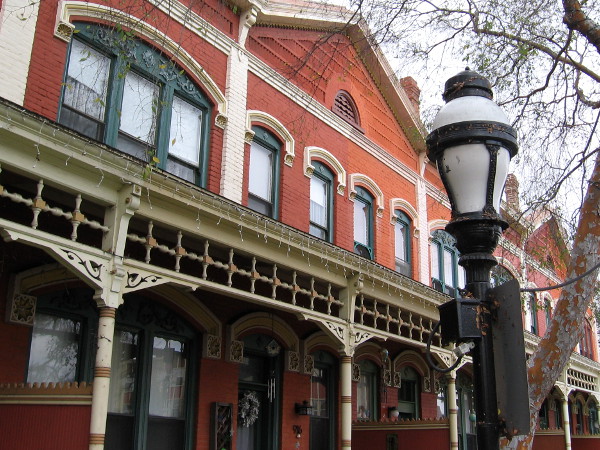
Brick Row at National City’s Heritage Square. The long brick two-story structure was built by Frank Kimball in 1887.
To those traveling through gritty National City, Heritage Square can be a surprising discovery. Venture into the picturesque block, just south of the intersection of East 9th Street and A Avenue, and you feel like you’ve stepped back 150 years.
National City has a fascinating history. Originally used by the Spanish to graze horses, the land in the early 1800s, after Mexican independence, was called Rancho de la Nación. In 1868, a San Francisco builder named Frank Kimball bought the rancho with an ambitious dream. He intended to turn National City into the western terminus of the Santa Fe Railway.
You might remember my photographic tour of the National City depot, built in 1882 by the Santa Fe Railroad. It became the first terminus of transcontinental rail travel in the San Diego area. You can see that fascinating blog post here.
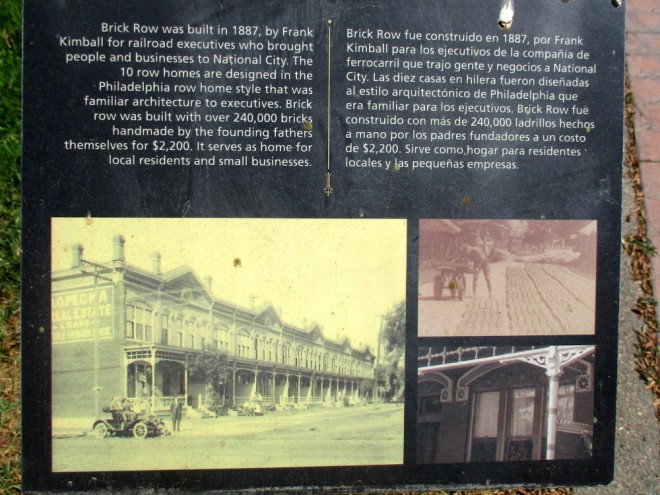
To accommodate executives of the Santa Fe Railroad and booming times caused by the arrival of rail, in 1887 Frank Kimball built Brick Row, a structure in the style of Philadelphia row house. It was designed by San Diego architect R. C. Ball. Over 240,000 bricks were used for the ten units.
Kimball’s full ambitions weren’t realized, however, when the Santa Fe Railroad soon turned their sights on Los Angeles, making that city their major center of operations in Southern California.
An early resident of the “Kimball Block” was legendary marshal Wyatt Earp, who came to Southern California after being indicted in Arizona for shooting the men who’d killed his brother. He is best known locally for opening three gambling halls in San Diego. In 1889, Wyatt Earp stayed in Brick Row when he traveled down to Tijuana, Mexico. There he famously refereed a prize fight during a fiesta that also featured cockfights, bullfights and a lassoing contest.
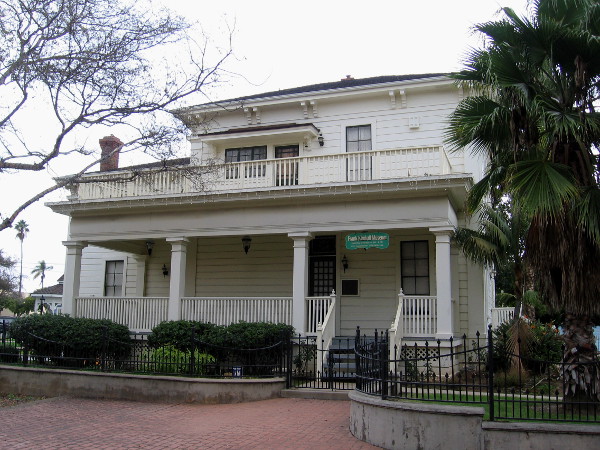
In the early 1970s, National City’s planning director, Malcolm C. Greschler, interested in preserving the deteriorating Brick Row, came up with the idea of creating Heritage Square, which would be a historical tourist attraction similar to San Diego’s Old Town. In 1973 Frank Kimball’s house was moved to Heritage Square.
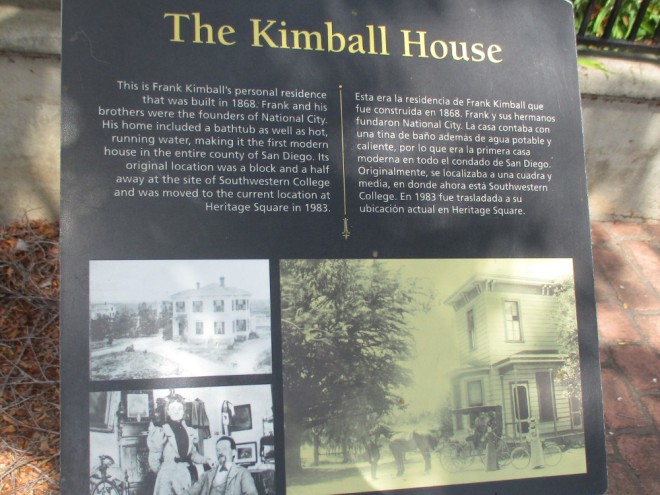
The 1869 Kimball House has its own unique history. It was the first house built in National City. Not only did it have a bathtub, but it had hot running water, which made it the first modern house in the entire county. President Benjamin Harrison visited it in 1891 during his tour of the western United States. At the time, it was the longest journey ever made by a President while in office. President Harrison’s 9,232 mile trip by railroad took one month and three days!
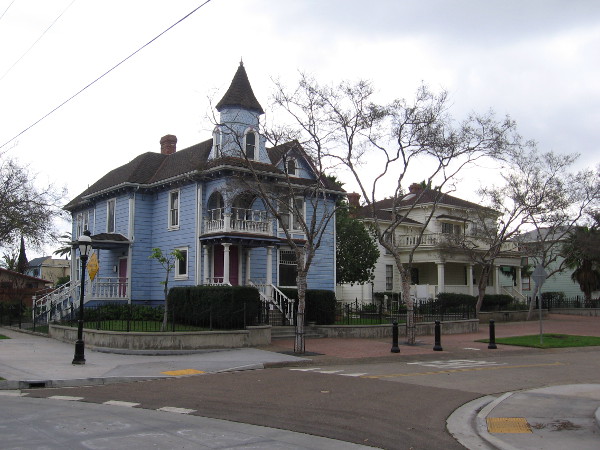
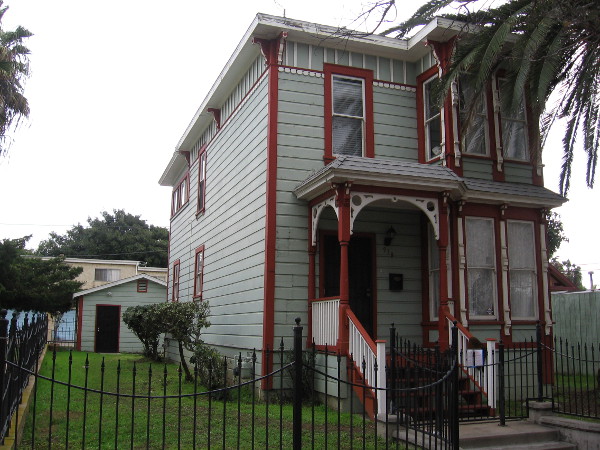
In 1976 two more historical houses were moved to Heritage Square: the 1887 Stick-style Rice-Proctor House and the 1879 Steele-Blossom House, which is depicted on National City’s official logo.
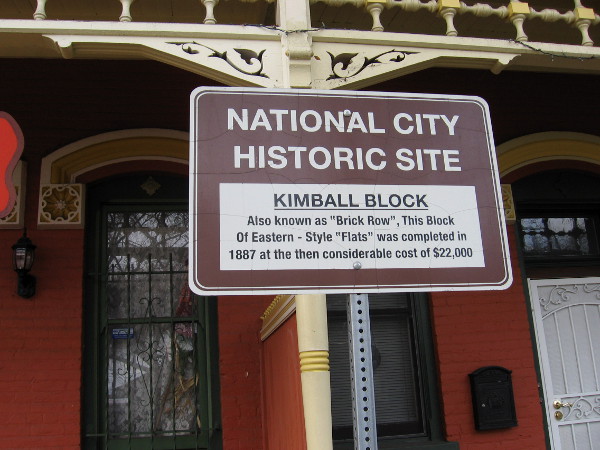
A plaque that reads Heritage Square – Marked in honor of the National City Centennial by San Miguel Chapter NSDAR, 1987.Heritage Square in National City contains several historic structures from the mid to late 19th century.The Steele-Blossom House, built in 1879, is used by the city of National City in its official logo. Elizur Steele was real estate agent for Frank Kimball and his enterprising brothers.The 1869 Kimball house was moved to Heritage Square in 1975. It is now the Kimball Museum operated by the National City Historical Society.The 1887 Stick-style Rice-Proctor House in National City’s Heritage Square.The two-story Brick Row is composed of ten units with common walls.Sign reads National City Historic Site – Kimball Block – Also known as Brick Row, this block of Eastern-style flats was completed in 1887 at the then considerable cost of $22,000.Photo of a section of the handsome Brick Row. The building now houses several specialty shops and the National City Historical Archive Room.Walking through the historic block of Heritage Square in National City is like a wonderful voyage back in time.
UPDATE!
I took the following three photographs in 2021 during another walk through National City.
The first photo is of a sign providing information concerning Brick Row. I cropped the top of the photo off because the outdoor sign was plastered with unsightly bird poop!
The second photo is of a sign concerning the Kimball House. I see its dates are different than what I previously wrote. I got that info from some other source. Do your own research!
The third photo is of the Steele-Blossom House, which appears to have been repainted with different colors.
…
This blog now features thousands of photos around San Diego! Are you curious? There’s lots of cool stuff to check out!
Here’s the Cool San Diego Sights main page, where you can read the most current blog posts. If you’re using a small mobile device, click those three parallel lines up at the top–that opens up my website’s sidebar, where you’ll see the most popular posts, a search box, and more!
To enjoy future posts, you can also “like” Cool San Diego Sights on Facebook or follow me on Twitter.
Mural depicting three lumberjacks and one enormous tree on the wall of Made Lumber Supply in San Diego.
After snapping some photos of this morning’s San Diego River Estuary cleanup (which I’ll blog about tonight), I decided to take a short stroll through a small part of the city that I’ve never thoroughly explored: the few blocks around Sherman Street, near Morena Boulevard.
When I ride to work on the trolley’s Green Line, I often gaze out at a mural of lumberjacks near the old location of the San Diego Humane Society. This morning, as I investigated the mural and surrounding area, look what else I discovered!
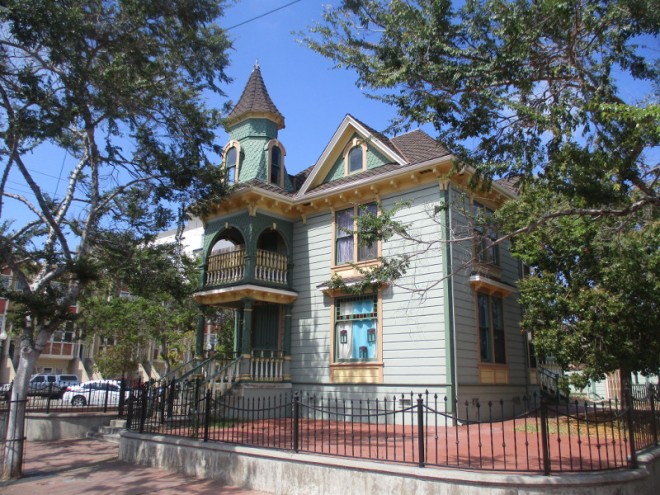
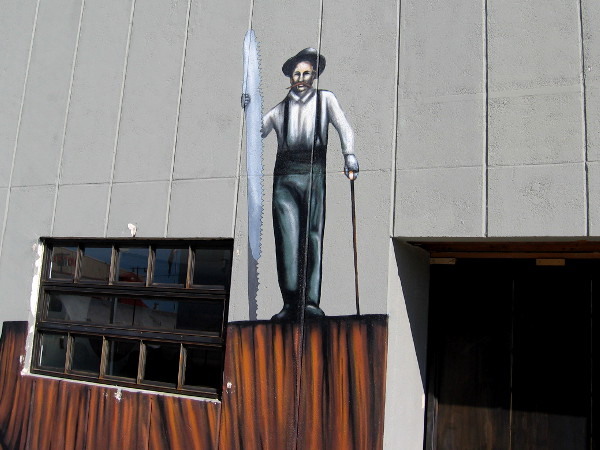
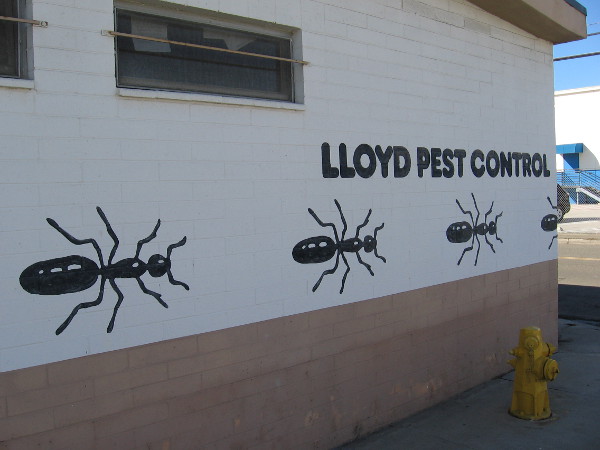
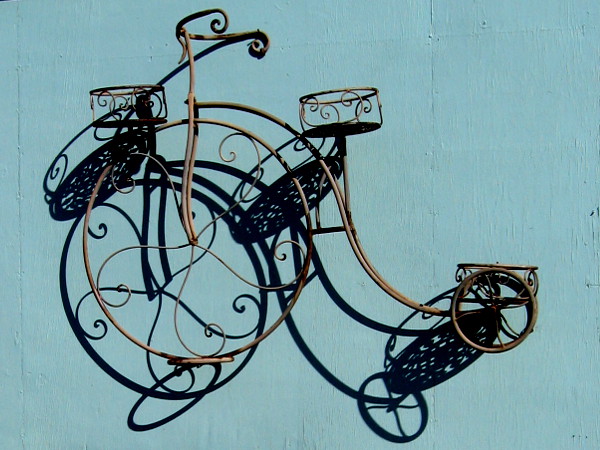
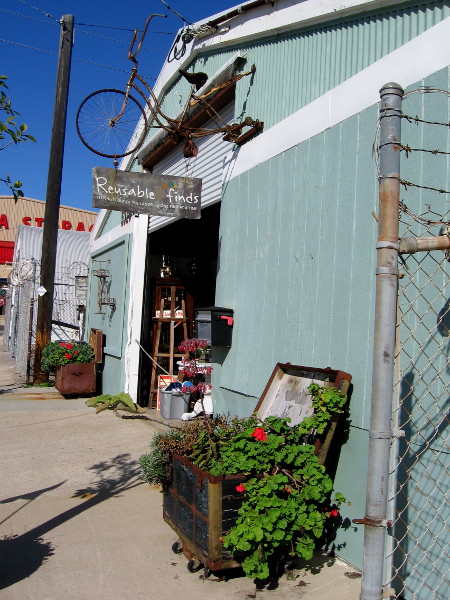
Underneath the trolley bridge over Friars Road. Images of animals used to be on the side of this building, Perhaps they were removed when the San Diego Humane Society moved to nearby Gaines Street.Another photo of the lumberjack mural, just beyond some real lumber!A fourth lumberjack holds a long saw on the side of Made Lumber Supply.Gigantic ants crawl in a line along the wall of Lloyd Pest Control.A cool decorative bicycle suspended from a wall. I spotted this at the Reusable Finds resale and repurpose store, near their entrance.Another old bike hanging above a trunk full of flowers.Mural of a fashionable lady on the wall behind the Leatherock leather goods store.Mysterious wooden tombstone with name of Juan Mendoza, who was shot by Cave Couts in the back with a double-barreled shotgun in Old Town San Diego, February 6, 1865.
Look what I stumbled upon at the west end of the old San Diego Humane Society’s parking lot! What appears to be a historic wooden grave marker! Is it real? Why is it here?
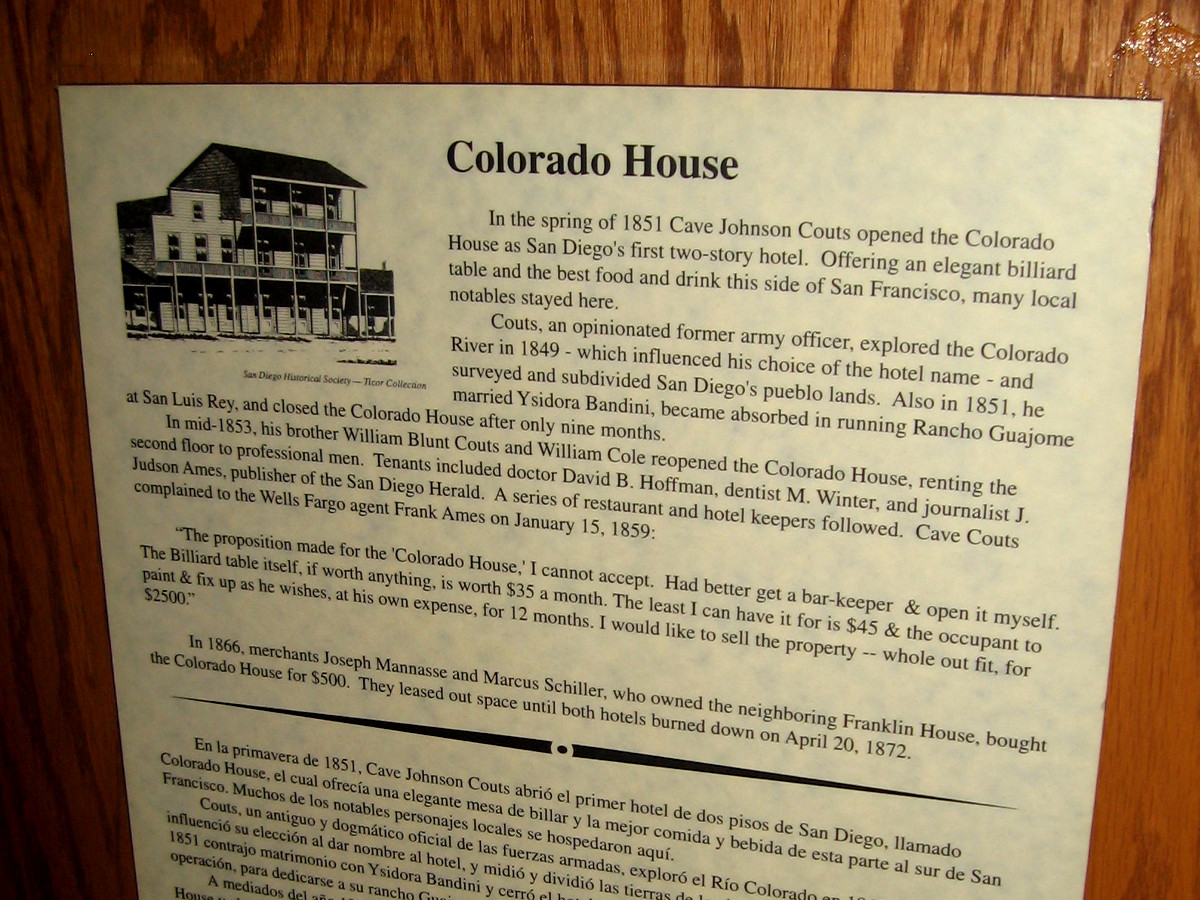
You might remember my recent blog post about the Wells Fargo Museum in Old Town. Cave Couts built the wood-frame hotel called the Colorado House in 1851 and became an influential resident of early San Diego. But by some accounts he was a sketchy character. On February 6, 1865 he shot a disgruntled former employee (who worked on one of Cave Couts’ ranches) in the back with a shotgun. This violated the unspoken “Code of the West”. The unfortunate victim who died was Juan Mendoza.
A couple years ago I photographed a cross with Juan Mendoza’s name on it at the El Campo Santo cemetery located in Old Town, and I blogged about that here.
So why is there a mysterious wooden tombstone at this location? This marker doesn’t appear a century and a half old. Was it a prop? Is it a prank? Is Mendoza actually buried here? The spot isn’t far from Old Town. Perhaps someone knows the full story about this completely unexpected discovery. If you do, leave a comment!
…
I live in downtown San Diego and love to walk around with my camera! You can follow Cool San Diego Sights via Facebook or Twitter!
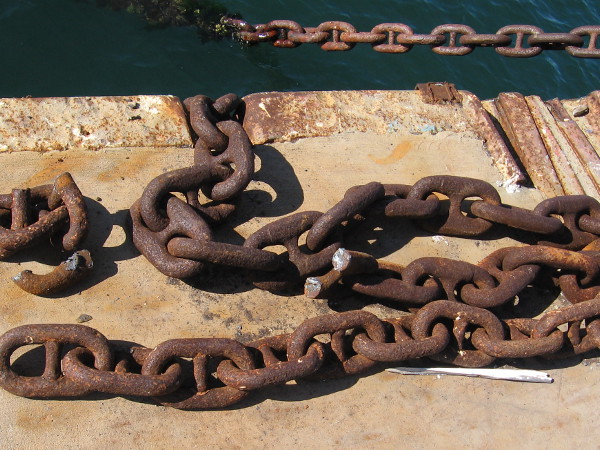
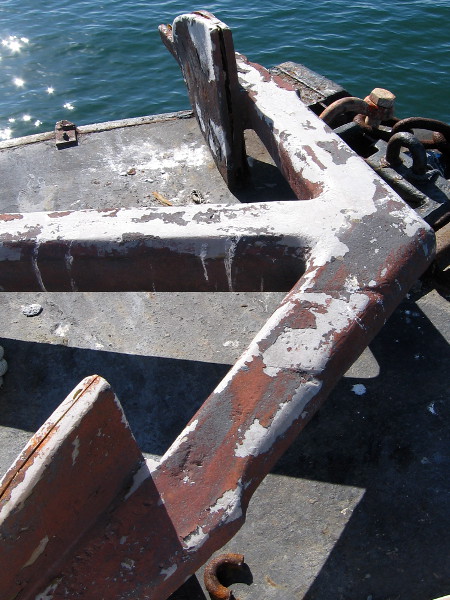
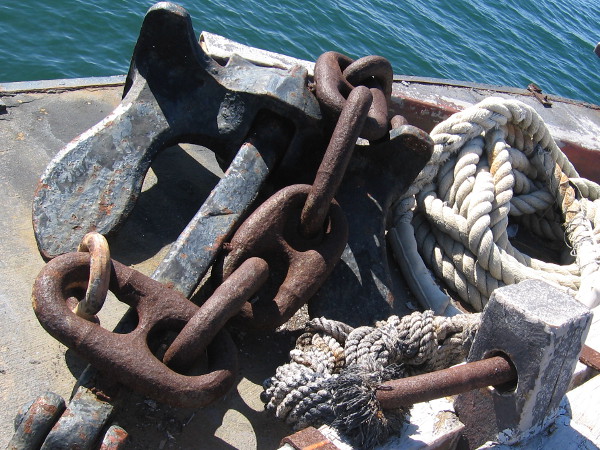
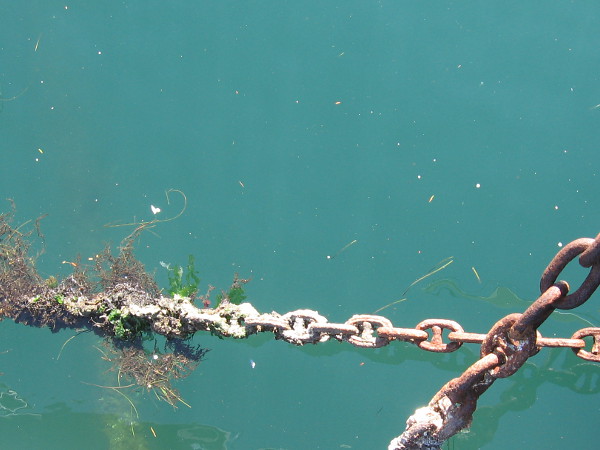
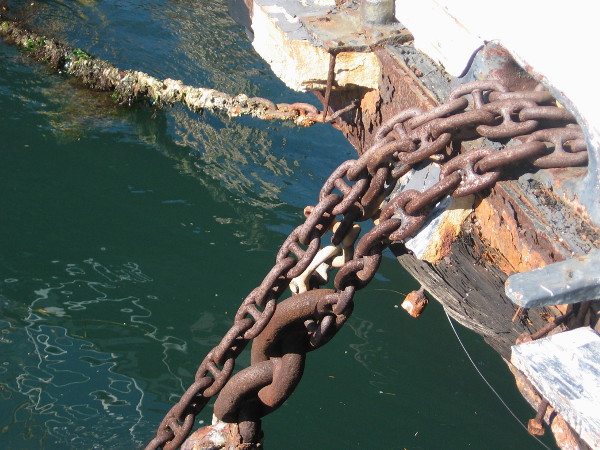
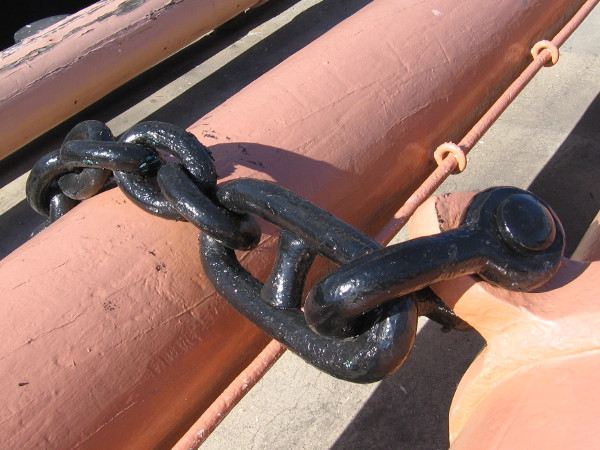
A broken chain at the Maritime Museum of San Diego.
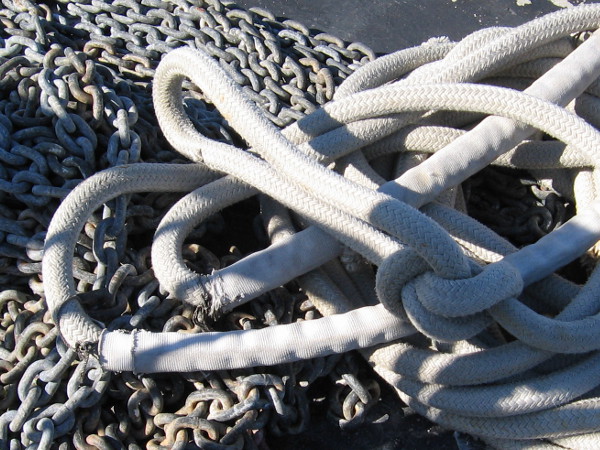
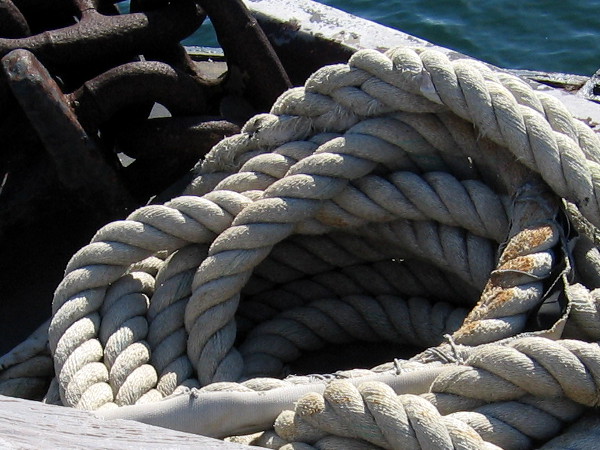
These photos taken at the Maritime Museum of San Diego tell a story. It’s that never-ending tale of human struggle against the elements.
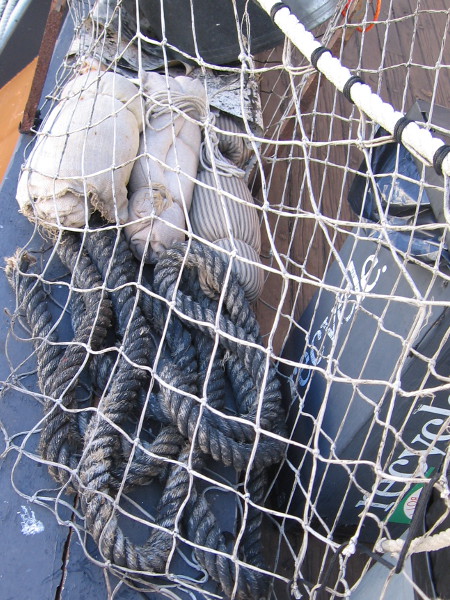
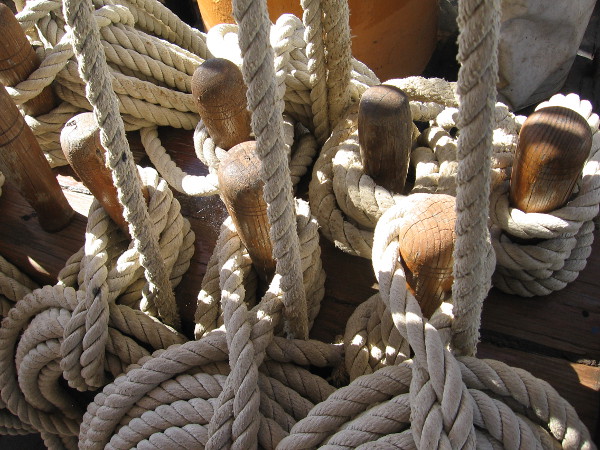
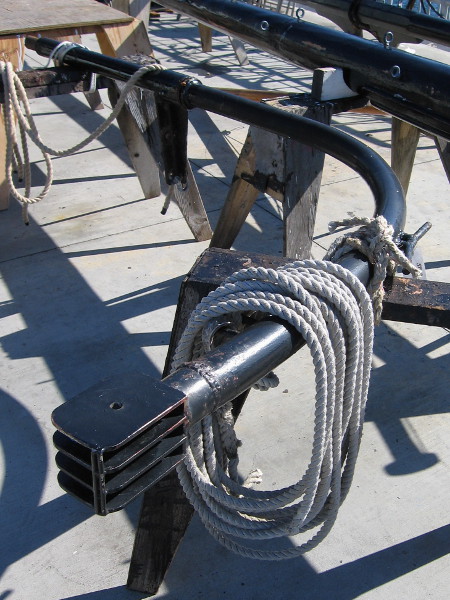
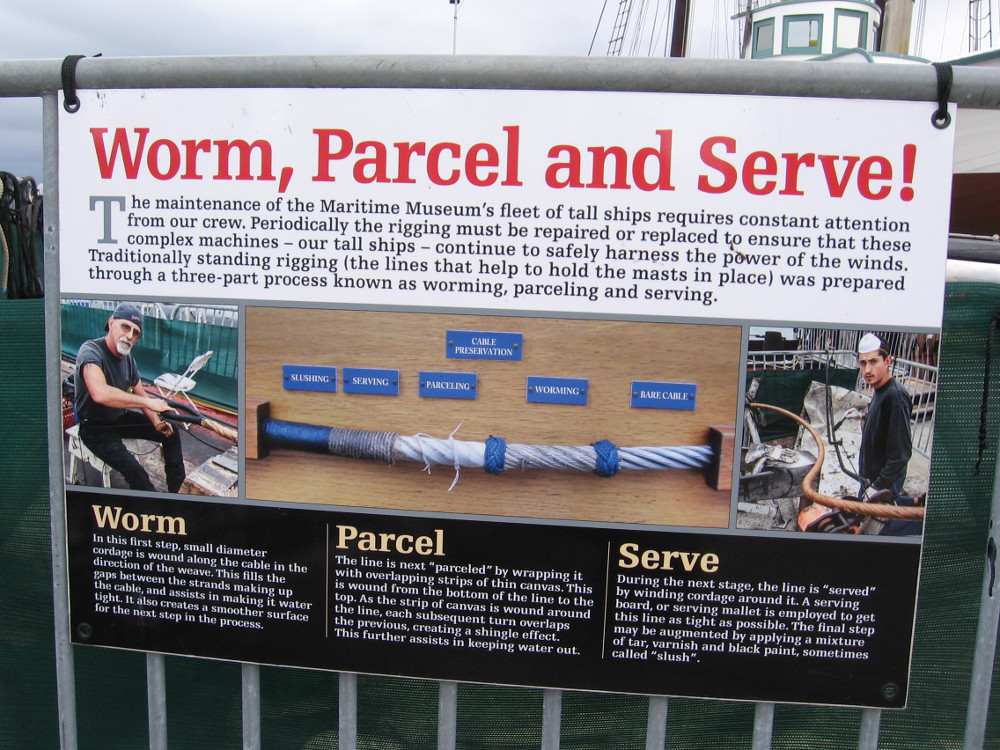
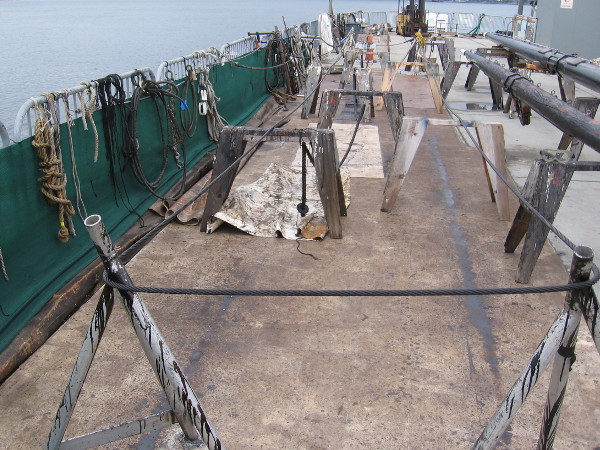
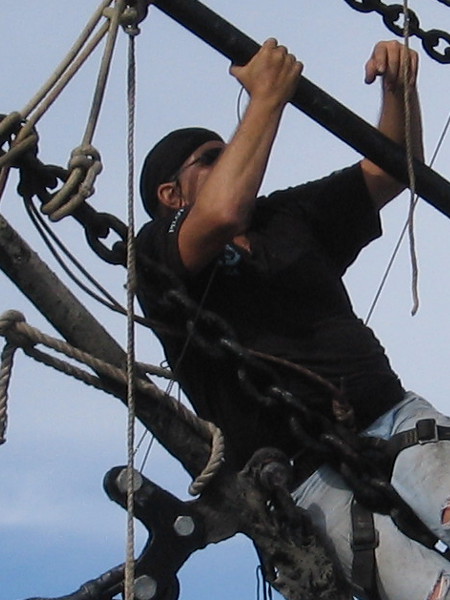
Rope and chain. Ancient inventions.A tale of human struggle against the elements.Waiting for an outstretched hand, a critical moment.An anchor above calm water.Instruments of control in a stormy world. Rope, chain and anchor.Life clings to chains. Rust devours chains.A strained connection.Necessary chains. Rusty chains large and small.Human endeavor.Ropes cast aside, perhaps hurriedly.Ordered ropes, to harness gusts above.New strength.Bent steel, neat coils, in a tangle of untouchable dark shadows.Worm, Parcel and Serve! A never-ending story of human ambition, battling water, sun, salt and wind.Tarring at the museum.New bonds, prepared.A strange sculpture, or a potent symbol.A wrestle.
This is a story of struggle with many pages. The unconquerable antagonist in every chapter is Time.
…
I live in downtown San Diego and love to walk around with my camera! You can follow Cool San Diego Sights via Facebook or Twitter!
Stagecoach on display at the Wells Fargo History Museum in Old Town San Diego State Historic Park.
I recently visited the Wells Fargo History Museum in Old Town. The exhibits inside concern early San Diego history. When our city was in its infancy, Wells Fargo ran a stagecoach line, and their Express Office was an essential part of local business life.
I took loads of photos in this very cool museum. Read the captions to learn much more!
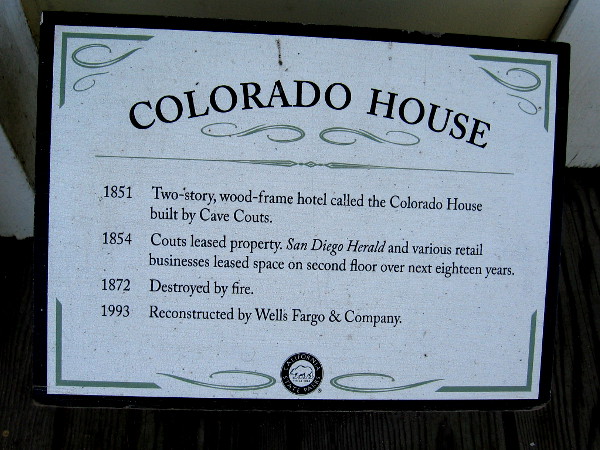
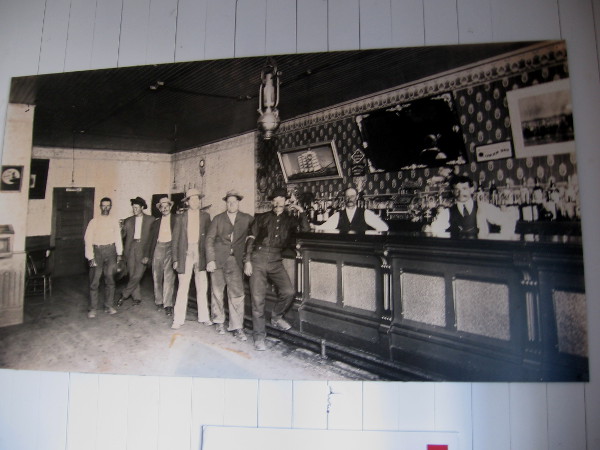
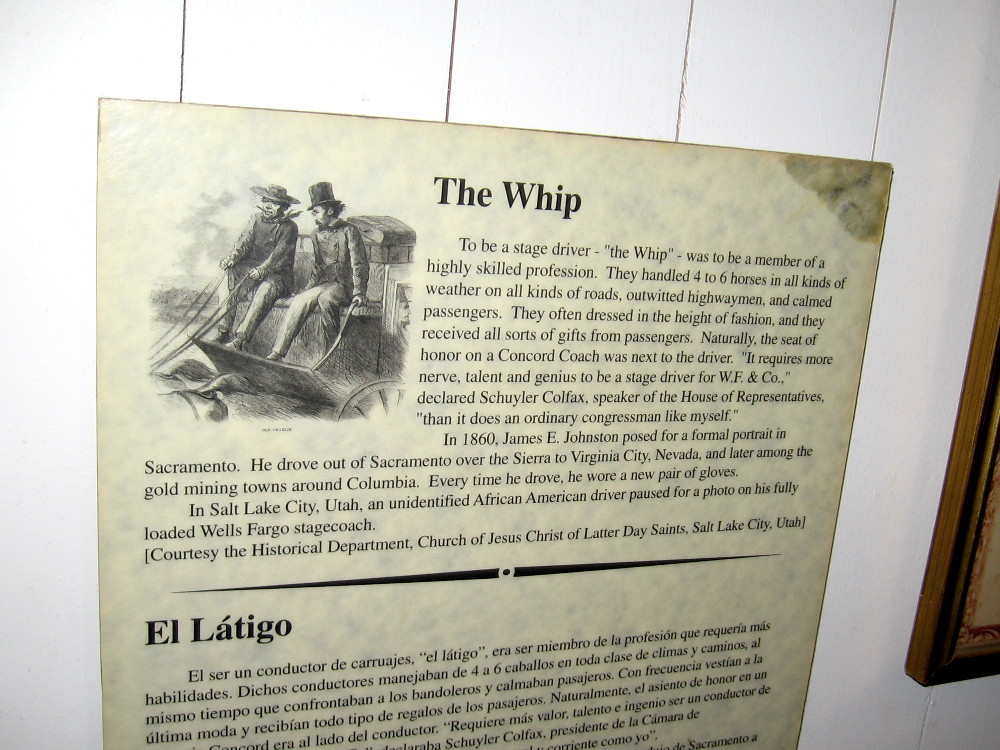
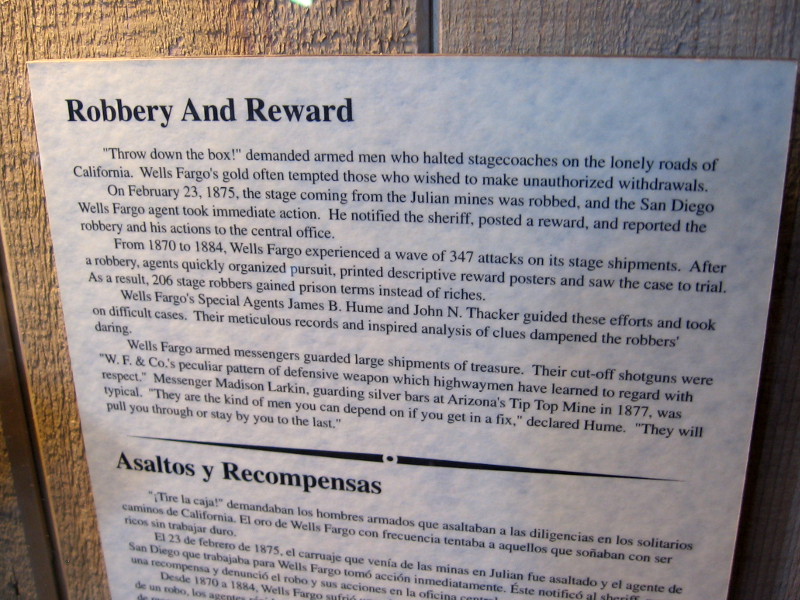
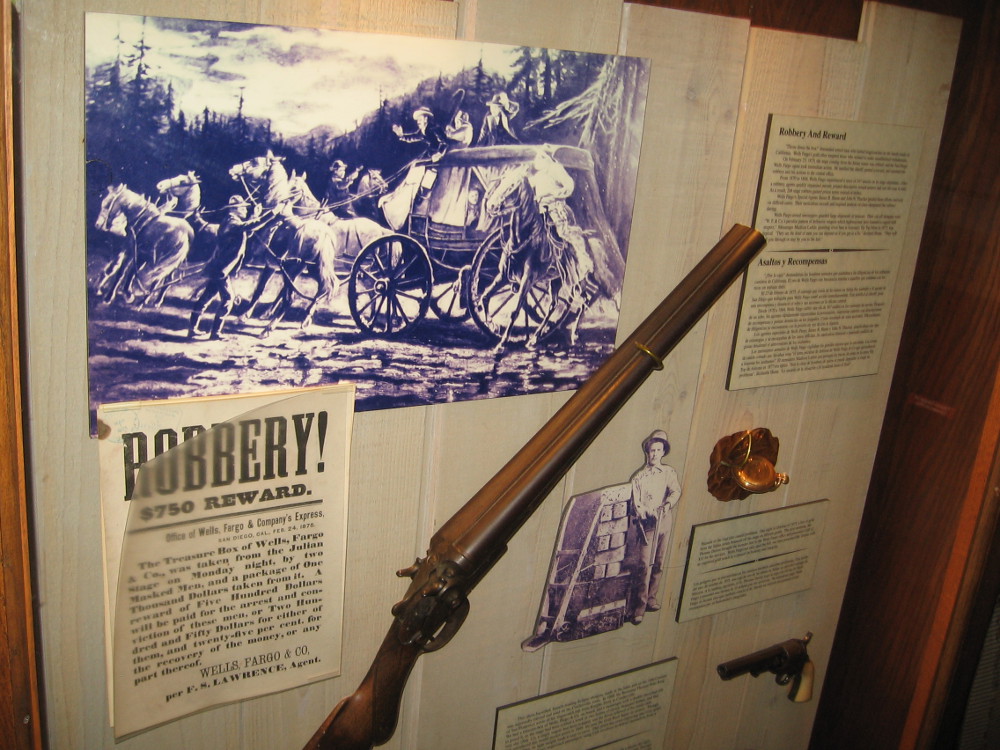
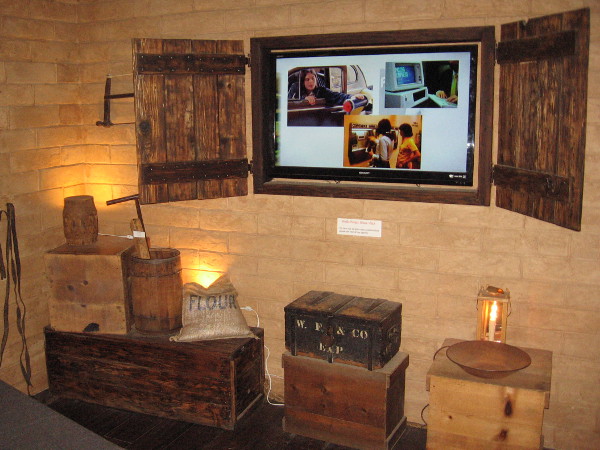
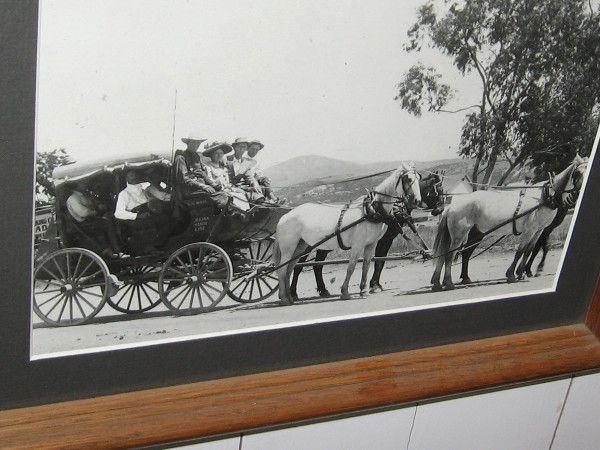
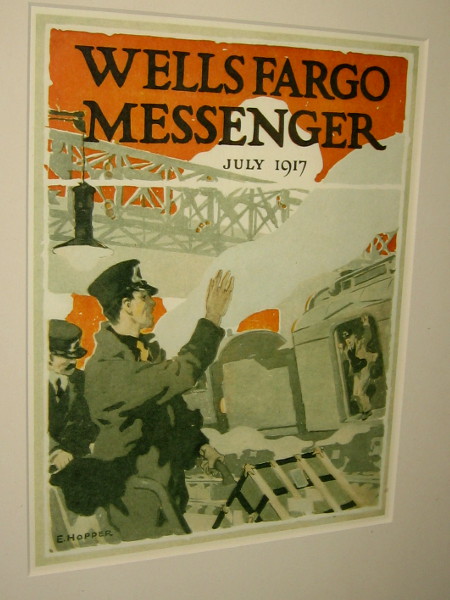
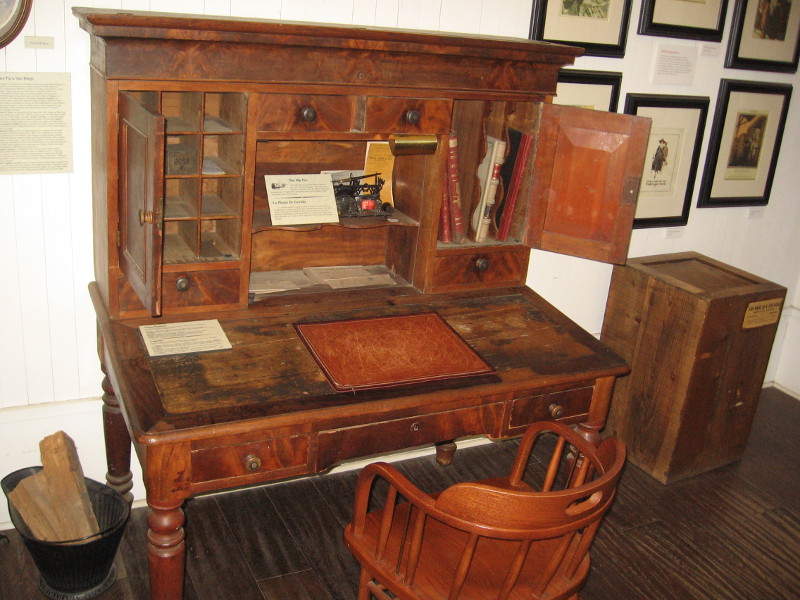
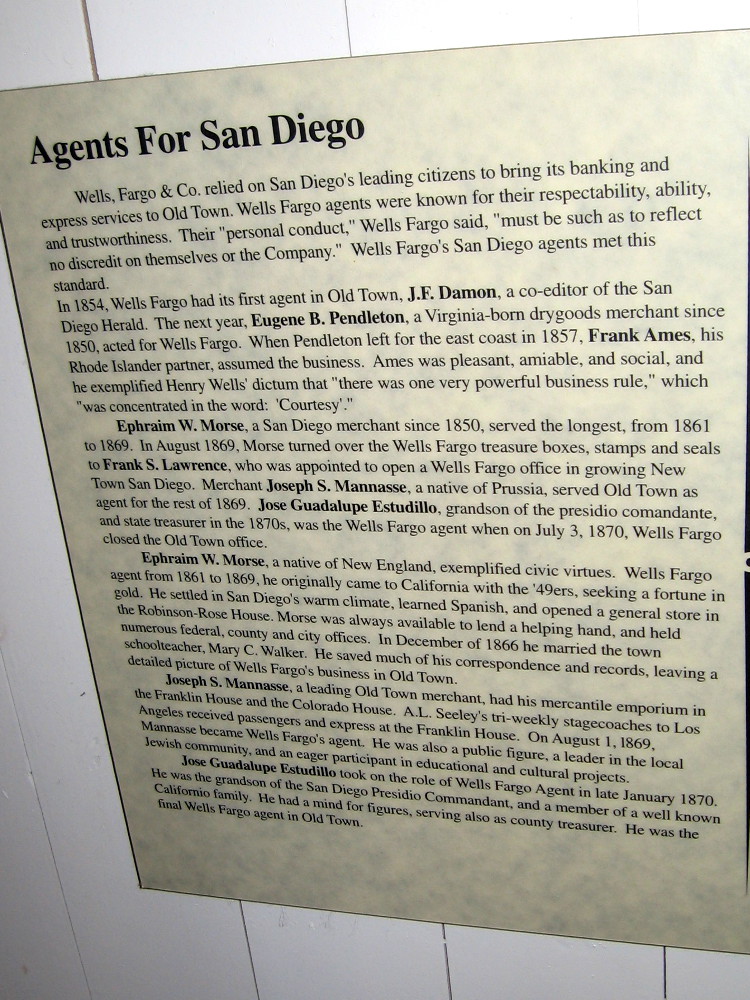
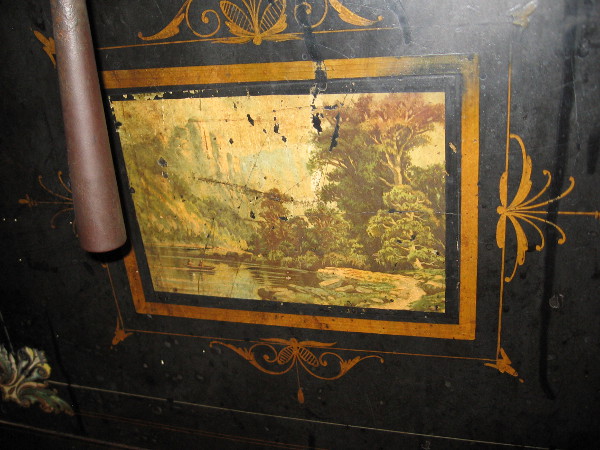
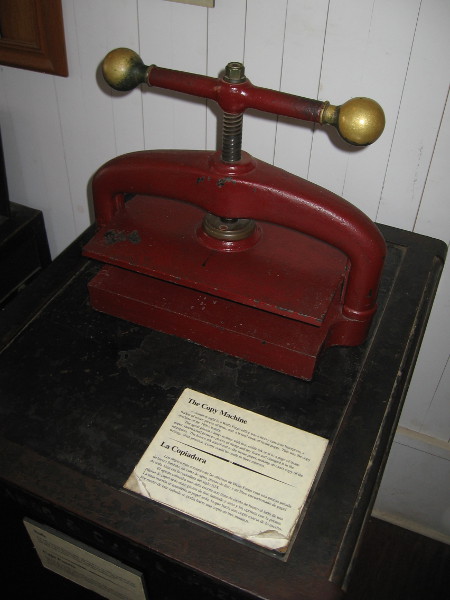
The restored Colorado House in Old Town San Diego is home to a fascinating Wells Fargo museum.The two-story, wood frame hotel called the Colorado House was built in Old Town San Diego in 1851 by Cave Couts. The original building was destroyed by fire in 1872.The Wells Fargo History Museum in San Diego is open daily from 10-5. Admission is free!Tourists in Old Town check out an iconic red Wells Fargo stagecoach, which transported mail, gold, goods and passengers in the Old West.Old photo on video screen shows the Wells, Fargo and Co’s Express Office in downtown San Diego, in 1911.Historical artifacts in a glass display case include books, bottles and a photo of Cave J. Couts.In the spring of 1851 Cave Johnson Couts opened the Colorado House as San Diego’s first two-story hotel. It had an elegant billiard table and fine food.Old photograph shows bar and patrons in Colorado House.Antique telegraph key once used to send messages and money across the continent.Colorful mural high on one wall shows a small town by a blue bay. I believe I recognize many buildings in Old Town.Article from the Omaha Herald published in 1877 provides Hints for Plains Travelers. When the driver asks you to get off and walk, do it without grumbling!Old plaque in the museum: Silas St. John carried the first eastbound overland mail out of San Diego, from Carrizo Creek to Fort Yuma, November 16, 1857. On September 9, 1858, in a lone-handed defense of the Butterfield-Wells Fargo Overland Stage station at Dragoon, Arizona, St. John was horribly wounded and lost his left arm. He recovered to continue in Wells Fargo service. Of his stuff the West was made.To be a stage driver–the Whip–was to be a member of a highly skilled profession. They handled 4 to 6 horses in all kinds of weather on all kinds of roads, outwitted highwaymen, and calmed passengers.Passengers on board the Overland Mail Company stages were allowed 40 pounds of baggage.Advertisement shows Ladies’ and Gentlemen’s traveling trunks and valises, also packing trunks of every description.Map shows the historic Butterfield Overland Mail Route. Wells Fargo’s experience in Western transportation led it to finance and eventually run the Butterfield stage line’s operations in the west. (Click image to enlarge.)On February 23, 1875, the stage coming from the Julian mines was robbed, and the San Diego agent took action. He immediately notified the sheriff, posted a reward, and reported the robbery and his actions to the central office.Cool display inside the Wells Fargo History Museum in Old Town San Diego shows how stagecoaches and their cargo were protected from bandits.The most infamous stage robber was Black Bart. He left bits of poetry and called himself the “Po8” to distance himself from the common thief. He robbed 28 stagecoaches from 1875 to 1883. Once identified, authorities learned he was actually Charles E. Boles, a “respectable” mine owner!A museum recreation of the Vallecito Stage Station, a stop on the Overland Mail Company’s southern route, 1858-1861. Thick adobe walls provided relief from desert heat.Table in the stage station used for rest, serving food and games of cards to pass the time.Gold was discovered at Julian in San Diego’s mountains, triggering a small rush into the area.Miners from placer diggings on the Colorado River and hard-rock mines at Julian brought their gold dust and bars to the Wells, Fargo and Co. agency in Old Town San Diego.The Julian Stage Line carried miners and other passengers to this gold mining town in east San Diego County.Cover of the Wells Fargo Messenger, dated July 1917.Wells Fargo published a monthly magazine calls the Wells Fargo Messenger between September 1912 and June 1918. Edward Hopper, an illustrator, went on to become a famous American realist painter.On her travels she uses Wells Fargo Checks.Cover of the Wells Fargo Messenger, dated April 1918.Antique desk used by a Wells Fargo agent.During a typical day, a Wells Fargo agent saw many types of business, reflecting the Company’s varied and essential services.Nooks in this desk hold dip pens, receipts, letters and accounting ledgers.Wells Fargo agents were known for their respectability, ability, and trustworthiness. The first Old Town agent was J.F. Damon, co-editor of the San Diego Herald.Wells Fargo agent William A. Biglow works in his express office which included an agent’s cabinet and iron safe.A large old letterpress sits atop a cast iron safe. The safe, made by Herring, Hall, Marvin and Co. in 1885, is filled with concrete and weighs over a ton.Some pastoral art on the face of the safe door.The copy machine of the 19th Century. Pressure from this heavy cast-iron letterpress transferred brown ink to tissue paper.A collection of old letters, certificates and small packages exhibited at the Wells Fargo History Museum in San Diego.If you ever visit Old Town San Diego State Historic Park, check out the interesting Wells Fargo History Museum in the Colorado House!
…
I live in downtown San Diego and love to walk around with my camera! You can follow Cool San Diego Sights via Facebook or Twitter!
You can easily explore Cool San Diego Sights by using the search box on my blog’s sidebar. Or click a tag! There are thousands upon thousands of fun photos for you to enjoy!
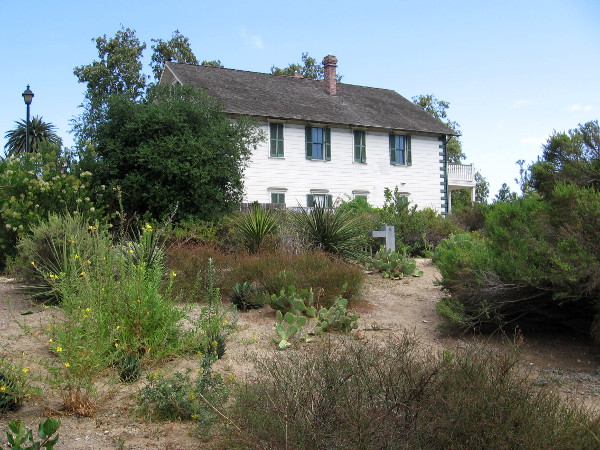
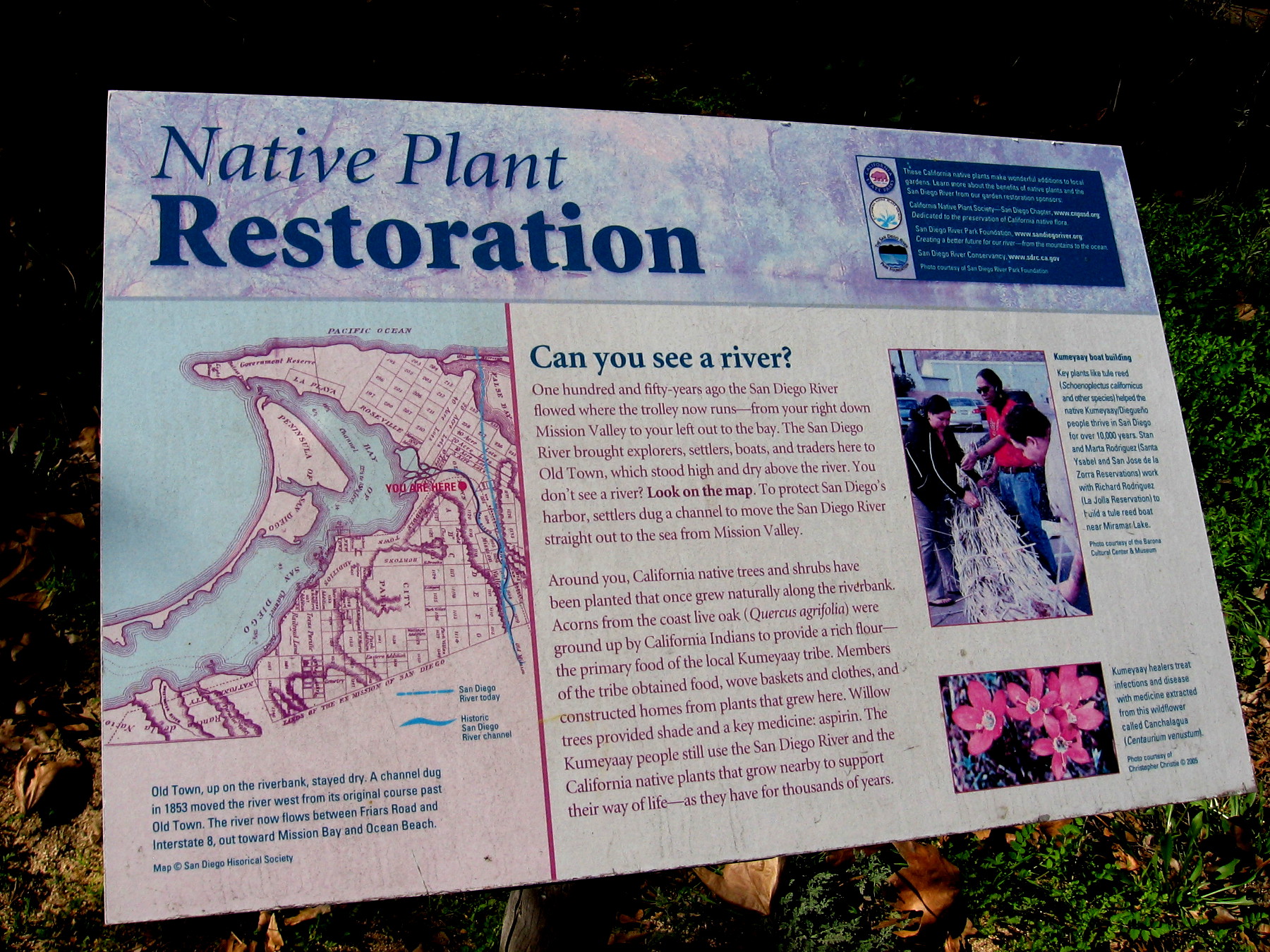
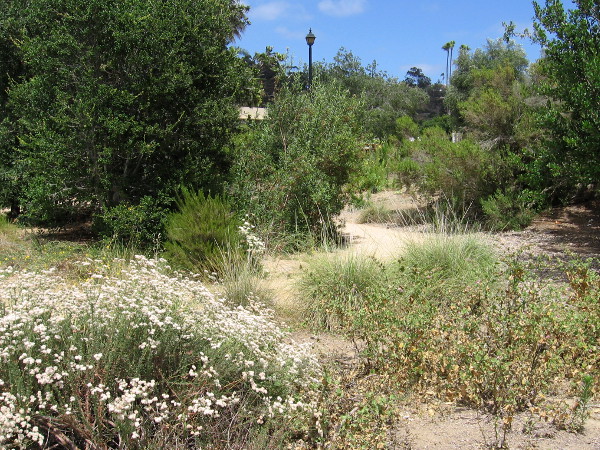
Photo of historic McCoy House in Old Town San Diego from the Native Garden. Today’s garden is located in a spot that was once very close to the San Diego River, before the river was diverted to the north, through Mission Valley.
A small, ragged but beautiful native garden can be found in the northwest corner of San Diego’s Old Town, next to the McCoy House Museum. The Native Plant Garden contains vegetation that grows naturally along the rivers of our semi-arid region.
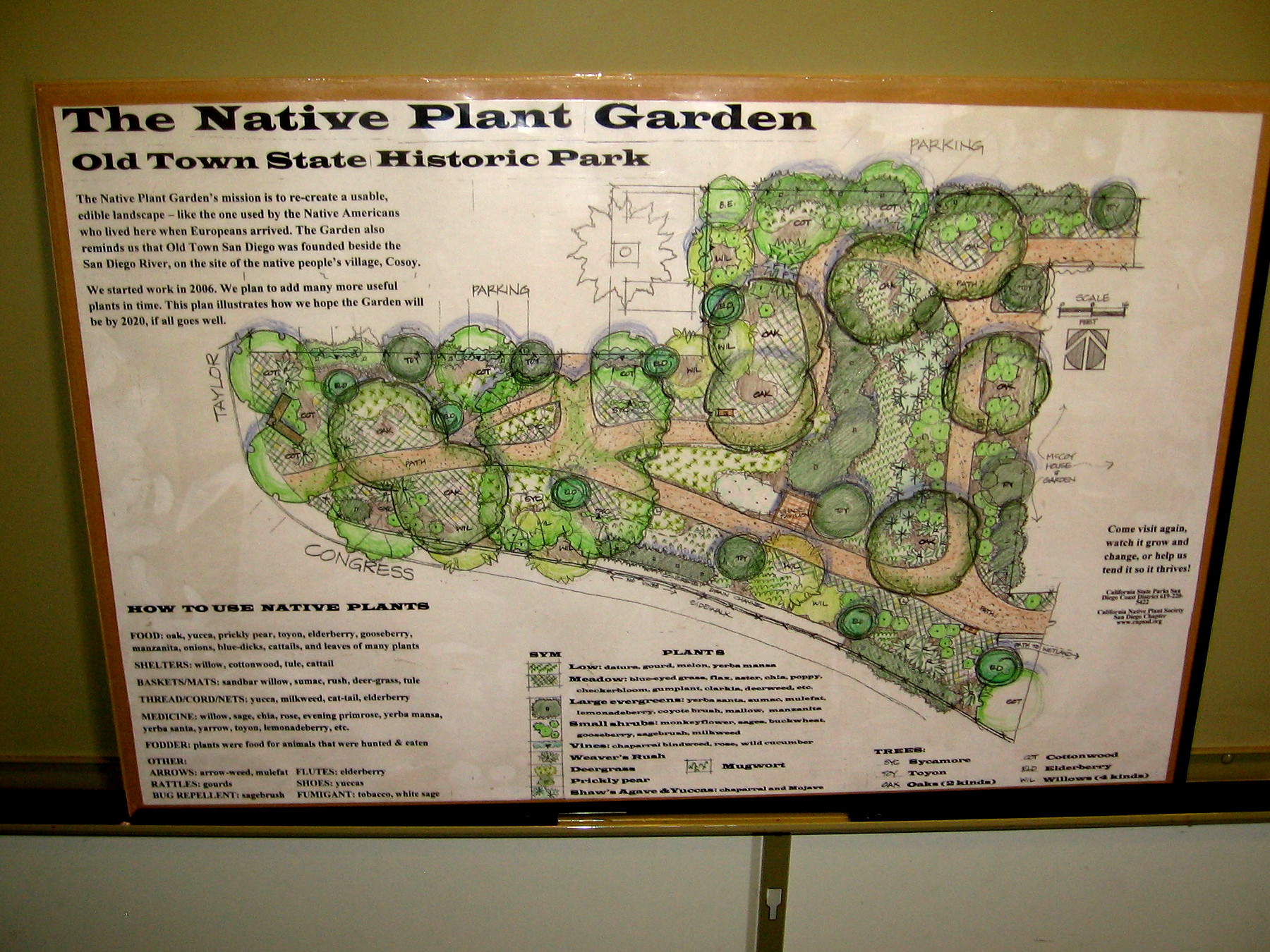
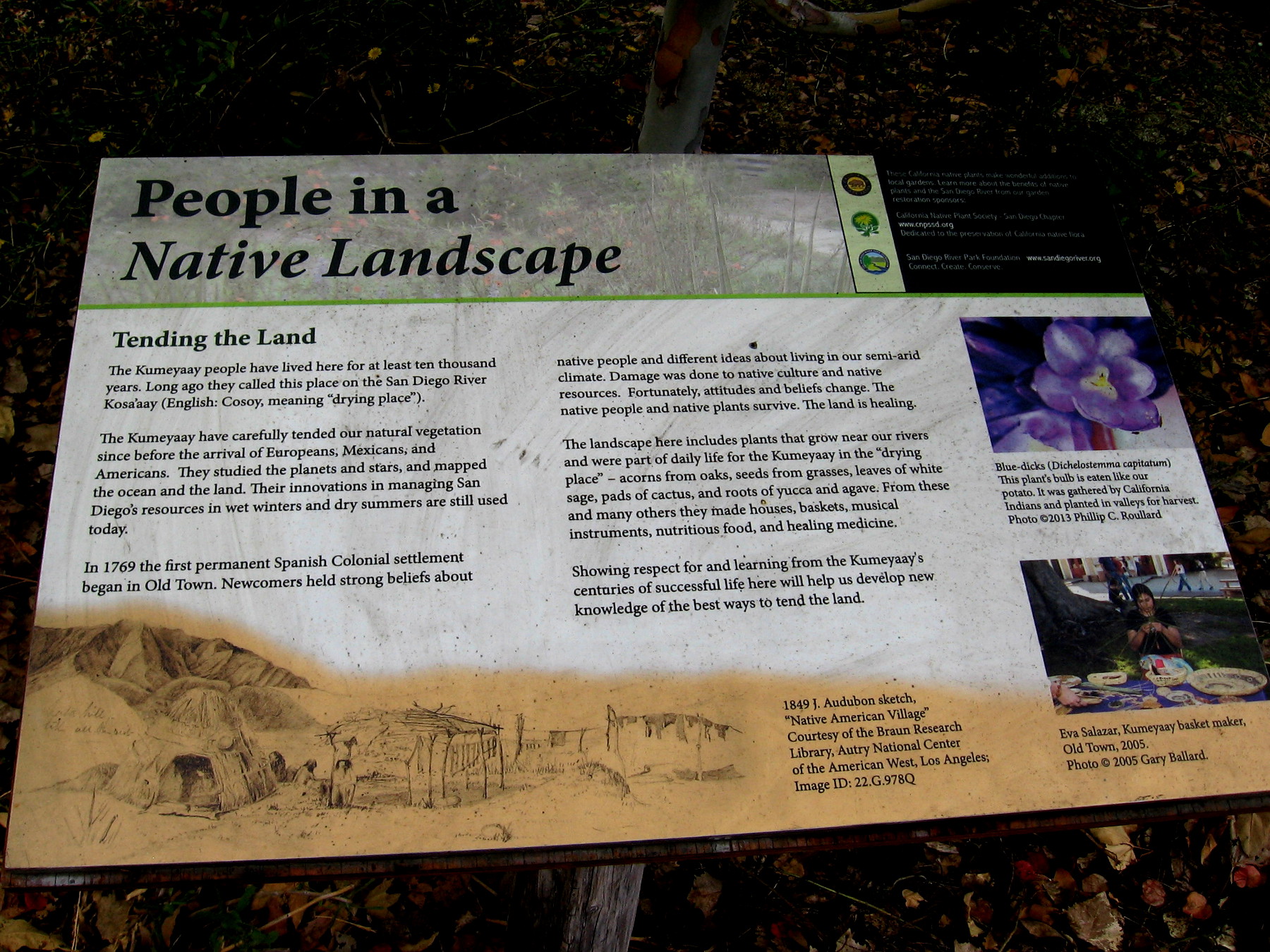
Long before Europeans arrived in Southern California, the Native American Kumeyaay lived where Old Town was eventually established; the Kumeyaay village at the base of Presidio Hill was called KOSA’AAY, or Cosoy. Many of the plants in the garden were used by the Kumeyaay people in everyday life.
Read the photo captions to learn much more. Click the garden plans and the two signs, and those images will expand providing additional information!
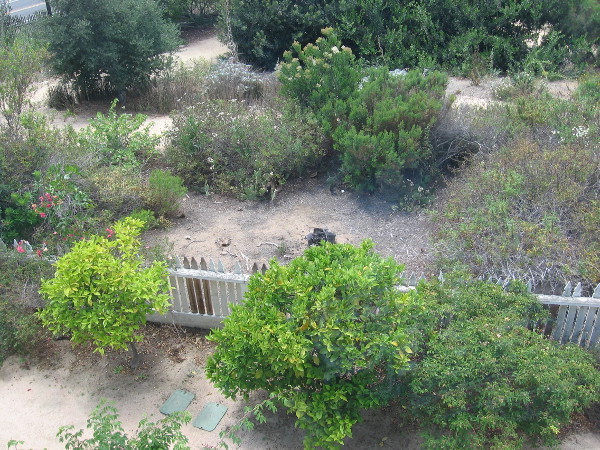
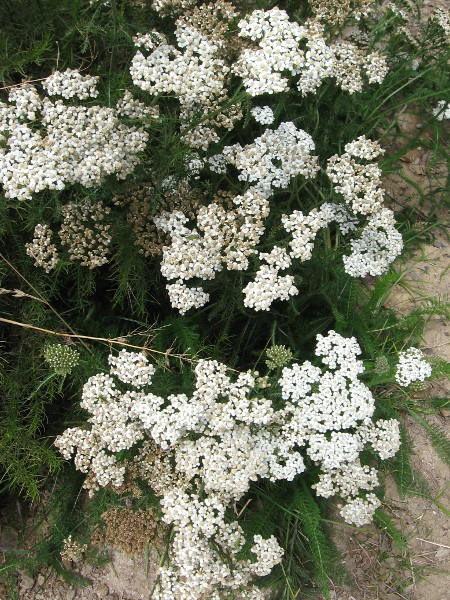
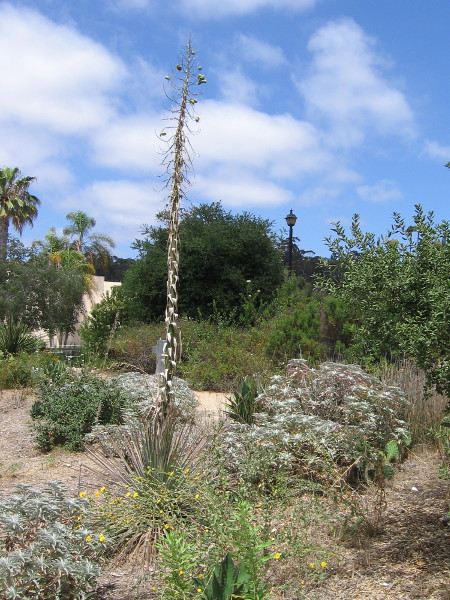
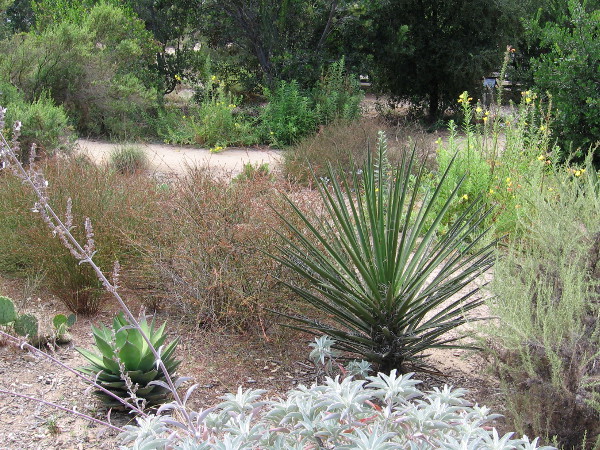
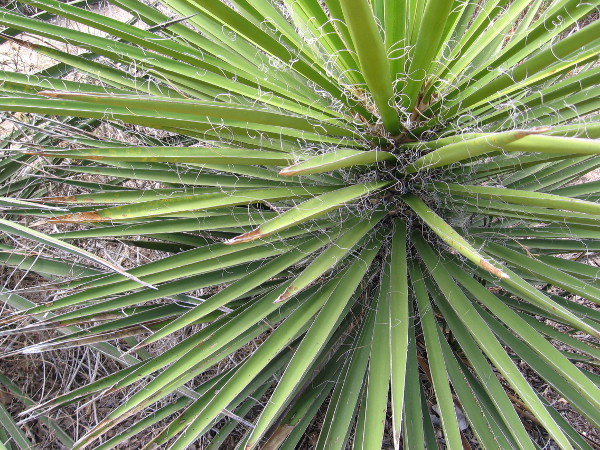
Plans of the Native Plant Garden in Old Town San Diego State Historic Park. Included are species used by the Native American Kumeyaay for food, shelter and medicine. Their village Cosoy was located here.Looking northwest from the second floor of the McCoy House Museum in Old Town San Diego. The Native Garden beyond the fence is a bit dry and scraggly–but that’s how local vegetation naturally appears.150 years ago the San Diego River flowed nearby, bringing explorers, settlers, boats and traders to Old Town. California native trees and shrubs have been planted that once grew along the riverbank.Dirt walking paths meander through the small Native Garden at the northwest corner of Old Town San Diego State Historic Park.Yarrow was used by the Kumeyaay as a treatment for various medical conditions, including burns, inflammation, and pain from toothache, headache and arthritis.Tall stalk of a yucca that already flowered still juts into the sky in Old Town San Diego.The Kumeyaay people have lived here for at least ten thousand years. Their innovations in managing San Diego’s resources in wet winters and dry summers are still used today.A variety of native plants found naturally in coastal San Diego’s semi-arid climate, including sages and prickly pear cactus.Fibers from the yucca were used by the Kumeyaay to produce cords, nets, shoes and other useful items.
…
I live in downtown San Diego and love to walk around with my camera! You can follow Cool San Diego Sights via Facebook or Twitter!
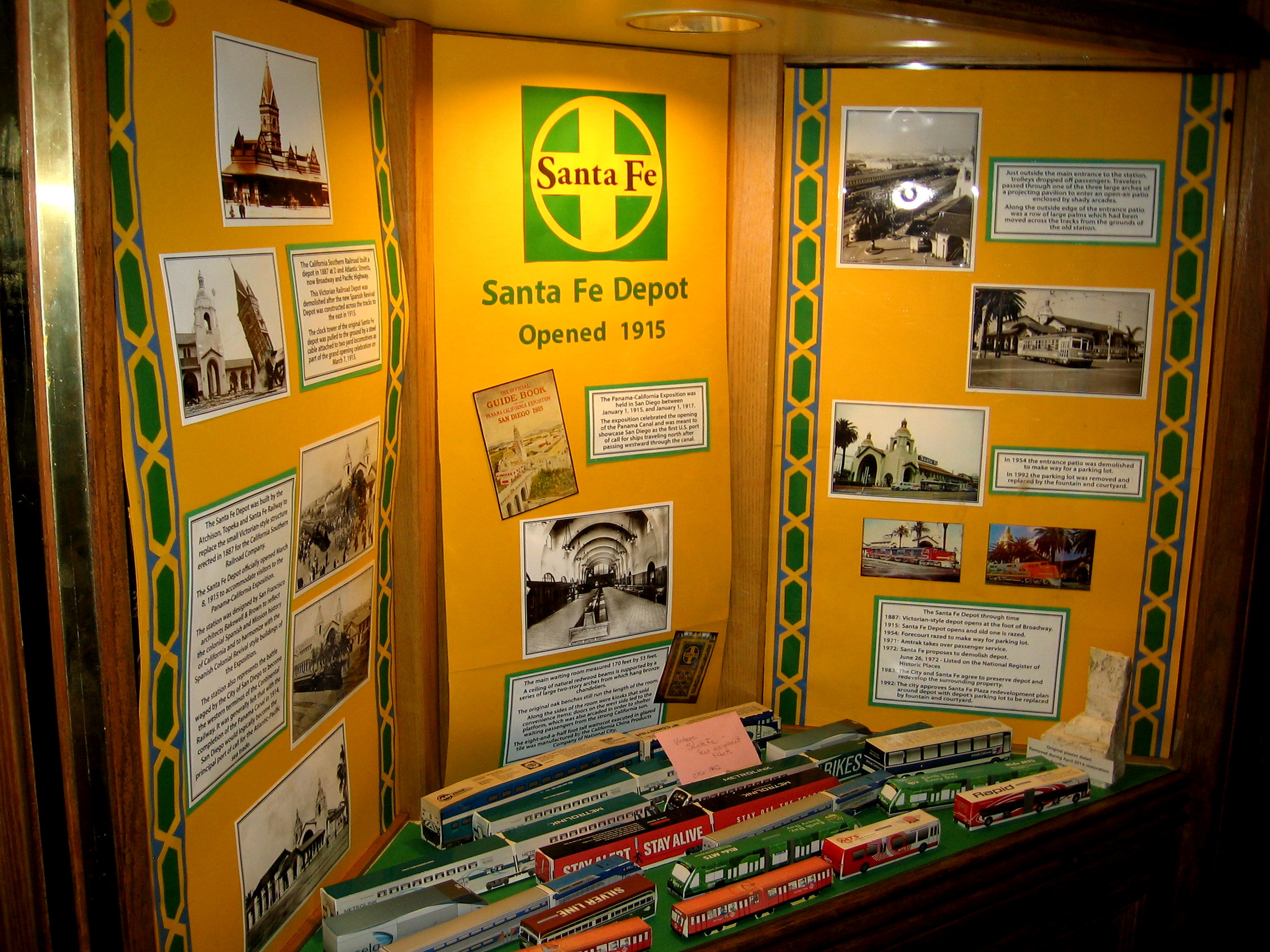
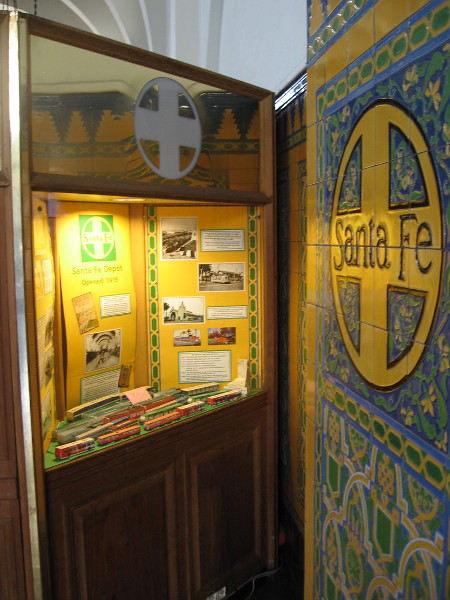
Display inside San Diego’s 1915 Santa Fe Depot. Photos and words provide a glimpse of the train station’s history.
Should you ever step inside downtown San Diego’s handsome Santa Fe Depot, there’s a small exhibit at the information booth worth checking out. Two glass display cases provide a glimpse of the train station’s fascinating history.
To read the signs, click the images and they will enlarge.
Last year the Santa Fe Depot celebrated its centennial. I blogged about that here!
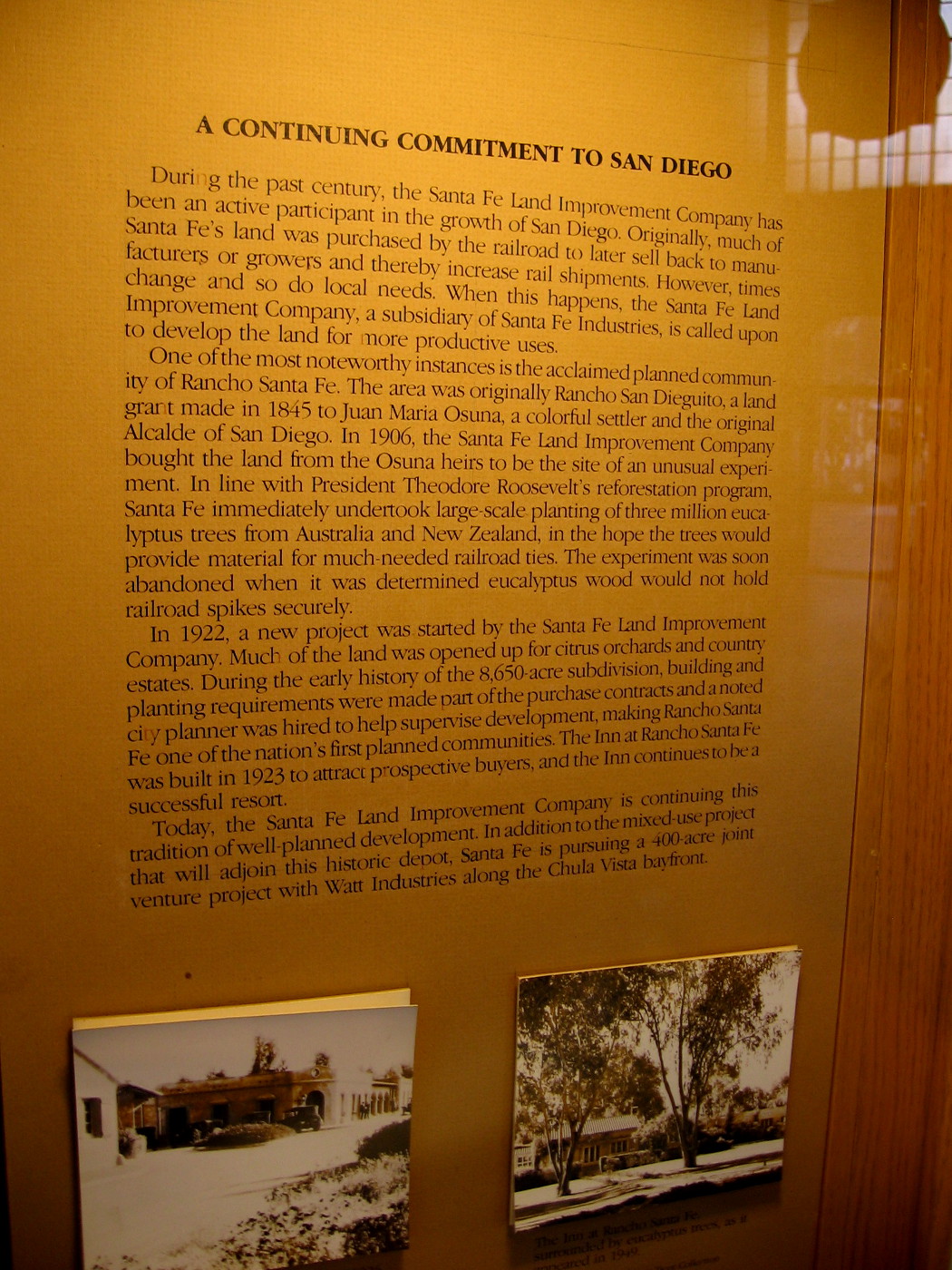
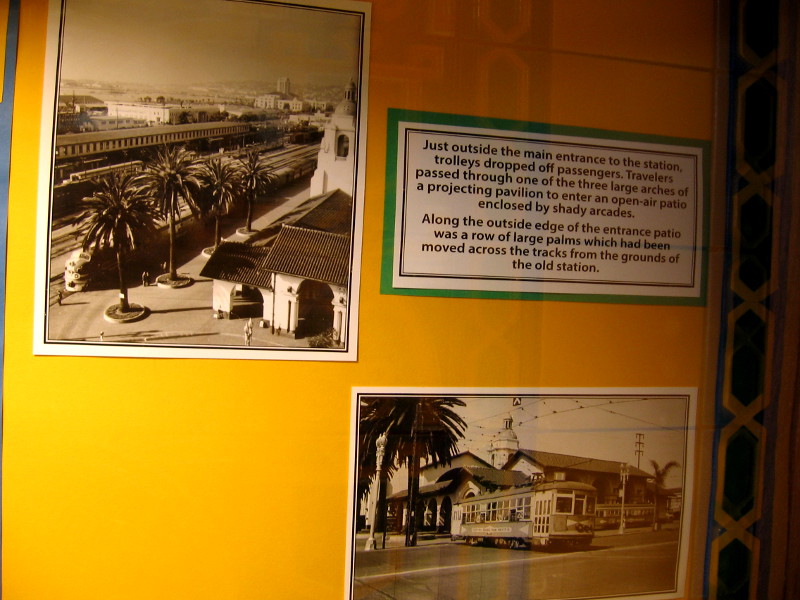
If you ever visit the Santa Fe Depot in downtown San Diego, swing by this information booth to check out the historical exhibit.Several paragraphs recount the history of the Santa Fe Land Improvement Company and the unique origin of North County community Rancho Santa Fe. Eucalyptus trees make poor railroad ties!In a nook right next to the depot’s wall, beside colorful Santa Fe tilework, one can discover more fascinating information.Graphic shows important dates concerning the Santa Fe Depot. The 1887 Victorian-style depot was razed in 1915 after the new depot opened in time for the Panama-California Exposition in Balboa Park.The train station’s architecture reflects colonial Spanish and Mission history in California; it was designed to harmonize with the Spanish Colonial Revival-style buildings of the 1915 Panama-California Exposition in Balboa Park. A century ago San Diego strove to become the western terminus of the Continental Railway.More fascinating old photos of the Santa Fe Depot, today a San Diego transportation hub serving Amtrak, the Coaster, and the Orange and Green Lines of the San Diego Trolley.Original plaster detail removed during the April 2014 restoration of the southeast tower.
…
I live in downtown San Diego and love to walk around with my camera! You can follow Cool San Diego Sights via Facebook or Twitter!
You can easily explore Cool San Diego Sights by using the search box on my blog’s sidebar. Or click a tag! There are thousands upon thousands of unique photos for you to enjoy!
Old tin shop sign still visible on the historic 1882 Independent Order of Odd Fellows Building in San Diego’s Gaslamp Quarter. A remnant of a past era.
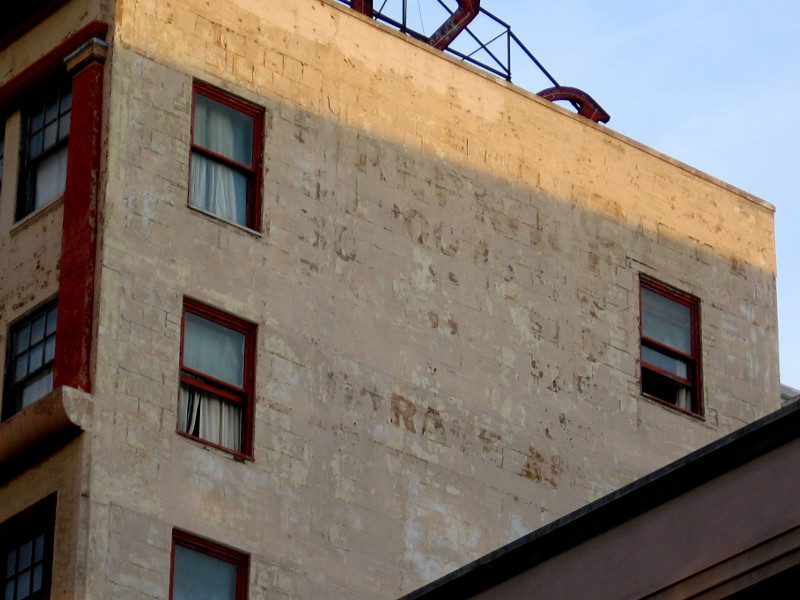
While walking around downtown San Diego, I’m always pleased to make unexpected discoveries. Once in a while I’ll spot faded signs and advertisements that were painted years ago on historic old buildings. Unfortunately, many of those old signs are vanishing and will eventually be lost to time. Some of those walls will be painted, or new buildings will sprout up . . . That’s progress, I suppose.
I did some searching on the internet looking for information about the more mysterious signs, but with very little success. I increased the contrast of many photos to try to make out the faded words. If you know anything, leave a comment!
Most of these photos were taken in the morning, the last three or four days…
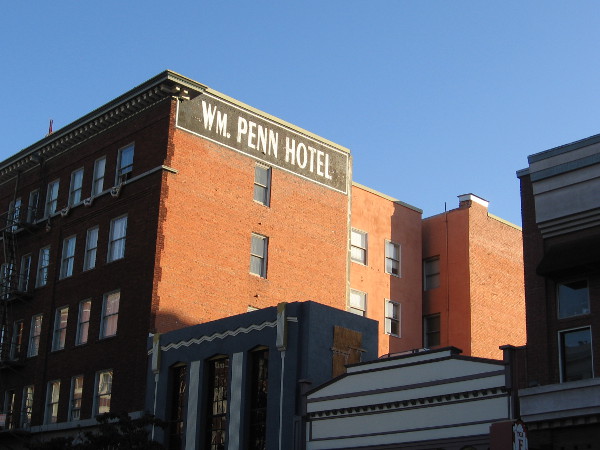
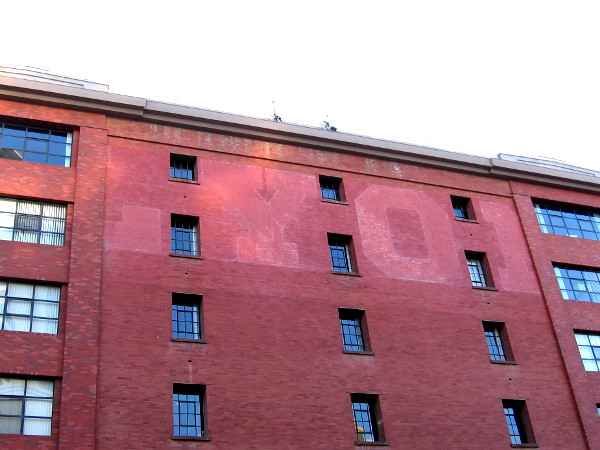
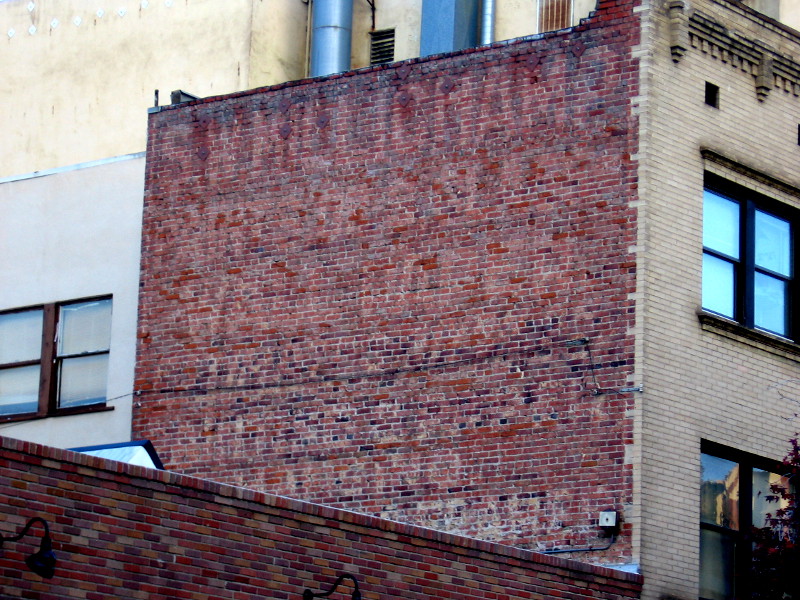
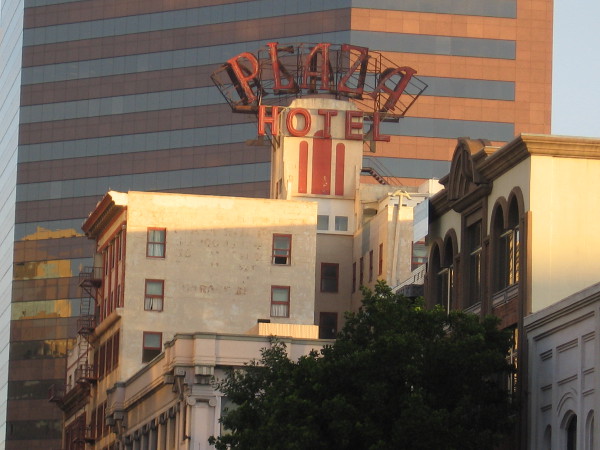
A faded sign is painted high on the 1888 Nesmith-Greely Building on Fifth Avenue. It is just visible from the street.One can barely make out the words HOTEL . . . ROOMS 50c to $1.00Old brick building at Seventh Avenue and G Street has words so obliterated I can’t decipher anything.The William Penn Hotel building at Fourth Avenue and F Street opened in 1913 as the elegant Oxford Hotel.Painted words from San Diego’s past. The Windsor Hotel on Fourth Avenue was built in 1887. The first floor was once a pool hall; in the 1960s it contained cardrooms and nightclubs with go-go dancers.The 1910 Western Metal Supply Company Building is now an iconic part of Petco Park in San Diego, home of the baseball Padres.The faded word LYON on a building at the corner of K Street and Fourth Avenue.From a distance, a square space on the side of the Simmons Hotel on Sixth Avenue appears to be blank reddish bricks.But a closer look reveals old words from many years ago. Perhaps you can figure out what they say.Faded words can also be spotted high on the Plaza Hotel building on Fourth Avenue.I can barely discern a few letters.The building on the right is The McGurck Block, built in 1887. A drug store was located in it from 1903 to 1984. Actor Gregory Peck’s father worked there as the night druggist.High up, painted on the old brick building’s side is a fading advertisement. A glimpse of San Diego’s past.
Here’s another pic I snapped on Fifth Avenue just south of Broadway:
Faded sign on side of a building on the 900 block of Fifth Avenue.
I’ve blogged in the past about a variety of cool old painted signs and images in downtown San Diego. Here they are:
Here’s a pic I took several years later, as I sat waiting for a bus at the City College trolley station, looking west…
…
I live in downtown San Diego and love to walk around with my camera! You can follow Cool San Diego Sights via Facebook or Twitter!
You can easily explore Cool San Diego Sights by using the search box on my blog’s sidebar. Or click a tag! There are thousands upon thousands of fun photos for you to enjoy!
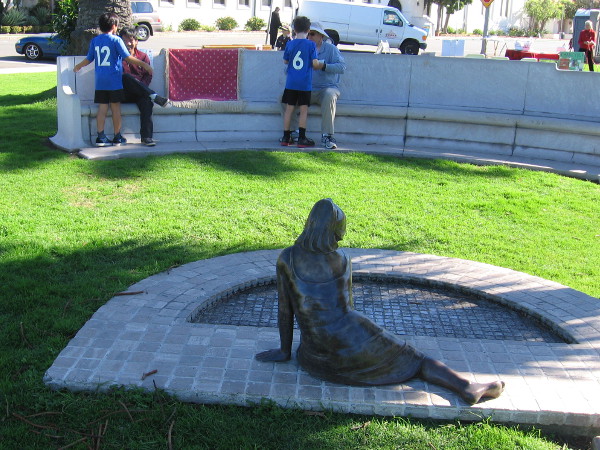
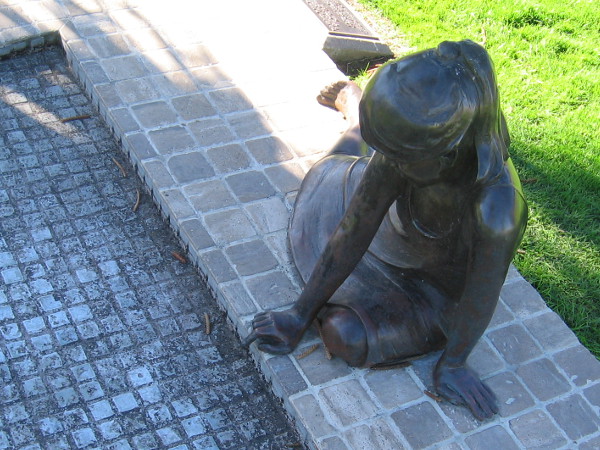
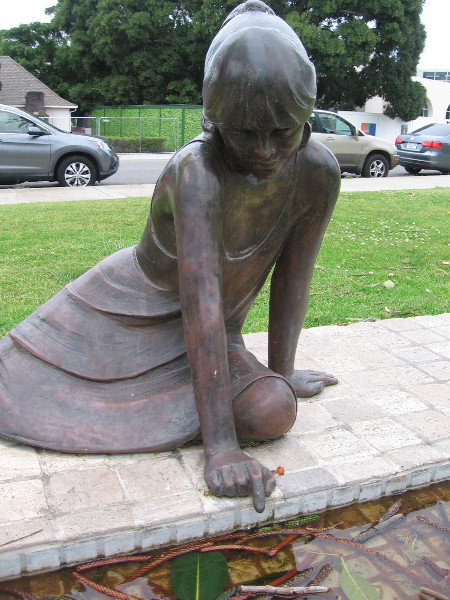
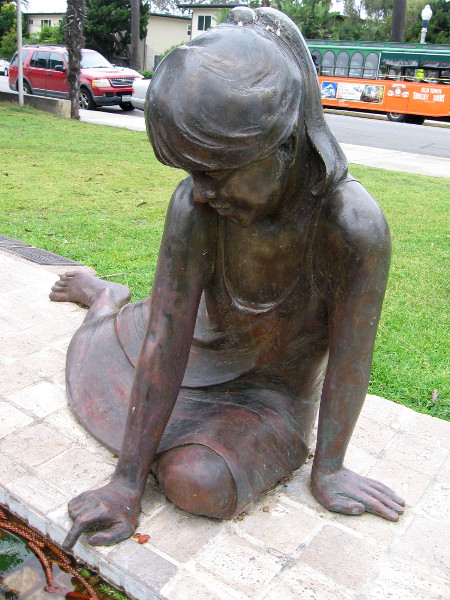
Bronze sculpture of young girl dipping finger into shallow basin of water. The Ellen Browning Scripps Memorial is located at the La Jolla Recreation Center.
During my recent walk around La Jolla, I paused for a bit to admire a beautiful bronze sculpture at the La Jolla Recreation Center. The life-size likeness of a girl dipping a finger into a basin of water is officially called the Ellen Browning Scripps Memorial. Created by artist Mary Buckman and dedicated in 1997, the gentle artwork remembers a very important figure in San Diego history: Ellen Browning Scripps.
If you live in San Diego, you surely recognize the name Ellen Browning Scripps. She and her brother created a vast business empire as newspaper publishers. During her life she gave most of her wealth away to good causes. She spent much of her life in La Jolla. Indeed, she lived right across Prospect Street from the present-day sculpture; her old residence is now home to the Museum of Contemporary Art San Diego in La Jolla.
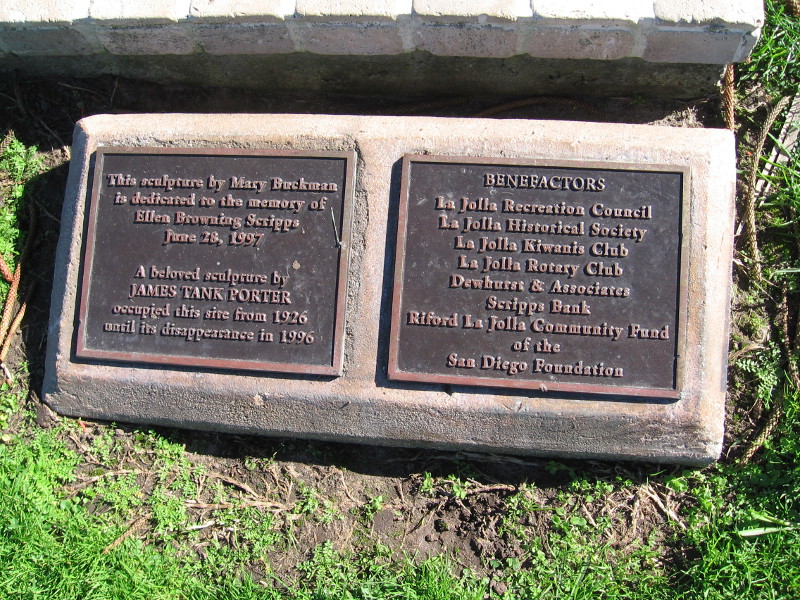
This sculpture by Mary Buckman is dedicated to the memory of Ellen Browning Scripps. June 28, 1997. A beloved sculpture by James Tank Porter occupied this site from 1926 until its disappearance in 1996.People enjoy a nearby bench at the La Jolla Recreation Center on a sunny December day.Inscription on the bench is from Robert Louis Stevenson’s A Child’s Garden of Verses. I’m sure we should all be as happy as kings.A beautiful work of art remembers San Diego journalist and philanthropist Ellen Browning Scripps.
Here are several photos I took at a later time…
…
I wrote a short story about a girl gazing into a fountain. Would you like to read it? To feel a mixture of joy and sadness, click here.

























































 Cool San Diego Sights!