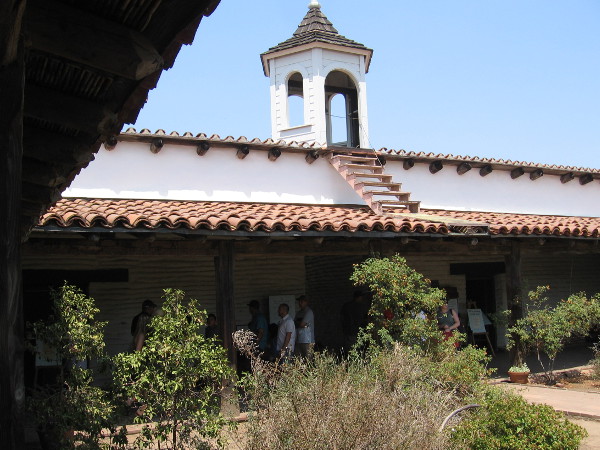
Photos of restored rooms inside Casa de Estudillo.

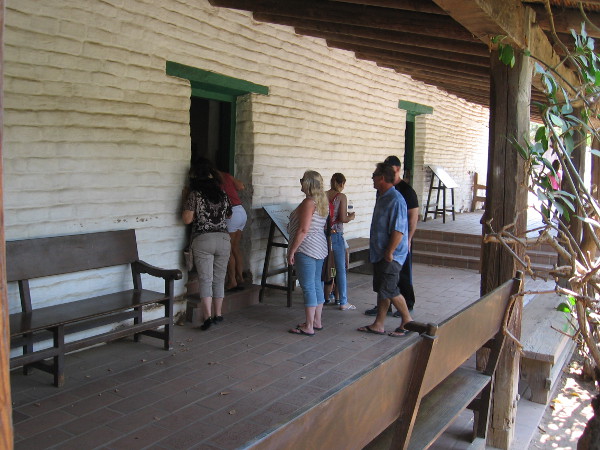
Visitors to Old Town San Diego State Historic Park look into a restored room of La Casa de Estudillo.

Four years ago I posted photos of La Casa de Estudillo, a famous adobe house in Old Town San Diego State Historic Park that was originally built in 1827. That blog was called Ramona saved Casa de Estudillo in Old Town and concerned the fascinating history of this structure.

Over time various parts of the casa have undergone restoration and new rooms have opened up to public view. These rooms now appear furnished as they once might have been, in the very early days of San Diego.

I recently walked through La Casa de Estudillo and peered into a few of the rooms…

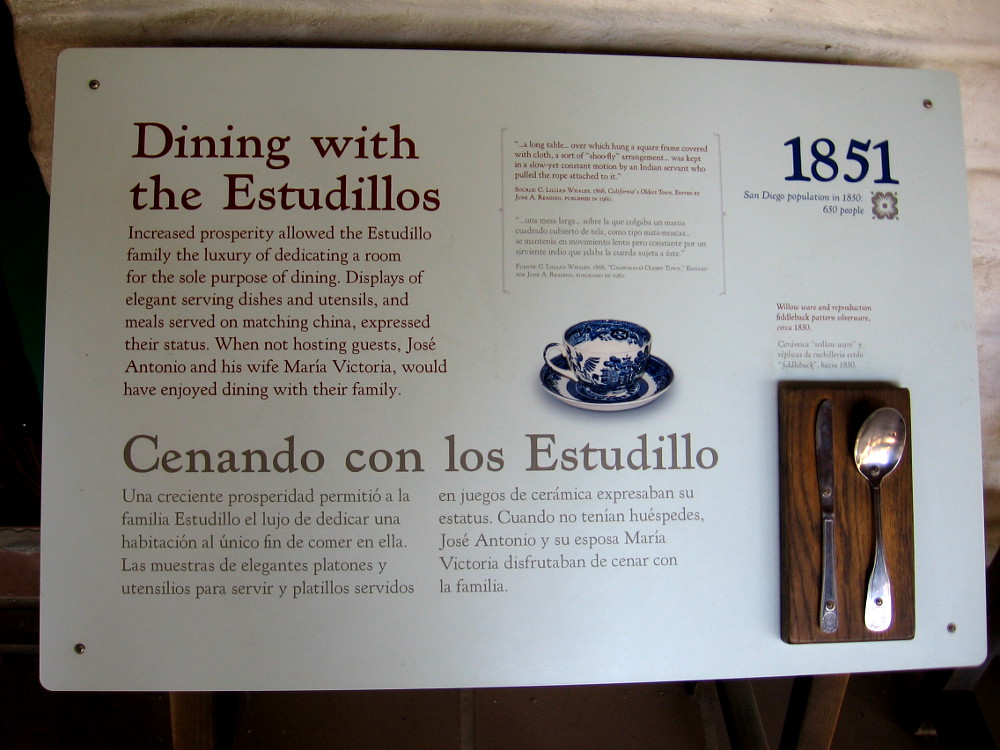
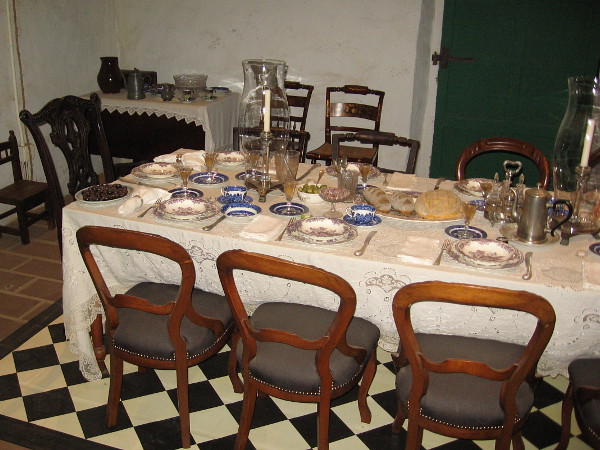
Sign describes the dining room of La Casa de Estudillo.
The eventual prosperity of the Estudillo family is reflected in their elegant dining room.
Expensive furniture and tableware imported by ship from distant places fill the otherwise simple room.
Sign describes commerce in the casa. Francisco de Paul Rodriguez rented space from the Estudillos for a store.
The store, or tienda, contained shelves of goods that might be purchased by the residents of Old Town San Diego. Much of the merchandise came by ship from the East Coast around Cape Horn.
More shelves against one wall contain iron tools and basic furnishings like candlesticks for sale.
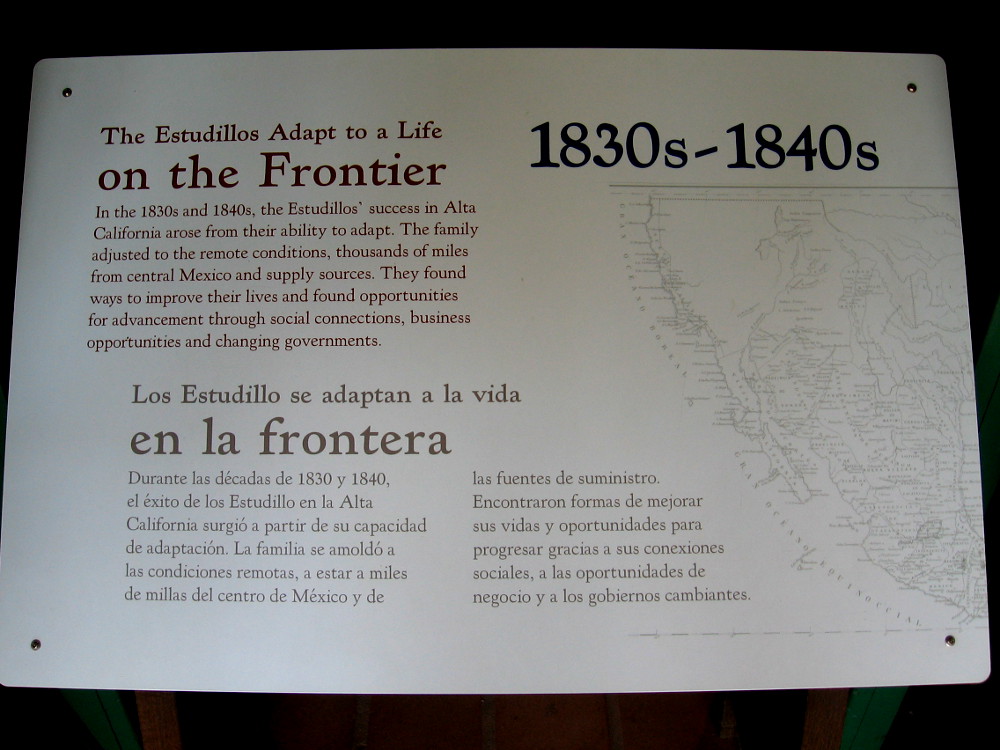
Sign describes how the Estudillos adapted to life on the frontier in the 1830's and 1840's.
Sign describes how the Estudillos adapted to life on the frontier in the 1830’s and 1840’s.
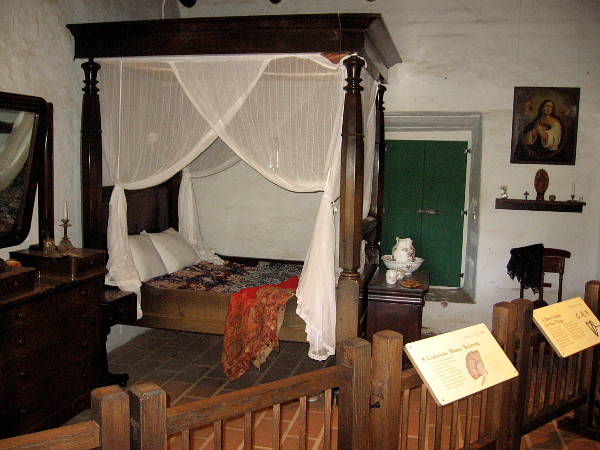
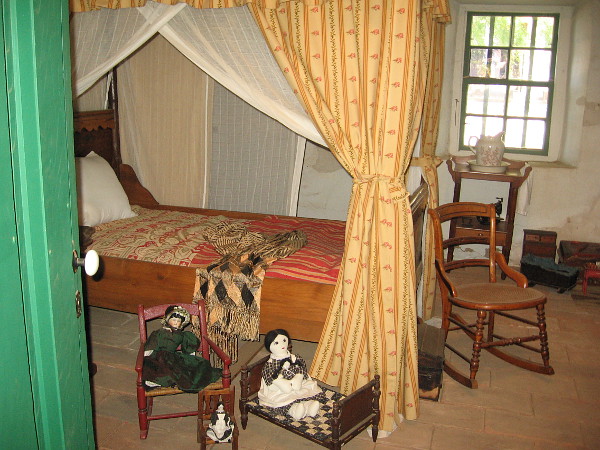
A bedroom inside La Casa de Estudillo contains a wealth of comfort, unusual in early San Diego, which was located far away from developed centers of commerce.
Several additional rooms at La Casa de Estudillo are undergoing restoration.
Sign describes how the casa started as a modest two-room structure and eventually grew into an expansive U-shaped building with a courtyard and outbuildings.
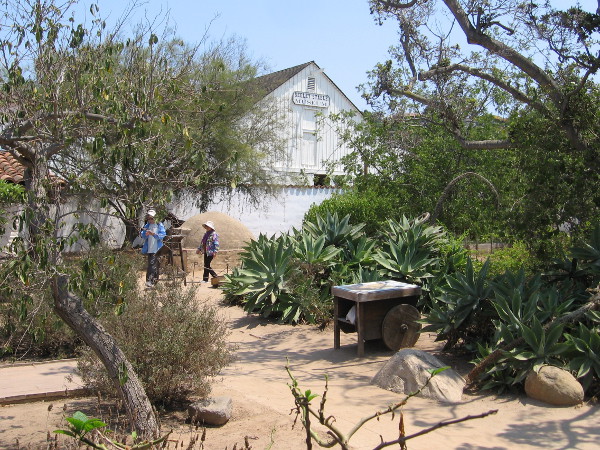
Photo of the Casa de Estudillo's tower from the central garden courtyard.
Photo of the Casa de Estudillo’s tower from the central garden courtyard.
Looking across the south end of the courtyard toward the outdoor oven and Seeley Stable beyond.
Sign explains how the Estudillos cared for a growing family including many children.
Frozen Charlotte dolls, ca. 1850's. These china dolls were popular in the Victorian era.
Frozen Charlotte dolls, ca. 1850’s. These china dolls were popular in the Victorian era.
A look into the children's bedroom.
A look into the children’s bedroom.
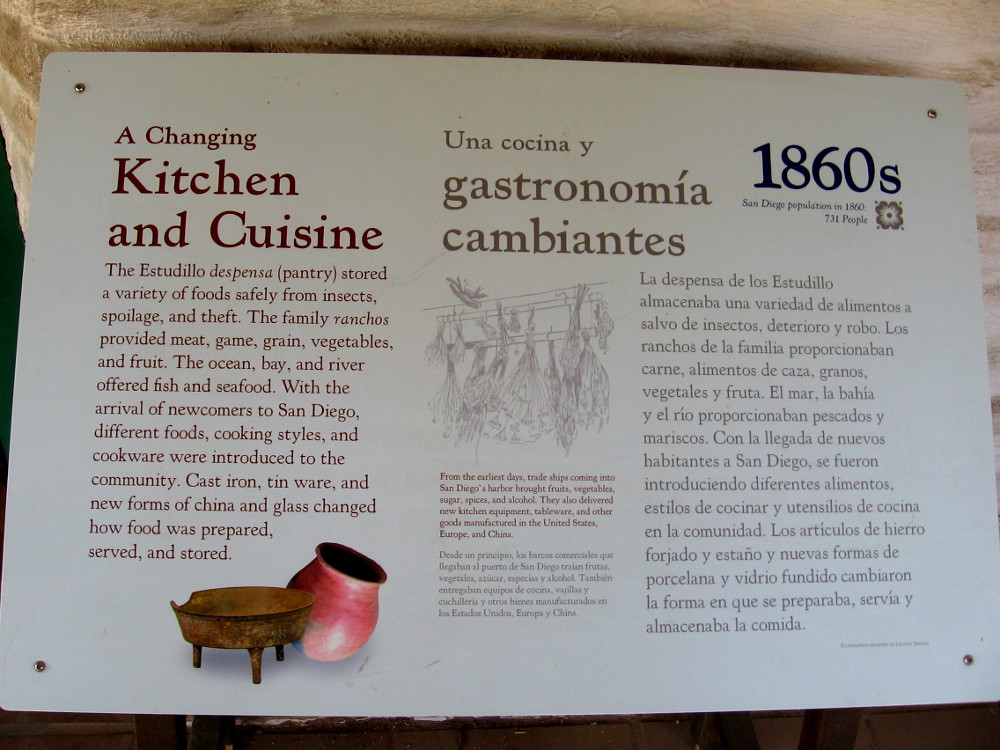
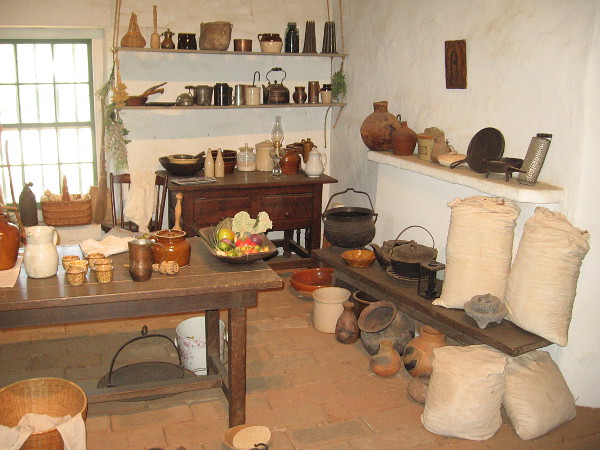
Sign describes the Estudillo kitchen and pantry. The family's ranchos provided meat, game, vegetables and fruit.
Sign describes the Estudillo kitchen and pantry. The family’s ranchos provided meat, game, vegetables and fruit.
Jars, pots, sacks of flour and fruit are among the many items seen in the rather primitive kitchen.
The kitchen inside La Casa de Estudillo provides an idea of what life might have been like in early San Diego.

UPDATE!

Here are additional photos of information signs that I took in June 2019…

Sign showing architect Hazel Wood Waterman's design for the Casa de Estudillo includes photo of the Casa under construction.
Sign showing architect Hazel Wood Waterman’s design for the Casa de Estudillo includes a photo of the Casa under construction.
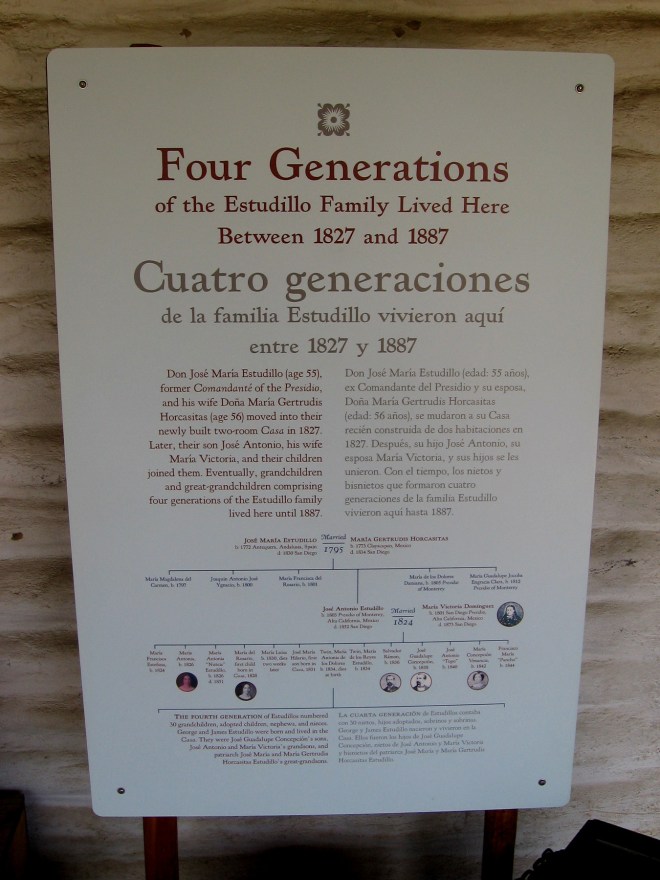
Four generations of the Estudillo family lived here between 1827 and 1887. Don José Maria Estudillo was former Comandante of the Presidio.
An Estudillo tradition of public service.
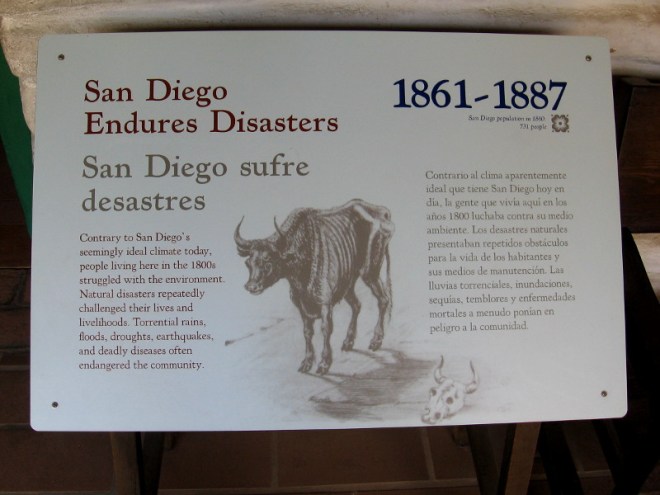
People living in San Diego in the 1800s struggled with natural disasters like torrential rains, floods, droughts, earthquakes and disease.
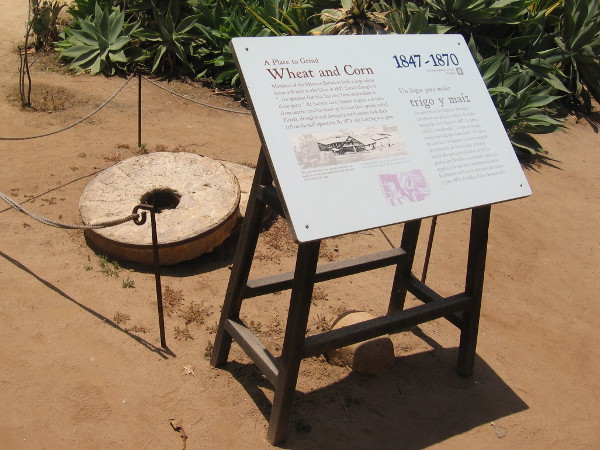
A display in the courtyard of the Casa de Estudillo.
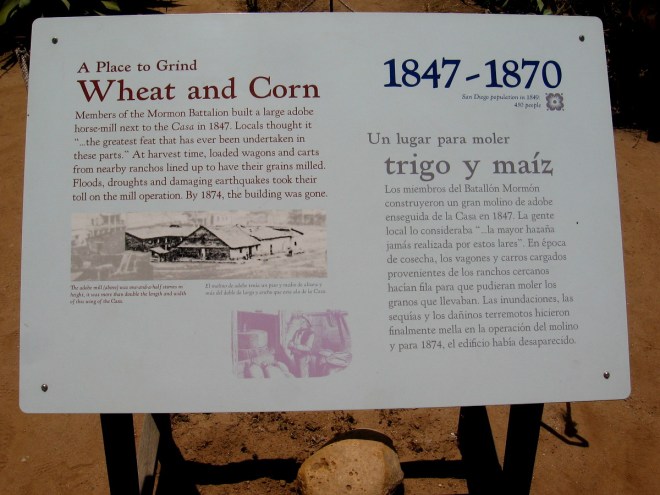
A place to grind wheat and corn. Members of the Mormon Battalion built a large adobe horse-mill near the Casa.

This blog now features thousands of photos around San Diego! Are you curious? There’s lots of cool stuff to check out!

Here’s the Cool San Diego Sights main page, where you can read the most current blog posts.  If you’re using a phone or small mobile device, click those three parallel lines up at the top–that opens up my website’s sidebar, where you’ll see the most popular posts, a search box, and more!

To enjoy future posts, you can also “like” Cool San Diego Sights on Facebook or follow me on Twitter.

Top Gun House in Oceanside to be restored.

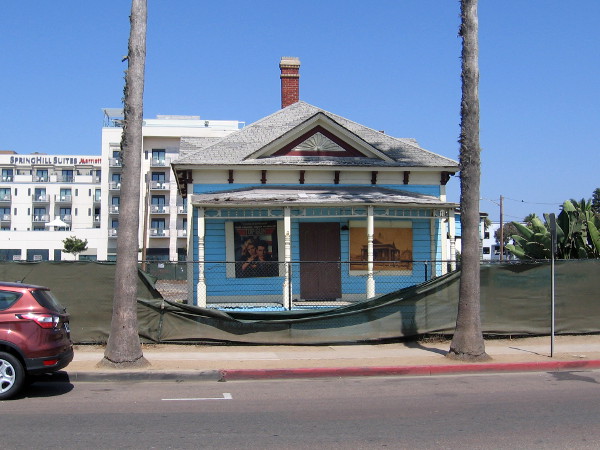
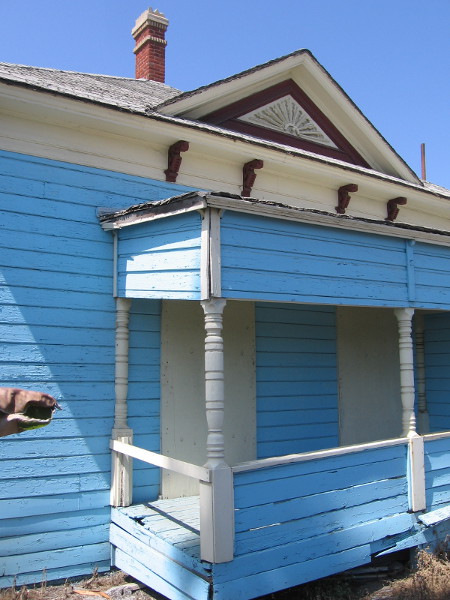
Photo from across North Pacific Street in Oceanside of the famous Top Gun house, an historical landmark that will be restored.
Photo from across North Pacific Street in Oceanside of the famous Top Gun House, an historical landmark that will be restored.

Today I headed up the coast to enjoy a walk around Oceanside.

During my small adventure I paused to look at Oceanside’s famous Top Gun House, which is located at the corner of North Pacific Street and Seagaze Drive. It’s the small beach house in the popular 1986 movie where Maverick ate dinner with his love interest Charlie.

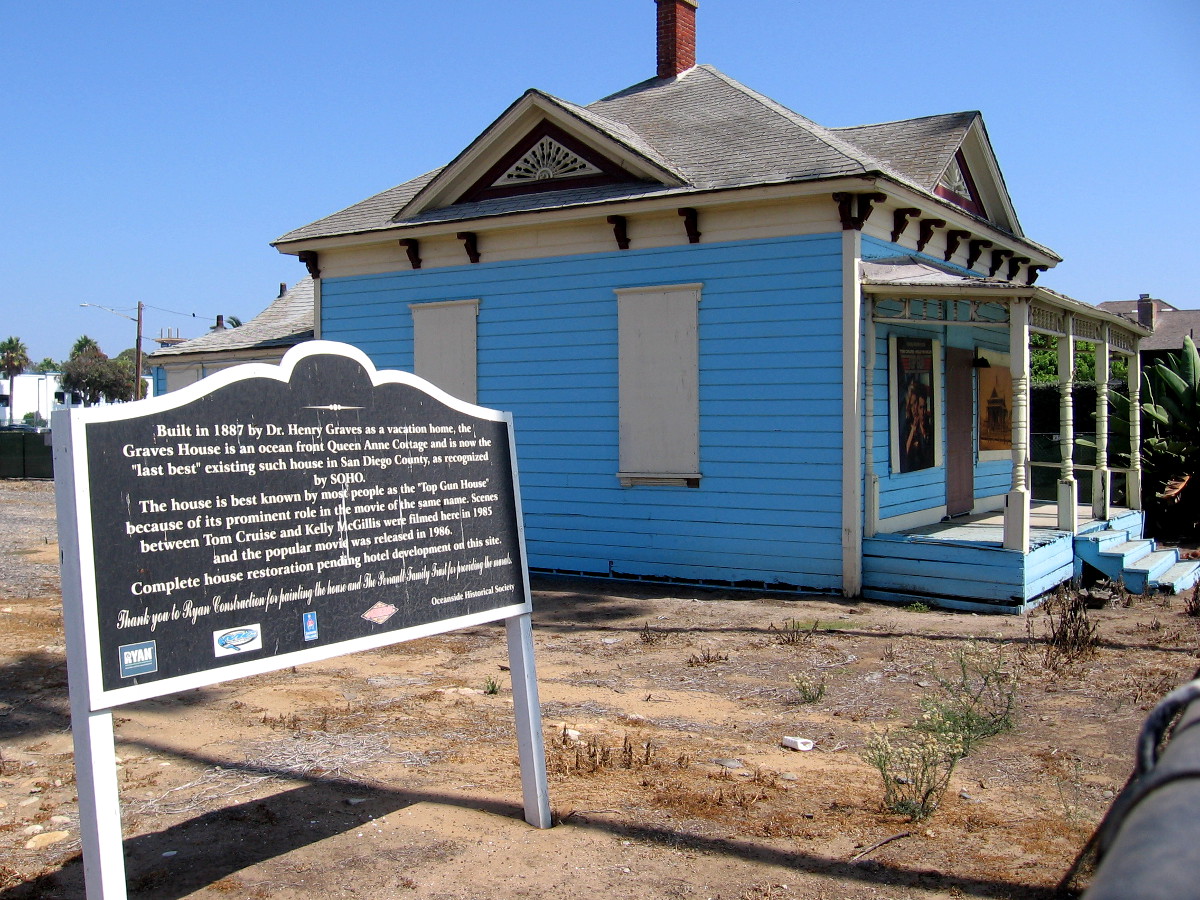
A nearby sign provided some information about the house’s historical significance and planned restoration:

“Built in 1887 by Dr. Henry Graves as a vacation home, the Graves House is an ocean front Queen Anne Cottage and is now the “last best” existing such house in San Diego County, as recognized by SOHO (the Save Our Heritage Organization).

The house is best known by most people as the “Top Gun House” because of its prominent role in the movie of the same name. Scenes between Tom Cruise and Kelly McGillis were filmed here in 1985 and the popular movie was released in 1986.

Complete house restoration pending hotel development on this site.

Oceanside Historical Society.”

I spoke with a friendly Downtown Ambassador of MainStreet Oceanside at an information table by the foot of the Oceanside Pier, and she said there are plans to not only restore “Charlie’s House”, but to move it one block north, nearer the pier. That valuable oceanfront lot is also awaiting development.

The Top Gun beach house sits in a corner of a large empty lot that is awaiting development. A hotel will be built here, a block from the Oceanside Pier.
The Top Gun House sits in a corner of a large empty lot that is awaiting development. A hotel will be built here, a block from the Oceanside Pier.
A sign near the Top Gun house provides information for curious people walking past.
A sign near the Top Gun House provides information for curious people walking past.
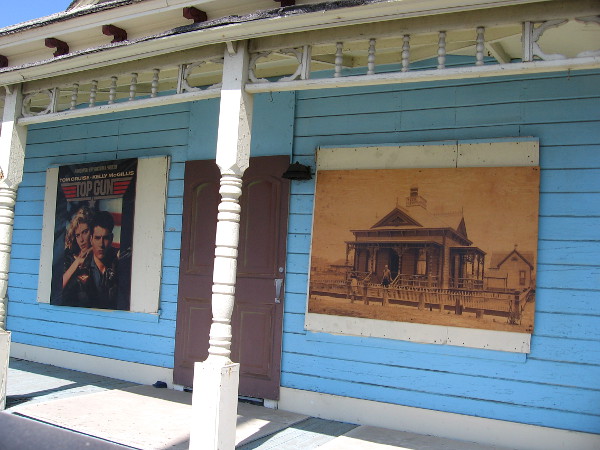
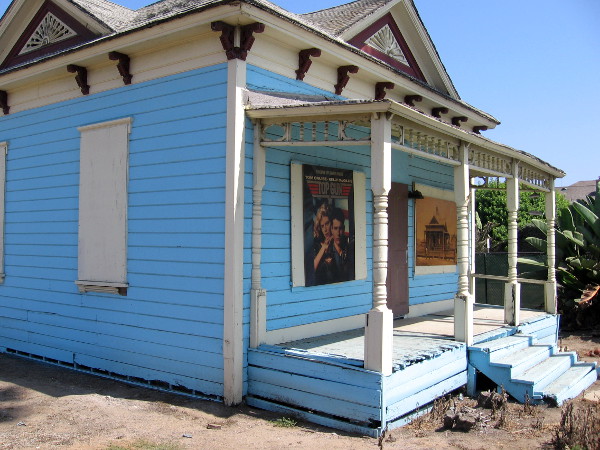
On the front of the house is a classic Top Gun poster and a vintage photo of the house as it once looked, over a century ago.
On the front of the house is a classic Top Gun poster and a vintage photo of the house as it once looked, long ago.
Photo of the south side of the small Queen Anne style cottage.
The famous Top Gun beach house will be restored and enjoyed by the local community and the movie's many fans for years to come.
The famous Top Gun House will be restored and enjoyed by the local community and the movie’s many fans for years to come.

I live in downtown San Diego and love to walk around with my camera! You can follow Cool San Diego Sights via Facebook or Twitter!

You can easily explore Cool San Diego Sights by using the search box on my blog’s sidebar. Or click a tag! There are thousands upon thousands of photos for you to enjoy!

A peek at Butcher Boy’s restoration at Spanish Landing.

All sorts of wood can be found under the North Harbor Drive Bridge, where the historic boat Butcher Boy is undergoing a thorough restoration.

This morning, as I drove up Harbor Drive toward Point Loma, I suddenly remembered that the Maritime Museum of San Diego’s turn-of-the-century racing sloop Butcher Boy is being restored at Spanish Landing, where the galleon San Salvador was built a few years back. Work on the much smaller Butcher Boy is being carried out in a sheltered place under the North Harbor Drive Bridge.

Even though I’m no expert when it comes to sloops–or nautical stuff in general–I do love to look at boats and ships that sail. There seems to be something about white sails, sunlight on water, and wind-lashed voyages across rolling expanses that appeals deeply to the human spirit.

So, anyway, I decided to pull into the nearby parking lot to see what progress has been made in restoring Butcher Boy to its former glory.

I was able to take a few photos.

Even though no museum volunteers were at work in the early morning, and the large ship saw was covered with a tarp, a nearby sign provided some interesting information about these unique saws used by shipwrights. The angle of a ship saw blade can be changed as a cut is being made, so that compound curves can be created with a single cut.

An internet wooden boat forum that I found has some fascinating info about the history of Butcher Boy, including:

“Butcher Boy, which had similarly named counterparts up and down the West Coast, was conceived by Charles S. Hardy, owner of the Bay City Market on Fifth and Broadway downtown.

‘Boss Hardy,’ as he was known, needed a boat sturdy enough to handle any weather and fast enough to beat competitors out to the big ships anchored offshore, off what was commonly known as Spanish Bight and Dutch Flats.

Hardy turned to boatyard owner Manuel Goularte, a native of the Portuguese Azores. The model was the double-ended salmon boat sailed so successfully on the Sacramento and Columbia rivers.

A boat-building style that originated in Italy and the Mediterranean can also be seen in Butcher Boy, said Ashley, a style then favored by first-generation Italian fishermen in San Francisco Bay.

‘The gaff rig originated with the 15th-century Dutch,’ Ashley said. ‘Even though she was built as a work boat, she was beautiful, really special even in her own time.’

‘Everybody around the bay stops to look at her now. It’s like she’s sailing out of a Winslow Homer painting.’

Framed in oak and planked in cedar, Butcher Boy is 29 feet, 11 inches long, with an 81/2-foot beam. The mainsail and jib carry 604 square feet of sail.”

If you are curious, and want to see historical photos of Butcher Boy under sail, and a detailed description of the restoration work now being done, please read the Maritime Museum of San Diego’s blog by clicking here.

A sign that describes a ship saw, recalling how this one was used to help build the Spanish galleon replica San Salvador.
A sign that describes a ship saw, recalling how this particular one was used to build the Spanish galleon replica San Salvador.
Lots of lumber!
Lots of lumber!
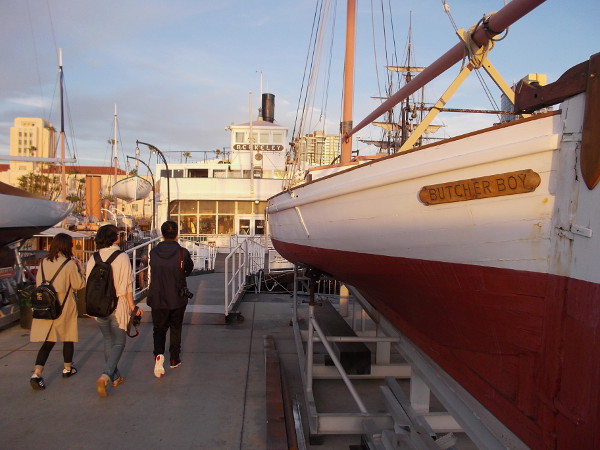
I took this photo of the unrestored Butcher Boy two and a half years ago for another blog post. At the time it was on display on the barge behind the Maritime Museum of San Diego’s steam ferry Berkeley.
Photo of the Butcher Boy's restoration in progress, taken one August 2018 morning at San Diego's Spanish Landing.
Photo of the Butcher Boy’s restoration in progress, taken one August 2018 morning at San Diego’s Spanish Landing.

I live in downtown San Diego and love to walk around with my camera! You can follow Cool San Diego Sights via Facebook or Twitter!

You can easily explore Cool San Diego Sights by using the search box on my blog’s sidebar. Or click a tag! There are thousands upon thousands of photos for you to enjoy!

Rare cars, antiques at a surprising museum!

Rare early automobiles and thousands of collectible antiques can be viewed during a visit to the unique J. A. Cooley Museum in San Diego.
About two dozen antique automobiles and thousands of collectibles can be viewed during a visit to the J. A. Cooley Museum in San Diego.

Last Sunday I visited one of San Diego’s most surprising museums. It’s located in University Heights, at 4233 Park Boulevard. There’s a good chance you’ve never heard of it. It’s called the J. A. Cooley Museum.

The J. A. Cooley Museum shares its 10,000 square foot space with the Frank the Train Man hobby shop, which was founded by Frank Cox in 1943 and originally opened its doors in another building at the corner of Park and El Cajon Boulevard. Today’s store and museum are operated by Jim Cooley and his wife, Carmen, who’ve been avidly collecting antiques for well over half a century.

Jim, who can usually be found hanging around the museum entrance, is a friendly gentleman with endless stories about his passion for collecting and preserving bits of history. Step inside the museum and it’s immediately apparent that he really loves antique automobiles.

This utterly amazing museum, which doesn’t advertise or have a website of its own, contains a world-class collection of early automobiles, some of which are extremely rare or even one-of-a-kind. The museum also contains a treasure trove of other antiques, including antique phonographs . . . cameras . . . amazing Standard Gauge trains . . . cast iron toys . . . clocks . . . coffee grinders . . . railroad lanterns . . . irons . . . hardware tools . . . even old-fashioned spittoons!

Over the years, Jim has collected all sorts of objects that have interested him, often saving them from being thrown away. For example, he told me around World War II, when spittoons were being discarded in large numbers, he’d see some in a trash truck and retrieve them. Now he has hundreds of them!

The most impressive part of his museum, however, is the jaw-dropping collection of antique automobiles–many well over a century old–which he has patiently acquired over time without an enormous expenditure of money.

Even if many San Diegans are unfamiliar with the J. A. Cooley Museum, serious car aficionados seem to know all about it. People sometimes fly in from around the world to see the collection. The museum’s reputation is such that from time to time a movie studio will borrow a rare old car for filming–for example the 1914 Renaut that was used in Titanic.

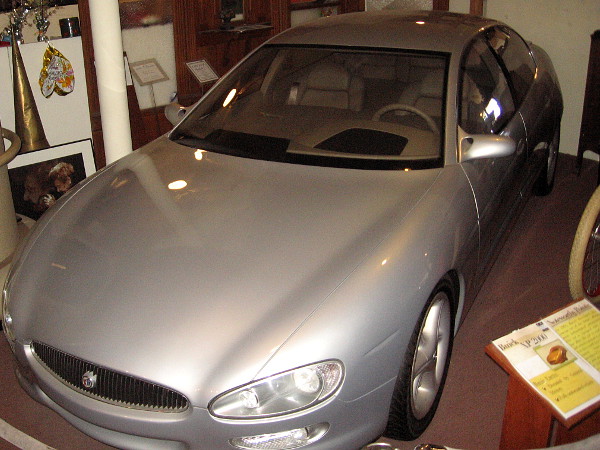
I was told by Jim that when General Motors borrowed one his cars for an exposition, GM executives came out to San Diego to look at the museum and were so impressed, they donated their incredible Buick XP 2000, a fully automated 1994 self-driving concept car!

The funny thing is, when I swung by on Sunday and spent a good hour walking about the museum in a state of complete and utter amazement, I saw no other visitors.

I learned Jim wouldn’t mind having more people swing on by. So if you live in San Diego or are planning a trip, look up the Frank the Train Man hobby shop. Step through the front door and the absolutely amazing J. A. Cooley Museum, and possibly Jim himself, await you!

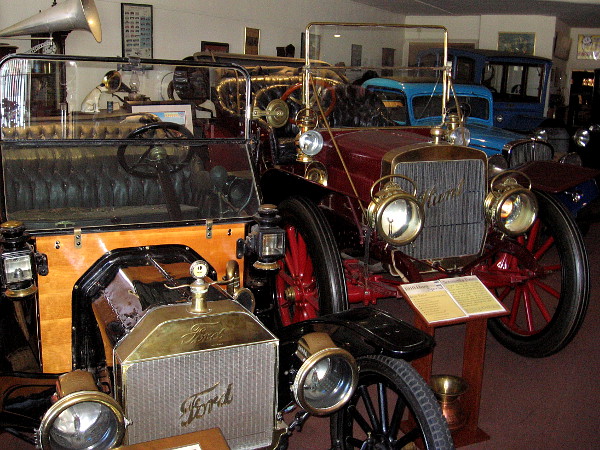
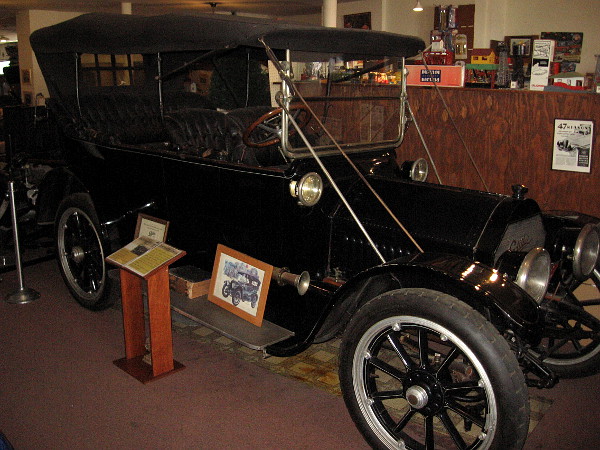
Upon entering the J. A. Cooley Museum, visitors walk past a row of very old cars. On the left is a 1914 Ford Model T.
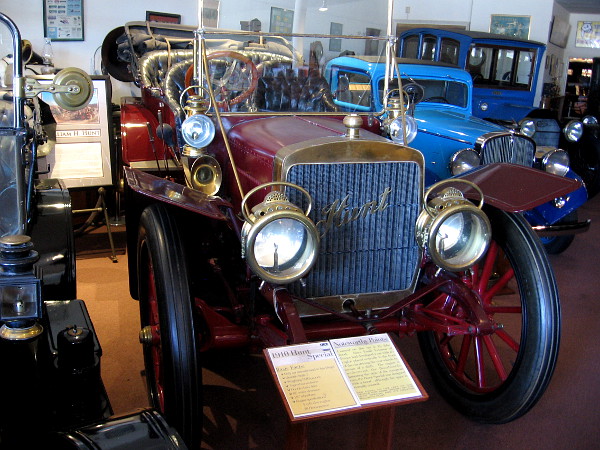
1910 Hunt Special, the only car ever manufactured in San Diego. This one car was produced by Mr. William Hunt of National City, ordered by Mr. Arnie Babcock, whose father built the Hotel del Coronado.
1910 Hunt Special, the only car ever manufactured in San Diego. Just one car was produced by Mr. William Hunt of National City, ordered by Mr. Arnie Babcock, whose father built the Hotel del Coronado.
1933 Franklin Olympic, produced one year before Franklin Motor Company ceased operations during the Great Depression.
1933 Franklin Olympic, produced the year before Franklin Motor Company ceased operations during the Great Depression.
1929 Franklin Model 135, produced the first year that Franklin offered a steel frame and hydraulic brakes.
1913 Cadillac Model 48. This car on display is the most original 1913 Cadillac left in existence today.
1912 Carter Car. The body of the Carter Car is made of compressed papier-mâché composite panels over wood framing. This car on display is the only Carter Car Sedan left in existence.
Buick XP 2000, a fully automated 1994 self-driving concept car that was donated to the J. A. Cooley Museum because the designer was very impressed by the collection when GM executives visited the museum.
Buick XP 2000, a fully automated 1994 self-driving concept car that was donated to the J. A. Cooley Museum because the designer was very impressed by the collection of rare cars when GM executives visited the museum.
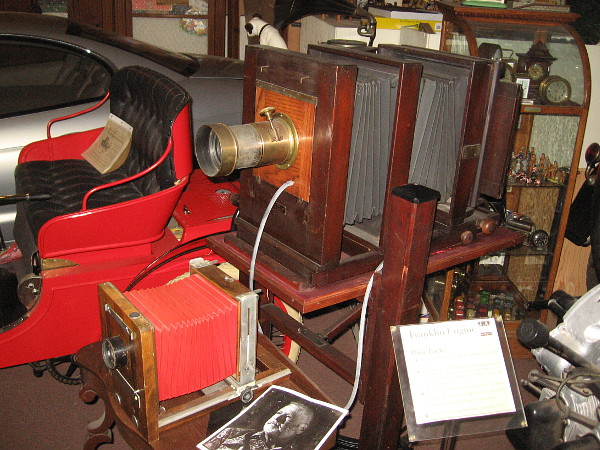
A couple of early cameras among a vast collection of antiques and memorabilia filling the J. A. Cooley Museum.
A couple of early cameras among a vast collection of antiques and memorabilia inside the J. A. Cooley Museum.
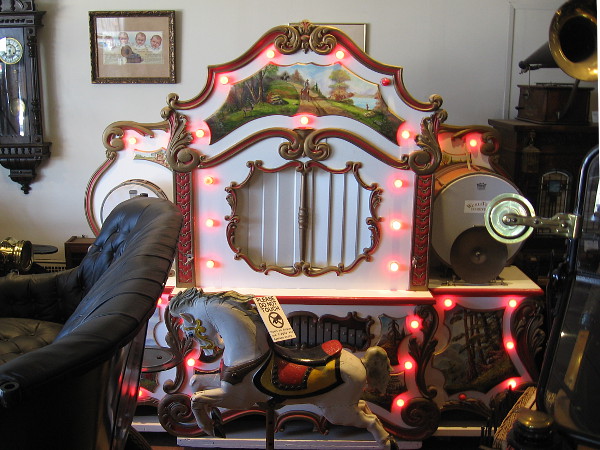
Behind some cars you'll find a rare WurliTzer Model 153 Band Organ.
Behind some cars you’ll find a rare WurliTzer Model 153 Band Organ.
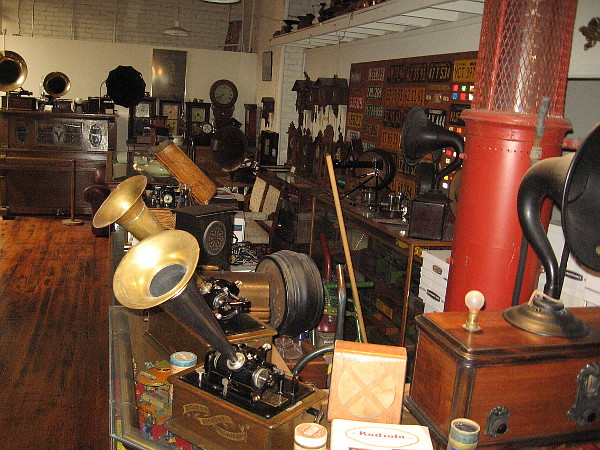
An antique two-horn Duplex Phonograph.
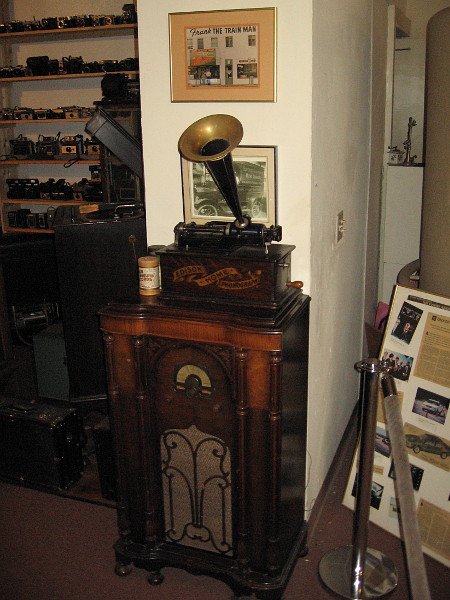
An antique Edison Concert Phonograph.
An old photo of the Frank The Train Man storefront over an Edison Home Phonograph.
One wall and a couple of glass display cases filled with fantastic old collectibles and Americana.
Shelves and shelves of old cameras.
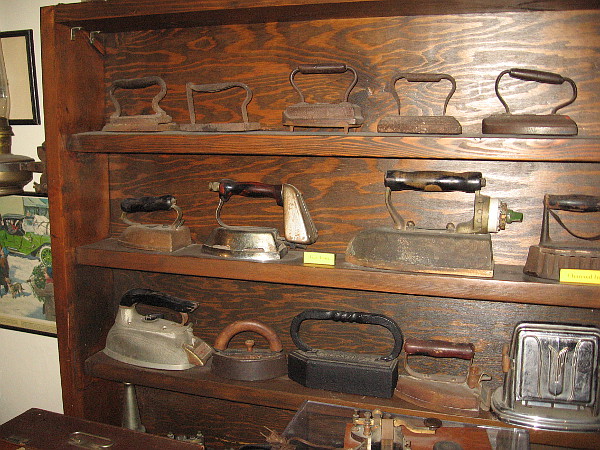
Shelves filled with old irons.
Antique cast iron horse drawn toy fire engines.
Cast iron horse drawn toy fire engines.
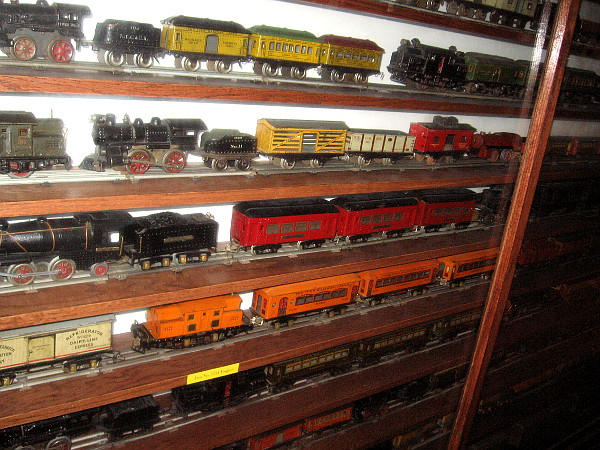
Shelves and shelves of Standard Gauge toy train locomotives and cars from 1900 to the 1940's.
Shelves and shelves of Standard Gauge toy train locomotives and cars from 1900 to the 1940’s.
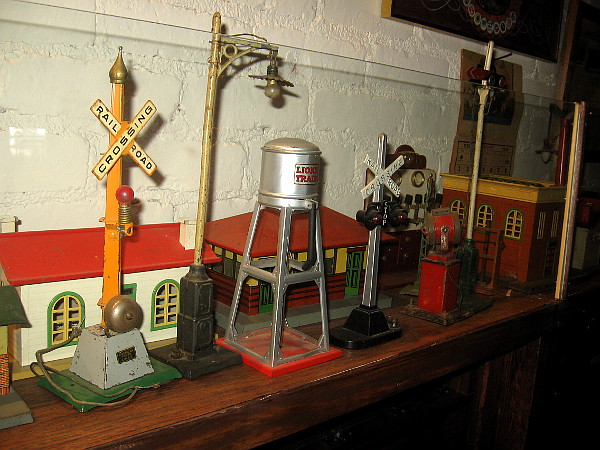
Lionel toy train accessories including buildings and railroad crossing signals.
All sorts of old manual typewriters and calculating machines. (I must be an antique, too, because I used a manual typewriter when I was young!)
All sorts of old manual typewriters and calculating machines. (I must be an antique, too, because I used a manual typewriter when I was a young man!)
One corner of the J. A. Cooley Museum contains shelves of spittoons, coffee grinders, old lanterns and more!
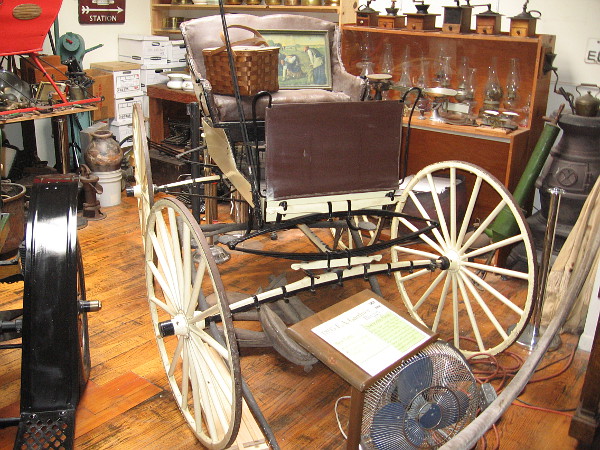
1895 E. A. Gardner Buggy, the only light weight horse drawn carriage that was built in San Diego known to exist today.
1895 E. A. Gardner Buggy, the only lightweight horse-drawn carriage that was built in San Diego known to exist today.
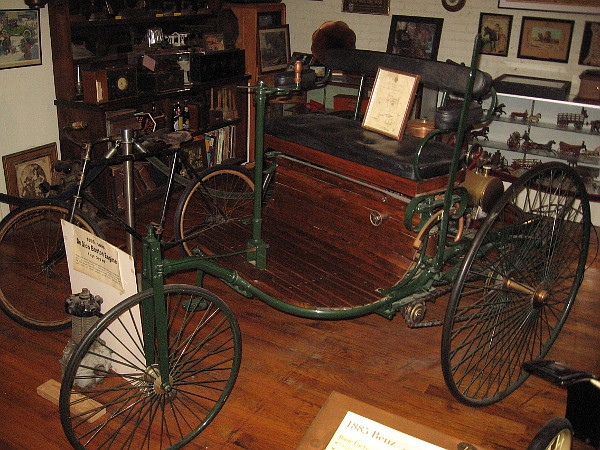
1885 Benz Model 1. The first vehicle in world history that used an internal combustion engine. They were produced from 1885 to 1926, when the company merged with Mercedes.
1895 Benz Velo. The world's first mass-produced vehicle. 67 were built the first year, 135 the second.
1895 Benz Velo. The world’s first mass-produced vehicle. 67 were built the first year, 135 the second.
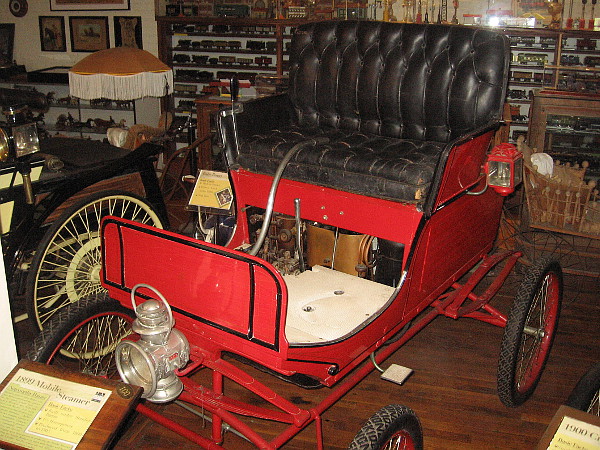
1899 Mobile Steamer. Built under Stanley Patents from 1899 to 1903.
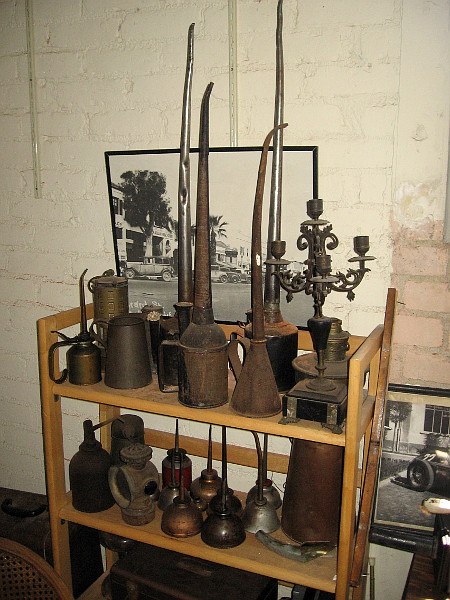
A bunch of old-fashioned oil cans and various other objects.
A bunch of old-fashioned oil cans and various other cool objects.
Cuckoo clocks and a historical display of different California license plates!
Cuckoo and mantel clocks, and a historical display of different California license plates!
So many fantastic old objects and collectibles, my eyes almost popped out of my head.
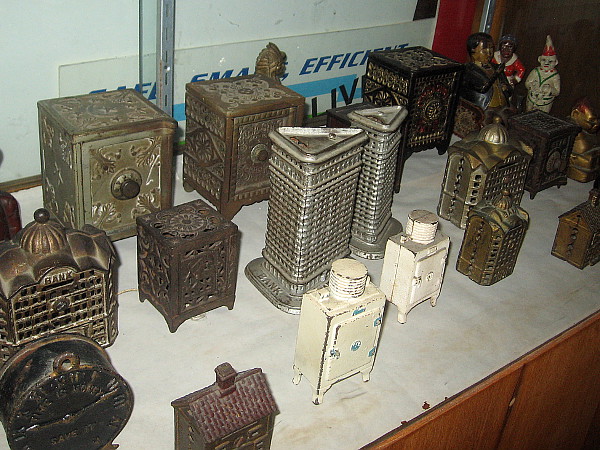
I believe these are cast iron coin banks.
All sorts of cool cast iron figures and toys, including an awesome motorcycle!
All sorts of cast iron figures and toys, including an awesome motorcycle!
Two shelves containing railroad lanterns.
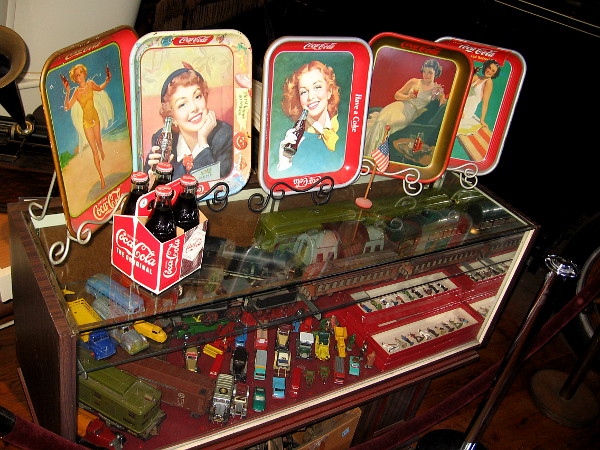
Some classic Coca Cola trays and even more antique collectibles.
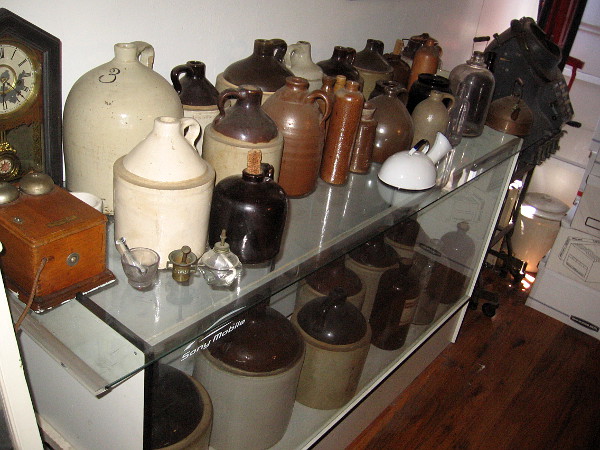
A bunch of jugs!
A bunch of jugs!
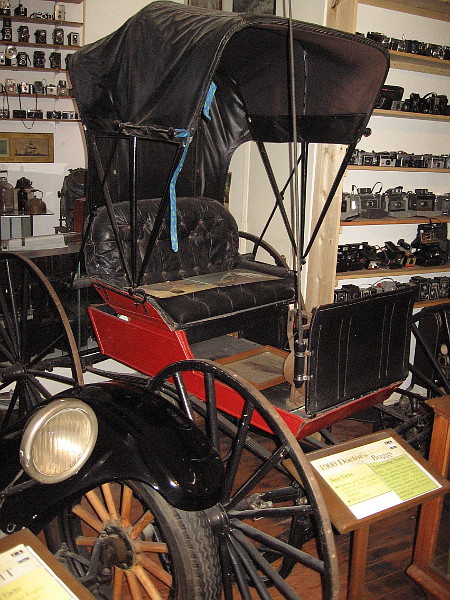
1900 Doctor's Buggy. The narrow, light body allowed for quick travel during medical emergencies. The tires are metal.
1900 Doctor’s Buggy. The narrow, light body allowed for quick travel during medical emergencies. The tires are metal.
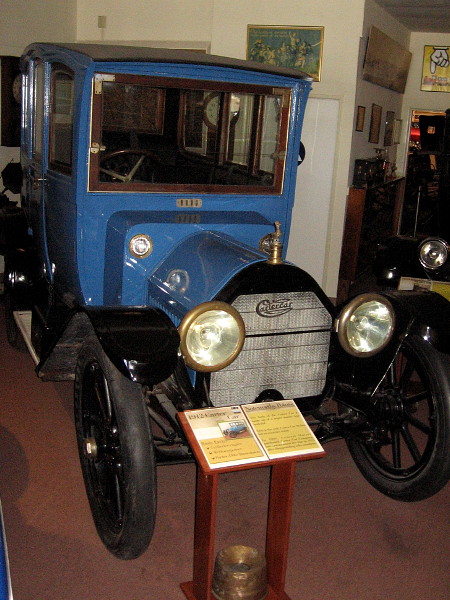
1900 Crest. This extremely original car is also very rare, with few left in existence today.
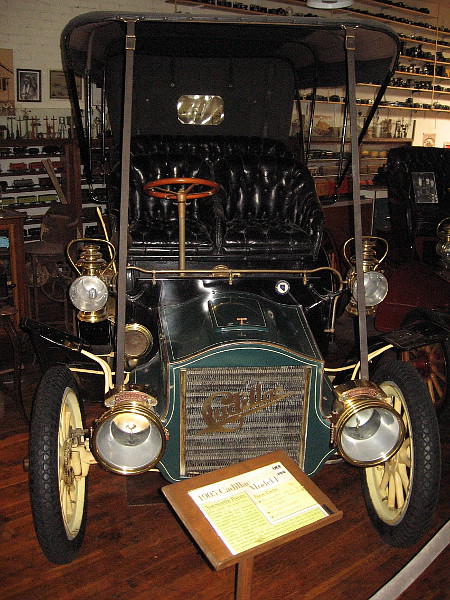
1905 Cadillac Model F. This particular unrestored car was bought new by famed newspaper founder Ira Copley.
1905 Cadillac Model F. This particular unrestored car was bought new over a century ago by famed newspaper founder Ira Copley.
There's so much cool stuff inside the J. A. Cooley Museum your head might explode!
There’s so much cool stuff inside the J. A. Cooley Museum your head might explode!
1910 Brush Model D, just one of many amazing old automobiles exhibited inside the J. A. Cooley Museum in San Diego.
Front and center is a 1910 Brush Model D, just one of many amazing old automobiles exhibited inside the J. A. Cooley Museum in San Diego!

I live in downtown San Diego and love to walk around with my camera! You can follow Cool San Diego Sights via Facebook or Twitter!

You can easily explore Cool San Diego Sights by using the search box on my blog’s sidebar. Or click a tag! There are thousands upon thousands of photos for you to enjoy!

A proposal: Celebrate San Diego Day!

Here’s a fun idea!

Yesterday, when I arrived for Silent Movie Night at the Spreckels Organ Pavilion, I knew almost nothing about Harold Lloyd. I had no idea that this very famous silent movie actor had once lived in San Diego, and had graduated from San Diego High School perhaps a mile from where I sat. As I watched the movie, I recalled that parts of Citizen Kane, often considered the greatest movie of all time, had been filmed in Balboa Park.

And suddenly–out of the blue–a crazy idea popped into my head!

It would be incredible to have a big annual festival in Balboa Park that celebrates San Diego! An enormous parkwide event that celebrates the amazing history, culture and people of America’s Finest City!

Imagine diverse people from every community in San Diego converging on Balboa Park to celebrate our common heritage and shared optimism. Imagine the swell of civic pride and the endless opportunities for education and entertainment!

The special day would celebrate San Diego’s artists, musicians, entertainers, athletes, authors, inventors, scientists, teachers, volunteers, visionaries . . . It would celebrate those who have contributed to our fascinating culture, and honor those who are working today to create an even more dynamic future.

Balboa Park already hosts a number of fantastic annual events, such as EarthFair, Maker Faire, Fiesta Botanica, December Nights and Make Music Day. I propose a parkwide event that celebrates San Diego!

Such an event might include San Diego musicians, Mexican baile folklórico, silent movies featuring Harold Lloyd, readings from Dr. Seuss, local outdoor artists at work, lots of tasty regional food, demonstrations of past and future technologies developed in San Diego, a tribute to Jonas Salk, performances and presentations by school students, samples of Kumeyaay culture, a variety of historical reenactments. . . There might be exhibits concerning Charles Lindbergh, and the birth of naval aviation, and Juan Bandini, and Kate Sessions, and George Marston, and Gregory Peck, and Sally Ride, and Dennis Conner, and Tony Hawk, and Meb Keflezighi, and our world champion Little Leaguers, and the history of San Diego’s tuna fishing industry, and the Palomar Observatory, and Charles Hatfield, and Richard Henry Dana Jr., and Jimmie Johnson, and Tony Gwynn, and Eddie Vedder, and Switchfoot, and Joan Embery, and Alfred Mitchell, and Roger Revelle, and L. Frank Baum, and . . . and . . . and . . . and . . . you get the idea!

The event would be like a small World’s Fair–a San Diego Fair–not unlike the two Expositions held in Balboa Park a century ago for which the park is historically famous.

My guess is an annual event like this would prove enormously popular. Everyone living throughout San Diego who loves our city would be represented and interested.

Anyway–it’s an idea that might be a lot of fun.

What do you think?
Californio history celebrated again in Old Town!

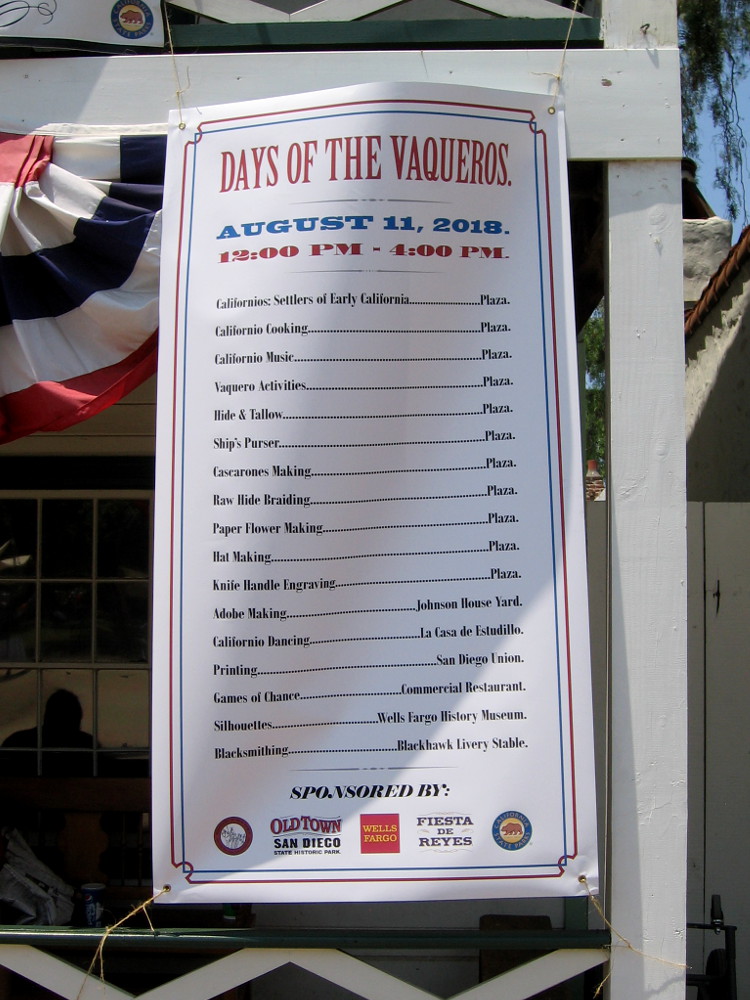
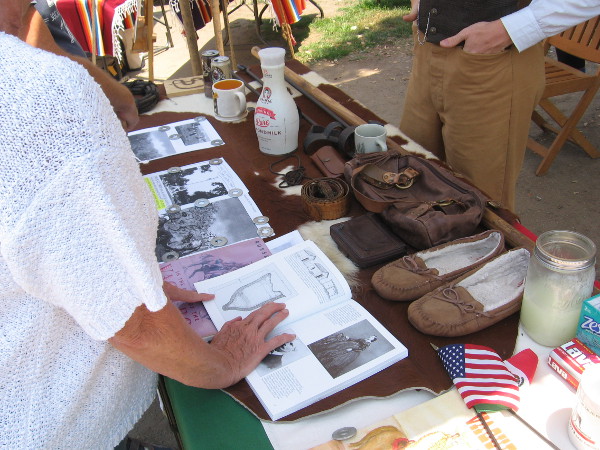
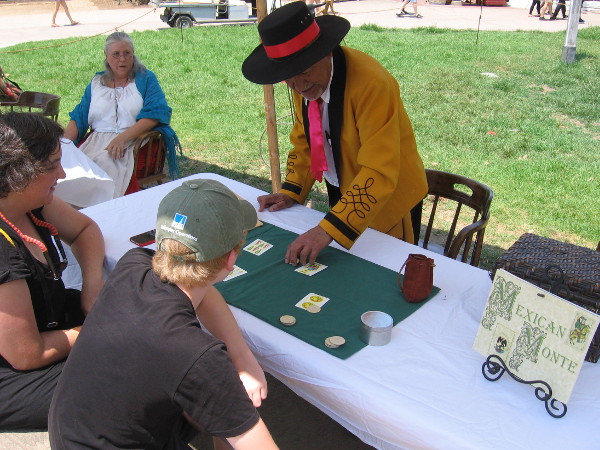
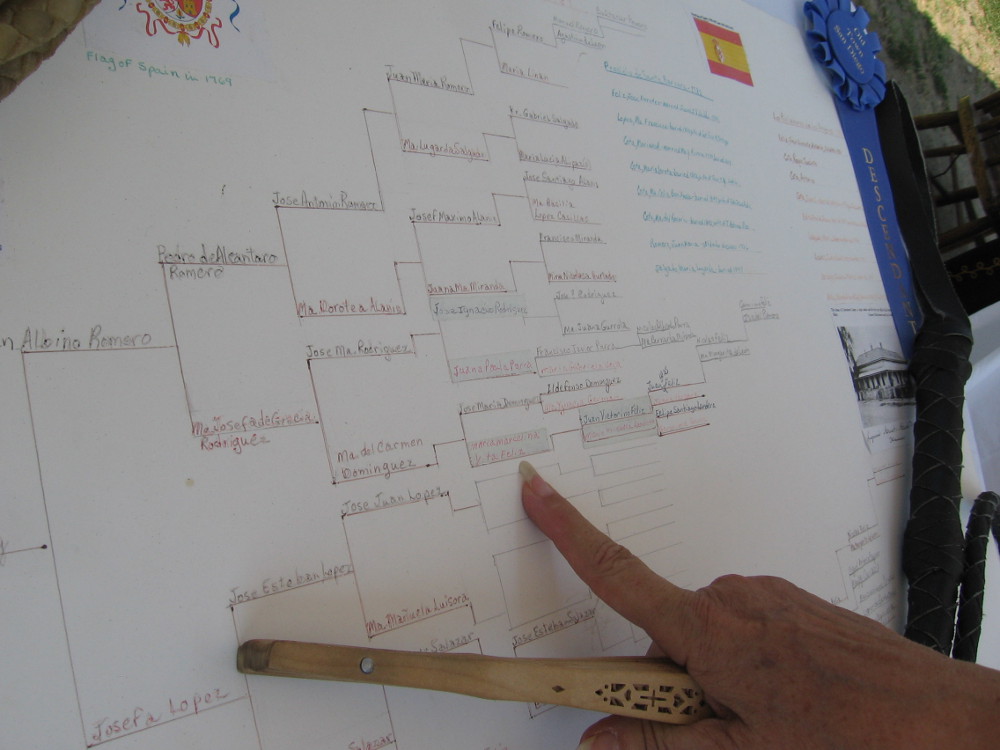
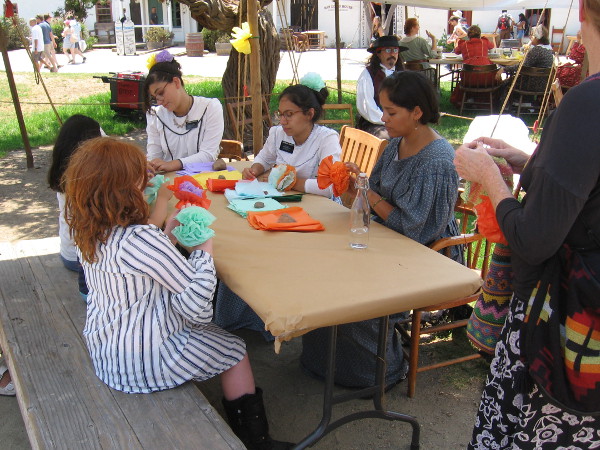
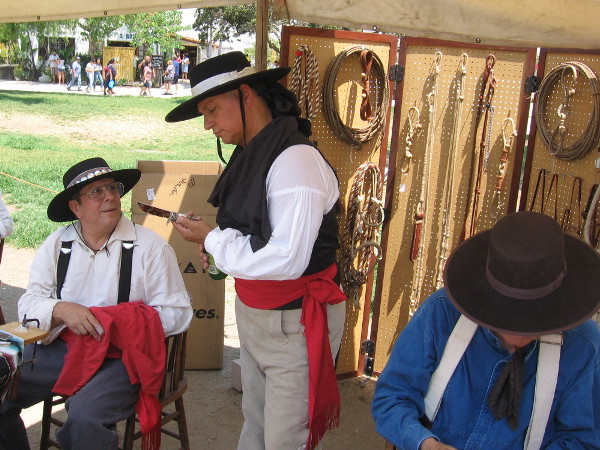
Today, after I checked out the San Diego Cup racing at Mission Bay, I headed to Old Town San Diego State Historic Park to see if anything interesting was going on. Somehow I’d forgotten that Stagecoach Days are celebrated in Old Town on summer Saturdays, and so I was surprised and happy to stumble upon Days of the Vaqueros!

I blogged about this exact same event last year, and took lots of photos and provided a fair amount of description and background. I saw many of the same participants again this year, and debated whether I should take more photos.

I love Old Town so much I couldn’t resist. If you want to learn more about life in San Diego when Southern California was a part of Spain, then Mexico, and large ranches employed the original cowboys, or vaqueros, then visit my blog from last summer’s event here.

You might also enjoy reading my blog post about Old Town’s McCoy House Museum, which includes many displays that concern San Diego’s fascinating early history.

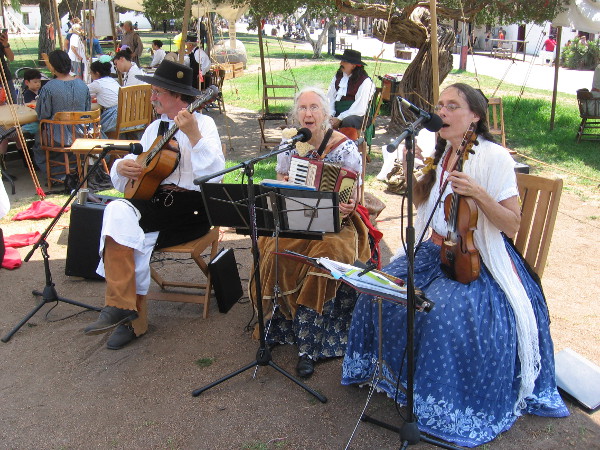
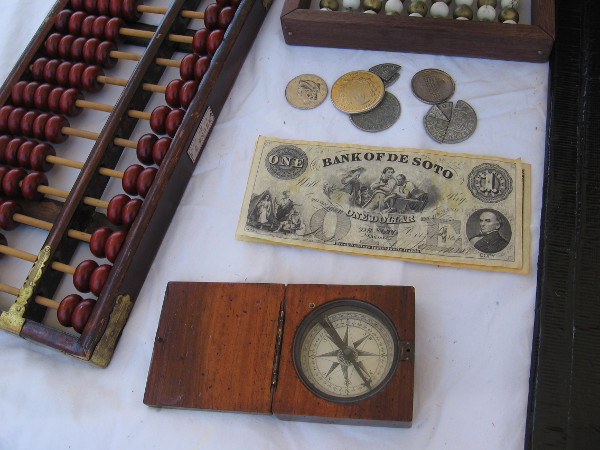
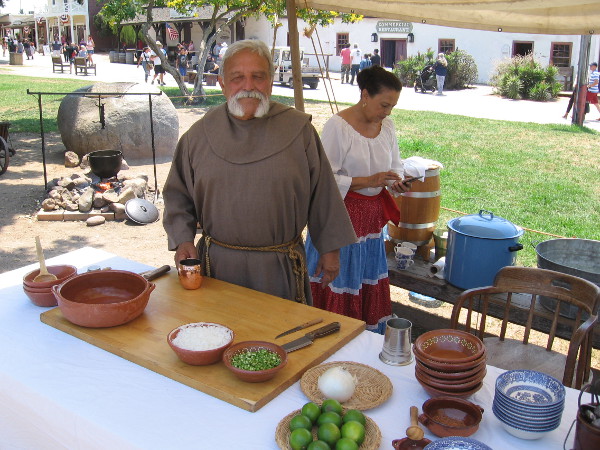
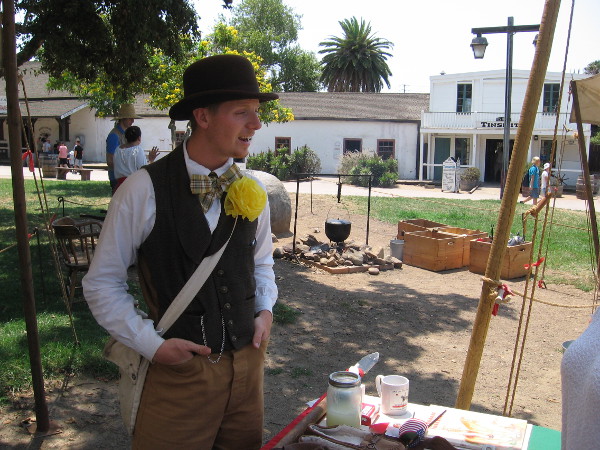
Meanwhile, here are a few uncaptioned photographs of what I experienced today…

I live in downtown San Diego and love to walk around with my camera! You can follow Cool San Diego Sights via Facebook or Twitter!

You can easily explore Cool San Diego Sights by using the search box on my blog’s sidebar. Or click a tag! There are thousands upon thousands of photos for you to enjoy!

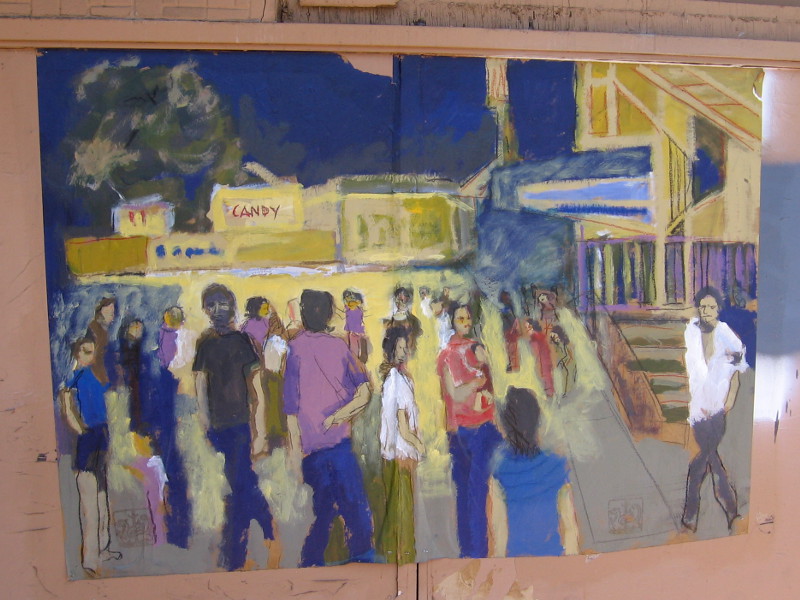
Cool art along Third Avenue in Chula Vista!

Mural in Chula Vista titled Lemon Capitol of the World, 1900-1945. By local artist Bob Teague, 2003.
People walk past mural in Chula Vista titled Lemon Capitol of the World, 1900-1945. By local artist Bob Teague, 2003.

As I walked about Chula Vista’s Lemon Festival yesterday, I was excited to discover some cool public art!

There are probably more examples of art to be found along the Third Avenue business district between E Street and G Street, but I photographed what I happened to stumble upon.

(Note: you will see two different sculptures. One represents sunrise, the other sunset.)

Enjoy!

Plaque by mural explains the role of lemons in the history of Chula Vista. Many grand old orchard houses can still be seen around the city.
Section of Lemon Capitol of the World mural that shows the historic orchard house that still stands at 210 Davidson Street.
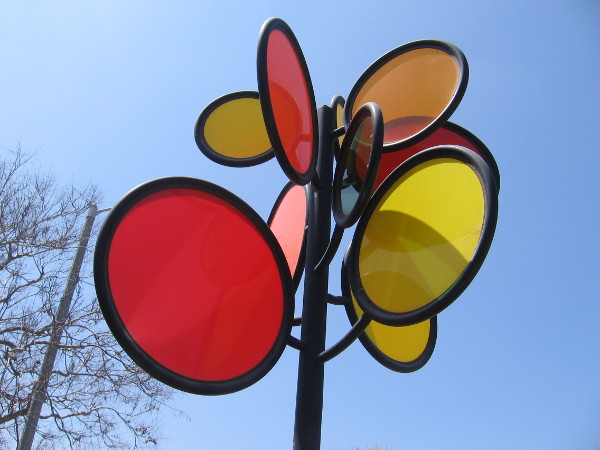
ChromaSol (sunrise), an impressionistic interpretation of the sun's colors and intensities. Public art in Chula Vista by artist D. Alan Gjerston, 2006.
ChromaSol (sunrise), an impressionistic interpretation of the sun’s colors and intensities. Public art in Chula Vista by artist D. Alan Gjerston, 2006.
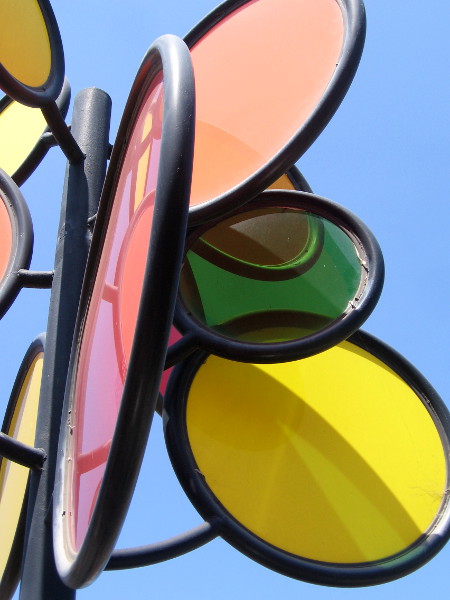
A photo of the "sunrise" sculpture from a different angle.
A photo of the translucent “sunrise” sculpture from a different angle.
ChromaSol (sunset), an impressionistic interpretation of the sun's colors and intensities. Public art in Chula Vista by artist D. Alan Gjerston, 2006.
ChromaSol (sunset), an impressionistic interpretation of the sun’s colors and intensities. Public art in Chula Vista by artist D. Alan Gjerston, 2006.
Sunlight shines through the "sunset" sculpture. I see the green flash!
Sunlight shines through the “sunset” sculpture. I see the green flash!
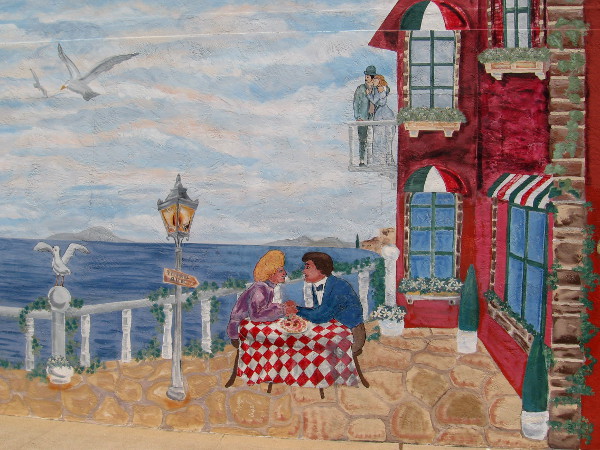
Mural on wall of Mangia Italiano on Third, by Danos Designs.
Lovers stand on a balcony, and eat Italian food by the ocean.
Lovers embrace on a balcony by the ocean; another couple holds hands over Italian food.
The Vogue Theater, an historic 1945 Chula Vista movie theater designed by architect Frank Hope Jr., awaits renovation.
Street art on the front of The Vogue Theater in Chula Vista depicts a night out at the movies.
Artwork on the front of The Vogue Theater in Chula Vista appears to depict a night out at the movies.

I live in downtown San Diego and love to walk around with my camera! You can follow Cool San Diego Sights via Facebook or Twitter!

You can easily explore Cool San Diego Sights by using the search box on my blog’s sidebar. Or click a tag! There are thousands upon thousands of photos for you to enjoy!

A taste of the Lemon Festival in Chula Vista!

A giant smiling lemon greets me at the 22nd Annual Lemon Festival in Chula Vista!

I’ve never been to Chula Vista’s Lemon Festival before. So this year I thought I’d take the trolley down to the South Bay to experience this big annual event!

Not only is the Lemon Festival, which takes place along a stretch of Third Avenue, a whole lot of fun, but visitors have the opportunity to learn about the history of Chula Vista and how it once was a major center of the Southern California citrus industry.

With construction of the Sweetwater Dam completed in 1888, and the arrival of the railroad in the South Bay, Chula Vista became the perfect place to grow sun-loving lemons. At one point in the early 20th century there were nearly two thousand acres of lemon groves in the area. Chula Vista even called itself the Lemon Capital of the World.

Today lemon trees are chiefly found in backyards. After World War II, the large groves began to make way for houses. Some of the developers would leave one lemon tree in the backyard of new homes.

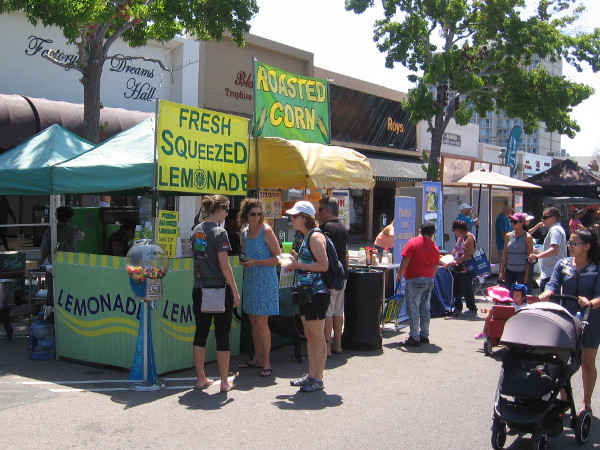
I did see loads of lemons during the 22nd Annual Lemon Festival: lemon art, lemon costumes, lemons in treats, lemonade . . . Lemon yellow everywhere!

See for yourself!

About 50,000 people would turn out for the yearly lemon-themed event.
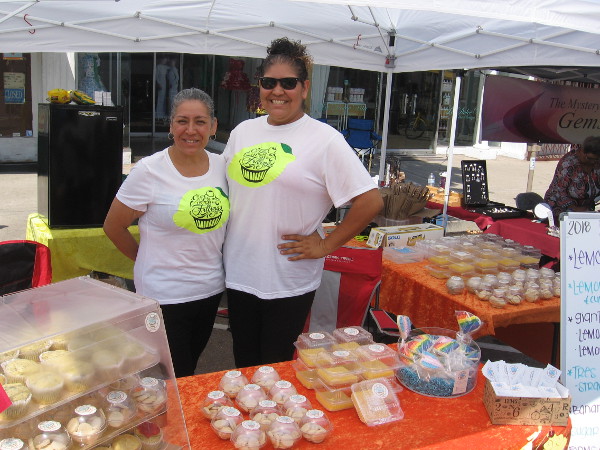
These ladies had all sorts of sweet lemon treats for sale.
Some friendly people from the Restored Church posed so that a blogger could take a funny photo at their booth.
Some friendly people from the Restored Church posed so that a blogger could take a funny photo at their Lemon Festival booth.
Artists at the Lemon Festival had all sorts of colorful artwork for sale that contained bright yellow.
This lady registering people to vote had a cool lemon slice umbrella hat and smile.
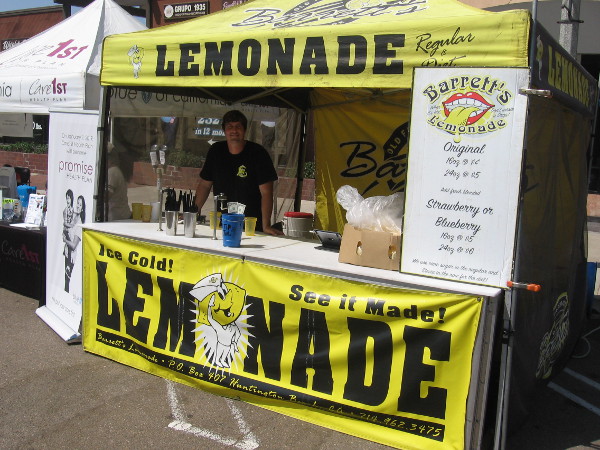
More ice cold lemonade! Sounds good on a hot summer day in San Diego's South Bay.
More ice cold lemonade! Sounds good on a hot summer day in San Diego’s South Bay.
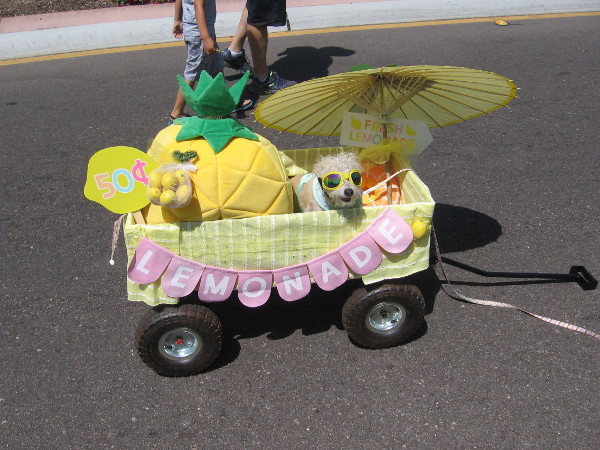
Even this funny pooch in a wagon was selling lemonade!
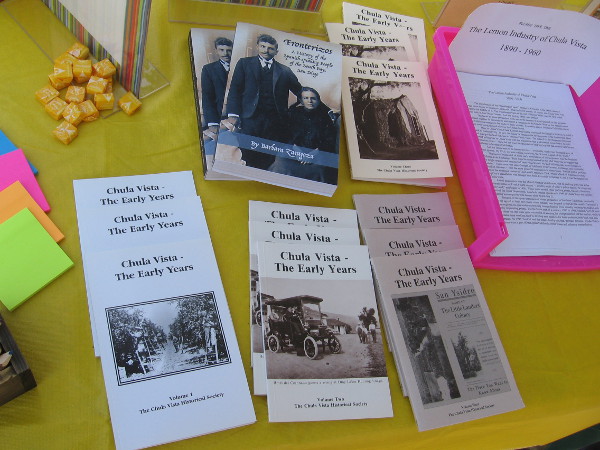
The Chula Vista Historical Society had a booth with books and fascinating information.
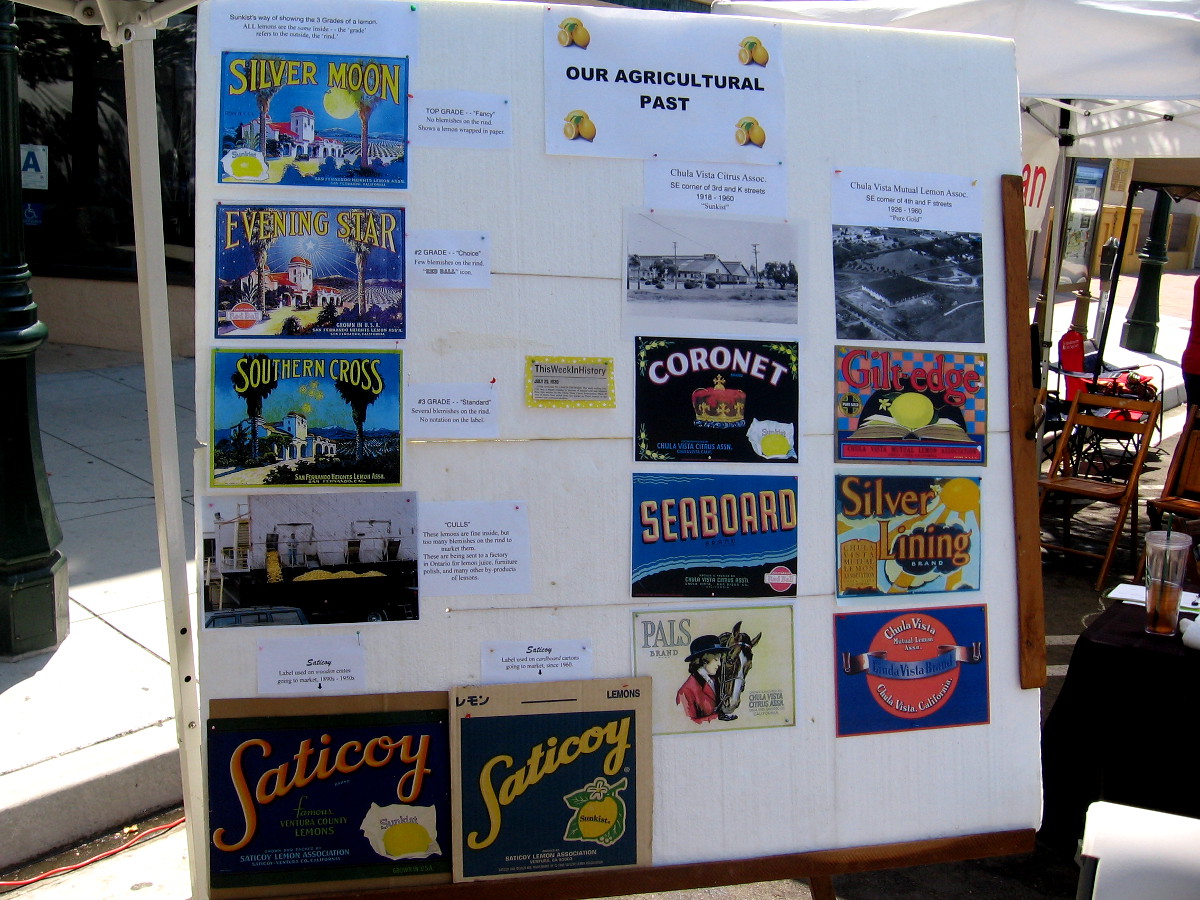
Their display showed Chula Vista's agricultural past. Many packing companies once exported lemons around the world.
Their display showed Chula Vista’s agricultural past. Many growers and packing companies once exported lemons around the world. Some of the beautiful old crate labels have become valuable collectibles.
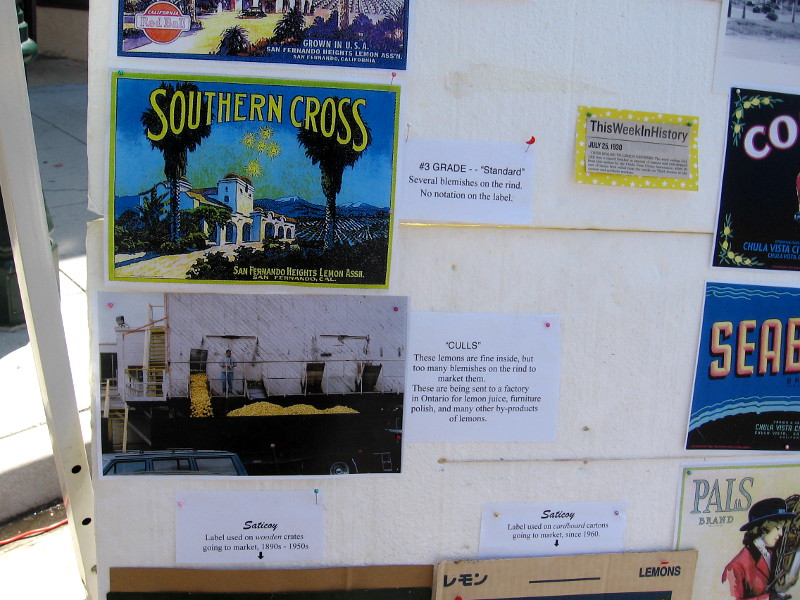
The display explains different grades of lemons, including culls, which were blemished, and used to make juice, furniture polish, and other by-products.
The display explains different grades of lemons, including culls, which were blemished, and used to make juice, furniture polish, and other lemon by-products.
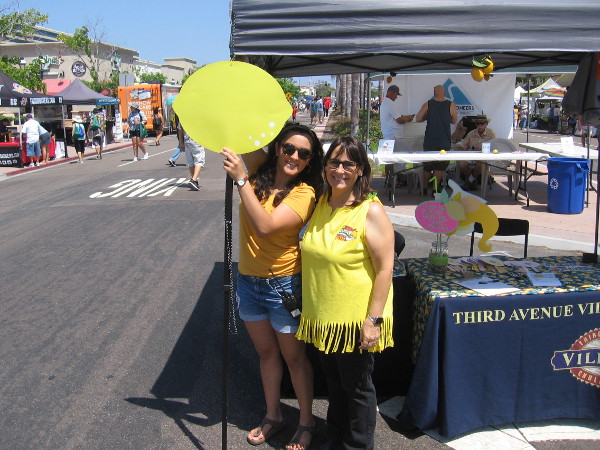
The festival had just started and these ladies with the Third Avenue Village Association, that puts on the popular event, were putting the finishing touches on their booth.
The festival had just started and these ladies with the Third Avenue Village Association, that puts on the popular event, were almost done decorating their booth.
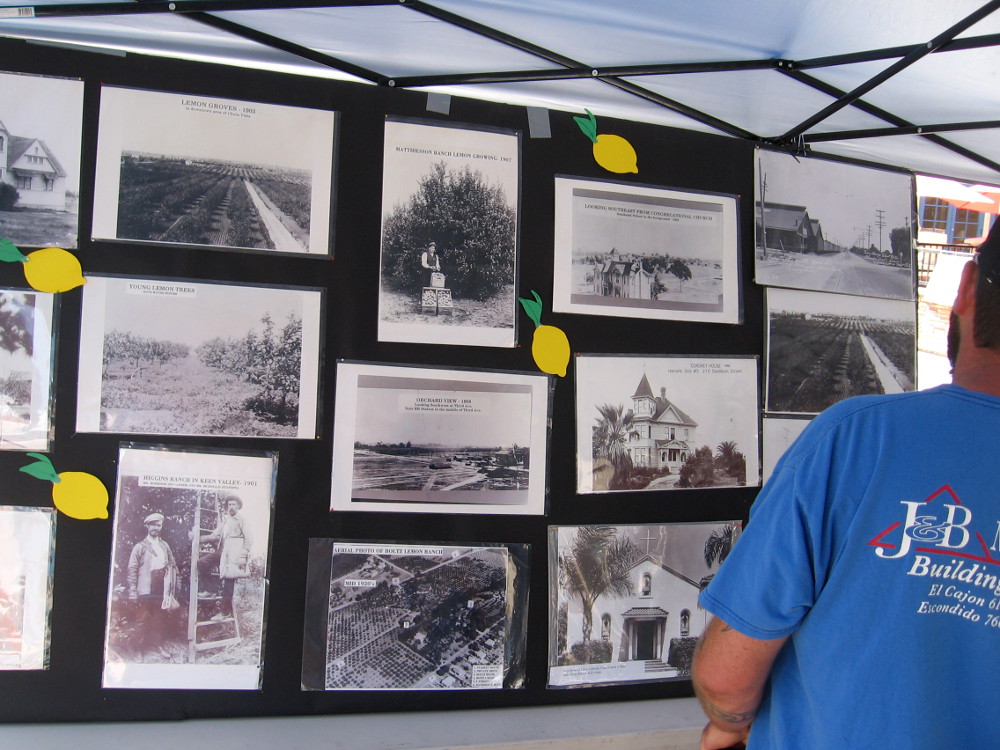
Another booth at the Lemon Festival had lots of old historical photographs.
Another booth at the Chula Vista Lemon Festival featured lots of interesting historical photographs.
Someone points to a photo of workers in a lemon grove at the Higgins Ranch in Keen Valley, 1901.
Aerial photo of the Boltz lemon ranch in the mid 1920's.
Aerial photo of the Boltz lemon ranch in the mid 1920’s.
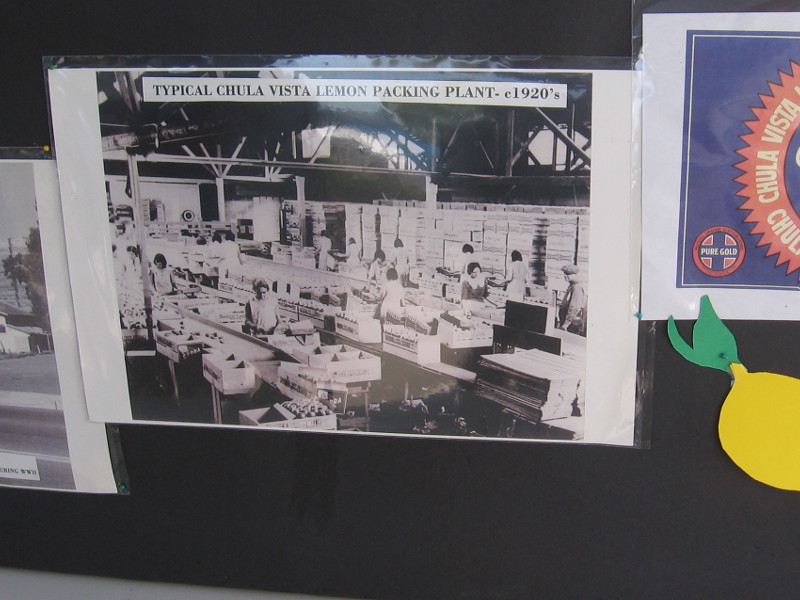
Typical Chula Vista lemon packing plant, circa 1920's.
Typical Chula Vista lemon packing plant, circa 1920’s.
Old photos of Chula Vista streetcar and train at Third Avenue.
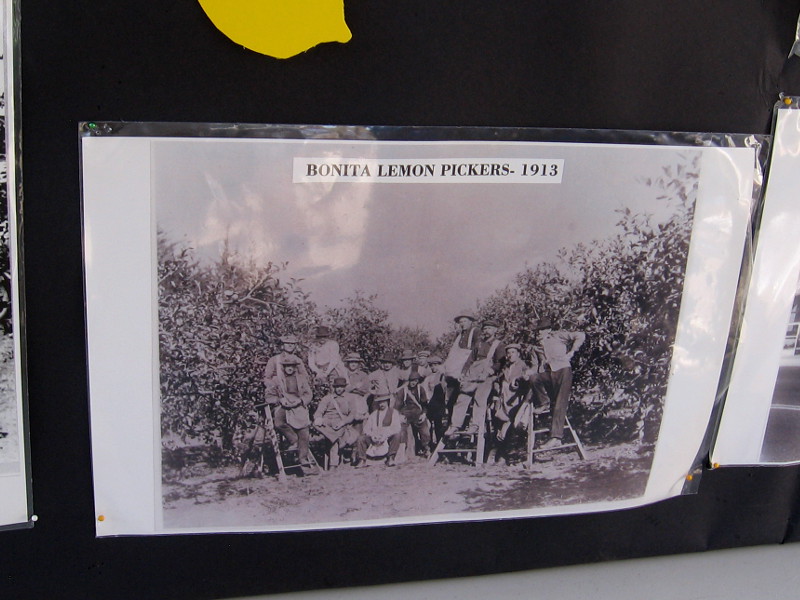
Bonita lemon pickers, 1913.
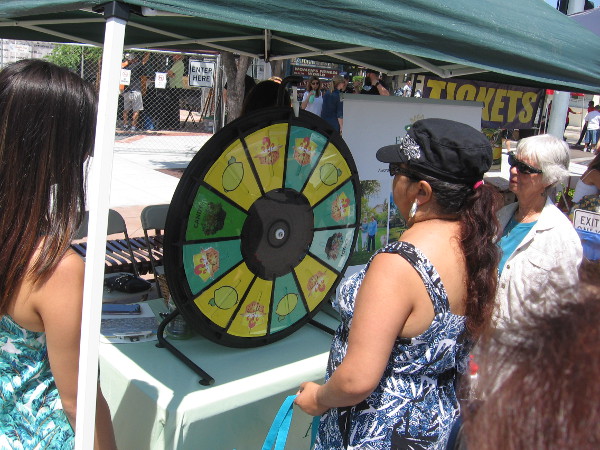
Meanwhile, people spin a lemon-themed prize wheel at the festival.
At the Lemonade Bandstand, entertainment included live music, a largest lemon and lemon peel contest, a lemon costume contest, and lemon pie eating contest.
People watch the Lemon Squeezers play rock and roll music with a twist!
Cool local band, the Lemon Squeezers, at the Chula Vista Lemon Festival.
That great music has people dancing!
That great music has people smiling and dancing!
Batman and Wonder Woman dropped on by and posed for a photo by the Lemon Bar sign.
All that fun made me thirsty for some lemonade!
All that fun has made me thirsty for some lemonade!

This blog now features thousands of photos around San Diego! Are you curious? There’s lots of cool stuff to check out!
Here’s the Cool San Diego Sights main page, where you can read the most current blog posts.  If you’re using a phone or small mobile device, click those three parallel lines up at the top–that opens up my website’s sidebar, where you’ll see the most popular posts, a search box, and more!

To enjoy future posts, you can also “like” Cool San Diego Sights on Facebook or follow me on Twitter.

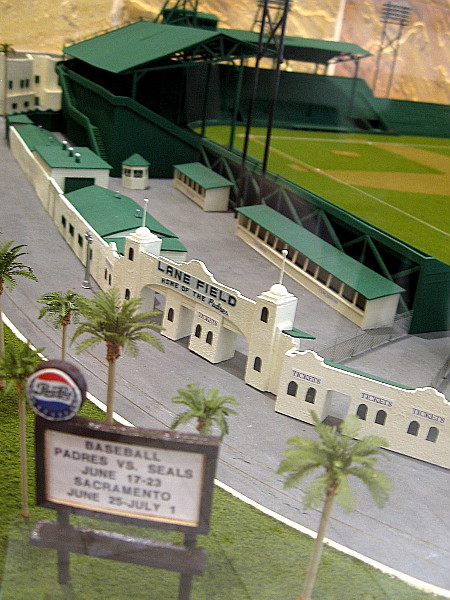
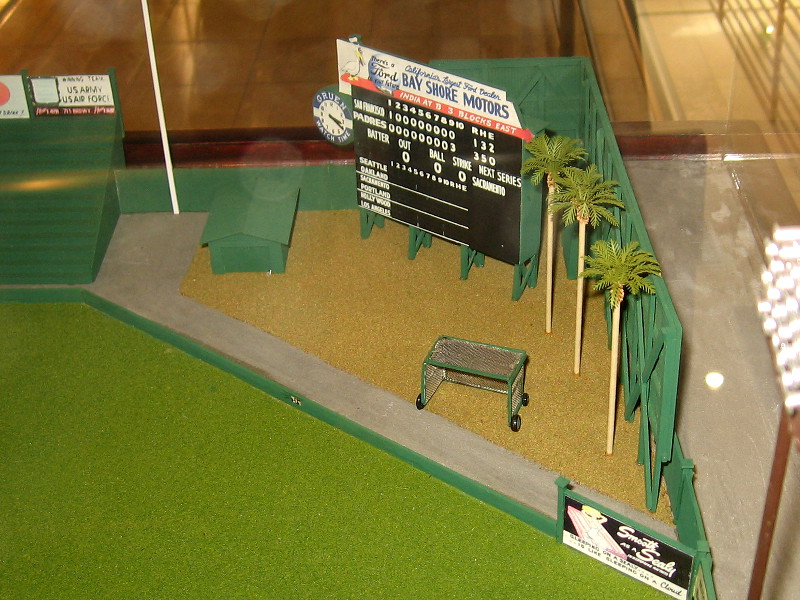
Model of Lane Field stadium at Petco Park.

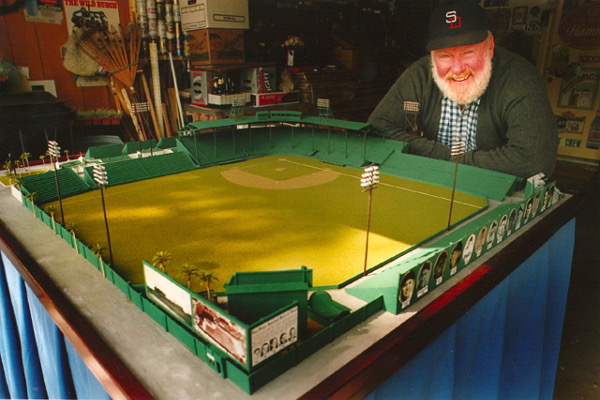
Completed model of Lane Field stadium in the garage of baseball historian Bill Swank. Photo courtesy Bill Swank.

A fascinating scale model of the Lane Field stadium, home of the Pacific Coast League Padres from 1936 to 1957, is now located inside the front lobby of the San Diego Padres business office. The model was built by baseball historian Bill Swank, author of several books, including Echoes from Lane Field : A History of the San Diego Padres 1936-1957.

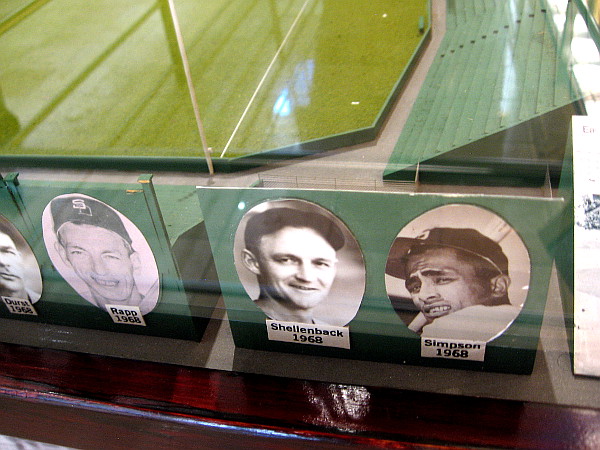
Fans of the early Padres used to head to Lane Field to see their favorite team in action. Many fond baseball memories were made in downtown San Diego near the waterfront, at the end of West Broadway between Harbor Drive and Pacific Highway. Today the area is occupied by two hotel buildings and Lane Field Park, which features a small baseball diamond, plaques that honor an era of local baseball history, and three colorful banners that celebrate former players at Lane Field, including legendary hitter Ted Williams.

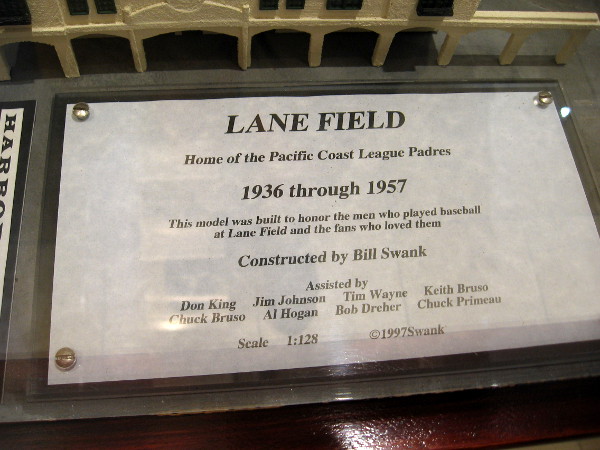
Bill Swank created the detailed model of long-vanished Lane Field to preserve a bit of San Diego history for the enjoyment of Padres fans. The model is in 1:128 scale and made out of basswood. Care was taken during its construction to maintain a high degree of accuracy.

According to Bill Swank, the model is “so accurate to scale that it’s even 87’ from home to first base. It wasn’t until the 1950s that a groundskeeper measured the distance and discovered it was only 87 feet… and had been 87 feet since 1936! I believe the mistake was made by taking the measurement off the hastily drawn blueprint.”

Bill Swank has provided the following additional information concerning his model:

January 1997: Because I had blueprints for Lane Field, San Diego Hall of Champions Historian Don King asked if I would like to participate in building a scale model of the original home of the San Diego Padres to be displayed at the Hall of Champions.

May 1997: It took me longer to finish the model than it took the Works Progress Administration (WPA) to build the actual ballpark. Bill Lane signed an agreement to relocate his Pacific Coast League Hollywood Stars to San Diego on January 28, 1936. A ballpark had to be built at the northwest corner of Broadway and Pacific Highway in less than two months, because the renamed “Padres” first game was scheduled for March 31, 1936. The cost of construction was approximately $25,000. (San Diego beat the Seattle Indians, 6-2, on Opening Day.)

July 1997: My Lane Field model was unveiled at the San Diego Hall of Champions on the Prado.

September 2000: The model was transported to the remodeled Federal Building after the Hall of Champions moved from the Prado.

April 2017: When the Hall of Champions closed in 2017, a new home was found for the model at Petco Park.

February 2018: The Lane Field model went on display in the front lobby of the Padres business office.

I have enjoyed an up-close and personal look at this very cool model. Here are several historical photographs of Lane Field, followed by a few photos of the model beneath glass that my camera captured.

With a little imagination one can almost see fans in the stands, players on the field, and hear the crack of a batted home run…

Lane Field (1936) before the grandstand roof was added. Photo from the Bill Swank collection.
Panoramic view of Lane Field includes long ticket line for 1954 PCL Championship game with Hollywood Stars (Padres won, 7-2). Photo by Ray Hacecky, Sr.
Panoramic view of Lane Field includes long ticket line for 1954 PCL Championship game with the Hollywood Stars (Padres won, 7-2). Photo by Ray Hacecky, Sr.
Opening Day, March 30, 1940. Southpaw Wally “Preacher” Hebert took the mound and beat the Los Angeles Angels, 5-1. Photo from the Hebert Family.
A new attendance record (13,466) was set on May 2, 1948 for a game with the San Francisco Seals. During the game, fans stood and sat in the outfield against the fence. A ball that went into the crowd was a ground rule double. Photo from the Bill Swank collection.
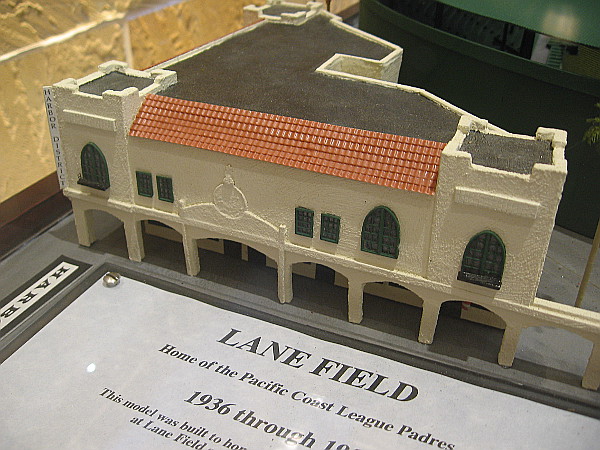
Model of Lane Field as it appears today.
Scale model of Lane Field stadium, displayed in lobby of the Padres business office.

This model was built to honor the men who played baseball at Lane Field and the fans who loved them.

Memories from San Diego's baseball past live on at Petco Park.
Memories from San Diego’s baseball past live on at Petco Park.

Many thanks to the San Diego Padres, the super friendly Petco Park Navigators and Bill Swank who made this fun post possible!

Go Pads!

I live in downtown San Diego and love to walk around with my camera! You can follow Cool San Diego Sights via Facebook or Twitter!

Fascinating photos of the Centre City Building.

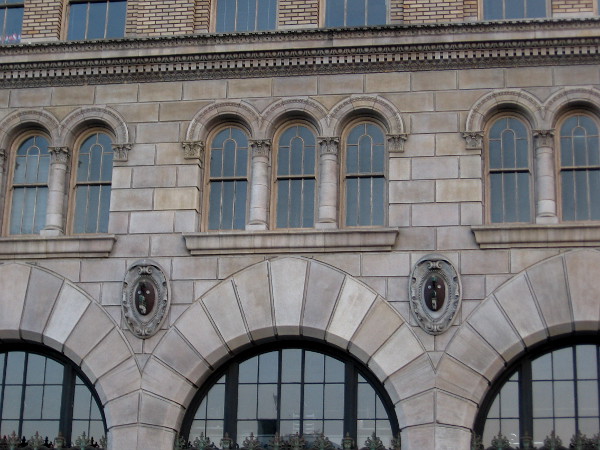
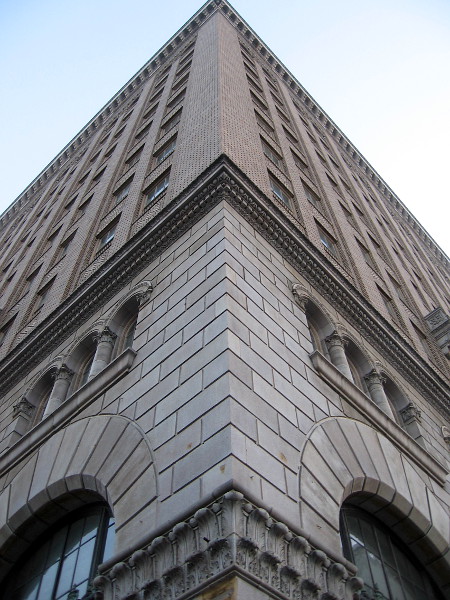
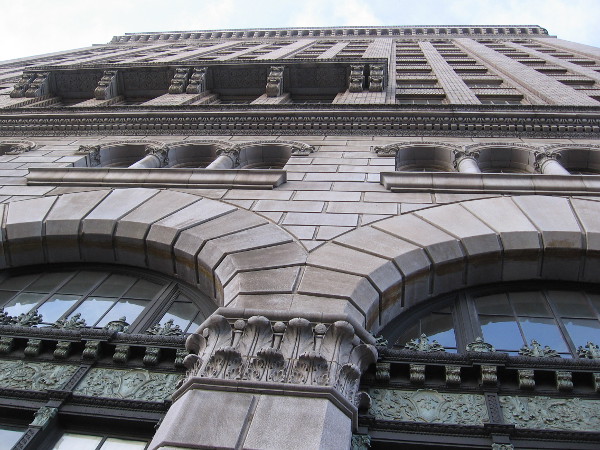
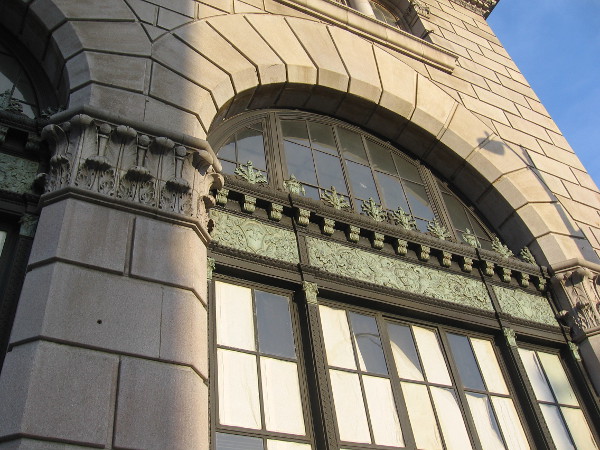
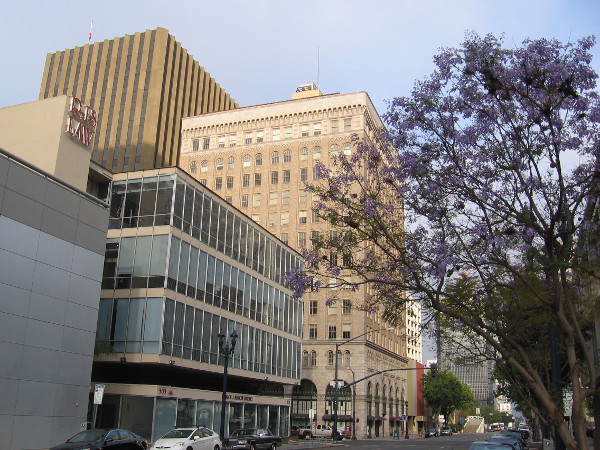
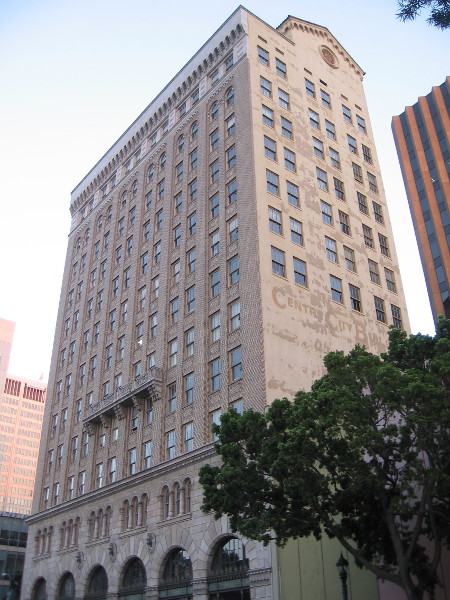
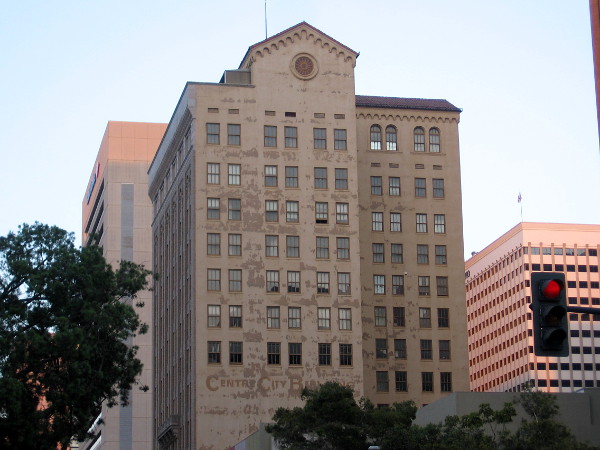
The Centre City Building, which rises just north of Civic Center Plaza in San Diego, was built in 1927. The fourteen story office building was designed by noted architect Frank W. Stevenson, and once was the tallest building in all of downtown. Today the historical landmark can seem lost among dozens of more recent high-rises.

Whenever I walk pass this building to the east or north, I like to look up at the elegant decorative brick and granite facade. The much more plain and faded west and south sides of the building provide a fascinating visual contrast.

Light at different times of the day can either make the building seem golden and regal, or like a gradually vanishing page from San Diego’s history.

Here are a variety of photos that I’ve taken during several walks.

I live in downtown San Diego and love to walk around with my camera! You can follow Cool San Diego Sights via Facebook or Twitter!

You can easily explore Cool San Diego Sights by using the search box on my blog’s sidebar. Or click a tag! There are thousands upon thousands of photos for you to enjoy!