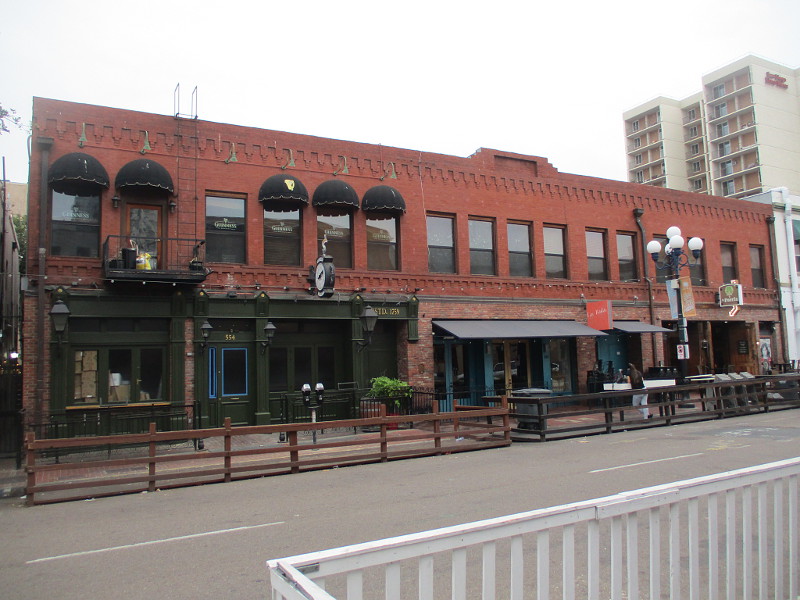
This old two-story brick building in San Diego’s Gaslamp Quarter has a fascinating history.
The property has been home to a factory that made crackers for ships, several other bakeries including the Royal Pie Bakery, and in the early 20th century, an upstairs hotel that was described as a den of rampant immorality!
Standing at 554 Fourth Avenue, the building was most recently home to Dublin Square Irish Pub.
The property’s history is so complex and interesting that one should read this detailed article by the Gaslamp Quarter Historical Foundation.
An aging plaque on front of the building reads:
Royal Pie Bakery 1884
Originally known as the San Diego Steam Cracker Factory, this brick structure has remained a bakery since its construction in 1884. During the first part of the 20th century, when the Gaslamp was deteriorating into a red-light district, the upper floor housed the notorious Empire Hotel, and later the Anchor Hotel. In 1920, Alois Kuhnel and F. A. Smith purchased the bakery. They were partners until 1939. The building was sold to Alois Kuhnel in 1950.
The Royal Pie Bakery finally closed in 1998.
…
Thanks for visiting Cool San Diego Sights!
I post new blogs pretty often. If you like discovering new things, bookmark coolsandiegosights.com and swing on by occasionally!
I live in downtown San Diego and love to walk around with my camera! You can follow Cool San Diego Sights via Facebook or X (formerly known as Twitter)!
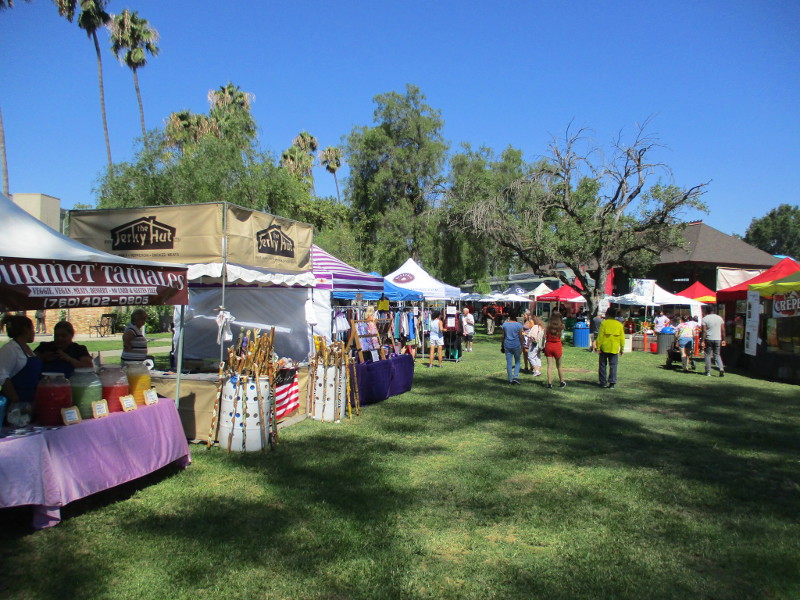
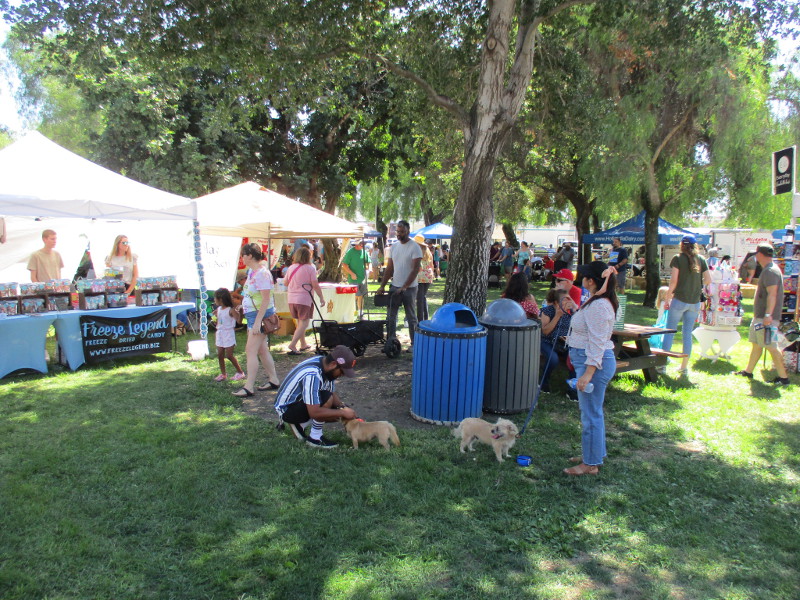
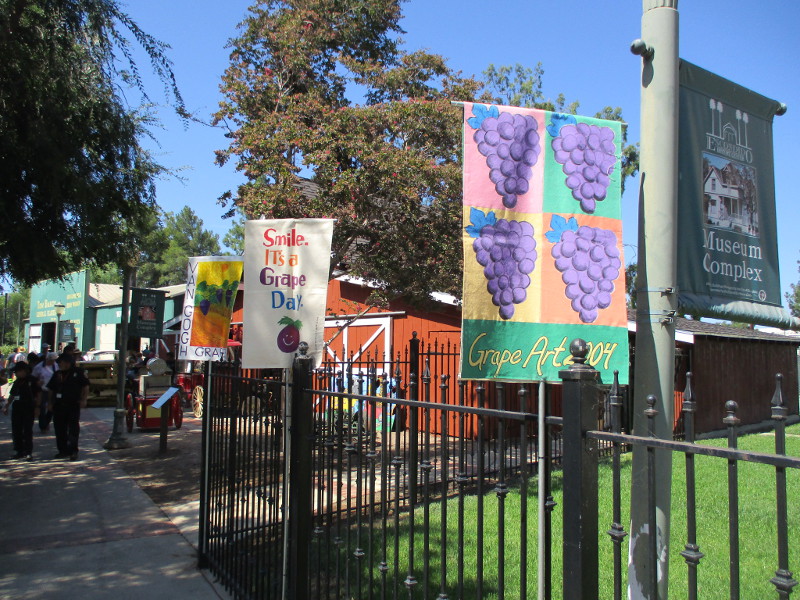
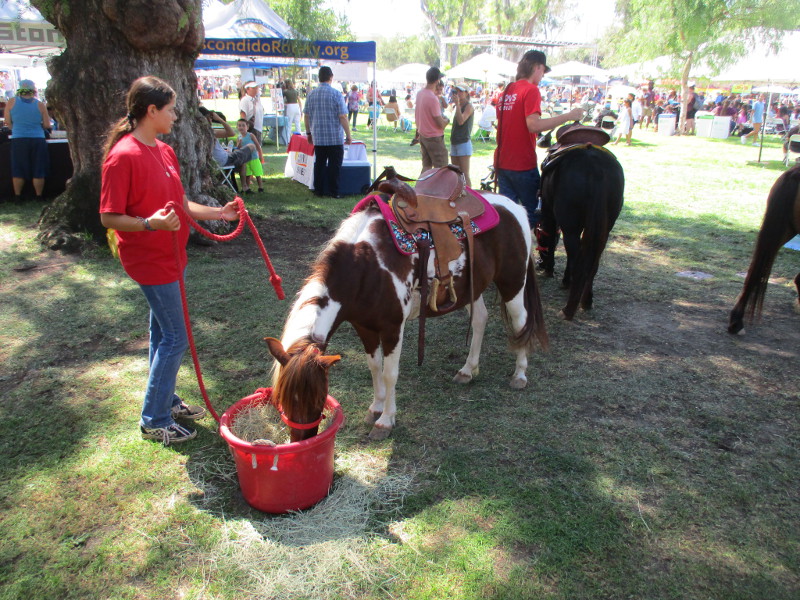
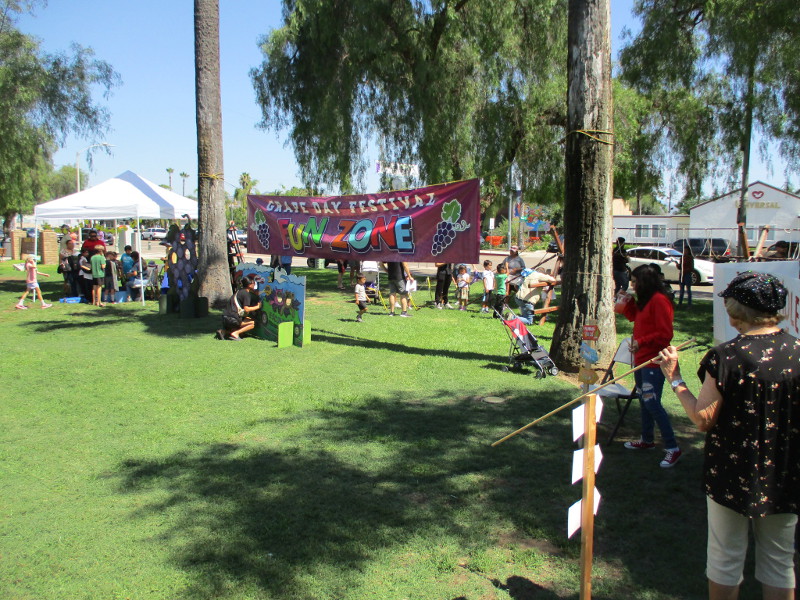
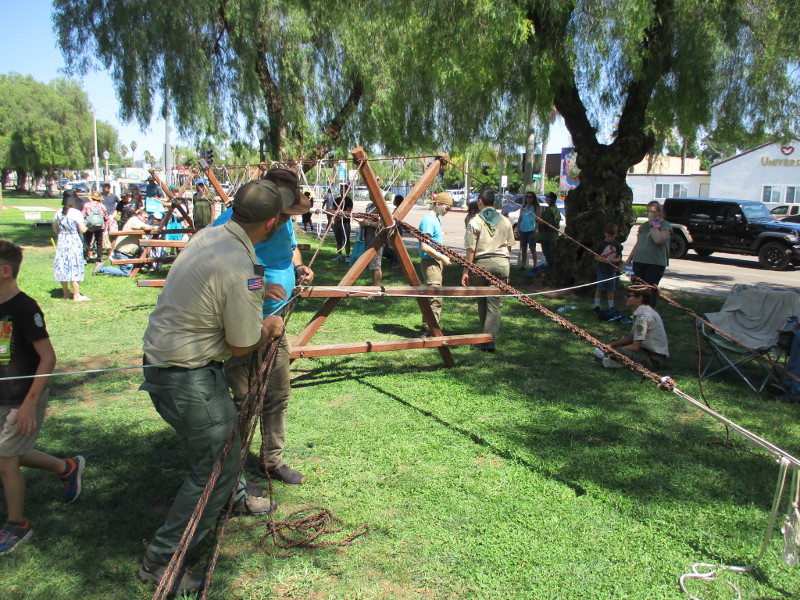
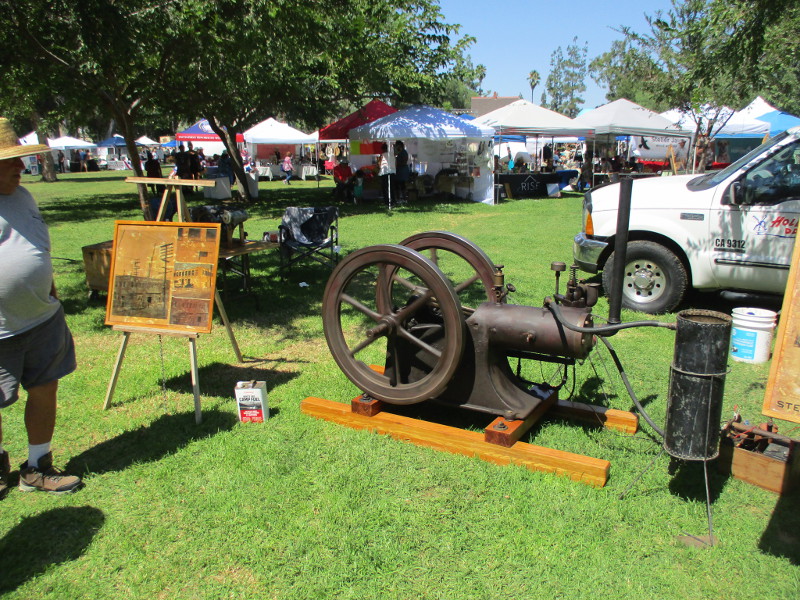
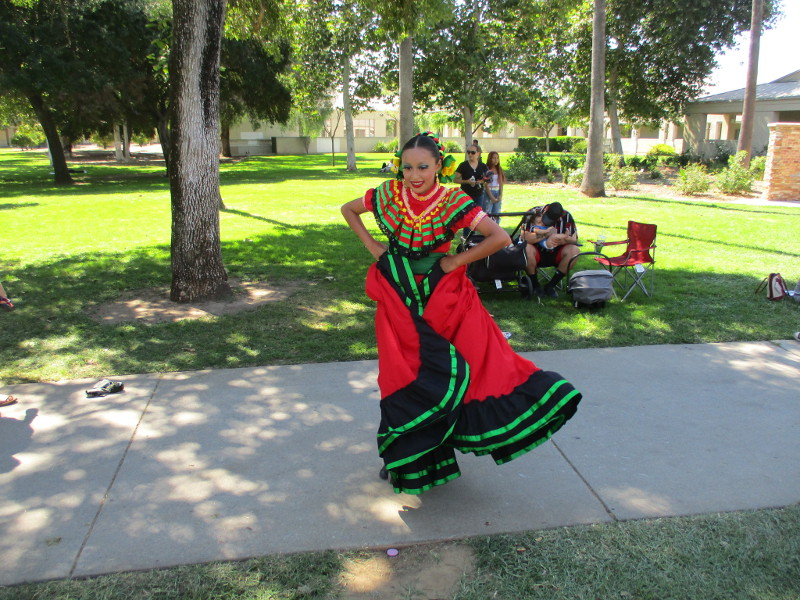
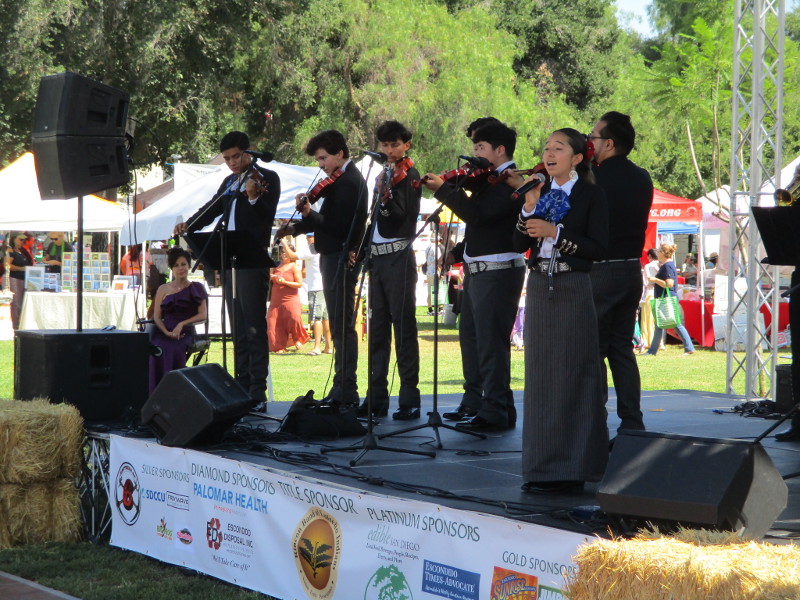
Enjoy this fun collection of photographs taken during yesterday’s big Grape Day Festival in Escondido!
The family-friendly event, which is held in downtown’s grassy Grape Day Park, celebrates Escondido history and this North County city’s reputation for grape growing. The festival originated way back in 1908 and for the first half of the 20th century it rivaled Pasadena’s Festival of Roses in popularity.
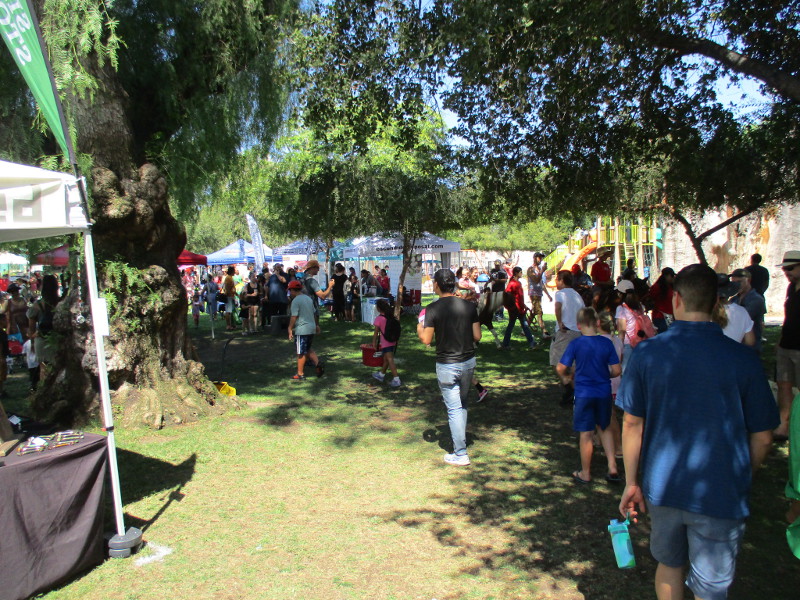
Following the COVID pandemic of a few years ago, the Grape Day Festival is now back in full swing, with a large crowd enjoying grape stomping, historical displays and lots of old-fashioned entertainment!
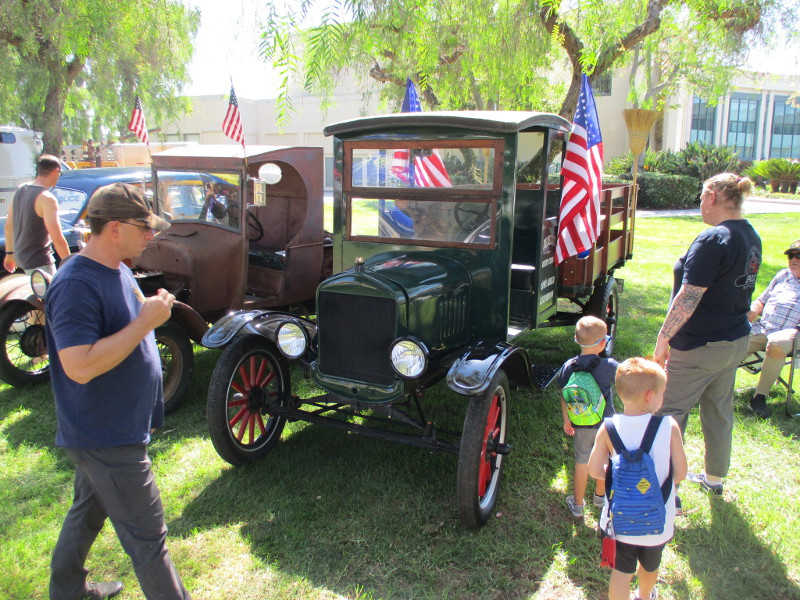
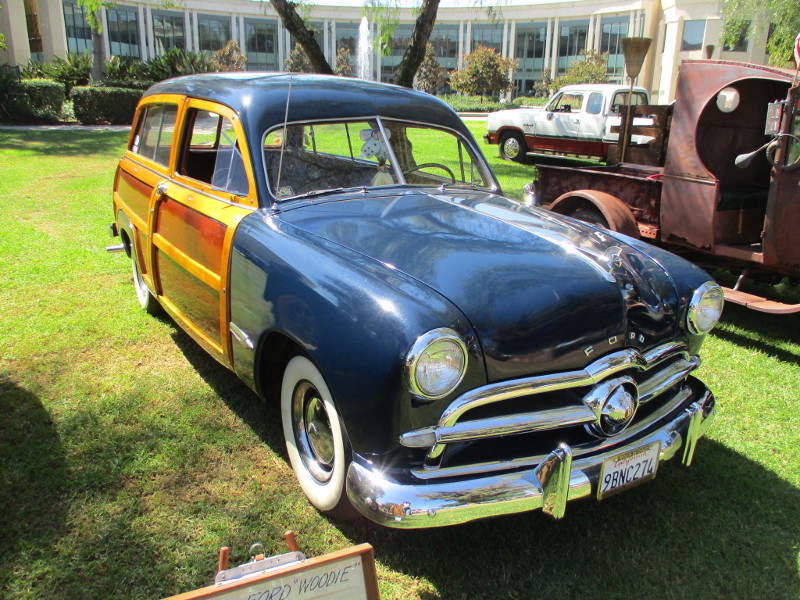
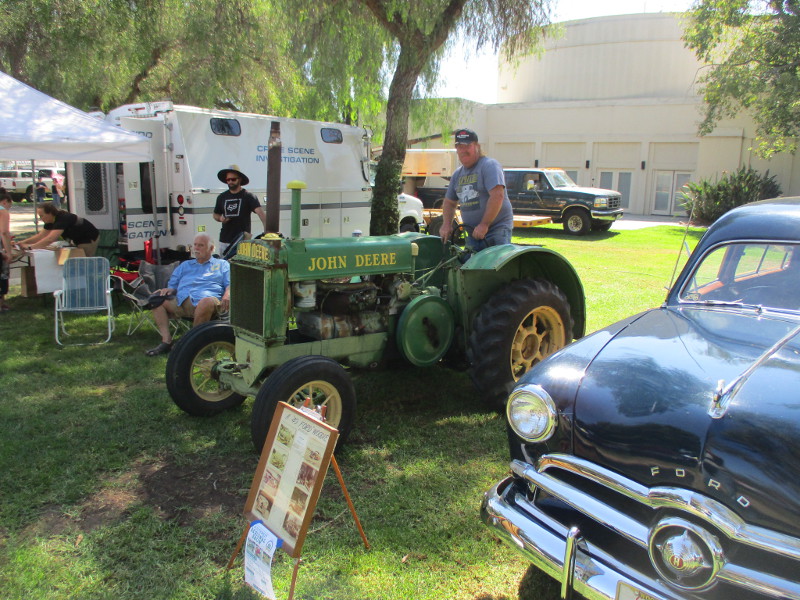
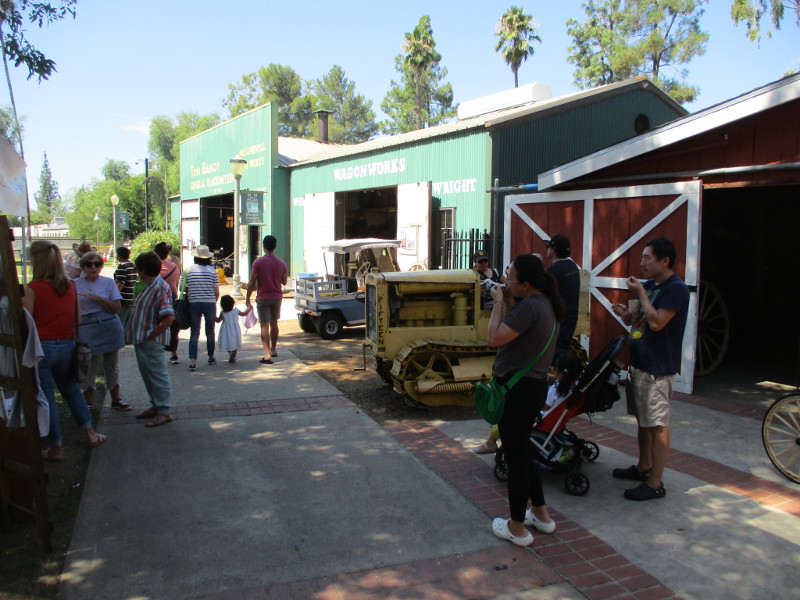
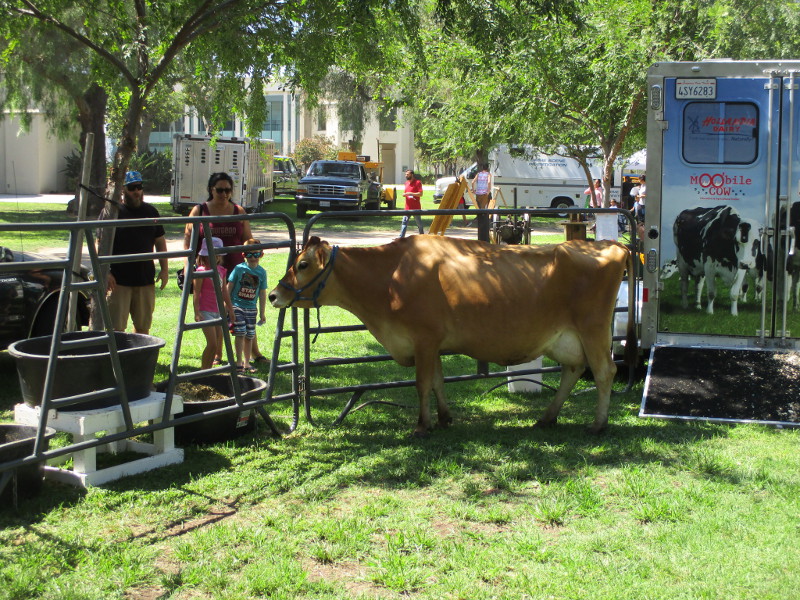
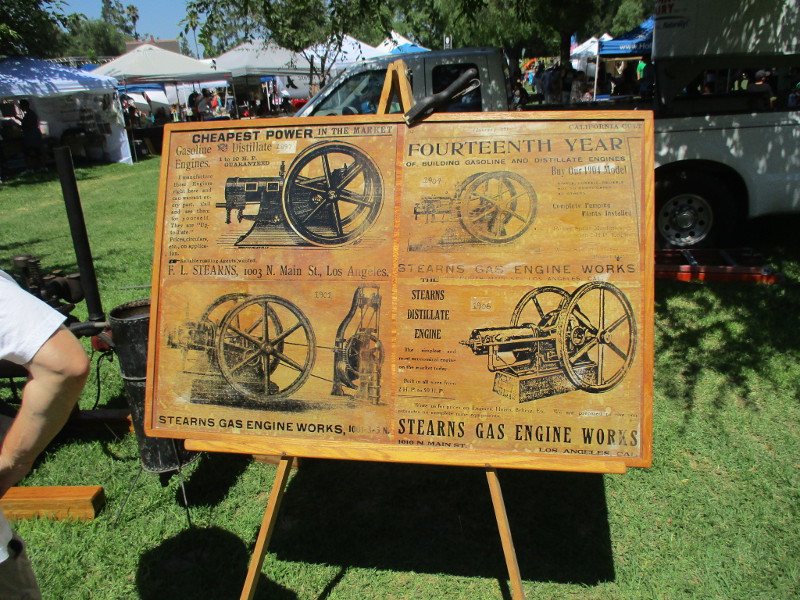
I wandered about taking it all in. One could listen to jazz, bluegrass and mariachi music, explore exhibits along the park’s History Center, check out old vehicles and farm machinery, observe a milking demonstration, and meet lots of cool people who are involved throughout the community! Plenty of tasty food and games for kids and pony rides, too!
If you love nostalgia and a generous slice of Americana, this festival is for you!
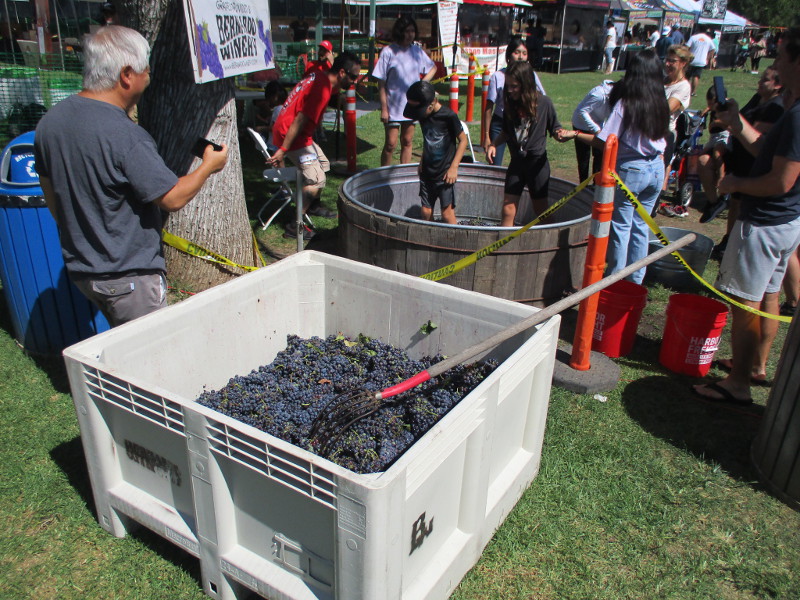
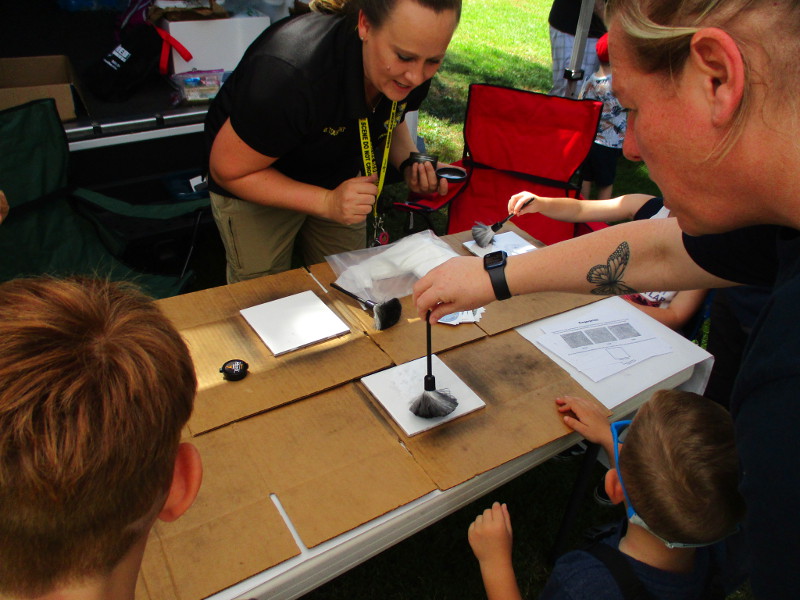
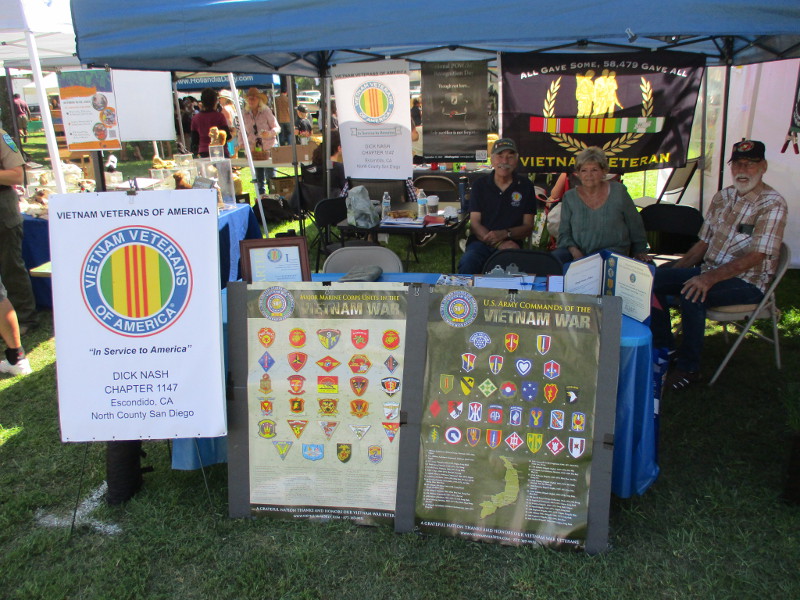
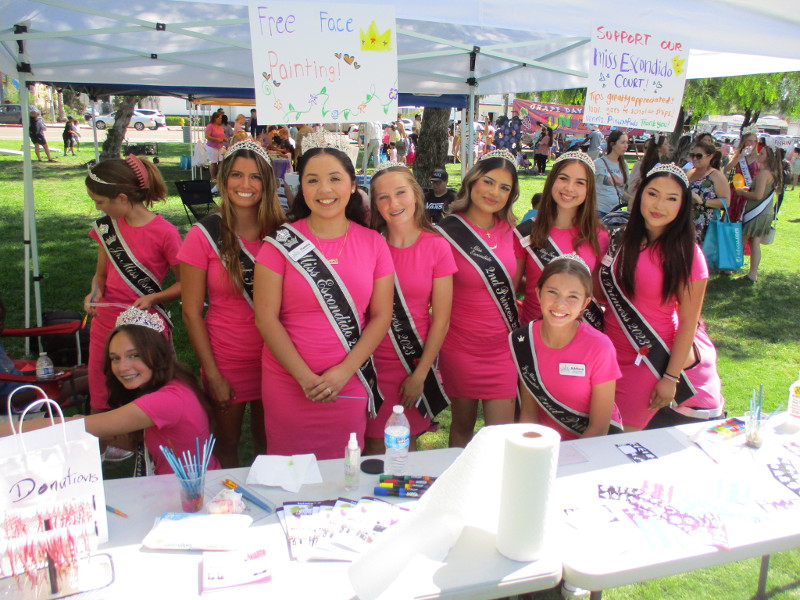
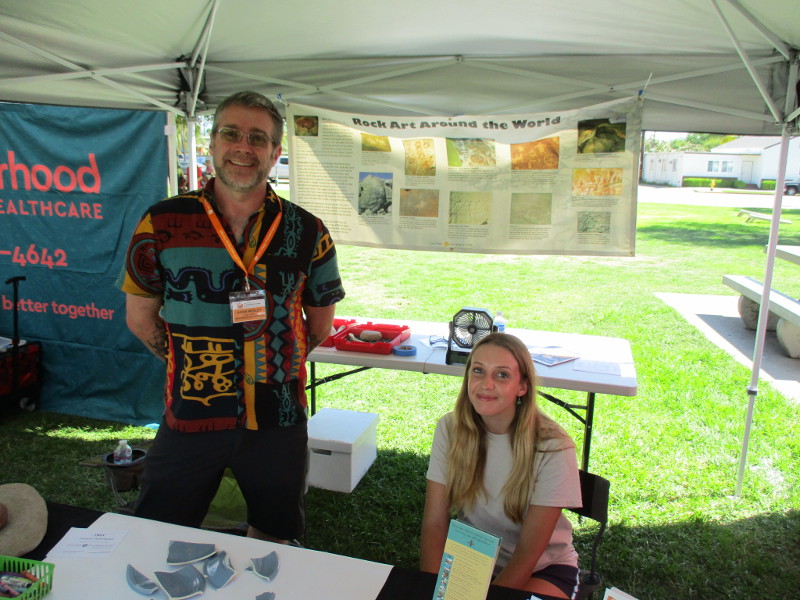
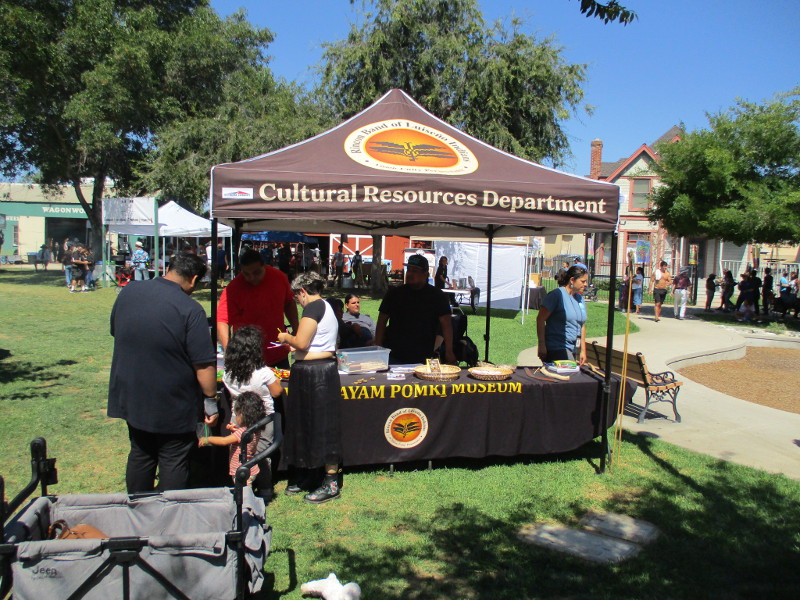
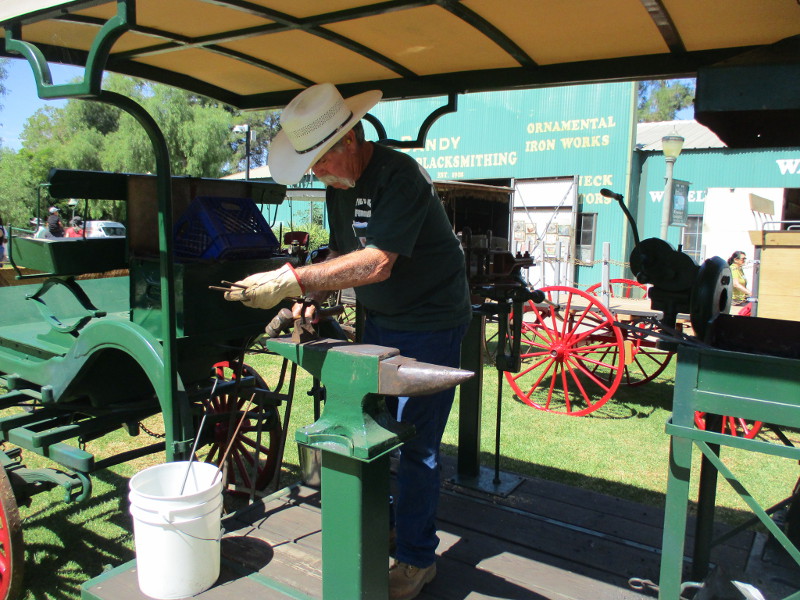
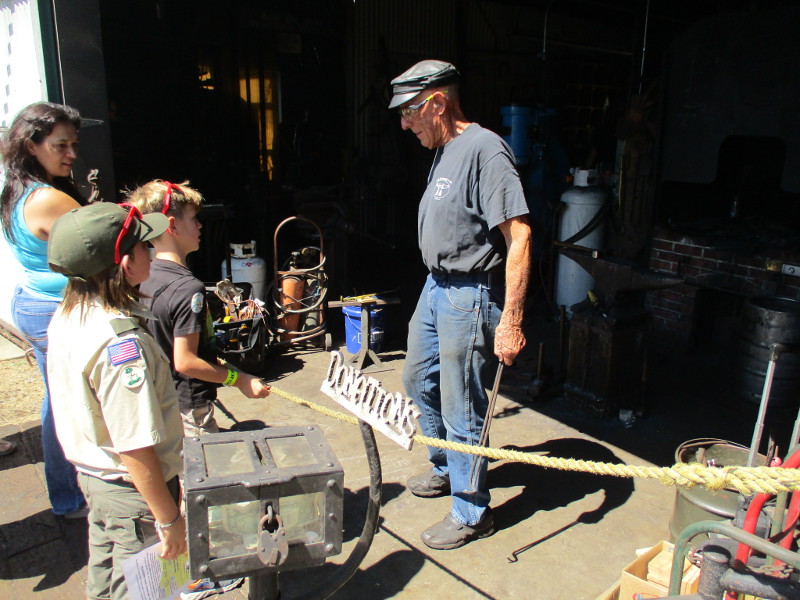
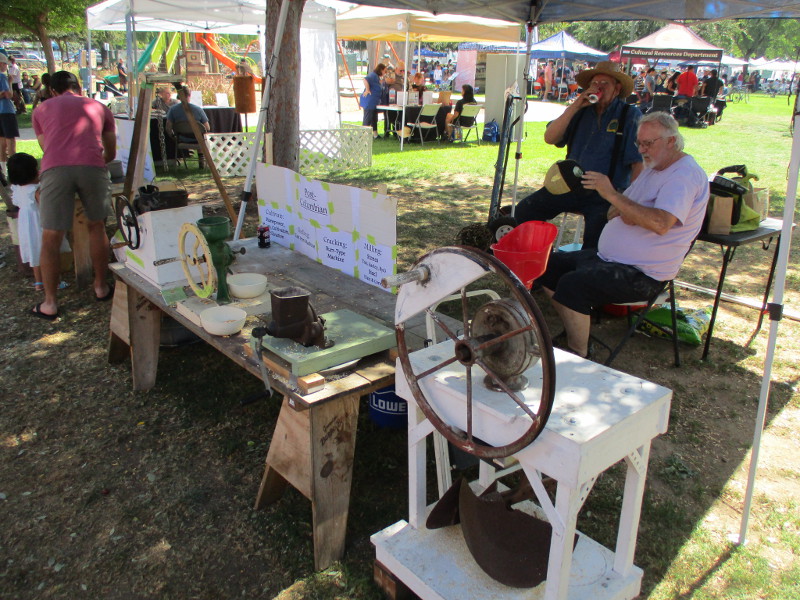
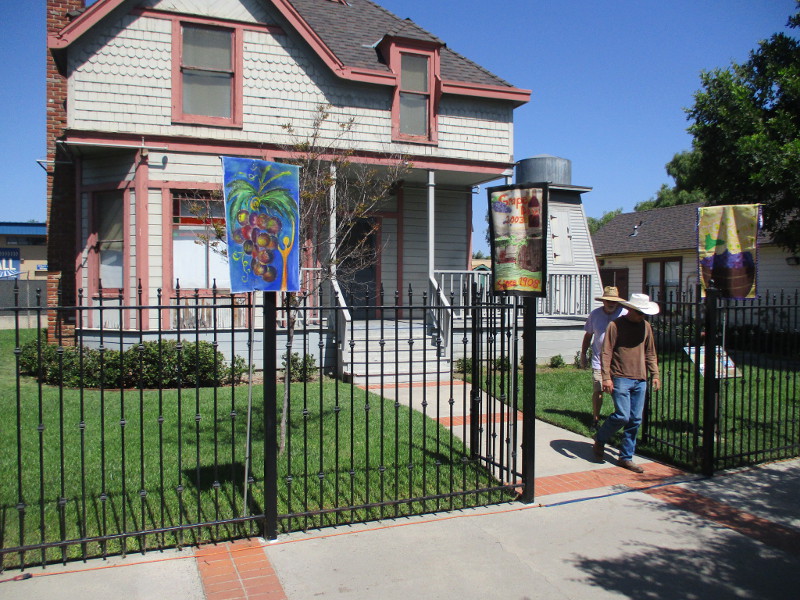
Anybody could stomp some grapes provided by the Bernardo Winery.Yummy food by the Wine and Beer Tasting Garden!I learned there is an Old Escondido Historic District. It is the only residential Historic District in North San Diego County. Visit their website here.Several antique vehicles on display.A very cool 1949 Ford woodie.Kids learn how to dust for fingerprints behind a Crime Scene Investigation vehicle.Smiles at the Vietnam Veterans of America booth.Kids learn about native snakes at the San Dieguito River Park booth.The Escondido Public Library features a Pioneer Room, where anyone can search a local history archive for old documents, photographs and more. Go to their website here.Brightly smiling Escondido royalty pose for a photo.The San Diego Archaeological Center was on hand for the festival. I still haven’t visited their museum in nearby San Pasqual Valley. Check out their website here.The Wa$xayam Pomki Museum of the Rincon Band of Luiseño Indians had cultural displays at their booth. They are one of the Grape Day Festival sponsors. Their website is here.Lots of demonstrations could be viewed along the Escondido History Center’s Heritage Walk.A family learning about blacksmithing at the Tom Bandy Blacksmith Shop.Pre-Columbian methods for preparing corn.Antique machines used to grind corn.I placed a dried corn cob in here and turned the crank!Grape Day banners on the fence in front of the History Center’s Victorian House.Hollandia dairy, based in San Diego’s North County, brought two cows and a goat for milking demonstrations.Beautiful color at a wonderful community festival.
…
Thanks for visiting Cool San Diego Sights!
I post new blogs pretty often. If you like discovering new things, bookmark coolsandiegosights.com and swing on by occasionally!
I live in downtown San Diego and love to walk around with my camera! You can follow Cool San Diego Sights via Facebook or X (formerly known as Twitter)!
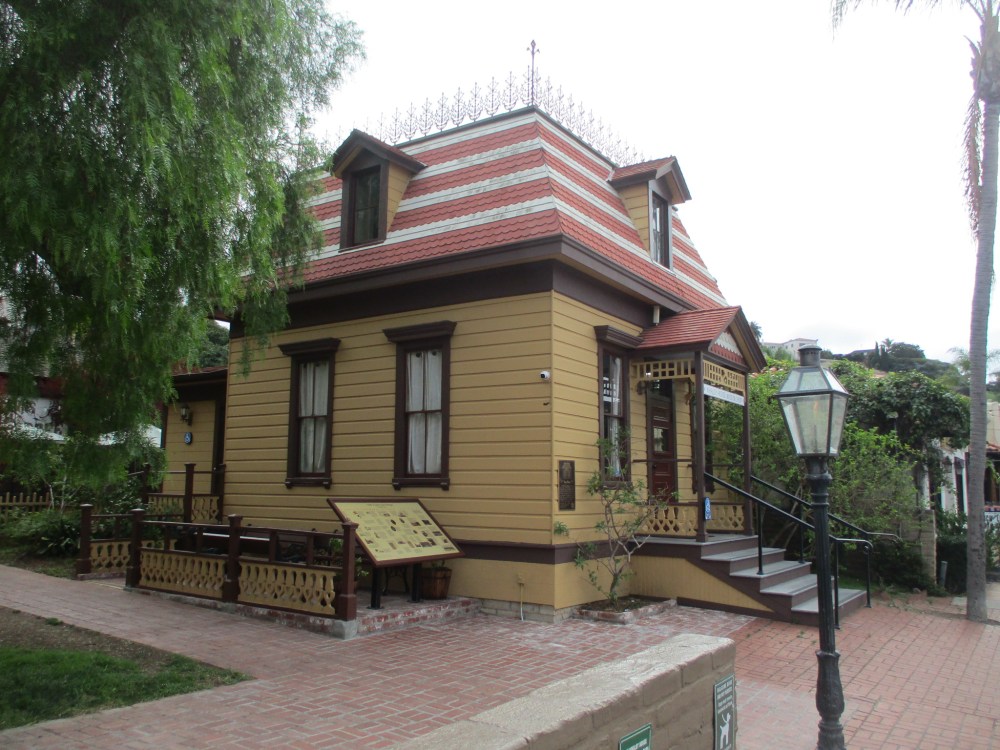
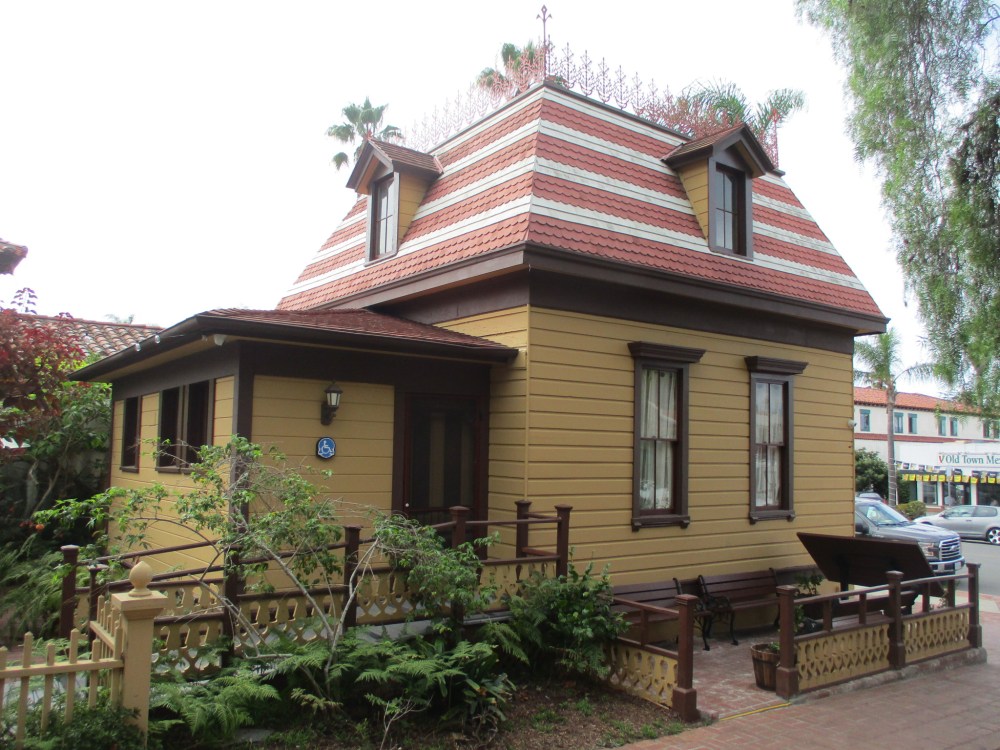
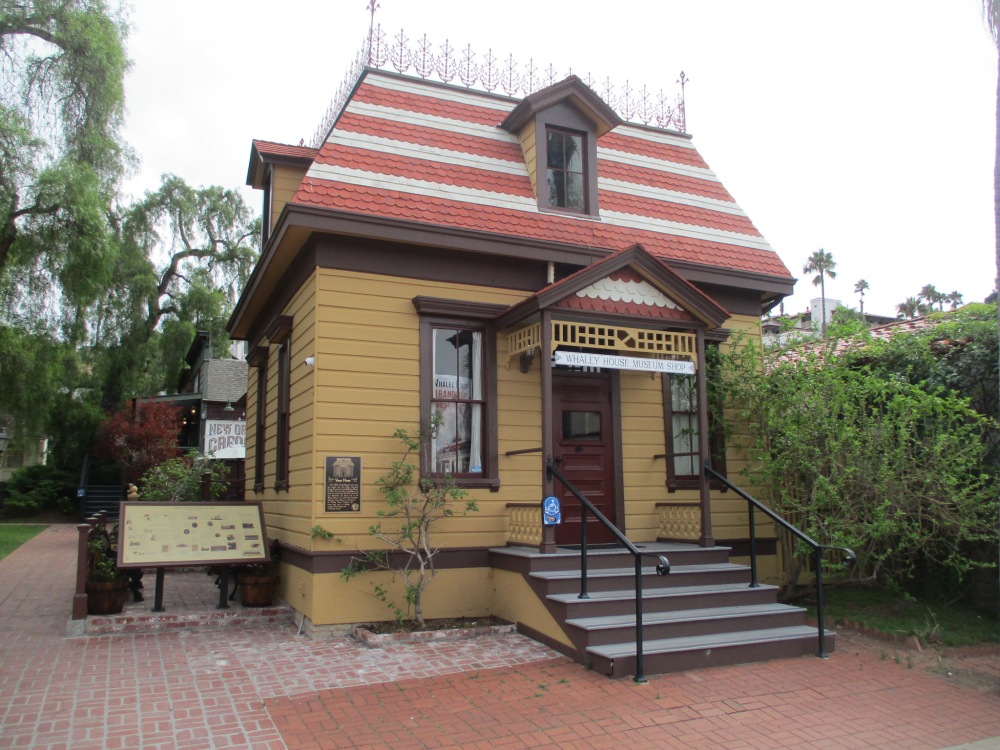
Does the roof of the 19th century Verna House in the above photo seem unusual? Perhaps that’s because it’s a uniquely sloped mansard roof, one of very few built on the Pacific Coast in the Victorian era.
The quaint little house stands at 2476 San Diego Avenue in Old Town. Today it serves as the Whaley House Museum Shop, where visitors can purchase museum admission, books and assorted gifts. Like the nearby Whaley House itself, the shop in the Verna House is operated by Historic Tours of America, the folks behind San Diego’s popular Old Town Trolley Tours.
I knew nothing about this house and its history until I spotted the above plaque while walking down San Diego Avenue several days ago. The plaque was placed on the house’s exterior earlier this year. It reads:
The 1870’s French-Mansard style home was named after San Diego restaurateur Cesare Verna and his wife Maddalena Daniele. In 1965, after the death of Maddalena, the house was moved from 319 West Ash Street near Downtown and placed next to the Whaley House to be saved from demolition. Today the Verna House is a vital part of the Whaley House Grounds and county park, and is a shining example of San Diego’s rich architectural history.
Twenty years ago, when the Verna House was maintained by the Save Our Heritage Organisation, the old structure was restored. Here’s an interesting article that provides description and photographs.
…
Thanks for visiting Cool San Diego Sights!
I post new blogs pretty often. If you like discovering new things, bookmark coolsandiegosights.com and swing on by occasionally!
I live in downtown San Diego and love to walk around with my camera! You can follow Cool San Diego Sights via Facebook or X (formerly known as Twitter)!
James W. Robinson was hanged for stealing a rowboat from San Diego Bay. He was convicted of grand larceny. He was buried in San Diego’s Old Town, a short distance from where the hanging took place.
Perhaps you know James Robinson from his nickname, Yankee Jim. The hanging ground where he was executed in 1852 is now occupied by the Whaley House Museum. The historically important Whaley House lays claim to being the most haunted house in America. Some say Yankee Jim’s ghost can still be seen in and around the museum.
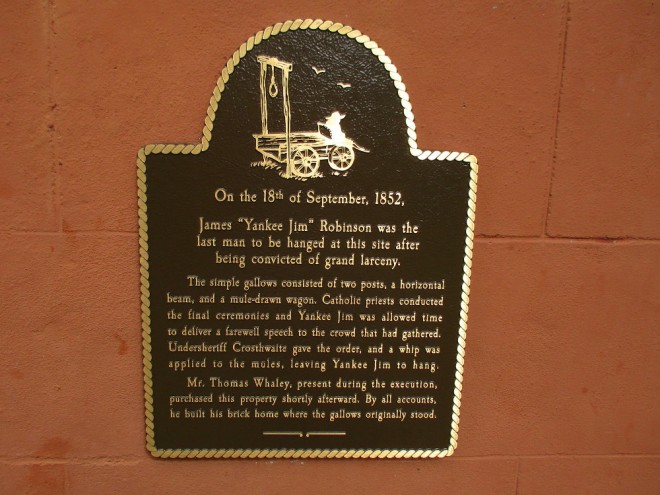
A plaque was placed on the south side of the Whaley House earlier this year. I took photographs of it a couple days ago. It describes the hanging of Yankee Jim, shortly before Mr. Whaley bought the old hanging ground to build his house.
The plaque reads:
On the 18th of September, 1852, James “Yankee Jim” Robinson was the last man to be hanged at this site after being convicted of grand larceny. The simple gallows consisted of two posts, a horizontal beam, and a mule-drawn wagon. Catholic priests conducted the final ceremonies and Yankee Jim was allowed time to deliver a farewell speech to the crowd that had gathered. Undersheriff Crosthwaite gave the order, and a whip was applied to the mules, leaving Yankee Jim to hang. Mr. Thomas Whaley, present during the execution, purchased this property shortly afterward. By all accounts, he built his brick home where the gallows originally stood.
Many years ago I visited the El Campo Santo cemetery where Yankee Jim was buried. I documented many of the gravesites, including his. I revisited the early San Diego cemetery again after discovering the Whaley House plaque.
The grave marker, which appears to contain errors, reads:
James W. Robinson, who was known as “Yankee Jim”, suffered the extreme penalty for stealing the only rowboat in San Diego Bay. The verdict of the jury was as follows: “Your jurors in the within case of James W. Robinson have to return a verdict of guilty and do therefore sentence him, James Robinson to be hanged by the neck until dead. Cave J. Courts [Cave Couts], foreman of the jury.
The poor fellow could not believe that he was to be hanged until the very last moment. He appeared to think it all a grim joke over, at worst. A serious effort to impress him with the enormity of his evil ways. He was still talking when the deputy sheriff gave the signal. Then the cart was driven from beneath him, and he was left dangling in the air. Surely the punishment was far more wicked than the crime. Yet the example must have proved effective in discouraging theft.
Yankee Jim converted to Roman Catholic Church prior to his death, thus his baptismal name of Santiago (Spanish for James). His godfather was Philip Crosthwaite, the deputy sheriff who gave the signal for his execution.
Information compiled from the History of San Diego, by W. E. Smythe, and other sources.
…
Thanks for visiting Cool San Diego Sights!
I post new blogs pretty often. If you like discovering new things, bookmark coolsandiegosights.com and swing on by occasionally!
I live in downtown San Diego and love to walk around with my camera! You can follow Cool San Diego Sights via Facebook or X (formerly known as Twitter)!
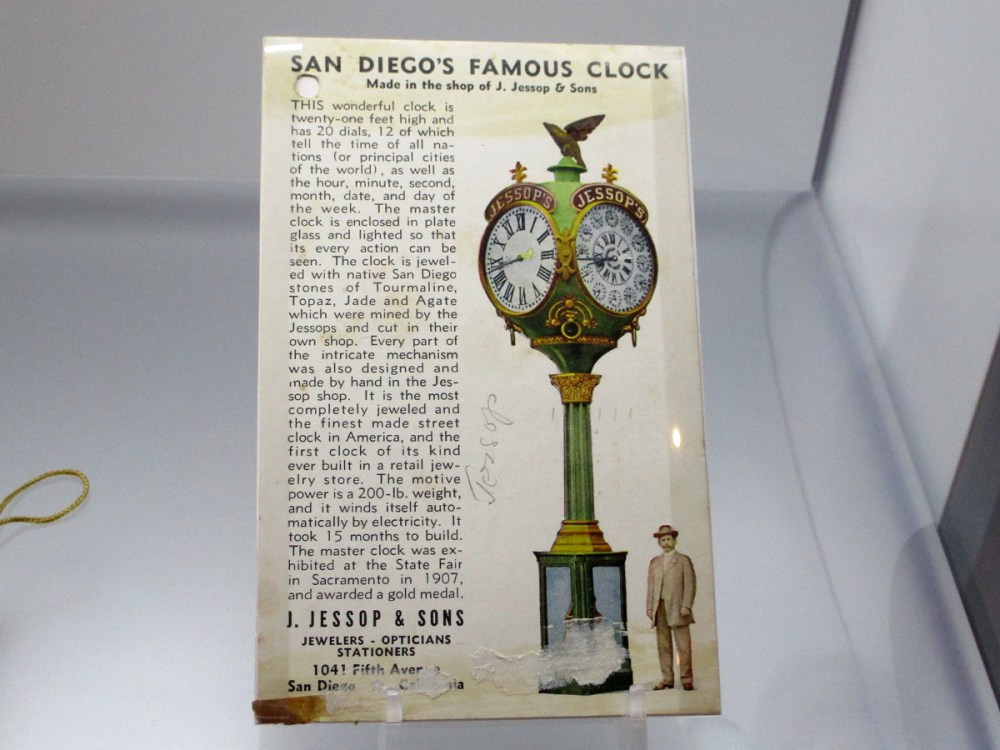
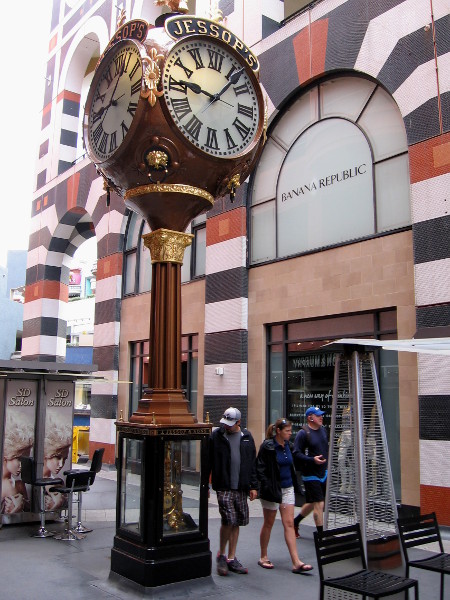
The incredible, famous, one-of-a-kind 1907 Jessop’s Street Clock is coming to Balboa Park! The elegant clock, which was removed from Horton Plaza in 2019, has been given to the San Diego History Center, and it will be a centerpiece of their museum’s future redesign and renovation!
Did you know the several million dollar Jessop’s Street Clock was once San Diego’s biggest tourist attraction? Did you know that much of its movement is gold plated, and that it is decorated with precious gems mined in San Diego County? Did you know the one day the clock’s 300 moving parts stopped working was also the day its creator died?
Eight years ago I wrote this and more, and posted photographs of the incredible clock here.
Four years ago I posted a blog about its removal from Horton Plaza. See that here.
To learn more about the San Diego History Center’s planned renovation, and see renderings showing the 22 foot high Jessop Clock standing just inside the museum entrance, check out the San Diego History Center’s web page here. You’ll also view historical photographs of the clock from a century ago!
How awesome is this!
Postcard depicting San Diego’s Famous Clock, in a display case at San Diego History Center. Published circa 1946. SDHC Document Files Collection, Jessop Family. “It is the most completely jeweled and the finest made street clock in America, and the first clock of its kind ever built in a retail jewelry store…It took 15 months to build…”
…
Thanks for visiting Cool San Diego Sights!
I post new blogs pretty often. If you like discovering new things, bookmark coolsandiegosights.com and swing on by occasionally!
I live in downtown San Diego and love to walk around with my camera! You can follow Cool San Diego Sights via Facebook or X (formerly known as Twitter)!
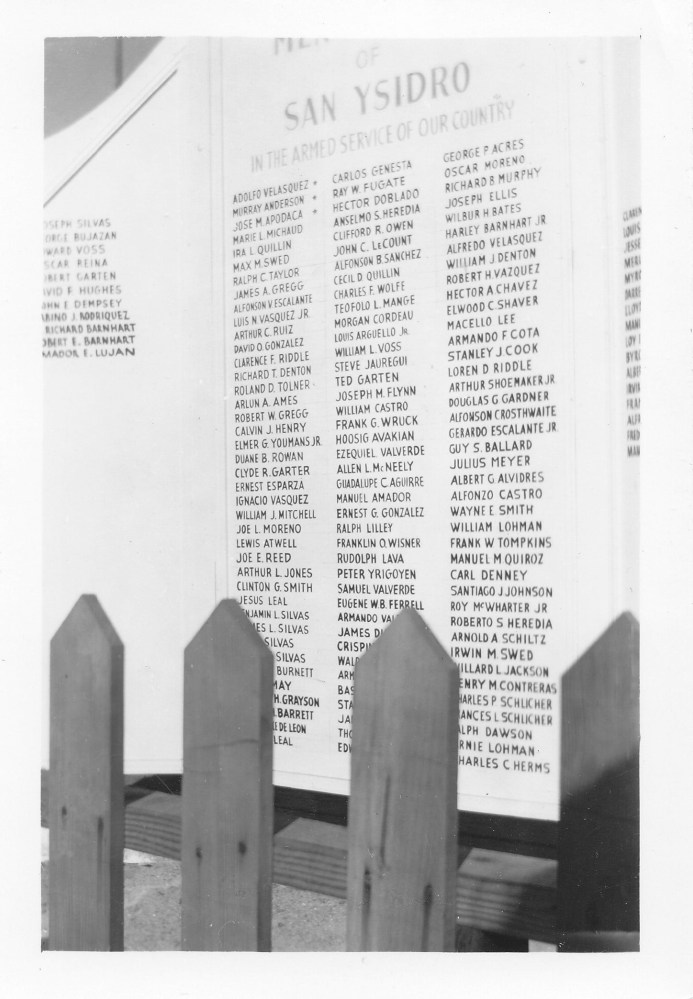
Do you have any old photographs taken years ago in San Ysidro? An effort is underway to reconstruct a World War II Memorial in San Ysidro, but more information is required.
147 men and women who lived in San Ysidro served in the military during World War II. Their names were listed on a memorial that stood in front of the old San Ysidro Library. But that memorial mysteriously disappeared, and now all that remains is a single photograph that shows only some of those names.
Here’s an article that provides a good explanation.
A group called the Friends of San Ysidro Luncheon Group has been attempting to ascertain all 147 names that were on the missing World War II Memorial, and they are still hoping someone out there has photos of it.
Do you know anyone out there who might have taken photographs in San Ysidro long ago? Your help would be greatly appreciated!
If you have any helpful information, please email Jack Gechter at jackgechter@cox.net.
…
Thanks for visiting Cool San Diego Sights!
I post new blogs pretty often. If you like discovering new things, bookmark coolsandiegosights.com and swing on by occasionally!
I live in downtown San Diego and love to walk around with my camera! You can follow Cool San Diego Sights via Facebook or Twitter!
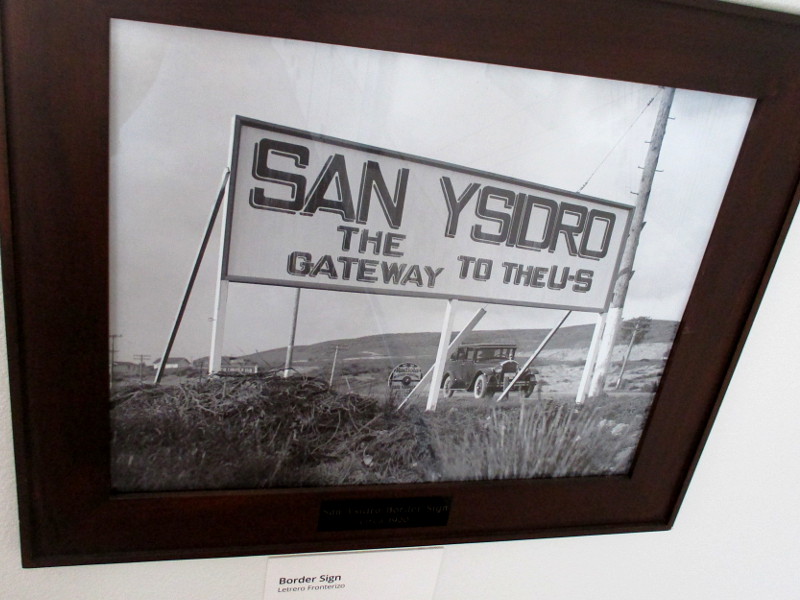
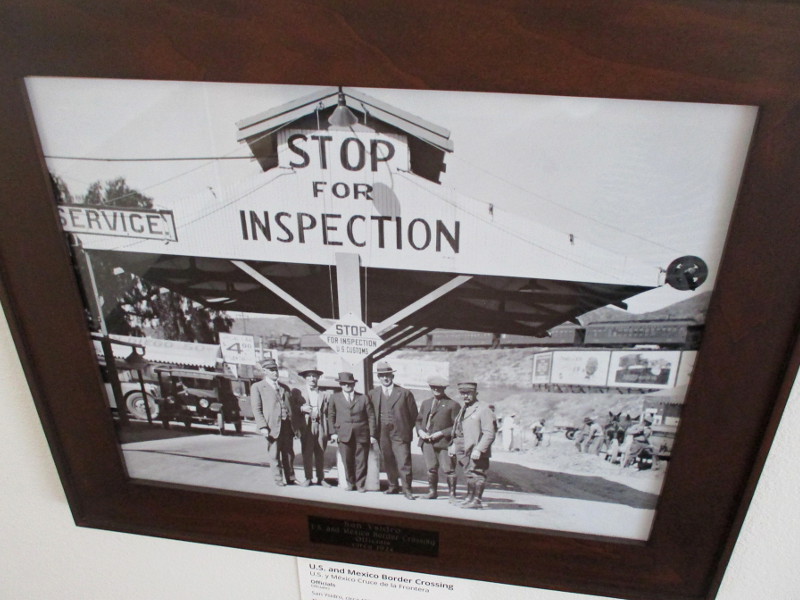
Border Sign, circa 1920. San Ysidro The Gateway to the U.S.
Those interested in the history of San Diego should visit the San Ysidro Library. Inside the library’s community room, fascinating historical photographs of San Ysidro (one of San Diego’s southernmost districts) can be viewed.
I visited the library yesterday. I wanted to check out the old photos and visualize how San Ysidro appeared long ago.
I learned how this border community began as the Little Landers colony, a family farming cooperative created by agricultural reformer, journalist and writer William E. Smythe in 1908. The motto of Little Landers was “A little land and a living surely is better than desperate struggle and wealth possibly.” It was one of the nation’s first communes. The colony was named San Ysidro, probably after the patron saint of farmers, Isidore the Laborer, and was formally inaugurated on January 11, 1909.
I was also surprised to learn San Ysidro had a Pony Express station!
Here are just a few of the photographs you will see should you visit the library…
Little Landers Colony School, circa 1907. The schoolhouse was located on East San Ysidro Boulevard (old Tia Juana Boulevard) where I-805 is today.Little Landers Colony Sign by San Ysidro Post Office, circa 1913.U.S. and Mexico Border Crossing officials, circa 1924. Looking north from Tijuana toward San Ysidro. The train in the background is on the San Diego Arizona Eastern Railway built by John D. Spreckels.Pony Express Station, circa 1916. Refugees from the Great Flood of 1916, worst natural disaster in the history of the South Bay.San Ysidro Library, circa 1930. The original 1924 library–first Branch Library owned by the County of San Diego. It was the only library in the country with a smoking room for men!
I took outside photos of the old 1924 library several years ago. See them here!
…
Thanks for visiting Cool San Diego Sights!
I post new blogs pretty often. If you like discovering new things, bookmark coolsandiegosights.com and swing on by occasionally!
I live in downtown San Diego and love to walk around with my camera! You can follow Cool San Diego Sights via Facebook or Twitter!
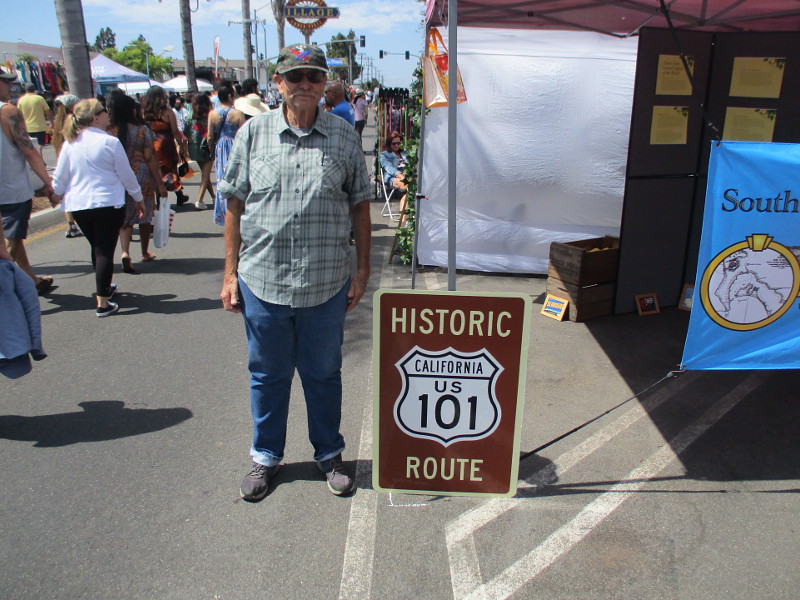
Jack Gechter stands next to Historic Route California US 101 sign at South Bay Historical Society booth during Chula Vista Lemon Festival.
A very cool project is now being undertaken by the South Bay Historical Society. I learned about it last Saturday as I explored the Lemon Festival in Chula Vista.
A number of Historic Route California US 101 signs (like the one you see above) have been created, to be installed in National City, Chula Vista and San Ysidro along those streets where the legendary highway used to run.
Old timers might recall how US 101 ran north from near the US/Mexico Border in San Ysidro, along Beyer Blvd toward Chula Vista, along National Avenue (now Broadway in Chula Vista and National City Blvd in National City) to 8th Street, then along 8th Street west to Harbor Drive, before heading up through downtown San Diego and eventually into North County. Old U.S. Route 101 during its history saw various realignments, before being entirely replaced south of Los Angeles by Interstate 5 in 1964.
Here’s a great article detailing where the historic highway ran through San Diego and the South Bay cities. You’ll see current photographs of those places where it ran. Here’s another article with a map depicting an earlier US 101 Route, running up today’s National City Blvd to Main Street.
Many similar Historic Route US 101 signs have already been installed in San Diego County, particularly through the coastal cities of North County.
Once these new signs are installed, they will add a fine, nostalgic touch to those South Bay communities that the old highway once connected to the rest of California. And they will resurrect many fond memories.
Historic 101 Route Sign in San Ysidro, California. Image courtesy Jack Gechter.
…
Thanks for visiting Cool San Diego Sights!
I post new blogs pretty often. If you like discovering new things, bookmark coolsandiegosights.com and swing on by occasionally!
I live in downtown San Diego and love to walk around with my camera! You can follow Cool San Diego Sights via Facebook or Twitter!
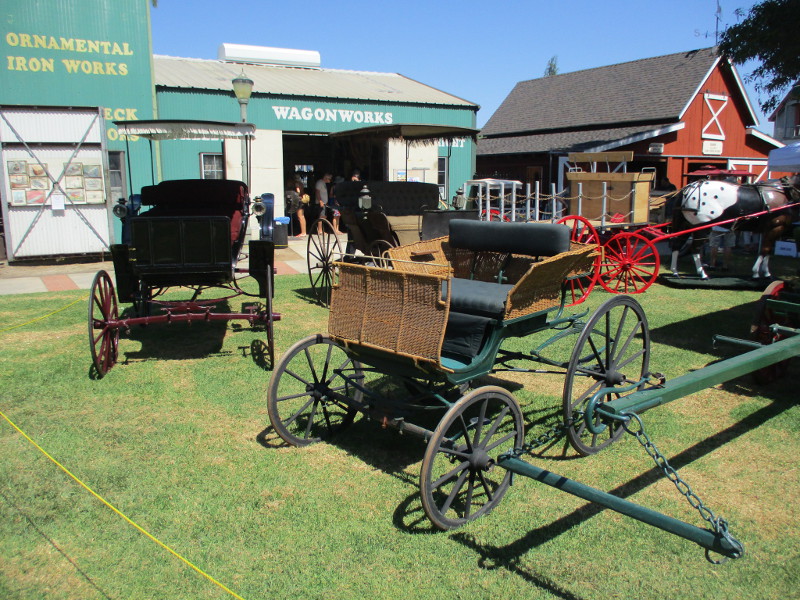
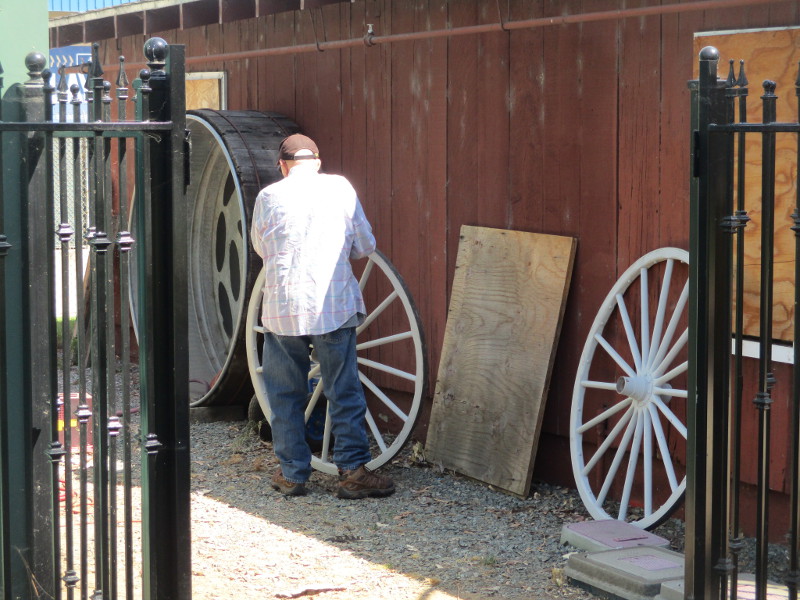
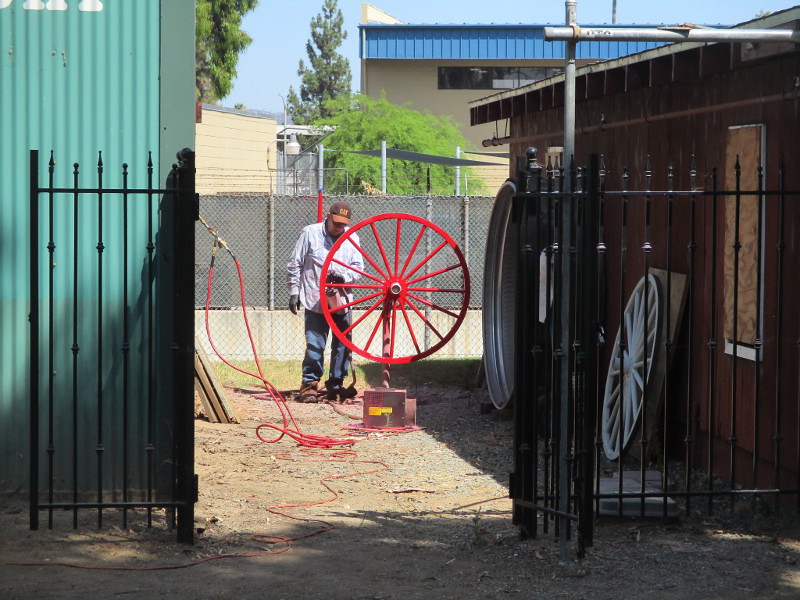
A variety of antique wagons that have survived for over a century are being restored in Escondido!
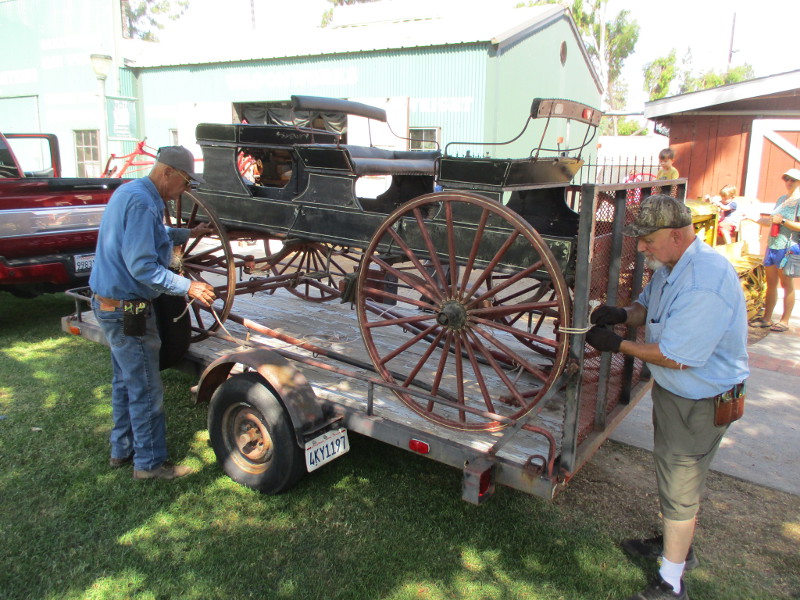
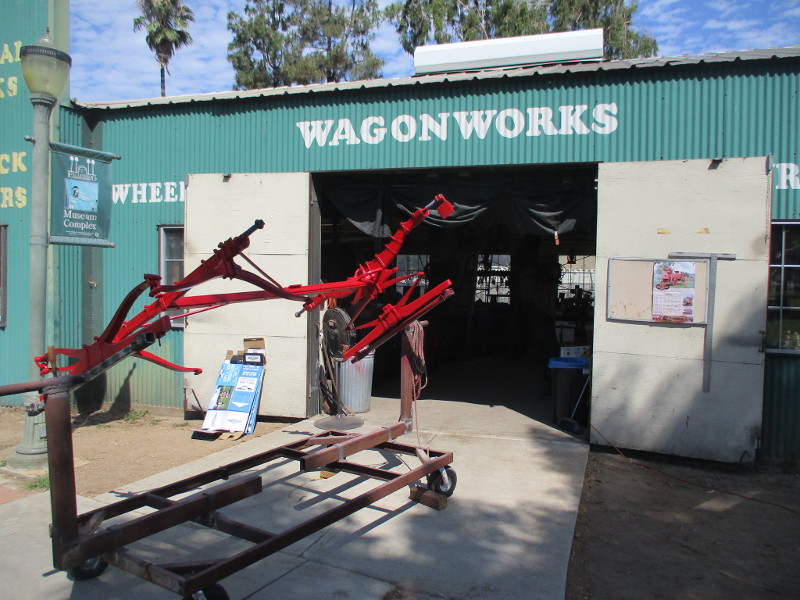
During my walk late this morning through Grape Day Park, I noticed several gentlemen hovering about the wagonworks and wheelwright shop, which is located on the Escondido History Center’s Heritage Walk. They were working with the restored undercarriage of an old delivery wagon, and painting its wagon wheels.
I was informed that, over the years, many different carts and wagons have been restored by skilled volunteers at the Bandy Blacksmith & Wheelwright Shop. Brought in from many places, these horse-drawn vehicles from the Old West have been saved from the decay caused by time and weather.
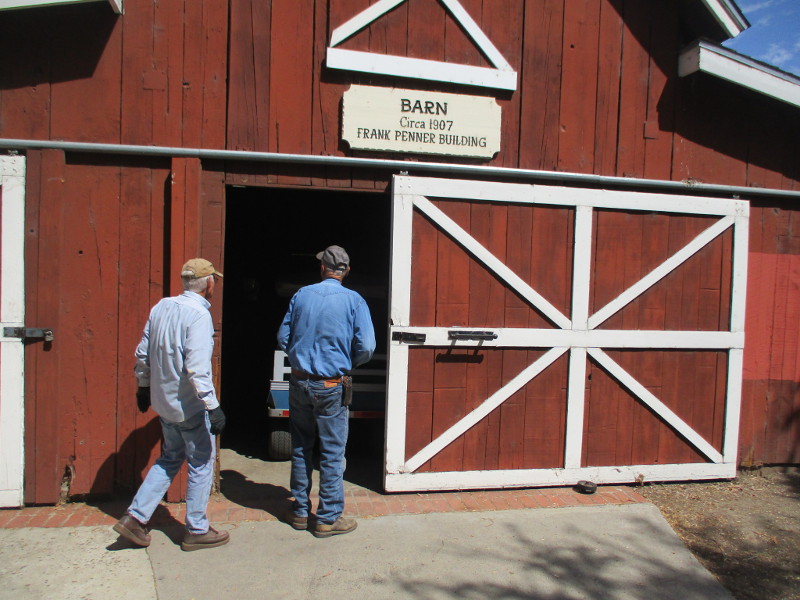
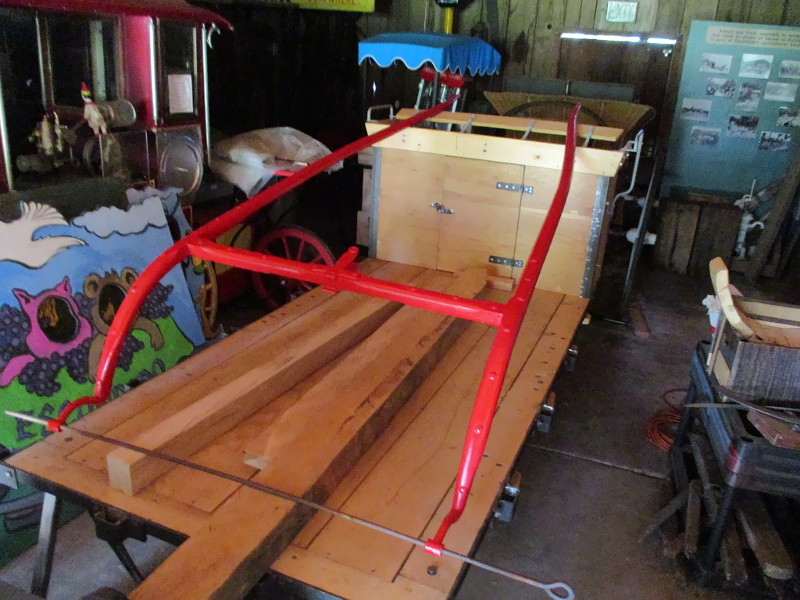
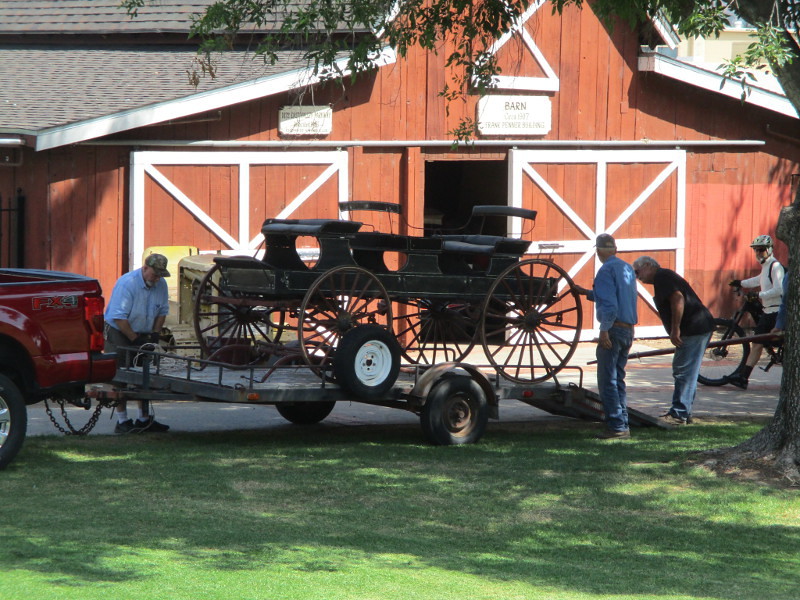
A friendly gentleman showed me photos of wagons that have been restored. He then opened the nearby Penner Barn to show me the rebuilt body of the old delivery wagon, that will be fitted with the red undercarriage and wheels.
A year ago I peered into the working blacksmith and wheelwright shop and posted that blog here.
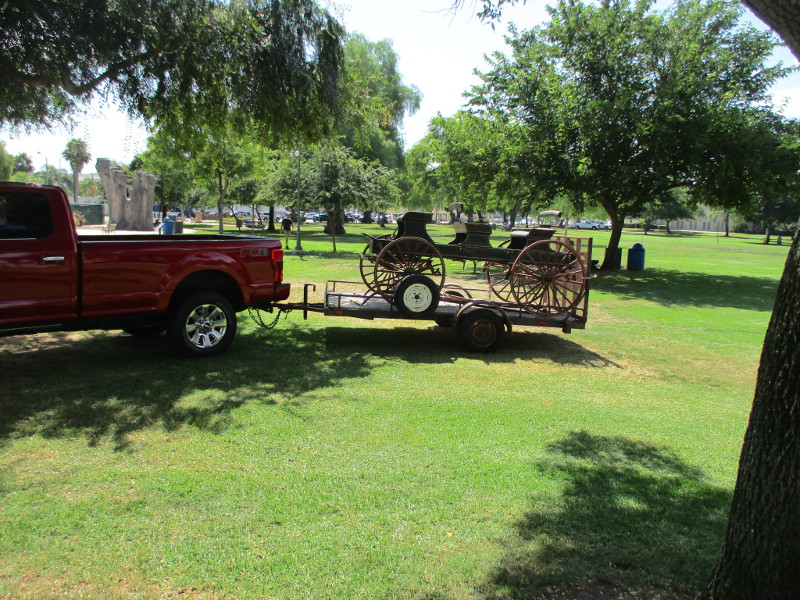
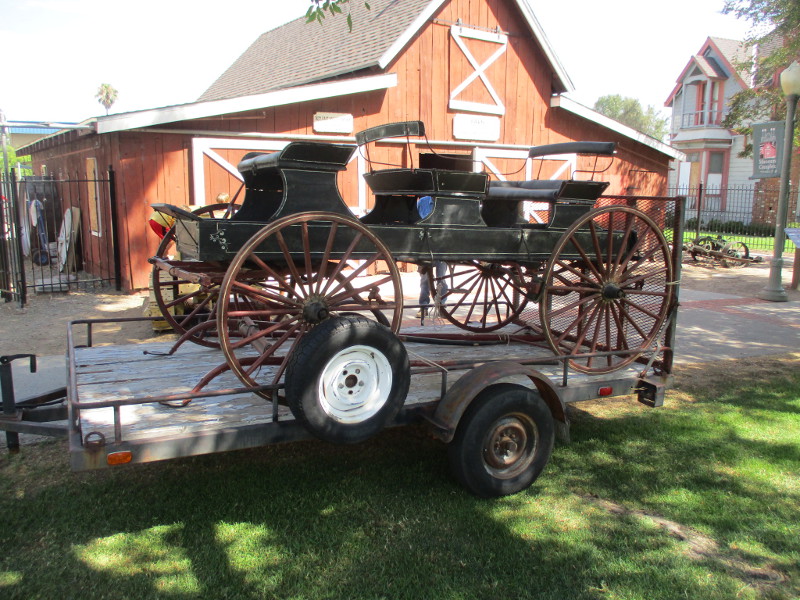
As I regarded the interesting operations around me, a pick-up truck approached, hauling an antique spring wagon! The spring wagon will become a new outdoor exhibit, to be enjoyed by visitors exploring the Heritage Walk.
…
Thanks for visiting Cool San Diego Sights!
I post new blogs pretty often. If you like discovering new things, bookmark coolsandiegosights.com and swing on by occasionally!
I live in downtown San Diego and love to walk around with my camera! You can follow Cool San Diego Sights via Facebook or Twitter!
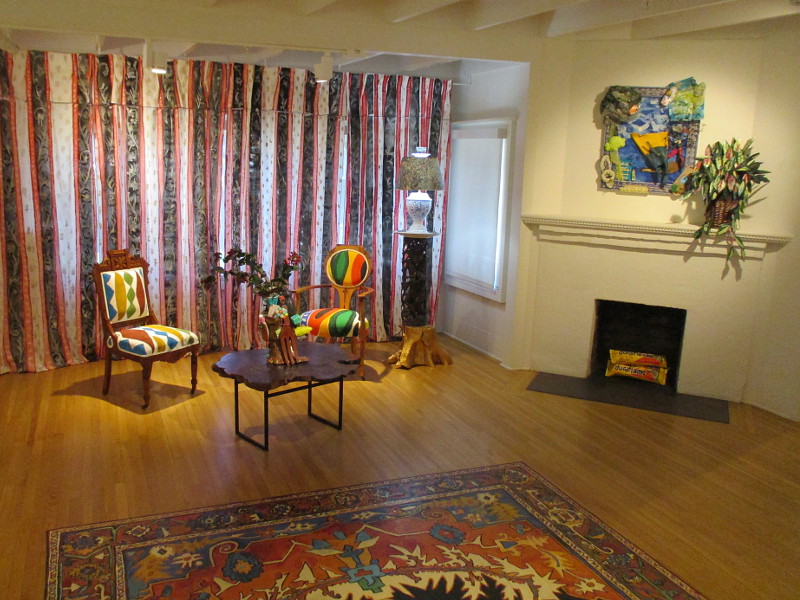
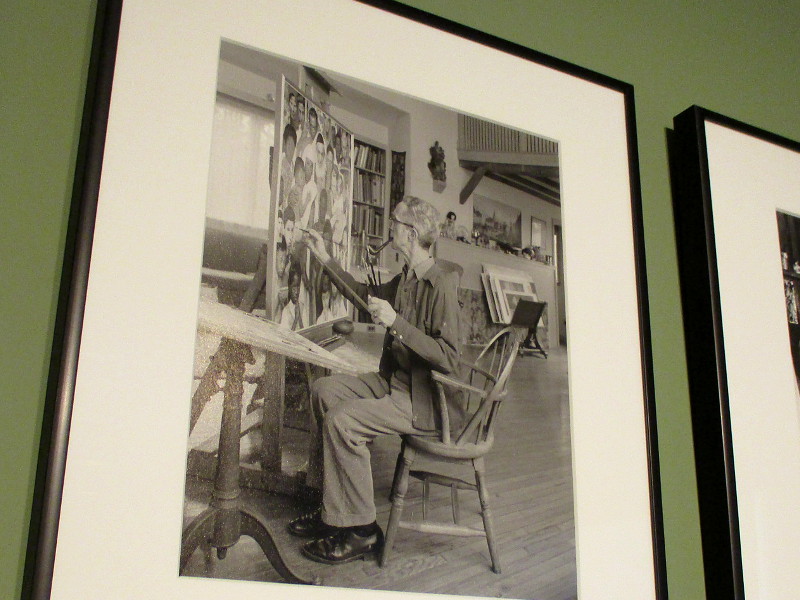
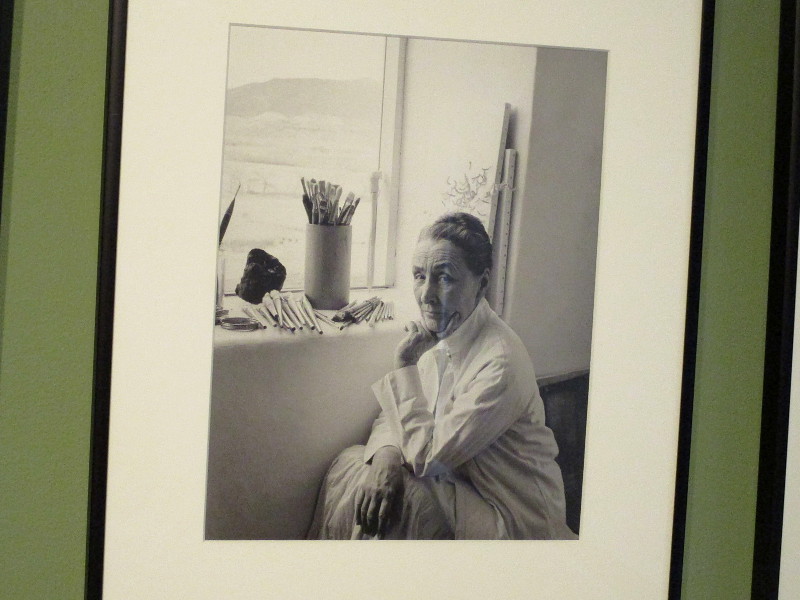
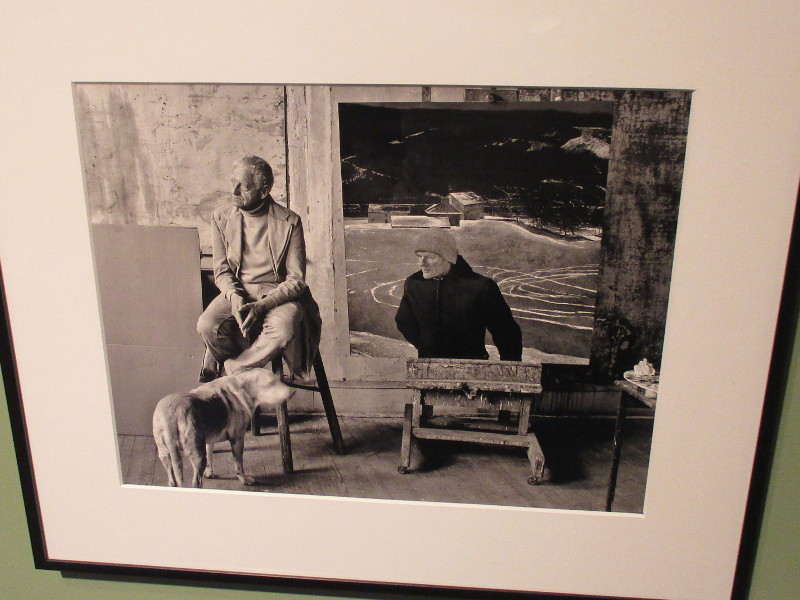
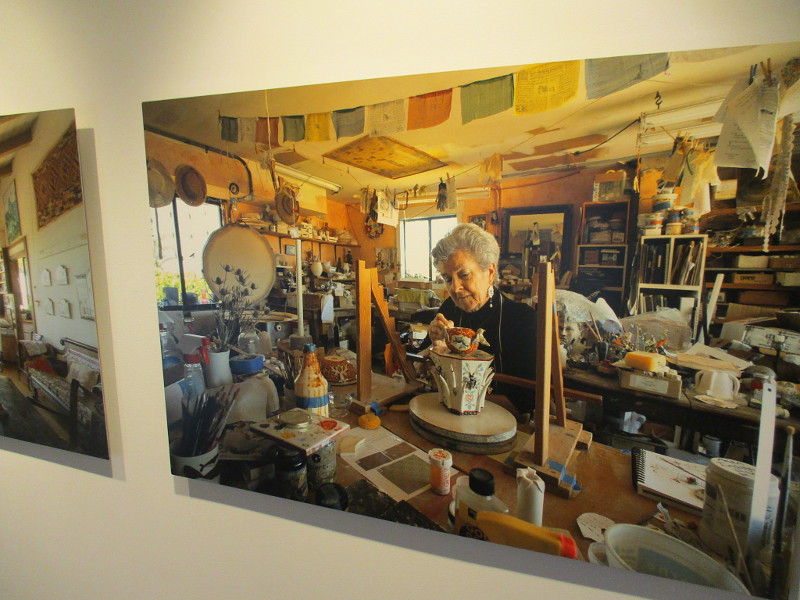
Have you ever wanted to peek into the homes of well-known artists? Now is your chance!
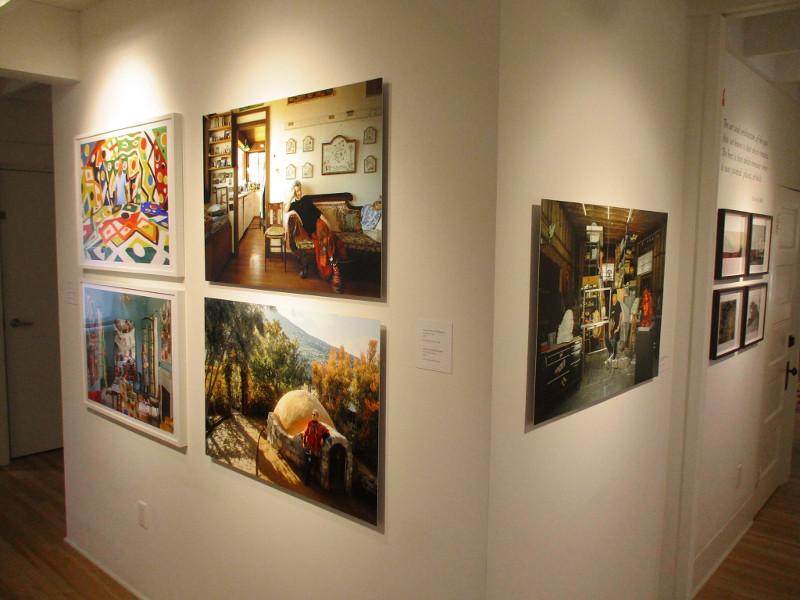
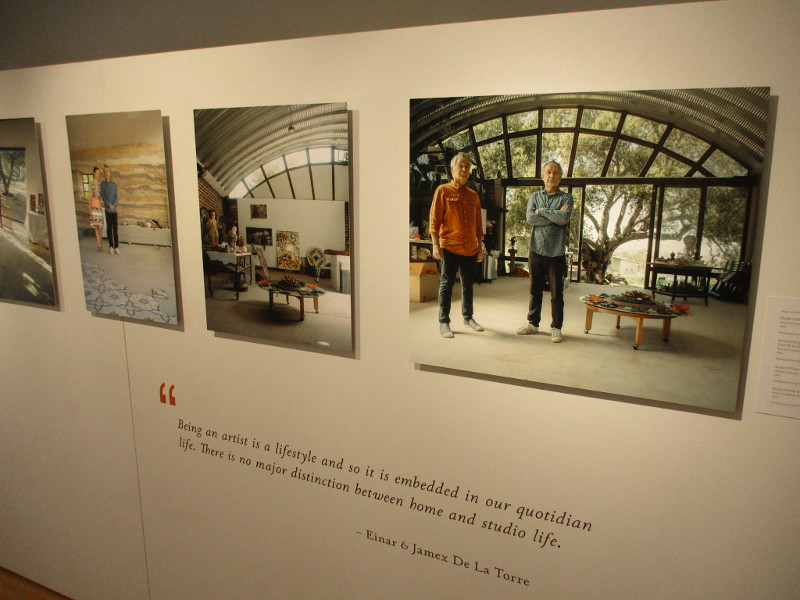
The La Jolla Historical Society has an intriguing exhibition now running at its Wisteria Cottage Gallery. The Artist At Home provides a glimpse into the domestic life of artists–many of whom are world-famous, and many who live in the Southern California and Baja region.
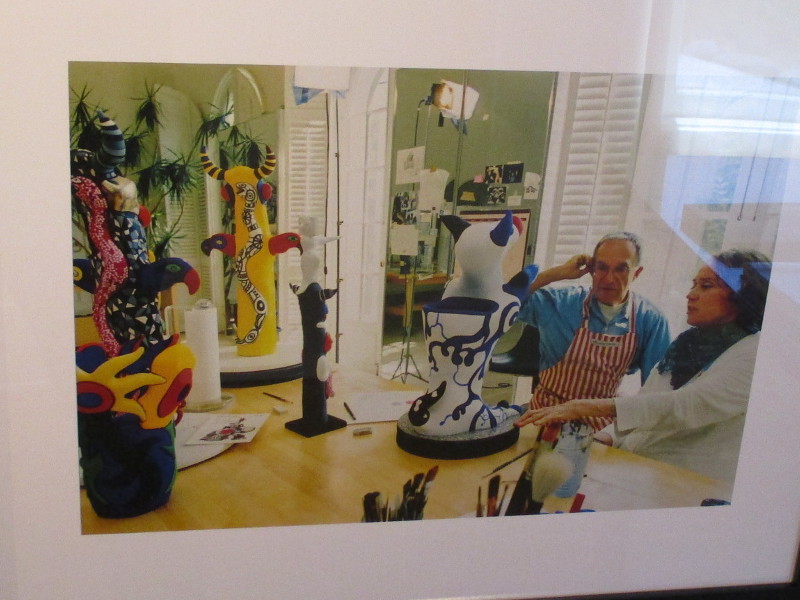
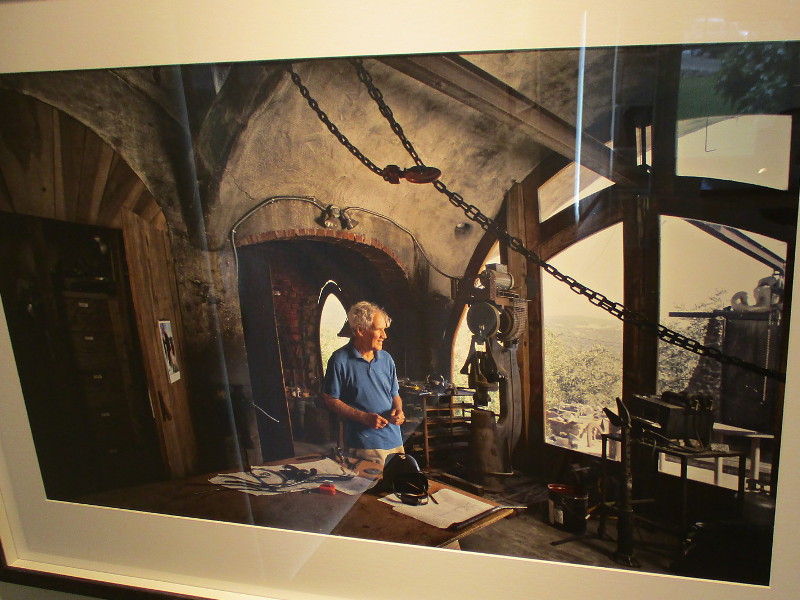
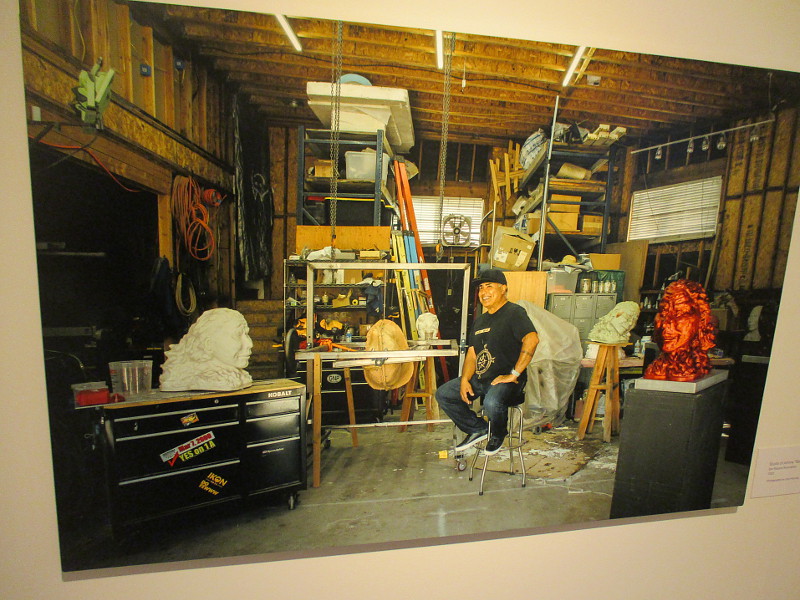
The exhibition has a bit of fun recreating how the home of an artist might appear. But by far the most interesting thing you will see are the numerous photographs of artists in their living spaces and home studios, often at work.
The architecture is frequently unique, designed by creators who continuously create. Works in progress are scattered in rooms among furnishing. It’s apparent that for many artists life and work are indistinguishable. Living is devoted to creating.
Learn more about the exhibition The Artist At Home, including the location and hours, by clicking here.
Niki de Saint Phalle and her assistant Tim Herr at the Princess St. studio. La Jolla, California. 2000.Studio of James Hubbell. Santa Ysabel, California. 2012. Norman Rockwell.Georgia O’Keeffe.Andrew Wyeth.Studio of Irène de Watteville. Solana Beach, California. 2023.“Being an artist is a lifestyle… There is no major distinction between home and studio life.” Einar and Jamex De La Torre.Studio of Johnny “Bear” Contreras. San Pasqual Reservation. 2023.
…
Thanks for visiting Cool San Diego Sights!
I post new blogs pretty often. If you like discovering new things, bookmark coolsandiegosights.com and swing on by occasionally!
I live in downtown San Diego and love to walk around with my camera! You can follow Cool San Diego Sights via Facebook or Twitter!




























 Cool San Diego Sights!