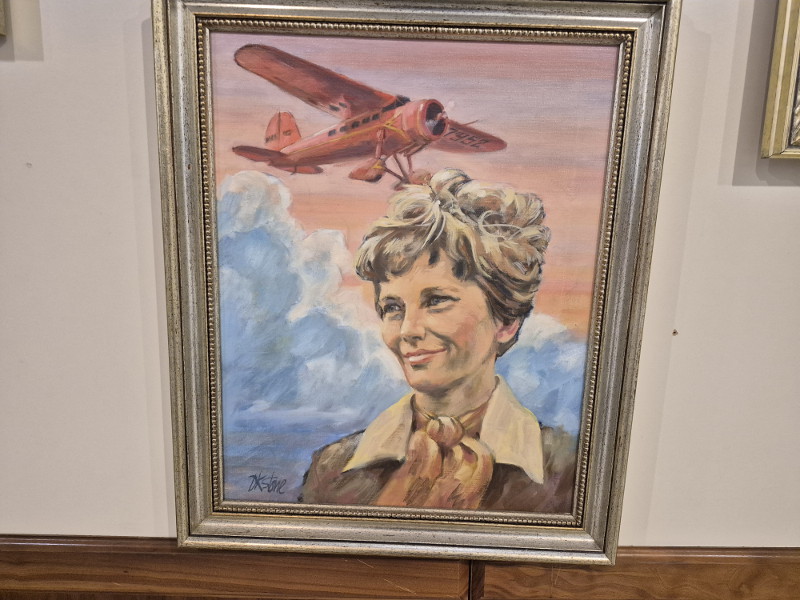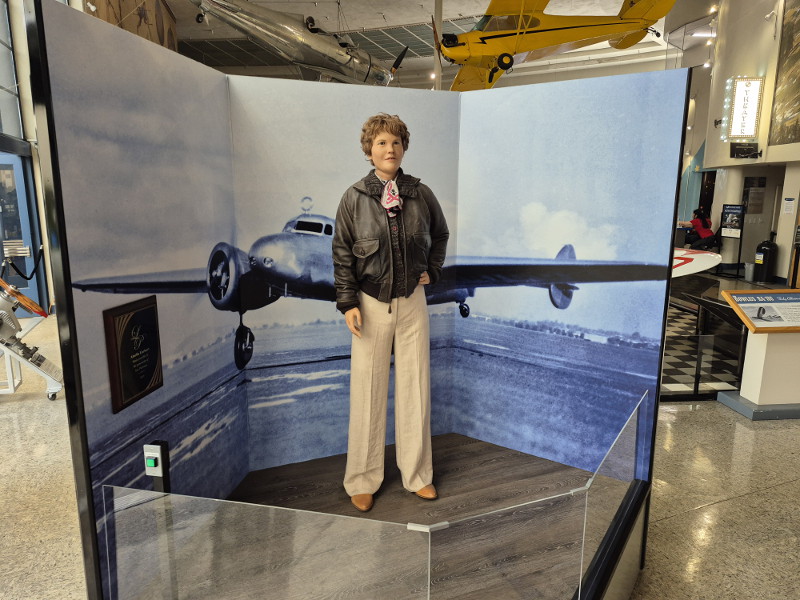
Amelia Earhart at San Diego Air & Space Museum.

Amelia Earhart was an aviation pioneer best known for her disappearance over the South Pacific while trying to become the first woman to circumnavigate the globe. But some might not know that she became a popular American hero by setting numerous flight records.

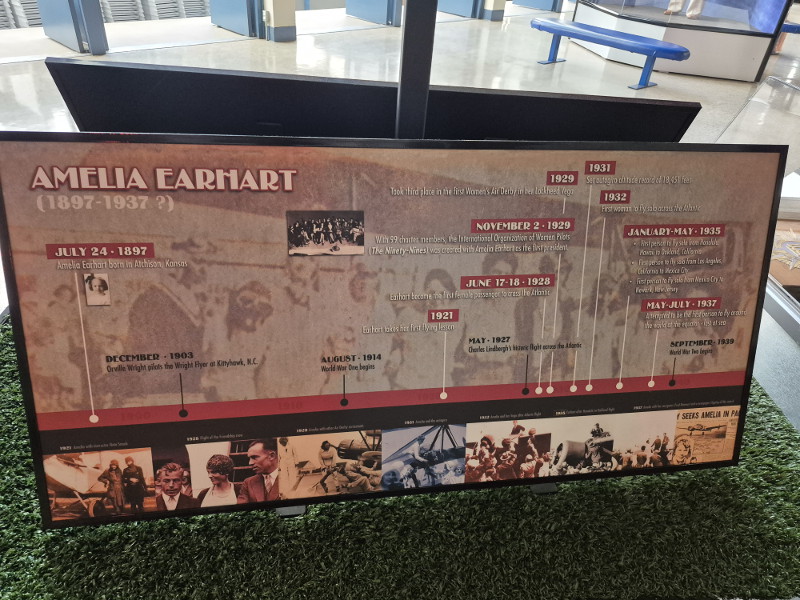
Visitors to the San Diego Air & Space Museum will find several displays that recall how she accomplished historic world’s firsts, including the first female solo flight across the Atlantic Ocean, the first female solo flight across the United States, and the first solo flight from Hawaii to the United States mainland.

Her portrait can be found in the museum’s Hall of Fame Hallway. Amelia was inducted into the International Air & Space Hall of Fame in 1967. This Hall of Fame webpage describes her many successes, including setting multiple speed records.

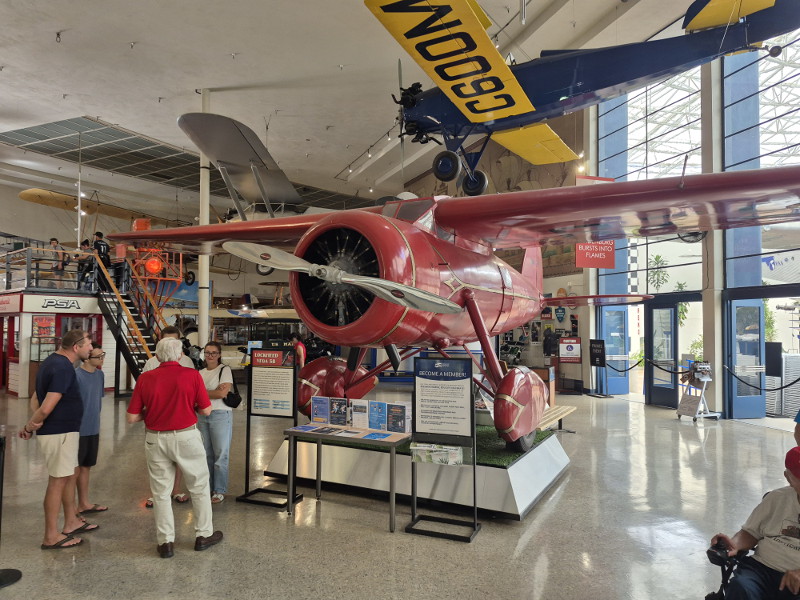
Visitors can listen to an animatronic Amelia Earhart talking about her life, and view a reproduction of a Lockheed Vega 5B, the type of aircraft she flew while setting many world records. The airplane in the museum was created for the Hollywood film Amelia.

There are also artifacts that show how she was a celebrity in her time, a leader in the fight for women’s rights, promoter of commercial aviation, and a founder of the Ninety-Nines, an International Organization of Women Pilots.

The San Diego Air & Space Museum is a must visit for everybody. It’s crammed full of cool exhibits, representing the dawn of flight right up to present-day space exploration.
To follow my blog, find the “Follow” box in this website’s sidebar. Or bookmark coolsandiegosights.com and swing on by occasionally!

(If you’re viewing this on a phone, open my website’s sidebar by tapping those three parallel lines at the top of the page.)
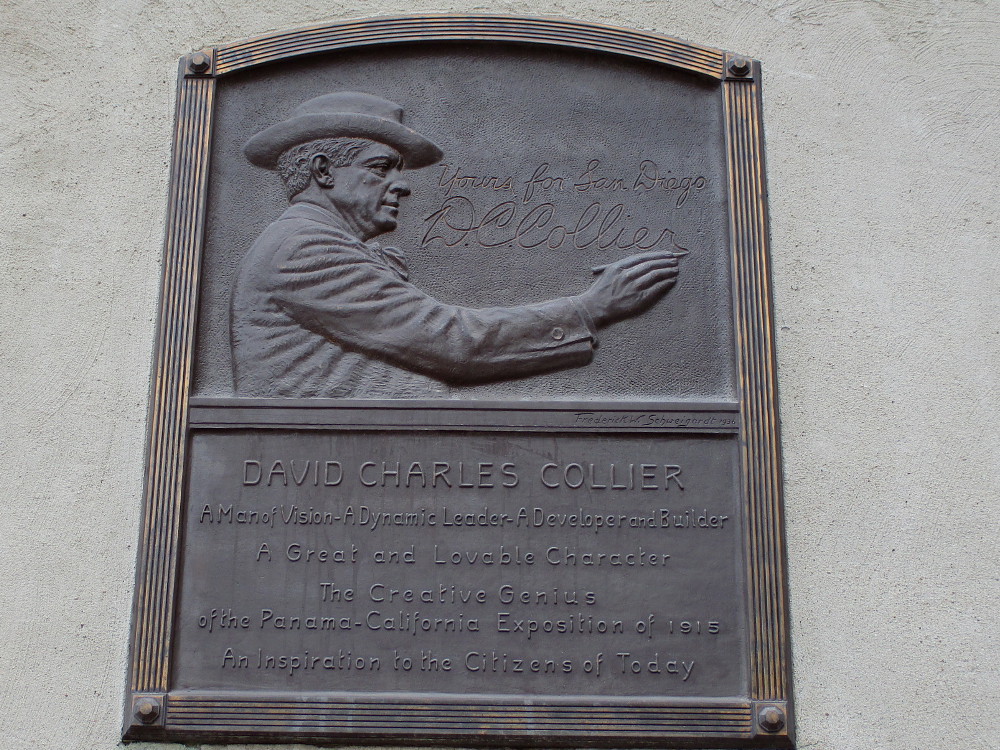
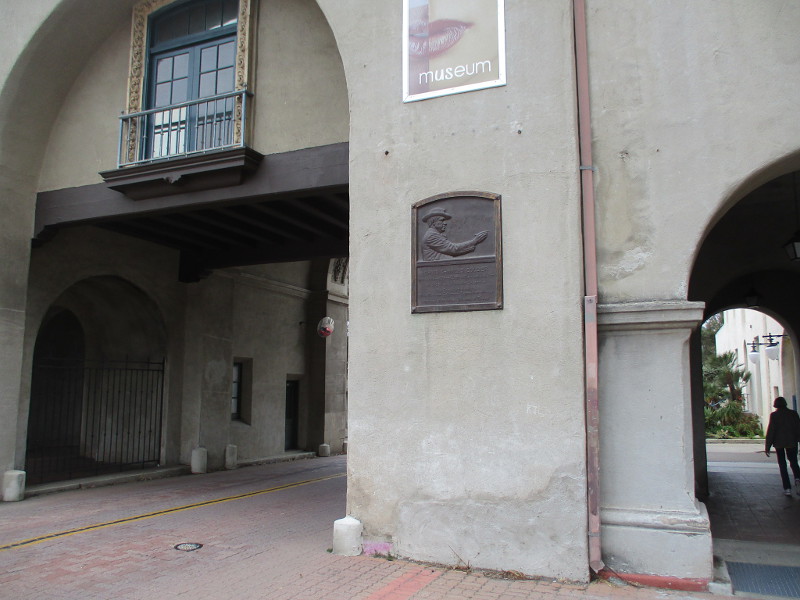
Plaque honors creative genius of Balboa Park.

Have you seen this plaque in Balboa Park and wondered about it? Located on the west wall of the California Quadrangle near the Museum of Us, it honors David Charles Collier, the prime mover behind San Diego’s 1915-1916 Panama–California Exposition.

The plaque reads:

DAVID CHARLES COLLIER

A Man of Vision–A Dynamic Leader–A Developer and Builder

A Great and Lovable Character

The Creative Genius of the Panama-California Exposition of 1915

An Inspiration to the Citizens of Today

The plaque was installed on October 11, 1936, in the second year of the California Pacific International Exposition.

David Charles Collier, often called D. C. Collier, was a real estate developer and philanthropist. He is considered the founder of Ocean Beach, where he built his home and lived for many years. He also helped to develop Point Loma, Pacific Beach, University Heights, Normal Heights, North Park, East San Diego, and Encanto.

He made many of the decisions concerning the Panama-California Exposition, including its location and style of architecture. He served as Director General of the Panama California Exposition from 1909 to 1912, and president of the Exposition from 1912 to 1914He also chose “human progress” to be the Exposition’s cultural theme. The theme exhibit, particularly focused on the anthropology of the Southwestern United States, later became the San Diego Museum of Man, of which he was a founder.

The Museum of Man is now called the Museum of Us. It’s appropriate the plaque is located nearby.

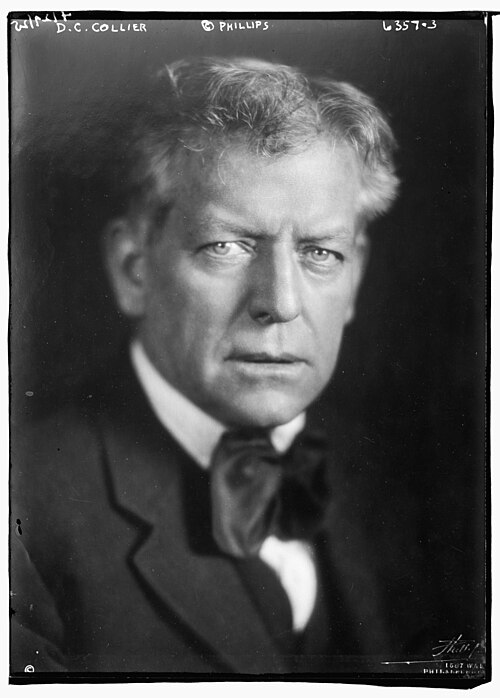
Here’s a public domain photo of D. C. Collier from the United States Library of Congress’s Prints and Photographs division:

If you’d like to learn more about David Charles Collier, here’s an extensive article about the life of this fascinating man, published in The Journal Of San Diego History.

To follow my blog, find the “Follow” box in this website’s sidebar. Or bookmark coolsandiegosights.com and swing on by occasionally!

(If you’re viewing this on a phone, open my website’s sidebar by tapping those three parallel lines at the top of the page.)
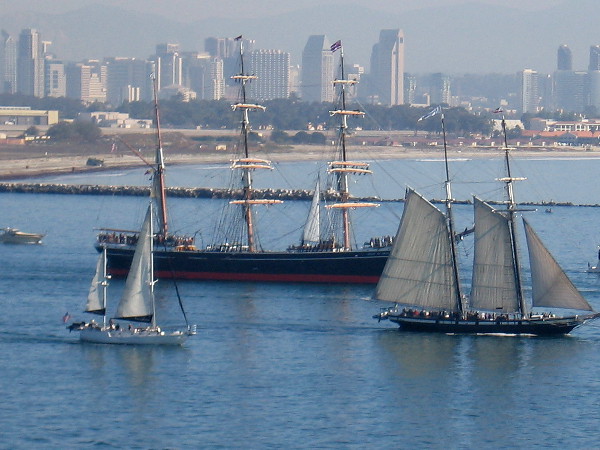
Love a historic ship for Valentine’s Day!

We in San Diego are so fortunate. Our city is home to one of the world’s most famous tall ships, Star of India, and one of our nation’s top maritime museums. Why not show your love for these San Diego jewels with a Valentine’s Day gift?

The historic ships of the Maritime Museum of San Diego, like all ships exposed to time and outdoor weather, need continuing maintenance and repair. With love in your heart, you can help out!

Here’s a wish list that supports the museum’s fleet, including Star of India, H.M.S. Surprise, Californian, Pilot boat and San Salvador.

To learn more, or perhaps make a loving donation, send an email to membership@sdmaritime.org.

To follow my blog, find the “Follow” box in this website’s sidebar. Or bookmark coolsandiegosights.com and swing on by occasionally!

(If you’re viewing this on a phone, open my website’s sidebar by tapping those three parallel lines at the top of the page.)
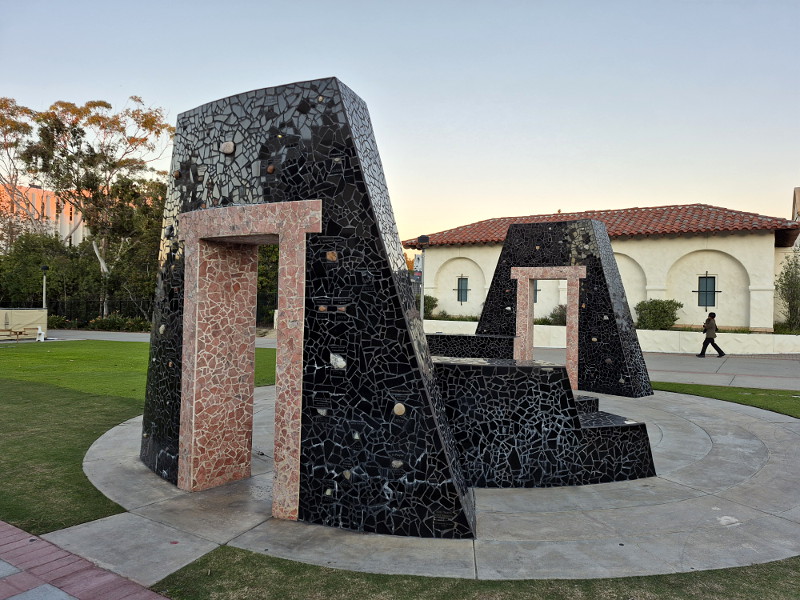
100 Years, 100 Stones monument at SDSU.

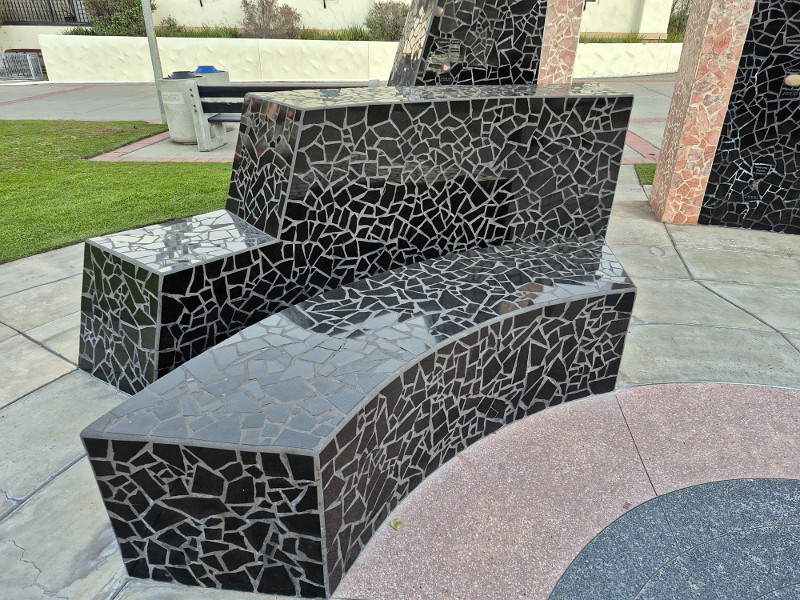
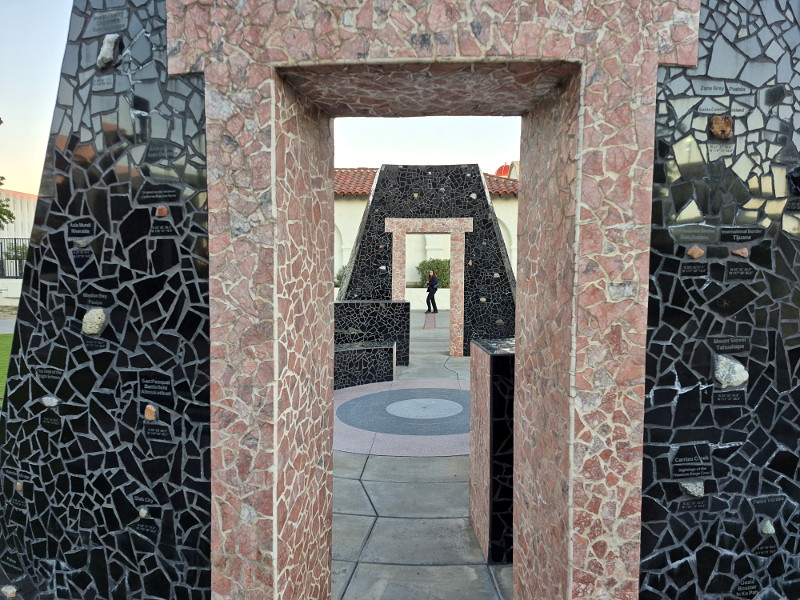
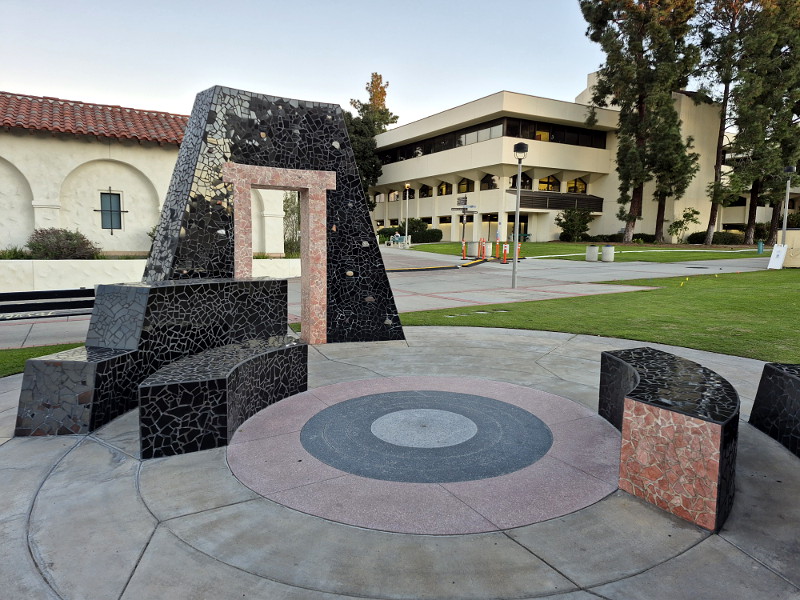
In 1997 the 100 Years, 100 Stones monument debuted at San Diego State University. It was created to celebrate the 100th anniversary of SDSU.

If you’ve ever walked down the campus’ central Campanile Walkway you’ve no doubt seen this unique stone-like sculpture with its two portals. It has an appearance suggestive of ancient temples or ruins.

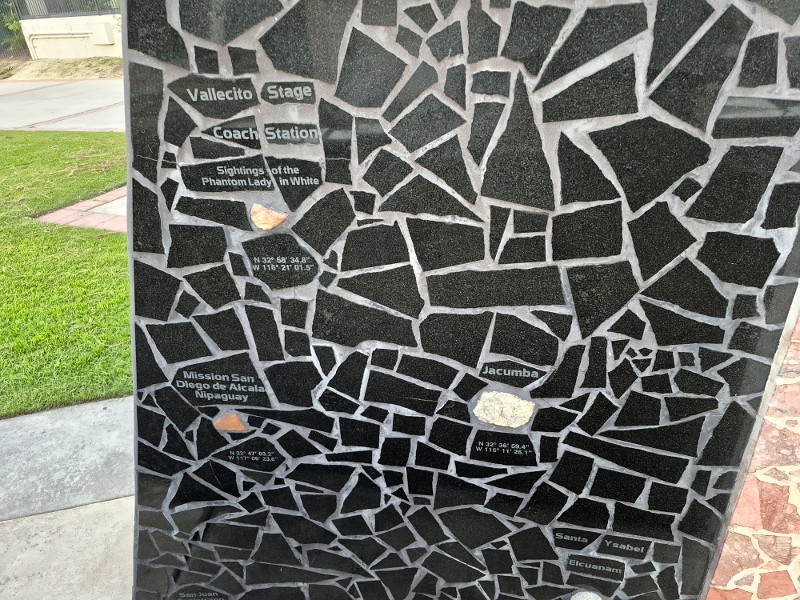
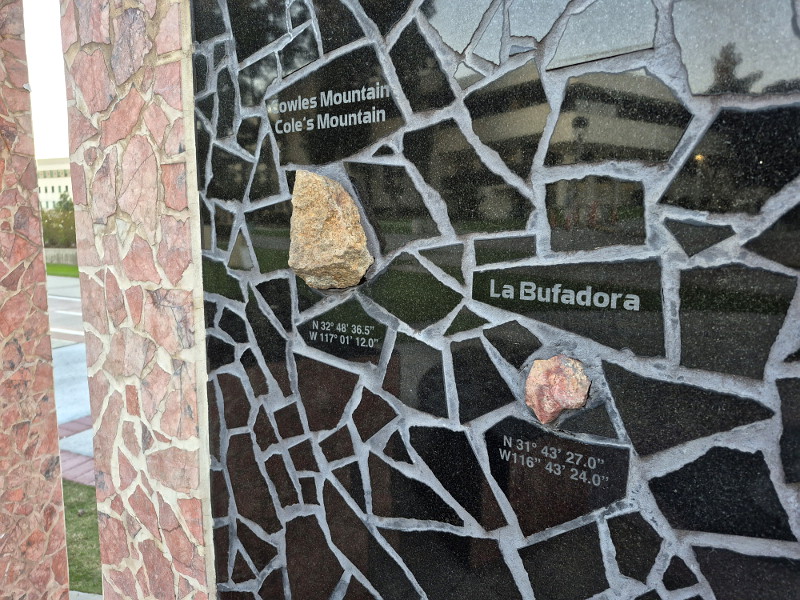
Those who look closely at the monument will see small rock samples embedded in it, with informative labels. The rocks come from locations all around our region, within a hundred miles of SDSU, including places in Mexico. The art blends culture with geology.

Installation artist Eve Andree Laramee designed 100 Years, 100 Stones. There’s no plaque by this public art with any sort of explanation (that I’ve noticed), so I wonder if students walking past it understand its origin and nature. For years I myself didn’t know. Thank you Google!

To follow my blog, find the “Follow” box in this website’s sidebar. Or bookmark coolsandiegosights.com and swing on by occasionally!

(If you’re viewing this on a phone, open my website’s sidebar by tapping those three parallel lines at the top of the page.)

Celebrating the San Diego Museum of Art centennial!

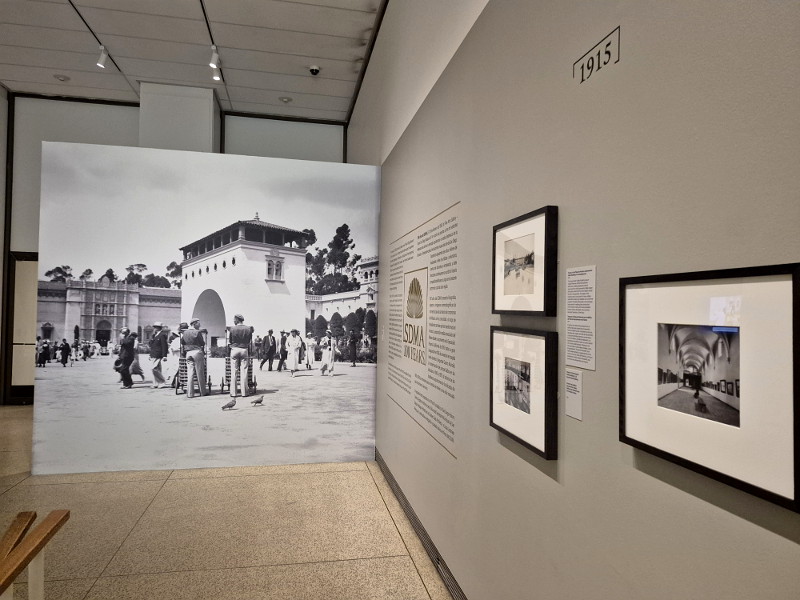
The San Diego Museum of Art is celebrating its centennial in 2026. First opening in 1926 as the Fine Arts Gallery, the world-class museum has grown and experienced many remarkable moments over the past hundred years.

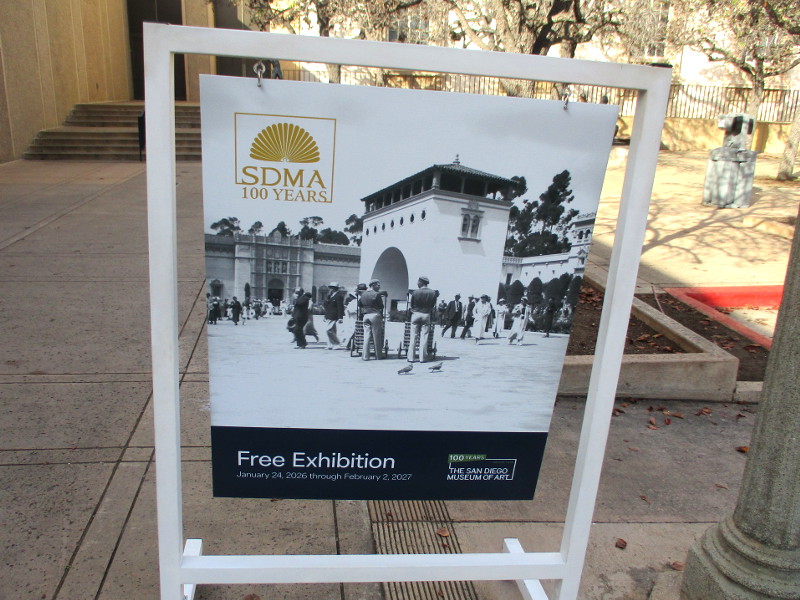
That history is remembered in a free exhibition titled SDMA 100 Years. The exhibit opened yesterday in the museum’s Galleries 14/15, which are accessible to the public through a door at Panama 66 in the museum’s sculpture courtyard.

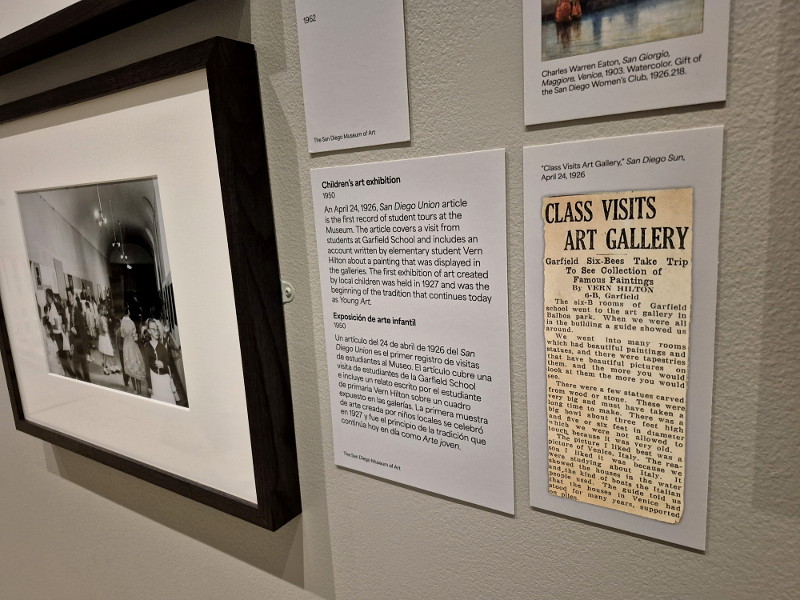
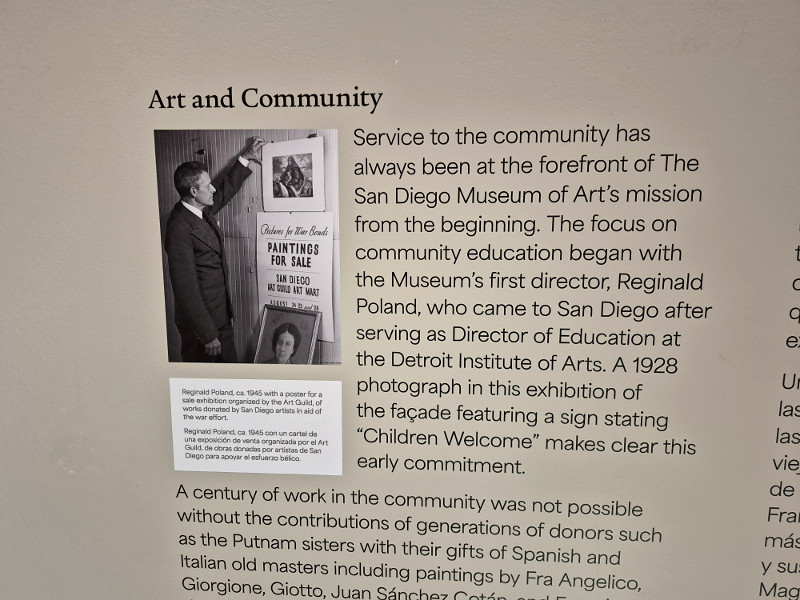
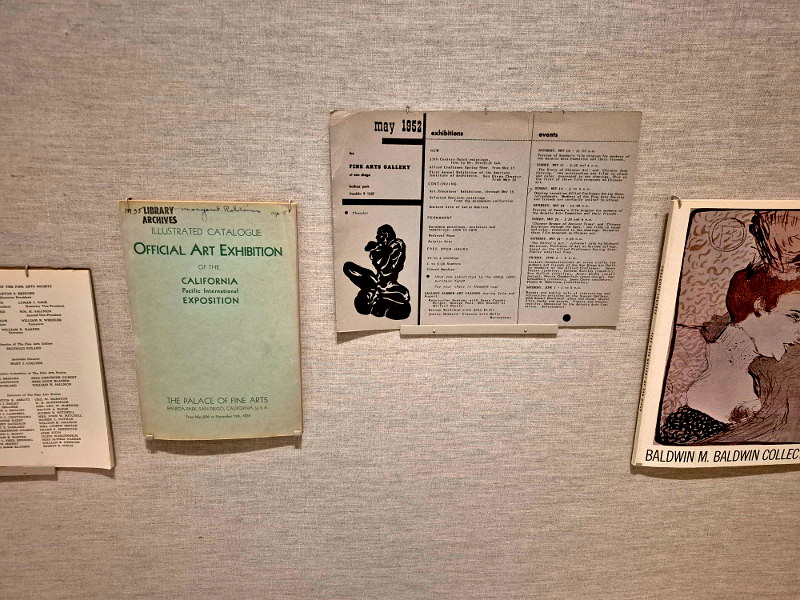
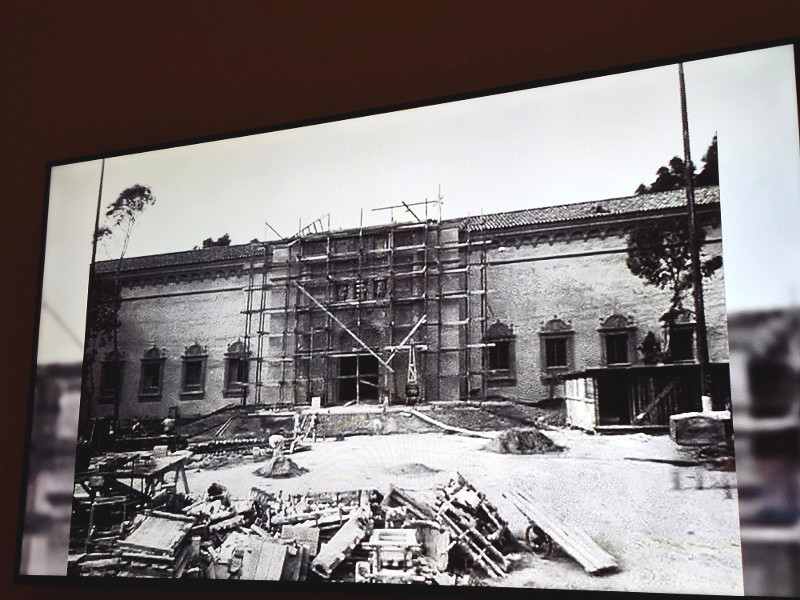
SDMA 100 Years features a timeline of photographs that document the museum’s evolution, from the building’s construction in Balboa Park right up to the present day. There’s also a short documentary video and a display case full of ephemera.

Visitors can observe how the San Diego Museum of Art had its origins in the 1915 Panama-California Exposition, had its successful grand opening in 1926, served as a naval hospital during World War II, and how west and east wings were added for significant expansions.

You’ll see photos showing museum contributions to art education and the San Diego community over the years. You’ll see renowned artists who’ve contributed their work, and relive major exhibitions. You’ll envision what the museum plans for their future, too!

You are invited to contribute to the exhibition! Anyone can submit their personal memories and photographs of the museum. To participate, look for the link at the bottom of this webpage!

SDMA 100 Years will be displayed through 2026, right up to February 2, 2027.

To follow my blog, find the “Follow” box in this website’s sidebar. Or bookmark coolsandiegosights.com and swing on by occasionally!

(If you’re viewing this on a phone, open my website’s sidebar by tapping those three parallel lines at the top of the page.)
San Diego Takes Flight at History Center!

Every time I visit Balboa Park, I poke my nose into the San Diego History Center. It seems there’s always something new to experience!

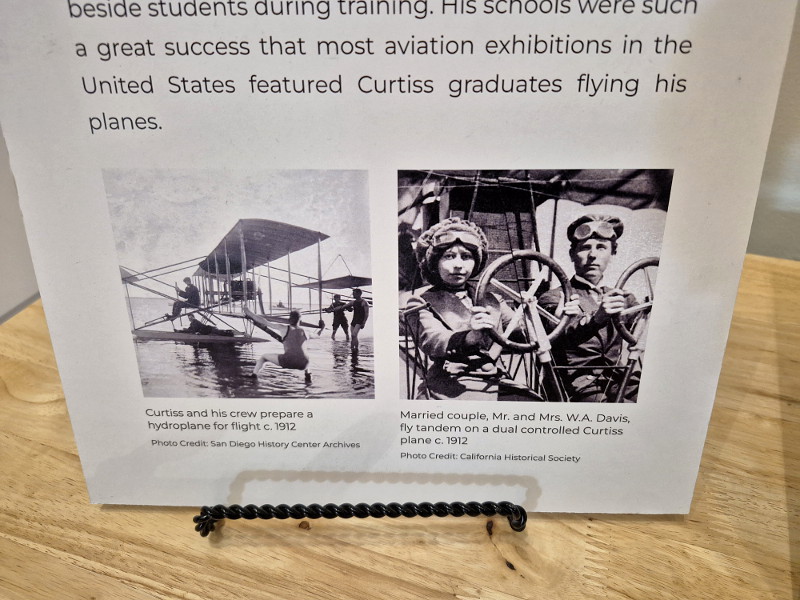
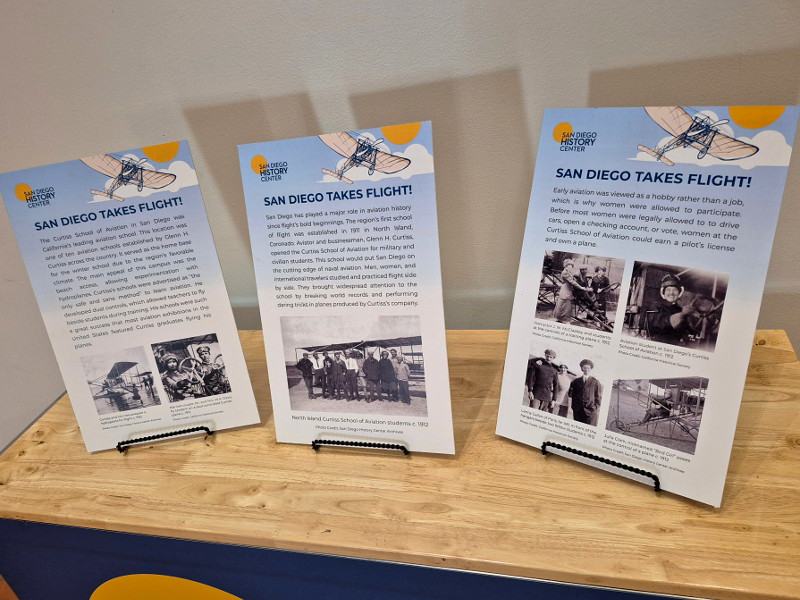
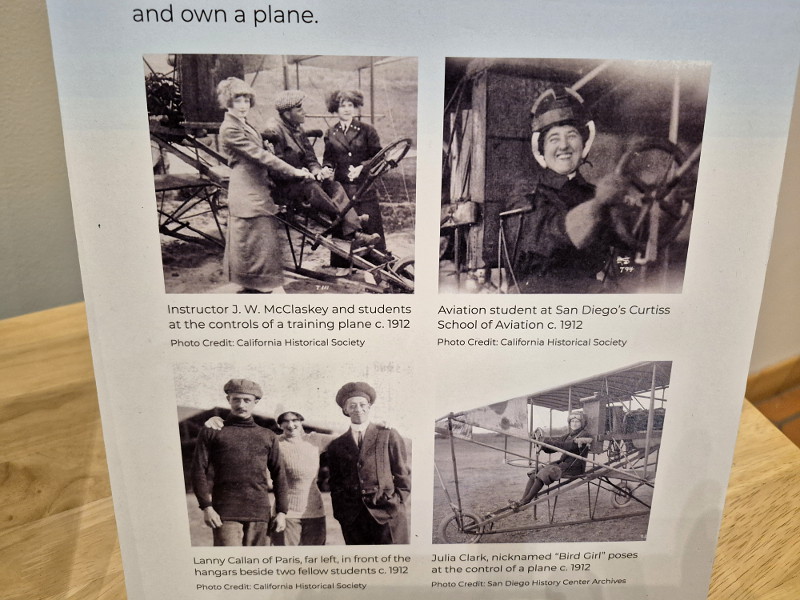
In the atrium today I noticed a small, new exhibit titled San Diego Takes Flight! Several displays concern the Curtiss School of Aviation, established in 1911 at North Island, Coronado.

Photographs accompany descriptions of Glenn Curtiss and his students learning about the characteristics of flight on newly invented airplanes, including hydroplanes that took off from San Diego Bay. In that early era, most aviation exhibitions in the United States featured Curtiss graduates flying his planes.

Curtiss’ collaboration with the U.S. Navy in San Diego would be instrumental in the birth of naval aviation.

This exhibit at the San Diego History Center includes the participation of women at the Curtiss School of Aviation and their historic accomplishments.

Years ago, during a walk in Coronado near the Ferry Landing, I photographed a historical plaque marking the birthplace of naval aviation.

To see those photos and read the words on that plaque, click here.

To follow my blog, find the “Follow” box in this website’s sidebar. Or bookmark coolsandiegosights.com and swing on by occasionally!

(If you’re viewing this on a phone, open my website’s sidebar by tapping those three parallel lines at the top of the page.)
The Bakers public art in Escondido!

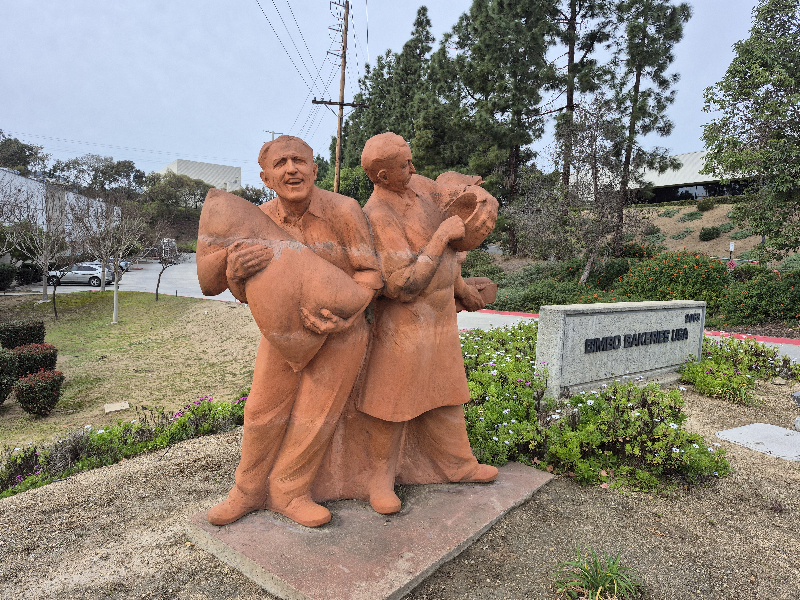
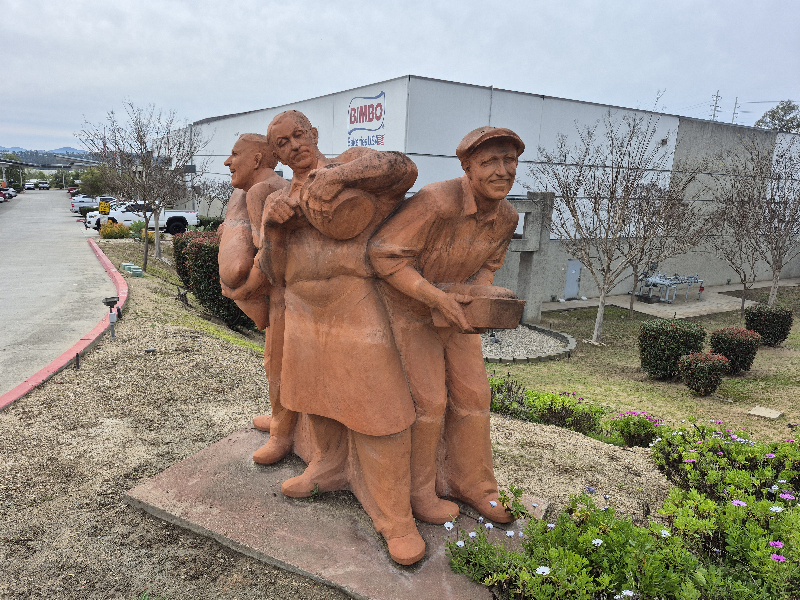
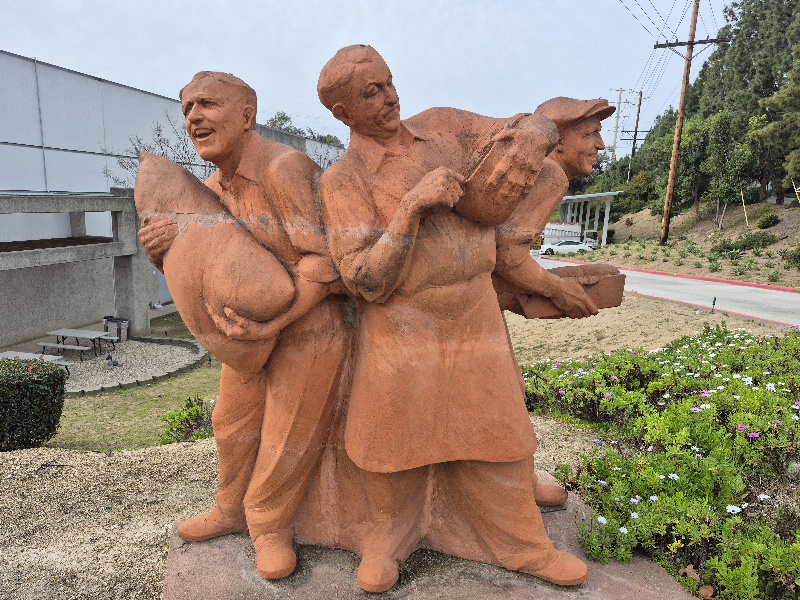
The Bakers is the title of this really great, expressive public art in Escondido. Because the sculpture stands at the end of a seldom visited street, very few people see it or know that it exists!

Created by the amazing San Diego artists T.J. Dixon and James Nelson in 1993, The Bakers consists of three 7-feet-tall terracotta male figures that represent the process of baking bread. The lively art was commissioned by and for the Fornaca Family Bakery.

Today it stands by the driveway leading to Bimbo Bakeries USA, at 2069 Aldergrove Avenue.

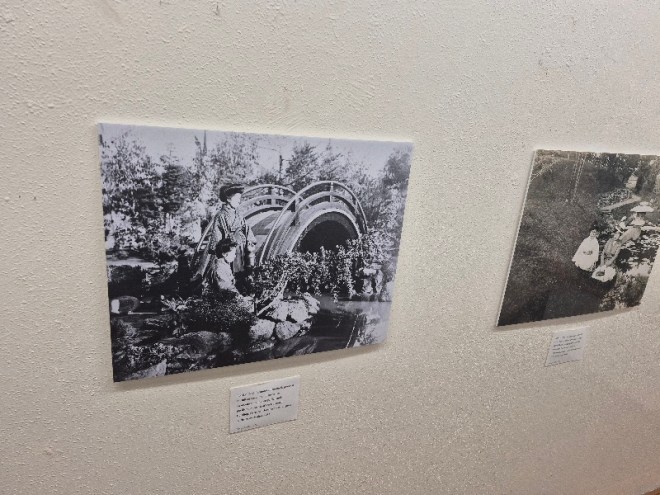
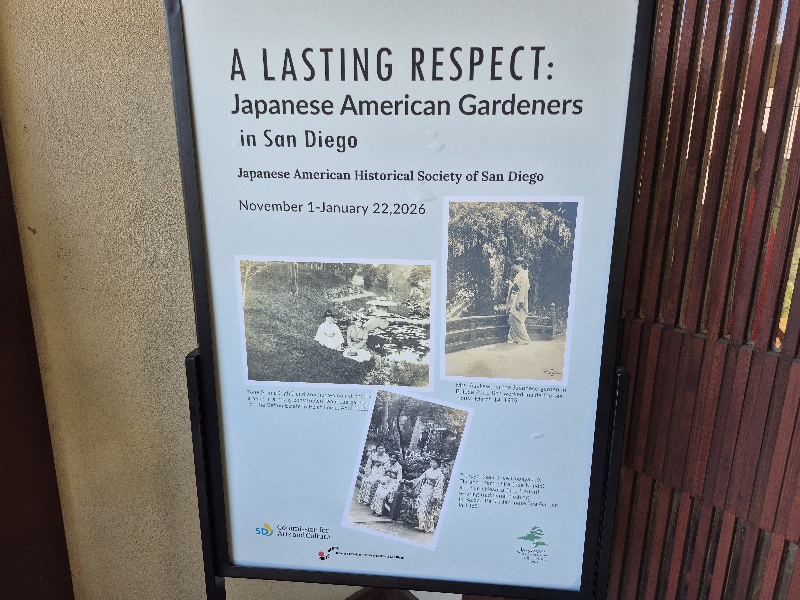
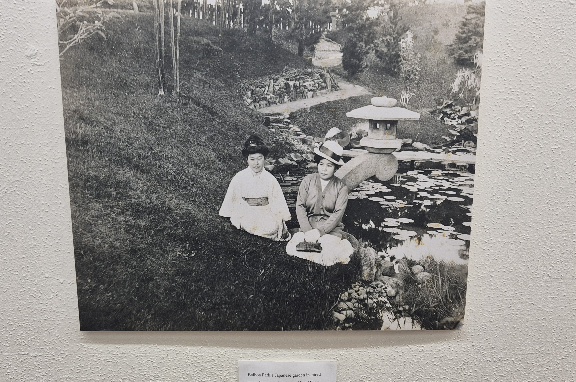
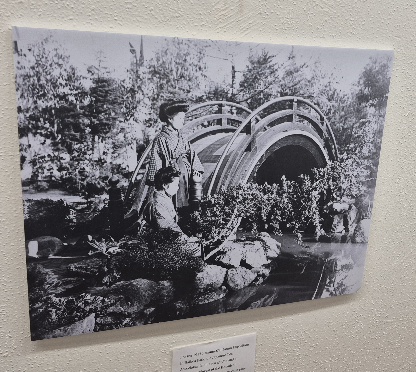
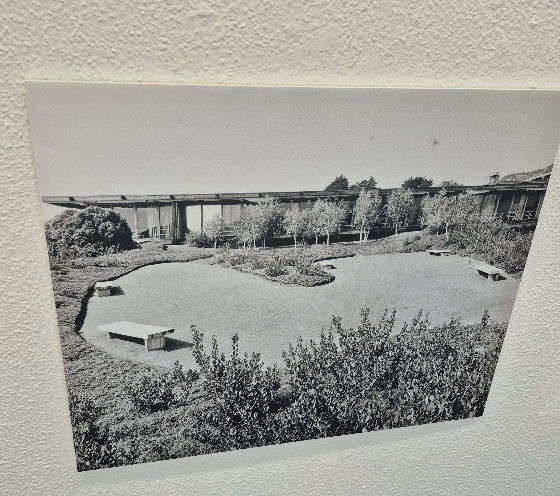
Exhibit: Japanese American gardeners in San Diego.

A fascinating exhibit at Balboa Park’s Japanese Friendship Garden will soon be ending. It concerns the history of Japanese American gardeners in San Diego. You can view the exhibit through Thursday, January 22, 2026.

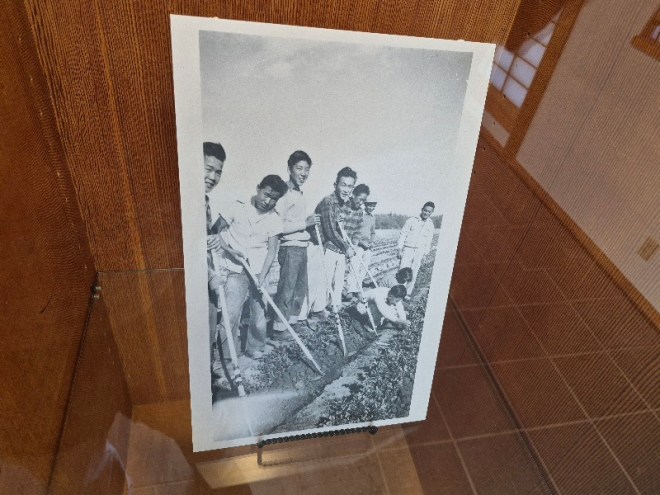
Composed primarily of historical photographs from the early 20th century through World War II and beyond, the exhibit shows how first generation Japanese immigrants, with limited opportunities, brought beauty to San Diego through gardening.

It includes a look at Japanese Americans held as prisoners in Poston, Arizona during the war and their efforts to bring beauty into an ugly situation.

Photographs take the viewer into the present with amazing gardens in Balboa Park and Japanese inspired landscapes in San Diego.

The exhibit is made possible by the Japanese American Historical Society of San Diego.

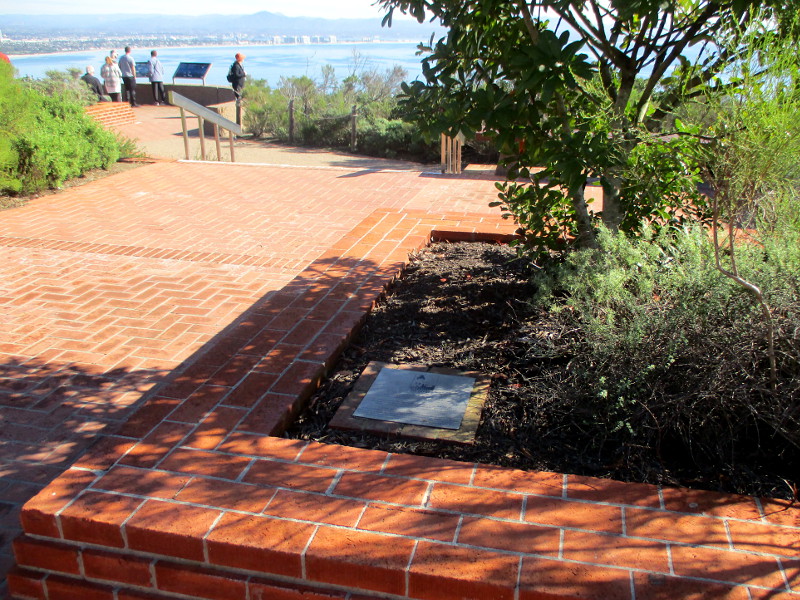
Time capsule at Cabrillo National Monument.

A time capsule was created during the Cabrillo National Monument centennial in Point Loma. It’s buried beneath a plaque in a brick planter near the entrance to the Visitor Center.

The plaque reads:

Beneath this sign lies a time capsule preserved in commemoration and celebration of the Cabrillo National Monument centennial, October 14, 1913-2013.

The contents inside this capsule are a collection of our first 100 years as San Diego’s only National Park unit. Its contents shall remain sealed for the next 100 years, not to be opened before October 14, 2113.

A message from the 2013 centennial employees: All that stand here before this plaque reading the words like so many who came before you; you are the future stewards of the National Park Service and we hope you continue to honor the tradition of protecting and preserving our most precious national treasures during this 2nd century of stewardship in our National Parks.

If you’d like to view an online “time capsule” of sorts, you can see photographs I took during the Cabrillo National Park centennial celebration back in 2013.

To see those photos click here!

To follow my blog, find the “Follow” box in this website’s sidebar. Or bookmark coolsandiegosights.com and swing on by occasionally!

(If you’re viewing this on a phone, open my website’s sidebar by tapping those three parallel lines at the top of the page.)
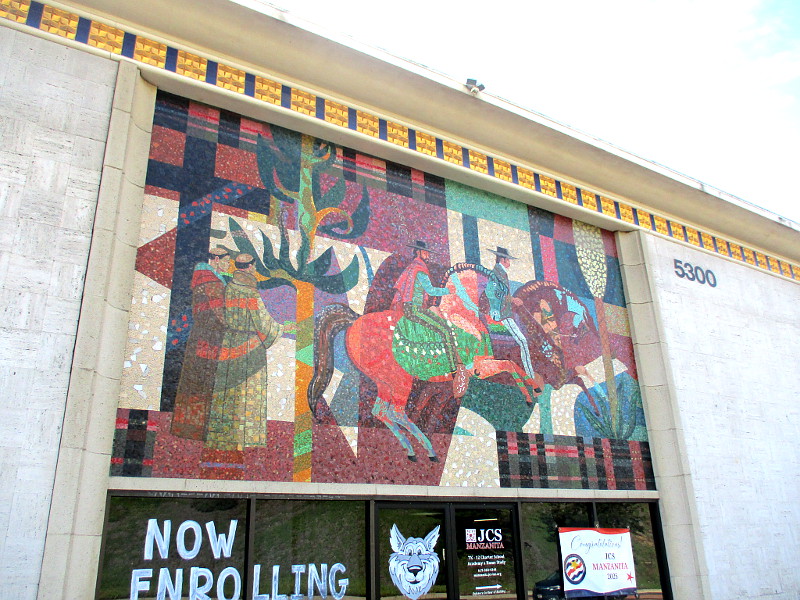
Mural by famous artist on La Mesa school!

Artist and architectural designer Millard Owen Sheets earned international fame for his work around Southern California. Perhaps you’ve seen his gorgeous mosaic murals on the exteriors of buildings that were originally Home Savings Bank branches.

One of those mosaics still exists in La Mesa. People heading down Jackson Drive might notice it above the front entrance of JCS Manzanita Elementary school, on a building that began as Home Savings.

The colorful artwork depicts friars and vaqueros. It was created back in 1976. According to this website, the mosaic was worked on by Millard Sheets and assisting artists Denis O’Connor and Susan Lautmann Hertel.

Around San Diego, three mosaic murals by Millard Owen Sheets can be found in Chula Vista, Coronado and Pacific Beach.

How absolutely amazing is this?

To follow my blog, find the “Follow” box in this website’s sidebar. Or bookmark coolsandiegosights.com and swing on by occasionally!

(If you’re viewing this on a phone, open my website’s sidebar by tapping those three parallel lines at the top of the page.)