San Diego assisted the American Revolution?

I’m not a historian. If you are, perhaps you might leave a comment concerning a plaque that is mounted to a flagpole on San Diego’s Presidio Hill, near the ruins of the old Spanish Presidio.

The plaque states:

California Society of the Sons of the American Revolution Commemoration Plaque

IN RECOGNITION OF THE FINANCIAL CONTRIBUTIONS MADE BY THE INHABITANTS OF THE SAN DIEGO PRESIDIO TO SPAIN IN ITS WAR AGAINST GREAT BRITAIN. THESE FINANCIAL CONTRIBUTIONS ASSISTED THE AMERICAN COLONIES IN THE FIGHT FOR INDEPENDENCE AND THE ESTABLISHMENT OF THE UNITED STATES OF AMERICA

Proclaimed on November 4, 2005 by the California Society, Sons of the American Revolution

The Presidio of San Diego was established in 1769, seven years before the adoption of the United States Declaration of Independence in 1776. The American Revolution saw its ultimate success in 1783 when the British signed the Treaty of Paris.

Today four flagpoles stand on Presidio Hill. The four flags represent the United States, the Kumeyaay Nation, Spain and Mexico. They demonstrate that San Diego’s history is both diverse and complex.

How significant were these financial contributions made by inhabitants of the Presidio to Spain? In what form were the contributions? Were they obtained through the labor of indigenous Kumeyaay on the land taken by Spanish missions? San Diego in its very early years was sparsely populated and relatively poor. How, specifically, did these financial contributions help Spain in its war against Great Britain?

Clearly, I’m no historian! If you know more about this, please leave a comment!

UPDATE!

On July 6, 2024 I came across more information concerning this.

During the Independence Day celebration at the International Cottages in Balboa Park, the House of Spain had an elaborate display in front of their cottage, explaining how Spain helped the United States win the Revolutionary War against Great Britain.

An emphasis was placed on the Spanish General Bernardo de Galvez, who provided patriots with money, medicines, arms, and key wartime information. He was a hero at the Battles of Mobile and Pensacola.

One display explained how the Spanish living in distant San Diego contributed, too. “San Diego’s Spanish Patriots” were soldiers at the old Presidio, who provided funds from their own pockets to support America’s fight for independence.

I was told by a gentleman who sounded knowledgeable that in addition to soldiers and others associated with the newly established Spanish Missions, Native Americans up and down California within the Spanish sphere of influence were also “persuaded” to make monetary contributions, albeit in lesser amounts.

Apparently all of these contributions were provided at the request of Junípero Serra. Collected funds then made their way to the opposite coast of America, where they bolstered the efforts of Galvez.

If my understanding of this history isn’t correct, or you know more about the subject, please leave a comment!

Thanks for visiting Cool San Diego Sights!

I post new blogs pretty often. If you like discovering new things, bookmark coolsandiegosights.com and swing on by occasionally!

I live in downtown San Diego and love to walk around with my camera! You can follow Cool San Diego Sights via Facebook or X.

Model of new Freedom Park at Navy Pier.

Near the center of the hangar deck of the USS Midway Museum, there’s a scale model of Freedom Park at Navy Pier. When completed, this large, new public park will occupy the historic pier that the USS Midway aircraft carrier has called home now for 20 years.

One can walk around the model and visualize in three dimensions how Freedom Park will appear when it has its Grand Opening, which is scheduled for Spring 2028. The park will include a formal parade ground, plenty of grass for recreation, gardens, benches, play structures, trees and winding walkways, and a monumental flag at the pier’s end which will be visible from downtown and across San Diego Bay.

This informative presentation provides an excellent overview of the plans for Freedom Park, including a detailed map and timeline for completion.

The parade ground will feature a central statue of John William Finn, San Diego area resident and last surviving Medal of Honor recipient from the attack on Pearl Harbor. The park will also feature a Family and Sacrifice Monument, honoring the sacrifices thousands of military families have made, telling their stories. Navy Pier was once where many families waved goodbye to departing sailors.

A Footsteps of Freedom interpretive path will follow the length of Navy Pier and circle around the USS Midway, connecting with the present-day Greatest Generation Walk, where many military monuments exist today. (Including this Navy plaque, whose exact origin was a mystery, until some of this blog’s readers provided amazing information!)

Other features will enhance the new Freedom Park, such as a Digital Journey that people can follow with their smartphones.

Today, after viewing the model and taking a few photos, I asked a docent at the Midway Museum: where will visitors park their cars? (Most of the parking lot now atop the pier will be vanishing.) He informed me there is underground parking at the new RaDD complex across Harbor Drive. A small parking lot will remain near the entrance of the museum.

Of course, a project of this magnitude requires a lot of funding. There’s more money to be raised. If you’d like to buy a Freedom Park Legacy Brick and help with this effort, click here.

Thanks for visiting Cool San Diego Sights!

I post new blogs pretty often. If you like discovering new things, bookmark coolsandiegosights.com and swing on by occasionally!

I live in downtown San Diego and love to walk around with my camera! You can follow Cool San Diego Sights via Facebook or X.
San Diego, a famous Logan, and Memorial Day.

The colorful new Barrio Logan gateway sign arches over Cesar Chavez Parkway.

Did you know two communities in San Diego are named after the person who is largely responsible for the Memorial Day holiday?

Logan Heights and Barrio Logan (which was originally part of Logan Heights), along with Logan Avenue, received their names from John A. Logan.

This article explains: In 1871, Congressman John A. Logan wrote legislation to provide federal land grants and subsidies for a transcontinental railroad ending in San Diego. A street laid in 1881 was named Logan Heights after him, and the name came to be applied to the general area.

John Alexander Logan according to Wikipedia was an American soldier and politician. He served in the Mexican–American War and was a general in the Union Army in the American Civil War . . . As the 3rd Commander-in-Chief of the Grand Army of the Republic, he is regarded as the most important figure in the movement to recognize Memorial Day (originally known as Decoration Day) as an official holiday.

Read the Wikipedia article and you’ll see how one law he helped pass would today be considered repugnant.

I knew nothing about the connection of Logan to both San Diego and the Memorial Day holiday until yesterday, when it was spoken of during a Memorial Day weekend event in Balboa Park.

Interesting how human history, with its infinite complexity, can entangle so many different places, people, and conflicting ideas. It makes you wonder about our shared future. Can it possibly be known?

Thanks for visiting Cool San Diego Sights!

I post new blogs pretty often. If you like discovering new things, bookmark coolsandiegosights.com and swing on by occasionally!

I live in downtown San Diego and love to walk around with my camera! You can follow Cool San Diego Sights via Facebook or X.

Models depict Chinese life in early San Diego.

Several detailed scale models at the San Diego Chinese Historical Museum show what life was like for the Chinese inhabitants of early San Diego. Visitors can peer at these meticulously constructed scenes and imagine walking through the city over a century ago. San Diego’s Chinatown is historically bounded by Second and Fourth Avenues.

After entering the museum, the first model I noticed was of a Chinese fishing village that once existed where today’s San Diego Convention Center stands. The fishing village included small shanties, drying racks and salting tanks. Here it is:

The next two photos show a model of San Diego’s old Chinatown along Third Avenue, between Island Avenue and J Street. This amazing model, which represents the years 1910 to 1920, is based on photos, documents and former residents’ descriptions.

A sign in the museum explains: Notice the red batik wall… That building was an opium den according to the 1890 city directory. The large building with an awning a few doors down were the Woo Chee Chong and Gim Wing stores. The two story building on the other side of the street was Chinatown patriarch Ah Quin’s house, where he and his wife raised 12 children.

Next is a model depicting the back of the Woo Chee Chong Company at 450 Third Avenue. Like other Chinese stores in early San Diego, groceries and various goods were sold downstairs, and the upstairs rooms were available for let.

Finally, visitors can peer down into a very detailed model of a Chinese laundry in San Diego.

Between 1886 and 1970, there were over 100 Chinese laundries in San Diego… Opening a laundry was the quickest way for Chinese immigrants to become their own boss without needing to speak much English or having much money. All it took was a little soap, water, and hard work.

Apart from the model, this exhibit includes artifacts like old irons. There is also a map of the known laundry locations and various historical descriptions.

Anyone interested in the important role the Chinese played in our city’s history, including aspects of their life, work and culture, really should visit the small but excellent San Diego Chinese Historical Museum!

Thanks for visiting Cool San Diego Sights!

I post new blogs pretty often. If you like discovering new things, bookmark coolsandiegosights.com and swing on by occasionally!

I live in downtown San Diego and love to walk around with my camera! You can follow Cool San Diego Sights via Facebook or X.
Star of India’s mizzen gaff carefully descends!

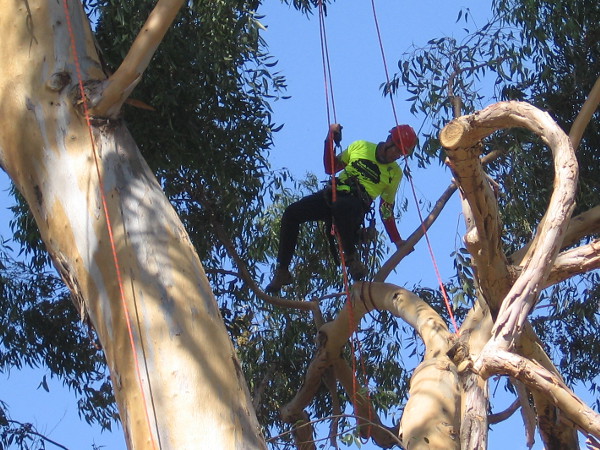
Today volunteers and crew members at the Maritime Museum of San Diego undertook a complicated operation. Very carefully, they slowly removed and lowered a spar on the Star of India called the mizzen gaff.

The mizzen gaff of the historic, 161-year-old tall ship hadn’t been inspected for 15 years, and it was time for another look. The United States Coast Guard is tasked with ensuring that working ships like the Star of India remain in safe sailing condition.

I stood and watched for a long while. You can see why special care must be taken when lowering this long, heavy spar. Imagine what might happen if somehow it slipped! Many lines held by steady hands were supporting and maneuvering it, making sure a calamity could not happen.

I watched for probably half an hour, and it seemed to my eyes that little progress was made in that time. That’s how carefully the operation was conducted!

Thanks for visiting Cool San Diego Sights!

I post new blogs pretty often. If you like discovering new things, bookmark coolsandiegosights.com and swing on by occasionally!

I live in downtown San Diego and love to walk around with my camera! You can follow Cool San Diego Sights via Facebook or X (formerly known as Twitter)!

Giant books rise above Escondido sidewalk!

Seven positively enormous books stand along a sidewalk in Escondido as if they were filed on a library shelf. All concern the history of Escondido and nearby places.

It you’d like to have a look at these giant books, head to the corner of Kalmia Street and Grand Avenue!

These books, as you can see, are realistically painted in a big mural. The fun artwork was created earlier this year by local artist Zane Kingcade, whose murals can be found all over Escondido.

The titles of these books (which actually exist–and will fit in your hand) are: Yesterday in Escondido, Grape Day Festival 1908-1950, The History of the Hotel Charlotta, San Pasqual A Crack in the Hills, The Royal Highway, Palomar From Teepee to Telescope, and Early Escondido.

If you’re interested in reading any of these books, simply google the title.

Thanks for visiting Cool San Diego Sights!

I post new blogs pretty often. If you like discovering new things, bookmark coolsandiegosights.com and swing on by occasionally!

I live in downtown San Diego and love to walk around with my camera! You can follow Cool San Diego Sights via Facebook or X (formerly known as Twitter)!

Fountain and bell in downtown Carlsbad.

At the intersection of Grand Avenue and State Street in downtown Carlsbad you’ll find benches next to a gently bubbling fountain and a historical bell.

I took photographs of the 1984 Village Fountain and El Camino Real Bell and their respective plaques during my last visit to Carlsbad. You might enjoy these.

Should you explore downtown Carlsbad by foot, this pleasant corner is a good place to sit, relax and watch people passing by while soaking in the Southern California sunshine.

VILLAGE FOUNTAIN DEDICATED TO GLENN McCOMAS SEPT. 29, 1984

EL CAMINO REAL BELL

EL CAMINO REAL BEGAN IN SAN DIEGO AND FOLLOWED A COASTAL ROUTE LATER NAMED HIGHWAY 101. IN THE EARLY 1900’s, BELLS WERE PLACED ON THIS ROUTE TO GUIDE TRAVELERS TO NEARBY SPANISH MISSIONS. THIS IS AN EXACT REPLICA OF THE ORIGINAL BELL AND IS CONSIDERED A SIGNIFICANT HISTORICAL SYMBOL.

COURTESY CARLSBAD HISTORIC PRESERVATION COMMISSION

Thanks for visiting Cool San Diego Sights!

I post new blogs pretty often. If you like discovering new things, bookmark coolsandiegosights.com and swing on by occasionally!

I live in downtown San Diego and love to walk around with my camera! You can follow Cool San Diego Sights via Facebook or X (formerly known as Twitter)!

Cool photo memories from May 2019.

As many of you know, when a new month comes along I like to revisit interesting blog posts from five years ago. It’s time to check out what Cool San Diego Sights was featuring back in May of 2019!

The upcoming links will take you to photographs of dragon boats races in Mission Bay, Cinco de Mayo in Old Town, a Balboa Park Pow Wow, an arts festival in North Park, and the Manzanita Mountain Man Rendezvous.

And there are photos of murals, monuments, the historic El Cuervo adobe ruins (which few people know about) and a super cool stellarium. What’s a stellarium? Aren’t you curious?

Click the following links to see many photos!

An amazing cube, like real Space: full of stars!

Photos of dragon boat races on Mission Bay!

Fun photos of Cinco de Mayo in Old Town!

Natural habitat for birds, wildlife near SeaWorld.

Colorful nature painted near Fiesta Island.

Intertribal dancing at Balboa Park Pow Wow.

Street art painted live at North Park festival!

Freedom Bell at Balboa Park’s Veterans Museum.

Photos of the historic El Cuervo adobe ruins.

Photos of Manzanita Mountain Man Rendezvous!

Art from San Diego’s skateboarding underground.

New mural in San Diego’s drive-through art gallery!

Wreath ceremony on USS Midway honors heroes.

Memorial Day weekend at Festival of the Sea!

POW/MIA monument unveiled at Veterans Museum.

Thanks for visiting Cool San Diego Sights!

I post new blogs pretty often. If you like discovering new things, bookmark coolsandiegosights.com and swing on by occasionally!

I live in downtown San Diego and love to walk around with my camera! You can follow Cool San Diego Sights via Facebook or X (formerly known as Twitter)!

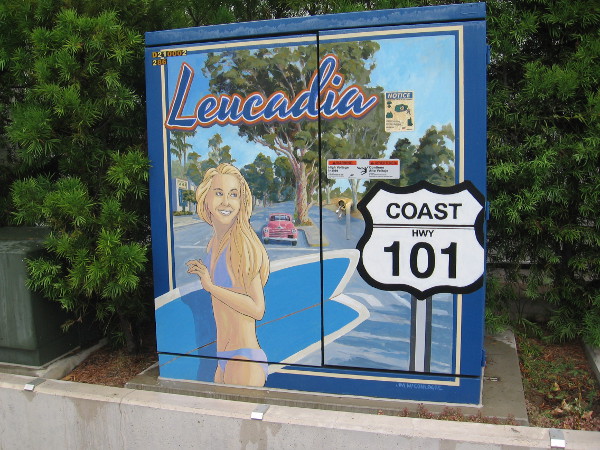
National City installs Historic U.S. Route 101 signs!

Earlier this month, National City installed seven new Historic California US 101 Route street signs. They were placed where old Highway 101, the source of many fond memories, once ran. These seven new signs join thirteen others that were installed in Chula Vista and San Ysidro near the beginning of the year.

This very cool project, which commemorates an important part of history in San Diego’s South Bay, was spearheaded by Jack Gechter of the South Bay Historical Society.

Jack indicated these new signs are located along National City Boulevard, from a spot just north of Chula Vista to a spot just south of Division Street. Here are the exact addresses:

North Bound – National City Blvd. north of C Street (just north of Chula Vista)
North Bound – 2501 National City Blvd.
North Bound – 701 National City Blvd.
North Bound – 141 National City Blvd.
South Bound – 128 National City Blvd.
South Bound – 700 National City Blvd.
South Bound – 2340 National City Blvd.

Learning this, I had to check these new signs out! I spotted six of them and took the upcoming photographs during a walk on Sunday.

Are you curious where US 101 ran south of San Diego?

This 1947 Chevron Map shows the Historic California US 101 Route starting near the US/Mexico Border in San Ysidro, and continuing north along Beyer Blvd toward Chula Vista, along National Avenue (Broadway in Chula Vista and National City Blvd in National City) to 8th Street, along 8th Street to Harbor Drive, then along Harbor Drive to Pacific Highway.

This 1933 AA Map shows a slightly different Historic California US 101 Route at the northerly end of National Avenue (National City Blvd) to 1st Street, then along Main Street.

Should you drive along National City Boulevard, keep an eye out for these new signs!

Thanks for visiting Cool San Diego Sights!

I post new blogs pretty often. If you like discovering new things, bookmark coolsandiegosights.com and swing on by occasionally!

I live in downtown San Diego and love to walk around with my camera! You can follow Cool San Diego Sights via Facebook or X (formerly known as Twitter)!

The original Coronado Library building.

The Coronado Public Library occupies a 40,000 square feet building that serves as the community’s cultural center. The library contains a large public meeting room and smaller conference room, a separate Children’s Library and Teen area, an Exhibit Gallery, plus an employee work area and used bookstore.

Back in 1909, however, when the original Coronado Public Library first opened, it measured a modest 1,700 square feet. You can see the front of the historic building with its stately columns in the above photograph.

Last month I learned the history of this original “Spreckels Building” during the San Diego Architectural Foundation’s Open House event. John D. Spreckels was owner of the nearby Hotel del Coronado in the early part of the 20th century.

An informative handout included: On February 17, 1908, the Library Board boldly voted to “request Mr. Spreckels to make a gift of a new library building”…public park land set aside by the Coronado Beach Company known as West Plaza was chosen for the location…Spreckels donated the services of his favorite architect, Harrison Albright…(His) design, in the style of the classic revival…was built at a cost of $10,000. It was one of the first California buildings built of reinforced concrete. It was designed to hold 5,000 books…

The following graphic depicts major additions that were made to the library over the years:

The next two photos demonstrate how the original building was cleverly joined to the glassy 2005 addition. (The 1974 addition demolished and replaced a hodgepodge of add-ons and wings that had been attached to the original building during the preceding decades.)

Today the original little library–the Spreckels Building–serves as a cozy, very elegant Reading Room!

Thanks for visiting Cool San Diego Sights!

I post new blogs pretty often. If you like discovering new things, bookmark coolsandiegosights.com and swing on by occasionally!

I live in downtown San Diego and love to walk around with my camera! You can follow Cool San Diego Sights via Facebook or X (formerly known as Twitter)!