Bronze plaque in Coronado marks birthplace of naval aviation.
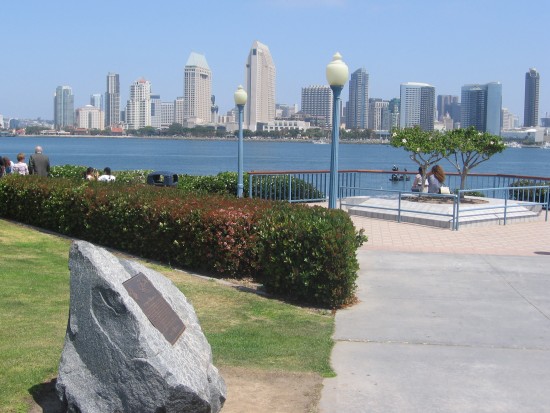
In Coronado’s beautiful Centennial Park, just north of the Coronado Ferry Landing, you can find this relatively new bronze plaque. It marks the birthplace of naval aviation, Rockwell Field, which no longer exists.
The historical marker reads:
BIRTHPLACE OF NAVAL AVIATION
In 1910, on the unoccupied brushland of North Coronado Island, inventor and entrepreneur Glenn Hammond Curtiss opened his winter flying school for prospective “aeroplane pilots.” Among his first class of students was Navy Lieutenant Theodore G. “Spuds” Ellyson, who would become the first Naval Aviator. In 1917, the U.S. Congress appropriated the island to support the World War I effort and two airfields occupied its sandy flats–the Navy’s “Camp Trouble” and the Army Signal Corps’ Rockwell Field. The Army vacated Rockwell Field in 1935, at which time the Navy expanded its operations to cover the whole island. Many aviation milestones originated from North Island including the first seaplane flight in the United States in 1911.
San Diego, California was designated the “Birthplace of Naval Aviation” by the Armed Services Committee of the United States House of Representatives on 24 March 1961.
Marker Placed By
California State Society, Daughters of the American Revolution
2011
Historical marker is located near east end of Centennial Park.Rockwell Field in 1924.
…
To enjoy future posts, you can “like” Cool San Diego Sights on Facebook, or follow me on Twitter.
Original Coronado ferry ticket booth remains as historical artifact.
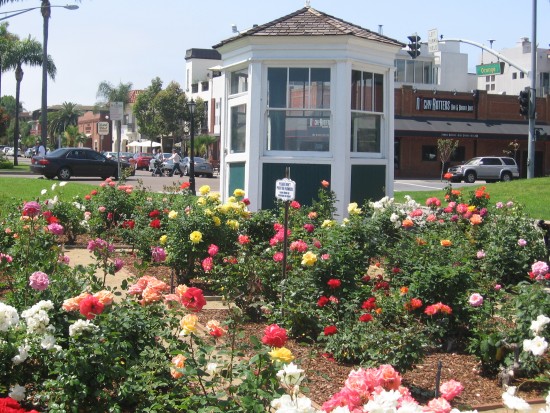
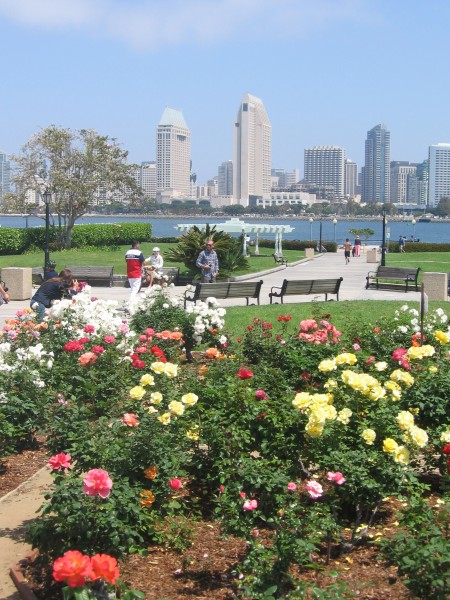
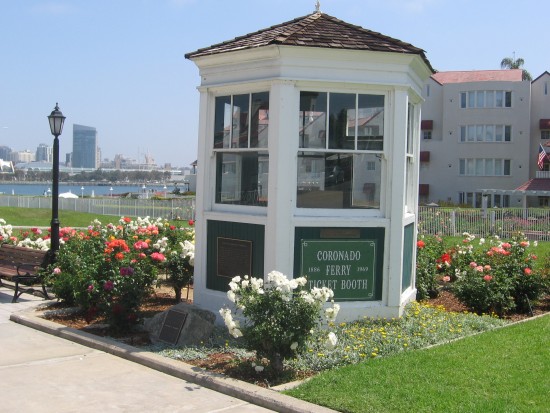
About a block north of today’s touristy Coronado Ferry Landing, you’ll find the old ticket booth of Coronado’s original ferry. It stands beside a garden full of colorful roses and a pleasant walkway that runs from the end of Orange Avenue east to San Diego Bay. This beautiful area is called Centennial Park.
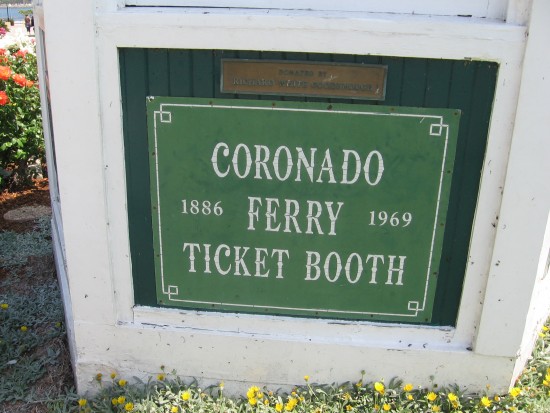
The original ferry was designed to transport horses and buggies; later ferries took automobiles across the bay. This vital link to downtown San Diego ran from 1886 to 1969, the year the Coronado Bay Bridge finally opened.
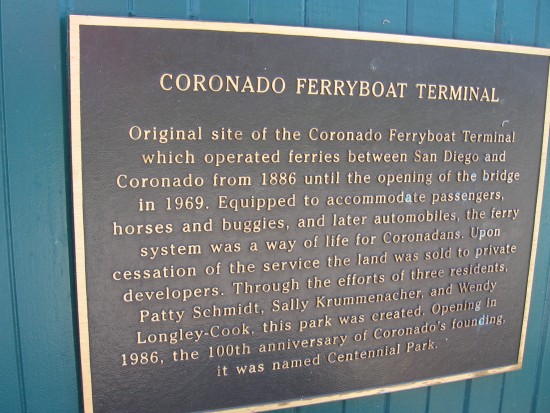
Looking over roses near the nostalgic old ticket booth.Sign reminds passersby of nearly a century of history.Plaque describes the history of the once vital Coronado ferry.Old Coronado ferry ticket booth surrounded by flowers.
…
To enjoy future posts, you can “like” Cool San Diego Sights on Facebook, or follow me on Twitter.
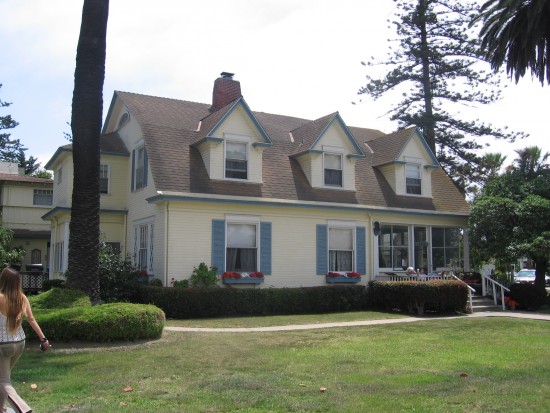
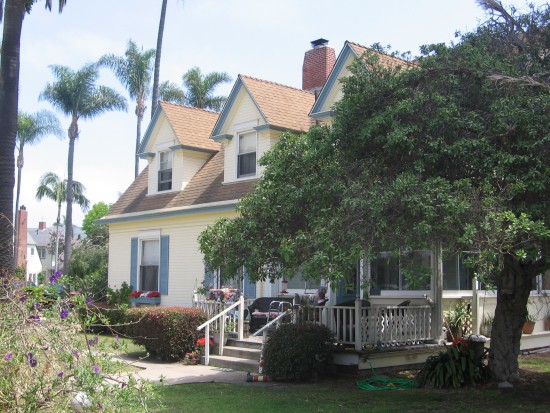
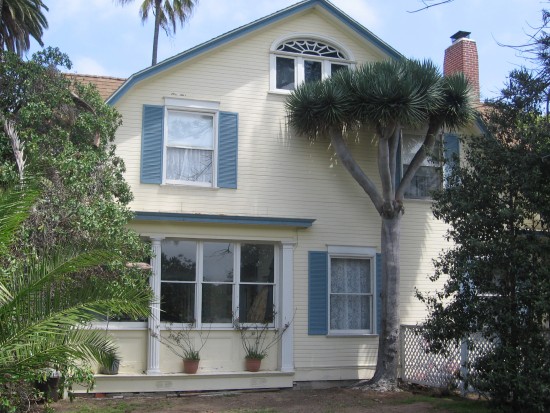
Wizard of Oz author L. Frank Baum rented this house in Coronado.
L. Frank Baum is one of America’s most beloved authors. He wrote the Wizard of Oz series of novels.
Baum, who lived in South Dakota, spent many winters at this rented house in Coronado, where he wrote three novels: Dorothy and the Wizard of Oz, The Emerald City of Oz and The Road to Oz, plus significant portions of The Marvelous Land of Oz.
When not writing, he enjoyed himself at the nearby Hotel del Coronado. The Victorian architecture of the famous beach resort is said to be the inspiration for much of the fantastic imagery in the Oz novels. He personally designed the huge crown-shaped chandeliers in the hotel’s grand Crown Room.
Today, the island city of Coronado has two nicknames: the Crown City and the Emerald City.
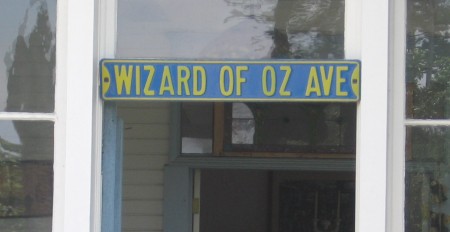
Wizard of Oz Ave sign above front door.L. Frank Baum wrote several Wizard of Oz novels at this house.The Wizard of Oz house is located in Coronado, the Emerald City.
…
To enjoy future posts, you can “like” Cool San Diego Sights on Facebook, or follow me on Twitter.
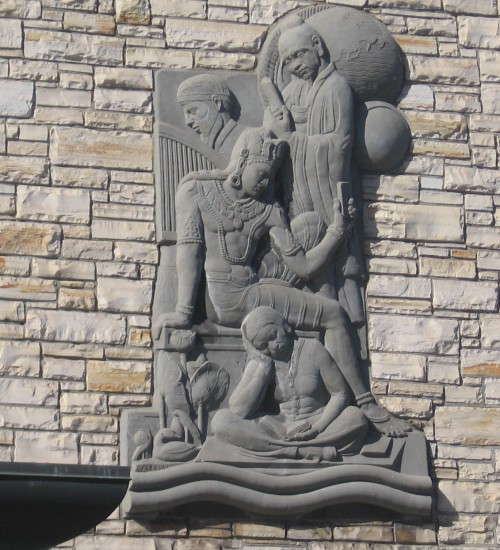
Figures associated with books linger in relief above entrance of old San Diego Central Library. Literature East, by famed local artist Donal Hord, 1953.
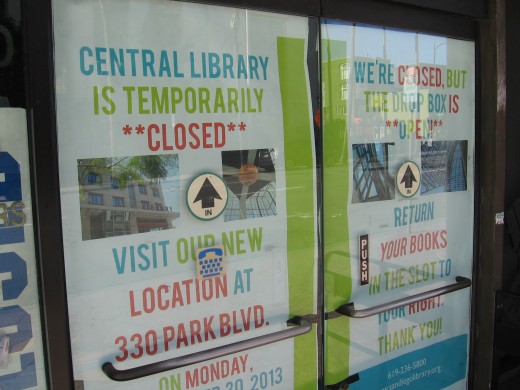
San Diego’s old Central Library on E Street was never really much to look at–in my opinion, at least. It was just a small, nondescript, almost colorless building across from the downtown Post Office. When the brand new gleaming Central Library opened in East Village, the doors of the old library were shut forever. But a few notable images–beautiful works of art near the entrance–still remain.
The classic Literature Panels at either side of the library entrance were created in 1953, when the building was new, by important San Diego artist Donal Hord, whose iconic works can be seen throughout the city. These reliefs depict readers and writers of books in human history.
Because of poor health as a child, he spent many hours in the San Diego Public Library and developed a love for reading.
Timeless art by an internationally renowned San Diego sculptor depicts books and their association with history, music and culture. Literature West, by Donal Hord, 1953.
Clock shows midnight on east side of closed San Diego library.
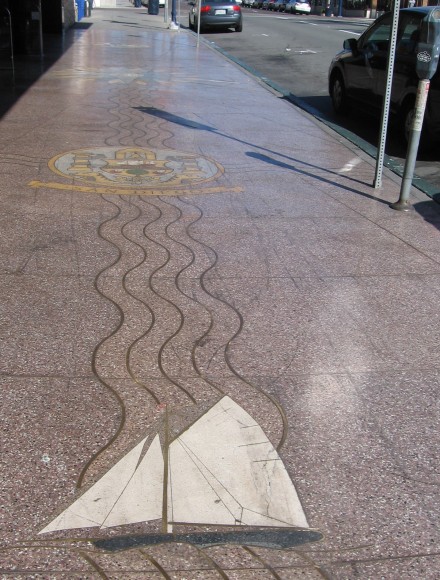
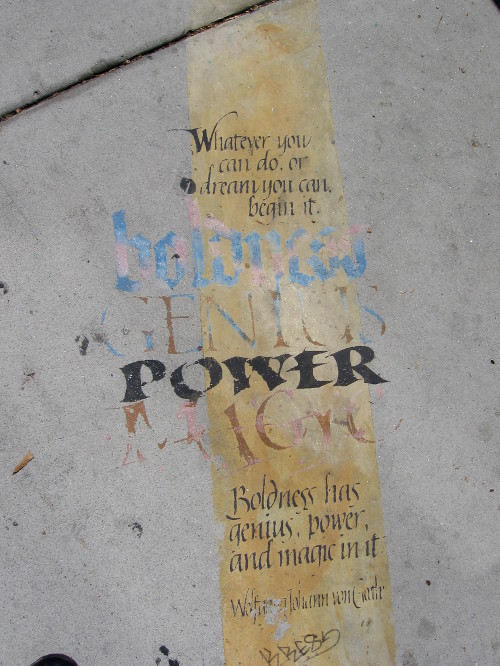
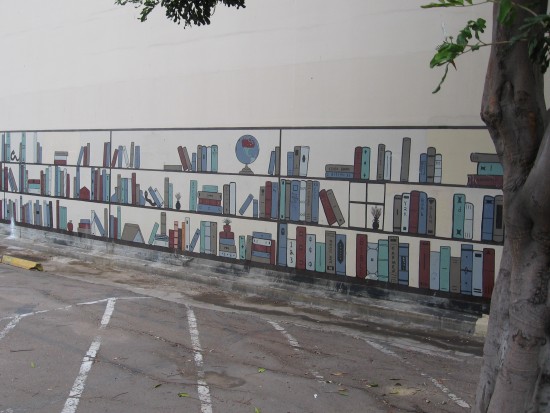
A lamp still burns on the vacant library’s front sidewalk.The empty sidewalk contains images once tread by many feet.Graphic on sidewalk in front of old library tells of dreams, boldness and genius.Books still line the parking lot behind vacant library.Little else remains to be seen at the old Central Library.
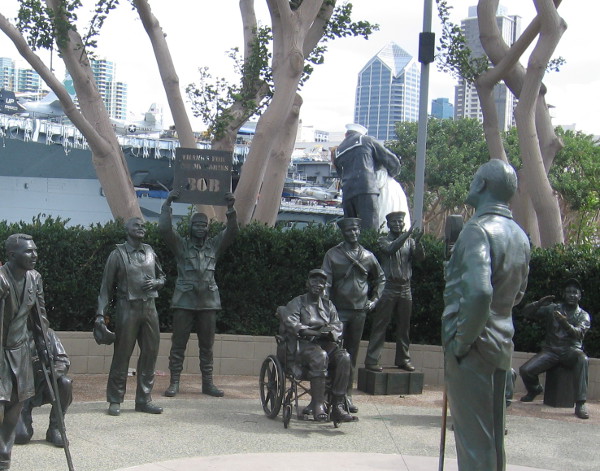
Bronze audience listens to a Bob Hope comedy routine.
Perhaps you fondly remember Bob Hope. Millions do. I do.
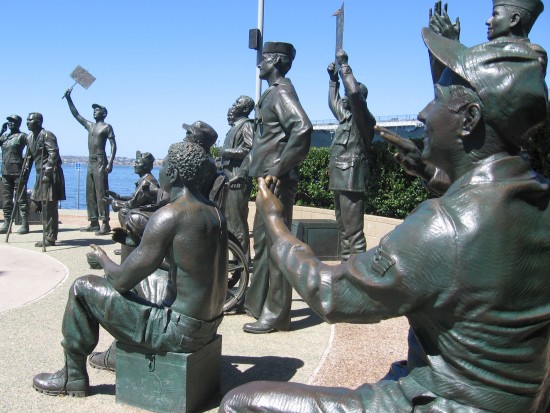
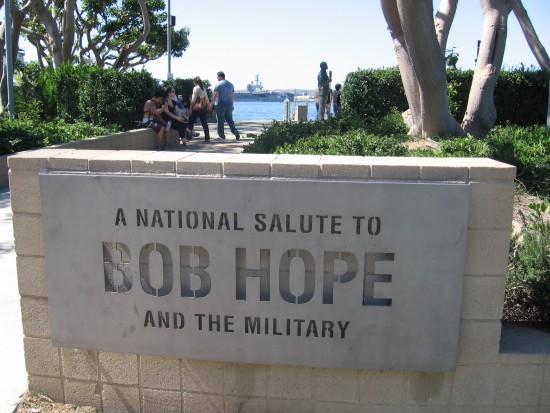
In San Diego, a fantastic tribute to the legendary comedian can be found on the Greatest Generation Walk, just south of the USS Midway Museum. Sixteen life-sized bronze figures show Bob doing a comedy routine for assorted American service members from the Army, Navy, Air Force, Marines and Coast Guard. An outdoor speaker plays old recordings of him telling his inimitable jokes. For five decades Bob Hope entertained the troops during his many USO tours.
Thanks for the memories.
The famous profile of legendary American comedian Bob Hope.USS Midway can be seen behind the bronze service members.USO tours by Bob Hope over many decades are recalled.Man poses with bronze sculptures of American military heroes.Bob Hope entertains troops by the USS Midway Museum and the Unconditional Surrender “Kiss” statue.A National Salute to Bob Hope and the Military.
The scene downtown is constantly fascinating. The kaleidoscope of colors, thousands of people on the move, the crazy, seemingly random whirl of activity…
Over the years, the buildings themselves participate in this dance of life. New structures rise into the shining skyline like spring flowers, and old, crumbling derelicts are torn down to make way.
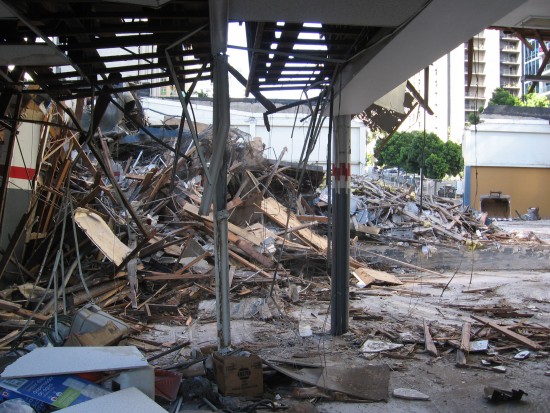
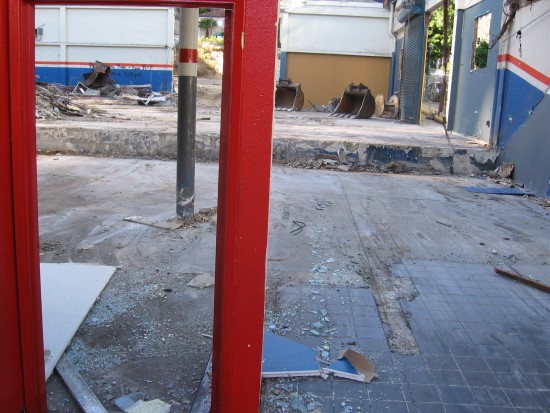
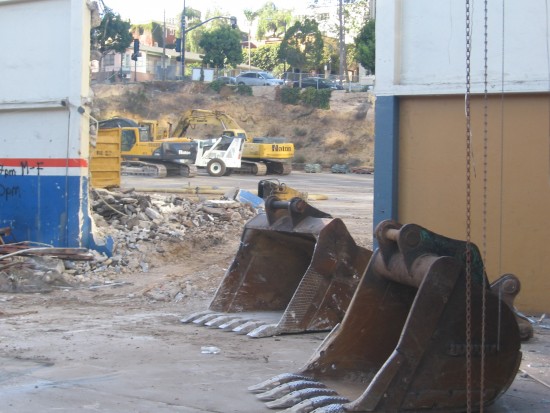
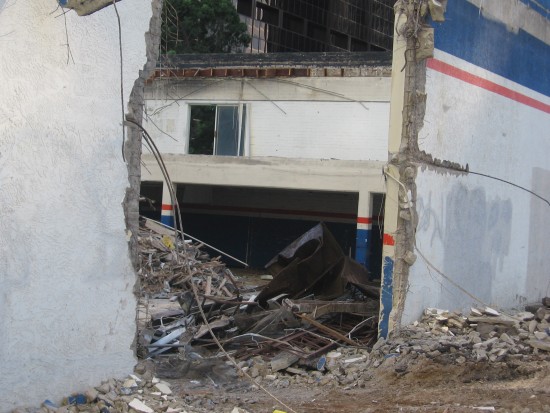
The time-worn Brake Depot is being torn down. Once the pride of the block, it’s being swept away to make room for new development. Here are some photographs:
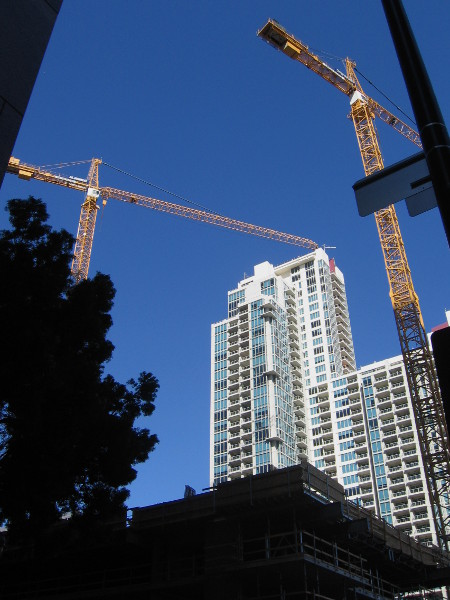
The now empty remains of Brake Depot on B Street.Instruments of urban destruction sit idle.Glass skyscraper shines behind a sadly destroyed wreck.A big hole in one wall of the former Brake Depot.
UPDATE!
Brake Depot is long gone. But look what’s rising in late 2015!
A new downtown San Diego project, called Blue Sky, is rising where Brake Depot used to be. Blue Sky will be downtown’s largest apartment building, with 939 units!Blue Sky’s two towers will be located on B Street between Symphony Towers and Vantage Pointe (in the background), which is currently San Diego’s largest apartment complex.
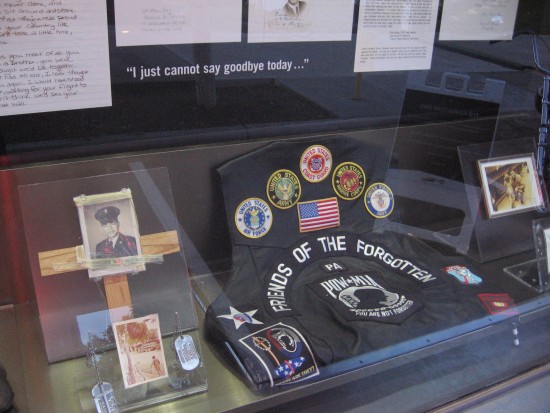
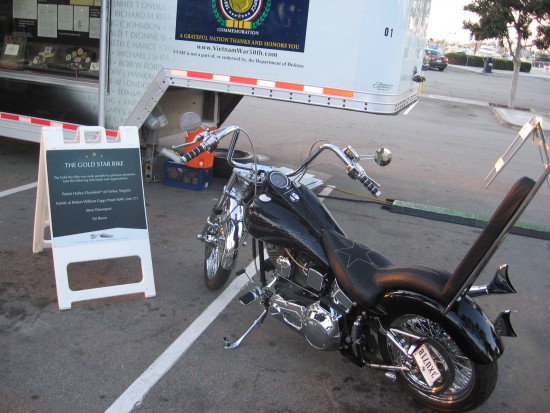
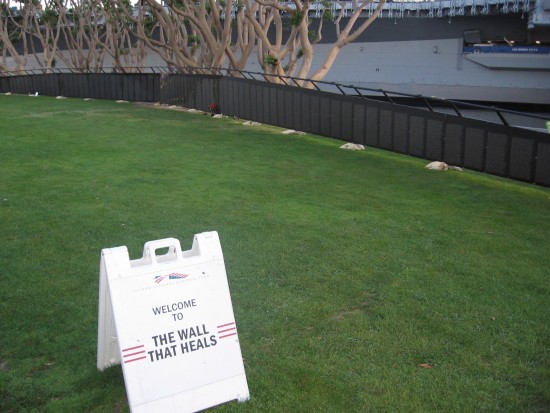
This morning around seven I walked over to the grassy park just south of the USS Midway Museum. I wanted to see The Wall That Heals.
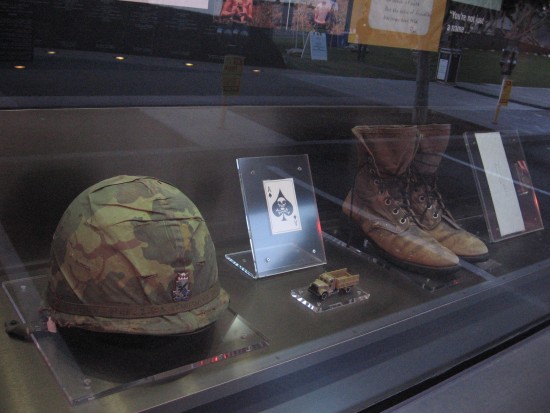
A half-scale traveling replica of the Vietnam Veterans Memorial, the black wall is inscribed with over 58,000 names. Each name belongs to a serviceman who made the ultimate sacrifice during that war.
I’m sure the weekend crowds will be huge, but early on a Friday morning very few people were about.
The Wall That Heals and several thought-provoking displays that accompany it will remain in San Diego through Sunday.
If all of the names could be in one place…Helmet and boots from Vietnam War era.Friends of the Forgotten, remembering those who sacrificed.The Gold Star Bike on public display.Welcome to The Wall That Heals.Flowers and the names of over 58,000 who gave their lives.
UPDATE…
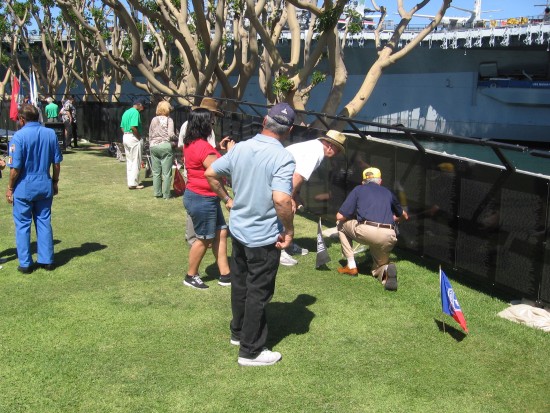
I took the following photos Sunday afternoon around one o’clock.
Half-size replica of Vietnam Veterans Memorial in San Diego.People read names inscribed on The Wall That Heals.
Sculpture and cannon at entrance to the Mormon Battalion Historic Site.
Just east of Old Town San Diego State Historic Park one can find the Mormon Battalion Historic Site, an attraction created by The Church of Jesus Christ of Latter-day Saints. The location itself seems a bit arbitrary, as the Mormon Battalion manned Fort Stockton up on the hill by the old, abandoned Presidio when they arrived in San Diego in 1847.
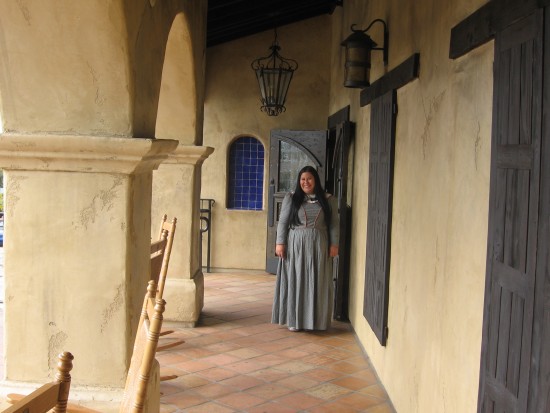
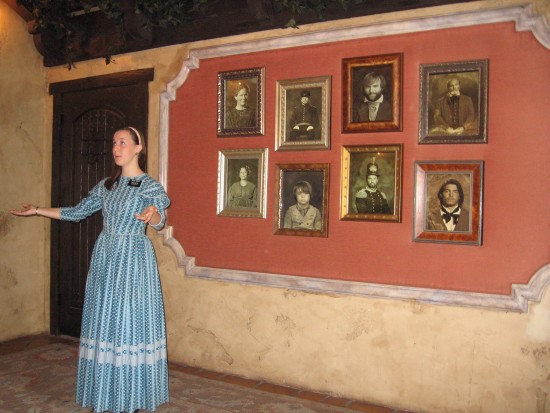
Young lady missionaries guide visitors through a series of rooms and outdoor areas which are designed to tell a sympathetic version of the Mormon Battalion’s difficult 2000 mile march from Iowa. The ulterior motive is to promote their beliefs, and there are frequent religious references, but there is no hard sell and the tour guides are warm and friendly. One can absorb a little bit of history while experiencing a good-humored, Disney-like presentation.
A friendly missionary lady comes outside to welcome a new visitor.Girl in a pioneer dress begins the tour with talking, moving portraits.
Much of the tour is spent watching professionally produced dramatic videos. Several real historical artifacts can be found near the tour’s end.
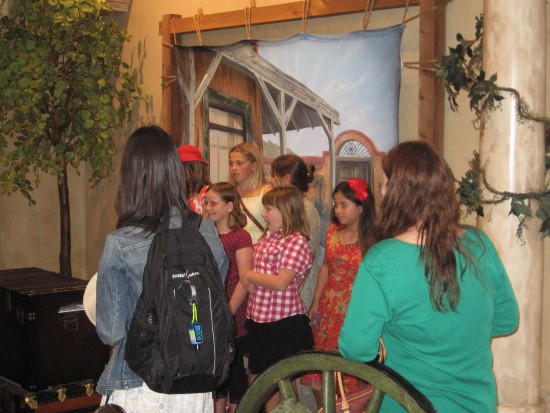
Taking pictures of visitors with a large antique camera.Girls pose for a picture in front of a western scene.
A lot of families and kids were smiling and enjoying the tour. Many appeared to be members of the LDS Church.
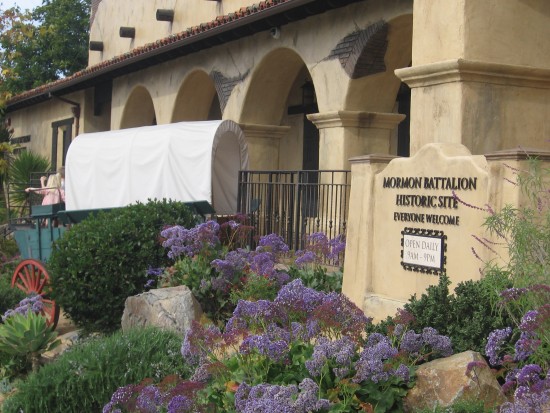
Young visitors near end of the tour pan for glittery iron pyrite.Covered wagon in front of the Mormon Battalion Historic Site.
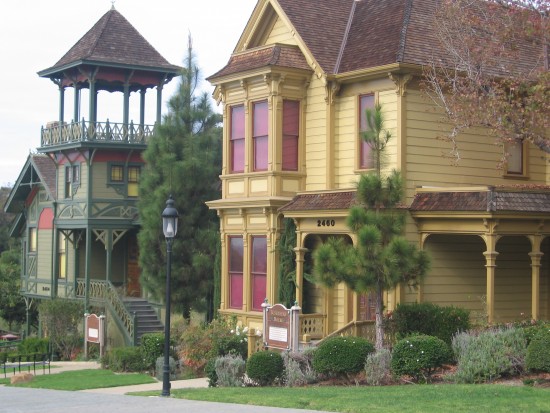
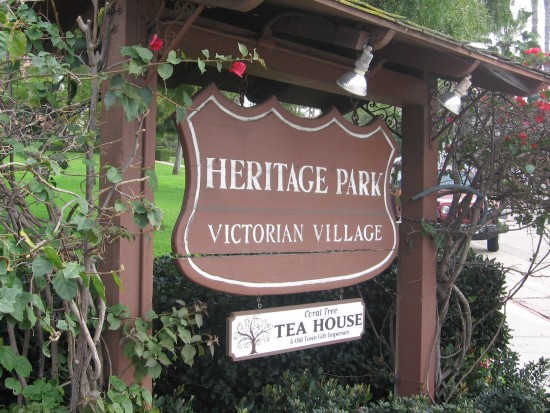
Several colorful Victorian houses were relocated to Heritage Park.
Lovers of architecture, Victorian houses and San Diego history should swing by Heritage Park, a small county park located next to Old Town.
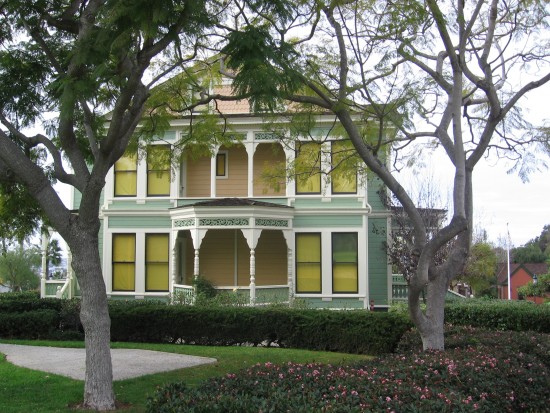
Several historic homes representing Italianate, Stick-Eastlake, Queen Anne and Classic Revival styles were relocated to this eight acre park by the Save Our Heritage Organisation. Only the exteriors of the structures have been restored, with the exception of the Burton House and Senlis Cottage, which are open to the public.
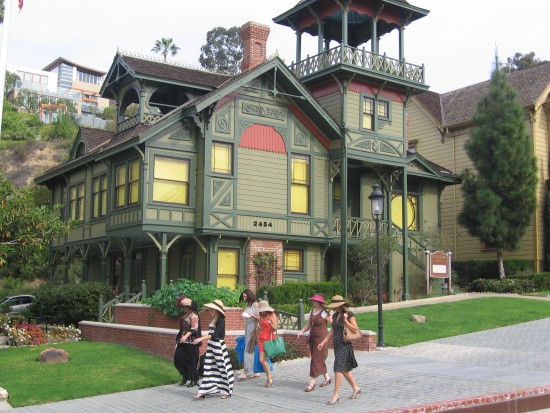
Group of ladies walking past the Sherman-Gilbert House.
John Sherman, cousin of General William Tecumseh Sherman, built the Stick-Eastlake style Sherman-Gilbert House in 1887. Over the years, many world-famous entertainers appeared at receptions in this house, including ballet dancer Anna Pavlova and pianist Artur Rubinstein. This was the first structure moved to Heritage Park, in 1971.
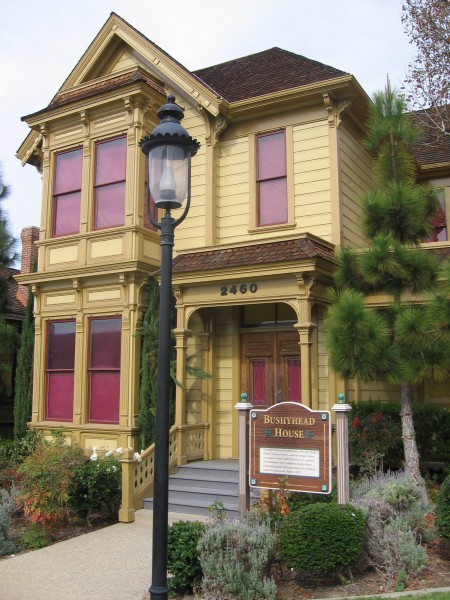
Bushyhead House was an Italianate residence built in 1887.
Edward Wilkerson Bushyhead, a Cherokee Indian with a Scottish ancestor, was an important historical figure in San Diego. He served as Chief of Police years after being publisher of the San Diego Union newspaper. He built the Bushyhead House as a rental in 1887.
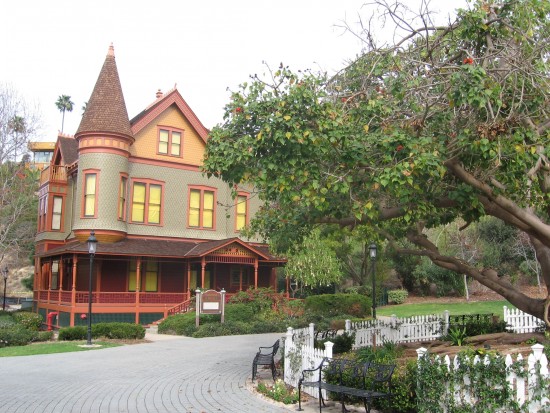
Christian House, built in 1889, seen beyond large tree.
The Christian House is a colorful Queen Anne style house built in 1889.
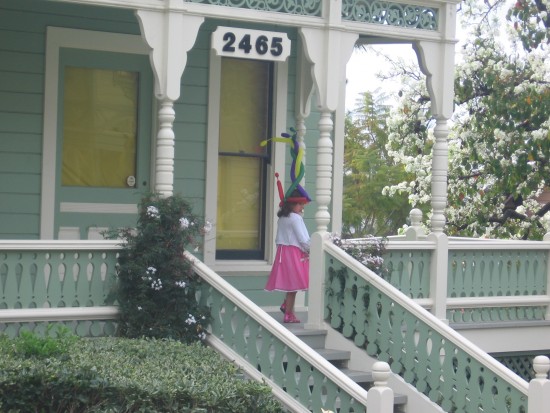
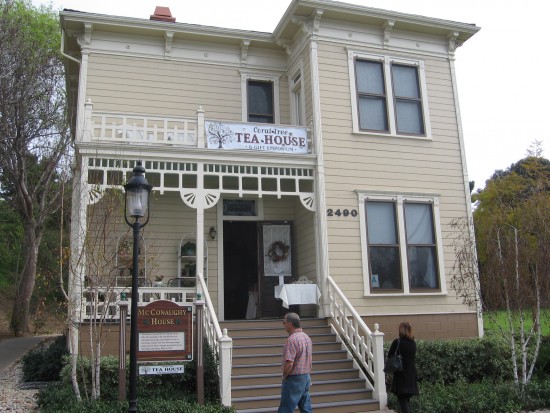
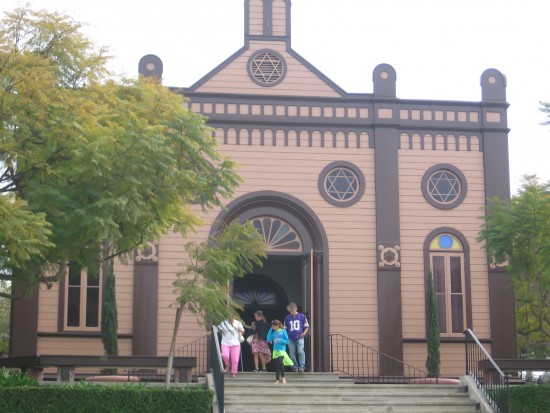
Girl on porch of the Classic Revival Burton House.Side view of the 1893 Burton House in San Diego’s Heritage Park.McConaughy House, a Stick-Eastlake built in 1887.People emerge from San Diego’s first synagogue, Temple Beth Israel.
This 1889 Classic Revival building constructed by the Congregation Beth Israel was also used by several religious sects before it was finally relocated to Heritage Park.
Heritage Park is located adjacent to historic Old Town San Diego.
…
To enjoy future posts, you can “like” Cool San Diego Sights on Facebook, or follow me on Twitter.
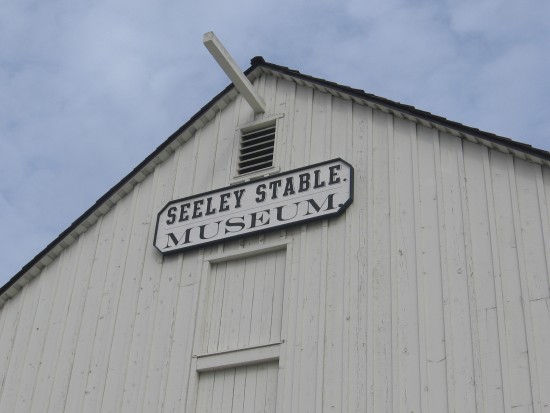
Front of the Seeley Stable Museum in Old Town San Diego.
Perhaps my favorite part of Old Town San Diego State Historic Park is the Seeley Stable Museum.
The huge old barn and surrounding area were once owned by Albert Seeley, who ran the San Diego-Los Angeles Stage Line from 1868 to 1877. His Concord stagecoaches left San Diego at 5 am, stopped overnight at San Juan Capistrano, and arrived in Los Angeles at 4 pm the next day. Eventually competition with the railroad put him out of business.
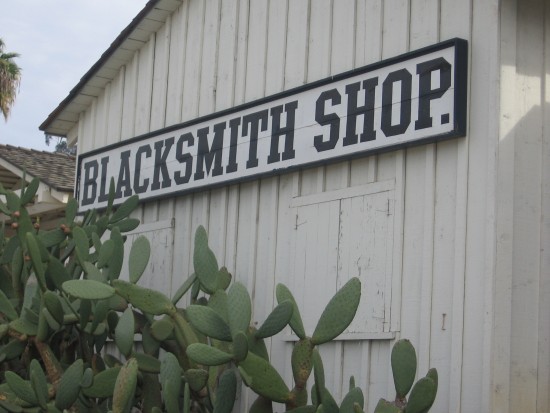
Sign on the Blacksmith Shop behind Seeley Stable.
Behind the Seeley Stable is a cool blacksmith shop, where tourists can watch skilled hobbyists demonstrate the shaping of red hot iron. The hammers ring loudly and the sparks fly! Unfortunately it wasn’t open the day I took these photos.
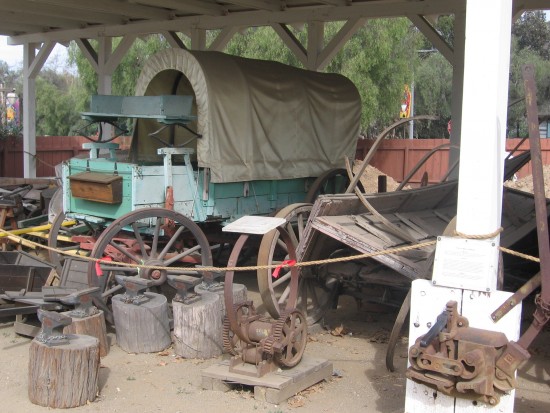
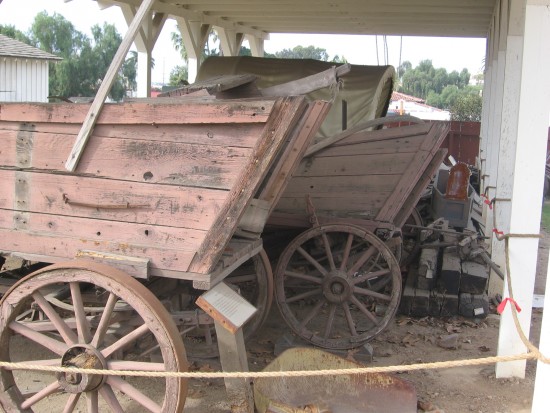
Covered wagon, anvils and relics of the Old West behind Seeley Stable.
Across from the blacksmith you’ll find this. Very cool!
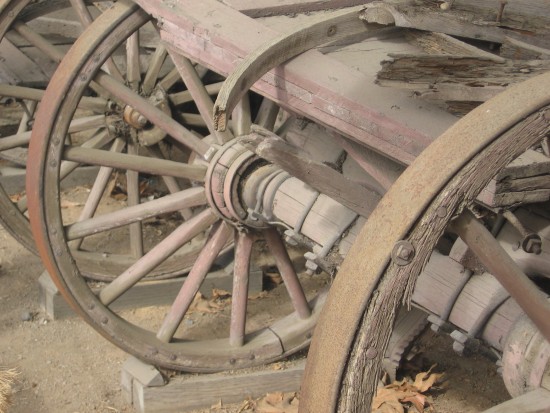
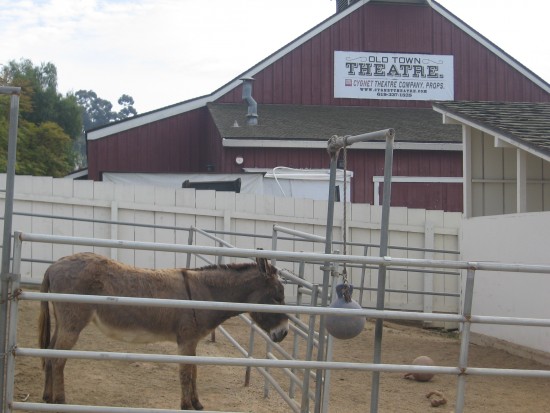
Several unrestored wagons.Peering through old wagon wheels.Donkey awaits young visitors to historic Seeley Stable.
On the south side of the stable you’ll find a couple of donkeys, which are used by park rangers to teach children about life in the Old West.
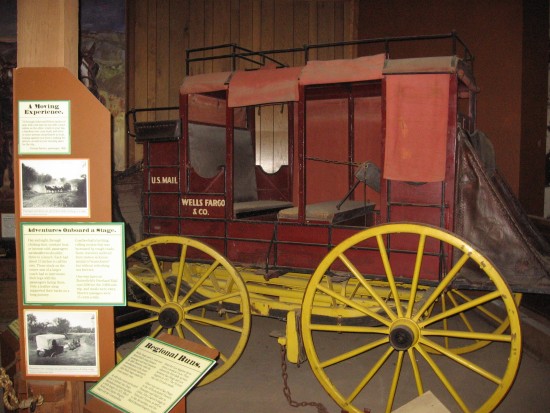
Concord stagecoach from the Los Angeles to San Diego route.
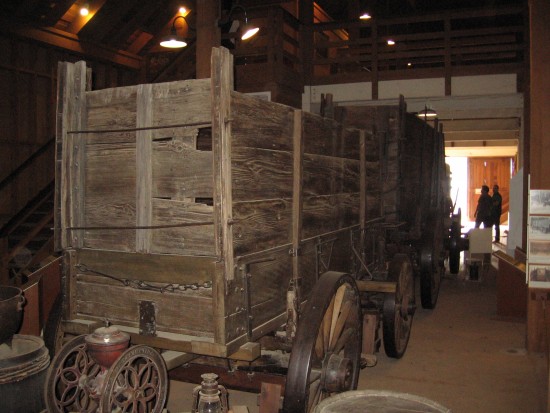
Finally, we’re inside the museum! You can see many different wagons and stagecoaches inside the dark old barn, plus other artifacts from life one and a half centuries ago.
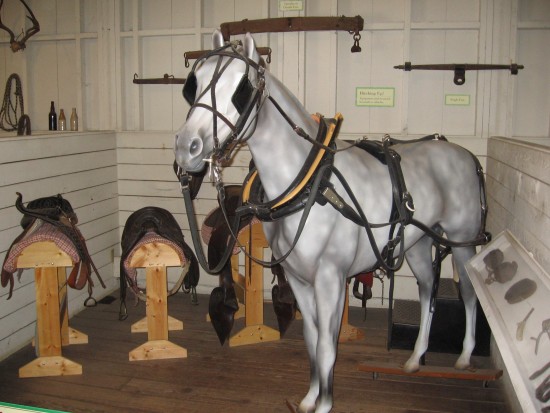
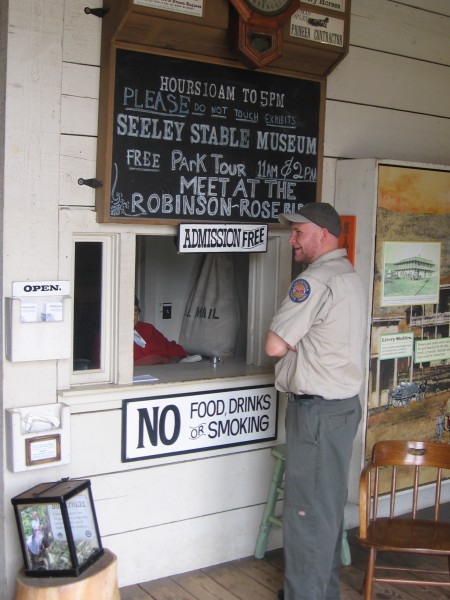
Museum display with horse and saddles recreates the old stable.Huge freight wagon on display at Seeley Stable.Old Wells Fargo wagon once used to transport the mail.Old Town San Diego State Historic Park ranger chats with friendly lady at the ticket window.
The Seeley Stable Museum is free!
UPDATE!
Here are a few more interesting and informative photos that I took inside the museum in August 2017…
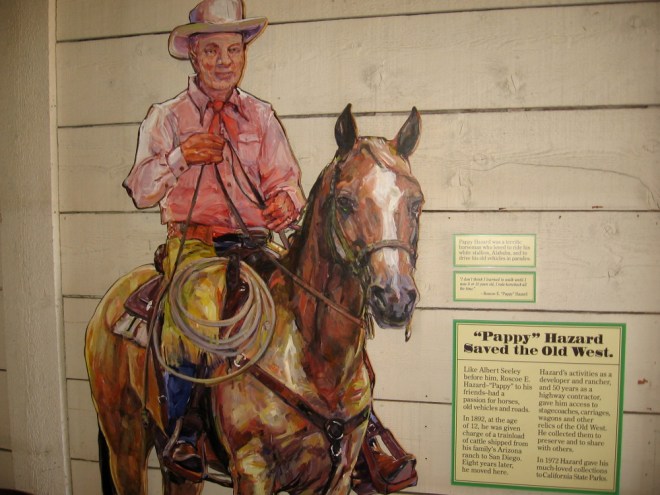
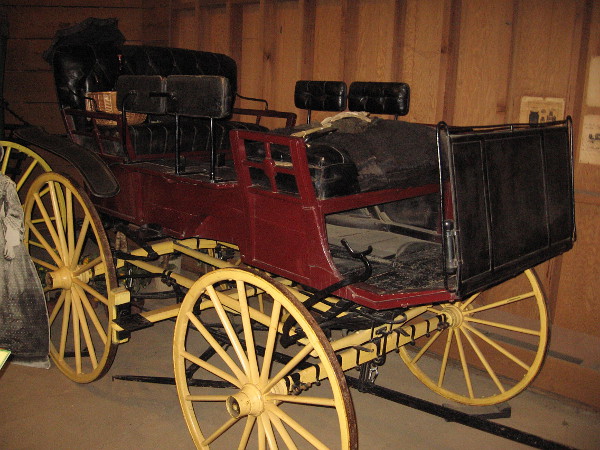
Roscoe E. “Pappy” Hazard was a developer and rancher who collected stagecoaches, carriages and wagons from the Old West. Many are displayed today in Old Town’s Seeley Stable Museum.In 1869, Albert L. Seeley transformed the nearby Bandini adobe into the two-story Cosmopolitan Hotel, which became Old Town’s stage depot and social center.Photo of Seeley Stable’s barn and yard taken from Presidio Hill in 1872. The Cosmopolitan Hotel can be seen on the right.Map shows important stagecoach routes, including the Butterfield Overland, and the Birch’s Line from San Antonio to San Diego.Signs and old photos concerning freight wagons in the Old West, which often employed large teams of mules.Spaniards introduced mules to America along with the horse. Hardy pack mules were used by trappers to haul furs, and by gold miners to move supplies and equipment.This delivery wagon was brought to San Diego by Frank Kimball in 1868. It was used to show passengers land that he had for sale in National City.This old Park Wagon was used by cattle rancher Walter Vail. He owned a land in Arizona, Santa Rosa island off the coast of California, and Warner’s Ranch northeast of San Diego.How a corner of the stable might have once appeared. Stable hands had many chores, including feeding, watering and grooming animals, and cleaning stalls.
…
This blog now features thousands of photos around San Diego! Are you curious? There’s lots of cool stuff to check out!
Here’s the Cool San Diego Sights main page, where you can read the most current blog posts. If you’re using a small mobile device, click those three parallel lines up at the top–that opens up my website’s sidebar, where you’ll see the most popular posts, a search box, and more!
To enjoy future posts, you can also “like” Cool San Diego Sights on Facebook or follow me on Twitter.



















 Cool San Diego Sights!