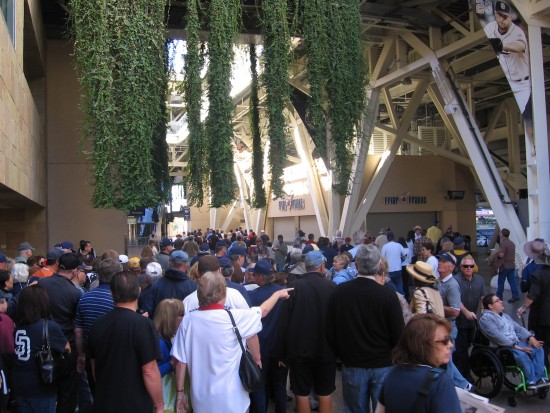
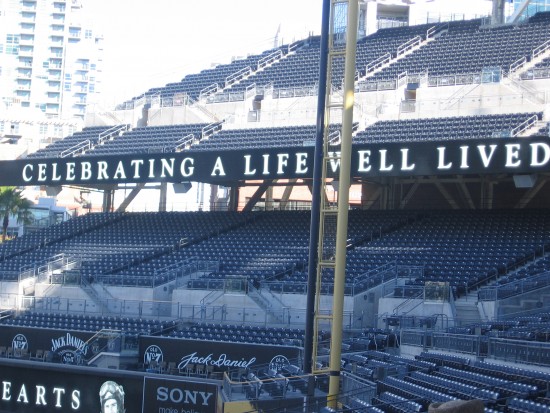
Today, an estimated 5000 people turned out for the public memorial service celebrating the life of the late Jerry Coleman. The service took place at Petco Park, home of the San Diego Padres. “The Colonel” had been the central figure in the Padres baseball organization for over four decades. Jerry’s broadcasting voice will be missed by generations of fans. An excellent argument can be made that he was the most loved public figure in the history of our city.
I apologize that my camera isn’t of the highest quality. I do hope you enjoy a few images that I captured.
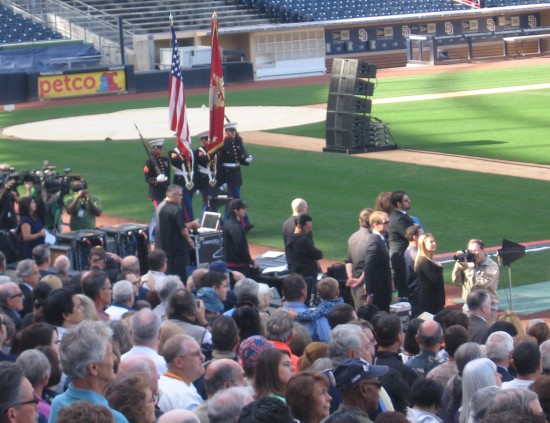
Crowd enters Petco Park for Jerry Coleman memorial service.Petco Park screens show photos of Colonel Coleman.San Diegans fill Petco to demonstrate their love for Jerry.The colors are presented while everyone stands.Dick Enberg remembers the late Jerry Coleman.
Dick Enberg noted that the stage was located on Jerry’s favorite spot: second base. After the playing of the National Anthem by the Marine Band, F-18 fighter jets roared overhead in the missing man formation.
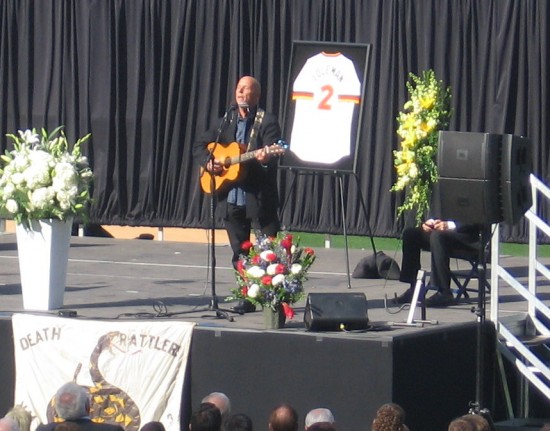
Fan holds up a star to honor Jerry Coleman.Tim Flannery sings his own composition about Jerry Coleman.
After speeches by Randy Jones, Bob Chandler, Ron Fowler and Ron Roberts, fan-favorite former Padres player Tim Flannery sang his own stirring composition about Jerry Coleman, the man who hung the stars.
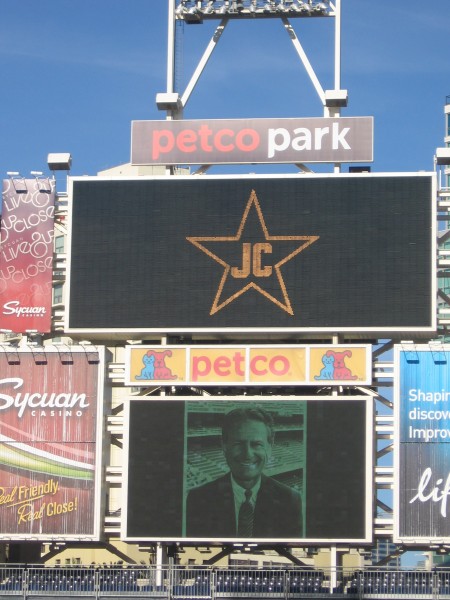
Padres fan reads about a hero’s many accomplishments.JC in a star on the scoreboard, and on next year’s uniforms.Joe Torre represents Major League Baseball at Coleman memorial.
Joe Torre received great applause when he related a few humorous and touching old Yankees stories, and spoke of Jerry Coleman’s heroism and humility.
Ted Leitner, Jerry’s broadcast partner for many years, brought laughter and tears with his intimate accounts of a baseball legend’s modest personality and funny quirks. He concluded that Jerry Coleman was the best man he’d ever known.
Marines fire guns to salute a true hero.
After a salute by the Marine Corps, a T-6 SNJ aircraft from 1942, similar to the one Coleman flew in World War II passed overhead to honor the former Marine.
Jerry’s daughter Chelsea then spoke about her dad. She said that all he really lived for was his country, the game of baseball, and the people he loved. Dick Enberg concluded the memorial by saying that we all were fortunate to be part of the legacy of Jerry Coleman.
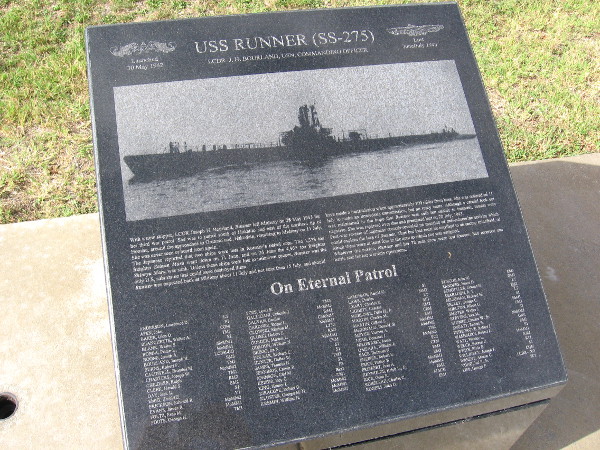
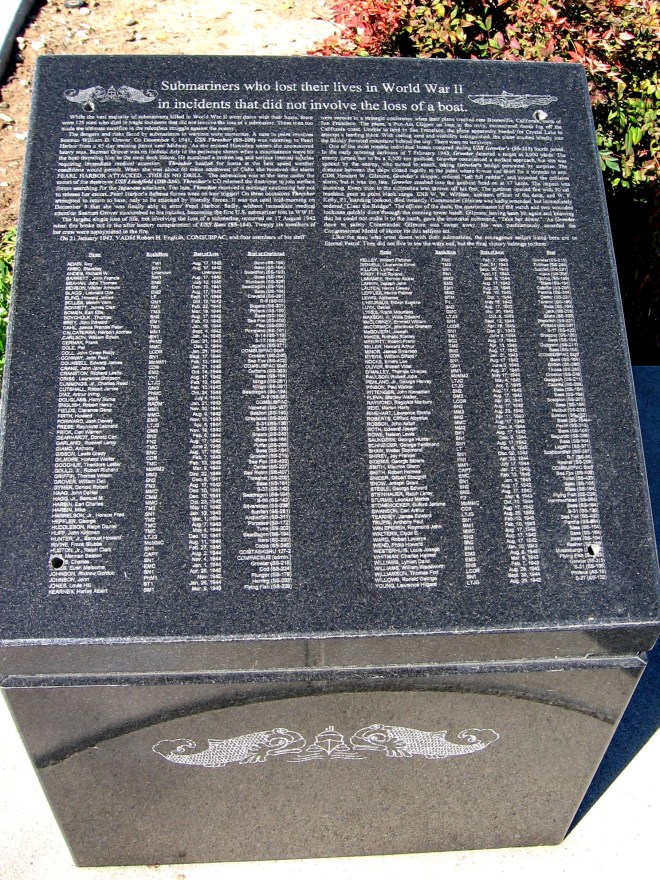
52 U.S. Navy submarines were lost at sea during World War II. 3,505 submariners lost their lives.
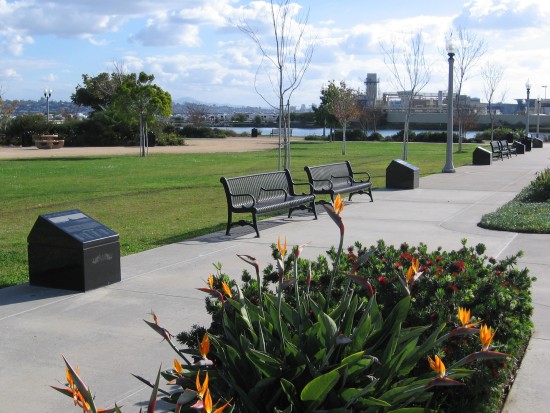
At NTC Liberty Station, the 52 Boats Memorial remembers the sacrifice of these men.
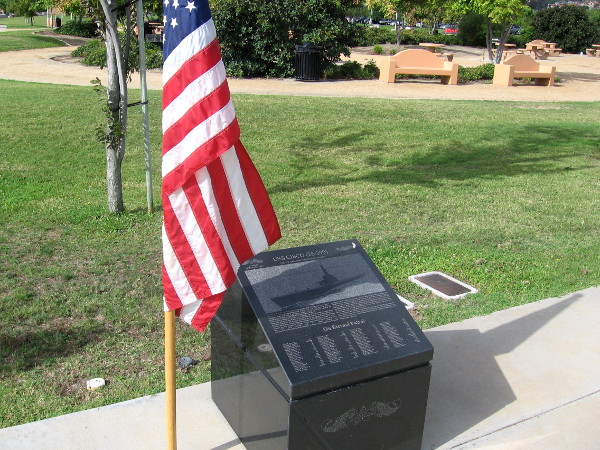
The unique memorial runs along two beautiful walkways, and consists of 52 American Liberty Elm trees, 52 flags and 52 black granite markers. The history of each submarine and the names of lost crew members are recounted for future generations to remember.
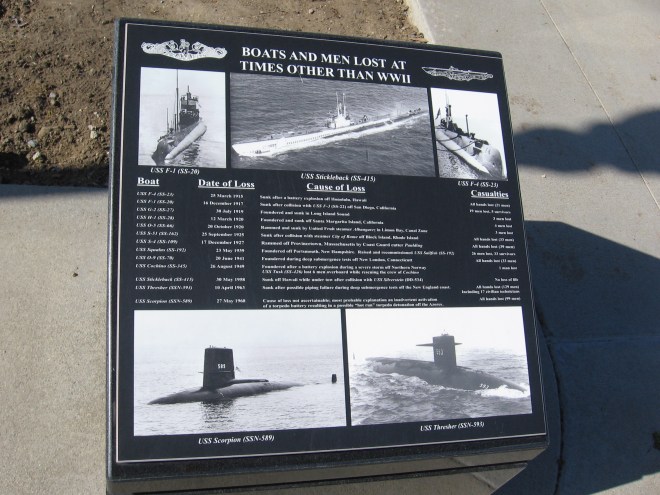
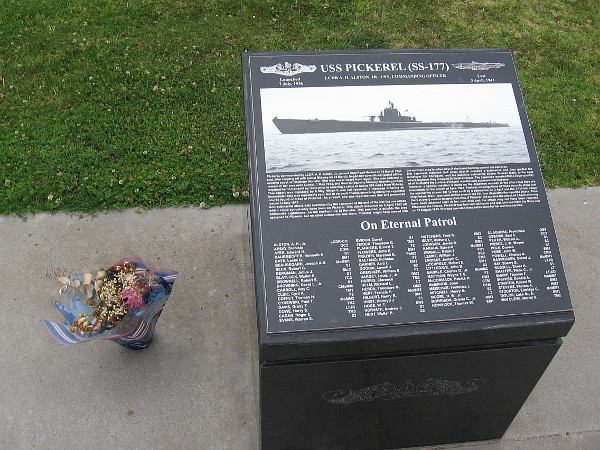
USS Grayling (SS-209) sunk in World War II is on eternal patrol.American flag shelters one of the solemn black marble markers.USS Pompano (SS-181) and crew remain on eternal patrol.Beautiful bird of paradise flowers along pathway through 52 Boats Memorial.USS Runner (SS-275) remembered over half a century later.Submariners who lost their lives in World War II in incidents that did not involve the loss of a boat.A new plaque respectfully recounts those Boats and Men Lost at Times Other Than WWII. A faded, identical plaque used to stand here.Someone honors submariner heroes by leaving flowers beside a black granite marker that remembers the USS Pickerel (SS-177).
…
I live in downtown San Diego and love to walk! You can follow Cool San Diego Sights via Facebook or Twitter!
You can easily explore Cool San Diego Sights by using the search box on my blog’s sidebar. Or click a tag! There are thousands upon thousands of photos for you to enjoy!
Bust of World War II hero John Basilone in Little Italy.
This handsome bust is the central feature of Piazza Basilone, a small urban space with tables, umbrellas and a fountain at the corner of India and Fir Street in Little Italy.
A plaque beneath the bust begins with the following words:
GUNNERY SERGEANT JOHN BASILONE
NOVEMBER 4, 1916 – FEBRUARY 19, 1945
SERGEANT JOHN BASILONE WAS ONE OF THE FIRST ENLISTED MARINES TO BE AWARDED THE CONGRESSIONAL MEDAL OF HONOR OF WORLD WAR II. HE WAS ALSO POSTHUMOUSLY AWARDED THE NATIONAL CROSS.
HE WAS BORN TO ITALIAN IMMIGRANTS, SALVATORE AND DORA BASILONE, IN BUFFALO, NEW YORK. HE AND HIS TEN BROTHERS AND SISTERS GREW UP IN RARITAN, NEW JERSEY. RESTLESS AND ADVENTUROUS BY NATURE, JOHN ENLISTED IN THE ARMY AT THE AGE EIGHTEEN AND WAS ASSIGNED TO GARRISON SERVICE IN THE PHILIPPINES.
AFTER HIS HONORABLE DISCHARGE FROM THE ARMY, BASILONE RETURNED TO RARITAN. AS THE STORM CLOUDS OF WAR GATHERED, JOHN BELIEVED HIS PLACE WAS WITH THE FIGHTING FORCES. IN JULY 1940 HE ENLISTED IN THE MARINE CORPS.
IT WAS ON GUADACANAL THAT SERGEANT BASILONE ACHIEVED HIS PLACE IN MARINE CORPS HISTORY, BECOMING ONE OF THE FIRST ENLISTED MARINES TO BE AWARDED THE MEDAL OF HONOR OF WORLD WAR II; THE NATION’S HIGHEST AWARD FOR EXTRAORDINARY HEROISM AND CONSPICUOUS GALLANTRY IN ACTION.
During the Battle of Guadalcanal, Basilone held off 3,000 Japanese troops after his unit was almost entirely destroyed. He was later killed in action on the first day of the Battle of Iwo Jima.
Planet Earth globe fountain in Little Italy’s Piazza Basilone.
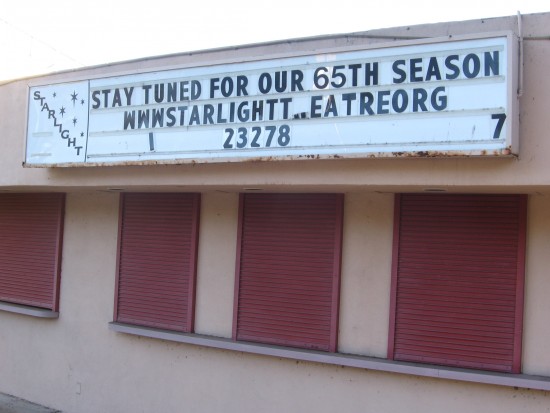
Starlight Bowl sign and the season that never came.
On the south side of Balboa Park, at the edge of a canyon next to the San Diego Air and Space Museum, you’ll find this rusting sign. It remains hopeful above the shuttered ticket windows of the Starlight Bowl, once home to the San Diego Civic Light Opera. The sign announces a 65th season that never came.
A couple years ago the San Diego Civic Light Opera went bankrupt. Which is a shame. For a long happy time during the warm summer months the outdoor theatre featured musicals and other popular productions. I remember watching the Pirates of Penzance and the Taming of the Shrew here when I was very young. The coolest thing I remember was how the actors would all freeze and shows would be suspended for several seconds when noisy, low-flying airplanes approaching Lindbergh field passed directly overhead.
Display glass near entrance which used to show upcoming productions is vacant.The outdoor Starlight Bowl has an audience of weeds.
I walked around to one side for a view of the beloved Starlight Bowl and held my camera above a chain link fence for the above photo. The outdoor stage now has an audience of weeds.
Side view of the Starlight Bowl, which has been sadly abandoned for years now.
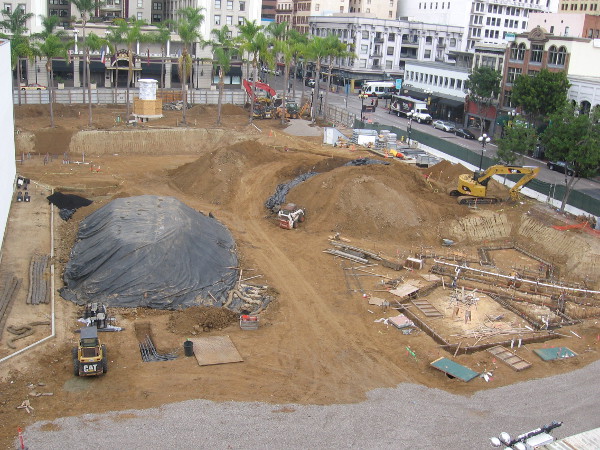
North part of the Horton Plaza Park construction site behind fence.
A large area between Broadway and the Horton Plaza shopping mall is fenced off for construction. One end of the downtown mall has already been demolished and leveled to the bare ground. The long-neglected Horton Plaza Park is being enlarged!
On the fence surrounding the construction site are a number of interesting old photographs showing the park’s history.
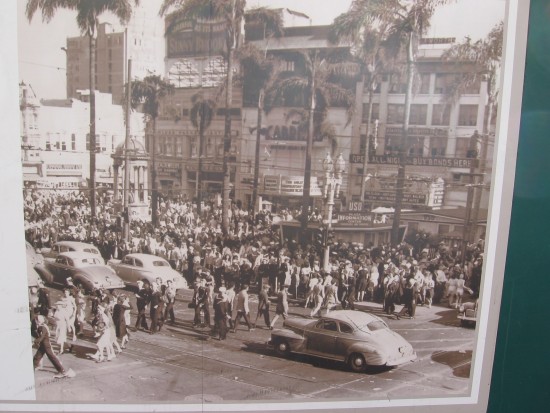
When real estate developer Alonzo Horton built the Horton House hotel (now the U.S. Grant Hotel) in his “New Town” in 1870, he included a small plaza on the hotel grounds. In 1895 he sold the half block plaza to the growing city of San Diego, stating his objective was “to provide a central, commodious and attractive place for public meetings, public announcements, public recreation and for any other proper public purposes, a place where all public questions might be discussed with comfort, where public open-air concerts might be given, where the people might rest, and where children might play in safety.” In 1909 the first fountain in the United States to feature electric lights was installed in the park.
Over the years, the small park has seen a whole lot of history, as the following photographs at today’s construction site demonstrate. Horton Plaza Park was designated a historical landmark by the City of San Diego in 1971.
Horton Plaza Park during 1935 California Pacific International Exposition.Horton Plaza Park crowded for V-J Day celebration.
The streets were crowded with a spontaneous celebration when World War II finally ended.
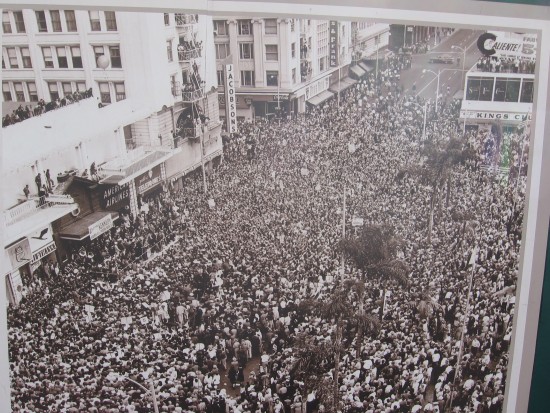
Thousands attend rally for John F. Kennedy in Horton Plaza Park.
On November 2, 1960, Senator John F. Kennedy spoke at Horton Plaza Park, seeking votes in the upcoming presidential election. A huge crowd turned out.
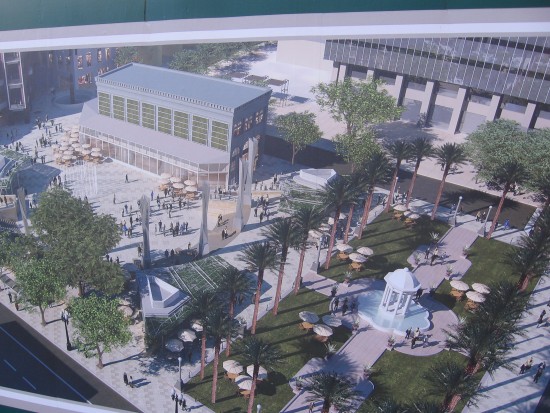
Sign shows how the new Horton Plaza Park will look at completion.
The beautifully renovated park will include lots of space for public events, including outdoor concerts!
A huge area has been cleared to make way for the new park.
Here’s a pic I took on January 31, 2015…
Construction of the new Horton Plaza Park is well underway in early 2015.
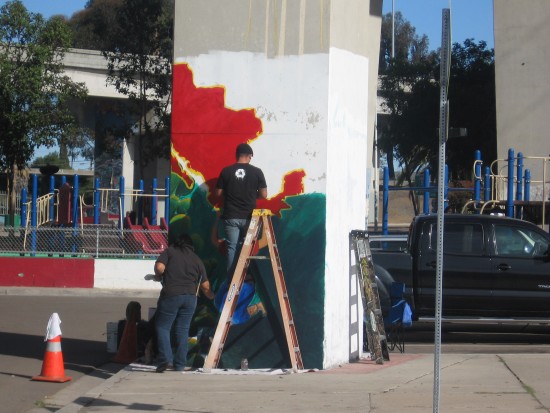
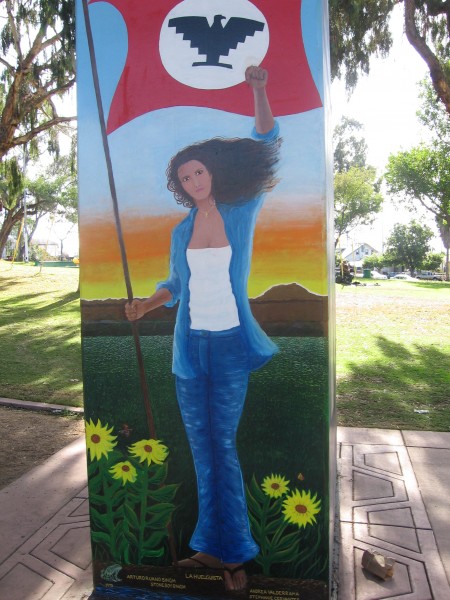
Artists paint image of Mexico on pillar in Chicano Park.
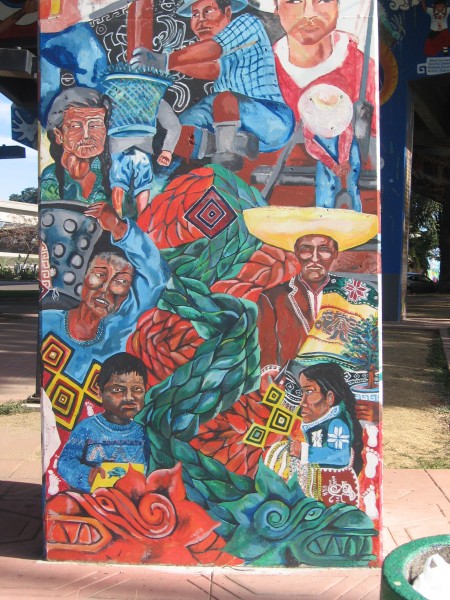
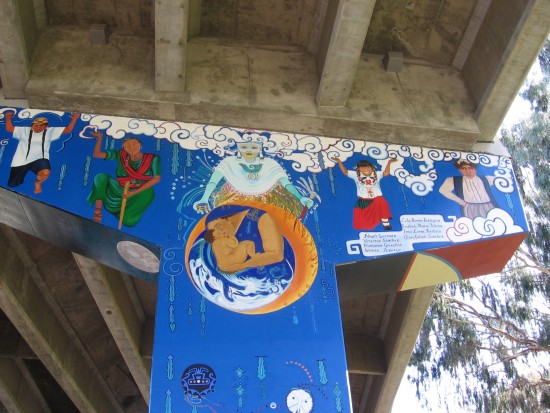
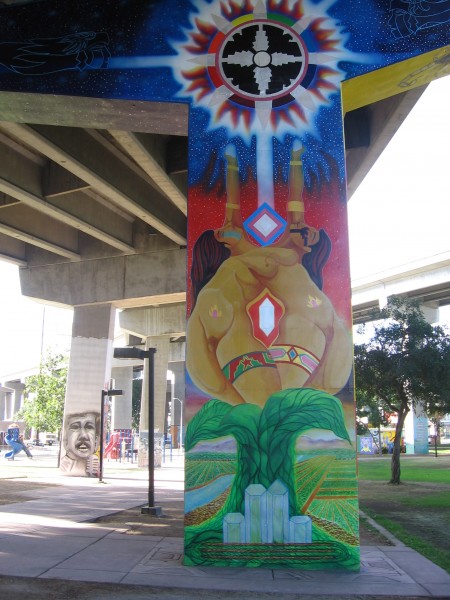
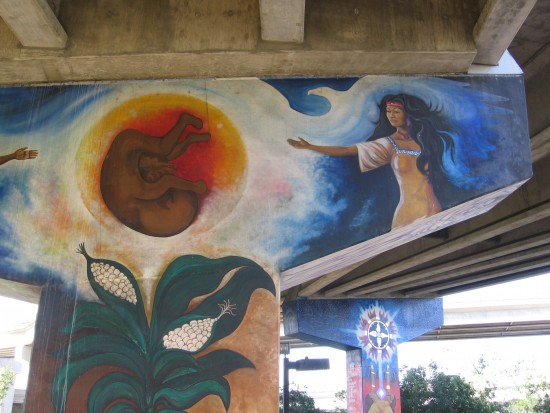
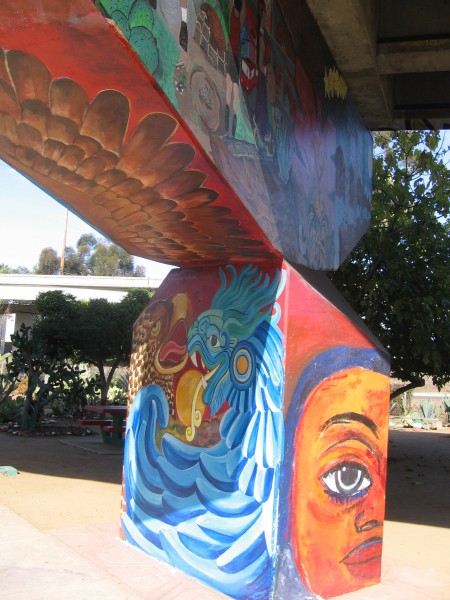
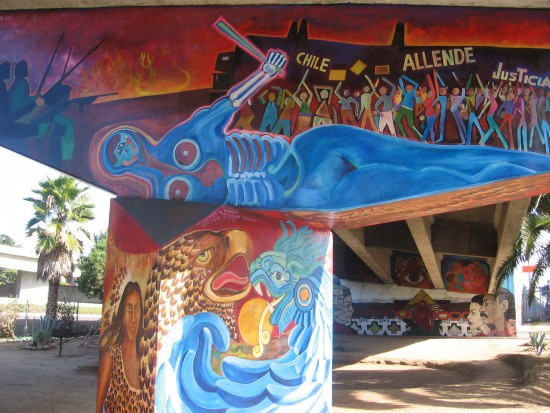
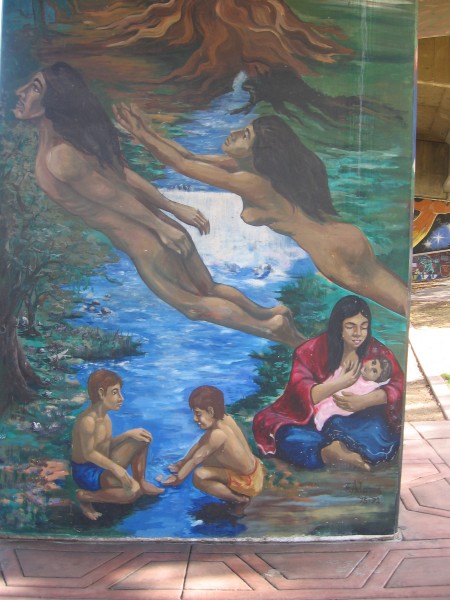
Chicano Park is located in Barrio Logan, a mostly Mexican American and immigrant community just south of downtown San Diego. The eight acre park features almost a hundred murals painted on concrete pillars that support the intersection of the Coronado Bay Bridge and Interstate 5. This colorful park, quickly glimpsed by motorists speeding down the freeway, contains the largest collection of outdoor murals in the United States. It’s listed on the National Register of Historic Places due to its unique history with the Chicano civil rights movement.
I recently took a leisurely walk through the park and captured hundreds of photographs. I’ve got so many pics, I’ve grouped them depending upon their location in the park. This blog post includes photos of murals I enjoyed while walking under the freeway ramps that connect the Coronado Bay Bridge to southbound I-5.
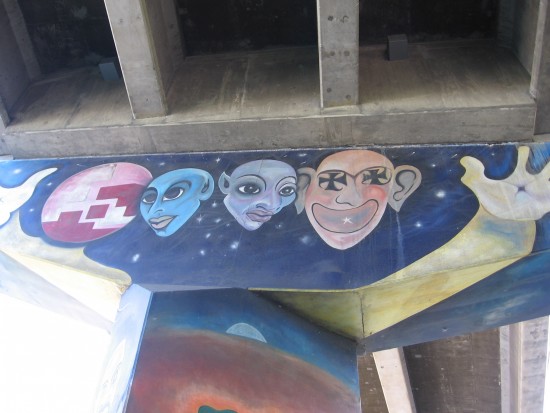
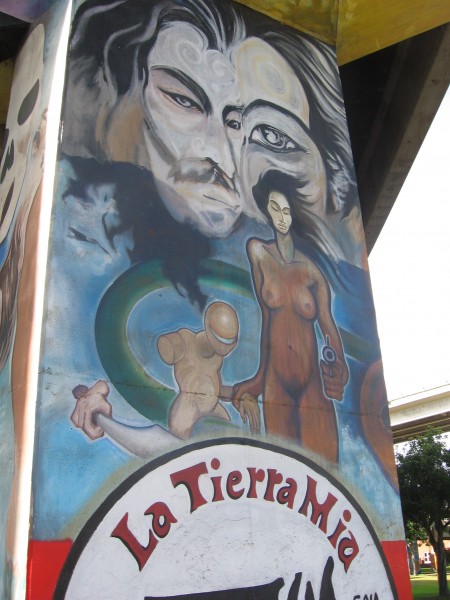
You’ll see a strange mixture of images in these murals: ancient Aztecs, indigenous peoples, workers, revolutionaries, school children, pop culture icons, scientists, politicians…and almost anything else you might imagine. The diverse and often weird combinations seem to include one overarching theme: Mexican American empowerment.
The first photograph shows what I saw as I entered the park, walking up National Avenue from the south. These artists were painting a pillar with an image of Mexico.
Colorful folk depicted in art on a freeway pillar.View of painted murals under ramps to southbound I-5.Chicano Power represented in art.Figures in diverse costumes beneath a concrete jungle.Elongated Aztec figure adds character to Chicano Park.Hispanic culture comes alive on one side of a freeway pillar.Latina with flag and raised fist in field of flowers.Vivid colors on concrete pillars supporting a San Diego freeway.Weird faces and arms high above in the shadows.Primitive and abstract forms are plentiful in Chicano Park.Folk throughout history like leaves on a tree of life.One of dozens of painted murals in San Diego’s Chicano Park.La Tierra Mia is Spanish for My Land.More art that shows people close to the land.Wild-haired figure holds up freeway with huge hands!A painted mosaic of symbols in Chicano Park.Chicano art includes children and revolutionary with gun.Painted pillar supports ramp from Coronado Bridge to I-5 freeway.The largest collection of outdoor murals in the country.Latino pride, identity and empowerment made public in art.Mixture of images includes people demanding justice.Native people frolic on a peaceful blue river.
I’ve got a ton more pics, so stayed tuned in the days ahead!
People near Visitor Center enjoy Cabrillo National Monument’s centennial.
Here are some pics I took Sunday during the second day of Cabrillo National Monument’s centennial celebration.
Cabrillo National Monument is located at the tip of the Point Loma peninsula. The hilly peninsula helps to enclose San Diego Bay and is a perfect lookout over both the ocean and harbor. The park includes most notably the historic Old Point Loma Lighthouse and a 1988 replica of the original statue of Juan Rodriguez Cabrillo that was commissioned by the Portuguese government in 1935. It also includes military bunkers that were used to protect the bay during World War II, and a very popular whale-watching lookout.
The park this year turned one hundred years old. In 1913 Woodrow Wilson reserved a portion of Fort Rosecrans on the Point Loma peninsula for a statue of Cabrillo. Unfortunately, a statue was not immediately forthcoming, and the park’s development became the work of many decades.
The work in progress continues today. My last visit was a few years ago, and this time I noticed many big changes and improvements!
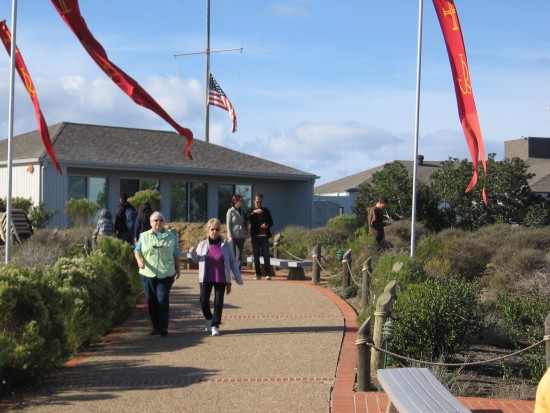
The first photo shows a bunch of people near the Visitor Center, on the walkway that leads out to the Cabrillo statue.
Various informative displays in front of Visitor Center for the centennial event.
For the centennial event, many community and government organizations had exhibits near the entrance to the Visitor Center. This pic shows what appeared to be the most popular table. The friendly lady had numerous snakes that fascinated young and old alike.
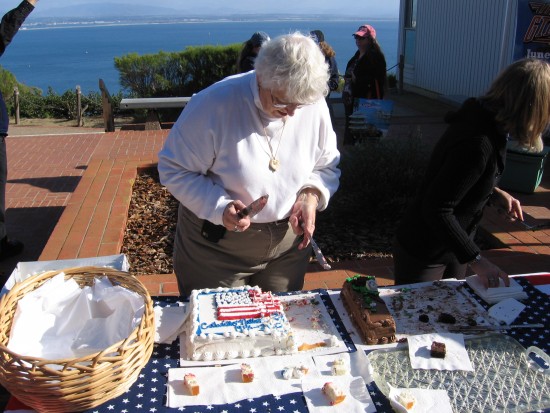
Yummy centennial cake was served to all park visitors.
Everybody enjoyed a small slice of birthday cake!
Statue of Juan Rodriguez Cabrillo overlooks the ocean.
Here’s the iconic statue of Juan Rodriguez Cabrillo, the Portuguese explorer who sailed into San Diego Bay on behalf of Spain nearly five hundred years ago. It stands not far from the Visitor Center overlooking both the bay and Pacific Ocean.
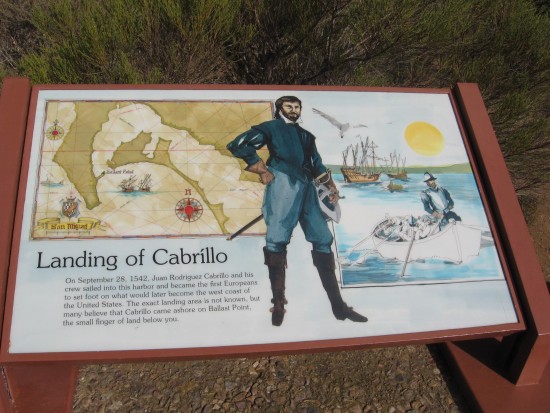
Park sign shows where Cabrillo entered San Diego Bay in 1542.Distant view of Cabrillo statue and Coronado Island.
As I walked up the hill to observe a reenacted air raid drill from World War II, I looked back at this beautiful view. Great views can be had at Cabrillo National Monument looking in almost any direction!
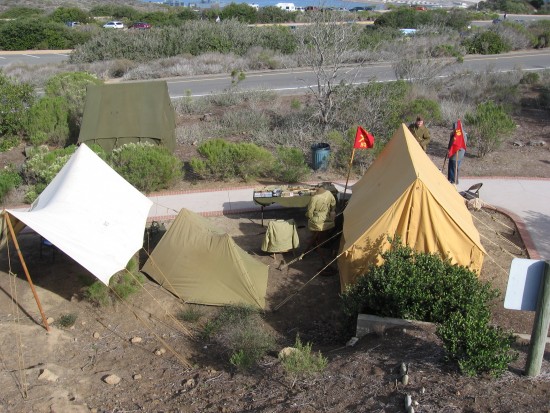
Tents of Army camp set up as historical reenactment.
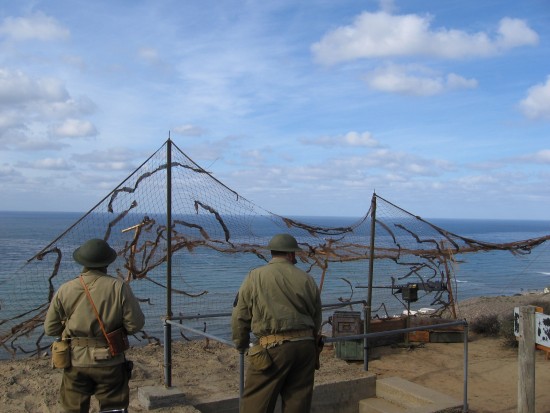
These tents and some nearby vehicles were on display for the centennial. During World War II, after the Japanese attacked Pearl Harbor, many feared an attack on San Diego. So defenses were quickly erected. In addition to a number of observation bunkers, a few gun emplacements were situated along the end of Point Loma to defend the mainland and bay.
A small museum nearby includes many photographs, recordings and artifacts from that period in San Diego’s history.
Mock air raid drill recalls duties during World War II.
At eleven o’clock, a mock air raid was staged! An aircraft from nearby Naval Air Station North Island swept over the bluffs as World War II veterans and enthusiasts looked on from the hilltop near some old bunkers.
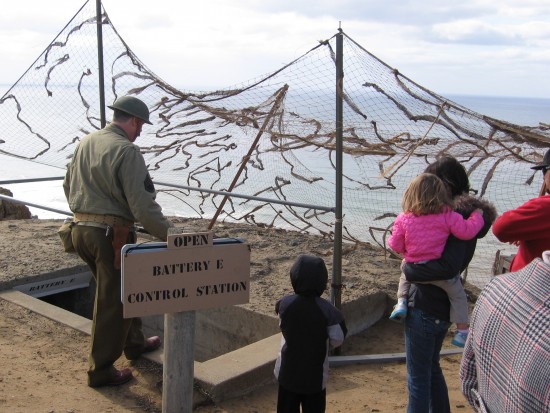
Visitors head into Battery E bunker used during World War II.
After the air raid, we all took turns going down into Battery E.
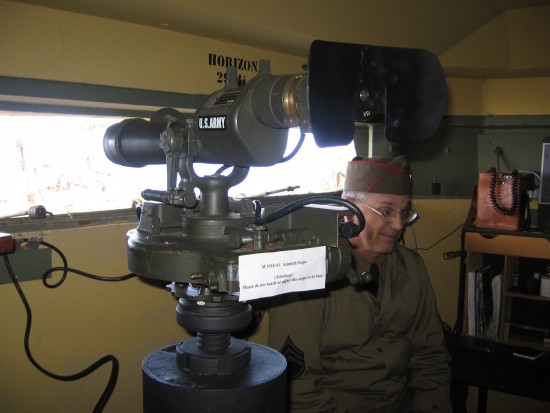
A look inside Battery E and equipment to sight enemy ships.
We were surprised at what we found! The flash of my camera illuminated the small semi-dark bunker, capturing this instrument used to scan the horizon for Japanese warships during World War II.
A chart inside the bunker identifies Japanese warships.
Down a nearby ladder was a second small room containing beds for those who stood watch at all hours.
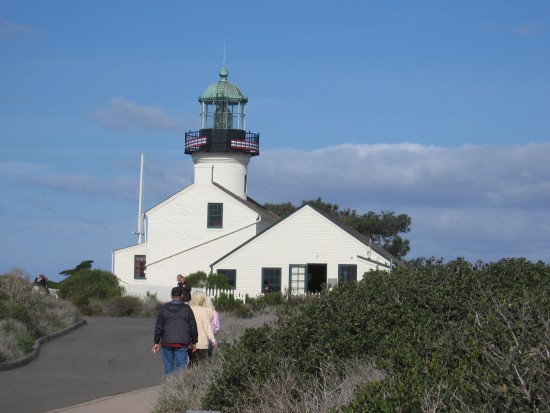
People walk toward the old Cabrillo lighthouse.
A short distance from Battery E is the historic Old Point Loma Lighthouse. From 1855 to 1891 it stood as a beacon for those entering San Diego Bay, before being replaced by an automated lighthouse down near the water. This old lighthouse is one of San Diego’s most well-known sights!
A museum by the old lighthouse includes the first Fresnel lens to be used by the automated New Point Loma Lighthouse.
A small museum near the lighthouse’s entrance is worth a quick look. It includes an amazing Fresnel lens that magnified light to help sailors out at sea.
Front of the historic lighthouse and its large rainwater basin.
A large flat area in front of the lighthouse was used by the keeper and his family to capture rainwater. Back then this lighthouse stood isolated, far from the small town across the water that grew into metropolitan San Diego.
Recreated family room in Cabrillo lighthouse includes Christmas tree.
Several furnished rooms in the lighthouse are on display behind glass. Very little space was available to accommodate the keeper and his family. In addition to this main room, there’s a kitchen area, closet, and two bedrooms up the winding stairs.
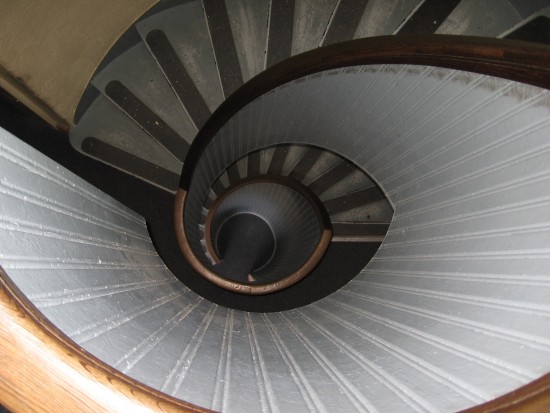
Looking down winding stairs from top of Cabrillo lighthouse.
Speaking of the stairs, I couldn’t resist taking this pic!
Another view of Point Loma’s historic old lighthouse.
Another great look.
Grey whale sculpture near Pacific Ocean overlook.
Interesting sculptures, artwork and signs can be found at the Pacific Ocean overlook. During the winter months, you can see gray whales spouting as they travel between the Arctic and Baja California.
A good place to spot migrating gray whales during the winter months.
You can see where the tidepools are below. I didn’t go down to the water on this trip, but it’s a fun place to see all sorts of sea creatures!
Walking down to Bayside Trail and folks who will talk about history.
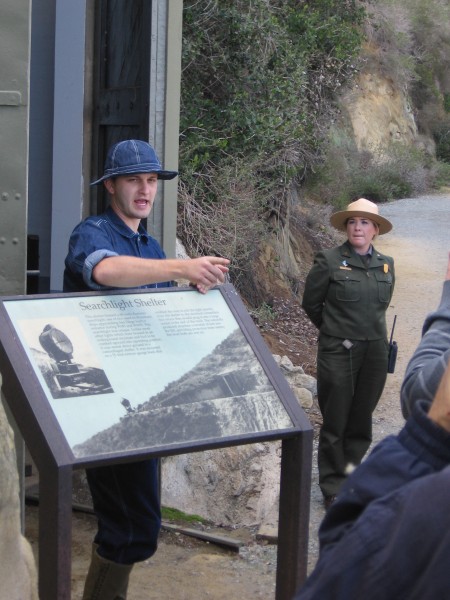
At noon there was a guided hike down the Bayside Trail. We walked down a short road to the trailhead, where an old military truck waited with some folks dressed in historic uniforms. They would show us some interesting stuff down the trail.
Group walks down Cabrillo Bayside Trail on a December day.
Here we go down the Bayside Trail. The lady park ranger showed us a large number of native plants, including Coastal Sage, Lemonade Berry, Prickly Pear and more. The flora you see here is what is natural to the area. San Diego is located in a semi-arid zone, with very little precipitation. Most of the trees and other plants you see around town are not native.
A spotlight protected San Diego Bay during World War II.
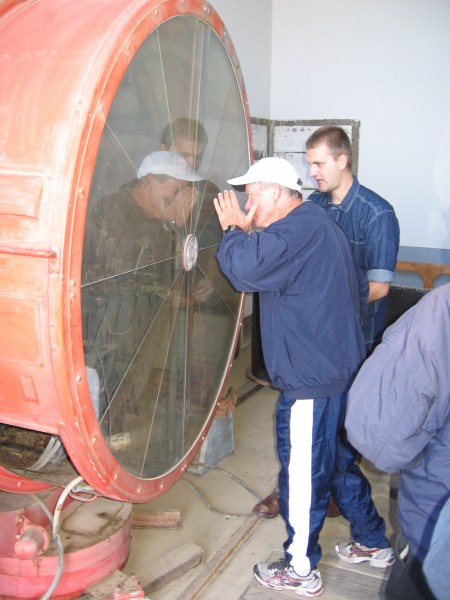
We’ve come to a small structure built into the hillside that houses an old electric spotlight. The huge lamp was used to watch the San Diego Bay’s entrance during World War II. It rolled out on a pair of tracks and plugged into an outlet that you can see by the trail.
Inside the small structure we look at the huge wartime spotlight.
My camera’s flash brightly illuminated the old spotlight inside.
Further down the trail is the spotlight’s generator building.
Now we’ve walked down to the electrical generator building–really just two small empty rooms. Usually these structures are closed to the public.
Rounding a corner of the sandstone cliff San Diego comes into view.
The group turned back, but I walked on…
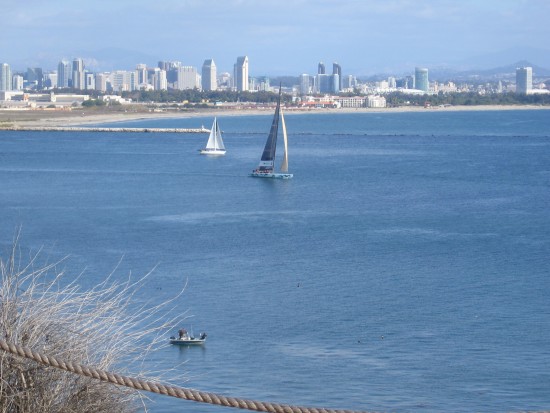
America’s Cup boat Abracadabra sails down the San Diego channel.
And I was rewarded with this view. Having lived in San Diego a good many years, I recognized the large sailboat leaving San Diego Bay. It’s the Abracadabra, a boat used in a past America’s Cup. I also spotted the Stars and Stripes, just out of this picture.
Beyond downtown San Diego I could see numerous mountains, from Cuyamaca on down to Otay. When it snows in the mountains, San Diego has a snow-capped backdrop viewed from here!
One last fond look at the beautiful Cabrillo National Monument lighthouse.
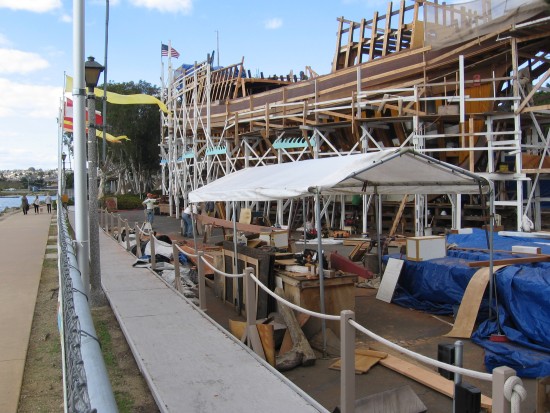
Cabrillo’s flagship San Salvador being built on Spanish Landing.
Portuguese explorer Juan Rodriguez Cabrillo discovered San Diego Bay on behalf of Spain in 1542. His flagship was a galleon named San Salvador. Today, almost 500 years later, a replica of the historic ship is being built on Spanish Landing, across from San Diego’s Lindbergh Field. The ship is coming alive with the help of hard work from San Diego Maritime Museum volunteers, and it’s scheduled to be launched next year! It will soon be another cool sight on the Embarcadero!
As you can see from this first photo, a great deal of progress has been made on the hull. The detailed San Salvador recreation will be seaworthy and will sail out onto the broad ocean! As it passes Point Loma, it will look like the ghost of Cabrillo has returned! I remember seeing the hull about a year ago when there were only four or five “ribs” visible.
The public can visit the San Salvador build site. You’ll see not only the ship, but various items of related interest, including the tools used centuries ago to construct a large galleon.
Another view of San Salvador ship replica build site.
The walkway you see on the left runs the length of Spanish Landing, behind Harbor Island.
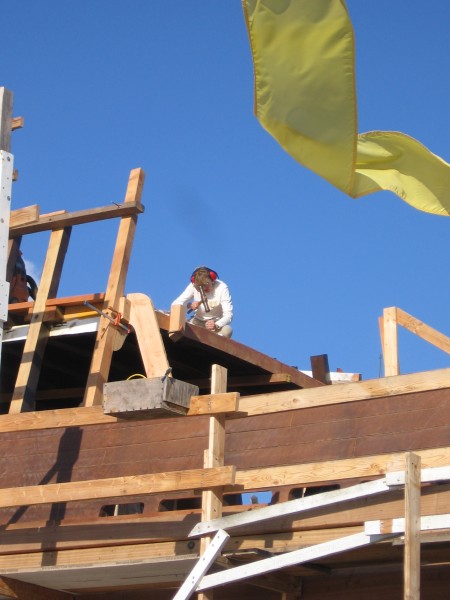
Maritime Museum volunteer works on San Salvador ship.
Several volunteers were working on the galleon. Colorful banners were flying in the gentle sea breeze.
Blacksmith tools are some of the sights near the San Salvador.
Lots of interesting stuff can be found about the build site. Nobody was visiting at the moment, so this pic looks kind of empty. I was told buses full of school kids often come by on educational field trips.
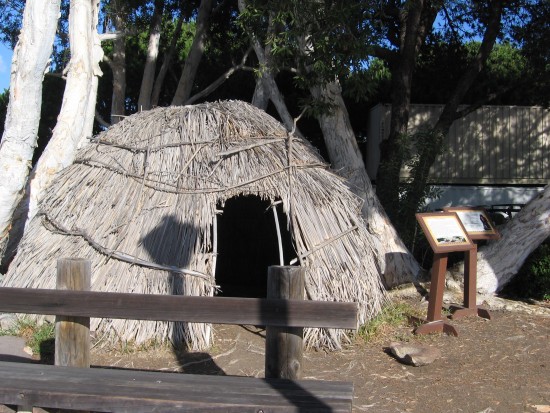
Volunteers work on the wooden hull of Maritime Museum’s San Salvador ship.Recreation of Kumeyaay village at San Salvador build site.
This is the kind of primitive structure native San Diegans lived in at the time of Cabrillo’s “discovery” of the bay.
Working on the spars under Harbor Drive’s boat channel bridge.
This friendly lady greeted me as I walked under the Harbor Drive bridge. She smiled for a photo. She told me she was working on the ship’s spars for the sails. I didn’t hear her words precisely, but I believe she’s coating them with linseed oil.
She asked if I wanted to volunteer. A guy I met later asked the same thing! They’d appreciate any help they can get!
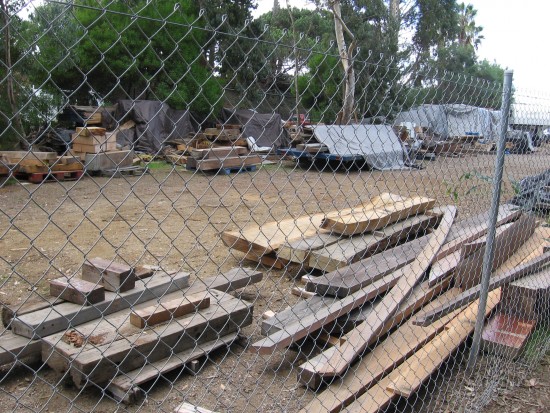
Scraps of wood used to build replica of Cabrillo’s historic ship.
All this wood is being used in various ways by the shipbuilders. It looks like a big lumber yard on the other side of Harbor Drive!
View of replica San Salvador from opposite side of Harbor Drive.
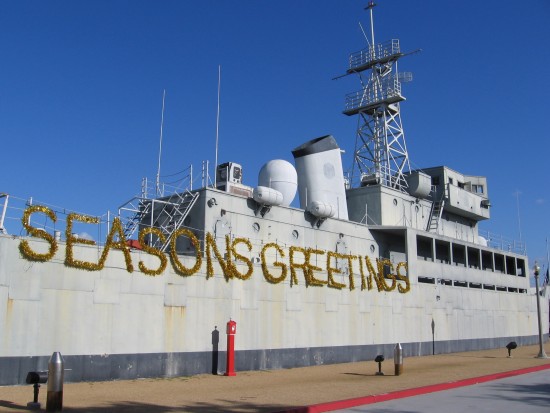
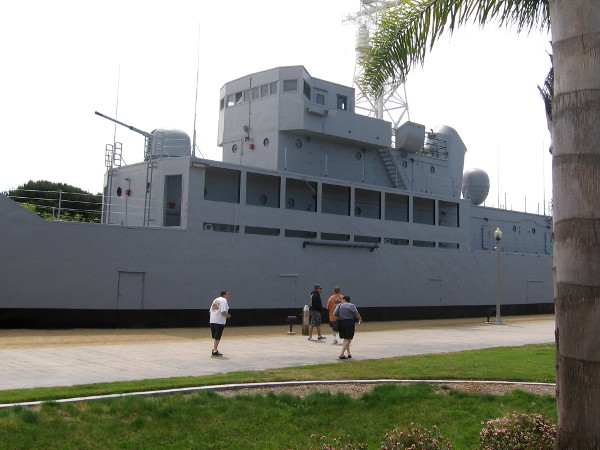
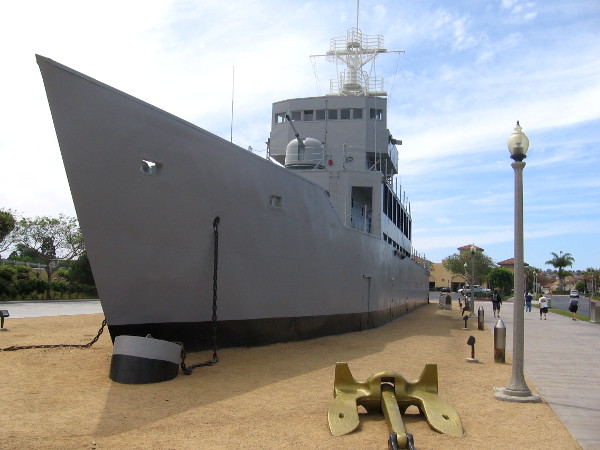
How did this guided missile frigate end up sitting on the ground? Why does it have a tinsel sign that spells out Seasons Greetings? Did Santa drop it like an oversized toy from the sky?
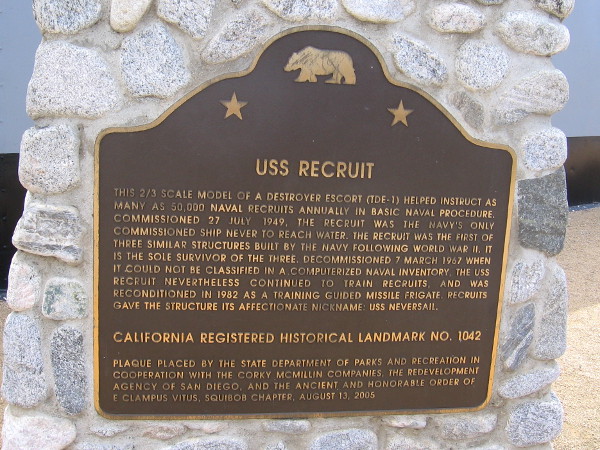
This unusual sight is often glimpsed by San Diegans motoring along Harbor Drive between downtown and Point Loma. Built right there on the ground in 1949 to train Navy recruits, today this two-thirds model of a real warship is situated at the southwest end of the redeveloped NTC Liberty Station. The landlocked “non-ship” is officially named the USS Recruit and was originally modeled after a destroyer, and commissioned as a regular Navy ship!
Nicknamed by sailors the USS Neversail, she’s become something of a San Diego landmark. And every year around Christmas she wishes passersby a happy holiday!
UPDATE!
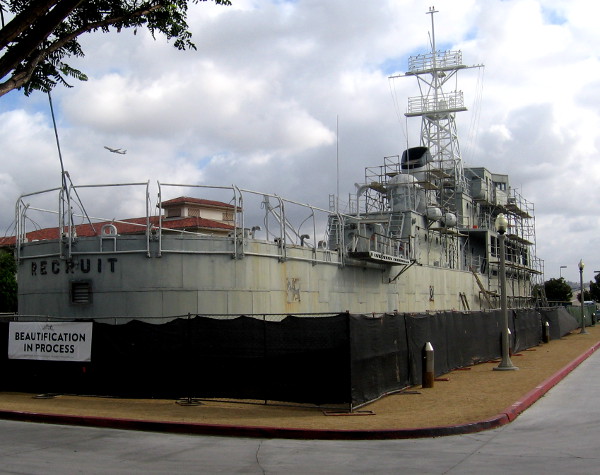
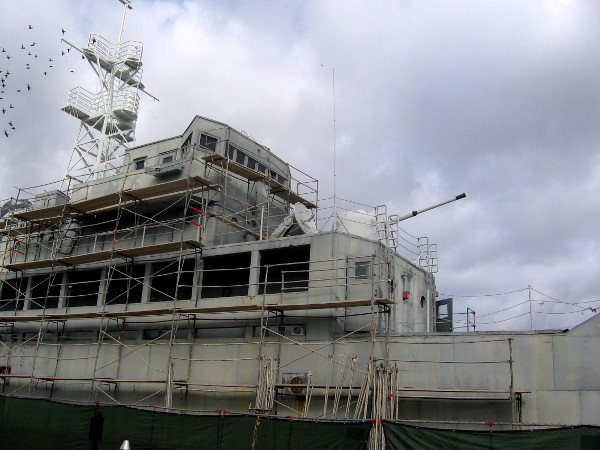
Here are a few pics taken during a walk in late September of 2014. The USS Recruit appears to be awaiting a new coat of paint!
Beautification in progress in late September 2014.Scaffolding along the side of the weathered old USS Recruit in Point Loma.A bicyclist passing the USS Recruit heads into Liberty Station.
I walked past the USS Recruit in early March, 2015. The ship has a new paint job! Of course, I had to take more photos…
This model of a destroyer escort helped instruct as many as 50,000 naval recruits annually in basic naval procedure. The Recruit was the Navy’s only commissioned ship never to reach water.People walk past the newly painted USS Recruit at one end of Liberty Station.Nicknamed the USS Neversail, this ship is an unusual sight that captures the attention of visitors to San Diego.
I took a nice long walk this chilly morning from Spanish Landing to the edge of the Marine Corps Recruit Depot. I followed dirt and paved walkways, staying mostly near the edge of the boat channel that runs between Point Loma’s Liberty Station and Lindbergh Field.
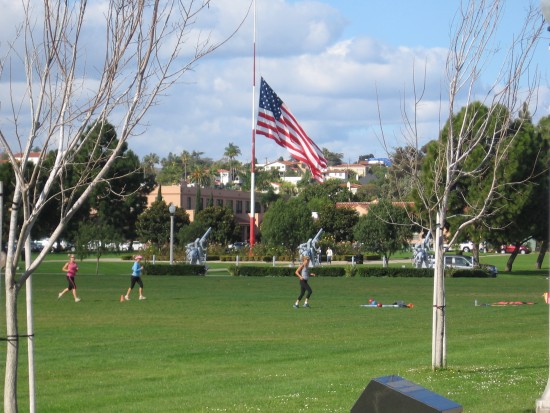
Here are pics of one sight that was very hard not to miss. The gigantic flag at NTC Liberty Station was flying in the breeze at half-mast, most likely due to Nelson Mandela’s death today.
In the first photo you can see ladies getting a workout in a big grassy area, and some large guns that are monuments to the old Naval Training Center.
Today’s Liberty Station is a complex of stores, offices, museums, residential and park space. It used to be Naval Training Center San Diego, which was closed in 1997 and eventually redeveloped using the historic old buildings. The grassy expanse near the boat channel is Preble Field. It was the marching ground where Navy recruits assembled, marched and graduated from boot camp.
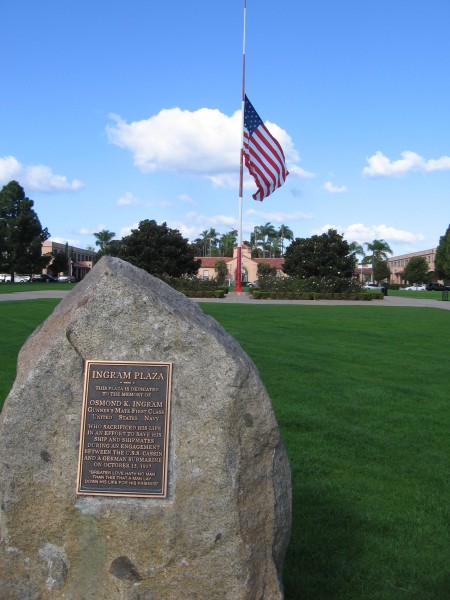
Flag at half mast in Ingram Plaza.
Beyond this plaque is where Ingram Plaza used to be. Ingram Plaza was the site of tent camps in the 1920s where incoming recruits were temporarily isolated to prevent outbreaks of contagious diseases. Here they also got haircuts, new uniforms and physical training before joining the regular routines of the base.
The plaque reads:
THIS PLAZA IS DEDICATED TO THE MEMORY OF OSMOND K. INGRAM GUNNERS MATE FIRST CLASS UNITED STATES NAVY WHO SACRIFICED HIS LIFE IN AN EFFORT TO SAVE HIS SHIP AND SHIPMATES DURING AN ENGAGEMENT BETWEEN THE U.S.S. CASSIN AND A GERMAN SUBMARINE ON OCTOBER 15, 1917
“GREATER LOVE HATH NO MAN THAN THIS THAT A MAN LAY DOWN HIS LIFE FOR HIS FRIENDS'”
UPDATE!
Here are a few more photos I took on a later day:
Plaques at NTC Liberty Station remember the history of Naval Training Center San Diego.Preble Field was a grinder or marching ground. However, it is most fondly remembered as the location of every boot camp graduation ceremony, where boys became men.Ingram Plaza was the site of the original tent camps in the 1920s. New recruits were isolated here for three weeks, and given haircuts, uniforms and physical training.
…
To enjoy future posts, you can “like” Cool San Diego Sights on Facebook, or follow me on Twitter.













































 Cool San Diego Sights!