Celebrating the 100th Anniversary of San Diego’s Santa Fe train depot!
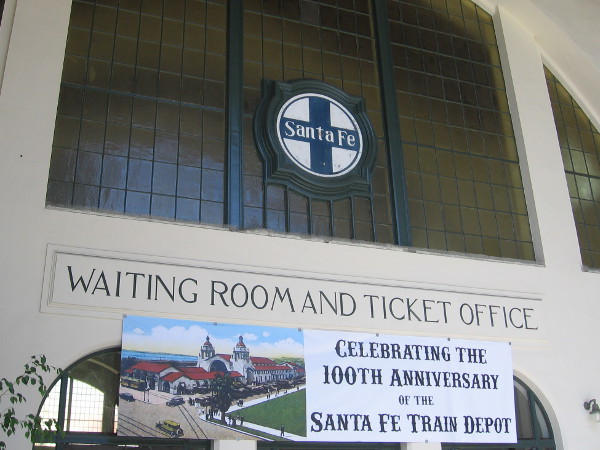
I was walking around today when I noticed a large banner hanging above the entrance of downtown’s Santa Fe Depot. This year the historic train station and San Diego landmark turns one hundred years old!
A friendly gentleman inside the waiting room at the information booth gave me a flyer about a special event tomorrow. The public is invited to attend a celebration of the historic depot’s centennial! The festivities take place between 11 am and 1 pm. The address of the Santa Fe Depot Union Station is 1050 Kettner Boulevard, just north of Broadway in downtown San Diego. I will be working, so I’ll probably miss it.
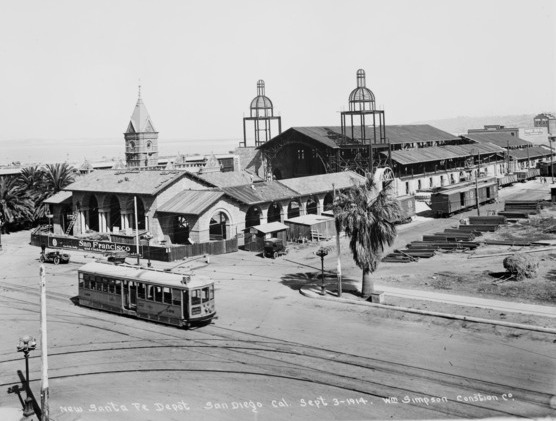
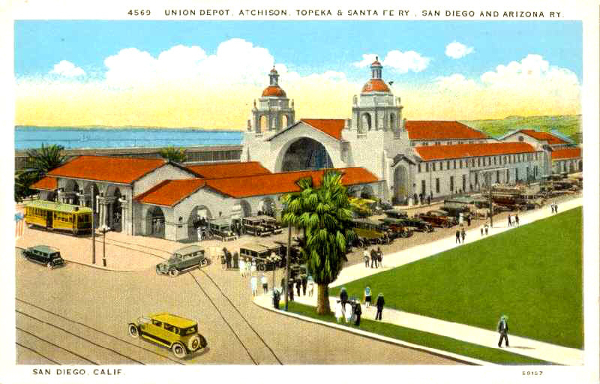
In the past I’d thought about posting cool old photos of the depot, but now seems the appropriate time! Check out the following photographs that I found on Wikimedia Commons.
First, a little background on the depot, with a few details taken from an informative handout…
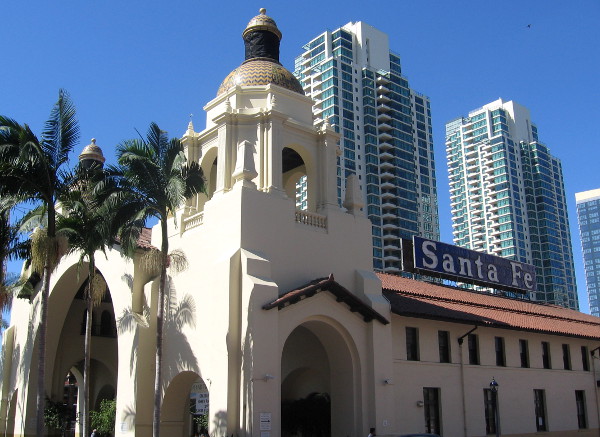
A fine example of the classic Spanish Mission-Colonial Revival style of architecture, including Moorish influences, the Santa Fe Depot is on the National Register of Historic Places. Today it lies at the southern terminus of the nation’s second-busiest Amtrak rail corridor. In addition to the Pacific Surfliner trains, it also serves as an important station for Coaster commuter trains and the San Diego Trolley.
Built by the Atchison, Topeka and Santa Fe Railway, it opened on March 7, 1915. It replaced the California Southern Railway’s smaller 1887 Victorian depot. The beautiful new depot was designed to welcome rail travelers visiting the 1915 Panama-California International Exposition, which was staged in expansive Balboa Park, just northeast of downtown. You can see dozens of fantastic photos of Balboa Park from a century ago here.
The huge Santa Fe Depot waiting room is 170 feet long and 55 feet wide. The varnished oak benches are lit by 16 bronze and glass chandeliers. You can see pics of today’s interior here.
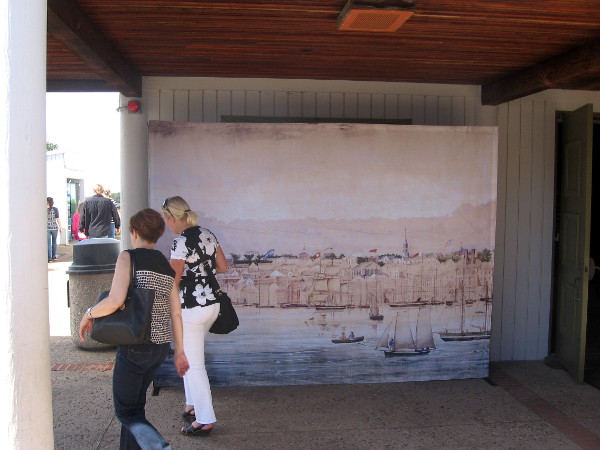
Old photo on today’s information booth shows large waiting room as it was once configured, with ticket counters, checkroom and shops in wooden structures on the west side.Historical photograph of Santa Fe Depot’s steel construction, dated August 17, 1914.Santa Fe Railroad Station under construction beside the old 1887 Victorian depot, which stood on the other side of the tracks. Photo dated September 3, 1914.Photo of the Victorian depot tower being demolished in 1915. A locomotive pulled the old tower over to great public fanfare.Color postcard circa 1920 features inviting image of San Diego Union Depot.The handsome Santa Fe Depot as it appears today, with modern high-rise buildings nearby.
…
To enjoy future posts, you can “like” Cool San Diego Sights on Facebook, or follow me on Twitter.
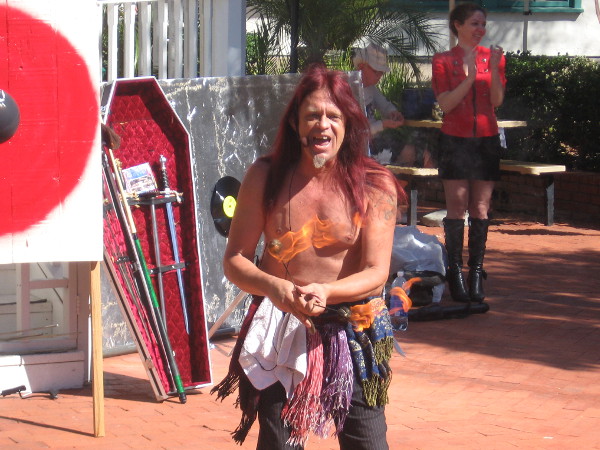
Murrugun the Mystic from AMC television hit Freakshow begins his busker festival danger act with fire eating.
Today I witnessed the grittiest performance I’ve ever seen. And I’ve seen a few.
I went to the Seaport Village Spring Busker Festival today and enjoyed a number of excellent, very entertaining acts. But the one that really stood out was performed by Murrugun the Mystic. He’s one of the stars of the AMC television reality show Freakshow.
While in a great deal of pain, Murrugun was first in the world to shoot a flaming arrow out of his throat! Let me describe his entire act…
Unfortunately, I filled up my camera’s memory card midway through his fire eating, just before he got to the really big stuff. At the end of some more conventional (but great) fire eating tricks, he really wowed the crowd. He filled his throat with a large quantity of kerosene combined with light gasoline, then produced two MASSIVE fireballs from his mouth. You had to see it to believe it! These balls of flame must’ve measured 6 feet in diameter. Oh, man! It was a bummer my camera ran out of memory! Afterward, he promptly rinsed his throat out with mouthwash and then water, because the flammable mixture is highly carcinogenic.
Next Murrugun balanced his entire body weight on a demonstrably sharp samurai sword. He leaned over the horizontal blade and supported himself on his stomach, lifting arms and legs from the ground.
Next came the bed of nails. I was volunteered, along with five other guys in the crowd, to help Murrugun wow the gathered audience. Each of us tested the nails, and while they weren’t sharp as pins, they were definitely pointed. Murrugun lay on the bed of nails, placed a board over his torso, and four of the guys, weighing a total of about 910 pounds, stepped up onto the board! I and another fellow helped to balance the four. Ouch! While this sort of thing has been performed for thousands of years, and the many nails effectively support a whole lot of weight, I wouldn’t want to be sandwiched between them and the combined mass of four guys!
Now the show got interesting in an alarming way. Murrugun used a very long pole to support “The Knives of Death”. I believe that’s what he called them. These five long knives faced downward from a ring, and should they topple down from the top of the pole, they’d probably impale poor Murrugun. I’m not sure how his act was supposed to proceed. The knives were balanced atop the pole. Suddenly down came the knives from on high and Murrugun lay flat on his back. The knives mostly missed him. But one sliced his leg. A good three inch gash was visible, and blood. He seemed stunned. He very gingerly hobbled to the back of the stage area, checked himself, and it looked to me like he then decided to tough it out. The audience didn’t seem to know how to react. Like them I just watched, astonished.
He was obviously hesitant and in pain. He told us he’d now perform a world’s first. He’d shoot a flaming arrow from his throat.
I could see his hands visibly trembling while he tried for a few seconds to piece two slender hollow rods together, which formed the shaft of the arrow. He gradually composed himself. He lubricated the long shaft, which was possibly two to three feet long, lit the pointed end, then proceeded to swallow the unique arrow. He bent over, and after attaching the arrow end to a slingshot-like device, shot the arrow out of his throat and through the air! He missed the balloon in the bullseye, perhaps 10 or 15 feet away, but not by much!
I know that street performers–and circus and carnival sideshow performers–have a difficult profession and can endure a lot of hardship. But what I witnessed this afternoon was truly heart-rending and impressive. It seemed no amount of pain could slow down Murrugun’s showmanship and passion for his art.
Murrugun the Mystic noted that because Ringling Bros. and Barnum & Bailey Circus have decided to eliminate elephants from their show (the news just out), perhaps there’s a chance the circus sideshow will make a comeback. That is Murrugun’s wish and personal mission. Can you help make that happen? Here’s his Facebook page.
Thanks, Murrugun, for privileging me to be a tiny part of busker history! Good luck!
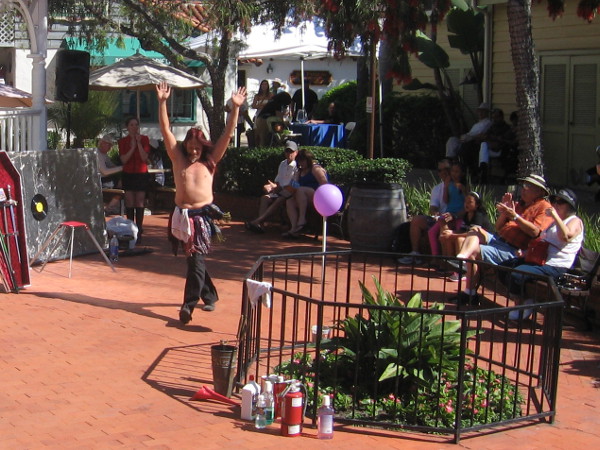
Murrugun the Mystic makes his grand entrance near Seaport Village’s gazebo in the Plaza East.Fire eating preceded balancing on a sword, being crushed on a bed of nails, enduring knives of death, and shooting a flaming arrow from his throat!
…
To enjoy future posts, you can “like” Cool San Diego Sights on Facebook or follow me on Twitter.
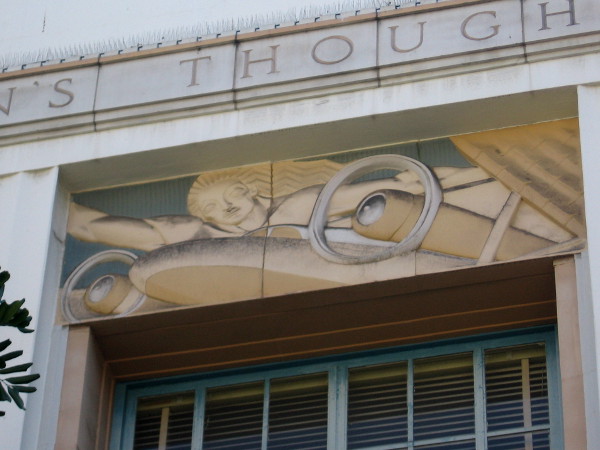
Art Deco relief work shows female flying above propellers of airplane.
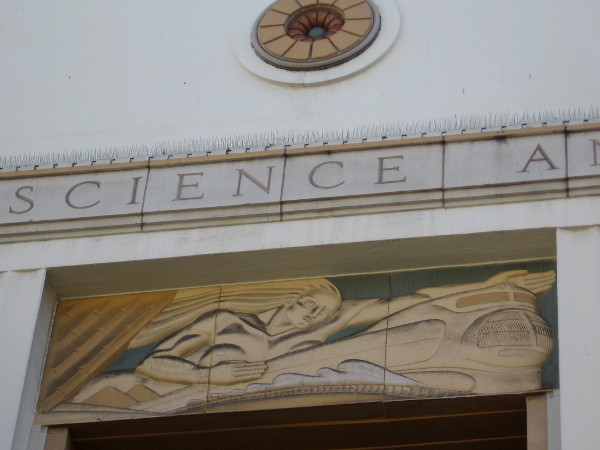
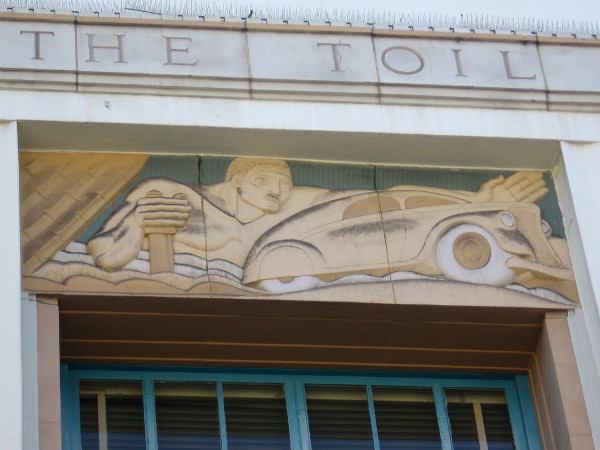
“Through science and the toil of patient men, the nation’s thought traverses land and air and sea.” Those are the words inscribed along the top of downtown San Diego’s Post Office, on E Street between 8th and 9th Avenue. Beneath the words are nine terra-cotta panels created by Archibald Garner in 1937. The Art Deco images include a car, train, ship and airplane, the means by which mail has been delivered over many decades, transmitting the written word across the nation and around the world.
Titled “Transportation of the Mail,” Garner’s handsome panels were the result of a Department of Treasury competition. Like most Post Office public art created during the New Deal, the work was funded through the Treasury Department’s Section of Painting and Sculpture, also known as The Section of Fine Arts. The post office itself was built by the Works Progress Administration (WPA) and stands across the street from the now closed old Central Library. You can see a few interesting photos of the library here.
View of San Diego’s downtown Post Office from Ninth Avenue.Steamship cuts through ocean waves on its way to deliver the mail.Distinctive Art Deco train can be seen near roof of San Diego’s old Post Office.Historically interesting panels, which appear at the top of high windows.Classic automobile in Art Deco public artwork in downtown San Diego.
…
To enjoy future posts, you can “like” Cool San Diego Sights on Facebook. or follow me on Twitter.
Photo of American who fought in World War II, helping achieve a victory for liberty.
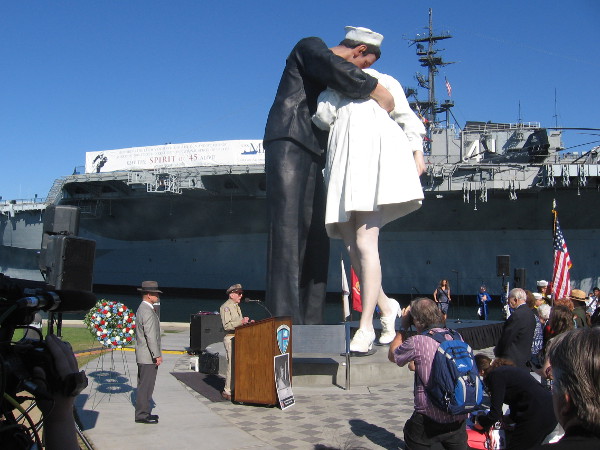
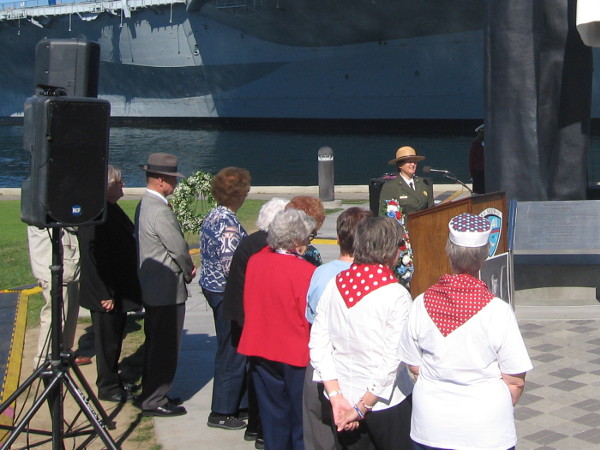
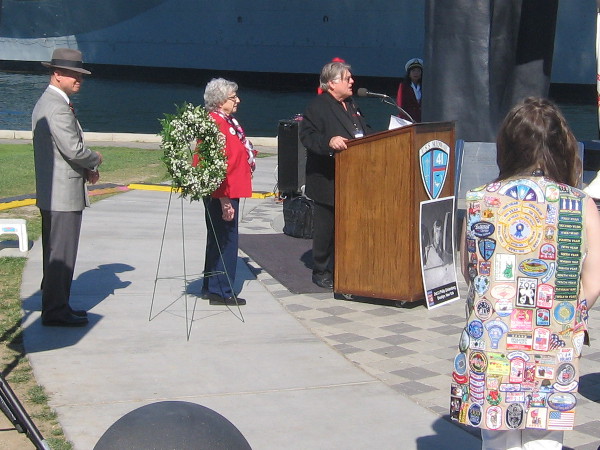
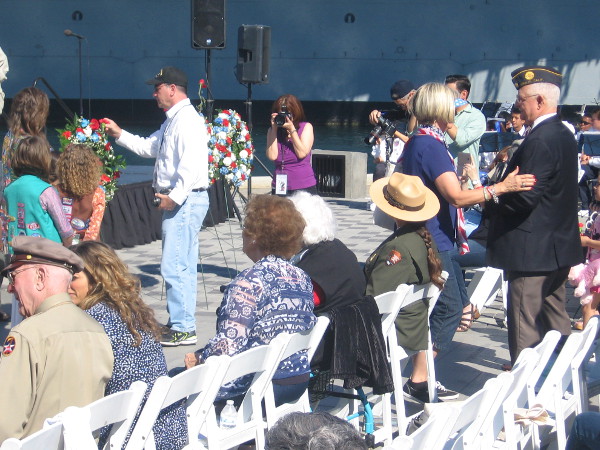
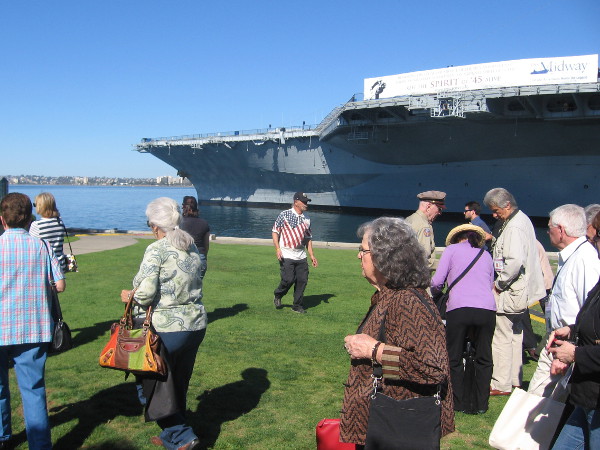
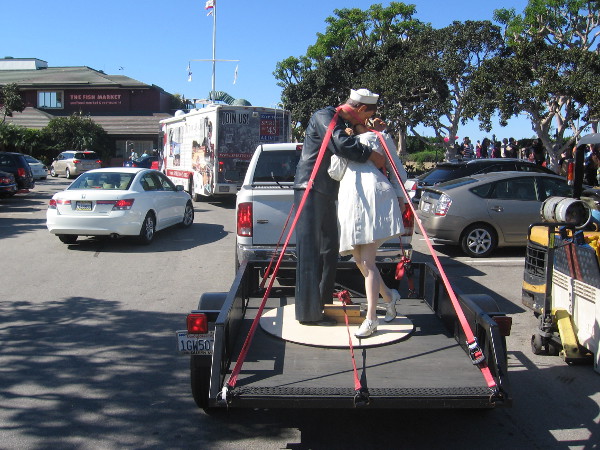
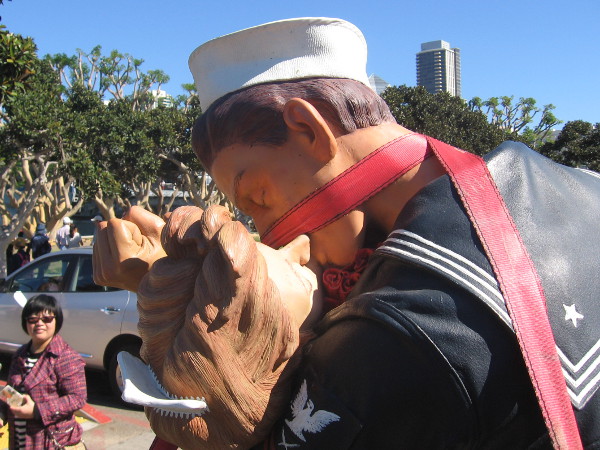
This morning a special Spirit of ’45 wreath laying ceremony was held on San Diego’s Embarcadero, right next to the USS Midway Museum. The area is known as the Greatest Generation Walk, and is dotted with monuments and memorials remembering those who fought in World War II. Today’s event took place at the heels of the large Unconditional Surrender statue, created by artist Seward Johnson. The sculpture was modeled after the iconic photograph of a sailor spontaneously kissing a nurse in New York City’s Times Square upon learning the war was over. How appropriate!
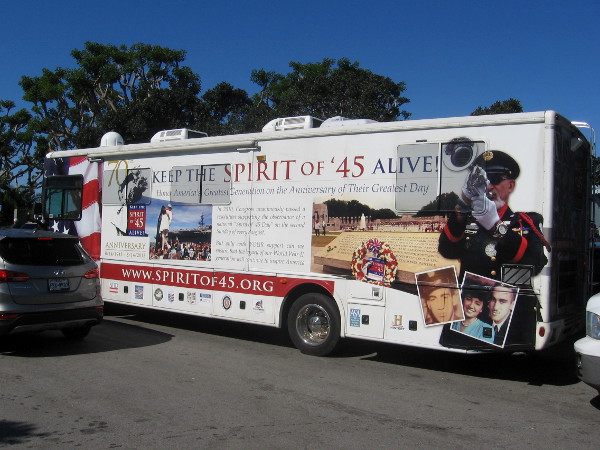
The Spirit of ’45 is an organization and series of events around the country that honors Americans who served in the Second World War. Most of these local tributes are held on or around the happy day the war finally ended, V-J Day, but today’s February ceremony was held in conjunction with a national conference. It kicks off the historic 70th anniversary year of commemorative events.
I got lots of pics!
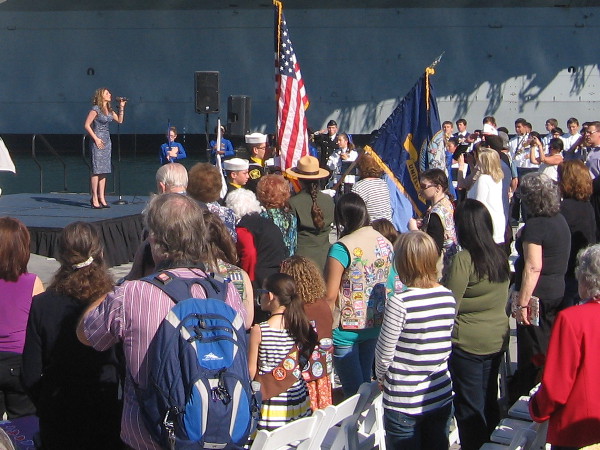
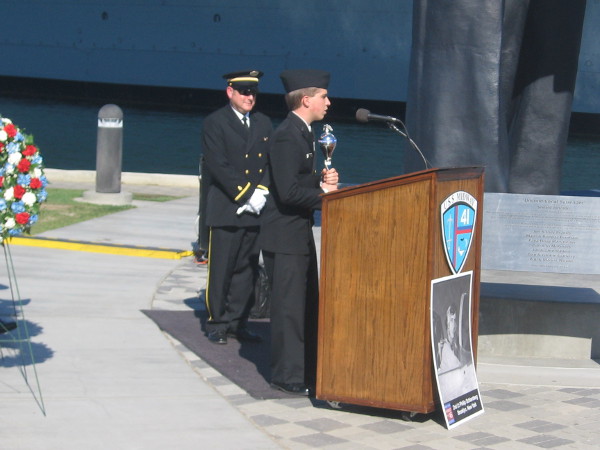
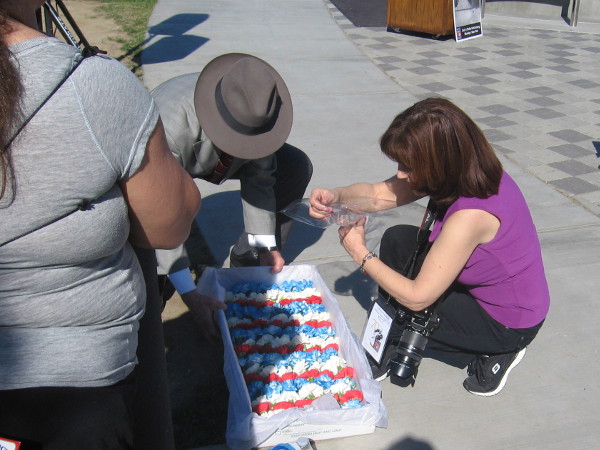
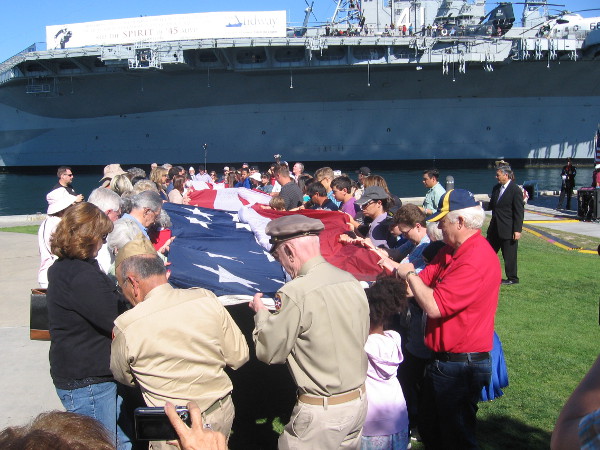
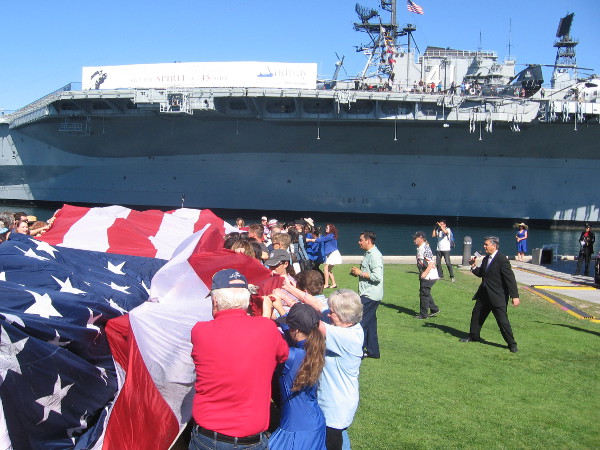
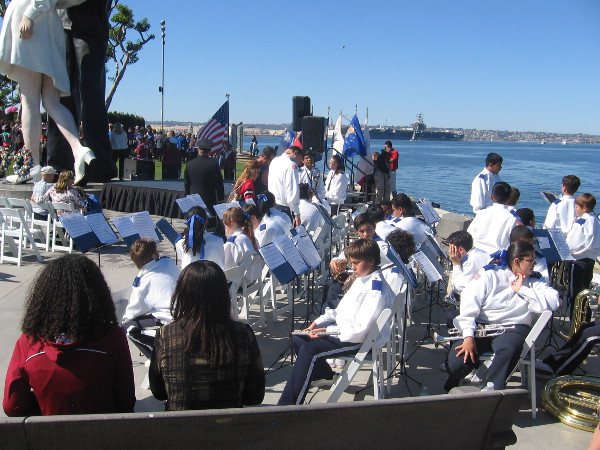
Color guard is ready prior to Spirit of ’45 kick off event by USS Midway Museum.Only 5 percent of those who fought in World War II remain alive today. Those who participated in the war effort were honored and remembered with gratitude.The Star Spangled Banner is sung as audience listens on San Diego’s Embarcadero.Thanking a genuine hero. Gratitude was expressed during the special ceremony.Young man in Junior ROTC speaks about family members who defended freedom and others who serve today.Dignitaries, veterans and military people on stage for presentation of first wreath.After presenting the first wreath, photo of Philip Schlamberg, last American killed during World War II, is carried by a hero.Rosie the Riveters are thanked for their service. They presented the second wreath.Introducing a British war bride, who thanked Americans for saving Great Britain and freeing Europe from the Nazis.About to bring red, white and blue carnations over to the third, final wreath.Everybody attending is invited to insert a flower, to honor those who served their country in World War II.A special flag awaits nearby on the grass.People from the audience make their way to participate in a patriotic spectacle.Many hands get ready to unfurl the huge flag on the grassy area between the Unconditional Surrender statue and Bob Hope Tribute.The giant billowing flag is unfurled by citizens proud and happy to be free.People carefully hold up American flag in a tribute to fallen heroes.The Stars and Stripes is displayed on the Greatest Generation Walk.Photo of three wreaths and flags after the crowd has dispersed.Young band members relax in the San Diego sunshine.Singers perform nostalgic Boogie Woogie Bugle Boy after ceremony.Small model of Seward Johnson’s Unconditional Surrender sculpture is on display.The iconic kiss is planted right in front of my camera lens!Keep the Spirit of ’45 Alive!
…
To enjoy future posts, you can “like” Cool San Diego Sights on Facebook or follow me on Twitter.
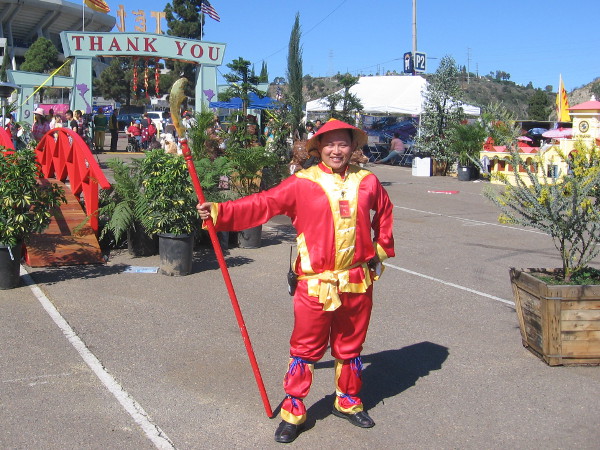
One of several friendly guys in a traditional costume worn by ancient warriors.
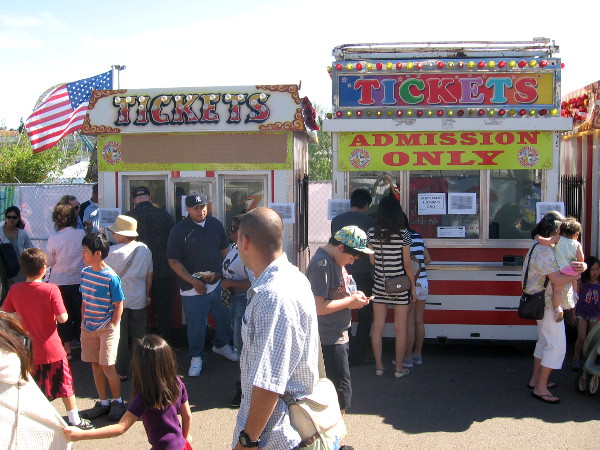
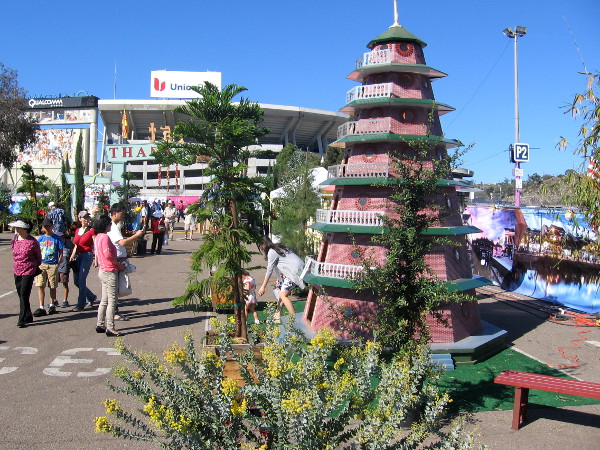
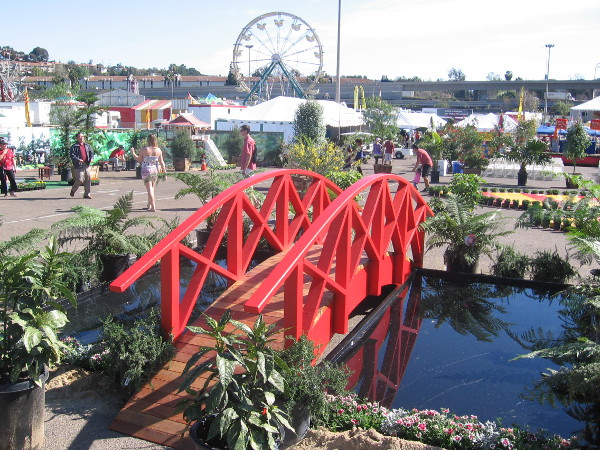
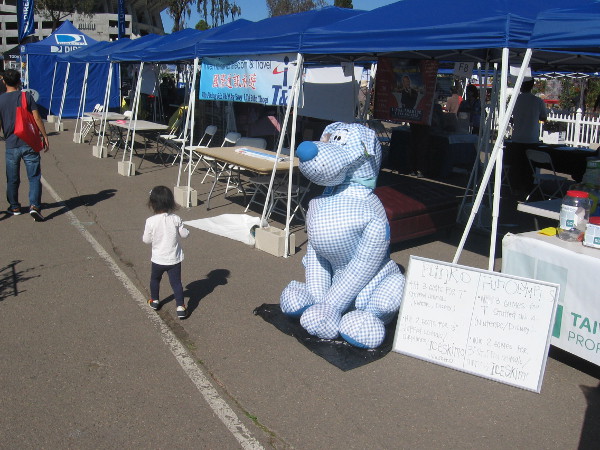
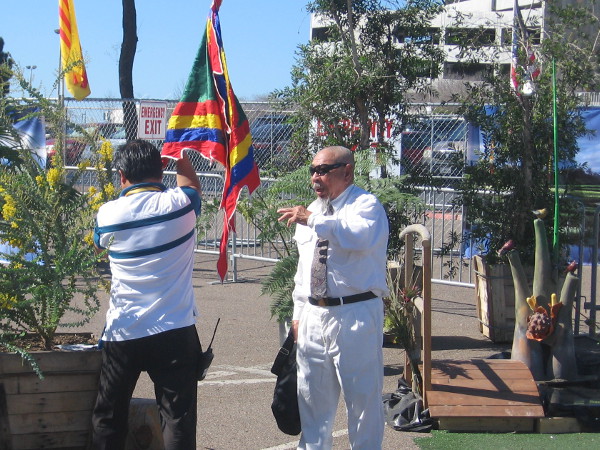
Here are pics of the 2015 Lunar New Year Tết Festival. The annual event is put on by San Diego’s Little Saigon, and is being held this weekend in a large section of the Qualcomm Stadium parking lot. These photos were taken shortly after the gates opened, and workers were applying some final touches in preparation for later crowds. Because I was so early, I missed afternoon attractions like the traditional Lion Dances and firecrackers. But there was plenty of cool stuff to see!
Tết, or Vietnamese New Year, is celebrated at the same time as Chinese New Year. The event marks the arrival of spring based on the Vietnamese variation of the Chinese lunisolar calendar.
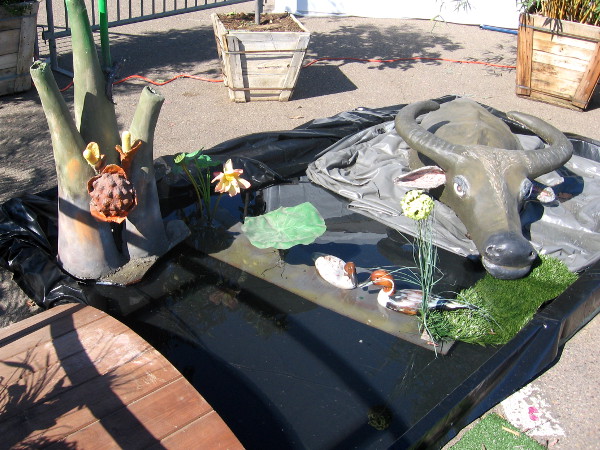
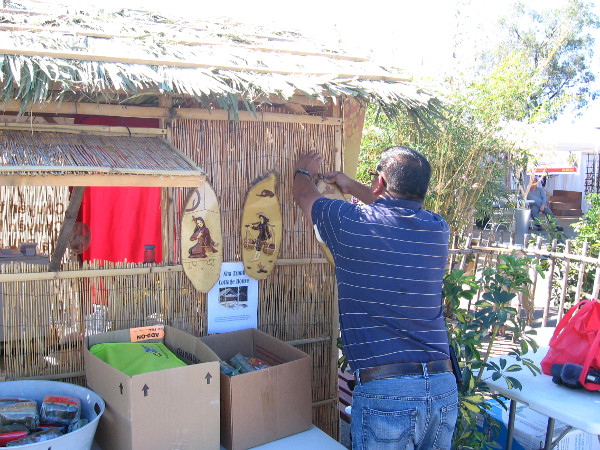
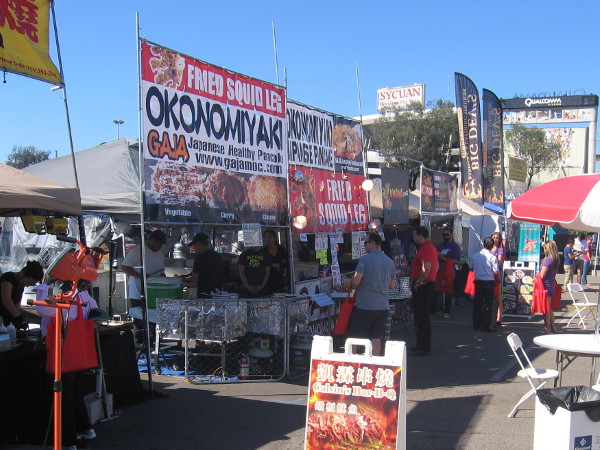
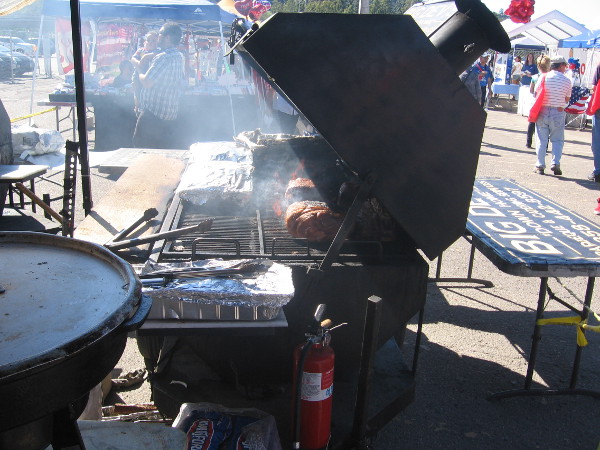
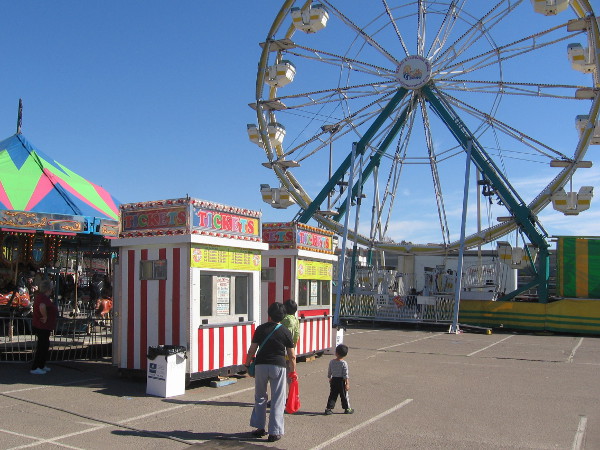
Ticket booths at Lunar New Year Festival in Qualcomm Stadium parking lot.People check out colorful displays after entering the annual festival on a sunny weekend.In 2015 the Chinese New Year begins the latest Year of the Goat.Model of Chua Mot Cot, or the One Pillar Pagoda, symbol of Vietnam’s rich culture and history. It was built in the reign of king Ly Thai Tong almost a thousand years ago.Model of Bến Thành Market, which was established by French colonial powers in 1859, and developed from early 17th century street vendors near Saigon River.Bridge over pond at Little Saigon’s Tết Festival.Models of two thatch-roofed houses elevated on wood columns at Mai Chau. These are excellent examples of highland village house construction.Art on display near entrance includes water buffalo and flowers.Getting a bamboo cottage house ready for a throng of festival visitors.Decoration near a stage at the Lunar New Year Tết Festival.Guys work to get everything ready shortly after the gates open on Saturday.One of many interesting booths. This one encourages hosting exchange students.There were delectable edibles of all types in a huge food court area.Young man selling treats pumps up a balloon.Lots of tasty barbeque was getting ready on this big grill.Lady demonstrates Chi Gong stretches on a large stage.Many colorful tables contained delights of every sort.A big carnival area includes a Ferris wheel.Just walking along in the morning as the fun event begins.These guys are doing their best to promote the event on Instagram.Adjusting a flag, one final touch at the 2015 Lunar New Year Festival in San Diego.
…
To enjoy future posts, you can “like” Cool San Diego Sights on Facebook or follow me on Twitter.
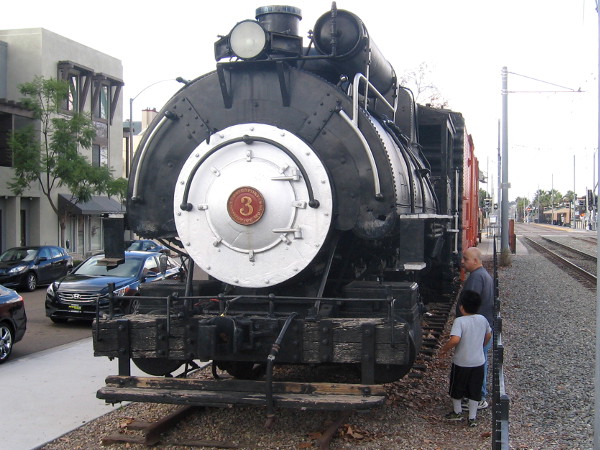
Dad and son check out old steam locomotive on display at La Mesa Depot Museum.
I’ve driven past the La Mesa Depot Museum many times over the years, but have never stopped to check it out. Today I remedied that very unfortunate situation!
Here’s a ton of cool pics. The small display train and historic railroad depot are found along Spring Street near the center of La Mesa, in San Diego’s sunny East County. I walked from south to north with my camera.
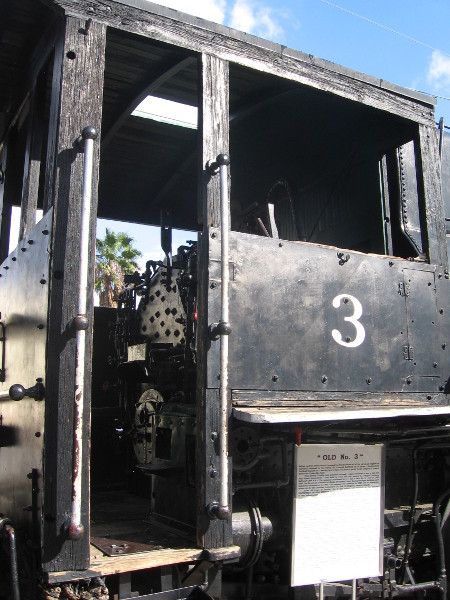
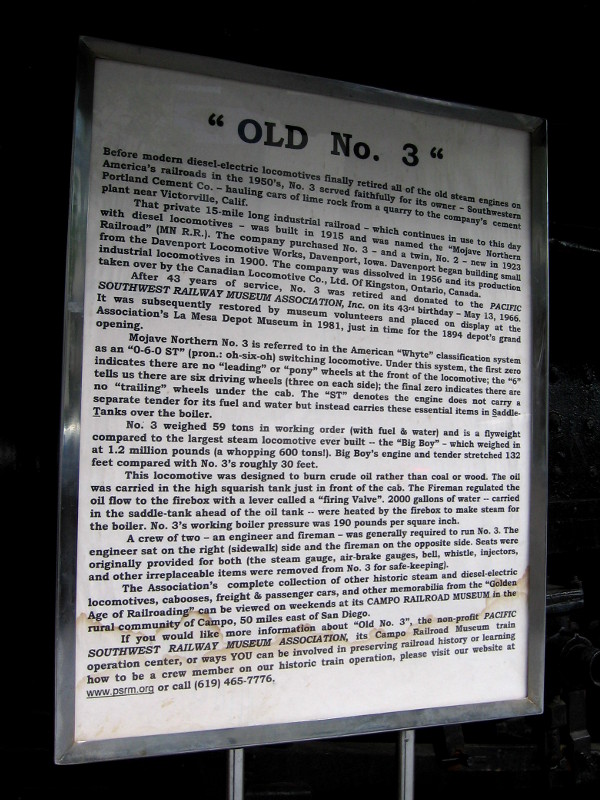
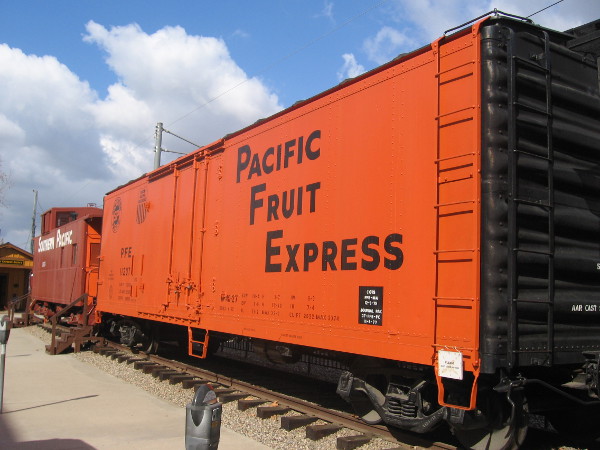
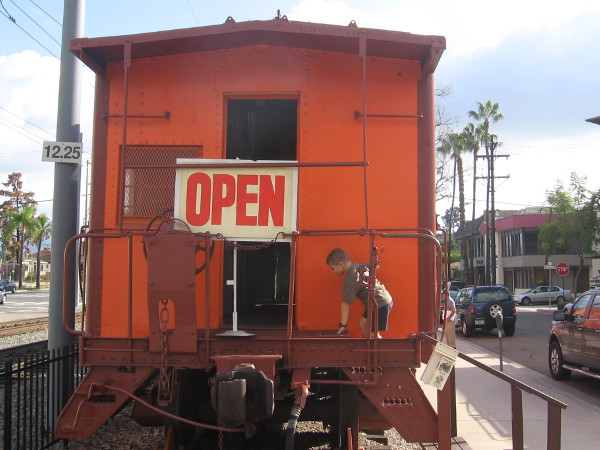
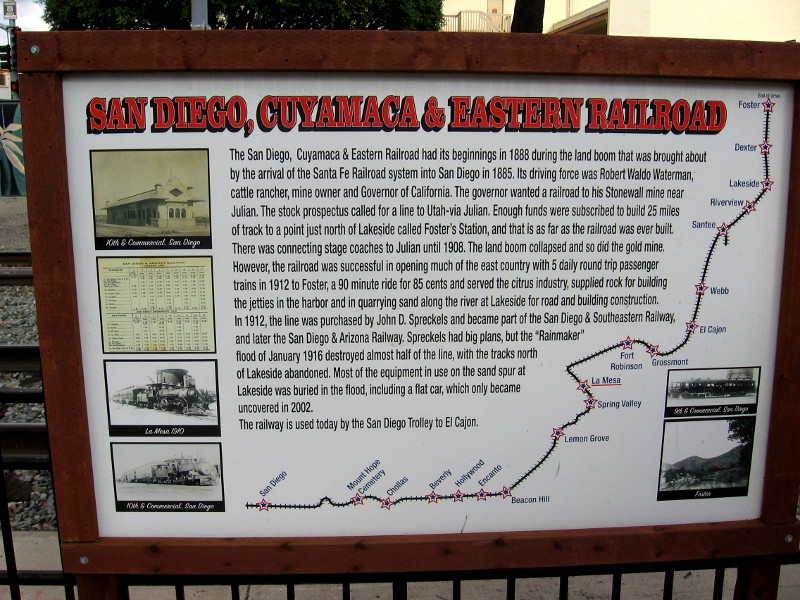
A friendly volunteer told me a little bit about the locomotive, reefer (refrigerator) car and caboose on exhibit, plus facts about the old La Mesa depot and San Diego and Cuyamaca Eastern Railway line. The depot is La Mesa’s oldest building and the only surviving San Diego and Cuyamaca Railway Station. Over the years it has experienced a colorful history, serving as an antique store and a worm farm! Please refer to the interesting signs, and my captions. Hopefully you get an idea of how awesome this place is!
The La Mesa Depot Museum is operated by the Pacific Southwest Railway Museum, which displays many old trains in Campo, an hour’s drive east of San Diego near Mexico. I went there with my family when I was very young and took a fun train ride. I plan on going again one day!
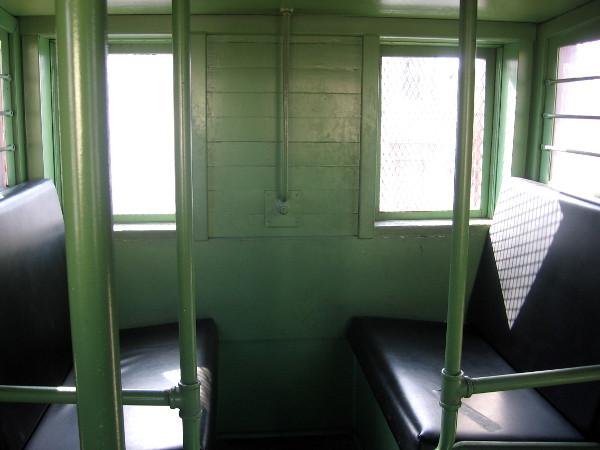
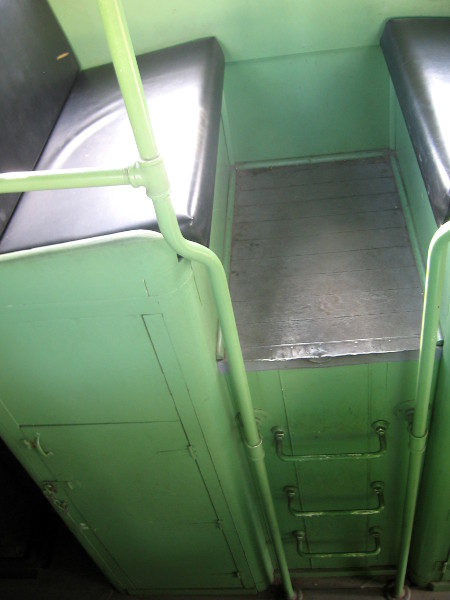
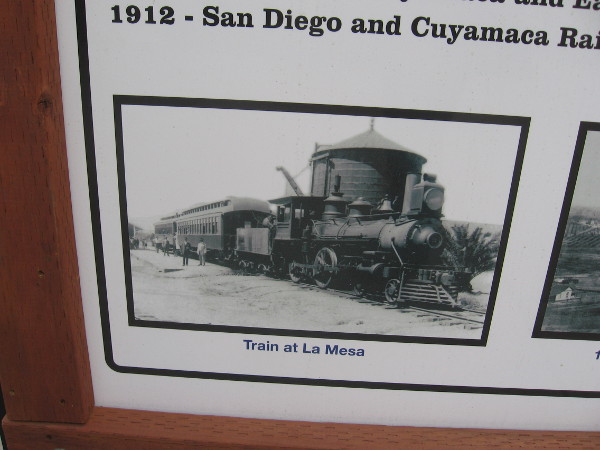
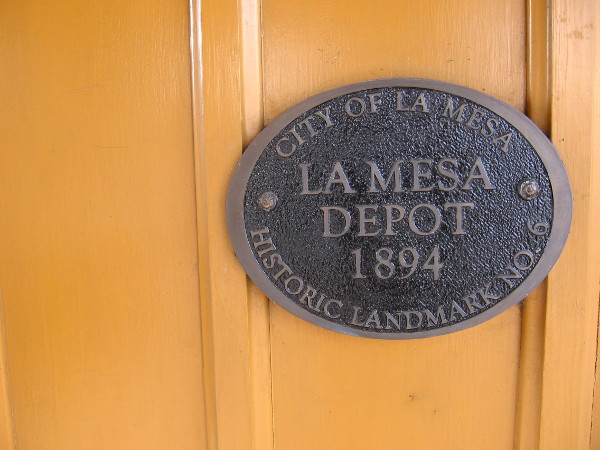
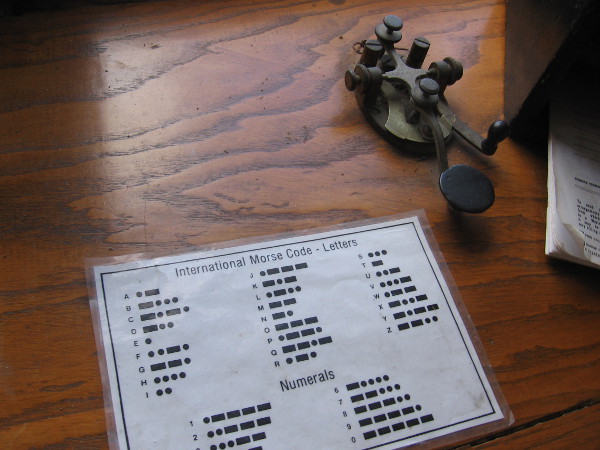
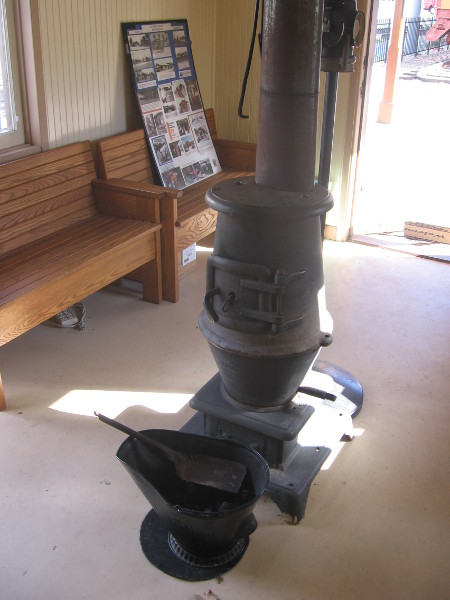
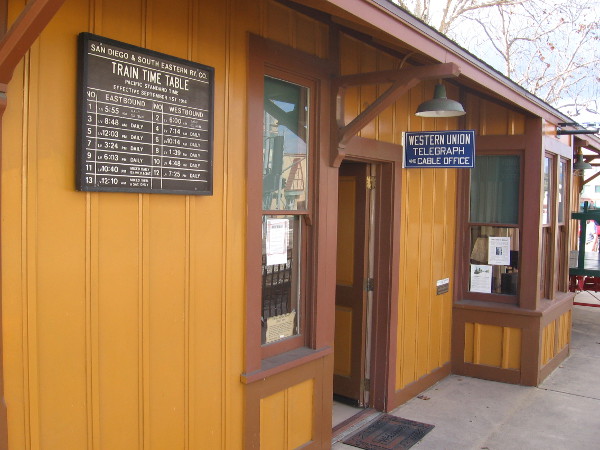
Locomotive was donated after 43 years of service to the Pacific Southwest Railway Museum Association.Looking up into door of steam locomotive Mojave Northern Railroad #3.Old No. 3 originally hauled lime from a quarry near Victorville, California.Part of the complex machinery and controls in the steam locomotive’s cab.Pacific Fruit Express reefer car on display at old train depot in La Mesa, California.Southern Pacific Railroad caboose can be boarded free by visitors on Saturdays, 1-4 pm.I saw a bunch of people during my short visit. There were many excited kids!Entering the caboose, to check out what life was like working on the railroad.The conductor had high windows to see around the train during operation.A freight train’s conductor or crew could sit up here to see in every direction.That’s quite a climb, even for a tall guy like me!The small La Mesa depot sits near tracks now used by the San Diego Trolley Orange Line.The depot opened in 1894, and this 44-star flag would’ve flown above it.Information sign outlines the early history of La Mesa’s train depot.Historical photograph of a train stopping at La Mesa.In the early 20th century the depot was sold and moved on various occasions.McKeen Car at the La Mesa Depot.This very small building contains lots of cool stuff!City of La Mesa Historic Landmark No. 6 on side of 1894 train depot.Ticket office in depot contains various old telephones and a telegraph.The telegraph key still works!Telegraphic messages were received here!Looking out through ticket window at the tiny train depot waiting room.In one corner of the office is an old-fashioned manual typewriter.This old wood stove still works and provides a lot of heat!Signs bring to life the old train time table and Western Union office.An old railway hand cart for hauling freight or luggage.Sign tells complex story of the San Diego, Cuyamaca and Eastern Railroad.Here comes the San Diego Trolley, approaching the nearby La Mesa Boulevard station.The La Mesa Depot Museum is a fun place to visit on a Saturday afternoon!
…
To enjoy future posts, you can “like” Cool San Diego Sights on Facebook or follow me on Twitter.
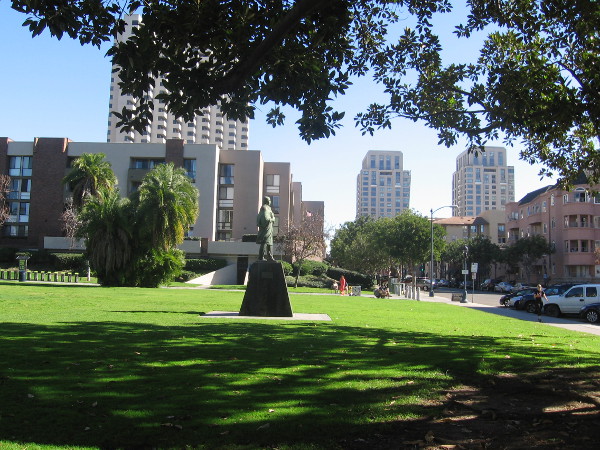
View of skyscrapers from Pantoja Park in San Diego’s Marina District.
Downtown San Diego might be a bit more laid back than other big cities, but it’s still a bustling place. And so it feels good once in a while to just sit in a quiet, green place to relax.
Pantoja Park is a welcome patch of tranquility in the Marina District of downtown San Diego. Registered as a San Diego Historic Landmark, it was created in 1850 and is the city’s oldest park. The park was named after Don Juan Pantoja y Arriola, a Spanish navigator who drew the first map of San Diego Bay in 1782. A couple centuries ago ships would periodically enter the bay to supply the old Spanish presidio.
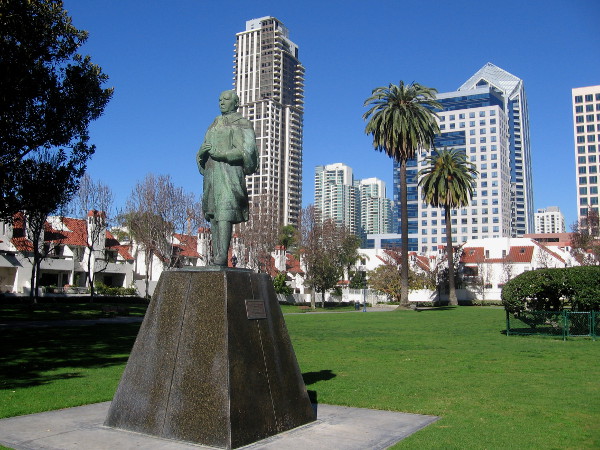
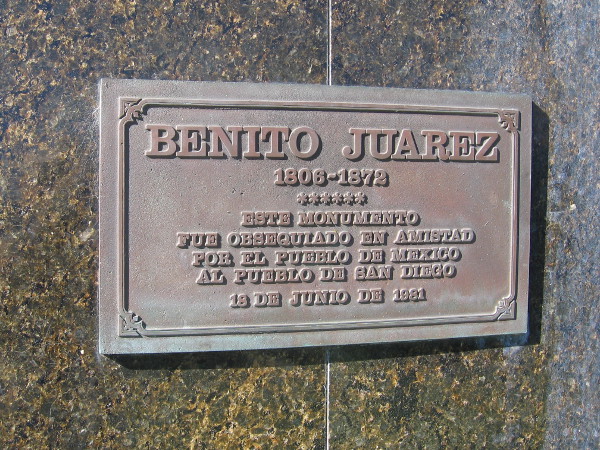
Fringed with gleaming skyscrapers, Pantoja Park today contains one notable sight: a statue of Benito Juarez, by Mexican artist Ernesto Tamariz, which was a gift to San Diego from the Mexican government in 1981.
I happened to walk through recently, so I took several pics…
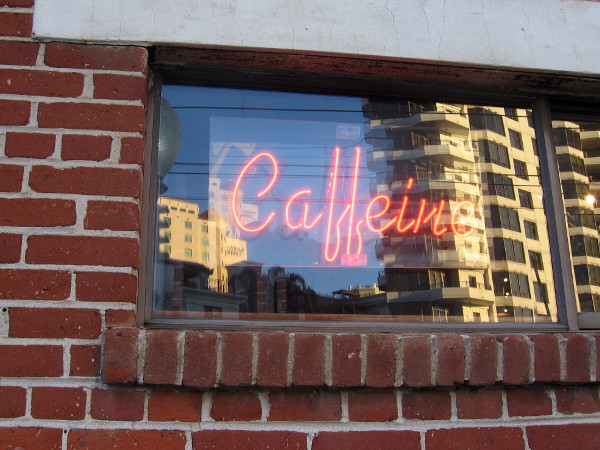
Statue of Benito Juarez, a friendly gift from the Mexican government.Plaque on bronze statue of Benito Juarez, who served as the president of Mexico for five terms.Some cool public art on a trash can in Pantoja Park.Caffeine can be found across the street near the Seaport Village trolley station.Pantoja Park is a welcome, quiet grassy area in the midst of downtown San Diego’s bustle.
UPDATE!
Here’s a better pic of the statue I took on a later date…
…
To enjoy future posts, you can “like” Cool San Diego Sights on Facebook or follow me on Twitter.
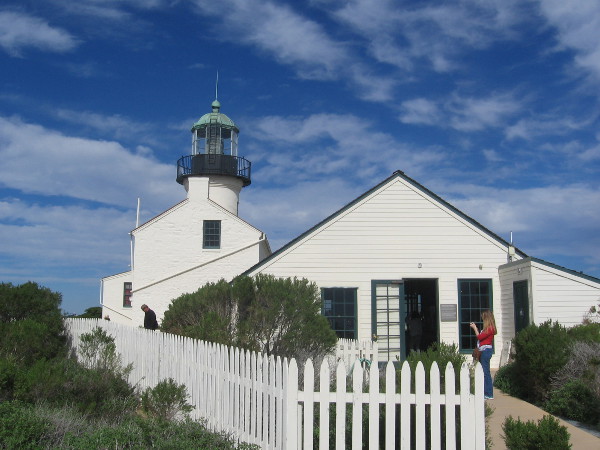
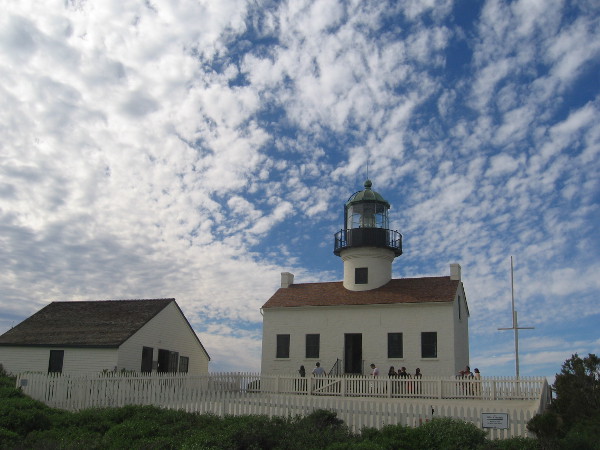
Looking up at the Old Point Loma Lighthouse in Cabrillo National Monument.
Everyone likes to explore the Old Point Loma Lighthouse. You can climb up the winding staircase and peer into several interesting rooms where the lighthouse keeper and his family lived. But the small museum in the nearby assistant keeper’s quarters contains the true marvels of science and art. Come inside and let us have a quick look!
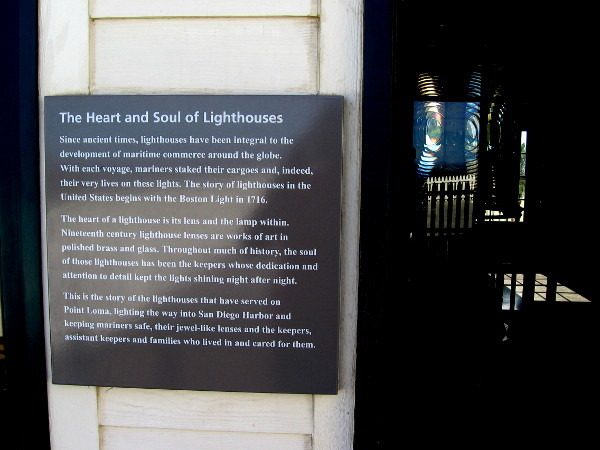
The assistant keeper’s quarters next to the lighthouse today contains a small museum.Sign outside lighthouse shows huge Fresnel lens which guided ships with focused light 400 feet above sea level.Sign at entrance to museum. The heart of a lighthouse is the lens and lamp. 19th century lenses are works of art made of polished brass and glass.
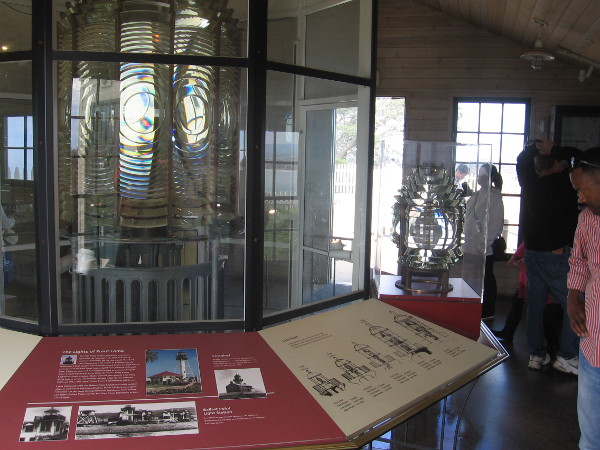
The highly polished Fresnel lenses utilized by lighthouses are beautiful objects. They refract and reflect light, creating prismatic colors when viewed from certain angles. It’s almost a miracle that a small flame in a lamp can be magnified to the extent that ships far out at sea can easily see it and be guided to safety. Light intensified by lenses in this museum could be seen 18 to 24 miles away!
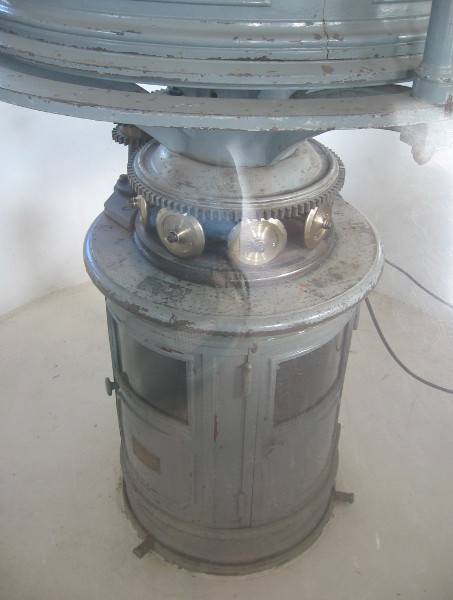
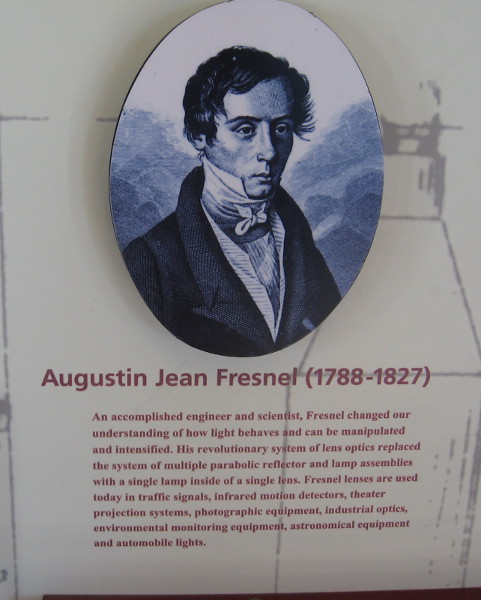
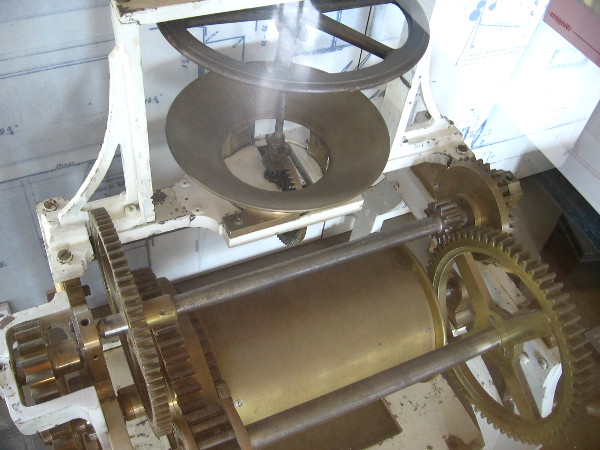
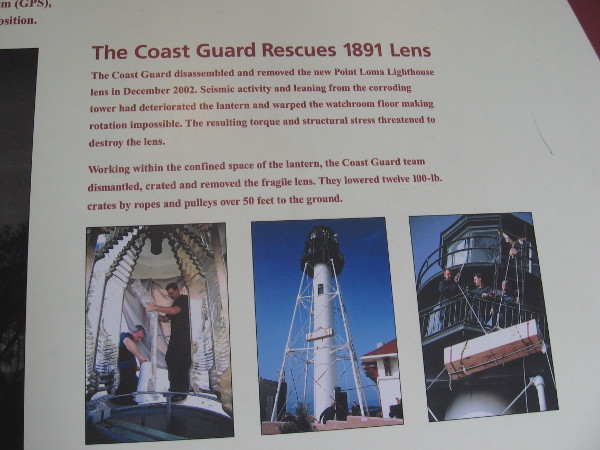
This 3rd Order Fresnel lens was used by the New Point Loma Lighthouse, built in 1891 down by the water.An optical wonder, this huge lens is an amazing, highly polished light bender.Diagram shows how a complex Fresnel lens functions.The base of the heavy Fresnel lens with chariot wheels visible.There are different orders of size, as illustrated in this display.Augustin Jean Fresnel (1788-1827) was an accomplished engineer and scientist. Fresnel lenses are used in many modern applications today.Small museum by Old Point Loma Lighthouse contains various very cool exhibits.This small 5th Order lens lighted the Ballast Point Lighthouse from 1890 to 1960.Log book of daily expenditures for oil, wicks and chimneys.This clockwork of gears slowly turned the light above.The keeper’s service box contained cleaning supplies and delicate tools for maintaining the lamp.The Coast Guard removed this large Fresnel lens from the New Point Loma Lighthouse in 2002.Looking at the iconic Old Point Loma Lighthouse and small museum beside it.
…
To enjoy future posts, you can “like” Cool San Diego Sights on Facebook or follow me on Twitter.
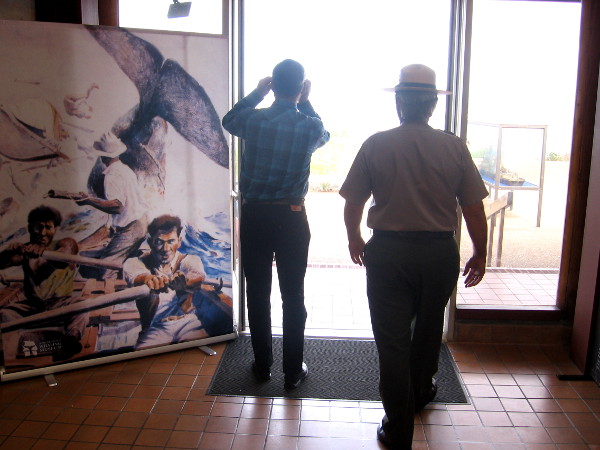
Looking out the rear of the Cabrillo National Monument Visitor Center on a beautiful day.
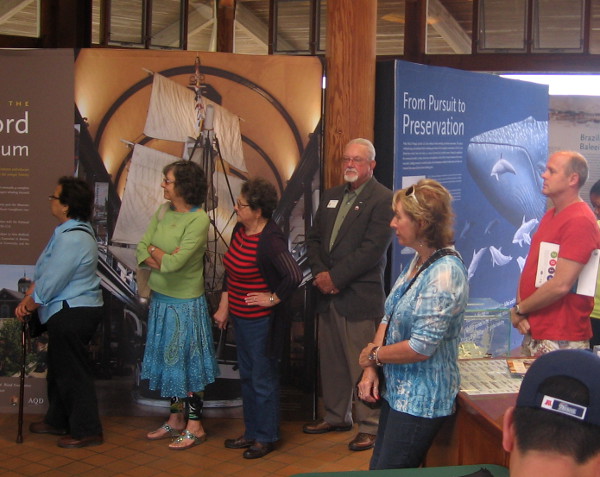
I saw on the morning news that an important exhibit was opening today in the Cabrillo National Monument Visitor Center. I haven’t been up that way since I blogged about the park’s centennial, so I figured I’d go check things out!
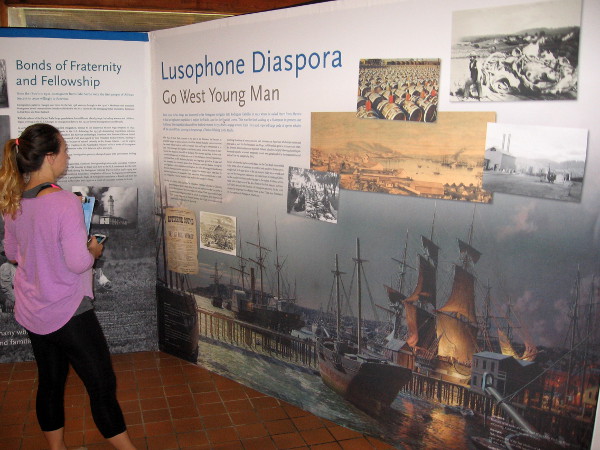
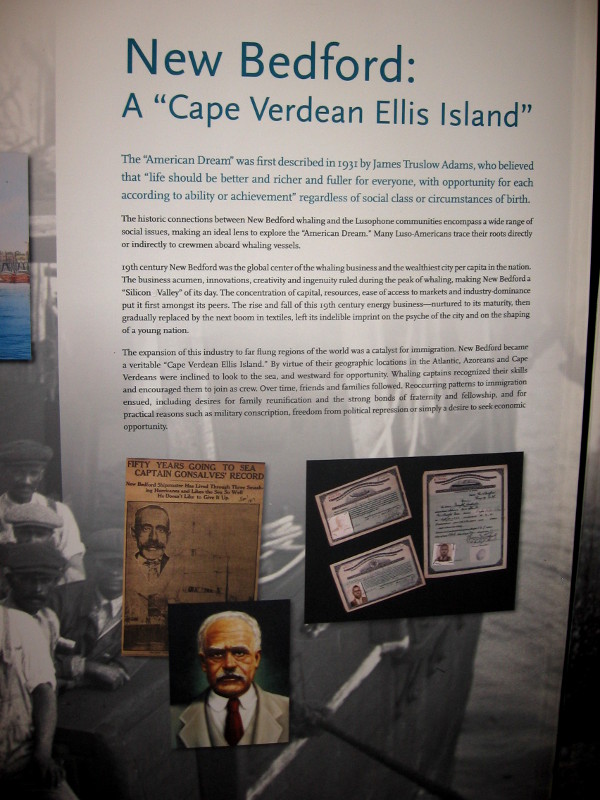
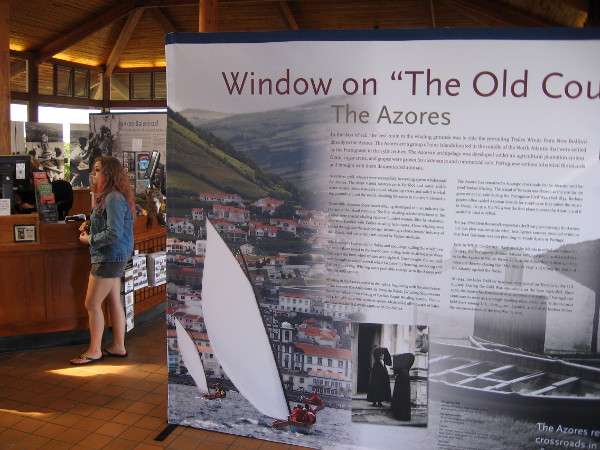
The traveling exhibition is called Yankee Baleeiros! The Shared Legacies of Luso and Yankee Whalers. That’s quite a long title, but it’s fitting for the epic displays that occupy about half of the sizable visitor center. Developed by the New Bedford Whaling Museum, the exhibit “celebrates the interwoven Luso-American stories of the Azorean, Cape Verdean, and Brazilian communities in the United States from early immigration in the 18th century through the latter half of the 20th century.” Sounds like a long and tedious thesis! But it’s actually fascinating! Basically, it shows the rich history of Portuguese speaking whalers in the Northeast, primarily New Bedford, and how they interacted with Yankee whalers.
As San Diego is one of the world’s best places to encounter a large variety of whale species, and as this is the season for migrating gray whales, the exhibit is more than appropriate. The displays also address how whaling techniques evolved over the years, the success of modern conservation efforts, and how whale-watching is now a much larger industy than whaling.
After listening to a short opening presentation by Park Superintendent Tom Workman and Christina Connett, PhD, Curator of Collections and Exhibitions at the New Bedford Whaling Museum, I headed out to Cabrillo’s excellent Pacific Ocean viewing areas to scan the horizon for spouts. I didn’t see any, but there were a bunch of boats off Point Loma whale-watching on this sunny Sunday afternoon. I got more pics from my visit coming, so stay tuned!
If you haven’t been to Cabrillo National Monument in a while (or ever), head on over! The special exhibit will be on display through April 12, 2015.
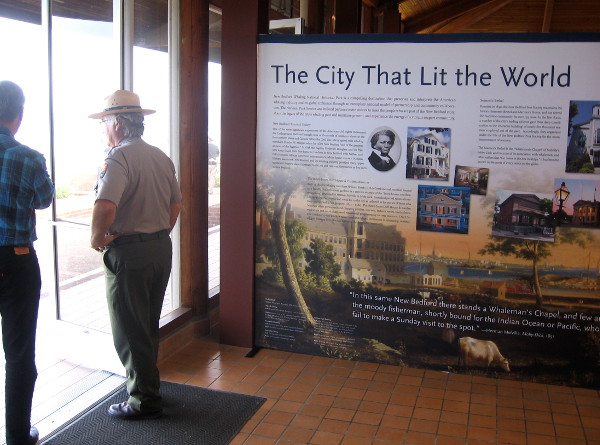
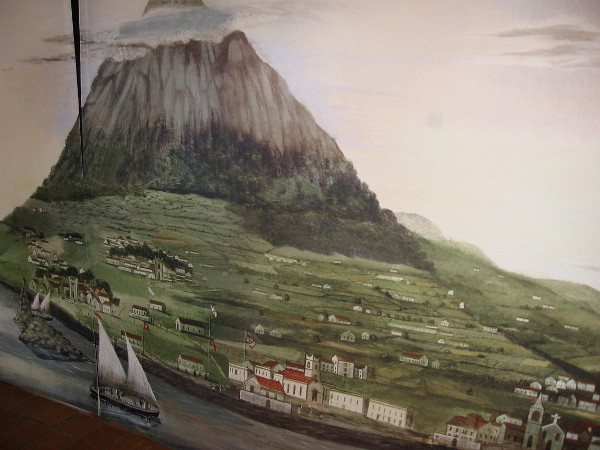
Park Superintendent Tom Workman talks while Christina Connett of the New Bedford Whaling Museum listens.People listen to presentation at opening of Yankee Baleeiros whaling exhibit.Displays recount the history of Lusophone (Portuguese-speaking) whalers in America.New Bedford was the major port for whalers in the Northeast.Inside the visitor center is a section of the 1848 Grand Panorama of a Whaling Voyage ‘Round the World by Benjamin Russell and Caleb Purrington.
Portions of the 1848 Grand Panorama of a Whaling Voyage ‘Round the World by Benjamin Russell and Caleb Purrington were on display inside and outside the visitor center. The complete work is 1,275 feet long and eight and a half feet tall! It’s believed to be the longest painting in the world! The piece went on a national tour shortly after completion, and appeared at the 1964 New York World’s Fair! Cool!
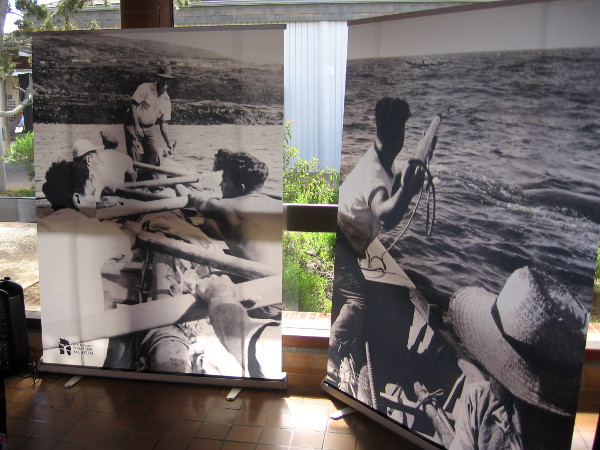
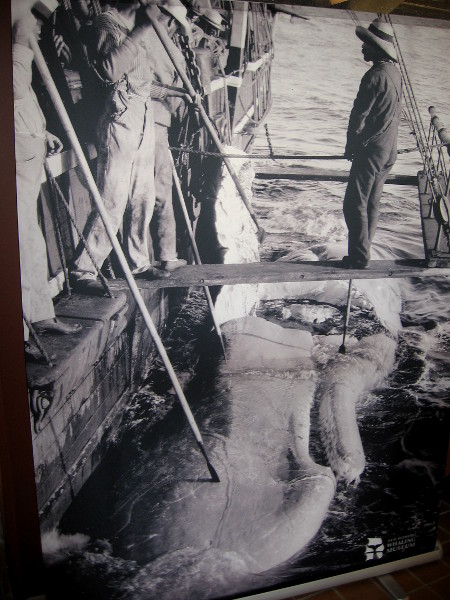
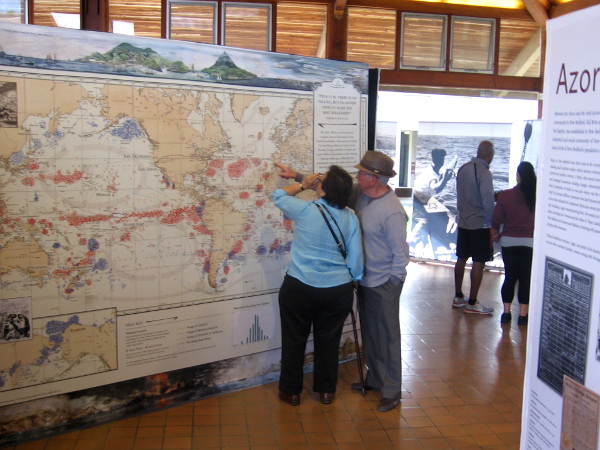
The fantastic displays are museum quality and extremely informative.Photos of sailors rowing out to hunt whales, and a harpooner at the ready.A dead whale is hauled to the ship’s side and stripped of blubber by many hands.People point out spots on a map of historical whaling grounds.The opening presentation is over and folks head out to take in the many sights around Cabrillo.Is there a whale out there? Probably not. This back door faces San Diego Bay!
…
To enjoy future posts, you can “like” Cool San Diego Sights on Facebook or follow me on Twitter.
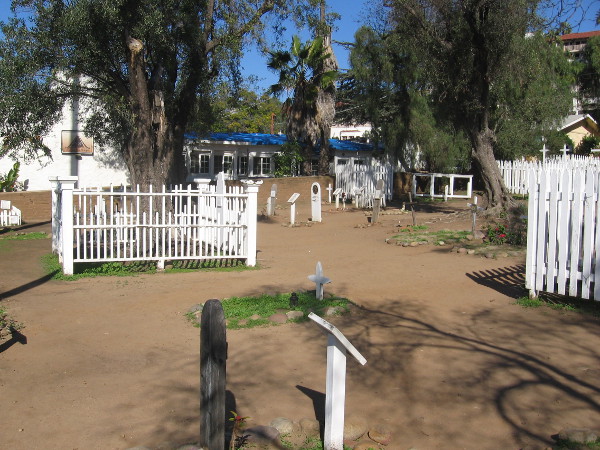
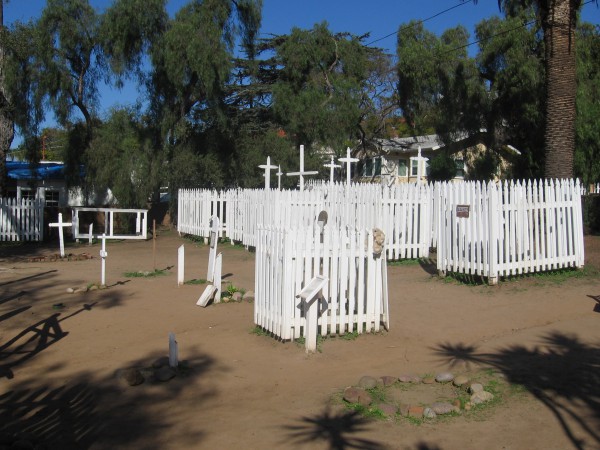
El Campo Santo cemetery in Old Town San Diego contains much history.
El Campo Santo, a cemetery located in Old Town, contains many of San Diego’s earliest residents. By walking respectfully among the gravestones, one can learn much about the city’s interesting history and what life was like for its diverse people. Real-life characters buried here include ranchers, gold miners, sailors, Californios, Native Americans, soldiers, politicians, merchants, actors, children and outlaws.
Established in 1849, the graveyard is the final resting place of nearly five hundred souls. Just a handful are shown in this blog post.
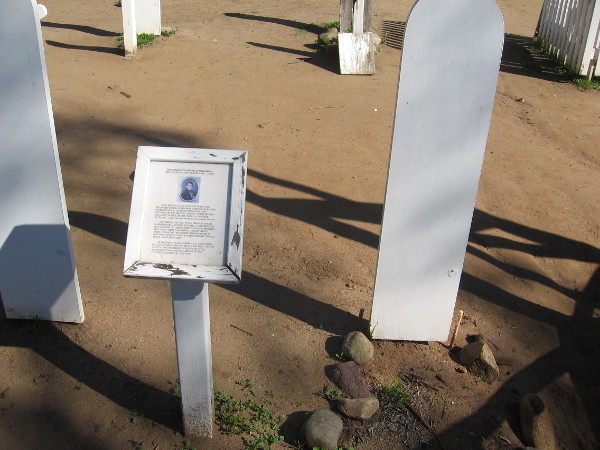
I took photographs of grave sites, headstones and many small signs in the “Holy Field” that describe what is known about the deceased. With a little editing, I’ve provided information here from many of those signs, and from a few other online sources.
Melchior was a Native American who lived to be 97 years old.
Melchior, born 1770, died 1867, age 97 years. Very little is known about the Indian Melchior. He was born a year after the arrival of Junipero Serra in San Diego. He was baptized by the missionaries and became a Roman Catholic Christian. During his long life, he saw San Diego grow from a small pueblo to a city.
Thomas W. Tanner ran an acting troupe that performed at the Whaley House.
Thomas W. Tanner was buried December 22, 1868, age 55 years. He ran an acting troupe that performed on the second floor of the Whaley House in December 1868. Tanner’s troupe offered moral, chaste and versatile entertainment consisting of drama, farce, comedy, singing and dancing. Unfortunately, Tanner died 17 days after his troupe opened. He was married to Policarpia de la Rosa and was a native of Baltimore, Maryland.
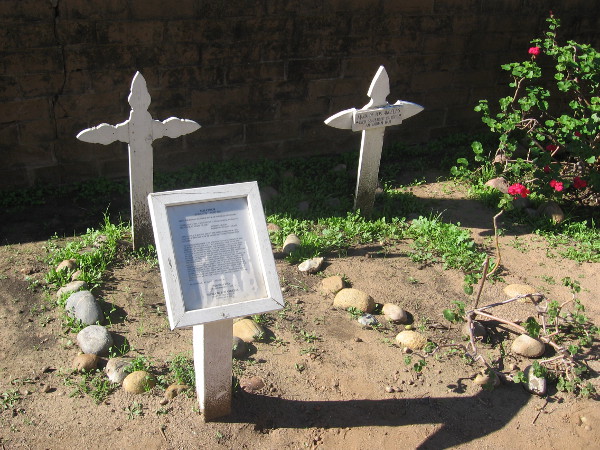
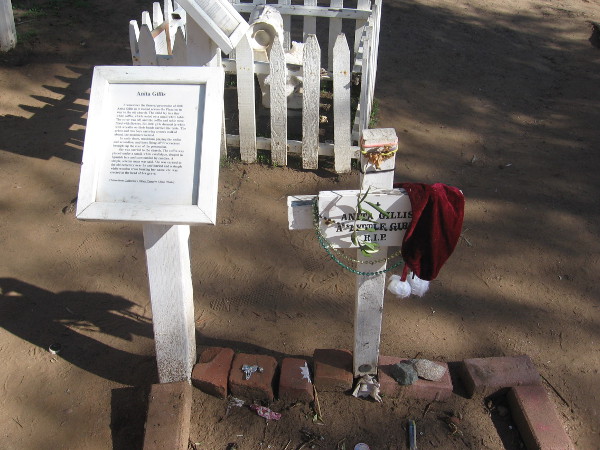
Anita Gillis was a young child.
Anita Gillis was a child when she died. Her funeral is remembered as follows on a plaque by the grave. A funeral procession wound across the Plaza and ended at the old church. The child lay in a tiny white coffin, which rested on a small white table. The cover was off, and the coffin and table were filled with flowers. Six little girls dressed in white with wreaths on their heads carried the table. The priest and two boys carrying crosses walked ahead, the mourners behind. Musicians played the violin and accordion, and boys firing off firecrackers brought up the rear of the procession. She was carried to the church, and the coffin placed under a small white catafalque, draped in Spanish lace and surrounded by candles. A simple, solemn mass was said. She was then carried to the old cemetery and buried with a simple white wooden cross bearing her name erected at the head of her grave.
Juan Mendoza worked on a ranch and was shot in the back.
Juan Mendoza died February 6, 1865. He was the victim of a fatal shotgun blast to the back. The assailant was Cave Johnson Couts, a local landowner and prominent San Diegan born in Tennessee. As the story goes, Mendoza worked as majordomo, or chief steward, on one of Cave Couts’ ranches. Couts claimed that Mendoza had threatened his life and in a hasty act of revenge killed Mendoza in broad daylight. The action violated the legendary “Code of the West” which prohibited “shooting an unarmed man” and “shooting a man in the back”. Couts was tried by jury for his crime and found not guilty. This was received “with much applause” from local citizens since threatening the life of a man, as Mendoza allegedly did, gave Couts the right to stand his ground and kill him.
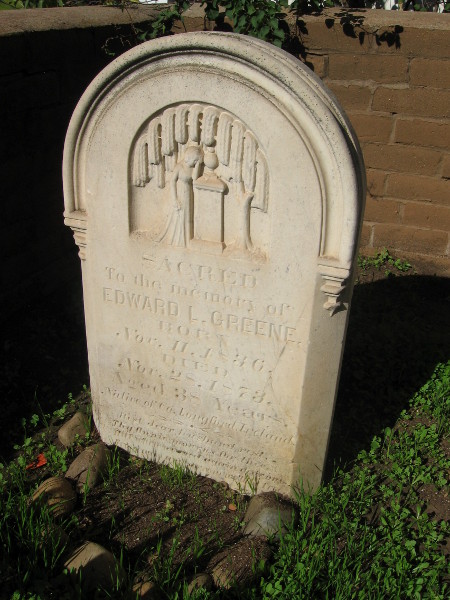
Edward Lynch Greene was a gold miner who became member of the state legislature.
Honorable Edward Lynch Greene died November 28, 1872, age 38 years. He was a native of Ireland who came to California in 1852 and was a miner for gold. He was naturalized in 1861. He became a member of the state legislature when he was elected to the Assembly from Calaveras County in 1869. He was staying in San Diego at the Era House when he died of consumption. He’d been ill for the past eighteen months. He left behind a young wife, Ann Greene.
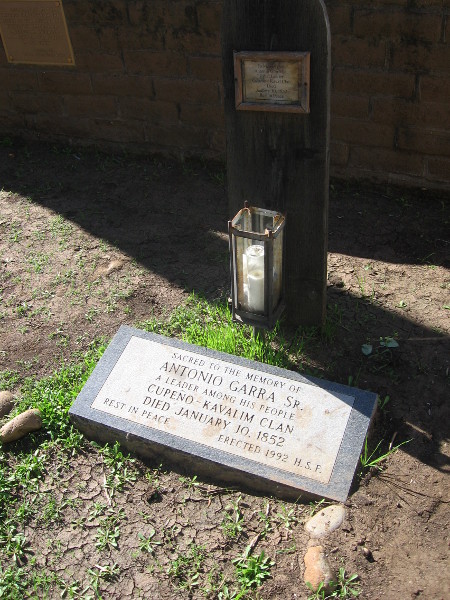
Antonio Garra Sr. was a Native American who rebelled against taxation.
Antonio Garra Sr. died January 10, 1852. He was a leader among his people, the Cupeno-Kavalim Clan. He was educated at Mission San Luis Rey and spoke as many as five Indian dialects, as well as Latin. He was one of the foremost chiefs with great power and influence among his people. The Cupeno were considered mission Indians and were subject to pay taxes in San Diego County. Garra, upset by the taxation of his people, helped to organize a resistance movement, comprised of attacks on Santa Barbara, Los Angeles and San Diego. Against his wishes, a fatal attack was made on Warner’s Ranch. He was soon thereafter captured. On January 10, 1852 Garra was found guilty of murder and theft, but not treason, as he had never taken an oath of allegiance to the United States. Before being executed by firing squad, Garra said in his last words: “Gentlemen, I ask your pardon for all my offenses, and expect yours in return.” Antonio Garra, Sr. is believed to be buried underneath what is now San Diego Avenue.
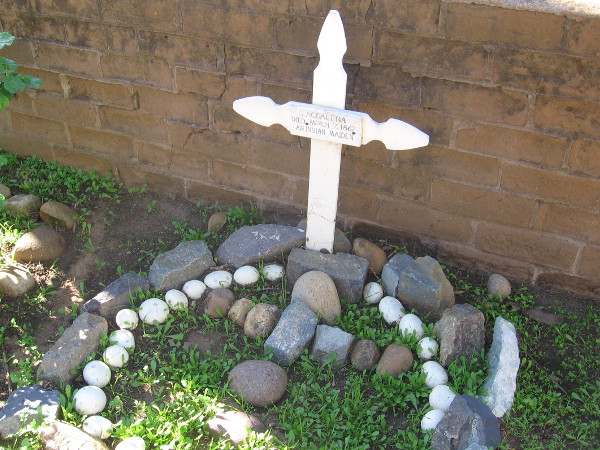
Magdalena was a Native American young lady.
Magdalena was an Indian maiden who died on March 7, 1867 at age 21.
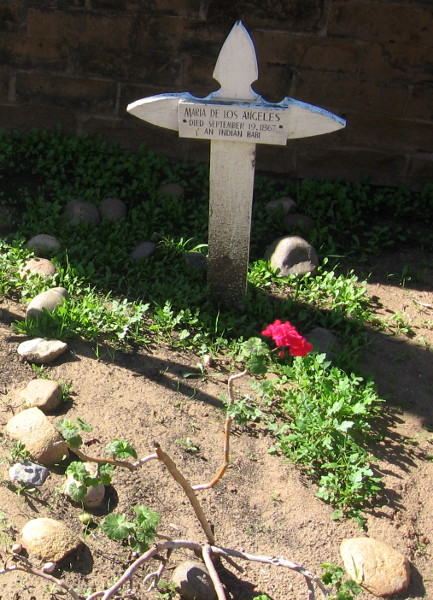
Maria de los Angeles was a Native American infant.
Maria de los Angeles was an Indian infant who died September 19, 1867.
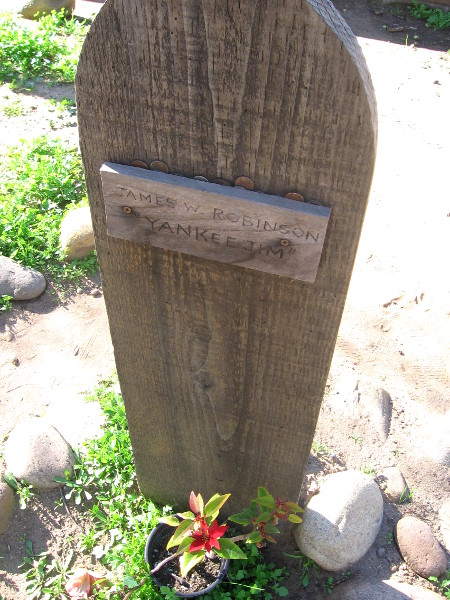
Yankee Jim was hung for stealing the only rowboat in San Diego Bay.
James W. Robinson was known as Yankee Jim. He suffered an extreme penalty for stealing the only rowboat in San Diego Bay. He was sentenced to be hanged. He couldn’t believe that he would be hanged until the very last moment. He appeared to think it was all a grim joke, or at worst, a serious effort to impress him with the enormity of his evil ways. He was still talking when the deputy sheriff gave the signal. Yankee Jim converted to the Roman Catholic Church prior to his death, and so was given the baptismal name of Santiago (Spanish for James). His godfather was Philip Crosthwaite, the deputy sheriff who gave the signal for his execution.
Rosa Serrano de Cassidy and her husband owned a rancho in Pauma.
Rosa Serrano de Cassidy died February 10, 1869, age 21 years. She was the first wife of Andrew Cassidy (a native of County Cavan, Ireland) who helped establish and operate the U.S. tidal gauge in La Playa (in present day Point Loma). Rosa was the daughter of Jose Antonio Serrano who served under Pio Pico in the Mexican War and was in the battle of San Pasqual. Rosa and her husband owned a rancho in Pauma. Her headstone is one of the few remaining originals in the cemetery. After cracking during an earlier restoration, it was placed flat on the ground in order to preserve it.
Don Miguel was a native of Spain, and one of the founding fathers of California.
Don Miguel Telesforo de Pedrorena died March 21, 1850. Don Miguel was a native of Spain, belonging to one of the best families of Madrid. After receiving an education in his own country, he was sent to London, where he was educated in English. In 1845 he settled in San Diego. He married Maria Antonia Estudillo, daughter of Jose Antonio Estudillo, and the two had four children. They built their casa behind the Estudillo home. It was one of the first framed houses in Old Town, and still stands beside the San Diego Union print shop. Don Miguel became a leading merchant and citizen of old San Diego. He served as a delegate to the State’s Constituional Convention at Monterey in 1849 and became one of the founding fathers of California.
Juan Maria Marron was a ship’s captain who became prominent politically.
Juan Maria Marron, born 1808, died at the age of 45. He was a ship’s captain before coming to San Diego in the early 1820’s. He was the owner of 13,311 acres called Rancho Agua Hedionda, which extends from modern day Vista to Carlsbad. He became prominent politically when he married Dona Felipa Osuna in 1834. She was the daughter of Juan Maria Osuna, who was the first alcalde of San Diego and the owner of Rancho San Dieguito. During the Mexican-American War, Marron supported the Americans against many of his Mexican friends. He was captured by Californios who threatened to execute him, but he was released, and his rancho was stripped of horses and cattle.
Jayme Lyons was the son of a carpenter, merchant, blacksmith and sheriff.
Buried November 28, 1859, age 4 years, Jayme was one of probably thirteen children of George and Bernarda Lyons. Jayme’s father was a native of Donegal, Ireland, who came to San Diego in 1847. He had been a carpenter on a ship that came around Cape Horn from New Bedford, Massachusetts. He kept a store in Old Town, owned a blacksmith shop, and was sheriff for two terms. Jayme’s mother was Bernarda de Villar, the daughter of Lieutenant de Villar, who at one time was the Commandant of the San Diego Presidio.
Bill Marshall and Juan Verdugo were hanged nearby.
Bill Marshall and Juan Verdugo were hanged on December 13, 1851. Bill Marshall was an American married to the daughter of a local Indian chieftain. He was a renegade sailor from Providence, Rhode Island, who’d deserted from a whaling ship at San Diego in 1844. After taking up habitation with the Indians, he took an active part in the Garra Indian uprisings in 1851. He and the Indian Juan Verdugo were caught and brought back to San Diego to be promptly tried by court martial. Both were found guilty. The Indian acknowledged his guilt, but Marshall insisted he was innocent. At two o’clock in the afternoon, a scaffold was erected near the old Catholic cemetery, the men placed in a wagon, the ropes adjusted about their necks, and the wagon moved on, leaving them to strangle to death.
Rafael Mamudes worked at chopping wood and digging wells. He dug the graves for the people of Old Town
Rafael Mamudes was a Native American born in Hermosillo, Mexico. He was a baker in Monterey, a miner in Calaveras County, and made a sea voyage to Guaymas. He owned a little plot of land in San Diego where the old jail stands. Legend has it he made a murderous attack upon his wife. To do penance, the priest gave Rafael the task of ringing the church bells when the occasion demanded. Rafael worked at chopping wood and digging wells. He dug the graves for the people of Old Town. He never missed a church service.
Jesus was a Native American who died of a blow to the head while drunk.
Jesus, an Indian, passed away December 15, 1879, age 25 years. He died of a blow to the head without receiving sacraments. According to the priest Juan Pujol, he was said to be drunk, so he was buried near the gate of the cemetery.
Hundreds of varied, rich life stories were concluded here in this early San Diego cemetery.
…
To enjoy future posts, you can “like” Cool San Diego Sights on Facebook or follow me on Twitter.
























































 Cool San Diego Sights!