Three buildings in the Gaslamp: then and now.

I came across historical photographs of three buildings in San Diego’s Gaslamp Quarter that were taken in 1960. These photos, resulting from the Historic American Buildings Survey, were taken by an employee of the U.S. National Park Service, and are consequently in the public domain.

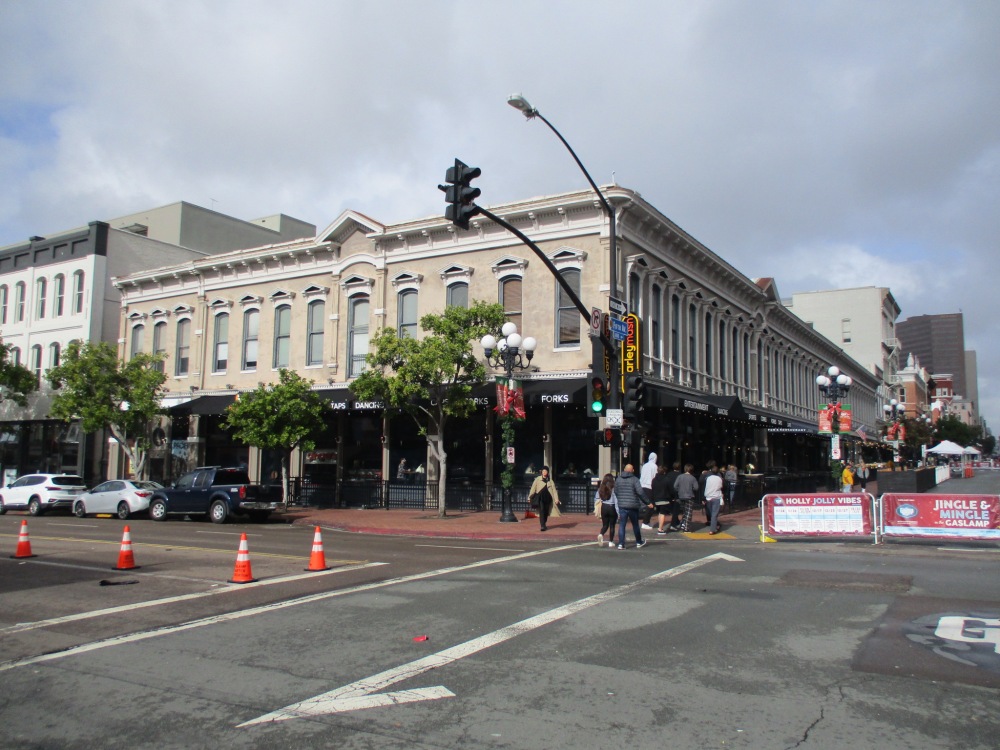
I thought it would fascinating to post a “then and now” blog, comparing the 1960 photographs of these buildings with how they appear at the beginning of 2023. That’s a span of almost 63 years. By looking carefully, you can notice changes that were made.

The first building is located at the corner of Fifth Avenue and Market Street. It’s called the Backesto Building. When built in 1873, it stood at the center of New Town’s original business district.

According to a historical plaque, the grocer and general merchandise firm Klauber and Levi occupied the ground floor from 1878 to 1886. San Diego Hardware would occupy the building from 1892 to 1922. Its exterior reflects the turn-of-the-century style.
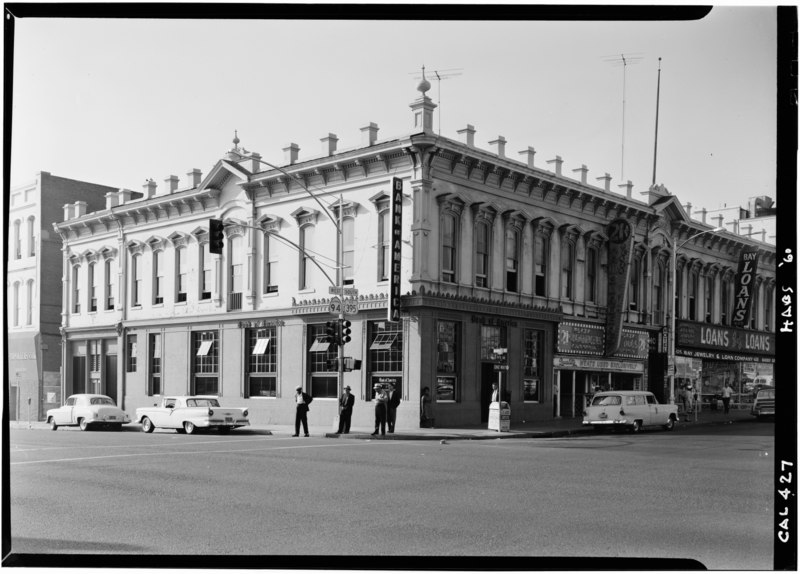
The Backesto Building, photographed in 1960.

The Backesto Building, photographed in 2023.

The second building is also at the corner of Fifth Avenue and Market Street. It’s called the McGurck Block and was built in 1887.

The Ferris and Ferris Drug Store occupied this building from 1903 to 1984. I once blogged how the father of actor Gregory Peck worked there as the night druggist.

The building was also a post office and ticket booth for the Coronado Ferry. The upper floors of the three-story Italianate building were known as the Hotel Monroe in 1929.
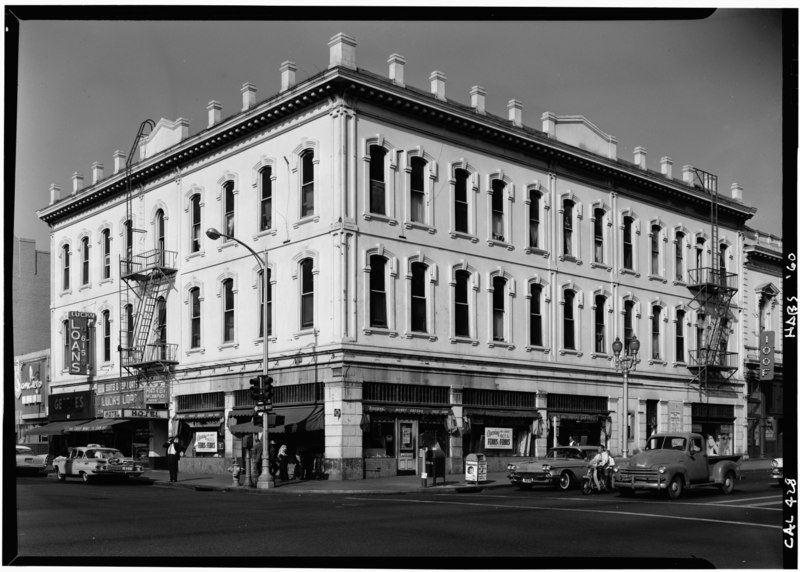
The McGurck Block, photographed in 1960.

The McGurck Block, photographed in 2023.

Finally, there’s the adjacent I.O.O.F. Building at Market Street and Sixth Avenue.

I.O.O.F. stands for Independent Order of Odd Fellows.

The 1882 building was a joint effort of the Masonic and Odd Fellows Lodges.

The Classical Revival building took almost a decade to complete. The cornerstone contains valuable coins, historic documents, and a stone from Soloman’s Temple!
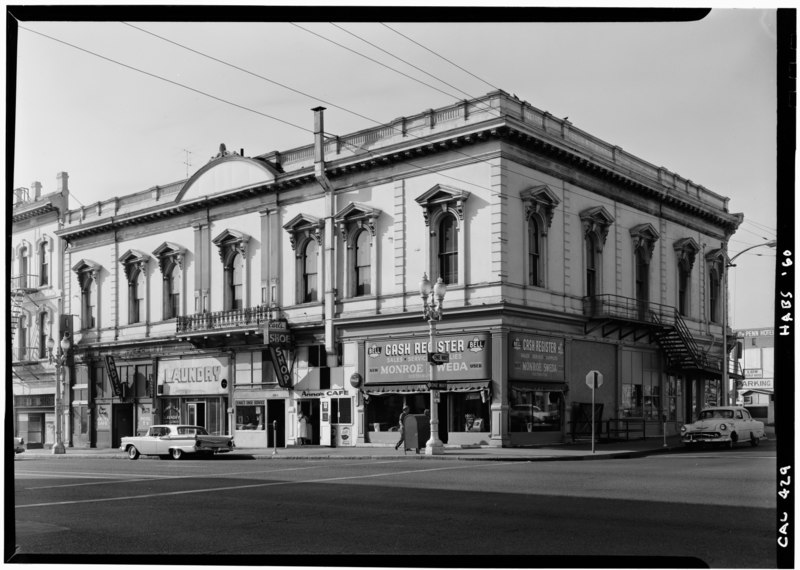
I.O.O.F. Building, photographed in 1960.

I.O.O.F. Building, photographed in 2023.

Thanks for visiting Cool San Diego Sights!

I post new blogs pretty often. If you like discovering new things, bookmark coolsandiegosights.com and swing on by occasionally!

I live in downtown San Diego and love to walk around with my camera! You can follow Cool San Diego Sights via Facebook or Twitter!
A descent into La Jolla’s Sunny Jim Cave!

For over a hundred years, curious visitors have descended into Sunny Jim Cave in La Jolla. I recently ventured down into the sea cave for my very first time! And I’m glad I did!

What was this small adventure like?

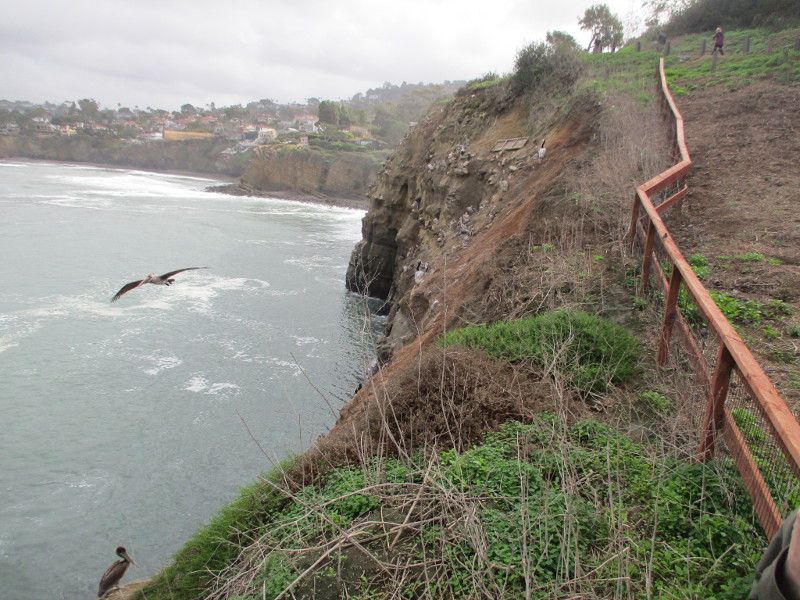
North of La Jolla Cove is a series of sea caves, with entrances that can be approached by water. One of the openings is to Sunny Jim Cave.

Visitors to The Cave Store can descend via tunnel into famous Sunny Jim Cave.

Historical Landmark No. 380. Tunnel & Cave Store – 1902. The City of San Diego.

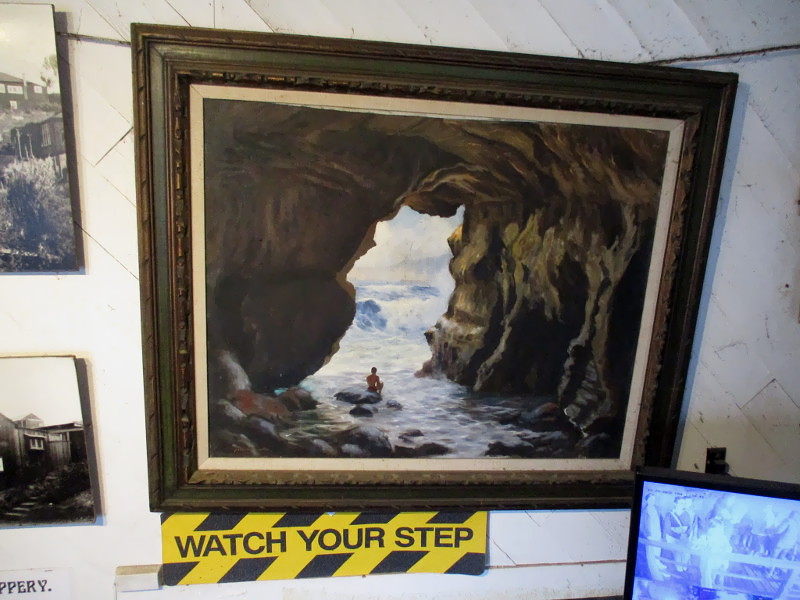
Artwork in the Cave Store depicts someone sitting on a rock inside Sunny Jim Cave.

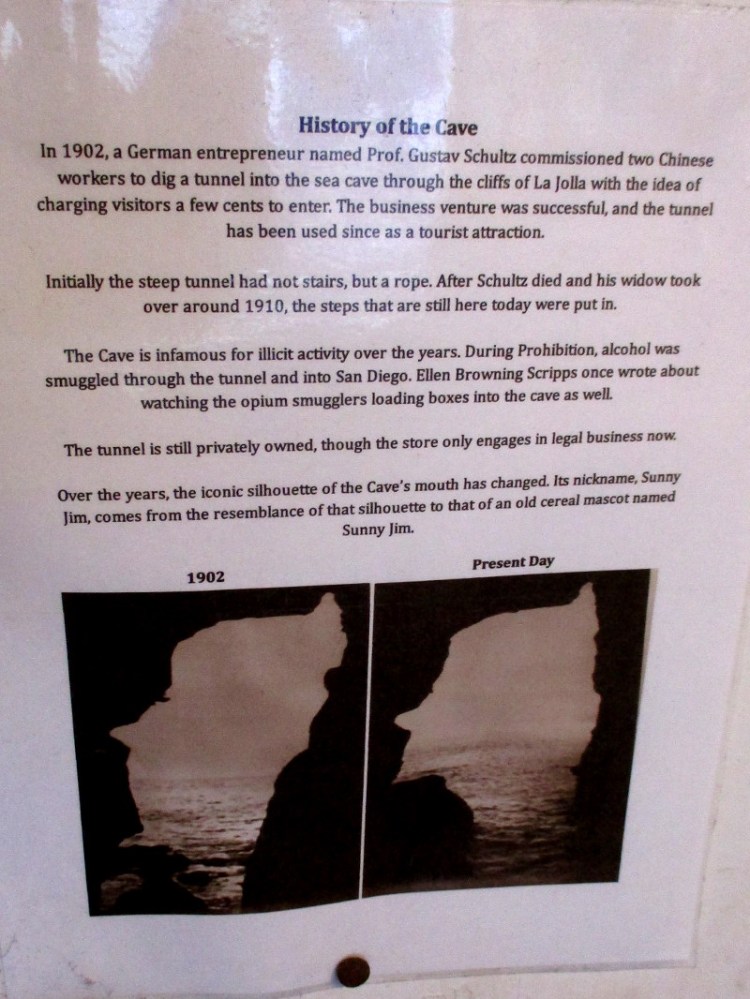
History of the Cave. In 1902, a German entrepreneur named Prof. Gustav Schultz commissioned two Chinese workers to dig a tunnel into the sea cave through the cliffs of La Jolla with the idea of charging visitors a few cents to enter…During Prohibition, alcohol was smuggled through the tunnel and into San Diego…Its nickname, Sunny Jim, comes from the resemblance of (its) silhouette to that of an old cereal mascot named Sunny Jim.

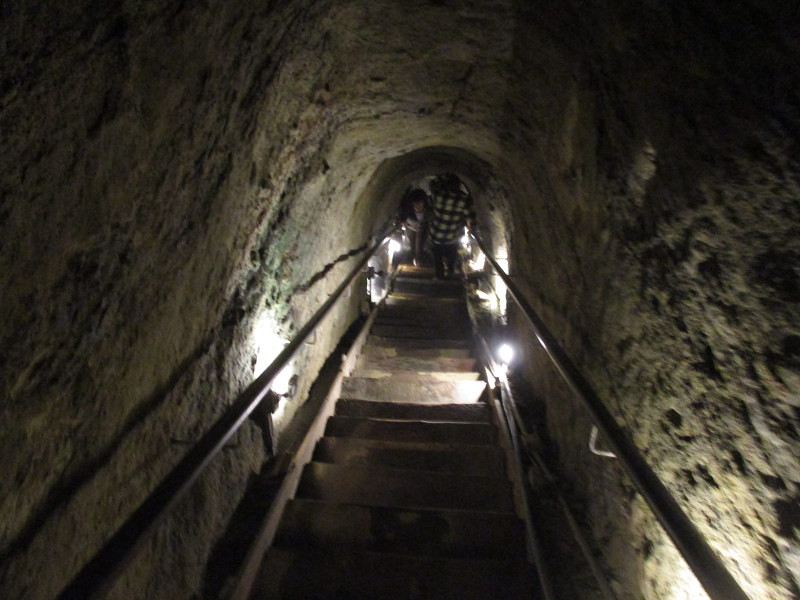
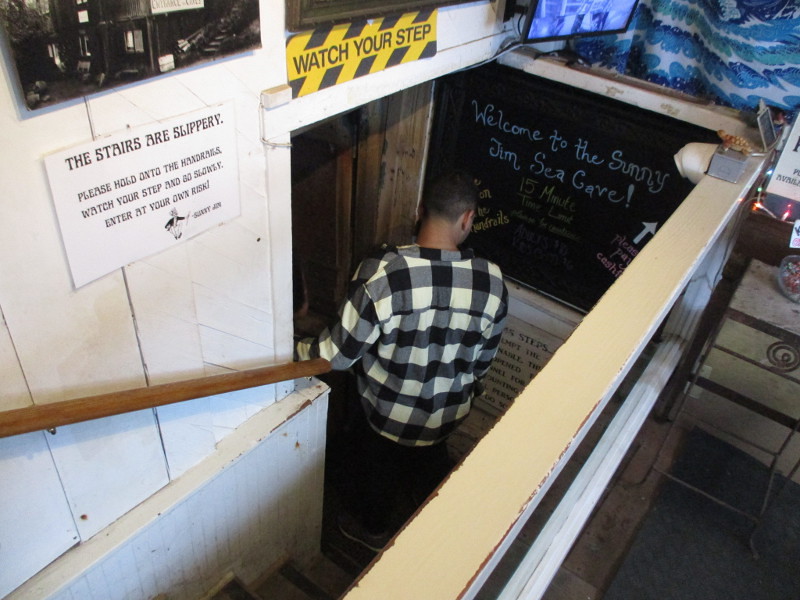
Starting down narrow stairs into the steeply sloping tunnel.

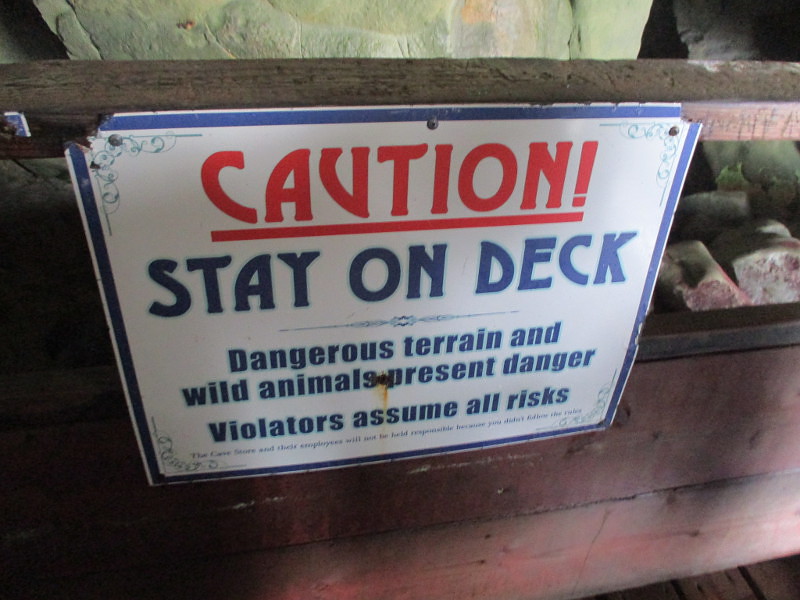
145 steps…All persons entering this cave do so at their own risk.

Here we go!

I’ve been inside mines, and this experience feels similar.

The stairs descend around several turns. In places the ceiling is rather low, and I had to stoop while carefully holding onto the railing.

When people pass in the narrow tunnel, it’s a tight squeeze! The wooden steps become more wet and slippery the farther down we go…

Almost there. The rock above and around is very damp now.

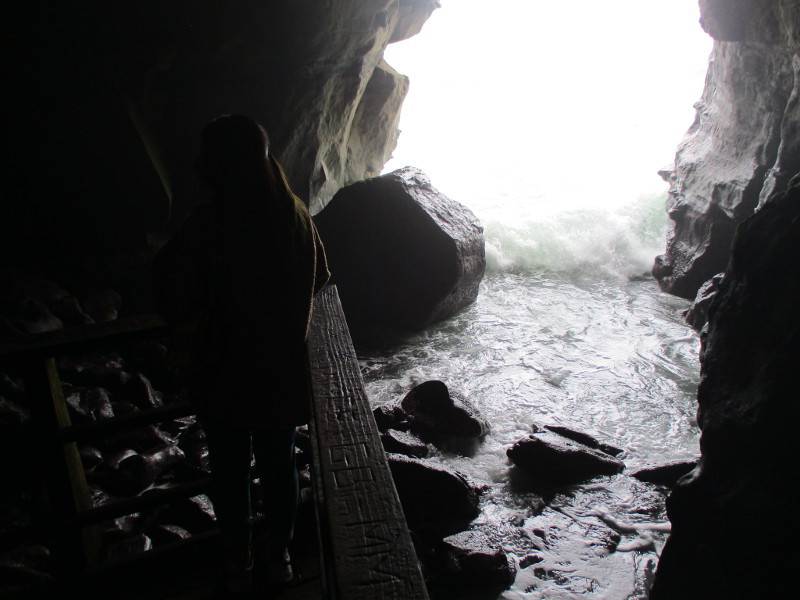
Walking out onto the wooden deck just inside Sunny Jim Cave.

The profile of Sunny Jim becomes apparent.

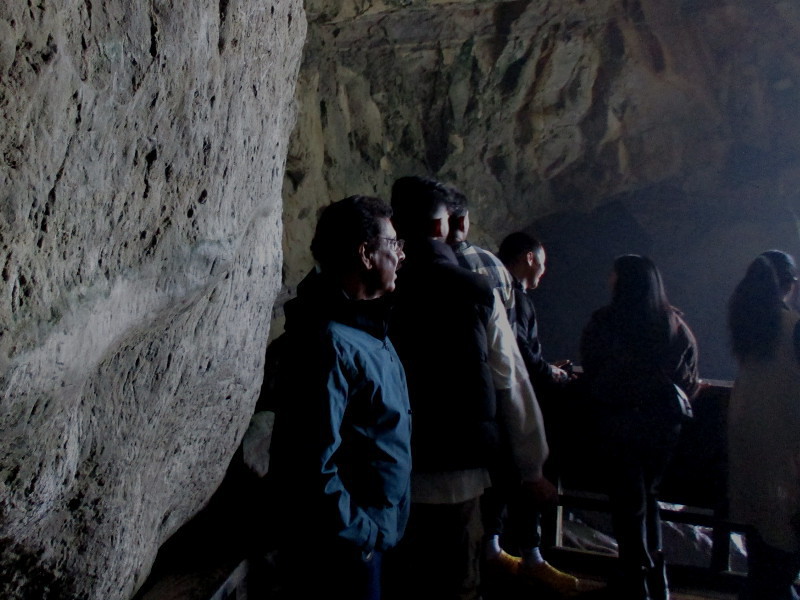
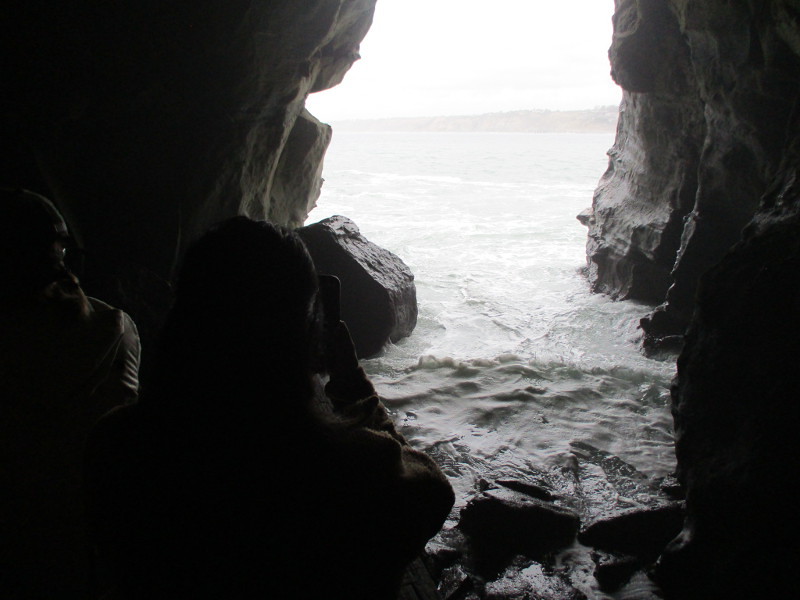
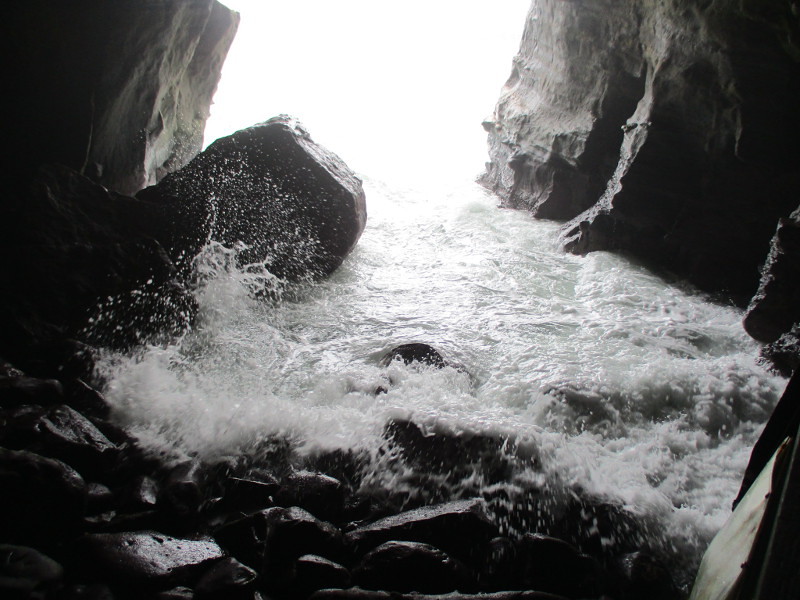
Several people were already on the deck, gazing out at ocean waves surging into the cave.

Sea lions sometimes hang out in the cave, but there were none when I visited.

The cave’s name Sunny Jim was suggested by Wizard of Oz author L. Frank Baum. Sunny Jim was the prominent-nosed mascot for Force, the first commercially successful wheat flake breakfast cereal!

(Public domain image, courtesy Wikimedia Commons.)

Venturing down into Sunny Jim Cave makes for a fun little adventure. If you can manage the steep stairs and narrow tunnel, you might enjoy it, too!

Thanks for visiting Cool San Diego Sights!

I post new blogs pretty often. If you like discovering new things, bookmark coolsandiegosights.com and swing on by occasionally!

I live in downtown San Diego and love to walk around with my camera! You can follow Cool San Diego Sights via Facebook or Twitter!

La Mesa to create Downtown Village Sign!

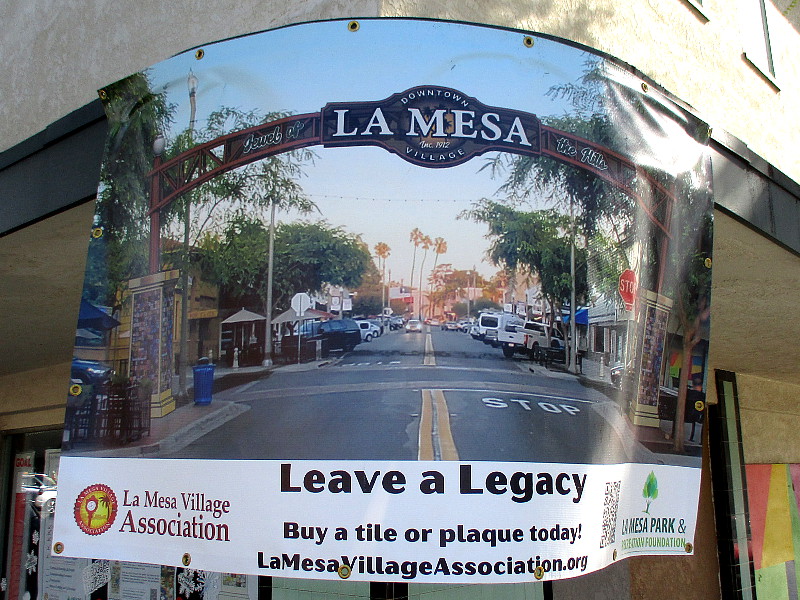
Plans are underway to create a landmark sign in La Mesa’s downtown Village!

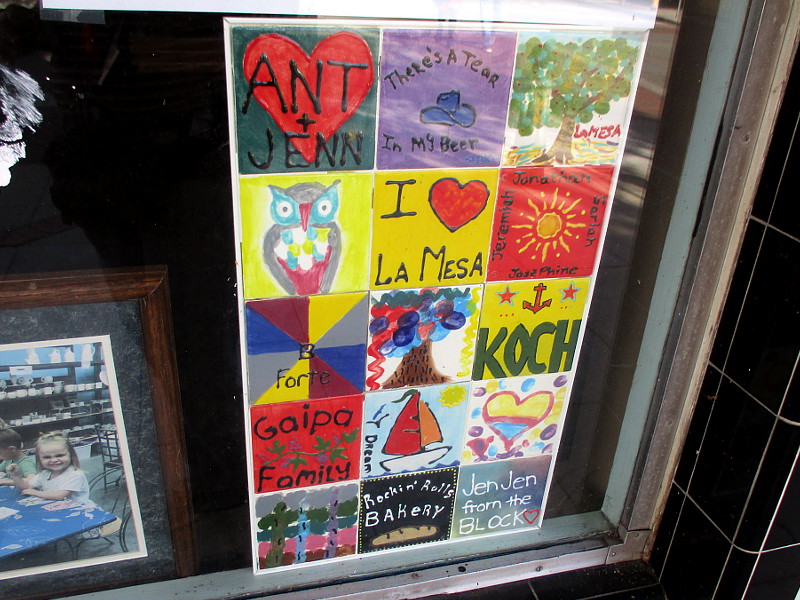
La Mesa families are preparing painted tiles that will decorate the columns of the archway sign!

The “La Mesa Village District Sign” will span La Mesa Boulevard at Palm Avenue. It will resemble the distinctive gateway signs in other San Diego neighborhoods and cities in the county.

I knew nothing about this project until I walked past a banner and posters in windows at the intersection where the sign will be erected.

The ongoing “Leave a Legacy Tile” fundraiser will eventually produce a “Community Quilt” installed on the base of each column!

If you’d like to participate, here’s the website!

Thanks for visiting Cool San Diego Sights!

I post new blogs pretty often. If you like discovering new things, bookmark coolsandiegosights.com and swing on by occasionally!

I live in downtown San Diego and love to walk around with my camera! You can follow Cool San Diego Sights via Facebook or Twitter!
Walking past the forgotten town of Bernardo.

Did you know there used to be a town named Bernardo in what is now San Diego’s North County?

Bernardo was a tiny town between Escondido and Rancho Bernardo, where Lake Hodges is located today.

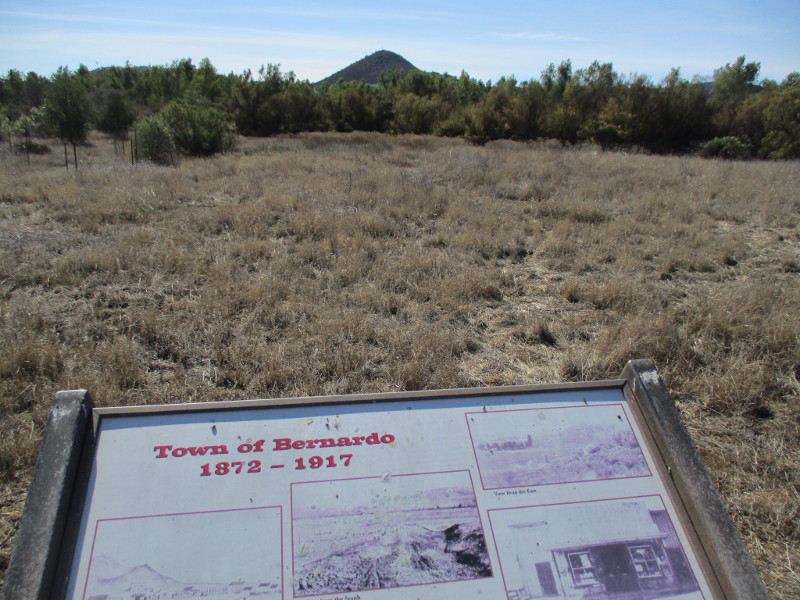
The creation of Lake Hodges in 1918, accomplished by damming the Bernardo River (now called San Dieguito River), put a definite end to little Bernardo. But today people hiking the Mule Hill Trail can see several information signs that recall the history of the now vanished town.

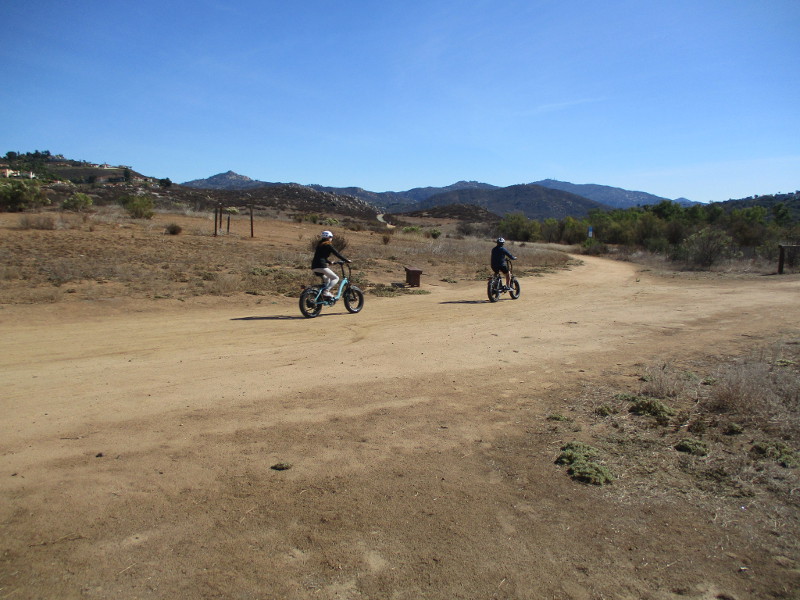
If you’d like to walk down the Mule Hill Trail yourself, take Interstate 15 to Bear Valley Parkway at the south end of Escondido. The wide dirt trail can be found about a quarter mile east of the freeway, leading south. (You’ll see it right before Beethoven Drive.)

Before reaching the site of old Bernardo, this very easy trail passes Mule Hill, where a skirmish took place during the Mexican-American War. I’ll be blogging about that coming up.

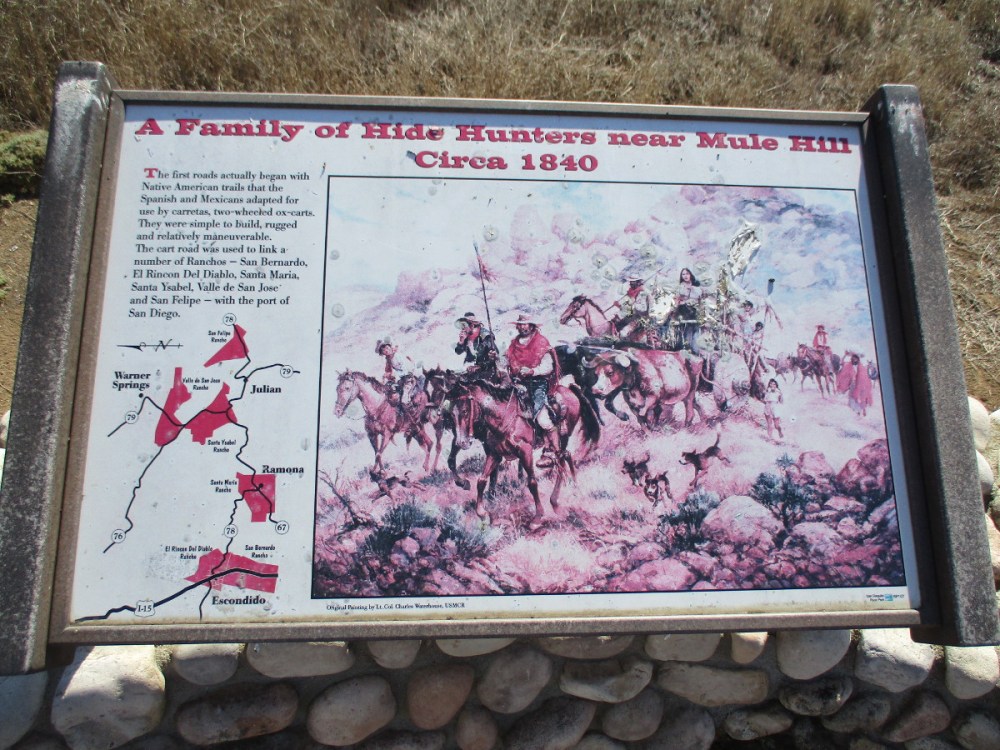
Cart roads used by the Spanish and Mexicans before the appearance of Bernardo linked a number of Ranchos–San Bernardo, El Rincon, Del Diablo, Santa Maria, Santa Ysabel, Valle de San Jose and San Felipe–with the port of San Diego.

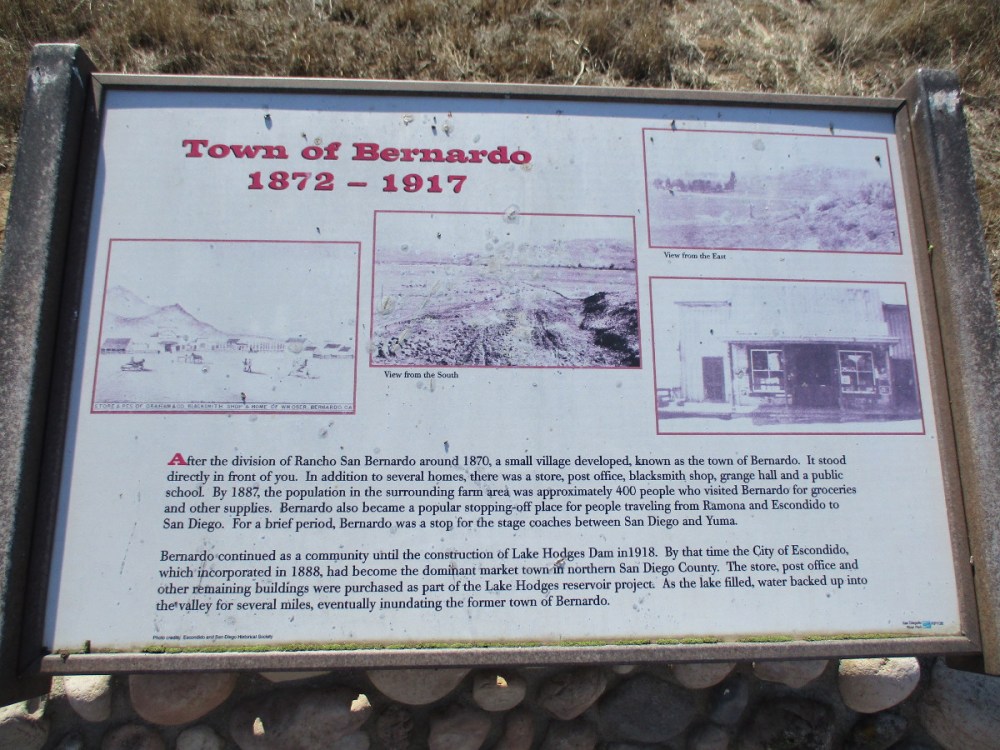
After the division of Rancho San Bernardo around 1870, a small village developed, known as the town of Bernardo. In addition to several houses, there was a store, post office, blacksmith shop, grange hall and public school. By 1887, the population in the surrounding farm area was approximately 400 people…

For a brief period, Bernardo was a stop for the stagecoaches between San Diego and Yuma.

The San Diego to Yuma Road was an overland trail in the mid-1800s. It was used by the Army of the West in 1846 and gold rush immigrants from 1848 through 1851. It passed through tiny Bernardo as it led northeast from Peñasquitos to Ramona, eventually connecting with the Butterfield Stage Route at Warner Springs.

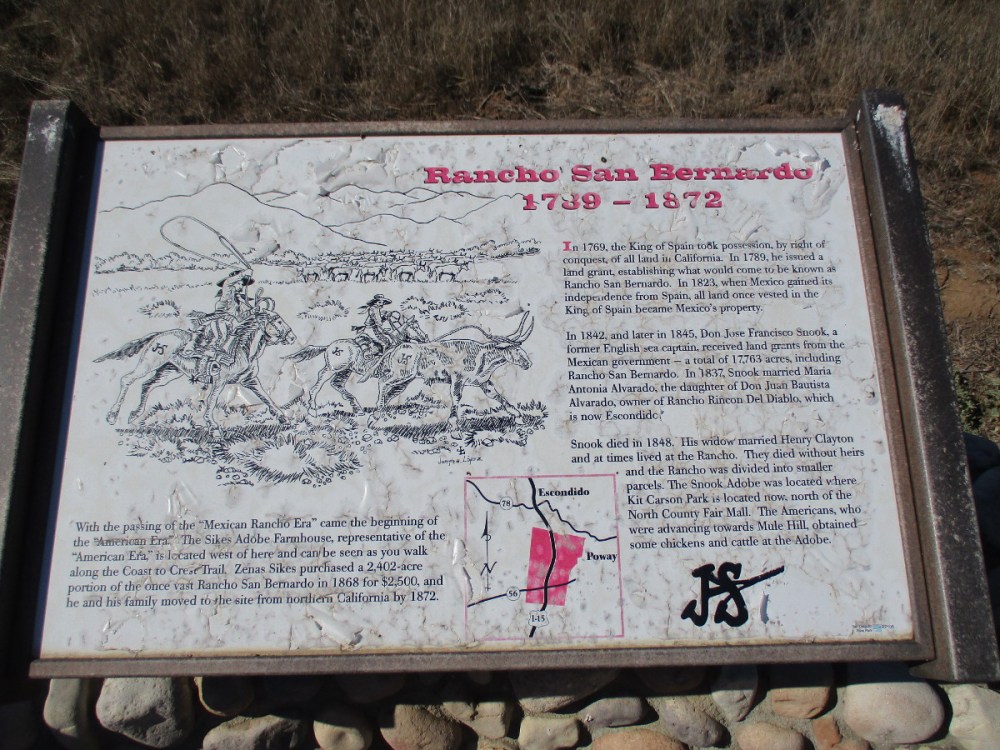
The history of Rancho San Bernardo began in the late 18th century when the King of Spain took possession of all land in California. In 1823, when Mexico gained its independence, the land became Mexico’s property. Don Jose Francisco Snook, a former English sea captain, received land grants from the Mexican government, including Rancho San Bernardo…

With the passing of the Mexican rancho era came the beginning of the American era, which is represented by the nearby Sikes Adobe Farmhouse. The restored farmhouse is a historic site that one can visit a short distance down the Coast to Crest Trail. (The Mule Hill Trail is a segment of the Coast to Crest Trail.)

Thanks for visiting Cool San Diego Sights!

I post new blogs pretty often. If you like discovering new things, bookmark coolsandiegosights.com and swing on by occasionally!

I live in downtown San Diego and love to walk around with my camera! You can follow Cool San Diego Sights via Facebook or Twitter!

Hollywood, Tarzan, Live Wire and Vaudeville!

Hollywood, Tarzan, Live Wire and Vaudeville… What do these four have in common?

They’re all aspects of a short walk in University Heights!

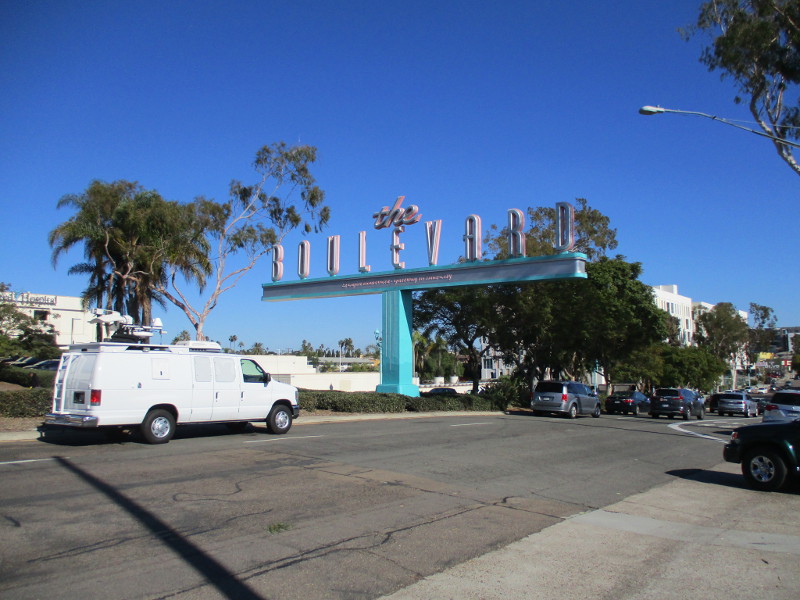
A few days ago I walked east along the south sidewalk of El Cajon Boulevard, from Park Boulevard to Louisiana Street. My camera was out, aiming at anything that caught my fancy.

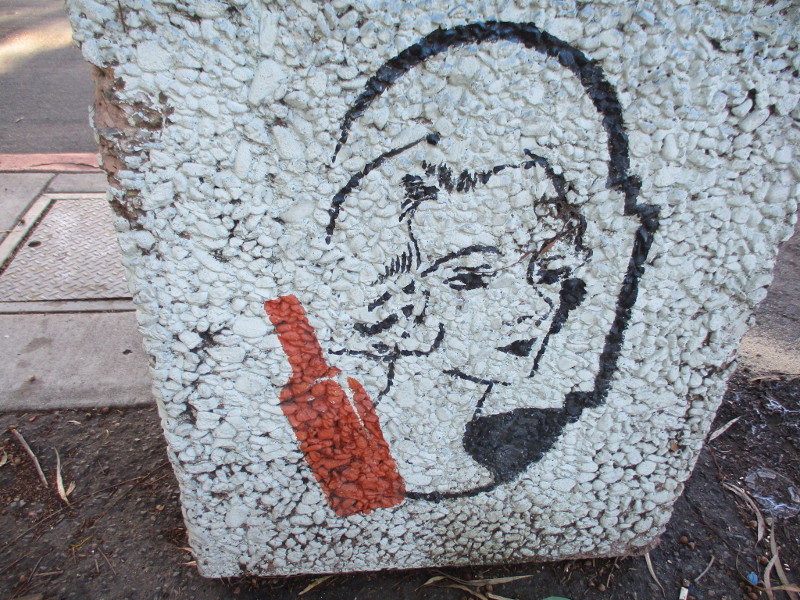
I saw street art and the iconic The Boulevard sign. I passed a strange bicycle and a fun window.

When I came to the historic Lafayette Hotel, I noticed huge banners proclaiming its rebirth in June of 2023.

The Lafayette Hotel has undergone many changes since it began as the Imig Manor in 1946. It’s very first guest was Bob Hope. It soon became a favorite playground for Hollywood stars, like Ava Gardner, Katharine Hepburn, Betty Grable, Lana Turner and singer Bing Crosby. It’s rumored Marilyn Monroe and JFK had a secret rendezvous here.

The hotel’s swimming pool was designed by Olympic gold medal winning swimmer and Tarzan movie actor Johnny Weissmuller. It was used by San Diego native Florence Chadwick to train for her record breaking swim across the English Channel. The hotel’s Mississippi Ballroom was used in the filming of Top Gun’s classic You’ve Lost That Lovin’ Feelin’ scene.

You can learn more about the amazing, elegant features of the Lafayette Hotel here.

Okay! Here are photos from my short walk…

Thanks for visiting Cool San Diego Sights!

I post new blogs pretty often. If you like discovering new things, bookmark coolsandiegosights.com and swing on by occasionally!

I live in downtown San Diego and love to walk around with my camera! You can follow Cool San Diego Sights via Facebook or Twitter!
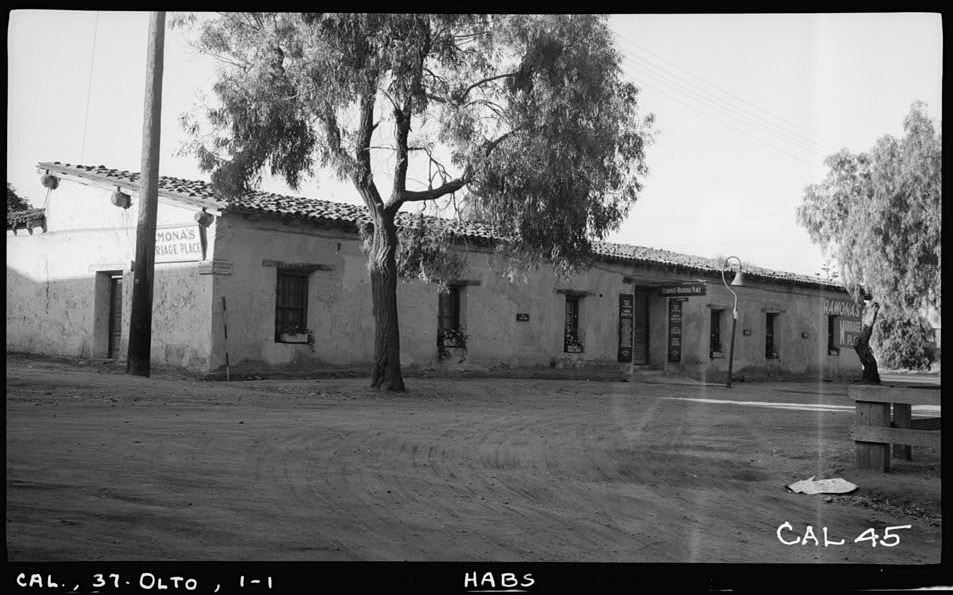
Century old photos of Casa de Estudillo.

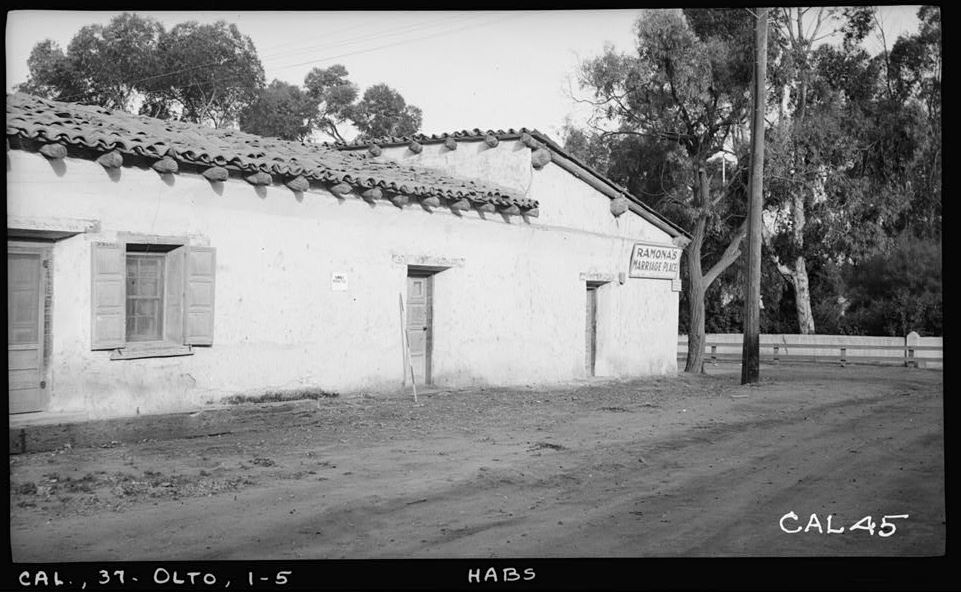
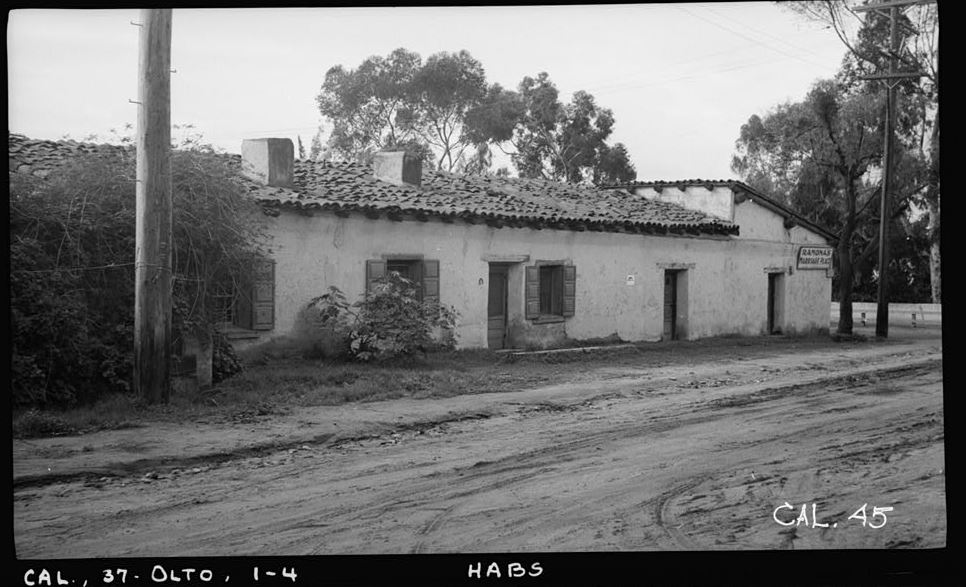
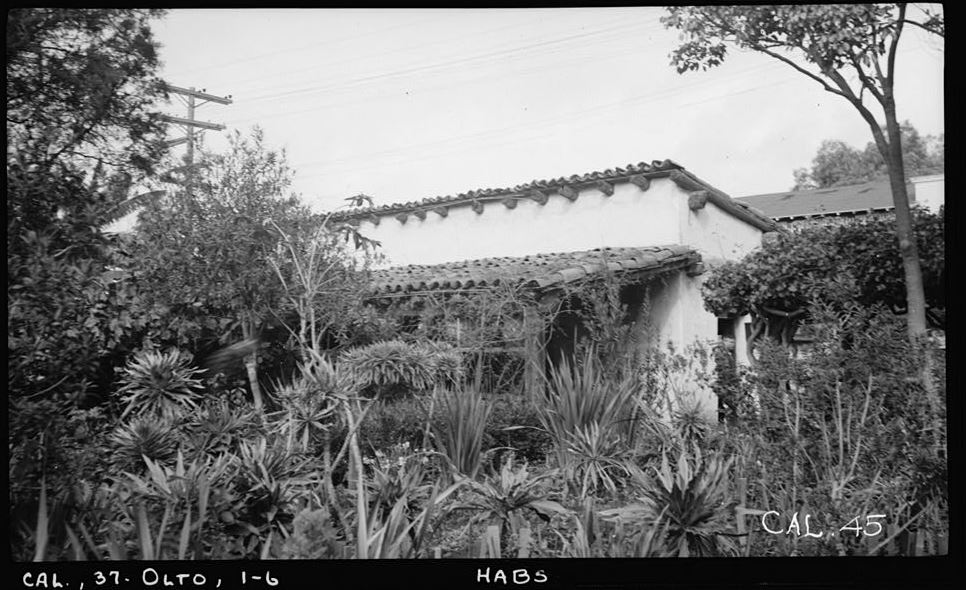
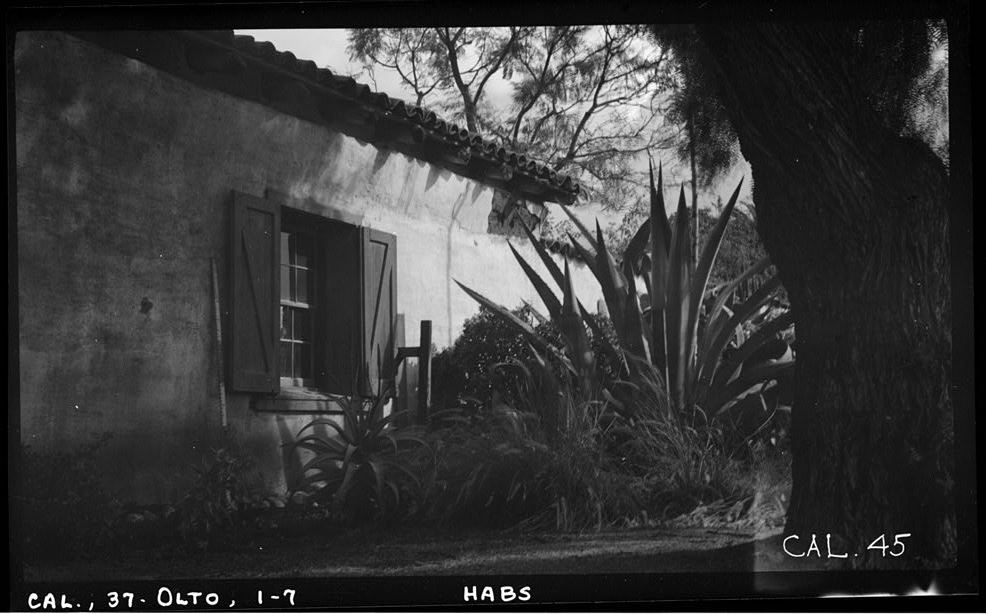
I came upon photographs of San Diego’s historic Casa de Estudillo that are nearly a century old. I thought you might enjoy them.

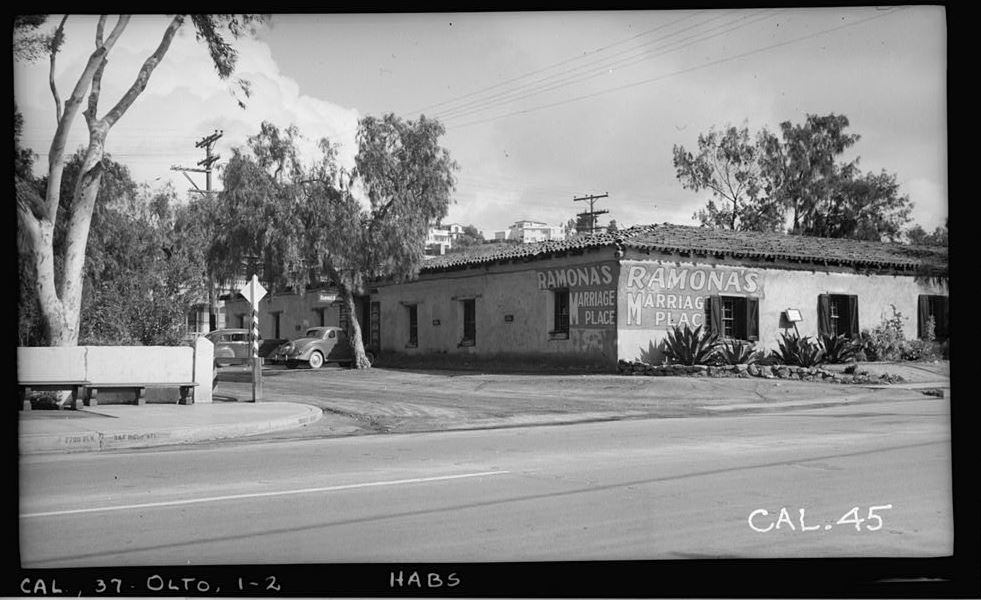
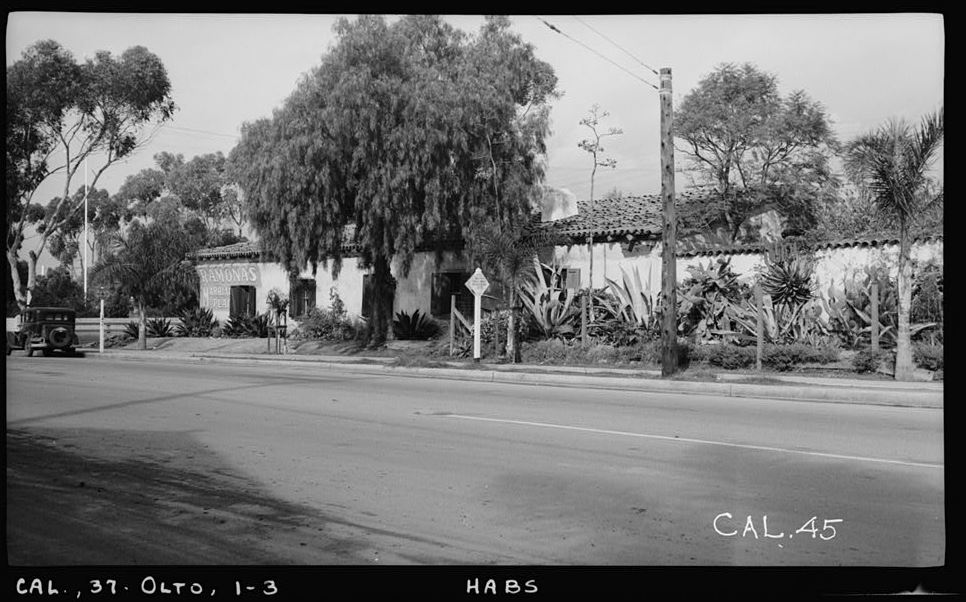
These images of the Jose Antonio Estudillo House were captured in 1936 and 1937 by architectural photographer Henry F. Withey for the Historic American Buildings Survey. A product of the Heritage Documentation Program of the U.S. National Park Service, the photos are in the public domain.

It’s interesting to see that long ago streets intersected near one corner of the house: Mason Street and San Diego Avenue. Today the Casa de Estudillo museum stands in the middle of Old Town San Diego State Historic Park, and the streets you see in these photographs have become wide walkways filled with tourists.

The Casa de Estudillo was built in 1827. Back in the 1930s tourists were visiting the large old adobe casa, just as they do today. The painted Ramona’s Marriage Place sign you see in the above photo was meant to attract those motoring by. Ramona in the late 19th and early 20th centuries was an immensely popular novel.

You can read why Casa de Estudillo was called Ramona’s Marriage Place by clicking here. You can also see the present-day interior of Casa de Estudillo here and here!

Thanks for visiting Cool San Diego Sights!

I post new blogs pretty often. If you like discovering new things, bookmark coolsandiegosights.com and swing on by occasionally!

It’s easy to explore Cool San Diego Sights by using the search box on this website’s sidebar. Or click a tag. There’s a lot of stuff to share and enjoy!

I live in downtown San Diego and love to walk around with my camera! You can follow Cool San Diego Sights via Facebook or Twitter!
Día de los Muertos at El Campo Santo.

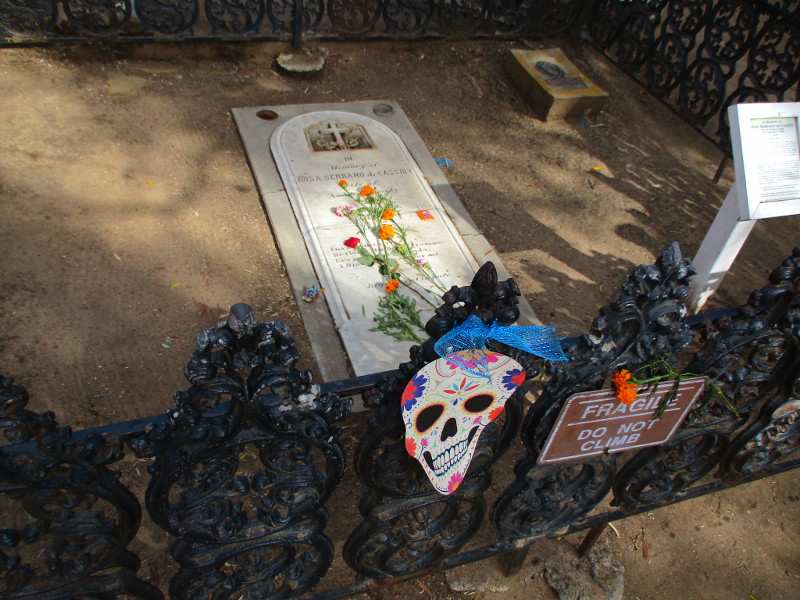
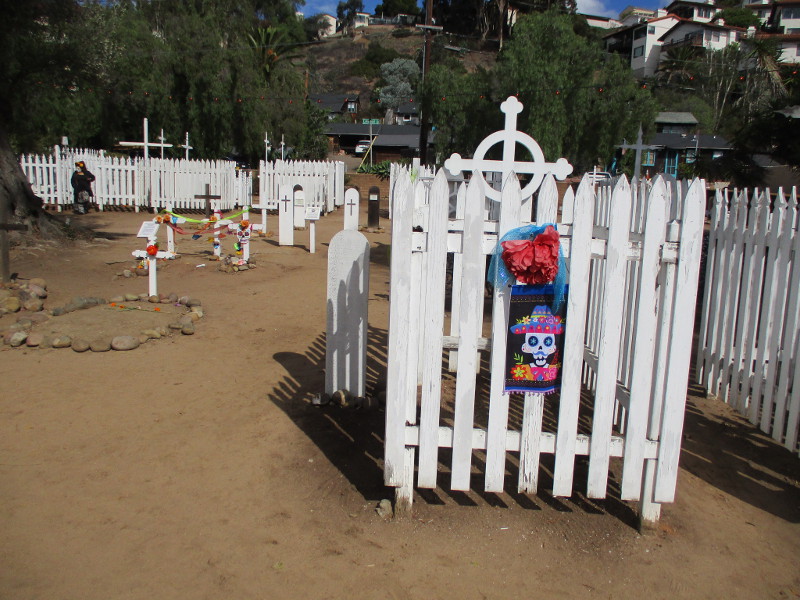
At sundown this evening there will be a Día de los Muertos candlelight procession through Old Town. Those participating will end at San Diego’s old El Campo Santo cemetery, where many of our city’s earliest residents are buried.

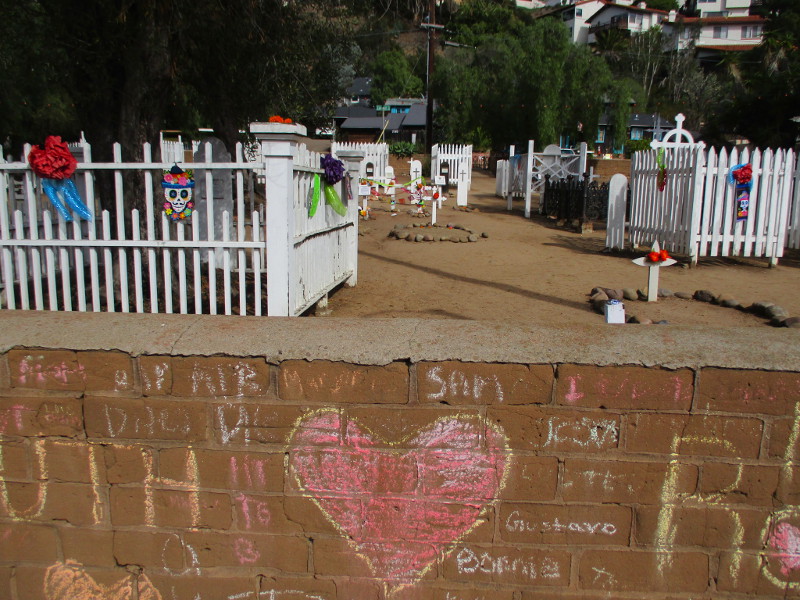
This afternoon the small cemetery had already been decorated for Día de los Muertos.

A colorful altar stands near the entrance, just beyond the El Campo Santo historical marker. According to one sign I noticed, the Community Altar is by the Descendants of Old Town San Diego.

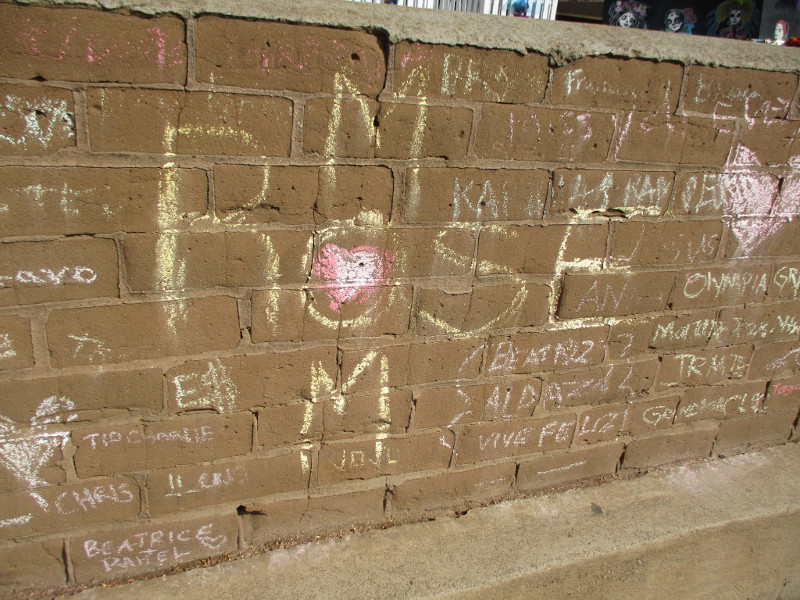
Marigolds and paper sugar skulls decorate gravesites, and the names of deceased loved ones have been scrawled in chalk on the cemetery wall along San Diego Avenue.

Thank you for visiting Cool San Diego Sights!

I post new blogs pretty often, so you might want to bookmark coolsandiegosights.com and check back from time to time.

You can explore Cool San Diego Sights by using the search box on this website’s sidebar. Or click a tag! There’s a lot of stuff to share and enjoy!

I live in downtown San Diego and love to walk around with my camera! You can follow Cool San Diego Sights via Facebook or Twitter!
Memories preserved at Coronado’s history museum.

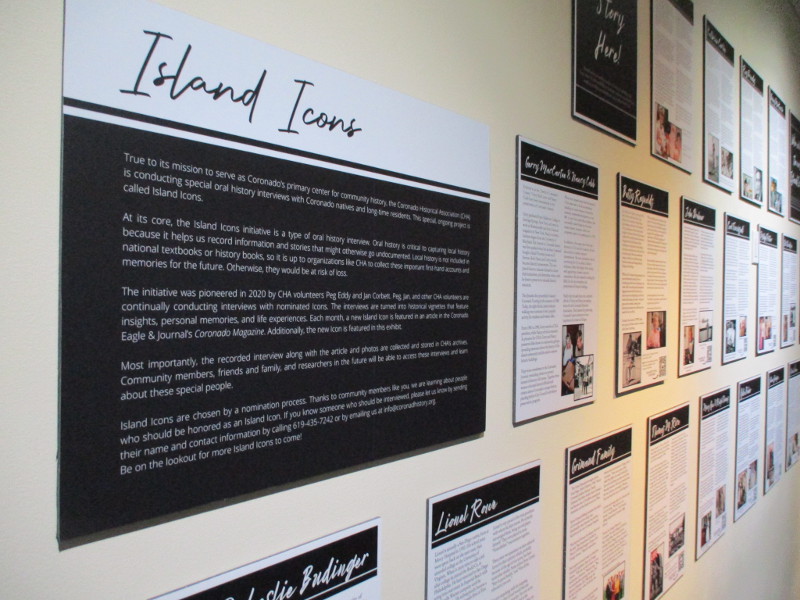
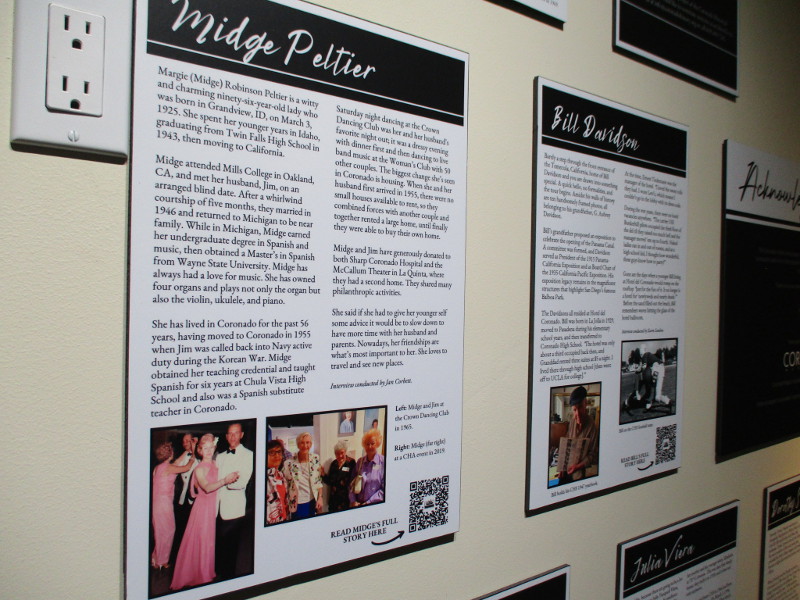
A wall inside the Coronado Historical Association’s fascinating museum features the stories of many Island Icons. Natives and long-time residents of Coronado have been interviewed by volunteers of the historical association, to preserve important oral histories for posterity.

I discovered this wall during my recent visit to the Coronado Historical Association’s museum on Orange Avenue. If you’d like to see it, too, venture into their auditorium, where an hour-long documentary film regarding the history of Coronado is shown on a continuous loop. (The film is outstanding and well worth viewing.)

The Island Icons archival project began in 2020. Every month, a new addition to these recorded memories is featured in the Coronado Eagle & Journal’s Coronado Magazine, and added to this wall in the museum.

Reading these words, you’ll be magically transported back in time. You’ll visit the Hotel Del Coronado and ride the ferry many decades ago, when the town was smaller and more intimate.

You’ll ride the old Coronado Beach Railroad streetcars, have fun at one of the two long-vanished bowling alleys, or perhaps at the long-vanished miniature golf course. You’ll walk and ride bikes and play on streets with no traffic lights, before the bridge to San Diego opened in 1969, changing everything.

You’ll read stories about life during the Great Depression and World War II.

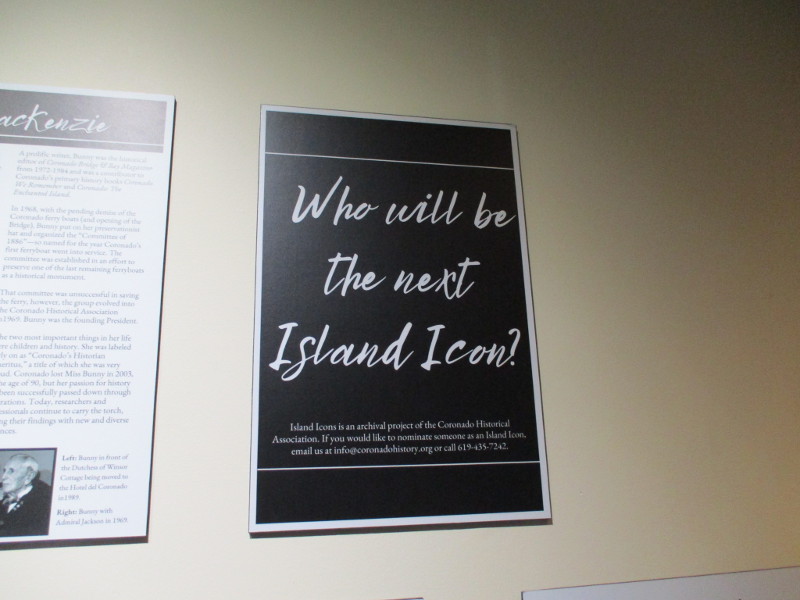
If you know someone who has interesting stories about their life in Coronado, you can nominate them for an interview here!

Thank you for visiting Cool San Diego Sights!

I post new blogs pretty often, so you might want to bookmark coolsandiegosights.com and check back from time to time.

You can explore Cool San Diego Sights by using the search box on this website’s sidebar. Or click a tag! There’s a lot of stuff to share and enjoy!

I live in downtown San Diego and love to walk around with my camera! You can follow Cool San Diego Sights via Facebook or Twitter!

La Playa Trail marker in Roseville.

In Point Loma’s Roseville neighborhood, at the intersection of Rosecrans Street and Avenida de Portugal, you’ll find a historical marker between two benches. Six similar markers were placed along San Diego’s historic La Playa Trail back in the 1930s.

According to their website, this replacement marker was the project of the La Playa Trail Association. All of the markers feature a bas-relief of an Indian and a Mexican carreta (or ox cart), and were designed by Old Town sculptor, Rose Hanks.

I happened to walk by this particular marker the other day and realized I hadn’t yet photographed it.

The La Playa Trail is considered the oldest commercial route in the western United States. In the past, I’ve photographed a few other La Playa Trail markers and provided more information. If you’re curious, you can see that here.

La Playa Trail. An ancient Kumeyaay path that became the oldest commercial trail in the western United States. La Playa Trail Association, 2010.

Thank you for visiting Cool San Diego Sights!

I post new blogs pretty often, so you might want to bookmark coolsandiegosights.com and check back from time to time.

You can explore Cool San Diego Sights by using the search box on this website’s sidebar. Or click a tag! There’s a lot of stuff to share and enjoy!

I live in downtown San Diego and love to walk around with my camera! You can follow Cool San Diego Sights via Facebook or Twitter!

Torrey Pines Lodge prepares for its centennial!

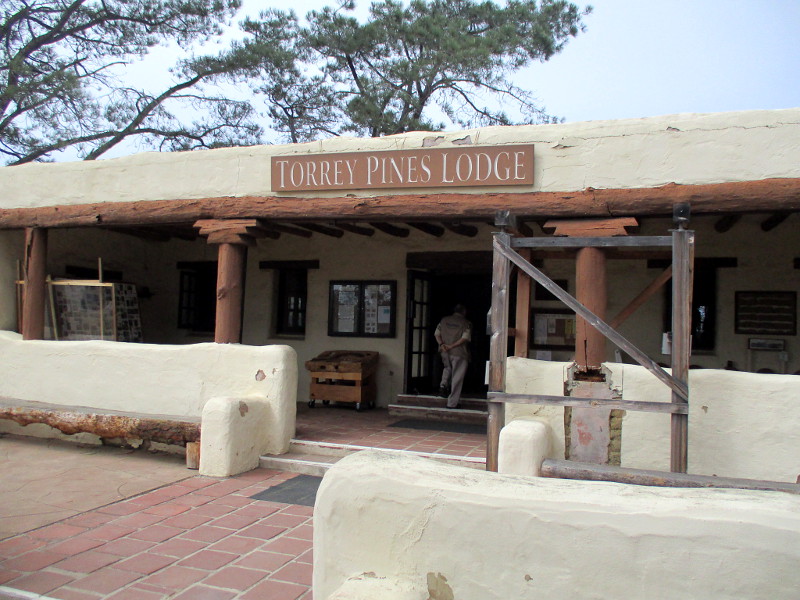
The Torrey Pines Lodge has been welcoming visitors for nearly 100 years. In 2023 the historic adobe building, nestled in the beauty of Torrey Pines State Natural Reserve, will celebrate its centennial!

When I visited the Torrey Pines Lodge this weekend, several docents told me that plans are now being made for observing its centennial. I hope to attend public celebrations next year!

As I walked through the old building, which today serves as a Visitor Center, I viewed a few displays concerning its history.

I’ve taken photographs for you to enjoy. (If you’d like to see more of the Lodge’s interior, and several of it’s museum-like exhibits, check out an old blog post here.)

The San Diego Union newspaper article, dated January 1, 1923, describes the new Beautiful Adobe Lodge.

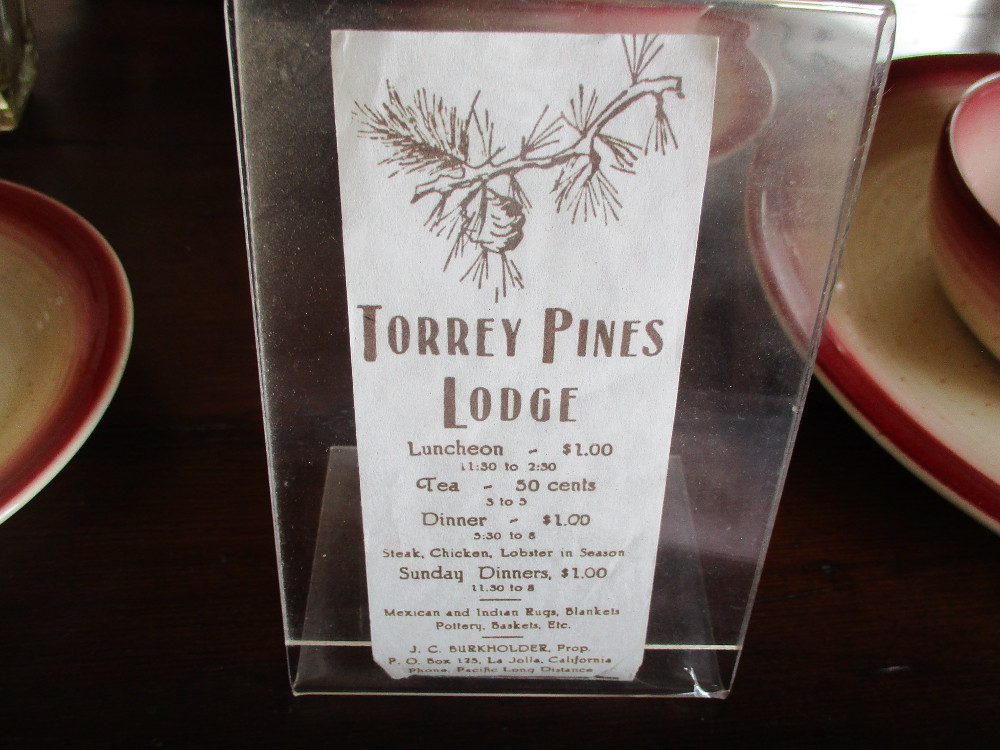
Tableware from the days when the Torrey Pines Lodge served as restaurant.

Dinner was one dollar! Motorists on their way through to San Diego or Los Angeles could also purchase Mexican and Indian rugs, blankets, pottery, baskets, etc. at the Lodge.

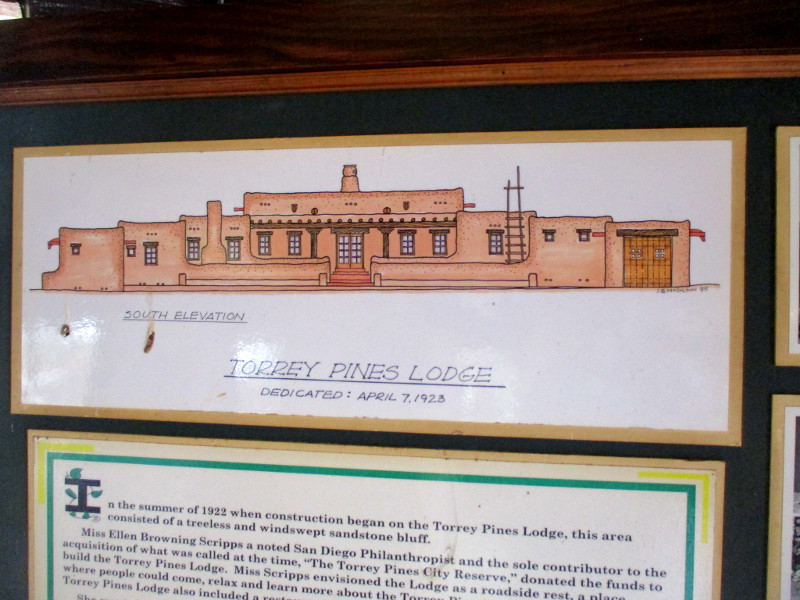
The Torrey Pines Lodge was dedicated on April 7, 1923.

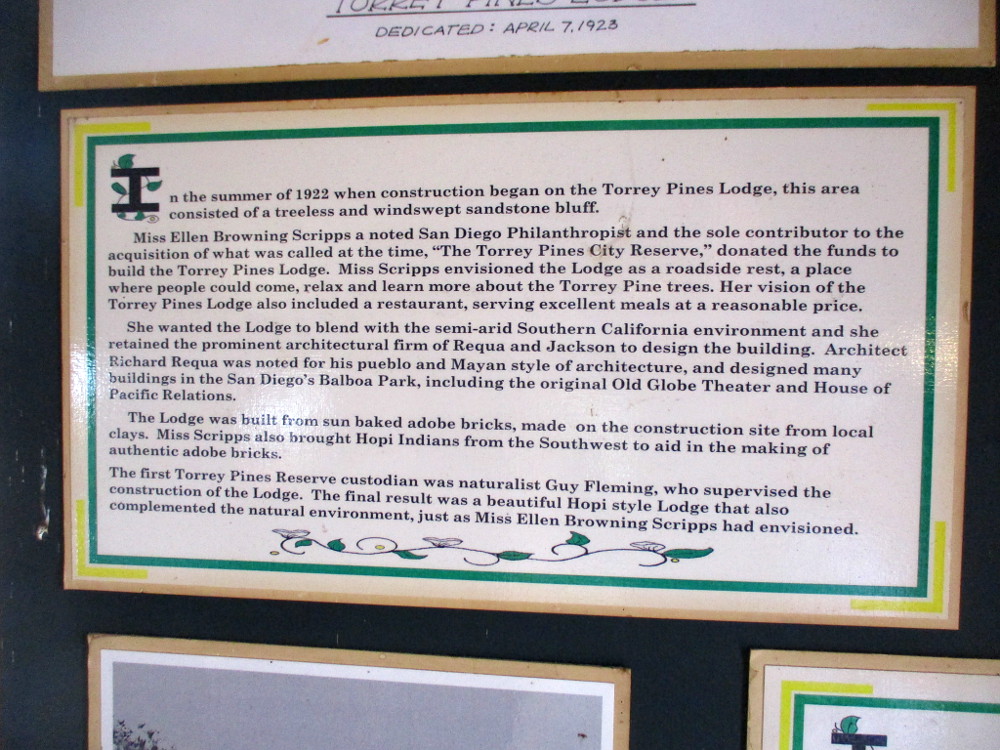
In the summer of 1922 when construction began on the Torrey Pines Lodge, this area consisted of a treeless and windswept sandstone bluff.

Miss Ellen Browning Scripps, a noted San Diego Philanthropist and the sole contributor to the acquisition of what was called at the time, “The Torrey Pines City Reserve,” donated the funds to build the Torrey Pines Lodge…

…Architect Richard Requa was noted for his pueblo and Mayan style of architecture, and designed many buildings in San Diego’s Balboa Park…

The Lodge was built from sun baked adobe bricks, made on the construction site from local clays. Miss Scripps also brought Hopi Indians from the Southwest to aid in the making of authentic adobe bricks…

The Lodge and its restaurant opened to the public in February of 1923 and was an immediate success, perhaps due to its stunning scenery and location adjacent to the Theodore Roosevelt Memorial Highway…the main road between Los Angeles and San Diego until the mid-1930’s…

…the Lodge was a favorite day trip…as well as being a popular stop for tour buses of the era. The Model T Fords of the 1920’s found the highway’s steep grade a challenge…

Old photographs shows dining tables on the Lodge’s front terrace.

The beautiful Torrey Pines Lodge in 2022. Some restoration work is visible.

A wooden plaque inside the Lodge.

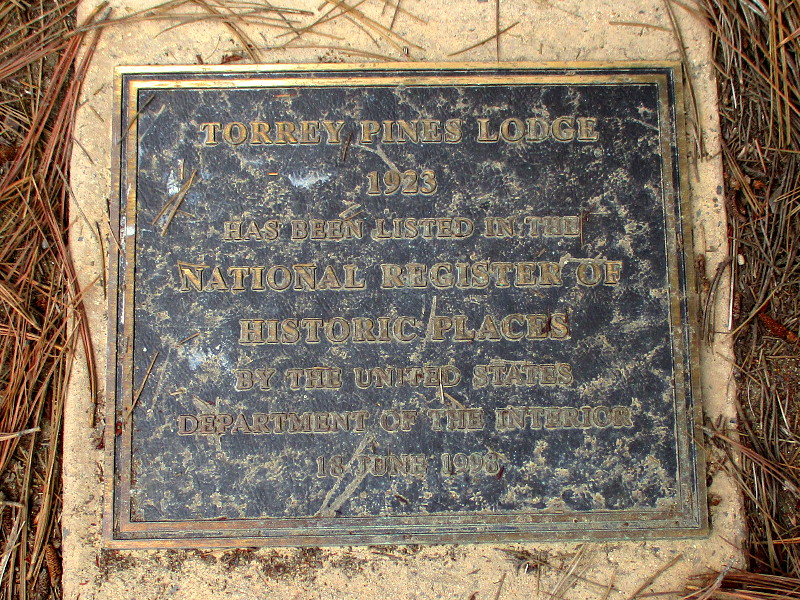
The Torrey Pines Lodge is listed in the National Register of Historic Places.

Thank you for visiting Cool San Diego Sights!

I post new blogs pretty often, so you might want to bookmark coolsandiegosights.com and check back from time to time.

You can explore Cool San Diego Sights by using the search box on this website’s sidebar. Or click a tag! There’s a lot of stuff to share and enjoy!

I live in downtown San Diego and love to walk around with my camera! You can follow Cool San Diego Sights via Facebook or Twitter!