More hidden treasure in Old Town San Diego?

Is it possible that more hidden treasure will be found in Old Town San Diego State Historic Park?

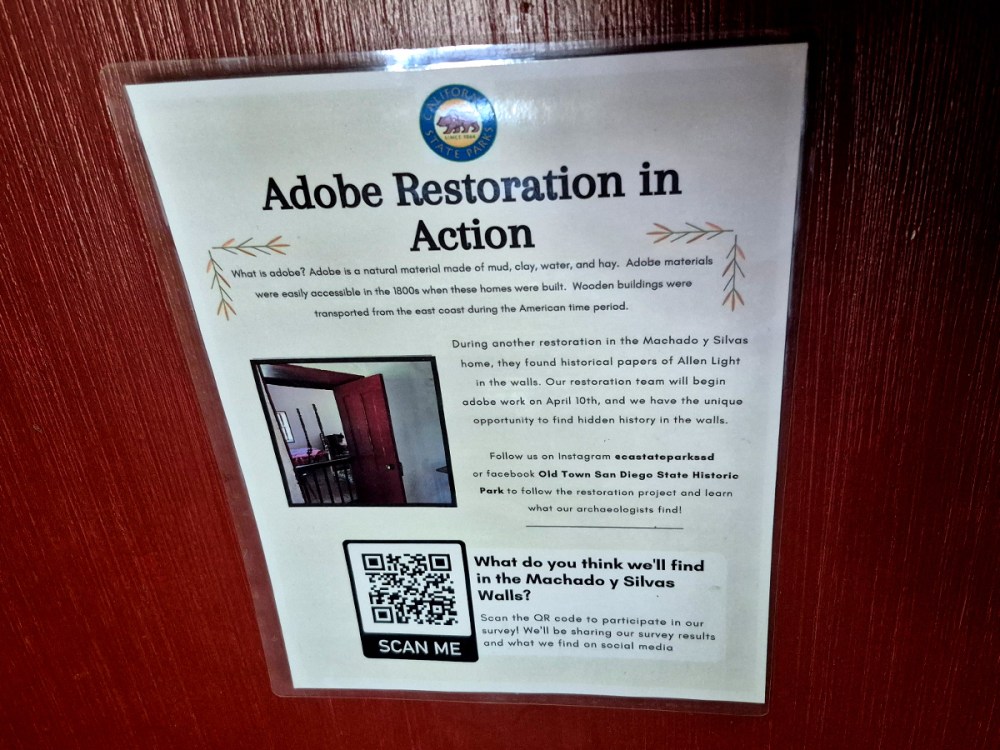
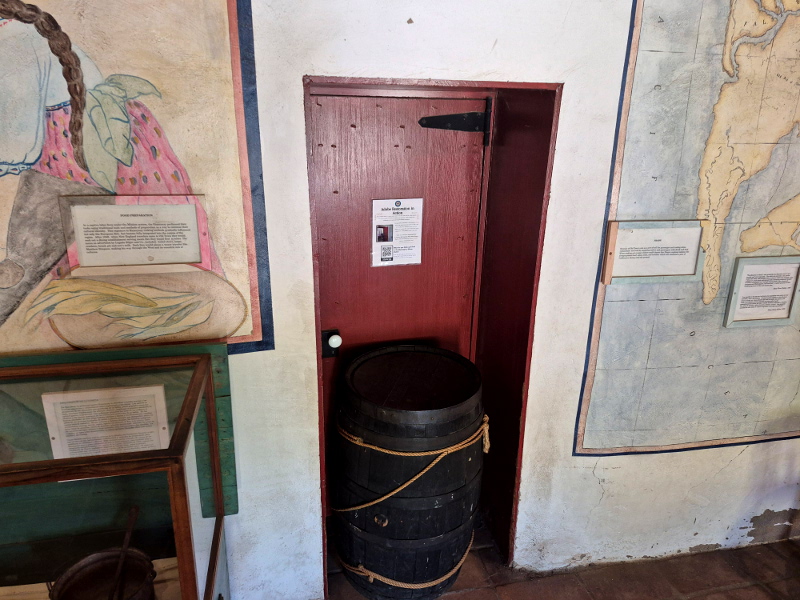
The adobe walls of a room inside the Casa de Machado y Silvas are undergoing restoration. Do these walls contain additional secrets?

During a past restoration of the same Machado y Silvas building, an incredible treasure was found. Important historical papers concerning early San Diego resident Allen Light were found inside the adobe walls!

As I explained in a past blog post: Historical documents discovered by archeologists hidden in the Casa de Machado y Silvas shed light on the life of San Diego resident Allen B. Light. He was also know as the “Black Steward.” Allen arrived in California during the 1830s, aboard the sailing ship Pilgrim, the same vessel that brought Richard Henry Dana Jr. who would later write Two Years Before the Mast.

One document was “a sailor’s protection,” which proclaimed Light was a “coloured man, a free man, and a citizen of the United States of America.” The second document was his commission from the Mexican Governor of Alta California to investigate illegal sea otter hunting along the coast.

If you’re curious what might be found during the present restoration, you can follow Old Town San Diego State Historic Park’s Facebook page here or their Instagram here.

Will a stash of coins be found? A skeleton? More valuable documents? Nothing at all? You can submit your best guess by clicking here!
I post new blogs pretty often. If you like discovering new things, bookmark coolsandiegosights.com and swing on by occasionally!

I live in downtown San Diego and love to walk around with my camera! You can follow Cool San Diego Sights via Facebook or X.

Feel free to share!
A visit to the Heritage of the Americas Museum.

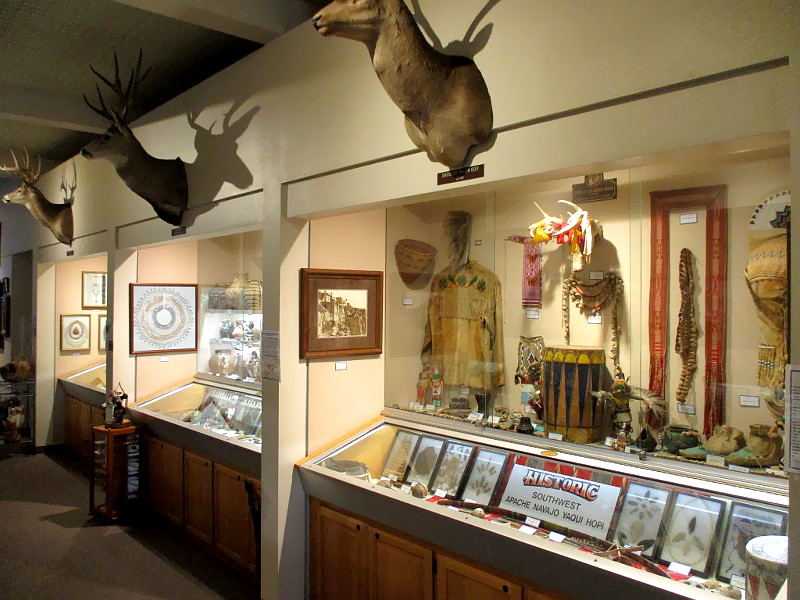
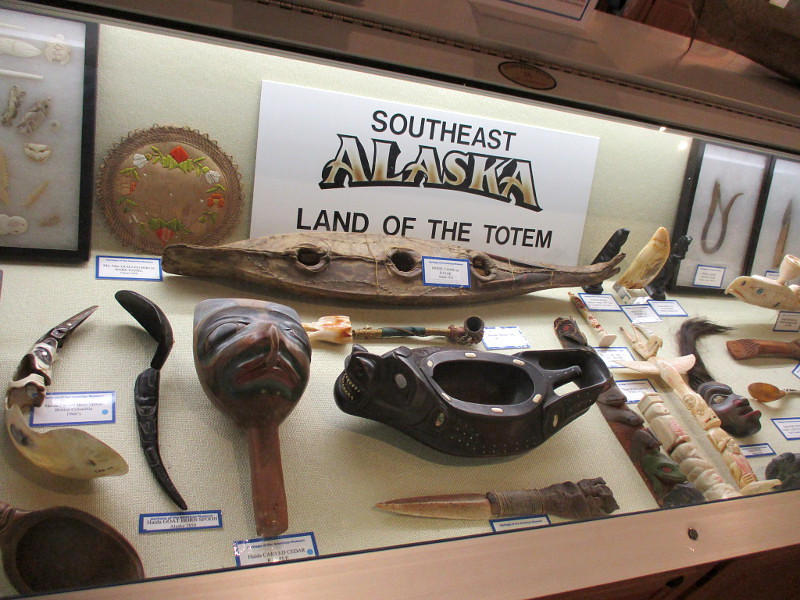
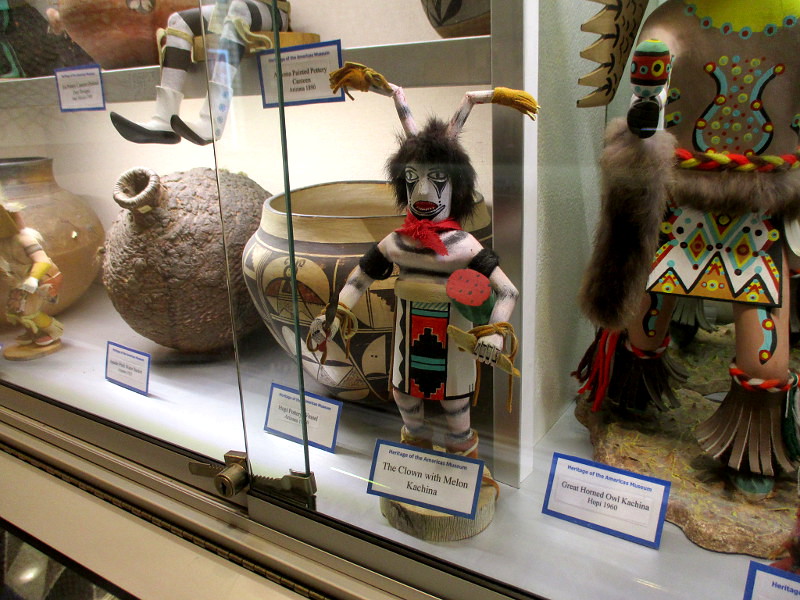
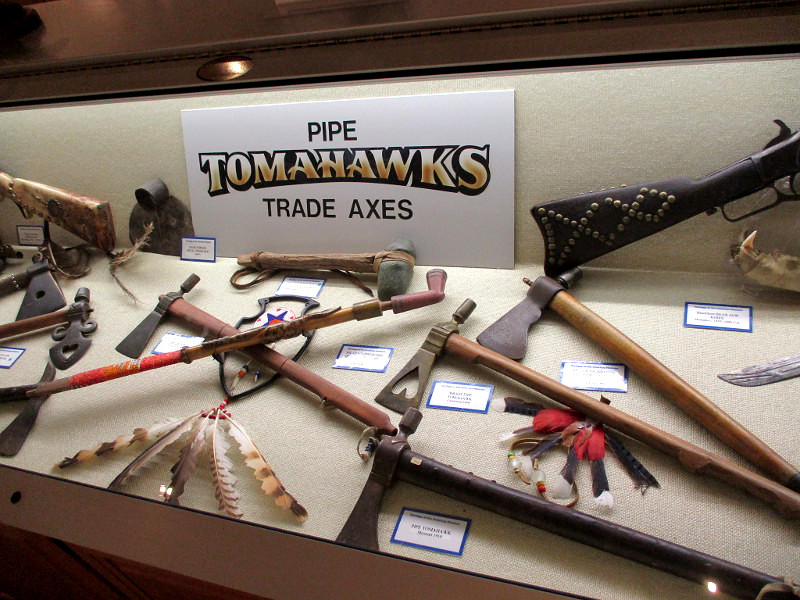
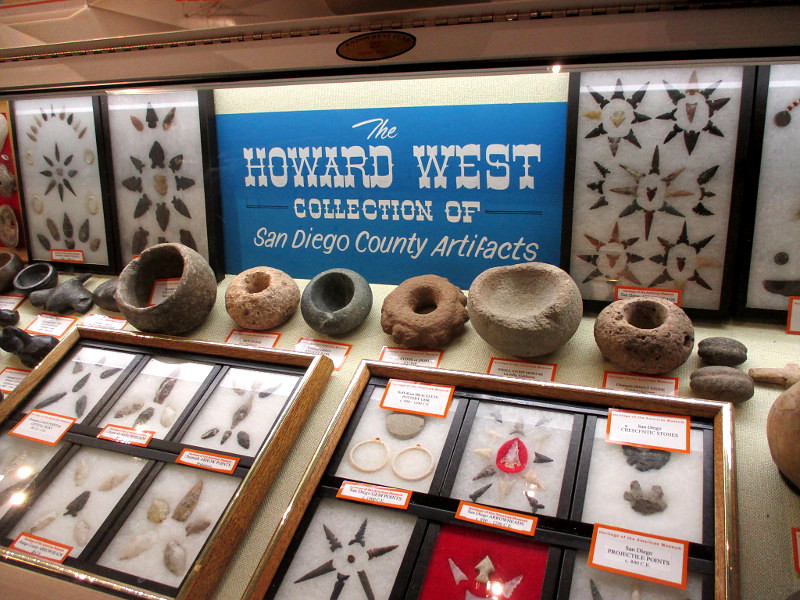
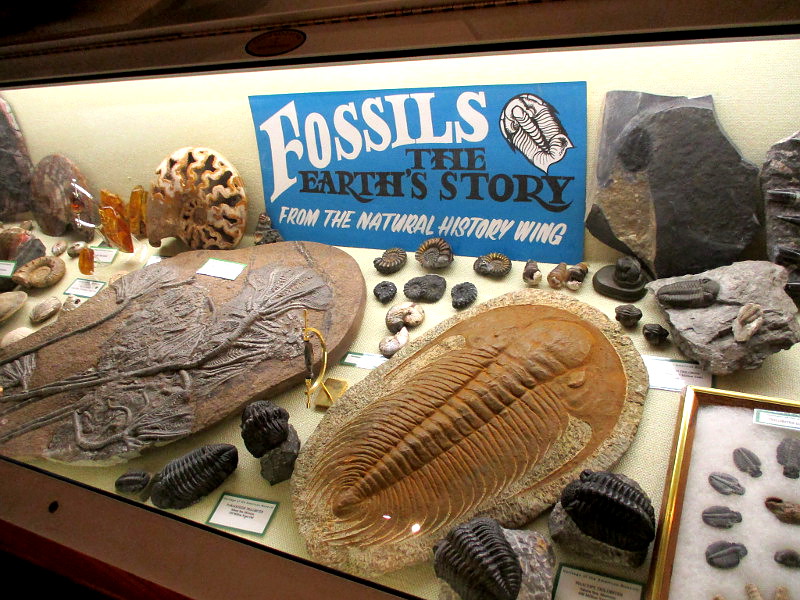
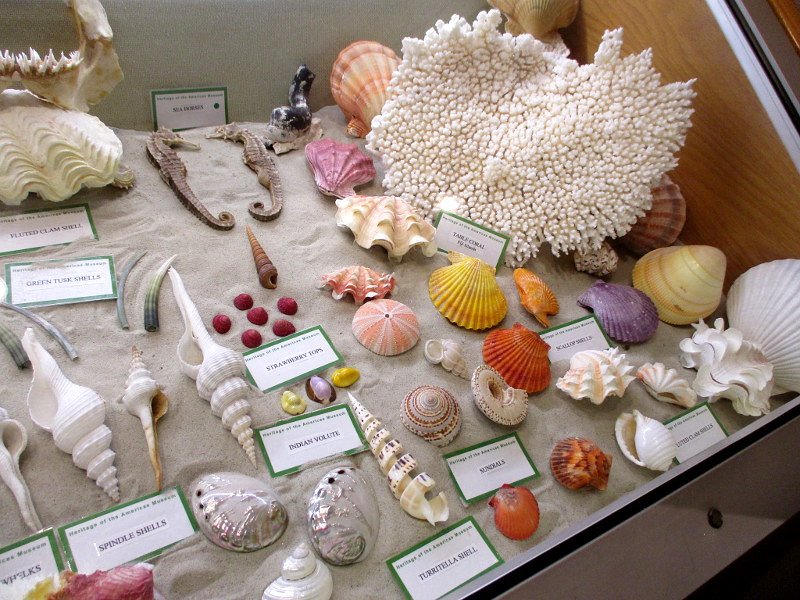
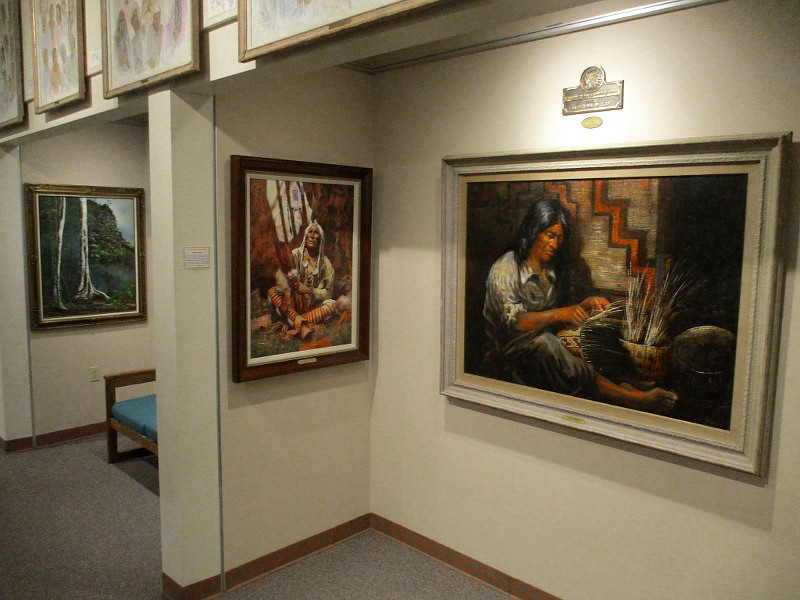
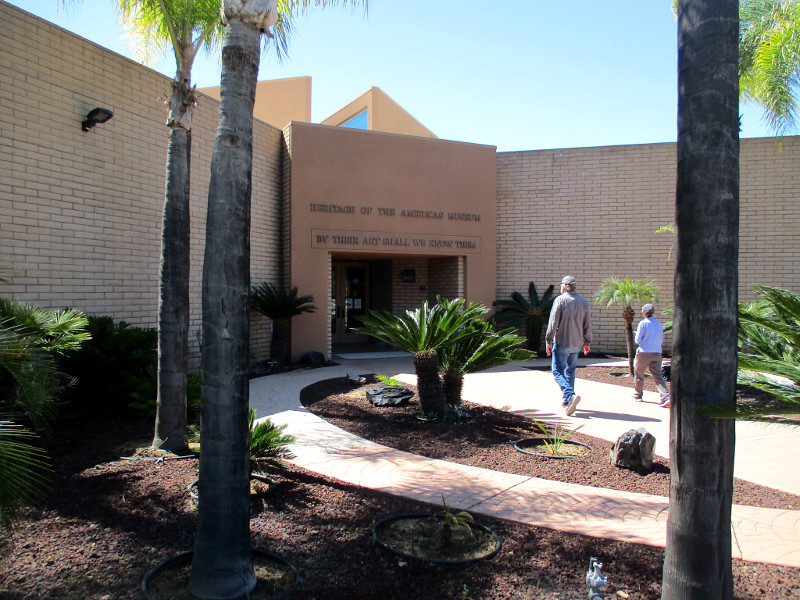
There’s a surprising museum jam-packed with wonders that everyone in San Diego should visit. I’m speaking of the Heritage of the Americas Museum in Rancho San Diego.

The Heritage of the Americas Museum is located near the West entrance of Cuyamaca College, immediately adjacent to the Water Conservation Garden. The museum building appears modest at first glance, but when you step through the front door your eyes might pop out of your head!

How do I begin to describe this amazing place?

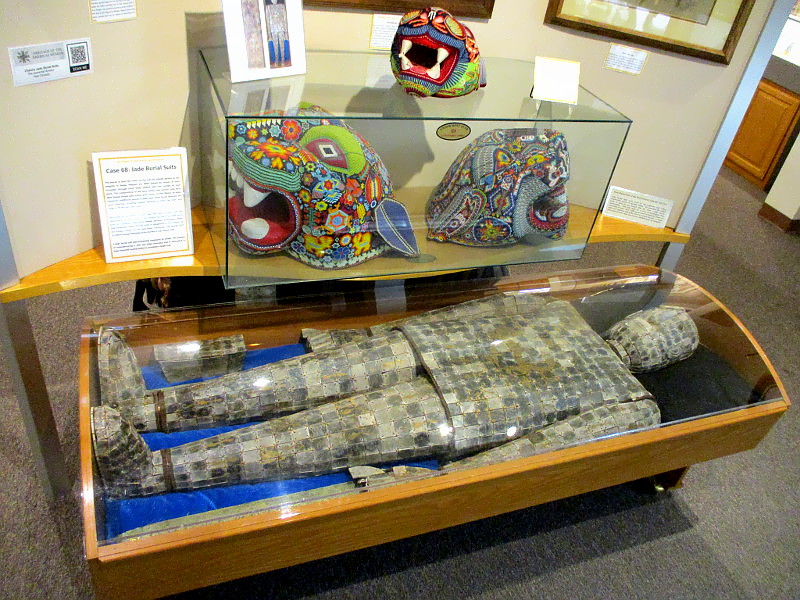
The museum has four wings. They are dedicated to Archaeology, Anthropology, Natural History and Fine Art. If you wanted to examine every artifact, specimen and work of art, you could easily spend an hour exploring the museum.

Display cases contain objects from the Americas that fall into dozens of categories, whether it might be Peruvian textiles, or Haida and Tlingit artifacts, or paleo points dated 12000 B.C. to 6000 B.C., or millions-year-old fossils, or beautiful sea shells and coral…

When I visited, school children on a field trip were excitedly peering into the displays, seeing new worlds beyond their own life experience.

I’ll share a few photos so you get an idea of the fascinating worlds you’ll encounter, too.

Cool thing: the Heritage of the Americas Museum is free to the public every second Friday of the month!

I post new blogs pretty often. If you like discovering new things, bookmark coolsandiegosights.com and swing on by occasionally!

I live in downtown San Diego and love to walk around with my camera! You can follow Cool San Diego Sights via Facebook or X.

Feel free to share!
Four historic 1915 murals in Balboa Park.

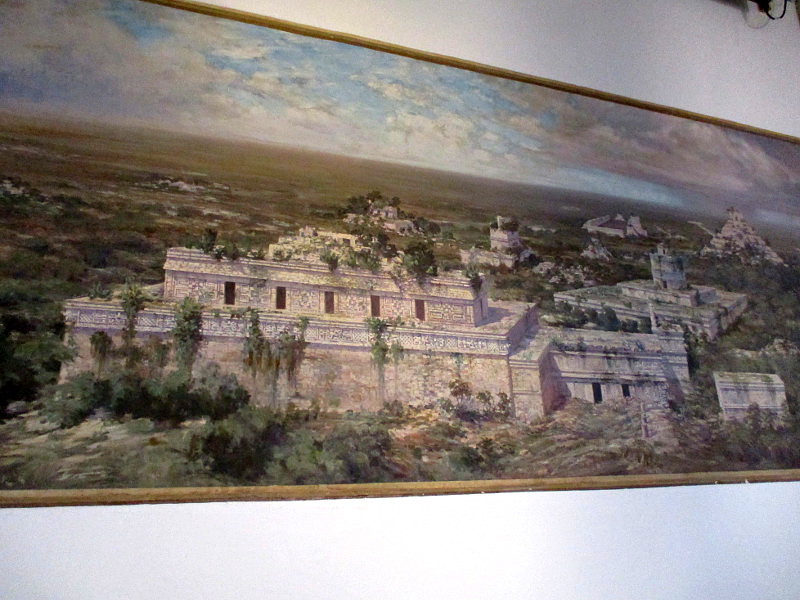
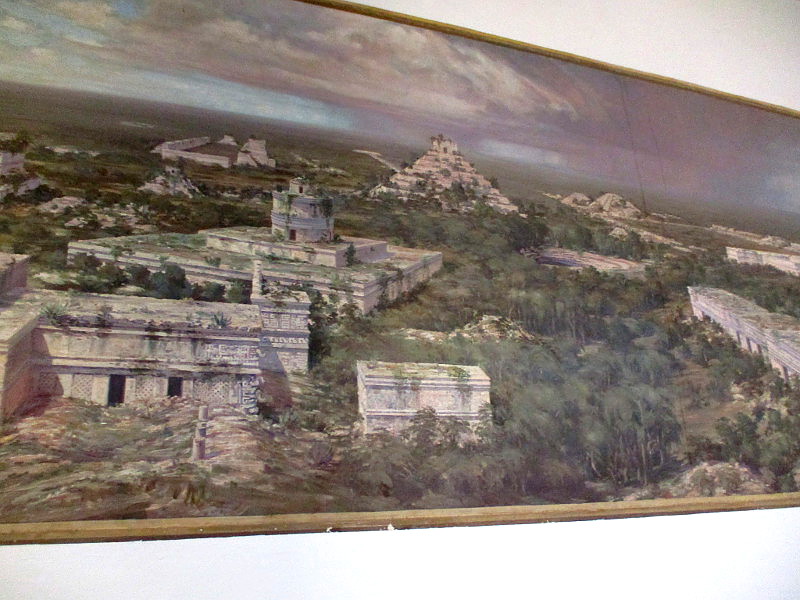
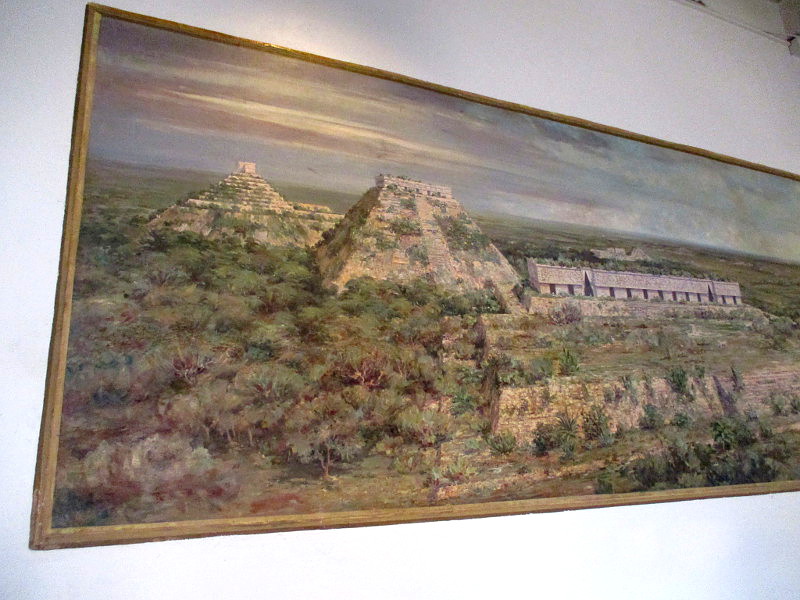
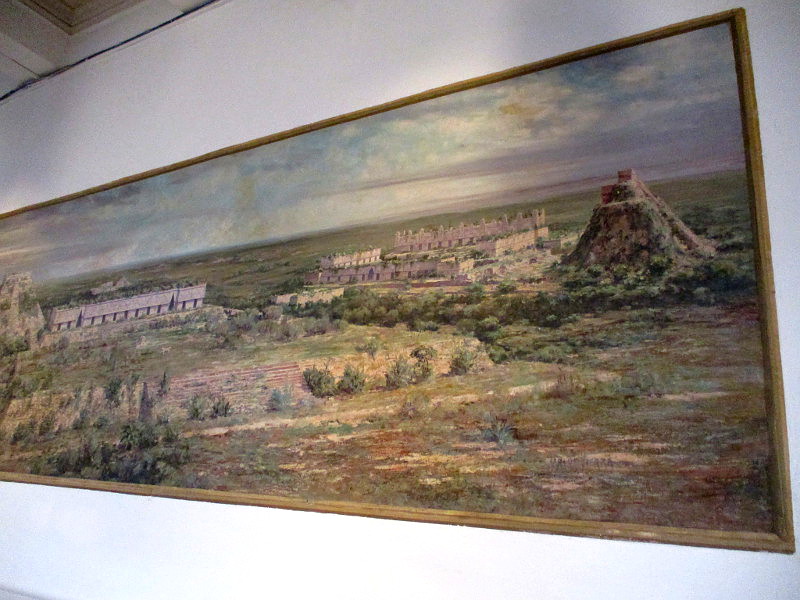
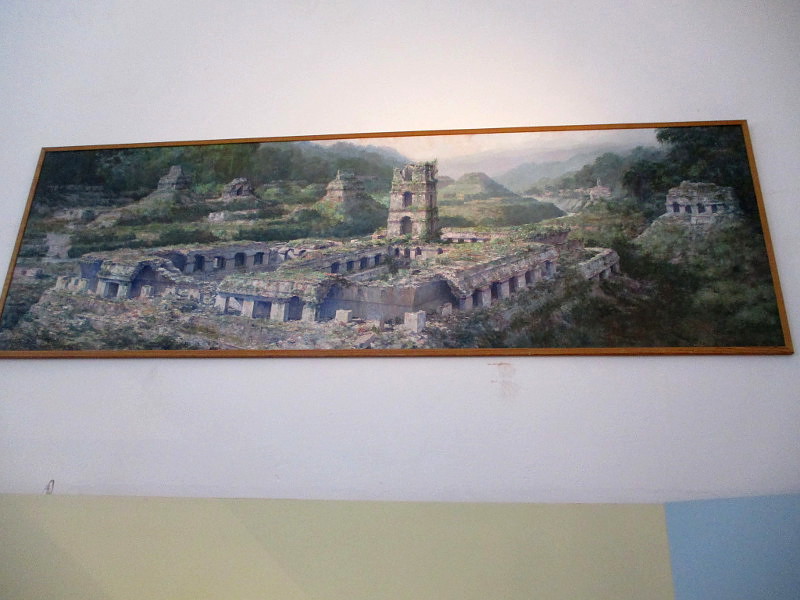
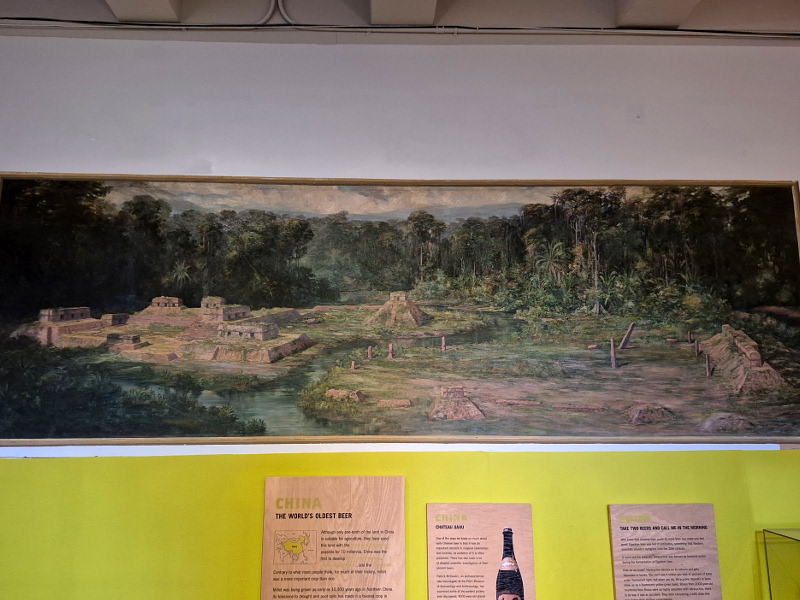
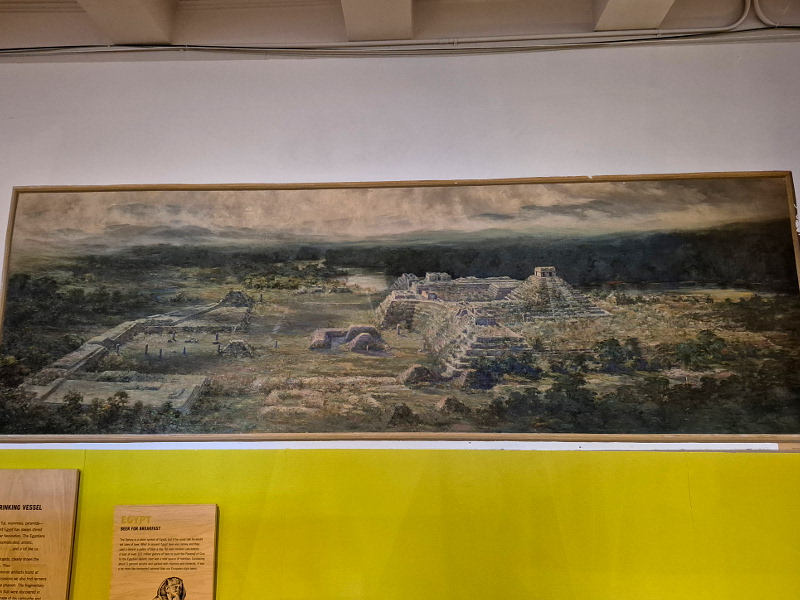
Renowned artist Carlos Vierra painted six murals of Mayan cities for the 1915 Panama–California Exposition in San Diego’s Balboa Park.

Today, inside Balboa Park’s Museum of Us (formerly called the Museum of Man), visitors can view reproductions of four murals.

The Museum of Us is housed in the historic California Building. In 1915 the building was home to the San Diego Museum. “The Story of Man Through the Ages” was the San Diego Museum’s exhibit during the Panama-California Exposition, and featured the six original Vierra murals.

Should you step into the Museum of Us, you can find two of the reproduced murals on the ground floor, in the large central atrium, hung on the wall on either side of the main entrance. Two additional murals can be viewed in a gallery on the second floor directly above.

The two ground floor murals depict the ruins of prehistoric Chichén Itzá in Yucatán, Mexico.

My first pair of photographs (above) show one mural on the ground floor. As a sign explains: Central to this painting is the round building, known as the Caracol, which functioned as an observatory. Behind it lies the ballcourt, the largest such ritual playing field in Mesoamerica. To the right is the sacred cenote, the well of sacrifice.

The second pair of photographs (below) show the mural to the right of it. These murals depict the Maya architectural style known as Puuc, that prevailed from about 600 AD to 900 AD.

Decorating a gallery wall on the second floor, the two additional Vierra murals illustrate the ancient cities of Palenque and Tikal…

UPDATE!

I’ve since learned two more Vierra murals can be viewed in the museum. I’ll go in search of them next time I visit the Museum of Us, and post those photos in an update!

ANOTHER UPDATE!

Here they are…

I post new blogs pretty often. If you like discovering new things, bookmark coolsandiegosights.com and swing on by occasionally!

I live in downtown San Diego and love to walk around with my camera! You can follow Cool San Diego Sights via Facebook or X.

Feel free to share this!

Kumeyaay remembered in La Jolla park.

May the resiliency of the Kumeyaay forever be remembered.

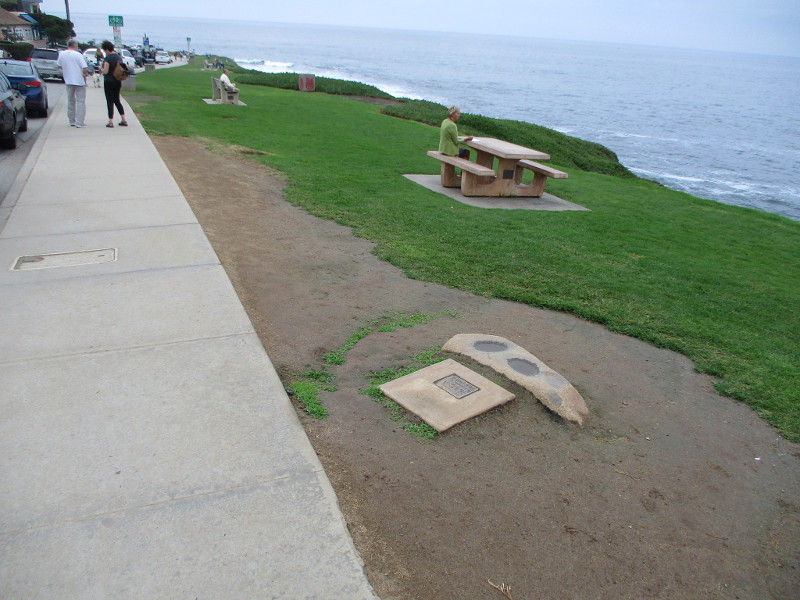
At the north end of Cuvier Park in La Jolla you will find the above plaque. It’s set beside the sidewalk near the corner of Coast Boulevard and Cuvier Street.

A nearby boulder contains a pair of oval depressions, used long ago by the native Kumeyaay to grind acorns, seeds, roots and other food. The Kumeyaay call these grinding mortars ‘ehmuu, which means bedrock hole.

The boulder with its ancient history was restored to this location last year. It had been removed for a construction project. You can read about the Re-Internment of the Mortar That was Removed by the City by clicking here.

The plaque dedication ceremony included a Kumeyaay blessing and the performance of Bird Singers.

I took these photos during a walk today.

The sun was shining. Ocean waves crashed upon rocks a short distance from the place where I paused.

May the resiliency of the Kumeyaay forever be remembered.

Thank you for visiting Cool San Diego Sights!

I post new blogs pretty often, so you might want to bookmark coolsandiegosights.com and check back from time to time.

You can explore Cool San Diego Sights by using the search box on this website’s sidebar. Or click a tag! There’s a lot of stuff to share and enjoy!

I live in downtown San Diego and love to walk around with my camera! You can follow Cool San Diego Sights via Facebook or Twitter!

Bones, stones, and ancient history in San Diego.

Did you know humans might have been living in your neighborhood 130,000 years ago?

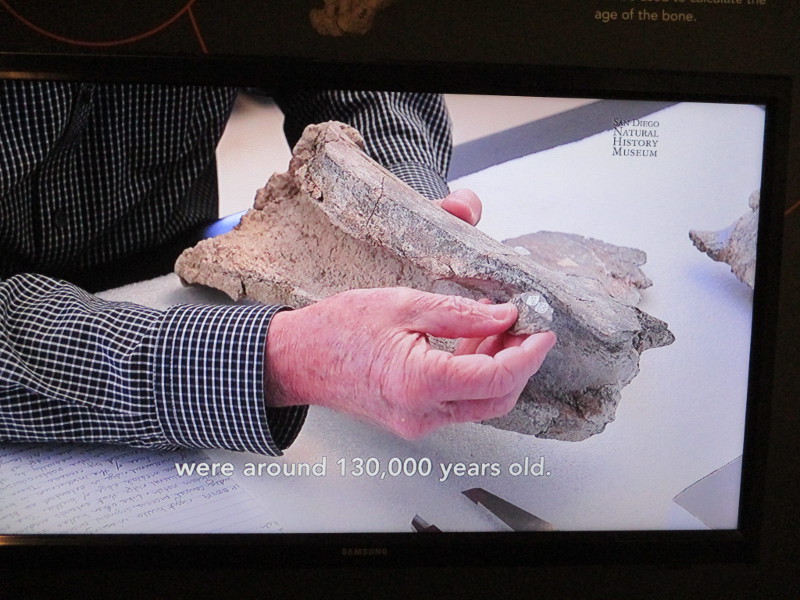
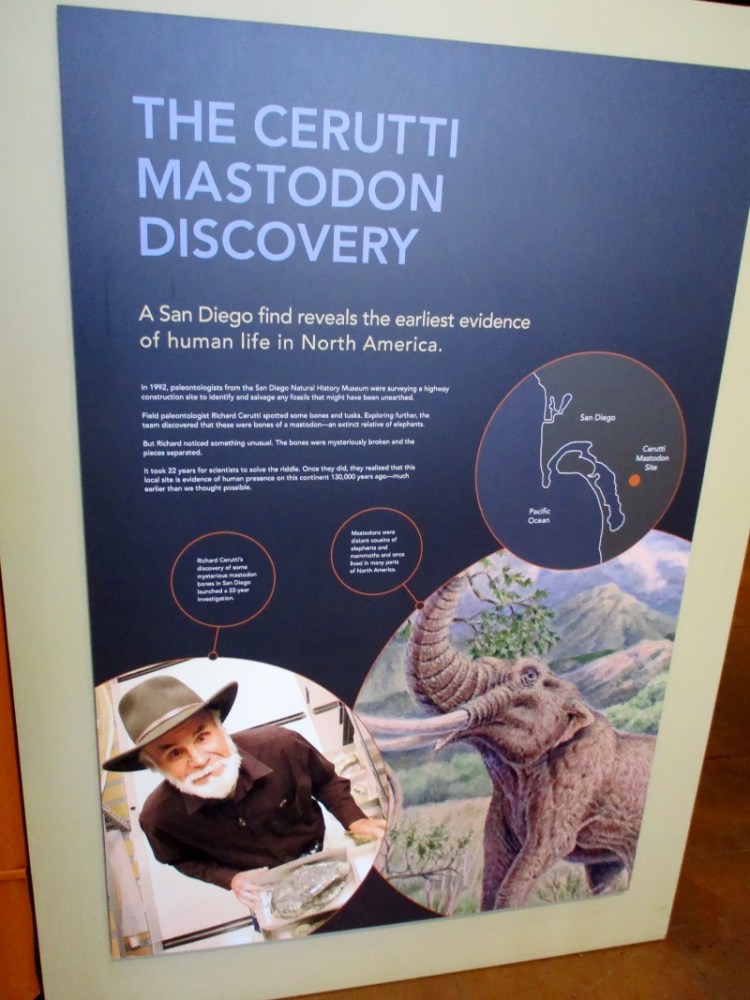
I was visiting the San Diego Natural History Museum when my eyes fell upon an interesting display concerning the Cerutti Mastodon site.

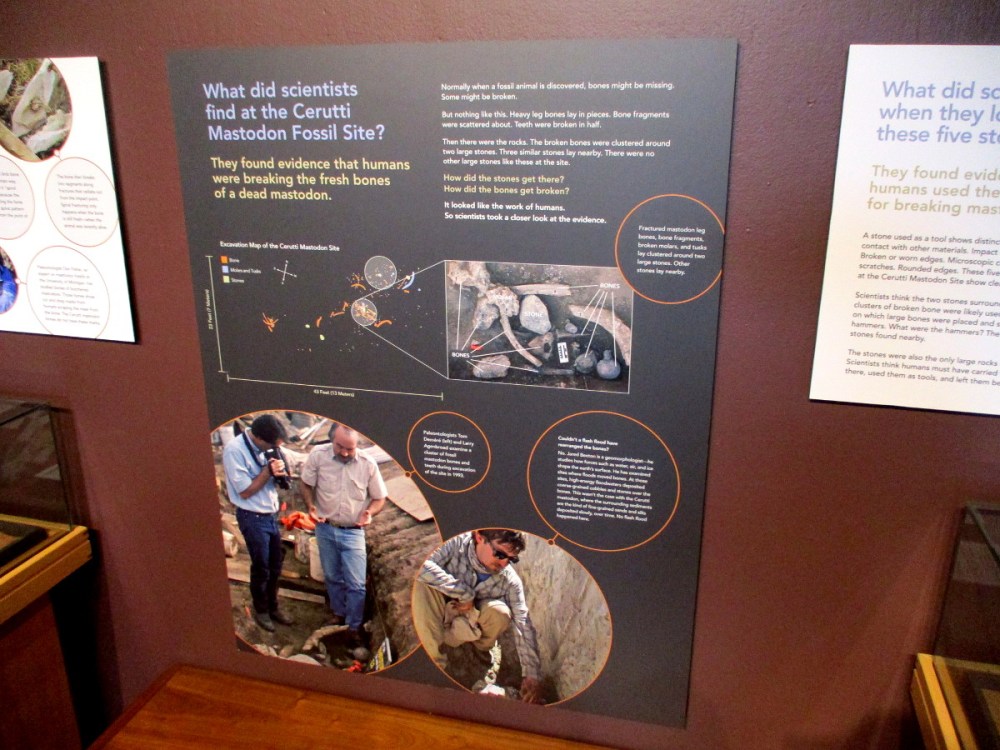
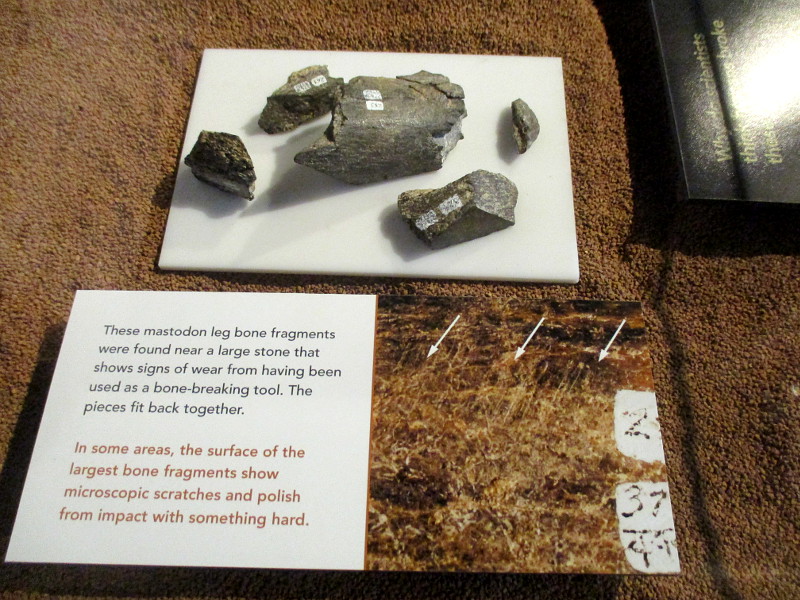
Thirty years ago, during the expansion of State Route 54 in the South Bay, a team of researchers from the San Diego Natural History Museum discovered mastodon bones among cobbles. The bones appeared to have been intentionally broken. It was believed the stones, which had impact marks, had been used by humans to fracture the mastodon bones to extract marrow.

Using radiometric dating, the bones were found to be about 130,000 years old. If, indeed, early humans had worked these bones, that would mean humans were in North America about 100,000 years earlier than previously thought!

Many experts asserted the bones were broken due to the heavy machinery used for freeway construction. Two years ago, however, more evidence was obtained. Bone micro-residues were observed on the cobbles, which seems to confirm that ancient inhabitants of San Diego did indeed hammer at fresh, tasty mastodon bones!

If all of this excites your curiosity, the Wikipedia article concerning San Diego’s scientifically important Cerutti Mastodon site can be found here.

And here’s a detailed article about the discovery written in 2017.

I live in downtown San Diego and love to walk around with my camera! You can follow Cool San Diego Sights via Facebook or Twitter!

Visiting the Kumeyaay-Ipai Interpretive Center in Poway.

Once a month, every third Saturday, the Kumeyaay-Ipai Interpretive Center in Poway opens to the public.

Today I enjoyed a tour of the archaeological site and its educational visitor center. I was surprised to find so much history preserved in this small island of natural beauty just off Poway Road.

Poway is derived from the Native American Kumeyaay word Pauwai, which means the shape of an arrowhead or the merging of two creeks. A short distance to the south is Poway Creek.

As you will see in the following photographs, a small Kumeyaay village of approximately 20 families once lived on the hill that I and my docent tour guide, Heidi, explored.

The Kumeyaay people have lived in this region for at least 10,000 years. These first people had their lives severely disrupted with the arrival of Europeans in 1769. Today, descendants of those who lived in Pauwai are members of the San Pasqual Band of Mission Indians.

Please enjoy the following photos to get a taste of what you might discover when you visit. Read the captions for a few of the things I learned.

Are you a local history or anthropology enthusiast? Or a community-minded person who loves the outdoors? The Kumeyaay-Ipai Interpretive Center is always looking for volunteers!

Check out their Facebook page and learn about the special days and hours when you can visit here.

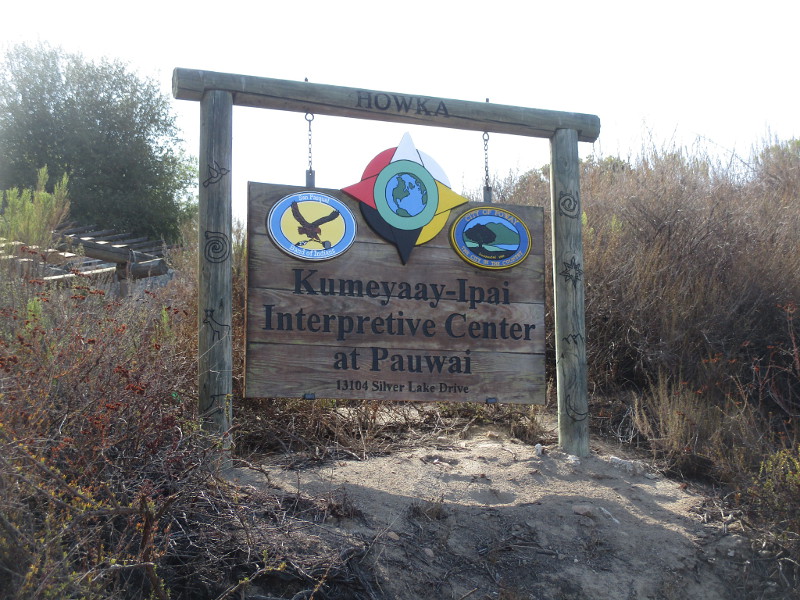
Sign at the end of Ipai Waaypuk Trail, south of Poway Road, where there is parking.
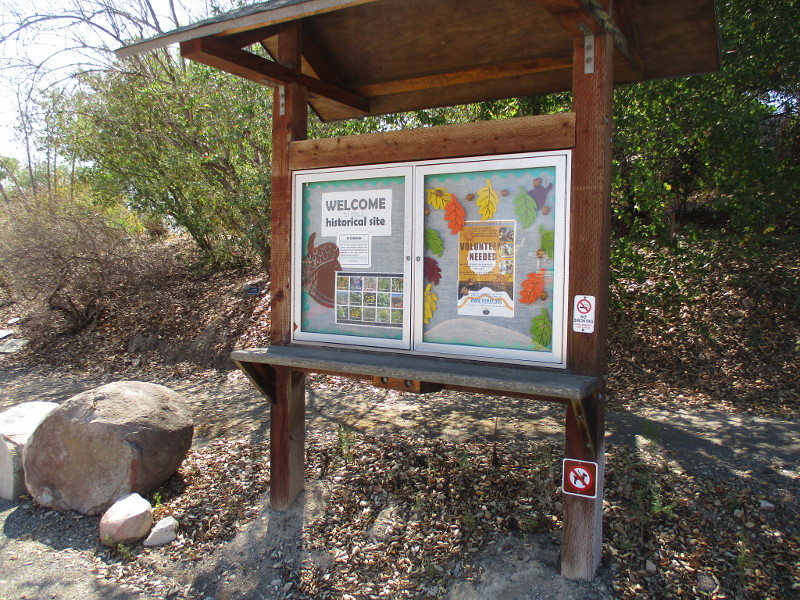
Kiosk welcomes visitors to an important historical site.
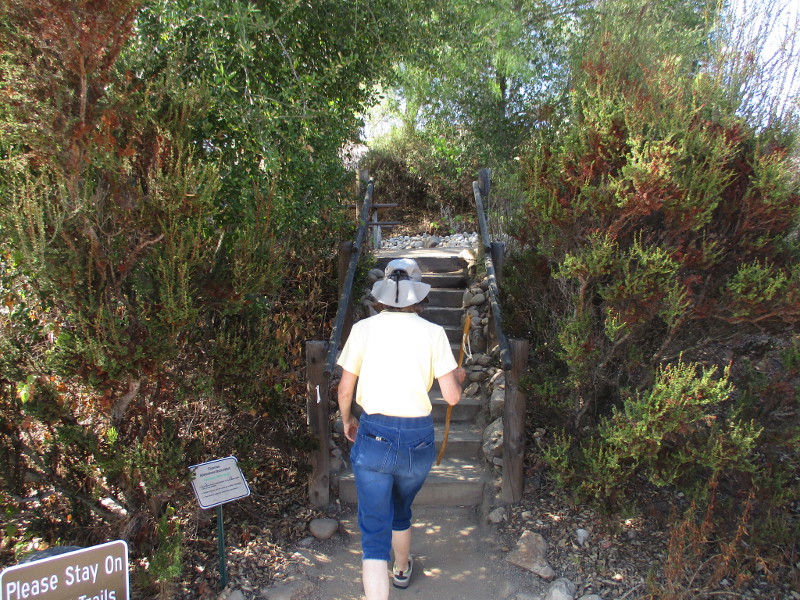
My tour guide Heidi starts up stairs that lead to short looping trails.
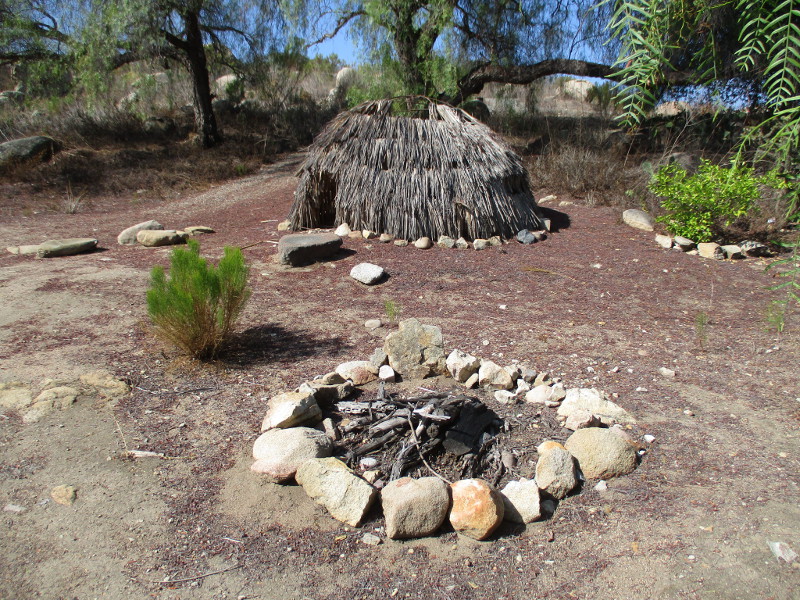
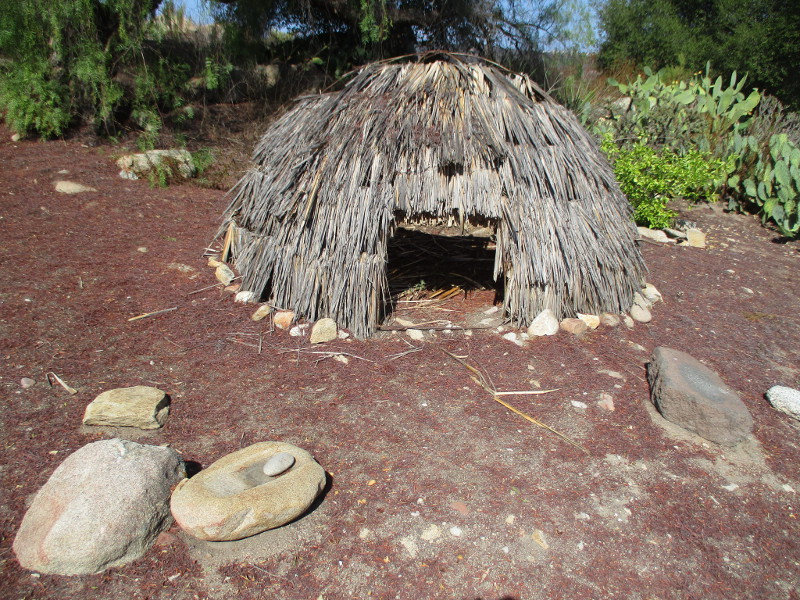
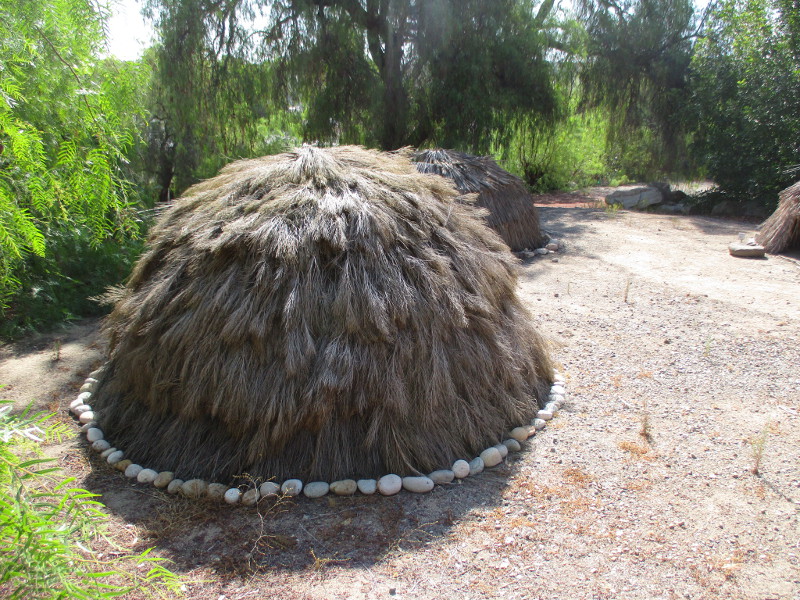
At the Replica Village in a clearing stand several recreated Kumeyaay ewaas. These are shelters made of sycamore or willow tree branches, covered with cattails or baccharis, and tied with yucca or agave fiber string. These replica ewaas are old and need to be refurbished. The Kumeyaay would refresh their watertight ewaas regularly. A grinding stone, or metate, lies nearby.
This nearest ewaa was recently reconstructed. Volunteers who’d like to maintain this special place are welcome!
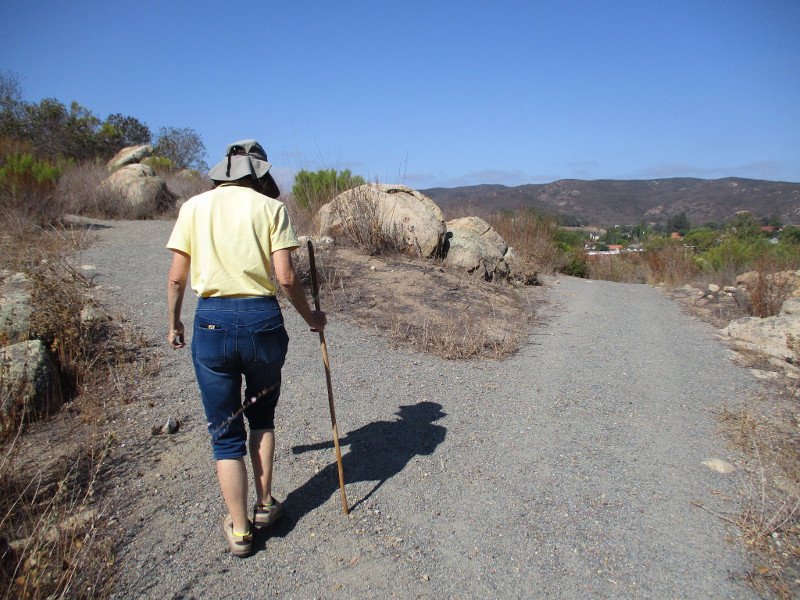
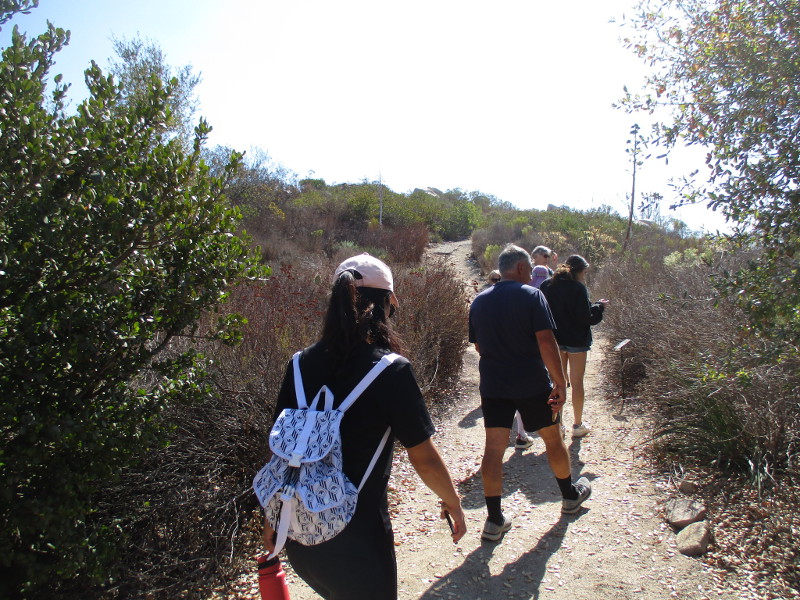
Heading up to the top of the hill along a very short, moderately steep section of trail.
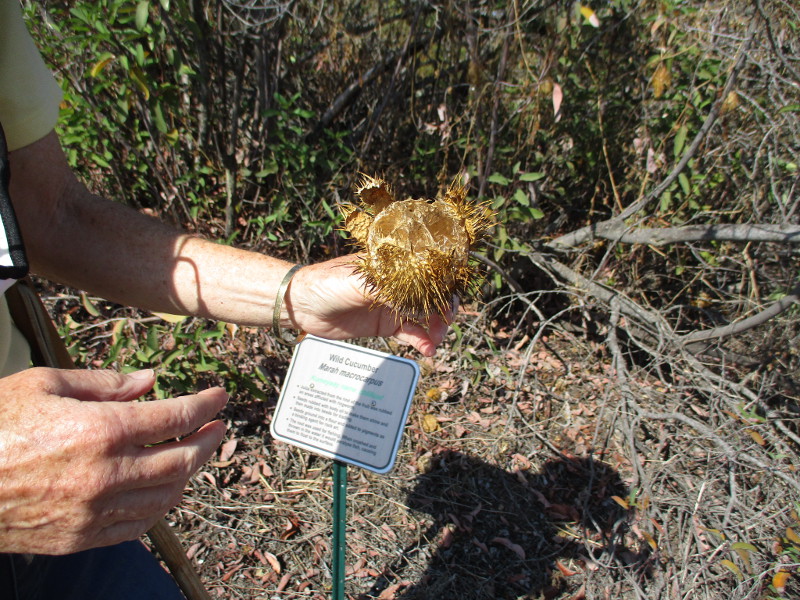
I’m shown Wild Cucumber. Like many native plants, it had various practical uses. Seeds ground into a powder by the Kumeyaay were added to pigments to create rock art. The crushed roots, when tossed into water, would paralyze fish!
In the distance we could see Mt. Woodson, Iron Mountain, and Cuyamaca Peak. Depending on the season, the Kumeyaay would migrate east to the mountains or west to the Pacific Ocean coast.
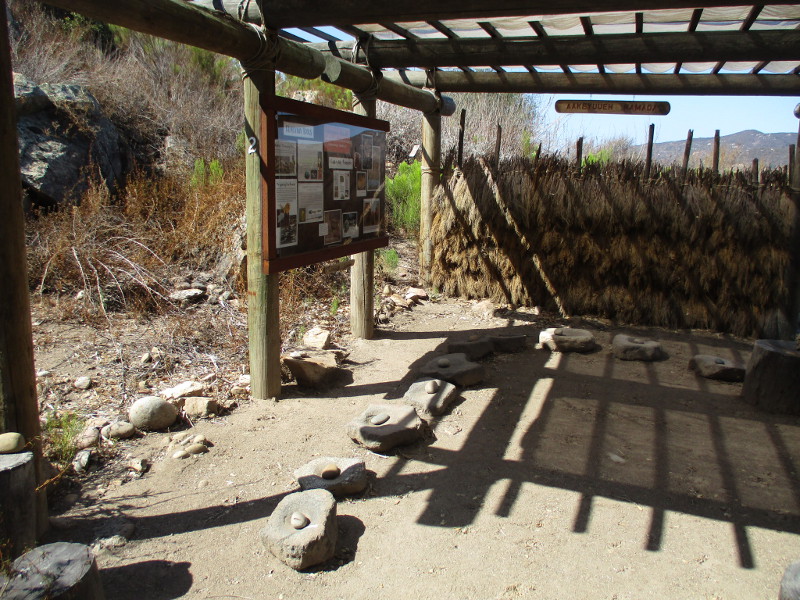
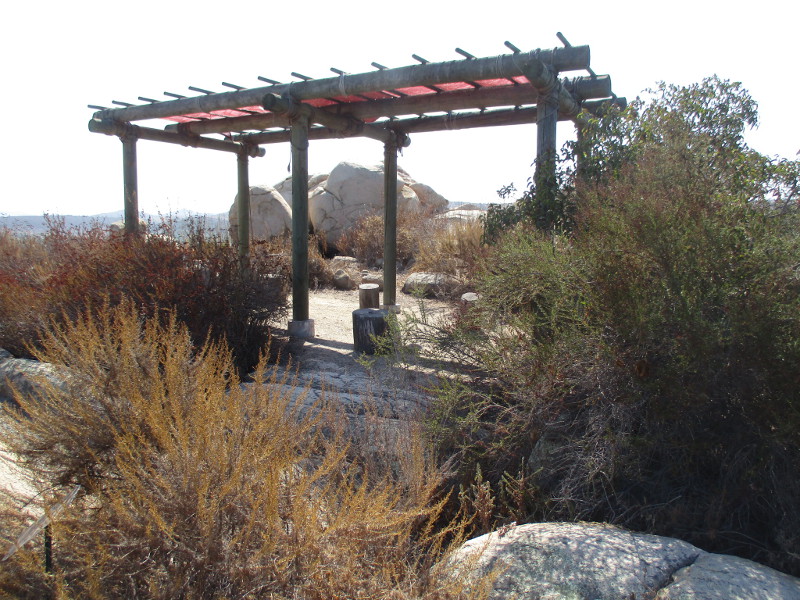
One of several outdoor ramadas built for visitors to the Interpretive Center. Historical ramadas erected by the Kumeyaay were shady places for village activities and ceremonies.
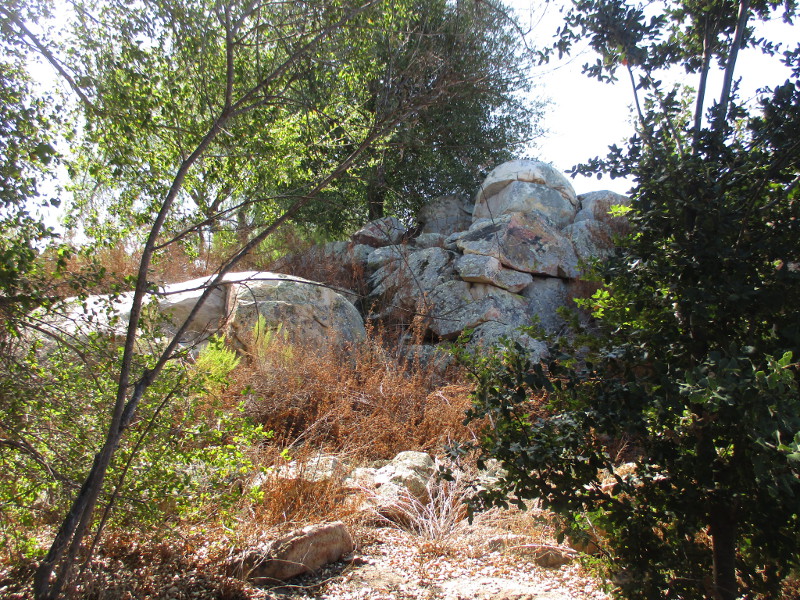
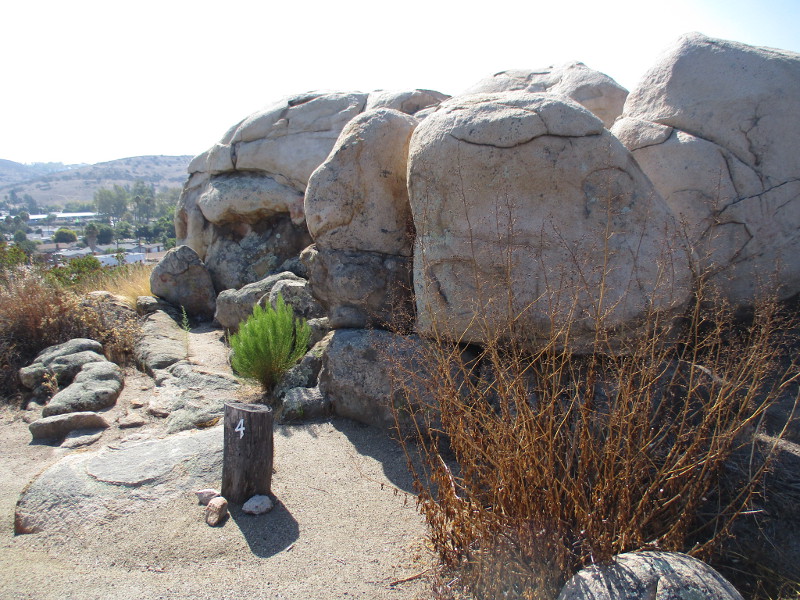
It was thought that rock art might be found on these monumental boulders crowning the hilltop, but a thorough study using modern technology detected no traces.
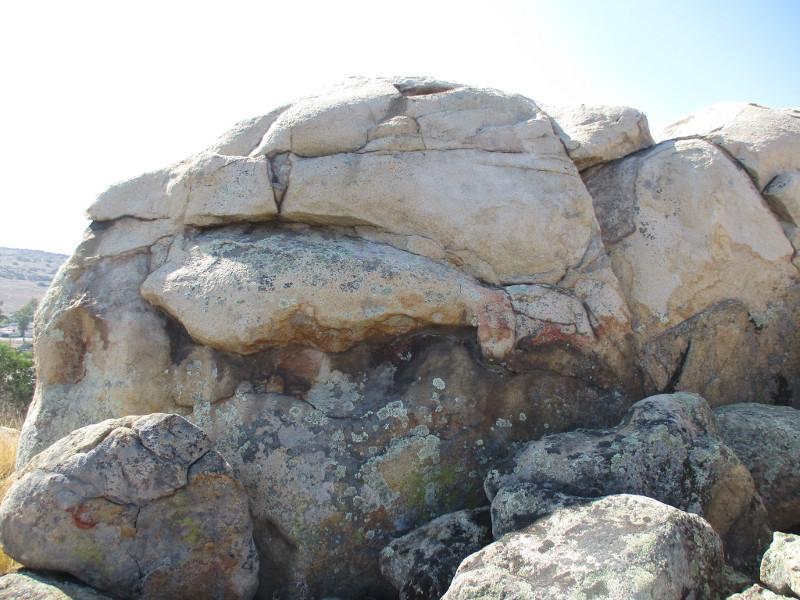
A wise Kumeyaay observer found in this rock formation a whale, a turtle, and the head of a dolphin. Do you see them?
A nearby fire pit once used by the Kumeyaay villagers.
Soot remains in this natural rocky oven. A crack in the rear conveniently served as a flue for smoke.
Cooking stones would be heated in the fire, then placed in baskets to prepare food.
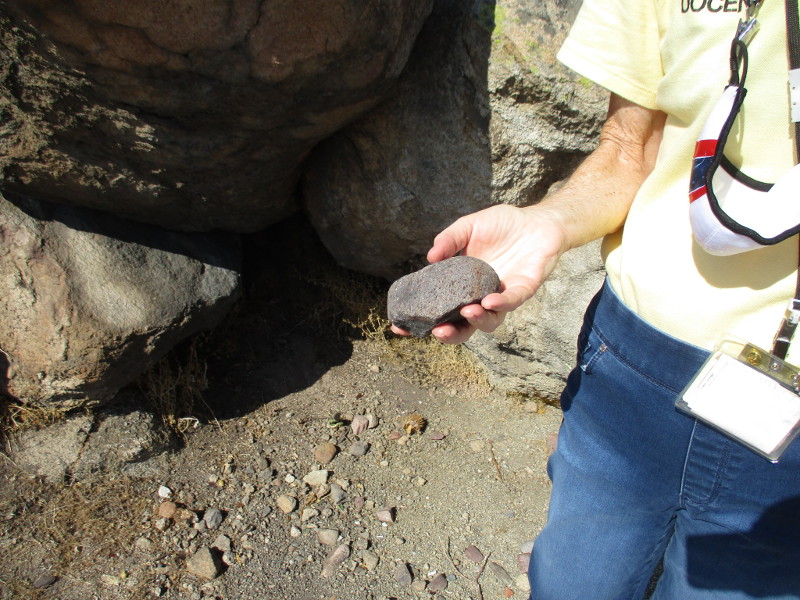
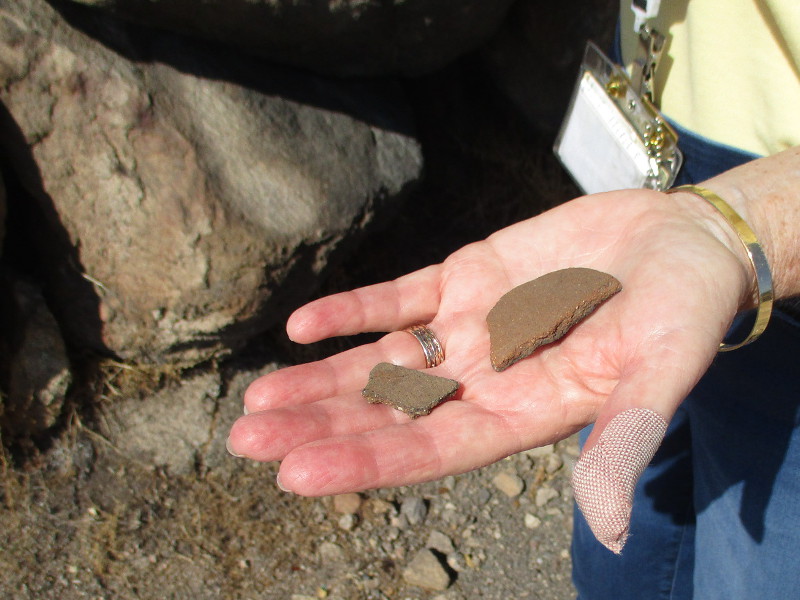
Many small broken pottery sherds have been found near this primitive kitchen.
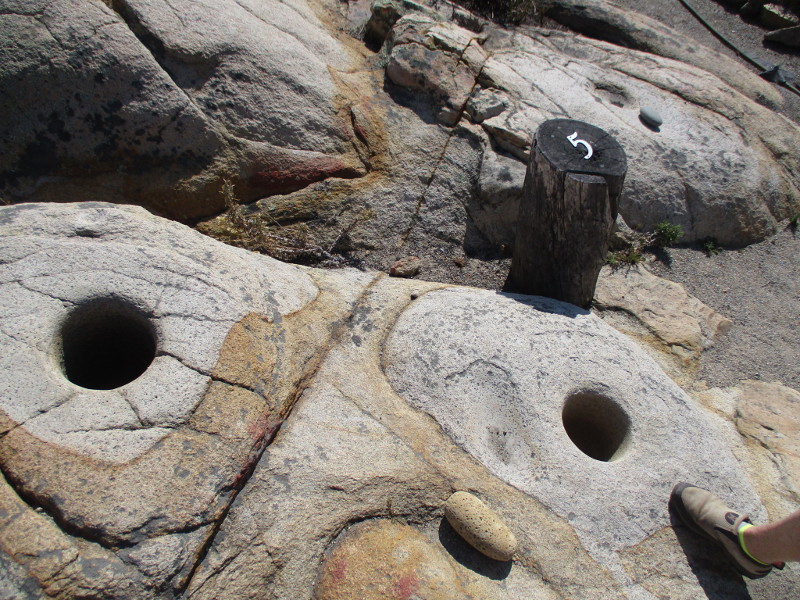
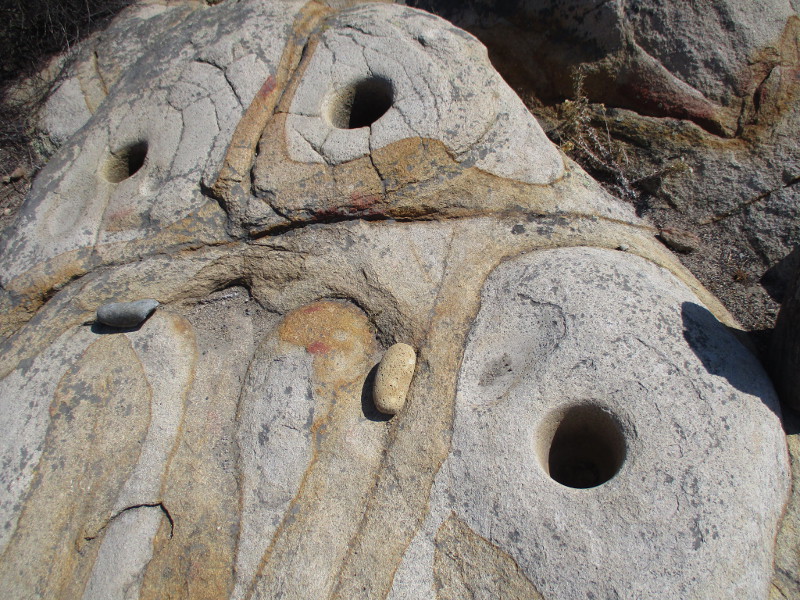
At the top of the hill are very deep grinding holes, or morteros, where acorns were ground for thousands of years. After being reduced to powder, the acorns would be leached of tannic acid and cooked into a mush called shawii.
A important cultural site representing thousands of years of indigenous history in Poway.
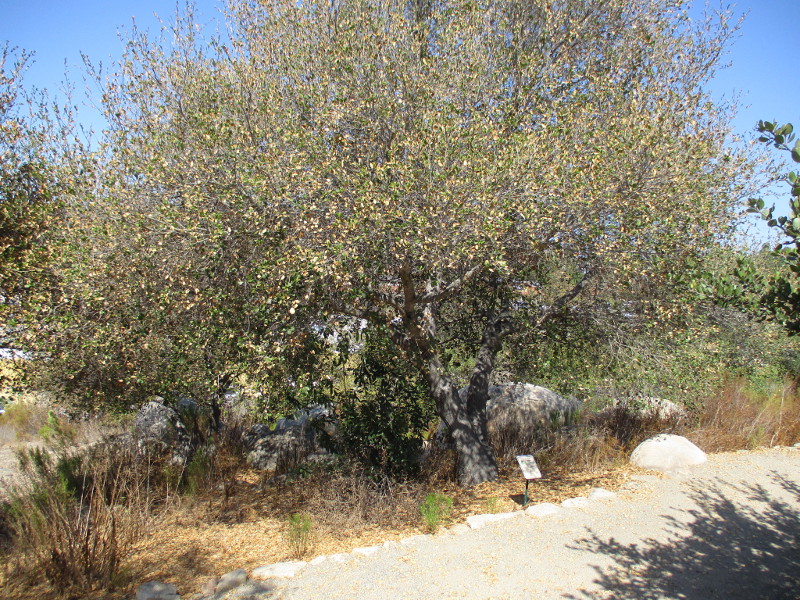
A Coast Live Oak beside the trail. One of several types of oak trees in the San Diego region. Acorns were a staple of the Kumeyaay diet.
As I and my tour guide walk back down the trail, another group heads up toward the hilltop.
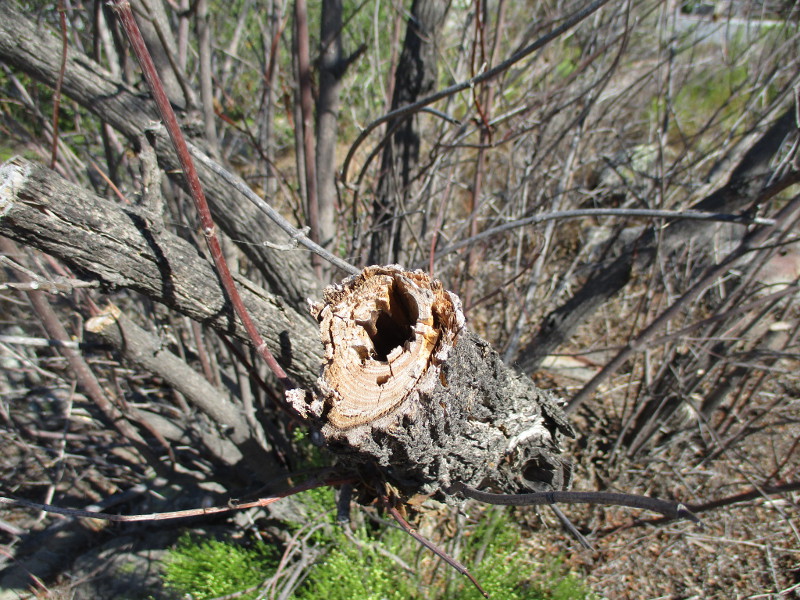
A hollow Elderberry branch. Not surprisingly, these were used to make musical instruments such as flutes.
Some of the rugged natural beauty that we enjoyed.
At another ramada replica, we saw a series of genuine metates that Third Grade students can use during educational field trips! These metates were rescued during road construction many years ago and were donated to the Interpretive Center.
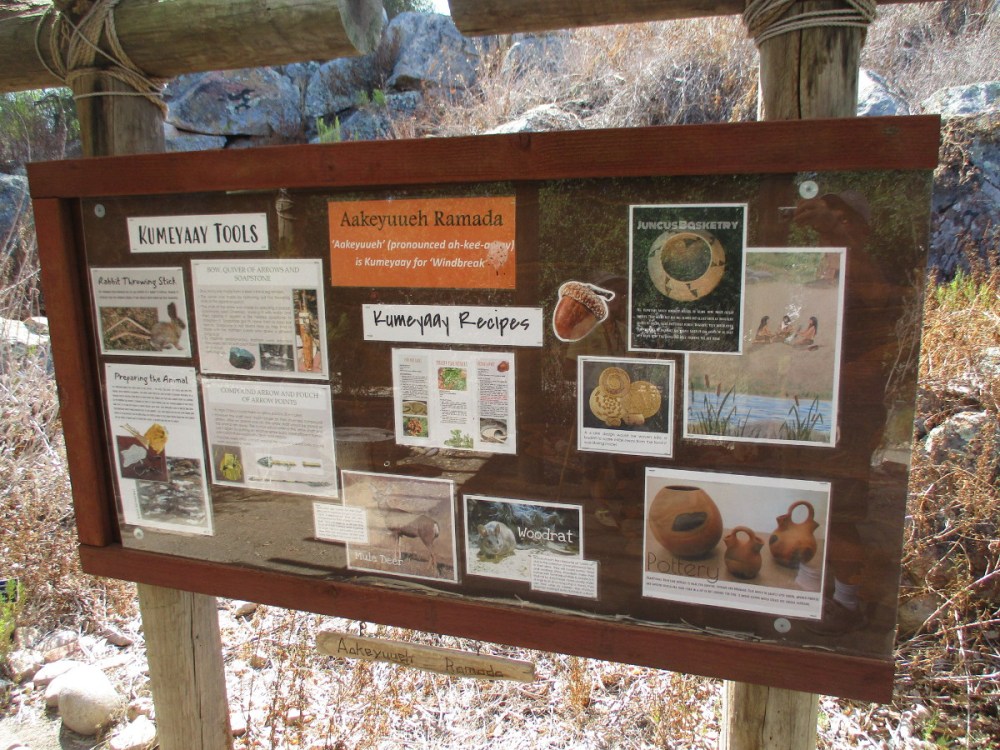
There is much to learn about Kumeyaay tools, food, basket weaving, pottery and more!
Third Grade students use these small stones to paint their own rock art!
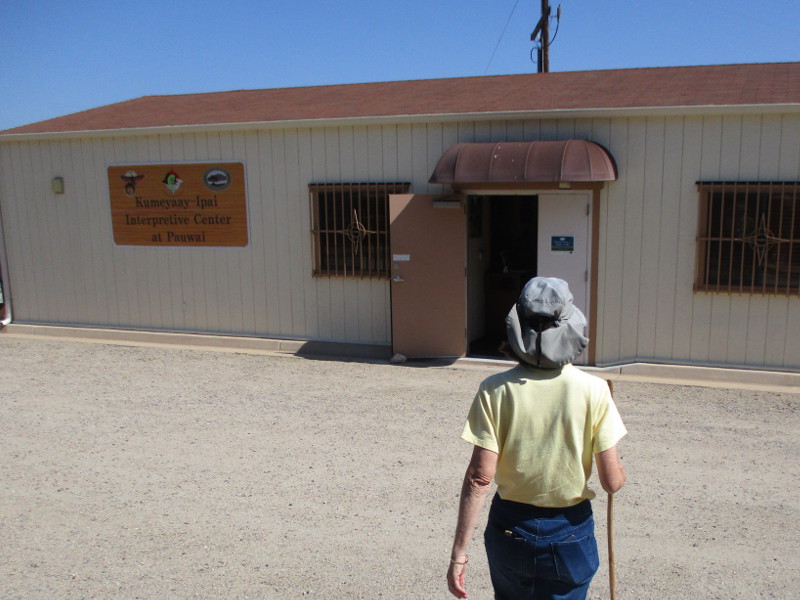
We head into the building at the Kumeyaay-Ipai Interpretive Center to learn even more!
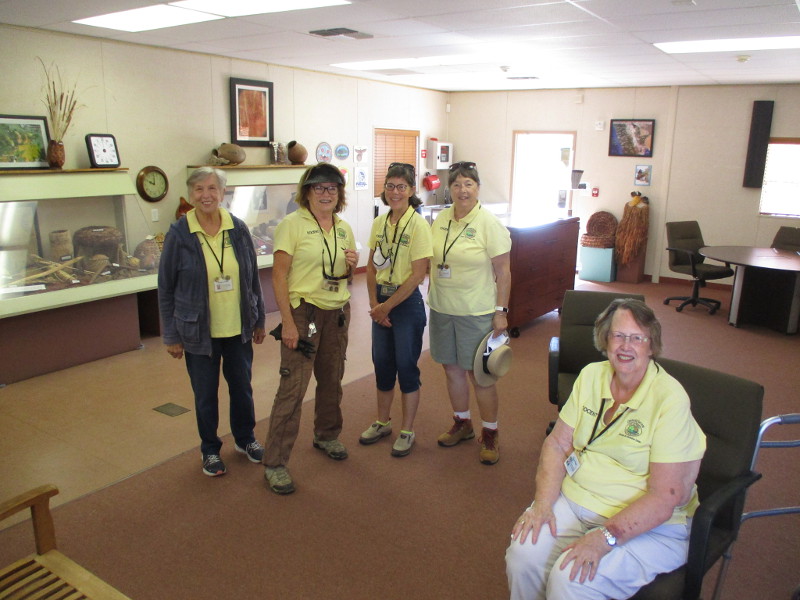
Look at all the smiling docents!
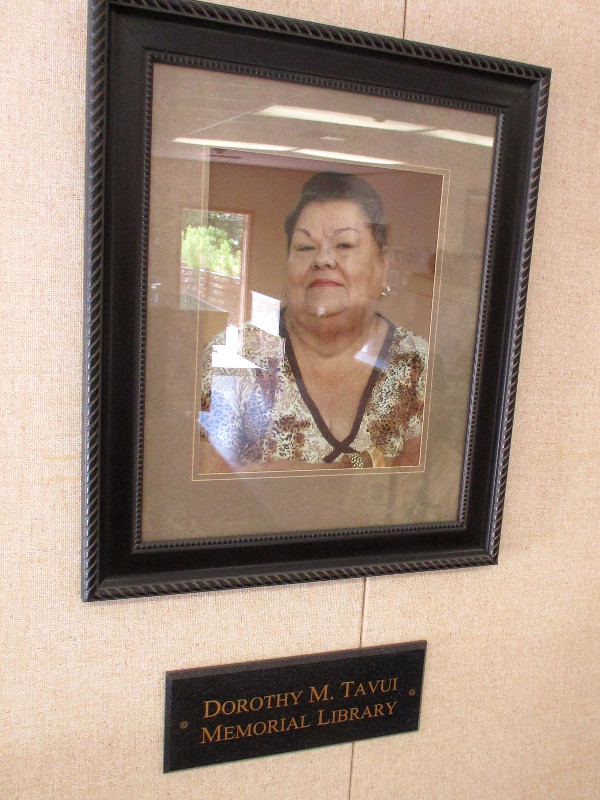
Dorothy M. Tavui was a Kumeyaay friend who helped to establish the Interpretive Center in Poway.
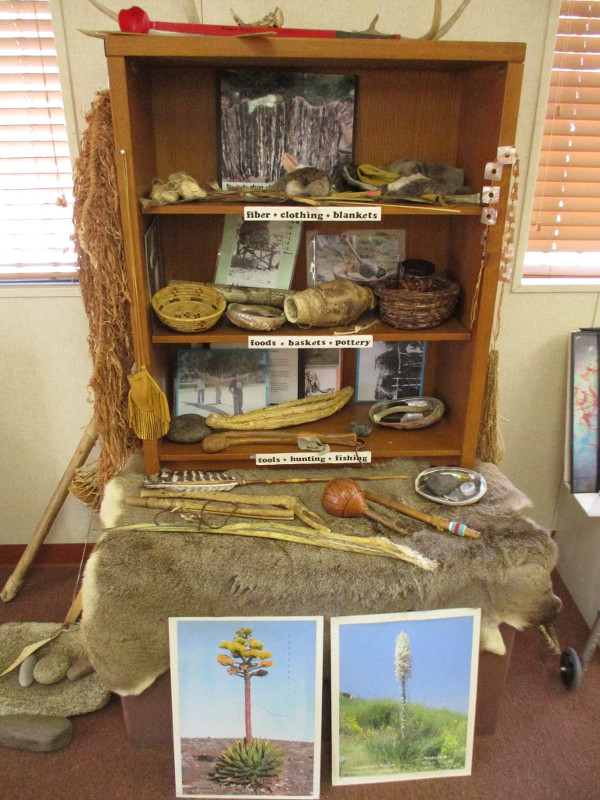
Shelves full of artifacts that kids can explore and handle to learn about Kumeyaay life.
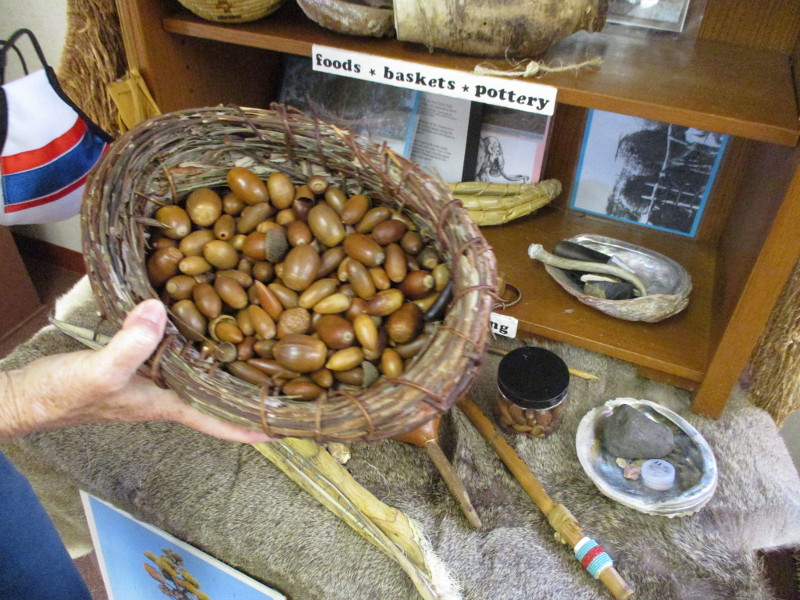
A willow basket full of acorns. The long conical acorns are from Coast Live Oaks. The big acorns are from Black Oaks in the Cuyamaca Mountains. They were the largest and tastiest! The abalone shells you also see were obtained from the coast and often used as trade items.
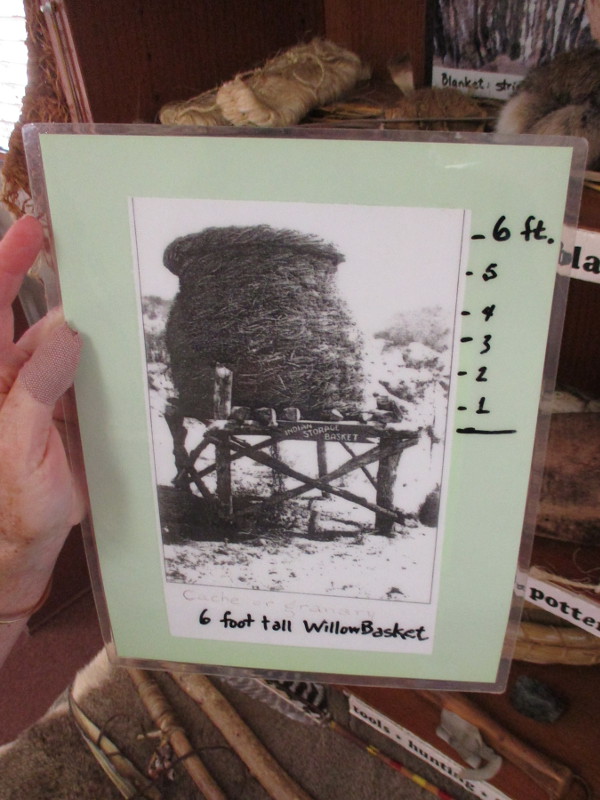
Old photo of a 6 foot tall willow basket! Acorns would be gathered in season to last the entire year.
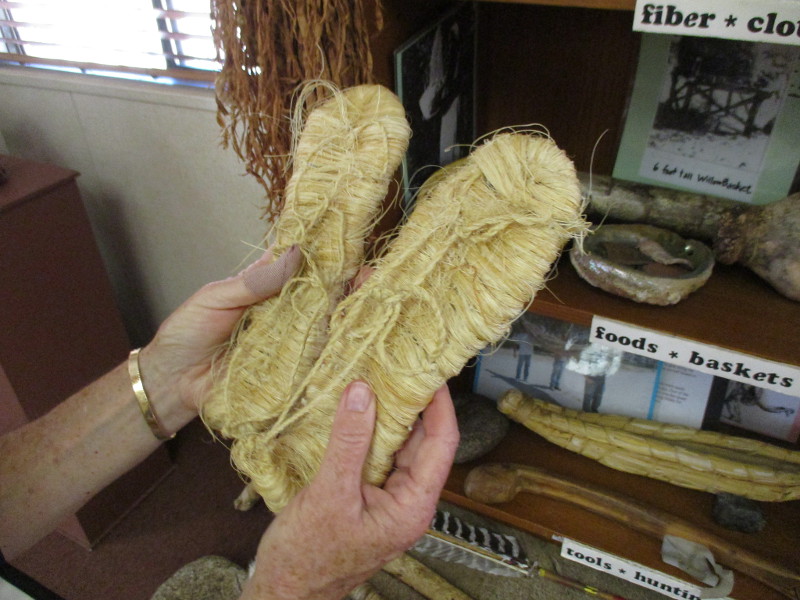
Sandals made of natural plant fibers.
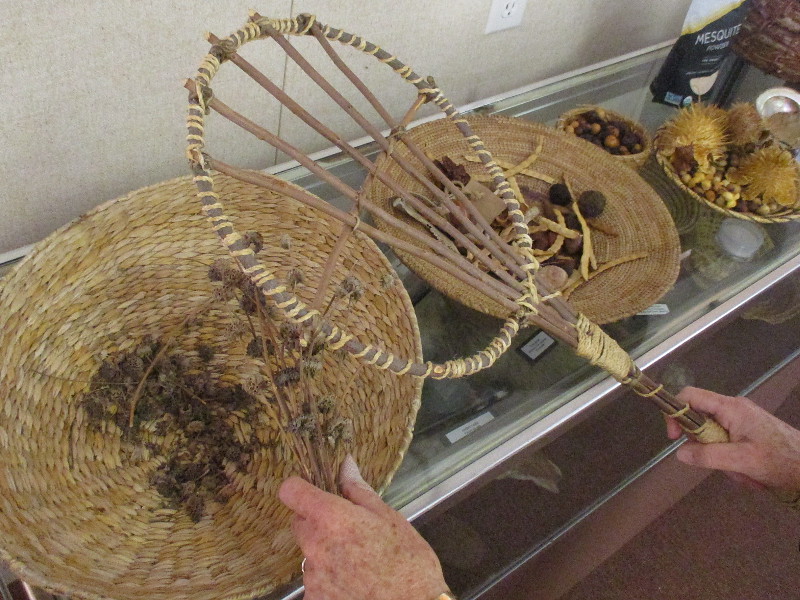
I learned this is a seed beater! It’s being demonstrated on dried blooms of sage.
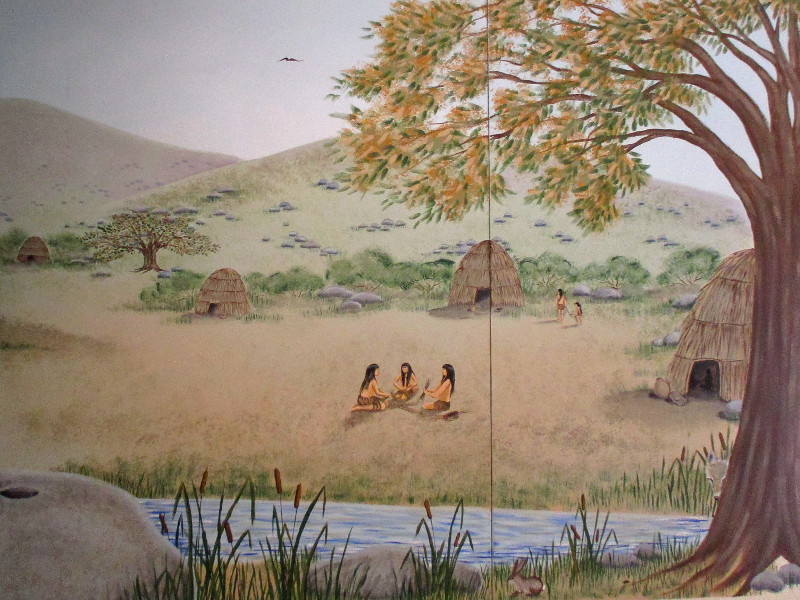
A beautiful mural inside the Kumeyaay-Ipai Interpretive Center in Poway shows what village life was like here for many thousands of years. By artist Brigitte Lopez, 2012.

I live in downtown San Diego and love to walk around with my camera! You can follow Cool San Diego Sights via Facebook or Twitter!

The mysterious standing stones of Nestor!

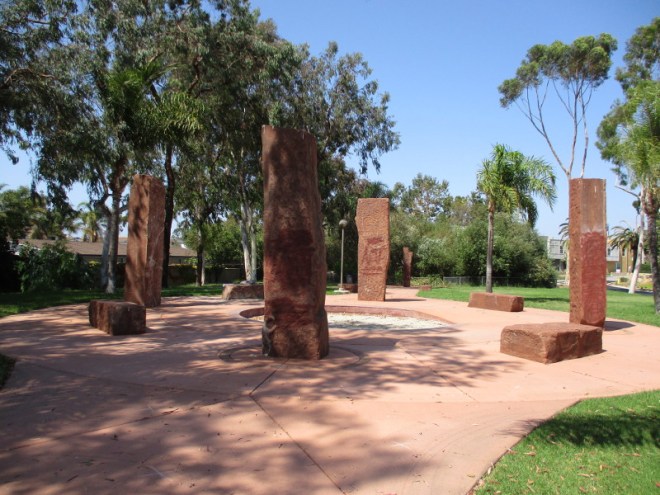
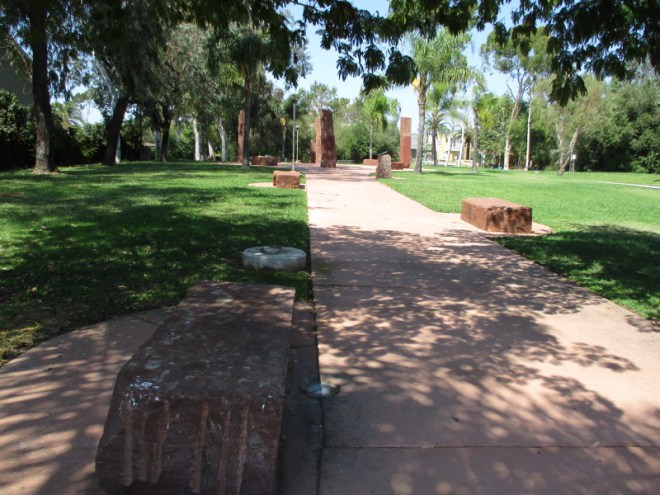
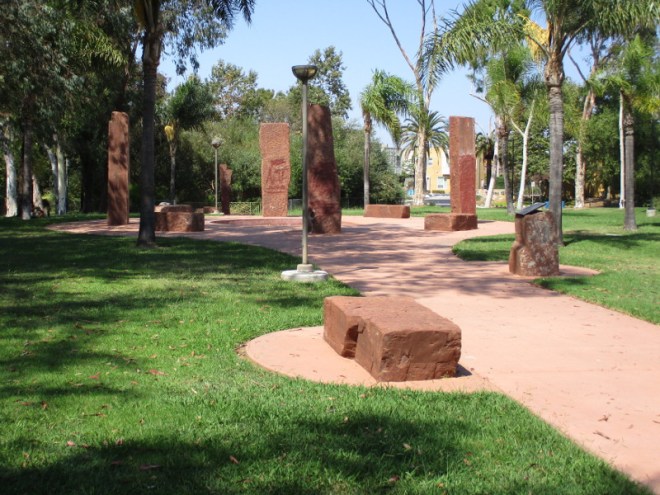
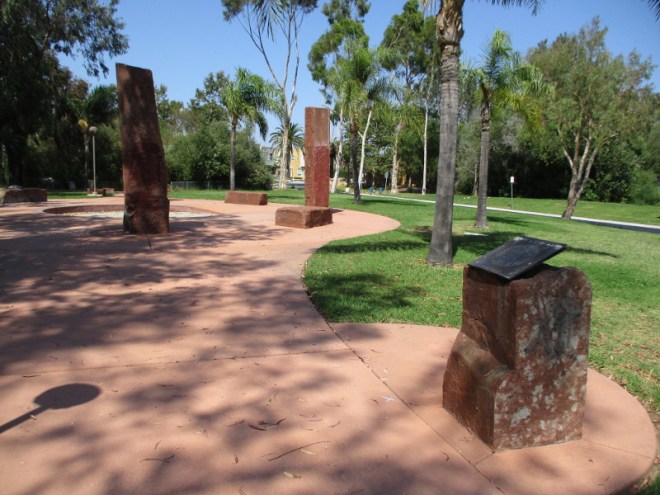
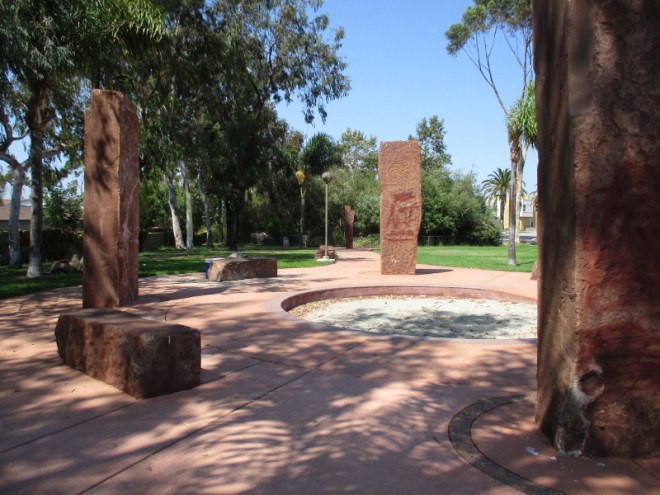
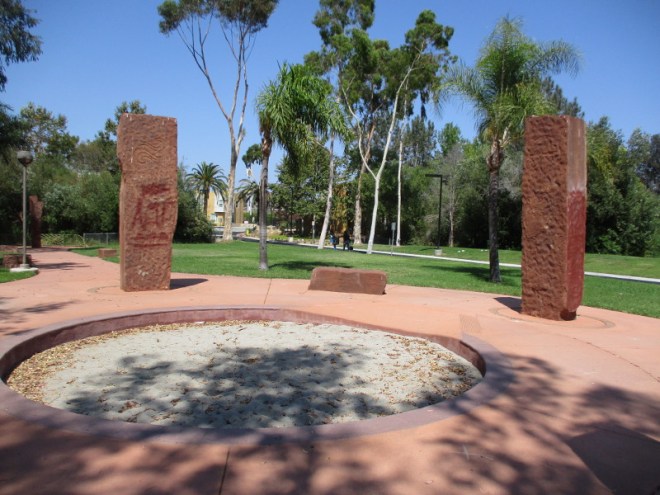
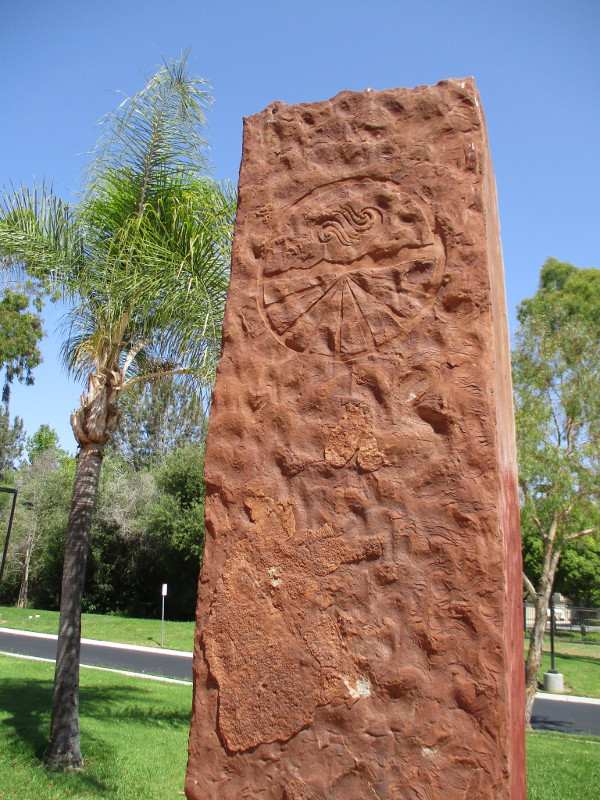
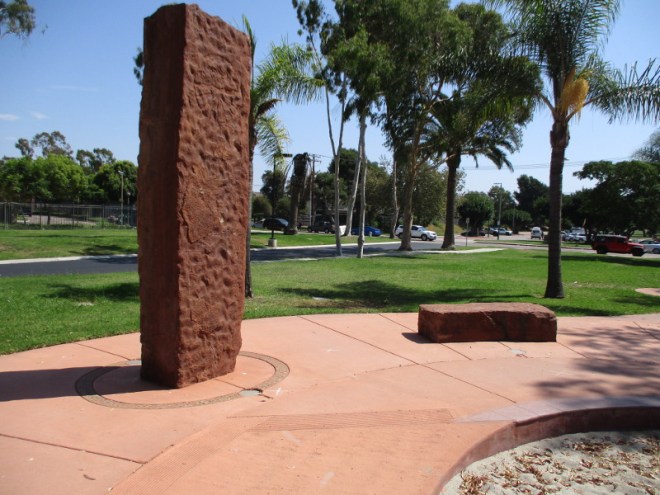
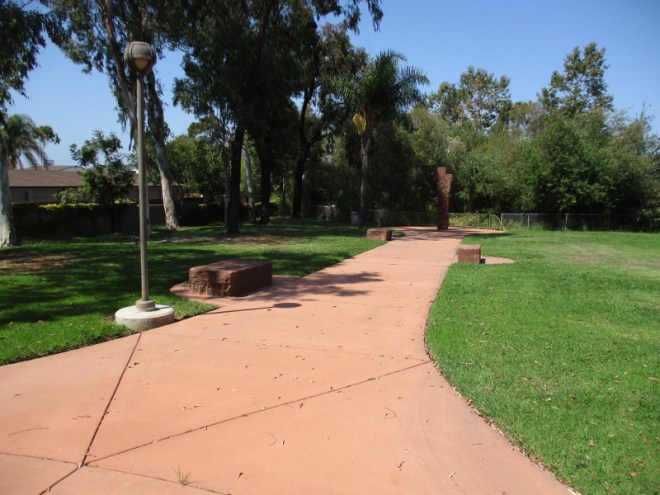
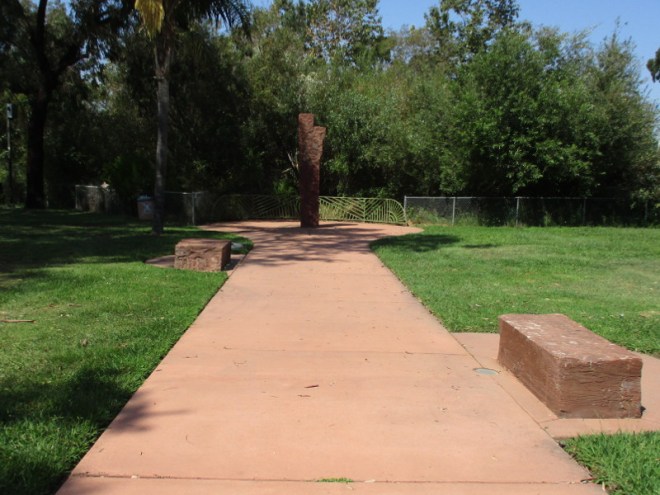
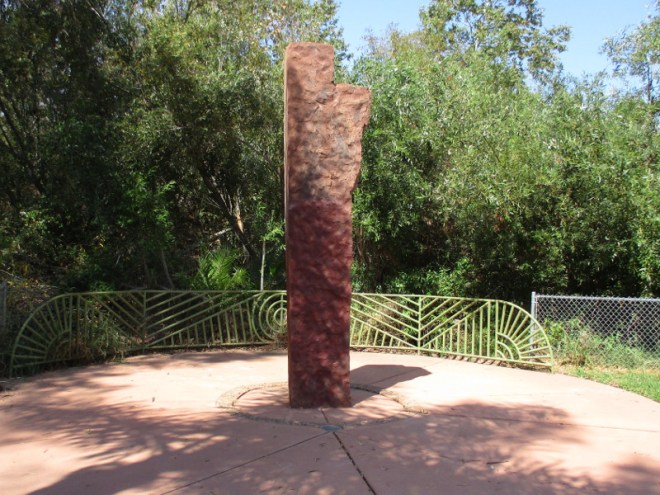
Mysterious standing stones rise in Nestor, a community located in San Diego’s South Bay. You can find them in a quiet residential area, just north of Nestor Park, on Grove Avenue east of Hollister Street.

Few people ever see this unique public art. Why is it here?

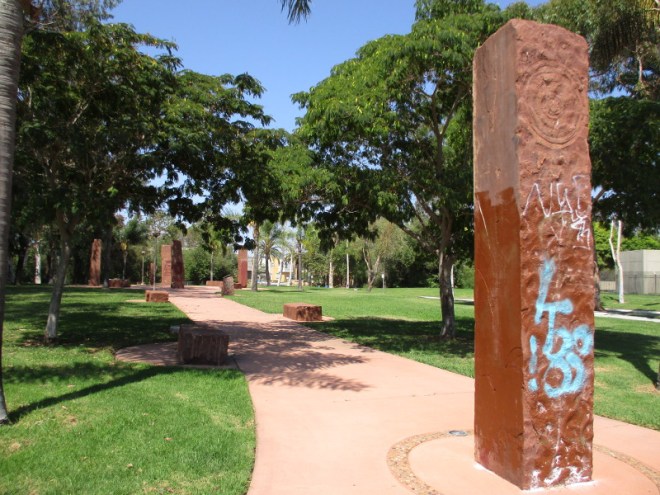
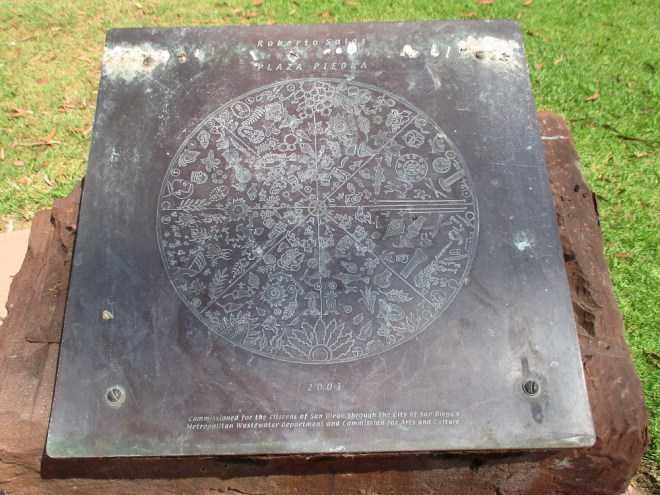
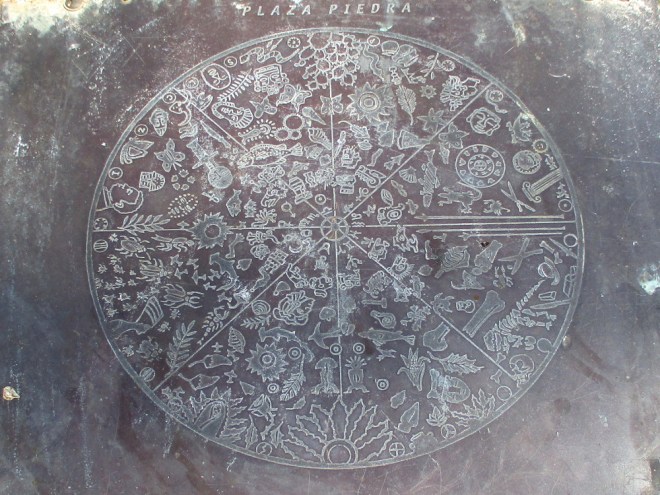
The standing stone sculptures together are titled Plaza Piedras. They were created in 2001 by internationally renowned artist Roberto Salas. Plaza Piedras was commissioned through the City of San Diego Metropolitan Wastewater Department and the Commission for Arts and Culture. The public art was created to enhance the nearby Grove Avenue Pump Station.

Roberto Salas created these large, mysterious stelae to pay tribute to indigenous cultures. According to this website: “Salas chose a variety of monumental forms to evoke associations with ancient sites such as the Pre-Colombian pyramids, mysterious ruins of Stonehenge, and the massive figures of East Island…”

At the bottom of the central sandbox, kids digging down can discover various relief shapes. I poked around the sand with my foot like a lazy archaeologist, without success.

As you can see from my photos, this quiet park-like place sees gang activity and is frequented by the homeless. Vandalism on the standing stones appears to be regularly painted over.

I took these photographs while moving north through Plaza Piedras.

I live in downtown San Diego and love to walk around with my camera! You can follow Cool San Diego Sights via Facebook or Twitter!

You can easily explore Cool San Diego Sights by using the search box on my blog’s sidebar. Or click a tag! There are thousands upon thousands of photos for you to enjoy!

History Center visits San Diego legend Nathan Harrison.

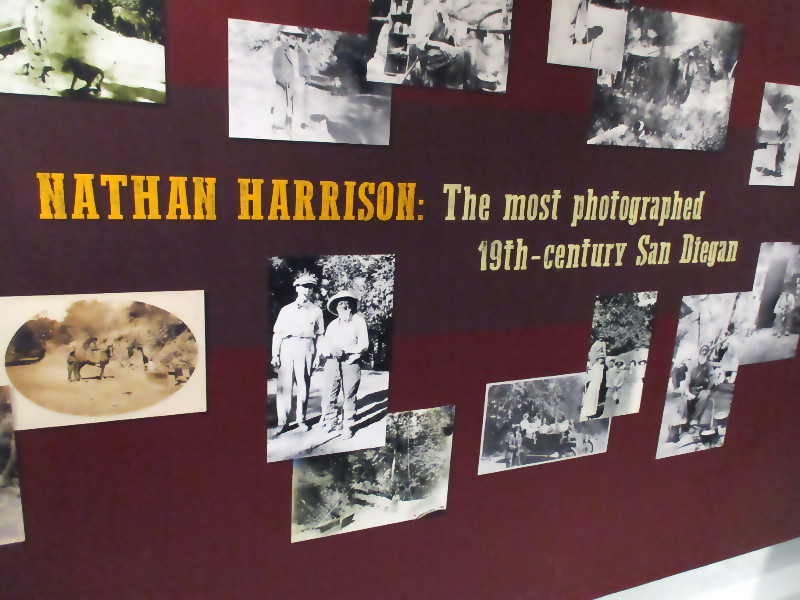
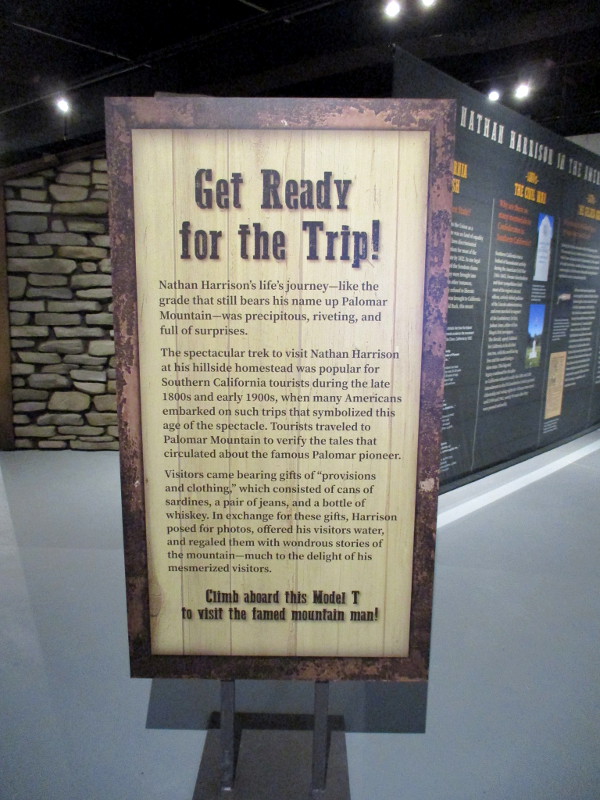
Most of the museums in Balboa Park have reopened now that the COVID-19 pandemic is subsiding. Yesterday I visited the San Diego History Center and enjoyed viewing one of their current exhibits.

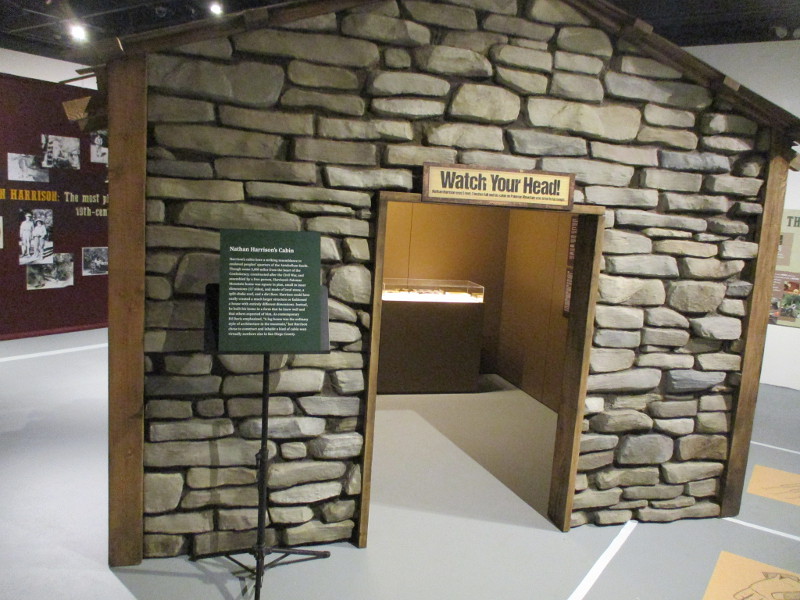
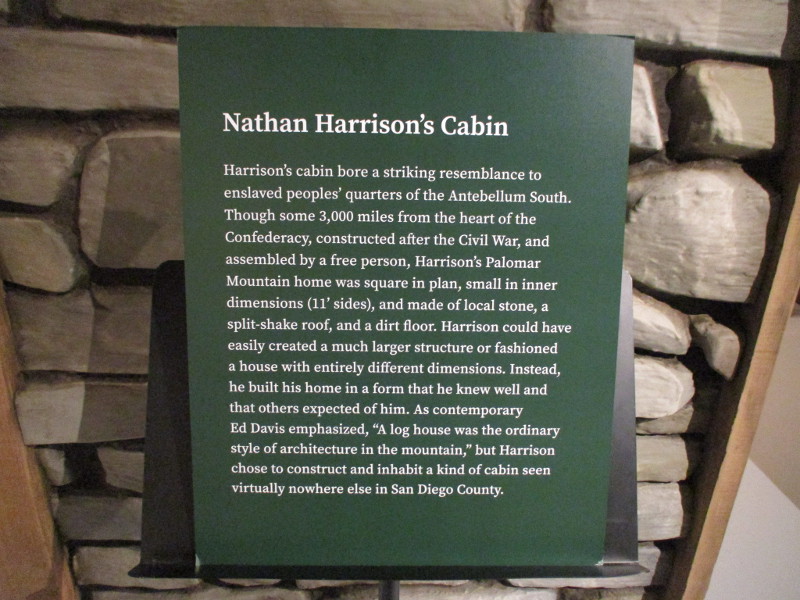
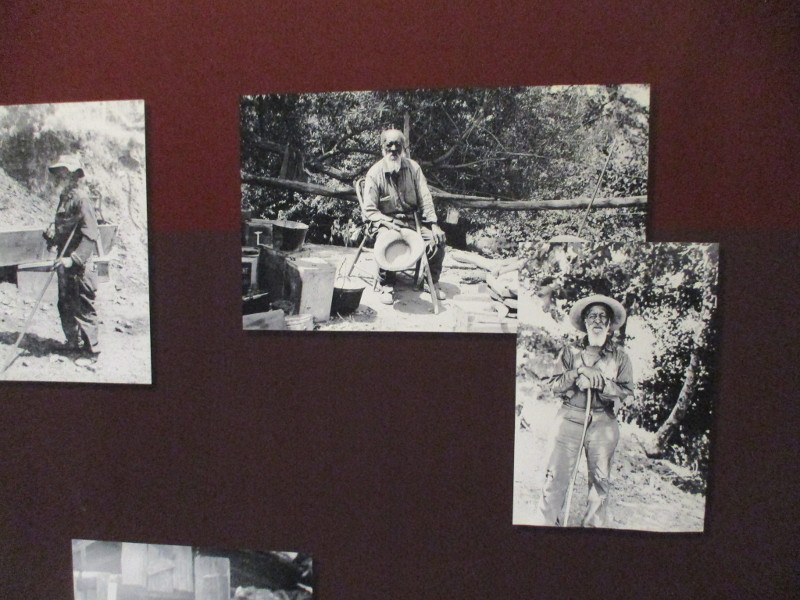
Born a Slave, Died a San Diego Legend concerns freed slave Nathan Harrison, who lived in a small cabin on Palomar Mountain in the late 19th and early 20th century.

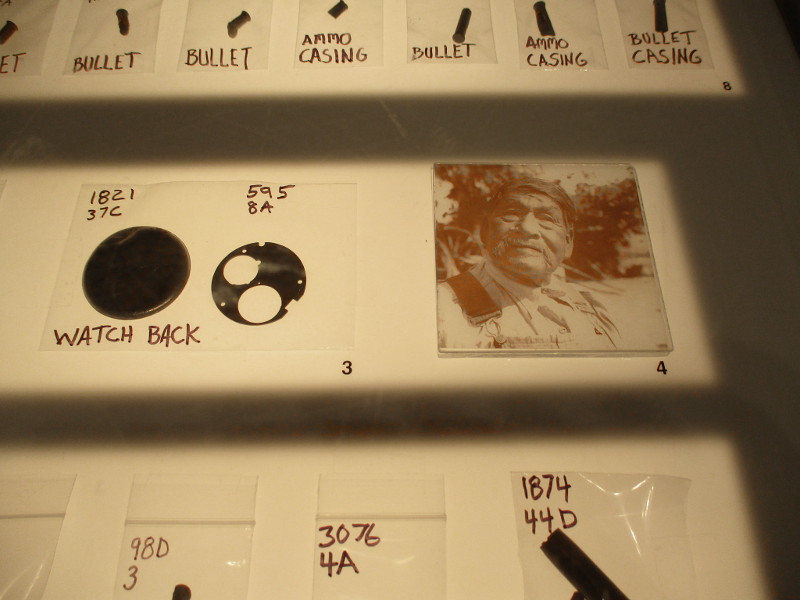
Perhaps you’ve driven up to Palomar Mountain State Park and the world-famous Palomar Observatory via Nate Harrison Road. The road is named in honor of this legendary homesteader who provided water and stories to tourists who made the precipitous trek to the mountain top. Nathan Harrison was once the most photographed person in San Diego!

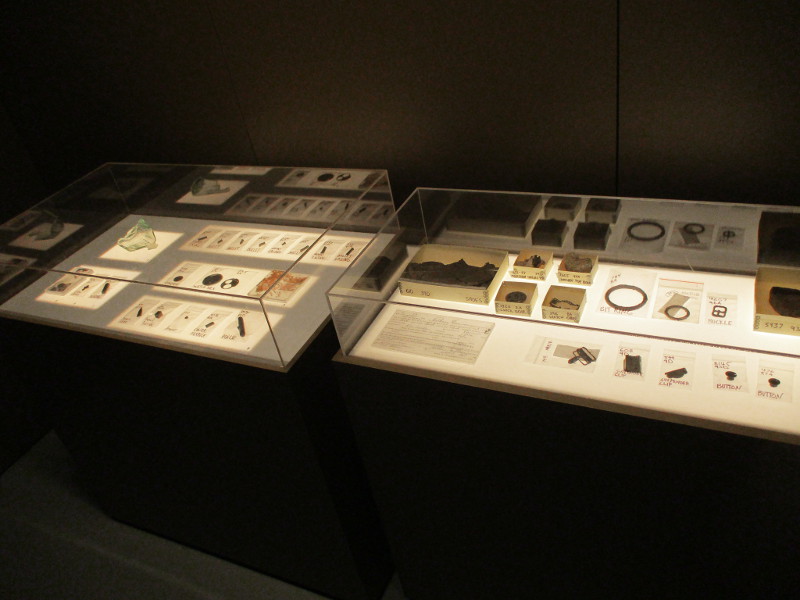
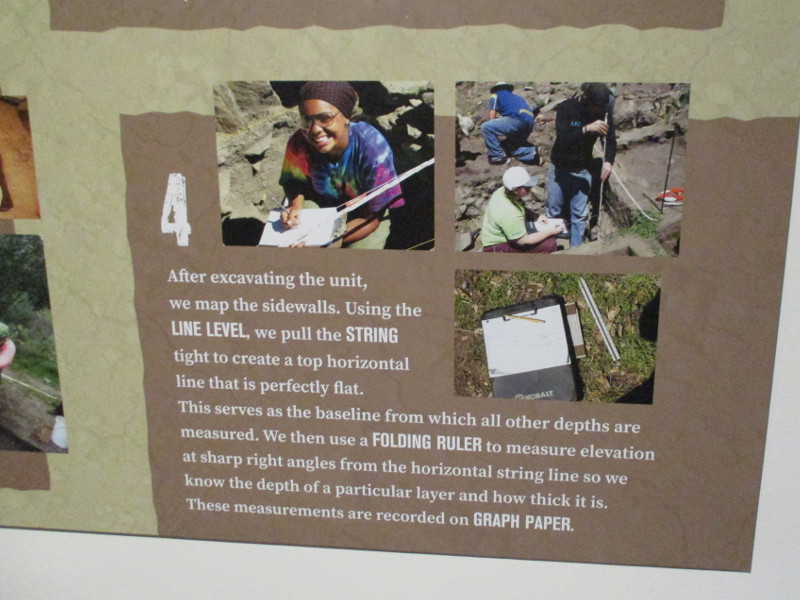
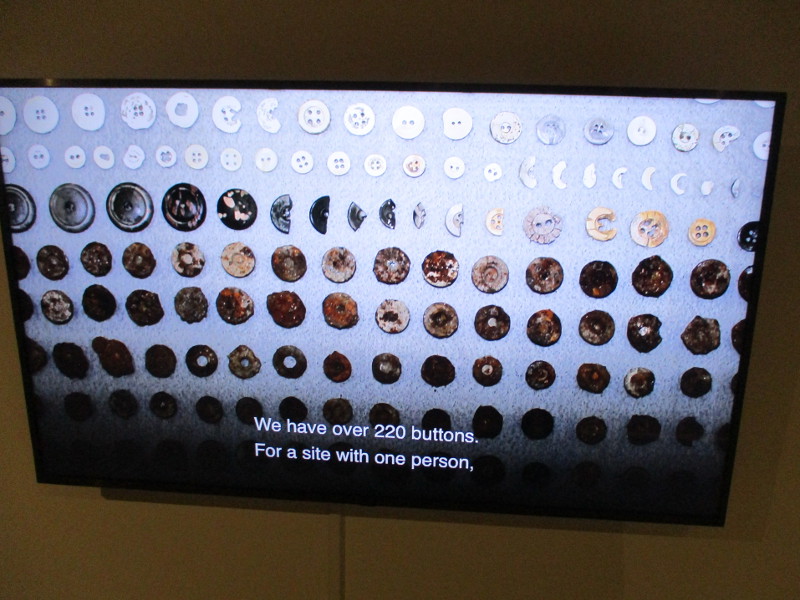
Born a Slave, Died a San Diego Legend shows what it would have been like to journey up to Harrison’s cabin on Palomar Mountain. It also examines what San Diego State University archaeologists have discovered about his life and interactions with his visitors, who offered him gifts of all types. To learn more about the Department of Anthropology’s fascinating Nathan “Nate” Harrison Historical Archaeology Project, click here.

One interesting thing I learned was that Harrison had a sister-in-law named Ramona Wolf. She was the namesake for Helen Hunt Jackson’s novel Ramona, one of the most popular American novels ever written. (You might recall that, to draw tourists and increase the number of riders on his San Diego Electric Railway, entrepreneur and philanthropist John D. Spreckels once claimed the dilapidated Casa de Estudillo in Old Town was the marriage place of the novel’s character Ramona, and thereby preserved an historic building.)

Nathan Harrison’s life is an integral part of San Diego history. His story spans the Antebellum South, the California Gold Rush and Wild West, and the early part of the 20th century.

His many personal adventures, his independent life on a mountain, and his friendship inspired countless San Diegans. When you visit the exhibit at the San Diego History Center, you will also be inspired at how, in his own unique way, a freed slave achieved the American Dream.

I live in downtown San Diego and love to walk around with my camera! You can follow Cool San Diego Sights via Facebook or Twitter!

Cultural diversity in San Diego’s history.

The 250th Anniversary of San Diego is being celebrated this year.

In 1769 a Spanish expedition established El Presidio Reál de San Diego atop a hill near the San Diego River, along with the original Mission San Diego de Alcalá.

San Diego, however, didn’t become a city of any real significance until the late 19th century.

For a city that is relatively young, San Diego today enjoys remarkable cultural diversity. Much of this diversity is due to our close ties and overlapping history with Mexico. Much also comes from the variety of immigrants who have settled in and helped to build our growing city.

In the past, Cool San Diego Sights has featured many posts about cultural diversity in San Diego’s history.

Here are some links that you can explore…

A new flag is raised for San Diego’s 250th Anniversary!

Exhibit shows Kumeyaay history in the South Bay.

Festival recreates landing of explorer Cabrillo.

San Diego’s early history at the Serra Museum.

San Diego history in Old Town’s McCoy House.

History at the Los Peñasquitos adobe ranch house.

Days of the Vaqueros in Old Town San Diego!

Gravestones tell stories of early San Diego history.

Photos inside the San Diego Chinese Historical Museum.

Local history excavated, displayed at Petco Park.

Historical exhibit at Women’s Museum of California.

African-Americans helped to build San Diego.

Culture and history celebrated at Festa in San Diego!

Mural in Cesar Chavez Park depicts local history.

A look inside the Portuguese Historical Center.

San Diego history: World War II and the Tuna Fleet.

I live in downtown San Diego and love to walk around with my camera! You can follow Cool San Diego Sights via Facebook or Twitter!

You can easily explore Cool San Diego Sights by using the search box on my blog’s sidebar. Or click a tag! There are thousands upon thousands of photos for you to enjoy!

City Clerk’s Archives Month: Hidden Treasures!

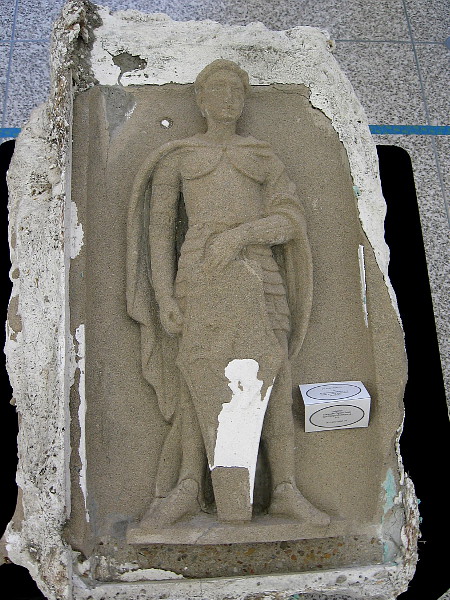
Original concrete figure from San Diego Museum of Art, 1915-1916.

Today I walked to the City Administration Building in downtown San Diego to view a unique historical exhibit. During City Clerk’s Archives Month, from September 30th to October 31st, the public can step inside the lobby of City Hall and discover Hidden Treasures!

The San Diego City Clerk has partnered with the San Diego History Center to display a variety of documents and artifacts from our city’s past. In addition to this exhibit, Archives Month features many free educational events including lectures, movies and workshops.

(I attended one of the lectures today, and took a tour behind the scenes in the City Administration Building’s basement, where the City Archives are safely preserved. I’ll be blogging about that awesome experience shortly!)

2019 Archives Month Lecture and Tour Schedule. (Click image to enlarge.)
Sign shows 2019 Archives Month Lecture and Tour Schedule. (Click photo to enlarge for easy reading.)

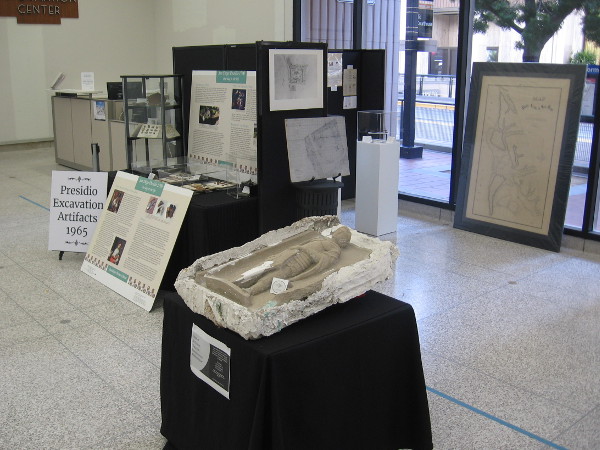
City Clerk Archives Month in 2019 features an exhibit of Hidden Treasures in the lobby of the City Administration Building.

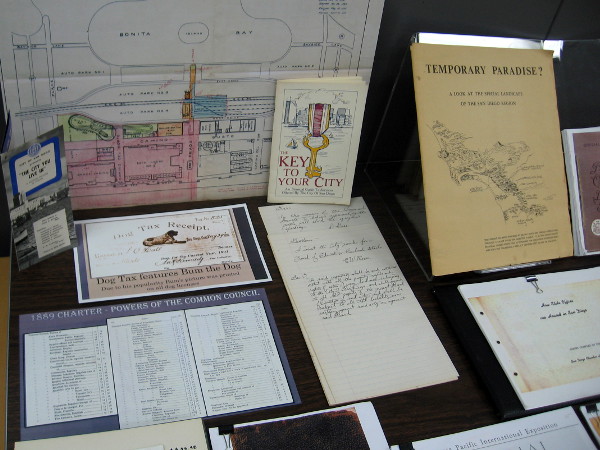
Many historical documents in the exhibit provide fascinating glimpses into San Diego's past.
Many historical documents in the exhibit provide fascinating glimpses into San Diego’s past. (I was pleased to see a Dog Tax Receipt featuring San Diego’s famous town dog, Bum.)

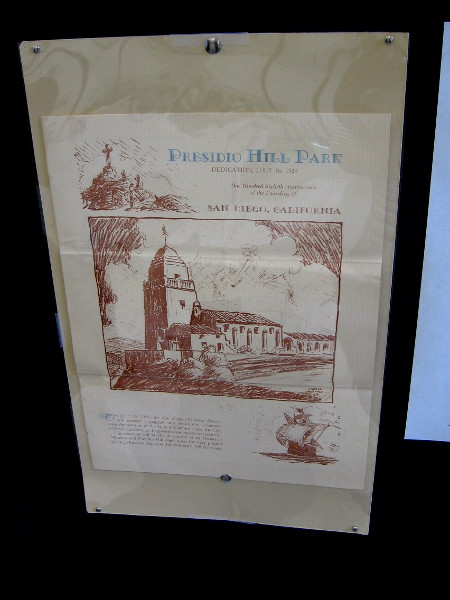
Historical documents on display includes an announcement for the Presidio Hill Park dedication in 1929.
Documents on display include an announcement for the Presidio Hill Park dedication in 1929. Pictured is the Junípero Serra Museum, original home of the San Diego Historical Society.

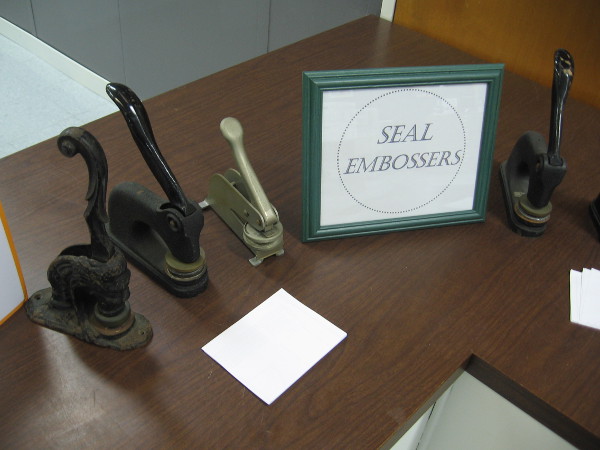
A collection of old City Clerk seal embossers.

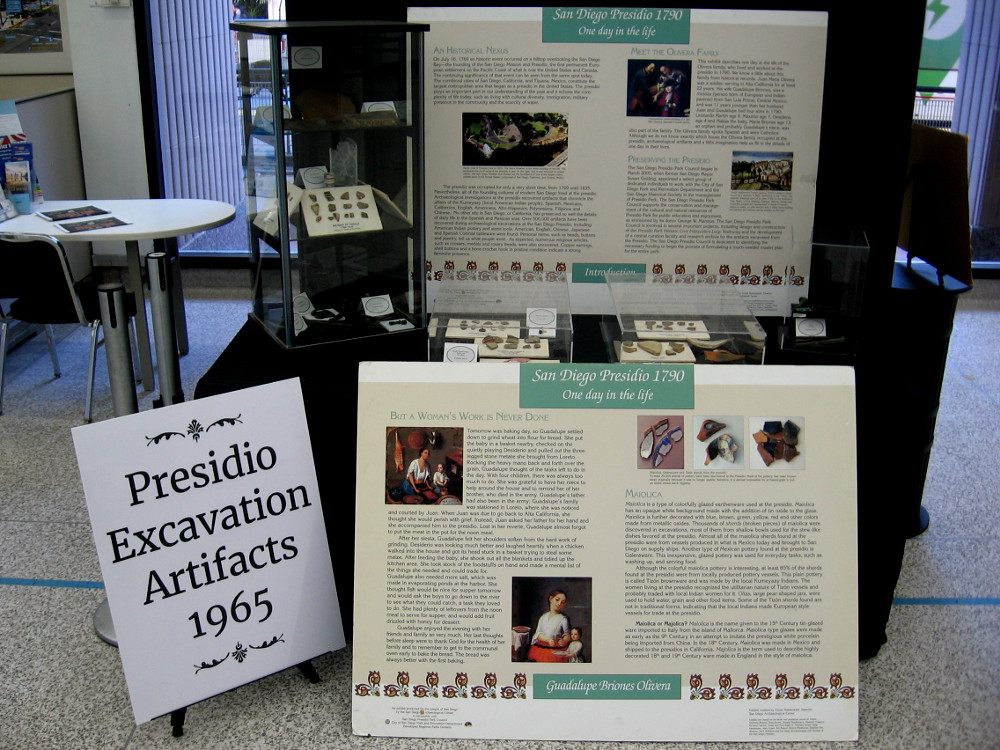
Posters describe 18th century San Diego and Presidio Excavation Artifacts from 1965.
Posters describe life in 18th century San Diego. Nearby are Presidio Excavation Artifacts from 1965.

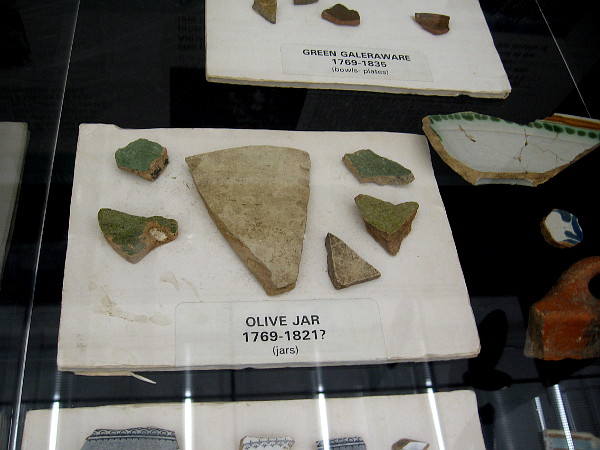
These fragments from an olive jar might date as far back as 1769.

The exhibit includes fragments of bottles, jars, bowls and plates from early San Diego.

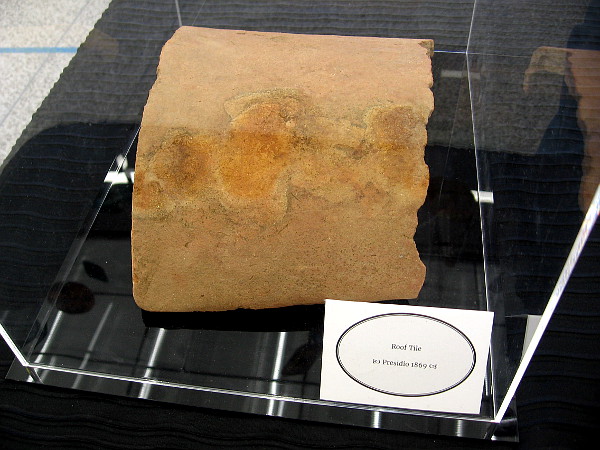
Roof Tile, Presidio, 1869.
Roof tile from the Presidio.

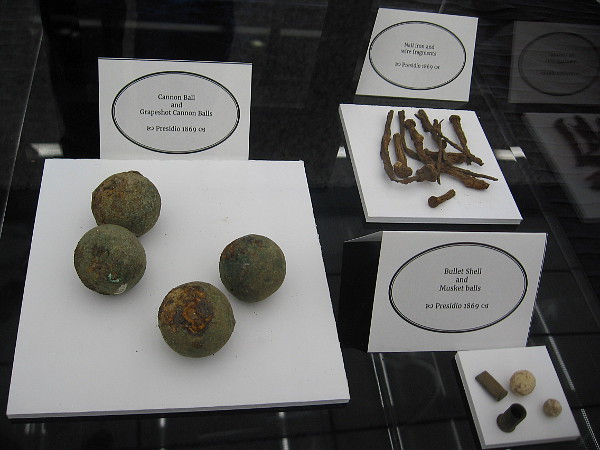
Presidio artifacts include cannon and musket balls.

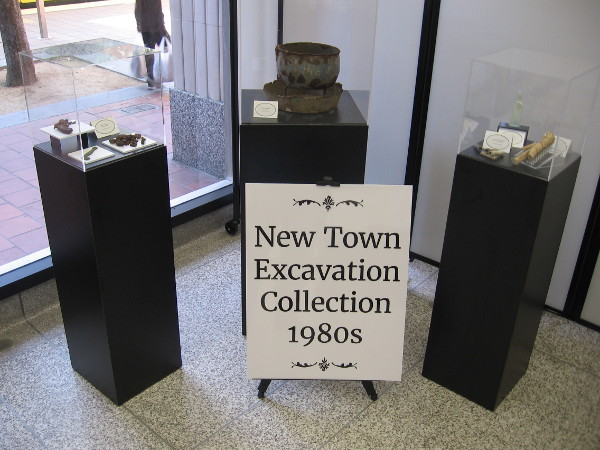
Artifacts on display include the New Town Excavation Collection from the 1980s.
Other artifacts on display include the New Town Excavation Collection from the 1980s.

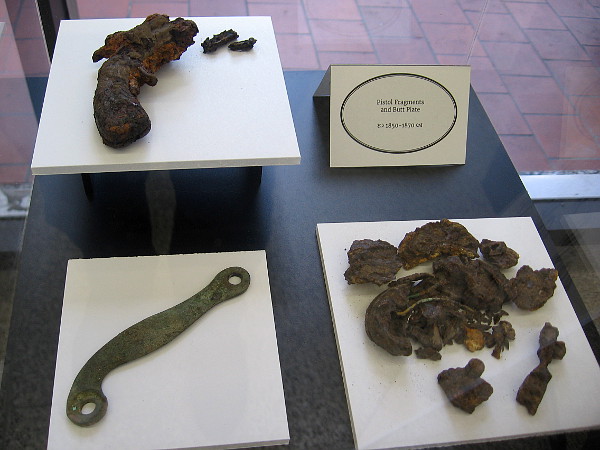
New Town artifacts include pistol fragments, 1850-1870.

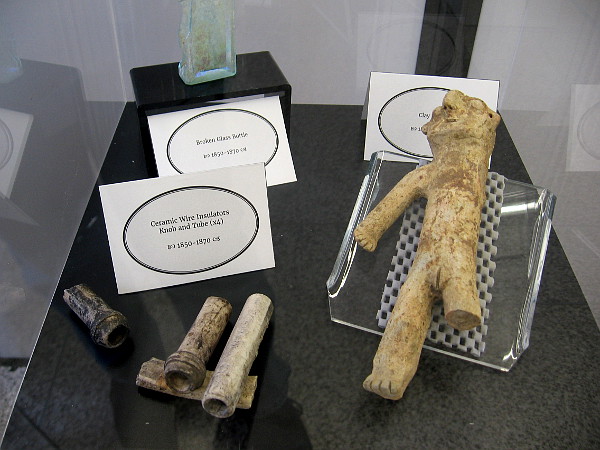
Other early artifacts from New Town include a broken bottle, ceramic wire insulators and a clay effigy.
Other artifacts from 19th century New Town include a broken bottle, ceramic wire insulators and a clay effigy.

I live in downtown San Diego and love to walk around with my camera! You can follow Cool San Diego Sights via Facebook or Twitter!

You can easily explore Cool San Diego Sights by using the search box on my blog’s sidebar. Or click a tag! There are thousands upon thousands of photos for you to enjoy!