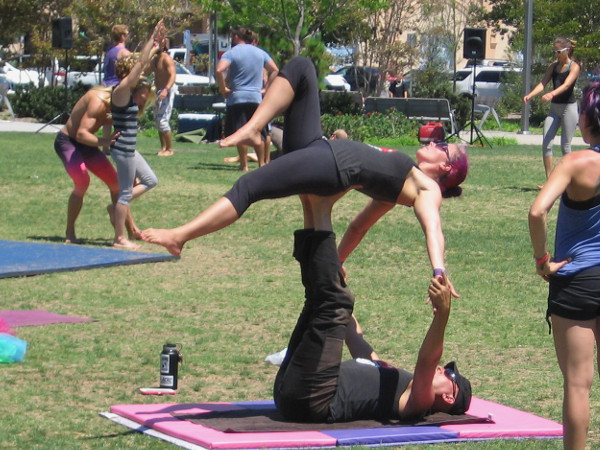
Practicing acrobatic skills at the AcroLove Festival in San Diego’s Ruocco Park.
Okay, so I was walking along the Embarcadero this afternoon, among crowds of people who were simply enjoying the summer weekend, when I spied something out of the ordinary. Huh? What is that? I thought maybe my brain had been turned upside-down by the hot sun. No, I really was seeing about a hundred performing acrobats right there on the grass in front of me!
Was this a dance troupe having some sort of unusual party? Were they circus performers? No and no. I soon learned I’d stumbled upon the AcroLove Festival in Ruocco Park! It’s a cool event where people can practice acrobatic skills! Many of the attendees are primarily interested in yoga!
I strolled about the park for a few minutes taking some photos while trying not to be too horribly intrusive…
Both beginning and expert acrobats were linking limbs, lifting, swinging and contorting to create different amazing poses.All sorts of people were trying out different moves that appear to take a lot of strength and athletic ability.These guys told me what the heck was going on. I thought maybe I’d stumbled upon circus performers!Acrobats patiently learn correct technique on the grass of Ruocco Park in downtown San Diego.I don’t know the names of these many poses, but I saw people flying through the air and upside down all over the place.Two graceful acrobats seem to engage in a dance!
…
See photos of some random cool stuff! Join me on Facebook or Twitter.
While wandering about San Diego taking photos for my blog, I’ve often been privileged to see school students doing really amazing things. From the very young to the college-aged, youth in San Diego are accomplishing more than just learning. They’re creating public art, publishing amazing work, beautifying the community, becoming champions, serving neighbors and people around the world, and working to build a brighter future.
Here are some past blog posts that provide inspiration.
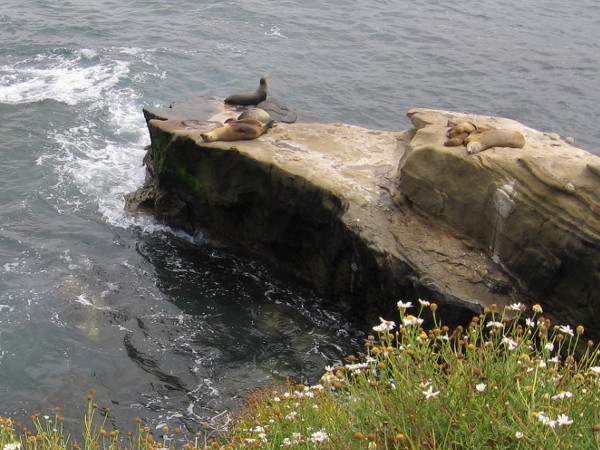
Sea lions sun on a large rock in the Pacific Ocean off Point La Jolla.
This blog post resumes my walk from the prior post. Here I head south down a truly amazing stretch of coastline, from Point La Jolla at the edge of La Jolla Cove to Cuvier Park. A good argument can be made that this is the absolutely most beautiful spot in all of San Diego. I’ll let you decide…
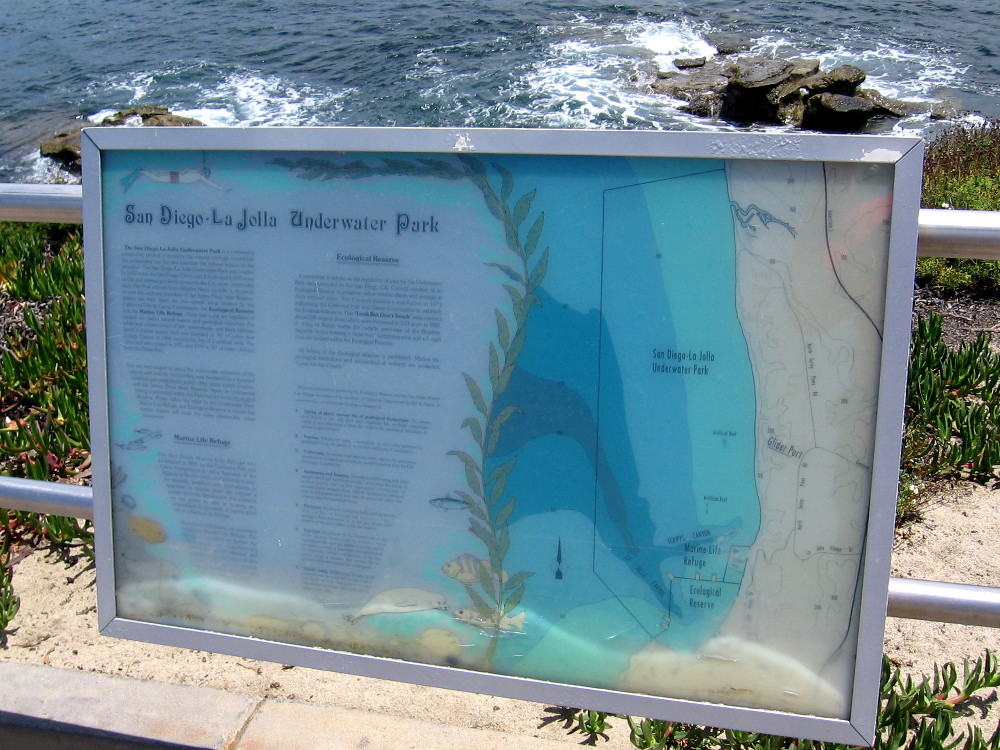
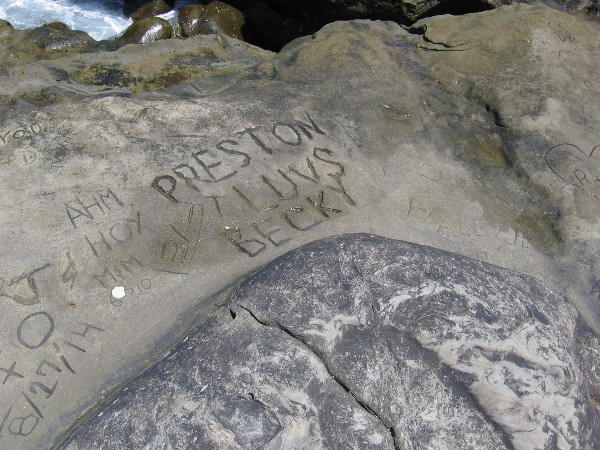
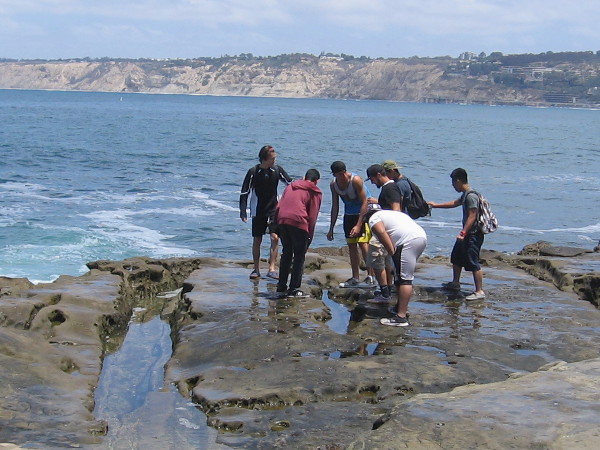
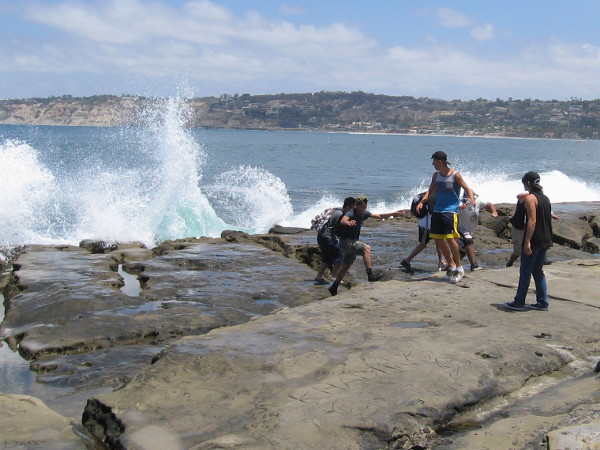
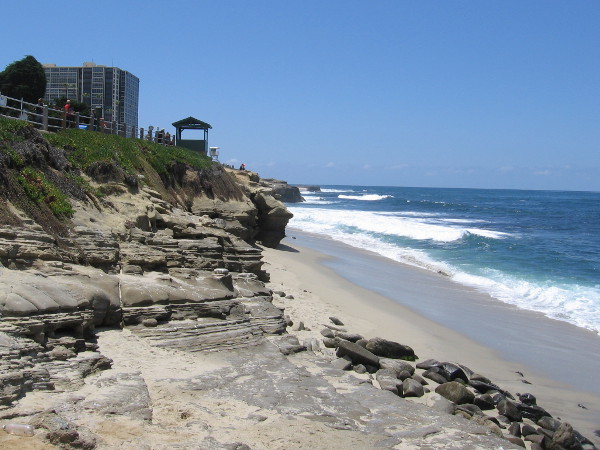
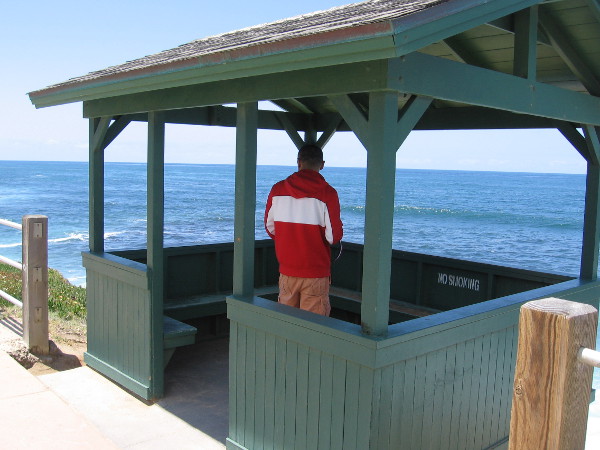
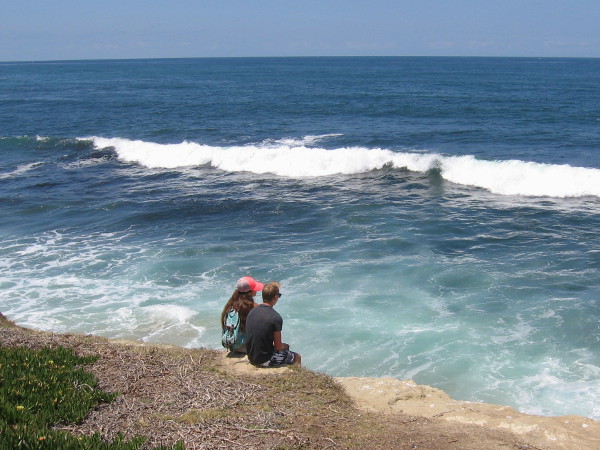
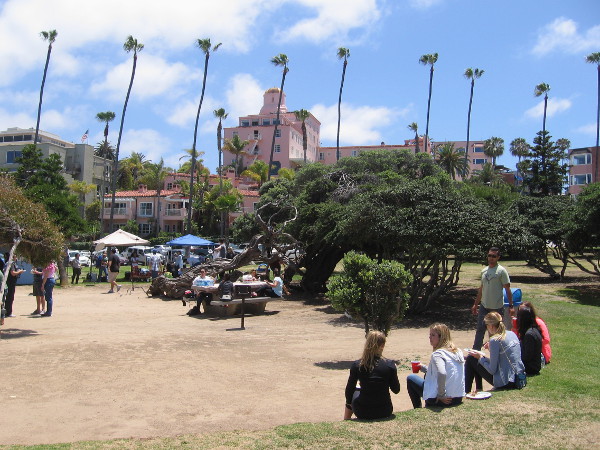
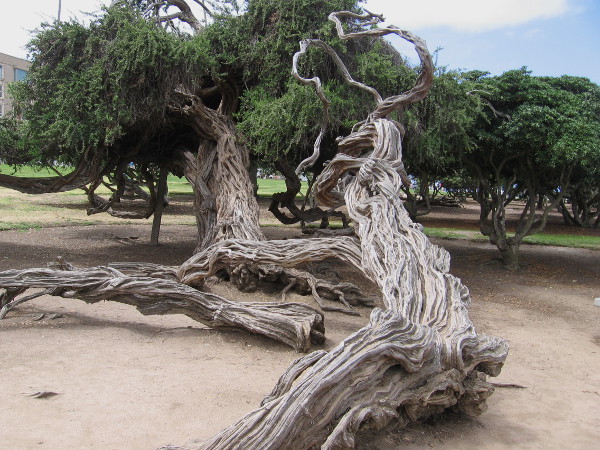
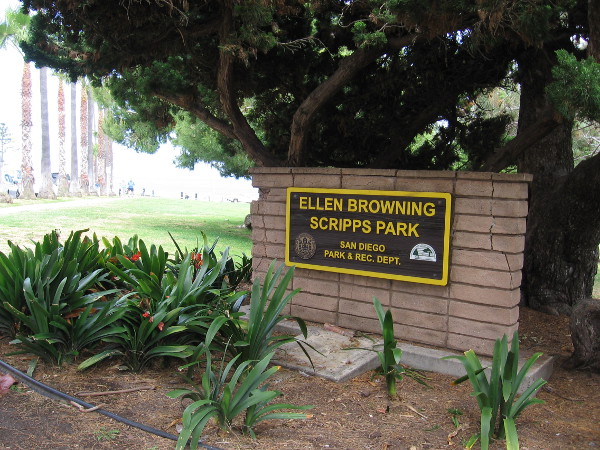
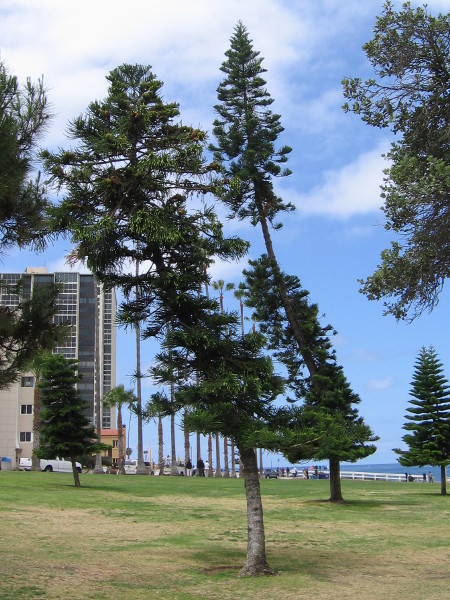
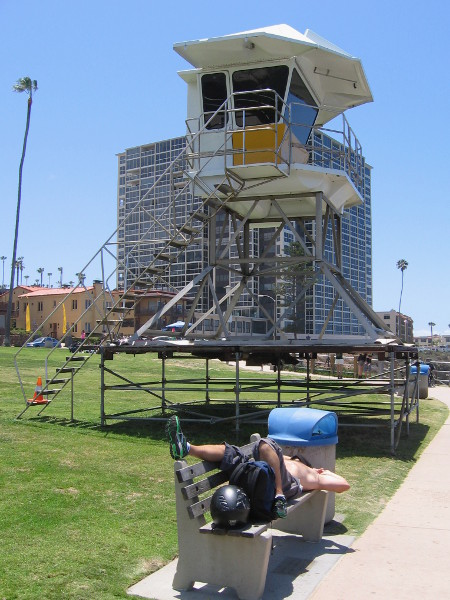
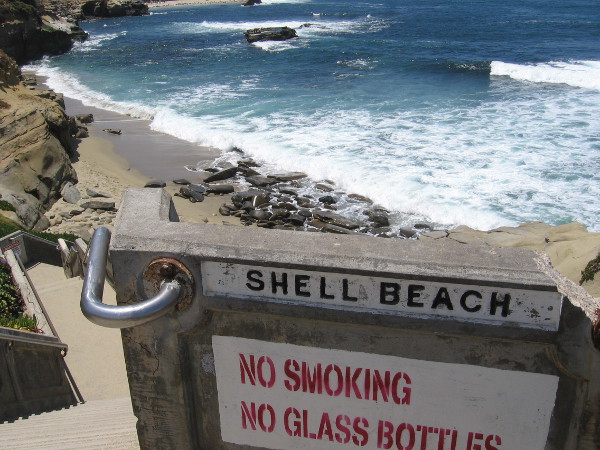
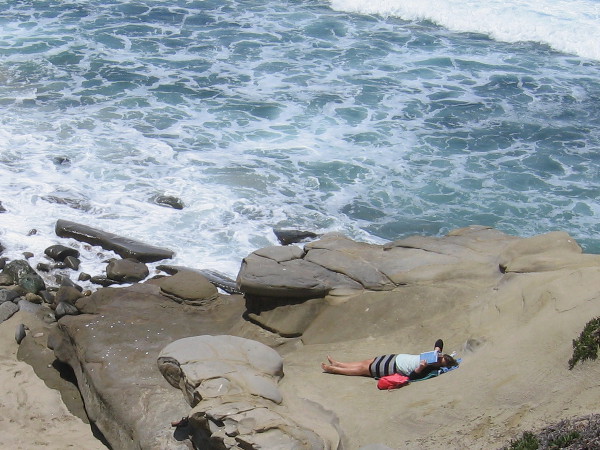
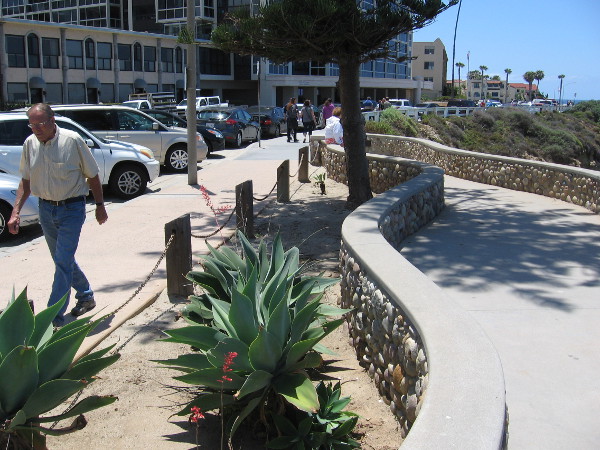
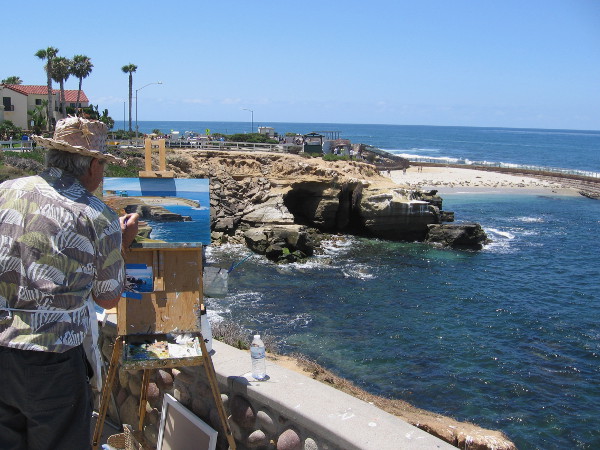
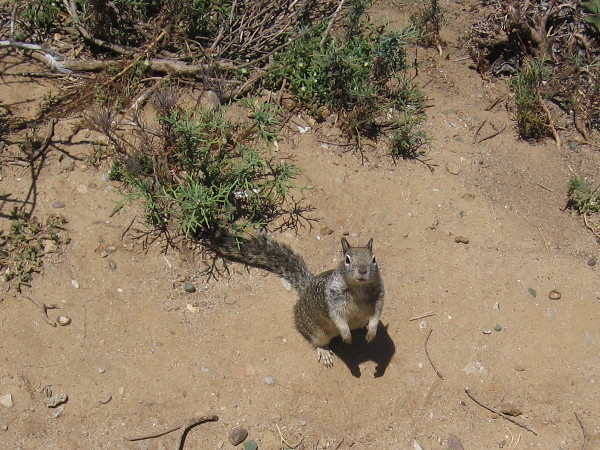
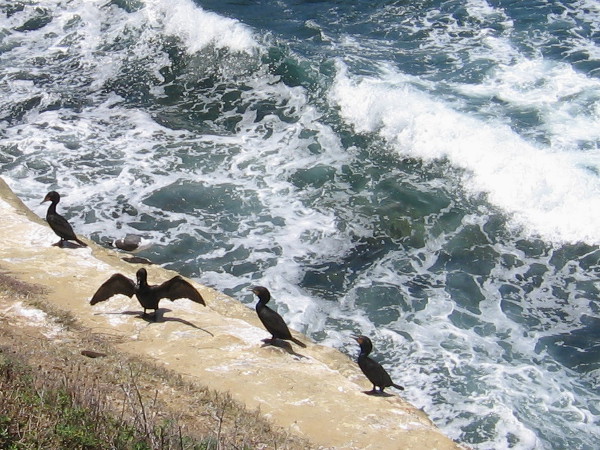
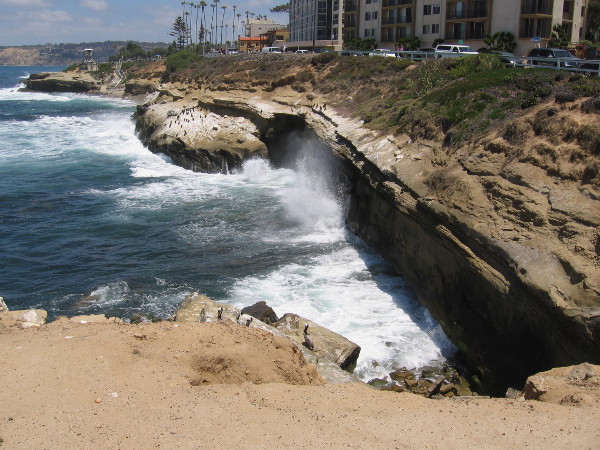
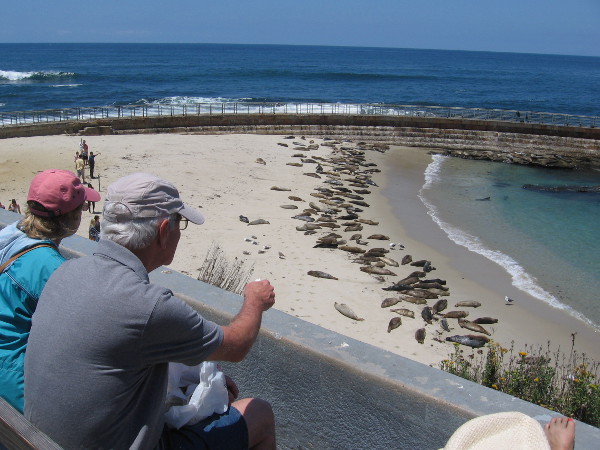
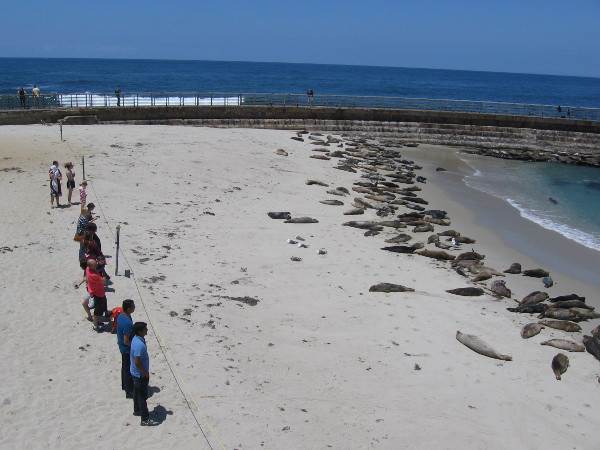
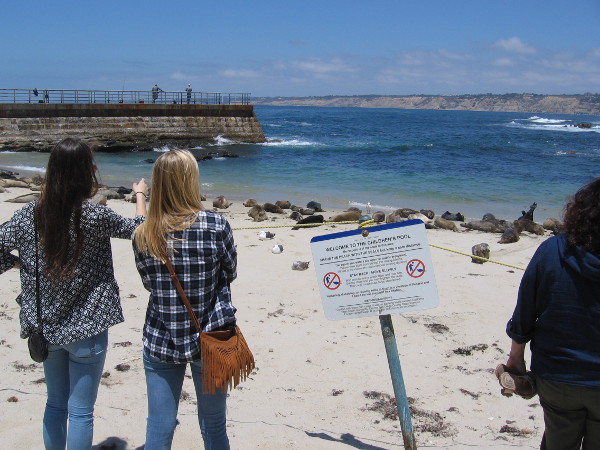
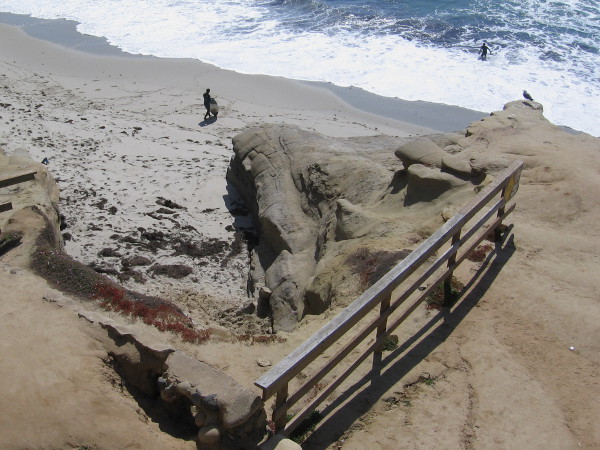
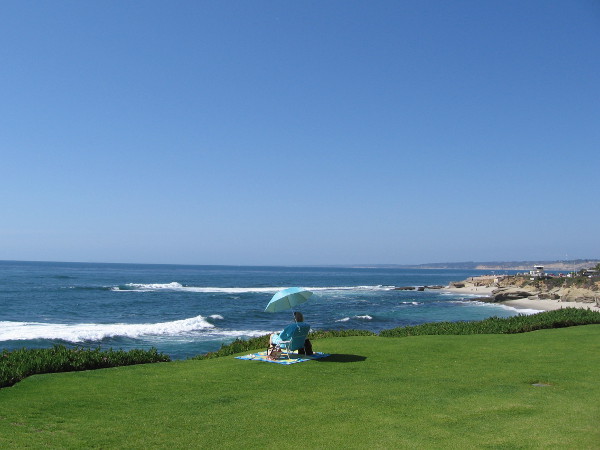
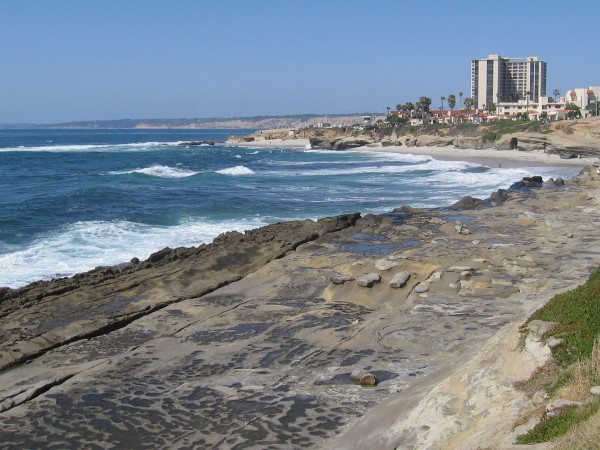
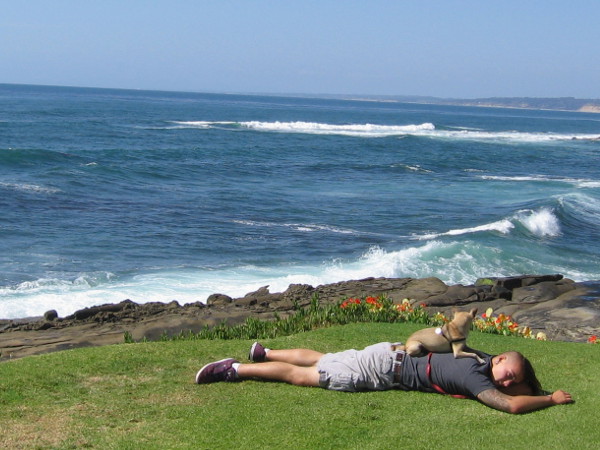
The 6,000 acre San Diego-La Jolla Underwater Park off the coast includes an Ecological Reserve and the Marine Life Refuge.Numerous seals and sea lions live on the rocks and beaches of La Jolla.People love to walk across this water-sculpted landscape right up to the sea cliffs to watch the surf.Over the years many have carved names and messages in the soft sandstone.Sea lions enjoy La Jolla just as much as human visitors!Some of those curious humans are grouped around a small tide pool in the rock looking for sea life.An unexpected wave crashes in. Run! Scatter!Looking south along the narrow beach from Point La Jolla. One of many lookout structures is visible up on the cliff.This lifeguard box features many barnacle-like beach-related words. The box is titled the David C. Freeman Memorial, by artist Paul Sibel. It marks the location of Boomer Beach.These simple, open gazebo-like structures along the walking path are fine places to gaze out at the broad ocean.Or you can just relax on an outdoor seat provided by nature.A major attraction along Coast Boulevard is spacious, grassy Scripps Park.Gnarled old trees dot the picturesque park, which contains many picnic areas and places to recreate on the grass.Ellen Browning Scripps Park is reported to be the most photographed spot in San Diego.More trees growing slantwise, blown by the prevailing sea breeze over the course of many years.Scripps Park contains the Abraham Lincoln Centennial Memorial plaque dedicated in 1909.Continuing south, more views looking back north of a truly spectacular coastline.Guy takes a nap on bench beneath a lifeguard tower.Shell Beach is one of many tiny sandy nooks that can be found among the rocky cliffs.A lady lies on a flat rock reading a book, as waves crash nearby.A beautiful walkway runs down from the Cave Store along Coast Boulevard for about a mile along the ocean.An artist paints a beautiful scene from a view point not far from Children’s Pool.I peer over the low wall and am greeted by a funny squirrel!One of these cormorants on a rock has its sun-drying wings spread dramatically.Getting very close to Children’s Pool, where many seals lie side by side on its wide, sunny beach.A quick turn back northward shows waves breaking against a vertical sandstone face!Legal disputes have entangled Children’s Pool over the years. The facility was created in 1931 by benefactor Ellen Browning Scripps as a safe spot for children to swim.People head down to see the colony of seals on the warm sand.At Children’s Pool Beach, a rope now keeps people from disturbing the protected marine mammals.Fisherman on the far sea wall have cast their lines into the blue Pacific Ocean.Continuing to walk south along more amazing coastline in La Jolla.Some surfers on a beach and in the foaming water below.Unusual sculpture at the rear of La Jolla’s Museum of Contemporary Art San Diego called Pleasure Point, by artist Nancy Rubins. It’s made of rowboats, canoes, jet skies, kayaks, surfboards…A stretch of green grass at Cuvier Park is the perfect place to sit or lie on a glorious Southern California day.Tide pools become visible at low tide along this easily accessible stretch of La Jolla.A dog takes a happy rest by some flowers as the surf rolls in.
…
To enjoy future posts, you can “like” Cool San Diego Sights on Facebook or follow me on Twitter.
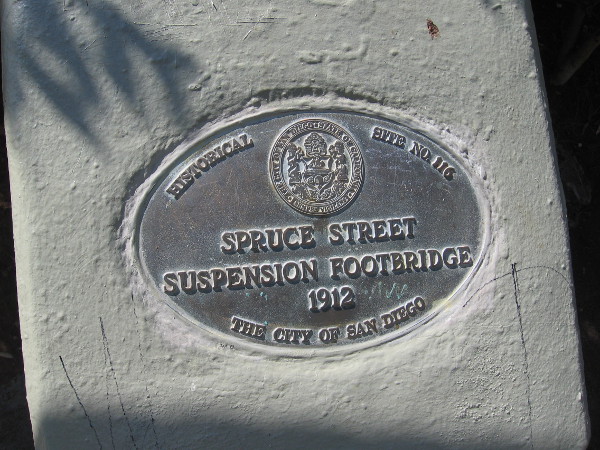
The classic Spruce Street Suspension Bridge is located just west of First Avenue and crosses narrow Kate Sessions Canyon. It’s an amazing, breathtaking 375 feet long! Steel cables support a gently swaying passage through and above treetops, and a walk along its length feels like a small, romantic adventure. The bridge was designed by Edwin Capps, the city engineer who was also responsible for plans to dredge San Diego Bay, and who would go on to be elected mayor. (It was Capps who hired the rainmaker Charley Hatfield, the central character in one of San Diego’s most legendary tales! Perhaps I’ll blog about it one day…)
Built in 1912, the purpose of the Spruce Street Suspension Bridge was to provide easy access for those who lived to the west to trolley lines on Fourth and Fifth Avenue.
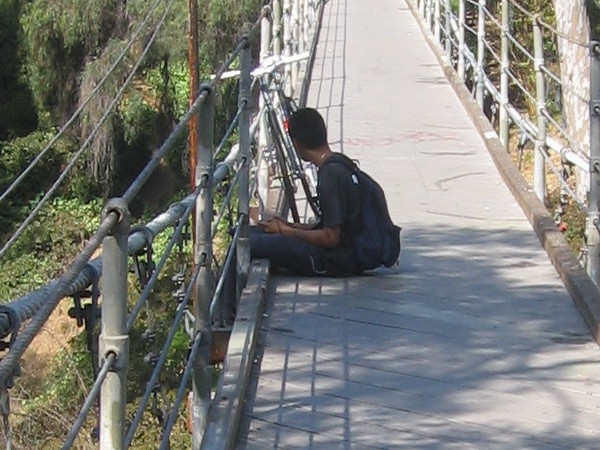
The Spruce Street steel cable suspension footbridge, engineered by Edwin Capps, was erected in 1912.Wouldn’t you like to walk out on this bridge?The swaying suspension bridge is a unique, historic structure just north of downtown San Diego.Lots of people love this hidden bridge. You feel like you’re crossing through a wilderness of treetops!Bicyclists enjoy a dirt trail 70 feet below.Boy sits thoughtfully on the Spruce Street Suspension Bridge in Bankers Hill.
…
To enjoy future posts, you can “like” Cool San Diego Sights on Facebook or follow me on Twitter.
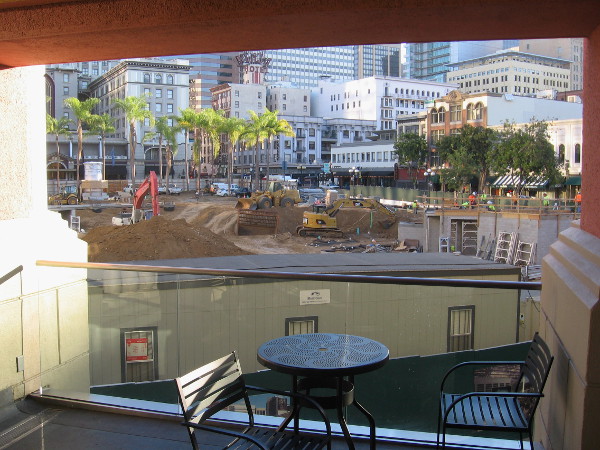
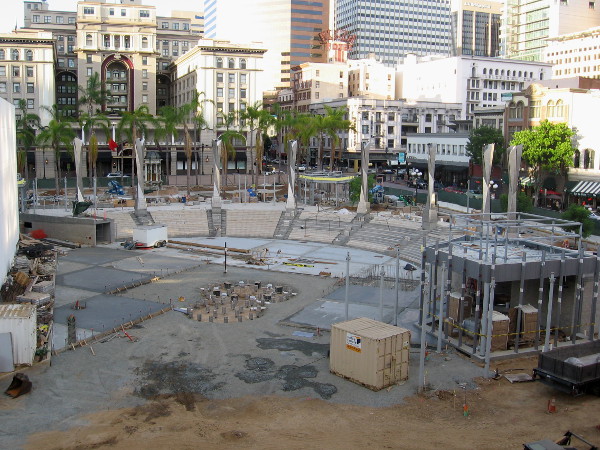
Photo of park construction from an upper level of downtown’s Horton Plaza shopping mall.
Today at sunrise it was already warm outside, so I began my walk extra early. Because it’s a simple thing to catch a trolley at any station downtown, I had plenty of time to get to work.
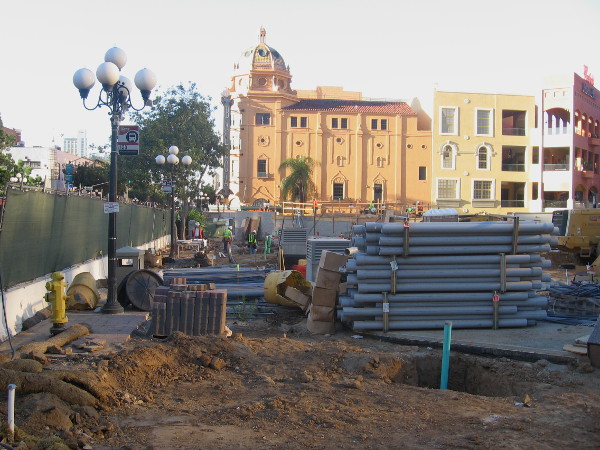
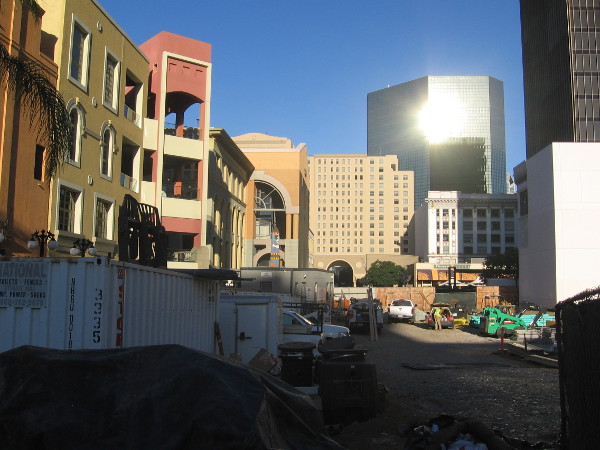
For no particular reason my legs pulled me past the Horton Plaza Park construction site. Work there appears to be full steam ahead!
Artwork on the construction fence right next to the Horton Plaza shopping mall shows how this enlarged city park will eventually appear. According to Todd Gloria, a San Diego City Councilmember, “When it is completed, it will be the new heart of our city, the central point, and a gathering place for San Diegans to come together to celebrate.”
Conceptual artwork on the construction site fence. This image shows a San Diego Comic-Con event taking place downtown at the future Horton Plaza Park.Zooming in, I spot several superheroes!Another bit of art on the temporary surrounding fence shows a Fourth of July celebration in the finished park.A good wide view of construction progress. This functional public space will be a major addition to downtown San Diego.The corner of a large plaza that will be used for concerts and special events.Early morning sunlight on the Balboa Theatre and a section of the Horton Plaza mall in the background.A fantastic area in downtown San Diego is about to become even more amazing!
UPDATE!
Here’s a pic I took in late June 2015…
Photo of Horton Plaza Park construction taken in late June 2015.
And another two months later…
Photo of Horton Plaza Park construction in late August 2015.
And another in early October…
Horton Plaza Park is making great progress by the beginning of October 2015.
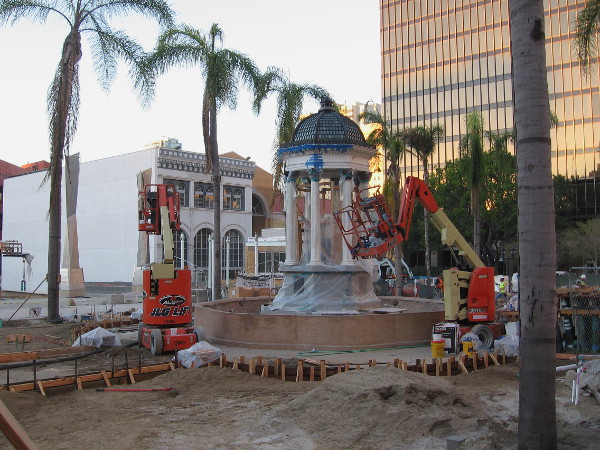
And two more pics from mid-November…
Construction workers prepare the new, expanded Horton Plaza Park in downtown San Diego.Historic fountain in Horton Plaza Park being renovated in November 2015.
…
To enjoy future posts, you can “like” Cool San Diego Sights on Facebook or follow me on Twitter.
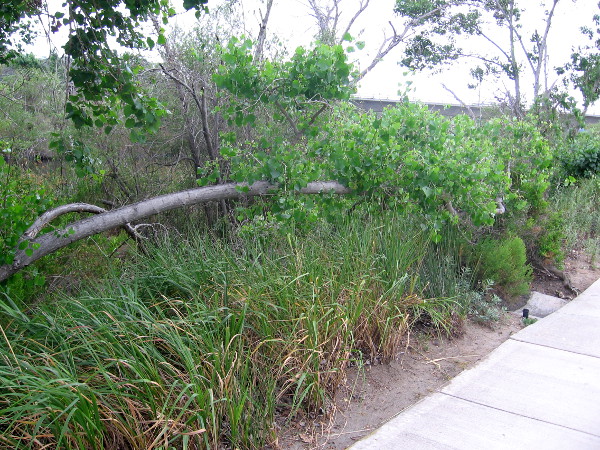
The roots were almost completely torn out of the ground, but the stubborn tree in spring has green leaves!
Perhaps you read my blog post about the violent microburst that tore through San Diego’s Mission Valley on September 16, 2014. Along with photos of the aftermath, I described the tornado-like winds of the freak weather phenomenon.
A microburst is a localized downdraft of wind that can occur under unstable weather conditions. Several areas around San Diego were struck by a microburst that day, and the resulting damage was stunning. Small airplanes at an airport were tossed through the air. Along the banks of the San Diego River, hundreds of trees were torn to shreds and uprooted.
This morning, 7 months later, I walked along the river path where I had scrambled over thickly fallen trees right after the natural disaster.
Many of the uprooted trees were removed by crews with chainsaws in the days that followed the microburst. But some were not. Check out a few pics from my walk this spring morning! Like the famous quote from the movie Jurassic Park, life finds a way!
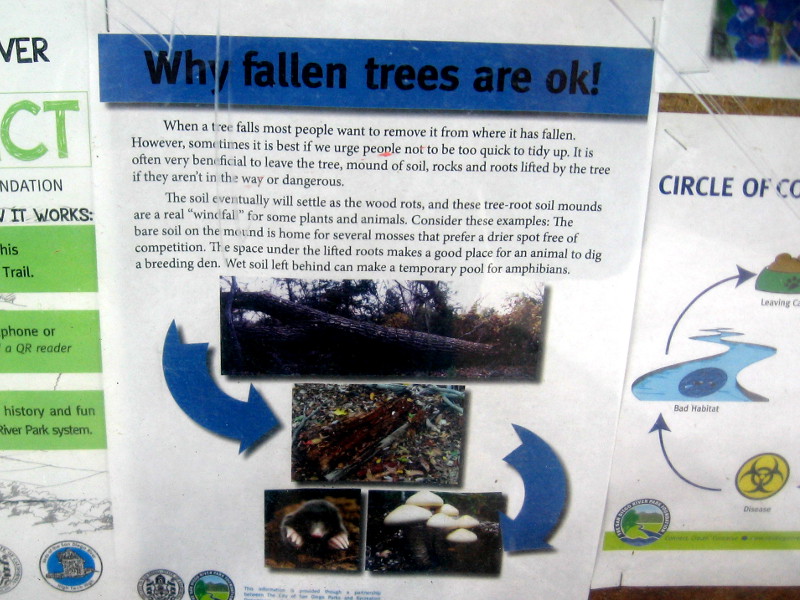
One of hundreds of trees that were uprooted during the super violent microburst last September. Amazingly, this one still flourishes!This fallen tree is now growing horizontally like a hedge along a Mission Valley sidewalk!Sign beside the San Diego River Trail. Why fallen trees are okay! There are important benefits to the soil, flora and fauna.
The sign reads:
When a tree falls most people want to remove it from where it has fallen. However, sometimes it is best if we urge people not to be too quick to tidy up. It is often very beneficial to leave the tree, mound of soil, rocks and roots lifted by the tree if they aren’t in the way or dangerous.
The soil eventually will settle as the wood rots, and these tree-root soil mounds are the real “windfall” for some plants and animals. Consider these examples: The bare soil on the mound is home for several mosses that prefer a drier spot free of competition. The space under the lifted roots makes a good place for an animal to dig a breeding den. Wet soil left behind can make a temporary pool for amphibians.
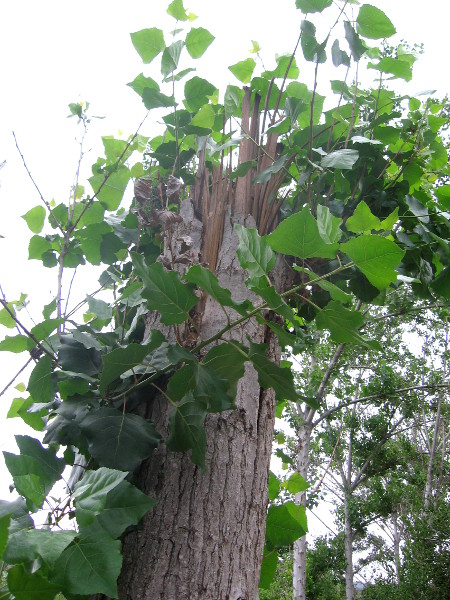
Green shoots look unusual on this violently torn tree trunk. I believe this is a Fremont Cottonwood.Life springs forth from a broken stump months after a devastating natural disaster.
…
To enjoy future posts, you can “like” Cool San Diego Sights on Facebook or follow me on Twitter.
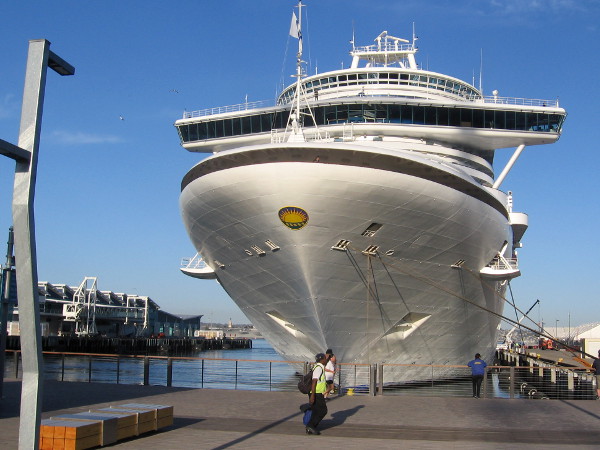
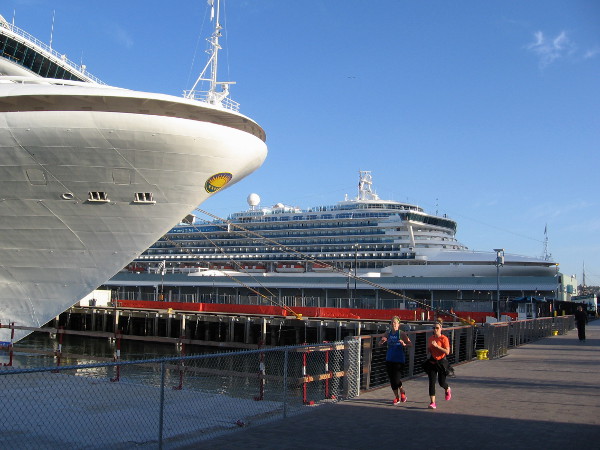
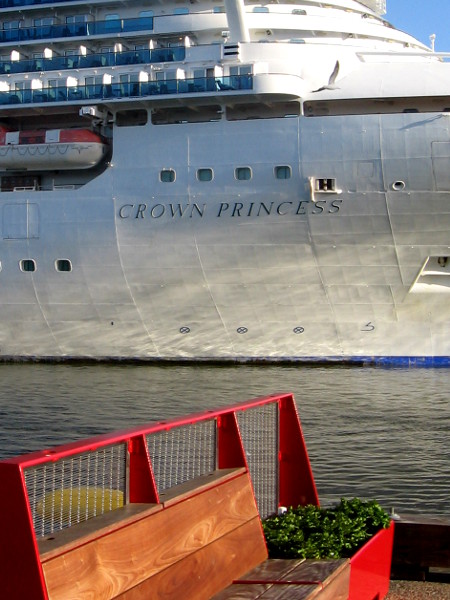
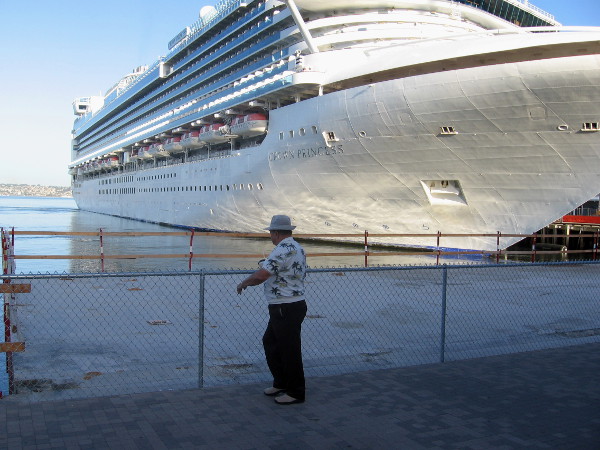
The huge Crown Princess cruise ship is docked on San Diego’s Embarcadero.
Everyone has seen photos of cruise ships, but two beauties were docked on San Diego’s waterfront this morning and gleaming in the sunshine, so I had to whip out my camera!
Once in a while, two or three cruise ships visit downtown at the same time. Some of these vessels are so huge that stood on end they’d dwarf many nearby skyscrapers. The two ships I saw in port today are operated by Princess Cruise Line. Both are classified as Grand-class cruise ships and have nearly identical lengths. Even after seeing them in person, it’s hard for me to grasp that these ships are 950 feet long! The Crown Princess can carry 3,080 passengers with a crew of 1,201. The Star Princess accommodates 2,590 passengers and a crew of 1,150. Incredible!
Two luxurious Grand-class cruise ships gleam on either side of the Cruise Ship Terminal.Gull checks out an amazing morning sight. Photo taken from the Broadway Pier.Man gazes at the sunlit bay. The fenced area is where the Bay Cafe used to stand. It soon will be an observation platform.
…
To enjoy future posts, you can “like” Cool San Diego Sights on Facebook. or follow me on Twitter.
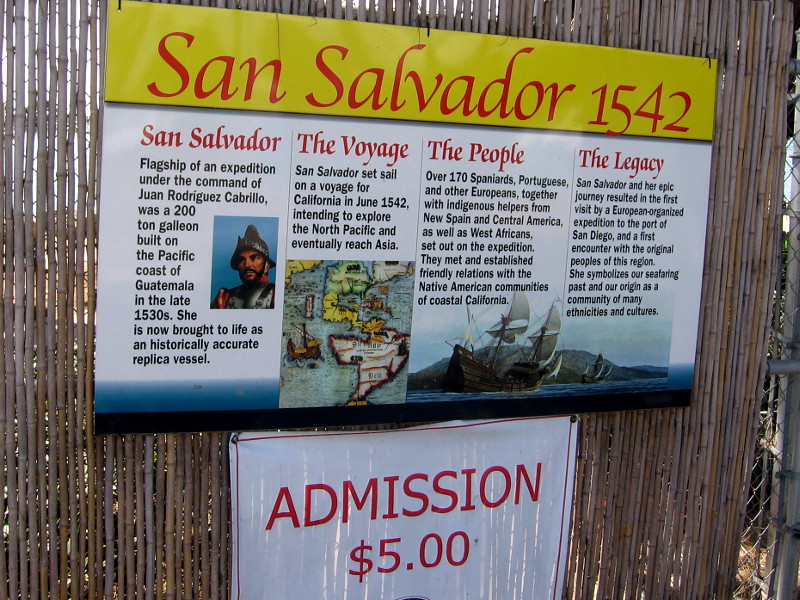
Sign at entrance to San Salvador build site. You have a couple more weeks to visit before the replica galleon’s historic launch into San Diego Bay.
Yesterday I enjoyed a tour of something so unbelievably cool it almost defies description. Along with my photographs I took some notes, but what I’m about to write might not be perfectly accurate. I’m relying to an extent on memory, which with my advancing age isn’t quite what it used to be. So if anyone reading my captions spots an error, PLEASE write a comment at the bottom of this blog post!
Later this month, the Maritime Museum of San Diego will be launching its absolutely fantastic, historically accurate, seaworthy replica of the galleon San Salvador. The original San Salvador was the ship that Portuguese explorer Juan Rodriguez Cabrillo sailed in during his voyage of discovery up the California coast on behalf of Spain. The famous galleon entered San Diego Bay in 1542, making Cabrillo the first European to visit the large, natural harbor. What we call San Diego today he named San Miguel.
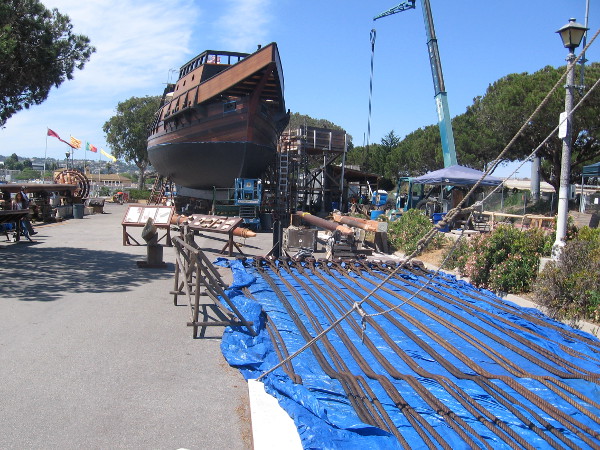
Today, the full-size working replica of Cabrillo’s ship is being built at the west end of Spanish Landing, in an area called San Salvador Village, between Harbor Island and San Diego International Airport. The finished ship will be 92 feet long with a beam of 24 feet. As I understand it, construction has been underway for about four years, and for a variety of reasons has taken a couple years longer than originally projected. But once the decks are re-caulked, the shrouds tarred, and a few other things finished, the ship’s exterior will finally be ready for its imminent introduction into San Diego Bay!
The galleon, which without ballast weighs about 130 tons, will be slowly towed to the Broadway Pier downtown, then lifted by a huge crane into the bay. While docked beside the other ships of the Maritime Museum, the interior will be finished, about 60 more tons of lead ballast added, and the vessel’s ability to remain upright thoroughly tested by the Coast Guard.
(Don’t quote me on the 130 tons and 60 tons. Those figures came entirely from my leaky memory.)
There’s simply too much awesome stuff to describe in a few paragraphs, so let me now show you my photographs and I’ll include in the captions some of the cool stuff I learned or observed…
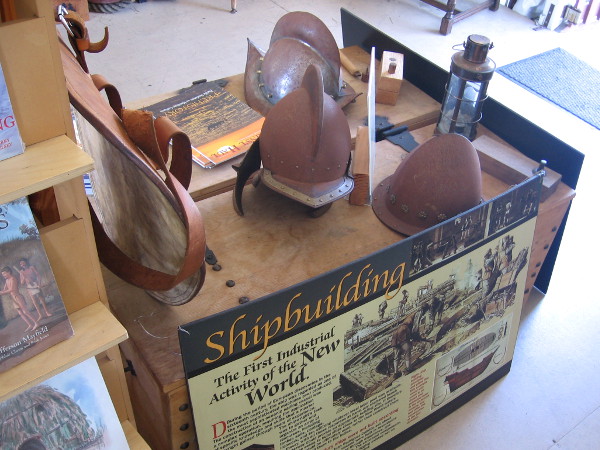
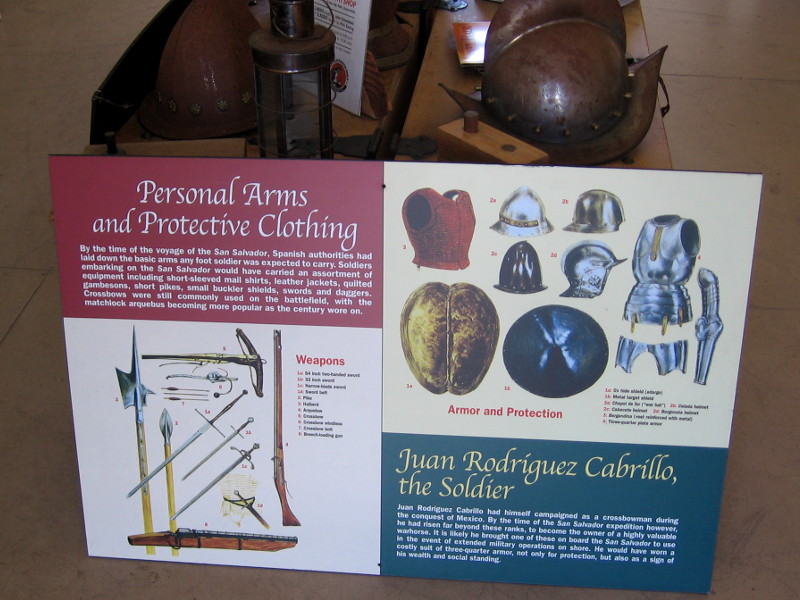
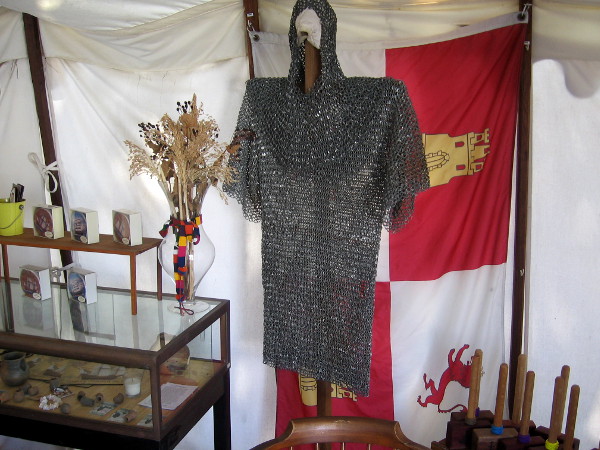
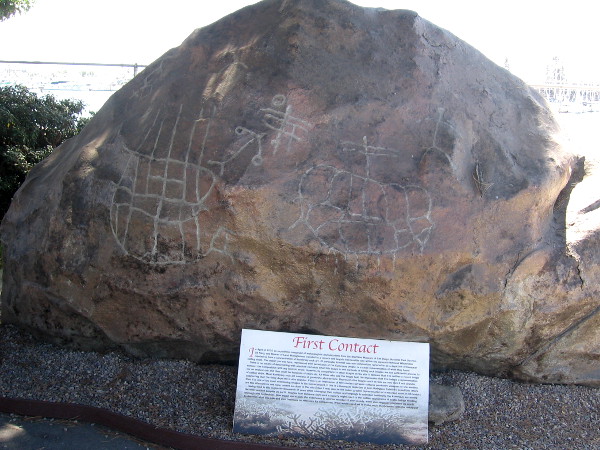
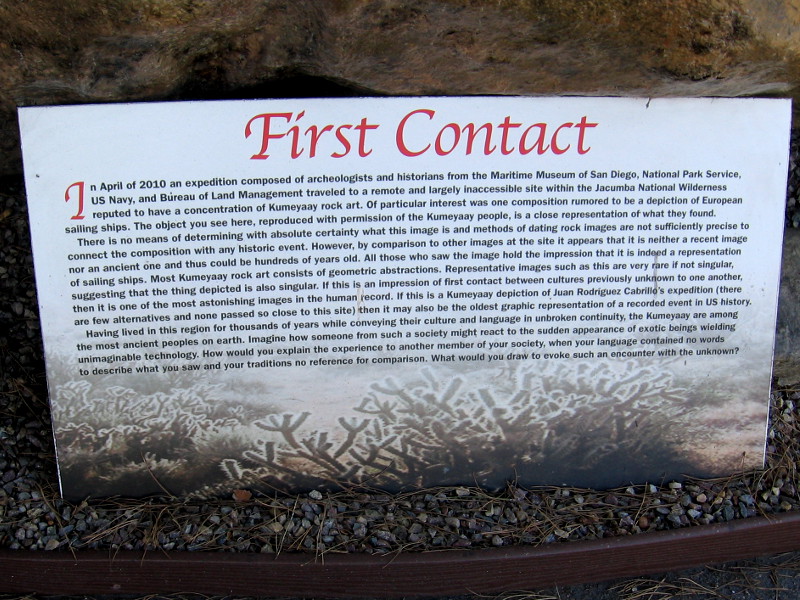
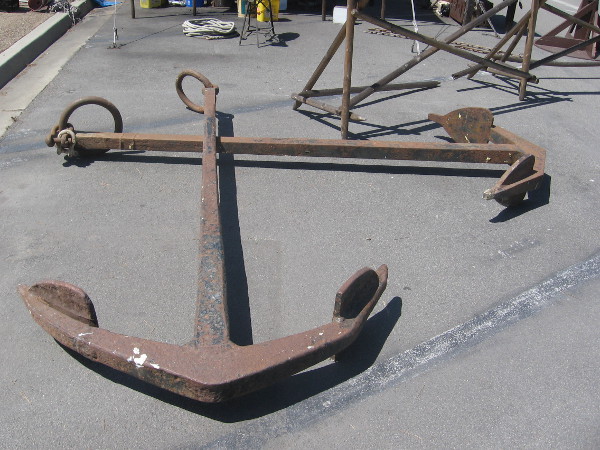
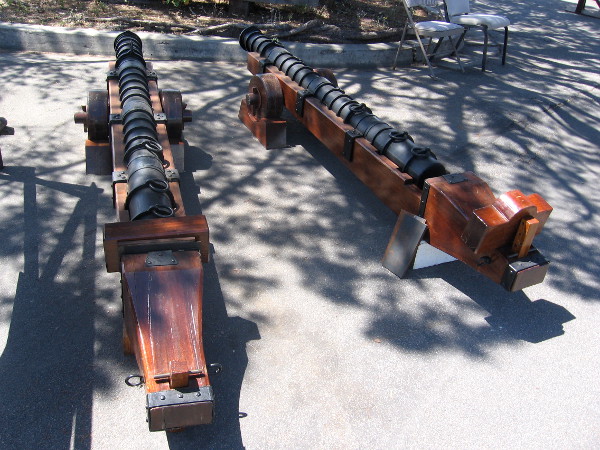
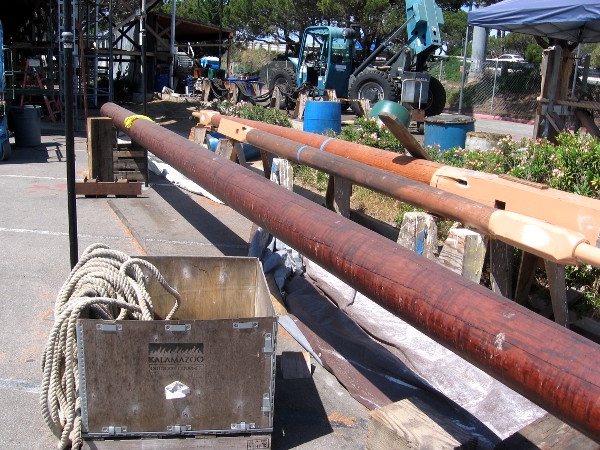
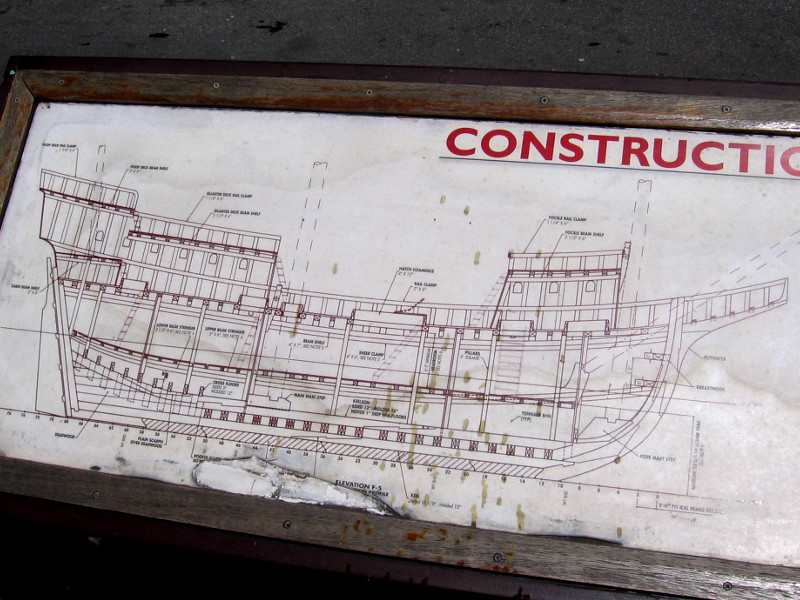
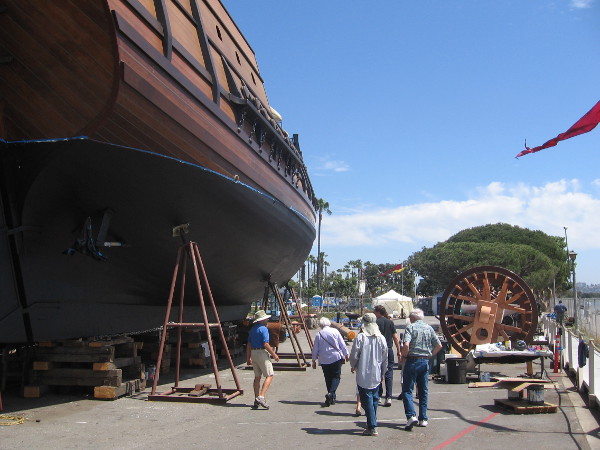
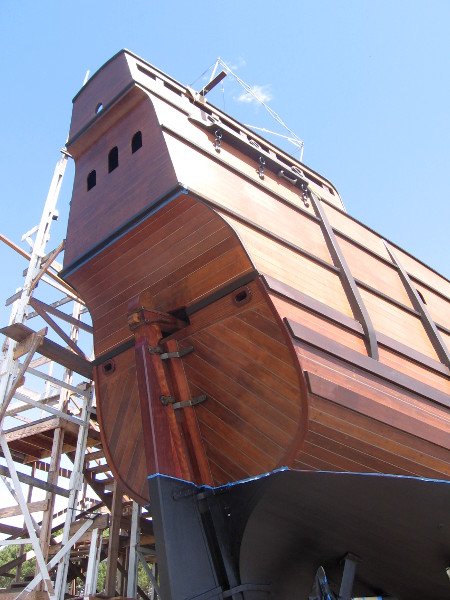
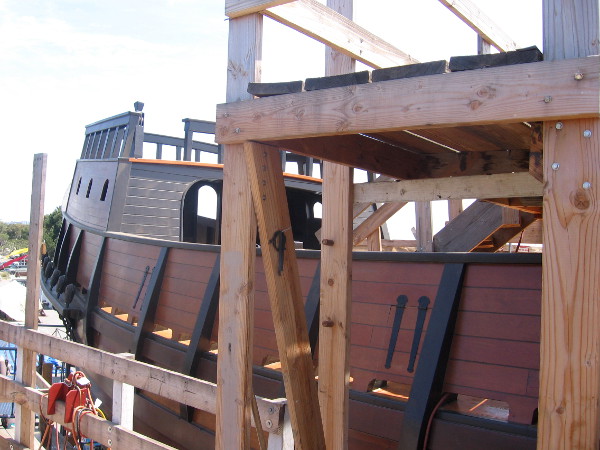
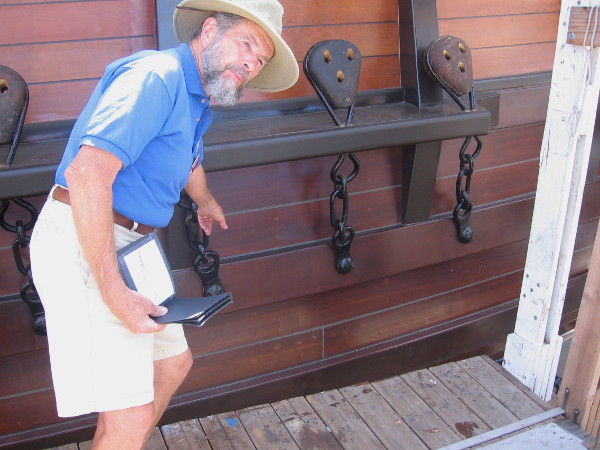
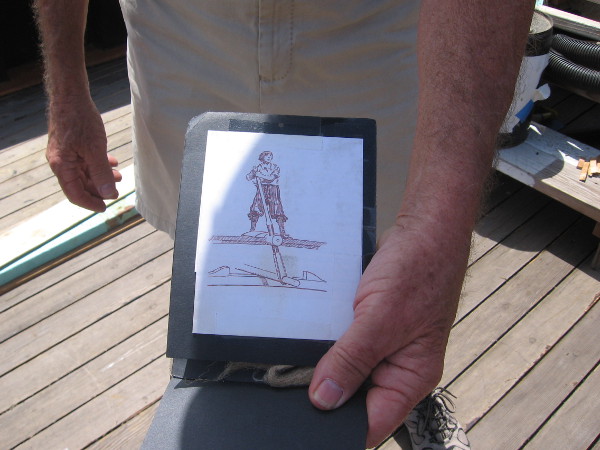
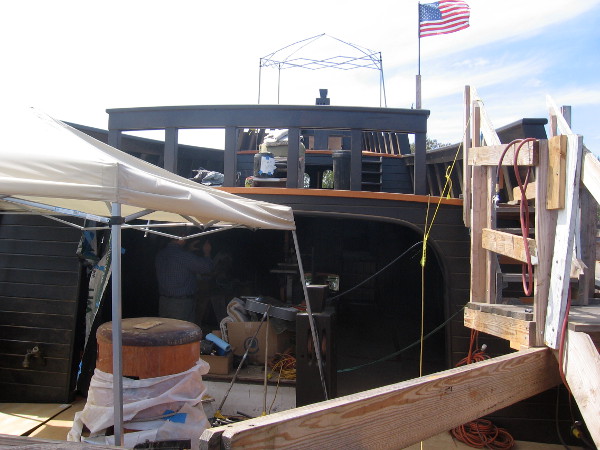
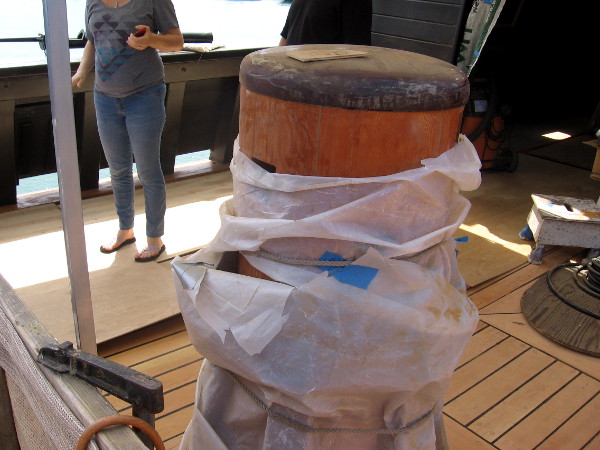
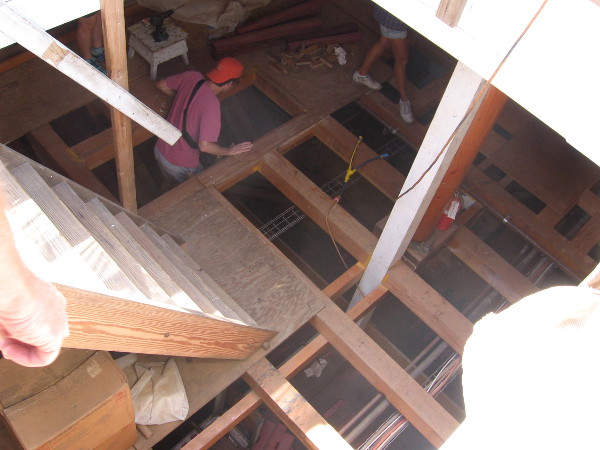
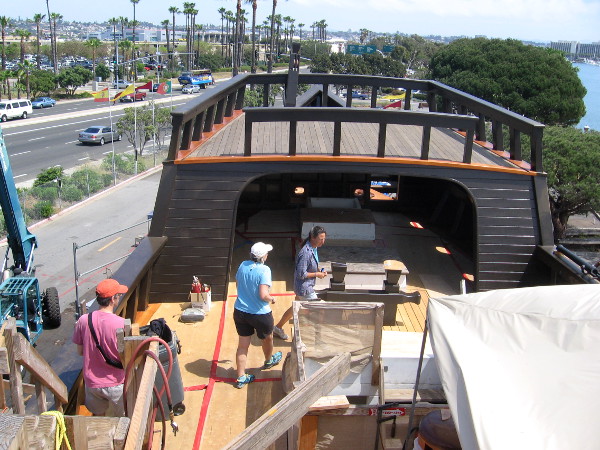
Shipbuilding was the first industrial activity of the New World. Gift shop at site entrance includes Spanish conquistador helmets and breastplate.Poster shows personal arms and protective clothing used by the men who sailed with Juan Rodriguez Cabrillo five centuries ago.A small museum and gift shop includes many interesting sights, including a shirt of chain mail and flag of the Spanish Empire.Diagram shows the sail plan for historic galleon San Salvador.Various items on display include lantern, candle, bottle, ship’s food and native Kumeyaay artifacts.Outside, at the build site, there are many more exhibits. This reproduction of found rock art seems to show sailing ships. The native Kumeyaay people often visited San Diego Bay.First Contact. If this rock art is a Kumeyaay depiction of Cabrillo’s expedition, it might be the oldest graphic representation of a recorded event in American history.Here’s a huge anchor! I didn’t ask, but I assume it will be used by the San Salvador.San Salvador carries six sails totaling a little less than 5000 square feet. The sails are not only used to propel the ship, but exert a larger influence on steering than the rudder.View of a small sail suspended from a yard, with Harbor Drive in the background north of the build site.Suspended from a crane is a shroud (rigging that helps hold a mast) that’s being tarred. The bow of the galleon comes to a sharp point at its beak.Iron in an undeveloped region of the New World was a precious commodity. Imported ingots were often used to forge various fittings and hardware.Hooks, chain links and other iron instruments were crucial to sail and maintain a large ship.The San Salvador carried armament to defend the expedition from potential threats. The cannon-like bombard and swivel gun could be fired from the deck.Two bombards on display at the San Salvador build site. They could fire shot about five pounds in weight and were mounted on wheels.Detailed map of Cabrillo’s route up the California coast. He found neither treasure, nor a passage to the Atlantic.There are no blueprints for the galleon San Salvador. To reconstruct the 16th century ship, the Maritime Museum of San Diego used scarce historical clues.It was difficult to find the right kinds of wood for different parts of the vessel. Both old and modern shipbuilding techniques were used.Wood mast segments and yards are coasted with linseed oil, I believe. They’ll be installed once the ship is afloat in San Diego Bay.Approaching the impressive reproduction of the historic galleon. Just imagine going for an ocean sail in this!Detailed schematic shows framework and beams that support decking and hull.The master builder sets up keel, stem, sternpost and deadwood, locked together with long iron drifts. The master frame is then built.I believe these are the lower halves of two masts (main and fore), each ending in a crow’s nest.A look at the super hard wood hull of the galleon San Salvador at Spanish Landing.Volunteer tour guide shows how six segments of heavy lead are attached to the keel.Each piece of lead weighs over 6000 pounds. The lead was originally used for the drop hammers of Rohr Industries in Chula Vista to form aircraft parts.A small tour group investigates the amazing galleon on a sunny San Diego day!The high stern of San Salvador. The rudder is attached to a tiller. That propeller below (and an eventual engine) is a modern convenience unknown by Cabrillo!Our group climbed the steps of scaffolding to check out the hull, upper deck and aftcastle.We’re shown where a shroud connects to the ship’s side. The darker looking lower portion of the hull is made of hard wood, which is heavier than water.We’re almost on top!View of the San Salvador galleon while standing atop the aftcastle. Work to finish the vessel’s deck and interior is underway.This deck will be re-caulked soon using cotton, hemp rope and synthetic tar. Earlier caulking with less modern materials was unsuccessful, if I recall correctly.Sketch of helmsman steering the galleon with a vertical lever attached to the rudder’s tiller. He had a window to look through in the aftcastle.Looking back at the aftcastle and rearmost poop deck from the center of the upper deck. You can see the window through which the helmsman peered.Capstan is a revolving vertical timber that projects through the deck. Bars will be inserted and used by sailors to turn the capstan, hauling ropes or chains.This is one of five separate water-tight compartments being worked on below. Bunks will be contained here, for journeys out to the Channel Islands eventually.Under the forecastle, looking toward the bow’s beak. The two holes beside the rectangular chain locker are hawseholes, through which the anchor chain is lifted or lowered.Looking straight down here you can see where the foremast and bowsprit are seated.Wow! Is this cool! How often does one get to walk around an actual honest-to-goodness working galleon!
…
To enjoy future posts, you can “like” Cool San Diego Sights on Facebook or follow me on Twitter.
This is one of the most amazing trees you’re likely to ever see.
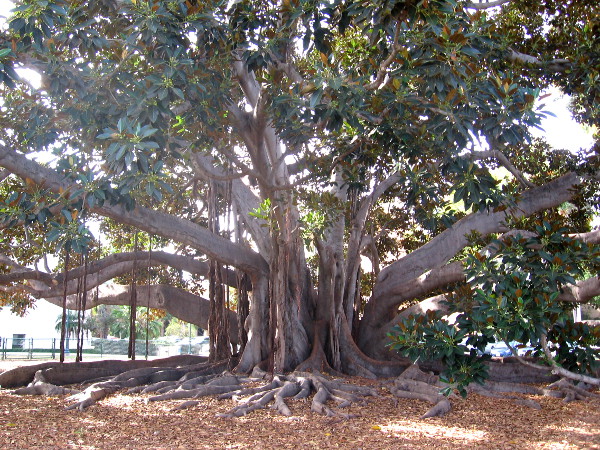
Have you visited Balboa Park? Perhaps you’ve seen an incredibly enormous tree standing between the San Diego Natural History Museum and Spanish Village. It’s impossible to miss! That’s the over 100 year old Moreton Bay Fig!
Sign in Balboa Park describes Ficus macrophylla, the Moreton Bay Fig.
Ficus macrophylla
“Moreton Bay Fig”
Native to East Australia
This tree was planted prior to the 1915 Panama-California International Exposition and was the focus of a Formal Garden located at this site. Because of its large size, it is listed as a co-champion with the Santa Barbara Fig in the California Dept. of Forestry Registry of Big Trees.
Age: over 100 years (now)
Height: 80 feet
Trunk Girth: 42 feet
Canopy width: 145 feet
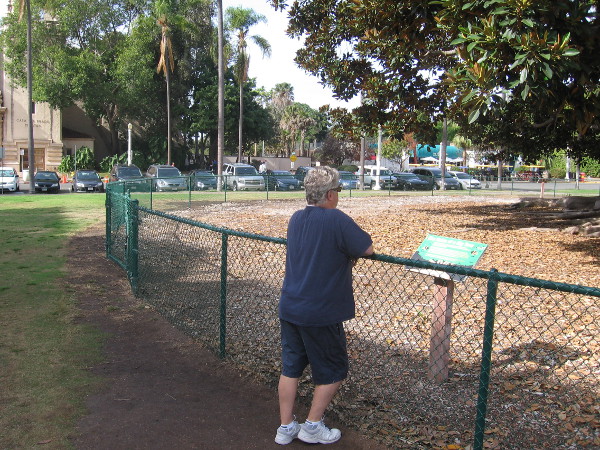
Trunk and roots of a tree once climbed by kids, but now fenced off for its protection.Huge Moreton Bay Fig tree and the San Diego Natural History Museum.A big tree is a rare and valuable part of the ecosystem.
The Value of a Big Tree
Trees contribute to our environment by producing oxygen; reducing temperature, carbon-dioxide and stormwater runoff; improving property value and providing wildlife habitat.
Scientists have developed a value formula to determine the cost benefit of trees. The Center for Urban Forest Research states that trees over 50 feet tall contribute about $65.00/year back to the environment. Smaller trees contribute $18-36.00/year. There are about 20,000 trees in Balboa Park which contribute a value of one million dollars per year back to our environment.
Beyond dollars, Big Trees like the Moreton Bay Fig enhance the park, provide a sense of history to our community and a legacy for our children.
Someone gazes at the hundred year old leafy giant in Balboa Park.
…
To enjoy future posts, you can “like” Cool San Diego Sights on Facebook, or follow me on Twitter.
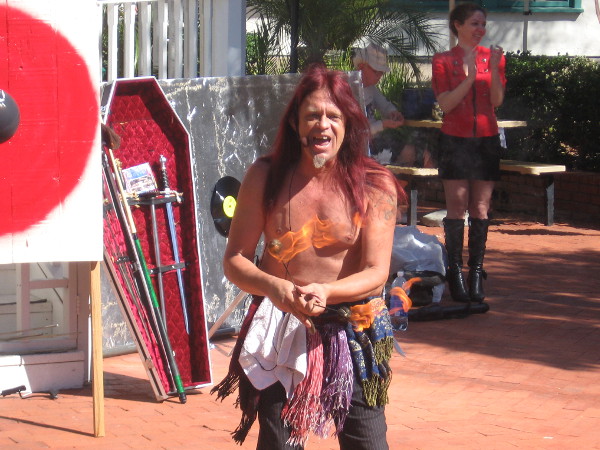
Murrugun the Mystic from AMC television hit Freakshow begins his busker festival danger act with fire eating.
Today I witnessed the grittiest performance I’ve ever seen. And I’ve seen a few.
I went to the Seaport Village Spring Busker Festival today and enjoyed a number of excellent, very entertaining acts. But the one that really stood out was performed by Murrugun the Mystic. He’s one of the stars of the AMC television reality show Freakshow.
While in a great deal of pain, Murrugun was first in the world to shoot a flaming arrow out of his throat! Let me describe his entire act…
Unfortunately, I filled up my camera’s memory card midway through his fire eating, just before he got to the really big stuff. At the end of some more conventional (but great) fire eating tricks, he really wowed the crowd. He filled his throat with a large quantity of kerosene combined with light gasoline, then produced two MASSIVE fireballs from his mouth. You had to see it to believe it! These balls of flame must’ve measured 6 feet in diameter. Oh, man! It was a bummer my camera ran out of memory! Afterward, he promptly rinsed his throat out with mouthwash and then water, because the flammable mixture is highly carcinogenic.
Next Murrugun balanced his entire body weight on a demonstrably sharp samurai sword. He leaned over the horizontal blade and supported himself on his stomach, lifting arms and legs from the ground.
Next came the bed of nails. I was volunteered, along with five other guys in the crowd, to help Murrugun wow the gathered audience. Each of us tested the nails, and while they weren’t sharp as pins, they were definitely pointed. Murrugun lay on the bed of nails, placed a board over his torso, and four of the guys, weighing a total of about 910 pounds, stepped up onto the board! I and another fellow helped to balance the four. Ouch! While this sort of thing has been performed for thousands of years, and the many nails effectively support a whole lot of weight, I wouldn’t want to be sandwiched between them and the combined mass of four guys!
Now the show got interesting in an alarming way. Murrugun used a very long pole to support “The Knives of Death”. I believe that’s what he called them. These five long knives faced downward from a ring, and should they topple down from the top of the pole, they’d probably impale poor Murrugun. I’m not sure how his act was supposed to proceed. The knives were balanced atop the pole. Suddenly down came the knives from on high and Murrugun lay flat on his back. The knives mostly missed him. But one sliced his leg. A good three inch gash was visible, and blood. He seemed stunned. He very gingerly hobbled to the back of the stage area, checked himself, and it looked to me like he then decided to tough it out. The audience didn’t seem to know how to react. Like them I just watched, astonished.
He was obviously hesitant and in pain. He told us he’d now perform a world’s first. He’d shoot a flaming arrow from his throat.
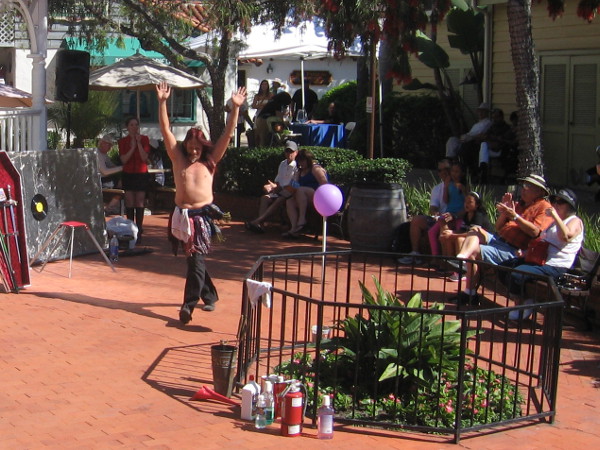
I could see his hands visibly trembling while he tried for a few seconds to piece two slender hollow rods together, which formed the shaft of the arrow. He gradually composed himself. He lubricated the long shaft, which was possibly two to three feet long, lit the pointed end, then proceeded to swallow the unique arrow. He bent over, and after attaching the arrow end to a slingshot-like device, shot the arrow out of his throat and through the air! He missed the balloon in the bullseye, perhaps 10 or 15 feet away, but not by much!
I know that street performers–and circus and carnival sideshow performers–have a difficult profession and can endure a lot of hardship. But what I witnessed this afternoon was truly heart-rending and impressive. It seemed no amount of pain could slow down Murrugun’s showmanship and passion for his art.
Murrugun the Mystic noted that because Ringling Bros. and Barnum & Bailey Circus have decided to eliminate elephants from their show (the news just out), perhaps there’s a chance the circus sideshow will make a comeback. That is Murrugun’s wish and personal mission. Can you help make that happen? Here’s his Facebook page.
Thanks, Murrugun, for privileging me to be a tiny part of busker history! Good luck!
Murrugun the Mystic makes his grand entrance near Seaport Village’s gazebo in the Plaza East.Fire eating preceded balancing on a sword, being crushed on a bed of nails, enduring knives of death, and shooting a flaming arrow from his throat!
…
To enjoy future posts, you can “like” Cool San Diego Sights on Facebook or follow me on Twitter.











































 Cool San Diego Sights!