Legends on the streets of San Diego’s Little Italy.

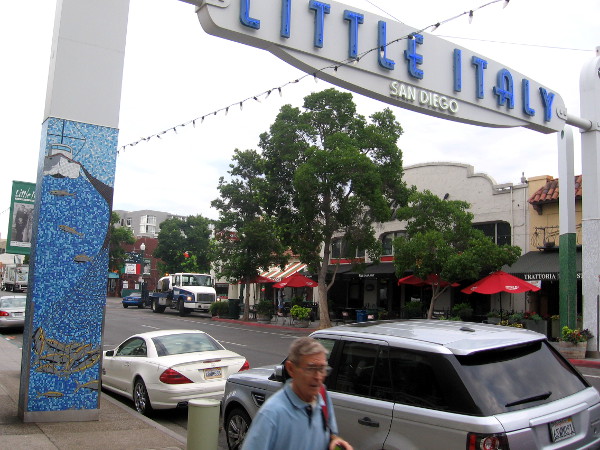
Pedestrian passes Little Italy sign on India Street in San Diego.

Today, if you were to walk through downtown San Diego’s historic Little Italy neighborhood, you’d probably see a number of very interesting street banners and plaques. These commemorate the Legends of Little Italy.

Early one morning while I walked to a nearby trolley station, I took a few quick photographs along India Street. You might enjoy looking at them. I transcribed much of what appears on the plaques.

Plaque explains the history of the Little Italy Landmark Sign.

The Little Italy Landmark Sign was dedicated and lit at the 7th Annual Little Italy Festa on the evening of October 8, 2000. The landmark sign was constructed as a tribute to this immigrant neighborhood which, until the late 1960s, was the hub of the world’s tuna fishing and canning industry. The nautical theme can be seen in the portholes at the top of the pillars, the blue neon of the lettering and the cable span which holds up the sign. The mosaic tile work on each side of the street tells how this immigrant community is historically tied to the bay, the church and the Italian homeland. This sign is a testament to the preservation of Little Italy’s cultural heritage and to the ongoing revitalization of this dynamic urban ethnic neighborhood in Downtown San Diego.

Mosaic tiles show the community's ties to Italy and traditions.
Mosaic tiles show the community’s ties to Italy and traditions.
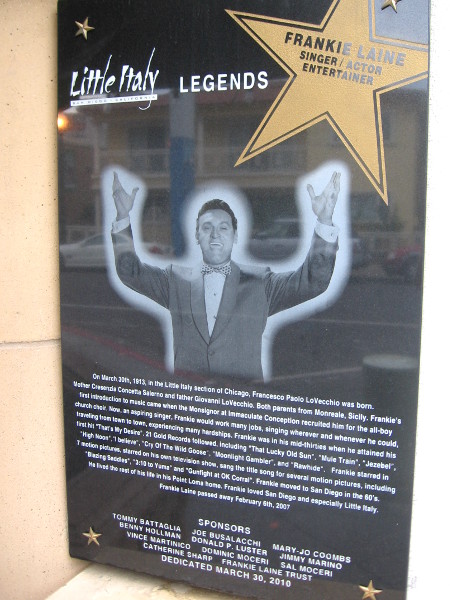
Singing and acting legend Frankie Laine lived in San Diego.

On March 30th, 1913, in the Little Italy section of Chicago, Francesco Paolo LoVecchio was born. Mother Cresenzia Concetta Salerno and father Giovanni LoVecchio. Both parents from Monreale, Sicily. Frankie’s first introduction to music came when the Monsignor at Immaculate Conception recruited him for the all-boy church choir. Now, an aspiring singer, Frankie would work many jobs, singing wherever and whenever he could, traveling from town to town, experiencing many hardships. Frankie was in his mid-thirties when he attained his first hit “That’s My Desire”. 21 Gold Records followed, including “The Lucky Old Sun”, “Mule Train”, “Jezebel”, “High Noon”, “I believe”, “Cry of the Wild Goose”, “Moonlight Gambler”, and “Rawhide”. Frankie starred in 7 motion pictures, starred in his own television show, sang the title song for several motion pictures, including “Blazing Saddles”, “3:10 to Yuma” and “Gunfight at OK Corral”. Frankie moved to San Diego in the 60’s. He lived the rest of his life in his Point Loma home. Frankie loved San Diego and especially Little Italy. Frankie Laine passed away February 6th, 2007.

Tony and Rose Bernadino used to live on Date Street.
Tony Bernardini was an Italian immigrant who settled in San Diego.

Tony Bernardini left his native Bari, Italy to sail to America in 1907. He came with little money, but his heart was full of hope and enthusiasm for the opportunities that awaited him in his New World. Passing through Ellis Island, he quickly made his way to San Diego, where he found a climate and a neighborhood that reminded him of the place he had left. Tony took a job with the San Diego Electric Railway Company, maintaining the tracks for San Diego’s extensive streetcar lines. He worked hard, saved his money, and sent for his future wife, Rosa Monteleone, in 1911.

Tony and Rosa married shortly after her arrival in San Diego. They went on to have seven children; Clara, Fred, Lily, Vito, Matha, Nick, and Angelina. With hard work, Tony was able to bring several other members of their families to America to join them. In the early 1930’s, he got an opportunity to buy the building located on this corner from an acquaintance, who offered to finance the transaction for him. He opened the Civic Center Liquor House. Rosa and all of the children helped him run the business. During the first seven years he ran the business, he was only able to pay the interest on the Property’s note. But with the Declaration of World War II in 1941, San Diego’s economy heated up dramatically. Despite the fact that all three of their sons joined the Army to fight in the War, Tony, Rosa, and their daughters continued to work in the business, and by the end of the War, Tony had managed to pay off the note completely. he had achieved the American dream!
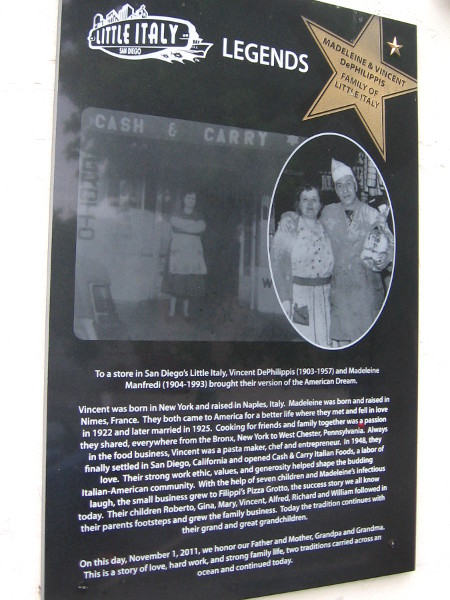
The story of love, hard work, and strong family life.

To a store in San Diego’s Little Italy, Vincent DePhilippis (1903-1957) and Madeleine Manfredi (1904-1993) brought their version of the American Dream.

Vincent was born in New York and raised in Naples, Italy. Madeleine was born and raised in Nimes, France. They both came to America for a better life where they met and fell in love in 1922 and later married in 1925. Cooking for friends and family together was a passion they shared, everywhere from the Bronx, New York to West Chester, Pennsylvania. Always in the food business, Vincent was a pasta maker, chef and entrepreneur. In 1948, they finally settled in San Diego, California and opened Cash & Carry Italian Foods, a labor of love. Their strong work ethic, values, and generosity helped shape the budding Italian-American community. With the help of seven children and Madeleine’s infectious laugh, the small business grew to Filippi’s Pizza Grotto, the success story we all know today. Their children Roberto, Gina, Mary, Vincent, Alfred, Richard and William followed in their parents footsteps and grew the family business. Today the tradition continues with their grand and great grandchildren.

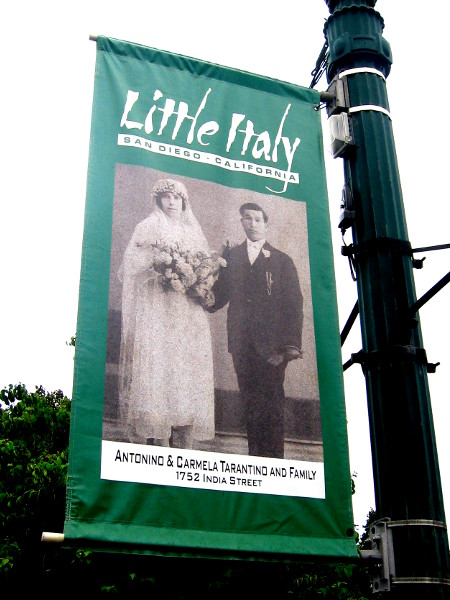
Banner on street lamp shows Tarantino family.
Past lives become legends in the annals of Little Italy's history.
Past lives become legends in the annals of Little Italy’s history.
Morning coffee and companionship on a Little Italy sidewalk.

UPDATE!

During another walk through Little Italy I discovered another fascinating plaque:

Plaque shows Rose and Salvatore Cresci, Family of Little Italy.
The story of Rose and Salvatore
The story of Rose and Salvatore “Sal” Cresci, Little Italy Legends. (Click photo to enlarge for easy reading.)

UPDATE!

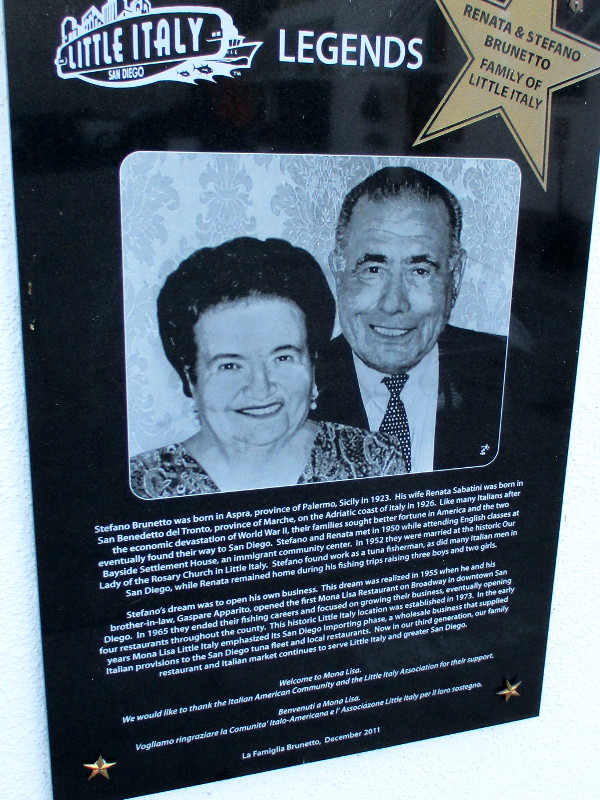
Here come two more signs that I found! The first concerns Pietro and Cristina Busalacchi, Italian immigrants who established restaurants in San Diego. The second concerns Renata and Stefano Brunetto. Stefano, a tuna fisherman, opened Mona Lisa Restaurant with his brother-in-law Gaspare Apparito.

IMG_8680z

IMG_8680z

IMG_8689z

IMG_8689z

To enjoy future posts, you can “like” Cool San Diego Sights on Facebook, or follow me on Twitter.

African-Americans helped to build San Diego.

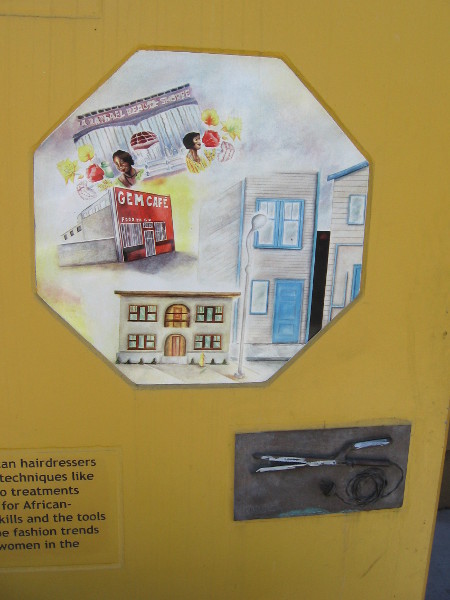
Public art at Lillian Place shows African-American history in San Diego.
Public art at Lillian Place shows many facets of African-American history in San Diego.

Should you walk through downtown San Diego’s East Village in the vicinity of 14th and J Streets, you might be attracted to several large yellow panels along the sidewalk. This proud display of public art at Lillian Place was raised to commemorate how African-Americans have played an important role in building our diverse and beautiful city.

The artwork, created by Jihmye Collins and Nina Karavasiles, is titled “A San Diego African-American Legacy” and represents African-American contributions to San Diego’s development and rich history.

Cast metal parachute recalls the Top Black Owned Business in the United States.
Cast metal parachute recalls 1943’s Top Black Owned Business in the United States.

Here’s a large portion of the text contained on the panels:

People of African decent were present in San Diego as early as the establishment of Presidio de San Diego in 1769, and played a role in settling the area now known as Old Town.

In the later decades of the 1800s, African-Americans began emigrating to Horton New Town, San Diego’s present-day downtown, relocating primarily from the southern US.

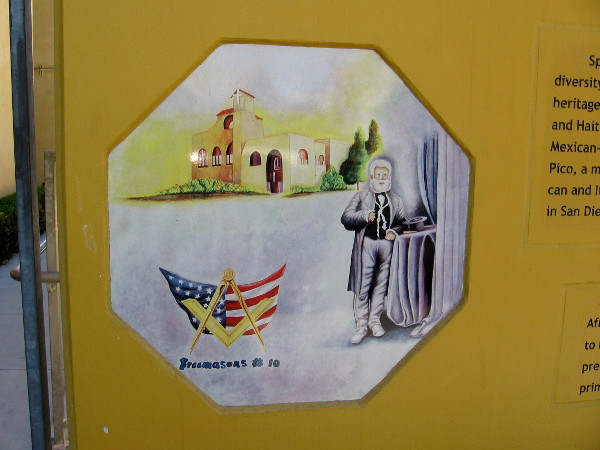
Religious institutions were, and continue to be a cornerstone of the African-American community. In 1887, the African Methodist Episcopal Church became the first organized African-American congregation in downtown San Diego, followed soon after by Calvary Baptist and Bethel AME. At the same time, African-American social and civic groups like the Violet Club, Acme Social Club and Fidelity Lodge #10 of the Prince Hall Masons became important organizations in the community.

San Diego was once the center of a thriving jazz, blues, and gospel music scene. The Creole Palace at the Douglas Hotel and the Crossroads Jazz Club were just two of the spots that hosted local and national talent playing to mixed audiences.

African-Americans have always played a major role in amateur and professional sports in San Diego. Local favorite Archie Moore fought at the city Coliseum as did other champions. San Diegan John Ritchey became the first black player in the Pacific Coast League when he was signed as a catcher to the then minor league padres in 1948.

The entrepreneurial spirit of the African-American community flourished through the 20th century with doctor’s offices, hotels and clubs, barbers and beauty parlors, cafes and restaurants, ice cream parlors, laundries, jewelers and pool halls that served the African American community as well as other San Diegans.

During World War II, African-American stunt pilot and businessman Howard Skippy Smith owned the Pacific parachute Company factory on 8th Avenue. Named the Top Black Owned Business in the United States in 1943, Mr. Smith operated an integrated work place that reflected the ethnic and racial diversity of wartime San Diego.

On this block of J Street, African-American Lillian Grant owned multiple buildings, offering rooms to an ethnically mixed clientele during the time of segregation. Next door at the corner of 14th and J Streets sat the Vine/Carter Hotels. Known as the colored hotels, it was owned and operated by African-Americans Alonzo and Katie Carter from the 1930s to the 1950s.

African-Americans helped build religious institutions and community organizations.
African-Americans helped to build religious institutions and community organizations.
Exact duplicate of baseball catcher's mitt from the 1940's made of cast metal.
Exact duplicate of baseball catcher’s mitt from the 1940’s made of cast metal.
Artwork shows San Diego an important center of jazz, blues, and gospel music.
Artwork shows San Diego as an important center of jazz, blues, and gospel music. Count Basie and Billie Holiday both played at the Creole Palace.
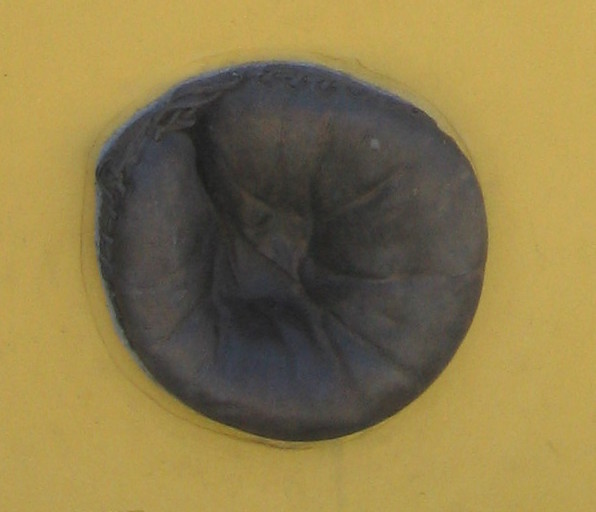
Hair curling iron symbolic of thriving African-American entrepreneurs.
Hair curling iron is a symbol of many thriving African-American entrepreneurs.

To enjoy future posts, you can “like” Cool San Diego Sights on Facebook, or follow me on Twitter.
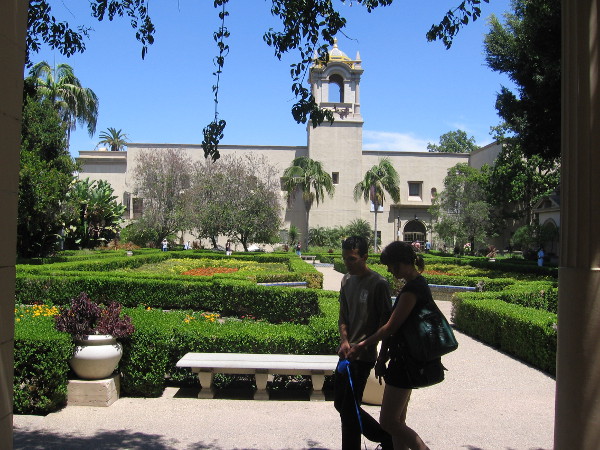
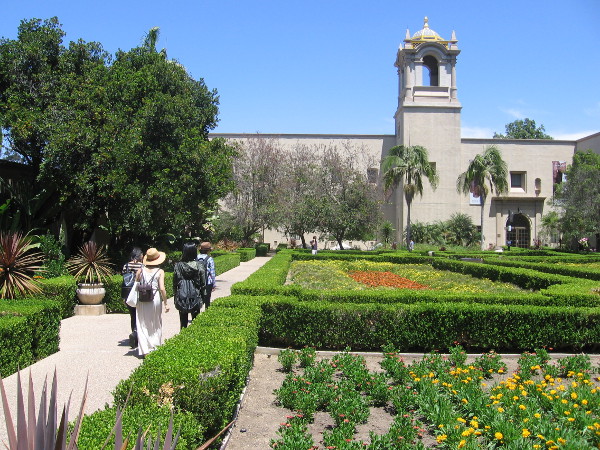
Sunlit beauty in Balboa Park’s Alcazar Garden.

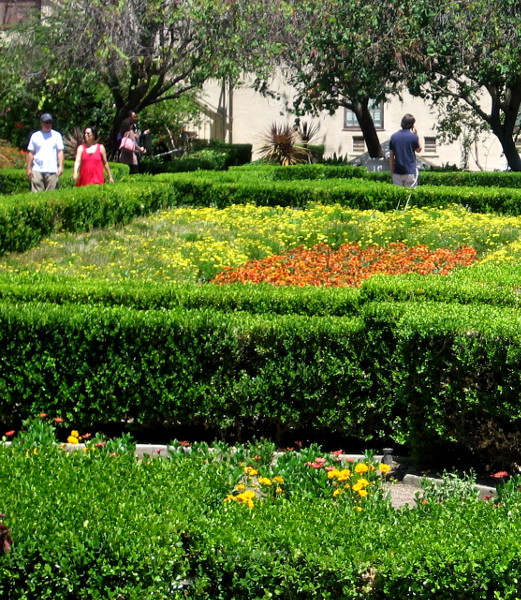
Visitors walk through Balboa Park's Alcazar Garden on a summer day.
Visitors walk through Balboa Park’s Alcazar Garden on a summer day.

There are many gardens in San Diego’s vast Balboa Park. One of the best known–and one of my favorites–is the Alcazar Garden.

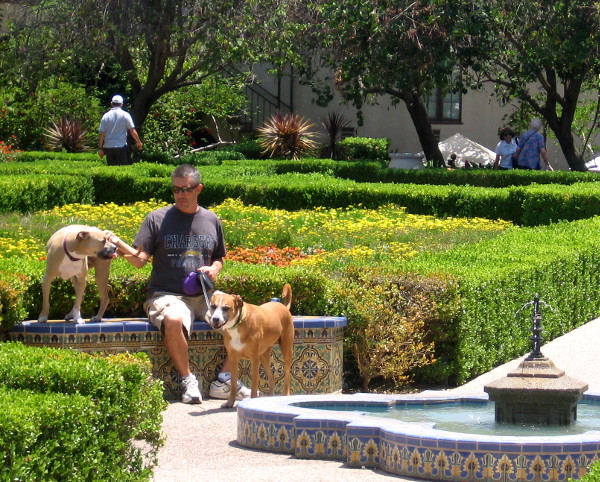
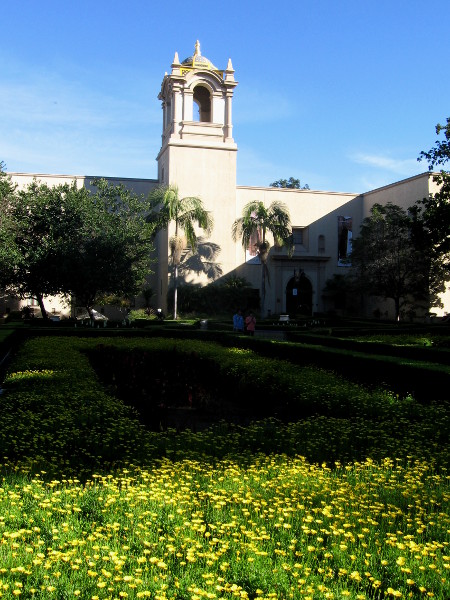
Located on the south side of El Prado between the Museum of Man and the Mingei Museum, a visit to the spacious garden is like walking through an elegant painting of towers, arches and sunlit flowers. Thousands of blooming annuals, long green hedges and colorfully tiled fountains make this the perfect place to slow down and absorb the quiet beauty. A shady pergola is ideal for rest and reflection. The Alcazar Garden is so named because it was created to resemble the formal gardens of Alcazar Castle in Seville, Spain.

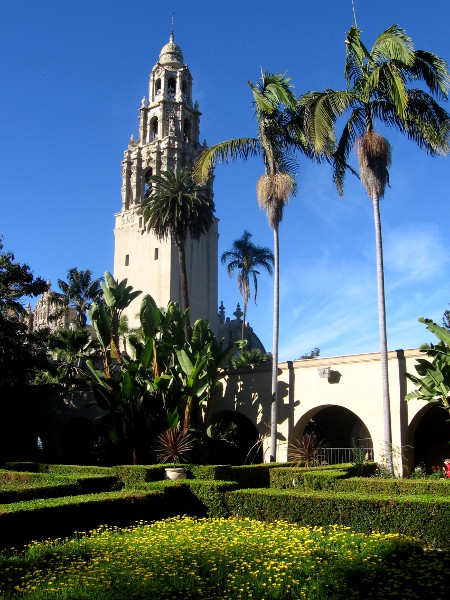
Yellow blooms beneath an elegant museum tower.
Yellow blooms beneath museum tower.  The Spanish Colonial architecture adds elegance.
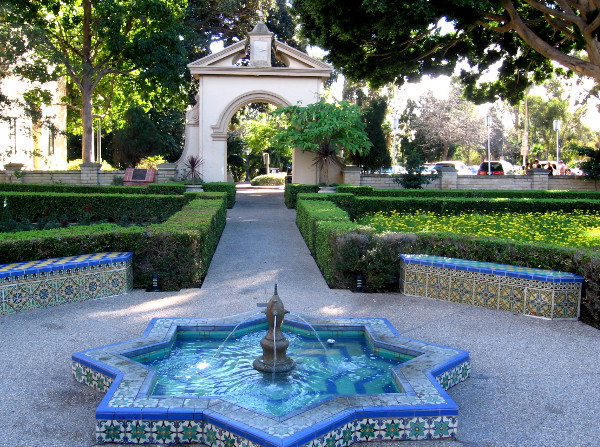
Moorish tiles on a fountain, colorful benches and an archway.
The California Tower and palm trees rise into blue sky.
The formal garden can sometimes appear a bit ragged.
The garden is not easily seen from El Prado, but many people find and enjoy it.
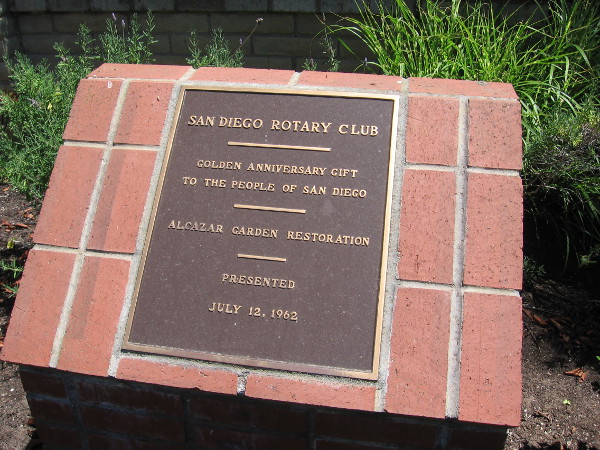
Rotary Club plaque reveals that the garden underwent a restoration.
A picture I took while sitting in the cool, shady pergola at the west end.

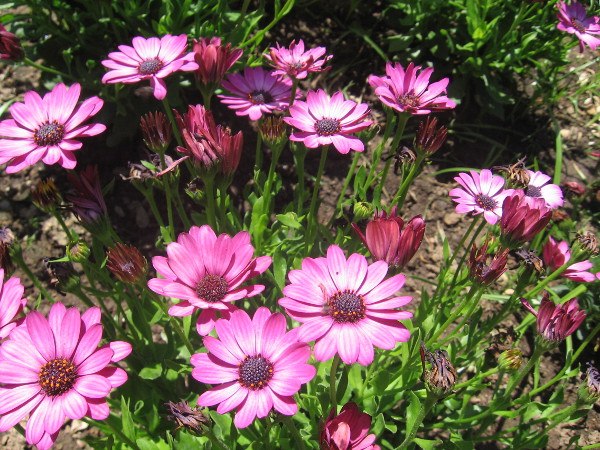
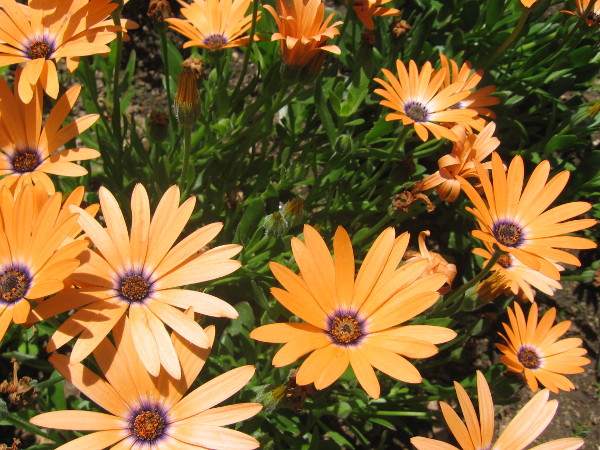
Here are two pics I took the following spring…

Beautiful flowers in Balboa Park.
Sunshine sprouting from the Earth.

To enjoy future posts, you can “like” Cool San Diego Sights on Facebook, or follow me on Twitter.
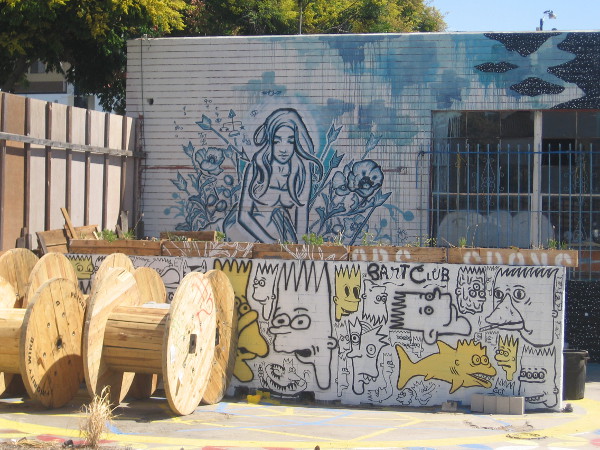
More funny Bart Club street art found at SILO.

More Bart Club street art shows up at SILO in Makers Quarter.

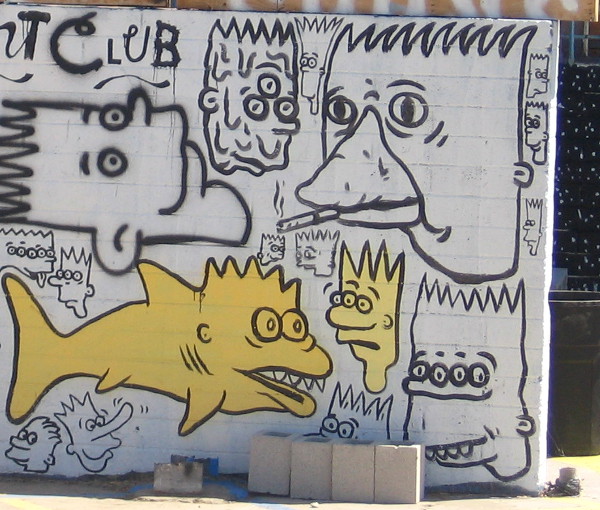
Today I randomly walked past SILO in Makers Quarter in East Village. This downtown San Diego special events venue is chock full of super cool street art murals, as you might have seen in this blog post. Well, I was just walking along, peering through the fence, and… WHAM! More crazy Bart Club street art! It seems to have popped up in various different locations!

Perhaps you’ll recall seeing my first Bart Club discovery here.

Crazy, creative, funny drawings of Bart Simpson on a wall.
Crazy, creative, funny renditions of Bart Simpson on a wall.
Bart seems to transform into anything the human mind can imagine!
Bart Simpson’s head seems to transform into anything the human mind can imagine!
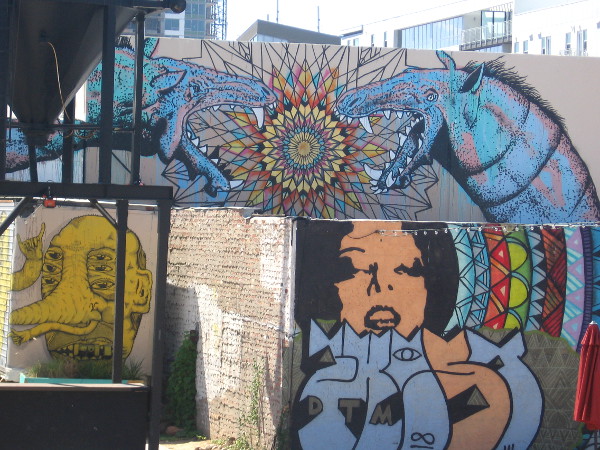
SILO in San Diego's East Village is bursting with colorful street art.
SILO in San Diego’s East Village is bursting with awesome, colorful street art.

To enjoy future posts, you can “like” Cool San Diego Sights on Facebook, or follow me on Twitter.

Heroes at San Diego 9/11 Memorial Stair Climb.

San Diego 911 Memorial Stair Climb sign and building.
San Diego 9/11 Memorial Stair Climb sign and event building.

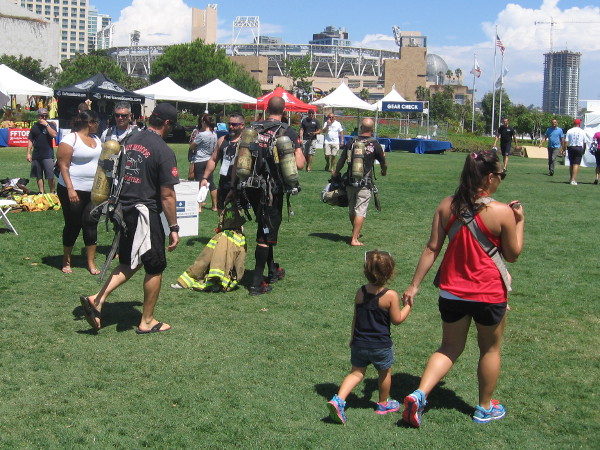
I saw on the news this morning that a special event was being held to remember the firemen and other heroes who responded with selfless courage during the 9/11 attack, thirteen years ago. Firefighters, wearing full gear, would climb ninety stories of stairs, simulating a climb of the World Trade Center towers shortly after they were struck.

My meandering Sunday walk around downtown started late, and by the time I was near the Convention Center, it was early afternoon. But I figured I’d swing around to the tall Hilton hotel to see if the event was still underway.

The stair climbing was over. But many firefighters and emergency responders from San Diego and the surrounding region were still in the park in front of the thirty story Hilton, enjoying food and fellowship.

I personally can’t imagine climbing the equivalent of three tall Hilton hotel buildings wearing all that awkward, extremely heavy gear! These heroes of today, with all of their might, honored the memory of those who endangered their own lives trying to save others.

Firefighters on anniversary of 911 passed under American flag.
Firefighters on anniversary of 9/11 passed under an American flag.
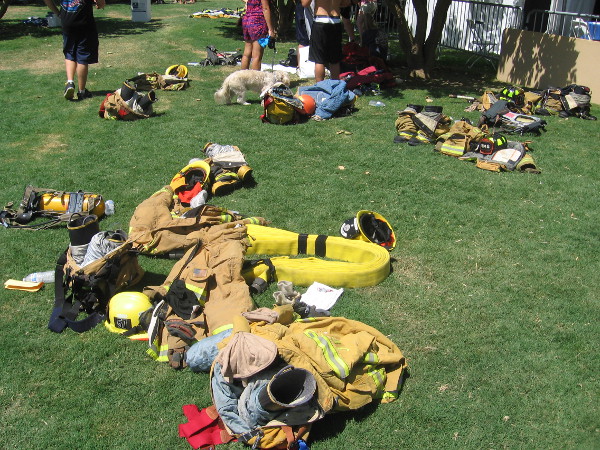
Heavy firefighting gear flung off after a very difficult climb.
Emergency responders and the public were invited to the meaningful event.
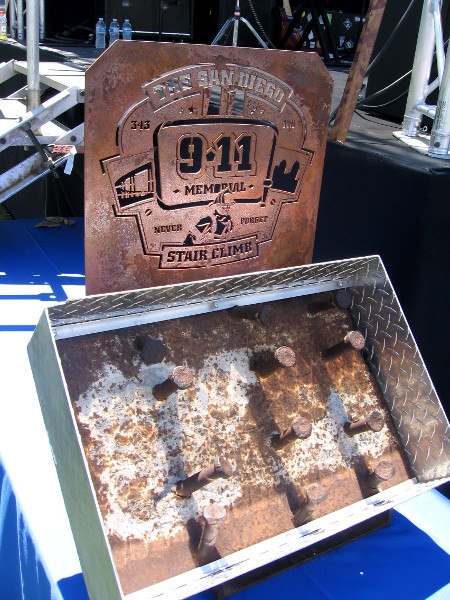
A piece of the fallen World Trade Center on display by stage.
Some firemen head home with gear after the Sunday morning event.
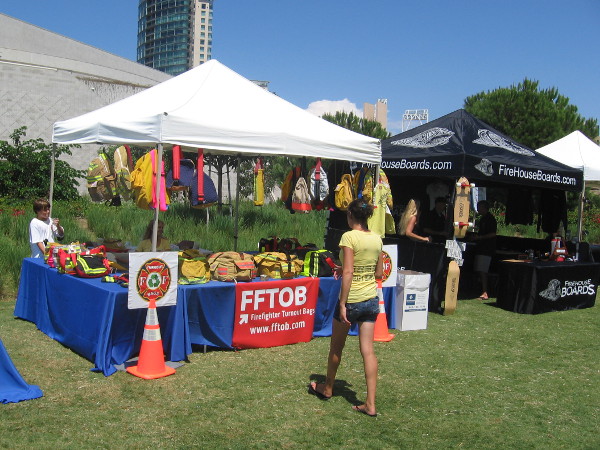
Used firefighter turnout bags and skateboards sold in front of Hilton.
Used firefighter turnout bags and unique skateboards sold in front of Hilton.
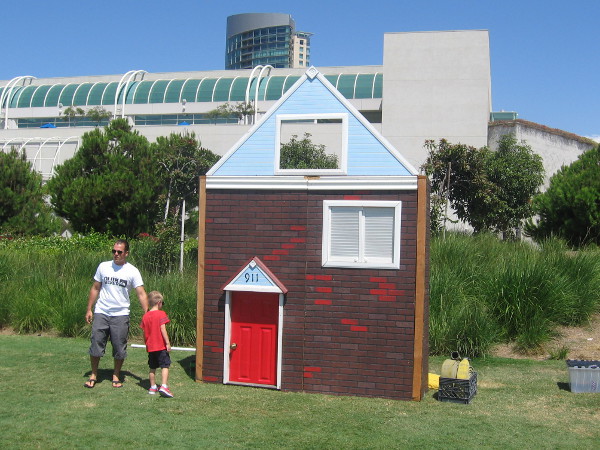
This little house simulated fire fighting for children. They saved a teddy bear!
This little house simulated fire fighting for small children. They saved a teddy bear!
The selfless courage of 911 firefighters is honored.
A flag, a firetruck and many heroes.  The selfless courage of 9/11 firefighters is honored.

To enjoy future posts, you can “like” Cool San Diego Sights on Facebook, or follow me on Twitter.
Sculpture of Bum, San Diego’s famous town dog.

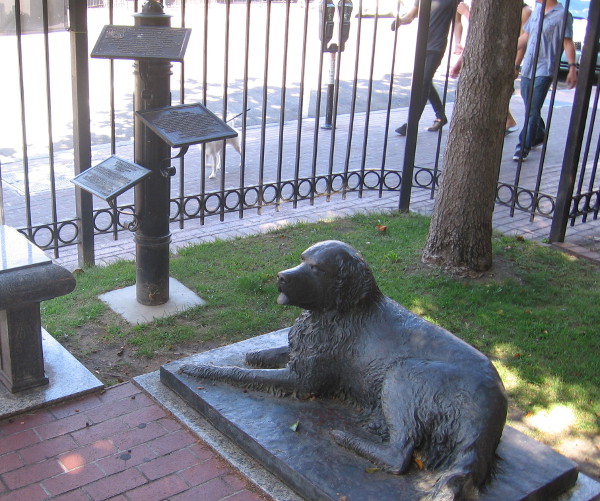
Sculpture of Bum, San Diego's town dog, in a grassy Gaslamp pocket park.
Sculpture of Bum, San Diego’s town dog, in a grassy Gaslamp pocket park.

One of San Diego’s most famous celebrities had four legs and a tail. His name was Bum.

Bum the dog made San Diego his home in the late 19th century. He arrived in town in 1886 by stowing away on the Santa Rosa, a steamship from San Francisco. Soon thereafter, he became the well known town mascot.

Everyone was proud to be Bum’s pal. San Diegans young and old gladly provided food, friendship and their front porches for his sleeping place. Bum helped firemen hurry to fires, led parades, and protected the town’s children. We know this today because James Edward Friend, a journalist, wrote about Bum’s life and famous exploits.

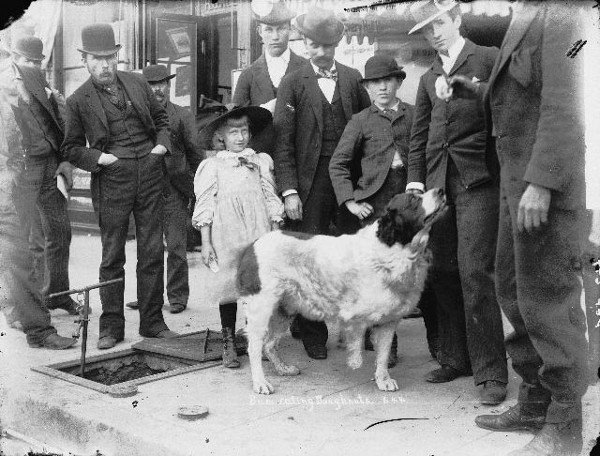
Bum was so popular that one local restaurant put up a sign that read Bum Eats Here. When the city of San Diego passed a law requiring dog licenses, Bum’s picture was featured on the license.

Bum was a free spirit. Nobody owned him. But he had a claim on everybody’s heart. He was given free fare on trains, whenever he decided to come or go. He was given special medical attention when one foreleg became badly mangled in a train accident. He was even given a home at the County Hospital by the Board of Supervisors when his arthritis made it hard to get around. Bum was buried on the hospital grounds after his death in 1898.

Bum’s life has come to represent a small chapter of San Diego’s history, back when today’s downtown competed with Old Town and was called New Town. A bronze sculpture of the famous town dog now occupies a shady pocket park in downtown’s Gaslamp District. You can find the exact likeness of the St. Bernard-Spaniel mix lying on the grass not far from the William Heath Davis House, which is a small museum and the oldest wooden structure in the Gaslamp.

Plaque remembers history of Bum in early San Diego and his legendary exploits.

The nearby plaque reads:

Bum

San Diego’s Official Town Dog

Died November 10, 1898 – Aged 12 Years

Loved by everyone – owned by no one. His name suited him because he arrived as a town stowaway, befriended everyone and “bummed” quality food from the local eateries. As a young dog he survived a scuffle with another dog on the Santa Fe train tracks. Though he lost a foreleg and part of his tail, his spirit was unbroken. He guarded the children, led the parades and fire trucks, and had many adventures. So admired was Bum that the City Council awarded him a lifetime dog license. When he died, children collected pennies for a proper burial.

Bum waits faithfully downtown next to the William Heath Davis House museum.
Historical photograph shows Bum among his many San Diegan human friends.
Greyfriars Bobby, town dog of Edinburgh, Scotland.

Another dog sculpture perched on a nearby bench is of Greyfriars Bobby, the official town dog of Edinburgh, Scotland. The love and loyalty of both legendary dogs is the reason San Diego and Edinburgh are sister cities.

Bum sculpture recalls a wonderful chapter of San Diego's rich history.
Bum sculpture recalls another rich chapter of San Diego’s history.

To enjoy future posts, you can “like” Cool San Diego Sights on Facebook, or follow me on Twitter.
Tuna Harbor Dockside Market grows downtown!

Artistic chalkboard tells curious customers how to prepare yummy rock fish.

I recently heard on the local news that the new Tuna Harbor Dockside Market in downtown San Diego has grown quite a bit since its modest beginning. When I went to the outdoor fish market’s grand opening a month or so ago, there were two tables with freshly caught fish and tanks of crabs and sea urchins. And a really, really long line!

During my walk late this morning I decided to see how things are going. So I headed down to the Embarcadero with my trusty camera. I arrived at the pier just north of Seaport Village about eleven o’clock, and it appeared most of the shopping crowd had already departed. Some of the commercial fishermen were removing unsold seafood from their tables.

The dockside market has certainly expanded! The tents now number half a dozen or so, and stretch in a row a good distance down the pier.

Today’s catch included live sea urchin, rock crab, top snail, whelk snail, rock fish, black cod, thorny head rockfish, sheepshead, yellowfin tuna, albacore tuna, box crab, razor crab, mackerel and perch! I’m told many chefs at local restaurants have become happy customers!

The number of fresh fish tables has more than doubled in one month.
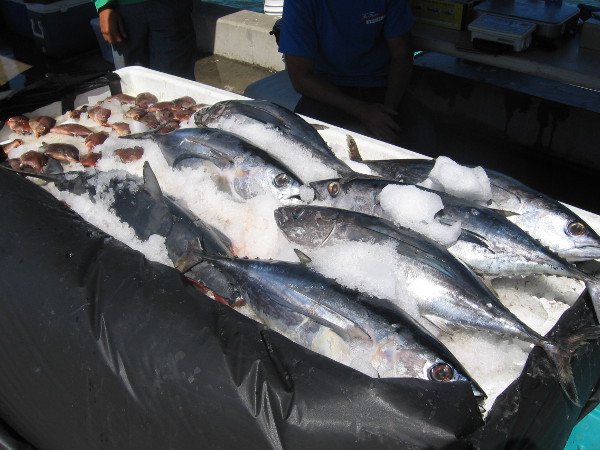
Late in the morning, frozen albacore looked to be a pretty good deal.
Lots of colorful rockfish including starry, Bocaccio and Santa Maria.
Looking toward downtown along the Tuna Harbor Dockside Market this morning.
Fishing boats docked at pier where fresh fish are sold every Saturday.
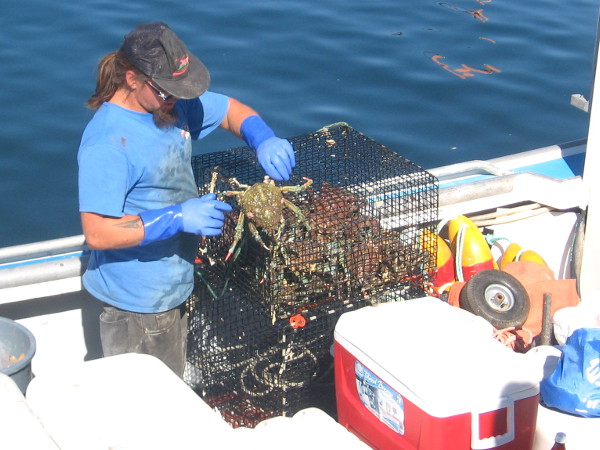
Fisherman checks live crab on top of a trap.
Sign board at foot of pier indicates today's prices.
Sign board at foot of pier indicates today’s prices.

To enjoy future posts, you can “like” Cool San Diego Sights on Facebook, or follow me on Twitter.
Slanting light and color on Tuna Harbor pier.

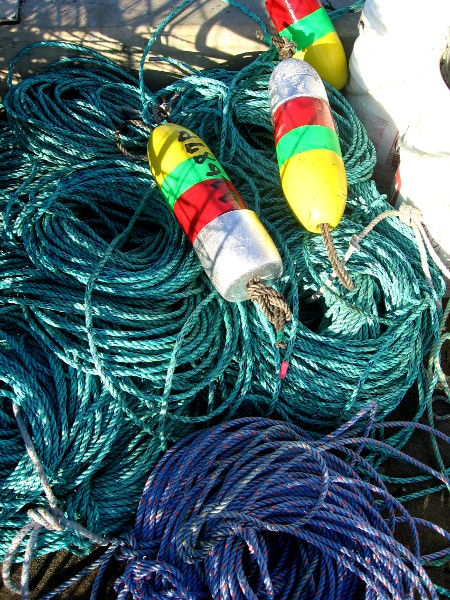
New ropes, floats and lobster traps on San Diego's Tuna Harbor pier.
Bright new ropes and floats among lobster traps on San Diego’s Tuna Harbor pier.

Early this year I published a blog post about delightful heaps of junk on a working pier. As I recall, those heaps of junk were indeed quite delightful.

But they don’t compare with the extraordinarily awesome piles of stuff I saw today!

Very late this afternoon I took a walk along the same G Street Pier, on San Diego’s picturesque Embarcadero.  Just minutes before sunset, the sunlight was beaming almost horizontally across the glittering blue water.

Here are a few things that I saw:

Late afternoon sunlight brings out super bright colors.
Late afternoon sunlight brings out some startling bright colors.

My friend Jeremy reports that lobster season is just a few weeks away, so that probably explains all the brand new, unfaded lobster-catching gear that I saw along much of the pier.

Just a delightful mess of stuff touched by slanting light beside the bay.
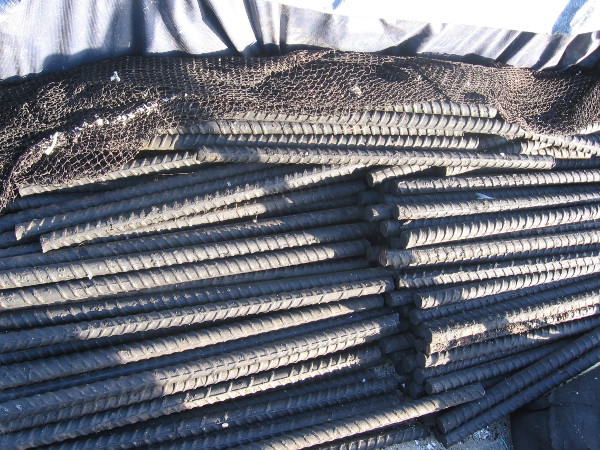
Steel rebar and nets form interesting patterns of light and shadow.
Steel rebar, nets and tarp form interesting patterns of light and shadow.
A pleasing pile of rusted metal frames of some sort.
Huge cylinder used by live bait boats to haul in nets glows with reflected sunlight.
Resting on the pier, a huge cylinder-like drum used by commercial fishing boats to haul in a seine net seems to glow.
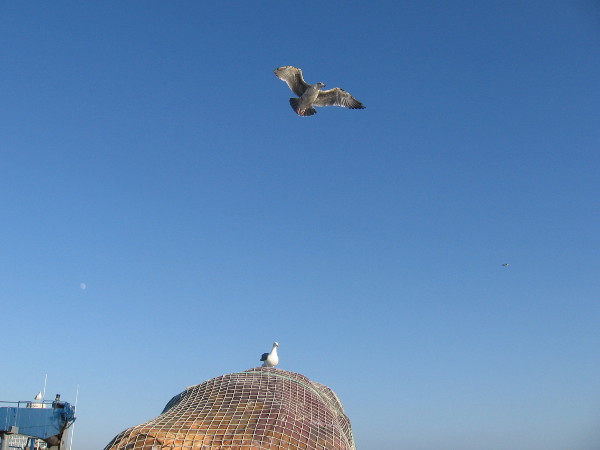
Seagull flies off tall mound of fishing nets while another gull watches.
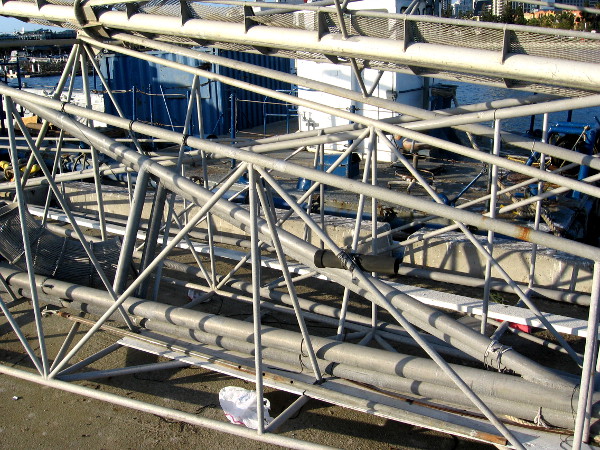
White rope curled softly atop parallel shining rods of metal.
Crazy ship's structure on pier almost conceals docked fishing vessel.
Crazy ship structure lying on the pier almost conceals a fishing vessel docked in Tuna Harbor.
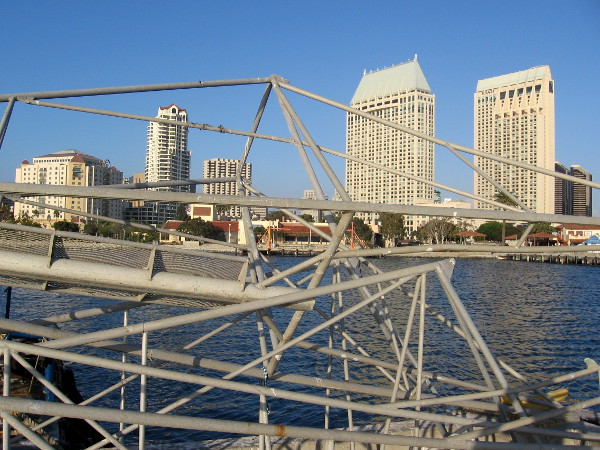
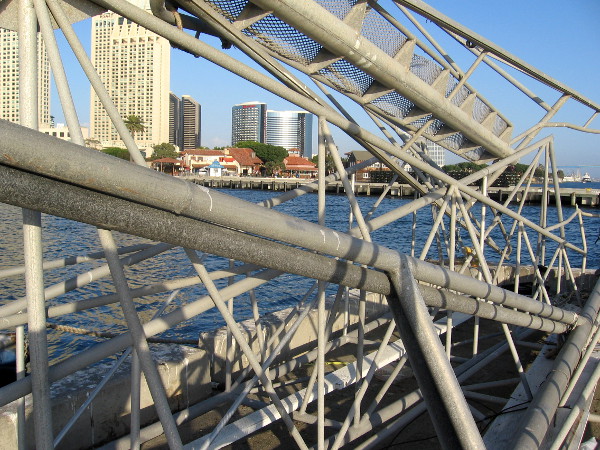
Part of San Diego's skyline rises beyond angular steel jumble.
Part of San Diego’s shining skyline rises beyond angular steel jumble.
Another delightful tangle on the wonderfully untidy pier.
Another delightful visual tangle on the wonderfully untidy pier.
Ghostly white dried material clings to stacked lobster traps.
Purple floats strung on colorful rope across traps on pier.
Sun-touched purple floats strung on cheerful green and yellow rope.
Faded image of a face on a protective tarp smiles upside down.
Faded face on a crumpled protective tarp smiles happily upside down.

To enjoy future posts, you can “like” Cool San Diego Sights on Facebook, or follow me on Twitter.
Street art rough sketches on a downtown bridge.

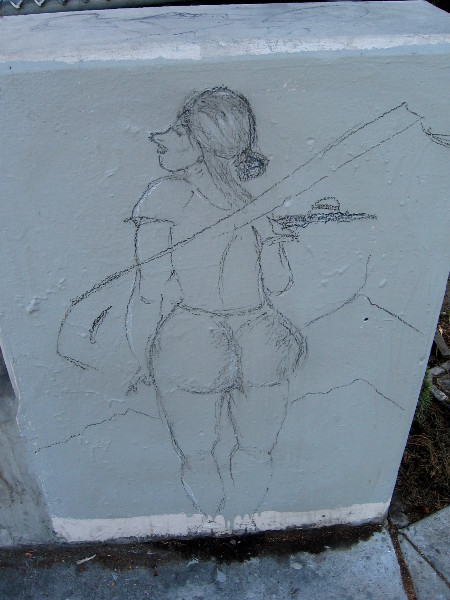
Sketch of female face and buildings on Sixth Avenue bridge above Interstate 5.
Sketch of female face and buildings, on Sixth Avenue bridge above Interstate 5.

Just before sundown yesterday I spotted these small unfinished works of art while I walked over the Sixth Avenue bridge that spans Interstate 5. They were down near the ground right next to the sidewalk, beneath the chain link fence overlooking the freeway.

I wonder who sketched these small scenes. Was it an art student? Are these works in progress? Are they the doodles of some inspired passerby, or a creative homeless person?

Had it not been for my blog and my endless quest for new material, I probably wouldn’t have noticed these faint drawings.

Mysterious unfinished street art of woman holding hamburger.
Stylish figure on couch with vase seems the work of a practiced artist.
A miniature horse runs along a sidewalk in downtown San Diego.

To enjoy future posts, you can “like” Cool San Diego Sights on Facebook, or follow me on Twitter.
Sculpture of Mark Twain reading book on bench.

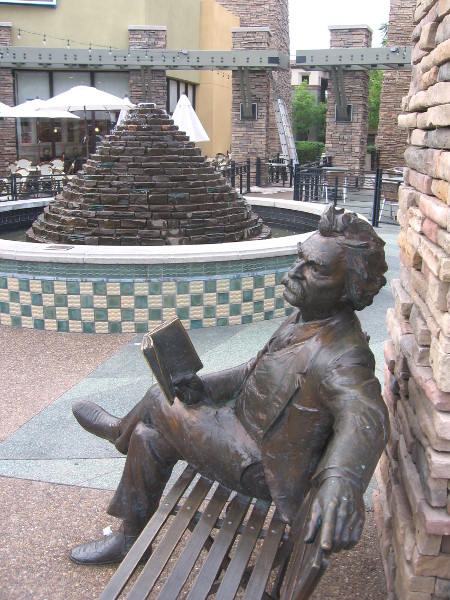
Sculpture of Mark Twain sitting on a bench at Fenton Marketplace in Mission Valley.
Bronze sculpture of Mark Twain sitting on a bench at Fenton Marketplace in Mission Valley.

A very famous author is known to hang out in San Diego.  He’s usually seen just off Friars Road in Mission Valley. He likes to sit on a bench at Fenton Marketplace in front of the International House of Pancakes!

Who is this celebrated writer of American literature? That prolific master of humor and satire, Mark Twain!

According to my research on the internet, Mr. Samuel Clemens seems to get around. He’s been seen in the same pose in numerous cities. That’s because the bronze sculpture, by artist Gary Lee Price, is practically mass-produced!
Samuel Clemens gazes up from his book.
Samuel Clemens gazes up dreamily from his book.
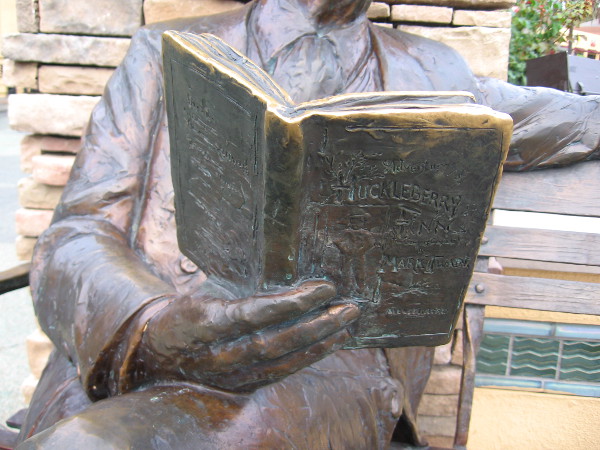
Mark Twain is reading his own classic American novel Adventures of Huckleberry Finn.
Famous author sits on bench by fountain in front of IHOP.
Famous author with biting wit sits on bench by fountain in front of IHOP.

To enjoy future posts, you can “like” Cool San Diego Sights on Facebook, or follow me on Twitter.