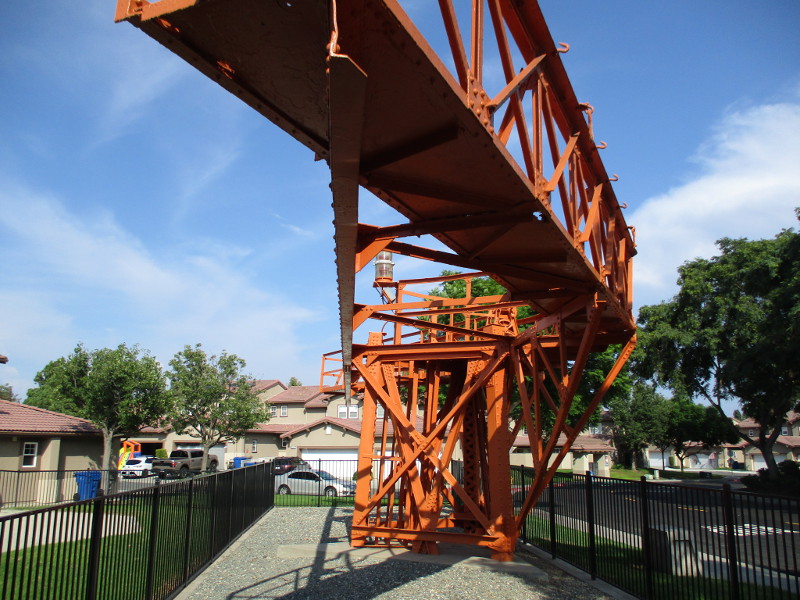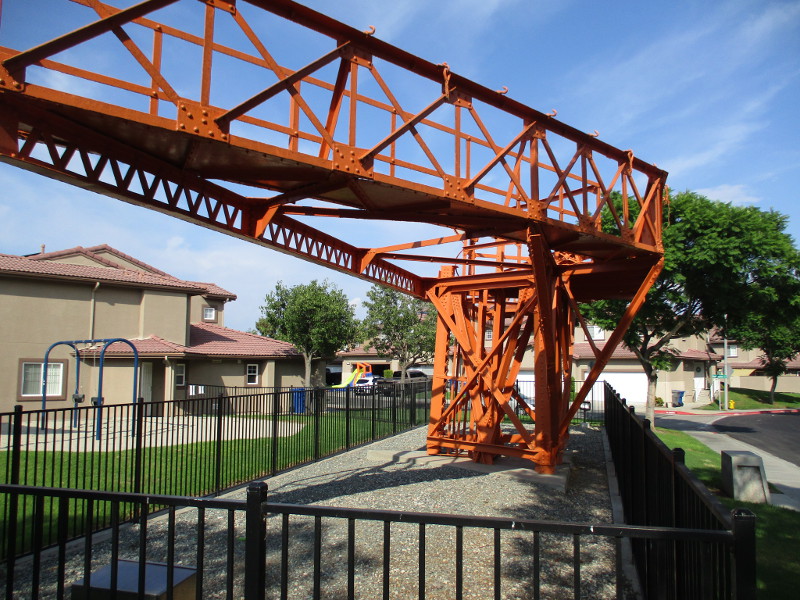
Monument to tallest structures ever built in San Diego.

For over seventy-five years, the tallest structures that have ever been built in San Diego County stood atop a hill in Chollas Heights, four miles east of downtown San Diego. Three enormous towers marked the location of U.S. Naval Radio Transmitting Facility Chollas Heights, which operated the most powerful radio transmitter in North America.

A monument to these historically important towers can be viewed today at Lincoln Military Housing, across the street from the small Chollas Heights Naval Radio Transmitting Facility Museum, near the corner of College Grove Way and Transmitter Road.

The unusual monument is in fact a remnant of the old Navy communication station–an antenna that once was suspended 600 feet above ground.

While many San Diego residents saw three tall radio towers rising just north of Chollas Lake, their historical importance is less widely known. This is where the mainland United States received the first news of the attack on Pearl Harbor on December 7, 1941.

The U.S. Naval Radio Transmitting Facility Chollas Heights was purposely built beside Chollas Lake so that its water might cool the heated transmitter tubes.
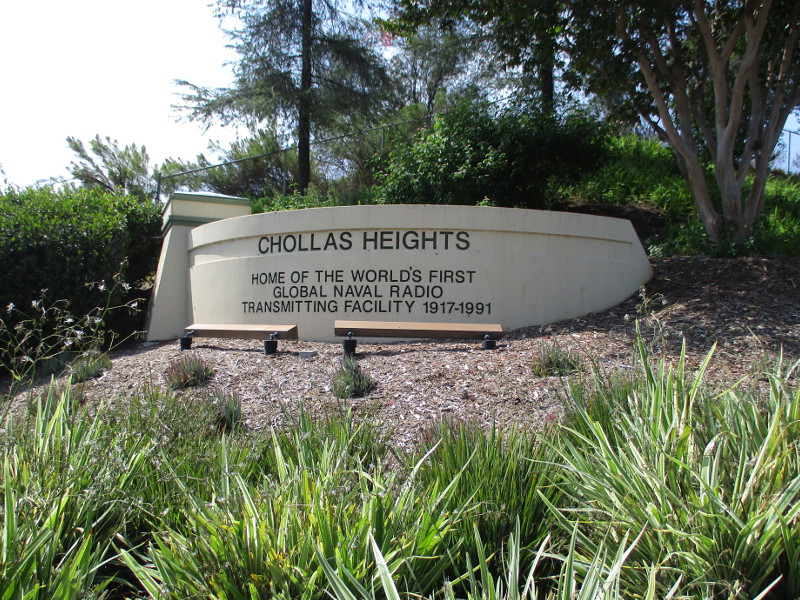
Chollas Heights. Home of the world’s first global naval radio transmitting facility. 1917-1991.

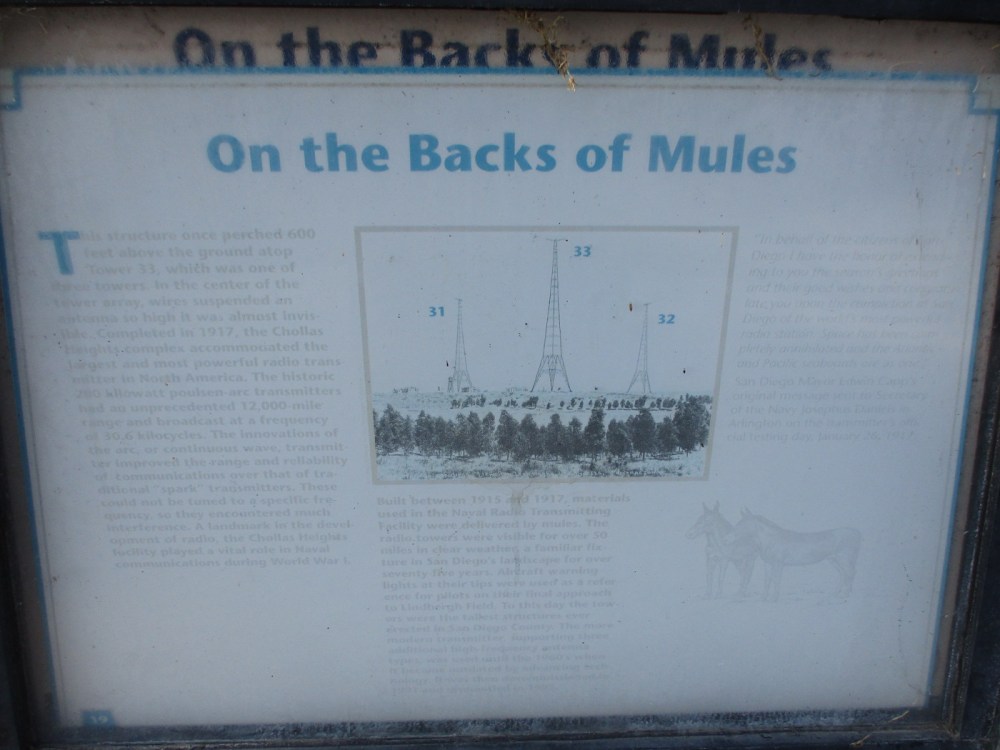
A small, very badly faded sign in front of the old antenna provides interesting information. I’ve transcribed the words:

This structure once perched 600 feet above the ground atop Tower 33, which was one of three towers. In the center of the tower array, wires suspended an antenna so high it was almost invisible. Completed in 1917, the Chollas Heights complex accommodated the largest and most powerful radio transmitter in North America. The historic 200 kilowatt poulsen-arc transmitters had an unprecedented 12,000-mile range and broadcast at a frequency of 30.6 kilocycles. The innovations of the arc, or continuous wave, transmitter improved the range and reliability of communications over that of traditional “spark” transmitters. These could not be tuned to a specific frequency, so they encountered much interference. A landmark in the development of radio, the Chollas Heights facility played a vital role in Naval communications during World War I.

Built between 1915 and 1917, materials used in the Naval Radio Transmitting Facility were delivered by mules. The radio towers were visible for over 50 miles in clear weather, a familiar fixture in San Diego’s landscape for over seventy five years. Aircraft warning lights at their tips were used as a reference for pilots on their final approach to Lindbergh Field. To this day the towers were the tallest structures ever erected in San Diego County. The more modern transmitter, supporting three additional high-frequency antenna types, was used until the 1960’s, when it became outdated by advancing technology. It was then decommissioned in 1991 and dismantled in 1995.

“In behalf of the citizens of San Diego I have the honor of extending to you the season’s greetings and their good wishes and congratulate you upon the completion at San Diego of the world’s most powerful radio station. Space has been completely annihilated and the Atlantic and Pacific seaboards are as one.”

San Diego Mayor Edwin Capp’s original message sent to Secretary of the Navy Josephus Daniels in Arlington on the transmitter’s official testing day, January 26, 1917.
I live in downtown San Diego and love to walk around with my camera! You can follow Cool San Diego Sights via Facebook or Twitter!

You can easily explore Cool San Diego Sights by using the search box on my blog’s sidebar. Or click a tag! There are thousands upon thousands of photos for you to enjoy!

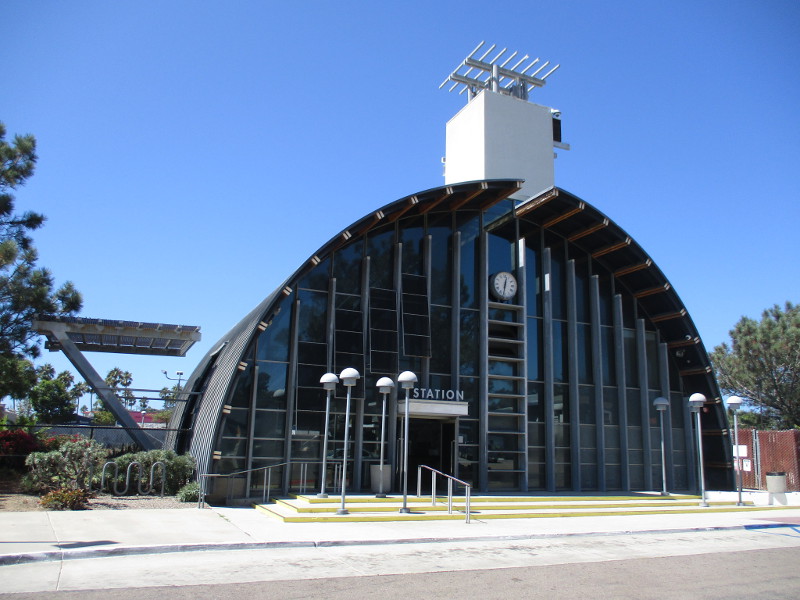
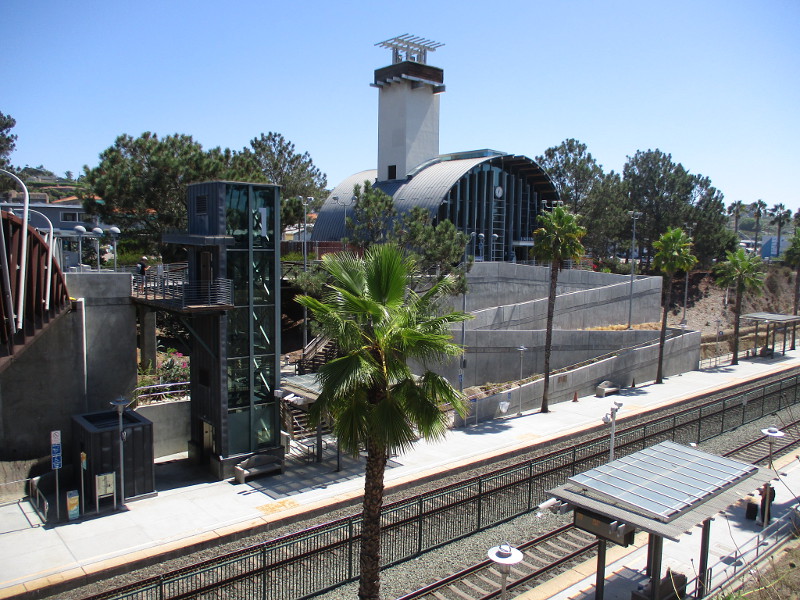
Unique architecture at the Solana Beach train station!

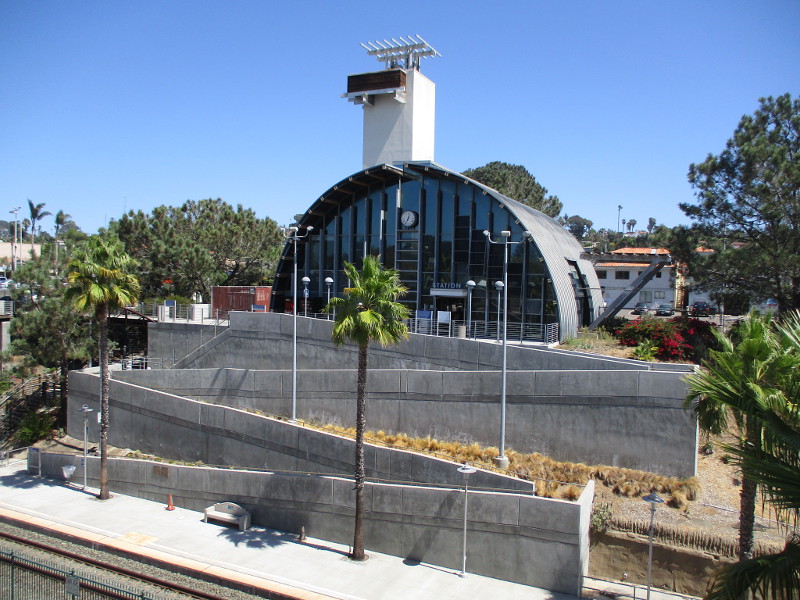
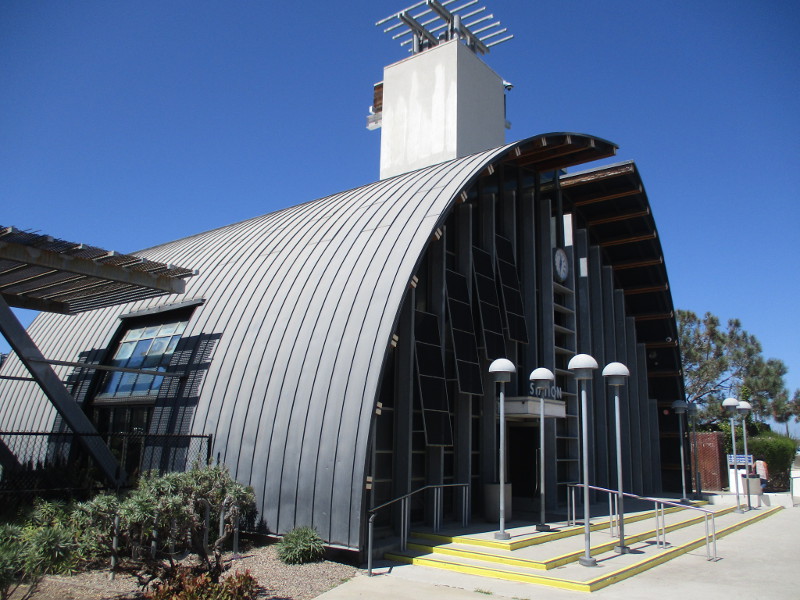
From any angle, the Solana Beach train station appears unusual and interesting. The architecture of this Coaster and Amtrak station makes it one of the most intriguing landmarks in San Diego’s North County.

The Solana Beach station opened in 1994. The building was designed by Rob Wellington Quigley, who is also known for the San Diego Central Library and its iconic dome, The New Children’s Museum, the Ocean Discovery Institute in City Heights, Bayside Fire Station No. 2, and the Beaumont Building in Little Italy. It seems all of his architectural work is just as surprising and visually stimulating.

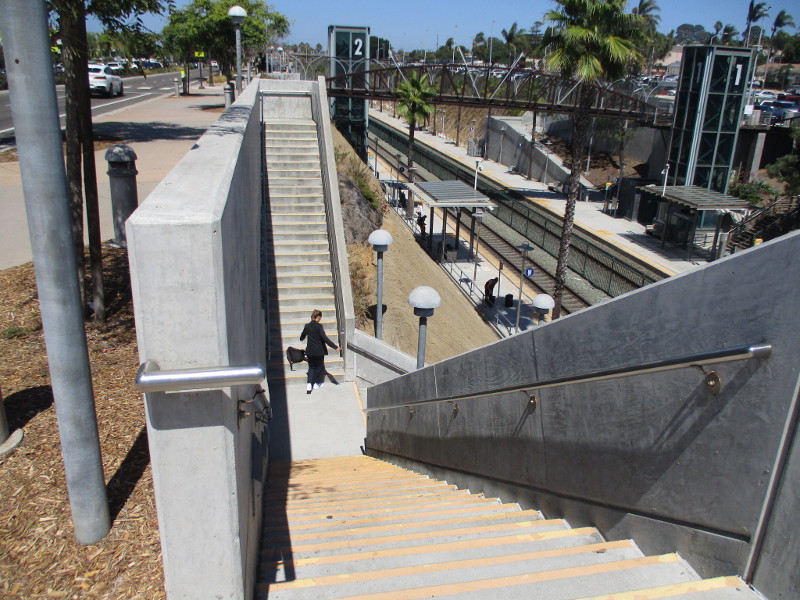
The last time I rode the Coaster to Solana Beach I walked around the train station, taking these photographs. To my eye, there’s something undefinably attractive about the building’s sharp lines and simple curved shape, and its singular symmetry.

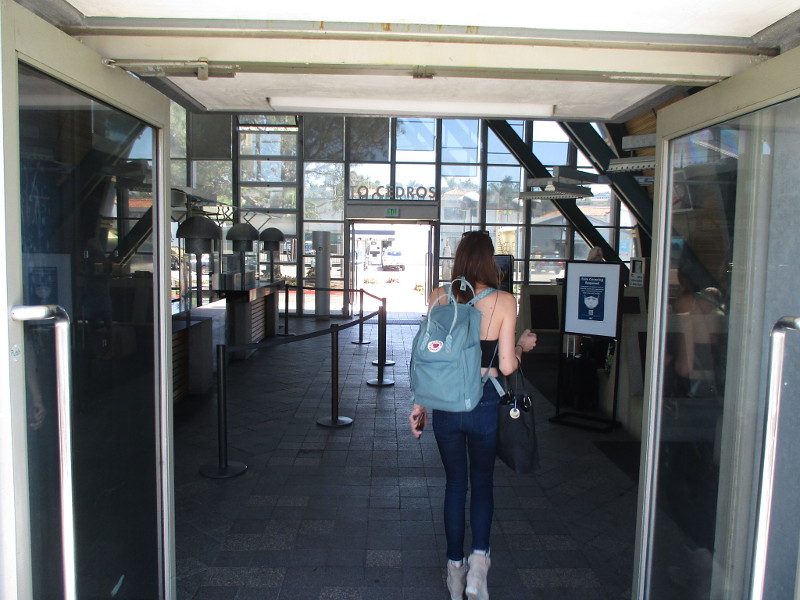
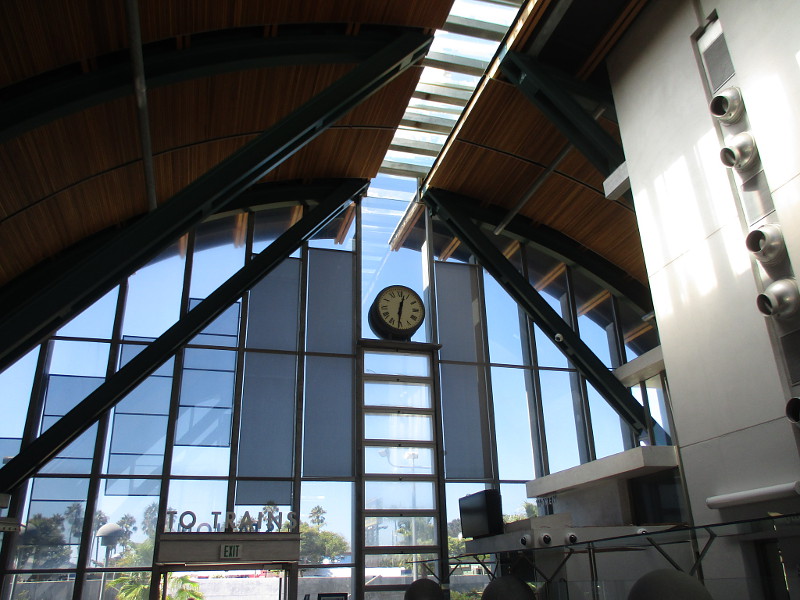
I particularly like the passenger waiting room. Those artfully arranged windows on either side are bright with outdoor sunlight, as if beckoning travelers to venture out into a magical, multi-faceted, welcoming big world.

I live in downtown San Diego and love to walk around with my camera! You can follow Cool San Diego Sights via Facebook or Twitter!

You can easily explore Cool San Diego Sights by using the search box on my blog’s sidebar. Or click a tag! There are thousands upon thousands of photos for you to enjoy!
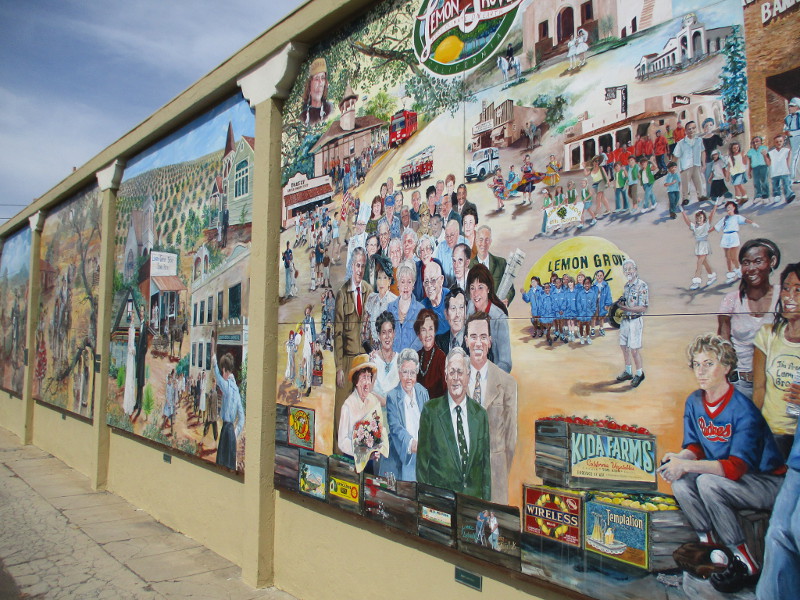
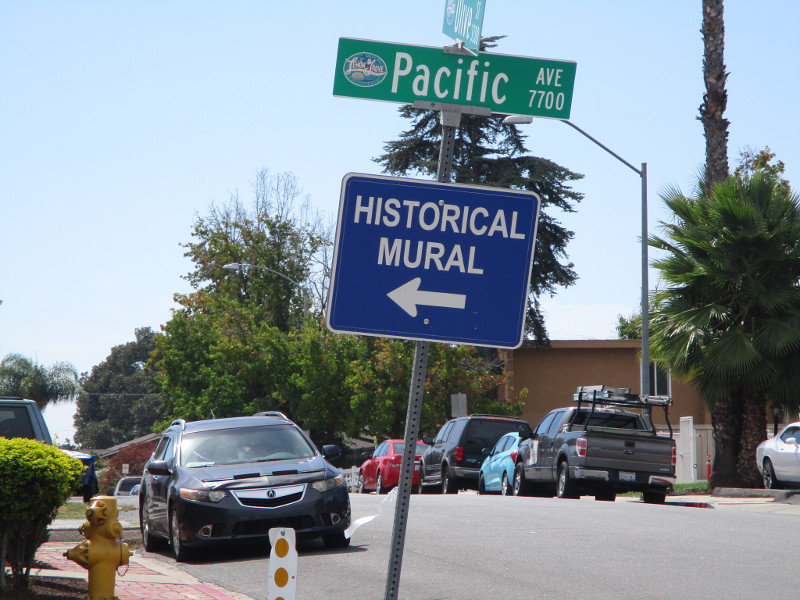
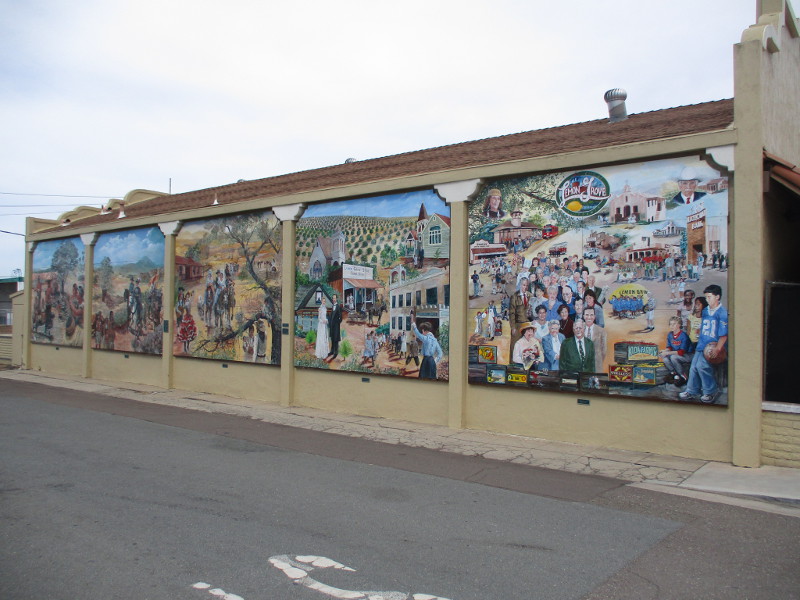
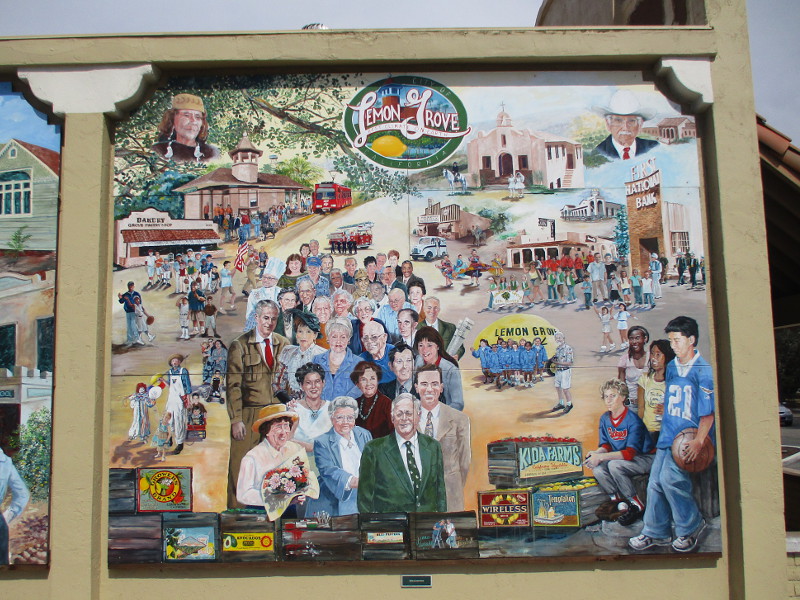
The award-winning Lemon Grove History Mural.

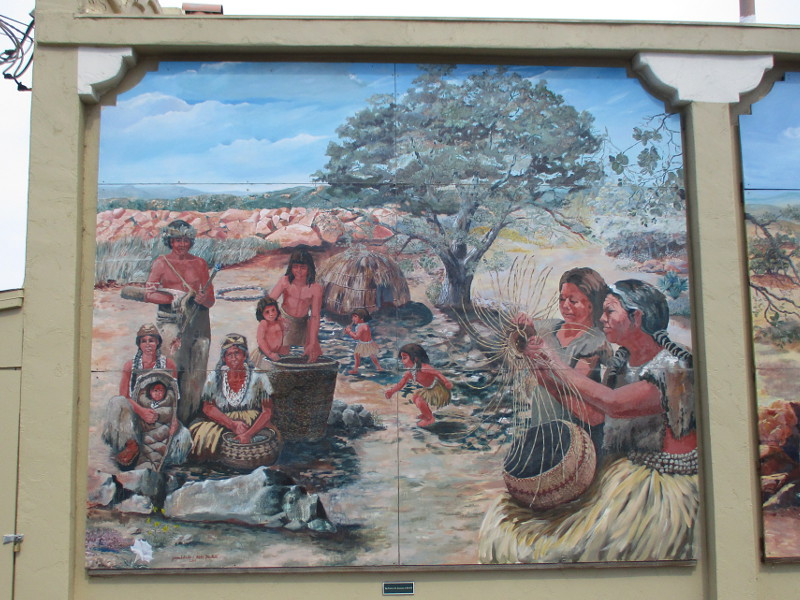
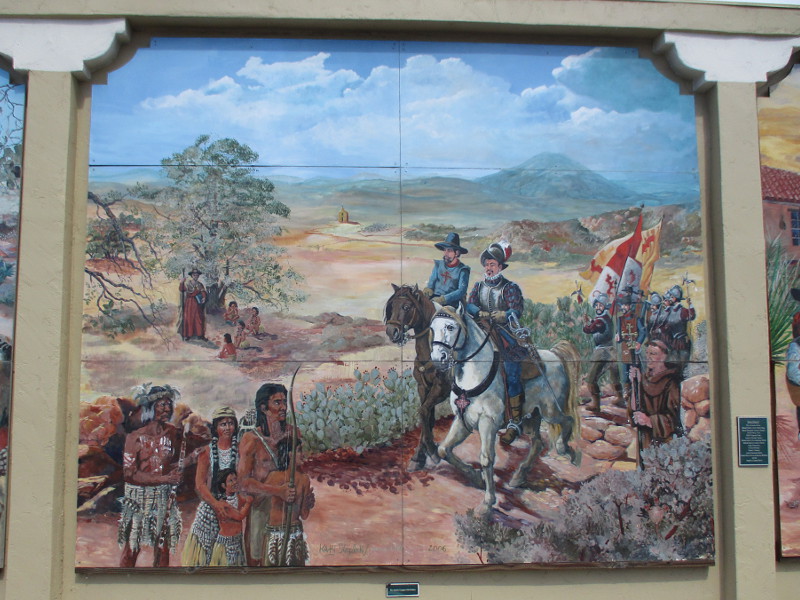
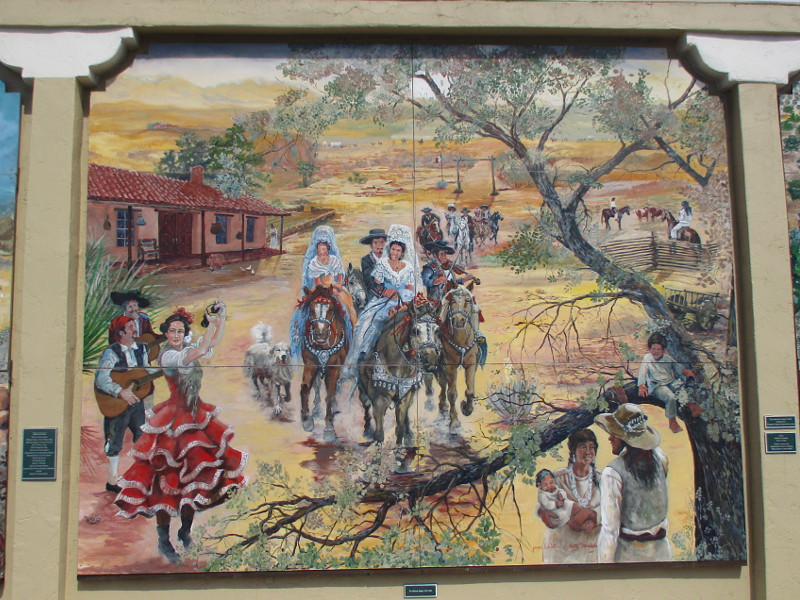
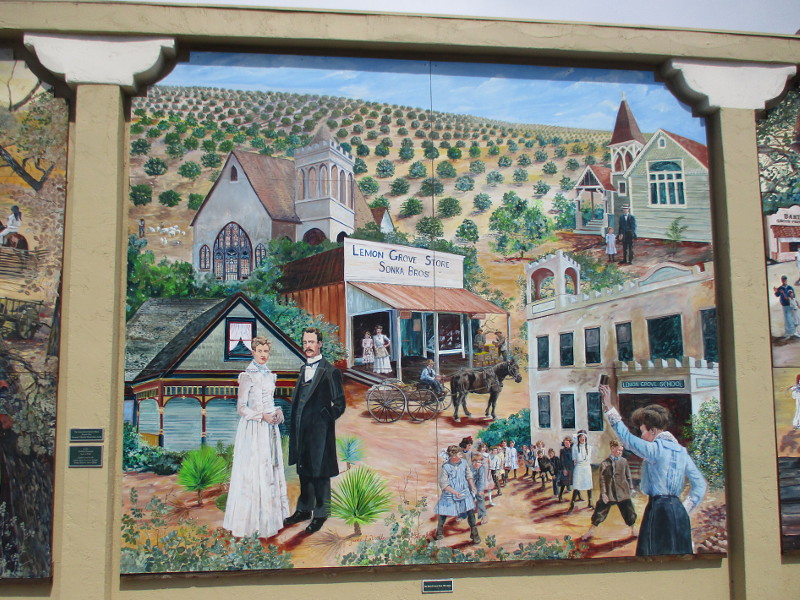
One of San Diego’s finest murals can be seen in Lemon Grove. Beautifully detailed scenes painted on five large panels represent the history of Lemon Grove.

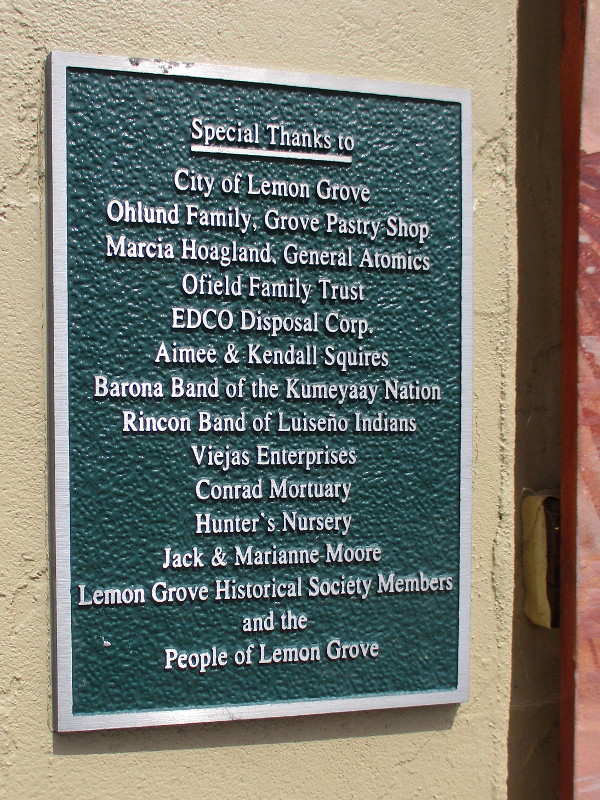
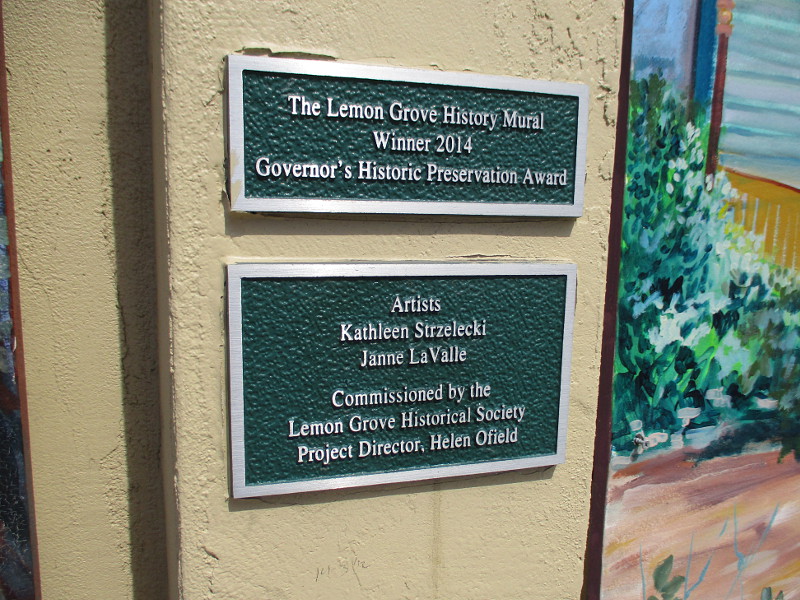
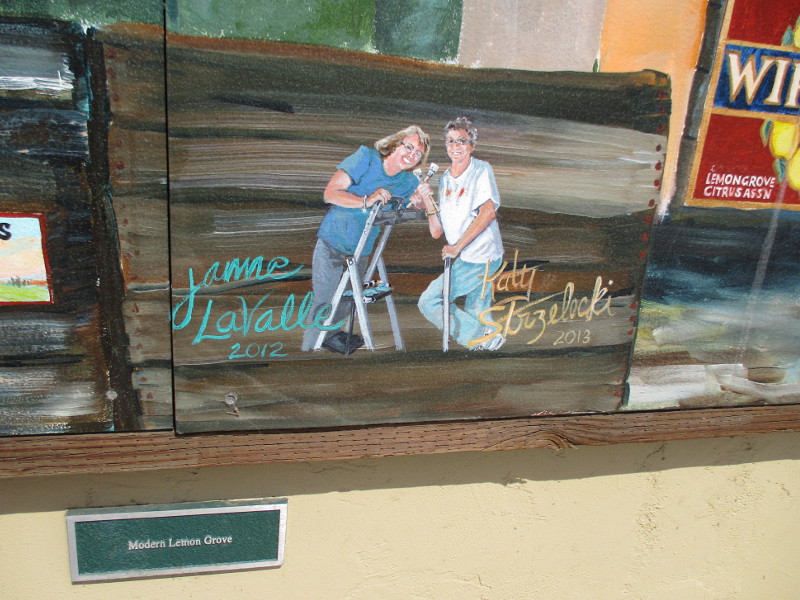
The impressive 65 by 18 foot mural, which was commissioned by the Lemon Grove Historical Society, was created over the course of several years (2005 to 2013) by artists Kathleen Strzelecki and Janne LaValle. In 2014 the Lemon Grove History Mural won the prestigious Governor’s Historic Preservation Award.

Small plaques indicate the historical period of each panel. From left to right they read: The World of the Kumeyaay 1,000 BCE, The Spanish Conquest 16th Century, The Mexican Empire 1821-1846, The Birth of Lemon Grove 19th century, and Modern Lemon Grove.

If you’d like to experience this remarkable mural with your own eyes, it’s located in Lemon Grove on the south side of the building at 3308 Main Street. The historic building was once home of the Sonka Brothers General Store.

Learn more here! And here’s another good article.

I took these photos for everyone to enjoy!

The World of the Kumeyaay 1,000 BCE
The Spanish Conquest 16th Century
The Mexican Empire 1821-1846
The Birth of Lemon Grove 19th century
Modern Lemon Grove

This blog now features thousands of photos around San Diego! Are you curious? There’s lots of cool stuff to check out!

Here’s the Cool San Diego Sights main page, where you can read the most current blog posts.  If you’re using a phone or small mobile device, click those three parallel lines up at the top–that opens up my website’s sidebar, where you’ll see the most popular posts, a search box, and more!

To enjoy future posts, you can also “like” Cool San Diego Sights on Facebook or follow me on Twitter.

Old Town State Park’s new Kumeyaay expansion opens!

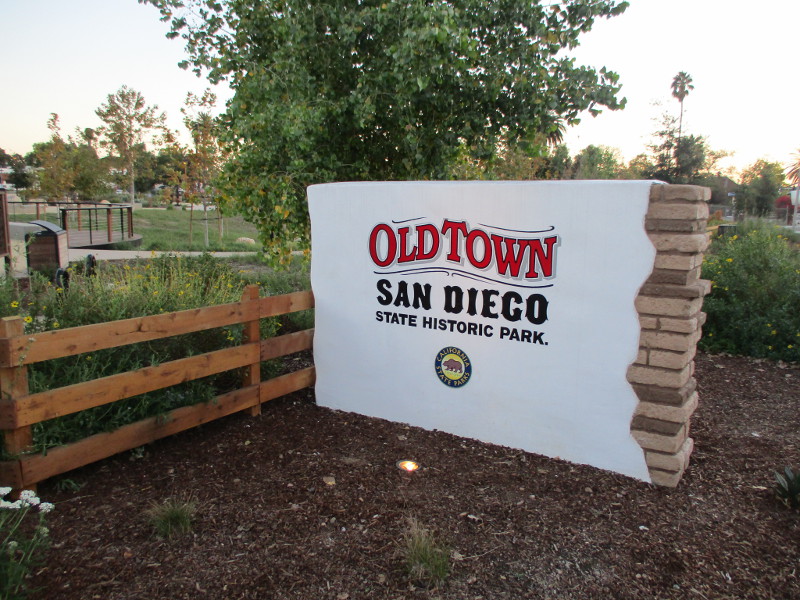
Old Town San Diego State Historic Park’s major expansion has opened!

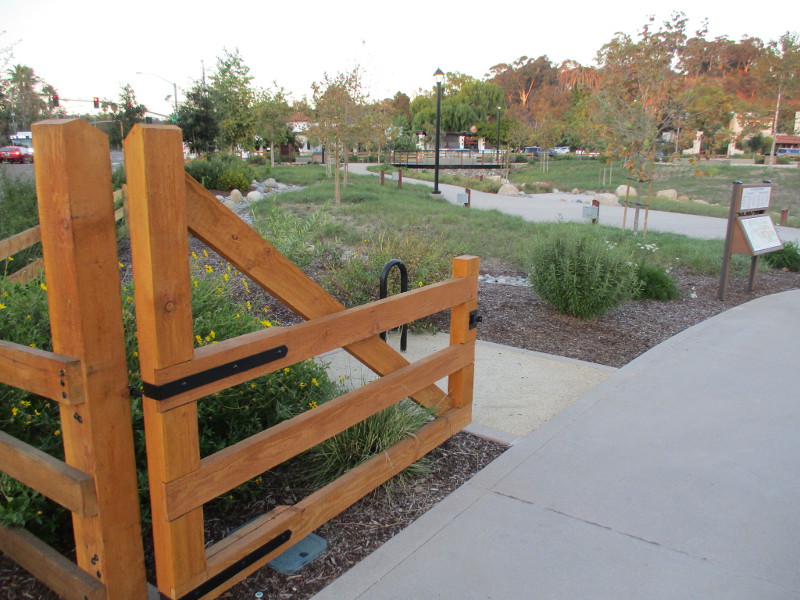
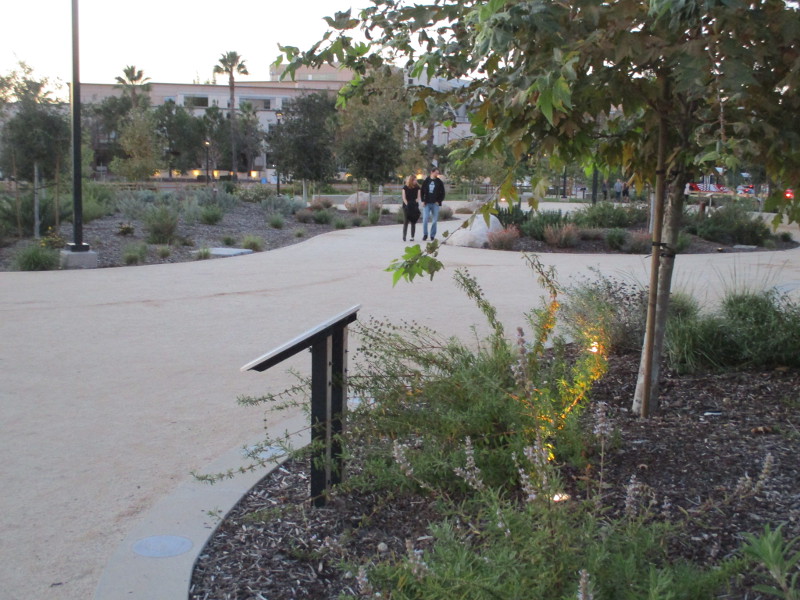
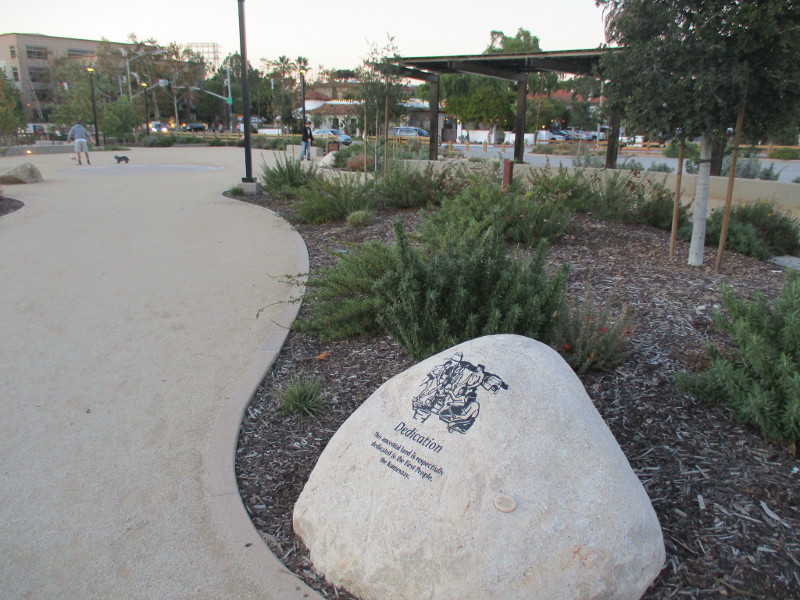
The beautiful new outdoor area, situated at the north end of the State Park, near the intersection of Taylor Street and Juan Street where an old Caltrans building used to stand, is called Land of the First People. It honors our region’s Native American Kumeyaay.

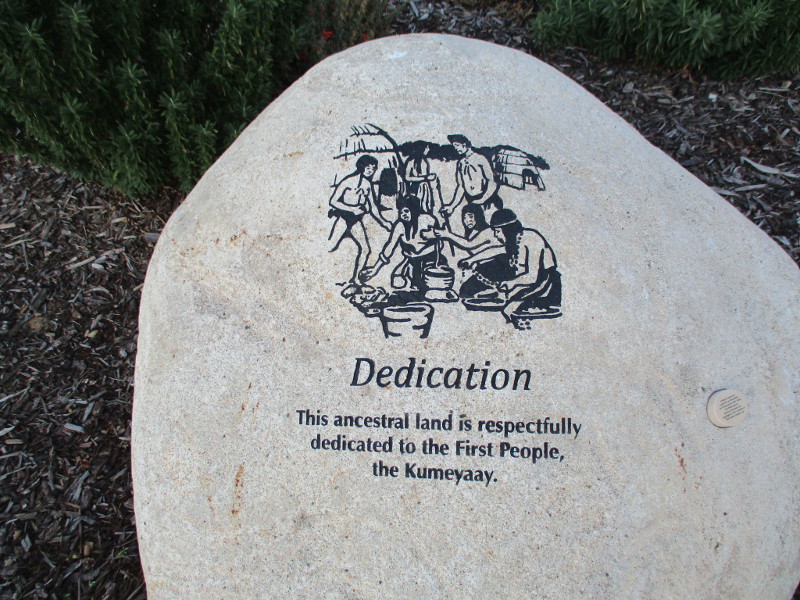
Pathways wind through native vegetation, beautiful public artwork, and interpretive displays on stones that describe the history and culture of the Kumeyaay, who lived here for many thousands of years before the arrival of Europeans. A Kumeyaay village called Kosa’aay existed where Old Town is now, near the mouth of the San Diego River.

I arrived at Old Town San Diego State Historic Park this evening just before sunset and noticed the construction fence circling this new area had finally come down! So I had to investigate immediately!

Artwork I discovered includes numerous disks along the pathways, showing native animals and the Kumeyaay words for each; a circular plaza with a mosaic depicting stars and constellations recognized by the Kumeyaay; and two benches made extraordinary with mosaics by local artist Betsy K. Schulz. Her amazing mosaics can be found all around San Diego. I’ll provide more photographs of these two benches in my next blog post!

Before it became too dark as night fell, this is what my camera captured…

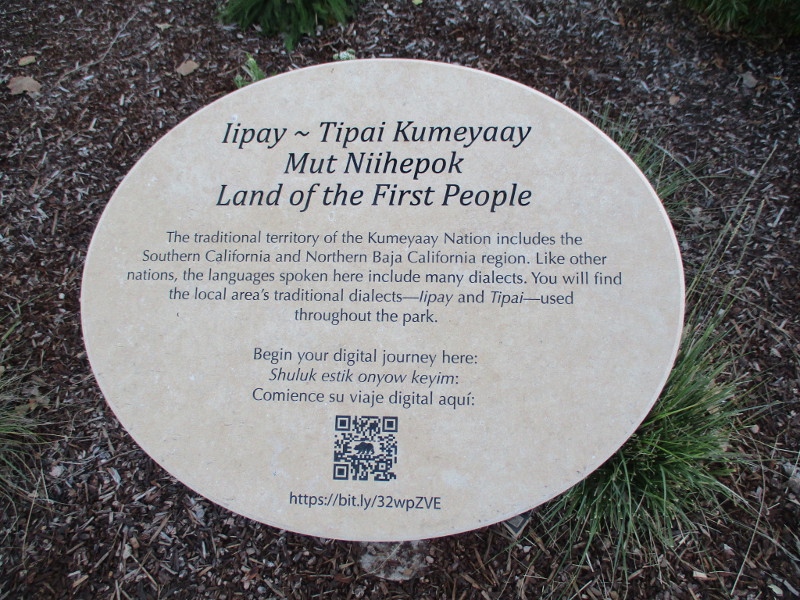
Iipay ~ Tipai Kumeyaay Mut Niihepok — Land of the First People.
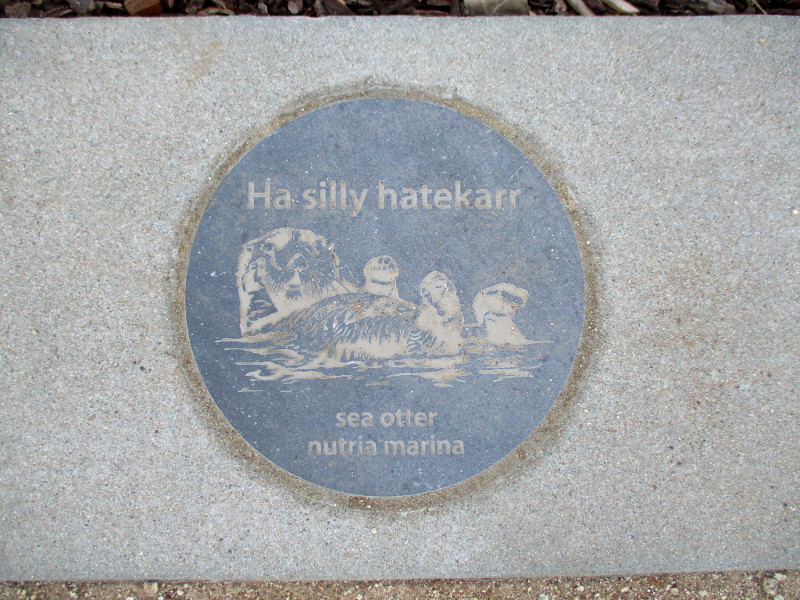
Ha silly hatekarr – sea otter
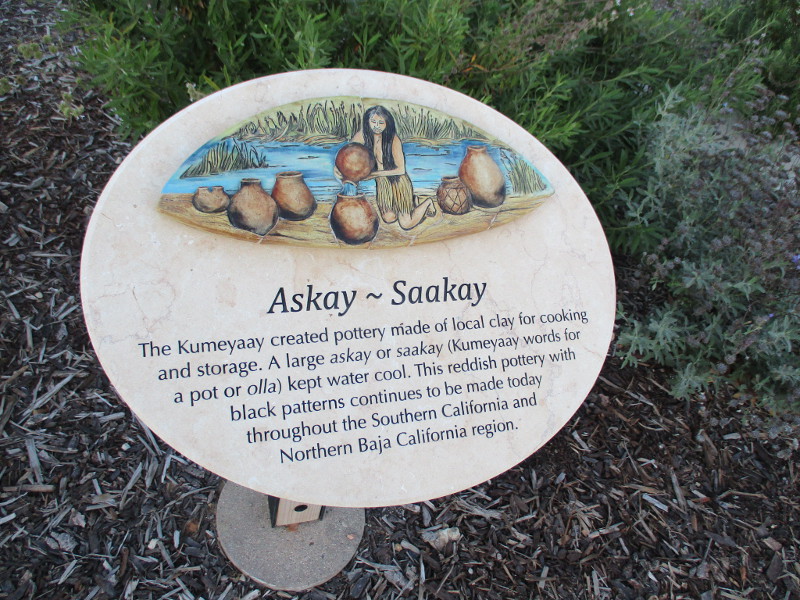
The Kumeyaay created pottery made of local clay for cooking and storage. A large askay or saakay kept water cool…
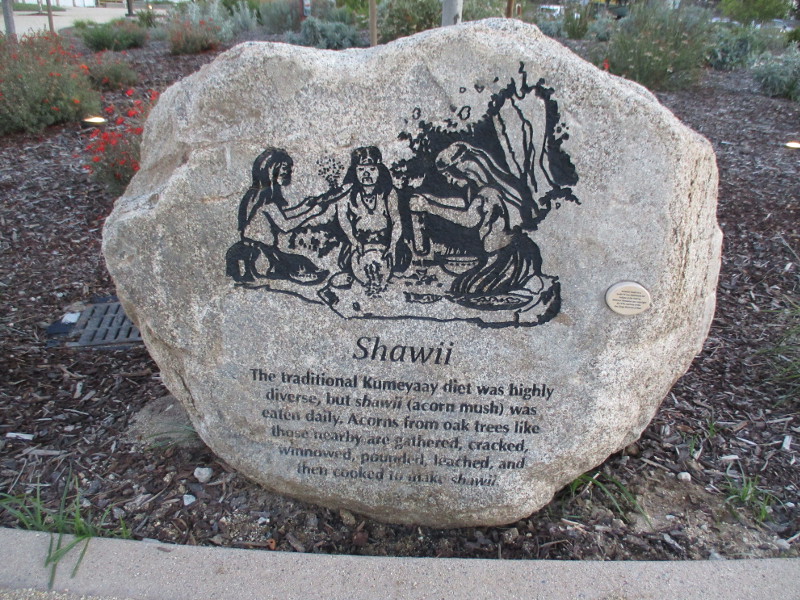
The traditional Kumeyaay diet was highly diverse, but shawii (acorn mush) was eaten daily…
The traditional Kumeyaay cosmology of Maay Uuyow (Sky Knowledge) is extensive and elaborate…
Hand tools like those shown here are used with the bowl-like hollows and other indentations in xepiicha (grinding stones) to process acorns, seeds, fibers…
This ancestral land is respectfully dedicated to the First People, the Kumeyaay.
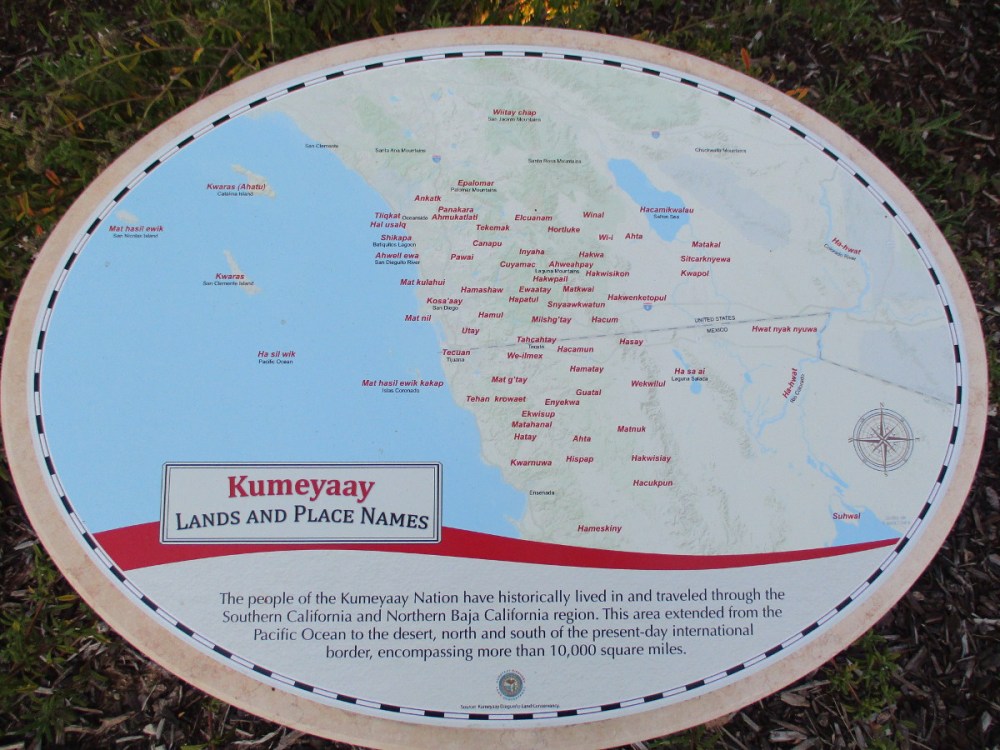
The people of the Kumeyaay Nation have historically lived in and traveled through the Southern California and Northern Baja California region. This area extended from the Pacific Ocean to the desert…

I live in downtown San Diego and love to walk around with my camera! You can follow Cool San Diego Sights via Facebook or Twitter!

You can easily explore Cool San Diego Sights by using the search box on my blog’s sidebar. Or click a tag! There are thousands upon thousands of photos for you to enjoy!

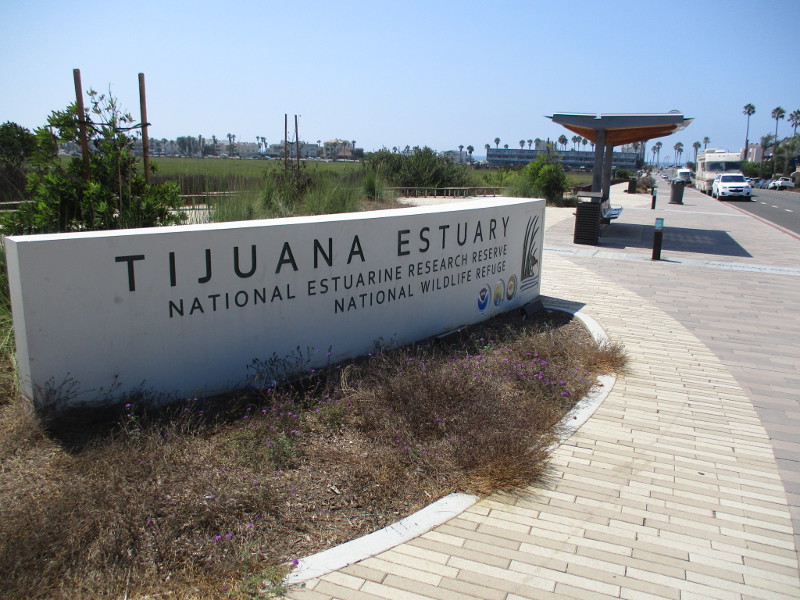
Bird sightings along Tijuana Estuary boardwalk!

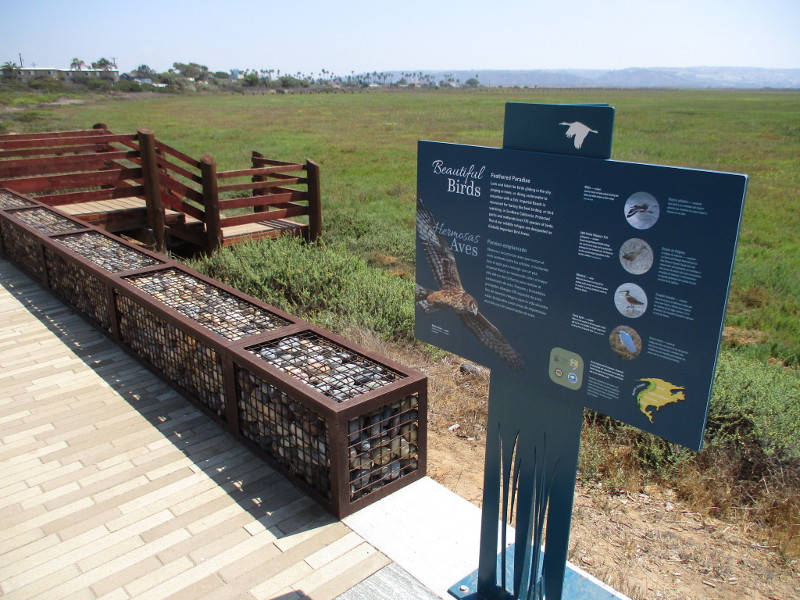
Walk down the recently improved Tijuana Estuary boardwalk in Imperial Beach and you’re certain to see birds. You’ll find many down at your feet!

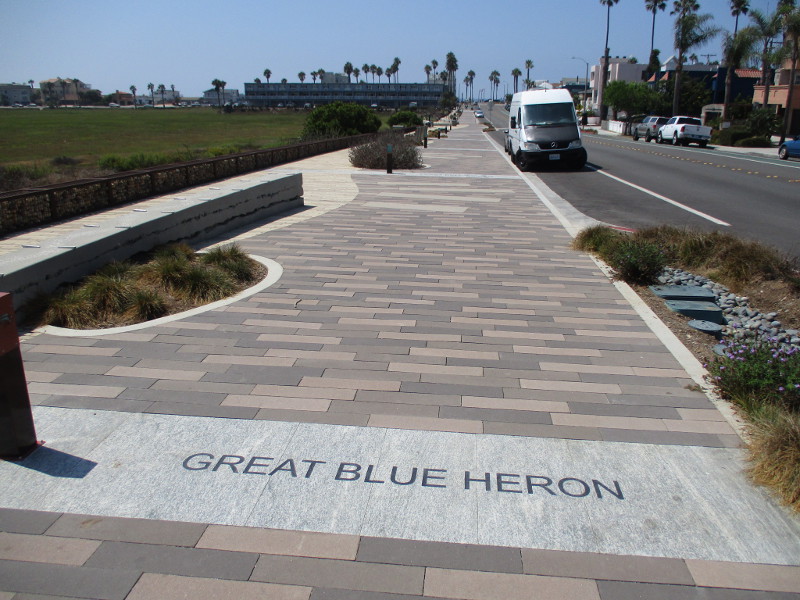
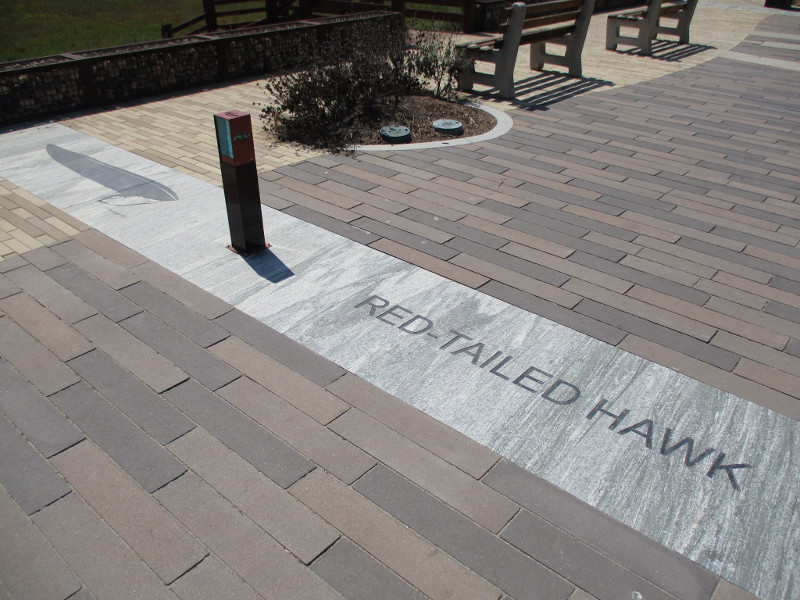
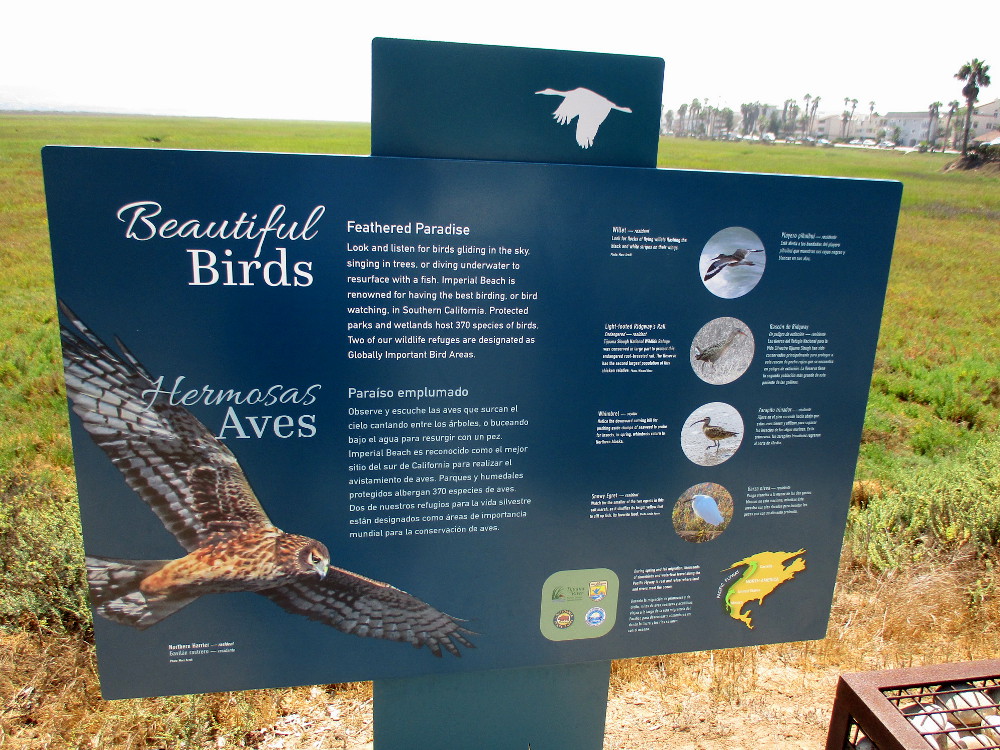
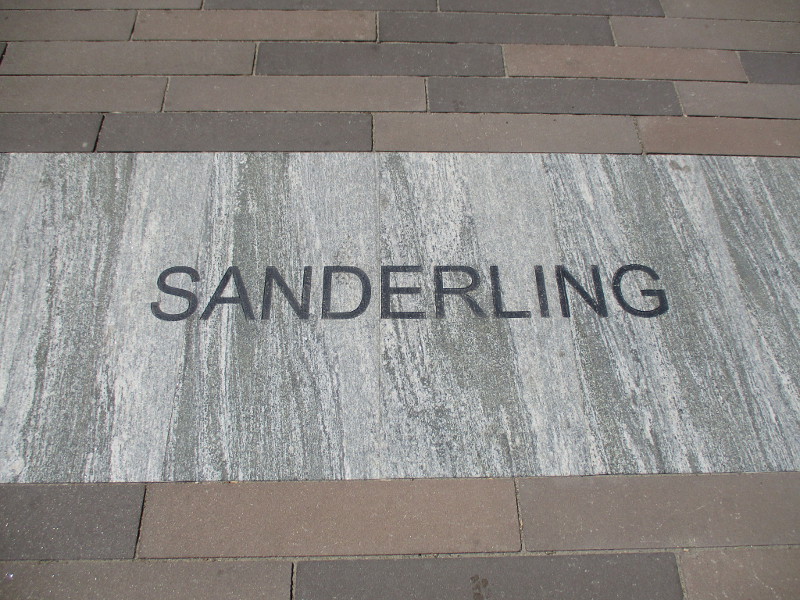
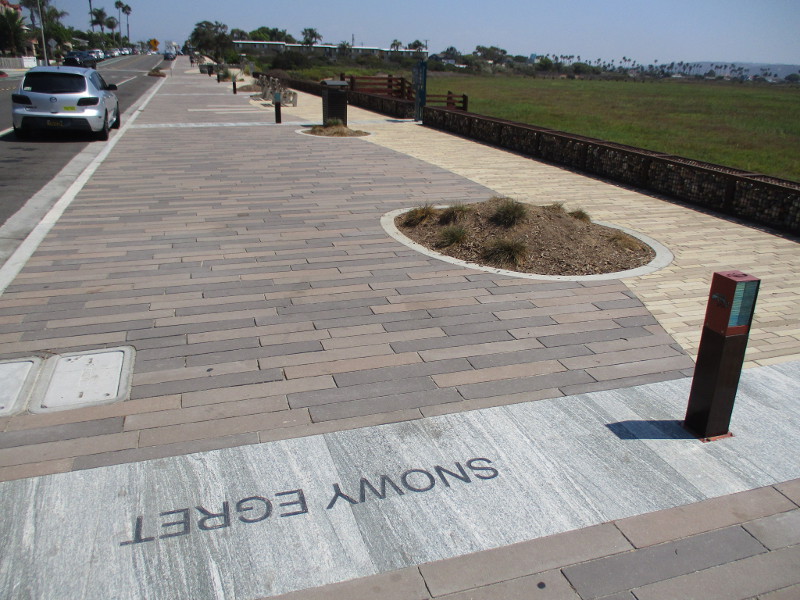
The widened, beautified boardwalk along Imperial Beach Avenue, west of 3rd Street, now includes the names of many birds that make Tijuana Slough National Wildlife Refuge their home.

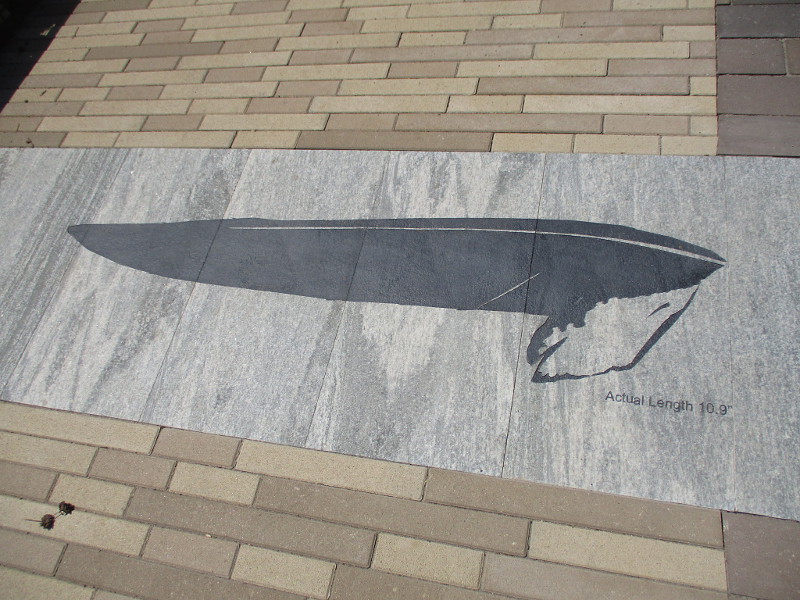
Next to the bird names you’ll also find images of outstretched wings. The wings are to scale, providing an idea of how different species of birds compare.

During my last walking adventure in IB, about a month or so ago, I was surprised and delighted to find this improved boardwalk. There are new benches, and information signs at scenic Tijuana River estuary overlooks, and even a great bus stop shelter that I used.

It’s about time I shared these photos!

Great Blue Heron.
Red-Tailed Hawk.
Beautiful birds.
Sanderling.
Snowy Egret.
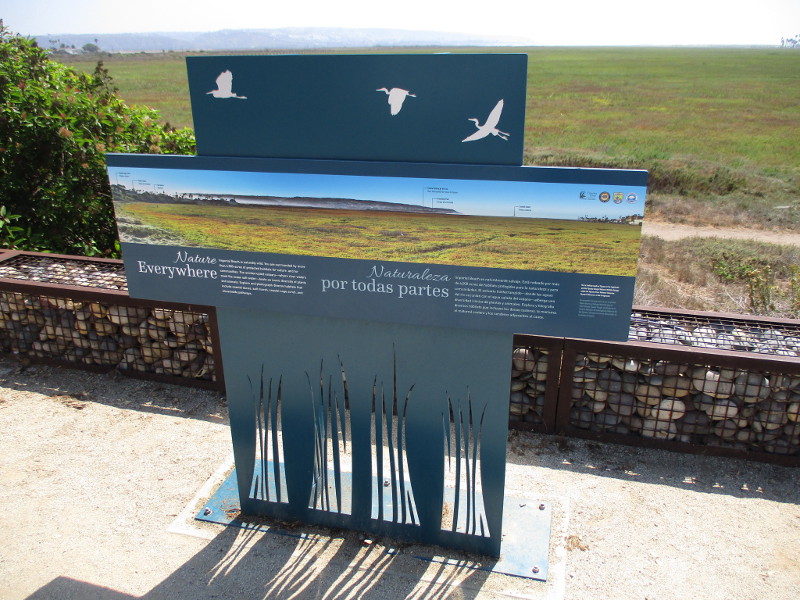
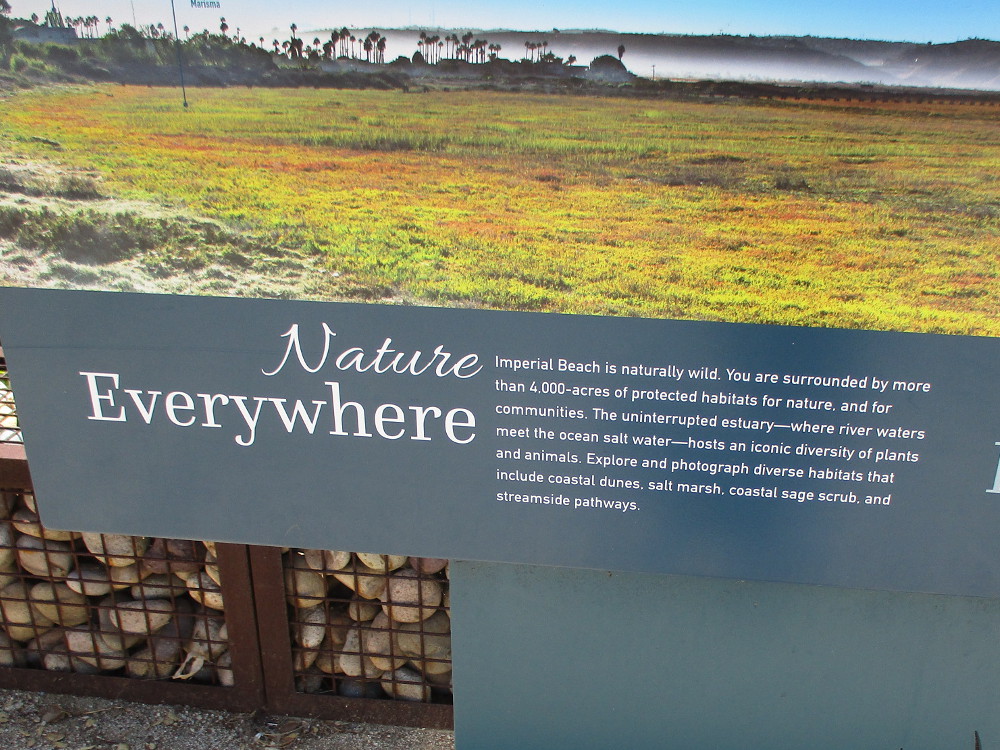
Nature everywhere. Imperial Beach is naturally wild.

I live in downtown San Diego and love to walk around with my camera! You can follow Cool San Diego Sights via Facebook or Twitter!

You can easily explore Cool San Diego Sights by using the search box on my blog’s sidebar. Or click a tag! There are thousands upon thousands of photos for you to enjoy!
Death and Monsters in Escondido!

Fearless people (and art lovers) have the rare opportunity to view Death and Monsters in Escondido!

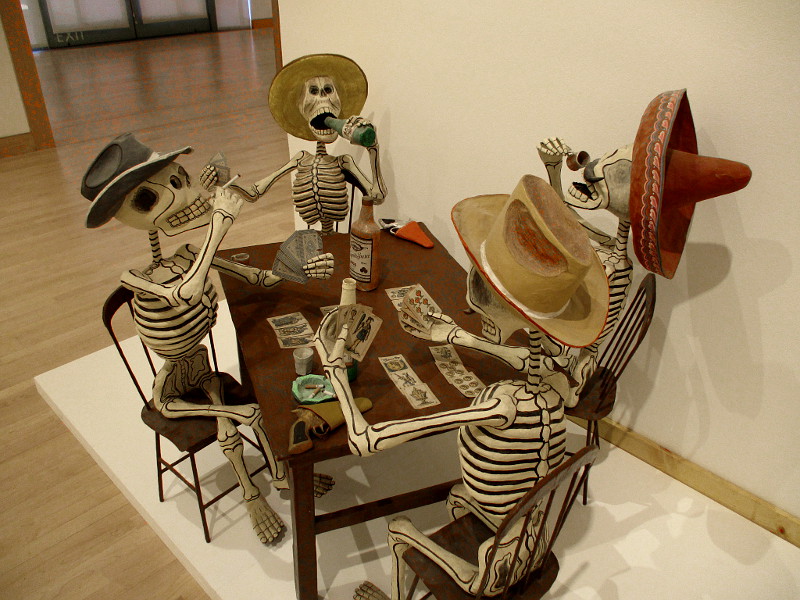
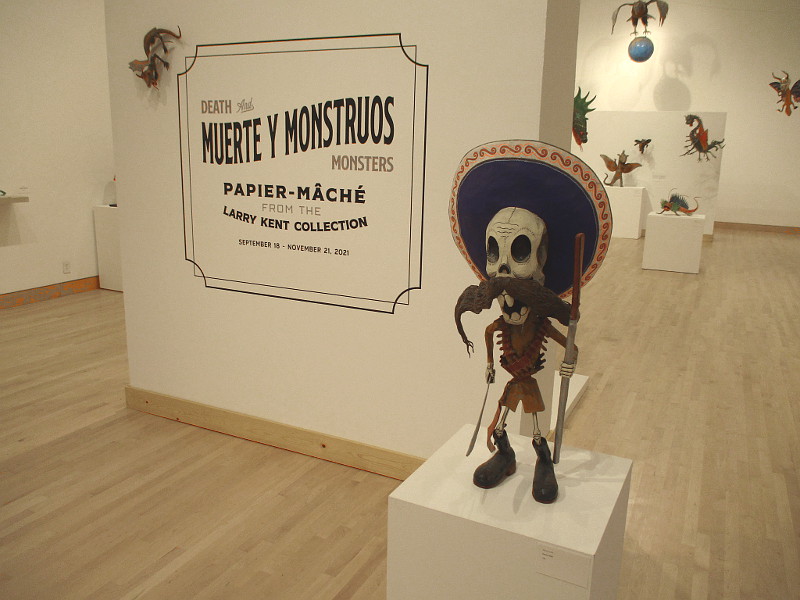
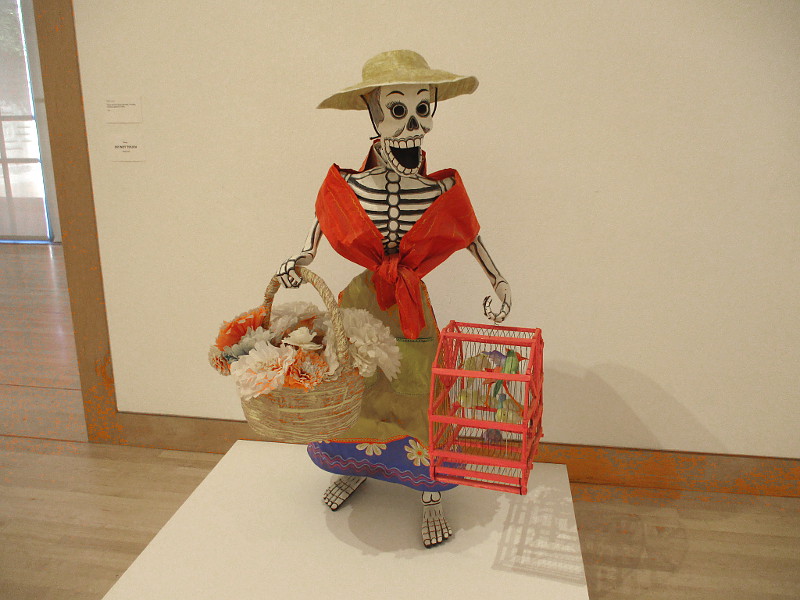
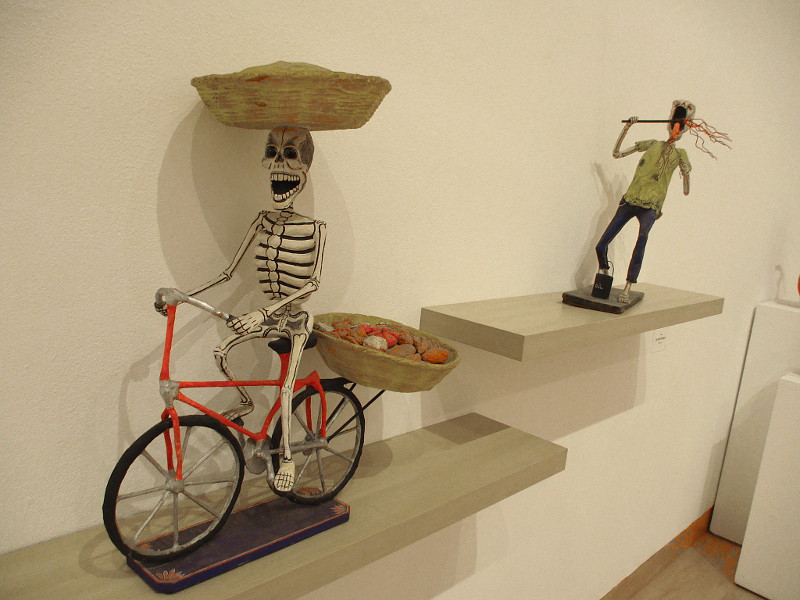
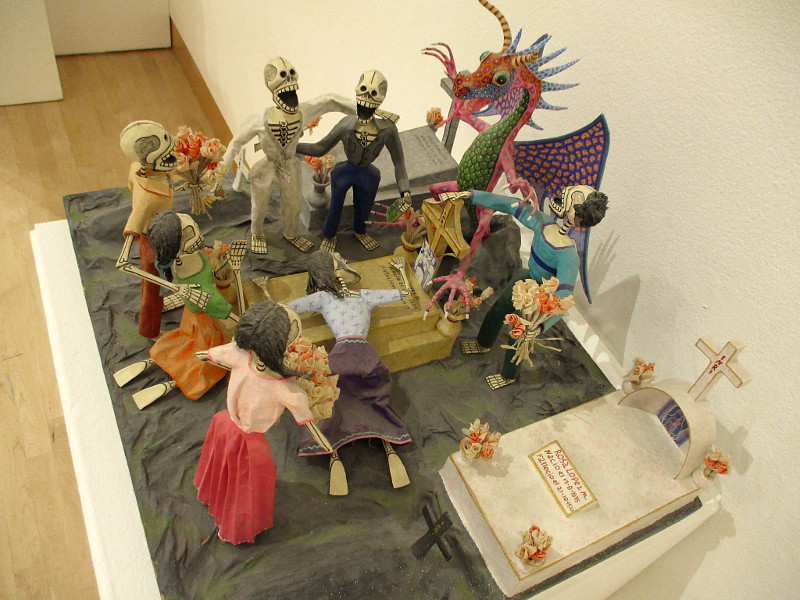
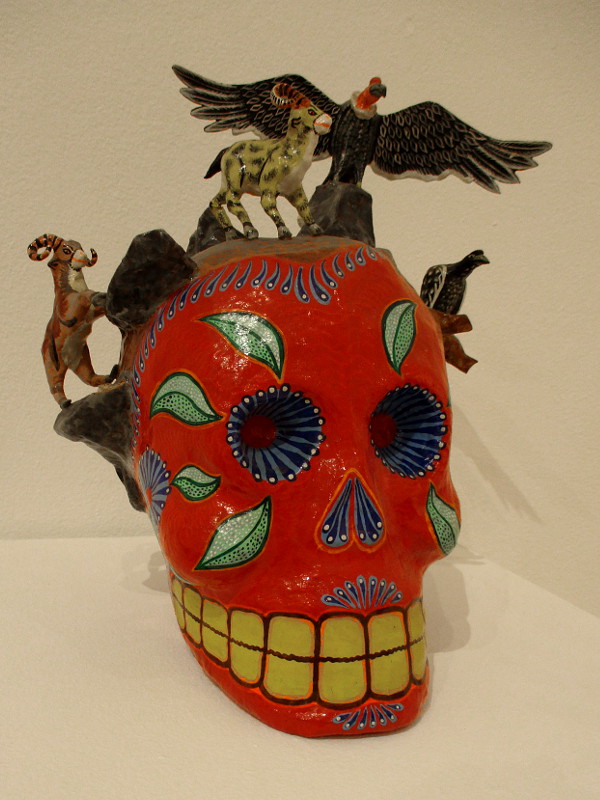
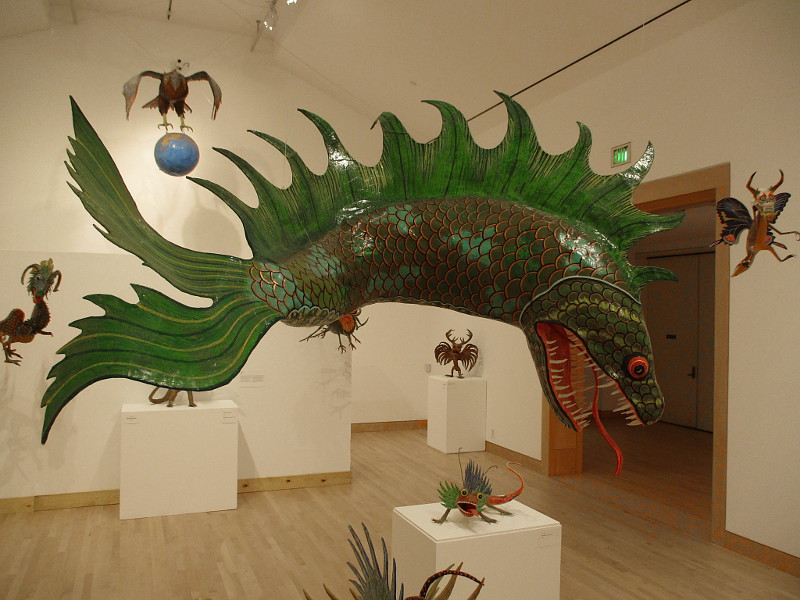
Muerte y Monstruos (Death and Monsters) is an exhibition currently on view in the museum at the California Center for the Arts, Escondido. The collection of traditional Mexican artwork, created by the Linares family of Mexico City, includes many papier-mâché sculptures depicting skeletons and skulls, or calaveras, engaged in living and death.

And there are fantastic monsters, or alebrijes, too! Pedro Linares is credited with inventing that form of very colorful folk art.

It’s fortunate many of the fragile pieces on display have survived. Their purpose was to be burned or broken during holiday festivals in Mexico. The sculptures in Death and Monsters were preserved by San Diego art collector Larry Kent.

Much of this art was inspired by legendary Mexican printmaker José Guadalupe Posada. His iconic work is being concurrently displayed in the main gallery of the museum!

Would you enjoy a unique experience during the upcoming season of Día de los Muertos? The exhibition continues through November 21, 2021.

I live in downtown San Diego and love to walk around with my camera! You can follow Cool San Diego Sights via Facebook or Twitter!

Kids free at San Diego museums in October!

It’s October! You know what that means? It means kids get free admission to many museums and other family friendly attractions all around San Diego!

The month-long event is called Kids Free San Diego!

Want to learn more? Click here!

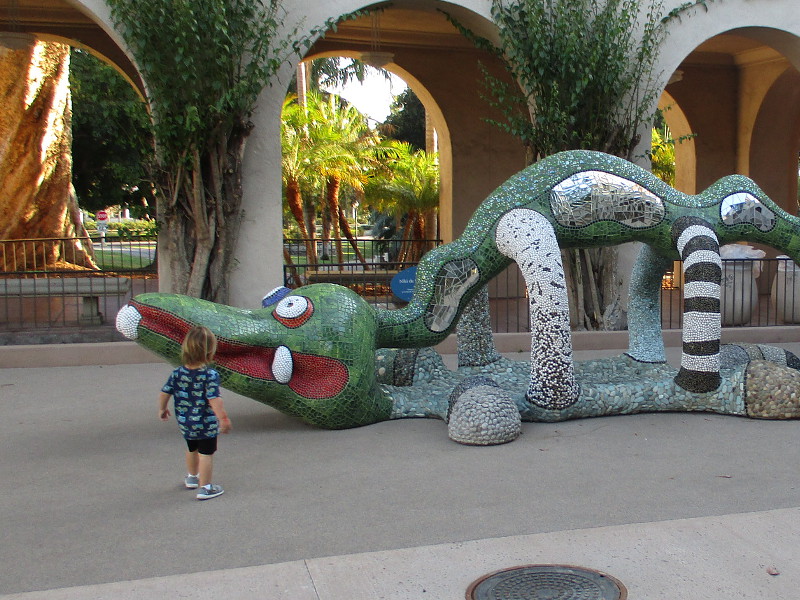
Oh, and by the way, see my photograph above? Yes! Nikigator has made its long-awaited return!

Nikigator stands once again outside the front entrance of the recently reopened, beautifully renovated Mingei International Museum in Balboa Park. Wouldn’t it be fun to sit on that!

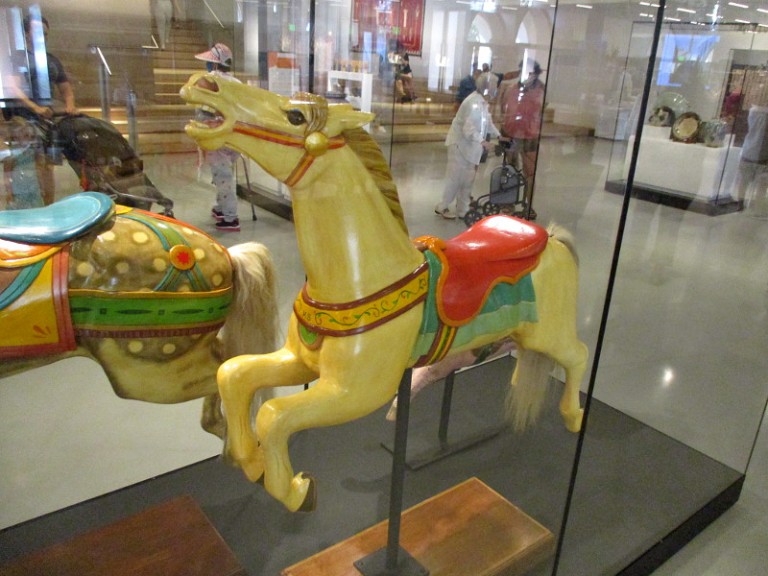
While I’m mentioning the Mingei, families should definitely head inside. The ground floor is now free to everyone, whatever your age. And one big display case holds all sorts of craft toys from around the world! Another contains carousel horses!

And one more thing. If your kids haven’t been to the San Diego Model Railroad Museum in Balboa Park, they are missing out on some of the most incredible, spectacular toy train layouts anywhere in the world! And it’s free in October for kids, too!

Click here for all the museums and attractions that are participating this month in Kids Free San Diego!

I live in downtown San Diego and love to walk around with my camera! You can follow Cool San Diego Sights via Facebook or Twitter!

Imperial Beach plaques remember slough surfers.

Bronze plaques near the foot of the Imperial Beach Pier recall the legendary slough surfers who once trekked from far and wide to the Tijuana Sloughs, where the Tijuana River meets the Pacific Ocean, just north of the Mexican border.

During much of the 20th century, the Tijuana Sloughs was considered the preeminent big surf break in California. There’s a great article concerning the history and geology of the Sloughs here.

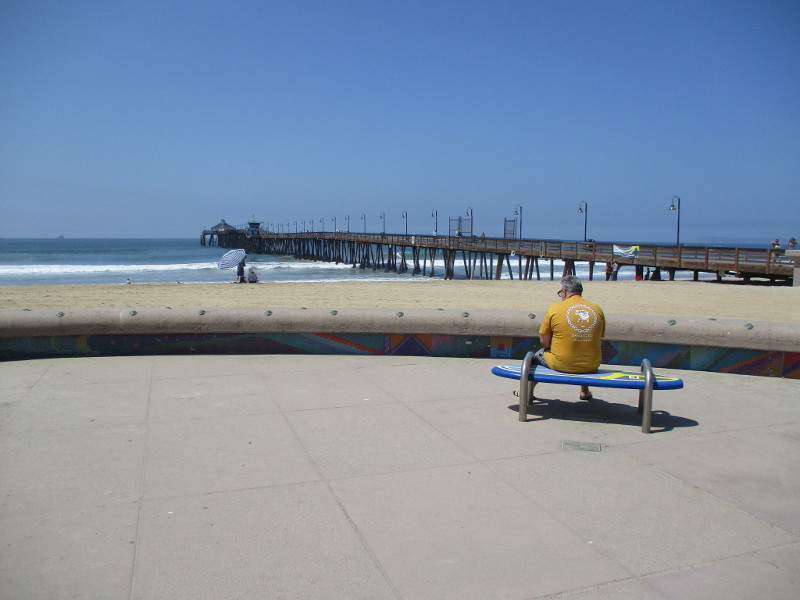
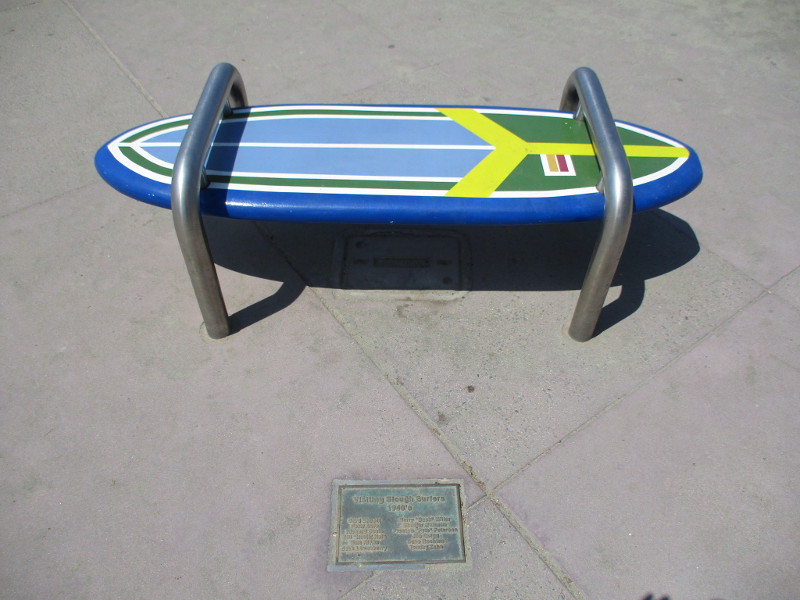
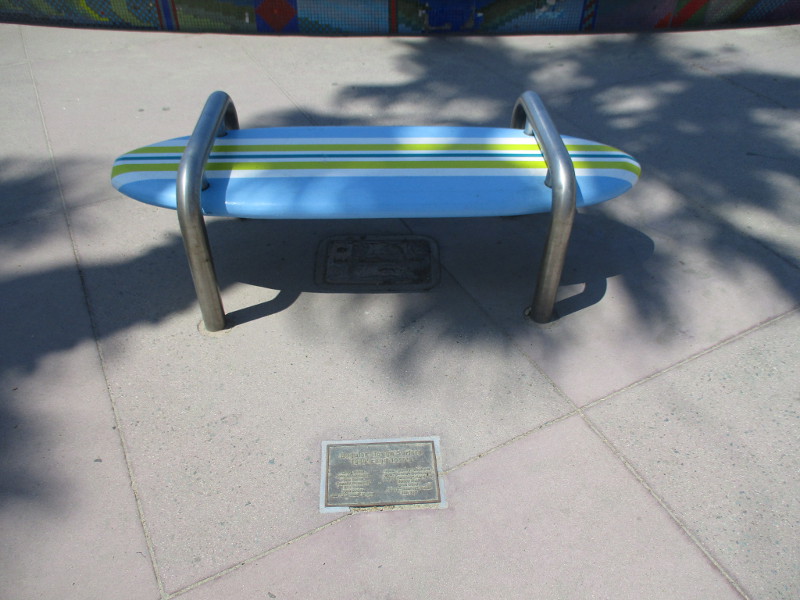
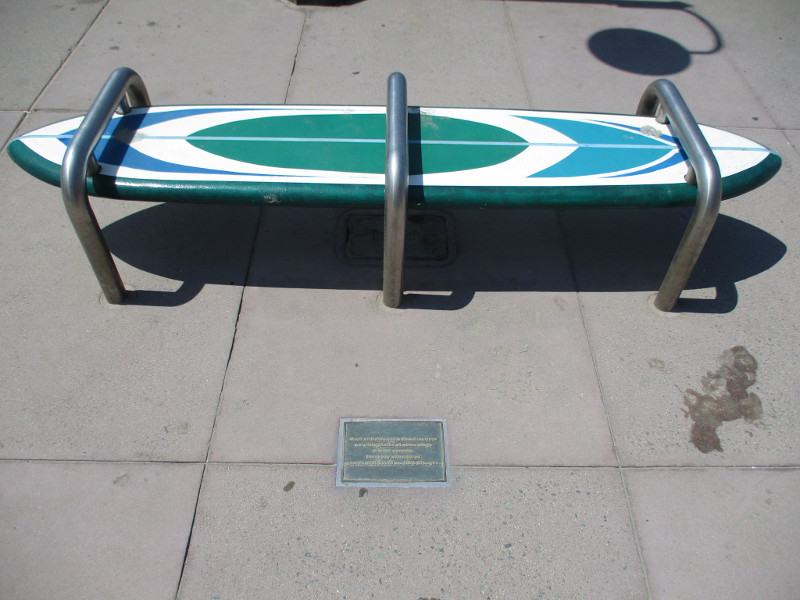
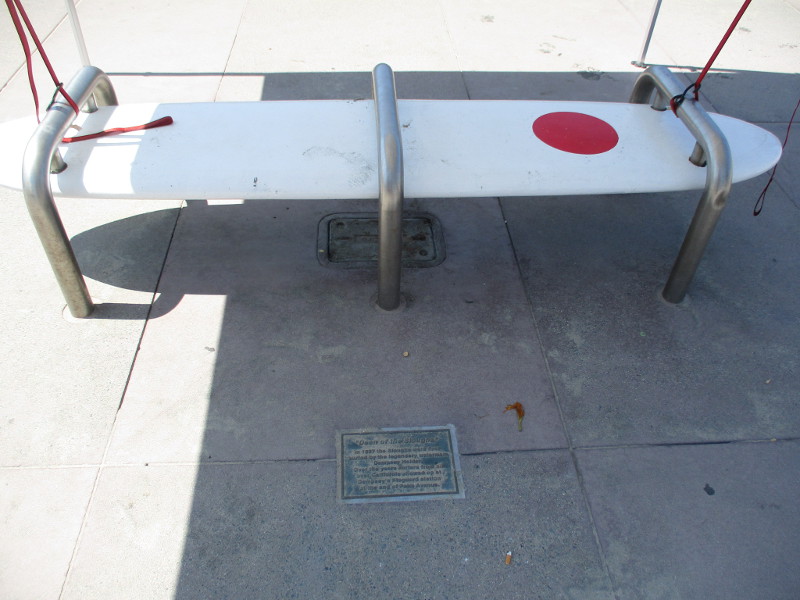
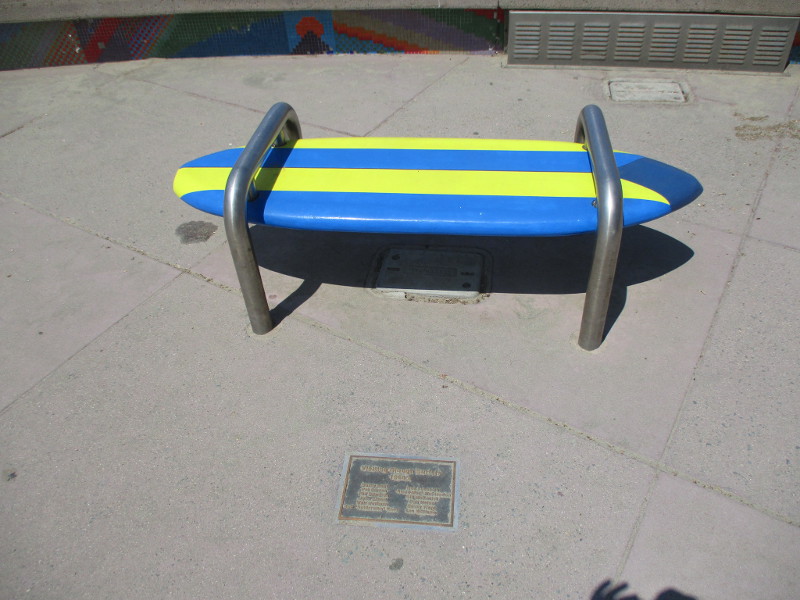
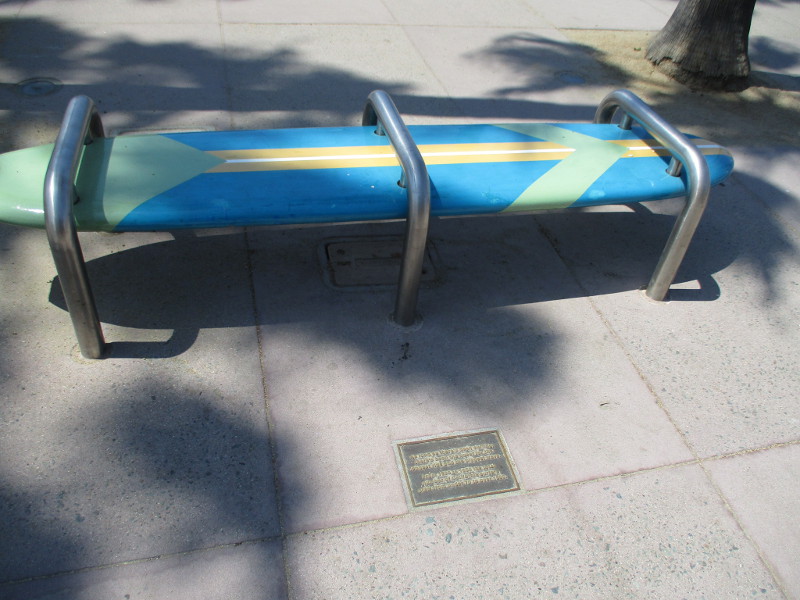
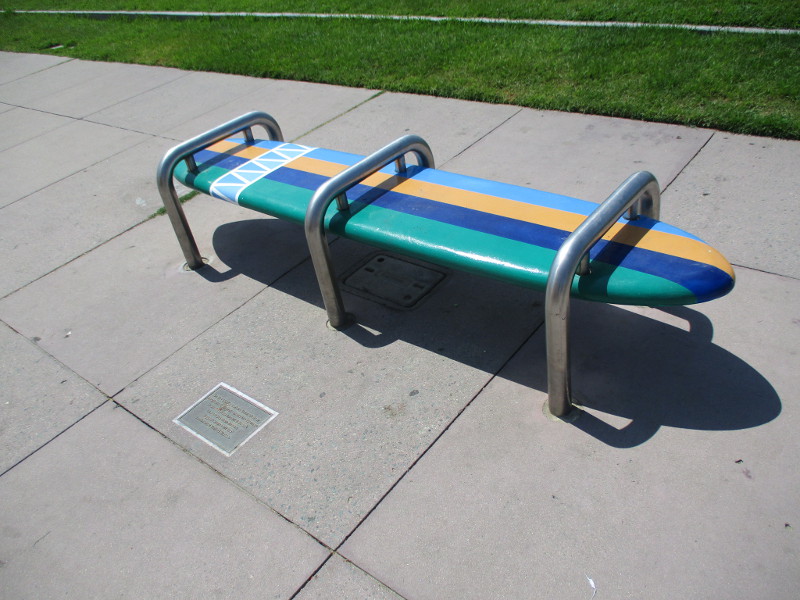
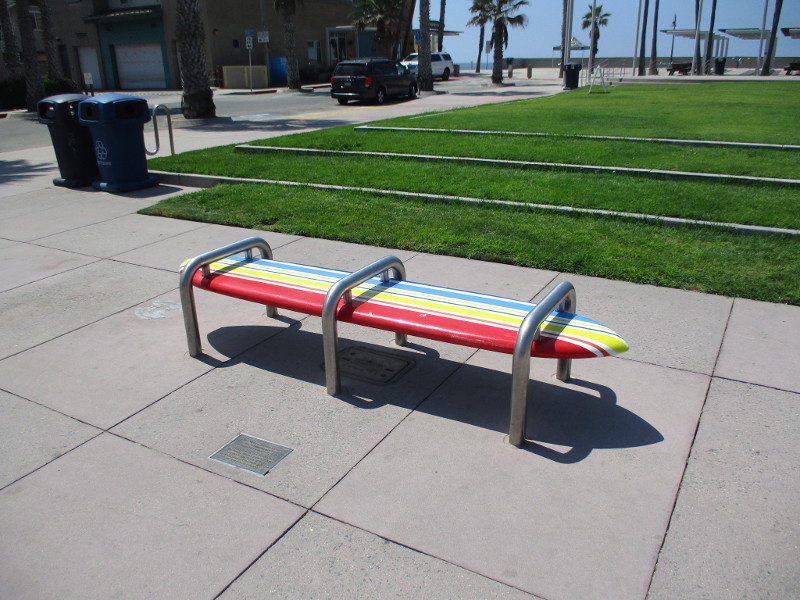
If you walk around Portwood Pier Plaza at the foot of the IB Pier, you’ll see a bunch of colorful surfboard benches where you can rest and gaze out across the beach. Look down and you’ll discover plaques next to each bench.

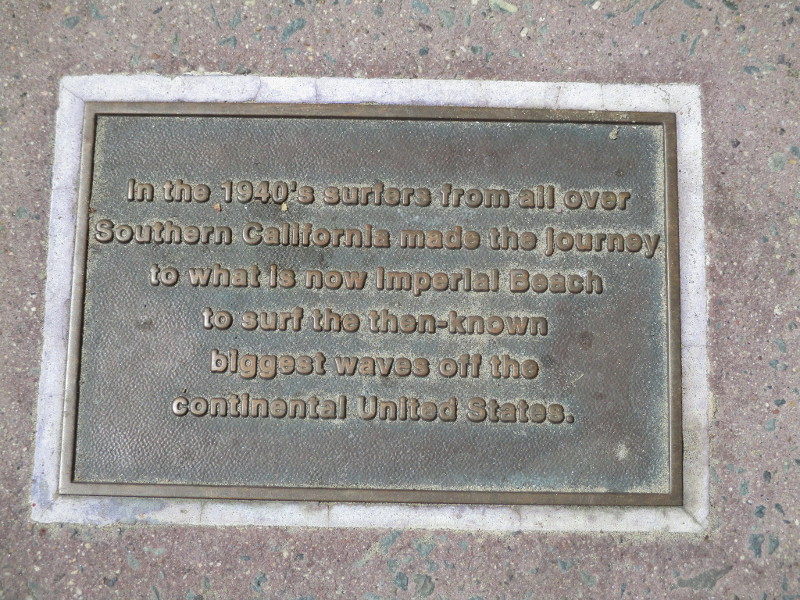
The plaques recall those who rode the big waves at the Tijuana Sloughs and honor bits of Imperial Beach surfing history.

Surfhenge public art welcomes people to the Imperial Beach Pier and Portwood Pier Plaza. The plaza is located next to the beach between Surfhenge and the lifeguard tower to the south.
Visiting slough surfers 1940’s.
Regular slough surfers 1940’s and 1950’s.
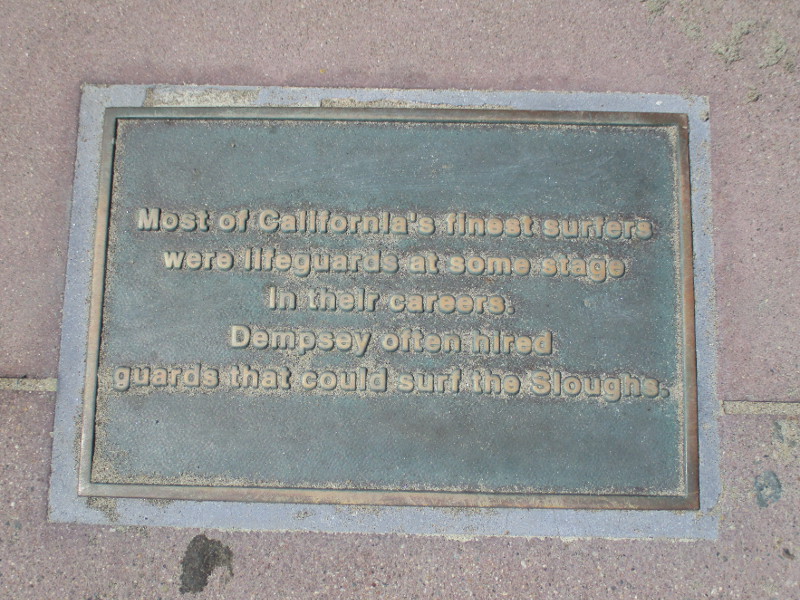
Most of California’s finest surfers were lifeguards at some stage in their careers…
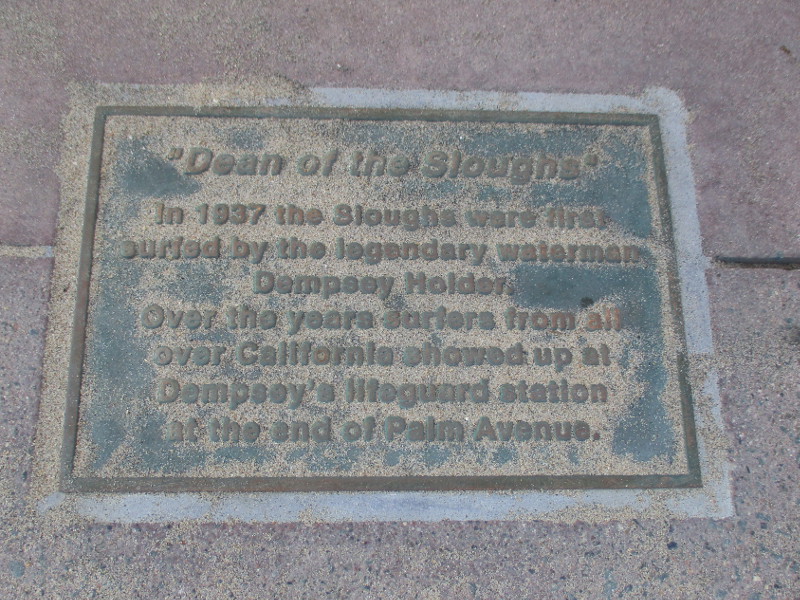
Dean of the Sloughs. In 1937 the Sloughs were first surfed by the legendary waterman Dempsey Holder. Over the years surfers from all over California showed up at Dempsey’s lifeguard station at the end of Palm Avenue.
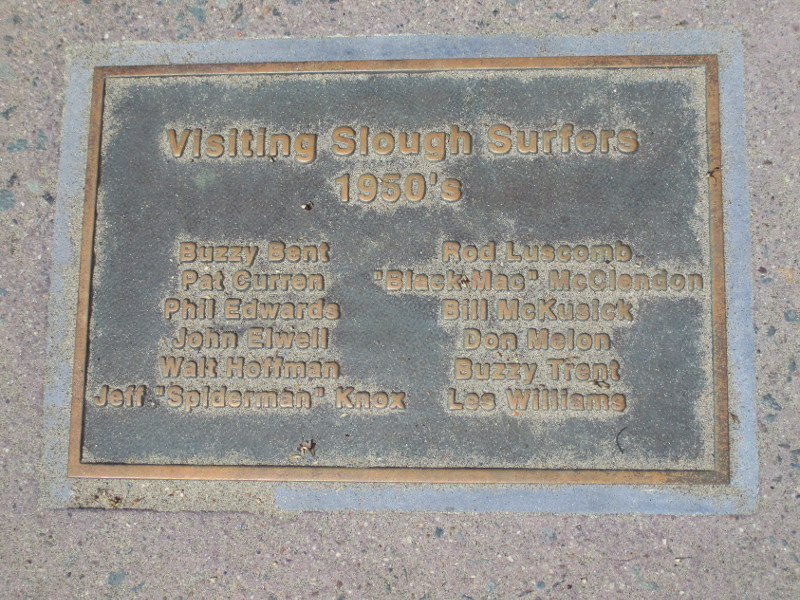
Visiting slough surfers 1950’s.
Father of the Modern Surfboard. In the 1940’s Bob Simmons applied the principles of hydrodynamics to surfboard design and forever changed the sport of surfing. In 1950 he moved to Imperial Beach.
…From 1930 to 1950 the total number of California surfers grew from under 70 to over 1500.
In the 1940’s surfers from all over Southern California made the journey to what is now Imperial Beach to surf the then-known biggest waves off the continental United States.
The Tijuana Sloughs became the testing ground for mainlanders going to Hawai’i. Before Malibu, San Onofre and Windansea groups surfed Makaha and the North Shore of O’ahu, they experienced the thrill and fear of big waves at the Sloughs.

I live in downtown San Diego and love to walk around with my camera! You can follow Cool San Diego Sights via Facebook or Twitter!

You can easily explore Cool San Diego Sights by using the search box on my blog’s sidebar. Or click a tag! There are thousands upon thousands of photos for you to enjoy!

Rose Creek Bikeway near Mission Bay.

Have you ever wondered what the Rose Creek Bikeway is like just north of Mission Bay?

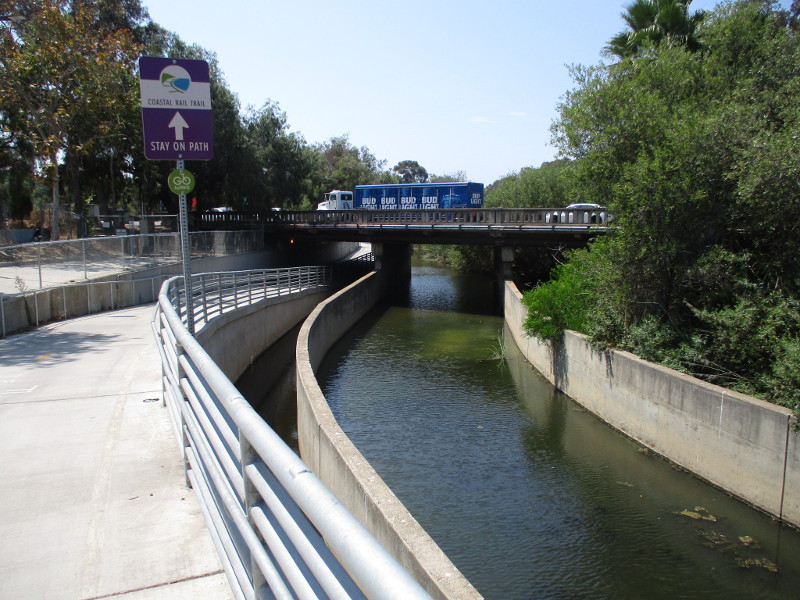
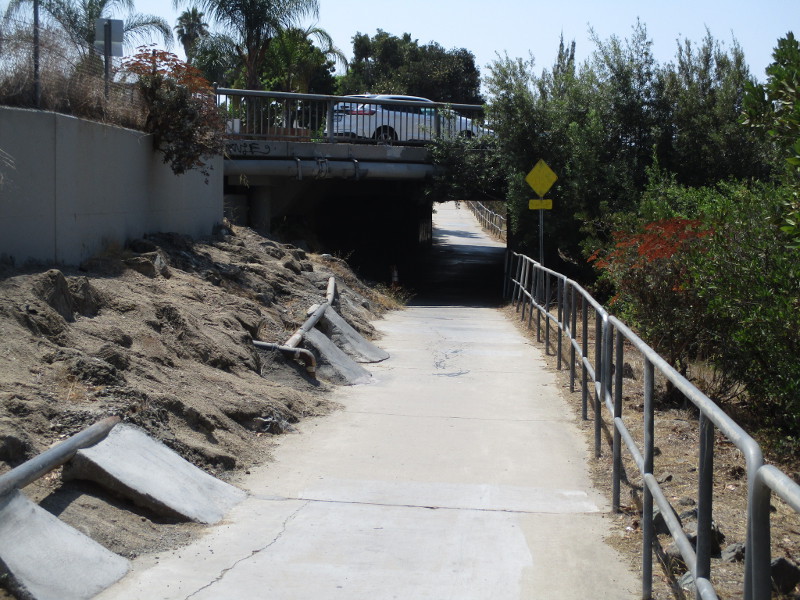
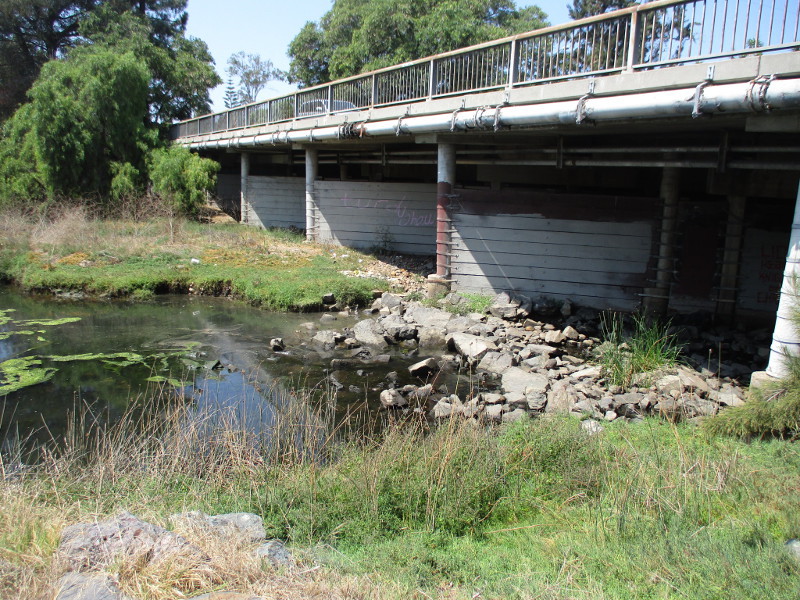
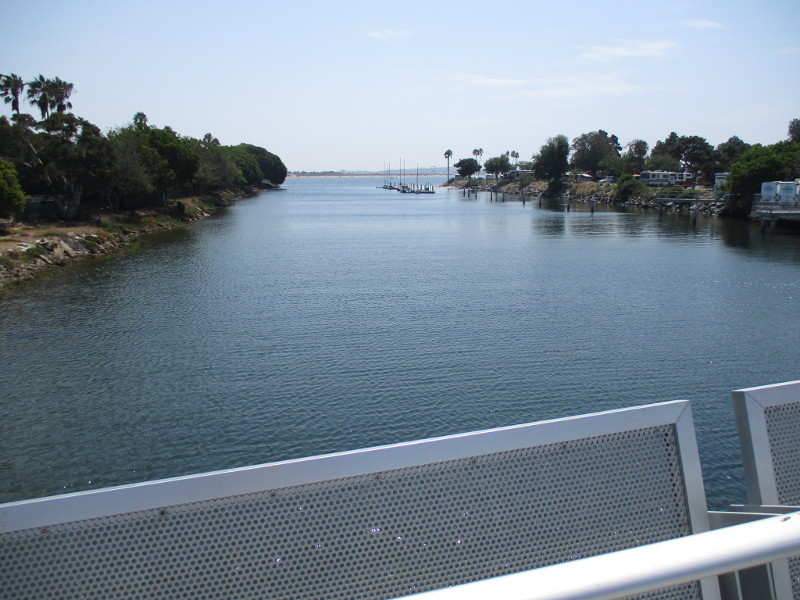
I did, so I walked along the bike and pedestrian path a few weekends ago. I started at a point near the In-N-Out Burger at Damon Avenue (just east of Mission Bay Drive) and headed south under Garnet and Grand Avenue to North Mission Bay Drive. I then walked west over the Mike Gotch Memorial Bridge spanning the Rose Creek Inlet to the entrance of Campland on the Bay.

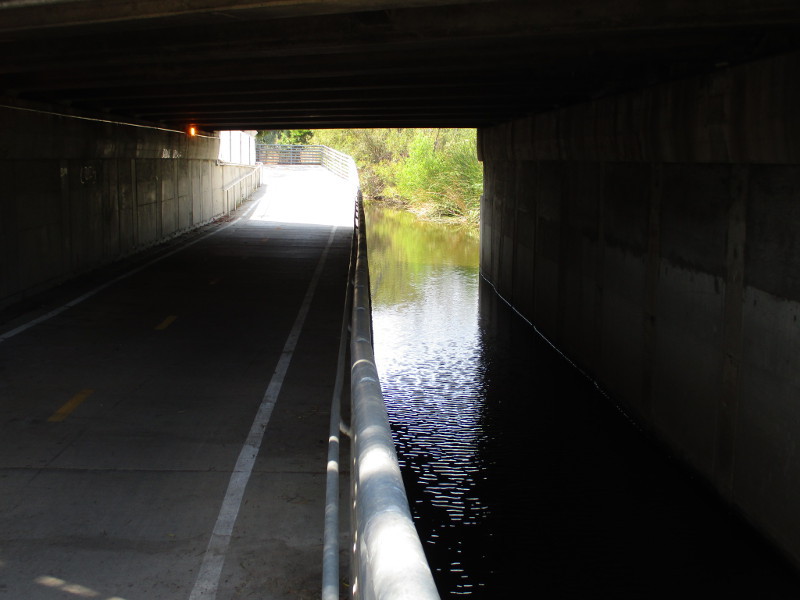
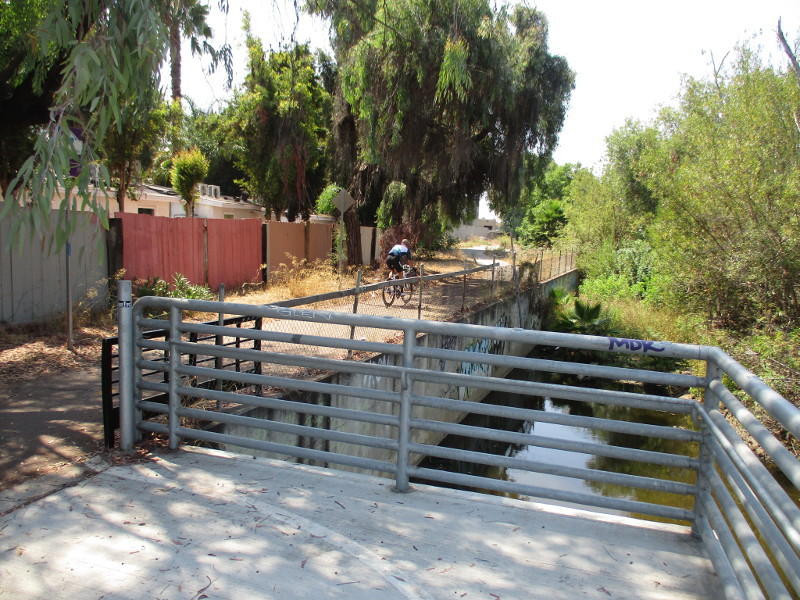
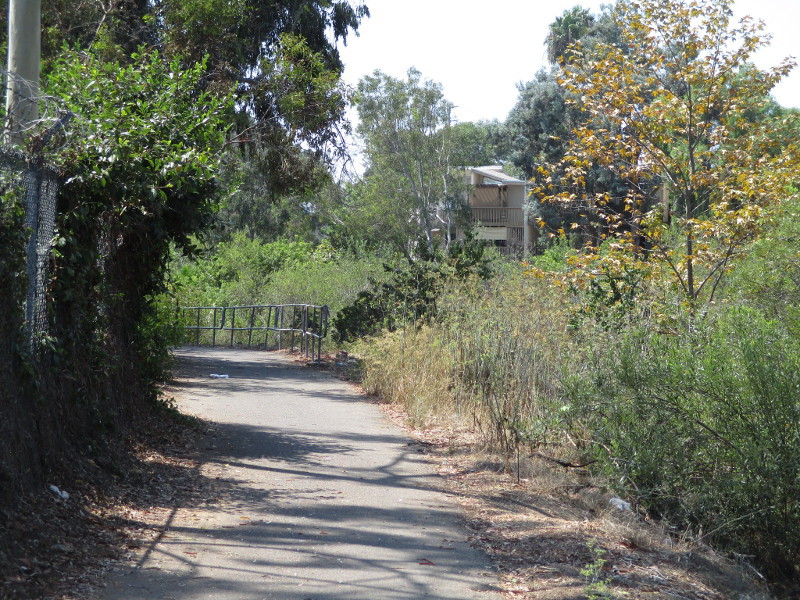
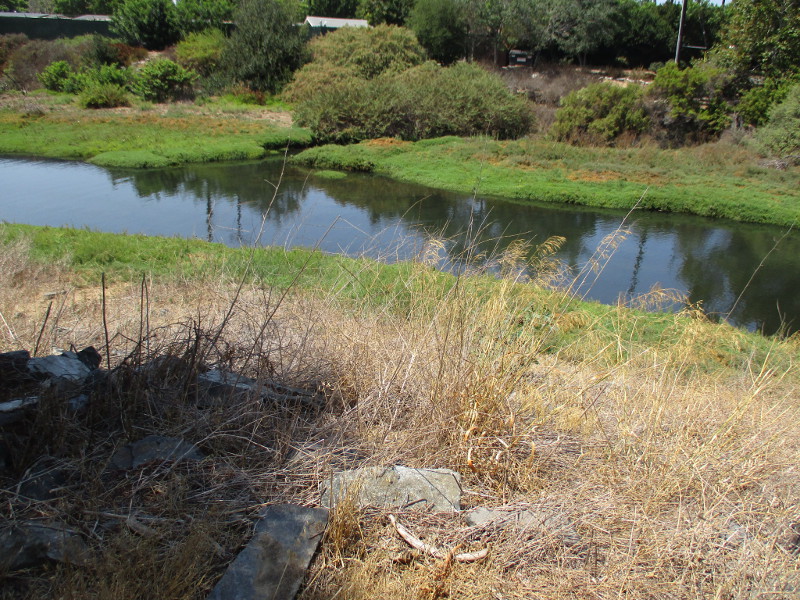
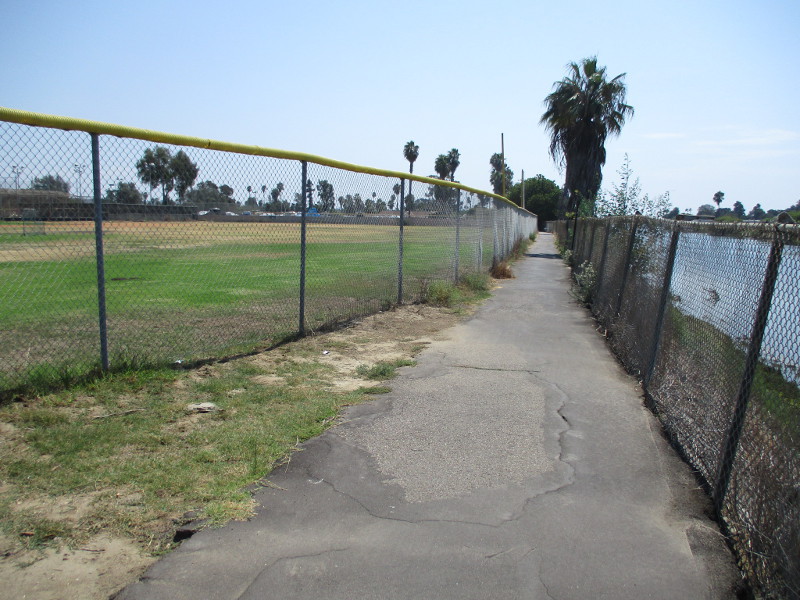
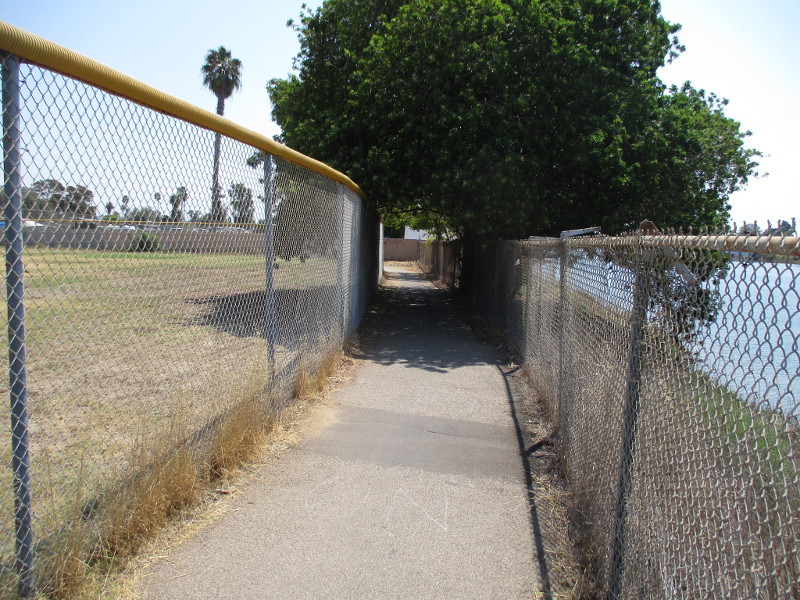
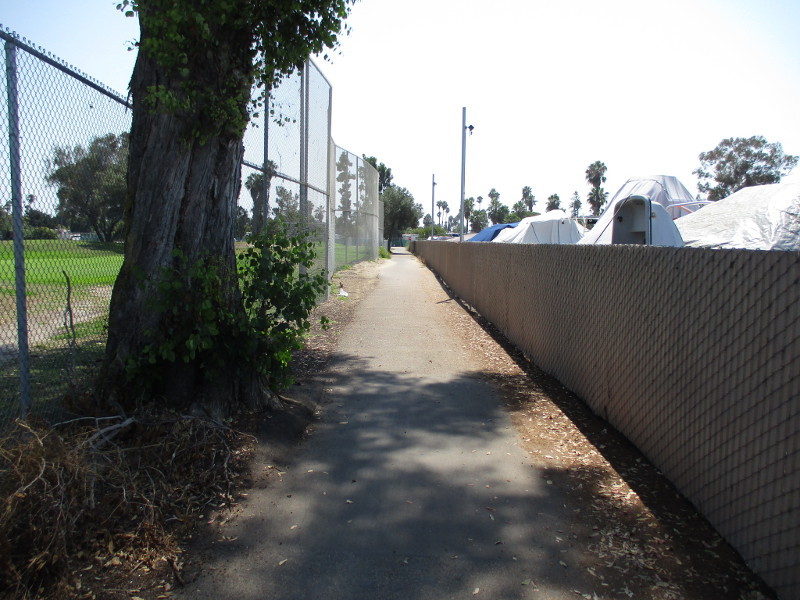
As you’ll see in the upcoming photographs, the path along Rose Creek features natural beauty but can be trashy in places. It cuts behind businesses, passes the ends of residential streets, and winds along the edge of several sporting facilities. I also saw evidence that homeless people use the path and camp near it.

The Rose Creek Bikeway is part of the much longer 44 mile Coastal Rail Trail which, when completed, will connect downtown San Diego with Oceanside, California. (Had I walked north up the path instead, I would have followed Interstate 5 toward La Jolla and Sorrento Valley, next to the tracks of the soon-to-open Mid-Coast Trolley extension.)

Looking north for a moment as I get started south.
About to pass under Mission Bay Drive.
Approaching Garnet Avenue.
Approaching Grand Avenue.
A couple walks dog under Grand Avenue.
It appears someone lives under the bridge.
Passing a basketball court.
Walking between Rose Creek and the Mission Bay Youth Baseball field.
Someone practices pitching.
To the right beyond the fence is the San Diego Mission Bay Boat and Ski Club.
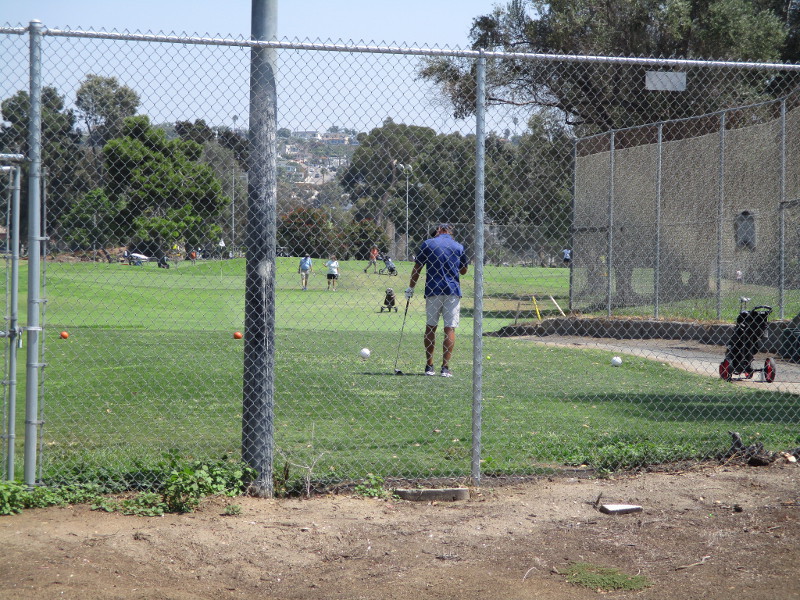
Passing the Mission Bay Golf Course and Practice Center.
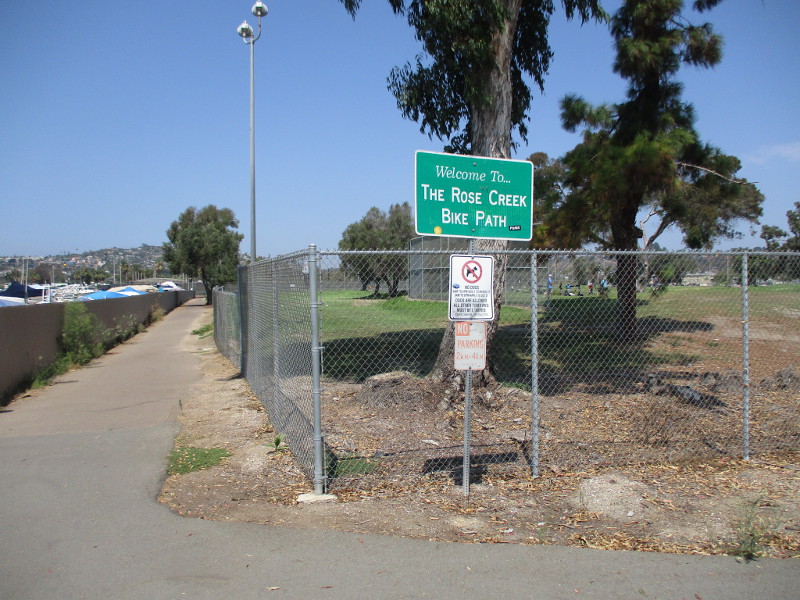
Turning for a moment to look back north. Sign at North Mission Bay Drive, just east of the Mike Gotch Memorial Bridge, reads: Welcome To… The Rose Creek Bike Path.
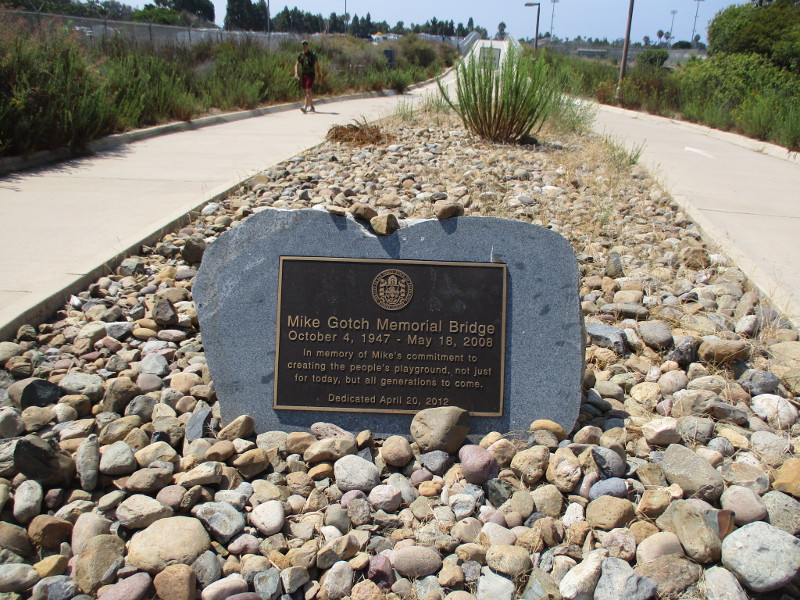
Now walking west, near a plaque at the east end of the Mike Gotch Memorial Bridge.
Mike Gotch Memorial Bridge. October 4, 1947 – May 18, 2008. In memory of Mike’s commitment to creating the people’s playground, not just for today, but all generations to come. Dedicated April 20, 2012.
Looking south toward Mission Bay. I see Fiesta Island in the distance.
Passing behind Mission Bay High School’s sports fields.
Approaching Pacific Beach Drive, where the dedicated bike and pedestrian path ends.
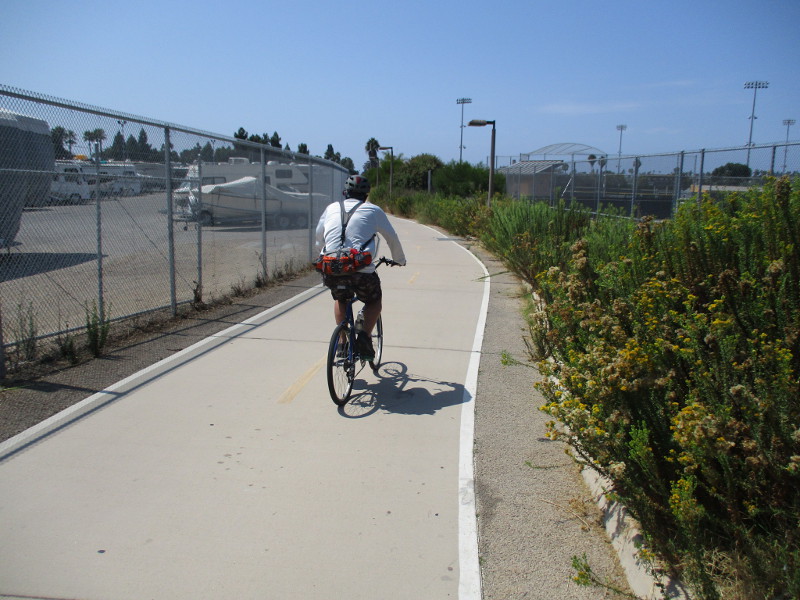
Bicyclists start east along the path, near the entrance to Campland on the Bay.

I live in downtown San Diego and love to walk around with my camera! You can follow Cool San Diego Sights via Facebook or Twitter!

You can easily explore Cool San Diego Sights by using the search box on my blog’s sidebar. Or click a tag! There are thousands upon thousands of photos for you to enjoy!
Another wonderful walk in Balboa Park!

Several walks today. Many photographs taken.

I started in Balboa Park!

And, you know what? Balboa Park on a Saturday morning in late September was just as wonderful as ever…

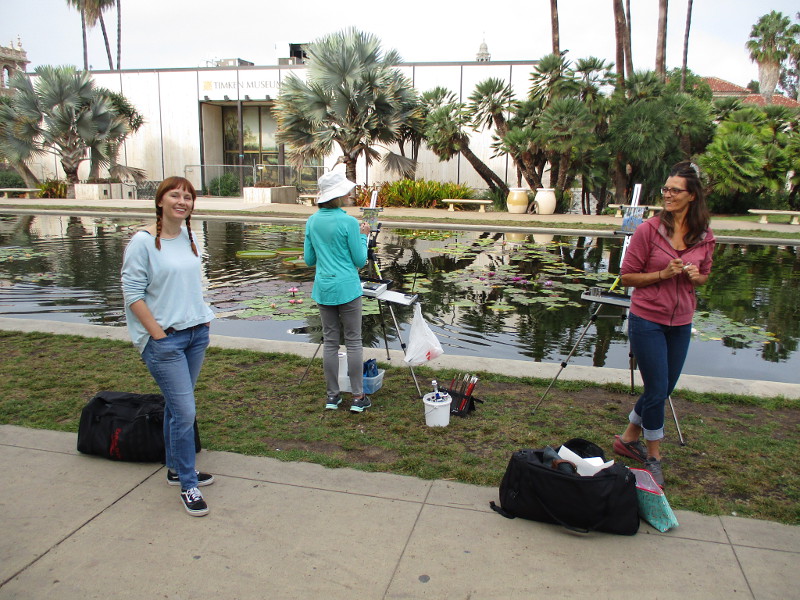
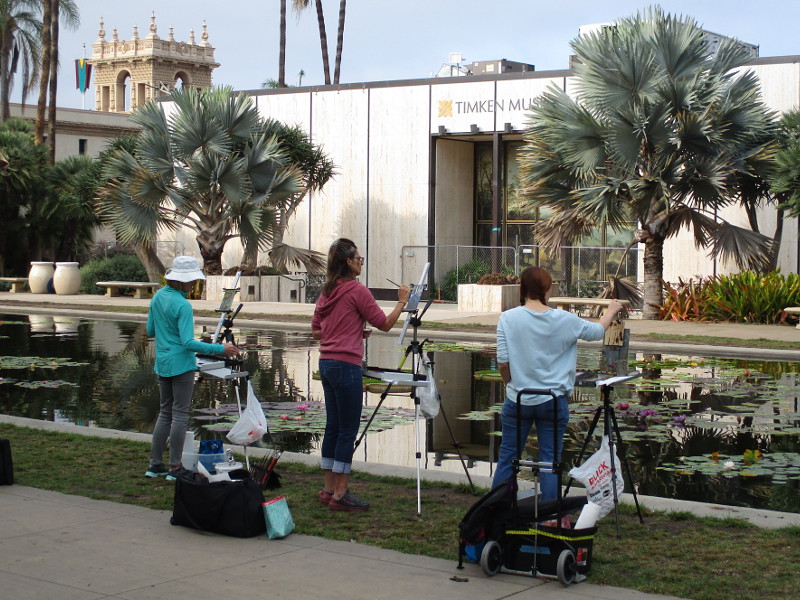
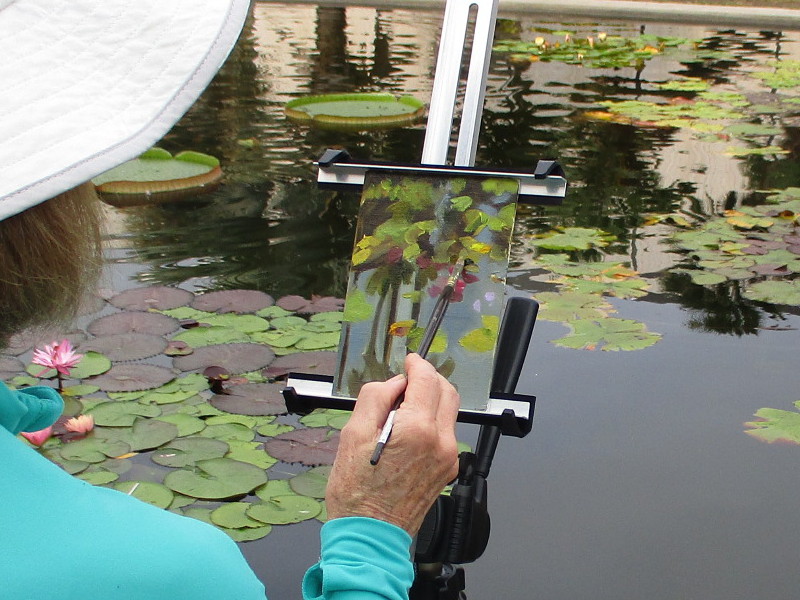
Friendly painters interpret beauty at the Lily Pond.
Brushstrokes reveal wonder.
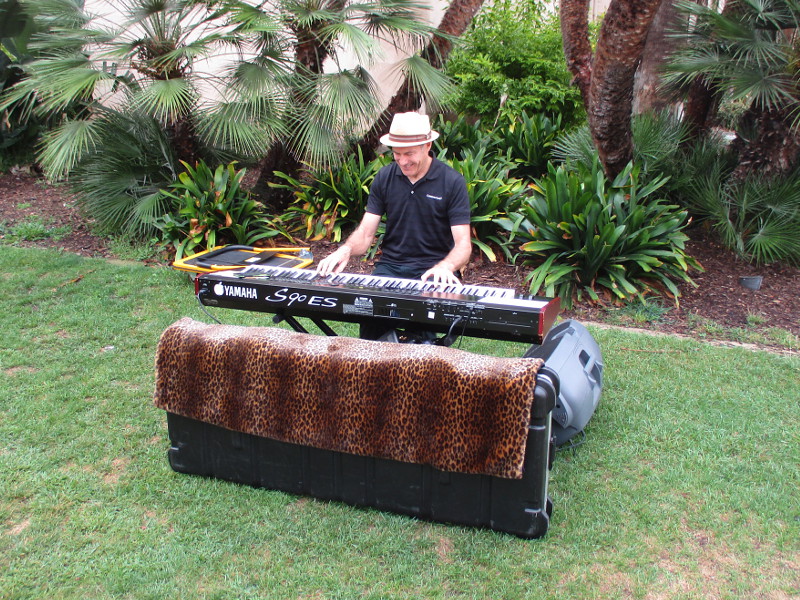
This cool guy was playing music for the painters!
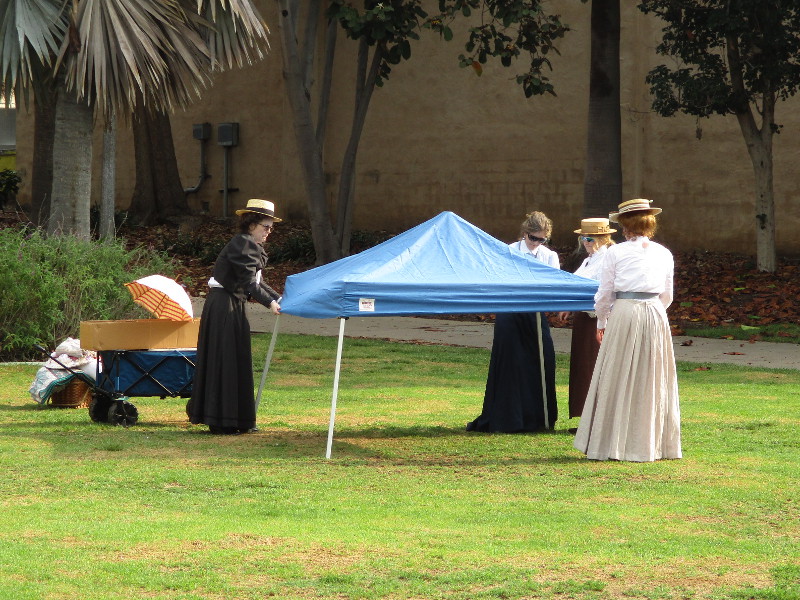
Ladies in old-fashioned garb ready a canopy by the Botanical Building.
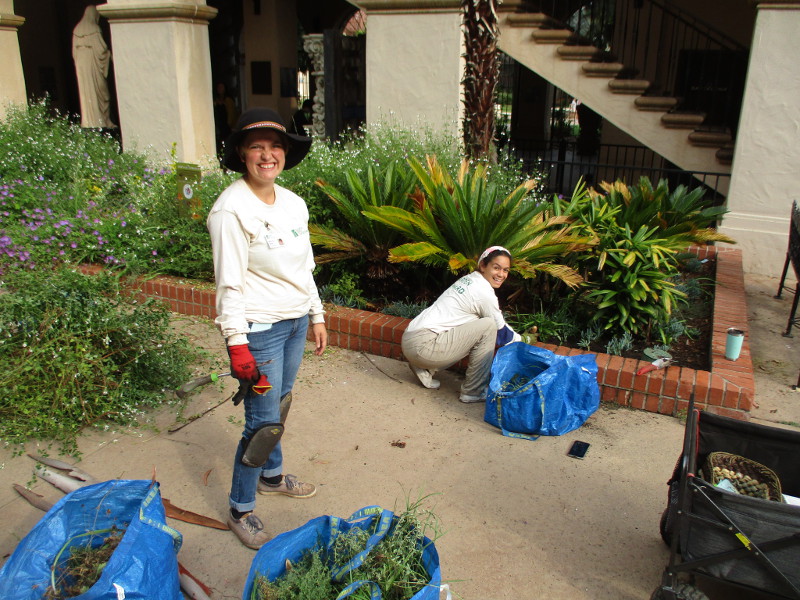
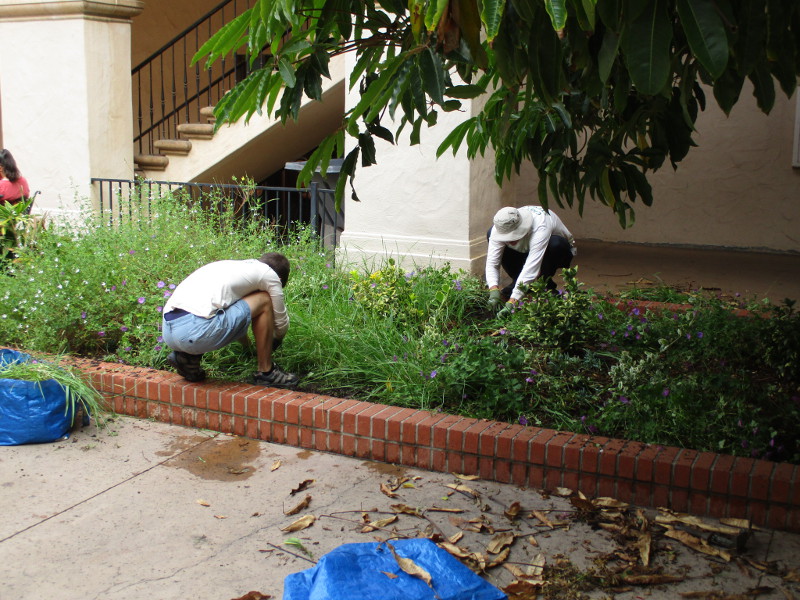
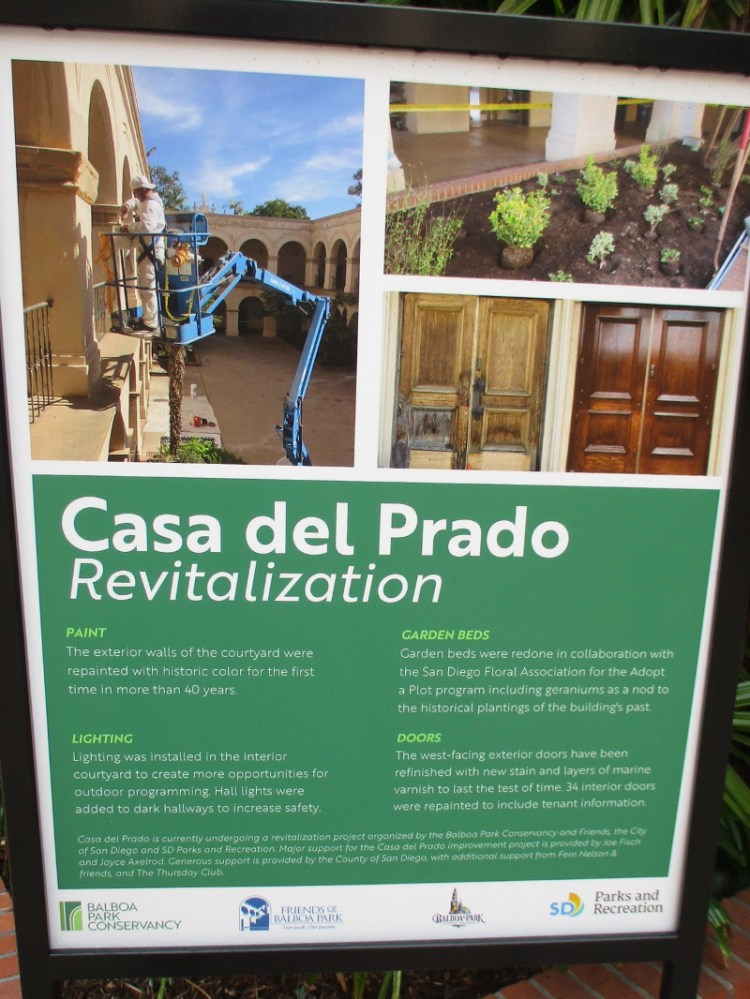
Garden Stewards do some gardening (and smiling) in the Casa del Prado courtyard!
The Casa del Prado revitalization not only includes garden beds redone with the help of the San Diego Floral Association, but painting the building with historic color and new lighting.
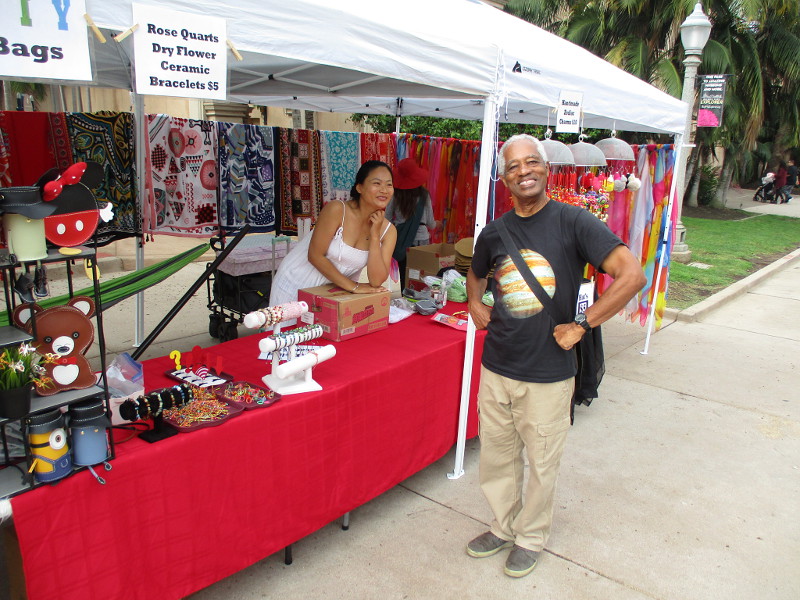
Mitchell, Balboa Park’s cool didgeridoo dude, was hanging out on El Prado. He was wearing Jupiter today! He told me he’s going to be picking up his awesome new sculpted Draco (dragon) didgeridoo soon. He said he’ll send me pics of it which I hope to share!
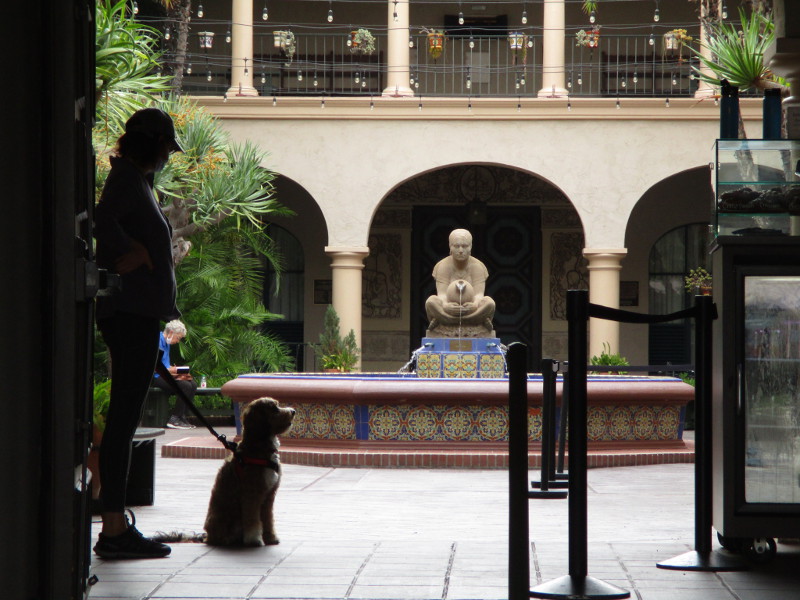
Peeking into the House of Hospitality courtyard.
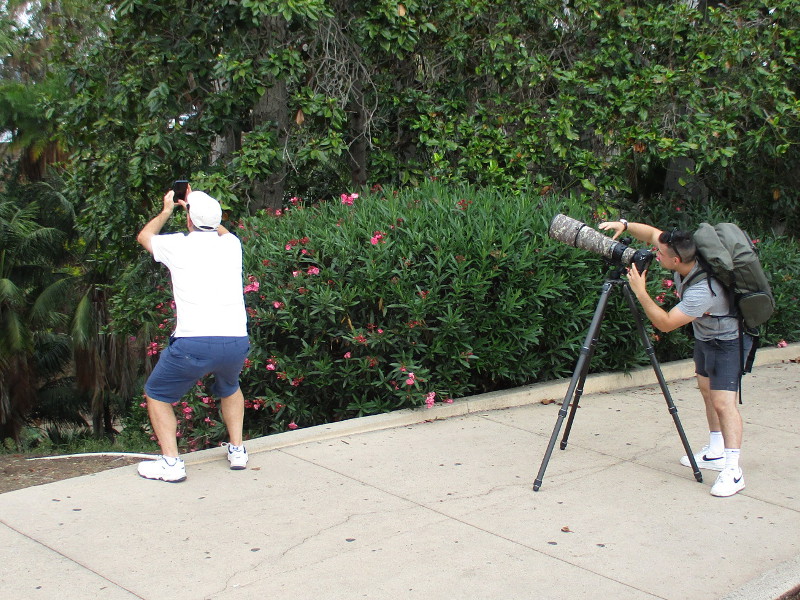
The fellow with the enormous camera is a freelance photographer. He saw a big spider building a long web between a Palm Canyon tree and the nearby restrooms. We marveled at how a mere spider could accomplish such a feat.
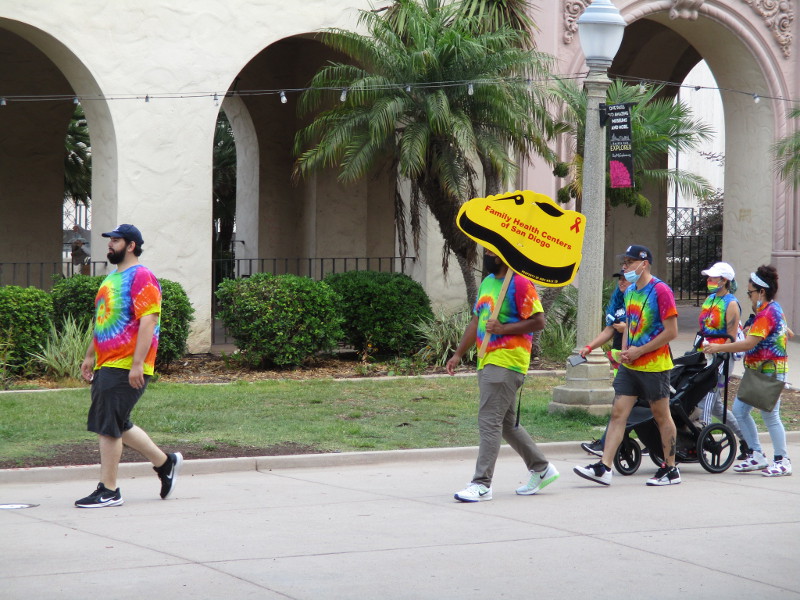
A bunch of walkers were streaming down El Prado. I believe they were raising funds for the Family Health Centers of San Diego.
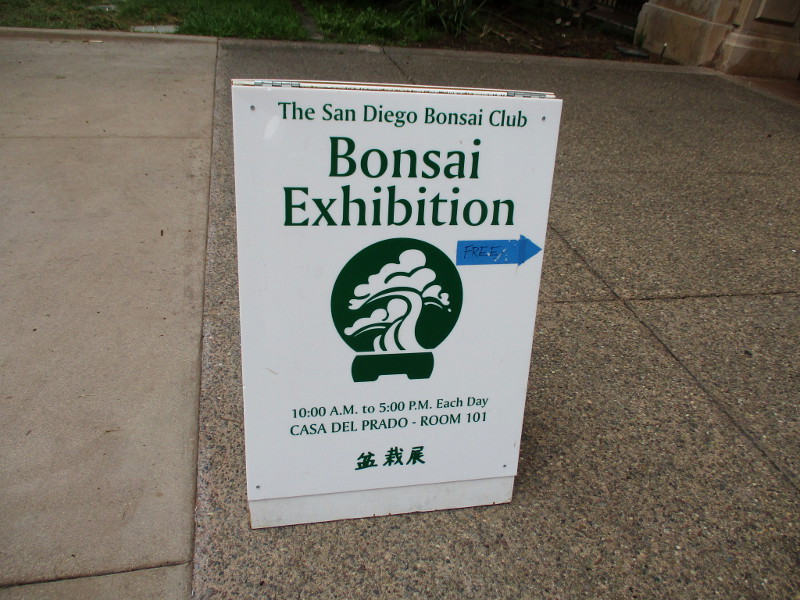
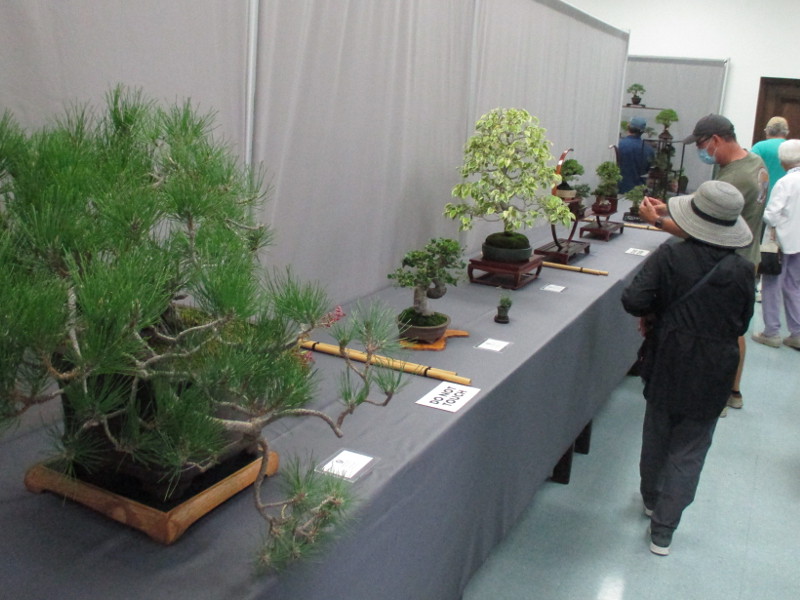
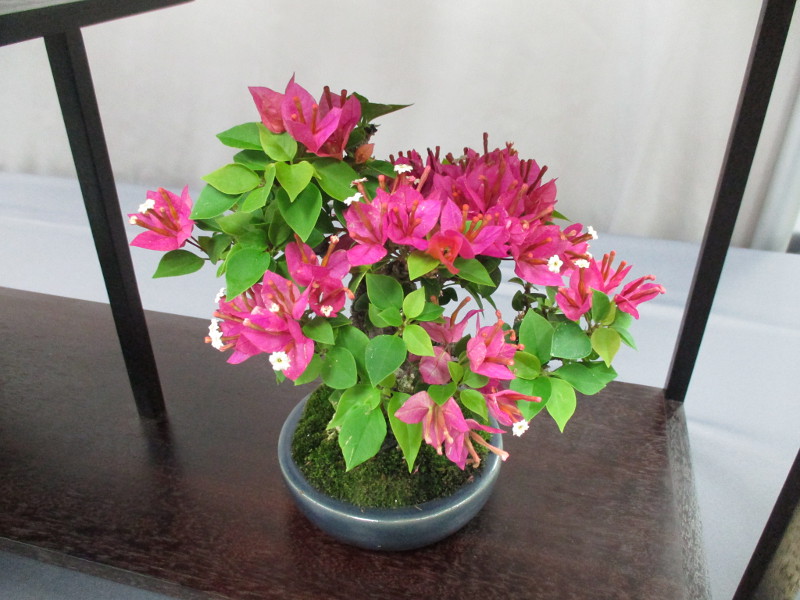
I had to circle back to the Casa del Prado because the San Diego Bonsai Club’s exhibition opened at 10 am.
Another wonderful day walking in Balboa Park.

I live in downtown San Diego and love to walk around with my camera! You can follow Cool San Diego Sights via Facebook or Twitter!
You can easily explore Cool San Diego Sights by using the search box on my blog’s sidebar. Or click a tag! There are thousands upon thousands of photos for you to enjoy!