Doctor Who and science fiction fans, take note! The exhibition Doctor Who Worlds of Wonder: Where Science Meets Fiction is coming soon to San Diego!
Both fun and educational, the world-class exhibit will open at the Comic-Con Museum in Balboa Park on March 15, 2025.
The museum will be overflowing with iconic props, sets, and behind-the-scenes materials from Doctor Who, the world’s longest-running science fiction television show!
BBC Studios and scientific advisors will help produce an interactive experience that will inspire Comic-Con Museum visitors, as they learn about scientific topics touched upon in episodes of Doctor Who. As a promotional flyer explains: It is a must-see for families, school groups, Doctor Who fans, curious minds and future scientists, whether or not they have seen the TV show.
People I spoke to at the museum today are super excited to be hosting this epic exhibition.
Mark it down on your calendars! I can’t wait!
…
I post new blogs pretty often. If you like discovering new things, bookmark coolsandiegosights.com and swing on by occasionally!
I live in downtown San Diego and love to walk around with my camera! You can follow Cool San Diego Sights via Facebook or X.
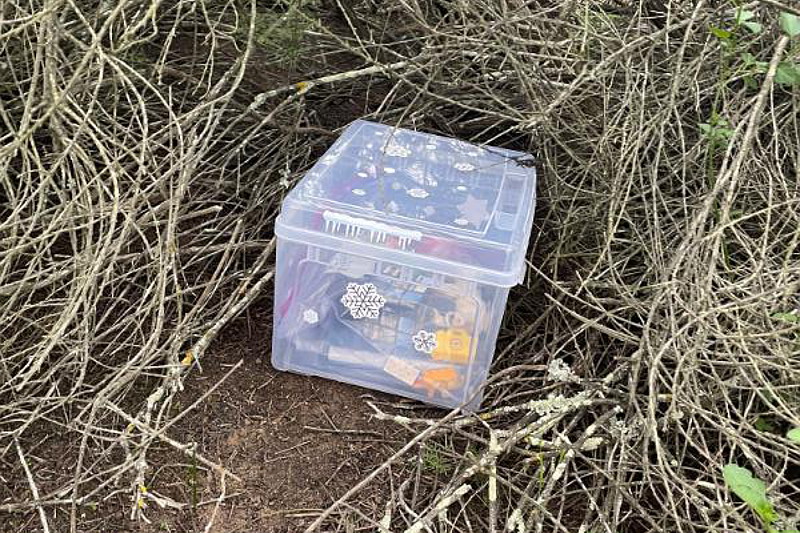
An epic multi-month event has begun in San Diego and throughout our region. Geocachers are participating in Cache Across Southern California 2025!
Geocaches are now hidden and waiting for discovery in ten Southern California counties. The event is described in this way:
Cache Across Southern California (CASC) invites you on a thrilling journey through roughly 40 Geocaches hidden across all 10 Southern California counties. With this year’s Hollywood-inspired theme, you’ll explore the magic of filmmaking while embarking on a Geocaching adventure like no other. For those who are unfamiliar, Geocaching is a worldwide GPS-based scavenger hunt in which one uses a free app on their phone to find hidden containers with a log sheet inside. To join the fun, locate a CASC Geocache and print the official passport. Each cache contains a unique stamp, which you’ll use to mark the small movie tickets on your passport. This makes prize redemption at the SoCal Spring Fling Mega Event on May 3, 2025, a seamless experience. As you progress, share your journey with fellow participants in the official CASC Facebook group. The group will also feature updates and announcements leading up to the Spring Fling.
If participating in this epic event sounds overwhelming, fear not. While the top prize requires locating 15 caches across 10 counties, you can also win prizes for finding 6 caches across 3 counties.
Want to join the fun or learn more about the outdoor hobby of geocaching? The San Diego Geocachers Facebook Group is where you can interact with over a thousand other local geocaching enthusiasts.
Happy hunting!
…
I post new blogs pretty often. If you like discovering new things, bookmark coolsandiegosights.com and swing on by occasionally!
I live in downtown San Diego and love to walk around with my camera! You can follow Cool San Diego Sights via Facebook or X.
It’s almost New Year’s Day. It’s one of those days when we pause to think about the passing of time.
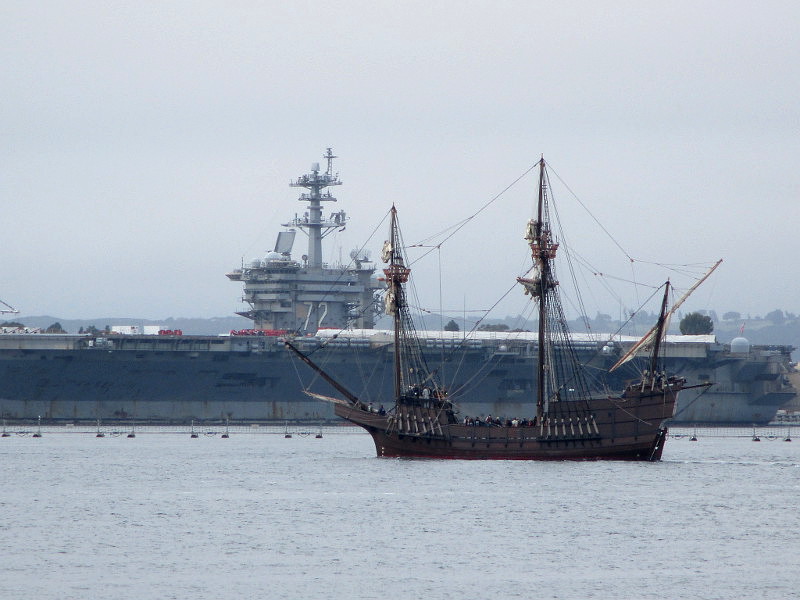
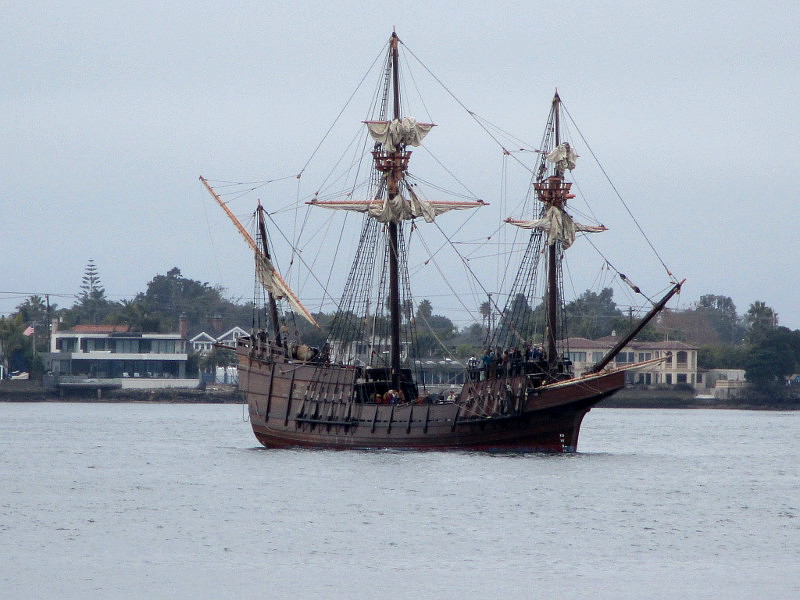
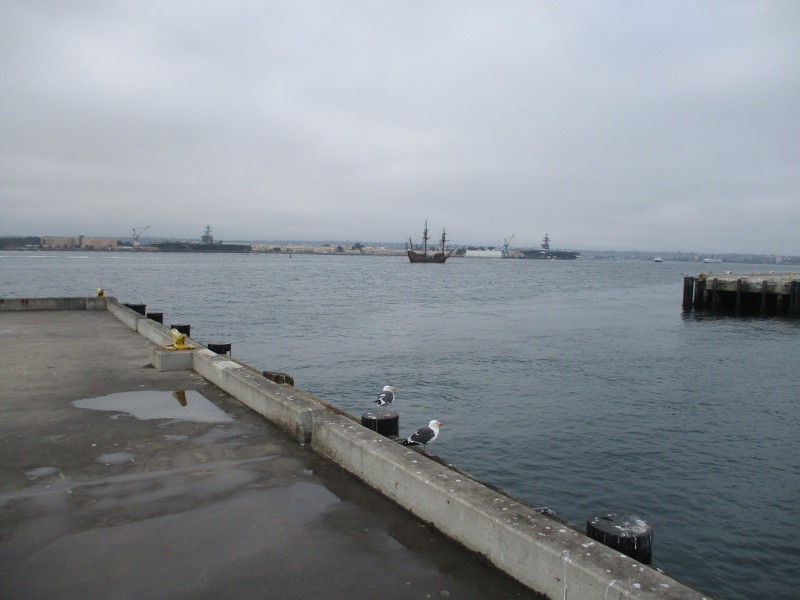
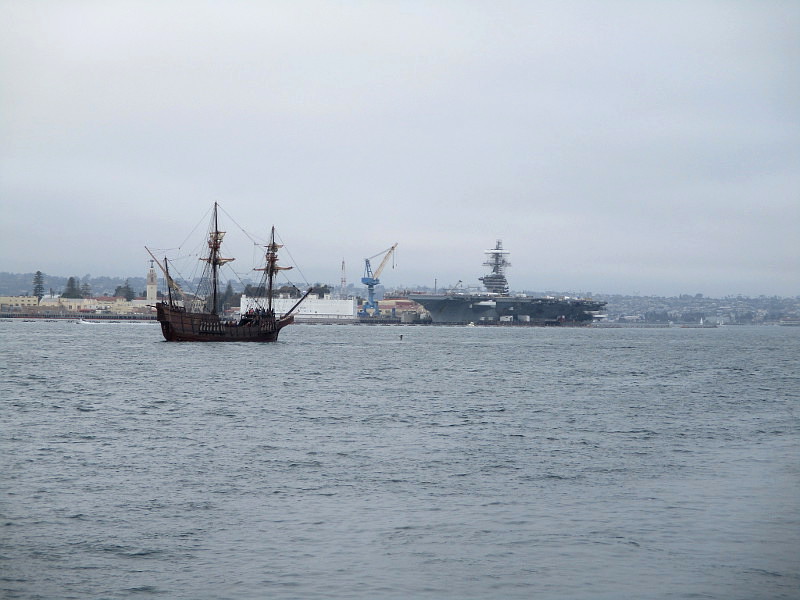
During a walk along San Diego’s Embarcadero this morning, I took these interesting photographs. They demonstrate how human technology has advanced over the course of five hundred years.
The historic San Salvador galleon was about 100 feet long. The two Nimitz-class aircraft carriers have a length of 1,092 feet. That’s more than ten times the length of an old Spanish galleon.
A galleon, built primarily of wood, would have a displacement weight of about 200 tons. The gigantic, mostly steel aircraft carriers? Their displacement weight is 116,800 tons–that’s 584 times heavier!
A Spanish galleon could travel at a maximum speed of around 8 knots (under ideal wind conditions). These enormous, nuclear powered aircraft carriers can travel at a speed over 30 knots, no matter the weather, without refueling for 20–25 years!
Today technology is progressing at a mind-boggling rate. Is it possible to imagine the distant future? In another five hundred years, will an advanced civilization still need or have ocean-going ships?
Only time will tell!
Happy New Year!
…
I post new blogs pretty often. If you like discovering new things, bookmark coolsandiegosights.com and swing on by occasionally!
I live in downtown San Diego and love to walk around with my camera! You can follow Cool San Diego Sights via Facebook or X.
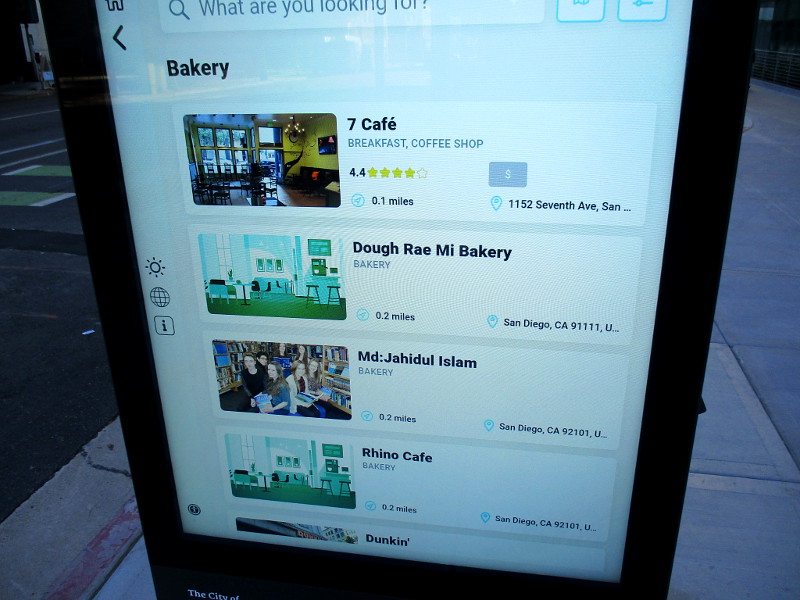
San Diego’s first Smart City touchscreen kiosk was installed last month in downtown, on the corner of Fourth Avenue and B Street. I encountered it for the first time several days ago during a walk!
The big, bright, digital touchscreen kiosk provides information in a way that might remind you of your smartphone. All sorts of great up-to-date information is available for tourists, residents, those who work or play downtown, and even those who are homeless.
The kiosk I observed is the first of 50 that are planned for downtown San Diego! The project is made possible by a partnership between the City of San Diego, IKE Smart City, and the Downtown San Diego Partnership.
Not only do these high-tech kiosks provide passersby with transit updates, event information, city attractions, maps, services and more, they provide free Wi-Fi!
I spent a few minutes goofing around with this first downtown kiosk and was really impressed! It’s a brilliant resource that anyone can freely and easily use!
…
I post new blogs pretty often. If you like discovering new things, bookmark coolsandiegosights.com and swing on by occasionally!
I live in downtown San Diego and love to walk around with my camera! You can follow Cool San Diego Sights via Facebook or X.
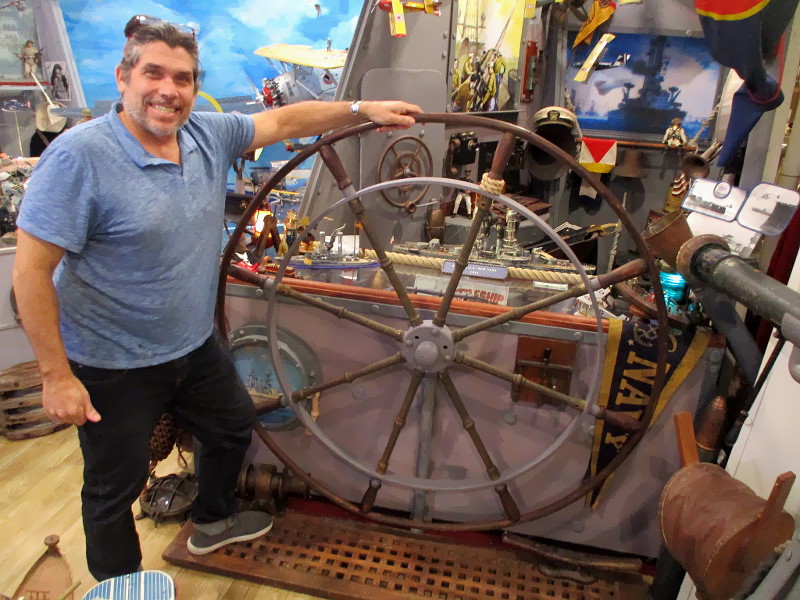
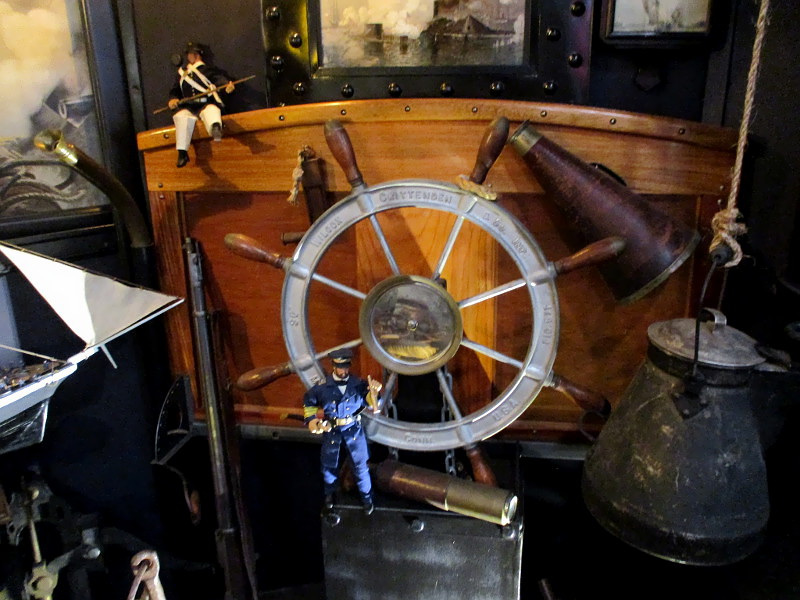
What you see above is very rare. It’s a bronze and wood, 57 inch diameter ship’s wheel. It dates from the Age of Steel Riveted Hull and Steam, 1912 to 1930s. There’s photographic evidence that it might very well have been used in a navy’s super-dreadnought warship!
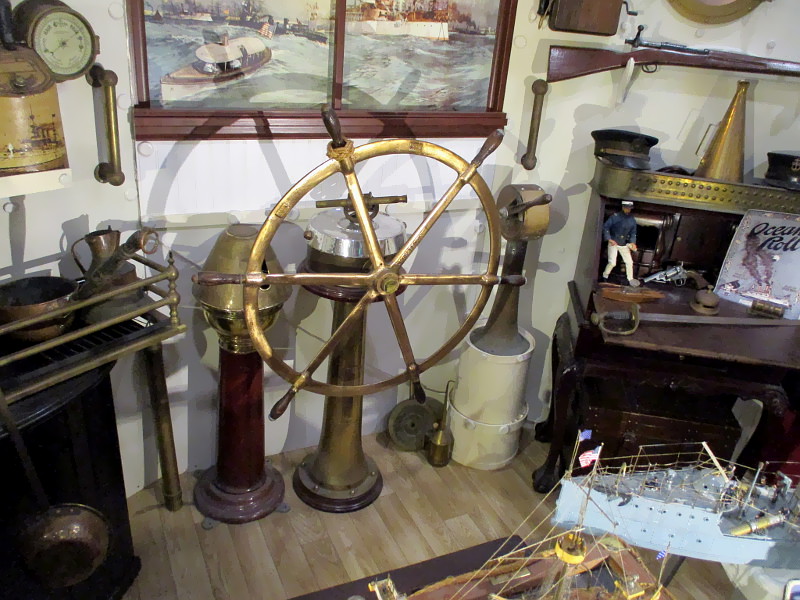
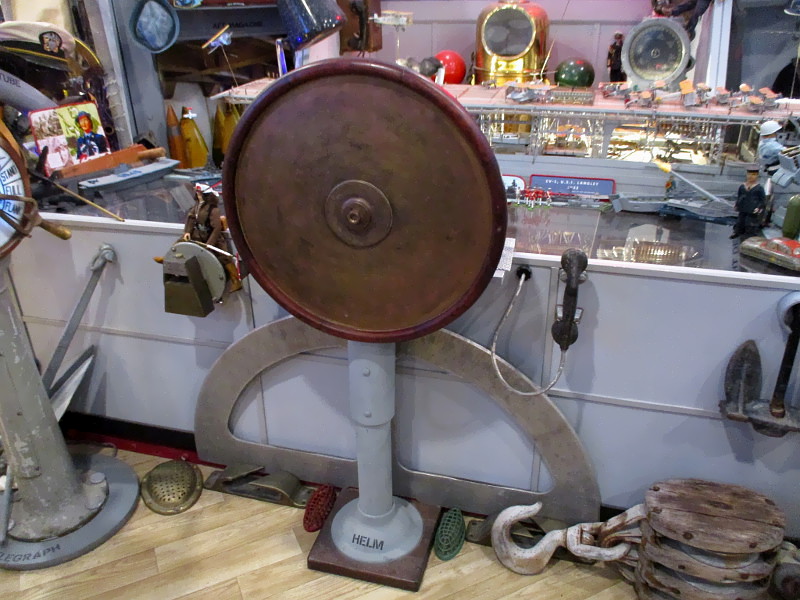
Joe Frangiosa was super excited to find this rare wheel. His amazing Nautical History Gallery and Museum inside Liberty Station’s Command Center building now features ship’s wheels from five different eras in maritime history. The huge wheel made its first appearance in his museum just a week ago!
Joe confided that this addition has been enormously satisfying. He installed the huge wheel in such a way that people can turn it and pretend to command the high seas. Kids love it!
Joe suggested you all visit his Instagram page here.
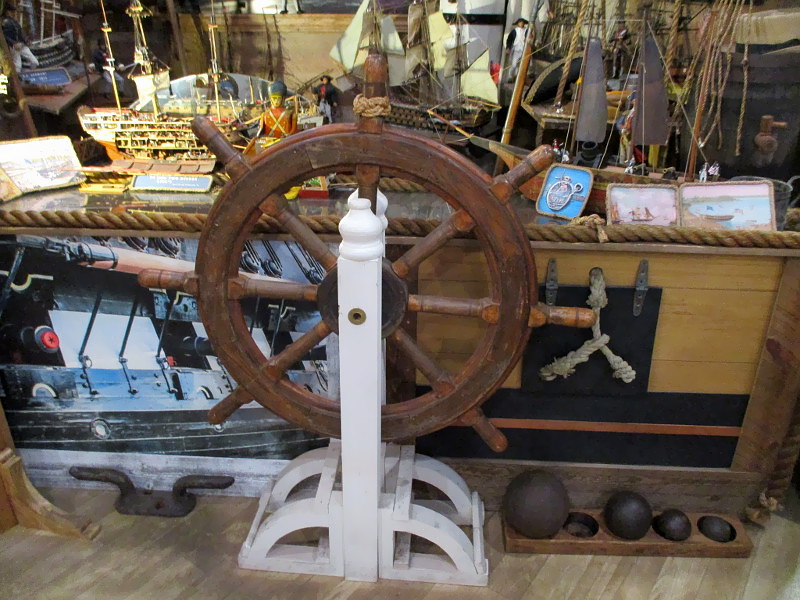
Check out my photos of the other four wheels. You might note that rope is tied around one spoke–the king spoke. When that bit of rope is located at the top of a wheel, that means the rudder of the ship is centered. A sailor can steer by feel in dark, stormy or foggy conditions.
The next wheel is made entirely of wood, with wood peg construction. It dates from the Age of Wooden Hull and Sail, 1775 to 1840.
The next wheel is made of iron. It dates from the Age of Wooden and Iron Hull, Sail and Steam, 1840 to 1887.
This next ship’s wheel is polished bronze and shines brightly! It dates from the Age of Steel Riveted Hull, Sail and Steam, 1887 to 1912.
Finally, this ship’s wheel without spokes is also bronze, but unpolished. It dates from the Age of Steel Welded Plate Hull, 1930s to 1945.
…
Thanks for visiting Cool San Diego Sights!
I post new blogs pretty often. If you like discovering new things, bookmark coolsandiegosights.com and swing on by occasionally!
I live in downtown San Diego and love to walk around with my camera! You can follow Cool San Diego Sights via Facebook or X.
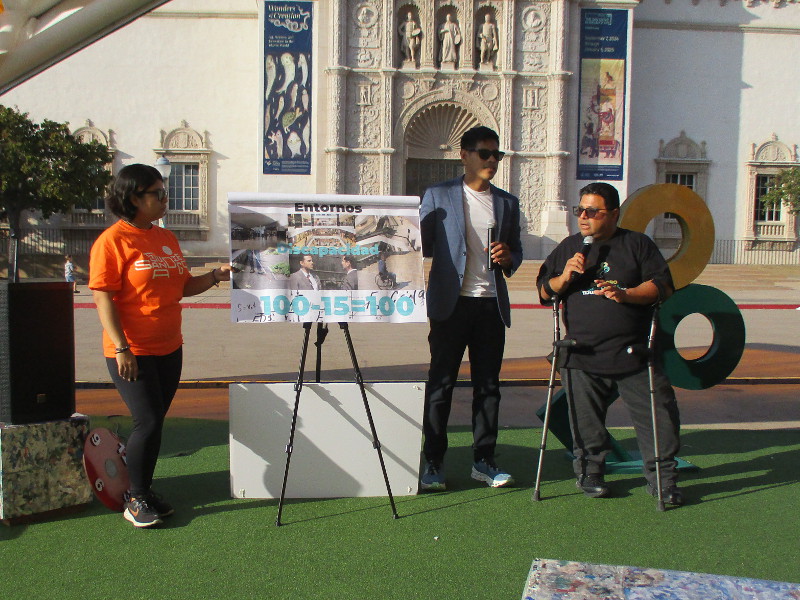
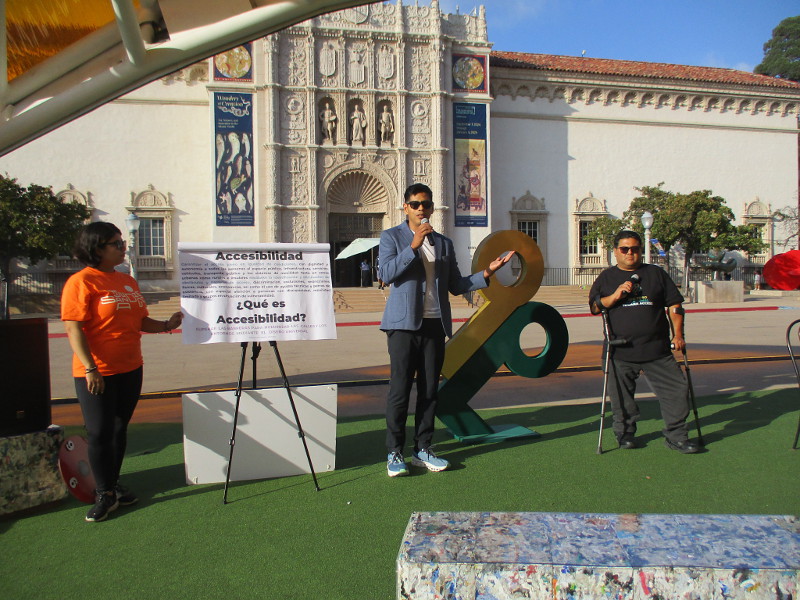
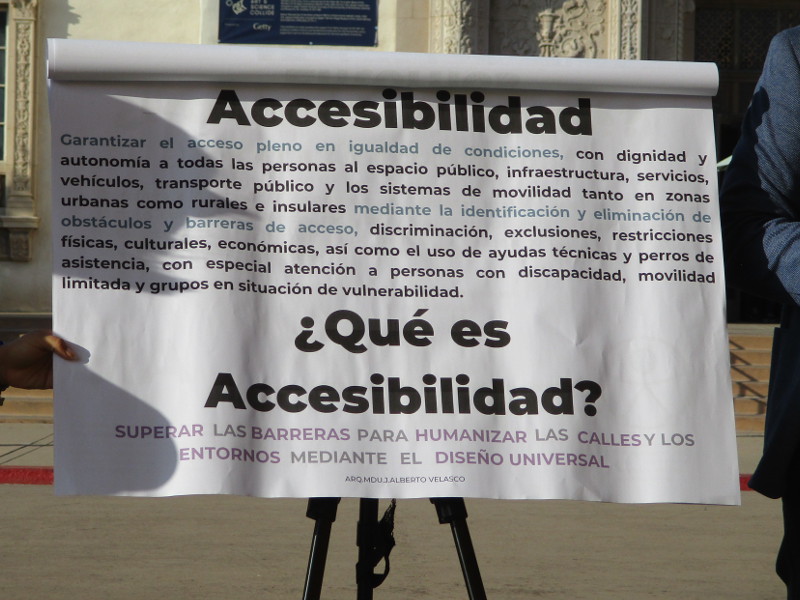
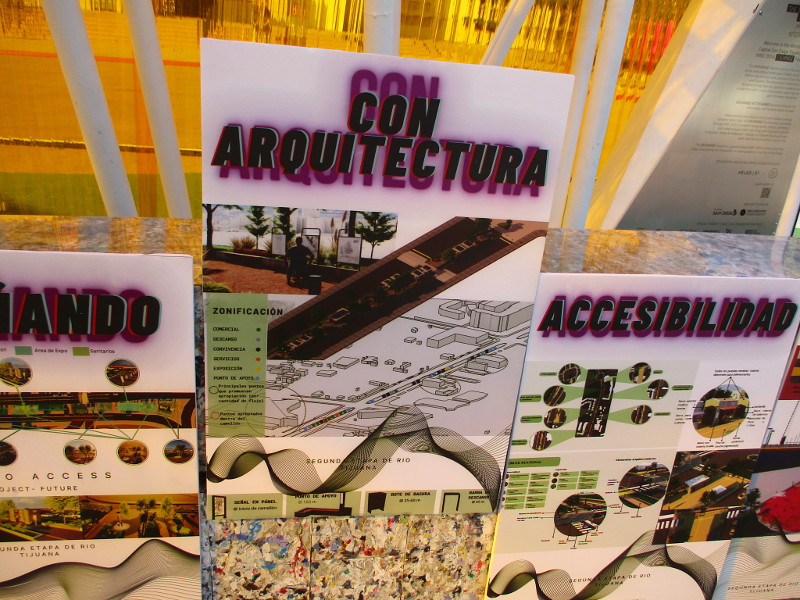
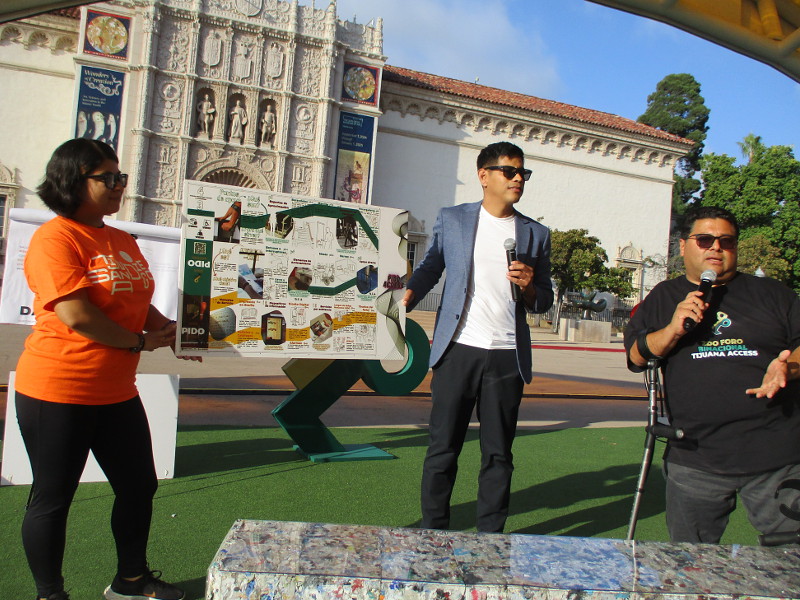
An important presentation was made this evening in San Diego’s Balboa Park. A thoughtful audience, assembled inside the World Design Capital’s Exchange Pavilion, learned how the organization Tijuana Access is working to make Tijuana and Mexico more accessible for the disabled.
Eduardo Lopez Ruiz explained how Tijuana Access is raising awareness and lobbying for greater accessibility south of the border. He explained that our neighbors to the south are a bit behind the United States when it comes to making buildings, streets and city facilities more friendly for those who have difficulty functioning in a world full of potential obstacles.
Working to make our world more accessible, Eduardo affirmed, is a matter of compassion. Not only are a significant number of people born with or develop a disability, but most of us become elderly–right?
There are all sorts of ways to make a city more accessible. Automatic doors, ramps, lifts, slip resistant materials and tactile paving can be adapted to enhance mobility. Handrails, rest furniture, properly placed buttons and switches, Braille printing and other changes can make life much easier and safer for many.
The presentation was mostly in Spanish with an interpreter helping us English speakers. I asked how I could link to Tijuana Access with my blog, because readers might like to help in some way. The Tijuana Access Instagram page is here. Their Facebook page is here.
To my readers in Mexico, perhaps this is a cause you’d like to support. Or simply spread the word to help to raise awareness!
…
Thanks for visiting Cool San Diego Sights!
I post new blogs pretty often. If you like discovering new things, bookmark coolsandiegosights.com and swing on by occasionally!
I live in downtown San Diego and love to walk around with my camera! You can follow Cool San Diego Sights via Facebook or X.
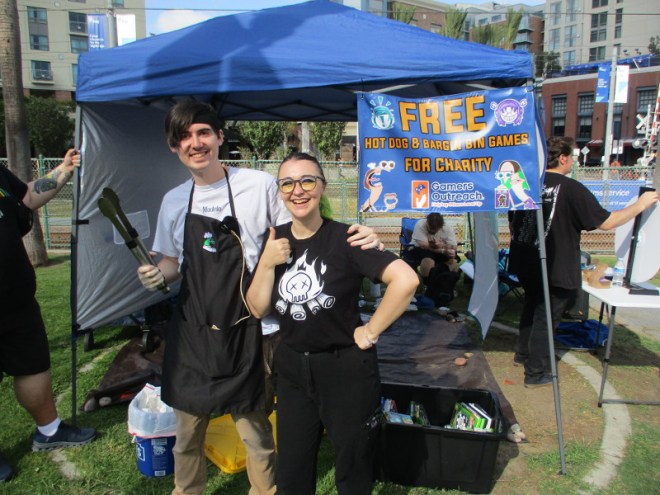
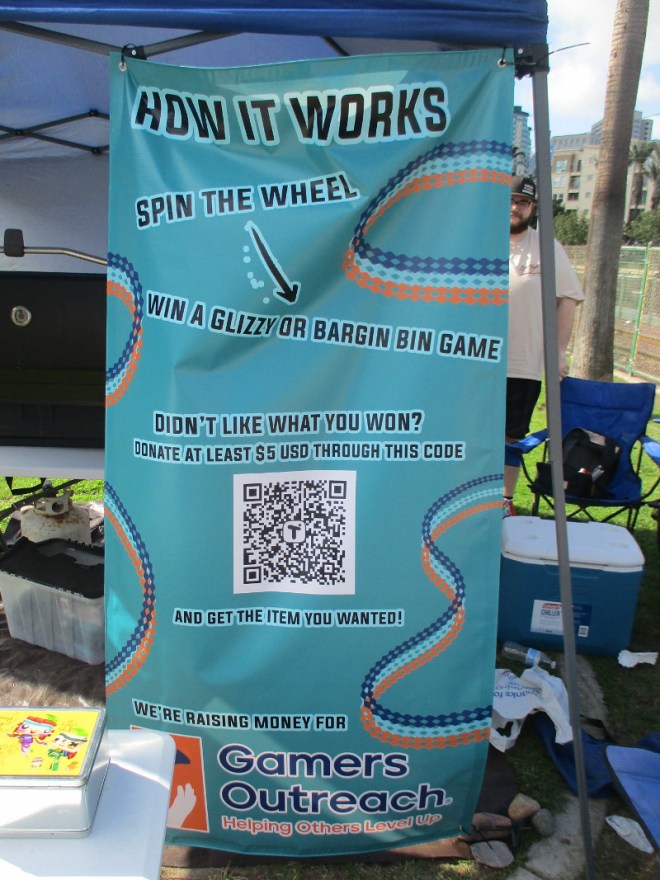
Are you a gamer with heart? Would you like to improve the lives of hospitalized kids? Gamers Outreach is a charity that would appreciate your help.
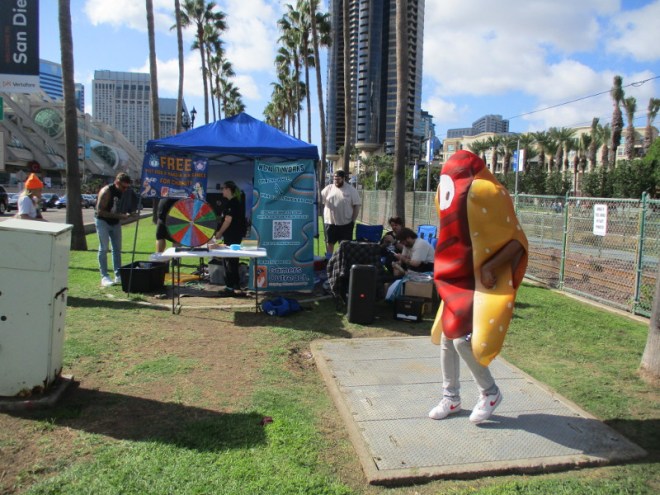
The two cool people in the above photo are raising money for Gamers Outreach during TwitchCon in San Diego. I spotted them today grilling hot dogs at a tent on Harbor Drive. Look for them near a dancing hot dog!
Their objective: help fund programs that brighten the day of sick kids in hospitals, including San Diego’s own Rady Children’s Hospital.
Let me share two paragraphs from Gamers Outreach literature:
WHO WE ARE
Gamers Outreach is a charity that empowers hospitalized families through play. Our goal is to build a world where activity is easily prioritized as part of care. Video games are our tools of choice.
WHY WE DO IT
Being in the hospital can be scary and isolating. Games give kids access to adventure and opportunities to socialize. Sometimes healthcare staff even use games to assist with treatment!
Gamers Outreach has several programs. Click here to check out their GO Karts (Gamers Outreach Karts), which are portable video game kiosks built specifically for hospitals. Kids stuck in bed can play!
The Player 2 program encourages volunteers to distribute, manage, and play games with hospitalized kids! This role is particularly great for college gamers!
The Save Point program provides hospitals with high-tech vending machines that distribute items such as toys, game codes, and fun swag to kids receiving care . . . as they progress through treatment. Make getting better a fun goal! Curious hospitals should check this out!
Gamers Outreach helps thousands of children per year in a multitude of hospitals. Interested in learning more, and perhaps helping this effort? Visit their website by clicking here!
If you’re in San Diego for TwitchCon, head over to the fundraising tent on Harbor Drive across from the convention center, near the Gaslamp trolley station. I spun their prize wheel and got a free hot dog!
…
Thanks for visiting Cool San Diego Sights!
I post new blogs pretty often. If you like discovering new things, bookmark coolsandiegosights.com and swing on by occasionally!
I live in downtown San Diego and love to walk around with my camera! You can follow Cool San Diego Sights via Facebook or X.
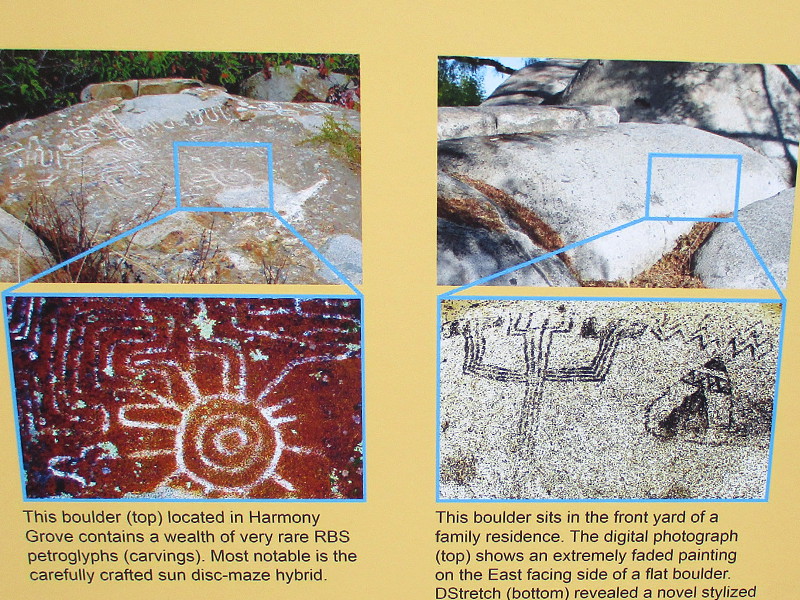
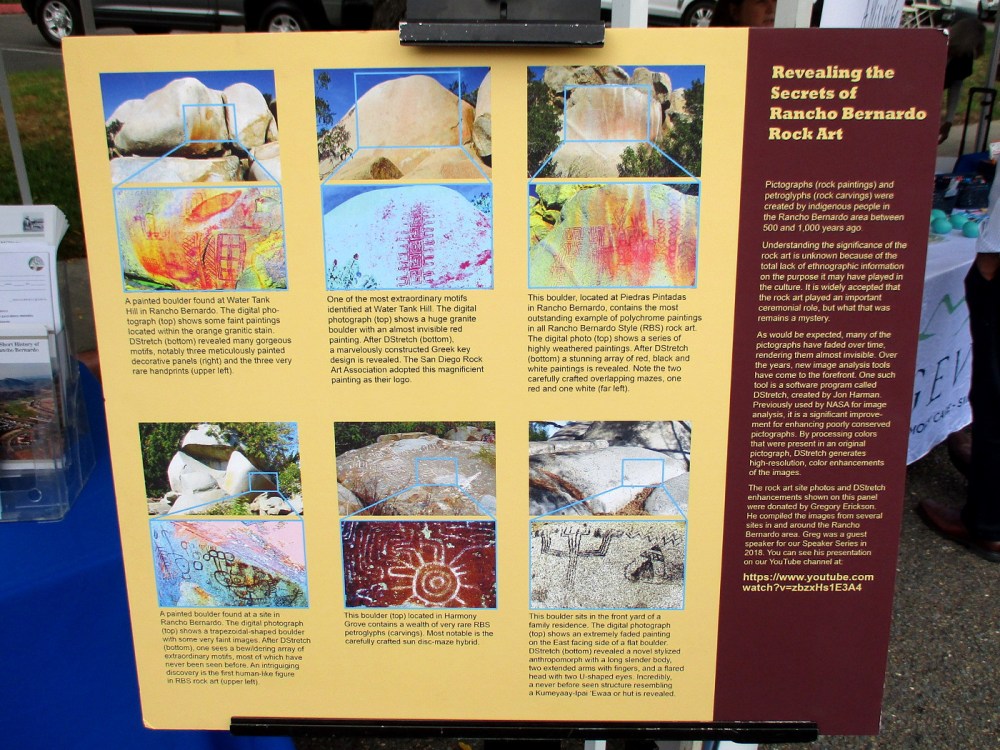
Surprising as it might be, Rancho Bernardo has some of the most unique and extraordinary rock art in North America!
Five hundred to one thousand years ago, indigenous people created both pictographs (rock paintings) and petroglyphs (rock carvings) in present-day Rancho Bernardo. I didn’t know this until I observed an interesting Rancho Bernardo Historical Society poster at last weekend’s RB Alive! street festival.
If you’d like to learn more about this topic, there’s an informative YouTube video you should watch. A history presentation from 2018 features analysis of Rancho Bernardo’s rock art. Photographs of the badly faded art were enhanced using special software previously used by NASA.
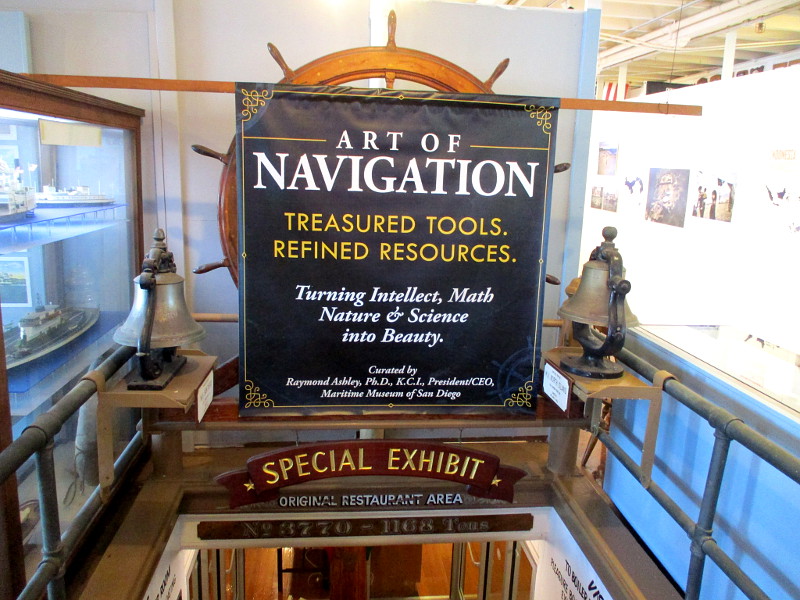
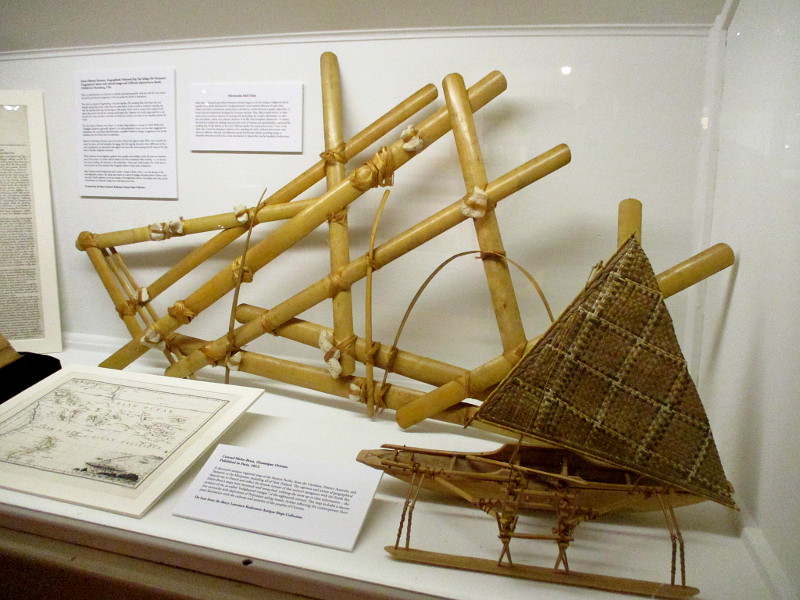
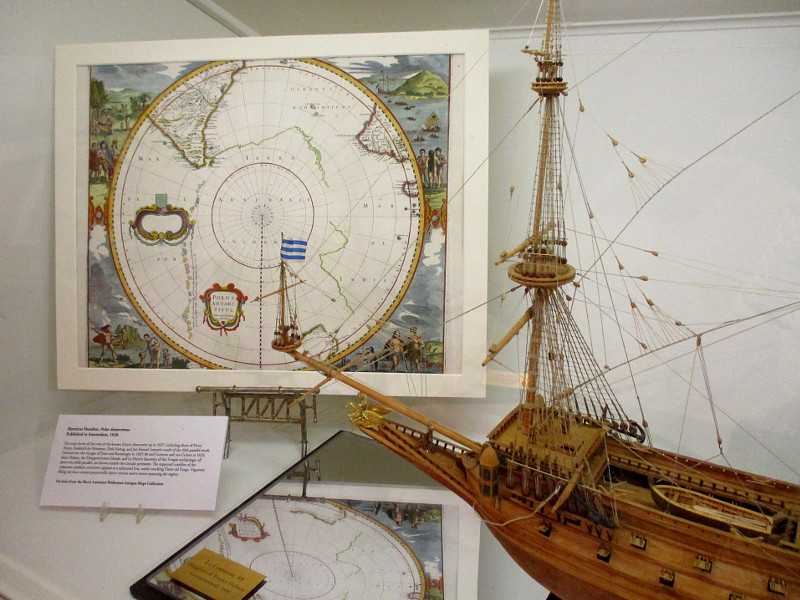
Those who are fascinated by tall ships, exploration and the evolution of technology don’t want to miss a great new exhibit at the Maritime Museum of San Diego. It’s titled the Art of Navigation.
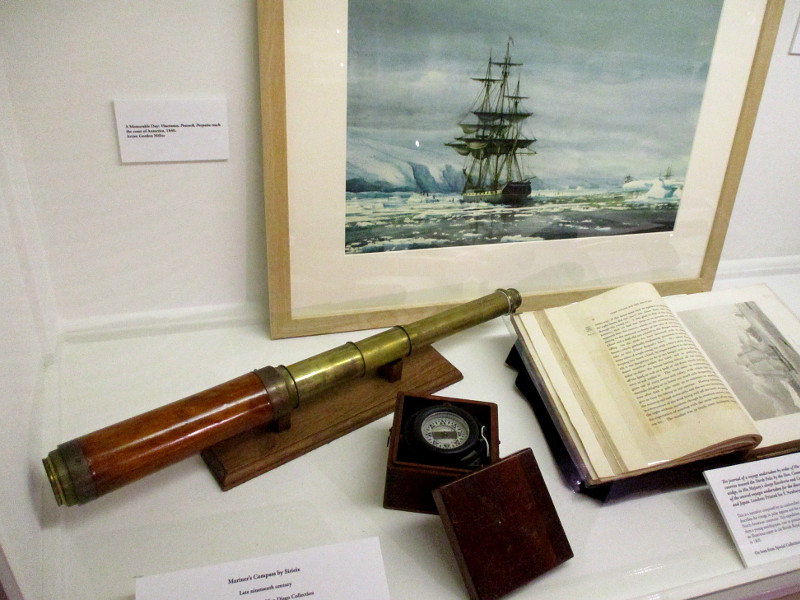
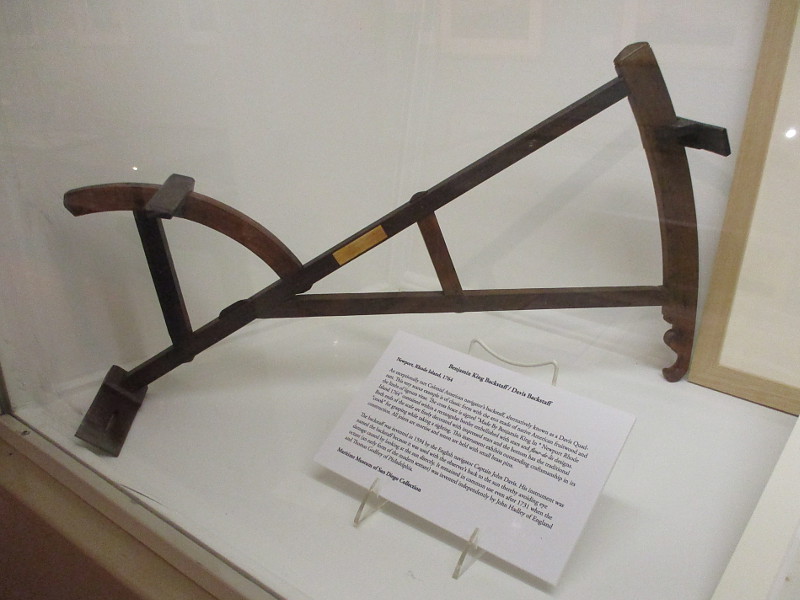
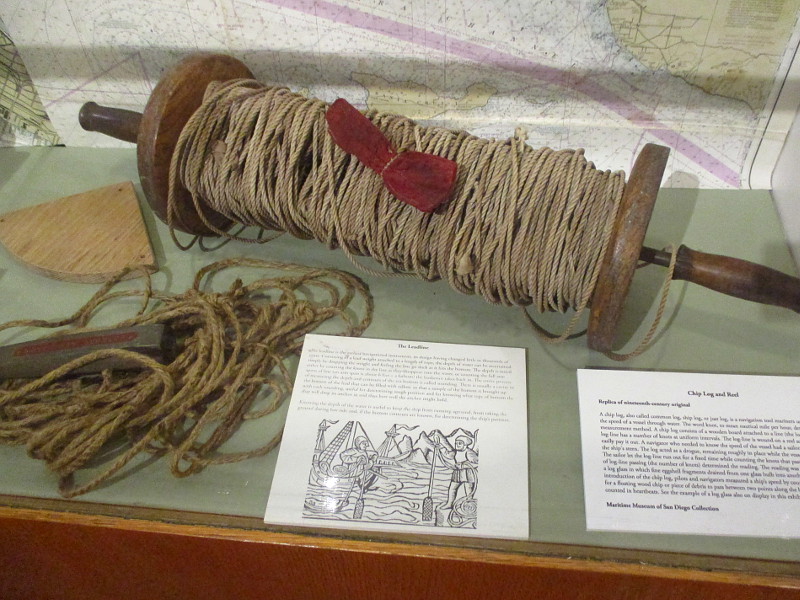
Visitors to the exhibit learn how navigators have used maps, charts and a variety of tools to find their way across the oceans and through dangerous waters. The extensive displays include some exceptionally rare antiques. Old instruments that can be viewed include an astrolabe, backstaff, nocturnal, traverse board, chip log and reel, hand-held telescope, cross-staff, quadrant, taffrail log, navigation slate and more! These instruments might seem primitive when compared with modern technology, but ship’s captains successfully sailed around the planet with the information they provided.
Personally, I like to read nautical stories set during the Age of Sail. As I read I’ll come across the names of these instruments, and at times puzzle over their application. The descriptive Art of Navigation exhibit brings helps to bring those adventurous old stories to life!
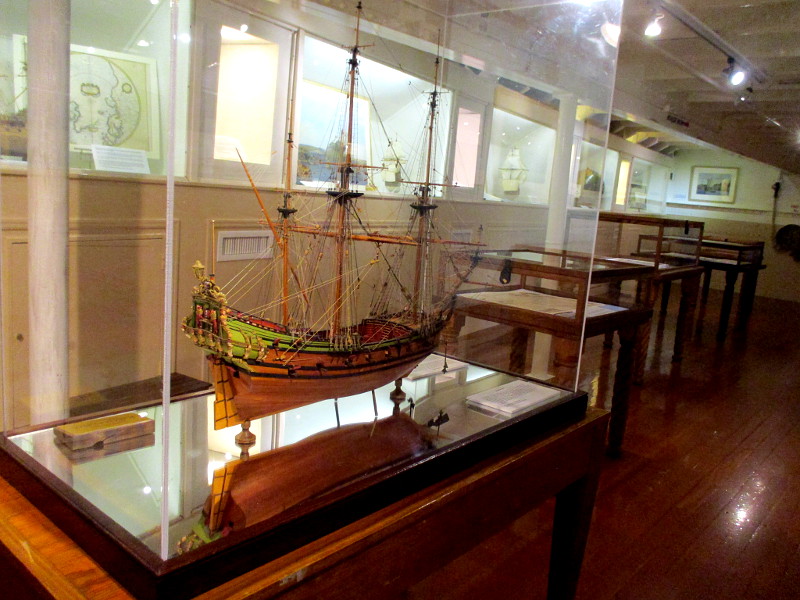
The exhibit also includes beautiful paintings and model ships, and even a display directly related to the Maritime Museum’s famous Star of India!
The Art of Navigation is free with museum admission. As advertised, it does indeed turn intellect, math, nature and science into beauty!
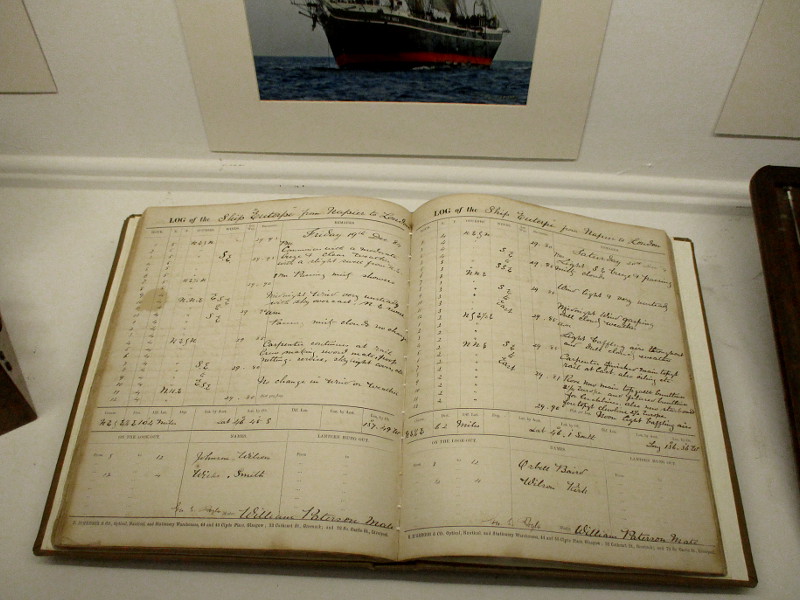
Micronesian stick chart, used by the indigenous island peoples of the Pacific to navigate across great distances of open water.Henricus Hondius. Polus Antarcticus. Map of Dutch discoveries published in Amsterdam, 1638.Benjamin King Backstaff (also known as Davis Quadrant), Newport, Rhode Island, 1764. Used by Colonial American navigators.Replica of 19th century chip log and reel. Used to estimate the speed of a ship through water.Log of Euterpe, a historic ship later known as Star of India.
…
Thanks for visiting Cool San Diego Sights!
I post new blogs pretty often. If you like discovering new things, bookmark coolsandiegosights.com and swing on by occasionally!
I live in downtown San Diego and love to walk around with my camera! You can follow Cool San Diego Sights via Facebook or X.
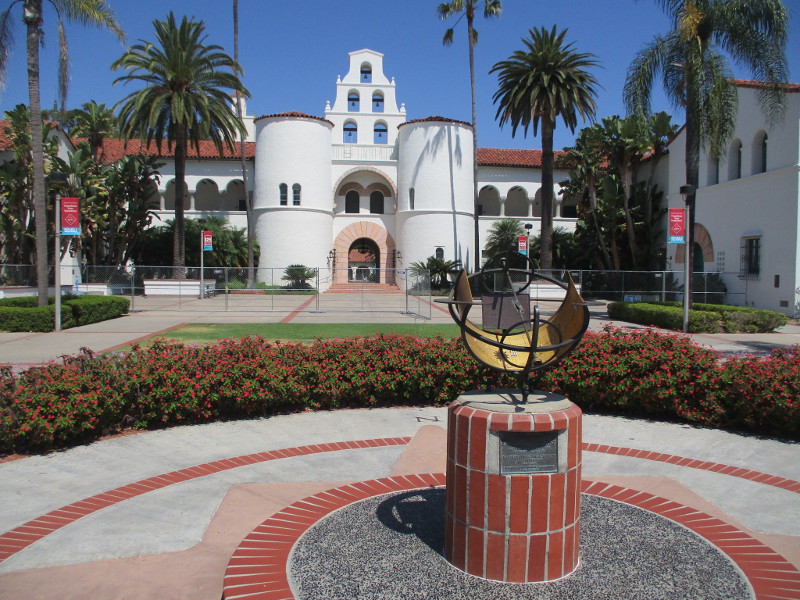
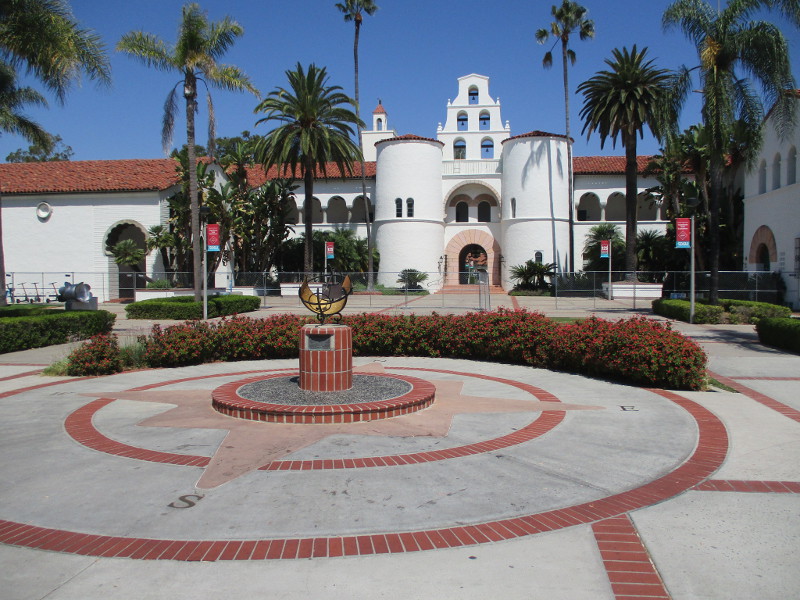
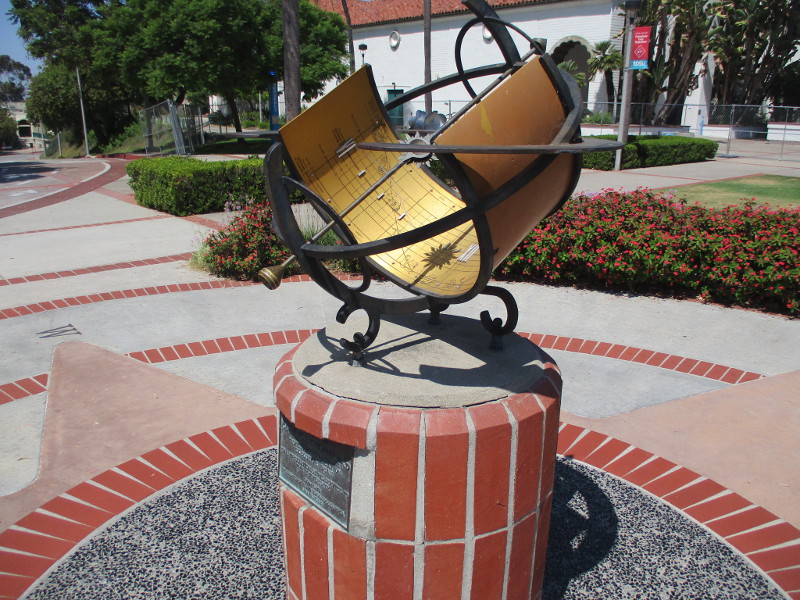
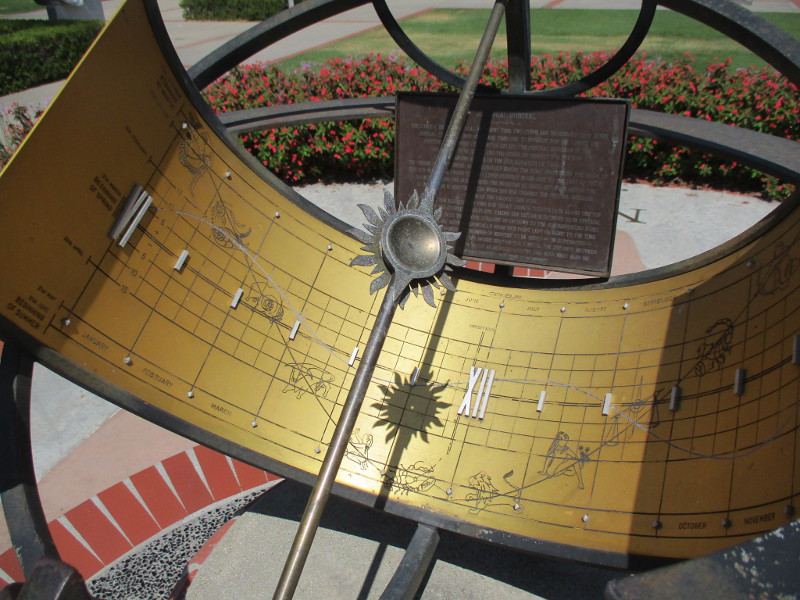
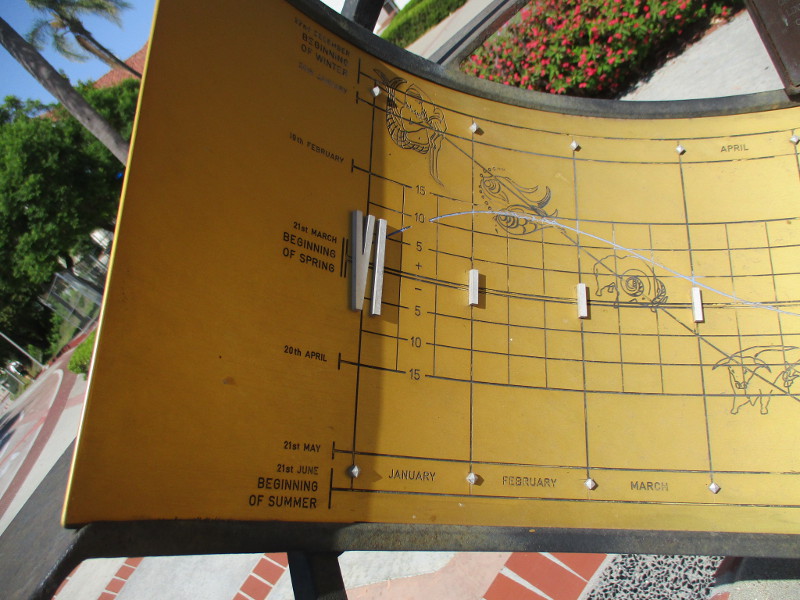
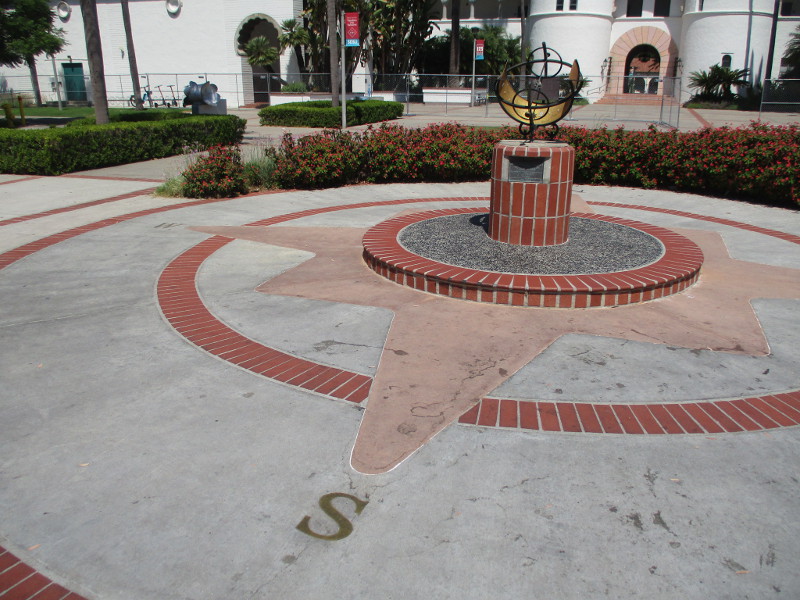
The Koester Memorial Sundial stands prominently in San Diego State University’s Campanile Mall, directly in front of the iconic Hepner Hall. I took photographs of the sundial when I walked through the SDSU campus a few days ago. A couple of corroded plaques invite a closer look.
According to this article, dedicated on November 4, 1978, the Gübelin Equatorial Sundial [is] in memory of the late George A. Koester…
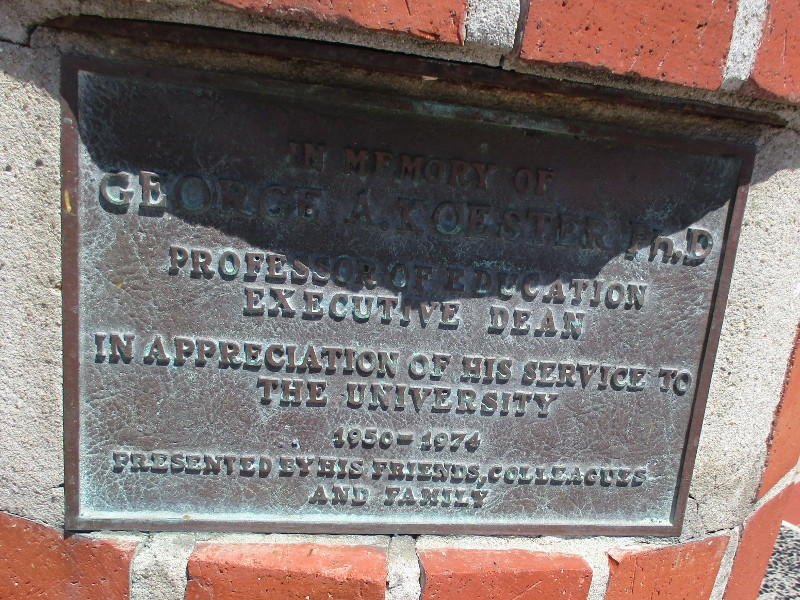
Koester began his career at San Diego State in 1950 and went on to complete 14 years as a professor of education and 10 years as executive dean. During his time on Montezuma Mesa, Koester played a prominent role in building the campus, working on the creation of Love Library, the music and drama buildings, Aztec Center, Zura Hall, student health services, and multiple parking structures…
A plaque embedded in the brick pedestal states:
IN MEMORY OF GEORGE A. KOESTER Ph.D – PROFESSOR OF EDUCATION – EXECUTIVE DEAN – IN APPRECIATION OF HIS SERVICE TO THE UNIVERSITY 1950 – 1974 – PRESENTED BY HIS FRIENDS, COLLEAGUES AND FAMILY
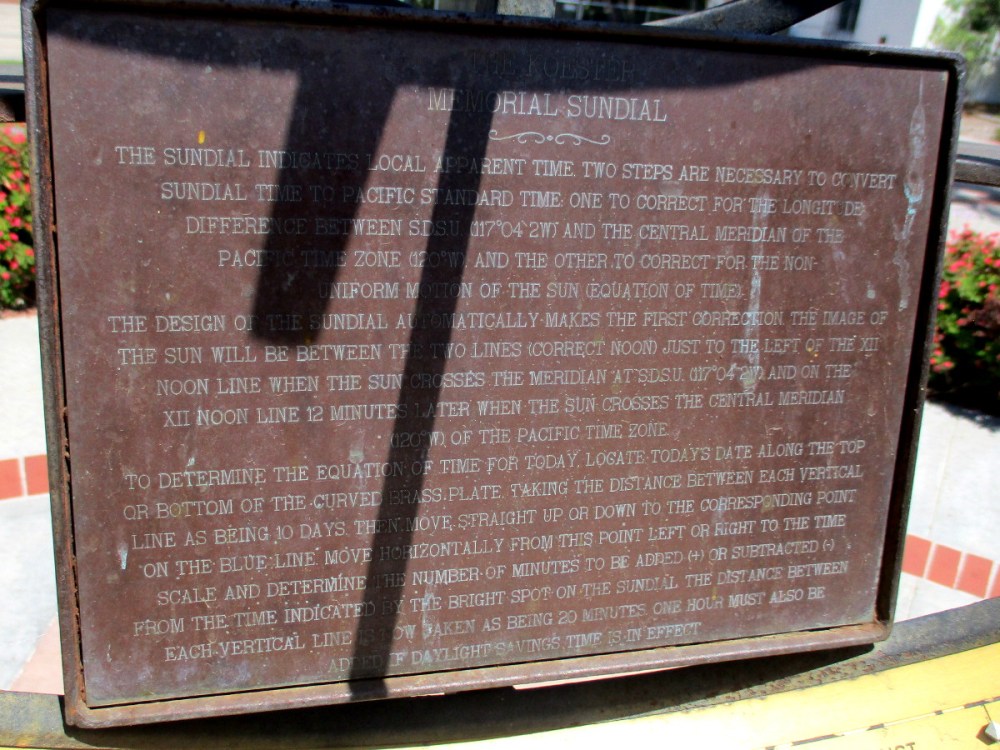
Within the sundial, a faded plaque (I increased the image contrast) describes how the beautiful and fascinating device works. I transcribed as best I could, without every word in caps:
THE KOESTER MEMORIAL SUNDIAL
The sundial indicates local apparent time. Two steps are necessary to convert sundial time to Pacific Standard Time: one to correct for the longitude difference between SDSU (117°04`2W) and the central meridian of the Pacific Time Zone (120°W), and the other to correct for the non-uniform motion of the sun (equation of time).
The design of the sundial automatically makes the first correction. The image of the sun will be between the two lines (correct noon) just to the left of the XII noon line when the sun crosses the meridian at SDSU (117°04`2W) and on the XII noon line 12 minutes later when the sun crosses the central meridian (120°W) of the Pacific Time Zone.
To determine the equation of time for today, locate today’s date along the top or bottom the curved brass plate. Taking the distance between each vertical line as being 10 days, then move straight up or down to the corresponding point on the blue line. Move horizontally from this point left or right to the time scale and determine the number of minutes to be added (+) or subtracted (-) from the time indicated by the bright spot on the sundial. The distance between each vertical line is now taken as being 20 minutes. One hour must also be added if Daylight Savings Time is in effect.
Whew! Got that?
I think I’ll stick to my wristwatch or phone!
…
Thanks for visiting Cool San Diego Sights!
I post new blogs pretty often. If you like discovering new things, bookmark coolsandiegosights.com and swing on by occasionally!
I live in downtown San Diego and love to walk around with my camera! You can follow Cool San Diego Sights via Facebook or X.





 Cool San Diego Sights!