Inside the world record deepest diving submarine!

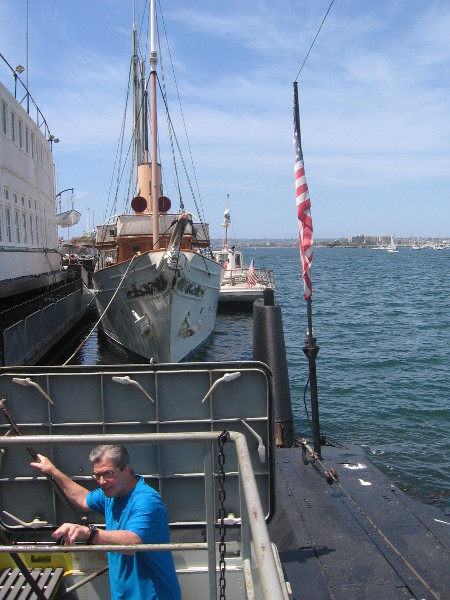
The black sail of submarine USS Dolphin (AGSS-555). The retired research sub is docked next to steam ferry Berkeley of the Maritime Museum of San Diego.

Here come some photographs taken inside the USS Dolphin, the world record deepest diving submarine!

Anyone can tour the Dolphin when visiting the Maritime Museum of San Diego. The museum, located downtown on the waterfront, is home to a world-class collection of unique and historic ships.

I personally know very little about submarines. My descriptions come from various signs and a little searching performed on the internet. If you spot an error or would like to provide some info, please leave a comment at the bottom of this post!

The Maritime Museum of San Diego boasts two submarines in its world-class collection of ships. The USS Dolphin holds the world record for deep diving.
Display inside the Berkeley, next to doorway which leads museum visitors outside to the Dolphin.

The above Maritime Museum display includes the following information:

On November 24, 1968, barely two months after commissioning, the USS Dolphin dove to a depth in excess of three thousand feet to become the world’s deepest diving submarine…this record still stands today. The following year, in August 1969, the Dolphin achieved another world record by launching a torpedo from a depth never equaled by another submarine.

Built exclusively for research, Dolphin is responsible for many achievements. Most significant among these is her unique deep diving capability… Employed by both Navy and civilian researchers, she is equipped with an impressive array of instruments that can support multiple missions…. She is currently configured to conduct extensive deep water acoustic research, oceanic survey work, sensor trials, and engineering evaluations.

…With her decommissioning on January 15, 2007, the United States retired its last active diesel-electric submarine.

Second display contains info about the sub's design and it's numerous historic achievements.
Second display contains info about the sub’s design and it’s numerous historic achievements.

This second sign inside the Berkeley indicates:

SPECIFICATIONS

Length: 165 feet
Beam: 18 feet
Surface displacement: 860 tons
Submerged displacement: 950 tons

Propulsion: Diesel-electric
2 x GM V71 12-cylinder diesel engines, 425 hp
2 x electric main motors
2 x 126-cell main storage batteries

Submerged speed: 10 knots (short duration), 2-4 knots (sustained)

Scientific payload: 12 tons+

External mounting pads: 6 port, 6 starboard, forward and aft of sail

Crew compliment: 3 officers, 18 enlisted, 4 scientists (46 crew, all are not deployed)

Operational endurance: Over 15 days (for long deployments, Dolphin can be towed at 9-10 knots)

ACHIEVEMENTS AND CONTRIBUTIONS

First successful submarine-to-aircraft optical communication

Development of a Laser Imaging system of photographic clarity

Development of an Extreme Low Frequency (ELF) antenna

Evaluation of various non-acoustic Anti-Submarine Warfare techniques

Evaluation of various “low probability of interception” active sonars

First submarine launch of a mobile submarine simulator (MOSS) system

First successful submarine test of BQS-15 sonar system

Development of a highly accurate towed body position monitoring system

Development of a highly accurate target management system

Evaluation of a possible “fifth force of nature”

First successful submarine-to-aircraft two-way laser communication
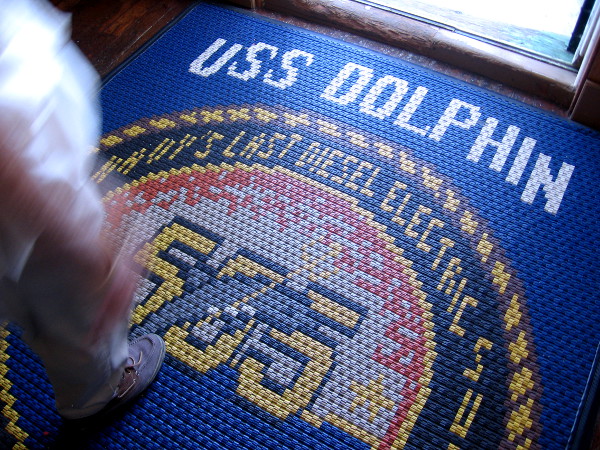
A museum visitor gets ready to walk out to a very cool submarine.
A museum visitor gets ready to walk outside to a very cool submarine.
Walking along the deck to forward end of the submarine. The tower-like sail contains the bridge, periscope and communications masts.
This forward hatch (and the rear one) were cut into the hull so museum visitors could easily walk through the sub's length. Originally there was one hatch, at the sail.
This forward hatch (and the rear one) were cut into the hull so museum visitors could easily walk through the sub’s length. Originally there was one hatch, at the sail.
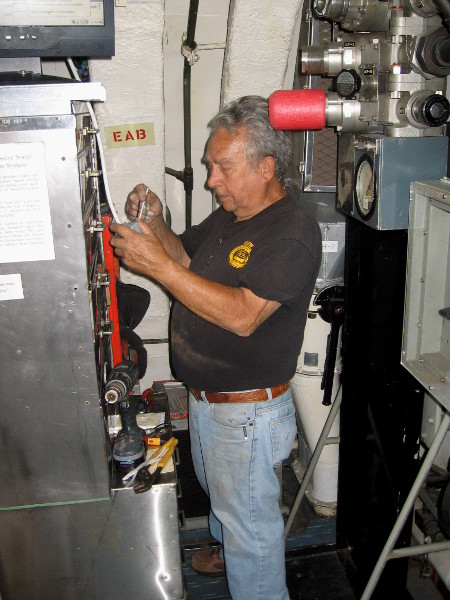
An electrician volunteer, Ed, at work just inside the USS Dolphin. He told me several stories from his days serving on submarines.
A sign inside the underwater research vessel provides answers to a few common questions.

This sign inside the submarine answers some common questions and includes the following fascinating facts:

Dolphin’s hull material is HY-80 steel…her hull is a ring-stiffened cylinder without pressure bulkheads (if she has a leak the whole boat will flood)…

When she had her torpedo tube installed, Dolphin could carry four torpedoes… After initial tests and the launch of a torpedo in 1969 from the deepest depth ever recorded, Dolphin was refitted for other research purposes, and never carried torpedoes again.

There are no visual viewing ports in this submarine…. Dolphin did carry imaging electronics for observing the bottom.

Dolphin did not have any claws for picking items off the seafloor as she was restricted to a minimum altitude of fifty feet above the bottom. One experiment launched an ROV (remote operated vehicle) with power and communication cable attached to Dolphin while submerged…

Starting along the very narrow main hallway. This unusual sub contains no compartments. To the left one can see a reverse osmosis water filtration system.
Red pyro locker used to safely house signal flares.
Those crew bunks on the left don't look terribly spacious or comfortable.
Those crew bunks on the left don’t look terribly spacious or comfortable.
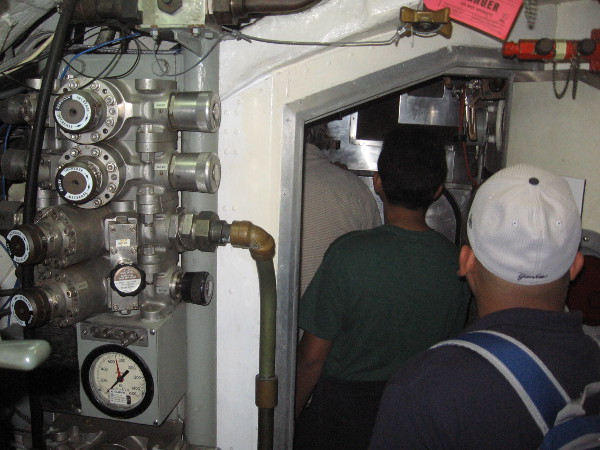
There are more pipes, wires, gauges, valves and gizmos than you can shake a stick at.
A group of visitors is entering the amazing Control Room, near the center of the USS Dolphin.
A group of curious visitors is entering the amazing Control Room, near the center of the USS Dolphin.
The periscope works and you can view San Diego Bay and downtown skyscrapers with perfect clarity.
The periscope works and tourists can view San Diego Bay and downtown buildings with perfect clarity.
Folks peer down through floor at Pump Room below the Control Room, where a hero defied death to save his crewmates.

On May 21, 2002, the room below was the center of heroic action to save the submarine and crew. On that day, Dolphin was conducting training exercises about 100 miles off the San Diego coastline when a torpedo shield door gasket failed, and water began to flood the submarine…

Chief Machinist’s Mate (SW) John D. Wise Jr., realizing what needed to be done, dove into the 57 degree water of the flooded pump room…with less than a foot of breathable space…he aligned the seawater valves and then remained in the pump room for more than 90 minutes…

For his courageous efforts, Chief Wise was awarded the Navy and Marine Corps Medal.

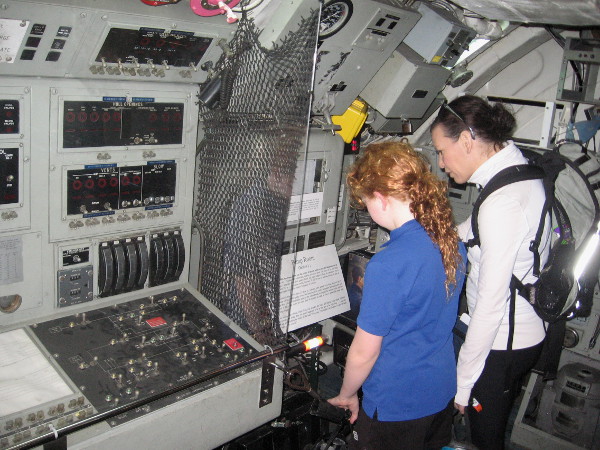
A panel with many complicated switches. In the Control Room, one can monitor the main storage batteries, generators and propulsion system.
The wheel used to pilot the Dolphin. One drove using only instruments, including gauges that display rise/dive, ordered depth, system depth, cavitation, turns, dummy log, depth to keel.
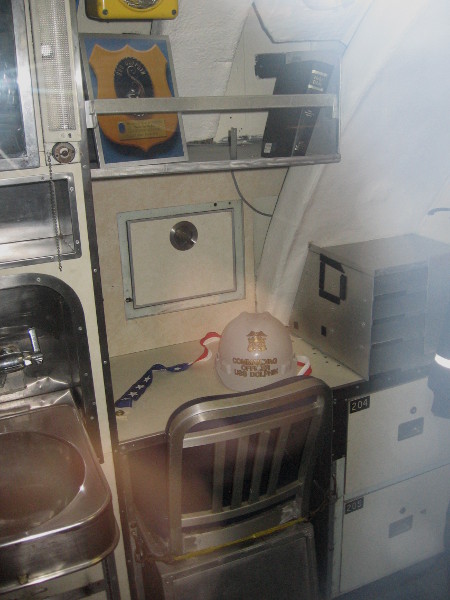
Photo of tiny Officers' Quarters was through glass, producing some glare.
Photo of tiny Officers’ Quarters was through glass, which produced some glare.
This is the first toilet I've photographed for my blog. Hopefully the last!
This is the first toilet I’ve photographed for my blog. Hopefully the last!
Photos on wall of tiny mess area show what life was like aboard Dolphin.
This is where food was prepared.
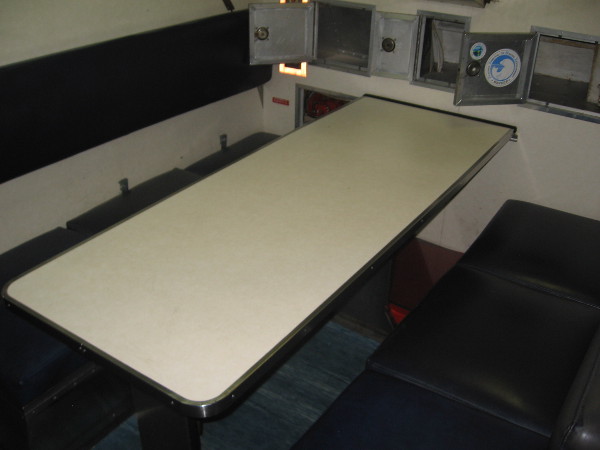
This dining table was constantly in use. Not much to see in the way of decor.
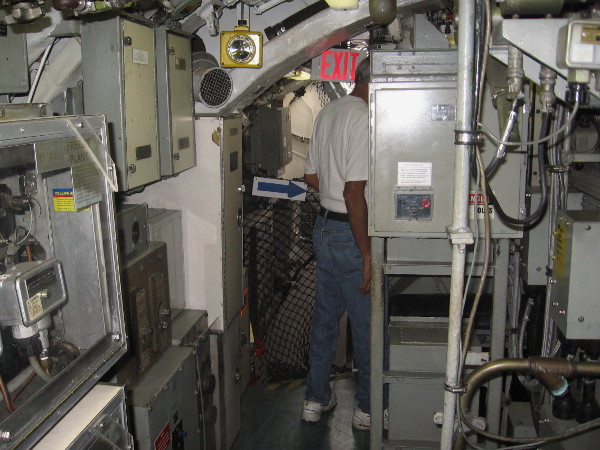
Continuing down the main hallway toward the rear of the submarine. Don't ask me what all this stuff is.
Continuing down the main hallway toward the rear of the submarine. Don’t ask me what all this stuff is.
Apparently this is some sort of freezer.
You get an idea of what it's like to carefully walk through the narrow submarine.
You get an idea of what it’s like to carefully walk through the narrow submarine.
High-Pressure Air Compressor Controllers among a jumble of pipes and valves.
Up a ladder and back outside into the bright San Diego sunshine!

To enjoy future posts, you can “like” Cool San Diego Sights on Facebook, or follow me on Twitter.
Spinning yarns (and twine) in old San Diego.

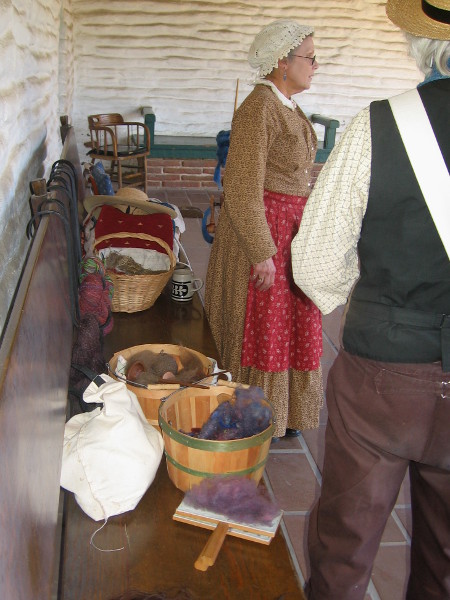
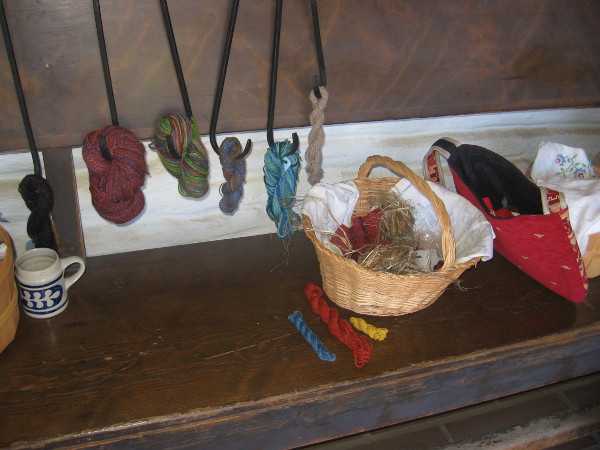
Yarns dyed many different colors out on display in San Diego's Old Town.
Yarns dyed many different colors out on display in San Diego’s Old Town.

One more quick post from today’s stroll through Old Town San Diego State Historic Park. After going on the free walking tour, which I do every few years to jiggle my memory, I observed that a couple of unique exhibits were out on public display. One concerned yarn, the other twine. A “string” of coincidence too good not to blog about!

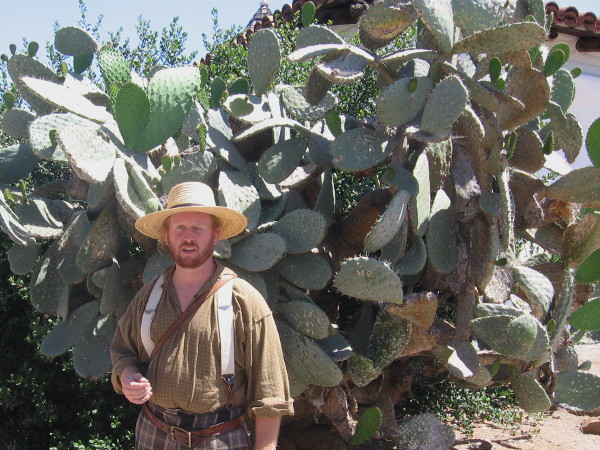
During the tour, our knowledgeable guide explained how red dye in the olden days was derived from a particular insect–the cochineal. The cochineal is a beetle that can be found on prickly pears, a cactus which grows abundantly in arid San Diego. While we watched, the guide plucked one from a prickly pear next to the Casa de Estudillo, then crushed it. His fingers turned bright purple from the beetle juice! (He explained the British Red Coats dyed their uniforms with cochineal, but Purple Coats didn’t sound quite so fierce.)

Tour guide about ready to make some red dye.
Tour guide ready to produce some reddish dye.

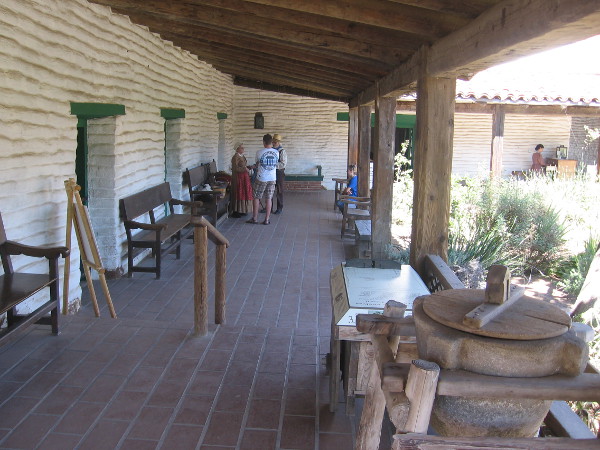
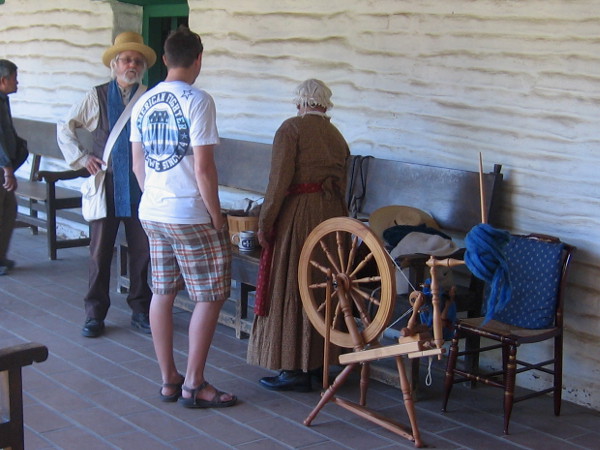
After the tour ended, two volunteers inside the Casa de Estudillo were demonstrating how yarn used to be made. To dye the fibers, both cochineal and indigo dye were commonly used. A spinning wheel served to demonstrate the hard work required to live comfortably before our more modern conveniences.

La Casa de Estudillo, an elegant house built in the early 1800s by a wealthy Californio who owned several large ranchos in Southern California.
La Casa de Estudillo, an elegant adobe house built in 1827 by a wealthy Californio family that owned several large ranchos in Southern California.
Volunteers in costume told me a little about San Diego's complex, fascinating history.
Volunteers in costume with baskets of color.  They told me some yarns concerning San Diego’s complex, fascinating history.
State Park volunteers describe life in early San Diego, when spinning wheels were common household objects.

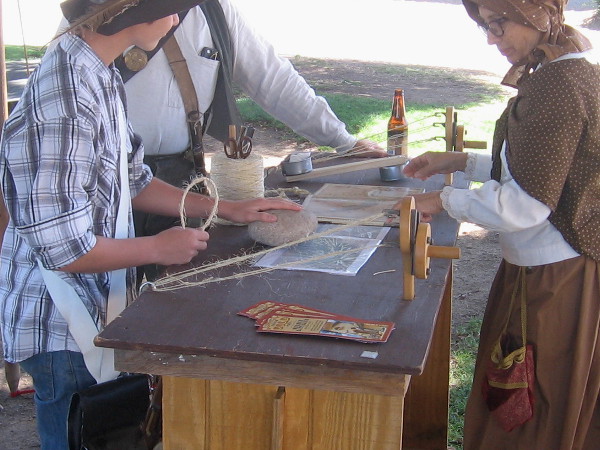
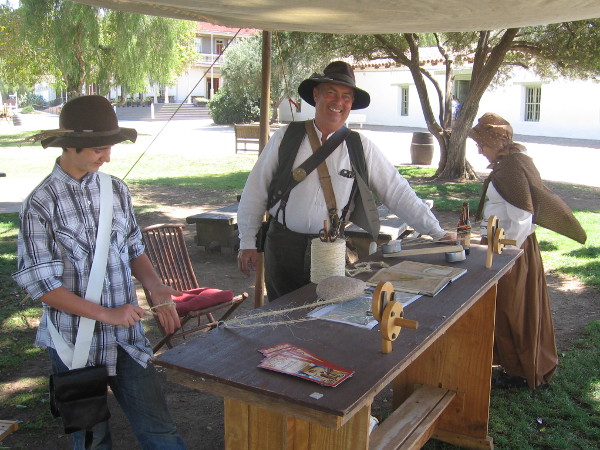
Out in one corner of Old Town’s big central plaza, some friendly Mormons were demonstrating the making of twine. Like the native prickly pear, yucca plants have always been plentiful in San Diego’s desert-like environment. The tough fibers in the leaves, once extracted, are dried and then twisted using a simple mechanism to create primitive but very practical twine or rope.

Making twine used to involve twisting dried fibers from native yucca plants.
Making twine involved twisting fibers found in native yucca plants.
Mormon guy smiles as he exhibits rope-making in Old Town. The Mormon Battalion was one of many diverse participants in San Diego's early history.
Mormon guy smiles as he exhibits rope-making in Old Town. The Mormon Battalion was one of many diverse participants in San Diego’s early history.

Someday I’ll probably blog about the amazing, hour-long Old Town walking tour. I need some more photos and many more notes before I undertake that, however!

To enjoy future posts, you can “like” Cool San Diego Sights on Facebook or follow me on Twitter.
Kids explore science, engineering at STEM event.

Kids learn about electronics by combining fun pieces from a kit, creating circuits.

Today I checked out a truly amazing event! Expo Day capped off the week-long San Diego Festival of Science and Engineering (formerly known as the San Diego Science Festival), and brought out thousands of families and kids, eager to learn about science. STEM, which stands for Science, Technology, Engineering and Math education, was Expo Day’s principal focus. The seventh annual event nearly burst the seams of downtown’s big Petco Park stadium. There were so many cool exhibits, so much stuff to see, I only managed to experience about half of it! My poor old brain nearly exploded!

Here is a bit of what I saw!

Exhibitor map for Expo Day, main event of the San Diego Festival for Science and Engineering.
Exhibitor map for the huge Expo Day, concluding event of the San Diego Festival for Science and Engineering.
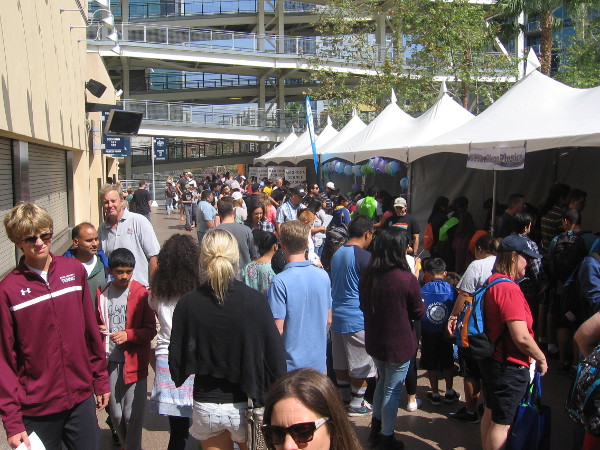
Lots of folks inside Petco Park (baseball stadium of the San Diego Padres) learn about science.
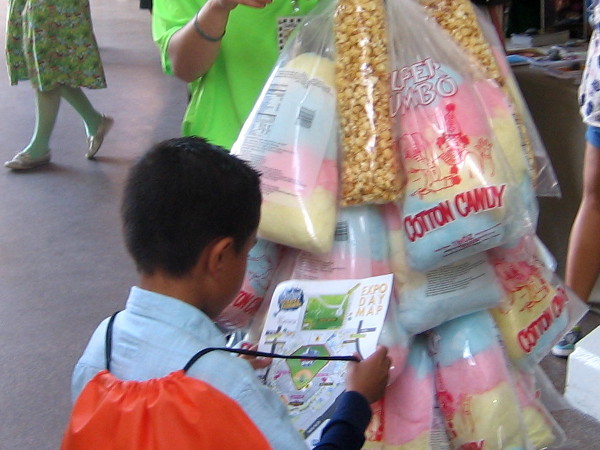
This kid is way more interested in a map to cool science stuff than boring bags of cotton candy!
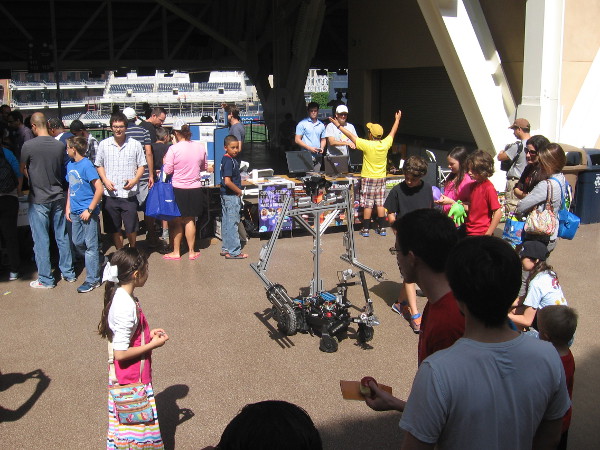
A robot was moving mysteriously about, amusing people who were just walking along the concourse.
Group demonstrates the structure of some common molecules.
The big annual STEM event focused on Science, Technology, Engineering and Math education.
The STEM event focused on Science, Technology, Engineering and Math education.
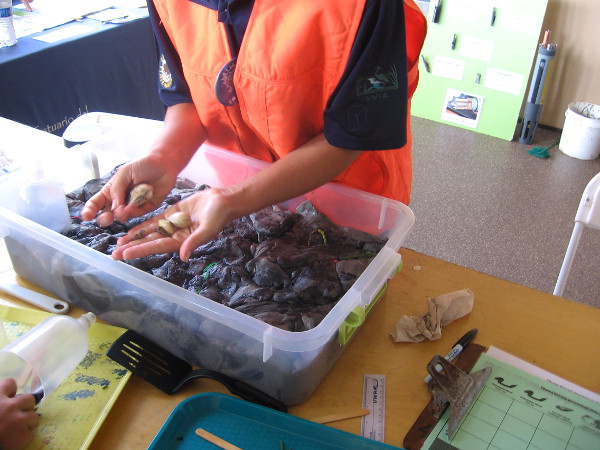
Investigating creatures one might find in a mudflat.
Investigating organisms one might find in a mud flat.
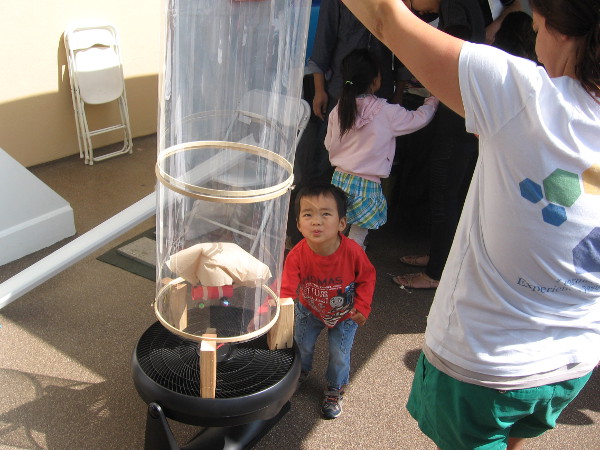
This balloon soon rose on a column of air and floated out of the tube!
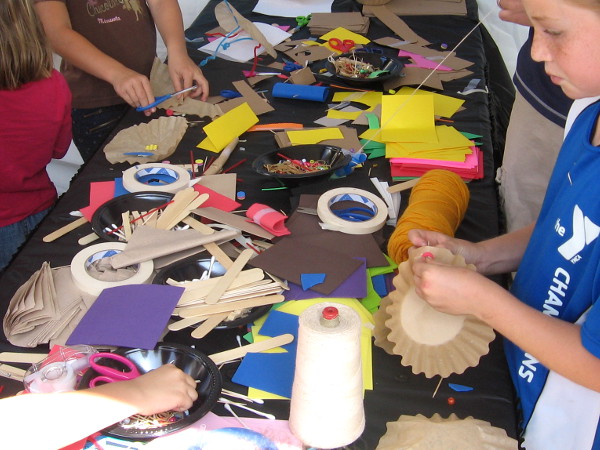
Young inventors assemble unique creations using all sorts of ordinary materials.
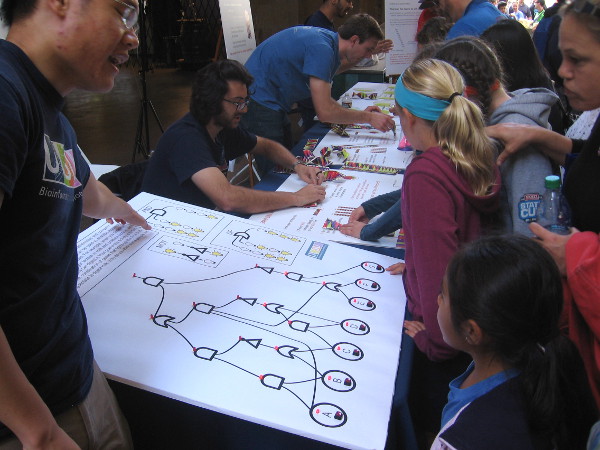
Understanding genetic attributes using Boolean logic. Sounds complicated!
Youth would attempt to break a Guinness World Record at Second Hour of Code mass coding event led by a Microsoft professional.
I've never seen so many hands on experiments in one place!
I’ve never seen so many hands on experiments in one place!
Don't mess with this guy. He's a super cool scientist dude!
Don’t mess with this guy. He’s a super cool scientist dude!
Kids test out non-Newtonian fluids which seem to harden like rubber when struck.
Young explorers are shown how to build their own spectroscope! And to think I was confounded by my Etch A Sketch!
Young scientific explorers are shown how to build their own spectroscope! And to think I was confounded by my Etch A Sketch!
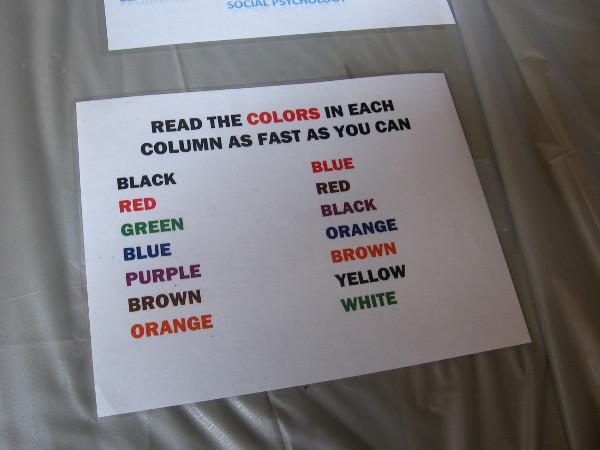
Test your own confused mental cognition and speak these colors really fast for yourself!
Test your own mental cognition and speak these colors really fast for yourself!
Oh, man! Check this weird elephant out! I love optical illusions!
This fancy aquarium acts as a flume, used to test the motion of fish and their muscular development.
This fancy lab aquarium acts as a flume, used to test the motion of fish and their muscular development.
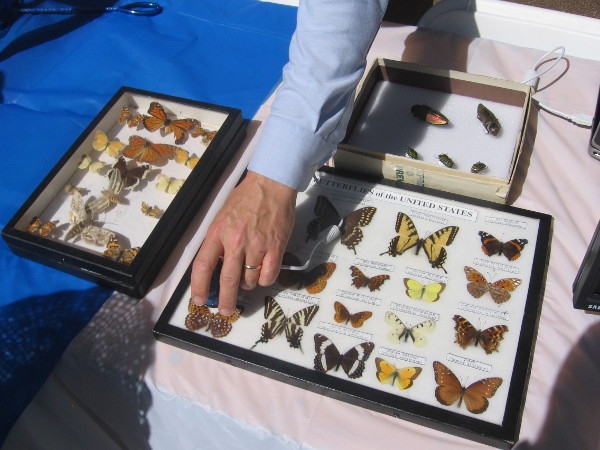
Pointing out a butterfly in a displayed collection.
Pointing out a butterfly in a carefully classified collection.
Wow! These youngsters are building DNA models! That's way beyond me!
Wow! These youngsters are building DNA models! That’s way beyond me!
Learning how smoking exposes people to all sorts of toxic chemicals.
Girl learns about gyroscopes and angular momentum with a spinning bicycle tire.
Some students built cool models of futuristic cities.
Awesome robots were all over the place!
People were jumping about as this robot dashed about scooping stuff up.
This robot participates in the Lego League, trying to score points on an unusual course.
This is a mechanical, computerized Rubik's Cube solver that detects color.
This is a mechanical, computerized Rubik’s Cube solver that detects color.
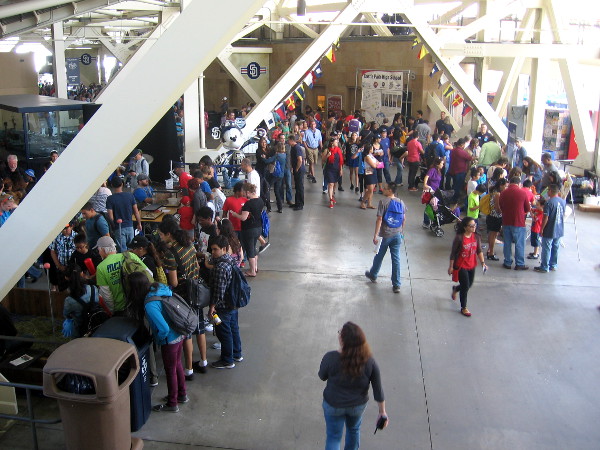
Looking down into Petco Park's Power Alley, where more STEM exhibits were located.
Looking down into Petco Park’s Power Alley, where more STEM exhibits were located.
Lots of animal life on display included this beautiful long-nosed snake.
Lady demonstrates how bio fuels are refined using filtration.
Chrismas lights helped teach about energy conservation.
Christmas lights helped to teach about energy conservation.
Thousands turned out for the San Diego Festival of Science and Engineering Expo Day.
Tens of thousands turned out for the big San Diego Festival of Science and Engineering Expo Day.
Many businesses were showing their products, discoveries and technological advances.
AirZooka vortex generator shoots circular pulse of air at the shimmer wall!
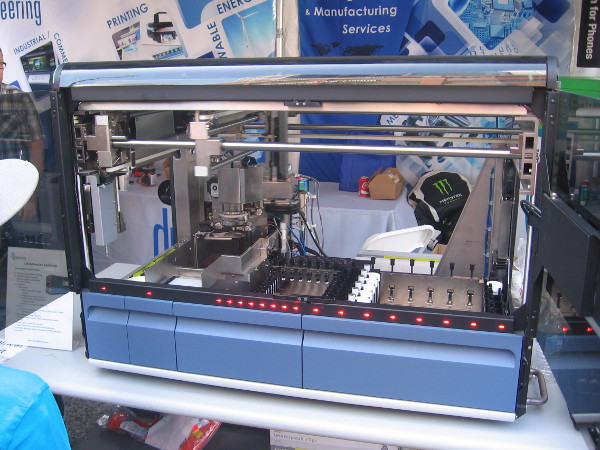
This automated machine helps prepare lab samples in medical facilities.
Kids left notes on a wall with their bright ideas.
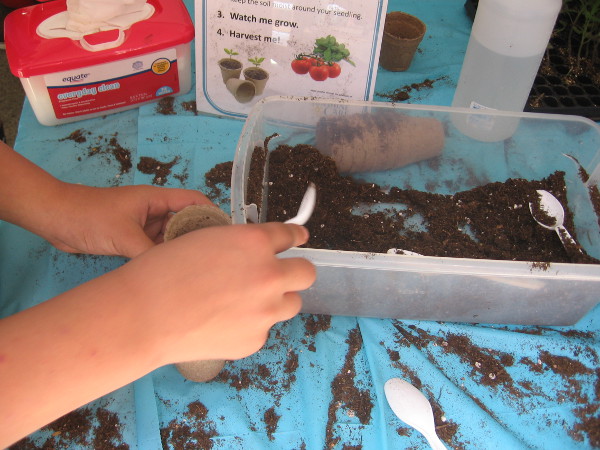
Planting some tomato seeds, to watch the plant grow at home!
Planting some tomato seeds, to watch them sprout and grow at home!
More kids making complex molecules with marshmallows! I guess they'll be future scientists!
More kids making complex molecules with colored marshmallows! I guess they’ll be future scientists!
Some art was being created to accompany all the science and technology stuff.
This guy uses electromagnetism to launch cans skyward and splatter cucumbers!
Petco's sunny Park at the Park was jammed with families enthused by education.
Petco’s sunny Park at the Park was jammed with families enthused by education.
Demonstating maglev (magnetic levitation) using eddy currents.
Demonstrating maglev (magnetic levitation) using eddy currents.
Young people write down what they like about science!
Young astronomers duplicate the colors of an enhanced surface image of asteroid Vesta.
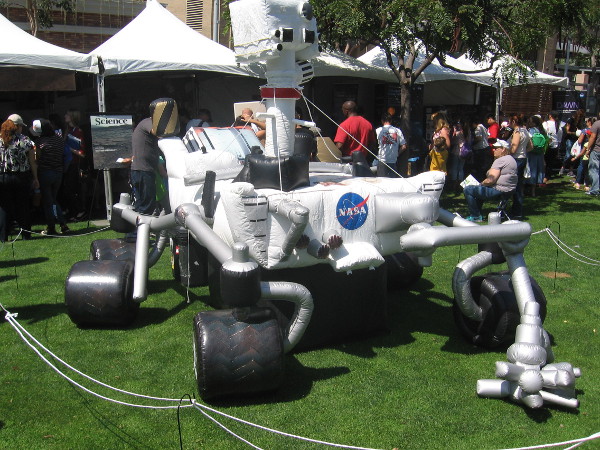
This NASA inflatable is the actual size of the Curiosity rover now on Mars.
Everyone is fascinated by a cool NASA photograph of the surface of Mars.
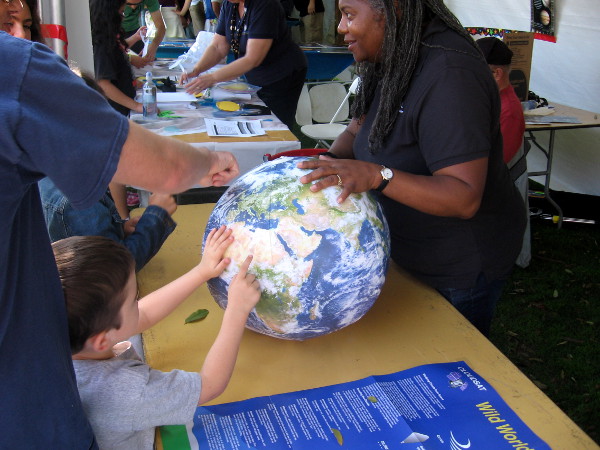
A member of the next generation lays his hands on our planet.

To enjoy future posts, you can “like” Cool San Diego Sights on Facebook or follow me on Twitter.
Photos of International Drone Day in San Diego.

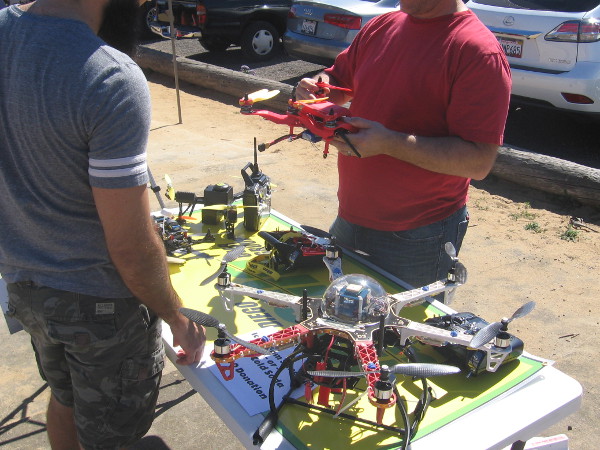
Someone displays a cool-looking drone for event attendees.
Someone displays a cool-looking drone and describes its operation.

While drones might not be delivering pizzas anytime soon, they do make for an interesting hobby. I could clearly see that when I wandered into a cool event by sheer chance. International Drone Day was celebrated today at the Silent Electric Flyers of San Diego field near Mission Bay.

I was walking along the San Diego River Trail when I glimpsed something strange flying about behind a line of trees. Whatever it was didn’t behave like a bird. I had to go investigate!

What I discovered was a large gathering of electric drone hobbyists. They were flying their unique propeller aircraft, checking out different equipment, and enjoying hot dogs out in the San Diego sunshine!

In the event you pass by one day, the small field is located on the north side of Sea World Drive, just east of SeaWorld. I had visited once before, the day I blogged about birdwatching along the river estuary. On that day RC model aircraft were circling in the sky. I’ve added one pic from that visit, as you’ll see.

International Drone Day in San Diego brought out a bunch of serious hobbyists.
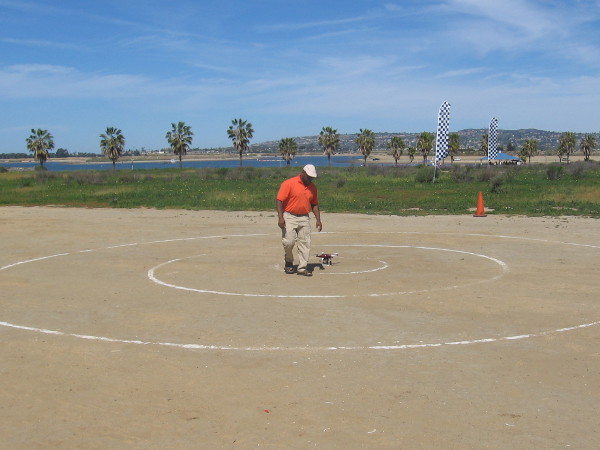
A quad hovers above the special flying area on a breezy day near Mission Bay.
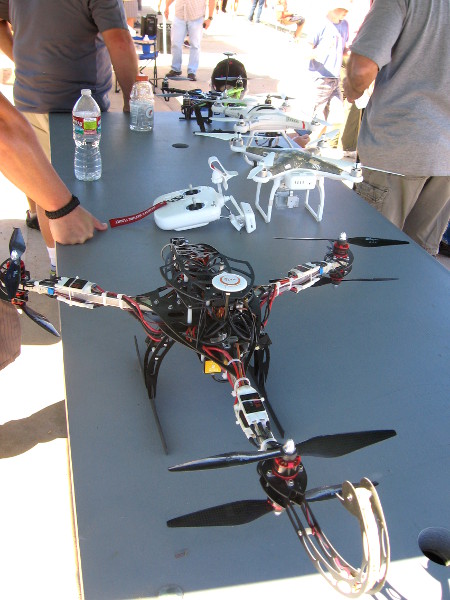
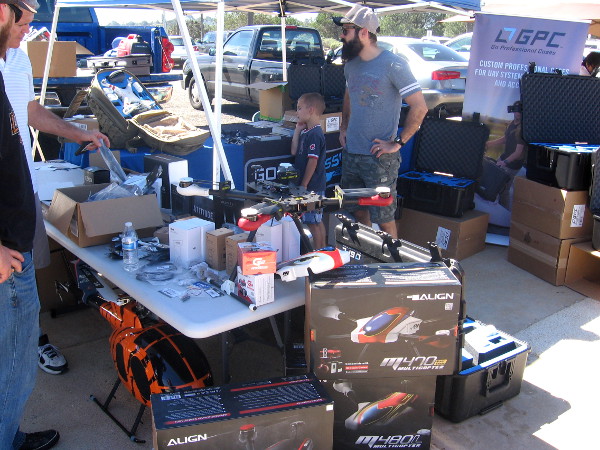
People checked out drones of every size and description.
A smaller drone displayed on a table.
This larger drone was designed to be aerodynamic.
Drone builders and enthusiasts were in heaven in San Diego today.
It looks like high-tech drones have replaced humans already!
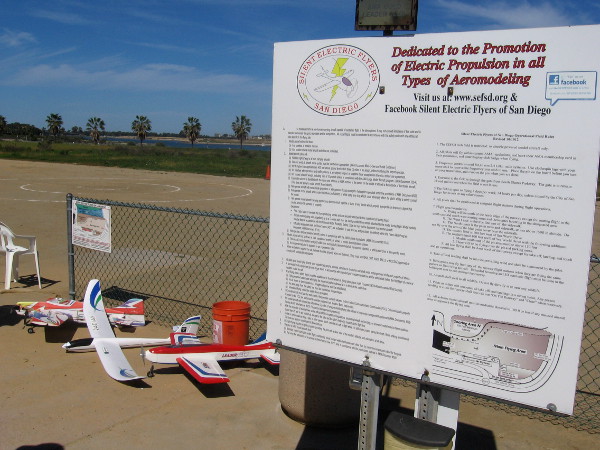
This field is used by the Silent Electric Flyers of San Diego, and their radio-controlled aircraft.
This field is used by Silent Electric Flyers of San Diego, and their radio-controlled aircraft.
Guy sets his drone down in preparation for a demonstration.
A crowd was watching the action. My camera barely captures one distant craft in flight.
A crowd watches the action. My camera barely captured one distant craft in flight.
On other days, electric-powered RC model airplanes take off and glide from this field.
Other days, electric-powered RC model airplanes take off and glide from this field.
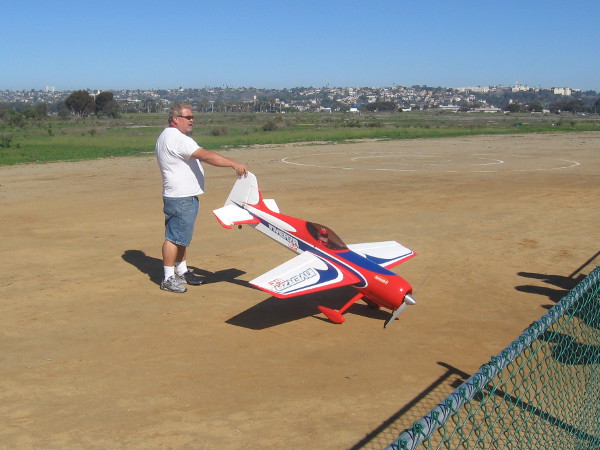
I took this photo on a prior occasion. That radio-controlled plane is huge!
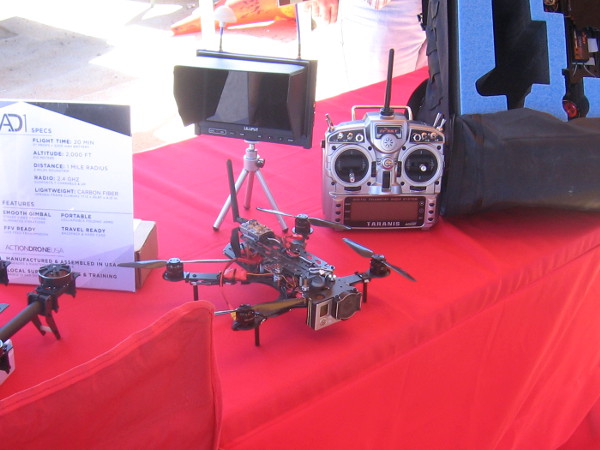
Drone on the ground makes for a cool pic.
Drone on the ground makes for a cool, futuristic pic.
Club members prepare their drones for the High Noon All Up!
Club members prepare their drones for the High Noon “All Up”!

At noon, all the drones took to the air at once! Unfortunately, my pics of the spectacle came out pretty lousy. So use your mind’s eye! According to the announcer, 32 drones hovered above the field at one time. The San Diego team’s High Noon “All Up” took place simultaneously with 150 other teams celebrating International Drone Day around the world.

What will I discover next?  It seems that anything is possible!

To enjoy future posts, you can “like” Cool San Diego Sights on Facebook or follow me on Twitter.
Photos aboard Scripps research vessel Melville!

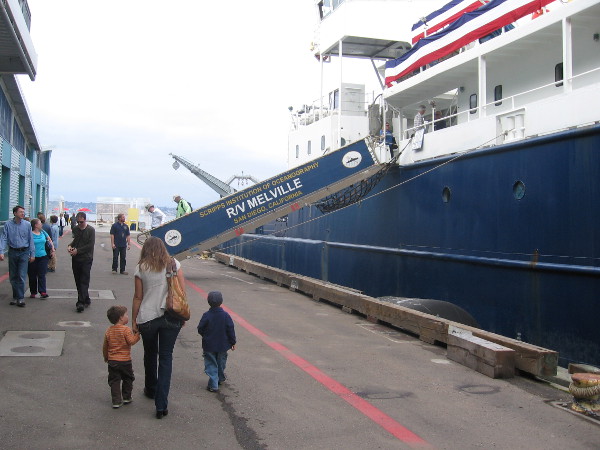
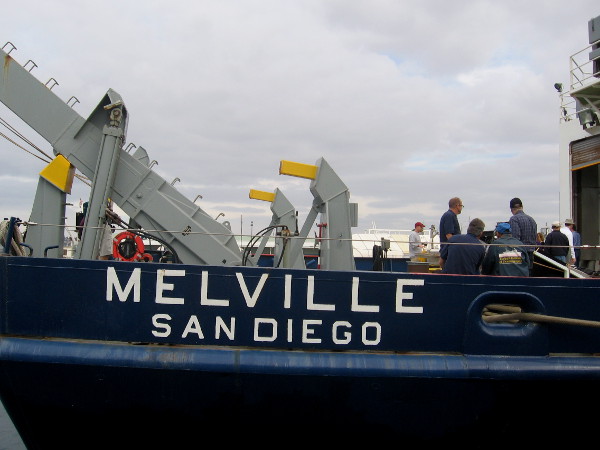
Ready to board R/V Melville from San Diego's Broadway Pier before the research ship is retired.
Ready to board R/V Melville from San Diego’s Broadway Pier before the research ship is retired.

The research ship Melville retired today. For five decades scientists aboard the ship helped to expand our understanding of the oceans, marine biology and planet Earth. I headed down to the Broadway Pier on San Diego’s Embarcadero this morning, because for one rare and final time the general public was invited to tour this legendary ship!

The R/V Melville, the oldest active ship in the University-National Oceanographic Laboratory System fleet of marine research ships, was launched by the Navy in 1969. Operated by the world-famous Scripps Institution of Oceanography in La Jolla, the vessel has undertaken 391 research cruises and steamed a total of 1,547,080 nautical miles. A fact sheet distributed to today’s visitors also notes that the Melville logged over 90 equator crossings and has hosted around 7,116 scientists from 237 institutions. That amounts to a lot of knowledge gained!

The amazing oceanographic research ship was named after George Melville, an arctic explorer and Rear Admiral in the United States Navy. One interesting fact: the ship was used in the filming of the 1976 movie King Kong!

I took these photos as I enjoyed this fascinating final tour of the ship. I hope my captions accurately describe what I saw. (If they don’t, please leave a comment!) Some of the interior shots are a bit blurry. I apologize.

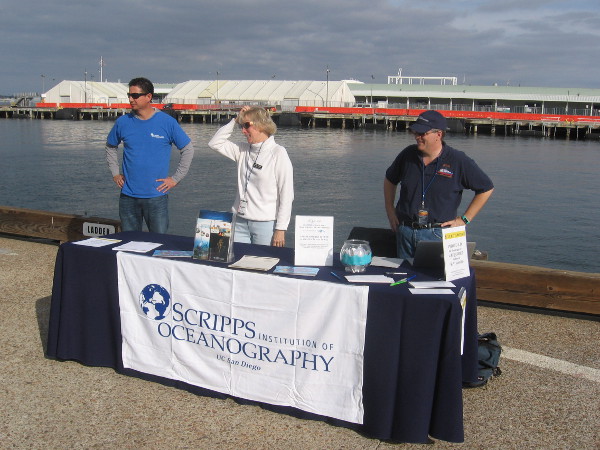
The Melville is operated by the Scripps Institution of Oceanography, part of UCSD in La Jolla.
One of many friendly, helpful people who've served on the history-making ship.
One of many friendly, helpful people who’ve served on the history-making ship.
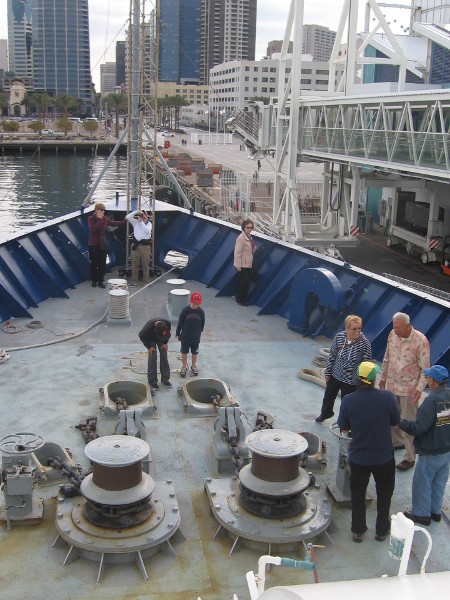
The tour started at the bow. Downtown San Diego skyline in background.
The tour started at the bow. Downtown San Diego skyline rises in the background.
Excited people climb up toward the pilot house of Melville.
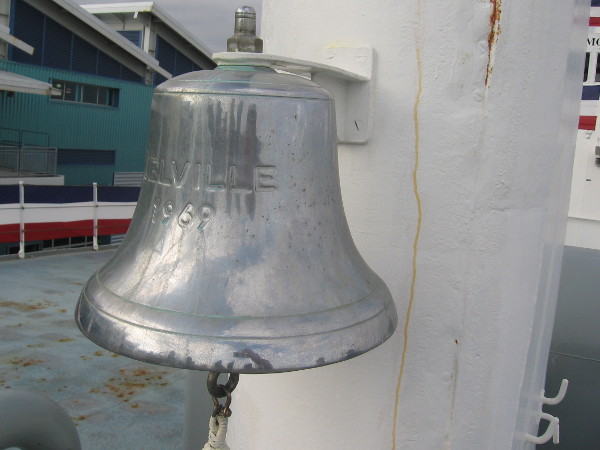
The shiny ship's bell!
The shiny ship’s bell!
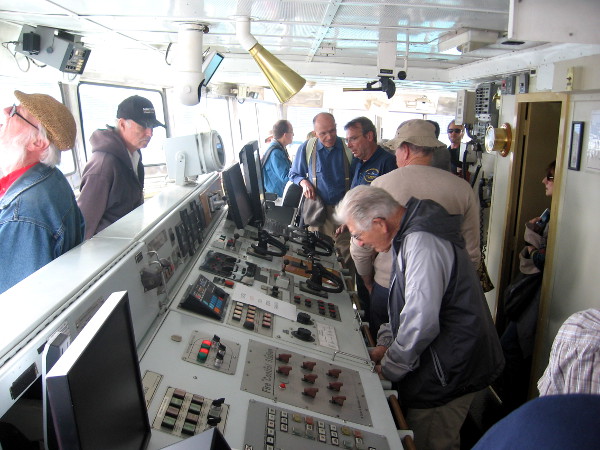
Huge number of buttons, knobs, switches and dials in the pilot house of Melville.
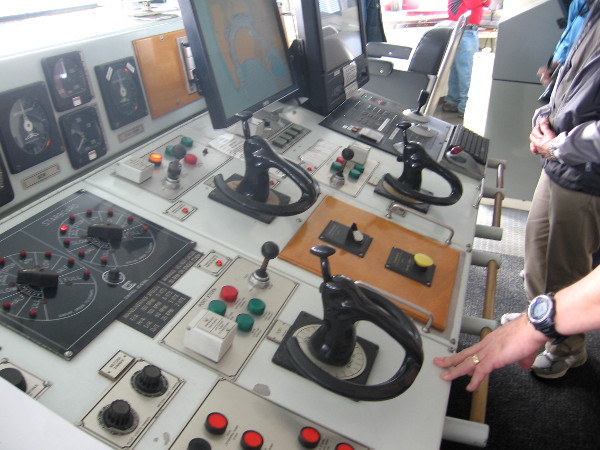
A second photo of the complicated ship control console.
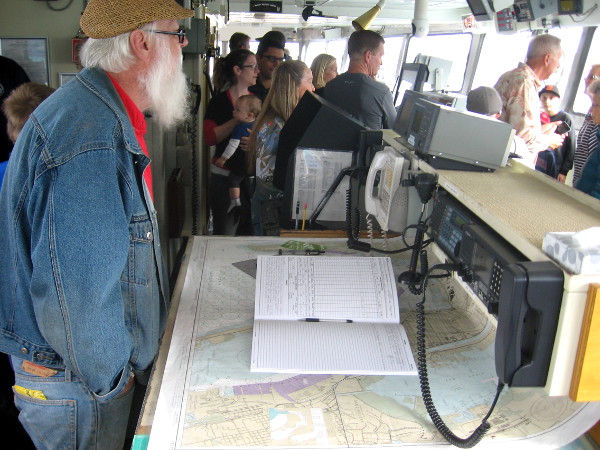
The ship's log is open on some navigational charts.
The ship’s log is open on some navigational charts.
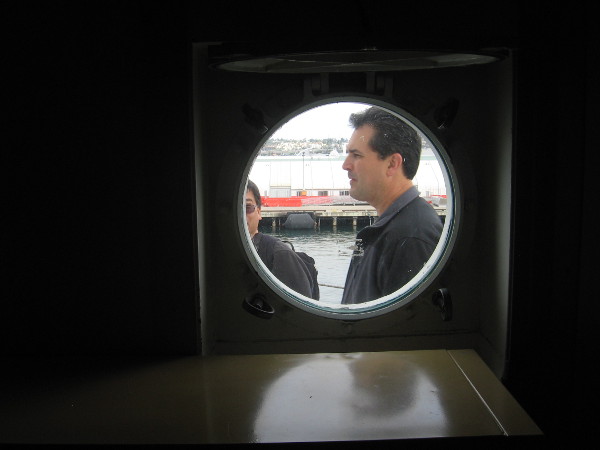
Looking out porthole from the chief scientist's quarters below deck.
Looking out porthole from the chief scientist’s quarters below deck.
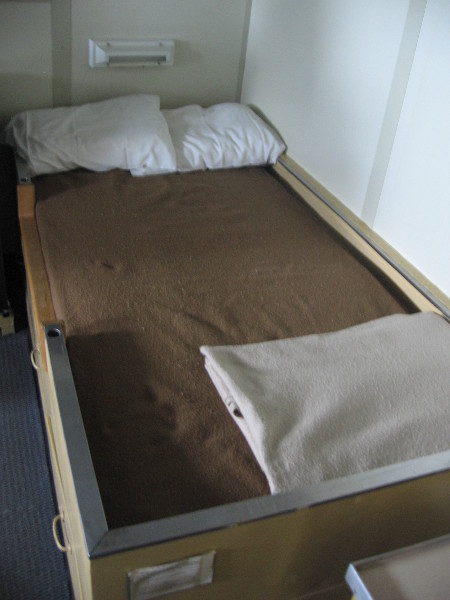
The chief scientist during research cruises slept here.
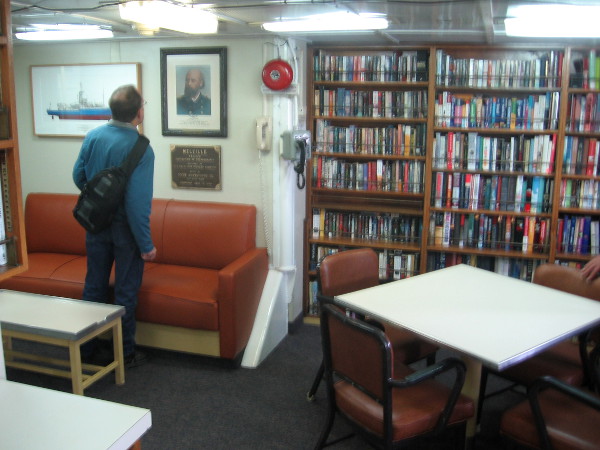
The library, lounge and study contain shelves of books and several interesting displays.
The library, lounge and study contains many shelves of books and several interesting displays.
Graphic in library depicts the R/V Melville.
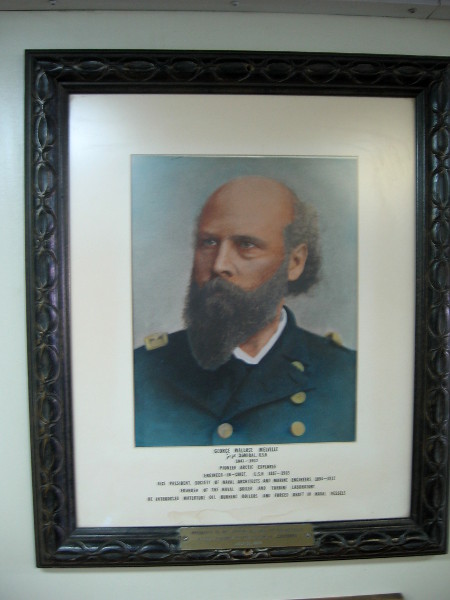
Portrait of George Wallace Melville, the ship's namesake.
Portrait of George Wallace Melville, the ship’s namesake.
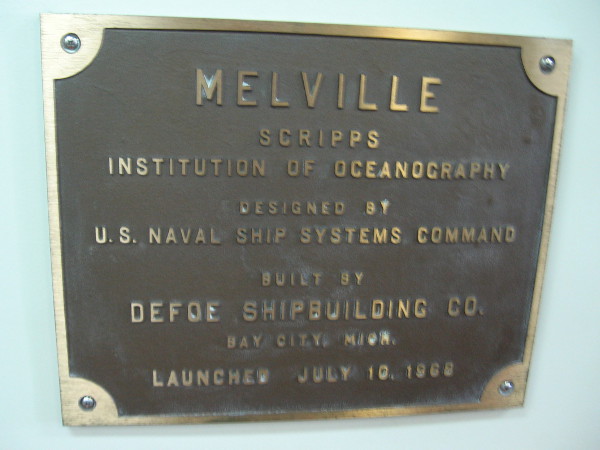
Bronze plaque commemorates the Melville's launch date in 1968.
Bronze plaque commemorates the Melville’s launch date in 1968.
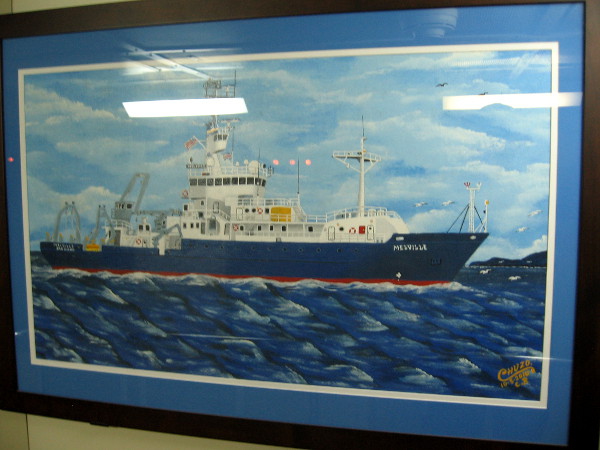
Painting by artist Chuzo of the Melville hangs in a corridor near some stairs below deck.
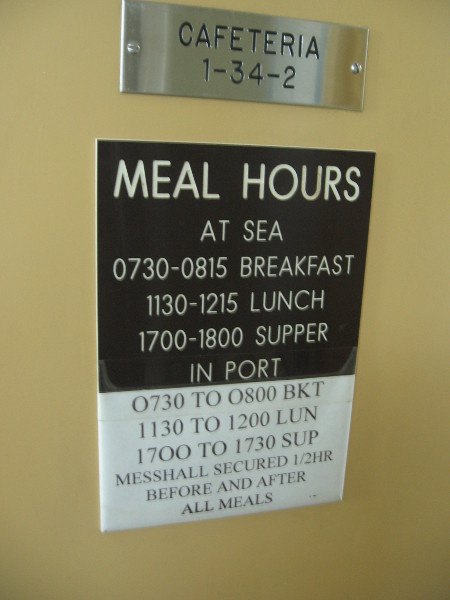
Meal hours are posted on door leading to the cafeteria.
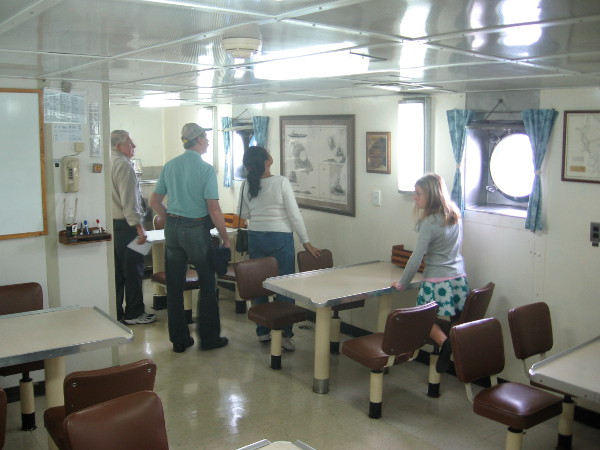
Visitors check out the mess hall where crew and research scientists enjoyed a break, to eat, talk and share knowledge.
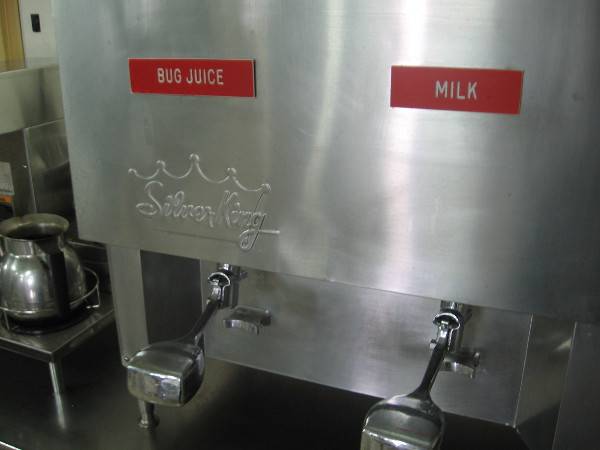
One can choose bug juice or milk. I'll take milk, please!
Hungry folks can choose bug juice or milk. I’ll take milk, please!
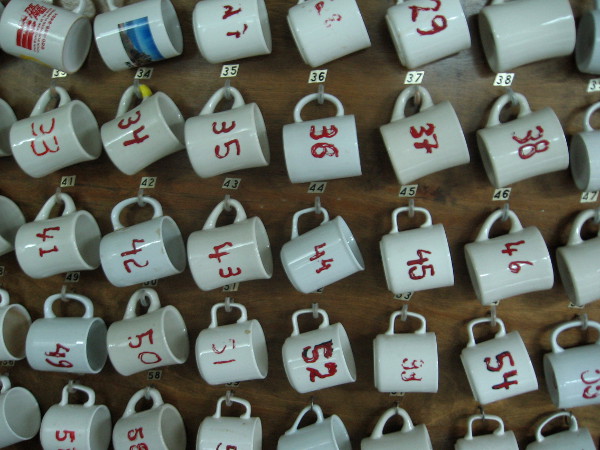
Numbered mugs on the mess hall wall. Number 1 belongs to the captain.
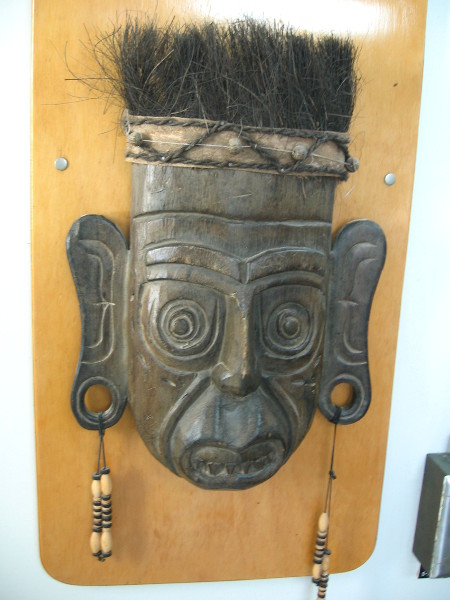
Several masks, ethnic artifacts and marine objects decorate the walls of the cafeteria.
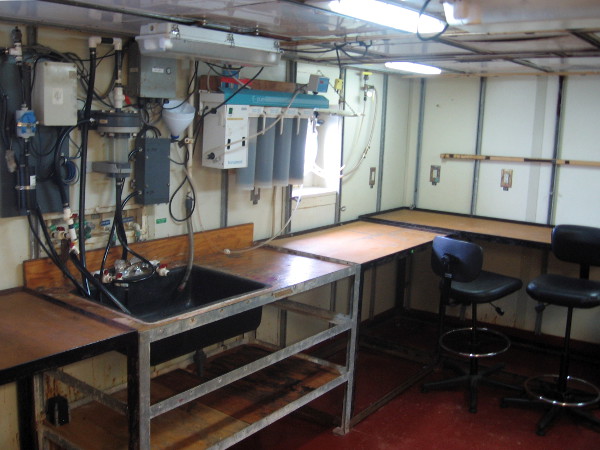
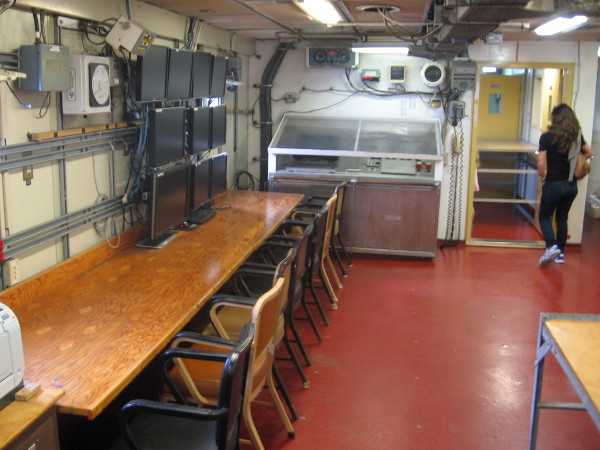
A look at a shipboard laboratory where various materials could be analyzed.
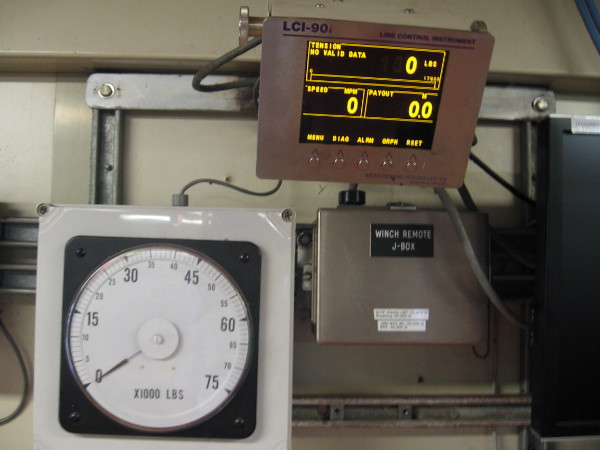
At the photo's center is a winch control. Video monitors help scientists visualize their work underwater.
At the photo’s center is a winch control. Video monitors help scientists visualize their work underwater.
Gauge registers up to 75,000 pounds of tension!
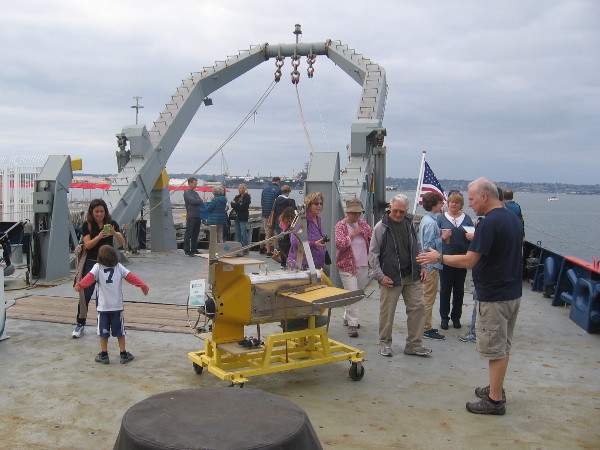
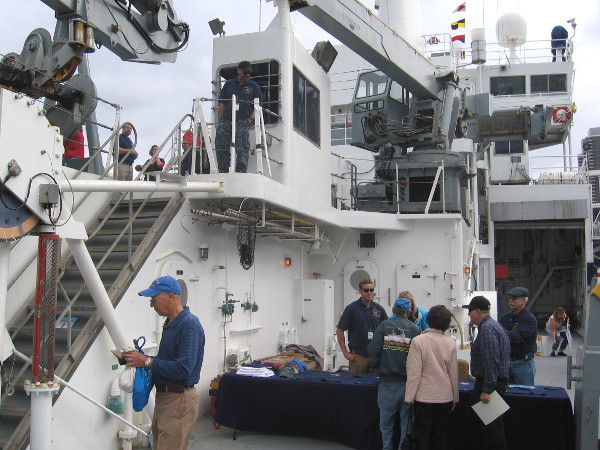
Massive A-frame at stern of Melville. The working deck contains exhibits for people to check out.
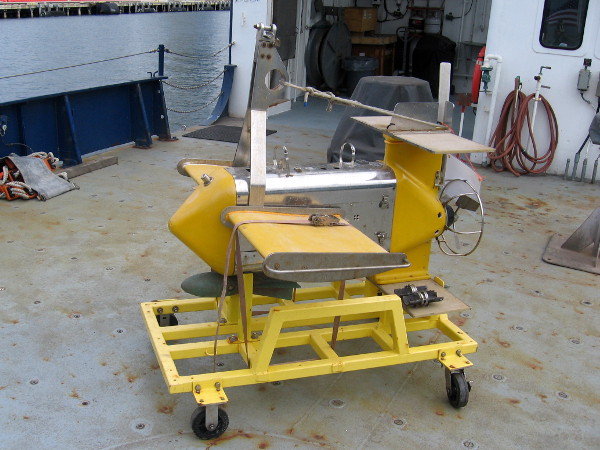
Sea Soar is an undulating towed vehicle used to collect real-time information, from the sea surface to a depth of 400 meters.
This outdoor area can be closed off during rough weather so that work can be performed when conditions are poor.
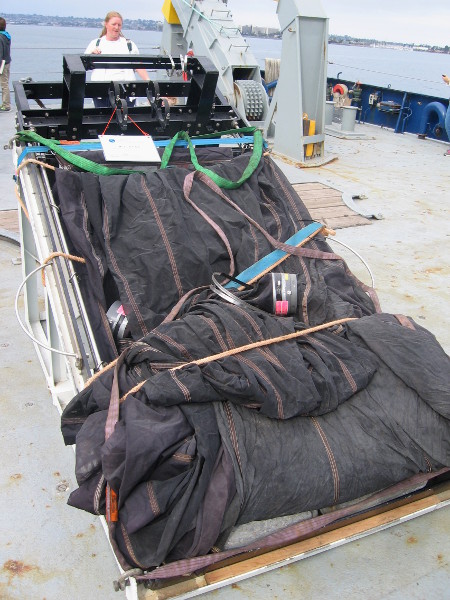
M.O.C.N.E.S.S. Multiple Opening/Closing Net and Environmental Sensing System allows oceanographers to catch zooplankton and measure environmental properties like salinity and temperature
M.O.C.N.E.S.S. Multiple Opening/Closing Net and Environmental Sensing System allows oceanographers to catch zooplankton and measure environmental properties like salinity and temperature.
Kids examine a rock dredge, used for the recovery of heavy material on the ocean floor.
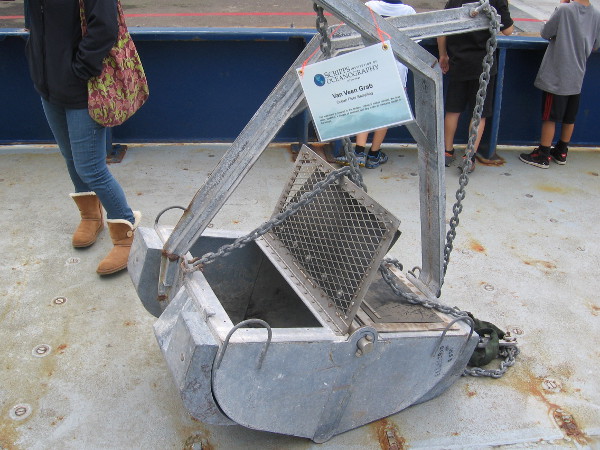
Van Veen Grab for ocean floor sampling. When it hits bottom, the jaws close and grab a sample of sediment, rocks and creatures.
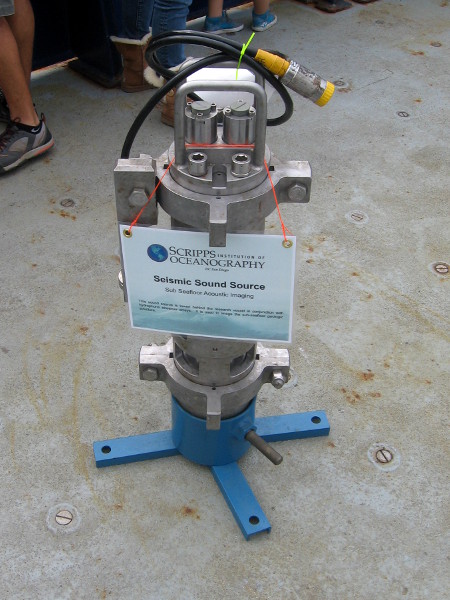
Seismic Sound Source for sub seafloor acoustic imaging. Towed behind research vessel in conjunction with hydrophone streamer arrays to image the sub-seafloor geologic structure.
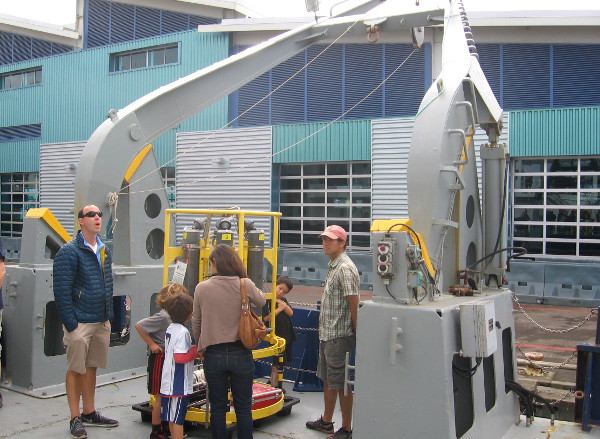
Heavy machinery available on the complex ship includes multiple winches, cables, cranes.
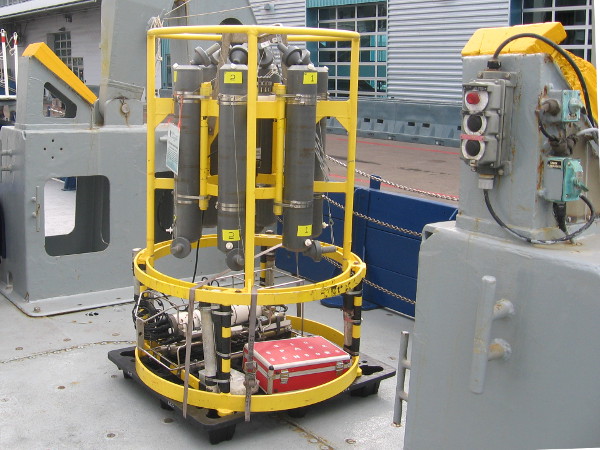
Ocean probe with multiple sensors near an A-frame at ship's side, where it might be lowered by cable into the water.
Ocean probe with multiple sensors near an A-frame at ship’s side, where it might be lowered by cable into the water.
CTD and Water Sampling Rosette measures conductivity, temperature and depth with a variety of sensors. Other chemical and biological parameters can also be measured.
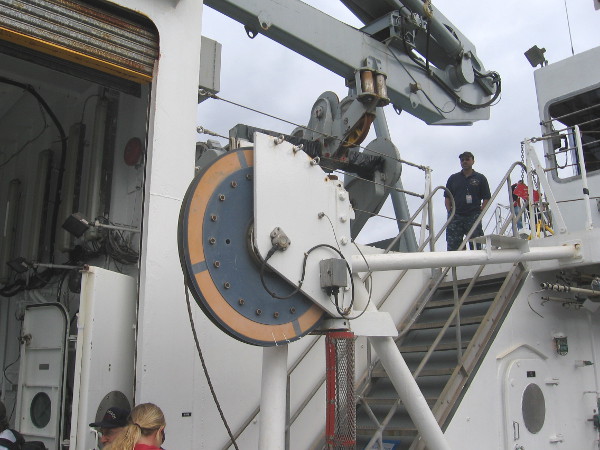
The super strong cable runs from here to one of two A-frames, where equipment can be towed or lowered.
One of many powerful winches on the research vessel Melville.
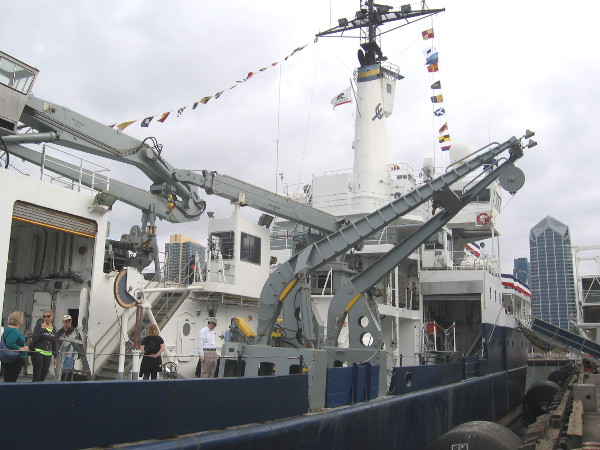
View from Broadway Pier of A-frame jutting from the Melville's side.
View from Broadway Pier of A-frame jutting from the Melville’s side.
Farewell RV Melville. The human race learned much during your decades of service!
Farewell R/V Melville. The human race learned much during your many decades of service!

To enjoy future posts, you can “like” Cool San Diego Sights on Facebook or follow me on Twitter.
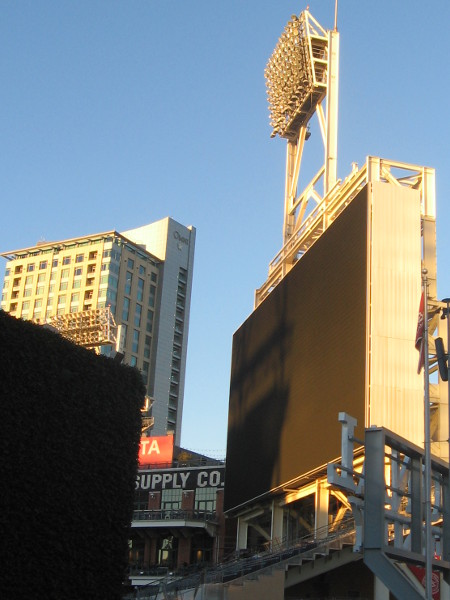
Huge new scoreboard installed at Petco Park!

Giant crane in Petco Park's outfield has installed a huge new scoreboard!
Giant crane in Petco Park’s outfield has installed a huge new scoreboard!

As you might have read in my last blog post, this morning I walked around Petco Park, home of the San Diego Padres. Guess what I saw! An absolutely hugemungous, super ginormous new scoreboard has been installed for the upcoming 2015 season! The high resolution board is the third largest in Major League Baseball, surpassed in size only by videoboards in Seattle and Kansas City. With a screen so big, why bother watching the action on the field? (Just kidding.)

I noticed a variety of other preparations underway around San Diego’s cool downtown stadium. Here are a few more pics…

This high resolution videoboard is the third largest in Major League Baseball!
This massive high resolution videoboard is the third largest in Major League Baseball!
Guys get some ticket machines ready for the upcoming 2015 baseball season.
Guys get some ticket readers ready for the upcoming 2015 baseball season.
Hosing down seats behind the Beach. The ball field is being prepped for professional baseball after the recent Monster Jam event.

To enjoy future posts, you can “like” Cool San Diego Sights on Facebook or follow me on Twitter.

Cool pics of old La Mesa railroad depot and train!

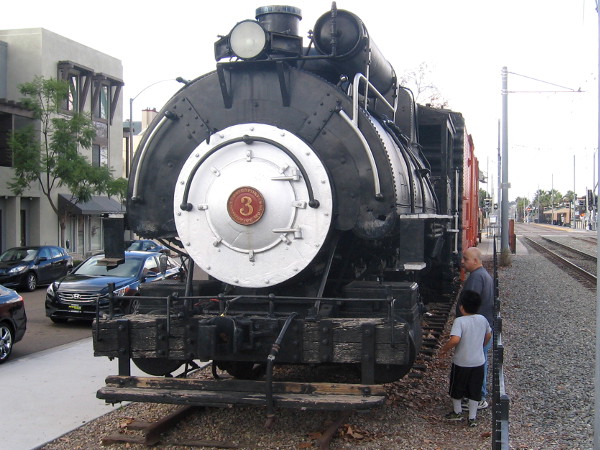
Dad and son check out old steam locomotive on display at La Mesa Depot Museum.

I’ve driven past the La Mesa Depot Museum many times over the years, but have never stopped to check it out. Today I remedied that very unfortunate situation!

Here’s a ton of cool pics. The small display train and historic railroad depot are found along Spring Street near the center of La Mesa, in San Diego’s sunny East County. I walked from south to north with my camera.

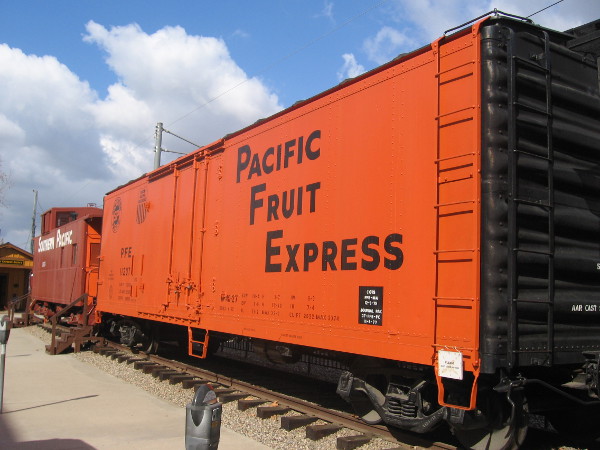
A friendly volunteer told me a little bit about the locomotive, reefer (refrigerator) car and caboose on exhibit, plus facts about the old La Mesa depot and San Diego and Cuyamaca Eastern Railway line. The depot is La Mesa’s oldest building and the only surviving San Diego and Cuyamaca Railway Station. Over the years it has experienced a colorful history, serving as an antique store and a worm farm! Please refer to the interesting signs, and my captions. Hopefully you get an idea of how awesome this place is!

The La Mesa Depot Museum is operated by the Pacific Southwest Railway Museum, which displays many old trains in Campo, an hour’s drive east of San Diego near Mexico. I went there with my family when I was very young and took a fun train ride. I plan on going again one day!

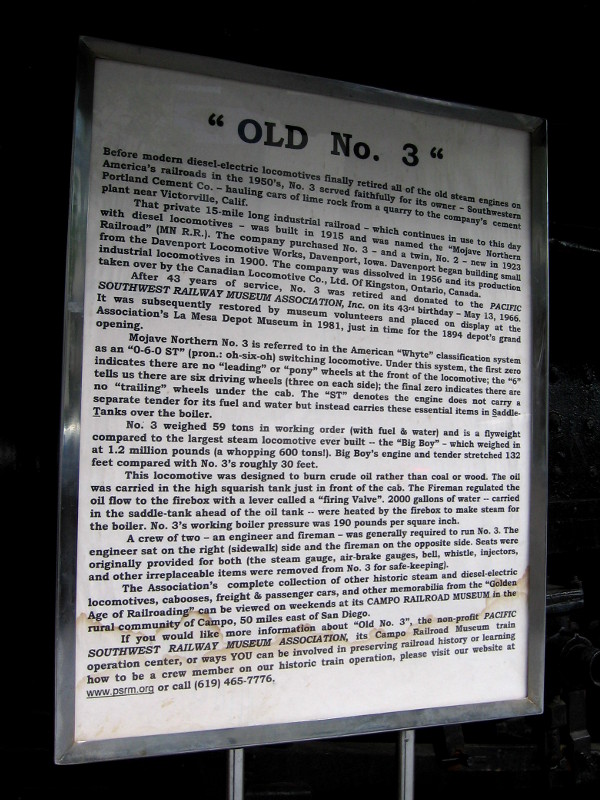
Locomotive was donated after 43 years of service to the Pacific Southwest Railway Museum Association.
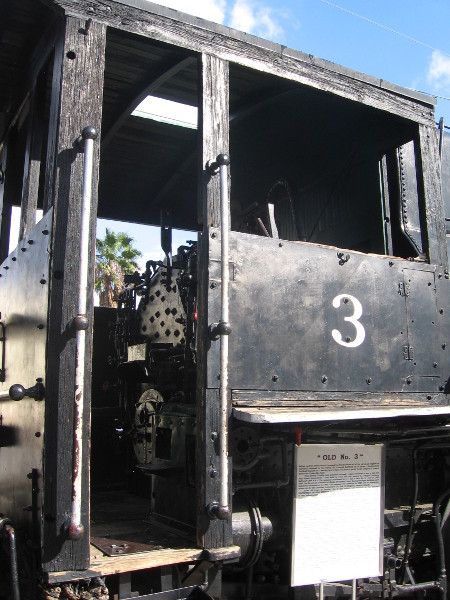
Looking up into door of steam locomotive Mojave Northern Railroad #3.
Old No. 3 originally hauled lime from a quarry near Victorville, California.
Part of the complex machinery and controls in the steam locomotive's cab.
Part of the complex machinery and controls in the steam locomotive’s cab.
Pacific Fruit Express reefer car on display at old train depot in La Mesa, California.
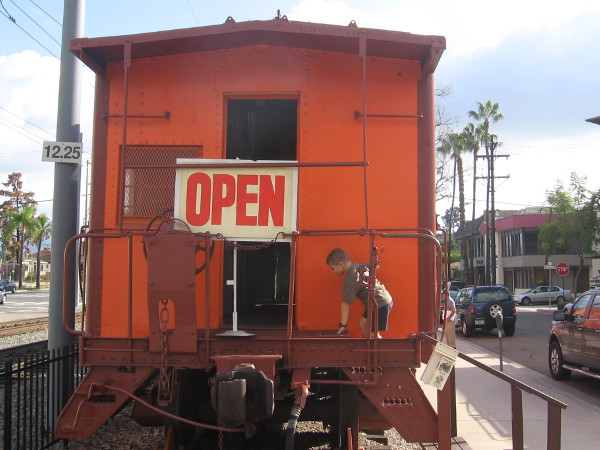
Southern Pacific Railroad caboose can be boarded free by visitors on Saturdays, 1-4 pm.
I saw a bunch of people during my short visit. There were many excited kids!
Entering the caboose, to check out what life was like working on the railroad.
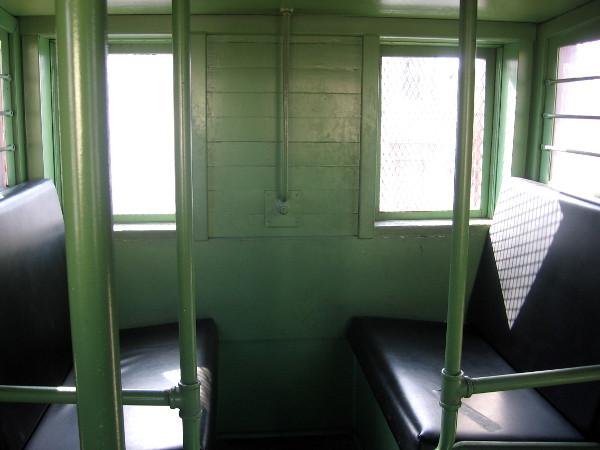
The conductor had high windows to see around the train during operation.
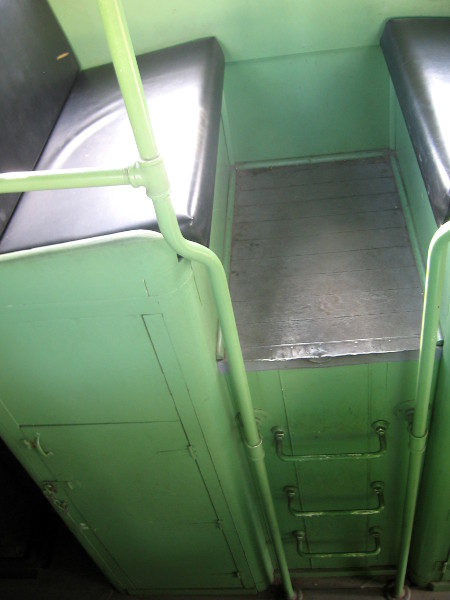
A freight train's conductor or crew could sit up here to see in every direction.
A freight train’s conductor or crew could sit up here to see in every direction.
That's quite a climb, even for a tall guy like me!
That’s quite a climb, even for a tall guy like me!
The small La Mesa depot sits near tracks now used by the San Diego Trolley Orange Line.
The depot opened in 1894, and this 44-star flag would've flown above it.
The depot opened in 1894, and this 44-star flag would’ve flown above it.
Information sign outlines the early history of La Mesa's train depot.
Information sign outlines the early history of La Mesa’s train depot.
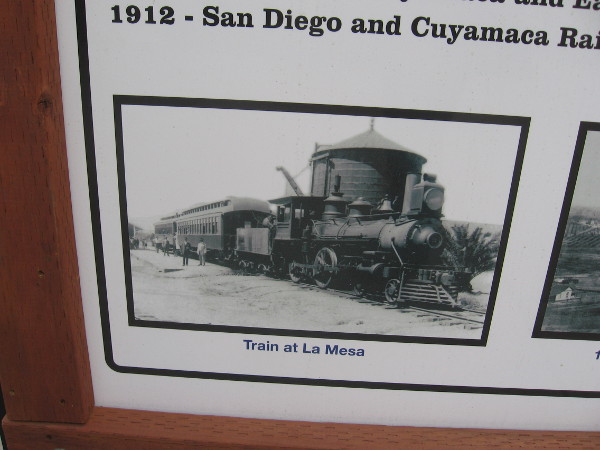
Historical photograph of a train stopping at La Mesa.
In the early 20th century the depot was sold and moved on various occasions.
McKeen Car at the La Mesa Depot.
This very small building contains lots of cool stuff!
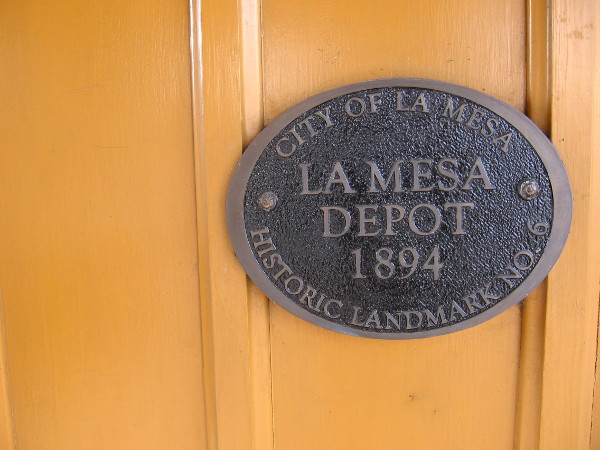
City of La Mesa Historic Landmark No. 6 on side of 1894 train depot.
Ticket office in depot contains various old telephones and a telegraph.
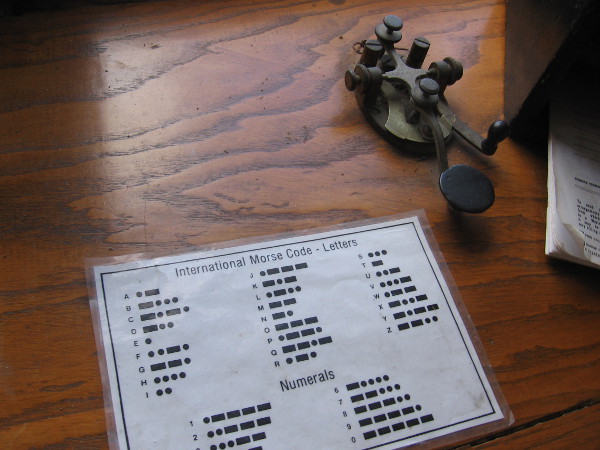
The telegraph key still works!
Telegraphic messages were received here!
Looking out through ticket window at the tiny train depot waiting room.
In one corner of the office is an old-fashioned manual typewriter.
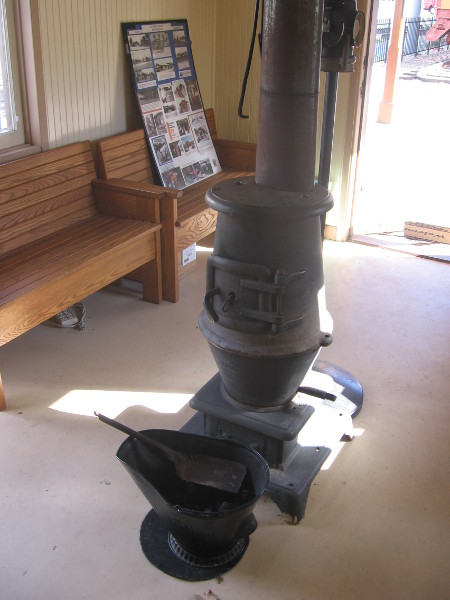
This old wood stove still works and provides a lot of heat!
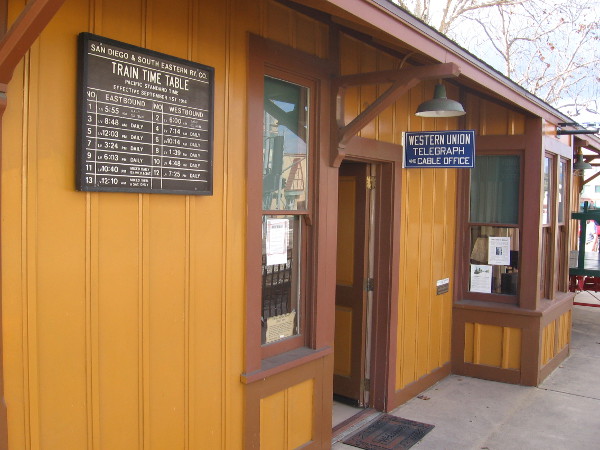
Signs bring to life the old train time table and Western Union office.
An old railway hand cart for hauling freight or luggage.
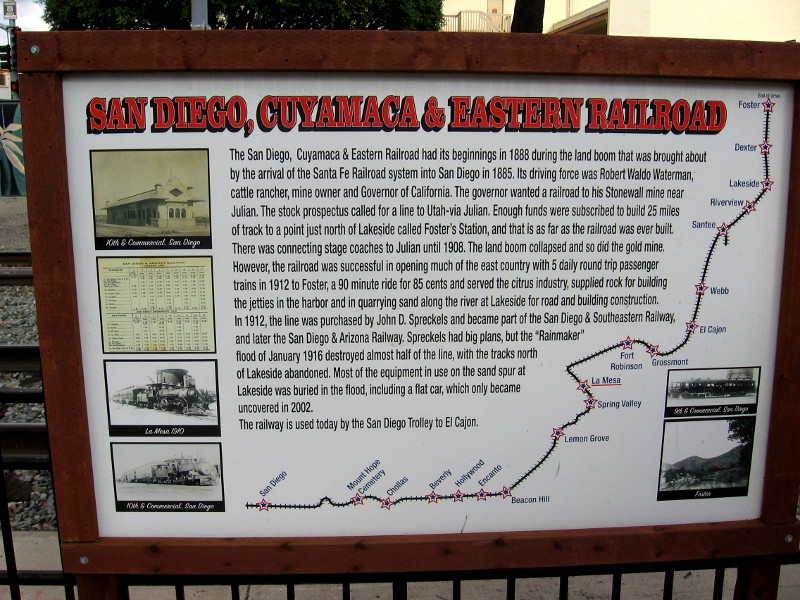
Sign tells complex story of the San Diego, Cuyamaca and Eastern Railroad.
Here comes the San Diego Trolley, approaching the nearby La Mesa Boulevard station.
The La Mesa Depot Museum is a fun place to visit on a Saturday afternoon!

To enjoy future posts, you can “like” Cool San Diego Sights on Facebook or follow me on Twitter.

Fresnel lens in Old Point Loma Lighthouse museum.

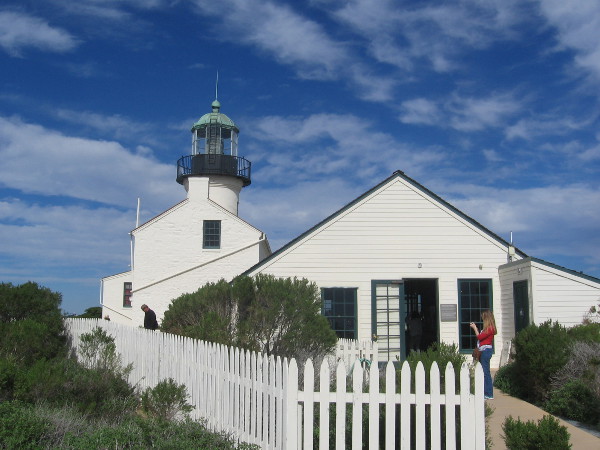
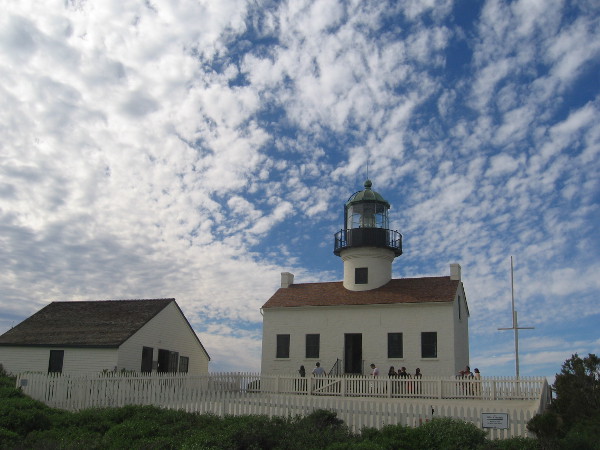
Looking up at the Old Point Loma Lighthouse in Cabrillo National Monument.

Everyone likes to explore the Old Point Loma Lighthouse. You can climb up the winding staircase and peer into several interesting rooms where the lighthouse keeper and his family lived. But the small museum in the nearby assistant keeper’s quarters contains the true marvels of science and art. Come inside and let us have a quick look!

The assistant keeper's quarters next to the lighthouse today contains a small museum.
The assistant keeper’s quarters next to the lighthouse today contains a small museum.
Sign outside lighthouse shows huge Fresnel lens which guided ships with focused light 400 feet above sea level.
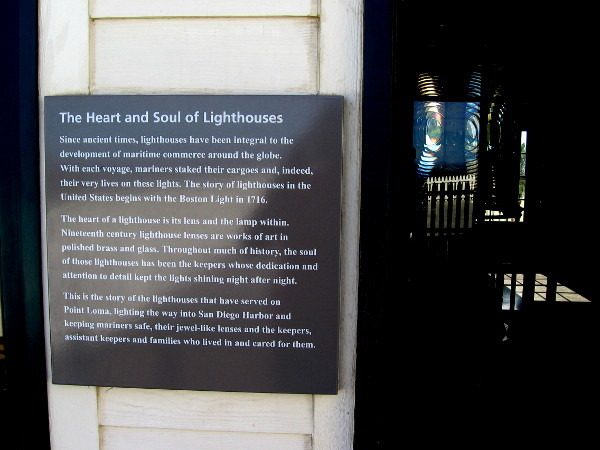
The heart of a lighthouse is the lens and lamp. 19th century lenses are works of art made of polished brass and glass.
Sign at entrance to museum.  The heart of a lighthouse is the lens and lamp. 19th century lenses are works of art made of polished brass and glass.

The highly polished Fresnel lenses utilized by lighthouses are beautiful objects. They refract and reflect light, creating prismatic colors when viewed from certain angles. It’s almost a miracle that a small flame in a lamp can be magnified to the extent that ships far out at sea can easily see it and be guided to safety. Light intensified by lenses in this museum could be seen 18 to 24 miles away!

This 3rd Order Fresnel lens was used by the New Point Loma Lighthouse, built in 1891 down by the water.
An optical wonder, this huge lens is an amazing, highly polished light bender.
Diagram shows how a complex Fresnel lens functions.
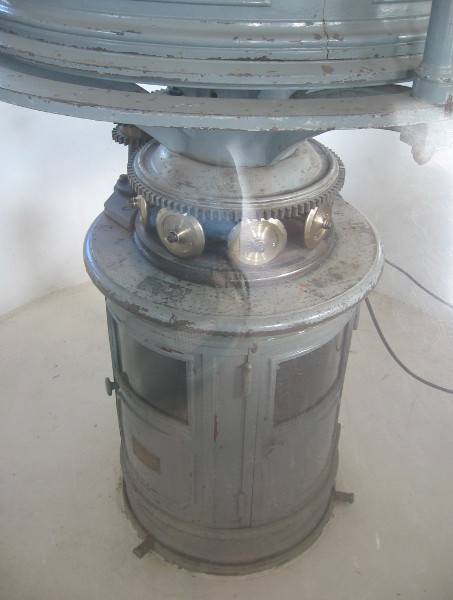
The base of the heavy Fresnel lens with chariot wheels visible.
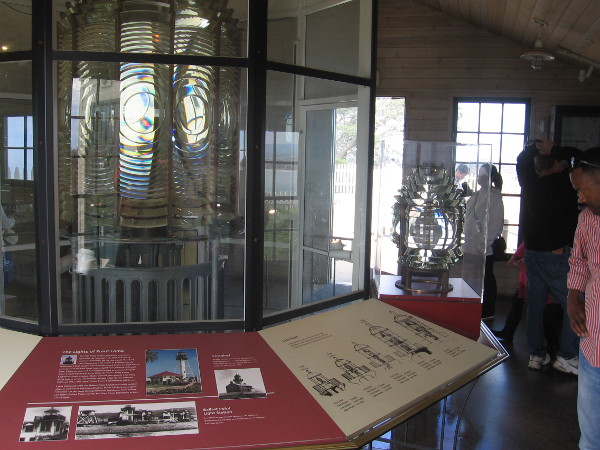
There are different orders of size, as illustrated in this display.
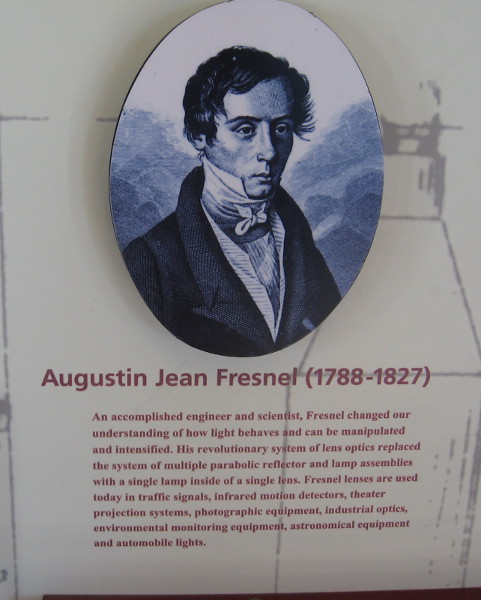
Augustin Jean Fresnel (1788-1827) was an accomplished engineer and scientist. Fresnel lenses are used in many modern applications today.
Small museum by Old Point Loma Lighthouse contains various very cool exhibits.
This small 5th Order lens lighted the Ballast Point Lighthouse from 1890 to 1960.
Log book of daily expenditures for oil, wicks and chimneys.
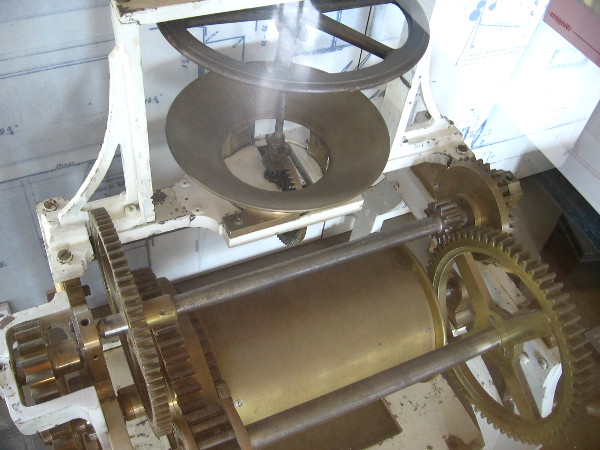
This clockwork of gears slowly turned the light above.
The keeper's service box contained cleaning supplies and delicate tools for maintaining the lamp.
The keeper’s service box contained cleaning supplies and delicate tools for maintaining the lamp.
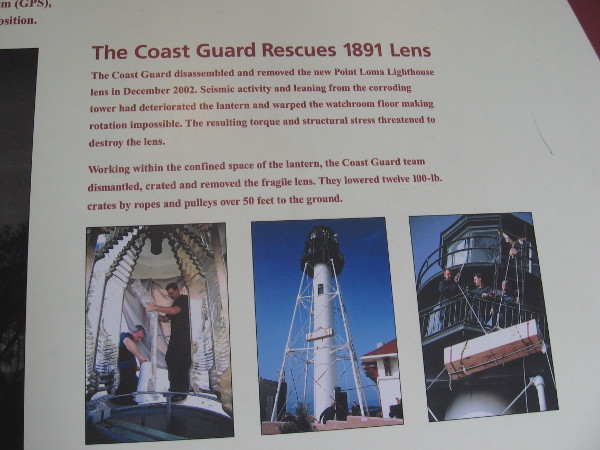
The Coast Guard removed this large Fresnel lens from the New Point Loma Lighthouse in 2002.
Looking at the iconic Old Point Loma Lighthouse and small museum beside it.

To enjoy future posts, you can “like” Cool San Diego Sights on Facebook or follow me on Twitter.

Bike share stations pop up around San Diego.

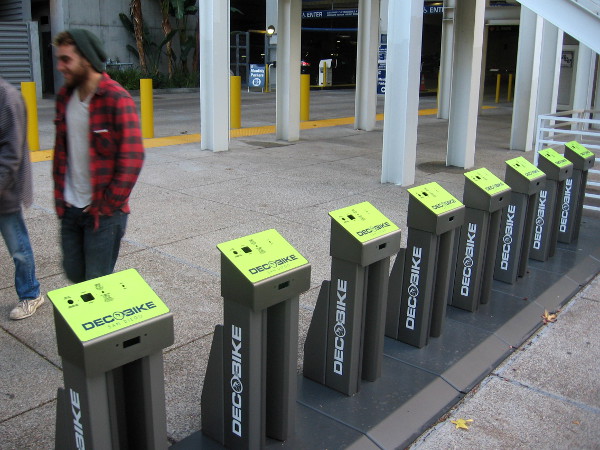
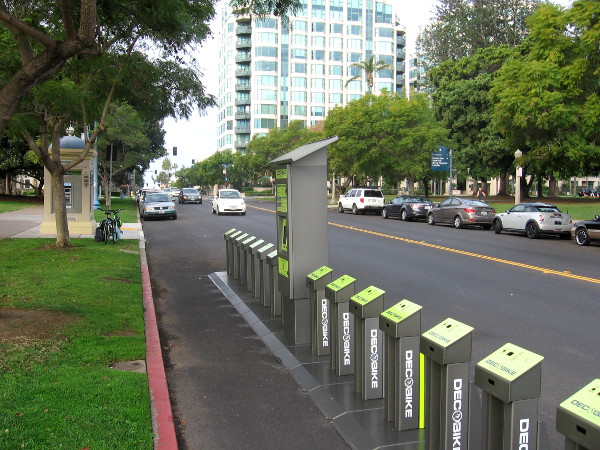
DecoBike bikeshare location on Broadway between Santa Fe Depot and America Plaza.
DecoBike bikeshare station on Broadway between Santa Fe Depot and America Plaza.

During my walks around San Diego in the past few months, I’ve noticed new bike sharing stations popping up at various locations. The green-signed docks still contain no bikes, but according to articles I’ve read the program is supposed to finally begin this month, after many delays.

Bike sharing in San Diego will be facilitated by DecoBike, a company based in Miami, where a similar system has been installed. They plan to eventually have around 180 electronic rental stations and 1,800 standardized bicycles.

San Diegans and city visitors will be able to rent bicycles for one-time use, or purchase a monthly or annual membership. The number of bikes available at any station will be visible in real time on DecoBike’s online station map.

According to signs at each bikeshare station, renting a bike will cost $5 per half hour, $7 per hour, or $12 for two hours. Memberships will cost $15 for one day, $35 for one week, or $50 for one month.

Looks interesting. Perhaps I’ll do a little more bicycling!

New bike sharing locking docks in East Village just north of Petco Park.
More locking bicycle docks in East Village, just north of Petco Park.
DecoBike bikeshare stations feature a touchscreen, instructions and a row of bike docks.
Sign shows rental and membership rates.
Another bike sharing station on El Prado near the west end of Balboa Park.

To enjoy future posts, you can “like” Cool San Diego Sights on Facebook or follow me on Twitter.