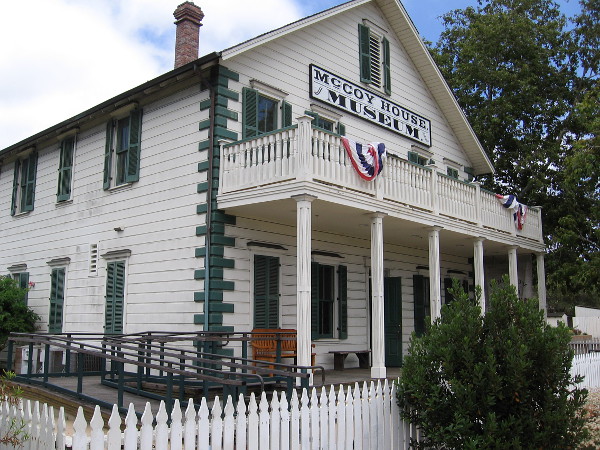
The McCoy House Museum, in Old Town San Diego State Historic Park, is a reconstruction of a home built in 1869 for Sheriff James McCoy.
While there are many small museums and historical attractions that visitors can enjoy in Old Town San Diego State Historic Park, the McCoy House Museum is the best place to see an extensive series of interpretive displays that describe the complete history of early San Diego.
The McCoy House, standing on the north end of Old Town, is a reconstruction of a home built in 1869 for Sheriff James McCoy and his family. James McCoy, who lived from 1821 to 1895, like many early San Diego residents was an ambitious man, working diverse jobs, filling many roles. At the age of 21 he sailed from Ireland to America seeking opportunity. He became a soldier, then a stagehand, then San Diego county assessor, then county sheriff in 1861. He acquired substantial real estate holdings and finally won election to the state senate in 1871.
The interpretive displays in the McCoy House Museum provide a good look back at San Diego’s formative years. They detail the life of the Native American Kumeyaay who’ve lived in the region for thousands of years, the first Spanish explorers, the establishment of the Spanish mission, the Mexican period and the subsequent American period.
If you’d like to read the displays, click my photographs to enlarge them.
This blog post covers the first floor of the museum. I’ll cover the second floor exhibits in a later post. After heading up some stairs, one can find information about the more prominent residents of Old Town, plus the town’s later history as it competed with New Town, which eventually rose to become downtown San Diego as we know it today.
Anyone who is a history buff must visit the McCoy House Museum. You’ll be transported back in time and see how life was exciting, difficult, and altogether different many, many years ago in San Diego.
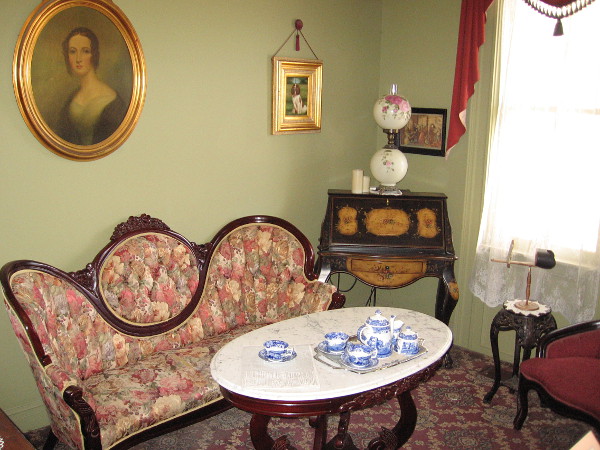
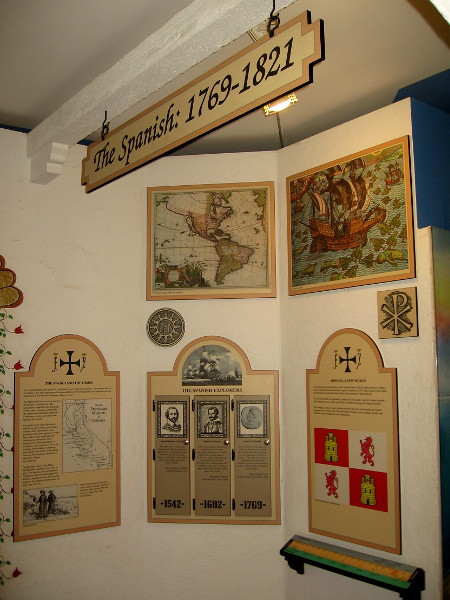
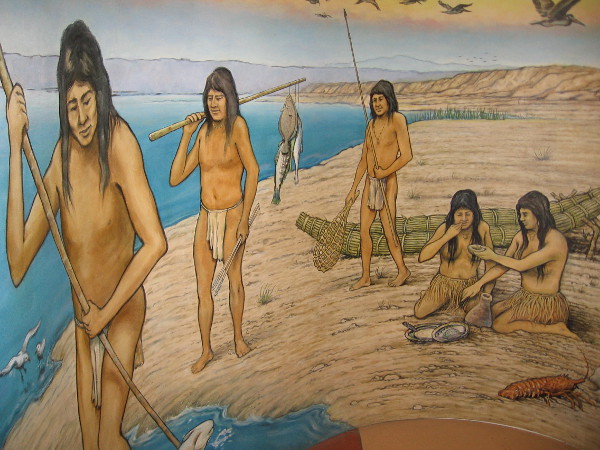
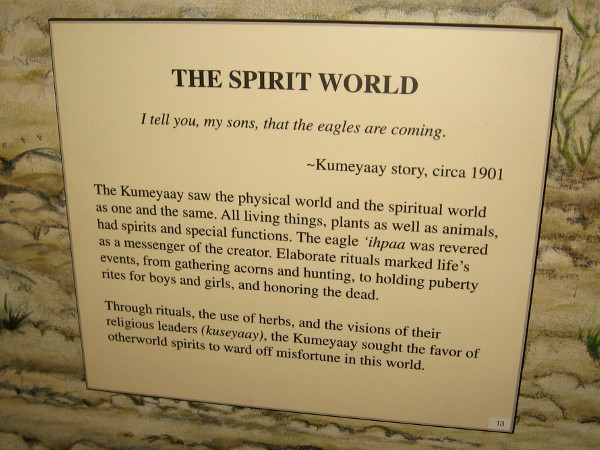
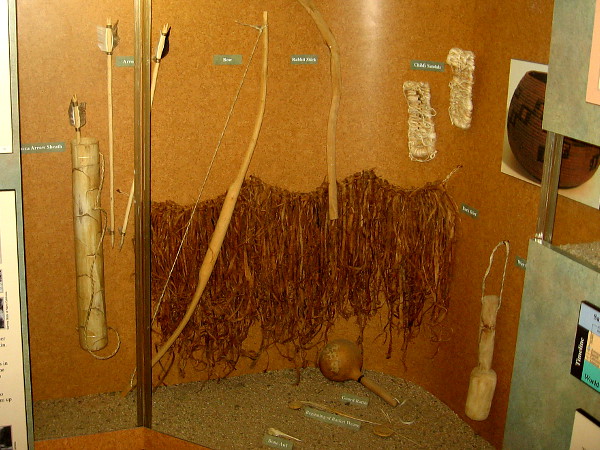
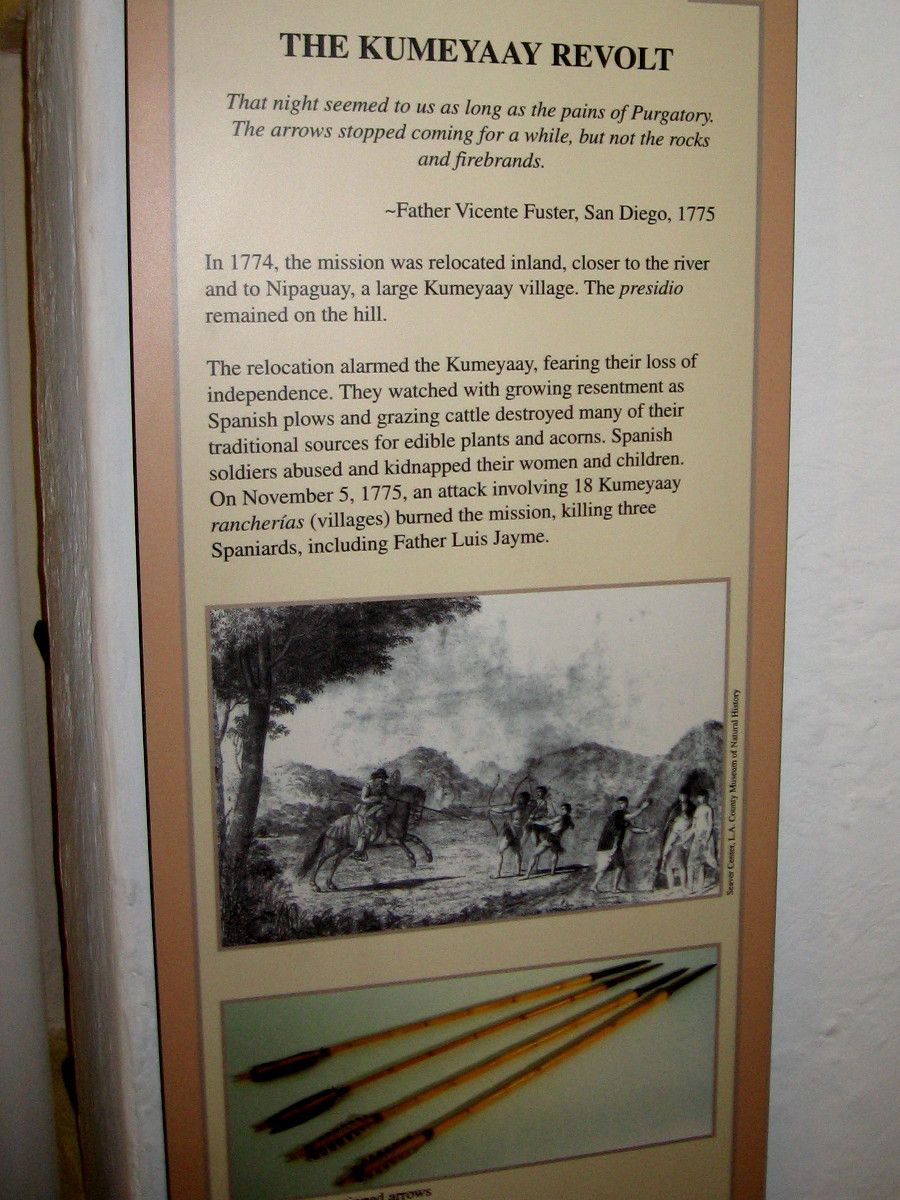
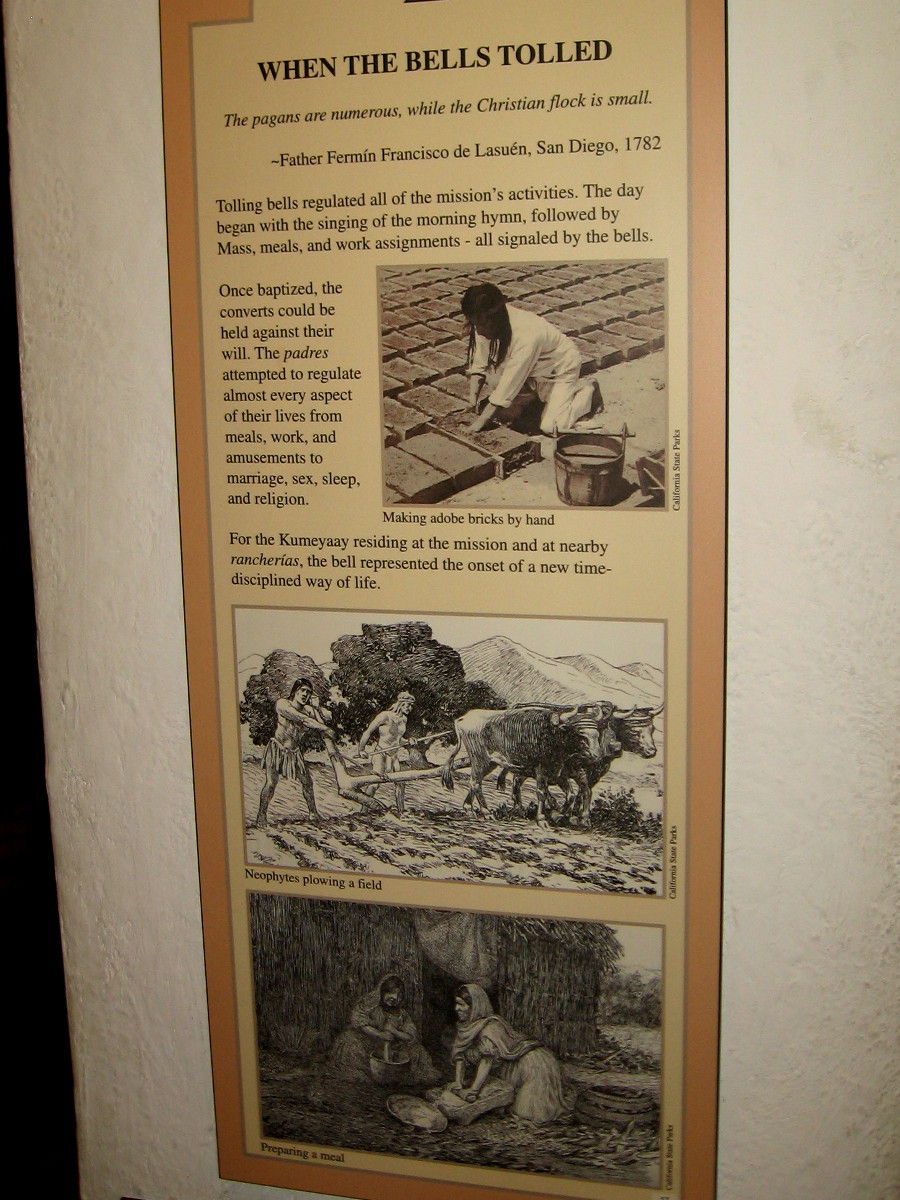
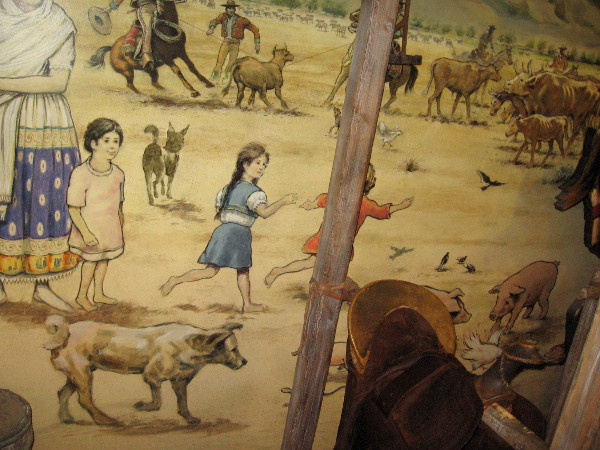
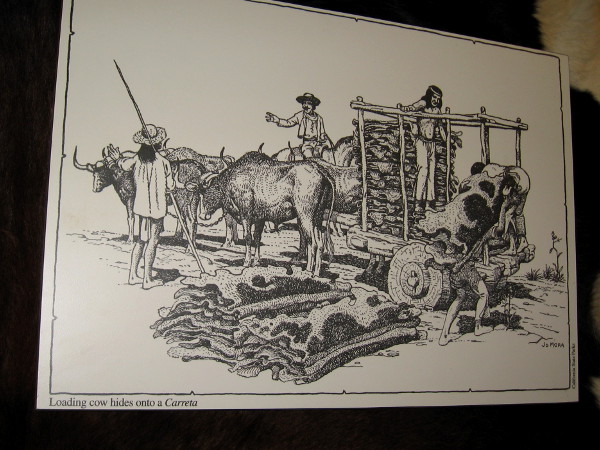
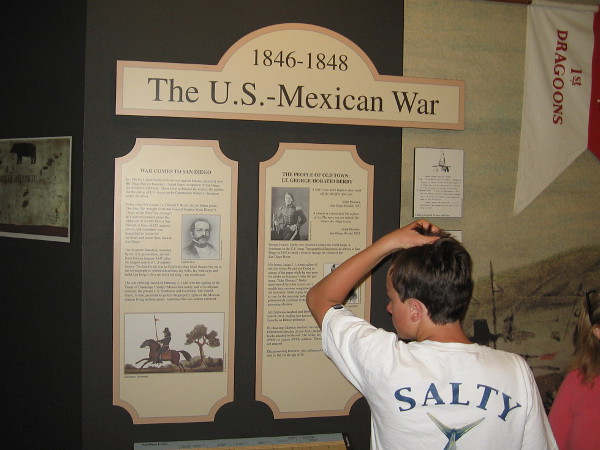
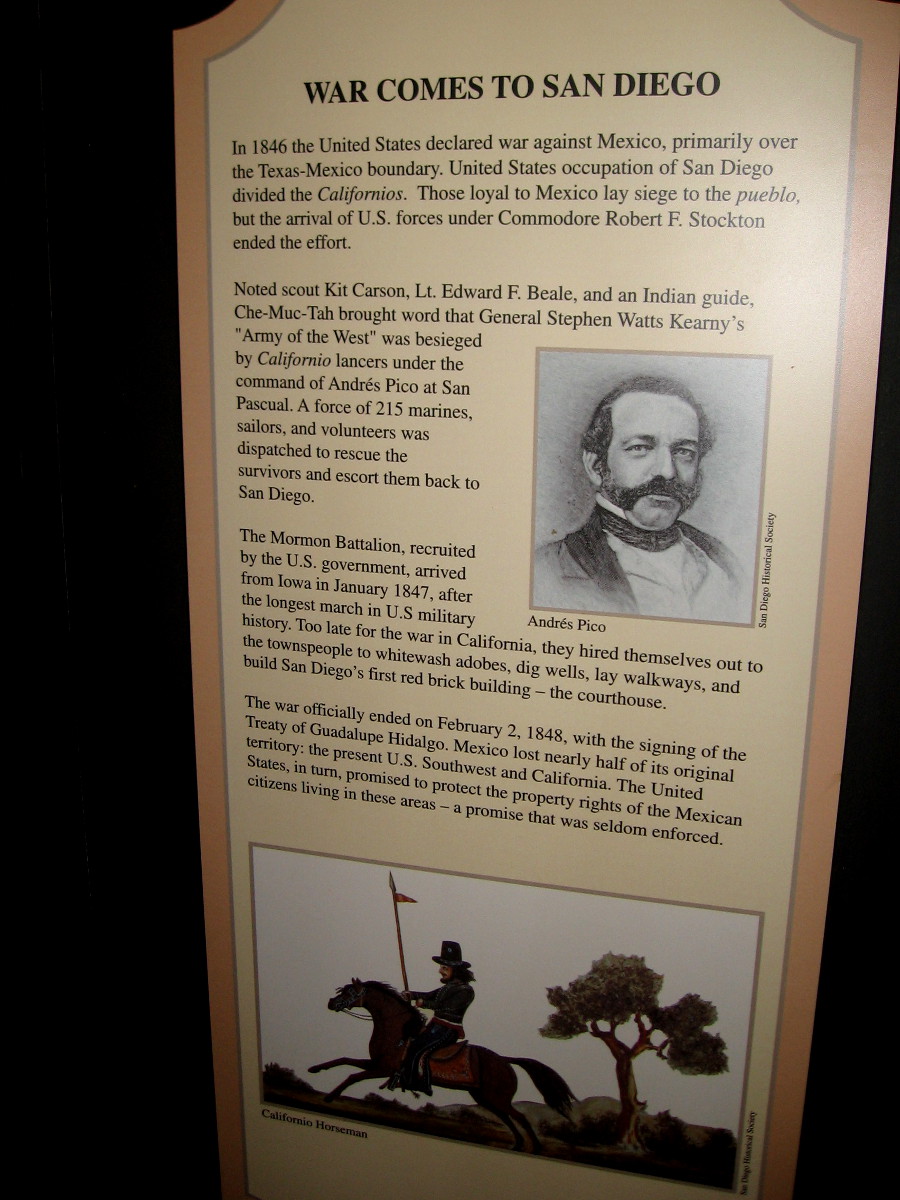
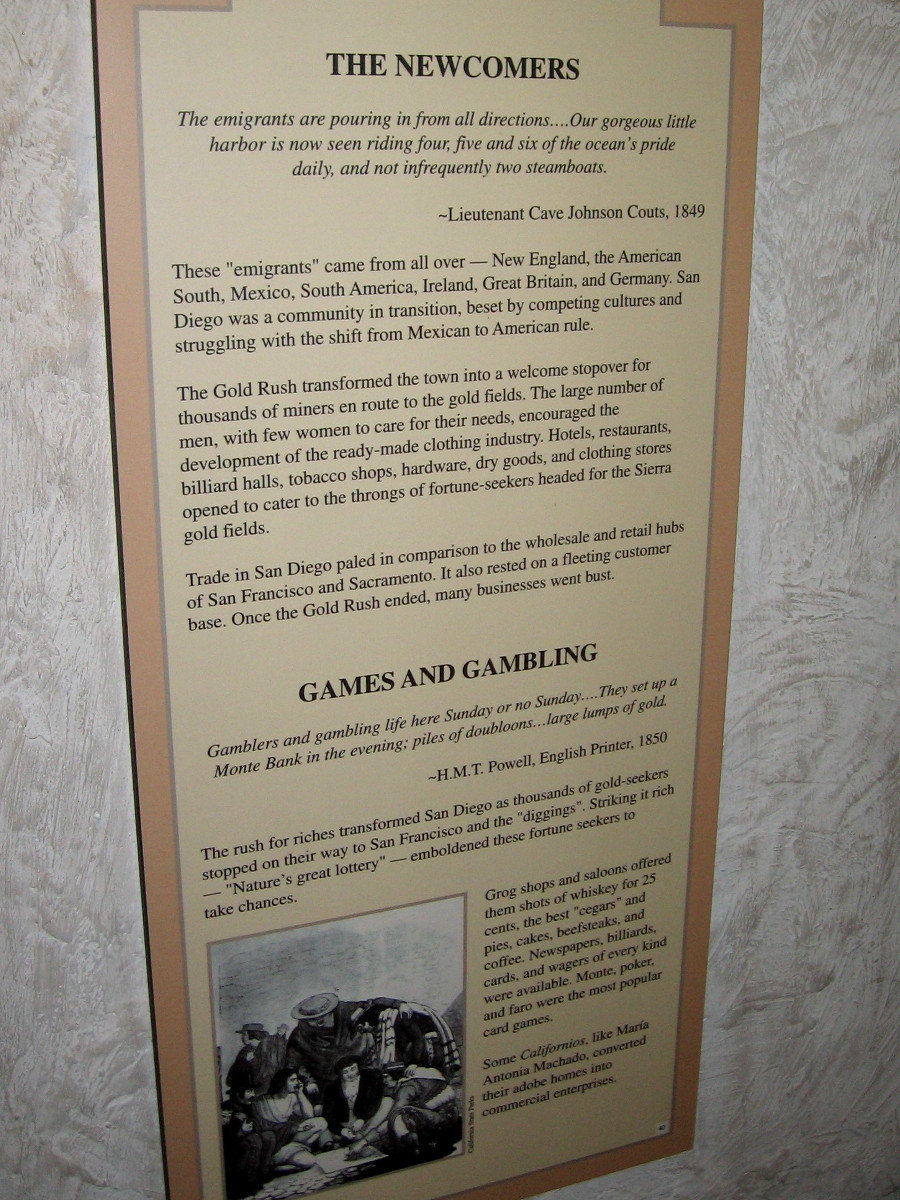
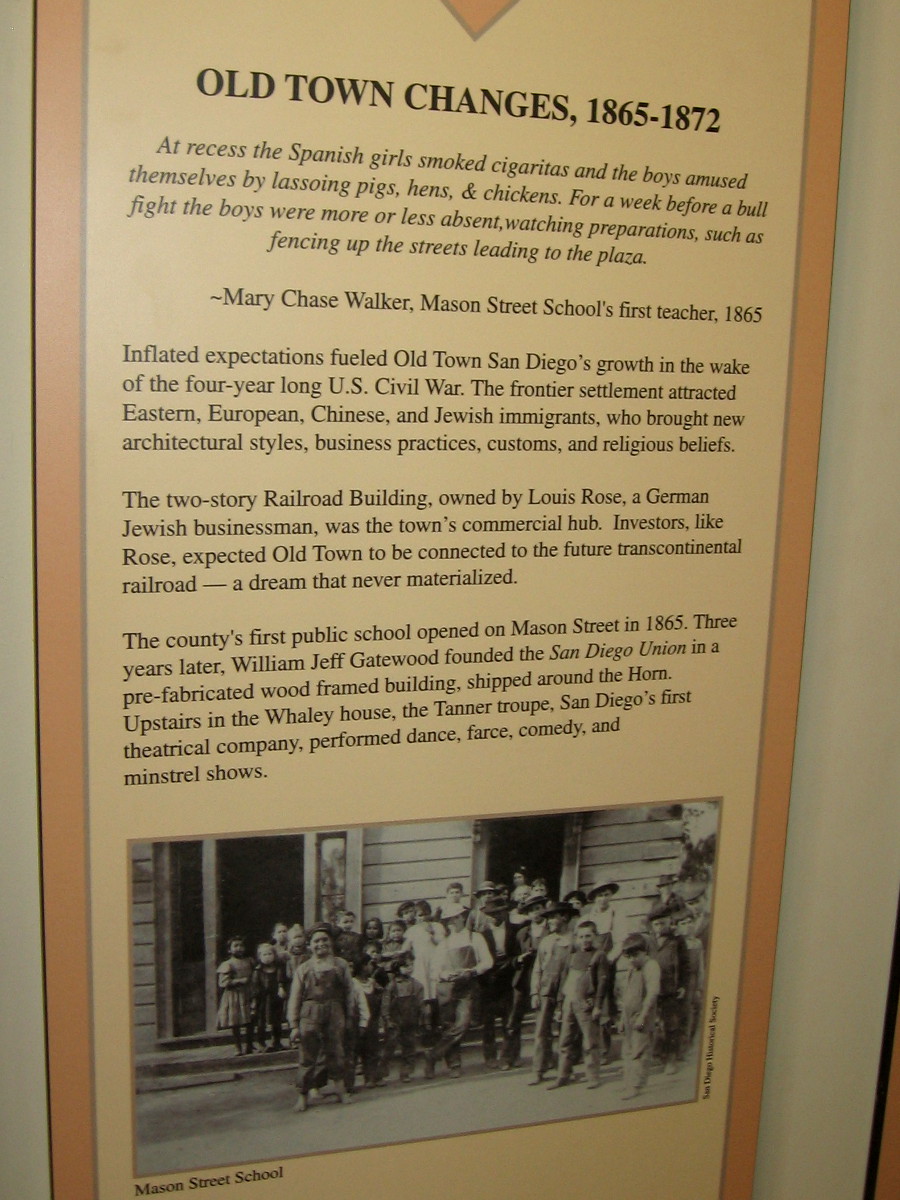
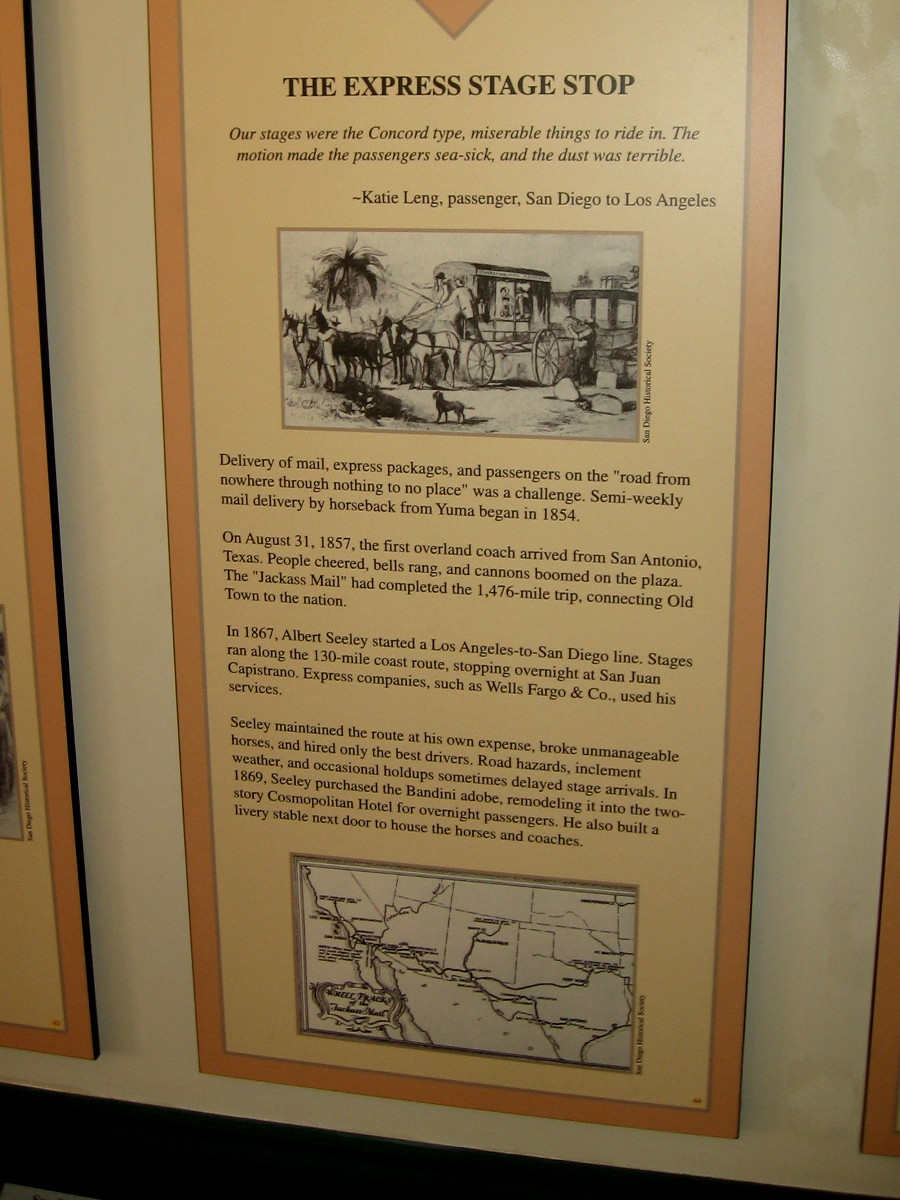
Sign lists important dates concerning the McCoy House. Today it’s a museum containing exhibits that explain the fascinating history of Old Town San Diego.Just inside the front door, this might have resembled the parlor of the original McCoy House, occupied by an upper middle class family in San Diego’s Old Town.Framed photo on one wall from the San Diego Historical Society shows the original McCoy House.Interpretive exhibits inside the McCoy House Museum begin with the Spanish period of San Diego, from 1769 to 1821.Quotes from the journeys of Juan Rodriguez Cabrillo, Sebastian Vizcaino and Gaspar de Portola.A string of missions was created by Spain in California to secure its claim to new territory. The first mission, in San Diego, was originally established on Presidio Hill near the native Kumeyaay village of Cosoy.An artistic representation of life among the Kumeyaay people. They often visited the nearby coast to hunt and gather food.For thousands of years, the Kumeyaay lived along the coast and interior valleys of what is now San Diego County. They moved with the seasons to take advantage of available resources.The Kumeyaay built dome-shaped houses from oak, willow or sycamore branches. The simple structures were called ee-wahs.The Kumeyaay saw the physical and spiritual world as one and the same.Exhibit in the McCoy House Museum shows artifacts associated with the Kumeyaay, including a bark skirt, arrows, rabbit stick, child’s sandals, gourd rattle and war club.The Kumeyaay revolted against the Spanish missionaries in 1775, a year after the San Diego mission was relocated inland very close to a large Kumeyaay village.Once baptized, converted Kumeyaay followed a strict life. Mission bells signaled the day’s activities, including the singing of hymns, Mass, meals and work assignments.Mexico gained its independence from Spain in 1821 after a decade of bloodshed. Changes included a decline in support for the presidio and freedom from Spain’s trade regulations.After the breakup of the Spanish missions, the era of the great ranchos began. Californios were often racially mixed descendants of soldier-settler families.Vaqueros were the original cowboys. They worked on the extensive ranches and handled the large herds of stock.A fanciful picture of life on a rancho, with vaqueros at work and children at play.The Californios loved to celebrate feast days, weddings and religious festivals.Cattle by the thousands roamed San Diego’s hills. Their dried hides were used in trade and were sometimes referred to as California banknotes.Illustration of loading cow hides onto a carreta. Hides were gathered by ships along the coast to be transported around Cape Horn to the eastern United States.Exhibit inside the McCoy House Museum recreates the small shop of a Boston trader. The brig Pilgrim of Two Years Before the Mast brought people aboard to buy wares and finished goods that weren’t available in San Diego.Illustrations of cow hides being cured. This activity took place at La Playa, a point on San Diego Bay near Ballast Point in Point Loma.Diagram of the brig Pilgrim, made famous in Richard Henry Dana Jr.’s classic Two Years Before the Mast. As an ordinary seaman, Dana collected cattle hides up and down the California coast.Exhibit in the McCoy House Museum details local history during the Mexican–American War from 1846 to 1848.During the war, U.S. occupation of San Diego divided the loyalty of the Californios. The two sides fought briefly at the Battle of San Pasqual.Around the time of the Gold Rush, San Diego saw an influx of emigrants from all over, including New England, the American South, Mexico, South America, Ireland, Great Britain and Germany.Old Town tales include the construction of the first jail in 1850. The walls were so poorly made, the first prisoner, Roy Bean, easily dug himself out, then celebrated at a nearby saloon!Grog shops became popular gathering places. They were a social hub of San Diego life, providing customers with news and provisions.A recreated Old Town grog shop can be found inside the McCoy House Museum.After the California Gold Rush of 1849, San Diego became more developed. A courthouse and newspaper were established. Transportation included clipper ships, stage lines and steamships.Poster advertises a new clipper ship route. A very quick trip may be relied upon!Between 1865 and 1872, Old Town San Diego continued to grow. The first public school opened, and the town welcomed its first theatrical company in the Whaley house.The first overland coach to San Diego began service in 1854. Additional stage lines came into existence, allowing for the delivery of mail, express packages and passengers.Visitors to the McCoy House Museum can step into a replica stage stop and see what life was like in Old Town during San Diego’s rugged early history.
…
I live in downtown San Diego and love to walk! You can follow Cool San Diego Sights via Facebook or Twitter!
You can easily explore Cool San Diego Sights by using the search box on my blog’s sidebar. Or click a tag! There are thousands upon thousands of interesting photos for you to enjoy!
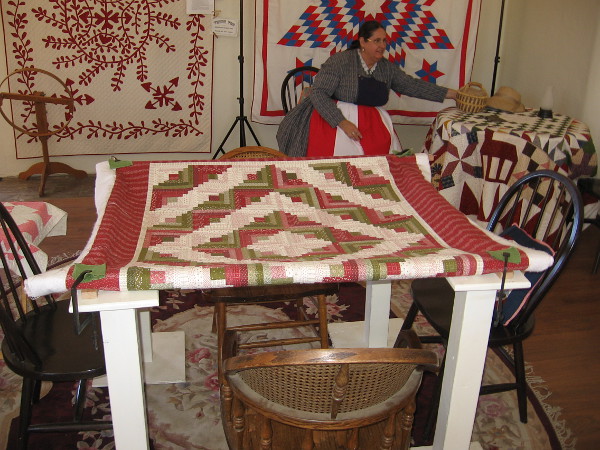
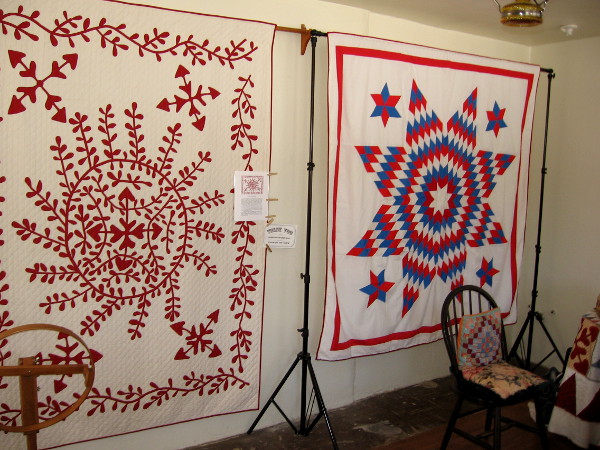
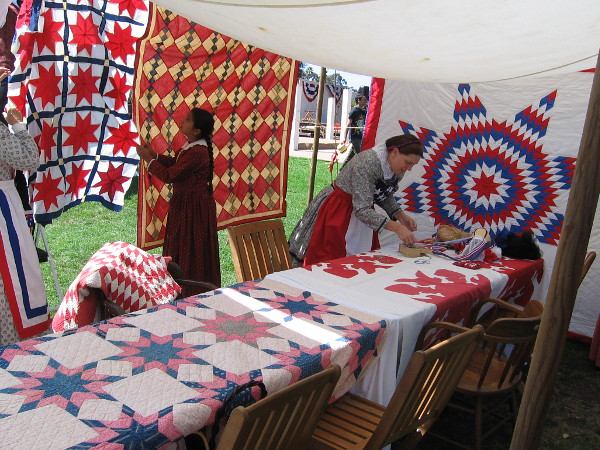
These beautiful quilts are on public display at Threads of the Past, in Old Town San Diego State Historic Park.
I recently visited Threads of the Past, a living history exhibition in Old Town San Diego State Historic Park. Not only did I see a number of beautiful quilts, but I learned about spinning and weaving. I was even able to watch a skilled artisan work an old-fashioned loom!
Here are some fascinating photos that I took inside Threads of the Past. I know very little about weaving and needlework, so I’m afraid I can’t provide much commentary. I do know that I really enjoyed looking at all the colors and patterns. I also learned a bit about San Diego’s past from the friendly members of Old Town’s Historic Quilt Guild and Fiber Arts Guilds. They’re keeping history alive! With great skill, they have produced beautiful textile artwork that visitors to Old Town can appreciate with their own eyes!
Threads of the Past is located near San Diego’s first courthouse. You can find it among the many other museums and historical attractions in Old Town San Diego State Historic Park.
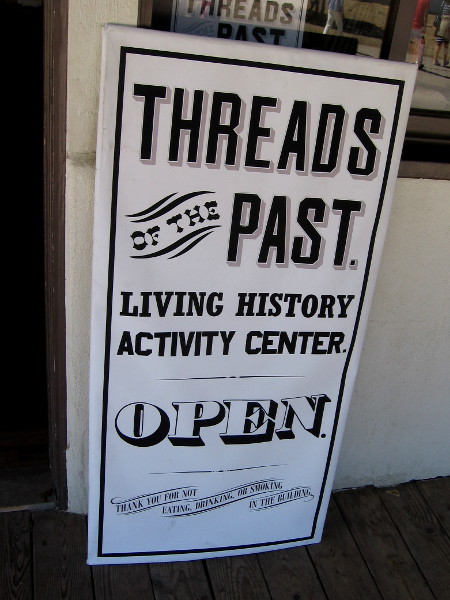
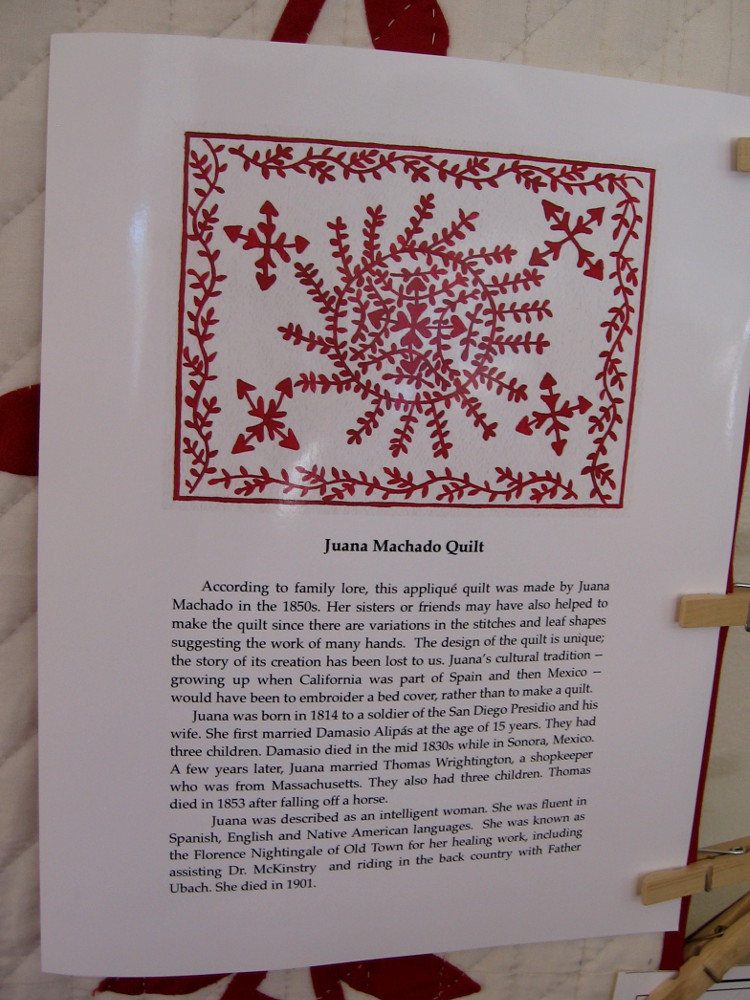
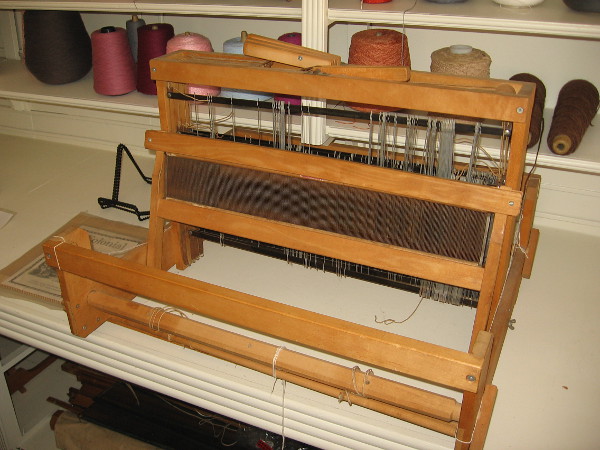
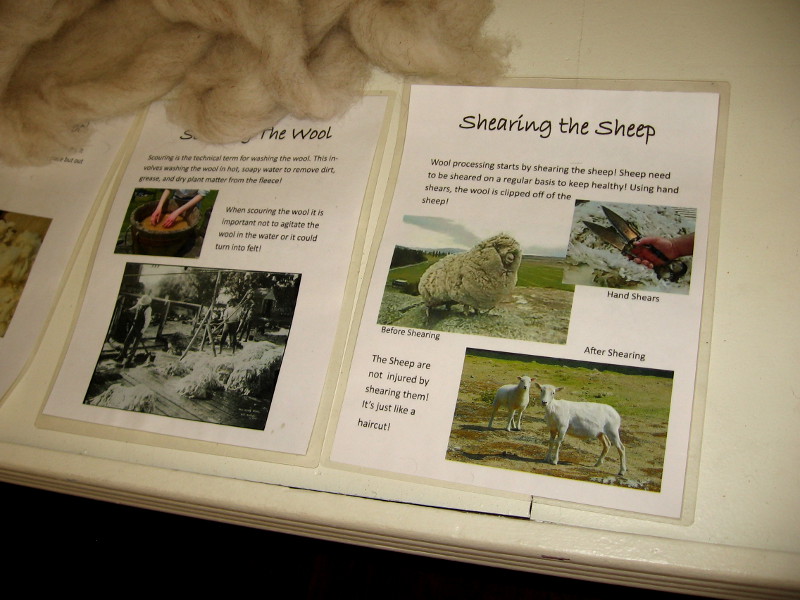
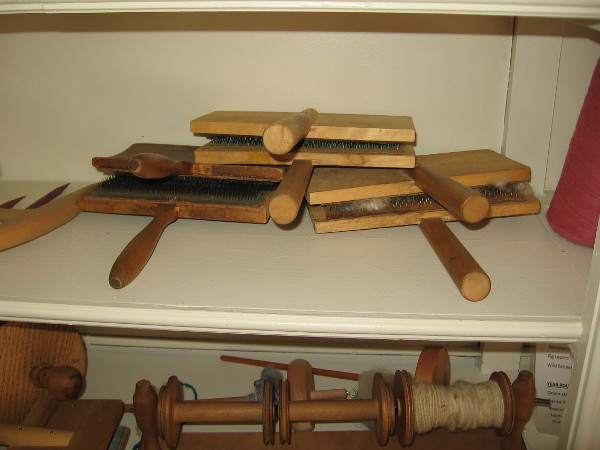
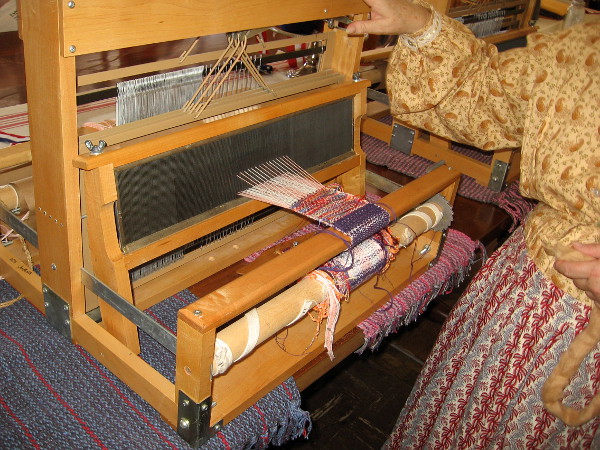
Should you visit San Diego’s Old Town, look for this sign outside the Threads of the Past living history activity center.Shelves full of colorful fabric woven with geometric patterns.Two quilts on one wall greet visitors as they enter Threads of the Past. On the left is a modern version of the 1850s Juana Machado Quilt.According to family lore, this applique quilt was made by Juana Machado in the 1850s. Juana was born in 1814 to a soldier of the San Diego Presidio and his wife.Threads of the Past contains several small looms and a variety of educational displays.Some colorful fabric circles arranged on a table.As you can see, this Inkle Loom is quite narrow. It’s used to make woven bands for belts and straps.A rather simple wood Colonial Loom on display in Threads of the Past.One display explains shearing sheep for wool, then carding, combing, and spinning wool.Several hand carders. Carding is gently spreading washed and dried wool in preparation for future processing, like spinning.All sorts of very colorful threads!A living demonstration of an old-fashioned hand loom at Threads of the Past, in Old Town San Diego State Historic Park.
…
I live in downtown San Diego and love to walk! You can follow Cool San Diego Sights via Facebook or Twitter!
You can easily explore Cool San Diego Sights by using the search box on my blog’s sidebar. Or click a tag! There are thousands upon thousands of fun photos for you to enjoy!
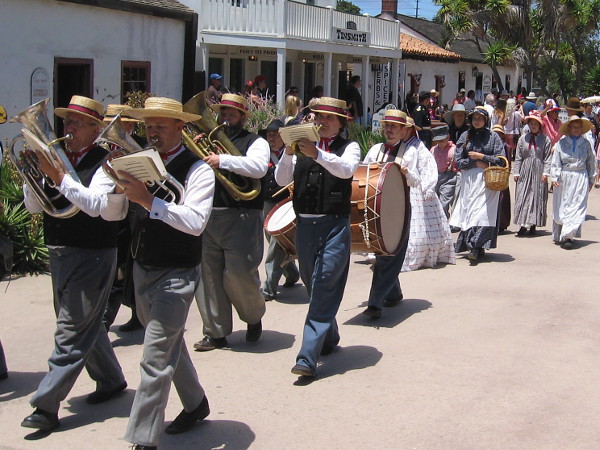
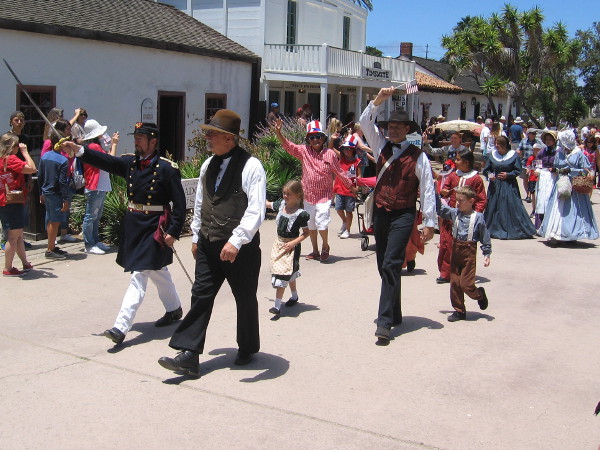
American flags lead a Fourth of July parade in Old Town San Diego State Historic Park.
Here come oodles of fun photos! I took them during the first two hours of Old Town San Diego’s Fourth of July celebration! (Sorry, but I missed the pie eating contest!)
I’ve captioned the photos with descriptions. If you’ve never enjoyed Independence Day at Old Town San Diego State Historic Park, you’re missing out on a very colorful and patriotic event! And there’s a lot of fascinating history that you can absorb, as well!
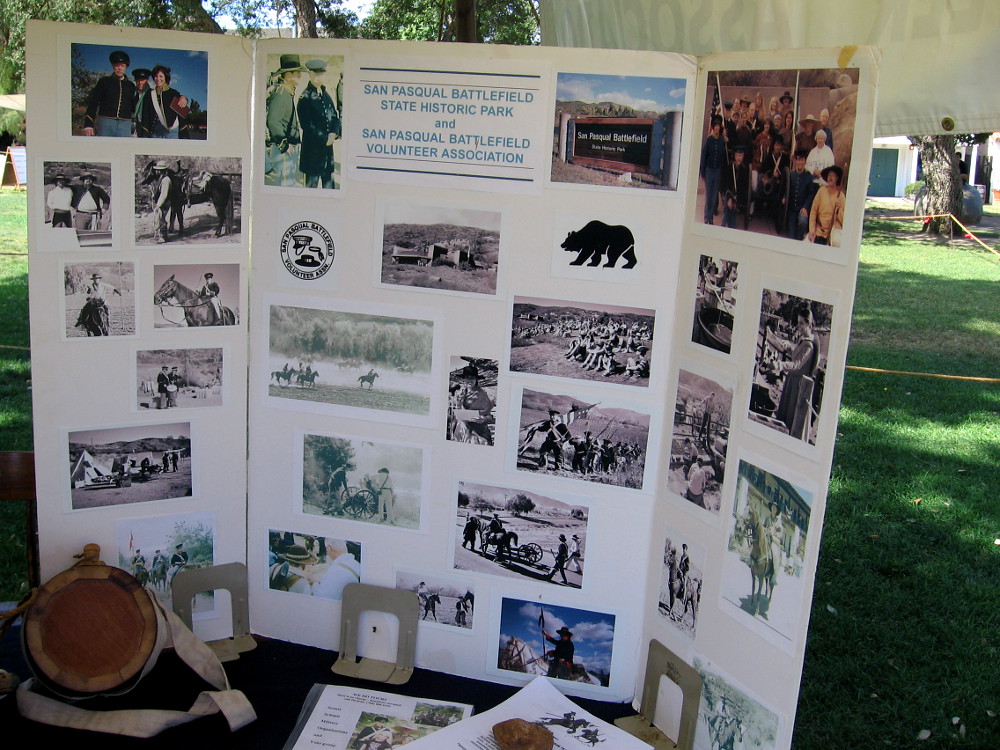
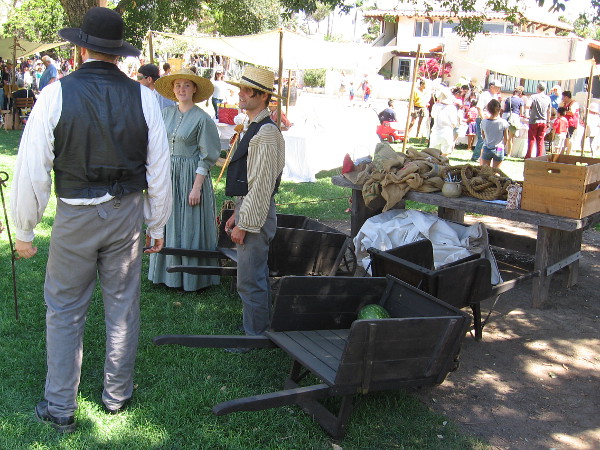
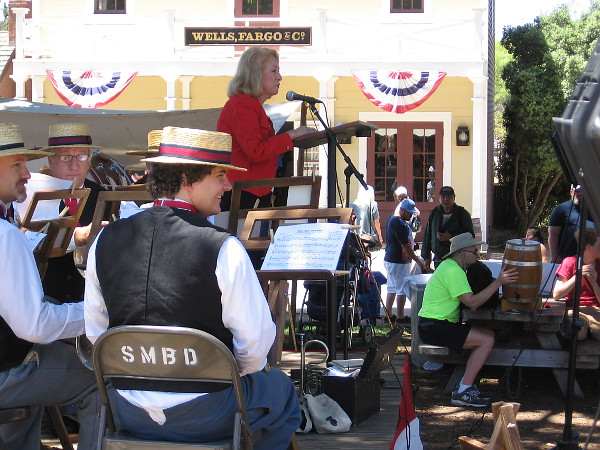
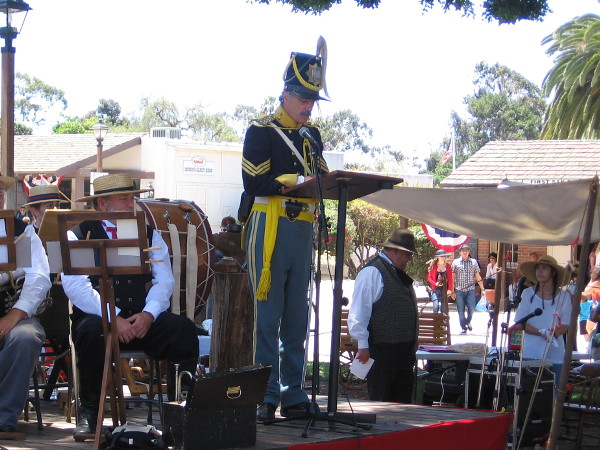
During the Independence Day celebration in Old Town San Diego, there were all sorts of fun and educational activities. Musical entertainment could be heard at the main stage.The Armory Band played music popular in America long ago–patriotic tunes that citizens in San Diego would have enjoyed during the mid 1800s.Los Bailadores, performers in period costume, sing vintage patriotic songs like The Battle Hymn of the Republic inside Old Town’s historic La Casa de Estudillo.Los Bailadores then lived up to their name and began a few social dances that folks would have enjoyed in the 1850s and 1860s. Their first dance was the Virginia reel.During the Fourth of July, there were many historical demonstrations in Old Town’s central square, which was originally called La Plaza de Las Armas.A lady in a bonnet at a spinning wheel was making wool yarn.Quilters were getting their tent displays ready as Old Town San Diego’s Fourth of July events got underway.These guys were playing the old Victorian Game of Graces. A small hoop is shot into the air by pushing apart two rods. The hoop is then caught by one’s partner. Winner catches the hoop ten times first.The San Pasqual Battlefield Volunteer Association had an interesting display, including ammunition that was used in old cannons.A poster has photos of reenactments of the Battle of San Pasqual, which took place northeast of San Diego during the Mexican-American War.Of course, you need some tasty watermelon during a traditional Fourth of July!The middle of the plaza became a center of attention as various tug of wars were contested by young and old alike.These ladies vied for tug of war glory!Later games would include wheelbarrow races.A cakewalk. Stop on the winning number and you receive a cake! This simple game was common in mid 19th century San Diego.Several speeches included one by Connie Gunther, a descendant of early San Diego. The legacy of those early Californios, townspeople, settlers and immigrants live on.
Are you a descendant of early San Diego? Do you think you might be? There’s a website I learned about that you ought to visit. Here it is. Those with family trees that reach back into early San Diego history can relate their knowledge for posterity and the benefit of others; those who think they might be related to an early resident of San Diego can perform searches and do extensive research. Check it out!
Kids listening to the speeches wave American flags.The keynote speech was by Tom Vilicich, portraying a first sergeant, Company K, 1st U.S. Dragoons, who fought in the Battle of San Pasqual.After the speeches, there was a Flag Raising Ceremony. People removed their hats as Old Glory was hoisted up Old Town’s high flagpole.Salutes as the Star and Stripes ascends into the San Diego sky.A billowing American flag rises on Independence Day!The musicians left the stage to make way for a special public reading of the Declaration of Independence.Diverse folk representing San Diego in the mid 19th century take turns reading the Declaration of Independence. Ordinary citizens in the crowd also took part!An ordinary American young person reads a few lines from the Declaration of Independence, on the Fourth of July in Old Town San Diego State Historic Park.And then the parade began! It wound around the plaza twice. Ordinary Americans were invited to join in!Represented in the small patriotic parade were Old Town volunteers, boosters, and descendants of early San Diego.Here comes the old-fashioned marching band!People in the parade wore every sort of period costume–even red, white and blue attire from our own modern period!That’s because ordinary American citizens joined in the fun!This photo shows the good crowd that converged on Old Town San Diego for the Fourth of July!A scene from the colorful American Independence Day parade in Old Town San Diego State Historic Park.
…
This blog now features thousands of photos around San Diego! Are you curious? There’s lots of cool stuff to check out!
Here’s the Cool San Diego Sights main page, where you can read the most current blog posts. If you’re using a small mobile device, click those three parallel lines up at the top–that opens up my website’s sidebar, where you’ll see the most popular posts, a search box, and more!
To enjoy future posts, you can also “like” Cool San Diego Sights on Facebook or follow me on Twitter.
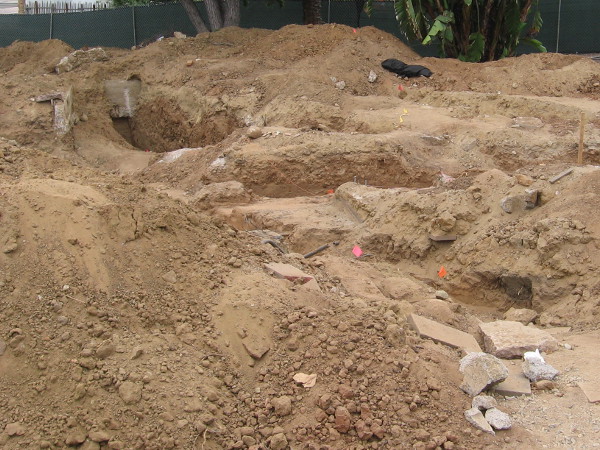
An area beside a popular entrance to Old Town San Diego State Historic Park, near the McCoy House Museum, will be the site of an historical reconstruction.
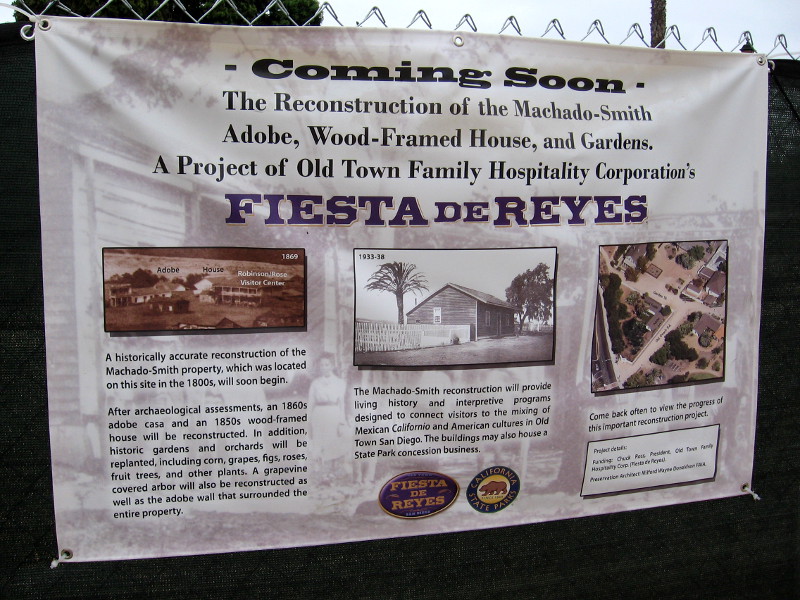
There are plans to bring more history to life in Old Town San Diego State Historic Park! A reconstruction of the Machado-Smith adobe and wood-framed house, including gardens and orchards, will greet future visitors to San Diego’s birthplace!
According to a sign that I read, after archaeological assessments (which appear to be underway right now), the Machado-Smith 1860s adobe casa and 1850s wood-framed house will be built near the main walkway that leads visitors from the Old Town Trolley Station into the California State Park. Also planned is a grapevine covered arbor and gardens and orchards with corn, grapes, figs, roses and fruit trees!
According to some research and a State Park employee that I spoke to, the house was built for American Albert Benjamin Smith and his Mexican wife María Guadalupe Yldefonsa Machado de Wilder who together raised nine children. The property remained with the family until 1929. Eventually the house fell into disrepair.
It is uncertain when the new construction will begin, but I’ll keep my eyes open!
Once completed, the Machado-Smith reconstruction will offer interpretive programs concerning Old Town San Diego’s unique mixture of Mexican Californio and American cultures! Very cool!
I was told by a California State Park employee that bits of pottery and other interesting objects have been found at this site.An historically accurate reconstruction of the mid 1800’s Machado-Smith property will be built in Old Town San Diego. Included will be an adobe casa, wood-framed house and gardens.
…
I live in downtown San Diego and love to walk! You can follow Cool San Diego Sights via Facebook or Twitter!
You can easily explore Cool San Diego Sights by using the search box on my blog’s sidebar. Or click a tag! There are thousands upon thousands of fascinating photos for you to enjoy!
A variety of dried food hangs from the ceiling. The kitchen of the Commercial Restaurant museum in Old Town is a place where visitors are transported back in time.
There are dozens of cool things to see in Old Town San Diego State Historic Park. I’ve barely scratched the surface so far with my blog.
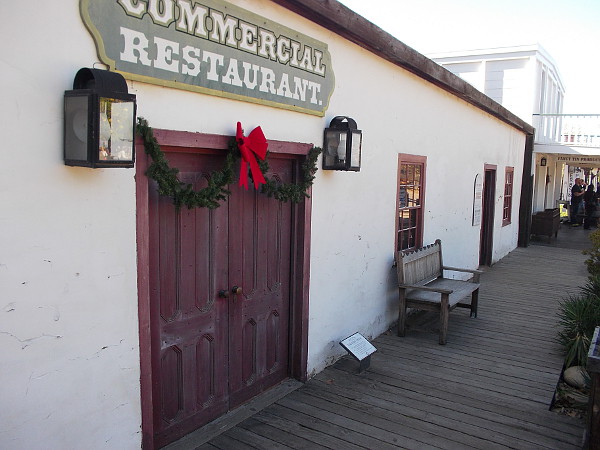
For example, there’s a small free museum right next to the central Plaza de Las Armas called Commercial Restaurant. A rather dull name, but a very interesting place jam-packed with history!
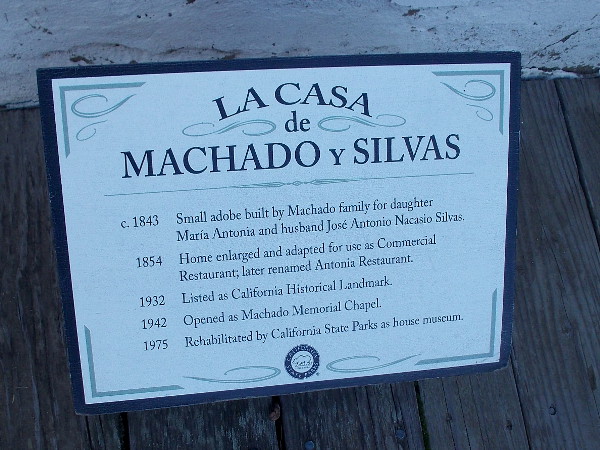
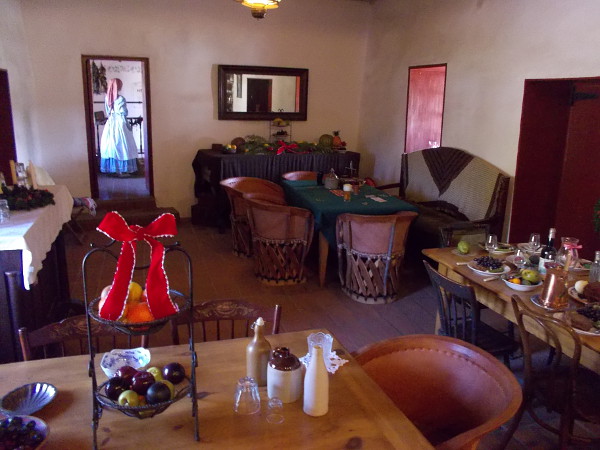
The small recreated restaurant shows what life was like in the mid 1800s, back when San Diego was downright tiny. The Commercial Restaurant is comprised of two rooms: one contains the dining area, the other, the kitchen. Originally called the Casa de Machado y Silvas, the house was built by José Manuel Machado and given as a wedding gift to his daughter María Antonia, and her husband, José Antonio Nicasio Silvas. The simple adobe building was converted into a modest restaurant by its owners in the early 1850s. Today it stands as one of the five historic adobes in Old Town San Diego.
I’ve provided a bit more info in the photo captions!
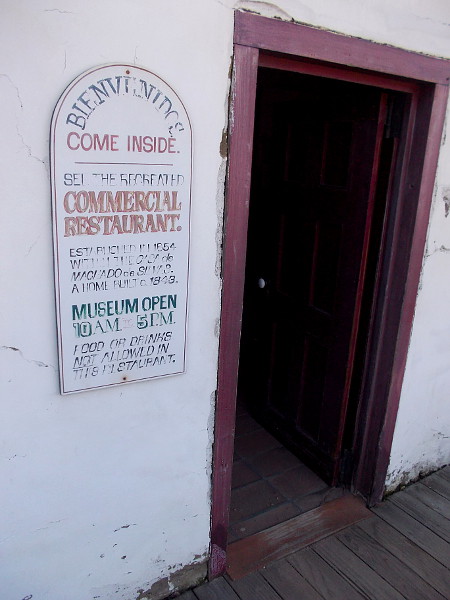
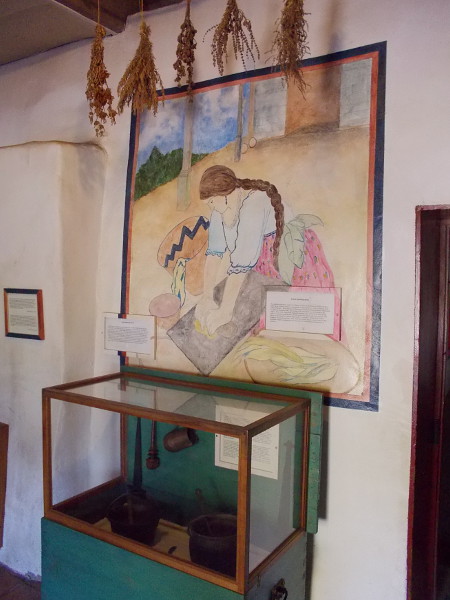
Photo shows the Commercial Restaurant museum, which is free and open to the public in Old Town San Diego State Historic Park.La Casa de Machado y Silvas in Old Town San Diego was turned into Commercial Restaurant, then later renamed Antonia Restaurant.Bienvenidos. Come inside. See the recreated Commercial Restaurant. Established in 1854 within the Casa de Machado y Silvas, a home built in 1843. Museum open 10-5.The dining area of the Commercial Restaurant. This is was what it was like to eat in style in the mid 1800s. Many exhibits along the walls recall the history of old San Diego.Art on one wall depicts the grinding of corn. Other nearby maps and graphics show how food is related to our city’s history.
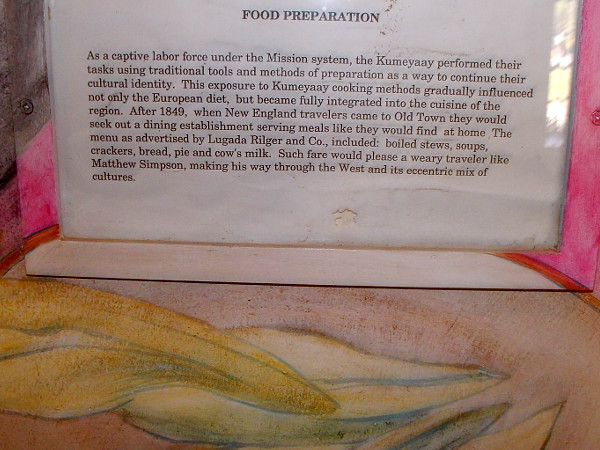
In the mid 1800’s, when New England travelers arrived by ship to Old Town, they sought out a dining establishment serving meals like they would find at home, including stews, soups, crackers, bread and cow’s milk. Over the years, exposure to native Kumeyaay cooking influenced the European diet and became integrated into the region’s cuisine.
As a captive labor force under the Mission system, the Kumeyaay performed their tasks using traditional tools and methods of preparation as a way to continue their cultural identity.Display case contains artifacts used in the daily life of San Diego residents almost two centuries ago.Shelves in the Commercial Restaurant contain old jars, goblets, bowls, bottles, plates and more.It was 1948 when a secret hiding place was discovered in one of the adobe’s window wells. Within the niche were two documents relating to life of an early Old Town San Diego resident.
Historical documents discovered by archeologists hidden in the Casa de Machado y Silvas shed light on the life of San Diego resident Allen B. Light. He was also know as the “Black Steward”. Allen arrived in California during the 1830s, aboard the sailing ship Pilgrim, the same vessel that brought Richard Henry Dana Jr. who would later write Two Years Before the Mast.
One document was “a sailor’s protection”, which proclaimed Light was a “coloured man, a free man, and a citizen of the United States of America”. The second document was his commission from the Mexican Governor of Alta California to investigate illegal sea otter hunting along the coast.
A peek into the recreated kitchen next to the dining room. Cooking was rather primitive in early San Diego.A table full of peppers and vegetables. What life was like many generations ago, in the kitchen of Old Town’s Commercial Restaurant museum.
A small parade during 2015 Fiestas Patrias (September 16 is Mexico’s Independence Day) in Old Town San Diego State Historic Park.
Here are some photos of Fiestas Patrias in Old Town San Diego State Historic Park. Mexico began their war for independence from Spain on September 16, 1810, and the occasion was celebrated today with music, food, games, an equestrian demonstration and traditional Mexican dance. I caught a bit of it!
San Diego’s fascinating history includes a Mexican period, which followed the early years of settlement and rule by Spain. Mexico and San Diego share a common border and a great deal of history. A blending of culture and friendly people adds to the richness of our city.
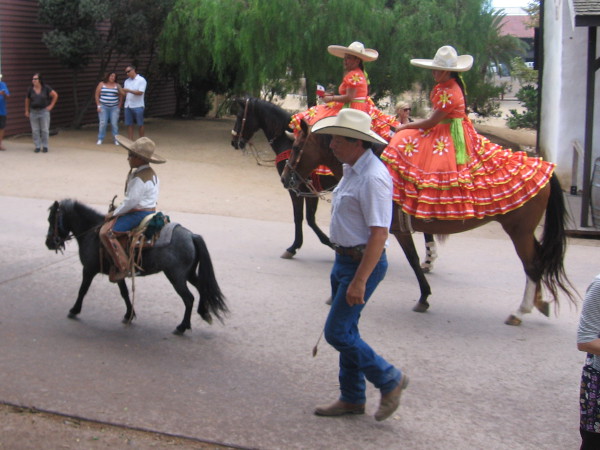
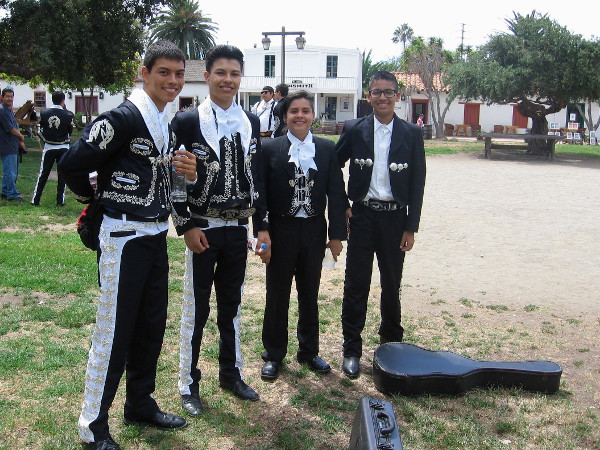
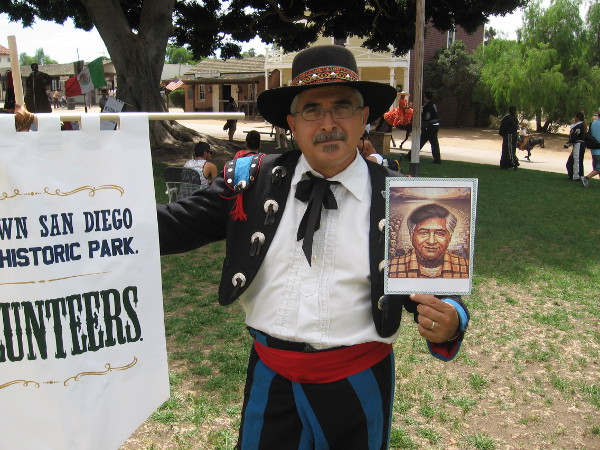
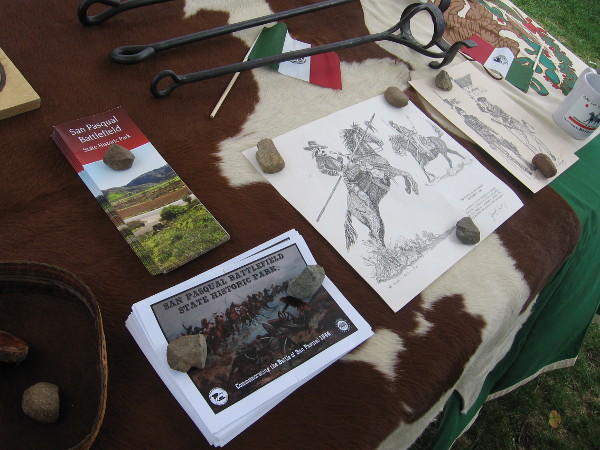
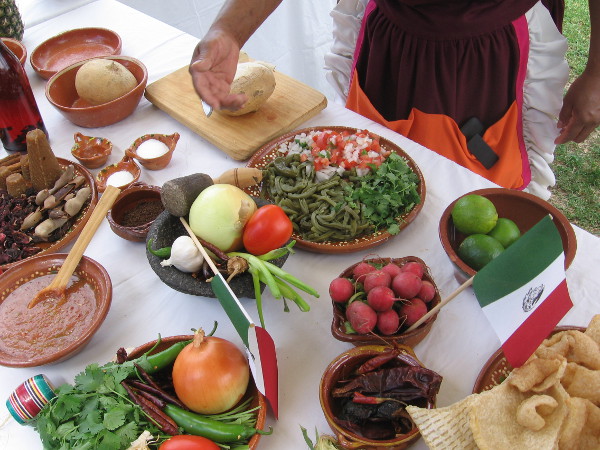
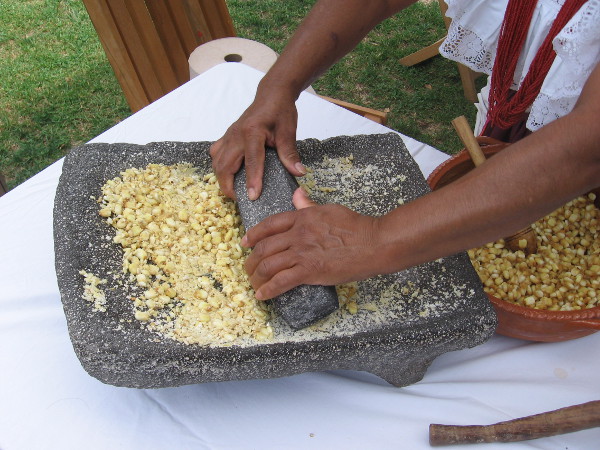
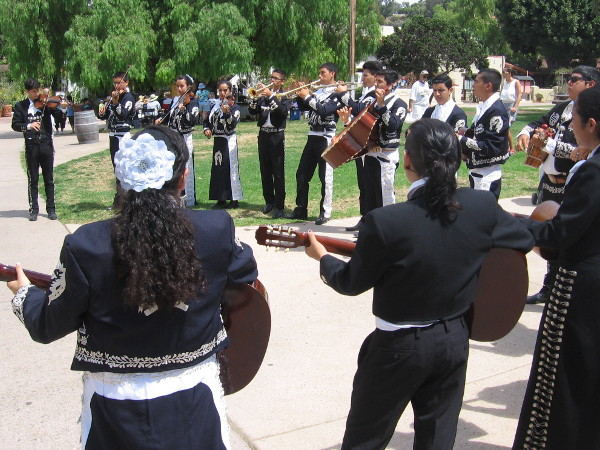
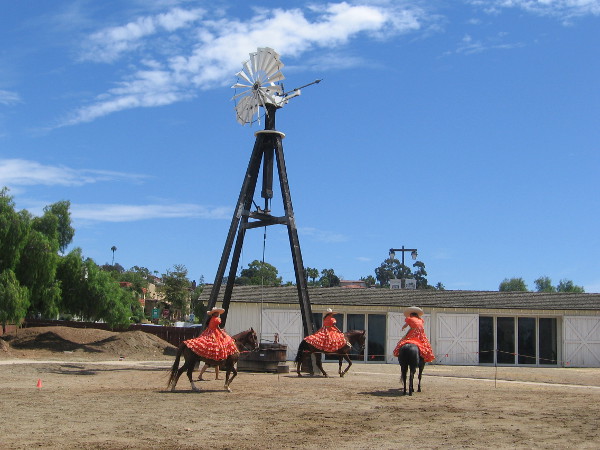
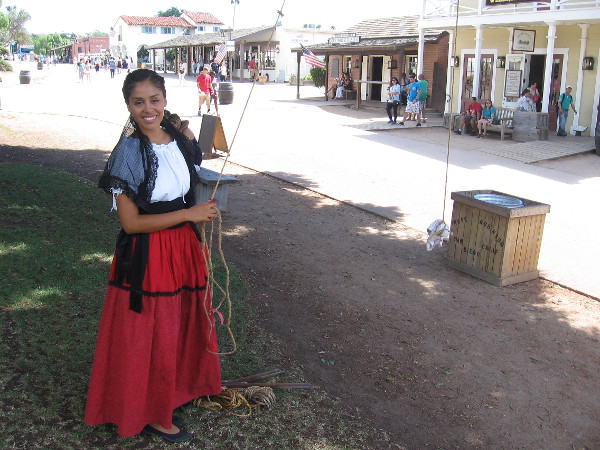
Fiestas Patrias in Old Town San Diego included many cool events flavored with Mexican culture and history.Young musicians from Chula Vista High School Mariachi band smile for the camera!Many event participants carried photos and images of important Mexicans in history. This gentleman holds a tribute to activist Cesar Chavez.Tables contained interesting info and exhibits. This one featured sketches from the Battle of San Pasqual and some cattle brands from historic Mission San Diego de Alcalá.Here are many colorful, often spicy ingredients used in Mexican cuisine. Yum!A super nice lady demonstrates grinding corn with a stone metate, a common practice long ago.Someone paints during the lively festival. Historic Old Town is a picturesque place that inspires artists, at any time!The award-winning Chula Vista High School Mariachi performers warm up before going on stage.Everyone is ready for some traditional Mexican music!These student musicians were incredibly talented. Voices and instruments conveyed stirring emotion. They all received big applause!Beautifully costumed riders of the female equestrian group Escaramuza Las Golondrinas warm up behind Seeley Stable Museum in Old Town San Diego.One rider prepares her horse for a sidesaddle riding demonstration in the afternoon.This rider was nice enough to smile! It’s a perfect, sunny day for a fiesta!A smiling California State Park employee throws a rope over a tree branch, getting ready to hang a piñata. She’s got an awesome job!Fiestas Patrias in Old Town celebrates a rich Mexican heritage and the unique, diverse history of San Diego.
…
Follow this blog for more photos of cool stuff! Join me on Facebook or Twitter.
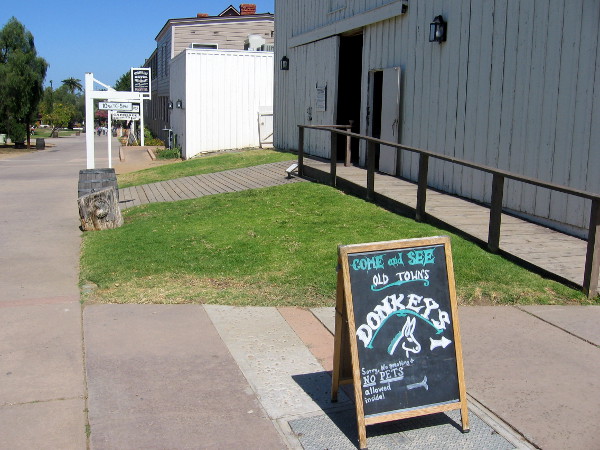
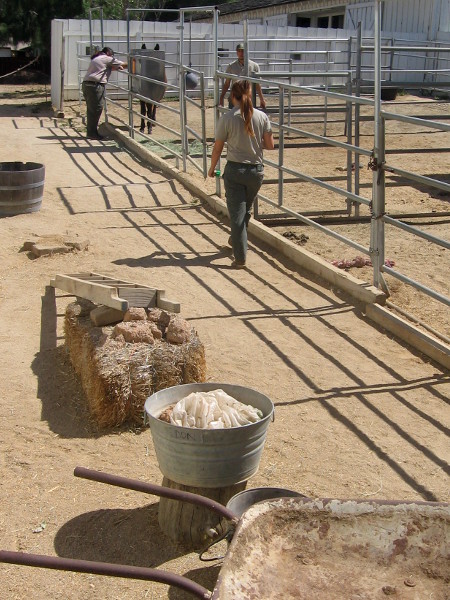
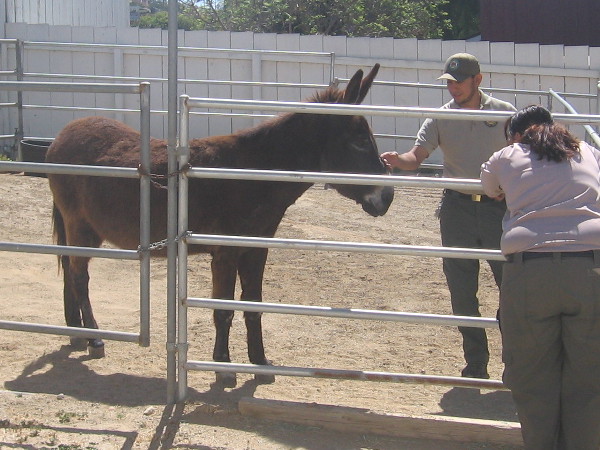
Walking through Old Town San Diego State Historic Park we see a sign beside Seeley Stable Museum. Let’s go see the donkeys!Is this one of the donkeys? Nope. Visitors and kids from local schools can ride this docile wooden critter, because touching the live donkeys is not allowed.Look! We found some horned cattle corralled in a corner! Nope. Wrong again.California State Park Rangers ahead! I think something cool is up this way!It’s 30 year old donkey Don. This guy can be grumpy, I’m told. I saw some evidence of that!Over here we meet 28 year old Dulce, which in Spanish means sweet, or candy. She (I think it’s a she–I didn’t ask) is the friendlier donkey.But the rangers here seem the friendliest of all!
Visiting school kids, with the help of Don and Dulce, can learn what life was like (particularly for a donkey) in the very early days of San Diego.
Four things I learned during my brief visit:
Donkeys were a preferred draft and pack animal because of their spine, which pound for pound is much stronger than a horse. A donkey can pull half its weight.
Donkeys are closely related to the zebra.
Don and Dulce are rescue animals.
Old Town has fun surprises around every corner!
…
To enjoy future posts, you can “like” Cool San Diego Sights on Facebook, or follow me on Twitter.
Hiking to the beach from a trailhead in Torrey Pines State Reserve.
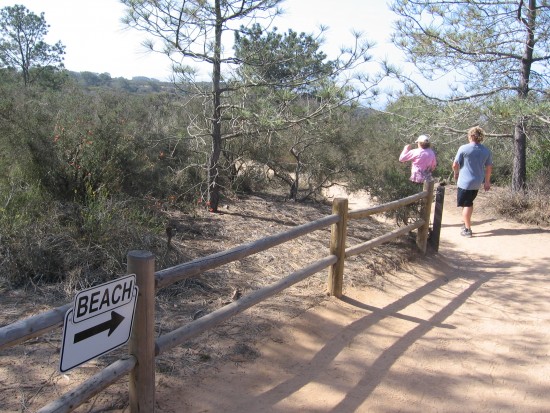
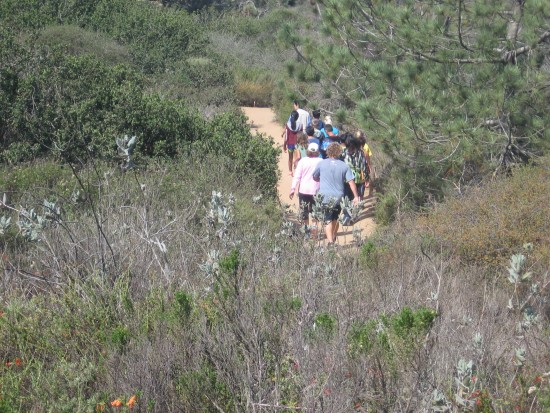
Today is National Trails Day, so it seems the perfect time to blog about one hike I took recently at Torrey Pines State Reserve! The hike was down the Beach Trail, which is one of the most popular hikes in this beautiful place. The coming photos demonstrate why!
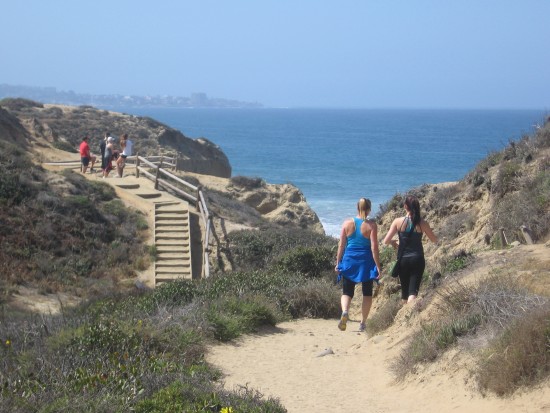
The 3/4 mile downhill Beach Trail begins at the edge of a small parking lot near the Torrey Pines State Reserve’s historic lodge, which serves as the visitor center. On this spring day, many small flowers were blooming along the trail, and lots of hikers were enjoying the sunshine as well. Should you ever go hiking here, make sure you wear good shoes because it can be a bit steep in places and the sand often makes slippery footing.
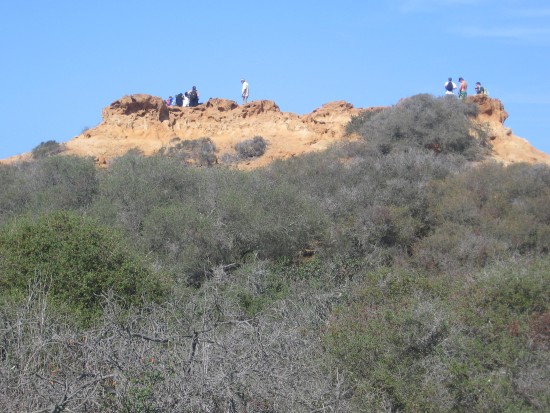
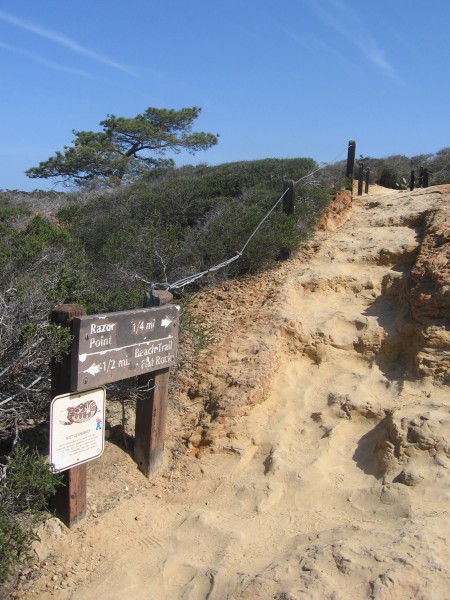
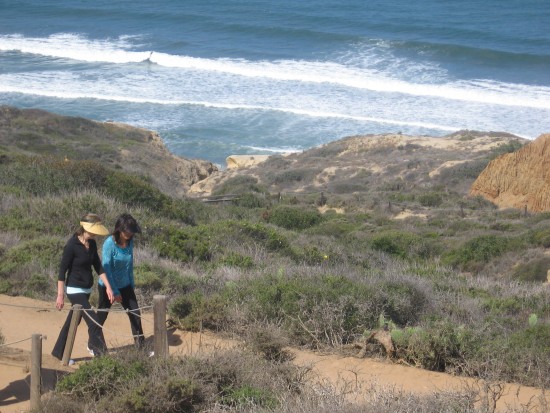
Hikers take beautiful trail through coastal chaparral.People enjoy vistas from atop sandstone formation.Endangered Torrey pine can be seen beyond fork in the trail.
You can observe many more examples of the endangered Torrey pine tree in the north part of the reserve. See my post about the Guy Fleming Trail!
The blue Pacific Ocean comes into view!Typical rugged scenery along trails of Torrey Pines State Reserve.The Beach Trail is often covered in fine sand.Now we’re getting really close to our destination!
It gets much steeper as one approaches the ocean. You can see La Jolla way off in the hazy distance.
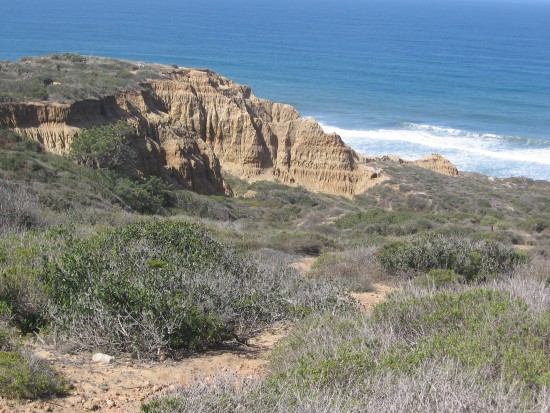
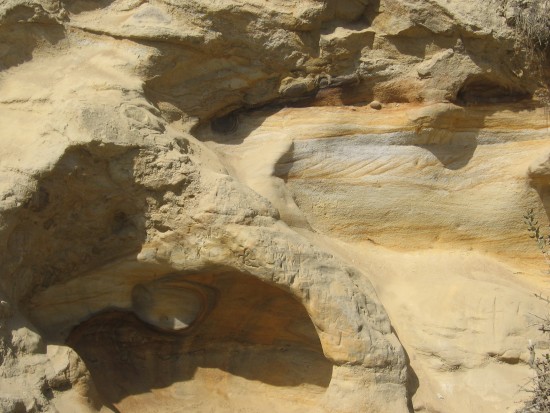
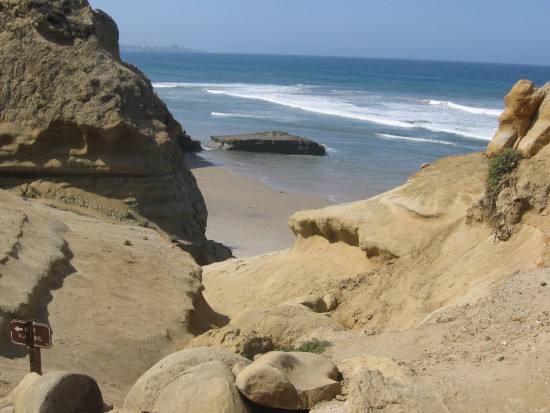
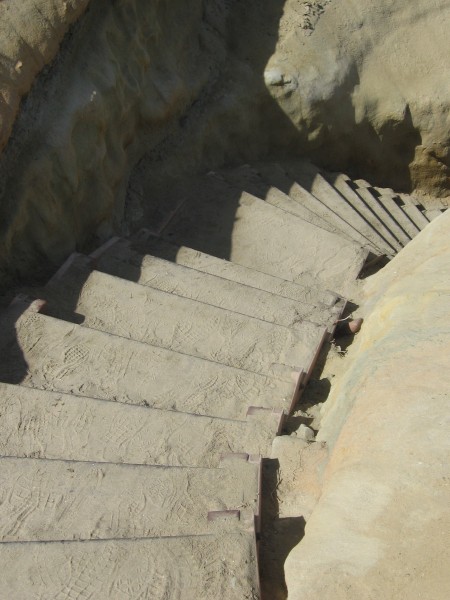
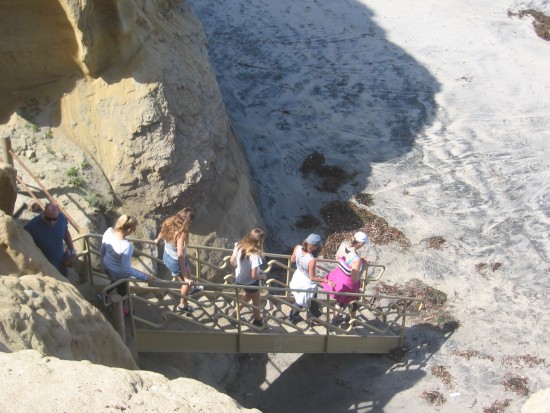
Erosion of layered sandstone creates unusual, fluid forms.Flat Rock can be seen below on Torrey Pines State Beach.Steps head steeply down from cliffs.Hikers arrive at the beach!
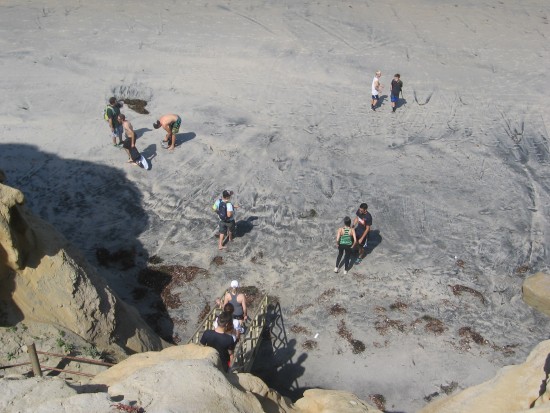
The transition from the reserve to the beach seems very sudden as you hike down from the cliffs. Suddenly you hear the surf and see many sea birds. It’s an amazing experience!
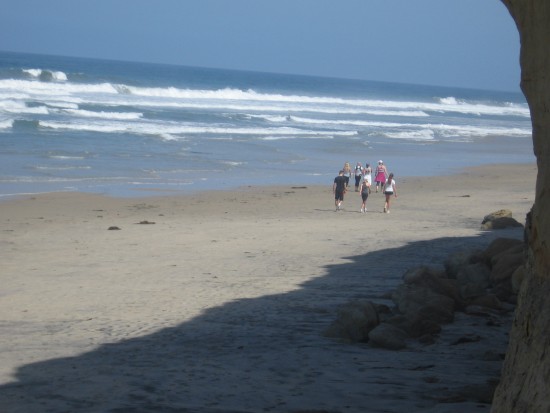
Down on the sand.People walk north along Torrey Pines State Beach.
A walk north along the beach about a mile or so brings one back to the main Torrey Pines State Reserve parking lot by the Pacific Coast Highway. If you’d like to enjoy a relatively easy nature hike, I’d highly recommend this one! (Going uphill is more difficult!)
…
To enjoy future posts, you can “like” Cool San Diego Sights on Facebook, or follow me on Twitter.
Park ranger removing weeds near State Beach entrance.
The Silver Strand is a narrow strip of land that connects Coronado southward to Imperial Beach. The northern portion is used as a training ground for Navy Seals. Other areas contain housing, marinas and a hotel. Much of it remains in a natural state.
Halfway down the strand, sandwiched between San Diego Bay and the blue Pacific Ocean, you’ll find Silver Strand State Beach, a beautiful state park featuring a great beach, RV parking, a large picnic area, and a boating facility. Apart from the RV area, which is very popular, the place often seems half-deserted. Even during summer weekdays.
I rode my bike through the park on a perfectly sunny spring weekday and I saw half a dozen people.
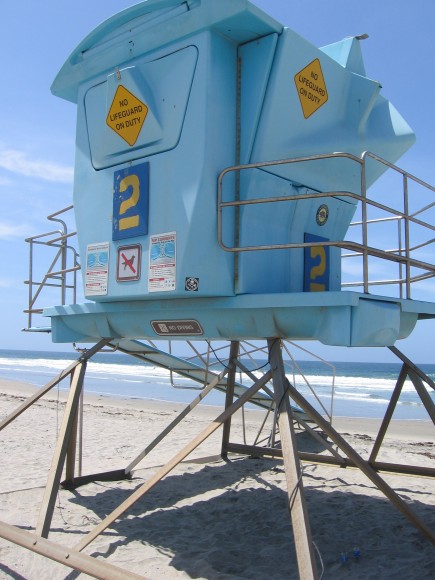
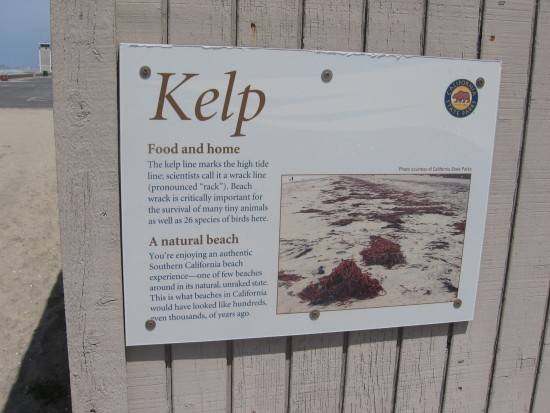
Closed lifeguard lookout on Silver Strand State Beach.Except for RVs to the north, the beach is almost empty.Kelp on natural beaches is the home of tiny wildlife.Silver Strand Grill is closed and nobody is about.From one empty side of the strand to the other.
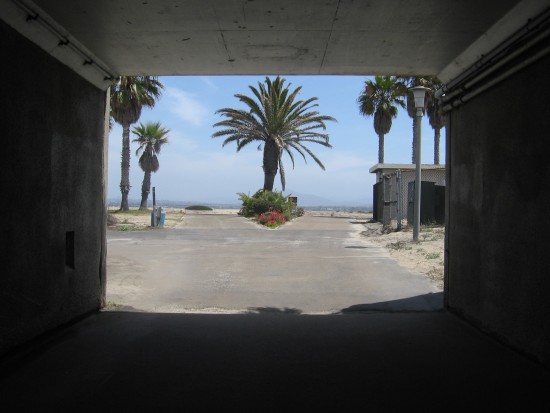
Here I’m passing through a tunnel under the highway from the Pacific side to the bay side.
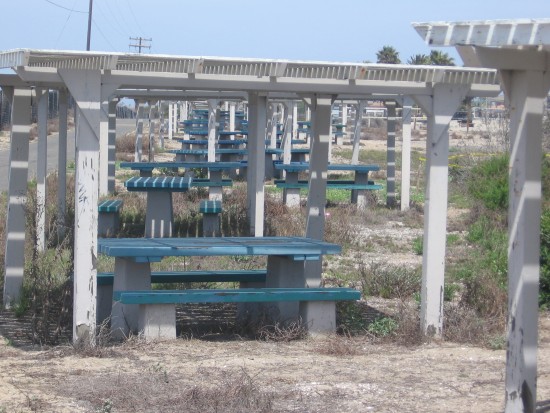
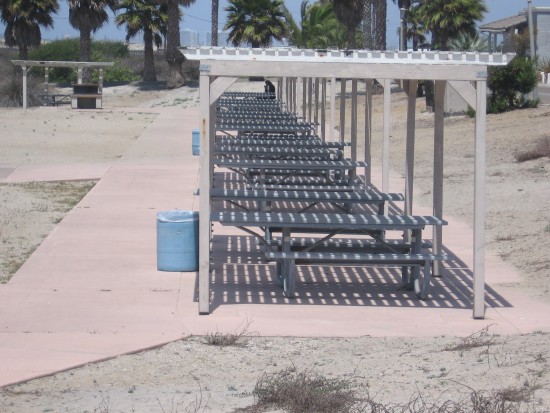
Dozens of unused picnic tables on a sunny Spring weekday.
There are scores of picnic benches on the bay side and very few ever seem to be used.
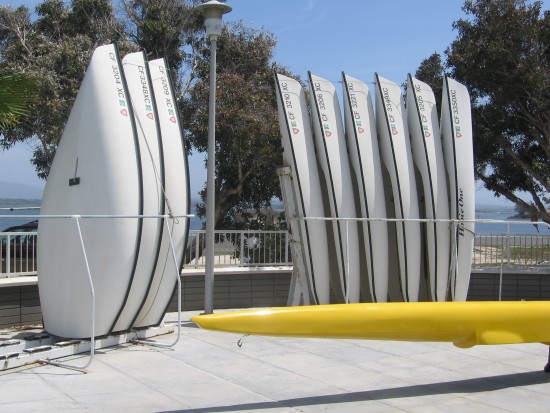
One small figure sits at end of picnic table row.Colorful kayaks at Crown Cove Aquatic Center.
The boating center gets a little more activity on weekends. I’ve seen folks out rowing along the water.
Lots of unused boats on the bay side of Silver Strand.San Diego Bay beyond a group of beached sailboats.Trail leads from Silver Strand bikeway across natural habitat.
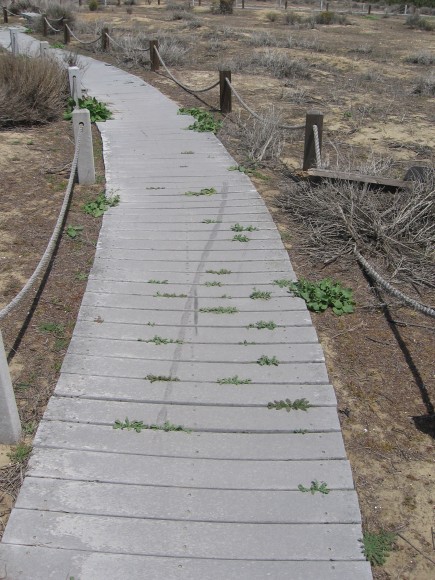
You’ll find this natural area in the north part of Silver Strand State Beach, on the east side of the highway.
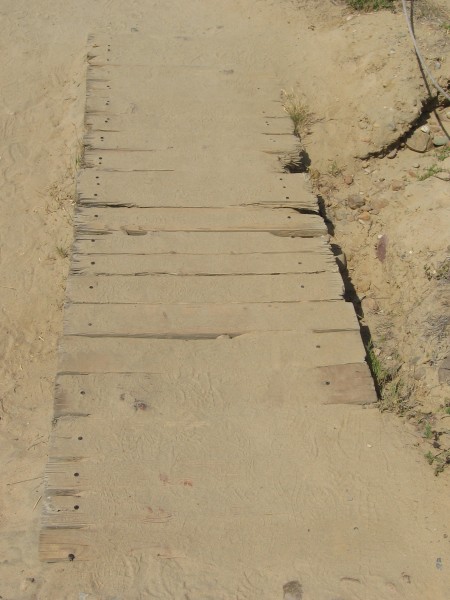
The wood plank nature trail is in disrepair.
The endangered California least tern nests in clear, sandy areas along the Silver Strand. I wasn’t able to spot any during this visit.
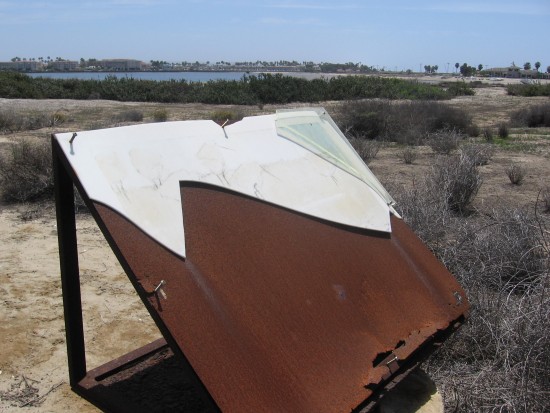
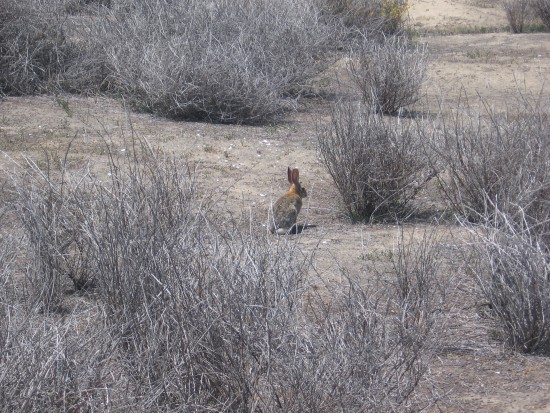
Information sign rusted and unreadable.A rabbit among brittle coastal plants.
…
To enjoy future posts, you can “like” Cool San Diego Sights on Facebook, or follow me on Twitter.
I hope you enjoyed my last blog post, where I described a hike around the Guy Fleming Trail in Torrey Pines State Reserve. Now I’d like to take you up to see the Lodge.
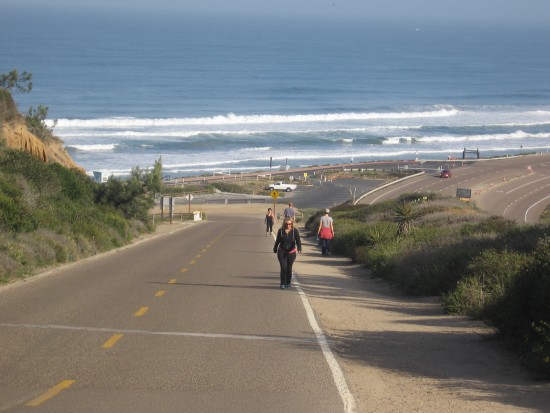
We’re going to start at the entrance of Torrey Pines State Reserve, just off the Pacific Coast Highway. We’ll be climbing the steep Torrey Pines Park Road all the way to the historic Lodge.
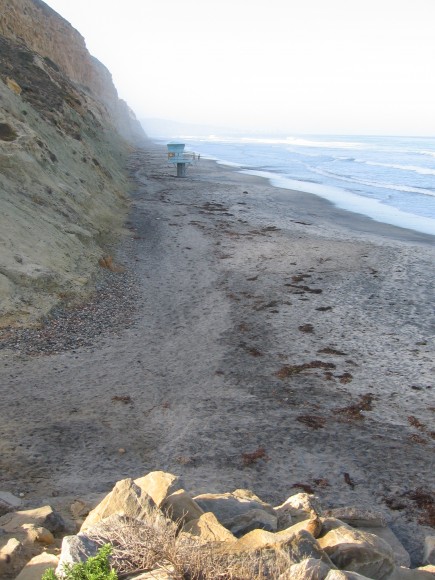
Looking south along Torrey Pines State Beach.
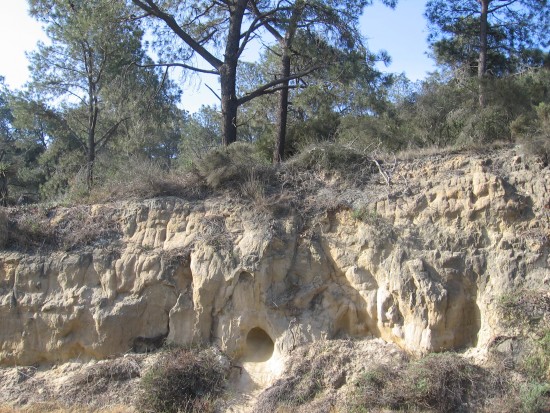
As we begin our climb we bend away from the beach, but pause for a moment to observe the high sandstone cliffs to our south. This wonderful beach, which extends for many miles, will be the subject of a future blog post!
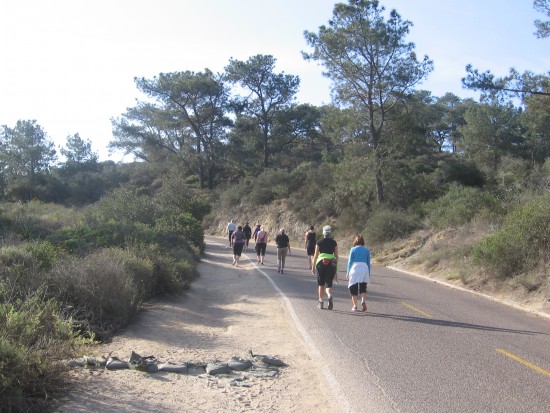
Heading up steep Torrey Pines Park Road.Entering a zone full of endangered Torrey pines.Torrey pines stand atop eroded sandstone cliffs.
The Torrey pine is an endangered tree found only here and on Santa Rosa island. We’ll learn more about it shortly…
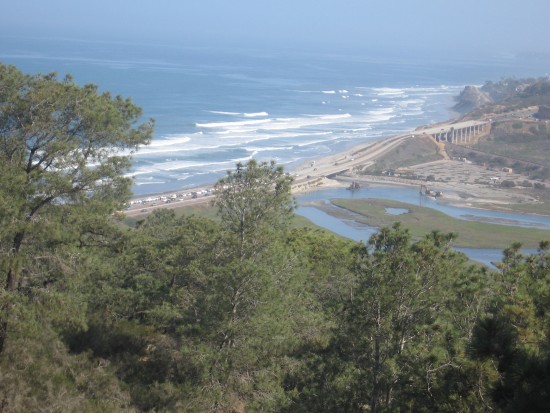
View of lagoon and ocean from High Point Overlook.
Near the top of the road we come to High Point Overlook, a short trail that heads up some steps for a 360 degree view. Here we’re looking north and seeing a bit of the Los Peñasquitos Lagoon.
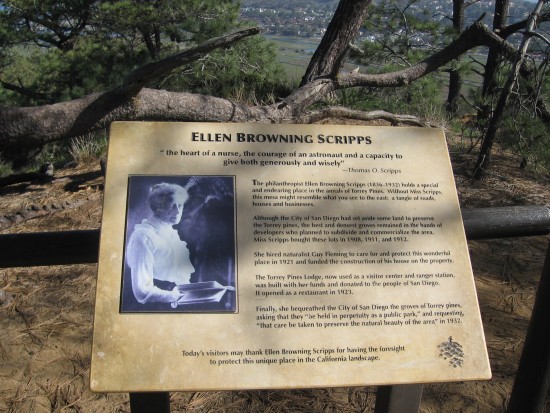
Sign about philanthropist Ellen Browning Scripps.
This sign stands among some Torrey pines at the top of the overlook. It reads:
The philanthropist Ellen Browning Scripps (1836-1932) holds a special and endearing place in the annals of Torrey Pines. Without Miss Scripps, this mesa might resemble what you see to the east: a tangle of roads, houses and businesses.
Although the City of San Diego had set aside some land to preserve the Torrey pines, the best and densest groves remained in the hands of developers who planned to subdivide and commercialize the area. Miss Scripps bought these lots in 1908, 1911, and 1912.
She hired naturalist Guy Fleming to care for and protect this wonderful place in 1921 and funded the construction of his house on the property.
The Torrey Pines Lodge, now used as a visitor center and ranger station, was built with her funds and donated to the people of San Diego. It was designed by noted architects Richard Requa and Herbert Lewis Jackson. It opened as a restaurant in 1923.
Finally, she bequeathed the City of San Diego the groves of Torrey pines, asking that they “be held in perpetuity as a public park,” and requesting, “that care be taken to preserve the natural beauty of the area” in 1932.
Today’s visitors may thank Ellen Browning Scripps for having the foresight to protect this unique place in the California landscape.
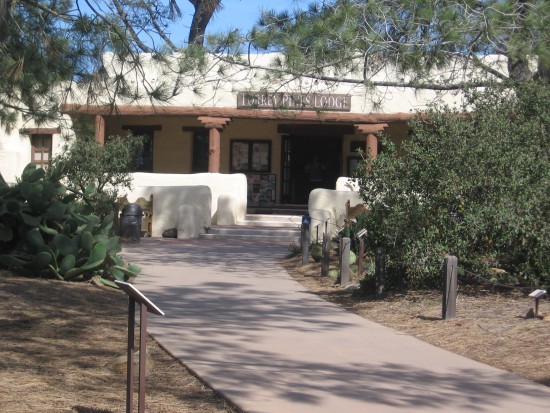
Nearing Torrey Pines State Reserve’s historic Lodge.
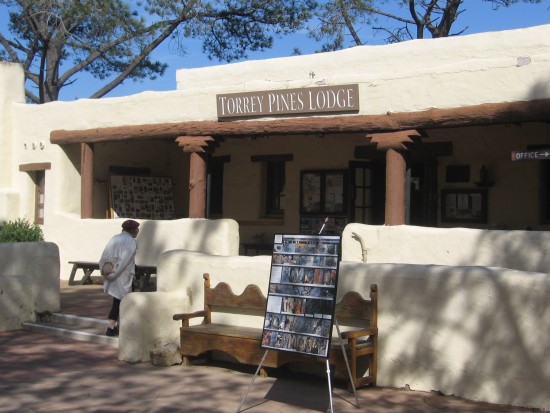
A little more walking takes us to our main destination, the Lodge. An old adobe built in 1922, it originally served as a restaurant! According to the official website, it had stumpy tables, chintz curtains, lampshades made of Torrey Pine needles, and a jukebox! Back in those days, Model T cars had difficulty going up the steep hill, because they didn’t have a fuel pump, and instead relied on a gravity system. When the steeply climbing cars conked out, drivers were told to continue up the hill in reverse!
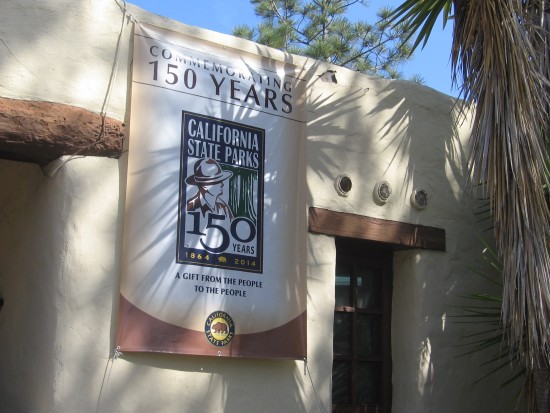
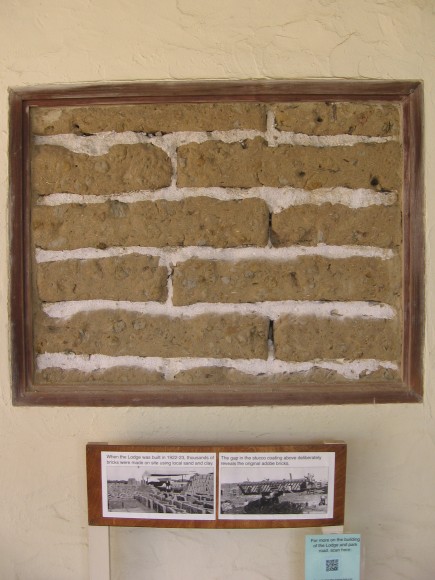
Banner commemorates 150 years of California State Parks.Gap in Lodge’s stucco shows original adobe bricks.
This is near the front door. The sign below reads:
When the Lodge was built in 1922-23, thousands of bricks were made on site using local sand and clay. The gap in the stucco coating above deliberately reveals the original adobe bricks.
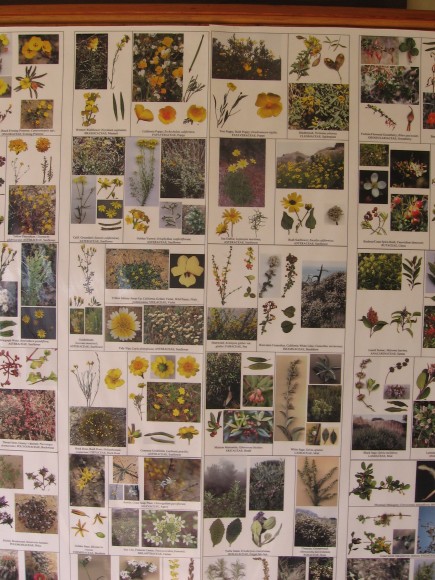
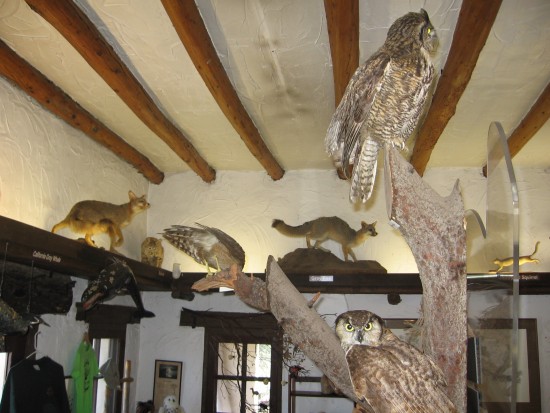
Portion of large sign outside describing coastal flowers.Interior of Lodge is a museum and visitor center.
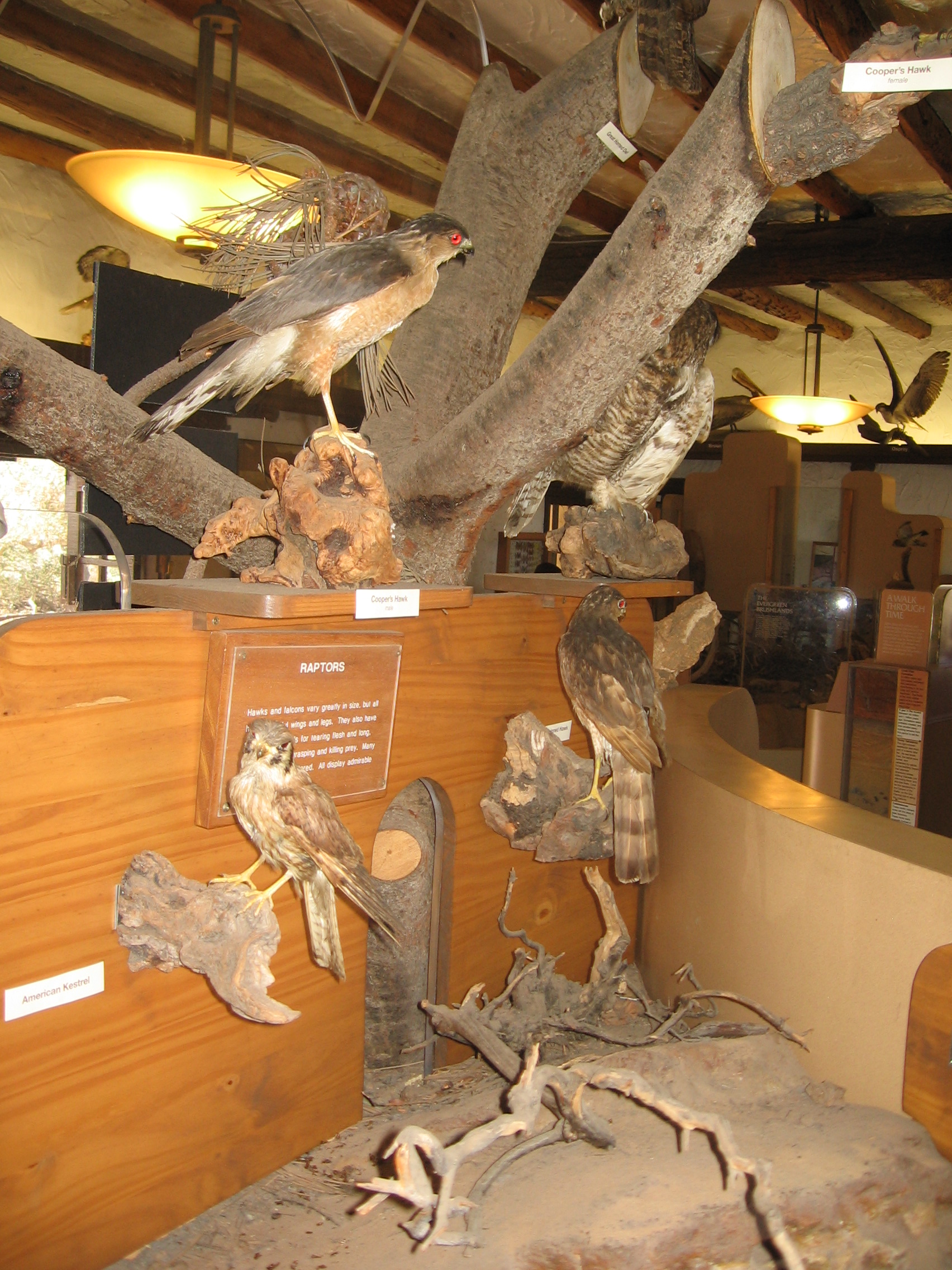
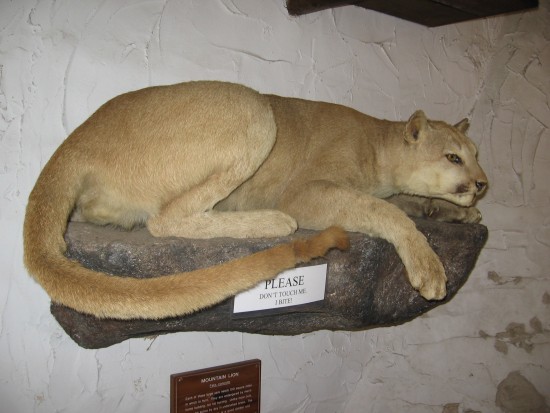
I love the interior of the Lodge. There’s so much interesting stuff to see, and so much history and natural charm jammed into one place. The Lodge is open daily 9 AM to 6 PM during summer daylight saving time and 10 AM to 4 PM during winter standard time. Ranger guided hikes are available on weekends.
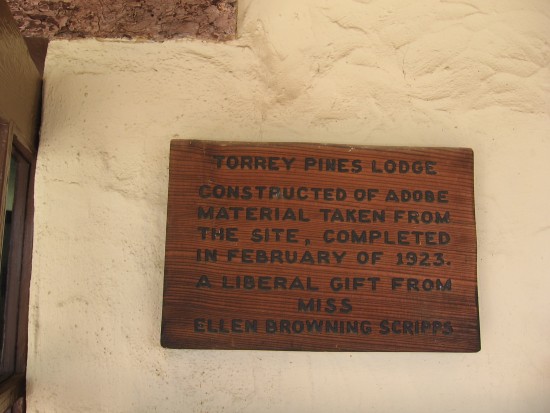
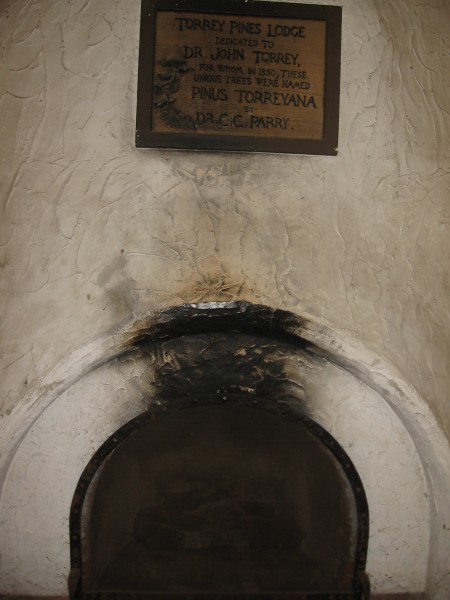
One of many educational exhibits.Mountain lion patiently watches visitors to the Lodge.Plaque in Lodge credits Ellen Browning Scripps.Old fireplace shows decades of use.
The plaque above the old fireplace reads:
Torrey Pines Lodge dedicated to Dr. John Torrey, for whom, in 1850, these unique trees were named Pinus torreyana by Dr. C. C. Parry.
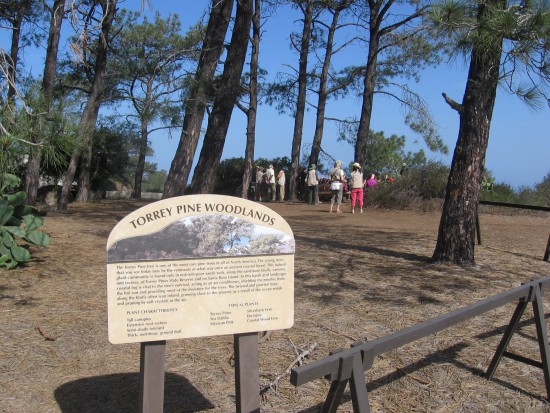
Sign behind Lodge describes Torrey Pine Woodlands.
Now we’ve headed back outside, around the back of the Lodge. Numerous Torrey pines are all around us, and benches are sprinkled here and there with sweeping views eastward toward developed Carmel Valley and Interstate 5.
This sign reads:
The Torrey Pine tree is one of the most rare pine trees in all of North America. The young trees that you see today may be the remnants of what was once an ancient coastal forest. This natural plant community is found only in nutrient-poor sandy soils, along the sandstone bluffs, canyons, and ravines, of Torrey Pines State Reserve and on Santa Rosa Island. In this harsh arid landscape, coastal fog is vital to the tree’s survival, acting as an air conditioner, shielding the needles from the hot sun and providing most of the moisture for the trees. The twisted and gnarled trees along the bluffs often lean inland, growing close to the ground, as a result of the ocean winds and pruning by salt crystals in the air.
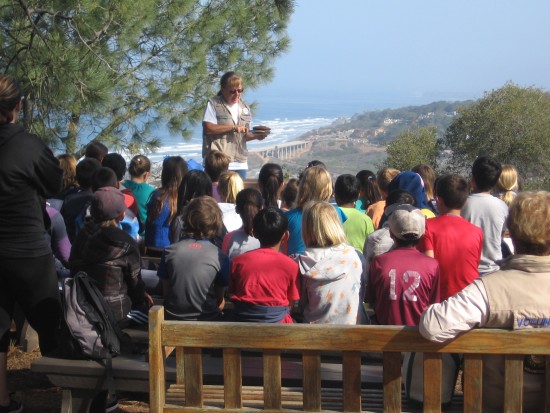
School kids learn about local flora and fauna.
A ranger was giving a bunch of school kids a talk about Torrey Pines State Reserve. They’ll remember this special place for the rest of their lives.
The Lodge at Torrey Pines State Reserve is a must see!
…
To enjoy future posts, you can “like” Cool San Diego Sights on Facebook, or follow me on Twitter.




















































 Cool San Diego Sights!