Many outdoor sculptures are being introduced into Balboa Park. The exhibit is titled Art of the Open Air. It’s a unique project of the San Diego Museum of Art.
During the past week, a number of sculptures in the San Diego Museum of Art’s collection have been carefully moved into the Plaza de Panama, a large outdoor gathering place in Balboa Park. For the next two years, anyone in San Diego will be able to freely enjoy the sculptures, and see them in changing light, beneath different skies. Moving such large pieces has taken a lot of work, but I noticed today that the installation, titled Art of the Open Air, is approaching completion.
Included in the unique outdoor exhibition are works by world-famous artists Joan Miró, Auguste Rodin and Tony Rosenthal. I wasn’t able to approach the artwork too closely–right now, while the sculptures are being readied, they’re still roped off. The same goes for a new piece in the museum’s May S. Marcy Sculpture Garden, which I also photographed from a bit of a distance. I put some identifying information in the photo captions.
Art of the Open Air is set to run from February 11, 2016 through February 13, 2018. I can already see that Balboa Park is going to be more lively and interesting than ever!
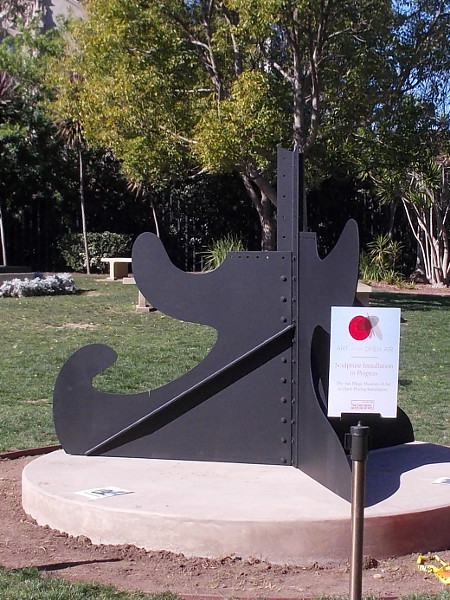
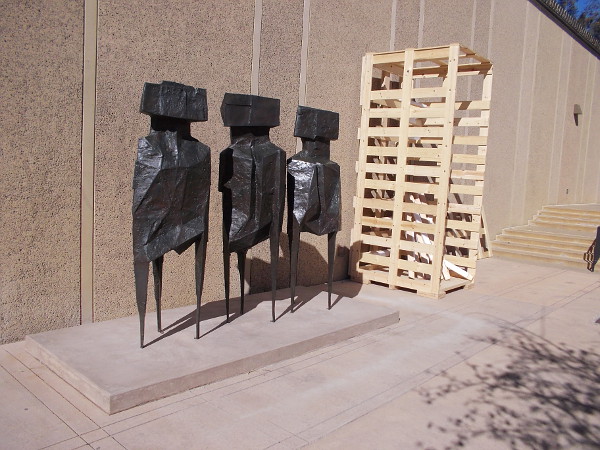
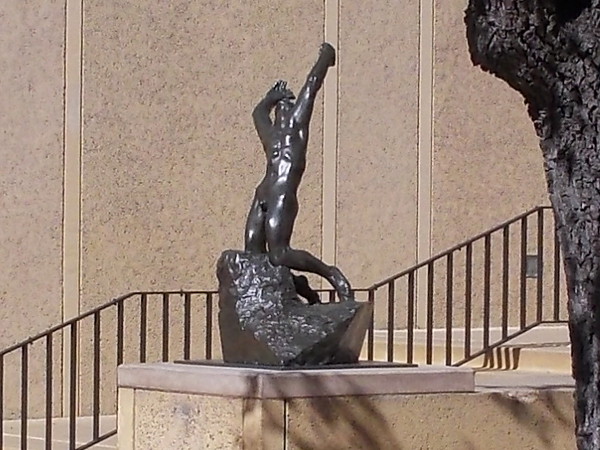
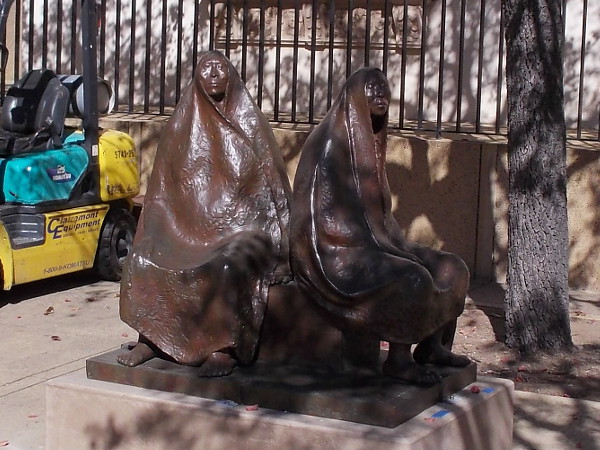
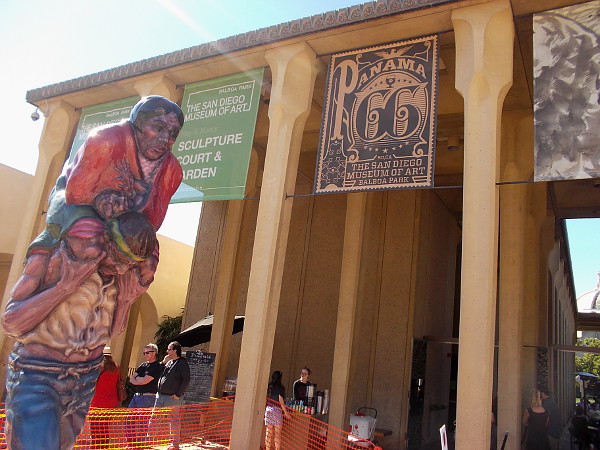
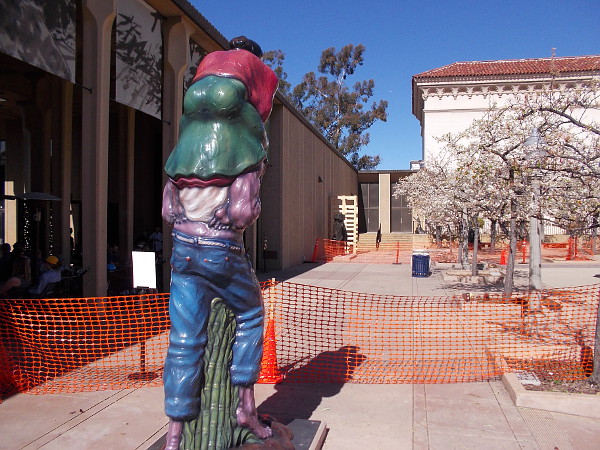
Alexander Calder. Spinal Column, 1968. Steel. A sculpture being installed in the San Diego Museum of Art’s outdoor May S. Marcy Sculpture Garden.Lynn Russell Chadwick. The Watchers, 1960. Bronze. Now stands in Balboa Park’s beautiful Plaza de Panama, part of the Art of the Open Air exhibition.Auguste Rodin. The Prodigal Son, 1905. Bronze. Installed in the northwest corner of the Plaza de Panama, where the sculpture Youth Taming the Wild (Horse Trainer) used to stand.I can’t find anything about this piece, but it seems strangely familiar. If you know what it is, leave a comment! UPDATE: I learned the bronze sculpture is called Mother and Daughter Seated, by Francisco Zuniga, 1971Two very fine sculptures that will soon will be approachable in Balboa Park’s Plaza de Panama.Joan Miró. Solar Bird, 1966. Bronze. Standing guard near the entrance to the San Diego Museum of Art.Tony Rosenthal. Odyssey III, 1967. Aluminum.Photo across front of the San Diego Museum of Art, the north end of Balboa Park’s Plaza de Panama. Outdoor art is being installed.Luis Jiménez. Border Crossing/Cruzando el Rio Bravo, 1989. Fiberglass with acrylic urethane finish. Stands outside the May S. Marcy Sculpture Court and Panama 66.Monumental totem-like sculpture depicts artist’s immigrant grandfather carrying wife and son, crossing the Rio Grande from Mexico.A large sculpture seems to stride into the life-filled Plaza de Panama in San Diego’s historic Balboa Park.
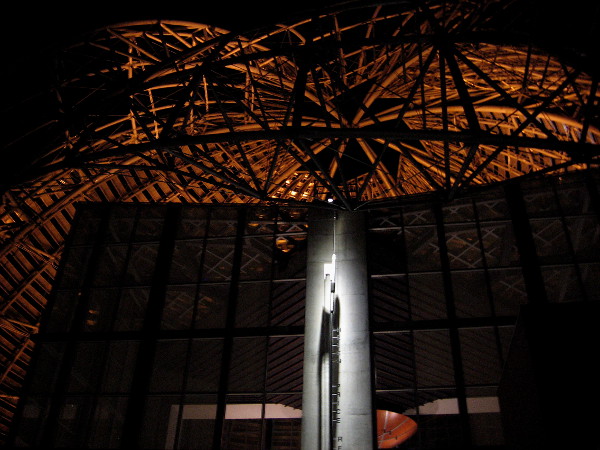
View of the lit dome of San Diego’s downtown library, seen from the 9th floor at night.
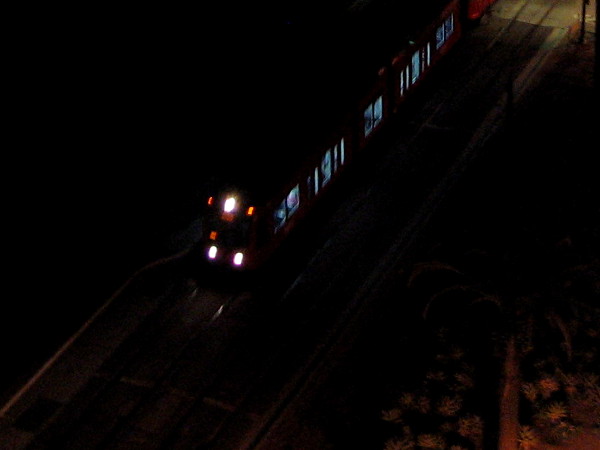
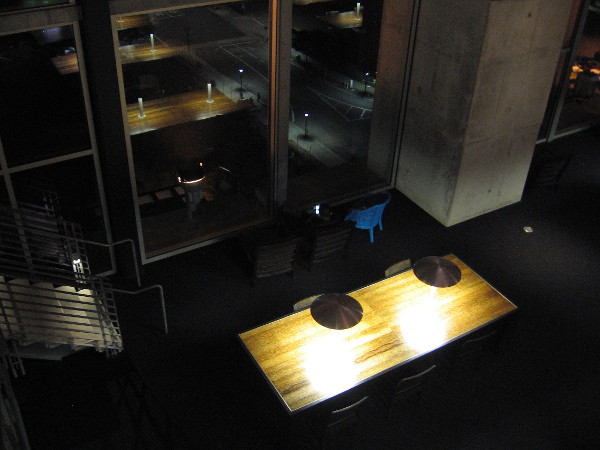
Yesterday evening after work I walked a bit in the darkness. The air was cool, downtown was quieting. I was drawn to the San Diego Central Library, and of course I had to ascend to the 9th floor. Few others were about. I lingered high above the city, outside under the lattice steel dome. I watched small trolleys slip past below. A thousand distant lights stretched toward the South Bay. The world seemed remote. Paths of gentle light were traced above, around and below. I seemed to float in a swirled galaxy; but I saw no stars.
Inside a glowing steel lattice. The new library’s dome in the past couple years has become a distinctive feature of San Diego’s skyline.Gazing through the unique dome toward the 12th and Imperial Transit Center’s clock tower.Nine stories below, a trolley heads north into the heart of East Village.Looking down into the large reading room of the San Diego Central Library after dark. Under the dome, people were quietly studying, or just gazing out into the nighttime.Meshed paths of light seem to radiate like a halo from the top of San Diego’s amazing downtown library.
…
Follow this blog for more photos of cool stuff! Join me on Facebook or Twitter.
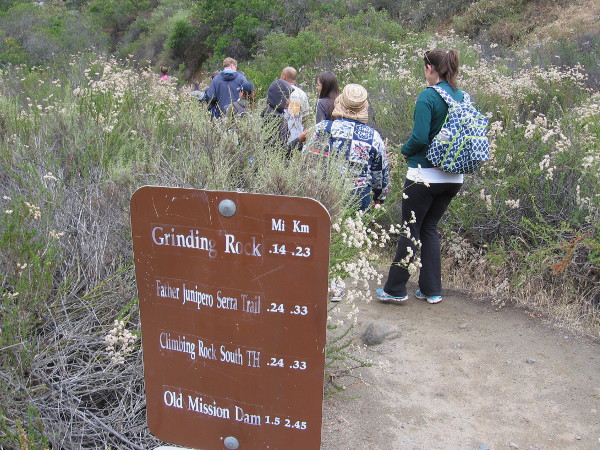
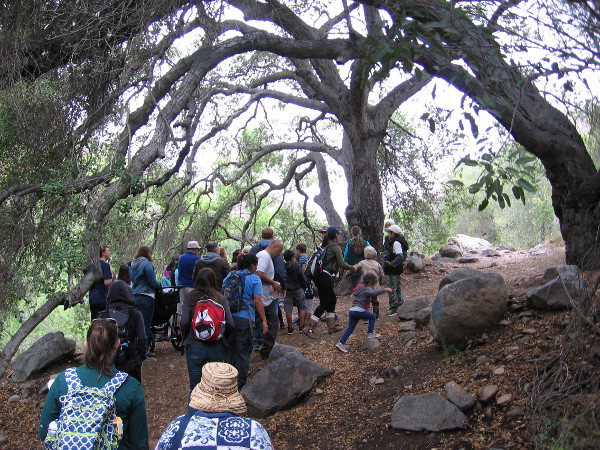
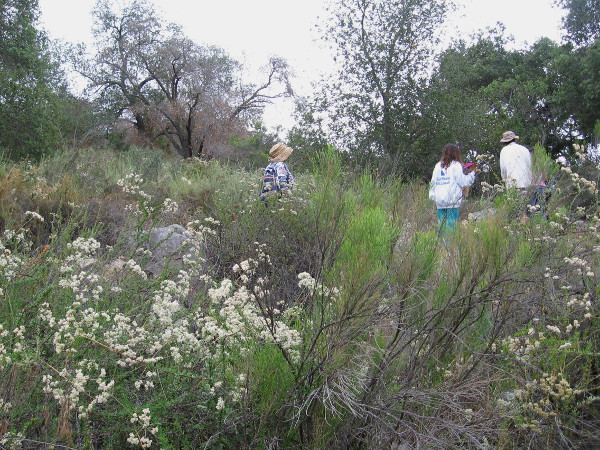
Visitors enjoying Explore Mission Trails Day head down Grinding Rock Trail.
About 60 miles of hiking trails through a wilderness environment can be found just 8 miles from downtown San Diego. Seriously!
This morning I enjoyed a very short walk (about a mile) at Mission Trails Regional Park. I went on the occasion of Explore Mission Trails Day, an annual event that showcases this amazing, enormous urban park.
The relatively easy hike was from the Visitor and Interpretive Center to some grinding rocks on the banks of the San Diego River, then back. Led by our guide, Linda, a small group learned what life was like for the ancient Kumeyaay people, who’ve lived in this dry, rugged area of Southern California for thousands of years, long before Europeans arrived. The Kumeyaay lived off the land. The very land where we walked.
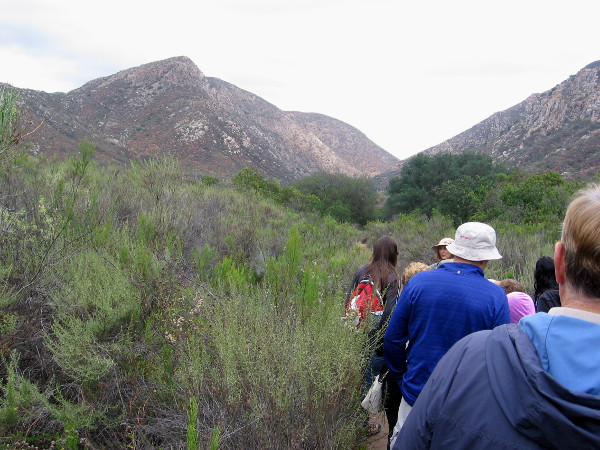
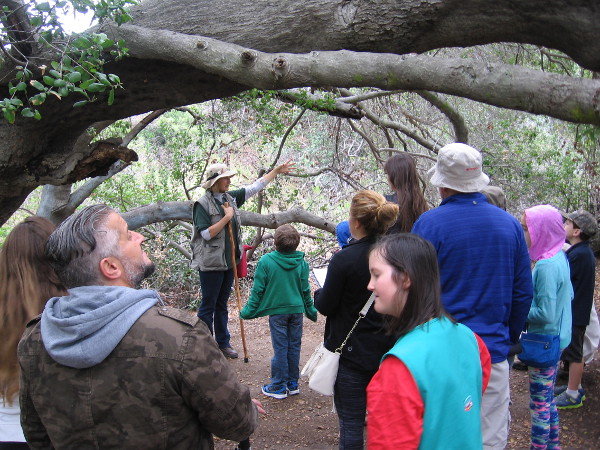
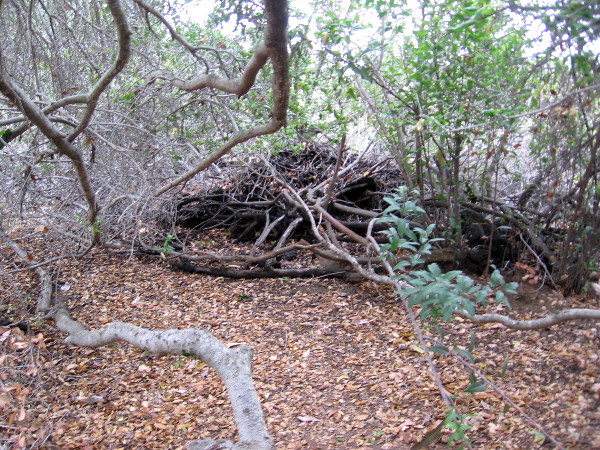
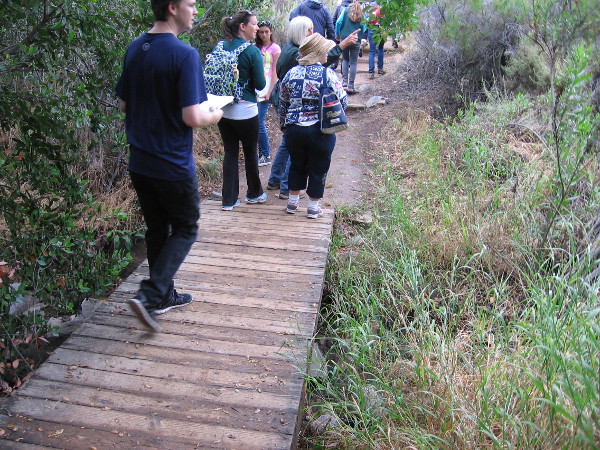
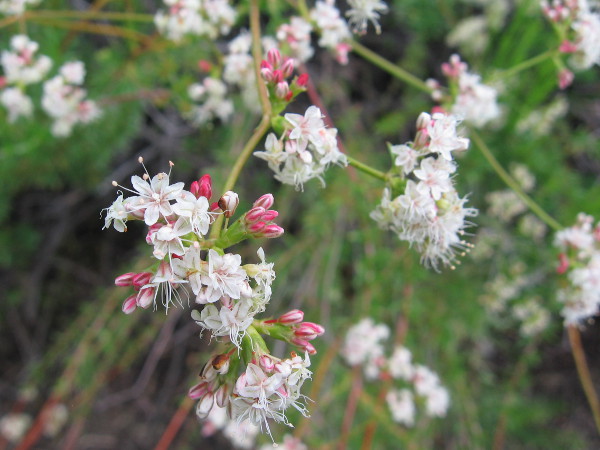
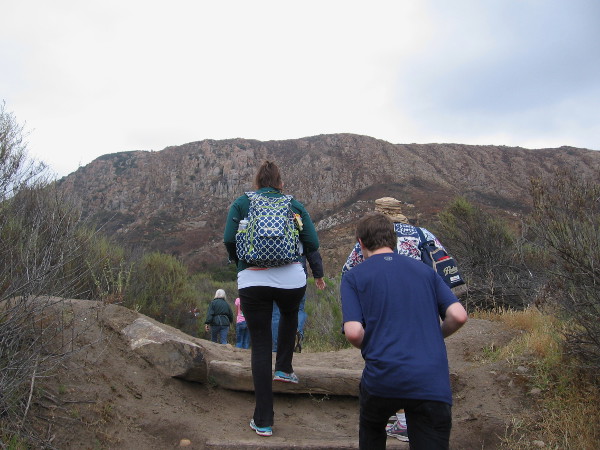
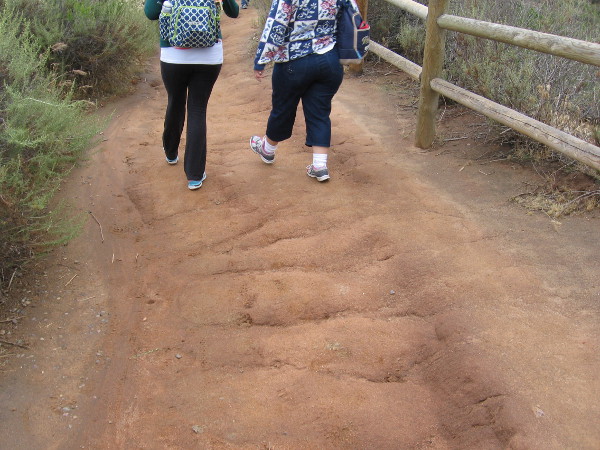
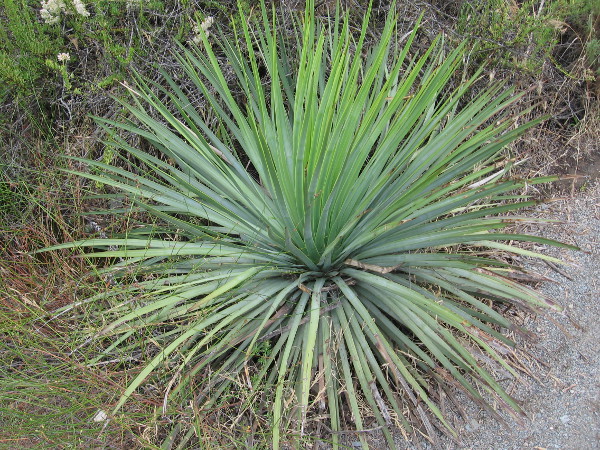
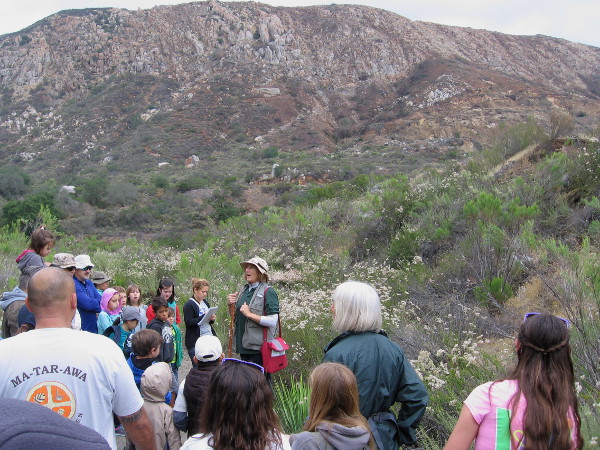
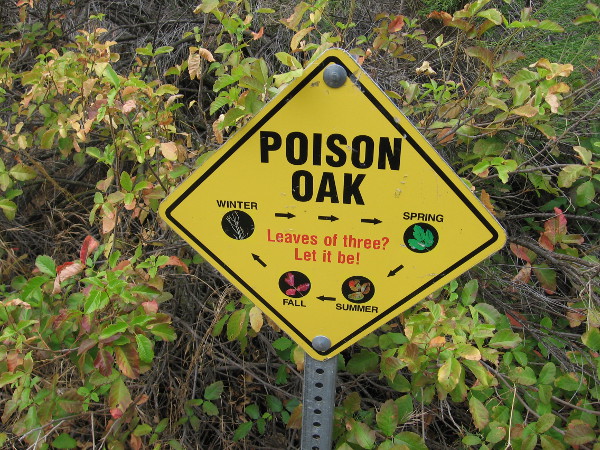
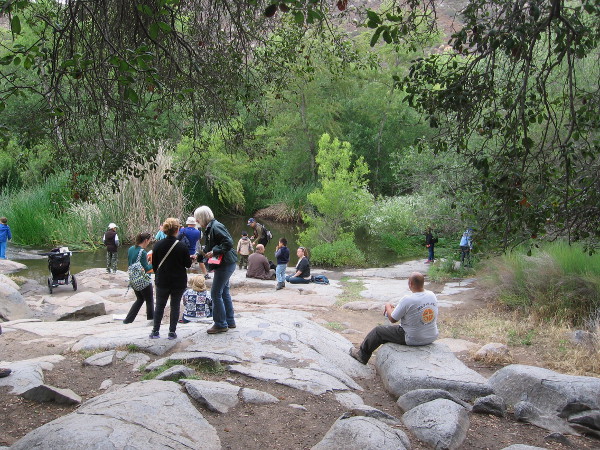
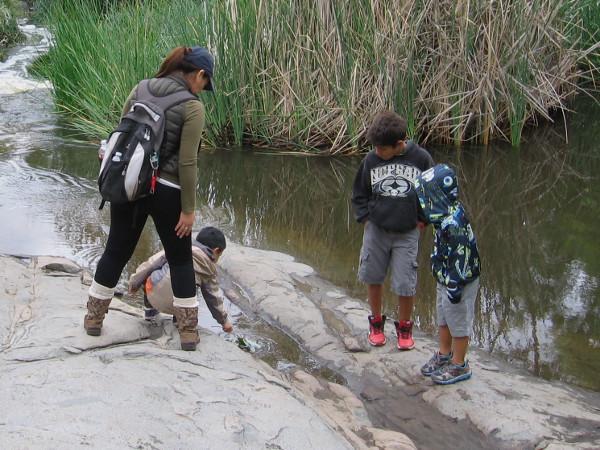
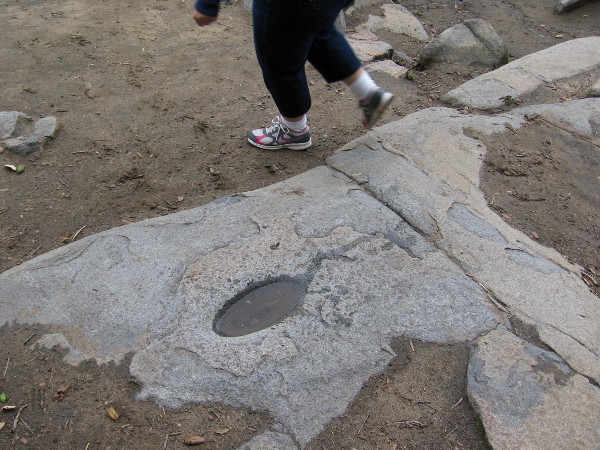
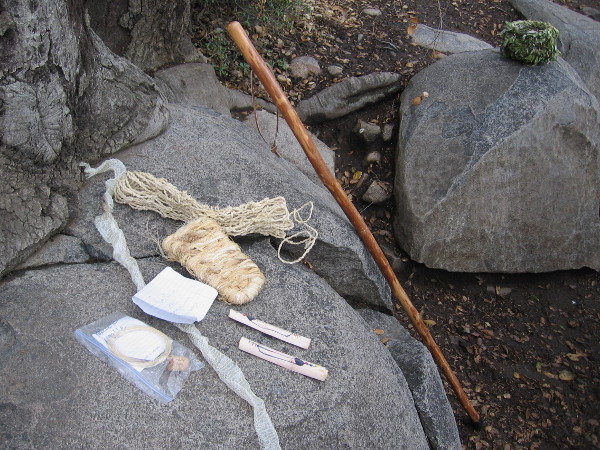
We gathered at the kiosk near the parking lot for an easy morning nature walk.Hiking through common, aromatic Southern California sagebrush toward a distinctive mountain, South Fortuna.We pause under a coast live oak, which produces acorns and shade valued by the native Kumeyaay.Large nest created by a woodrat (also known as pack rat). The Kumeyaay would bang a nest with a stick and hope to capture a snake, to eat.We cross a small wooden footbridge and take in nature’s sights and smells on a beautiful day.These tiny pinkish white flowers are flat-top buckwheat. Their tiny seeds are edible. The blooms attract butterflies.It’s easy to forget you are in the San Diego city limits in this open wilderness.Water erosion visible in the gradually descending dirt trail. As the morning was overcast and cool, no snakes were out sunning.Yucca fibers were used by the Kumeyaay to make nets, sandles, baskets and other useful things.Linda, our tour guide, talks about the ancient history of this region and its indigenous peoples. The Kumeyaay moved about depending on the season and availability of resources.Dodder is an orange colored parasitic plant. According to Kumeyaay legend, a woman who failed to guard a camp against invaders ran away, and some of her hair snagged in the bushes!A patch of poison oak! Leaves of three, let it be!We approach the San Diego River, but first pass beneath a large arching tree. If you see a native tree in San Diego, there’s probably water nearby!Smooth boulders on a bank of the San Diego River in Mission Trails Regional Park.Family investigates the life-giving water. The Kumeyaay at times would follow the river all the way to the coast, where some witnessed the landing of explorer Cabrillo.Many mortar-like holes in the nearby boulders are where Kumeyaay ground acorns, seeds, roots, herbs and other edible resources found in this arid environment.Walking stick leans up near some Yucca fiber creations brought by our guide. The basket on the right was made with willow branches. Natural salicylic acid found in willows kept out insects!Starting back up toward the Visitor Center during a very cool hike in San Diego! If you go for a hike, bring water and sturdy shoes!
…
To enjoy future posts, you can “like” Cool San Diego Sights on Facebook or follow me on Twitter.
I hope you enjoyed my last blog post, where I described a hike around the Guy Fleming Trail in Torrey Pines State Reserve. Now I’d like to take you up to see the Lodge.
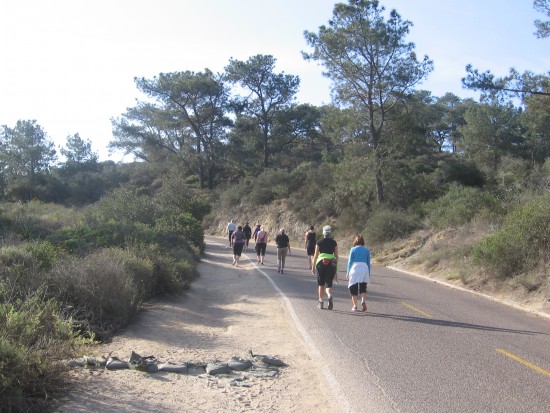
We’re going to start at the entrance of Torrey Pines State Reserve, just off the Pacific Coast Highway. We’ll be climbing the steep Torrey Pines Park Road all the way to the historic Lodge.
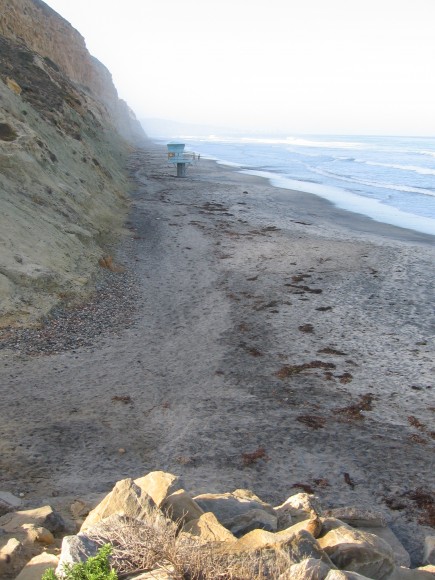
Looking south along Torrey Pines State Beach.
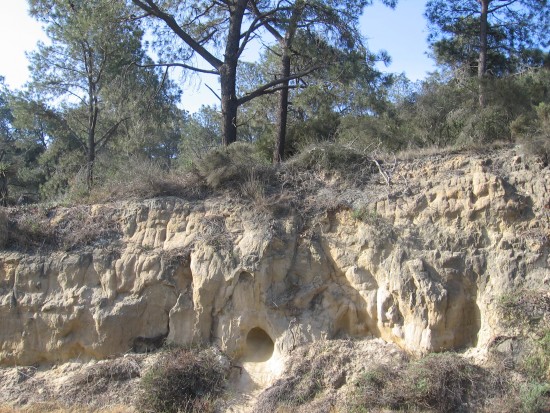
As we begin our climb we bend away from the beach, but pause for a moment to observe the high sandstone cliffs to our south. This wonderful beach, which extends for many miles, will be the subject of a future blog post!
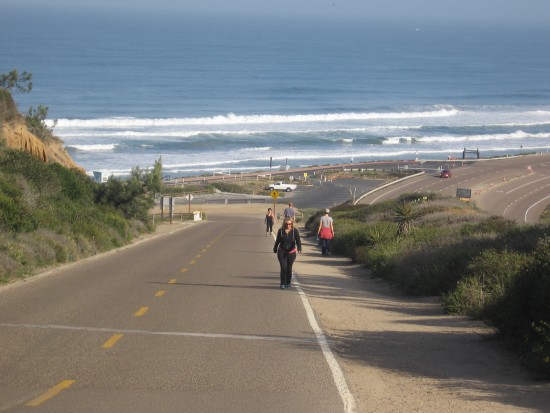
Heading up steep Torrey Pines Park Road.Entering a zone full of endangered Torrey pines.Torrey pines stand atop eroded sandstone cliffs.
The Torrey pine is an endangered tree found only here and on Santa Rosa island. We’ll learn more about it shortly…
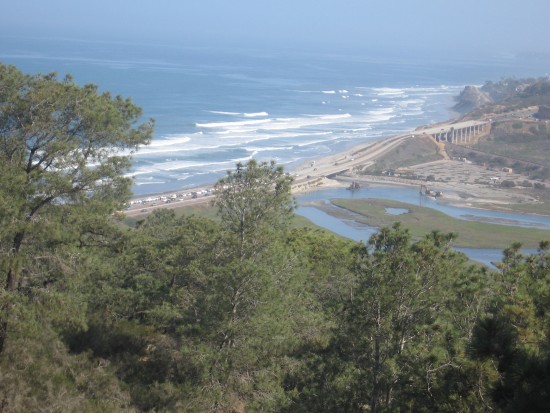
View of lagoon and ocean from High Point Overlook.
Near the top of the road we come to High Point Overlook, a short trail that heads up some steps for a 360 degree view. Here we’re looking north and seeing a bit of the Los Peñasquitos Lagoon.
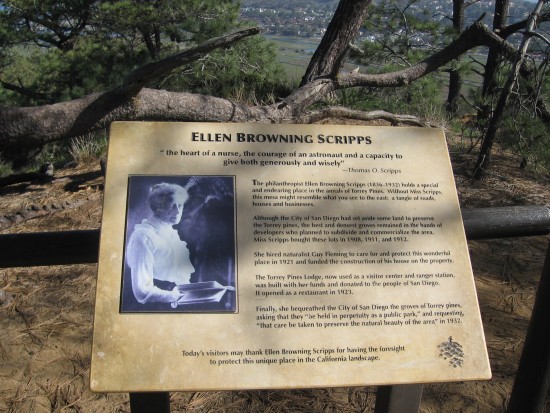
Sign about philanthropist Ellen Browning Scripps.
This sign stands among some Torrey pines at the top of the overlook. It reads:
The philanthropist Ellen Browning Scripps (1836-1932) holds a special and endearing place in the annals of Torrey Pines. Without Miss Scripps, this mesa might resemble what you see to the east: a tangle of roads, houses and businesses.
Although the City of San Diego had set aside some land to preserve the Torrey pines, the best and densest groves remained in the hands of developers who planned to subdivide and commercialize the area. Miss Scripps bought these lots in 1908, 1911, and 1912.
She hired naturalist Guy Fleming to care for and protect this wonderful place in 1921 and funded the construction of his house on the property.
The Torrey Pines Lodge, now used as a visitor center and ranger station, was built with her funds and donated to the people of San Diego. It was designed by noted architects Richard Requa and Herbert Lewis Jackson. It opened as a restaurant in 1923.
Finally, she bequeathed the City of San Diego the groves of Torrey pines, asking that they “be held in perpetuity as a public park,” and requesting, “that care be taken to preserve the natural beauty of the area” in 1932.
Today’s visitors may thank Ellen Browning Scripps for having the foresight to protect this unique place in the California landscape.
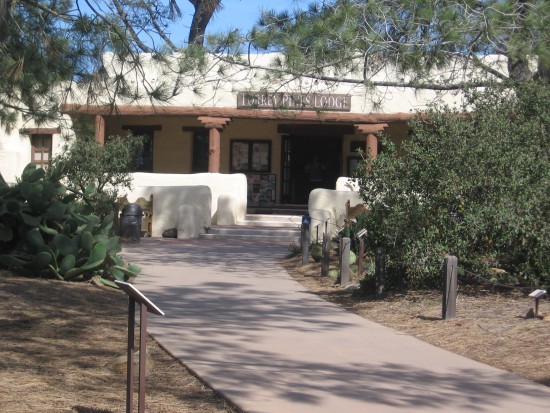
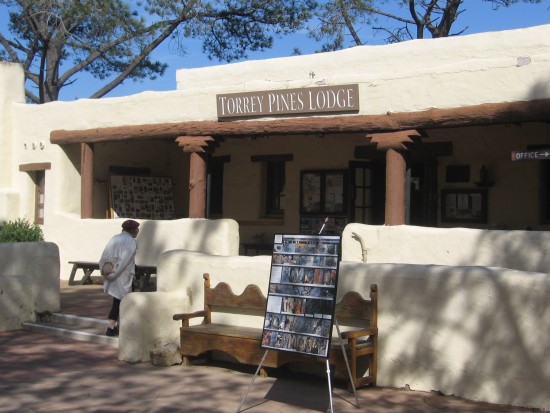
Nearing Torrey Pines State Reserve’s historic Lodge.
A little more walking takes us to our main destination, the Lodge. An old adobe built in 1922, it originally served as a restaurant! According to the official website, it had stumpy tables, chintz curtains, lampshades made of Torrey Pine needles, and a jukebox! Back in those days, Model T cars had difficulty going up the steep hill, because they didn’t have a fuel pump, and instead relied on a gravity system. When the steeply climbing cars conked out, drivers were told to continue up the hill in reverse!
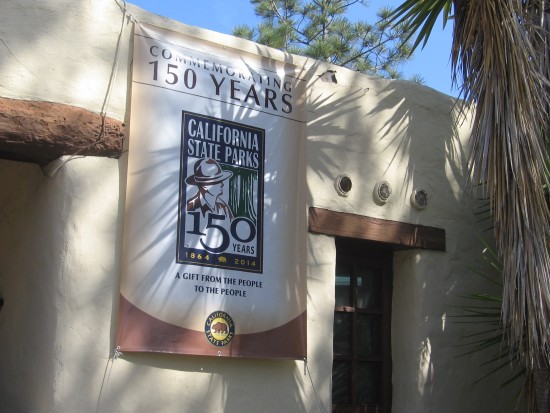
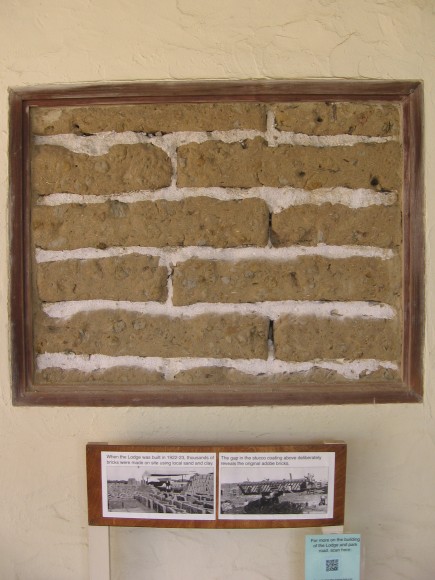
Banner commemorates 150 years of California State Parks.Gap in Lodge’s stucco shows original adobe bricks.
This is near the front door. The sign below reads:
When the Lodge was built in 1922-23, thousands of bricks were made on site using local sand and clay. The gap in the stucco coating above deliberately reveals the original adobe bricks.
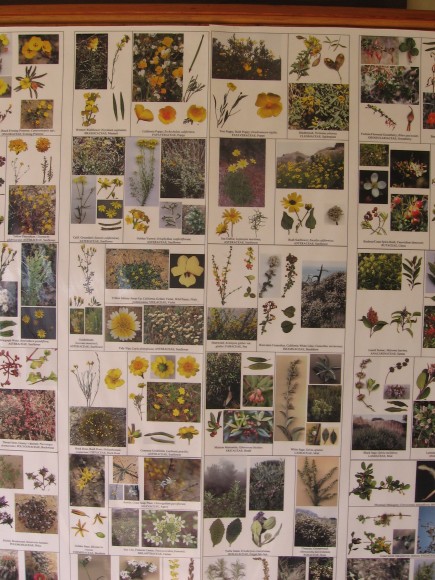
Portion of large sign outside describing coastal flowers.Interior of Lodge is a museum and visitor center.
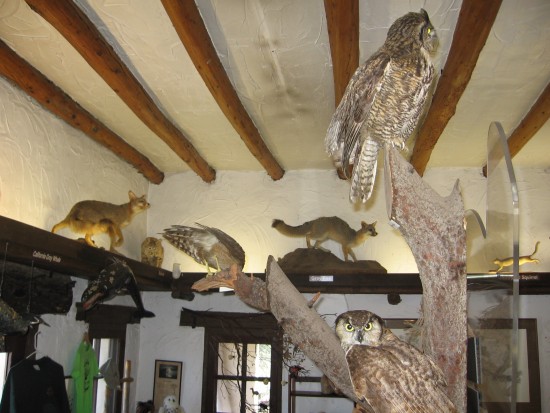
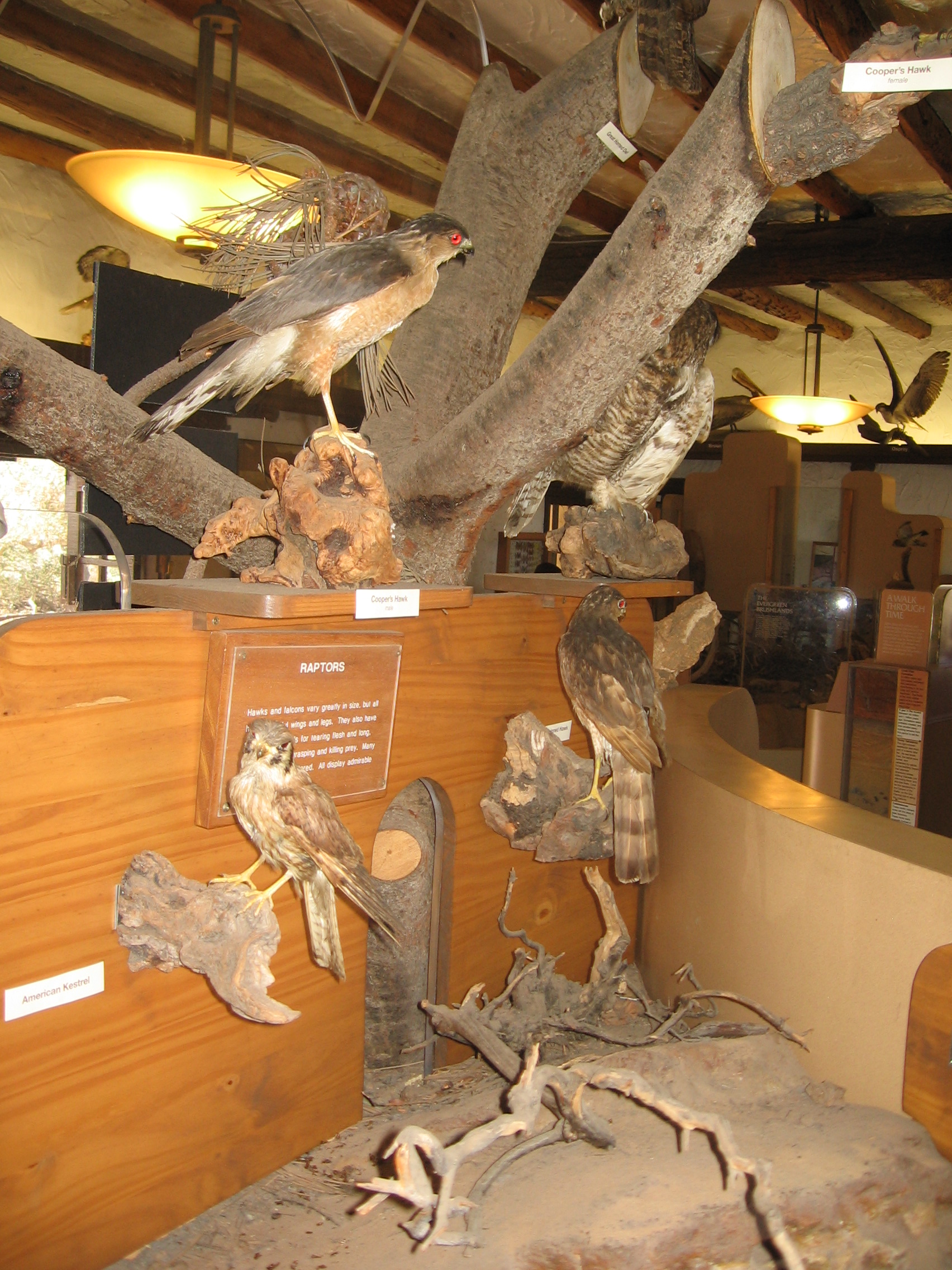
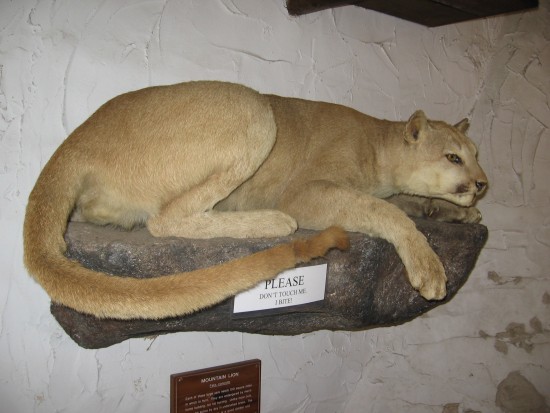
I love the interior of the Lodge. There’s so much interesting stuff to see, and so much history and natural charm jammed into one place. The Lodge is open daily 9 AM to 6 PM during summer daylight saving time and 10 AM to 4 PM during winter standard time. Ranger guided hikes are available on weekends.
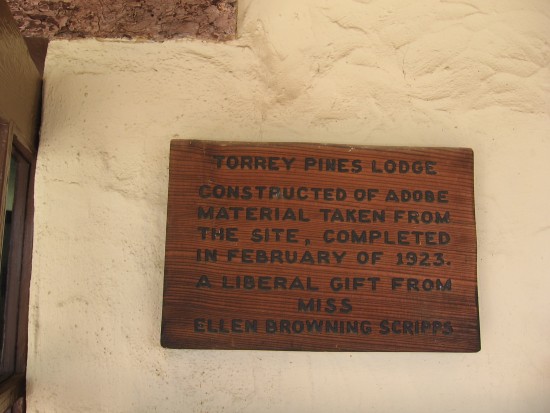
One of many educational exhibits.Mountain lion patiently watches visitors to the Lodge.Plaque in Lodge credits Ellen Browning Scripps.Old fireplace shows decades of use.
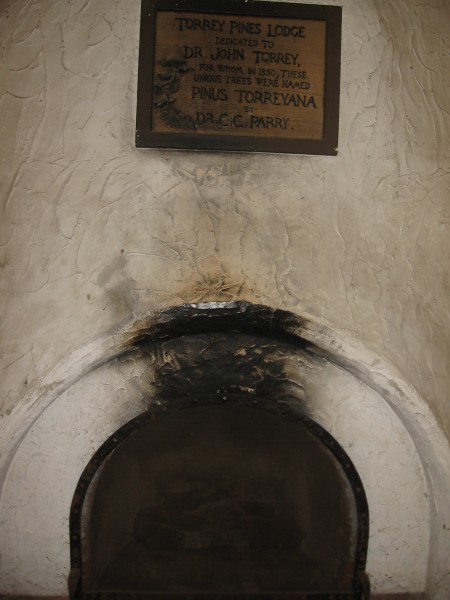
The plaque above the old fireplace reads:
Torrey Pines Lodge dedicated to Dr. John Torrey, for whom, in 1850, these unique trees were named Pinus torreyana by Dr. C. C. Parry.
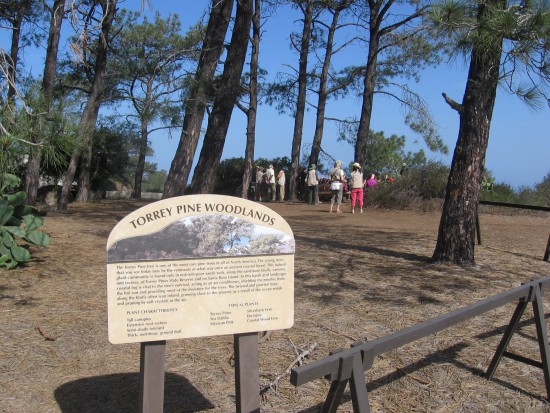
Sign behind Lodge describes Torrey Pine Woodlands.
Now we’ve headed back outside, around the back of the Lodge. Numerous Torrey pines are all around us, and benches are sprinkled here and there with sweeping views eastward toward developed Carmel Valley and Interstate 5.
This sign reads:
The Torrey Pine tree is one of the most rare pine trees in all of North America. The young trees that you see today may be the remnants of what was once an ancient coastal forest. This natural plant community is found only in nutrient-poor sandy soils, along the sandstone bluffs, canyons, and ravines, of Torrey Pines State Reserve and on Santa Rosa Island. In this harsh arid landscape, coastal fog is vital to the tree’s survival, acting as an air conditioner, shielding the needles from the hot sun and providing most of the moisture for the trees. The twisted and gnarled trees along the bluffs often lean inland, growing close to the ground, as a result of the ocean winds and pruning by salt crystals in the air.
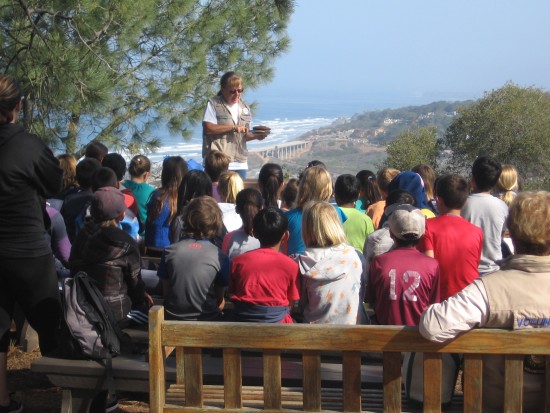
School kids learn about local flora and fauna.
A ranger was giving a bunch of school kids a talk about Torrey Pines State Reserve. They’ll remember this special place for the rest of their lives.
The Lodge at Torrey Pines State Reserve is a must see!
…
To enjoy future posts, you can “like” Cool San Diego Sights on Facebook, or follow me on Twitter.
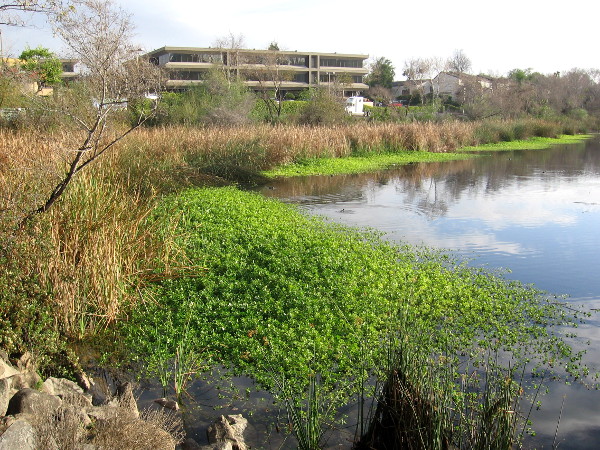
This photograph was taken several mornings ago while I walked through Mission Valley. It looks west from Mission Center Road along the San Diego River.
The bright green, I believe, is Yerba Mansa.
People are often surprised that such a beautiful, peaceful scene can be found in a busy city. Had I turned the camera in any other direction, I might’ve captured buildings, shopping centers, cars and several freeways. So much depends on the direction in which we turn…
Here are two more pics which I took in late February 2015…
San Diego River Trail follows natural beauty through Mission Valley.Taking a look at the river from the other side of Mission Center Road.












 Cool San Diego Sights!