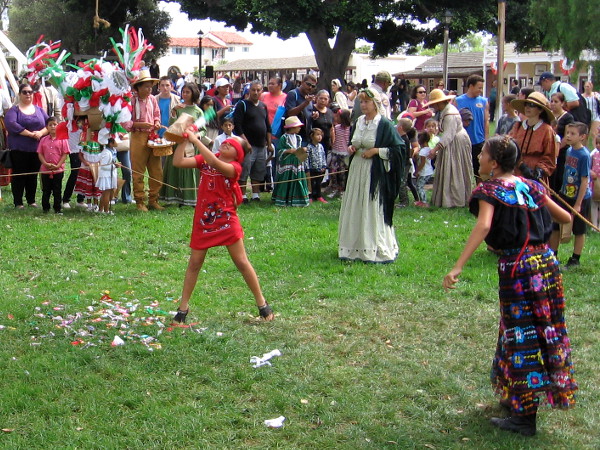
Every year, Fiestas Patrias, which celebrates Mexican independence from Spain in 1821, includes traditional entertainment for the entire family.
This morning I missed a bus to Ocean Beach at the Old Town Transit Center, so to pass the time I walked the short distance over to the State Park to see if anything was going on. And I discovered that Fiestas Patrias was being celebrated today!
I lingered for a few minutes and took some photos, headed over to OB (as you will see), then returned to Old Town a couple hours later to really soak in the event. Fiestas Patrias is a yearly celebration of Mexican independence from Spain in 1821. San Diego, a small town founded near a Spanish presidio in Alta California, thereafter became a part of Mexico until 1848.
Many diverse traditions have intermingled during San Diego’s history to make our city what it is today. The rich and colorful culture of Mexico has remained an essential part of life in San Diego!
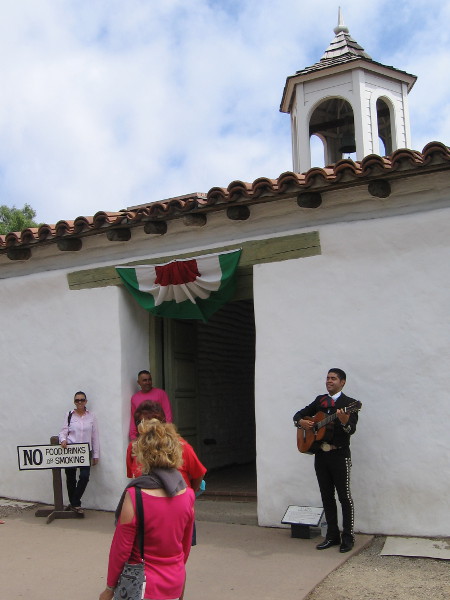
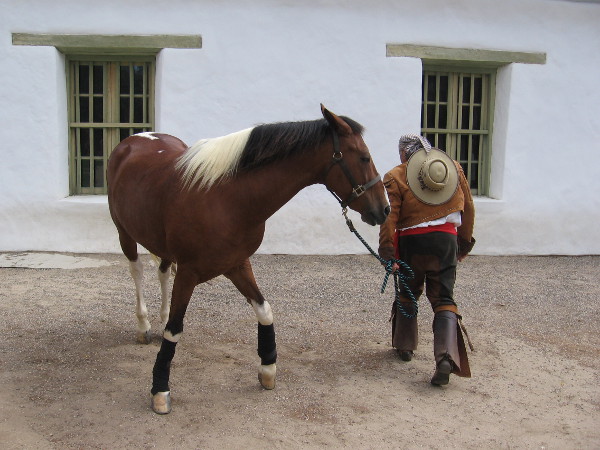
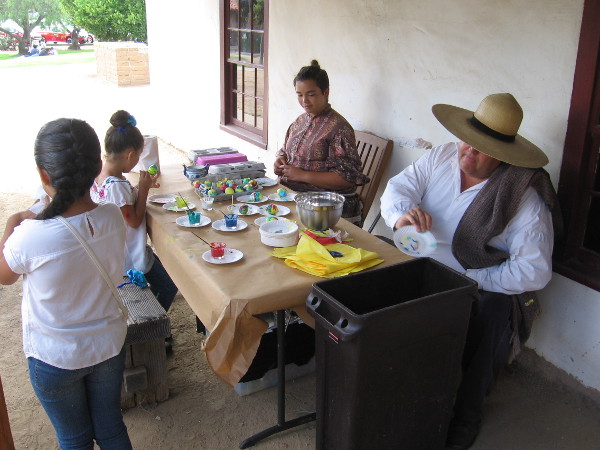
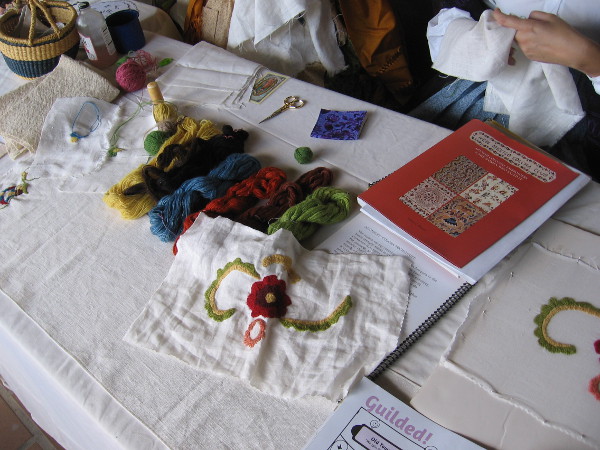
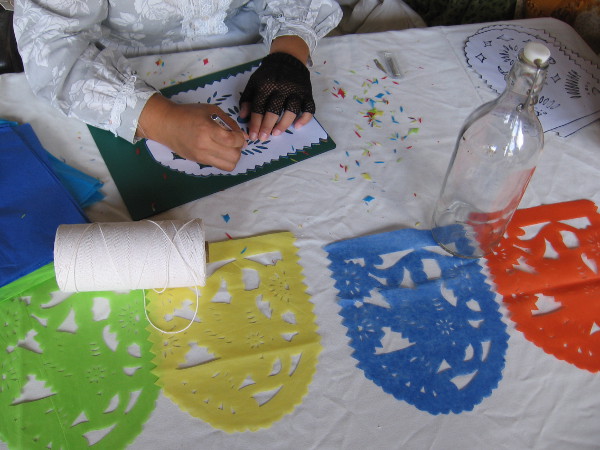
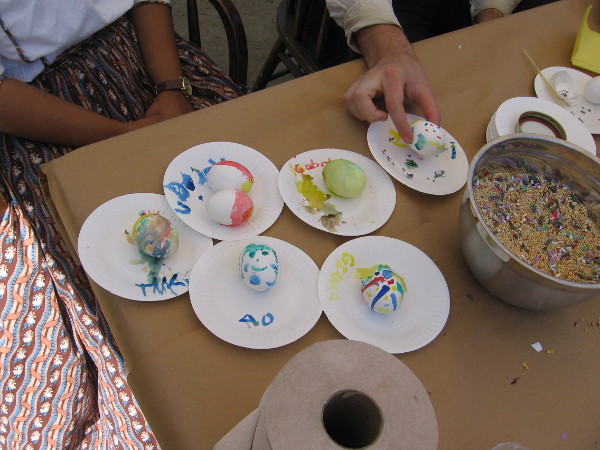
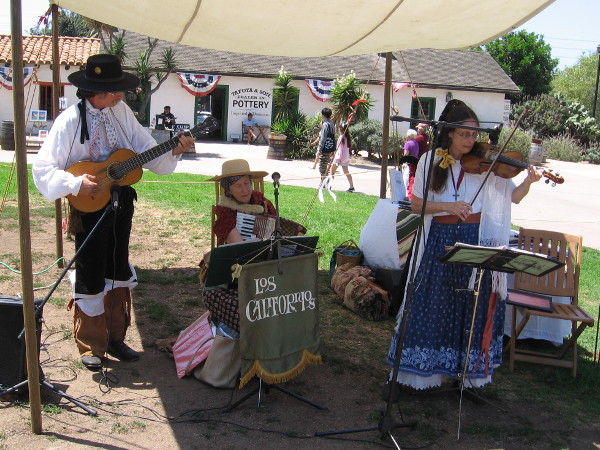
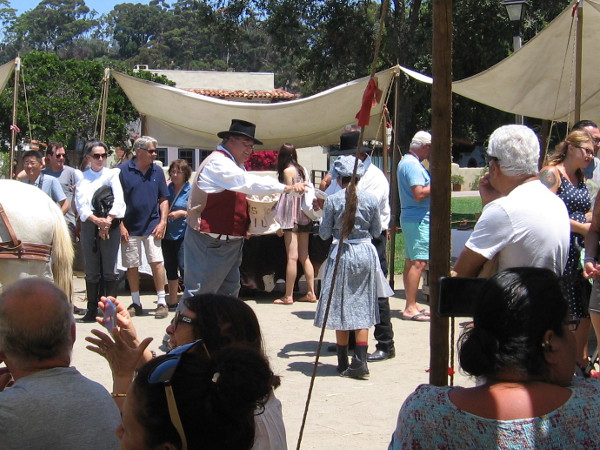
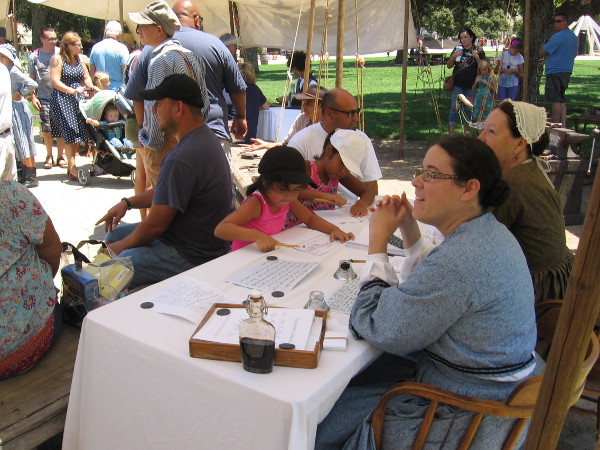
A mariachi welcomes visitors to the historic Casa de Estudillo in Old Town San Diego State Historic Park.A friendly horse came for a visit as I took some photos outside the Casa de Estudillo during Fiestas Patrias.Traditional dances were being performed on the central plaza’s main stage. Las damas y los caballeros took turns being el toro and el matador!The annual event features authentic costumes from a time when San Diego was a small Mexican town in Alta California.Kids were decorating traditional cascarones eggshells.A demonstration inside the Casa de Estudillo of yarn being spun. During the Spanish period, sheep were first introduced along with cattle and horses at the Mission San Diego de Alcalá.Nearby, ladies were demonstrating Colcha Spanish Colonial embroidery, which was typical in San Diego in the early 1800s.At the same table, another lady was cutting out festive Mexican papel picado.The historically authentic musical group Los Californios wait for their turn on the stage at Fiestas Patrias in Old Town San Diego!
…
I live in downtown San Diego and love to walk around with my camera! You can follow Cool San Diego Sights via Facebook or Twitter!
You can easily explore Cool San Diego Sights by using the search box on my blog’s sidebar. Or click a tag! There are thousands upon thousands of fun photos for you to share and enjoy!
View of the Serra Museum through trees atop Presidio Hill, near the spot where European civilization first took root in California in 1769.
A few years ago I walked from Old Town San Diego up to the top of Presidio Hill and wrote a simple blog about what I saw. You can revisit that post here.
What I failed to do at the time was photograph many of the historically important plaques that can be found around various sites and monuments, so I thought it would be proper to finally correct that omission.
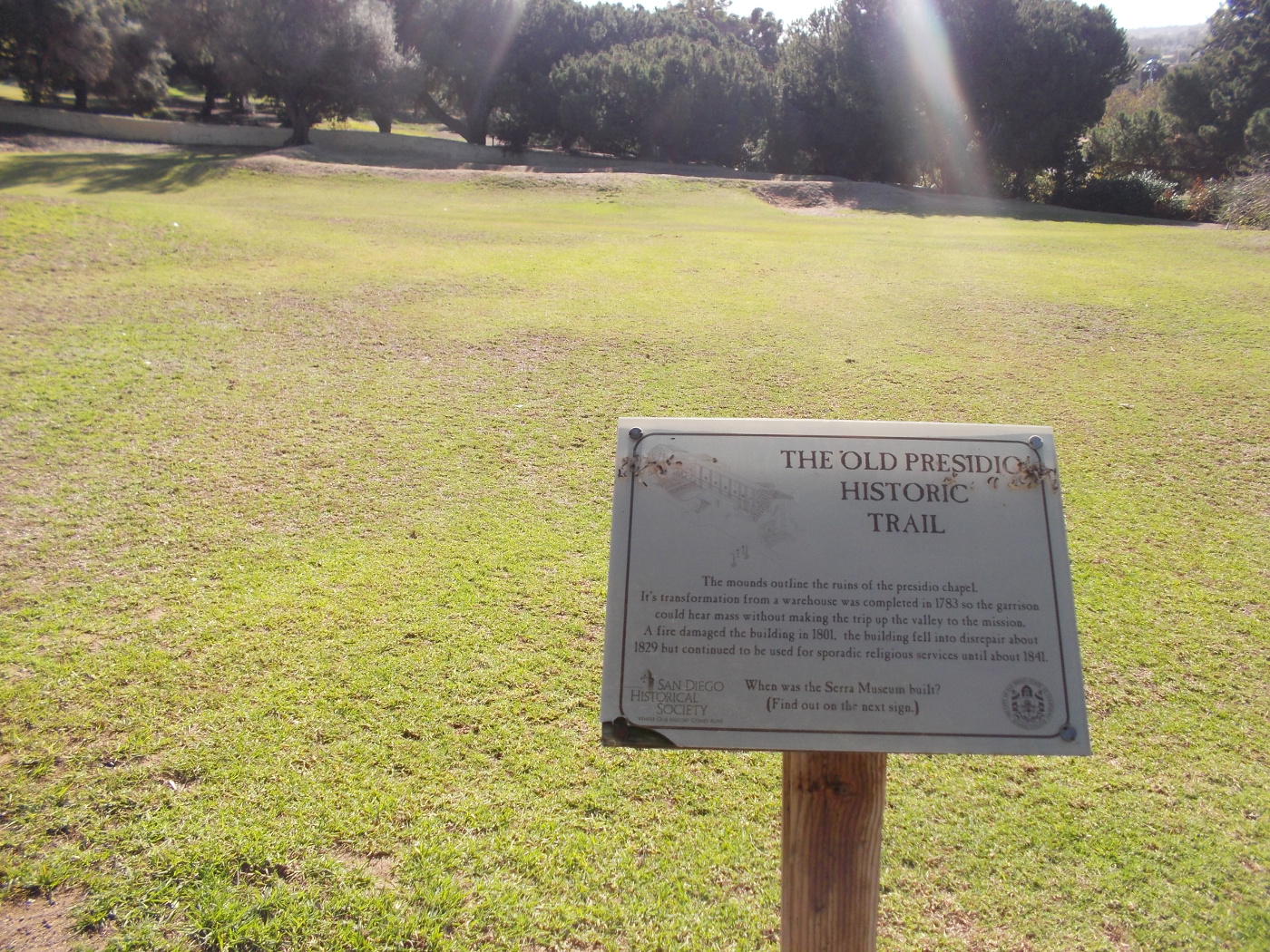
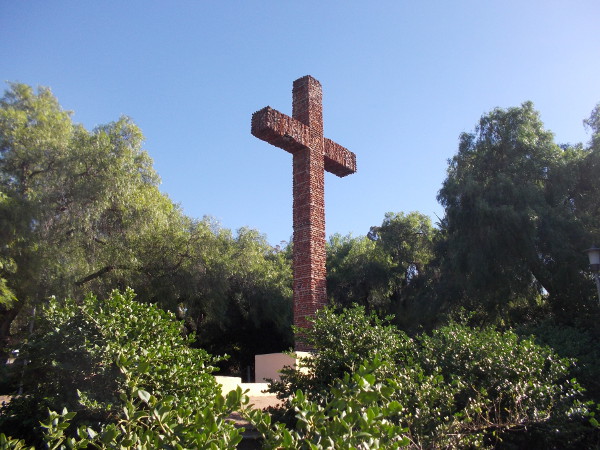
I’ve included one informative sign which stands near the ruins of the old Spanish presidio’s chapel, and a variety of plaques. One of the plaques is at the base of the Padre Cross; two are near The Padre sculpture; one is on an observation structure near the Junipero Serra Museum parking lot; and several others are found at Fort Stockton, where the Mormon Battalion camped after their 2000-mile march from Iowa to San Diego.
Click the photos and they will enlarge for easier reading.
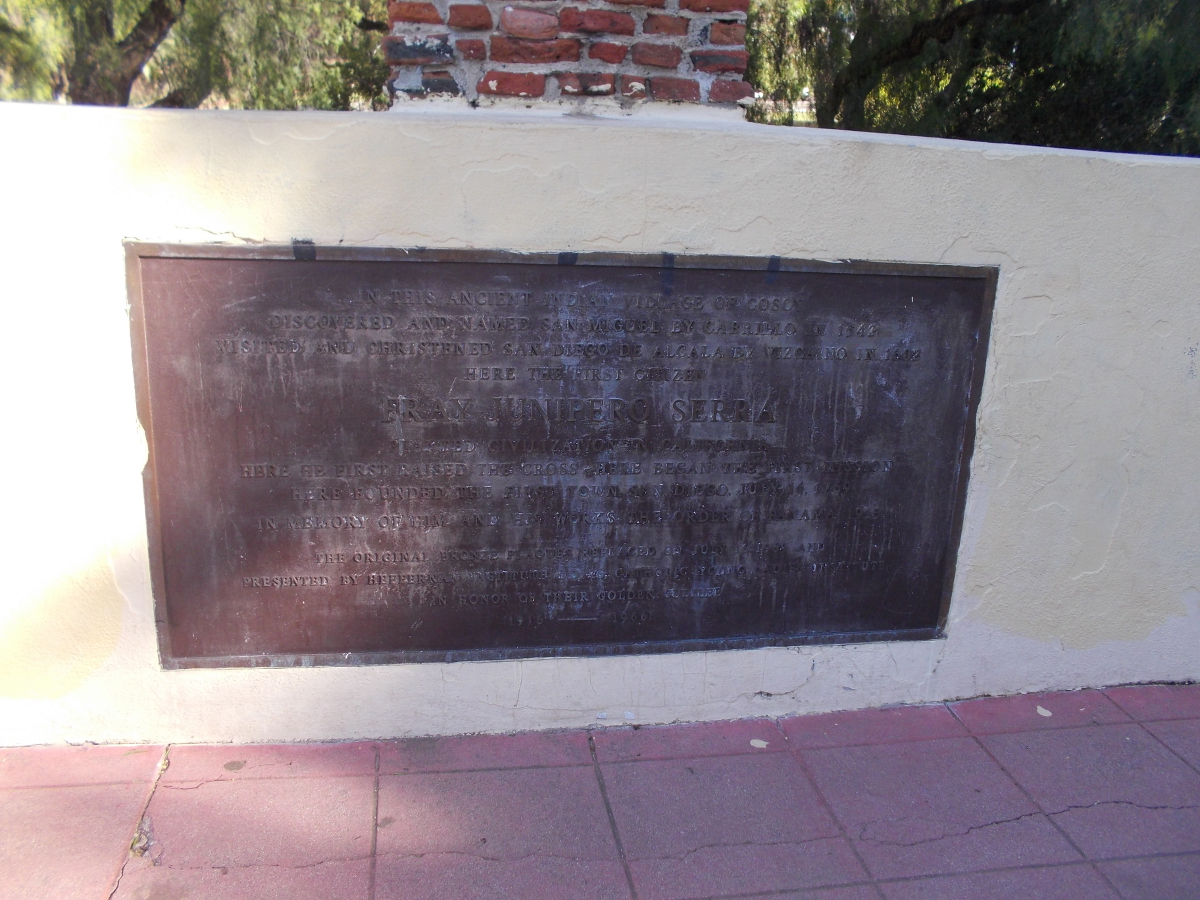
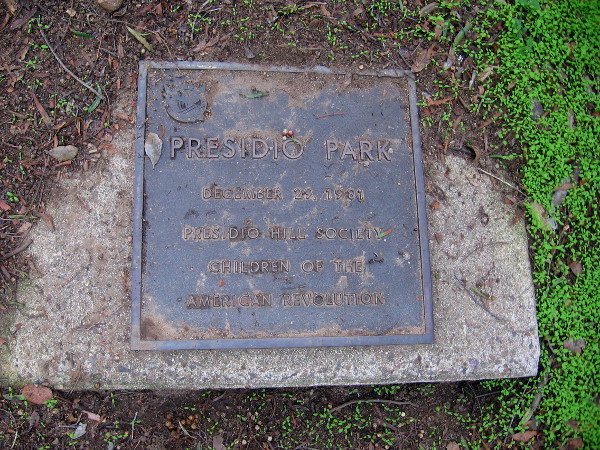
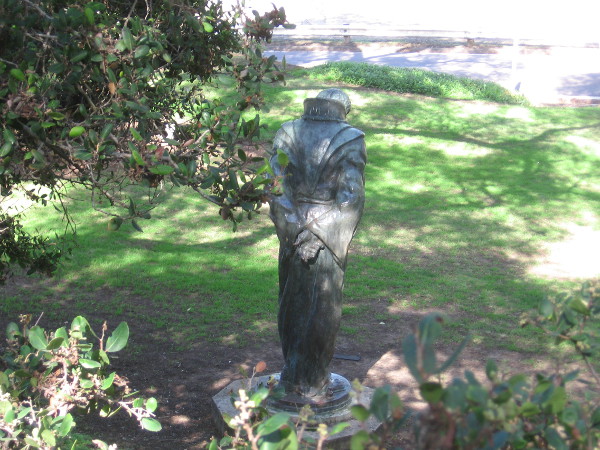
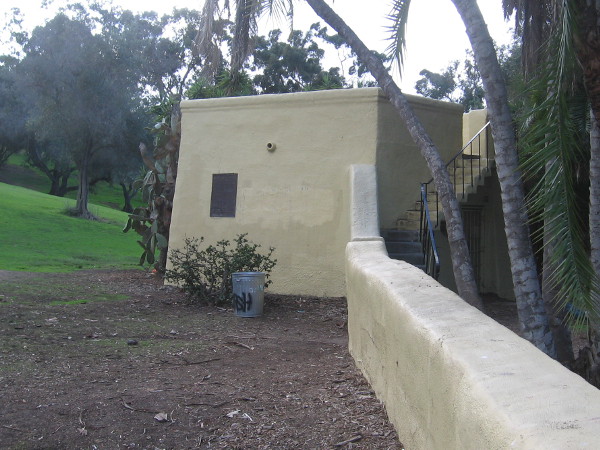
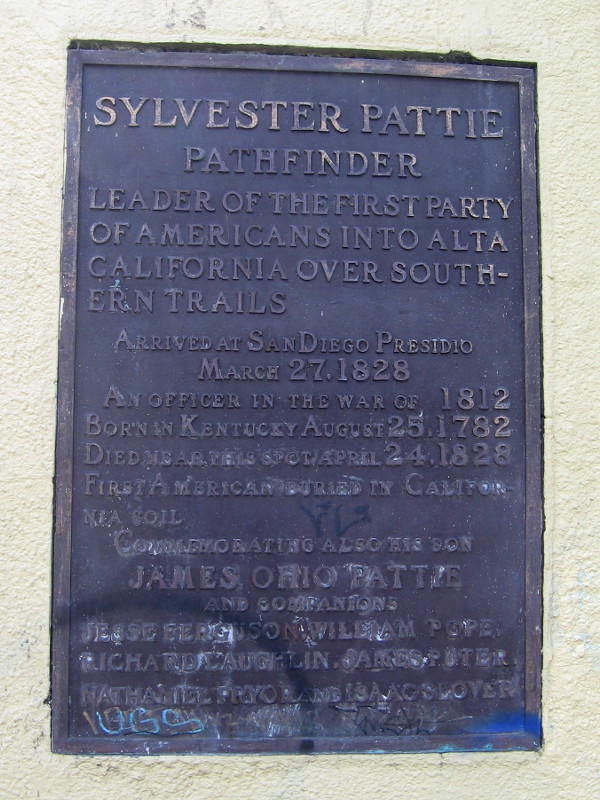
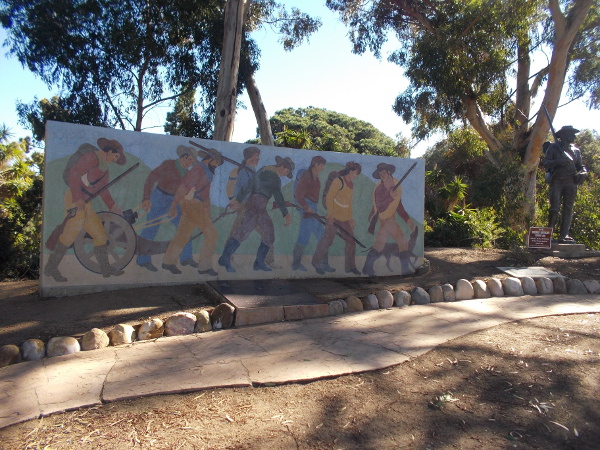
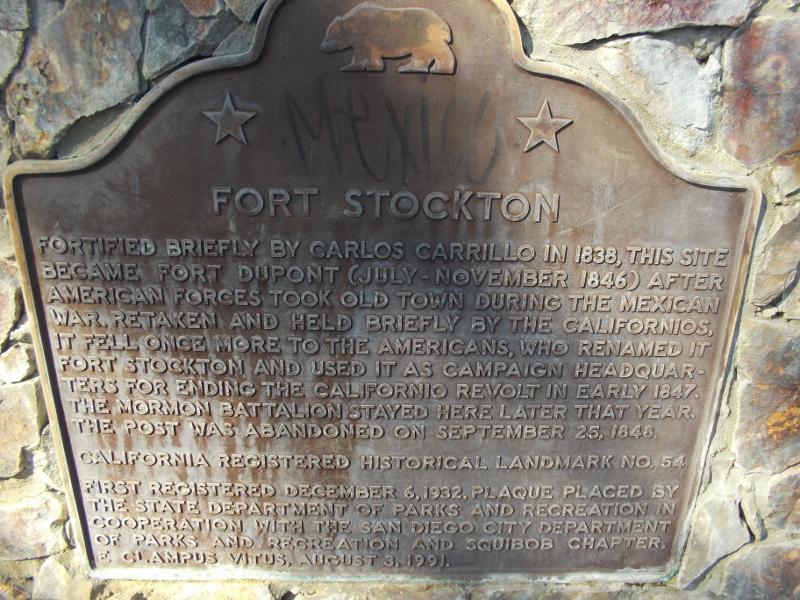
Sign marks the Old Presidio Historic Trail. Grassy mounds on the hill below the Serra Museum are the ruins of the old presidio chapel. It was built for the garrison’s soldiers after the original Spanish mission was relocated up the valley.The large Padre Cross, made in 1913 of tiles from the Presidio ruins, marks the location of the first Spanish mission in Alta California, established in 1769 by Junipero Serra.Plaque at base of the Padre Cross remembers the Indian village of Cosoy, named San Miguel by Cabrillo in 1542, then San Diego de Alcala by Vizcaino in 1602.Between the Padre Cross and The Padre sculpture, a plaque covers a time capsule that was created two centuries after the establishment of Mission San Diego de Alcala. It is to be opened on July 16, 2069.A plaque in the ground behind The Padre sculpture, placed on December 29, 1981 by the Presidio Hill Society Children of the American Revolution.Photo taken behind The Padre on Presidio Hill. The 1908 bronze sculpture is by Arthur Putnam.A plaque can be seen on the observation structure near one corner of the Serra Museum parking lot.The plaque begins: Sylvester Pattie, pathfinder, leader of the first party of Americans into Alta California over Southern trails. Arrived at San Diego Presidio March 27, 1828.Mural at Fort Stockton depicts the long march of the Mormon Battalion.California Historical Landmark plaque at Fort Stockton. The top of Presidio Hill was first fortified by Carlos Carrillo in 1838. From July to November 1846 the site was called Fort Dupont when American forces temporarily held Old Town.
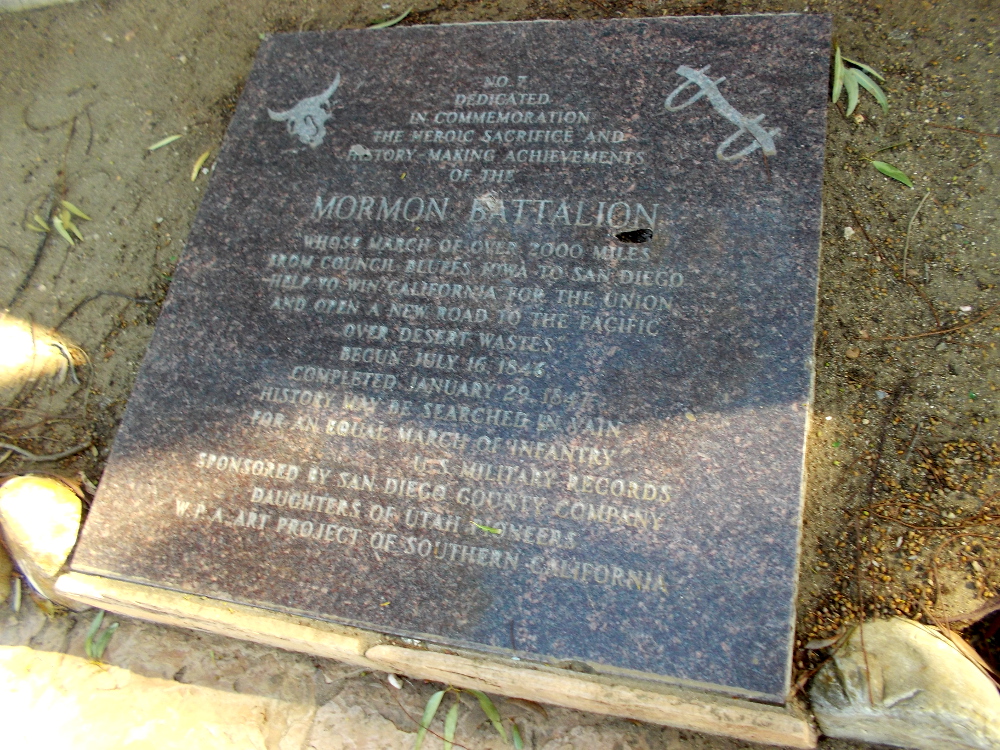
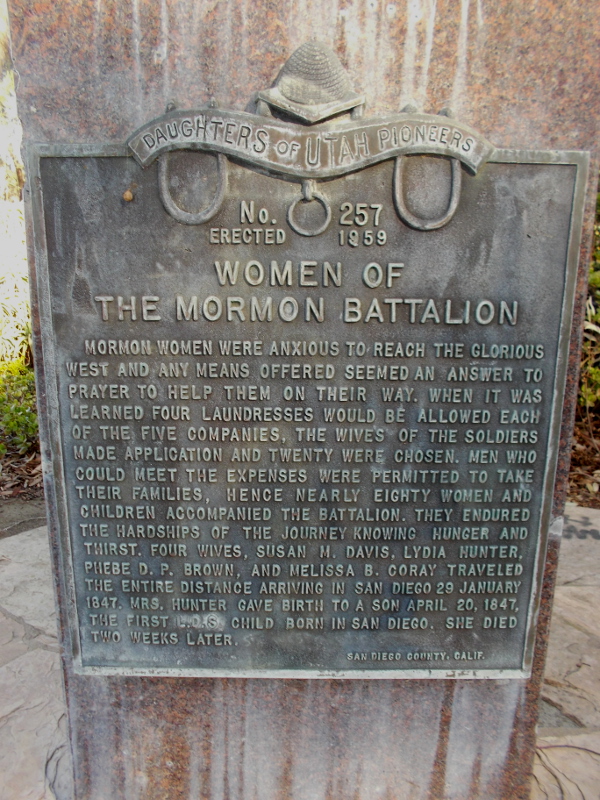
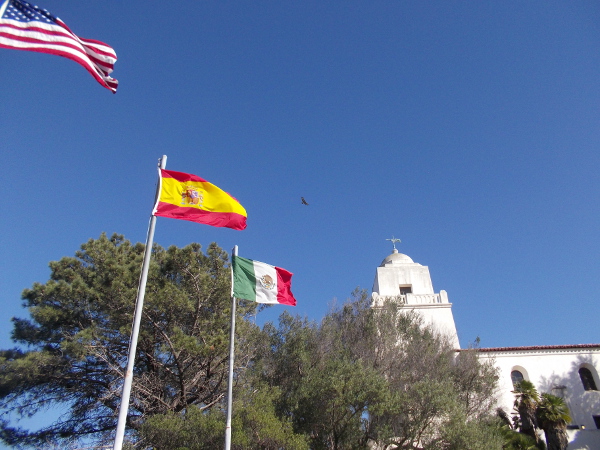
Plaque by mural, commemorating the heroic sacrifice and history-making achievements of the Mormon Battalion.More plaques nearby explain the history of the Mormon Battalion, which blazed the first wagon trail to the Pacific over the southern route.Members of the Mormon Battalion worked to improve San Diego by making the first kiln in California, the first pumps to draw water, and the first blacksmith shop and bakery.The two plaques described above can be found near the Mormon Battalion Monument, a bronze sculpture created by Edward J. Fraughton.Another nearby plaque explains the history of the statue. It was a gift to the City of San Diego in 1969 by the National Society of the Sons of Utah Pioneers.A plaque by the Daughters of Utah Pioneers also stands at the site of old Fort Stockton.Women of the Mormon Battalion. Almost eighty women and children accompanied the soldiers during the long march. Four wives traveled the entire distance to San Diego.Flags of the United States, Spain and Mexico fly atop Presidio Hill, birthplace of California. Here many chapters of history are remembered.
…
This blog now features thousands of photos around San Diego! Are you curious? There’s lots of cool stuff to check out!
Here’s the Cool San Diego Sights main page, where you can read the most current blog posts. If you’re using a small mobile device, click those three parallel lines up at the top–that opens up my website’s sidebar, where you’ll see the most popular posts, a search box, and more!
To enjoy future posts, you can also “like” Cool San Diego Sights on Facebook or follow me on Twitter.
Two vaqueros chat during an event in Old Town San Diego that reenacts fascinating Californio history.
I enjoyed the Trades That Shaped the West event in Old Town San Diego last Saturday so much, I decided to return today to experience another Stagecoach Days event: Days of the Vaqueros!
Days of the Vaqueros invited curious visitors to experience what life was like when San Diego was a part of Spain, then Mexico. The emphasis was on the vaqueros–the first true cowboys. During the era of the Californios, wealthy ranch owners employed vaqueros to manage their stock.
For a couple of decades–from the early 1820s to the mid-1840s–cattle hides were the primary export of Alta California. Merchant ships from the East Coast (and other places about the Pacific Ocean) would trade the plentiful hides for finished goods that were in high demand in early, geographically isolated, sparsely populated towns like San Diego.
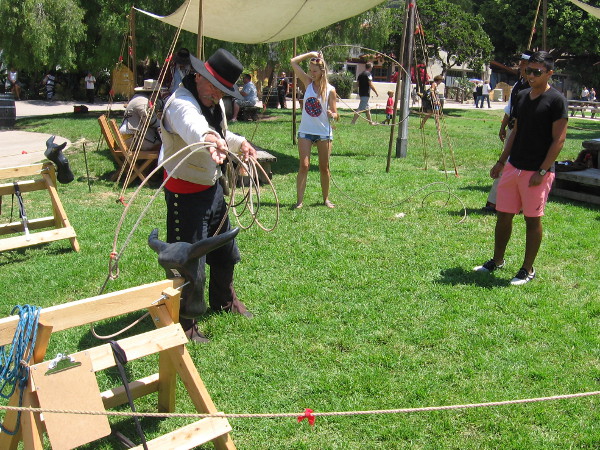
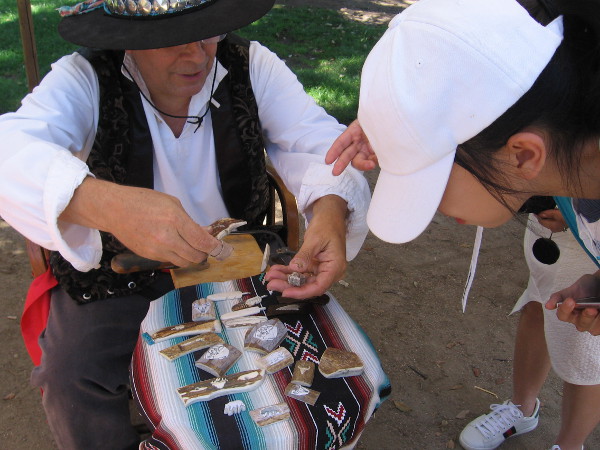
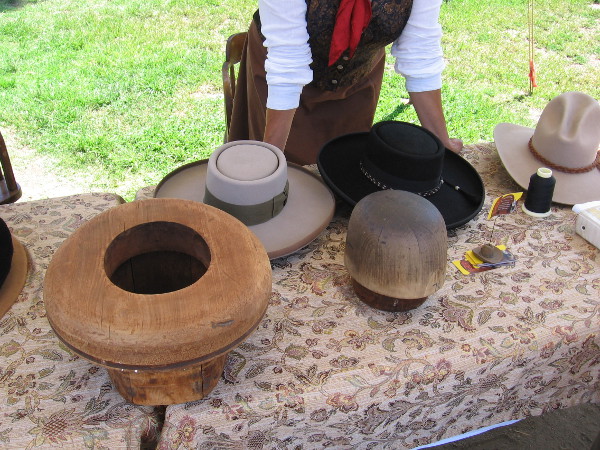
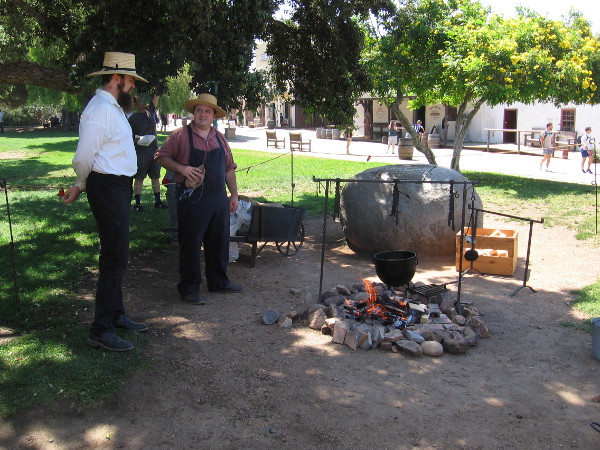
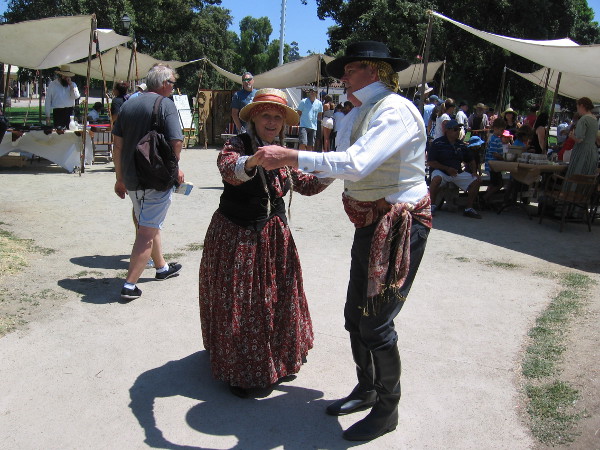
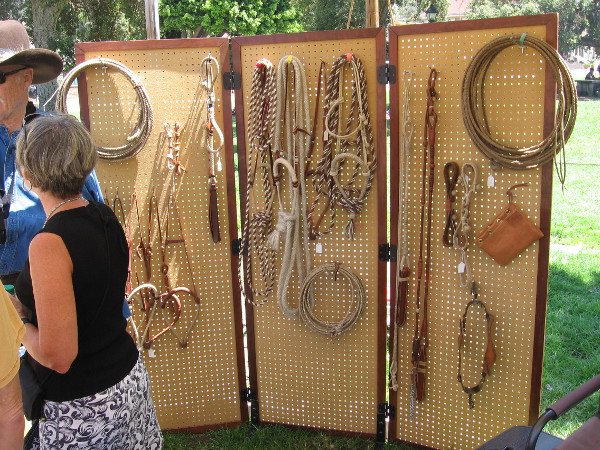
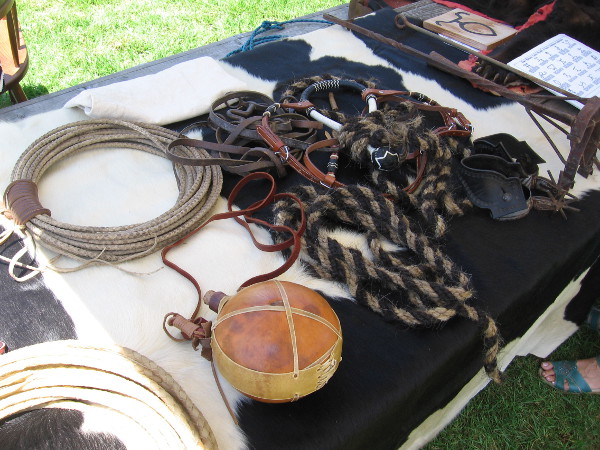
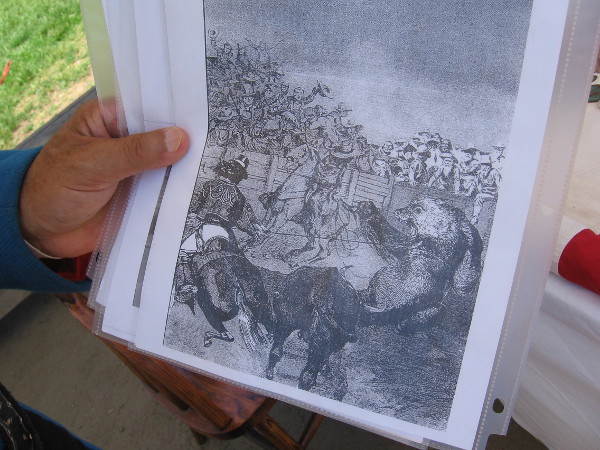
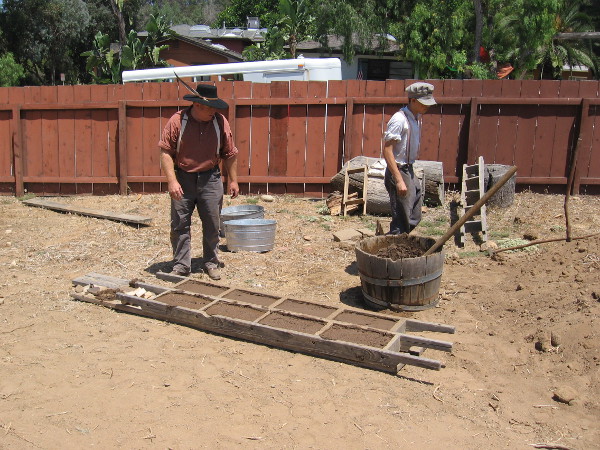
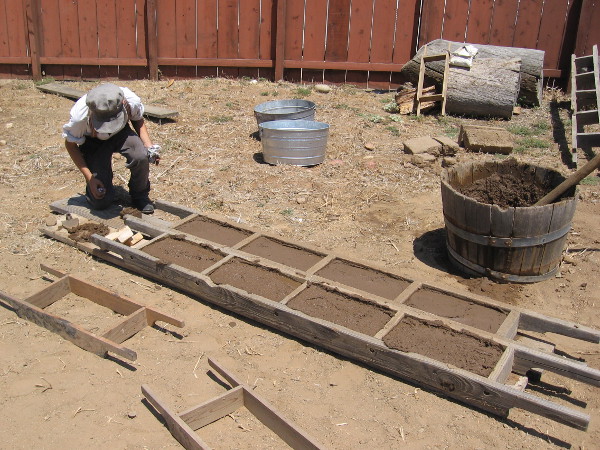
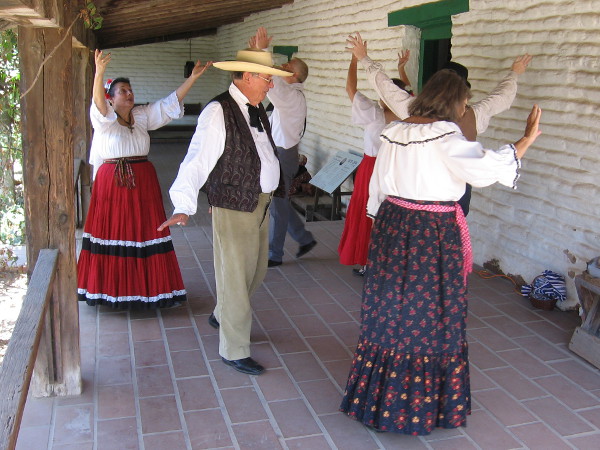
Someone checks out Days of the Vaqueros activities. The banner hangs on the Robinson Rose House in Old Town San Diego State Historic Park.Taking place during Old Town’s summer weekend Stagecoach Days, today’s event primarily celebrated life in San Diego when the small town and Alta California were part of Mexico.Ladies pass by in period dresses. One of many cool sights at the Days of the Vaqueros event in Old Town San Diego.Tables contained information about life during the era of huge Mexican land grant ranches worked by vaqueros. Vaqueros, the first true cowboys, were mostly indigenous people employed to manage cattle by the wealthy land owners.A vaquero shows a visitor to Old Town how to properly handle a rope.The visitor successfully lassoes his cow–the rear end, that is–first try!A gentleman who used to work for Buck Knives makes unique knife handles out of elk antlers. He has developed his own technique, which takes great skill and precision.A hat maker shows how beaver felt material was steamed then pushed over a hat-form block.What’s cooking on the campfire? Some tasty pozole, I was told!Pozole is a traditional Mexican soup or stew, made from hominy, meat and various vegetable seasonings.Decorating eggshell cascarones. Near the end of a fiesta, Californios flirted by cracking eggs filled with scented water or confetti over the startled head of someone they liked.A group called Los Californios played authentic early California music–tunes that were preserved over a century ago on wax cylinder sound recordings made by Charles Lummis.A couple dances to the happy, gentle music.Publications by a nonprofit project called San Diego Friends of Old Time Music. Author Vykki Mende Gray is helping to preserve the musical history of California.A display of braided ropes and rawhide, once commonly used by vaqueros as they worked on the large cattle ranches around San Diego.On this table I see more ropes, a canteen, iron brands and boot spurs.A gentleman who teaches school students visiting Old Town about history holds up an illustration of bear-baiting, which early Californians found entertaining.These guys were making adobe bricks. I learned earth and water are mixed, and straw or manure are often added for strength and cohesion.Authentic adobe bricks take weeks or months to properly dry. When hard, these bricks will possibly be used in new construction or to restore existing exhibits inside Old Town San Diego State Historic Park.Traditional dancing in the courtyard of Casa de Estudillo of Los Camotes (which translates the sweet potatoes), a tune from old Mexican and Spanish California.
…
This blog now features thousands of photos around San Diego! Are you curious? There’s lots of cool stuff to check out!
Here’s the Cool San Diego Sights main page, where you can read the most current blog posts. If you’re using a small mobile device, click those three parallel lines up at the top–that opens up my website’s sidebar, where you’ll see the most popular posts, a search box, and more!
To enjoy future posts, you can also “like” Cool San Diego Sights on Facebook or follow me on Twitter.
A Wells Fargo stagecoach takes a turn around La Plaza de Las Armas in San Diego’s historic Old Town.
Here come photos from today’s Trades That Shaped the West event, which took place in Old Town San Diego State Historic Park!
A wide variety of demonstrations drew curious visitors to a cluster of tents in the park’s grassy plaza. Early San Diego in the 1800’s was completely different from our modern city of gleaming skyscrapers. In many ways, life back then was both simpler and more difficult. Many household objects that are manufactured today were crafted using raw muscle and sweat. Most ordinary tasks were neither easy nor automated.
One hopes that historical reenactments like this continue for generations, so that people don’t forget the unique and meaningful lives of our ancestors.
You might notice this isn’t the first time I’ve blogged about this annual event. I’m so fascinated by San Diego’s history, I decided to experience Trades That Shaped the West again!
Stagecoach Days is celebrated every Saturday in Old Town during the summer. There’s a different themed event every week!
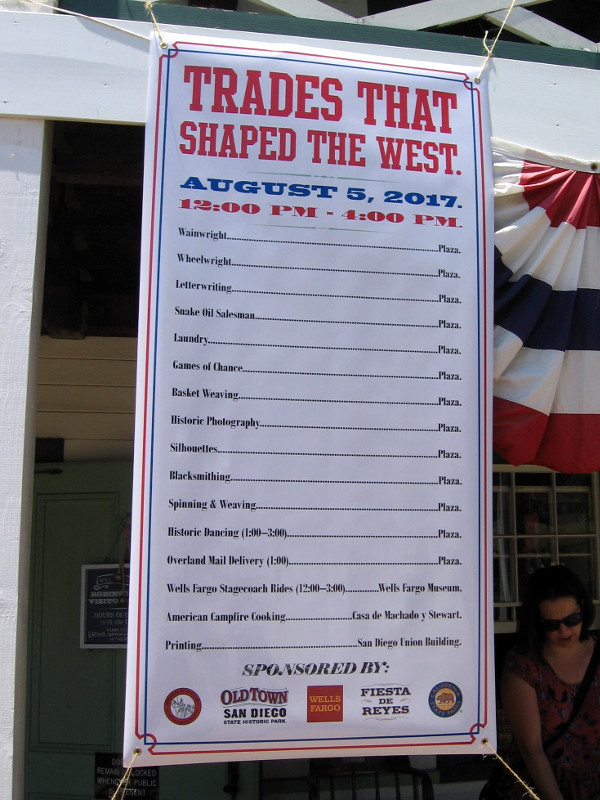
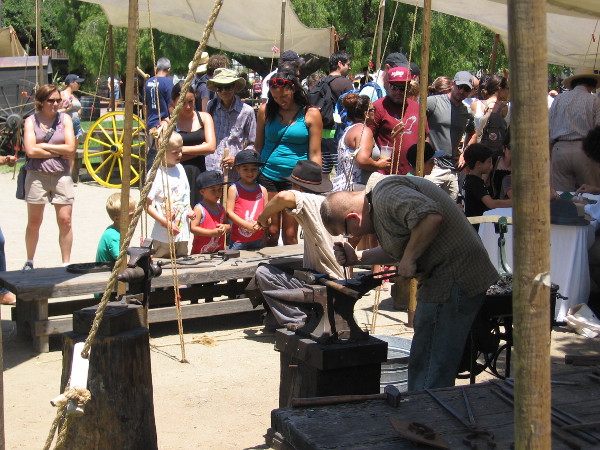
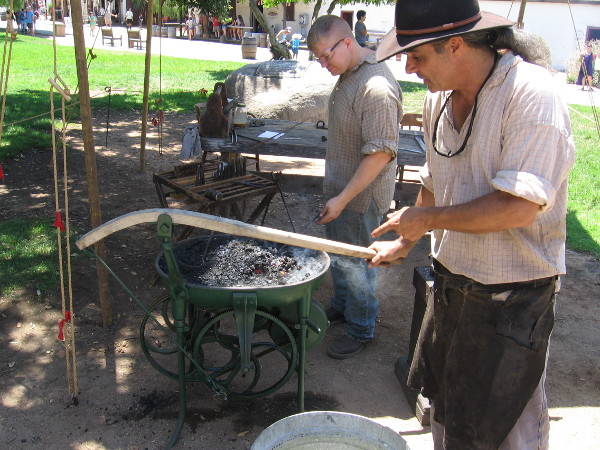
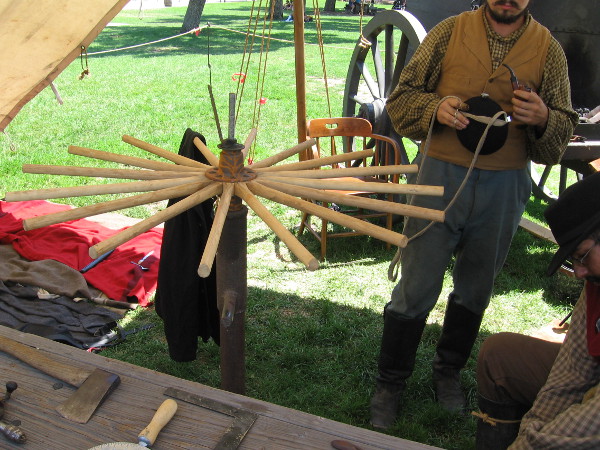
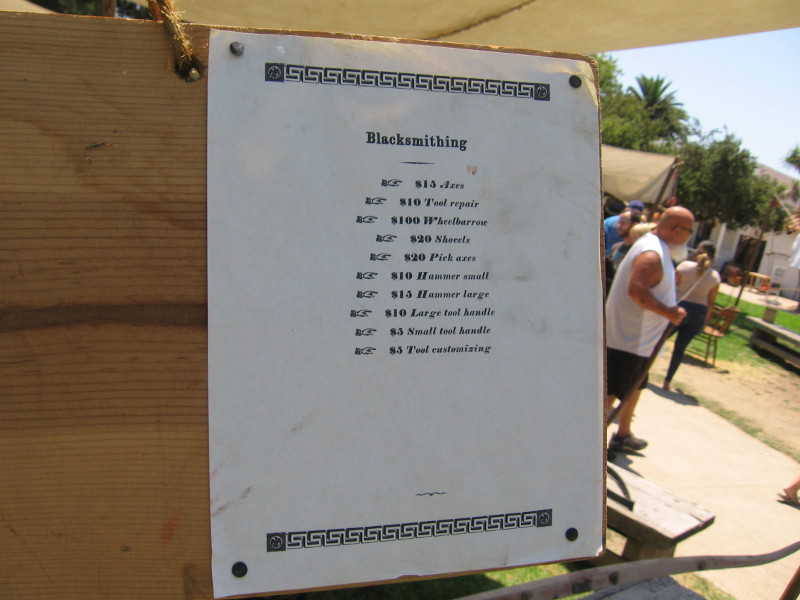
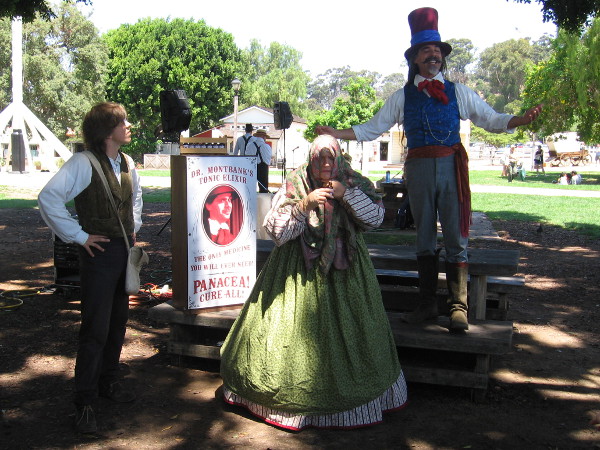
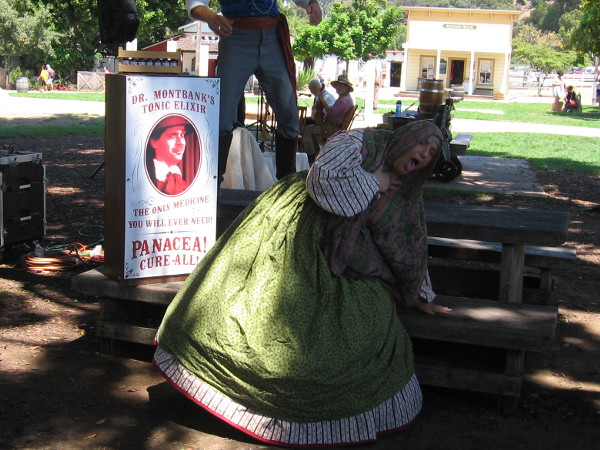
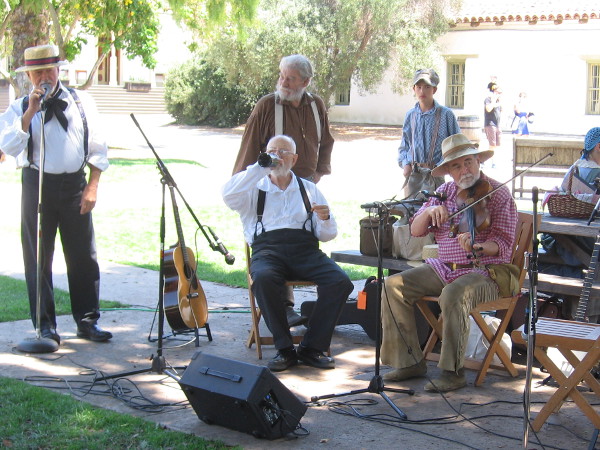
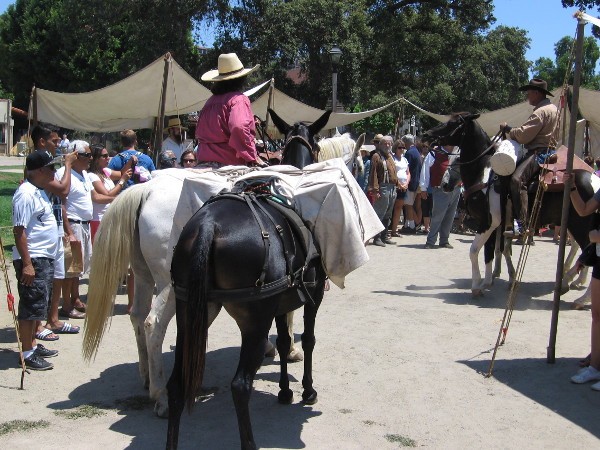
Aspects of frontier life were reenacted today in Old Town San Diego. Visitors watch as a stagecoach passes by!History comes to life during Stagecoach Days in Old Town San Diego State Historic Park. There’s a different theme each Saturday in July and August.Many fascinating demonstrations could be viewed by the public at the Trades That Shaped the West event today.Young and old alike watched two blacksmiths at work with an anvil and small forge.A wheelwright explains his craft. To make wagon wheels required great skill. Like cars today, wagons were an important part of life in the 1800’s.The bent metal band tyre would be expanded with heat, then contracted using cold water once carefully placed around the wooden wheel.We take laundry machines for granted today. Years ago in the Old West, cleaning clothes required a whole lot more work!Irons, washboards and other objects from daily life generations ago were on display.These ladies were weaving baskets. Basket-weaving is said to be the oldest of all human crafts.The local Native American Kumeyaay would use willow baskets to protect their gathered acorns and other food from insects.This portable green forge is being used for the first time. The handle turns a belt which operates an air blower. I recognized this blacksmith from the Fall Back Festival in San Diego’s Gaslamp Quarter.Local blacksmith hobbyists created all the items you see here, including the ornamental snake (which took about an hour and a half to make) and the huge padlock!This crafty gambler tried to entice me into playing a game of chance. Nice try!A gentleman had a table containing old tintype photographs. He also had antique cameras on display that were used for daguerreotype photographs.A new wheel is being produced by several wainwrights, trades people who craft and repair wagons and carts. These guys belong to the California Historical Artillery Society.A variety of useful tools on their table. Many look familiar today.The members of the California Historical Artillery Society were attending the annual Trades That Shaped the West event for the first time.Sign shows average blacksmithing prices in the mid 1800’s. The prices were much higher in Northern California during the Gold Rush.These guys also had a traveling battery forge, used by the Army long ago. Today they are often used in Civil War reenactments.I noticed that a snake oil salesman had drawn a crowd!An old lady with a bad case of lumbago was eager to try Dr. Montbank’s Tonic Elixir.I’m not sure it helped much.A guitar, a fiddle, and a bottle. These frontier musicians were getting themselves ready to provide a bit of Western entertainment.Visitors to Old Town were walking in front of the Colorado House and enjoying a sunny San Diego weekend.Look what’s coming! These pack animals have transported the mail all the way from San Antonio!The Overland Mail Delivery arrived exactly at one o’clock!I guess this would qualify as Ground Mail.The small Old Town encampment excitedly greets the four-legged mail carriers.Mail is handed out to many of the event participants!These creative young folk are too busy writing their own letters to notice.An educational reenactment of history was enjoyed today in Old Town San Diego State Historic Park!
…
I live in downtown San Diego and love to walk around with my camera! You can follow Cool San Diego Sights via Facebook or Twitter!
You can easily explore Cool San Diego Sights by using the search box on my blog’s sidebar. Or click a tag! There are thousands upon thousands of fun photos for you to share and enjoy!
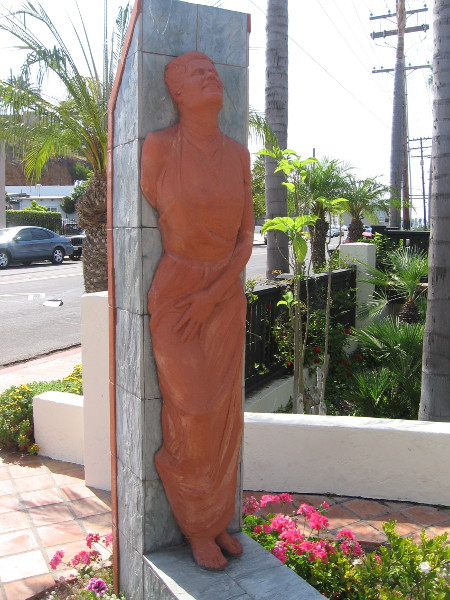
Two terracotta female figures stand at Heritage Plaza, near the intersection of San Diego Avenue and Hortensia Street.
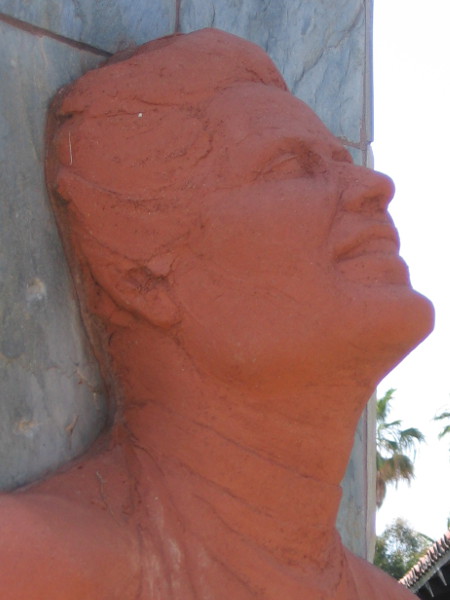
A number of fine sculptures by artists T.J. Dixon and James Nelson can be spotted around San Diego. During a walk down San Diego Avenue in Old Town, I paused to photograph their 1995 sculpture of two life size female figures in terracotta. If you drive down the street past Heritage Plaza, it can be easy to miss them. Here’s a look…
Plaque reads Sculpture by T.J. Dixon and James Nelson. Tile by Mark Emery.Graceful female figure sculpted with lifted head and smile.The second terracotta figure.Art can represent essential human truth.
…
I live in downtown San Diego and love to walk around with my camera! You can follow Cool San Diego Sights via Facebook or Twitter!
You can easily explore Cool San Diego Sights by using the search box on my blog’s sidebar. Or click a tag! There are thousands upon thousands of fun photos for you to share and enjoy!
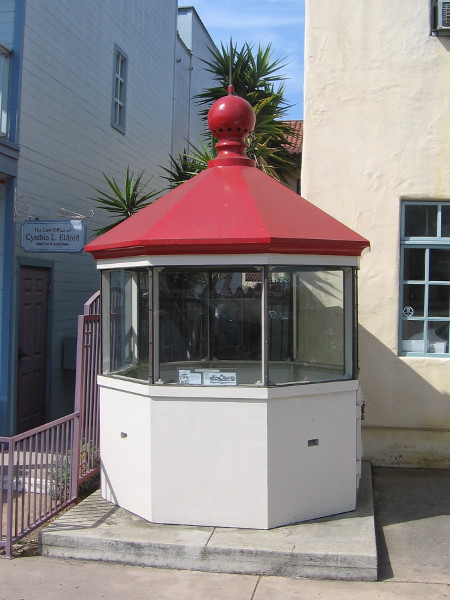
The top section of a historically important lighthouse now stands on a sidewalk in Old Town San Diego!
A lighthouse that once guided ships into San Diego Bay now stands on an Old Town sidewalk? How strange is that?
Well, not an entire lighthouse–just the lantern room of the 1890 Ballast Point Light Station!
The other day while walking down Congress Street, a few steps southeast of Harney Street, I paused to more carefully examine this mystery. (I’ve driven past the kiosk-like structure often, without really giving it a second thought.)
First, you should note Ballast Point is about 6 miles southwest of Old Town. The spit of land juts down into San Diego Bay from Point Loma; it’s where tall ships used to load ballast stones for their return trip around Cape Horn to the East Coast. Today it is part of Naval Base Point Loma.
So how did this top section of Ballast Point’s historic lighthouse end up on an Old Town sidewalk?
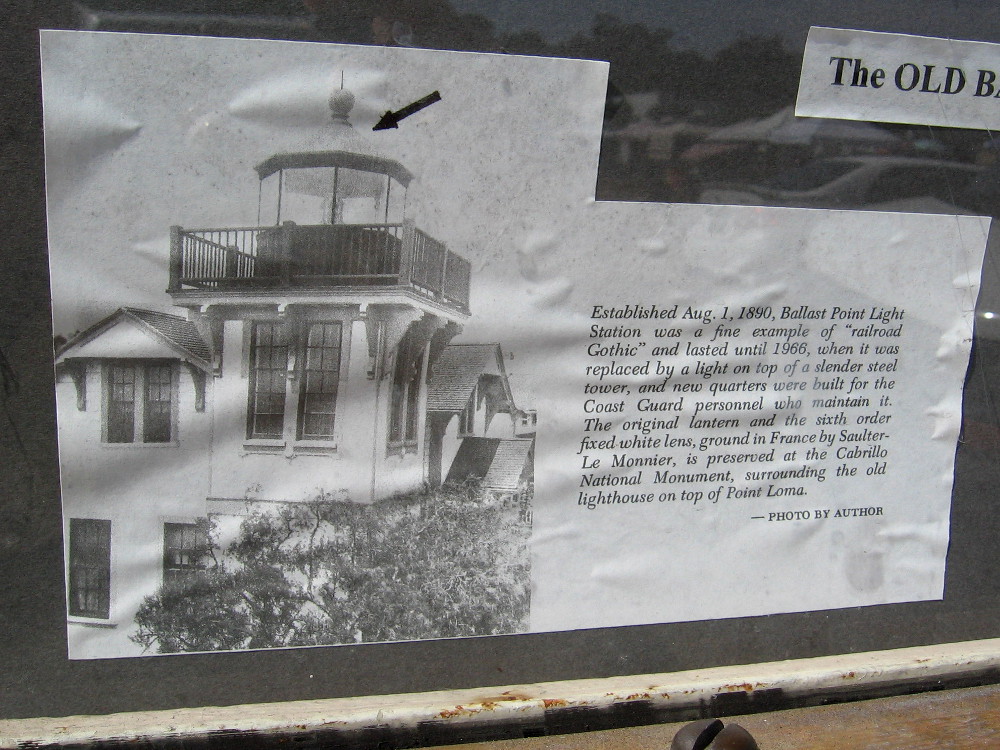
Some interesting photos behind a glass pane provided me with a few clues. The Ballast Point Light Station was built in 1890 and eventually dismantled in 1960. (Click the images and they will expand so you can read much more.)
After doing a little research, I learned the lantern room was found in 1998 by the owner of an Old Town nautical antiques store–West Sea Company–in a classified ad. At the time the Ballast Point lantern room was located at someone’s Bonita residence! Purchased and transported by flatbed truck to Old Town, it was placed on a cement pad near West Sea Company–and here it “mysteriously” remains today!
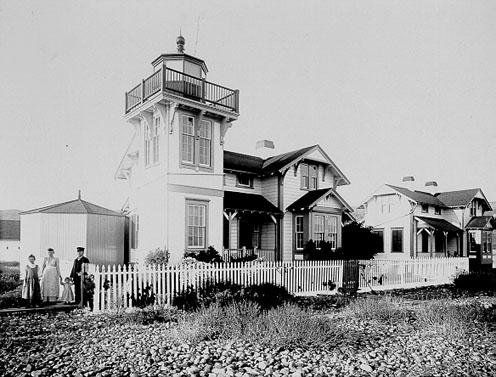
The 1890 Ballast Point Light Station was an example of Railroad Gothic. Its sixth order lens can be seen today at Cabrillo National Monument, in a museum beside the Old Point Loma Lighthouse.Historical photo and some words explain the light at Ballast Point. It guided sailors past Middle Ground Shoal and into San Diego’s harbor.A public domain photo of the Ballast Point Light Station, courtesy Wikimedia Commons.This lantern room housed a light that guided ships into San Diego Bay. It can now be seen on Congress Street in Old Town!
…
I live in downtown San Diego and love to walk around with my camera! You can follow Cool San Diego Sights via Facebook or Twitter!
You can easily explore Cool San Diego Sights by using the search box on my blog’s sidebar. Or click a tag! There are thousands upon thousands of fun photos for you to share and enjoy!
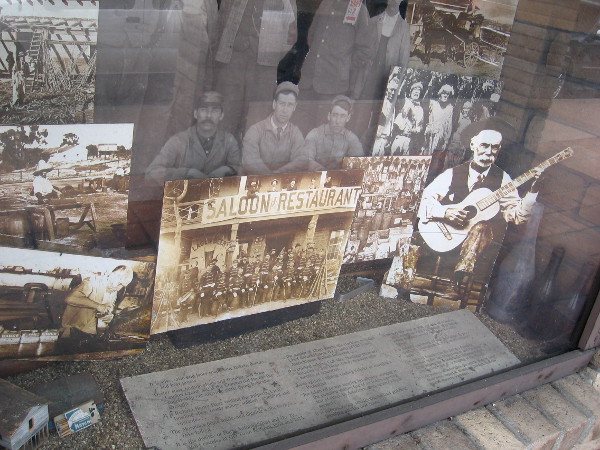
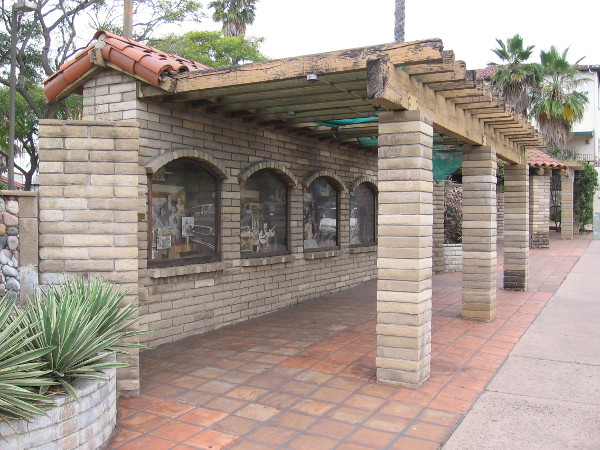
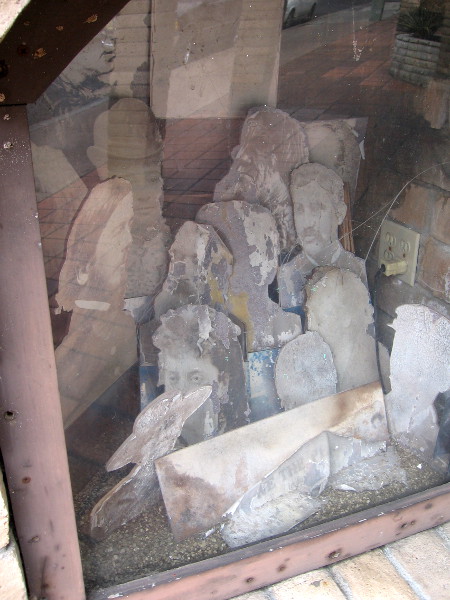
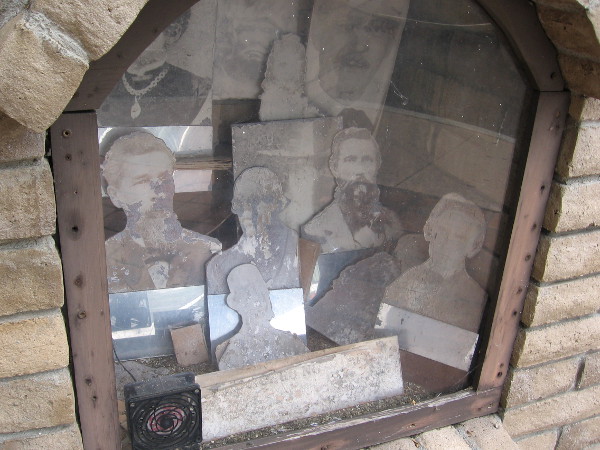
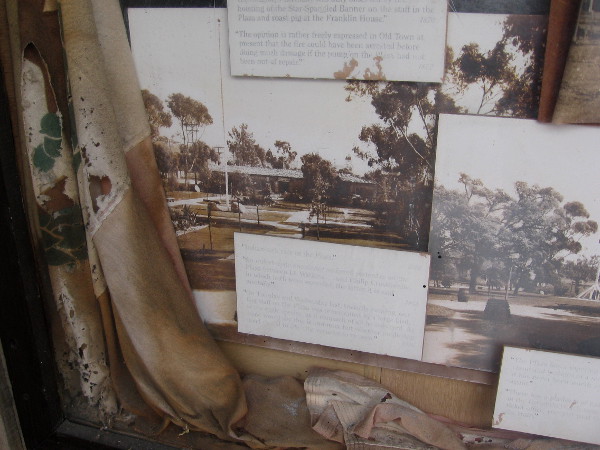
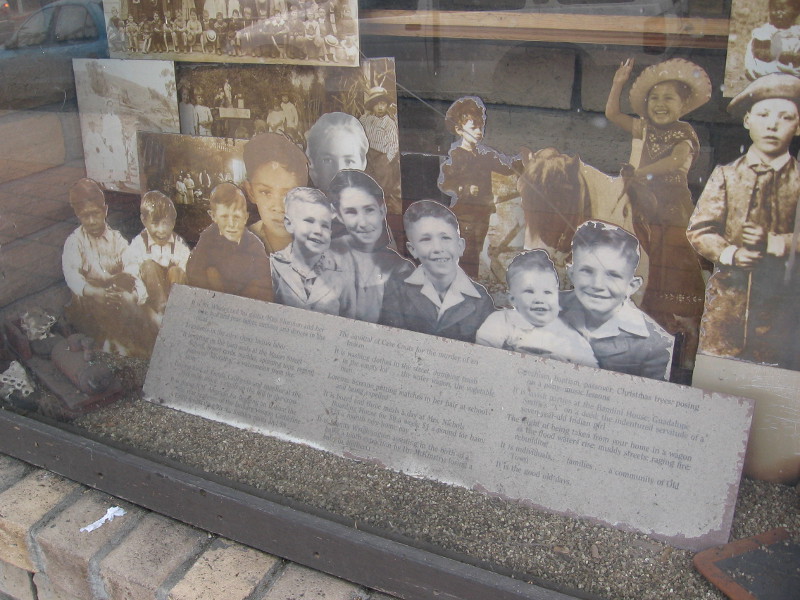
Photographs of Old Town’s history slowly fade with the passage of time.
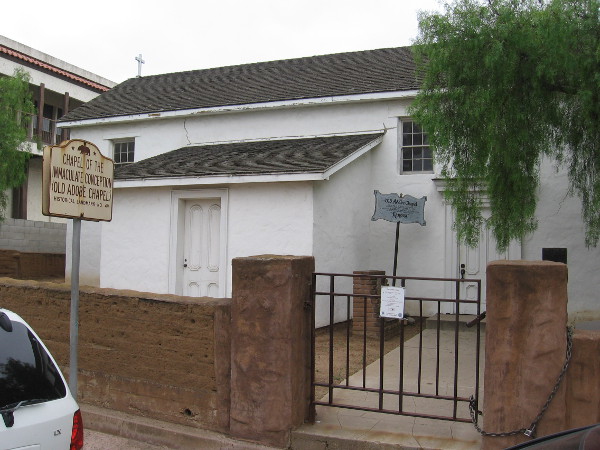
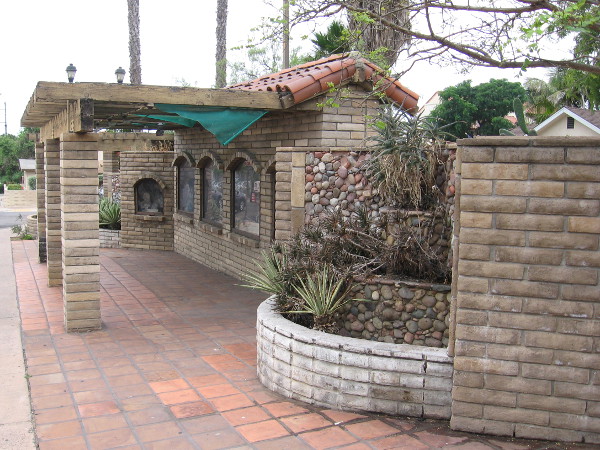
I recently walked down a few streets in Old Town that are seldom visited by tourists. After taking photographs of the Old Adobe Chapel, I noticed that across Conde Street there was some sort of structure containing glass display cases.
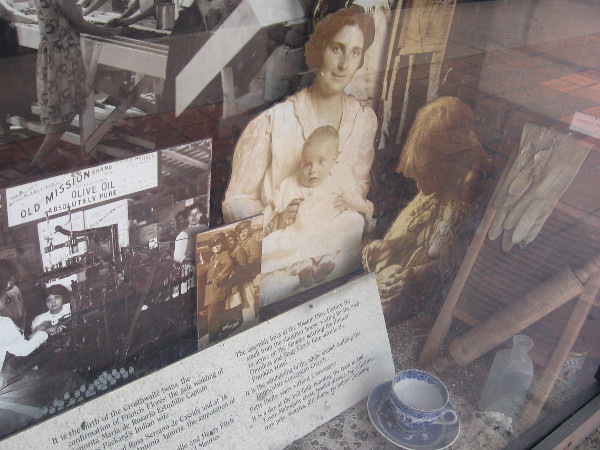
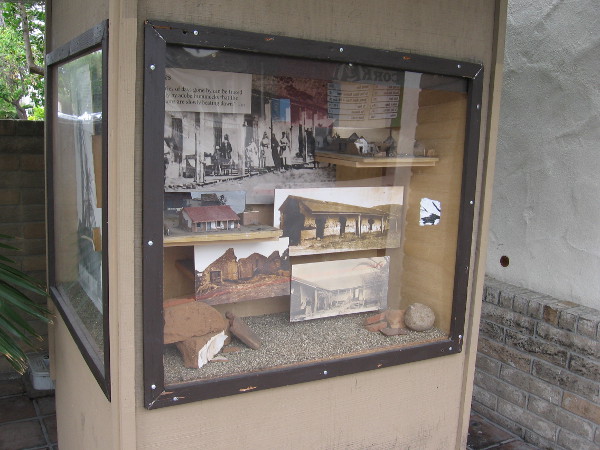
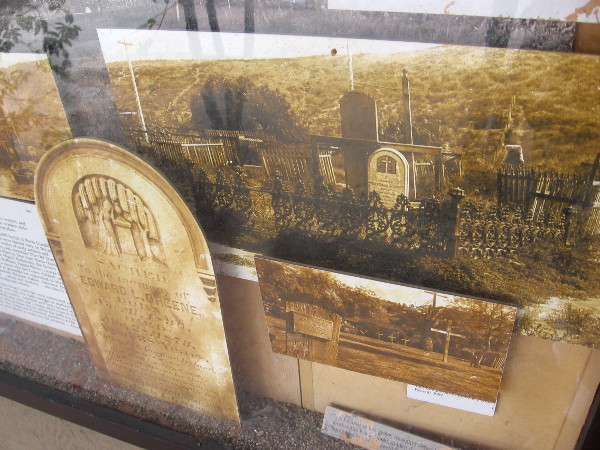
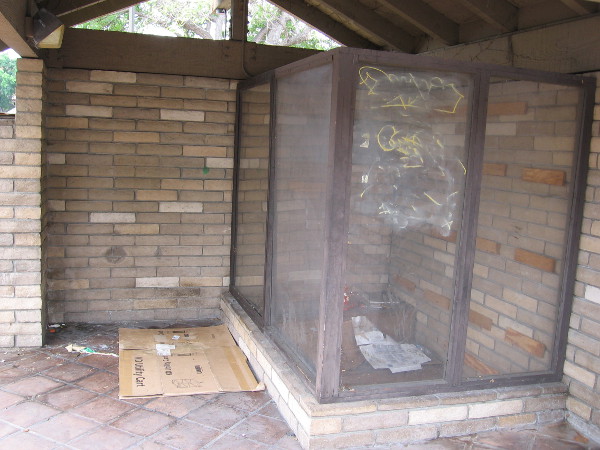
Upon closer inspection, I saw this was an outdoor exhibit concerning San Diego’s early history. And that its contents were in a sad state of decay.
No one seemed to know who’d created this exhibit until I spoke to a cashier in Old Town San Diego State Historic Park’s visitor center, inside the Robinson Rose House. She told me the structure had been built decades ago for the Old Town Mexican Cafe and that the displays had been designed by a woman who loved history. But she had gone blind.
Time moves incessantly forward.
You can find this fascinating but faded exhibit on Conde Street, behind Cafe Coyote.
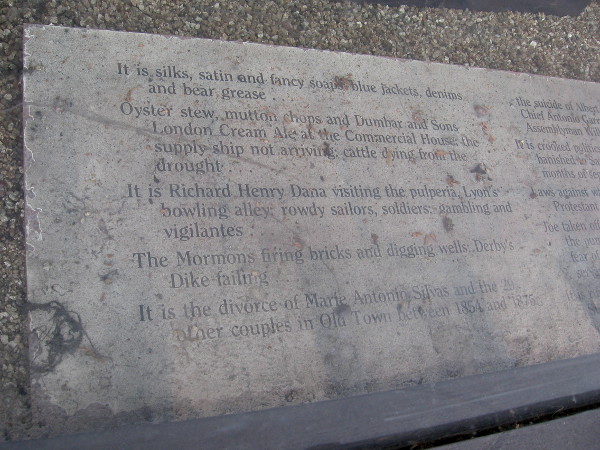
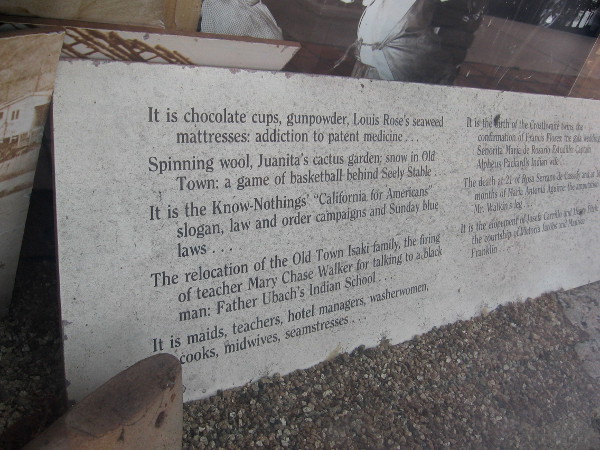
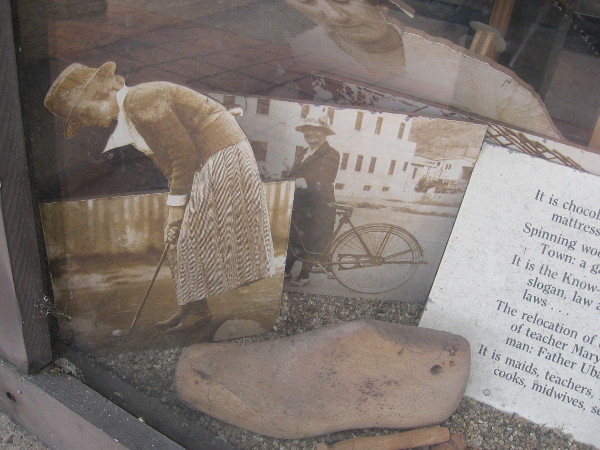
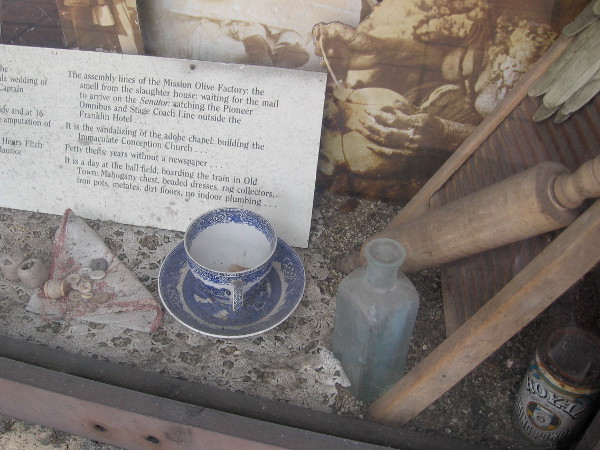
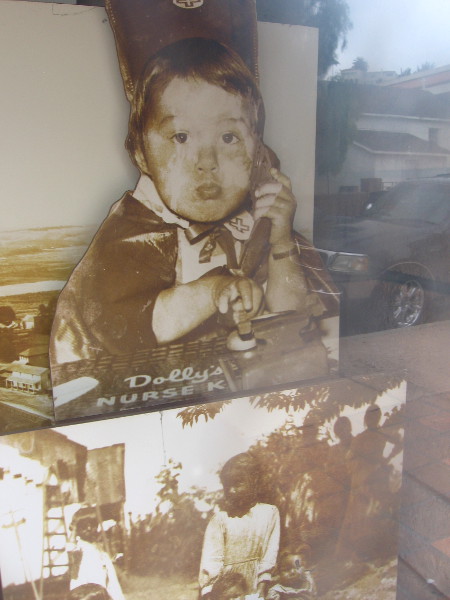
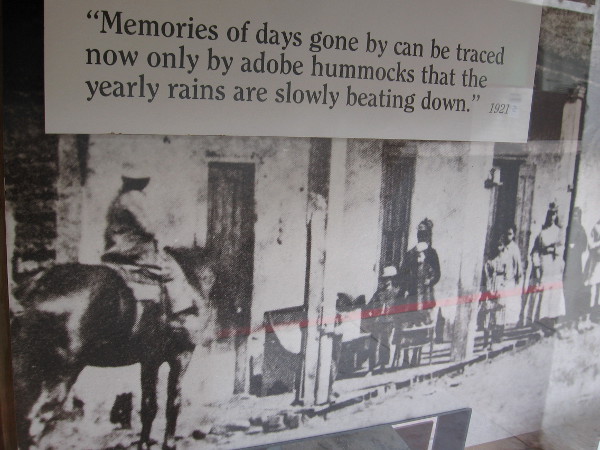
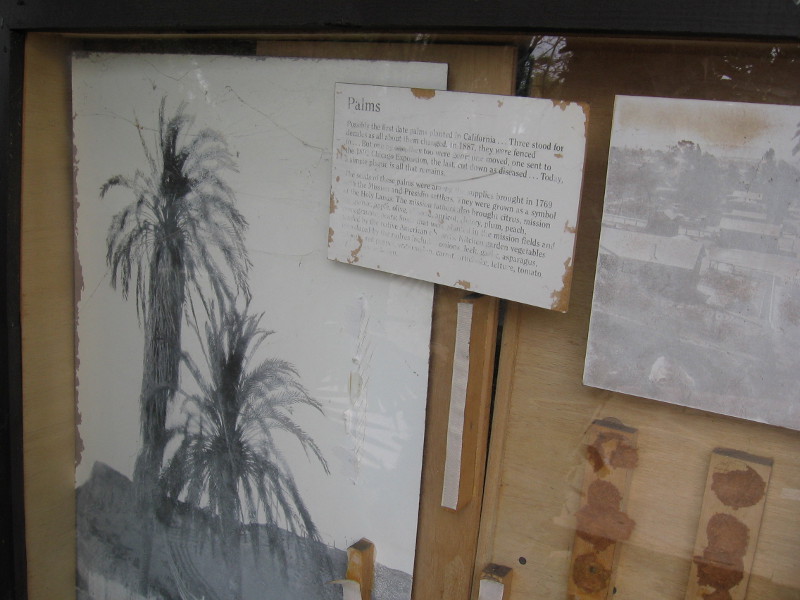
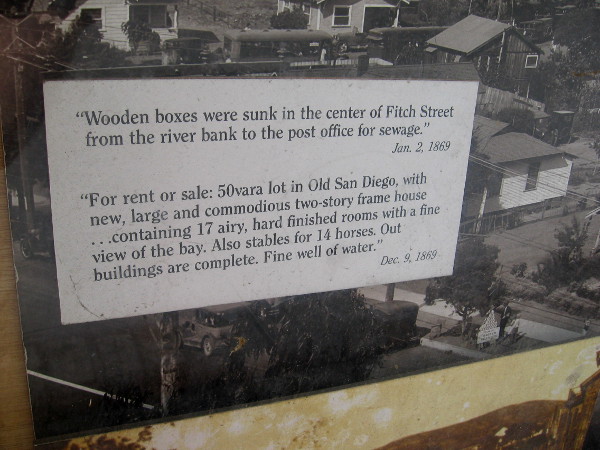
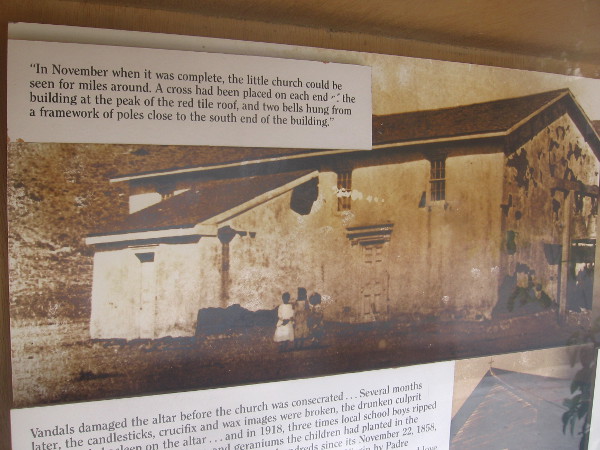
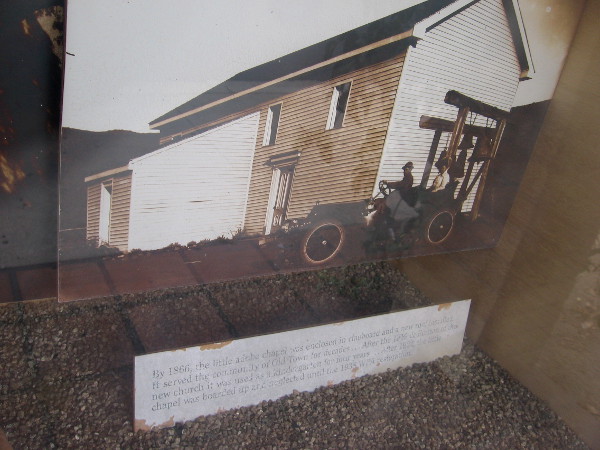
Displays behind glass windows include old photos and historical artifacts. This was created many years ago, I was told, for the nearby Old Town Mexican Cafe.It is silks, satin and fancy soaps, blue jackets, denims and bear grease… It is Richard Henry Dana visiting the pulperia…rowdy sailors, soldiers; gambling and vigilantes…Early residents of Old Town, fading away.A collection of photos show life as it was in Old Town San Diego.It is chocolate cups, gunpowder, Louis Rose’s seaweed mattresses… Spinning wool, Juanita’s cactus garden…a game of basketball behind Seeley Stable…More old photos. Life remembered here as it once was…A few household objects in one display case. Perhaps life those many years ago wasn’t so very different…Youthful faces.Faded by time, now ghostlike.Memories of days gone by can be traced now only by adobe hummocks that the yearly rains are slowly beating down.History captured, for those who might pass down the sidewalk.Palms grow. Some words fade.Wooden boxes were sunk in the center of Fitch Street from the river bank to the post office for sewage.Photo of the Old Adobe Chapel. In November when it was complete, the little church could be seen for miles around…By 1866, the little adobe chapel was enclosed in clapboard and a new roof was installed. It served the community of Old Town for decades…The Old Adobe Chapel has been preserved. Now a historical landmark, it stands across Conde Street.Decayed flag, and old photos of flagpole at center of La Plaza de Las Armas.Old photos of the Campo Santo Cemetery. Words describe: A mingling of men, women, and children from places and lives so different…One empty display case, graffiti and a hard place for the homeless.A monument to the human desire to remember.Many years, many faces.
…
This blog now features thousands of photos around San Diego! Are you curious? There’s lots of interesting stuff to check out!
Here’s the Cool San Diego Sights main page, where you can read the most current blog posts. If you’re using a small mobile device, click those three parallel lines up at the top–that opens up my website’s sidebar, where you’ll see the most popular posts, a search box, and more!
To enjoy future posts, you can also “like” Cool San Diego Sights on Facebook or follow me on Twitter.
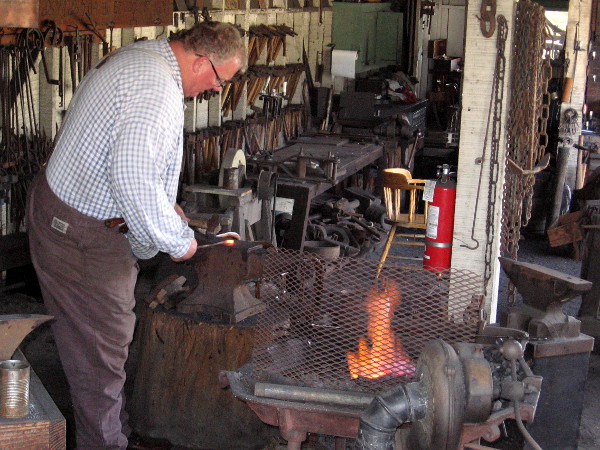
A blacksmith shapes red hot iron at a forge in San Diego’s historic Old Town.
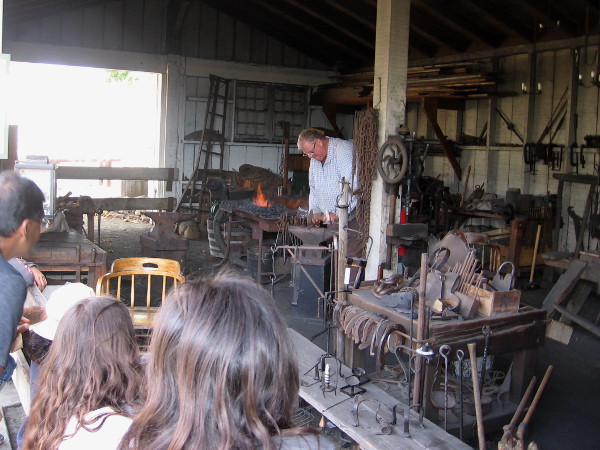
Yesterday I lingered for a few minutes at the Blacksmith Shop in Old Town San Diego State Historic Park. Two forges were operating. I watched as hammers swung, making sparks fly. It was fascinating to learn about blacksmithing and its vital role in San Diego’s history.
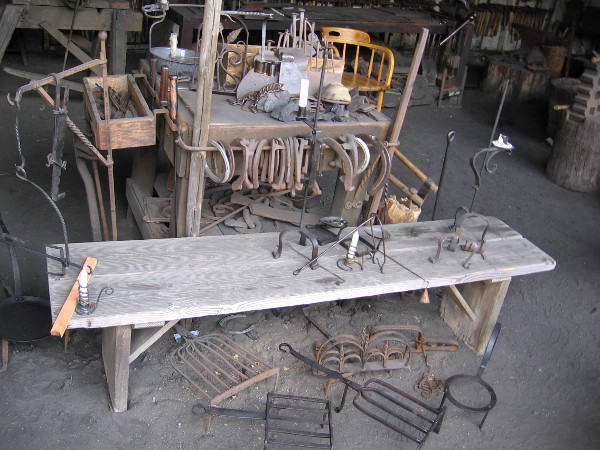
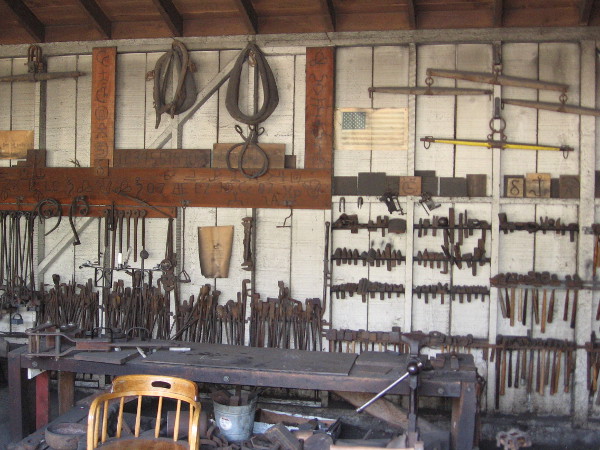
I chatted for a bit with one of the friendly gentlemen working in the Blacksmith Shop. These days the shop is used by a handful of skilled smiths to make all sorts of ornamental and useful metal items. They’ve made objects used for display elsewhere in the State Park. They make everything but horseshoes–and that’s because none of them know how to shoe a horse!
I was told that in 19th century San Diego there were several blacksmiths; this shop now in Old Town was probably located a bit to the east, on the outskirts of town (near today’s Presidio Hills Golf Course) because of the fire danger it presented to other buildings. No blacksmith shop back then would have been as large as the one visitors see today. A blacksmith would most likely do their work in the corner of a livery stable, using one modest forge.
Please read the photo captions to learn more!
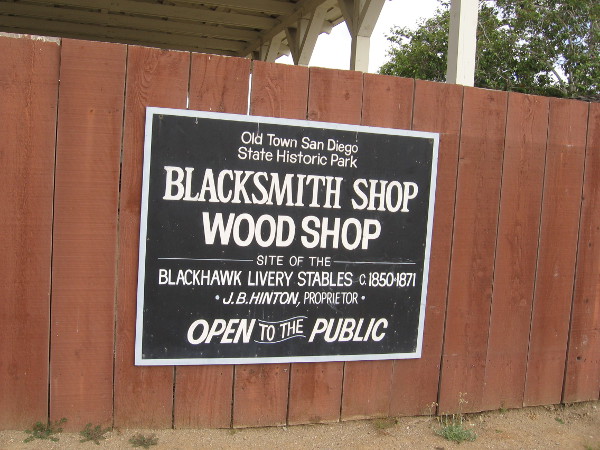
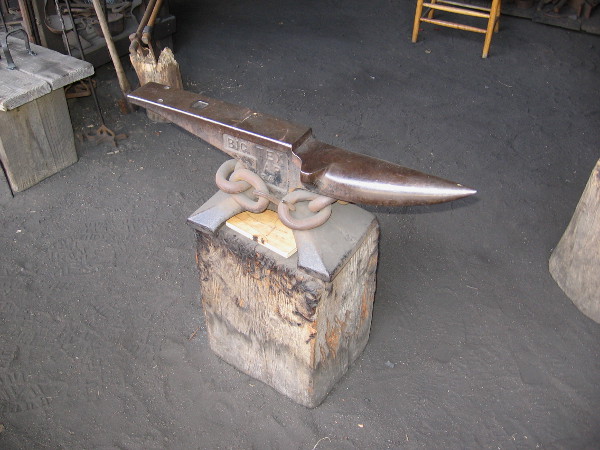
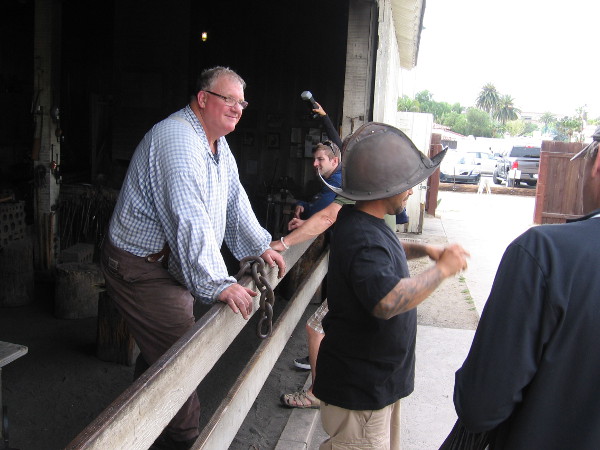
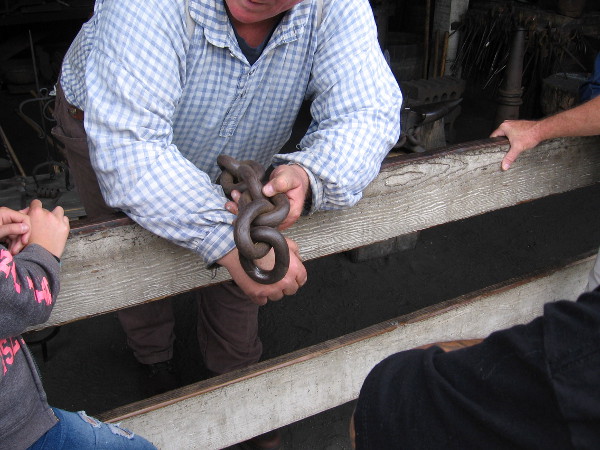
Old Town San Diego State Historic Park’s Blacksmith Shop and Wood Shop at the site of the Blackhawk Livery Stables, circa 1850-1871.Visitors to Old Town learn a little about life in San Diego during the mid 1800s. Blacksmiths created assorted metal objects, made repairs and shoed horses.This friendly blacksmith provided lots of fascinating information. Visitors watch with interest as he works to create a pot holder.I learned that in early San Diego blacksmiths typically burned charcoal in their forge, as coal was usually of poor quality and difficult to obtain in Southern California.A huge bellows provides oxygen for this brick furnace. A good working temperature is about 1800 degrees Fahrenheit.Products that were fashioned include iron grills, traps, candle holders, fish roasters, knives, shovels, chains, hinges, nails, cooking ladles and horseshoes.Hammers, bars, wrenches and various blacksmithing tools hang from the rear wall, in addition to harnesses and other items one might find in a livery stable.The gentleman showed me some devices used to suspend pots over a fire. Everything on this wall was made by local smiths in this shop.A shiny anvil.This wide grassy area behind nearby Seeley Stable was once used for anvil shoots. Gunpowder was placed in a hollow indentation between two anvils and ignited, sending one anvil high into the air with a loud bang! Anvils that did not shatter were considered sound.Old Town visitor tries on a Spanish conquistador helmet made in the Blacksmith Shop.A heavy anchor chain is shown. The welds must be as strong as the iron links themselves.A photo of living history. Skilled artisans used muscle, fire, metal and sweat to make everyday life easier for the early residents of San Diego.
…
I live in downtown San Diego and love to walk around with my camera! You can follow Cool San Diego Sights via Facebook or Twitter!
You can easily explore Cool San Diego Sights by using the search box on my blog’s sidebar. Or click a tag! There are thousands upon thousands of fun photos for you to share and enjoy!
Mormon Battalion flag flies during a special event in Old Town San Diego.
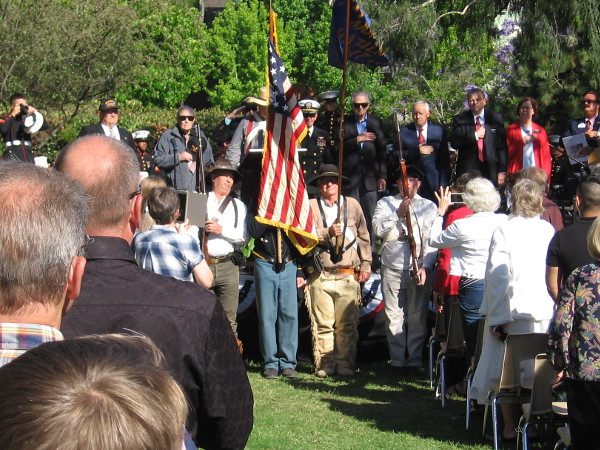
I was invited to a unique event that took place yesterday. A special Flag Day Ceremony was held at the Mormon Battalion Historic Site in San Diego’s Old Town. The event remembered World War I and saluted all American veterans.
During the ceremony five veterans from different military services were made honorary members of the Mormon Battalion. A cake was cut with a military saber and an American flag that has been flown over the U.S. Capital and over Fort Leavenworth (where the historic Mormon Battalion originated) was raised.
The patriotic ceremony was organized by The Church of Jesus Christ of Latter-day Saints, whose members composed the Mormon Battalion, the only religiously based unit in United States military history. Commanded by regular U.S. Army officers, members of the battalion marched almost 2,000 miles from Council Bluffs, Iowa, to San Diego, California to help secure the region during the Mexican–American War. Much of the difficult march was over mountains and through desert. They saw no fighting.
I have noticed that Mormons treasure liberty–religious freedom in particular. I’m not a Mormon–very far from it–but I do happen to be a strong believer in personal liberty. That’s because I’m a writer. Also, as a child I traveled with my family behind the Iron Curtain twice. I have briefly seen how dark life is without liberty.
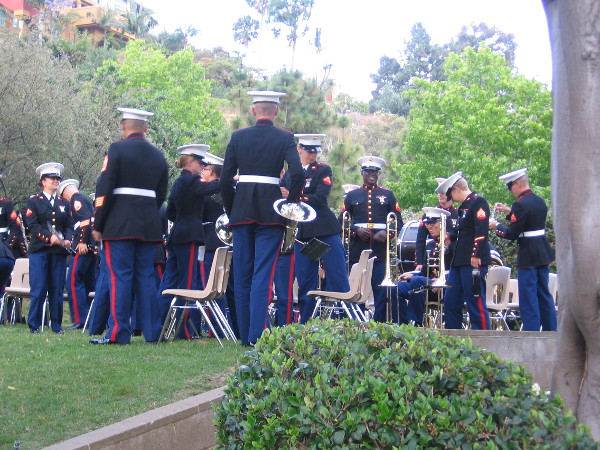
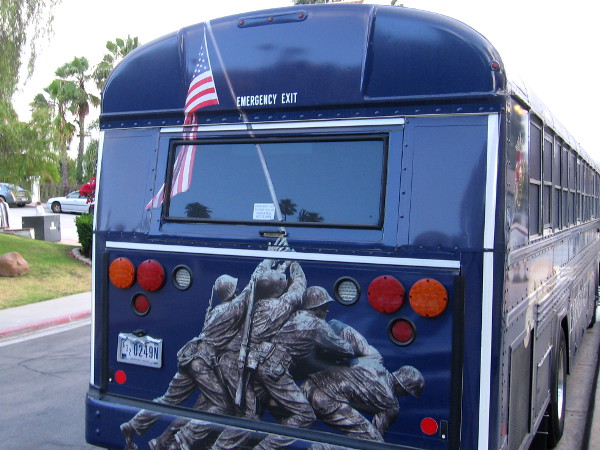
A friendly Mormon lady in pioneer dress welcomes guests to the Flag Day Celebration.This 2017 celebration of Flag Day honored veterans who served with distinction.Guests are welcomed by Director of the San Diego Mormon Battalion Historic Site, Elder Michael Hemingway.The United States flag is posted after the National Anthem.Folding of the flag. Each of the thirteen folds is invested with a special meaning.Four American veterans on stage are applauded and made honorary members of the Mormon Battalion.Keynote speaker General Bruce Carlson, USAF, Ret. talks about liberty. He is also made an honorary member of the Mormon Battalion.Many voices sing God Bless America.Young members of Marine Band San Diego after the ceremony.The United States Marine Corps bus contains an image of the flag being raised during the Battle of Iwo Jima.Pageantry and remembrance at a Flag Day Ceremony in Old Town San Diego.
…
I live in downtown San Diego and love to walk around with my camera! You can follow Cool San Diego Sights via Facebook or Twitter!
I learned a past visitor to the Whaley House photographed these old dolls and was surprised to see the eyes–which are painted–closed!
Did I see any ghosts inside the Whaley House?
During my recent visit to Old Town San Diego, I ventured into the unknown. I took my very first look inside the Whaley House, widely considered to be the most haunted house in America. I also took lots of photographs, which you are about to see!
The Whaley House has been the subject of many serious paranormal investigations, and has appeared on many television programs. It was featured on Syfy Channel’s Fact or Faked: Paranormal Files, the Travel Channel’s episode America’s Most Haunted on Ghost Adventures, and the Biography Channel’s show The Haunting of Regis Philbin. The house’s reputation for supernatural activity has been discussed widely in the media and adopted by the popular culture.
LIFE magazine, a serious publication, has stated that the Whaley House is “the most haunted house in America.” The Travel Channel has agreed with that conclusion.
So, did I see any ghosts, spirits or apparitions–any spooky or weird stuff?
As I took the self-guided tour and peered into the various rooms, my eyes were primarily searching for ideal shots for my camera. But in the back of my mind, I also anticipated perhaps glimpsing something unusual.
Perhaps I’d see the ghost of Yankee Jim, who was hanged in a particularly gruesome way in 1852, on the same plot of land where the Whaley House was built in 1857. The Whaley’s youngest daughter Lillian was absolutely convinced that he haunted their home.
Or I might see the ghosts of Thomas or Anna Whaley who built the house when they came to San Diego from San Francisco. Thomas is said to appear in the parlor or on the upper landing; Anna in the downstairs rooms or outside garden.
Or perhaps I might get a ghostly glimpse of someone or something else…
Three of the docents I spoke to during my recent visit related their own bizarre experiences. Two docents once saw a gilded cup in a display case begin to vibrate for no apparent reason. Nothing had shaken the house or case. No other artifacts near the cup moved. The cup’s peculiar motion continued for 30 to 45 seconds, they attested. Another docent told me that she twice smelled lavender perfume inexplicably while sitting near a window in the upstairs theater. Nobody was nearby.
Several years ago, when I passed the Whaley House and spoke to a docent standing outside the front door, they told me they’d heard inexplicable footsteps in the theater and had seen a strange shadow moving on an upstairs wall. The cashier in the gift shop next door had seen the same weird shadow. I blogged about that here.
Okay. So what exactly did I see? Look at the photographs! And read the captions for more history concerning this fascinating and historically important house.
If I experienced anything unusual inside the Whaley House, it was that I felt a bit like a time traveler. A tour through this historic house is like stepping back into another time, when day-to-day life was both simpler and in many ways more dangerous, unpredictable and difficult. In my mind’s eye I could almost see the people of that era moving about the house–performing ordinary tasks–people who really weren’t that different than you or me. I could almost put myself in their shoes. In my imagination.
Take a look at these photographs and what do you see? If a few images seem to contain glare or strange effects of light, it was probably caused by my camera’s flash and the necessity of taking some photos through glass. The photo of the children’s bedroom, for example, was taken through a glass pane.
The only adjustments I made to these photos were cropping, brightness, contrast and the GIMP filter for sharpness. And the photos I altered were changed just slightly to make them appear a little bit nicer on your screen!
Leave a comment if you see something ghostly!
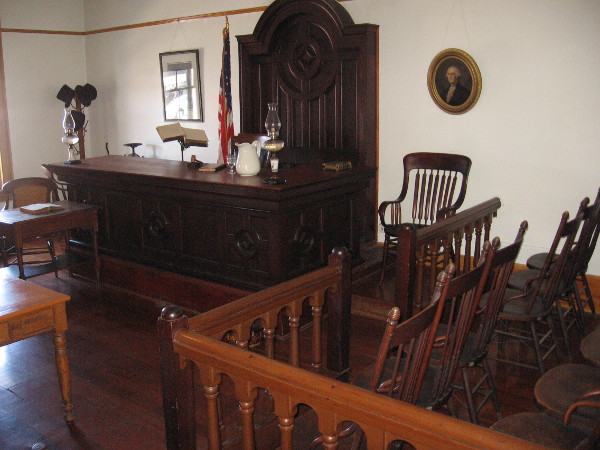
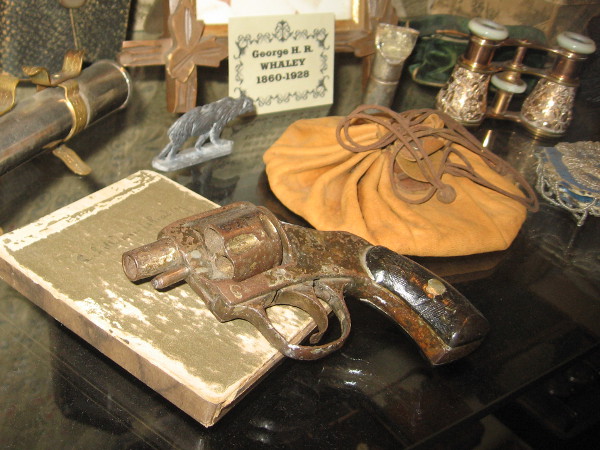
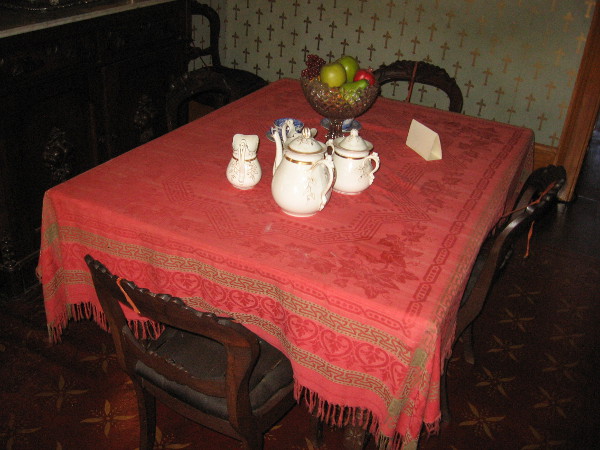
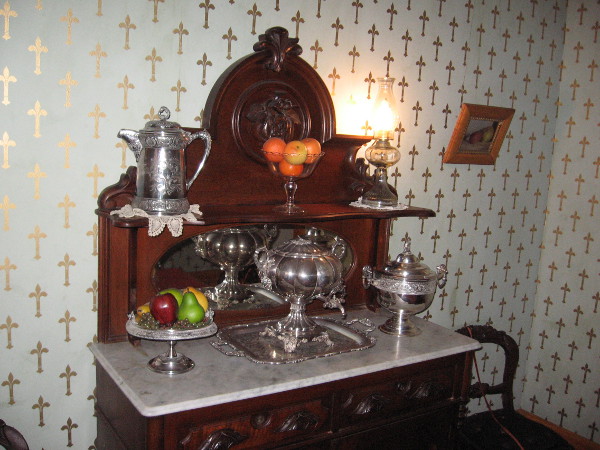
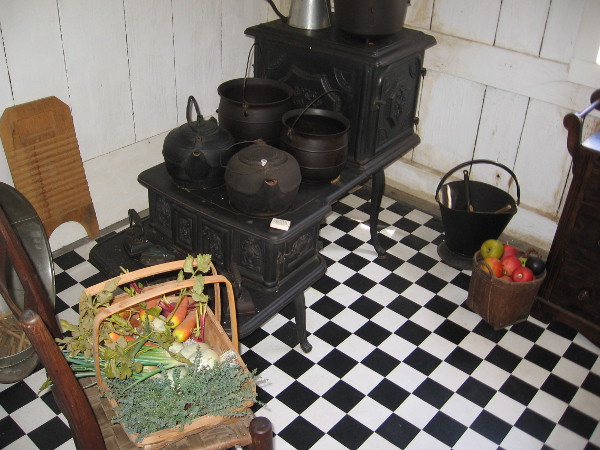
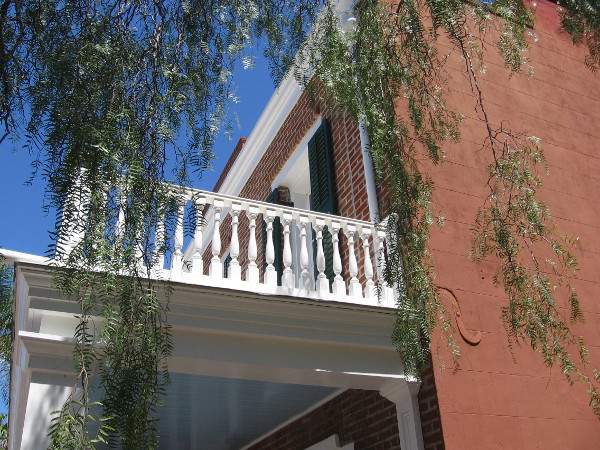
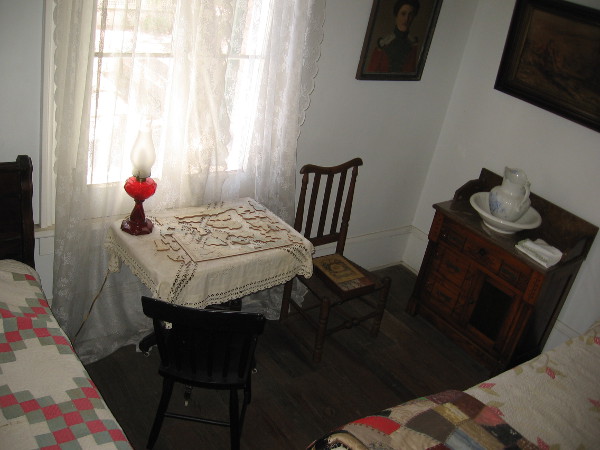
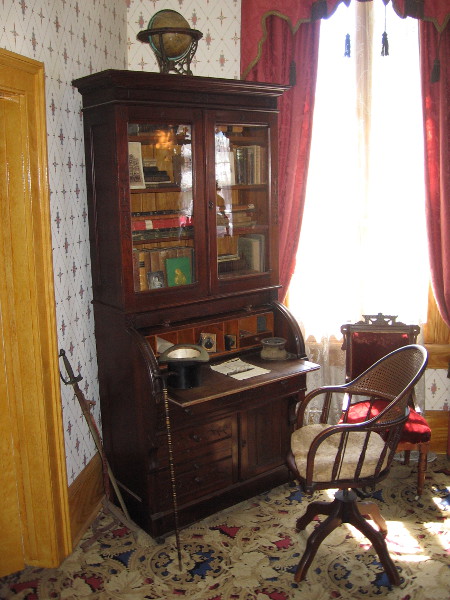
Sign in front of America’s most haunted Whaley House. Like various other historic structures in San Diego, the house is preserved by SOHO–the Save Our Heritage Organisation.Photo of the 1857 Greek Revival-style Whaley House from across San Diego Avenue. The famous house is located in Old Town, the birthplace of San Diego.The Whaley House, once designated an official haunted house by the United States Commerce Department, has appeared on many television programs, including the Travel Channel’s show America’s Most Haunted.The Whaley house is the oldest brick building in Southern California. It served as home, granary, store, courthouse, school and theater. It was the most luxurious residence in early San Diego.Visitors to Old Town San Diego peer into the Whaley House window just left of the front door. That is where the Whaley and Crosthwaite General Store was located.The self-guided tour begins in the courtroom, which is located directly behind the store. Originally a granary whose brick walls failed to stop rats, at different times the room served as school, church, ballroom and billiard hall.Photograph on the courtroom’s back wall shows the Whaley House on the outskirts of tiny San Diego. It stands alone in a barren place. It was built on a hanging ground not far from old El Campo Santo Cemetery.Another photo inside the courtroom. This served as the second County Courthouse in San Diego, in operation from 1869 to 1871.Inside the courtroom you’ll find the Centennial Cannon. It was cast in 1876 and was used for various ceremonies before being moved to Horton Plaza.Another photo in the courtroom shows San Diego’s old stone jail in a crumbling state. It stands next to the chapel cabin and the old graveyard.The Whaley and Crosthwaite General Store. Many items available for purchase included whiskey, wine, buckwheat, macaroni, codfish, pickles, catsup, tin ware, hardware, stationery, clothing and shoes.Shelves behind the store’s counter contain products one might buy in the mid to late 1800’s in San Diego. Goods that arrived by ship around Cape Horn were later obtained via transcontinental railroad.A nearby display case contains items belonging to various members of the Whaley family, including engraved silverware and china.Inside the display case one can see an old photograph of George H. R. Whaley, one of the six children of Thomas and Anna Whaley.Two docents told me how they were both present when the gilded cup began to vibrate without explanation. It did so for about 30 to 45 seconds. No other objects moved.More historical objects that belonged to the Whaley family, including a small snubnosed revolver.Next on the self-guided tour is the circa 1860s dining room. The chairs are upholstered with woven horse hair. They’ve survived a century and a half in pretty good condition.The wallpaper with fleur-de-lis patterns reflects light like a sky full of shining, golden stars. The furnishings and silver are original.The tour proceeds to the reconstructed kitchen, which seeks to replicate the original board and batten structure. The checked floor is typical of the era.Many of the dishes and utensils are original. Prepared food would be passed through a window (that we are looking through) to the adjacent dining room.Photo of rear of Whaley House. The white detached room is the kitchen. In case of fire, the burning walls of the kitchen would be pulled away from the main building by horse. This type of construction was common in those days.These stairs lead up to the second floor of the Whaley House museum, where there is a theater and three bedrooms.A docent explains the history of this first commercial theater in San Diego. The Tanner Troupe performed here from October 1868 to January 1869. The first performance reportedly attracted an audience of 150. The docent thought this number was improbable–for just one performance in this rather small room!The painted backdrop of the stage, an original family trunk, and a raven, recalling the famous poem of Victorian-era American horror writer Edgar Allan Poe.Another photo showing painted curtains. On two occasions, a docent was sitting to the left of this stage by one of the second floor windows when she smelled sudden, mysterious lavender perfume. Nobody was nearby, she told me.Advertisement framed on theater wall. Admission to see the Tanner Troupe perform was 50 cents. Audiences saw moral, chaste and versatile entertainments–drama, farce, comedy, singing and dancing.Print in a gilded frame in the upstairs theater. It’s from a painting depicting Shakespeare’s Romeo and Juliet. On the opposite wall hangs similar artwork depicting Othello.Outdoor stairs back then ascended to this outside balcony. Audiences entered the theater that way, without disturbing the Whaley House living quarters.Photo of Thomas and Anna Whaley’s master bedroom. According to the self-guided tour info, the walnut bedroom set is in the Renaissance Revival style. The writing desk was Anna’s.A visitor gazing into the children’s bedroom said the dolls seemed very creepy. The crib just visible was used by four generations. An 18-month old Thomas Whaley Jr. died here from scarlet fever.Visitors look for ghosts in the children’s bedroom. The theater is straight ahead.The rear bedroom could be used by up to four children and multiple visitors. The washbowl and pitcher were used for bathing.Now we are back downstairs. This is part of the elegant guest chamber in the southeast corner of the Whaley House. Important people stayed here, including General Thomas Sedgewick.The study with desk and bookcase. During his time in San Diego, Thomas Whaley held many positions, including merchant, city clerk, notary public, realtor and railroad secretary. That sword was actually a prop used by the Tanner Troupe during their performances in the theater upstairs.Looking from the study into the Rococo Revival Style parlor. The Whaleys were much wealthier than most San Diego residents at the time. The room is full of art, paintings and splendid decorative objects.There’s no guarantee you will see a ghost at the Whaley House. But you will definitely observe a good deal of history and learn about San Diego’s fascinating past.
…
I live in downtown San Diego and love to walk around with my camera! You can follow Cool San Diego Sights via Facebook or Twitter!
You can easily explore Cool San Diego Sights by using the search box on my blog’s sidebar. Or click a tag! There are thousands upon thousands of fun photos for you to share and enjoy!

















































 Cool San Diego Sights!